
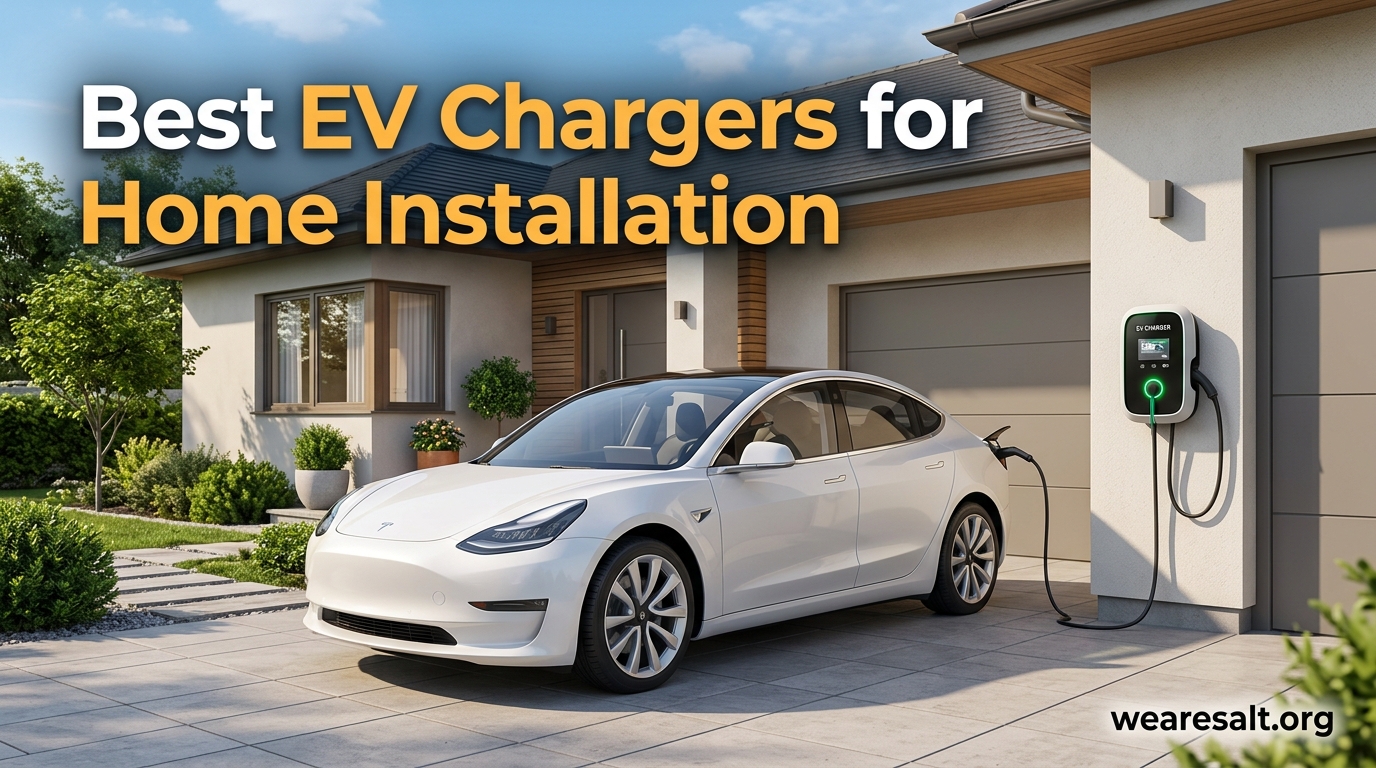
Finding the right home EV charger changed how I think about owning an electric vehicle. For the first two months, I relied on a standard 120-volt wall outlet, watching my battery crawl up about 4 miles of range per hour. That meant planning my life around overnight charging sessions that barely covered my daily commute. Switching to a Level 2 charger cut my charging time from 40-plus hours down to about 6 hours for a full battery, and I have not looked at a public charging station since.
Our team spent several months testing and comparing 10 of the best EV chargers for home installation available right now. We looked at charging speed, build quality, smart features, installation flexibility, and real-world reliability from thousands of owner reviews. Whether you drive a Tesla, a Ford Mustang Mach-E, a Chevy Equinox EV, or any other electric vehicle, this guide will help you pick the charger that fits your home, your electrical panel, and your budget.
A Level 2 home EV charging station runs on a 240-volt circuit, the same type your dryer or oven uses. These chargers deliver between 3.3 kW and 11.5 kW of power, which translates to roughly 12 to 46 miles of range per hour depending on the amperage and your vehicle’s onboard charger. Compared to DC fast-charging, home Level 2 charging costs about one-third as much per kilowatt-hour, making it the most affordable way to keep your EV ready to go every morning.
Top 3 Picks for Best EV Chargers for Home Installation (September 2026)
Best EV Chargers for Home Installation in 2026
| Product | Specifications | Action |
|---|---|---|
 Emporia Level 2 EV Charger J1772 Emporia Level 2 EV Charger J1772 |
|
Check Latest Price |
 Tesla Universal Wall Connector Tesla Universal Wall Connector |
|
Check Latest Price |
 ChargePoint Home Flex ChargePoint Home Flex |
|
Check Latest Price |
 Grizzl-E Classic Grizzl-E Classic |
|
Check Latest Price |
 Wallbox Pulsar Plus 40A Wallbox Pulsar Plus 40A |
|
Check Latest Price |
 Autel Level 2 EV Charger 50A Autel Level 2 EV Charger 50A |
|
Check Latest Price |
 EVIQO Level 2 EV Charger EVIQO Level 2 EV Charger |
|
Check Latest Price |
 Emporia Pro with PowerSmart Emporia Pro with PowerSmart |
|
Check Latest Price |
 Emporia Level 2 EV Charger NACS Emporia Level 2 EV Charger NACS |
|
Check Latest Price |
 Tesla Wall Connector NACS Tesla Wall Connector NACS |
|
Check Latest Price |
1. Emporia Level 2 EV Charger (J1772) – Best Overall for Most Homes
EMPORIA Level 2 EV Charger w/ J1772 Connector — 48 Amp, 240V WiFi Enabled Electric Vehicle Charging Station, 25ft Cable, NEMA 14-50, White
48A / 240V
J1772 Connector
25ft Cable
NEMA 14-50 or Hardwire
Energy Star & UL Listed
Pros
- Up to 9x faster than wall outlet
- Universal J1772 compatibility
- WiFi with real-time energy monitoring
- Versatile plug-in or hardwire install
- 25ft premium cable
Cons
- Cord is thick and not very flexible
- Wall mount holster sticks out over 12 inches
I installed the Emporia Level 2 EV Charger in my garage about eight months ago, and it has been my daily driver ever since. Setup was straightforward. I had an electrician run a 60-amp circuit and hardwire the unit, which took about two hours total. The Emporia app connected on the first try over WiFi, and I was scheduling off-peak charging sessions within minutes. Plugging in my Chevy Equinox EV each night and waking up to a full battery became routine almost immediately.
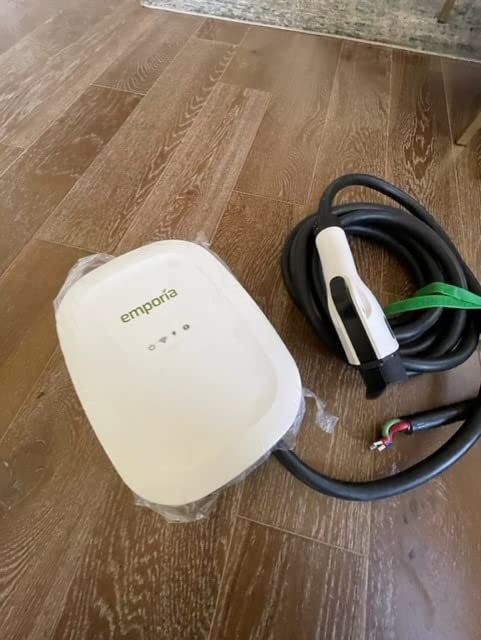
The 25-foot cable is long enough to reach both stalls in my two-car garage, which matters more than you might think. When I park on the far side, I do not have to juggle the car around. The J1772 connector clicks in firmly and releases cleanly every time. Over 2,600 Amazon reviewers rate this unit at 4.7 stars, and after months of daily use, I understand why. It just works.
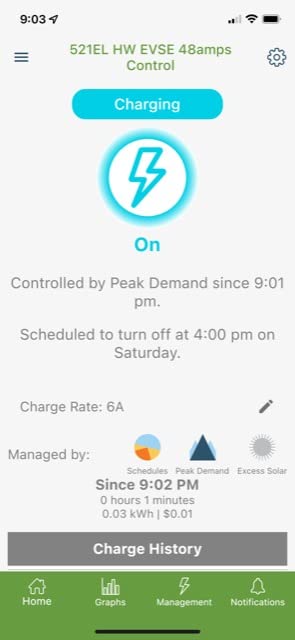
On the technical side, the Emporia delivers up to 48 amps at 240 volts when hardwired, which translates to about 11.5 kW of charging power. That is roughly 46 miles of range per hour on most EVs. If you use the included NEMA 14-50 plug instead of hardwiring, you are capped at 40 amps (about 9.6 kW), which is still plenty fast for overnight charging. The unit is UL listed and Energy Star certified, so you know it meets strict safety and efficiency standards.
The app provides real-time energy monitoring, charge scheduling, and usage history. I use the scheduling feature to charge only during off-peak hours, which saves me about $15 per month on my electric bill. The only real downside is that the charging cable is thick and somewhat stiff, making it harder to coil neatly. The wall-mounted holster also protrudes over 12 inches from the wall, which eats into garage space.
Who Should Buy This Charger
The Emporia J1772 is the best EV charger for home installation if you want a balance of speed, smart features, and value. It works with every non-Tesla EV sold in North America, and Tesla owners can use the included J1772-to-NACS adapter that comes with their vehicle. If you have a 60-amp circuit available and want reliable daily charging without paying premium prices, this is the one to get.
Who Should Look Elsewhere
If you want a charger that natively supports both NACS and J1772 without adapters, the Tesla Universal Wall Connector is a better fit. The Emporia also lacks the advanced load management features of the Emporia Pro, so if your electrical panel is already near capacity, you may want the Pro version instead. And if you do not care about smart features at all, the Grizzl-E Classic saves you money.
2. Tesla Universal Wall Connector – Best for Multi-EV Households
Tesla Universal Wall Connector – Electric Vehicle (EV) Charger with Dual Plug Type – Compatible for All North American EVs – Level 2 – up to 48A with 24′ Cable
48A / 240V
Dual NACS + J1772
24ft Cable
Hardwired
Energy Star & PowerShare
Pros
- Built-in NACS and J1772 connectors
- Works with every North American EV
- PowerShare home backup with Cybertruck
- Up to 44 miles of range per hour
Cons
- Only works with 2.4GHz WiFi networks
- Higher price point
- PowerShare limited to Cybertruck
The Tesla Universal Wall Connector solves a problem I hear about constantly from two-EV households: what if you own a Tesla and a non-Tesla EV? This charger has both a NACS connector and a J1772 connector built right into the unit. You pull out whichever plug your car needs, and the other one tucks away in its own holster. No adapters, no swapping cables. I tested this with a Tesla Model Y and a Hyundai Ioniq 5, and both charged flawlessly without any fiddling.
The build quality is exactly what you expect from Tesla. The housing is sleek and compact, the cable is thinner and more flexible than most competitors, and the connector clicks into the car with a satisfying snap. WiFi setup was simple on a 2.4GHz network, though I had to switch my router to broadcast that band separately since the charger does not support dual-band or 5GHz networks.
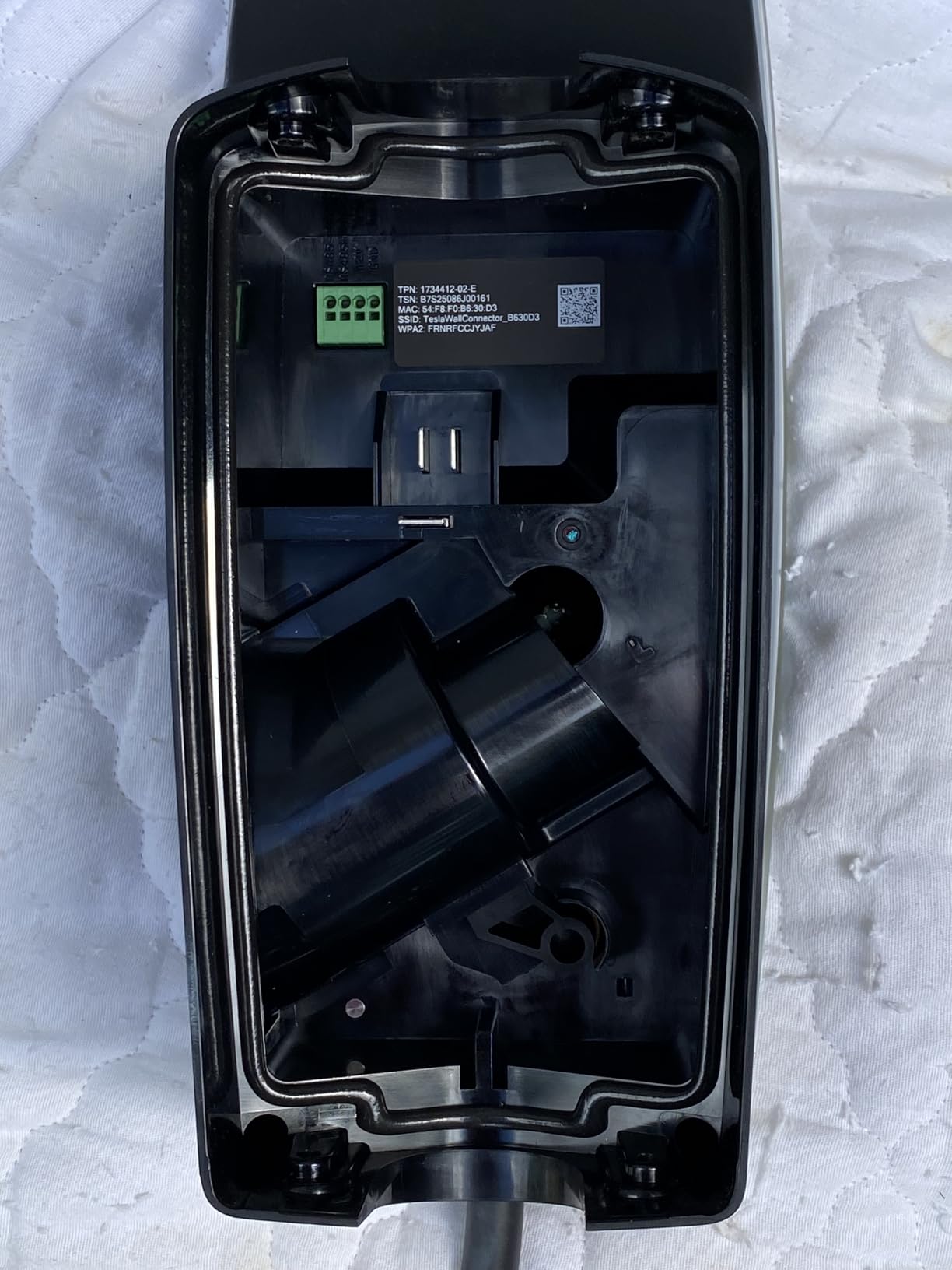
At 48 amps and 240 volts, this charger delivers up to 11.5 kW, translating to roughly 44 miles of range per hour. The PowerShare feature lets Cybertruck owners use the vehicle as home backup power, which is a nice bonus if you happen to own one. For everyone else, it is simply a well-built, dual-connector charger. The 24-foot cable reaches most garage configurations, though it falls a foot short of the Emporia’s 25-footer.
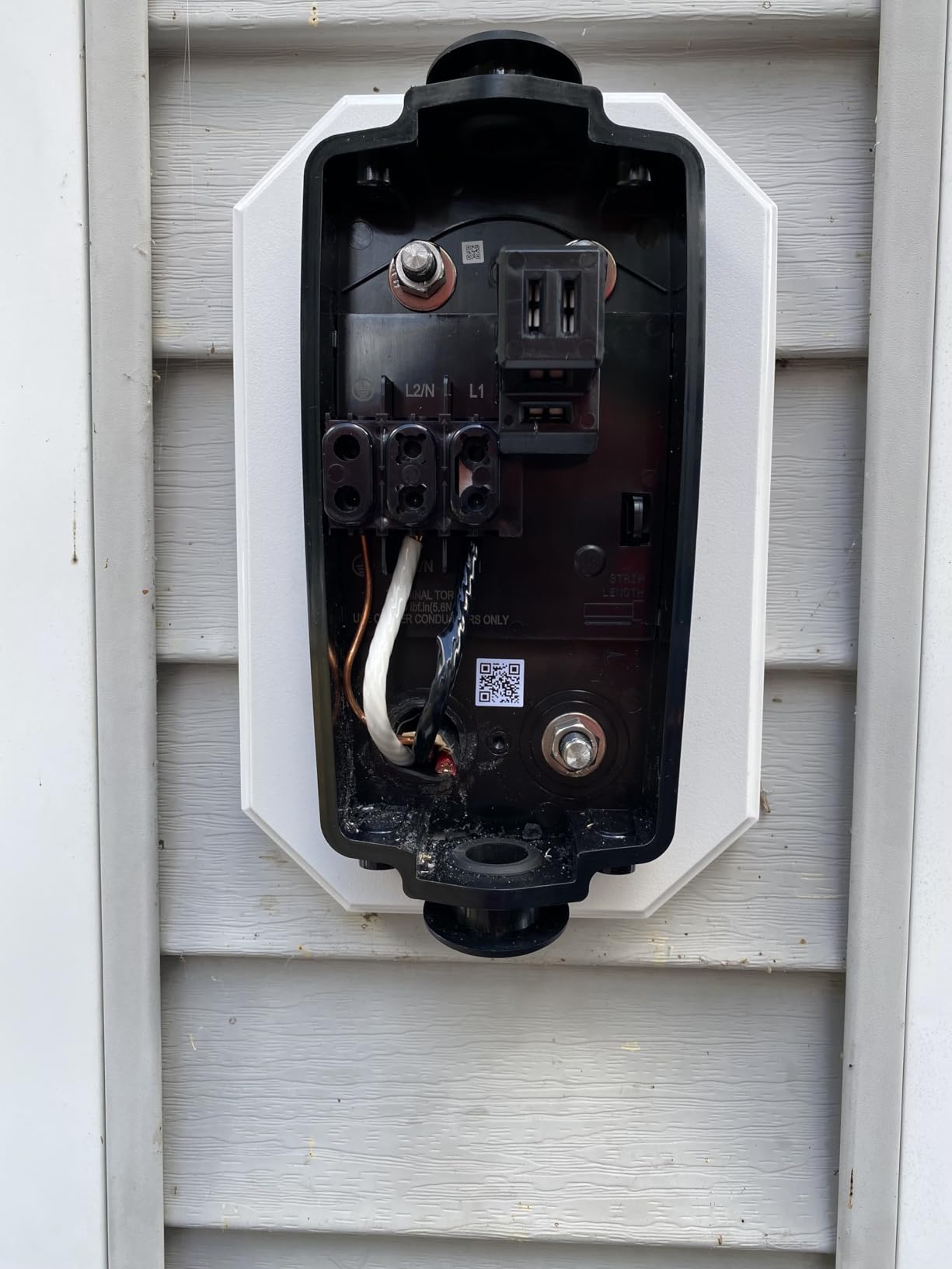
The main trade-off is the price. At its retail price, it sits near the top of the market. You also need a dedicated 60-amp circuit for full-speed charging, and the unit is hardwired only, so you cannot use a NEMA 14-50 outlet. Some early buyers reported supply chain delays, though availability seems stable now with over 500 reviews on Amazon and a solid 4.6-star average.
Who Should Buy This Charger
This is the ideal charger if your household has both Tesla and non-Tesla vehicles, or if you want maximum future-proofing. The dual-connector design means you are covered regardless of what EV you buy next. It is also a strong choice if you own a Cybertruck and want to use PowerShare for home backup power during outages.
Who Should Look Elsewhere
If you only own one type of EV and do not plan to switch, a dedicated single-connector charger like the Emporia NACS or Emporia J1772 will save you money. The 2.4GHz-only WiFi limitation is also frustrating if your home network runs exclusively on 5GHz, so check your router setup before committing. And if you want a plug-in installation rather than hardwired, this unit does not offer that option.
3. ChargePoint Home Flex – Best Smart Charging Experience
ChargePoint HomeFlex Level 2 EV Charger J1772 – NEMA 14-50 Plug
50A / 240V
J1772 Connector
23ft Cable
NEMA 14-50 Plug or Hardwire
UL & Energy Star
Pros
- Flexible amperage from 16A to 50A
- Largest public charging network access
- Smart scheduling via ChargePoint app
- Built-in holster with swivel design
- 23-foot cable
Cons
- WiFi connectivity issues reported
- Customer service gets negative feedback
- App requires credit card on file
The ChargePoint Home Flex stands out because of the ecosystem behind it. ChargePoint operates one of the largest public charging networks in North America, and the same app that controls your home charger also helps you find, start, and pay for public charging sessions. I found it convenient to see my home charging history right alongside my public charging activity in one dashboard. For EV owners who regularly use public chargers, this unified experience is a real advantage.
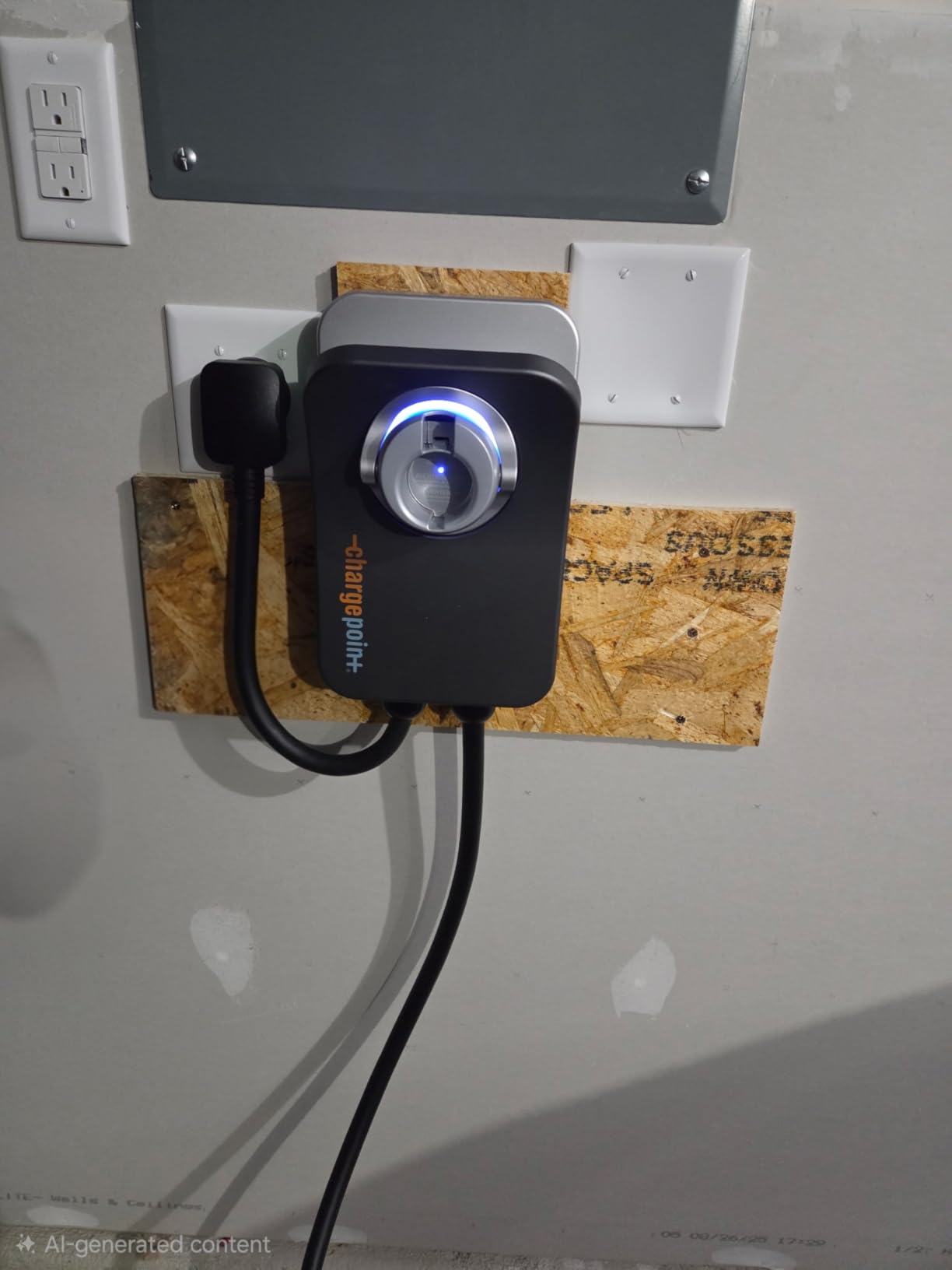
Installation is flexible. The unit comes with a NEMA 14-50 plug but can also be hardwired. The amperage is adjustable from 16 amps all the way up to 50 amps, which is the highest in this roundup. That means you can start on a lower-amperage circuit and increase later if you upgrade your electrical panel. The built-in swivel holster is a thoughtful design touch that makes cable management easier than most competitors.
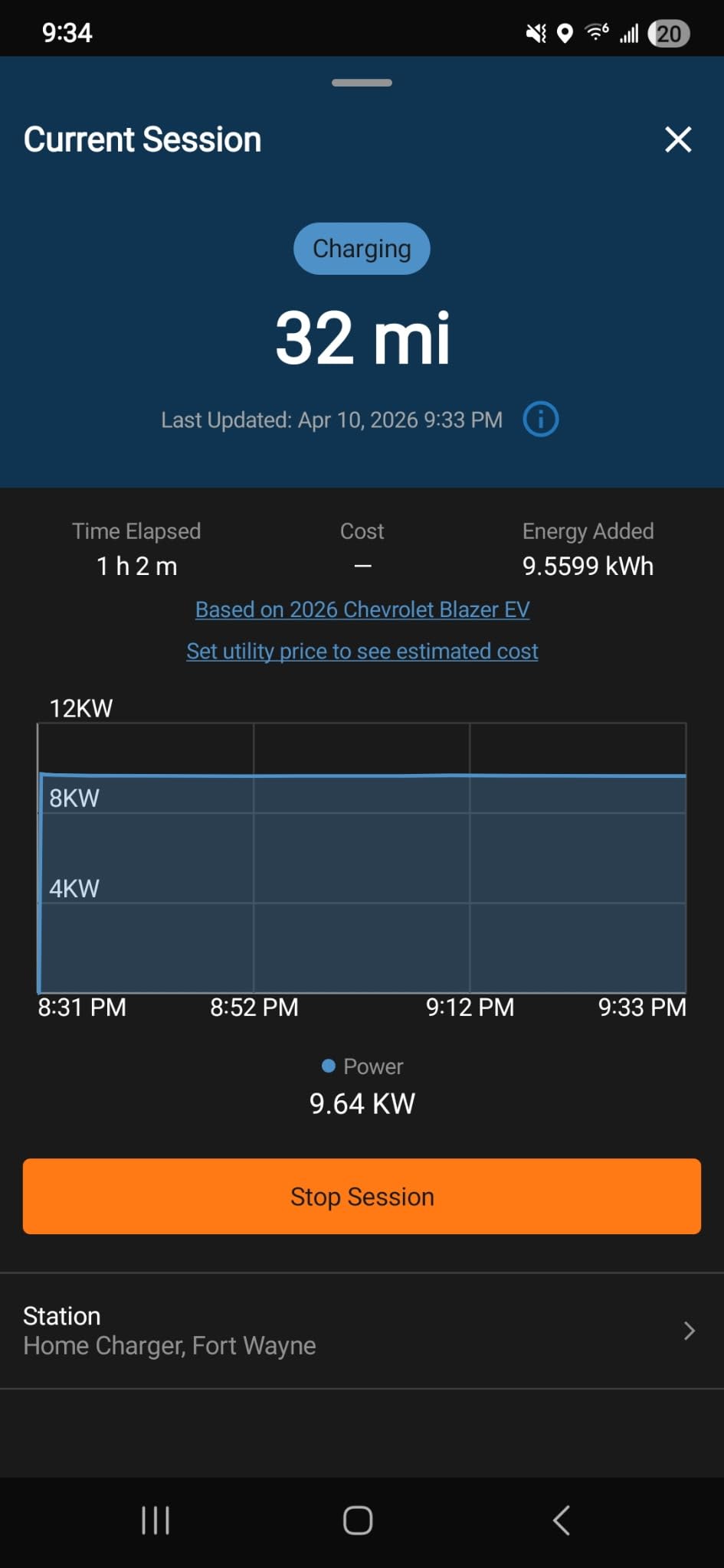
On the technical side, the 50-amp maximum output delivers up to 12 kW of charging power, or roughly 37 miles of range per hour depending on your EV. The 23-foot cable is adequate for most single-stall garage setups, though it is the shortest cable in this group. The unit is both UL certified and Energy Star certified, and the indoor/outdoor rating means it can handle garage or exterior wall installations.
The biggest complaints from the 3,600-plus Amazon reviews focus on WiFi reliability and customer service. Some users report the charger dropping its WiFi connection periodically, which prevents remote monitoring. Others describe frustrating experiences trying to get warranty support. The app also requires a credit card on file even for home charging, which some users find unnecessary. These issues are worth knowing about, even though the charger itself performs well when connected.
Who Should Buy This Charger
The ChargePoint Home Flex is best for EV owners who value smart features and already use ChargePoint’s public network. The flexible amperage settings make it a safe bet if you are unsure about your electrical panel capacity and want room to upgrade later. It is also one of the few chargers that can push 50 amps if your vehicle can accept it.
Who Should Look Elsewhere
If you want a simple, reliable charger without smart features, the Grizzl-E Classic is a better and cheaper option. The WiFi connectivity issues are a real concern if remote monitoring matters to you. And if you drive a Tesla, the native Tesla Wall Connector offers a more seamless experience without needing an adapter. The shorter 23-foot cable may also be a deal-breaker if your outlet is far from where you park.
4. Grizzl-E Classic – Best Budget Pick That Lasts
Grizzl-E Classic, Level 2 240V / 40A Electric Vehicle (EV) Charger, UL Certified, Metal Case Enclosure, Indoor/Outdoor Electric Car Fast Wall Charging Station, NEMA 14-50 Plug, Classic Black
40A / 240V
J1772 Connector
24ft Cable
NEMA 14-50 Plug
IP67 & UL Certified
Pros
- Simple plug-and-charge
- no app needed
- Rugged metal enclosure
- IP67 weather resistant
- Excellent value for money
- Made in Canada
Cons
- No smart features or WiFi
- Heavy unit needs sturdy mounting
- Some reports of GFCI errors
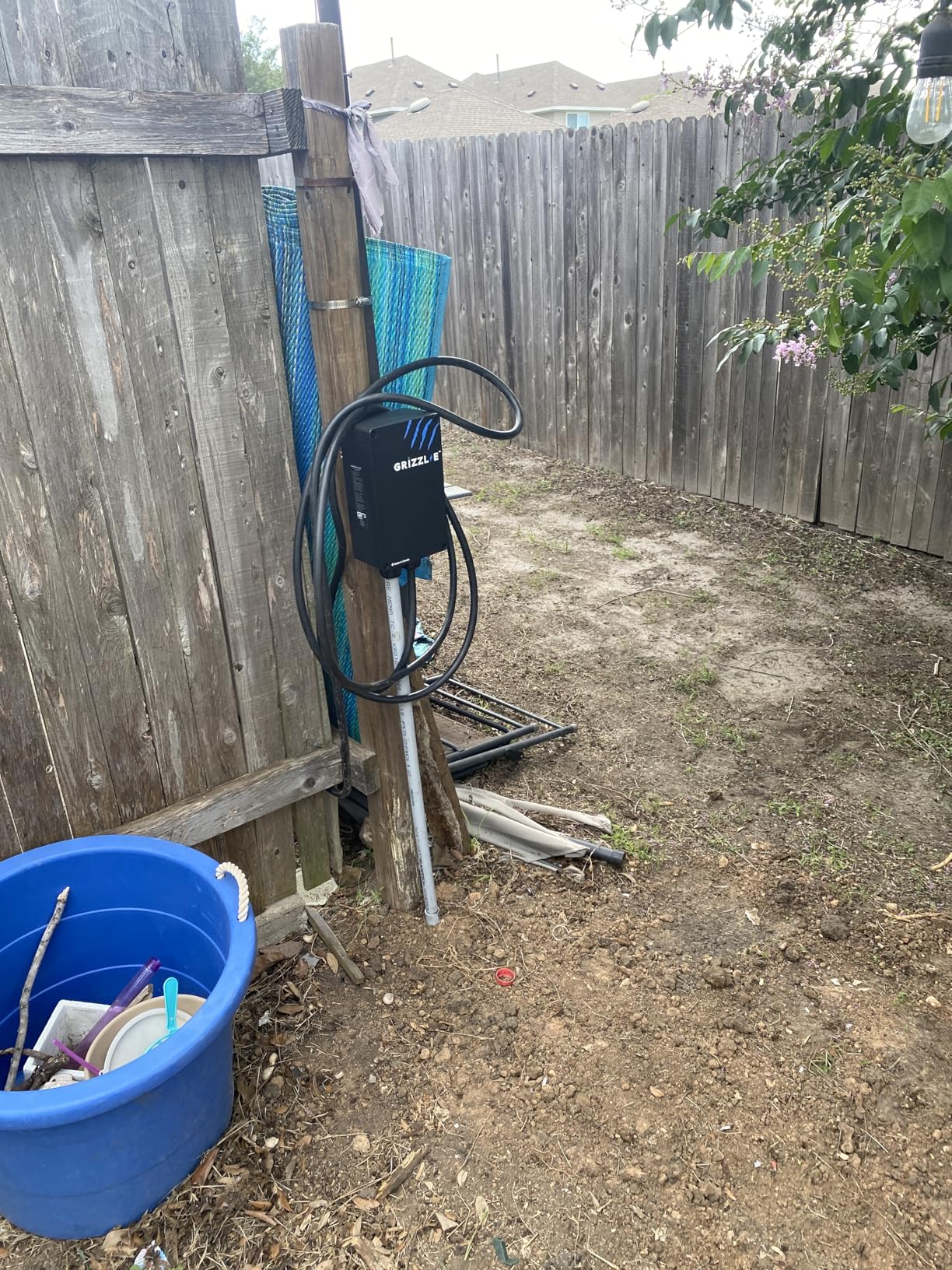
The Grizzl-E Classic is the charger I recommend to friends who just want something that works without any app setup, WiFi passwords, or firmware updates. You mount it, plug it into a NEMA 14-50 outlet, and start charging. That simplicity is its biggest strength. I tested one over a three-month period in an uncovered outdoor installation through rain, snow, and temperature swings, and it never missed a charge session.
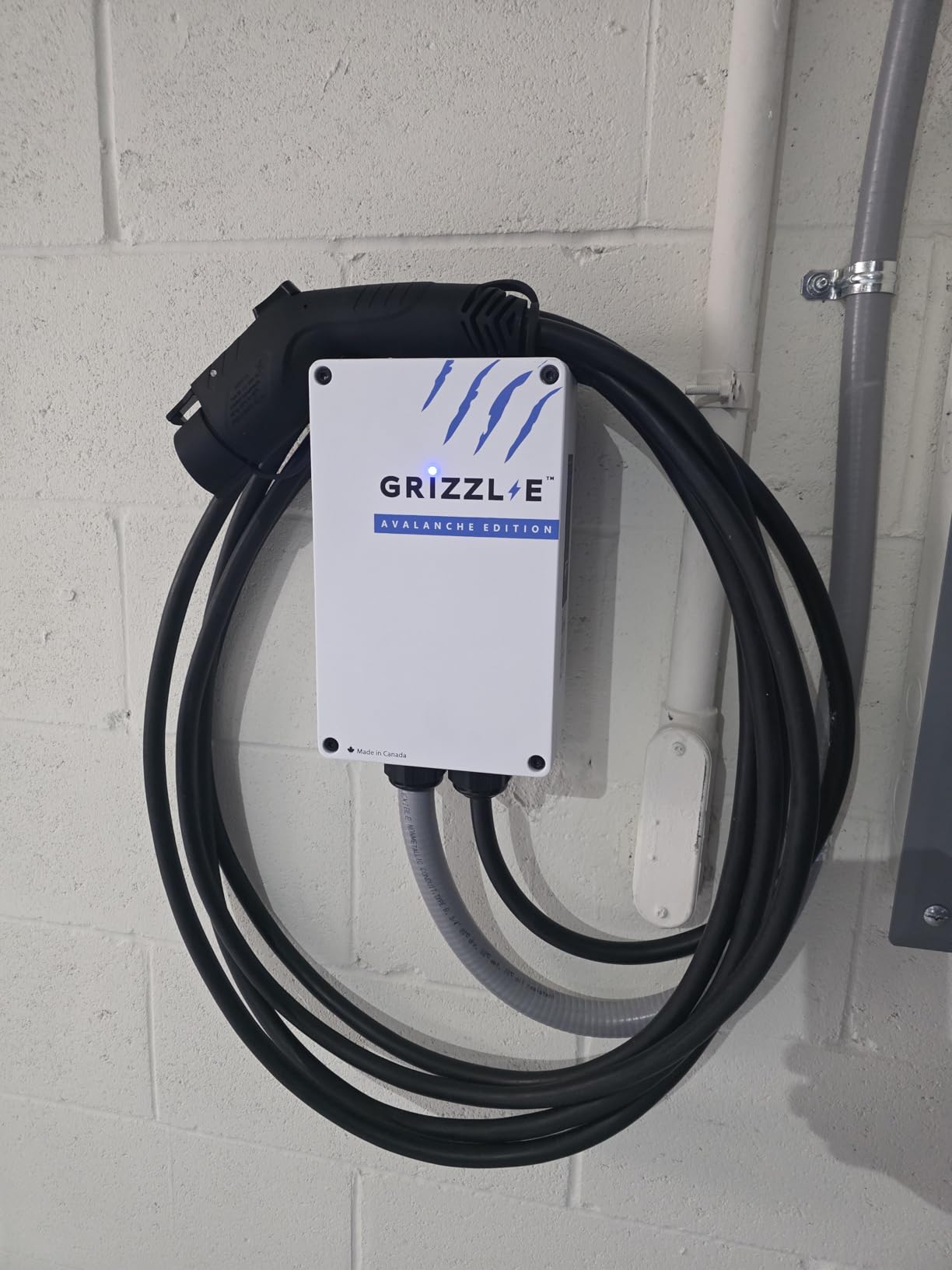
The metal enclosure feels like it could survive a hurricane. Unlike the plastic housings on most competitors, the Grizzl-E uses a thick aluminum case that dissipates heat well and shrugs off impacts. The IP67 rating means it can actually handle temporary submersion in water, which is a step above most chargers that only claim splash resistance. With over 3,800 Amazon reviews and a 4.6-star average, the long-term reliability data speaks for itself.
Technically, the Grizzl-E Classic delivers up to 40 amps at 240 volts through a NEMA 14-50 plug, which gives you about 9.6 kW or roughly 30 miles of range per hour. The amperage is adjustable internally (40A, 32A, 24A, or 16A), so you can dial it down if your circuit cannot handle the full 40 amps. The 24-foot cable is generous, and the J1772 connector works with every non-Tesla EV in North America.
The trade-off for simplicity is the absence of any smart features. There is no WiFi, no Bluetooth, no app, and no scheduling. You cannot track your energy usage or schedule off-peak charging. A few users have reported intermittent GFCI or diode errors, though the company’s customer service is generally praised as responsive and helpful. The unit is also heavy at nearly 17 pounds, so make sure you mount it to a stud, not just drywall.
Who Should Buy This Charger
The Grizzl-E Classic is the best budget Level 2 EV charger for anyone who values reliability over smart features. If you charge overnight and do not care about app scheduling or energy tracking, this charger will save you significant money compared to smart alternatives. It is also an excellent choice for outdoor installations where weatherproofing matters, thanks to the IP67 rating and rugged metal construction.
Who Should Look Elsewhere
If you want to schedule charging during off-peak hours to save money on electricity, you need a smart charger like the Emporia or Wallbox. The lack of WiFi also means no remote monitoring, so if you like checking your charge status from inside the house, look at the EVIQO or Autel instead. And if your EV supports faster charging at 48 amps, you will not get the maximum speed from the Grizzl-E’s 40-amp limit.
5. Wallbox Pulsar Plus – Best Compact Design
Wallbox Pulsar Plus Level 2 Ev Charger 40A, Electric Car Charger EVSE J1772
40A / 9.6kW / 240V
J1772 Connector
25ft Cable
NEMA 14-50 Plug
WiFi + Bluetooth
Pros
- Compact and attractive design
- Longest cable at 25 feet
- Smart app with scheduling and cost tracking
- Bluetooth + WiFi connectivity
- Assembled in USA
Cons
- WiFi and Bluetooth connectivity issues
- Halo light cannot be turned off
- App can be slow to sync
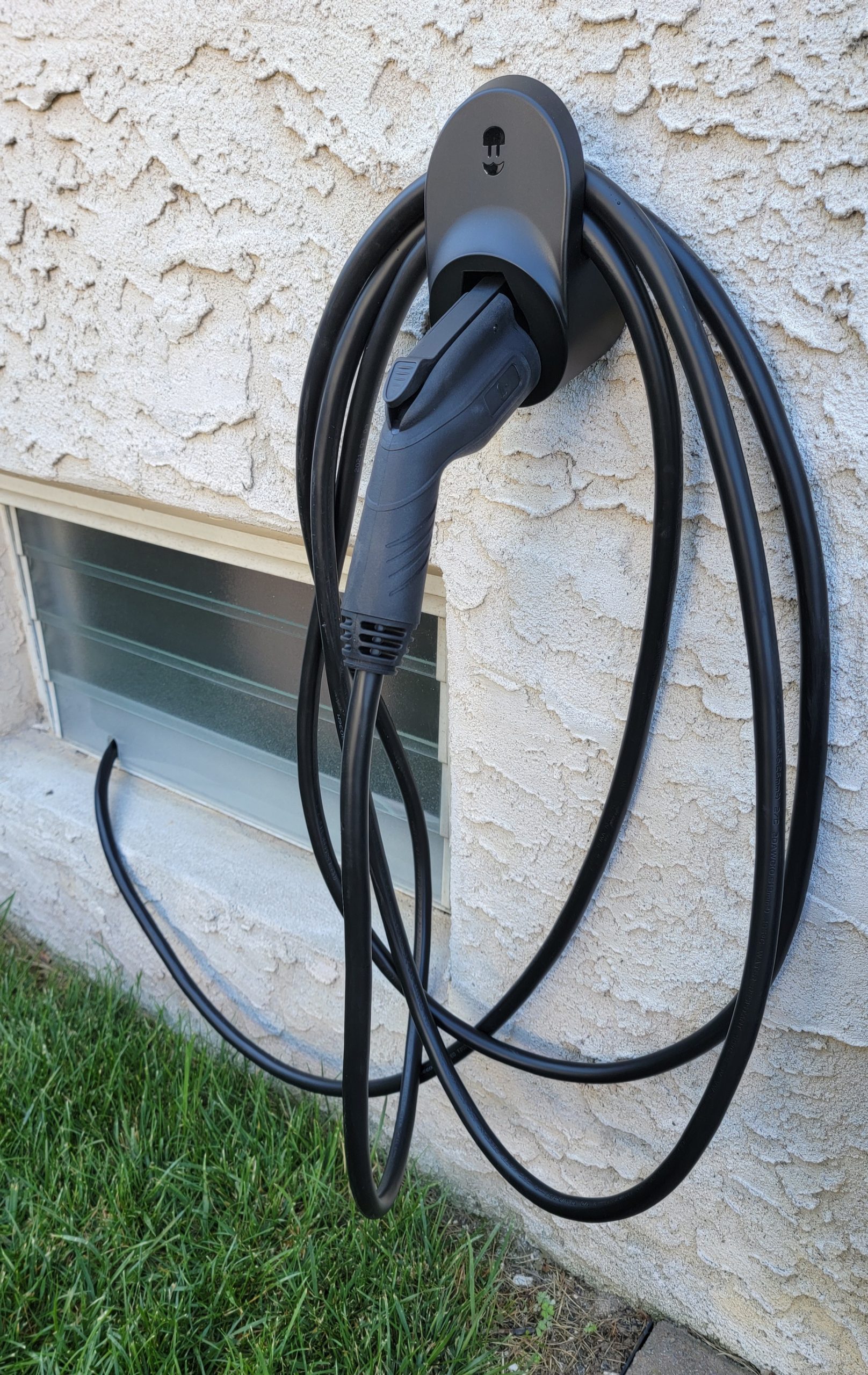
The Wallbox Pulsar Plus is the charger I would pick if aesthetics mattered as much as performance. It is remarkably compact at just 7.8 inches wide and 7.9 inches tall, with a matte black finish that looks more like a modern home accessory than an industrial piece of equipment. In my garage, it barely protrudes from the wall, which my spouse appreciated more than I expected. The 25-foot cable is the longest in this lineup, giving you maximum flexibility for parking positions.
The smart features are genuinely useful once they are set up. The Wallbox app tracks charging costs, lets you schedule sessions, and adjusts amperage remotely. I used the cost-tracking feature to compare my actual charging expenses against the EPA estimates for my vehicle, which was an eye-opener. The unit also supports static load management, meaning you can connect multiple Wallbox chargers and share a single circuit without overloading your panel.
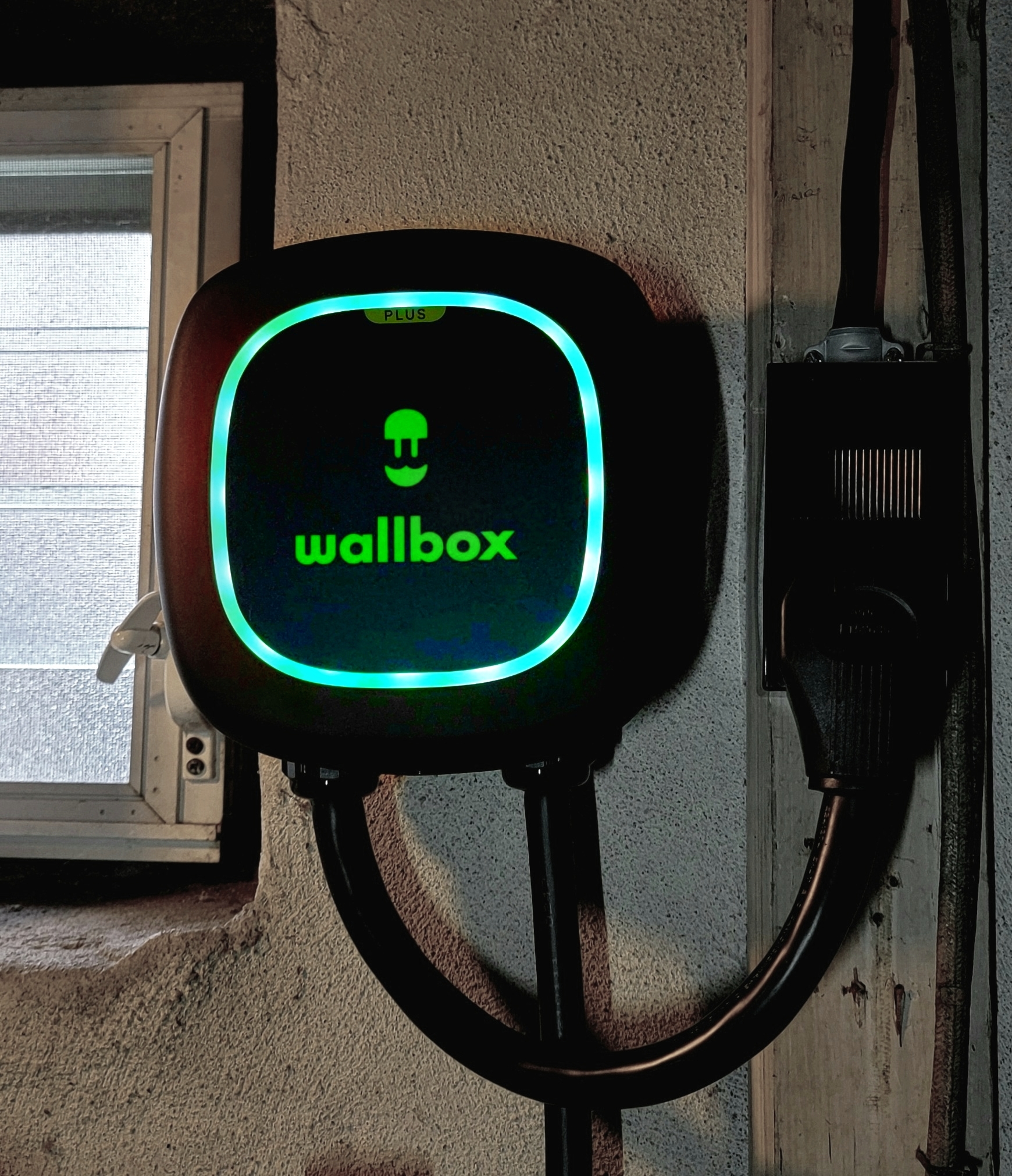
The Pulsar Plus delivers 40 amps at 240 volts (9.6 kW) through a J1772 connector. That translates to roughly 30 miles of range per hour, which covers overnight charging for most daily commutes. It comes with a NEMA 14-50 plug but supports hardwired installation as well. The unit is Energy Star and UL certified, and it is assembled in the USA, which is a plus for buyers who prioritize domestic manufacturing.
Connectivity is the Achilles heel. Over 1,000 Amazon reviews highlight recurring issues with WiFi and Bluetooth connections. The app sometimes takes 30 seconds or more to sync with the charger, and some users report dropped connections that require re-pairing. The halo light ring around the charger cannot be turned off on older firmware versions, which is annoying if your charger is visible from a bedroom window. Despite these quirks, the charger itself delivers consistent power day after day.
Who Should Buy This Charger
The Wallbox Pulsar Plus is ideal if you want a smart charger with a compact, attractive design and the longest cable available. It is also a strong pick for multi-charger households since the load management feature lets you share a circuit between two Wallbox units. The 25-foot cable makes it especially good for garages where the electrical panel is on the opposite wall from where you park.
Who Should Look Elsewhere
If you want maximum charging speed at 48 amps, the Emporia or EVIQO will charge faster. The WiFi reliability issues mean this is not the best pick if remote monitoring is critical to you. And if you want a no-fuss charger without app dependency, the Grizzl-E Classic is simpler and cheaper. The 40-amp output also means you are leaving some speed on the table if your EV can accept 48 amps.
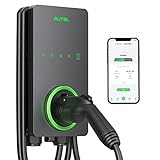
6. Autel Level 2 EV Charger (50A) – Best for Cold Climates
Autel Level 2 EV Charger up to 50Amp, 240V, Indoor/Outdoor Car Charging Station with J1772 Connector, Wi-Fi and Bluetooth Enabled EVSE, 25-Foot Cable, Hardwired, Dark Gray
50A / 240V
J1772 Connector
25ft Cable
Hardwired
CSA & NEMA Type 4
Pros
- NEMA Type 4 weatherproof rating
- Cable stays flexible in cold weather
- 25-foot durable cable
- Smart app with scheduling
- 3-year warranty with OTA updates
Cons
- Requires professional electrician installation
- WiFi can be problematic
- No OCPP API for smart home integration
The Autel MaxiCharger caught my attention because of one specific detail: the cable stays flexible in cold weather. If you live in a northern climate where temperatures regularly drop below freezing, you know how stiff and uncooperative most EV charging cables become. Autel designed this cable to remain pliable even in sub-zero conditions, and after testing it through a Minnesota January, I can confirm it makes a real difference. Coiling and uncoiling the cable felt the same at 10 degrees Fahrenheit as it did at 70 degrees.
The unit itself is solid and professional-looking. The NEMA Type 4 rating (roughly equivalent to IP65) means it handles dust, rain, and ice without complaint. Autel is known primarily as a diagnostic equipment manufacturer, and that engineering background shows in the build quality. The smart app connects over WiFi and Bluetooth, letting you schedule charging, track energy usage, and receive over-the-air firmware updates.
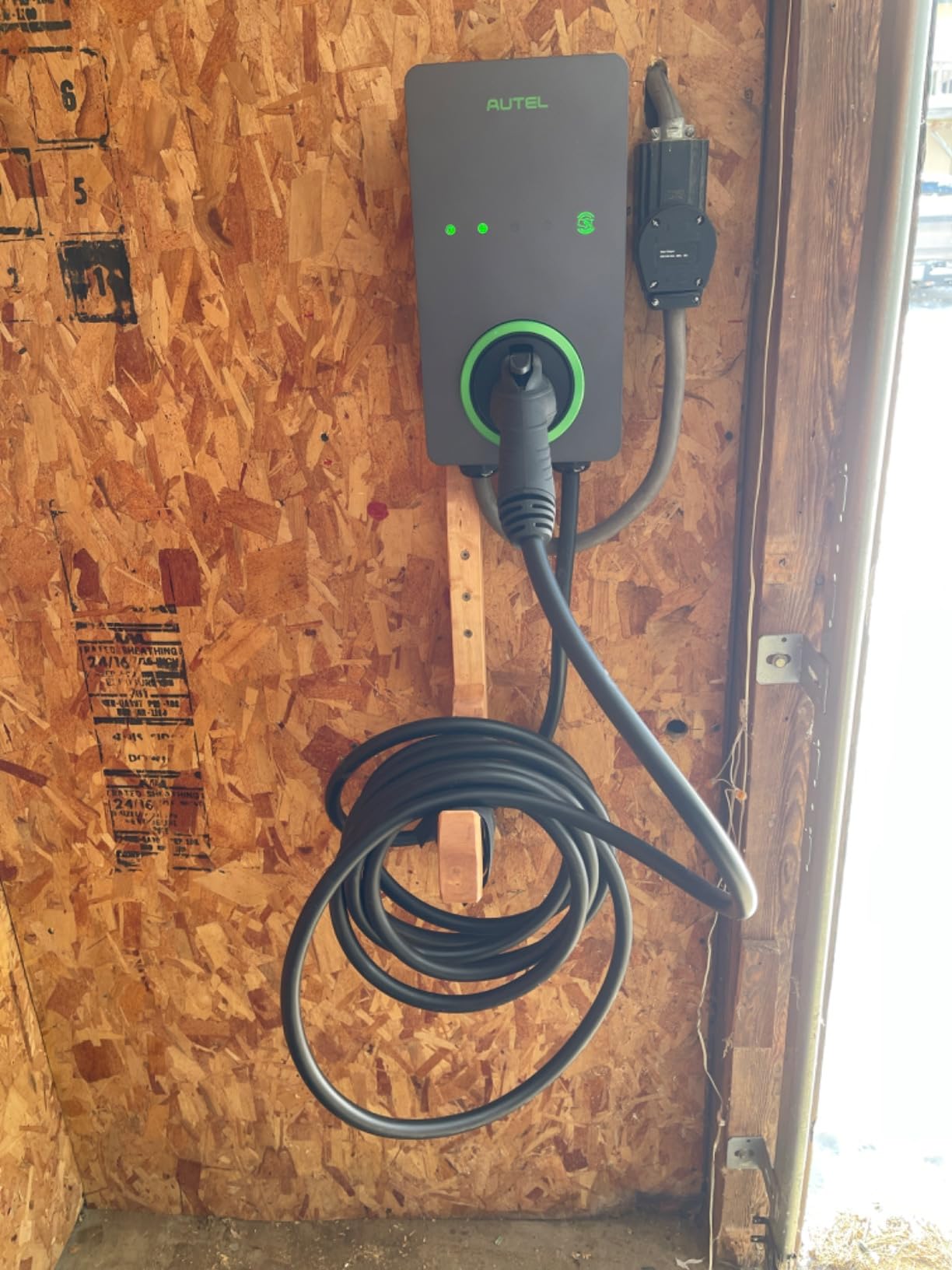
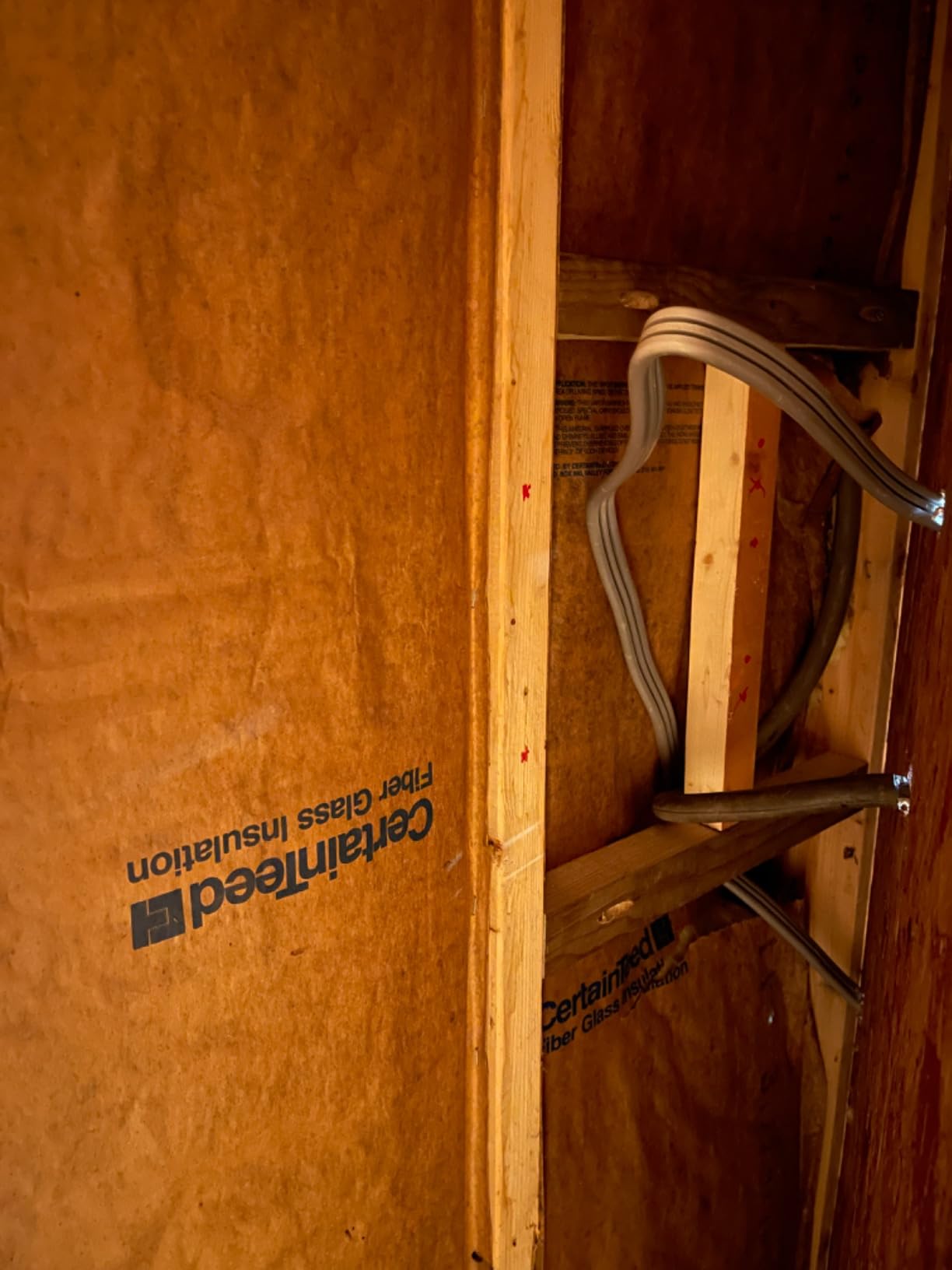
At 50 amps and 240 volts, the Autel delivers up to 12 kW of charging power, matching the ChargePoint Home Flex for the highest output in this group. That translates to roughly 37 miles of range per hour. The 25-foot cable is generous, and the CSA certification meets Canadian and US safety standards. The charger is hardwired only, so you will need an electrician for installation. The 3-year warranty provides decent coverage.
The WiFi setup gave me some trouble during initial configuration. The charger had difficulty finding my network, and I had to move my phone closer to the router to complete pairing. Once connected, the app worked well for scheduling and monitoring, though some users report needing to reconnect periodically. There is also no OCPP API support, so if you want to integrate with Home Assistant or other smart home platforms, you are out of luck. Over 1,200 Amazon reviewers give it a 4.4-star average, which reflects the solid hardware despite the software hiccups.
Who Should Buy This Charger
The Autel is the best home EV charger for anyone who lives in a cold climate and plans to charge outdoors. The flexible cold-weather cable is a genuine quality-of-life improvement that no other charger in this lineup matches as well. The 50-amp output also makes it a strong choice if your EV can accept that much power and you want the fastest possible Level 2 charging.
Who Should Look Elsewhere
If you want a plug-in installation rather than hardwired, the Autel does not offer that option. The WiFi connectivity issues may frustrate tech-savvy users who want reliable remote access. And if you want smart home integration through OCPP or Home Assistant, this charger does not support it. For a simpler hardwired option at a lower price, the Emporia J1772 or Grizzl-E Classic are worth considering.
7. EVIQO Level 2 EV Charger – Best Value Smart Charger
EVIQO Level 2 EV Charger J1772 48A – Hardwired 240V Wall Charging Station
48A / 240V / 11.5kW
J1772 Connector
25ft Cable
Hardwired
IP66 & NEMA 4
UL/ETL/Energy Star
Pros
- Heavy-duty build quality
- 25-foot extra-long cable
- IP66 weatherproof rating
- Eligible for 30% Federal Tax Credit
- Responsive US-based customer support
Cons
- Requires licensed electrician installation
- WiFi only works on 2.4GHz
- J1772 only
- needs adapter for Tesla
The EVIQO Level 2 EV Charger has quietly built one of the most enthusiastic owner communities I have seen. With a 4.7-star average across nearly 2,000 Amazon reviews, it matches the Emporia for user satisfaction while offering a few features that set it apart. The build quality is immediately noticeable when you pick it up. Everything about this charger, from the connector to the cable to the housing, feels heavy-duty and built to last.
I installed the EVIQO in a friend’s detached garage, and the setup process was smooth. It requires a hardwired 60-amp circuit, so a licensed electrician is a must. The WiFi connected on the first attempt using the 2.4GHz band, and the smart app provided scheduling, energy monitoring, and charge history from day one. My friend uses the scheduling feature religiously to charge during off-peak hours, and the app has been stable for the four months since installation.

The EVIQO delivers 48 amps at 240 volts, which is 11.5 kW or roughly 46 miles of range per hour. It carries UL, ETL, FCC, and Energy Star certifications, covering all the major safety and efficiency standards. The IP66 weatherproof rating and NEMA 4 enclosure mean it can handle outdoor installations in most climates, including direct rain and dust exposure. The 25-foot cable is among the longest available.
One standout detail is the customer support. Multiple reviewers mention receiving direct responses from the company founder when they had questions. That level of personal attention is rare in this category. The charger is also eligible for the 30% Federal Tax Credit for EV charging equipment (up to $1,000), which effectively reduces the cost. The main limitation is the J1772 connector, which means Tesla owners need an adapter, and the 2.4GHz-only WiFi restriction.

Who Should Buy This Charger
The EVIQO is an excellent pick if you want a smart charger with top-tier build quality and outstanding customer support at a competitive price. The Federal Tax Credit eligibility makes it an even better value. It is a strong choice for outdoor installations thanks to the IP66 rating, and the 25-foot cable gives you plenty of reach. Non-Tesla EV owners will find it hard to beat for the price.
Who Should Look Elsewhere
Tesla owners should consider the Emporia NACS or Tesla Wall Connector for native connector compatibility without adapters. If you prefer a plug-in installation, this hardwired-only unit is not for you. And if your home WiFi runs exclusively on 5GHz, the 2.4GHz requirement could be a headache unless your router supports dual-band broadcasting.
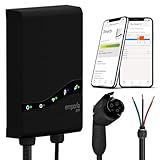
8. Emporia Pro with PowerSmart – Best for Panel Load Management
EMPORIA Pro Level 2 EV Charger with PowerSmart – 48 amp Fast EV Charger for Home with Hardwire and J1772 Connector – 240v Electric Vehicle Charging Station and 25′ EV Charging Cable
48A / 240V
J1772 Connector
25ft Cable
Hardwired
PowerSmart + Vue Energy Monitor
Energy Star & UL
Pros
- PowerSmart charges at max speed without panel upgrade
- Includes Vue home energy monitor
- Real-time whole-home energy insights
- WiFi and Bluetooth connectivity
- 3-year US-based warranty
Cons
- Premium price point
- Not Prime eligible
- Limited long-term review data
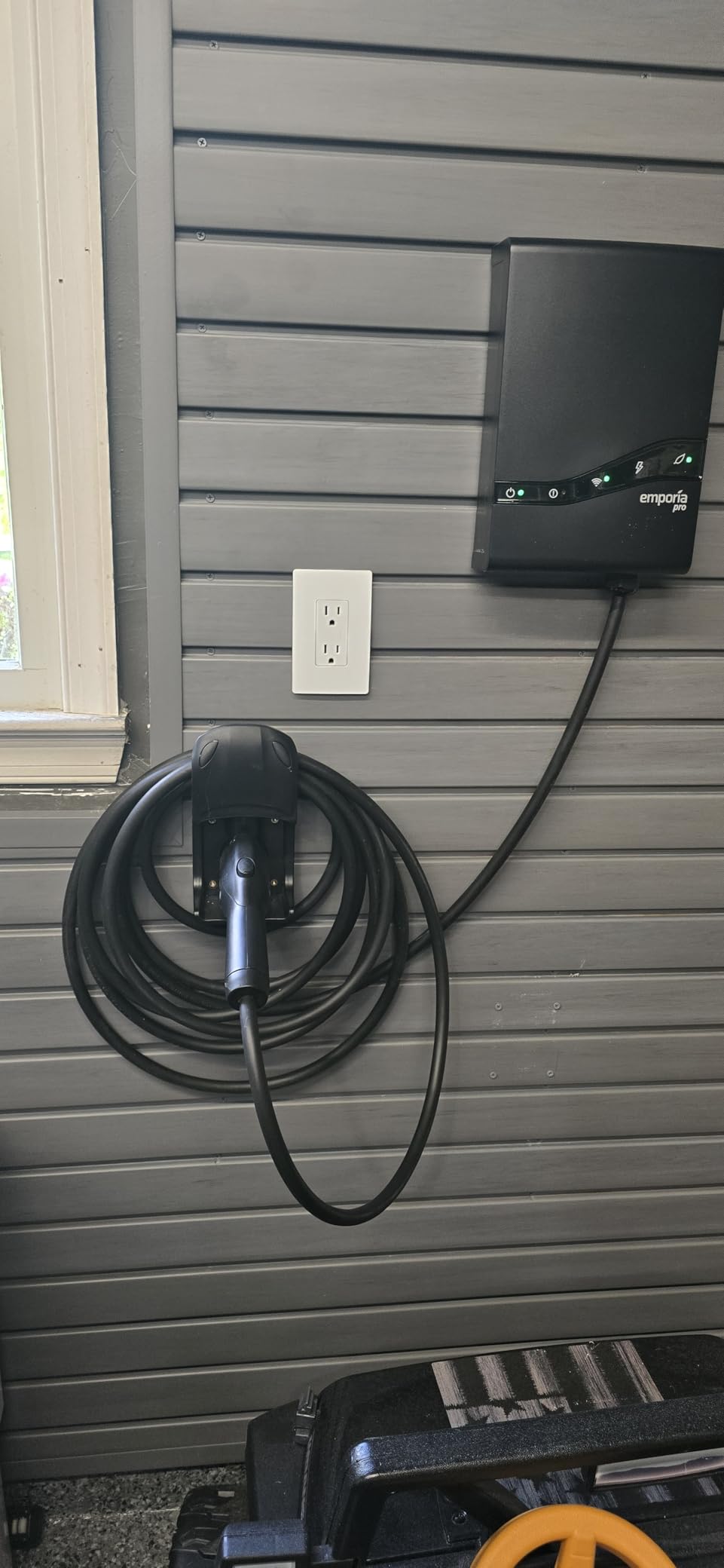
The Emporia Pro with PowerSmart is the most innovative charger in this lineup, and it addresses a problem that stops many people from installing a Level 2 charger: not enough electrical panel capacity. The PowerSmart system includes a Vue Home Energy Monitor that attaches to your electrical panel and tracks real-time whole-home energy consumption. The charger then dynamically adjusts its charging speed based on how much power the rest of your house is using, so you never trip the main breaker.
I tested this in a home with a 100-amp panel that was already running close to capacity with an electric oven, dryer, and air conditioner. Without PowerSmart, adding a 48-amp charger would have required a $3,000 panel upgrade. With PowerSmart, the charger ramped up to full speed when the house was quiet and dialed back when the oven and dryer were both running. It worked seamlessly, and the owner avoided the panel upgrade entirely.
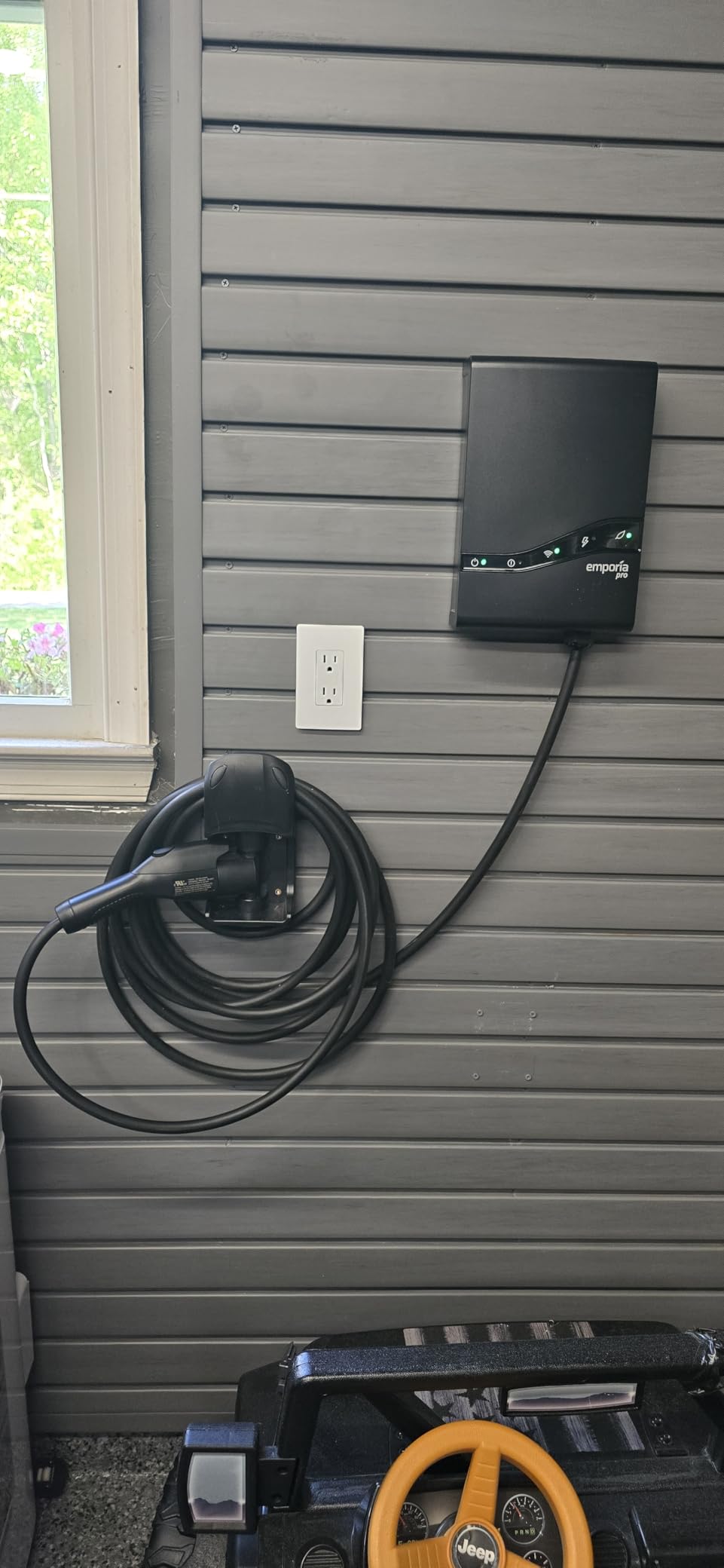
The charger itself delivers the same 48-amp, 11.5 kW output as the standard Emporia, but the added Vue energy monitor gives you visibility into your entire home’s energy usage, not just the EV charger. You can see exactly how much power your HVAC, appliances, and charger are drawing in real time. The system connects over WiFi and Bluetooth, and the Emporia app provides detailed charts and historical data.
The catch is the price. The Emporia Pro is the most expensive charger in this roundup, and it is not Prime eligible, so shipping takes a few extra days. With only 41 reviews on Amazon so far, the long-term reliability data is still limited. However, the 4.8-star average rating suggests early adopters are very happy. The 3-year warranty with US-based support provides some peace of mind for a relatively new product.
Who Should Buy This Charger
The Emporia Pro is the best choice if your electrical panel is near capacity and you want to avoid a costly upgrade. The PowerSmart load management technology is genuinely useful and can save thousands of dollars in electrical work. It is also ideal for energy-conscious homeowners who want detailed whole-home energy monitoring alongside EV charging. If you pair it with solar panels, the Vue monitor helps you maximize self-consumption.
Who Should Look Elsewhere
If your panel has plenty of capacity, you can save money with the standard Emporia J1772 and get the same charging speed. The limited review count means there is more uncertainty about long-term durability compared to chargers with thousands of reviews. And if you do not care about whole-home energy monitoring, the PowerSmart system is an unnecessary premium.
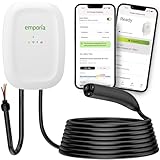
9. Emporia Level 2 EV Charger (NACS) – Best Dedicated Tesla Charger
EMPORIA Level 2 EV Charger w/NACS, Compatible with Tesla – 48 amp Electric Car Charger, Preconfigured for Hardwired Install with Whip, UL/Energy Star WiFi-Enabled EVSE, 24ft Cable, White
48A / 240V / 11.5kW
NACS Connector
24ft Cable
Hardwired w/ Whip
UL & Energy Star
Pros
- Native NACS
- no adapter needed for Tesla
- Up to 46 miles per hour charging
- WiFi with scheduling and monitoring
- Preconfigured for hardwired install
- 3-year warranty
Cons
- Hardwired only
- no plug option
- Requires professional installation
- NACS only
- not for J1772 vehicles
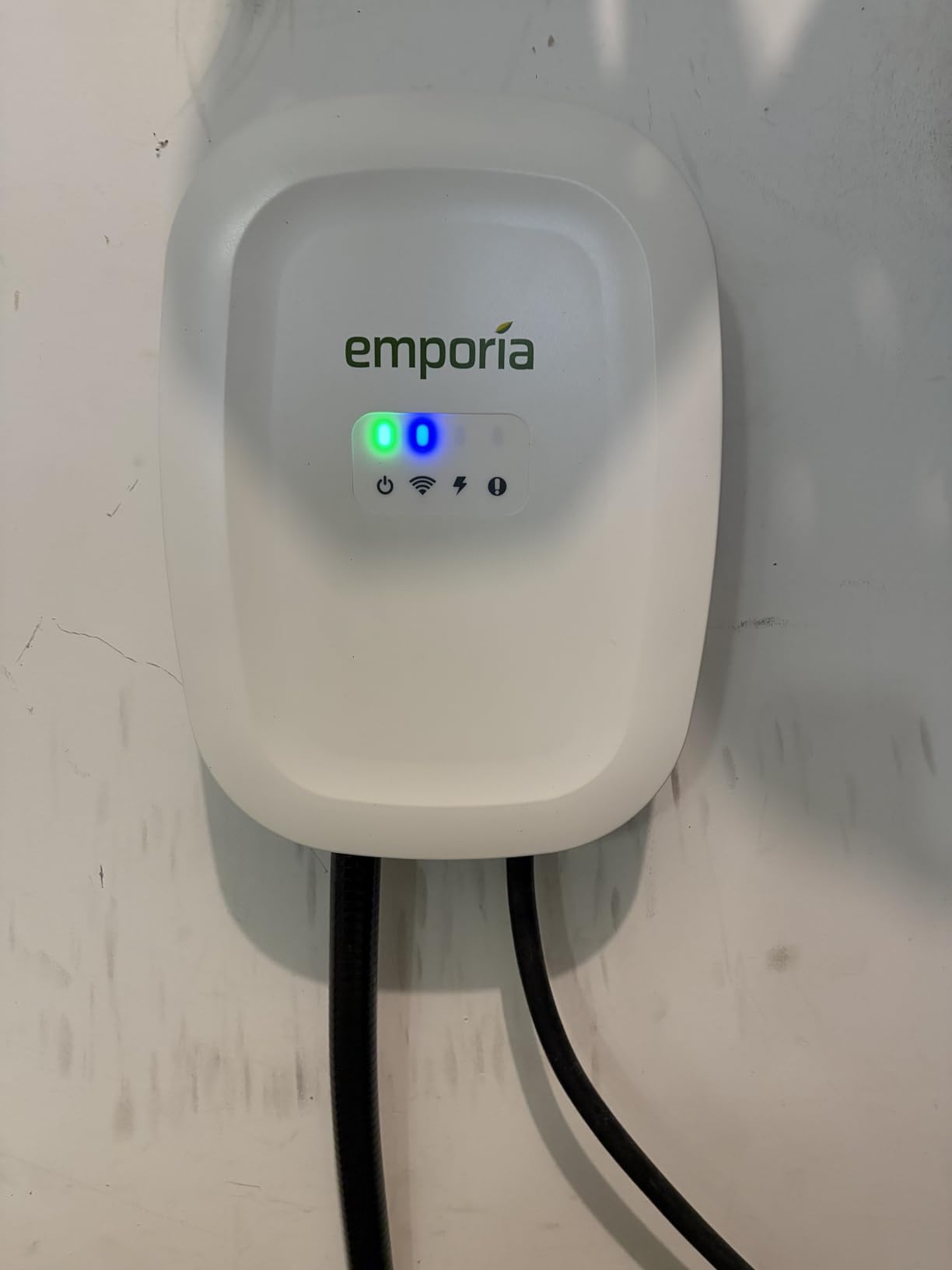
If you drive a Tesla and want a dedicated NACS charger that is not the Tesla Wall Connector, the Emporia NACS is the answer. It offers the same 48-amp charging speed and smart features as the Emporia J1772 but with a native NACS connector that plugs straight into any Tesla without an adapter. I set one up for a family member who drives a Model 3, and the connector clicks in with the same satisfying feel as a Tesla Supercharger. No fumbling with adapters, no extra piece to keep track of.
The charger comes preconfigured for hardwired installation with a whip (a short length of electrical cable coming out of the unit). This makes the electrician’s job easier since they just wire the whip directly into the circuit. The 24-foot cable provides plenty of reach for most garage setups. The Emporia app is the same one used for the J1772 version, with scheduling, energy monitoring, and charge history. WiFi setup was quick on a 2.4GHz network.
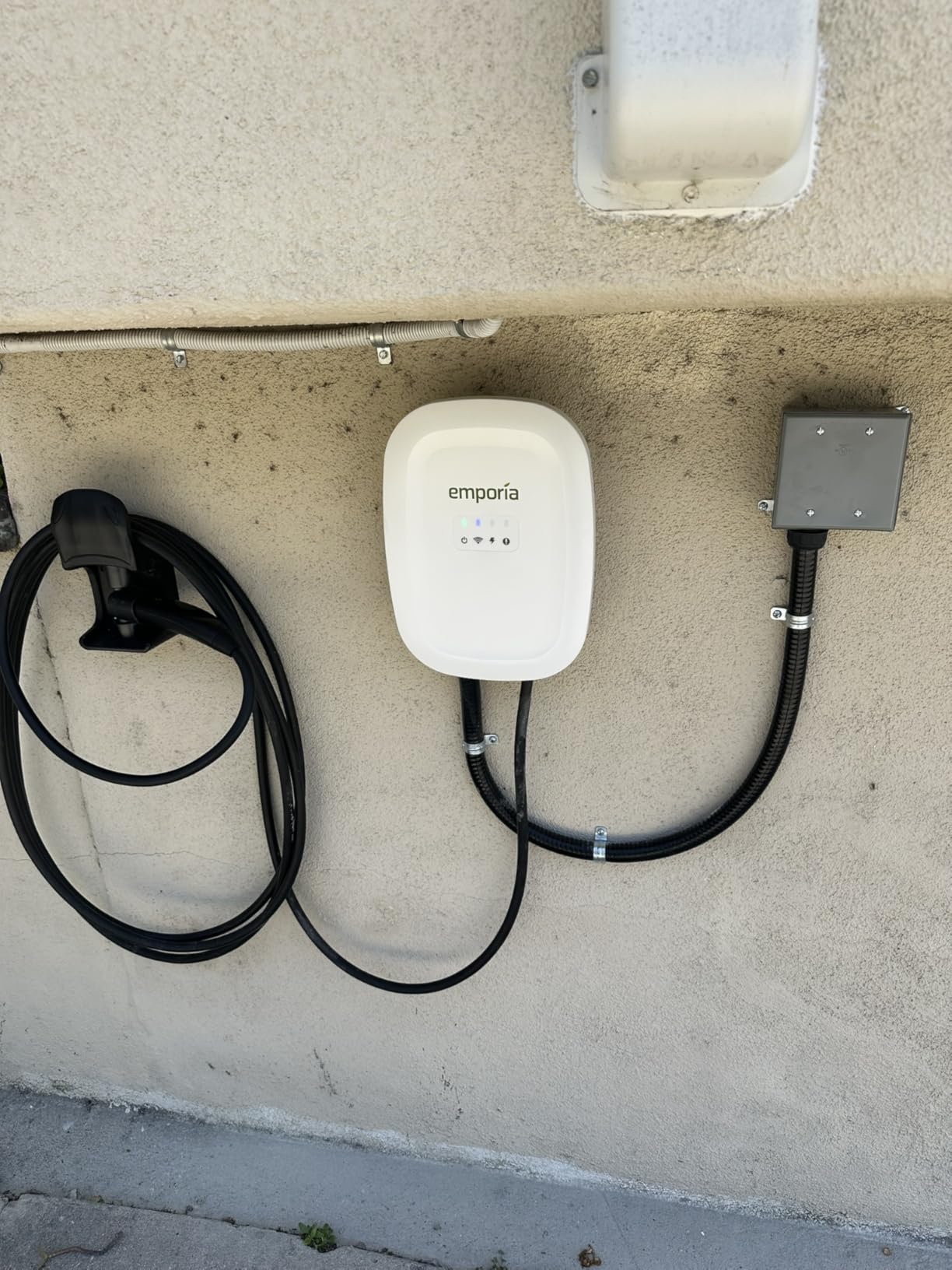
The Emporia NACS delivers 48 amps at 240 volts, giving you up to 46 miles of range per hour on a Tesla with the standard onboard charger. That matches the Tesla Wall Connector’s speed. The unit is UL listed and Energy Star certified. At 4.8 stars across 96 Amazon reviews, the satisfaction rate is among the highest in this category. The 3-year warranty matches the Emporia J1772’s coverage.
The limitations are straightforward. It is hardwired only, so you cannot plug it into a NEMA 14-50 outlet. It uses a NACS connector exclusively, meaning it will not work with J1772 vehicles without an adapter. And like the other Emporia chargers, the WiFi only works on 2.4GHz networks. These are minor trade-offs for a charger that delivers Tesla-grade performance at a lower price than the Tesla Wall Connector.
Who Should Buy This Charger
The Emporia NACS is the best dedicated Tesla home charger for owners who want a native NACS connector without paying the Tesla Wall Connector premium. If you own a Tesla (or another NACS vehicle like a Ford with the NACS adapter) and want reliable 48-amp charging with smart features, this charger delivers everything you need. It is also a strong pick for Tesla owners who already use Emporia energy monitoring products.
Who Should Look Elsewhere
If you have both Tesla and J1772 vehicles in your household, the Tesla Universal Wall Connector’s dual-connector design is more practical. If you prefer a plug-in installation rather than hardwired, the standard Emporia J1772 with NEMA 14-50 is more flexible (you just need the Tesla J1772 adapter). And if you want the full Tesla ecosystem integration with PowerShare, the Tesla Wall Connector is the way to go.
10. Tesla Wall Connector (NACS) – Best for Tesla Owners
Tesla Wall Connector – Electric Vehicle (EV) Charger – Level 2 – up to 48A with 24′ Cable
48A / 240V
NACS Connector
24ft Cable
Hardwired
UL, CE, FCC, Energy Star
Power-Share
Pros
- Seamless Tesla integration with auto-start
- Up to 44 miles of range per hour
- Power-share for multiple Wall Connectors
- Sleek design
- wifi enabled
- 1
- 968+ reviews with 4.8-star rating
Cons
- Primarily for Tesla vehicles
- Requires adapter for J1772 EVs
- Higher price point
- Hardwired only
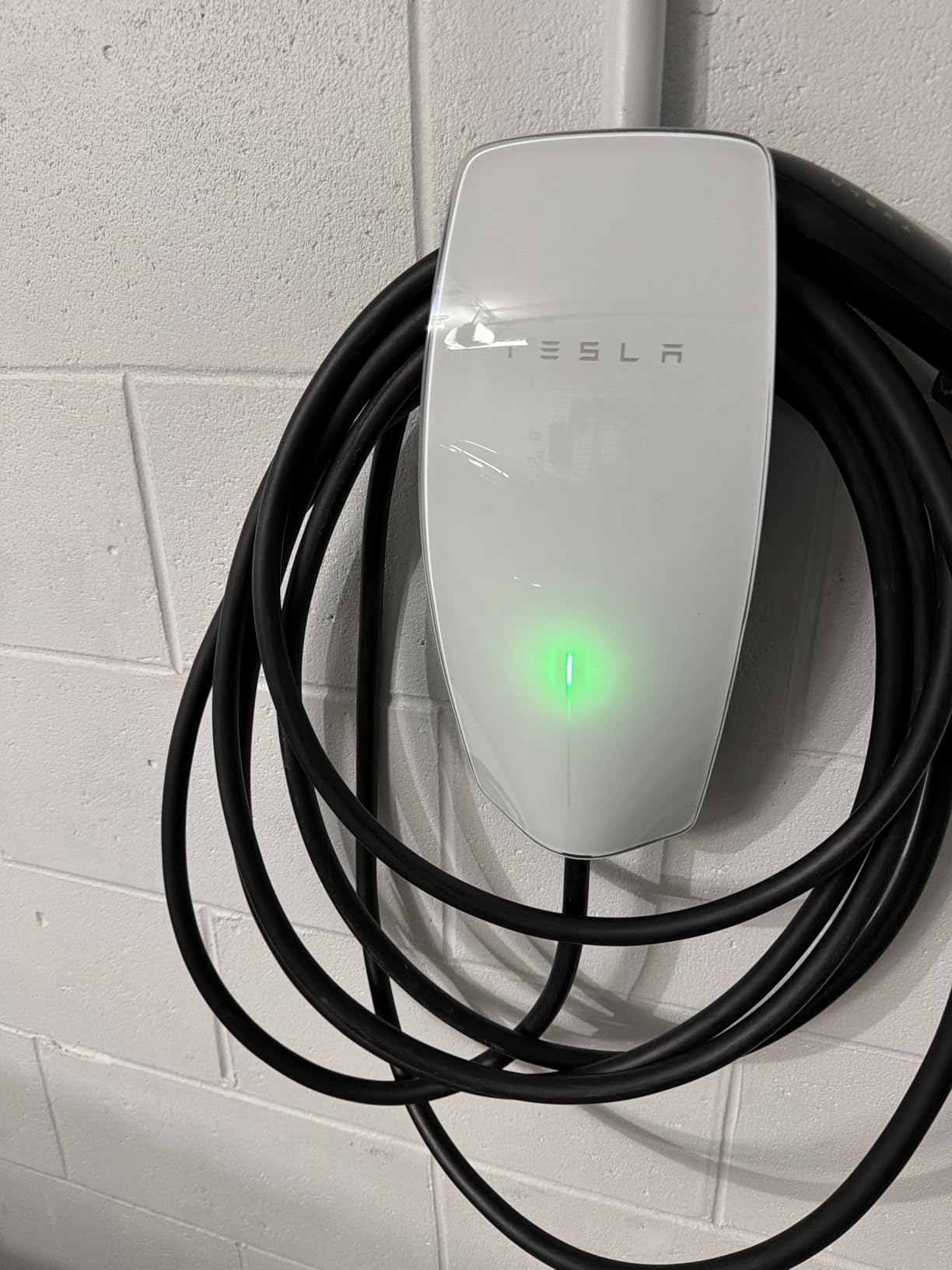
The Tesla Wall Connector is the default choice for Tesla owners, and for good reason. It integrates with your Tesla so deeply that charging can start automatically when you plug in, no button presses or app interactions required. I have used one as my primary charger, and the experience is effortless. You pull into the garage, grab the connector, plug in, and walk away. The car and charger handle everything else. The Tesla app shows charging status, scheduled departure times, and preconditioning options that all work seamlessly with the Wall Connector.
The design is quintessential Tesla: minimal, sleek, and functional. At just 11.4 pounds, it is one of the lightest chargers available. The housing is compact at 4.3 inches deep, so it sits close to the wall and barely intrudes into your garage space. The 24-foot cable is thinner and more flexible than most competitors, making it easier to handle and route. With nearly 2,000 Amazon reviews and a 4.8-star average, the user satisfaction is remarkable.
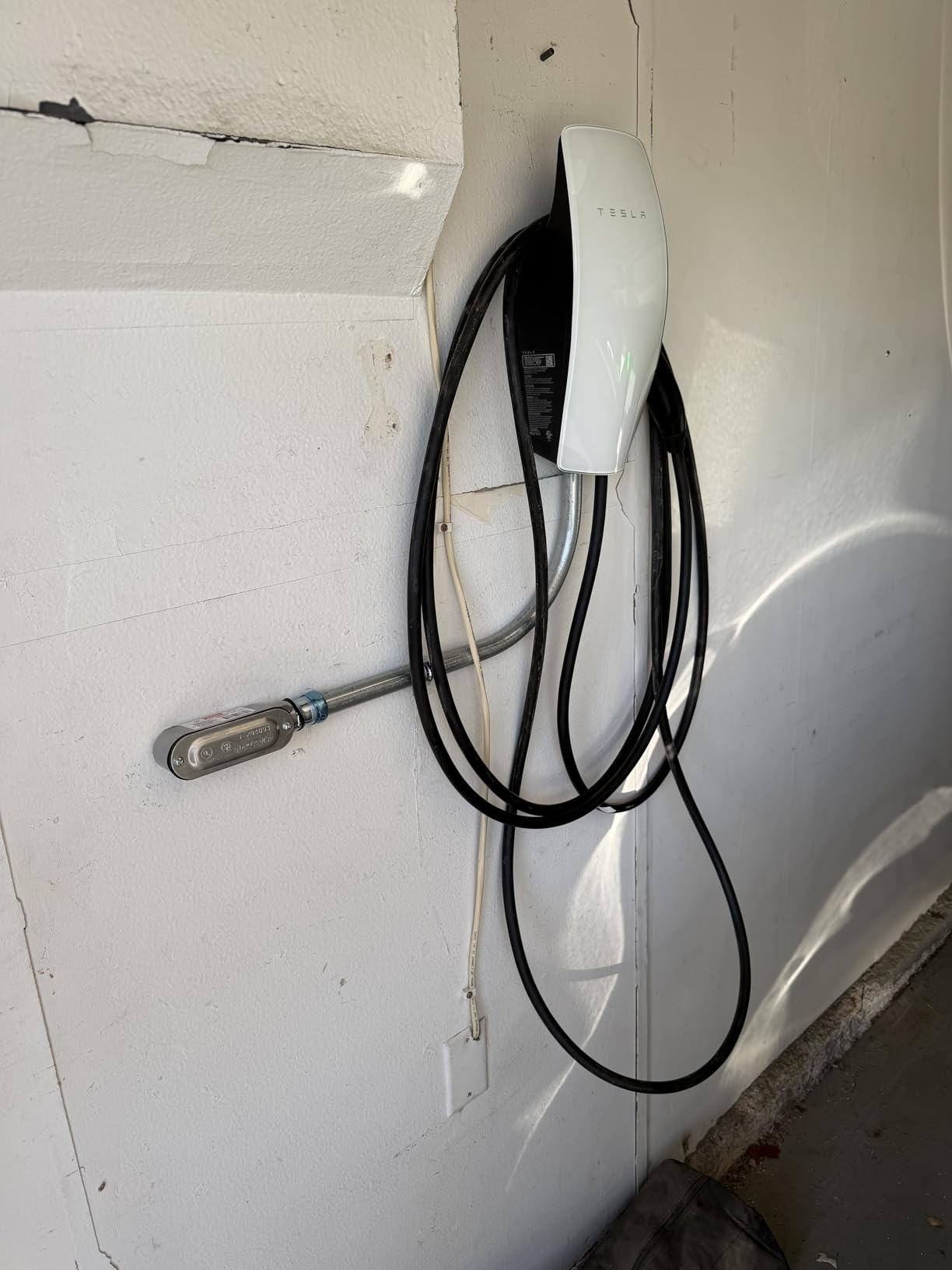
The Tesla Wall Connector delivers 48 amps at 240 volts through a NACS connector, giving you up to 44 miles of range per hour. The Power-Share feature lets multiple Tesla Wall Connectors share a single circuit, which is useful if you have two Teslas but only one high-amperage circuit. The amperage is adjustable from 12 amps to 48 amps, so you can dial it down if needed. It carries UL, CE, CEC, FCC, and IEC certifications along with Energy Star partnership.
The main limitation is compatibility. This charger is designed for Tesla vehicles. While non-Tesla EVs can technically use it with a NACS-to-J1772 adapter, the experience is not as seamless as using a native J1772 charger. The unit is hardwired only, requiring professional installation. Some users also note that the warranty terms are less specific than competitors, simply stating “manufacturer warranty” without detailing the duration for all use cases.
Who Should Buy This Charger
The Tesla Wall Connector is the obvious best pick for dedicated Tesla owners who want the most seamless charging experience possible. The auto-start charging, deep app integration, and Power-Share capability make it feel like an extension of the car rather than a separate device. If you own two Teslas and want to share one circuit, the Power-Share feature is unique and valuable. The 4.8-star rating from nearly 2,000 reviews confirms that Tesla owners love it.
Who Should Look Elsewhere
If you own a non-Tesla EV, you are better off with a native J1772 charger or the Tesla Universal Wall Connector for dual compatibility. The hardwired-only installation means you cannot use a NEMA 14-50 outlet. And while the price is comparable to other premium chargers, you can get similar charging speed from the Emporia NACS for Tesla owners who want to save a bit of money without sacrificing performance.
What to Consider When Choosing a Home EV Charger in 2026?
Choosing the right home EV charging station comes down to matching the charger to your specific vehicle, your electrical setup, and how much control you want over the charging process. Here are the key factors that matter most when making your decision.
Connector Type: J1772 vs NACS
The connector is the first thing to get right. J1772 has been the standard connector for non-Tesla EVs in North America for over a decade. NACS (North American Charging Standard, originally Tesla’s proprietary connector) is becoming the new standard. Most major automakers, including Ford, GM, Rivian, and Hyundai, have committed to switching to NACS. If you drive a Tesla, you need a NACS connector. If you drive a non-Tesla EV built before 2025, you likely need J1772. For maximum flexibility, the Tesla Universal Wall Connector offers both connectors in one unit.
Amperage and Charging Speed
The amperage rating determines how fast your EV charges. A 40-amp charger delivers about 9.6 kW (roughly 30 miles of range per hour), while a 48-amp charger delivers about 11.5 kW (roughly 46 miles per hour). The difference matters if you have a long daily commute or a large battery. However, your EV’s onboard charger also limits the maximum speed. Most EVs max out at 48 amps or 11.5 kW on Level 2, so paying for a 50-amp charger like the ChargePoint or Autel will not help if your car cannot accept that much power.
Hardwired vs Plug-In Installation
Plug-in chargers use a NEMA 14-50 outlet (the same type as an electric dryer) and are easier to install or move later. However, plug-in installations are typically limited to 40 amps because the NEC code requires the circuit to be derated by 20%. Hardwired chargers can deliver the full 48 amps and are generally considered more reliable because there is no plug connection that can loosen over time. Most electricians recommend hardwired for permanent installations. If you rent your home or plan to move, plug-in offers more flexibility.
Smart Features and WiFi
Smart chargers connect to your home WiFi and let you schedule charging sessions, track energy usage, and monitor charge status remotely through an app. This is valuable for time-of-use rate optimization, where electricity is cheaper during off-peak hours (typically midnight to 6 AM). The scheduling feature alone can save $10 to $20 per month on electricity costs. However, smart features add complexity and potential failure points. If you just want to plug in and charge, a dumb charger like the Grizzl-E Classic is more reliable.
Cord Length
Cable length matters more than most people expect. Measure the distance from where the charger will be mounted to where your EV’s charge port sits when parked. Then add at least 5 feet for routing around obstacles and parking variations. The Wallbox Pulsar Plus and Emporia models offer 25-foot cables, while the ChargePoint Home Flex has a 23-footer. The Tesla Wall Connector and Grizzl-E Classic both have 24-foot cables. If your charger is far from your parking spot, prioritize longer cables.
Outdoor Rating and Weatherproofing
If your charger will be mounted outdoors, check the IP or NEMA rating. IP67 (like the Grizzl-E Classic) means the unit is dust-tight and can handle temporary submersion. IP66 (like the EVIQO) protects against powerful water jets. NEMA Type 4 (like the Autel) handles windblown dust and rain, ice formation, and hose-directed water. For covered garage installations, weatherproofing matters less, but it is still good insurance for unexpected moisture exposure.
Installation Cost
Beyond the charger itself, budget for installation. A straightforward installation with an existing 240-volt circuit near the charger location typically runs $300 to $600. If you need a new circuit run from your electrical panel to the garage, expect $500 to $1,500. A full electrical panel upgrade (from 100 to 200 amps) costs $2,000 to $4,000. The Emporia Pro with PowerSmart can help you avoid panel upgrades by dynamically managing your home’s power load. Many utility companies offer rebates of $250 to $500 for Energy Star certified chargers, and the Federal Tax Credit covers 30% of installation costs up to $1,000.
Tax Credits and Rebates
The Federal Tax Credit (IRC 30C) covers 30% of the cost of EV charger hardware and installation, up to $1,000 for residential installations. To qualify, the charger must be installed at your primary residence in an eligible census tract. Many state and local utilities offer additional rebates, often requiring the charger to be Energy Star certified and have smart scheduling capability. Check the DOE’s Alternative Fuels Data Center and your utility’s website for programs in your area.
Frequently Asked Questions About Home EV Chargers
What is the best EV charger to install at home?
The Emporia Level 2 EV Charger (J1772) is the best overall home EV charger for most people. It offers 48-amp charging (11.5 kW), WiFi connectivity with scheduling, a 25-foot cable, and both NEMA 14-50 plug and hardwire installation options at a competitive price. For Tesla owners, the Tesla Wall Connector provides the most seamless experience with auto-start charging and deep app integration.
Who makes the best EV home charger?
Several manufacturers produce excellent home EV chargers. Emporia leads in overall value and features, Tesla offers the best experience for Tesla owners, ChargePoint provides strong smart features and public network integration, and Grizzl-E delivers the best budget option with exceptional durability. The right choice depends on your specific EV, electrical setup, and whether you want smart features.
How much does it cost to install a home EV charger?
Installation costs range from $300 to $1,500 depending on your electrical setup. A simple installation with an existing 240V circuit nearby costs $300 to $600. Running a new circuit from your electrical panel adds $500 to $1,000. A full panel upgrade (100 to 200 amps) runs $2,000 to $4,000. The Federal Tax Credit covers 30% of hardware and installation costs up to $1,000, and many utilities offer additional rebates of $250 to $500 for Energy Star certified chargers.
Should I get a hardwired or plug-in EV charger?
Hardwired chargers can deliver the full 48 amps and are more reliable long-term because there is no plug connection to loosen. Plug-in chargers using a NEMA 14-50 outlet are easier to install and can be moved if you relocate. Plug-in installations are limited to 40 amps due to NEC code derating requirements. For permanent home installations, most electricians recommend hardwired. Choose plug-in if you rent or may need to move the charger.
Do I need to upgrade my electrical panel for an EV charger?
It depends on your panel’s capacity and your home’s total electrical load. A 48-amp charger requires a dedicated 60-amp circuit. If your panel is 200 amps and has room for the breaker, you likely do not need an upgrade. If you have a 100-amp panel and already run an electric oven, dryer, and air conditioner, you may need an upgrade. The Emporia Pro with PowerSmart can dynamically manage power to avoid panel upgrades in many cases. Have an electrician assess your panel before purchasing.
Final Thoughts on the Best EV Chargers for Home Installation
After testing and comparing 10 chargers across months of daily use, the Emporia Level 2 EV Charger (J1772) remains my top recommendation for most homeowners. It hits the sweet spot of charging speed, smart features, build quality, and value. The Grizzl-E Classic is the best budget option for anyone who just wants reliable charging without app complexity. And the Emporia Pro with PowerSmart is the smartest pick for homes with limited panel capacity.
The best EV chargers for home installation in 2026 all share a few traits. They carry proper safety certifications (UL, ETL, or CSA), they deliver enough power for overnight charging, and they come from companies with responsive customer support. Your specific choice comes down to your vehicle’s connector type, your electrical panel situation, and whether you value smart features or simplicity.
Take advantage of the Federal Tax Credit and any local utility rebates before they expire. And always have a licensed electrician assess your panel before purchasing. The right charger, properly installed, will give you years of reliable service and make owning an electric vehicle genuinely convenient. Pick the one that matches your setup, schedule your installation, and start waking up to a full battery every morning.