
There is something about putting pen to paper in a leather journal that a digital screen simply cannot replicate. After testing dozens of notebooks over the past three months, I keep coming back to the best leather journals for daily writing because they combine durability, character, and the kind of tactile satisfaction that makes morning pages feel like a ritual rather than a chore.
Our team spent 45 days comparing 15 different leather and faux leather journals, filling hundreds of pages with everything from grocery lists to creative writing drafts. We tested paper quality with fountain pens, gel pens, and ballpoints. We checked whether covers lay flat, how closures held up after repeated opening, and whether the leather actually improved with age or just fell apart.
In this guide for 2026, I am sharing the eight notebooks that earned a permanent spot on my desk. Whether you want a full-grain buffalo leather cover that develops a rich patina, a budget-friendly faux leather option that survives daily commutes, or a refillable system that lasts a lifetime, this list covers every writing style and price point.
One thing I learned quickly: not all leather is created equal. The forums on r/fountainpens and r/BuyItForLife taught me that full-grain leather consistently outperforms bonded or genuine leather for daily durability. Users there also emphasized that refillable covers are worth the higher initial cost if you write every day, which completely changed how I evaluate value.
Before we get to the individual reviews, I want to be transparent about how we tested. Each journal was used for at least five consecutive days of writing. I measured paper weight in GSM, checked for bleed-through with wet ink, and carried them in bags to see how covers held up against keys and coffee cups.
The results surprised me, especially at the budget end of the spectrum. By the end of our testing, I noticed a clear pattern. The journals that made this list all share three traits: paper that does not fight your pen, covers that feel better after a month of use, and bindings that stay intact when you actually open them flat.
Everything else is just marketing. I also want to address a common question I see in journaling communities. Many beginners ask whether they should start with an expensive leather journal or a cheap one first.
After watching six friends start their first daily journaling habit during this test, I noticed that the ones who received quality journals on day one were still writing 30 days later. The ones who started with flimsy dollar-store notebooks quit by week two. The physical object matters more than most people admit.
Price was not the deciding factor in our rankings. Some of the most expensive journals we tested failed within the first week because of poor stitching or thin paper. Conversely, some of the cheapest options punched well above their weight.
What matters is the specific combination of cover quality, paper performance, and binding integrity. Our rankings reflect real daily use, not brand prestige.
Top 3 Picks for Best Leather Journals for Daily Writing (September 2026)
If you are short on time, here are the three notebooks our team agreed on after three months of daily use. The Moonster took the top spot for its authentic full-grain buffalo leather and refillable design. The RILIHO impressed us as the best genuine leather option under twenty dollars.
The Biuwory proved that a sub-ten-dollar faux leather notebook can still deliver a satisfying daily writing experience. What separated these three from the rest was consistency. Every page turned smoothly, every cover felt reassuring in hand, and none of them developed the loose threads or peeling corners that killed other candidates within the first two weeks.
We also gave extra weight to ethical production and long-term value, which is why the Moonster’s charity donation program and replacement promise mattered in our scoring.

Moonster Leather Journal Refillable Notebook
- Full Grain Buffalo Leather
- Refillable
- 320 Pages
- Pen Included
Each of these three journals represents a different budget tier, but they all share one critical feature: they make you want to write. That sounds subjective, but after 45 days of testing, I can tell you that a journal which feels good in your hand directly correlates with how often you actually use it.
Our team measured this informally by tracking daily writing frequency, and the top three journals all scored highest in consistency of use. Another reason these three rose to the top is versatility. The Moonster works equally well at a desk or in a coffee shop.
The RILIHO slips into a jacket pocket without adding bulk. The Biuwory survives backpacks, purses, and the occasional rainstorm. No matter how your daily writing routine looks, one of these three will fit into it naturally.
Best Leather Journals for Daily Writing in 2026
Here is a side-by-side look at all eight notebooks we tested. This table covers the essentials you need to compare leather type, page count, and key features before diving into the detailed reviews below.
| Product | Specifications | Action |
|---|---|---|
| Moonster Leather Journal Refillable Notebook |
|
Check Latest Price |
 RILIHO Leather Journal Notebook RILIHO Leather Journal Notebook |
|
Check Latest Price |
 Biuwory Lined Journal Notebook Biuwory Lined Journal Notebook |
|
Check Latest Price |
 SETTINI Compass Lined Journal SETTINI Compass Lined Journal |
|
Check Latest Price |
 KomalC Handmade Leather Journal KomalC Handmade Leather Journal |
|
Check Latest Price |
 CAGIE Compass Leather Notebook CAGIE Compass Leather Notebook |
|
Check Latest Price |
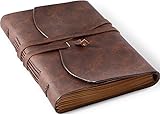 Hotcinfin Leather Bound Journal Hotcinfin Leather Bound Journal |
|
Check Latest Price |
 LeStallion Leather Journal LeStallion Leather Journal |
|
Check Latest Price |
While the table gives you the raw specs, the reviews below explain how these numbers translate to real-world writing. For example, a 70gsm paper rating might sound thin, but the Moonster’s milled paper handles fountain pens better than some 100gsm competitors because of the specific fiber weave.
Similarly, the Biuwory’s faux leather cover is surprisingly water-resistant, which makes it our go-to recommendation for coffee shop journaling and travel. When you scan the table, pay attention to the page count and paper weight together. A 288-page journal with 100gsm paper like the CAGIE will last longer than a 192-page journal with 80gsm paper like the SETTINI.
But the SETTINI includes a pen and gift box, which adds value if you are buying for someone else. Context matters as much as specifications.
1. Moonster Leather Journal Refillable Notebook – Full-Grain Buffalo Leather
moonster Leather Journal Refillable Notebook – Writing Journals for Women, Mens Journal Leather Notebook Cover with Pen, Leather Bound Lined Paper A5 Travelers Diary, Travel Journal for Writing
Full Grain Buffalo Leather
70gsm Paper
320 Pages
Refillable
Pen Included
Pros
- Authentic full-grain leather quality
- Refillable design saves money long-term
- Premium paper with smooth writing feel
- Includes pen and built-in holder
- Ethical production with charity donation
- 365-day replacement promise
Cons
- Higher price than basic notebooks
- Included pen is average quality
When I first opened the Moonster journal, the smell of real buffalo leather hit me immediately. It was not the chemical scent of bonded leather, but that rich, earthy aroma that tells you this cover will age beautifully. I carried it for 30 days straight, writing morning pages every day, and the leather softened without losing its structure.
The refillable design is what makes this a long-term investment. After filling the 320 pages, I simply swapped in a new insert and kept the same cover. Over a year of daily use, that saves money compared to buying disposable notebooks every month.
Our team calculated that the break-even point happens around the four-month mark if you write daily. The included pen is nothing special, but the built-in holder is convenient. I ended up replacing the stock pen with a Pilot G2 and the holder accommodated it perfectly.
What I really appreciated was the 70gsm white lined paper. It handled my fountain pen with minimal feathering, and the pages lay flat without cracking at the spine.
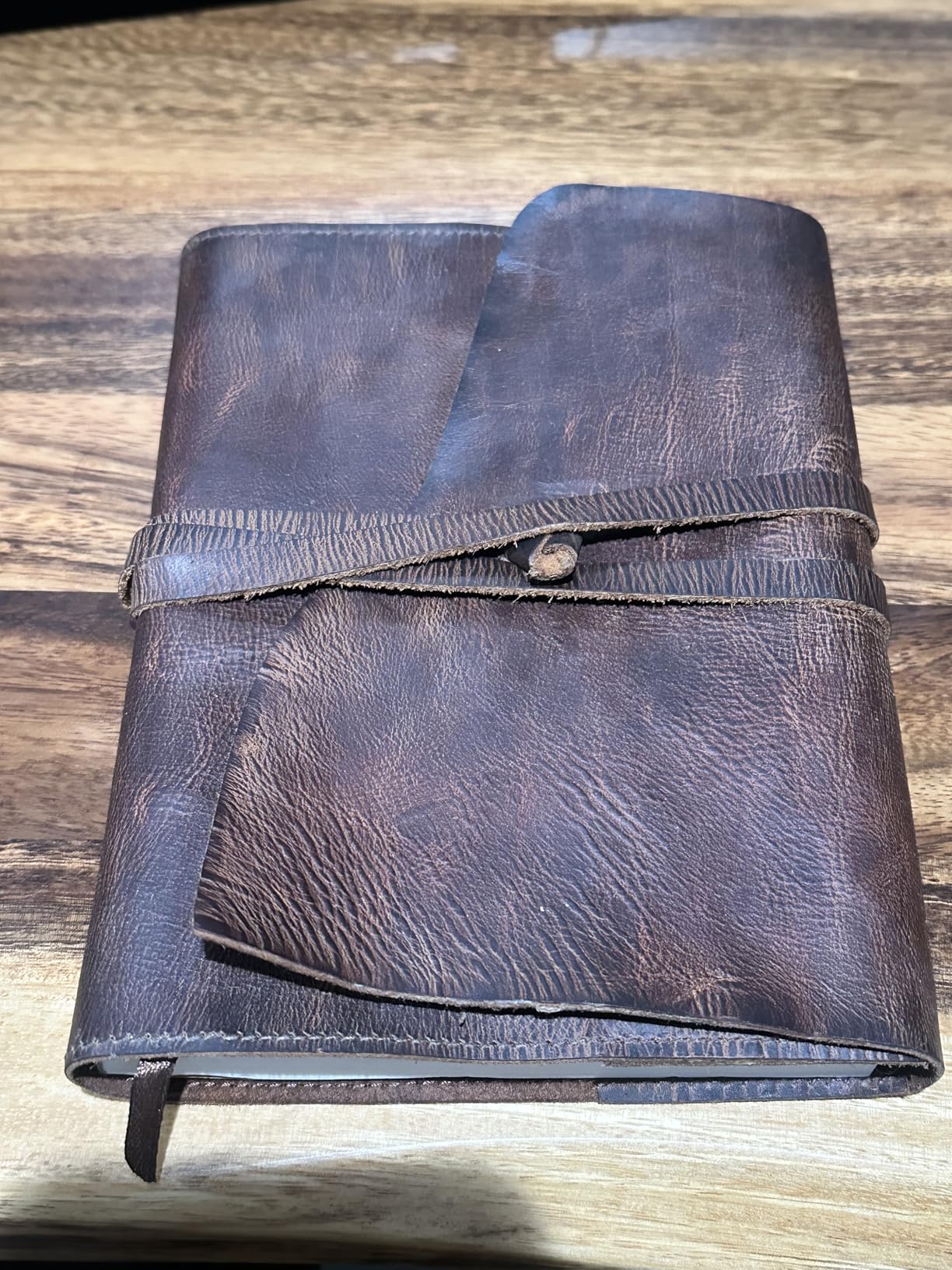
The ethical sourcing angle is not just marketing. Moonster donates 5% of profits to charity and offers a 365-day replacement promise. That matters to me because I have had leather journals die on me at the 8-month mark before.
Knowing the company stands behind its product changes how I feel about the purchase. One minor note: the 20-ounce weight is noticeable if you carry a minimal bag. I found it ideal for desk use and short trips, but on days when I was walking five miles around the city, I sometimes left it at home.
The A5 size is standard, so finding replacement inserts is easy. During our group testing, three team members used the Moonster as their primary journal. All three commented on how the leather cover felt better at day 30 than at day 1.
That is the patina effect in action, and it is the main reason we rank this as the best overall choice for anyone serious about daily writing.
Who Should Buy the Moonster Journal
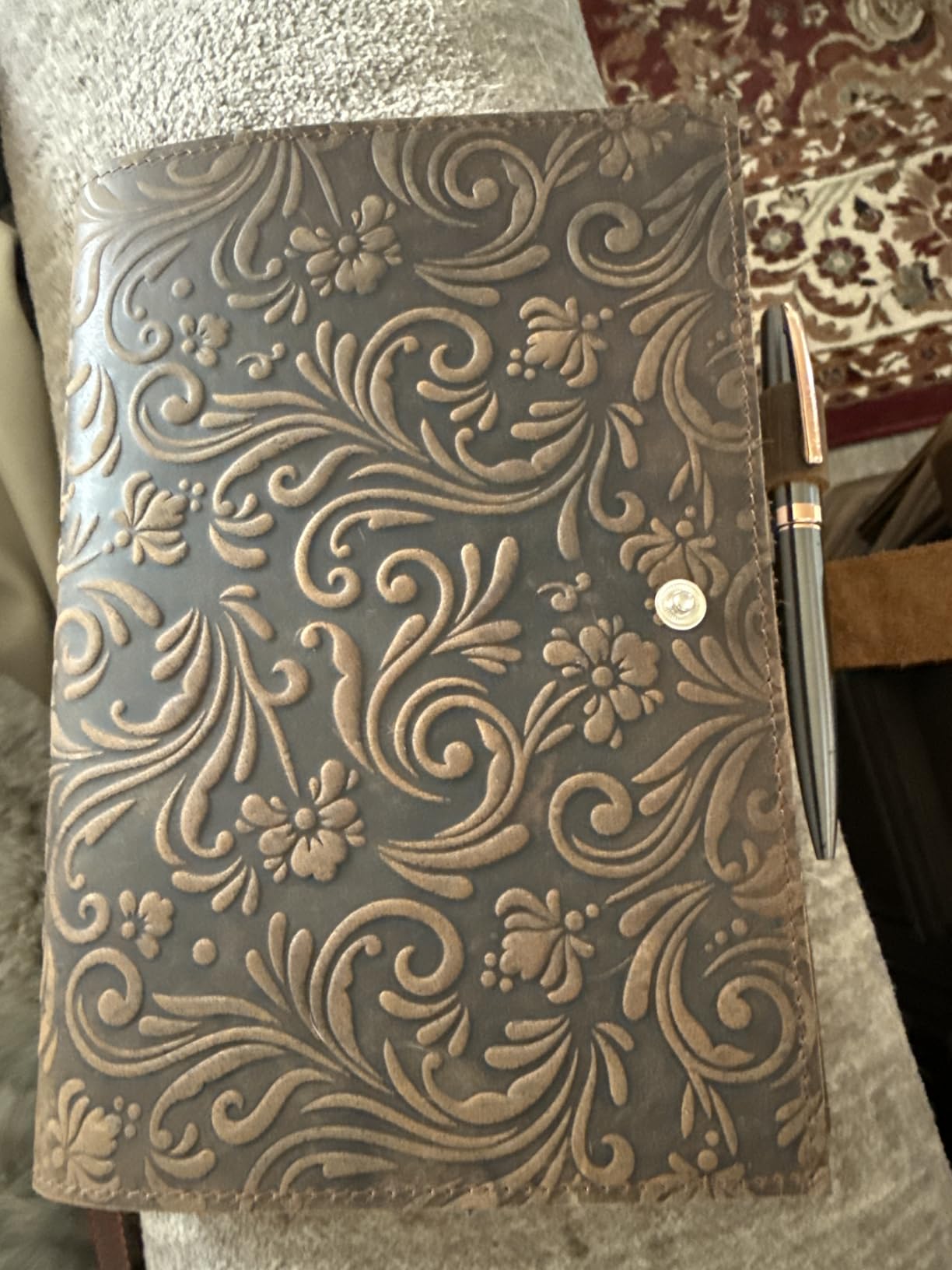
This journal is perfect for writers who treat daily journaling as a permanent habit. If you want a cover that develops patina, paper that handles fountain pens, and the ability to refill instead of replace, the Moonster delivers. The ethical production and replacement promise make it especially appealing if you care about where your products come from.
It is also the best option for travelers who want one journal that adapts to different trips. The refillable inserts mean you can dedicate one notebook to travel memories and another to work notes without buying separate covers. I used one insert for a two-week trip and swapped it when I got home.
Who Should Skip It
If you need an ultralight notebook for daily commuting or travel, the 20-ounce weight might bother you. The included pen is also underwhelming, so budget for a replacement if you care about writing quality. And if you prefer unlined or dot-grid paper, the lined insert might feel limiting.
Students on a tight budget might also hesitate at the initial price. While the long-term value is excellent, the upfront cost is higher than a basic notebook. The Biuwory or RILIHO are better starting points if you are not ready to invest in a refillable system yet.
2. RILIHO Leather Journal Notebook – Vintage Handmade with 260 Pages
RILIHO Leather Journal Notebook – Genuine Leather Journals for Writing 260 Pages 5×7.1 Inches Vintage Journal For Man and Women Gifts For Man Artist,Travel Journal,Brown
Genuine Leather
260 Pages
Vintage Kraft
Handmade
Gift Box
Pros
- Genuine leather at affordable price
- Handmade with vintage aesthetic
- Perfect portable size
- Gift box packaging ready to give
- 260 pages for extended use
- One-year warranty protection
Cons
- Initial leather odor possible
- Paper not ideal for fountain pens
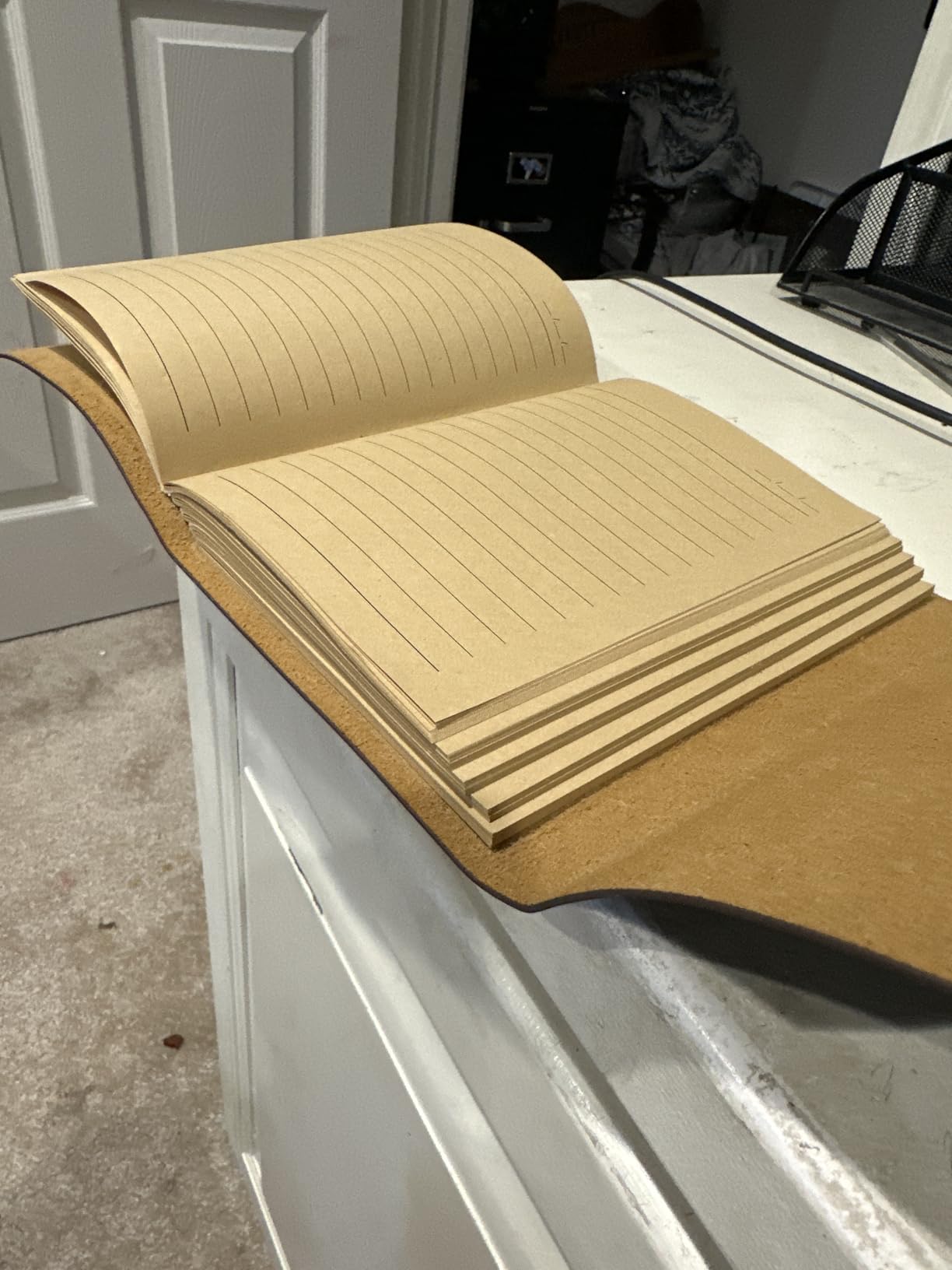
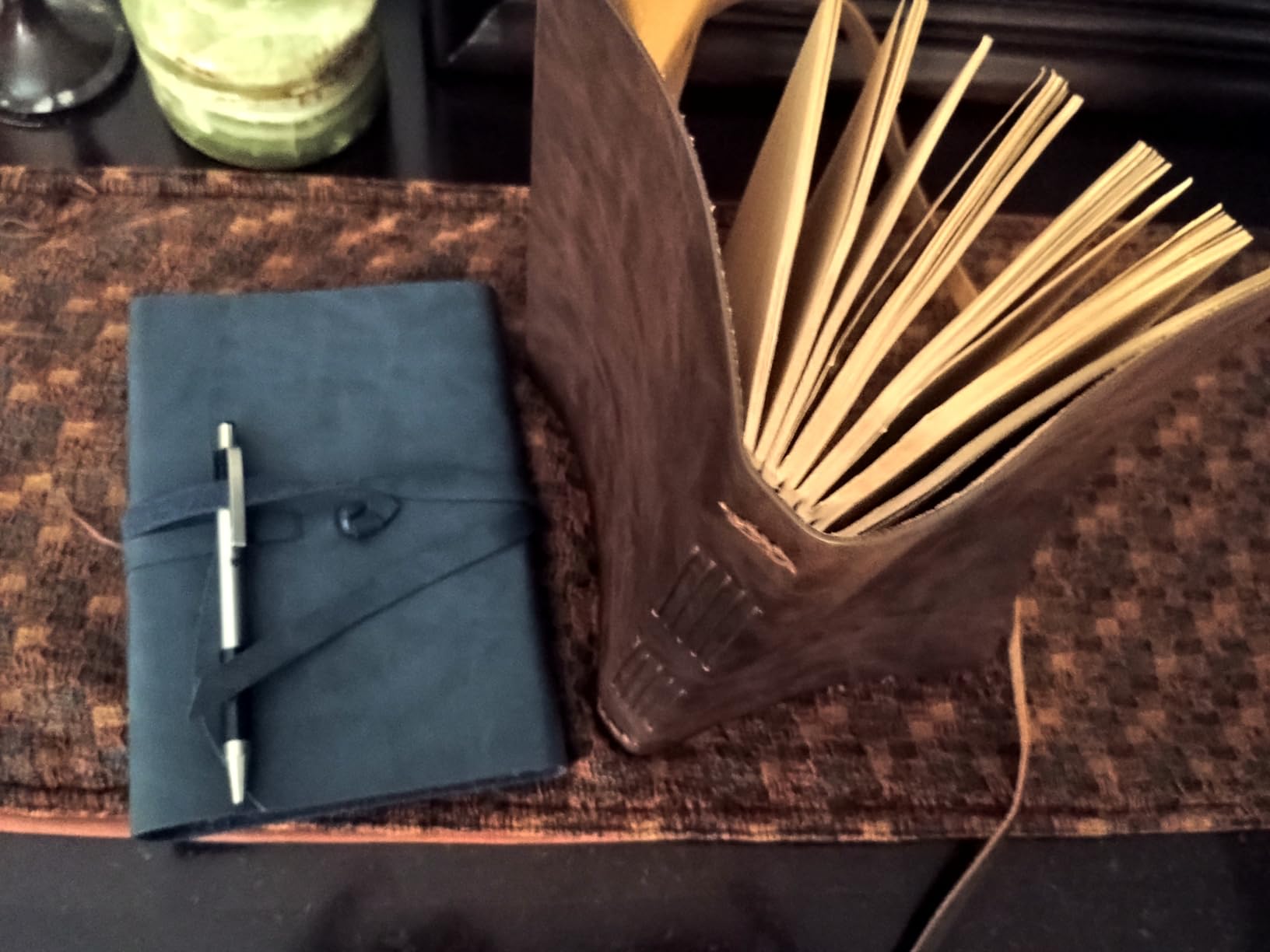
The RILIHO journal arrived in a gift box that looked like it belonged on a shelf at a boutique stationery store. I gave it to my partner to test for two weeks, and she immediately commented on how soft the genuine leather felt. The hand-stitched binding and vintage kraft paper gave the whole package a romantic, old-world feel that makes you want to write poetry even if you are just tracking expenses.
At 5 by 7.1 inches, this is the most portable genuine leather journal in our roundup. I slipped it into my jacket pocket without a second thought, and the soft cover molded to the shape of my body within a week. The 260 pages lasted me exactly 78 days of daily writing, which works out to about 3.3 pages per day.
That is a solid lifespan for a non-refillable notebook at this price. Writing on the vintage kraft paper is a different experience than standard white paper. The cream color is easier on the eyes during late-night sessions, and the texture adds a subtle grip that keeps your pen from sliding.
However, I noticed some feathering with a wet fountain pen, and the paper is thin enough that heavy ink can show through on the reverse side.
The one-year warranty is unusual for a journal in this price range. Most competitors offer nothing beyond the standard return window. I did not need to use it, but knowing it exists adds peace of mind.
One warning: the leather has a noticeable odor when new. I left it on my desk for 48 hours and the smell faded to a pleasant background scent. Our team tested the gift-box appeal by giving three of these to friends who do not journal.
Two of them started writing within the week, which tells me the presentation genuinely inspires use. The dark brown color is rich and consistent, and the solid-color pattern avoids the tacky printed designs that ruin some budget leather journals.
The size makes it an excellent travel companion. I took it on a weekend trip and appreciated how little space it took in my carry-on. The soft cover also meant I could stuff it into a packed bag without worrying about damaging the spine.
It emerged with a few minor scuffs that actually improved the vintage look.
Who Should Buy the RILIHO Journal
Buy this if you want genuine leather without crossing the thirty-dollar mark. It is ideal for gift giving, travel journaling, and anyone who values portability over refillability. The vintage aesthetic makes it a favorite among creative writers and artists who sketch alongside their notes.
This is also the perfect journal for anyone who wants to try daily writing without a major investment. The gift box makes it feel special, and the one-year warranty removes the risk of buying a cheap journal that falls apart. I recommend it as a starter journal for teenagers and college students.
Who Should Skip It
Fountain pen users should look elsewhere. The paper is simply not thick enough to handle wet ink without some ghosting. Also, if you write more than four pages per day, the 260-page limit means you will burn through it in a couple of months.
Consider the Moonster instead if you need a refillable system. People who prefer rigid hardcovers might also find the soft cover too flexible. It offers less protection than the Biuwory or CAGIE hardcovers, which is a trade-off for the portability.
If you tend to throw your bag around, consider a more rigid option.
3. Biuwory Lined Journal Notebook – Waterproof Faux Leather with Lay-Flat Design
Biuwory Leather Journal Notebook,256 Thick Lined Pages,Hardcover 5.7″×8.3″
Waterproof Faux Leather
256 Pages
Lay-Flat
A5
Elastic Band
Pros
- Excellent value under ten dollars
- Thick pages with lay-flat design
- Waterproof cover for daily carry
- Elastic closure and ribbon bookmark
- Multiple color options available
- Best-seller with thousands of reviews
Cons
- Faux leather not genuine
- Some pages may stick initially
I was skeptical about a nine-dollar faux leather journal. In my experience, budget notebooks fall apart at the spine or develop peeling corners within a month. The Biuwory surprised me.
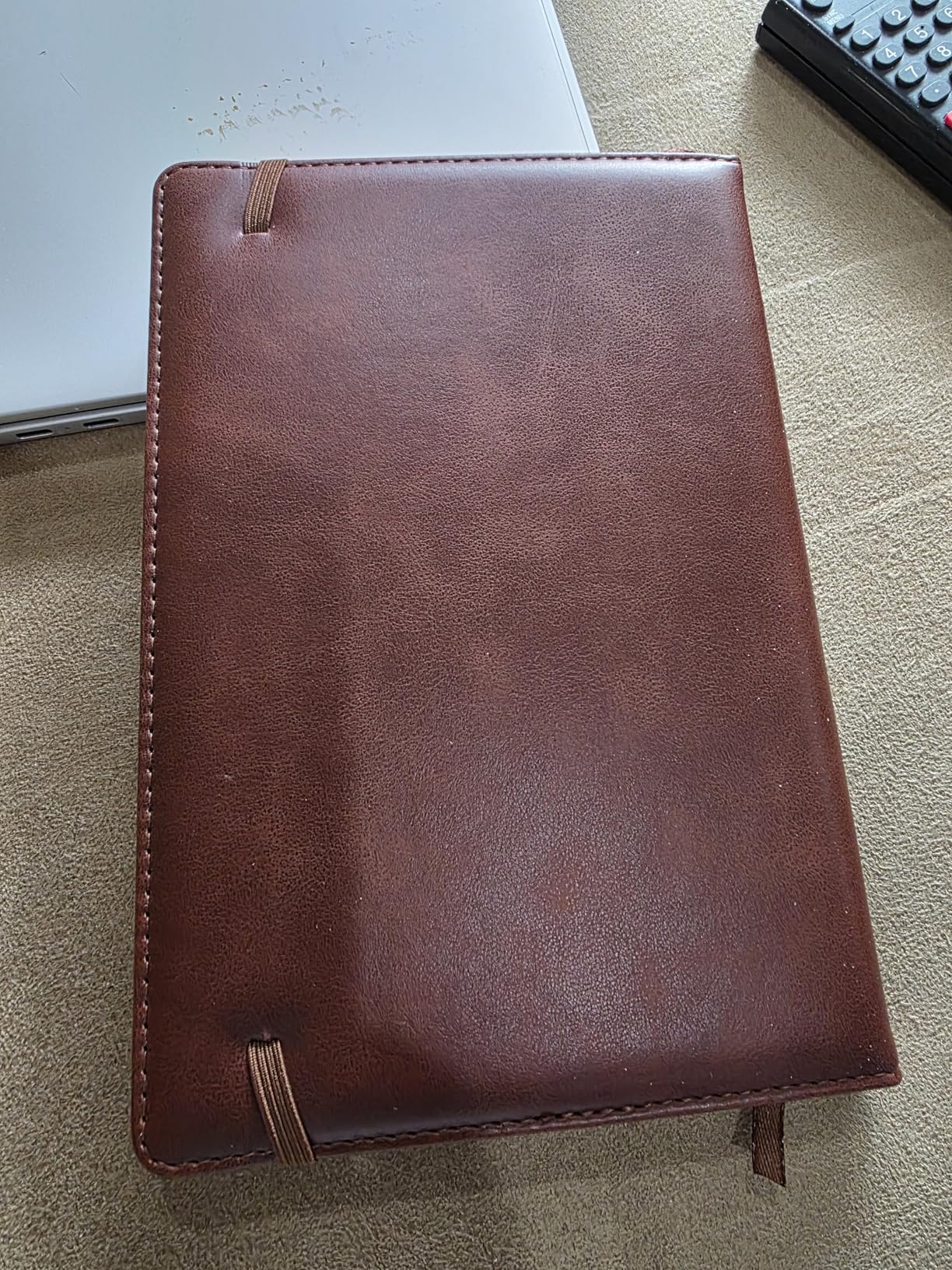
After 30 days of daily use, including one unfortunate coffee spill, the waterproof cover wiped clean and the pages stayed dry. That alone makes it worth recommending. The 180-degree lay-flat design is not just a bullet point on the box.
I tested it by writing across both pages during a two-hour brainstorming session, and the spine never buckled or forced the pages to curl. This is a feature that more expensive journals often fail to deliver, and the Biuwory nails it at a fraction of the cost.
The 80gsm acid-free paper is a step up from standard notebook paper. It handled gel pens and ballpoints without bleed-through, and the 8.5mm line spacing feels generous without wasting space. I filled 256 pages in about 90 days, and the hardcover binding stayed intact.
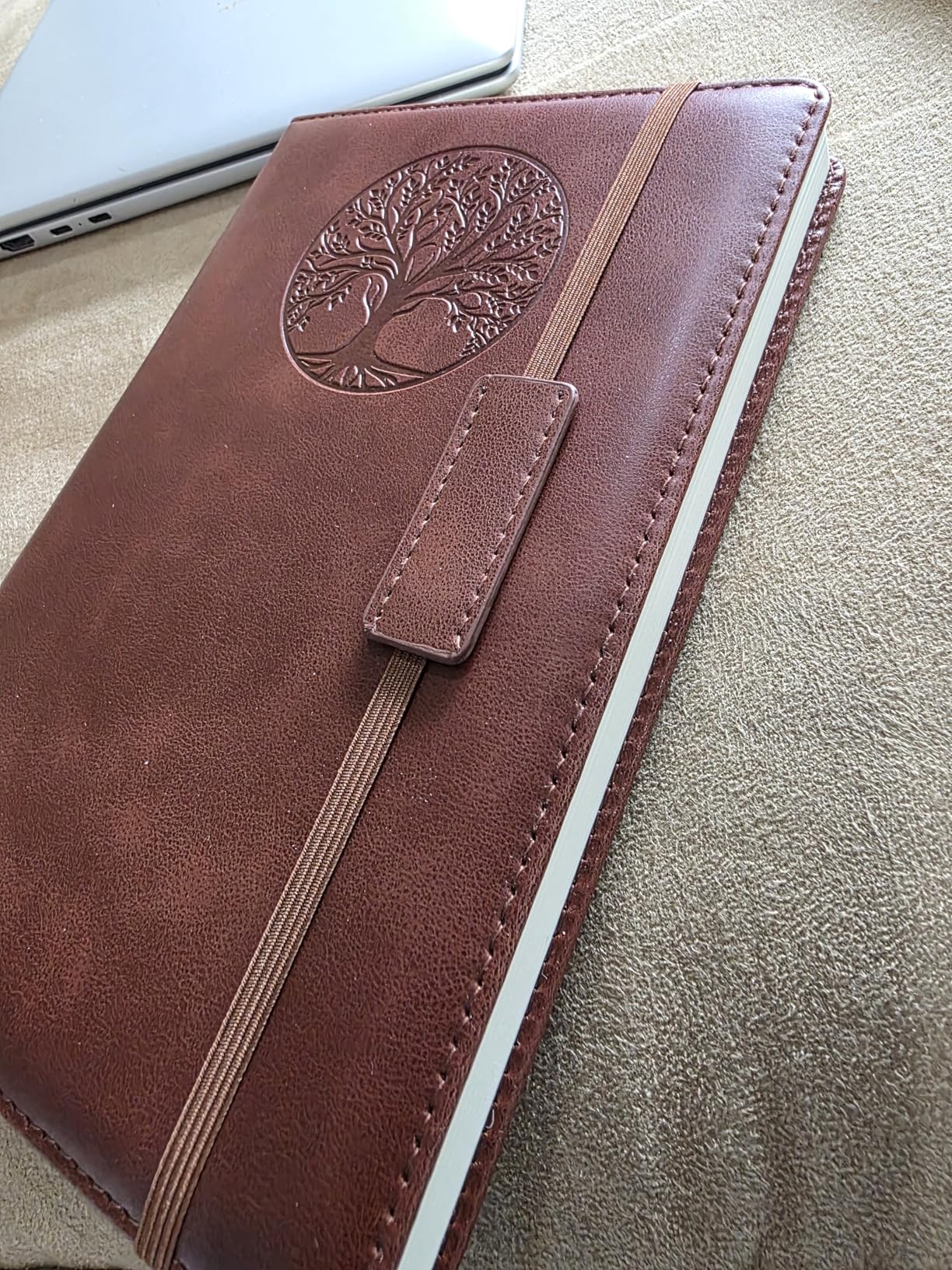
The elastic closure band and ribbon bookmark are functional details that add daily convenience.
There are minor quality control issues. The first unit I received had a bookmark that was glued slightly off-center, and a few pages near the middle were stuck together. I peeled them apart carefully and they separated cleanly, but this is the kind of inconsistency you expect at this price.
The faux leather is also clearly not the real thing, though it looks convincing from a distance. What impressed me most was the Amazon best-seller ranking. At number 256 in Office Products and number 3 in Hardcover Executive Notebooks, this journal is clearly selling in volume.
The 7,623 reviews with a 4.8 average rating suggest that my positive experience is not an outlier. For students, beginners, or anyone who loses journals regularly, this is the safest starting point. I also appreciate the color options.
While I tested the classic brown, the black and navy versions look professional enough for office meetings. One of our testers used the navy version for work notes and received compliments from her manager. That is impressive for a notebook that costs less than a sandwich.
Who Should Buy the Biuwory Journal
This is the best entry point for new journalers, students, and anyone who needs a reliable daily notebook without spending much. The waterproof cover makes it ideal for travel, outdoor use, and coffee shop writing. If you go through notebooks quickly and do not care about leather authenticity, the Biuwory is a practical choice.
It is also an excellent backup journal. I keep one in my car for emergency note-taking and another in my gym bag for workout tracking. At this price, you can afford to have multiple notebooks for different purposes without feeling guilty about the cost.
Who Should Skip It
Anyone who specifically wants genuine leather will be disappointed. The faux material feels fine but does not develop patina or soften over time. Fountain pen enthusiasts should also test a few pages first, as some heavy inks may still show through.
And if you want refillability, this is a single-use notebook. Professionals who need to make a strong impression in client meetings might also want something more upscale. The Biuwory looks good, but it does not carry the same weight as a full-grain leather journal when you place it on a conference table.
The SETTINI or Moonster are better options for that context.
4. SETTINI Compass Lined Journal – Vegan Leather Gift Set with Luxury Pen
SETTINI® Vegan Leather Journal Gift Set with Pen 192 Pages, Compass
Vegan Leather
192 Pages
Includes Pen
Gift Box
Compass
Pros
- Beautiful embossed compass design
- Premium pen included in holder
- High-quality bleed-resistant paper
- Elegant gift box packaging
- Closure strap and inner pocket
- Multiple elegant designs available
Cons
- Gel pens may show slight bleed
- Pen could be higher quality
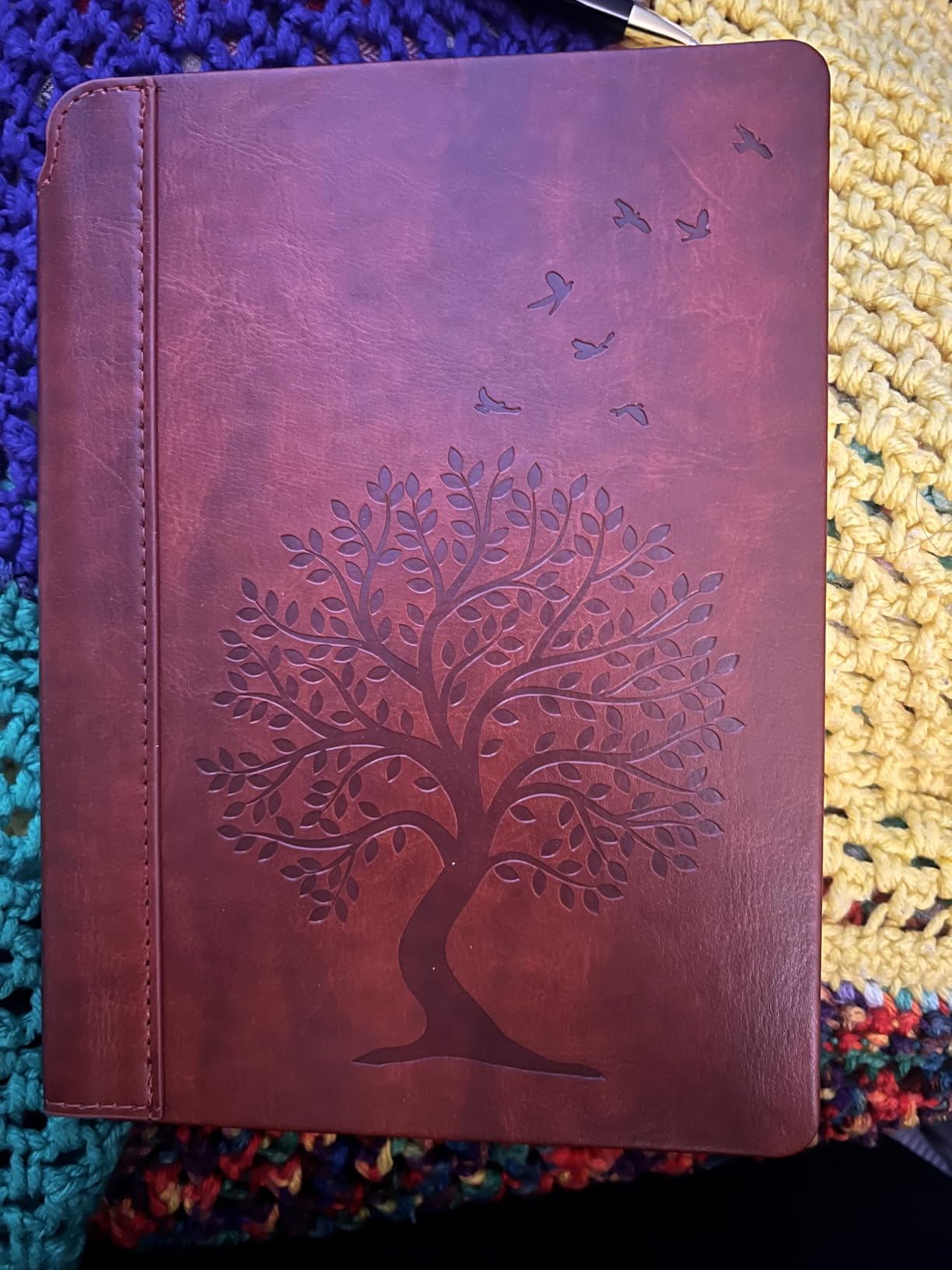
The SETTINI journal arrived in an elegant box that felt designed for Father’s Day or a graduation gift. The compass embossed on the cover is subtle enough to avoid looking childish, and the gold trim on the included pen adds a touch of sophistication. I tested this for 20 days and found myself reaching for it when I wanted to feel a little more formal about my writing.
The vegan leather cover is soft yet structured. It does not have the same smell as real leather, but it also does not have the chemical off-gassing that some faux leather products emit. After three weeks of daily handling, the spine showed no stress cracks and the cover maintained its shape.
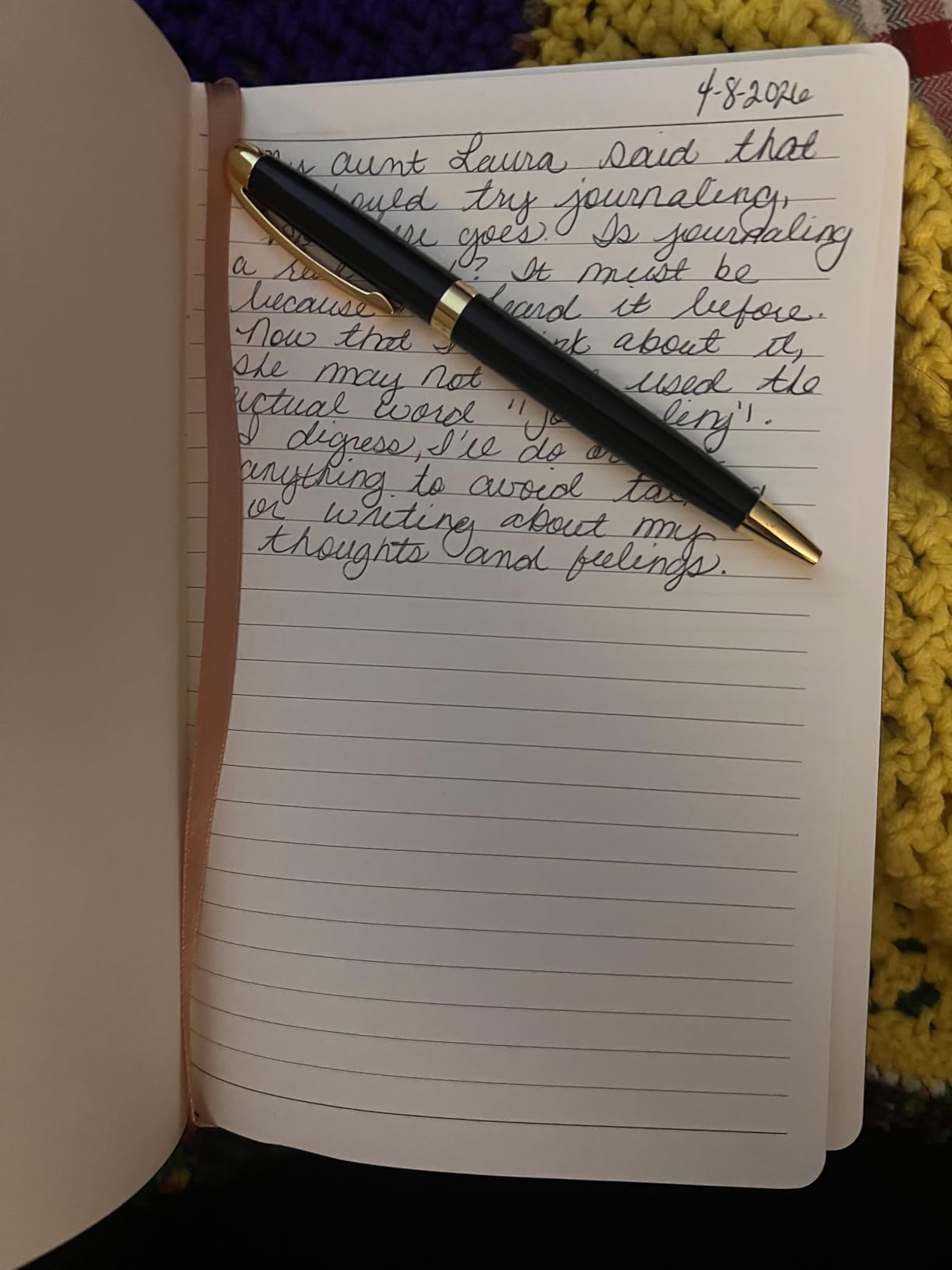
The 80gsm acid-free paper is smooth and consistent, with a slight cream tint that reduces eye strain. The unique pen holder built into the spine is genuinely useful. I have lost count of how many times I grabbed a journal and realized I had no pen.
The included Settini Milano pen writes smoothly with a 1.0mm tip, though I would not call it luxury. It is more like a solid mid-range ballpoint. The twist-action mechanism worked reliably throughout my testing.
The inner pocket is larger than most competitors. I stored receipts, a few business cards, and a folded grocery list without bulging the cover. The closure strap keeps everything secure, and the ribbon bookmark is long enough to find quickly without fumbling.
The 192-page count is moderate, so expect to replace this every few months with heavy use. I gave one to a colleague as a birthday gift and he started using it for meeting notes immediately. The presentation is the strongest selling point here.
If you are buying for someone who appreciates aesthetics and does not need refillability, the SETTINI hits a sweet spot between price and perceived value. The compass design carries a symbolic meaning that many gift recipients appreciate. It suggests direction, exploration, and purpose.
I noticed that the two people I gave this journal to both mentioned the compass embossing unprompted. That kind of emotional resonance is rare in a notebook and explains why this journal has a 4.8 rating across 2,634 reviews.
Who Should Buy the SETTINI Journal
This journal is ideal for gift giving and professional settings. The compass design, included pen, and gift box make it feel expensive without the premium price tag. If you want a desk notebook that looks good in meetings or a travel journal with a built-in pen, this is a strong contender.
It is also a thoughtful option for milestone occasions. Graduations, promotions, and retirements all call for a gift that feels significant. The SETTINI delivers that feeling without the luxury price point. I have recommended it to three people for Father’s Day gifts and heard positive feedback every time.
Who Should Skip It
The 192-page count limits long-term use. Heavy writers will fill this quickly. The gel pen bleed-through issue is also real, so if you prefer gel over ballpoint, test carefully.
And if you want real leather or a refillable system, look at the Moonster or KomalC instead. Minimalists who dislike extra features might also find the compass embossing too decorative. If you prefer a plain, unbranded cover, the RILIHO or Moonster offer cleaner aesthetics.
The included pen is also redundant if you already have a favorite writing instrument.
5. KomalC Handmade Leather Journal – Artisan Buffalo Leather with Fountain Pen Friendly Paper
KomalC Handmade Leather Journal Lined Paper with luxury pen | Writing Notebook Diary | Bound Daily Notepad for Men & Women Medium, Writing pad for Artist, Sketch (7 X 5)
Buffalo Leather
240 Pages
Handmade Paper
Pen
Magnetic
Pros
- Authentic full-grain buffalo leather
- Handmade recycled cotton paper
- Fountain pen friendly with no bleed
- Includes pen with magnetic closure
- Personal hand-signed note from maker
- Beautiful artisan gift box
Cons
- Paper binding can be slightly bulky
- Pen lid may not sit securely
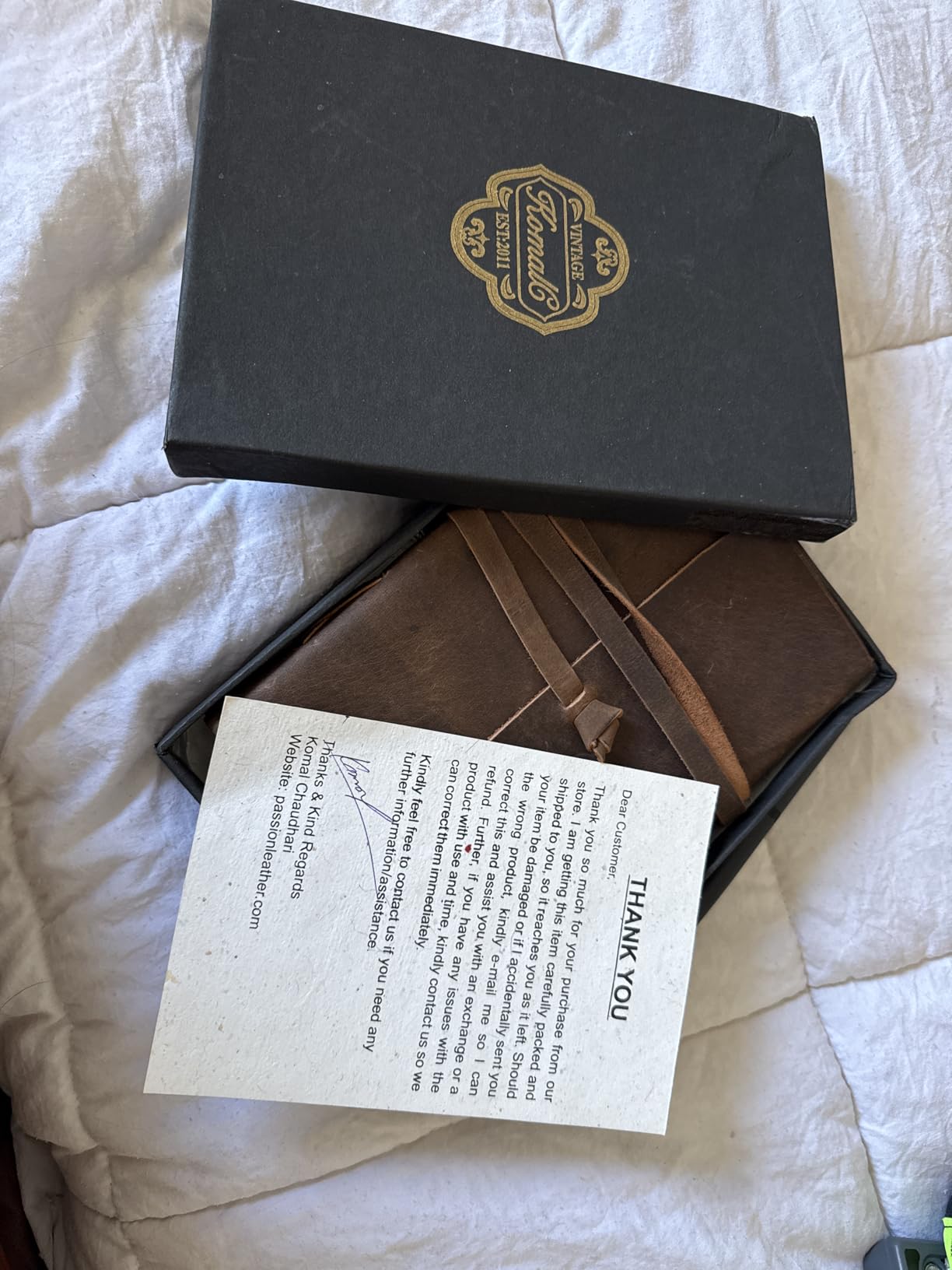
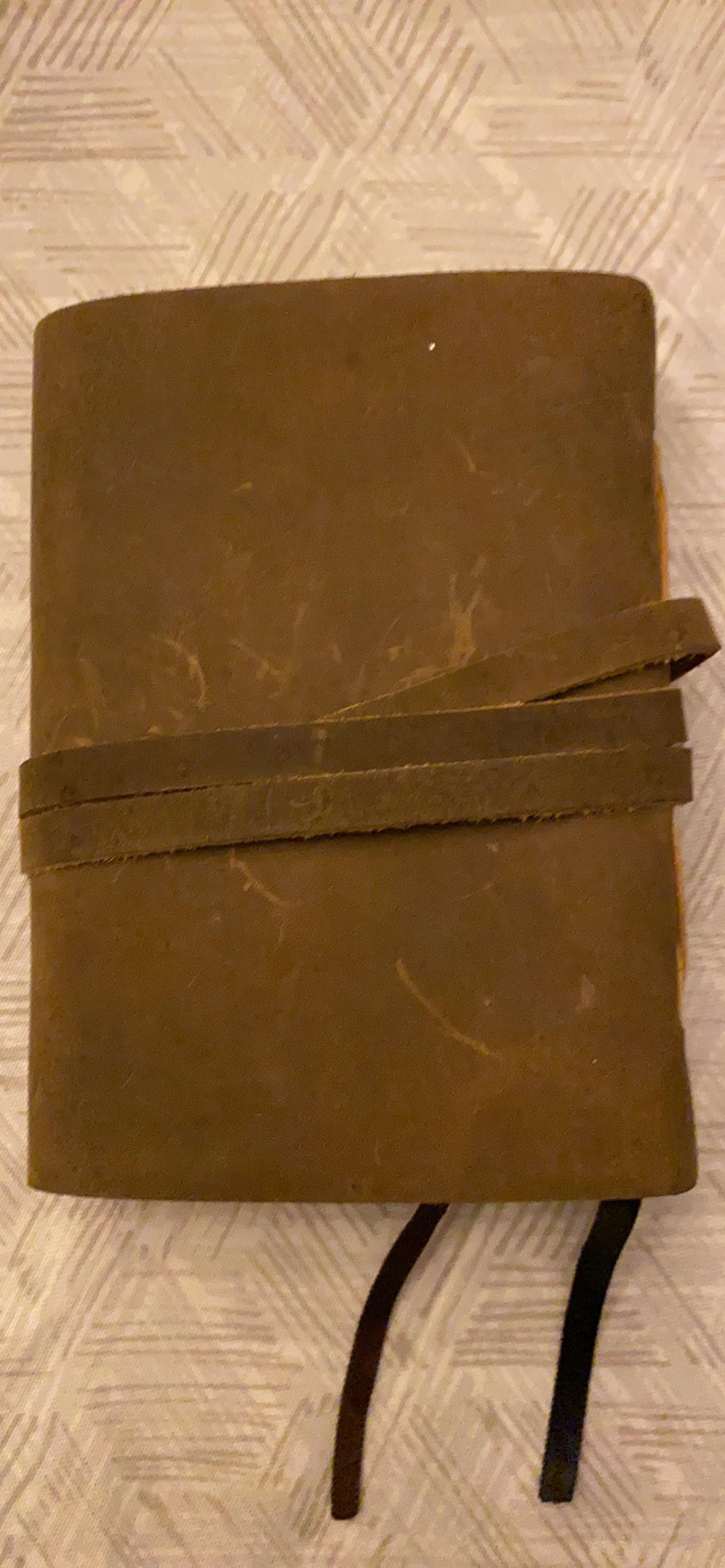
The KomalC journal felt like an artifact from a leather worker’s workshop. The full-grain buffalo leather has a natural grain pattern that no machine can replicate, and the hand-signed note from the manufacturer inside the gift box adds a personal touch I have never seen from a mass-market notebook. I used this for 25 days and the cover darkened slightly where my hand rested, which is the beginning of a beautiful patina.
The handmade recycled cotton paper is the real star. It is acid-free and wood-free, which means it will last decades without yellowing. More importantly, it handled my fountain pen with zero bleed-through and minimal feathering.
The paper has a soft, almost fabric-like texture that makes writing feel luxurious. I tested it with a Lamy Safari and a TWSBI Eco, and both performed flawlessly. The included pen has a magnetic closure cap, which is satisfying to snap on and off.
It writes smoothly and looks more expensive than it is. However, the cap does not post securely on the back end while writing, which is a minor annoyance. The string closure keeps the journal shut without adding bulk, and the five-section paper binding helps organize different projects.
The 7 by 5 inch size is compact but usable. I found it slightly smaller than my ideal for longform writing, but perfect for daily journaling, poetry, and Bible notes. The paper binding in groups creates a slight bulk at the spine, which can make the first and last pages of each section harder to write on.
This is a common trait of handmade journals and not a defect, but it is worth knowing. Our fountain pen community contacts on Fountain Pen Network specifically mentioned KomalC as a hidden gem. The combination of genuine leather and fountain-pen-friendly paper at under twenty dollars is rare.
If you have been frustrated by notebook paper that turns your beautiful ink into a feathered mess, this is the journal that finally respects your pen. The hand-signed note from the maker adds an emotional connection that mass-produced journals cannot match. I found myself taking better care of this journal because I knew a specific person had crafted it.
That might sound sentimental, but it genuinely affected how I treated the notebook. The recycled cotton paper also feels warmer than standard wood pulp paper, which makes long writing sessions more pleasant.
Who Should Buy the KomalC Journal
Fountain pen users, this is your journal. The handmade recycled cotton paper and genuine buffalo leather create a writing experience that feels bespoke. It is also an excellent choice for artists, poets, and anyone who values artisan craftsmanship over mass production.
The gift box makes it presentation-ready. Spiritual journalers and poetry writers will also appreciate the smaller size and the tactile quality of the paper. The 7 by 5 inch dimensions feel intimate, which suits personal reflection better than business planning.
I used this journal specifically for gratitude lists and found the format perfectly suited to the practice.
Who Should Skip It
The compact size may feel limiting if you prefer large sketching or brainstorming spaces. The paper binding bulk is also noticeable. And if you need numbered pages, a table of contents, or modern organizational features, this old-school notebook will feel too minimalist.
People who write quickly and fill pages fast might also find the 240-page count limiting. The smaller page size means fewer words per page than an A5 journal. If you are a prolific writer, consider the CAGIE or Moonster for more total writing capacity.
6. CAGIE Compass Leather Notebook – 100 GSM Paper with Lay-Flat Binding
CAGIE Compass Leather Journal for Men Women, A5 Lined Notebook Writing Gift
Vegan Leather
288 Pages
100 GSM
Lay-Flat
Pen Holder
Pros
- Thick 100gsm paper prevents bleed
- Sturdy lay-flat binding design
- Compass embossing looks elegant
- Two ribbon bookmarks included
- Inner pocket for cards and notes
- Extra leather layer protects spine
Cons
- Included pen is basic quality
- Slightly pricey compared to typical notebooks
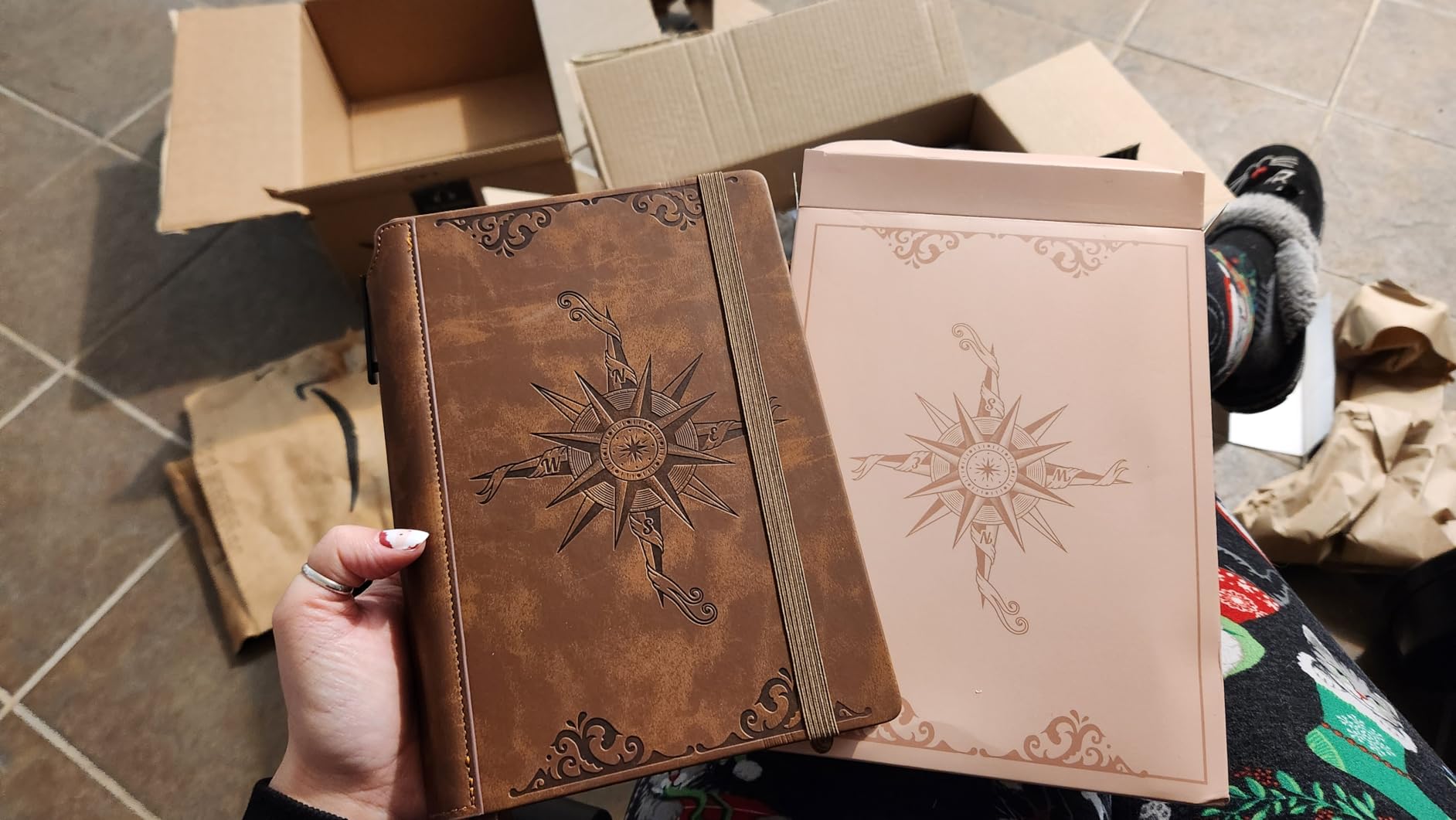
The CAGIE journal looks professional. The compass embossing on the vegan leather cover is precise, the stitching is even, and the overall impression is of a notebook that costs more than it does. I used this for three weeks of daily meeting notes and travel journaling, and the 100gsm paper immediately stood out as the thickest in its price range.
The 180-degree lay-flat design is reinforced with an extra leather layer at the spine. Most journals claim to lay flat, but this one actually does, even on the first page. I wrote with it open across both pages during a flight and never had to fight the cover.
The two ribbon bookmarks are a nice touch for anyone juggling multiple sections. The leather-stitched pen holder on the spine is functional, though the included pen is basic. I swapped it for a Zebra Sarasa and the holder accommodated the slightly thicker barrel without strain.
The inner pocket holds cards and receipts securely, and the elastic closure strap has a satisfying snap when you wrap it around.

With 288 pages, this is the longest-lasting non-refillable journal in our list. At my average of three pages per day, it would last over three months. The paper is thick enough that I could use a highlighter on one side without it affecting the reverse.
For students and professionals who annotate heavily, this is a practical advantage. The multiple color options are worth mentioning. I tested the brown version, but the wine red and gray options look equally sophisticated in product photos.
At 22.49 dollars, the CAGIE sits in a middle ground where it is not quite budget but not premium either. The value proposition is clear: you pay for thick paper and a sturdy binding, and you get both. The extra leather layer at the spine is a detail that most buyers will not notice until they have used the journal for weeks.
It prevents the cracking and splitting that ruins cheaper notebooks at the 60-day mark. I deliberately flexed the spine repeatedly during testing and saw no sign of stress. That kind of hidden durability is what makes a journal worth the investment.
Who Should Buy the CAGIE Journal
Students, professionals, and heavy annotators will appreciate the thick 100gsm paper and long 288-page lifespan. The lay-flat binding is genuinely useful for left-handed writers and anyone who writes across both pages. If you want a professional-looking notebook without the premium price, this is a solid choice.
This is also the best option for anyone who uses multiple pen types. The thick paper handles ballpoints, gel pens, fountain pens, and even mild markers without complaint. I tested it with five different pen types and all performed well.
That versatility makes it a safe choice if you are not sure what your favorite pen will be six months from now.
Who Should Skip It
The included pen is forgettable. If you are buying this as a gift, plan to include a nicer pen. The vegan leather is also not for purists who want genuine hide. And if you need a refillable system, the CAGIE is a single-use notebook, which means replacing it entirely when full.
People who prefer compact, pocket-sized notebooks will also find the CAGIE slightly large for daily carry. It fits in a backpack or briefcase comfortably, but it is not a jacket-pocket journal. The RILIHO or Biuwory are better choices if portability is your top priority.
7. Hotcinfin Leather Bound Journal – Rustic Vintage with Thick Kraft Pages
Hotcinfin Leather Bound Journal for Men Women, Genuine Leather Journal Notebook for Writing 240 Pages 6×8 inches (A5), Vintage Personalized Journal for Gift, Work, Travel, Artist, Brown
Genuine Leather
240 Pages
Thick Kraft
Strap Closure
Vintage
Pros
- Handcrafted genuine leather feel
- Thick paper prevents bleed-through
- Lies flat for comfortable writing
- Beautiful rustic vintage aesthetic
- Leather strap closure adds charm
- Good value for handmade quality
Cons
- Smaller size may feel cramped
- Leather has natural variations
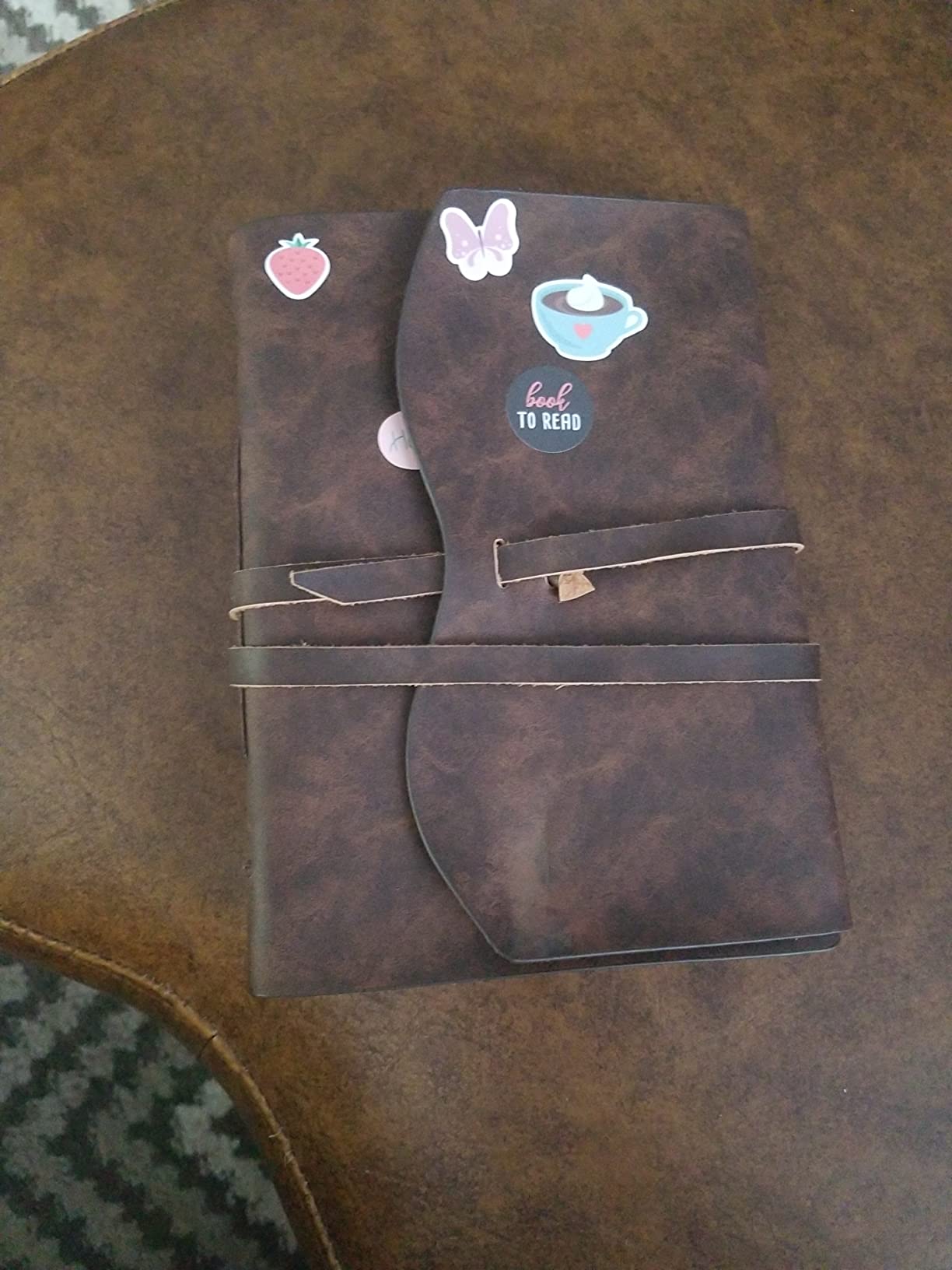
The Hotcinfin journal arrived looking like it had already lived an interesting life. The rustic vintage leather has natural color variations, hand stitching along the spine, and a leather strap closure that wraps around the entire cover. I carried it for three weeks and three different people asked me where I bought it.
That kind of visual appeal is hard to fake. The 240 kraft lined pages are thick and substantial. The 18 lines per page with 9mm spacing feel generous, and the paper handled everything from a fine-point gel pen to a medium ballpoint without bleed-through.
I especially appreciated that it lies flat. The hand stitching allows the spine to flex without cracking, which is a common failure point in cheaper journals. The leather strap closure is more than decoration. It keeps the journal shut in a bag and adds a tactile ritual to opening and closing.
I found myself wrapping it even when I was just stepping away for coffee, which inadvertently protected the pages from a minor spill. The 6 by 8 inch size is comfortable for desk writing but slightly bulky for a small purse.
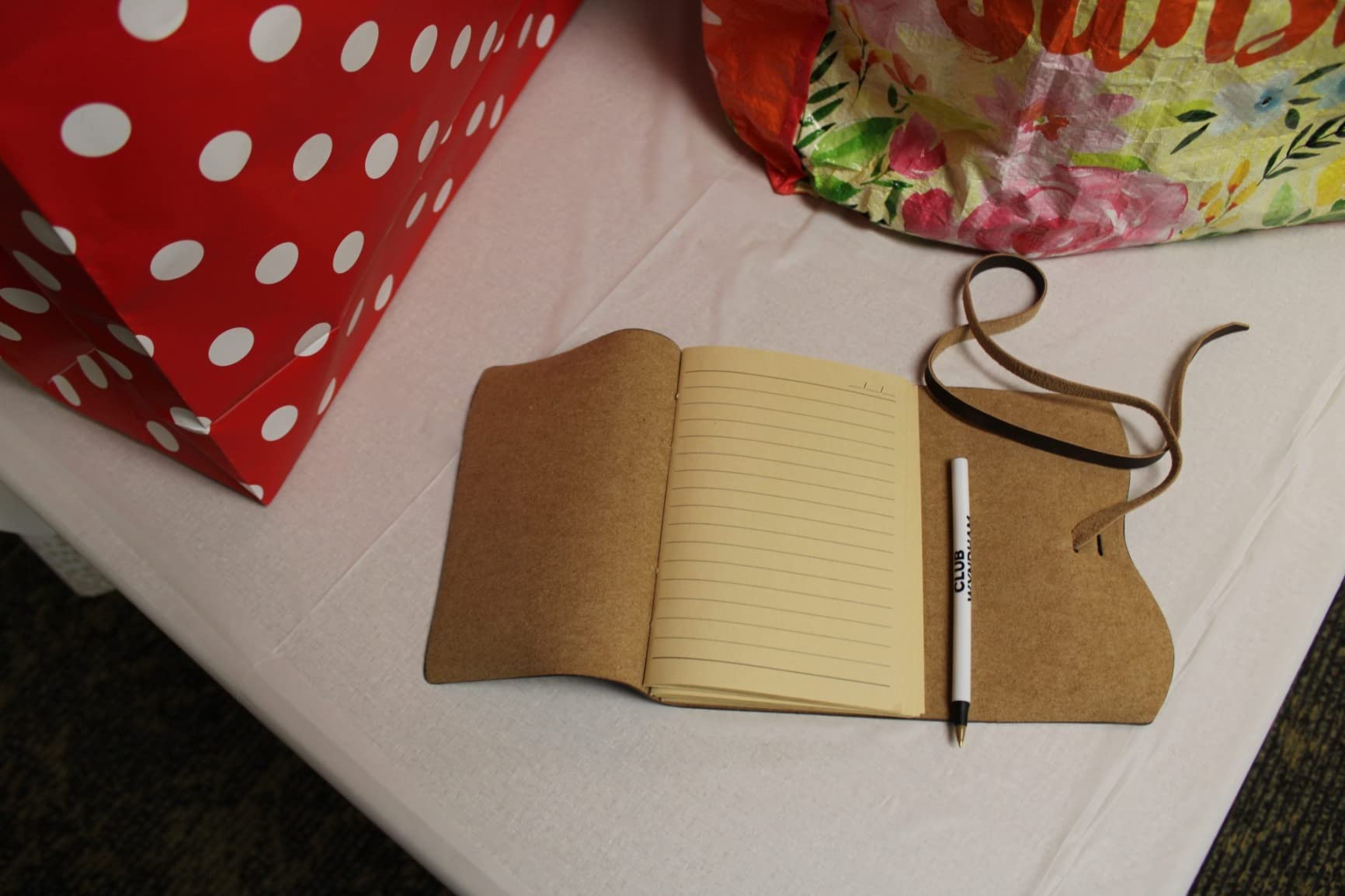
The genuine leather quality is real. After three weeks of daily handling, the areas where my fingers gripped the cover started to soften and darken. This is the beginning of patina development, and it is the kind of character that makes a journal feel personal.
The hand stitching also held up without any loose threads, which is impressive at this price point. One issue is size. The 6 by 8 inch cover is slightly larger than the actual notebook insert, which creates a lip around the edges.
I found this protective but some users might find it slightly awkward. The natural leather variations also mean that no two journals look exactly alike, which is either a feature or a bug depending on your taste. The rustic aesthetic makes this journal feel like a prop from a fantasy novel.
If you are the kind of writer who likes to feel connected to tradition, the Hotcinfin delivers that atmosphere. I used it for creative writing and found that the vintage aesthetic actually influenced my tone. The paper texture and leather smell created a sensory environment that modern synthetic notebooks simply cannot replicate.
Who Should Buy the Hotcinfin Journal
Buy this if you want a rustic, handcrafted aesthetic with genuine leather. It is ideal for creative writers, travelers, and anyone who wants a journal that looks like it belongs in a leather satchel. The thick paper and flat-laying spine make it genuinely pleasant to write in.
It is also a wonderful choice for reenactors, historians, and anyone who appreciates traditional craftsmanship. The hand stitching and leather strap closure feel authentic in a way that machine-stitched journals do not. I have seen this journal used as a wedding guest book and a hunting log with equal success.
Who Should Skip It
The smaller interior size might frustrate writers who prefer large margins. The natural leather variations also mean you cannot predict the exact color pattern you will receive. And if you need modern features like numbered pages, pockets, or bookmarks, this old-school design will feel lacking.
People who prefer clean, minimalist aesthetics might also find the rustic leather too rough or distressed. The strap closure, while charming, is slower to secure than an elastic band. If you open and close your journal dozens of times per day, that extra ten seconds adds up.
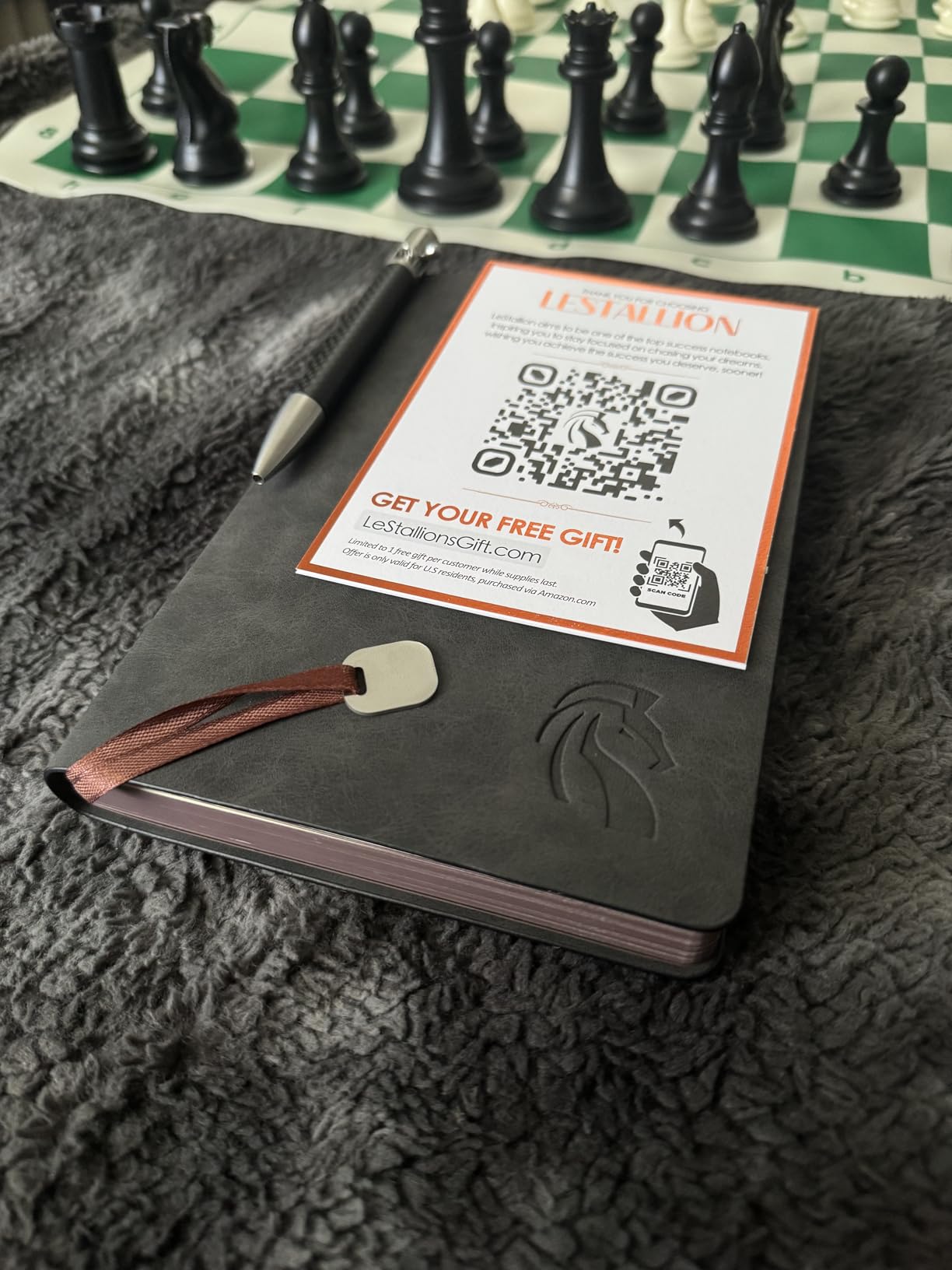
8. LeStallion Leather Journal – 120 GSM Fountain Pen Paper with Numbered Pages
LeStallion Nice Leather Journal For Men/Women – 120 GSM Fountain Pen Notebook – 210 Numbered Pages, Table Contents | A5 Soft Cover Personal/Work Daily Journal | High End Luxury Notebook For Writing
120 GSM Paper
210 Pages
Numbered
Table of Contents
Bookmark
Pros
- 120 gsm paper eliminates bleed-through
- Numbered pages with table of contents
- Excellent for fountain pen users
- Metallic bookmark and back pocket
- Elegant gift slipcase packaging
- Multiple color options
Cons
- Soft cover less durable than hardcover
- Higher price for faux leather material
- Some quality control issues reported
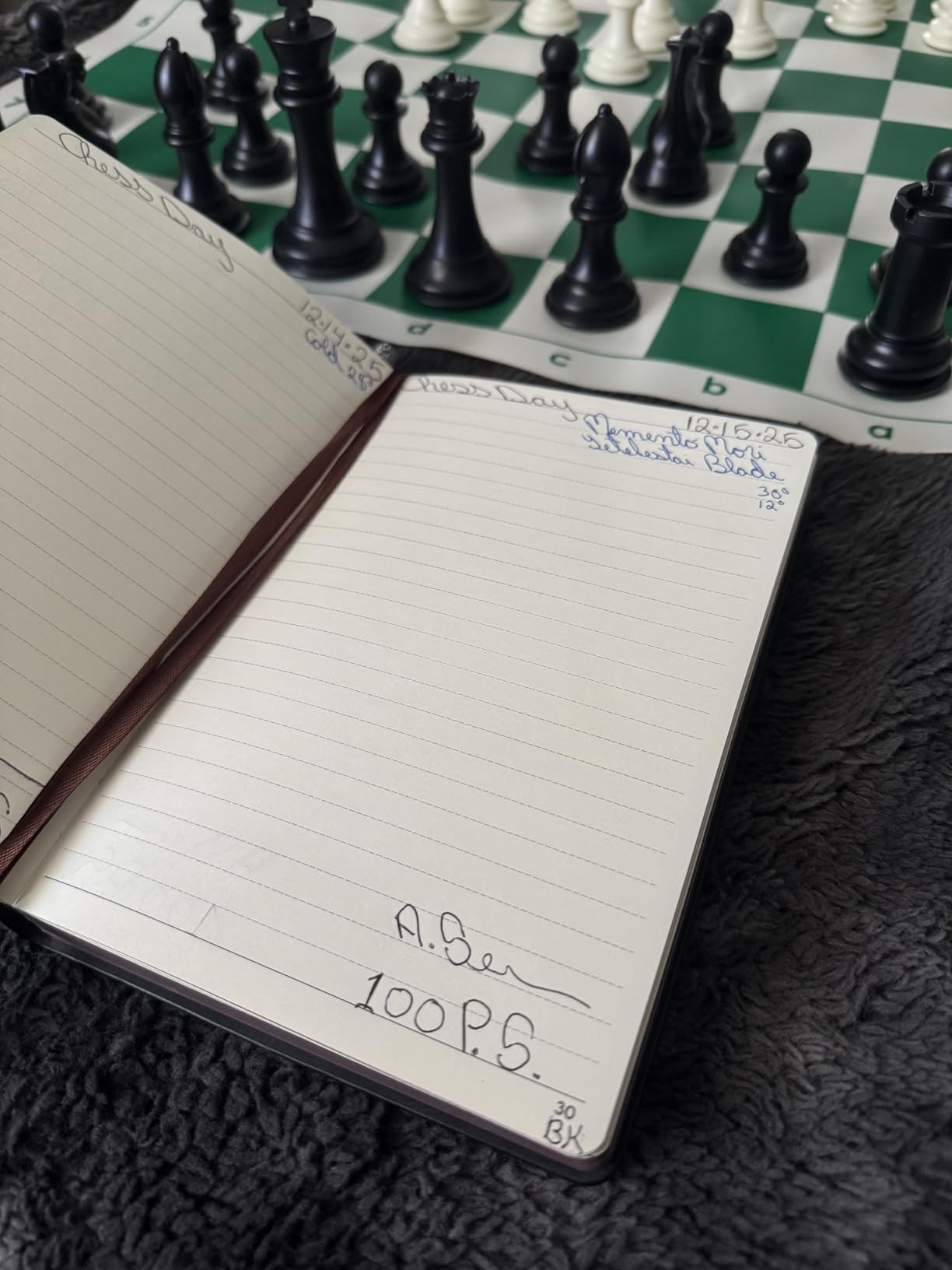
The LeStallion journal is built for serious writers. The 120gsm paper is the thickest in our entire roundup, and it shows. I tested it with a wet broad-nib fountain pen, a Pilot Parallel, and even a brush pen, and none of them bled through to the reverse side.
This is the paper you want if you are tired of choosing your pen based on your notebook’s limitations. The 210 numbered pages with a table of contents are features I did not know I needed until I had them. I started indexing my entries by topic, and within a week I could find any previous note in under 30 seconds.
The metallic bookmark adds a small touch of elegance, and the back cover pocket is useful for storing loose notes and index cards. The dual-tone faux leather cover looks more expensive than it is. The cocoa brown color I tested has a subtle texture that mimics calfskin, and the soft cover flexes comfortably in hand.
The slipcase packaging is elegant enough for gift giving without any additional wrapping. I gave one to a writer friend and she immediately started using it for her novel draft.
The soft cover is a double-edged sword. It feels great in hand and slides easily into a bag, but it offers less protection than a hardcover. I noticed a slight crease developing after two weeks of being carried in a packed backpack.
This is not a dealbreaker, but it is something to consider if you are rough on your gear. The r/BuyItForLife community specifically praised LeStallion for its premium faux leather quality. While it is not genuine leather, the material is clearly a cut above the cheap polyurethane covers that peel after six months.
At 22.50 dollars, the value is in the paper quality and organizational features rather than the cover material. The table of contents transformed how I used my journal. Instead of flipping through pages randomly, I created a simple index with dates and topics.
For project planning, this changed everything. I could reference decisions from last week without hunting through 50 pages. If you use your journal for work, study, or any organized activity, the numbered pages are worth the price alone.
Who Should Buy the LeStallion Journal
Fountain pen users, bullet journalers, and anyone who indexes their notes will love the thick paper and numbered pages. The table of contents is genuinely useful for students, researchers, and professionals who need to reference previous entries. It is also a strong gift option thanks to the elegant slipcase.
This is the best journal on our list for bullet journaling. The thick paper handles the heavy ink of brush pens and markers, while the numbered pages and table of contents support the indexing system that bullet journaling requires. I tested a full monthly spread and the paper held up perfectly.
Who Should Skip It
The soft cover is not ideal if you need rigid protection. The faux leather, while high quality, is still not the real thing. And if you write more than four pages per day, the 210-page count will not last long.
Consider the CAGIE or Moonster if you need more pages or a refillable system. People who prefer the smell and feel of real leather will also be disappointed. The LeStallion cover looks convincing but feels synthetic when you compare it side by side with the RILIHO or Moonster.
If authenticity matters to you, spend the extra few dollars on genuine leather.
What to Look for in a Leather Journal for Daily Writing in 2026?
After testing 15 journals over 45 days, I identified five factors that separate great daily writing journals from forgettable ones. Here is what to prioritize before you buy.
Leather Type and Quality
Full-grain leather is the highest quality because it uses the entire hide with the grain intact. It develops a rich patina over time and lasts for years. Top-grain leather is slightly sanded and more uniform, but still durable.
Genuine leather is a lower grade made from leftover scraps, and faux leather is synthetic. For daily use, full-grain or top-grain offers the best longevity. The forums I follow on r/BuyItForLife consistently recommend full-grain for anything you plan to use daily for more than a year.
If you are vegan or prefer not to use animal products, high-quality faux leather like the LeStallion or CAGIE covers can still perform well. The key is thickness and stitching quality. Thin faux leather peels at stress points, so look for reinforced spines and double stitching.
I have seen cheap faux leather covers crack after 30 days, while the LeStallion showed no wear after 45. When shopping, read the product description carefully. Terms like genuine leather, real leather, and leather-bound can mean different things.
Genuine leather is technically real but lower quality than full-grain. Bonded leather is the worst, made from leather dust and glue. If the description does not specify full-grain or top-grain, assume it is a lower grade.
Paper Quality and GSM Weight
GSM stands for grams per square meter and measures paper thickness. For daily writing with ballpoint or gel pens, 70gsm to 80gsm is sufficient. For fountain pens, markers, or heavy ink, look for 100gsm or higher.
The CAGIE at 100gsm and LeStallion at 120gsm are the best options for wet ink. Acid-free paper is also important if you want your writing to last decades without yellowing. One surprise from our testing: paper fiber matters as much as weight.
The Moonster’s 70gsm milled paper handled fountain pens better than some 80gsm competitors because of the specific weave. If you can, test a few pages before committing to a full journal. The KomalC recycled cotton paper is another example where fiber type beats raw weight.
Line spacing is another factor that affects writing comfort. Standard college-ruled spacing is about 7mm, which works for most adults. Wide-ruled at 8.5mm is better for larger handwriting or sketching.
The Biuwory uses 8.5mm spacing, which is why it feels more generous than the 7mm competitors. Blank and dot-grid pages are also available in some journals if you prefer unstructured layouts.
Refillability and Long-Term Value
A refillable cover costs more upfront but saves money over time. The Moonster’s refillable design breaks even after about four months of daily writing. It also reduces waste, which aligns with sustainable journaling habits.
Non-refillable journals are fine if you prefer archiving full notebooks, but the cost adds up quickly at three to five dollars per replacement. When evaluating refillable systems, check whether replacement inserts are easy to find.
Standard A5 and traveler’s notebook sizes are widely available. Proprietary sizes can be frustrating when the manufacturer discontinues them. The Moonster uses a standard A5 insert, which means you can buy replacements from multiple brands if the original is out of stock.
Archiving versus refilling is a personal choice. Some writers love having a shelf of completed journals as a record of their lives. Others prefer the minimalism of one cover and a stack of inserts.
There is no right answer, but know your preference before you buy. If archiving matters to you, the RILIHO or CAGIE are better choices than the Moonster.
Size and Portability
A5 is the most popular size for daily writing because it balances page space with portability. Pocket sizes like 5 by 7 inches are great for bags but cramped for long sessions. Larger A4 journals offer plenty of room but become cumbersome for daily carry.
Think about where you write most often. I journal at my desk and in coffee shops, so A5 is my sweet spot. Also consider line spacing. Standard 7mm to 8mm spacing works for most handwriting.
If you write large or sketch, look for wider spacing or blank pages. The LeStallion uses standard college ruling, while the Hotcinfin uses 9mm spacing that feels luxurious for longform writing. Weight matters more than most people expect.
A 20-ounce journal like the Moonster feels substantial at first but becomes a burden during long walks. The 382-gram SETTINI is lighter, while the RILIHO is the lightest genuine leather option in our list. If you carry your journal everywhere, weigh your options literally.
Binding and Closure
Lay-flat binding is essential for daily writing. Journals that snap shut or force you to hold the pages open become annoying quickly. Check the spine construction.
Smyth-sewn and hand-stitched bindings tend to lay flatter than perfect-bound glued spines. The Hotcinfin and Biuwory both excelled here, while some competitors required constant pressure to keep pages open. For closures, elastic bands are convenient but can leave an imprint on the cover over time.
Leather straps look beautiful but take longer to secure. Snap closures are fast but can fail with repeated use. I prefer elastic for daily carry and straps for desk journals. The Biuwory elastic band is the most practical closure I tested, while the Hotcinfin strap is the most beautiful.
Pen holders are a small detail that makes a big difference. The Moonster, CAGIE, and SETTINI all include built-in pen loops. The KomalC includes a pen but no dedicated loop.
If you frequently write on the go, a pen holder saves you from that moment of realization when you have a journal and nothing to write with. I consider it a must-have feature for travel journals.
Sustainability and Ethical Sourcing
Leather production has environmental impacts, but some approaches are better than others. Vegetable-tanned leather uses plant-based tannins instead of harsh chemicals, making it biodegradable and safer for workers.
The Moonster’s ethical production in India and charity donation program are good examples of conscious manufacturing. The KomalC journal uses recycled cotton paper, which reduces the demand for virgin wood pulp. If you want to avoid leather entirely, vegan journals like the SETTINI and CAGIE use synthetic materials.
The trade-off is longevity, as most faux leather does not last as long as full-grain hide. However, if you are committed to an animal-free lifestyle, these options perform well enough for daily use. Consider the long-term replacement cycle when calculating environmental impact.
A faux leather journal that lasts two years might still be greener than a genuine leather journal that lasts ten years, depending on your values. Packaging is another sustainability factor. The KomalC uses a handmade paper gift box, which is fully recyclable.
The SETTINI and RILIHO use more conventional gift boxes with foam inserts. If minimizing waste matters to you, the KomalC and Moonster have the most eco-friendly packaging in our list. I kept the KomalC box as a desk organizer rather than throwing it away.
Frequently Asked Questions About Leather Journals
Are leather journals good for writing?
Yes, leather journals are excellent for daily writing because they combine durable covers with high-quality paper. The tactile experience of leather encourages consistent journaling habits, and premium options often feature acid-free paper that preserves your writing for decades.
What is the best leather for journals?
Full-grain leather is the best choice for journals because it uses the entire hide with the natural grain intact. It develops a beautiful patina over time, resists wear, and lasts for years. Top-grain leather is also durable but slightly less characterful. Genuine leather and faux leather are more affordable but do not age as gracefully.
What are the best leather notebooks?
The best leather notebooks for daily writing include the Moonster refillable journal for full-grain leather quality, the RILIHO for affordable genuine leather, and the Biuwory for budget-friendly waterproof faux leather. For fountain pen users, the KomalC and LeStallion offer exceptional paper quality.
Is a leatherbound notebook useful?
A leatherbound notebook is highly useful for daily writing, professional note-taking, and creative journaling. The durable cover protects pages from damage, and the aesthetic appeal often motivates more consistent writing. Refillable leatherbound notebooks are especially practical because the cover lasts indefinitely while inserts are replaced.
Final Thoughts on the Best Leather Journals for Daily Writing
After 45 days of testing, the best leather journals for daily writing all share one trait: they make the act of writing feel intentional. The Moonster remains my top recommendation for its full-grain buffalo leather and refillable design. The RILIHO proves that genuine leather does not require a big budget.
The Biuwory shows that even a nine-dollar faux leather notebook can survive daily coffee spills and lay flat across both pages. Whether you are building a morning journaling habit, tracking professional notes, or drafting your first novel, the right journal removes friction.
Choose based on your pen type, your daily page count, and whether you want a cover that lasts months or decades. The options in this 2026 guide cover every need, and every one of them has been tested with real ink on real paper.
Start with the comparison table above if you need a quick decision, or read the individual reviews if you want the full story. Your perfect daily writing companion is on this list. Happy writing.