
I have spent the better part of two years helping friends, family members, and complete strangers from a local community orchestra pick their first instrument, and if there is one thing I have learned, it is this: the best cellos for beginners are not the cheapest ones on the page. They are the ones that arrive playable, hold their tuning, and do not fight you during every practice session.
That distinction matters more than most people realize. Scroll through any cello forum on Reddit and you will find the same heartbreaking stories over and over. Someone bought a bargain instrument online, the bridge collapsed in week two, the pegs refused to hold pitch, and the strings sat so high off the fingerboard that practicing caused actual hand cramps. Within three months, the cello was in a closet and the dream was postponed.
The community even has a name for these instruments: CSOs, or “cello shaped objects.” They look like cellos in photos, but they cannot do the one job a beginner needs them to do, which is to make practicing enjoyable enough that you keep showing up.
So our team took a different approach for this guide. We dug into eight of the most popular beginner cello outfits currently available, cross-checked owner reviews, and weighed every kit against what actually matters for a first instrument: wood quality, setup requirements, tuning stability, and how forgiving the instrument is while your technique is still forming. We paid special attention to adult beginners, because that group is underserved by most buying guides even though they make up a huge share of new players.
One honest caveat before we start. Every cello shipped in a box arrives with the bridge down, and nearly every budget kit benefits from a string upgrade and a quick check by a local luthier. That is not a defect unique to any brand here. It is simply the reality of buying a wooden instrument through the mail, and we will explain exactly what to do about it in the buying guide below.
Top 3 Picks for Best Cellos for Beginners (October 2026)
If you want the short answer before the detailed reviews, here are our three favorites after comparing all eight instruments. Each one earned its badge for a different reason, and one of them will almost certainly fit your situation.
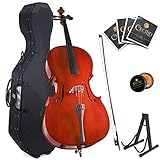
Cecilio CCO-100 Cello with Hard and Soft Case
- Spruce top with maple back
- Four integrated fine tuners
- Hard case plus soft case
- Complete beginner outfit

Ktaxon Full-Size Beginner Cello Kit
- Basswood top with maple scroll
- Steel strings ease finger fatigue
- 5mm padded cello bag
- Budget-friendly full kit

EPOFIT Full Size Cello Kit for Adults
- Maple top with basswood body
- Wide warm tonal range
- 12-month warranty
- Designed for adult beginners
Editor’s Choice, Cecilio CCO-100 with hard and soft case: the most complete outfit of the group, with two cases, a stand, an extra string set, and four built-in fine tuners. The best pick for a student who wants everything in one box.
Best Value, Ktaxon full-size kit: the lowest cost way into a full-size acoustic cello that owners consistently praise for its rich, bright tone. Just budget a little time for peg and bridge attention.
Top Rated, EPOFIT full size kit: the highest owner rating in our lineup at 4.9 stars, with a maple top, a warm and broad tonal range, and a 12-month warranty aimed squarely at adult learners.
Best Cellos for Beginners in 2026
Here is the full lineup side by side. All eight are 4/4 full-size instruments, which suits most adults and taller teens. We go deep on each one in the reviews below.
| Product | Specifications | Action |
|---|---|---|
| Cecilio CCO-100 Cello with Hard Case |
|
Check Latest Price |
 Cecilio 4/4 Student Cello Kit Cecilio 4/4 Student Cello Kit |
|
Check Latest Price |
 Cecilio CCO-100 Natural Finish Cecilio CCO-100 Natural Finish |
|
Check Latest Price |
| Ktaxon Full-Size Basswood Cello |
|
Check Latest Price |
 Ktaxon Solid Wood Spruce and Maple Cello Ktaxon Solid Wood Spruce and Maple Cello |
|
Check Latest Price |
| EPOFIT Full Size Cello Kit |
|
Check Latest Price |
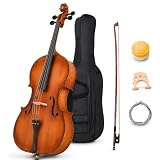 Doredo 4/4 Matte Natural Cello Doredo 4/4 Matte Natural Cello |
|
Check Latest Price |
 Cecilio CECO-4BK Electric Silent Cello Cecilio CECO-4BK Electric Silent Cello |
|
Check Latest Price |
1. Cecilio CCO-100 with Hard and Soft Case – The Complete Student Outfit
Cecilio 4/4 Full Size Cello with Hard & Soft Case, Stand, Bow, Rosin, Bridge and Extra Set of Strings, CCO-100
4/4 full size
Spruce top, maple back and sides
Four integrated fine tuners
Hard case, soft case, stand, bow, rosin
Pros
- Beautiful high-luster varnish finish
- Crack-proof spruce top with maple back and sides
- Includes hard case
- soft case
- Brazilwood bow rosin bridge stand and extra strings
- Alloy tailpiece with four integrated fine tuners
- Excellent sound and intonation for the price
Cons
- Bridge requires setup on arrival
- Tuning pegs need careful handling
- Included stand is a guitar stand
- Stock strings benefit from replacement
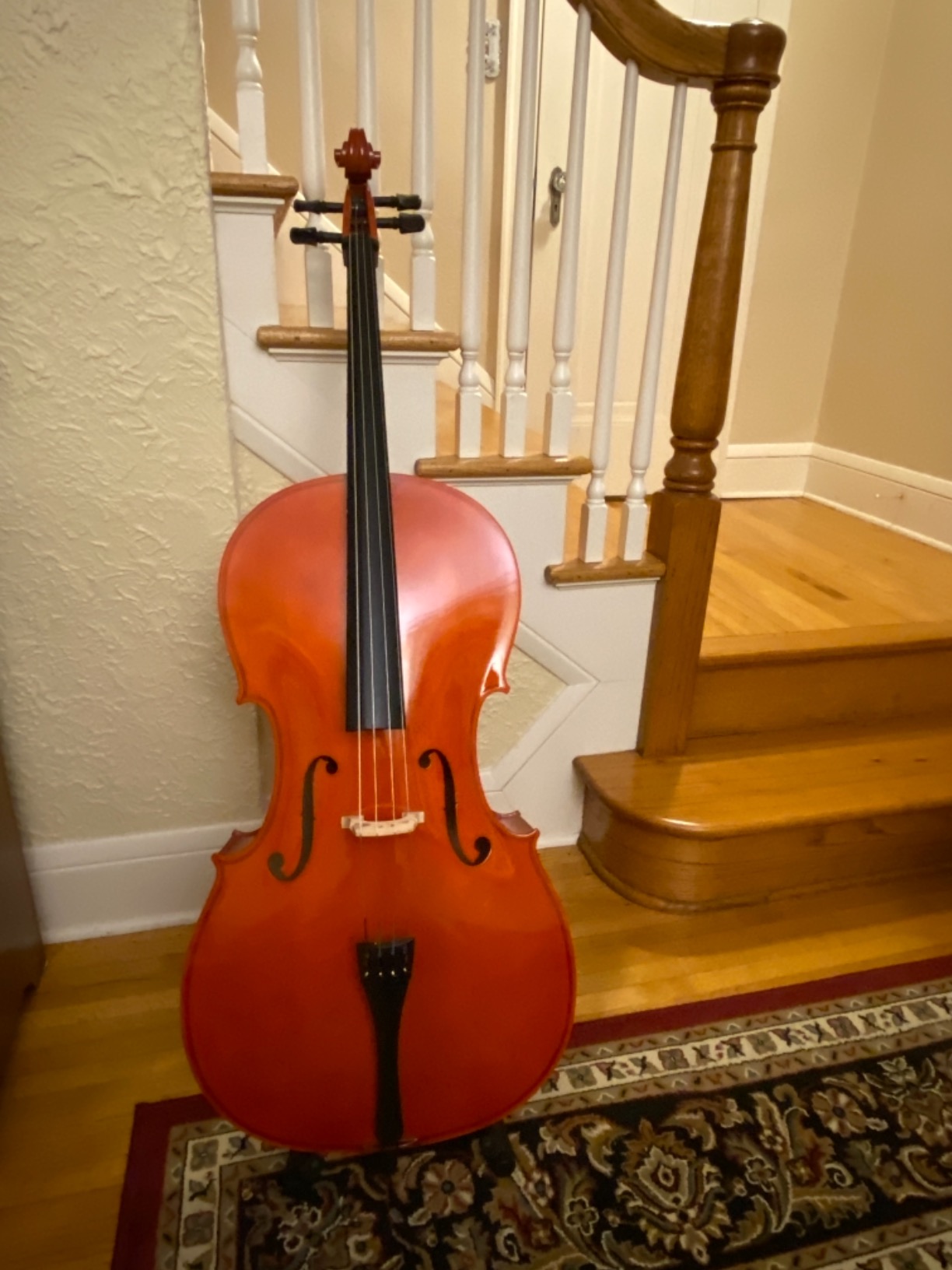
This is the kit I point most first-time buyers toward when they ask me what to order. Cecilio’s CCO-100 in the dual-case outfit is the most complete package we reviewed: you get the cello, a hard case, a soft case, a Brazilwood bow with genuine Mongolian horsehair, rosin, a stand, and even a spare set of strings. For a beginner, not having to shop for accessories separately removes a surprising amount of friction.
The instrument itself is a classic student build. The top is spruce while the neck, back, and sides are maple, and the finish has a genuinely handsome high-luster look that belies the price bracket. Several owners in the review section specifically call out how good the instrument looks sitting in a room, which sounds trivial until you realize an instrument you are proud of is one you will actually take out and play.
Sonically, it lands where a good student cello should. The tone is warm and resonant enough that early scales and simple melodies sound rewarding rather than punishing, and intonation is consistent across the strings. The alloy tailpiece carries four integrated fine tuners, which is a bigger deal than beginners expect. Fine tuners let you fix pitch with small turns instead of wrestling with friction pegs, and that single feature makes daily practice far less frustrating.
The honest downsides are the usual ones for shipped cellos. The bridge arrives down and must be stood up and positioned between the inner f-hole notches before you tune to pitch. The pegs need to be pushed in gently while turning, or they will slip. The “cello stand” in the box is really a guitar stand, so treat it as a bonus rather than a feature. And the stock strings are the weakest link in the whole outfit.
Who this cello suits best
This is the outfit I recommend for a committed beginner who wants a one-box purchase with no accessory shopping. It suits teens and adults starting private lessons or a school orchestra program, especially where a hard case is needed for bus rides or carpool trunk storage.
The spare string set and dual cases also make it a smart choice for someone who knows they will transport the instrument weekly. You are essentially buying peace of mind for the first year of playing.
What setup to expect on arrival
Plan on standing the bridge, tuning the strings up slowly over a day or two, and pushing the pegs in as you turn them. Budget for a string upgrade early on, since owners consistently report the instrument wakes up noticeably with a better set.
If you have a local music shop, a thirty-minute luthier visit to set the bridge feet, check string height, and add peg compound will transform this from a good instrument into a great one for very little money.
2. Cecilio 4/4 Student Cello Kit in Black – The Budget-Proof Starter
Cecilio 4/4 Full Size Cello Kit for Beginners, Spruce Top Acoustic Cello, Cello Kit with/Bow, Stand, Rosin, Bag, Stringed Music Instruments for School Orchestras, Performances, Black
4/4 full size
Spruce top with maple back and sides
Black metallic varnish
Padded case, bow, stand, rosin, extra strings
Pros
- Premium spruce top and maple back for enhanced resonance
- Complete bundle with padded case
- bow
- stand
- rosin and extra strings
- Case has backpack straps for easy transport
- 1 year warranty against manufacturer defects
- Balanced classical sound profile
Cons
- Bridge requires setup on arrival
- Included rosin is low quality
- Stock strings benefit from early replacement
- Pegs may slip without peg dope
With over 2,300 owner reviews, this is one of the most purchased beginner cellos in the Acoustic Cellos category, and that track record is worth something. When thousands of people have put an instrument through daily practice, you learn quickly where it excels and where it cuts corners.
The build follows the proven student formula: a spruce top with maple back and sides, finished here in a black metallic varnish that looks strikingly modern. If the traditional honey-brown cello aesthetic is not your thing, this is one of the few quality student outfits that goes a different direction visually.
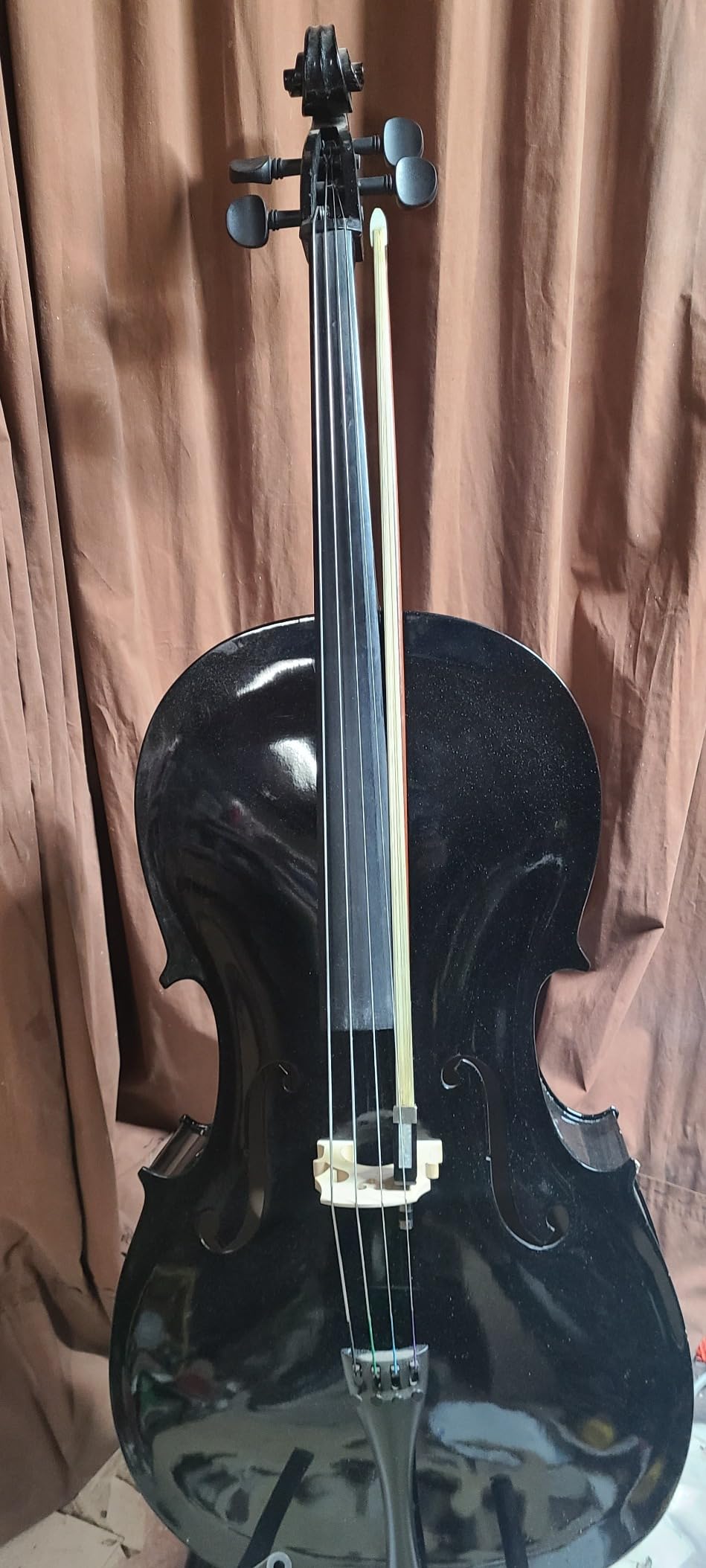
Owners consistently describe the sound as balanced and classical, with enough resonance that beginners hear their own progress clearly. The padded case has backpack straps, which students who walk or bike to lessons will appreciate far more than they expect. A one-year warranty against manufacturer defects rounds out the package.
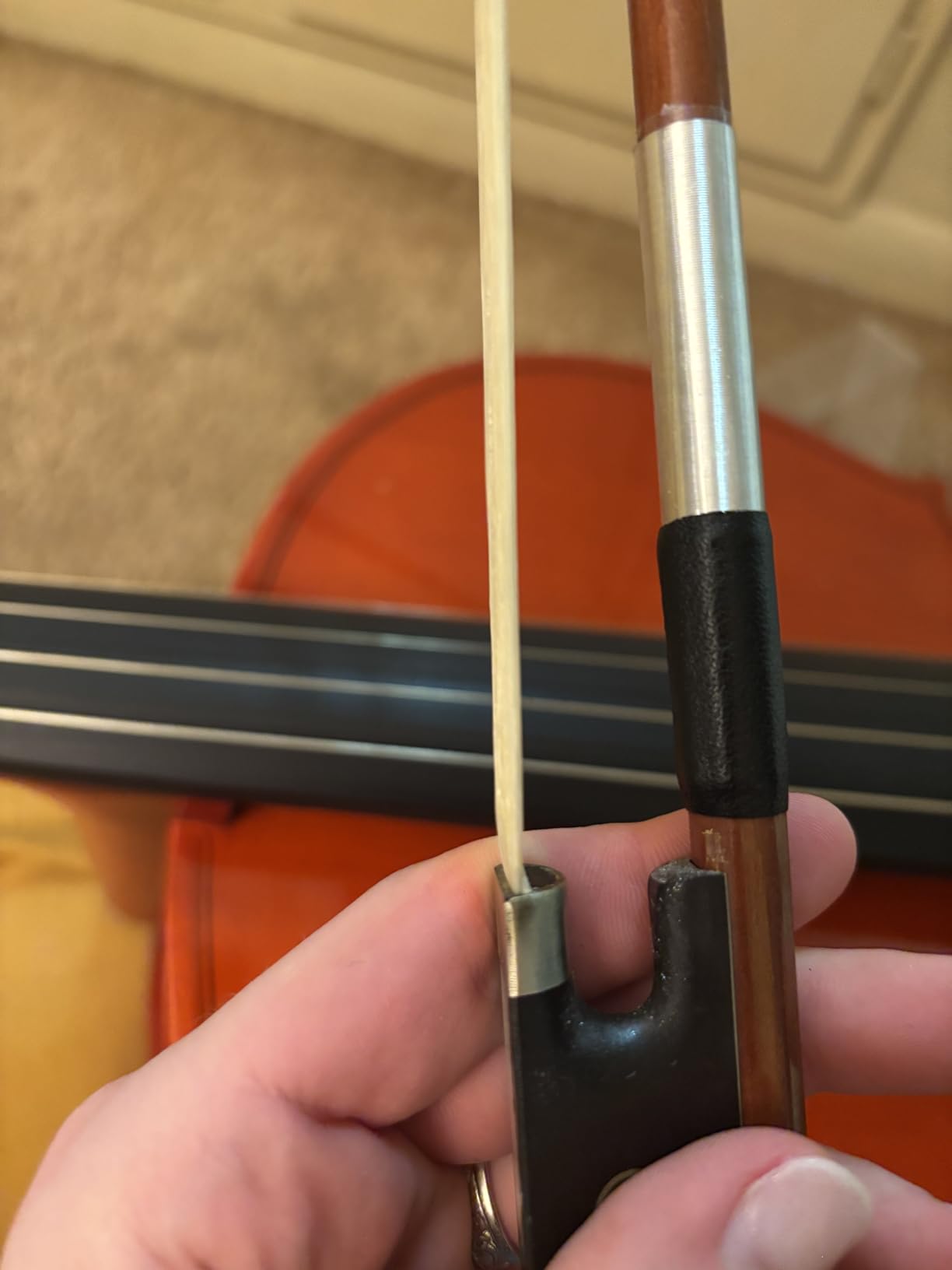
The weak points are well documented because of that huge review base. The included rosin is barely functional and deserves immediate replacement. The stock strings are cheap. The pegs can slip until they are cleaned and treated with peg dope. And like every cello shipped in a box, the bridge arrives down and needs to be set.
Who this cello suits best
This kit fits the practical beginner who wants a proven, widely owned instrument at a low cost of entry. It is a common sight in school orchestra programs, and the black finish appeals to plenty of teens and adults who want something a little different.
It is also a reasonable pick if you are buying for a student whose commitment level is still unknown, since the full bundle means no extra purchases while you both figure out whether the cello sticks.
What setup to expect on arrival
Expect to stand the bridge, replace the rosin, and plan a string upgrade within the first month. Add a tube of peg compound to your cart at the same time, because a few slips during week one are nearly universal with fresh pegs.
An hour with a luthier for bridge fitting and peg treatment will eliminate almost every complaint in the review section. It is the single best money you can spend after the box arrives.
3. Cecilio CCO-100 in Natural Finish – The Classic Look
Cecilio 4/4 Full Size Cello, Beginner Cello 4/4, Acoustic Cello Set with Portable Bag, Bow, Rosin, Stand, String Musical Instruments for School Orchestras, Performances
4/4 full size
Spruce top with maple back, neck and sides
Natural varnish finish
Padded soft case, bow, stand, rosin, extra strings
Pros
- Warm classic natural finish
- Crack-proof spruce top with maple back
- neck and sides
- Complete kit with padded soft case
- bow
- stand
- rosin and extra strings
- 1 year warranty against defects
- Elegant classical appearance
Cons
- Bridge requires setup on arrival
- Cheap included rosin and strings
- Pegs may slip and need peg dope
- Some quality control variance reported
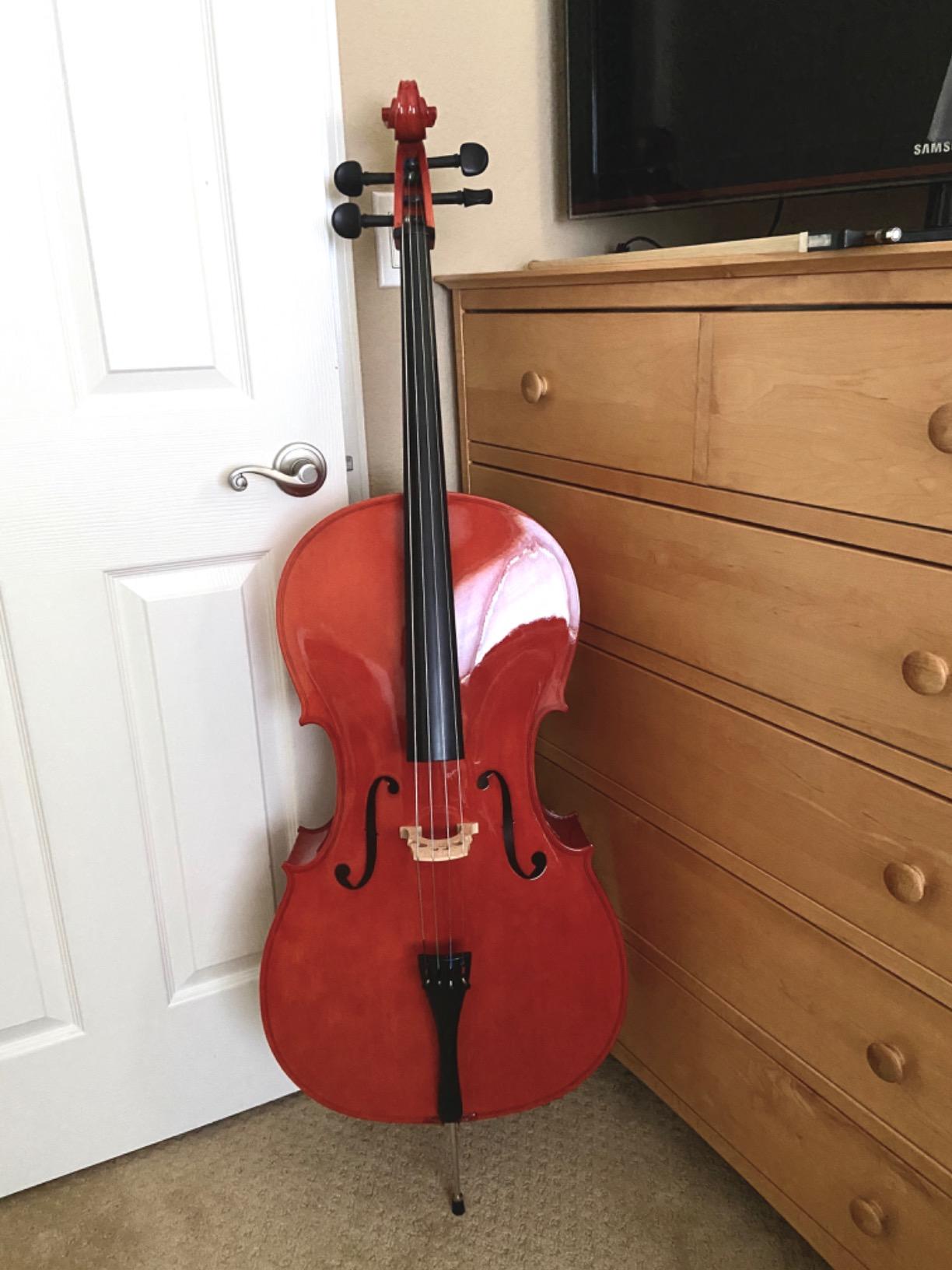
This is essentially the sibling of the black kit above, wearing the traditional natural varnish that most people picture when they imagine a cello. Same CCO-100 platform, same spruce and maple tonewood pairing, same accessory loadout of padded soft case, Brazilwood bow, stand, rosin, and spare strings.
Why choose this one over the black version? Mostly aesthetics, and that is a legitimate reason. A traditional-looking instrument feels timeless, photographs beautifully, and matches what students see in method books and orchestra halls. Some players simply practice more when they love the object in their hands.
Performance mirrors its sibling: a decent student tone with respectable resonance, four strings that intonate acceptably out of the box, and hardware that does its job once the bridge is stood and the pegs are seated. The review pool is shared across this family, so the feedback base is just as large and just as candid.
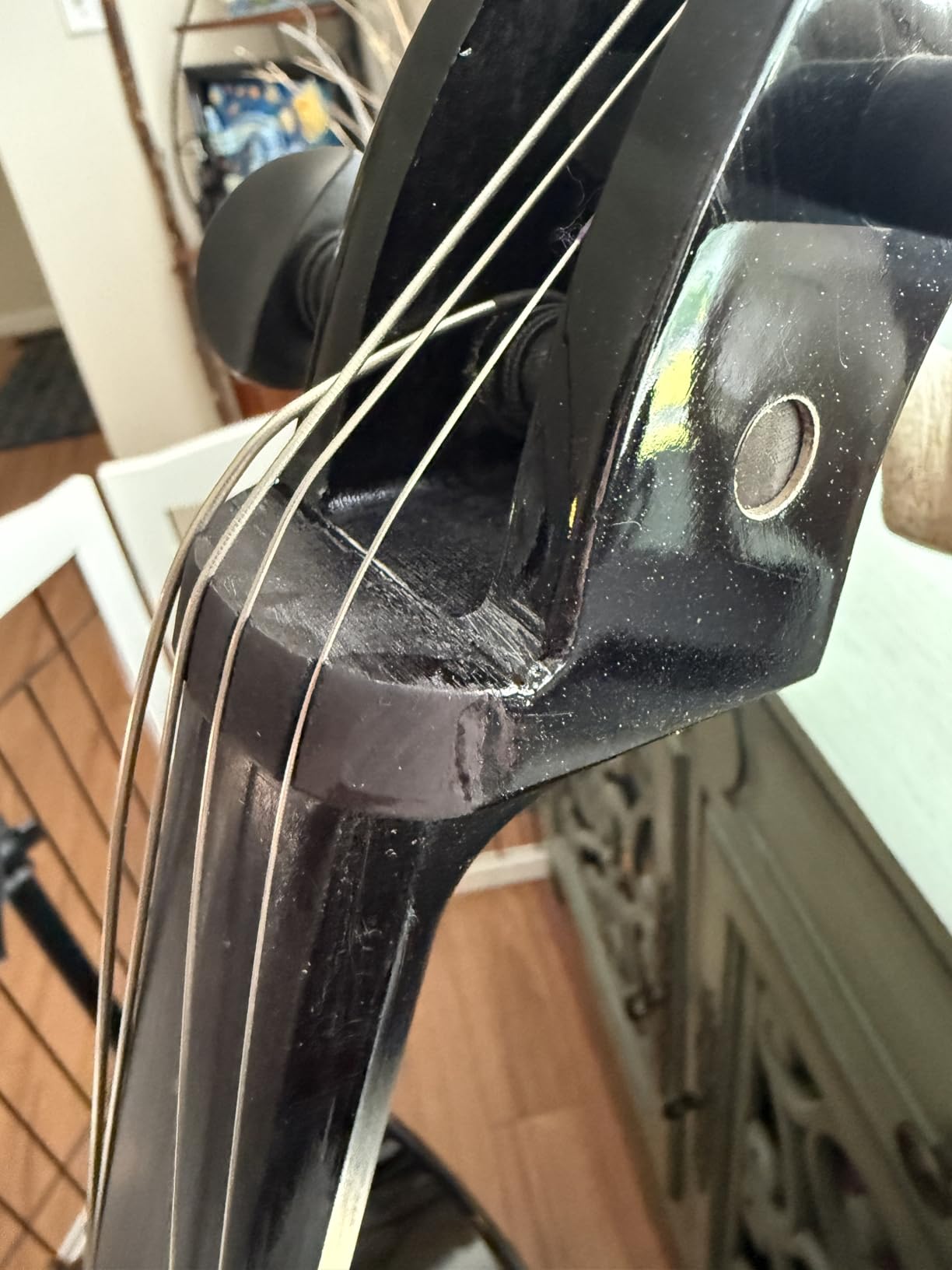
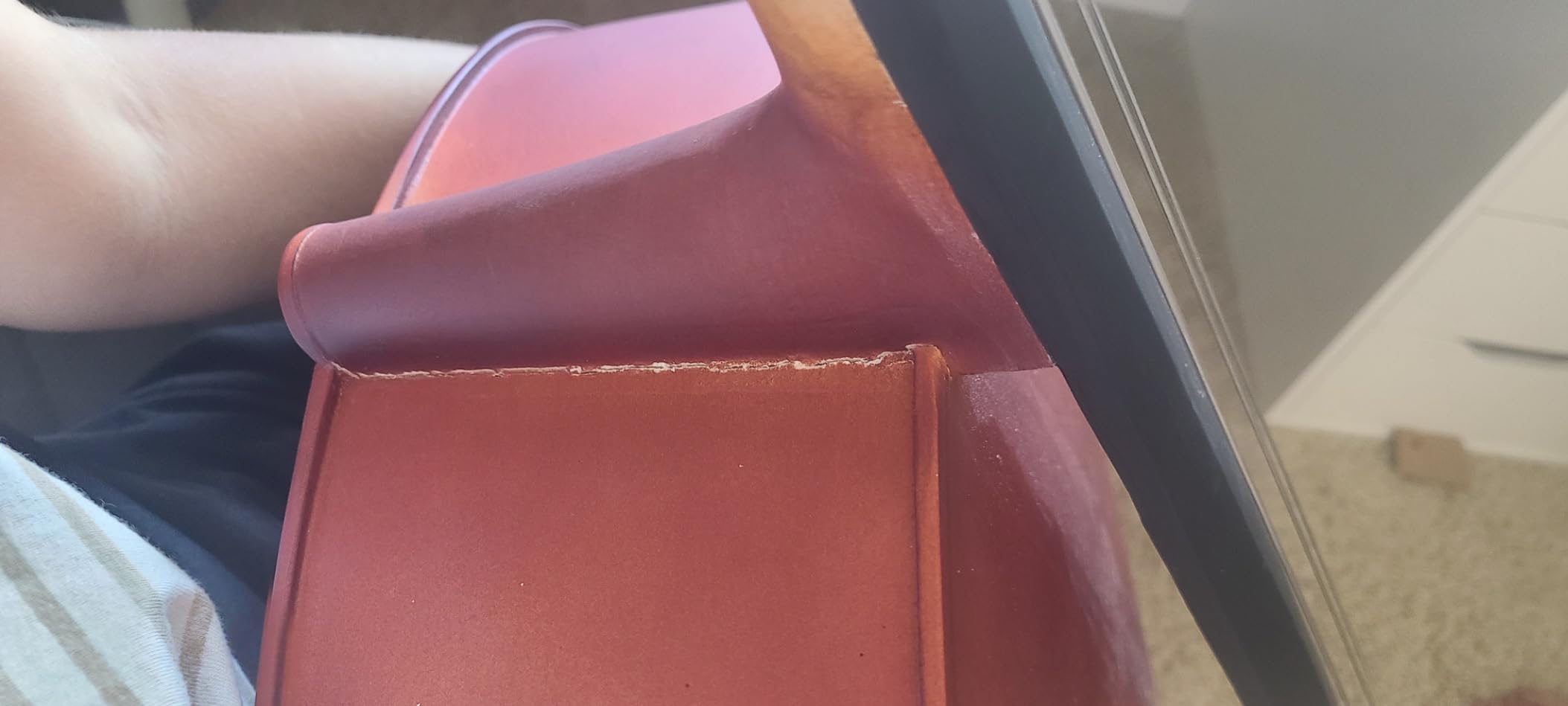
The same caution applies here too. A handful of owners report quality control variance, like missing parts or a scuffed component on arrival, so inspect the box contents the day it lands and use the warranty if anything is off. The odds are in your favor, but checking early costs nothing.
Who this cello suits best
This is the pick for the traditionalist beginner, adult or teen, who wants the classic cello look without paying boutique prices. It suits Suzuki students, school orchestra players, and anyone taking private lessons where the teacher expects a standard student outfit.
It is also the version most teachers will recognize on sight, which subtly matters. Instructors who know the instrument can diagnose issues faster because they have seen dozens of them.
What setup to expect on arrival
The routine is identical to the black kit: bridge up, strings tuned gradually, pegs pushed in while turning, and rosin swapped for a name brand. Budget a small accessories fund from day one and the experience is smooth.
As with its sibling, a luthier bridge fitting and peg treatment turns this from serviceable into genuinely pleasant to play. Most owners who complain about this class of cello have simply skipped that step.
4. Ktaxon Full-Size Basswood Cello Kit – Best Value on a Tight Budget
Ktaxon Full-Size Cello, Beginner Cello 4/4, Acoustic Cello Kit
4/4 full size
Basswood top and body with solid maple scroll
Steel strings
5mm padded Oxford cloth bag, bow, rosin, extra strings
Pros
- Rich and bright tone that surprises for the price
- Dense aged basswood top with solid maple scroll
- 5mm cotton-thickness padded Oxford bag
- Steel strings help relieve finger fatigue
- Responsive customer service per owners
Cons
- Pegs slip badly without peg oil treatment
- Bridge may need replacement or modification
- Low quality included rosin
- Some quality control variance reported
- Bridge notches may be narrow for strings
This is the least expensive full-size acoustic cello kit in our lineup, and it currently sits at the top of the Acoustic Cellos bestseller list. That combination of lowest cost and highest sales volume makes it the default first look for almost every budget shopper, so we examined it extra carefully.
The surprise is the sound. Reviewers consistently describe the tone as rich and bright, which is not what people expect at this price. Ktaxon credits the dense, aged basswood top and a body-to-bridge fit that resonates efficiently, and whatever the cause, owners hear the difference and say so repeatedly.
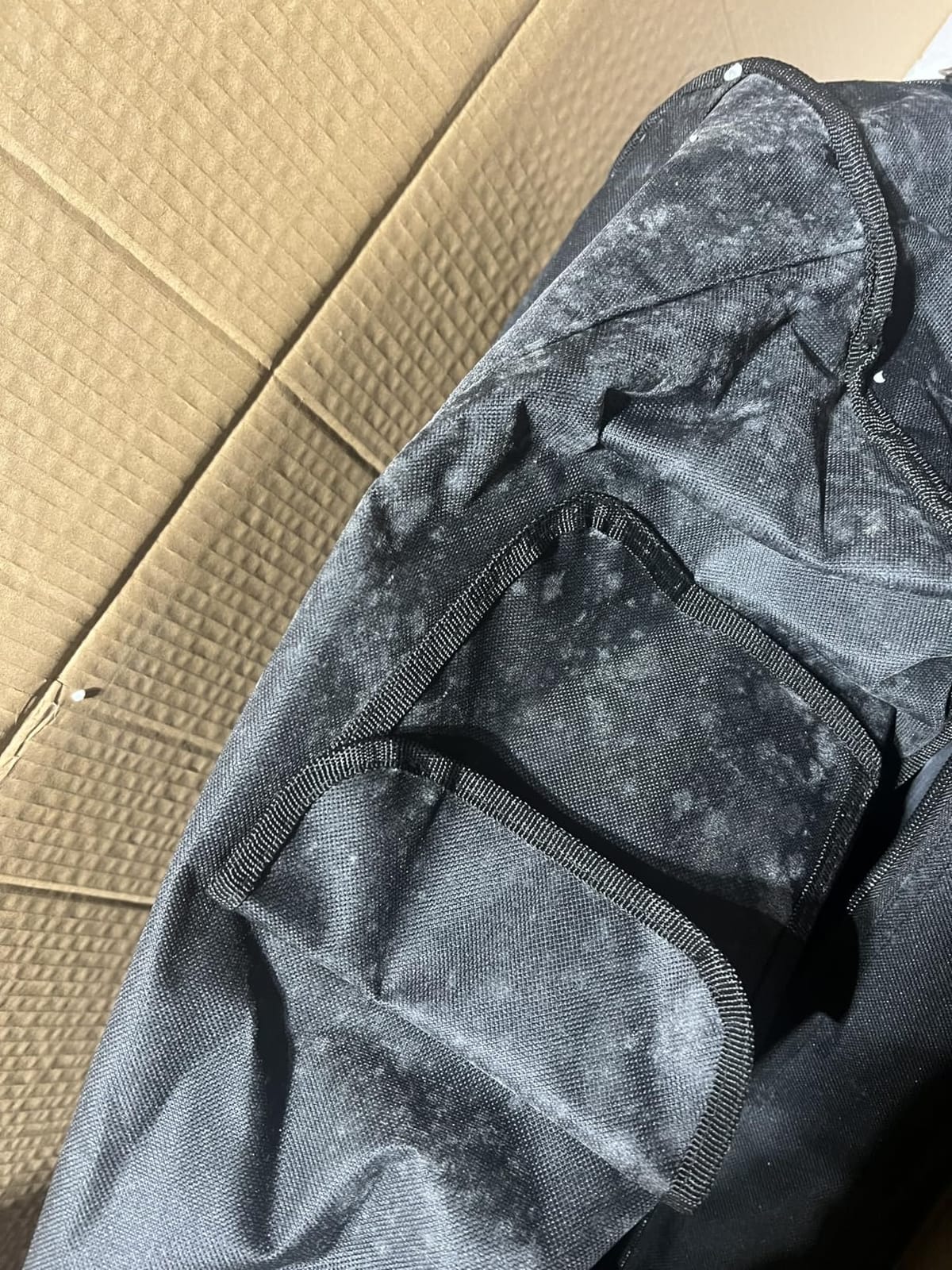
A thoughtful touch is the string choice. The steel strings have a lighter feel under the fingers, which reduces the fatigue that stops so many adult beginners from building calluses and practice stamina in month one. The padded bag is also better than the price suggests, with 5mm cotton thickness and tough Oxford cloth that survives daily handling.
The trade-offs are real, though, and you should go in with open eyes. The pegs are the number one complaint and will slip badly until treated with peg oil or compound. The bridge sometimes needs reshaping or replacement, and a few owners report notches too narrow for the stock strings. Treat the included rosin as a placeholder.
Who this cello suits best
This kit is for the genuinely budget-constrained beginner who would otherwise not start at all. If money is the barrier between you and learning cello, this instrument removes that barrier and still produces a tone owners genuinely enjoy.
It also works well as a low-risk second instrument for the household, the one that lives at college or gets hauled to casual rehearsals while a better cello stays safe at home.
What setup to expect on arrival
Order peg compound alongside the cello and apply it before the first real practice session. Check the bridge fit and string notches on day one, and do not hesitate to swap the bridge if the feet do not sit flat against the top.
Given the low purchase price, dedicating a small setup fund to pegs, rosin, and possibly strings is the smart play. Done properly, this becomes one of the best cost-to-tone ratios available to a beginner.
5. Ktaxon Solid Wood Spruce and Maple Cello – Solid Tonewoods Throughout
Ktaxon Full Size Cello, 4/4 Solid Wood Acoustic Cello
4/4 full size
Premium solid spruce top
Solid maple back and scroll
Solid ebony fingerboard and ebony pegs
Pros
- Premium solid spruce top for richer focused tone
- Solid maple back with pronounced grain
- Solid ebony fingerboard for smooth shifting
- Ebony tuning pegs for stable tuning
- Hand-carved f-holes and individually fitted bridge
Cons
- Very limited review count so far
- No Prime shipping
Here is the most interesting instrument in this guide. While every other kit in our lineup uses some laminate or basswood in the body to hit a price point, this Ktaxon goes solid wood throughout: a premium solid spruce top, a solid maple back, a solid maple scroll, and genuine ebony for both the fingerboard and the tuning pegs.
Why does that matter? Solid carved tonewoods vibrate more freely than laminates, producing a richer, more focused voice, and they tend to open up and improve as the instrument is played over the years. Laminate instruments do not do that. For a beginner who is confident about sticking with the cello, solid wood is the difference between an instrument you outgrow and one you grow into.
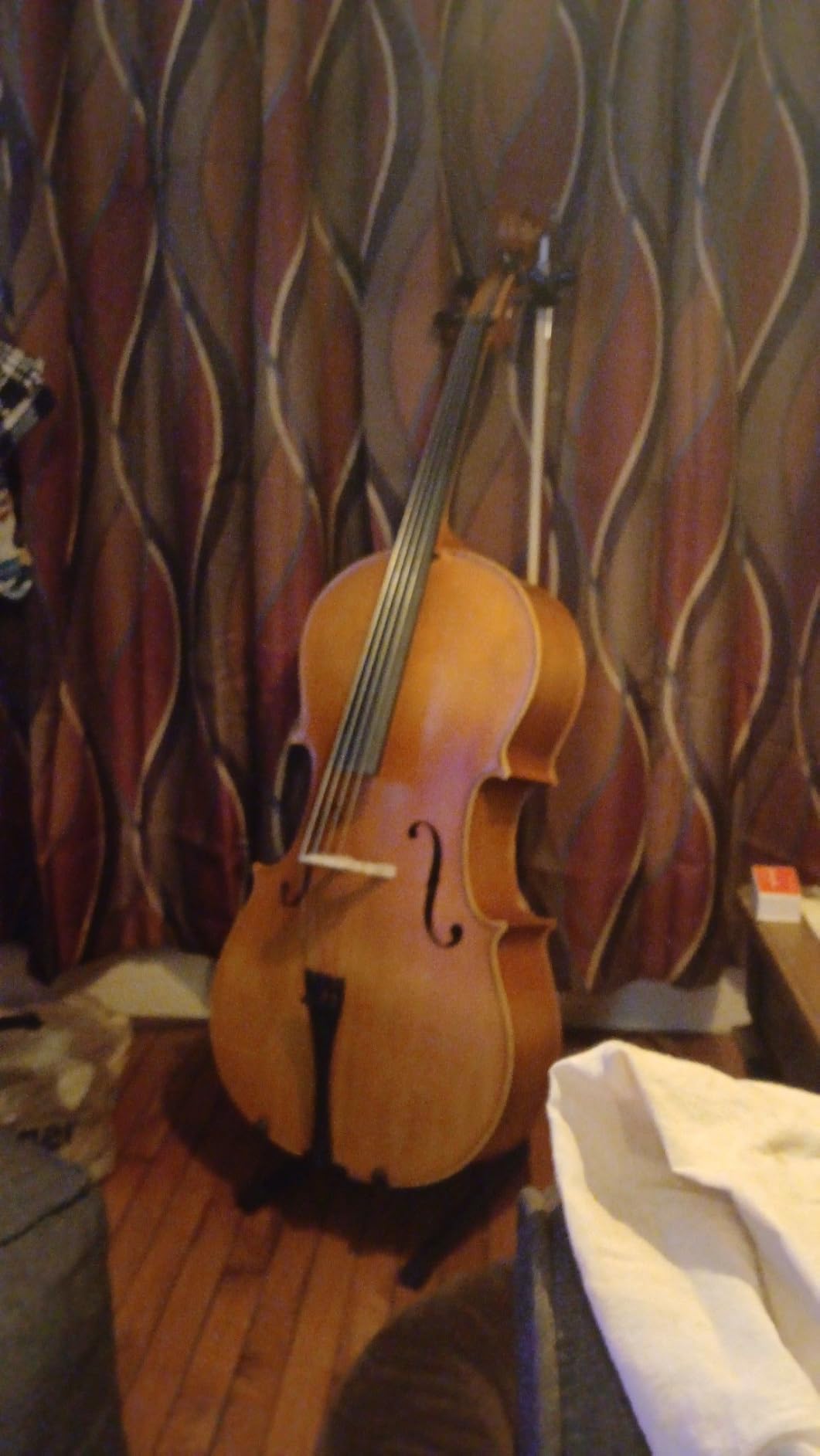
The details are unusually refined for this tier. The f-holes are hand-carved and positioned for balanced projection, and the bridge is individually contoured to the arch of the body rather than dropped in as a generic part. The solid ebony fingerboard gives smooth, stable intonation and easier position shifting, which matters as soon as you leave first position.
The outfit includes a bow, padded travel bag, extra string sets, a sturdy stand, and premium rosin, so the completeness is there too. The one honest hesitation is the review base: six reviews, all five stars, which is a perfect record but a small sample. Early owners are clearly delighted, and the specification sheet justifies that enthusiasm, but the long-term track record is still being written.
Who this cello suits best
This is the pick for the committed beginner who can stretch the budget slightly and wants the best tonal foundation in this group. It suits adult learners who have done their research, understand the laminate versus carved distinction, and would rather buy once.
It also suits a motivated teen whose teacher has said they will progress quickly. The ebony fingerboard and fitted bridge support technique development that cheaper hardware actively resists.
What setup to expect on arrival
The bridge still ships down for protection, so plan the standard stand-and-tune routine. The good news is that the ebony pegs seat far more reliably than the maple pegs on budget kits, so expect fewer tuning battles from day one.
Because the bridge is individually fitted rather than generic, take care positioning it between the f-hole notches with both feet flat. A luthier check is still worthwhile, but the out-of-box experience should be notably closer to playable than the kits above.
6. EPOFIT Full Size Cello Kit – Top Rated for Adult Beginners
EPOFIT Full Size Cello Kit, Acoustic Cello Instrument for Adults,Beginners,Students,Complete Cello 4/4 Set with Portable Bag, Bow, Rosin (Black)
4/4 full size
Maple top and bridge
Basswood back and sides
Aluminum alloy tailpiece, soft bag, bow, rosin
Pros
- Excellent sound with deep lows and bright highs
- Maple top with lightweight basswood back and sides
- Comfortable solid wood fingerboard
- Lightweight aluminum alloy tailpiece for tuning stability
- 12-month warranty with 30-day returns and responsive support
Cons
- Bow is standard beginner quality
- Minor cosmetic marks reported on some units
- Small review count so far
- No Prime shipping
This kit holds the highest owner rating in our entire roundup at 4.9 stars, with an 88 percent five-star distribution. It is also one of the few kits in this space explicitly designed around adult beginners rather than school programs, and that focus shows in the details.
The construction pairs a maple top and bridge with a lightweight basswood back and sides, an interesting inversion of the usual formula. The maple top drives a clear, pure tone while the basswood keeps the body light, and the aluminum alloy tailpiece shaves further weight while helping tuning stay put. For adult players sometimes managing back or shoulder sensitivity, a lighter instrument is a genuine quality-of-life feature.
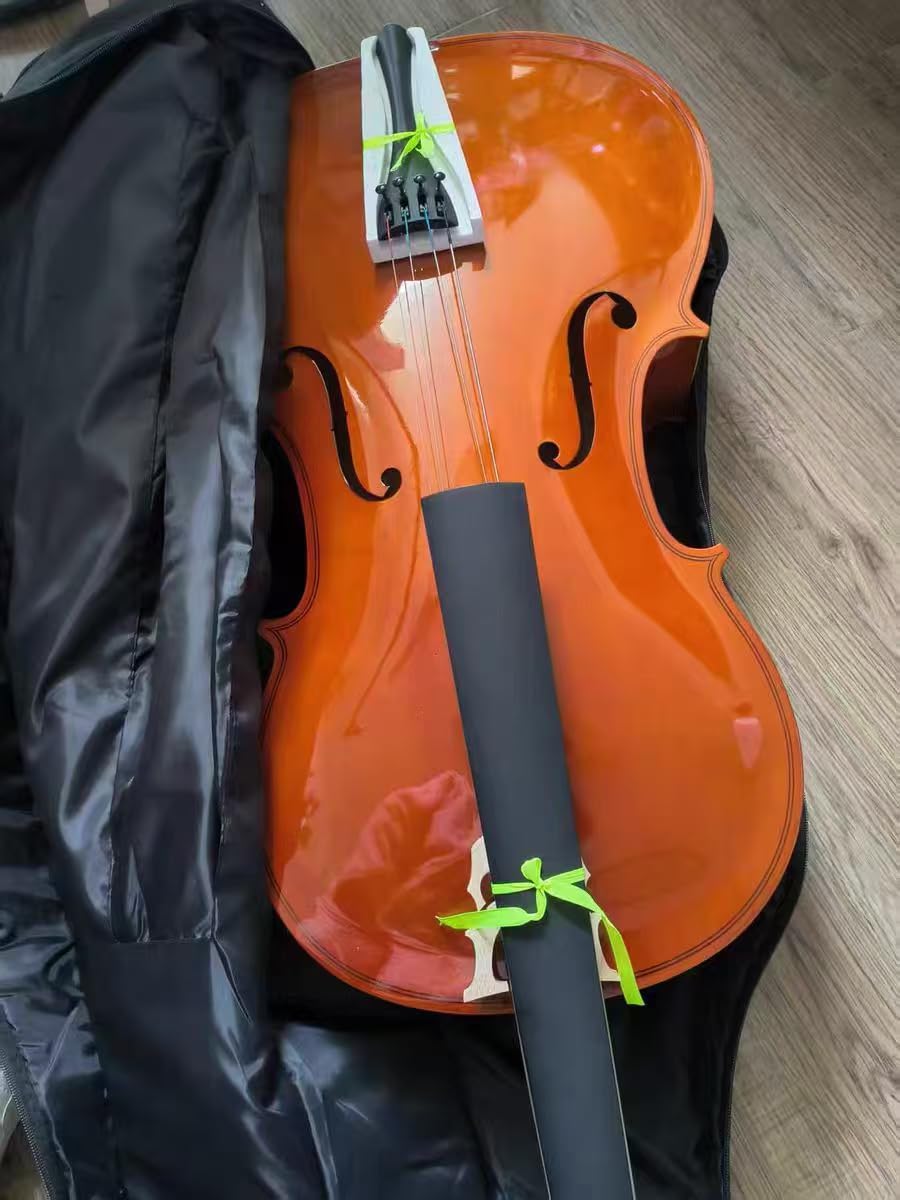
Owners describe a wide tonal range, from deep lows to bright highs, which gives a new player room to explore dynamics and expression as skills develop. That expressiveness is exactly what keeps adults engaged, because hearing your own musicality emerge is the reward that sustains a practice habit.
The backing is unusually strong for the price class: a 12-month warranty, a 30-day no-questions return policy, and a support team that promises responses within 24 hours. The complaints are minor, chiefly a beginner-grade bow and occasional small cosmetic marks on the body, neither of which affects play.
Who this cello suits best
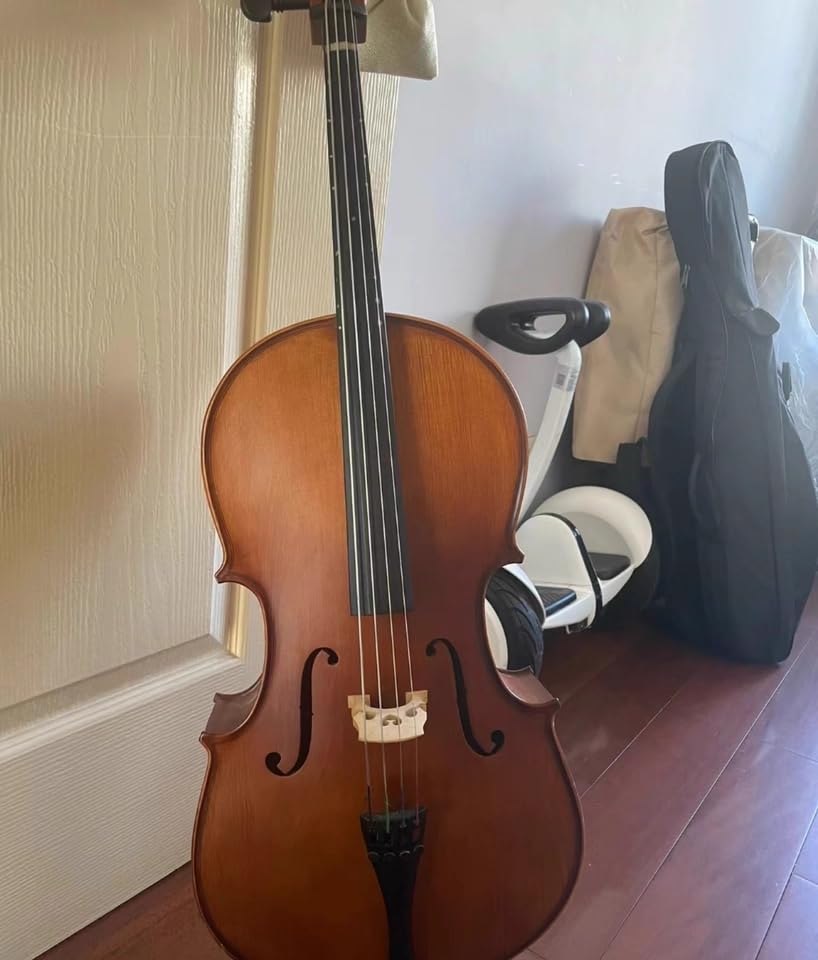
Adult beginners are the clear target, and this is the kit I would hand to anyone over about five foot four who is starting from zero. The lighter body, comfortable fingerboard, and forgiving response all reduce the early friction that causes people to quit.
The strong warranty and return window also make it a low-anxiety first purchase. If the cello does not work out, you have a clean exit, which paradoxically makes it easier to commit.
What setup to expect on arrival
As always, the bridge ships down and needs standing between the f-hole notches. The manufacturer includes clear setup guidance, and the support team will walk beginners through the process if you get stuck, which several owners mention appreciating.
The stock strings are synthetic and more pleasant than the cheapest steel sets. I would still suggest a luthier once-over for bridge feet and string height, but many owners report playing happily within an hour of unboxing.
7. Doredo 4/4 Matte Natural Cello – Aged Tonewoods and a Thoughtful Outfit
Doredo Cello 4/4 Full Size, Beginner Cello Instrument for Adults, Acoustic Cello Set with Padded Bag, Extra Strings, Bridge, Bow & Rosin – for Lessons, Home Practice & School Orchestra, Matte Natural
4/4 full size
Aged spruce top with maple body
Solid ebony fingerboard
7mm padded bag, bow, bridge, rosin, extra strings, fine tuners
Pros
- Aged spruce and maple panels for warmer clearer tone
- Crack-resistant spruce top with even grain
- Hand-carved f-holes for quick response
- Standard-height bridge and solid ebony fingerboard
- Four fine tuners and complete 7mm padded outfit
Cons
- Limited reviews so far
- Matte finish is not for everyone
The Doredo is the quiet overachiever of this group. It directly addresses the most common complaint about budget cellos, a thin, lifeless tone, by using selected aged tonewoods with full-cut spruce and maple panels instead of the basswood found on cheaper kits. The spruce top is crack-resistant with even grain, and the difference is audible.
The acoustic detailing is thoughtful for the price. The f-holes are hand-carved and positioned to move air efficiently, so the body responds quickly and evenly from its core. The maple bridge is precisely grooved and fitted to the top arch, transferring vibration cleanly instead of smearing it.
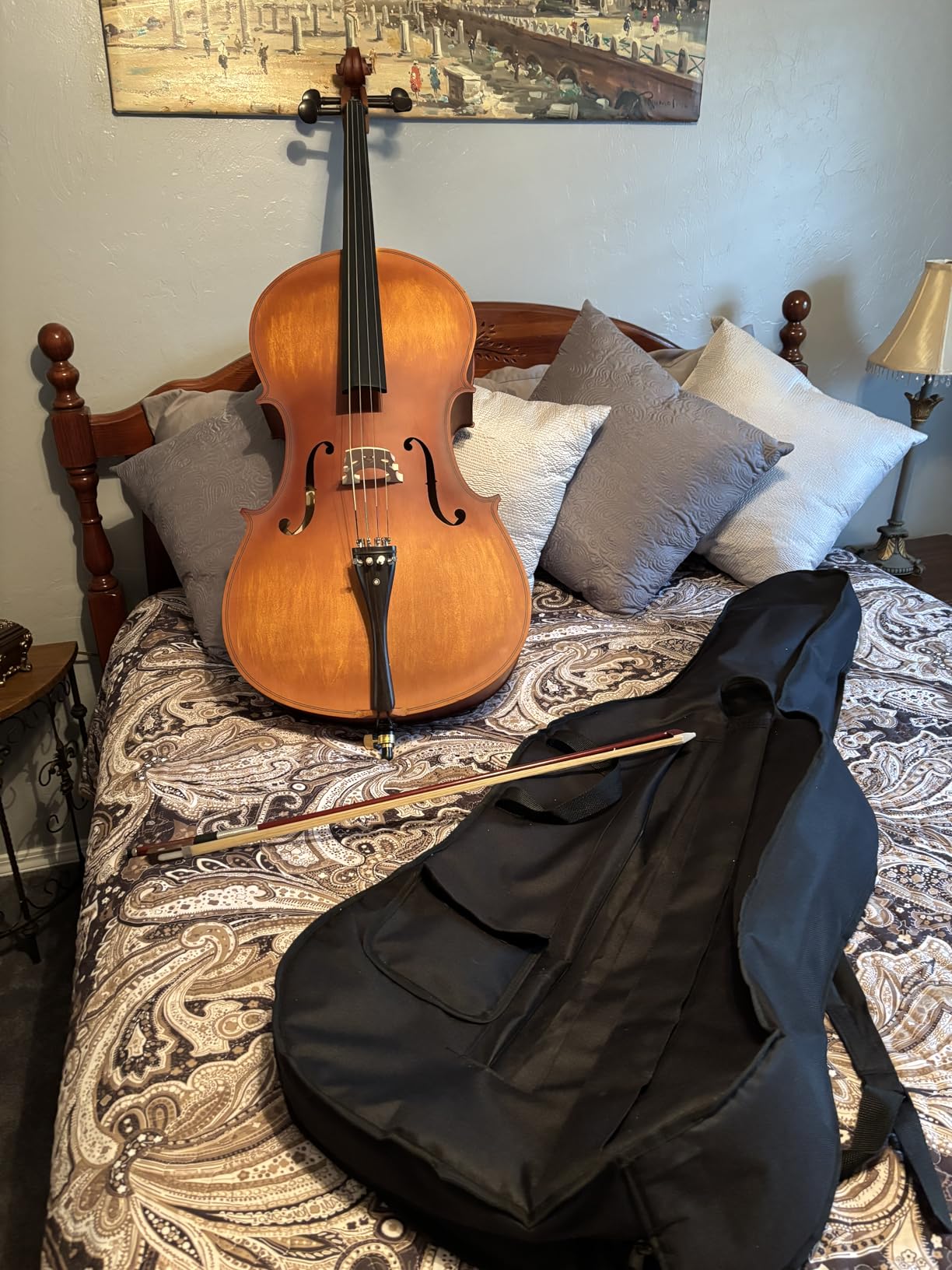
Playability gets equal attention. The bridge sits at standard height rather than the too-tall setup that causes hand cramps on poorly finished instruments, and the solid ebony fingerboard is smooth and stable under the hand, which helps nervous beginners shift position with confidence. Four fine tuners on the tailpiece handle the small pitch corrections that pegs cannot.
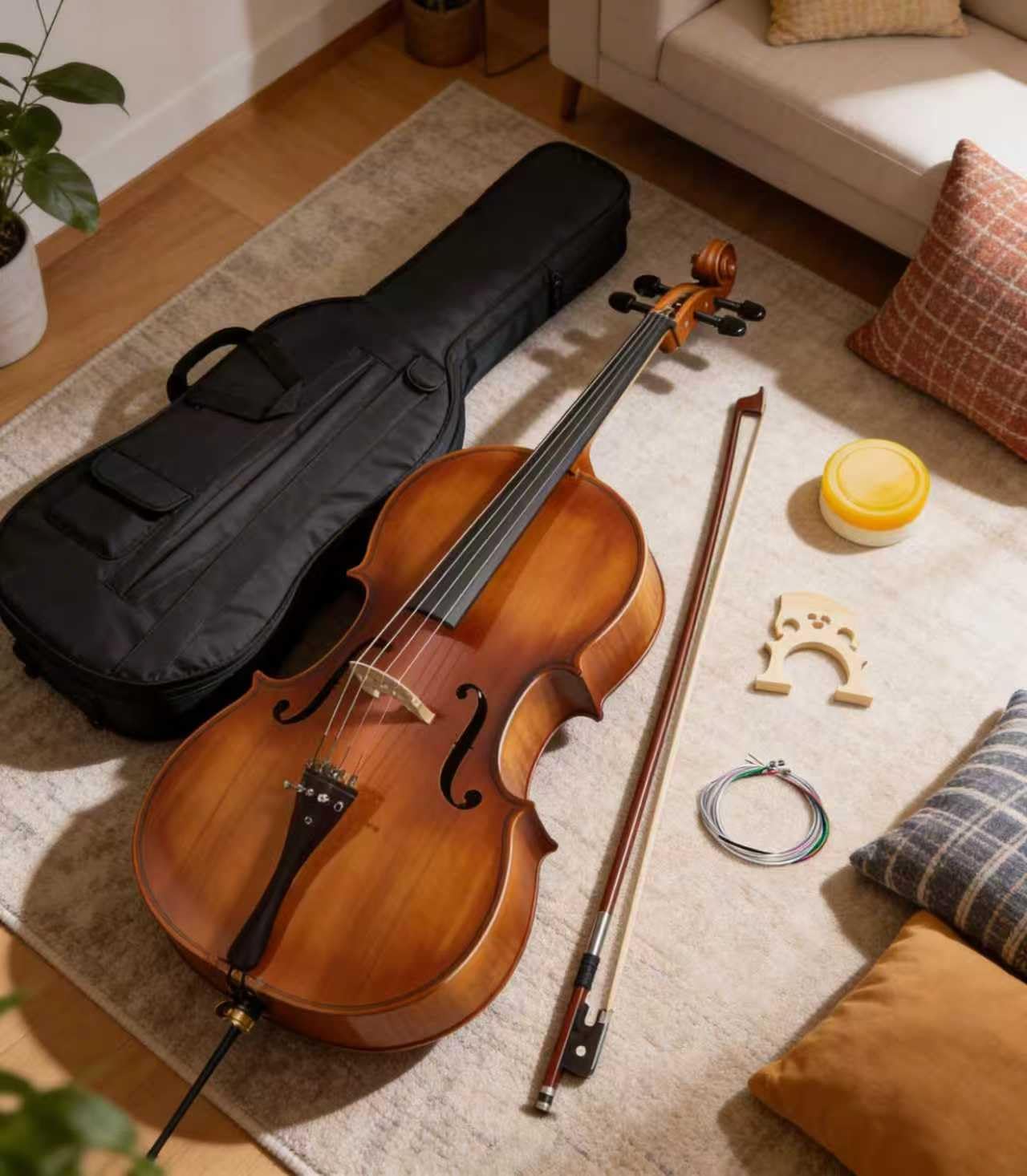
The outfit is generous: a 7mm padded bag, bow, bridge, rosin, spare strings, and fine tuners. Doredo even includes a refreshingly clear setup reminder explaining exactly how to place the bridge, tighten the strings gradually, and rosin the bow until the hair grips. That kind of hand-holding is rare and valuable for a first-time owner.
Who this cello suits best
This kit suits the adult beginner who cares about tone quality and intends to practice at home, take lessons, and possibly join a community or school orchestra. It is aimed squarely at lessons, home practice, and ensemble playing, and the spec sheet reflects all three.
It is also a good match for anyone who finds glossy finishes a bit much. The matte natural varnish has a calm, understated look that ages gracefully and hides fingerprints.
What setup to expect on arrival
The standard bridge-standing routine applies, but the included instructions are among the clearest we have seen, and support will assist if needed. Because the bridge ships at standard height, expect fewer playability adjustments than with the cheapest kits.
A fresh cake of quality rosin and eventual string upgrade remain worthwhile, but the out-of-box experience here is closer to plug-and-play than most.
8. Cecilio CECO-4BK Electric Silent Cello – Practice Anytime Without Disturbing Anyone
Cecilio 4/4 Silent Electric Cello with Ebony Fittings, Metallic Black
4/4 full size electric
Hand-carved solid maple body
Ebony fingerboard, pegs and tailpiece
Headphones, aux cable, soft case, bow, rosin
Pros
- Hand-carved solid maple body with metallic black finish
- Premium ebony fingerboard
- pegs and tailpiece with mother of pearl inlay
- Silent practice through included headphones
- Battery powered with included 9V battery
- Four detachable fine tuners for easy adjustment
Cons
- Mixed reviews indicate some quality variance
- Limited stock availability
- Bow and accessories are entry level
Not every beginner needs an acoustic cello, and this is the pick for those who do not. The CECO-4BK is a true electric silent cello with a hand-carved solid maple body in a striking metallic black finish, styled more like a modern stage instrument than a school orchestra workhorse.
The feature that makes it a genuine beginner option is silent practice. Plug in the included headphones and you can bow away at midnight in an apartment without a single complaint from neighbors or family. For adult beginners with jobs, kids, and limited practice windows, that capability can be the difference between practicing daily and not practicing at all.
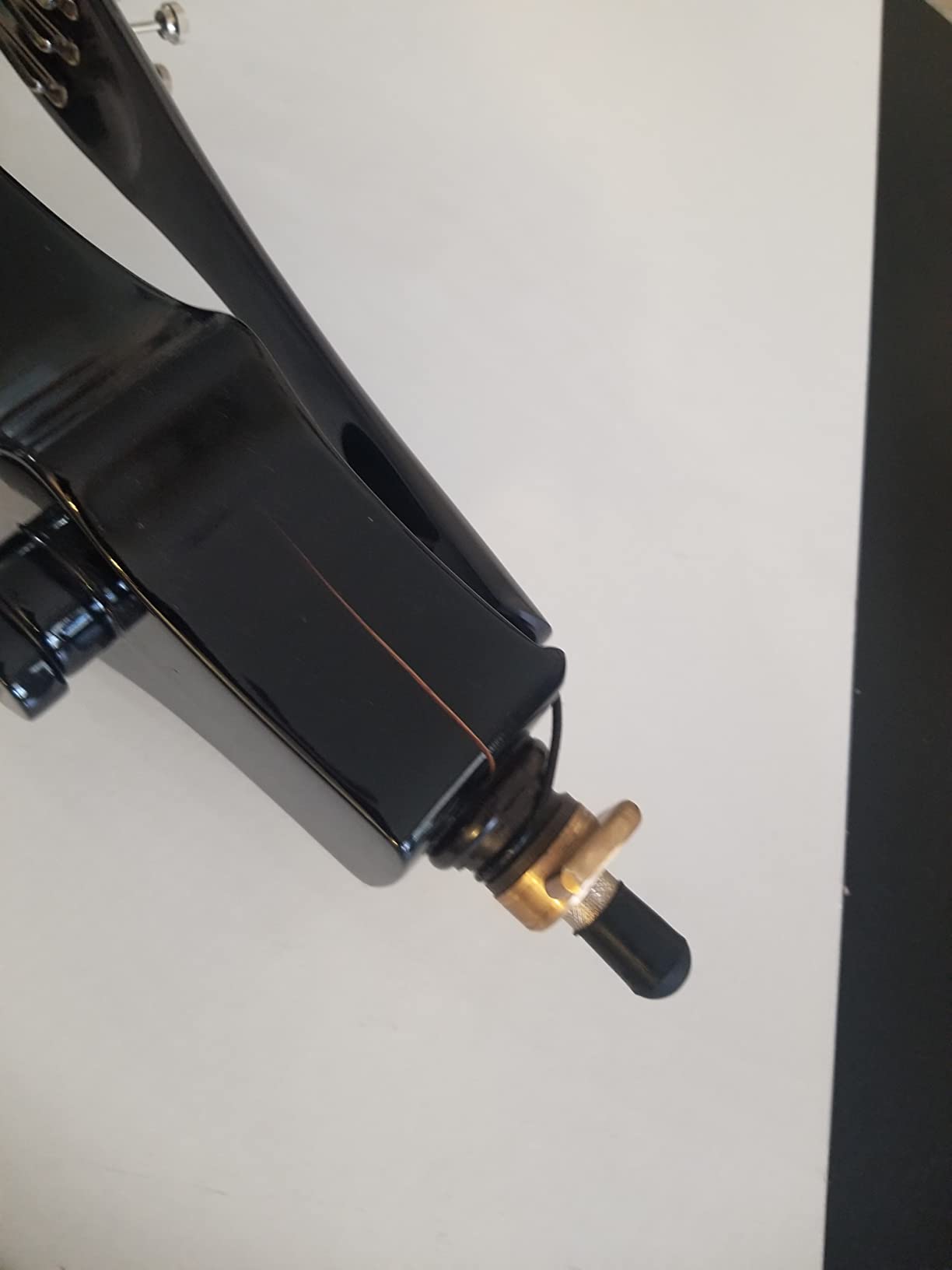
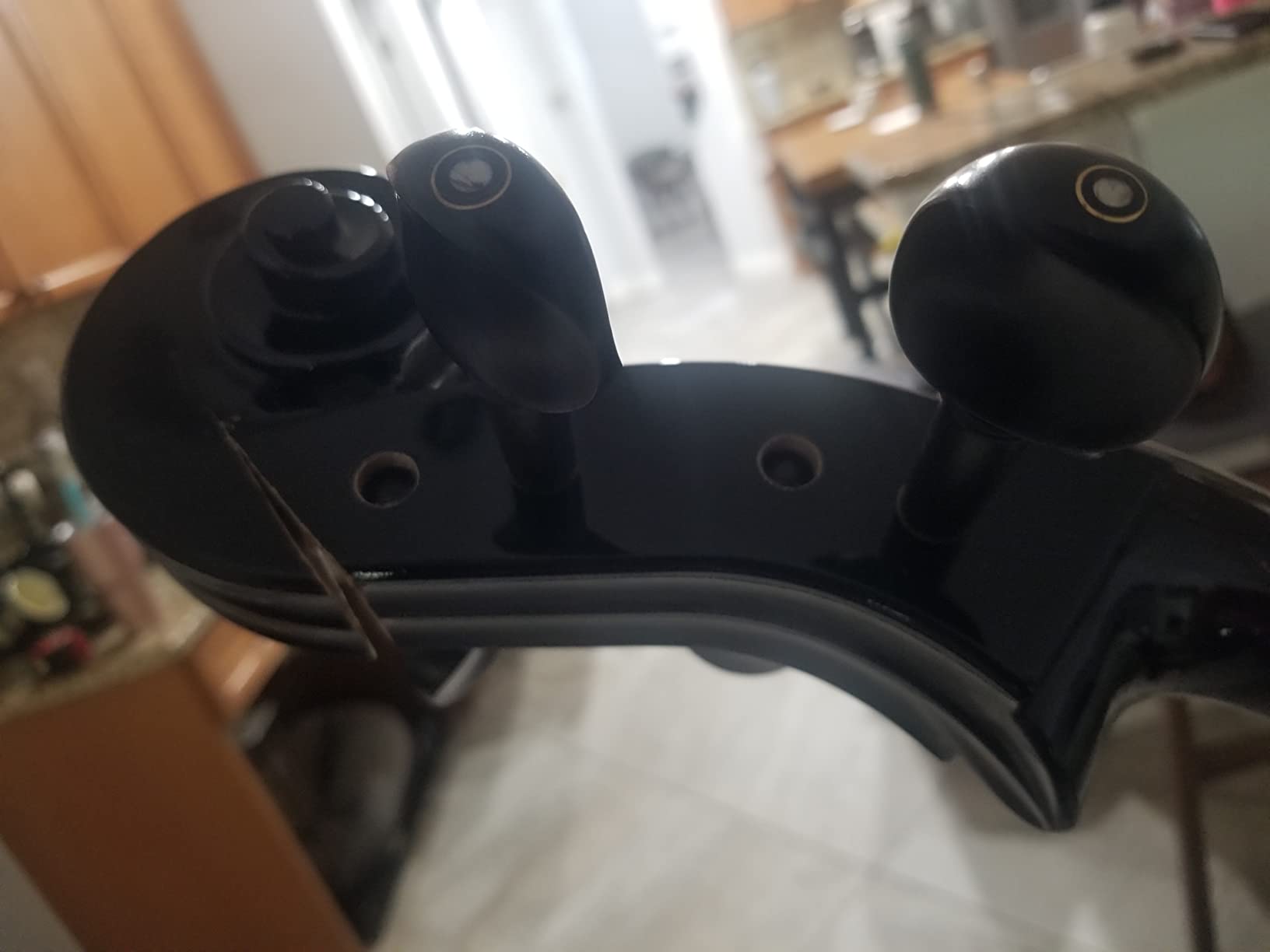
The hardware is genuinely upscale: an ebony fingerboard, ebony pegs, and an ebony tailpiece with mother of pearl inlay, plus four detachable fine tuners. It runs on an included 9V battery, connects via a 3.5mm aux cable, and offers adjustable output so you can shape your sound through headphones or an amplifier.
The caveats are a mixed 3.9-star review spread indicating some quality variance, and limited stock at any given moment. This is also not a substitute for an acoustic instrument if your goal is classical study, since teachers generally want to hear your unamplified tone production. Think of it as a specialized tool for a specific living situation.
Who this cello suits best
Apartment dwellers, night-shift workers, and parents of young children are the natural audience. If the loudest thing stopping you from learning cello is the sound traveling through thin walls, this instrument deletes that problem entirely.
It also suits players drawn to amplified or contemporary music, where an electric voice is an asset rather than a compromise. Gigging beginners and hobbyists exploring effects pedals will get more from it than a traditional student ever would.
What setup to expect on arrival
Because there is no resonant acoustic body to manage, setup is simpler: install the 9V battery, connect headphones, tune, and play. There is no standing bridge in the traditional sense, which removes the most intimidating step of acoustic ownership.
Do check all the fittings and electronics on arrival, given the reported quality variance, and test the aux output early so any issue surfaces within the return window. The included soft case is well padded for storage and transport.
Buying Guide: How to Choose a Beginner Cello?
Choosing among the best cellos for beginners comes down to five decisions: wood type, setup, size, accessories, and whether to buy or rent. Here is what our team learned from comparing these eight kits and reading thousands of owner reviews.
Solid wood versus laminate and basswood
The single biggest quality factor is whether the top is solid carved tonewood or a laminate or softwood substitute. A solid spruce top vibrates freely, produces a warmer and more resonant voice, and improves as it is played over the years. That is why the solid-wood Ktaxon earns its premium spot despite a tiny review count.
Basswood bodies, like those on the Ktaxon budget kit and the EPOFIT, are a legitimate middle ground. They keep cost and weight down while still producing a pleasant tone, and the EPOFIT pairs its basswood back with a maple top precisely to get the best of both. Pure laminate cellos at the bottom of the market are the ones the forums warn about, since they can crack, warp, and deaden the sound.
What a setup actually involves, and why it is essential
When players on r/Cello say professional setup is essential rather than optional, this is what they mean. A luthier setup includes standing and fitting the bridge so both feet contact the top perfectly, adjusting bridge height so strings are comfortable to press, checking the soundpost position inside the body, shaping the nut slots, cleaning and treating the pegs so they hold, and fitting decent strings.
The string action height, meaning the distance between strings and fingerboard, is the one that changes lives. Strings that sit too high cause the hand cramps and finger pain that drive beginners to quit, and no amount of practice fixes a bad setup. A shop visit costs a fraction of any instrument here and removes nearly every complaint in the review sections above.
Cello size guide: matching the instrument to the player
Every kit in this guide is 4/4 full size, which suits most adults and teens from roughly five foot four upward. Younger and smaller players need fractional sizes, and buying full size too early builds strain into every practice session.
A rough guide: 1/8 for ages four to six, 1/4 for ages six to eight, 1/2 for ages eight to ten, 3/4 for ages ten to twelve, and 4/4 for teens and adults. Height and hand size matter more than age, so when in doubt, have a teacher or shop confirm. An instrument one size small is playable; one size large is punishing.
Rent or buy: the honest math
Rental programs make sense when commitment is genuinely uncertain, especially for children who may switch instruments. The forum wisdom holds up here: renting is valued for the first months, but insist on a program that credits rental payments toward a purchase, or the money simply evaporates.
Buying wins once you are past the first year, and many adults told us they wished they had invested more upfront instead of paying rental fees and then buying anyway. A well-chosen solid-top cello also holds resale value, which a worn rental never does.
The real cost of ownership
Budget beyond the instrument itself. Plan for a luthier setup visit, a name-brand set of strings early on, real rosin, peg compound, and eventually a better bow. None of these are expensive individually, but together they are the difference between an outfit that fights you and one that plays.
Maintenance is modest: wipe the strings and body after playing, store the cello in a stable room away from radiators and dry vents, and loosen the bow hair after each session. Instruments that crack or warp usually spent their lives next to a heat source.
How to evaluate a cello you cannot play first
Read the review distribution, not just the average. A kit with 60 percent five-star and a cluster of one-star complaints about pegs is telling you exactly what to fix on arrival. Look for solid spruce or quality top wood, ebony fittings where possible, four fine tuners, and a seller with a real warranty and return window, all of which the kits above provide.
Avoid the classic red flags of the “cello shaped object”: glossy thick orange varnish, plastic fittings, no stated tonewoods, and rock-bottom pricing with no warranty. If a listing will not tell you what the top is made of, that is the answer.
Frequently Asked Questions
What kind of cello should a beginner buy?
A beginner should buy a properly sized student cello with a solid spruce or quality tonewood top, maple back and sides, ebony fittings where possible, four fine tuners, and a complete outfit including case, bow, and rosin. Solid-wood instruments like the Ktaxon spruce and maple model offer the best tone, while basswood kits keep costs low. Professional setup by a luthier matters more than brand name.
How much does a good starter cello cost?
A good starter cello costs roughly 300 to 700 dollars as a complete outfit, with serious step-up instruments running 1000 to 2000 dollars. Below about 250 dollars, expect to invest extra in setup, strings, and rosin. Budget an additional setup fund for a luthier visit regardless of what you spend, because it dramatically improves playability.
Can I self teach myself cello?
Self-teaching cello is possible but difficult, because bow hold, posture, and intonation errors are hard to detect alone and become ingrained bad habits. Most successful self-learners combine video lessons with occasional in-person or online check-ins with a teacher. If lessons are impossible, at minimum start with a well-reviewed method course and record yourself regularly.
Is 40 too old to learn cello?
No, 40 is not too old to learn cello, and adult beginners are one of the fastest growing groups of players. Adults often progress faster than children because they practice deliberately and understand structure. Choose a comfortable 4/4 or 7/8 instrument, budget shorter but more frequent practice sessions, and consider adult-focused kits like the EPOFIT designed for late starters.
Should I rent or buy a beginner cello?
Rent if commitment is uncertain or the player is a young child who will outgrow sizes, but choose a rental program that credits payments toward purchase. Buy once you are confident you will play past the first year, since rental fees eventually exceed the cost of a decent outfit. A well-maintained solid-top cello also retains resale value for upgrading later.
How many hours a day should I practice cello?
Beginners should aim for 20 to 45 minutes of focused daily practice rather than long infrequent sessions. Two shorter sessions of 15 to 20 minutes work especially well for building calluses and muscle memory. Consistency beats duration, and daily contact with the instrument matters far more than total hours.
Conclusion
After comparing all eight instruments, our top recommendation for the best cellos for beginners is the Cecilio CCO-100 dual-case outfit for its completeness, the solid-wood Ktaxon for players who want the best tone foundation, and the EPOFIT for adult beginners who want a forgiving, well-supported start. Whichever you choose, remember that a modest luthier setup and better strings will do more for your first year than any brand name on the label.
Pick the instrument that matches your living situation, your budget, and your commitment level, then get playing. The sooner the cello is out of the box and in your hands, the sooner those first few notes become actual music.