
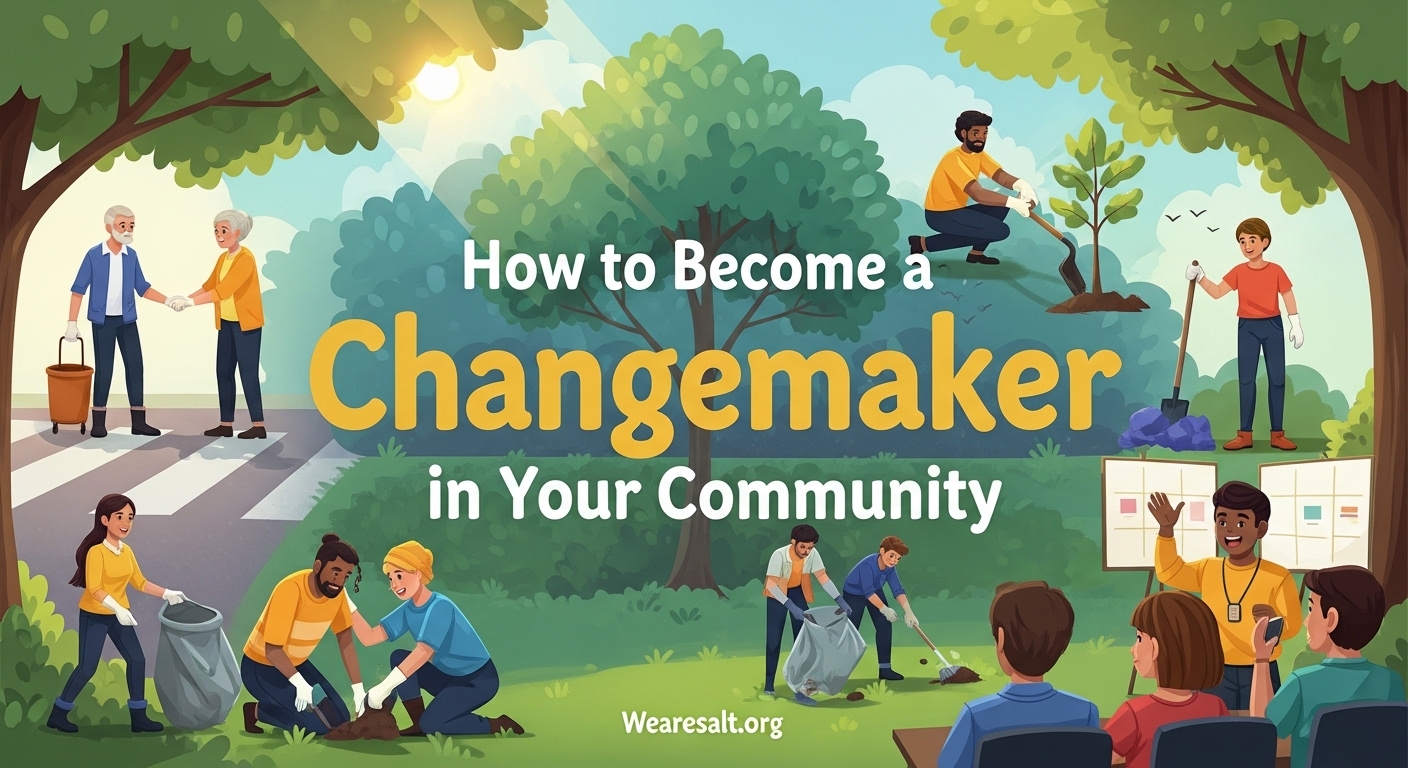
I remember sitting on my porch three years ago, watching kids walk past the empty lot on my street that had become a dumping ground for trash. I kept thinking someone should do something about it. Then it hit me: I was someone.
That realization changed everything. I learned that becoming a changemaker in your community does not require special training, unlimited time, or a big bank account. It simply requires the willingness to see a problem and take the first step toward solving it.
In this guide, I will share exactly how to become a changemaker in your community based on what I have learned through trial and error, conversations with other community leaders, and research into what actually works. Whether you are a student, a working professional, a parent, or retired, you have something valuable to contribute.
Table of Contents
What Is a Changemaker?
A changemaker is someone who identifies problems in their community and takes intentional, creative action to solve them. They work collaboratively with others to create positive social change, regardless of their age, background, or available resources.
Changemaking is not reserved for famous activists or politicians. The neighbor who organizes a monthly cleanup of the local park is a changemaker. The student who starts a tutoring program for younger kids is a changemaker. The professional who uses their skills to help a nonprofit streamline their operations is a changemaker.
Anyone can be a changemaker. You do not need a degree in social work or years of experience. You simply need to care about your community and be willing to act on that care.
How to Become a Changemaker in Your Community
The path to becoming an effective changemaker follows a predictable pattern. Here are the seven steps that will take you from wanting to make a difference to actually creating it.
Step 1: Identify the Issues That Matter to You
Start by paying attention to what bothers you in your community. What problems do you encounter regularly? What issues keep you up at night? The most sustainable changemaking efforts come from genuine personal connection to the cause.
Make a list of five to ten issues you observe in your neighborhood, city, or region. Rank them by how strongly you feel about each one. Your top choice is likely where you should focus your initial efforts.
Do not worry about finding the “perfect” cause. You can always pivot later as you learn more.
Step 2: Start Small and Local
One of the biggest mistakes new changemakers make is trying to tackle massive systemic problems immediately. This leads to burnout and discouragement. Instead, start with something you can actually influence.
If you care about education, do not try to reform the entire school district on day one. Start by volunteering to read with kids at your local library. If environmental issues matter to you, begin with organizing a cleanup of one park rather than launching a citywide recycling campaign.
Small wins build momentum. They prove to you and others that change is possible.
Step 3: Build Your Changemaker Skills
Effective changemaking requires specific skills. The good news is that you probably already have some of them, and the rest can be developed through practice.
Focus on developing these core competencies: active listening to understand community needs, clear communication to share your vision, basic project management to organize initiatives, and networking to build relationships. These skills transfer across any type of changemaking work you do.
Look for free or low-cost training opportunities through local nonprofits, community colleges, or online platforms. Many organizations offer workshops specifically for community leaders.
Step 4: Find Your Allies
You cannot create sustainable change alone. Building a network of allies is essential for both practical support and emotional resilience.
Start by talking to people already working on your issue. Attend community meetings, join relevant social media groups, and reach out to local organizations. Ask questions. Listen more than you talk. Look for opportunities to support existing efforts before launching your own.
Your allies might include neighbors, local business owners, nonprofit staff, faith community members, or local government representatives. Each brings different resources and perspectives.
Step 5: Take Consistent Action
Changemaking is not about one grand gesture. It is about showing up consistently over time. Regular action, even in small doses, creates more impact than sporadic heroic efforts.
Set a realistic schedule for your involvement. If you can only dedicate two hours per week, that is fine. Block that time on your calendar and protect it. Consistency builds trust with the community and maintains your own momentum.
Document your actions. Take photos, keep notes, and track your progress. This helps you see how far you have come and provides material to share with potential supporters.
Step 6: Sustain Your Energy
Burnout is real in community work. You need strategies to keep yourself energized for the long haul.
Celebrate small victories along the way. When your neighborhood cleanup removes five bags of trash from the park, acknowledge that win. When three new volunteers show up to your meeting, recognize that progress.
Build self-care into your changemaking practice. Take breaks when you need them. Set boundaries to protect your time and energy. Remember that you cannot pour from an empty cup.
Connect with other changemakers who understand the challenges you face. Having people to commiserate and celebrate with makes the work sustainable.
Step 7: Scale Your Impact
Once you have established a track record of consistent action, look for ways to expand your impact. This might mean growing your initiative, mentoring others, or addressing systemic root causes rather than just symptoms.
Scaling does not always mean doing more yourself. Often it means empowering others to take on leadership roles. Train volunteers to run their own cleanup events. Help community members advocate for themselves.
Consider how your local efforts connect to larger patterns. Sometimes the most effective changemaking involves connecting your grassroots work to policy advocacy or regional initiatives.
Essential Skills and Mindset for Changemakers
Successful changemakers develop a specific set of skills and mental frameworks that enable them to create lasting change.
Empathy and deep listening: Understanding community needs requires genuinely hearing what people say rather than projecting your own assumptions. Practice asking open-ended questions and sitting with uncomfortable answers.
Problem-solving creativity: Community challenges rarely have obvious solutions. Changemakers need to think creatively, experiment with approaches, and learn from failure without getting discouraged.
Communication clarity: You must articulate your vision in ways that inspire others to join you. This includes written communication, public speaking, and one-on-one conversations. Work on distilling your message to its essential elements.
Resilience and persistence: Change takes time. You will face setbacks, resistance, and slow progress. The ability to keep going despite obstacles separates effective changemakers from those who give up too soon.
Collaboration and humility: Real change requires working with diverse stakeholders who may disagree with you. Effective changemakers know when to lead and when to follow. They share credit generously and take responsibility for failures.
Adaptability: Community needs shift. What works today might not work tomorrow. Stay flexible and willing to adjust your approach based on feedback and changing circumstances.
Overcoming Common Barriers to Changemaking
Every changemaker faces obstacles. Here is how to handle the most common ones.
Feeling overwhelmed about where to start: This is the most common barrier I hear about. The antidote is simple: pick one tiny action and do it today. Send one email. Attend one meeting. Make one phone call. Momentum builds from initial movement.
Limited time and competing priorities: You do not need to quit your job to be a changemaker. Start with one to two hours per week. Look for ways to integrate changemaking into activities you already do. Can you combine your daily walk with litter collection? Can you use your professional skills to help a nonprofit during work hours if your employer supports volunteer time?
Feeling like your individual actions do not matter: This is a myth that keeps many potential changemakers on the sidelines. Every movement in history started with one person taking action. Your efforts inspire others. Your consistency builds trust. Your example proves that change is possible.
Imposter syndrome and self-doubt: You do not need to be an expert to start making a difference. Your lived experience in your community gives you valuable perspective. Learn as you go. Ask questions. Most experienced changemakers will tell you they still feel like they are figuring it out.
Lack of resources: Many changemaking activities require more time and energy than money. Start with what you have. Many organizations need skilled volunteers more than they need cash donations. Your professional expertise might be worth more than a check.
Fear of failure: Not every initiative will succeed, and that is okay. Failure provides valuable learning. The only real failure is never trying at all.
How to Measure Your Community Impact
One of the biggest questions changemakers ask is whether their efforts are actually making a difference. Here is how to track your impact meaningfully.
Tangible metrics: Count what you can count. How many people attended your event? How many pounds of trash did you collect? How many signatures did you gather? These numbers provide concrete evidence of activity.
Community feedback: Ask the people you serve whether your efforts are helping. Simple surveys, informal conversations, and testimonials reveal whether you are actually meeting community needs.
Long-term indicators: Some changes take years to materialize. Track trends over time. Is the park getting cleaner month after month? Are more kids graduating from the tutoring program each year?
Personal growth metrics: Your own development matters too. Are you building new skills? Expanding your network? Growing in confidence? These internal changes enable greater external impact.
Replication and leadership development: One of the best measures of impact is whether others are taking up the cause. Are volunteers becoming leaders? Are other neighborhoods copying your model?
Remember that impact is not always immediately visible. Trust the process and keep showing up.
Frequently Asked Questions
What is a community change maker?
A community changemaker is someone who identifies problems in their local area and takes intentional action to solve them. They work with others to create positive social change, regardless of their age, background, or resources. Changemakers can be students organizing tutoring programs, neighbors starting community gardens, professionals volunteering their skills, or anyone who sees a need and decides to address it.
How would I make a positive change in my community?
Start by identifying an issue you genuinely care about. Begin with small, local actions you can realistically accomplish. Build skills through training and practice. Connect with others already working on similar issues. Take consistent action over time rather than sporadic big efforts. Focus on sustainable involvement that fits your life rather than burning out quickly.
Can anyone be a change maker?
Yes, absolutely. Anyone can be a changemaker regardless of age, education, income, or background. You do not need special qualifications or extensive experience. What matters is caring about your community and being willing to take action. Students, working professionals, parents, retirees, and people from all walks of life have successfully created positive change in their communities.
How do I become a changemaker?
Follow these seven steps: identify issues that matter to you personally, start with small local actions rather than big systemic changes, build core skills like communication and project management, find allies and build a support network, take consistent action over time, sustain your energy through self-care and celebration of wins, and eventually scale your impact by empowering others and addressing root causes.
Start Your Changemaking Journey Today
Becoming a changemaker in your community is not about becoming someone different. It is about becoming more fully who you already are. You care about your community. You see problems that need solving. You have skills and energy to contribute.
The only question is whether you will act on that potential. How to become a changemaker in your community starts with a single step taken today. Identify one issue that bothers you. Reach out to one person already working on it. Attend one meeting. Send one email.
Three years after I started organizing cleanups of that empty lot, it is now a community garden tended by neighbors who met through our efforts. The change was not instant, and it was not always easy. But it started with one person deciding to do something rather than waiting for someone else.
That person could be you. Start today.