
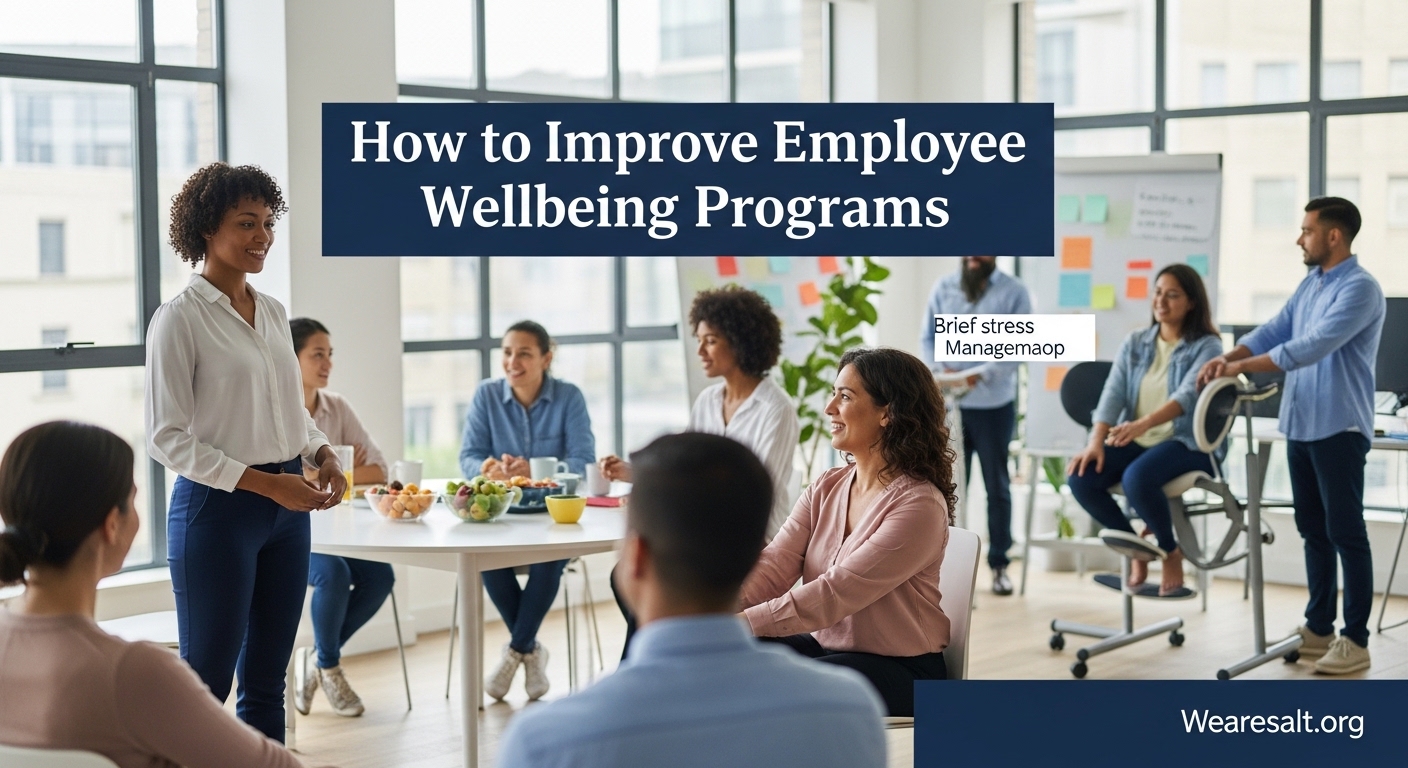
I have spent the last five years helping organizations build wellbeing programs that actually work. What I have learned is that most companies get it wrong from the start. They invest thousands in gym memberships and meditation apps, only to see participation rates below 15%. If you are here to learn how to improve employee wellbeing programs, you are already ahead of most HR teams. This guide will show you exactly what successful organizations do differently, backed by real data from Gallup, Deloitte, and lessons from Reddit communities where employees speak freely about what they actually want.
Employee wellbeing is not just a nice-to-have perk anymore. It is a business imperative. When done right, wellbeing programs reduce turnover costs by 15-20% of payroll and create cultures that attract top talent. When done wrong, they become expensive embarrassments that employees ignore. Let us fix that.
Table of Contents
Why Employee Wellbeing Matters Now
The cost of ignoring employee wellbeing has never been higher. Gallup research shows that employees who are not thriving in their wellbeing are 61% more likely to experience burnout. Burnout is not just an individual problem. It costs U.S. employers an estimated $322 billion annually in turnover and lost productivity.
Here is what the data tells us. Employees with strong overall wellbeing are more engaged, more resilient, and significantly less likely to leave their jobs. According to the U.S. Department of Health and Human Services, comprehensive workplace wellness programs can yield a return on investment of $3 to $6 for every dollar spent. Yet despite these numbers, many programs fail because they focus on surface-level fixes rather than systemic change.
The quiet quitting phenomenon that dominated workplace discussions in recent years is directly tied to wellbeing. Employees who feel their organizations do not care about their wellbeing mentally disengage. They stay in their jobs but stop contributing fully. The connection is clear: wellbeing programs that feel performative or one-size-fits-all drive disengagement, while personalized, authentic programs build loyalty.
The Five Pillars of Employee Wellbeing
Gallup has spent decades researching what makes employees thrive. Their framework identifies five distinct elements of wellbeing that successful programs must address. Understanding these pillars is essential before you can improve your wellbeing initiatives.
Career Wellbeing
Career wellbeing means employees enjoy what they do every day and feel motivated to achieve their goals. This is not just about promotions. It is about having clear expectations, opportunities to use strengths, and a sense of purpose in daily work. Programs that ignore career wellbeing focus too heavily on physical health while neglecting the psychological needs that drive engagement.
Social Wellbeing
People with thriving social wellbeing have strong relationships and love in their lives. In the workplace, this translates to having a best friend at work, feeling part of a team, and experiencing genuine connection with colleagues. Remote and hybrid work arrangements have made this pillar more challenging but also more critical. Programs must actively build community, not just assume it happens organically.
Financial Wellbeing
Financial wellbeing means employees manage their money effectively and feel economically secure. Financial stress is one of the biggest drains on productivity and mental health. Programs that offer financial literacy training, debt counseling, and competitive compensation show employees that their overall wellbeing matters, not just their output.
Physical Wellbeing
This is where most traditional wellness programs focus: gym memberships, fitness challenges, and health screenings. While important, physical wellbeing is just one piece of the puzzle. Employees cannot optimize physical health if they are drowning in financial stress or feeling disconnected socially. The best programs integrate physical health with the other four pillars.
Community Wellbeing
Community wellbeing involves feeling connected to the area where you live and giving back to society. Employers can support this through volunteer programs, community service days, and allowing employees to engage with causes they care about. This pillar often gets overlooked but is essential for employees who want their work to have broader meaning.
Common Pitfalls to Avoid
Before diving into solutions, let us address why most wellbeing programs fail. Understanding these pitfalls will save you from wasting resources on initiatives that look good on paper but flop in practice.
The Generic Program Trap
One of the most common complaints on Reddit forums is that wellness programs feel like they were designed by people who never asked employees what they actually need. A 45-year-old parent with chronic back pain and a 25-year-old single employee have completely different wellbeing needs. Yet many organizations offer the same yoga classes and fruit bowls to everyone.
What employees actually want is choice. They want to be asked, not told what they should want. Generic programs signal that the organization is checking a box rather than genuinely caring about individual wellbeing.
Performative vs. Substantive Commitment
Employees can spot a performative wellness program from a mile away. If your company preaches work-life balance but expects immediate responses to emails at 10 PM, your wellness initiatives will fail. The culture must support the programs. This means leadership modeling healthy behaviors, respecting boundaries, and creating psychological safety for employees to actually use the benefits offered.
Poor Communication About Available Benefits
Many organizations invest heavily in wellbeing benefits but fail to communicate them effectively. Employees do not use benefits they do not know exist. During open enrollment, wellbeing benefits often get buried under medical plan details. Regular, ongoing communication about what is available and how to access it is essential for program success.
Inflexible Offerings
Remote workers cannot attend on-site gym classes. Night shift workers cannot join lunchtime meditation sessions. Parents with young children struggle with after-hours wellness events. Rigid programs exclude large portions of your workforce. Flexibility in how, when, and where wellbeing benefits can be accessed is critical for inclusive participation.
How to Improve Employee Wellbeing Programs
Now for the actionable strategies. These six approaches have been proven to boost participation, engagement, and outcomes. I have seen them work across organizations ranging from 50-person startups to Fortune 500 companies.
1. Personalize Benefits for Diverse Needs
Start by actually asking employees what they need. Anonymous surveys, focus groups, and one-on-one conversations will reveal gaps between what you are offering and what would actually help. Some employees want mental health support. Others prioritize financial coaching or flexible childcare. Lifestyle Spending Accounts (LSAs) have emerged as a powerful tool here. LSAs give employees a set budget to spend on wellbeing however they choose. One employee might use it for a gym membership. Another might use it for therapy sessions or financial planning. This personalization dramatically increases utilization and satisfaction.
Reddit discussions consistently highlight that employees value health allowances and flexible PTO above generic wellness programs. The ability to choose what supports their individual situation makes employees feel seen and valued.
2. Improve Communication and Accessibility
Communication about wellbeing benefits should not be a once-a-year event during open enrollment. Create regular touchpoints: monthly newsletters, Slack channels dedicated to wellness, manager talking points, and easy-to-navigate intranet resources. Make the information accessible, not buried in dense HR documents.
Success stories are powerful communication tools. When employees share how they used wellbeing benefits to improve their lives, peers pay attention. Peer recommendations carry more weight than corporate announcements.
3. Set SMART Goals for Your Program
Vague goals like “improve employee wellness” doom programs to failure. Instead, set Specific, Measurable, Achievable, Relevant, and Time-bound goals. Examples include: “Increase wellbeing program participation from 15% to 40% within 12 months” or “Reduce voluntary turnover among program participants by 10% in the next fiscal year.”
Clear goals help you track progress and make adjustments. They also demonstrate to leadership that wellbeing initiatives are investments with measurable returns, not just feel-good expenses.
4. Incentivize Participation Authentically
Incentives can boost participation, but they must be designed carefully. Financial rewards for health screenings can feel coercive. Recognition and social rewards often work better than cash. The key is making participation feel rewarding without making non-participation feel punitive.
Consider team-based challenges that build social wellbeing while promoting physical health. When participation becomes about team connection rather than individual compliance, engagement rises naturally.
5. Build a Culture That Supports Wellbeing
Programs cannot overcome toxic cultures. If employees fear that taking mental health days will hurt their promotion chances, they will not take them no matter how generous your policy is. Leadership must model wellbeing behaviors openly. Managers need training to recognize burnout signs and have supportive conversations. Regular check-ins should include questions about workload and stress, not just project status.
Cultural change takes time but pays exponential dividends. Organizations with strong wellbeing cultures see higher engagement, better retention, and improved business outcomes across the board.
6. Offer Flexibility in Work Arrangements
Flexible work arrangements have become one of the most valued wellbeing benefits. The ability to adjust schedules for medical appointments, family needs, or personal preferences reduces stress and improves work-life balance. This includes remote work options, flexible hours, compressed workweeks, and job sharing arrangements.
Flexibility acknowledges that employees have lives outside work. Organizations that trust employees to manage their time and location see higher satisfaction and often higher productivity as well.
The Role of Managers in Wellbeing
Managers are the single most important factor in employee wellbeing. Gallup research shows that managers account for at least 70% of the variance in employee engagement scores. If your managers are not equipped to support wellbeing, your programs will fail regardless of what HR designs.
Train Managers to Recognize Burnout
Most managers have never been trained to identify burnout or have supportive conversations about mental health. Provide training on recognizing warning signs: decreased performance, withdrawal, irritability, and physical symptoms like exhaustion or insomnia. Teach managers how to approach these conversations without making employees feel singled out or weak.
Encourage Regular Check-Ins
Annual performance reviews are insufficient for wellbeing. Managers should have regular, informal check-ins that include questions about workload, stress levels, and support needs. These conversations build trust and catch problems before they become crises.
Empower Managers to Be Flexible
Managers need permission and guidance to offer flexibility within their teams. When managers feel supported by HR and leadership to accommodate individual needs, they become wellbeing champions rather than obstacles.
How to Measure Wellbeing Program Success
You cannot improve what you do not measure. Effective wellbeing programs track multiple metrics to assess impact and identify opportunities for improvement.
Engagement Survey Scores
Regular engagement surveys should include questions specifically about wellbeing. Track trends over time and correlate wellbeing scores with other business metrics. Are teams with higher wellbeing scores also more productive? Do wellbeing program participants have lower turnover rates?
Participation Metrics
Track who is using which benefits and how often. Low participation in certain areas may indicate poor communication, lack of relevance, or accessibility issues. High participation in personalized benefits like LSAs suggests your personalization strategy is working.
EAP Utilization Rates
Employee Assistance Program utilization is an important indicator. However, low utilization is not always bad. It may mean employees are not experiencing crises, or it may mean they do not trust the program. Supplement EAP metrics with employee feedback to understand the full picture.
Business Outcomes
Ultimately, wellbeing programs must demonstrate ROI. Track metrics like absenteeism, turnover rates, healthcare costs, and productivity indicators. Compare these outcomes between program participants and non-participants. Share these results with leadership to secure ongoing support and investment.
Emerging Trends: Lifestyle Spending Accounts
One of the most exciting developments in employee wellbeing is the rise of Lifestyle Spending Accounts (LSAs). These accounts give employees a set amount of money to spend on wellbeing however they choose. Unlike traditional benefits that assume everyone has the same needs, LSAs acknowledge individual differences.
Employees might use LSA funds for gym memberships, therapy sessions, financial coaching, childcare, hobbies, or travel. The flexibility addresses the number one complaint about traditional wellness programs: that they are one-size-fits-all solutions for diverse individuals.
Organizations implementing LSAs report higher satisfaction and participation rates compared to traditional wellness programs. Employees feel trusted and empowered to make decisions about their own wellbeing. For HR teams, LSAs simplify administration while improving outcomes.
If you are looking for a single change that could transform your wellbeing program, consider piloting an LSA. Start with a small group, gather feedback, and expand based on results. The data suggests this is where employee wellbeing is heading.
Frequently Asked Questions
What are the 5 pillars of employee wellbeing?
The five pillars of employee wellbeing according to Gallup’s research are: 1) Career wellbeing – enjoying daily work and feeling motivated, 2) Social wellbeing – having strong relationships and connections, 3) Financial wellbeing – managing money effectively and feeling secure, 4) Physical wellbeing – having the energy and health to perform daily activities, and 5) Community wellbeing – feeling connected to the area where you live and giving back to society. Together these create holistic wellbeing.
What are the 5 C’s of wellbeing?
The 5 C’s of wellbeing represent a framework for building effective programs: Connection (social bonds and belonging), Contribution (feeling one’s work matters), Competence (ability to handle demands), Confidence (self-efficacy and security), and Choice (autonomy and flexibility). This model emphasizes the psychological and emotional aspects of wellbeing beyond physical health.
How to increase employee participation in wellness programs?
To increase participation, personalize offerings to individual needs rather than using one-size-fits-all approaches, improve communication through multiple channels and regular touchpoints, offer flexibility in timing and access, use peer testimonials and success stories, provide meaningful incentives that aren’t coercive, ensure leadership visibly supports and models participation, and remove barriers by making programs accessible to remote workers and different schedules.
What are the 5 strategies to promote wellbeing?
The five core strategies are: 1) Personalize benefits to address diverse individual needs, 2) Communicate consistently and clearly about available resources, 3) Set SMART goals to track progress and demonstrate ROI, 4) Incentivize participation through recognition and team-based approaches, and 5) Build a supportive culture where leaders model wellbeing behaviors and managers are trained to recognize and respond to employee needs.
Conclusion
Learning how to improve employee wellbeing programs is not about finding a magic solution or buying the right software. It is about understanding what your employees actually need and building systems that deliver it consistently. The five pillars framework gives you a structure. The six strategies give you an action plan. The measurement approaches ensure you can prove value and continuously improve.
Start with one pillar or one strategy. Survey your employees to identify the biggest gaps. Pilot an LSA or train your managers on burnout recognition. Track the results and build from there. Employee wellbeing is a journey, not a destination. The organizations that succeed are those that commit to continuous improvement and genuine care for their people.
The data is clear: wellbeing programs that work deliver measurable business returns. Programs that fail do so because they are generic, performative, or poorly communicated. You now have the knowledge to build something better. Your employees are waiting.