
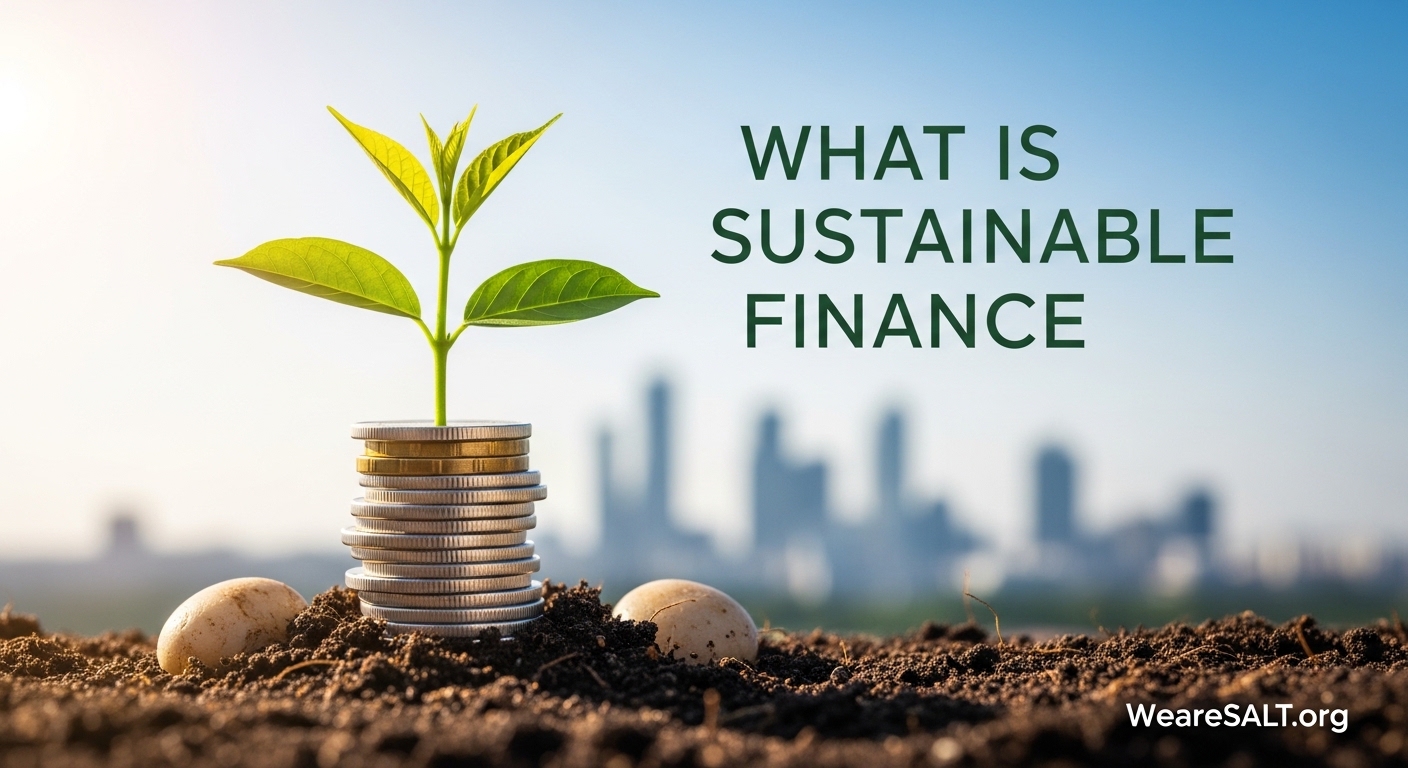
Sustainable finance refers to the process of taking environmental, social, and governance (ESG) considerations into account when making investment decisions in the financial sector. This approach leads to more long-term investments in sustainable economic activities and projects that benefit both people and the planet. In this guide, we will explore what sustainable finance means, why it matters, and how it is reshaping the global financial landscape in 2026.
I have spent the past few months researching sustainable finance trends, speaking with industry professionals, and analyzing how ESG factors are transforming investment strategies. What I found is a field that has grown from niche interest to a $2.7 trillion market that is fundamentally changing how we think about money and its impact on the world.
Table of Contents
What Is Sustainable Finance: A Clear Definition
Sustainable finance is the integration of environmental, social, and governance (ESG) criteria into financial decision-making processes. This includes investment decisions, lending practices, risk management, and corporate financial strategies that aim to generate long-term value while addressing sustainability challenges.
The concept goes beyond simply avoiding harmful investments. It actively channels capital toward projects and companies that contribute to environmental preservation, social equity, and ethical governance. The European Commission defines it as the process of taking ESG considerations into account when making investment decisions in the financial sector, leading to more long-term investments in sustainable economic activities.
Key aspects of sustainable finance include:
- ESG Integration: Systematically incorporating environmental, social, and governance factors into investment analysis
- Long-term Focus: Prioritizing sustainable returns over short-term profits
- Risk Management: Addressing climate and sustainability risks that could impact financial performance
- Impact Orientation: Seeking measurable positive environmental and social outcomes alongside financial returns
The Three Pillars of ESG
ESG stands for Environmental, Social, and Governance, the three core pillars that define sustainable finance criteria. Understanding each pillar is essential for grasping how sustainable finance works in practice.
Environmental Factors
Environmental criteria consider how a company performs as a steward of nature. This includes climate change policies, greenhouse gas emissions, biodiversity protection, water usage, waste management, and resource conservation. Investors look at whether companies are managing environmental risks and contributing to the transition to a low-carbon economy.
Key environmental considerations include carbon footprint, energy efficiency, pollution prevention, renewable energy usage, and compliance with environmental regulations. Companies that proactively address these factors often demonstrate better long-term risk management.
Social Factors
Social criteria examine how a company manages relationships with employees, suppliers, customers, and the communities where it operates. This includes labor standards, workplace safety, diversity and inclusion, human rights practices, and community engagement.
Investors evaluate social factors such as employee satisfaction, supply chain labor standards, product safety, data privacy practices, and philanthropic activities. Companies with strong social practices tend to have better employee retention, customer loyalty, and brand reputation.
Governance Factors
Governance criteria address a company’s leadership, executive pay, audits, internal controls, and shareholder rights. This includes board composition, transparency, ethical business practices, and anti-corruption measures.
Strong governance ensures companies make decisions that serve all stakeholders rather than just short-term shareholder interests. Key governance factors include board diversity, executive compensation alignment, shareholder rights, and transparent reporting practices.
Why Sustainable Finance Matters in 2026
Sustainable finance has moved from the margins to the mainstream of global financial markets. The reasons for this shift are both urgent and practical, touching on climate change, risk management, and long-term value creation.
The climate crisis represents one of the most significant financial risks of our time. Physical risks from extreme weather events and transition risks from policy changes and technological disruption threaten asset values across virtually every sector. Sustainable finance helps investors identify and manage these risks before they materialize.
Beyond risk management, sustainable finance channels private investment into the transition to a climate-neutral, resilient, resource-efficient economy. The European Union estimates that achieving its climate and energy targets requires an additional €350 billion in investments annually from 2021 to 2030. Sustainable finance mechanisms help mobilize this capital.
The market has responded to these imperatives. Sustainable assets globally reached $2.7 trillion in 2026, with annual sustainable bond issuance hitting $1.1 trillion. Major financial institutions like BlackRock and institutional investors are increasingly incorporating ESG factors into their core investment processes.
Key Sustainable Finance Instruments
Sustainable finance encompasses various financial products and mechanisms designed to support environmentally and socially beneficial projects. Understanding these instruments helps investors and businesses participate in the sustainable finance ecosystem.
Green Bonds
Green bonds are fixed-income instruments specifically earmarked to raise money for climate and environmental projects. These bonds follow established principles that require issuers to use proceeds for eligible green projects, track the use of funds, and report on environmental impact.
The green bond market has grown exponentially since the first issuance in 2007. Corporations, municipalities, and supranational organizations use green bonds to finance renewable energy, clean transportation, sustainable water management, and energy efficiency projects.
ESG Funds and ETFs
ESG funds and exchange-traded funds (ETFs) integrate environmental, social, and governance criteria into their investment selection process. These funds may employ negative screening (excluding harmful industries), positive screening (selecting ESG leaders), or thematic investing (focusing on specific sustainability themes).
ESG funds have become increasingly popular among retail and institutional investors seeking to align their portfolios with their values. These funds now represent a significant portion of total assets under management in many markets.
Sustainability-Linked Loans
Sustainability-linked loans are loans where the interest rate is tied to the borrower’s achievement of predetermined sustainability performance targets. If the borrower meets or exceeds these targets, they benefit from lower interest rates.
This mechanism incentivizes companies to improve their sustainability performance while providing financial benefits for doing so. The sustainability-linked loan market has grown rapidly, with billions in annual issuance across various sectors.
Impact Investing
Impact investing goes a step further than traditional ESG investing by actively seeking measurable positive social or environmental outcomes alongside financial returns. Impact investors typically target specific outcomes such as affordable housing, clean energy access, or sustainable agriculture.
This approach requires rigorous measurement and reporting of both financial and impact performance. Impact investments range from venture capital in clean technology startups to private equity in affordable healthcare providers.
Social Bonds and Sustainability Bonds
Social bonds finance projects with positive social outcomes, such as affordable housing, employment generation, and access to essential services. Sustainability bonds combine green and social objectives, financing projects that deliver both environmental and social benefits.
These instruments follow the same principles as green bonds, requiring transparent use of proceeds and impact reporting. They have become important tools for addressing social inequality while generating financial returns.
Understanding Transition Finance
Transition finance is a distinct but related concept within sustainable finance that deserves specific attention. It refers to financing that supports entities in transitioning toward more sustainable business models, even if they are not currently classified as “green.”
Unlike green finance, which focuses on already-green activities, transition finance recognizes that many high-emitting sectors need capital to transform their operations. This includes financing for steel companies shifting to hydrogen-based production, airlines investing in sustainable aviation fuel, or utilities transitioning from coal to renewable energy.
The European Union has emphasized transition finance as essential for achieving climate goals. Without supporting the transition of heavy industries, reaching net-zero emissions targets becomes impossible. Transition finance requires credible transition plans, measurable targets, and transparent reporting to ensure funds support genuine transformation rather than maintaining the status quo.
This approach acknowledges the reality that the global economy cannot instantly switch to green alternatives. Transition finance provides the capital needed for the gradual but meaningful shift toward sustainability in sectors that are difficult to decarbonize.
Sustainable Finance vs Traditional Finance
Understanding the differences between sustainable finance and traditional finance helps clarify how the field is evolving and why these changes matter for investors and businesses.
Traditional finance typically focuses primarily on financial returns, risk-adjusted performance, and shareholder value maximization. Investment decisions are based on financial metrics such as price-to-earnings ratios, revenue growth, and debt levels, with little consideration for external environmental or social impacts.
Sustainable finance expands this framework to incorporate ESG factors as material investment considerations. Rather than viewing sustainability as a separate concern, sustainable finance recognizes that environmental and social factors are financially material. Climate change, labor practices, and governance quality directly affect long-term investment performance.
Key differences include the time horizon (long-term vs short-term), stakeholder focus (all stakeholders vs shareholders only), risk assessment (including ESG risks vs financial risks only), and success metrics (impact plus returns vs returns alone). These differences do not necessarily mean sacrificing returns; numerous studies show that ESG integration can enhance risk-adjusted performance over time.
Greenwashing: What to Watch For
As sustainable finance has grown in popularity, so has greenwashing, the practice of making misleading or unsubstantiated claims about environmental or social benefits. Investors and consumers need to be vigilant in evaluating sustainability claims.
Greenwashing can take many forms, from vague marketing language to outright false claims about environmental benefits. Common warning signs include lack of specific metrics, inconsistent messaging, cherry-picked examples, and claims that cannot be independently verified.
To avoid greenwashing, look for transparency in reporting, third-party certifications, adherence to recognized standards like the EU Taxonomy, and measurable impact data. Reputable sustainable finance products should clearly explain their ESG criteria, selection process, and impact measurement methodology.
Regulatory bodies are increasingly addressing greenwashing through disclosure requirements and enforcement actions. The SEC, EU regulators, and other authorities have introduced rules requiring standardized ESG disclosures and prohibiting misleading claims. These regulations help create a more transparent marketplace but still require investor diligence.
Career Opportunities in Sustainable Finance
Sustainable finance has emerged as a significant career path for finance professionals, environmental scientists, policy experts, and data analysts. The field offers opportunities across banking, asset management, corporate finance, consulting, and regulation.
Common roles include ESG analysts who evaluate companies’ environmental and social performance, sustainable investment managers who build and manage ESG portfolios, climate risk specialists who assess climate-related financial risks, and sustainability consultants who advise companies on ESG strategy.
Skills valued in sustainable finance include financial analysis, ESG data interpretation, climate science literacy, regulatory knowledge, and stakeholder engagement. Certifications such as the CFA Institute’s Certificate in ESG Investing, the Global Association of Risk Professionals’ Sustainability and Climate Risk certificate, and specialized degrees in sustainable finance can enhance career prospects.
The field is growing rapidly as more institutions integrate ESG into their core operations. Whether you are a recent graduate or an experienced professional looking to transition, sustainable finance offers meaningful work that combines financial expertise with positive impact.
Frequently Asked Questions About Sustainable Finance
What is meant by sustainable finance?
Sustainable finance refers to the process of taking environmental, social, and governance (ESG) considerations into account when making investment decisions in the financial sector. It involves channeling private investment into sustainable economic activities and projects that support environmental preservation, social equity, and ethical governance while generating financial returns.
What is an example of sustainable finance?
Green bonds are a prime example of sustainable finance. These are fixed-income instruments specifically designed to raise capital for climate and environmental projects such as renewable energy installations, clean transportation, and energy efficiency improvements. Other examples include ESG funds that invest in companies with strong environmental and social practices, sustainability-linked loans with interest rates tied to ESG performance targets, and impact investments that seek measurable positive social or environmental outcomes alongside financial returns.
What are the 4 pillars of sustainability?
While ESG (Environmental, Social, Governance) represents three core pillars in finance, the broader concept of sustainability typically includes four pillars: environmental (protecting natural resources and ecosystems), social (ensuring equity, community wellbeing, and human rights), economic (maintaining viable economic systems and prosperity), and cultural (preserving cultural heritage and diversity). In sustainable finance, the focus is primarily on the ESG framework, which encompasses environmental, social, and governance factors that are material to investment decisions.
What is the primary objective of sustainable finance?
The primary objective of sustainable finance is to channel private investment into the transition to a climate-neutral, resilient, and resource-efficient economy while managing climate and sustainability risks. It aims to generate long-term financial returns alongside positive environmental and social impact. By integrating ESG factors into investment decisions, sustainable finance seeks to address global challenges such as climate change, biodiversity loss, and social inequality while creating sustainable economic value.
Is sustainable finance a growing field?
Yes, sustainable finance is experiencing rapid growth. Global sustainable assets reached $2.7 trillion in recent years, with annual sustainable bond issuance hitting $1.1 trillion. Major financial institutions, pension funds, and asset managers are increasingly incorporating ESG factors into their core investment strategies. The field is also creating new career opportunities as demand for ESG expertise grows across banking, asset management, corporate finance, and consulting.
How does sustainable finance work?
Sustainable finance works by integrating environmental, social, and governance (ESG) factors into financial decision-making processes. Investors and financial institutions evaluate companies and projects based on their ESG performance alongside traditional financial metrics. This can involve negative screening (excluding harmful industries), positive screening (selecting ESG leaders), ESG integration (incorporating ESG into financial analysis), or impact investing (targeting specific environmental or social outcomes). The approach directs capital toward sustainable activities while managing ESG-related risks that could affect investment returns.
Conclusion: The Future of Finance Is Sustainable
Sustainable finance represents a fundamental shift in how we approach investment and capital allocation. By integrating environmental, social, and governance factors into financial decision-making, this approach addresses the most pressing challenges of our time while pursuing long-term economic value.
Understanding what sustainable finance is and how it works has become essential for investors, businesses, and professionals in the financial sector. The field has grown from niche interest to mainstream practice, with trillions of dollars now managed according to ESG principles.
As we move through 2026 and beyond, sustainable finance will likely continue to evolve, with new instruments, stronger regulations, and greater integration into standard investment practice. Whether you are an individual investor looking to align your portfolio with your values, a professional seeking career opportunities, or simply someone curious about the intersection of finance and sustainability, understanding sustainable finance is increasingly valuable.
The transition to a sustainable economy requires capital, and sustainable finance provides the mechanisms to channel that capital effectively. By directing investment toward climate solutions, social equity, and ethical governance, sustainable finance helps build a world where financial returns and positive impact go hand in hand.