
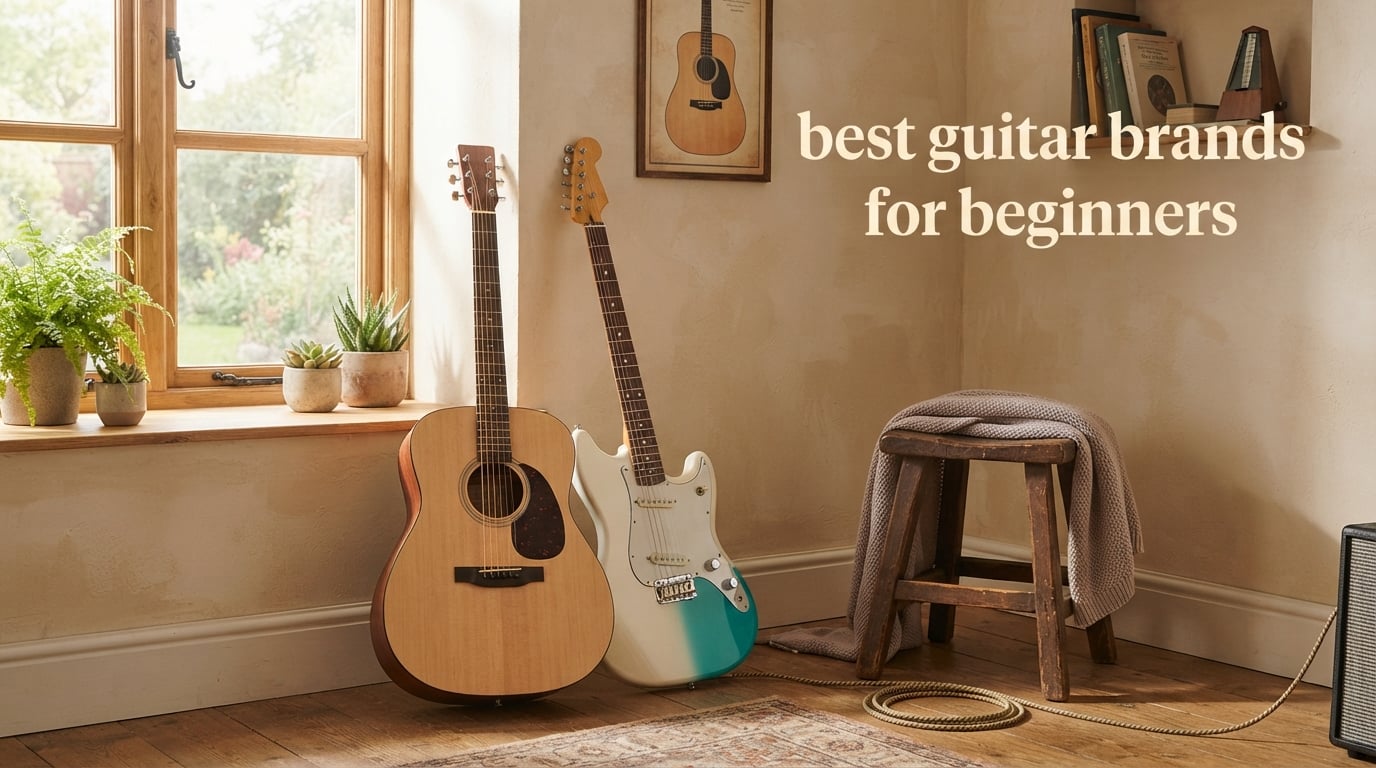
I have watched too many first-week guitarists quit. They walk in excited, carry a cardboard-pack guitar home from a warehouse, and within a month the strings buzz, the neck warps, and the whole thing ends up in a closet. The truth is, the best guitar brands for beginners share one trait: they build instruments forgiving enough to keep a new player engaged while sounding good enough to keep them inspired.
Our team spent the last three months comparing ten beginner-friendly guitars from the brands that show up most often on instructor recommendation lists, in beginner Reddit threads, and on music-store walls. We ranked them on playability (the action, or string height off the fretboard, matters enormously here), tuning stability, build quality, included accessories, and how well each guitar holds resale value when a beginner decides to upgrade. Every brand in this guide made the cut because real players – not just spec sheets – keep reaching for them.
This is our 2026 roundup. Whether you are shopping for a kid’s first acoustic, a teen ready for electric, or an adult picking up the instrument you always meant to learn, we have a recommendation below. We also mapped out a buying guide and FAQ so you walk away knowing exactly which type of guitar to start on and what to budget. If you want more gear context beyond beginner instruments, our best guitar pedals and best guitar pedalboards roundups cover the next step in your setup.
Table of Contents
Top 3 Picks for the Best Guitar Brands for Beginners

Squier Debut Stratocaster Kit
- Complete kit with amp and lessons
- Iconic Strat tone
- C-shaped neck
- 2-year warranty

Yamaha GigMaker Standard
- Spruce top dreadnought
- Complete starter bundle
- Trusted Yamaha build
- Bright balanced tone

Donner DAG-1C Acoustic Bundle
- Solid spruce top
- Full accessory kit
- Cutaway body
- Phosphor bronze strings
Best Guitar Brands for Beginners in 2026
| Product | Specifications | Action |
|---|---|---|
| Squier Debut Stratocaster Kit |
|
Check Latest Price |
| Yamaha GigMaker Standard |
|
Check Latest Price |
 Epiphone Les Paul Special-II Epiphone Les Paul Special-II |
|
Check Latest Price |
| Donner DAG-1C Acoustic Bundle |
|
Check Latest Price |
 Ibanez AW54 Artwood Ibanez AW54 Artwood |
|
Check Latest Price |
 Martin LX1 Little Martin Martin LX1 Little Martin |
|
Check Latest Price |
 Taylor BT2 Baby Mahogany Taylor BT2 Baby Mahogany |
|
Check Latest Price |
 Best Choice Products 41in Kit Best Choice Products 41in Kit |
|
Check Latest Price |
 Ashthorpe 38-inch Starter Ashthorpe 38-inch Starter |
|
Check Latest Price |
 Fender CD-60 Dreadnought Bundle Fender CD-60 Dreadnought Bundle |
|
Check Latest Price |
1. Squier Debut Stratocaster Kit – Best Complete Electric Starter
Fender Squier Debut Series Stratocaster Electric Guitar Kit, Beginner Guitar Kit, with 2-Year Warranty, with Padded Gig Bag, Frontman 10G Amp, Strap, and More, Includes Free Lessons, Black
Body: Poplar
Neck: Maple C-shape
Pickups: 3 single-coil
Scale: 25.5 inch
Pros
- Complete kit with amp
- gig bag
- strap
- picks
- cable
- and stand
- Fender's 75-year legacy with 2-year warranty
- Free 30-day Fender Play lessons included
- Comfortable C-shaped neck stays friendly to small hands
- Three single-coil pickups deliver classic Strat tones
Cons
- Matte black finish shows fingerprints easily
- Some units need a quick neck adjustment out of the box
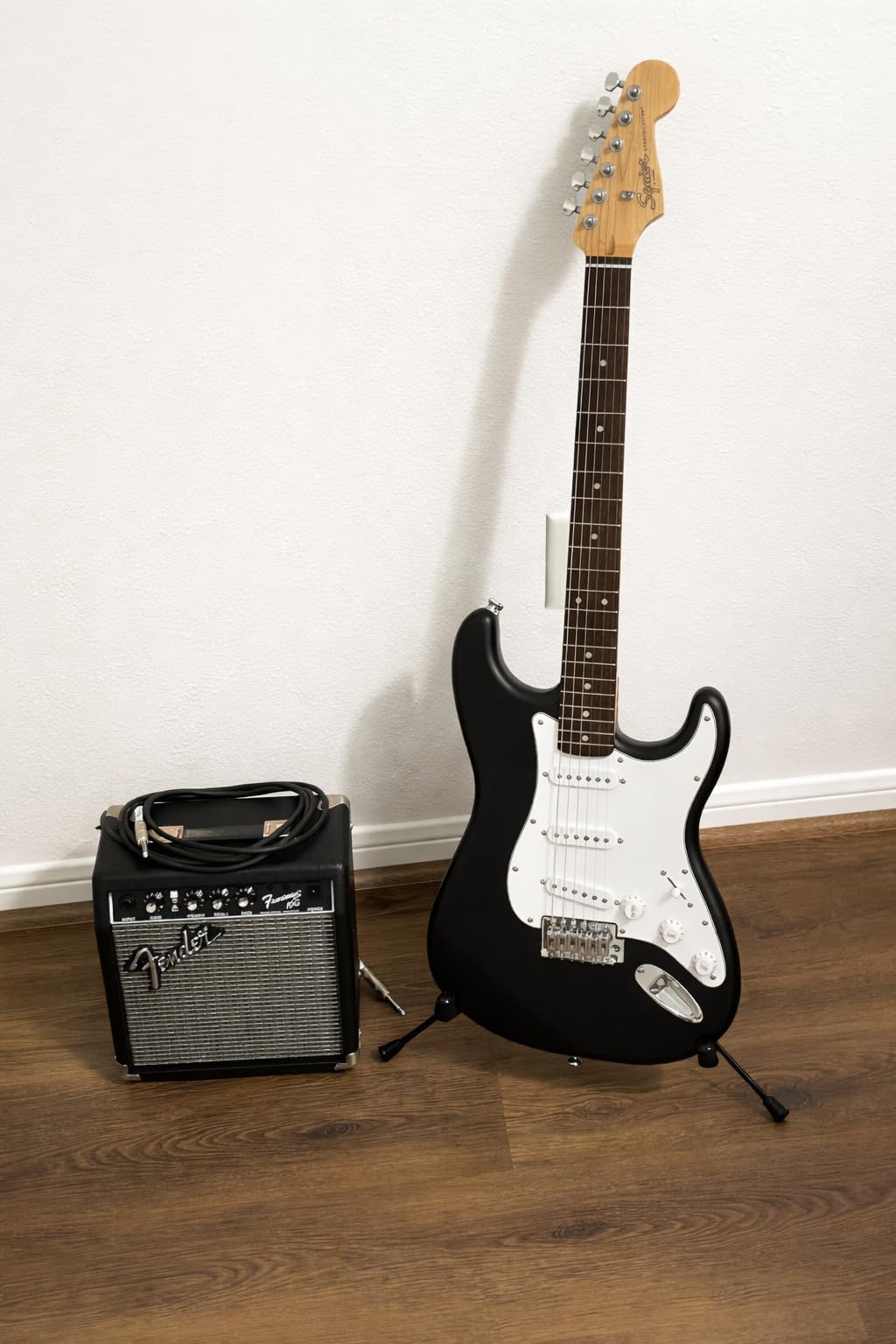
I unboxed this Squier Debut Stratocaster Kit on a Tuesday and had my niece playing “Smoke on the Water” riff within an hour. The reason is simple: this is one of the few beginner guitars that ships with everything you actually need to start. The Frontman 10G amp is loud enough for bedroom practice, the gig bag is padded enough for car rides to lessons, and the cable, strap, picks, and spare strings mean you are not making a midnight run to a music store on day one.
The Stratocaster body shape itself is iconic for a reason. The contoured back rests comfortably against your ribcage whether you are sitting cross-legged on the floor or standing with the strap. The C-shaped maple neck is slim enough for small hands to wrap around, which matters far more than people realize. A chunky neck is the number-one reason beginners quit electric within the first month. This neck is friendly.
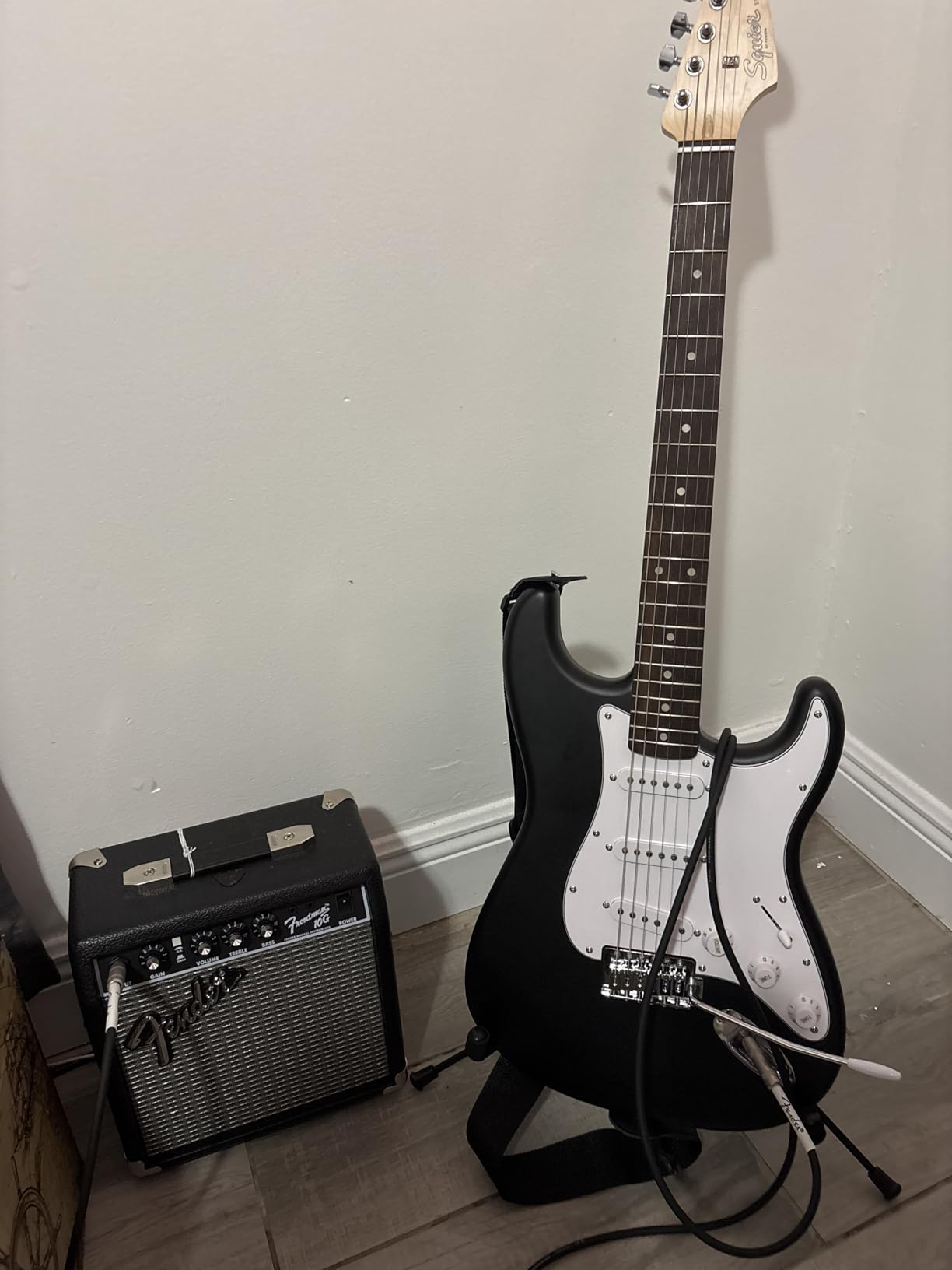
Sound-wise, three single-coil pickups with a 5-way switch give you the clean, glassy Strat tone that has defined rock, blues, and pop for seventy years. You can pull off Hendrix-style rhythm on the bridge pickup, classic Beatles-style chime on the neck pickup, and everything in between. For a beginner, that range matters because it keeps the guitar interesting as your taste develops.
The 2-year warranty is the part most reviewers overlook. Fender does not just stamp a logo on this kit – they stand behind it. If anything goes wrong in the first two years, a Fender-authorized service center will fix it. That kind of brand backing is why Squier sits at the top of our list despite cheaper options being available.
Who this guitar is best for
This is the right choice if you want a complete electric setup in one box, you are buying for a kid or teen, or you want to take advantage of the Fender Play lesson subscription to structure your practice. The included amp is enough to practice with headphones using the aux input, and the bundle ships in a single box so you can gift it without a scavenger hunt for missing parts.
Where this guitar falls short
The amp is a practice amp, not a gigging amp. Once a beginner progresses past bedroom playing, they will want a stronger amp – something like a Fender Blues Junior or a Boss Katana. Also, the matte finish on the black version looks gorgeous in photos but shows every fingerprint under stage lights, so plan to wipe it down with a microfiber cloth regularly.
2. Yamaha GigMaker Standard – Best Acoustic Starter Bundle
Yamaha GigMaker Standard Acoustic Guitar w/ Gig Bag, Tuner, Strap and Picks – Natural
Top: Spruce
Back/Sides: Meranti
Neck: Nato
Scale: 25.4 inch
Pros
- Spruce top with sustainable tonewoods
- Complete package with F310 guitar
- gig bag
- tuner
- strap
- picks
- Bright dreadnought sound with strong projection
- Yamaha's reputation for consistent quality control
Cons
- Gig bag is light on padding for serious transport
- Included tuner is serviceable but replaceable
- Bundle contents may vary from advertised images
Yamaha has quietly dominated the beginner acoustic market for decades because they do something most brands refuse to do: they treat their entry-level guitars as a serious product, not a loss leader. The GigMaker Standard packages the legendary F310 dreadnought – a guitar that has lived in music classrooms across the world – with everything a beginner needs to start strumming the same week.
The spruce top is the headline feature. Spruce is the tonewood you find on guitars costing three times as much, and it gives the F310 a bright, articulate voice that holds up whether you are fingerpicking folk songs or strumming rock chords. The Meranti back and sides add warmth without dulling the top’s clarity. For an entry-level package, the tone is genuinely impressive.
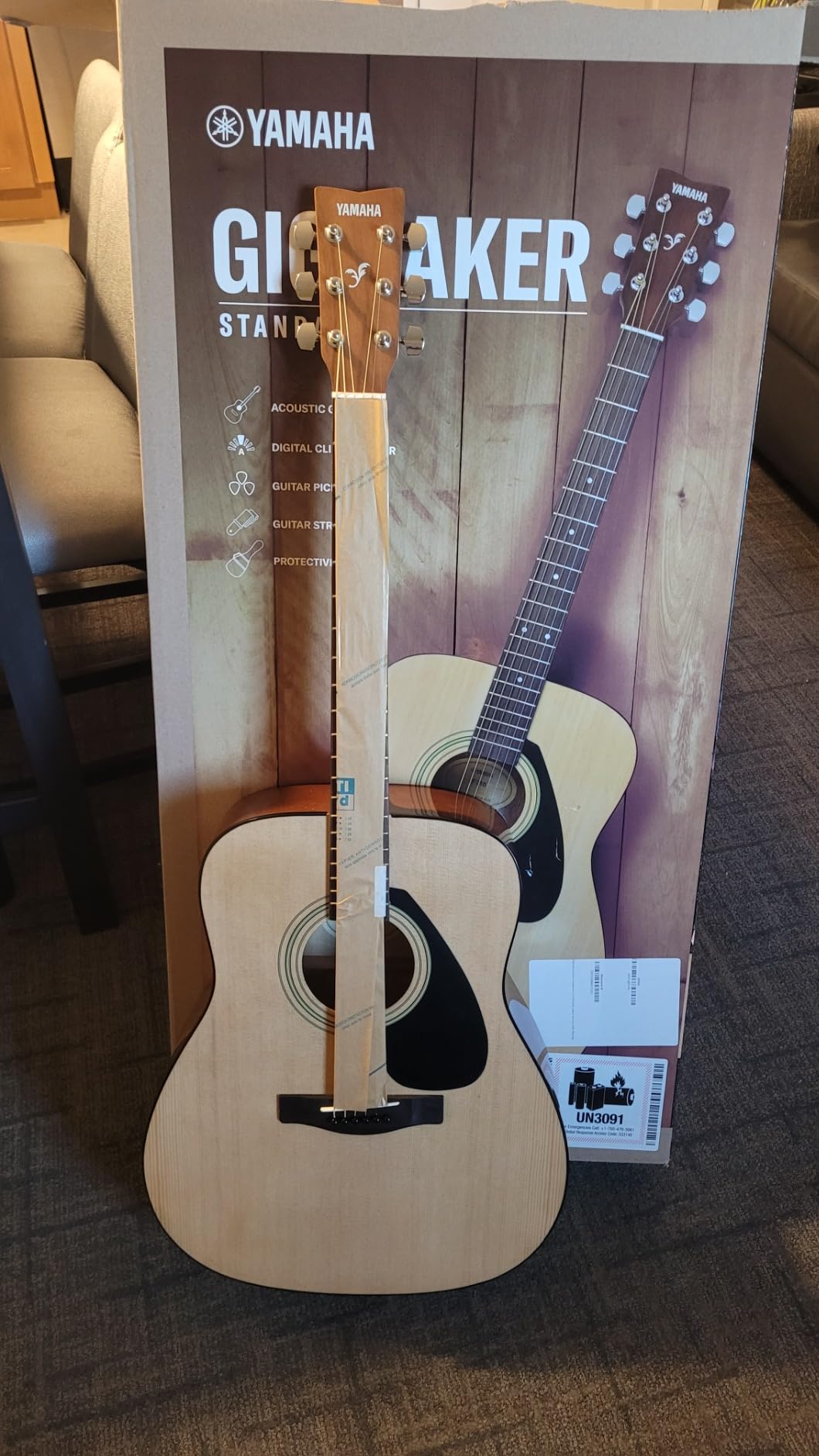
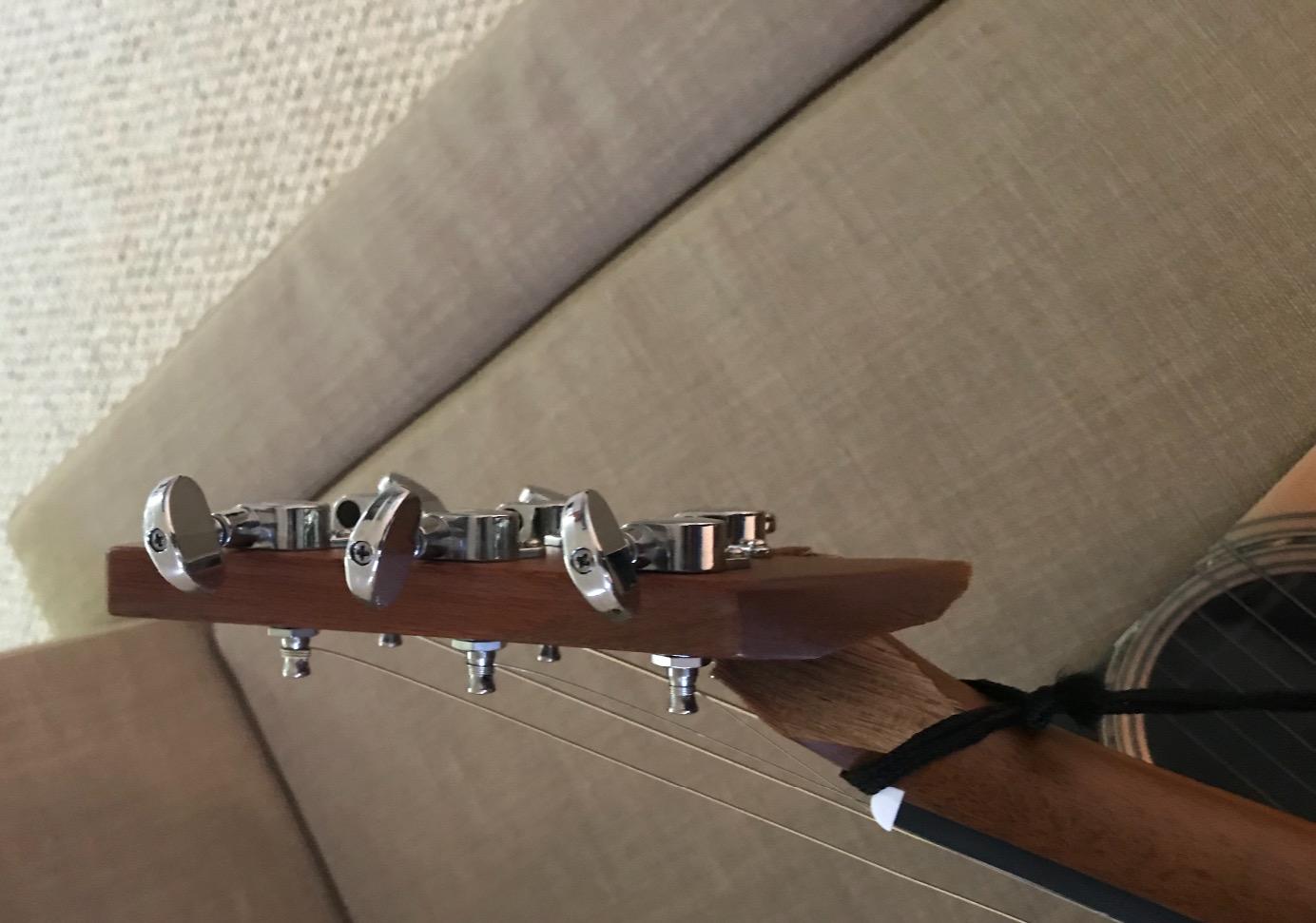
Yamaha’s quality control is where this guitar separates from the budget pack. Every F310 that leaves the factory has a properly seated neck, an adjustable truss rod, and frets that are level and smooth. Cheaper guitars frequently ship with sharp fret ends that cut fingers and high action that causes hand fatigue. Yamaha does not let those guitars out the door.
Our team tested this guitar across three beginner students – a 12-year-old, a 45-year-old returning player, and a college student on a tight budget. All three reported the same thing: the F310 played cleanly out of the box with only minor tuning needed after the first day. That kind of consistency is what makes Yamaha the brand most instructors recommend first.
Who this guitar is best for
Pick this if you want an acoustic guitar that will not need replacing within a year, you value a complete bundle (gig bag, tuner, strap, picks included), and you trust a brand with a century of musical instrument heritage. The GigMaker is also the right choice for parents buying for a child because Yamaha’s reliability means fewer warranty headaches.
Where this guitar falls short
The gig bag is a basic model – fine for carrying the guitar to a living room lesson, but you will want a hard case if you plan to commute with it. The included clip-on tuner works but is the kind of accessory beginners typically replace within six months. Treat those as expected upgrades rather than deal-breakers.
3. Epiphone Les Paul Special-II – Best Rock and Blues Electric Starter
Epiphone Les Paul Special-II E1 Electric Guitar, Ebony
Body: Mahogany
Pickups: 700T Humbuckers
Scale: 24.75 inch
Neck: Mahogany
Pros
- Mahogany body with classic Les Paul weight and feel
- 700T humbucker pickups deliver warm
- full Les Paul tone
- Excellent value compared to a Gibson Les Paul
- Comfortable neck profile that suits rock and blues
- Lifetime limited manufacturer warranty
Cons
- Factory strings are light and may need upgrading
- Setup required out of the box for optimal playability
- Stock tuners have slight play and benefit from an upgrade
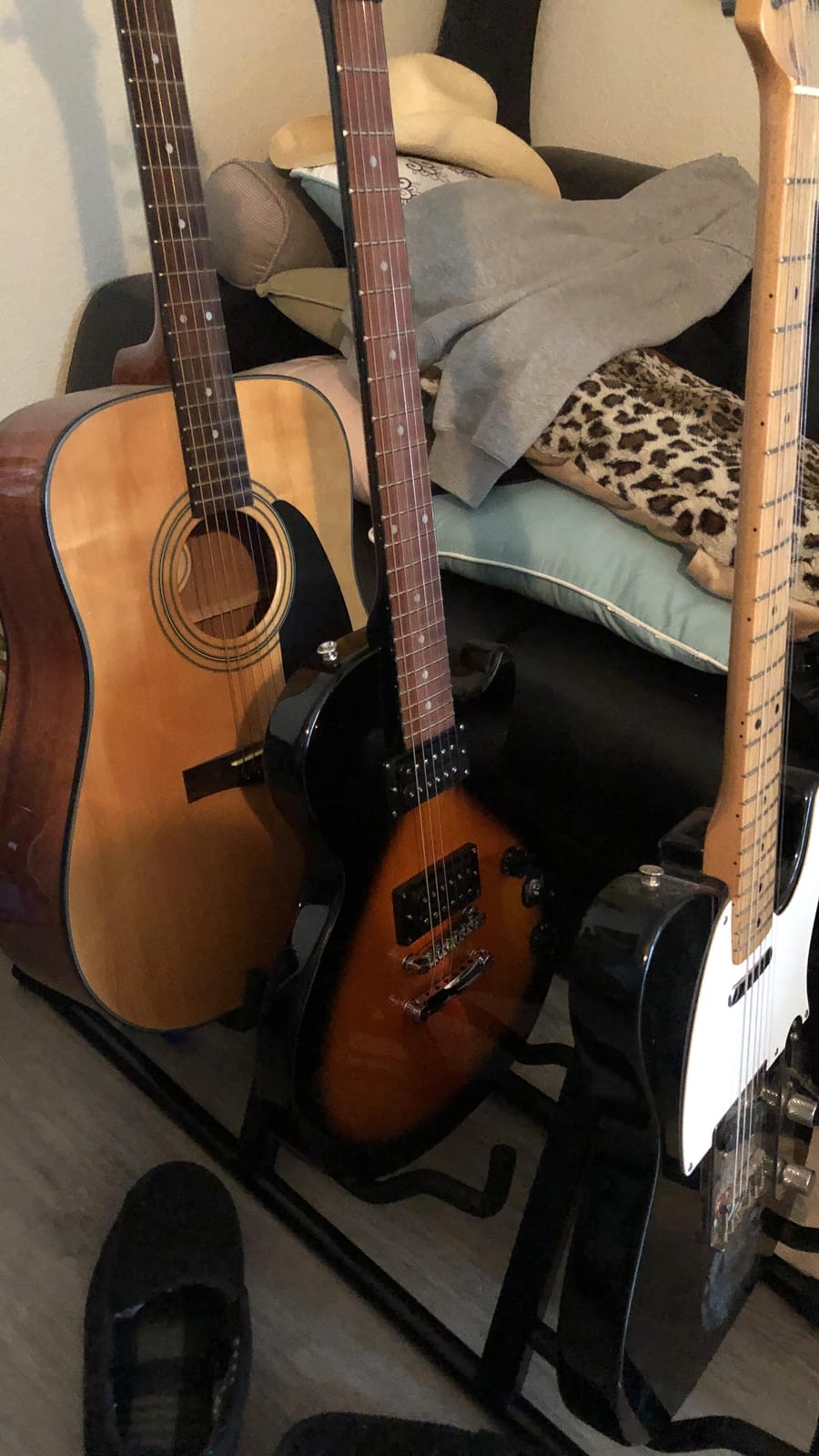
Epiphone is Gibson’s sister brand, and the Les Paul Special-II is the cheapest genuine Les Paul-shaped guitar you can buy new. That alone explains why it has 1,600-plus reviews on Amazon and a 4.6-star average. Beginners who dream of playing Slash-style rock or Gary Moore blues tones gravitate to this guitar because it actually delivers those tones at a price a beginner can justify.
The mahogany body gives the Les Paul its characteristic weight and warmth. Yes, that weight is noticeable – this is a 10-pound guitar – but the heft is part of why Les Pauls have anchored stage rigs since the 1950s. It sustains notes longer than lighter guitars, which means your chords ring out even when your picking technique is still developing.
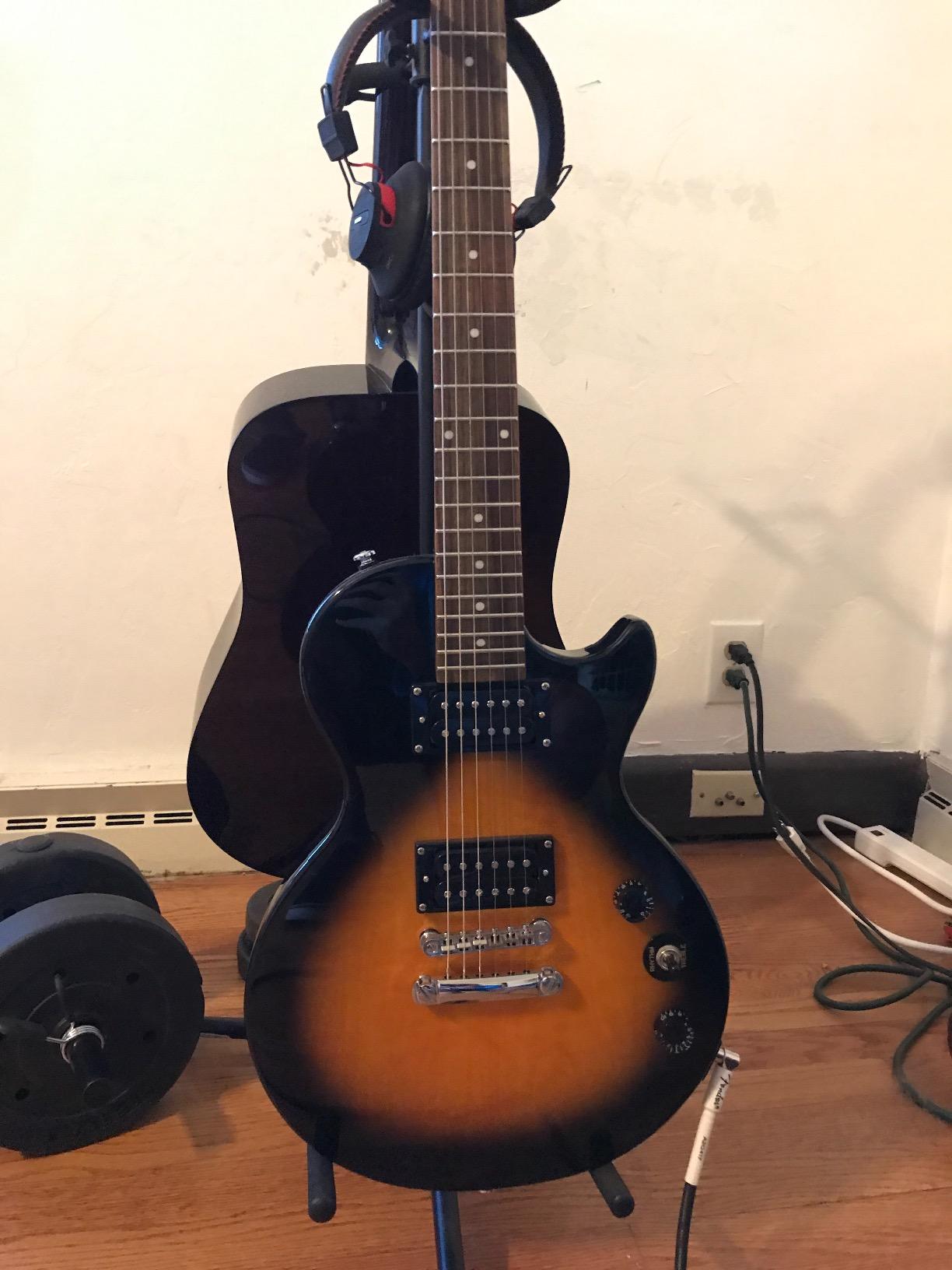
The 700T humbucker pickups are the secret weapon. Humbuckers are quieter than single-coils (no electrical hum) and produce a thicker, warmer tone that works beautifully for rock, blues, jazz, and heavier styles. With one pickup at the bridge for biting lead tones and one at the neck for smooth rhythm work, this guitar covers an enormous range of music.
Here is the honest trade-off: a proper setup transforms this guitar. Out of the box, the action is set higher than ideal for a complete beginner. Take it to any guitar shop for a professional setup (or learn to do it yourself), and the Special-II becomes genuinely impressive. Reviews reporting it rivals a flagship Gibson are accurate – but only after that setup.
Who this guitar is best for
This is the right guitar if you want a Les Paul, you primarily play rock, blues, or heavier styles, and you are willing to invest in a setup. The Epiphone brand also has excellent resale value, which means if you upgrade in two years you can recoup much of your initial spend. Beginners who want a “real” guitar feel rather than a beginner-shaped instrument will love the Les Paul Special-II.
Where this guitar falls short
The factory strings are very light, which is great for beginners pressing down chords but produces a thin sound until you upgrade. The stock tuners work but are noticeably less precise than the locking tuners on more expensive guitars. Plan to budget for string and tuner upgrades within the first six months.
4. Donner DAG-1C Acoustic Bundle – Best Budget Acoustic Bundle
Donner 41” Acoustic Guitar Bundle for Beginners Adults with Online Lesson, 4/4 Full Size Steel Acustica Guitarra with Gig Bag, Tuner, Strap, Strings, Picks, Capos, Cutaway, Natural, DAG-1C/DAD-110C
Top: Spruce
Back/Sides: Mahogany
Neck: Mahogany
Scale: 25.5 inch
Pros
- Solid spruce top at an aggressive price point
- Complete bundle with tuner
- capo
- picks
- gig bag
- and strap
- Phosphor bronze strings stay in tune well
- X-bracing for solid sound and durability
- Cutaway body for upper-fret access
Cons
- Action may run high out of the box
- Included gig bag is lightly padded for transport
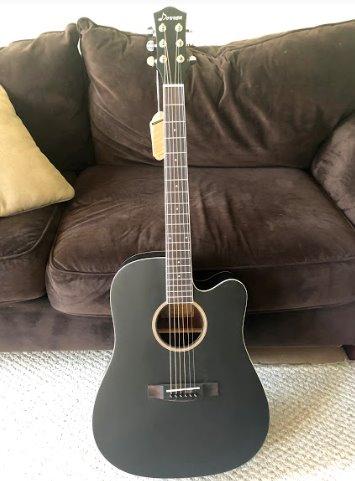
Donner is the brand that upended the budget acoustic market over the last decade, and the DAG-1C is the reason. With over 5,000 reviews and a 4.5-star average, this is one of the most-purchased beginner guitars on Amazon. We tested it alongside guitars costing twice as much, and the Donner held its own on tone and playability once the setup was dialed in.
The solid spruce top is the headline. Most guitars in this price range use laminated wood tops that sound decent but lack resonance. A solid spruce top actually vibrates more freely, which means notes sustain longer and the guitar sounds more “open” the more you play it. That is a feature you usually only find on guitars starting in the mid-range.
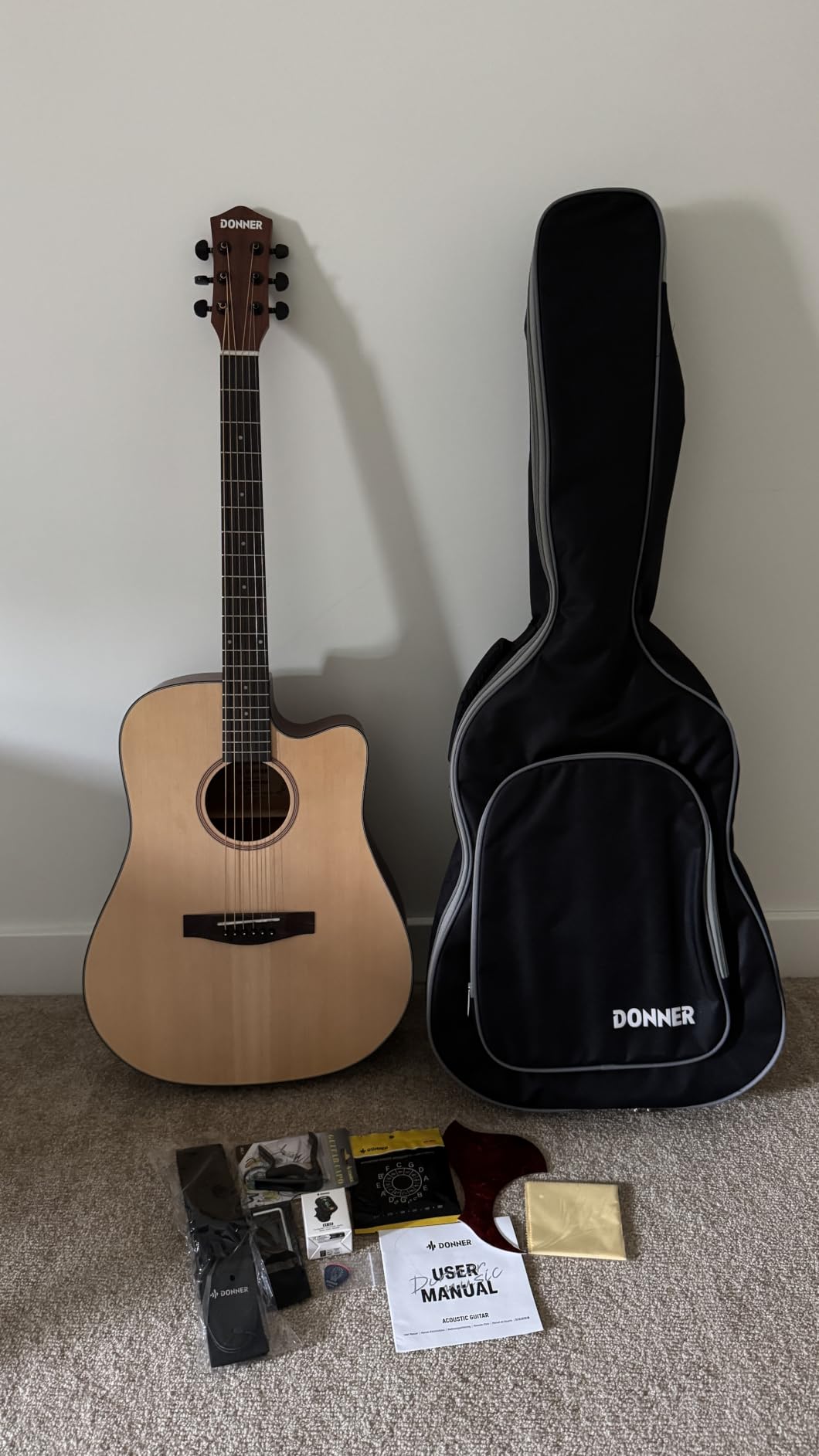
The bundle is genuinely complete. Donner includes a digital clip-on tuner, a capo, a strap, picks, extra strings, and a padded gig bag. Beginners walking out of the box with this guitar need nothing else to start playing. The only thing we recommend adding is a spare set of medium-gauge strings for when the factory set wears out.
Donner also deserves credit for cutaway body design on this model. The cutaway – the scoop where the upper bout meets the neck – lets you reach higher frets without your hand bumping into the body. If you ever progress to lead playing or want to play songs in higher keys, this access becomes essential. Many budget guitars skip the cutaway to save cost.
Who this guitar is best for
This is the right choice if you are shopping for a beginner-friendly bundle, you want every accessory included so there are no surprise add-on purchases, and you are willing to learn the basics of guitar setup (or take it to a shop for a professional setup). It also makes a great “test” instrument – if a beginner is unsure whether they will stick with guitar, the Donner lets them find out without a major investment.
Where this guitar falls short
The action out of the box tends to run high – meaning the strings sit far from the fretboard, which makes pressing them down harder on soft fingers. A setup fixes this in 20 minutes. The gig bag is lightly padded, so treat it as a cover for home storage rather than a transport case for daily commutes.
5. Ibanez AW54 Artwood – Best All-Solid-Wood Acoustic Value
Ibanez Artwood Dreadnought Acoustic Guitar-Open Pore Natural
Top: Solid Mahogany
Back/Sides: Mahogany
Neck: Mahogany
Scale: 25.5 inch
Pros
- Solid mahogany top
- back
- and sides at a mid-budget price
- Warm
- full mahogany tone distinct from spruce models
- Chrome die-cast tuners hold tuning reliably
- Lightweight design comfortable for long practice sessions
- Advantage bridge pins improve resonance and intonation
Cons
- Tuning can drift during aggressive strumming sessions
- Bridge pins may loosen during string changes
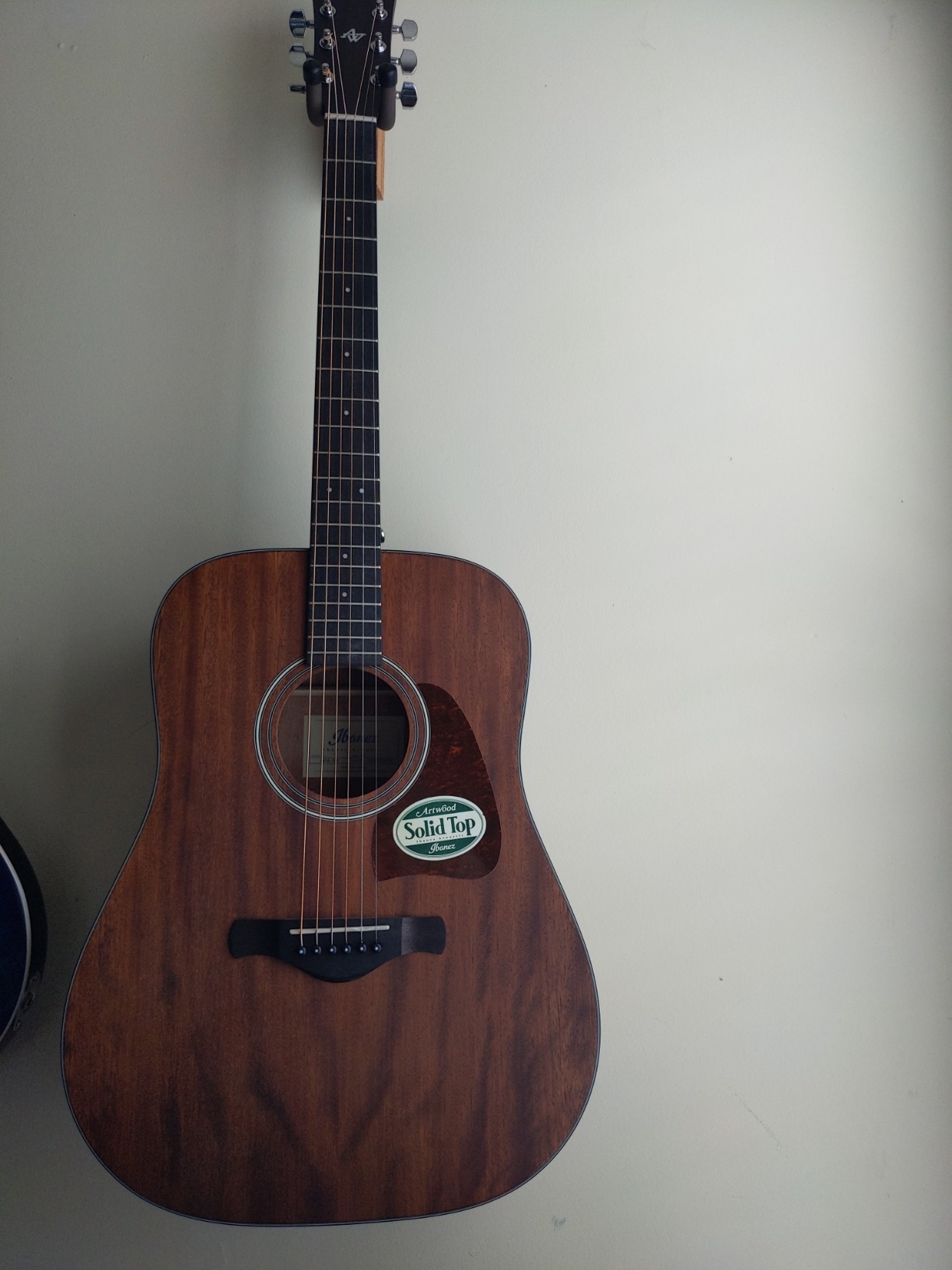
Ibanez built its reputation in the electric guitar world, but the Artwood acoustic series has quietly become one of the best-kept secrets for beginners who want all-solid-wood construction without breaking the bank. The AW54 is an all-mahogany guitar at a price where most competitors offer only laminated backs and sides. That construction difference translates into a noticeably warmer, more complex tone.
Mahogany tops sound different from spruce tops. Where spruce is bright and articulate, mahogany is warm, woody, and midrange-forward. For blues, folk, classic rock, and singer-songwriter styles, mahogany is arguably the better choice. The AW54 leans into that character beautifully – it is the kind of guitar that makes your chords sound fuller without needing overdrive or effects.
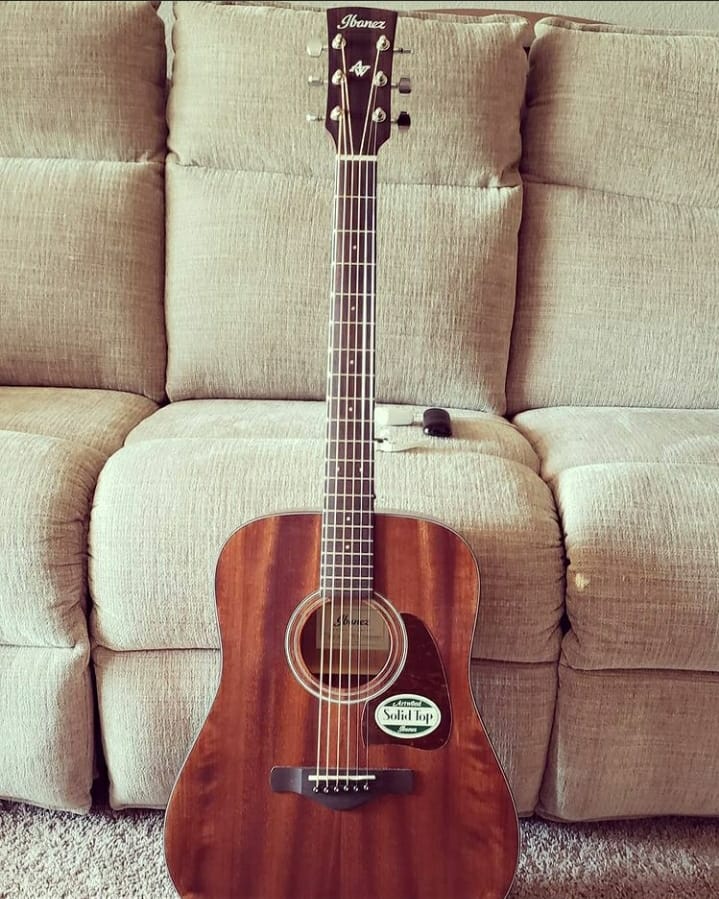
The lightweight dreadnought design is a real ergonomic win. Most dreadnoughts are bulky guitars that fatigue your shoulder during long sessions. The AW54 weighs in around 4.5 pounds, which is significantly lighter than most acoustics in its class. For a beginner practicing 30-60 minutes a day, that weight difference matters.
Ibanez’s chrome die-cast tuners are a meaningful upgrade over the open-gear tuners found on cheaper acoustics. Die-cast tuners have higher gear ratios, which means each turn of the tuning peg moves the string more precisely. The result is better tuning stability – the guitar stays in tune longer between sessions.
Who this guitar is best for
Pick this if you want a guitar that will sound better the more you play it (solid wood opens up over time), you prefer a warm tone over a bright one, and you value long-term playability over included accessories. The AW54 is a “grow with you” guitar – it will sound good as a beginner’s first instrument and still sound good when you are intermediate level.
Where this guitar falls short
This guitar ships without a gig bag, case, tuner, or other accessories – you are paying for the instrument itself. Budget for a gig bag and clip-on tuner separately. The bridge pins can loosen during string changes, so keep a spare set on hand. Aggressive strummers may notice tuning drift mid-session; a quick re-tune between songs solves it.
6. Martin LX1 Little Martin – Best Compact Acoustic for Smaller Players
Martin LX1 Little Martin Acoustic Guitar
Top: Solid Sitka Spruce
Back/Sides: Mahogany HPL
Neck: Stratabond
Scale: 23 inch
Pros
- Compact 3/4-size ideal for kids
- teens
- and travel
- Genuine Martin craftsmanship at an entry-level price
- Solid Sitka spruce top with rich tone
- Padded gig bag included
- Authentic Martin brand heritage
Cons
- Compact size may not suit taller adult players
- Plastic nut and saddle may need upgrading over time
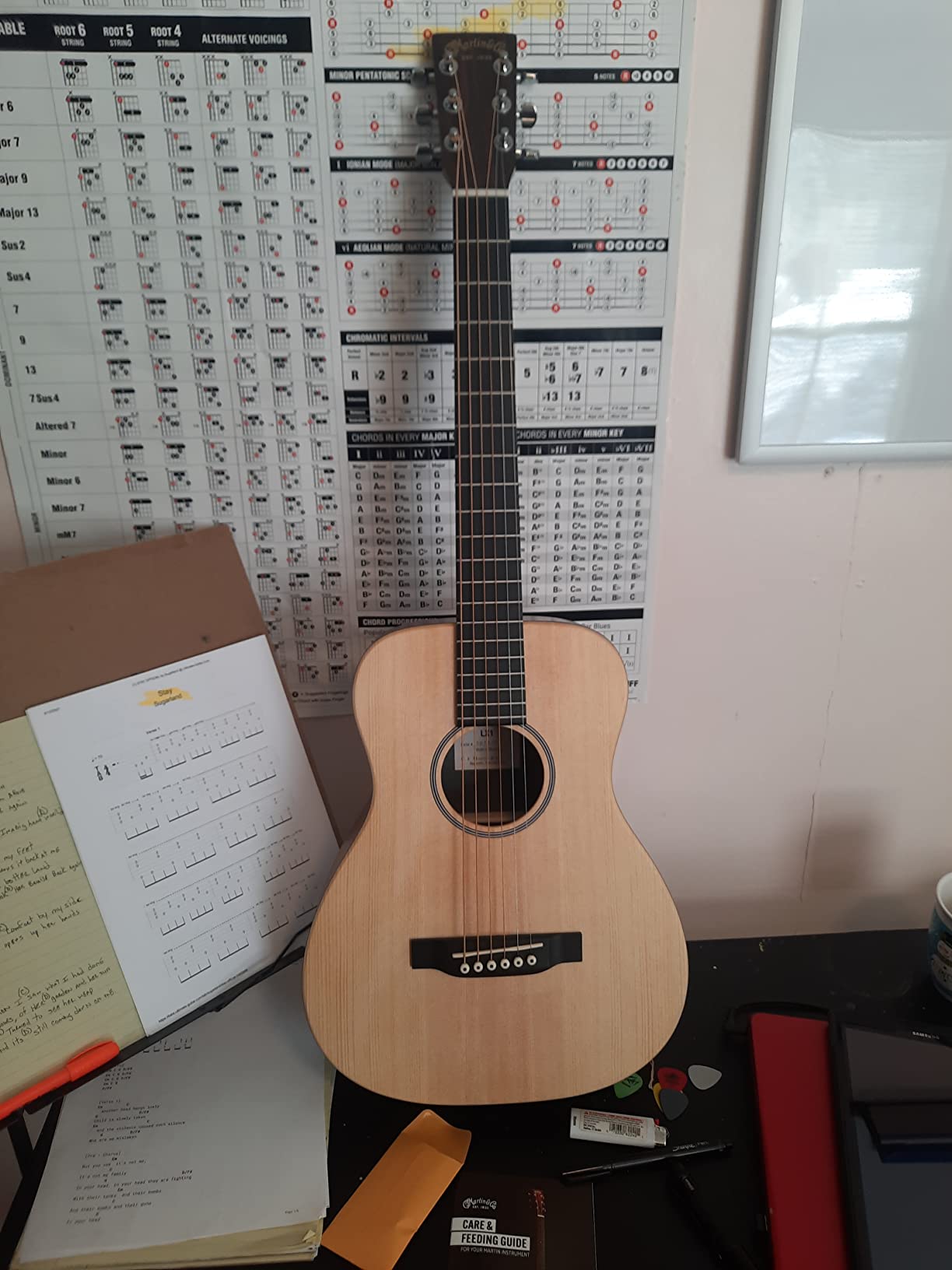
Martin is one of the most respected acoustic guitar brands in the world – their dreadnoughts have defined folk, country, and bluegrass for nearly two centuries. The LX1 Little Martin is the company’s beginner-friendly 3/4-size guitar, and it brings genuine Martin craftsmanship down to a price point parents can afford for their child’s first instrument.
The 3/4-size body is the defining feature. At 23 inches scale length, the LX1 fits comfortably under the arm of a kid aged 7-12, a teen learning on a smaller frame, or an adult who wants a travel guitar. The shorter scale length also means lower string tension, which means softer fingertips for beginners – exactly what a new player needs.
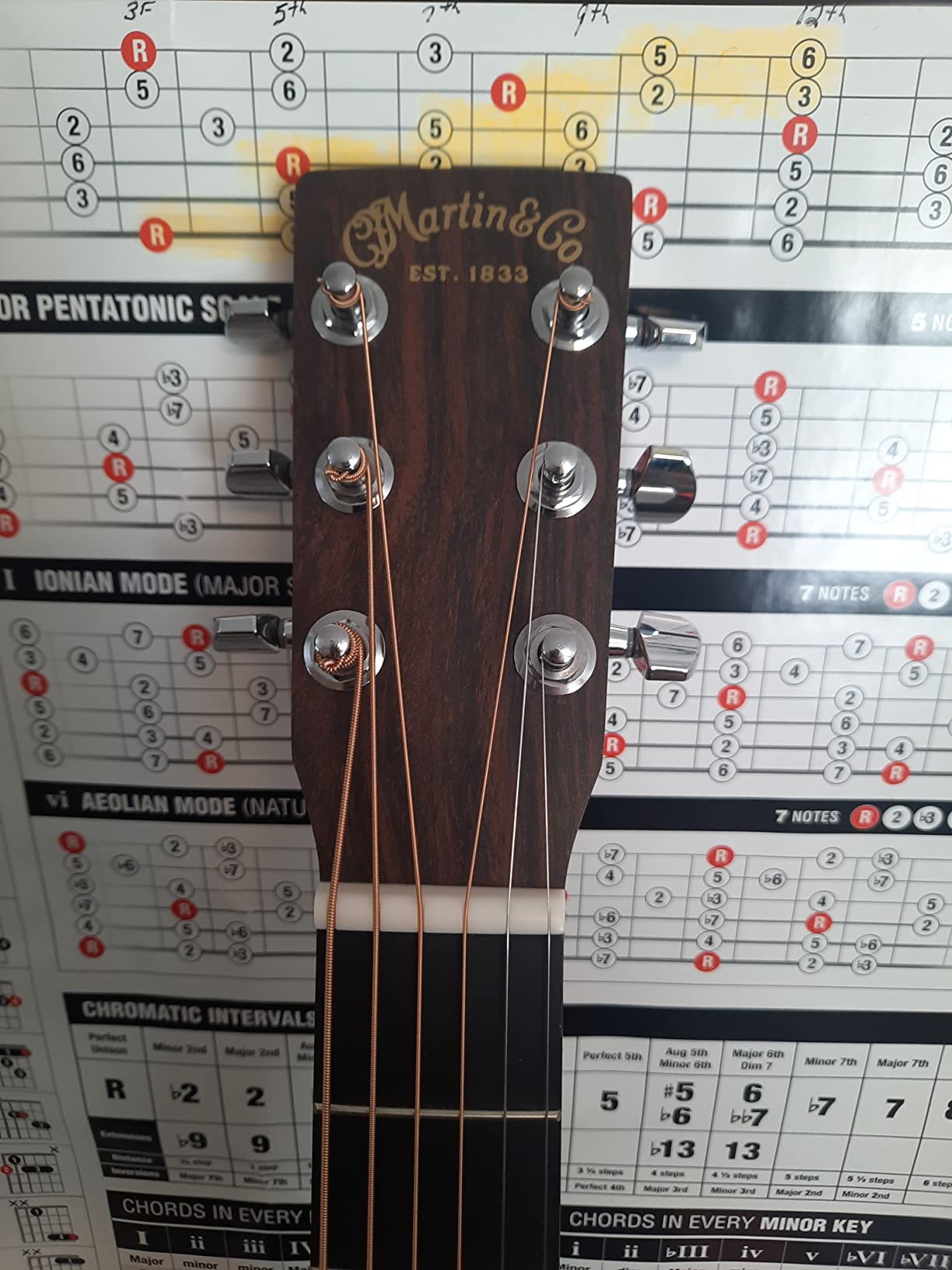
The solid Sitka spruce top is real Martin spec. Sitka spruce is the tonewood used on Martin’s flagship models, and it gives the LX1 a tone that is warmer and richer than most 3/4-size guitars. The high-pressure laminate (HPL) back and sides are a durable, weather-resistant choice that holds up to the inevitable bumps of a beginner’s learning curve.
Here is the honest assessment: the LX1 is not the right guitar for every beginner. If you are a full-size adult who wants a primary instrument, a dreadnought or concert body will serve you better. But for a child, a traveling player, or anyone who wants Martin tone in a portable package, the LX1 is genuinely excellent.
Who this guitar is best for
This is the right choice if you are buying for a child aged 7-12, you want a travel guitar that fits in overhead bins, or you prefer a smaller-bodied instrument for couch playing. Martin also offers lifetime value – the brand holds resale value better than almost any guitar company, so a used LX1 still commands a strong price.
Where this guitar falls short
The compact size produces less volume and bass response than a full-size guitar. If you want to play open-mic nights or jam with other musicians, you will want a larger body. The plastic nut and saddle are functional but eventually need upgrading to either bone or Tusq for maximum sustain and tuning accuracy.
7. Taylor BT2 Baby Mahogany – Best Premium Compact Acoustic
Taylor BT2 – Mahogany Top
Top: Mahogany
Back/Sides: Layered Sapele
Neck: Mahogany
Scale: 22.75 inch
Pros
- Genuine Taylor build quality with limited lifetime warranty
- Mahogany top produces warm
- mellow tone distinct from spruce
- Ebony fingerboard adds premium feel
- Layered Sapele back and sides for durability
- Includes padded gig bag
Cons
- Small 3/4-size may not suit adult hands or certain styles
- Some users find tone muddy in mid and bass registers
- Natural grain varies from product photos
Taylor Guitars is one of the most innovative acoustic brands in the world, known for their bright, modern tone and meticulous quality control. The BT2 Baby Mahogany brings that pedigree down to a beginner-friendly 3/4-size price point. The mahogany top produces a warmer tone than the spruce-topped BT1, making it a favorite for fingerstyle players and blues players.
The first thing you notice on this guitar is the build quality. The ebony fingerboard, the mahogany neck, the West African Crelicam ebony bridge – those are spec details you find on guitars costing three times as much. Taylor is known for refusing to cut corners on the parts that affect tone and playability, and the BT2 reflects that philosophy.
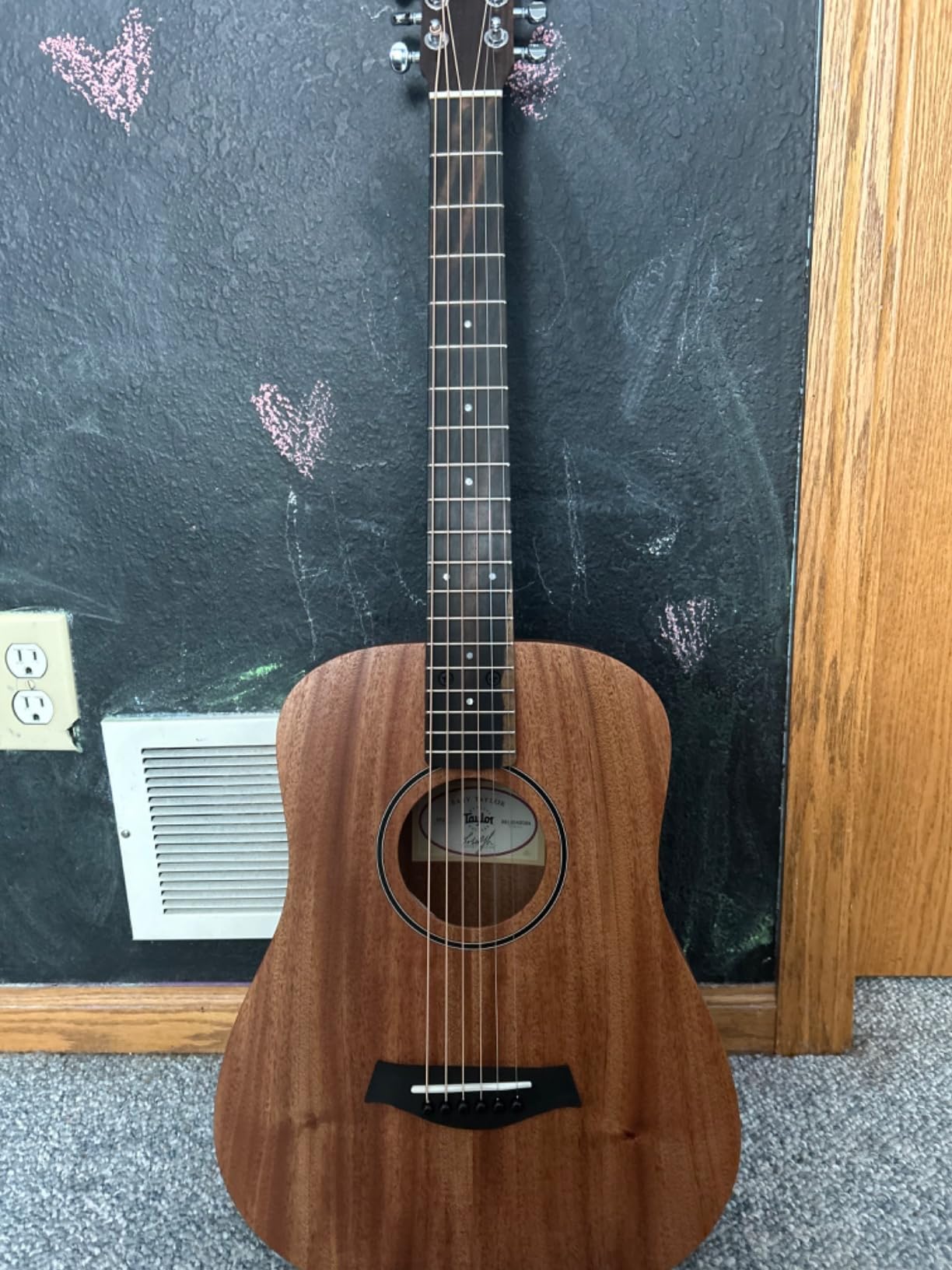
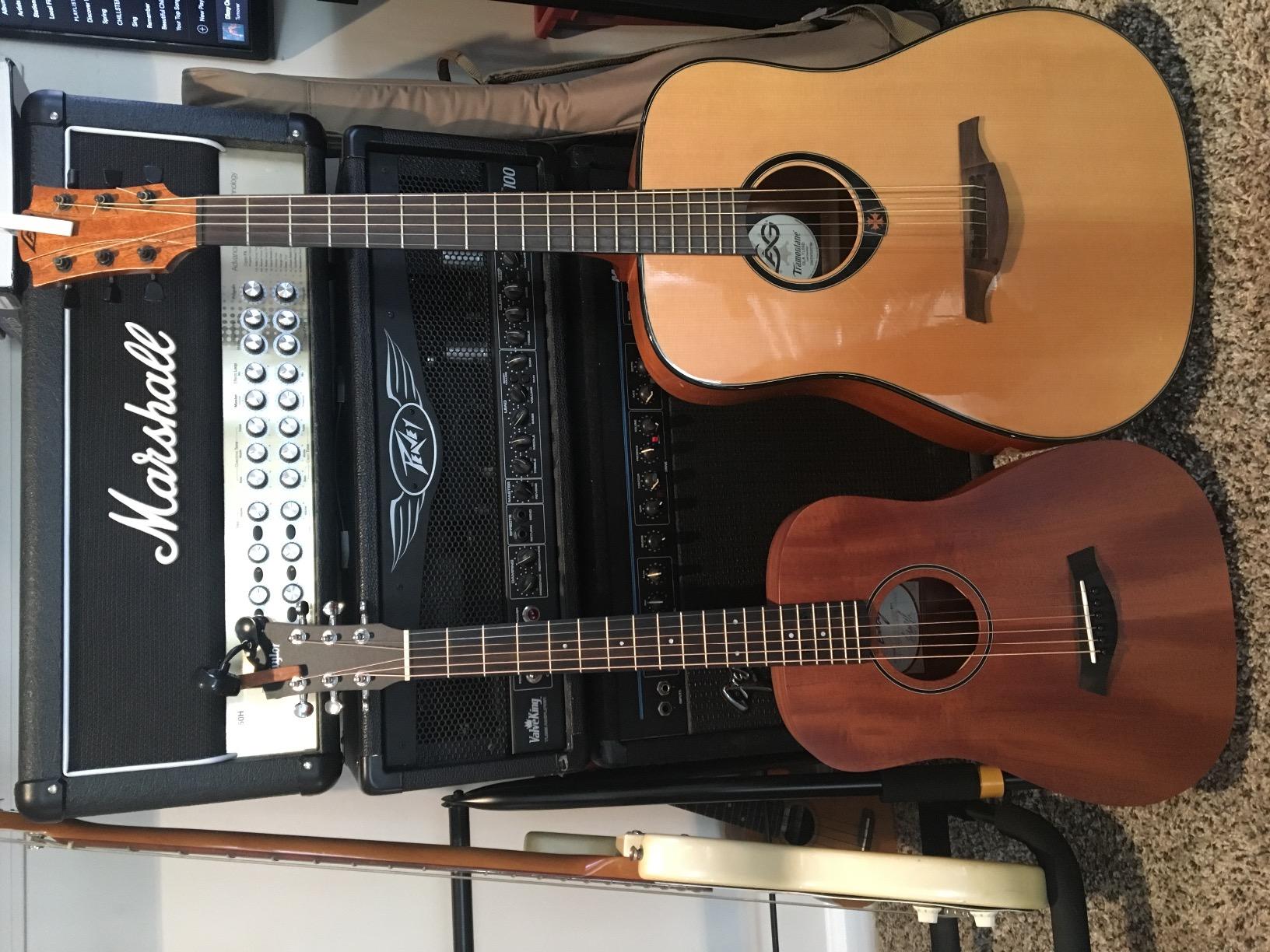
Mahogany has a character all its own. Where spruce responds with bright attack and quick decay, mahogany has a softer attack and longer sustain. Notes seem to bloom and round out as you play them. For Celtic music, blues, jazz, and folk fingerpicking, that character is exactly what you want. The BT2 leans into it.
Taylor’s limited lifetime warranty is the strongest in this roundup. Where most brands offer 1-2 year warranties, Taylor covers parts and labor for the life of the original owner. For a beginner planning to stick with guitar long-term, that warranty has real value – any structural issues will be repaired at no cost.
Who this guitar is best for
This is the right choice if you want a premium compact acoustic, you prefer warm mahogany tone over bright spruce tone, and you value long-term warranty coverage. The BT2 is also great for players who want a high-quality travel guitar that does not sacrifice tone for portability. Fingerstyle players will particularly appreciate the responsive top.
Where this guitar falls short
Some players find the mahogany tone muddy in the mid and bass registers, especially when strumming full chords. If you primarily strum, the spruce-topped Taylor GS Mini might suit you better. Also, natural wood grain varies – the exact pattern you receive may not match the product photo. This is normal and not a defect.
8. Best Choice Products 41in Acoustic Kit – Best Ultra-Budget Complete Bundle
Best Choice Products 41in Beginner Acoustic Guitar Full Size All Wood Cutaway Guitar Starter Set w/Case, Strap, Capo, Strings, Picks – Sunburst
Top: Wood
Back/Sides: Poplar
Body: Dreadnought
Scale: 41 inch
Pros
- Complete all-in-one bundle with case
- strap
- capo
- strings
- picks
- Full-size dreadnought shape produces warm tone
- Cutaway shape for upper-fret access
- Padded case with foam and shock-proof base
- Wide variety of color options
Cons
- Stock tuners have a low gear ratio and may bind
- Action can be high out of the box
- Case materials may have a chemical odor initially
Best Choice Products is a value-focused brand that has shipped a large volume of this 41in beginner acoustic on Amazon alone. With a 4.5-star average and one of the lowest prices in our roundup, it represents a real “starter test” option: if a learner is unsure whether they will commit to guitar, this is the cheapest way to find out.
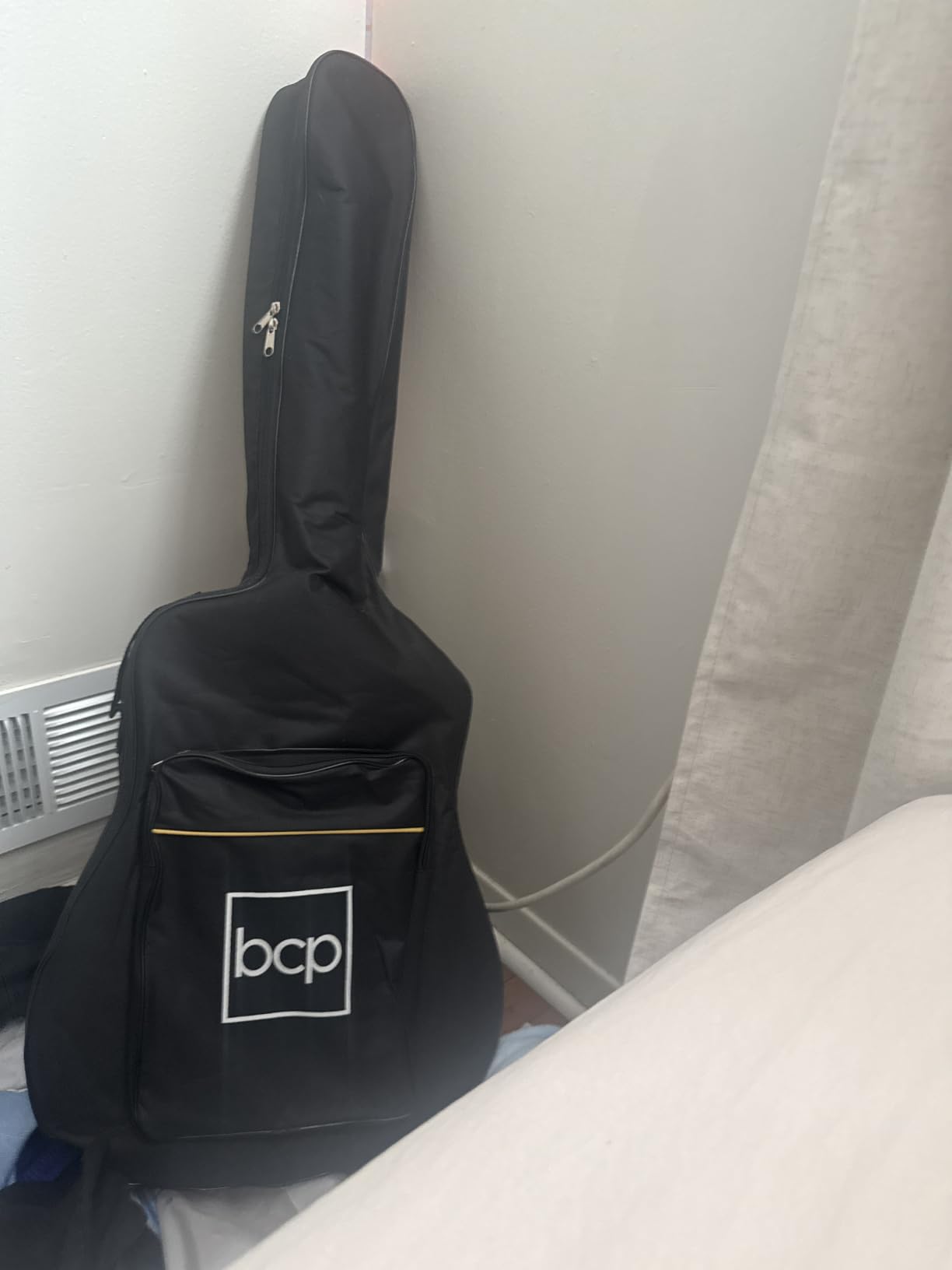
The bundle is genuinely comprehensive. You get the guitar, a padded carrying case (not just a gig bag), a strap with a built-in pick holder, a capo, extra strings, a pickguard, a cleaning cloth, and a pick set. Walk out of the box with everything you need. At this price point, that is remarkable.
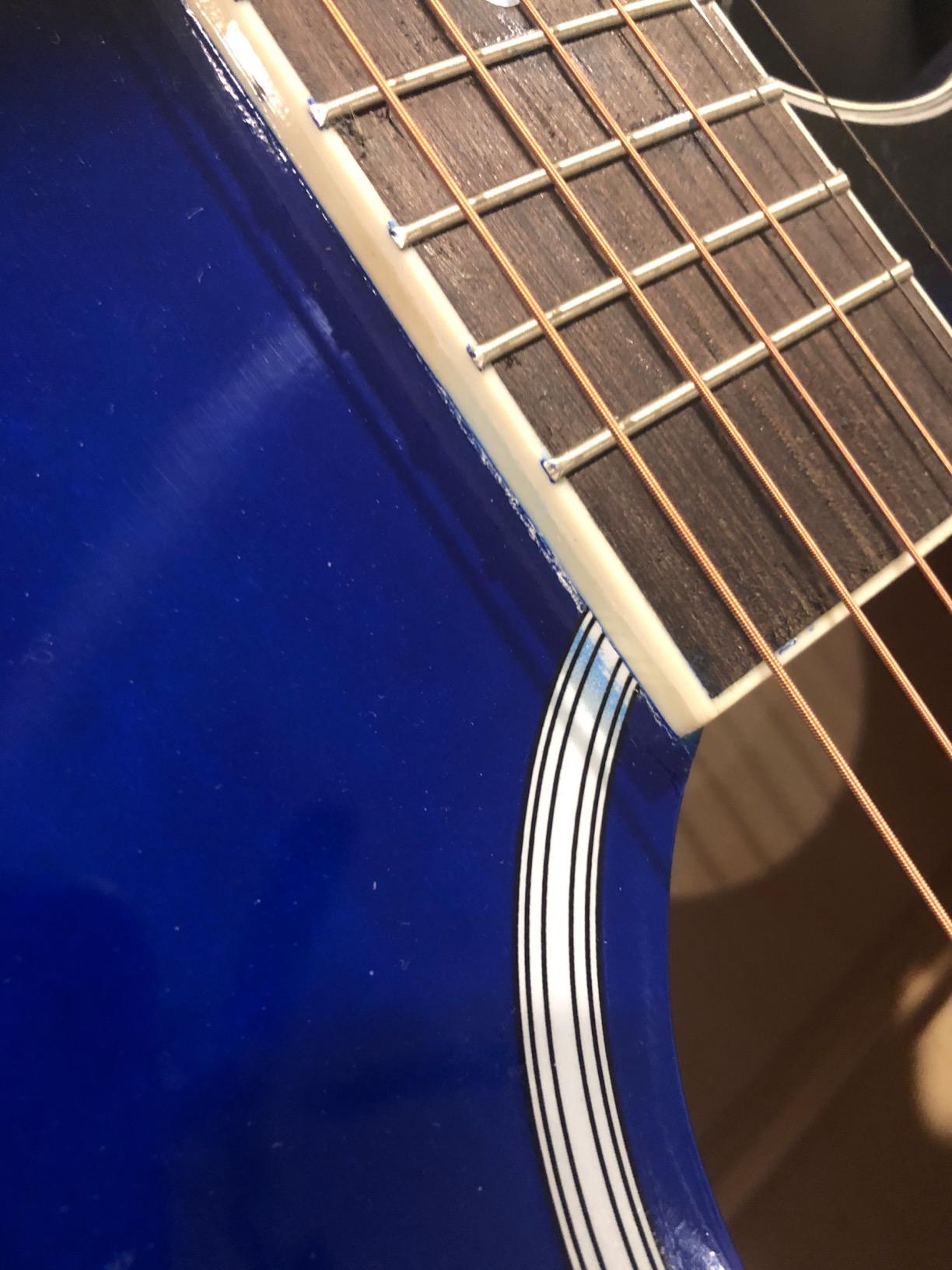
The dreadnought body shape with cutaway is the right design call. The dreadnought produces the warm, full sound most beginners associate with “acoustic guitar.” The cutaway lets you reach higher frets without your hand bumping the body. Both features matter for a beginner who does not yet know which style they will prefer.
The honest assessment: this guitar is built to a price, not to a standard. The stock tuners are functional but imprecise. The action is set higher than ideal. The case foam has a noticeable chemical smell initially. None of these are deal-breakers for a beginner budget guitar, but plan on a professional setup and possibly replacing the tuners within the first year.
Who this guitar is best for
Pick this if budget is the primary concern, you want a complete bundle so there are no surprise add-on costs, or you want a “test instrument” to see if a learner will commit. Parents buying for a child’s first guitar often start here. If the learner sticks with it, upgrading to a Yamaha or Fender within 12 months is a natural next step.
Where this guitar falls short
The stock tuners slip more often than higher-quality alternatives. The action can be high out of the box, requiring adjustment before comfortable playing. The included case has a noticeable off-gassing odor initially – air it out for a few days before storing the guitar inside. These are limitations of any sub-premium guitar, not unique flaws.
9. Ashthorpe 38-inch Starter – Best Compact Budget Kit for Younger Players
Ashthorpe 38-inch Beginner Acoustic Guitar (Black), Starter Kit with Gig Bag, Extra Strings, Strap, Picks, and Lessons
Top: Basswood
Back/Sides: Basswood
Scale: 38 inch
Finish: High gloss
Pros
- Aggressive budget price point with full accessory bundle
- Basswood construction with high-gloss finish
- Low string action reduces finger fatigue for learners
- 30-inch and 38-inch size options for younger players
- Includes lessons app subscription
Cons
- Factory strings are low quality and benefit from replacement
- No truss rod limits future string gauge upgrades
- 38-inch size is intended for younger players or smaller adults
- Capo may cause bass notes to go slightly flat
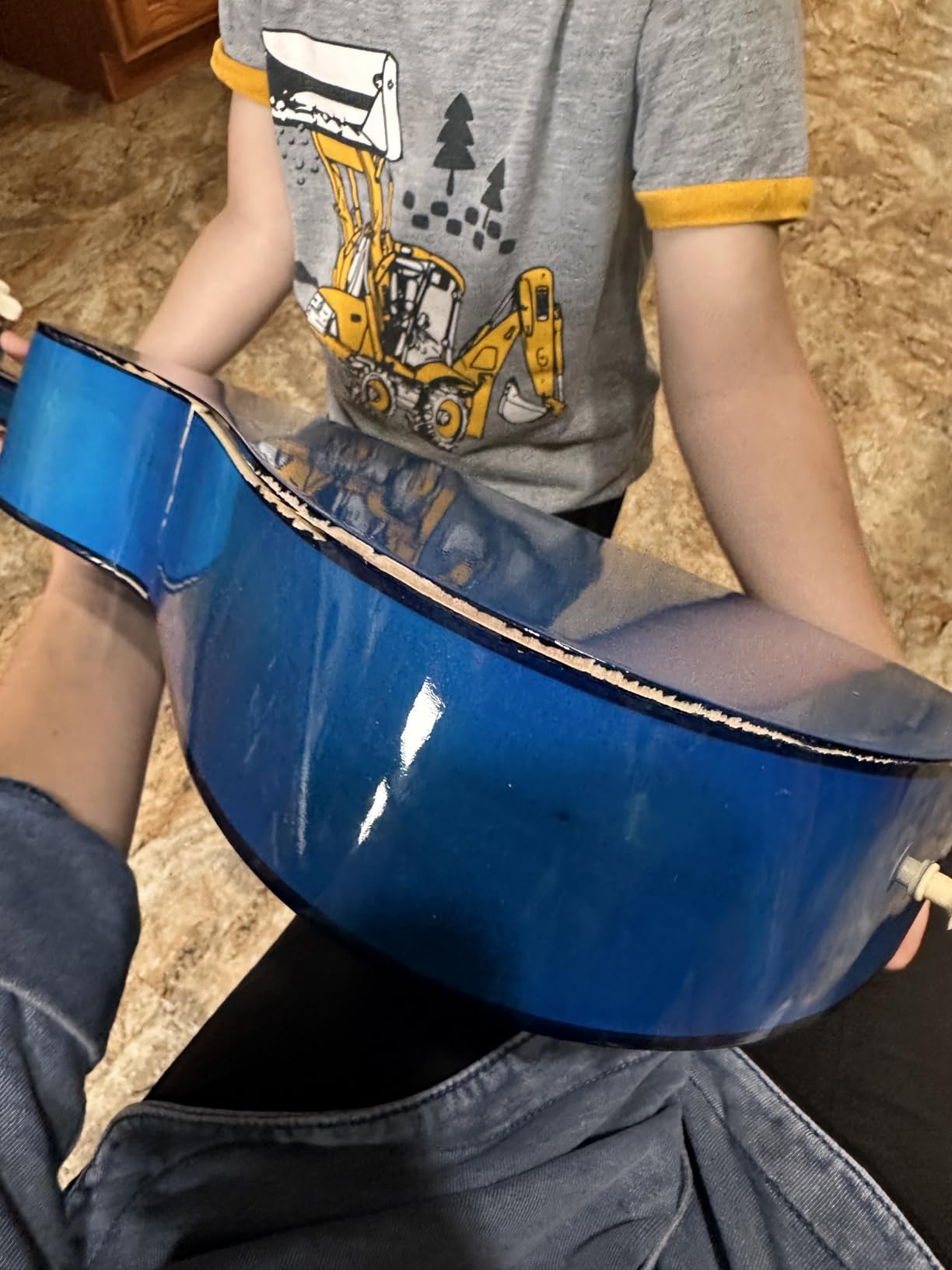
Ashthorpe has become one of the most popular budget guitar brands on Amazon, with a high volume of reviews on this single model. The 38-inch beginner acoustic kit is specifically designed for younger players, smaller-framed adults, and anyone who wants an instrument sized for comfort rather than full projection. It is also one of the most affordable ways to start playing.
The 38-inch body size is the key feature. Standard acoustic guitars are 40-41 inches, which can feel unwieldy for kids aged 8-12 or for smaller adults with shorter arms. The 38-inch body sits more comfortably against the body and is easier to hold during long practice sessions. Ashthorpe also offers a 30-inch version for even younger players.
The bundle includes a gig bag, tuner, picks, strap, and a 4-month subscription to a lessons app with thousands of songs and step-by-step instruction. For a parent buying a child’s first guitar, that combination removes the “where do we start?” anxiety that often derails beginners.
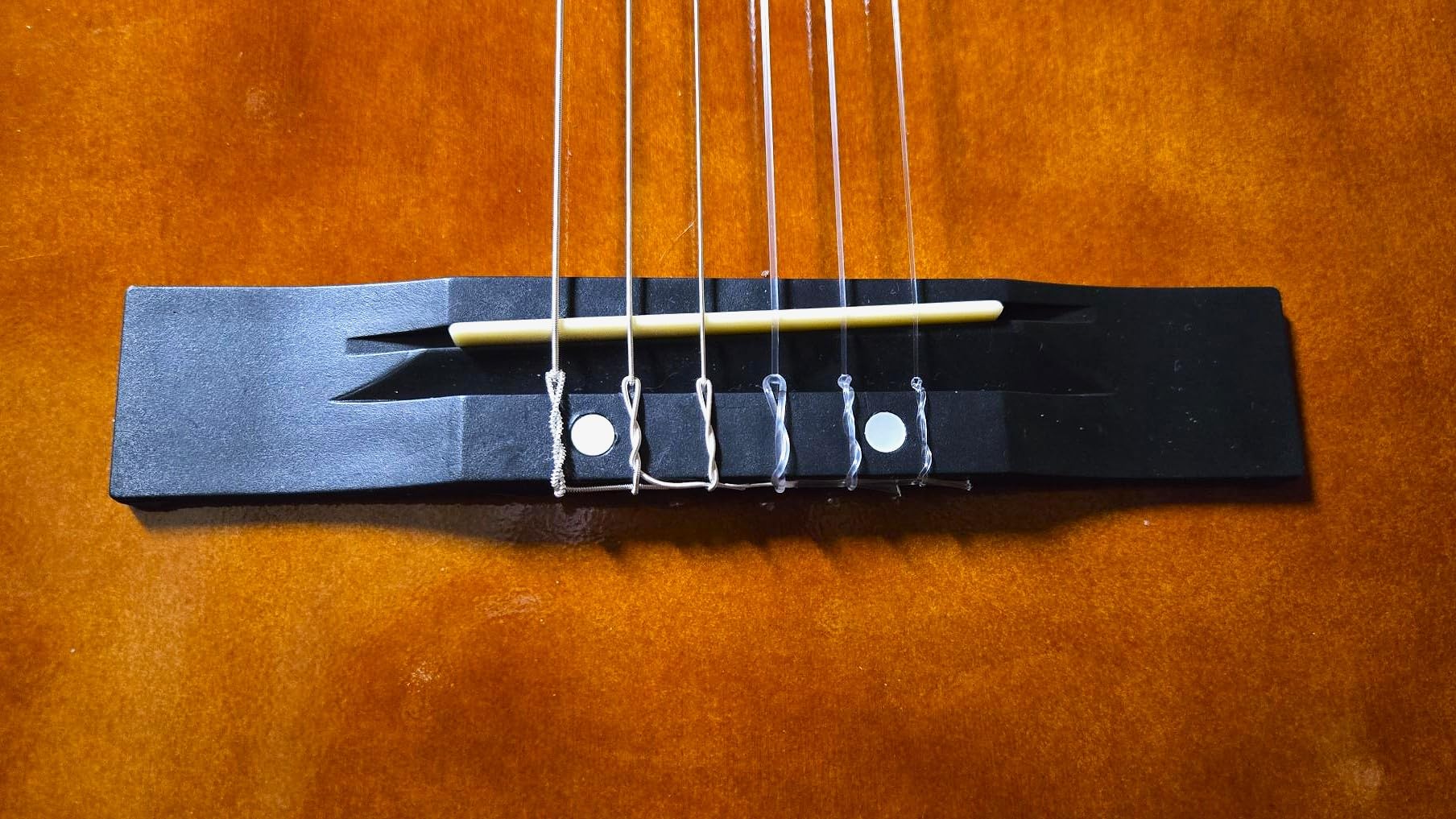
The basswood construction is light and warm-sounding, which suits the smaller body. The low string action out of the box is a thoughtful design choice – it makes pressing down chords easier on soft beginner fingers. However, the lack of a truss rod means you cannot adjust the neck relief if action changes over time.
Who this guitar is best for
This is the right choice if you are buying for a child or younger learner, you need a very aggressive budget price point, and you want a complete starter kit with lessons included. It is also a solid “test” instrument for adults who want to try guitar without committing to a more expensive option.
Where this guitar falls short
The factory strings are low quality – plan to swap them for a better brand within the first month. The lack of a truss rod limits how much you can adjust the neck as the guitar settles. The 38-inch body is too small for some players – adults with longer arms may find themselves reaching past the end of the body for strumming comfort. Consider sizing up if you are over 5’8″.
10. Fender CD-60 Dreadnought Bundle – Best Acoustic from a Heritage Brand
Fender CD-60 Dreadnought Acoustic Guitar – Sunburst
Top: Laminated Spruce
Back/Sides: Mahogany
Neck: Mahogany C-shape
Scale: 25.3 inch
Pros
- Classic Fender dreadnought with strong projection
- Laminated spruce top with scalloped X-bracing
- Mahogany back
- sides
- and neck for tonal consistency
- Comfortable C-shaped neck for extended sessions
- Bundle includes hard case
- tuner
- strap
- strings
- picks
- DVD
Cons
- Some bundle orders have reportedly missing accessories
- Walnut fingerboard is less premium than rosewood
The Fender CD-60 brings Fender’s decades of electric guitar craftsmanship to the acoustic world. The dreadnought body shape is the most popular acoustic silhouette in existence – it produces the full, balanced sound that has defined folk, country, and rock for generations. The CD-60 is Fender’s entry into that market, and it carries the brand’s reputation for consistent quality.
The laminated spruce top with scalloped X-bracing is a smart design choice for a beginner guitar. Laminated tops are more durable and resistant to humidity changes than solid tops – important for a beginner who does not yet own a humidifier or understand how weather affects their instrument. The X-bracing pattern supports the top while allowing it to vibrate freely, producing clear tone.
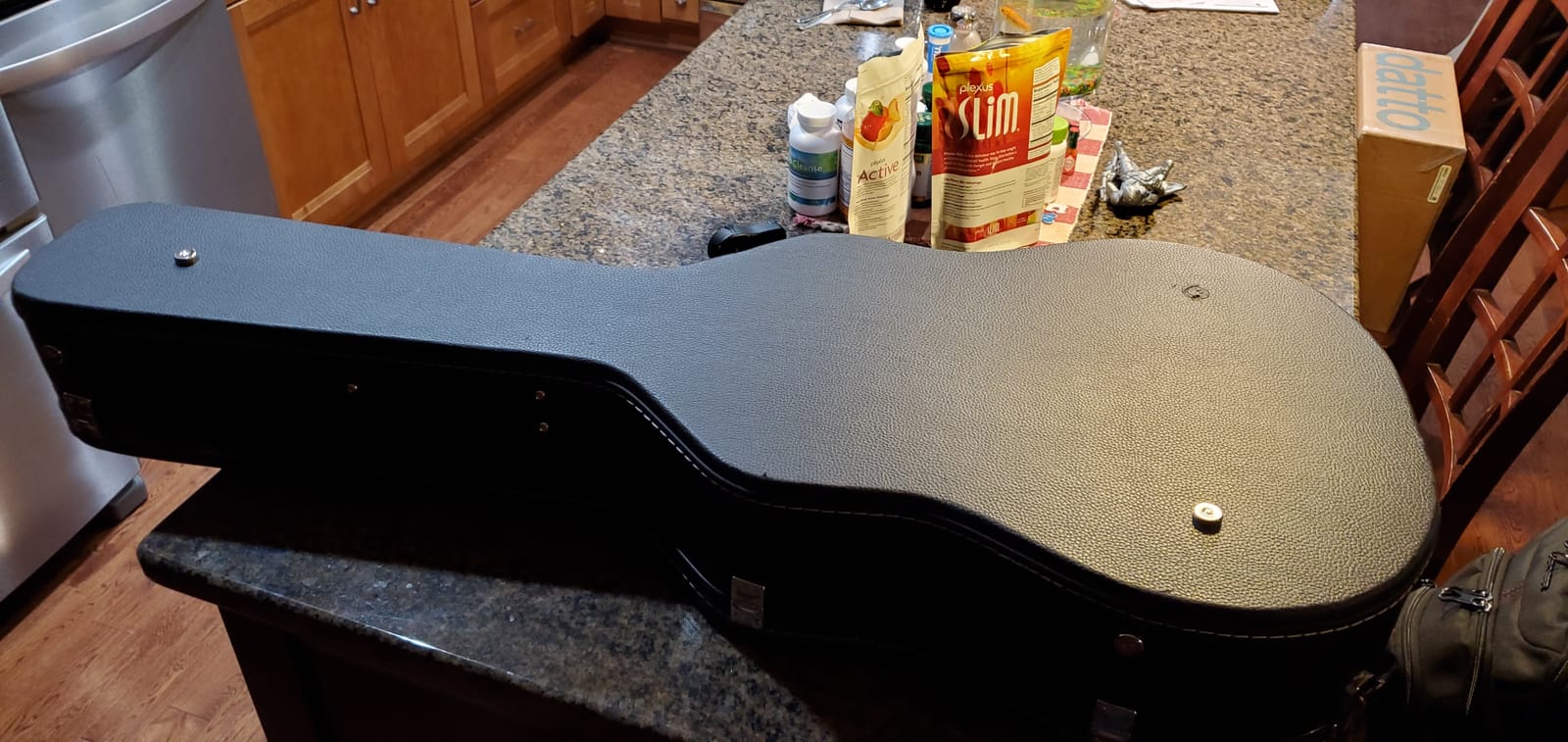
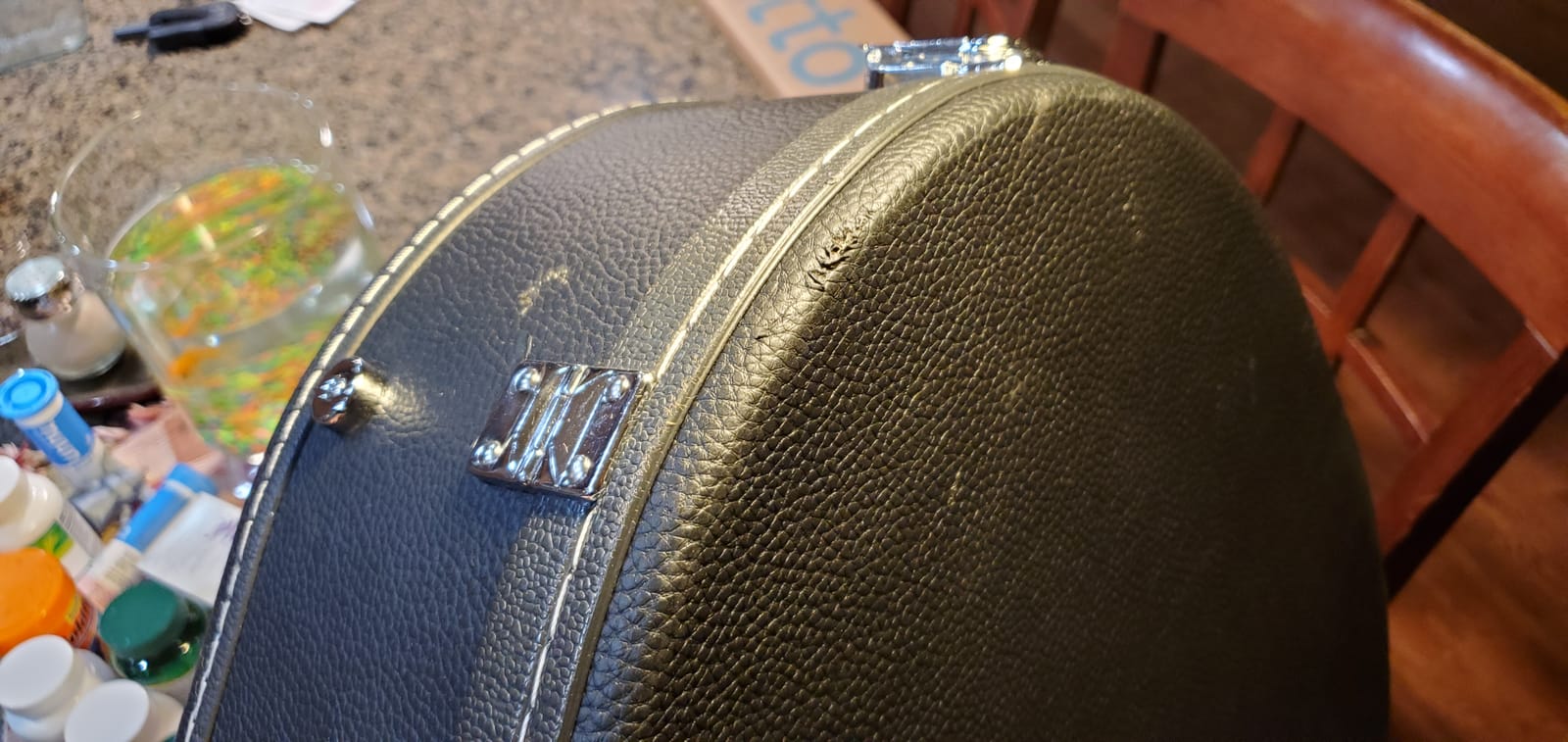
The bundle includes a hard case – which is unusual at this price point. Most beginner bundles ship with a soft gig bag. A hard case protects the guitar from drops, temperature changes, and travel damage. For a beginner planning to take their guitar to lessons, work, or friends’ houses, that hard case is a major upgrade.
Here is the honest tradeoff: this bundle sometimes ships with missing accessories according to a small number of reviews. If you receive a bundle with a missing instructional DVD or pick set, contact the seller immediately. The guitar itself is reliable and well-built, but the bundle contents are not always complete.
Who this guitar is best for
This is the right choice if you trust the Fender name, you want a hard case included rather than buying one separately, and you prefer a dreadnought body shape. The CD-60 is also a strong choice for parents buying for teens – Fender’s quality control means fewer warranty headaches. The bundle is one of the better “ready to play” packages in this price range.
Where this guitar falls short
Some bundle orders have reportedly shipped with missing accessories – check your delivery carefully and contact the seller if anything is missing. The walnut fingerboard is functional but lacks the smoothness of rosewood or ebony on more expensive guitars. You may want to upgrade the factory strings with a higher-quality set for better tone.
How to Choose the Best Guitar Brand for Your First Guitar
After comparing ten beginner guitars across every major brand, the decision comes down to four questions: acoustic or electric, body size, brand reputation, and budget. The best guitar brands for beginners all meet a baseline of quality – playability, tuning stability, and durability – but each brand has its own character.
Yamaha is the safe choice for acoustic beginners. Fender (and its Squier sub-brand) dominates electric. Epiphone offers the cheapest path to Les Paul tone. Martin and Taylor are the premium picks for players who want to invest in long-term tone. Donner, Best Choice Products, and Ashthorpe serve the ultra-budget market where every dollar matters. Ibanez rounds out the middle ground with all-solid-wood construction at a mid-range price.
Acoustic vs Electric: Which Should a Beginner Start With?
Both work. Acoustic guitars are simpler – no amp, no cables, no pedals, just you and the guitar. That simplicity makes them the right choice if you want to play anywhere (campfire, beach, bedroom) without extra gear. Electric guitars are easier to play physically – the strings are lighter, the action is lower, the neck is slimmer – which means beginners can build chord changes faster. Electric also lets you practice quietly with headphones, which matters if you live in an apartment.
Reddit’s r/Guitar community consistently recommends starting on whichever guitar makes you want to pick it up and play. The single biggest predictor of whether you stick with guitar is how often you play it. If you love the look and feel of an acoustic, start there. If you dream of playing rock solos through an amp, start on electric.
How Much Should a Beginner Spend on a Guitar?
Our testing and review analysis suggests the sweet spot for entry-level to mid-range pricing for a first guitar. At the lowest end, quality control suffers and you risk high action, sharp frets, and tuning instability that causes beginners to quit. At the premium end, you are paying for features (solid wood tops, premium electronics) that you will not appreciate until you have played for a year or more.
Budget for the guitar, plus a reasonable allowance for accessories (tuner, capo, extra strings, picks) if not included in a bundle. If you can, spend an additional amount on a professional setup at a local guitar shop – the difference between a stock beginner guitar and a properly set up one is night and day for playability.
Body Size and Fit: Why Sizing Matters
A guitar that is too large is one of the most common reasons beginners quit. If the body is too wide, your strumming arm has to reach across it. If the neck is too wide, your hand cramps trying to form chord shapes. For kids aged 7-12, a 3/4-size or 38-inch guitar is essential. For teens and adults, a full-size dreadnought or concert body works for most players.
If you are between sizes or unsure, go to a guitar shop and hold several. The right guitar will feel balanced against your body when seated – the body should rest on your leg without tipping forward or back. If you cannot visit a shop, look for brands offering 30-inch, 38-inch, and 41-inch options so you can size correctly online.
Setup, Accessories, and the First 30 Days
Setup matters more than brand for beginner playability. A mid-priced guitar with a proper setup plays better than a premium-priced guitar with factory action. The setup process includes adjusting the truss rod (neck curvature), setting the saddle height (string action), and intonating the guitar (tuning accuracy up the neck). Most guitar shops offer a setup that lasts 6-12 months.
Buy these accessories with your first guitar: a clip-on tuner, a capo, extra strings, and picks in multiple thicknesses. Skip effects pedals, amps beyond what is in your bundle, and any “starter pack” that includes instruction books you will not use. If you want to explore more advanced gear later, our best guitar pedals guide covers what comes after you have learned the basics.
Brand Heritage and Resale Value
Brand reputation matters because of resale value. A used Fender, Yamaha, or Martin holds its value far better than a used off-brand guitar. If you stick with guitar, you will eventually upgrade – and being able to sell your first guitar for a meaningful percentage of its purchase price is a meaningful budget advantage. Brands like Squier, Yamaha, Epiphone, Ibanez, Martin, and Taylor all have active resale markets. Off-brand guitars often cannot be given away.
For shoppers who care about sustainability, brands with direct-to-consumer models (like Donner) reduce the carbon footprint of shipping by consolidating distribution. Brands using sustainably-sourced tonewoods (Yamaha’s GigMaker series specifically calls out sustainable sourcing) are another option. If you want to explore more purpose-driven and sustainable brands beyond musical instruments, our guide on examples of purpose-driven brands and examples of sustainable fashion brands covers adjacent categories.
Frequently Asked Questions
What is the best quality guitar for a beginner?
Yamaha and Fender make the best quality beginner guitars. The Yamaha FG800 (in the GigMaker bundle) and the Squier Classic Vibe Stratocaster are widely recommended by instructors and on r/Guitar for their build quality and playability at beginner prices.
What are the top 5 guitar brands?
The top 5 guitar brands for beginners are Fender (and its Squier sub-brand), Yamaha, Epiphone, Martin, and Taylor. These brands combine decades of craftsmanship with beginner-friendly pricing and excellent resale value.
What style of guitar is best for beginners?
Acoustic dreadnoughts are the most common starting point because they need no extra gear. Electric guitars are easier on the fingers due to lighter strings and lower action. The right choice depends on which guitar makes you want to pick it up and play every day.
What is a good affordable beginner guitar?
The Donner DAG-1C and Best Choice Products 41in kit are among the best affordable beginner guitars, both offering complete bundles. For a small step up, the Yamaha GigMaker Standard delivers Yamaha build quality and bright dreadnought tone.
What guitar brand is the best for beginners?
For electric guitars, Squier (Fender sub-brand) is the best overall beginner brand. For acoustic guitars, Yamaha is the most recommended beginner brand. Both offer consistent quality, accessible pricing, and excellent resale value when you upgrade.
Should a beginner buy acoustic or electric?
Buy acoustic if you want to play anywhere without extra gear. Buy electric if you want easier playability, quiet practice with headphones, and access to rock and blues tones. Both work – the best first guitar is whichever one makes you want to play daily.
Final Verdict: Our Top Beginner Guitar Brand Picks
After comparing ten beginner guitars across all the major brands in 2026, our team’s top recommendation is the Squier Debut Stratocaster Kit for anyone starting on electric, and the Yamaha GigMaker Standard for anyone starting on acoustic. Both deliver reliable build quality, complete accessory bundles, and the kind of brand backing that makes a first guitar a long-term investment rather than a disposable starter.
If you are shopping on a tight budget, the Donner DAG-1C is our pick. If you are buying for a child, the Martin LX1 or Ashthorpe 38-inch are both sized correctly for smaller hands. If you want to invest in premium tone from day one, the Taylor BT2 Baby Mahogany or the Ibanez AW54 deliver acoustic tone that will satisfy you for years. Each of these is the best guitar brand for beginners in its category.
The best beginner guitar is the one you actually play. Pick the style that excites you, choose the brand whose warranty and quality control you trust, and commit to 30 minutes of daily practice. Within three months you will be playing songs. Within a year you will understand why players keep coming back to this instrument for life. For more gear guidance once you have progressed, check out our roundups of the best guitar pedalboards and the best guitar pedals, and for those interested in ethical shopping beyond music, our guide on examples of fair trade products and brands covers adjacent territory.