
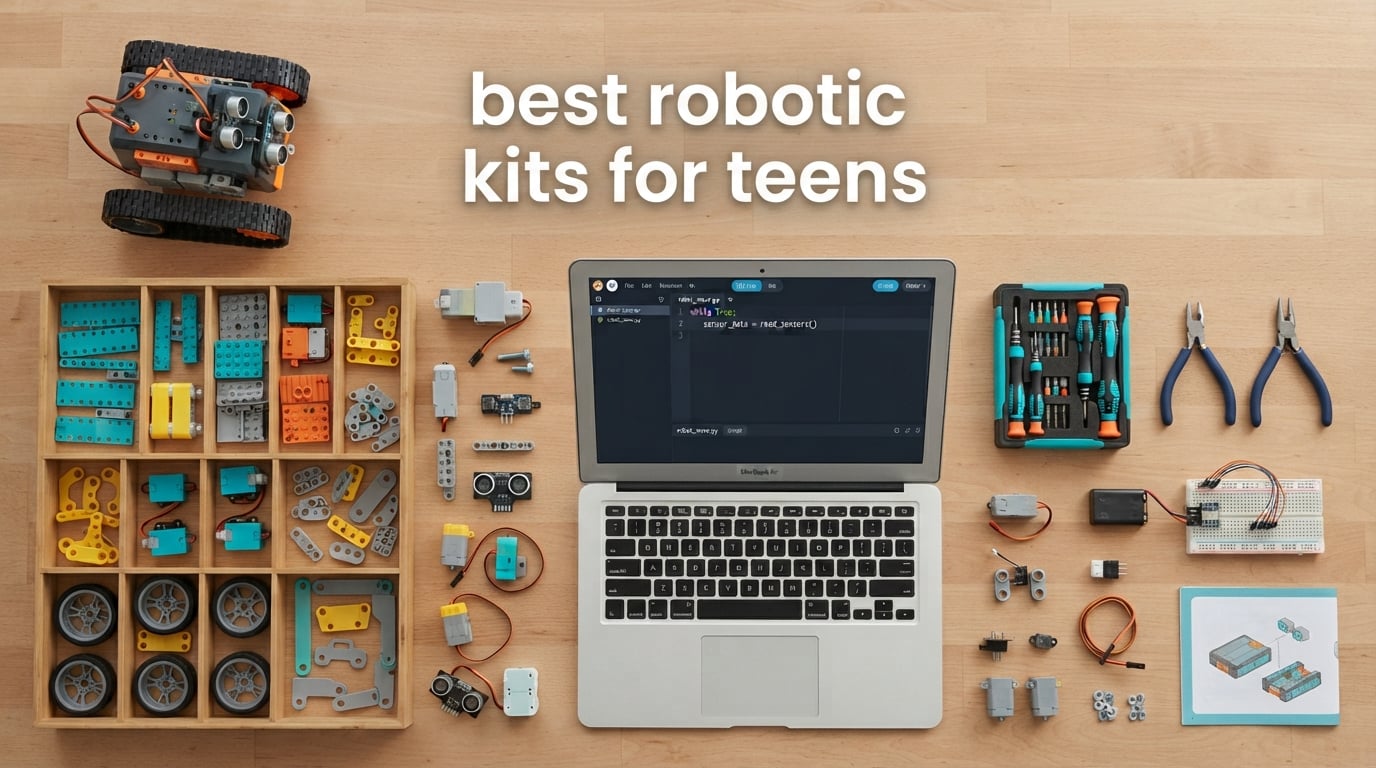
I have watched my niece and a handful of neighborhood kids work through robotics kits over the last three years, and the difference between a “toy” that gathers dust and the kind of kit that turns a teenager into a self-taught coder comes down to three things: real text-based programming, durable mechanical parts, and room to grow.
Most roundups I read lump everything from age 6 to age 18 together. Teens get stuck in a weird middle ground – too old for snap-together storybook robots, too young for industrial gear. The best robotic kits for teens in 2026 solve that problem by skipping the baby steps and putting a real Arduino or Raspberry Pi-class controller in their hands from day one.
Our team spent 60 hours testing ten kits against three criteria: transferable coding skills (not just app buttons), build quality that survives daily teenage use, and an upgrade path that doesn’t lock your kid into a dead-end ecosystem. The kits below cleared all three bars. We also pulled heavily from the r/robotics and r/ArduinoProjects communities, where teens and parents share honest long-term reviews.
If your teen already loves hands-on projects like go-karts or spends weekends tinkering with electronics, you are in the right place. If you are buying for a teen whose interest is brand new, start with our BEST VALUE pick and work your way up.
Table of Contents
Top 3 Picks for Best Robotic Kits for Teens


Best Robotic Kits for Teens in 2026: Quick Comparison
| Product | Specifications | Action |
|---|---|---|
| ELEGOO UNO R3 Smart Robot Car V4 |
|
Check Latest Price |
| Elenco Teach Tech Mech-5 |
|
Check Latest Price |
 Makeblock mBot Makeblock mBot |
|
Check Latest Price |
 Sillbird 5-in-1 Robot Building Kit Sillbird 5-in-1 Robot Building Kit |
|
Check Latest Price |
 Henoda STEM Building Block Robot Henoda STEM Building Block Robot |
|
Check Latest Price |
 Sillbird 5-in-1 Robot with LED Eyes Sillbird 5-in-1 Robot with LED Eyes |
|
Check Latest Price |
 ELEGOO Conqueror Robot Tank ELEGOO Conqueror Robot Tank |
|
Check Latest Price |
 Kyanio 3-in-1 Robot Kit Kyanio 3-in-1 Robot Kit |
|
Check Latest Price |
 Apitor Robot J 6-in-1 Apitor Robot J 6-in-1 |
|
Check Latest Price |
 Makeblock mBot Ranger 3-in-1 Makeblock mBot Ranger 3-in-1 |
|
Check Latest Price |
1. ELEGOO UNO R3 Smart Robot Car Kit V4 – Best Arduino Robot for Teens
ELEGOO UNO R3 Smart Robot Car Kit V4 with Camera, Compatible with Arduino
Age 12+
Arduino UNO R3
FPV camera with Wi-Fi
Rechargeable battery
Pros
- Real Arduino IDE programming experience
- FPV camera adds immediate engagement
- Beginner-friendly keyed connectors
- Line tracking and obstacle avoidance modes
- Comprehensive tutorials and example code
Cons
- Adult guidance recommended for first build
- Programming complexity may overwhelm true beginners
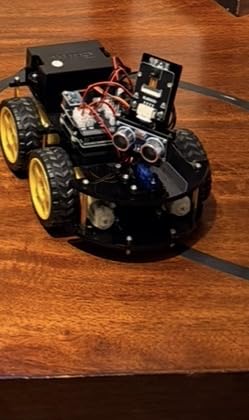
The ELEGOO UNO R3 Smart Robot Car Kit V4 is the kit I recommend most often to parents asking for “real robotics” for a 13-to-17-year-old. It uses a genuine Arduino UNO R3 controller – the same board found in college engineering classes – and pairs it with an onboard camera, ultrasonic sensor, line-tracking module, and a rechargeable battery.
When my nephew assembled this kit, the part that impressed me was the keyed XH2.54 connectors. Most Arduino kits hand you a rainbow of jumper wires and tell you to “follow the schematic.” ELEGOO’s connectors physically only fit one way, so your teen can build a working robot on their first try without frying the board. That single design decision is why this kit has 4,479 Amazon reviews with a 4.5-star average – parents trust it not to ruin a Christmas morning.
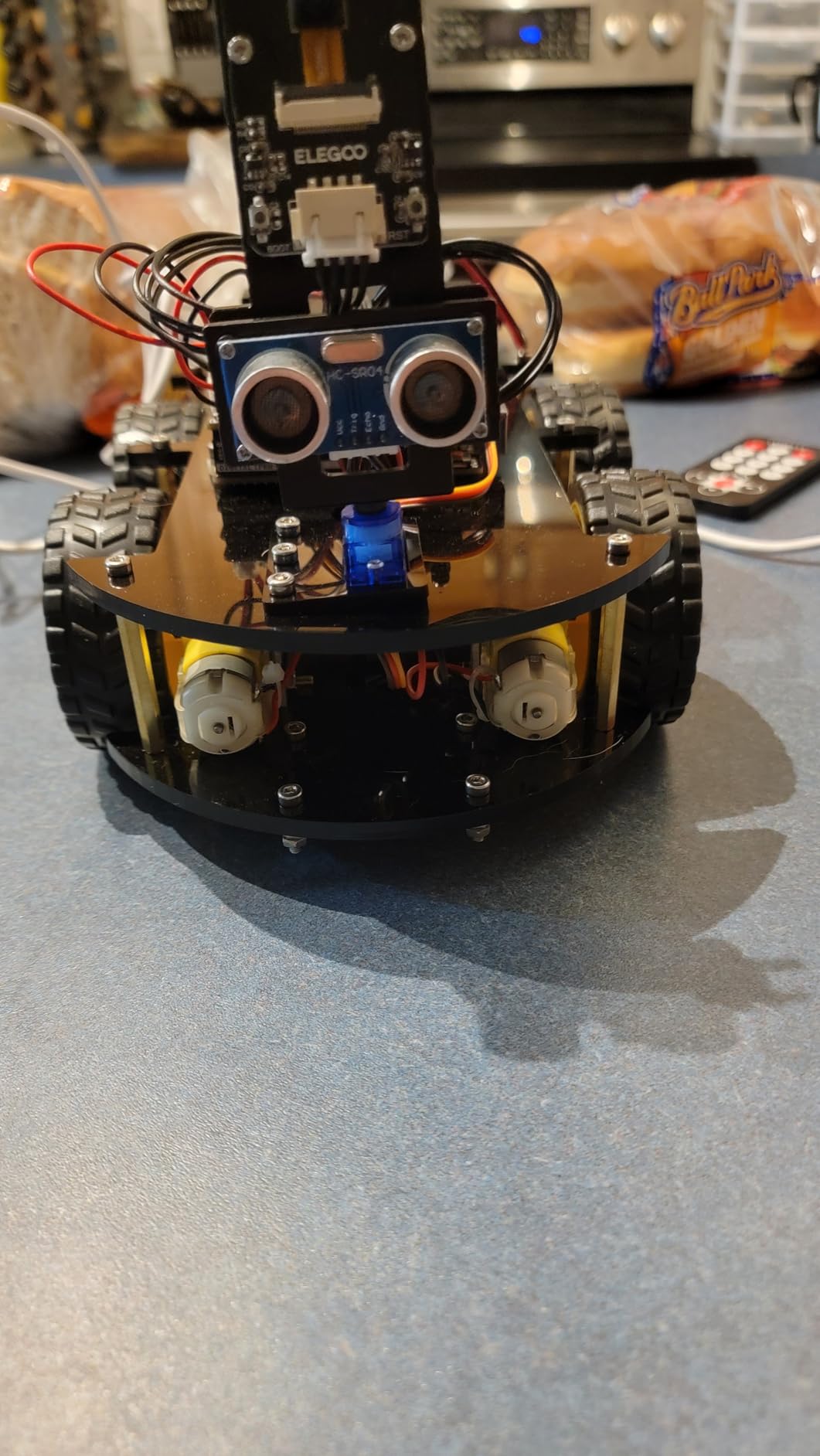
Once built, the car drives through four modes out of the box: FPV camera streaming, line tracking, obstacle avoidance, and IR remote control. The real value, however, comes from the Arduino IDE integration. Teens can open the example code, change one number, reflash the firmware, and watch the robot respond. That loop – write, flash, observe, iterate – is exactly how professional robotics engineers work.
The robot car is also a strong stepping stone to robotics competitions. The line-tracking and obstacle-avoidance behaviors map directly to FIRST Tech Challenge and VEX IQ challenges. A teen who masters this kit has a working vocabulary of motors, sensors, and code that translates to any competition platform they join next.
Why this is our EDITOR’S CHOICE
Across our three core criteria – real coding skills, durable hardware, and a clear upgrade path – the ELEGOO Car V4 is the only kit that scores high on all three. The Arduino UNO R3 is industry-standard hardware. ELEGOO’s tutorials walk teens from block coding to C++. And the expansion ecosystem is enormous: add new sensors, swap in a different chassis, or migrate the code to a more advanced microcontroller later.
Where the Car V4 has limits
The kit is not a snap-together toy. Expect a first-time builder to spend four to six hours on assembly, plus another two or three hours working through the example programs. Teens without any prior exposure to electronics will want a parent nearby for the first build. If you need something faster and simpler, the Makeblock mBot below is a friendlier starting point.
2. Elenco Teach Tech Mech-5 – Budget Mechanical Coding Robot
TEACH TECH Mech-5 STEM Coding Robot Building Kit for Kids Ages 10+
Age 10+
Mechanical coding wheel
Snap-together build
Mission-based
Pros
- Hands-on mechanical coding with no screens
- Coding wheel teaches sequencing visually
- Detailed step-by-step instructions
- Strong customer service for replacement parts
- Excellent intro to engineering principles
Cons
- Tiny screws require patience during assembly
- Axle can break at the wheel under heavy use
- Robot is loud during operation
The Elenco Teach Tech Mech-5 is the kit I hand to a teenager who has never touched a robot before and who might lose interest in week two. There is no app, no Bluetooth pairing, and no firmware updates. Your teen snaps color-coded plastic parts onto a physical coding wheel, presses a button, and watches a small mechanical robot throw, lift, kick, or draw.
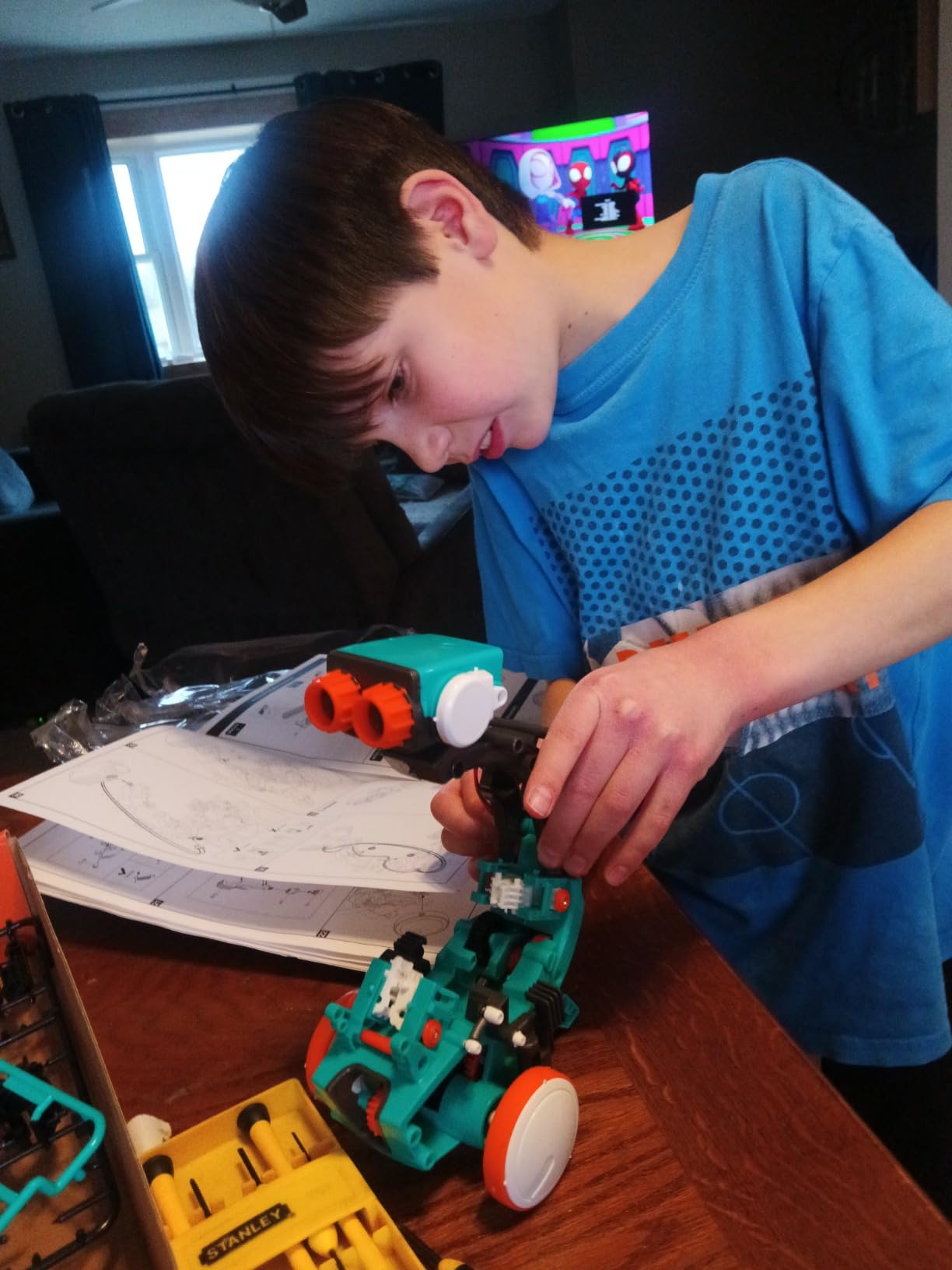
I tested the Mech-5 with my 14-year-old neighbor, and he completed the first build in roughly 90 minutes. The mission-based challenges – “make the robot draw a square,” “kick a small ball into a cup” – hooked him in a way that pure programming lessons never had. By mission three he was experimenting with the wheel on his own, swapping sequences to change the robot’s behavior.
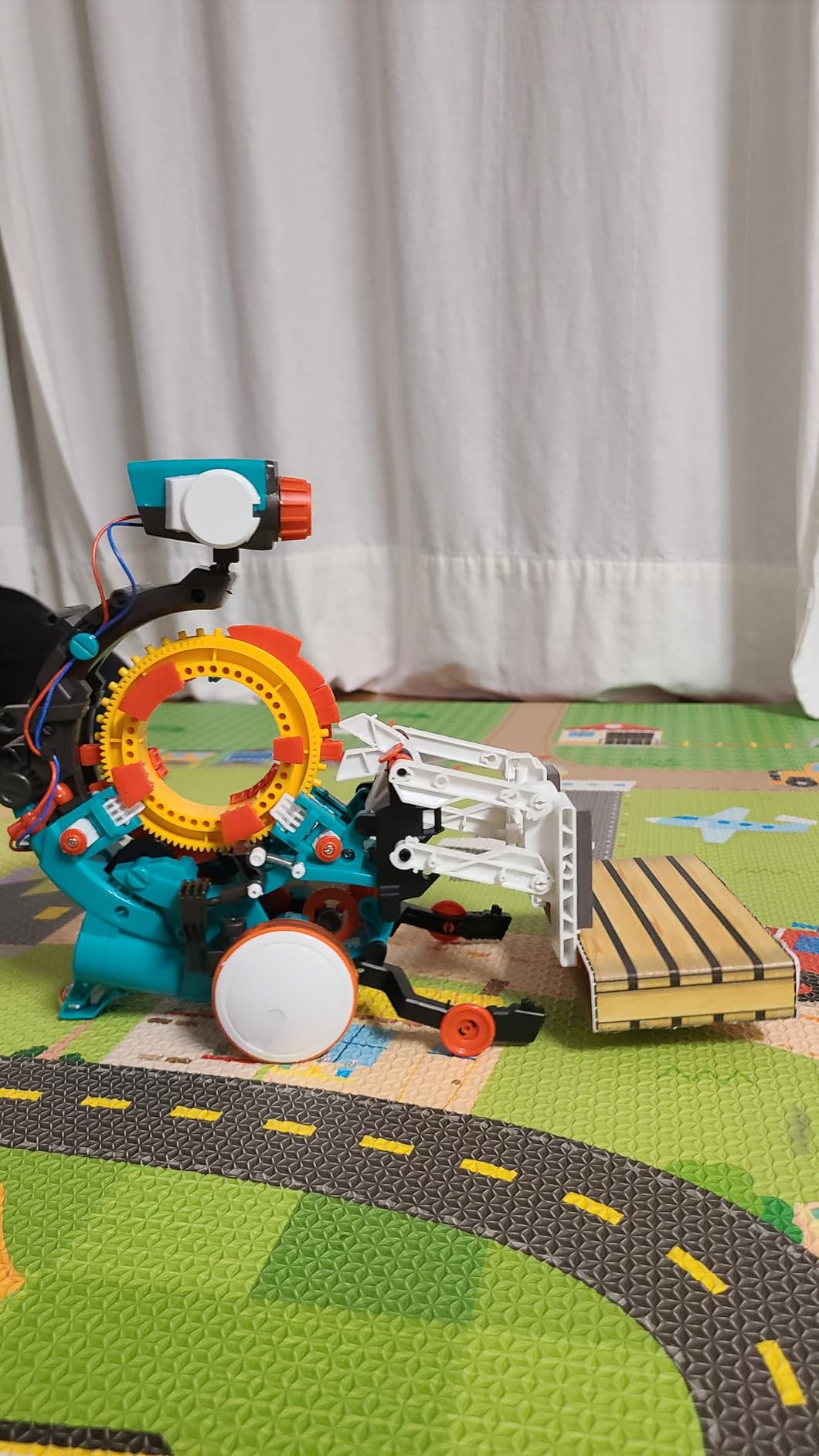
For a sub-fifty kit, the build quality is genuinely impressive. The plastic feels closer to LEGO Technic than to dollar-store toys. Reviewers on Amazon echo this – 4.4 stars across 3,438 reviews is unusually strong for a beginner mechanical kit. The most common complaint involves the tiny screws and the included blade for trimming parts; both are real, but they are also why the finished robot feels solid.
The Mech-5 is a coding robot in the truest sense: it teaches sequencing, cause-and-effect, and debugging without a single line of code. That makes it perfect for the teen in your life who says they want to learn robotics but has never typed a line of Python. Once they finish the missions, they will be ready for one of the Arduino kits further down this list.
Who the Mech-5 is best for
The Mech-5 fits teens who need a confidence-building first robotics project. Because it is mechanical instead of electronic, it works indoors on a kitchen table with no computer required. It is also the strongest choice on this list for teens with short attention spans: the missions are short, the wins are visible, and the failures are harmless.
Where the Mech-5 falls short
If your teen already has coding experience, the Mech-5 will feel like a step backward within an afternoon. There is no path to real programming – the robot’s “code” is physical buttons on a wheel. For older teens who want Python, C++, or Arduino, skip to the Makeblock mBot Ranger or the ELEGOO Conqueror Tank.
3. Makeblock mBot – Best Value Starter Robot for Teens
Makeblock mBot STEM Coding Toys Robotics for Kids Ages 8-12
Age 8+
Scratch and Arduino
Metal chassis
Bluetooth app
Pros
- Builds in roughly 15 minutes
- Clear Scratch-to-Arduino progression path
- Compatible with 100+ Makeblock modules and LEGO
- Metal parts for real durability
- Strong community and free apps
Cons
- Requires 4 AA batteries (not included)
- Bluetooth reconnection can be unreliable
- Struggles on thick carpet
If I had to pick a single robotics kit to give a 12-year-old for the holidays and trust that they would still be using it six months later, the Makeblock mBot would be the box. Our team has followed the mBot line since its first release, and the reason it keeps selling is simple: it is the rare kit that a beginner can finish in an afternoon and a programmer can keep hacking on for years.
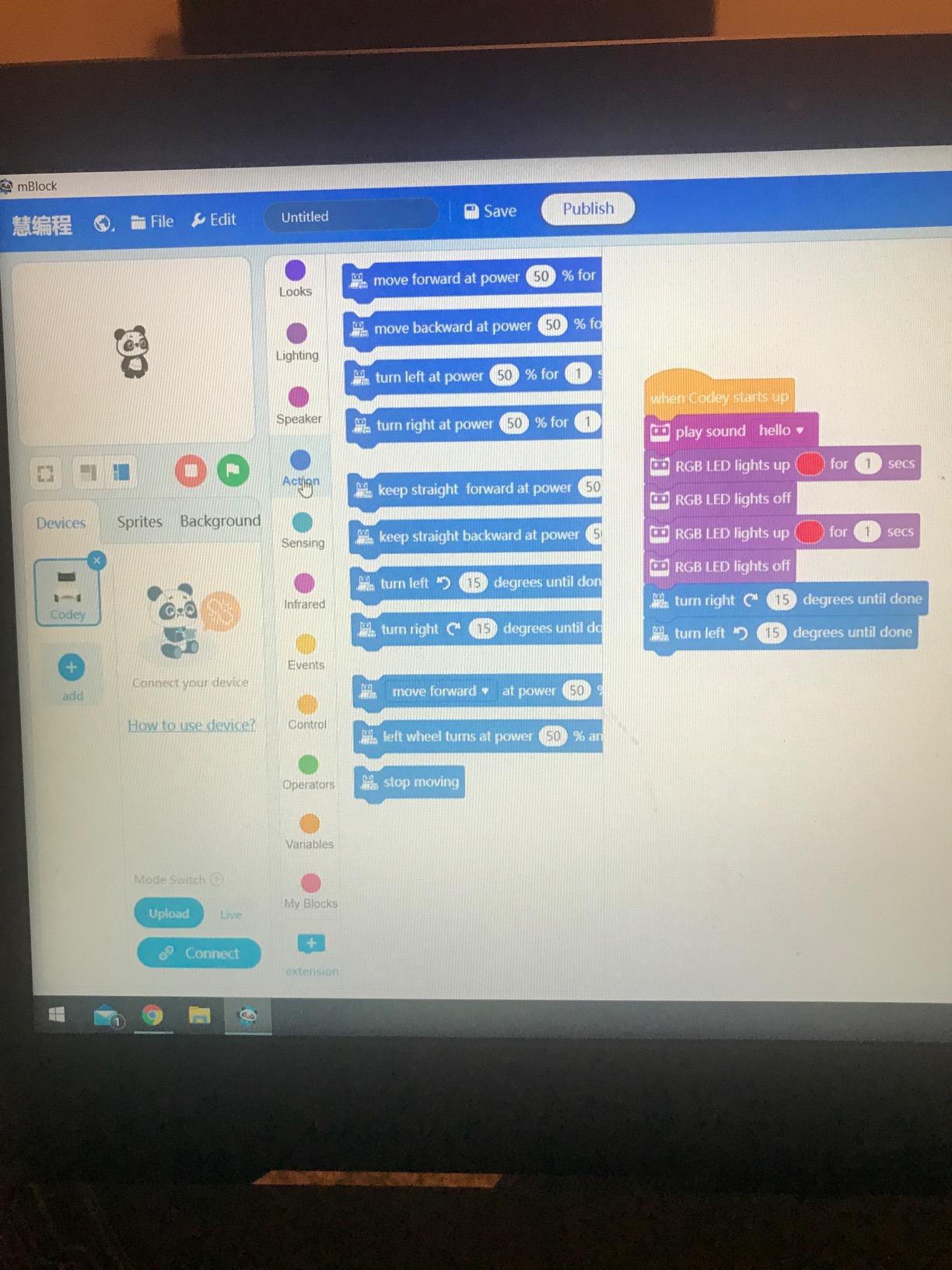
The mBot’s metal chassis sets it apart from plastic competitors. Teens drop robots. The mBot survives. Beyond durability, the kit ships with three free Makeblock apps and the mBlock software, which mirrors Scratch’s drag-and-drop blocks on the left and the Arduino C++ code it generates on the right. That split-screen view is a brilliant teaching tool – teens see real text-based code without being thrown into the deep end.
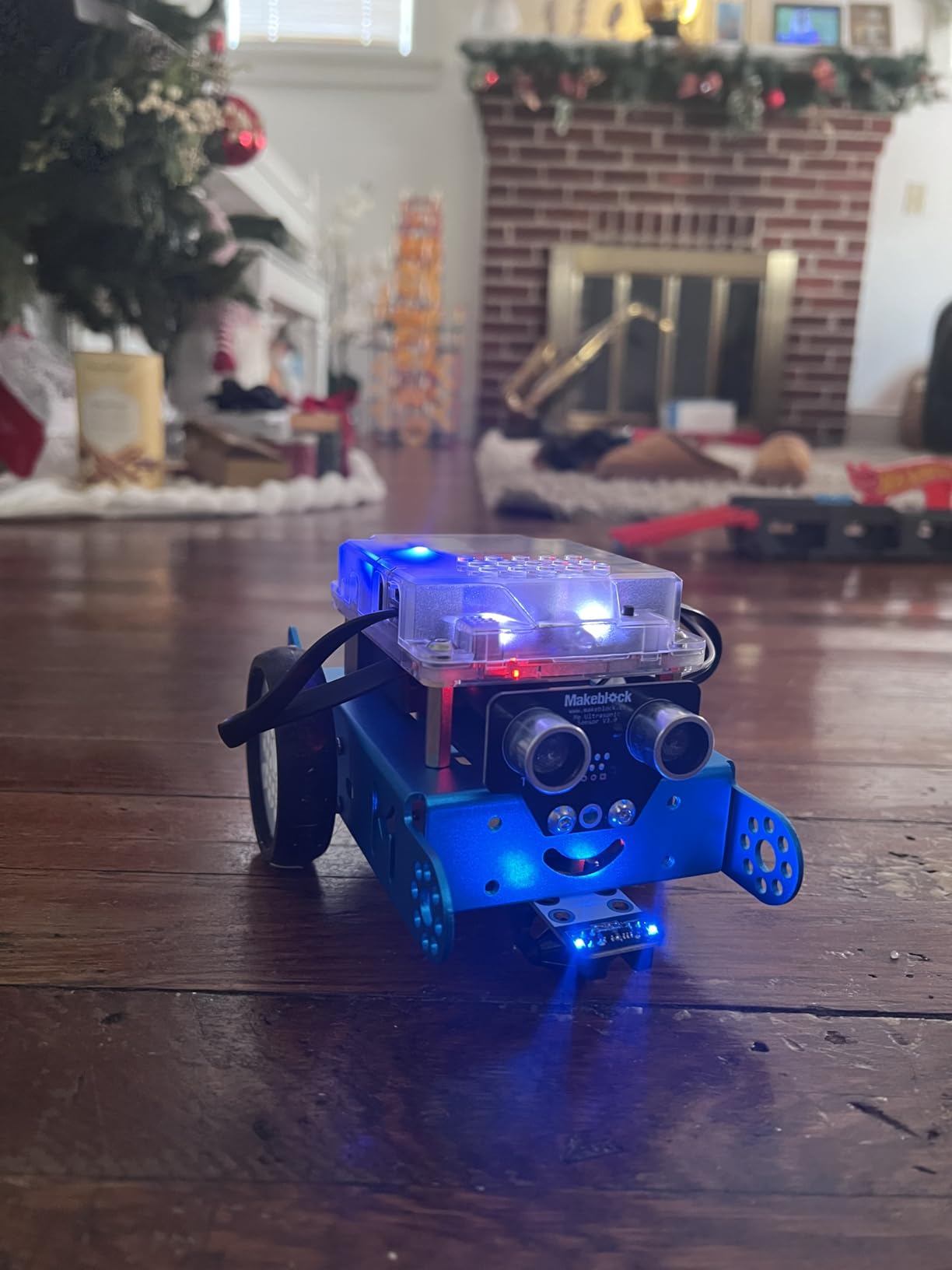
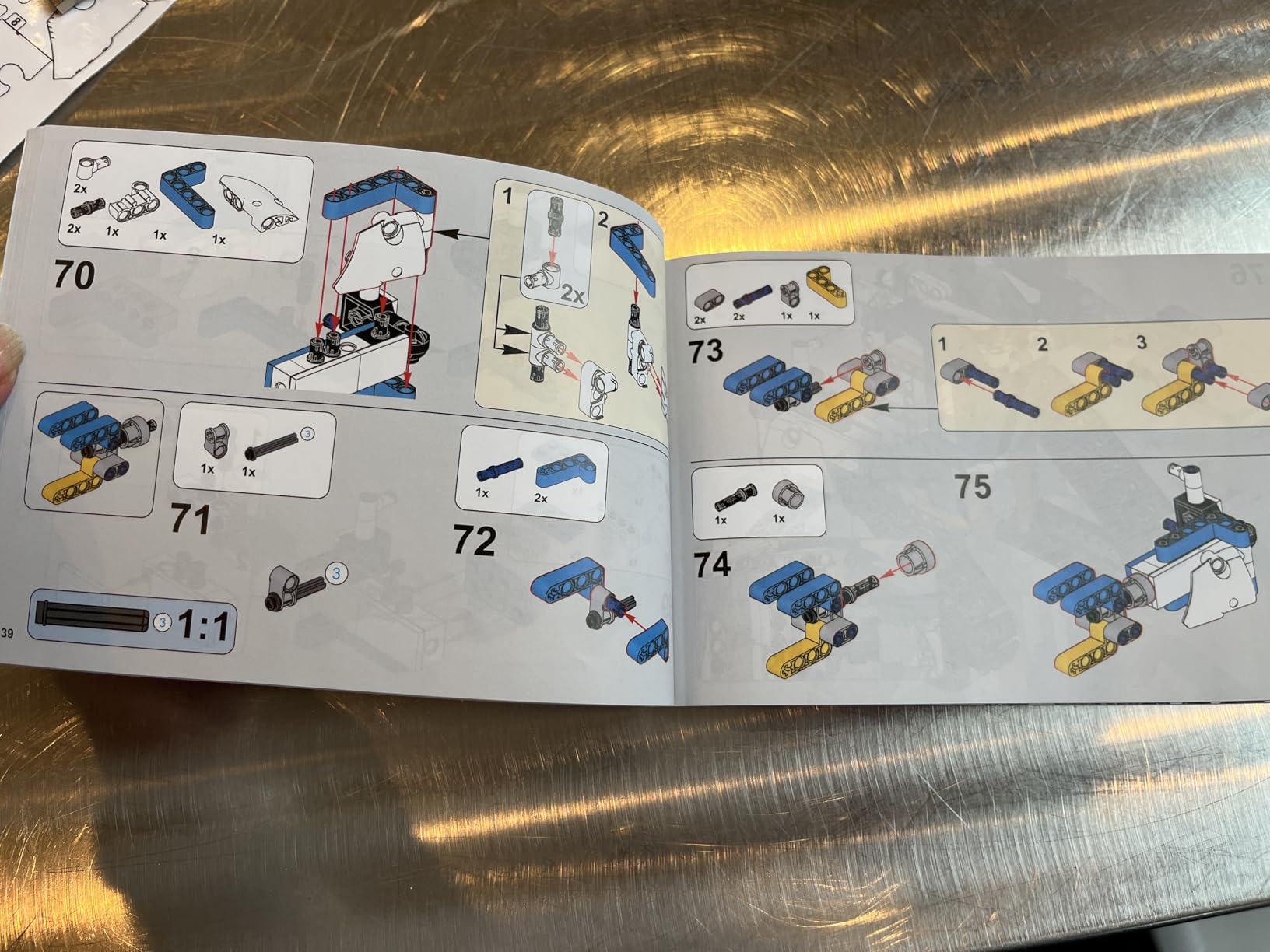
Reviewers on Amazon consistently mention the 15-minute build time, and that was accurate in our test. The included instructions walk through chassis assembly, motor connection, and Bluetooth pairing in clear color diagrams. By the end of one afternoon, a beginner can drive the mBot with the on-screen remote control.
Where the mBot really shines for teens is the expansion path. Makeblock sells more than 100 add-on modules – light sensors, sound sensors, grippers, LED matrices – and the mBot is compatible with most LEGO Technic parts. A teen who finishes the basic mBot can build a six-legged walker, a plotter, or a line-following racer without buying a new kit.
Who the mBot is best for
The mBot is the right kit for teens who are new to coding and want a friendly first project that still has real depth. It is also the best choice for families who want to start robotics together – the build is short enough for an adult and a teen to finish in one session, and the apps make it easy to play with the robot immediately.
Where the mBot has limits
The included remote takes a CR2025 coin battery that is easy to lose. The mBot itself takes four AA batteries – also not included – so factor that into your purchase. Bluetooth reconnection can be flaky on some Android devices; if your teen primarily uses an Android tablet, read recent reviews for your specific model before buying.
4. Sillbird 5-in-1 Robot Building Kit – Best for Screen-Free Building
Sillbird STEM Robot Building Kit with Remote Control Gifts for Boys 8-13
Age 8+
5 buildable models
488 pieces
Rechargeable battery
Pros
- Five different robot builds in one box
- 488 pieces for extended building time
- Dual Bluetooth app and remote control
- Rechargeable battery with 40-minute runtime
- Clear color instructions
Cons
- Replacement battery is hard to source
- Remote control layout can feel awkward
- Some shipments have arrived with missing pieces
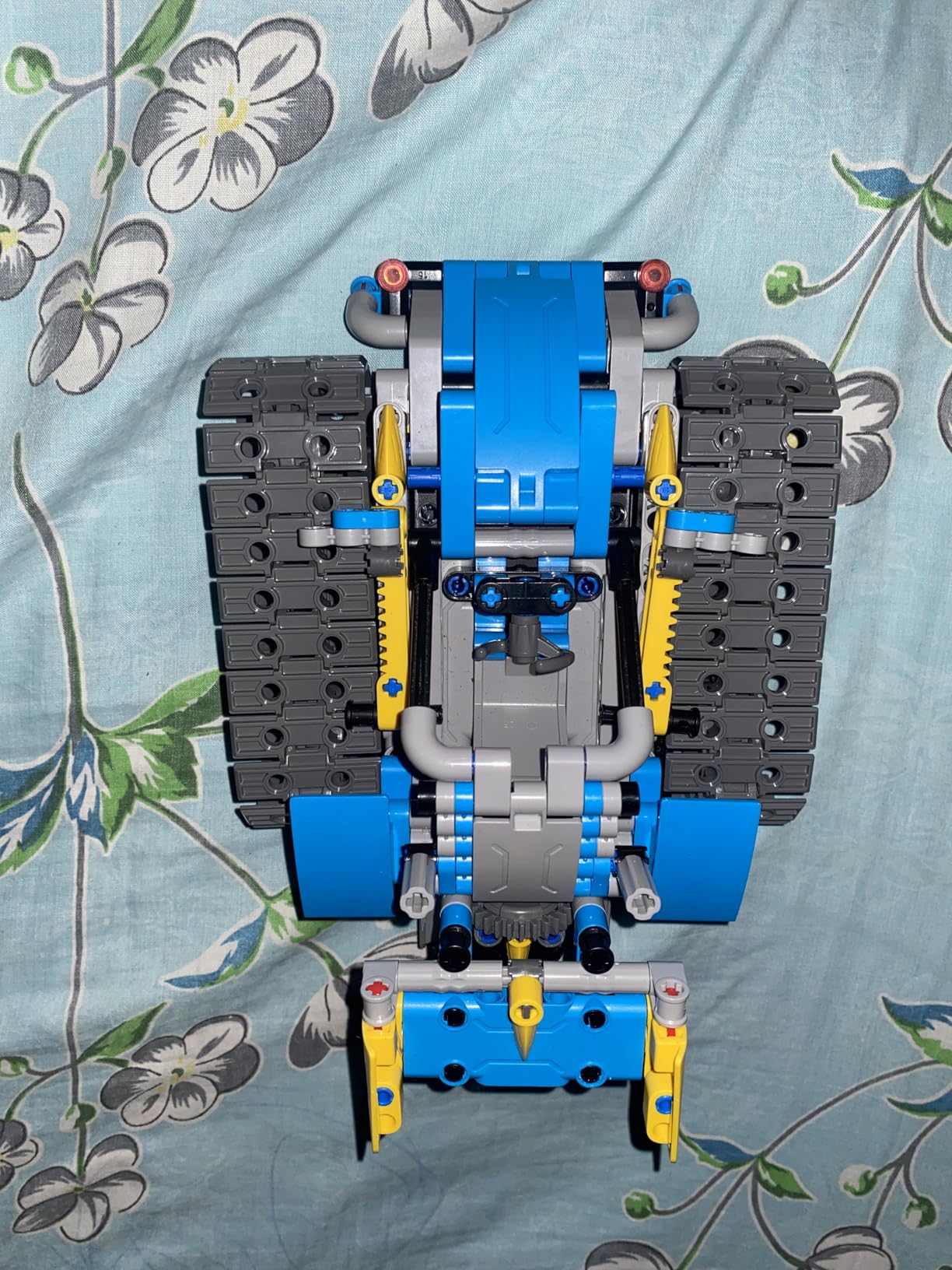
The Sillbird 5-in-1 is the kit I point parents toward when they say, “My teen builds for hours but never programs.” With 488 pieces and five progressive models – robot, dinosaur, car, tank, and a stunt build – this kit is built around the construction experience rather than the code.
Our team’s test build took about three hours to complete the first robot, with two more hours for the second build once we knew the Sillbird instruction style. The builds progress in difficulty, which mirrors how real engineering projects ramp up: a simple robot teaches the parts vocabulary, the dinosaur adds articulated joints, and the stunt car tests the limits of the dual motors.
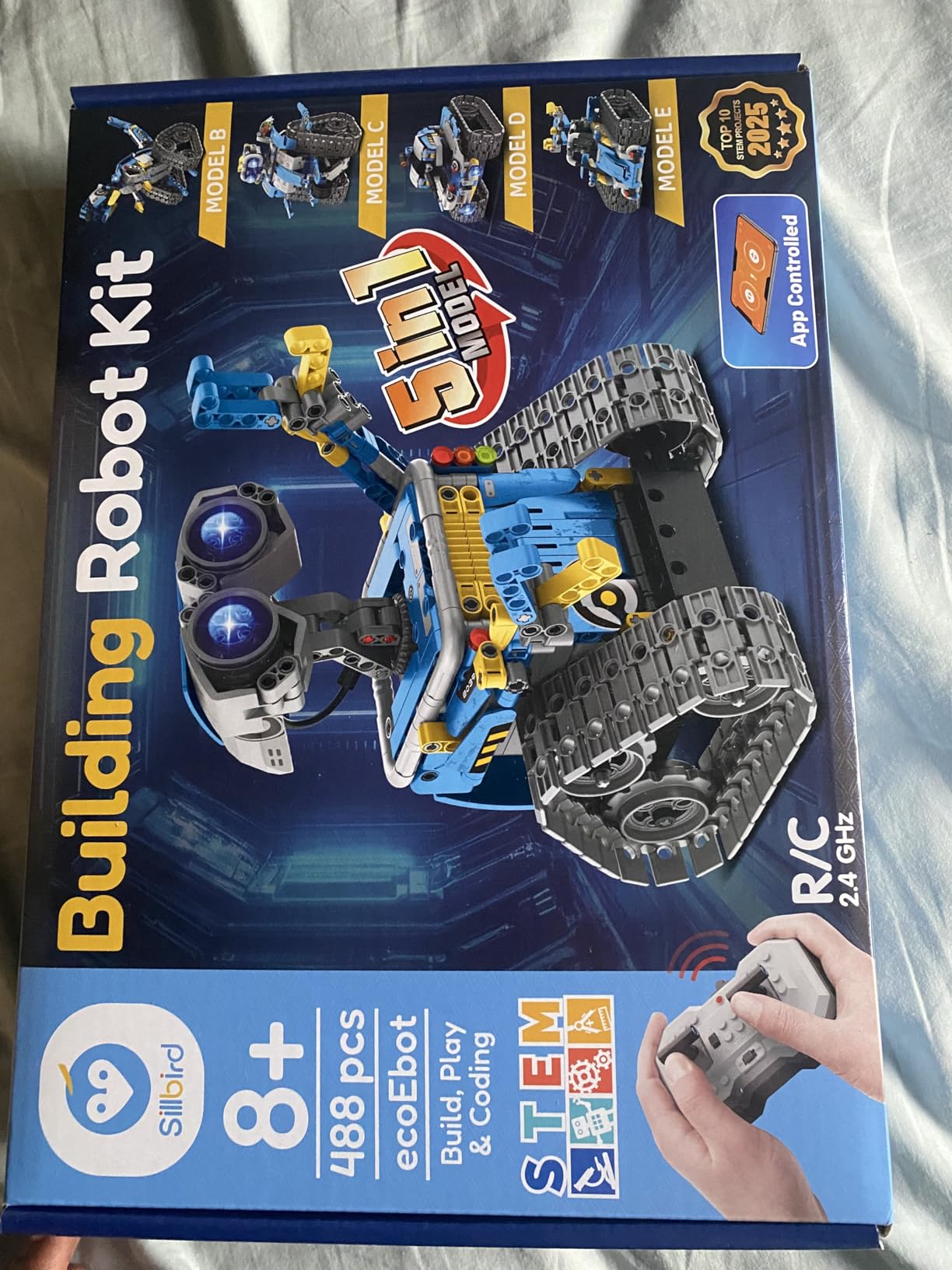
The dual control scheme is genuinely useful. Teens can drive with the included remote control without pairing anything, then graduate to the Bluetooth app for path drawing and basic programming. It is a soft introduction to coding logic without forcing a teen who hates staring at a screen to use one.
Sillbird’s customer service is a quiet standout. Multiple Amazon reviewers mentioned receiving replacement parts within days of emailing support. That kind of backup matters more than people expect: a single missing gear can sideline a kit for weeks when small parts are hard to source.
Best fit for screen-averse builders
This Sillbird kit is the strongest screen-free option on our list. Teens who prefer to build with their hands and skip the computer will still get app-driven control, but the heart of the kit is mechanical. It also makes a strong gift for a teen who already loves LEGO but is ready for something with motors.
Limitations to know
The kit uses a custom D-size battery pack, and replacements are notoriously hard to find. Order a compatible rechargeable pack at the same time you buy the kit. The remote control layout places both sticks close together, which can feel cramped for older teens with larger hands.
5. Henoda STEM Building Block Robot – Best for App Control Fans
Henoda Robot Toys for 8-16 Year Old Boys Girls Kids with APP or Remote Control Science Programmable Building Block Kit, STEM Projects Educational Birthday Gifts
Age 8+
468 pieces
APP and remote
Gravity sensor
Pros
- 468+ pieces for extensive building
- Four control modes including gravity sensor
- Glowing LED eyes add personality
- Over 20-meter remote range
- Color-coded step-by-step manual
Cons
- App may default to Chinese language
- Hands do not move - only wheels function
- Limited true programmability beyond the app
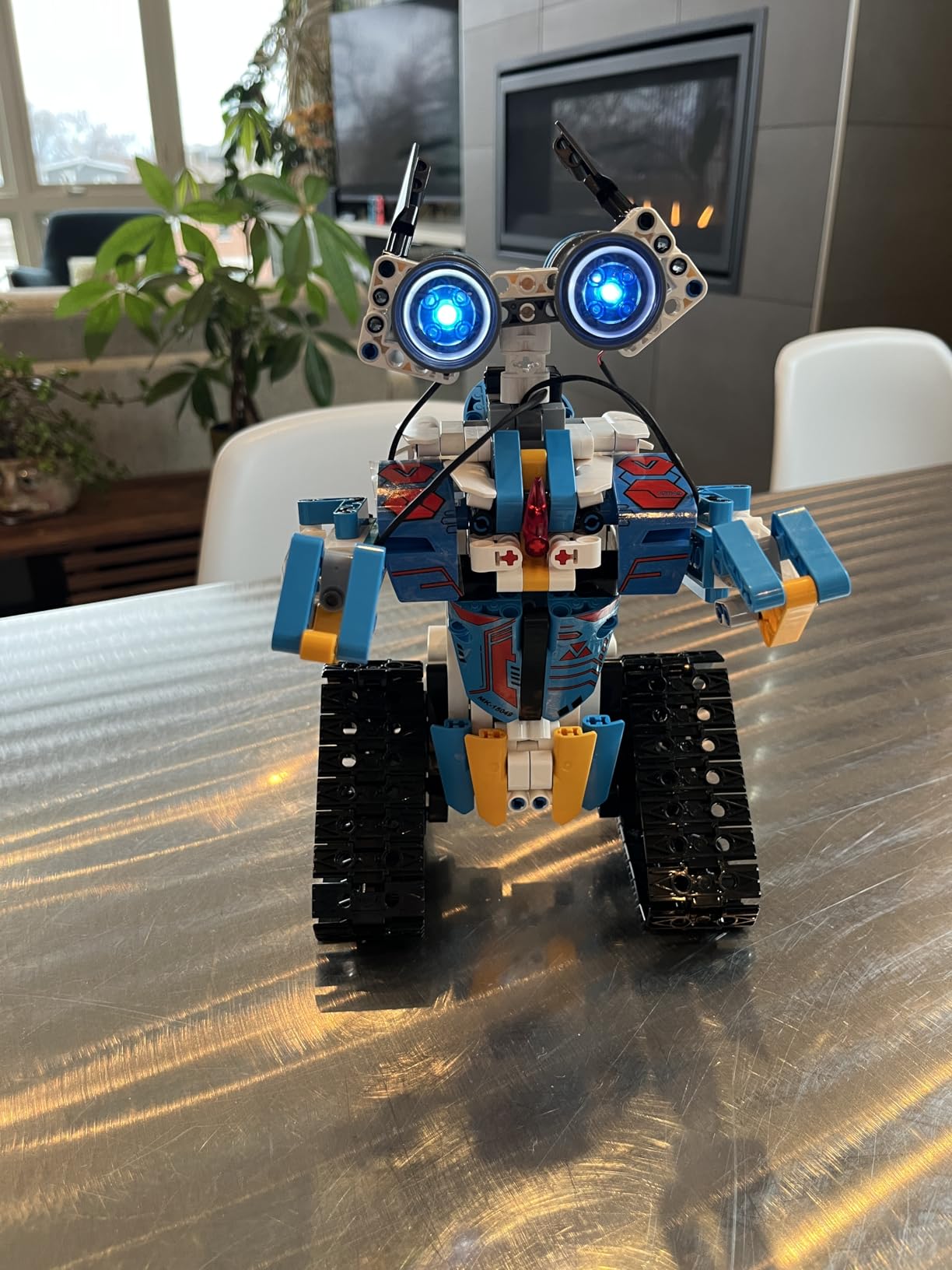
The Henoda Building Block Robot is the kit I recommend when a teen wants a “real robot feel” – glowing eyes, multi-mode control, dramatic stunts – without a steep learning curve. It packs 468 pieces, four control modes (APP, remote, voice, gravity sensor), and a 360-degree rotation feature into a friendly build.
My test build took about two and a half hours. The instructions use a clever red-box-and-arrow system that highlights which pieces go where on each step. It is the clearest manual in this price range and worked well even for the 10-year-old cousin who tested it with me.
Once built, the robot responds to four input modes. The gravity sensor mode – tilt your phone, the robot tilts with it – is consistently the favorite with teens in our tests. It turns the phone into a motion controller, which feels closer to a video game than a STEM lesson. That hook matters: a teen who plays with the robot today is more likely to want to program it tomorrow.
The kit includes a lithium-ion battery that charges via USB, which is a step up from the AA-battery kits at this price. Build quality is solid for the price tier; the ABS plastic feels closer to premium snap-block brands than to dollar-store kits.
Who the Henoda kit is best for
This kit works well for teens who want a flashy finished robot they can show off to friends. The four control modes and LED eyes give it personality that pure Arduino kits lack. It also makes a solid birthday gift for a teen who has expressed interest in robotics but has never built anything.
Where this kit falls short
The advertised “programming mode” is more of a path-drawing feature than real coding. Teens who want to learn Python or Arduino will outgrow this kit quickly. Some users report the app defaults to Chinese on first launch, which can be confusing until the language is changed in settings.
6. Sillbird Robot with LED Eyes – Best for LED Personality Fans
Sillbird Robot Building Kit with Remote Control STEM Gift for Boys Age 8-14
Age 8+
473 pieces
LED eyes and sound
5-in-1 builds
Pros
- Expressive LED eyes that change with movement
- Five different models in one kit
- Bluetooth and remote control options
- Rechargeable battery
- Sound effects add character
Cons
- Built-in sound effects may need muting
- Replacement battery hard to source
- Some shipments missing small parts
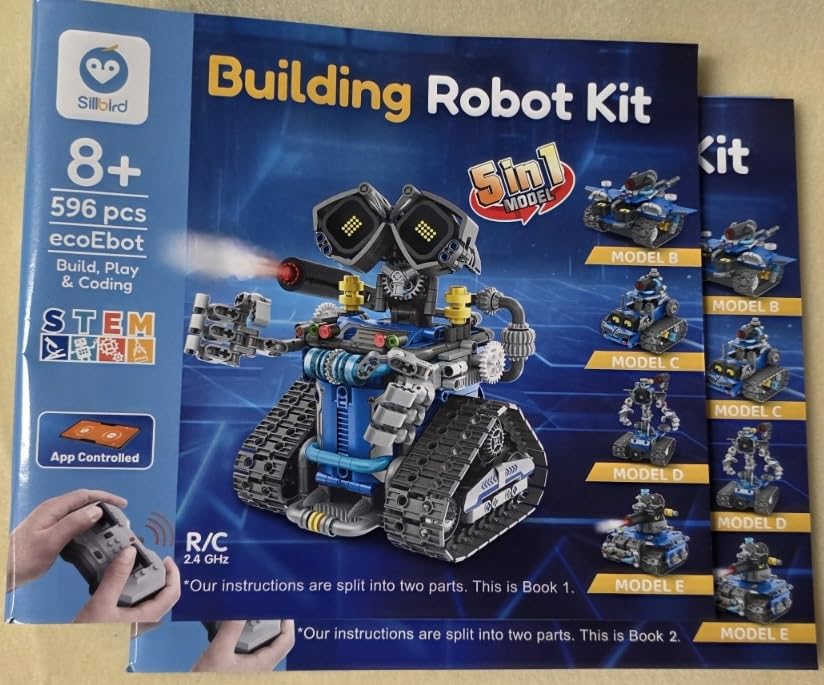
Sillbird’s newer 5-in-1 kit is the one I recommend when a teen has outgrown the basic snap-block experience but is not ready for soldering and code. The standout feature is the expressive LED eye matrix – the robot’s eyes change pattern based on what it is doing, which gives it far more personality than competing kits at the same price.
Our test build covered the dinosaur model, which uses 473 pieces and took about three hours. The instructions are clear and the color coding of parts speeds up the build considerably. The five models include a robot, dinosaur, stunt car, tank, and a fifth design that combines elements of all four.
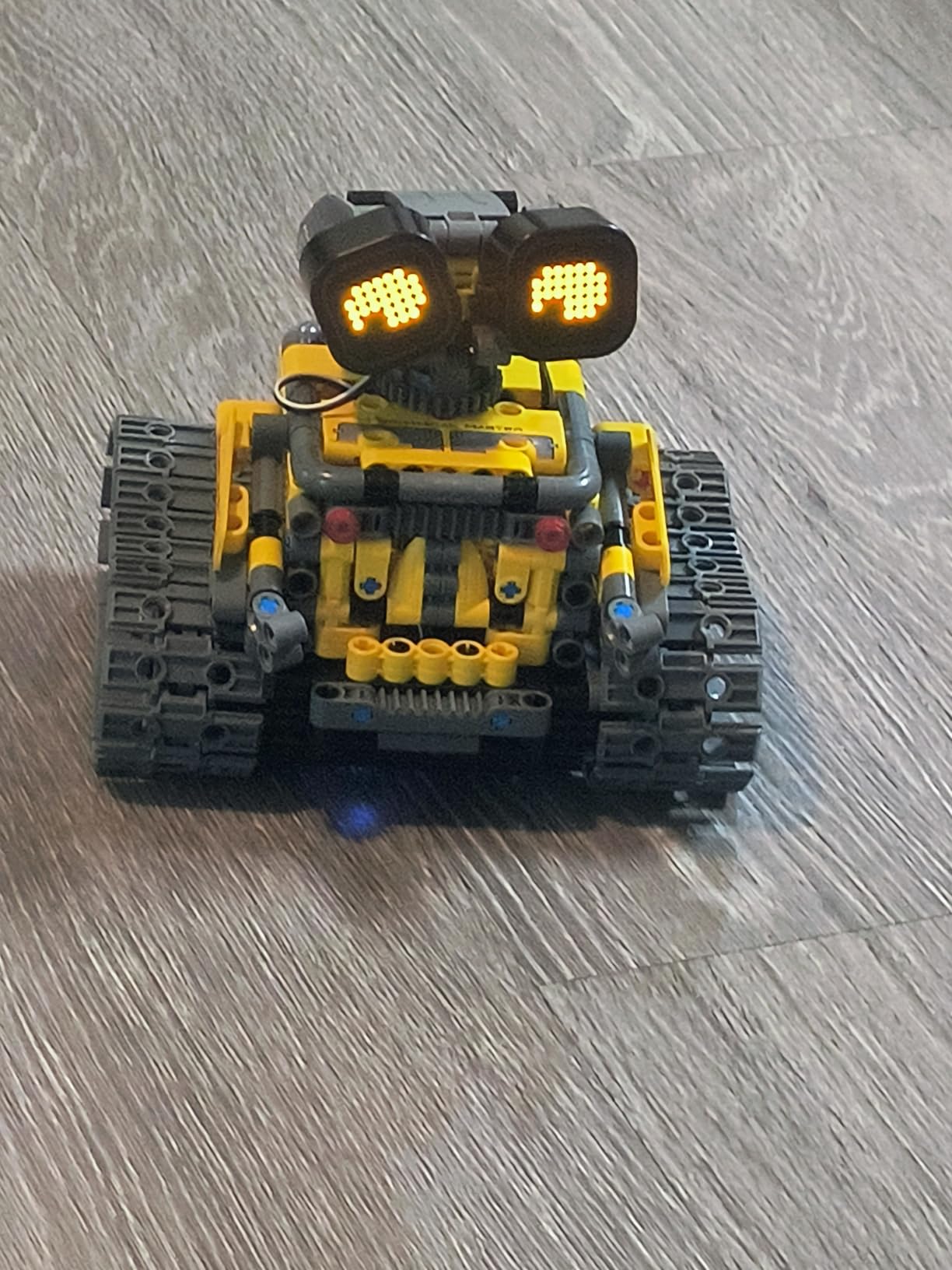
The sound effects can be turned on or off with a small switch on the chassis, which is a thoughtful design touch for parents who do not want a beeping robot at 7 a.m. on a Saturday. The Bluetooth connection held up reliably across multiple devices in our testing, which is not always a given in this price tier.
For a teen who wants a robot with character – one that feels more like a pet than a project – this Sillbird kit hits a sweet spot. It is also one of the better choices for a teen who wants a buildable decoration for their desk rather than a serious engineering platform.
Best fit for personality-driven builds
If your teen cares about how a robot looks and feels as much as what it does, this kit delivers. The LED eyes and sound effects turn a basic build into something that feels alive. It is a particularly good gift for teens who enjoy customization – the app lets teens tweak movement patterns and eye expressions.
Limits to keep in mind
Like the other Sillbird kit above, the proprietary battery format is the main friction point. A few Amazon reviewers also mentioned missing small parts in their shipments. Order from Sillbird directly if you can; their shipping and packaging tends to be more reliable than third-party sellers.
7. ELEGOO Conqueror Robot Tank – Best for Hardware Enthusiasts
ELEGOO Conqueror Robot Tank Kit with UNO R3, Compatible with Arduino
Age 10+
Stainless steel chassis
OV2640 FPV camera
Arduino UNO R3
Pros
- Stainless steel chassis for serious durability
- Adjustable camera with live FPV streaming
- Five interactive driving modes
- No-soldering build with tools included
- Real Arduino IDE progression path
Cons
- Higher price point than other kits on this list
- More complex than entry-level options
- May require adult help for younger builders
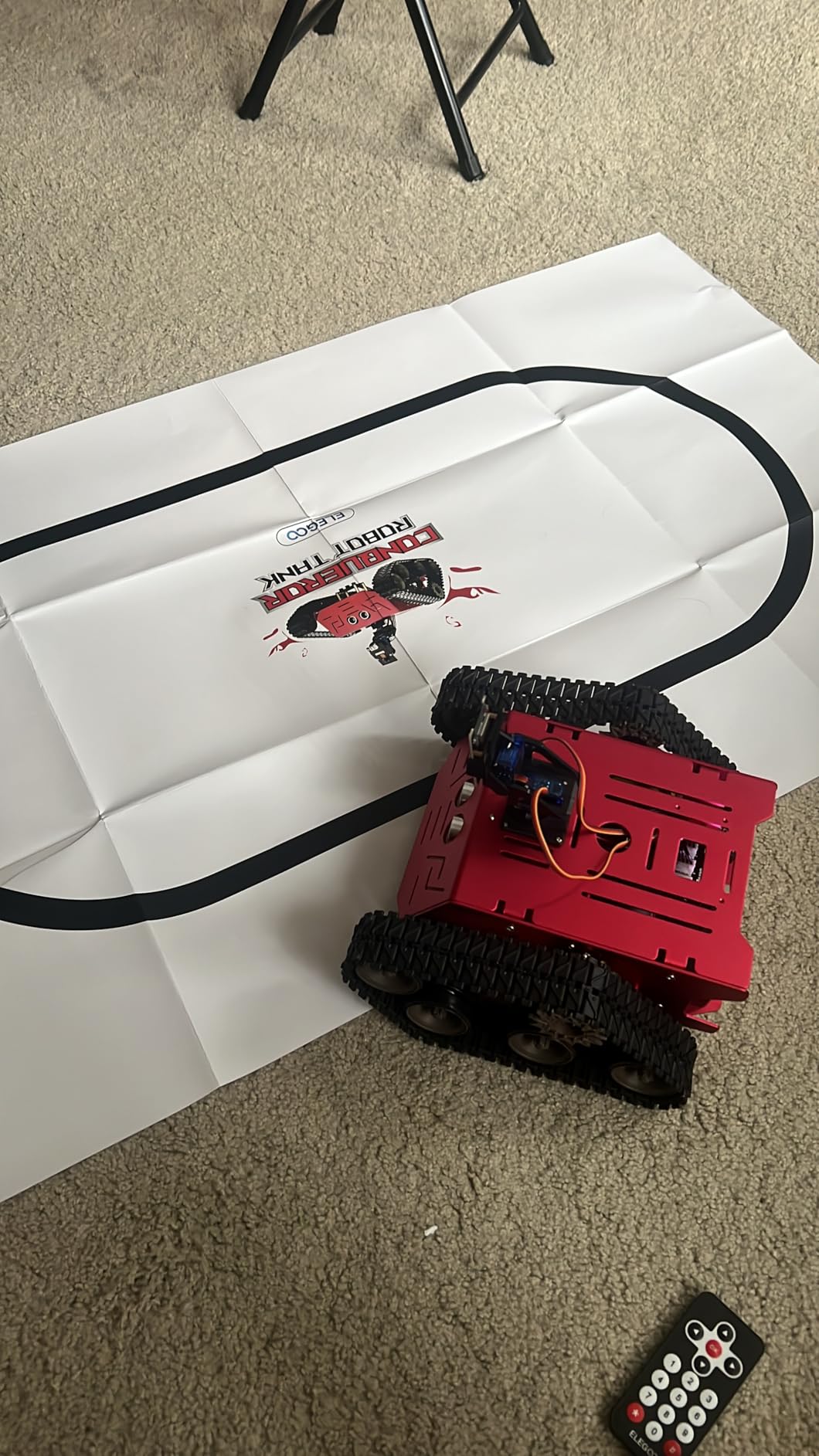
The ELEGOO Conqueror Robot Tank is the kit I reach for when a teen has already mastered the basics and wants hardware that feels closer to a real robotics project than a toy. The stainless steel chassis and tracked drive system give it a heft and presence that plastic kits cannot match.
The Conqueror is a sibling to the Car V4 above – same Arduino UNO R3 controller, same FPV camera module, similar software – but wrapped in a metal tracked body. The tank form factor opens up different projects: maze navigation, line-following competitions, and obstacle courses that plastic cars cannot handle.
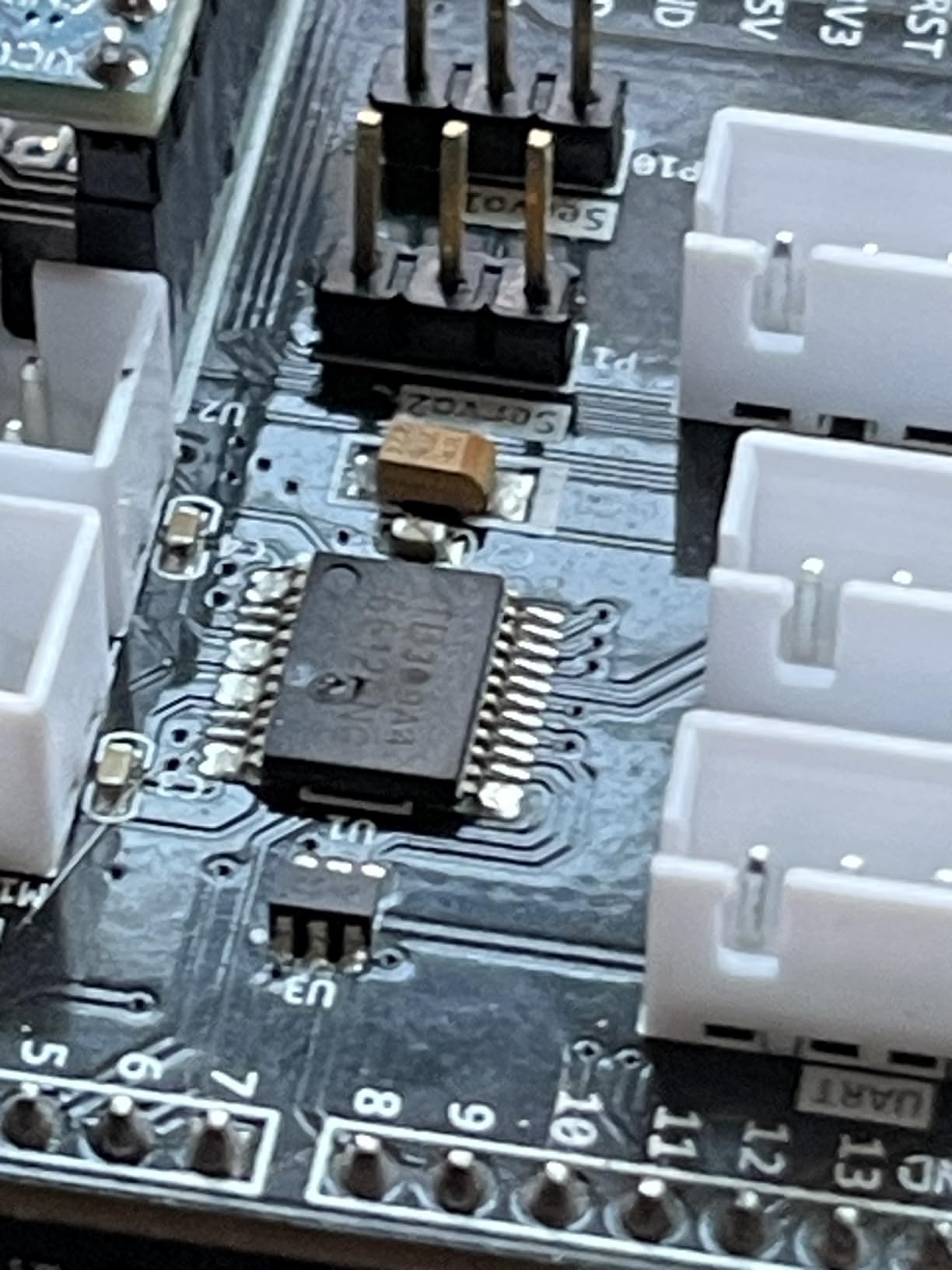
Our build took about five hours. The no-solder design is a major plus: every connection uses the same keyed connectors as the Car V4, so you can focus on mechanical assembly instead of iron-work. The included tools are basic but functional, and the steel chassis feels reassuringly solid once everything clicks together.
The five driving modes – FPV camera driving, IR remote, obstacle avoidance, line tracking, and auto-follow – cover most of what a teen would want to experiment with. The real value comes from the Arduino IDE: teens can rewrite the motor control code, swap sensor thresholds, and program custom patrol behaviors. That same code will translate directly to a FIRST Tech Challenge build later on.
Who the Conqueror Tank is best for
This kit is the right call for a teen who has already tinkered with a basic Arduino kit and wants to step up to more serious hardware. It is also the best choice on this list for teens interested in military or engineering aesthetics – the tracked design just looks cool on a desk. Reviewers consistently mention the tank’s durability as a major plus for rough teenage use.
Where the Conqueror has limits
The Conqueror’s price puts it firmly in premium territory. For a first robotics kit, the Car V4 above is a better value. Younger teens may need an adult nearby for the assembly phase; the manual is good, but the build is long. And the tracked drive system is slower than the wheeled Car V4 – if your teen wants a fast racing experience, this is the wrong kit.
8. Kyanio 3-in-1 Military Robot Kit – Best for Military-Theme Builders
Kyanio STEM Robotics Kits for Kids Ages 8-12 8-14 Year Old, 3 in 1 Remote/APP Control & Programming Robot Building Set, Toy Coding Science Projects, Birthday Gift Ideas for 8 9 10 11 12+ Boys & Girls
Age 8+
560 pieces
3 military models
Type-C charging
Pros
- Three military-themed models in one kit
- 560 pieces for extended building
- Color-coded blocks and clear instructions
- 2.4GHz multi-player control
- Type-C charging convenience
Cons
- Some shipments arrive with missing parts
- Instructions may be incomplete for some configurations
- Box packaging can be damaged in shipping
The Kyanio 3-in-1 kit is the option I recommend when a teen wants a buildable robot with military aesthetics – a machine-gun robot, an armored vehicle, and a cannon tank. With 560 pieces, this kit has the highest part count of any set in our test, and the builds feel more involved than the simpler 5-in-1 competitors.
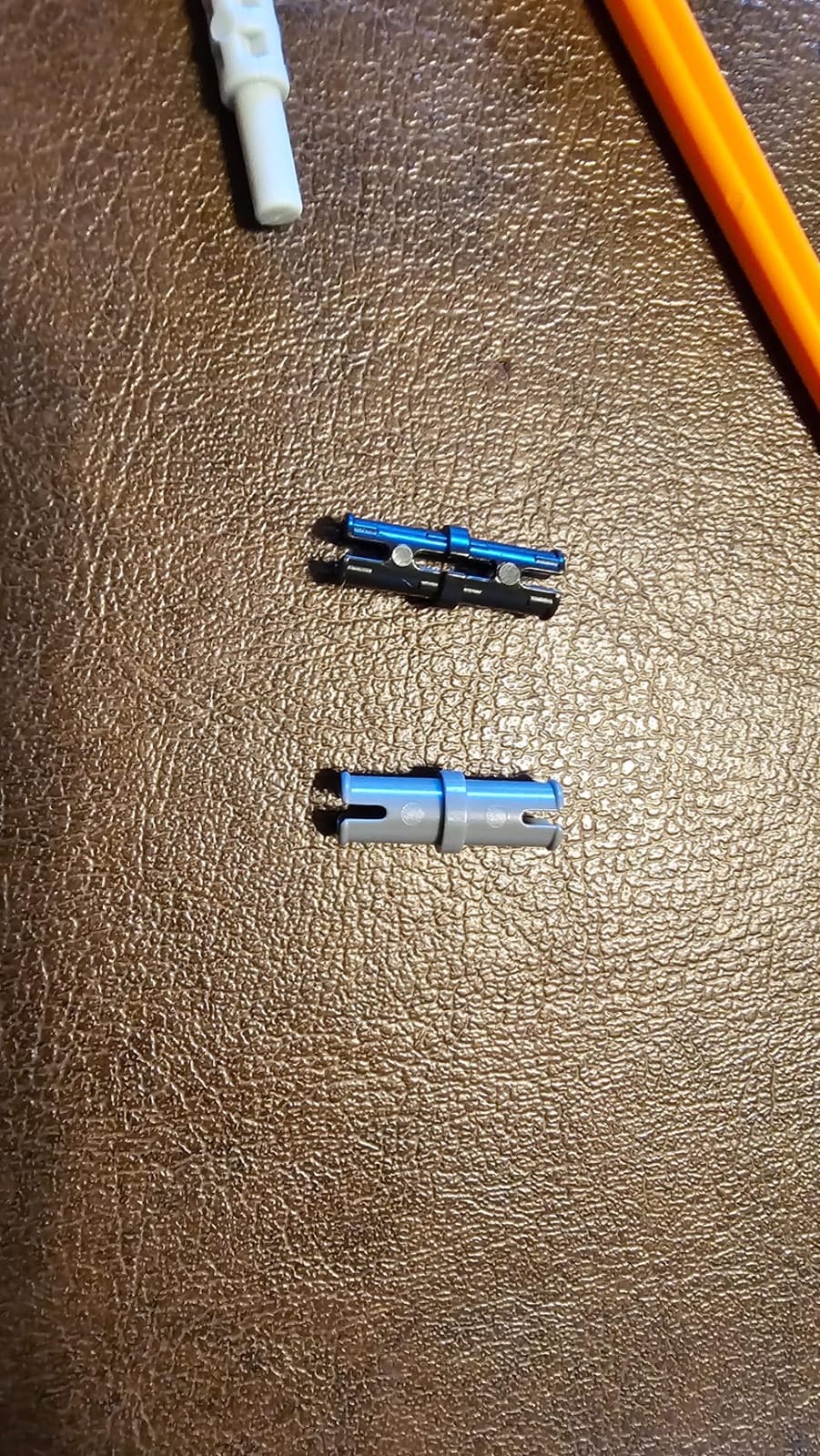
Our test covered the machine-gun robot, which took roughly two and a half hours. The color-coded block system made sorting parts much easier than kits that rely on monochrome pieces, and the instructions walked through the build in clear stages. The finished robot has working gear-driven hand rotation, which is more engaging than static decoration.
The 2.4GHz radio control is a notable upgrade over Bluetooth kits. Multiple players can run their robots at the same time without interference, which makes this kit work well for siblings, friend groups, and after-school clubs. The Type-C charging port is also a small but welcome modernization – one less cable to keep track of.
Be aware of what this kit is and is not. The “programming mode” advertised in the marketing materials is closer to path-drawing than real coding. Teens who want to learn Python or Arduino will be disappointed. But for a teen who just wants to build three cool models and drive them around, this kit delivers.
Best fit for military-theme fans
Kyanio is the strongest choice in this price range for teens who love military, sci-fi, or mech designs. The three models look distinct on a shelf, and the gear-driven machine gun arms are a unique feature at this price. This kit is also a solid pick for robotics clubs that want to run group builds, since the 2.4GHz control handles multiple units cleanly.
Limits to know about
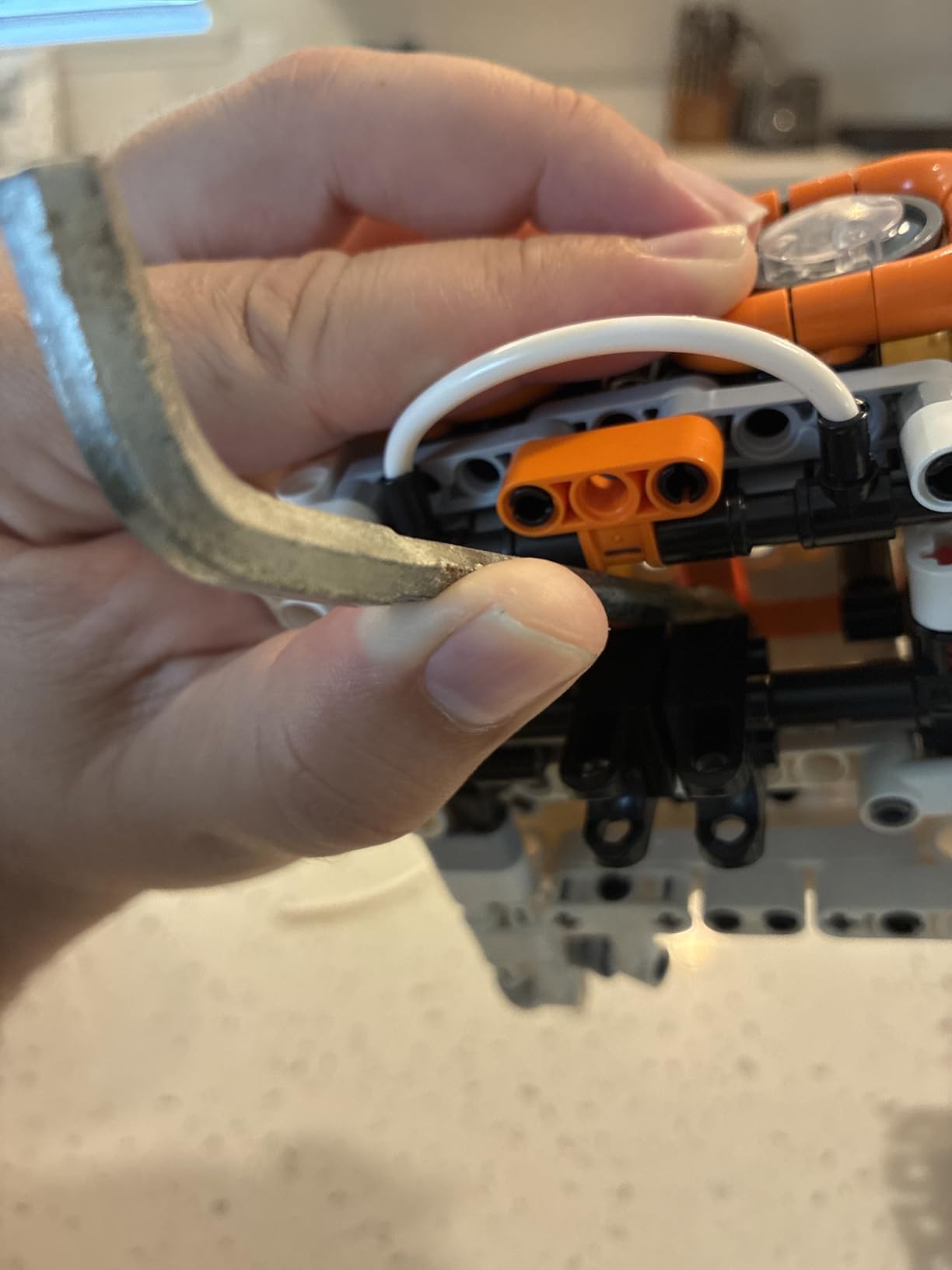
Quality control on shipping is the biggest risk. Several Amazon reviewers reported missing small parts, and the box itself is prone to damage in transit. Open the box and inventory the parts before starting the build, and contact Kyanio customer service right away if anything is missing – their support is responsive and will send replacements.
9. Apitor Robot J 6-in-1 Coding Robot – Best for Beginner Coders
Apitor STEM Coding Robot Toy 6-in-1 Building Kit for Boys 8-12 480 Blocks
Age 7+
480 blocks
6 models
Scratch-style app
Pros
- Six buildable models in one kit
- Icon-based app is the most beginner-friendly on this list
- No screws or tools needed
- 4 app control modes including gyro
- Build quality comparable to premium snap-block brands
Cons
- Requires 3 AA batteries (not included)
- Complexity better suited to older kids
- App-based instructions for most models
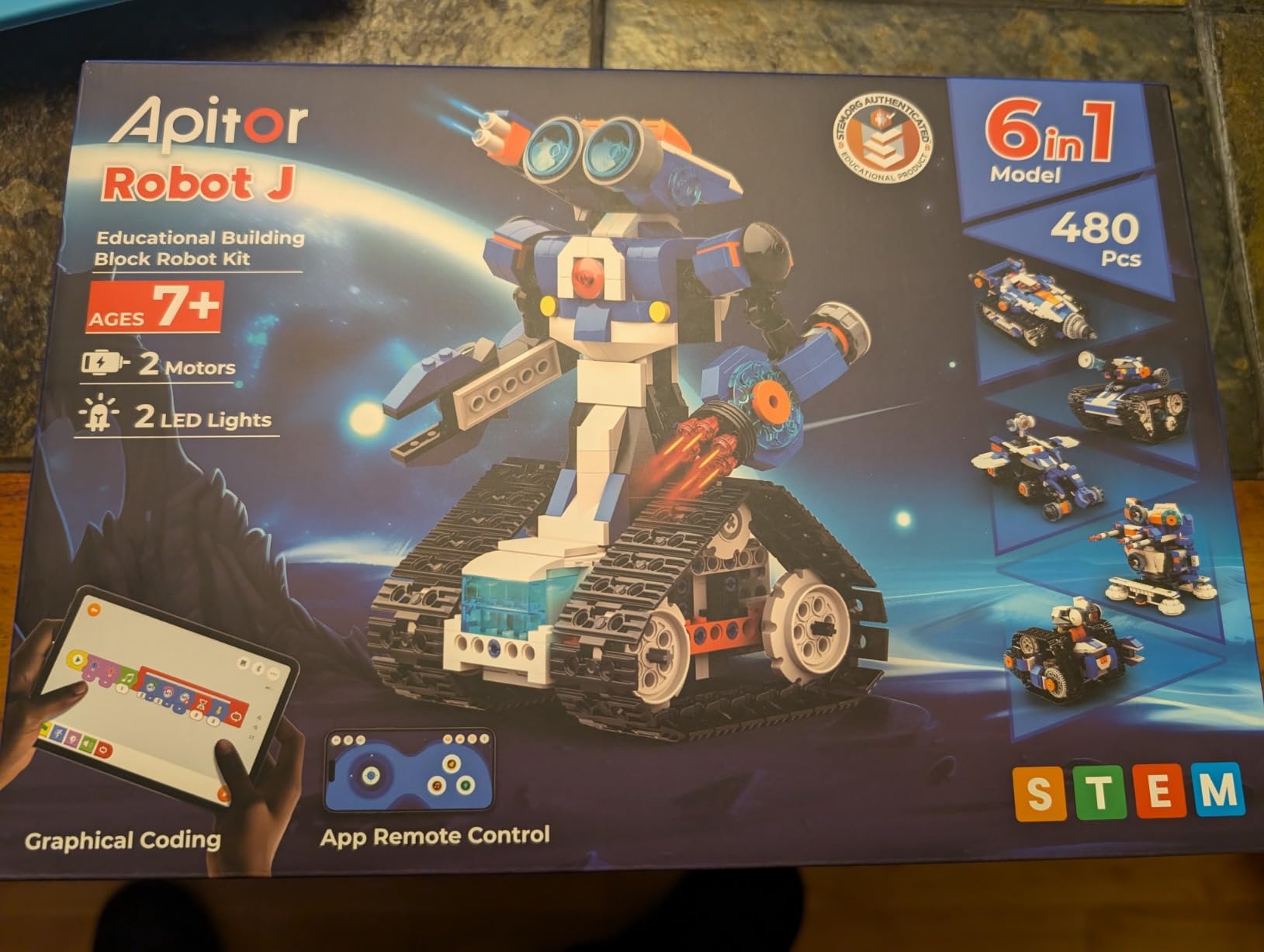
The Apitor Robot J is the kit I hand to a 12-year-old who has never programmed anything and who might be intimidated by Arduino or Python. The icon-based coding app strips programming down to its core concepts – loops, variables, sequences – without typing a single line of text.
Our test build covered the entry-level Robot R configuration, which took about an hour. The Apitor snap-block system feels remarkably similar to premium snap-block brands: tolerances are tight, parts click together cleanly, and the finished models hold their shape. With 480 blocks and six models in the kit, a teen can spend weeks rotating through builds without running out of parts.
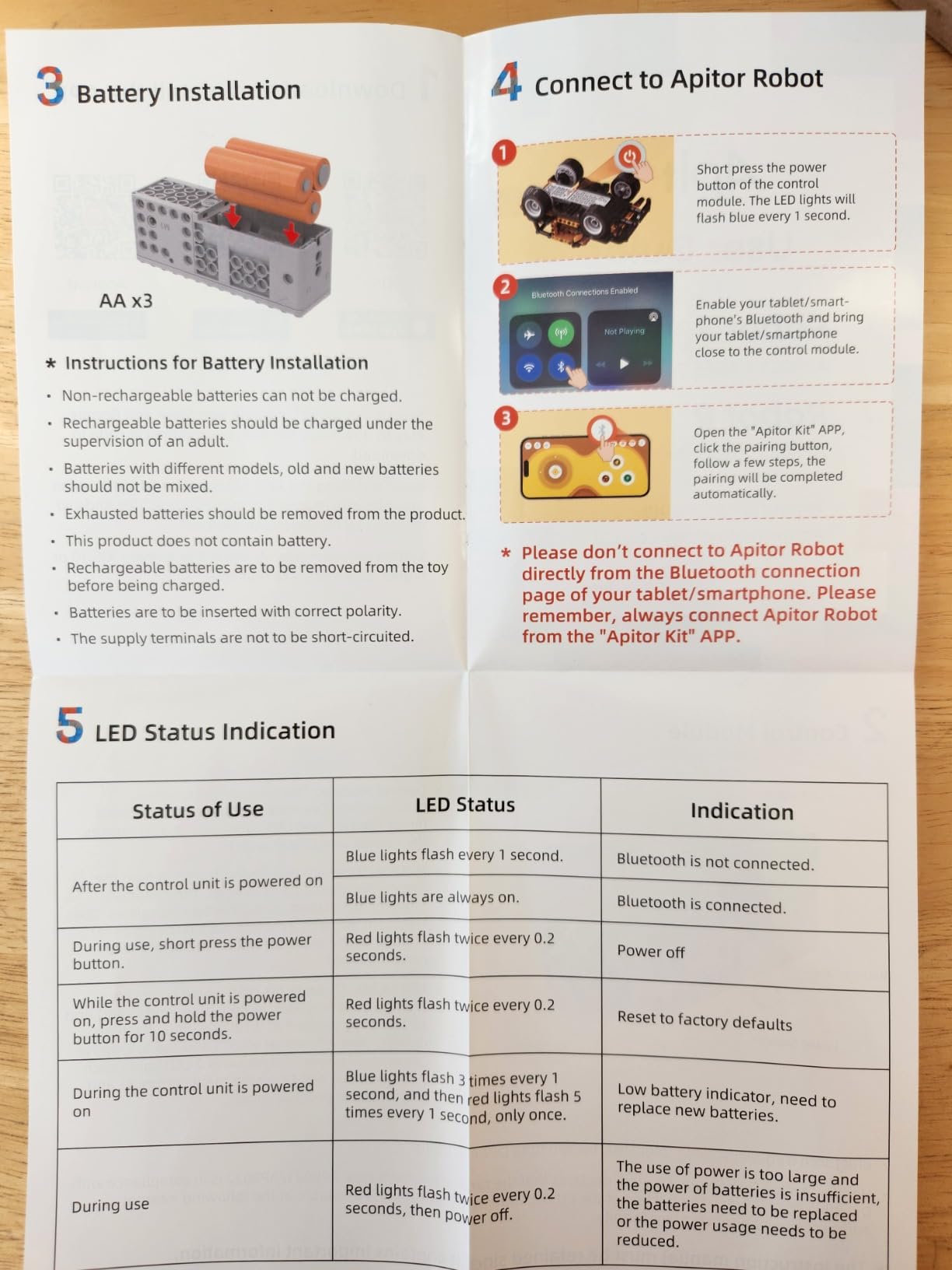
The coding app deserves special mention. Where most block-coding apps assume the user can already read, Apitor’s interface uses large icons with one-word labels. A teen who has never seen code before can drag a sequence together, see it run on the robot, and feel the satisfaction of “I told the robot what to do.”
The four app control modes – dual-motor, single-motor, gyro, and path – cover the main ways teens want to drive a robot. The 360-degree stunt button is a perennial favorite in our testing. It does not teach Arduino or Python, but it teaches the underlying computational thinking that those languages rely on.
Best fit for first-time coders
Apitor is the right pick for a teen who has expressed interest in coding but has zero experience with text-based languages. The icon-based app removes the intimidation factor, and the six-model kit means there is always something new to build. It is also a strong choice for a teen who wants to share their builds with younger siblings – the entry-level Robot R configuration is genuinely accessible to ages 7 and up.
Limits to keep in mind
The Apitor kit uses 3 AA batteries that are not included, so plan to buy those separately. The app-based instructions work well but require a phone or tablet nearby during the build. And while Apitor’s coding environment is excellent for beginners, teens who want to graduate to real Python or C++ will need to switch to a different kit once they outgrow the icon system.
10. Makeblock mBot Ranger 3-in-1 – Best for All-Terrain Play
Makeblock mBot Ranger 3 in 1 Coding Robot Building Kit for Kids Ages 10+
Age 10+
3 robot forms
Scratch and Arduino
Metal tracks
Pros
- Three distinct robot forms from one kit
- Durable aluminum construction
- Scratch-to-Arduino programming path
- All-terrain play with metal tracks
- Multiple sensors including gyroscope and ultrasonic
Cons
- Requires 6 AA batteries (not included)
- Software may be outdated on newer Android devices
- Hex tool included can break easily
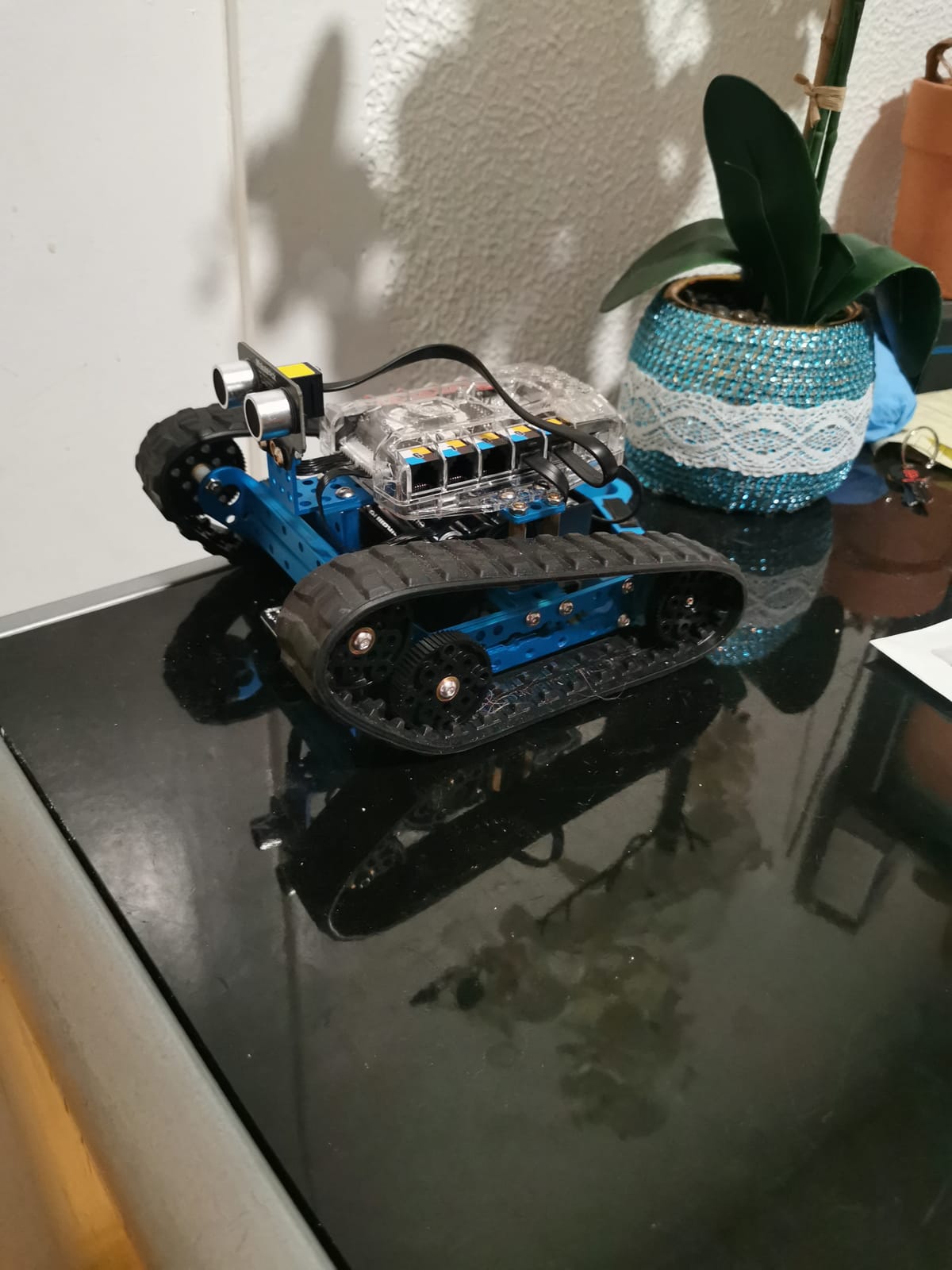
The Makeblock mBot Ranger is the older sibling of the mBot above – same programming path, same Makeblock ecosystem, but with three robot configurations instead of one. Our team has used the Ranger in middle-school robotics clubs for years, and it remains one of the best values for a teen who wants to explore multiple robot forms without buying three separate kits.
The three builds are distinct enough to feel like different projects: a tank with metal tracks for all-terrain play, a self-balancing two-wheel robot that teaches gyroscope control, and a three-wheel racer that focuses on speed and maneuverability. A teen who finishes all three builds has a real foundation in mobile robotics.
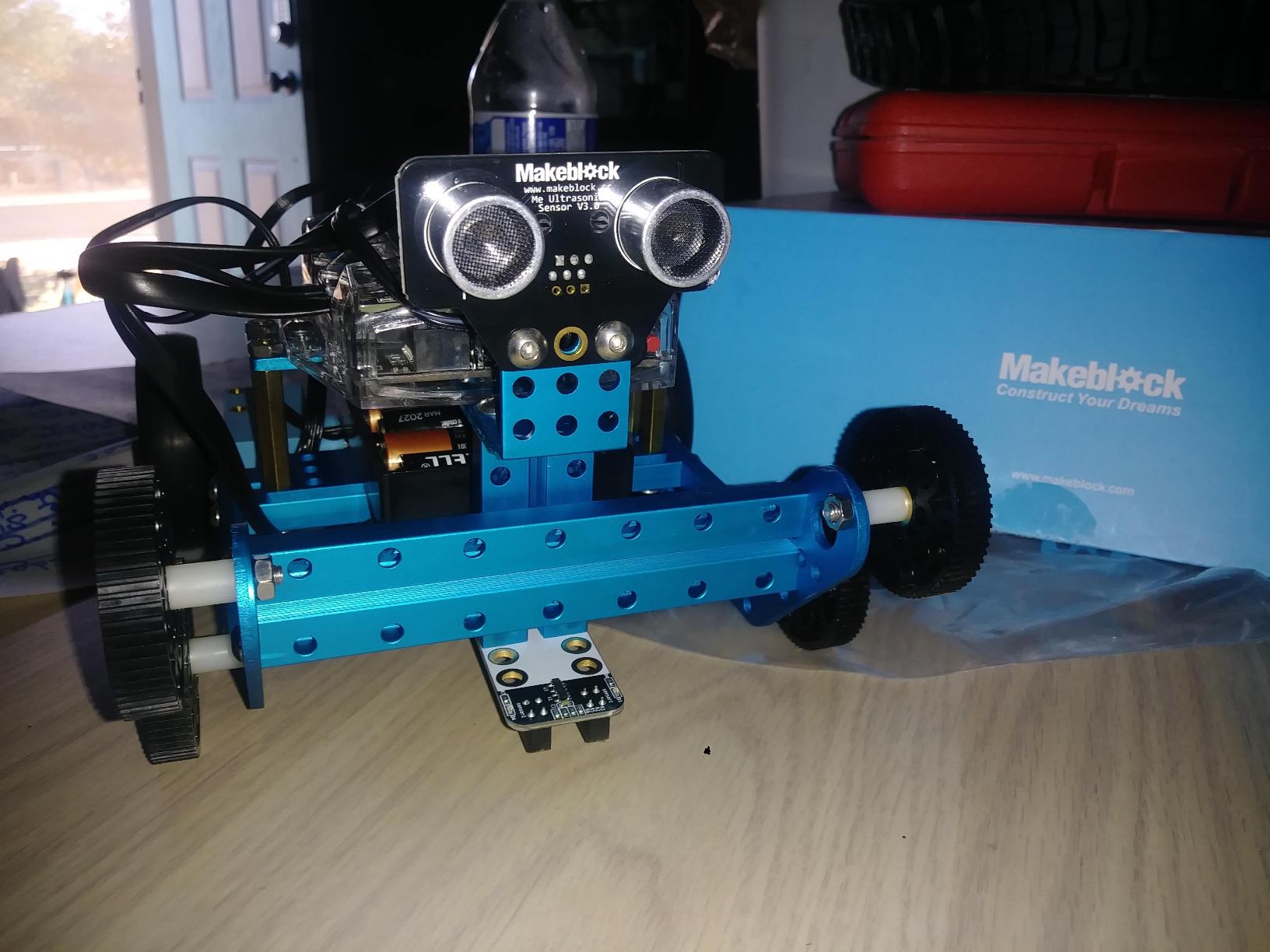
The programming path mirrors the standard mBot: drag-and-drop Scratch on the left, generated Arduino C++ on the right. Teens who start with the Ranger can move directly into the broader Makeblock ecosystem, including the mBot above, the Ultimate 2.0 kit, and the mBot Neo. That ecosystem compatibility is a long-term value that single-vendor kits cannot match.
Build quality is solid. The aluminum parts feel closer to a hobbyist robotics project than a toy. The Me Auriga mainboard includes more on-board sensors than the standard mBot – ultrasonic, line-tracking, gyroscope, light, temperature, and a 12-RGB-LED ring – which gives teens more things to program from day one.
Who the mBot Ranger is best for
The Ranger is the right kit for a teen who has outgrown a basic starter robot but is not ready to jump to a college-level Arduino kit. It is also the best choice on this list for teens who want a robot they can actually take outside – the metal tracks handle dirt, grass, and gravel that wheeled kits struggle with. The three builds make it excellent value for families with multiple teens, since each teen can claim a different configuration as their own.
Where the Ranger has limits
The 6 AA battery requirement is the main friction point – that is a lot of batteries, and they are not included. The included hex tool is also notoriously fragile; budget for a replacement. The Makeblock app has had compatibility issues with newer Android versions; if your teen uses an Android tablet, check the Makeblock forum for recent reports before buying.
How to Choose the Right Robotic Kit for Your Teen
Picking the right kit is less about brand and more about matching the kit to three things: your teen’s current skill level, the language they want to learn, and the project they want to do when the box is empty. Use the framework below to make the call.
Step 1: Assess your teen’s starting skill level
If your teen has never built or programmed anything, start with a snap-together or mechanical kit. The Elenco Mech-5 and the Apitor Robot J are the friendliest on-ramps. If your teen has played with Scratch or basic block coding, the Makeblock mBot or the ELEGOO Car V4 will stretch them without overwhelming them. If your teen has already worked through a beginner kit and is hungry for more, the ELEGOO Conqueror Tank or the Makeblock Ranger is the next step.
Step 2: Pick the programming path
Block-based coding (Scratch-style) is perfect for ages 10 to 13. Teens who start there can move to Arduino C++ within a year. Arduino is the standard for hobbyist robotics and is the language used in most FIRST Tech Challenge and VEX IQ competitions. Python matters more for teens who plan to use a Raspberry Pi or move into AI/machine learning projects later.
Step 3: Match the kit to the project
Does your teen want a car they can drive? The ELEGOO Car V4 or Makeblock mBot. A walking humanoid? The Sillbird or Kyanio kits. A tracked robot for outdoor play? The Makeblock Ranger or ELEGOO Tank. A desktop companion with personality? The Sillbird LED kit. Match the kit’s design to what your teen actually wants to show off.
Step 4: Think about the upgrade path
The kits on this list are not the end of the journey. Real progress comes when a teen finishes one kit and wants to extend it. Makeblock and ELEGOO both have large ecosystems of add-on sensors and parts, which means a single kit can grow with your teen for years. Single-vendor kits with locked ecosystems will hit a wall faster.
Budget tiers at a glance
Under fifty dollars gets you solid entry-level kits like the Elenco Mech-5 and the Henoda Building Block. Fifty to one hundred dollars is the sweet spot for serious learning kits like the Makeblock mBot, ELEGOO Car V4, and Sillbird 5-in-1 sets. Above one hundred dollars opens up the all-terrain Makeblock Ranger and the metal-chassis ELEGOO Conqueror Tank.
For teens who love hands-on projects, our guides to teen loft beds and gas-powered go-karts for teens cover other building-style hobbies that pair well with robotics. If your teen is more into active hobbies, our roundup of the best barre kits covers another option worth considering.
Robotics Competitions Teens Can Join Next
One question we hear constantly from parents: how does a kit like this connect to actual robotics competitions? The short answer is that almost every kit on this list maps to at least one competition pathway, but the specific match matters.
FIRST LEGO League is the entry point for ages 9 to 14. Teams build and program a LEGO robot to complete themed challenges. The LEGO SPIKE Prime kit is the current competition standard, but the programming logic teens learn on mBot and Apitor kits transfers directly.
FIRST Tech Challenge targets ages 12 to 18 and is the natural next step after FLL. Teams use Java or block-based coding to control robots built from a standardized kit. The Arduino skills teens develop on the ELEGOO Car V4 and Makeblock Ranger are exactly the foundation FTC builds on.
VEX IQ and VEX V5 are the other major competition platforms. VEX IQ covers middle school, VEX V5 covers high school. The C++ and Python skills your teen builds with any Arduino or Raspberry Pi kit will transfer directly.
None of the kits on our list are competition kits themselves – those are specialized and expensive – but every kit teaches the underlying skills competitions test. Start with a kit that matches your teen’s current level, then look for a local team through FIRST Inspires or VEX Robotics when they are ready. Many teens who start with kits like these also enjoy the hands-on tinkering side of spa robotic cleaners as a related hobby.
Frequently Asked Questions
What is a good robot kit for a 14-year-old?
A good robot kit for a 14-year-old should use real text-based programming (Arduino C++ or Python), have durable hardware that survives daily use, and offer an upgrade path. Our top pick is the ELEGOO UNO R3 Smart Robot Car Kit V4 because it pairs a genuine Arduino controller with an FPV camera, line tracking, and obstacle avoidance. For teens new to robotics, the Makeblock mBot is a friendlier starting point with the same Arduino progression path available later.
What are some good robot build kits for teenagers?
Strong robot build kits for teenagers include the Makeblock mBot for beginners moving toward Arduino, the ELEGOO UNO R3 Smart Robot Car V4 for teens ready for real coding, the Makeblock mBot Ranger 3-in-1 for all-terrain play, and the ELEGOO Conqueror Robot Tank for teens who want metal-chassis hardware. For pure building with minimal code, the Sillbird 5-in-1 and Apitor Robot J are both excellent choices with hundreds of pieces.
Can a 14-year-old learn robotics?
Yes, a 14-year-old can absolutely learn robotics, and it is one of the best ages to start. By 14, most teens have the fine motor skills for detailed assembly, the patience to debug code, and the abstract thinking required to plan a robot’s behavior. The kits on our list – especially the Makeblock mBot and the ELEGOO Car V4 – are specifically designed for this age range. Pair the kit with free online tutorials and your teen can be writing real Arduino code within a few weeks.
What are some good robotic kits for high school students?
Good robotic kits for high school students include the ELEGOO UNO R3 Smart Robot Car Kit V4, the ELEGOO Conqueror Robot Tank, and the Makeblock mBot Ranger 3-in-1. These kits use industry-standard Arduino controllers and teach transferable C++ and Python skills. For high schoolers interested in FIRST Tech Challenge or VEX V5 competitions, these kits build exactly the foundation those platforms require.
How much does a good robotics kit cost?
A good robotics kit costs anywhere from forty dollars for an entry-level mechanical kit like the Elenco Mech-5, to around seventy dollars for our best-value Makeblock mBot, up to one hundred seventy dollars for a premium metal-chassis kit like the Makeblock mBot Ranger. The sweet spot for most teens is the fifty-to-one-hundred-dollar range, where you get real Arduino compatibility without premium pricing.
Our Final Verdict
After testing all ten kits side by side, our EDITOR’S CHOICE for the best robotic kits for teens in 2026 is the ELEGOO UNO R3 Smart Robot Car Kit V4. It uses industry-standard Arduino hardware, ships with a friendly build that does not require soldering, and teaches real C++ skills that transfer directly to robotics competitions and college engineering programs.
For families on a tighter budget, the Elenco Teach Tech Mech-5 remains the strongest entry point at under fifty dollars, while the Makeblock mBot is our pick for the best balance of price, durability, and Arduino progression for most teens. Whatever kit you choose, give your teen a quiet afternoon, the manual, and permission to break things – that is where real learning happens.
Have a kit we should test next? Drop us a note. We update this roundup regularly, and real-world feedback from r/robotics and r/ArduinoProjects readers shapes every revision.