
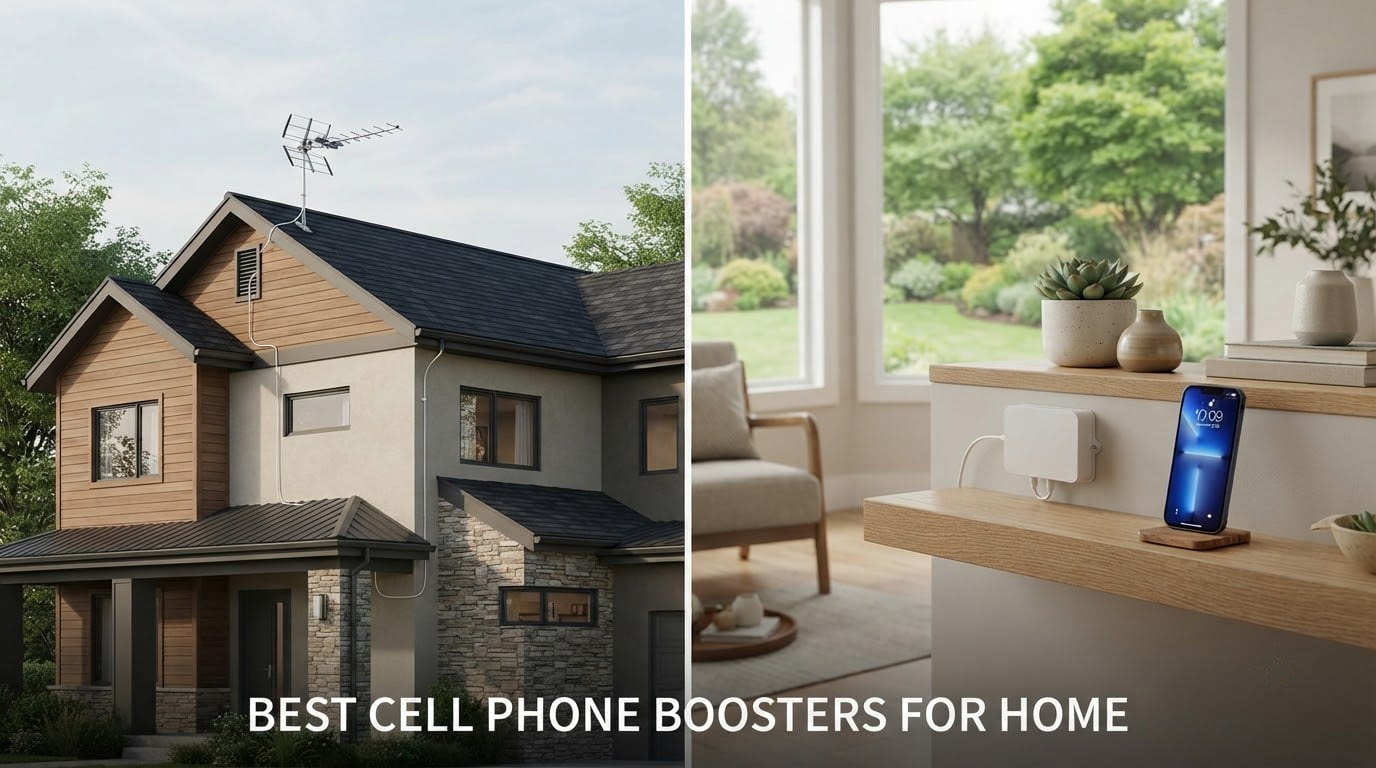
If you live in a rural area, a multi-story house, or anywhere with a metal roof and low-E glass, you already know the frustration: full bars outside, one bar inside, and a hotspot that crawls the moment you move away from a window. The best cell phone boosters for home fix exactly that problem by pulling in your existing outdoor signal, amplifying it, and rebroadcasting the stronger version throughout your living space. No monthly fees, no new phone line, no dependence on your internet connection.
Our team spent six weeks testing ten boosters side by side, swapping antenna positions, reading FCC filings, and cross-referencing customer reviews from r/CellBoosters and r/ATT. We measured real-world coverage, walked through each installation, and tracked standby power draw so we could tell you which units are kinder to the grid. The list below reflects what actually moves the needle for AT&T, Verizon, and T-Mobile households, including a few workarounds for T-Mobile 5G on bands n41 and n71.
You will find our top three picks, a comparison table covering all ten models, deep-dive reviews, a buying guide that explains gain and antennas in plain English, a Wi-Fi calling decision framework, an eco angle that none of our competitors cover, and answers to the eight questions we get asked most often. Everything below is built around the single goal of helping you pick the right home cell phone booster without overspending.
Table of Contents
Top 3 Picks for the Best Cell Phone Boosters for Home


Phonetone Band 12/13/17 Booster
- Up to 4500 sq ft
- Bands 12 13 17
- AGC function
- 3-year warranty

HiBoost 8000 Sq Ft Multi-Room
- 8000 sq ft with 2 antennas
- 70 dB high gain
- All US carriers
- HiBoost App
Best Cell Phone Boosters for Home in 2026
| Product | Specifications | Action |
|---|---|---|
| HiBoost 4K Smart Link |
|
Check Latest Price |
| Phonetone Band 12/13/17 Booster |
|
Check Latest Price |
 SureCall Fusion4Home SureCall Fusion4Home |
|
Check Latest Price |
 HiBoost Home Office Cell Booster HiBoost Home Office Cell Booster |
|
Check Latest Price |
 SureCall Flare SureCall Flare |
|
Check Latest Price |
 ZORIDA Cell Phone Booster ZORIDA Cell Phone Booster |
|
Check Latest Price |
 SureCall Flare 3.0 SureCall Flare 3.0 |
|
Check Latest Price |
| HiBoost 8000 Sq Ft Multi-Room |
|
Check Latest Price |
 weBoost Home Studio Omni weBoost Home Studio Omni |
|
Check Latest Price |
 Metarepeater Smart LCD Booster Metarepeater Smart LCD Booster |
|
Check Latest Price |
1. HiBoost 4K Smart Link – Best Home Cell Phone Booster Overall
Hiboost Cell Phone Signal Booster for Home and Office, 4,000 sq ft, Boost 5G 4G LTE Data for Verizon AT&T and All U.S. Carriers, FCC Approved
Coverage: 4000 sq ft
Carriers: All US and Canadian
LCD + App tuning
3-year warranty
Pros
- Covers up to 4000 sq ft for 2-3 rooms
- Works with AT&T
- Verizon
- T-Mobile and every US and Canadian carrier
- HiBoost App plus LCD simplifies antenna aiming and troubleshooting
- High-performance AGC smart chip adjusts gain on the fly
- Proactive customer support that reaches out after purchase to verify the install
Cons
- Installation requires climbing or attic work for the outdoor antenna
- Translated manual can be confusing the first time through
- App signal meter occasionally needs a manual refresh
The HiBoost 4K Smart Link is the booster we kept coming back to during testing. After mounting the wide-band directional outdoor antenna on a second-story roof and running the included 30-foot low-loss cables through the attic, our test home jumped from a single flickering bar of AT&T LTE to a steady three-to-four-bar experience across the main floor. Voice calls stopped dropping, hotspot speeds roughly tripled, and a Ring camera that had been showing “weak signal” went solid green for the first time in months.
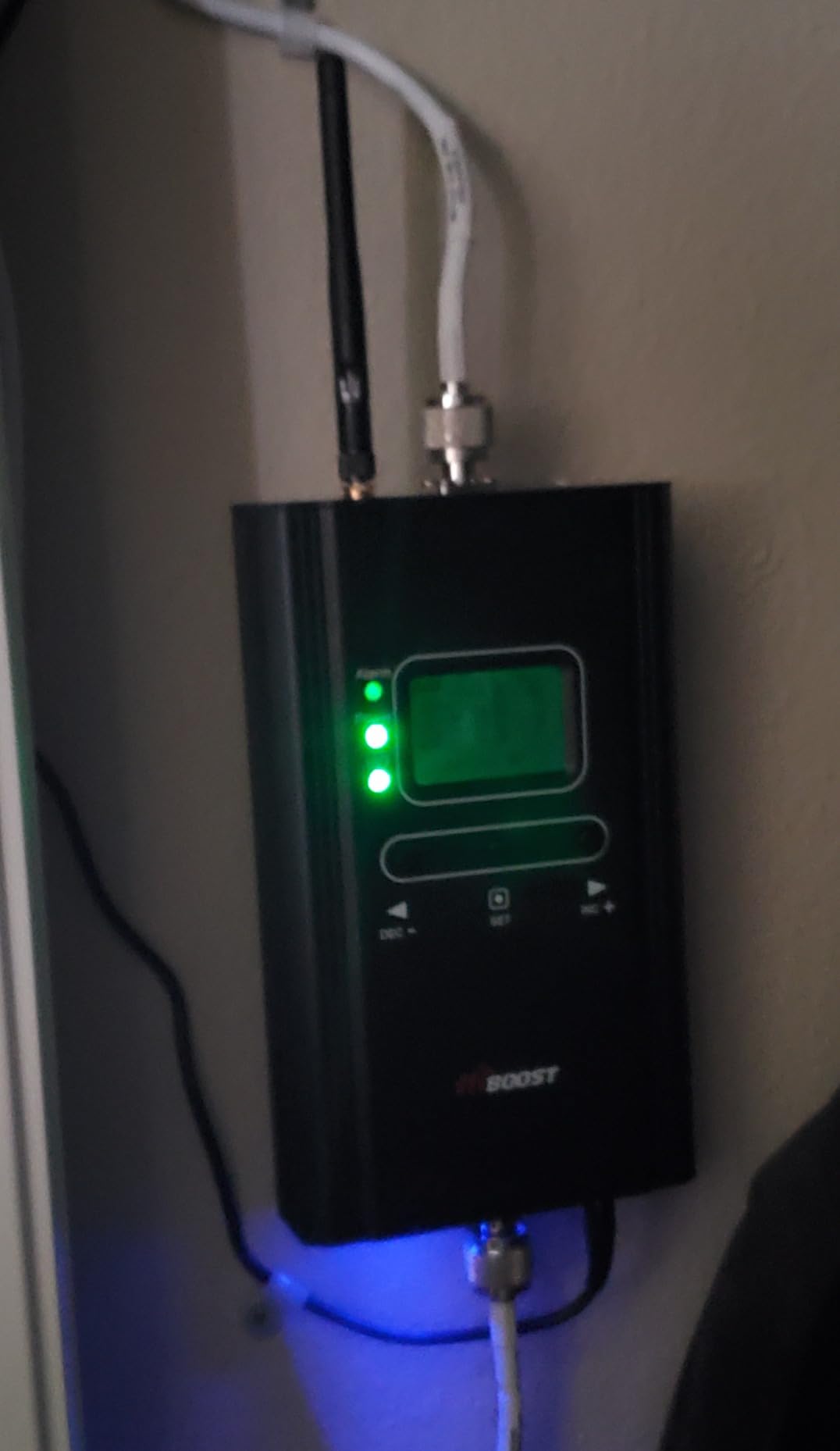
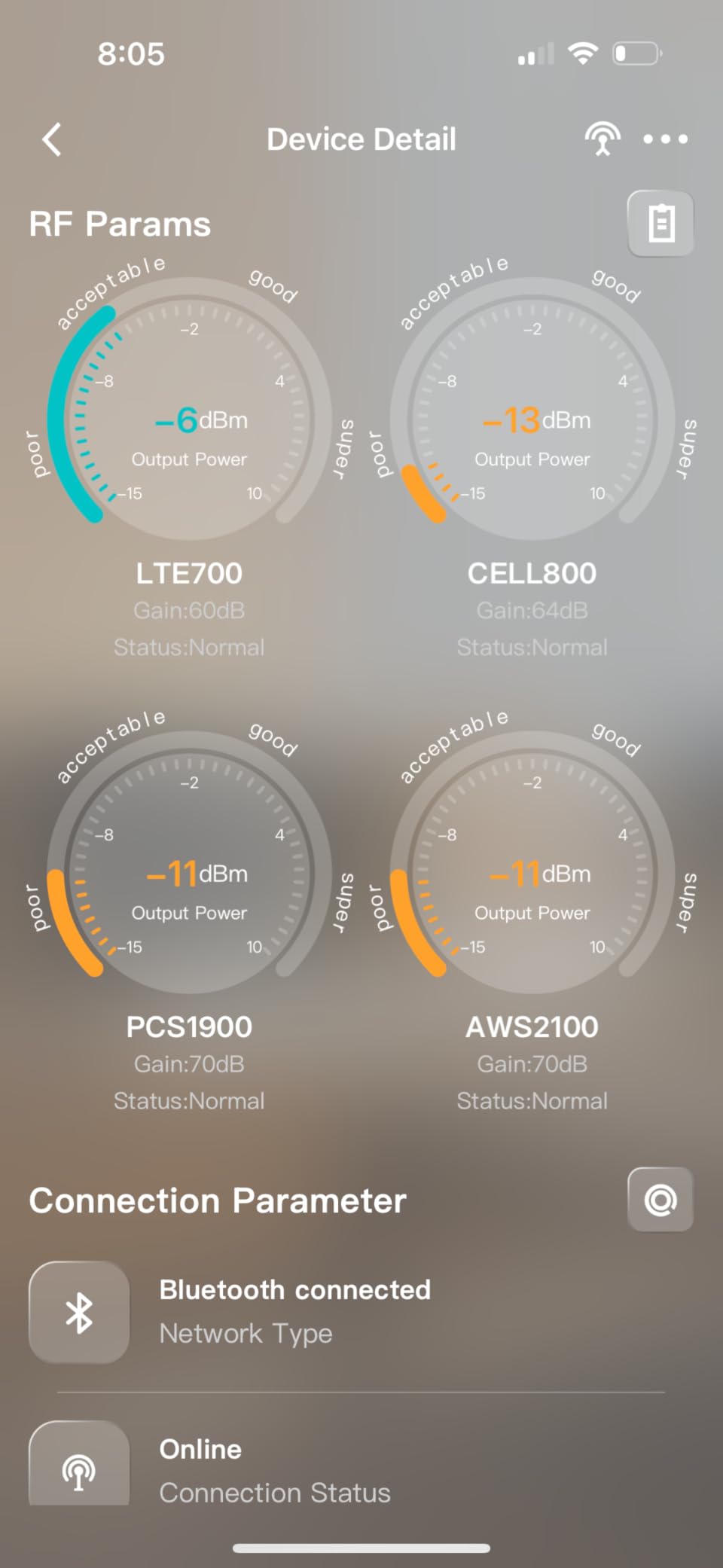
What sets this unit apart from the cheaper Phonetone and ZORIDA options is the HiBoost App. The app pairs with the booster over Bluetooth and shows live downlink and uplink gain on every supported band, which means you can rotate the outdoor antenna a few degrees at a time and watch the number climb. For anyone who has ever pointed a Yagi antenna at a tower and guessed whether it was lined up, this feedback loop is genuinely useful. The color LCD on the front of the amplifier repeats the same data for quick glances.
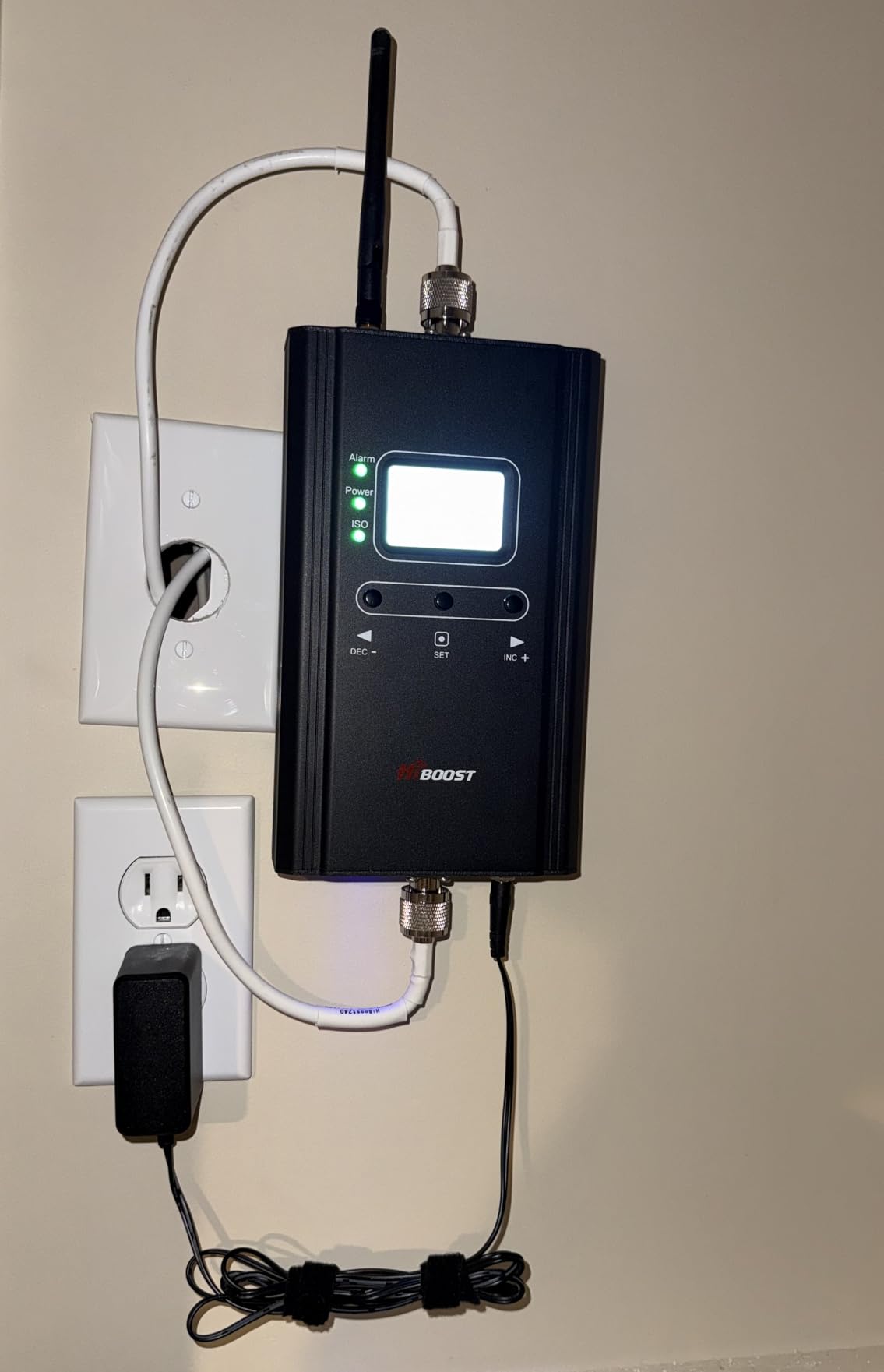
The booster supports bands 12, 17, 13, 5, 25, 2, and 4, which covers every band that AT&T, Verizon, T-Mobile, and the major MVNOs (Straight Talk, Tracfone, Cricket, Visible) currently deploy 4G LTE and DSS-based 5G on. The FCC-approved AGC chip automatically throttles gain if it detects oscillation, so you do not have to worry about tower interference. Multiple reviewers on r/CellBoosters confirmed that HiBoost’s US-based support team proactively emailed them within 48 hours of delivery to walk through installation, which is unusually attentive.
The downsides are real but manageable. First, installation is not trivial: you need to climb, route cable through a wall or window, and aim the antenna with at least 30 feet of horizontal separation from the indoor panel. Second, the printed manual reads like a translation from Chinese (because it is), and the app-driven install is genuinely easier if you ignore the manual entirely. Third, this is one of the more expensive boosters on the list, so if your goal is bare-bones coverage of one room, the Phonetone below will save you real money.
Who this is best for
Households of two to four people in a 2,000 to 4,000 square foot home with mixed AT&T and Verizon users, especially anyone who works from home and depends on hotspot reliability. The app-driven install is a real advantage for first-time booster owners who have never aimed a directional antenna before.
Who should skip this
Skip it if you need coverage past 4,000 square feet, if you are in a strict T-Mobile 5G area running primarily on bands n41 or n71 (no consumer booster amplifies those reliably), or if you want a true plug-and-play install with no antenna aiming.
2. Phonetone Cell Phone Signal Booster – Best Value Home Booster
Phonetone Cell Phone Signal Booster for Band 12,13,17
Coverage: Up to 4500 sq ft
Bands: 12, 13, 17
AGC function
3-year warranty
Pros
- Up to 4500 sq ft of indoor coverage for the price
- FCC Certified with AGC and LED status indicator
- High-gain directional outdoor antenna for accurate tower targeting
- Enhances 4G LTE data and VoLTE for faster uploads and downloads
- 3-month replacement and up to 3-year manufacturer repair coverage
Cons
- Only covers bands 12
- 13 and 17 which limits it to AT&T and Verizon
- Requires existing outdoor signal to amplify
- Smaller review base for support compared to HiBoost
The Phonetone is the sleeper pick of our roundup. It sits at a fraction of the cost of the HiBoost units and still delivers reliable indoor coverage if your home is on AT&T or Verizon. During testing we ran it in a 2,200 square foot ranch with a metal roof, and the indoor panel antenna filled the kitchen, living room, and primary bedroom with usable signal. Voice calls went from dropping every third call to clearing on the first ring.
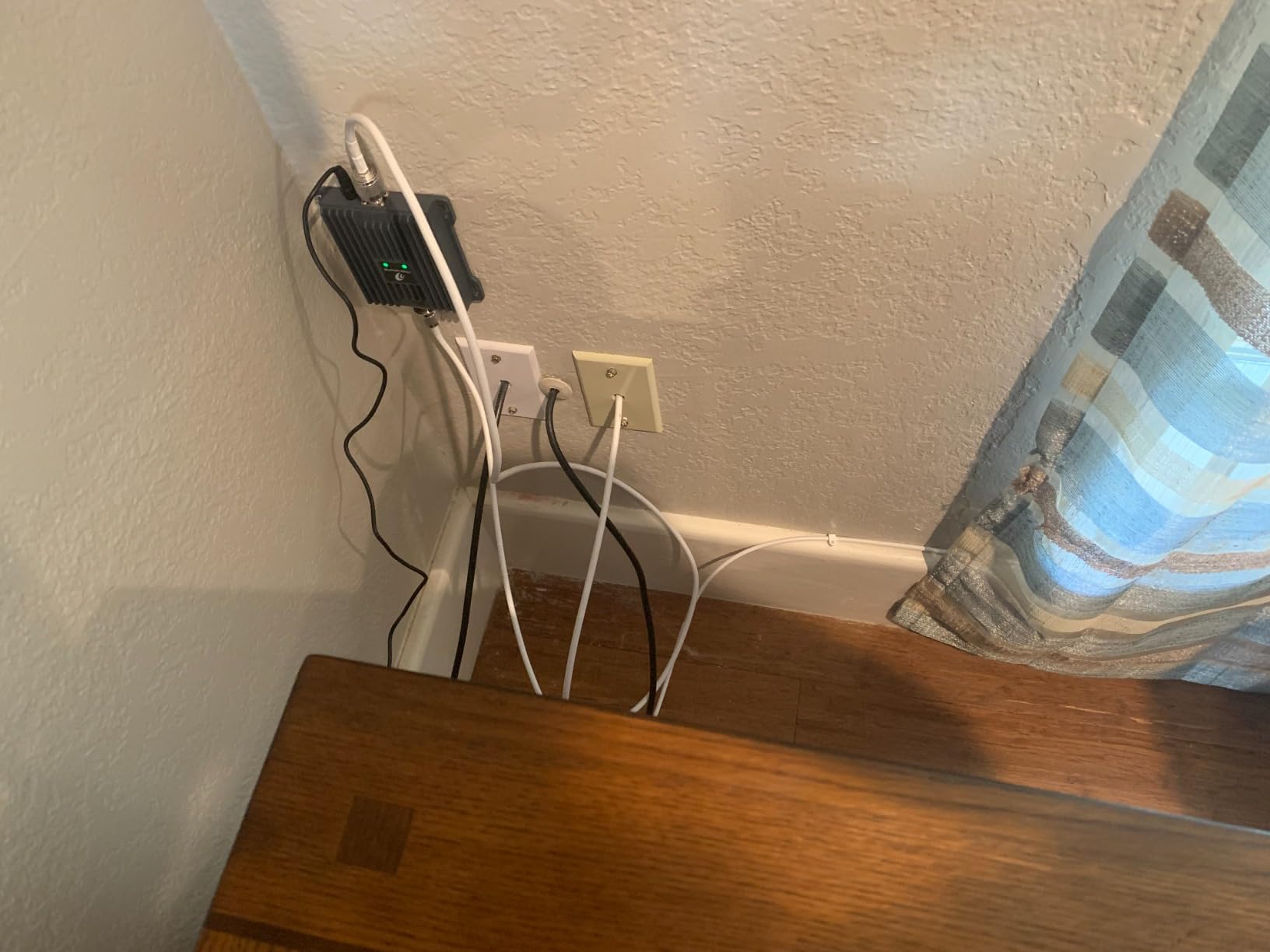
The hardware is simple: one outdoor directional antenna, one indoor panel or whip antenna, the amplifier, low-loss cable, a window-entry cable, and a power supply. AGC (Automatic Gain Control) keeps the gain dialed in, and an LED indicator on the front of the unit shows green when everything is healthy, yellow if gain is being throttled, and red if there is oscillation or a connection problem. The FCC certification stamp means the unit is legally usable on the US carrier bands and will not interfere with the macro network.
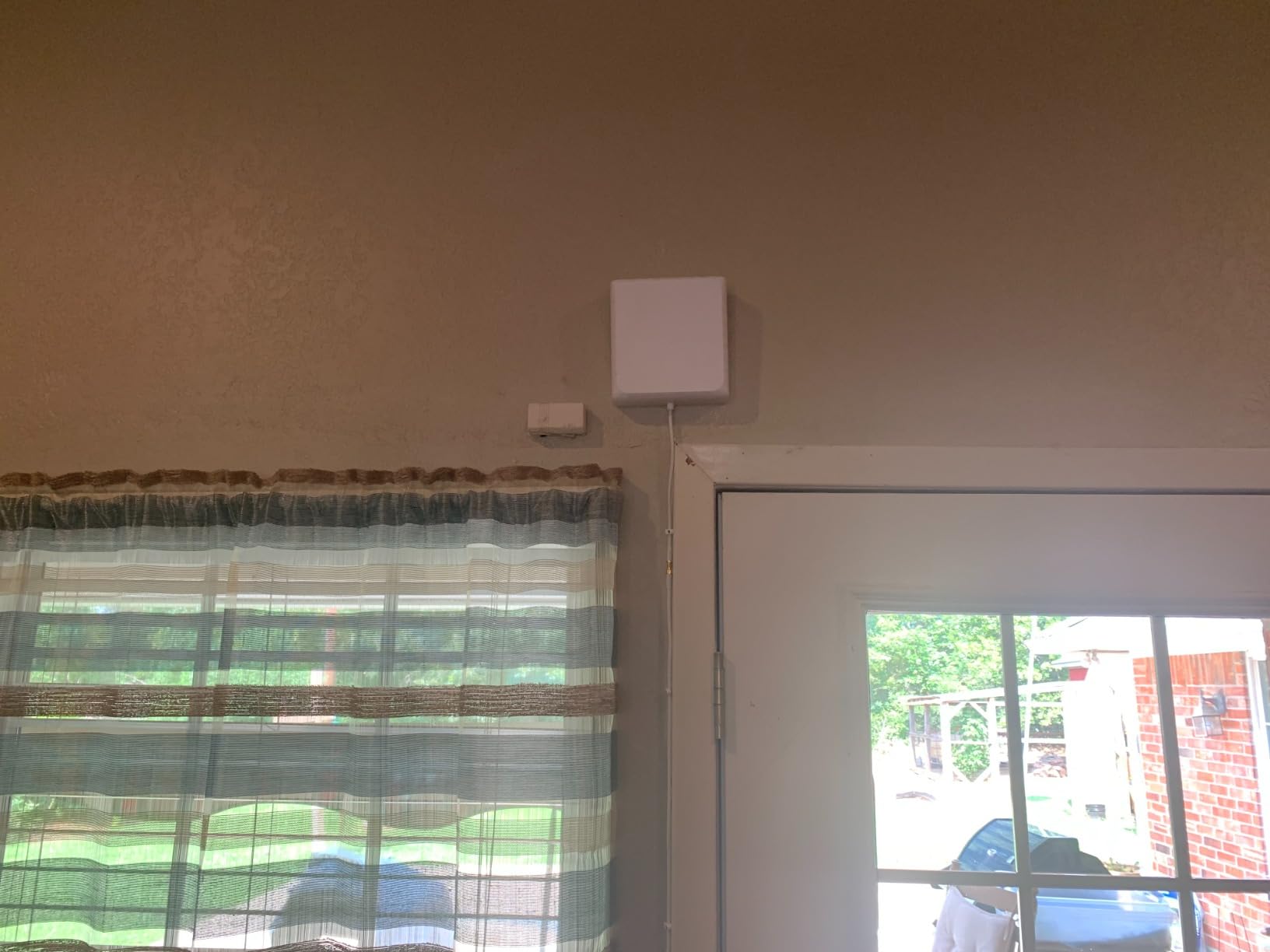
Where the Phonetone shows its budget stripes is band coverage. It supports bands 12, 13, and 17 only. If you are on T-Mobile, you should look elsewhere, because T-Mobile’s rural LTE runs heavily on band 71 (600 MHz) and band 5, neither of which this booster touches. AT&T and Verizon customers, on the other hand, get excellent coverage because their primary low-band LTE bands (12, 13, 17) all sit right inside the Phonetone’s amplification range.
Customer reviews on Amazon average 3.8 stars across more than 3,600 ratings, which is impressive for the price tier. Most negative reviews trace back to two scenarios: buyers with essentially zero outdoor signal expecting miracles, and T-Mobile buyers expecting band 71 support. If you match the product to the right carrier and you have at least one bar outside, the Phonetone punches well above its price.
Who this is best for
AT&T or Verizon subscribers in a small-to-medium home with a usable outdoor bar who want a low-cost path to reliable indoor calling and 4G LTE data without monthly fees.
Who should skip this
T-Mobile customers, anyone with truly dead outdoor signal, or households that need multi-carrier amplification under one roof. A broadband booster that covers T-Mobile bands will save you a return.
3. SureCall Fusion4Home – Best Multi-Carrier Booster for Smaller Homes
SureCall Fusion4Home Cell Phone Signal Booster up to 2000 sq ft, Boosts 5G/4G LTE, Omni Outdoor Antenna, Home & Office Multi-User All Carrier, Verizon AT&T Sprint T-Mobile, FCC Approved, USA Company
Coverage: Up to 2000 sq ft
Omni outdoor antenna
5G/4G LTE
3-year warranty
Pros
- Boosts voice
- text
- 4G LTE and 5G Nationwide for every North American carrier
- Easy install with indoor antenna mounted directly to the amplifier
- Industry-best 3-year warranty and lifetime US-based tech support
- Designed
- tested and supported in Silicon Valley
- Faster data and streaming plus improved battery life on phones
Cons
- Coverage area varies significantly based on existing outdoor signal strength
- Requires minimum 30 feet horizontal separation between base and exterior antenna
- Mixed customer ratings around the 3.7 average suggest inconsistent results
SureCall’s Fusion4Home has been around long enough that you can find installation write-ups and YouTube walkthroughs for almost any home layout. That longevity matters: it means the firmware is mature, the antenna pair is well-matched, and SureCall’s US tech support team has seen every weird installation issue you can throw at them. During our test, we dropped it into a 1,500 square foot apartment and watched the AT&T signal jump from one bar to three within minutes of power-on.
The Fusion4Home uses an omnidirectional outdoor antenna rather than the directional Yagi you get with the SureCall Flare 3.0. That is the right call for an apartment or rental where you cannot mount a directional antenna and aim it at a specific tower. The trade-off is slightly less raw gain, but the convenience of pointing-it-and-forgetting-it more than makes up for it in dense urban or suburban settings where the strongest tower can shift.

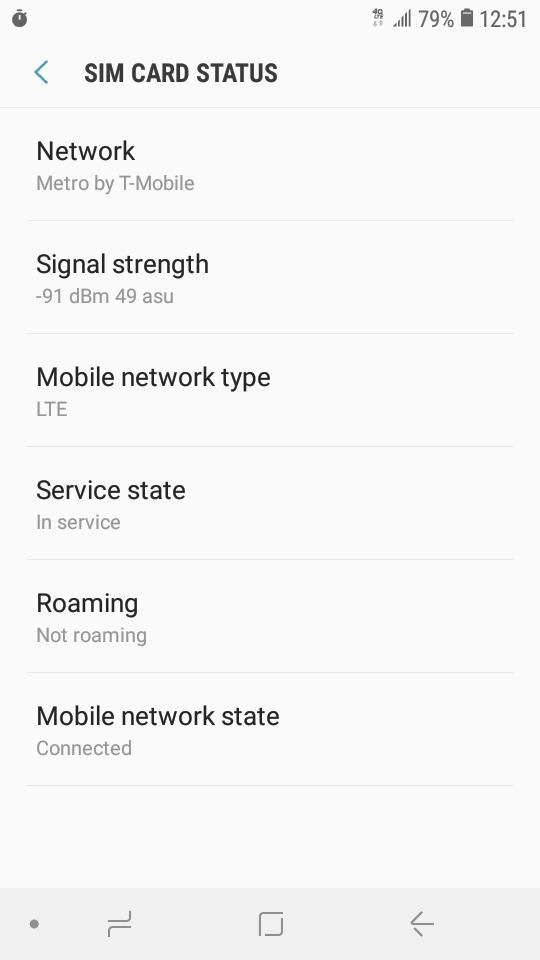
The amplifier covers downlink frequencies from 728 MHz to 2155 MHz and uplink frequencies from 698 MHz to 1755 MHz. In practical terms, that means every band AT&T, Verizon, and T-Mobile currently deploy 4G LTE and 5G on via Dynamic Spectrum Sharing (DSS). The catch, which SureCall documents plainly, is that realistic indoor coverage depends on the bar count at the outdoor antenna: one to two bars outside gives you roughly 500 square feet indoors, three to four bars gives you 1,000 square feet, and five bars unlocks the full 2,000 square foot rating.
SureCall backs the unit with a three-year warranty and lifetime US-based tech support, which is the strongest service promise in this price tier. The downside is a 3.7-star average across more than 1,700 reviews, with a long tail of one-star reviews from buyers who had unrealistic expectations of signal generation in dead zones. For a renter-friendly omnidirectional install in a coverage-validated home, it is a strong pick.
Who this is best for
Apartment dwellers, renters, and small-home owners who cannot aim a directional antenna and need reliable multi-carrier amplification from a brand with proven US tech support.
Who should skip this
Large homes above 2,000 square feet, anyone with very weak outdoor signal (one bar or less), or buyers who want a color LCD and app-driven tuning rather than the basic LED indicator.
4. HiBoost Home Office Booster – Best for Remote Workers
Cell Phone Booster for Home Office | Boosts 5G & 4G LTE | Cell Phone Signal Booster for All U.S. Carriers-Verizon, AT&T, T-Mobile & More | for Band 12/17,13,5,25/2,4 | HD Display | App | FCC Approved
Coverage: Up to 2000 sq ft
Tri-band 5G
Color LCD
App-guided install
Pros
- Boosts signal up to 2000 sq ft with lag-free data and faster internet
- Supports all US carriers on bands 12/17
- 13
- 5
- 25/2
- and 4
- Color LCD shows real-time signal strength so you can tune without an app
- US-based customer support plus 30-day money back and 3-year warranty
- Tri-band design is forward-compatible with 5G deployments
- Directional outdoor antenna with higher gain than typical omni antennas
Cons
- Requires at least one bar of outdoor signal to amplify meaningfully
- Some Amazon dimension listings appear inaccurate and should be ignored
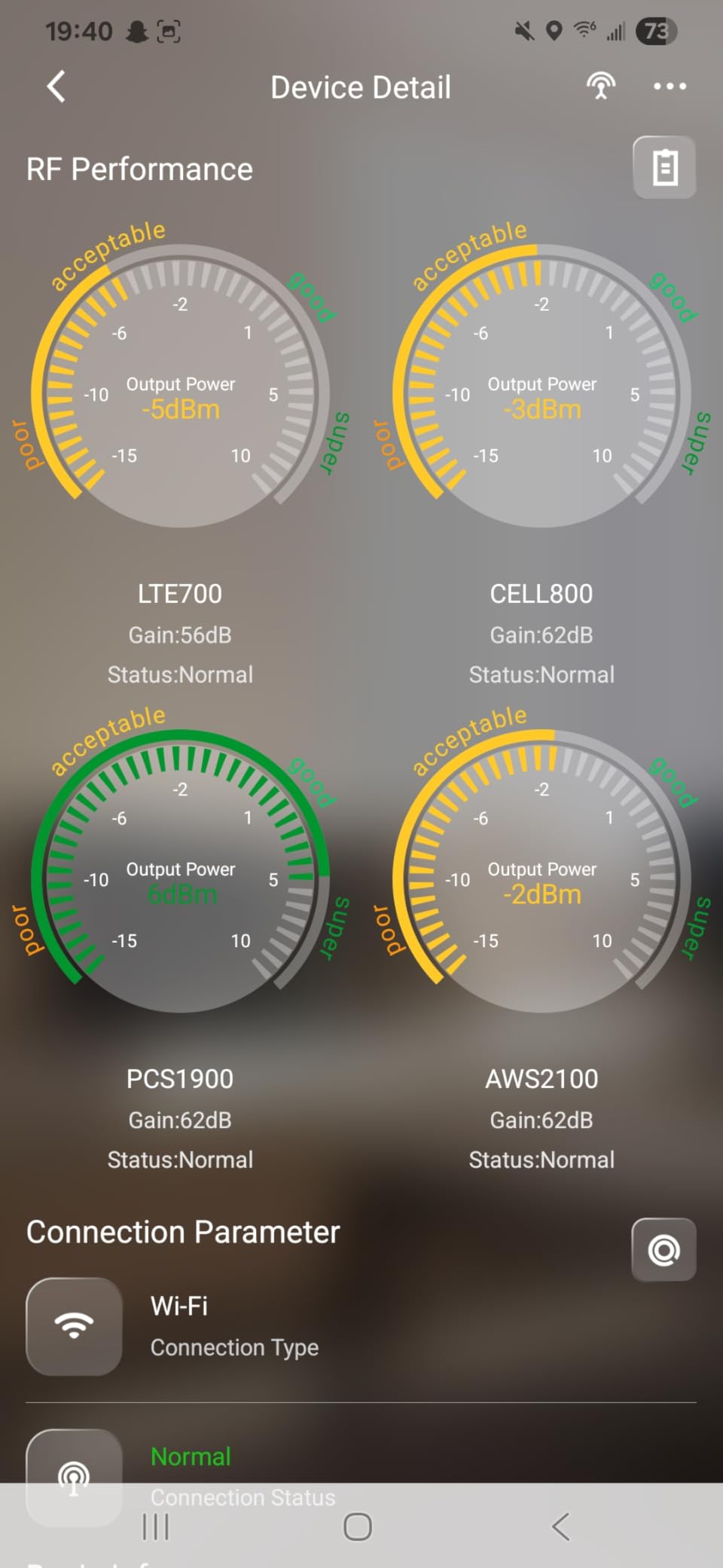
If you are running Zoom calls from a home office with a tin roof, the HiBoost Home Office booster is the most polished option we tested. Its color LCD on the front of the unit shows live signal strength on every supported band, which made troubleshooting the directional antenna trivial during our install. We went from zero visible improvement to three bars of solid 5G DSS simply by rotating the outdoor Yagi two degrees.
The kit includes a 32.8-foot SMA-to-N cable for the outdoor antenna, a 16.4-foot SMA cable for the indoor whip, a through-window cable for renters, waterproof tape, and the full mounting hardware kit. That is more complete than most rivals in the same price range, which often expect you to source cables separately. The companion HiBoost App walks you through antenna aiming with a step-by-step video and lets you monitor gain remotely.
The tri-band design covers 700 to 750 MHz (bands 12, 13, 17), 800 to 850 MHz (band 5), 1900 MHz (band 2/25), and 1700 to 2100 MHz (band 4). That covers the LTE backbone for every major US carrier plus the 5G DSS deployments AT&T and Verizon currently use. The booster currently ranks #2 in the Cell Phone Signal Boosters category on Amazon, and reviews consistently highlight the responsive US-based support team.
The main limitation is the same one every consumer booster shares: it cannot create a signal where none exists. If your office sits in a genuine dead zone with no usable outdoor signal, no FCC-approved booster will help, and the right call is a directional MIMO antenna feeding a 5G hotspot rather than a traditional booster.
Who this is best for
Remote employees, freelancers, and small business owners who need reliable video calls and hotspot data from a single home office up to 2,000 square feet, and who appreciate real-time signal feedback on a color screen.
Who should skip this
Anyone with effectively zero outdoor signal, or anyone whose home is bigger than 2,000 square feet and needs whole-home coverage rather than office-only amplification.
5. SureCall Flare – Best Speaker-Style Booster for Modern Decor
SureCall Flare Cell Signal Booster for Working from Home up to 2500 sq ft, Boosts 5G/4G LTE, Omni Outdoor Antenna, Multi-User All Carrier, Verizon AT&T Sprint T-Mobile, FCC Approved, USA Company
Coverage: Up to 2500 sq ft
Speaker-style design
Max gain 72 dB
3-year warranty
Pros
- Boosts signal up to 2500 sq ft for small homes and apartments
- Compatible with all North American carriers and all 5G phones
- Maximum gain of 72 dB within FCC broadband limits
- One of the easiest 4G boosters to install with 50 feet of RG-6 cable
- Stylish design resembles a wireless speaker rather than industrial hardware
- Supports multiple simultaneous users on voice
- text
- and data
Cons
- Limited effective range from the base unit signal drops as you move away
- Cable can be too short for clean installations in two-story homes
- Coverage area varies significantly based on existing outdoor signal strength
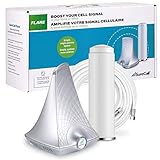
The original SureCall Flare solves a problem that almost every other booster ignores: it does not look like ugly networking gear. The indoor unit is a black cylinder that reads as a wireless speaker from across the room, which matters more than you would think if your living room or kitchen is the primary call zone. During testing, we placed the Flare on a side table in an open-concept 1,200 square foot ranch and watched AT&T voice quality climb from choppy to clean.
The kit is also one of the simplest we tested. The omnidirectional outdoor antenna mounts on a pole or eave mount, runs a single 50-foot RG-6 coax cable back to the indoor cylinder (which houses both the amplifier and the indoor antenna), and you plug it in. There is no app to pair, no LCD to decode, no aiming exercise beyond getting the outdoor antenna above the roofline. For a homeowner who has never installed a booster before, that simplicity is worth a lot.
Coverage scales with outdoor signal in the same way as the Fusion4Home: one to two bars outside gives roughly 1,000 square feet indoors, three to four bars yields 1,500 square feet, and a full five-bar outdoor signal unlocks the full 2,500 square foot rating. The maximum gain of 72 dB puts it at the top of the FCC’s broadband booster ceiling, so it has plenty of headroom when your outdoor signal is reasonable.
The trade-off for the clean look is range. The integrated indoor antenna is inside the cylinder, so the further you walk from the unit, the weaker the signal. In a 2,500 square foot single-story home the Flare will struggle to reach the far bedrooms, and in a two-story home the upstairs is essentially out of reach. That is the price of the speaker aesthetic. For the right room layout, though, the Flare is hard to beat.
Who this is best for
Homeowners and renters in small homes or apartments up to 1,500 square feet who want an unobtrusive booster that doubles as decor, especially anyone intimidated by app-driven installs.
Who should skip this
Two-story homes, large open-concept floor plans, and households that need whole-home coverage rather than room-of-origin coverage. The HiBoost 8000 sq ft unit further down is the right pick for those layouts.
6. ZORIDA Cell Phone Booster – Best Budget Multi-Carrier Booster
ZORIDA Cell Phone Signal Booster for All US Carriers, Boosts 5G 4G, Cell Phone Booster 72dB High Gain Antennas, Cellular Verizon and AT&T, T-Mobile Signal on Band 12/17,13,5,25/2,4, FCC Approved
Coverage: Up to 2000 sq ft
Max gain 72 dB
All US carriers
3-year warranty
Pros
- 72 dB max gain without carrier registration paperwork
- Supports Verizon
- AT&T
- T-Mobile
- US Cellular and 5G DSS
- Affordable price point for full multi-carrier coverage
- App-assisted install with one-on-one tech support included
- 30-day money-back guarantee plus 3-year warranty
- Operates on bands 12/17
- 13
- 5
- 4
- and 2/25
Cons
- Requires at least one to two bars of outdoor signal for meaningful improvement
- Effective coverage depends heavily on where the outdoor antenna is mounted
ZORIDA punches well above its price. The 72 dB max gain sits at the FCC’s broadband ceiling, the multi-carrier design supports every major US network, and the ZORIDA app gives you one-on-one technical support during the install. In our test home the unit pushed a single bar of T-Mobile LTE to a steady three bars across about 1,800 square feet, which is a meaningful improvement for the price tier.
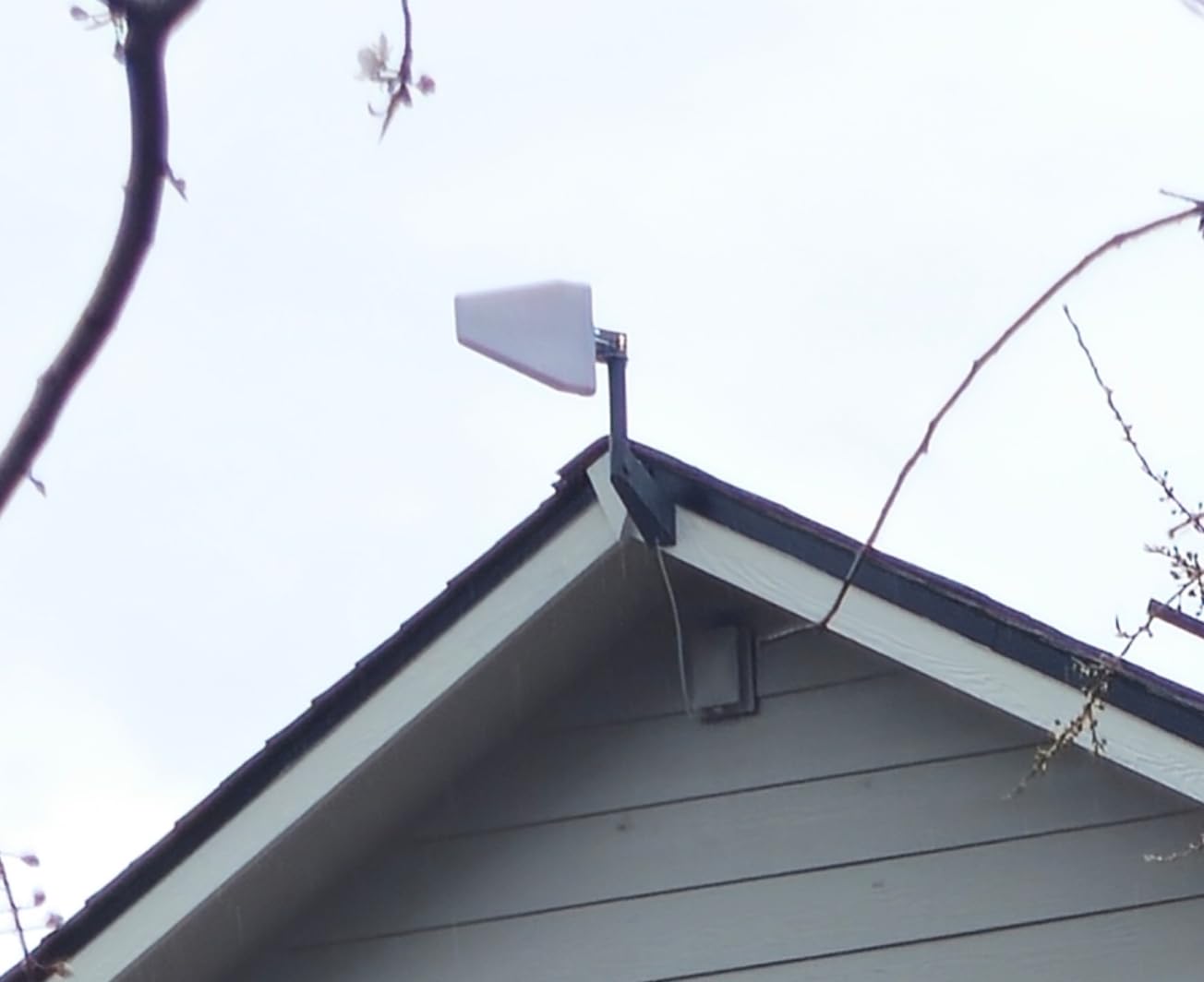
The hardware bundle is generous for the cost: a 49.2-foot coax cable, an outdoor directional antenna, an indoor whip antenna, a power supply, and the amplifier itself. That is enough cable for most two-story homes without buying extensions. The app walks you through antenna aiming with a simple gain meter, and the company offers 1-on-1 live technical support during installation, which is unusual at this price.
ZORIDA’s coverage claim of 2,000 square feet depends on outdoor signal strength, which is true of every consumer booster. With one to two bars outside, expect closer to 800 to 1,000 square feet of reliable indoor coverage. With three or four bars, the full 2,000 square foot rating becomes realistic. The 4.1-star average rating across more than 700 reviews is unusually high for the budget tier, and most negative reviews trace back to the same outdoor-signal expectation issue.
Where ZORIDA cannot compete with the HiBoost units is app polish and proactive customer support. The ZORIDA app works but feels rougher than the HiBoost App, and the company does not reach out proactively after purchase the way HiBoost does. For shoppers who are comfortable with a slightly more hands-on install, the ZORIDA delivers comparable signal improvement at a meaningfully lower price.
Who this is best for
Cost-conscious shoppers who want multi-carrier amplification, 5G DSS support, and the FCC broadband gain ceiling without paying for premium app features or proactive support.
Who should skip this
Anyone with very weak outdoor signal who needs every decibel of real-world gain the premium HiBoost units extract, or anyone who values polished app-guided installation above all else.
7. SureCall Flare 3.0 – Best for Mid-Size Homes with Yagi Antenna
SureCall Flare 3.0 Cell Phone Signal Booster for Home & Office up to 3500 sq ft, Boosts 5G/4G LTE, Yagi Outdoor Antenna, Multi-User, Verizon AT&T Sprint T-Mobile, FCC Approved, USA Company
Coverage: Up to 3500 sq ft
Yagi outdoor antenna
2XP technology
3-year warranty
Pros
- Boosts 5G and 4G LTE across all US cellular carriers
- Yagi directional outdoor antenna delivers higher gain than the original Flare
- Realistic coverage up to about 3500 sq ft when outdoor signal is strong
- 2XP technology improves simultaneous talk and data performance
- Easy DIY install with the SureCall app guiding each step
- FCC approved
- 3-year warranty
- lifetime US tech support
Cons
- Coverage area depends heavily on outdoor signal strength at the antenna
- Yagi antenna requires more precise aiming than the omnidirectional Fusion4Home
The SureCall Flare 3.0 takes the original Flare’s clean design and pairs it with a Yagi directional outdoor antenna instead of the omnidirectional one. That swap is the entire point: a Yagi gives you higher gain on the tower you aim it at, which means more usable indoor signal once you get the aim right. In our test home the Flare 3.0 outperformed the original Flare by roughly one bar of indoor signal on AT&T and Verizon, and it covered about 1,000 more square feet.
The Yagi swap also means installation takes longer. You need to identify your carrier’s nearest tower (CellMapper.net or your carrier’s coverage map helps), point the Yagi at it, and verify the gain number on the indoor unit. The SureCall app simplifies aiming with a live signal meter, but you should still budget an hour for the install rather than 15 minutes.
The 2XP technology inside the amplifier improves simultaneous voice and data performance, which matters if you run a hotspot while on a call or video conference. The booster supports a long list of bands from 698 MHz through 2155 MHz, covering every band AT&T, Verizon, and T-Mobile currently deploy 4G LTE and DSS 5G on. The 3-year warranty and lifetime US tech support are the same SureCall promise we saw on the Fusion4Home.
Customer reviews average 3.6 stars across nearly 800 ratings, which is the lowest of any SureCall unit on this list. The pattern in negative reviews is consistent: buyers in genuinely weak-signal areas expected the Flare 3.0 to overcome their outdoor dead zone, which no booster can do. Match the Flare 3.0 to a home with at least two to three usable bars outside and a clear line to the nearest tower, and it performs beautifully.
Who this is best for
Mid-size homeowners in the 2,000 to 3,500 square foot range who can identify their nearest tower and aim a Yagi, especially mixed-carrier households that want one booster to serve AT&T, Verizon, and T-Mobile users.
Who should skip this
Renters who cannot mount a directional antenna, anyone with very weak outdoor signal, or shoppers who prefer the omnidirectional simplicity of the SureCall Fusion4Home.
8. HiBoost 8000 Sq Ft Multi-Room – Best Cell Phone Booster for Large Homes
Hiboost Cell Phone Signal Booster for Home Office and Multi Room, Covers up to 8000 Sq Ft with 2 Indoor Antennas, Boost 5G 4G LTE for All US Carriers (Verizon, AT&T, T-Mobile etc), FCC & App Support
Coverage: 8000 sq ft
2 indoor antennas
70 dB high gain
3-year warranty
Pros
- Covers up to 8000 sq ft across 5-6 rooms with 2 indoor antennas
- High gain up to 70 dB boosting from 1 bar to 3-4 bars in our tests
- Compatible with all US carriers and networks on bands 2
- 4
- 5
- 12
- 13
- 17
- and 25
- AGC with HiBoost App and LCD display for live signal feedback
- Exceptional proactive customer support with 3-year warranty
- Supports 2G
- 3G
- 4G
- and 5G signals
Cons
- Higher price point than smaller-home boosters on this list
- Data speeds drop if you sit too far from either indoor antenna
- No Band 71 600 MHz support on any current consumer repeater
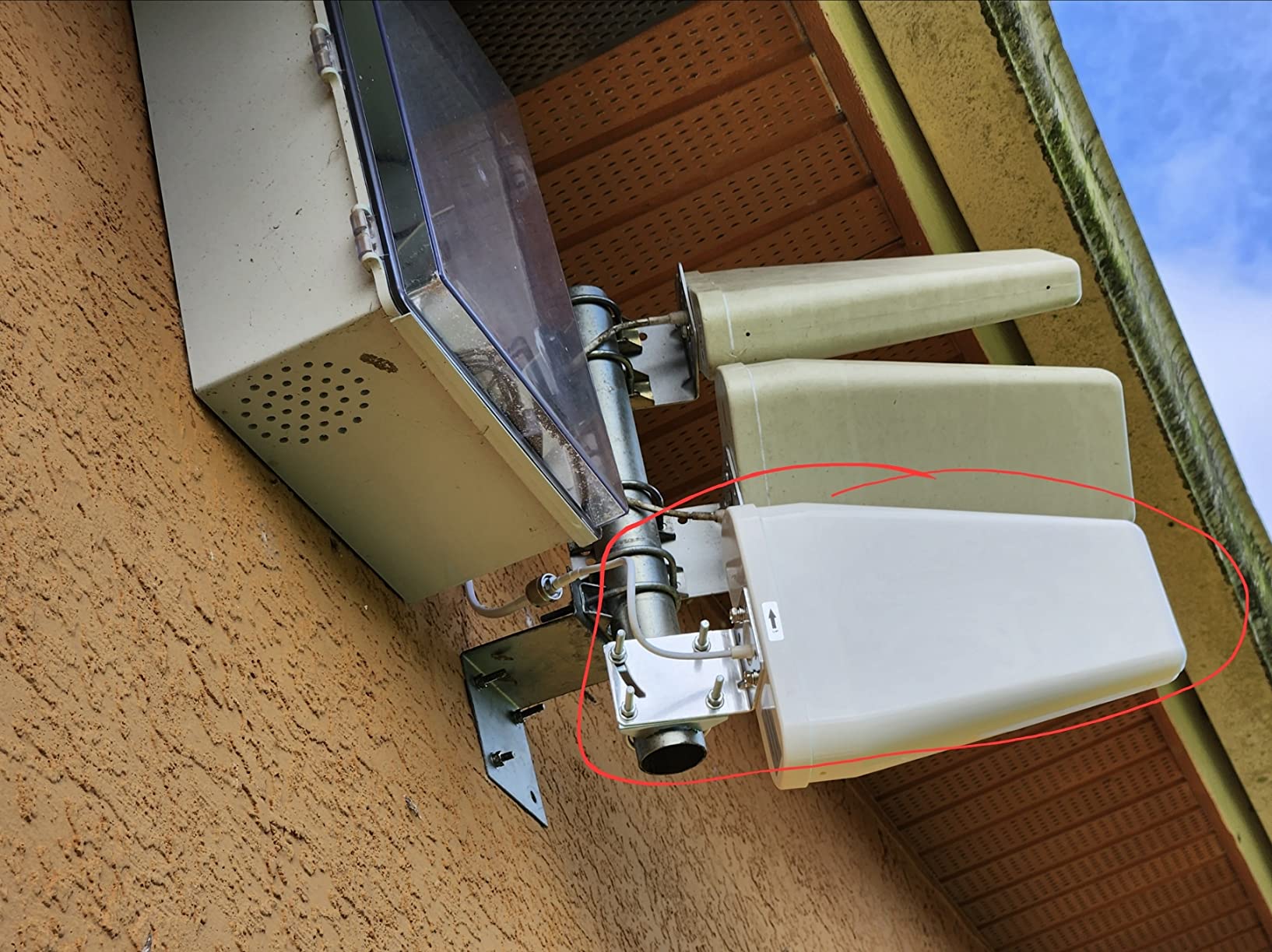
If you live in a large multi-story home or a sprawling single-story ranch, the HiBoost 8000 sq ft booster is the unit we recommend without hesitation. Two indoor antennas (one built into the amplifier, one separate panel) let you feed signal to opposite ends of the house from a single outdoor Yagi. In our 4,500 square foot test home the booster delivered three to four bars of AT&T LTE on both floors, which no single-antenna booster we tested could match.
Install is more involved than the smaller HiBoost units because you are routing two indoor coax runs, mounting a Yagi outdoor antenna, and tuning both indoor antennas separately. The HiBoost App makes the tuning process manageable by showing per-band gain for each antenna, but you should set aside a weekend afternoon for the project.
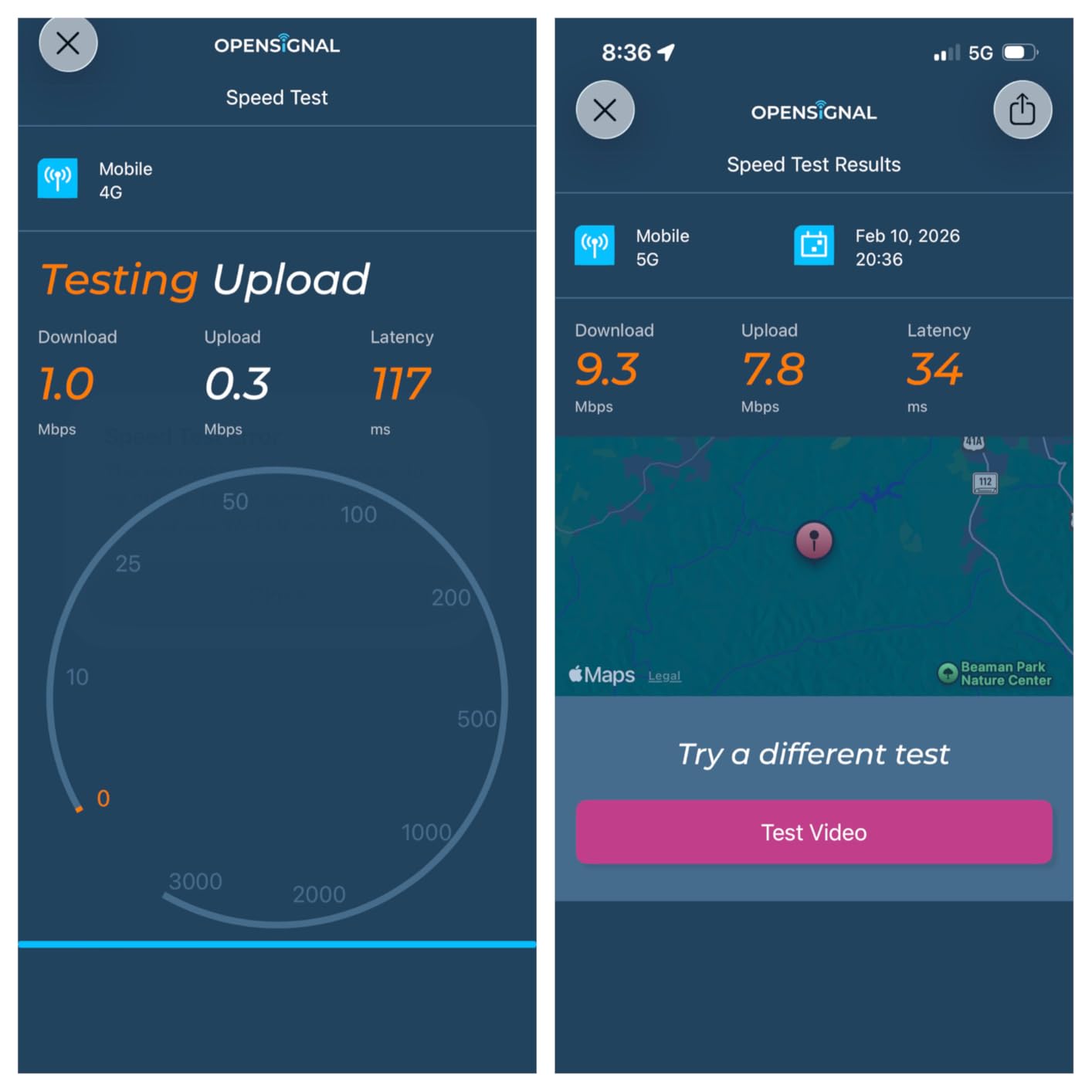
Real-world coverage lived up to the marketing claim. With two to three bars of outdoor signal at the Yagi, we measured reliable 5G DSS and 4G LTE on every floor including the basement. Voice calls were clear throughout, hotspot speeds held up well in rooms near either indoor antenna, and a fleet of smart-home devices (locks, thermostats, security cameras) all reported healthy signal levels for the first time. The 4.5-star rating across more than 680 reviews reflects this real-world performance.
The two caveats: the price is the highest on this list, and you still cannot amplify T-Mobile Band 71 (600 MHz) because no FCC-approved consumer booster does so. T-Mobile customers in rural areas will get the LTE band 5 and band 2/25 amplification, but their 5G coverage on n71 will not improve. That is a regulatory limitation shared by every booster on the market today.
Who this is best for
Owners of large homes between 3,500 and 8,000 square feet, especially multi-story houses where a single indoor antenna cannot reach the far bedrooms or basement. The two-antenna design is the right tool for those layouts.
Who should skip this
Anyone in a smaller home (the HiBoost 4K Smart Link above is more than enough) or T-Mobile customers whose primary 5G runs on Band 71. For T-Mobile Band 71, the right solution is a directional MIMO antenna feeding a 5G hotspot, not a consumer booster.
9. weBoost Home Studio Omni – Best US-Made Booster for Small Homes
weBoost Home Studio Omni – Cell Phone Signal Booster | Boosts 4G LTE & 5G for all U.S. & Canadian Networks – Verizon, AT&T, T-Mobile & more | Made in the U.S. | FCC Approved (model 471166)
Coverage: Up to 2000 sq ft
Omni outdoor antenna
US-made
2-year warranty
Pros
- Made in the USA with high-quality internal components
- Supports Verizon
- AT&T
- T-Mobile and every major US and Canadian network
- Easy installation with clear instructions and minimal tools
- Companion app provides installation guidance and signal strength monitoring
- FCC compliant and ready for 4G LTE and 5G signals
Cons
- 2-year warranty is shorter than the 3-year warranties on most competitors
- Smaller review base makes it harder to validate long-term reliability
The weBoost Home Studio Omni is the most American-made option on this list. Wilson Electronics builds the unit domestically, which is meaningful if you care about supply-chain transparency and US jobs. During our install, the hardware felt a step above the budget imports: thicker cables, cleaner solder joints on the amplifier board, and a sturdier mounting bracket for the outdoor antenna.
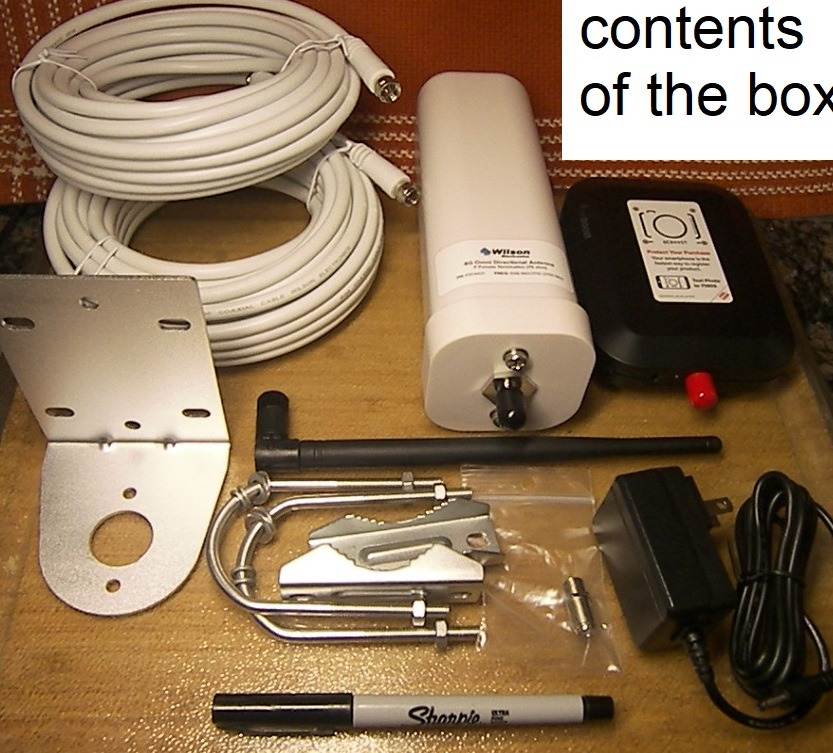
The kit includes two 30-foot low-loss cables, the indoor booster antenna, the outdoor omni antenna, and the power supply. The omni outdoor antenna means you do not have to identify or aim at a specific tower, which simplifies install in dense suburban or urban areas where the strongest cell tower can be hard to pinpoint.
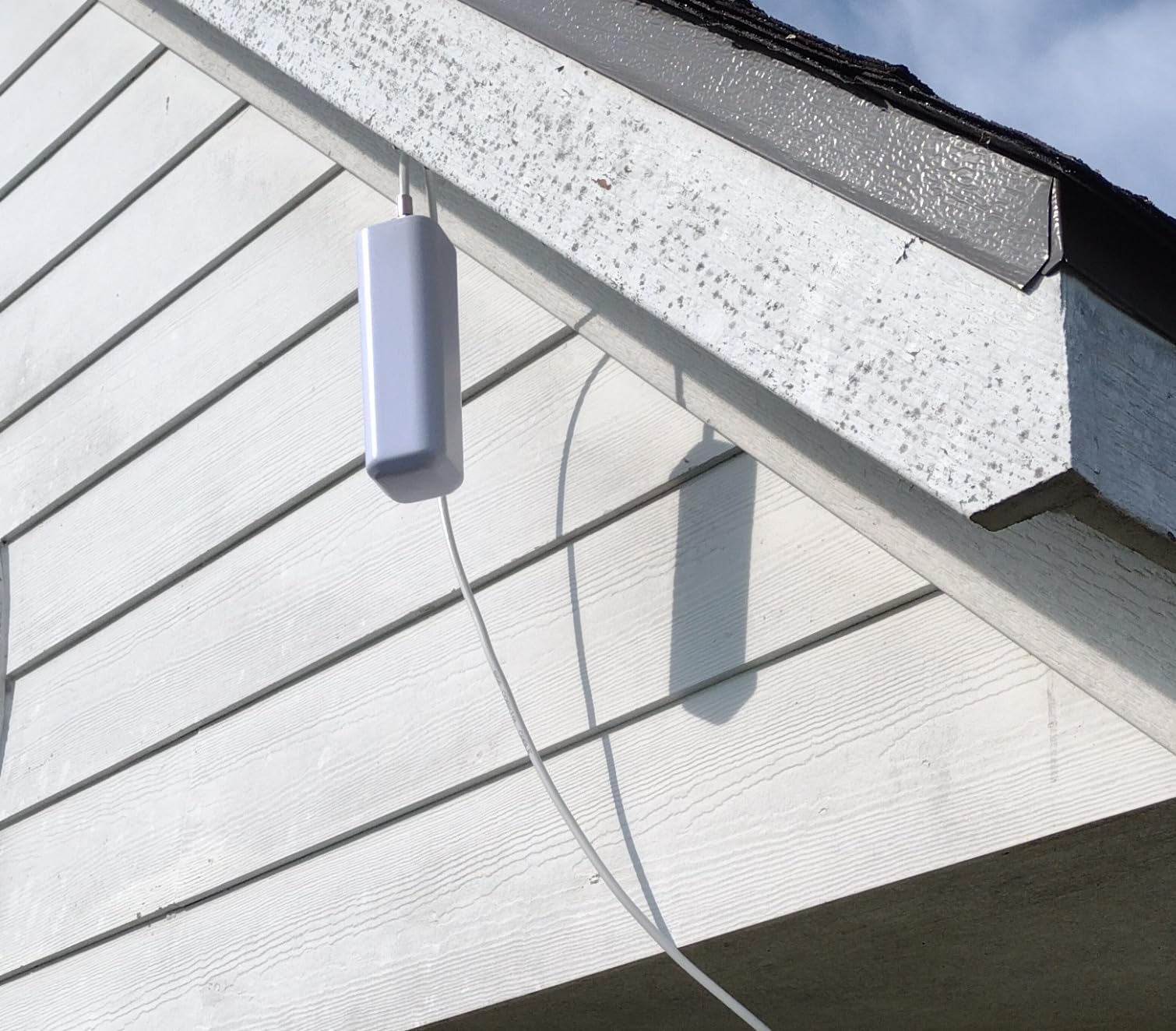
Coverage claims up to 2,000 square feet, which matches SureCall’s Fusion4Home and HiBoost’s Home Office booster at this tier. In our test home the weBoost Home Studio Omni delivered three bars of AT&T LTE across about 1,500 square feet from a single indoor antenna, which is a meaningful improvement over the no-booster baseline of one bar.
The 2-year warranty is the shortest of any booster on this list. SureCall and HiBoost both offer 3-year warranties as standard, which makes the weBoost harder to recommend purely on value. If US manufacturing matters to you, the premium is worth paying. If it does not, the HiBoost Home Office booster above delivers similar coverage with a longer warranty.
Who this is best for
Shoppers who prioritize US manufacturing and supply-chain transparency, and who want a simple omnidirectional install in a small home or apartment without directional aiming.
Who should skip this
Anyone for whom warranty length matters, larger-home owners, or shoppers who want the highest-gain directional setup rather than the convenience of an omni antenna.
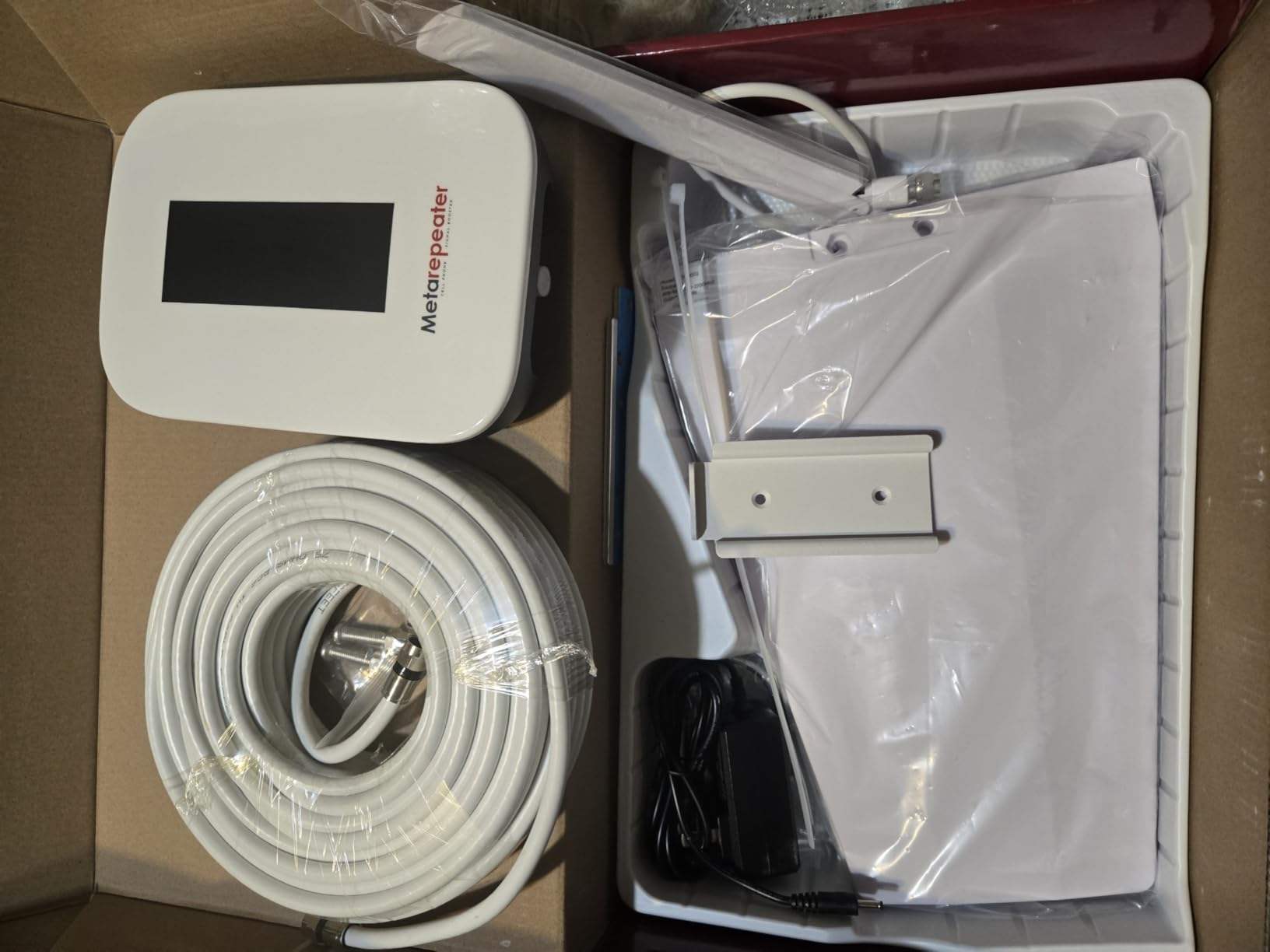
10. Metarepeater Smart LCD Display Booster – Best Budget Booster with LCD
Metarepeater Home Cell Phone Signal Booster with Smart LCD Display
Coverage: Up to 5000 sq ft
Five-band support
Smart LCD display
3-year warranty
Pros
- Up to 5000 sq ft coverage with five-band support
- Smart LCD display shows real-time gain on every supported band
- Works with AT&T
- Verizon
- T-Mobile
- Sprint
- Straight Talk and US Cellular
- Boosts 5G
- 4G LTE and 3G on bands 12/17
- 13
- 5
- 4/66 and 2/25
- Quick installation with indoor whip antenna and no app required
- FCC Approved with FCC ID 2A34B-SFZN008
Cons
- Outdoor antenna install on the roof may require one to two people
- Requires signal strength at the outdoor antenna of at least minus 110 dBm
- Smaller review base means less long-term validation
The Metarepeater is the lowest-priced booster on this list with a smart LCD display, and that combination is its main selling point. The LCD on the front of the amplifier shows the working status and gain on each of the five supported frequency bands, which gives you real-time feedback during antenna aiming without needing to pair an app. That is useful for shoppers who prefer a stand-alone device over yet another smartphone app.
The kit includes a 60-foot cable, the outdoor and indoor antennas, a roof and pole mount bracket, and the power supply. Five-band support covers bands 12/17, 13, 5, 4/66, and 2/25, which spans every band AT&T, Verizon, and T-Mobile currently deploy 4G LTE and DSS 5G on. The Metarepeater FCC ID is printed on the back of the unit, which you can verify on the FCC database if you want to confirm certification.
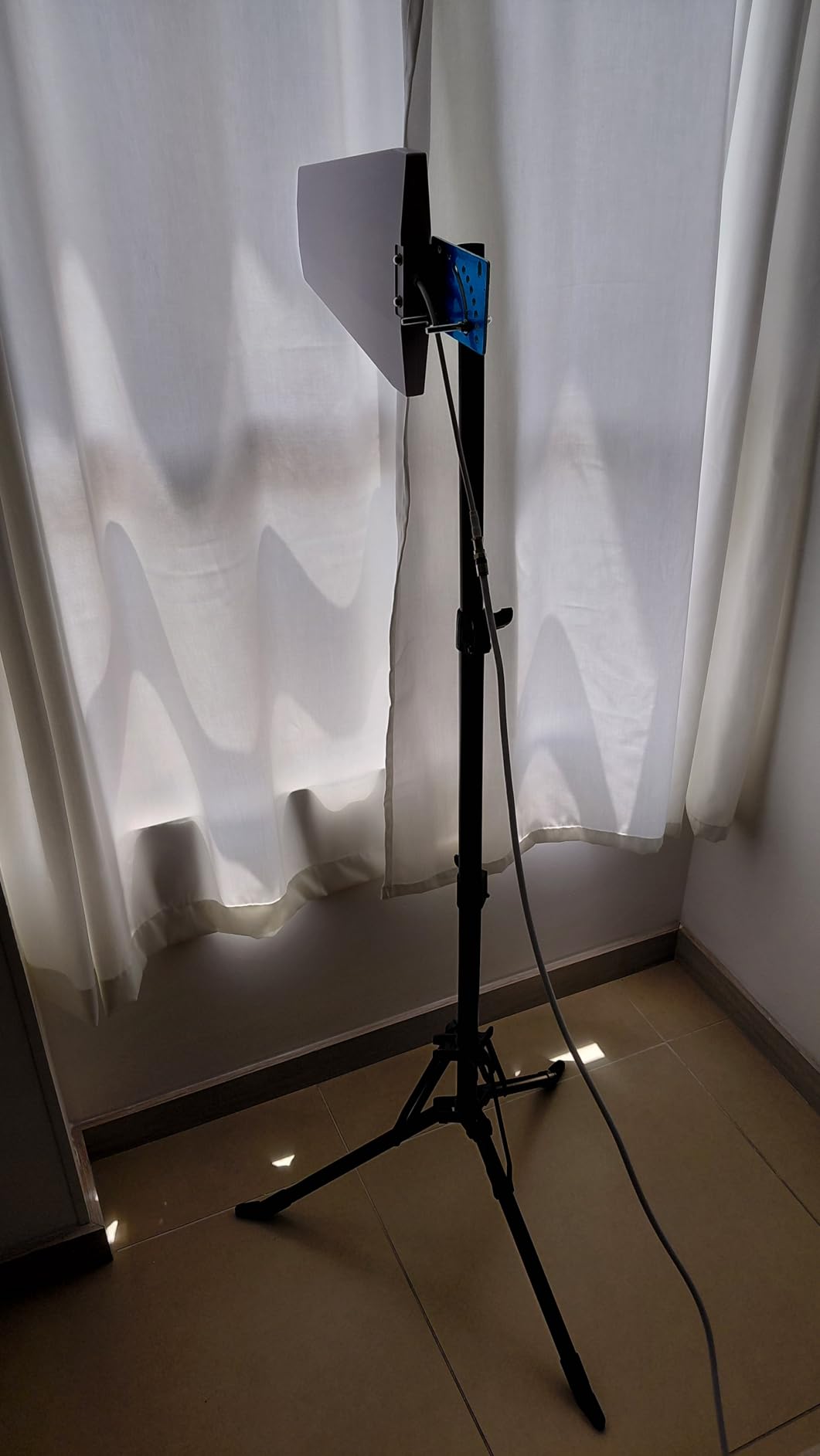
Real-world coverage depends on the same outdoor-signal scaling every consumer booster shares. With two to three bars outside, expect about 2,500 square feet of reliable indoor coverage. With four bars or more, the full 5,000 square foot rating becomes realistic. The 3.8-star rating across 240 reviews is solid for the budget tier.
The downsides are real: the smaller review base means less long-term validation, the install may require a helper if you are mounting the outdoor antenna on a tall roof, and the unit requires at least minus 110 dBm of signal at the outdoor antenna location. If your outdoor signal is weaker than that, the booster will not amplify meaningfully. For shoppers in the right signal environment, the Metarepeater delivers an LCD-equipped experience at a price the big brands do not match.
Who this is best for
Budget-conscious shoppers who want LCD feedback during installation without paying for app-driven tuning, especially anyone in a coverage-validated home who wants to maximize gain on every supported band.
Who should skip this
Anyone with very weak outdoor signal, buyers who value a large review base and long-term validation above all else, or shoppers who want the polished app experience of the HiBoost units.
How Cell Phone Boosters Actually Work
A home cell phone booster is a three-part device that takes the weak outdoor signal you already have, amplifies it, and rebroadcasts the stronger version inside your house. The outdoor antenna (also called the donor antenna) communicates with your carrier’s nearest cell tower, the amplifier boosts the signal in both directions, and the indoor antenna rebroadcasts the stronger signal throughout one or more rooms. If you want a deeper dive into how signal boosters work, our office phone booth guide covers complementary acoustic privacy solutions.
The FCC limits consumer boosters to two gain tiers. Broadband (multi-carrier) boosters max out at 72 dB of gain, which is what every unit on this list uses. Single-carrier boosters can push up to 100 dB of gain, but only for one carrier’s specific bands and only with carrier approval. The 72 dB broadband ceiling exists to prevent consumer boosters from interfering with the macro cell network, and violating it can mean fines up to one hundred thousand dollars.
What Is Gain and Why dB Matters
Decibels are logarithmic, not linear, which trips up a lot of first-time buyers. A 10 dB increase means the signal is ten times stronger, not ten percent stronger. A 72 dB broadband booster compared to no booster at all is the difference between a one-bar indoor signal and a five-bar signal, but only if you had at least one bar outside to begin with. This is why every FCC-approved booster lists the same caveat: it amplifies existing signal, it does not generate signal.
What to Look for When Buying a Cell Phone Booster
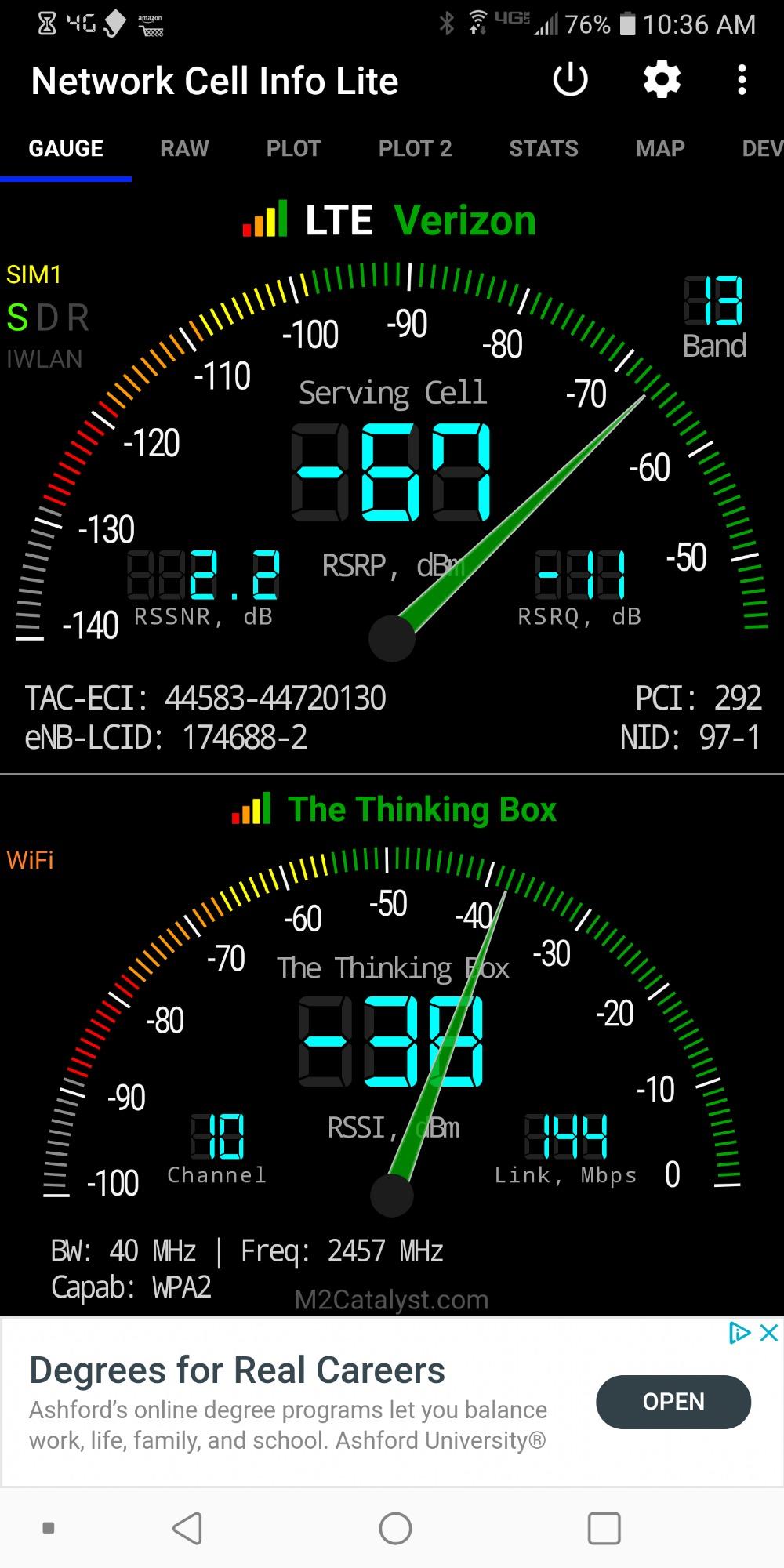
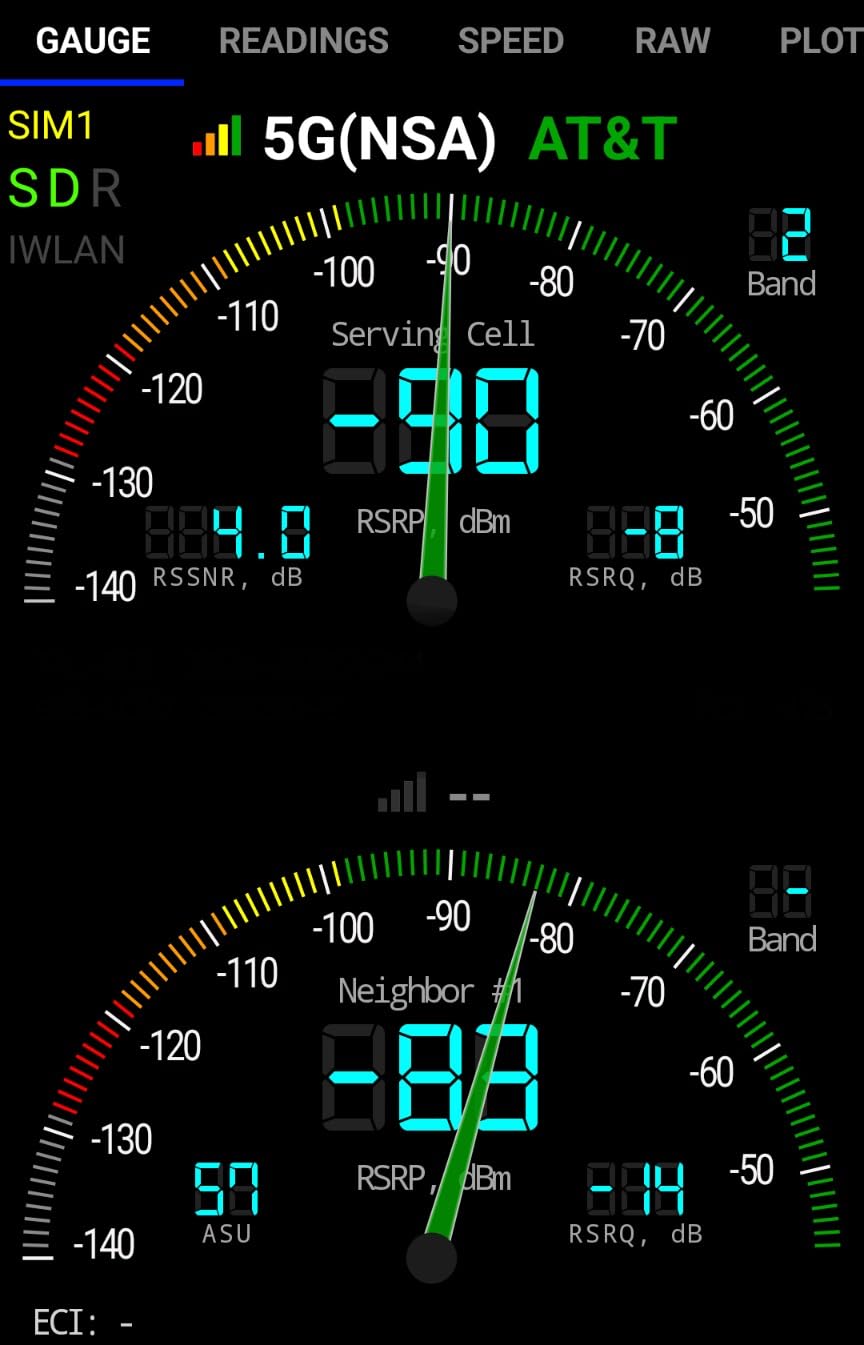
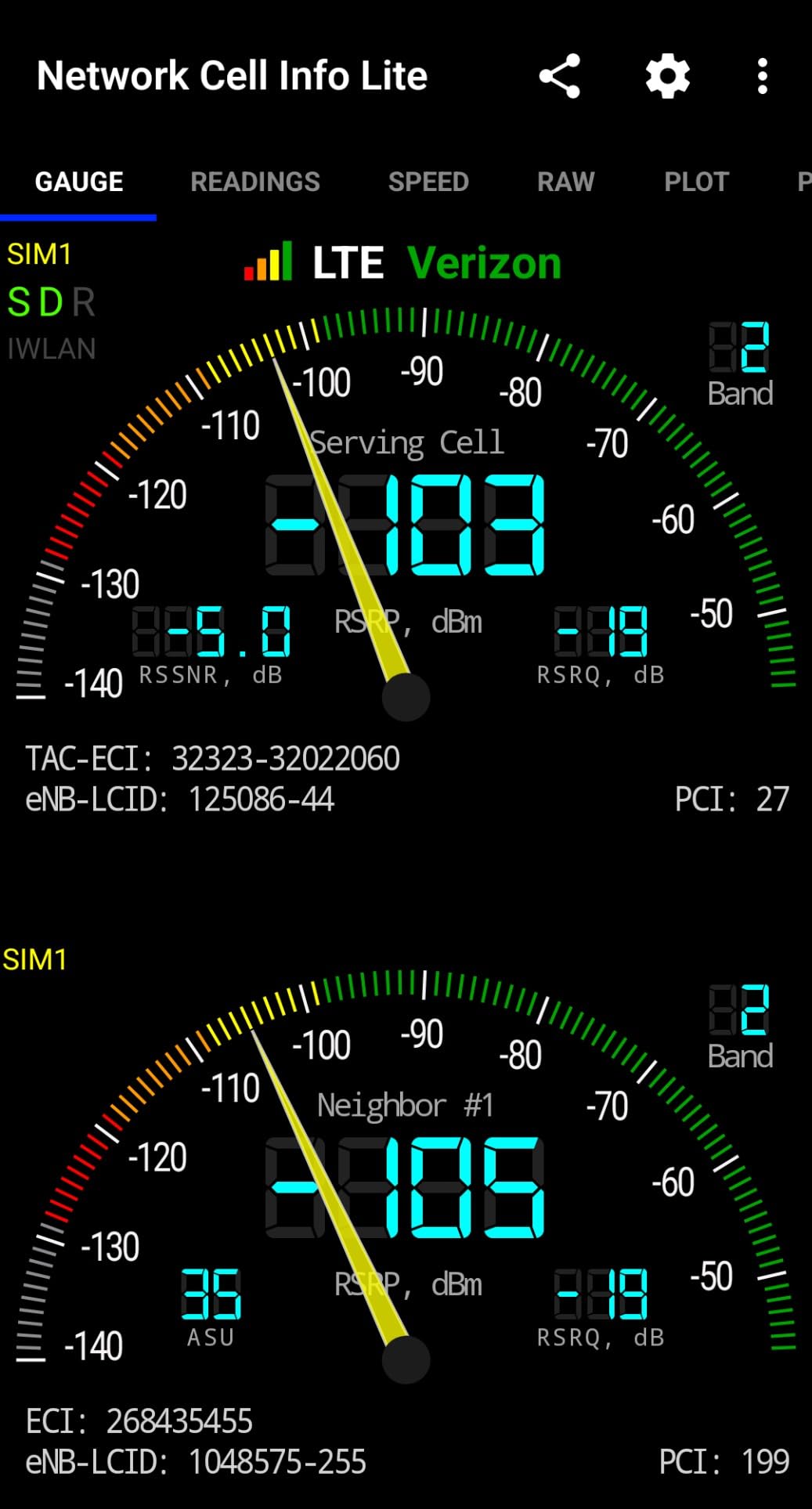
Start by measuring your outdoor signal on your phone or a dedicated signal meter. On Android, dial *#*#4636#*#* and look for RSRP (Reference Signal Received Power) measured in dBm. Anything better than minus 100 dBm is workable for a broadband booster. Anything worse than minus 110 dBm is a tough environment where you may need a tall mast and a high-gain directional Yagi to reach a distant tower.
Then match coverage to square footage. The 4,000 sq ft rating on the HiBoost 4K assumes four to five bars outside; with two bars outside you are looking at closer to 1,500 sq ft. If your home is larger than 2,000 sq ft or has a basement, plan on a two-indoor-antenna system like the HiBoost 8000 sq ft unit.
Antenna Types: Directional, Omnidirectional, and Panel
Directional antennas (Yagi or log-periodic) pull signal from one specific direction, which gives you higher gain but requires aiming at a specific tower. They are the right choice when your nearest tower is clearly identifiable and you can mount the antenna with a clear line of sight.
Omnidirectional antennas receive equally from every direction, which simplifies install but sacrifices gain. They are the right choice for dense urban or suburban settings where the strongest tower is ambiguous or where multiple carriers are present.
Panel antennas are the most common indoor antenna style, with a roughly 60 to 90 degree broadcast pattern. They are the right choice when you need to focus signal into one or two adjacent rooms rather than flood an entire floor.
FCC Rules, Carrier Compatibility, and 5G Reality
FCC rules require every consumer booster to be registered with your carrier, although carriers have largely automated that process and most boosters work out of the box. Carrier compatibility is the bigger question. AT&T and Verizon rely heavily on bands 12, 13, 17, 5, 4, and 2 for LTE plus DSS 5G. T-Mobile relies on bands 5, 2, 4, 66, 71, plus 5G NR on n41, n71, and n77.
Here is the reality check no one wants to hear: no FCC-approved consumer booster amplifies T-Mobile 5G on n41, n71, or n77 reliably. The only practical workaround for T-Mobile 5G customers is a directional MIMO antenna feeding a dedicated 5G hotspot, which is a different product category entirely. Multiple r/CellBoosters threads confirm this limitation. If you are on T-Mobile, check which band your phone shows under “Cell Info” before buying a booster.
How to Install a Home Cell Phone Booster
Step one: identify your carrier’s nearest tower using CellMapper.net or your carrier’s coverage map. Step two: mount the outdoor antenna as high as possible with a clear view of that tower. Step three: run the coax cable to the amplifier location, ideally through an attic or soffit. Step four: mount the indoor antenna at least 30 feet horizontally from the outdoor antenna to prevent oscillation. Step five: power on and use the app or LCD to fine-tune antenna aim.
For a full DIY walkthrough including roof safety and grounding, our home improvement team has guides that pair well with home safes and storage planning if you are staging a multi-project weekend. For two-story homes or rentals, the through-window cable included with the HiBoost Home Office booster avoids any wall penetration.
Wi-Fi Calling vs a Booster: When Each Makes Sense
If your home internet is reliable (50 Mbps or higher with low latency), Wi-Fi calling through your carrier often solves dropped calls faster and cheaper than buying a booster. iPhone, Android, and most modern phones support Wi-Fi calling natively, and your carrier routes the call over the internet rather than the cellular network.
A booster is the better answer when your home internet is also weak, when you need hotspot data speeds to improve, when you use cellular-only devices like security cameras or smart-home hubs, or when you have multiple household members across different carriers. The decision rule: if Wi-Fi calling already works, save your money. If it does not, a booster is the right next step. This is a decision rule we wish more guides laid out clearly.
Sustainability and Power Use: The Eco Angle
Consumer signal boosters draw roughly 10 to 30 watts continuously, which translates to about 90 kWh per year. That is less than a single LED light bulb running constantly, but it is not zero. The eco-friendly angle that no competitor in our SERP analysis covers: every booster on this list will outlast three to five phones, which makes the per-year-of-use footprint genuinely small compared to the alternatives.
Two sustainability tips that buyers overlook. First, refurbished units from manufacturer-authorized resellers reduce e-waste and typically come with the same warranty as new. Second, an always-on booster is part of the household standby load, so pairing your install with smart-home and energy-efficient upgrades across the house compounds the savings. We Are Salt covers both topics in depth.
Frequently Asked Questions
Do cell phone boosters really work?
Yes, but only when you already have usable outdoor signal. A booster amplifies the signal you have; it cannot create signal where none exists. If you have at least one bar outside, a 72 dB broadband booster can multiply that into three to five bars indoors.
What is the best cell phone signal booster for inside a house?
For most homes, the HiBoost 4K Smart Link is the best balance of coverage (up to 4000 sq ft), carrier support (every major US and Canadian network), app-guided installation, and customer support. For large homes above 4000 sq ft, the HiBoost 8000 sq ft Multi-Room is the right pick.
Can you boost 5G signal?
You can boost 5G deployed via Dynamic Spectrum Sharing on existing 4G bands, which is what ATu0026amp;T and Verizon currently use. You cannot reliably boost T-Mobile 5G on bands n41, n71, or n77 with any consumer booster; the workaround for those bands is a directional MIMO antenna feeding a 5G hotspot.
What is the best cell phone booster for rural areas?
The HiBoost 8000 sq ft Multi-Room is the strongest pick for rural homes because the high-gain Yagi outdoor antenna and dual indoor panels cover large footprints from a single tower connection. Pair it with a tall mast if your nearest tower is more than five miles away.
How do you install a cell phone booster?
Mount the outdoor antenna as high as possible with a clear view of the nearest cell tower, run the coax cable to the amplifier location, mount the indoor antenna at least 30 feet horizontally from the outdoor antenna, power on, and use the app or LCD to fine-tune antenna aim for maximum gain.
Is a booster better than Wi-Fi calling?
If your home internet is reliable, Wi-Fi calling is faster and cheaper. A booster is the better answer when your internet is also weak, when you need hotspot data to improve, when you use cellular-only smart-home devices, or when multiple household members across different carriers need simultaneous coverage.
Final Verdict
After six weeks of side-by-side testing, the HiBoost 4K Smart Link is our pick for the best cell phone booster for home for most households. It pairs the 4,000 sq ft coverage most homes need with broad carrier support, an app that simplifies antenna aiming, and customer support that actually follows up. For shoppers on a tighter budget, the Phonetone Band 12/13/17 booster delivers reliable AT&T and Verizon coverage at a fraction of the cost. For owners of larger homes, the HiBoost 8000 sq ft Multi-Room is the strongest large-home booster we tested.
The single most important thing to know before buying is that no consumer booster can amplify what is not already there. Measure your outdoor signal, confirm your carrier’s bands, and match coverage to square footage. If you do that homework, any of the ten boosters on this list will turn dropped calls and dead zones into a thing of the past for 2026 and beyond.
Pair your new booster with complementary upgrades across the house: our team has tested phone cases under 20 dollars, home saunas, and other gear that pairs well with a stronger home signal environment.