
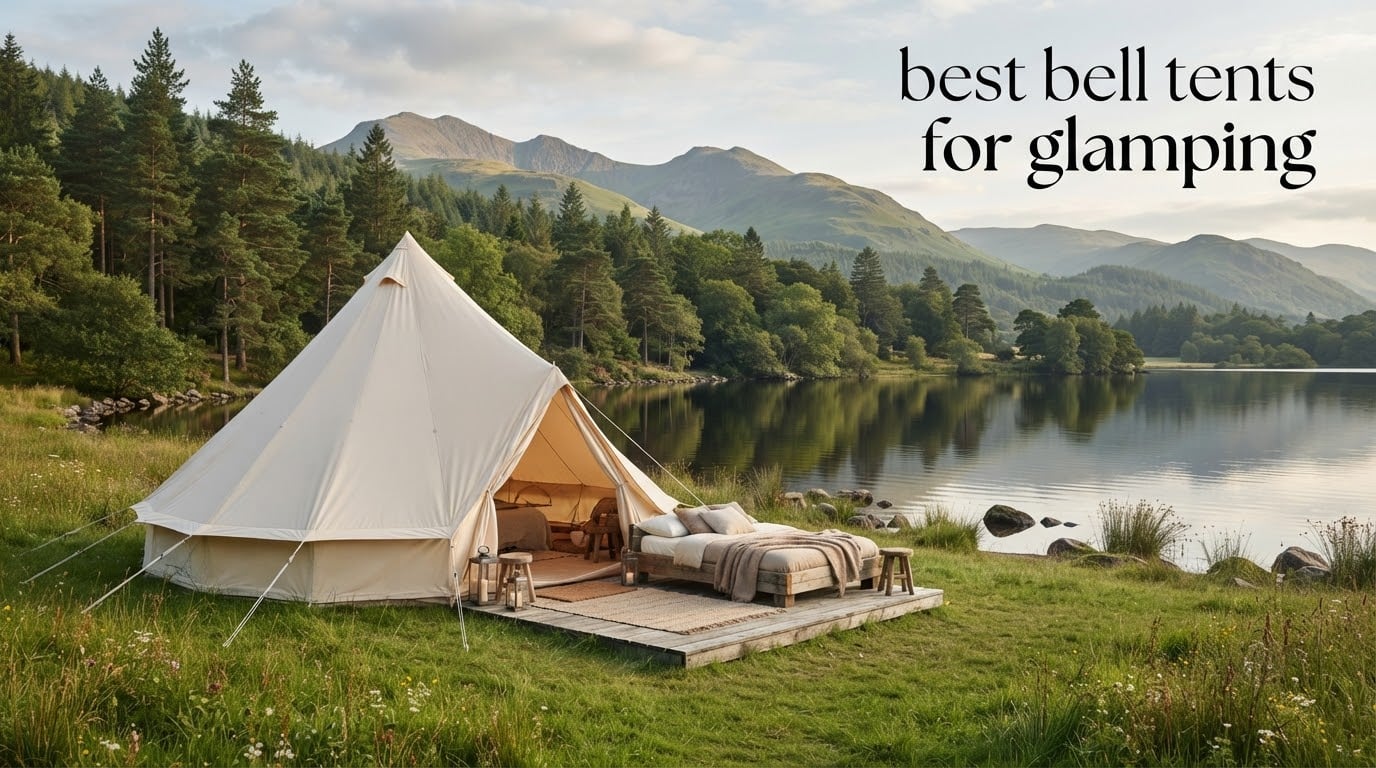
A bell tent is the rare camping shelter you can actually furnish. A single centre pole holds a cone of breathable canvas overhead, you can walk upright in the middle, and a fire-rated stove jack lets you burn a wood stove inside through the cold months. That combination is what separates glamping from ordinary camping, and it is why the best bell tents for glamping keep showing up in booking photos, farm stays and festival hospitality fields. Our team put ten of the strongest canvas and poly-cotton models side by side this season, reading the specifications closely and cross-checking them against what owners actually report after a season or two of use.
Our short answer: the WHITEDUCK Regatta is the best bell tent for glamping overall, because it pairs a 10 foot peak, a fire-retardant stove jack and a limited lifetime warranty with the largest review base of any tent we looked at. If money is the deciding factor, the DANCHEL B5PRO does almost the same job for far less. Larger households or anyone running rentable units should read the sizing notes before choosing a diameter, and the care section at the end is not optional reading if you plan to keep a tent standing through winter.
A note on method, because you should know what sits behind this list. We compared published specifications, fabric weights, pole and hardware details, warranty terms and the patterns that show up repeatedly in verified owner reviews. We did not independently pitch every one of these ten tents in the field ourselves, and we say so plainly. Where a number comes from a manufacturer listing we have kept it as the maker states it, and where owners disagree with the listing we have said so rather than smoothing it over. If you want a broader read on shelter types before you commit, our guide to the best large camping tents covers the nylon and canvas options that sit outside this category.
Top 3 Bell Tent Picks for Glamping 2026

WHITEDUCK Regatta 13ft
- 10 ft peak height
- Fire-retardant stove jack
- Limited lifetime warranty
- PFC-free water treatment

DANCHEL B5PRO 13ft
- 300GSM cotton canvas
- 3000mm PU coating
- 5.9 inch stove jack
- 540GSM PVC floor

WHITEDUCK Avalon 20ft
- 10.10 oz Army Duck cotton
- 3 ft wall height
- Lifetime warranty
- Silicone-coated stove jack
Best Bell Tents for Glamping at a Glance (October 2026)
The table below is the short version of the whole roundup. Full verdicts, owner complaints and the honest drawbacks sit in the numbered entries that follow.
| Product | Specifications | Action |
|---|---|---|
| WHITEDUCK Regatta 13ft Canvas Bell Tent |
|
Check Latest Price |
 MC TOMOUNT 16.4ft Canvas Bell Tent MC TOMOUNT 16.4ft Canvas Bell Tent |
|
Check Latest Price |
| DANCHEL B5PRO 13ft Canvas Bell Tent |
|
Check Latest Price |
 VEVOR 5m Polycotton Bell Tent VEVOR 5m Polycotton Bell Tent |
|
Check Latest Price |
| WHITEDUCK Avalon 20ft Army Duck Bell Tent |
|
Check Latest Price |
 Glamcamp 4m Poly-Cotton Bell Tent Glamcamp 4m Poly-Cotton Bell Tent |
|
Check Latest Price |
 VANFOND 4m Canvas Bell Tent VANFOND 4m Canvas Bell Tent |
|
Check Latest Price |
 KingCamp 5M T/C Canvas Bell Tent KingCamp 5M T/C Canvas Bell Tent |
|
Check Latest Price |
 ShinHye 3M Cotton Bell Tent ShinHye 3M Cotton Bell Tent |
|
Check Latest Price |
 WildFinder 16.5ft Canvas Bell Tent WildFinder 16.5ft Canvas Bell Tent |
|
Check Latest Price |
1. WHITEDUCK Regatta 13-Foot Canvas Bell Tent – Best Overall Bell Tent for Glamping
WHITEDUCK Regatta Canvas Bell Tent w/Stove Jack, Water Repellent, Yurt
13 ft / 4m
132.67 sq ft
10 ft peak
cotton canvas
stove jack
Pros
- PFC-free water-resistant cotton canvas
- Fire-retardant stove jack
- 10 ft peak with 2 ft 7 in wall height
- Sewn-in groundsheet with roof vents and tool kit
- Limited lifetime warranty
Cons
- 60.6 lb pack weight
- Canvas dries slowly and picks up mud
- Stove pipe roof flap is not fireproof
The Regatta is the tent we would put in front of almost anyone asking for the best bell tents for glamping. It carries a 4.6 rating across 756 reviews, which is a bigger owner base than anything else in this roundup by a wide margin, and the specification sheet is the most complete of the ten. Ten feet of peak height, a 2 foot 7 inch wall before the canvas starts to slope, and 132.67 square feet of floor give you room to place a bed, a small table and a stove without everything touching everything else.
Owners consistently report using it in genuinely cold conditions, some with propane and folding heaters in sub-zero temperatures. The water-repellent treatment is PFC-free, which matters if you are pitching on sensitive ground, and the sewn-in groundsheet is a polyethylene floor you do not have to add separately. The technical details are the ones you would hope for: two-layer doors and windows, heavy-duty weatherproof zippers, roof vents, interior pockets and an electrical cable outlet for bringing power in.
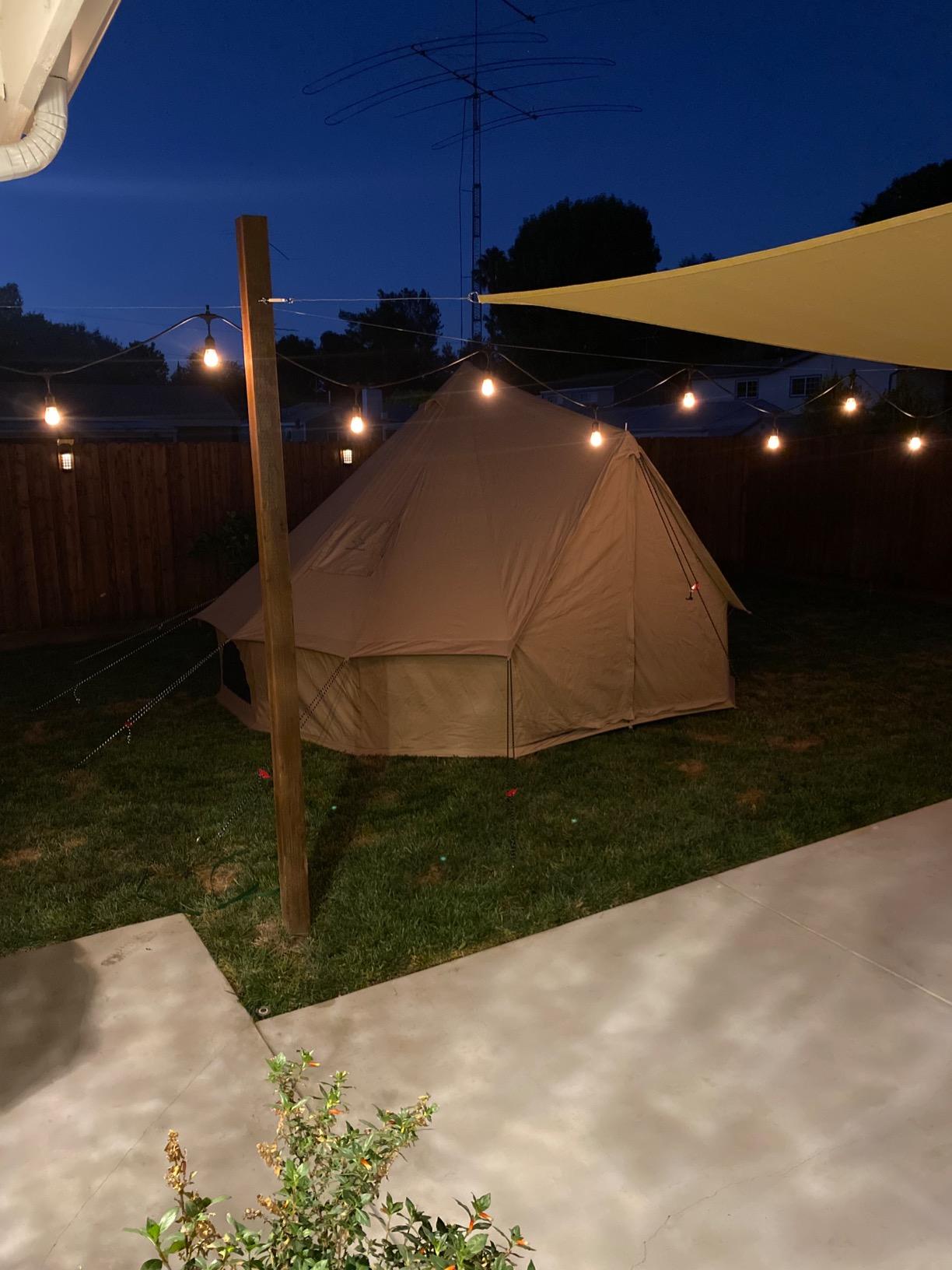
The wall height is what separates this from an ordinary bell tent. At 2 feet 7 inches the canvas is close to vertical for longer than on most models of this diameter, which means a wardrobe, a luggage bench or a chair fits against the wall without eating into the living space. That extra vertical run is also the reason the tent feels bigger inside than the floor area suggests.
Pitch time is the other quiet strength. Owners report roughly 10 to 20 minutes solo once you have done it a first time, and the tent is free-standing, so you can raise the pole, drape the canvas and walk the guy lines out in any order. For a host setting up and tearing down between bookings, that speed is worth more than any extra window.
What you should know before you buy the Regatta
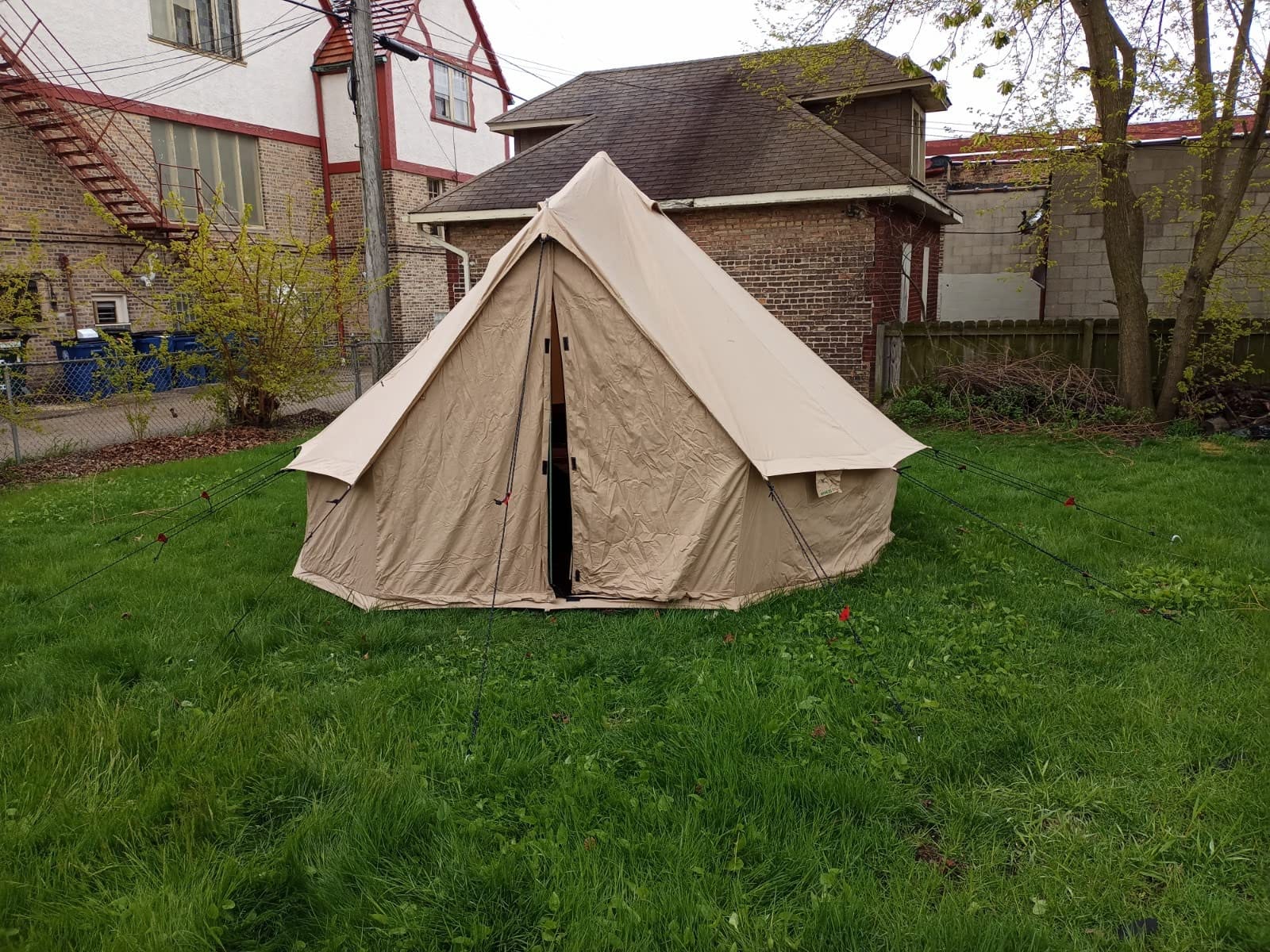
Packed, it weighs 60.6 pounds. That is a two-person carry at best, and it firmly rules this tent out for anyone moving campsites weekly or carrying gear any real distance. The canvas also needs a long time to dry after rain and picks up mud at the base quite readily, so a damp spell followed by a sunny day is part of the ownership rhythm rather than a defect.
One practical warning: the stove pipe roof flap is not fireproof. Owners using a wood stove report scorching when the flap is not secured properly. If you plan to heat this tent, order a certified silicone-fiberglass shield and fit it exactly as the shield instructions specify.
Who the Regatta suits and who should look elsewhere
Choose it if you are setting up a semi-permanent site, a farm stay pod or a backyard glamping base where the tent will stay raised for weeks at a time. The limited lifetime warranty and the 756-review history make it the safest bet in this list for someone whose guests will judge your accommodation by the tent itself.
Pass if your site is exposed and your guests arrive in winter without heating, or if the tent has to be carried far from a vehicle. At 13 feet it also runs tight for three adults, and that is a capacity ceiling worth respecting before you book it for a family of six.
2. MC TOMOUNT 16.4-Foot Canvas Bell Tent – Best for Genuine Stand-Up Space
MC TOMOUNT Canvas Bell Tent with Stove Jack, 16.4ft*High9.2ft Glamping Tent
16.4 ft
268.9 sq ft
55 in walls
TC canvas roof
stove jack
Pros
- 55 inch vertical walls for real stand-up room
- Eight mesh-windowed doors with roll-up sides
- 3000mm detachable Oxford floor
- Converts to an open canopy
- Stove jack for wood or pellet
Cons
- Included stakes are thin and pull from sand
- Heavy centre pole is hard to raise alone
- One report of multi-season material breakdown
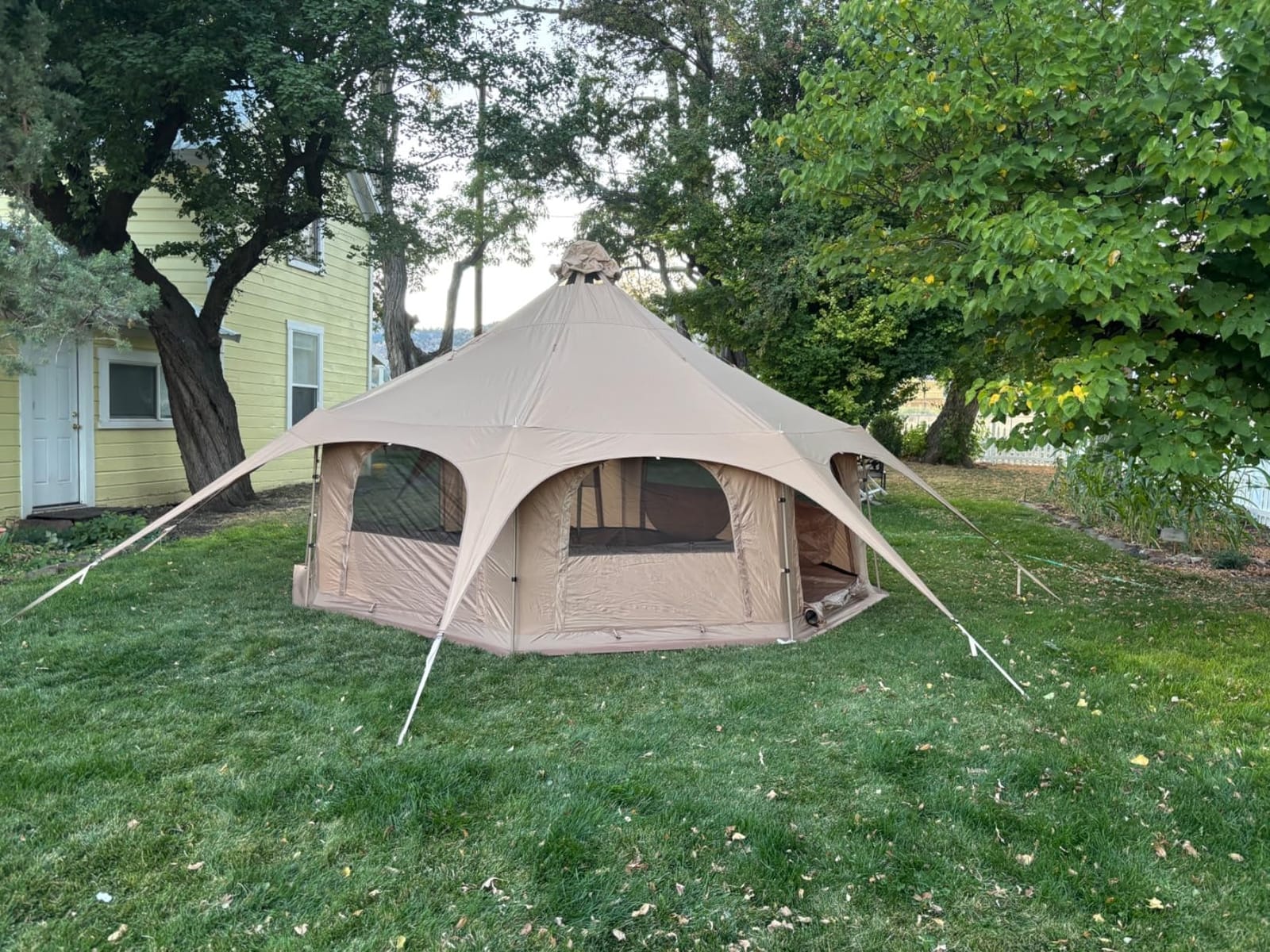
If your definition of glamping includes standing upright to get dressed, this is the tent that gets closest. The MC TOMOUNT is 16.4 feet across with a 9.18 foot peak and, unusually, 55 inches of genuinely vertical side wall. That is nearly double the wall height of most bell tents at a similar diameter, and it changes what you can put inside. A double bed against one edge, a wardrobe on another, and still walk a clear route through the middle.
The fabric is a technical cotton blend on the roof, 65 percent polyester and 35 percent cotton, deliberately left without a polyurethane coating so it can breathe. The walls are 210D Oxford and the floor is a detachable 600D Oxford rated to 3000mm. Eight doors, each with a mesh window, mean air moves through the structure from almost any direction, which is the single most effective structural answer to summer condensation.
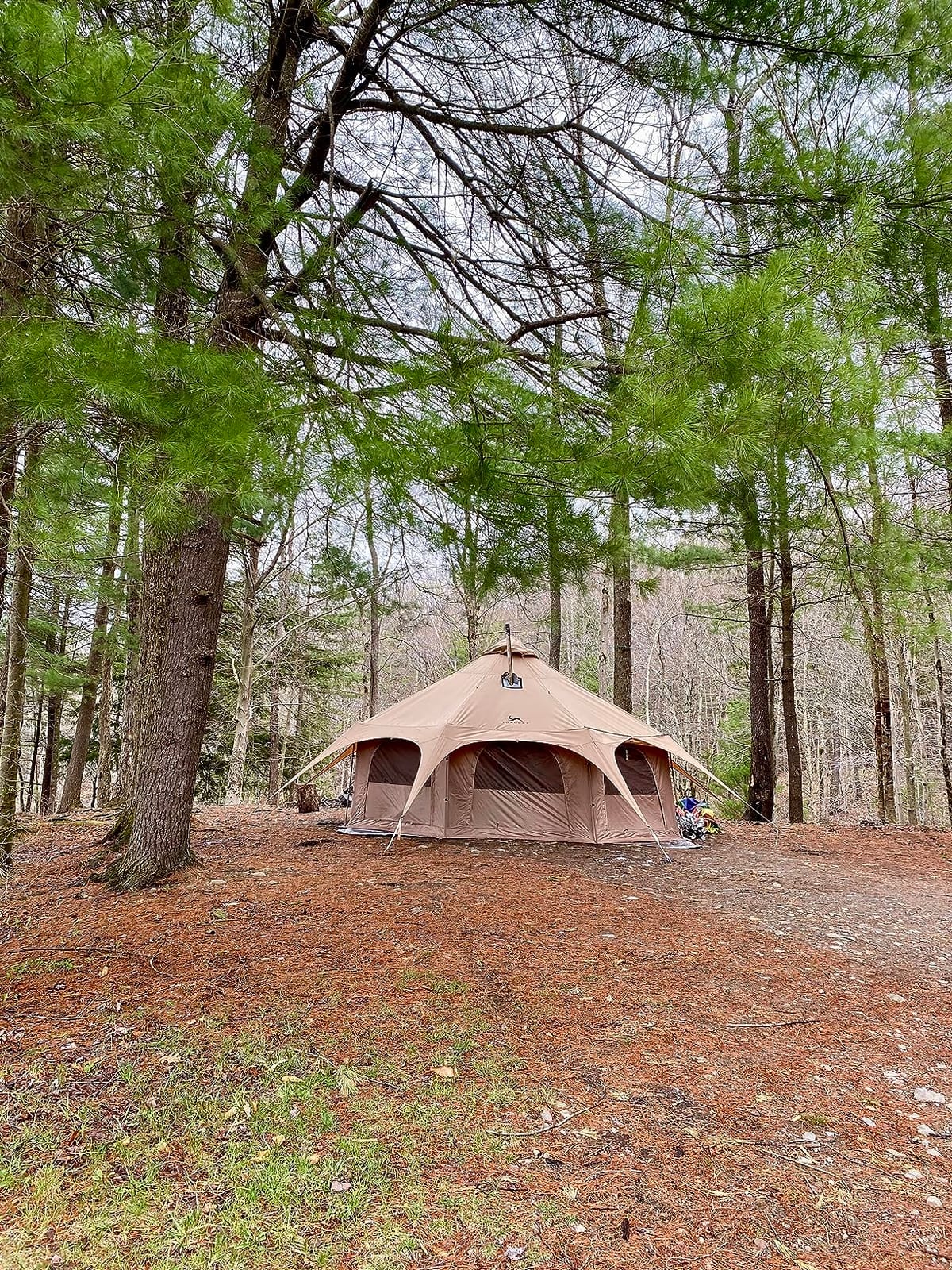
Owners describe it holding its shape in wind and heavy rain, and the steep roof sheds water and snow effectively. The roll-up sidewalls convert the whole thing into a large canopy, which is a genuinely useful mode for a summer venue where guests want to sit under cover with an open-air feel. Buyers also report fast solo assembly of roughly 15 to 30 minutes and an equally quick pack-down.
At 268.9 square feet, this is a large floor area for a 16.4 foot diameter, and that is the direct result of the tall walls. The manufacturer lists capacity for two, which is clearly a heat-output judgement rather than a sleeping-space one. Plan for the space, not the label.
What to check before committing
The supplied stakes are the weak link. Owners report them pulling straight out of sandy soil in moderate wind, and on a beach or dune site that means buying proper ground anchors before the first guest arrives. The centre pole is also heavy enough that a second pair of hands makes the difference between a two-minute job and a wrestling match.
One long-term owner reported the material degrading to a plastic-like state after a few seasons, which is a single report rather than a pattern, but it is worth factoring in if you intend to run this as a business asset. The instructions are minimal, so allow time for the first assembly rather than assuming a smooth setup.
Where this tent earns its place
This suits a couple who wants a bedroom that feels like a room, or a small operator laying out two separated sleeping zones in one structure. It also works well as a covered dining or sitting area for a retreat venue. If you need genuine headroom across most of the floor rather than just in the centre, nothing else in this list matches it.
Skip it for exposed coastal sites with sandy soil unless you are upgrading the anchors, and think twice if you are the only person available to erect it.
3. DANCHEL B5PRO 13-Foot Canvas Bell Tent – Best Value Bell Tent for Glamping
DANCHEL OUTDOOR B5PRO 4 Season Canvas Bell Tent with Stove Jack 13ft/4M
13.2 ft
129.19 sq ft
300GSM cotton canvas
3000mm PU
Pros
- Under 30 minutes from box to pitched
- Kept dry through an inch of rain with gusts
- 540GSM bathtub-style PVC floor
- Galvanized poles and YKK zippers
- Responsive warranty service
Cons
- Stiff zippers that can snag
- Stove pipe flap burned through for some buyers
- Seams channel water if guy lines are slack
The DANCHEL B5PRO is the tent to beat on value, and the 353 reviews behind its 4.0 rating show it has been bought and used at volume for years rather than being a new listing. It is available in 13 foot, 16.4 foot and 20 foot versions, so a host outfitting several tents can keep one design language across the whole site. The 13.2 foot version is the most common starting point.
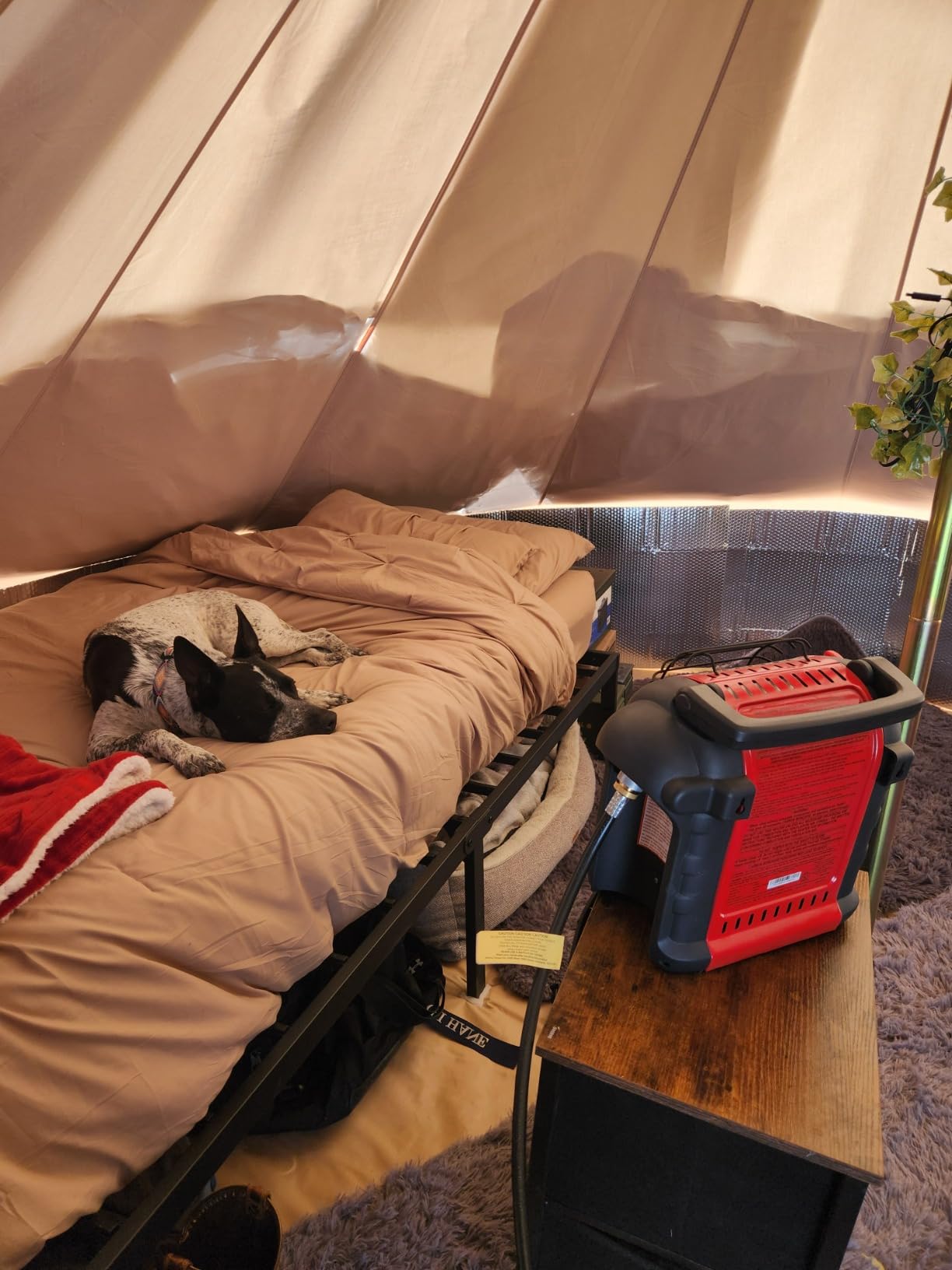
Specification-wise it is properly built. 300GSM cotton canvas, which the maker lists as 8.8oz per yard, carries a 3000mm polyurethane coating. The floor is a 540GSM bathtub-style PVC sheet that blocks mud and ground splash, and the poles are galvanized steel with YKK zippers throughout. A 5.9 inch stove jack is pre-cut with a rain flap, and a 6 inch side vent port accepts a portable air conditioning hose or a cable run.
Owners report setup in under 30 minutes from the box, interiors that stayed dry through an inch of rain with gusty wind, and a 135 square foot interior that comfortably fits two full beds plus a wood stove. Customer service is repeatedly praised for replacing parts and resolving warranty issues, which is a real advantage when you are running a guest tent rather than a weekend one.
Detail touches are good for the money: double-stitched reinforced seams, a central D-ring for hanging lights and fans, and roll-up detachable sidewalls for open-air use. The maker describes it as a two-person carry, and that guidance is worth following.
The honest problems with this tent
Zipper quality is the most repeated complaint. Owners describe them as stiff and prone to snagging, and some report an inner mesh zipper locking shut. On a tent that is opened and closed several times a day by rotating guests, that is a genuine annoyance rather than a cosmetic issue.
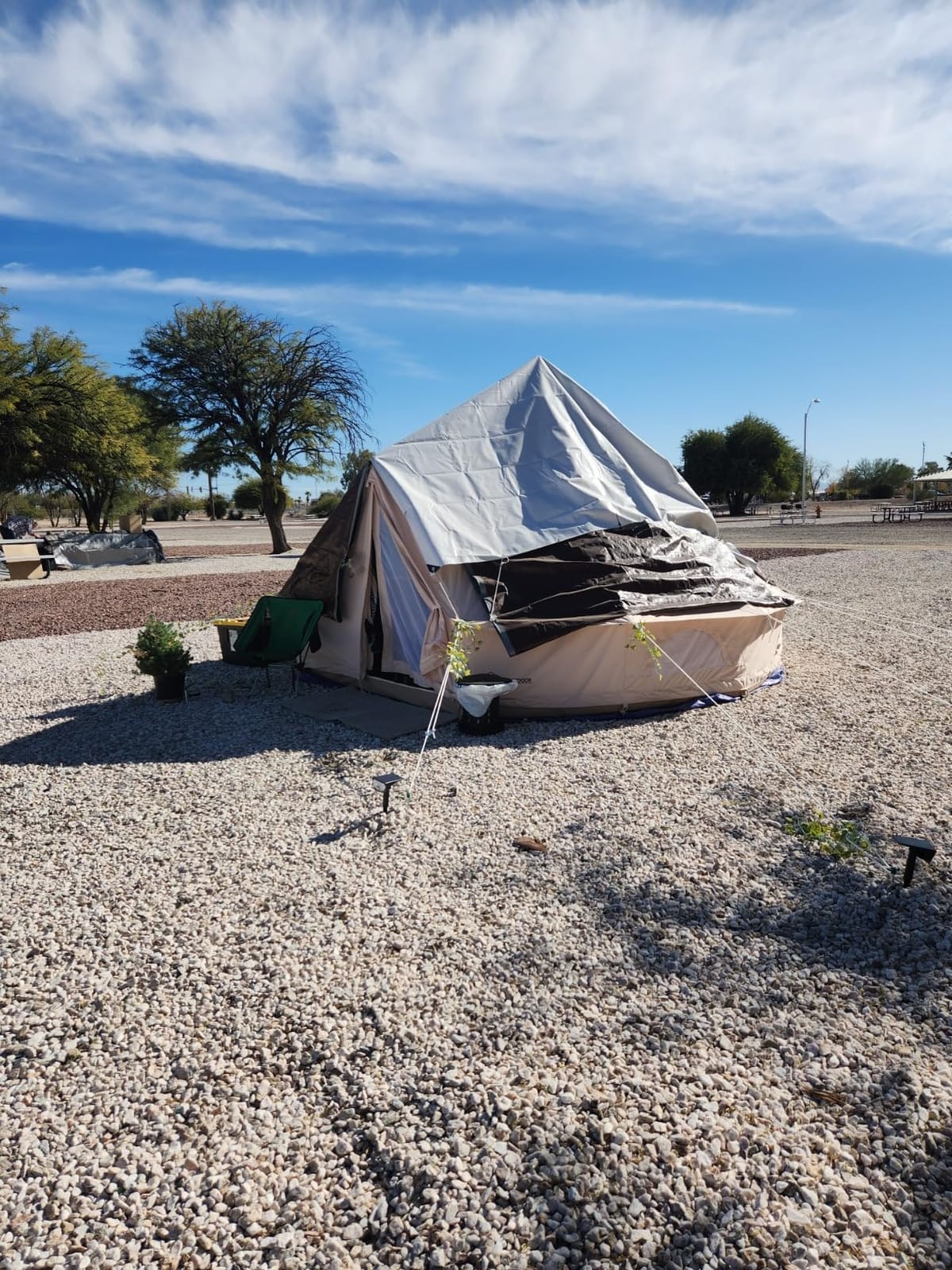
The stove pipe flap is the more serious one. Multiple buyers report it burning through even when using a double-wrapped heat-resistant pipe. If you are heating this tent, treat the supplied flap as inadequate and fit a certified shield. A further note: seams can channel water in sustained heavy rain unless the guy lines are tensioned enough to pull the creases out of the fabric.
Who should buy the B5PRO
This is the sensible pick for a first glamping tent, a festival or wedding hospitality field, or a smallholder running a couple of units on a tight budget. The canvas weight, the coated floor and the price point sit in a genuinely useful place, and the low purchase cost leaves room in the budget for the platform, bedding and lighting that actually sell the experience.
Pass if you are running a wood stove as the primary heat source without adding a shield, or if daily zipper wear on rotating guest tents would push you to frustration. Note also that at this rating, it is the lowest-scoring tent in our list, so expect a few more rough edges than the top pick.
4. VEVOR 5m Polycotton Bell Tent – Best for First-Time Assembly
VEVOR Canvas Bell Tent,4 Seasons 5 m/16.4 ft Yurt, for Camping with Stove Jack, Family Camping Outdoor Hunting Party
5m / 16.4 ft
19.63 sq m
TC cotton
10 ft peak
stove hole
Pros
- Breathable TC technical cotton cuts condensation
- Complete kit with rain cap and hammer
- Four-step setup
- Reflective guylines with aluminum tensioners
Cons
- Rated for light to moderate rain only
- Listing mismatches on stated occupancy
- Iron poles are heavy for the size
The VEVOR 5m is the model we would hand to someone who has never pitched a bell tent. Assembly is described as a four-step process, and the accessory kit is unusually complete: rain cap, ground stakes, a hammer, tent bag and storage bags all come in the box. There is no hunting for a missing part in the dark, which is exactly the failure mode that ruins a first attempt.
At 16.4 feet across with a 10 foot peak and 19.63 square meters of floor, the space is generous. The fabric is polycotton, or technical cotton, which the maker deliberately applies without a polyurethane coating. That single design choice is why this tent holds its breath better than coated models in warm conditions, and it is the same reason experienced campers on camping forums recommend polycotton for hot weather.
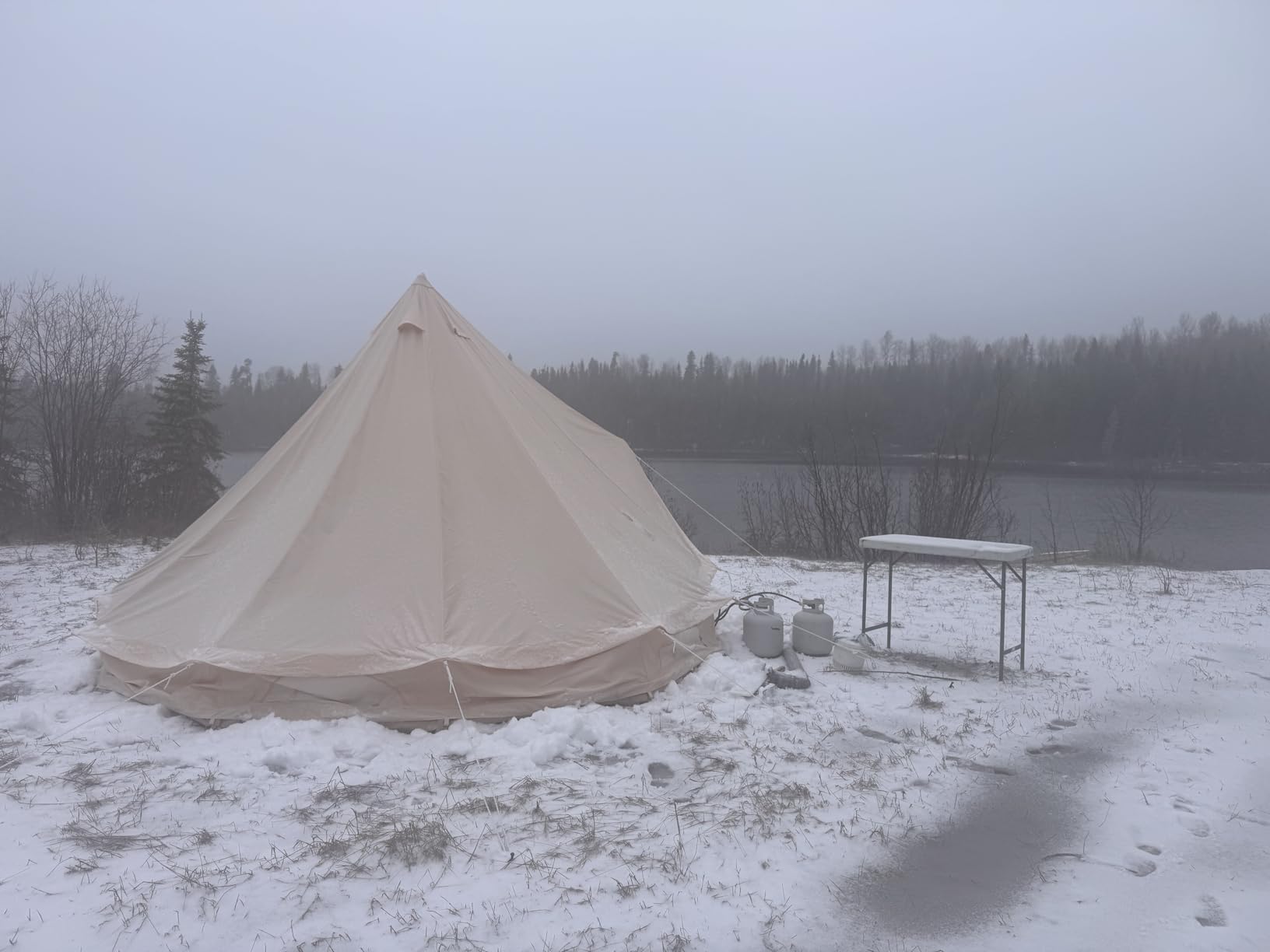
Four mesh-covered windows with roll-up canvas and mesh panels give you real cross-ventilation, and the glow-in-the-dark nylon guylines with aluminum tensioners are a nice touch for an overnight pitch in low light. A 3 inch flame-resistant stove hole with a 43 by 43 centimetre flap makes this a legitimate four-season option rather than a summer-only shell.
The size range is worth noting too. The same design is offered from 3m through to 7m, so if you outgrow the 5m you can stay with the same fabric and fitting rather than starting over.
Limits you should know about
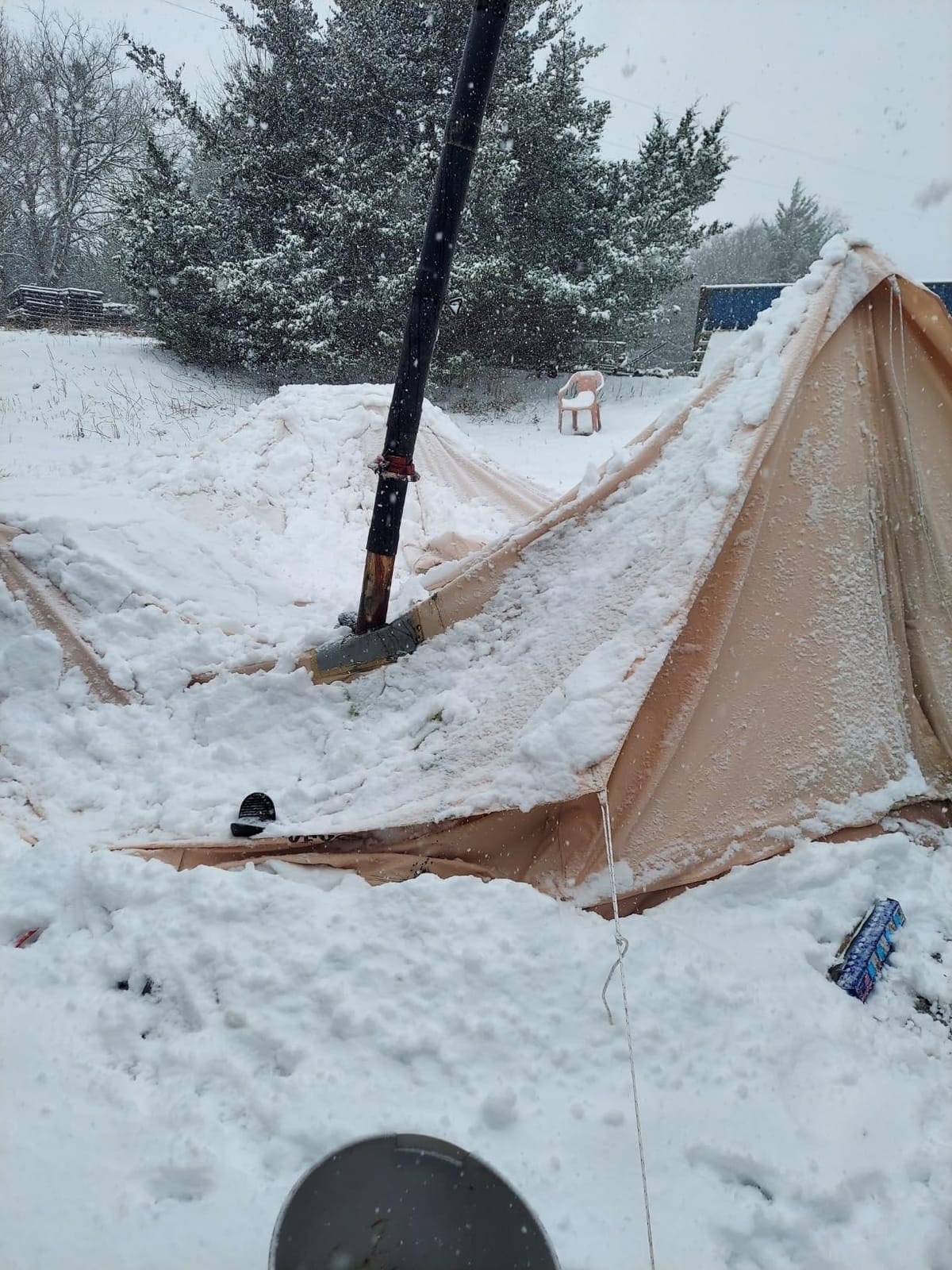
The maker is clear that the fabric is intended for light to moderate rain. This is a breathable, uncoated polycotton, and that breathability is exactly what limits the water resistance. If your site sees sustained heavy rain, look at a coated cotton duck or an Oxford-backed model instead.
There is also a listing inconsistency worth flagging honestly: the product title states capacity for four while the manufacturer specification lists eight occupants. We would plan the sleeping layout for the lower of those figures until the maker clarifies. The iron poles are heavier than aluminum would be at this size, which again points to a two-person pitch.
Best use for the VEVOR
It suits first-time buyers, retreats and yoga basecamps where setup happens in daylight with volunteers, and anyone who wants a roomy tent that breathes well in summer heat. The included hammer and rain cap are small conveniences that remove real friction on site.
Skip it for exposed winter sites or anywhere with a serious rain record, and skip it if you will be pitching alone and regularly.
5. WHITEDUCK Avalon 20-Foot Army Duck Bell Tent – Premium Pick
WHITEDUCK Avalon Canvas Bell Tent – Luxury All Season Tent for Camping & Glamping Made from Premium & Breathable 100% Cotton Canvas w/Stove Jack, Mesh (20′ (6M), Water Repellent)
20 ft
10.10 oz Army Duck cotton
10 ft peak
3 ft walls
Pros
- Pure 10.10 oz Army Duck cotton canvas
- Three foot wall height for real standing room
- Lifetime warranty
- Silicone-coated stove jack with pre-cut patterns
- Four roof vents with mesh and hoods
Cons
- 117 lb pack weight
- Most expensive tent in the roundup
- Smaller review base than lower-cost rivals
The Avalon is the luxury end of this category and the closest thing here to a rolls-Royce of tents. It is 20 feet across with a 10 foot peak and, crucially, 3 feet of wall height, so a tall adult can stand and move around almost anywhere inside rather than only at the centre. The fabric is 10.10 oz Army Duck cotton with a PFC-free water treatment, and owners consistently note that pure cotton breathes noticeably better than coated poly-cotton in high heat.
Hardware is where a tent at this level should show it. The stove jack is silicone-coated and heat resistant, with pre-cut patterns for 5 inch and 6 inch stove pipes so the hole is sized to the pipe rather than guessed. Seams are double-stitched with reinforced corners, and there are four large roof vents with mesh and hoods, which is the most serious condensation management on this list.
The entry is a proper A-frame door rather than a simple D-door, and the floor is a detachable zip-in, zip-out 16 oz heavy-duty polyvinyl. A proprietary shock-absorbing grounding system and galvanized steel poles complete the package, and the maker offers a lifetime warranty.
Why it earns the premium tag
The life expectancy is the argument. Army Duck cotton at 10.10 oz is a heavier, denser weave than the 200 to 300GSM canvas used on most of the tents here, and denser weave means slower water ingress and much better resistance to abrasion at the base. Paired with a lifetime warranty, this is the one in the roundup we would expect to still be serviceable in a decade if it is dried properly between uses.
It is also the most generous interior. At 3 feet of wall height you can put a proper bed, side tables and a wardrobe around the perimeter and still have usable floor in the middle, which is what separates a furnished room from a bed in a field.
Where the premium stops making sense
It weighs 117 pounds. That is not a carry, it is a move, and it needs a vehicle plus a second person. Its review base of 103 is respectable but far smaller than the Regatta’s 756, so you are buying on specification and brand reputation more than on volume of owner feedback. And it is by a wide margin the most expensive tent in this roundup, which matters if the cost has to be justified against a per-night booking rate.
Choose the Avalon for a flagship unit, a wedding night suite or a permanently sited owner pod. Look at the Regatta or the DANCHEL if you are equipping several tents at once.
6. Glamcamp 4m Poly-Cotton Bell Tent – Best Bell Tent for First-Time Glampers
Glamcamp Bell Tent,4 Seasons Breathable Cotton Canvas Yurt Tent – w/Stove Jack,Luxury Camping Tent Outdoor,Zipped Removable Floor Water Repellent, 13.1ft(4M)
4m / 13.1 ft
169 sq ft
200 gsm poly-cotton
3000mm PU
Pros
- Fits two queen beds in a 4m base
- Two stove ports including a rain-shedding side hole
- 15 to 20 minute setup
- 500 gsm PVC floor that wipes clean
- Rain cap and hammer included
Cons
- Maker advises against strong wind
- 60 cm side walls limit furnishing
- Less breathable than 100 percent cotton
The Glamcamp 4m is shaped by an unusual and sensible idea. Rather than a circular base, it uses a polygonal footprint at 4 metres, and that decision lets it hold two queen beds where most tents of the same diameter hold one. For a couple glamping with friends, or a family that wants real beds rather than camp furniture, that is the feature that matters most.
It also solves the stove problem more thoughtfully than most. Instead of a single roof port, it offers two options: a 5 inch flame-retardant top jack, and a side-wall stove hole positioned so rain runs away from it rather than into the tent. That second option is a quiet innovation that prevents the condensation and drip complaints we see repeatedly with roof-only ports.
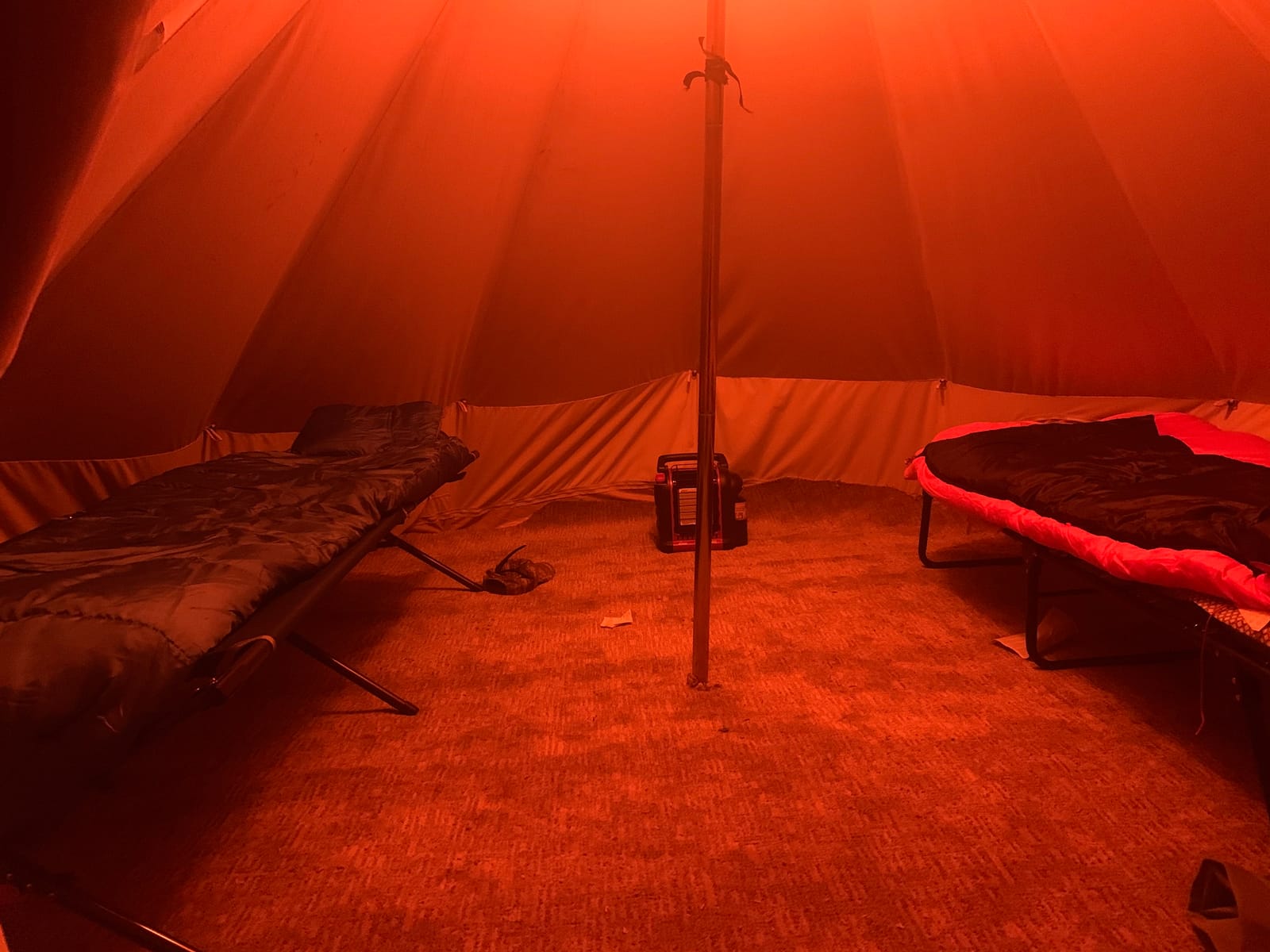
The fabric is 200 gsm polyester-cotton with a 3000mm polyurethane coating, and the 500 gsm PVC ground sheet wipes clean and insulates against ground moisture. A 38mm galvanized steel centre pole with 1.22mm wall thickness gives it real rigidity, and the centre door is 150 centimetres high. Owners report setup in roughly 15 to 20 minutes with the full hardware and instructions supplied.
At 169 square feet and an 8.2 foot peak, it sits in the comfortable middle of the size range. Larger versions run up to 5 metres if you outgrow it.
What limits it
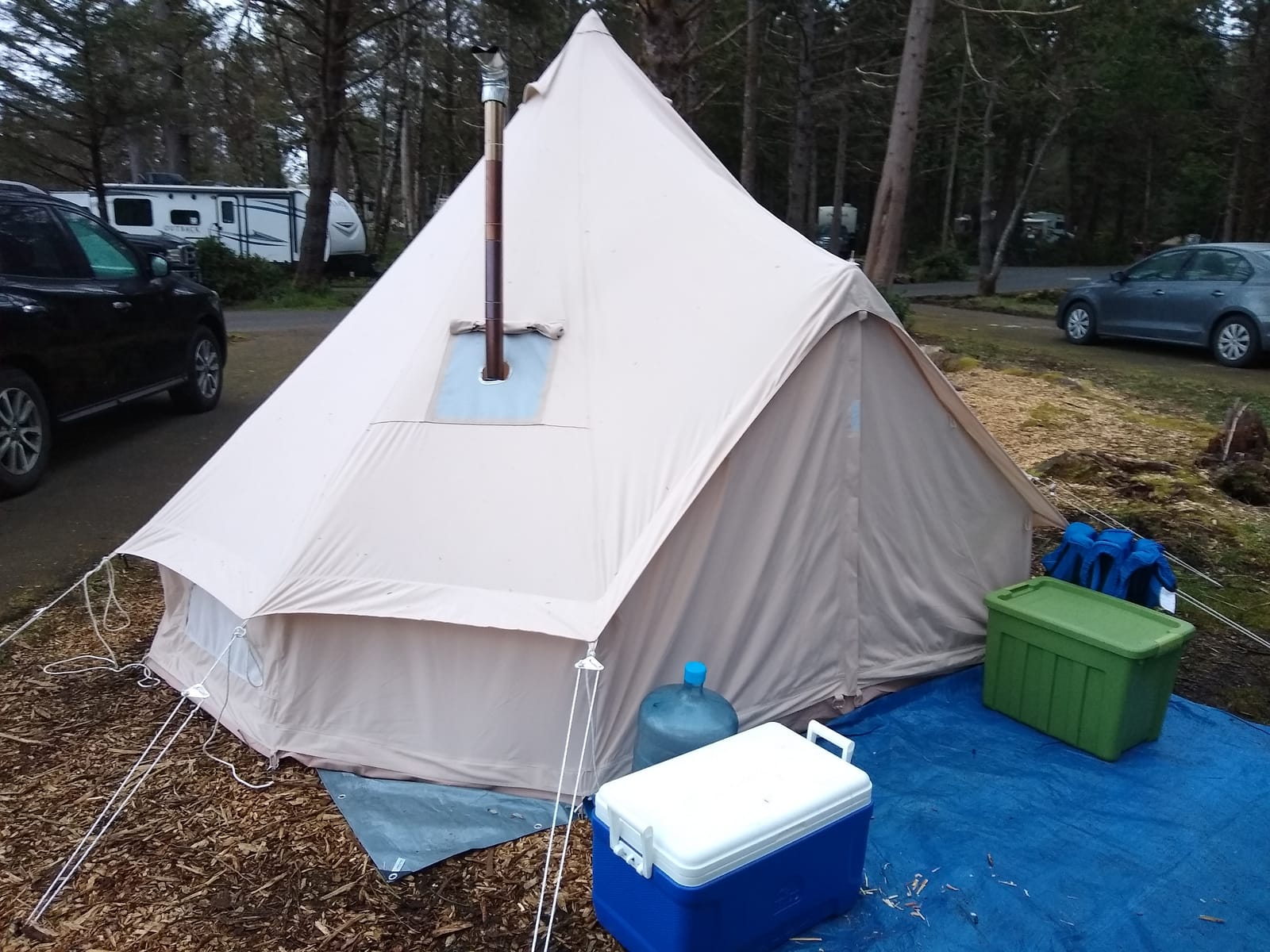
The manufacturer advises against use in strong wind, and that guidance is worth taking seriously for a temporary pitch. The 60 centimetre side wall height also limits what you can furnish, because you cannot place a wardrobe or a tall dresser against the wall the way you can in the MC TOMOUNT or the Avalon. And poly-cotton, while easy to live with, is less breathable than 100 percent cotton in peak summer heat.
Who should buy it
It suits first-time glampers who want a proper bed setup without stepping up to a much larger tent, and it works well for couples hosting a friend. The 15 to 20 minute pitch and the included rain cap and hammer mean one person can realistically set it up on a calm day.
Pass if your site is exposed, if you need vertical wall space for furniture, or if you are running a week of peak-summer bookings with no shade cover. For venue use where guests also gather under cover, our guide to the best commercial canopy tents covers structures built for that job.
7. VANFOND 4m Canvas Bell Tent – Best 2-in-1 Tent and Canopy
VANFOND Canvas Bell Tent, Yurt Tent with Stove Jack, Waterproof and Breathable Wall Tent, Glamping Tent, Detachable Groundsheet for Camping Party
4m / 13.1 ft
132.73 sq ft
polycotton
5 in stove jack
Pros
- Durable canvas that packs cleanly into its bag
- Fits a queen bed plus two air mattresses
- Holds up in wind and multi-day rain
- Roll-up walls convert it to a canopy
- Full reflective tie-down kit included
Cons
- Mould reported if stored after heavy rain
- 3m version too tight to stand upright
- Interior is a near miss for a king air mattress
The VANFOND is the most useful shape in this list if your glamping pitch has to do two jobs. The 4 metre version gives 132.73 square feet, a 5 foot door height and a 5 inch fire-retardant stove jack on the roof, and the roll-up walls plus the detachable sewn-in PVC groundsheet let you open the sides completely and use the same structure as a canopy in fair weather.
Owners describe the canvas as genuinely durable and, unusually, as packing back into its bag cleanly, which sounds minor until you have tried to repack a wet tent in the dark. The layout is proven in real use: one owner fits a queen bed plus two blow-up mattresses with room to walk around, and others report it holding its shape in wind and staying dry through multi-day downpours.
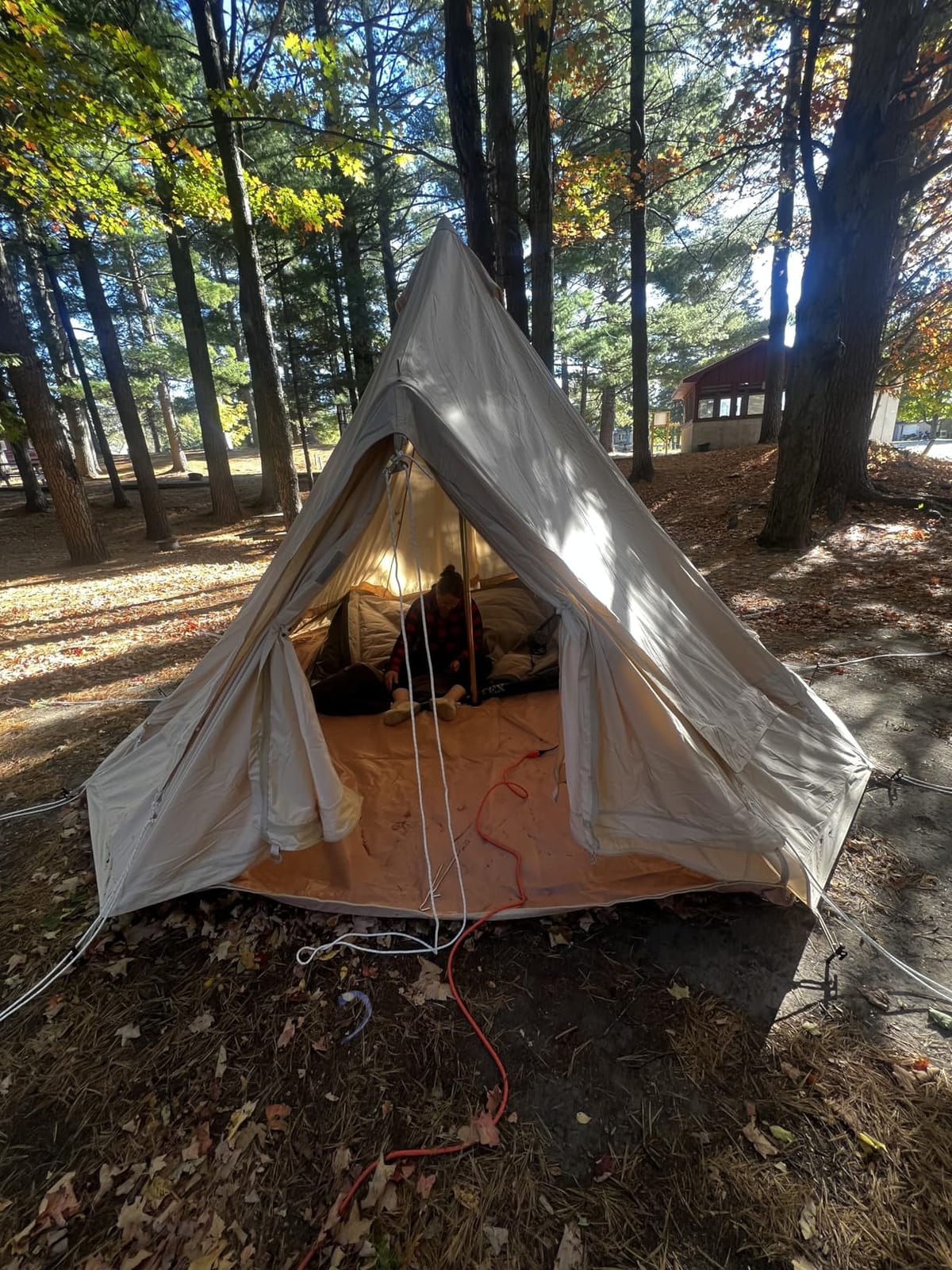
Ventilation is handled with one door, four windows and roof vents, all mesh-backed, and the 4 season rating is backed by galvanized steel centre and A-frame poles. Fifteen stakes, six guylines and a full tool kit with pegs, rain cap and rubber mallet are all in the box so nothing needs buying before the first pitch.
At 57 pounds packed, it is lighter than most 4 metre canvas tents here, which makes it the most practical of the group for a host who also has to move it occasionally.
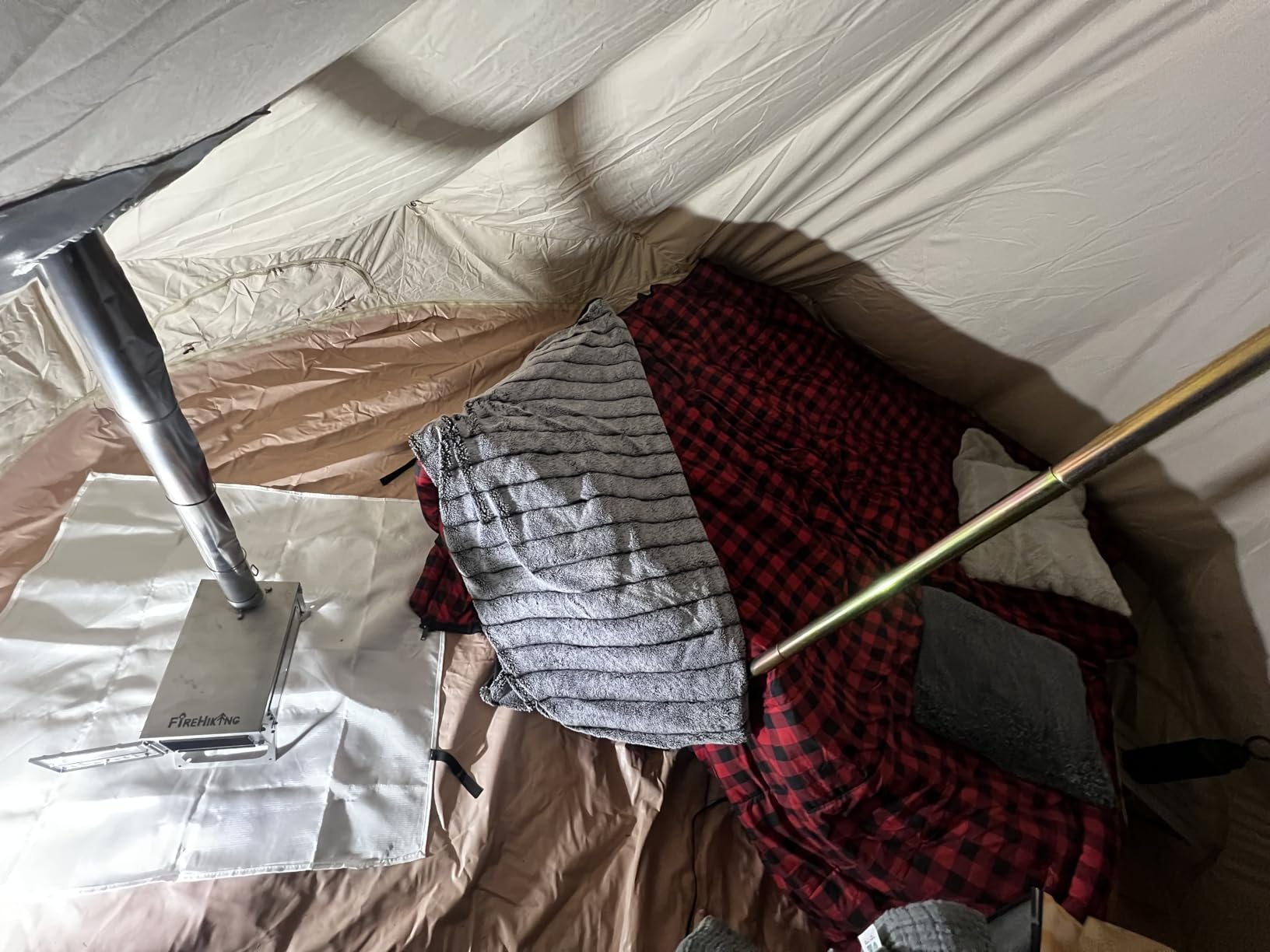
Watch the mould risk and the smaller sizes
The most serious report we found concerns mould. One owner found mould developing four days after heavy rain even with the windows open. That is a care issue rather than a defect, and it is exactly why the drying guidance in our care section matters. The tent must be thoroughly dry before it is repacked, and if you intend to leave it up through a wet season you need to air it regularly.
On sizing, the 3 metre version is tight for anything beyond one camper plus a stove, with no headroom to stand. In the 4 metre version, the interior falls a few inches short of fitting a king air mattress, so measure your bedding before ordering.
Best use for the VANFOND
It works well for a mixed-use site where the same structure serves as a sleeping tent in bad weather and a shaded sitting area on sunny days, and for hosts who want a manageable pack weight. The 4.4 rating across 66 reviews is a strong signal for a smaller review base.
Skip it if you will not be around to air the tent after rain, or if your bedding is a full king air mattress and you need that margin.
8. KingCamp 5M T/C Canvas Bell Tent – Best for Wet Weather
KingCamp Canvas Bell Yurt Tents, 4 Seasons Large Waterproof & Windproof Luxury Glamping Tent w/Stove Jack for Family Outdoor Camping, Hunting, Parties 16.4FT Khaki
5m / 16.4 ft
9.8 ft peak
T/C cotton
5000mm resistance
Pros
- 9.8 ft peak with raised sidewalls
- 5000mm water resistance
- Three-in-one enclosed or canopy setup
- B3 mesh ventilation panels and six pockets
- 540GSM PVC floor
Cons
- Only 39 reviews so far
- 60 lb carry weight
- 6 month manufacturer warranty
- Single pole may flex in wind
On paper the KingCamp 5M has the highest water resistance figure in this roundup, with the fabric rated to 5000mm and a 540GSM PVC floor beneath it. For a site that gets rain, that combination is the most convincing wet-weather argument of the ten. The fabric is a 65 percent polyester, 35 percent cotton blend, which balances shower-proofing against the condensation problems that plague heavier coatings.
Headroom is the other headline. The peak is 9.8 feet and the raised sidewall configuration allows comfortable standing and free movement, which owners repeatedly single out as the feature that makes the tent liveable rather than merely usable. Six mesh windows, B3 mesh ventilation panels and six interior pockets cover storage and airflow.
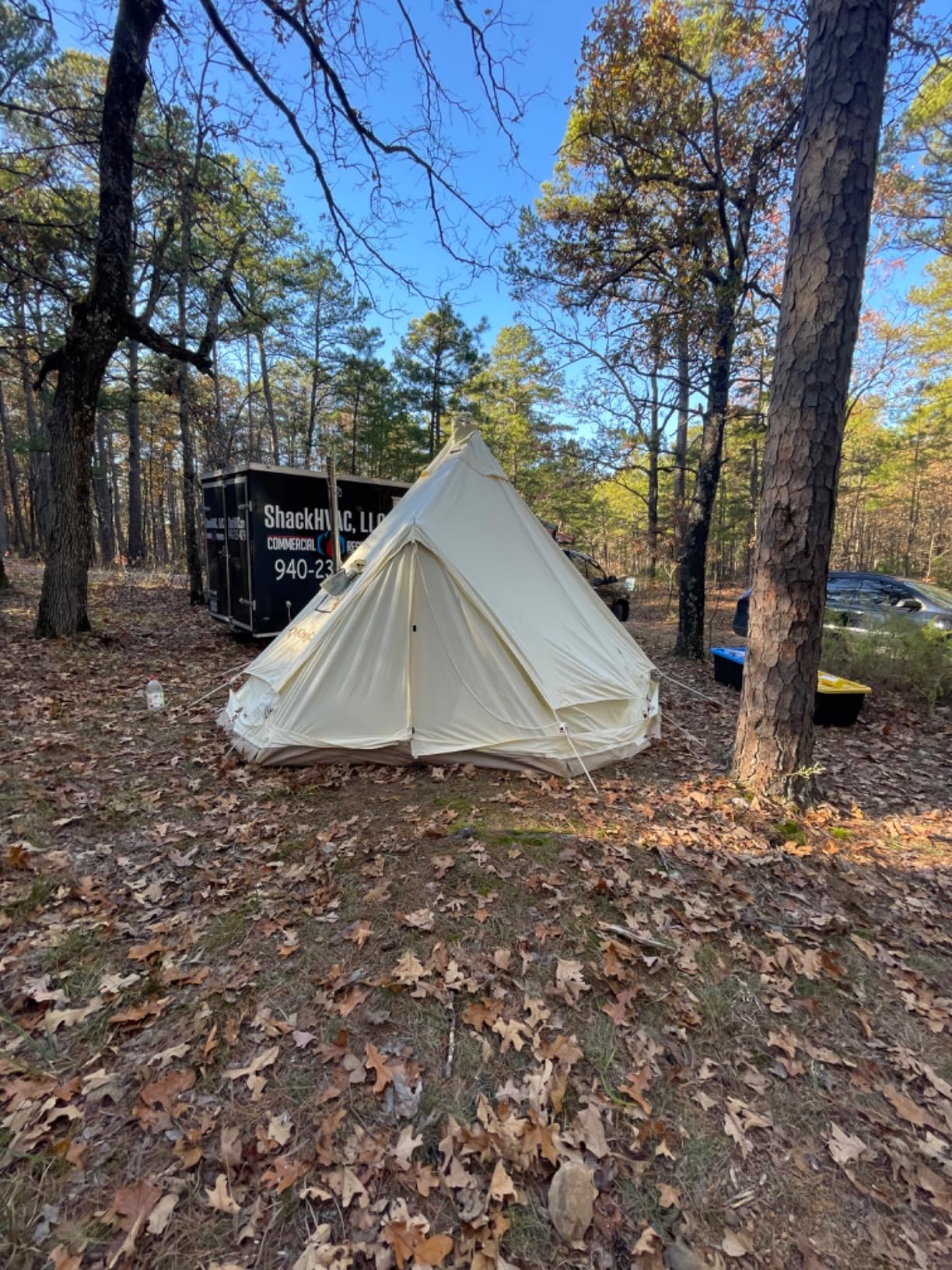
The three-in-one setup is genuinely useful. You can run it fully enclosed for privacy, roll up the doors and windows for ventilation, or raise the sidewalls to convert it into an open canopy for entertaining. An integrated stove jack makes it a hot tent option as well, and the alloy steel frame components are reinforced despite the single centre pole design.
At 16.4 feet with space for eight, it sits at the point where a bell tent stops being a couple’s shelter and becomes shared accommodation.
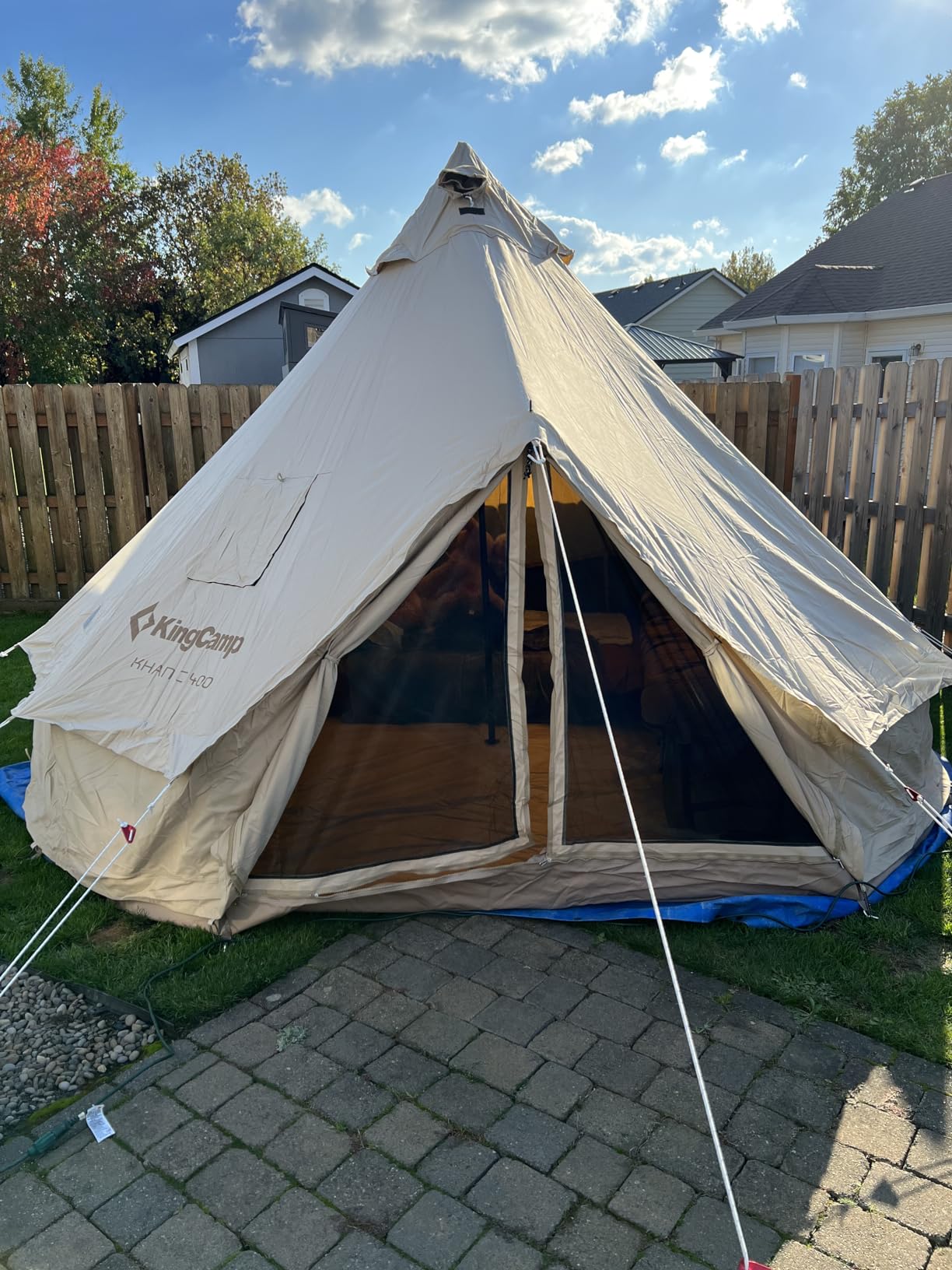
What to weigh up
The review base is the thinnest in the roundup at 39, so you are relying more on specification than on long owner history. That said, the 4.4 rating is consistent with the class leader. The 6 month manufacturer warranty is the shortest consideration here, and a single centre pole design may flex under sustained wind or snow load, which is worth factoring in for a winter pitch.
At 60 pounds packed, it is a drive-up tent only. Plan the site access before you commit.
Where it fits best
This is a strong choice for a wet, mild climate site, a larger family or small group booking, or a retreat venue where guests move between the tent and a covered outdoor area. The 5000mm rating and the PVC floor mean you can leave beds in place between turnovers with far less worry.
Pass if you need a long warranty behind the purchase, or if your site sits in an exposed spot with a snow load. For festival-scale guest accommodation rather than a permanent pitch, our picks for the best party tents for events cover larger temporary structures.
9. ShinHye 3M Cotton Bell Tent – Budget Pick
ShinHye Canvas Bell Tent Yurt Tent 4 Seasons for Camping 100% Cotton Glamping Tents with Stove Jack, Family Camping Outdoor Hunting Party (3M- 9.8FT)
3m / 9.8 ft
97 sq ft
cotton canvas
PU 5000mm
27 lb
Pros
- Lowest-cost entry that still has a stove jack
- Stayed bone dry in hard downpours
- 15 minute setup
- 13 guylines for solid anchoring
- Roomier than a 3m has any right to be
Cons
- Oversized pre-cut stove hole admits rain
- Stove jack material vulnerable to heat
- Actual diameter runs about a foot under stated size
The ShinHye 3M is the tent to buy when you want real cotton canvas with a stove jack and you do not want to spend much. At 27 pounds packed it is also by some distance the most portable bell tent in this roundup, which changes what you can do with it. A car boot, a small estate car or a bike trailer becomes a realistic option rather than a fantasy.
The fabric is a breathable cotton roof carrying a PU 5000mm waterproof rating, over a PE groundsheet that keeps ground moisture and pooled rain out. A stove jack sits about 3.3 feet above the ground, corrosion-resistant steel brackets and poles handle the frame, and 13 guylines give you far more anchoring options than most tents of this size provide.
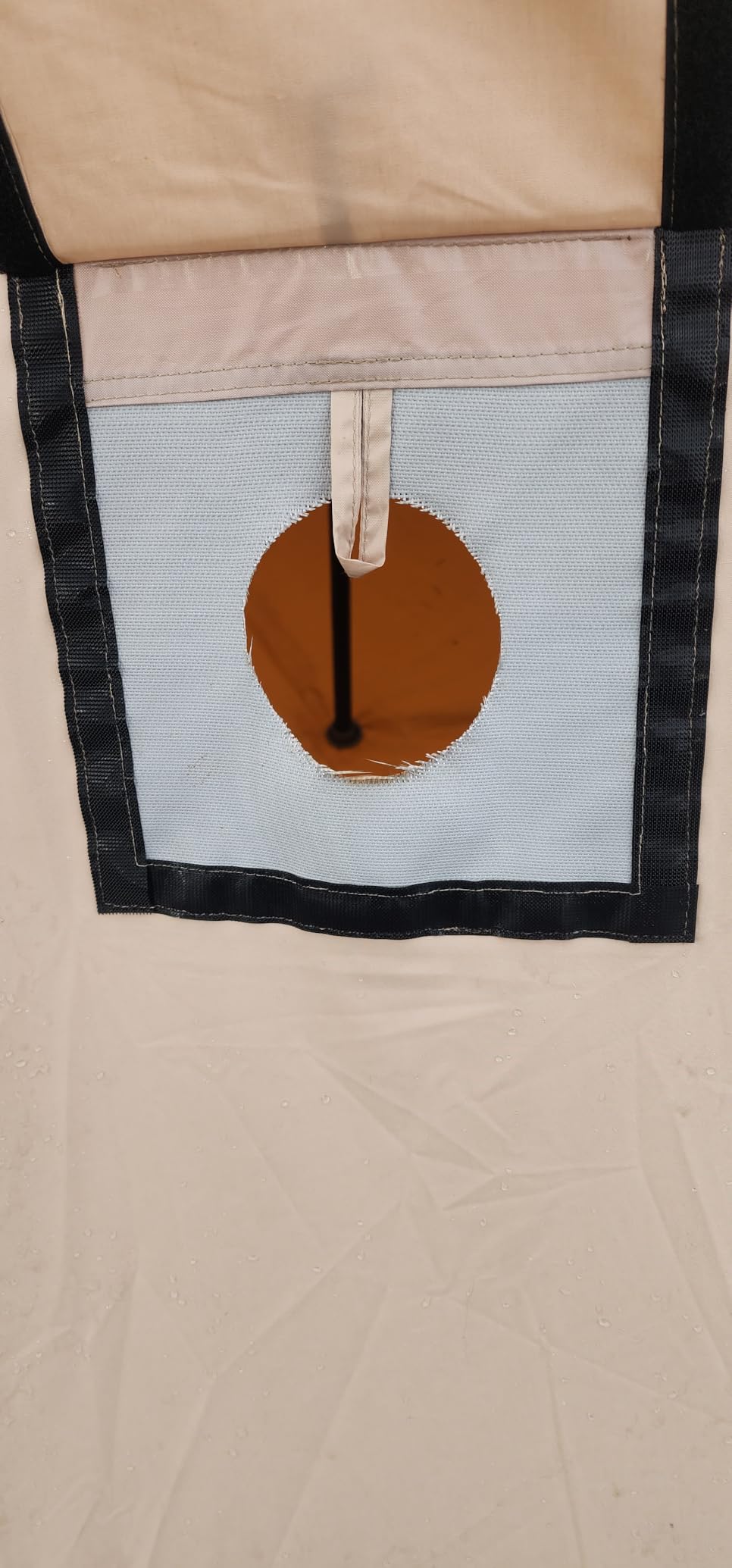
Owners report the tent staying bone dry inside during very hard downpours, and it is described as windproof thanks to the door poles, which also make it quick to take down. Setup is around 15 minutes following a simple stake, pole and guy-line sequence, and one owner found a family of six fitted inside a size that should comfortably hold two.
The packed size of 27 by 13 by 11 inches is worth noting if you are comparing it against a genuine backpacking load. Four sizes are offered from 3m to 5m, in cotton or Oxford fabric, and the warranty is 365 days.
What you trade away
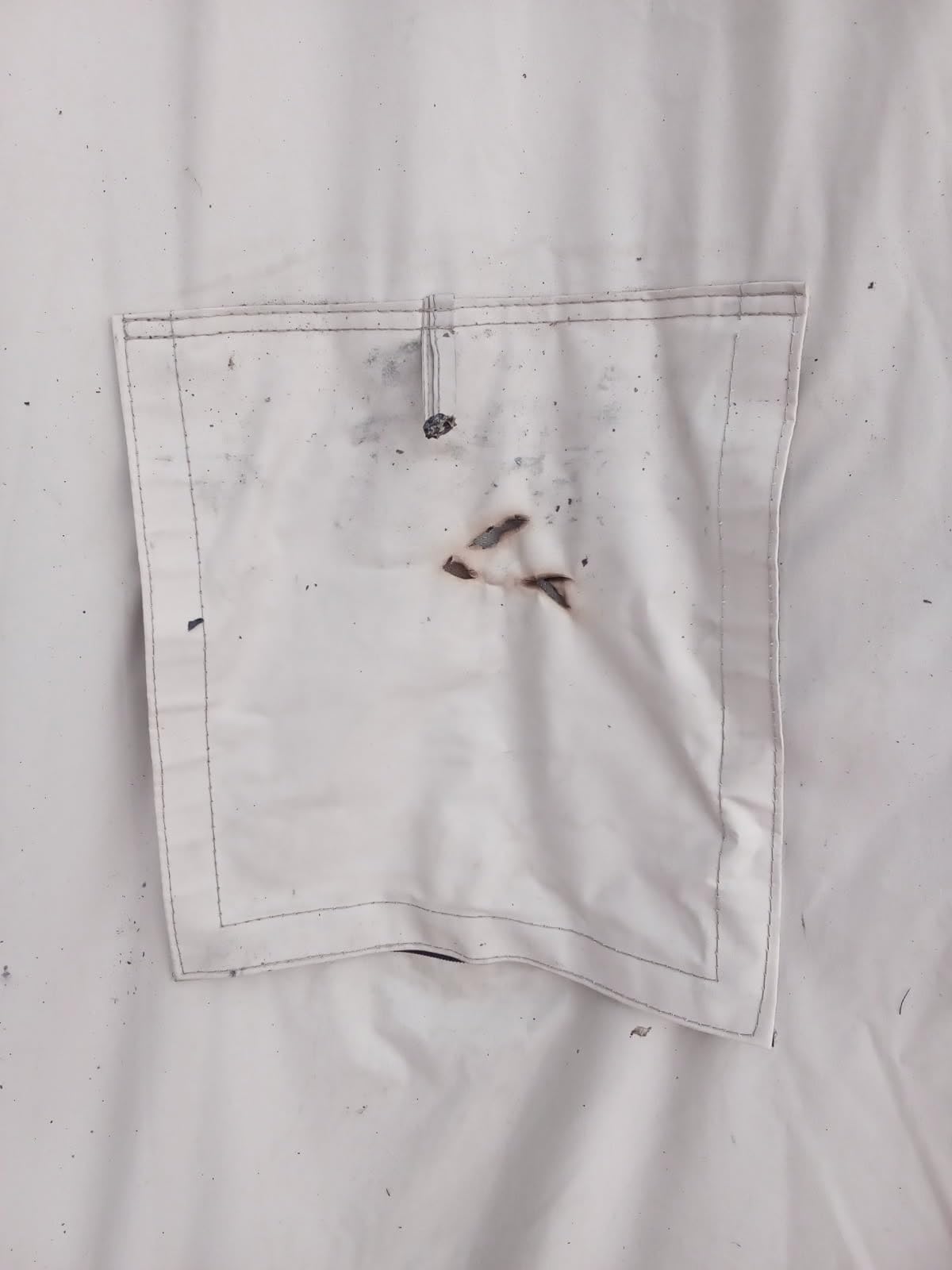
The most-cited drawback is the pre-cut stove pipe hole. Owners report it is oversized, which lets rain and snow straight into the tent, and the stove jack material and cover proved vulnerable to heat in cold-weather use. If you buy this tent for heating, add your own shield and seal the gap around the pipe.
Two more practical notes. The actual diameter runs about a foot under the stated size once pitched, so plan the floor area accordingly, and the guy line runs directly in front of the entry, which means ducking under it every time. A few owners also reported some fabric wicking in a water resistance test.
Good for what, exactly
It suits a first trip, a weekend festival, a childrens garden stay or a cheap garden pod where the tent will be moved rather than sited. The weight and pack-down make it the only bell tent here you can genuinely carry between pitches with one person.
Skip it for a heated winter site, for anyone who needs to stand upright inside, or for a permanent semi-permanent pitch. Move up to the Glamcamp or the VANFOND at 4 metres if you want more room for very little more money.
10. WildFinder 16.5-Foot Canvas Bell Tent – Best Bell Tent for Large Groups
WildFinder 16.5 Ft Canvas Bell Tent, Large Yurt Tent with Stove Jack
16.5 ft
15.7 ft floor
55 in walls
TC roof
stove jack
Pros
- 55 inch walls and 9.2 ft peak for real standing room
- Pre-installed stove jack with reinforced stitching
- Removable zip floor and roll-up sidewalls
- Stake positioning sheet speeds assembly
- Double-lined pole bag
Cons
- Roughly 60 to 70 lb to move
- Tall walls are not built for strong wind
- No dedicated electrical port
- 3 month warranty
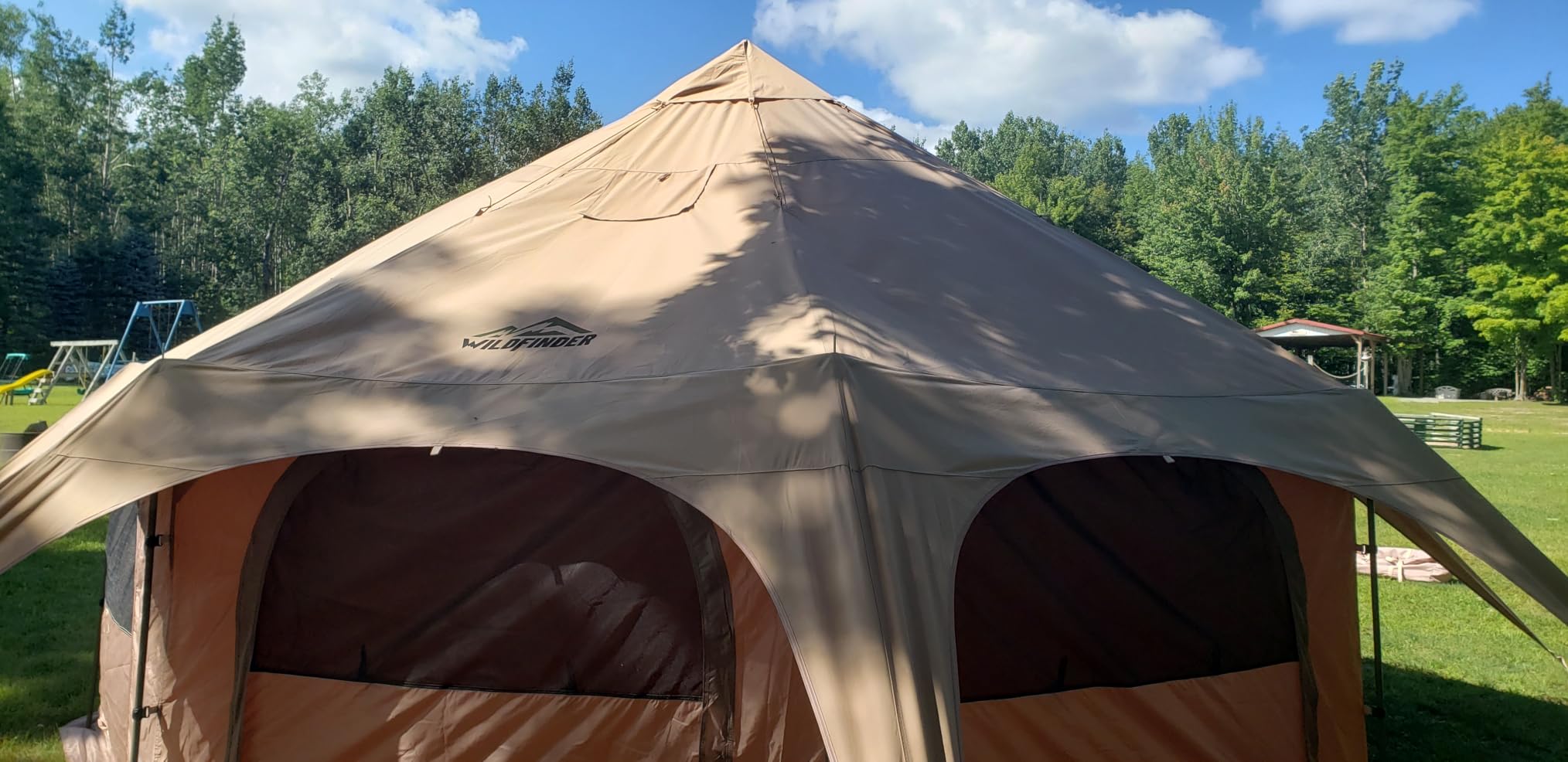
The WildFinder is a large-format tent built around wall height rather than floor area. The 55 inch vertical sidewalls and 9.2 foot peak let campers stand and place furniture right up to the perimeter, and the manufacturer lists occupancy for twelve. The 16.5 foot outer size gives a 15.7 foot floor diameter, so the usable interior is closer to what you would expect from a bigger nominal number.
The fabric stack is sensible: a 210G breathable TC cotton roof over 210D Oxford sidewalls, with a 600D Oxford floor rated to 3000mm. Eight large mesh windows and doors give 360 degree ventilation, and the removable zippered floor plus roll-up sidewalls convert the whole structure into a sunshade canopy. The stove jack is pre-installed with a reinforced double-stitched surround around the pipe hole.
Two details stand out for anyone actually pitching it. A printed positioning sheet gives accurate stake placement, which cuts setup time considerably on a 16 foot footprint, and the instructions are sewn into the pole bag, which is double-lined for durability. Owners report the tent held completely dry through sustained heavy rain after proper seasoning, and note the TC roof stays cooler in summer and warmer in winter.
Setup realistically takes two people. There is no way around that at this size and height, and the pole bag accounts for roughly half the total weight.
What to plan around
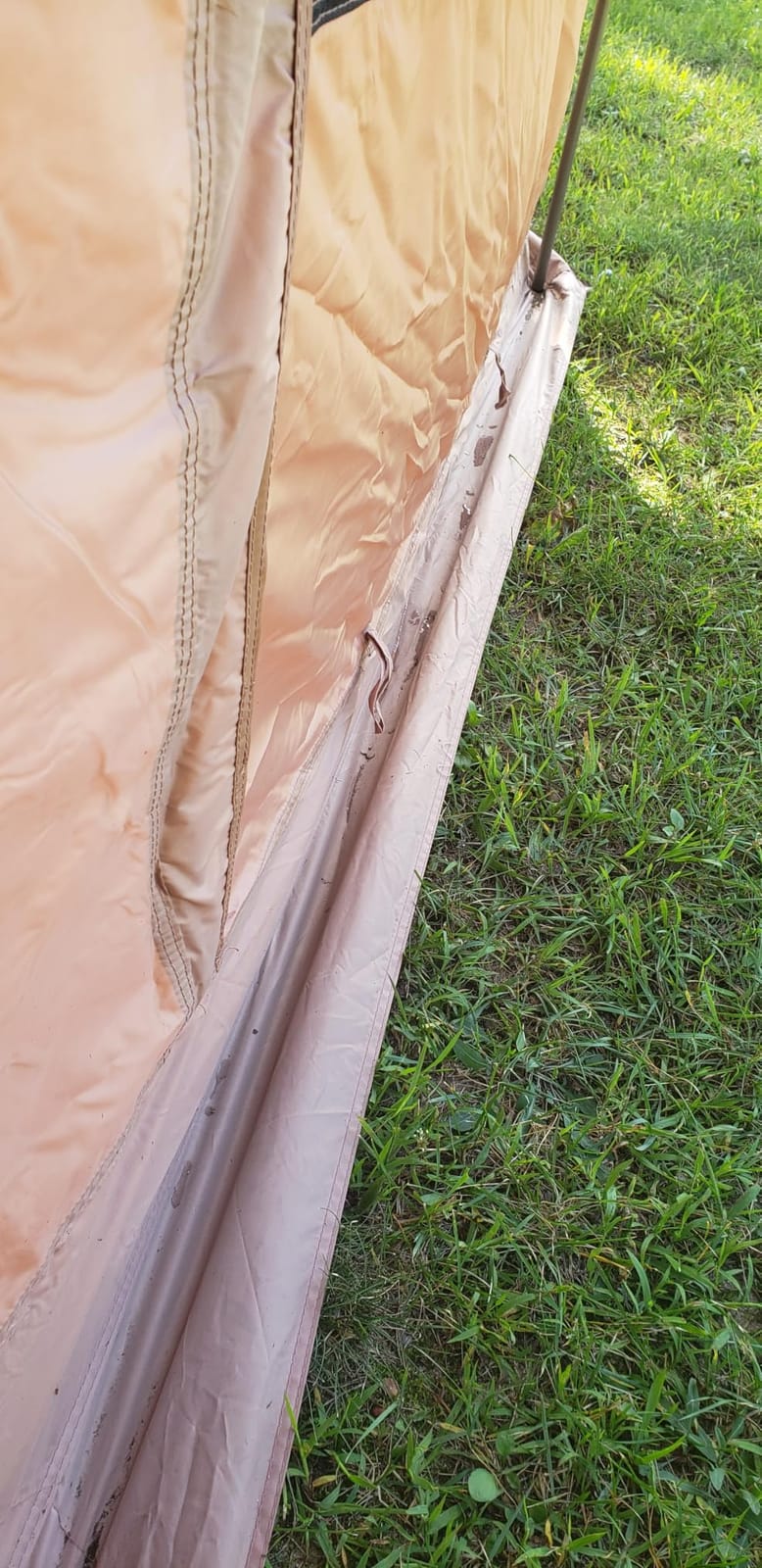
Weight is the headline: roughly 60 to 70 pounds to move. Second, the tall vertical walls are explicitly not designed to withstand strong wind, so this belongs on a sheltered pitch rather than an exposed one. Third, there is no dedicated electrical port, so cables have to be routed through a window zipper, which is an awkward detail if you are running power to a guest tent. The 3 month warranty is the shortest we covered.
One reviewer did report leaking in heavy rain, which is worth weighing against the majority of accounts describing it as dry once seasoned.
Where a tent this size earns its place
It suits a family or group booking, a yoga or retreat space, or a small operator running a single large tent rather than several small ones. The 360 degree ventilation and the canopy conversion make it workable across more of the year than a fixed four-wall shelter would be.
Pass for exposed sites, for solo pitching, and for any buyer who needs a long warranty. If you want a large tent with heavy canvas and a lifetime warranty behind it, the WHITEDUCK Avalon is the alternative worth costing up.
How to Choose a Bell Tent for Glamping Without Regret
Pick your diameter before anything else
Size is the decision that is hardest to reverse, and the most common source of disappointment. People consistently buy a diameter too small once real beds, a stove and furniture are involved. A 3 metre tent fits one or two campers and a stove; a 4 metre tent comfortably fits a queen bed or two singles; a 5 metre tent handles a double bed with proper circulation space; a 6 metre tent is a shared accommodation unit rather than a couple’s tent. In imperial terms, 3m is 10 feet, 4m is 13 feet, 5m is 16.4 feet and 6m is 20 feet, which resolves the metric confusion that shows up in almost every forum thread on this subject.
Cotton duck or polycotton
Cotton duck is 100 percent cotton, and it breathes better than anything else on this list. It is heavier, more expensive and slower to dry, but in high summer heat it stays noticeably more comfortable than coated fabric. Polycotton, usually a 65/35 polyester-cotton blend, dries faster, resists mildew better and can carry a polyurethane coating for real waterproofing. The experienced-camping consensus is that polycotton is the right call for hot weather and family use, and that advice holds up when you read the specifications. If you expect real rain rather than showers, a coated model makes more sense; if you expect real heat, uncoated cotton does.
The stove jack and fire safety
A stove jack is a reinforced, fire-rated hole in the canvas roof that lets a wood or pellet stove pipe pass into the tent. It is the single feature that makes a bell tent a four-season shelter rather than a summer one. Fit a certified silicone-fiberglass shield, secure the rain flap, keep the pipe extension a couple of feet above the ridge where the tent allows it, and fit a spark arrestor on the chimney. A working carbon monoxide alarm inside the tent is not optional. Two tents in our roundup have documented burn-through reports on the supplied stove flap, which is the reason we mention it at all.
Zipped-in floor, doors and ventilation
A sewn-in or detachable zipped floor is a comfort differentiator that buyers frequently overlook. Without one, damp ground wicks straight through the canvas and the floor sits in every puddle. A welded or bathtub-style PVC floor of 500GSM or above is the target. On ventilation, count the mesh openings rather than trusting a “ventilated” label, and check whether the roof vents have mesh and hoods. Condensation is the loudest complaint in every owner community we looked at, and airflow is the only real fix.
How long it takes and how many people it takes
Owners report 10 to 20 minutes for a 4 metre model solo once practised, 15 to 30 minutes for a 16 foot model, and two people for anything with 55 inch walls. Add a first pitch of an hour to be realistic, because nobody is fast on the first attempt. If you are running an operation, add takedown and drying time to your turnover calculation, because a damp tent cannot be repacked.
Wind, guying and storms
Bell tents handle wind far better than most people expect, provided they are properly guyped. A 5 metre unit has roughly 50 feet of circumference, and every stake line adds meaningful tension. Use more guylines than you think you need, anchor them at close to ninety degrees, avoid sites where funnelling occurs between obstacles, and treat any manufacturer’s stated wind limit seriously. The tents here that advertise tall vertical walls are the least wind-tolerant by design. Heavy rain is a different matter: an uncoated polycotton roof will wick, a coated cotton duck will not, and seams can channel water wherever the fabric is creased, so tension matters twice over.
Bell tent versus yurt tent
A bell tent uses a single centre pole and no wall structure, which makes it fast, light and highly portable. A yurt tent uses a lattice wall and a crown ring, which delivers near double the usable floor area at the same diameter, more stand-up height around the edges, and far more resistance to wind because the wall structure braces the roof. The rule of thumb is simple: pitch once and stay a while favours the yurt; moving between sites favours the bell tent. Also note that many products advertised as glamping yurts are structurally bell tents with a marketing label, which is a common source of expectation mismatch.
Keeping Canvas Dry: Condensation, Mould and Weathering In
Why new canvas leaks, and how to weather it in
Cotton and poly-cotton fibres swell when wet and shrink as they dry. That behaviour is the whole trick: a new tent, whose fibres have not yet moved, lets water through the weave. Weathering in deliberately saturates the canvas so the fibres swell, then lets it dry so they contract into a tighter weave that sheds water while still breathing. Skipping this step means a leaky tent that owners blame on quality.
The routine, in order: pitch the tent on level ground and tension every guy line until the fabric is drum-tight with no creases running down the slope. Hose the roof and walls down evenly rather than blasting one section, which creates uneven swelling. Let it dry completely in the sun, then repeat the wetting and drying cycle at least twice. Check the seams and the base of the walls each round, and pay attention to the valley where the roof panels meet. Finish by treating the guy lines and contact points, which are where abrasion and moisture combine.
Managing condensation in hot weather
Condensation is not a leak. It is warm night-time air meeting cool canvas and releasing moisture, and it is the single most common complaint about bell tents in summer. The fixes are unglamorous but effective: open the mesh panels and roll up the sidewalls overnight so air moves through rather than pooling, run a fan to move air across the surface, and add an external shade cloth or cover above the tent so the canvas is not absorbing direct sun all afternoon. Guests on glamping forums frequently report mustiness and damp within days, and it is almost always ventilation and drying rather than fabric quality.
Never pack canvas away wet
This is the rule that decides how long your tent lasts. A tent repacked damp will develop mould inside the fold lines, and owners across every community report this as the number one destroyer of otherwise good canvas tents. After rain, open every panel, unclip the floor, and let the whole thing air for as long as it takes. If you must strike camp, accept that you will be unpitching it again. Check for mould at the start of every season, re-proof the canvas as the maker directs, and store the tent lofted rather than rolled in a bag.
Frequently Asked Questions
What is the best glamping tent?
For most buyers the best glamping tent is a canvas bell tent with a fire-rated stove jack and enough wall height to furnish. The WHITEDUCK Regatta is the strongest all-round choice, with a 10 foot peak, a sewn-in groundsheet and a limited lifetime warranty. Choose a smaller poly-cotton model if you are on a tight budget and moving campsites, and choose the Avalon if you want pure Army Duck cotton and never intend to move the tent again.
Are bell tents any good?
Yes, and they are the only widely available shelter that combines stand-up headroom, a wood-stove-ready port and a room-like interior you can furnish. The trade-offs are weight, cost and pitch effort: a 5 metre kit typically runs 60 to 90 pounds and needs a vehicle. In return you get a breathable, repairable canvas shelter that lasts many seasons when dried properly between uses.
Which canvas bell tent is considered the best?
The WHITEDUCK Regatta is the one we rank first, at 4.6 stars across 756 owner reviews, the largest review base in our roundup. It combines a 10 foot peak and 2 foot 7 inch walls with a fire-retardant stove jack, a sewn-in polyethylene floor and a limited lifetime warranty. At the premium end, the WHITEDUCK Avalon takes the crown for pure 10.10 oz Army Duck cotton and a lifetime warranty.
How long does a canvas bell tent last?
A well-made cotton duck bell tent in regular use should give many seasons, and a heavy Army Duck model with a lifetime warranty can plausibly run for a decade. The deciding factor is care, not fabric. Never pack or store canvas damp, air the tent after rain, keep guy lines tight to avoid seam channels, and re-proof the fabric as the maker directs. Mould from damp storage shortens the life of a tent far more than any amount of normal use.
How do you waterproof a canvas bell tent?
Pitch it on level ground, tension all guy lines until the fabric is drum-tight with no creases, then wet the whole roof and walls evenly and let it dry in full sun. Repeat that wetting and drying cycle at least twice so the fibres swell and then contract into a sealed weave. Treat contact points and guy lines after each round, and re-proof seasonally. Note that an uncoated polycotton tent will always be for showers rather than sustained rain.
Are bell tents good in wind?
They are better than most buyers expect, provided they are properly guyed. A 5 metre tent has roughly 50 feet of circumference, and every additional stake line adds real tension. Use all the guylines supplied, set them close to ninety degrees, and avoid funnelling sites. The tents here with tall vertical walls are the least wind-tolerant by design, and any stated manufacturer wind limit should be taken at face value.
Can you put a wood stove in a bell tent?
Yes, provided the tent has a fire-rated stove jack, which all ten tents in this roundup do. Fit a certified silicone-fiberglass shield, secure the rain flap, and keep the pipe extension two to three feet above the ridge with a spark arrestor on the chimney. Keep a working carbon monoxide alarm inside the tent at all times, and check your local fire safety rules before you host guests in a heated tent.
How long does it take to pitch a bell tent?
Owners report 10 to 20 minutes solo for a 4 metre model once practised, and 15 to 30 minutes for a 16 foot model. Anything with tall 55 inch walls realistically takes two people. Allow a full hour for a first pitch, because nobody is fast the first time. If you run an operation, budget takedown and full drying time into your guest turnover, since a damp tent cannot be repacked without mould risk.
The Verdict: Which Bell Tent Should You Buy in 2026?
Buy the WHITEDUCK Regatta. It is the best bell tent for glamping in 2026 because nothing else in the ten matches its combination of a 10 foot peak, tall walls, a fire-retardant stove jack, a sewn-in floor and a limited lifetime warranty, backed by 756 owner reviews. It is also quick enough to pitch solo, which matters more than buyers expect when a tent has to be turned around between guests.
If budget is the constraint, the DANCHEL B5PRO is the sensible buy and will teach you everything about canvas ownership at a fraction of the outlay. If you need genuine standing room across the whole floor, the MC TOMOUNT is hard to argue with. If you want a flagship tent that will still be serviceable in a decade, the WHITEDUCK Avalon is the one to cost up. And whatever you choose, weather it in, never store it damp, and buy good ground stakes, because those three habits decide how long the tent lasts.