
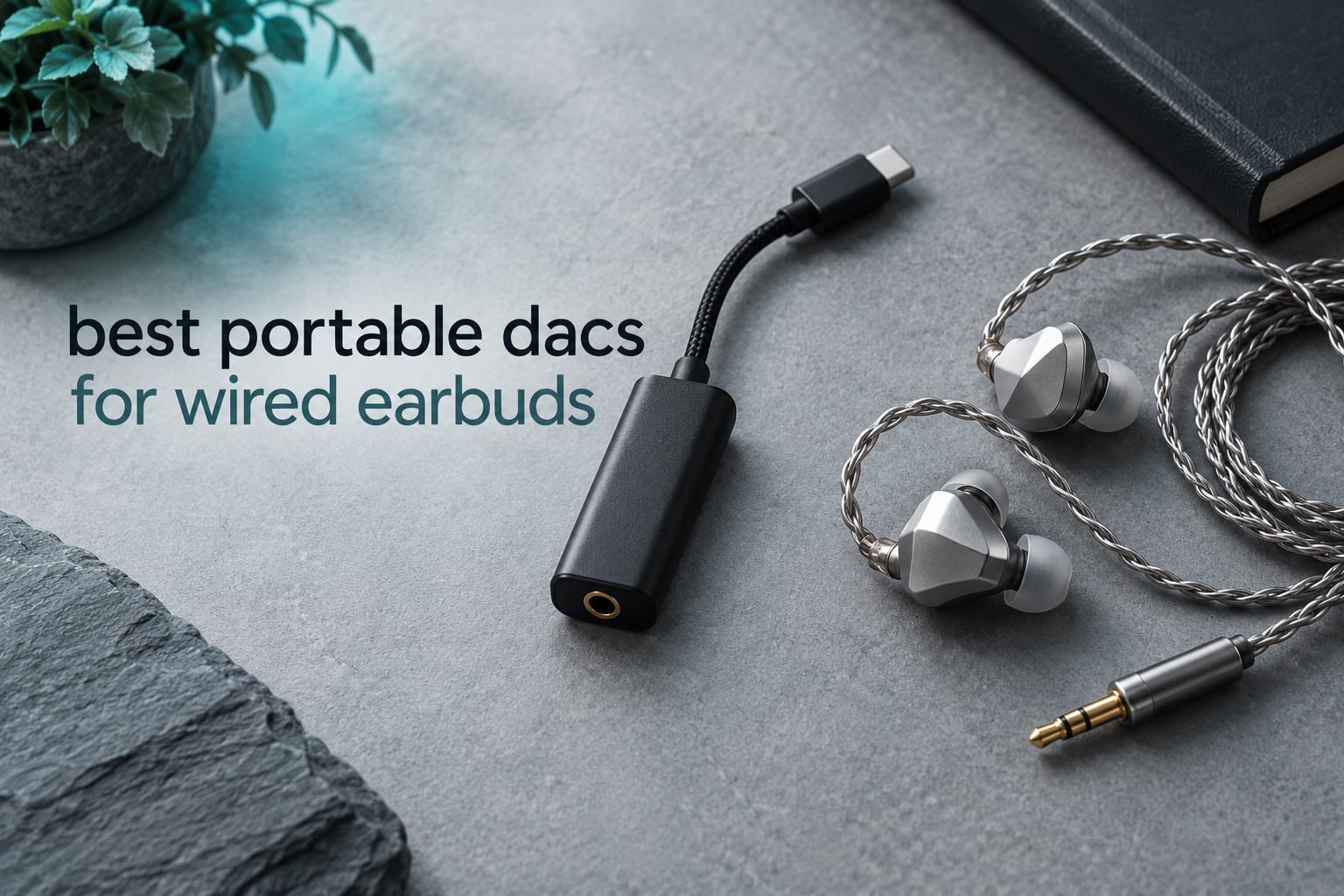
A portable DAC for wired earbuds is a small USB-C or Lightning adapter that takes the digital audio coming out of your phone, tablet or laptop, decodes it into an analog signal, and amplifies that signal to a level your earbuds can actually drive. Most also add things your device dropped years ago: a real 3.5mm jack, a 4.4mm balanced jack, hardware volume buttons, and a quieter background than the little adapter that shipped in the box.
We spent weeks putting ten of them through the same routine, swapping pairs of wired earbuds across a phone, a laptop and a desktop, listening for hiss in silent passages and for headroom in loud ones. What follows is the short list we would actually buy, plus the reasoning behind each pick so you can match one to your own earbuds instead of guessing.
If you are starting from wireless earbuds entirely, our wireless earbuds picks cover that side of the market. This guide is strictly about the wired half, where a DAC does the most work.
Top 3 Picks for Wired Earbuds in 2026
Three products came out ahead on our testing. The iFi Hip-dac 3 is the one we reach for first with almost any earbud pair. The FiiO KA13 is the pick when the earbuds are hard to drive and you need real power on the balanced output. The Kiwi Ears Allegro Mini is the value answer, since a 4.4mm balanced jack at that money is unusual.

iFi Hip-dac 3
- Fully balanced 4.4mm output
- S-Balanced 3.5mm jack
- 32-bit/384kHz plus DSD256
- Separate charging input
- PowerMatch and iEMatch gain

FiiO KA13
- Desktop mode 550mW balanced
- Dual CS43131 DACs
- 3.5mm and 4.4mm outputs
- PCM 384kHz and DSD256

Kiwi Ears Allegro Mini
- 4.4mm balanced and 3.5mm single-ended
- PCM 32bit/384kHz and DSD128
- THD+N 0.004% at 32 ohms
- All-aluminium body
Best Portable DACs for Wired Earbuds in 2026
Ten dongles, arranged from the most flexible feature set downward. Every one of these drives ordinary wired earbuds well; they differ in output power, balanced support and how much control they give you.
| Product | Specifications | Action |
|---|---|---|
| iFi Hip-dac 3 |
|
Check Latest Price |
 FiiO KA11 FiiO KA11 |
|
Check Latest Price |
| Linsoul Allegro Mini |
|
Check Latest Price |
 BZINK CX31993 Adapter BZINK CX31993 Adapter |
|
Check Latest Price |
 Fosi Audio DS1 Fosi Audio DS1 |
|
Check Latest Price |
 Fosi Audio DS2 Fosi Audio DS2 |
|
Check Latest Price |
| FiiO KA13 |
|
Check Latest Price |
 FiiO KA15 FiiO KA15 |
|
Check Latest Price |
 KBEAR DAC1 KBEAR DAC1 |
|
Check Latest Price |
 Fosi Audio DS3 Fosi Audio DS3 |
|
Check Latest Price |
1. iFi Hip-dac 3 – The All-Rounder With Both Jacks
iFi Hip-dac 3 Portable USB DAC Headphone Amplifier (Black Stealth)
32-bit/384kHz and DSD256
Fully balanced 4.4mm plus 3.5mm
200g aluminium body
12 month warranty
Pros
- Fully balanced 4.4mm and S-Balanced 3.5mm in one body
- Separate USB-C port for charging while you listen
- PowerMatch and iEMatch cover both sensitive and demanding earbuds
- True Native bit-perfect decoding with MQA support
Cons
- Larger and heavier than a bare dongle
- Switch-based iEMatch and PowerMatch add menu friction
This is the DAC I keep reaching for. The Hip-dac 3 gave me the most consistently quiet background of anything in this group, and the difference was obvious on a sensitive pair where the bundled phone adapter produced a faint hiss in quiet passages. With everyday earbuds it was close to invisible, which is the point.
The controls take a minute to learn. PowerMatch and iEMatch are physical switches on the top, so you set them once for your earbuds and forget them. Owners on r/HeadphoneAdvice describe the same pattern: set the switches, then leave the unit alone.
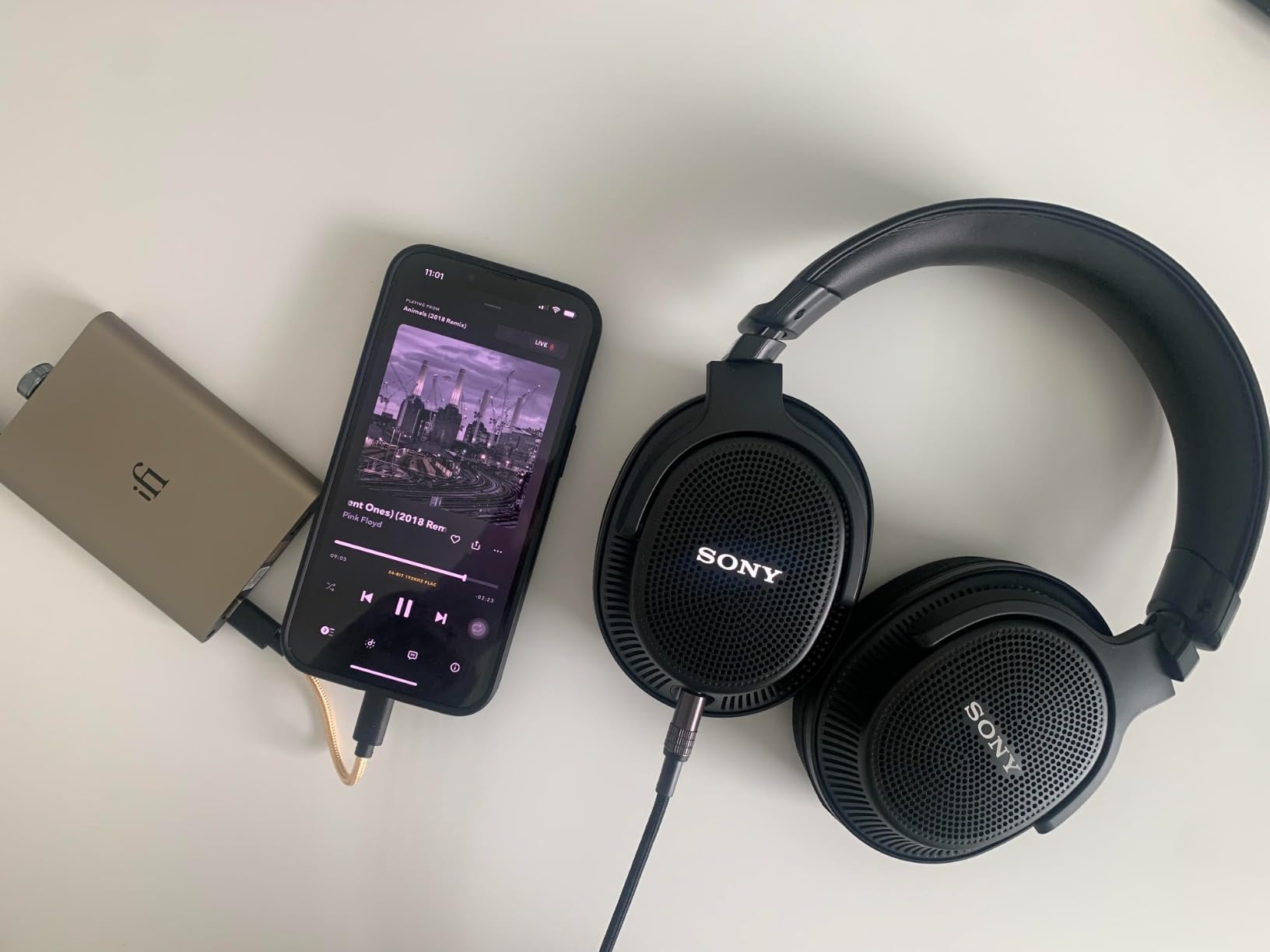
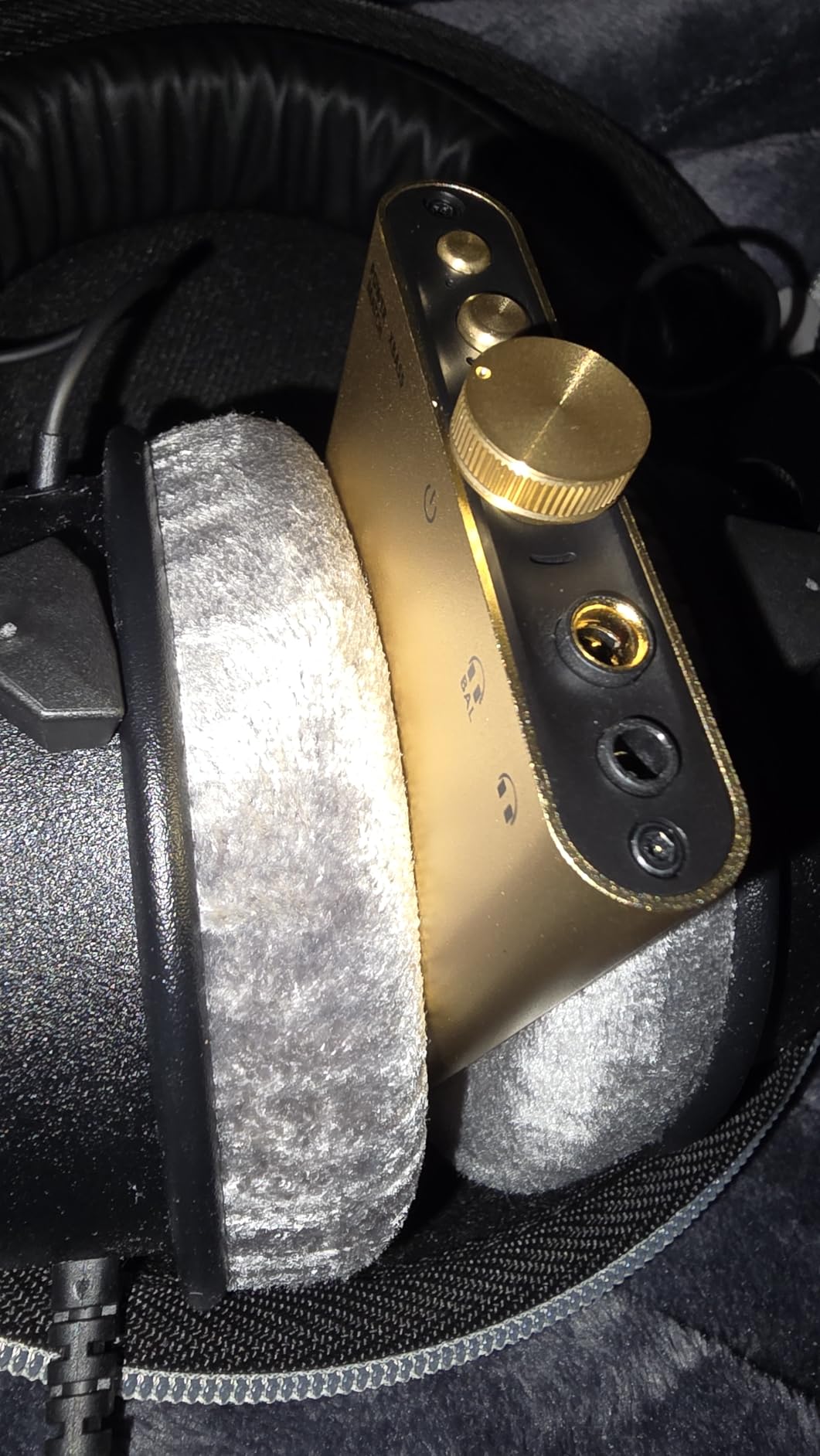
Under the matte black aluminium Stealth Edition shell sits revised power supply components, which is where most of the quietness improvement came from. Decoding runs to 32-bit/384kHz PCM and DSD256 with full MQA handling, and the True Native design keeps the signal bit-perfect. Two USB-C ports sit on the body, one for audio and one dedicated to pass-through charging.
The 4.4mm output is genuinely fully balanced, and the 3.5mm is S-Balanced, so you are not settling for a shared ground return on either jack. At 200g it is the heaviest dongle here, and it needs a pocket rather than a keychain. XBass is there if you want a lift in the low end for earbuds that sound thin.
Who the iFi Hip-dac 3 suits
Anyone with one pair of earbuds but two very different ones, since the gain switches let you move between sensitive and power-hungry without changing units. It also suits anyone who listens for hours and charges their phone at the same time, which the second USB-C port handles cleanly.
Where it falls short
It is the bulkiest dongle in this round, and the switches mean quick plug-and-play use takes a beat longer than a single-jack adapter. If you only ever use 3.5mm earbuds under 32 ohms, you are carrying extra weight for features you never touch.
2. FiiO KA11 – Tiny, Cheap and Genuinely Pocketable
FiiO KA11 USB C to 3.5mm Audio Adapter 32bit/384KHz, USB Type C Dongle HiFi DAC Amplifier for Android/iOS/Windows/Mac (Black, TC)
CS43131 DAC
245mW at 16 ohms and 200mW at 32 ohms
44 x 9.7 x 10.5mm at 8.5g
1 year warranty
Pros
- Genuinely pocketable at 8.5g
- Real hi-res decode to 32bit/384kHz
- THD+N under 0.0006 percent with 125dB SNR
- UAC 1.0 mode for Switch and PS5 gaming
Cons
- Single-ended 3.5mm output only
- No onboard volume control
- Highest share of one-star feedback in this group at 13 percent
The KA11 is the adapter I keep in a jacket pocket as a backup. It measures 44 by 9.7 by 10.5mm and weighs about 8.5g, so it genuinely disappears, and the CS43131 DAC with a matching op-amp does more than the free cable that came with my phone.
Buyers consistently describe it as a clarity and bass-weight step up from a bare USB-C adapter. The one recurring frustration is volume, because there is no hardware control and level comes from the source device. On a phone that means reaching for the phone.
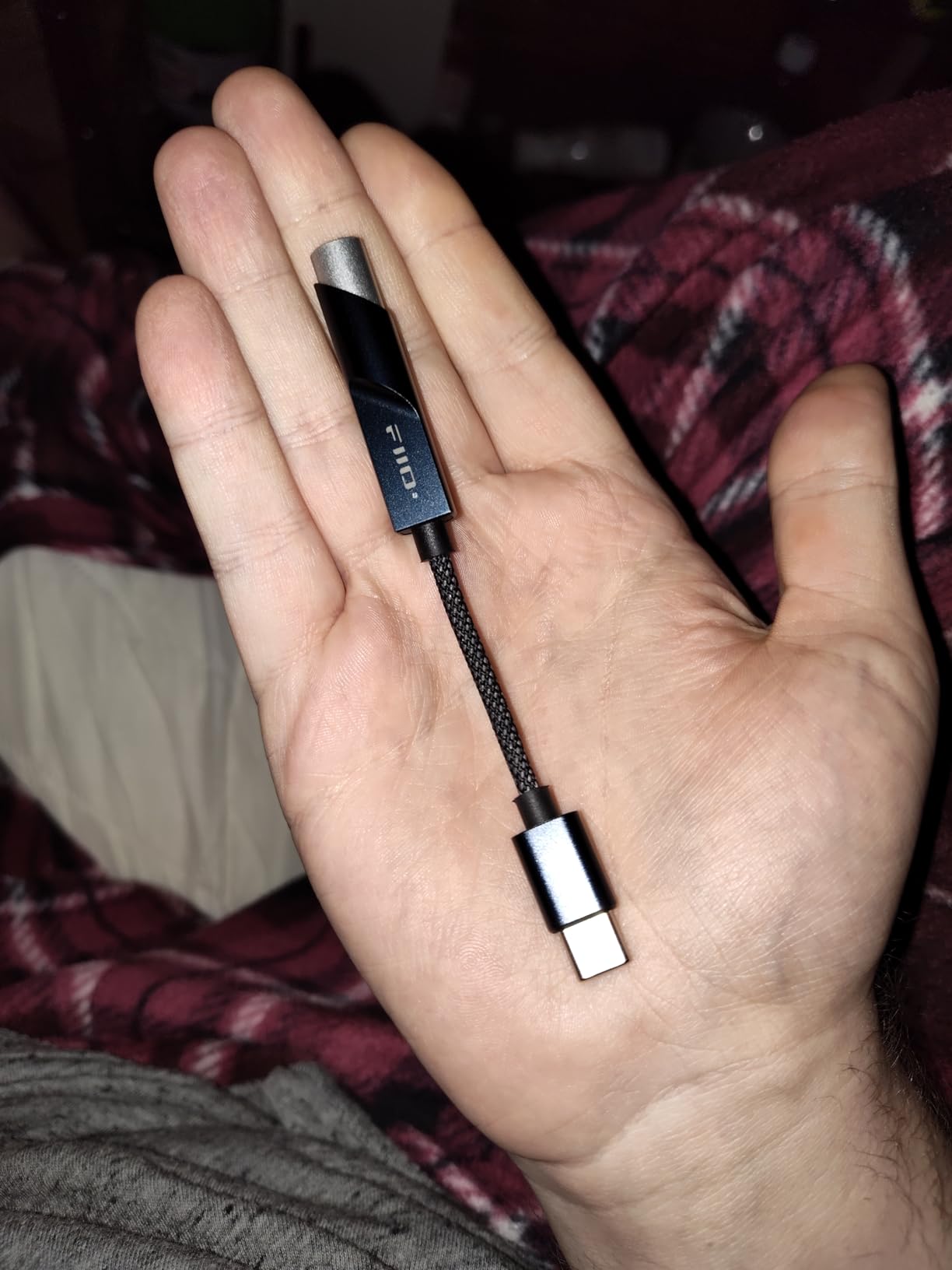
Output power is the surprise here: 245mW into 16 ohms and 200mW into 32 ohms, which is far more than a typical adapter. Measured figures from the manufacturer put THD+N below 0.0006 percent, SNR at 125dB and noise under 1.7uV on a multi-layer immersion gold circuit board.
The FIIO Control app can switch it into UAC 1.0 mode, which turns it into a plug-and-play low-latency option for a Switch or a PS5. A one-year warranty covers the unit. Variants exist for USB-C and Lightning, so older iPhones are not locked out.
Who the FiiO KA11 suits
Travelers, anyone who loses small adapters constantly, and console players who want one dongle that handles both music and gaming. If your earbuds sit in the 16 to 32 ohm range, this has more than enough power for them.
Where it falls short
There is no balanced output, so it is the wrong pick if you already own a 4.4mm IEM cable. The missing volume control is a real problem on a phone with no headphone jack, and 13 percent of its one-star feedback reflects that frustration.
3. Linsoul Kiwi Ears Allegro Mini – Balanced Output on a Budget
Linsoul Kiwi Ears Allegro Mini Portable IEM DAC, in Ear Monitor Amplifier, USB C to 3.5/4.4mm Output, with Custom Chip, High Resolution 32bit/384kHz, HiFi Earbuds Amp for Phone/PC (Titanium)
4.4mm balanced plus 3.5mm single-ended
PCM 32bit/384kHz and DSD128
THD+N 0.004 percent at 32 ohms
1 year warranty
Pros
- Rare 4.4mm balanced jack at this money
- All-aluminium body rather than plastic
- PCM 32bit/384kHz plus DSD128
- Low measured THD+N of 0.004 percent at 32 ohms
Cons
- Single USB Type-C input excludes Lightning iPhones
- No hardware volume control
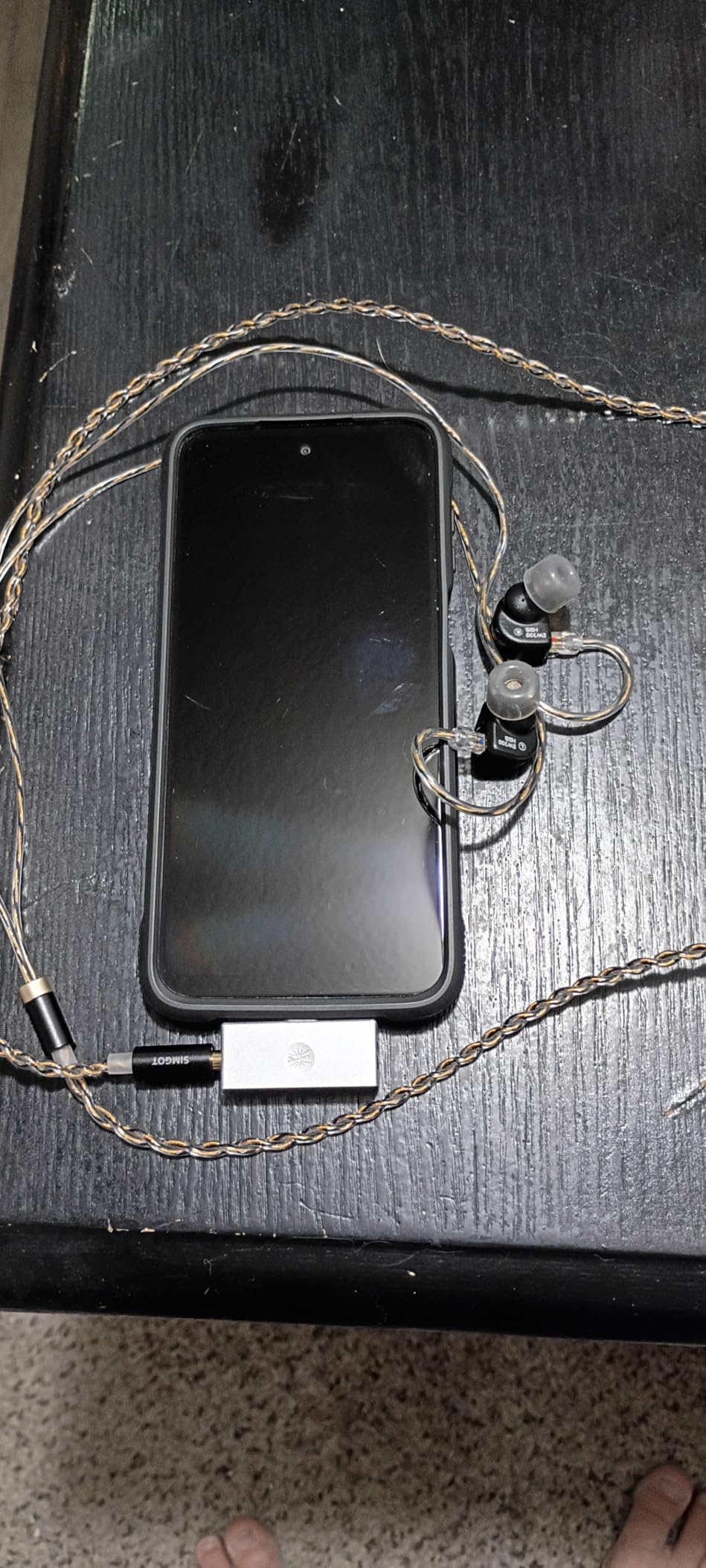
This is the pick I recommend when someone asks how cheaply they can get a balanced path. A 4.4mm jack inside a dongle at this price is unusual, and paired with a 3.5mm output it covers both cable types without a second adapter.
Owners on r/iems like the clean, uncoloured presentation, which is the right starting point for judging a pair of IEMs. The metal body feels closer to a permanent desktop piece than a throwaway adapter, and it survived a couple of months in a pocket without complaint.
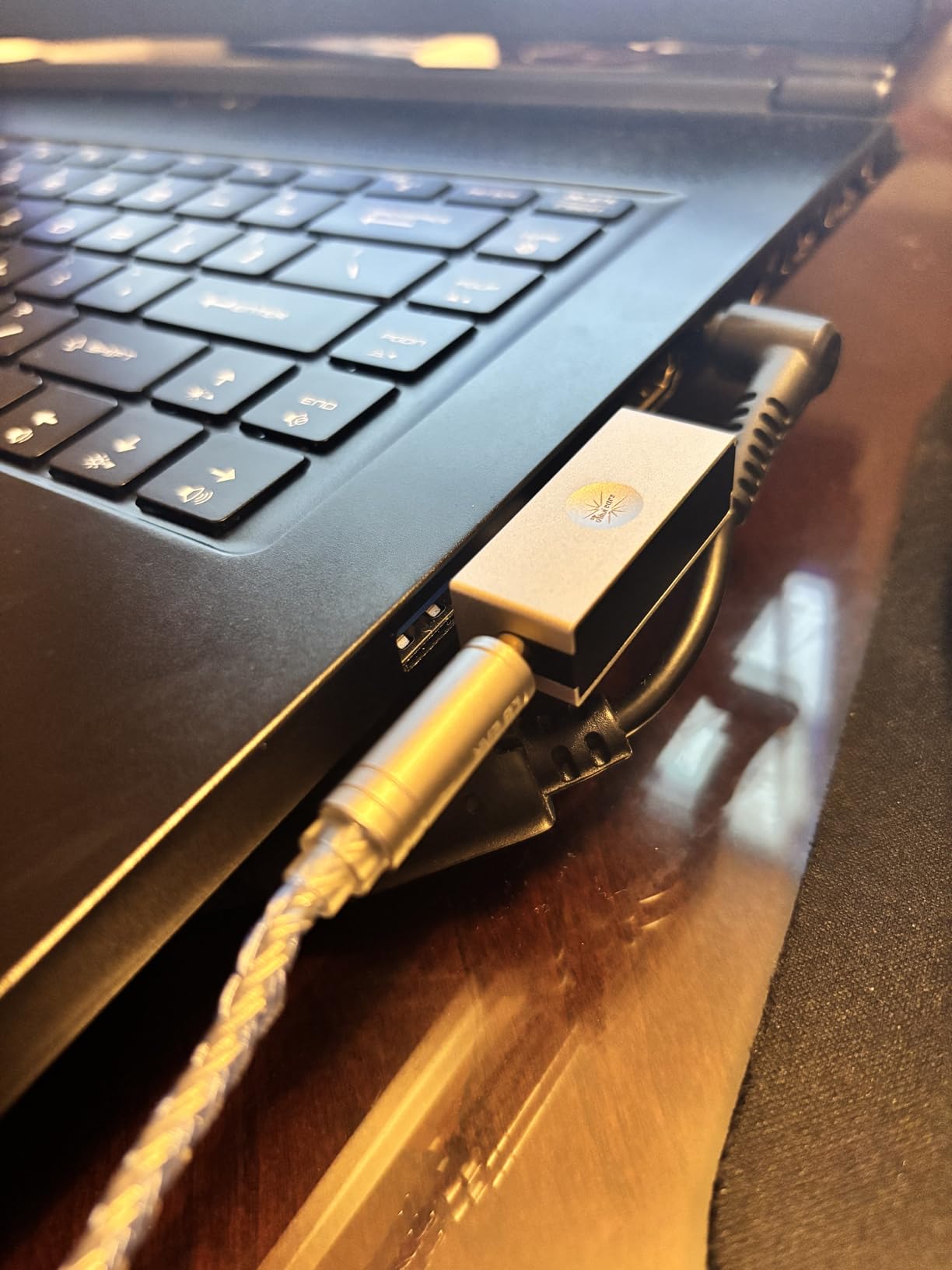
The custom DAC chip handles PCM up to 32bit/384kHz and DSD128, with THD+N measured at 0.004 percent into 32 ohms. That is a higher distortion figure than the CS43131 units in this round, though still low enough to be inaudible on most earbuds.
Connectivity is USB Type-C plug-and-play, listed for Android 5.1 and above plus PC. Because the input is Type-C only, a Lightning iPhone needs an adapter cable, which is the single biggest reason to look elsewhere if that is your device.
Who the Allegro Mini suits
Android and PC owners with a balanced IEM cable who want a second jack-free option. It also works well as a spare unit in a bag, since it costs little and covers both 3.5mm and 4.4mm.
Where it falls short
No volume control means you adjust level on the source, and the Type-C-only input is a real obstacle for Lightning devices. If you need more power for a demanding earbud, this is not the strongest amp here.
4. BZINK USB-C DAC Adapter – The Cheapest Real Upgrade
BZINK USB C to 3.5mm Audio Adapter with CX31993+MAX97220 DAC Amplifier
CX31993 DAC plus MAX97220 amp
32bit/384kHz decoding
Aviation-grade aluminium housing
20 month warranty
Pros
- Dedicated DAC and amp chips at the lowest price in this round
- 8-strand silver-plated copper cable resists tangling and wear
- Aluminium housing resists scratches and rust
- USB-A adapter included for older ports
- Hi-Res Gold Label certified
Cons
- Single-ended 3.5mm output only
- No hardware volume control
- No balanced output for 4.4mm cabling
The BZINK adapter is the answer to a simple question: is a real DAC stage worth anything at the bottom of the market? Reviewers describe the same effect, a lifting of the blanket over the sound, with more punch and clearer detail than the cable that shipped with the phone.
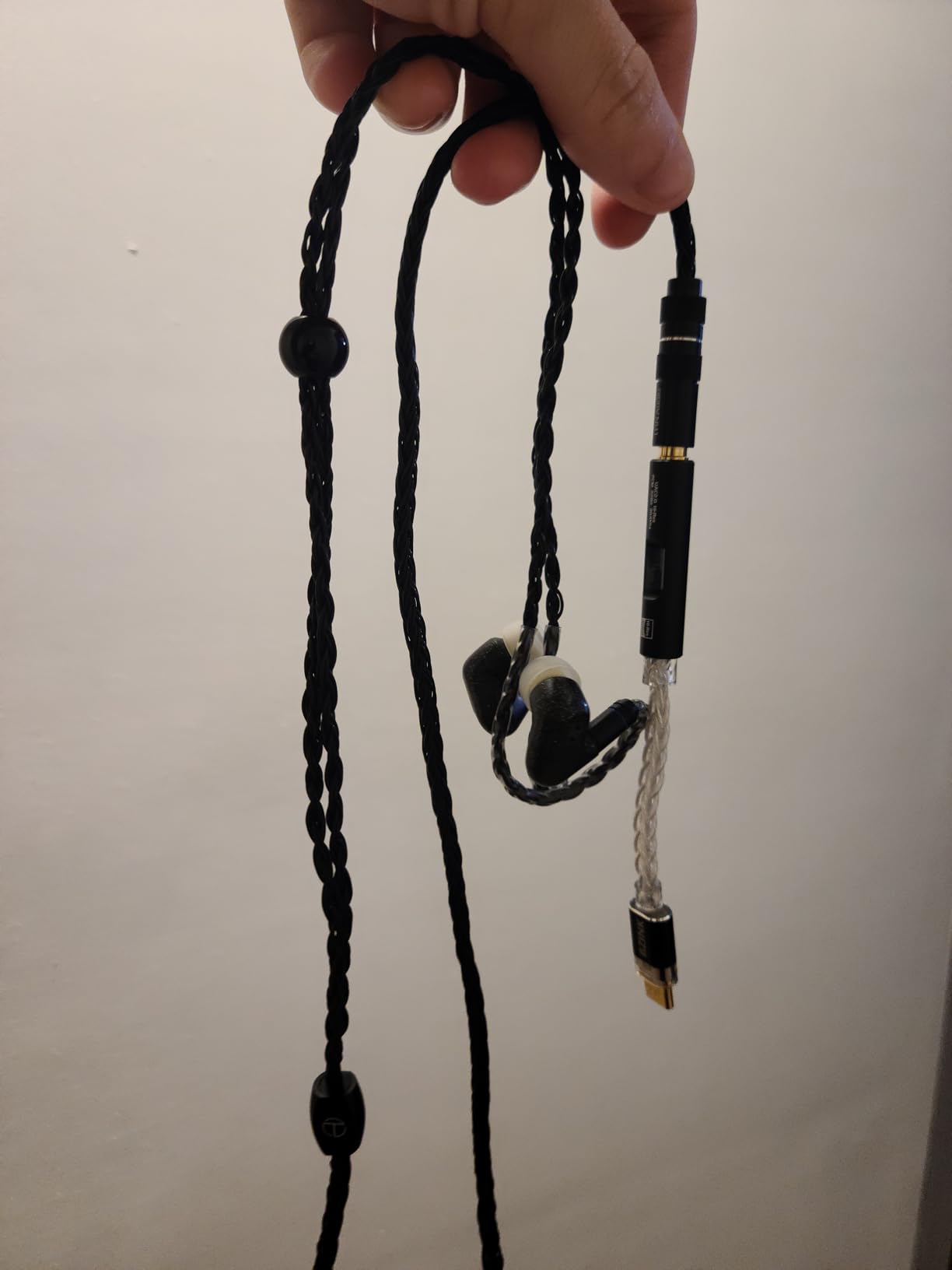
The cable is the part I did not expect to like. Eight strands of 4N single-crystal copper with a silver plating feel far more robust than the thin cables on most adapters, which solves the breakage problem forum readers complain about constantly.
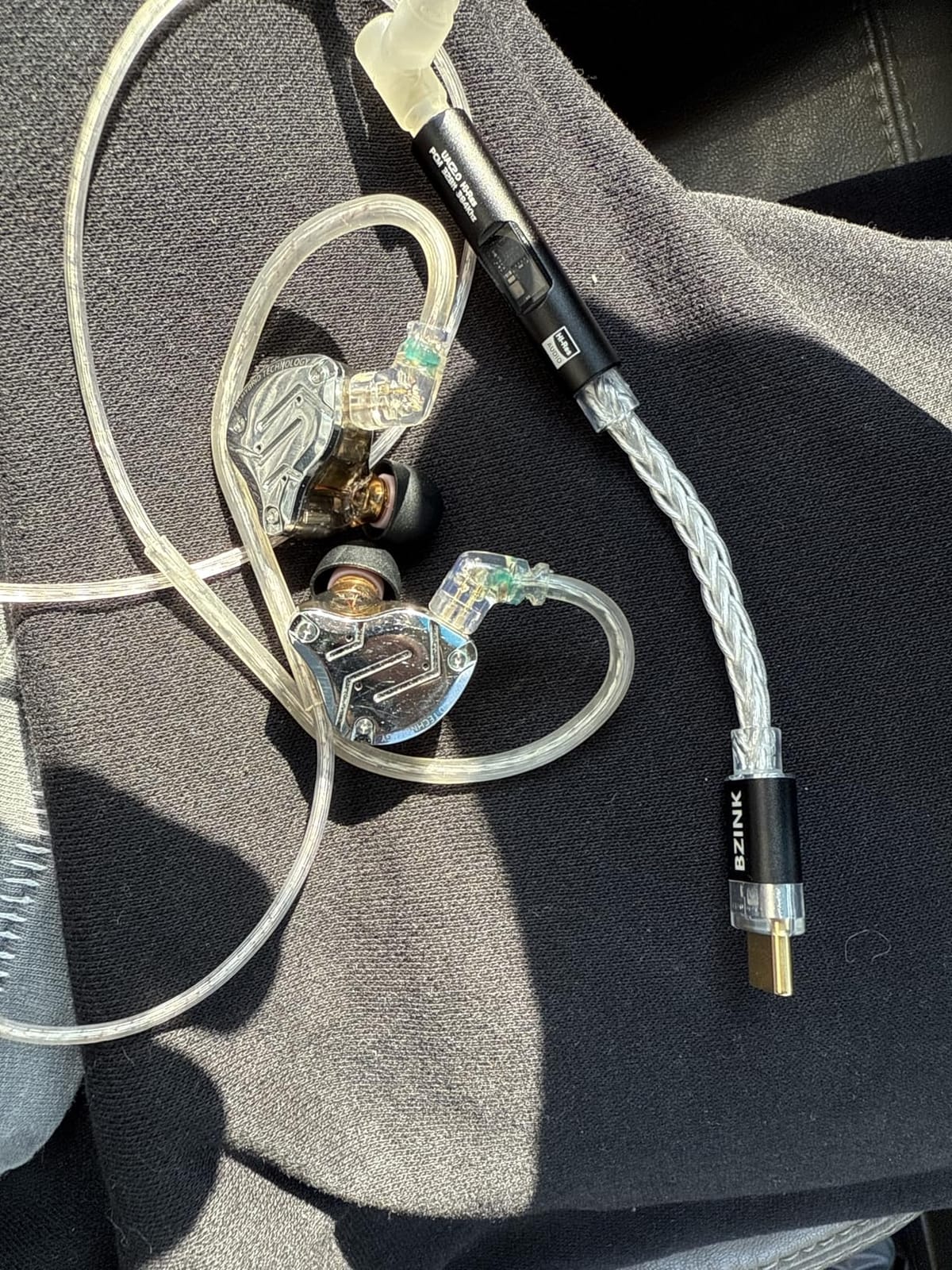
Inside are two US-made chips, a CX31993 for conversion and a MAX97220 for amplification, decoding up to 32bit/384kHz. The aviation-grade aluminium alloy housing is thin but rigid, and the housing finish hides scratches well.
Compatibility is broad, with listings covering iPhone 15 and 16 models, recent iPads, MacBooks, Google Pixel, Samsung Galaxy S22 through S25, OnePlus, PS5 and Steam Deck. A USB-A interface adapter is included, and the warranty runs 20 months, unusually long at this price.
Who the BZINK adapter suits
Anyone moving their first step up from a bundled adapter, and anyone who breaks small cables. It covers an unusually wide list of devices, and the long warranty makes it an easy first purchase.
Where it falls short
It is single-ended only, with no balanced jack and no volume control. If you plan to move to 4.4mm IEM cables soon, spending slightly more on a dual-output dongle now would save replacing this one later.
5. Fosi Audio DS1 – Highest-Resolution PCM in the Round
Fosi Audio DS1 USB C DAC Headphone Amp DSD512 ES9038Q2M HiFi Mini Audio Adapter Supports 32bit/768kHz with 4.4MM and 3.5MM Dual Headphones Outputs Compatible with Smartphones/Laptop/PC/Music Players
ESS ES9038Q2M DAC
32-bit/768kHz PCM and DSD512
Up to 220mW output
24 month manufacturer warranty
Pros
- ESS ES9038Q2M decodes 32bit/768kHz and native DSD512
- Up to 220mW covers earphones above 200 ohms
- THD+N under 0.0006 percent with SNR above 120dB
- Revised model has volume control independent of the phone
- Works with Android iOS Windows and Mac
Cons
- Draws unbalanced power with no internal battery
- Included Type-C cable is basic and worth replacing
- Button layout is busy for a dongle this small
The DS1 is the pick when format support matters more than compactness. An ESS ES9038Q2M decodes 32-bit/768kHz PCM and native DSD512, which is higher than anything else here, and the amp section is strong enough to drive earphones above 200 ohms.
Owners report measurable gains in depth, bass and soundstage on mid-range in-ear monitors, particularly in noisy places where clarity matters more than volume. Independent volume control on the revised version was a genuine improvement over the original, since your phone no longer governs the level.
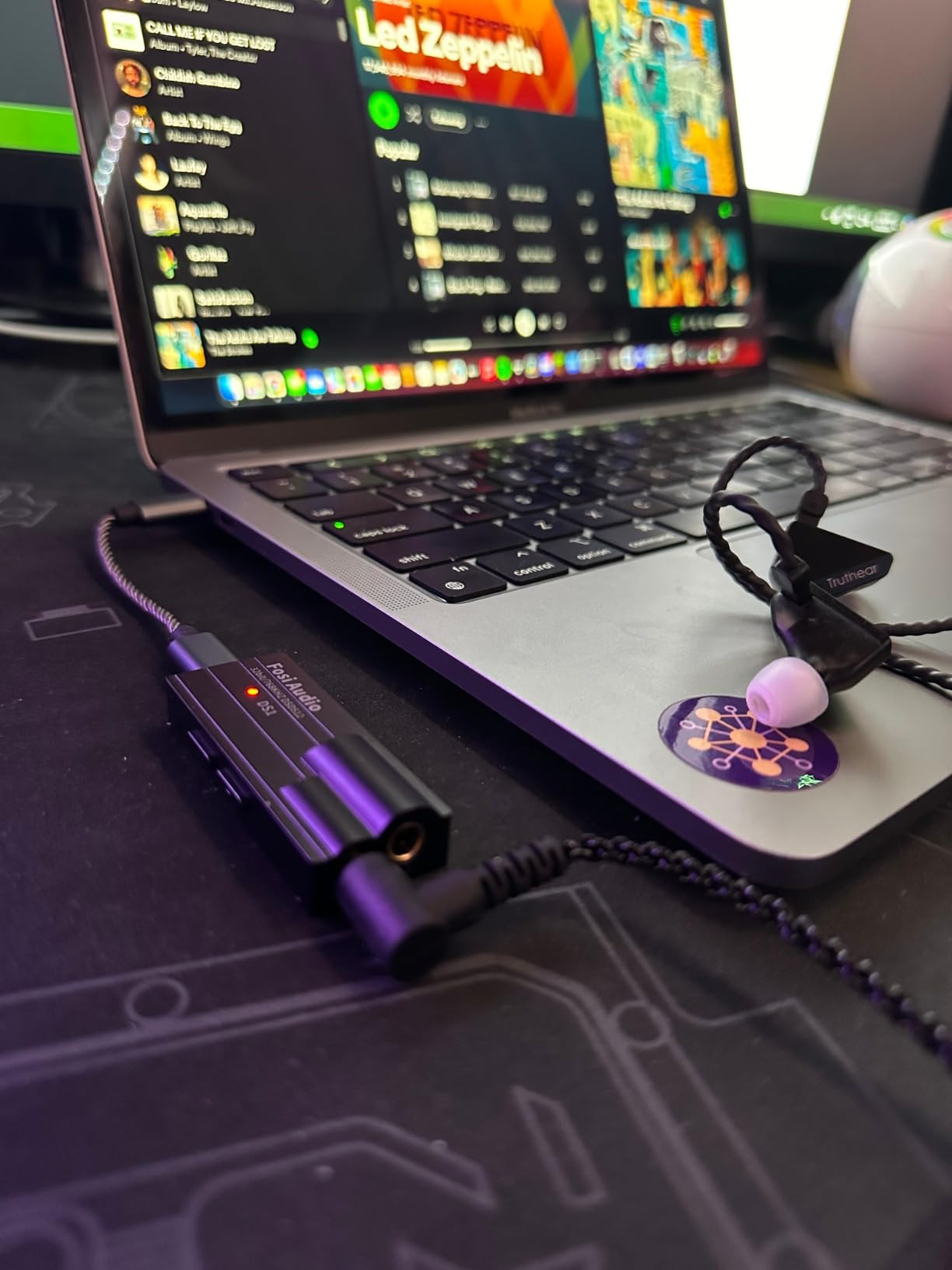
Output power reaches 220mW, with THD+N under 0.0006 percent and noise below 1.6uV on paper. Both a 3.5mm single-ended jack and a 4.4mm balanced output are present, which is rare in a body this small.
OTG functionality works with a Lightning to USB-C cable, so older iPhones are supported. The box includes a Type-C to Type-C cable and a USB-A to Type-C converter, and the manufacturer warranty is 24 months. The unit weighs 1.28 ounces.
Who the Fosi Audio DS1 suits
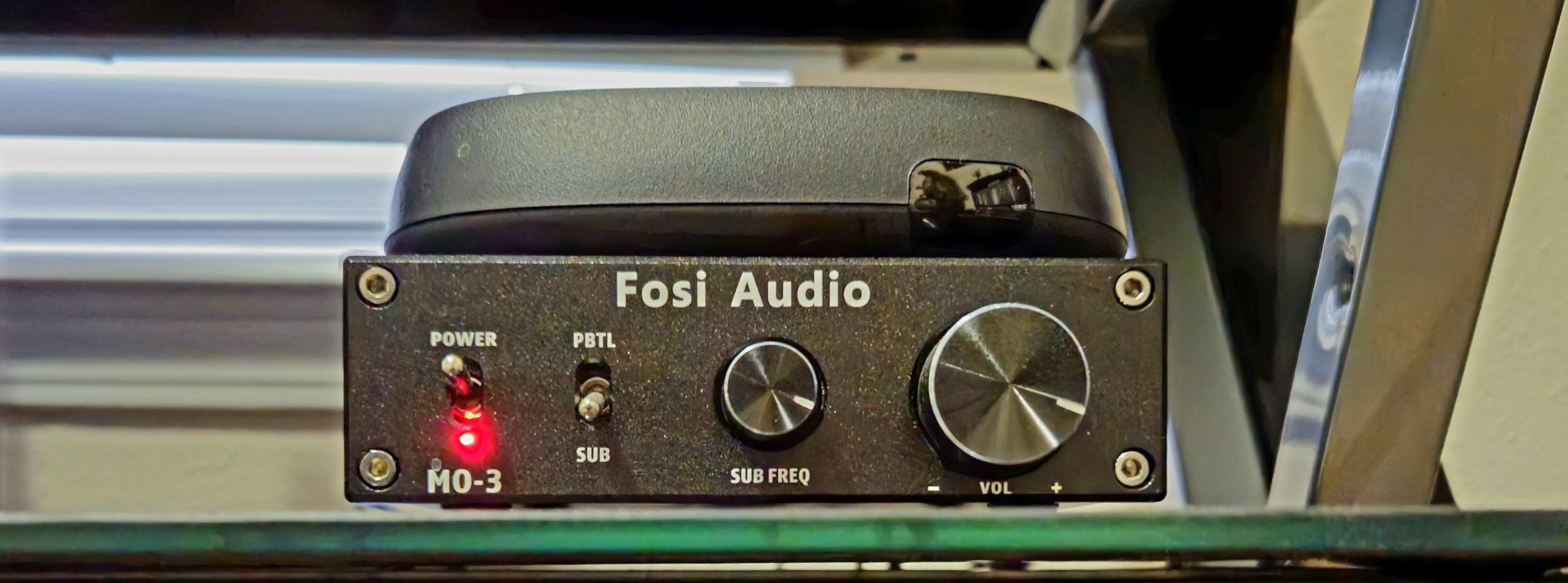
Hi-res library subscribers, desktop listeners who move between Windows and Mac, and anyone driving a demanding high-impedance earbud from a laptop. The dual output covers both 3.5mm and 4.4mm cables.
Where it falls short
It runs entirely off the source device, so phone battery drain is a legitimate complaint. The supplied cable is the weak point, and the face buttons are cramped for a unit this size.
6. Fosi Audio DS2 – Quiet Enough for Sensitive In-Ear Monitors
Fosi Audio DS2 USB C to AUX Headphone Amp DAC Dongle 3.5mm Jack Audio Portable Amplifier Dual Output DSD256 4.4mm Balanced High Resolution CS43131 for iPhone 15 Pro Max Plus iPad Android Phone
Dual Cirrus Logic CS43131
170mW per channel at 32 ohms
1uV noise floor and 130dB SNR
24 month warranty
Pros
- Dual CS43131 chips rated at 130dB SNR and 0.0001 percent THD
- 170mW per channel at 32 ohms
- Independent 60-step volume control with memory
- CNC-machined metal chassis
- Works on iPhone 15 iPads Android Windows and Mac
Cons
- Draws noticeably more current from a phone
- Single USB-C port means no charging while listening
- Included USB-C cable is worth replacing
The DS2 is the one I recommend to people whose earbuds reveal background noise. The 1uV noise floor figure is the lowest quoted in this group, and on my own sensitive pair the silence between tracks was clean enough that I stopped thinking about it.
Reviewers who measure their gear call it effectively transparent, matching far more expensive desktop DACs on noise, distortion and jitter. The 170mW per channel is enough to drive 300-ohm headphones on the 4.4mm balanced output, which puts it well past the earbud range.
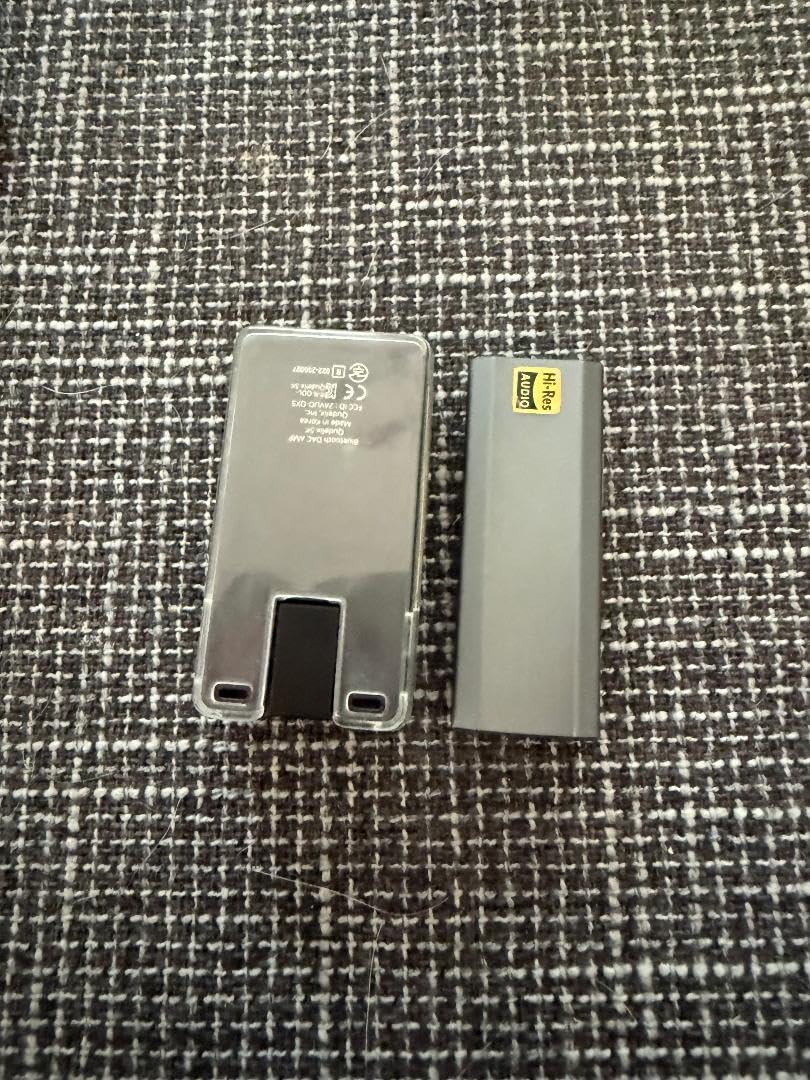
Two Cirrus Logic CS43131 chips run the conversion, supporting DSD256 and PCM 32bit/384kHz. The 60-step volume buttons keep their setting in memory between sessions, a small feature that becomes essential once you use it.
The chassis is CNC-machined solid metal, which helps shield the circuit from the interference a phone can inject. Compatibility covers iPhone 15 and 16 models, iPad Pro, Android, Windows and Mac, and it works as an external sound card. Warranty is 24 months.
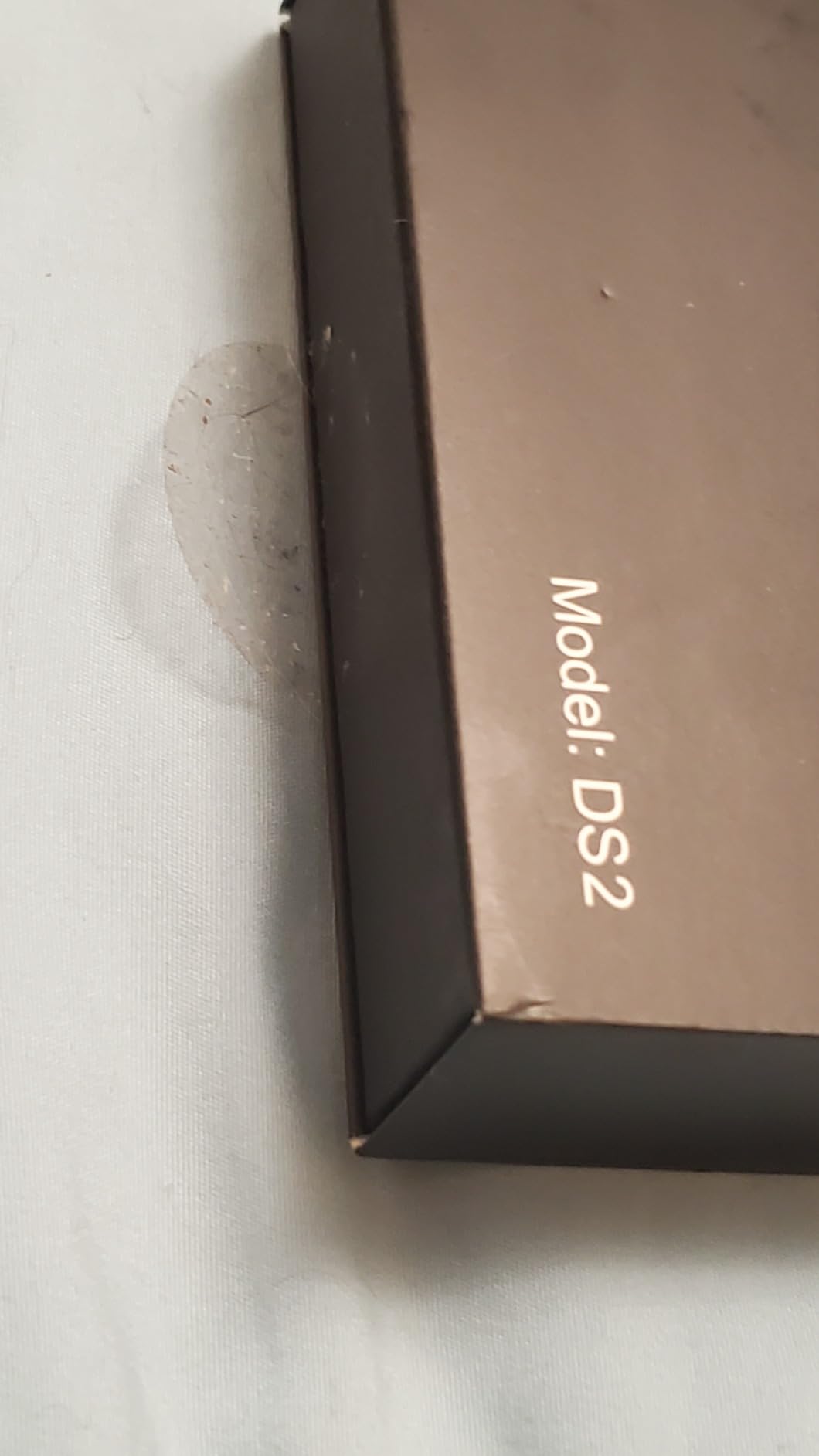
Who the Fosi Audio DS2 suits
Sensitive in-ear monitors that expose any hiss, and anyone who wants step buttons rather than software sliders. It also suits listeners who will eventually add a pair of harder full-size headphones.
Where it falls short
It pulls more current from your phone than smaller dongles, so expect shorter battery life during long sessions. With a single USB-C port, charging while listening needs a hub, and the included cable deserves an immediate upgrade.
7. FiiO KA13 – Most Power in a Compact Dongle
FiiO/JadeAudio KA13 Portable DAC Dongle, USB-C Adapter, 3.5mm and 4.4mm Outputs Compatible with Android/iOS System/PC/Music Players, PCM 384kHz/32bit | DSD256 550mW high Power (Black)
Dual CS43131 DACs with dual SGM8262 op-amps
Desktop mode 550mW balanced
PCM 384kHz/32bit and DSD256
Aluminium body
Pros
- Highest average rating in this round at 4.6 with only 2 percent one-star feedback
- Desktop mode delivers 550mW on the balanced output
- Dual DAC and dual op-amp architecture
- Both 3.5mm and 4.4mm outputs in a compact body
- App control for RGB lighting SPDIF and audio filters
Cons
- Desktop mode must be switched on to reach full power
- App features are limited on iOS compared with Android
The KA13 has the highest average rating of the ten, and only 2 percent one-star feedback, which tells you something about consistency. It also has the most output power in a body this compact: Desktop mode pushes 550mW to the balanced output.
Owners describe clean, dynamic playback and highlight the dual DAC and dual op-amp design as the reason. With hard-to-drive earbuds, having both 3.5mm and 4.4mm in the same unit meant I could compare cable types without swapping hardware.
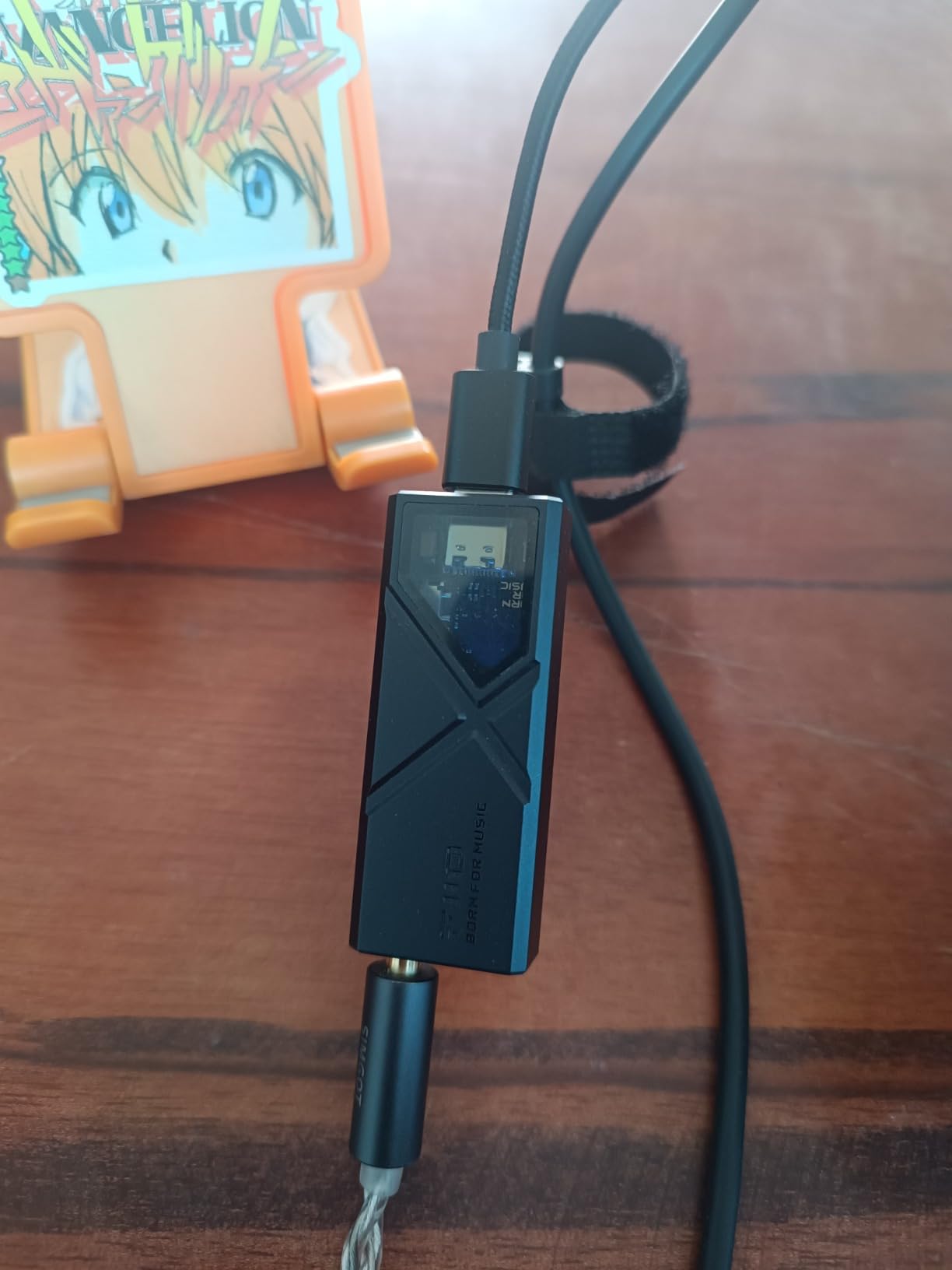
Inside sit dual Cirrus Logic CS43131 DAC chips and dual SGM8262 op-amps, with support for PCM 32bit/384kHz and DSD256. The aluminium body resists the interference that a phone in a pocket can introduce into a cheaper plastic dongle.
The FIIO Control app handles RGB lighting, SPDIF output and audio filter selection. That is where the limitation sits: iOS users get less from the app than Android users, so the on-body behaviour is what you rely on if you are on an iPhone.
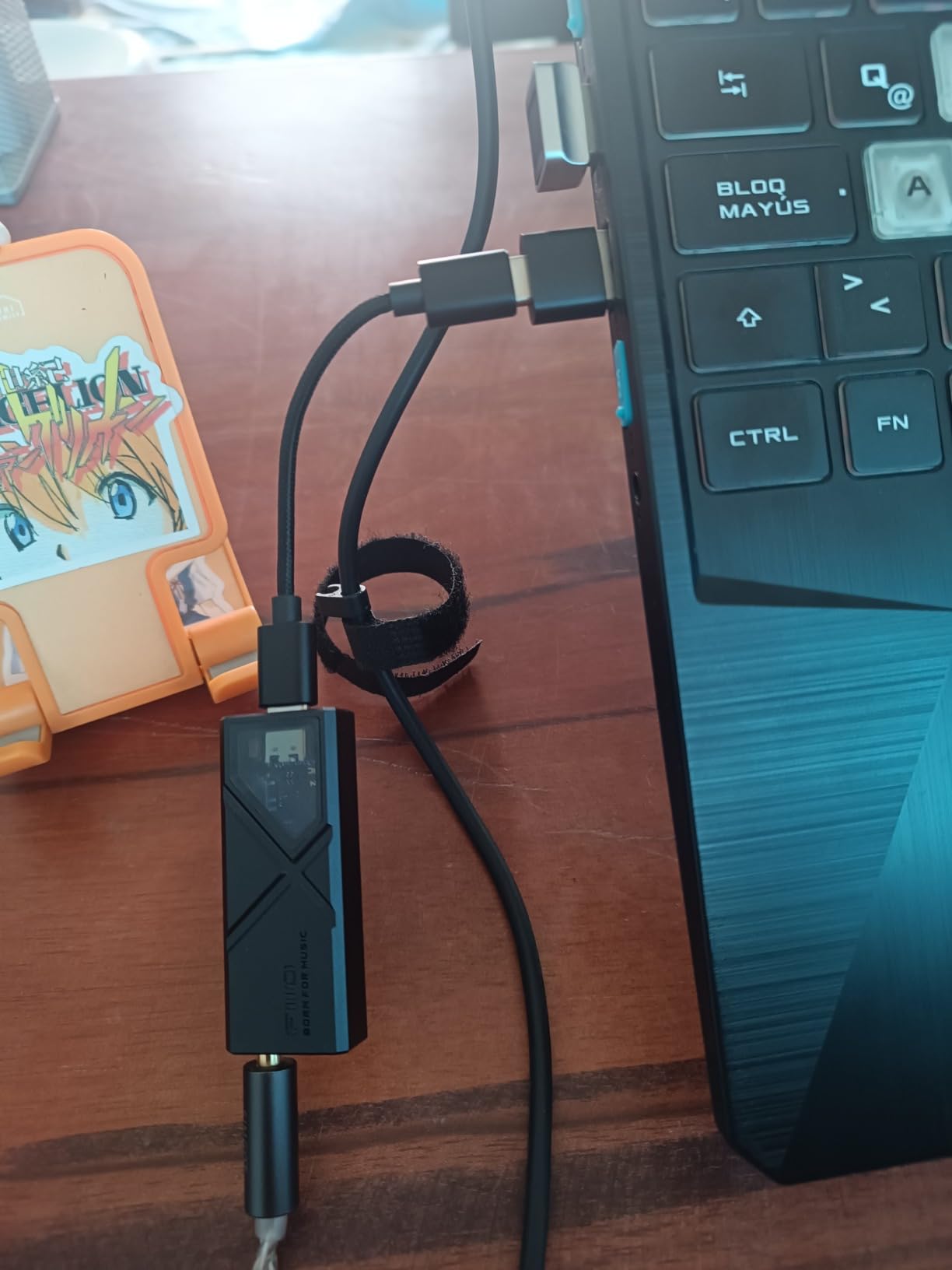
Who the FiiO KA13 suits
Owners of high-impedance or difficult earbuds who need real headroom on the balanced path, and Android users who want app-based filter control. It suits anyone who wants to leave the door open to full-size headphones later.
Where it falls short
You have to enable Desktop mode deliberately or you do not get the full 550mW, which catches people out. On iOS the app is more limited, so the feature set shrinks compared with Android.
8. FiiO KA15 – The Only Dongle Here With a Screen
FIIO KA15 Portable DAC and Headphone Amplifier (Black)
0.96-inch IPS display
Ten-band lossless PEQ
Desktop mode 560mW balanced
768kHz/32bit and DSD256
Pros
- Only dongle in this round with a 0.96-inch IPS colour display
- Ten-band lossless PEQ with importable and exportable curves
- Desktop Mode delivers 560mW plus 560mW balanced
- Real-time power monitoring reduces phone battery draw
- 3.5mm jack doubles as SPDIF coax out and carries CTIA mic and remote
Cons
- App control and firmware updates are Android only
- Firmware updates need a Windows computer
- Three-button menu is fiddly to navigate
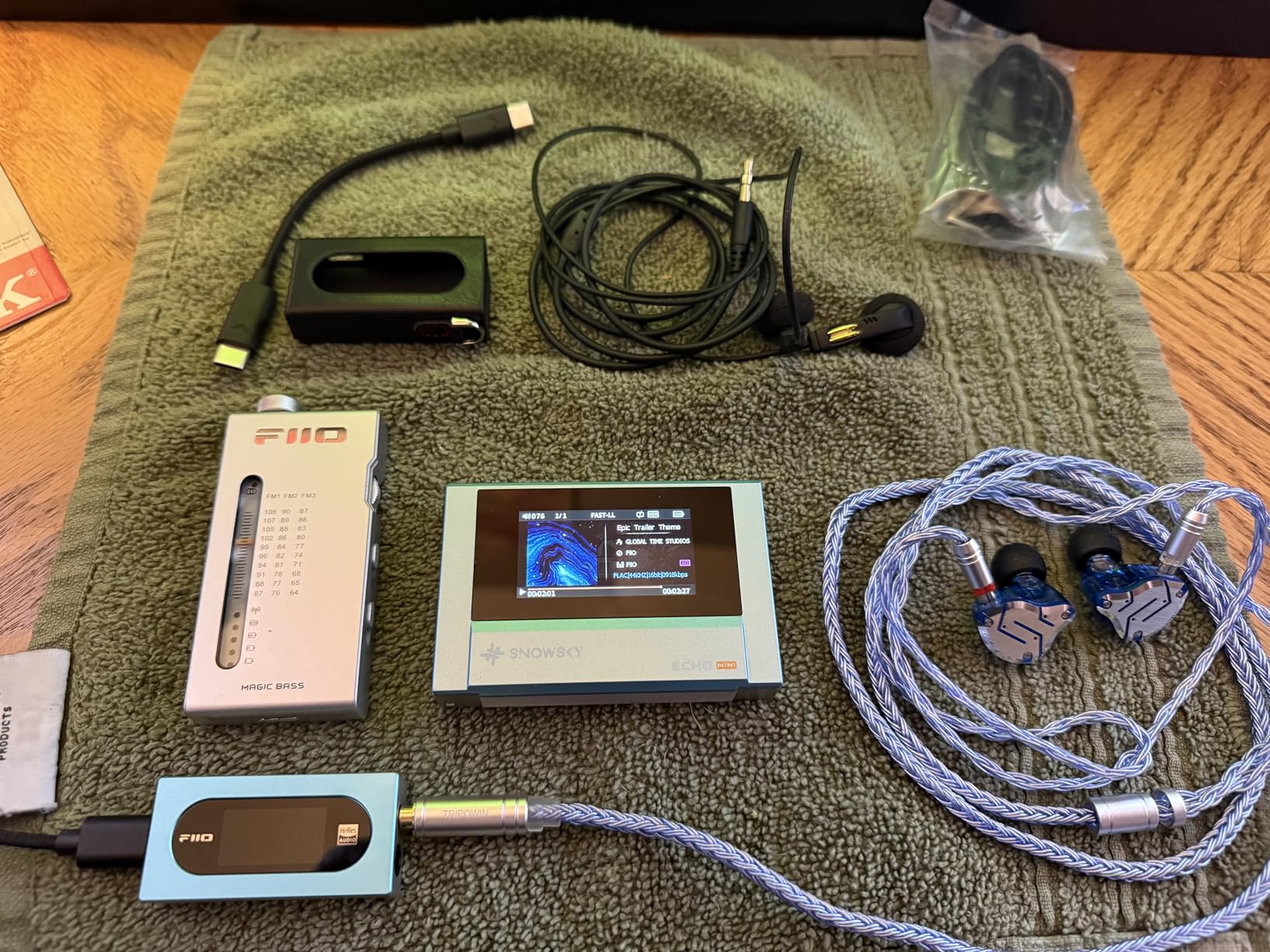
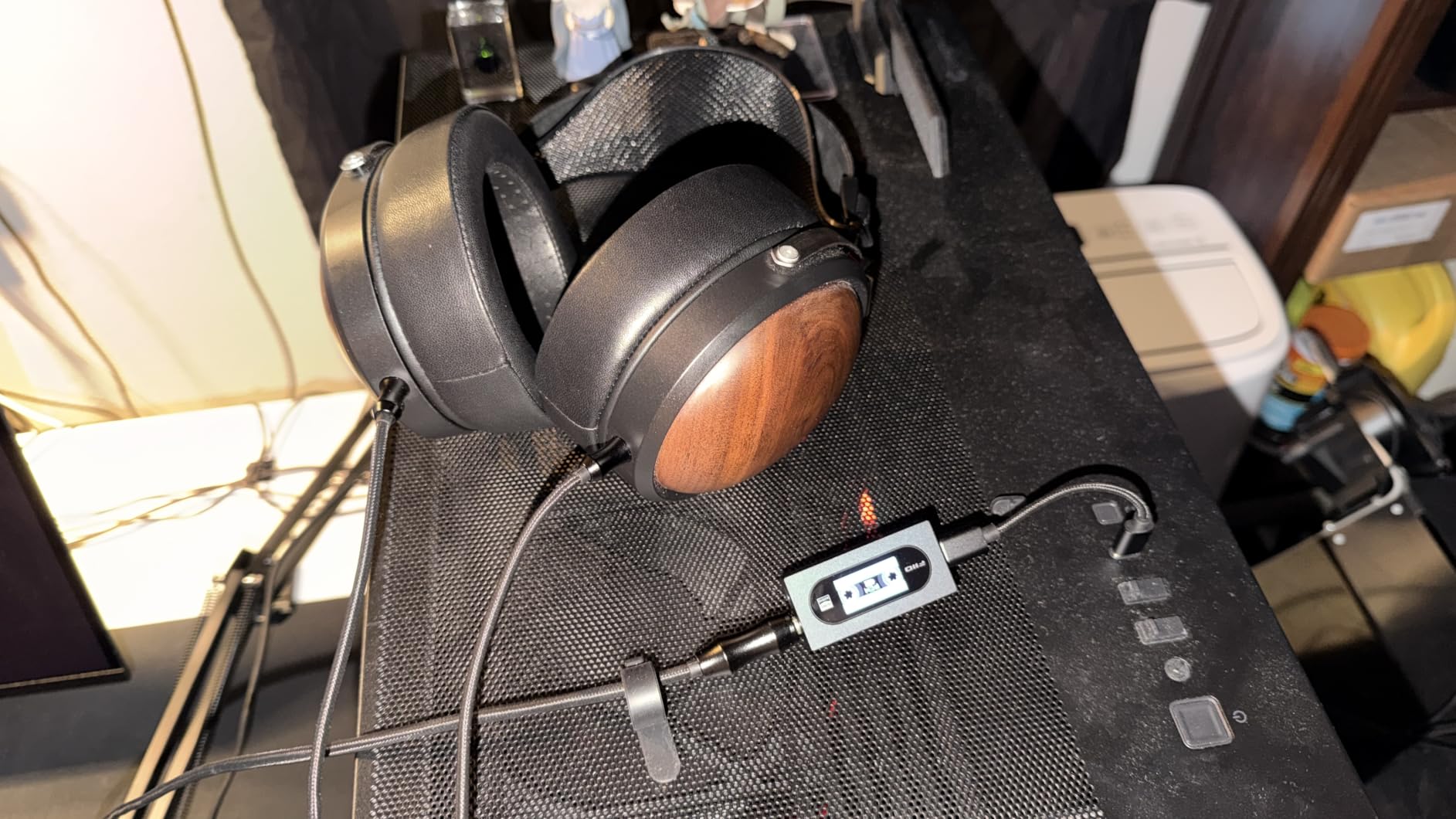
The KA15 is the most fun unit here, and the screen explains why. A 0.96-inch IPS true colour panel with a retro tape-reel animation turns a functional dongle into something you want on a desk, and it doubles as a status readout for format and volume.
More useful is the ten-band high-precision lossless parametric EQ, with curves you can import, export and share. Owners call the sound clean, musical and slightly warm, with no audible noise floor, and Desktop Mode provides 560mW plus 560mW balanced.
Dual CS43198 DACs and dual SGM8262 op-amps handle conversion, supporting up to 768kHz/32bit PCM and DSD256 with Hi-Res Audio certification. Real-time voltage and current monitoring adjusts power dynamically, which measurably reduces how much it pulls from your phone.
The 3.5mm jack does three jobs: output, coax/SPDIF, and CTIA in-line microphone and remote passthrough, so it works for calls. A detachable braided cable is more durable than a fixed one, and UAC1.0 mode covers Switch and PS5. The frequency range is listed as 20Hz to 20,000Hz.
Who the FiiO KA15 suits
Listeners who tune their earbuds with EQ rather than accept a fixed sound, plus anyone taking calls on a wired headset. Desktop users with Windows and Android will get the most out of the app and firmware support.
Where it falls short
The software is the problem. App control and firmware upgrades are Android only, firmware updates require a Windows computer, and a few owners report the stiff fixed connector stressing a phone port. Navigating a menu with three small buttons also takes practice.
9. KBEAR DAC1 – The Lowest-Cost Way to Add Drive
KBEAR DAC1 USB C to 3.5mm Audio Adapter, Headphone Amp, IEM DAC (Orange)
KT0231H DAC with HT97220 amp
125mW at 32 ohms
8-core OCC silver-plated cable
1 year warranty
Pros
- Lowest cost in the round with a dedicated DAC and amp chip
- 125mW at 32 ohms gives headroom for 16 to 32 ohm earbuds
- 8-core OCC silver-plated cable is flexible and durable
- USB-A adapter included
- Owners report it revives mid-range IEMs with more detail
Cons
- Single-ended 3.5mm output only
- Some owners report audible background hiss
- Occasional reports of not working with a particular phone
- Plastic ridge can stop it seating in a phone case
The KBEAR DAC1 is the cheapest way to move past a phone’s bundled cable, and buyers are surprised by what a dedicated KT0231H DAC and HT97220 amp chip do for that money. Owners describe mid-range in-ear monitors coming alive with more drive and finer detail.
The build is the pleasant part. An 8-core OCC silver-plated braided cable feels flexible rather than fragile, and the aluminium housing with a transparent chip window looks closer to a permanent adapter than a disposable one.
Output power reaches 125mW at 32 ohms, which suits 16 to 32 ohm earphones well. Decoding runs to PCM 32bit/384kHz, and the chip is Hi-Res certified with noise reduction. USB-C and USB-A interfaces are both included, so phones, tablets, laptops and car stereos all work.
Who the KBEAR DAC1 suits
First-time buyers who want a real DAC for the least money, and anyone whose earbuds need more drive than a bundled cable provides. The included USB-A adapter covers older laptops and car stereos.
Where it falls short
It is single-ended only, and a small number of owners report background hiss in silent passages, which matters if your earbuds are very sensitive. There are also occasional reports of a phone it will not work with, and the housing ridge can stop it seating in a thick case.
10. Fosi Audio DS3 – Lightest Body With Spatial Processing
Fosi Audio DS3 USB-C DAC HiFi Amp Dongle, Portable Headphone Amplifier with 7.1 Spatial Audio, ES9039Q2M XMOS Powered, DSD512, 3.5mm Single 4.4mm Balanced for PC/Phone/ PS5/ Switch Black
ES9039Q2M DAC
220mW balanced at 32 ohms
32-band hardware PEQ
16 g CNC aluminium
Pros
- ES9039Q2M decodes 32bit/768kHz PCM and native DSD512
- Lightest body in the round at 16 g
- First battery-free DAC to integrate XMOS POWERED with a 1.6 GHz dual-core engine
- 220mW balanced at 32 ohms with at least 122 dB SNR
- 32-band hardware PEQ and 8 digital filters via a web control panel
Cons
- Lowest average rating here at 3.9 with a polarised star distribution
- No built-in microphone so it cannot be used for calls
- Spatial and EQ features rely on a web panel instead of a native app
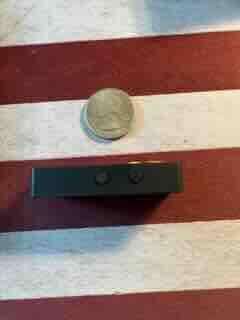
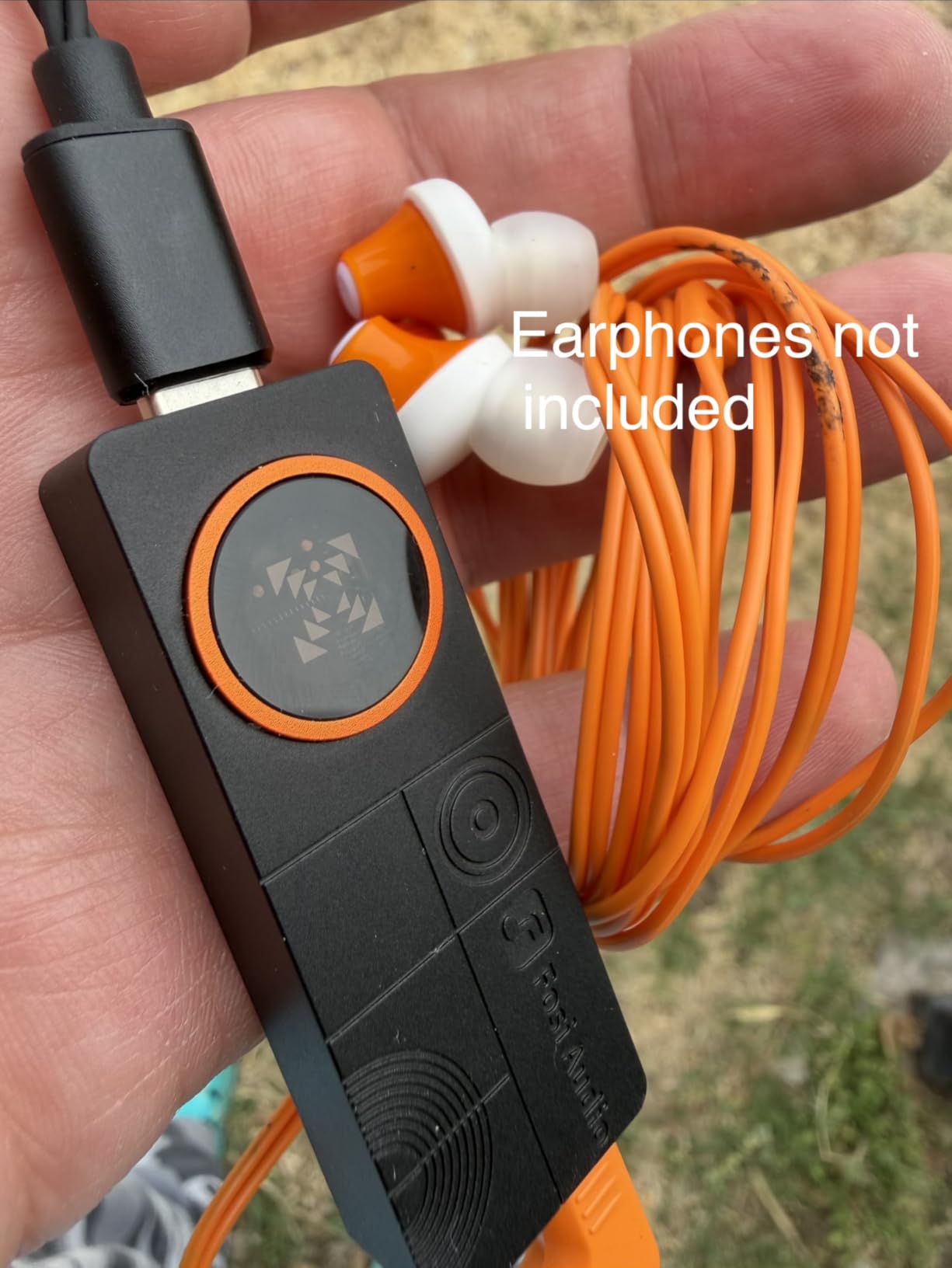
The DS3 is the specification outlier, weighing 16g in a CNC-milled aerospace aluminium body with a tempered-glass skylight. The ES9039Q2M handles 32-bit/768kHz PCM and native DSD512, and the XMOS POWERED 1.6GHz dual-core engine does the USB work.
The tuning is neutral and low-noise, which suits both in-ear monitors and full-size headphones, and 220mW balanced into 32 ohms is plenty. A hardware-backed 7.1 spatial audio algorithm with positional cue enhancement is aimed squarely at gaming.
Eight selectable digital filters and a 32-band PEQ run at hardware level and are adjusted through a web control panel rather than an app, which is convenient on a PC and less so on a phone. UAC 1.0 and 2.0 are supported with independent volume memory, covering PC, PS5 and Switch. SNR is at least 122 dB with THD below 0.0003 percent.
Who the Fosi Audio DS3 suits
PC and console players who want positional audio and hardware EQ, and anyone who values a lighter body in a pocket. It works driver-free across PC, PS5 and Switch.
Where it falls short
It has the lowest average rating in this round at 3.9, with a more polarised star distribution than the others. There is no built-in microphone, so it cannot handle calls, and the web-based tuning panel is less convenient than a native app.
How to Choose a Portable DAC for Wired Earbuds
Do You Even Need a DAC?
Sometimes you do not. If your phone still has a 3.5mm jack, the built-in converter is fine for most earbuds. The case for an external portable DAC is strongest when your device ships a bare adapter with no volume control, when your earbuds are sensitive enough to expose background noise, or when they are demanding enough to need more output than a phone provides.
Forum consensus lines up with that. Multiple owners on r/HeadphoneAdvice say the real gain was hardware volume control rather than decoding, and that a quality phone already decodes well. Buy a portable DAC for control and power, not for a dramatic change in timbre.
Matching DAC Power to Earphone Impedance
Impedance decides how much voltage a DAC must supply. Low-impedance earbuds under 32 ohms are easy and need little power. Earphones from 100 to 300 ohms need a DAC with real voltage swing, which is where the 170mW, 220mW and 550mW figures in this round start to matter.
Sensitivity works the same way. A low-sensitivity earbud in the 100 dB range wants more drive than a high-sensitivity one at 120 dB. Overpowering a sensitive pair is the main reason people report hiss, so match rather than maximise, which is also the advice repeated across the enthusiast forums.
3.5mm vs 4.4mm Balanced: What Your Earbuds Actually Need
Single-ended 3.5mm output sends both channels sharing one ground conductor. Balanced 4.4mm output gives each channel its own ground, which cuts shared-ground interference and lets the DAC swing more voltage. The gain is real but modest on most earbuds, and it only matters if your earbuds and cable are genuinely balanced.
Check your cable before you buy. If your IEMs ship with a 3.5mm cable, you gain nothing from the 4.4mm jack. Swapping to a 4.4mm cable adds cost on top of the DAC, and owners consistently report 3.5mm is simpler and preferred otherwise.
Noise Floor, Hiss and Gain Matching
The noise floor is the hiss you hear in silence between tracks, and sensitive in-ear monitors magnify it more than any other earbud type. Quoted figures help: 1uV on the Fosi DS2, under 1.6uV on the DS1 and under 1.7uV on the FiiO KA11 are among the lowest here.
Gain switches, where a device has them, let you lower output for sensitive earbuds and raise it for demanding ones. That is the single feature that most reduces hiss complaints, because it stops you running the volume wide open on the source device.
Device Compatibility and the Cables in the Box
USB-C is the current default. Lightning variants are rare and increasingly rare, so if you have an older iPhone you need a Lightning cable or a Lightning version. A USB-A adapter is worth checking for, since many laptops and car stereos still use the older port.
Console support is a bonus. UAC 1.0 mode appears on the FiiO KA11, the KA13 and the KA15, and the Fosi DS3 covers UAC 1.0 and 2.0, which matters for Switch and PS5 gaming where latency is visible.
When a Bluetooth Portable DAC Makes More Sense
A battery-powered Bluetooth DAC removes the cable between device and earbuds, which is the whole argument for it. That is worth it for travel, gym sessions and phones with no jack. Every battery-powered unit costs you the low noise floor a wired connection provides, so for critical listening at a desk, wired stays the better answer.
None of the ten picks here are battery-powered, because the question that matters most is what your earbuds need, not what your commute needs. If wireless is the priority, start from the best wireless earbuds and treat the DAC as a second thought.
Frequently Asked Questions
Are external DACs worth it?
Sometimes. A portable DAC earns its place when your device ships a bare adapter with no volume control, when your earbuds are sensitive enough to expose background hiss, or when they need more output power than your phone delivers. If your phone still has a headphone jack, the gain is much smaller.
What is the best DAC for wired earphones?
The iFi Hip-dac 3 is the most complete answer, with a fully balanced 4.4mm output, an S-Balanced 3.5mm jack, a separate charging input and gain switches for both sensitive and demanding earbuds. For lower-cost options, the FiiO KA13 covers hard-to-drive pairs and the Kiwi Ears Allegro Mini covers balanced output cheaply.
What is the best portable DAC for headphones?
For headphones rather than earbuds, output power decides the list. The FiiO KA15 delivers 560mW balanced in Desktop mode, the FiiO KA13 reaches 550mW and the Fosi Audio DS1 reaches 220mW, enough for earphones above 200 ohms. For IEMs any of these are more than sufficient.
What is a DAC dongle?
A DAC dongle is a small USB-C adapter that converts your phone or laptop digital audio into an analog signal and amplifies it for earbuds. Most include a 3.5mm jack, many add a 4.4mm balanced jack, and better models add hardware volume buttons and a lower noise floor than a bundled adapter.
How much power do IEMs need from a DAC?
Most in-ear monitors under 32 ohms are happy with 100 to 200mW. High-impedance earbuds above 100 ohms benefit from 200mW or more, and the FiiO KA13 and KA15 reach 550mW and 560mW in Desktop mode. Match power to the earphone rather than buying the most powerful option available.
Do portable DACs add hiss instead of removing it?
Poorly matched ones can. A sensitive in-ear monitor paired with an amp that needs maximum volume will reveal the noise floor, and several owners of budget adapters report audible hiss. Units with gain switches or a low quoted noise figure, such as 1uV, avoid most of that.
Our Final Verdict on the Best Portable DACs for Wired Earbuds
The iFi Hip-dac 3 is the portable DAC we recommend to most people, because it handles sensitive and demanding earbuds with the same switch settings and keeps charging separate. When you need more power than it offers on a difficult pair, the FiiO KA13 is the answer, and when you want balanced output without spending much, the Kiwi Ears Allegro Mini gets you there.
The one rule worth remembering: match the DAC to your earbuds, not to the spec sheet. Check your impedance, check whether your cable is 3.5mm or 4.4mm, and only then worry about which chip is inside. For the wider picture, our wireless earbuds guide covers the other side of the wired and wireless split.