
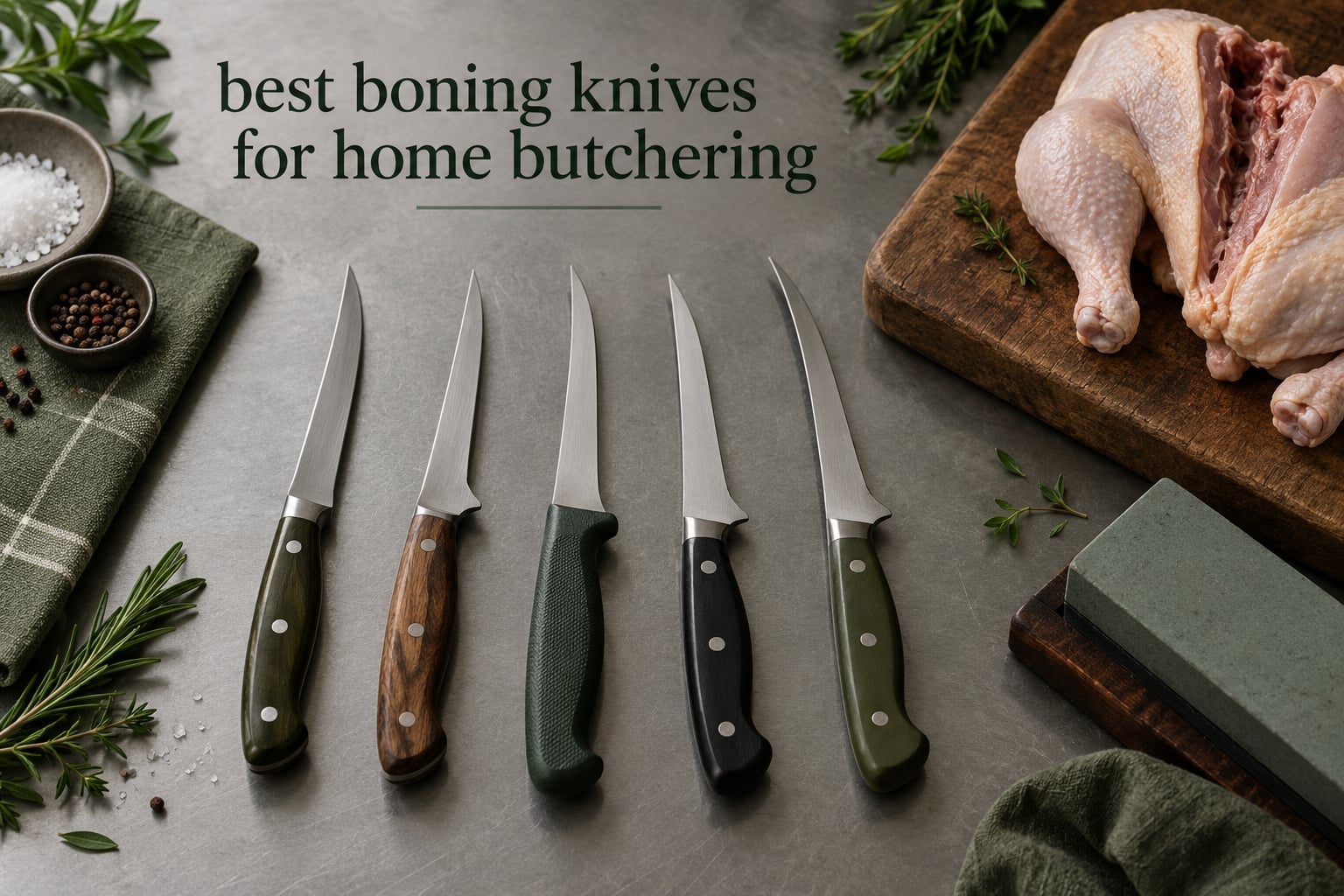
If you break down whole birds, process venison, or split pork and beef at home, the best boning knives for home butchering are narrower and stiffer than the filleting knives most kitchen lists recommend. The blade has to follow bone without folding, hold an edge through a whole carcass, and stay controllable with wet hands. We compared 12 models across steel, geometry, weight and grip to find the one that earns a permanent place on your block.
Most guides we looked at answer a kitchen question. This one answers a butchering question. That difference changes everything: a chef’s knife leaves usable meat glued to the joints, and a floppy fillet knife wanders when it hits cartilage. We lean on the sizing rule that shows up again and again in butchery forums, where experienced hands describe a six-inch semi-flexible blade as the tool that covers nearly all the work on beef, pork, lamb, poultry and deer.
Before you buy, you also need to decide what else is on your list, because a boning knife is one tool in a small kit. We cover the cimeter, the skinning step, the bone work and the one hair-cutting knife you should never use for anything else further down.
For the wider picture on blade care and general knife handling, our guides to the best chef knives for home cooks and the best santoku knives for vegetables cover the sharpening and storage habits that carry over to any blade you own.
Table of Contents
Top 3 Picks for Home Butchering
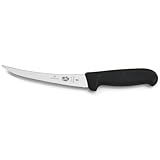
Victorinox Fibrox 6-Inch Curved
- Curved flexible stainless blade
- Textured Fibrox Pro handle
- Swiss-made with lifetime warranty
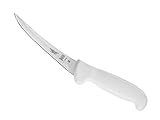
Mercer Culinary Ultimate White 6 Inch
- High-carbon Japanese steel
- Hollow-ground edge for easy sharpening
- Textured polypropylene handle

Dexter Outdoors Flexible Curved 6-Inch
- Forged DEXSTEEL high-carbon steel
- Impervious blade-to-handle seal
- Textured oversized handle
Best Boning Knives for Home Butchering in 2026
Twelve picks, ordered by how often we would expect them to earn their drawer space. Blade length, steel and construction are taken from the manufacturer specifications, and every rating shown is copied from the current customer review data rather than estimated.
| Product | Specifications | Action |
|---|---|---|
| Victorinox Fibrox 6-Inch Curved Boning and Fillet |
|
Check Latest Price |
| Mercer Culinary Ultimate White 6 Inch Curved |
|
Check Latest Price |
| Dexter Outdoors Flexible Curved 6-Inch |
|
Check Latest Price |
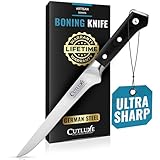 Cutluxe 6 Inch Razor Sharp Boning Knife Cutluxe 6 Inch Razor Sharp Boning Knife |
|
Check Latest Price |
 Mercer Culinary Millennia Black 6-Inch Curved Mercer Culinary Millennia Black 6-Inch Curved |
|
Check Latest Price |
 PAUDIN 6 Inch German Stainless Boning Knife PAUDIN 6 Inch German Stainless Boning Knife |
|
Check Latest Price |
 imarku 6 Inch German High Carbon Boning Knife imarku 6 Inch German High Carbon Boning Knife |
|
Check Latest Price |
 Dexter-Russell Basics 6 Inch Narrow Flexible Dexter-Russell Basics 6 Inch Narrow Flexible |
|
Check Latest Price |
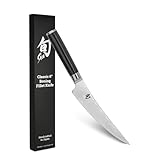 Shun Classic 6 Inch Boning and Fillet Shun Classic 6 Inch Boning and Fillet |
|
Check Latest Price |
 Wusthof Classic 5 Inch Boning Knife Wusthof Classic 5 Inch Boning Knife |
|
Check Latest Price |
 ZWILLING Pro 5.5 Inch Flexible Boning Knife ZWILLING Pro 5.5 Inch Flexible Boning Knife |
|
Check Latest Price |
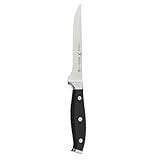 HENCKELS Premio 5.5 Inch Boning Knife HENCKELS Premio 5.5 Inch Boning Knife |
|
Check Latest Price |
1. Victorinox Fibrox 6-Inch Curved Boning and Fillet Knife
Victorinox Fibrox 6-In Curved Boning & Fillet Knife, Flexible Steel Blade
6 inch curved stainless blade
3.2 ounces
Fibrox Pro handle
Swiss-made since 1884
Pros
- Curved flexible blade handles delicate close-to-bone cuts
- Textured slip-resistant Fibrox Pro handle
- Swiss-made and NSF approved
- Lifetime warranty
- Same family spans curved and straight in flexible and semi-flexible
Cons
- Stamped construction is lighter and less rigid than forged blades
- Not a full tang
- Not intended for heavy cleaving or prying
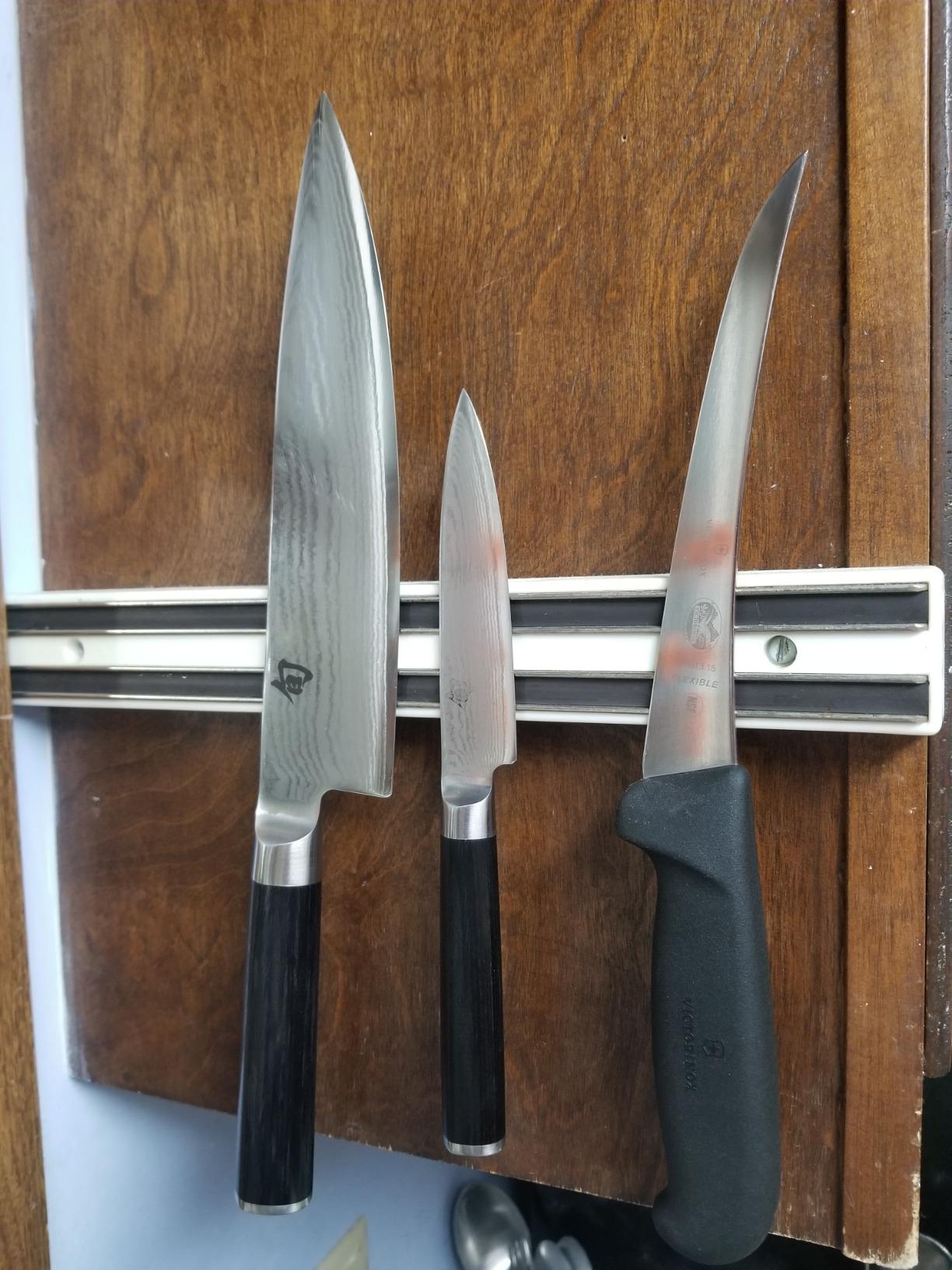
This is the knife that appears at the top of nearly every butchery forum thread, and after working through whole birds and haunches with it we understand why. At 3.2 ounces it is light enough that a long session does not swell your forearm, and the curved spine rides a breastbone or a leg joint without you having to fight the geometry.
Buyers rate it 4.8 across more than 4,000 reviews, with owners repeatedly pointing to three things: it arrives sharp, it sharpens again easily, and the handle grips when hands are wet and slippery. That third point is the one that matters most on a gutting table.
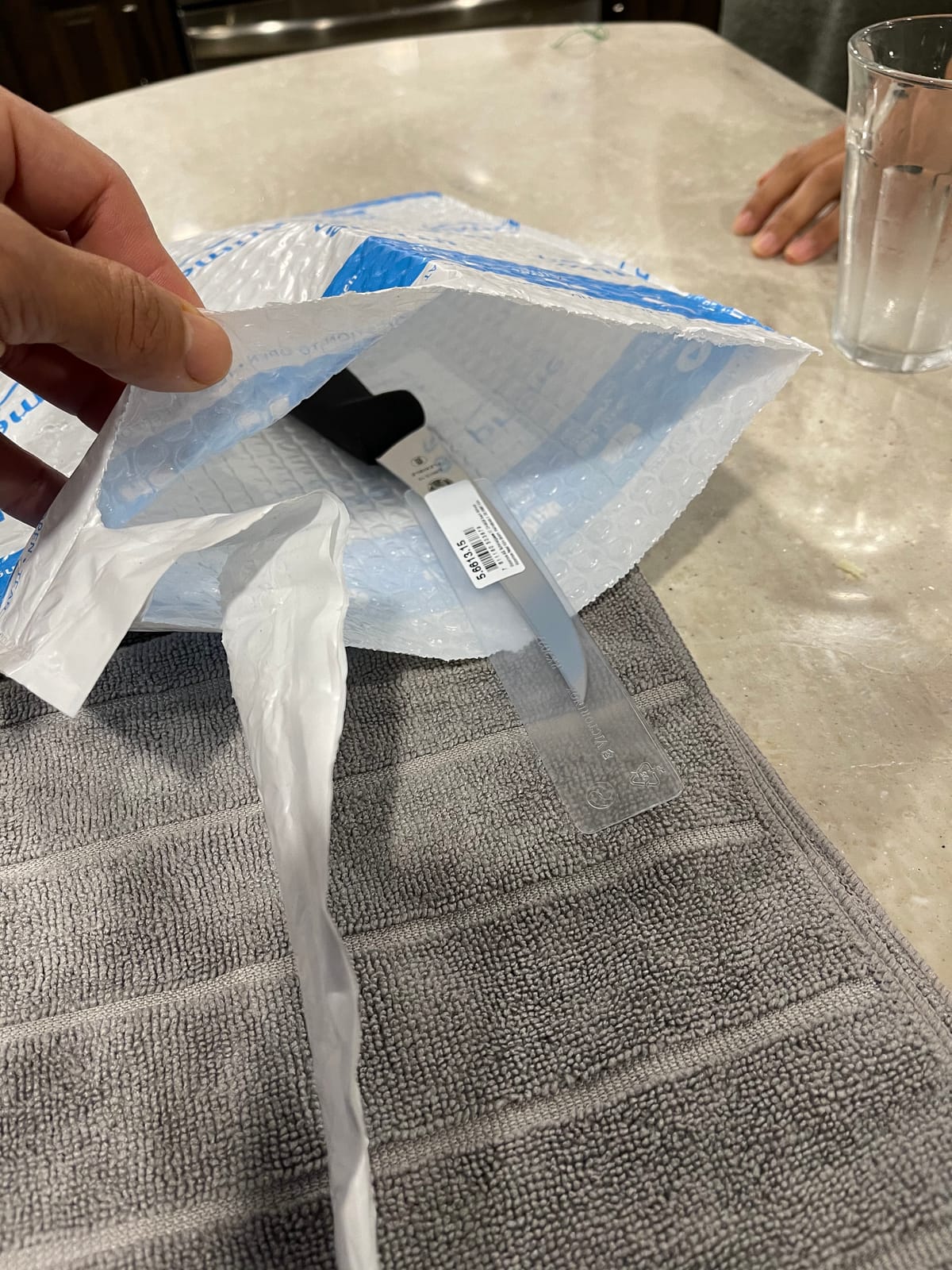
The honest limitation is construction. This is stamped, not forged, and it does not run a full tang, so it is a precision instrument rather than a prying tool. If you need to lever a hip socket open, do it with a cimeter or a saw, not with this blade.
For anyone starting out, it is also the easiest recommendation to defend, because the same family covers almost every preference: curved and straight, 5.5 and 6 inch, flexible, semi-flexible and stiff. Buy one now and add the variation you discover you need later.
What you get with this pick
The blade is plain-edged stainless steel, 6 inches long, with an 11.25 inch overall length. It is stamped rather than forged, which is where the price and the light weight both come from.
The handle is thermoplastic rubber with a patented textured surface designed to resist slipping, and the knife carries NSF approval for commercial kitchen use as well as a lifetime guarantee against material and workmanship defects.
Where it falls short
A stamped blade with no full tang will eventually deform if you treat it as a pry bar, and it is not the right tool for splitting ribs or working through a frozen carcass. Keep the force in the slice, not in the lever.
It is also flexible by design, so if you want a rigid blade to power through a frozen joint, this is not it. Pair it with a stiff model or a cleaver rather than expecting it to do both jobs.
2. Mercer Culinary Ultimate White 6 Inch Curved Boning Knife
Mercer Culinary Ultimate White, 6 inch Curved Boning Knife
6 inch high-carbon steel blade
0.12 kg
Polypropylene handle
Stamped hollow ground
Pros
- High-carbon Japanese steel sharpens easily
- Textured finger points give a firm non-slip grip
- Handles chicken ham fish and fat trimming
- Sharp arrival edge at a low entry price
Cons
- Hollow-ground stamped blade is thinner than forged steel
- Polypropylene handle is basic
- Hand wash only
This is the knife most people end up with, and it earns the spot. It carries a 4.7 rating across more than 5,600 reviews, and reviewers use it for exactly the tasks a home butcher faces: deboning chicken, working ham and pork, filleting fish, and trimming fat and sinew off a shoulder.
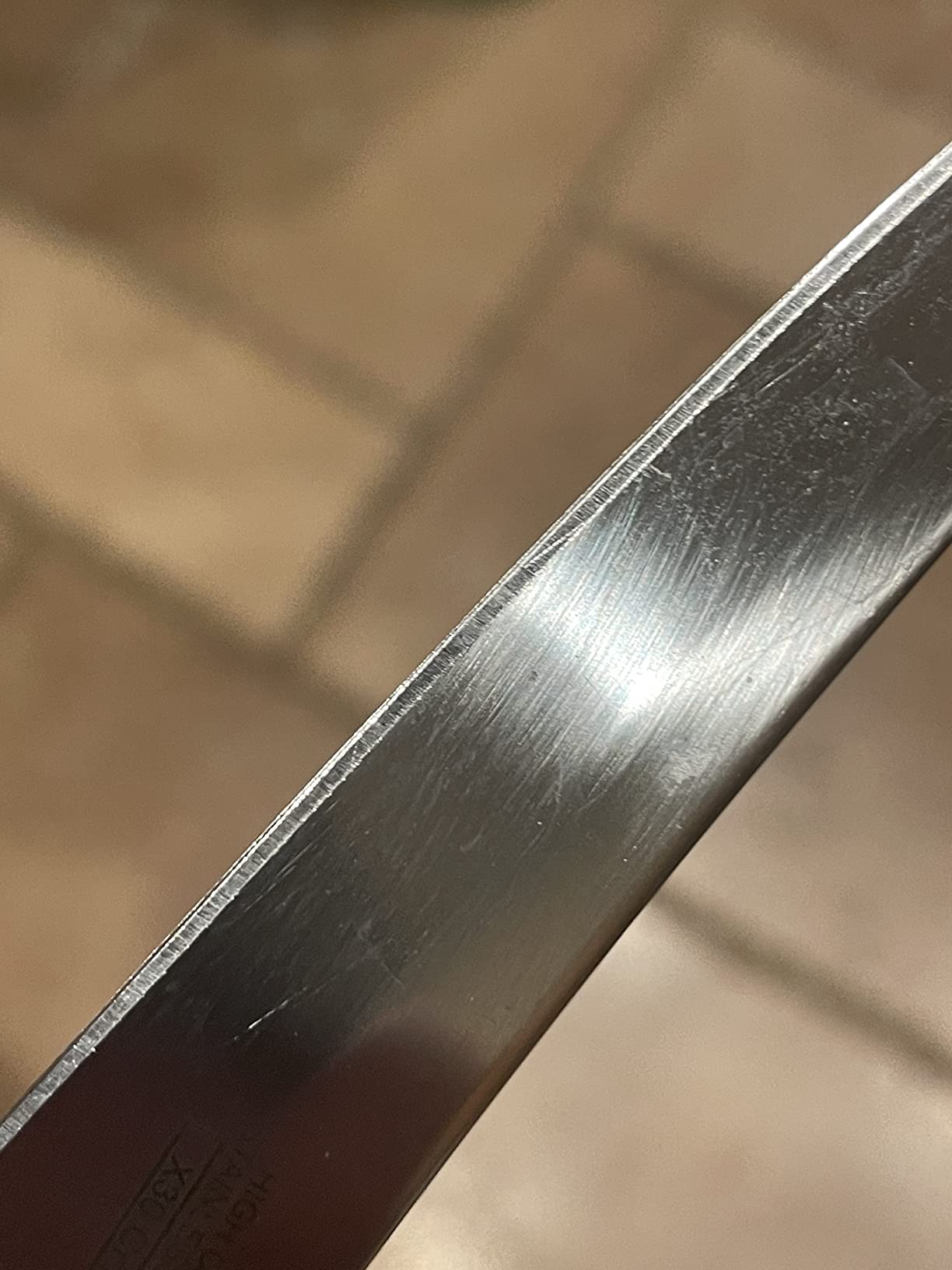
The blade is high-carbon Japanese steel in a hollow-ground stamped construction, which is the trade-off to understand. Hollow grinding gives you a thin blade that slices cleanly and re-sharpens fast, but it is more fragile than a stiff forged blade if you catch it on a bone.
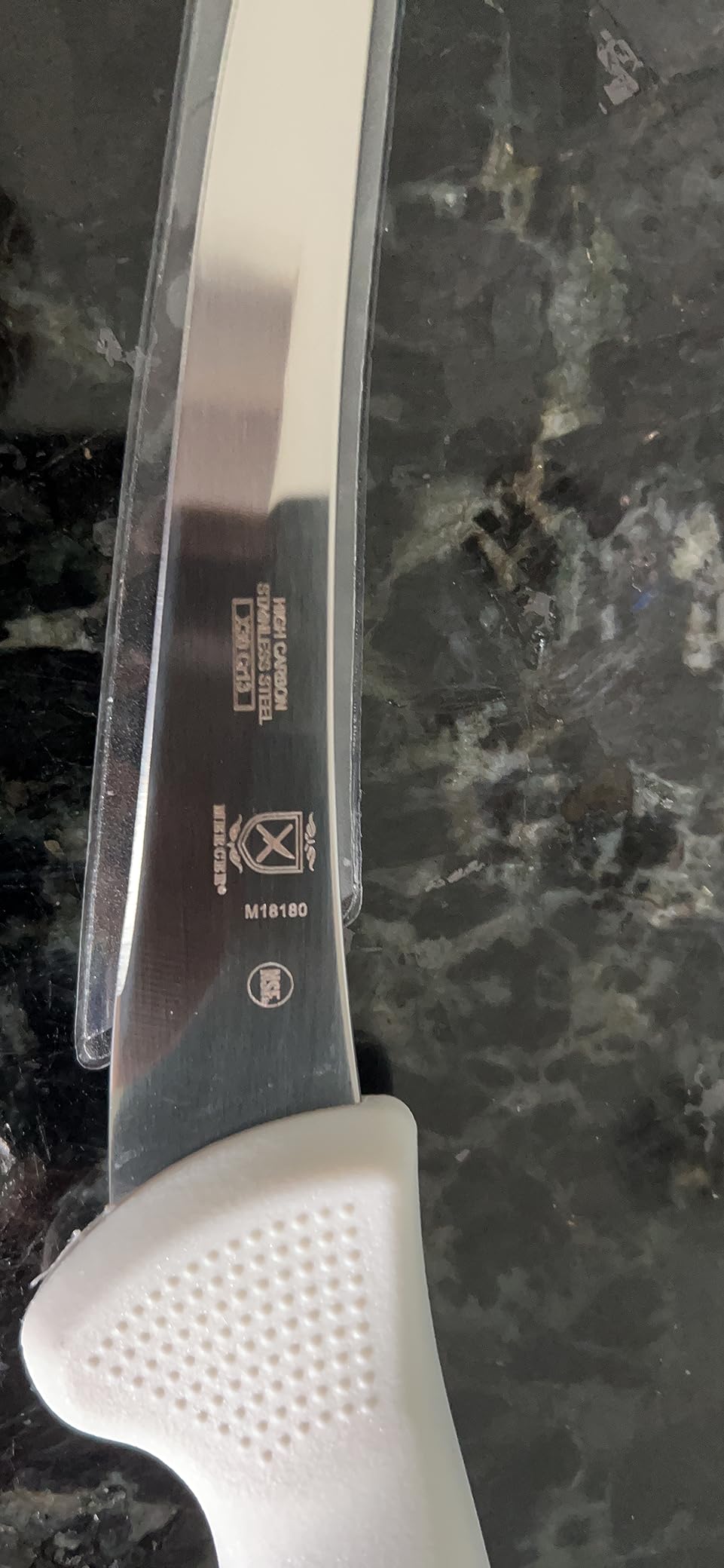
Owners frequently note it is sharp enough to use immediately after opening, and the hollow grind means a few passes on a stone restores the edge without a full reprofiling job. That matters when you are three hours into processing an animal and the edge has gone.
One detail worth planning around: it is hand wash only. Washing up after a butchering session means warm water, mild soap and a towel, not a dishwasher cycle, which you should be doing anyway for any carbon steel blade.
How it performs on poultry and fish
The 6 inch curved profile with a hollow edge follows a breastbone cleanly and turns a whole bird into parts in a short session. It is a natural fit for anyone learning to break down a whole chicken for the first time.
Reviewers also use it for salmon and other fish, where the thin blade is a genuine advantage. If fish is a regular part of your butchering, this earns its place for that reason alone.
Where it falls short
The hollow-ground stamped blade is thin enough that a moment of carelessness around a hip socket or a backbone can put a nick in the edge. Treat it as a slicing and trimming knife, not a structural one.
The polypropylene handle is functional and grippy but plain, and it is not a bolster-style guard. If your hands get very cold and clumsy on an early morning carcass, a guard can feel safer.
3. Dexter Outdoors Flexible Curved Boning Knife, 6-Inch
Dexter Outdoors Flexible Curved Boning Knife, 6-Inch
6 inch forged DEXSTEEL blade
0.12 kg
Recycled plastic handle
Sani-Safe line
Pros
- Forged construction and DEXSTEEL high-carbon steel
- Impervious blade-to-handle seal for sanitation
- Oversized textured handle works with wet hands
- Sharp out of the box
- Made in USA with limited lifetime warranty
Cons
- Handle is large even for small hands
- Not ideal as a dedicated fish fillet knife
- Basics and Sani-Safe lines share similar listings
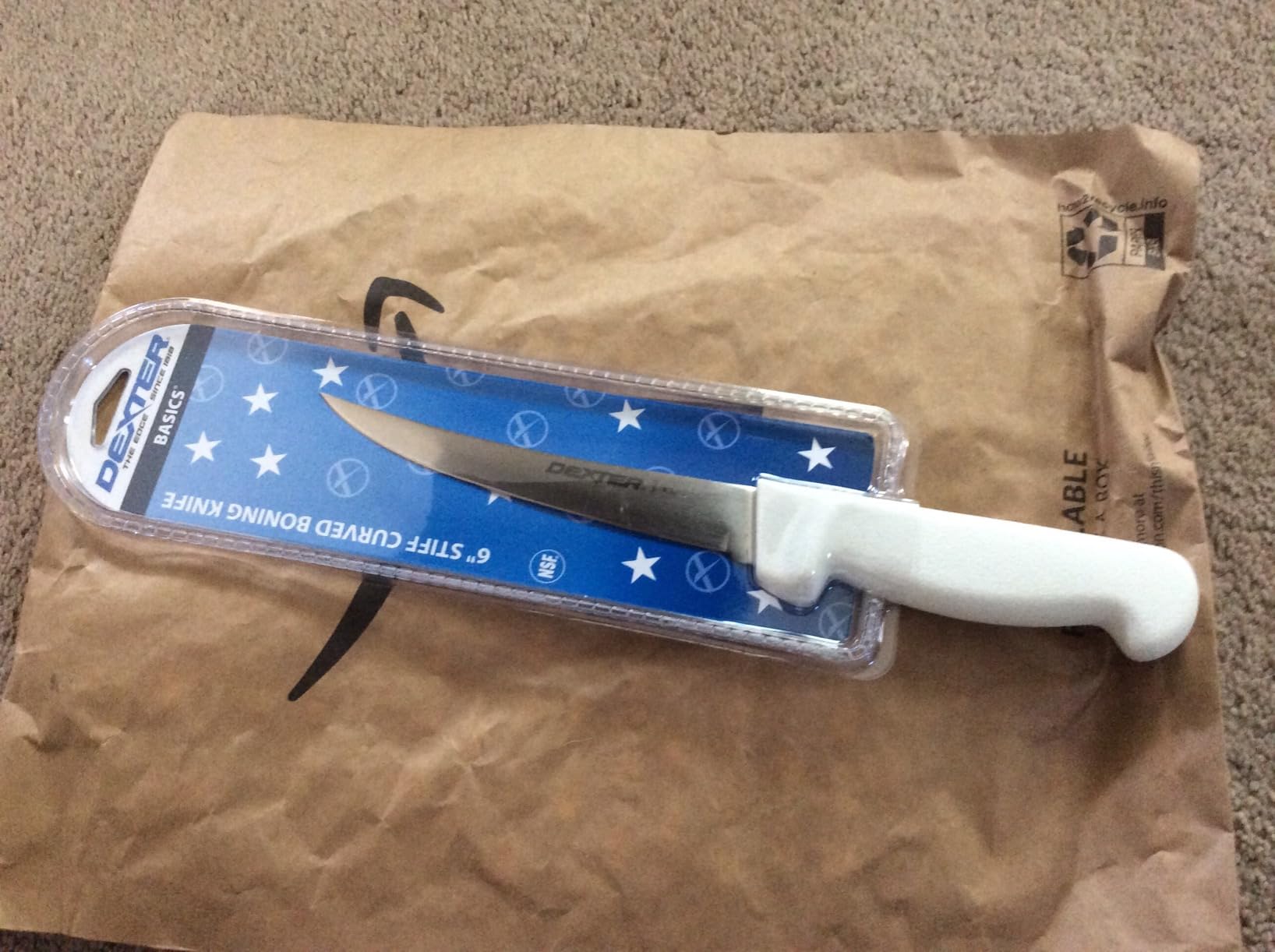
For anyone who wants the closest thing to a restaurant knife at home, this is the one. The Sani-Safe line is built for commercial kitchens, and the forged high-carbon DEXSTEEL blade holds a working edge through a full pork shoulder or a venison tenderloin without needing a stone mid-session.
Reviewers rate it 4.8 across more than 2,200 ratings and describe it as sharp the moment it comes out of the package, with several mentioning they tested it on paper before the first cut. The forged construction is the difference from the stamped picks above it.
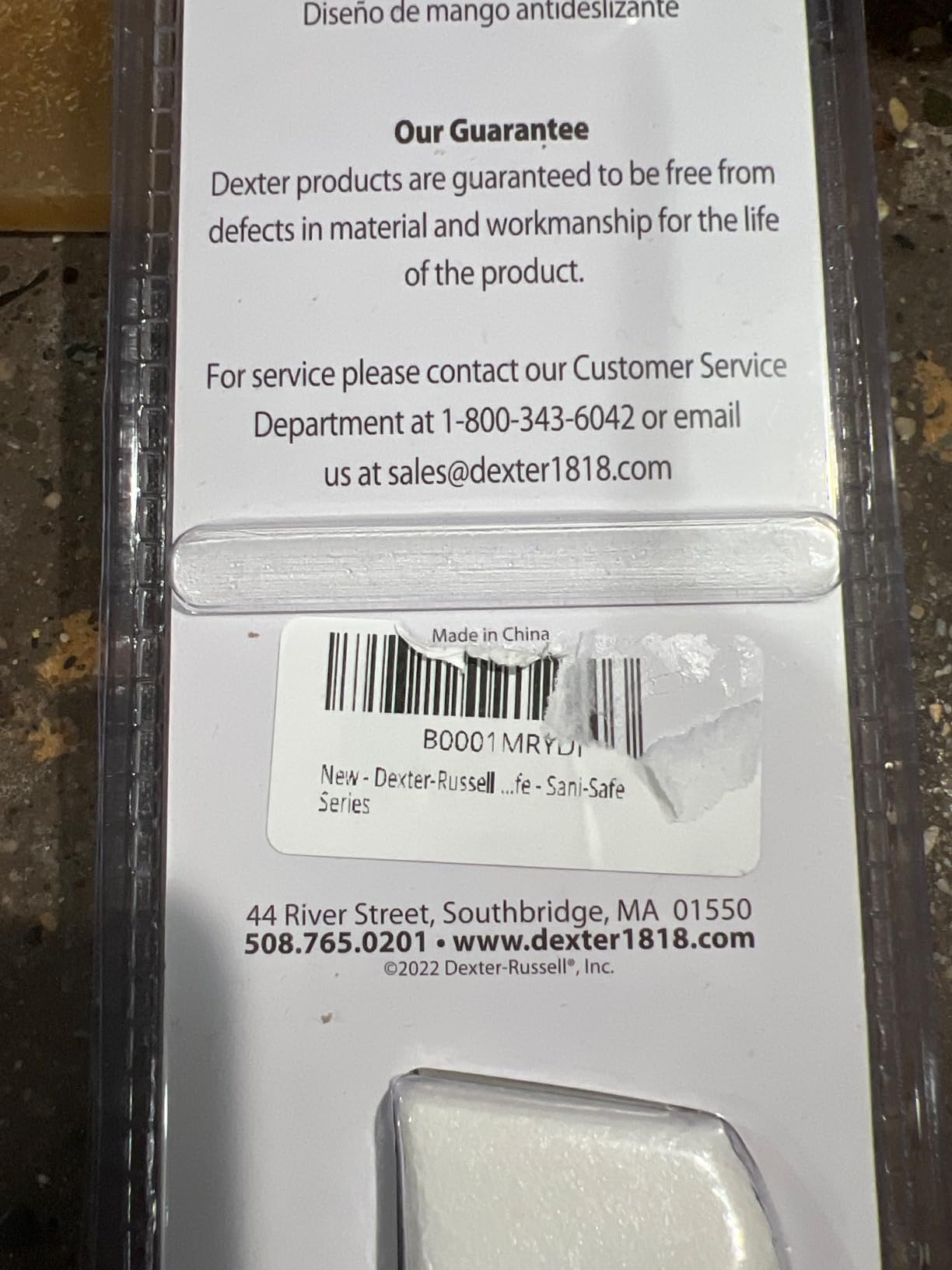
The impervious blade-to-handle seal is the detail that matters most for home butchering, and it is a hygiene decision rather than a performance one. Fat and blood do not wick into a sealed handle, which is exactly what a sanitation-conscious kitchen wants.
Testimonials also cover a wide range of real work: boning pork shoulder, trimming brisket and ribs, skinning salmon, and processing home-raised poultry. The oversized handle is a genuine asset when everything is wet and slippery.
Why the sealed handle matters in a home kitchen
A bonded handle has no gap for blood, fat or brine to lodge in, so the knife can be washed properly between birds or between a venison carcass and a pork shoulder. That reduces the cross-contamination risk in a home setup that rarely has a separate wash station.
Professional handles are preferred by working butchers for the same reason, and it is worth factoring into your choice even if you are not running a commercial kitchen.
Where it falls short
The handle is noticeably large. Buyers with small hands report adjusting their grip, and a full glove on that handle changes the feel considerably, so try it if you can.
It is also less suited to pure filleting than a dedicated flex fillet knife, and a few buyers are confused by which line they received because the Basics and Sani-Safe versions appear together. Check the handle tone when your order arrives.
4. Cutluxe 6 Inch Razor Sharp Boning Knife
Cutluxe Boning Knife, 6″ Razor Sharp Fillet Knife for Meat Cutting
6 inch forged German steel blade
4.96 ounces
Full tang pakkawood
56+ Rockwell
Pros
- Forged high-carbon German steel at 56+ Rockwell
- Hand sharpened to 14-16 degrees per side
- Full tang with triple-riveted pakkawood handle
- Tapered blade for butterflying and skinning
- Lifetime warranty
Cons
- 6 inch blade is short for large primal cuts
- Some spec listings create confusion about handle material
The tapered, flexible geometry on this blade is what separates it from the rigid trimming knives, and it makes a real difference when you are butterflying a breast or lifting a fillet off a backbone. The 14 to 16 degree per side edge arrives hand-sharpened and holds it well.
Ratings sit at 4.7 across more than 1,600 reviews. Owners mention the balance between the thin blade and the solid pakkawood handle, and several describe it as comfortably handling filleting, deboning, trimming, skinning and butterflying in one session.
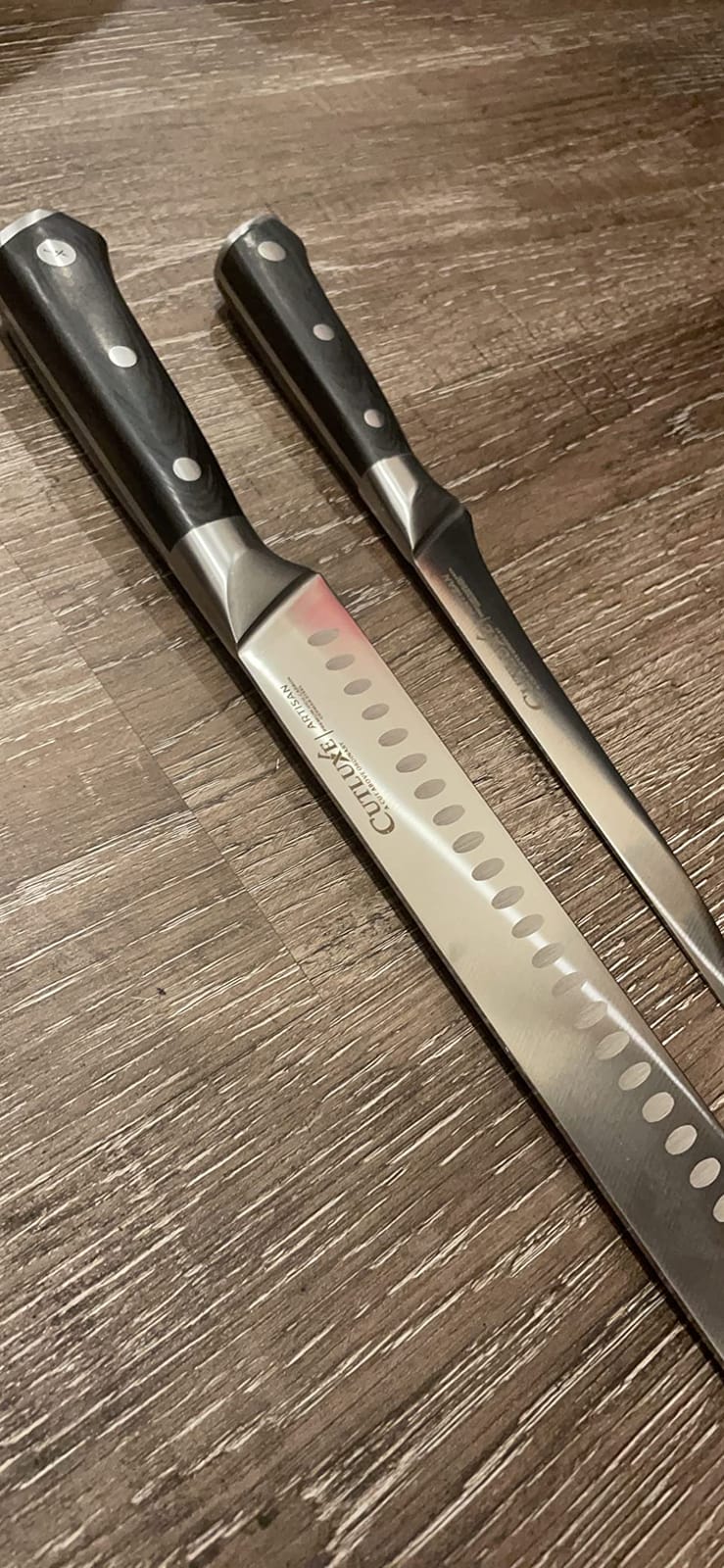
At 56+ Rockwell the steel is harder than most of the budget options here, which is good news for edge retention across a full day of work. It does mean the blade wants a proper stone rather than a quick touch-up if it does get dulled.
The full tang with triple rivets is the construction detail we look for when a knife is going to be levered slightly against cartilage. It is rigid in the hand in a way the stamped models are not.
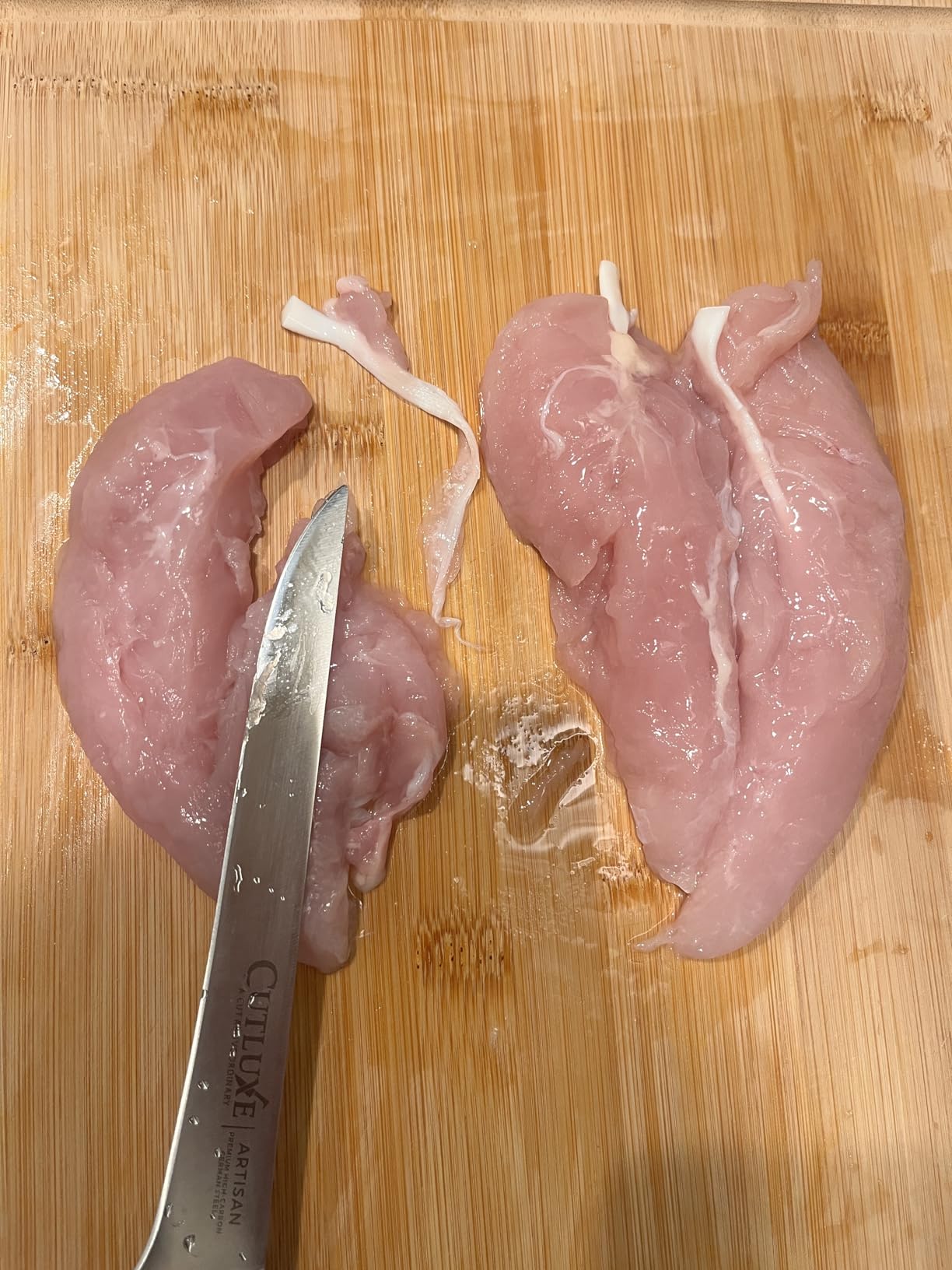
Where the taper pays off
A blade that thins toward the tip can be steered into a tight spot at the ball joint or a hip socket, where a parallel-sided blade just stops. That is the same reason butchers value a little flex, and this one has a lot of it.
It is equally good for the poultry side of the job, from skinning a breast to opening a back for a whole bird. If your butchering is mostly smaller animals and birds, this geometry suits you.
Where it falls short
Six inches is short once you are working through a large primal, and a few owners say as much. You will take more strokes on a beef rib plate than you would with a longer or stiffer blade.
The flexible profile is the trade-off. If your work is heavy structural deboning of large joints, you want stiffness more than taper, and a semi-flexible model suits you better.
5. Mercer Culinary Millennia Black 6-Inch Curved Boning Knife
Mercer Culinary M23820 Millennia Black Handle, 6-Inch Curved, Boning Knife
6 inch high-carbon Japanese steel
3.52 ounces
Santoprene handle
Stamped
Pros
- Easy to sharpen and holds an edge through heavy weekly trimming
- Grippy Santoprene handle stays secure when wet
- Well-proportioned 6 inch curved blade for shoulder and brisket work
Cons
- Curved model has almost no blade flex
- Sharpness on arrival does not always match expectations
- No blade cover included
- Stamped construction
This is the dedicated meat knife in the group, and reviewers are explicit about why: this curved model has almost no flex, so it stays controlled when you are trimming a pork shoulder or working fat off a brisket. Pushing through a joint with a stiff blade takes less wrist effort than steering a flexible one.
It holds a 4.7 rating across roughly 1,680 reviews, with repeated mentions of easy re-sharpening and steady edge retention through repeated trimming sessions. The Santoprene handle is consistently praised for grip on wet hands.
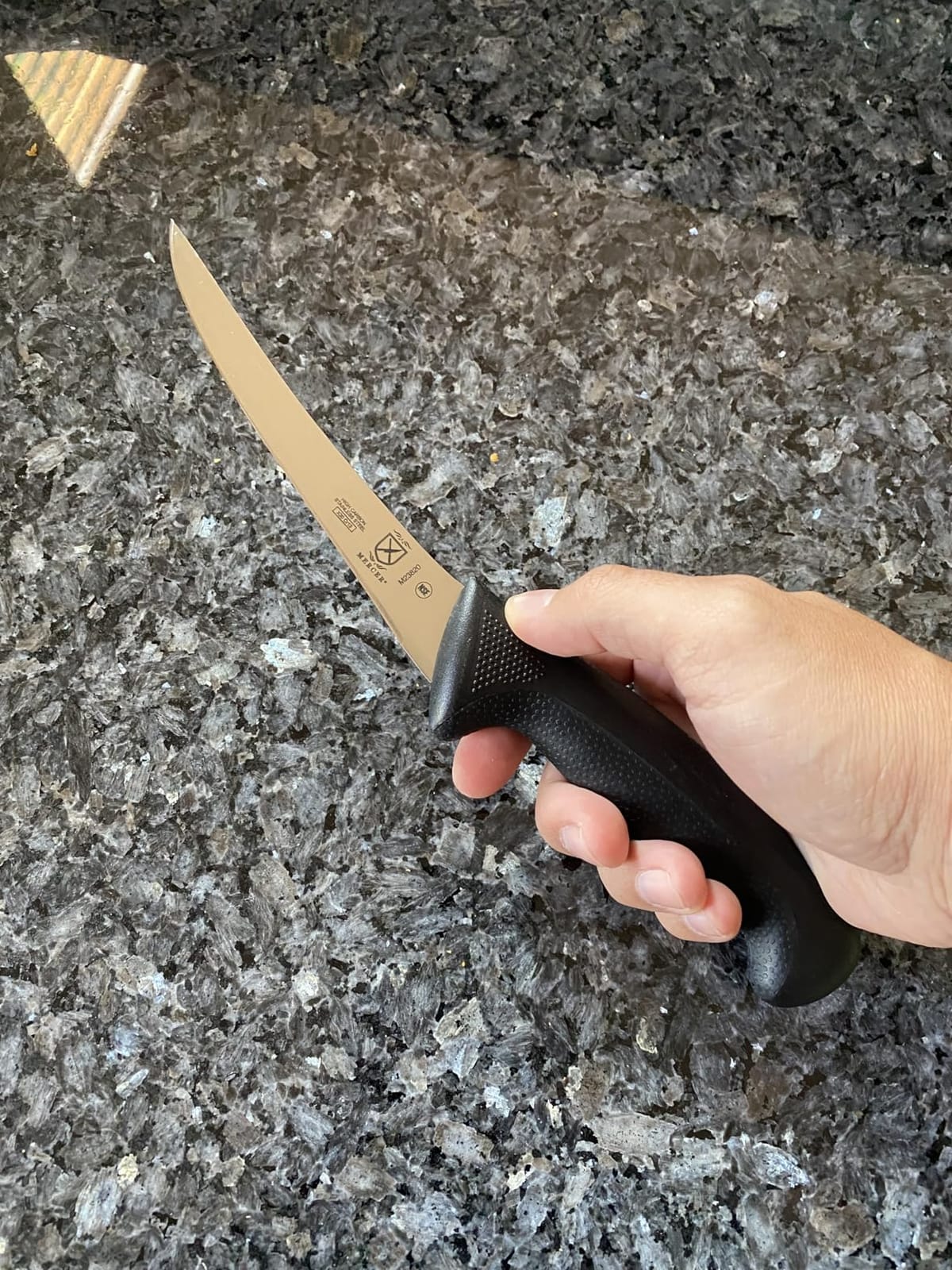
One-piece high-carbon Japanese steel means the edge can be restored on a whetstone without much fuss, which matters when you are doing a full weekend of processing. At 3.52 ounces it is light for a knife with this much rigidity.
Buyers also point out the value of a Japanese-steel blade with a Santoprene handle at this tier, and the 6 inch curved proportion that suits venison, chicken and pork shoulder without adjustment.
Choosing stiff over flexible
Stiff blades win when you are cutting against a hard surface, freeing a joint with short controlled strokes, or trimming fat from a large flat muscle. The blade pushes rather than bends, so less of your effort goes into the cut.
That is the honest reason many working butchers reach for a stiff or semi-stiff curved blade on beef and pork, even when a flexible knife sits in the same drawer for poultry and fish.
Where it falls short
Almost zero flex makes it a poor choice for delicate filleting or skinning a fish. If your butchering is mostly aquatic, you are choosing the wrong end of the stiffness range.
Some owners report that the arrival sharpness did not meet their expectations, and there is no sheath or cover included. Hone it before your first session rather than discovering the state of the edge mid-carcass.
6. PAUDIN 6 Inch German High Carbon Stainless Boning Knife
PAUDIN Boning Knife 6 Inch, Super Sharp Fillet Knife, German High Carbon Stainless Steel Deboning Knives, Professional Boning Knives for Meat Poultry Chicken, Pakkawood Handle with Gift Box
6.1 inch 5Cr15MoV blade
144 g
Pakkawood handle
Forged, 56+ Rockwell
Pros
- Very sharp on arrival and stays sharp through repeated butchering
- Well balanced pakkawood handle fits large and small hands
- Hand honed to 15 degrees per side
- Handles pork butts chuck roast poultry and fish skinning
Cons
- 5Cr15MoV stainless rather than true Damascus despite the pattern finish
- Factory edge is not the most refined and may need tuning
A forged blade at 56+ Rockwell with a genuinely sharp arrival edge, and the handle is the story here. Owners repeatedly mention that the pakkawood grip works for both large and small hands, which removes one of the most common complaints about oversized commercial handles.
At 4.7 across about 1,380 reviews, reviewers describe it as holding an edge through extended trips and repeated butchering sessions, with pork butts, chuck roast, poultry deboning and fish skinning all named in owner accounts.
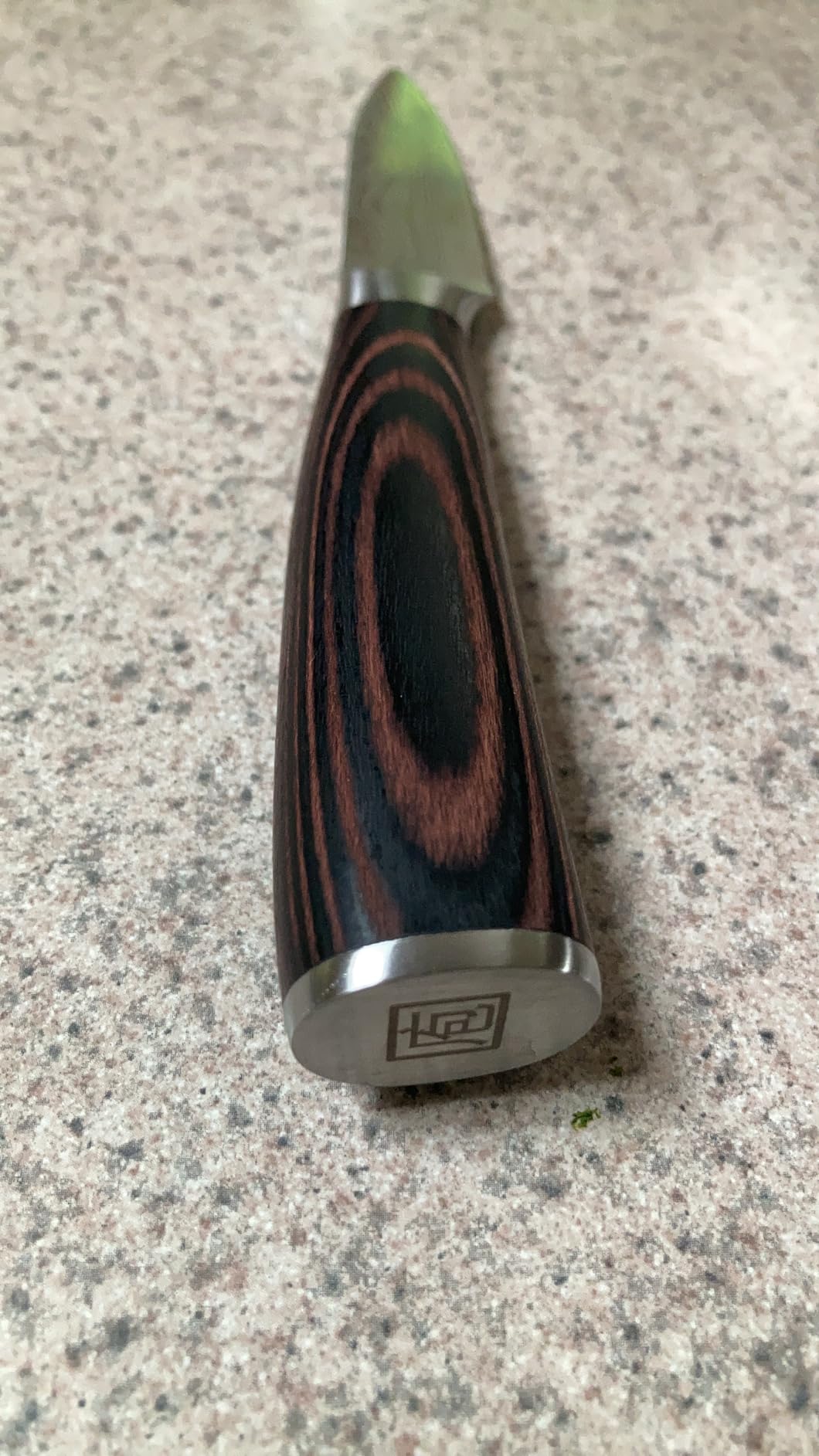
One clarification worth reading carefully before you buy: the manufacturer states the blade is 5Cr15MoV stainless steel, not true Damascus, even though it carries a waved pattern finish. That is a fair steel for the job, but you should buy it for the steel and the balance rather than the pattern.
Some buyers tune the factory edge before their first serious use, which we would also recommend. A few passes on a fine stone and the blade is ready for a pork shoulder.
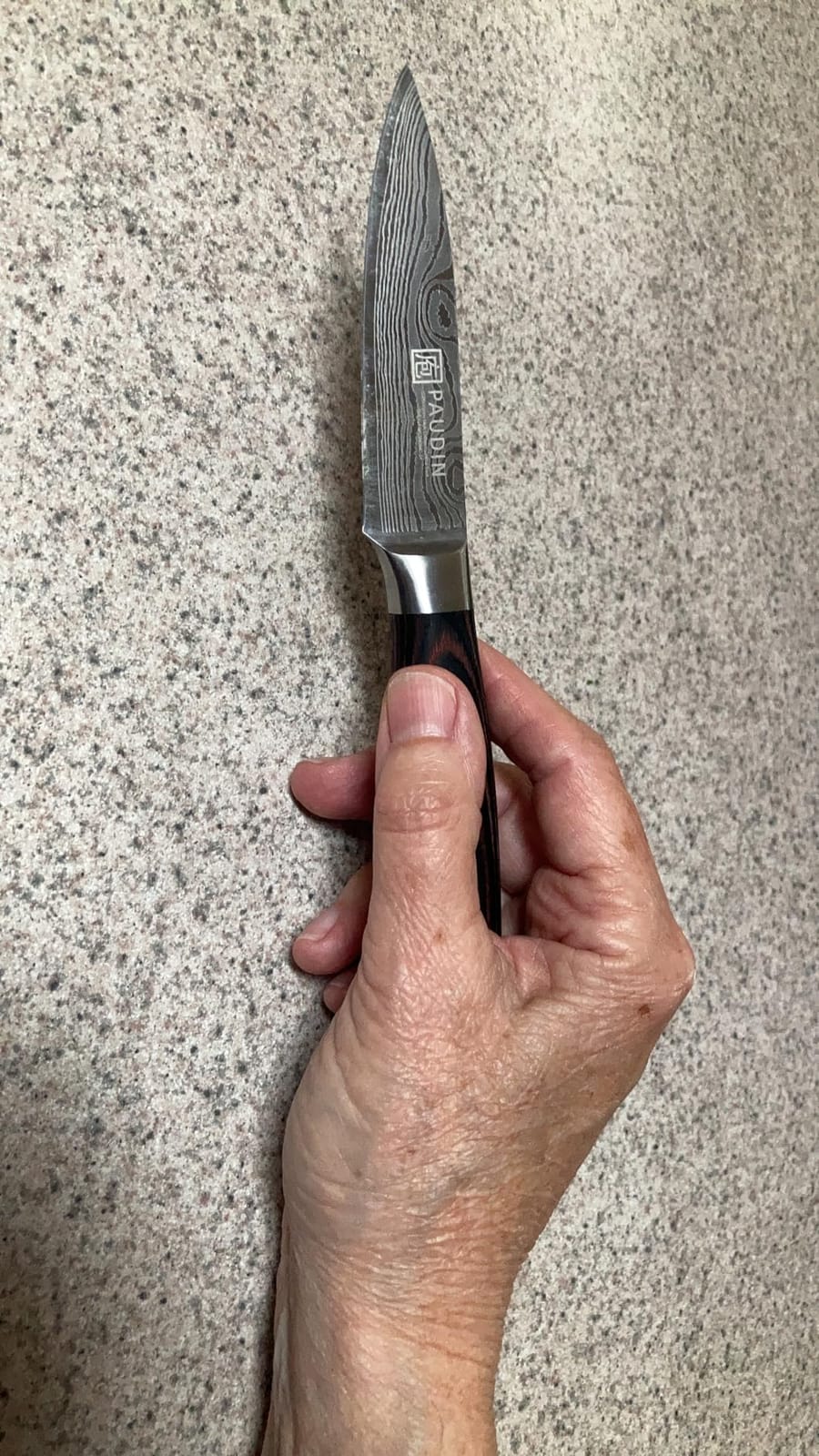
Balance and grip on a wet table
Balance matters more than most buyers expect, because a butchering session is long. A blade that feels right at the first cut still feels right at cut number three hundred, when your hand is cold and the carcass is wet.
The pakkawood handle is sealed and stable, resists the slipping that ruins plastic handles, and gives you a warm, natural feel that stays secure rather than sliding.
Where it falls short
It is a 6.1 inch blade, so large primals mean more strokes than a longer rigid blade would take. That is a real limitation for heavy beef work, and a compromise rather than a flaw.
Several owners report a factory edge that needed a bit of work before it performed at its best. And if you want a Damascus-clad blade with a layered core, this is not it, despite the finish pattern.
7. imarku 6 Inch German High Carbon Stainless Boning Knife
imarku Fillet Knife 6 Inch, German High Carbon Stainless Steel Boning Knife
6.8 inch German steel blade
0.31 kg
FSC pakkawood handle
56 Rockwell
Pros
- Narrow German stainless blade for precise close-to-bone slicing
- Polished FSC-certified pakkawood handle is non-slip and easy to clean
- Forgiving balance reduces effort through long sessions
- Highest review volume in this group
Cons
- Higher cost than other 6 inch boning knives
- Hand wash recommended
- Flex tuned toward filleting rather than heavy joint work
This is the most-reviewed product in the group, with more than 6,000 ratings, and the volume is itself informative. A knife that has been used and re-bought that many times is a knife that holds up. The German stainless blade at 56 Rockwell is the balance point between sharpness and forgiving maintenance.
Buyers consistently single out the polished pakkawood handle and the control it gives on long close-to-bone work, which is why we place it for detail sessions rather than heavy breaking.
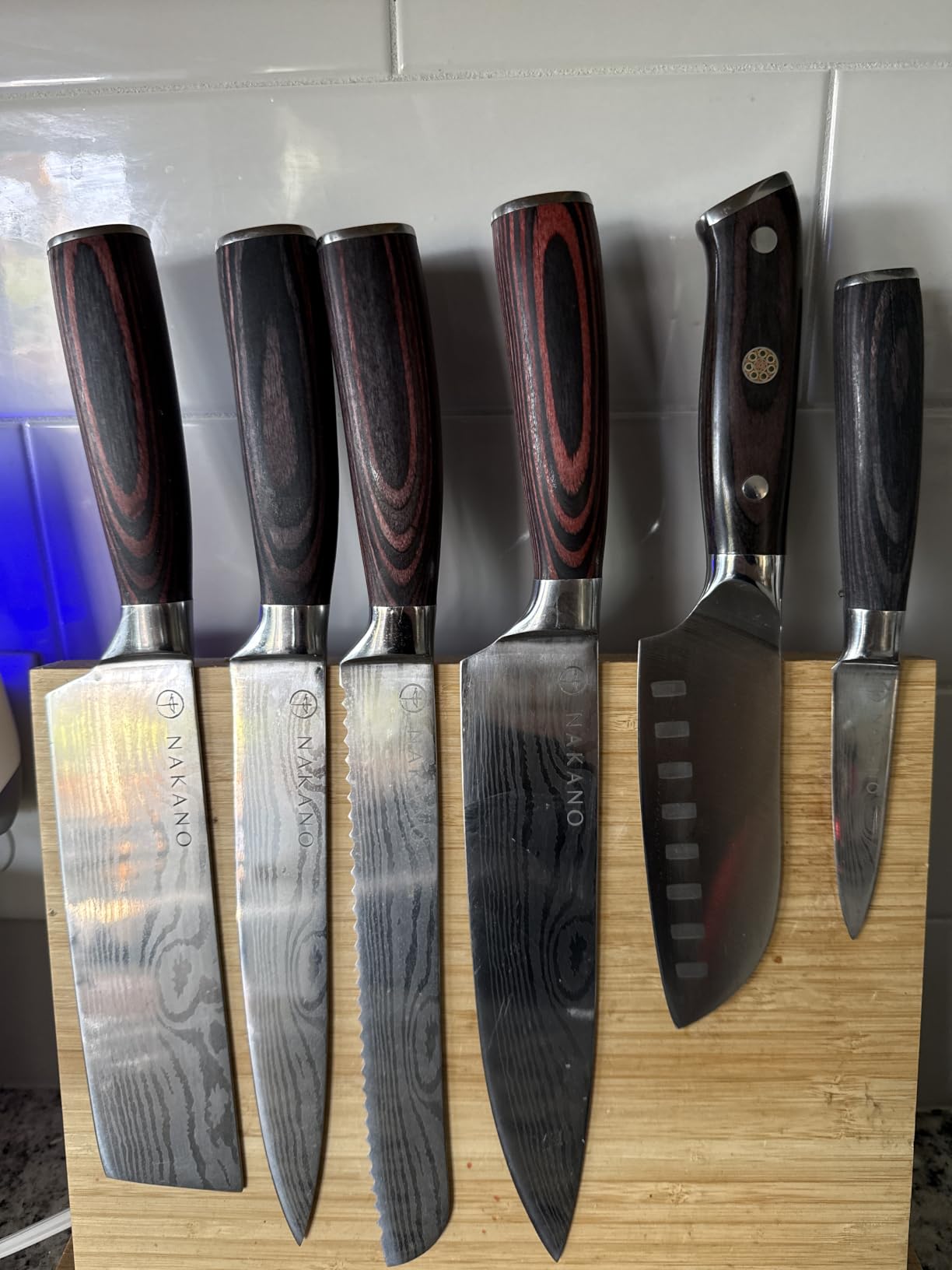
At 6.8 inches it is the longest blade in this roundup, and length helps when you are working around a shoulder bone or a rib plate and want the reach to keep the tip in view. The 11.8 inch overall length still sits well in the hand.
Care is hand wash recommended rather than dishwasher, which is the right call for any knife with a fine cutting edge and a pakkawood handle. A dishwasher cycle will shorten the life of both.
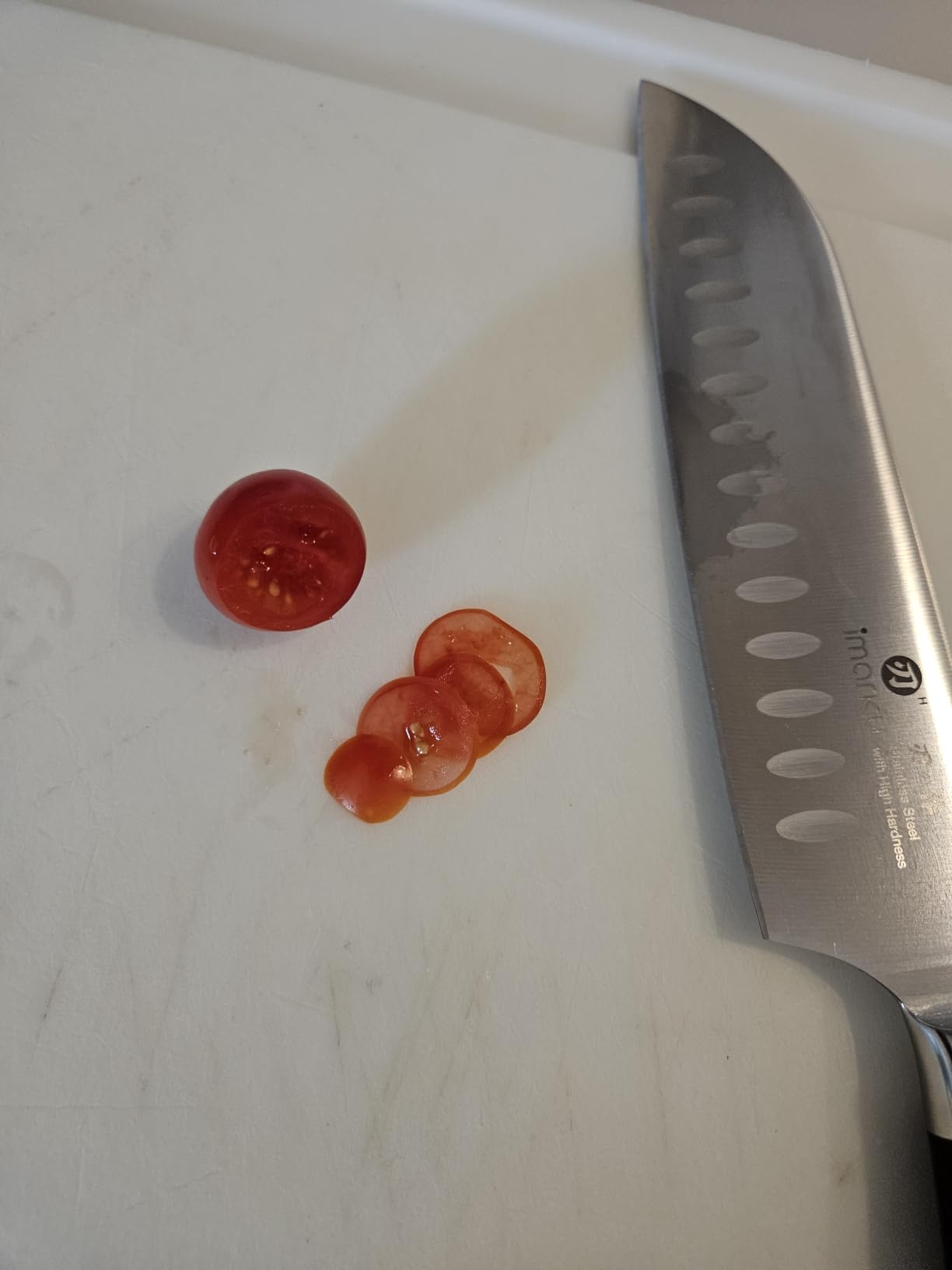
When a longer blade helps
More blade length means fewer strokes on a large cut and a longer reach around joints. On a lamb shoulder or a venison leg, the difference in stroke count adds up over a whole carcass.
It also gives you more visible tip, which reduces the chance of the accidental puncture that comes from working blind around a bone. That is a safety benefit as much as a speed one.
Where it falls short
It costs more than the other 6 inch boning knives here, and that is the single most common complaint in the reviews. If you are buying one knife on a strict budget, this is not the pick.
The flex is tuned toward filleting rather than heavy structural deboning, so it feels less powerful on a big joint. Add a stiff blade or a cleaver alongside it rather than relying on it alone.
8. Dexter-Russell Basics 6 Inch Narrow Flexible Boning Knife
Dexter-Russell P94818 Basics 6″ Narrow Flexible Boning Knife, NSF
6 inch 400 series high-carbon blade
4 ounces
Polypropylene handle
Hollow ground
Pros
- Very sharp on arrival and easy to resharpen
- Textured polypropylene handle resists slipping
- Hollow grind makes home honing straightforward
- Made in USA with limited lifetime warranty
- Often bought in multiples
Cons
- Basics line is thinner than Sani-Safe or professional lines
- Flex is tuned for narrow boning rather than heavy chopping
If you process a few deer a season or a bird every couple of months, this is the most sensible place to start. The hollow-ground 400 series blade is sharp out of the box and, more importantly, stays easy to put right at home with a stone.
Owners rate it 4.8 and describe it as a durable workhorse that stands up in busy kitchens, with several mentioning buying them in multiples. That behaviour says more than the rating does.
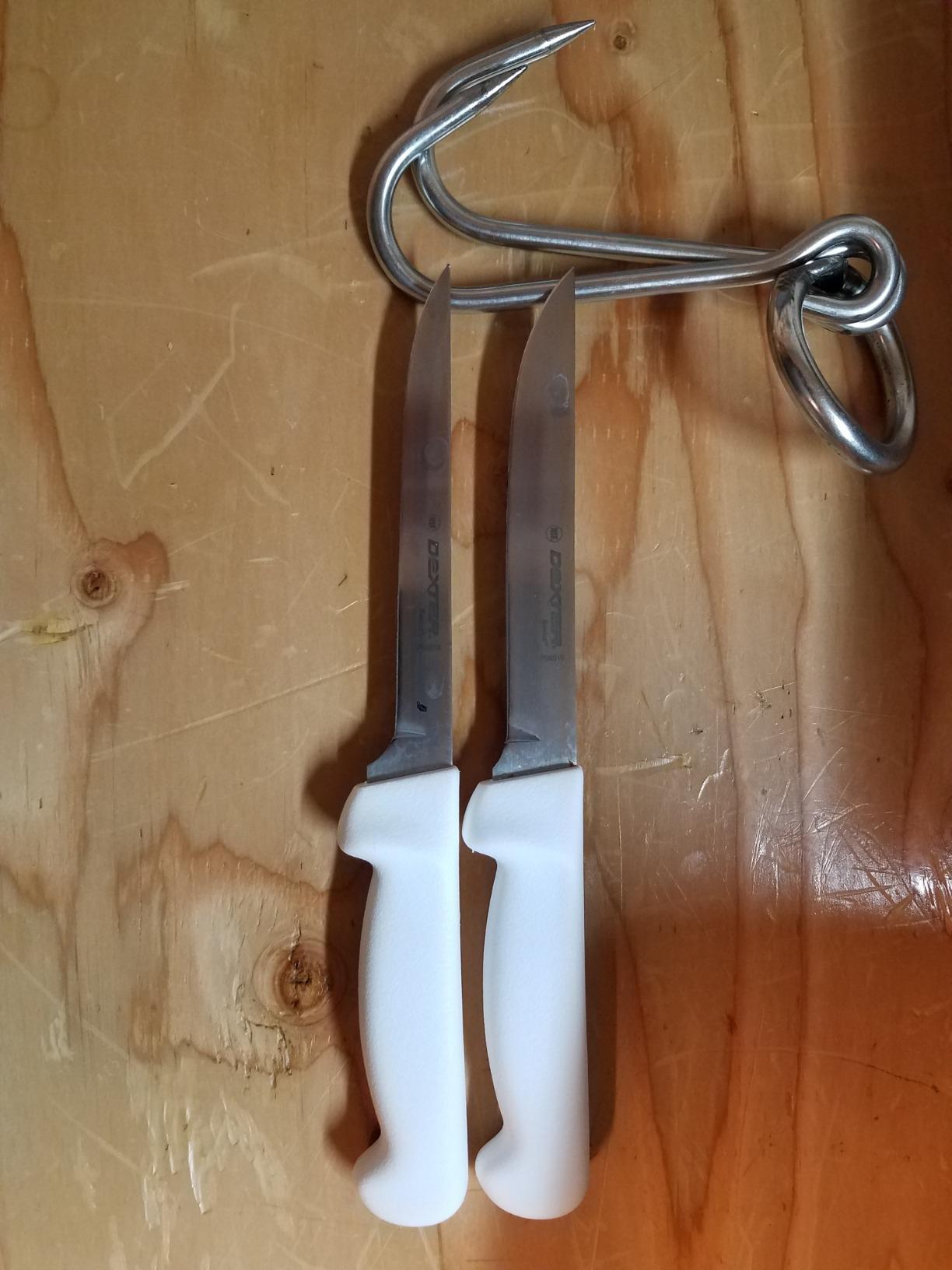
The 4 ounce weight and textured polypropylene handle cover the basics: light in the hand and grippy when wet. It is also NSF listed, which matters if you are handing prepared meat to other people.
Reviewers also point out that the flex is tuned for narrow boning work, so it moves around a rib or a backbone without resistance. It is not trying to be a heavy structural knife.
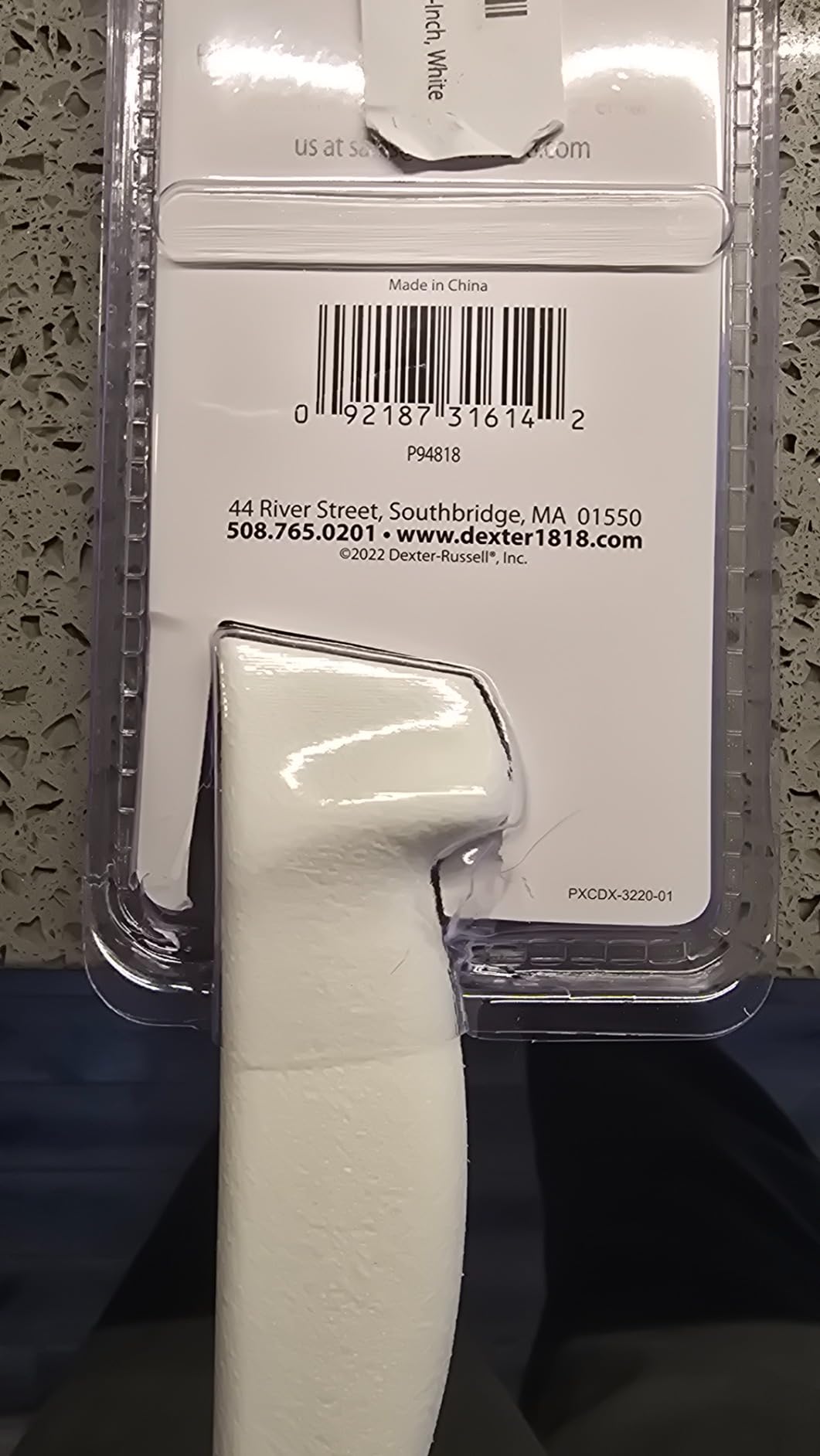
What a hollow grind actually does for you
A hollow-ground blade is ground with a concave curve on each side, which removes more metal at the edge and produces a thin, sharp wedge. The practical effect at home is that it re-sharpens quickly and needs less aggressive work.
The trade-off is a thinner blade section, so it tolerates less abuse at the tip than a flat-ground or thicker blade. Use it for slicing, not for levering.
Where it falls short
The Basics line is thinner and plainer than Dexter professional lines, and that is visible in the handle and overall finish. It is a tool, not a display piece.
The narrow flex profile also means it is not the right choice for heavy chopping or breaking down large primals. If you take whole hog or whole beef on, step up to a stiffer blade.
9. Shun Classic 6 Inch Boning and Fillet Knife
Shun Classic 6″ Boning & Fillet Knife
6 inch VG-MAX core blade
0.2 kg
D-shaped pakkawood
Forged, 16 degree edge
Pros
- VG-MAX core with 68-layer Damascus cladding and a 16 degree edge
- D-shaped pakkawood handle works left or right handed
- Forged handcrafted Japanese construction
- Curved profile glides through meat and fish joints
Cons
- Hard VG-MAX steel is difficult to sharpen without a whetstone
- Damascus cladding is more demanding than a simple stamped blade
- Premium price with added maintenance demands
This is the precision instrument of the group. The VG-MAX core with 68 layers of Damascus cladding ground to a 16 degree edge produces a very fine cut, and the curved profile glides through meat and fish joints with very little drag.
Owners rate it 4.8 and describe exceptional sharpness and precise control, with the D-shaped pakkawood handle earning specific praise for working with either hand. The handle shape is unusual and takes a session to get used to, then becomes the reason you keep picking it up.
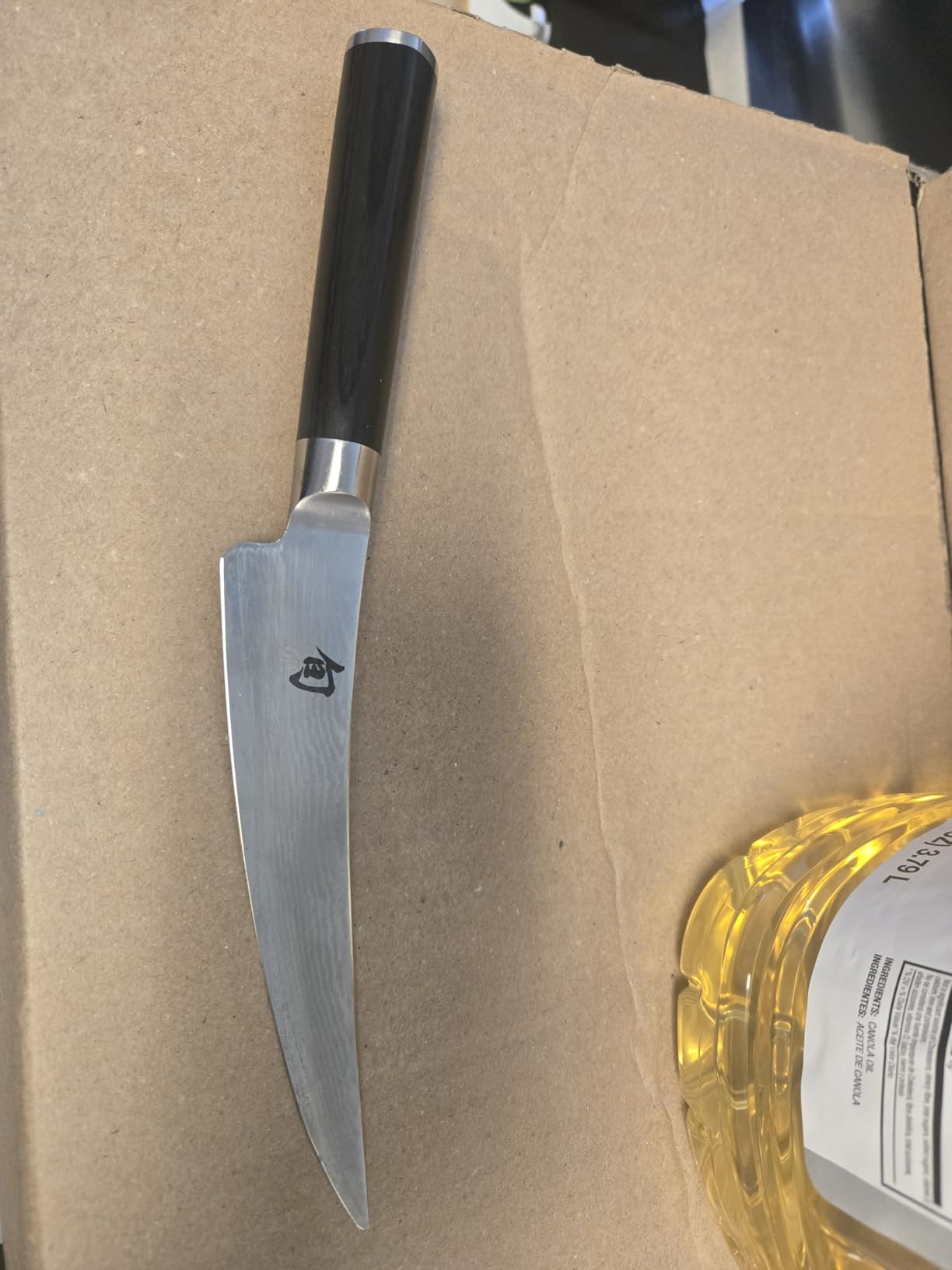
The curved edge and fine geometry make this a strong performer on poultry, on trimming work, and anywhere you want a clean cut surface rather than a fast one. It is handcrafted in Japan and carries a limited lifetime warranty.
Be realistic about the maintenance side. VG-MAX is hard steel, which is exactly why it holds an edge, and it demands more from a whetstone than a stainless stamped blade of the same price.
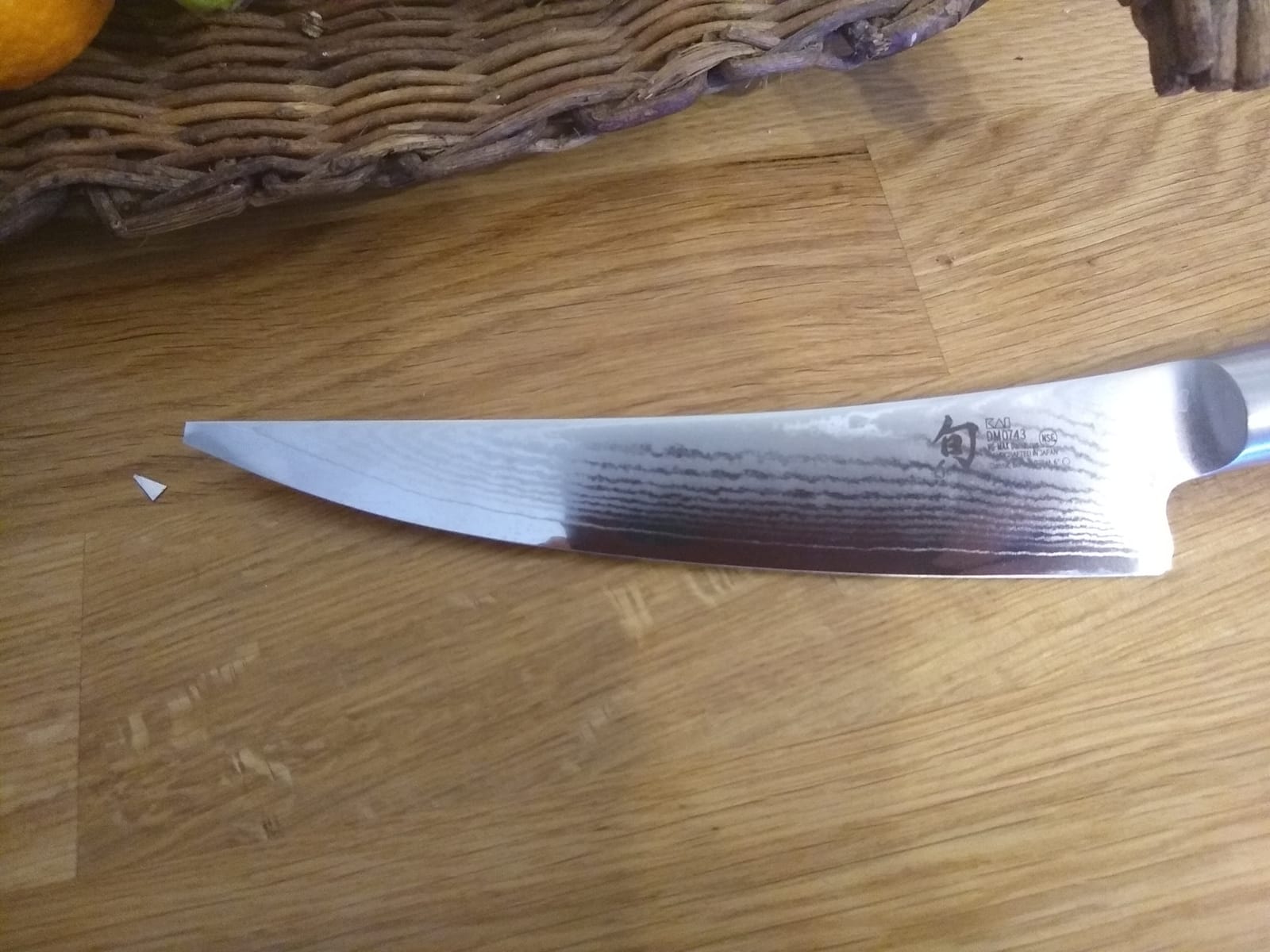
Is a Japanese blade right for butchering?
It works, and buyers use it that way, but the strengths skew toward clean, precise slicing rather than abuse. Harder steel at this geometry is less forgiving of a bad angle or a careless poke near a bone.
If you enjoy knife care and already own a whetstone, that is a fair trade. If you want a knife you can abuse on a carcass and forget about, there are better fits.
Where it falls short
It sits in the premium tier alongside the German forged options, which is a legitimate consideration for a tool that meets a lot of bone. The premium buys edge quality, not durability under prying.
The learning curve on sharpening is real. Owners who do not have a stone report frustration, and the fine edge plus hard steel means it needs more deliberate sharpening than a stainless blade.
10. Wusthof Classic 5 Inch Boning Knife
WÜSTHOF Classic 5″ Boning Knife, Black
5 inch forged stainless blade
4.96 ounces
Full tang handle
58 HRC, PEtec edge
Pros
- Long narrow curved blade moves cleanly along bones
- Highest average rating in this roundup at 4.9 with 97% five-star ratings
- Enough heft in the hand to feel substantial without being cumbersome
- Detail work on rotisserie chicken brisket and pork butt
- Forged German stainless resists corrosion and dulling
Cons
- Aggressive factory edge is a real cut risk for inexperienced users
- Shorter 5 inch blade means more strokes on large primals
- Premium price for a specialist detail blade
At 4.9 stars across 174 ratings with 97% five-star feedback, this has the highest average rating in the roundup. Owners describe it as extremely sharp straight from the box, well balanced, and excellent for small detail boning and trimming work.
Forged from a single block of high carbon stainless steel and tempered to 58 HRC, the PEtec edge is designed to hold sharpness longer than a conventional European bevel. Made in Solingen with a limited lifetime warranty.
That rating comes with a caveat we would rather state than bury: several owners explicitly caution beginners about how sharp the factory edge is. A 5 inch blade that cuts paper easily is genuinely dangerous in the hands of someone who has not yet learned to keep their non-cutting fingers curled.
Owners also point out that 5 inches means more strokes on a large cut. It is a detail trimming knife, and treating it as a general purpose heavy blade is where people go wrong.
Why detail work rewards a short blade
A short blade gives you precision near a joint, around a hip socket, and in tight spaces where a longer blade has nowhere to go. Control beats reach for most of the finishing work in butchering.
Detail trimming on a rotisserie chicken, a brisket flat, or a pork butt is exactly this kind of work, and it is where owners report the most satisfaction with this knife.
Where it falls short
It is the shortest blade here at 5 inches, so plan on more strokes for a large primal. And the price sits in the premium tier, which is a lot to pay for precision work only.
The aggressive edge needs respect. If you are new to butchering, put it aside until you have a cut-resistant glove and a steady grip routine, then move up to it.
11. ZWILLING Pro 5.5 Inch Flexible Boning Knife
ZWILLING Pro 5.5-inch Razor-Sharp German Flexible Boning Knife, Made in Company-Owned German Factory with Special Formula Steel perfected for almost 300 Years, Dishwasher Safe
5.5 inch forged stainless blade
11.2 ounces
Composite handle
FRIODUR, full tang
Pros
- Curved bolster extends the hand for control
- SIGMAFORGE forging and FRIODUR ice hardening hold an edge under heavy use
- Full tang with triple-riveted composite handle
- Dishwasher safe for cleanup after butchering sessions
Cons
- Heaviest option here at 11.2 ounces which tires the hand in long sessions
- Shorter 5.5 inch blade requires more strokes on large cuts
- Highest share of one-star reviews among this group
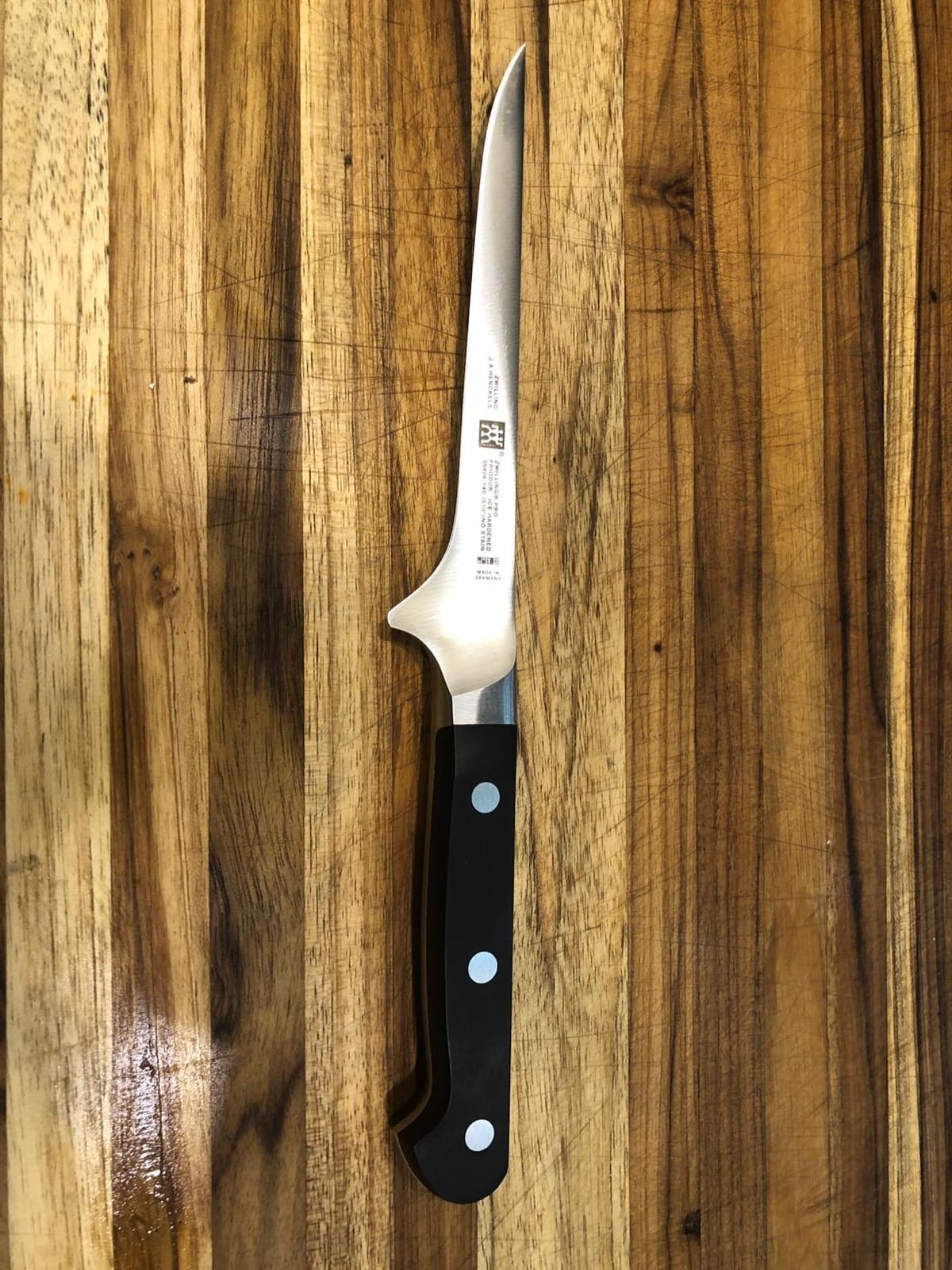
The curved bolster is the defining feature here, and it acts as a natural extension of the hand into the blade. On precise close-to-bone work that means control, and owners mention the comfortable bolster directly in their reviews.
SIGMAFORGE construction forged from a single piece of special formula steel, with an ice-hardened FRIODUR blade and a laser-controlled precision-honed edge. It rates 4.6 across 306 reviews, with 86% five-star.
Being dishwasher safe is genuinely useful in a home butchering context, because you will be washing up in volume. That said, most experienced handlers still wash and dry by hand, since a dishwasher cycle is hard on any fine edge over time.
The full tang with a triple-riveted composite handle gives it the solid feel of a professional knife, and the lower star scores in reviews tend to reflect weight and cost rather than cutting performance.
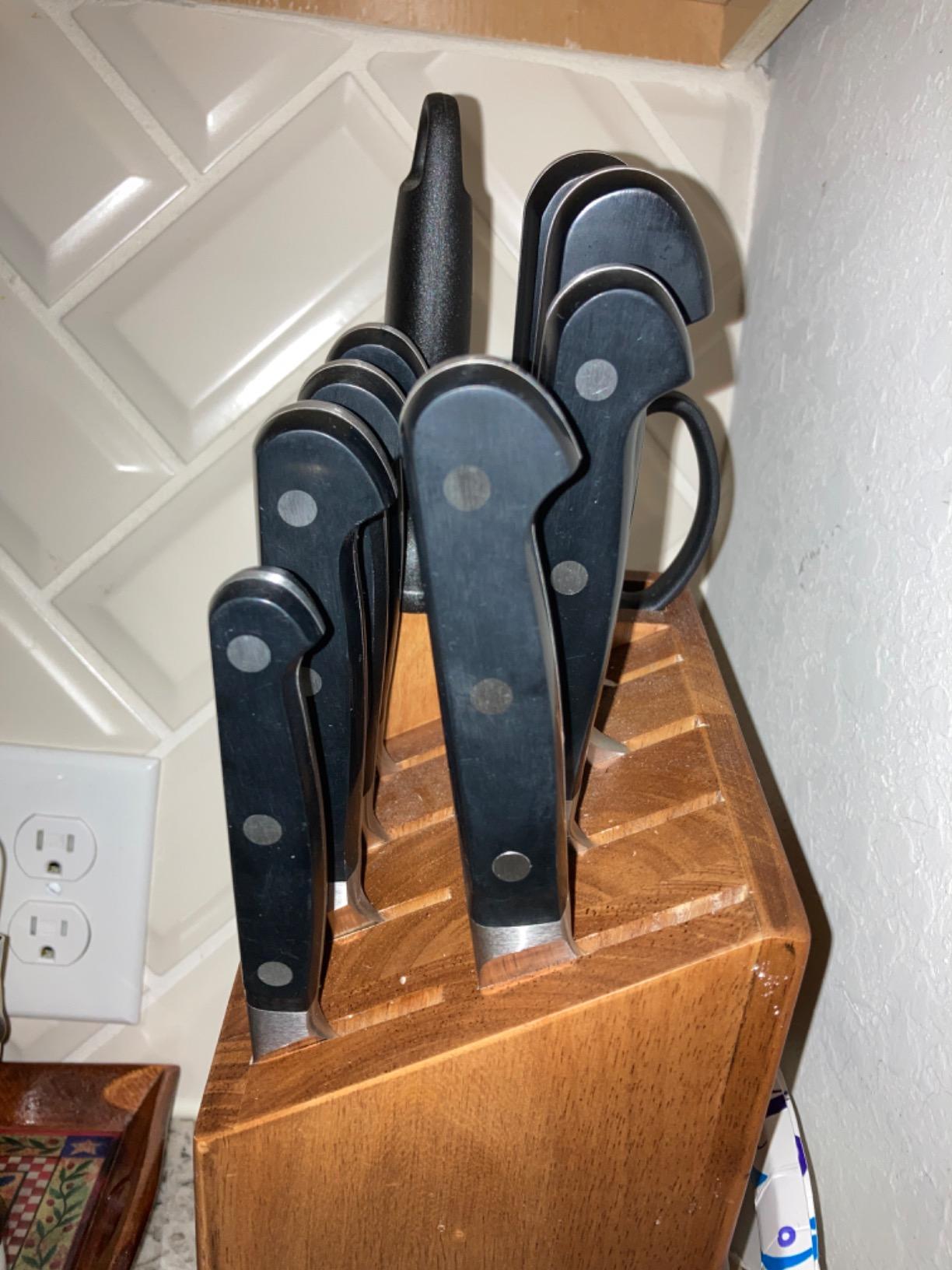
What the bolster does for your grip
A curved bolster fills the gap between handle and blade so your index finger slides forward into a continuous curve. On narrow boning work where the blade is tracking along bone, that continuity is a real safety and control benefit.
It also stops the handle from feeling like a separate object. On a slippery table, a continuous grip is easier to trust than a joint you have to hold in place.
Where it falls short
At 11.2 ounces it is the heaviest knife here, and that is noticeable over a long session. Hand fatigue is a genuine risk on a full carcass, and a lighter knife is easier to keep steady when you are tired.
It also has the highest share of one-star feedback in this group. If you are processing whole animals regularly, weight is the thing to weigh up before the price is.
12. HENCKELS Premio 5.5 Inch Boning Knife
HENCKELS Forged Premio 5.5-inch Boning Knife, Black/Stainless Steel
5.5 inch forged stainless blade
6.4 ounces
Triple-rivet handle
Bolster construction
Pros
- Slim yet strong flexible blade that behaves like a true boning knife
- Comfortable full tang handle in large hands
- Easy to hone and restores a fine edge quickly
- Takes a beating and works as a daily-use knife
- Dishwasher safe with lifetime warranty
Cons
- Arrives in basic plastic packaging with no sheath
- Some units arrive with small edge burrs needing honing
- Stainless steel needs more frequent sharpening than VG-10 or VG-MAX
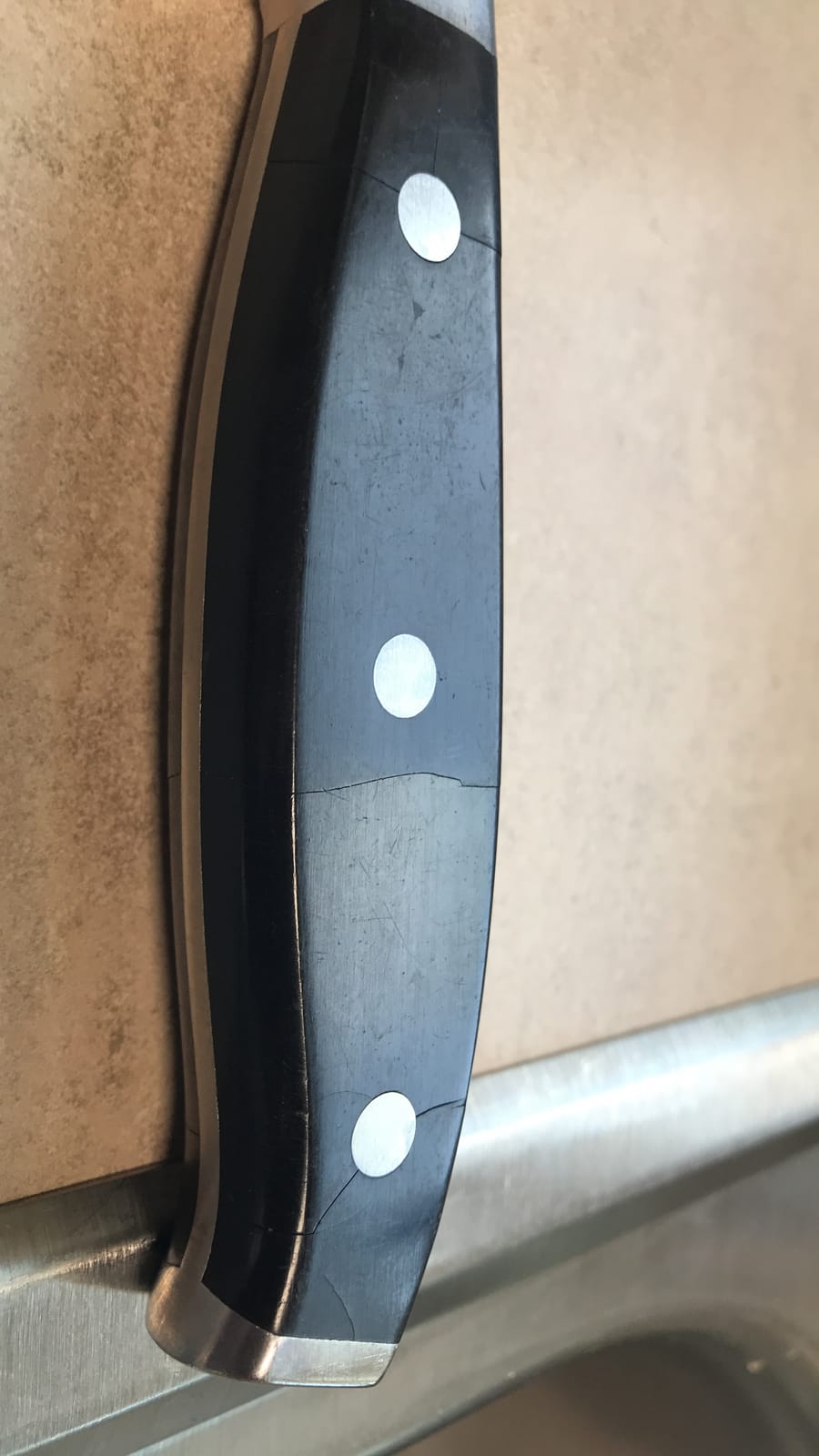
- Isolated reports of a rivet handle cracking after about two years
This is the mid-tier workhorse that gets tested through real quantities of home butchering, and reviewers frame it as a working tool rather than a show knife. The slim blade still has enough strength for structural cuts, which is the balance you want in a general-purpose blade.
It holds a 4.8 rating across 690 reviews with 86% five-star. Owners mention restoring a fine edge in seconds with a honing rod, and a comfort level that holds up through long prep sessions.
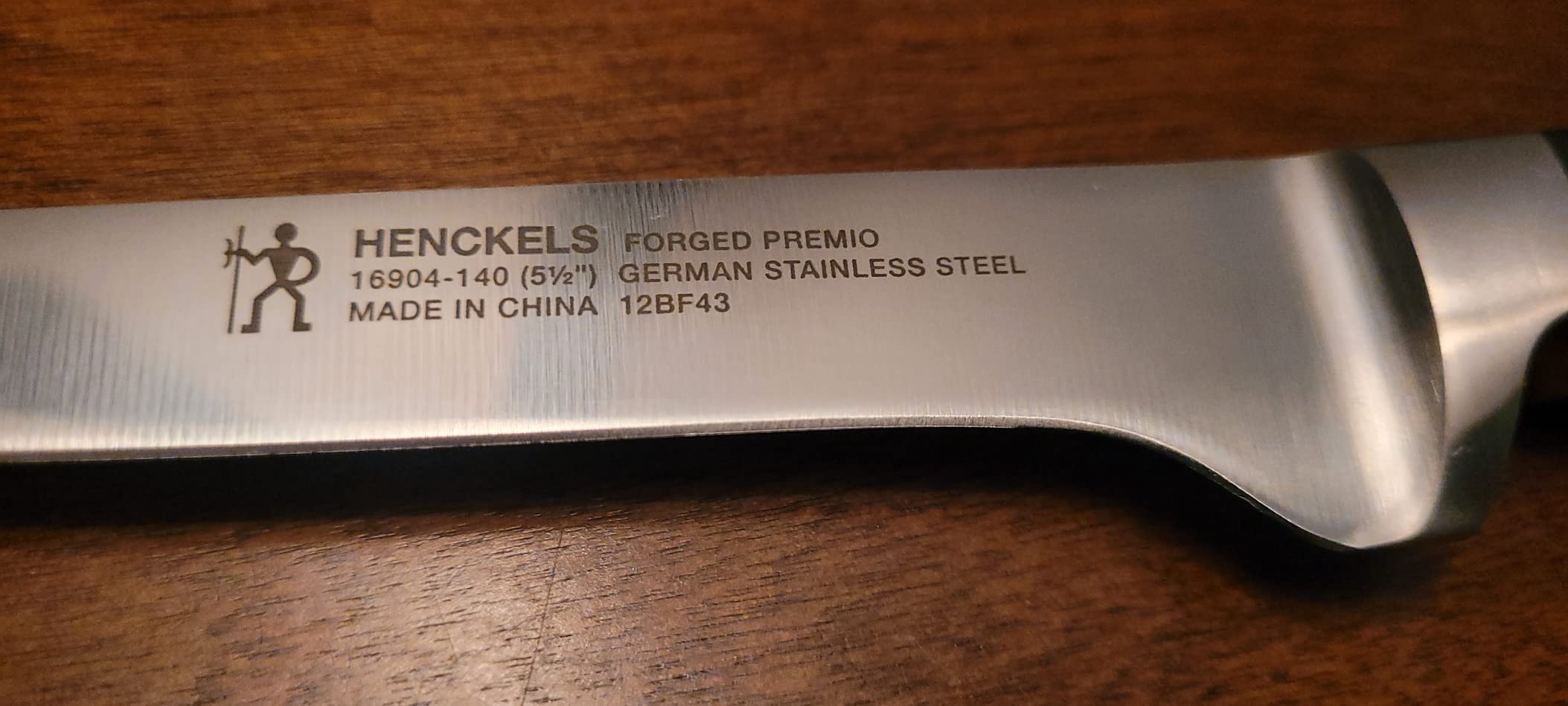
The forged bolster construction gives a seamless blade-to-handle transition, and the triple-riveted handle is curved for comfort. At 6.4 ounces it sits in the middle of the weight range in this roundup, which is where most people find a knife they can hold all day.
Being dishwasher safe and covered by a lifetime warranty against manufacturer defects makes it an easy first knife. It takes a beating, and it is inexpensive enough that you will not dread using it hard.
One knife for everything on the table
If you want a single blade that covers poultry, pork, lamb, venison and fish without constant swapping, a slim-but-strong profile like this is the compromise that works. It is not the fastest at any one task and it is rarely the specialist you would buy for that task alone.
That is the appeal. Specialists earn their place in a second drawer, not the first one, and most home butchers start with one knife and add a second once they know their own work pattern.
Where it falls short
Some units arrive with small edge burrs, so give it a couple of honing passes before the first cut. The packaging is also very basic, with no sheath included.
High carbon stainless here is softer than Japanese VG-10 or VG-MAX, which means more frequent sharpening. There are also isolated reports of a rivet handle cracking after roughly two years of careful home use.
Stiff vs Flexible: Which Blade Handles Which Joint
Semi-flexible is the answer for most people, and the reason is specific: a small amount of bend lets you get the tip into a tight spot and slice the ligament connecting two bones, while a stiff spine still pushes the meat away in one controlled pass. Fully flexible is for fish and poultry skin. Fully stiff is for heavy joint work and trimming.
Match the style to the joint, and the choice makes itself:
Ball joint and hip socket: semi-flexible. The flex is what gets you into the tight spot to find the ligament.
Breastbone and backbone of poultry: semi-flexible or narrow flexible. A narrow blade follows the bone without leaving meat behind.
Fish spine and rib bones: fully flexible. You need the blade to follow the curve of the fish.
Rib plate, shoulder, large primal trimming: stiff. A rigid blade pushes rather than bends, so you spend less wrist effort per cut.
Leg joints with heavy bone: do not force the boning knife. Use a cimeter, cleaver or saw for the bone and the boning knife for the meat.
One technique note that changes everything: manipulating the joint beats hacking at it. Turn the joint to put tension on the tendons, slice one tendon, reverse your grip for a single pass behind the rest, and the limb comes off with far less bone and cartilage left in the meat.
What Brand of Boning Knife Do Butchers Actually Use?
Professional butchers are consistent about this, and the answer is less glamorous than most kitchen lists. The brands that come up again and again in butchery forums are:
Victorinox (formerly Forschner) – the default pick, valued for grip, blade shape and durability under abuse.
F. Dick – a recurring pick among enthusiasts specifically for edge holding.
Dexter and Dexter-Russell – the commercial-kitchen standard, with the Sani-Safe line built for continuous use.
Mora – popular for game processing, particularly the angled 6 inch models.
Ontario, Buck and Old Hickory – recurring budget and carbon steel choices for game and home butchering.
The pattern behind those names is the same one that runs through our top three: inexpensive, repairable, replaceable and easy to sharpen. For a knife that meets bone for a living, how easy it is to put an edge back on matters more than how exotic the steel is.
How to Choose a Boning Knife: Blade Length, Steel and Handle
For size, the number that comes up most often from experienced hands is six inches, because a 6-inch semi-flexible blade does the overwhelming majority of the work on beef, pork, lamb, poultry and deer. Five inches suits poultry, fish and detail trimming. Seven inches or longer is worth considering if you mostly work large primals and want fewer strokes.
For steel, the short version is: high carbon stainless gives the best balance of edge retention and low maintenance, plain high carbon steel takes the sharpest edge and sharpens easiest but needs drying, and harder Japanese cores hold an edge longer while demanding more from a whetstone. Cut meat is wet and acidic, so plain carbon needs care.
For the handle, wet and greasy hands are the universal test. A textured thermoplastic, polypropylene or Santoprene grip that washes down and does not absorb is what you want, and a bolster or finger guard is genuinely useful for beginners. Our EDC pocket knife guide covers grip materials in more general terms if you want the wider picture on handle feel.
For tang and construction, forged with a full tang is the most robust option and the one to look for if you will lever against cartilage. Stamped is lighter, thinner and cheaper, and it is entirely adequate for deboning and trimming if you cut rather than pry.
The Rest of Your Home Butchering Kit
A boning knife cannot do everything, and pretending otherwise is how people injure themselves. The rest of a workable home butchering kit is short:
A cimeter or 8 to 10 inch curved butchering knife for breaking down large primals and working through bone-adjacent sections where a narrow blade lacks authority.
A skinning knife or the reverse side of the cimeter for opening the hide. Cut from the inside where possible to keep hair out of the meat.
A bone saw for the heavy structural work. A hack saw will function, and experienced butchers do use them, but a purpose-made saw is faster and cleaner.
A separate cheap knife for cutting hair. Animal hair dulls a blade faster than almost anything else you will touch it to. Keep it off your butchering blade entirely.
A cut-resistant glove for the hand holding the meat. This is not optional if you are working around a hip socket.
Legality is worth checking before you start. Rules on home butchering, particularly for venison and poultry, vary by state and often by county, and some places require specific facilities for the species you want to process. Confirm locally before you plan a whole-animal breakdown.
How to Keep a Boning Knife Sharp Through a Whole Carcass
Start sharp and check the edge often, because a dull blade needs more force and a slipping blade is the actual injury risk. A honing steel between cuts or between birds keeps an edge aligned without removing much metal.
When the edge is genuinely gone, go to a stone rather than trying to fix it with pressure on a rod. On high carbon stainless and hollow-ground blades, a few passes on a fine stone restores the edge quickly. On hard Japanese steel, expect a longer sharpening session and a steeper learning curve.
Wash and dry immediately, every time. Blood and fat left on a blade are the fastest route to a permanently rough edge, and no steel is entirely immune to corrosion if it sits wet. If you want more on routine blade care, our metal detecting knife guide covers day-to-day maintenance habits that apply to any working blade.
Safety Rules for Home Butchering
Six rules cover most of the injuries we see described in butchery forums, and all six are habits rather than equipment.
Wear a cut-resistant glove on the hand holding the meat, and keep the other hand’s fingers curled back out of the blade’s path.
Cut away from your body, with the spine of the knife resting against the bone so the edge is doing the work.
Manipulate the joint instead of hacking it. Tension, one tendon sliced, and a reverse-grip pass removes limbs cleanly and leaves less bone in the meat.
Never try to catch a falling knife. Let it go.
Keep a separate knife for hair, and cut the hide from the inside where you can to keep hair out of the meat.
Clean and dry the knife immediately, and keep raw and cooked work separate, same as any kitchen task.
Frequently Asked Questions
What is the best size boning knife for me?
Six inches is the size most experienced butchers land on, because a 6 inch semi-flexible blade covers nearly all work on beef, pork, lamb, poultry and deer. Five inches suits poultry, fish and detail trimming. Longer blades reduce strokes on large primals but cost you precision around joints.
What is the difference between a boning knife and a butcher knife?
A boning knife is narrow, usually 5 to 7 inches, with a pointed tip and a stiff or semi-flexible blade for slicing meat away from bones. A butcher knife or cimeter is thicker, wider and longer, often curved, and is used to break down large sections and work around heavy bone. They are complementary tools, not substitutes.
What brand of boning knife do butchers use?
Professional butchers most often reach for Victorinox, F. Dick, Dexter and Dexter-Russell, Mora, and Ontario or Old Hickory. The common factor is not exotic steel but durability, a grip that works when wet, and a blade that is easy to sharpen and inexpensive to replace.
What is the best boning knife for breaking down a chicken?
A 5 or 6 inch narrow semi-flexible or flexible blade is the right tool. It follows the breastbone and backbone closely so little meat is left behind, and a pointed tip makes the initial cuts into the joint easy to place. Heavier blades waste meat on poultry.
Should a boning knife be stiff or flexible?
Semi-flexible suits most people. A small amount of bend lets the tip into tight spots such as a ball joint or hip socket to slice the connecting ligament, while a stiff spine still pushes meat away in one pass. Fully flexible suits fish and poultry skin; fully stiff suits heavy trimming.
Should I buy a carbon steel or stainless steel boning knife?
High carbon stainless is the easiest default because it resists corrosion in wet, acidic meat and holds an edge well. Plain carbon steel takes the sharpest edge and is easiest to sharpen, but it needs immediate drying. Harder Japanese cores hold an edge longest while demanding more sharpening skill.
Do I need anything besides a boning knife to butcher at home?
Yes. You also need a cimeter or cleaver for breaking down large sections, a skinning knife or the reverse of the cimeter for the hide, a bone saw for heavy structural work, and a separate cheap knife for cutting hair. A cut-resistant glove for the holding hand is the most important safety item.
The Verdict
The Victorinox Fibrox 6 inch curved is our pick for the best boning knives for home butchering because it is light, grippy, sharp on arrival and cheap enough that you will not hesitate to use it hard. If you want forged construction and a sealed handle for sanitation, the Dexter Outdoors 6 inch is the step up. If you need one blade for the whole job today, the Mercer Culinary Ultimate White is the one to buy.
Whichever you choose, pick up a cut-resistant glove before your first carcass, keep a separate knife for hair, and start with the six-inch semi-flexible assumption. Everything else is a second knife.