
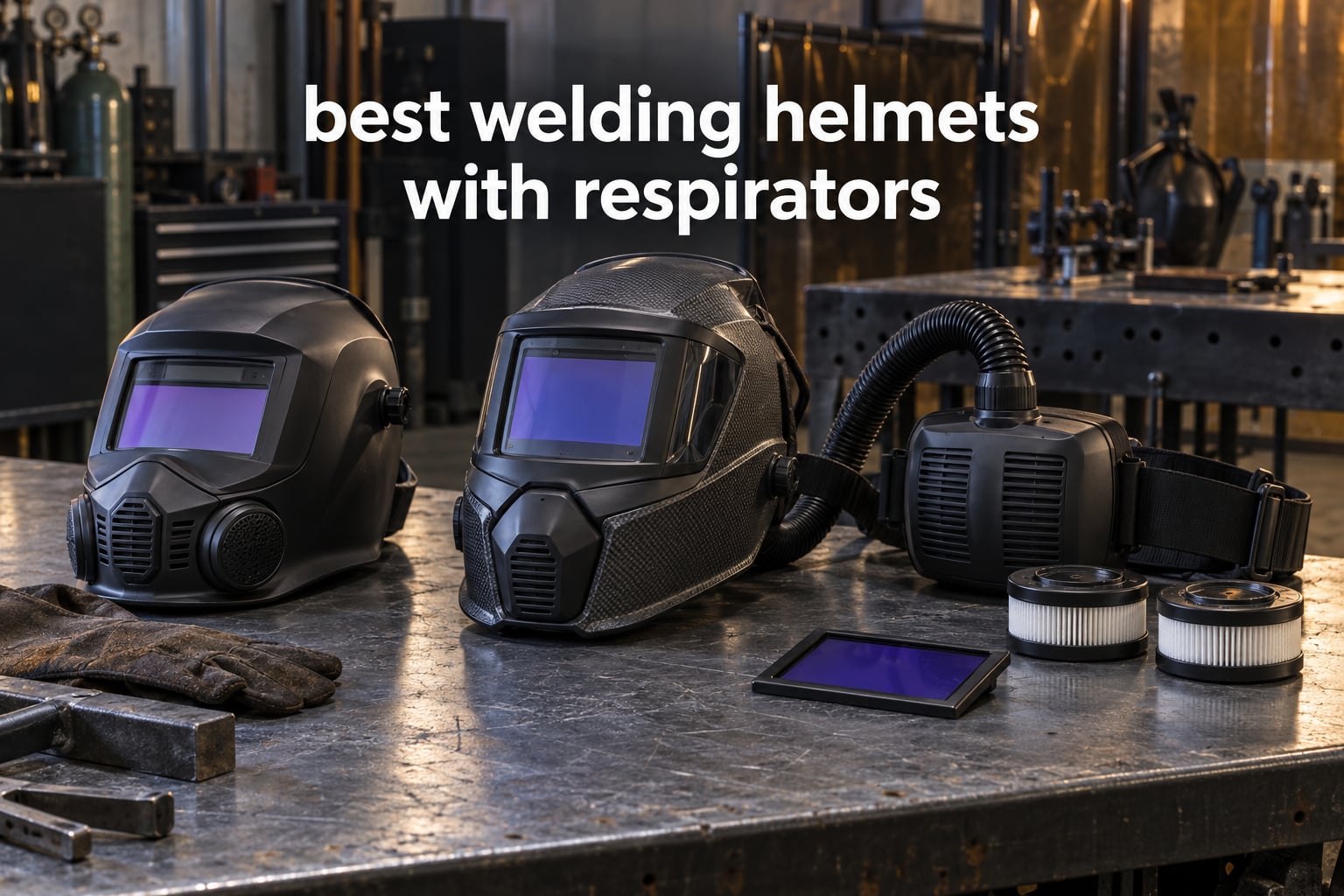
Yes, you can wear a respirator with a welding helmet, and for most welders doing it daily on stainless, galvanized or chrome alloys, you should. Two setups exist: a tight-fitting cartridge mask worn under the helmet shell, or a powered air purifying respirator (PAPR) that uses a belt-mounted blower to push filtered air through a hose into the helmet. A PAPR is a loose-fitting hood, so it needs no fit test, while a half mask has to seal against your face every time you put it on.
That distinction matters more than most buying guides admit. Welder forums keep circling the same problem: the mask strap fights the helmet shell, the mask rides up into the lens, and by hour four the welder has stripped the gear off entirely. Our guide to the best welding helmets with respirators ranks the optical performance and the respiratory protection together, because that is the decision you are actually making.
Every helmet below was checked for published filtration figures, lens shade range, sensor count and owner feedback rather than marketing copy alone. We also flag the honest weak spots, including proprietary filters, thin review histories and blower battery anxiety, so you can judge whether a rig fits your shop.
If you are still picking up the machine, our guide to the best welding machines for beginners covers the power sources that pair well with the lighter helmets on this list.
Top 3 Picks for 2026
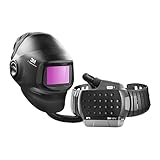
3M Speedglas G5-01 with Adflo
- Shades 5 and 8-14
- Variable Color Technology
- Adflo high-altitude PAPR
- 4.6 stars from 28 reviews

Parcil WF-101 Full Face Respirator
- DIN 5-13 auto-darkening range
- O-A-X P3 bayonet cartridges
- 2 pounds
- 4.7 stars from 27 reviews
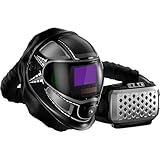
ANDELI PAPR Welding Helmet
- 99.95 percent filtration
- 180 degree view
- 1/25000 second switch
- built-in LED
All 10 Welding Helmets With Respirators Compared in 2026
The table below ranks every unit in this roundup on the two things that matter together: what the lens does to the arc, and what the respiratory system does to the fume. Read the filter column before the shade column, because most regrets come from buying a beautiful lens bolted to weak filtration.
| Product | Specifications | Action |
|---|---|---|
| 3M Speedglas G5-01 with Adflo PAPR |
|
Check Latest Price |
| Parcil WF-101 Auto-Darkening Full Face Respirator |
|
Check Latest Price |
| ANDELI PAPR Welding Helmet |
|
Check Latest Price |
 YESWELDER LYG-Q800D PAPR Helmet YESWELDER LYG-Q800D PAPR Helmet |
|
Check Latest Price |
 Parcil WF-100 Full-Face Welding Respirator Parcil WF-100 Full-Face Welding Respirator |
|
Check Latest Price |
 American Alloy PAPR Electronic Helmet American Alloy PAPR Electronic Helmet |
|
Check Latest Price |
 3M Speedglas G5-03 Pro Air with Adflo 3M Speedglas G5-03 Pro Air with Adflo |
|
Check Latest Price |
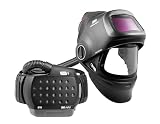 3M Speedglas G5-01 Adflo NIOSH Kit 3M Speedglas G5-01 Adflo NIOSH Kit |
|
Check Latest Price |
 KIPPDURO True Color PAPR Helmet KIPPDURO True Color PAPR Helmet |
|
Check Latest Price |
 DanVard Auto Darkening PAPR Helmet DanVard Auto Darkening PAPR Helmet |
|
Check Latest Price |
Can You Actually Wear a Respirator Under a Welding Helmet?
Sometimes. Most conventional auto-darkening shells have a headband, a ratchet cradle and a rear adjustment knob sitting right where a half mask strap wants to sit, so the two fight each other and the mask creeps upward into the lens. If you plan to run a cartridge respirator under a helmet all day, look for a shell with a smooth crown or a strap-free rear cradle, and confirm the mask seal is not resting on the shell edge.
The second problem is heat. Half masks rely on your own lung power to pull air through the cartridge, and once that particulate loads up, breathing resistance climbs and sweat has nowhere to go. Welders on r/Welding describe sore spots along the nose bridge and cheek seal after a full shift, which is exactly why a lot of experienced shops hand every welder a personal half mask for short jobs and keep one or two shared PAPR units for stainless, shipyard and confined-space work.
A third friction point is the lens. A respirator adds moisture, and a sealed facepiece plus a warm shell is the classic recipe for a fogged auto-darkening filter. PAPR units fight this naturally because the blower pushes air across the inside of the lens, which is one of the reasons welders praise them for comfort as much as for filtration.
The practical answer for most people is this. If you weld a few hours a week outdoors on mild carbon steel, a quality full-face or half mask plus a separate helmet is simpler and cheaper. If you weld stainless, galvanized, chrome or flux-cored wire indoors for hours at a stretch, an integrated PAPR removes the fit conflict entirely and is worth the extra money and belt weight.
One warning from the forums, and it comes up repeatedly: do not mix cartridges and masks from different manufacturers. A P3 or P100 cartridge is only tested with the facepiece it was certified against, so pairing a 3M cartridge with a generic mask voids the certification in a way that matters if anyone ever inspects your program.
1. 3M Speedglas G5-01 with Adflo High-Altitude PAPR: the best all-round combination
3M Speedglas Heavy-Duty Welding Helmet G5-01 with G5-01VC ADF and Adflo High-Altitude PAPR Assembly, Bluetooth, Natural Color Technology, 46-1101-30iVC
Shades 5 and 8-14
Variable Color Technology
Adflo high-altitude PAPR
Includes helmet ADF PAPR and bag
Pros
- Selectable clear cool or warm lens colors
- owners report fume exposure drops sharply
- battery carries through a full working day
- adjustable airflow direction
- no internal fogging in warm conditions
Cons
- Headgear can sit loose on one side
- stiffer flip-up action than rival shells
- narrower viewing area with no side view
- proprietary filter and battery accessories
This is the kit we keep coming back to because it solves the two problems at once instead of stacking one product on top of another. You get the G5-01 heavy-duty shell, the G5-01VC auto-darkening filter and an Adflo high-altitude PAPR assembly in one box, so there is no half mask strap fighting the headgear.
The lens is the reason industrial welders defend this model hardest. Variable Color Technology lets you pick between clear, cool and warm tone depending on the job and your preference, and the shade spread of 5 plus 8 to 14 covers everything from a light tack weld up to heavy structural work. Owners repeatedly single out puddle visibility as the standout, which matters more to weld quality than any spec on a list.
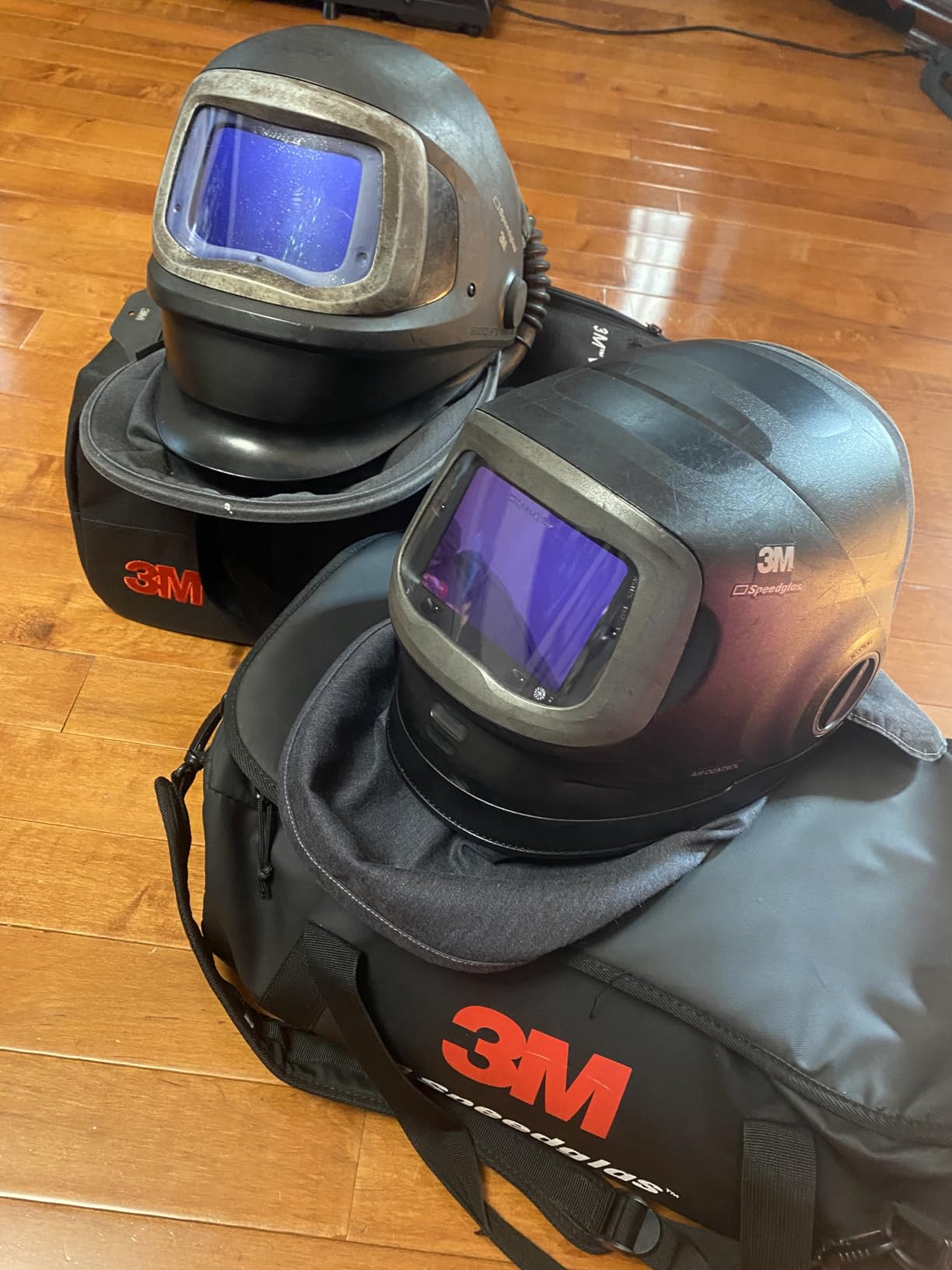
On the respiratory side, the Adflo unit with its adjustable head suspension delivers air at positive pressure, so there is no seal to break when a beard grows or a strap slips. Reviewers report fewer headaches and noticeably cleaner sinuses after a shift of stainless work, and the battery typically lasts through a full working day. Airflow direction is adjustable, which lets you aim the air at your face, the visor or somewhere between the two when the shop gets hot.
The 3M Connected Equipment app adds ten memory modes and a maintenance log, so switching between a stainless setup and a fabrication setup takes seconds. Filtering is handled by the standard Adflo particle and gas filtration, with the right filter or cartridge for the material in front of you.
What to check before you commit
Ask whether your work ever takes you overhead or inside a hull. The breathing hose and the belt unit both need somewhere to sit, and tight quarters can turn an otherwise excellent rig into a nuisance.
Also budget for the accessories. Filter media, batteries and headgear parts are proprietary to the system, so confirm a distributor carries them locally before you buy. The whole assembly weighs 5.36 kg, most of which is the blower and battery sitting at your hip.
Where it falls short
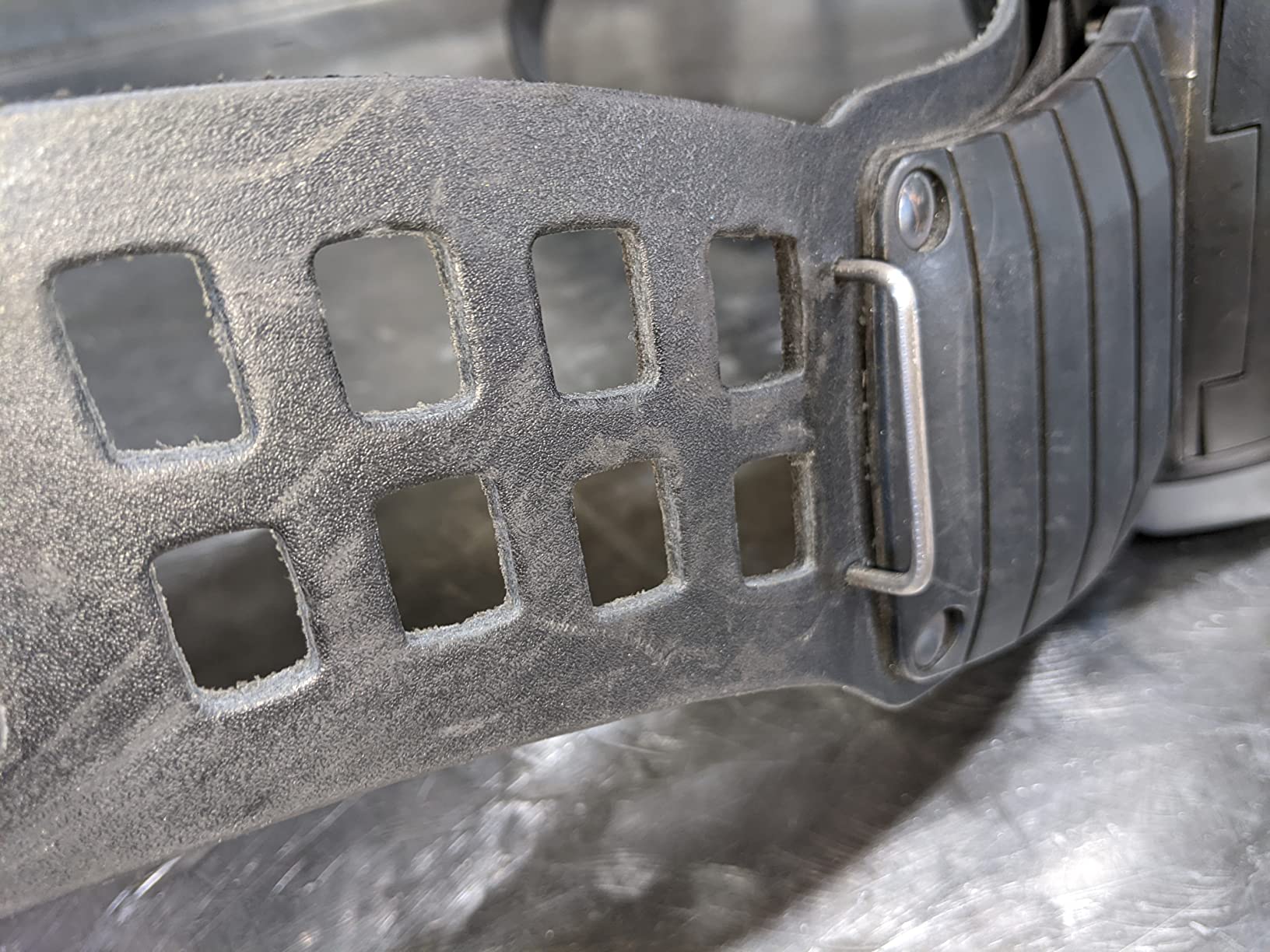
The most repeated complaint is headgear stability. Owners report the suspension feeling loose on one side and needing constant readjustment, which is annoying when you are welding in a position where you cannot reach back to the cradle.
The flip-up mechanism is also stiffer than some competing shells, and the viewing area is narrower with no side window, so peripheral awareness of the joint takes a small hit. For pipe work and out-of-position welding, that narrower view is the trade you accept for the colour and clarity you gain at the arc.
2. Parcil Distribution WF-101 Full Face Welding Respirator: the best budget all-in-one
Parcil Distribution WF-101 Auto-Darkening Full Face Welding Respirator Mask
DIN 5-8 grind and 9-13 weld shades
O-A-X P3 bayonet cartridges
2 pounds total
Two lithium batteries included
Pros
- Combines welding grinding and respiratory protection in one unit
- flip-up design for fast task switching
- 4.7 out of 5 across 27 owner ratings
- comfortable weight distribution
- one year manufacturer warranty
Cons
- Full-face format can feel enclosed on long sessions
- Not blower driven so airflow depends on your own breathing
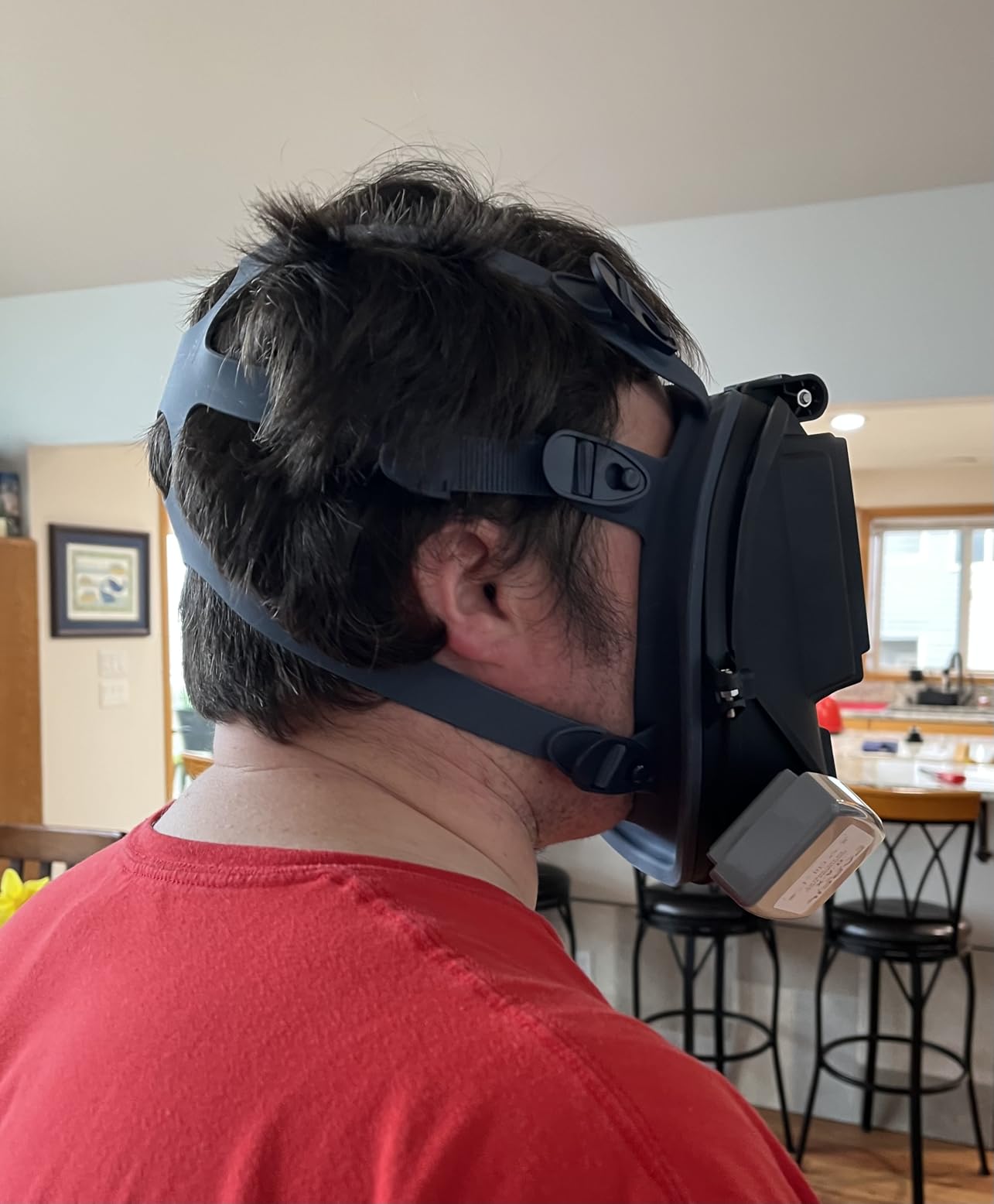
This is the simplest answer on the list and the one most hobby welders actually need. The WF-101 combines an auto-darkening lens, a full-face seal and twin cartridge filtration into a single 2-pound unit that replaces a helmet plus a separate respirator.
The lens covers a DIN 5 to 8 range for grinding and cutting and a DIN 9 to 13 range for MIG, TIG and stick work, with adjustable settings between them. That versatility is why the flip-up design matters: when you switch to grinding you lift the visor rather than swapping a shell, and the face seal stays in place the whole time.
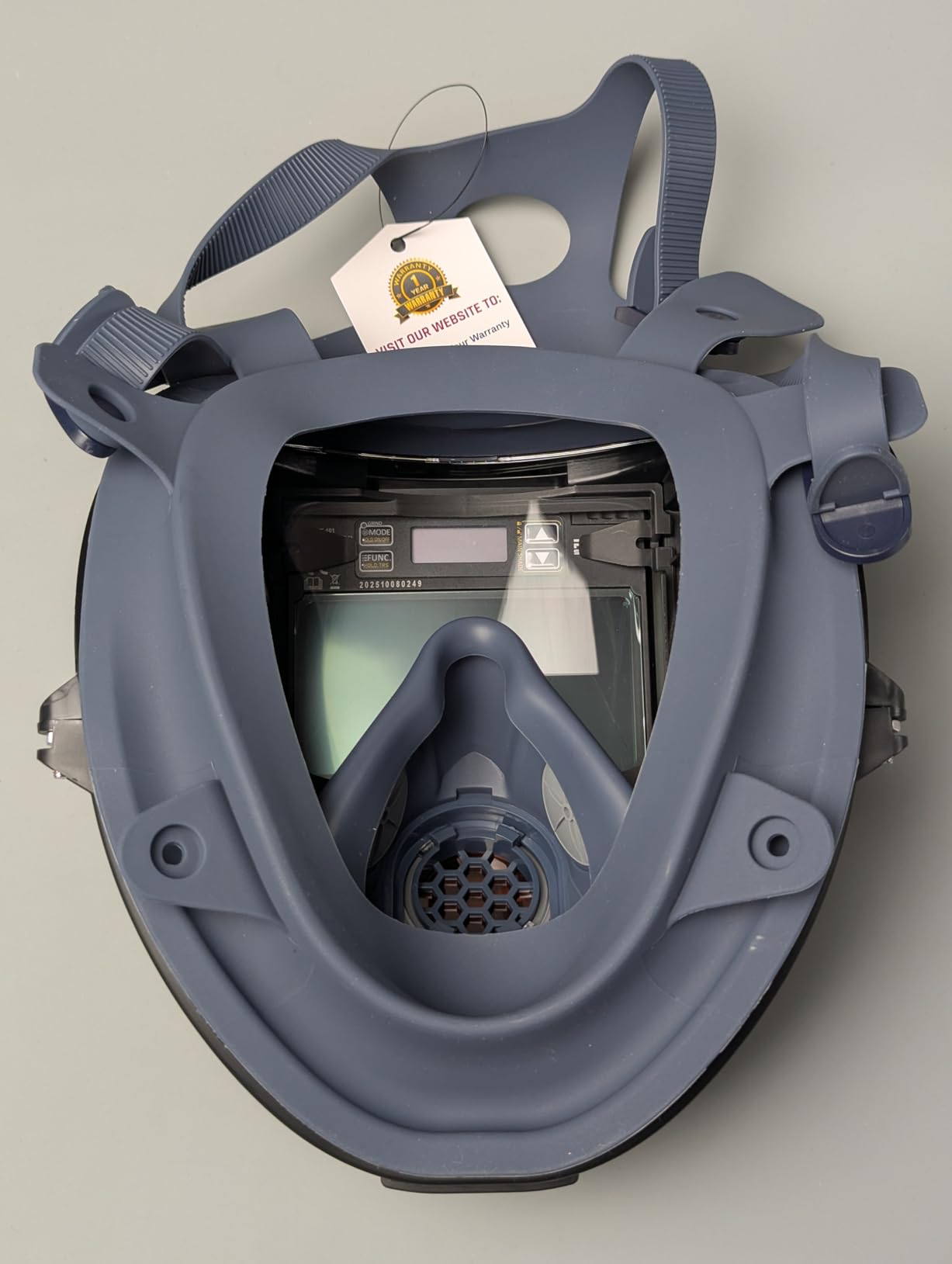
Filtration runs through P3 particulate cartridges on an O-A-X bayonet fitting, which is a format used across European and North American respirators, so replacement cartridges are easy to find. The multi-point adjustable harness with quick-release buckles spreads the load instead of digging into the back of your skull, and the whole mask weighs 2 pounds.
Owners like the clean light-to-dark transition and the fact that nothing needs plugging in. Two lithium metal batteries ship in the box and power the auto-darkening electronics, and the unit is compatible with spectacle inserts if you wear prescription glasses. Protective films and a carrying bag are included.
Why this one earns the budget slot
At 4.7 out of 5 across 27 owner ratings, it carries the strongest owner satisfaction of any unit in the group with a meaningful review history, and it does so without any blower, belt unit or battery to charge. For a garage welder doing a few hours of work a month, there is very little left to justify spending more.
It also solves the strap conflict permanently. Because the respirator is the mask rather than something fitted underneath, there is no second headband fighting the crown of the shell.
Where it falls short
This is not a powered system. Airflow depends entirely on your own inhalation, so on a long stainless job in a warm shop you will feel that limitation more than you would with a blower.
The enclosed full-face format also gets tiring over long sessions, and the P3 cartridge format, while common, is not the same as the P100 cartridges widely used in North American shops. If your employer specifies a particular cartridge class, check that before you commit.
3. ANDELI PAPR Welding Helmet with 180 Degree View: the best value integrated PAPR
ANDELI Welding Helmet with Respirator,99.95% PAPR Filtration Efficiency Panoramic 180° Large Viewing Powered Air Purifying Respirator Auto Darkening Welding Helmet with Light
99.95 percent particle capture
180 degree view with DIN4 side window
1/25000 second switch with 4 sensors
11.15 pounds
Pros
- integrated PAPR and auto-darkening in one helmet
- very wide 180 degree viewing with a DIN4 side view
- fast 1/25000 second transition on 4 sensors
- built-in LED for close task visibility
- airflow can be aimed at face visor or in between
Cons
- mixed owner feedback on build and reliability
- 18 percent of ratings are 1-star
- 11.15 pounds is heavy for a full day
The ANDELI does something the other integrated units in this price range do not: it puts a genuine side window in the shell. The main viewing area measures 3.86 by 2.44 inches, and the side panel adds 3.72 by 1.76 inches at a fixed DIN 4, which is a fixed light shade intended for positioning and setup rather than welding.
Optical performance is strong for the tier. The auto-darkening filter moves from light to dark in 1/25000 second across 4 sensors, which is fast enough that you can track a moving arc without getting flashburn on the leading edge. A built-in soldering LED lights close-up work where you would otherwise be guessing at filler placement.
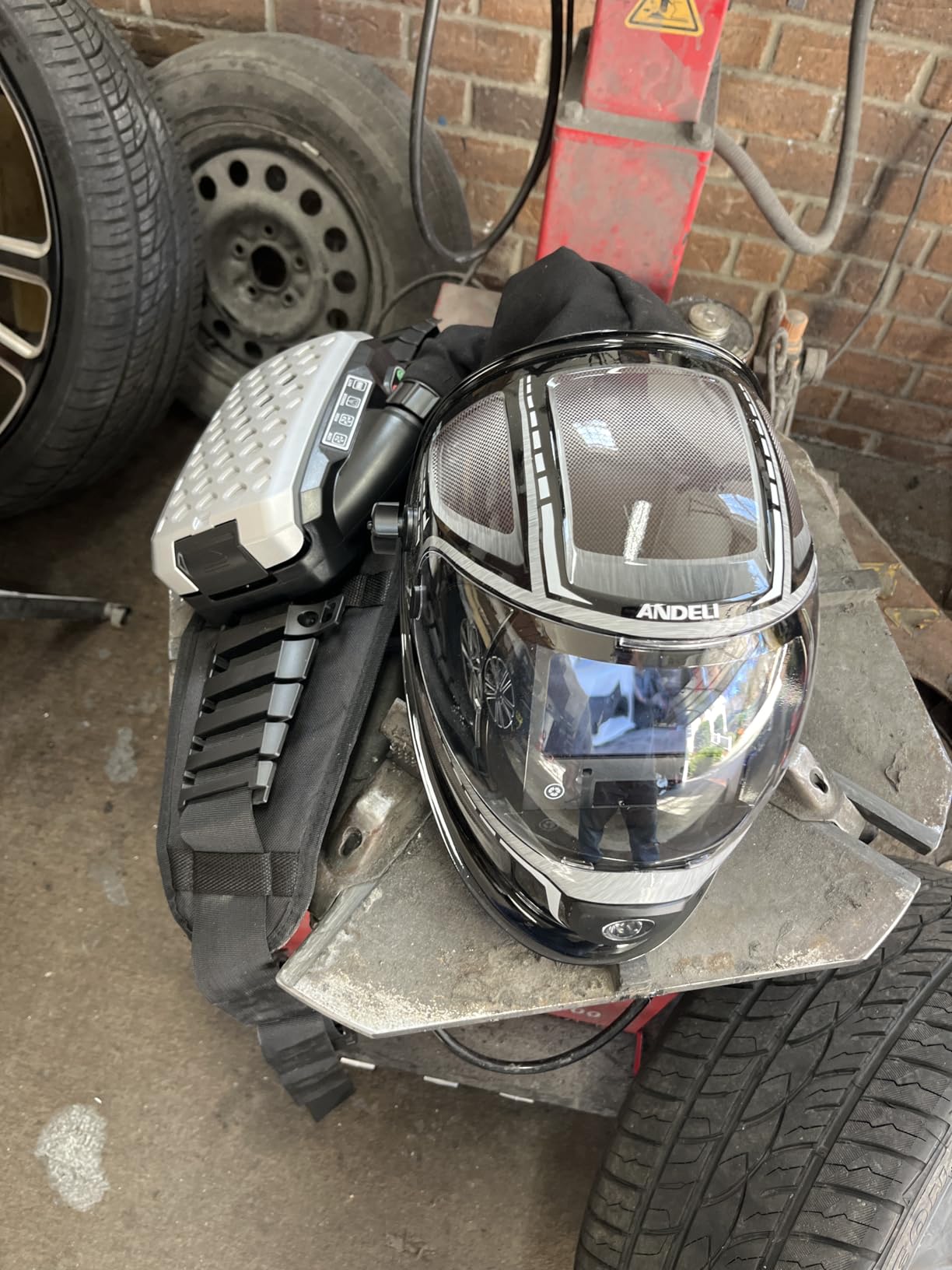
The respiratory side is a battery-driven blower with a stated particle capture rate over 99.95 percent. That is a manufacturer claim rather than a NIOSH certification, so for regulated or shipyard work the higher-specification units further down this list carry the documented paperwork you may be required to show an inspector.
Airflow direction is your call: the system can push air at your face, at the visor or somewhere between the two. Owners who work in summer shops specifically mention the cooling effect, which is a real benefit when a blower is adding heat to an already warm hood.
Why it beats the other integrated units here
Most budget integrated helmets give you a wide lens or a decent filter, not both. This one pairs one of the widest fields of view in the group with a fast sensor array and an airflow system you can actually steer.
At 45 owner ratings it also has the largest review base of any product in this roundup, which means the faults below have been seen by more owners than the faults on any competing integrated model.
Where it falls short
Build and reliability feedback is genuinely mixed, and 18 percent of ratings sit at one star. At 11.15 pounds, this is one of the heaviest helmets on the list, and the weight is front-loaded because the blower and battery pack sit with the shell rather than at your hip.
The fixed DIN 4 side view is useful for setup but it is not auto-darkening, so a stray arc off to the side still gets past it. Expect to replace worn parts sooner than you would on a branded system where spares are stocked locally.
4. YESWELDER LYG-Q800D PAPR Helmet: the best for true colour clarity
YESWELDER Powered Air Purifying Respirator Auto Darkening Welding Helmet LYG-Q800D Welder Hood
99.97 percent fume capture at 0.3 micron
1/1/1/1 optical clarity
3.94x3.23 inch true color screen
Shades 4-13
Pros
- removes the need for separate safety glasses and a respirator
- 1/1/1/1 true color clarity
- easy filter changes and smooth auto darkening
- good fume protection reported by frequent welders
Cons
- battery runtime reported as short as roughly 2 hours on some units
- proprietary sealed filter with limited availability
- one owner report of the blower failing within a month
The YESWELDER LYG-Q800D is the most interesting optical proposition in the group. Its filter is rated 1/1/1/1 for optical clarity, which is the top grade across all four measurements in the EN 379 scheme, and it is genuinely true colour rather than a greenish tint that some budget lenses push.
The viewing screen is 3.94 by 3.23 inches with a DIN 5 non-auto-darkening side window, and 4 sensors drive a shade range of 4, 5-9 and 9-13. That covers TIG, MIG, stick and grinding in one lens, and for stainless TIG the colour accuracy is the feature that keeps your bead contrast readable.
Respirator performance is specified as capturing up to 99.97 percent of weld fume with filtration down to 0.3 microns, and the system is solar powered with a rechargeable lithium ion battery included. Frequent welders using it report genuinely good fume protection and easy filter changes.
What to check before you commit
The battery is the whole argument. Most owners report it lasting a full shift, but a minority report runtime as short as roughly 2 hours on their unit. If you are welding production hours without a charging point on the floor, carry a spare lithium pack.
The filter is proprietary and sealed, with limited availability and a high replacement cost. Check the local distributor situation before the first filter change, not after it.
Where it falls short
The belt bracket and head strap are reported as cheap-feeling plastic, and at 10.53 pounds the whole unit is heavy. There is also a single owner report of a blower failure inside a month, which is a small sample but a serious enough failure mode to mention.
With only 9 owner ratings, the long-term reliability picture here is thin. Treat the optics as the strength and the support network as the risk.
5. Parcil Distribution WF-100 Full-Face Welding Respirator: the lowest-cost starter setup
WF-100 Full-Face Welding Respirator – 2 x 4.25″ Shade 9 Lens for Welding, Dual P3 Cartridges, Flip-Up Helmet, Compatible with 3M & Honeywell
Replaceable 2x4.25 inch shade 9 lens
Dual P3 filter cartridges
Flip-up full face design
2 pounds
Pros
- lowest cost entry in this roundup
- replaceable standard-size lens extends service life
- 6-point harness with quick-release buckles
- Uses widely available P3 cartridges
- Compatible with 3M and Honeywell cartridge formats
Cons
- Fixed shade lens with no auto-darkening
- Owner rating of 3.2 out of 5 on 29 ratings
- Reviews report 22 percent 1-star and 15 percent 2-star ratings
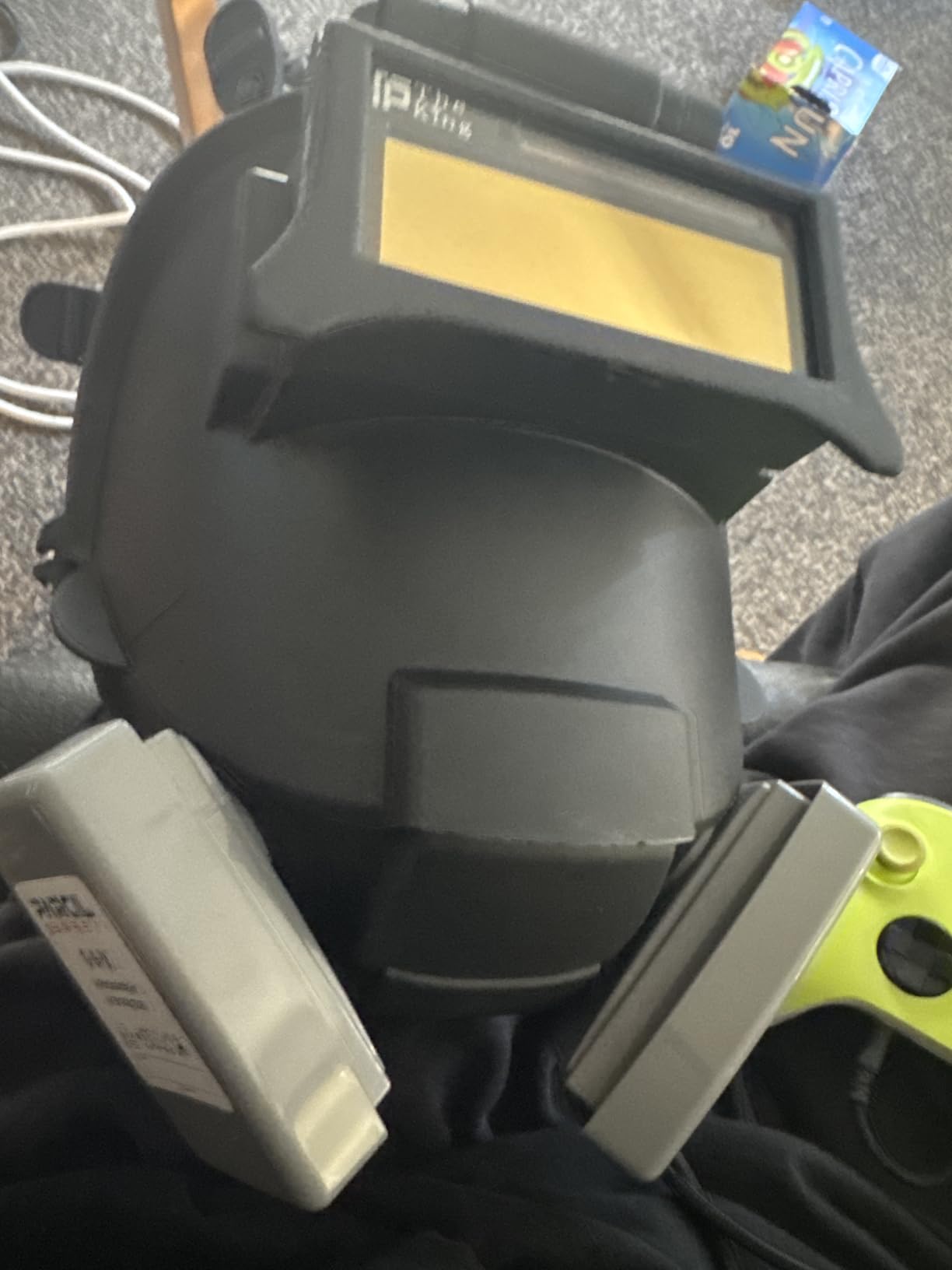
The WF-100 is the entry point. It replaces a fixed-shade welding helmet and a separate respirator with one 2-pound flip-up mask, and it uses cartridge formats you can buy almost anywhere. If the budget is the deciding factor and you mostly do short MIG or stick jobs, it does the job.
The lens is a fixed shade 9 on a 2 by 4.25 inch insert, and the kit ships with a standard 4 by 2 inch shade 8 lens so you have a starting spare. Because the lens is a standard size rather than a proprietary insert, you can keep welding when the original is gouged or cracked, which is a genuine long-term saving.
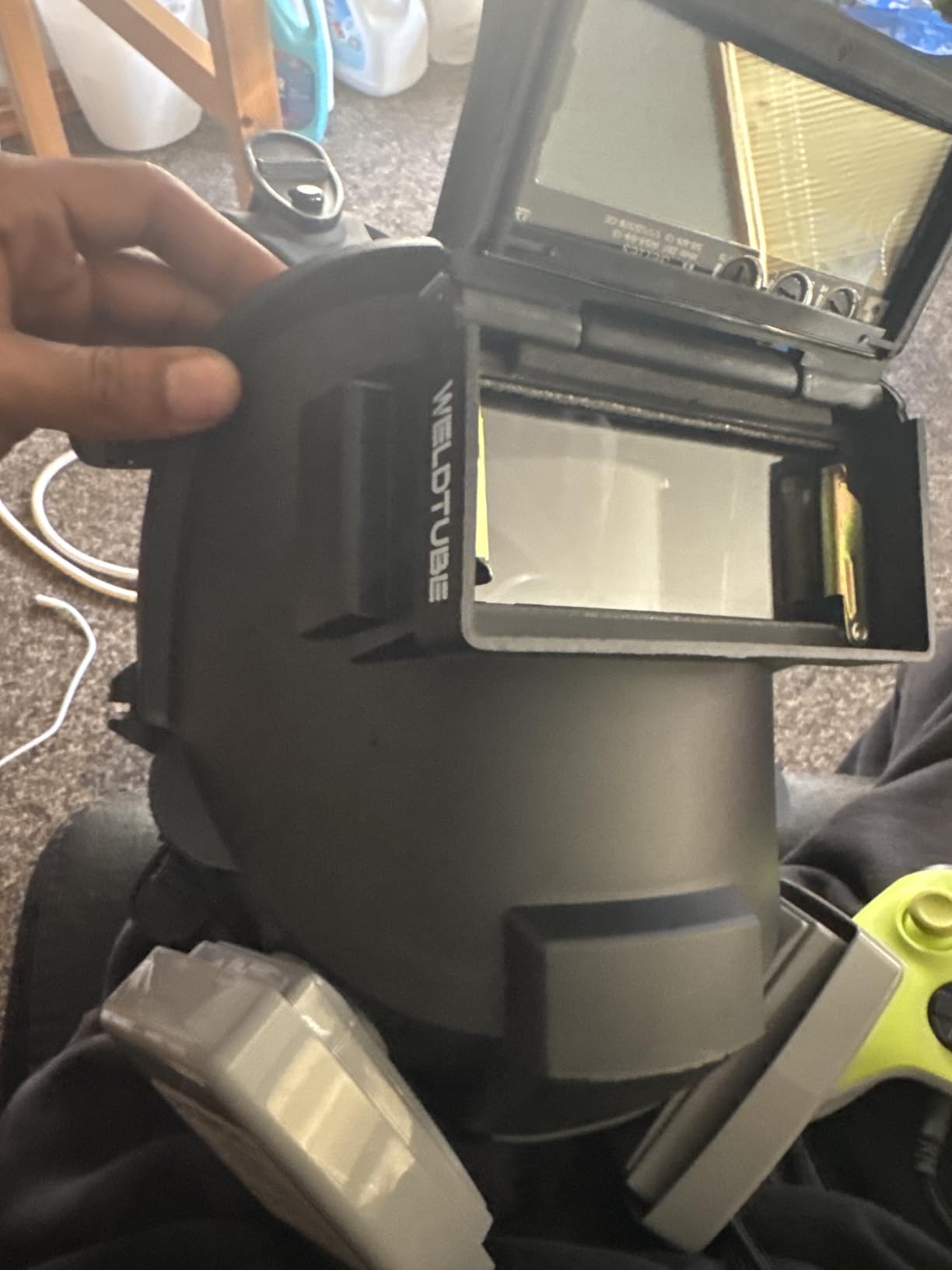
Respiratory protection comes from dual P3 filter cartridges, and the flip-up design is compatible with 3M and Honeywell cartridge formats. The 6-point adjustable harness with quick-release buckles is built for all-day wear, and at 2 pounds the mask stays comfortable through a long session.
What you give up is auto-darkening. There is no sensor array, no switching speed and no shade adjustment, so you commit to a fixed dark level every time you pick up the torch. For a learner or someone who only ever does one process, that is an acceptable trade. For anyone who moves between MIG, TIG and grinding, it is not.
What to check before you commit
Measure the lens opening of the helmet you already own before switching. This is a full-face respirator with its own visor, not a cartridge meant to sit under an existing shell, so it replaces the helmet rather than pairing with it.
Confirm the shade is right for your process before you start. A shade 9 lens is standard for light MIG and stick work but is too dark for thin-gauge TIG, and you will be grinding the lens down to compensate.
Where it falls short
Owner feedback is thin and mixed at 3.2 out of 5 across 29 ratings, with 22 percent of ratings at one star and 15 percent at two. Fit, filter performance and the usefulness of the lens come up repeatedly as the weak points.
There is also no powered airflow, so on a long hot job the breathing resistance of the cartridges becomes noticeable well before the end of the shift.
6. American Alloy PAPR Electronic Welding Helmet: the best low-flow alert system
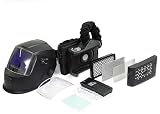
PAPR with Electronic Welding Helmet – True Color Auto Darkening, 5 Arc Sensors, Large Viewing Area, Professional Welding Helmet (PAPR Kit – Pro 4.0)
Three airflow settings 170/210/230 L per min
Audible visual and vibration alerts
5 arc sensors shades 4-13
Meets ANSI CSA EN 175 and ISO
Pros
- audible visual and vibration low-flow safety alerts
- three selectable airflow rates
- 5 arc sensors with adjustable sensitivity and delay
- complete kit with spare lenses extra filter and air flow tester
- reinforced nylon shell with ErgoFlex headgear
Cons
- no customer rating history to gauge satisfaction
- no customer photos available for this listing
The American Alloy kit is unusual in one specific way: it tells you when the air has stopped. A TH3 powered air respirator pushes filtered air at one of three selectable rates of 170, 210 or 230 liters per minute, and if the flow drops it warns you with an audible alarm, a visual indicator and a vibration signal.
That matters more than it sounds. The single most common complaint from welders who move to PAPR is battery anxiety, the fear that the blower has quietly died mid-shift and they are breathing unfiltered air. A system that alarms you at the belt removes that fear without any guesswork.
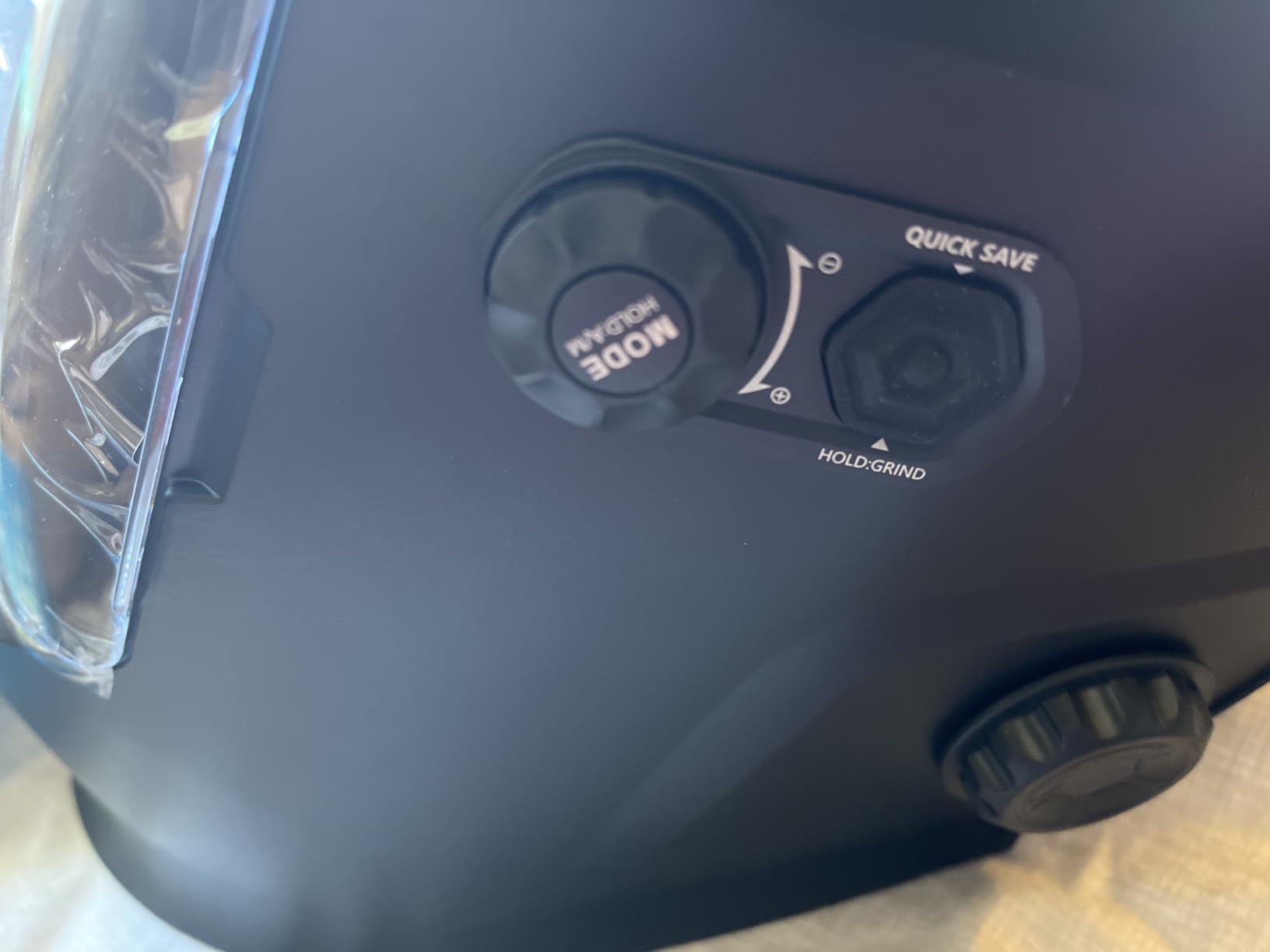
Optically it is a true colour lens with 5 arc sensors across a shade 4 to 13 range, with adjustable sensitivity and delay so you can tune it for thin stainless or heavy structural work. The ErgoFlex multi-axis headgear uses a ratchet closure, which spreads the adjustment across several axes instead of a single rear knob.
The standards list is the strongest in this roundup: ANSI Z87.1, AS/NZS 1338.1, CSA Z94.3, EN 175:1997 and ISO 16321-1:2021, backed by a 1-year warranty. The box also includes a charger, an air flow tester, extra front and inner replacement lenses, an extra filter, a protective storage bag and the batteries.
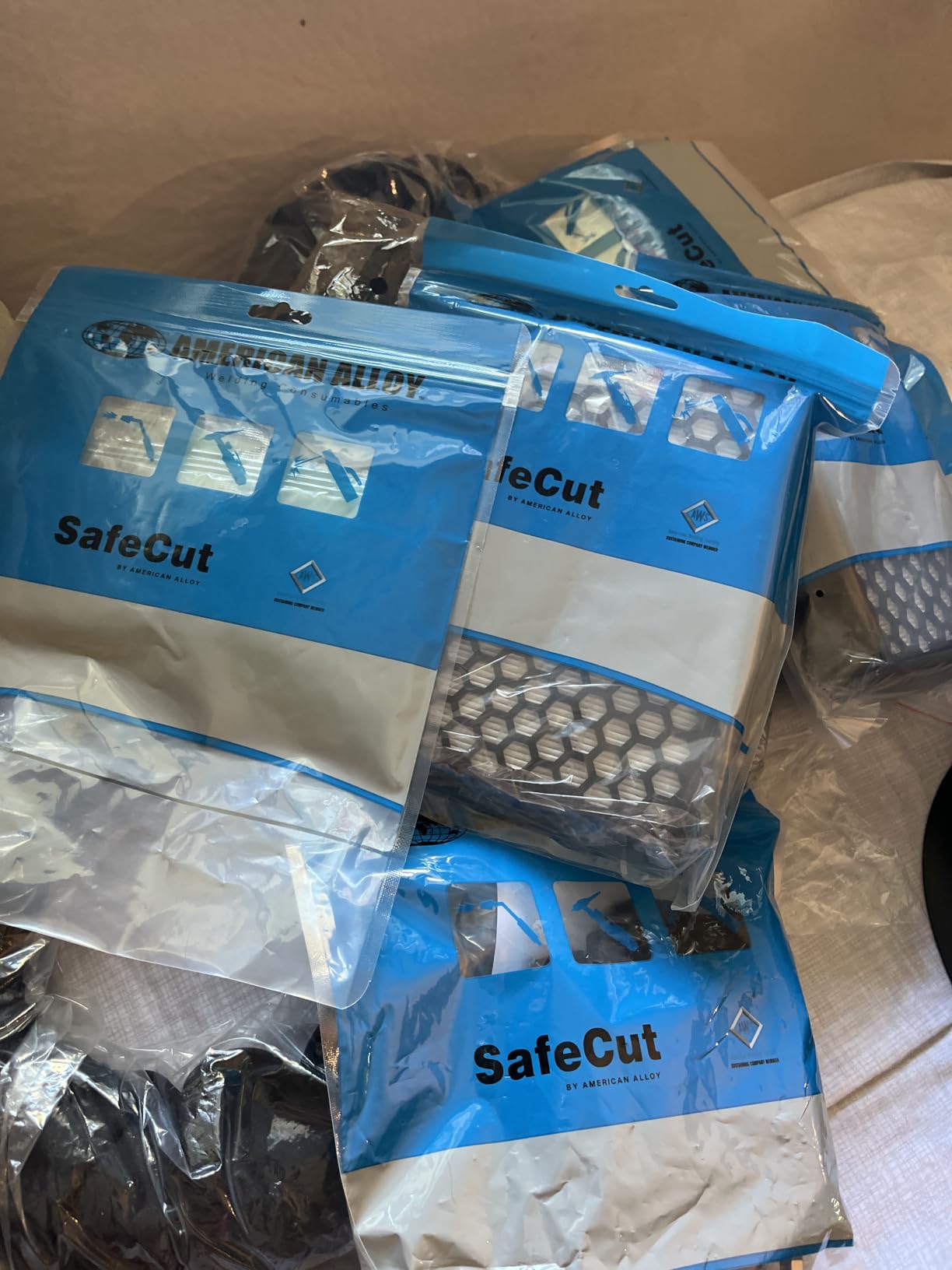
Why the kit contents matter
An air flow tester in the box is the detail that separates this from generic imports. You can verify the blower is actually moving the rated airflow at the start of a shift instead of trusting a printed claim, which is the fastest way to confirm your respirator is protecting you.
Spare lenses and a spare filter in the standard case mean a gouged lens does not end your shift.
Where it falls short
There is effectively no written owner feedback for this listing and no customer photos to judge the build, so every claim here comes from the specification sheet rather than from people who have worn it. That is the honest limitation of this pick.
The reinforced nylon shell is a sensible material for a welding helmet, but with no wear history behind it we cannot yet say how the flip-up action and the belt bracket hold up over a few years of service.
7. 3M Speedglas G5-03 Pro Air with Adflo PAPR: the best for grind and tack weld modes
3M Speedglas G5-03 Pro Air Welding Helmet with 3M Adflo PAPR Assembly 45-1101-30TW, G5TW ADF with Grind Mode, TAP, Natural Color, Tack Weld Mode
GRIND and CUT modes on G5 auto darkening
Tack weld mode on the G5TW filter
Two lens options VC and TW
ANSI Z87.1 and CSA Z94.3
Pros
- tack weld mode and grind mode extend the filter beyond arc welding
- compact ergonomic shell with adjustable head suspension
- available in two auto-darkening lens options
- magnetic closure on the flip-up
Cons
- only 2 owner ratings available so feedback is very thin
- few customer images for this listing
- no published shade range in the listing
The G5-03 Pro Air is the version of the Speedglas system built for shops where welding and grinding happen in the same shift. Where the G5-01 focuses on the arc, this shell adds GRIND and CUT mode functionality on the G5 auto darkening filters plus a tack weld mode on the G5TW filter.
Tack weld mode is the sleeper feature for anyone doing maintenance work. It holds a lighter shade through short bursts, which stops the lens going fully opaque every time you strike an arc for a two-second tack, and it reduces the fatigue that comes from constant darkening.
The package includes the Pro Air welding helmet, the G5TW auto darkening filter, the Adflo PAPR and a carry bag. The lens is also available in a VC version, so you can choose between variable colour and true white depending on your preference, and the shell meets ANSI Z87.1 and CSA Z94.3.
What to check before you commit
Confirm which lens variant you want before ordering, because the two filter options are a genuine choice rather than an upgrade path you can make later.
Check the size of your grinding work. The GRIND mode is a convenience for cleanup between welds, not a replacement for a proper face shield on heavy grinding.
Where it falls short
With only 2 owner ratings, we cannot draw firm conclusions about long-term performance, and there are very few customer images for this listing to judge the finish. The compact design is described as robust in the specifications, but compact metal shells can still pinch the crown on a long shift.
The listing does not publish a shade range or sensor count for the shell itself, so if you need those numbers for a specification comparison, ask the distributor before you commit.
8. 3M Speedglas G5-01 with Adflo NIOSH Approved Kit: the best published APF rating
3M Speedglas G5-01 Heavy-Duty Welding Helmet with 3M Adflo PAPR Assembly 46-1101-30VC, G5VC ADF, 1 EA/Case
NIOSH approved with APF 25 standard
Curved 104x170 mm clear visor
Adflo high-altitude PAPR
Full kit with battery and charger
Pros
- NIOSH approved with published assigned protection factor
- curved slim profile visor with excellent viewing angles
- complete kit with battery charger filters spark arrestor belt and bag
- airflow can be aimed at face visor or in between
Cons
- the single posted review is 2-star and criticises value
- the highest cost unit here with only one customer rating
This is the version to buy if paperwork matters. It is NIOSH approved and publishes an assigned protection factor of 25 in the standard assembly, rising to 1000 APF with the optional upgrade kit. That is the number an inspector or a respirator program administrator will ask you for.
The assigned protection factor, or APF, describes how much protection a respirator provides relative to the concentration outside it. A higher number means a greater reduction in exposure, and because this figure is printed rather than claimed, it can be entered straight into a written respiratory protection program.
The visor geometry is the other headline. A curved clear visor measuring 104 by 170 mm gives strong up, down and peripheral viewing angles, and the slim profile shell is built for tight welding spaces where a bulky hood gets in the way. Airflow on the Adflo high-altitude unit can be directed to your face, the visor or between the two.
What arrives in the box
The kit is complete rather than a bare shell. You get the helmet assembly, a lithium ion battery, a charger, filters, a pre-filter, a spark arrestor, a leather belt, a breathing tube and a carry bag, which removes the very common problem of a PAPR that arrives with no way to power it.
For confined space and marine work, that completeness is worth more than a lighter shell.
Where it falls short
The only customer review is 2-star and focuses on value rather than function, and one rating is not enough to judge build quality either way. Most of the real-world evidence for the Speedglas platform comes from owners of other units in the same family, which is a reasonable but not identical reference.
One unit here is the most expensive in the roundup, so the practical case for it is protection documentation and tight-space visibility rather than value for money.
9. KIPPDURO True Color PAPR Welding Helmet: the best reusable filter media
True Color Auto Darkening Welding Helmet with PAPR Respirator System, Large Viewing Screen Welding Hood with Fan for MIG TIG ARC, Powered Air Purifying Respirator Mask (Black)
True color lens shades 4-13
Rechargeable battery up to 10 hours
3 reusable filter boxes and 20 cotton pads
ABS shell with ratchet headgear
Pros
- filter boxes and cotton pads are easy to swap and reported to last a long time
- claimed 10 hour battery on one charge
- reusable dust filter boxes instead of sealed cartridges
- large panoramic lens with an integrated cooling fan
Cons
- only one customer rating so reliability is unproven
- very little owner feedback overall
The KIPPDURO is built around a consumables story rather than a filtration claim. It ships with three reusable dust filter boxes and twenty cotton filter pads, so the routine replacement items are washable or cheap rather than sealed and proprietary.
That is a genuine long-run saving for anyone doing regular shop work. On sealed systems the filter is the single most frequent replacement, and if it is expensive and hard to source you end up stretching service intervals, which quietly reduces your protection.
Optically it is a true colour lens across a shade 4 to 13 range, which covers MIG, TIG and arc welding in one unit. The rechargeable battery is rated up to 10 hours on a single charge, and there is an integrated cooling fan inside the large panoramic lens alongside ratchet headgear adjustment.
What to check before you commit
Ask what filtration efficiency the reusable boxes and cotton pads actually achieve. Cotton prefilters are a pre-filter stage, not the main filter, so you need to know what sits behind them before you rely on this for stainless or galvanised work.
Verify the battery runtime claim yourself under real conditions. A 10-hour rating is easy to hit in a quiet shop and hard to hit in a hot one.
Where it falls short
There is exactly one customer rating, so we cannot judge reliability at all, and a single 5-star review is not evidence. That sample size is the honest headline for this pick.
The ABS shell is a lighter-duty material than the metal shells on the professional units, and the ratchet headgear is a simpler mechanism than multi-axis suspension systems.
10. DanVard Auto Darkening PAPR Welding Helmet: the best lightweight all-in-one
Auto Darkening Welding Helmet with PAPR Respirator System Welding Hood
Auto darkening shell with natural view lens
Built-in PAPR with rechargeable battery
8 pounds
18x16x10 inch footprint
Pros
- Integrated helmet and PAPR in a single unit
- Lightest integrated PAPR in this roundup at 8 pounds
- Rechargeable battery intended to cover a full shift
- Natural view lens reduces eye strain on MIG TIG and arc work
Cons
- lowest rated option in the roundup at 3.0 out of 5
- only a single customer rating and no customer photos
- no stated auto darkening shade range or sensor detail
The DanVard is the lightest integrated PAPR in this group at 8 pounds. The other integrated units here with a listed weight run 10.53, 11 and 11.15 pounds.
The design is straightforward: an auto-darkening shell with a natural view lens for MIG, TIG and arc welding, plus a built-in powered air purifying respirator delivering constant filtered air against dust, fumes and airborne hazards. The battery is rechargeable and intended to cover an uninterrupted shift.
The natural view is the pitch, and it is a reasonable one. Reduced eye strain across a long day matters when you are doing production work rather than hobby jobs, and combined with the lighter shell the DanVard is less fatiguing than most of the integrated options here.
What to check before you commit
The listing does not state an auto-darkening shade range or a sensor count, and both are numbers you genuinely need when comparing helmets. Ask the manufacturer directly before buying.
Also confirm the filtration specification in writing rather than accepting a general claim about filtered air.
Where it falls short
There is a single 3-star rating with no written feedback, so real-world performance and build quality are essentially undocumented. That is the thinnest evidence base of any product in this roundup.
With no published sensor or shade data, you also cannot judge how it will behave on stainless TIG, where a fast transition and a low shade are what make the difference.
Buying Guide: PAPR vs Half Mask and How to Choose
A PAPR, short for powered air purifying respirator, is a blower-driven respirator that draws ambient air through a pre-filter and a main filter, then pushes the cleaned air through a breathing hose into a loose-fitting hood or helmet. Because the hood does not seal against your face, there is no fit test and no leak path for fume to sneak around the edges.
A cartridge respirator works the other way round. Your own lungs draw air through P100 or P3 cartridges and into a tight seal against your face. That is lighter and cheaper, but the seal has to be maintained every single time you put it on, and breathing resistance climbs as the particulate load builds.
Is a PAPR better than a respirator? For long welds on stainless, galvanised, chrome alloys or flux-cored wire indoors, yes, because the positive pressure stops leakage and the moving air clears heat and fog from the lens. For a few hours a month on mild carbon steel outdoors, a good half mask is the more sensible purchase.
What face protection is best against welding fumes? A tight-fitting respirator with a P100 or P3 particulate filter covers mild steel, aluminium and routine fabrication. Stainless, galvanised and high-chromium work adds hexavalent chromium and zinc oxide, which is where an employer-mandated PAPR with a documented APF becomes the standard answer.
Does the respirator fit under the helmet?
This is the question that decides most purchases, so test it before you commit. Conventional helmets have a headband, cradle and rear knob exactly where a half mask strap wants to sit, and the mask will migrate upward into the lens over a shift.
Helmets with a smooth crown or strap-free rear cradle accept a half mask far better. If your plan involves a PAPR, the fit problem disappears because the blower feeds air through a hose into the hood itself.
The specs that actually decide the purchase
Assigned protection factor. This is the number that matters for regulated work. Only a product with a published, certified APF can be entered into a written respiratory protection program, and unverified filtration claims from generic imports cannot.
Shade range and sensor count. You want a range that covers your processes rather than the widest range available. Shade 9-13 suits MIG and stick, shade 8-13 adds TIG, and 5 arc sensors is enough to stop the lens darkening in a shaded bay or with a dirty helmet lens.
Switching speed. Anything at or faster than 1/25000 second tracks a moving arc without flashburn on the leading edge, which is what separates a usable helmet from a frustrating one on out-of-position work.
Battery runtime and alerting. A blower that dies at hour six leaves you breathing unfiltered air, so look for published runtime plus a low-flow alarm. Carry a spare battery regardless.
Consumable cost and local availability. Filters, pre-filters, cover lenses and batteries are what turn a helmet into an ongoing cost over three to five years. Reusable filter media and locally stocked cartridges are worth real money here, and so is a manufacturer who publishes a written filter change schedule.
Total cost of ownership
Budget for the helmet plus a spare battery, a spare filter, a set of cover lenses and an annual pre-filter. On sealed proprietary systems those consumables are the dominant ongoing cost, and they are the reason the KIPPDURO’s reusable filter boxes are worth a look even though its review history is thin.
Maintenance is simple and worth doing on schedule. Clean the sensors with a soft dry cloth rather than solvent, replace the outer cover lens as soon as it is pitted, and keep the filter housings sealed when you store the helmet overnight so dust does not load the media before you start.
Choosing by process and material
Stainless TIG wants a low shade, a fast transition and true colour. Galvanised steel and flux-cored wire want filtration, because zinc oxide fume is the reason people move to a PAPR in the first place. Shipyard and marine work tends to come with written respiratory protection requirements, which makes the documented APF on the NIOSH-approved kit the deciding factor rather than price.
Welding school and apprenticeship settings tend to push students toward respiratory protection from day one, which is why the lightweight integrated options keep appearing as first purchases in forum threads. Confined space work adds the opposite constraint: hose routing and helmet clearance, where the slim curved visor profile matters more than anything else on the list.
Our guides to best full face motorcycle helmets cover the same design trade-off in a different discipline, where full face coverage and airflow management dominate the buying decision the same way fume control does here.
Frequently Asked Questions
Can you wear a respirator with a welding helmet?
Yes, but check the fit before you rely on it. Most standard helmets have a headband and rear cradle sitting exactly where a half mask strap goes, so the mask works up into the lens over a shift. A PAPR avoids the conflict entirely because the blower feeds filtered air through a hose into the hood itself.
Is a PAPR better than a respirator for welding?
For long shifts on stainless, galvanised, chrome or flux-cored wire indoors, a PAPR is better because positive pressure stops fume leaking past a face seal, and the airflow also reduces heat and lens fogging. For a few hours a month on mild carbon steel outdoors, a half mask with P100 or P3 cartridges is simpler and cheaper.
Is a PAPR welding helmet worth it?
It is worth it if you weld indoors for hours at a stretch or your employer requires a documented assigned protection factor. It is overkill if you weld outdoors a few times a month on mild materials. The extra value is protection documentation, comfort across a long shift and the removal of the mask-to-helmet fit problem.
How long does the battery last in a welding helmet or PAPR?
Most owners of the integrated PAPR helmets here report a full shift on one charge, but one unit has been reported as short as roughly 2 hours. Published claims range up to 10 hours depending on the model. Carry a spare lithium battery and choose a system with audible, visual and vibration low-flow alerts so a flat battery cannot go unnoticed.
What can cause auto darkening filters to malfunction?
The usual causes are a dirty or scratched sensor lens blocking the arc detection, a dead or partly discharged solar cell and battery, moisture trapped inside the shell, and a crushed or disconnected battery lead. Clean the sensors with a soft dry cloth rather than solvent, keep the cover lens replaced before it is fully pitted, and store the helmet dry overnight.
Final Verdict
The 3M Speedglas G5-01 with the Adflo PAPR is our pick for the best welding helmets with respirators in 2026, because it is the only unit here where the lens quality and the respiratory system are both supported by a real owner review base. Variable colour options, shades 5 and 8-14, a battery that carries a working day and airflow you can steer all add up to a package that works.
If the budget is tighter, the Parcil WF-101 gives you welding, grinding and respiratory protection in one 2-pound mask with a 4.7 out of 5 owner rating across 27 reviews. For regulated work, the NIOSH-approved 3M kit is the one with a published assigned protection factor you can put in a program document. Whichever you choose, verify the airflow or seal on day one, because an unverified respirator is just an expensive helmet.
Related reading: our best motorcycle helmets guide covers the same protective-gear decision from the road side.