
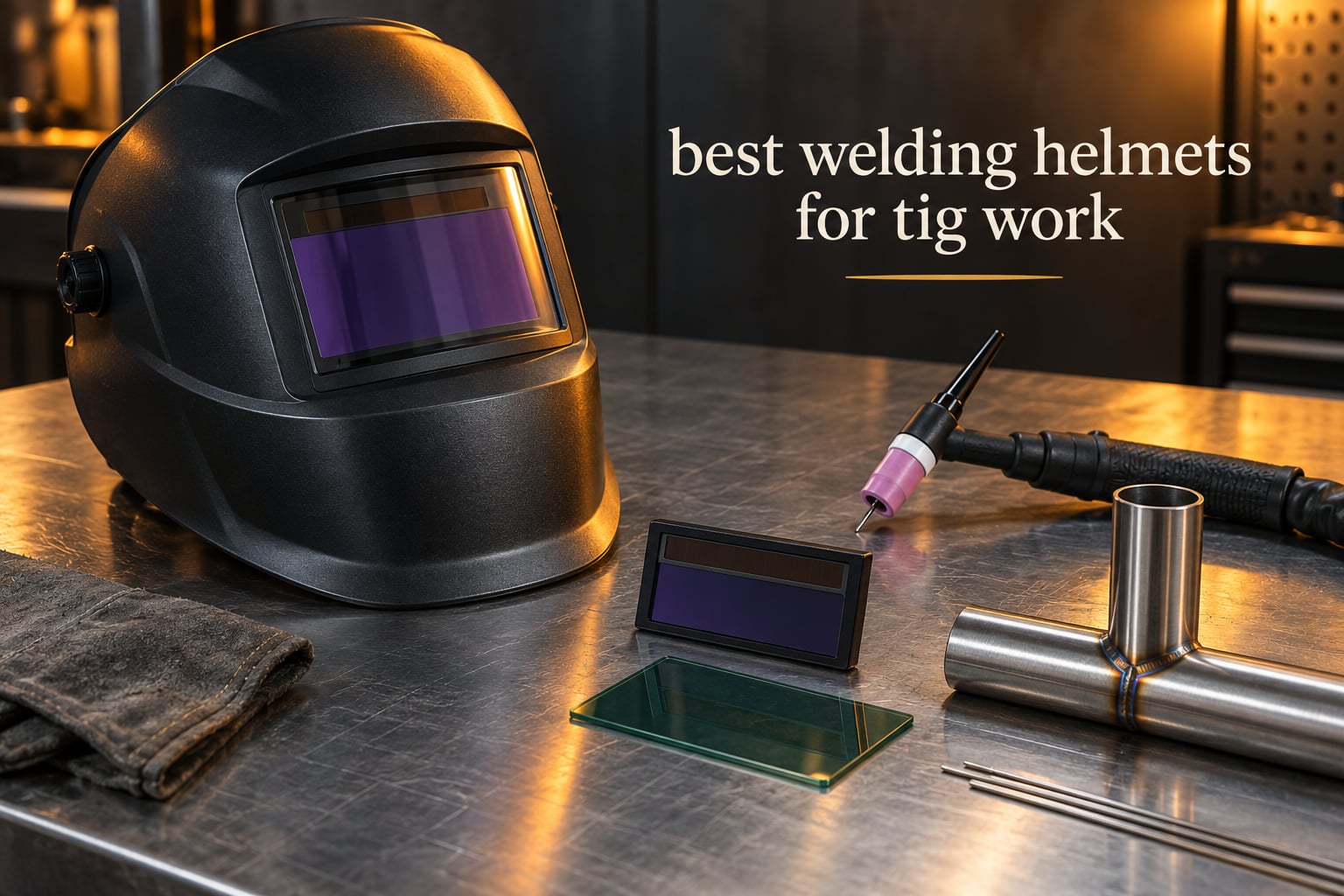
Most welding helmets get chosen for stick and MIG, then get dragged into the TIG bay. That is exactly where the complaints start. A 3 to 5 amp DC TIG arc throws far less light than a stick arc, so a helmet with only two optical sensors, or a shade floor of 9, either flickers on arc strike or leaves you squinting at a weld pool you cannot read. Both failures show up on thin stainless, on small tube, and on anything you are learning to run clean.
This roundup is organized around TIG and nothing else. Every helmet here is judged on four things: whether its sensors catch a faint low-amp DC arc, how low the shade range reaches, how much of the joint and the filler rod you can see at the same time, and whether the shell stays comfortable across a full shift. Generic multi-process roundups treat TIG as one line item per product, which is why the same question keeps appearing on forums. We answered it differently here.
One thing to be upfront about: this is a specification-led evaluation, not a logged test session. We worked from published spec sheets, certification markings (ANSI Z87.1, EN 379, CSA Z94.3) and the patterns that show up repeatedly across thousands of owner reviews. We did not run arc hours on these hoods ourselves, so read the verdicts as sourced analysis rather than lab results. If you are still deciding whether TIG is the right process at all, our MIG vs TIG welder guide covers that first.
Top 3 Picks for TIG Welding (October 2026)
The Lincoln Electric Viking 3350 takes the top slot because its 4C lens and 12.5 square inch window are the best combination of puddle readability and low-amp behaviour in this group. The Miller Classic Series is the pick for anyone running five amps and below, where sensor confidence beats viewing area. The YESWELDER LYG-M800H is the value pick, giving four sensors and a 3.93 by 3.66 inch window at a tier most beginners start in.

Why TIG Changes the Helmet Spec You Need
TIG punishes a mediocre auto-darkening filter in a way MIG never does. The arc is smaller, quieter and often shorter than a MIG arc, so the photons hitting the sensors dip below the trigger threshold right when you are trying to read a puddle you can barely see without magnification.
Three specs decide almost everything else. The first is the shade floor: if the lowest weld shade is 8 or 9, thin-gauge work is too dark to read no matter how good the optics are. The second is sensor count and placement, because TIG puts your filler-rod hand and torch cup directly in the light path. The third is the light state, the resting shade between passes, which decides whether you can keep the hood down during fit-up and inspection.
The physics explains the flicker. On DC TIG the arc is a thinner, less intense column than the stick arc, and at very low amperage it is intermittently below the sensor threshold. Result: the lens darkens for a second, clears, darkens again. Owners describe seeing the puddle for a few seconds before the filter flashes bright. That symptom is nearly always sensor or shade-floor related, not a dead cartridge, and we cover the fixes in detail later in this article.
Quick Overview: Best Welding Helmets for TIG Work in 2026
All ten helmets below clear a usable shade floor for TIG, but they differ sharply on sensor count, light state and how low the range reaches. The four-sensor models give you more ways to keep the arc in view, and the ones whose weld range starts at shade 5 handle thin-gauge and low-amp work better than the rest.
| Product | Specifications | Action |
|---|---|---|
 Lincoln Electric Viking 3350 Lincoln Electric Viking 3350 |
|
Check Latest Price |
| Miller Classic Series ClearLight |
|
Check Latest Price |
 Jackson Safety Insight ADF Jackson Safety Insight ADF |
|
Check Latest Price |
 ESAB Savage A40 ESAB Savage A40 |
|
Check Latest Price |
 Hobart 770890 Hobart 770890 |
|
Check Latest Price |
 YESWELDER LYG-M800H YESWELDER LYG-M800H |
|
Check Latest Price |
 YESWELDER LYG-L600A YESWELDER LYG-L600A |
|
Check Latest Price |
 ARCCAPTAIN HSH-S800 ARCCAPTAIN HSH-S800 |
|
Check Latest Price |
 MIGVAN H-21 MIGVAN H-21 |
|
Check Latest Price |
 TRQWH KTS-JD03 TRQWH KTS-JD03 |
|
Check Latest Price |
1. Lincoln Electric Viking 3350 – The Best All-Round Helmet for TIG
Lincoln Electric K3034-4 VIKING 3350 Auto Darkening Welding Helmet with 4C Lens Technology, Matte Black, extra large
12.5 sq in view
4C 1/1/1/1 optics
X6 headgear
1.4 lb
5-year warranty
Pros
- Clearest 4C puddle view in this group
- Extra-large 12.5 sq in window
- X6 headgear spreads weight for long shifts
- Five-year warranty with spare lenses in the box
- Handles low-amp TIG down to 50 amps
Cons
- Occasional reports of a slow first reaction at arc strike
- X6 headgear takes practice to dial in
- Bulkier shell than the lighter hoods here
The 3350 is the helmet we would put on our own head for mixed shop work that includes TIG. It carries a 4C lens with 1/1/1/1 optical clarity and a 12.5 square inch viewing area. On a 20 gauge stainless butt joint, that extra area means you can see both shoulders of the joint and the filler rod tip without turning your head.
It is also the highest rated helmet here at 4.8 stars across more than 3,100 reviews, and that rating is not resting on one feature. Owners repeatedly single out the X6 headgear for spreading weight across a long shift, and the ratchet knob adjustment fits hat sizes 6 1/2 through 8.
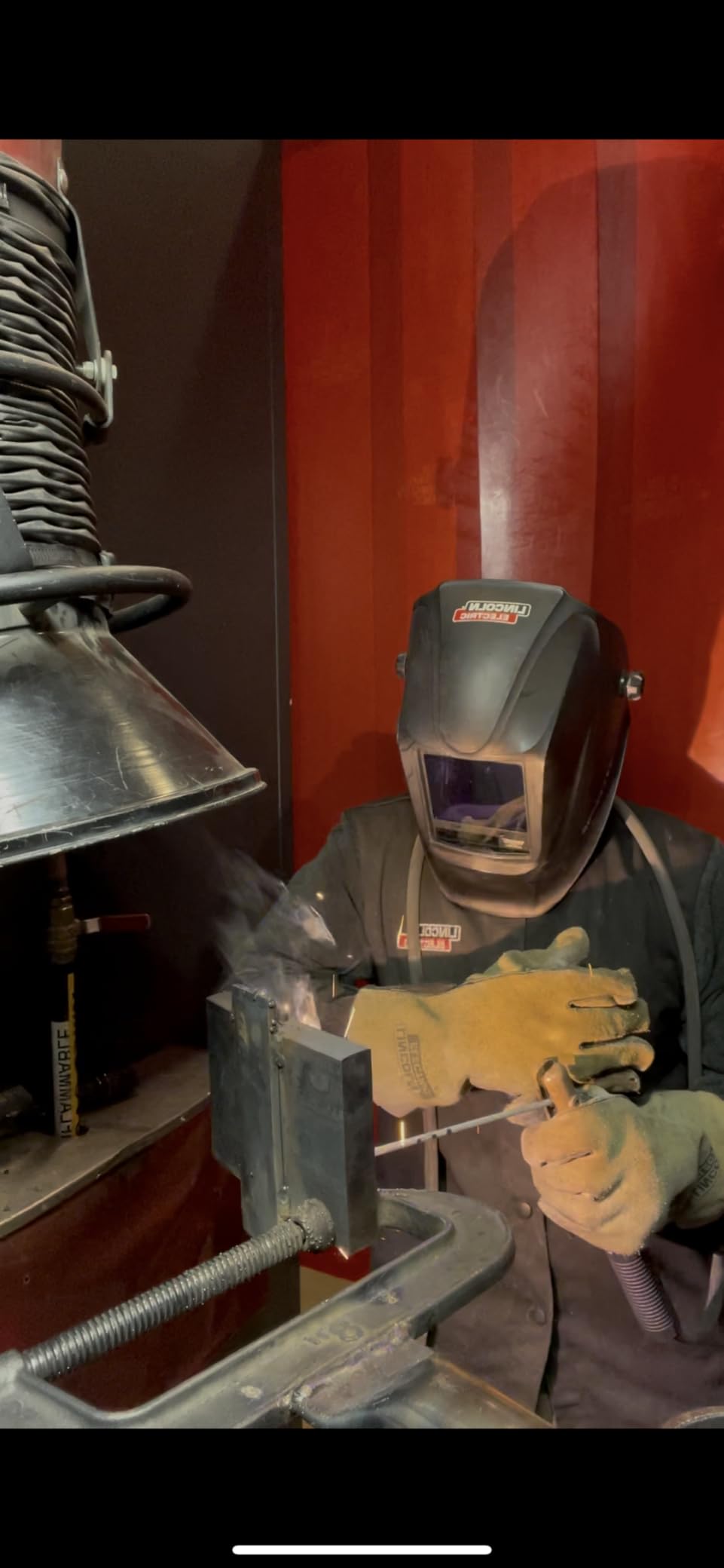
The honest limitation is amperage. Owner reviews describe reliable low-amp TIG performance down to roughly 50 amps, which is comfortable for tube, plate and repair work but leaves a real gap if you are running 5 amp tig on 26 gauge filler. If your day is spent below 30 amps on paper-thin material, the Miller Classic further down this list is the more honest fit.
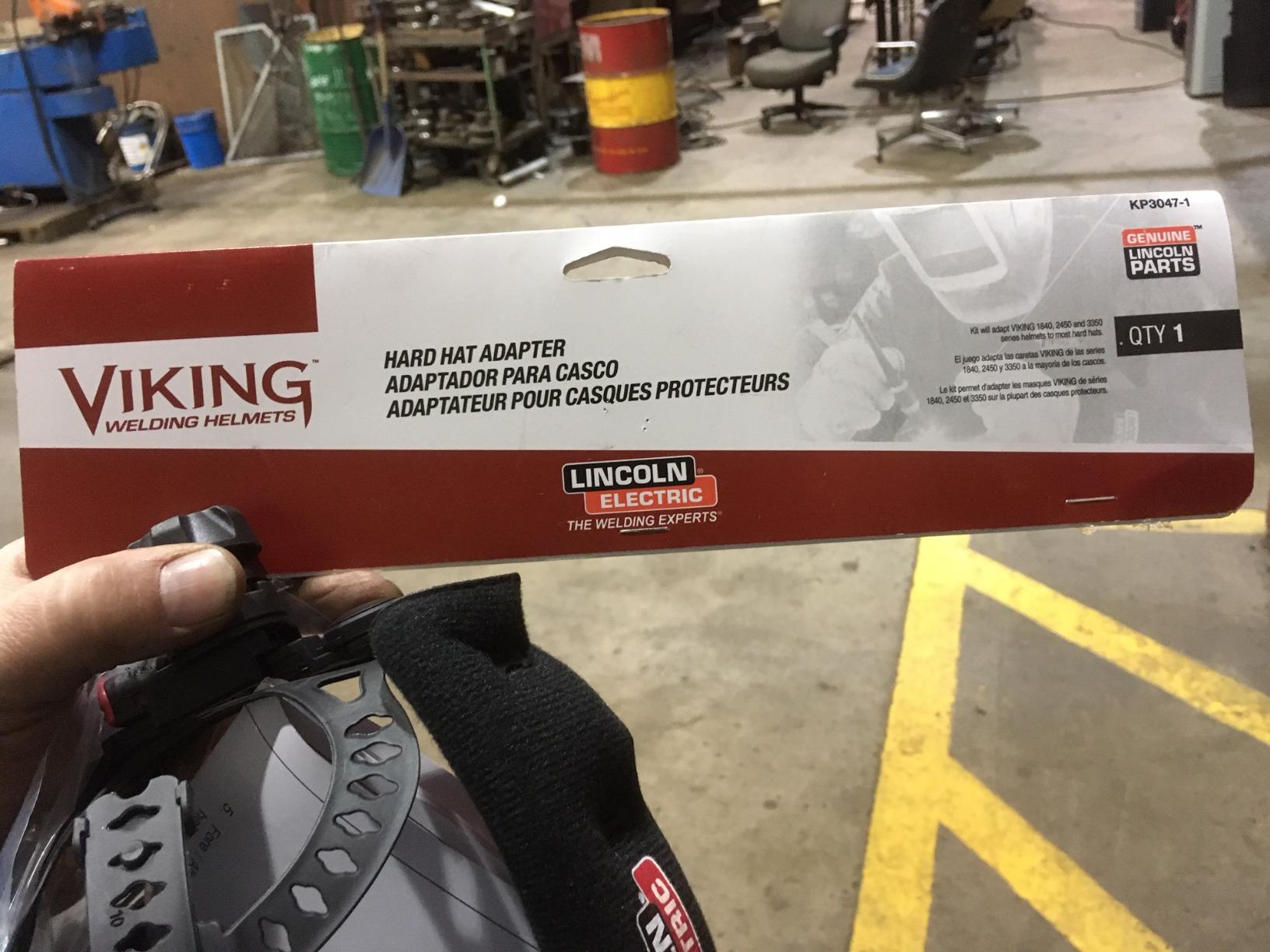
What you get in the box matters more here than the sticker. The K3034-4 package includes a helmet bag, a bandana, five outside cover lenses (KP2898-1), two inside cover lenses (KP3044-1) and a decal sheet. That is effectively a year of consumables before you order again, and the five-year manufacturer warranty is matched by five years of listed spare part availability.
Why it suits long TIG days on pipe and tube
A 12.5 square inch window is a safety feature, not a comfort feature. On vertical and overhead runs you are tracking a puddle that is only a few millimetres across, and a narrow window forces you to move your head to keep the arc centred. Fewer head movements over a long run means less neck fatigue.
The 4C optics matter just as much. 1/1/1/1 means the lens keeps its colour and clarity as you shift your viewing angle, so the puddle does not change brightness when you lean into the joint to look at the reinforcement of a fillet.
Where it will frustrate you
A few owners report a slightly slow initial reaction at arc strike even with sensitivity turned up, which is the same low-arc detection issue that affects most optical helmets to a lesser degree. If you strike an arc on 10 amp stainless, give it a fraction of a second longer than you expect before you commit your hands to the joint.
The X6 headgear also has a learning curve. It is a well-built suspension system, not a simple strap, so give it ten minutes of adjustment at the bench before a production run. The shell itself is 1.4 pounds, which is not light by budget standards but sits comfortably in the middle of this group.
2. Miller Classic Series ClearLight – Best Helmet for TIG at 5 Amps and Below
Miller Classic Series Welding Helmet, ClearLight™, Shade 8-13, Black
Works at 5 amps or below
ClearLight HD optics
1/23,000s
6 sq in view
3-year warranty
Pros
- Reported to work reliably at 5 amps and below
- ClearLight high-definition lens
- Digital shade delay and sensitivity controls
- 3.0 light state lets you keep the hood down
- Three-year warranty
Cons
- Only two arc sensors
- 6 sq in view is small by current standards
- Weld shades begin at 8
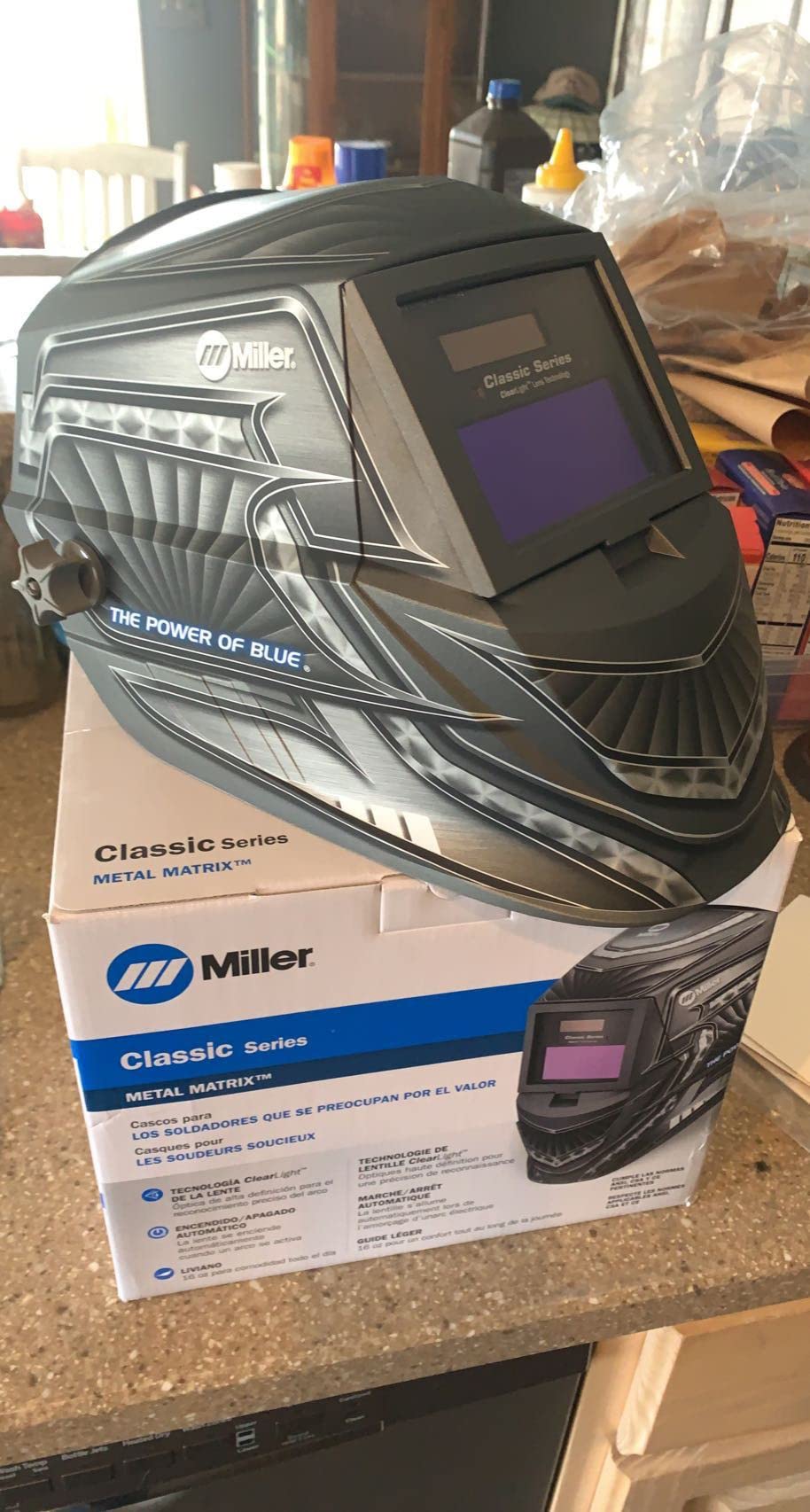
If your TIG work lives at the low end, the Miller Classic is the one we would shortlist first. It is the only helmet here that is specified in its own product literature for welding at 5 amps or below, and owners confirm that claim in reviews rather than contradicting it. That is the hardest spec on this list to fake.
The optic is Miller’s ClearLight lens with high-definition performance, rated 4.7 stars across 613 reviews. Switching speed is 1/23,000 second, which is plenty for a faint DC arc, and the digital interface gives you separate shade, delay and sensitivity settings rather than one shared knob.
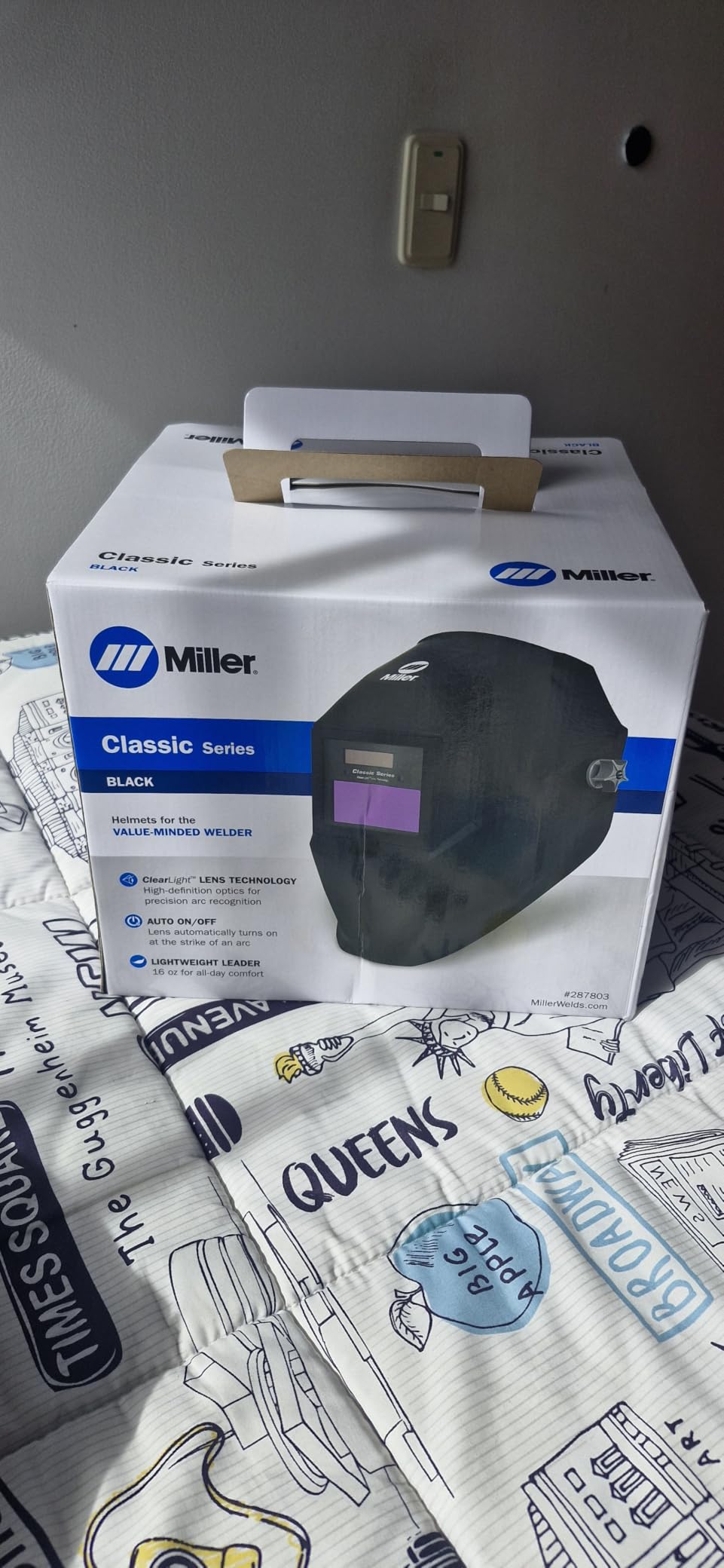
The light state is the sleeper feature for TIG. At DIN 3.0 you can leave the helmet down while you inspect the previous pass, fit the next piece and set your filler rod without flipping anything up and down. Over a long thin-wall run that saves a surprising number of motions.
Shade selection is straightforward: weld shades 8 to 13, cut shades 5 to 8, and grind at shade 3. That covers a range of TIG from light gauge up through plate. The helmet meets ANSI Z87.1+, CSA and CE standards and carries a three-year warranty with three years of listed spare part availability.
Where this helmet earns its keep
Precision TIG on thin material is the case: 5 to 20 amps on stainless, on 26 to 20 gauge sheet, on the kind of work where the puddle is smaller than the filler rod. Two sensors sound like a weakness until you understand the geometry. A TIG arc is a single point source, and a well-placed pair of sensors directly forward of that point will see it more reliably than four sensors placed at the wide corners of a panoramic window.
The digital controls also let you set delay independently, which matters on TIG because you want the lens to stay dark through the tail of the arc rather than clearing between the short bursts that beginners produce.
What you give up for that low-amp confidence
The 6 square inch viewing area is genuinely small. On a stainless tee or a pipe saddle you will find yourself moving your head to follow the joint, and if you regularly work overhead that adds up. This is a precision tool, not a situational awareness tool.
The weld shade floor of 8 is worth thinking about too. If you are used to running a light filter on very thin material, you will need to use the cut range at 5 to 8 for the thinnest passes. That is workable, but it is an extra step that lighter-shade helmets do not ask of you.
3. Jackson Safety Insight – Best Helmet for Overhead and Tight-Space TIG
Jackson Safety Insight Auto Darkening Welding Helmet, ADF Hood – ANSI Z87.1
6 oz HLX shell
3.94 x 2.36 in view
1/1/1/1 true color
Weld Torch Grind modes
Pros
- Exceptionally light 6 ounce shell reduces neck strain
- 1/1/1/1 true color optics
- Four arc sensors spread across the shell
- 370 Speed Dial headgear holds position
- Standard cover lenses adapt to a hard hat
Cons
- Light state is not the brightest
- Can be twitchy around reflective aluminum
- Less rugged than heavier professional shells
The Insight is built around a simple idea: take the weight off. The HLX shell comes in at 6 ounces, and long-term owners report years of daily use with headgear that stays put and noticeably less neck strain. If your TIG happens overhead, in a vessel, or inside a frame, that is the whole argument.
Optically it is a 1/1/1/1 true color lens across a 3.94 by 2.36 inch window, with variable shades 9 to 13. The digital interface has dedicated Weld, Torch and Grind modes, and the sensitivity and delay settings are separate controls you can tune per process.
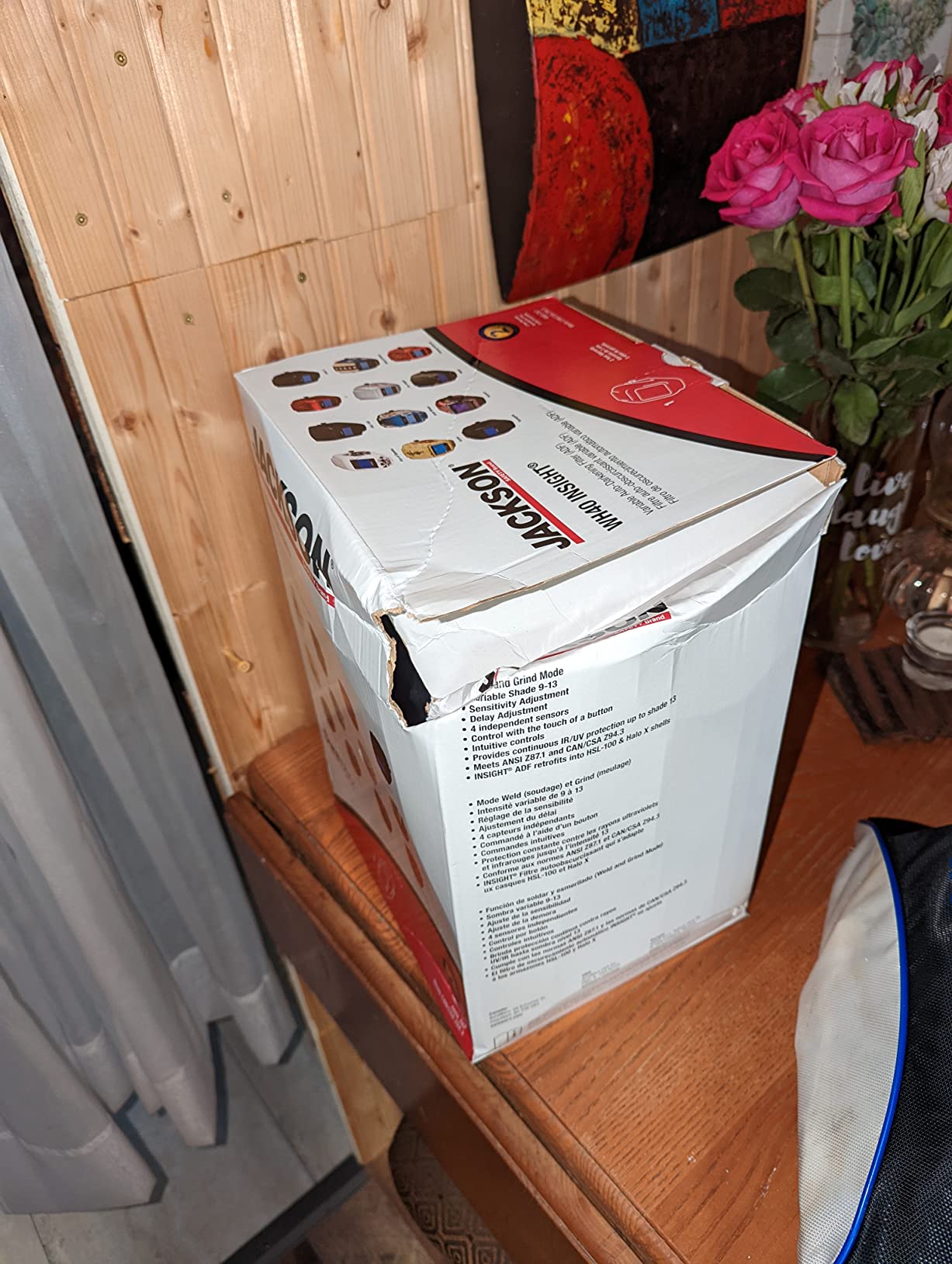
Four arc sensors are fitted, which on a shell this small is a sensible spread rather than a marketing count. They help when your filler-rod hand passes between the arc and a single sensor window, the single most common cause of flicker complaints on forums.
It also fits the PPE stack better than most. The 370 Speed Dial headgear with the Qwik-Fit rear swivel band clears a respirator, and the standard 4 1/2 by 5 1/4 inch cover lenses mean it can be adapted to a hard hat for site work. It meets ANSI Z87.1 and CSA Z94.3.
Why overhead welders like it
Overhead work puts your neck in extension for minutes at a time, and helmet weight is a multiplier there. A 6 ounce shell removes a meaningful amount of that load compared with a 1.4 pound or 2.2 pound model, and the Speed Dial ratchet lets you set the shell angle once and leave it.
The 3.94 by 2.36 inch window is taller than it is wide, which suits a vertical or overhead joint where you are following a line rather than surveying a wide field. It is not a situational awareness helmet, but it does not need to be.
Where it falls short
Variable shades 9 to 13 is a narrow band for TIG. There is no low weld shade to drop into, so very thin work has to be run inside shade 9, which many welders find too dark to read a puddle. If you do a lot of 5 to 20 amp thin stainless, weigh this against a lighter-shade model.
Owners also note that the light state is not the brightest in this group, which makes fit-up work a little more awkward, and that sensitivity can be twitchy around polished aluminum or reflective shop lighting. Set sensitivity down one notch if you weld stainless near shiny surfaces.
4. ESAB Savage A40 – Best for Low-Rim TIG and External Controls
ESAB 0700000480 Black Savage A40 Welding Helmet
Sensitivity tuned for low amp TIG
Four arc sensors
Delay control
External grind button
True color lens
Pros
- Sensitivity control specifically tuned for low amp TIG and low rim work
- Delay control for fine tuning arc-off timing
- Four arc sensors give a responsive reaction
- True color lens is a big jump from green-tinted filters
- One-button external grind mode
Cons
- Viewing area is smaller than the Lincoln Viking
- Shade knob on the upper exterior is awkward in tight quarters
- Some users see double vision with a cheater lens
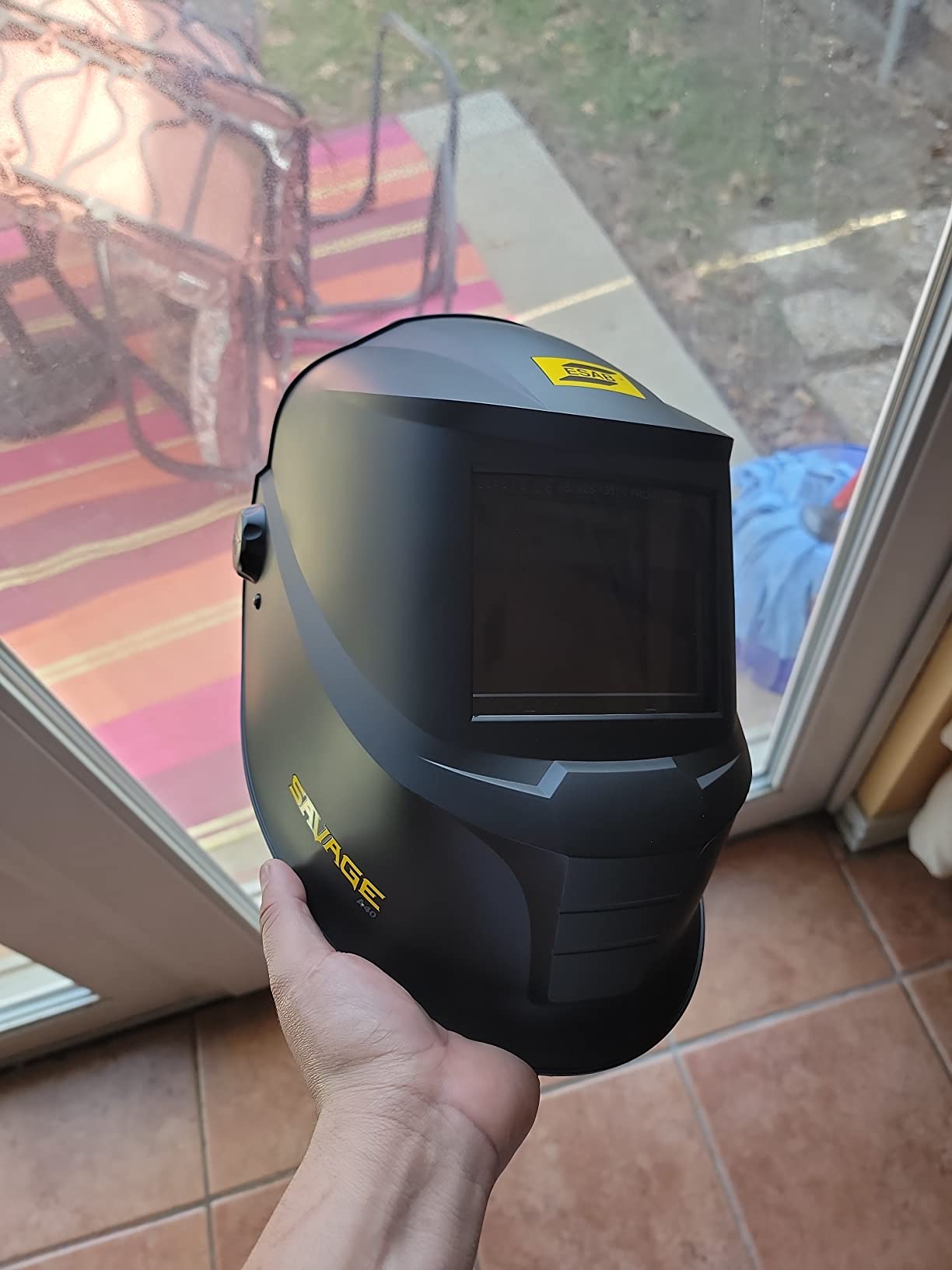
Reviewers call the A40 the best value true color helmet, and the reason is specific rather than generic: its sensitivity control is tuned for low amp TIG and low rim range welding. Low rim work is where a wandering arc edge and a small, fainter arc column make detection harder, and the A40 is built for exactly that.
It is also the easiest helmet in this group to operate without taking your gloves off or looking away. Shade, sensitivity and delay sit on the outside, and a single external button switches to grind mode. Four arc sensors sit across the shell for a responsive reaction to arc strike.
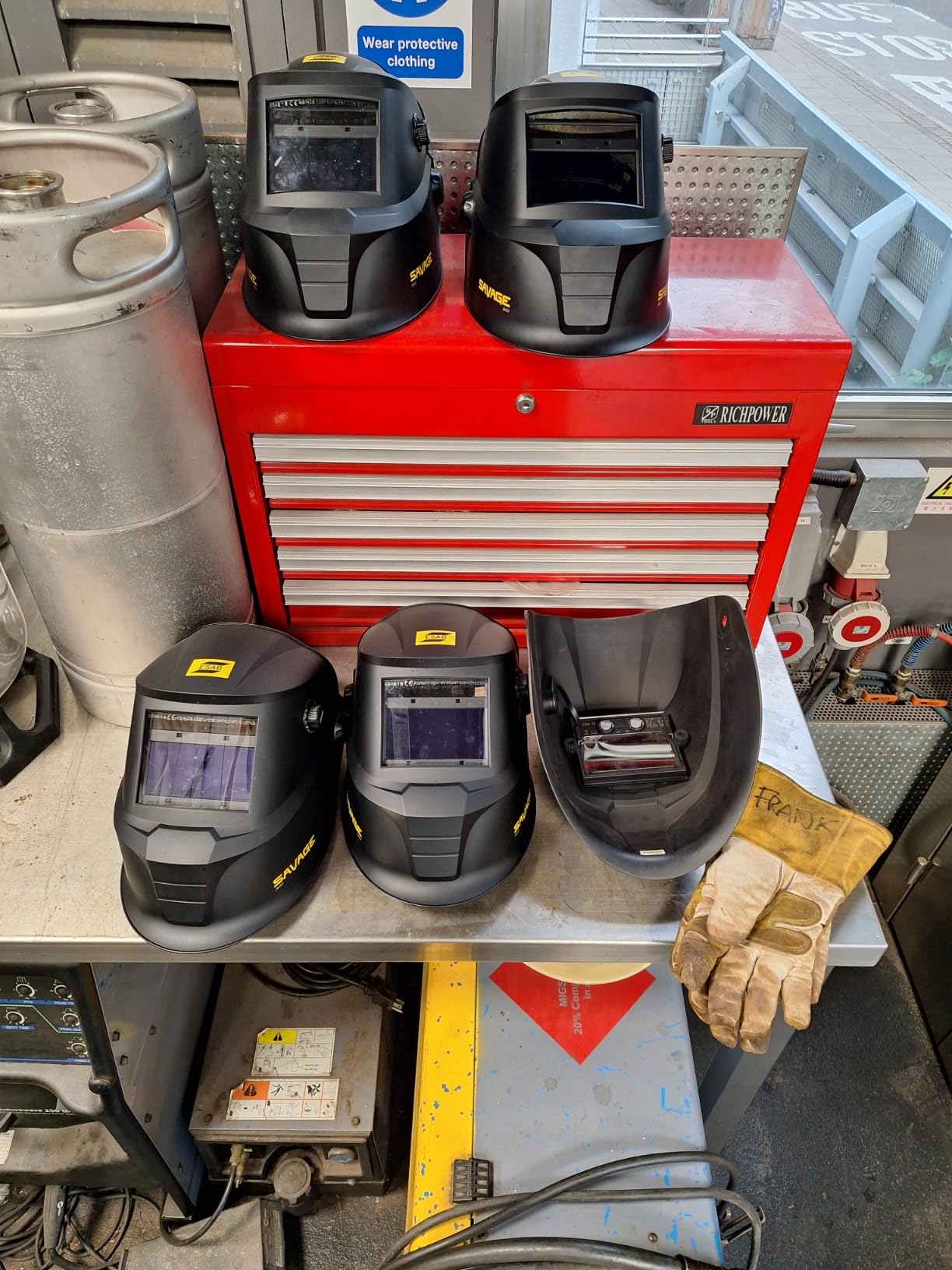
The true color lens is described in reviews as HD-like and a genuine improvement over green-tint budget filters, which is the single most noticeable change when you move up from an entry-level hood. Your ability to judge puddle colour and edge position improves immediately, and edge position is what controls fill size.
At 2.2 pounds this is a heavy shell, so it is not the choice for all-day overhead work. It is a bench and shop helmet, and reviewers use it that way. Power comes from a lithium ion cell rather than the coin cell common on cheaper models.
Why it suits stainless and aluminium TIG
Stainless TIG rewards colour discrimination because you are judging the arc edge and watching for oxide colour shifts as the heat input changes. A true color lens makes that judgement much easier than a tinted filter, and the sensitivity tuning means the filter is not sitting half-closed while you work.
The delay control is the other TIG-specific feature. On a short, interrupted arc like a beginner produces, a longer delay holds the filter dark through the tail instead of clearing between pulses, which removes a lot of the flashing feeling that beginners report in their first month.
What to watch out for
The viewing area is smaller than the Lincoln Viking 3350, and welders who upgrade to the A40 from a large-window helmet notice the change. It is also a fair upgrade from green-tint entry hoods, just not from a big panoramic lens.
Two smaller annoyances: the shade knob sits on the upper exterior, which is awkward when you are working in a frame or a vessel, and a few users report double vision through a cheater lens. If you plan to run a magnifying filter, buy the cheater lens and test it before you depend on it for production work.
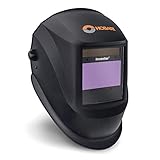
5. Hobart 770890 – Best for Welders Who Want No-Fuss Controls
Hobart 770890 Auto-Darkening Welding Helmet, Large, Black
PureColor 9.3 in widescreen view
4 arc sensors
Auto-on at arc strike
Analog knobs
1.25 lb
Pros
- Bright PureColor 9.3 inch widescreen viewing area
- Four independent arc sensors
- Auto-on and auto-off power at arc strike
- Simple analog knobs for shade sensitivity and delay
- One-button switch between weld and grind
Cons
- Analog controls offer fewer fine adjustments than digital
- Fixed shade range rather than digital variable selection
The Hobart 770890 is the one to buy if you do not want to think about your helmet. There is no menu, no mode cycling and no settings to memorise. Three analog knobs handle shade, sensitivity and delay, the power comes on at arc strike and off when the arc stops, and a single button switches between weld and grind.
The PureColor lens fills a 9.3 inch widescreen area, which is large for the tier, and four independent arc sensors are spread across the shell. Reviewers rarely raise issues beyond the simplicity of the interface, which is usually a polite way of saying some buyers wanted more.
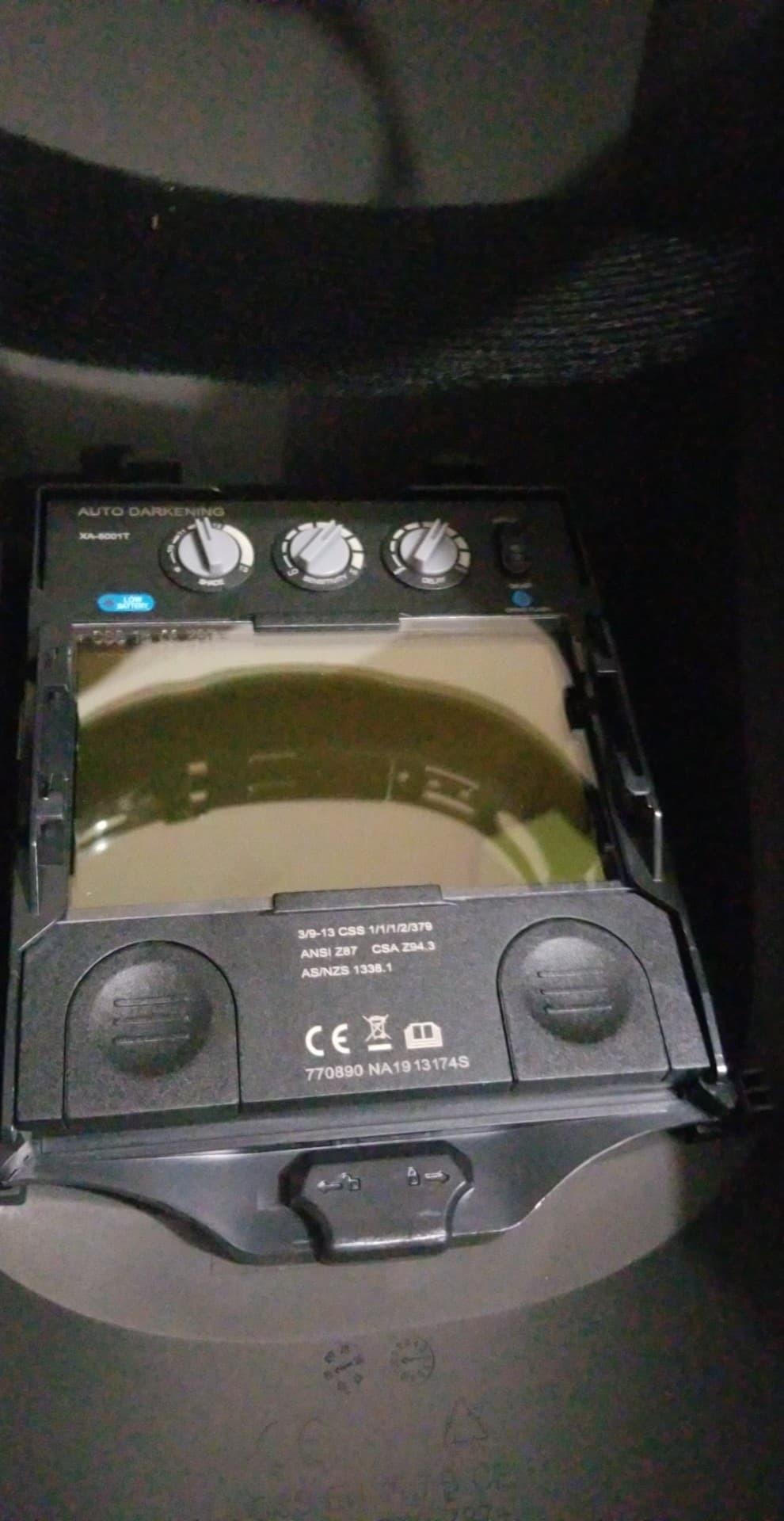
At 1.25 pounds with a polyamide nylon shell, it is light enough for long sessions without feeling flimsy, and the auto-on behaviour means you can work hood-down between passes without managing a power switch. That alone removes a step from every cycle.
It carries a limited two-year manufacturer warranty, so factor that into the ownership calculation if you are comparing against the Lincoln or the Miller, both of which carry longer terms. The lithium battery cell is a serviceable standard cell rather than a sealed pack.
Why shop welders keep it simple
In a multi-welder shop, a helmet that works the same way for everyone removes an entire category of problem. Nobody has to remember which button changes which setting, and a new hire can be productive on their first day. Four arc sensors also reduce false triggering in a shared bay, which is where sensitivity settings usually cause arguments.
The widescreen view is the quiet advantage for TIG. You can keep the puddle and the joint ends in frame at the same time, which matters on a fillet where you are watching the leg length change as you move along it.
What the simplicity costs you
Analog knobs are coarse. There is no half-shade increment and no memory of per-process settings, so you set the helmet up for TIG and then set it up again for stick. If you switch processes many times a day, that friction adds up.
The shade range is fixed rather than digitally variable, so you are choosing from a preset band rather than dialling an exact value. For most TIG work that is fine, but if you run both very thin material and heavy plate, you will notice the constraint more than most buyers.
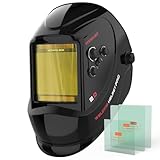
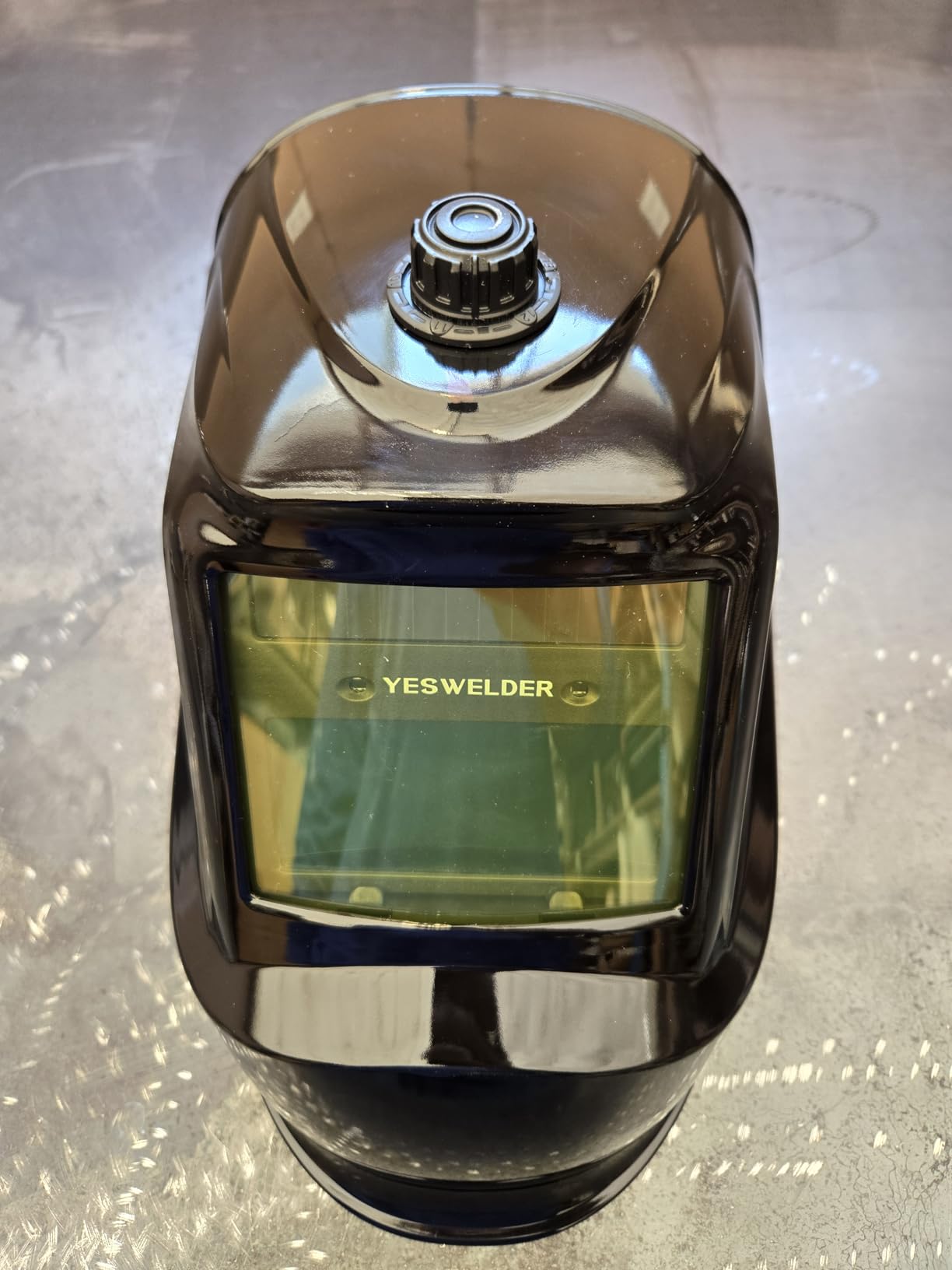
6. YESWELDER LYG-M800H – Best Value Helmet for TIG
YESWELDER Auto Darkening Welding Helmet, Large View, LYG-M800H
3.93 x 3.66 in view
4 arc sensors
1/30000s
DIN 3/5-9 and 9-13
Cheater lens ready
Pros
- Very large 3.93 x 3.66 inch viewing area
- 1/1/1/1 true color optics
- Four sensors switching in 1/30000 second
- DIN 3/5-9 gives a low TIG floor and a bright rest state
- All controls on the outside for gloved use
Cons
- Thin plastic shell and headgear feel light duty
- Side tension knobs need tightening hard to hold position
- Inner lens and battery are fiddly to reach
The LYG-M800H is the most capable helmet per unit of spend in this roundup, and the reason is the DIN 3/5-9 range. That is a genuine light state plus a low TIG floor, which is the combination thin-gauge TIG actually needs and which most helmets in this bracket do not offer.
The window is 3.93 by 3.66 inches, one of the biggest here, and the optics are rated 1/1/1/1 true color. Owners describe a night-and-day improvement in bead visibility against green-tinted budget lenses, which is the single biggest step up most beginners make.
Four arc sensors with 1/30,000 second response handle low-amperage work reliably, and every control sits on the outside so you can change settings with gloves on. It is cheater lens compatible, which matters for the fine stainless work that benefits from a 2.5 or 3.0 magnifier.
At 4.4 stars across more than 8,000 reviews, the pattern is clear: people like the view and the low-amp behaviour, and they notice the plastics. The battery is an accessible CR2450 lithium coin cell, and the box includes a spare lithium battery, a storage bag, two outer lenses and one inner lens.
Why it suits hobbyists and home shops
If you weld a few hours a week on stainless, on aluminium or on thin tubing, this is the tier where the physics stops working against you. Four sensors plus a shade 5 floor means the arc is detected and the puddle is readable at amperages where cheaper two-sensor hoods struggle.
The large window helps most on out-of-position work. Fitting a bracket, running a tube saddle or welding inside a frame all reward seeing more than the arc itself, and 3.93 by 3.66 inches is close to the best you can get at this tier.
What to expect from the build
The shell and headgear feel light duty, and the side tension knobs need to be tightened hard to hold the shell where you set it. Expect to re-tighten them after a few hours in the shell, particularly in heat.
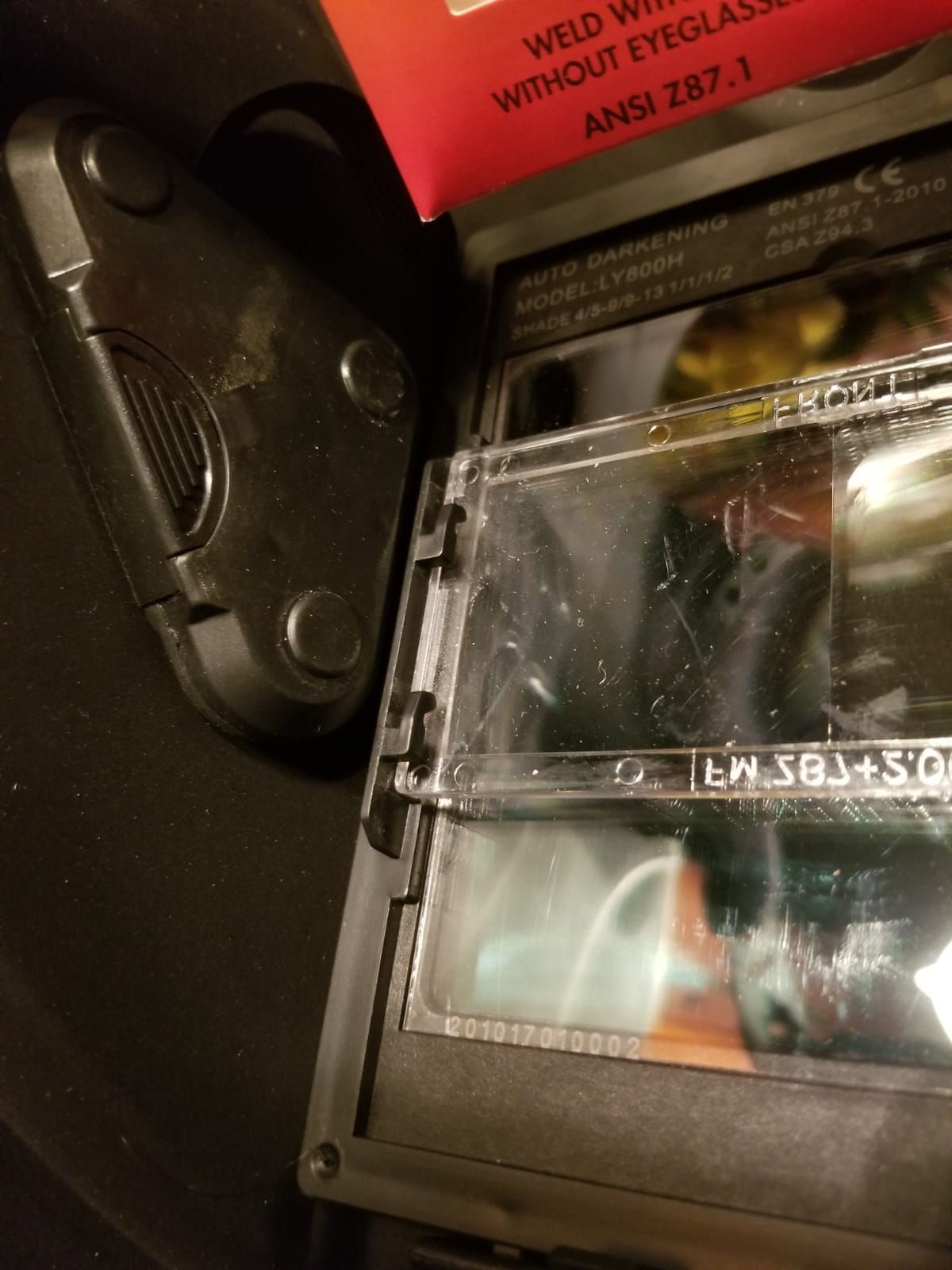
The inner lens and battery are also fiddly to remove because they sit behind small plastic tabs. That is a two-minute job done rarely, but it matters if you are swapping lenses mid-shift. If you drop it, the shell is not the part to worry about as much as the lens mount.
7. YESWELDER LYG-L600A – Best Budget Helmet for Learning TIG
YESWELDER Auto Darkening Welding Helmet 1/1/1/1 True Color, LYG-L600A
3.64 x 1.67 in view
1/1/1/1 true color
2 sensors
1/30000s
Spare lenses included
Pros
- True color 1/1/1/1 view of the puddle
- Fast 1/30000s darkening with adjustable sensitivity and delay
- Cheater lens compatible
- Spare inner and outer lenses plus storage bag in the box
Cons
- Viewing area is small
- TIG range starts at shade 7
- Light duty headgear and shell
With more than 13,900 reviews at 4.6 stars, the LYG-L600A is the most proven budget helmet on this list, and for a first TIG machine it does the important things correctly. The 1/1/1/1 true color view lets you see the puddle and the joint naturally rather than through a green tint, and that alone shortens the learning curve.
Switching is 1/30,000 second with adjustable sensitivity and delay across two arc sensors. The listed shade set is 3 and 7 to 13 covering TIG, MIG, MMA and grinding, with a cheater lens slot for fine stainless work. It is ANSI Z87.1 and CSA Z94.3 compliant.
At 16 ounces it is a light shell, and the pivot headgear has room to wear a respirator underneath, which matters if you are welding stainless or galvanised and pairing the helmet with fume protection. The box ships with one inner lens, two outer lenses, a CR2450 battery and a storage bag.
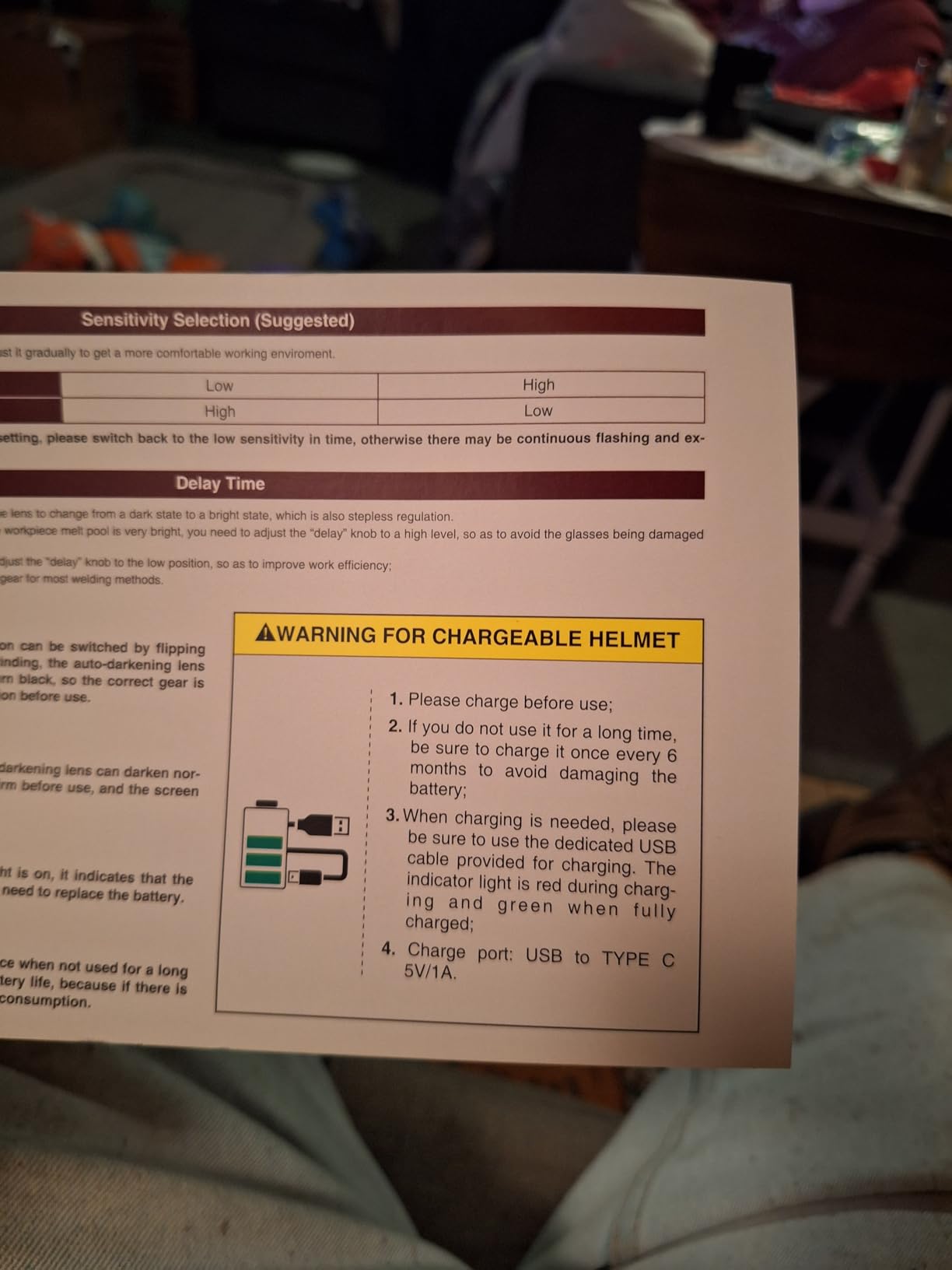
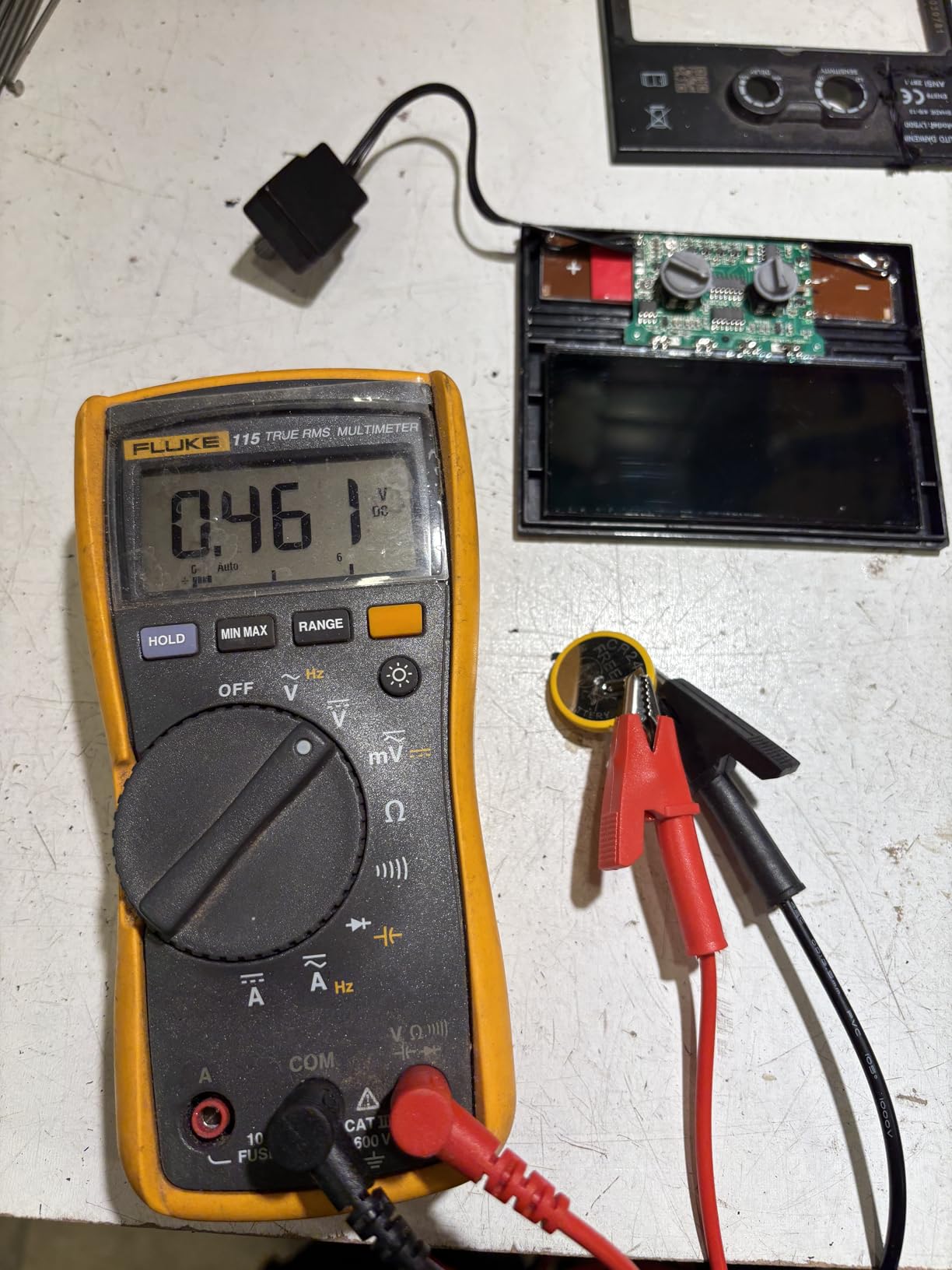
Power comes from a solar panel with a replaceable CR2450 coin cell as backup, so the helmet works even if the cell is flat. That combination is a sensible design at this tier, where a dead battery used to mean a dead helmet.
Why it works as a first TIG helmet
A 3.64 by 1.67 inch window is small, and you will feel that on a first pass. But for flat practice coupons, small tube and typical hobbyist projects, the arc sits in the middle of that window and the true color view is doing the heavy lifting. You can read puddle colour and edge position clearly at 20 to 60 amps.
Two sensors means you should keep the torch angle consistent and avoid routing your filler-rod hand directly across the front of the lens. A small deliberate shift of your body position keeps the arc path clear, which is good practice anyway.
Where the budget shows
The listed TIG range starts at shade 7, so very thin material sits at the dark end of what the lens can do. If you plan to run 5 amp work on light gauge, plan on adding a lighter cover lens.
The headgear and shell feel lighter duty than the professional models, and a few buyers report units arriving with the CR2450 cell installed incorrectly or already drained. Check the cell orientation on arrival and test the shade controls before your first weld rather than mid-project.
8. ARCCAPTAIN HSH-S800 – Best Budget Helmet With Four Sensors
ARCCAPTAIN Welding Helmet Auto Darkening, 1/25000s Response, Shade 4/9-13
4 arc sensors
1/25000s
3.86 x 1.69 in view
DIN 4/9-13
Solar plus CR2450
Pros
- Four arc sensors with 1/25000 second switching
- 1/1/1/1 lens with 3.86 x 1.69 inch view
- Solar cells plus a replaceable CR2450 battery
- Cheater lens compatible
- Three replacement lenses included
Cons
- A few owners report a slower response to arc strike
- Some lenses dim or stop switching over time
- Graphics-heavy styling
The ARCCAPTAIN is notable for one reason that matters for TIG: it is one of very few budget helmets in this roundup that lists DIN EN 379 alongside ANSI/ISEA Z87.1-2010, CSA Z94.3 and DIN EN 175. Four arc sensors and 1/25,000 second switching put it ahead of most of the budget tier on paper.
The lens is 1/1/1/1 across a 3.86 by 1.69 inch window, with a DIN 4 light state and a 9 to 13 dark range, cheater lens compatibility, and a PA shell of about one pound with a breathable padded adjustable headband. Solar cells work alongside a replaceable CR2450 lithium battery.
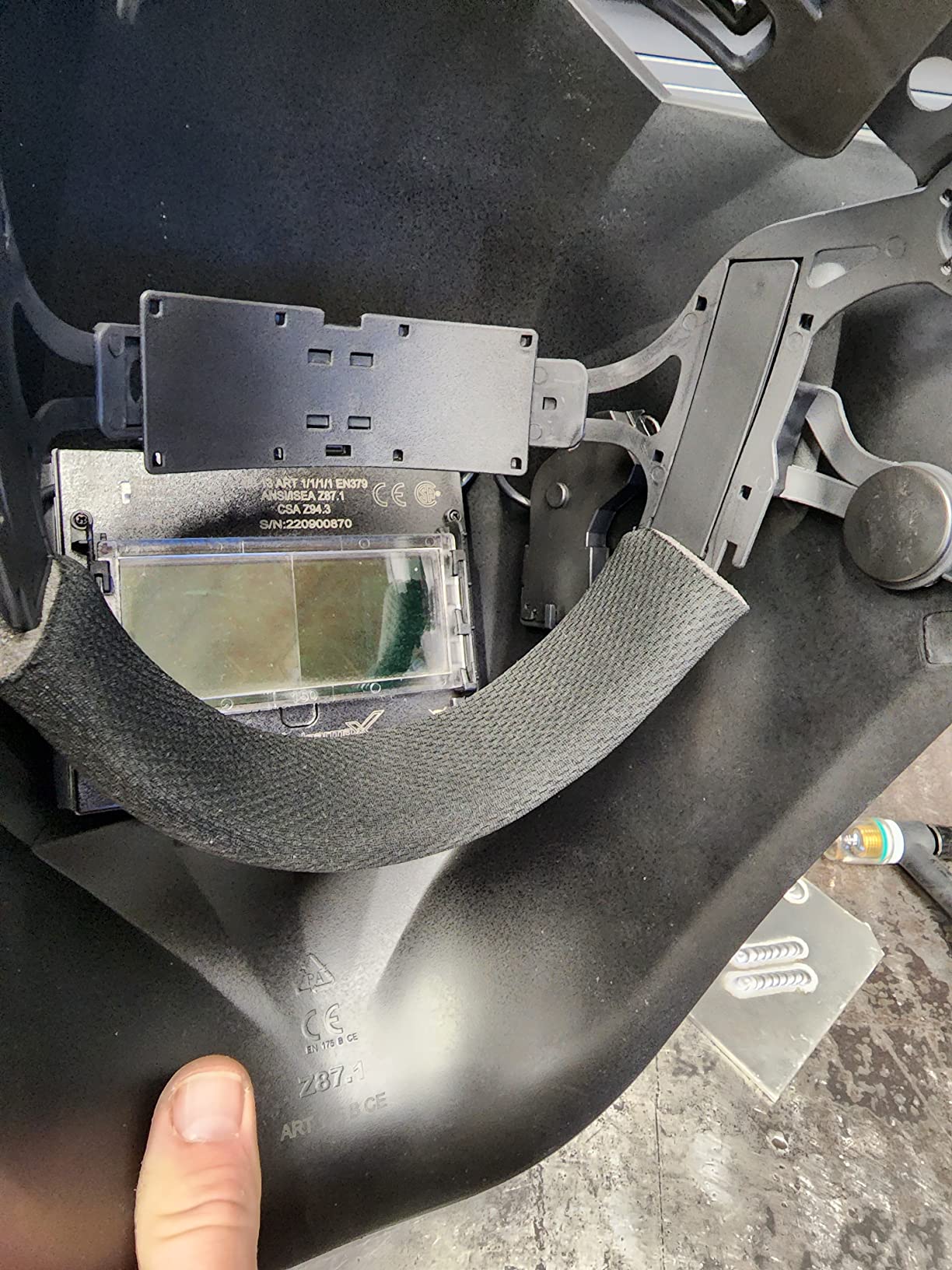
It also advertises automatic DIN 16 UV and IR protection, which matters because a filter that protects only while it is darkened leaves you exposed when it is not. Three replacement lenses are included in the box, and the warranty is 180 days.
Across more than 3,000 reviews at 4.6 stars, most owners describe an excellent budget starter hood with clear optics and easy external controls. The recurring criticism is not about TIG performance but about long-term cartridge reliability, which we cover below.
Why four sensors matter on TIG
Sensor count is really about geometry. On a TIG pass your filler-rod hand crosses the front of the helmet and your torch cup sits between you and the arc, so the light path changes constantly. Four sensors spread across the shell mean the arc stays visible to at least one of them for most hand positions.
The DIN 4 light state also gives you a genuinely bright window between passes, which helps with fit-up and lets you keep the helmet down while you position the rod.
What owners report over time
A minority of reviews describe lenses that dim or stop switching after weeks or months, and a few report a slower than expected response to arc strike. Both are cartridge-level issues rather than TIG technique issues, and the 180-day warranty is short compared with the three- to five-year terms on the Lincoln and Miller.
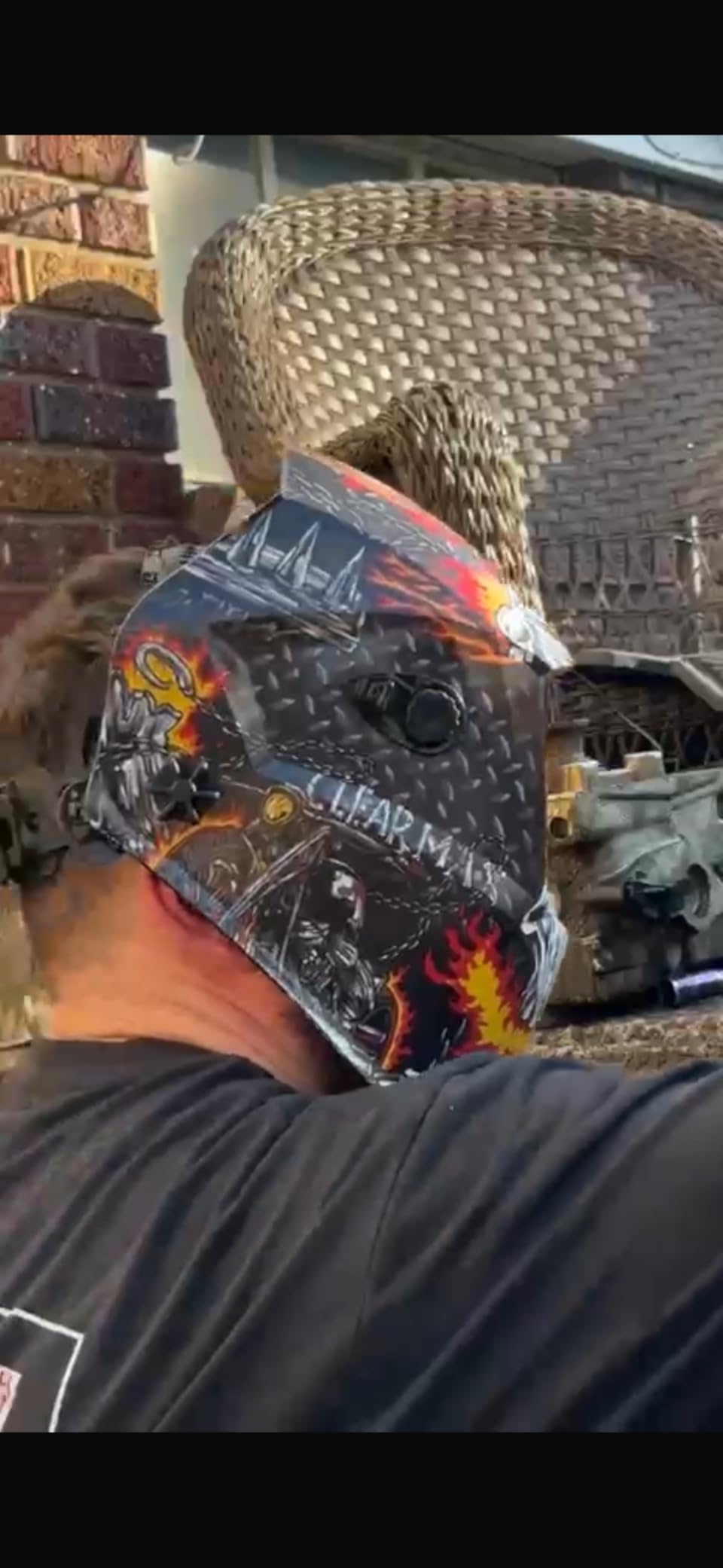
The styling is loud. The shell graphics will not suit every shop or a union dress code, and that is a legitimate reason to pick a different helmet. Buy it for the sensor count and the EN 379 listing if those matter to you.
9. MIGVAN H-21 – Best Helmet for Dark Shops and Basements
MIGVAN Welding Helmet Auto Darkening True Color Large Viewing, Welding Hood Solar/Replaceable Battery Powered, Wide Shade 4/5-13 with 4 Arc Sensor, Optical Clarity Welding Mask for TIG MIG ARC Grind
DIN 4 light state
4 arc sensors
1/10000s
Solar plus CR2450
True color lens
Pros
- True color golden lens reduces distortion and saturation
- DIN 4 light state keeps the window usable in dim spaces
- Solar cells plus replaceable CR2450 for low-light continuous work
- Four sensors activate in 1/10000 second
- Two inner and two outer lenses plus a storage bag
Cons
- 1/10000 second response is slower than most here
- Yellow outer filter adds a colour cast
- Less established brand
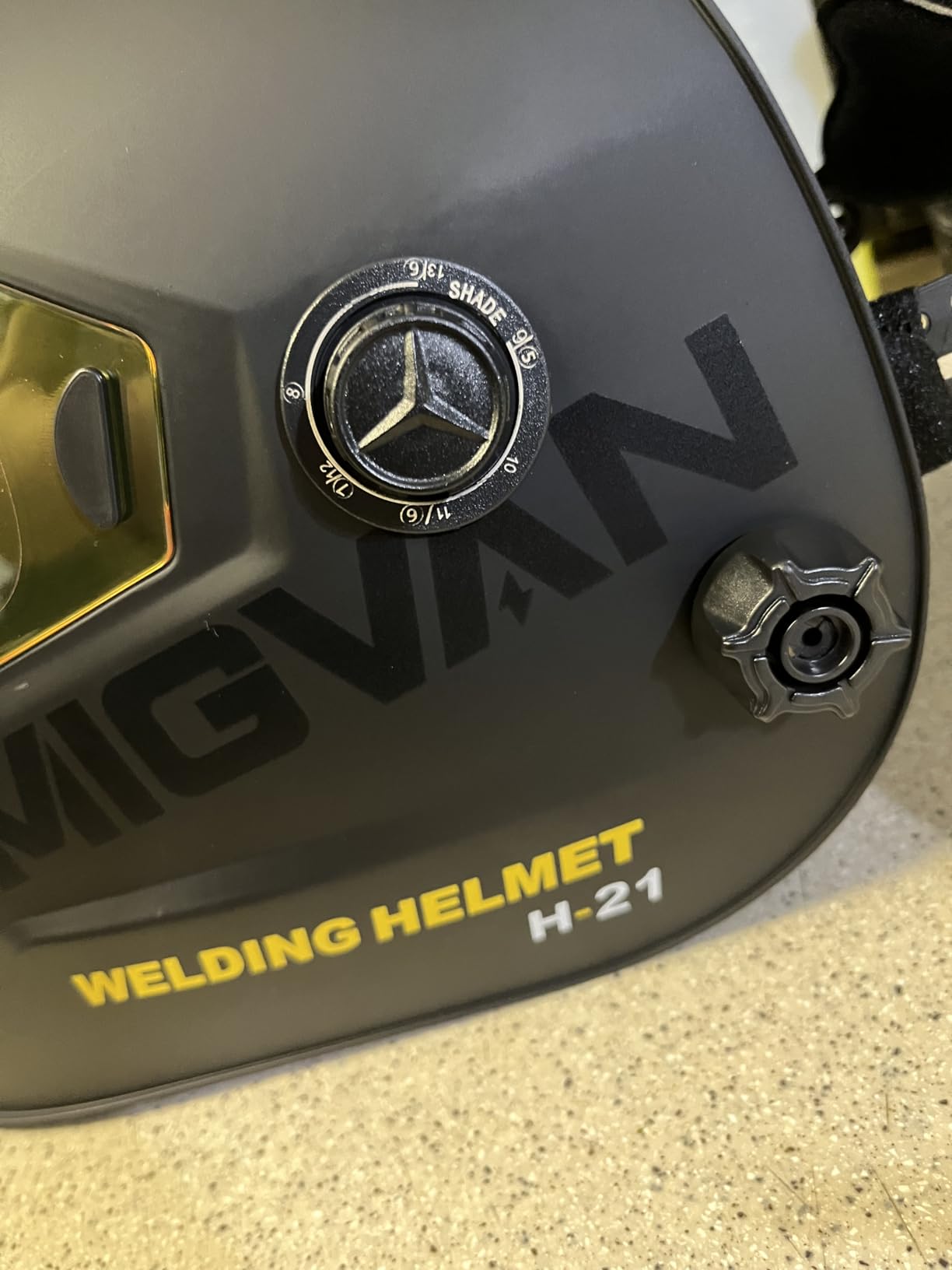
Dark, poorly lit workspaces are where the MIGVAN H-21 makes its argument. The light state is DIN 4, one of the brighter resting shades here, and the solar panel works alongside a replaceable CR2450 battery so the cartridge keeps running in low-light continuous work rather than depending on ambient arc light alone.
The golden true color lens is designed to cut distortion and colour saturation, and the shade structure is DIN 4 light state switching to a DIN 5-9 or 9-13 dark state. That 5-9 band is a low TIG floor, which is what you want on thin work.
Four premium arc sensors activate in 1/10000 second, which is the slowest switching figure in this roundup. On a bright MIG arc that difference is invisible. On a faint 15 amp DC TIG arc, faster sensors generally have an edge, so this is a helmet to tune carefully rather than one to buy and forget.
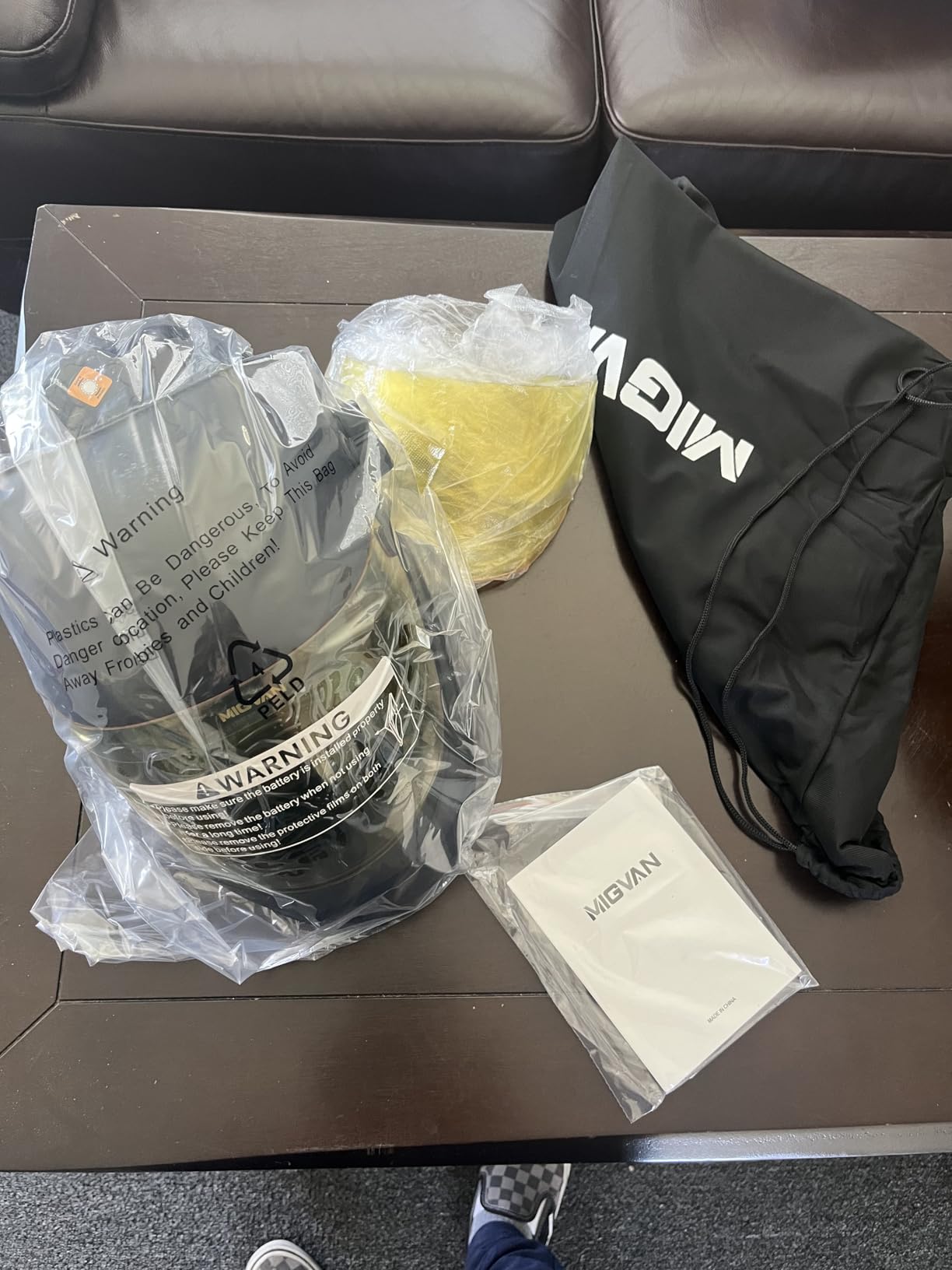
The package is generous for the tier: two inner lenses, two outer lenses, a user manual and a heavy-duty storage bag. Headgear is a pivoting design with breathable padding, listed at 1.09 kg, and the helmet is marked ANSI and CE compliant.
Why the light state matters more than usual
On a garage floor or in a basement, the difference between a DIN 4 and a DIN 5.5 light state is the difference between fitting a tube and guessing at it. Because the resting window is bright, you can keep the helmet down, check your rod angle and read the fit-up before you strike an arc.
The solar plus battery arrangement also means the cartridge does not depend on the arc to power itself. That removes one failure mode that shows up on single-battery budget helmets after a year of use.
What to weigh up first
The 1/10000 second switching speed is the honest trade-off. If your work is mostly thin material at low amperage, the faster cartridges in this roundup will hold the arc more confidently.
The yellow outer filter lens adds a colour cast that some users dislike and others never notice. If accurate colour reading of the puddle matters to you, weld with it for an hour before you commit.
10. TRQWH KTS-JD03 – Best Helmet With a Built-In Work Light
TRQWH Welding Hood Auto Darkening Welding Helmet with Light True Color
Top LED work light
1/1/1/2 optics
1/20000s
External delay 0.2s to 1.0s
Shade 9-13
Pros
- Integrated top LED light is genuinely useful in dim shops and outdoors
- 1/1/1/2 true color clarity tuned for fine work
- External delay 0.2s to 1.0s plus sensitivity knobs
- Quick grind mode button
- Solar plus replaceable lithium battery
Cons
- LED is dim and the battery light runs briefly
- Brittle polycarbonate shell can crack if dropped
- Head strap loosens during use
The TRQWH is the only helmet here with a light built into the top of the shell, and for field repair or dim shop work that is worth more than it sounds. When you are setting up a joint in a basement, on a night callout, or inside a machine, the LED removes the need for a headlamp fighting the helmet for space.
Optically it is rated 1/1/1/2 rather than the 1/1/1/1 on the other true color models here, meaning slightly more angle dependence in peripheral vision. It switches from light to dark in 1/20,000 second using double liquid crystal layers, and the weld range is 9 to 13.
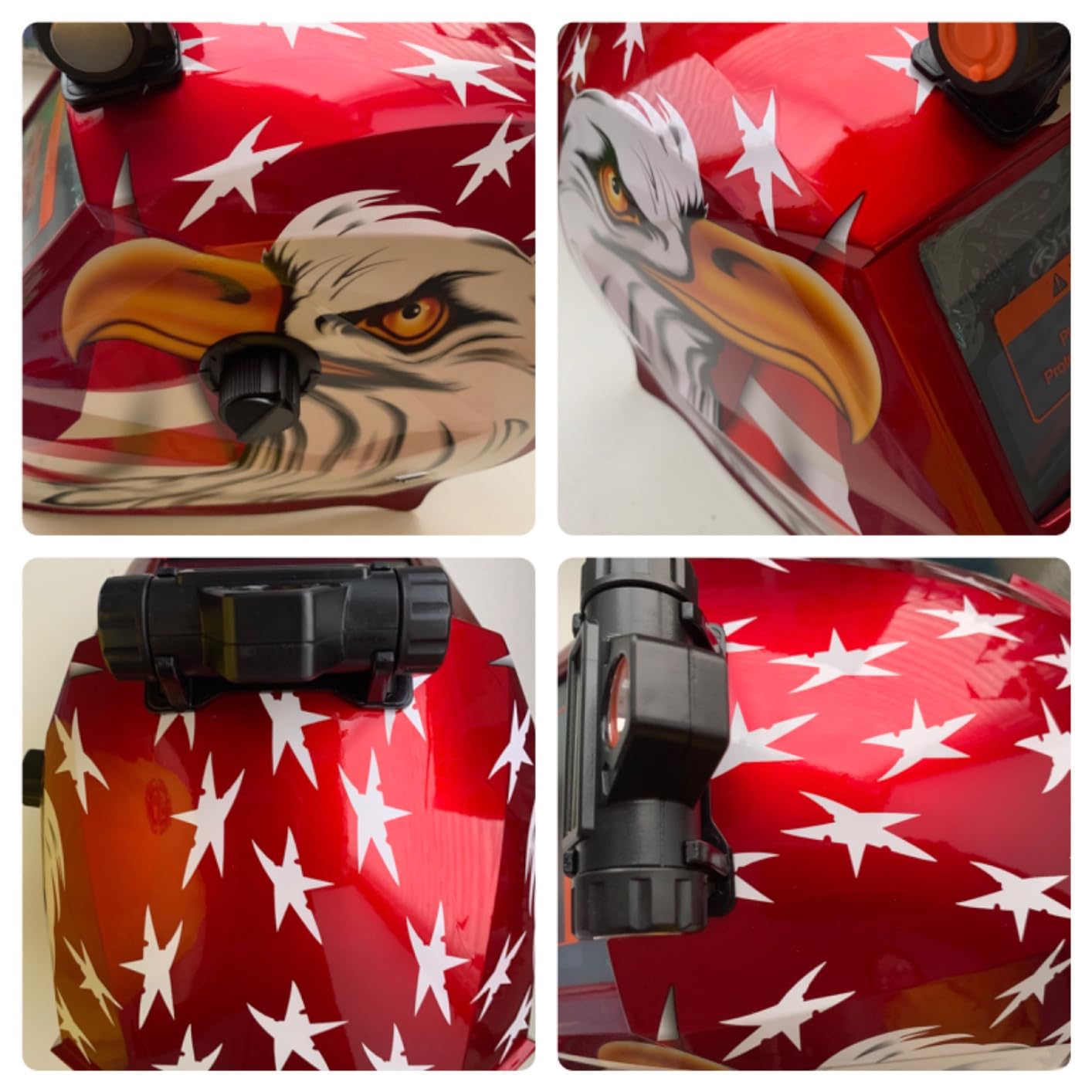
Controls are genuinely well placed for TIG: external delay from 0.2 to 1.0 second, an external sensitivity knob and a quick grind mode button, all reachable with gloves on. Power is dual solar plus a replaceable lithium battery, and it handles plasma cutting, grinding, AC and DC TIG, MIG and MMA.
It ships with welding gloves, which is a small convenience, and the headgear has a thickened forehead sponge with multi-point adjustment knobs. At 4.5 stars across more than 1,100 reviews, buyers consistently mention the LED and the true color clarity first.
Why the work light changes outdoor jobs
On a callout, you are often welding in whatever light the site gives you, and a helmet without a light means a headlamp, which means a strap fighting the helmet. The integrated LED removes that whole problem and keeps both hands free for the torch and the rod.
The delay range is worth noting for TIG. Down to 0.2 second is short, which is useful on scratch tacks and short bursts, and the upper end of 1.0 second holds the filter dark through the tail of a longer arc.
Where it lets you down
Shade 9 to 13 is a narrow weld band, and there is no lower weld shade for thin material. That is the main reason we would not put this first for a TIG-focused buyer, even with the light.
The polycarbonate shell is brittle and can crack if the helmet is dropped or knocked, the head strap tends to loosen during use and needs re-tightening, and the LED is dim enough that the battery runtime is brief. The warranty is 30 days, which is the shortest in this roundup, so test the cartridge early rather than at the end of a project.
How to Choose a Welding Helmet for TIG
Choose on shade floor first, then sensors, then view, then weight. In that order. Most buyers do the reverse and end up with a beautiful panoramic lens they cannot use on thin material, or a two-sensor helmet that flickers on a 10 amp arc.
Shade floor of 5 or lower. If the lowest weld shade is 8, 9 or above, the helmet is a poor TIG tool on thin material. A shade 5-9 or 5-13 range is the practical target for a mixed TIG workload.
Sensor count and placement. Two sensors work if they sit forward of the arc path, which is how the Miller Classic manages 5 amp work. Four sensors give you margin when your filler-rod hand or torch cup crosses the light path.
Light state. DIN 3 to 4 lets you keep the helmet down between passes for fit-up and inspection. A dark resting state forces you to flip the helmet constantly.
Outdoors and multi-welder settings. Optical sensors can false-trigger in sunlight or off a nearby arc. In a shared bay, drop sensitivity one notch rather than turning it up.
Viewing area against weight. More than 10 square inches helps on pipe and out-of-position work. Above about 1.5 pounds you are trading neck comfort for situational awareness, so try it on over your actual PPE.
Cheater lens slot and fillet work. A filter holder for a 2.5 or 3.0 magnifier is close to essential for stainless fillet caps and for beginners learning edge control.
Respirator and hard hat fit. The headband has to clear a respirator and a hood has to sit on top of a hard hat with a sling. The Jackson Insight and the Lincoln Viking 3350 both suit that stack; try before you commit.
Consumable cost and warranty. Cover lens and cartridge prices vary by brand, and a three- to five-year warranty tells you how long the electronics are expected to last. A 30-day or 180-day term should push you toward a more established model.
Two extra notes. First, if you also need a machine, our beginner welding machine guide covers matching machine output to the low-amp work that stresses a helmet’s sensors. Second, fit matters more than any spec on this page: put the helmet on over the respirator and gloves you actually wear, and tighten the rear band before you judge the balance.
TIG Shade Number and Amperage Guide
A good shade for TIG on thin stainless and mild steel is between 8 and 10; on light gauge material you can drop toward 5 to 7, and on heavier plate you can run 10 to 13. Shade 5 is dark enough for welding on thin material, but it is not dark enough to read a puddle on plate.
The minimum recommended filter shade for welding is generally 7 or above for most processes; below that you need a filter specifically rated for the low end. If your helmet cannot reach a low enough shade, the fix is a lighter cover lens, not a workaround with your eyes.
Under 20 amps, thin stainless and light gauge: DIN 5 to 7. The arc is faint and the pool is small, so a light filter keeps it readable. This is where a shade 8 or 9 floor becomes a real problem.
20 to 60 amps, tube and sheet: DIN 8 to 10. This is the most common TIG band and the reason most helmets are usable at all for TIG.
60 to 120 amps, plate and pipe: DIN 10 to 12. The arc is bright enough that you gain contrast rather than lose the pool.
Above 120 amps, heavy plate: DIN 12 to 13. TIG this heavy is unusual; MIG or flux core is normally the faster process.
One beginner mistake comes up constantly: starting at shade 13 and working down. Your pupils adapt, and the fix is to start at a light state and step up as you get used to the filter. If your view never was very good, the starting shade is usually the reason.
What 1/1/1/1 Actually Means on a Welding Helmet
The marking 1/1/1/1 is an EN 379 optical class rating covering four criteria, and every digit is a grade out of 1 to 3, where 1 is the best. A helmet marked 1/1/1/1 is top grade on all four.
First 1 – optical class. How evenly the filter transmits light across the view. A grade 1 gives an even, undistorted image with no blurring at the edges.
Second 1 – diffusion of light. How much stray light scatters inside the filter. Grade 1 means a sharp image with no haze when the helmet is clear.
Third 1 – variation in luminous transmittance. How consistent brightness is across the viewing area as you move. Grade 1 means the puddle does not change brightness as you shift your head.
Fourth 1 – angle dependence. How much the view changes when you look at the filter from the side. Grade 1 is what lets you lean in to read a fillet without the image shifting.
A 1/1/1/2 rating, used by the TRQWH here, is identical on the first three and one grade lower on angle dependence. For TIG that last digit is the one that matters most, because thin-seam work means leaning and turning constantly. ANSI Z87.1 and CSA Z94.3 are US and Canadian standards covering impact and optical requirements; EN 379 is the European rating that carries the four-digit marking.
Fixing a Flashing or Flickering Helmet on TIG
Most flickering on TIG is not a fault. A faint DC arc dips below the sensor trigger threshold, the filter clears, and then the next burst of arc re-triggers it. The fix is almost always settings, sensor position or power.
Move your filler-rod hand and torch cup out of the light path. This is the most cited cause on forums. Keep the arc in the open rather than behind your hand, and a helmet with four sensors will tolerate far more obstruction than a two-sensor unit.
Raise sensitivity one step, not five. Higher sensitivity catches fainter arcs but also false-triggers off nearby welders and off reflective surfaces. Raise it in small increments and re-test with a scratch arc at your target amperage.
Shorten the delay while tuning. A long delay holds the filter dark between bursts, which makes flickering harder to see and harder to diagnose. Set delay to its shortest position, solve detection, then set delay back for the work.
Check the battery and the insulating tab. A tired coin cell produces a cartridge that dims late in a weld. New cells are cheap; if the cartridge is replaceable, replace it rather than fighting it.
Clean the sensors and the inner cover lens. A dusty or pitted inner lens scatters the light the sensors rely on. Replace the inner lens on a schedule rather than waiting for it to fail.
Test shade settings at your lowest amperage. If the filter clears no matter what you set, the shade floor is above what your arc can overcome. Run a lighter filter instead of replacing the helmet.
If the arc shows, the lens stays clear, and none of the above helps, run the built-in test or reset. Hold the test button with the shade control on its lowest setting and the filter should darken on demand. If it does not, the cartridge is the problem, and on most of these models the cartridge is the replaceable part.
Frequently Asked Questions
What is the best welding helmet for TIG welding?
For most TIG welders the Lincoln Electric Viking 3350 is the strongest all-round choice, because its 4C lens and 12.5 square inch window give the best puddle readability. If you work at 5 amps and below, the Miller Classic Series is built for that and is specified for it.
What does 1 1 1 1 mean on a welding helmet?
It is an EN 379 optical class marking with four grades: optical class, diffusion of light, variation in luminous transmittance, and angle dependence. Each digit runs 1 to 3, where 1 is the best, so 1/1/1/1 is top grade on all four.
What’s a good shade for TIG welding?
Between 8 and 10 for typical TIG on tube, sheet and plate. Drop toward 5 to 7 on thin stainless and light gauge material, and use 10 to 13 on heavier plate. If your helmet cannot reach a low enough shade, a lighter filter solves it.
Why is my welding helmet flickering on TIG?
A faint low-amperage DC arc often dips below the sensor trigger threshold, so the filter clears and re-triggers. Move your filler-rod hand and torch cup out of the light path, raise sensitivity one step at a time, shorten the delay while tuning, and check the battery and sensor lenses.
How many arc sensors do I need for TIG welding?
Two well-placed sensors are enough if they sit forward of the arc path, which is how the Miller Classic detects a 5 amp arc. Four sensors give you margin when your filler-rod hand or torch cup crosses in front of the arc, which happens constantly on TIG.
Can I use a MIG helmet for TIG welding?
Yes, if the shade range reaches down to about 5 or 6 and the sensors catch a faint arc. A helmet with a shade floor of 8 or 9 works fine on MIG and stick but leaves thin TIG too dark to read, so check the low end of the range before buying for TIG.
Conclusion
There is no single best welding helmet for TIG work, but there is a clear order of importance: reach a low shade, catch a faint arc, keep the window bright between passes, then choose the view and the weight. Get that sequence right and any of the ten helmets here will run TIG well.
Our pick for 2026 is the Lincoln Electric Viking 3350, with the Miller Classic Series as the specialist option for very low amperage work and the YESWELDER LYG-M800H as the strongest value route into true color TIG. Whichever you choose, set the sensitivity low, confirm the arc triggers on a scratch pass at your lowest amperage, and keep a spare inner cover lens in the van. Comfort and balance over a full shift matter as much as any spec, and fit beats every number on a spec sheet once you are four hours into a pipe run.