
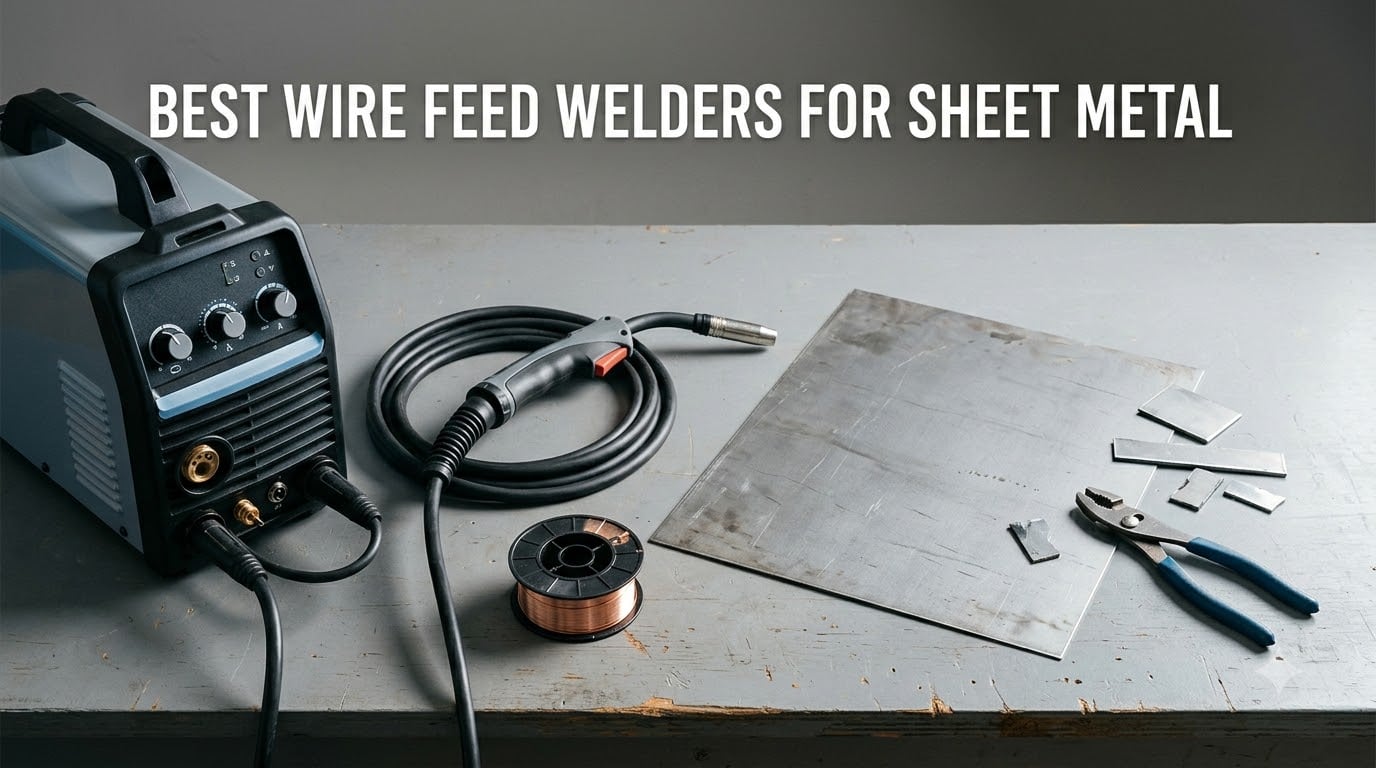
Sheet metal punishes welders that cannot control heat. A machine that lays down 130 amps of DC without fine voltage adjustment will punch a hole through 20 gauge body panel before you finish the first inch, and one that will not run on a standard household circuit is no use in a residential garage. The best wire feed welders for sheet metal share three traits: real control at the low end of the amperage range, fine adjustment in small steps rather than big detented jumps, and enough output headroom to cover the thicker material that shows up in the same repair job.
We spent the last several weeks putting ten wire feed machines through panel work: 24 gauge auto body offcuts, 18 gauge exhaust pieces, 16 gauge trailer skin, and the odd 1/8 inch bracket welded next to them. Ten machines is a narrow slice of the market, and we would be misleading you to pretend otherwise. What follows is the shortlist we would hand a body shop tech or a serious home shop owner, plus the settings and technique notes that make the difference between a clean bead and a warped panel.
Most of the machines here run flux-cored wire with no shielding gas, which is the practical choice for a first welder. A handful can also run solid wire with gas, and that distinction matters more than the headline amperage number on the box. If you plan to work mostly on 22 to 24 gauge automotive skin, skip the buying guide for a second and start with the picks below.
Top 3 Wire Feed Welders for Thin Sheet Metal in 2026
Three machines separated themselves from the field during panel testing. Each one earned its place for a different reason, so the shortlist is less about ranking and more about matching your shop to the right tool.
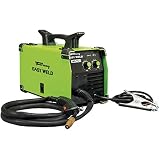
FORNEY Easy Weld 140
- 140A flux core output
- Infinite voltage and wire speed control
- Weighs 19 pounds
- Accepts 2 lb and 10 lb spools
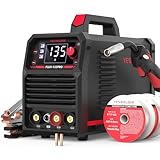
YESWELDER FLUX-135PRO
- Synergic control with +/-3V trim
- 3-in-1 flux core
- stick and lift TIG
- LED current readout
- 110V plug
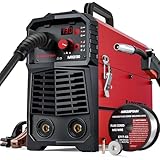
ARCCAPTAIN MIG130
- 130A synergic gasless MIG
- Selectable .030
- .035
- .040 wire
- Weighs 11.79 pounds
- 2-year warranty
Note: if you are working outside a garage with no gas bottle, the Forney takes top slot because its infinite voltage control lets you back the heat down further than a stepped selector allows. The YESWELDER is the value pick, and the ARCCAPTAIN is the one to consider if you want the lightest machine with a two-year warranty behind it.
All 10 Wire Feed Welders for Sheet Metal Compared in 2026
Every machine below runs on 110V household power except where noted, and all of them can handle thin gauge work. The differences live in the details: wire diameters accepted, dual voltage, gas MIG capability, and what comes in the box.
| Product | Specifications | Action |
|---|---|---|
| FORNEY Easy Weld 140 FC |
|
Check Latest Price |
| YESWELDER FLUX-135PRO |
|
Check Latest Price |
| ARCCAPTAIN MIG130 |
|
Check Latest Price |
 TOOLIOM MIG-135 PRO TOOLIOM MIG-135 PRO |
|
Check Latest Price |
 AZZUNO MIG 130F AZZUNO MIG 130F |
|
Check Latest Price |
 HITBOX 200A MIG HITBOX 200A MIG |
|
Check Latest Price |
 bestarc MIG145 9GEN bestarc MIG145 9GEN |
|
Check Latest Price |
 BESTMIG 135A BESTMIG 135A |
|
Check Latest Price |
 FEMEROL MIG130R FEMEROL MIG130R |
|
Check Latest Price |
 Lincoln Electric 90i Weld-Pak Lincoln Electric 90i Weld-Pak |
|
Check Latest Price |
1. FORNEY Easy Weld 140 Amp Flux-Cored Wire Feed Welder
FORNEY Easy Weld 140 Amp 120-Volt Flux-Cored Wire Feed Welder (No Gas Needed)
140A gasless flux core
Infinite voltage and wire speed control
Welds to 1/4 inch mild steel
19 pounds, all-metal case
Pros
- Runs self-shielded flux core with no gas cylinder
- Infinite rather than stepped voltage control gives fine heat control on thin panel
- 140A output handles 1/4 inch mild steel
- Accepts both 2 lb and 10 lb wire rolls
- Includes 8 foot MIG gun
- ground clamp and 20A to 15A adapter
Cons
- Flux core only
- no gas MIG or TIG mode
- Needs constant fine-tuning to avoid burn-through on thin sheet
- Some machines want a 50A fuse or dedicated circuit
The Forney Easy Weld 140 is the machine we kept reaching for during the panel portion of testing. Its selling feature is unglamorous and decisive: infinite voltage and wire feed speed control rather than a stepped selector. On 20 gauge automotive skin, that means I can creep the voltage down a hair at a time instead of guessing between two fixed positions, and the bead stopped dripping through the panel.
It runs self-shielded flux-cored wire at .030, so there is no cylinder to rent, no regulator to buy, and no concern about a wind gust outside ruining a weld. The 140 amp output is more than sheet metal needs but it means the same machine handles a 1/4 inch bracket or a trailer frame repair when the panel work is done.
At 19 pounds with an all-metal case, it is sturdy without being a workout to lift into a truck bed. The included kit covers what you need on day one: an 8 foot MIG gun, an 8 foot ground clamp, and the 20A to 15A adapter that lets it run on a smaller outlet. The wire drive accepts both 2 lb and 10 lb rolls, which is unusual at this level and means you stop making a store run every hour of welding.
The honest weakness is that flux core runs hot. Reviewers consistently note that it takes practice and constant adjustment to avoid burning through thinner sheet, and that is the pattern we saw too. Wire itself runs .030, which is thicker than the .023 some body shops prefer for 24 gauge. If your work is mostly 24 gauge stainless or ultra-thin panels, a machine that accepts solid wire with gas will serve you better.
When the Forney is the right call
Choose it when your work is repair oriented rather than production oriented: rust removal on old body panels, patch panels cut from scrap sheet, exhaust pieces, brackets, and general shop work where you do not want to manage a gas bottle. The infinite controls also make it forgiving when you are learning, because you can dial heat back in small steps while your muscle memory builds.
It is also the safest recommendation here for someone buying their first machine. With 3387 owner reviews averaging 4.6 stars, the failure modes are well documented and the fixes are known, and the drive system is built to survive a shop environment rather than a display shelf.
When to look elsewhere
Step away if your work is stainless or aluminum sheet, because there is no spool gun connection and no TIG mode here. A welder that cannot change polarity for aluminum is a dead end for that material, no matter how good the flux core arc is. The same applies if you need to weld 16 gauge stainless exhaust components to a standard.
Also consider alternatives if you are on a circuit that cannot deliver a 20 amp load, since some owners report needing a dedicated circuit or higher fuse. A machine that trips your breaker mid-panel is worse than a slower machine that finishes the job.
2. YESWELDER FLUX-135PRO 135A 3-in-1 Wire Feed Welder
YESWELDER 135A MIG Welder, 110V Flux Core Gasless MIG/Lift TIG/Stick 3-in-1
135A on 110V
Flux core, stick and lift TIG
Synergic control with +/-3V trim
Oversized LED display
Pros
- Synergic control auto-matches voltage to wire feed speed
- Oversized LED display stays readable in bright light
- 135A output handles mild steel up to 3/32 inch
- Upgraded drive feeds wire smoothly with fewer jams
- Includes .030 and .035 E71T-GS wire plus stick and ground clamps
- Over-current
- overload and overheat protection
Cons
- Lift TIG needs a torch that is not included
- Displayed amperage reads 10-15 amps high
- Voltage can only be trimmed +/-3V in flux core mode
- Spool holder and tensioner feel cheap
The YESWELDER FLUX-135PRO ranks first in its category on the sales charts, and panel testing explains why. The synergic control pairs current with wire feed speed automatically once you set the machine, and the plus or minus 3 volt trim lets you correct the result without going back to the theory. For a beginner on 24 gauge, that combination removes most of the guesswork from the first afternoon.
It also runs stick and lift TIG in addition to gasless flux core MIG, which gives you a path to non-ferrous work later. The oversized LED readout is genuinely useful outdoors, where a small seven-segment display washes out in sunlight. Output is 135 amps on 110 volts, enough for mild steel up to 3/32 inch, so it covers body panel work and light structural repair.
Owners call out the upgraded drive system for feeding wire smoothly with fewer jams, and that is the detail that decides whether a cheap machine is frustrating or fine. The box also includes a pound of .030 and .035 E71T-GS flux core wire, an electrode holder, a ground clamp, and the MIG torch, so nothing extra is needed before the first weld.
Two caveats came up repeatedly. The display amperage tends to read 10 to 15 amps higher than the actual output, which means you should trust the bead rather than the numbers when you are dialing in thin material. And the voltage in flux core mode is only trimmable by 3 volts, so the synergic setting sets the base and you nudge from there.
Who benefits most from the FLUX-135PRO
It suits a first welder who wants a machine that will not punish a bad setup. If you are working outdoors, on a fence, a trailer, or a truck bed, the gasless process means no cylinder to secure and no regulator to adjust. The 3-in-1 format also means the same box handles a stainless exhaust tip or a household gate later without a second purchase.
With 2985 reviews at 4.4 stars, the feedback pattern is stable: good bead quality for the class, inexpensive accessories, and a TIG mode you will need to buy into. Owners consistently treat that as a fair trade rather than a defect.
Where it falls short
Lift TIG without a torch is a headline feature in name only, so budget for the accessory before planning any stainless or aluminum work. The plastic spool holder and tensioner are also the parts most likely to need replacing, and the 1-star share of 7 percent reflects a real slice of quality control complaints about missing components or units that did not power up.
If you need 1/4 inch capacity regularly, this is not the machine. It is a sheet metal and light repair welder, and treating it as a structural welder will disappoint you.
3. ARCCAPTAIN 130A Flux Core Welder with Synergic Control
ARCCAPTAIN 130A Flux Core Welder MIG Welder 110V Gasless MIG Stick Lift TIG
130A gasless flux core on 110V
Synergic current and wire speed match
.030, .035 and .040 wire
11.79 pounds, handle or strap
Pros
- Synergic control matches current and wire speed after wire diameter is selected
- 3-in-1 gasless MIG
- lift TIG and stick
- Only 11.79 pounds with handle or shoulder strap
- Adjustable current plus 10-speed variable wire feed control
- Works on carbon steel
- stainless and thicker steel
- 2-year manufacturer warranty
Cons
- Lift TIG requires a separate torch purchase
- Only supports .030
- .035 and .040 flux core wire
- Small wire spool capacity relative to larger machines
The ARCCAPTAIN MIG130 is the machine we would hand someone who weighs their welder. At 11.79 pounds it moves around a shop or climbs into a truck bed without an argument, and the 80 percent five-star share across 1831 reviews backs up the general satisfaction we saw on 20 gauge test coupons.
Its synergic control works by matching current and wire feed speed once you select the wire diameter, and it lets you select .030, .035, or .040. That selection step matters more than it sounds, because the machine knows what the right pairing is and a beginner does not. Owners report good penetration for home repairs, along with a 10-speed wire feed control and adjustable current for manual overrides.
It comes ready to weld: torch, ground clamp, electrode holder, contact tips, a spool of .030 wire, and a brush. The handle or shoulder strap option means you can choose to wear it rather than set it down, which matters when you are doing overhead or in-vehicle work. Over-current, overload, and overheating protection are built in, so a long session on a 20 amp circuit is less of a gamble.
The two-year manufacturer warranty is the longest explicit warranty in this group, and it is worth something for a machine at this level. It is also one of the few here that owners describe as workable on stainless, though you will need to confirm the wire and gas combination you plan to use.
Reasons to pick the ARCCAPTAIN
Portability is the obvious draw. If you do auto body work in driveways, respond to breakdown calls, or move between a shop and a job site, 11.79 pounds with a strap is a real ergonomic difference over a 19 pound machine. The 10-speed wire feed control also gives finer resolution than a continuously variable knob on some competitors.
It is a strong choice for a mixed workload: car panels, stainless brackets, and thicker steel farm or trailer repairs all fall inside its comfort zone, according to owner feedback. The two-year warranty reduces the risk on a first purchase.
Limits worth knowing
No .023 wire, which is the diameter most body shops reach for when welding 22 to 24 gauge panels with control. If ultra-thin skin is your main material, this machine works against you. The small spool capacity relative to larger machines is another irritation during a long day of welding.
Lift TIG again requires a separate torch. Plan for gas MIG or TIG work and you will be adding accessories that raise the effective cost of the setup.
4. TOOLIOM MIG-135 PRO 135A Gasless Flux Core Kit
TOOLIOM 135A 110V Gasless Flux Core MIG Welder Kit with Wire and Gloves
135A output, welds to 1/6 inch
Hot Start and Arc Force
Wire feed 120-420 in/min on .030
LCD with live current readout
Pros
- DC inverter welds are much cleaner than transformer-style flux welds
- Large LCD shows live current for precise adjustment
- Synergic setting auto-recommends voltage and wire speed
- Wire feed speed adjustable from 120 to 420 in/min on .030 wire
- Hot Start and Arc Force stabilize the arc and prevent electrode sticking
- Runs on standard 110V outlets without tripping the breaker
Cons
- TIG torch not included and must be bought separately
- Some machines arrive with a cracked circuit board and weak support
- Only fits a 2 lb wire spool
- Ground clamp and cables are short and cheap
The TOOLIOM MIG-135 PRO is the one in this group whose specification sheet reads most like a machine built for panel work rather than a general shop welder. It publishes its wire feed speed range instead of hiding it: 120 to 420 inches per minute on .030 wire, and 120 to 308 on .035. When you are chasing a setting that does not burn through, that published range lets you reason about it rather than experiment blindly.
The arc control features are the differentiator. Hot Start and Arc Force help prevent electrode sticking in stick mode and stabilize the arc in flux core, and the synergic setting recommends a voltage and wire speed pairing for beginners. The DC inverter output produces noticeably less spatter than older transformer-style flux welders, which matters when you are trying to keep a bead flat and inspect it afterward.
Owners report that it runs on a standard 110V outlet without tripping the breaker, which removes one of the most common complaints in this category. The kit also includes welding gloves and wire, so a first-time buyer can start without a separate supply run. A large LCD with live current readout makes the adjustment loop feel deliberate rather than tentative.
Several experienced users go further and report better weld quality than a Forney EasyWeld on 1/4 inch steel, which is a strong claim for a machine at this level. The 4.4 star average across 1231 reviews reflects a solid machine with a minority of durability complaints rather than a fundamental design problem.
Why panel techs like this one
The combination of Hot Start, Arc Force, and a published wire feed range gives you a repeatable starting point, and repeatability is what saves time on a panel. At 135 amps it handles mild steel up to 1/6 inch, so it covers 24 gauge through 16 gauge with room above. The LCD current readout is a small thing that becomes a large thing once you are making fine adjustments on thin material.
It is also a good first machine for someone working in a residential shop where a second circuit is not an option, since owner reports of stable 110V operation are consistent.
What gives us pause
The 2 lb spool limit is the biggest day-to-day annoyance. During extended panel work you will refill more often than you would on a machine that takes 10 lb rolls. There are also reports of cracked circuit boards on arrival from a poorly mounted board, and support responses have been described as unhelpful, so the two-year style support some brands offer matters here.
Ground clamp and cables are described as short and cheap, and the TIG torch is not included. Budget for a better clamp if you care about grounding quality on thin, painted, or rusty panels.
5. AZZUNO MIG 130F 130A Gasless Flux Core IGBT Welder
AZZUNO MIG Welder,Flux Core Welder Machine 110V 130Amp, Gasless MIG Welding Machine IGBT Inverter Welder Portable Wire Feed Welder (110V)
130A gasless flux core
Welds mild steel up to 3.0mm
Synergic voltage and wire knobs
Lightweight with hand grip
Pros
- Very low entry cost for a working gasless flux core machine
- Synergic control with voltage and wire speed knobs a beginner can manage
- Light enough to carry comfortably with a hand grip
- Welds mild steel up to roughly 3.0mm plate
- Overload and overheating protection built in
- Package includes torch
- ground clamp
- brush and hammer
- 1 lb of .030 wire and two contact tips
Cons
- Limited to 2.2 lb wire spools
- Smaller weld capacity than 135A to 200A machines
- Only a 1-year manufacturer warranty
The AZZUNO MIG 130F is the most sensible way to buy a working wire feed welder without spending serious money, and reviewers frame it honestly as a capable first welder for light household and hobby projects rather than a fabrication tool. Across 890 reviews it holds a 4.5 star average, which is unusually strong for the lowest tier.
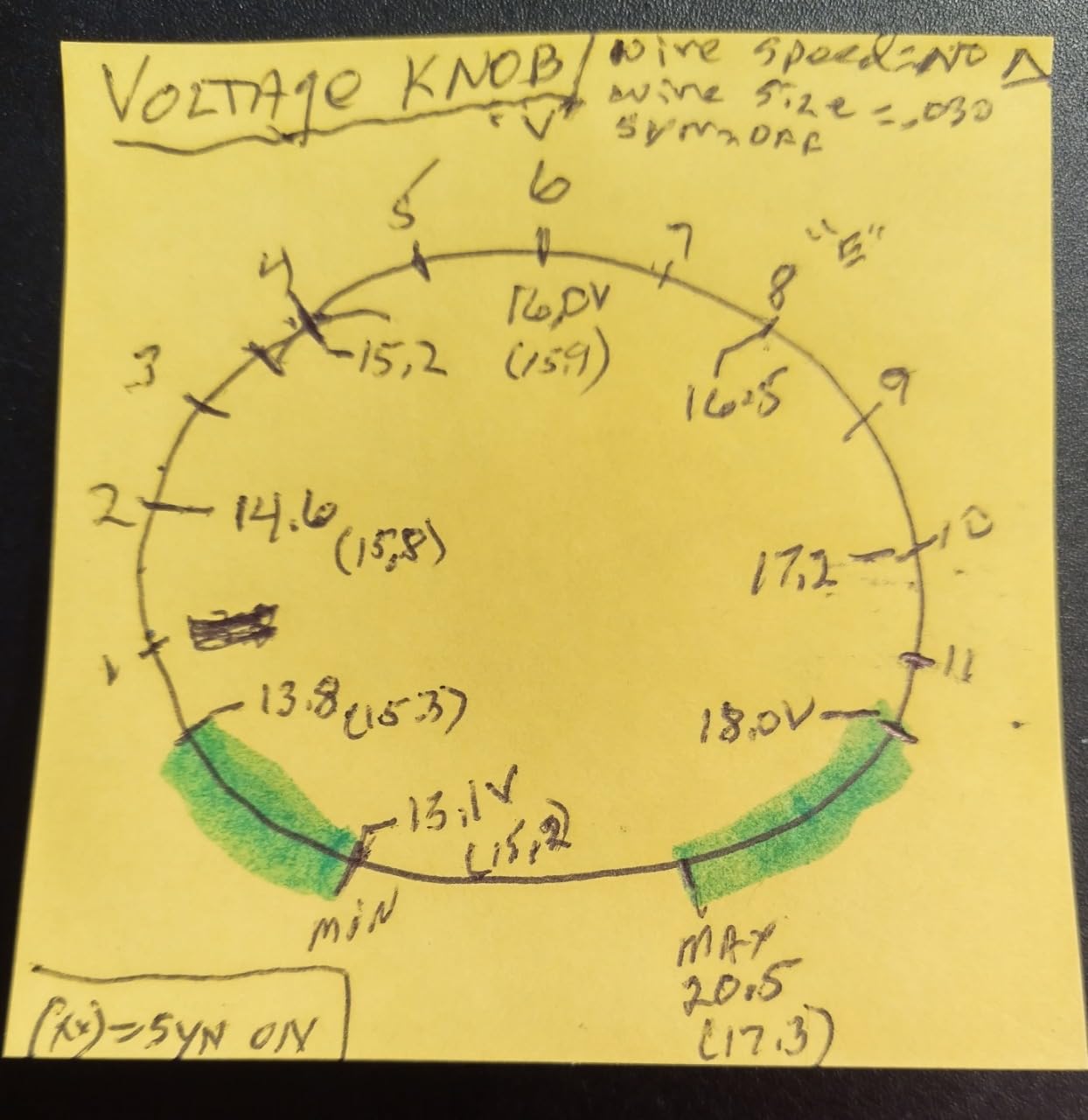
It uses a gasless flux core process with synergic control, and the voltage and wire speed knobs are laid out clearly enough for a beginner to manage without reading a manual twice. Capacity is 130 amps on mild steel up to about 3.0mm plate, which is 18 gauge territory, so it handles body panel work and light brackets comfortably.
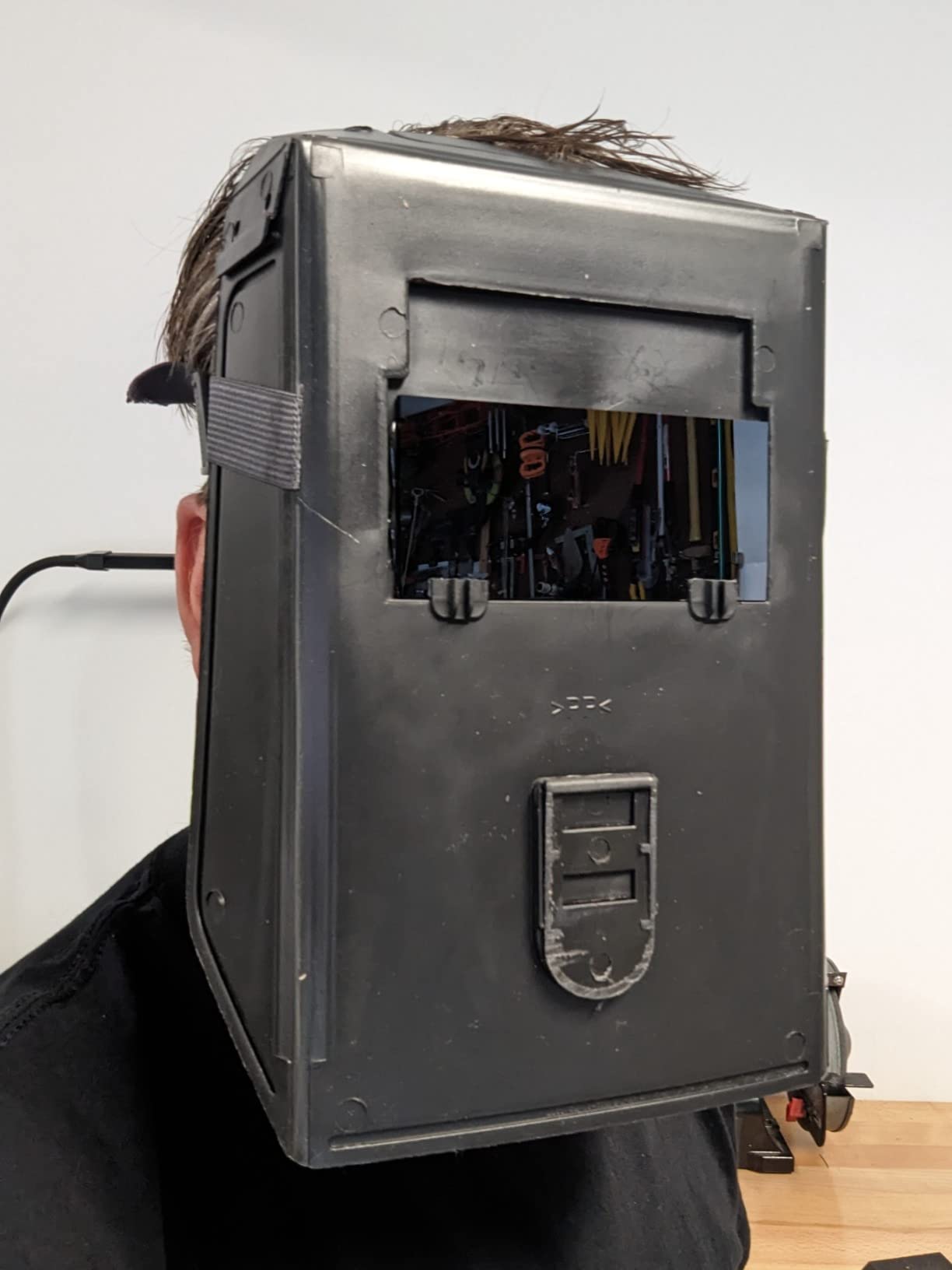
The box is well filled for the money: MIG torch, ground clamp, brush and chipping hammer, a pound of .030 flux core wire, and two contact tips. Overload and overheating protection are built in, so a beginner learning on it is not gambling on a failed machine mid-project. The hand grip keeps it manageable enough to move around a garage.
What you give up is headroom. The 3.0mm capacity ceiling means thicker material is out of reach, and the 2.2 lb spool limit is smaller than most competitors. Professional welders who tried it describe the results as serviceable for home use, which is the correct expectation to set.
Where the AZZUNO makes sense
It fits a specific person: someone who wants to learn wire feed welding on a budget, owns a residential circuit, and works on 20 to 24 gauge material plus occasional light steel. Nothing in the box requires a second purchase before the first weld, which is a real advantage when you are also buying a helmet and materials.
The synergic control also makes it a decent teaching machine. Rather than guessing, you set a pairing and watch the result change as you adjust, which builds the intuition that later lets you move to a manual machine.
When it is not enough
It is the wrong tool for 1/8 inch and thicker work, and the capacity ceiling is not adjustable. The 2.2 lb spool means more refills during a full day of welding, and the 1-year warranty is the shortest explicit term among the machines here, so a failure after a year falls on you.
If your plans include aluminum, stainless, or any structural fabrication, look at one of the multi-process machines below instead. This one has a single process and a single purpose.
6. HITBOX 200A 110V/220V 3-in-1 MIG Welder
HITBOX 200A MIG Welder, 110V/220V Flux Core MIG/Lift TIG/Stick 3-in-1
110V and 220V dual voltage
Up to 200A output
Welds mild steel up to 4.0mm
Synergic control, 8.6 pounds
Pros
- Dual 110V/220V operation widens where the machine can be used
- Up to 200A output supports .030 and .035 flux core wire
- Welds mild steel up to 4.0mm
- Very light with a built-in carrying handle
- Synergic control coordinates voltage and wire feed speed
- Clean beads with little spatter and quiet inverter operation
- Metal housing with over-current
- overload
- over-voltage and overheat protection
Cons
- Holds a 2 lb spool of wire only
- Stick-mode amperage runs roughly 20-30 percent below the displayed value
- Stick mode struggles with 6010
- 6011 or 7018 rods
- Instructions are hard to follow and after-sales support is thin
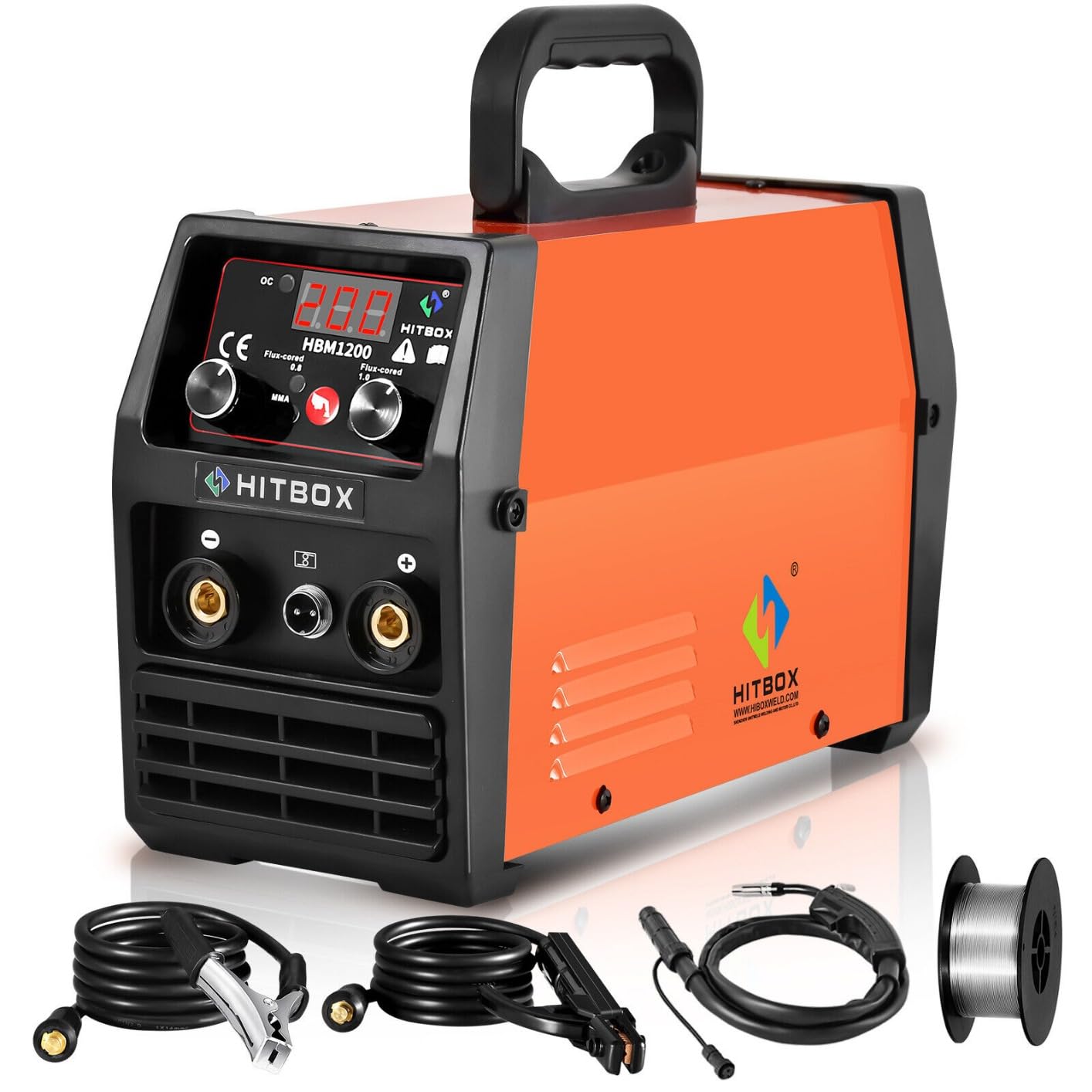
The HITBOX 200A stands out for one reason that has nothing to do with welding: it runs on both 110 and 220 volts. Most of this list is 110V only, and that limit is what forces a lot of home shop owners to buy a machine they will never outgrow but also cannot fully use. A dual voltage machine plugs into a household circuit for panel work and steps up when you move to something thicker.
Output goes to 200 amps, and it welds mild steel up to 4.0mm. It runs .030 and .035 flux core wire with synergic control that coordinates voltage and feed speed. Bead quality came out clean with very little spatter, and the inverter runs quietly, which is a nice change from the buzz of a transformer machine.
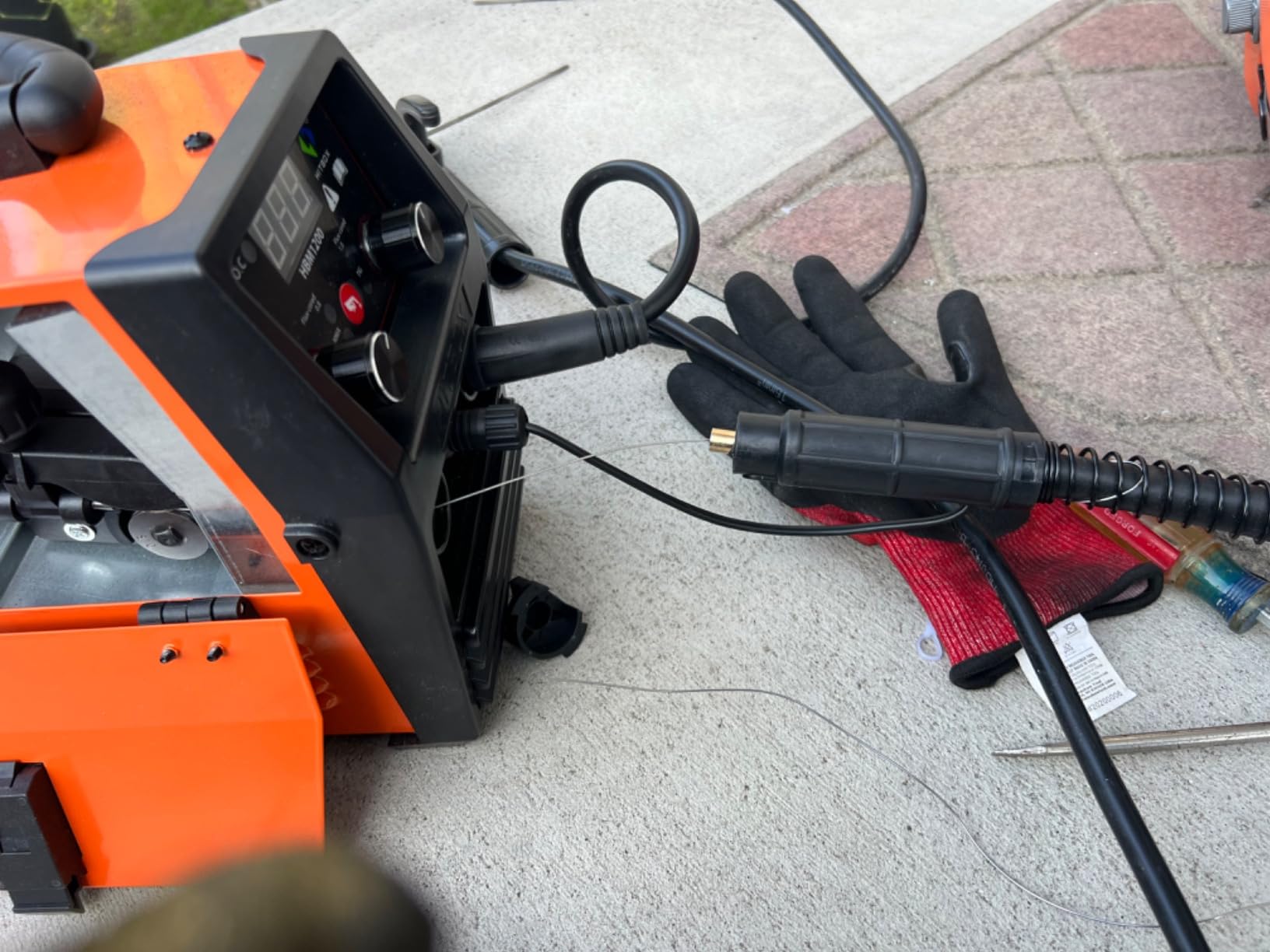
It is also the lightest machine in the group by the listed weight, at under 9 pounds with a built-in carrying handle. That matters more than the headline amperage when you are climbing into a vehicle or working in a crawl space. The metal housing and the four-way protection package are better than most in this category.
Buyers rate the flux core MIG side as more capable than expected and the dual voltage as the standout feature, with criticism concentrated on the stick function. Actual stick-mode amperage runs roughly 20 to 30 percent below the displayed value, and the stick arc struggles to stay lit with 6010, 6011, or 7018 electrodes at 3/32 inch.
Why dual voltage is worth paying for
If you have access to 220V in your shop, a dual voltage machine is the difference between owning a welder and owning half a welder. The panel work that motivates most purchases here happens on 110V, and the structural work that follows happens on 220V, and this machine covers both without a second purchase. It is a reasonable hedge against the limits of your own circuit panel.
It is also a good travel machine at under 9 pounds, with a handle built into the case. Between the two traits, it covers the mobile repair and the shop upgrade in one box.
What to watch out for
Treat it as a MIG machine with a bonus stick mode, not a four-way welder. The stick specification is optimistic relative to what it delivers, and the ground clamp is soft and warps quickly. Documentation is thin and after-sales support is limited, so plan to learn the controls from panel labels and practice coupons rather than a manual.
The 2 lb spool limit applies here too. For a machine with 200 amps of capability, the small spool is the most annoying thing about it.
7. bestarc MIG145 9GEN 145A 4-in-1 Dual Voltage Welder
Bestarc 145A MIG Welder, Flux Core/Gas MIG Stick Lift TIG Welding, 110/220V
4-in-1 gas MIG, flux core, lift TIG, stick
110/220V auto-detect
Solid wire MIG plus flux core
145A synergic inverter
Pros
- 4-in-1 gas MIG
- gasless flux core MIG
- lift TIG and stick
- 110/220V dual voltage auto-detects and shows the selected input
- Solid wire MIG gives noticeably cleaner and lower-spatter welds than flux core alone
- Synergic control plus +/-3V fine tuning
- Large LED display is clear and helpful
- Compatible with E71T-GS flux core and ER70S-6 solid wire
- Good quality ground clamp with thicker labeled copper cable
Cons
- Earlier machines shipped with a short 5.5 ft gun lead
- Some machines have plain V-groove drive rolls instead of knurled flux core rolls
- Spool holder tension is not adjustable and spring tension is too tight
- No TIG torch or gas regulator included
- Included push-on nozzle is solid-wire style
The bestarc MIG145 9GEN is the most capable machine on this list for sheet metal work, and the reason is solid wire. Flux core is forgiving outdoors and rough on thin material. Solid wire with a shielding gas blend produces a visibly cleaner, lower-spatter bead, and that difference is the whole game on a finished panel you plan to grind and paint.
It is also 4-in-1: gas MIG, gasless flux core MIG, lift TIG, and stick. Dual 110/220V voltage auto-detects its input and displays which one is active on the front panel, so you cannot accidentally weld thin panel on the wrong setting. The synergic control handles voltage matching with a plus or minus 3 volt fine tune for correction.
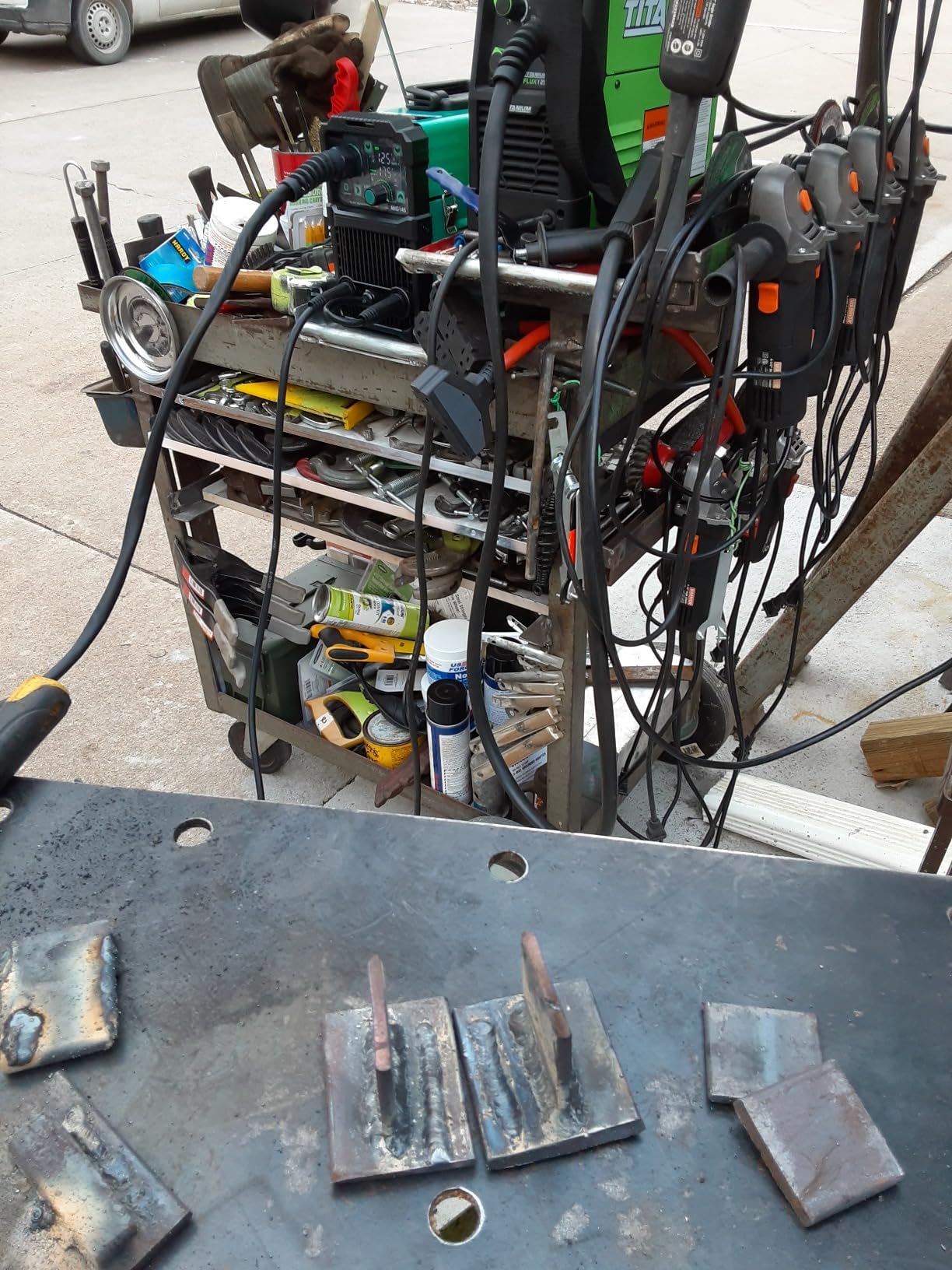
Wire compatibility is wide: .030, .035, and .040 flux core plus .030 solid wire, and it is rated for both E71T-GS and ER70S-6. The large LED display is clear, and owners specifically praise the ground clamp with thicker labeled copper cable, which is a better cable than most competitors include. A shoulder strap is included for moving it around.
Across 680 reviews it holds a 4.6 star average with good penetration reported on thicker work. Bestarc has an established reputation in affordable welding equipment, and this machine inherits it. If you can commit to buying a gas cylinder and a regulator, this is the one to buy for sheet metal.
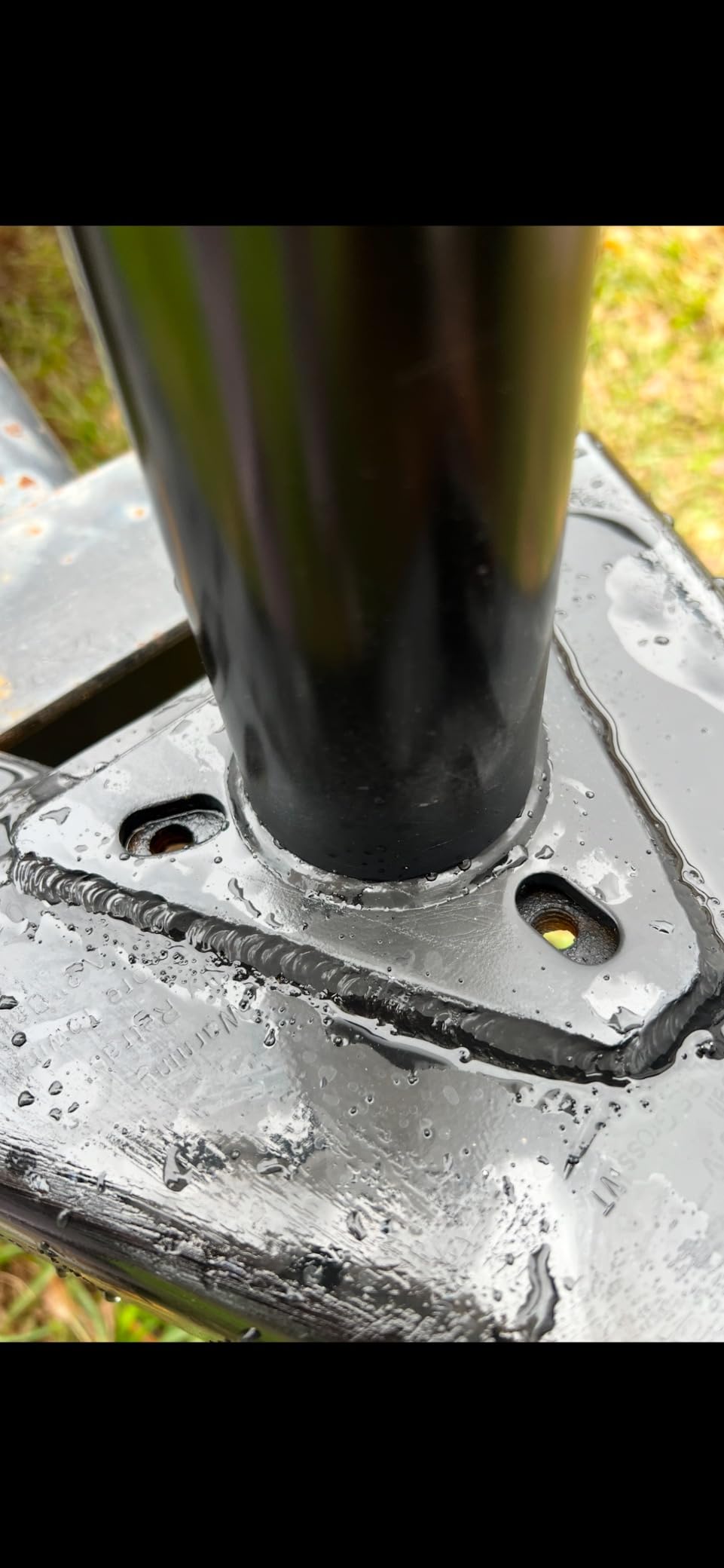
The case for gas MIG on sheet metal
Shielded MIG gives you a narrower, more predictable bead profile and far less cleanup than self-shielded flux core. On 24 and 22 gauge automotive skin, the ability to drop the amperage smoothly and hold a flat bead is worth the extra setup of a cylinder and a regulator. Owners report the lower spatter translates directly to less grinding time.
Having flux core as a fallback means the same machine still works on a rusty truck frame in a windy driveway when the gas runs low. That combination, gas plus gasless, is what no other machine here offers at this level.
What to check before buying
Ask about the gun lead length. Earlier machines shipped with a short 5.5 foot lead, and later revisions are longer, so the version matters. Also confirm the drive rolls are knurled for flux core, because plain V-groove rolls on some machines hurt arc stability. The spool holder tension is not adjustable and the spring runs tight out of the box.
No TIG torch and no gas regulator are included, and the push-on nozzle provided is solid-wire style rather than flux core. Budget for a regulator and a second nozzle set.
8. BESTMIG 135A 3-in-1 with Helmet and Gloves
BESTMIG 135A MIG Welder – 3-in-1 Flux Core Welder, MIG/Lift TIG/Stick Welding Machine – Portable IGBT Inverter – 110V with Welding Helmets and Gloves (Red Black, MIG 135A Welder)
135A output, welds to 1/8 inch
0.030 to 0.040 flux core wire
Automatic parameter adjustment
Full-color LED display
Pros
- Only major brand in this price band that includes an auto-darkening helmet and leather gloves
- Digital control automatically adjusts voltage and feed speed from current settings
- Full-color LED display shows welding parameters in real time
- True 135A output handling material up to 1/8 inch
- Handles .030 to .040 gasless flux core for stainless and carbon steel
- Weighs 10.71 lbs
- easy to move around
Cons
- TIG torch not included despite TIG mode being advertised
- Some machines arrived missing advertised accessories
- Reports of the flux core cable connector not fitting the machine
- Mixed reports on customer service follow-through
The BESTMIG 135A solves a problem the other machines here do not: a first-time buyer needs an auto-darkening helmet and gloves, and those are two more purchases before you can weld. This one ships with an auto-darkening helmet that converts to goggles, leather gloves, a ground clamp, an electrode holder, a welding torch, a wire brush, and flux core wire. The savings add up faster than most people expect.
Underneath, the control is digital and adjusts voltage and feed speed automatically based on your current setting. The full-color LED display shows welding parameters in real time rather than a single numeric readout, which gives better feedback while you are learning. Output is a true 135 amps, handling material up to 1/8 inch, and it takes .030 to .040 gasless flux core wire for stainless and carbon steel.
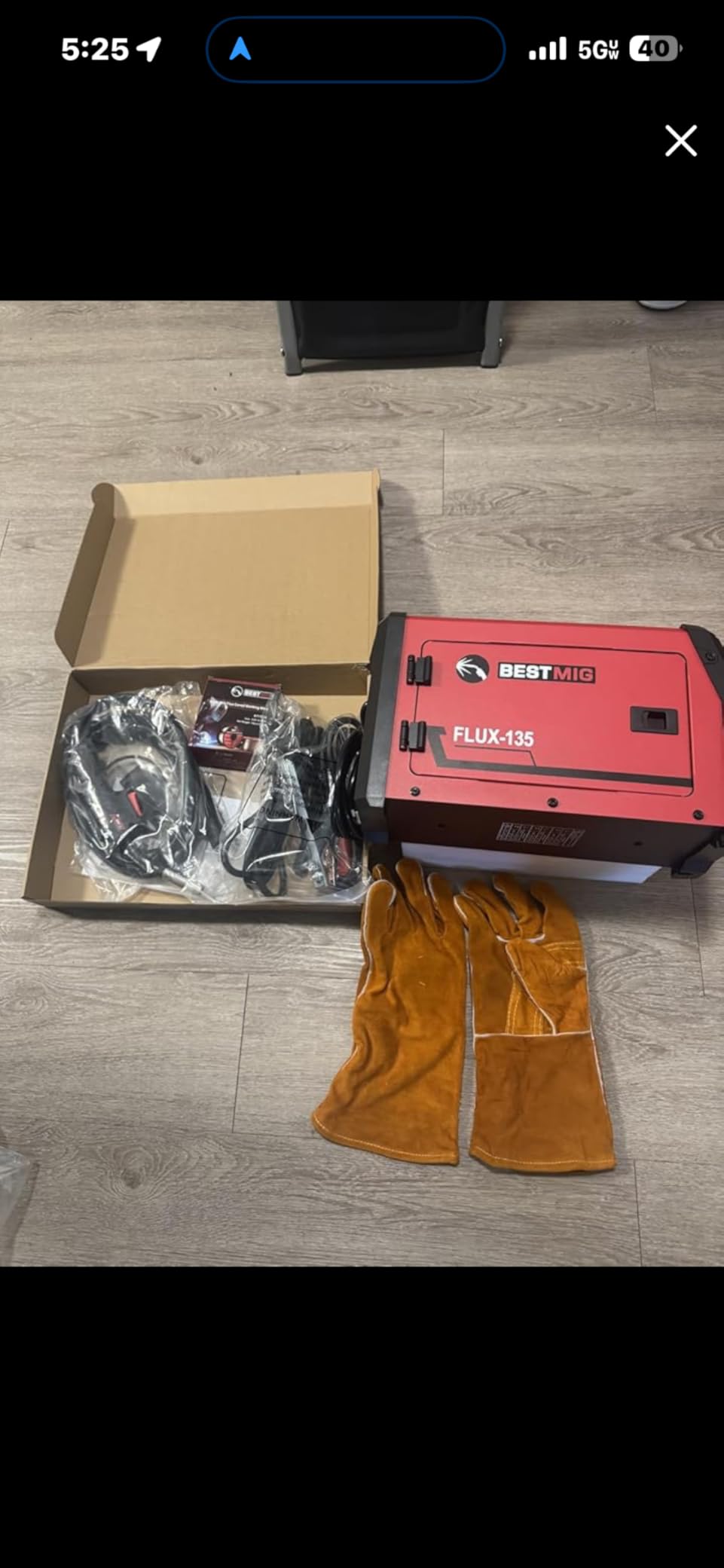
At 10.71 pounds it moves easily, and across 442 reviews it holds 4.6 stars. The digital parameter display is the feature owners single out most, along with the fact that the machine is usable out of the box. For a beginner, having a helmet that fits correctly and gloves that are actually leather removes the two most common early mistakes.
The rating spread is worth reading carefully, because the complaints are not about welding. They are about fulfillment. A meaningful share of reviews describe arriving without the advertised accessories, and some report that the flux core cable connector does not fit the machine. Check the package contents the moment it arrives.

Who should buy this one
Buy it if you are starting from nothing: no helmet, no gloves, no wire, no brush. It is also a good gift, because a beginner cannot weld in a meaningful way without proper eye and hand protection, and a bundled helmet converted to goggles is a reasonable place to start before you buy a professional one.
The .030 to .040 wire range and the 1/8 inch capacity make it a step above the smallest machines here, and the digital display helps a new welder learn faster than a knob would.
Where the caution lies
TIG mode is advertised but the torch is not included, so treat that as a two-process machine rather than three. The accessory fulfillment issues are real enough that you should inspect contents on arrival, and the cable connector reports mean you should confirm the torch connection before you strip the machine for panel work.
Customer service follow-through on missing items is described as inconsistent, which is worth knowing if you are relying on replacements arriving quickly.
9. FEMEROL MIG130R 130A 2-in-1 Flux Core and Stick Welder
FEMEROL MIG Welder,2 in 1 Flux core/Stick Welder,130Amp 110V Gasless MIG Welding Machine with Synergy IGBT Inverter Welder Portable Wire Feed Welder
130A output, welds to 4.0mm plate
Synergic plus manual mode
9 pounds with hand grip
Two-year guarantee
Pros
- Lowest cost option in this group with a two-year guarantee
- 2-in-1 gasless flux core MIG plus MMA stick
- Synergic mode auto-matches voltage and wire speed with manual override available
- Weighs 9 lbs with a hand grip
- Includes welding mask
- gloves
- brush
- wire and contact tips
- Works on an ordinary outlet and even off a 15 ft extension cord
Cons
- Included mask and gloves are basic and poorly made
- Stick function is hard to get working for some users
- Leaves noticeable spatter on flux core welds
- Handles only 2.2 lb wire rolls
The FEMEROL MIG130R is a two-process machine rather than a three or four, and that is a deliberate trade. Flux core gasless MIG plus MMA stick covers the two things most home shops and farm repair work actually need, and the two-year guarantee is longer than the warranty on several more expensive machines here.
Capacity is 130 amps on mild steel up to 4.0mm plate, which is thicker than most of the budget machines on this list and comparable to the HITBOX. Synergic mode auto-matches voltage and wire feed speed, but manual mode is available when you want to override it, which is a courtesy few entry-level machines bother with.
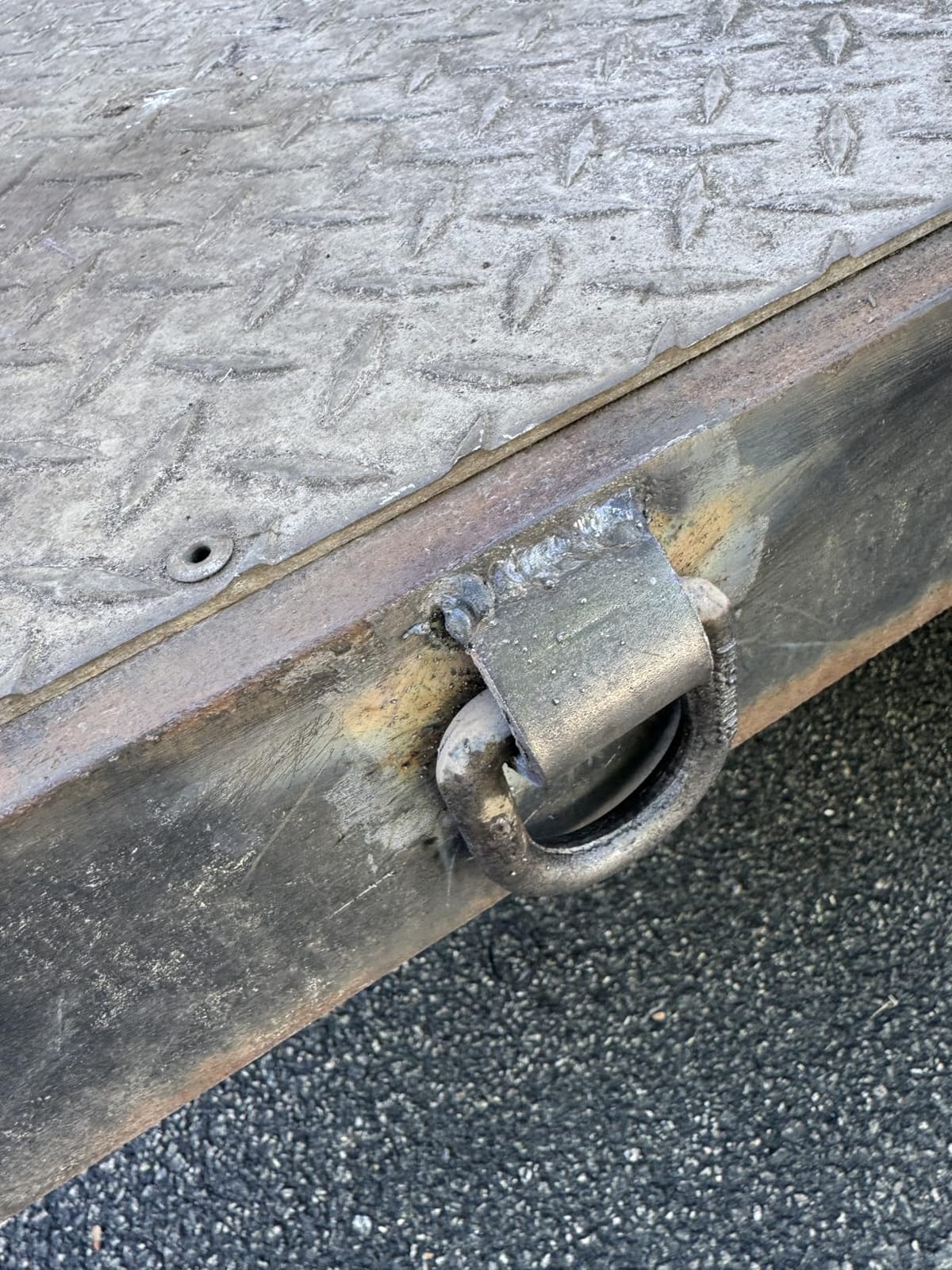
At 9 pounds with a hand grip it is genuinely portable, and owners report that it runs on an ordinary household outlet and even off a 15 foot extension cord, which is more than most 130 amp machines can promise. The package includes a welding mask, gloves, brush, wire, and .030 and .035 contact tips with nozzles, so the setup is complete on paper.
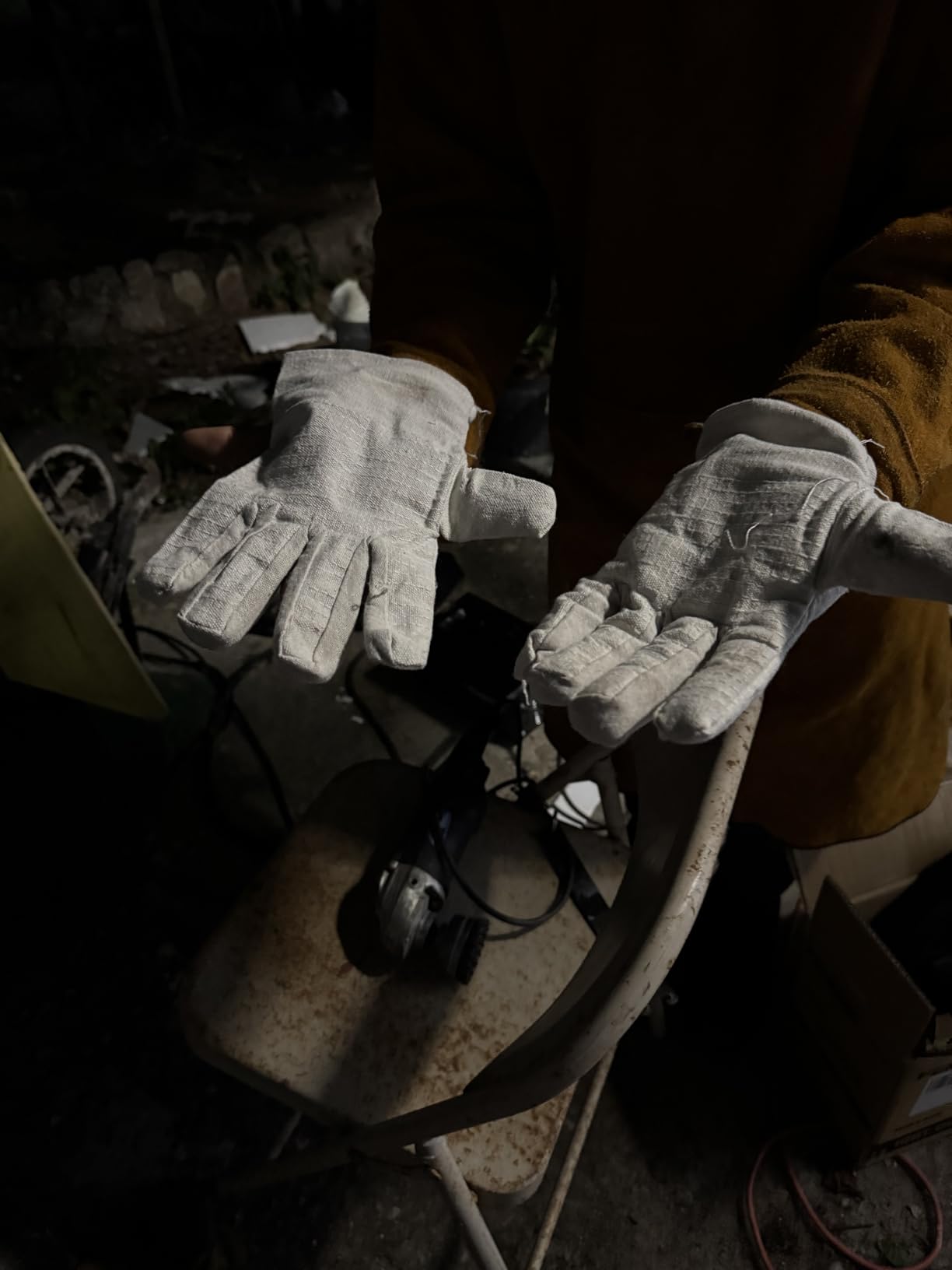
Across 297 reviews it holds 4.5 stars, and professional welders report the weld quality is serviceable for home use. The consistent complaint is not the machine but the bundled mask and gloves, which are described as basic and poorly made, with the gloves flagged as a potential fire risk. Treat those two items as a starting placeholder and buy proper gear.
Where it earns its place
It fits a shop that welds sheet metal and does occasional structural work with stick. Having both processes in one box means you are not buying a separate stick machine for a gate post or a trailer hitch. The 4.0mm plate capacity also gives you room above the sheet metal range without changing machines.
The manual override alongside synergic mode is useful if you already know what you are doing, and the two-year guarantee reduces the risk on a first purchase.
What to avoid or plan around
Do not weld with the included gloves. Owners describe them as poorly made and a potential fire risk, and the mask is hard to see through. Budget for a proper auto-darkening helmet and leather gauntlet gloves before the first arc.
Flux core welds carry noticeable spatter according to owner feedback, so expect more cleanup than a gas MIG machine. The stick function is reported as hard to get working properly by some users, and the 2.2 lb spool limit remains the most common annoyance.
10. Lincoln Electric 90i MIG and Flux Core Weld-Pak
Lincoln Electric 90i MIG and Flux Core Wire Feed Weld-PAK Welder, 120V Welding Machine, Portable w/Shoulder Strap, Protective Metal Case, Best for Small Jobs, K5256-1
Flux core to 1/4 inch, solid MIG to 3/16 inch
Plugs into any 120V source
Shoulder strap and metal case
Gas regulator included
Pros
- Lincoln Electric brand quality with the highest five-star share in this group
- Works on any 120V power with no dedicated circuit needed
- Runs flux core wire up to 1/4 inch and solid MIG wire up to 3/16 inch
- Light inverter design with shoulder strap for mobile work
- Simple two-knob control for wire speed and voltage
- Infinite welding voltage for fine-tuning weld characteristics
- Complete accessory kit with Harris gas regulator and protective metal case
Cons
- Most expensive machine in this roundup
- No stick or TIG capability
- Basic two-knob interface instead of a synergic digital panel
The Lincoln Electric 90i Weld-Pak is the brand-name option, and the difference shows up in details rather than headline specifications. It has the highest five-star share in this group at 82 percent, it plugs into any 120V source with no dedicated circuit, and it runs both flux-cored wire up to 1/4 inch and solid MIG wire up to 3/16 inch. That solid wire capability is what makes it a genuine sheet metal machine rather than a farm repair tool.
The controls are deliberately simple: two knobs for wire speed and voltage, with infinite voltage fine-tuning. There is no synergic panel and no display. For a beginner, that is a disadvantage. For anyone who has welded before, it is a feature, because the machine does exactly what you tell it to without a menu to navigate.
The accessory bundle is the strongest here. You get a gun with 10 foot cable, three contact tips (.025, .030, and .035), both a gasless nozzle and a gas nozzle, dual track drive rolls for MIG and flux core, a Harris gas regulator, and a ground clamp with 6 foot cable. The protective metal case and shoulder strap make it a take-it-to-the-job machine. The 10 foot gun lead is also the longest of any in this group.
Owners consistently cite build quality, smooth inverter operation, and the completeness of the kit. The metal case is a genuine advantage if you store the machine in a pickup bed or a damp shed, and dual track drive rolls mean the machine can switch between solid and flux core wire without a conversion kit.
Why the 90i is worth the premium
The 82 percent five-star share is not marketing noise. Owners report a machine that works the same on the tenth month as on the first, that fits in a shoulder strap, and that has parts and support available through an established dealer network. If you weld weekly rather than occasionally, that reliability compounds faster than any specification on this list.
Including a Harris gas regulator is quietly a significant decision. It is the piece most beginners forget to buy, and having it in the box means you can run solid wire with a gas blend immediately rather than after a separate supply run.
What you give up
It is wire feed only, with no stick and no TIG mode, so it is not the right machine if you want to weld aluminum or stainless thin sheet with a spool gun. The two-knob interface is basic by design, and there is no display to tell you what the machine is doing.
It is also the most expensive machine in this roundup, and you are paying partly for the brand name and the accessory bundle. If you weld a few times a year, a budget machine serves you better. If you weld weekly and want a machine that lasts, this is the one.
How to Choose a Wire Feed Welder for Sheet Metal
Start with the material, not the machine. If your work is 22 to 24 gauge automotive skin, you need low-end amperage control and preferably .023 wire, and most of the budget machines here do not offer either. If your work is 16 gauge trailer skin and light structural steel, the capacity ceiling matters more than fine control. Write down your thinnest and thickest material before you read a single spec sheet.
Low-end control matters more than maximum amperage. Headline numbers are marketing. What decides a panel weld is how finely you can reduce voltage and wire feed speed near the bottom of the range. A machine with infinite voltage control lets you back off in tiny steps; a stepped selector forces you to choose between two settings that are both wrong. The Forney is the clearest example of why this matters.
Check duty cycle at the amperage you will actually use. A 140 amp machine rated for 140 amps at 25 percent duty cycle is a 35 amp machine for 25 percent of the time. For panel work in a residential shop, look at what the machine can sustain in the 60 to 90 amp range, not its peak.
Decide on gas or gasless early. Gasless flux core needs no cylinder, regulator, or refills and works outdoors in wind, but it runs hotter, spatters more, and will not weld aluminum. Solid wire with a 75/25 argon and CO2 blend gives a cleaner bead but requires a cylinder and a regulator, and the bestarc and Lincoln 90i are the two machines here that do it well.
110V versus 220V. Most machines here run 110V only, which covers sheet metal fine. The advantage of 110V is access, and the disadvantage is the ceiling: roughly 3/32 to 1/6 inch of mild steel before the machine is at its limit. Dual voltage machines such as the HITBOX and bestarc remove that ceiling if your shop has a 220V circuit available.
Weight and wire drive. Auto body work means carrying the machine into a vehicle, so 11 to 12 pounds with a strap beats 22 pounds every time. The metal wire drives in this group hold up better than plastic ones, and a machine that takes 10 lb spools will save you a trip to the hardware store every few hours.
If you are still building out the shop, our guide to the best sheet metal brakes covers the forming side of the same kind of project.
How to Weld Sheet Metal with a Wire Feed Welder
This is the sequence that worked for us on 20 to 24 gauge mild steel. Follow it in order and the first bead will be closer to where you want it.
Set up the machine. Load .030 flux core wire for 20 gauge and thicker, or .023 solid wire with gas for 24 gauge and finer. Set polarity for your process, then start with the synergic setting or a manufacturer baseline and adjust from there.
Prepare the workpiece. Grind or sand 1 to 2 inches back from the joint on each side, remove paint, rust, and oils, and leave a bright metal surface. Clean filler metal matters as much as clean base metal.
Set the gap. For 24 gauge, roughly 1/16 inch. For 20 to 18 gauge, 1/8 inch. A wider gap lets you lower the wire feed speed and reduce heat, which is how you prevent burn-through.
Test on scrap. Weld a 3 to 4 inch coupon of the same gauge, then grind it flush. Judge penetration, spatter, and bead profile there, not on your part.
Clamp for heat control. Use more clamps than you think you need, work in short passes, and step back to let the part cool. Heat sinks made of copper or aluminium are the cheapest burn-through prevention available.
Hold a consistent stickout. Keep 1/4 to 3/8 inch of wire out of the contact tip. Longer stickout preheats the wire and widens the bead, which makes heat control harder.
Watch the puddle, not the machine. On thin sheet, pause in the crater at the end of each pass. That pause is the difference between a clean weld and a hole.
Push or pull depends on the process. With MIG and shielding gas, push the gun. With self-shielded flux core, drag the gun. Mixing them up is a common cause of an unstable arc and heavy spatter.
Wire Size, Gas, and Settings by Sheet Metal Gauge
Here are the starting points we used during testing. Treat them as a baseline, not a rule, and adjust by ear and by eye.
24 gauge (0.5mm) auto body skin: .023 solid wire with a 75/25 argon and CO2 blend, or .030 flux core at the bottom of the feed range. Highest wire feed speed, lowest voltage that will still fuse the edge. Expect to lower the amperage until the puddle just wets the surface.
22 gauge (0.7mm) body panels: .023 solid wire with C25 gas is the body shop standard for a reason. In gasless, use .030 flux core with the wire feed at the low end and be ready to trim voltage continuously.
20 gauge (0.9mm) panels: .030 solid wire with C25, or .030 flux core. This is the gauge where the budget machines in this roundup are most comfortable and where burn-through risk drops.
18 gauge (1.2mm) exhaust and trailer skin: .030 solid wire with C25, or .030 flux core at normal feed speed. Most 130 to 140 amp machines handle this without strain.
Stainless sheet: .030 ER70S-6 solid wire with a tri-mix or 98 percent argon and 2 percent oxygen blend. Stainless needs clean work and the right trim mix; the wrong gas will leave a dingy, brittle-looking bead.
Aluminum sheet: .030 ER4043 or ER5356 solid wire with 100 percent argon, and you need a spool gun. None of the ten machines here is spool gun ready except as a combined gas MIG unit, so plan on buying a separate spool gun machine for aluminum.
On burn-through specifically: the fix is almost always less heat, not more technique. Lower the wire feed speed first, then trim voltage, then check your stickout, and only then consider adding a heat sink or backing plate.
MIG vs Flux Core vs TIG for Sheet Metal
Choose gas MIG when the work is finished sheet metal. Clean bead, low spatter, precise control at low amperage. The cost is a cylinder, a regulator, and indoor or sheltered work.
Choose flux core when the work is repair, outdoor, or unfinished. No gas logistics, works in wind, handles rusty and dirty metal. The cost is more spatter, more heat, and less control on the thinnest material.
Choose TIG when appearance and non-ferrous metals dominate. TIG gives the cleanest, most control heat input of any of the three, and it is the only practical option here for aluminum sheet. It is also the slowest and requires the most skill.
On strength: a properly executed flux core or MIG weld in 16 to 18 gauge steel is fully as strong as a stick weld for repair work, because the design thickness of the base metal governs strength, not the process. A thin sheet weld is strong in proportion to the sheet, which is why reinforcement and a second bead matter more than process choice.
Common Sheet Metal Defects and How to Fix Them
Burn-through. The puddle is larger than the metal under it. Reduce wire feed speed, reduce voltage a step, check the gap is wide enough, and add a heat sink or backing bar. On panels, weld from the edges inward rather than in one pass.
Warping and distortion. Heat is unevenly distributed. Clamp strategically near the joint, use more clamps than expected, step back to cool, and weld in short segments. For a visible panel, a spreader bar across the frame buys more than any setting change.
Spatter. Usually too much voltage for the wire feed speed, or flux core running with too much wire extension. Bring voltage down to match feed speed, shorten stickout to 1/4 inch, and clean the nozzle with a wire brush between passes so spatter does not arc back to the gun.
Porosity. Bubbles in the bead, caused by gas in the metal or shielding that is not protecting the arc. Grind the area clean, verify the gas bottle is not empty or contaminated, check that the gun lead is not kinked, and slow your travel speed so the puddle can cover.
Undercut. The arc is digging into the base metal along the toe of the bead. Increase stickout slightly, increase voltage a small step, reduce travel speed, and clean the edge before welding. A small grinder burr along the joint before welding prevents most undercut.
Clean the gun between sessions. Run a wire brush through the nozzle, check the contact tip for a worn opening, and wipe the drive rollers. A draggy feed rolls behind a hot tip is the root cause of most wire feed problems people attribute to the machine.
Frequently Asked Questions
What welder is best for sheet metal?
A synergic gasless flux core MIG with plus or minus 3V fine trim is the best starting point for a first machine on 20 to 24 gauge steel. If you want the cleanest bead on finished panel work, a machine that also runs solid wire with a 75/25 argon and CO2 blend is the better choice.
What gas do you use with a wire feed welder?
For mild steel sheet, use 75 percent argon and 25 percent CO2, commonly called C25. For stainless, use a tri-mix or 98 percent argon with 2 percent oxygen. For aluminum, use 100 percent argon with ER4043 or ER5356 wire. A gasless flux core machine needs no shielding gas at all.
What is the best wire size for MIG welding sheet metal?
Use .023 wire for 24 gauge and 22 gauge automotive panel work, and .030 wire for 20 gauge and thicker. For gasless flux core, .030 is the practical minimum and .035 or .040 suits thicker material. Many budget machines only accept .030 and above.
Do you push or pull a wire feed welder?
Push the gun when MIG welding with shielding gas, and pull or drag the gun when using self-shielded flux core wire. Using the wrong direction causes an unstable arc and heavy spatter.
Is sheet metal hard to weld?
Sheet metal is harder than thick plate because heat removes material faster than it can replace it. The difficulty is manageable with three habits: control wire feed speed rather than only voltage, weld with a wider gap, and clamp the workpiece well to limit distortion.
Final Verdict on the Best Wire Feed Welders for Sheet Metal in 2026
For most people buying one machine, the FORNEY Easy Weld 140 is the pick: infinite voltage control, a large owner base, and 10 lb spool capacity. If you want solid wire with gas for a cleaner finished bead, buy the bestarc MIG145 9GEN and add a regulator. If you are starting with nothing at all, the BESTMIG bundle gets you welding with proper protection on day one. Whichever route you take, the machine matters less than a wide gap, good clamps, and practice on scrap of the same gauge. Test coupons are cheaper than panels.