
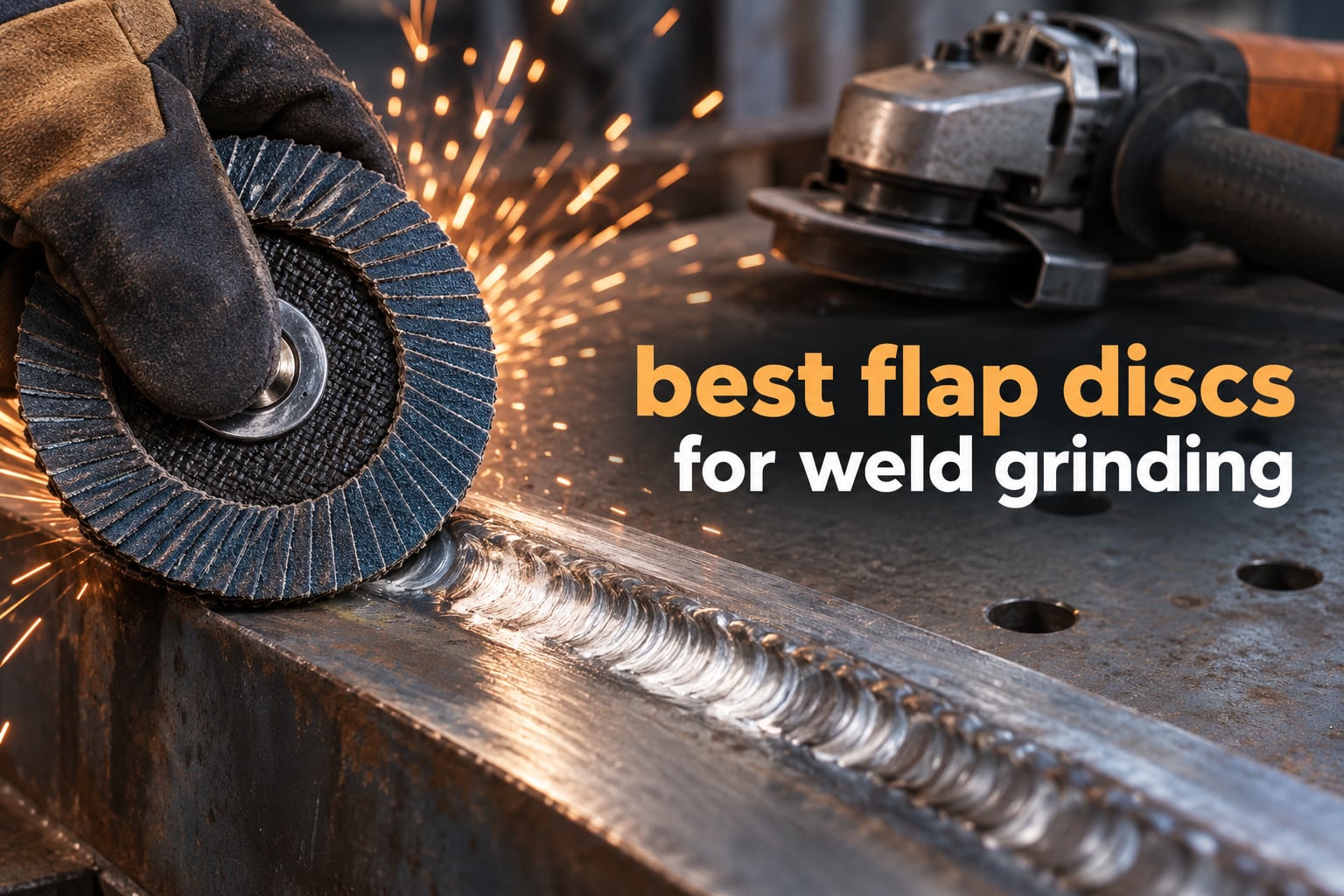
Short answer for grit: use a 40 grit flap disc to knock a weld bead down, a 60 grit to blend it, and an 80 or 100 grit to finish it. That three-step ladder is what most shop work actually needs, and it is why the best flap discs for weld grinding are the ones that hold a cut rate at 40 grit and then have a sibling disc in a finer grit waiting in the box.
A flap disc is a wheel made of dozens of overlapping abrasive flaps bonded to a fiberglass backing plate. You push it on and the flaps stand proud of the backing; under pressure they snap flat so fresh, sharp grain touches the metal, and worn grain keeps being exposed until the flap wears back to its backing. That construction is why a flap disc removes metal nearly as fast as a grinding wheel but leaves a surface you can actually paint over.
We picked ten of the most-reviewed discs in this category, lined them up against the tasks that decide a weld job, and checked what each one does well and where it falls down. The shortlist covers everything from multi-grit starter packs to ceramic-grain shop discs and radial discs shaped for fillet welds. If you also do the final surface prep with a belt machine, our guide to combination belt disc sanders fits the same workflow.
Top 3 Flap Disc Picks for Weld Grinding in 2026
Three products earn the shortcut. The S SATC 20-piece zirconia set wins on the sheer number of jobs it covers, the EZARC 40 grit pack wins on cut rate per dollar, and the NEIKO 120 grit pack is the one to have on the grinder when the weld is already flat and only the finish needs work.

S SATC 20PC 40/60/80/120 Zirconia Set
- Multi-grit 20 piece assortment
- Type 29 bevel
- Fiberglass backing
- 13300 RPM rated

EZARC 40 Grit Zirconia Type 29 10-Pack
- 40 grit coarse
- Zirconia alumina
- Type 29 bevel
- 10 pack

NEIKO 11145A 120 Grit Zirconia 10-Pack
- 120 grit fine finish
- Type 29 bevel
- Fiberglass backing
- 10 pack
Best Flap Discs for Weld Grinding in 2026: Quick Overview
All ten discs below are 4-1/2 inch or 5 inch wheels with a 7/8 inch bore, so they suit the small and midsize angle grinders most shops and garages own. The last row of the buying decision is the thread, and that is covered further down in the fit section.
| Product | Specifications | Action |
|---|---|---|
| S SATC 20PC 40/60/80/120 Zirconia Set |
|
Check Latest Price |
| EZARC 40 Grit Zirconia Type 29 10-Pack |
|
Check Latest Price |
| NEIKO 11145A 120 Grit Zirconia 10-Pack |
|
Check Latest Price |
 SALI 60 Grit Type 29 Zirconia Flap Disc SALI 60 Grit Type 29 Zirconia Flap Disc |
|
Check Latest Price |
 PFERD POLIFAN-CURVE Ceramic Oxide 60 Grit PFERD POLIFAN-CURVE Ceramic Oxide 60 Grit |
|
Check Latest Price |
 Merryland 60 Grit T29 5 Inch Flap Disc Merryland 60 Grit T29 5 Inch Flap Disc |
|
Check Latest Price |
 3M 769F 40+ Type 27 Ceramic Flap Disc 3M 769F 40+ Type 27 Ceramic Flap Disc |
|
Check Latest Price |
 PRVEW Assorted 40/60/80/120 Grit 5-Pack PRVEW Assorted 40/60/80/120 Grit 5-Pack |
|
Check Latest Price |
 FOXBC 40 Grit Type 29 Zirconia 10-Pack FOXBC 40 Grit Type 29 Zirconia 10-Pack |
|
Check Latest Price |
 PFERD POLIFAN-CURVE 40 Grit 5 Inch Pack of 2 PFERD POLIFAN-CURVE 40 Grit 5 Inch Pack of 2 |
|
Check Latest Price |
1. S SATC 20-Piece Zirconia Set — the All-Grits Box
S SATC 20PCS Flap Discs 4 1/2 for Angle Grinder 40/60/80/120 Grit Flap Disc High-Density Bevel Type Angle Grinder Sanding Disc Abrasive Flap Disk #29
Four grits in one box
T29 bevel
Fiberglass backing
13300 RPM
20 pieces
Pros
- One box covers 40 to 120 grit
- High-density zirconia cuts paint and rust quickly
- Fiberglass backing reduces vibration and smearing
- Strong value per disc against single-disc packs
Cons
- Mix skews coarse with only two 120 grit discs
- Heavy pressure on hardwood causes clogging
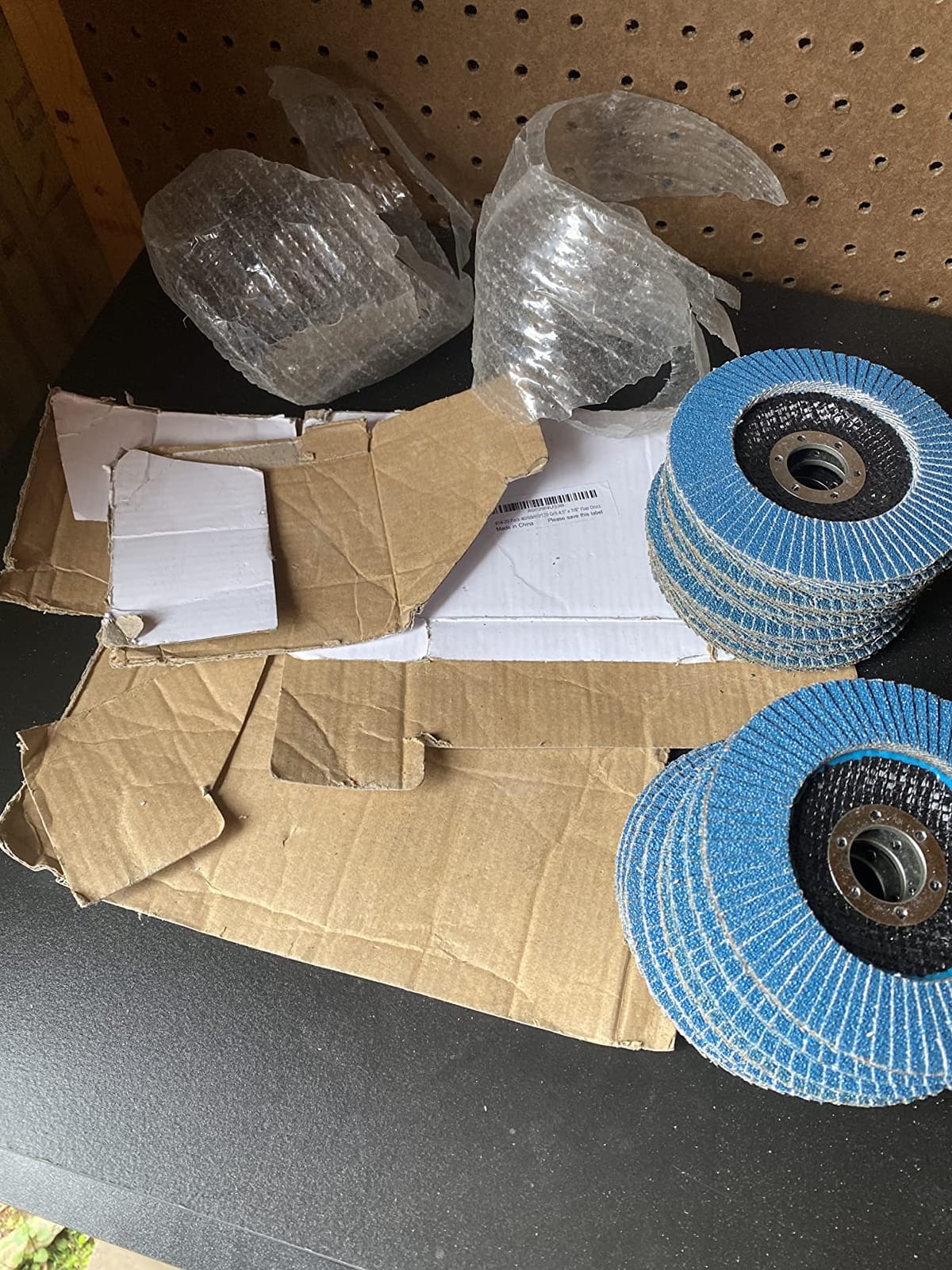
- Occasional reports of items arriving damaged
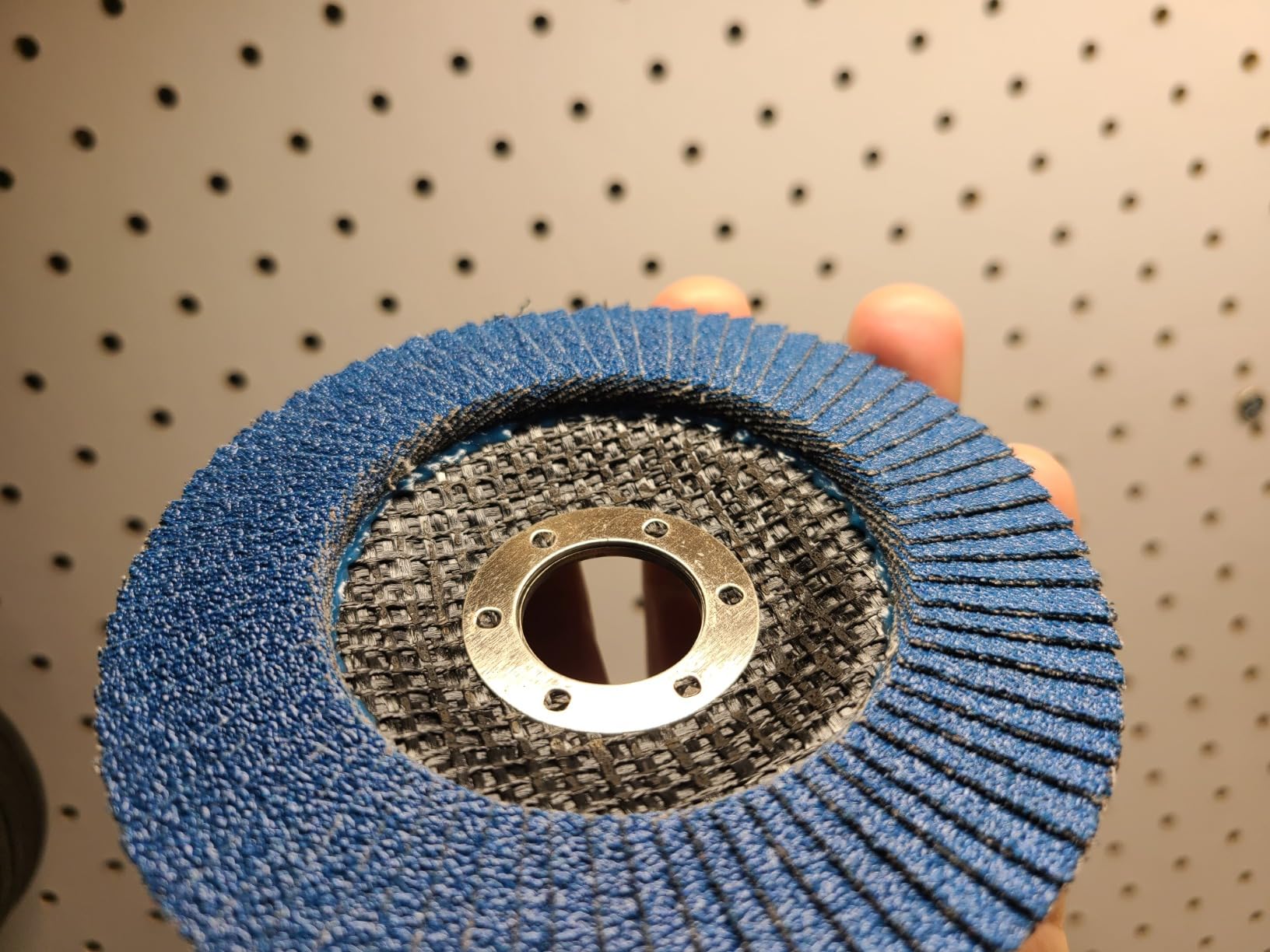
This is the box that removed the friction from our own grind-down jobs. It contains ten 40 grit, five 60 grit, three 80 grit and two 120 grit discs, so a single purchase covers the entire grit ladder instead of forcing a second order halfway through a job.
On tack welds and spatter the 40 grit discs chewed through bead reinforcement quickly, and the fiberglass backing plate kept the vibration down enough that we could hold a consistent angle on a flat seam. On a scuffed steel handrail the 60 grit left a surface that took paint without further work.
The construction is T29 bevel, which puts the working surface at a shallow angle to the workpiece and makes the disc easier to control on an edge or a partially ground bead. Reviewers also point out that the same abrasive handles wood, concrete and stone, which is useful if your shop is not dedicated to metalwork.
The catch is the ratio of grits. Because the box is weighted toward coarse discs, you will run out of 40 grit long before you run out of 120 grit, and pushing a coarse disc hard on hardwood makes it clog or burn. A few buyers also report boxes arriving with a damaged or missing disc.
What to check before you buy
Confirm your grinder takes a 4-1/2 inch wheel with a 7/8 inch bore and is rated to 13,300 RPM, which is the speed printed on these discs. The 7/8 inch bore covers both the common 7/8 inch and 5/8-11 thread grinders through the usual step-down washer arrangement.
Where it falls short
If you do mostly fine finishing, this assortment is wasteful because only two discs are 120 grit. For a shop that grinds a lot of wood, buy a separate finishing disc for that, since the coarse discs in this box are not built for it.
2. EZARC 40 Grit Zirconia Type 29 — Fastest Cut in the Set
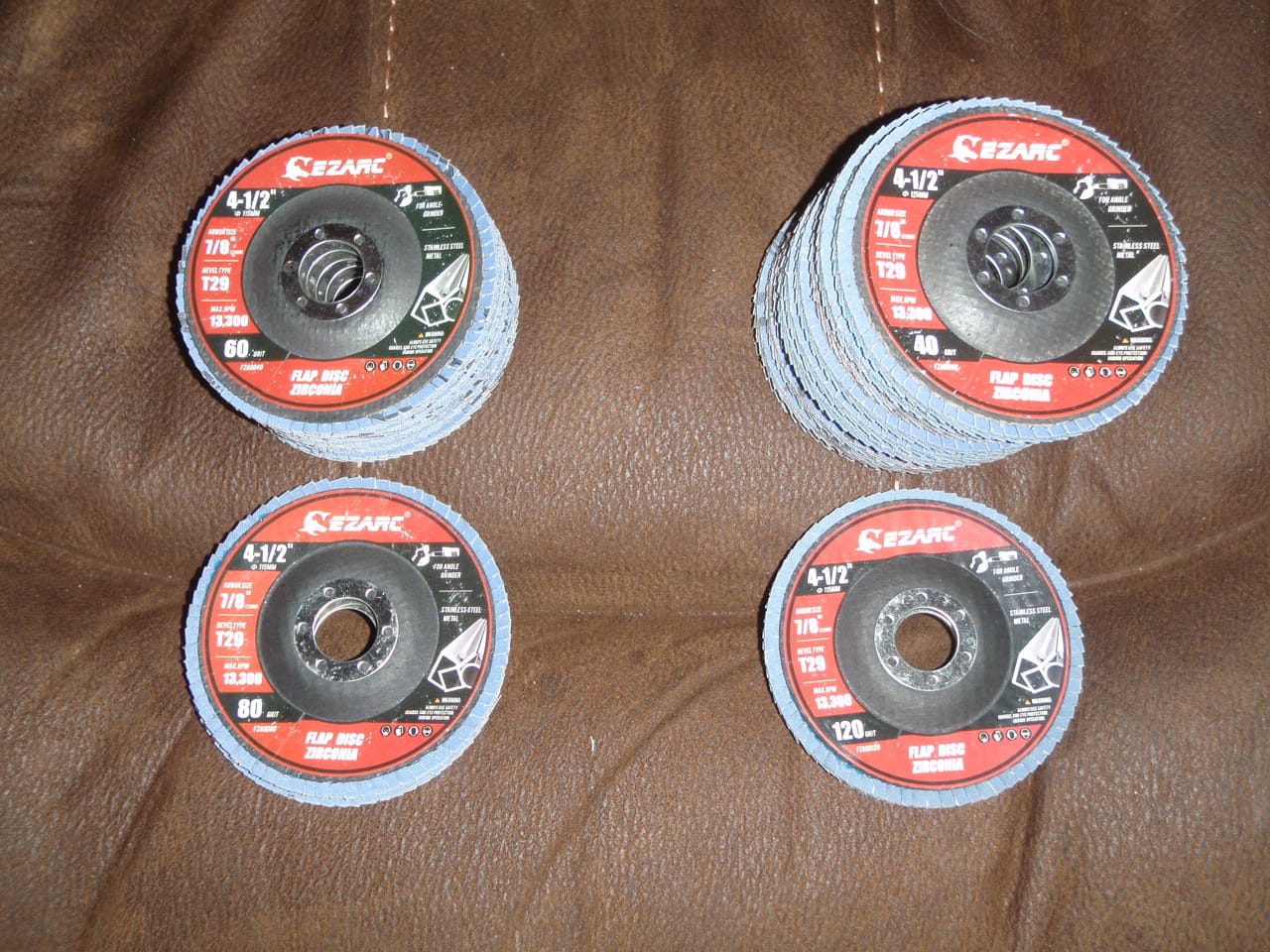
EZARC Zirconia Flap Discs 40 Grit, 4-1/2 x 7/8-Inch, Type 29, 10-Pack
40 grit coarse
Zirconia alumina
Type 29 bevel
7/8 inch arbor
13300 RPM
Pros
- Very fast metal removal
- Cut rate holds up on stainless and aluminum
- Useful for beveling and sharpening work
- Low per-disc cost in a 10 pack
Cons
- Disc life shorter than premium brands
- Gums up on aluminum
- Not industrial-duty durability
When the job is weld reinforcement removal, this is the disc we reach for first. The 40 grit zirconia alumina grain is genuinely aggressive, and the Type 29 bevel works at a 15 to 20 degree working angle, which gives it reach on the shoulder of a fillet and along an edge.
Reviewers use it for exactly the grind-down stage: taking a proud bead to the plate, knocking back spatter, cleaning up a bevel before a second pass, and sharpening mower blades along a factory edge. Several mention the cut rate staying consistent on stainless and hardened steel rather than fading after a minute of work.
Being a single-grit pack, it is a purer purchase than a mixed box. If you already own 80 and 120 grit discs, ten units of one aggressive grit is a better use of the same spend than another assortment.
Durability is the honest limit. Compared with a ceramic shop disc, these wear down faster and the abrasive wears back to the backing sooner, which means more disc changes across a long production run. They can also gum up on aluminum, where a coarser or aluminum-dedicated disc behaves better.
What to check before you buy
Decide whether your work is removal or blending. At 40 grit this disc is a removal tool, and it is not the disc you finish a cosmetic weld with. Buy a finer sibling disc for the blend stage or the finish will show deep scratch lines under paint.
Where it falls short
Disc life is the trade. If you are grinding all day every day, the cost per hour of cutting time climbs because you change discs more often than you would with ceramic grain. Occasional weekend work is where the value calculation favours it.
3. NEIKO 11145A 120 Grit Zirconia — the Finishing Disc
NEIKO 11145A 10 Pack Zirconia Flap Discs 4-1/2 for Angle Grinder, 120 Grit Flapper Wheel, Angled T29 Grinding Wheel 4.5 Inch Flap Disc, 7/8″ Arbor Grinding Disc, Flap Wheel for Wood & Metal Sanding
120 grit fine
Type 29 bevel
Fiberglass backing
13300 RPM
10 pack
Pros
- Smooth finish without gouging
- Reported to outlast name-brand discs
- Good for sharpening and cleanup tasks
- Ten discs per pack
Cons
- Fine grit cannot handle heavy metal removal
- Flaps load with sawdust on wet wood
- Slower on aluminum than coarser discs
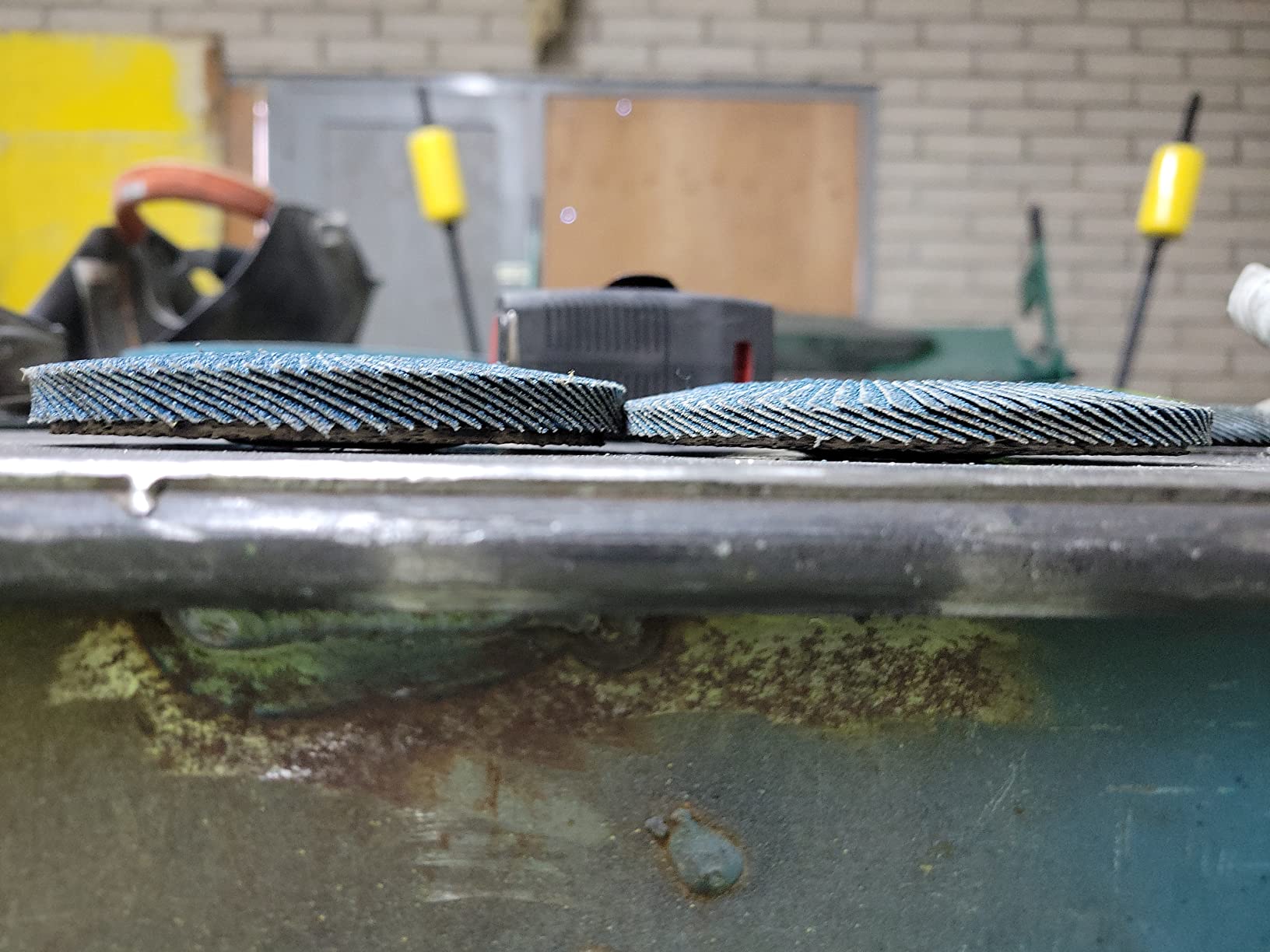
A 120 grit zirconia disc belongs at the end of the sequence, not the start. Once the bead is down and blended at 60 or 80, this is the disc that walks the scratches out and leaves a surface that will not telegraph through paint or powder coat.
The T29 bevel and fiberglass backing are the same recipe as the coarse discs in this roundup, so the geometry still works on edges and radius work. Buyers report long service life in farm, woodshop and metal cleanup settings, and several note that the discs outlasted name-brand equivalents they had been using.
Sharpening is where this pack quietly earns its place. Garden tools, mower blades and hand tool edges get cleaned and refined with a fine zirconia disc without the gouging a grinding wheel would leave behind.
The limitation is obvious: you cannot make a 120 grit disc remove weld reinforcement. Trying wastes disc life and can produce heat. On wet or resinous wood the flaps load quickly, and on aluminum the cut is slower than a coarser option would be.
What to check before you buy
Match it to the stage of your process. If your current problem is a bead that sits well above the plate, a 120 grit disc is the wrong tool and you need a coarse grit first. If the bead is already flush and you are chasing a finish, this is the right disc.
Where it falls short
There is no coarse option inside the pack, so these ten discs all do one job. A shop that needs removal and finishing on the same shift should treat this as the second box, not the only one.
4. SALI 60 Grit Type 29 Zirconia — the Coarse Workhorse
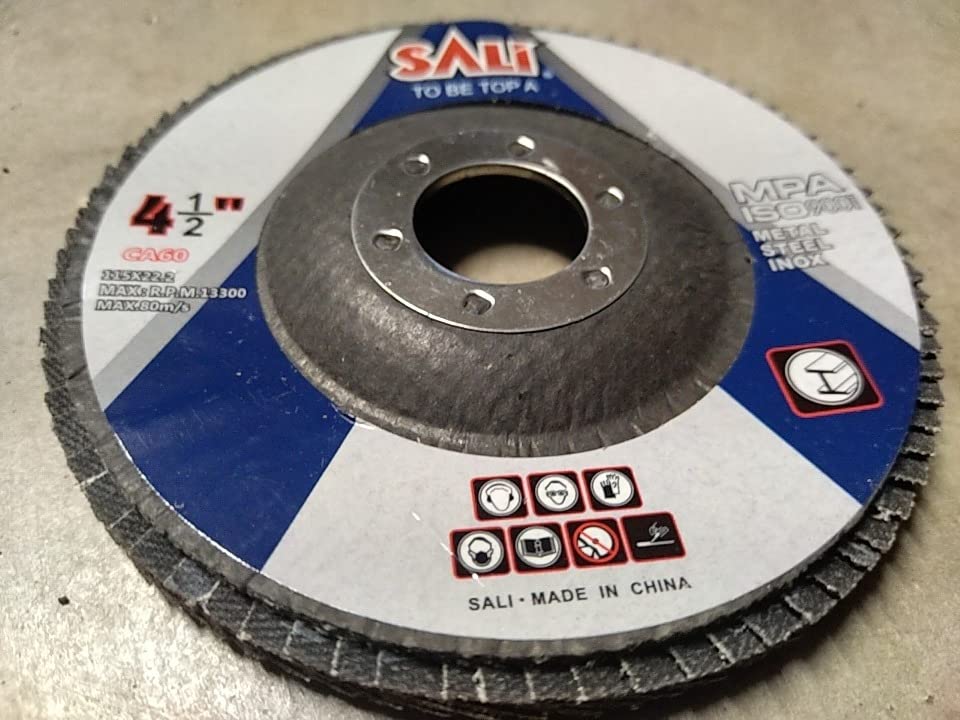
Sali 10 Pack Flap Disc 60 Grit 4.5″ x 7/8-Inch Sanding Disc Bevel Type #29 Premium and Industrial Angle Grinder Grinding Wheel High Performance Edge Grinding
60 grit coarse
Zirconia alumina
Type 29 bevel
Fiberglass backing
13300 RPM
Pros
- Aggressive removal on hard metals
- Fits most 4.1/2 inch grinders
- Fiberglass backing cuts vibration and smearing
- Works on ferrous
- non-ferrous
- wood and plastic
Cons
- Pack count listed as 12 in the specifications
- Coarse grit is wrong for final finishing
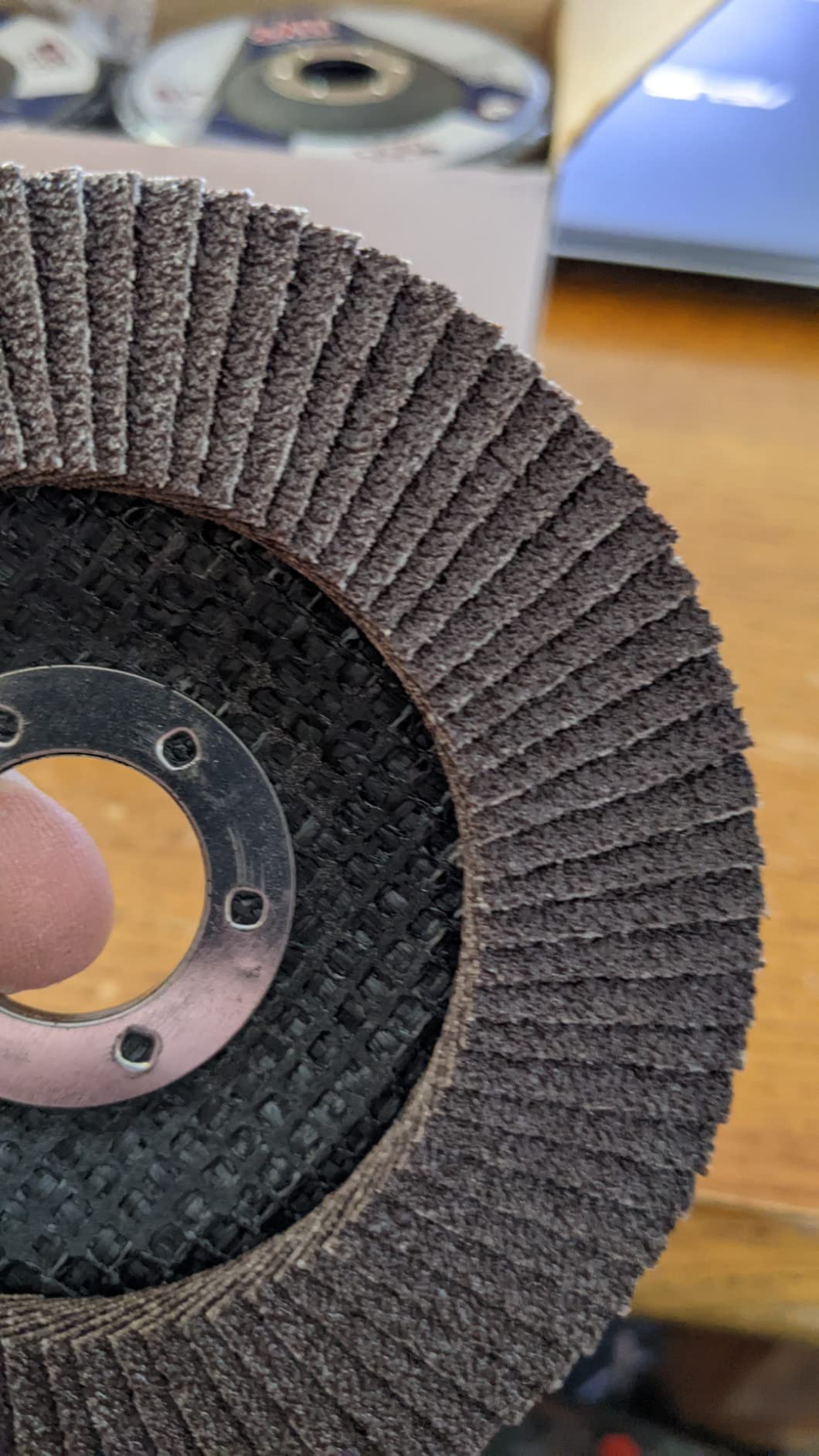
Sixty grit is the middle of the ladder and, for a lot of weld cleanup, the only rung you need. This disc removes bead reinforcement faster than an 80 grit and blends smoother than a 40 grit, which is why we reach for it when a customer wants a flush weld with a decent finish in one pass.
The Type 29 bevel is listed for contours, edge work and weld blending, and the fiberglass backing plate absorbs vibration so the disc tracks more steadily on a seam. Reviews focus on effective removal and grinder fit rather than on finish, which is fair for a coarse disc.
It is a simple, single-purpose purchase: one grit, one shape, no assortment to think about. That simplicity is the appeal if you already know your process and want a dependable coarse blend disc to add to the grinder.
One detail to note before ordering: the product details list a pack count of 12 while the marketed title says 10, so check the box when it arrives. And at 60 grit, the finish is not a finish, so anything cosmetic needs a follow-up pass.
What to check before you buy
Confirm you want a coarse blend rather than a removal or a finishing disc. If your seam is high and proud, 60 grit is too fine to take it down quickly. If the weld is already flush, it is the right disc and you can skip the 40 grit step.
Where it falls short
It has no answer for the final surface, so anyone doing cosmetic work needs a second disc. The pack count discrepancy is also a small warning to inspect delivery.
5. PFERD POLIFAN-CURVE 60 Grit Ceramic Oxide — Shaped for Fillet Welds
PFERD Tools POLIFAN®-Curve Ceramic Oxide Flap Disc, 4-1/2″x 5/8-11, 60 Grit
280 degree radial surface
5/8-11 thread
Ceramic oxide grain
60 grit
13300 RPM
Pros
- Radial shape reaches inside corners a flat disc cannot
- Fast removal on flat and curved surfaces
- Ceramic grain resists thermal damage
- Long life on visible finish welds
Cons
- Higher cost per disc than commodity discs
- Single-disc pack means frequent replacement
- Awkward to change on a small grinder
This is the geometry change that matters. Instead of a ring of flaps around a flat plate, the discs are laid out radially with 280 degrees of grinding surface, so the edge reaches into the inside corner of a fillet and works the top, side and bottom of the joint without flipping the disc.
Ceramic oxide grain is the second reason to like it. It resists thermal damage to the workpiece, which matters on stainless welds where heat discoloration is the thing you are trying to avoid, and it holds its edge longer than a commodity aluminum oxide flap.
Weld fabricators and metal artists who use these tend to describe them as predictable rather than dramatic: a consistent blend along a fillet, less time spent chasing the corner, and a finish that holds up on visible work. The 5/8-11 thread suits the larger grinders that most fillet work is done on.
The drawbacks are commercial rather than technical. A single disc per pack and a higher per-disc cost mean the cost-per-job calculation matters, and some buyers report the disc life being shorter than the price implies. Changing one on a small grinder is also fiddly, so having a second tool on hand helps.
What to check before you buy
Ask whether your joints are fillets. If the work is flat seam blending on plate, a conventional T29 disc does the same job for less money, and the radial shape is wasted capability.
Where it falls short
It is overkill for simple deburring or light cleanup, and the single-disc format punishes a heavy grind-down day. Buy these when the fillet geometry is the problem, not as a general-purpose disc.
6. Merryland 60 Grit T29 5 Inch — for the Bigger Grinder
Merryland 10 Pack 60 Grit Flap Disc 5 inch Metal T29 Flap Wheel
5 inch diameter
Blue zirconium corundum
7/8 inch bore
12250 RPM
10 pack
Pros
- Smooth consistent grinding on steel and stainless
- Low vibration from reinforced fiberglass
- EN 13743 and MPA certified
- Good general purpose 60 grit
Cons
- 5 inch bore rules out 4.1/2 inch grinders
- Lower 12250 RPM rating than 4.1/2 inch discs
- Not built for aggressive heavy removal
Merryland uses blue zirconium corundum cloth, which sits between aluminum oxide and ceramic in practice: it removes faster than a standard alumina flap and holds up better on stainless and mild steel without the top-tier price of a precision ceramic grain.
The reinforced fiberglass backing is where the feel comes from. Buyers report low vibration and limited smearing, and the disc is certified to EN 13743 and MPA standards, which is a useful check to make when you are buying discs for a workshop that has to document its consumables.
At 60 grit it is a general-purpose choice: enough bite for surface prep on steel and iron, smooth enough to be the only disc on a small project. The T29 shape suits contours and edges on larger workpieces where a 5 inch face has room to work.
The first thing to verify is the diameter. These are 5 inch wheels with a 7/8 inch bore, so they will not go on a 4-1/2 inch grinder, and the 12,250 RPM rating is lower than the 13,300 RPM typical of 4-1/2 inch discs, which constrains which larger grinders they suit.
What to check before you buy
Measure your guard opening, not just the spindle. A 5 inch disc needs a grinder designed for it, and the lower speed rating is a second constraint that some owners only discover when the grinder will not spin up to the disc’s maximum.
Where it falls short
For a home garage with a 4-1/2 inch grinder, these simply will not fit. And a medium 60 grit is the wrong choice for heavy stock removal, where a coarser disc is the better buy.
7. 3M 769F 40+ Type 27 Ceramic — the Flat-Seam Specialist
3M Flap Disc, 769F, 40+, T27, 4-1/2 in x 7/8 in
Precision-shaped ceramic grain
40 plus grit
Type 27 flat
4-1/2 inch
10 pack
Pros
- Consistent cut rate as flaps wear down
- High quality finish on stainless and carbon steel welds
- Less gouging risk on the workpiece
- Precision-shaped mineral outlasts traditional abrasive
Cons
- Highest per-disc cost in this roundup
- Flat Type 27 profile is weak on edges and contours
- Labelled for industrial and occupational use
The 769F is the premium end of this list and it earns the rating on cut rate rather than on flash. Precision-shaped ceramic grain is blended with aluminum oxide and exposed continuously as the flaps wear, so the removal rate holds steady instead of fading the way a conventional zirconia flap does.
Because the grain is consistent, it also blends and deburrs without digging into the workpiece. For flat seam work on stainless and carbon steel, professionals report the finish quality as the main reason to stay with it, alongside the longer time between disc changes.
The Type 27 flat profile is the trade. A flat disc spreads pressure across the face of the seam, which is exactly right for flat stock and flush welds, and exactly wrong when you need reach into an edge or contour. On that work a T29 disc is the better instrument.
Cost per disc is the other consideration, and it is the highest in this roundup. It also carries an industrial and occupational use label, which reflects where the disc is genuinely designed to be used. If you grind occasionally, the cost-per-hour argument favours a zirconia disc instead.
What to check before you buy
Decide if your welds are flat and flush. If they are, the flat profile and fine control are advantages. If you spend your day on fillets, edges and radius work, a conical Type 29 disc gives you reach this disc does not have.
Where it falls short
The price per disc makes it hard to justify for occasional work, and the 4.4 rating across 159 reviews reflects a smaller reviewer base than the value discs in this list. Buy it for production flat-seam grinding, not for a weekend cleanup.
8. PRVEW Assorted 40/60/80/120 5-Pack — the Small Sampler
PRVEW Flap Discs 4 1/2 Inch 5-Pack,4.5″ x 7/8″ Premium Zirconia Grinding Wheels Abrasive Flap Discs
Assorted 40/60/80/120 grits
Type 29 bevel
4-1/2 inch
7/8 inch arbor
13300 RPM
Pros
- Low per-disc price with a full grit spread
- Useful for trying the ladder before committing
- Type 29 angle suits edge and weld blending
- Suitable for metal
- wood
- concrete and stone
Cons
- Only two of the five discs are 40 grit
- Discs are consumed quickly in heavy grinding
- Not built for sustained industrial duty
The assortment is two 40 grit, one 60 grit, one 80 grit and one 120 grit, which is exactly enough to walk one weld from reinforcement removal to finish and learn what each stage feels like on your own grinder. For a new user that is genuinely more useful than ten discs of a single grit.
It is also the cheapest way into the category without buying five separate packs. The Type 29 bevel is specified for a 5 to 15 degree working angle, which suits edge and contour blending, and the 4-1/2 inch format with a 7/8 inch arbor is the most common grinder size there is.
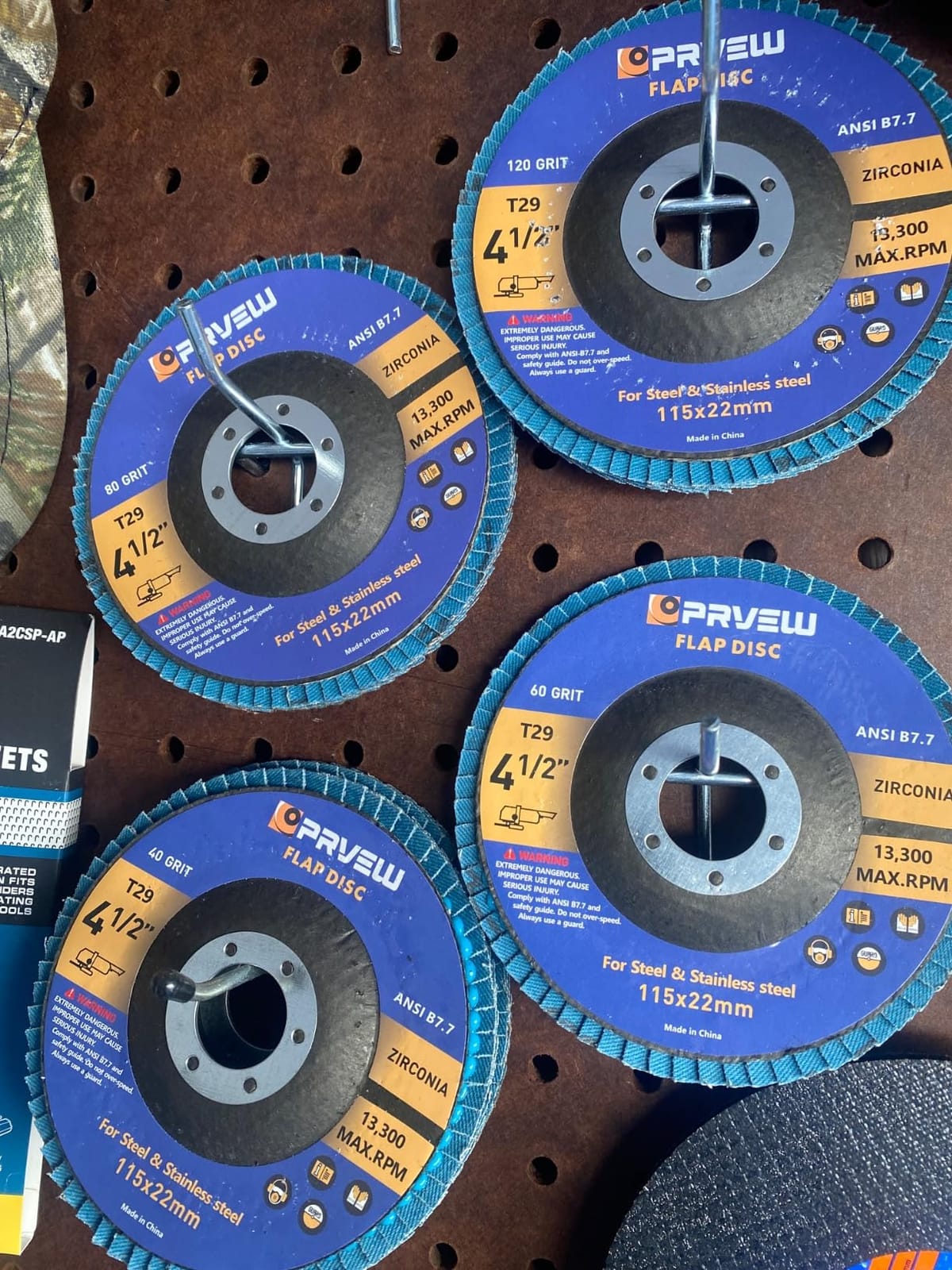
Reviewers treat it as a sampler rather than a mainstay, and that framing is fair. The zirconia abrasive holds up well for hobby and shop use, and it handles metal, wood, concrete and stone without needing a different disc.
The math works against sustained production. Five discs disappear quickly on a heavy grind-down day, and only two of them are coarse enough for that work in the first place. Plan on this as a way to learn the ladder, then buy your real grits in quantity.
What to check before you buy
Look at your disc storage first. If you already have a 60 and an 80 grit on hand, the two coarse discs here will get through the work while the fine ones sit unused.
Where it falls short
Pack size is the whole weakness. It is a tasting menu rather than a supply, and it is not intended for a duty cycle that eats discs by the box.
9. FOXBC 40 Grit Type 29 Zirconia — Aggressive and Polishing in One Pass
FOXBC 4 1/2 inch Flap Disc 40 Grit for Angle Grinder, Type 29, Premium Zirconium Grinding and Polishing for Metal, 10 Pack
40 grit very coarse
Type 29 conical
4-1/2 inch
7/8 inch arbor
13300 RPM
Pros
- Very fast removal on metal and stainless
- Grinds and polishes in the same pass
- Flexible flap design softens the contact
- 4.7 rating from buyers
Cons
- 40 grit is wrong for any finishing stage
- No hub means it will not fit hub-based grinders
- Smaller reviewer base than the established brands
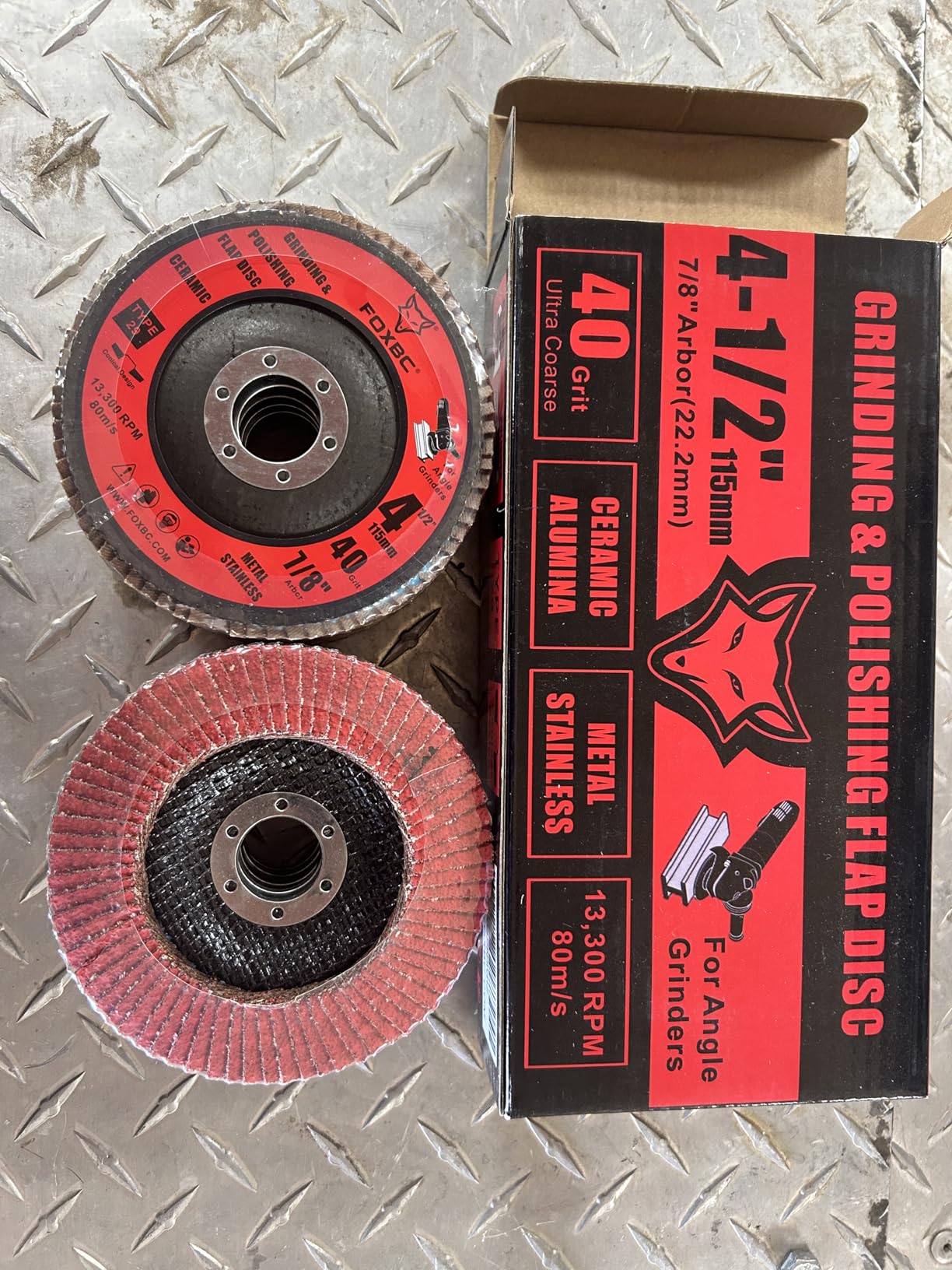
This is the most aggressive disc in the roundup, and that is exactly the point. A very coarse 40 grit zirconia blend on a conical Type 29 body removes weld reinforcement fast on carbon steel and stainless, and the flexible flap design gives the disc a cushioned contact that a rigid grinding wheel cannot offer.
Buyers highlight the surface that comes off the disc as a bonus. Because the flaps grind and polish at the same time, the result is shinier than a plain grinding wheel would leave, which saves a step on mild cleanup work even though the grit is coarse.
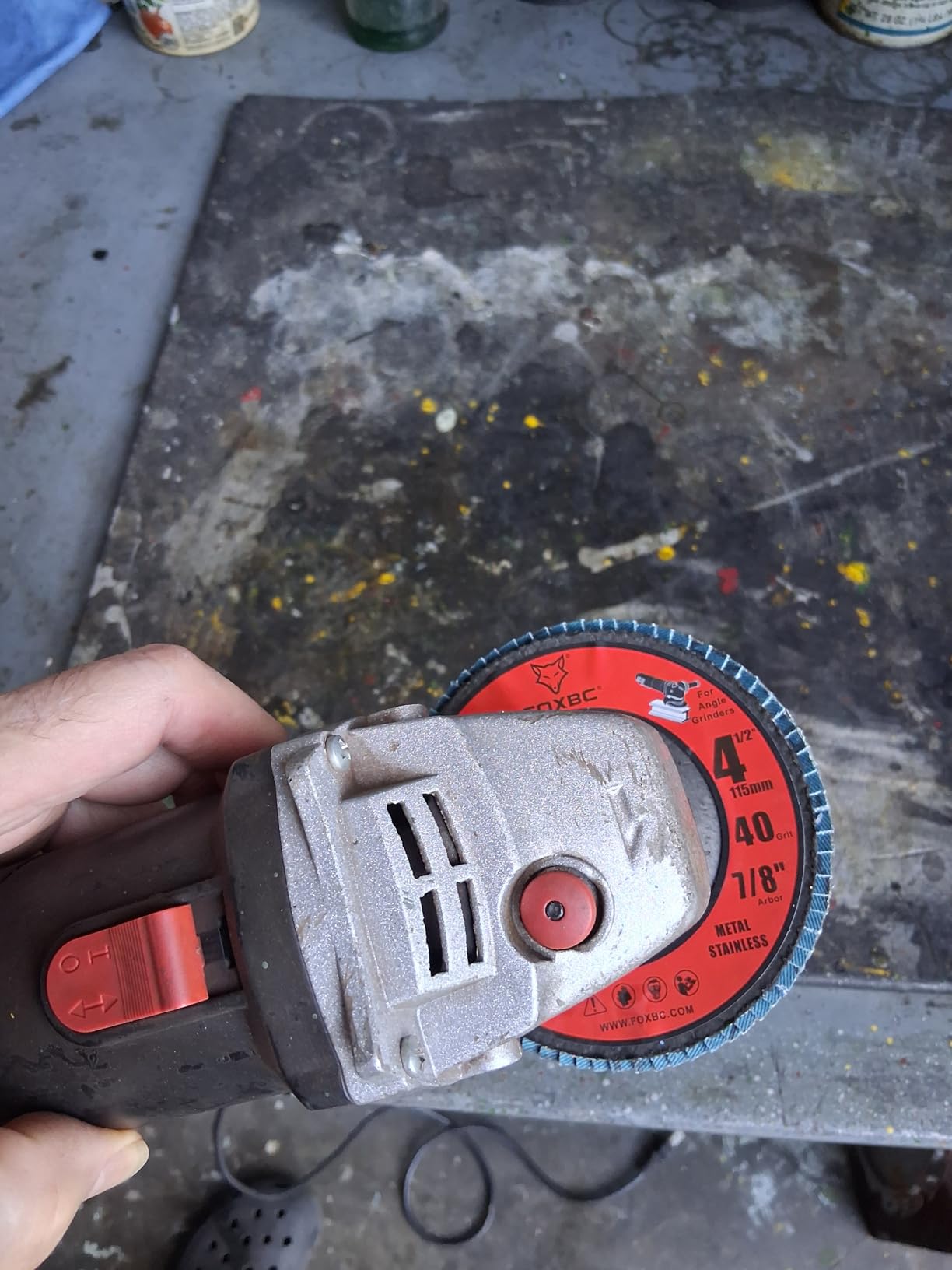
The conical Type 29 layout is also why it works on shaping and surface blending rather than only flat grinding. The absence of a hub keeps the profile simple for standard angle grinders.
Two constraints. At 40 grit it is unsuited to any blend or finish pass, so it needs a finer companion disc. And the no-hub design will not work on a hub-based grinder, so check the mount before ordering.
What to check before you buy
Check your grinder’s mounting style and your planned grit ladder. This is a removal disc, and pairing it with an 80 or 100 grit disc turns two purchases into a complete weld cleanup sequence.
Where it falls short
The 4.7 rating comes from 95 reviews, which is a much smaller base than the value discs in this list, so treat it as a promising option rather than a proven volume performer. The no-hub fit rules out some grinders entirely.
10. PFERD POLIFAN-CURVE 40 Grit 5 Inch — Radial Reach on Stainless
PFERD POLIFAN®-Curve Radial Type Flap Disc – 5″ x 7/8″, 40 Grit Zirconia, Welding Accessory and Angle Grinder Attachment – For Steel and Stainless Steel (INOX) Grinding – Pack of 2 – Part 66990
Radial CURVE layout
280 degree coverage
Zirconia and alumina blend
5 inch
40 grit
Pros
- Radial profile grinds fillet welds consistently
- Grain blend resists glazing on stainless
- Long life in professional weld finishing
- Reaches corners and hard-to-reach areas
Cons
- Premium price per disc
- 5 inch size needs a larger grinder
- Overkill for light deburring work
The same radial idea as the 60 grit POLIFAN-CURVE, in a 5 inch format and a coarser grit. The 280 degrees of flap coverage is what lets it work the top, side and bottom of a fillet in one disc, and weld-focused users describe the blend on stainless as smooth and repeatable.
The zirconia and aluminum oxide blend is chosen to resist glazing, which is the failure mode that ruins a stainless job: the disc stops cutting, polishes the bead instead, and can leave heat tint behind. Buyers report long service life in professional weld finishing work as a result.
At 40 grit it is a removal and shaping disc rather than a finishing one, which suits a shop that grinds back stainless fillets and then hands the job to a belt machine for the final surface.
The price per disc is the first drawback, and the 5 inch size is the second since it will not fit a 4-1/2 inch grinder. The last is scope: for simple deburring or light household cleanup this is a specialist tool carrying a specialist cost.
What to check before you buy
Confirm you have a grinder that takes 5 inch discs at up to 12,200 RPM, and that the work involves fillets or stainless that justifies the radial geometry. The pack contains two discs.
Where it falls short
It is difficult to justify for occasional work or for flat plate grinding. The premium cost only makes sense when disc life and fillet access are the binding constraints on the job.
How to Choose a Flap Disc for Weld Grinding
Grit ladder: which number for which stage of a weld
Lower grit numbers are coarser and remove metal faster; higher numbers are finer and leave a smoother surface. For weld work the useful range is 40 through 120, and the sequence is almost always the same: knock down, blend, finish.
24 and 36 grit discs are for heavy shaping and slag or cast iron work rather than weld blending, and they gouge. 40 grit takes the bead down to the plate. 60 grit blends the reinforcement line into the parent metal. 80 grit takes the visible scratches out, and 100 or 120 grit leaves a surface that is ready for paint, powder coat or inspection. Anything above 120 is finishing work on stainless or handrail stainless, not weld blending.
Grain type: aluminum oxide vs zirconia vs ceramic
Aluminum oxide is the cheap general-purpose grain. It is fine on mild steel, paint, rust and general cleanup, and it is what most budget discs use.
Zirconia alumina is the workhorse for weld grinding. It is tougher than aluminum oxide, cuts faster, and is the right default for carbon steel weld cleanup and general shop grinding. Its weakness is non-ferrous work, where it tends to load up and smear.
Ceramic alumina and precision-shaped ceramic grain cut fastest, run cooler and resist glazing longest, which makes them the choice for stainless and production work. The trade is price per disc, and for occasional use a zirconia disc usually delivers better cost per job.
T27 flat vs T29 conical, and the working-angle difference
A T27 disc is flat: the flaps are arranged around a flat plate, which spreads contact across the face of a seam and is ideal for flat stock and flush welds. It is less useful on edges and contours because it has no reach past the face.
A T29 disc is conical, with the flap faces angled at about 22 degrees to the backing. That produces a working angle of roughly 15 to 25 degrees, so more of the flap contacts the workpiece and the disc reaches into corners, edges and fillet shoulders. For most weld grinding, T29 is the more versatile choice, and the curved or radial variants go further into the corner.
Diameter and arbor fit: the most common wrong purchase
Matching diameter to the grinder is the number one purchase mistake. A 5 inch disc will not go on a 4-1/2 inch grinder, and no amount of adjusting makes it fit. The 4-1/2 inch disc with a 7/8 inch bore is the most common size, the 5 inch version suits larger grinders, and 7 inch discs belong to big chop-saw style grinders.
On the thread, 7/8 inch bore discs cover both 7/8 inch and 5/8-11 spindles through the standard step-down washer, while M14 thread grinders need an M14 disc or a proper adapter. Check the maximum speed rating too: 4-1/2 inch discs are commonly rated to 13,300 RPM, the 5 inch discs in this roundup are rated lower, and a disc must never be run above its rating.
Where a flap disc beats a grinding wheel, and where a die grinder wheel wins
A flap disc wins on weld blending because it removes like a wheel and finishes like a sanding disc, so you get a paint-ready surface in one tool. A grinding wheel wins on heavy stock removal and on slag, because it cuts deeper and does not flex.
A small wheel on a die grinder wins in tight corners and on flush welds and handrails where a 4-1/2 inch disc is simply too large to control. Experienced fabricators often pair a die grinder wheel with a fine flap disc for exactly this reason: grinder wheel for the corner, flap disc for the flat. The finishing stage then moves to a narrow belt machine, and our combination belt disc sander guide covers that step.
Safety habits that prevent kickback and cracked discs
Keep the guard in place and correctly positioned. For a T29 disc the guard is usually set closer to the work than you would set it for a wheel, and that short gap is your protection against sparks and contact.
Never back a hot disc out with your fingers after a long job. Lock the grinder off, wait for a full stop, and back the disc out with the pin wrench or the grinder’s spin handle, using gloves. Wear eye and face protection, keep the wheel guard down, and use a respirator for grinding stainless or painted stock. Check the disc date code and inspect for cracks at the arbor before mounting, and never side-load a disc that is designed for face grinding.
Frequently Asked Questions
What grit flap disc for grinding welds?
Use 40 grit to knock the weld bead down to the plate, 60 grit to blend the reinforcement line into the surrounding metal, and 80 or 100 grit to finish the surface before paint, powder coat or inspection. For most shop work that three-step ladder is the whole process, and 60 grit alone handles a flush weld in a single pass.
What is a 40 grit flap disc used for?
A 40 grit flap disc is a coarse removal tool. It knocks down proud weld reinforcement, knocks back spatter, and takes heavy shaping passes on carbon steel and stainless. Because it is coarse it will leave visible scratch lines, so it needs to be followed by a 60 or 80 grit blend before any finish work.
What is the best tool for grinding down welds?
An angle grinder with a coarse flap disc is the standard tool for taking a weld down. A grinding wheel removes faster on heavy stock, but a flap disc leaves a surface that needs far less follow-up work. For tight corners and flush welds, a small wheel on a die grinder gives better control than a full-size flap disc.
Are flap discs better than grinding wheels?
For weld blending, yes. A flap disc removes metal at a rate close to a grinding wheel while leaving a much smoother, paint-ready surface because the flaps flex and conform to contours. A grinding wheel is still the better tool for deep stock removal, slag and cast iron, where the depth of cut matters more than the finish.
What size flap disc fits my angle grinder?
Match the disc diameter to the grinder guard: 4-1/2 inch discs fit most small angle grinders, 5 inch discs need a larger grinder, and 7 inch discs belong to big grinders. The 4-1/2 inch discs in this roundup use a 7/8 inch bore, which covers both 7/8 inch and 5/8-11 spindles, while M14 grinders need an M14 disc or a proper adapter.
Final Verdict for Weld Grinding in 2026
The S SATC 20-piece zirconia set is our pick for the best flap discs for weld grinding because it covers the entire grit ladder in one box, carries a 4.6 rating across 3,571 reviews, and handles the whole sequence from 40 grit knock-down to 120 grit finish. If you want a single aggressive disc instead, the EZARC 40 grit pack is the fastest cutter here at 4.7 across 2,636 reviews, and if the weld is already flush, the NEIKO 120 grit pack is the finishing disc.
Beyond those three, match the shape to the job: a radial disc for fillet corners, a flat T27 for flush seams, a 5 inch disc only if your grinder takes one, and ceramic grain when stainless and disc life matter more than per-disc cost. Check the bore and thread before you order, and it is the one detail that decides whether the disc is usable at all.