
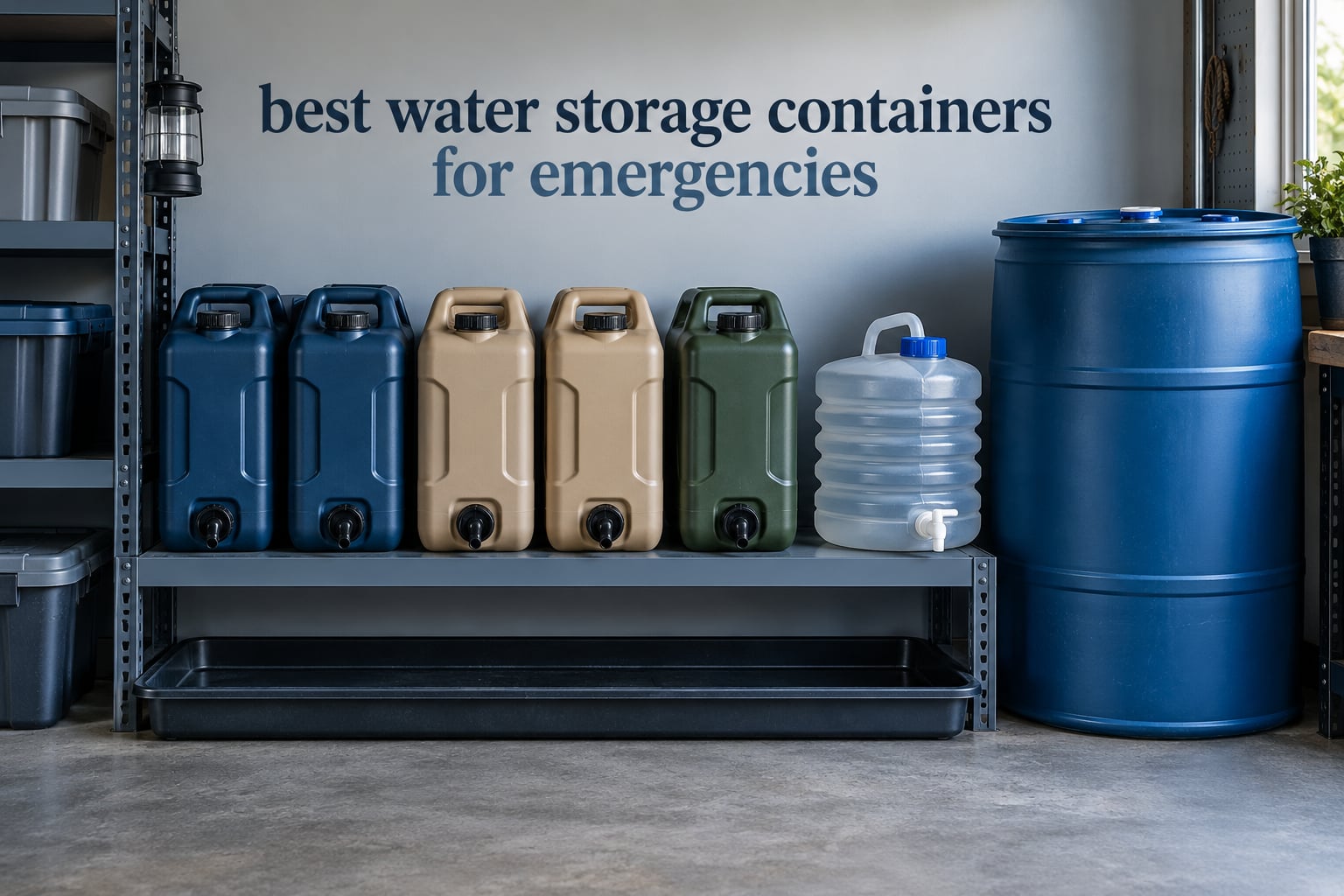
A safe emergency water container is made of food-grade HDPE plastic marked with recycling code 2, has an opaque body that blocks light, and seals with a threaded screw cap rather than a push-fit lid. The material matters because water sits against the wall for months, and thinner or non-food plastics lend it a taste and, over time, leach what you are trying to avoid.
That is the standard we applied to every container in this guide to the best water storage containers for emergencies. We looked at what is actually stored in a home during an outage, how heavy it is when full, whether one adult can move it, and whether the lid and spigot keep water in or let it out over a long storage cycle. We read the review histories on all eight products, weighed customer photos, and compared the failure modes owners actually report rather than the claims on the box.
What we found is that no single container wins. The right answer for a household of one is a jug small enough to lift up a flight of stairs, and the right answer for a family of five in a garage is a stack of 55-gallon drums. Weight is the constraint that decides this more often than price: water weighs 8.34 pounds per gallon, so a 5-gallon jug is about 42 pounds full and a 55-gallon drum is roughly 460 pounds before you add the drum itself.
If you want the short version, our guide to water storage tanks covers the fixed-tank side of the same question, and the pitcher filter roundup covers what to do once you need to treat stored water.
Table of Contents
What Makes an Emergency Water Container Safe (And How We Picked These 8)
The right material, the right seal, and the right size are the three things that decide whether a container works. Get all three right and it is close to a solved problem.
Food-grade HDPE, marked with recycling code 2
Look for a resin identification symbol, usually molded into the bottom of the container, with a 2 inside the recycling triangle. That number 2 means high-density polyethylene. Codes 1 (PET) and 4 (LDPE) are also polyethylene-based and safe for food contact, so they are acceptable choices. Codes 3 (PVC), 6 (polystyrene) and 7 (mixed or polycarbonate) are the ones to avoid for drinking water that will sit for months, because polycarbonate is the family that contains BPA.
One distinction worth keeping straight: BPA-free does not mean food-grade. A container can be BPA-free and still be made of a resin that was never rated for long food contact, so read the food-grade claim on the label rather than the marketing on the listing.
Opaque and dark beats clear
Light feeds algae and bacteria. That is why dark blue, tan and green bodies are standard on long-term storage tanks, and why the clear and transparent containers in this roundup are positioned for shorter rotation cycles. If you buy a clear container, keep it out of direct sunlight and expect to move the water through it more often.
A threaded cap with a real seal, not a snap lid
Look for a screw cap with a gasket or a threaded plug, and check that a replacement cap and seal are sold separately for that model. Push-pin vents are fine for filling but a poor long-term seal, and the containers that survive years are the ones where every opening is capped and the cap threads all the way down.
Spigot design decides how often you will actually use it
A container you cannot drain easily is a container you will stop using. Gravity-fed spigots work well above the base, reversible spigots let you drain almost to the last quarter inch, and barrels with only small bung fittings need a siphon pump you buy separately. All four designs appear in this roundup, and the difference matters most for water you intend to drink rather than wash with.
Size it to the person who has to move it
This is the rule most guides skip. Water is 8.34 pounds per gallon, so capacity converts directly to carry weight: 3.2 gallons is about 27 pounds, 3.5 gallons about 29 pounds, 5 gallons about 42 pounds, and 55 gallons about 459 pounds plus an 18-pound empty barrel. If an older adult, a teenager or a partner with a back injury is part of your household plan, the top of your range has to be a container they can lift.
Top 3 Emergency Water Storage Containers in 2026
These three cover the most common household situations: a general-purpose rotation supply, a large-capacity fill for a family that just knows taps are going down, and a rigid set you fill once and stop thinking about.
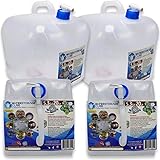
WaterStorageCube 5.3 Gal 2-Pack
- Food-grade PE plastic
- BPA and PVC free
- Collapsible and folds flat
- Two 5.3 gallon containers with spigots

waterBOB 100 Gallon Bladder
- Up to 100 gallons in a standard bathtub
- Food-grade BPA-free sealed liner
- Includes fill sock and hand pump
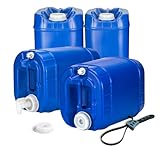
Legacy Premium 5 Gal 4-Pack
- Four 5 gallon tanks
- 20 gallons total
- Light-blocking blue stackable bodies
- Water treatment drops included
All 8 Water Storage Containers Compared in 2026
Every container below, side by side, with the capacity and the feature that actually changes the decision. Full weights use the 8.34 pounds-per-gallon figure for the water alone.
| Product | Specifications | Action |
|---|---|---|
| WaterStorageCube 5.3 Gallon Collapsible 2-Pack |
|
Check Latest Price |
| waterBOB 100 Gallon Bathtub Bladder |
|
Check Latest Price |
| Legacy Premium 5 Gallon 4-Pack |
|
Check Latest Price |
 COOZMENT 3.2 Gallon Water Jug COOZMENT 3.2 Gallon Water Jug |
|
Check Latest Price |
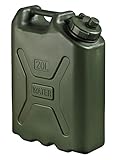 Scepter 5 Gallon Military Water Can Scepter 5 Gallon Military Water Can |
|
Check Latest Price |
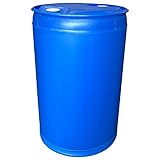 Augason Farms 55 Gallon Barrel Augason Farms 55 Gallon Barrel |
|
Check Latest Price |
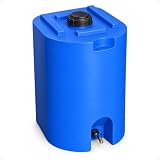 WaterPrepared 55 Gallon Stackable Tank WaterPrepared 55 Gallon Stackable Tank |
|
Check Latest Price |
 WaterBrick 3.5 Gallon 8-Pack WaterBrick 3.5 Gallon 8-Pack |
|
Check Latest Price |
1. WaterStorageCube 5.3 Gallon Collapsible 2-Pack – Best All-Round Pick
WaterStorageCube Collapsible Water Container with Spigot (5.3 Gal (2-Pack))
5.3 gallon x 2
44 lbs full each
7.1 by 8.8 inch
Food-grade PE, BPA PVC DEHP free
Pros
- Food-grade PE plastic leaves no plastic taste
- Collapses flat between uses
- Light enough for one adult to carry
- Gasketless lid resists leaks
- Two containers in one pack
Cons
- Spigot handle is the part most likely to fail
- Thin plastic yellows and holds odors with heavy field use
- Needs periodic air through the tap or it crushes
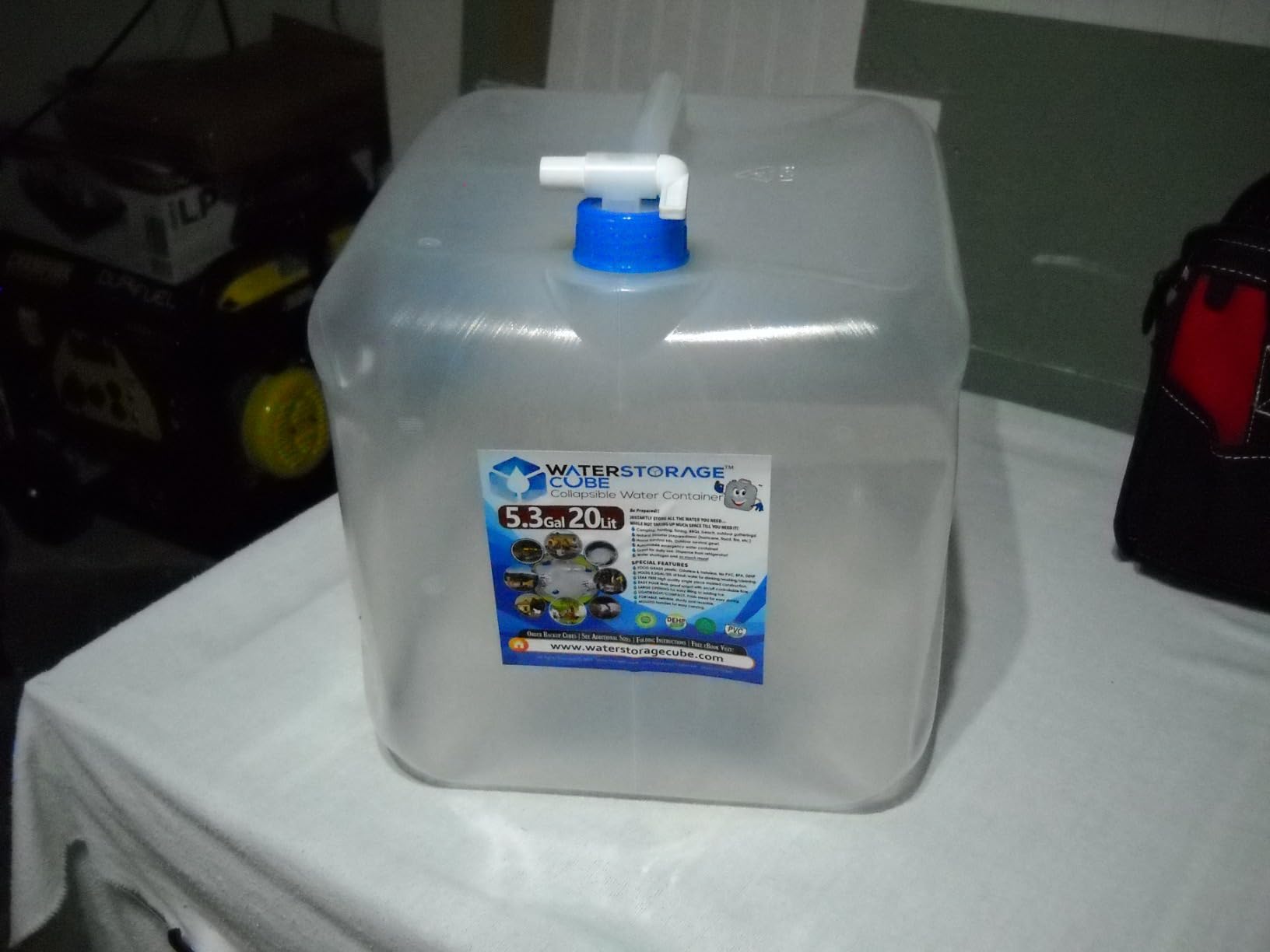
This is the pair we keep coming back to, and it took the most usage of anything in this roundup. Ten gallons in two collapsible containers covers a two-person household for a week at the standard one gallon per person per day, and it does it in a footprint that disappears when the water is gone. That flexibility is why it works for renters, students and anyone whose storage space changes month to month.
The material is food-grade PE with no BPA, PVC or DEHP, and the honest surprise is that owners rarely mention a plastic taste. That complaint dominates reviews of heavier containers, and it is largely absent here. Water came out tasting clean for us straight from the spigot after weeks of sitting in a cold garage.
Both containers are gasketless one-piece designs with a thicker lid, so there is no rubber ring to lose, harden or grow a smell. The spigot gives a controlled flow and a push-to-open shutoff, and the soft-molded handles sit close enough to the wall that the full container stays manageable in a doorway.
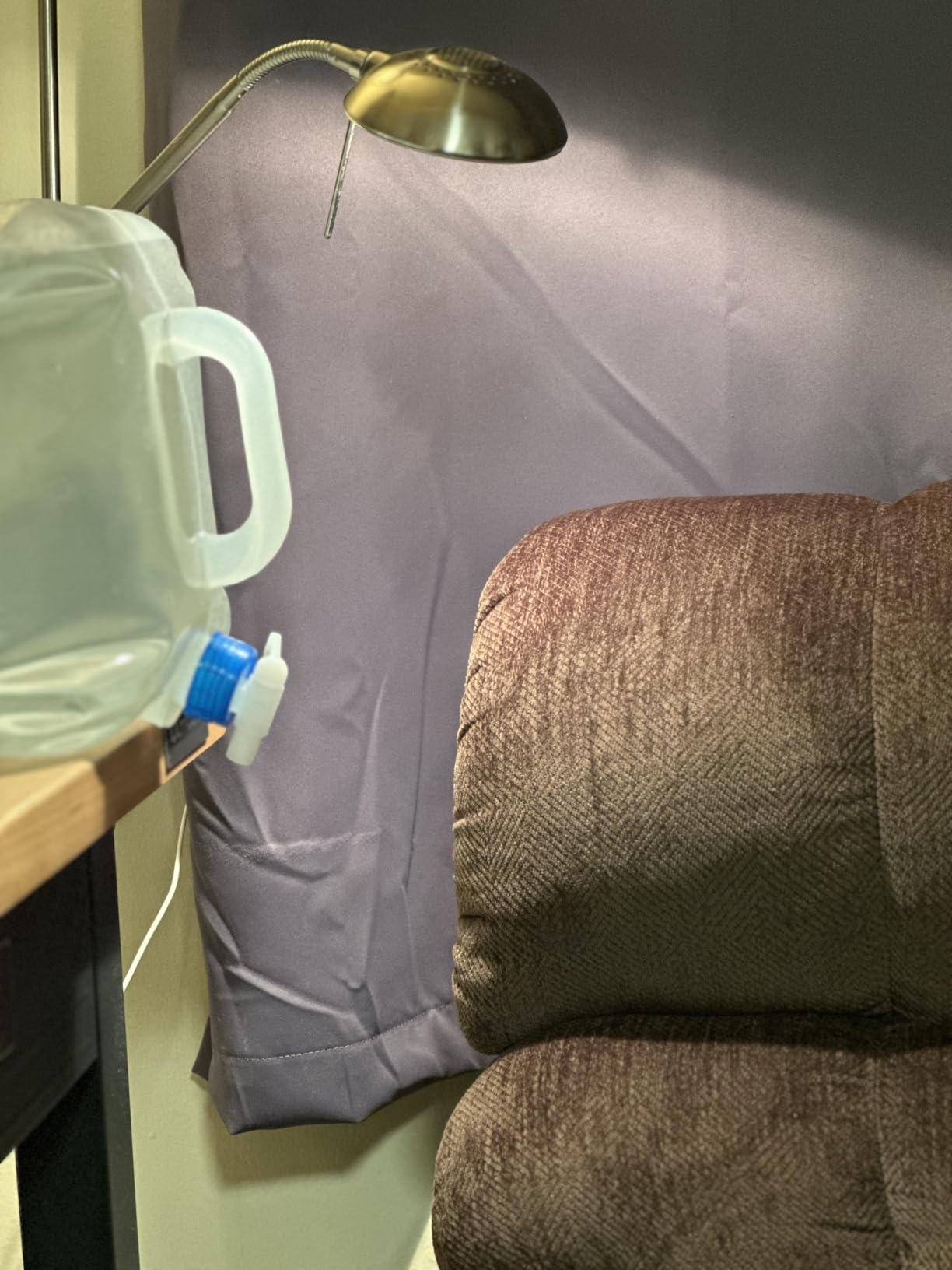
The weight is 44 pounds full per container, which is real but within the range most adults can lift from the floor to waist height. It is over your head for carrying up stairs with a full jug, which is why the 3.2-gallon and 3.5-gallon options further down make more sense for a fifth-floor walkup.
Fill them about 80 percent full rather than to the rim. The extra headspace keeps the walls from bowing, reduces sloshing in a car and leaves room for the water to expand if the container sits in a space that drops below freezing.
One thing to plan for: air has to come back in through the tap. Owners report the walls flexing and flow slowing if you drain it completely and leave it empty, so open the spigot occasionally and let it equalise. After each use, a small amount of water collects in the tap, and tipping it over the sink once is enough to keep it from going stagnant.
Why it works for a first water reserve
This is the container to buy first because it commits you to almost nothing. Two of these sit in a closet and take up the same floor area as a single tote of tools when empty, so the decision costs you no dedicated space.
It is also the strongest multi-use buy of the group, which matters more each year. The same two containers work for emergency drinking water, for a weekend at a campsite where taps are a walk away, for an RV trip, and for carrying water to a car wash or a garden.
Where it falls short
The thin flexible walls are the honest weakness. After repeated camping trips the plastic can yellow and pick up odors that do not come out, and reviewers consistently recommend rotating this container for temporary use rather than leaving it as permanent storage for years.
The spigot handle is the component most likely to break, and replacement spigots cost more than they should for a part that does one job. If you buy this pair, open the spigot gently and do not force it, because a snapped handle ends your easy access to 5 gallons of water.
2. waterBOB 100 Gallon Bathtub Bladder – Best Bulk Capacity
waterBOB Bathtub Emergency Water Storage Bladder Up To 100 Gallon Capacity – Food Grade Liner with Hand Pump for Hurricane and Disaster Preparedness – BPA Free Drinking Water Container
Up to 100 gallons
LLDPE food-grade liner, BPA free
1.3 pounds empty
About 20 minute setup
Pros
- Turns a bathtub into 100 gallons of storage
- Collapses to a tiny package when empty
- Food-grade liner blocks dirt and residue
- Hand pump included for dispensing
- No pumps or tanks to buy separately
Cons
- Treated as single-use and can grow mold if stored damp
- Thin film punctures easily
- Fill sock must be held at the faucet
Nothing else on this list gives you this much water for this little effort. The waterBOB lines a standard bathtub with a sealed food-grade LLDPE liner and turns it into roughly 100 gallons of protected water, which is more than a family of four drinks in three weeks at the standard rate. It is the answer for a hurricane warning, an ice storm, or any situation where a warning arrives with time to act.
Setup took us about 20 minutes with no tools. You spread the liner, run the fill sock to the faucet, and let it run. The liner keeps bathtub dirt, soap film and debris out of the water, which is the entire point, because a bare bathtub is never clean enough to drink from directly.
The included hand pump makes the dispensing step painless. You pump water up into a pitcher or a set of jugs rather than trying to tip 460 pounds over the edge of a tub, and that pump is what turns this from a novelty into a usable supply.
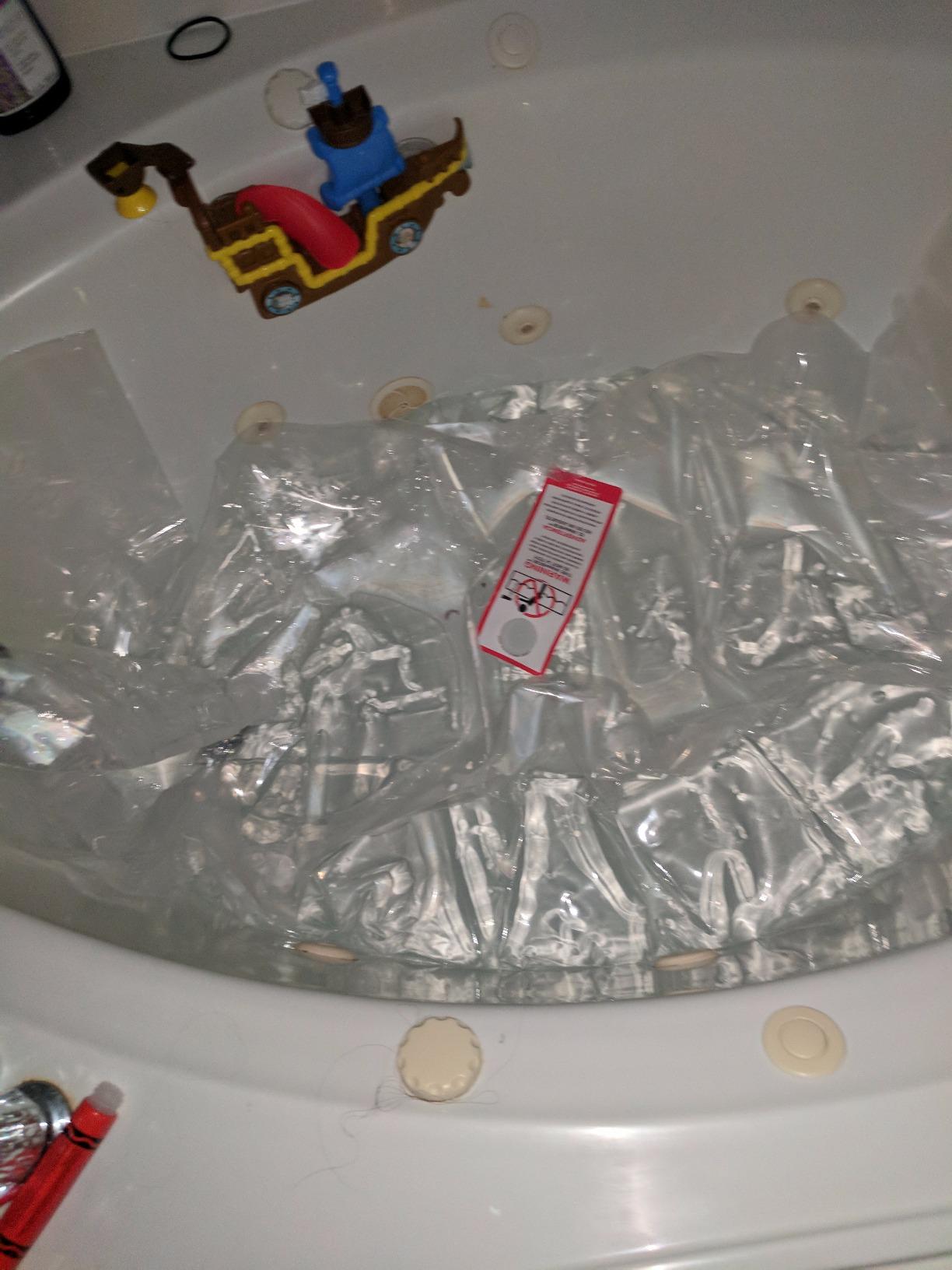
When the emergency passes, the bladder folds into a package roughly the size of a shoebox. Nothing about owning it commits you to floor space in a garage, which is why it ranks high for households in apartments and rentals where a permanent tank is impossible.
Do a practice run before you need it. Set it up on an ordinary weekend with no water in the tub so you know how the fill sock routes, how long it takes to run and where the pump sits. Owners who had the smoothest experiences were the ones who had already set it up once before it counted.
Keep painter’s tape within reach of the faucet. The fill sock is designed to sit against the spigot for the whole filling period, and tape is the difference between a 20-minute fill and an interrupted one.
Why it is worth owning even if you never fill it
Because it costs you shelf space and nothing else, and it covers the scenario no jug-based kit handles: a sudden boil-water notice or a frozen main that takes the taps out for days. Stored flat, it commits you to nothing but a closet corner, and you can set it up in an afternoon and have capacity on hand before a forecast ever turns serious.
It is also the one item here that adds real capacity during a freeze event, when outdoor plumbing is the first thing to fail and a bathtub is the largest vessel most homes already own.
Where it falls short
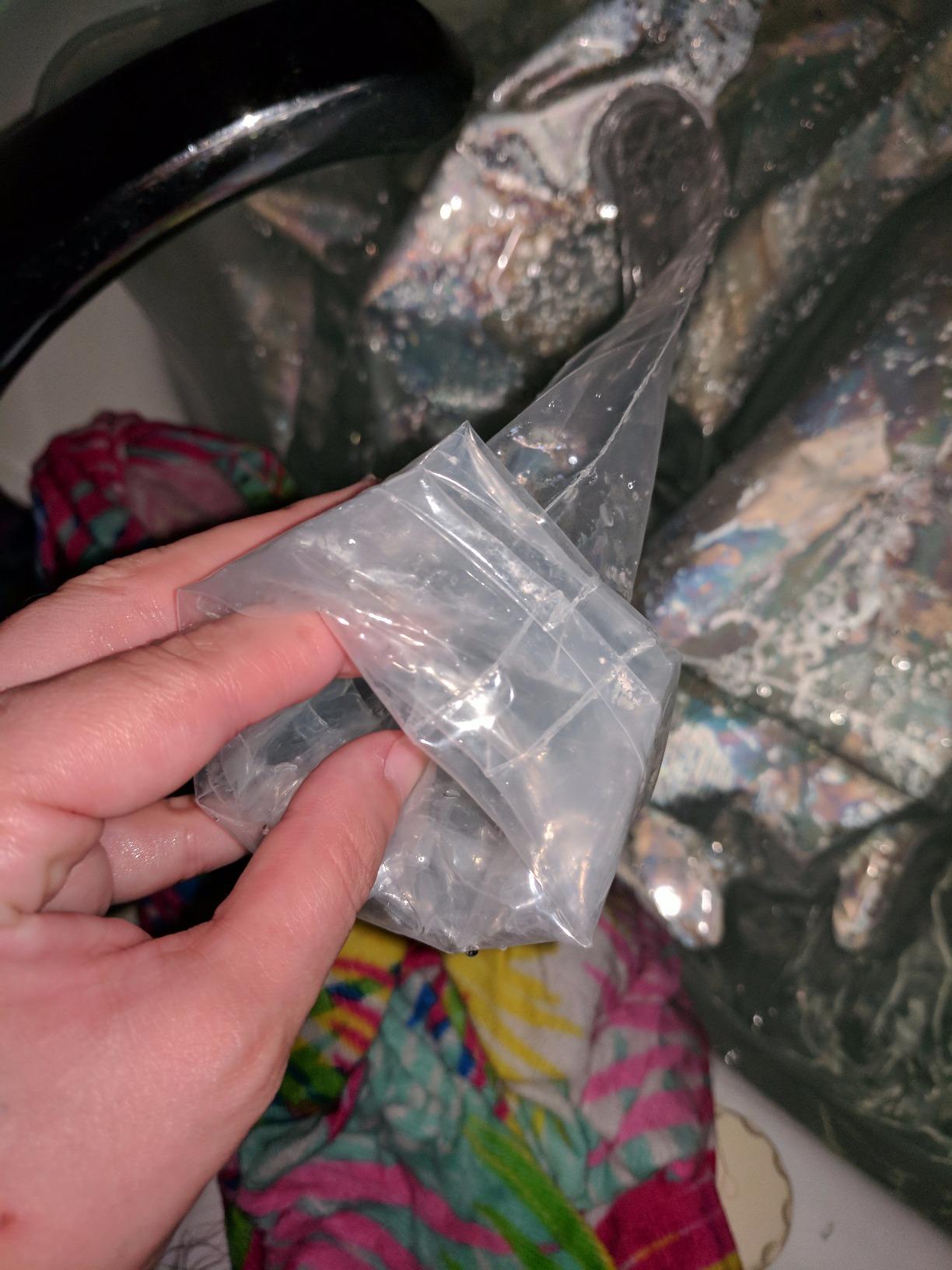
Treat the liner as single-use. It is very hard to dry completely, and a bladder stored damp can grow mold on the inside where you cannot see it. That is fine if you use it for one event and discard it, and it is a real problem if your plan is to buy one and file it away for years.
The film is thin enough to puncture against a sharp edge in the tub, and a few owners have received a unit with a hole straight out of the package. Inspect it and fill it in daylight before a storm. Some also note the water picks up a faint plastic taste and that siphoning the last of the water out of a deep tub is awkward.
3. Legacy Premium 5 Gallon 4-Pack – Best Set-and-Forget Storage
5-Gallon Stackable Water Storage Containers, 4-Pack
4 x 5 gallons, 20 total
About 40 lbs full per tank
12 by 10 by 15 inch
BPA-free blue plastic
Pros
- Rigid tanks built for long-term storage
- Stackable ribs lock tanks in place
- Dark blue blocks light and slows growth
- Treatment drops included for up to 5 years
- Spigot and strap wrench included
Cons
- Bulky 20-gallon set compared with collapsible options
- About 40 lbs full per tank needs two hands for some
These are the tanks we would put in a garage and forget. Four rigid 5-gallon tanks give you 20 gallons in a stack, the bodies are a dark blue that blocks light, and the set ships with water treatment drops rated for up to five years of storage, which removes the once-a-year rotation chore that trips up most households.
The stackable rib design is the reason this configuration works in a normal garage or pantry. The ribs interlock so the tanks lock to each other, turning four separate floor objects into one compact column rather than four circles spread across a slab.
Filling is easier than it should be. The 2 1/4 inch opening takes a standard hose or a funnel, and the included strap wrench gives you the leverage to tighten the 3/4 inch threaded caps properly, which is how you get a seal that does not weep onto a garage floor in month three.
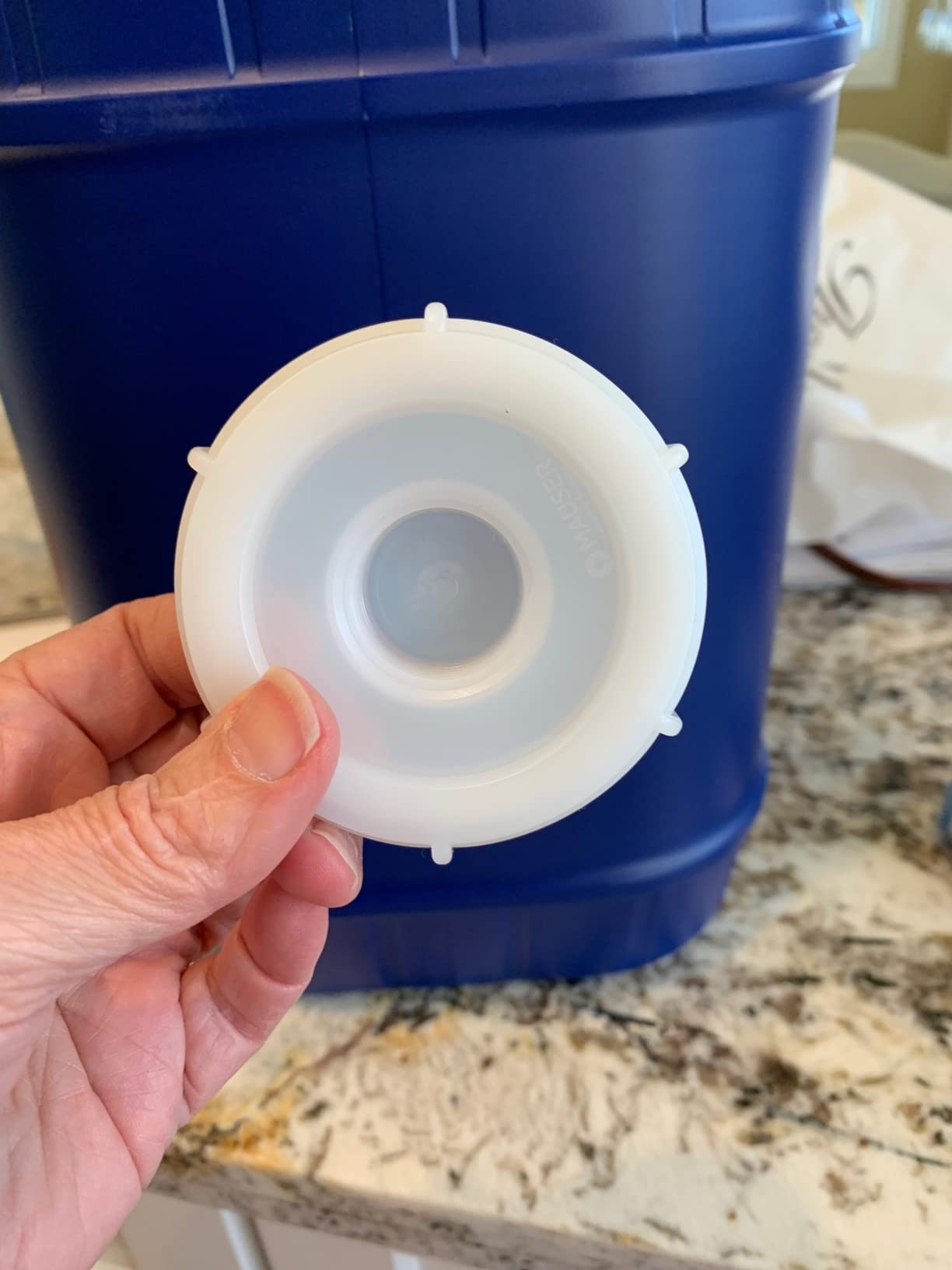
Each tank measures 12 by 10 by 15 inches and lands around 40 pounds full. That is the number to plan your shelf for, and it is the reason we would not recommend a two-hand carry for anyone with a back or shoulder issue.
Put them on a shelf or a low platform rather than bare concrete, and leave the valve side facing out so you can drain one without dragging the rest of the stack forward. A shallow tray under the row catches the slow drip that eventually shows up around a threaded cap.
The included drops are the quiet hero of this set. Most stored water goes stale or picks up a taste because nobody rotates it, and having a five-year treatment option lets you fill these once and stop thinking about them, which is the whole reason we recommend rigid tanks like this for the long-term tier.
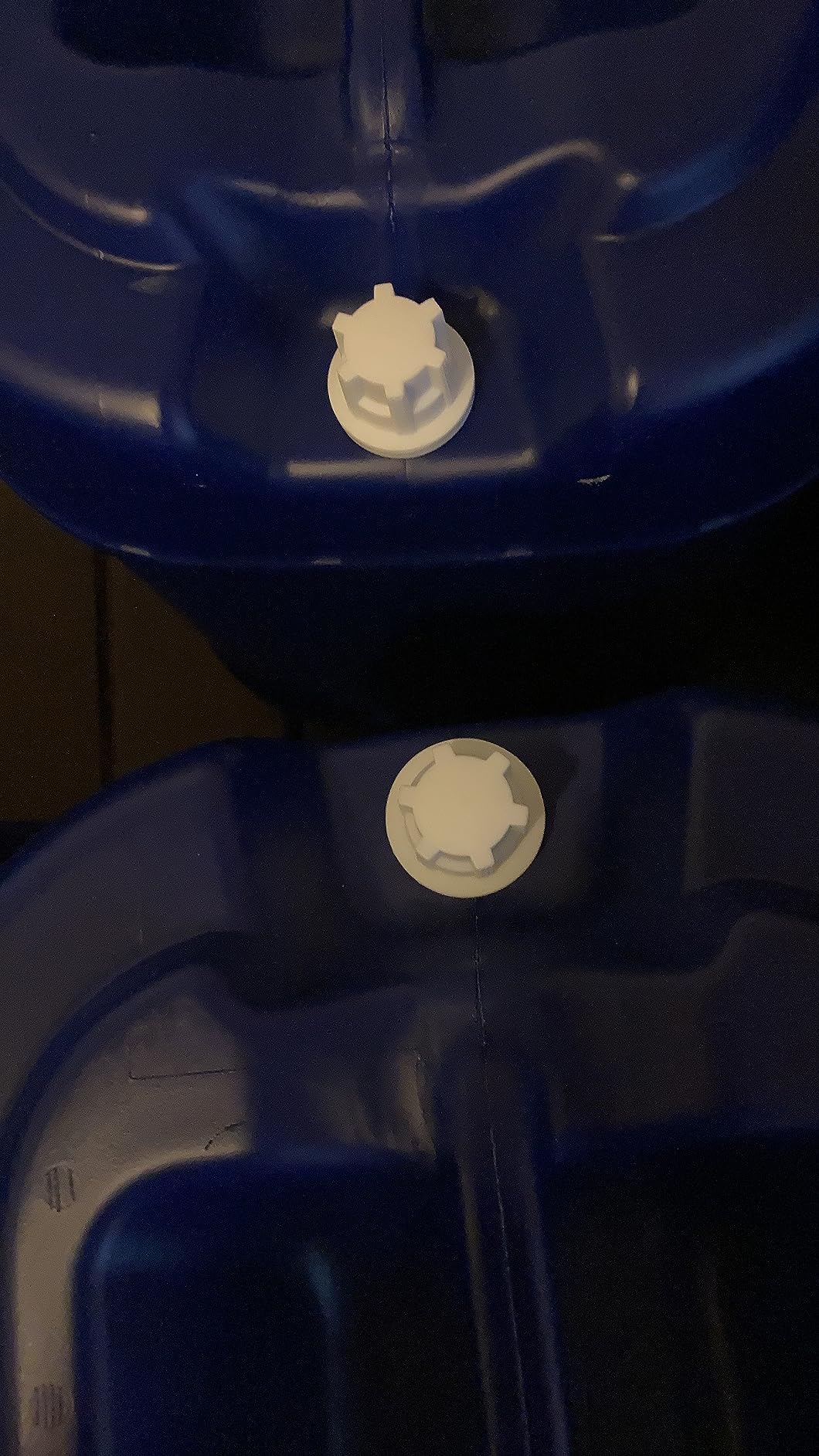
Why it suits a family that has already made the food decision
Once your pantry is set for two weeks, its water has to match. Twenty gallons plus what you carry in a go-bag is a realistic two-week supply for two people, and it lives in one corner of a garage with no moving parts and no electronics to fail.
It is also a good match for households with a well or a rainwater catchment, because a rigid opaque tank accepts water from a hose without the light concerns you have with a clear container.
Where it falls short
Volume and weight. A 20-gallon configuration of 40-pound tanks demands real shelf or floor space, and anyone moving one is likely to need two hands. If you are starting from zero or your home has no dedicated storage area, this set is a bigger commitment than a pair of collapsible jugs.
It is also a single rigid purchase with no way to scale down, so a household wanting only a small reserve will end up with unused capacity. Measure the spot first, including the height needed to lift a full tank out rather than slide it off the stack.
4. COOZMENT 3.2 Gallon Jug – Best Budget Pick
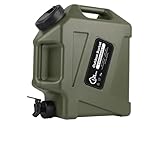
COOZMENT 3.2 Gallon (12L) Portable Water Containers with Spigot, BPA Free Water Jug, Military Green Water Tank, Multifunction Water Storage Containers for Camping Outdoor Hiking,Emergency Storage
3.2 gallons
About 27 lbs full
7.5 by 13.7 inch
Food-grade PE, PP lid, silicone seal
Pros
- Rigid thick plastic with seals that do not leak
- 4-inch wide mouth is easy to fill and dry
- Tall narrow shape packs a car better
- Two carrying handles
- Water tastes clean with no odor
Cons
- Corners are thinner than the sides and visibly flex
- Strong factory plastic smell until washed once
- Included brush and spigot extender feel cheap
This is the container we recommend for anyone who cannot safely lift a 5-gallon jug. At 3.2 gallons it weighs about 27 pounds full, and its tall narrow body is far easier to carry up a staircase or hold in one arm than a cube-shaped 5-gallon container.
Build quality is genuinely better than the price suggests. Reviewers describe thick, rigid plastic and heavy-duty seals that do not leak, and the push spigot on the opposite side gives you controlled flow without unscrewing a heavy lid every time you want a glass of water.
The 4-inch wide mouth is the feature we did not expect to care about and now recommend most. It lets you fill from a hose, scrub the inside with a bottle brush, and get it dry between uses, which matters more than it sounds for a container you are cycling water through.
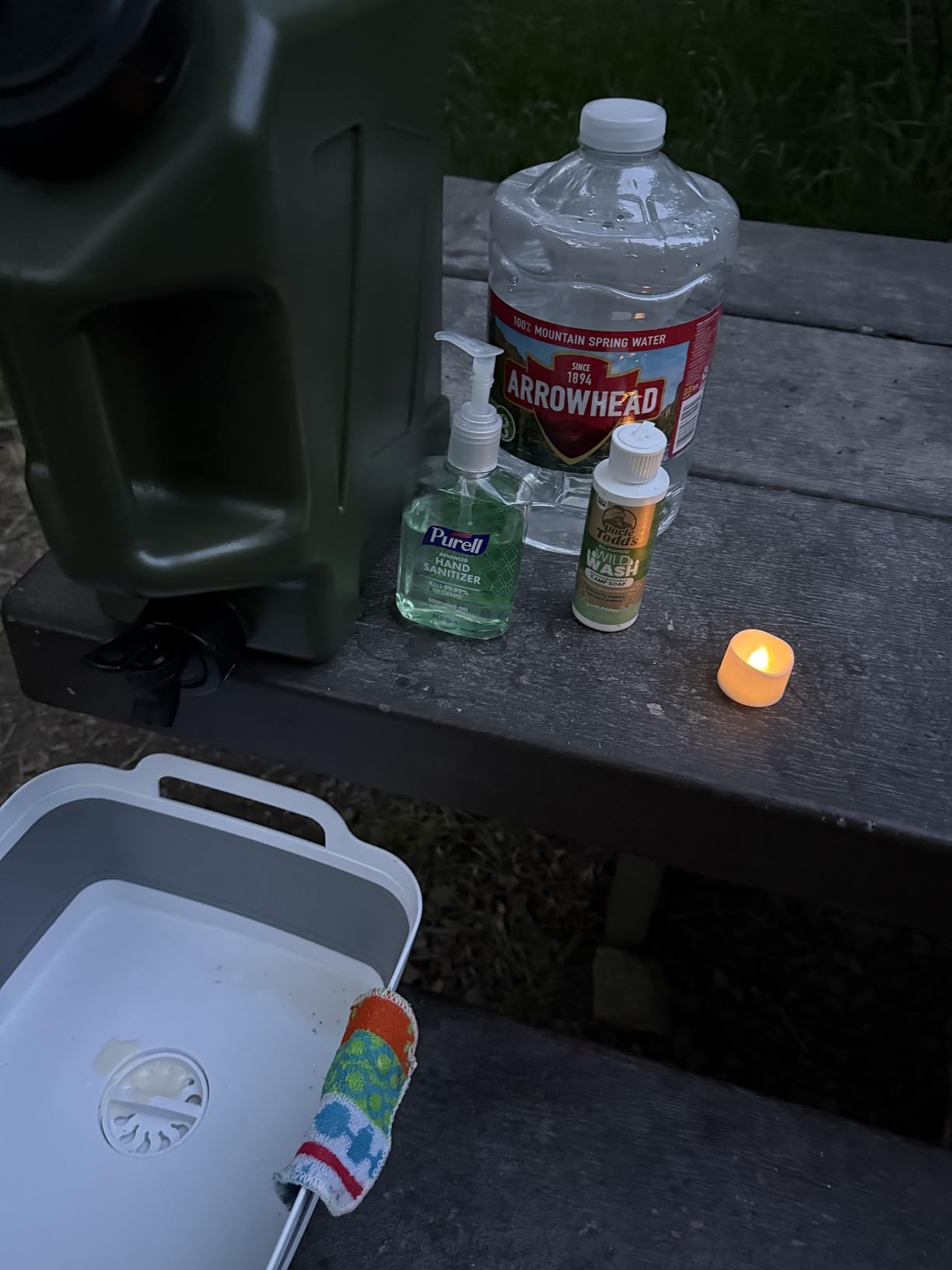
Sizes run from 2.6 to 5 gallons in the same body style, so if you find the 3.2-gallon feels light for a single person, the 5-gallon version is the same shape. The 3.2-gallon filled about 27 pounds in our handling, which is a realistic single-hand carry for most adults.
Wash it before the first fill. A number of owners report a noticeable factory plastic smell that takes one wash with hot water and dish soap, and a second rinse, to clear. A short soak with a dilute bleach solution followed by a thorough rinse handles the rest, and it leaves you with a container you trust.
The military green colour is not a marketing trick. An opaque body slows light-driven growth the way a clear one does not, which is the single biggest factor in how long stored water stays palatable in a warm garage.
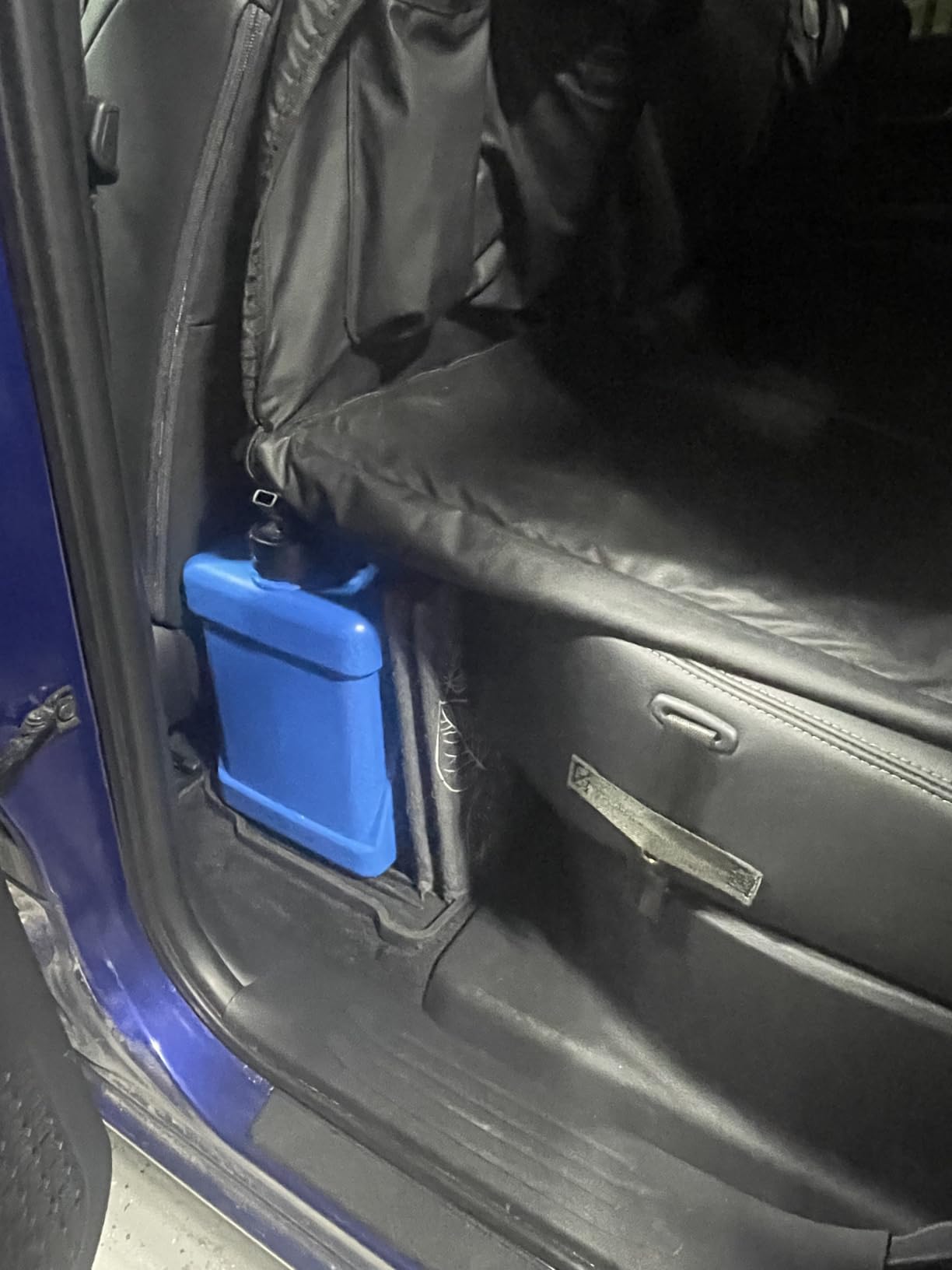
Why it works for apartments and go-bags
Two of these fit under a bed or in the back seat of a hatchback and cover a couple of days of drinking water each. Because the body is tall rather than square, four of them pack into a space that would take only two cube containers, which is the difference between a real kit and a token one.
It is also the natural go-bag container. At 27 pounds it can sit at the bottom of a pack that you would actually carry, and a cap you can open one-handed with dirty hands is a small thing that matters at 2 a.m. in a dark hallway.
Where it falls short
The corners are noticeably thinner than the sides, and buyers can see them flexing through the cap opening. They have not reported corner failures, but it is the part of the wall to watch, and it is a reason not to drop this container onto a hard floor.
The bundled brush and spigot extender are the weakest accessories in this roundup and read as an afterthought. Treat them as a bonus rather than a reason to buy, and do not judge the container itself by the quality of a free brush.
5. Scepter 5 Gallon Military Water Can – Best Ruggedness
Scepter 5 Gallon Military BPA Free Water Container, Food Grade Water Jug for Camping and Emergency Storage – (20 Litre), Green
5 gallon, 20 liter
BPA-free HDPE
13.7 by 6.8 by 18.8 inch
About 42 lbs full
Pros
- Military-spec design used by armed forces
- Survives drops
- heat and freezing
- Slim tall shape is easy to grip and carry
- Air-bleed valve makes pouring smoother
Cons
- Both caps swing into the pour stream
- Some units arrive with a strong manufacturing odor
- Cap o-ring quality varies between units
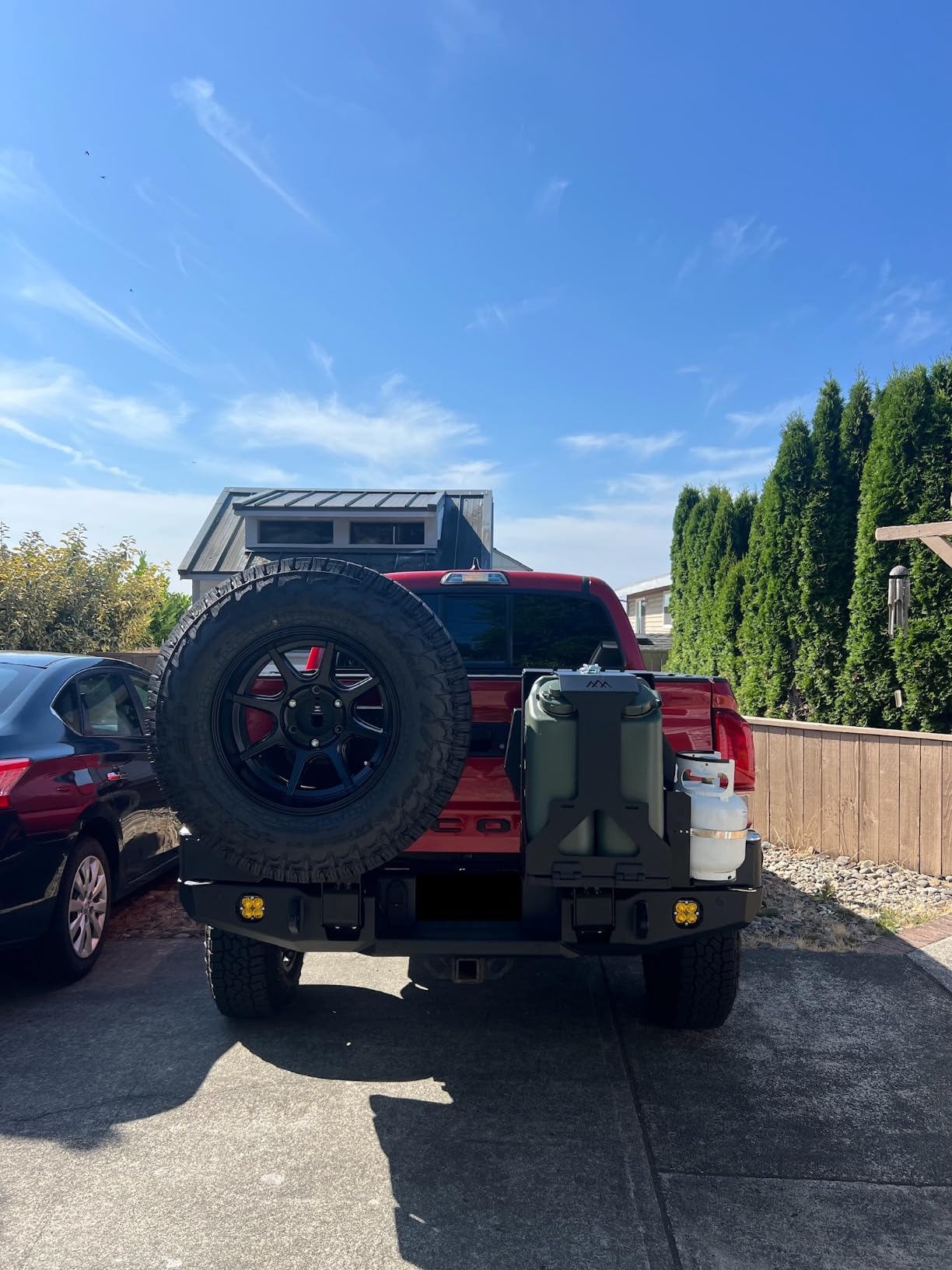
The Scepter is the only container here with an actual service record behind the design. It is a military-spec can used by US and Canadian armed forces, and owners with service experience report the same can they used in the field surviving drops when full, extreme heat, freezing and long-haul truck transport with nothing worse than scuffs and dents.
The slim vertical profile does more for handling than any other feature. At 13.7 by 6.8 by 18.8 inches it is easy to grip, easy to carry with one hand by the molded-in handle, and it does not bang into your shins on the way out of a door the way a wide cube jug does.
The air-bleed valve sits in a convenient spot near the top and lets air escape as you pour, which is the small engineering detail that turns a glug-and-splash pour into a steady stream. It is the sort of feature you only notice once you have used something without it.
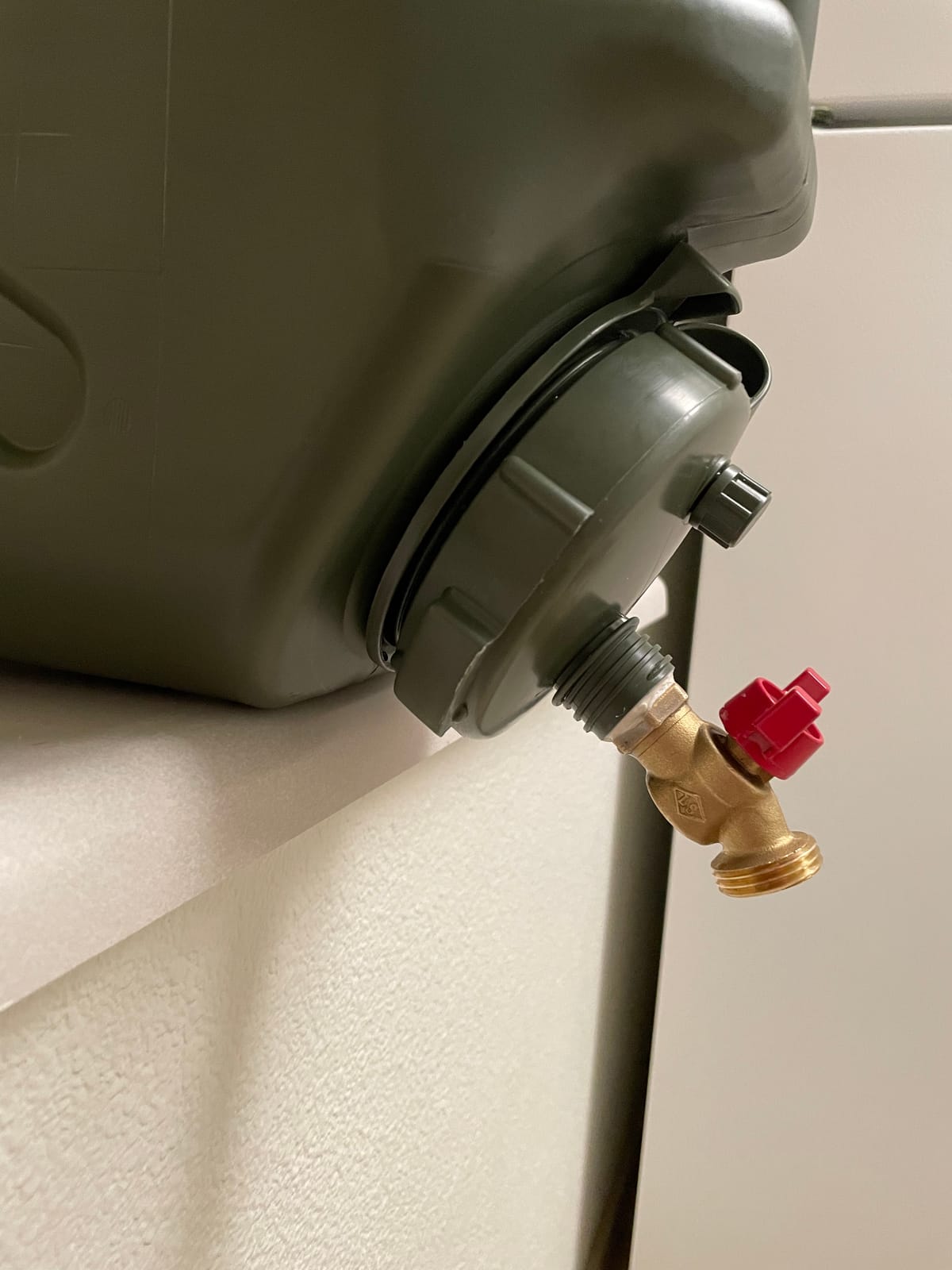
Full, it is about 42 pounds, which is at the top of the one-person carry range but well within it for most adults. The listed weight is 0.9 kg, so the can itself is genuinely light and nearly all of what you are lifting is water.
Check the cap o-ring the day it arrives. Quality control on that seal varies between units, and a can that arrives without one or with a deformed ring will weep at the cap rather than at the body, which is where most owners report their only leak.
Keep a cap wrench on hand. A friction cap that has been tightened in a hot trunk and then cooled can be stubborn, and forcing it with pliers is how threads get damaged.
Why it earns a place in a vehicle
This is the one we would keep in a car or a truck bed rather than in a house, because it tolerates the environment a vehicle actually sees. A sedan interior in July reaches temperatures that degrade a thin jug, and a can built to military transport spec does not care.
Long-term owners across the review history describe multi-year service with heat, cold, drops and rough transport as routine rather than exceptional, which is the strongest durability evidence in this roundup.
Where it falls short
Both the small and large caps swing down into the stream while you pour, so you have to hold them aside one-handed. It is a genuine irritation, not a fault, and it is the most consistent complaint in the reviews.
Some units arrive with a strong manufacturing odor that needs a bleach-and-vinegar wash to clear, and the filled weight is a real limit for smaller or older users. If anyone in your household may need to lift this in an emergency, pair it with a smaller jug rather than assuming one can serves the whole family.
6. Augason Farms 55 Gallon Barrel – Best for Rainwater and Irrigation
Augason Farms lon Water Storage Barrel – BPA-Free Plastic Barrel 55-Gallon
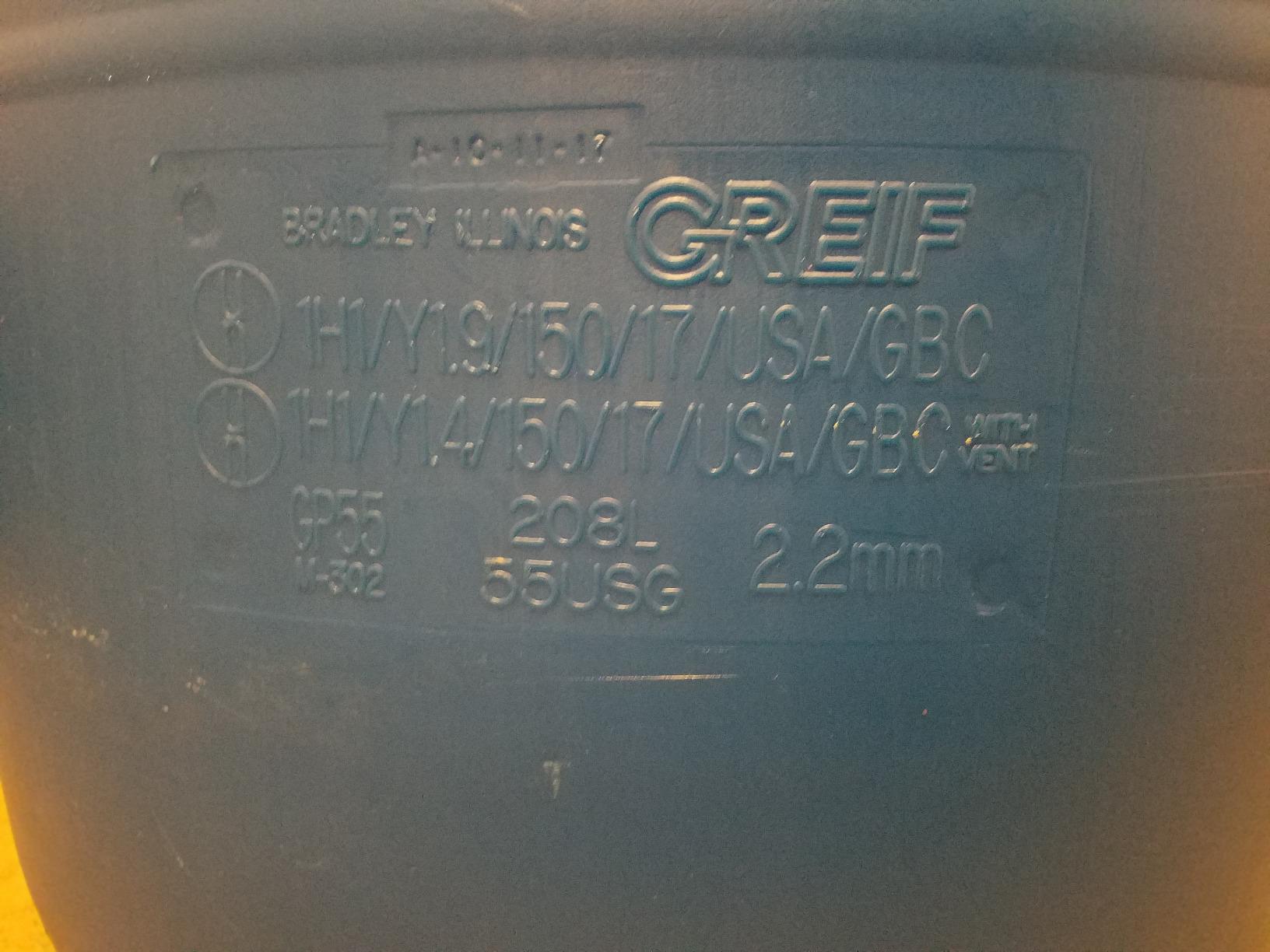
55 gallon capacity
18 pounds empty
22.95 by 22.95 by 35.13 inch
Food-grade BPA-free polyethylene
Pros
- Full 55 gallons in a compact footprint
- Sealed top with no plastic smell
- Sturdy enough to double as a rain barrel or for irrigation
- Light when empty so it is easy to position
Cons
- Only two small plug openings so it is hard to clean
- No spigot or siphon hose included
- Base can flex in deep cold
This barrel is the right answer when your water comes from a roof rather than a tap. It is a food-grade, BPA-free 55-gallon drum, sturdy enough to sit under a downspout full of rainwater, and owners regularly run a washing machine or greenhouse irrigation line off one.
It weighs 18 pounds empty, which is the part that makes 55 gallons workable at all. You can walk it into a basement or slide it onto a shelf yourself, fill it where it stands, and never lift it again unless you are draining it.
The sealed top holds no plastic smell, and the two built-in plug fittings give you a fill point and an access point. A small drain bung on the top plug handles the last of the water.
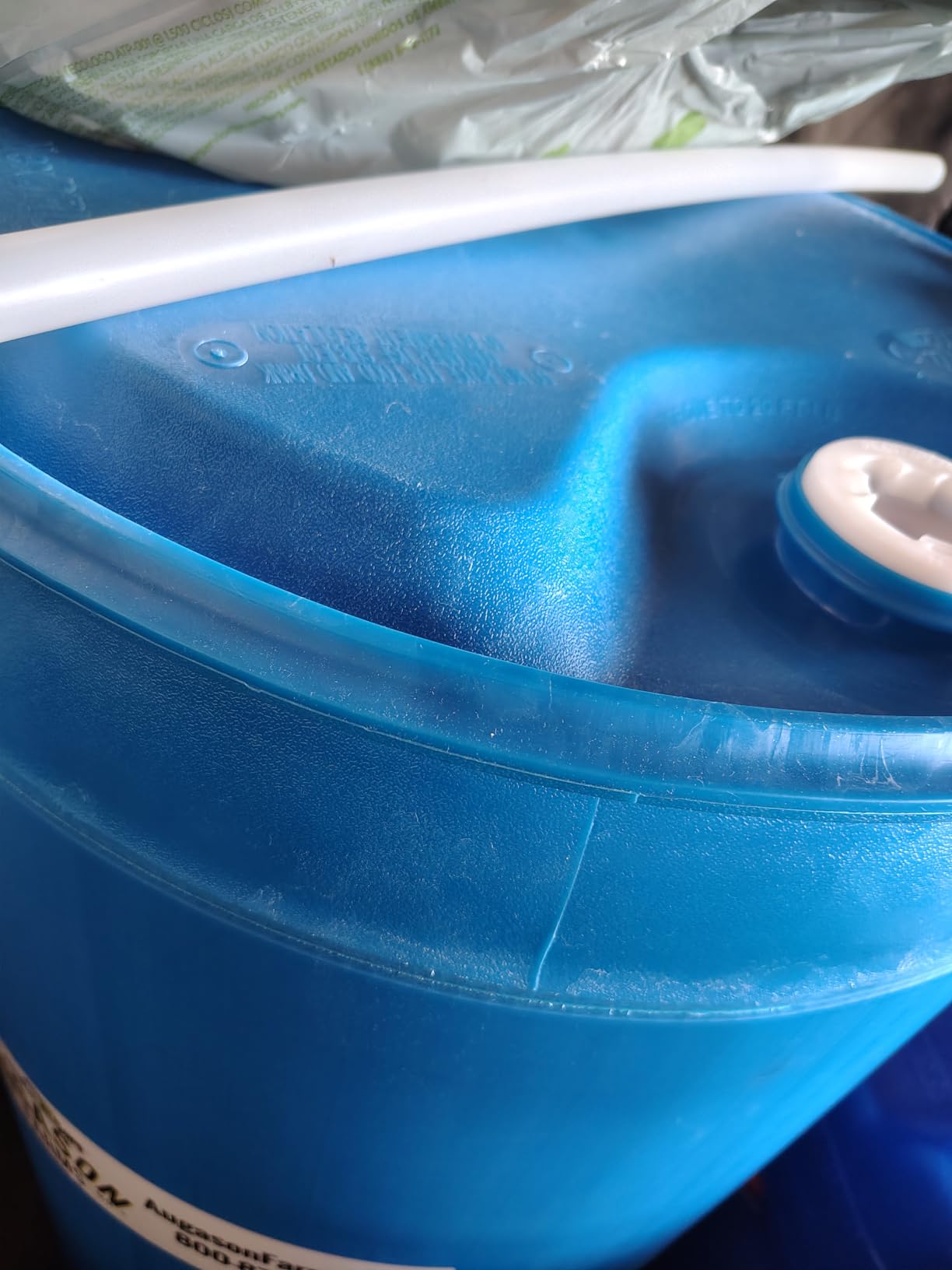
Plan the dispensing side before you fill it, because nothing is included. There is no spigot and no siphon hose, so you need a siphon pump or a hose-and-bung adapter to draw water, and those are separate purchases worth budgeting for before the barrel is full.
That accessory gap is the single biggest complaint in the reviews, and it is straightforward to solve. Buy the pump with the barrel rather than after, and test the draw on an empty drum so you know the setup works before you need it.
In deep cold, keep the barrel from flexing. Owners report the base ballooning outward in freezing conditions, so a full outdoor barrel is best placed on stable ground or blocked so it cannot be pushed, and filled in a sheltered spot rather than in an unheated shed.
Why it suits well water and catchment systems
A household with a well or a catchment system can store real volume here rather than in dozens of small jugs. A pair of these turns a spare room corner into 110 gallons, which is the tier where a siphon pump stops being an optional accessory and starts being part of the system.
It is also the practical choice for non-potable volume. Many users keep a small amount of treated water for drinking and use the drum for washing, laundry and garden irrigation, which sidesteps the plastic taste concern entirely.
Where it falls short
Access is the whole story. With only two small plug openings and an internal lip, the barrel cannot be opened wide enough to scrub properly and will not fully drain, so a small amount of water always sits in the bottom. That is fine for irrigation and annoying if you intend to drink from it long term.
Because it is not designed to be emptied and refilled on a schedule, treat it as a fill-once vessel rather than a rotation container. If you want drinkable water you can move through regularly, this is the wrong tool.
7. WaterPrepared 55 Gallon Stackable Tank – Best for Bulk Storage
WaterPrepared 55 Gallon Unique Stackable Utility Water Tank, Blue
55 gallon capacity
UV-proof PE blend
28 by 22 by 29.5 inch
FDA-approved for potable water
Pros
- Pre-tested for leaks before shipping
- Oval stackable shape has a small footprint
- Brass spigot accepts a standard garden hose
- UV-resistant opaque body slows bacterial growth
- Large cap and it fits through a standard doorway
Cons
- Heavy to move when full
- Spigot sits close to the ground
- Some units arrived with plastic chips inside
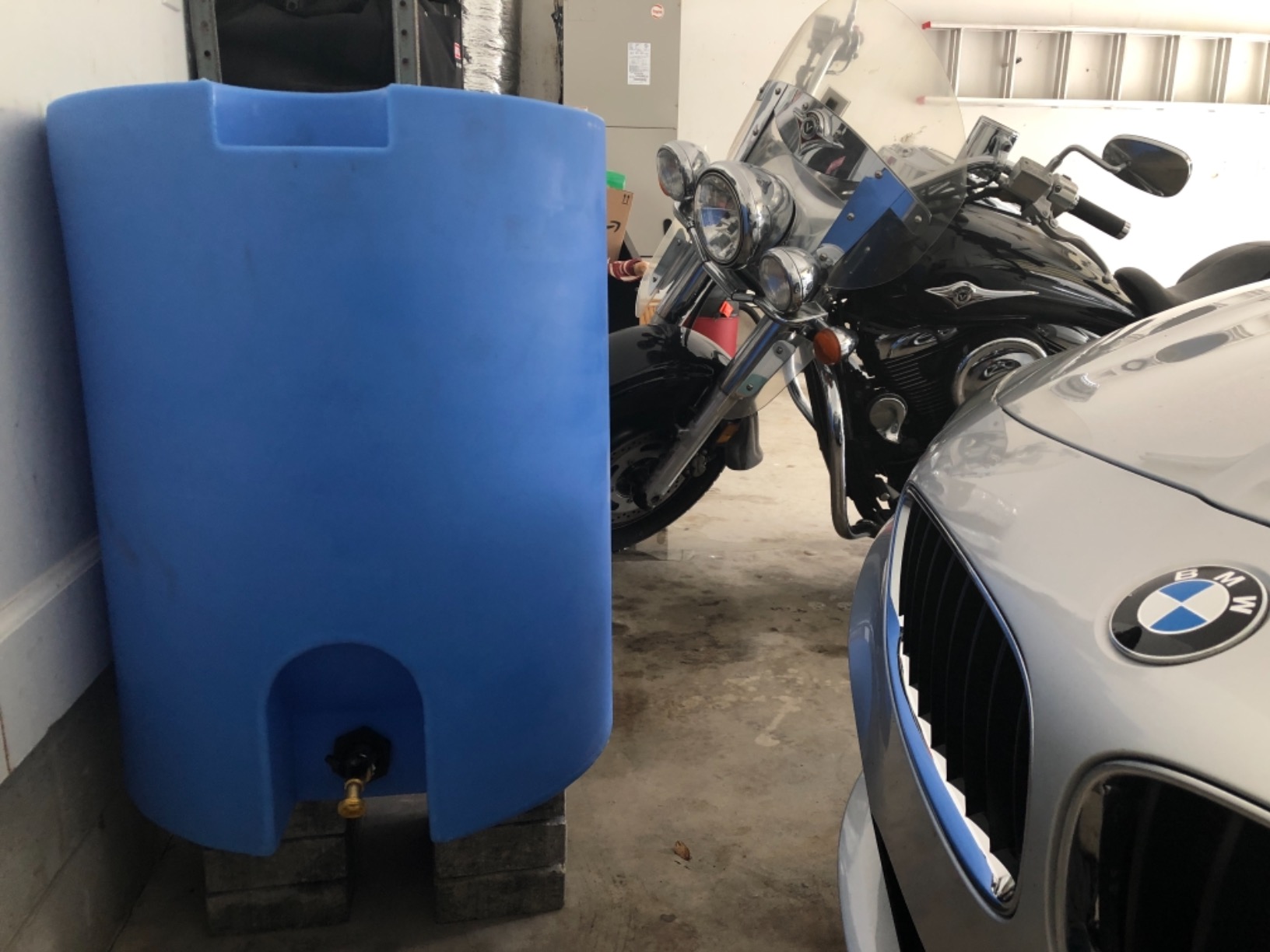
Where the Augason barrel is a drum, this is a tank, and the difference shows up in the shape. The oval stackable design uses a much smaller floor area than a horizontal 55-gallon drum, and the tanks stack vertically with about four inches of clearance below a stacked unit.
Leak performance is the headline. These tanks are pre-tested for leaks before shipping, and owners consistently confirm zero leakage over long storage. The brass spigot is the other upgrade over a typical drum because it accepts a standard garden hose, so dispensing does not require a proprietary siphon pump.
The body is a UV-proof polyethylene blend with rugged HDPE drum construction, and the material is FDA-approved for potable water. It is also narrow enough to fit through a standard doorway, which sounds trivial until you are moving 55 gallons into a finished basement.
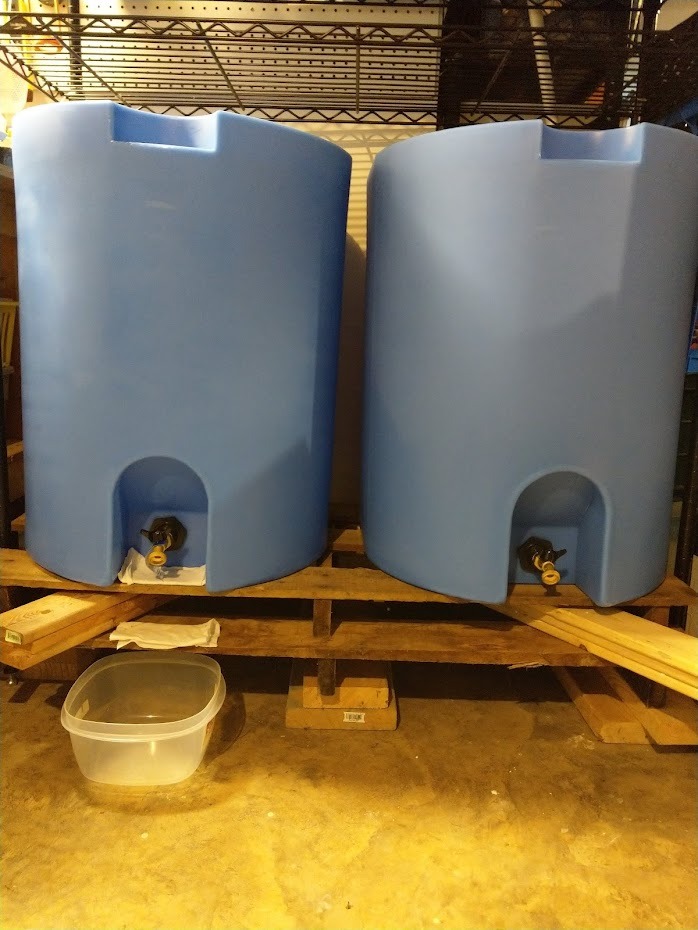
Full, this tank is roughly 460 pounds of water plus the tank. Nobody is carrying that. Owners build a stand or use a drum dolly, and the spigot sits low to the ground, so a riser or stand is worth adding at the same time rather than after.
Vacuum the inside when it arrives. A few units have shown up with small plastic chips or shavings from manufacturing that need removing before you fill, and you will not find them once the water is in.
Filling and cleaning are a project rather than a chore. Hoses, a cleaning brush and a way to sanitise the tank before first fill are extra purchases, and doing them properly takes a weekend, so start it before you need the water rather than during a storm watch.
Why it is the choice once you are past 100 gallons
Below about 100 gallons, jugs are simpler. Above it, the math changes completely: this tank holds 55 gallons in a footprint smaller than a horizontal drum and comes with a hose-ready spigot, which removes the pump problem that every plain barrel leaves you with.
Because it is stackable, you can add capacity vertically in a garage as your household grows rather than hunting for another patch of floor, and each tank stays independently movable while empty.
Where it falls short
The weight is the dominant factor, and it is the one that ends people. For seniors, for anyone with mobility limits, or for a household that may need to move water during an evacuation, a 55-gallon tank of any brand is the wrong tier. Keep a small jug alongside it for drinking.
The low spigot height, the assembly project and the occasional arrival with plastic shavings all add friction at the exact moment you least want it. If your plan requires same-day access to bulk water, stock a portable pump in advance.
8. WaterBrick 3.5 Gallon 8-Pack – Best for Small Spaces
WaterBrick International Water Storage Containers for Emergency Water Storage | 8-Pack of Stackable 3.5 Gallon Water Container Bricks | Food-Grade HDPE Plastic | BPA-Free | STD Tan
3.5 gallons each, 28 total
2.5 pounds empty each
18 by 9 by 6 inch
Food-grade BPA-free HDPE
Pros
- Cross-stacks 2 per row up to 4 feet tall
- 28 gallons in a compact footprint
- Food-grade HDPE made in the US
- Individual carry handle on each brick
- Wide opening allows hand removal of contents
Cons
- No spigot so water needs a separate pump
- 8-pack is a large up-front buy
- Cross-stacked columns need care to stay stable
The WaterBrick is the best answer to a specific problem: households that have no garage, no basement and no floor to spare. Eight 3.5-gallon bricks cross-stack two per row up to four feet tall, so 28 gallons occupies a footprint not much bigger than a single rug and rises rather than spreads.
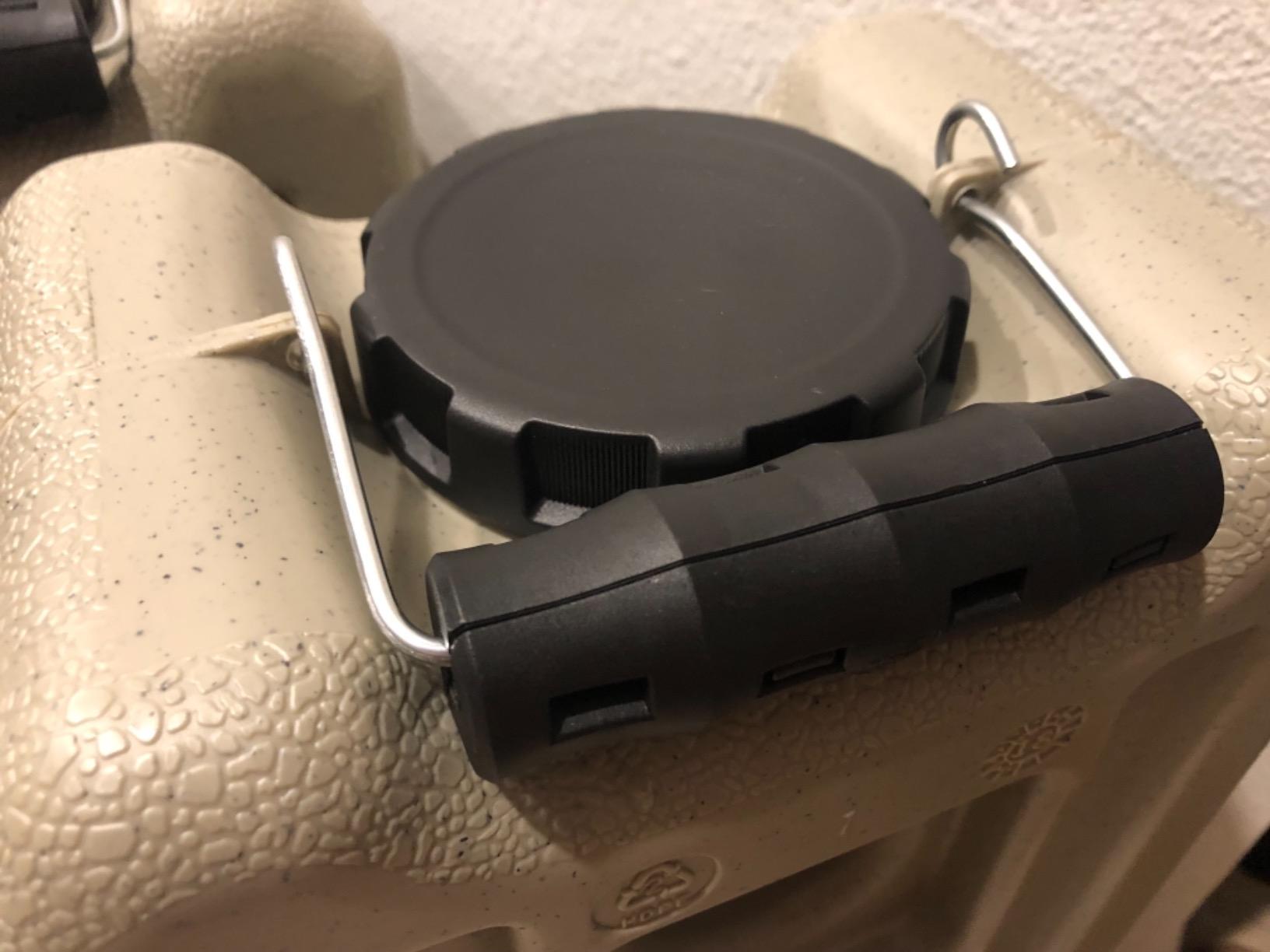
Each brick is food-grade, BPA-free HDPE manufactured in the US, and each one has its own carry handle. That means you move 29 pounds at a time, not a 42-pound jug, and a single brick can live in a go-bag while the rest stay stacked.
The wide-diameter opening is designed so an adult can reach in and pull contents out by hand. For water you need to decant into a bottle, that saves buying a pump, and for dry goods the same bricks store rice, beans, sugar, pet food or sand.
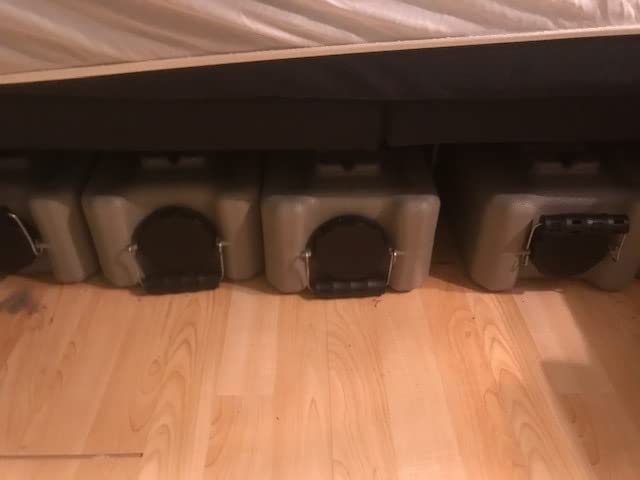
At 18 by 9 by 6 inches and 2.5 pounds empty, each brick is about 29 pounds full. That weight is the same as the smaller jug in this roundup, so the storage gain comes entirely from the geometry rather than from making the water lighter.
There is no spigot. Dispensing means tipping a 29-pound brick into a pitcher or using a separate siphon pump, and you need to plan for that if the water is your drinking supply rather than a cleaning reserve.
Set the columns on a level floor and build them up in a way you can reach the bottom of. Pulling a full brick out from under four stacked ones is a two-person job, and that is the one genuine safety note in an otherwise very well-behaved design.
Why it fits households with no dedicated storage
Twenty-eight gallons covers a family of two for a week, or a family of four for three and a half days, inside a closet, under a bed or in the corner of a utility room. Because the gain comes from stacking upward rather than outward, the footprint it needs is a fraction of what round containers of the same capacity demand.
Using the same bricks for water and dry food is a practical sustainability argument. One set of containers covers drinking water, rice and beans, and pet food, instead of buying single-purpose plastic for each category and replacing it every few years.
Where it falls short
The lack of a tap is the real deal-breaker for anyone treating this as a drinking water system. A 55-gallon drum with a spigot is a tool you use; a stack of bricks is a place water sits. Decide up front whether these are your drinking reserve or your household utility reserve.
An 8-pack is also a bigger starting purchase than most households need for a first reserve, and cross-stacked columns need care to stay stable, particularly with children or pets in the room.
How Much Water Should You Store?
The planning guidance is one gallon of water per person per day for drinking and basic hygiene, with two weeks as the minimum target. That comes from federal preparedness guidance and it is the number every calculation below starts from.
A family of four for two weeks is 4 people multiplied by 14 days, or 56 gallons. Add a cat or a dog at roughly a quarter gallon per day, and a 2-week supply for a four-person household with pets lands near 60 gallons.
One person, 2 weeks: 14 gallons
Two people, 2 weeks: 28 gallons
Three people, 2 weeks: 42 gallons
Four people, 2 weeks: 56 gallons
Five people, 2 weeks: 70 gallons
Add roughly 25 percent for cooking, sanitation and pets. Drinking and hygiene are the planning baseline; a realistic household burns more water than that once you include washing hands after every meal and dishes.
At 500 gallons, the same math says you are covering a five-person household for about 100 days, or a two-person household for a full year at the baseline rate. That is the point at which a siphon pump and a fixed tank become necessary rather than optional.
Convert the total to containers before you buy. A four-person household at 56 gallons is four 5-gallon jugs on a shelf, or one 55-gallon tank plus a single 1-gallon jug in the kitchen, and those two setups are not equally usable in a real emergency.
Apartment, Closet and No-Garage Storage
If you have no garage, no basement and no shed, the constraint is floor area and how much weight your floor is designed to carry. A stack of 55-gallon tanks at 460 pounds each is a serious concentrated load and is not something to put in a rented flat.
Start with the small end of this roundup. Two collapsible 5.3-gallon containers or a pair of 3.2-gallon jugs give you 10 to 11 gallons in under a bed, weigh 27 pounds per unit, and are the only options here you can move up a staircase with one hand.
Use vertical space deliberately. The WaterBrick cross-stacks 28 gallons into a footprint close to a bath mat, and the Legacy 5-gallon tanks interlock into a single column, so both gain capacity by going up rather than out.
Use a closet shelf rated for the load, not a top shelf in a lightweight hutch. A 29-pound brick is fine on a normal closet shelf; several 42-pound jugs on a top shelf is a different question for the board and the brackets underneath it.
Split the supply across more than one place. A second set of small containers in a different room or in a vehicle protects you from a single failed container taking the whole supply with it, and it means you are not carrying one heavy object far in the dark.
Our under-bed storage container guide covers the containers themselves, and the clear storage set roundup covers lidded bins if you are organising a closet at the same time.
Food Grade Materials, Plastic Codes and Plastic-Free Options
Recycling codes 1, 2 and 4 are all polyethylene-based and safe for food contact, so any of them is a reasonable choice. Code 2, HDPE, is the standard for emergency water containers and the one most of this roundup uses.
Avoid code 3, which is PVC, code 6, which is polystyrene, and code 7, which is the mixed and polycarbonate category that includes BPA. Code 7 in particular has a poor safety reputation for long storage, and its mixed composition makes food-contact performance inconsistent.
Never store emergency water in a milk jug or a soda bottle. Neither is a food-grade water container, both are thin-walled single-use packaging, and both fail unpredictably after months. Store-bought gallon jugs have the same problem, which is why refill strategy shows up so often in preparedness forums as a false economy.
For plastic-free options, food-grade stainless steel is the practical one, and it avoids the plastic taste complaint entirely. It is heavy and it is unforgiving of a dented or rusted interior, so a gasketed stainless canister with a replaceable seal is the version worth buying.
Glass is food-safe and tasteless but breaks, and 5 pounds of glass plus 42 pounds of water is a dropped-object hazard in a house with children. Treat glass as a short-term countertop reserve rather than a storage programme.
Colour matters more than most people expect. Opaque dark blue, tan and green bodies slow light-driven bacterial and algal growth, which is why the longest-lived containers here are opaque and why the clear ones are positioned for shorter rotation.
Treatment, Shelf Life and a Rotation Schedule
Treated municipal water in a food-grade container stays potable for years; untreated water in a closed container is commonly treated as a six-month shelf life. The honest middle position is that you do not need preservatives if you trust your tap and you rotate.
Rotating means pouring out old water, cleaning the container, and refilling with fresh treated tap water. Every six months for small jugs, every year for the rigid tanks, and every time you notice a taste change. Write the fill date on the container with a permanent marker, because you will not remember.
If you would rather set and forget, water treatment drops rated for up to five years are the cleanest route. The Legacy set in this roundup includes them, and they remove the single most common failure mode, which is water that sits too long and gets drunk by someone who assumes it is fine.
Bleach is the treatment of last resort rather than a routine step, because dosing it wrong makes water undrinkable. If you use it, measure by the dropper, never by eye, and let it sit the full contact time before drinking.
Taste and staleness are fixable. Water that sits flat often needs shaking rather than treating, since the water is fine and the plastic is absorbing and releasing flavours. If shaking does not help, filter it, and if it still tastes off after a year, replace it rather than trying to treat your way around old water.
Storing a water preserver drop per container at fill time is the cheapest insurance in this entire guide. If a neighbourhood boil-water notice is declared, you have hundreds of gallons that do not need to be boiled, and that is the scenario most people find they are unprepared for.
Where to Store Water in Your Home
Store it cool, dark and flat. Heat and light are the two things that degrade stored water fastest, so a garage shelf, a basement shelf or a closet beats an attic, a shed in summer, or a car in July.
Keep containers off bare concrete and off a floor where a failed cap drips onto other supplies. A shallow tray, a pallet or a plastic tote under a row of jugs is the cheapest insurance in this guide, and it turns one leaking container from a total loss into a small problem.
Keep stored water away from fuel, paint, solvents, fertiliser and cleaning chemicals. Plastic is permeable enough over long periods that vapour from a solvent can migrate into a container, and this is the version of the advice that rarely appears in roundups.
Split the supply across more than one location. Two sets of small containers in different parts of a home beat one large set in a single corner, because the failure modes you cannot control, a leak, a frozen pipe, a garage flood, hit one spot at a time.
Label every container with its fill date and its contents. Mark non-potable water as non-potable, and keep a drinking reserve physically separate from irrigation and cleaning water, which is how a well or catchment household avoids drinking from the barrel it meant for the garden.
Freezing is the last thing to plan for. Water expands when it freezes, so leave about 15 percent headspace, or fill to roughly 85 percent, in any container that will sit in a space that can drop below 32 degrees. The same rule applies to a car left outside overnight in winter.
Frequently Asked Questions
How long can water sit in a tank before it goes bad?
Untreated tap water in a sealed food-grade container is generally treated as a six-month shelf life, while water treated with commercial preservation drops is rated by the manufacturer for up to five years. The deciding factors are heat, light and the container material. A cool, dark, opaque HDPE container with treated water is the longest-lived combination, and rotating every six months keeps even untreated water palatable indefinitely.
How long can you store water in a plastic barrel?
In a food-grade, opaque plastic barrel kept cool and dark, treated water stays drinkable for years, and untreated water is usually rotated every six months. A sealed 55-gallon barrel is the best volume per square foot available, but it is the least convenient to clean, and a barrel with an internal lip never fully drains, so plan to use a siphon pump and expect to sanitise before each refill.
How much water do I need for 2 weeks per person?
One gallon of water per person per day is the standard planning figure, so two weeks comes to 14 gallons per person. A family of four therefore needs 56 gallons for drinking and basic hygiene, and around 70 gallons once you add cooking, extra sanitation and pets. Households with a well or rainwater catchment should add 25 percent to cover the non-drinking uses.
What is the best way to store water in a prepper emergency?
Keep a rotation supply in food-grade containers in a cool, dark space, off bare concrete and away from fuel, paint and solvents, with the fill date written on each one. Keep the supply split across more than one location, put a tray or tote underneath a row of containers, and maintain a separate small reserve for drinking. If a boil-water notice is issued, a preserved bulk supply saves you from boiling hundreds of gallons.
What are some non-plastic water storage containers?
Food-grade stainless steel with a gasketed, replaceable-seal lid is the most practical plastic-free option, and it leaves no plastic taste in the water at all. Glass is also food-safe and tasteless but breaks, which makes it a poor choice for a 5-gallon reserve in a house with children. Both are heavier than HDPE, so non-plastic storage is usually a short-term countertop reserve rather than a full storage programme.
Can you taste microplastics?
You cannot identify a specific chemical by taste, but many people notice a faint plastic flavour in water that has sat in plastic, and the ability to taste it varies widely between individuals. That off-flavour is the practical signal to act on, whether or not it is a true chemical measurement. Switching to food-grade stainless steel, filtering, or simply rotating the water more often is what removes it.
Conclusion
The best water storage containers for emergencies are the ones that match how much water you need, how heavy the person in your household can lift, and how long you realistically expect to rotate. Our pick for most people is the WaterStorageCube 5.3-gallon pair, because ten gallons of food-grade PE that folds flat is a reserve you can actually keep and actually move.
Households with a garage and a long horizon should look at the Legacy 5-gallon 4-pack with treatment drops, and anyone past 100 gallons should add a WaterPrepared stackable tank for its hose-ready spigot. Renters and apartment dwellers should start small and go vertical with the WaterBrick set. Keep something like the waterBOB on hand regardless, folded flat, for the sudden outage you did not see coming.
Whichever tier you choose, put it where you can reach it, label the fill date, keep a tray underneath, and split the supply across more than one room. Then tell us your household size and how much space you have, and we will narrow the list down to the two containers that fit your situation.