
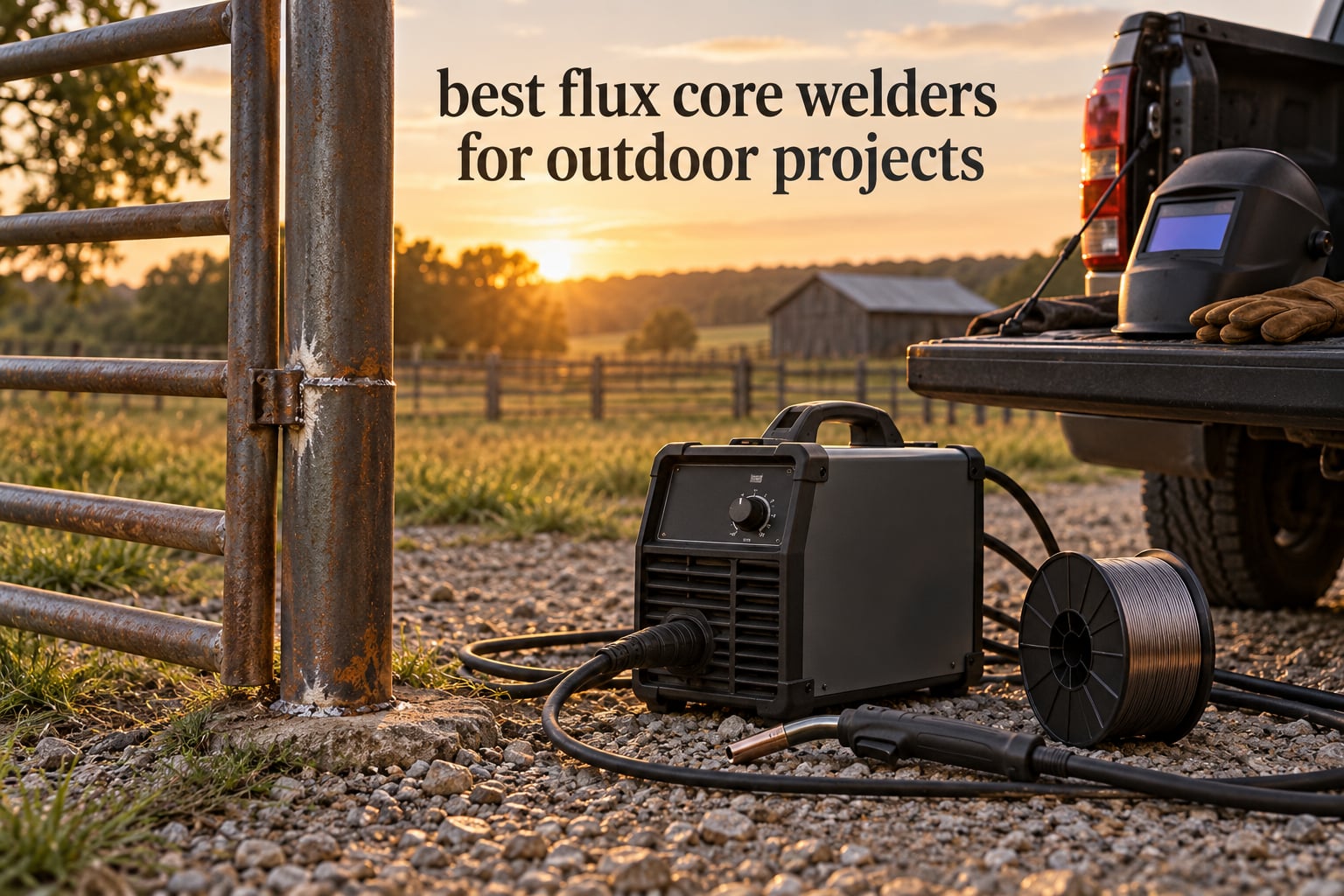
The best flux core welders for outdoor projects are gasless machines that feed self-shielding wire, so you can weld in wind, dust and on a generator without a shielding gas cylinder. Flux core is more forgiving than gas MIG on dirty, lightly rusted farm and fence steel, and less forgiving on thin cosmetic sheet metal and aluminum.
That combination is why every farm gate, trailer frame, gate post and mower deck repair ends up at the same question: which machine can carry to the work, run on the power you actually have, and still push enough amps through a dirty 1/4 inch joint. We compared ten wire feed machines on published amperage, input voltage, weight, spool capacity, duty cycle and the accessory complaints that show up again and again in owner reviews.
Everything below is built around outdoor work rather than a shop bench. We lean on what owners report after real jobs, what the manufacturer lists, and the recurring problems welders mention on r/Welding, tractorbynet and survivalistboards. Where the specs conflict with each other, we say so instead of picking the flattering number.
Top 3 Picks for Outdoor Flux Core Welding in 2026
If you want the short answer first, these three cover the outdoor jobs most people actually have.
Forney Easy Weld 140 FC — the most balanced outdoor machine here. 140 amps on household 120V power, mild steel up to 1/4 inch, and it takes both 2 lb and 10 lb wire rolls so you stop changing wire mid-project.
YESWELDER FLUX-135PRO — the cheapest credible way to learn gasless welding. 135 amps, synergic setup, and .030 and .035 wire in the box so you can weld the day it arrives.
ARCCAPTAIN MIG130 — the best value for rusty farm and equipment steel. 130 amps, a 10-speed wire feed, 11.79 lb with a shoulder strap, and a two-year manufacturer warranty.
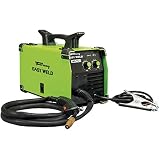
Forney Easy Weld 140
- 140A on 120V
- Welds mild steel to 1/4 in
- Takes 2 lb and 10 lb spools
- 19 lb all-metal case
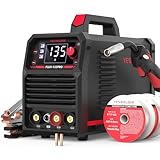
YESWELDER FLUX-135PRO
- 135A on 110V
- Synergic control with plus or minus 3V trim
- .030 and .035 wire included
- Welds mild steel to 3/32 in
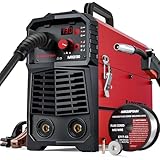
ARCCAPTAIN MIG130
- 130A on 110V
- Synergic for .030 .035 and .040 wire
- 11.79 lb with handle or strap
- 2 lb wire and torch included
All 10 Flux Core Welders Compared Side by Side in 2026
The table below is the fastest way to narrow this list. Output amperage and input voltage decide what you can weld; weight and spool size decide whether you want to carry it to the work.
| Product | Specifications | Action |
|---|---|---|
| Forney Easy Weld 140 |
|
Check Latest Price |
| YESWELDER FLUX-135PRO |
|
Check Latest Price |
| ARCCAPTAIN MIG130 |
|
Check Latest Price |
 TOOLIOM MIG-135 PRO TOOLIOM MIG-135 PRO |
|
Check Latest Price |
 AZZUNO MIG 130F AZZUNO MIG 130F |
|
Check Latest Price |
 HITBOX 200A HITBOX 200A |
|
Check Latest Price |
 Bestarc MIG145 Bestarc MIG145 |
|
Check Latest Price |
 Lincoln Electric 90i FC Lincoln Electric 90i FC |
|
Check Latest Price |
 BILT HARD 135A 3-in-1 BILT HARD 135A 3-in-1 |
|
Check Latest Price |
 ANDELI 135A Pulse ANDELI 135A Pulse |
|
Check Latest Price |
1. Forney Easy Weld 140 FC — best overall for outdoor steel on household power
FORNEY Easy Weld 140 Amp 120-Volt Flux-Cored Wire Feed Welder (No Gas Needed)
140A on 120V
Welds mild steel to 1/4 in
19 lb all-metal case
.030 wire, 2 lb and 10 lb spools
Pros
- Runs on a standard 120V 20A circuit with no gas cylinder
- Welds mild steel up to 1/4 in
- Accepts both 2 lb and 10 lb wire rolls
- 19 lb all-metal case built for daily carry
- Includes 8 ft MIG gun and 8 ft ground clamp
Cons
- Needs frequent setting tweaks to avoid burn-through on thin material
- Flux core spatter has to be chipped off
- AC power source and 12 month warranty
This is the machine we keep coming back to for outdoor work because it answers the two questions that actually decide a purchase: how much steel can it push through, and will the wall outlet cooperate. 140 amps of output on a standard 120V circuit covers 1/4 inch mild steel, which is the thickness of most gate frames, trailer cross members and fence rails.
The 19 lb all-metal case is not a marketing line. Budget machines in plastic housings crack when they get bumped in a truck bed, and a metal case is the single biggest predictor of whether a welder survives five seasons of outdoor work.
The detail that separates it from every cheaper machine on this list is spool capacity. Both 2 lb and 10 lb rolls fit, so a long run of fence panel or a set of trailer cross members means one wire change instead of five. The infinite voltage and wire feed speed control lets you dial the bead instead of living with a fixed preset.
At just over 3,300 owner reviews and a 4.6 star average, this is also the most widely reported-on machine here, which means the problems below are not isolated complaints.
Best for fence, farm and general fabrication work
Owners consistently use this machine for gate repairs, post caps, tack welding thin angle iron and joining 1/8 and 1/4 inch mild steel outdoors. It is straightforward to move from a truck bed to a gate post because there is no gas cylinder to wrestle with.
If your work is mostly heavier structural steel or you weld for hours without pause, look at a 220V machine further down this list. A 120V input caps how hard you can push before the breaker complains.
Not right for thin sheet or code-critical welds
New users report needing several attempts to stop burning through thin material, because the wire feed and voltage are not linked the way they are on a synergic machine. It is a learning curve, not a defect, but it does slow down a first-timer.
Spatter is the other recurring complaint. Flux core is a dirty process, and this machine will not pretend otherwise. If you need a cosmetic finish on visible panel metal, a gas MIG machine handles that job better. Our MIG vs TIG comparison covers when a gas process is worth the extra setup.
2. YESWELDER FLUX-135PRO — the most versatile first outdoor machine
YESWELDER 135A MIG Welder, 110V Flux Core Gasless MIG/Lift TIG/Stick 3-in-1
135A on 110V
Welds mild steel to 3/32 in
Synergic plus or minus 3V trim
.030 and .035 wire included
Pros
- Synergic control matches voltage to wire feed with plus or minus 3V trim
- .030 and .035 E71T-GS wire included in the box
- Oversized LED display readable in daylight
- Built-in over-current overload and overheat protection
- Over 2900 owner reviews
Cons
- DC output only so no aluminum welding
- Spool holder and ground clamp feel cheap
- Lift TIG needs a separately purchased torch
At 135 amps on 110V, this machine covers the middle of outdoor work: 16 gauge through 3/32 inch mild steel, which is exactly what hitch brackets, gate hardware, mower decks and most trailer repairs are made of. The synergic control is the reason it suits a beginner, because voltage follows the wire feed setting instead of demanding its own dial.
Everything you need to strike an arc on day one is in the box, including both .030 and .035 E71T-GS wire. That matters more than it sounds, because the wire diameter a beginner buys is usually wrong for the machine they just bought.
A note on the weight, because the listings disagree. The Amazon product details list this machine at 16.98 lb while the feature list describes 11.4 lb. We could not reconcile those two numbers, so plan for the heavier figure if you intend to carry it a long way from the vehicle.
Experienced owners confirm a consistent arc, smooth wire feed and no breaker trips on a 20A circuit, which is the usual first failure point with cheaper machines.
Best for learning flux core and light outdoor repair
This is the machine we would hand someone who has never welded. The plus or minus 3 volt trim lets you correct a hot bead or a cold one without relearning the machine, and the big LED readout shows live current so you are not guessing in bright sunlight.
It also makes a decent second machine for a shop that already owns something larger. If you want a wider comparison of machines for a home setup, read our home MIG welder picks.
Not right for thick plate, aluminum or all-in packages
Three limits are worth stating plainly. It is DC output only, so it cannot weld aluminum at all. Lift TIG is advertised but the torch is not included, which makes the 3-in-1 claim thinner than it sounds.
At 3/32 inch maximum mild steel, anything heavier is outside its comfort zone. Move up to the Forney or a 220V machine for 1/4 inch work.
3. ARCCAPTAIN MIG130 — best value for rusted farm and equipment steel
ARCCAPTAIN 130A Flux Core Welder MIG Welder 110V Gasless MIG Stick Lift TIG
130A on 110V
Synergic for .030 .035 and .040
11.79 lb with strap
2 lb wire torch and brush included
Pros
- Synergic control matches current and wire feed to the chosen wire diameter
- 10-speed wire feed handles carbon steel stainless and thicker stock
- 11.79 lb with a handle or shoulder strap
- Two-year manufacturer warranty
- Complete kit with 2 lb of .030 wire and two contact tips
Cons
- Lift TIG requires an extra torch purchase
- 110V-only output limits thicker material
Owners of this machine keep pointing at the same thing: it is genuinely beginner-friendly to set up, and it is light enough at 11.79 lb that the shoulder strap is a real option rather than an afterthought. For outdoor jobs that mean walking to the far end of a property, that matters.
The 10-speed variable wire feed control is the feature that separates it from cheaper 130A machines. It handles flux-cored carbon steel, stainless and thicker stock from one dial, which saves you swapping machines when you move from a gate hinge to a frame bracket.
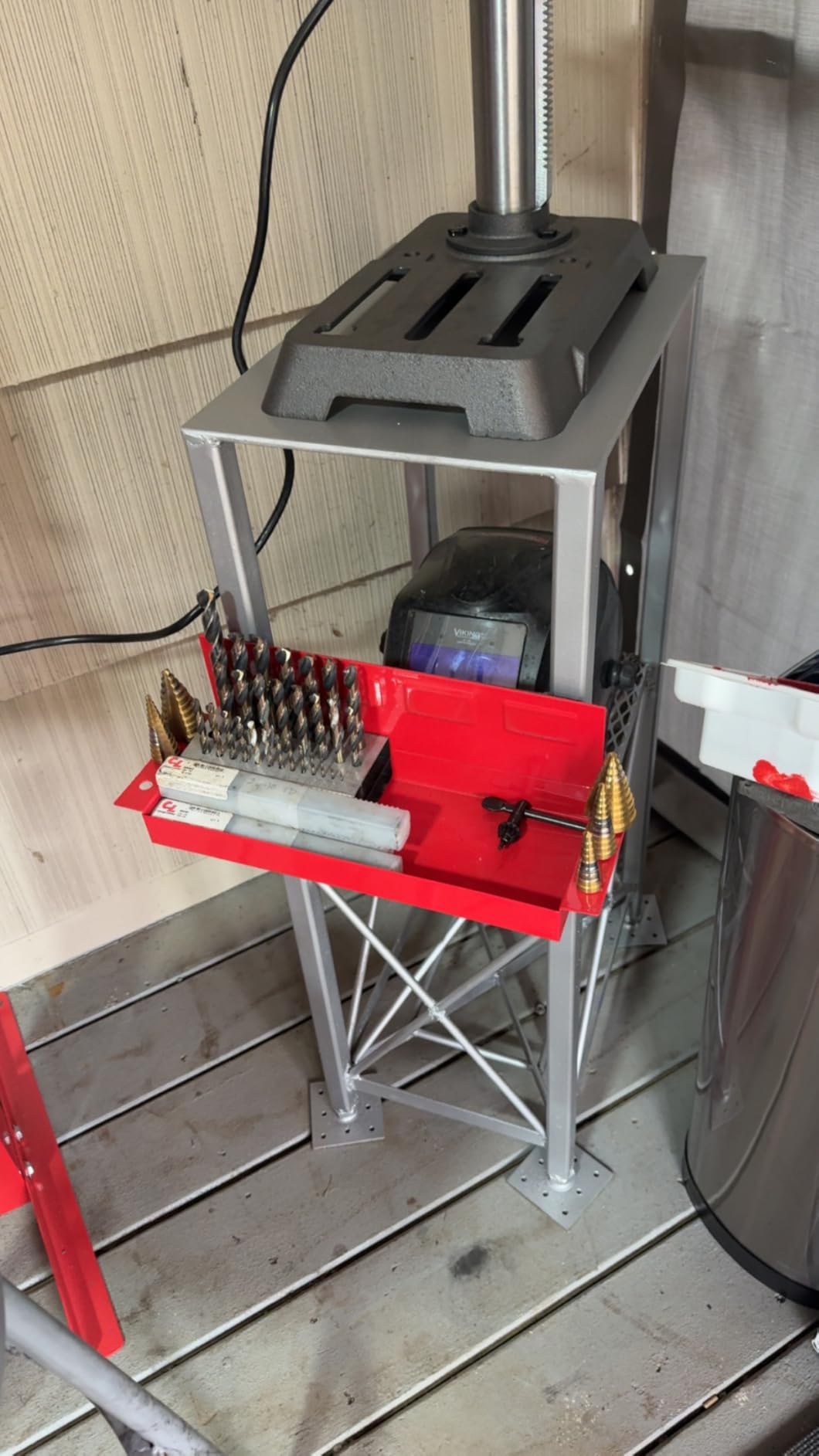
The box is unusually complete. You get a MIG torch, ground clamp, electrode holder, 2 lb of .030 flux core wire, two contact tips, a chipping brush and hammer. On a machine at this level, the included wire is often a thin promotional amount, so this is a genuine convenience.
The two-year manufacturer warranty also stands above most machines in this price class, which matters when the machine lives in a shed rather than a conditioned shop.
Best for rusty equipment and one-person carry
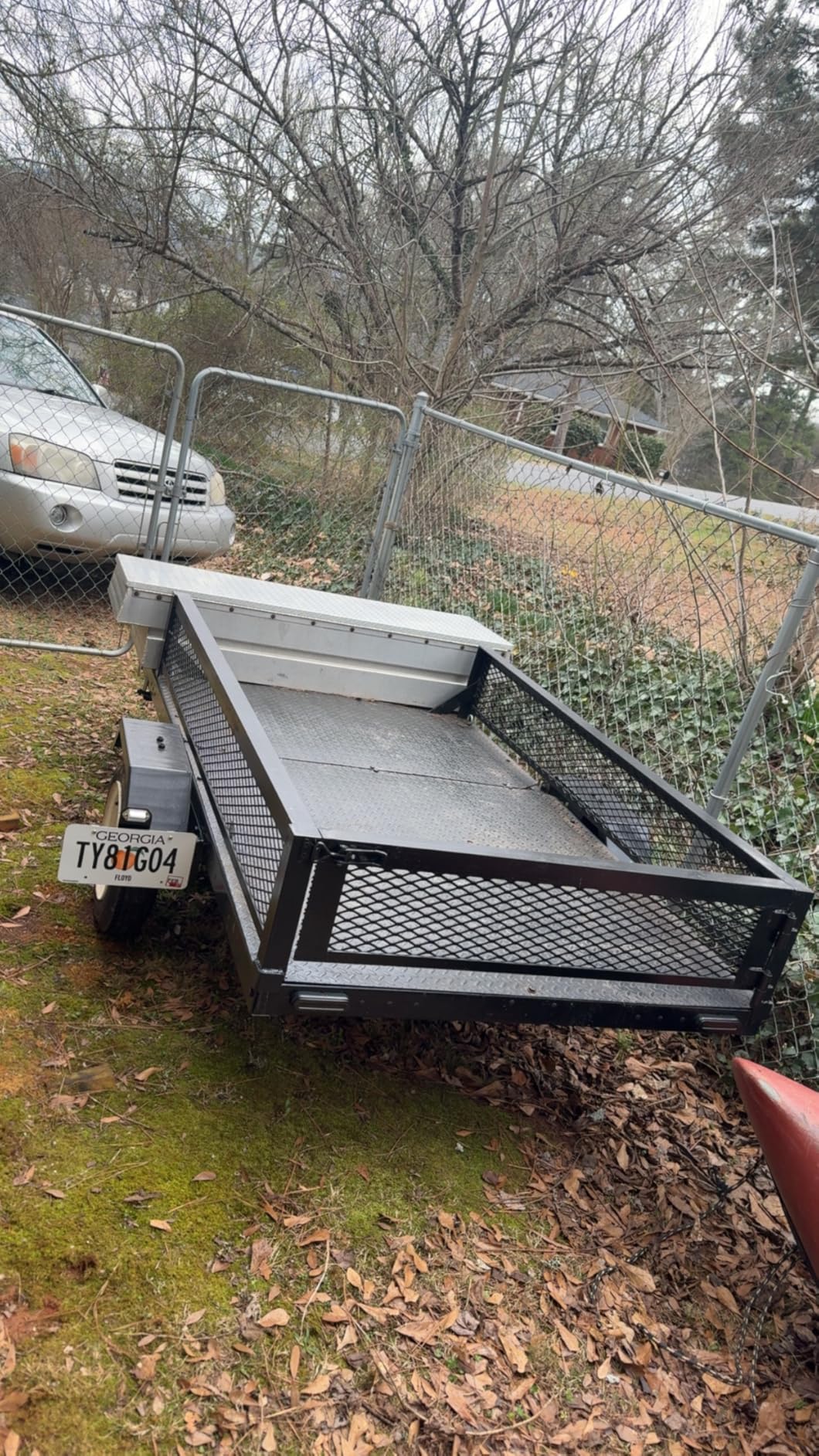
Buyers report using it for home DIY, outdoor repairs, rusty metal and farm equipment, and the included wire means you can start without a separate supply run. That combination of carry weight and starter consumables is why it edges out the other budget options here.
Built-in over-current, over-load and overheating protection also lets you leave it running on a long seam outdoors without worrying about thermal shutdown in the middle of a joint.
Not right for 1/4 inch plate or anyone who wants aluminum
The 110V-only input is the defining limit. It will not push 1/4 inch steel the way the Forney 140 does, and there is no path to a 220V outlet with this machine.
Lift TIG needs a separate torch, so count that as another purchase if you plan to do any stainless work. For brand-versus-brand context, our Hobart vs Lincoln comparison covers where premium brands earn their money.
4. TOOLIOM MIG-135 PRO — best upgrade step from an old transformer welder
TOOLIOM 135A 110V Gasless Flux Core MIG Welder Kit with Wire and Gloves
135A on 110V
Welds mild steel to 1/6 in
Synergic wire feed 120 to 420 IPM
Gloves and wire included
Pros
- DC inverter output gives smoother penetration and less spatter
- Enough current for 1/6 in steel without tripping a 110V breaker
- Synergic feed from 120 to 420 in/min for .030 wire with plus or minus 3V trim
- Includes welding gloves and wire
- Hot start and arc force for stick work
Cons
- Cramped spool bay makes threading and tensioning awkward
- Accepts only 2 lb spools with no room for larger rolls
- Cheap short ground clamp and cables
- Lift TIG torch sold separately
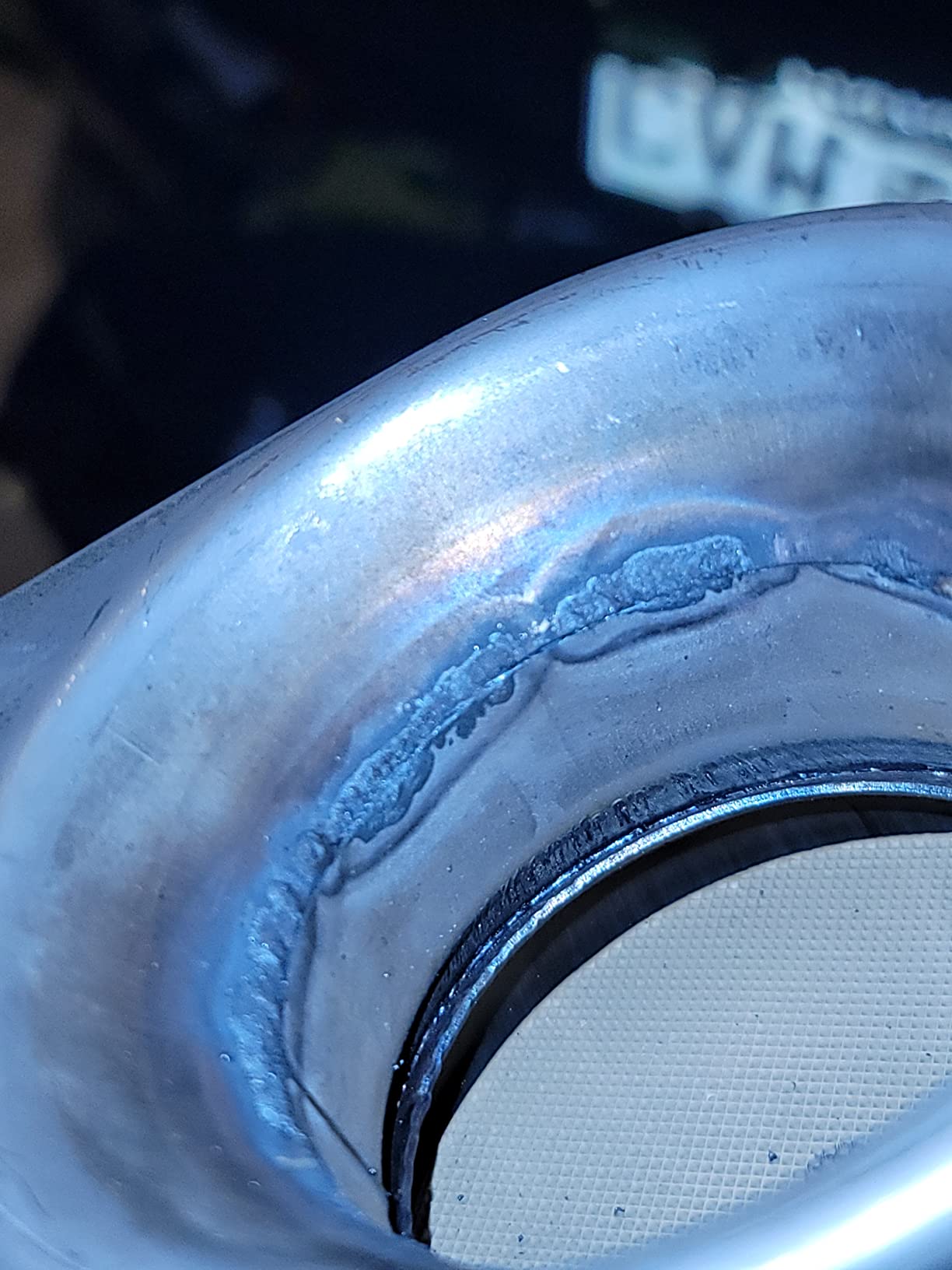
If your current machine is an old transformer welder, this is the step up that changes the experience most. Owners who made this switch describe noticeably better-looking, better-penetrating welds and a much quieter machine, which matters when you are working next to a house or livestock.
The synergic wire feed numbers are unusually specific here: 120 to 420 inches per minute for .030 wire and 120 to 308 for .035, with plus or minus 3 volts of fine trim. That range covers thin gate hardware through 1/6 inch plate without re-guessing.
As with the YESWELDER, the listed weights disagree. The product details show 18.61 lb while the feature list and owner reviews describe roughly 11.24 lb with a carry handle. Take the heavier number as the safe planning figure.
Volatility compensation is included, which helps when you run off a generator or a long extension cord and the input voltage sags mid-seam.
Best for smoother beads on lighter-gauge outdoor steel
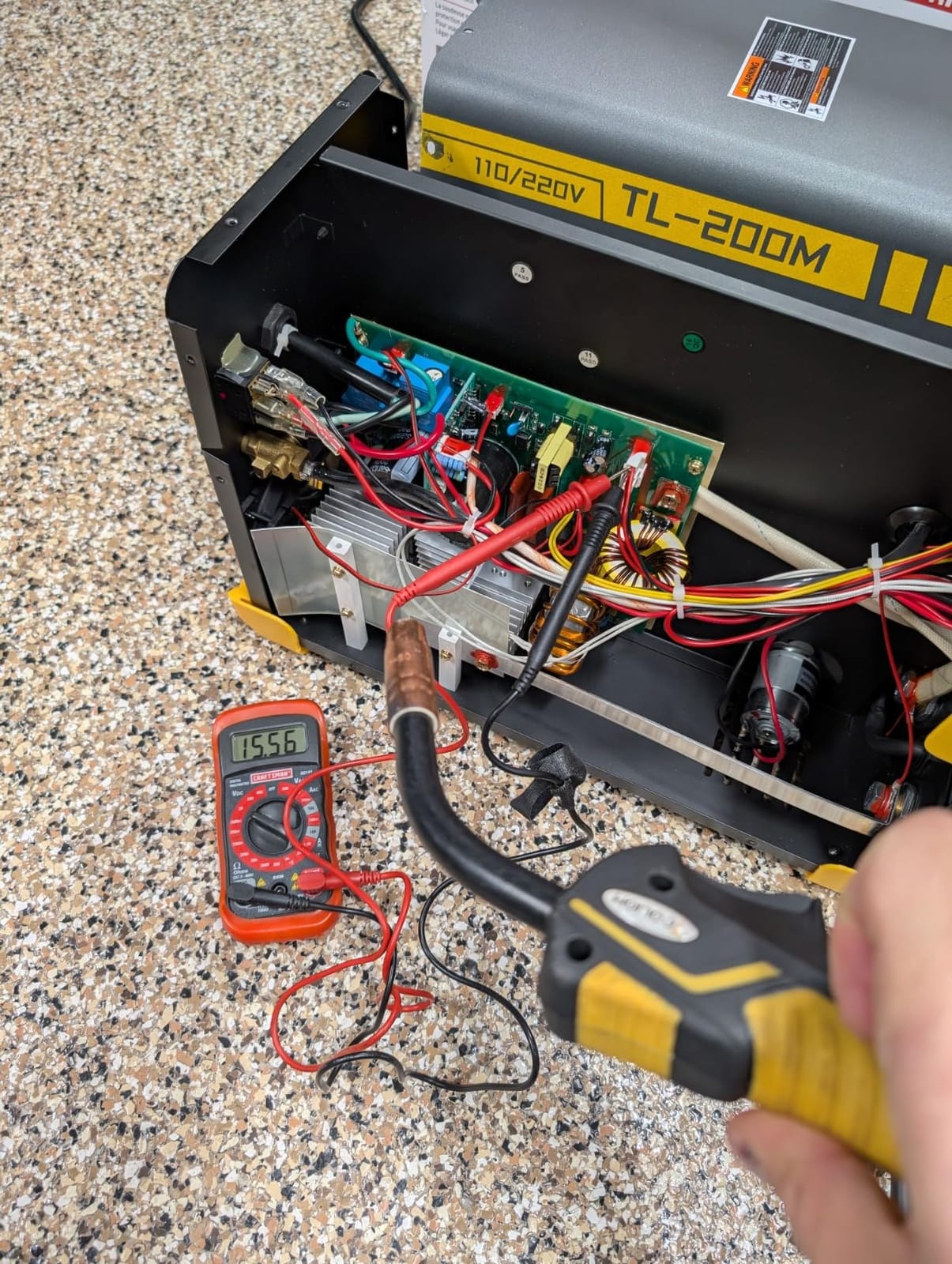
The 135 amps is enough for 1/6 inch mild steel off a standard outlet without tripping the breaker, which makes it a good fit for trailer hitches, handrails and rack tubing. Hot start and arc force keep the stick mode usable on scrap steel jobs too.
It suits anyone who has welded before with an older machine and noticed how much spatter the old transformer produced. This one cuts that noticeably.
Not right for long builds or anyone needing 10 lb spools
The spool bay is cramped, and threading or tensioning wire in it is awkward. More importantly, it accepts only 2 lb spools, so a long outdoor build means many wire changes.
There are also reports of units arriving with a cracked circuit board from shipping damage, so inspect the machine before your first outdoor job rather than after you have torn the spool open.
5. AZZUNO MIG 130F — best for light-gauge work and the lightest carry
AZZUNO MIG Welder,Flux Core Welder Machine 110V 130Amp, Gasless MIG Welding Machine IGBT Inverter Welder Portable Wire Feed Welder (110V)
130A on 110V
Welds mild steel to 3.0mm plate
Handles 2.2 lb wire rolls
8.6 lb with hand grip
Pros
- Very light with a comfortable hand grip
- Synergic control adjusts voltage and wire feed automatically
- 130A output welds mild steel to 3.0mm plate
- Overload and overheating protection
- Includes torch ground clamp wire and two contact tips
Cons
- 3.0mm maximum thickness limits it to light-gauge work
- Small form factor restricts spool size options
This is the smallest machine on the list and the easiest to carry to the far corner of a property. At 130 amps and a 3.0mm maximum plate thickness, it is built for light-gauge work, and buyers treat it as a first welder or a second light-duty machine.
The synergic control adjusts voltage and wire feed as amperage or material thickness changes, so the adjustment work a two-knob machine normally demands is handled for you. That is the whole appeal at this size.
The box includes a MIG torch, ground clamp, chipping brush and hammer, 1 lb of .030 flux core wire and two contact tips, so it is usable immediately. The one-year manufacturer warranty is the shortest here, which is normal for the segment but worth noting.
Wire rolls of 2.2 lb fit, which is larger than the plain 2 lb spools some competing budget machines accept and smaller than a 10 lb roll.
Best for small jobs you carry a long way
Owners like the weight and the grip, and the automatic settings make it forgiving if you are working alone without a helper to hold the work. It is a sensible pick for repairing screen frames, small brackets and light metal furniture outdoors.
Overload and overheating protection means a mishap does not end your session, which is a small but real benefit on remote jobs.
Not right for anything structural or heavy
The 3.0mm plate limit is the whole story. If you are rebuilding a trailer frame, a gate or anything with 1/4 inch steel in it, this machine will fight you the entire time.
The small form factor also restricts your spool options. Choose the Forney 140 or a 220V machine for heavier outdoor work.
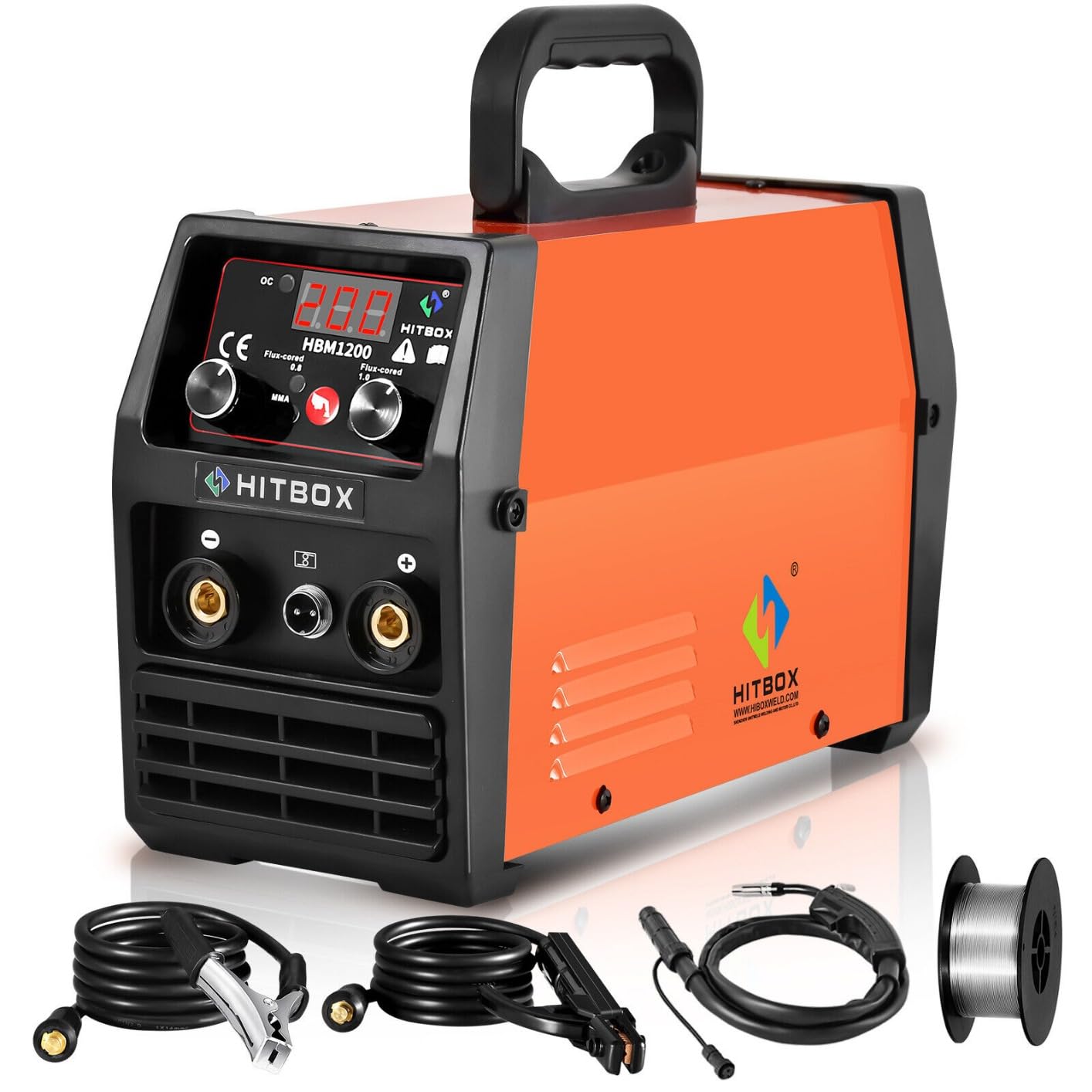
6. HITBOX 200A — best dual-voltage option on a tight budget
HITBOX 200A MIG Welder, 110V/220V Flux Core MIG/Lift TIG/Stick 3-in-1
110V and 220V dual input
Up to 200A output
Welds mild steel to 4.0mm
Synergic IGBT inverter
Pros
- Dual 110V and 220V IGBT inverter output up to 200A
- Only 6.6 lb listed weight with a built-in carry handle
- Welds mild steel up to 4.0mm
- Accepts .030 and .035 flux core wire
- Clean beads with very little spatter and quiet operation
- Metal housing with four protection circuits
Cons
- Holds only the 2 lb spool
- Actual output runs below the displayed amperage
- Ground clamp is soft and warps quickly
- Stick mode struggles with 6010 6011 and 7018 electrodes
Dual voltage is the feature that matters here. Most machines at this level are 110V only, and dual input means the same machine works in a 110V garage and a 220V shop instead of forcing you to choose at purchase time.
The listing shows 6.6 lb in the product details and 8.6 lb in the feature list, so treat 8.6 lb as the realistic carry figure. Either way it is among the lightest machines here, and the built-in handle is what makes it genuinely portable.
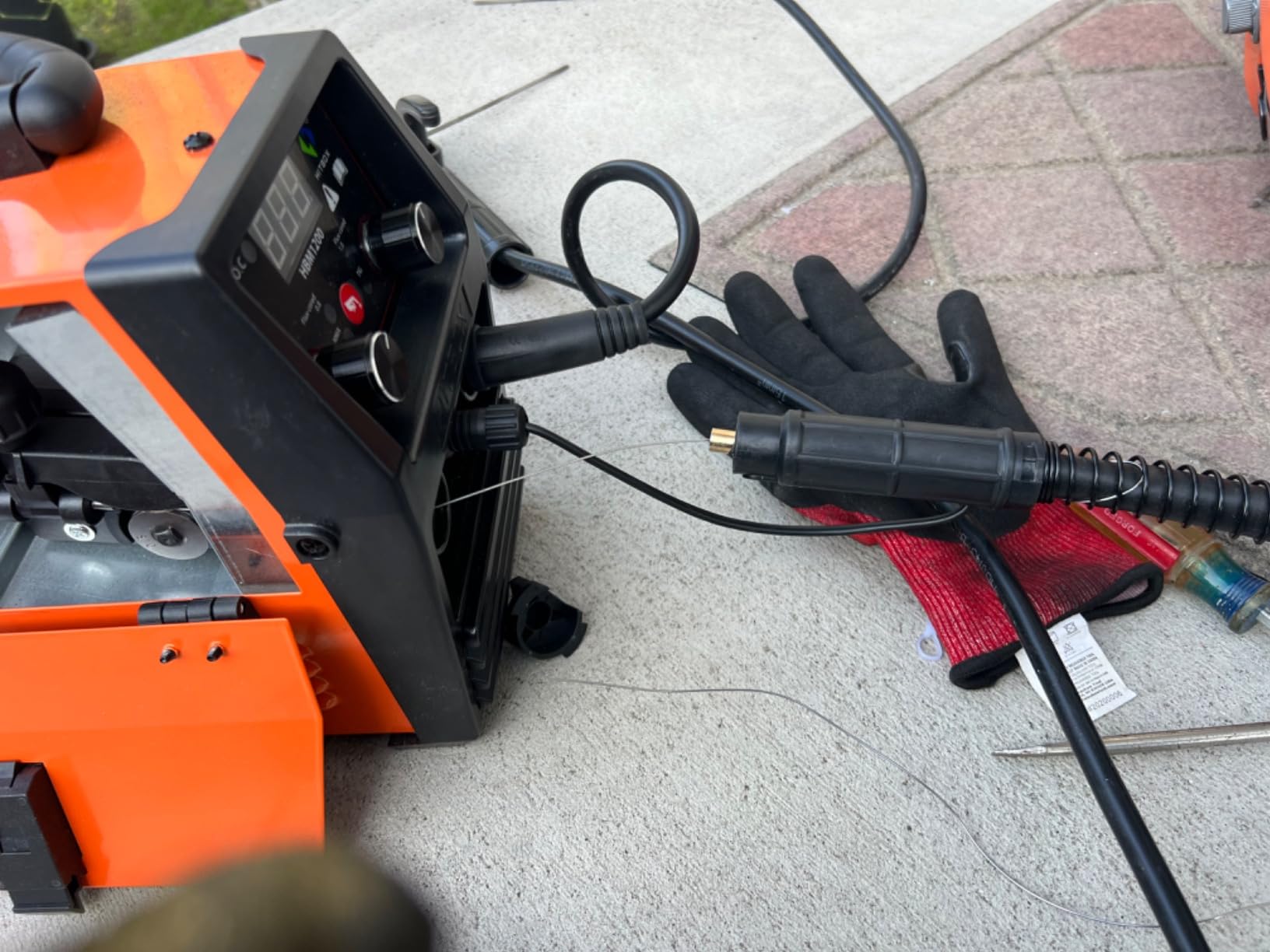
Owners repeatedly call this machine capable of punching above its weight, with clean low-spatter flux core welds and quiet operation. Quiet matters more outdoors than people expect, because a transformer welder two feet from a bedroom wall is a genuine problem.
The package includes a MIG torch, 5 ft ground clamp, 5 ft electrode holder, 2 lb of .035 flux core wire, two contact nozzles, brush and hammer.
Best for farms and small jobs on either voltage
The synergic control coordinates voltage and wire feed as you change current or wire size, which is a genuine convenience when you move between thin sheet and 4.0mm stock on the same job. Experienced users specifically note it for DIY repairs, farm work and small jobs.
Four protection circuits cover over-current, overload, over-voltage and overheat, which is more complete than most machines at this weight class.
Not right for anyone counting on accurate amperage or stick work
Several experienced users note the displayed amperage overstates the real output. If you are welding to a spec or following a printed procedure, do not trust the number on the panel without testing.
Stick mode struggles with 6010, 6011 and 7018 electrodes and lacks hot start, so treat this as a flux core and MIG machine first. The soft ground clamp also warps quickly and will be an early replacement.
7. Bestarc MIG145 — best for a workshop that sometimes has gas
Bestarc 145A MIG Welder, Flux Core/Gas MIG Stick Lift TIG Welding, 110/220V
4-in-1 gas and gasless MIG
145A on 110V or 220V
60 percent duty cycle
13.7 lb with shoulder strap
Pros
- Genuine 4-in-1 with gas MIG gasless flux core lift TIG and stick
- 110V and 220V with automatic input detection
- 60 percent duty cycle for longer seams
- Synergic control with plus or minus 3V trim
- Large LED display and top-loading spool
- Package includes gas hose adapter shoulder strap and both .040 flux and .030 solid wire
Cons
- Earlier production runs used a short 5.5 ft gun lead
- Early drive rolls were plain V-groove which caused feed jams
- Spool holder tension spring is factory set very tight
- Included push-on nozzle suits solid wire more than flux core
Almost every machine on this list is gasless only. This one runs gas-shielded MIG too, which matters if you ever want a clean cosmetic bead indoors, or if you are building a shop where a shielding gas bottle is not an unreasonable expense.
It is the only machine here with a stated 60 percent duty cycle, which is the number that tells you whether you can run a long trailer seam without a thermal shutdown. For outdoor fabrication, that figure is worth more than any display feature.
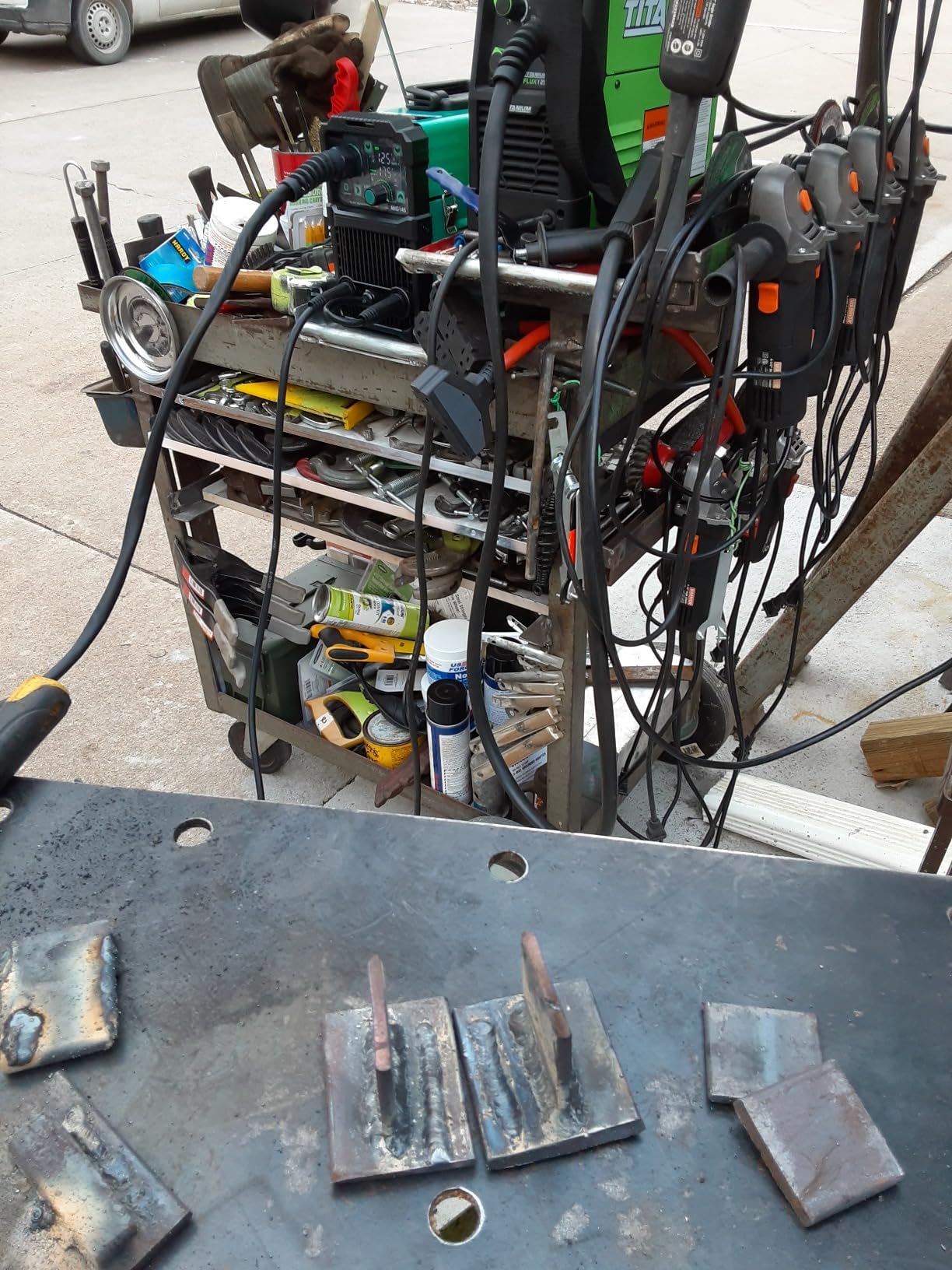
Reviewers with production MIG and stick backgrounds rate the weld quality highly and call out the ground clamp as better than average for this class. The automatic voltage fluctuation compensation also helps on generator power.
Listed weights vary again, from 13.7 lb in the feature list and reviews to 22.6 lb in the product details, so check the current listing before planning a long carry.
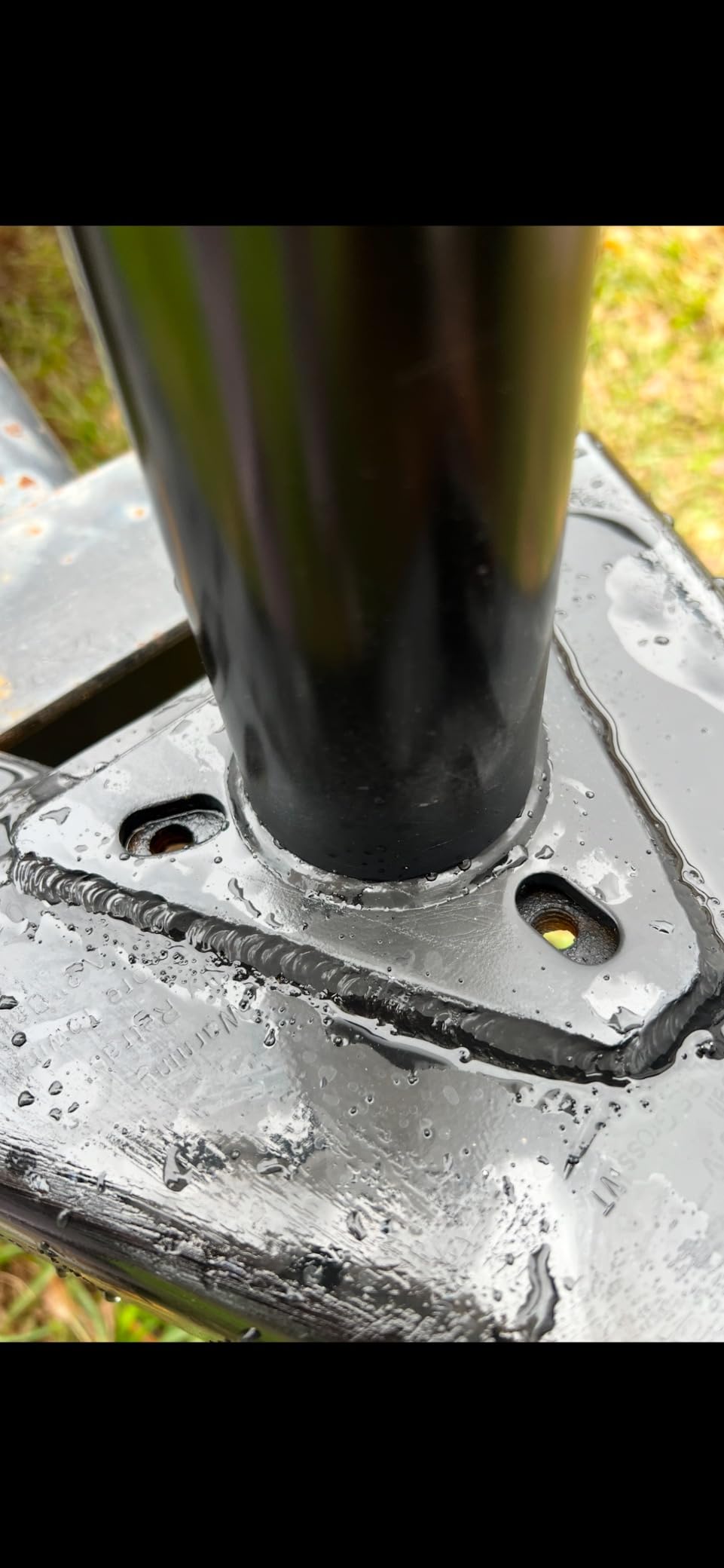
Best for mixed indoor and outdoor fabrication
The four-process capability means one machine covers gas MIG for a clean table weld, flux core for the windy yard, stick for repair work and lift TIG for a stainless gate. The included 2m gas hose and the 220V to 110V adapter make it usable in either power situation out of the box.
Automatic input detection is shown on the front panel, so you can confirm what the machine thinks it is plugged into before starting a job.
Not right if you want the newest production run without checking
Owners report that earlier production runs had a 5.5 ft gun lead, plain V-groove drive rolls that flattened flux core wire and caused jams, and a spool tension spring factory set very tight. Reviewers indicate later runs resolved most of this, but verify the drive rolls are knurled on the machine you actually receive.
The included push-on nozzle is a solid wire type and is not ideal for flux core, so plan to swap it. Stick output appears limited to roughly 130A.
8. Lincoln Electric 90i FC Weld-PAK — best lightweight machine with a dealer network
Lincoln Electric 90i FC Flux Core Wire Feed Weld-PAK Welder, 120V Welding Machine, Portable w/Shoulder Strap, Protective Metal Case, Best for Small Jobs, K5255-1
Welds up to 1/4 in on 120V
15 lb with shoulder strap
Two knob control with infinite voltage
Metal case 12 month warranty
Pros
- Runs on any 120V outlet
- 15 lb with a shoulder strap for mobile work
- Two simple knobs for wire speed and voltage with infinite fine tuning
- Inverter power source for smoother welds than transformer machines
- Wells up to 1/4 in in multiple passes
- Metal case protects against the elements
- Consumables widely available
Cons
- Ground braid on the earth clamp is short and works loose
- Flux core wire spatters noticeably
- Consumables and wire are not included in the package
- Sits at the lighter duty end of the Lincoln line
This carries the highest star rating in our group at 4.7, and at 15 lb with a shoulder strap it is the machine we would put on our own back for a full day of fence work. Lincoln is also the one brand here with a dealer and service network, which matters more than most buyers expect when something goes wrong.
Owners with Lincoln experience report weld quality equal to their larger transformer models, which is the specific compliment you want from someone who owns the alternative already. The package includes a welding gun, nozzle, contact tip, work cable and ground clamp.
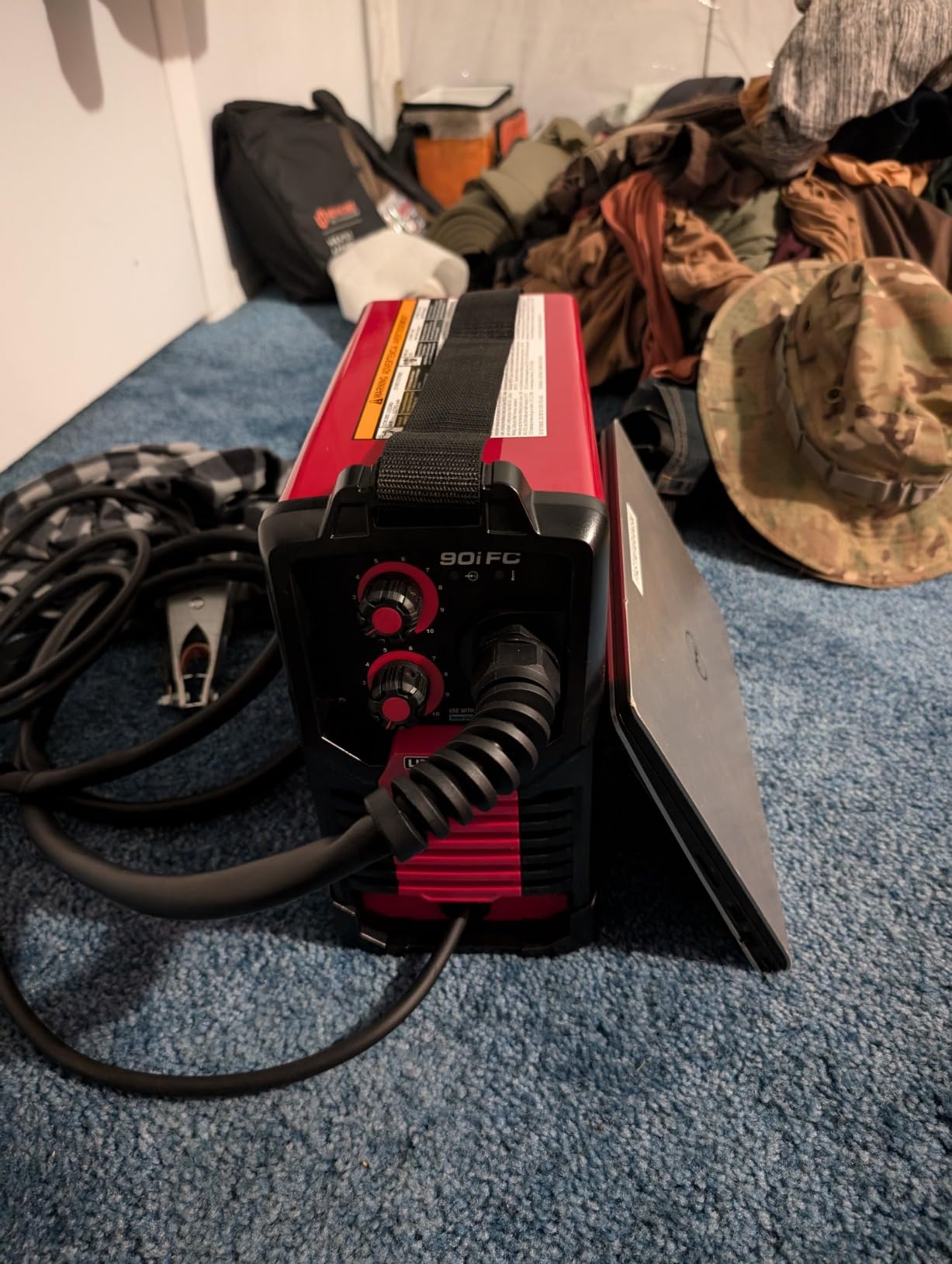
Two knobs, wire speed and voltage, is genuinely simpler than a synergic display. It also means you have direct control, which experienced outdoor welders often prefer over an automatic setting that fights their adjustments.
In an r/Welding beginner flux core tips thread, owners asked for settings guidance specifically because the two-knob Lincoln style confuses first-time users. That is a fair criticism and worth knowing before you buy, but it is also the reason the machine stays out of your way once you learn it.
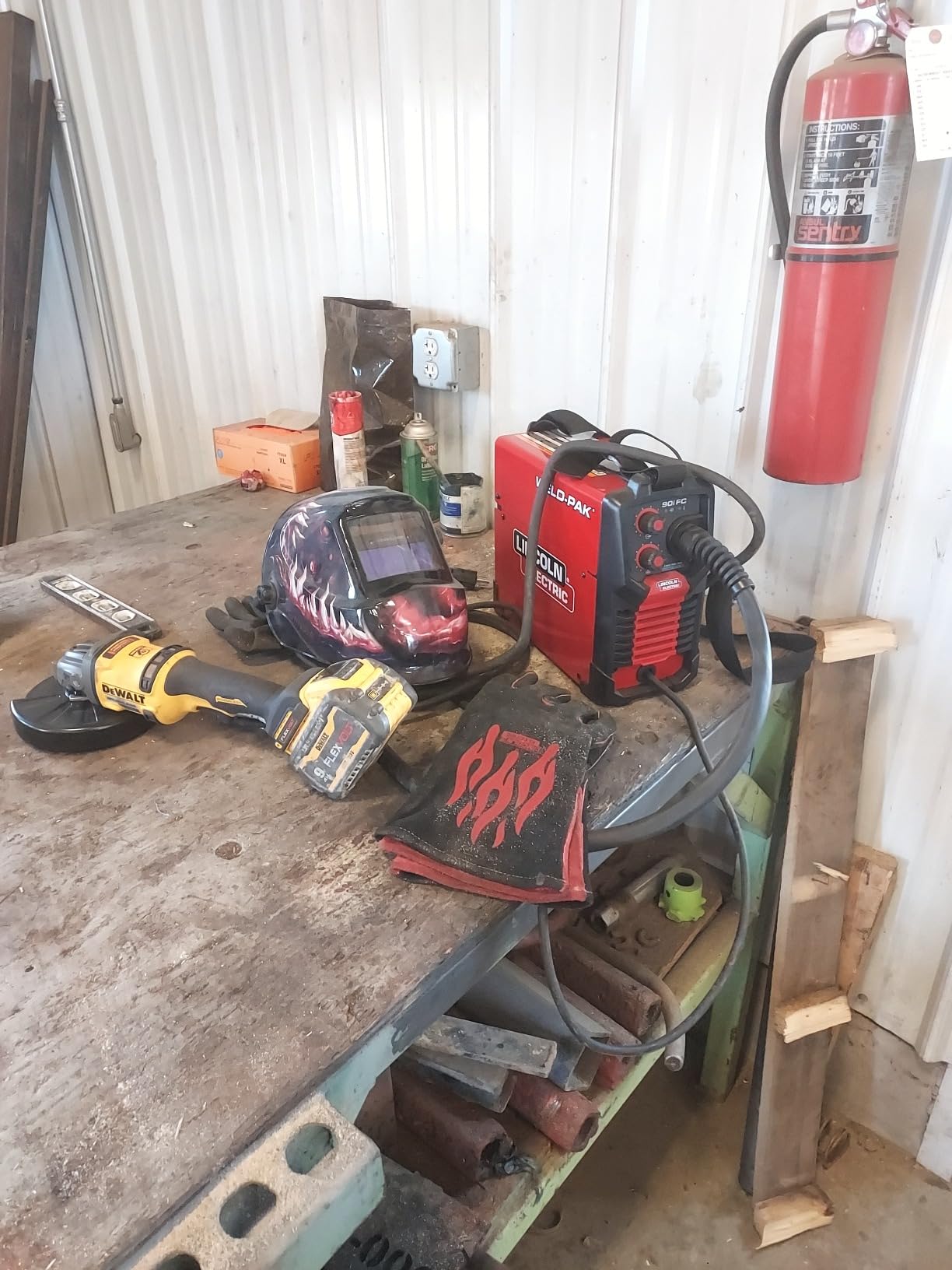
Best for one-person jobsite work and long carry distances
The shoulder strap plus 15 lb is the best carry combination here for anyone walking a property all day. The metal case protects it from weather and knocks, and the 12-month manufacturer warranty is standard.
Because consumables for this model are widely available, you are not hunting for a proprietary wire or tip. That matters if you are away from a dealer.
Not right for thin cosmetic work or a complete kit
The most common criticism is the flimsy ground clamp braid, which is short and can work loose after a few welds. Budget for a replacement ground clamp early rather than fighting intermittent arc problems.
Flux core wire is not included and spatter is noticeable, so the package is not a ready-to-weld kit. Our Miller vs Lincoln comparison goes deeper on where the Lincoln line fits against premium competition.
9. BILT HARD 135A 3-in-1 — best complete kit for a beginner on a budget
BILT HARD 135A 3-in-1 IGBT Inverter Welder, 110V Flux Core MIG/Lift TIG/Stick Welding Machine with Synergic Control, LED Display, 2T/4T/SPOT Modes & Full Kit (Solar Helmet)
135A on 110V
2T 4T and spot modes
LED shows volts current and wire speed
Solar helmet included
Pros
- Complete kit with solar helmet ground clamp wire and spare tip
- 2T 4T and spot trigger modes for short fixes long seams and spot welds
- LED display shows real-time voltage current and wire speed
- Synergic control auto-adjusts from the amperage setting
- Auto shutdown with E1 overcurrent and E2 overheat codes
- Compact enough to sit where a car battery would
Cons
- TIG torch is not included
- Included helmet has a loose darkness knob that drifts
- Some orders arrive without the wire spool
- Spool spindle is too short for the supplied wingnut
- Connections are a loose wedge-style fit
Few machines at this level include a helmet, and that changes the first day. You can unpack this one, put the solar helmet on and weld without a separate shopping trip for eye protection.
The trigger modes are the feature nobody expects here. Spot mode is the one you will use most outdoors, because welding thin brackets or a broken gate latch in a fixed position is exactly the job spot mode exists for.
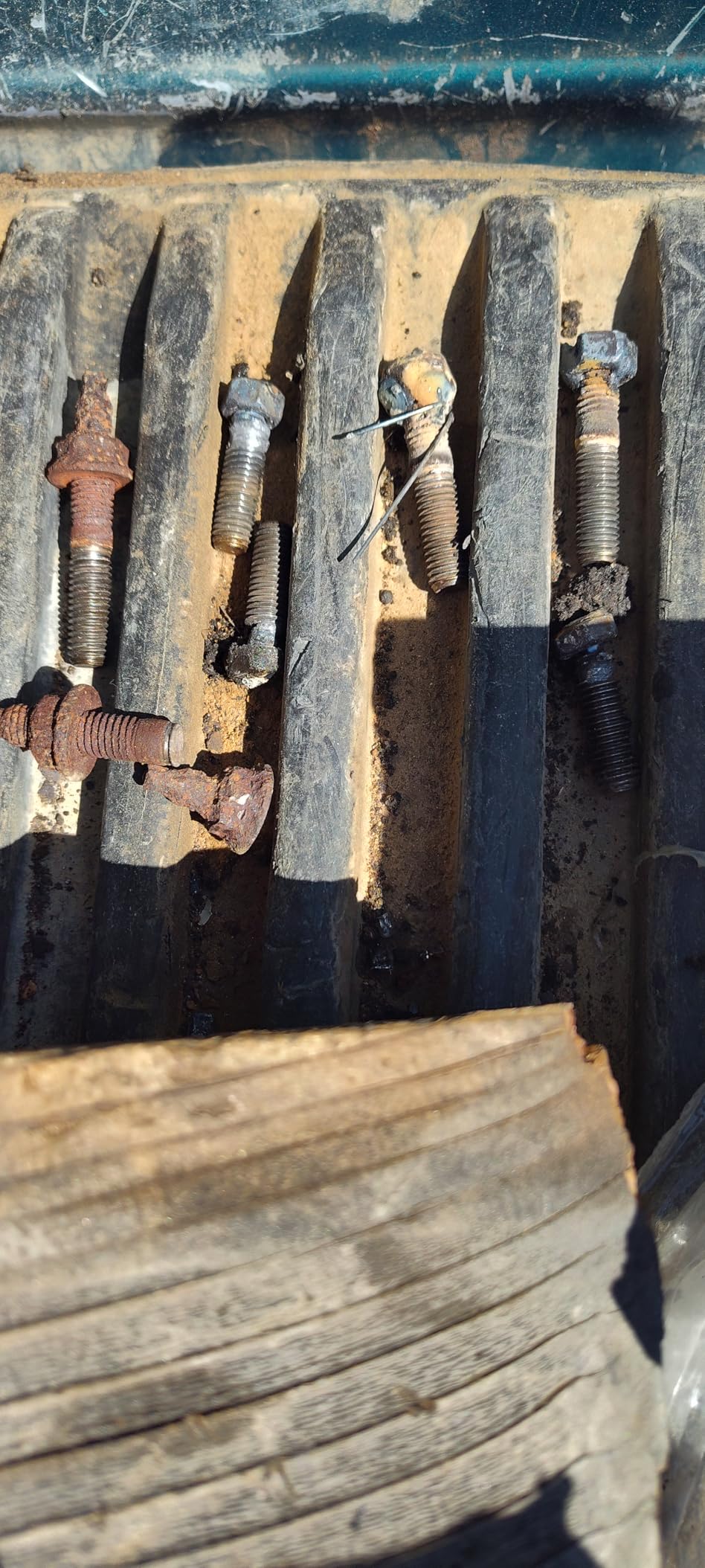
Amateur welders report successfully completing exhaust, trailer and truck-rack work on this machine. The auto shutdown with E1 and E2 error codes is also useful in the field, because the code tells you whether you tripped over-current or overheat instead of just going dark.
One data warning: the product details list a weight of 76 lb, which is almost certainly a packaged shipping weight rather than the machine itself. Buyers describe it as roughly the size of a car battery, so plan for something compact rather than a two-person carry.
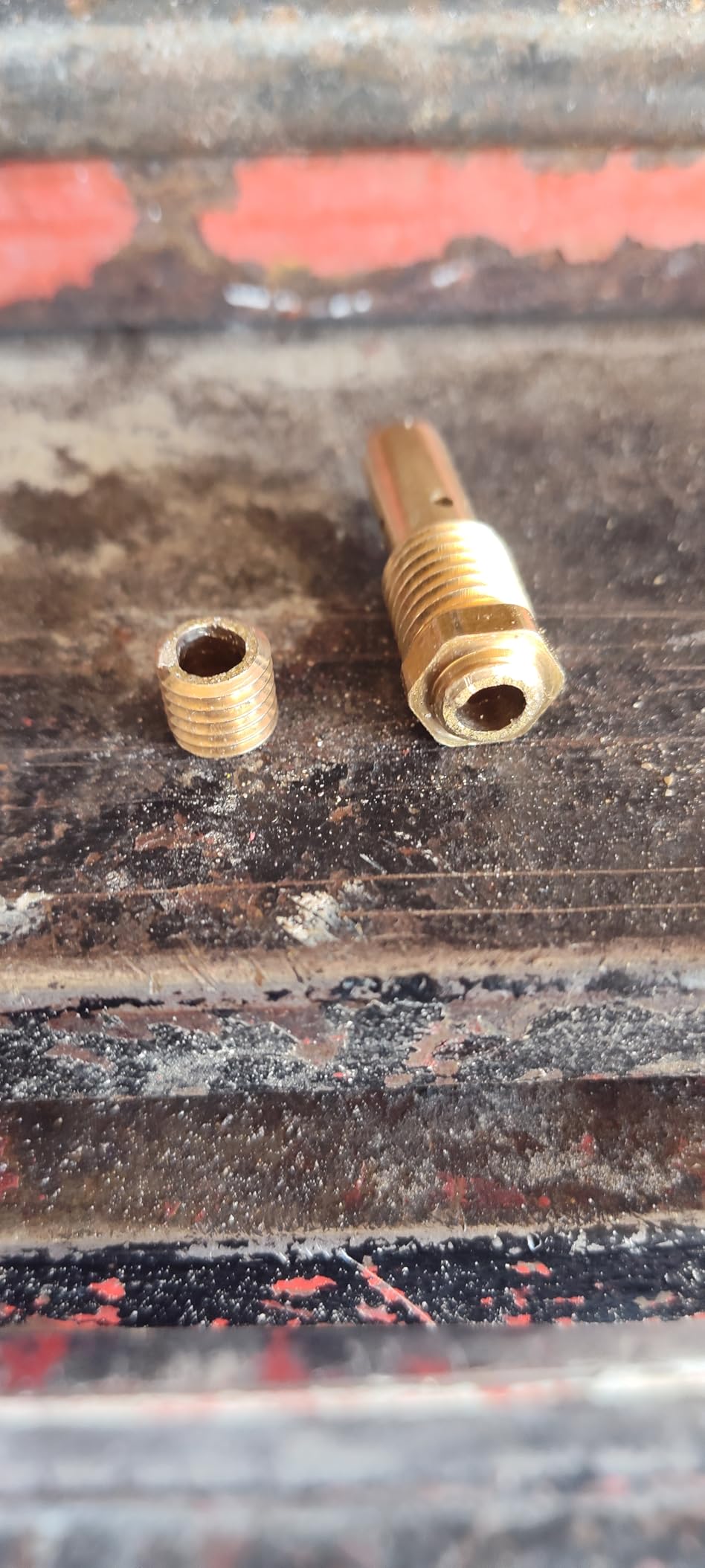
Best for a first outdoor kit under one purchase
The full package includes a solar-powered helmet, 6.6 ft MIG gun with a .030 tip pre-installed, 10 ft ground clamp, 2 lb of flux core wire, a spare .035 tip, and brush and hammer. That is a complete working set, not a starter box.
The 10 ft ground clamp lead is longer than most machines at this level include, and on outdoor work where the machine sits well away from the joint that length prevents real problems.
Not right for long continuous seams or anyone sensitive to helmet drift
The included helmet has a loose darkness knob that drifts during use and needs frequent readjustment. That is an annoyance mid-seam, and a true-colour auto-darkening helmet is the first upgrade most owners make.
Some orders arrive without the wire spool, and the spool spindle is reportedly too short to fully engage the supplied wingnut, so the access door may not close. Duty cycle is also limiting on long tasks, and the wedge-style connections fit loosely.
10. ANDELI 135A Pulse — best for fine bead control on thinner outdoor steel
ANDELI 110V/220V MIG Welder 135A ,PULSE Flux Core/Lift TIG/Stick 4-in-1
Pulse flux core mode
110V and 220V dual input
Welds to 5.0mm
Adjustable inductance for spatter control
Pros
- Pulse flux core mode gives a smoother arc with finer more uniform beads
- Dual 110V and 220V with a supplied 220V to 110V adapter
- Adjustable inductance lets you tune arc stability and cut spatter
- Supports .030 .035 and .040 wire and welds up to 5.0mm
- Large 4.1 in LED display with a protective cover
- Kit includes wire adapter contact tips ground clamp helmet goggles and gloves
Cons
- Accepts only 2 lb wire spools
- Only one drive roller included and .040 wire needs a separate purchase
- Included welding helmet is low quality
- Some have a reset button that is only a decal
Pulse mode is the reason this machine is different from every other 135A unit here. Instead of a steady arc it delivers a pulsing output, which produces a finer, more uniform bead and gives you noticeably better control on thinner material and on short outdoor welds where heat builds up fast.
Adjustable inductance is the other control that experienced users single out. It lets you soften the arc and cut spatter on rustier, dirtier steel, which is precisely the condition you meet outside.
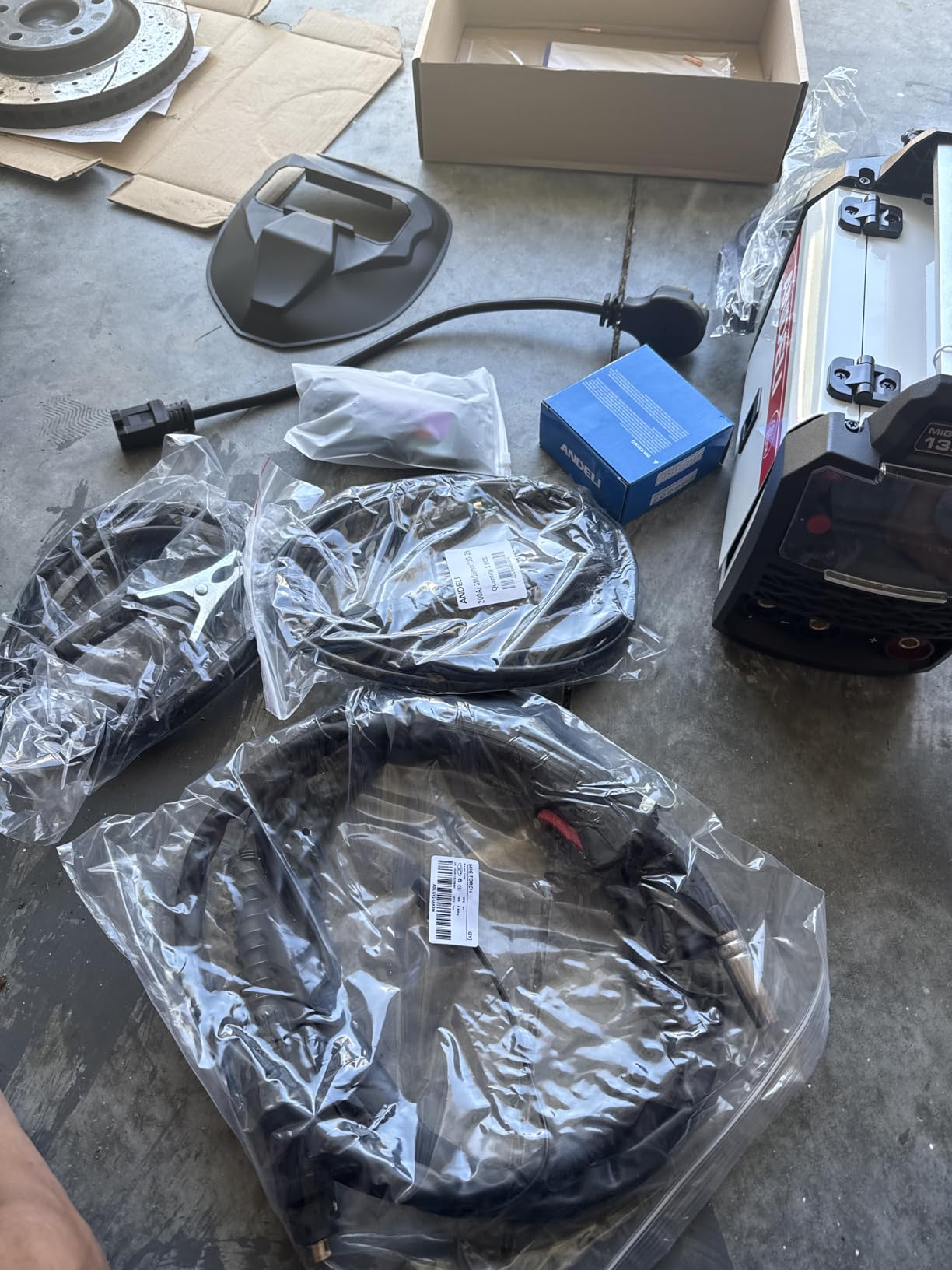
Experienced owners, including one with two decades of industrial welding, praise the output for its size and find the synergic and inductance controls effective for field and auto body work. Dual voltage and detachable cables are called out as real advantages over simpler budget machines.
Listed weight also conflicts, at 18.46 lb in the product details and 9.04 lb in the feature list. Budget for the heavier number.
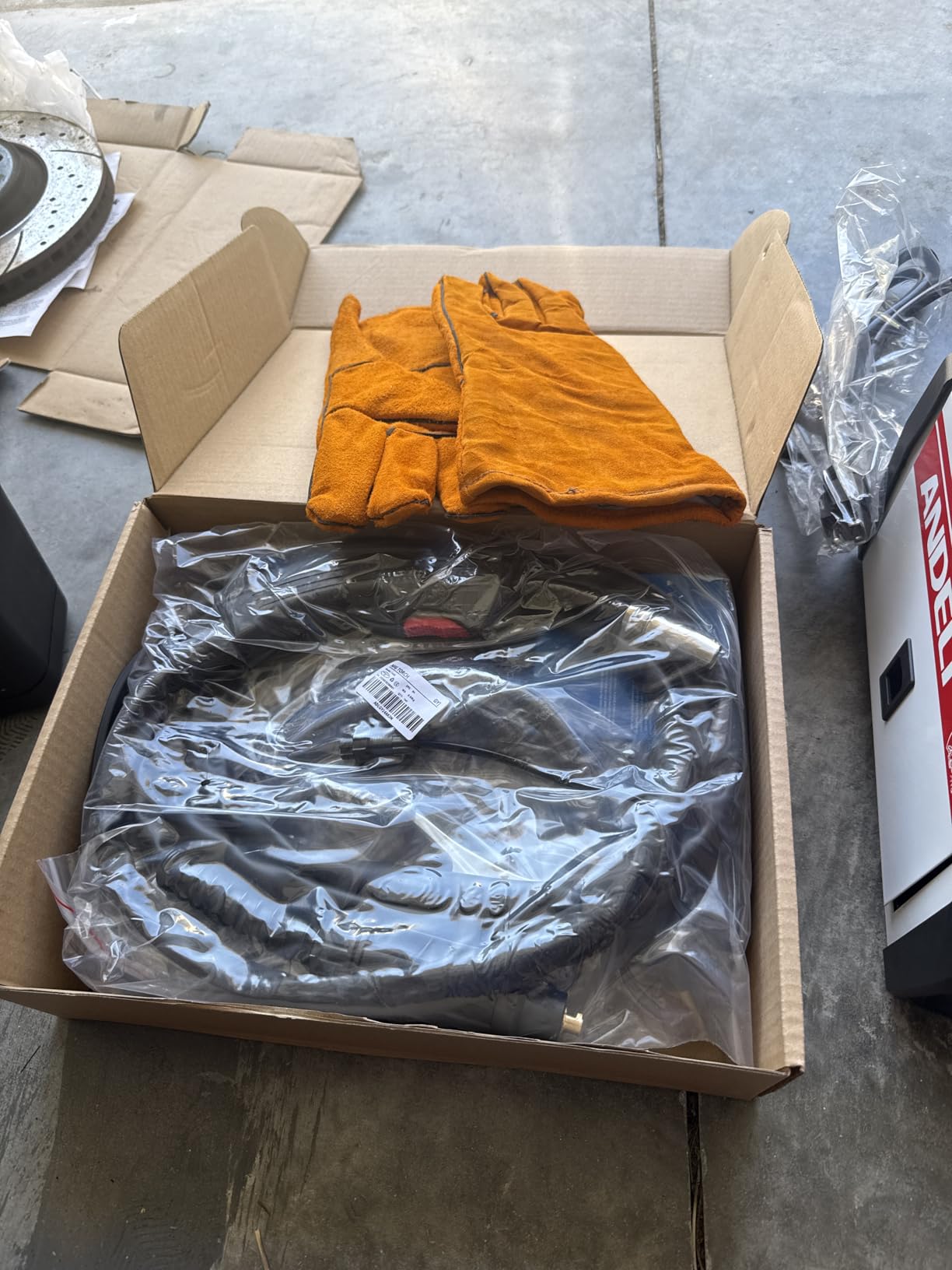
Best for panel work, auto body patches and thin outdoor steel
If you are patching a truck bed panel, a gate skin or a metal cabinet door outdoors, this is the machine on the list most likely to give you a bead you do not have to grind. Pulse mode plus inductance control is what buys that.
It welds up to 5.0mm, or about 3/16 inch, which is thicker than the other budget machines in the same price bracket on this list while still running on 110V.
Not right for long builds or anyone without patience for settings
It accepts only 2 lb spools, and just one drive roller is included, covering .030 and .035 wire. Running .040 requires a separate roller purchase, which is an easy detail to miss.
In synergic mode the wire feed rate displays in amps rather than inches per minute, which confuses users who have used a machine that displays IPM. The most common recommendation across reviews is to replace the included helmet.
How to Choose a Flux Core Welder for Outdoor Work
110V, 220V or dual voltage decides what you can weld
Choose 110V if your only outlet is a standard wall receptacle, and accept a ceiling of roughly 3/32 to 1/6 inch on the cheaper machines, with the Forney 140 reaching 1/4 inch.
Choose 220V or dual voltage if you have a dedicated circuit or a shop. More available current means thicker material and longer seams before thermal shutdown. Dual voltage buys flexibility: the HITBOX and ANDELI both let you start on 110V and move to 220V later.
Duty cycle is the ten-minute number that matters outside
Duty cycle is the share of a ten-minute cycle a machine can weld at its rated output. A 60 percent rating means six minutes of welding, then four minutes of cooling. Below that, wire feed speed and voltage become independent controls, and many machines stop working until you pause.
For outdoor work, duty cycle decides whether you can finish a 14 foot trailer seam in one pass or stop every few feet to wait. Only the Bestarc states 60 percent explicitly, which is one of the reasons it earns its place here.
.030 versus .035 wire, and 2 lb versus 10 lb spools
Use .030 wire for material from 16 gauge up to about 1/8 inch. It runs cooler, which is what you want on thin panel and on a rusty joint that has not been ground clean. Use .035 wire for 1/8 inch and heavier, because it deposits faster and gives better penetration on thicker sections.
Spool size is about interruptions. A 2 lb spool runs maybe 15 to 20 minutes of welding depending on thickness; a 10 lb roll can run for a couple of hours. For a day of fence panels, the machines that accept both sizes, like the Forney 140, save more time than any other single feature here.
Do check the drive rollers before the first outdoor job. Flux core wire needs knurled rollers. Plain V-groove rollers flatten the tubular wire and cause feed jams, and several machines here have had that complaint in early production runs.
Rust, mill scale and dirty steel need less prep than you think
Flux core is far more forgiving than gas MIG about surface condition. You do not need to grind a fence rail back to bright metal, because the process does not depend on a shielding gas being sealed to the joint.
That said, four steps still matter. Knock off loose scale and flaking paint with a chipping hammer. Then wire-wheel or grind any thick rust to a rough surface. Keep the joint reasonably dry, since moisture makes the arc sputter. Finally, drag the torch slightly rather than pushing it, so the bead is laid rather than buried.
Expect more spatter than a gas MIG bead, and plan for cleanup time. That mess is the honest trade for welding in wind.
Running a flux core welder on a generator
Any of these machines will run on a portable generator, provided the generator can supply enough continuous wattage for the input and has a stable sine wave. An inverter generator is strongly preferred, because the cheaper open-frame type produces power that makes welding arc behavior erratic.
Volatility compensation, listed on the TOOLIOM and Bestarc, helps when the input sags, but it manages voltage fluctuation rather than fixing a generator that is simply too small. Extending the ground lead back toward the generator also reduces problems caused by ground loop voltage.
When not to use flux core at all
It is the wrong process in four situations. First, aluminum, because flux core wire is steel and the DC-only machines here cannot run it in any case. Second, thin cosmetic sheet where the spatter and lack of voltage control show. Third, code-critical structural work where a qualified procedure and inspection are required. Fourth, galvanised or heavily coated material, where the coating fumes must be ground off first.
Are flux core welds as strong as MIG? A properly made self-shielded weld on mild steel can absolutely meet or exceed the strength of a gas-shielded weld of the same size. The strength problem is not the process, it is heat input. Flux core runs hot, and beginners lay down too much of it, which distorts thin material and can weaken a joint. Control the wire feed speed and the result is comparable.
What are the downsides of flux-cored welding? More spatter to chip off, more smoke and fume, less control on thin material, no aluminum capability, a rougher bead than gas MIG, and consumable costs that run higher because self-shielded wire is more expensive per pound.
What a flux core welder really costs to own
Budget for consumables and accessories on day one, because they add up faster than people expect. Self-shielded flux core wire is the biggest recurring expense. Contact tips and nozzles wear and burn through. A ground clamp and work cable often need replacing within the first few months on budget machines, which several owners on this list mention directly.
On protection, several experienced welders recommend a respirator for repeated flux core work, and report that it makes a noticeable difference when welding indoors or in a partly enclosed space. Outdoors in open air the fume disperses far faster, but a wind direction that blows the plume back at you negates that quickly. A fume extraction unit or a simple approach to moving air solves most of it.
One more forum-repeated question: do flux core welders work in the cold? The machines are fine down to freezing. The wire is the sensitive part, since moisture absorbed into flux-cored wire causes feed problems and spatter. Keep spare rolls sealed indoors and let them warm up before you thread them, rather than leaving them in a cold shed all winter.
Frequently Asked Questions
What is the best flux core welder for the money?
The Forney Easy Weld 140 FC is the best value for most outdoor work: 140 amps on 120V, mild steel up to 1/4 inch, and it accepts both 2 lb and 10 lb wire rolls. On a strict budget, the YESWELDER FLUX-135PRO at 135 amps on 110V includes both .030 and .035 wire so you can start immediately.
What are the downsides of flux-cored welding?
The main drawbacks are more spatter to clean off, more fume than a gas-shielded process, less control on thin material, no ability to weld aluminum, and a rougher bead. Flux core wire also costs more per pound than solid wire with shielding gas.
Are Harbor Freight flux core welders any good?
Welder forums regularly recommend Harbor Freight machines as solid budget choices for outdoor property and preparedness work, with the common caveat that they are not great on thin material. Budget machines of that class typically need a better ground clamp and cable soon after purchase, and support is less reliable than the major brands.
Are flux core welds as strong as MIG?
A properly made self-shielded flux core weld on mild steel can match or exceed a gas-shielded MIG weld of the same size. The real risk is heat input, not the process. Flux core runs hot, and beginners typically deposit too much, which distorts thin material. Manage wire feed speed and the strength is comparable.
Is .030 or .035 flux core better?
Use .030 wire for thin gauge material from 16 gauge to roughly 1/8 inch, because it runs cooler and resists burn-through. Use .035 wire for 1/8 inch and heavier, because it deposits faster and penetrates better. Most machines here run both, so buy whichever suits the job rather than the machine.
Which brand of flux core welding wire is best?
E71T-GS is the standard self-shielded classification for outdoor mild steel work, and it is what most of these machines are set up for. A 0.030 E71T-GS roll is the sensible starting purchase for light work, while 0.035 suits 1/8 inch and heavier. Buy in quantity from a supplier with consistent diameter, since inconsistent wire causes most feed problems.
The Best Flux Core Welder for the Job in Front of You
For most people welding outside, the best flux core welders for outdoor projects come down to three. The Forney Easy Weld 140 FC is the one to buy if you want 1/4 inch capability, a metal case and 10 lb spool support on ordinary household power. The YESWELDER FLUX-135PRO is the cheapest honest way to learn the process. The ARCCAPTAIN MIG130 is the strongest budget option for rusty farm and equipment steel you have to carry a distance.
Go further up the list when the work demands it. The Bestarc MIG145 for a stated duty cycle and gas MIG capability, the Lincoln 90i FC for dealer support and a shoulder strap, and the ANDELI 135A Pulse when you need a fine bead on thin panel work.
Whatever you choose, budget for wire, a spare contact tip, a better ground clamp and real eye protection from the start. Those four items, not the machine, are where most outdoor welding money gets wasted.