
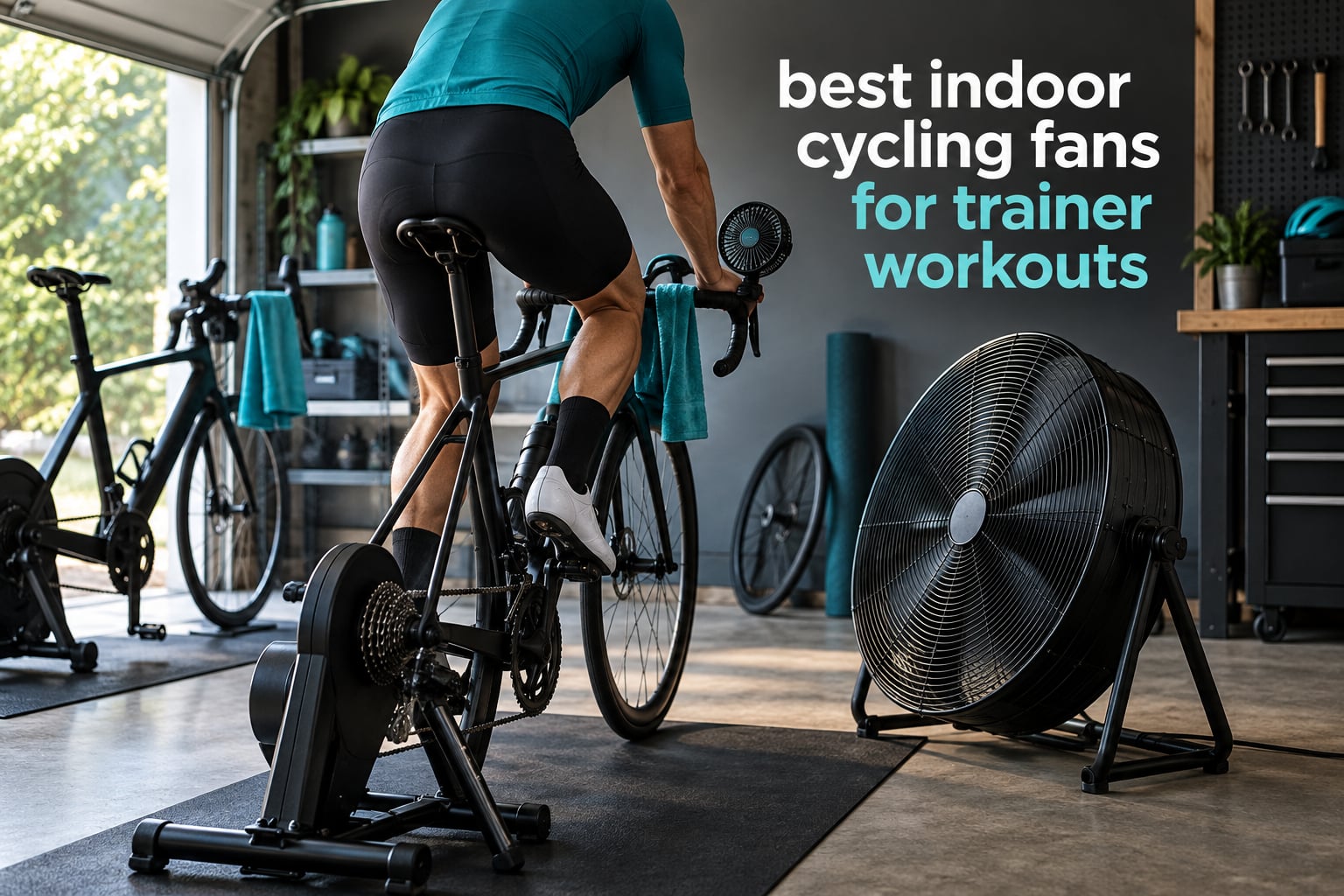
The best indoor cycling fans for trainer workouts divide cleanly into three groups. The Lasko U12104 High Velocity Utility Fan is the best overall pick, packing 289 CFM, a 270-degree pivoting head and two built-in outlets into a 7.5 pound body. The Vacmaster AM201R Aero Air Mover is the best value, adding a remote control and 550 CFM at 5 watts. For Zwift and smart trainer riders, the Wahoo KICKR HEADWIND is the one that syncs to your heart rate and speed data automatically.
Do you need a fan for indoor cycling? If you ride a trainer more than a couple of times a week, yes. Outdoors, forward motion pushes air across your skin and sweat evaporates off you. On a stationary bike you generate exactly the same heat with almost no airflow, so core temperature climbs within the first ten minutes of a hard interval set.
A fan does not lower the room temperature. It moves air across your skin, which speeds sweat evaporation and pulls heat off you so you can hold power longer. Riders on r/cycling describe exactly that effect, reporting that average power went up simply because they were not stopping every minute to wipe their face.
We spent several weeks comparing ten of the best-known fans in this category against each other, weighing airflow figures, noise ratings, control options, footprint and what each one is actually good for on a bike. If you have not settled on your trainer yet, our guide to the best indoor bike trainers is worth a read first.
Top 3 Picks for Trainer Workouts in 2026
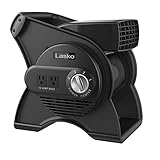
Lasko U12104 Utility Fan
- 289 CFM airflow
- 270 degree pivoting head
- Two built-in grounded outlets


All 10 Indoor Cycling Fans Compared Side by Side
| Product | Specifications | Action |
|---|---|---|
| Lasko U12104 Utility Fan |
|
Check Latest Price |
| Vacmaster AM201R Air Mover |
|
Check Latest Price |
| Wahoo KICKR HEADWIND |
|
Check Latest Price |
 TrubliFit Peloton Fan TrubliFit Peloton Fan |
|
Check Latest Price |
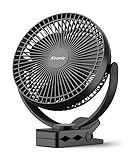 Koonie 8 Inch Clip Fan Koonie 8 Inch Clip Fan |
|
Check Latest Price |
 Lasko U15617 Blower Fan Lasko U15617 Blower Fan |
|
Check Latest Price |
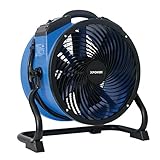 XPOWER FC-300 Air Mover XPOWER FC-300 Air Mover |
|
Check Latest Price |
 AC Infinity CLOUDRAY S6 AC Infinity CLOUDRAY S6 |
|
Check Latest Price |
 Simple Deluxe 20 Inch Floor Fan Simple Deluxe 20 Inch Floor Fan |
|
Check Latest Price |
 Amazon Basics 20 Inch Floor Fan Amazon Basics 20 Inch Floor Fan |
|
Check Latest Price |
1. Lasko U12104 High Velocity Utility Fan: Best Overall Fan for Indoor Cycling
Lasko Pivoting High Velocity Portable Utility Fan – 12″ – U12104 – Black
289 CFM airflow
270 degree pivoting head
7.5 lb
59.3 dB
10 ft cord
Pros
- Strong 289 CFM airflow in a compact body
- 270 degree pivoting head for aimed airflow
- Two built-in grounded outlets on the housing
- Circuit breaker with reset button
- ETL safety certified
Cons
- Noticeably noisy on the top speed
- Plastic blades rather than metal
- Only 3 speed settings
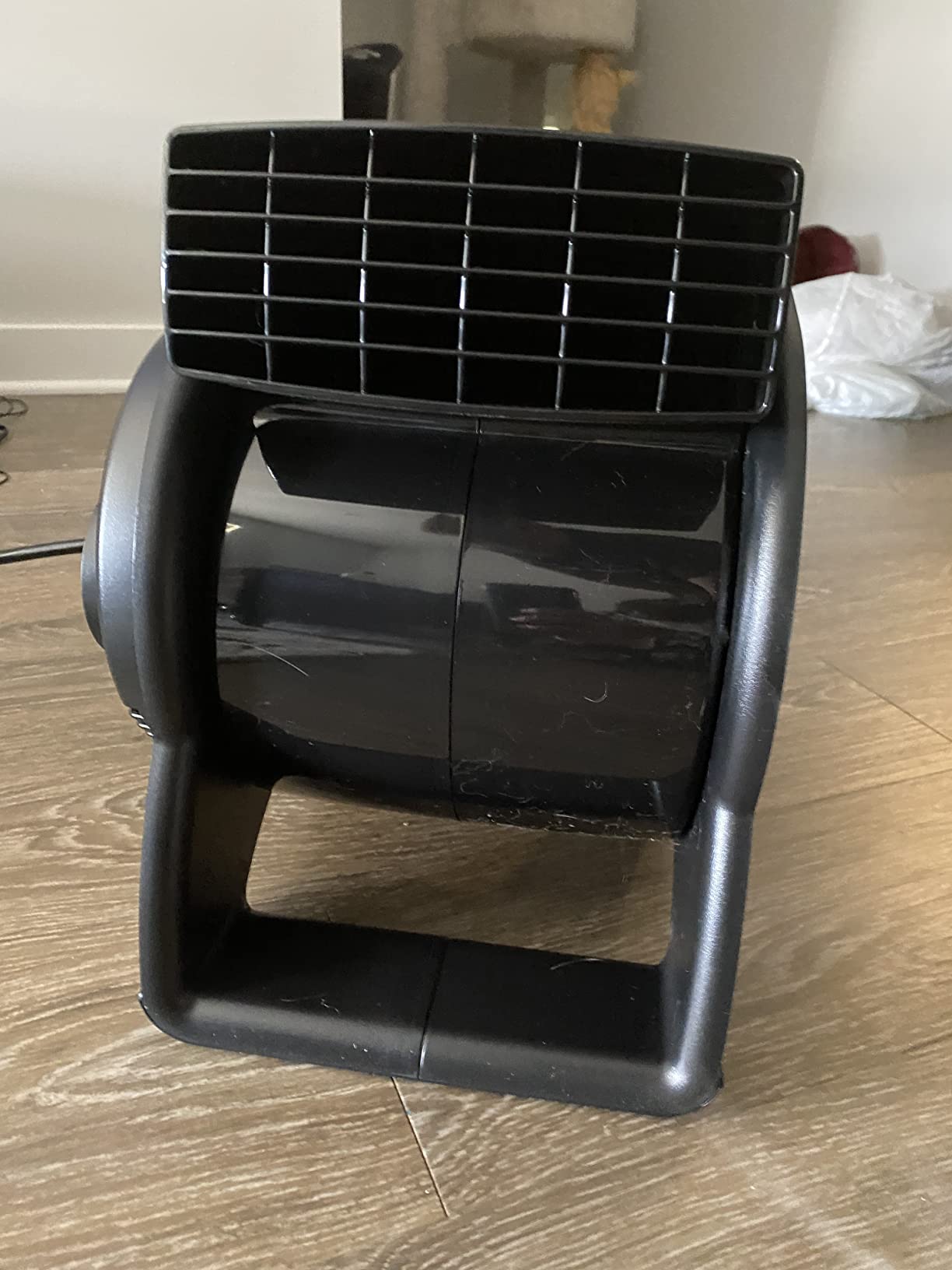
This is the fan we end up recommending to almost everyone who asks. The Lasko U12104 is a compact utility fan that weighs 7.5 pounds and measures 12.2 by 9.6 by 12.3 inches, which means it fits beside a trainer without eating the floor the way a 20 inch industrial fan does.
It moves 289 CFM through a 270-degree pivoting head on three speeds controlled by a rotary dial on the back. For indoor cycling that combination is the sweet spot: enough volume to hit your torso and legs, and enough tilt range to walk the airflow up toward your face during the recovery legs of an interval set.
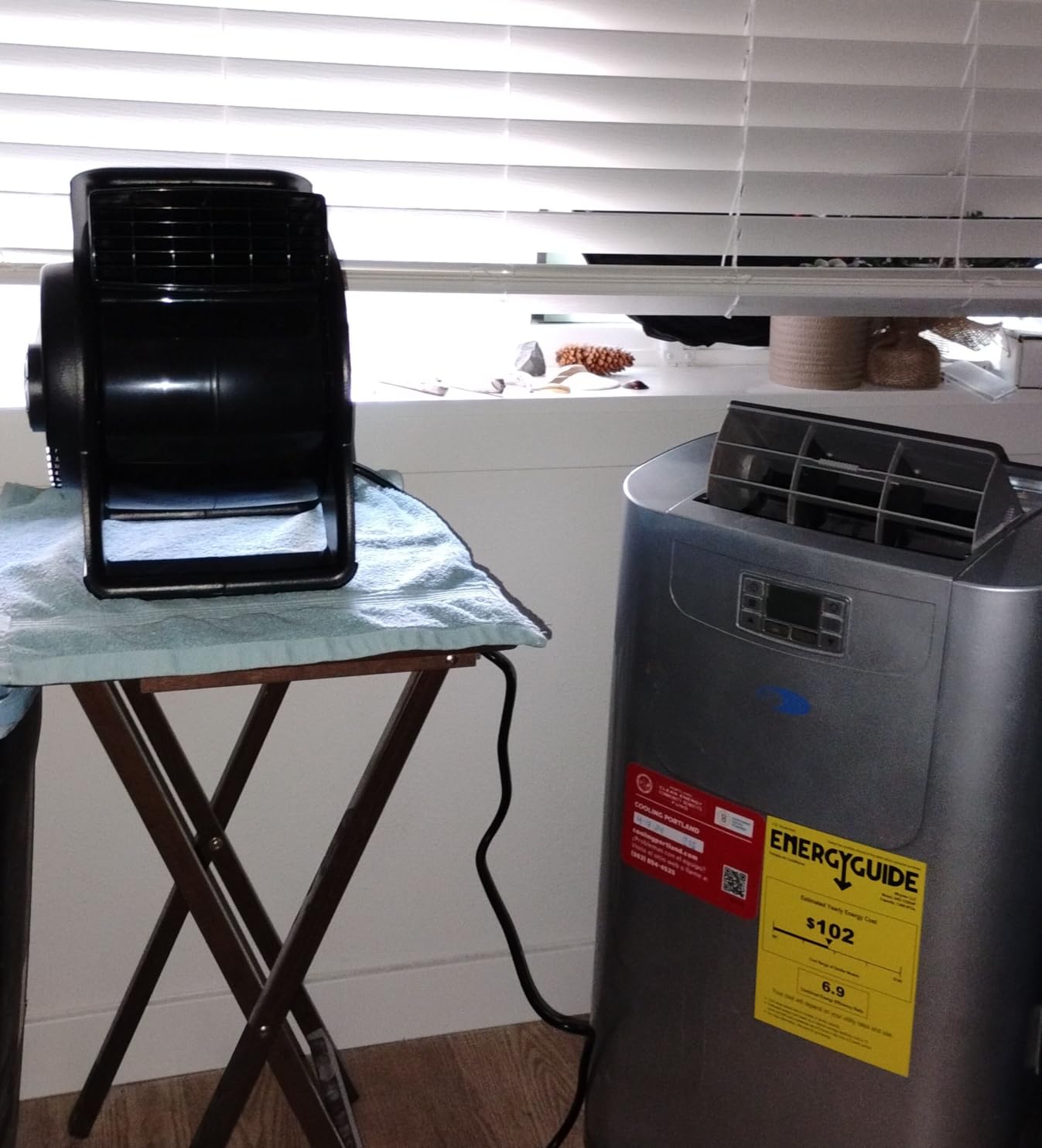
Two things separate it from most competitors at this size. The first is the pair of built-in grounded 120V outlets on the housing, which means you can plug a second fan straight into it without hunting for a free socket on the wall. The second is the circuit breaker with a reset button, a small thing that tells you this was built for garages and workshops rather than bedrooms.
The cord is 10 feet, which in most home setups is exactly enough to reach an outlet from a trainer position without an extension cable. Riders who move between rooms will appreciate that, and it is one of the recurring complaints we saw about shorter cords elsewhere in this category.
What a first fan gets right for most riders
It has the volume to cool your whole torso rather than just your face. Forum riders who started with a desk fan often describe that as the moment their sessions stopped feeling miserable, because the desk fan can only reach the head and upper chest.
The built-in outlets let you build the two-fan setup that r/Velo riders describe, one big fan for your legs and a smaller one for your face, without a power strip on the floor. The pivot range means a single fan can cover an interval block and a long steady ride without you getting up to reposition it.
Where it falls short
The 59.3 dB rating is a real trade-off if you ride with music or join Zwift group voice chat. Reviewers report that it competes with the trainer itself on the top setting, so you will be reaching for earbuds if your sessions are audio-heavy.
Three speeds is fewer than some rivals offer, and the plastic blades mean it is not the fan to leave in a dusty garage permanently. For occasional basement or spare room use it is ideal. For a full-time pain cave you will want something heavier.
2. Vacmaster AM201R Aero Air Mover: Best Value Fan for Indoor Cycling
Vacmaster AM201R Aero Air Mover and Fitness Fan With Remote Control 550 CFM
550 CFM
32 mph air speed
Remote control
5 watts
61 dB
Pros
- High airflow for the size at only 5 watts
- Remote with a strap and 32 foot range
- Three tilt angles at 0
- 45 and 90 degrees
- Compact footprint that stores easily
Cons
- Remote battery needs disassembly to change
- Louder than most at the highest setting
- Only 3 speed settings
The Vacmaster AM201R is the fan we would buy first for most people, and the numbers explain why. It pushes 550 CFM at air speeds up to 32 mph while drawing only 5 watts, which is a fraction of what most high-velocity fans pull from a wall.
Air movers like this one are designed to push a long column of air across a room rather than swirl it, so the effect on a rider is a steady directed stream that you can aim at your torso and legs. At 12.99 by 12.6 by 10.43 inches it takes up almost no floor space at all, which matters in an apartment.
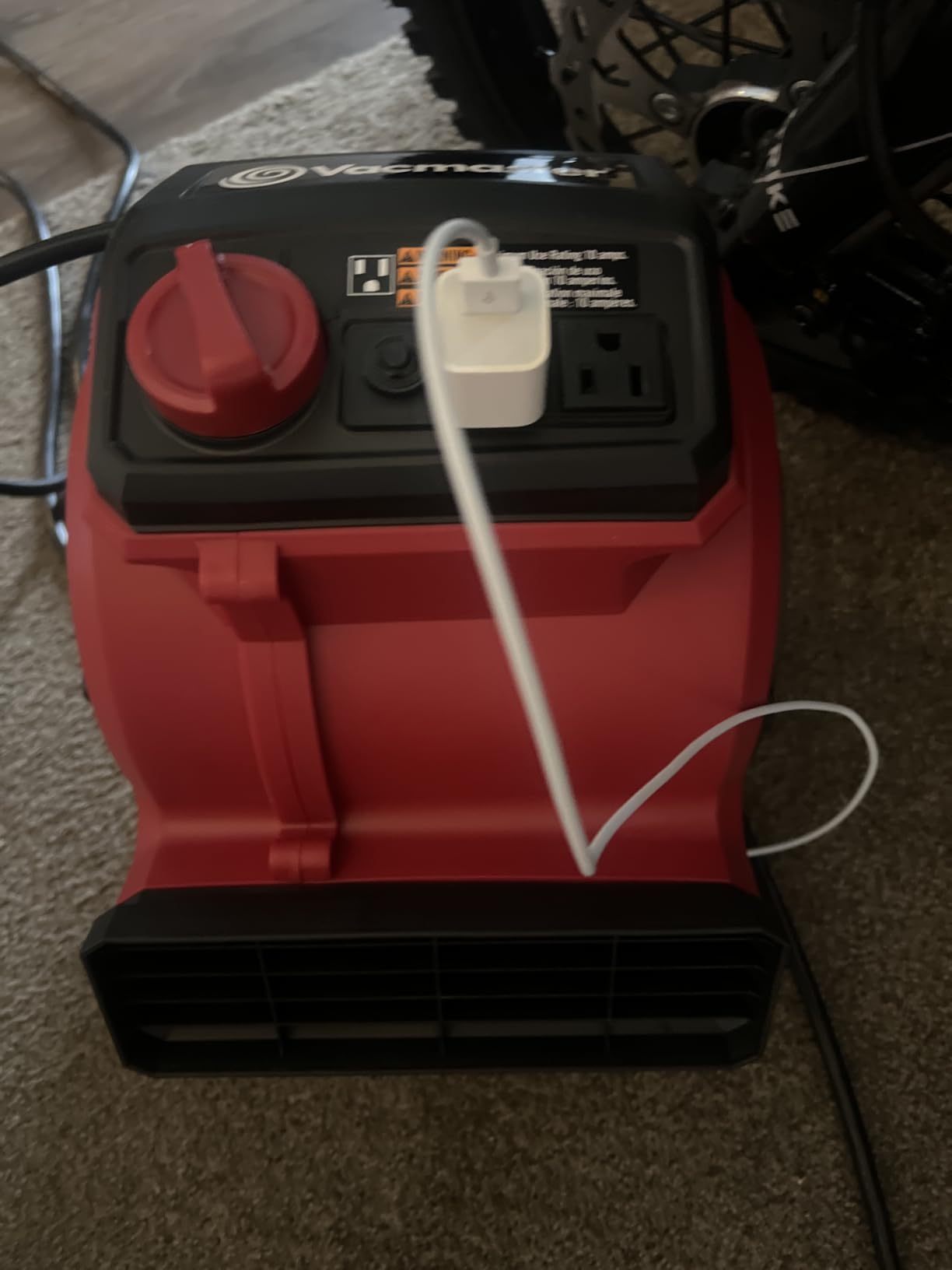
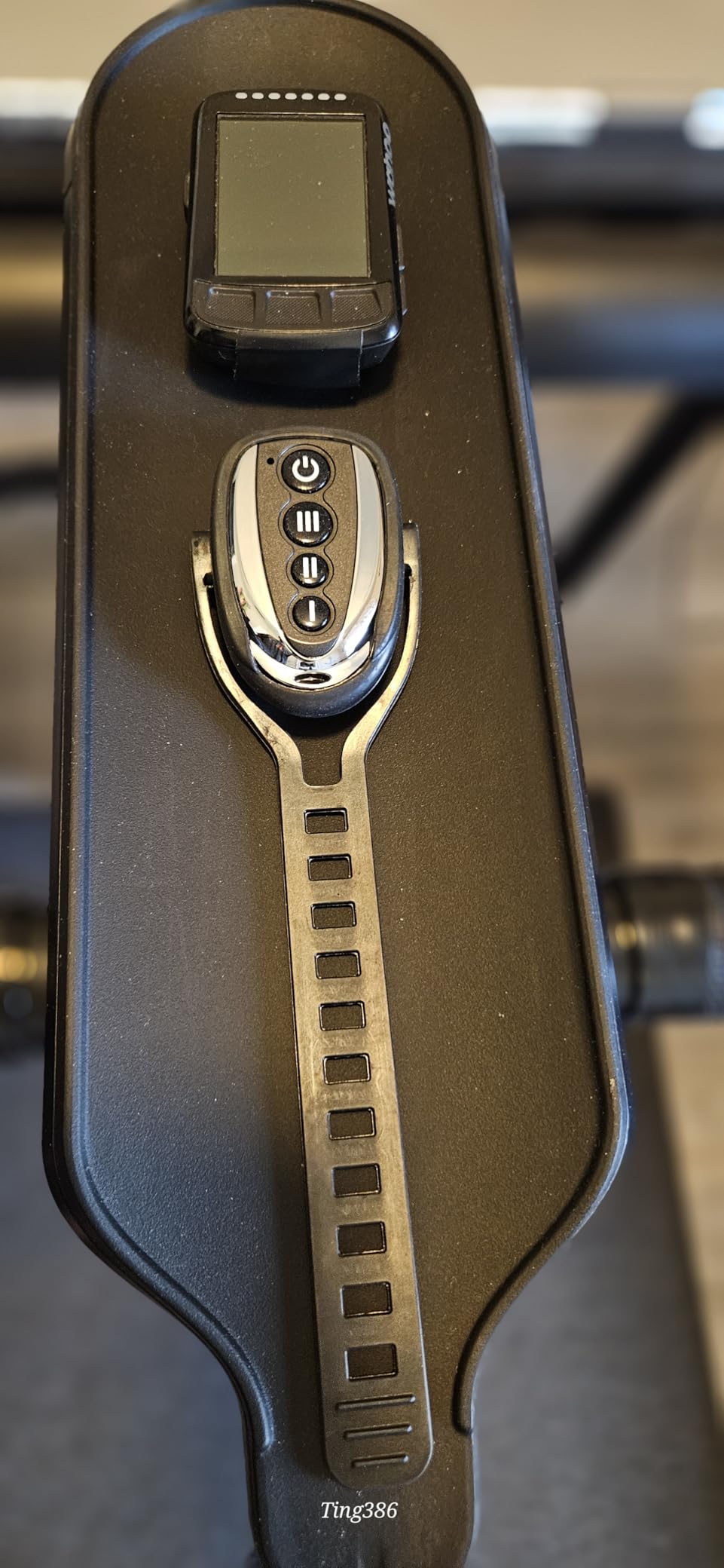
The remote is the reason this one edges ahead on convenience. It reaches 32 feet on a strap so you can keep it on a handlebar or a windowsill and change speed without getting off the bike, which is the single most common complaint riders have about fans with no remote at all.
Tilt is handled in three fixed positions, 0, 45 and 90 degrees, rather than a continuous pivot. That sounds like a limitation and in practice it is not, because you set the angle once when you arrange the room and then leave it alone for months.
Why the efficiency matters in a small room
At 5 watts this is among the lowest draws in the roundup, and it will not warm the air in a small room the way some high-wattage models do. If you are training in a bedroom or a study with the door closed, that difference is felt within an hour.
The 550 CFM figure puts it well ahead of most of the personal fans here. What you trade is reach. This is a personal fan, not a whole-room circulator, and it needs to be within a few feet of you to feel the difference.
What to know before you buy
The remote battery is the most reported complaint. It uses a 12V 27A cell that has to be removed with a small screwdriver to change, and a few owners report arriving with a dead one. Keep a spare on hand rather than planning on an emergency swap mid-session.
The 61 dB maximum is a little above the Lasko U12104, so it is not the choice for a noise-sensitive apartment. And while the compact size is a genuine advantage, it also means the airflow falls off faster than a larger fan’s does the moment you move it back.
3. Wahoo KICKR HEADWIND: Best Smart Fan for Zwift and Connected Trainers
Wahoo KICKR HEADWIND Heartrate/Speed Controlled Cycling Fan for Indoor Bike Trainers, Stationary/Spin Bikes, Cross Training, Black
Sensor synced airflow
Over 30 mph wind speeds
12 lb
30 watts
4 speeds
Pros
- Automatically adjusts to heart rate and speed data
- Wind speeds topping out over 30 mph
- Airflow pattern matched to a cyclist's position
- App control over Bluetooth
- Works inside the KICKR ecosystem
Cons
- Large footprint at 29 by 42 by 46 inches
- Needs a power outlet rather than a battery
- Fixed angle with no tilt adjustment
- Four speed settings only
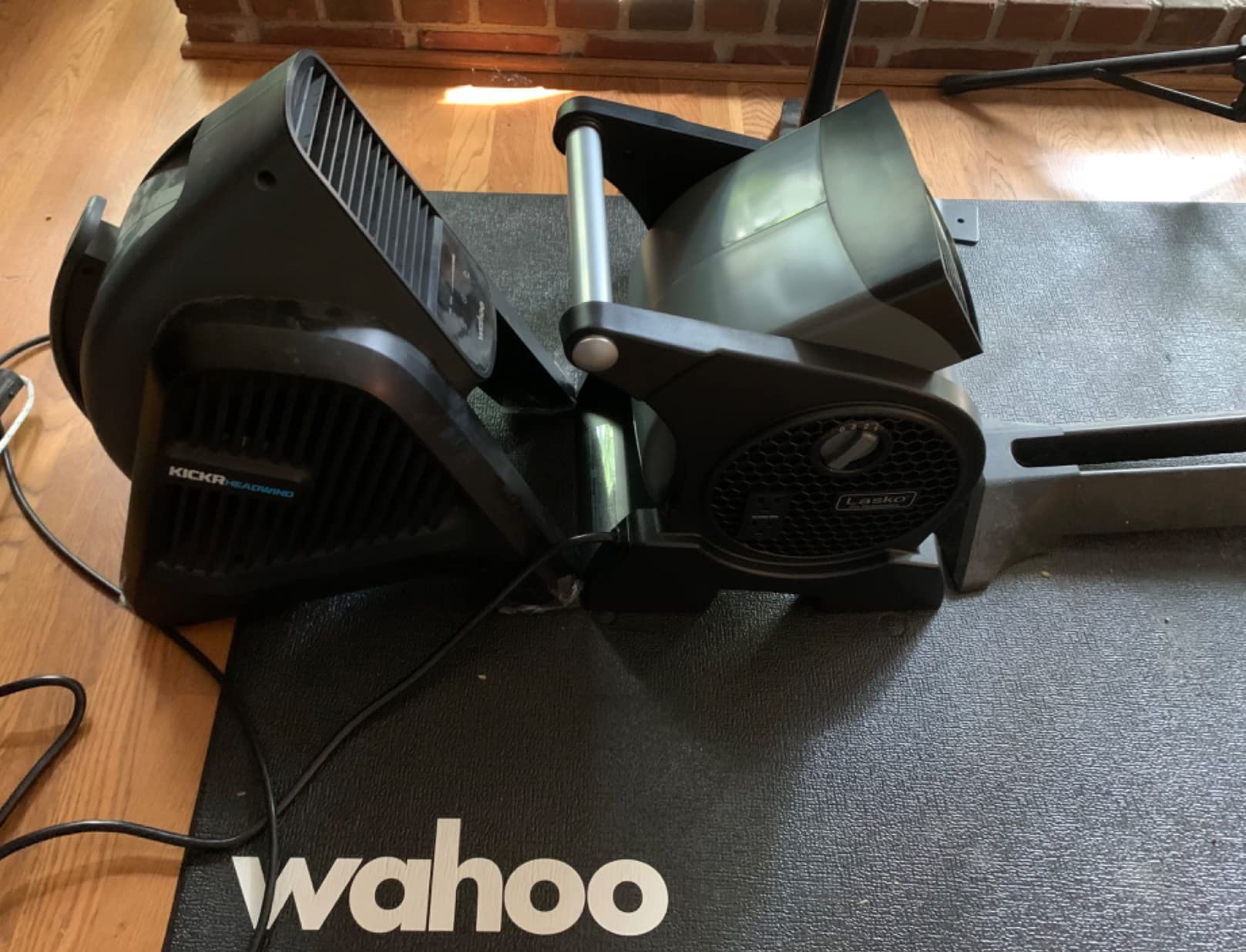
This is the only fan here that reacts to your workout without being told to. The Wahoo KICKR HEADWIND pairs over ANT+ with your heart rate monitor, speed sensor or smart trainer, then raises or lowers the airflow to match what you are doing.
In practice that means the fan ramps up as you push into a threshold block and backs off during recovery, so you spend the session managing your effort rather than your fan speed. On Zwift, where you cannot reach the wall controls mid-event, that is the feature people actually pay for.
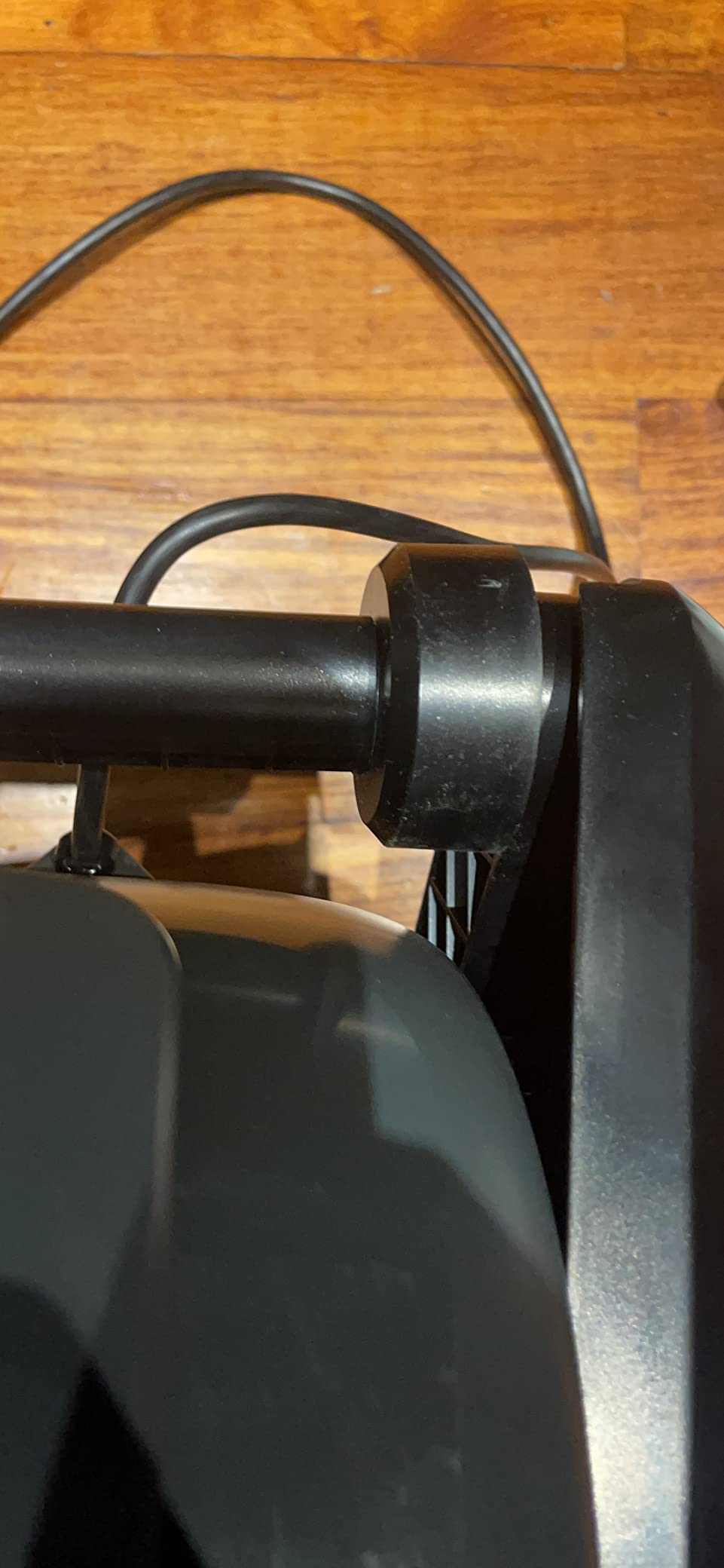
The rated wind speeds top out above 30 mph, well past a light breeze, and the airflow pattern is shaped to match a cyclist’s position rather than a room, aiming across your chest and face instead of straight at your shins.
There are also 4 manual speeds and full app control over Bluetooth if you are not training with a sensor. The motor is brushless, it draws 30 watts, and it carries a one year manufacturer warranty.
Who this is genuinely for
If you ride structured sessions in an app and already own a smart trainer or a heart rate strap, this converts the fan from a manual adjustment into part of the training setup. Riders in the Zwift Beginners community repeatedly single it out for exactly that reason, describing it as expensive but tidy in size and easy to pair with a heart rate monitor.
A TrainerRoad thread put it more bluntly, saying it moves a ton of air while conceding that bigger, noisier options exist. That is the honest framing. Nothing in this roundup matches its automation.
The case against it
It sits in the premium tier well above the rest of this roundup, and forum sentiment on that is close to unanimous. If you already own a decent floor fan, the jump to this one is hard to justify on airflow alone.
At 29 by 42 by 46 inches and 12 pounds it is also a genuinely large object to have beside a bike in a small room. The angle is fixed, so riders often prop it up on books to aim it higher, and the 446 reviews reflect a much smaller owner base than the picks further down the list.
4. TrubliFit Fan for Peloton: Best Fan for Peloton and Screen Bikes
TrubliFit Fan for Peloton Bike & Peloton Treadmill – Accessories for Peloton – Fits Original, Bike+ or Tread – No Batteries or Charging Required
Powers from the bike screen
3.5 inch body
4.16 oz
2 speeds
No batteries
Pros
- Draws power from the Peloton monitor with no charging
- Custom mounting bracket for the bike
- Center mount keeps the screen and grips clear
- Light at just over 4 ounces
- Variants exist for Bike+
- Tread and Row
Cons
- Only fits Peloton equipment
- Airflow is weak against hard intervals
- Short cord that fights a swiveling screen
- Fragile plastic tilt joint
The TrubliFit solves a problem no floor fan can. On a Peloton the screen sits directly in front of your face, which blocks the airflow from anything you place on the floor, so the fan has to live on the handlebars instead.
This one mounts in the center of the bar with a custom bracket, draws its 5 watts straight from the Peloton monitor, and never needs a battery or a charging cable. It measures 3.5 by 3 by 3.5 inches and weighs 4.16 ounces, so it adds nothing to the bike you are lifting up the stairs.
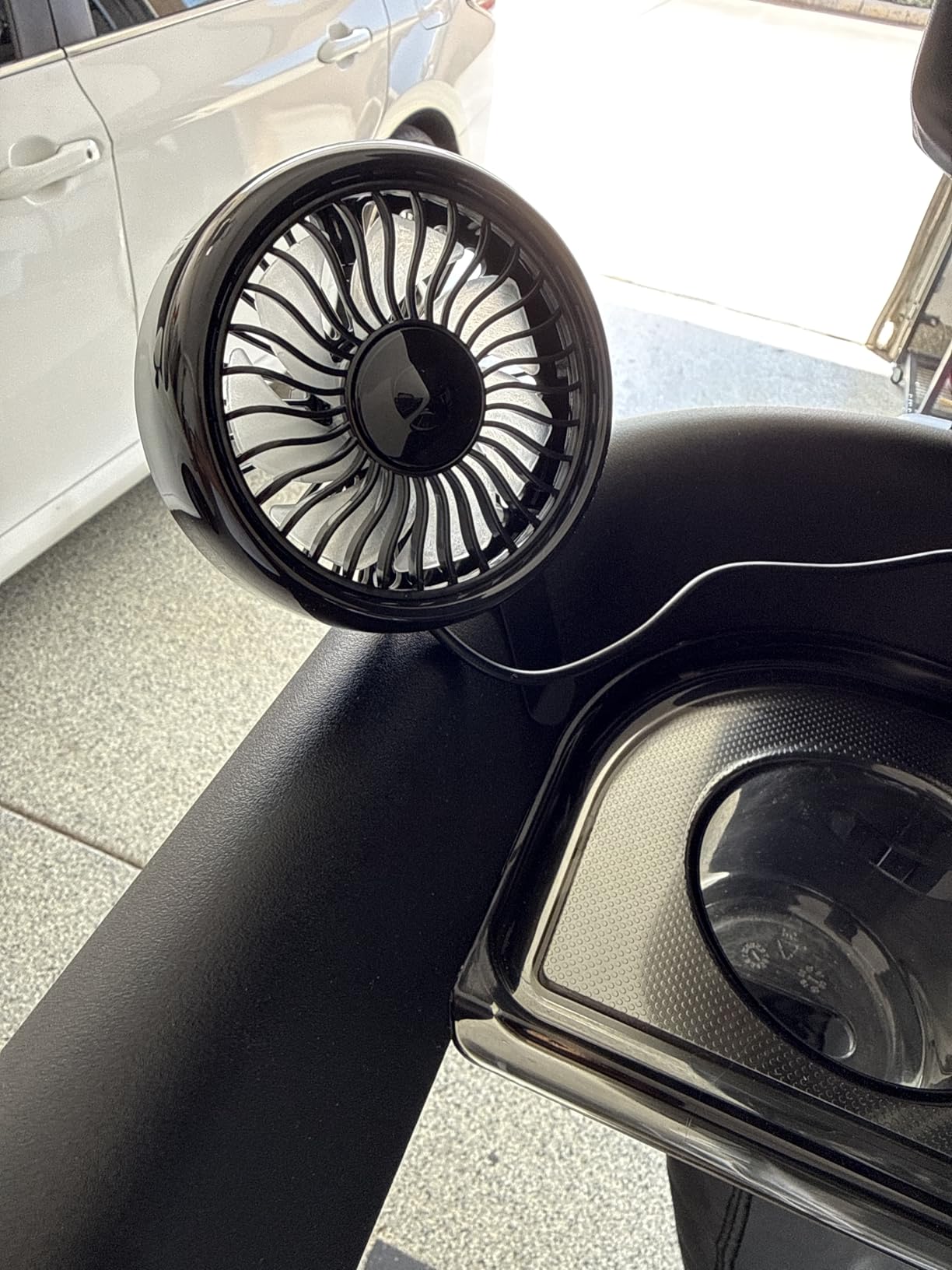
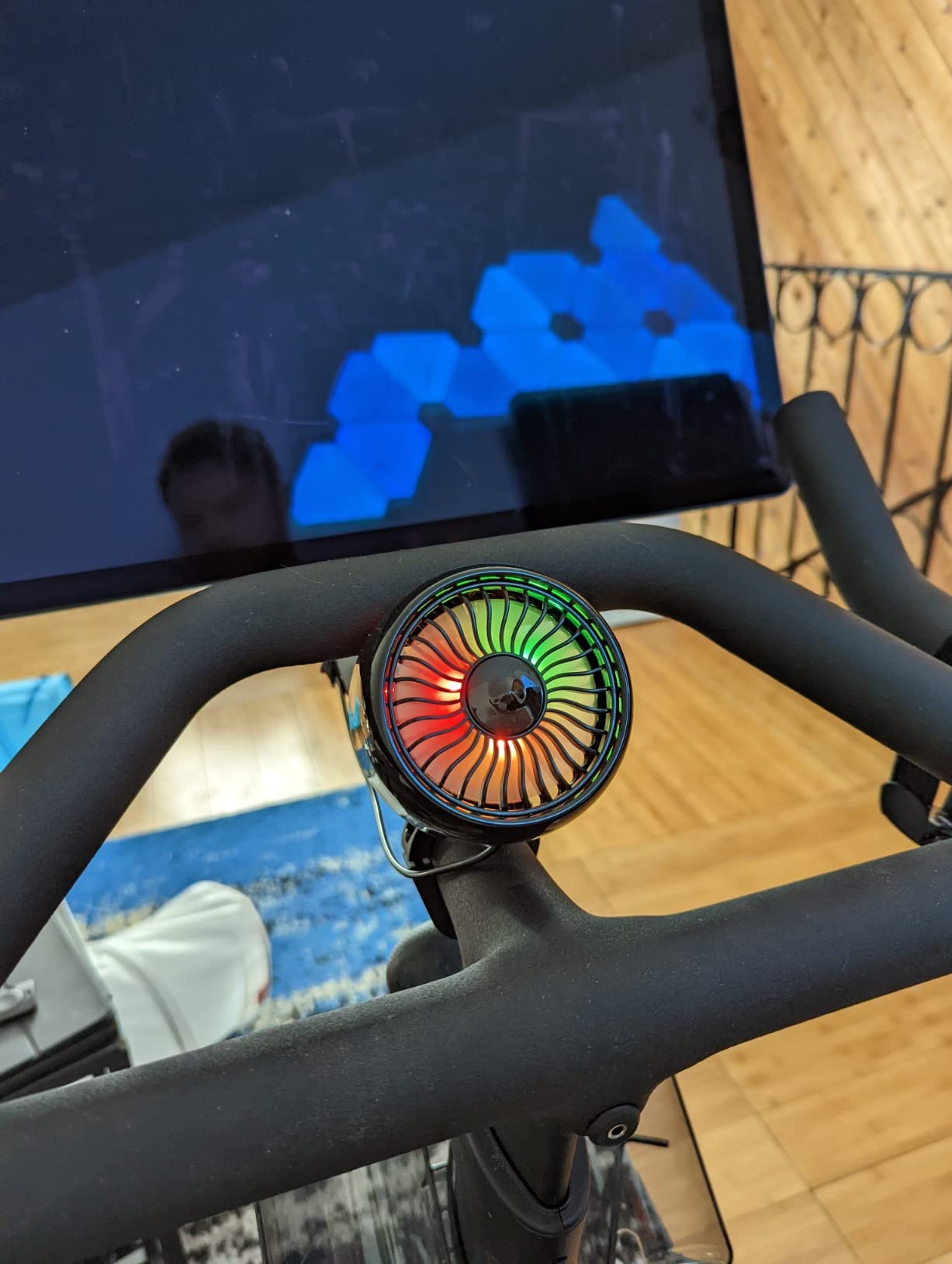
Two adjustable speeds and an optional disco light mode make it more fun than it needs to be, which matters if your motivation for the bike is entertainment as much as fitness. Variants cover the original Bike, Bike+, Tread and Row, so you are not locked into one model.
With 1558 reviews at a 4.4 rating it is one of the most proven clip-on fans on the market, and it is the pick riders searching for a Peloton fan end up on most often.
Where a handlebar fan beats a floor fan
It puts air on your face from a short distance, which is where heat actually accumulates on you. A floor fan six feet away has to move a lot more volume to achieve the same sensation on your skin, and that is the whole point of the design.
There is also nothing to arrange. It comes out of the box, bolts to the bike, and works. For someone whose indoor cycling happens on a shared Peloton in a rented flat, that is worth more than any specification on this list.
Where it does not work
The airflow is modest, and reviewers are candid that it is not enough for hard interval work. It is a face fan. If you are running a threshold session and sweating through your kit, you want something with real volume behind it.
The plastic tilt joint is the part most likely to disappoint you, and shorter riders sometimes find the centered position aims above their head. The cord is short enough to fight the screen when it swivels, so check that your model has the clearance before committing.
5. Koonie 8 Inch Clip Fan: Best Portable Fan for Travel and Small Rooms
Koonie 8″ Clip on Fan, 10000mAh Rechargeable Battery, Strong Airflow, Black
10000mAh battery
Up to 24 hours
35 dB
1.8 lb
4 speeds
Pros
- Runs up to 24 hours on the internal battery
- USB-C fast charging with a full charge in 6 hours
- Works as a clip-on and a freestanding fan
- 360 degree vertical and horizontal rotation
- Very quiet at 35 dB
Cons
- Weaker than any corded fan in this list
- Clip does not open wide enough for every surface
- Battery capacity fades with age
- Lightweight plastic feels disposable
The Koonie WH310 is the only pick here that does not need a wall, and with 16579 reviews it is also one of the most proven. The 10000mAh battery runs for up to 24 hours on the lower settings and recharges over USB-C in about six hours.
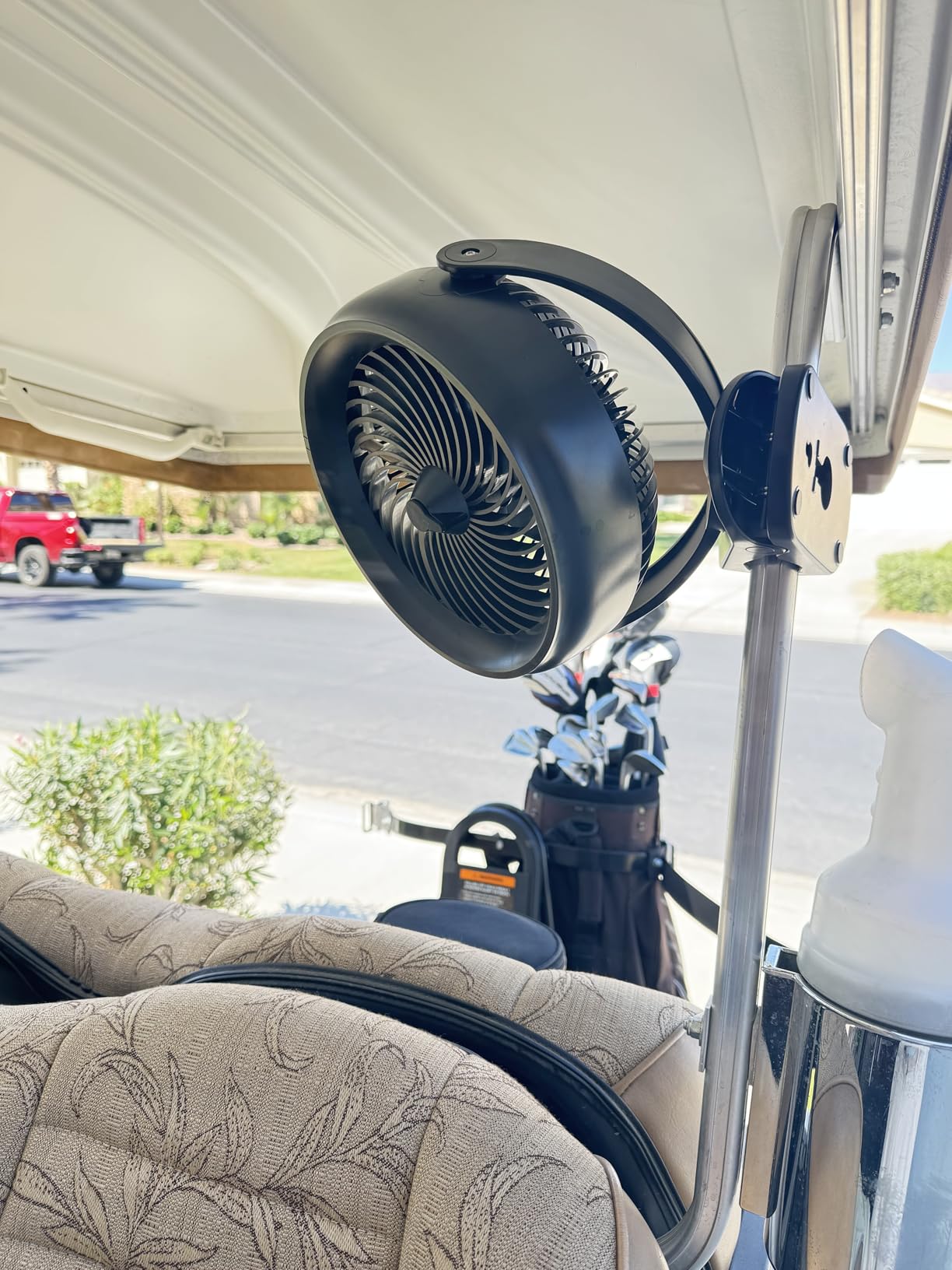
It does double duty. The clip opens up to 3 inches so it can grip a shelf, a desk edge or a bike handlebar, and when you take it off the clip it stands on its own as a small freestanding fan on a windowsill or a bedside table.
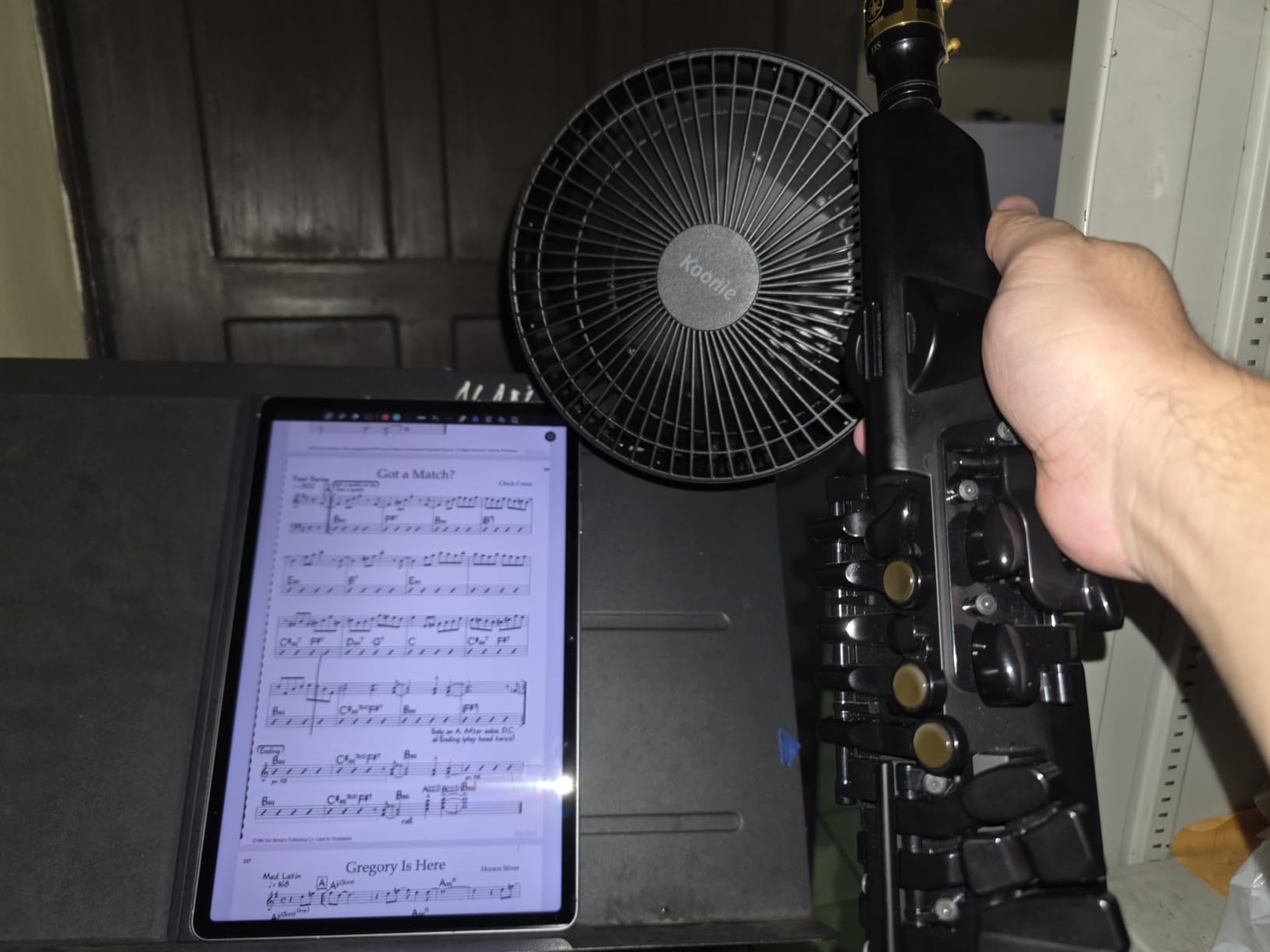
The brushless motor is quiet at 35 dB, which makes it the second quietest fan here and the one most likely to disappear into the background of a shared room. Four settings give you three speeds plus an energy saving mode for long sessions.
Head rotation covers 360 degrees in both directions, so you can aim it at your face on the bike or at your legs on the floor without picking it up.
The case for cordless cooling
If you train in a garage, a hotel room on a cycling trip or a spare room with no nearby outlet, this removes the constraint that shapes every other choice on this list. Cord management is a real pain point for riders with short leads, and a battery removes the problem entirely.
It is also the fan to pair with a bigger unit. A quiet 35 dB clip fan on the handlebar for your face plus a floor fan for your legs is a setup several riders describe as the most comfortable arrangement they have found.
Where the battery becomes the limit
Battery powered means low output. No corded fan in this roundup will be beaten by it, and anyone doing structured intervals in a hot room will find it underpowered no matter how long it runs.
Clip jaws rarely fit every surface, so measure before you order. And like any lithium pack, the capacity fades over a few years of daily use, which matters if this becomes a permanent part of your setup.
6. Lasko U15617 Pivoting Blower Fan: Top Rated Workshop Fan
Lasko High Velocity Portable Pivoting Blower Fan – 15″ – U15617 – Black
375 CFM
270 degree pivot
12 lb
57.6 dB
Two accessory outlets
Pros
- Highest rated of the ten fans compared at 4.7
- 375 CFM from a 15 inch frame
- 270 degree pivoting head directs air where you need it
- Two built-in 120V grounded accessory outlets
- 10 foot cord with circuit breaker and carry handle
Cons
- Heaviest of the compact blowers at 12 lb
- Louder than the smaller Lasko on top speed
- Plastic blades
- Only 3 speeds
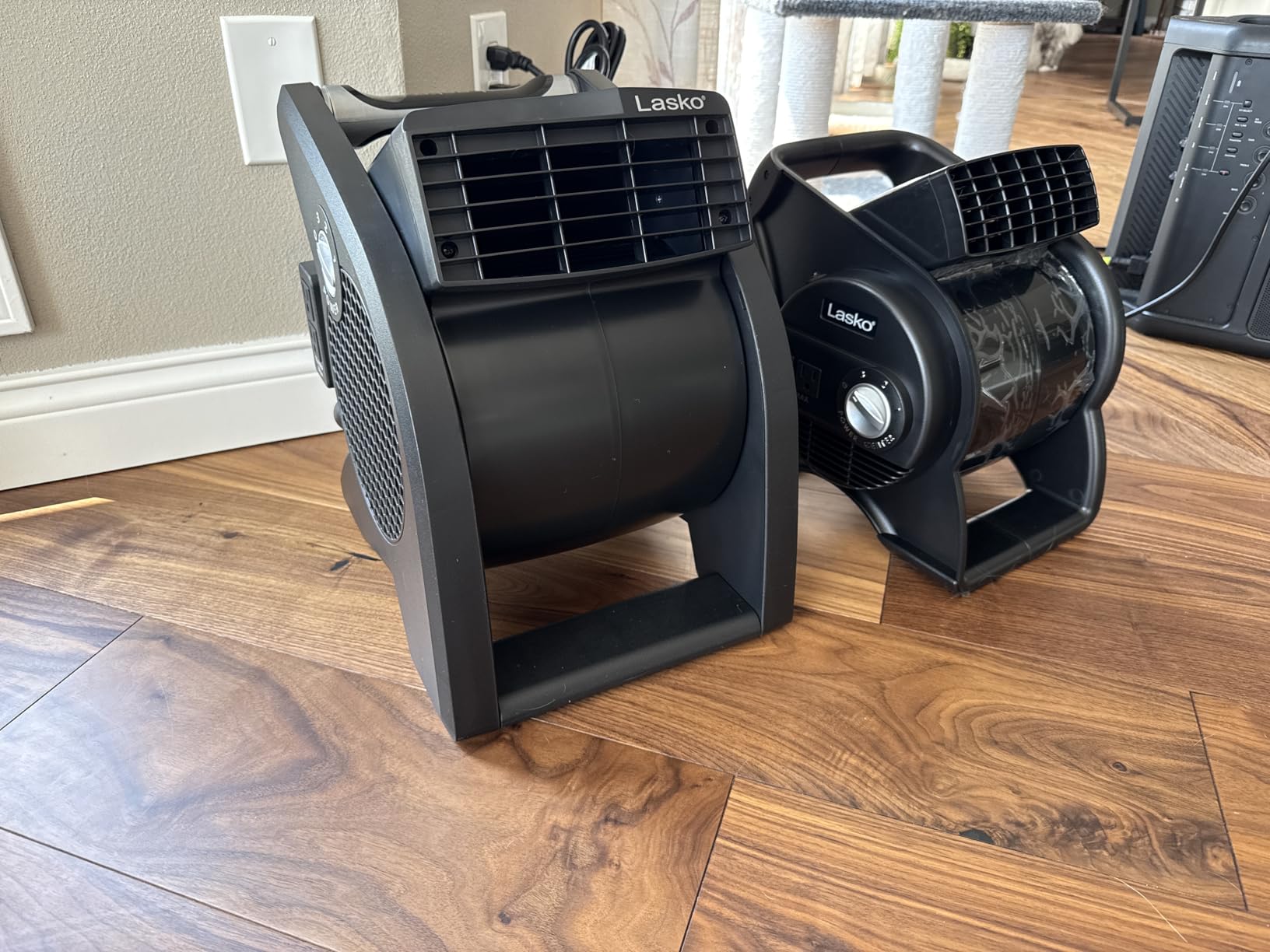
The Lasko U15617 comes from the same family as our top pick but trades some compactness for a bigger frame and more airflow. At 15 inches it moves 375 CFM, a jump of nearly 30 percent over the 12 inch U12104.
Its 270-degree pivoting head matches the range on our top pick and lets you redirect the air without walking over. You can aim low at your legs during a recovery spin and then swing the head up toward your face, which is the annoyance riders complain about most with fixed-head models.
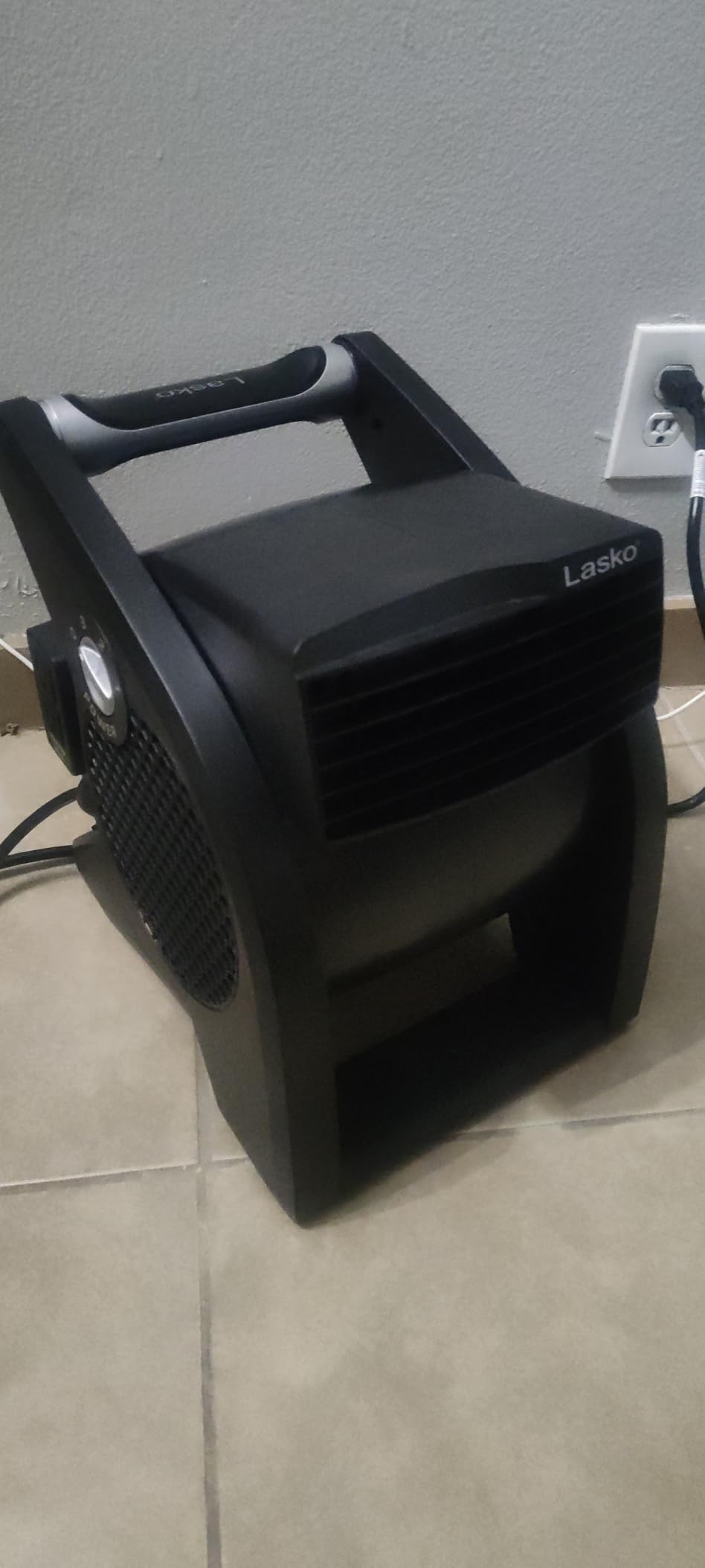
Like its smaller sibling it carries two built-in 120V grounded accessory outlets, a 10 foot cord with a circuit breaker and reset button, and an ETL listing. The carry handle makes it easy to move between the bike and the laundry room, which is how most people end up using a workshop fan.
With a 4.7 rating across 7542 reviews it carries the strongest average score of the ten fans compared here, and it has held that score across a very large number of owners.
Why workshops and garages suit this fan
It was built for a room where things get dusty and equipment gets knocked over, and the circuit breaker is a real feature rather than a checkbox. Blower fans of this type double as shop air movers, which is why the category has such a strong reputation for durability.
At 375 CFM it sits between the compact personal fans and the industrial models further down the list, which makes it the version to pick when the U12104 is not quite enough but a 20 inch industrial fan is more than the room can take.
The compromises you accept
At 12 pounds it is twice the weight of the U12104 and noticeably harder to shift when you want to reposition it mid-session. The 57.6 dB rating is fine, but the fan is louder in practice than that number suggests once you add the room’s own echo.
It draws 120 watts, far more than the Vacmaster’s 5, and the 15 inch frame means it needs more floor space than the number suggests because the cage alone is that wide. Three speeds is again the whole control set.
7. XPOWER FC-300 Air Mover: Best Fan for Large Rooms and Basements
XPOWER FC-300 Heavy Duty Industrial High Velocity Whole Room Air Mover Air Circulator Utility Shop Floor Fan, Variable Speed, Timer, 14 inch, 2100 CFM, Black, Blue
2100 CFM
4 variable speeds
3 hour timer
13 lb
1 amp draw
Pros
- 2100 CFM of focused airflow from a single unit
- Draws only 1 amp so running costs stay low
- Quiet on the lower three of its four speeds
- 360 degree directional output
- Stackable design for storage
Cons
- Loudest of the four speeds on the top setting
- 13 lb is heavy to reposition
- No built-in accessory outlets
- Industrial styling in a home
The XPOWER FC-300 is the fan to buy if you are training in a finished basement or a garage that is bigger than a single bike corner. Its 2100 CFM output is more than twice what the personal fans here deliver, and the spiral grille focuses that air into a stream that reaches 120 feet or more.
It runs on four variable speeds and a 3-hour timer, which is genuinely useful for a rider who knows a session will run about 90 minutes and wants the fan to shut itself off. Airflow is adjustable through 360 degrees, so you can point it along a wall rather than directly at the bike.
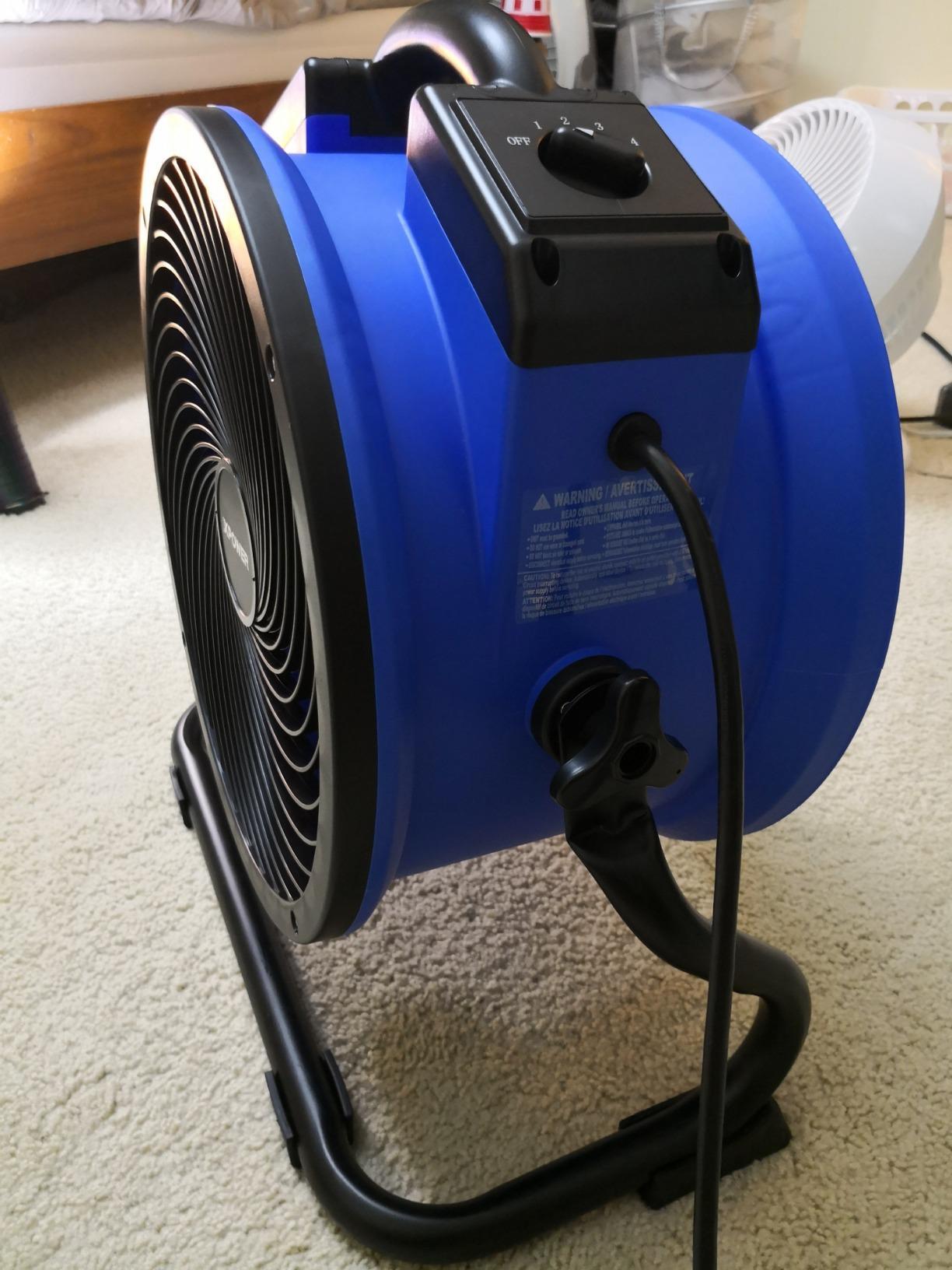
What surprised us most is the 1 amp draw. It moves roughly four times the air of the Vacmaster AM201R while using only 100 watts, so the operating cost of a long session is negligible even though it is the most powerful unit here.
The induction motor with high torque gearing is the reason it stays smooth, and the stackable design means it occupies almost no floor space when you are not riding.
When a whole-room circulator is the right answer
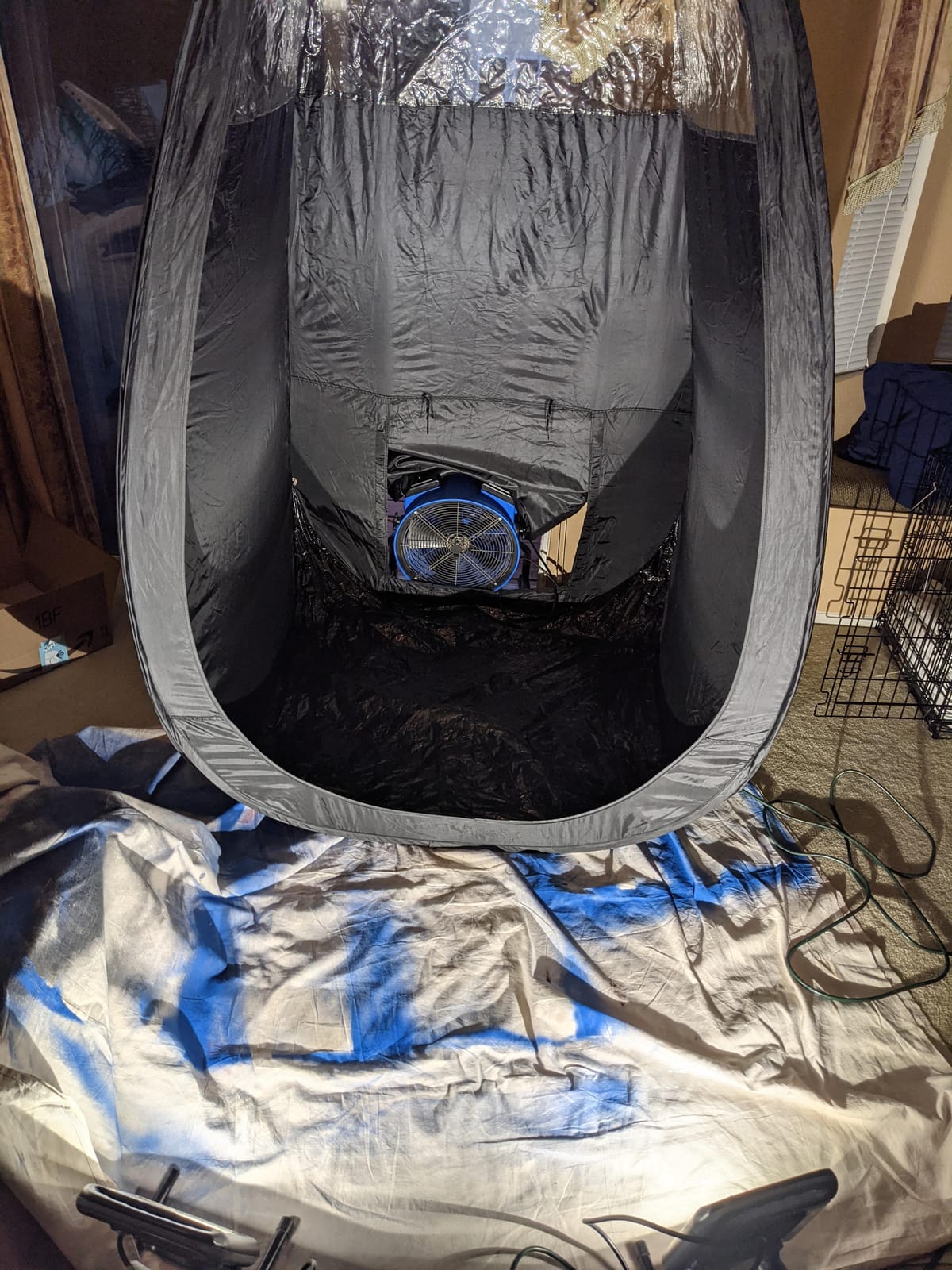
If your pain cave is shared, if you ride in a room with other people in it, or if the heat source is the room itself rather than your body, moving air across the whole space makes more sense than aiming a stream at one rider. That is this fan’s job.
It is also the natural partner to a personal fan. Run the FC-300 along one wall to move the room air, and clip a small fan to the handlebars for your face.
The reasons riders skip it
At 13 pounds you will not be repositioning it between rides. There are no built-in outlets on this one, so a two-fan setup needs a power strip, and the industrial grey-and-blue styling will never blend into a bedroom.
The top speed is loud enough to sit alongside your music, and at 18.6 by 19.2 by 9.4 inches the low profile is more of a trip hazard in a dark room than a space saver. Set it against a wall, not in a walkway.
8. AC Infinity CLOUDRAY S6 Clip Fan: Best Quiet Fan for Indoor Cycling
AC Infinity CLOUDRAY S6 Grow Tent Oscillating Clip Fan 6”
315 CFM
31 dB
10 speeds and 10 wind modes
8 watts
Clip mount
Pros
- Quietest fan in the roundup at 31 dB
- Brushless EC motor with carbon steel gears
- Ten speeds plus ten wind modes and ten oscillation ranges
- Only 8 watts of draw
- IP54 rated with dual ball bearings
Cons
- Smart features need a separate UIS controller
- Designed for grow tents rather than riders
- App setup is fiddly for non-technical users
- Corded rather than battery powered
The CLOUDRAY S6 is an odd fit for this category and a very good one. It was engineered for grow tents, where you clip a fan to a pole and blow air across plants from a fixed distance, and that is close to what an indoor rider is asking of a fan.
The 31 dB rating is the lowest figure among the ten fans compared, and it is the reason this one earns a place on the list. If you ride in a shared room, work from home between sessions, or simply do not want a fan audible on a conference call, this is the one to clip onto something above and behind the bike.
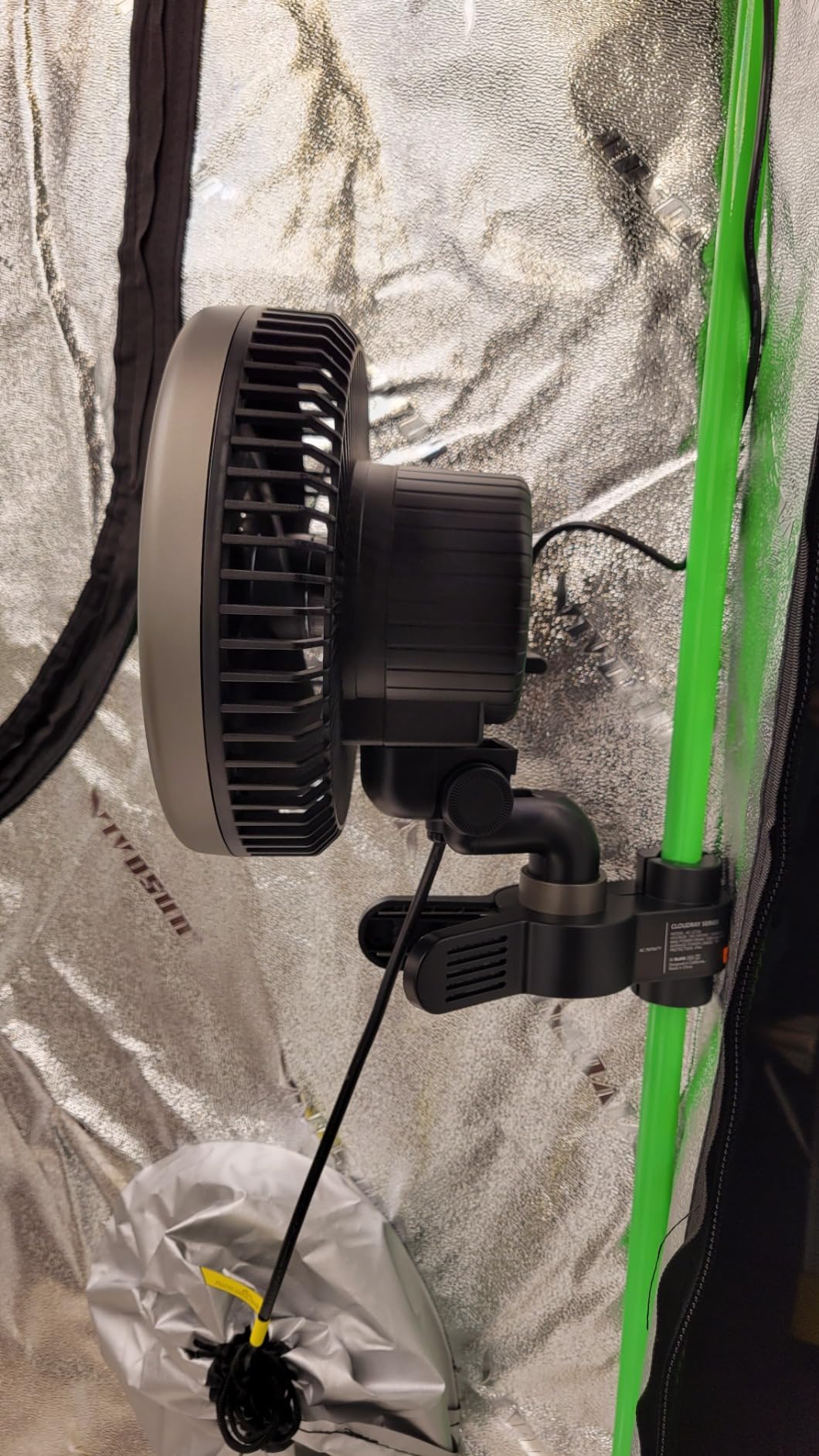
The control depth is unusual for a fan of this size. There are 10 speeds, 10 dynamic wind modes and 10 oscillation ranges, driven by a brushless EC motor with carbon steel gears and dual ball bearings that are rated IP54 for moisture and dust.
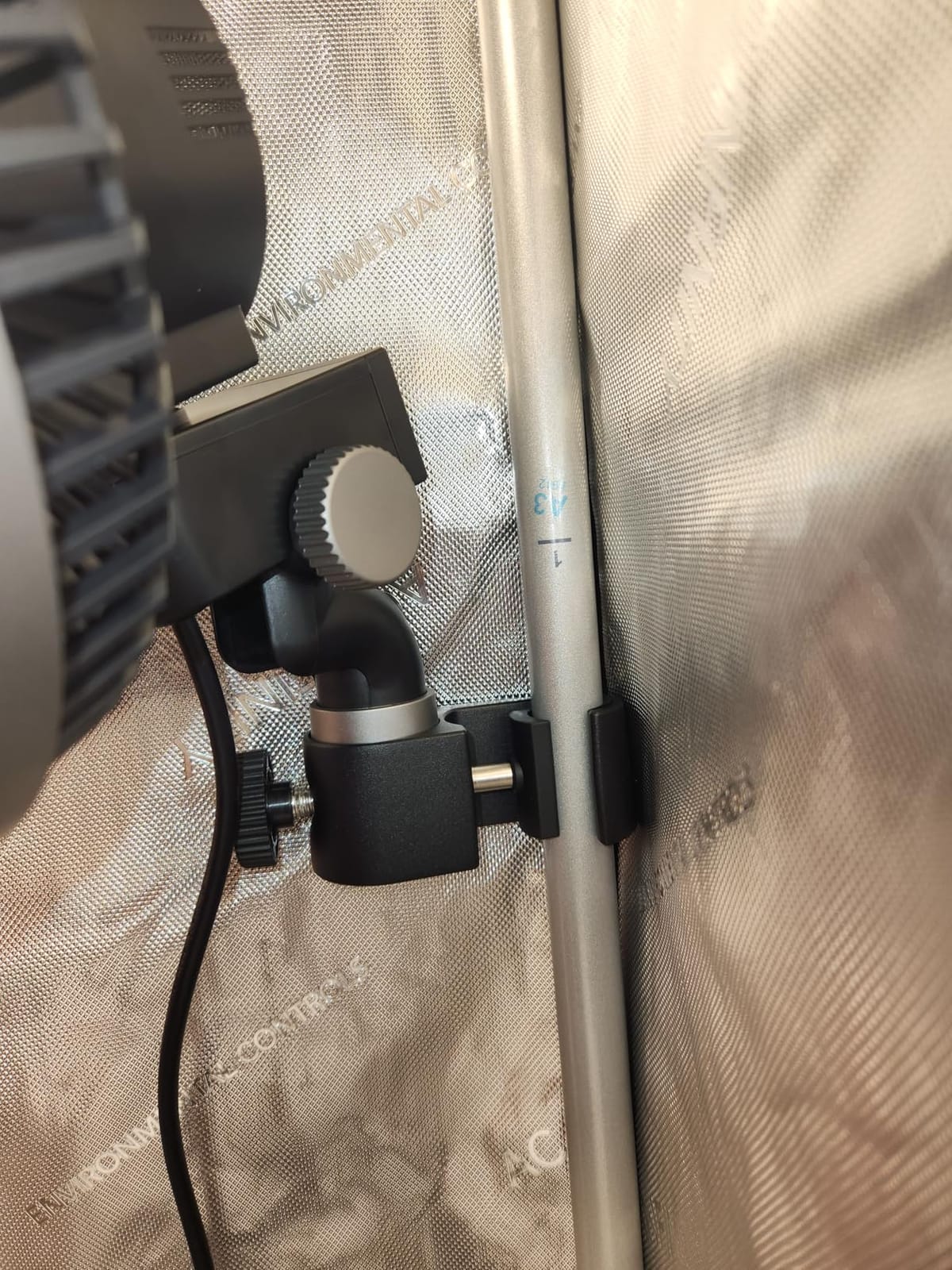
It moves 315 CFM on 8 watts and clamps onto anything up to the size of its own body. If you add a UIS controller you can drive it over WiFi and tie it to a schedule or a temperature trigger.
What riding on a grow fan is like
The gentle end of its speed range is where it shines. Rather than a hard blast, a low setting gives you the ambient airflow some riders prefer for long endurance sessions, and the oscillation ranges let you sweep a wide arc rather than sit in one column of air.
It is a genuinely useful second fan. Pair it with something louder for your legs and let this one handle your head quietly, and you get the two-fan setup without turning a small apartment into a wind tunnel.
The reasons it is not our main pick
The full smart feature set requires a UIS controller sold separately, and without one you rely on the buttons and the app setup, which reviewers with less technical patience find fiddly.
You also need something to clip it to. There is no stand, and the mounting point sits behind and above the bike in most trainer setups, so if your bike has no rear post or shelf this one is awkward. The cord is also fixed, so routing it to an outlet is on you.
9. Simple Deluxe 20 Inch Floor Fan: Best Fan for a Garage Pain Cave
Simple Deluxe 20 Inch 3-Speed High Velocity Heavy Duty Metal Industrial Floor Fan for Warehouse, Workshop, Factory and Basement, Black, 1 Pack
4650 CFM
20 inch aluminium blades
50 dB
11.7 lb
3 speed
Pros
- Highest airflow figure among the ten fans compared
- All-metal construction with aluminium blades
- Ball-bearing motor with permanently lubricated bearings
- Reinforced wire safety grill
- Several sizes and two-packs available
Cons
- Loud at the top speed for a home interior
- 11.7 lb is heavy to move
- Stand reported as flimsy by some owners
- Assembly required
When a rider asks what actually moves air in a garage, the answer is almost always a 20 inch industrial floor fan, and this is the version most of them end up with. Its 4650 CFM rating is the highest number among the fans compared here by a wide margin, well ahead of the 3542 CFM metal model below it.
Twenty inch aluminium blades inside an all-metal housing are what produce that volume. The three-speed ball-bearing motor is permanently lubricated, and the reinforced wire grill is a genuine safety improvement in a garage where a bike is the only thing worth protecting.
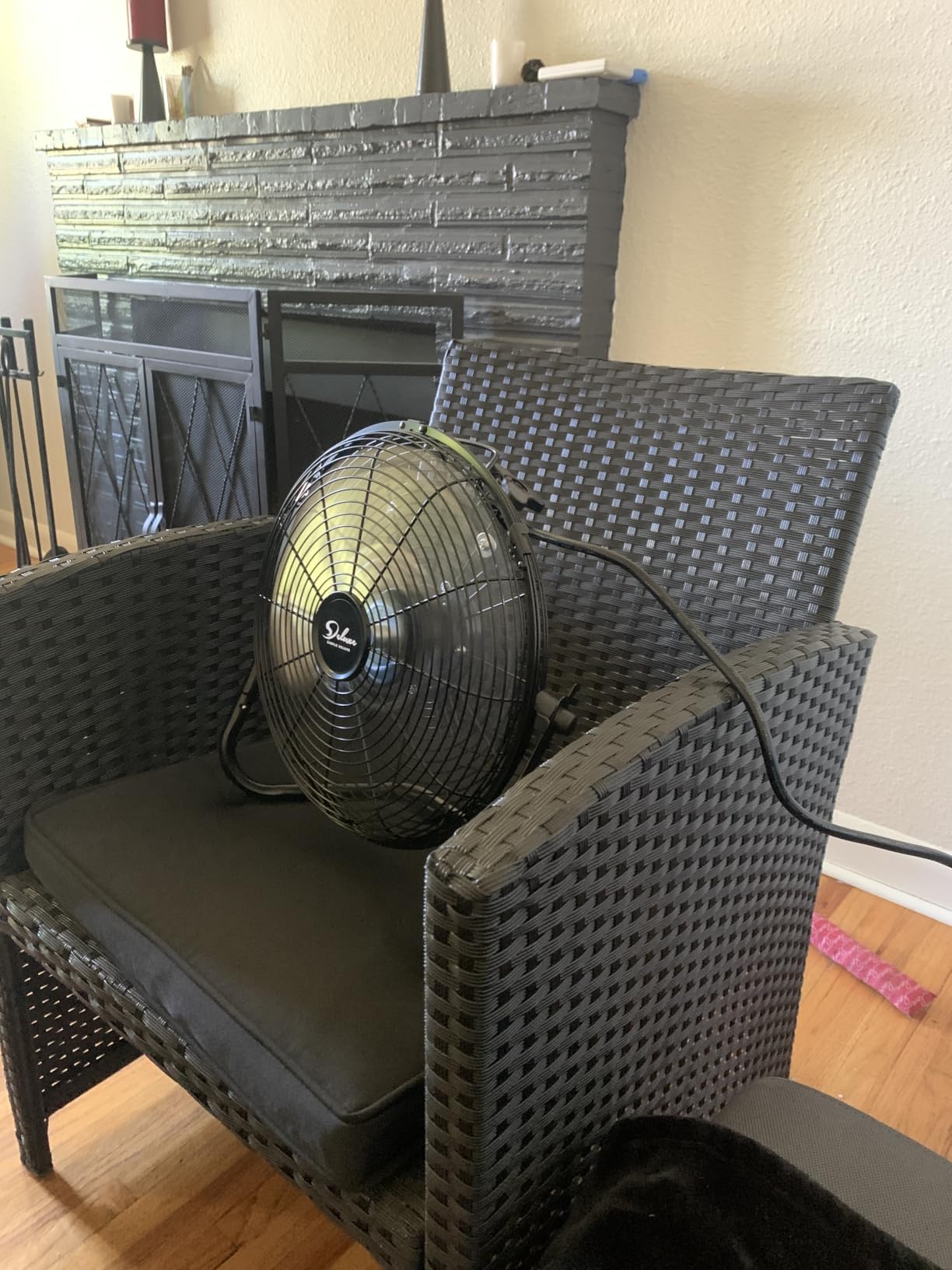
For a rider building a dedicated training space, this is a purchase you make once. Riders in r/triathlon describe industrial floor fans of this class as the thing they actually use, and one post simply reports the airflow from an Amazon unit felt stronger than their air conditioning on its highest setting.
It comes in 12, 18 and 20 inch sizes and in one and two packs, so if you want a matched pair for a head-and-legs setup you can get them from the same listing.
Why a garage changes the maths
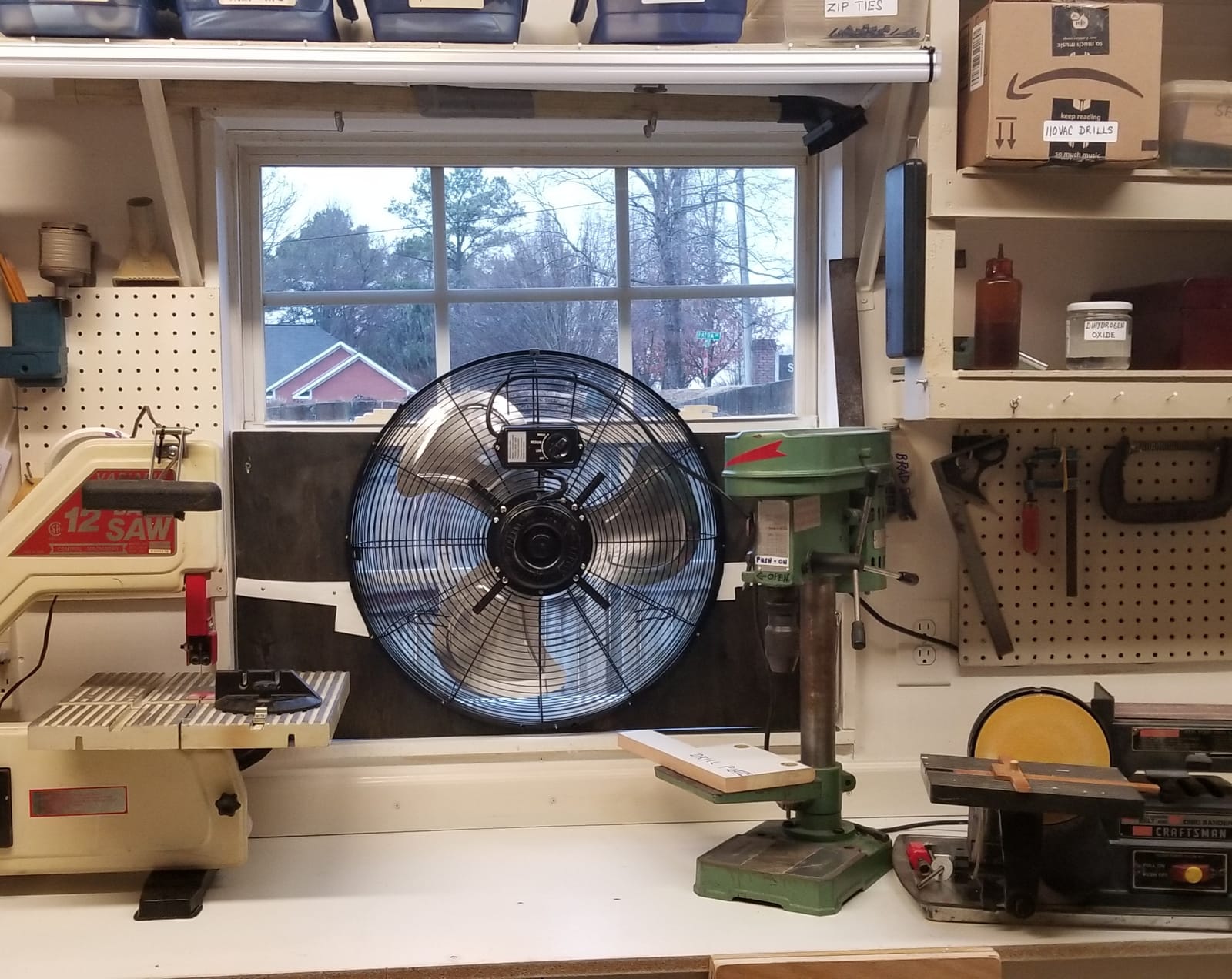
A basement or garage loses cool air constantly and gains heat from the walls and the door, so a fan that would overpower a bedroom is simply adequate there. Volume becomes the priority rather than quietness or footprint.
Run it from one side of the room angled across your path rather than straight at your face. The wide column of air will keep your torso cool while you ride, and the volume will pull heat off the whole space between sessions.
What you give up for the volume
At 50 dB rated it is not the loudest fan here, but airflow noise scales with output, and 4650 CFM produces far more of it than the personal fans. This is not a fan to ride next to while listening to music.
It weighs 11.7 lb, it needs assembly, and some owners report the stand is flimsier than the motor. Metal blades behind a wire grill are also unforgiving if the grill is ever bent, so keep it pointed away from traffic.
10. Amazon Basics 20 Inch High Velocity Floor Fan: Budget Industrial Pick
Amazon Basics 20″ High Velocity Industrial Cooling Floor Fan with 3 Speeds, Tilt Head, ETL-Listed Safety Compliance, Metal Housing and Blades, for Commercial Space/Garage/Gym, 125W, Black
3542 CFM
20 inch metal blades
ETL listed
10.2 lb
3 speed
Pros
- 3542 CFM from an all-metal housing and aluminium blades
- Adjustable tilt head for aiming at the rider
- Tool-free assembly takes under a minute
- ETL listed for safety
- Three speeds with a rotary control
Cons
- Highest share of one-star reviews of the metal fans
- Quality control reports are mixed
- Tilt mechanism can loosen over time
- No oscillation and only 3 speeds
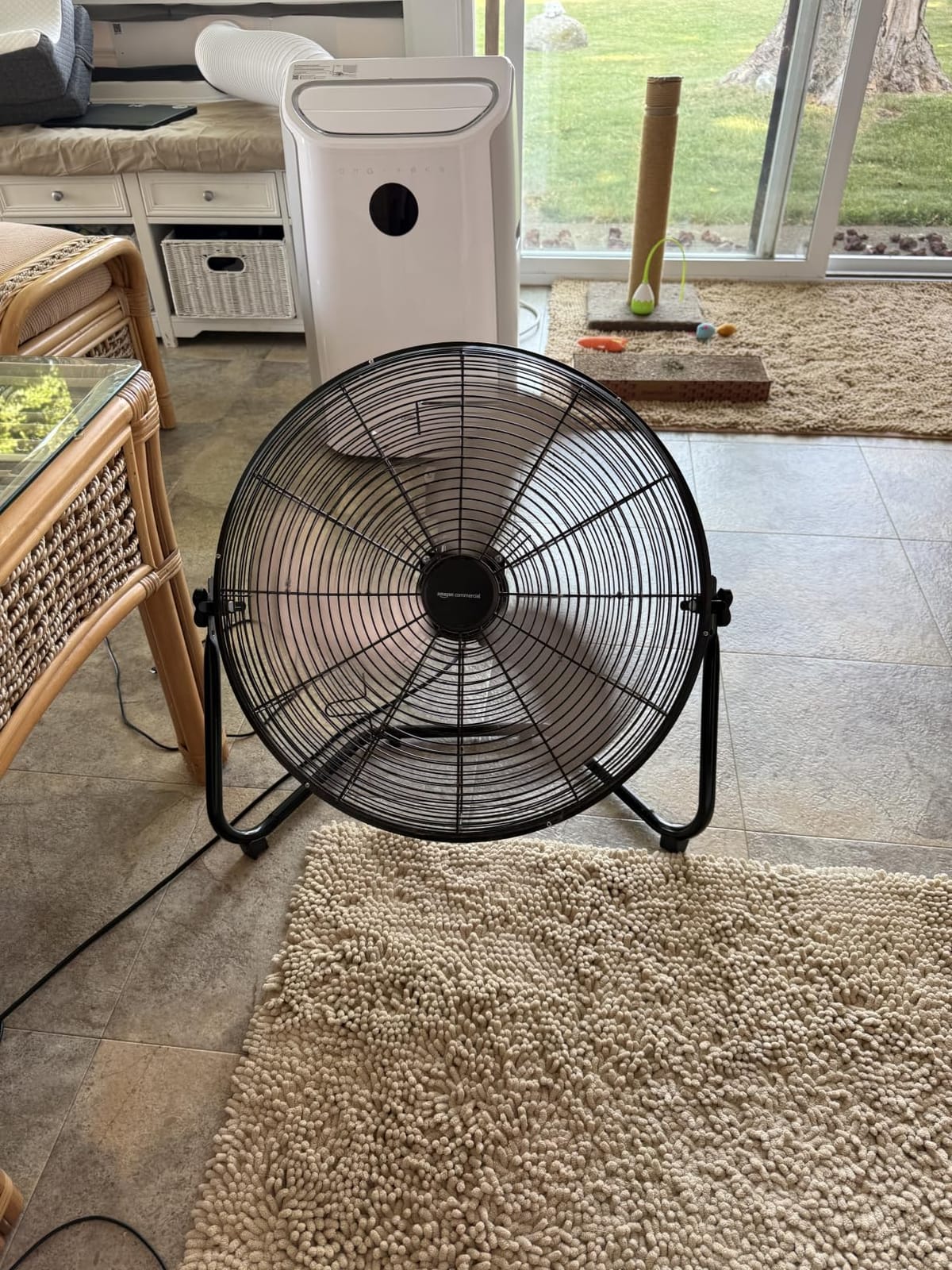
This is the entry point into the metal industrial class, and it covers much the same ground as the fan above it. The FN206 puts out 3542 CFM through 20 inch aluminium blades in an all-metal housing, with a 125 watt motor and three speeds.
The adjustable tilt head is the feature that makes it usable for a rider rather than just for drying paint. You can angle the airflow up toward your face and back down to your legs without moving the base, and it assembles with no tools at all.
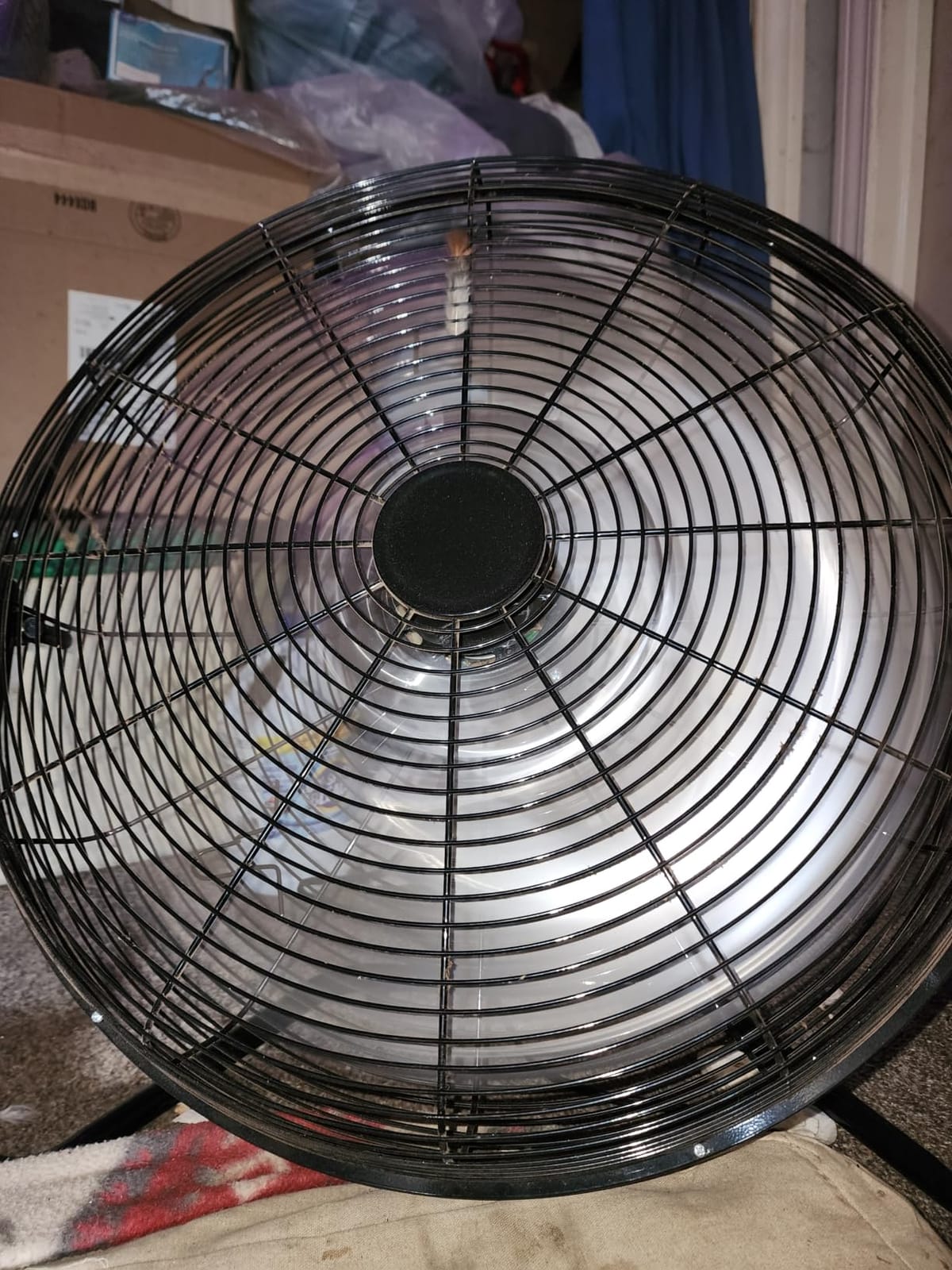
At 9018 reviews it is one of the most examined products in the category, which makes its weaknesses easy to find. The main one is consistency. Its 4.2 rating is the lowest of the ten fans compared, and the gap comes from durability reports rather than from airflow complaints.
It also has the highest share of one-star reviews among the metal fans in this roundup, which tells you the manufacturing varies more from unit to unit than it does for Lasko or XPOWER.
When the saving is worth the variance
If your plan is a garage setup, a rental where you will not keep the fan for years, or a first attempt at indoor training where you do not yet know how much airflow you need, this is a reasonable place to start. The airflow capability is real and the build is metal where it matters.
Its tilt head also makes it a better fit for a bike than most industrial fans, which sit at a fixed angle aimed across a room rather than at a person.
Where to look before committing
Read the one-star reviews first. They cluster around stand quality and units arriving with issues, and that tells you what to inspect the moment you open the box. Check that the tilt mechanism is tight and that the grill is not bent before you plug it in.
There is no oscillation, so a single unit means one fixed stream of air rather than a sweep, and three speeds is the entire control set. If you want remote control you will need a smart plug between the fan and the wall.
How to Choose an Indoor Cycling Fan
Start with fan type, because it decides almost everything else. Desk fans are cheap and portable but cannot reach your torso or legs. Floor and utility fans cover the most ground per pound. Blower and drum fans trade shape for power. Clip-on fans solve the screen problem on spin bikes. Bladeless tower fans are quiet and safe with children but push a narrow stream. Ceiling fans move air around a room rather than at you, and neck or USB wearable fans do not produce enough airflow for intervals.
Next comes airflow character. Centered airflow means a narrow, fast column that you aim at a specific body zone from a few feet away. Diffused airflow means a wide, gentle spread that works better from further back and at lower speeds. High-velocity floor fans and air movers are the centered camp. Desk and tower fans are the diffused camp.
Then think about CFM. To match the cooling of real outdoor riding you would need something in the region of 7000 to 9000 CFM, and no consumer fan reaches that. So treat the number as a relative measure between fans rather than an absolute target, and pay more attention to whether the air is fast enough to reach you where you are sitting.
Noise matters more than most spec sheets admit. The range here runs from 31 dB on the AC Infinity clip fan to around 59 dB on the Lasko U12104 at speed. The louder fans are perfectly usable if you ride silently or listen to music, but they make Zwift group voice chat difficult.
Control method is the next filter. A remote or app lets you change speed without getting off the saddle, which is the most common complaint about basic fans. Sensor-synced control, as on the Wahoo KICKR HEADWIND, goes further and adjusts airflow from your workout data.
Finally, check size, weight and power draw. Anything above 10 pounds is hard to reposition mid-session, which matters if you share a room. Cord length decides whether you need an extension cable. And if your sessions run long, note that the Vacmaster draws 5 watts while the 20 inch industrial units draw 125 to 130.
Smart control is worth the money mainly for convenience, not for the sensor data. Most riders run their fan on the first or second speed, according to forum consensus, so a manual dial they set once is adequate. A remote is the useful upgrade, and full smart sync is a luxury for app-based training.
If you ride with audio, our guide to the best wireless earbuds for workouts pairs well with a loud fan. Choosing the right cycling shoes for men also matters more indoors, because a wet trainer and a soaked sock will end your session faster than the heat will.
Where to Put the Fan and How Many You Need
Put the fan between 3 and 10 feet away, off to one side rather than directly in front of you, for diffused airflow. For centered airflow fans, 4 to 8 feet is the working range. The Wahoo KICKR HEADWIND is documented at 120 to 150 centimeters from your handlebars, and anything closer means you are sitting in dead air rather than moving air.
Aim by body zone. Face and head first, because that is where heat collects fastest. Then the torso, which is the largest area and the one doing the work. Legs last, or never, unless you run a second fan for them.
Two fans is the number most riders land on. One larger unit for your lower body and a smaller quiet fan clipped or placed for your face and upper chest is the setup that gets recommended most often on cycling forums, and the consensus is that a third fan adds nothing.
A few cheap additions help more than a third fan would. Put a bowl of ice water near the bike for evaporative cooling, add a smart plug so you can switch the fan from your phone, and open two windows on opposite sides of the room if the air outside is cooler than the air inside.
For winter training in a cold garage, airflow still matters but so does heat retention. Keep the fan on a lower setting, wear a proper baselayer, and close the session sooner rather than trying to out-ride the cold.
Frequently Asked Questions
How many CFM do I need for indoor cycling?
To match the cooling of real outdoor riding you would need roughly 7000 to 9000 CFM, and no consumer fan reaches that number. Treat CFM as a way to compare fans against each other rather than a target to hit. Most riders are comfortably cooled by 300 to 500 CFM at a distance of 3 to 8 feet.
Is an indoor cycling fan worth it?
Yes, if you train on a bike trainer regularly. Airflow carries heat off your skin and speeds up sweat evaporation, which lets you hold power longer and finish sessions you would otherwise cut short. Riders report higher average power once they stop wiping their face every minute.
What type of fan is best for indoor cycling?
A floor or utility fan with a pivoting head works for almost everyone. Blower and drum fans add volume for garages, clip-on fans solve the problem on screen bikes like Peloton, and quiet bladeless or brushless clip fans suit shared rooms. Ceiling fans and neck fans do not deliver enough airflow to the rider.
Do I need a fan for indoor cycling?
You need one if you ride indoors regularly, because a stationary bike produces the same heat as outdoor riding with none of the airflow to carry it off. Core temperature climbs within the first ten minutes of hard work without a fan, and sessions get uncomfortable enough that people stop doing them.
Should the fan blow on my face or body when riding indoors?
Aim at your face and head first, since that is where heat collects fastest, then the torso. Legs come last. Place the fan 3 to 10 feet away and off to one side rather than directly in front of you, so you sit in moving air instead of a dead spot.
What is the best Wahoo KICKR HEADWIND alternative?
The Vacmaster AM201R is the best value alternative, with 550 CFM, a remote control and a 5 watt draw. If you want to keep the app integration and sensor syncing, the Elite Aria is the closest direct competitor in the premium smart category.
How many fans do I need for indoor riding?
Two is the number most riders settle on. One larger fan aimed at your legs and torso plus a smaller or clip-on fan for your face and upper chest covers the whole body. A third fan adds little unless you are training in a large garage or basement.
The Verdict
The Lasko U12104 is our pick for the best indoor cycling fans for trainer workouts in 2026. It has the airflow to cool your whole torso, a pivoting head that reaches your face without you getting off the bike, two built-in outlets for a second fan, and the largest review base of anything in this roundup.
Buy the Vacmaster AM201R if remote control and low running costs matter more than raw reach. Buy the Wahoo KICKR HEADWIND if you train in Zwift or another app and want the fan to follow your effort. Buy the Simple Deluxe 20 inch or the XPOWER FC-300 if your trainer lives in a garage or basement, and add a TrubliFit or Koonie clip fan for your face.
Whatever you choose, two fans will beat one, and you will run both quieter than you expected. Pick your trainer first, then set the fans up before your first hard session of the block.