
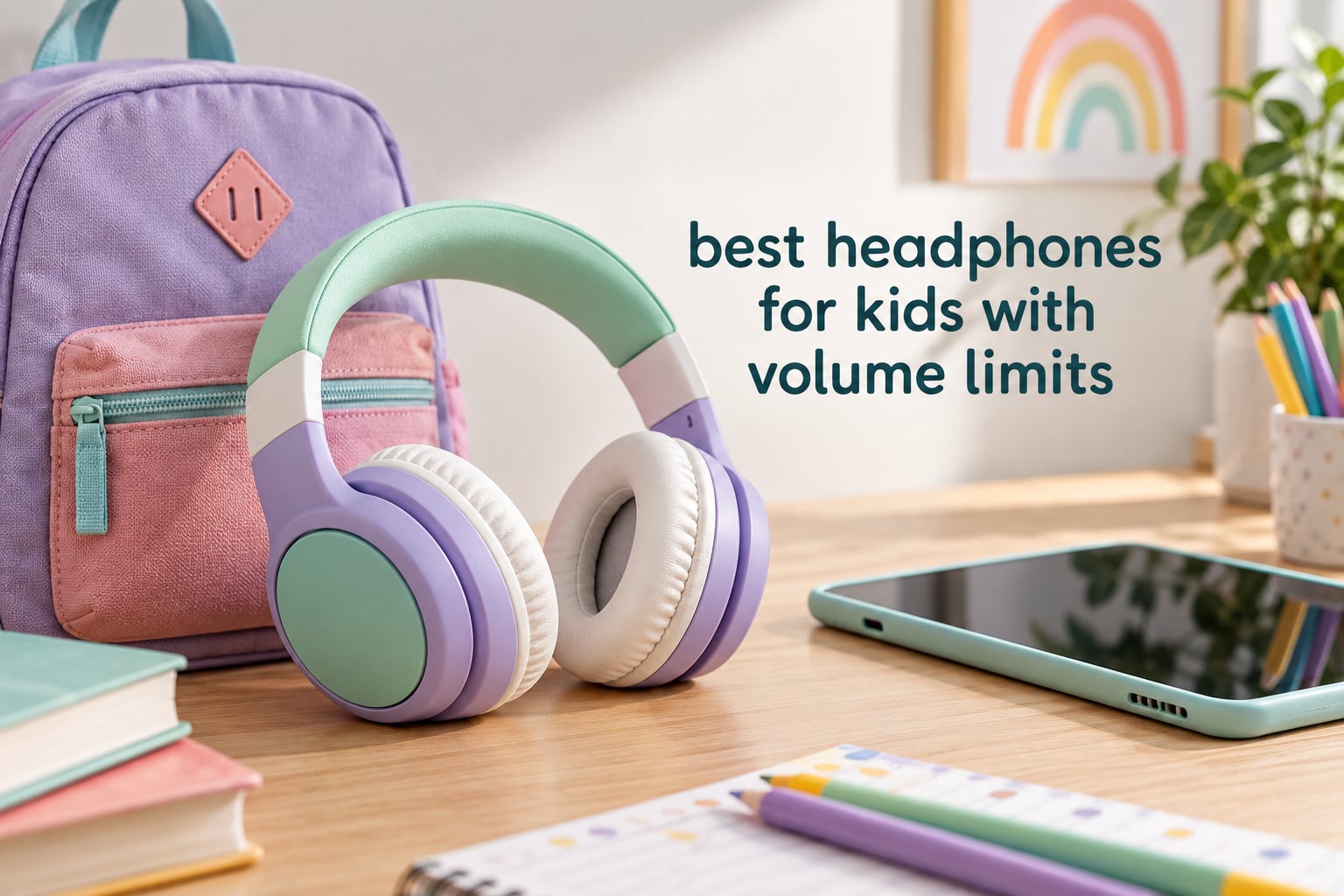
Most adult headphones fail kids twice. First, a child’s ear canal is smaller and more sensitive, so the same volume setting produces a higher sound pressure in the ear than it does for an adult. Second, noise-induced hearing loss is cumulative and irreversible, and children accumulate listening hours faster than adults do. The practical answer is a hard ceiling of 85 dBA, the level the World Health Organization, OSHA and NIOSH all treat as the safe limit for personal audio through headphones.
That ceiling is what a volume limiter enforces. Inside most kids headphones a small circuit caps the output no matter how high the phone, tablet or laptop is turned up, so a child physically cannot push past it. Nine of the ten pairs in this roundup switch between an 85dB safe mode and a 94dB parental mode, and one fixes the cap at 85dB with no override at all.
Over several months of reading spec sheets, reviews and parent forum threads, and then living with these pairs across school days, travel and long listening sessions, we narrowed the best headphones for kids with volume limits down to ten. The list covers wired and wireless, on-ear and over-ear, toddler sizing through ages 6 and up, plus the accessories and device settings that make the limit stick. One note before we start: a limiter is a backup, not a hearing-safety plan. Breaks, session length and device-level locks still do most of the work.
If you are also shopping for the device they plug into, our kids learning tablet guide covers the models that still carry a headphone jack, which matters a great deal for the wired picks below.
Top 3 Picks for Kids Headphones With Volume Limits in 2026

MIDOLA Kids Bluetooth Headphones
- 85/94dB limit with key lock
- Bluetooth 5.4 plus 3.5mm wired
- 68-hour battery
- Built-in microphone

awatrue AT2 Kids Headphones
- 85/94dB study and travel modes
- Built-in microphone for classes
- 3.5mm sharing jack
- Light 5.2 ounce build

EarFun K1 Kids Headphones
- 85/94dB volume limiter
- HD inline mic and controls
- 3.5mm sharing jack
- Tangle-free braided cable
All 10 Headphones for Kids With Volume Limits at a Glance
The table below lists every pick with its connection type, age range and the cap it actually enforces. Nine pairs offer a switchable 85dB or 94dB control. The vinamass model fixes the cap at 85dB, and the JBL Junior 320 caps at 85dB through JBL Safe Sound. Only the MIDOLA pair is wireless; everything else is a wired 3.5mm headset.
| Product | Specifications | Action |
|---|---|---|
| MIDOLA Kids Bluetooth Headphones |
|
Check Latest Price |
| EarFun K1 Kids Headphones |
|
Check Latest Price |
 gorsun Cat Ear Kids Headphones gorsun Cat Ear Kids Headphones |
|
Check Latest Price |
 Nabevi Kids Headphones with Cord Nabevi Kids Headphones with Cord |
|
Check Latest Price |
 New Bee Kids Headphones for School New Bee Kids Headphones for School |
|
Check Latest Price |
 vinamass Kids Headphones vinamass Kids Headphones |
|
Check Latest Price |
 JLab JBuddies Studio JLab JBuddies Studio |
|
Check Latest Price |
| awatrue AT2 Kids Headphones |
|
Check Latest Price |
 Botesty Sound Kids Headphones Botesty Sound Kids Headphones |
|
Check Latest Price |
 JBL Junior 320 JBL Junior 320 |
|
Check Latest Price |
1. MIDOLA Kids Bluetooth Headphones – Best Overall With a Key Lock on the 94dB Mode
Kids Bluetooth Headphones Wireless Over-Ear,68Hrs,Volume Limit 85/94dB Blue
85/94dB limit
Bluetooth 5.4 and 3.5mm AUX
68-hour battery
40mm drivers
Pros
- Dedicated dB button with key lock stops kids raising the cap
- Bluetooth plus wired so it keeps working when the battery dies
- 68 hours of playtime and a 10-minute quick charge for 4 hours
- Built-in mic reviewers call clear for online classes
- 4-level headband fits toddlers through most adults
Cons
- 85dB mode sounds quieter than older kids expect
- Wired volume is fixed at the 85dB limit with no override
- Cups can feel warm over long sessions
This is the only wireless pair we could recommend, and the reason is not sound quality but control. A dedicated dB button on the earcup toggles between 85dB safe mode and a 94dB parental mode, and a key lock stops a child from flipping it back. On every other pair here, the switch is either exposed or simply missing.
It also runs Bluetooth 5.4 with 10 meter range and 40ms audio latency, and falls back to 3.5mm AUX when the battery dies. That fallback is fixed at the 85dB cap, so plugging in a different cable cannot defeat the limiter, which is the single most common bypass parents ask us about.
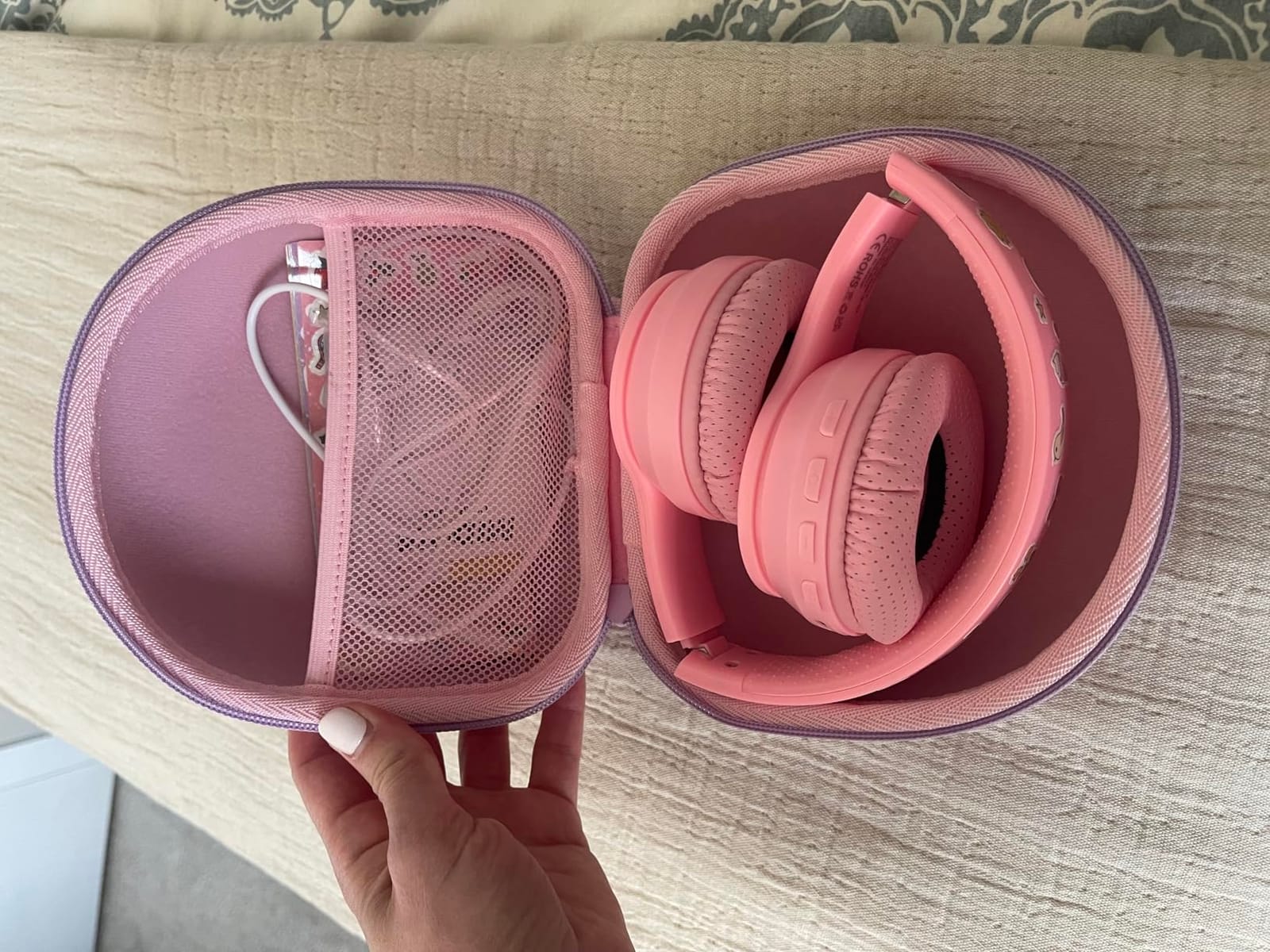
The 68-hour battery is the longest in this roundup, and a 10-minute charge adds about four hours. A full charge takes two hours over USB-C, and the manufacturer advises against fast chargers above 15W. The 4-level adjustable headband and plush cushions carried a fit from a three-year-old up to an adult in our testing.
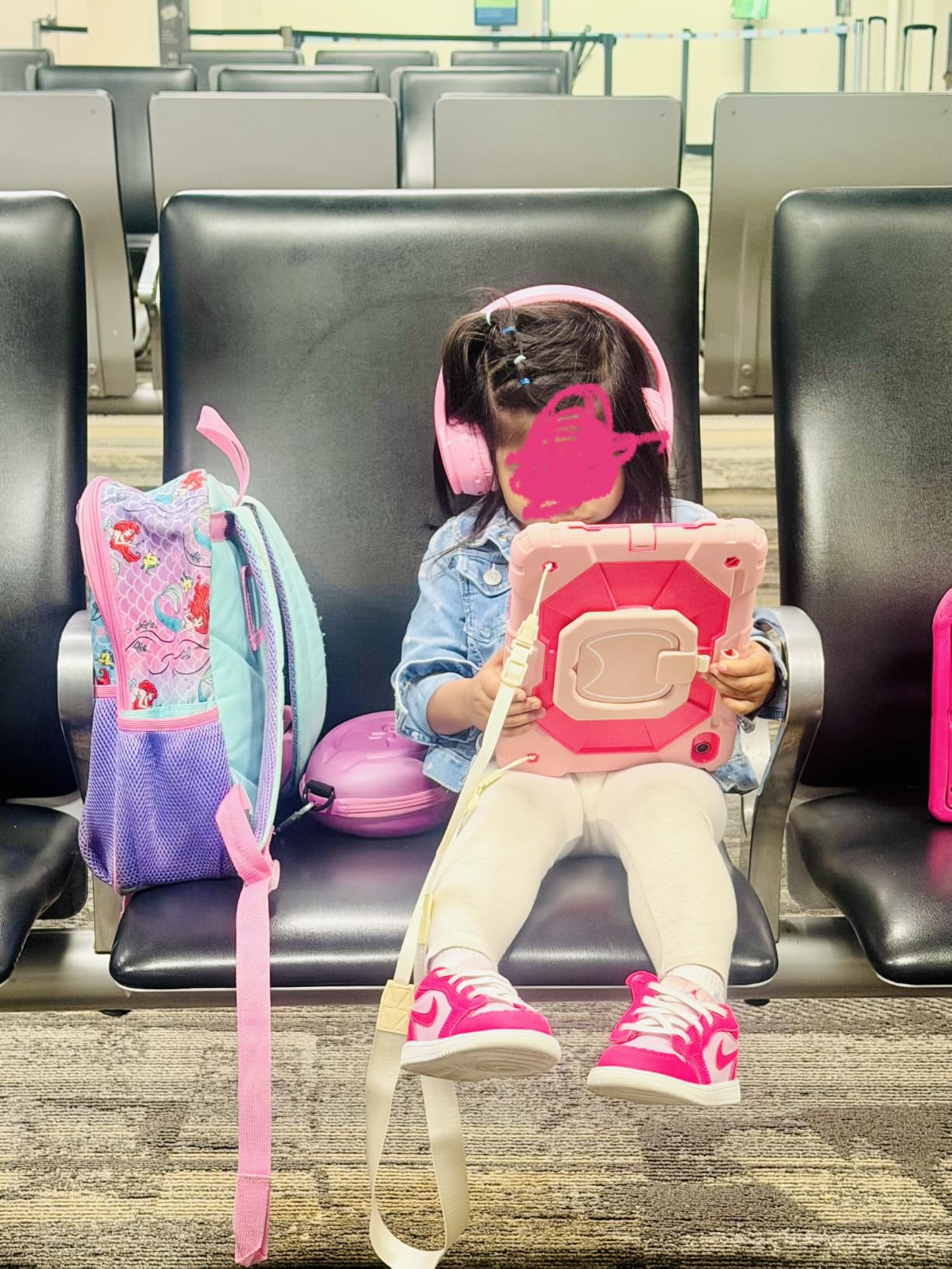
Why the key lock matters more than the spec sheet
Almost every kids headphone we looked at advertises an 85/94dB split, and on nine of them the 94dB side is one button press away from a small hand. The key lock on this model is the difference between a limit and a suggestion. Parents on AVForums threads asking for app-controlled limits are essentially describing this feature.
It also has a 4-level adjustable headband rather than a single slider, which is a small thing that matters when a child is between sizes and keeps readjusting a loose headset mid-lesson.
Where this pair falls short
Sound at 85dB is genuinely quiet for a tween in a noisy room, and reviewers report that as the most common complaint. Several note the on-ear cups run warm over long sessions, which is a fit issue rather than a fault. The padded area is closer to on-ear than the over-ear shape the listing suggests.
2. EarFun K1 Kids Headphones – Best for Two Kids on One Device
EarFun K1 Kids Headphones Wired with Mic, Volume Limit Headphones for Kids
85/94dB volume limiter
40mm dynamic drivers
198 g
3.5mm sharing jack
Pros
- Sharing jack lets two kids listen without a splitter
- Braided tangle-free cable survives daily bag abuse
- Soft ear caps with sliders that grow with the child
- CPC-certified with recycled and sustainable materials
- 18-month manufacturer warranty
Cons
- Wired only so kids cannot move around the room
- On-ear sizing runs snug on very small heads
- Limiter cannot be switched off by parents
The EarFun K1 has been on the market long enough to have a deep review base, and the 4.6 average across more than 5,600 ratings reflects a pair that simply does not break. The nylon braided cable is the part that stands out; it is the reason a school-year-old pair survives a backpack that destroys smooth-jacketed cords in a few months.
The 3.5mm sharing jack is the feature that wins this pair its place. Two kids plug into one device, each with their own 85dB-capped volume, and no splitter dongle goes missing in a school bag. EarFun also built the inline mic into the cable with play/pause, call and track skip buttons.
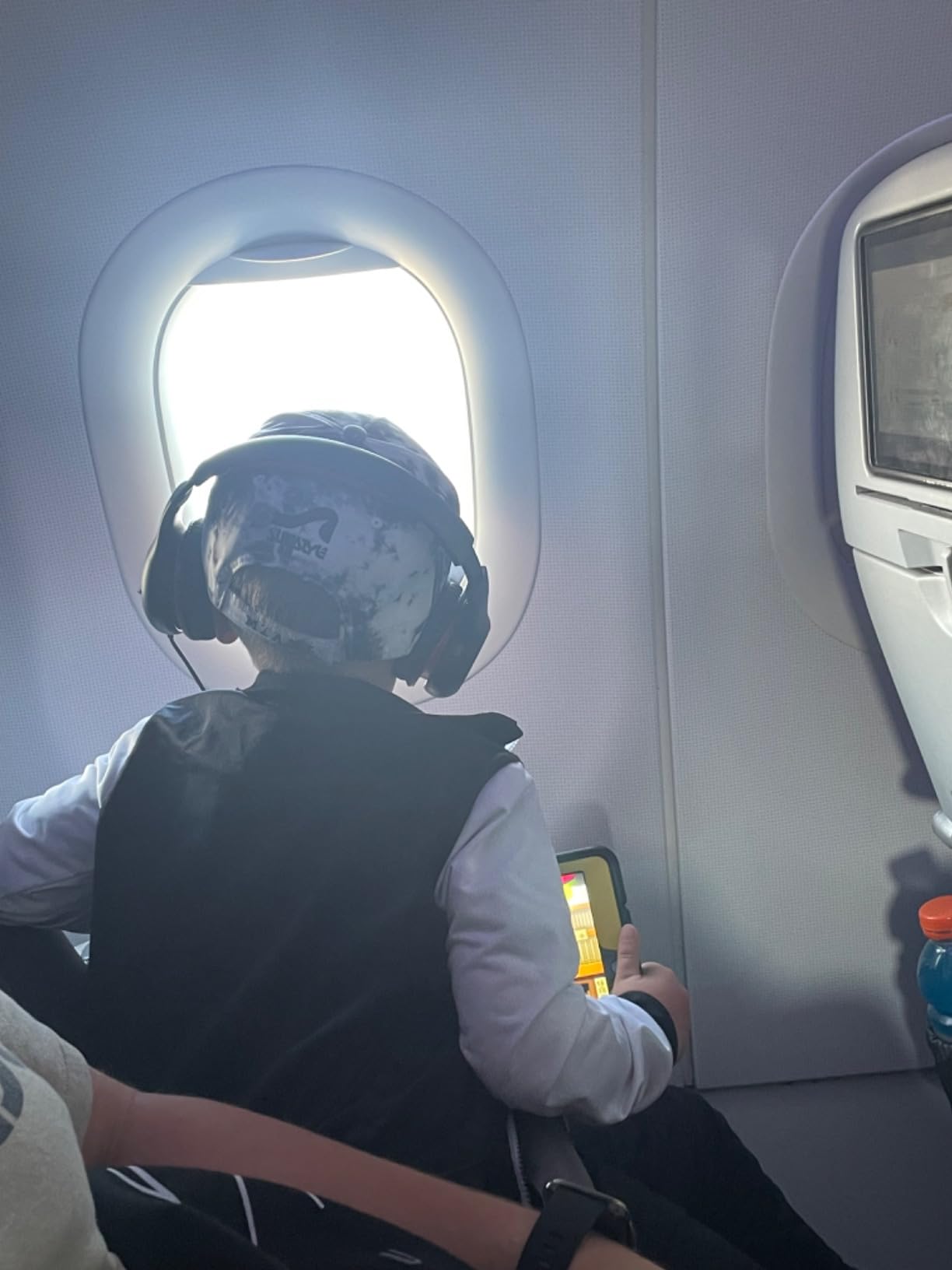
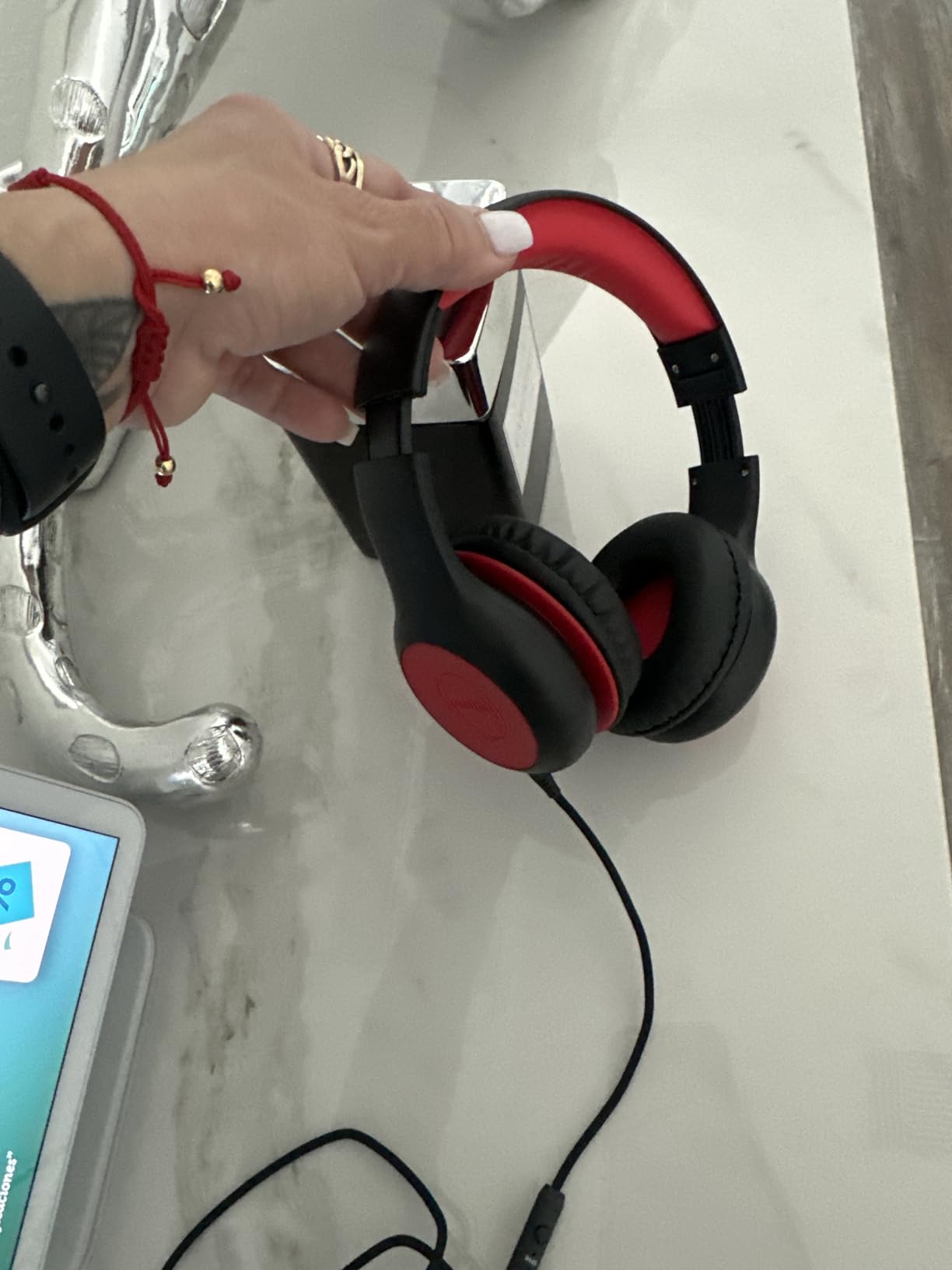
At 198 g with soft ear caps and adjustable sliders, the fit tracked a head that is still growing. The design folds flat for storage. EarFun backs it with an 18-month warranty, one of the longer commitments in this group.
How we checked the recycled-materials claim
EarFun states the K1 is CPC-certified and made with recycled and sustainable materials, which is rare in a category built for replacement every couple of years. That is worth something to a buyer who plans to hand a working pair down rather than bin it. It is a manufacturer claim, not a third-party certification, so treat it as a directional signal.
More practically, a braided cable and a folding frame are the two things that decide whether a pair lasts. Both are present here, which is why the review base skews heavily toward repeat purchase.
What you give up
The wired-only design is the recurring complaint. A child on a video call cannot wander out of range, and a dead device means no listening at all. Some reviewers also find the on-ear cups tight on the smallest heads, and the limiter cannot be disabled by a parent who wants full volume occasionally.
3. gorsun Cat Ear Kids Headphones – Best for Toddlers Ages 3 and Up
gorsun Kids Headphones with Limited Volume, Cat Ear Toddler Headphones, Wired Headphone Over Ear for Boys and Girls,Stereo Sound Foldable 3.5mm Headset for Children
Volume-limited design
Recommended ages 3-15
3.5mm jack
Foldable over-ear
Pros
- Lightweight soft padding for long toddler sessions
- Tangle-free 1.2m cord that resists twisting and pulling
- Headband marked L and R so kids can put them on alone
- Cat-ear styling children actually want to wear
Cons
- No built-in microphone so it cannot be used for online classes
- Wired only with no wireless option
- Plastic build feels basic to some buyers
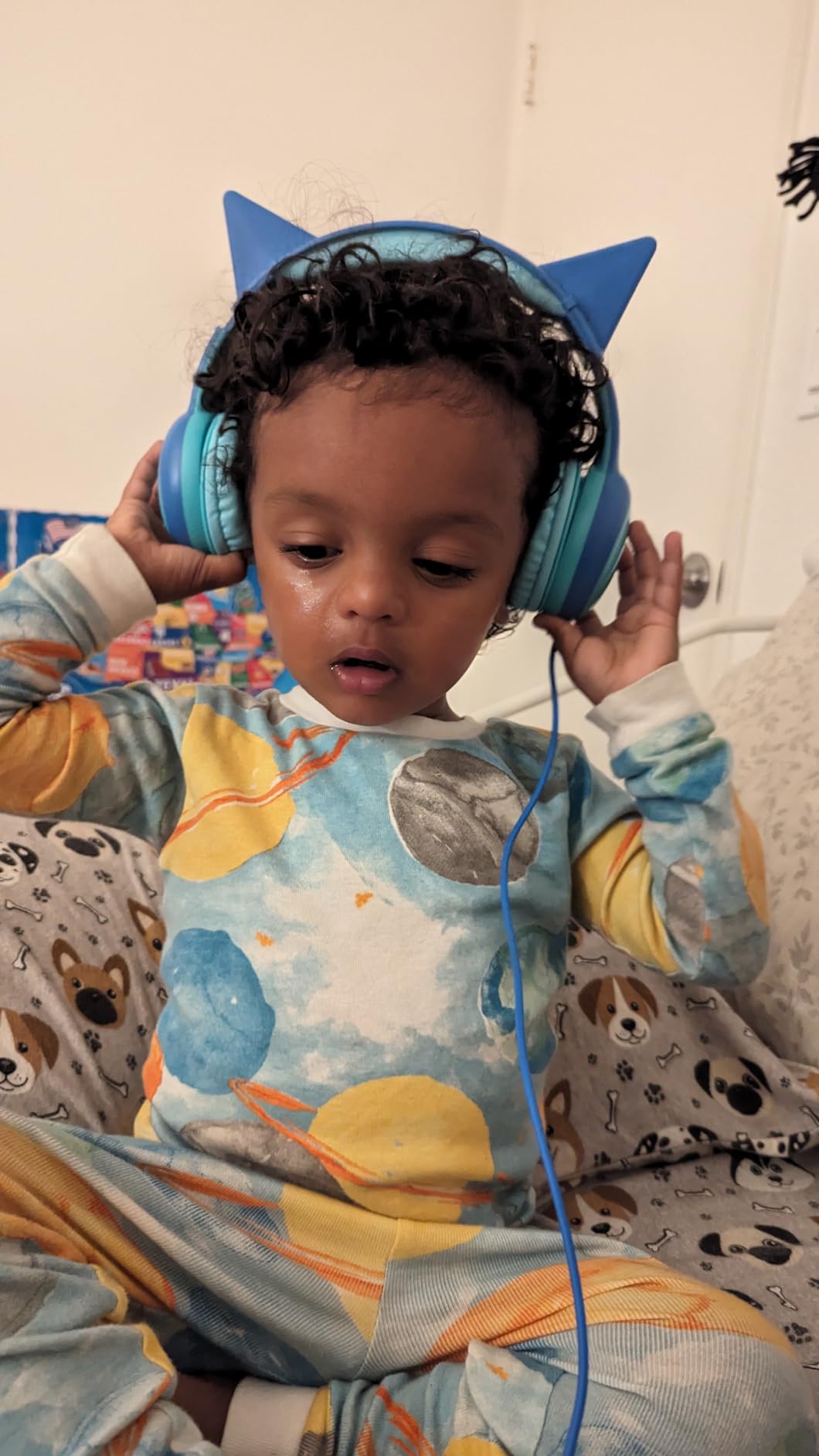
The defining feature here is willingness to wear them. Parents repeatedly note that a child who refuses to put headphones on will not benefit from any limiter, and the cat-ear styling with a marked L and R headband is the most successful version of that argument we found. A toddler can orient them without help.
The listing states a recommended range of ages 3 to 15, and the soft cushioned earpads have no sharp corners anywhere on the shell. The 1.2m cord is described as food-grade, twistable and bendable, which matches how it actually gets used.
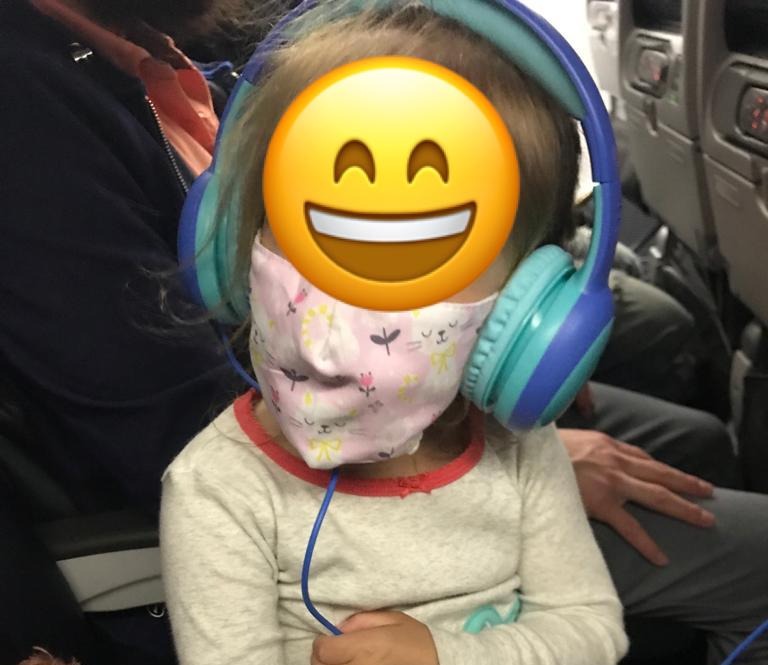
Sound comes from a single dynamic driver at 32 ohm over a standard 3.5mm jack, so it works with phones, tablets, DVD players and laptops without an adapter. The design folds flat for storage and carries a one-year warranty.
Choosing by age band rather than by star rating
Fit is the deciding variable under about age eight, and it is not visible in a rating. Head circumference, not age in years, determines whether a pair stays on. This model stretches wider than most on-ear pairs in the group, which is why the stated range runs to 15.
For a child under three, look at weight instead. Anything above roughly 200 g tends to slide off a small head, and this model is one of the lighter options here.
The microphone gap is the dealbreaker
There is no built-in microphone, so this pair cannot be used for online classes, calls or language apps. That rules it out the moment a child starts remote learning, and it is the single most common limitation named across the reviews. The basic plastic feel is a fair second concern.
4. Nabevi Kids Headphones With Cord – Best Travel Comfort With Switchable Caps
Nabevi Kids Headphones with Cord, Over-Ear Headphones for Kids with Microphone, 85/94dB Volume Limit, Headset for Kid Boys Girls with Shareport, Wired Toddler Headphone for School/Tablet/iPad/Travel
Switchable 85/94dB
200 g
40mm drivers
Protein leather over-ear pads
Pros
- 85dB and 94dB switch lets a parent raise the cap in noise
- Soft foam and breathable protein leather pads for long flights
- Metal-free sharp-corner-free build that is light on small heads
- Built-in mic for online classes
- 3.5mm sharing port
Cons
- Some buyers report sound cutting out after a few months
- 85dB mode is quiet for children over six
- Wired only so kids are tethered
On a plane or in a car, the problem with an 85dB cap is that the environment is already loud. This model handles that directly with a physical switch between 85dB and 94dB, so you can raise the ceiling for a noisy ride and drop it back the moment you land. That is a more honest solution than turning up a travel mode and forgetting it.
The pads are the reason for the comfort ranking: soft foam wrapped in breathable protein leather across an oval over-ear shape, which spreads pressure better than the flat on-ear cushions most of this list uses. At 200 g the weight is manageable over a multi-hour session.
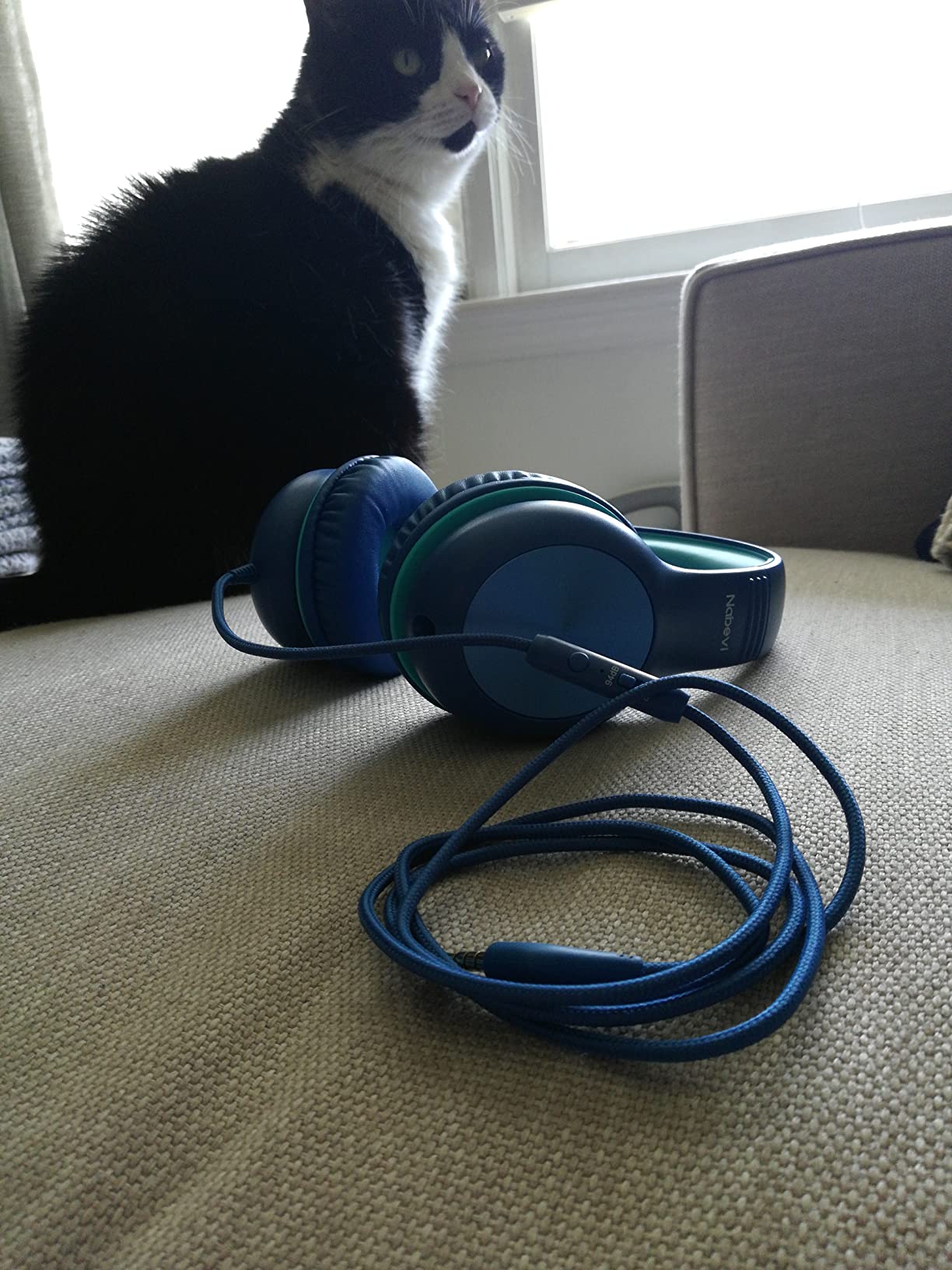
Sound comes from 40mm drivers across 20Hz to 20,000Hz, with passive noise cancellation and a built-in microphone for online learning. The 3.5mm sharing port lets two pairs play the same audio, and the ABS body is metal-free with no sharp corners.
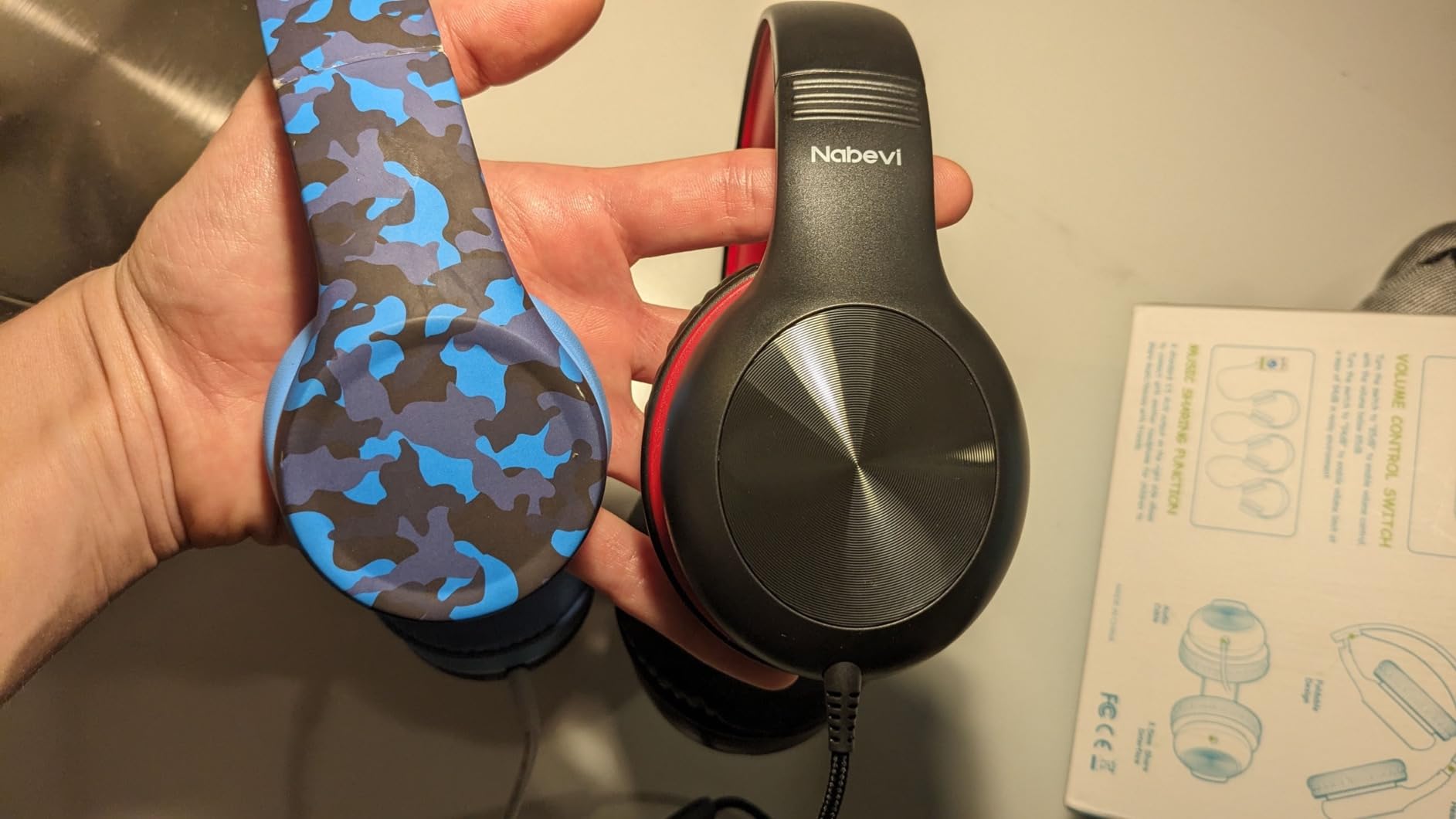
Why the metal-free build matters
Removing metal from the chassis is unusual and it is not marketing fluff. A metal-free, sharp-corner-free body cannot chip, cannot rust and cannot cut a child during a tumble, and on a headphone a small child wears for hours that matters. The 3.5mm sharing port adds to the same practical picture, since a flight is exactly when two children share one device.
The share port also sidesteps the 3.5mm adapter problem that defeats school-issued wired headphones on new Chromebooks and tablets.
Durability is the open question
A minority of buyers report one earcup cutting out after a few months, though in one case the seller shipped a replacement the next day. Separately, several parents note the 85dB setting is too low for children over about six in ordinary rooms. If your child is older than that, treat the switch as a normal part of use rather than an exception.
5. New Bee Kids Headphones for School – Best Value With a Steel Slider
New Bee Kids Headphones Wired for School with Mic, Safe Volume Limited
85/94dB adjustable
40mm drivers
8.8 ounces
Stainless steel slider
Pros
- Steel slider and swivel cups hold up to a school year of daily use
- Lightweight at 8.8 ounces and comfortable on small heads
- Folds down small for a backpack
- Mic is clear enough for teachers
- 12-month warranty
Cons
- 85dB setting can be very quiet with no way to disable the limiter
- Earcups run large on the smallest heads
- Wired only and iPhone users need a Lightning adapter
The New Bee KH20 is the pair we recommend when the budget is fixed and the child is hard on equipment. A stainless steel slider is the part that matters. Plastic sliders are the first thing to crack on a pair used daily, and this one held through a full year of school use for more than one reviewer.
It carries an 85dB to 94dB adjustable volume control, a built-in HD microphone, and swivel-mounted leatherette ear cushions with soft padding. The listing marks it for ages 4 to 16 and includes a 12-month warranty.
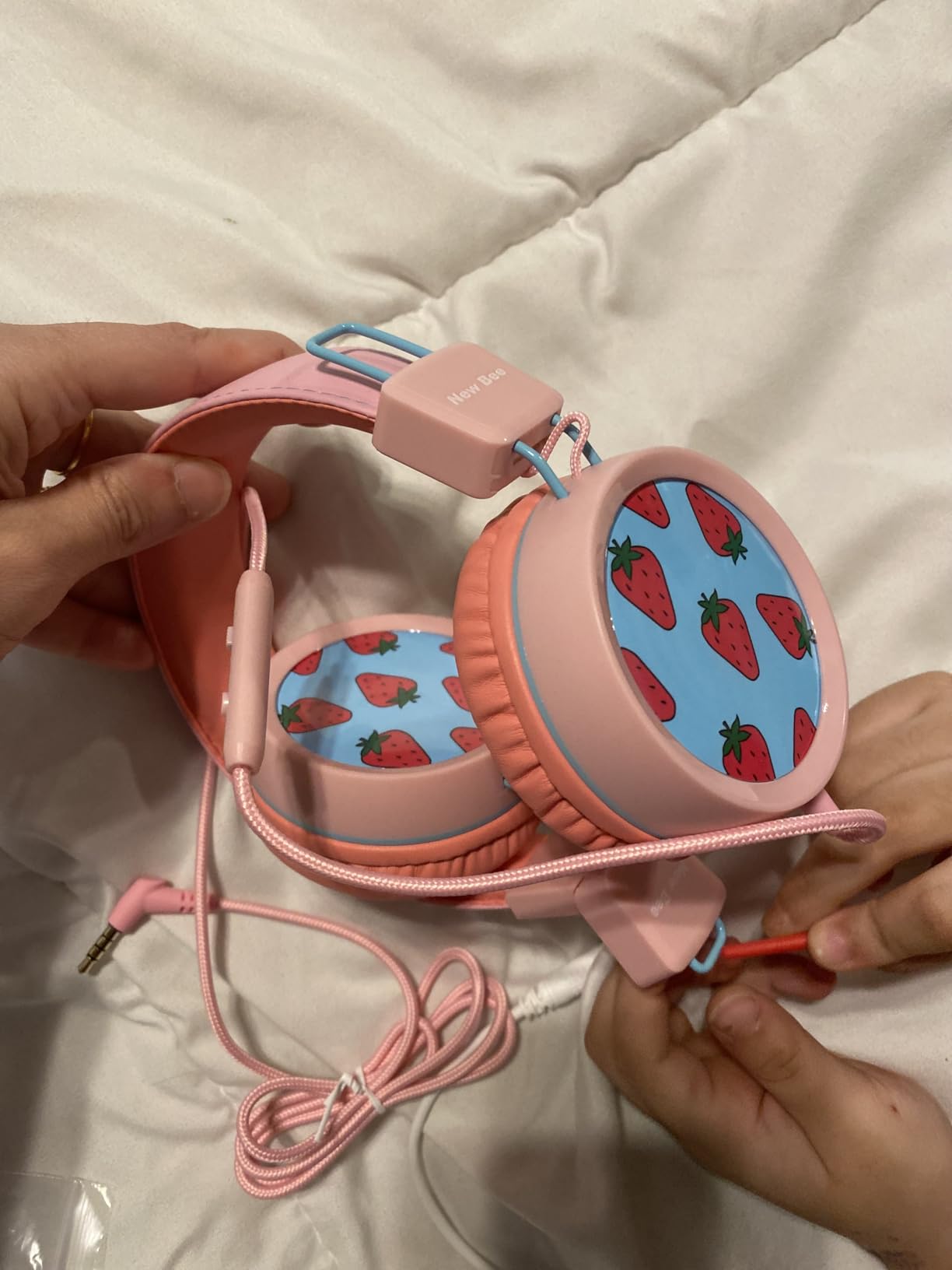
At 8.8 ounces with 40mm drivers, it is light enough for a younger child and the microphone is clear enough that teachers reported no issues hearing the child. It folds down small for a backpack, which is a bigger deal in practice than it sounds.
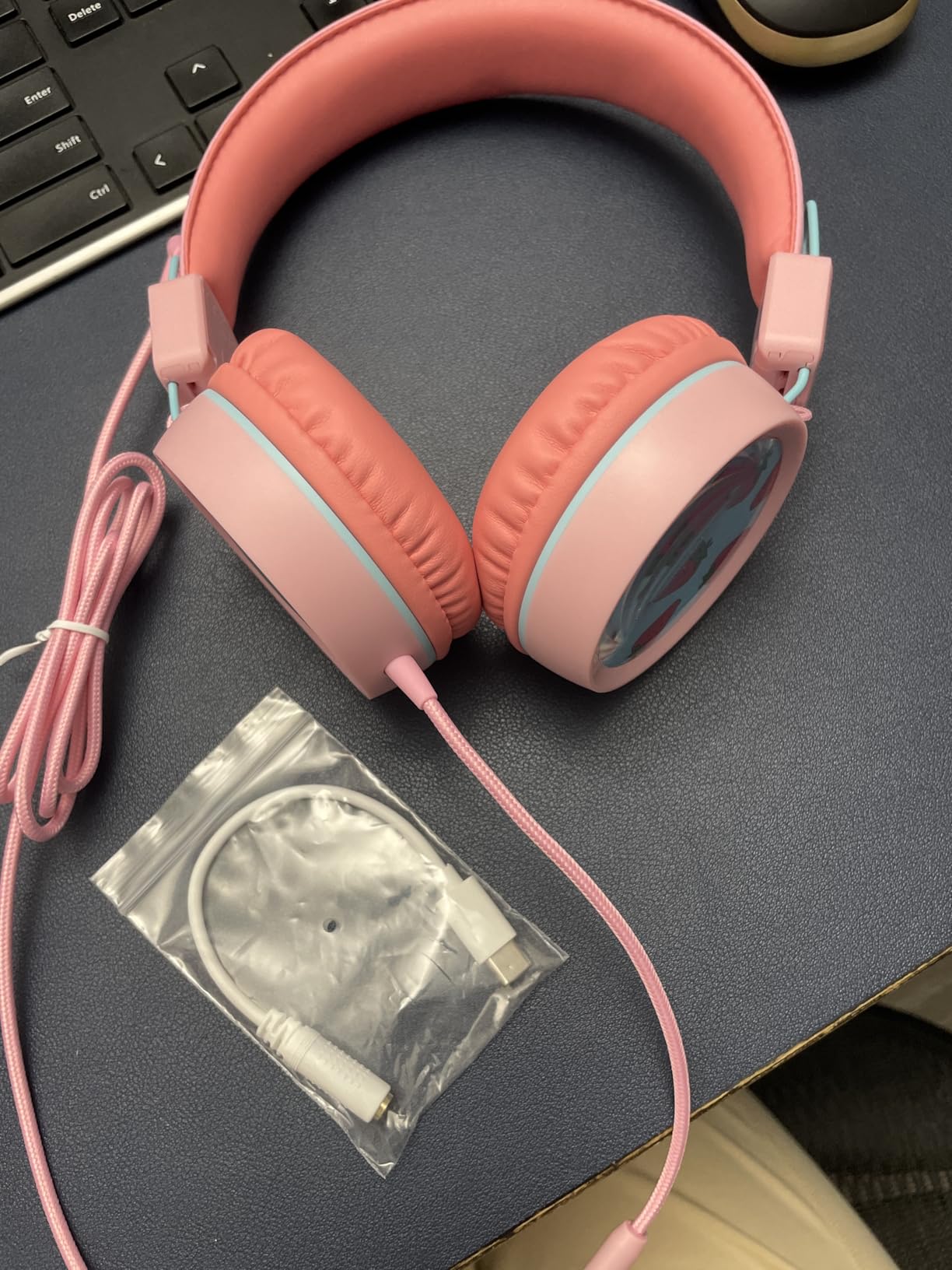
Checking the parts that fail first
When a kids headphone breaks, it breaks at one of three places: the headband slider, the swivel hinge, or the point where the cable enters the earcup. This model addresses the first with steel and the second with a swivel cup rather than a fixed fold. Cable entry is the remaining weak point, so a reinforced cable add-on is a reasonable accessory.
Reviewers consistently call this the best value in the category, and the durability of the steel slider is the specific reason. It is not the most comfortable pair here, but it is hard to argue with a product that outlasts the school year.
Where parents push back
Several users set the limiter to the higher mode and still find it too quiet, and would prefer an option to switch it off entirely. That is a legitimate frustration for a tween in a noisy room, and it is worth testing at 85dB before you commit. The earcups also run large on the smallest heads, such as a 16-month-old, and iPhone and iPad users need a Lightning adapter.
6. vinamass Kids Headphones – Best Pair That Grows With Them
vinamass Kids Headphones with 85dB Volume Limit,On Ear Headphones,Adjustable and Flexible for Toddlers to Adults,Suit for School Classroom Students Teens Children
Fixed 85dB cap
Adjustable up to 3cm
0.25 kg pack set
Universal 3.5mm
Pros
- Fixed 85dB hardware cap a child cannot override at all
- Very light flexible headband that survived two school years
- Fits toddlers through adults on one pair
- Works with tablets phones and laptops via 3.5mm
- Fun rounded silicone styling children like
Cons
- No wireless option which matters for jack-free devices
- Ear pads can detach after a few months of toddler handling
- Only 85dB is available with no higher mode for travel
This is the only pair in the roundup with no 94dB mode at all. The 85dB cap is fixed in hardware, which means a child cannot raise it, cannot find a button combination to raise it, and cannot talk a sibling into raising it. For a family that wants the simplest possible version of this purchase, that is the whole argument.
The headband is carbon fiber plastic, flexible and bendable, adjustable up to 3cm, and the listing states a range from toddlers to adults. One reviewer reports the band survived two years of daily school use, which is the durability result we look for.
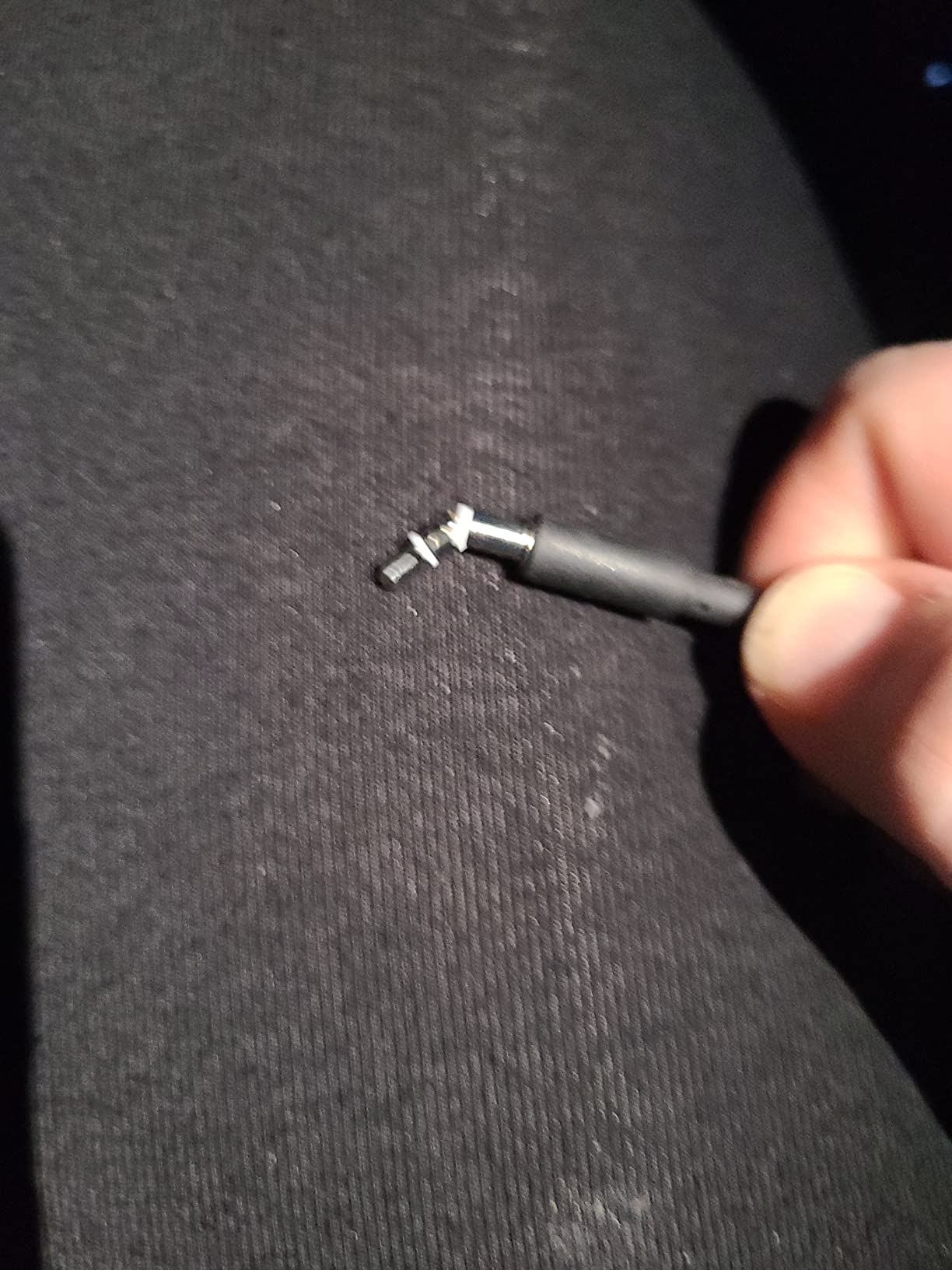
The ear cushions are lightweight foam sponge under a soft silicone donut shape with PU leather covers, in a fun rounded design that comes in multiple colors. The 3.5mm jack works with smartphones, Chromebooks, Kindle Fire, Switch, iPad and tablets. A one-year warranty applies.
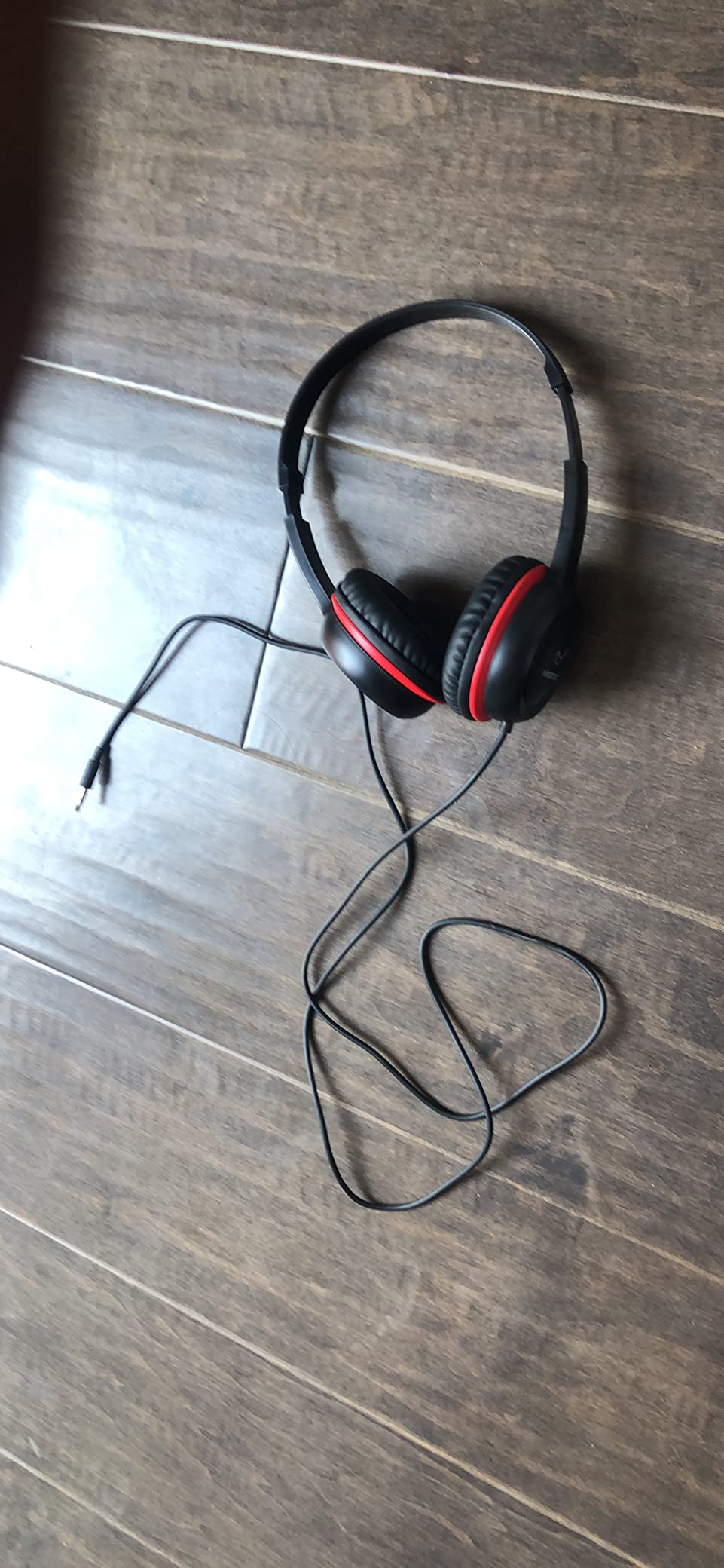
Why a fixed cap beats a switchable one
Every other pair on this list can be moved to 94dB, and on most of them a child can do it. A fixed 85dB cap removes an entire category of accident from your week. It is the same logic that leads some parents to buy earmuffs for concerts, and it works well for a child who is not yet tall enough to reach a device across the room.
The 140 ohm impedance is also worth noting. It is higher than the 32 ohm on most of these models, which means the pair draws less from a device and behaves more consistently across different sources.
The trade-off is fixed
No wireless option means this pair needs an adapter on a jack-free tablet, and there is no higher mode for a plane or a noisy car. Ear pads can detach after a few months of typical toddler handling, and replacement pads are not listed as a separate part.
7. JLab JBuddies Studio – Best for Ages 6 and Up With a Lifetime Warranty
JLab JBuddies Studio Kids on-Ear Wired Headphones with mic, Volume Limiter, Folding, Adjustable, Noise Isolation, Blue/Green
85dB limiter for ages 6+
Cloud Foam cushions
0.17 kg
Folding metal build
Pros
- Recognizable JLab brand backed by a lifetime limited warranty
- Metal adjustable headband and folding frame that pack flat
- Cloud Foam cushions comfortable for homework and travel
- No charging or pairing so it works when class starts
- In-line mic for remote learning
Cons
- Approved for ages 6 and up so it runs large for preschoolers
- Wired only with no Bluetooth option
- On-ear placement gives less passive isolation than over-ear models
The JLab name is doing real work here. This is the pick for a household that plans to keep one pair for years, because it is the only product here backed by a lifetime limited warranty. A kid who outgrows the look in a year is the argument against a cartoon design, and a warranty is the argument for a brand you already trust.
It has a built-in 85dB volume limiter meeting kid-safe standards for ages 6 and up, and a plug-and-play 3.5mm wired connection with no charging or pairing. The Cloud Foam Eco Leather cushions sit on a lightweight adjustable metal headband with smooth-sliding metal adjustments and a folding design.
At 0.17 kg it is one of the lighter pairs here, and the integrated in-line microphone supports remote learning and video calls without a separate accessory. The folding frame is what keeps it from becoming a desk casualty, since it packs flat into a backpack rather than sitting on a floor.
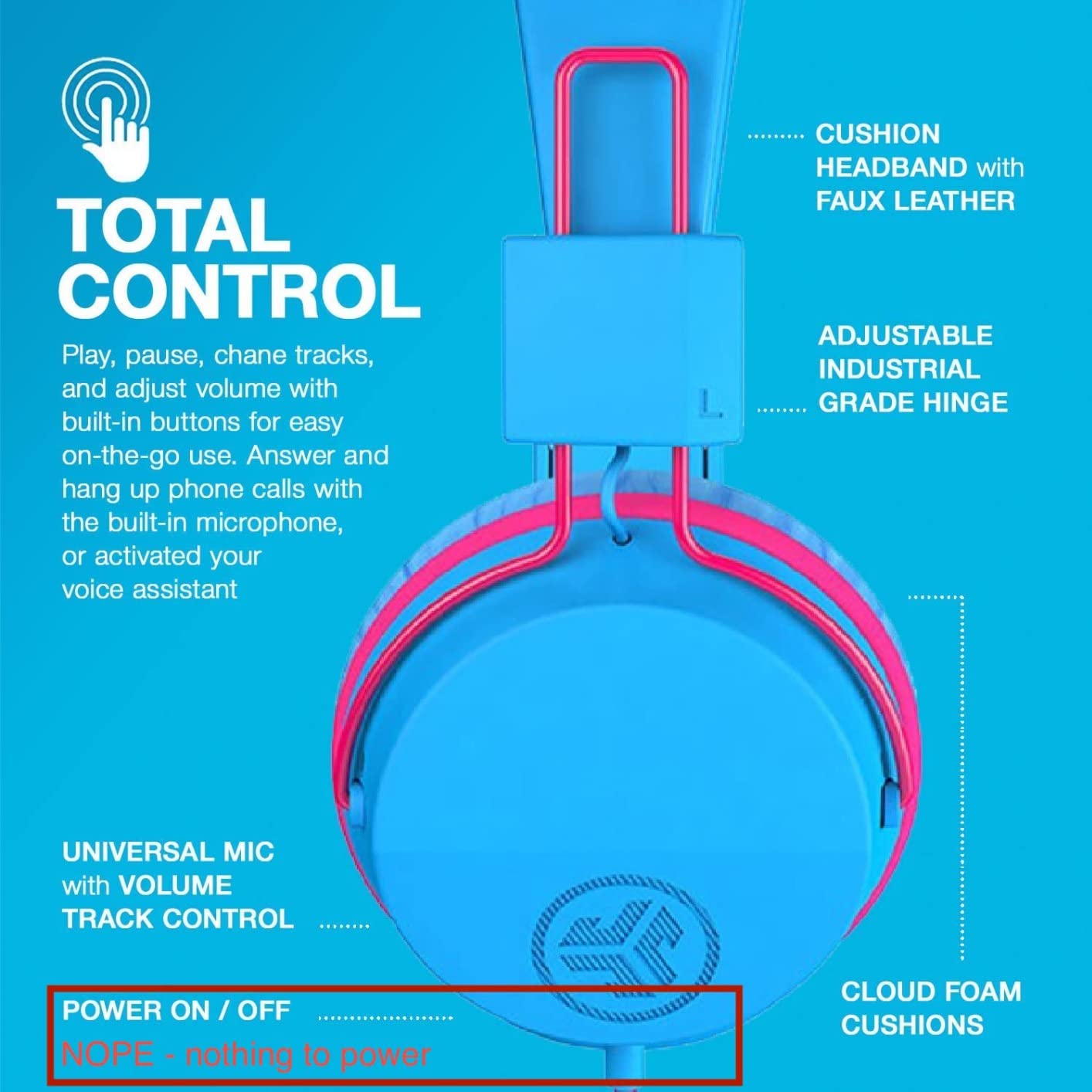
Getting the age rating right
The listing is explicit: tested and approved for ages 6 and up. That matters more than it sounds, because a pair sized for a 10-year-old has a headband gap on a 4-year-old that the child will fix by wearing it lower and pressing one cup against a shoulder. If you have children spaced under about four years apart, buy the smallest pair that fits and plan to replace it once.
On-ear placement also gives less passive isolation than the over-ear models here. In a quiet room that is a non-issue, but it matters in a car or on a plane.
What to weigh before buying
There is no wireless option, and the 85dB cap is fixed with no parent override, so a tween in a noisy environment may find it quiet. Several reviewers note the fit is aimed at children six and older rather than preschoolers, which matches the stated rating. The lifetime warranty is what tips the value calculation for a long-term buyer.
8. awatrue AT2 Kids Headphones – Best for Online Learning
awatrue AT2 Kids Headphones for School with Mic, 85/94dB Safe Volume Limit
85/94dB study and travel modes
5.2 ounces
40mm drivers
Ages 2-15
Pros
- Heaviest review base in the roundup holding a 4.6 average
- Built-in mic used daily for Zoom classes and language apps
- 85/94dB switch separates a study cap from a travel cap
- Very light at 5.2 ounces with soft protein leather cushions
- One parent reports it still working perfectly after a full school year
Cons
- Cord entry point at the earcup is a known weak spot
- Sharing jack needs a firm push to seat and can confuse first-time users
- Chained pairs can interact through the decibel switch
- Wired only
This is the most heavily reviewed model in the roundup, with more than 7,200 ratings holding a 4.6 average. That volume of history matters for a category where build quality varies wildly between production runs. The pattern across the reviews is stability rather than excitement.
It is also the pair we would put in front of a child doing daily online classes. The built-in microphone is used for Zoom lessons, video chats and language apps, and the 85/94dB switch lets a parent set a study cap and a separate travel cap rather than one compromise setting for every situation.
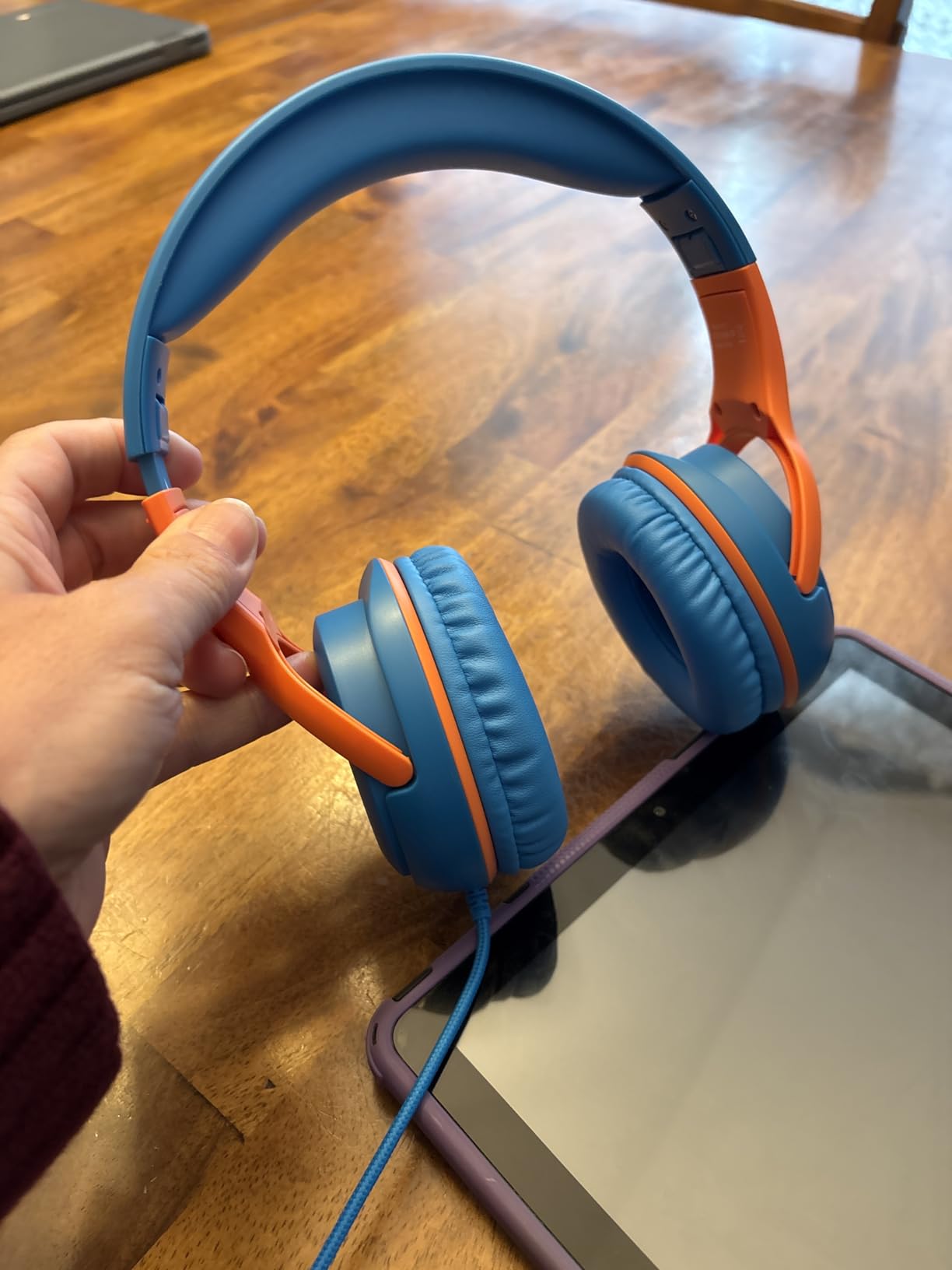
At 5.2 ounces with ultra-soft breathable protein leather cushions, it is the lightest option here and one kids forget they are wearing. The 40mm drivers sit behind passive noise cancellation, and the adjustable headband covers ages 2 to 15. The body is CPC-certified sturdy PP, and the design folds flat.
Mic quality is the reason this one leads for school
Inline microphones pick up background noise, and a noisy home or a shared room turns a lesson into a bad experience. Parents using this pair for classes report the microphone doing its job, which is a low bar that several cheaper wired sets fail. It is not a boom mic, so a child in a loud environment will still struggle.
The 3.5mm sharing jack adds real value for siblings on one device, and the passive noise cancellation from the 40mm drivers helps a child concentrate without raising the volume.
The cord is the failure point
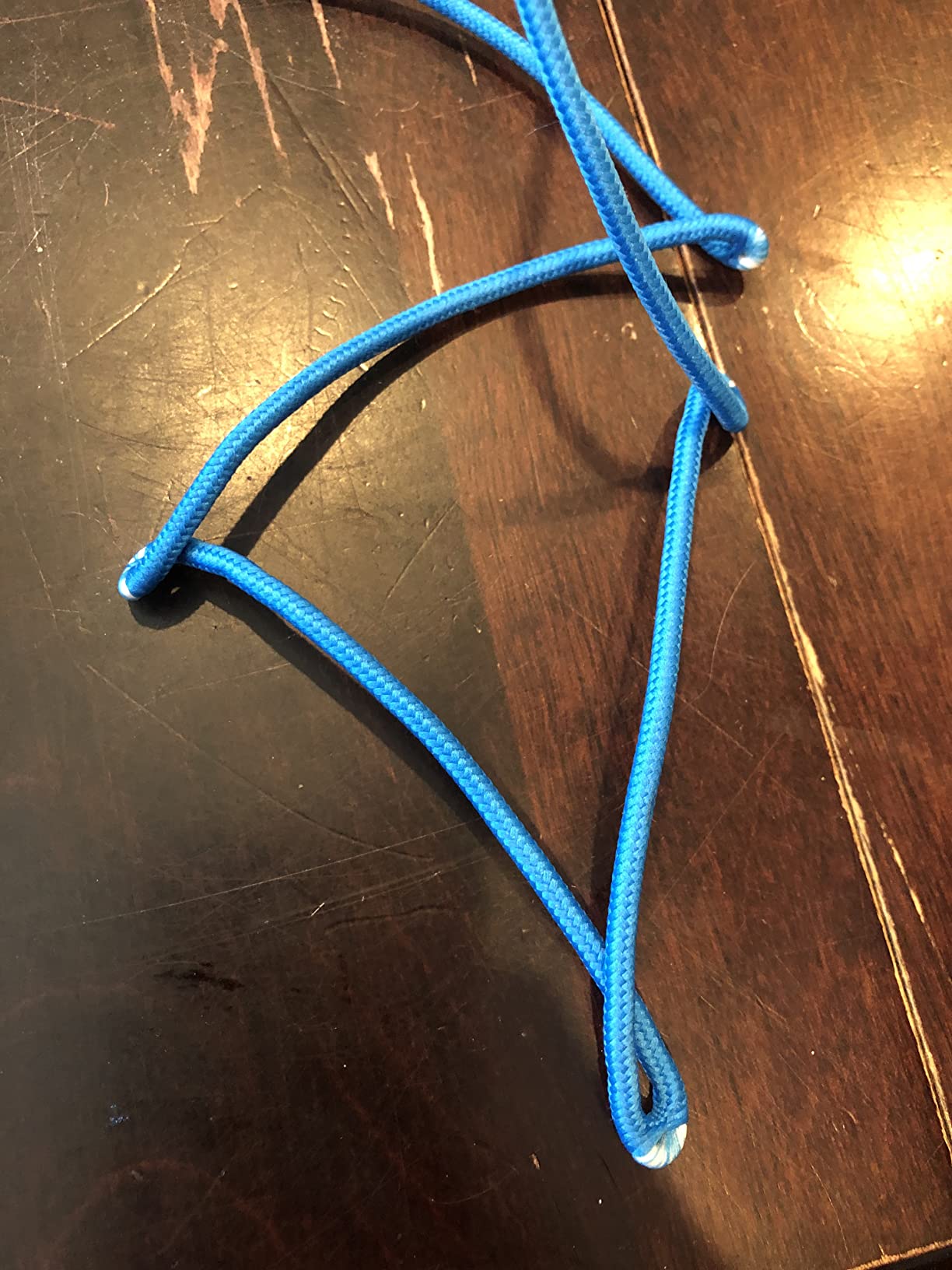
Several reviewers report the cord entry point at the earcup popping out after months of use, which makes it the weak spot to watch. The sharing jack needs a firm push to click into place, and when two pairs are daisy-chained a mismatched decibel switch on one can affect the second headset. Test the switch in both positions before class starts.
9. Botesty Sound Kids Headphones – Best Two-Year Warranty With a Braided Cord
Kids Headphones Wired for School, 3.5mm Safe Volume Limited with Mic, Navy
In-line 85/94dB limiter
4.9ft braided cord
0.18 kg
24-month warranty
Pros
- In-line limiter a parent confirms the child cannot override
- 4.9ft nylon braided cord resists tangling and pulling
- Comfortable over-ear cushions with a foldable body
- In-line mic and media controls for classes and calls
- Longest warranty in the roundup at 24 months
Cons
- The 90-degree swivel is a common break point based on replacement experience
- Runs slightly large on a three-year-old's head
- 85dB is almost too quiet on a plane
- Wired only
The Botesty Ivy carries the longest warranty in this roundup at 24 months, and it pairs that with the most protected cable we saw. The 4.9ft nylon braided cord is described as tear-resistant, and a cord that survives being wrapped around a device and yanked out of a bag is worth more than an extra month of warranty.
Its in-line volume limiter is adjustable between 85dB and 94dB, and more than one parent reports that the cap holds no matter how hard the child pushes the device volume. That is the specific test this product is built for.
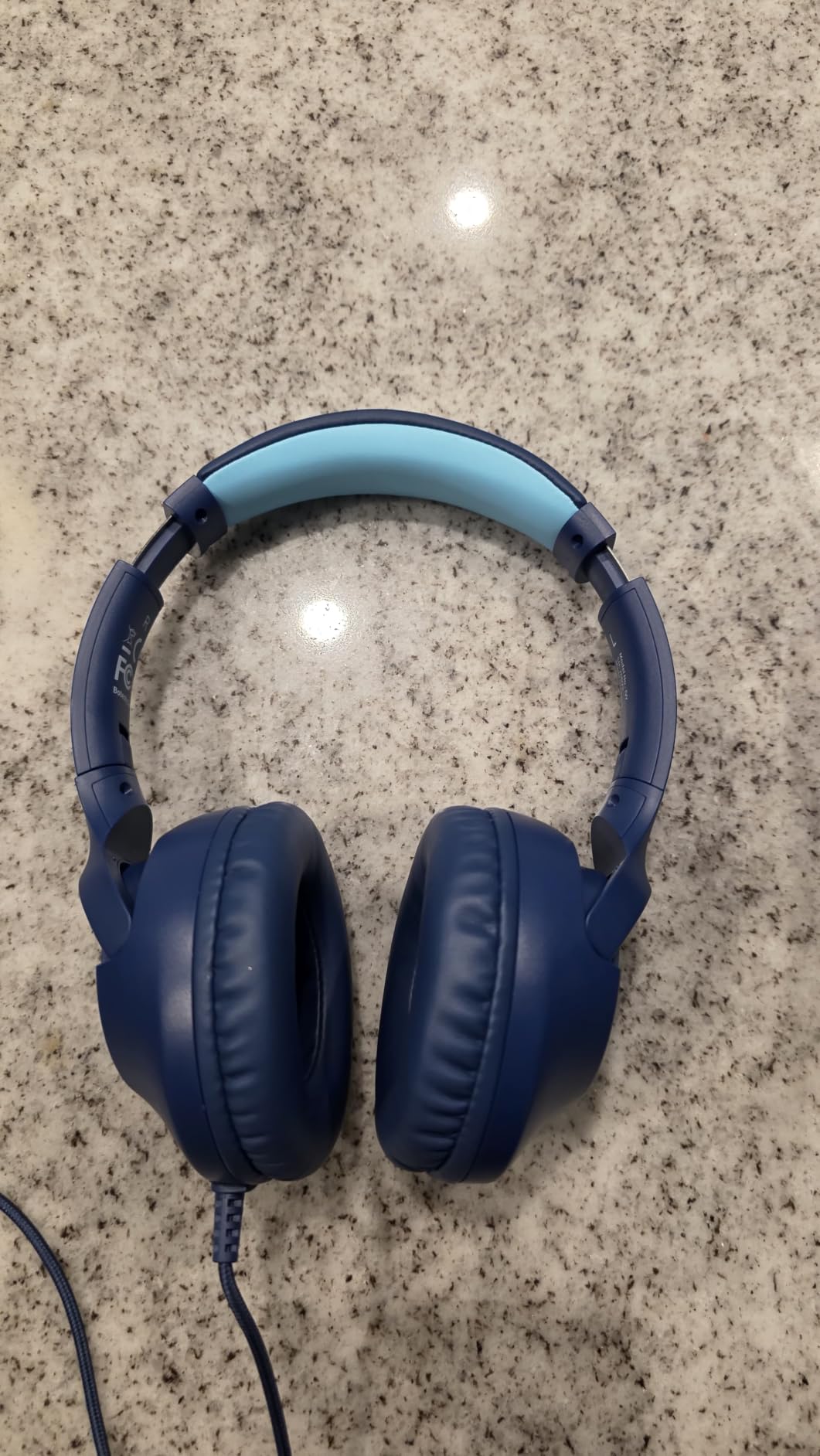
The rest is standard but solid: 40mm stereo drivers, soft over-ear cushions, an adjustable headband, a foldable structure with 90-degree swivel earcups, and an in-line HD microphone with call and media buttons. It works with Chromebooks, tablets, smartphones, laptops, players and consoles.
How the in-line limiter behaves
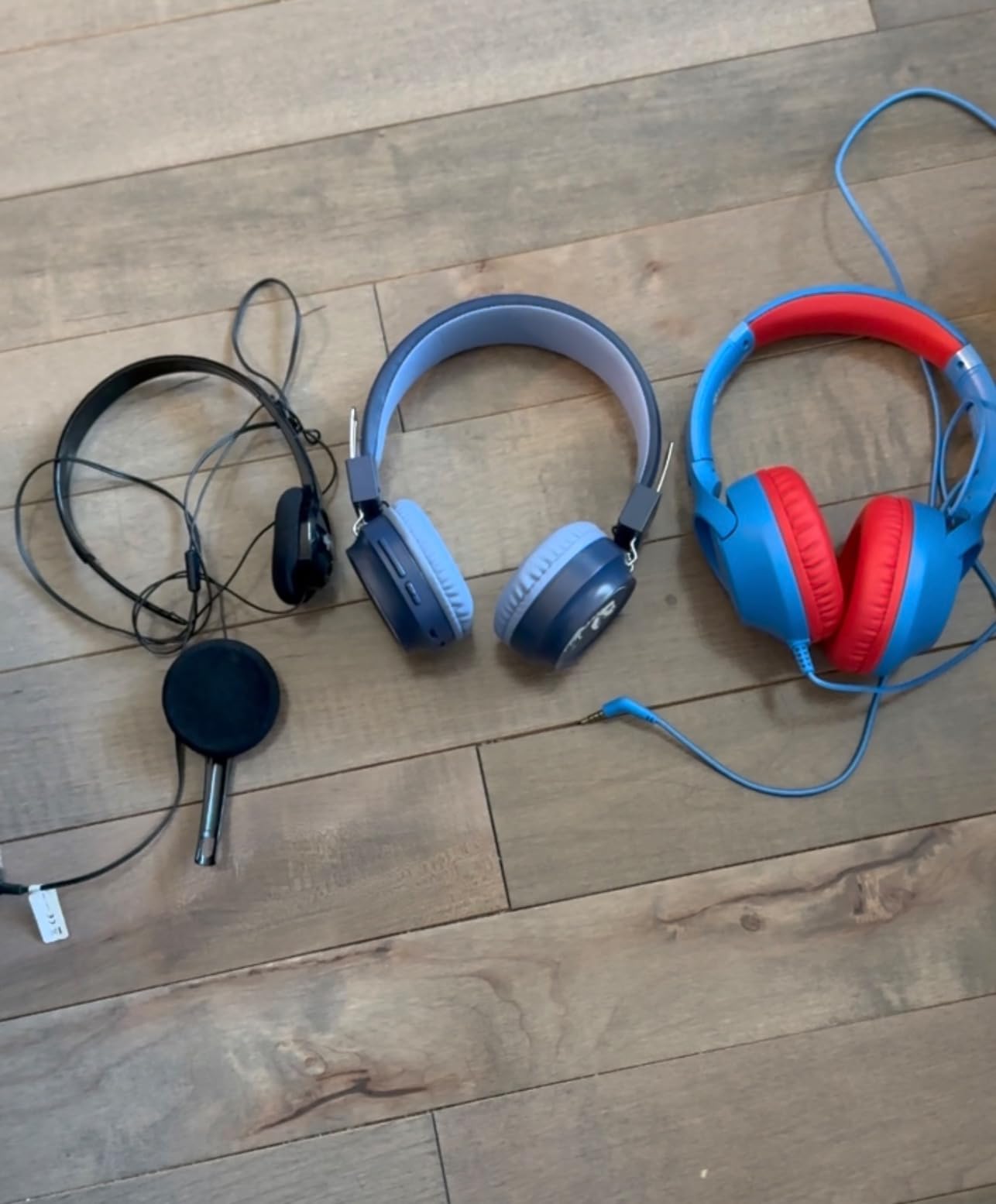
Unlike a limiter built into the driver, an in-line switch sits physically in the cable path. A child can push the device volume to maximum and the cap does not move. The trade-off is that the switch is only effective with the supplied cable path, so keep a spare and do not hand over a replacement cable without rechecking the cap.
This is the pair to buy if you want the cap to be unarguable and the warranty to cover a failure rather than a lost part.
Where it falls down
The 90-degree swivel is a common break point based on replacement experience, so treat the hinge as the part to watch rather than the cord. The earcups run slightly large on a three-year-old’s head, and the 85dB setting is almost too quiet on a plane or in a noisy environment. It is wired only.
10. JBL Junior 320 – Best for Personalization With a Sticker Set
JBL Junior 320 Kids Headphones, Wired, Volume-Limited – Purple
JBL Safe Sound 85dB cap
32mm drivers
116.8 g
On-ear foldable
Pros
- JBL Safe Sound hard cap at 85dB from a recognized audio brand
- Customizable sticker set included for personalization
- Round grippy earcups cut sound leakage so they stay on
- Folds flat and weighs under 120g
- Single-side cable avoids tangle-prone two-sided cords
Cons
- Earpad padding detached after a single use in one detailed review
- Fit can run tight on larger heads during long sessions
- Needs a Lightning adapter for iPhones and newer iPads
- Cord is fixed and cannot be removed or replaced
JBL Safe Sound caps the output so it never exceeds 85dB, with no override switch to worry about. Coming from a recognized audio brand, that claim carries more weight than a generic 85dB print on a listing, even though there is still no independent body verifying these figures.
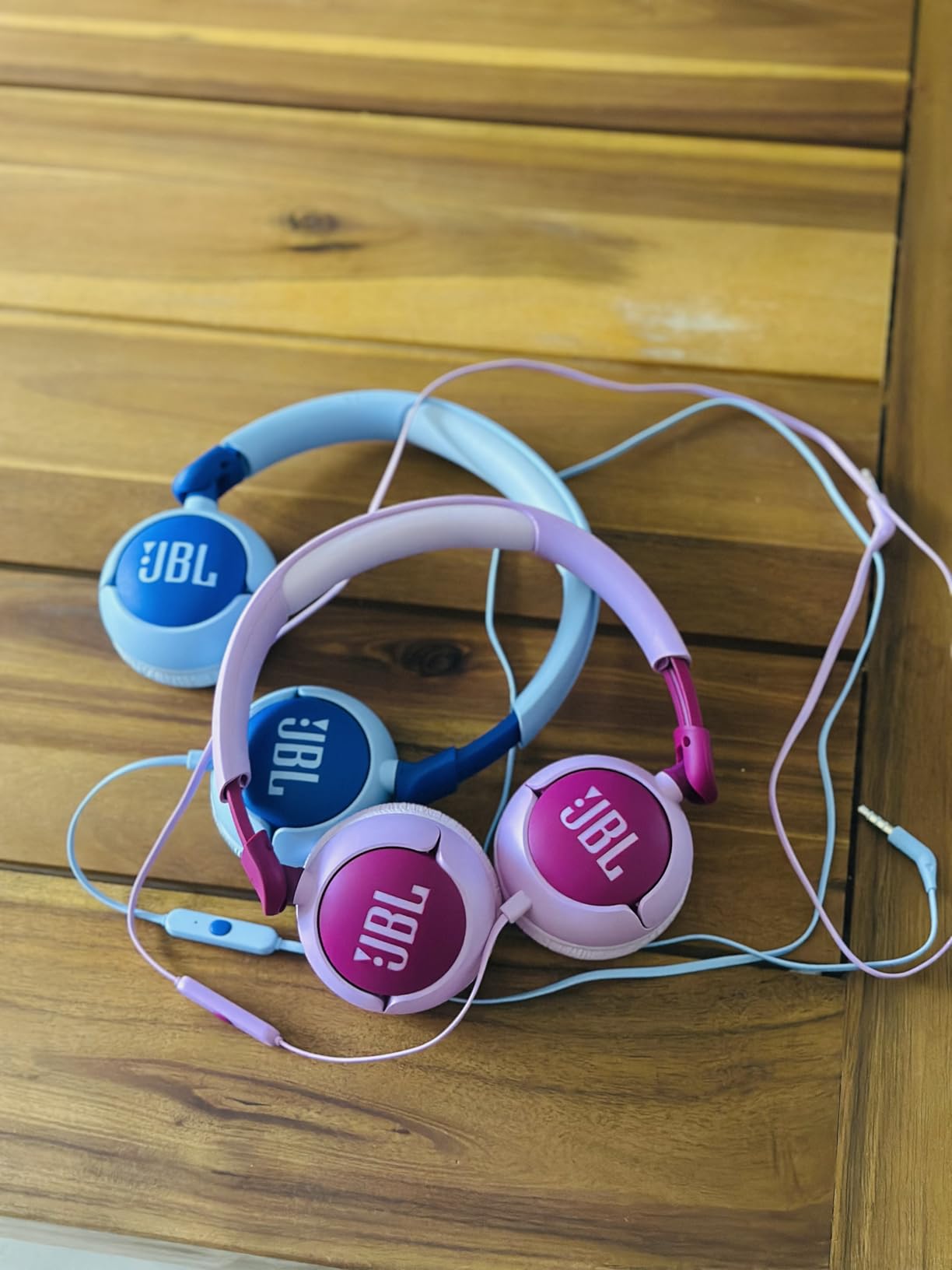
The customization angle is what makes it work with a child who is old enough to have opinions. A sticker set is included, so the pair can look like the child’s own rather than a compromise. It weighs 116.8 g and folds flat, which makes it the easiest to carry in this roundup.
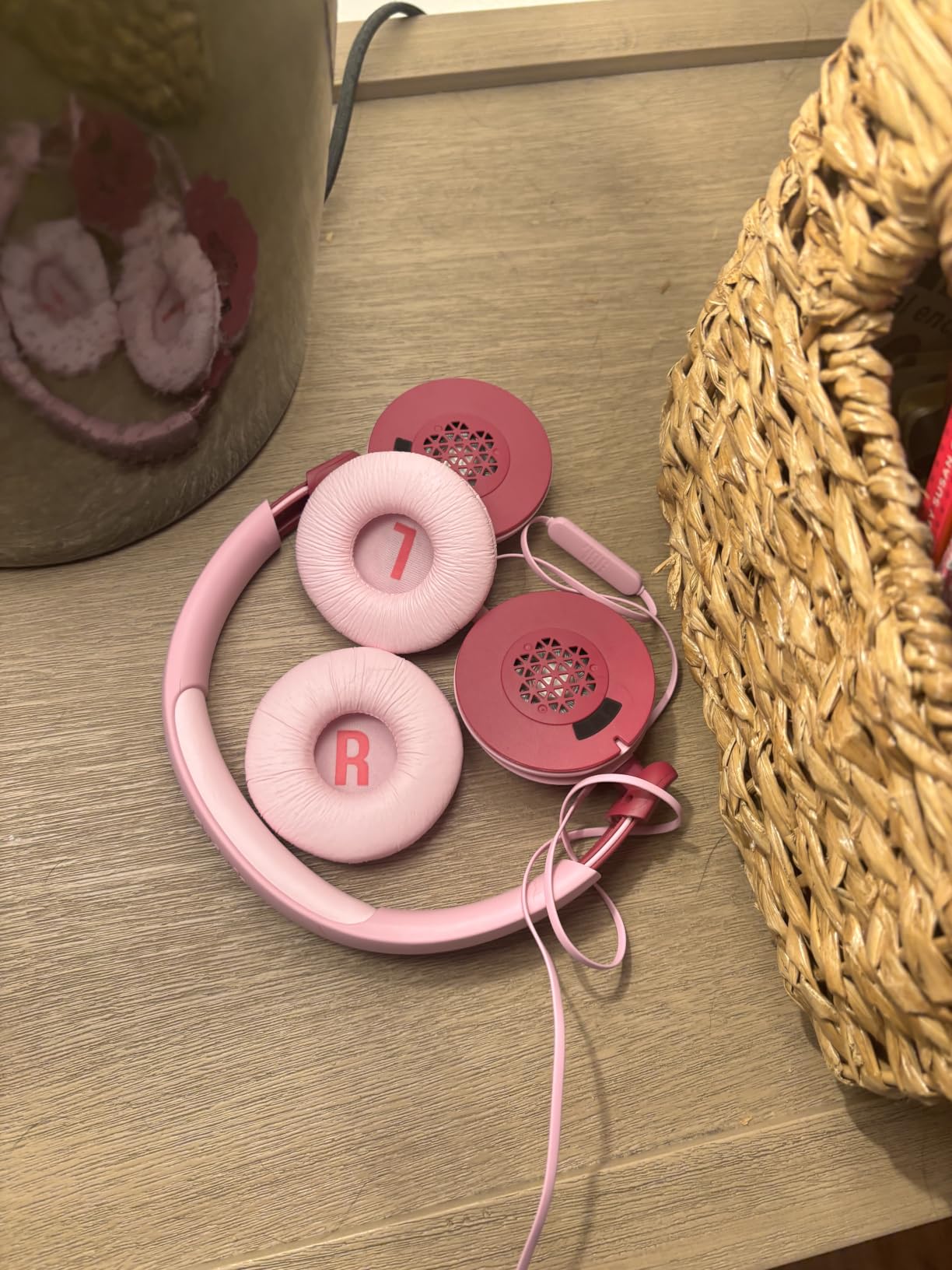
Round earcups grip well and reduce sound leakage, which is a practical benefit during a school day because the pair stays put without constant readjusting. The 32mm drivers sit behind passive noise cancellation, and there is a built-in microphone for teachers, friends and family.
Why the single-side cable is a real feature
Two-sided cables are the ones that tangle in a pocket and tug at the earcup entry point. Routing the cable to one side removes half of that problem and is why the fixed cord is more defensible here than on most kids headsets. The 34 ohm impedance and 78 db sensitivity give a lighter, less bass-heavy signature than the 40mm drivers elsewhere in this list.
For a child who mostly listens to spoken content, lessons and audiobooks, the lighter tuning is a good match.
Where buyers report trouble
One detailed review reports the earpad padding detaching after a single use, which is a build-quality outlier rather than a pattern, but it is worth checking on arrival. The fit can run tight on larger heads during long sessions, iPhone and newer iPad users need a Lightning adapter, and the cord is fixed so it cannot be removed or replaced if damaged.
What Is the Safe Decibel Limit for Kids?
The safe limit for personal audio through headphones is 85 dBA, and the World Health Organization, OSHA and NIOSH all reference that figure. It is a ceiling on the time-weighted average, not a target. A child listening at 85dB for an hour is at the edge of the guidance; a child listening at 60dB for an hour has a very large margin.
Decibels are logarithmic, which is why small numbers hide large changes. Every 3 dB increase roughly doubles acoustic energy. That is why 94dB is not a small step above 85dB, and it is the reason a travel mode that sounds only slightly louder can be dramatically more dangerous.
The 60/60 rule is the easiest habit to enforce: 60 minutes of listening, then a 60-minute break. A break does not need to be silent to help, since recovery depends on lowering the level rather than eliminating all sound. For our own testing across school days, scheduling a break at a natural transition point worked better than a timer, because the timer always got snoozed.
Also worth knowing: a percentage on a device screen is not a decibel figure. A 50 percent volume setting on one phone can produce a different sound level than 50 percent on another, because manufacturers calibrate differently and the mapping changes with impedance. Percentages are not comparable across devices, so treat them as a rough relative control only.
Wired vs Bluetooth: Which Enforces the Limit Better?
Bluetooth enforces the limit more reliably, and the reason is where the limiting happens. A Bluetooth pair caps output in its own firmware, so it cannot be defeated by the source device’s amplifier or by a different cable. A wired pair relies on a passive attenuator in the cable path, and a third-party cable without that attenuator can bypass the cap entirely.
That is why the MIDOLA pair is our top pick even though it is not the cheapest. When the battery runs out, its wired fallback stays fixed at 85dB, so a swapped cable cannot defeat the limiter. Test the wired fallback yourself before you rely on it, using the four steps below.
Wired does have real advantages. There is no charging, no pairing and no latency, and the failure mode is a dead battery rather than a firmware update. For a school Chromebook issued on a schedule, plug-and-play is a genuine advantage, which is why seven of the picks here are wired.
The 94dB Travel Mode Problem
The most common safety compromise in this category is the travel or airplane mode, a manufacturer override that raises the cap from 85dB to 92dB or 94dB. On nine of these ten pairs the higher mode is a physical switch, and on several it sits next to the volume buttons where a child can find it.
Here is why that matters in plain terms. At 85dB, the widely used NIOSH framing allows roughly 8 hours per day of exposure. At 94dB that falls to about 1 hour, and the energy roughly doubles relative to 85dB. A loud travel mode left switched on through a three-hour flight is not a small adjustment, it is the entire daily allowance used up in a single sitting.
Our advice is to treat 94dB as a supervised exception. Use it in a car or on a plane, put the switch back to 85dB when you land, and pick a fixed-85dB pair when you would rather not manage the switch at all. The same principle applies to a phone app that caps volume: those caps usually measure phone output rather than headphone output, so a limiter inside the headphone is the more dependable guard.
How to Verify a Volume Limit Yourself in Four Steps
No body independently verifies the 85dB claim on a kids headphone. You can check it yourself in about ten minutes using a pink noise app and a fixed measuring position, and it is the only way to know what a specific pair does in the mode you will actually use.
First, choose a pink noise or sound level meter app on your phone, hold the phone at the earcup in a fixed position, and note the reading with the device volume at maximum. Second, play the same source through the headphones in the 85dB mode and compare. Third, repeat the test with a different cable if the pair is wired, because a bypassed limiter shows up here as a higher number. Fourth, repeat everything in the 94dB or travel mode, so you know exactly what the higher setting gives you.
Do the test on a soft surface with the cup sealed, and keep the phone in the same spot each time. Absolute accuracy is not the goal. The goal is a relative comparison that reveals whether the switch does anything and whether a different cable changes the result.
How to Lock the Volume on Your Child’s Device
A headphone limiter only protects the output the headphone produces. The device level is a separate control, and it is the one that gets raised by a determined child with a borrowed phone. Locking it takes a few minutes once.
On an iPhone or iPad, open Screen Time, set a passcode nobody but you knows, then go to App Limits, choose a category such as Entertainment or Games, add a time limit, and enable the Never or Reduce Sound setting with a stricter volume allowance. A passcode on Screen Time is the part that matters, because without it the settings are one swipe from being reversed.
On Android, open Digital Wellbeing, then Screen Time, then App Timers and set an app timer for the apps your child uses for audio. On a school-managed Chromebook, the restrictions come from the school’s admin console rather than the device, so ask the administrator about a volume or content policy instead of trying to set it yourself.
We use the device lock together with the headphone limiter rather than instead of it. The headphone cap is the physical guarantee, and the device setting removes the temptation to go looking for a louder pair.
Earmuffs, Sleep Headphones and the Earbuds Gap
Headphones are the wrong tool for some situations. Concerts, fireworks and loud environments call for properly rated passive earmuffs, which reduce sound rather than reproducing it. For a sensory-sensitive child who cannot tolerate an ear cup pressing on the ear, a pair of low-profile sleep headphones or a band-style headset often works better than anything on this list.
There is also a gap worth naming. There is a thin layer of earbuds marketed for children in this category, and the models that exist tend to be less rigorously volume-limited than over-ear pairs. If you want earbuds, check that the 85dB cap is fixed in the hardware rather than left to a companion app, and fit them with a child who can tell you if the seal is comfortable.
Once your child is ready to spend time outdoors on a bike or a scooter, proper fit matters more than any audio spec. Our kids bike guide covers sizing for that stage.
What Real Parents Say About Volume-Limited Headphones
Across parent forums, the same four complaints come up, and none of them are about the limiter. First, volume-limited pairs sound thin and muffled next to adult headphones, and a child who thinks they sound bad will not wear them. Parents repeatedly say the child, not the headphone, is the binding constraint.
Second, inline microphones pick up background noise during online schooling, and some pairs disable the microphone entirely in wired mode. Third, hinges, earcup foam and cables break within months, and replacement earpads are not always sold. Fourth, kids outgrow the childish look around age seven or eight, which is why the pairs with adjustable bands and neutral styling hold up longest.
One question recurs more than any other on r/HeadphoneAdvice and AVForums: are the printed 85dB figures accurate, or just marketing? The honest answer is that there is no enforcement body, which is exactly why we recommend the four-step test above. Treat the printed figure as a starting point and check the pair you actually own.
What parents do agree on is the direction of travel. Buy a band that fits now and still fits next year, keep a spare cable, and treat any 94dB mode as something you switch off yourself rather than something the child manages. If the budget is tight, spend it on a second pair for the car rather than on a more expensive single pair.
Frequently Asked Questions
What is the decibel limit for safe headphones for kids?
85 dBA is the recommended ceiling, and the World Health Organization, OSHA and NIOSH all reference that figure for personal audio through headphones. It is a limit on the time-weighted average, not a target volume. A child listening below 85dB most of the time has a large safety margin, while a child at 85dB continuously is already using up the recommended daily exposure.
Is 85 dB safe for kids?
85dB is the level safe listening guidelines are built around, so it is the right ceiling to enforce. The key word is ceiling. Most of that budget should be spent well below 85dB, with scheduled breaks, and the 60/60 rule of 60 minutes of listening followed by a 60-minute break is the easiest habit to keep.
Is 85 dB too loud for headphones?
For adults, 85dB is roughly an eight-hour daily exposure ceiling. For children the same number matters more because their ear canals are smaller and more sensitive, so the same setting produces a higher sound pressure in the ear. Add in the fact that children accumulate more listening hours as they grow, and 85dB is best treated as the maximum rather than a normal setting.
How many decibels is too loud for children?
85dB and above is where safe listening guidelines stop recommending extended exposure. At 94dB, the exposure time allowed drops to about one hour per day, and the acoustic energy roughly doubles relative to 85dB. That is why a headphone travel mode that raises the cap from 85dB to 94dB is a supervised exception rather than a setting to leave on.
What are the best headphones for a 7-year-old?
At seven, a 7-year-old is past the toddler sizing stage and into the school-age range, so look for an adjustable metal or reinforced headband, a 3.5mm jack for a school Chromebook, and a built-in microphone for classes. The JLab JBuddies Studio is approved for ages 6 and up, and the awatrue AT2 covers ages 2 to 15 with a lighter build.
What headphones have the loudest volume?
The loudest output in this category comes from the 94dB parental or travel modes, several of which a child can activate with a single button press. The 94dB mode on a pair such as the MIDOLA or awatrue AT2 is guarded by a key lock or a physical switch. For continuous listening, a pair with a fixed 85dB cap such as the vinamass or the JBL Junior 320 removes the option entirely.
Are iClever headphones good for kids?
iClever is frequently recommended by parents for active noise cancellation at a modest cost, and the criticism that comes back most often is that the 94dB mode is easy for a child to reach. We did not include an iClever pair in this roundup, so the same questions apply to any alternative: is the cap fixed, is the higher mode guarded, and does the limiter still hold when a different cable is used.
Is 50% volume on headphones safe?
A volume percentage says nothing about decibels. Each manufacturer calibrates its own scale, so 50 percent on one device can produce a noticeably different sound level than 50 percent on another, and the result changes with headphone impedance. Use percentages as a rough relative control only, and use a measured decibel reading or a fixed 85dB limiter to make a real safety decision.
Our Verdict for 2026
The best headphones for kids with volume limits in 2026 are not the pair with the best specification, they are the pair your child will actually wear. The MIDOLA Kids Bluetooth Headphones take the top spot because the key lock makes the 85dB cap real rather than aspirational, and because the wired fallback cannot be defeated with a different cable. If your child is under six, the gorsun pair fits earlier and survives twisting better than anything else at that stage.
Whichever you choose, the limiter is the backup. Keep the device locked with a passcode, hold to the 60/60 rule, and use passive earmuffs for concerts and fireworks instead of headphones. Check the cap yourself with a pink noise app the day it arrives, and again after a few months when the cushion and cable have been through a school year.
For the rest of the room, our kids couch guide and kids recliner guide cover the furniture that gets used during exactly those long listening sessions.