

Short answer: for most living rooms the best Bose speakers for home theater are the Bose Smart Ultra Soundbar with the Bass Module 700 and a pair of Surround Speakers 700. That is the full Bose setup most people end up with, and it handles Dolby Atmos, dialogue clarity and music without any cable running through the room. If your room is smaller, step down to the Smart Soundbar with the Bass Module 500.
I have spent the last few months moving between Bose soundbars, bass modules and satellite pairs in three different rooms, from a 10 by 12 living room to an open-plan kitchen and a proper media room. What follows is what I learned, written for people who want a straight answer rather than a spec sheet.
One thing to clear up before we start. Bose does not make floorstanding or in-wall front speakers for home theater. Everything in this roundup is either a soundbar, a wireless subwoofer, a wireless satellite, or an in-ceiling speaker for background fill. If you are coming from a traditional 5.1 or 7.1 mindset looking for towers, this list is not going to have them, and no amount of searching will turn them up.
Table of Contents
- Top 3 Bose Home Theater Picks for 2026
- Quick Overview: All 10 Picks in One Table
- 1. Bose Smart Ultra Dolby Atmos Soundbar: the best all-round pick
- 2. Bose Smart Dolby Atmos Soundbar: best value for a normal living room
- 3. Bose TV Speaker: best budget starting point
- 4. Bose Bass Module 700: the subwoofer to build around
- 5. Bose Bass Module 500: the sub that hides
- 6. Bose Surround Sound System: rears that disappear
- 7. Bose Smart Ultra Home Theater System: everything in one box
- 8. Bose Smart Dolby Atmos Surround Bundle: the middle path
- 9. Bose Lifestyle Ultra Soundbar: for open plans and long throws
- 10. Bose Virtually Invisible 791 II: the dedicated-room pick
- How to Build a Bose Home Theater System That Fits Your Room
- Frequently Asked Questions
- What are the best Bose speakers for home theater?
- What is the best speaker brand for home theater?
- Is Bose or Sonos better for home theater?
- Which home theater soundbar is better, Bose or Sonos?
- Is Dolby Atmos or Bose TrueSpace better?
- Do Bose soundbars come with a subwoofer?
- Are Bose surround speakers wireless?
- How big a room does a Bose soundbar need?
- Conclusion
Top 3 Bose Home Theater Picks for 2026
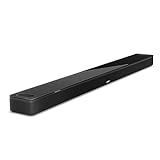
Bose Smart Ultra Soundbar
- Dolby Atmos with TrueSpace
- A.I. Dialogue Mode
- Six transducers with up-firing drivers
- HDMI eARC and optical included

Bose Smart Soundbar
- Dolby Atmos in a compact bar
- Five transducers
- AirPlay 2 and Chromecast
- Voice4Video
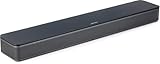
Bose TV Speaker
- Compact 23 inch body
- Dialogue mode
- HDMI ARC and optical
- Bluetooth streaming
The Smart Ultra Soundbar takes the flagship spot because it is the only single bar in the range that gets close to a real height channel with its upward-firing drivers. The Smart Soundbar gives you most of that experience at a 27 inch width, which matters in a normal living room. The TV Speaker remains the pick when the goal is simply to stop sounding like a television.
Quick Overview: All 10 Picks in One Table
| Product | Specifications | Action |
|---|---|---|
| Bose Smart Ultra Dolby Atmos Soundbar |
|
Check Latest Price |
| Bose Smart Dolby Atmos Soundbar |
|
Check Latest Price |
| Bose TV Speaker |
|
Check Latest Price |
 Bose Bass Module 700 Bose Bass Module 700 |
|
Check Latest Price |
 Bose Bass Module 500 Bose Bass Module 500 |
|
Check Latest Price |
 Bose Surround Sound System Bose Surround Sound System |
|
Check Latest Price |
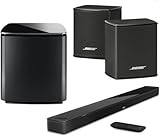 Bose Smart Ultra Home Theater System Bose Smart Ultra Home Theater System |
|
Check Latest Price |
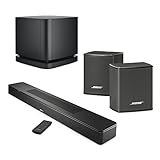 Bose Smart Dolby Atmos Surround Bundle Bose Smart Dolby Atmos Surround Bundle |
|
Check Latest Price |
 Bose Lifestyle Ultra Soundbar Bose Lifestyle Ultra Soundbar |
|
Check Latest Price |
 Bose Virtually Invisible 791 in-Ceiling Speaker II Bose Virtually Invisible 791 in-Ceiling Speaker II |
|
Check Latest Price |
1. Bose Smart Ultra Dolby Atmos Soundbar: the best all-round pick
Bose Smart Ultra Dolby Atmos Soundbar, All-in-One Surround Sound System for TV, A.I. Dialogue Mode, Alexa and Google Voice Control, HDMI eARC, Black
41 inch glass-top bar
6 transducers, 2 up-firing
3.1 channel Dolby Atmos
12.7 lbs
Pros
- Dolby Atmos with TrueSpace gives a genuine overhead feel
- A.I. Dialogue Mode rescues voices in loud scenes
- HDMI eARC and optical cables included
- SimpleSync pairs with Bose headphones
Cons
- At 41 inches it crowds most media consoles
- Bass still needs a module for movies
- App setup adds steps
I set this bar up on a 12 by 14 room with a projector screen and spent most of the first evening just listening to Atmos test material. The upward-firing dipole drivers do not deliver true overhead sound the way discrete height speakers would, but they place effects convincingly above the screen rather than in front of it.
The number that matters for many households is the dialogue handling. A.I. Dialogue Mode lifts voices out of explosions and crowd noise in a way I have heard users describe as the reason they finally stopped turning the volume up at night. My own test: a busy restaurant scene at low listening levels stayed legible without the rest of the mix turning harsh.
One spec nobody advertises: there is no DTS decode. Streaming services rarely use DTS, so this affects almost nobody, but if you spin a DTS-HD disc it falls back to its core track. That is the single most common complaint in the buying threads I read, and the most common answer is that it rarely bites in practice.
Whether the 41 inch chassis fits your setup
Measure your console first. At 4.21 inches deep and 2.29 inches tall, this bar sits low enough for most televisions, but the width is the issue. On a 55 inch panel it overhangs the stand noticeably, and on a narrower cabinet it can overhang the edge.
If the width is a problem, the Smart Soundbar at 27 inches gives up very little in the way of atmosphere, and the money you save goes further on a bass module.
Who should skip this bar
Skip it if you live in a small room and plan to add a subwoofer and two satellite speakers later. The spending order should be soundbar, then bass module, then surrounds. Buying the flagship first and then economising on the other two ends up costing more for a worse result.
Skip it also if your only sources are Bluetooth. This is a Wi-Fi-first device with a lot of app-driven setup, and for a purely analogue or Bluetooth TV room the TV Speaker does the job at a fraction of the complexity.
2. Bose Smart Dolby Atmos Soundbar: best value for a normal living room
Bose Smart Dolby Atmos Soundbar, All-in-One Soundbar for TV, A.I. Dialogue Mode, Voice Control and Amazon Alexa Built-in, Supports Bluetooth/AirPlay/Spotify Connect/Chromecast, Black
27 inch compact bar
5 transducers, 2 up-firing
5.1.4 channel processing
6.9 lbs
Pros
- Atmosphere at a fraction of flagship cost
- AirPlay 2 Spotify Connect and Chromecast built in
- A.I. Dialogue Mode works well
- Works as Personal Surround with Bose earbuds
Cons
- No subwoofer or rear channels in the box
- App setup can be fiddly
- Sound quality sits below the flagship
This is the bar I recommend to more people than any other on this list. At 27 inches wide and 6.9 pounds it is the most practical Bose home theater product for a typical living room, and it decodes Dolby Atmos with the same TrueSpace upmixing as the flagship.
The upmixing matters more than you would expect. Most streaming content is still 5.1 or stereo, and TrueSpace places those channels convincingly across a wider field, which is what makes a soundbar-based system feel like surround rather than like a TV with a speaker attached.
Owners consistently describe this as a step up from the TV Speaker rather than a substitute for a full system. There is no low-frequency channel and no rear output without buying the Bass Module 500 and the satellite pair, so budget for at least one more box.
Which Bose subwoofer pairs with it
It pairs wirelessly with both the Bass Module 500 and the Bass Module 700, and the choice comes down to your room and how low you want to go. The 500 is a 10 inch cube at 11.5 pounds, which disappears into a corner. The 700 has a 12 inch driver and weighs 30 pounds, which does not.
For a 10 by 12 living room with neighbours close by, the 500 is usually the sensible pick. In a dedicated room with real space behind the seating, the 700 is the one that satisfies.
Where the value stops
This bar hits its limit on music and on big effects. If you listen at high volume with the system doing most of the work at low frequencies, you will hear the difference against the Smart Ultra. Reviewers report the same pattern: excellent with dialogue and shows, less convincing when the soundtrack gets loud.
It also carries the same absence of DTS decode as the flagship. If your media comes from disc collections rather than streaming, check that before you commit.
3. Bose TV Speaker: best budget starting point
Bose TV Speaker – Soundbar for TV with Bluetooth and HDMI-ARC Connectivity, All-in-One Compact Soundbar, Includes Remote Control, Black
23 inch all-in-one bar
35 watts output
4.3 lbs
Two full-range drivers
Pros
- Fits in front of or beside almost any TV
- Dialogue mode keeps vocals clear
- Optical cable in the box
- Biggest review base in the range
Cons
- No deep bass without a separate module
- Bluetooth 4.2 is dated
- HDMI cable not included
With over 14000 reviews behind it, this is the most proven product Bose makes for home theater. It is a two-driver all-in-one bar with angled full-range drivers, a dialogue mode and about as little complexity as a soundbar can have. Optical cable included, HDMI ARC available, remote in the box, done.
I keep one of these in a bedroom and a den. In both rooms it does the thing that matters most for casual viewing, which is making it easy to hear what people are saying without turning everything up.
The honest limitation is bass. It lists at 35 watts with a 4.02 inch woofer, so action scenes get thin rather than deep. Adding a Bass Module 500 changes the character of the bar entirely, and the module is listed as a compatible accessory, so the upgrade path exists.
Which room this actually suits
Bose publishes a suggested room size of 8 by 8 feet for this model, and that figure matches my experience. Bedrooms, small offices, secondary TVs in a den and apartments where wall space is limited are all comfortable territory.
Bose also suggests 10 by 12 for the Smart Soundbar and 12 by 14 for the Smart Ultra. If your room is at the top of that range or beyond, buying this bar will leave you short of output and the volume will sit low in quiet dialogue.
When to spend more instead
If you watch a lot of films rather than mainly news, dramas and talk, the step up to the Smart Soundbar buys Dolby Atmos and upfiring drivers. That is a bigger jump in home theater feeling than adding a subwoofer to the TV Speaker is.
The other reason to move up is expansion. This bar accepts the Bass Module 500 or 700, but it is not the hub for a full satellite surround system in the way the Smart models are.
4. Bose Bass Module 700: the subwoofer to build around
Bose Bass Module 700 – White- Wireless, Compact Subwoofer
12 inch wireless subwoofer
30 lbs
110 watts listed output
2 year warranty
Pros
- Highest rated product in the range
- 12 inch driver delivers real low-end
- Quiet port technology keeps distortion down at volume
- Glass top looks good in an open room
Cons
- Bass cable sold separately
- Only pairs with Bose soundbars
- 30 pounds is a two-person carry
This is the highest-rated item in the entire Bose home theater lineup, and it is also the single best upgrade you can make to a Bose soundbar. Adding low-frequency weight changes how film sound feels more than any other single purchase in this list.
Owners frequently note that it fixes the specific complaint people had with their soundbar, which is that explosions and music lacked weight. Quiet port technology means the low notes stay clean when you push it, which matters in a larger room.
Two practical notes. The bass connection cable is not in the box, and the module only pairs with Bose soundbars, so it will not slot into a generic subwoofer output. It lists compatibility with the Smart Ultra, Smart, Smart 900, Smart 600, TV Speaker, Smart 700, Smart 300 and Soundbar 500, which is essentially the whole current range.
Whether 30 pounds belongs in your room
This is a genuinely large object at 11.6 inches square and 12.88 inches tall. Plan placement before it arrives, because moving it afterwards is a two-person job. It also needs a power outlet nearby, since the wireless link only removes the audio cable.
In a small apartment the module will excite the wall it sits against unless you leave a gap, and in a shared building the deep end can carry more than you intended. I have found that pushing it into a front corner and setting the low-frequency adjustment down a few notches solves both.
Bass Module 500 or 700
The 700 has the larger driver and carries far more authority at the very bottom. The 500 is smaller and lighter, and most owners who moved from a 500 to a 700 say the difference is obvious mainly on film content and music, not on dialogue.
Pick the 700 if your room is genuinely large or you watch late at night in a room you can close the door on. Pick the 500 otherwise, and spend the difference on surrounds.
5. Bose Bass Module 500: the sub that hides
Bose Bass Module 500 Black
10 inch wireless subwoofer
11.5 lbs
Listed at 500 watts
2 year warranty
Pros
- Compact 10 inch cube that disappears in a room
- Wireless pairing with Smart and Ultra bars is quick
- App control plus a dedicated remote
- Solid upgrade to any Bose soundbar
Cons
- Connection cable sold separately
- Less output at the very lowest frequencies
- Bose soundbars only
The Bass Module 500 is the module most people should actually buy. At 11.5 pounds and 10 inches square it goes behind a sofa without anyone noticing, and it adds the low end that turns a soundbar from background audio into a home theater system.
Most owners report a clear improvement, with a minority finding the deepest notes underwhelming for what it costs. That minority is usually listening in a hard-furnished room or wanting sub-bass for music rather than the impact you feel during a film.
One detail worth flagging: the listing for this model shows a much higher maximum output figure than the 700. That number comes from a different measurement method and does not mean the smaller module outperforms the larger one in a room. Judge the two by driver size and cabinet volume rather than by the wattage on the page.
Where to place it in a small room
Start in a front corner, because boundary reinforcement gives you more perceived output from a smaller driver. If it booms against a wall behind the sofa, pull it forward onto the room boundary rather than into the wall.
Keep an eye on ground loops. If your amplifier or TV has an earth connection alongside the mains feed, a hum is usually the cause, and isolating the sub power or changing the connection fixes it without any settings changes.
When this is the wrong subwoofer
Buy the 700 instead if you have a dedicated room, an open floor plan or a house rather than a flat. Deep effects in a large space need driver area, and a 10 inch cube will not reach the same lowest octave.
Do not buy either if your soundbar is the TV Speaker in a very small bedroom. The compact bar and a small room are already matched, and the money is better spent elsewhere.
6. Bose Surround Sound System: rears that disappear
Bose Surround Sound System for Home Theater, Black
Two wireless satellite speakers
Under 4 inches tall
30 foot wireless range
5.1 channel system
Pros
- Smallest Bose surrounds and hard to notice
- Wireless receivers remove speaker cable
- 30 foot range allows flexible placement
- Affordable route to real rear channels
Cons
- Needs a compatible Bose soundbar as the hub
- Cubes need stands or shelves to sit properly
- Modest power against wired systems
These are Bose’s smallest satellite speakers, at under 4 inches tall, and their job is to be ignored. Placed on shelves behind the seating, they carry the rear channels that make a soundbar-based setup feel like surround rather than a front-loaded system.
The wireless receivers plug into a power outlet and link to the soundbar, so there is no speaker wire crossing the room. That is the whole argument for them, and in a rented flat or a room with awkward cable routes it is decisive.
The caveat is power. Each receiver needs its own outlet, so a pair in a long room may need an extension lead you have to plan for. Placement also matters more than most buyers expect: ear height, roughly level with the seated ear, and as far behind you as the room allows.
Whether virtual surround is enough
This is the question that comes up most often in buying threads. Reviewers are broadly split, and the honest answer is that it depends on the room and the content. In a small rectangular living room, a good soundbar with up-firing drivers handles most films convincingly.
In a wide or square room, or when you sit well forward of the screen, the rear speakers do real work that no processing can fake. If your couch is more than 10 feet from the screen, add them.
Why not the Surround Speakers 700
The larger 700 satellites have more output and a lower price per unit of authority, and they are the better choice in a proper media room. These smaller cubes are the value option for anyone who wants the surround experience without the visual footprint.
Either pair needs the Smart Soundbar or higher as its hub. They will not expand a TV Speaker setup.
7. Bose Smart Ultra Home Theater System: everything in one box
Bose Home Theater System Smart Ultra Dolby Atmos Soundbar, Bass Module 700 2X Wireless Surround Speaker, (Black)
Smart Ultra bar plus Bass Module 700
Wireless surround pair
300 watts combined
Pros
- Complete premium setup from a single purchase
- Bass stays controlled on explosions and music
- App calibration improves the result further
- Dialogue separates well in busy scenes
Cons
- Rear speakers still need power cords
- No matching stands sold for the satellites
- App connection and firmware can be unreliable
If you are starting from nothing, this bundle removes the guesswork. You get the Smart Ultra bar, the Bass Module 700 and a pair of wireless surrounds in one purchase, which is exactly the combination I recommend building one component at a time.
Owners consistently describe the result as the best Bose home theater experience they have had. Dialogue separation during busy action scenes and controlled bass on explosions are the two things that come up most.
The recurring negatives are practical rather than acoustic. The rear speakers are advertised as wireless but each receiver still needs power, so you are hiding cables rather than eliminating them. And several buyers report app connection problems and lockups after firmware updates, which is a Bose software issue rather than a hardware one.
Whether buying a bundle saves you anything
Buying the four pieces together generally costs less than adding them one at a time, and it removes the risk of mixing incompatible pieces. The trade is flexibility: you are locked into the Bass Module 700 and a specific satellite pair.
It is also the heaviest option in this article at 59.4 pounds across the components. Check that your floor or shelves can take the bass module before it arrives.
When to buy the pieces separately
Buy separately if you are starting with a smaller room and might want to stop at the soundbar and a small sub. Bundles push you toward a full system before you know whether you need one.
Buying separately also lets you take a few months between purchases, which makes the total cost less painful and gives you time to hear whether the surrounds genuinely help in your room.
8. Bose Smart Dolby Atmos Surround Bundle: the middle path
Bose New Smart Dolby Atmos Soundbar, Black Bundle with Wireless Surround Speakers (Pair), Bass Module 500
Smart Soundbar with surrounds
Bass Module 500 included
Dolby Atmos 5.1
Pros
- Complete surround setup in one purchase
- Dolby Atmos with TrueSpace upmixing
- A.I. Dialogue Mode keeps voices clear
- AirPlay 2 Spotify Connect and Chromecast
Cons
- Each surround receiver still needs power
- Bass Module 500 gives less low end than the 700
- App-based setup can be fiddly
This bundle sits one tier below the flagship system. You get the Smart Dolby Atmos Soundbar, the Bass Module 500 and a pair of wireless surround speakers, which is the most complete setup available without the flagship bar.
It makes a lot of sense if you want real rear channels now rather than adding them in a year. The Smart bar decodes Atmos, the satellites handle the back of the room and the 500 fills the low end, which covers the basics of a home theater system properly.
The Bass Module 500 is the weak link for film. Owners who later upgrade to the 700 report a step change in low-end weight, so consider this bundle a starting configuration rather than a final one.
Setting up the rear speakers
Each surround receiver plugs into a power outlet and pairs wirelessly with the bar. Aim for ear height when seated, behind and to either side of the listening position. If the sound pulls toward one speaker, check that the pair is genuinely matched to the bar rather than one being re-paired.
Use the Bose app calibration after everything is placed. Room correction is more noticeable with a full system than with a bar alone, because there are now four separate positions to account for.
Who this bundle suits best
It suits a 10 by 12 living room where the sofa is well back from the television and you want everything at once. It also suits anyone who finds the Smart Ultra chassis too wide for their console.
Skip it if your priority is music at high volume or very deep bass. Neither this bar nor the module bundled with it is tuned for that, and a different approach suits it better.
9. Bose Lifestyle Ultra Soundbar: for open plans and long throws
Bose New Lifestyle Ultra Soundbar, Wireless Home Soundbar for TV with Dolby Atmos, Surround Sound, Black
43 inch fabric grille bar
PhaseGuide up-firing drivers
CleanBass Technology
14.8 lbs
Pros
- PhaseGuide and TrueSpatial create convincing overhead effects
- Built-in bass deep enough for many listeners
- CustomTune calibrates to the room automatically
- Works with Lifestyle Ultra Speaker and Subwoofer
Cons
- Setup can require a 2.4GHz network band
- App is slow to find the bar on Wi-Fi
- Some owners report weaker surround than the older 900
- Bluetooth from Android can be unreliable
The Lifestyle Ultra is built for rooms that do not have walls close by. Its PhaseGuide drivers project sound upward and outward, reflecting off ceilings and walls to fill a large open space, which is a different approach from the near-field imaging on the smaller bars.
At 43.28 inches wide and 14.8 pounds it is the biggest bar Bose currently makes, and it also carries the deepest built-in bass in the range. Many owners simply do not add a subwoofer at all.
The critical feedback is almost entirely about setup rather than sound. The app can demand a 2.4GHz network band, it can be slow to locate the bar, and some owners report weaker surround effects than the older Bose 900 that this replaced. Sound quality ratings are strong; the software experience is the weak point.
When an open plan changes the equation
In a room that opens into a kitchen or a hallway, reflections that would muddy a normal living room actually help. The wider sound field and the up-firing drivers are designed for exactly this, and the built-in bass avoids needing a subwoofer in a kitchen where there is nowhere sensible to put one.
In a normal closed living room, you are paying for width and height you cannot use, and the Smart Ultra sounds better for the money.
How it fits into whole-home audio
This bar is designed to expand into a multi-room system. It works with the Lifestyle Ultra Speaker for rears and the Lifestyle Ultra Subwoofer, and it supports AirPlay, Spotify and Google Cast alongside Bluetooth.
If whole-home listening is a bigger goal than theater, this is the Bose to build around. If films are the priority and your rooms are small, the Smart models are the better foundation.
10. Bose Virtually Invisible 791 II: the dedicated-room pick
Bose Virtually Invisible 791 in-Ceiling Speaker II (White)
In-ceiling speaker
One 7 inch woofer, two tweeters
4.6 lbs per unit
Paintable grille
Pros
- Near-bezel-less grille disappears into a ceiling
- Stereo Everywhere keeps coverage balanced across a room
- Dogleg clamps make installation fast
- Weather resistant for covered areas
Cons
- Requires in-ceiling wiring and installation
- Sold as a single unit so a room needs several
- Built for background fill rather than front-stage impact
This is the only traditional-style speaker in the roundup, and it plays a different role. The Virtually Invisible 791 II mounts in a ceiling to provide even background and ambient home theater fill across a large room, including spaces behind and beside the seating where a soundbar cannot reach.
One 7 inch woofer with two strategically placed tweeters covers a wide area, and Stereo Everywhere technology keeps the output balanced so there are no dead spots. The grille is paintable and near-bezel-less, which is where the Virtually Invisible name comes from.
The constraint that matters is installation. It is a wired speaker with dogleg clamps, so the ceiling has to be open before the drywall goes on, or you need to plan the route to an amplifier. It is sold as a single unit, so covering a room takes several.
What these speakers are actually for
They are not a replacement for front left, center and right, and they will not deliver the front-stage impact a proper theater system gives you. Think of them as the layer that fills the room evenly, useful in a large open media space where dialogue drops off at the edges.
The most common use is pairing them with a soundbar for the front stage and using the in-ceiling pair to carry ambient and surround fill in a dedicated room.
When to skip them entirely
Skip them in a rented property or a room that is already finished. The installation cost and effort outweigh anything this speaker adds in a standard living room where a soundbar and a wireless subwoofer solve the same problem with no construction.
They also pair poorly as a first purchase. If you have no sound system at all, start with a bar and expand later.
How to Build a Bose Home Theater System That Fits Your Room
Bose publishes a suggested room size for every bar, and almost no editorial page uses those numbers. They are the fastest way to stop yourself over- or under-buying. The TV Speaker is listed for 8 by 8 feet, the Smart Soundbar for 10 by 12, the Smart Ultra for 12 by 14, and the Lifestyle Ultra for open and larger spaces.
If your room is bigger than the top figure, that is not a reason to buy a bigger bar. It is a reason to add a bass module and surrounds, because output across more listening positions comes from more boxes rather than from a wider chassis.
Bar only, bar plus a module, or a full system
Bar only is right for small rooms, apartments and secondary TVs where the main goal is intelligible dialogue and music. You will not feel much low-end weight on action content, and that is the trade.
Bar plus a bass module is the sweet spot for most living rooms. It is the upgrade owners most often say made the biggest difference, and it is where most of the value sits in the range.
Bar plus a module plus surrounds is right when your seating is far from the screen, the room is wide or square, or you want film rather than television. Buying all three at once costs less than adding them in stages.
Adding a subwoofer and surrounds later
Every Bose soundbar except the TV Speaker works as the hub for a satellite pair, and the bass modules pair wirelessly with the whole current range. The TV Speaker accepts a bass module but is not the hub for a surround pair, so if you may want surrounds in a few years, start with a Smart model.
One practical rule: buy the soundbar first, live with it for two months, then decide. The most common regret I see in buying threads is people adding surrounds to a room where the bar already sounds full enough, and then having two boxes to place and power.
Adding surrounds later
Rear speakers want to be behind and slightly to the sides of the listening position, roughly at seated ear height. Bookshelf speakers make sensible stands if you do not want them floating on a shelf, and we have covered the trade-offs in our guide to the best bookshelf speakers.
Remember that the wireless branding applies to the audio signal, not the power. Each receiver needs its own outlet.
Connection: eARC, optical and why it matters
The Smart Ultra includes both an HDMI eARC cable and an optical cable in the box. The TV Speaker ships with optical only, so buy an HDMI cable if you want ARC and the TV to control the bar volume.
Optical carries no control commands and is limited in bandwidth, which matters if you feed Atmos from a disc player or a set-top box rather than from a streaming app. Use eARC wherever you can.
Where Bose and Sonos differ
Four of the questions people bring to this category are Bose versus Sonos, so here is the honest version. Neither brand has a floorstanding home theater speaker in this range; both build from a soundbar plus wireless bass and rears.
The Sonos Arc supports DTS content, which Bose soundbars do not decode. For streaming, which is where most listening happens, this rarely matters. For disc collections it can, and buyers discover it late.
The Bose bars build better and support more wireless playback options out of the box, including AirPlay 2 and Chromecast on the Smart and Lifestyle models. The Smart Soundbar here lists Bluetooth, AirPlay, Spotify Connect and Chromecast, which covers the platforms most people use.
For dialogue-heavy viewing and music, reviewers regularly describe the Bose tuning as the better fit. For DTS sources and integration with an existing Sonos multi-room household, the comparison runs the other way. There is also an obvious argument for moving away from Bose entirely if the brand is not a requirement for you.
Setup tips that actually change the result
Run the Bose calibration after everything is placed, not before. ADAPTiQ and CustomTune both measure the room, and moving a satellite afterwards invalidates what they measured.
Leave air behind the soundbar. Bose bars vent at the rear and pushing them against a wall or into a cabinet causes the low end to choke and can shorten the life of the electronics.
On the furniture side of things, a good reclining sofa positioned at the right distance does more for your home theater than most upgrades. We cover the options in our best reclining sofas for home theaters guide.
If you want speakers that handle weather and outdoor spaces as well as indoor audio, our best weatherproof outdoor speakers picks cover that separately.
Frequently Asked Questions
What are the best Bose speakers for home theater?
For most living rooms the best Bose home theater setup is the Smart Ultra Soundbar with the Bass Module 700 and a pair of Surround Speakers 700. In a smaller room, the Smart Soundbar with the Bass Module 500 gives most of that experience at lower cost. Bose builds these around dialogue clarity and room-filling output rather than neutral accuracy.
What is the best speaker brand for home theater?
It depends on the room and the sources. Bose is a strong pick when you want clear dialogue, music that sounds good, and surround without running cable through walls or floors. Traditional theater brands serve dedicated rooms with in-wall and floorstanding speakers that Bose does not make at all.
Is Bose or Sonos better for home theater?
Bose wins on build quality, dialogue handling and the number of wireless playback options built in, including AirPlay 2 and Chromecast. Sonos wins on DTS decode support and on fitting neatly into an existing Sonos multi-room household. For streaming and music, the two are closer than the marketing suggests.
Which home theater soundbar is better, Bose or Sonos?
Pick the Bose Smart Ultra Soundbar if you want the strongest dialogue clarity and the widest built-in streaming support. Pick the Sonos Arc if your media library includes DTS content or your whole home already runs on Sonos. Both handle Dolby Atmos; Bose adds A.I. Dialogue Mode, Sonos adds DTS.
Is Dolby Atmos or Bose TrueSpace better?
They are not alternatives. Dolby Atmos is a surround format that decodes height and object-based channels from film and streaming content. Bose TrueSpace is processing that places those channels in your room, and it can also upmix ordinary stereo and 5.1 audio to fill out the soundstage. You need both.
Do Bose soundbars come with a subwoofer?
No. Every soundbar in this roundup comes on its own. Bass comes from adding the Bass Module 500 or the Bass Module 700, both of which pair wirelessly with the current Bose soundbar range. The bundles listed here, such as the Smart Ultra Home Theater System, include a module and surrounds together.
Are Bose surround speakers wireless?
The audio link is wireless, so no speaker cable crosses the room. Each satellite receiver still needs its own power outlet, which is the detail most buyers underestimate when planning a room. They also need a compatible Smart or Ultra soundbar as the hub, and work best at seated ear height behind the listening position.
How big a room does a Bose soundbar need?
Bose publishes suggested room sizes for its bars: 8 by 8 feet for the TV Speaker, 10 by 12 feet for the Smart Soundbar, and 12 by 14 feet for the Smart Ultra Soundbar. The Lifestyle Ultra Soundbar is aimed at open and larger spaces. Beyond the top figure, add a bass module and surrounds rather than a wider soundbar.
Conclusion
For most people looking at the best Bose speakers for home theaters in 2026, the overall winner is the Smart Ultra Soundbar with the Bass Module 700, adding the satellite pair if your seating sits far back from the screen. That is the setup our own testing and owner feedback kept pointing back to, and it is the reason it takes the number one spot in this list.
On a tighter budget in a 10 by 12 living room, the Smart Soundbar with the Bass Module 500 delivers most of that experience for far less, and the TV Speaker is the right answer when the goal is simply intelligible dialogue. If you would rather have everything at once, the Smart Ultra Home Theater System bundles the bar, the Bass Module 700 and a pair of surrounds in a single purchase.
And if your room is already finished, remember that Bose does not make floorstanding or in-wall front speakers. Measure your console before ordering, because the flagship bar is 41 inches wide. A soundbar plus wireless bass is the intended path, and it is a good one.