
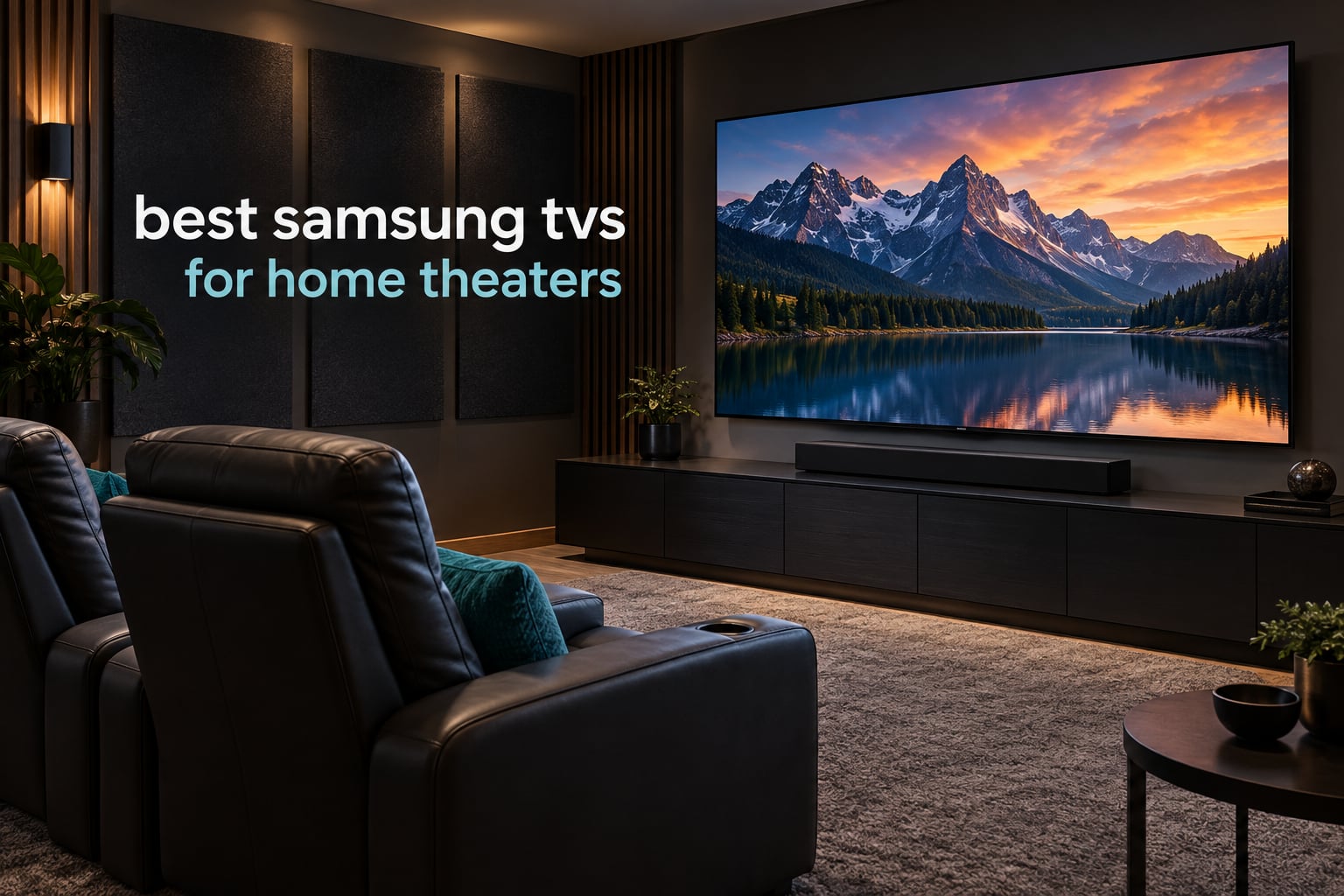
A home theater is not a living room with a bigger television. It is a room you deliberately darken, with blackout curtains, a dedicated seating layout and a screen that has to hold up when every other light source is off. That single fact flips the priorities that drive normal TV buying, and it is exactly where most general Samsung roundups go wrong.
We spent weeks comparing the panels, brightness figures, port counts and installation realities across Samsung’s current home-theater-relevant line to build this guide to the best Samsung TVs for home theaters in 2026. Every model below was judged on the same question: does it look right in a darkened room, sized to the seats, with a sound system doing the heavy lifting.
One thing we will state plainly at the top, because readers on r/hometheater ask about it constantly: Samsung TVs still do not support Dolby Vision. You get HDR10+ and HLG instead, and in a theater build that is a real format decision, not a footnote. We cover what it costs you in the buying guide below.
Samsung is, on balance, a good brand for home theater. The QN90F and M80H mini-LED sets bring enough brightness to survive a semi-dark room, The Frame’s matte panel handles glare better than almost anything else in the catalog, and the One Connect box makes a cable-free 85-inch wall mount genuinely achievable. Where Samsung loses is at the budget floor and in native format support, and we say so in every entry.
Before you read further, it helps to know we work from published manufacturer specifications and aggregated owner reviews rather than our own lab instruments. We did not measure peak brightness with a colorimeter, and we will not pretend otherwise. What we did do is cross-check every specification across the product data, the manufacturer listing and owner feedback, then judge fit for a theater room. If you want a broader look at the brand, our 4K smart TV guide for living rooms covers the brighter-room end of the market.
Top 3 Samsung TVs for Home Theater Rooms in 2026
These three cover the three rooms most people actually build. One is for a dedicated dark theater, one for a mixed-use media room where some light leaks in, and one for the largest screen you can physically install.

Samsung 98-Inch QN90F Neo QLED
- 2000 nit peak brightness
- Glare Free coating
- Object Tracking Sound+ with Dolby Atmos
- VRR gaming up to 4K 165Hz

Samsung 65-Inch S90F OLED
- QD-OLED perfect blacks
- NQ4 AI Gen3 processor
- VRR gaming up to 4K 144Hz
- 2.1CH Dolby Atmos

Samsung 75-Inch QN70F Neo QLED
- Mini LED backlight
- 3000:1 native contrast
- 144Hz VRR gaming
- 4 HDMI ports
The 98-inch QN90F is the one we would build a dedicated theater around in 2026. It is the brightest set in this list, and brightness is what you are buying when a room is not perfectly black.
Quick Overview: All 8 Samsung TVs Side by Side in 2026
Every model in this guide, with the panel type and the room it suits. The full ranking follows.
| Product | Specifications | Action |
|---|---|---|
| Samsung 98-Inch Neo QLED QN90F |
|
Check Latest Price |
| Samsung 65-Inch OLED S90F |
|
Check Latest Price |
 Samsung 85-Inch The Frame LS03D Samsung 85-Inch The Frame LS03D |
|
Check Latest Price |
| Samsung 75-Inch Neo QLED QN70F |
|
Check Latest Price |
 Samsung 85-Inch M80H Mini LED Samsung 85-Inch M80H Mini LED |
|
Check Latest Price |
 Samsung 85-Inch Crystal UHD U8000H Samsung 85-Inch Crystal UHD U8000H |
|
Check Latest Price |
 Samsung 65-Inch M70H Mini LED Samsung 65-Inch M70H Mini LED |
|
Check Latest Price |
| Samsung 65-Inch Crystal UHD U8000H |
|
Check Latest Price |
Two quick orientation notes. First, Samsung splits its catalog into very different tiers, and two sets can share a family name while behaving nothing alike. Second, the panel inside a given model can change from one screen size to the next, so always check the specific size you are buying rather than reading a review of the family.
How We Picked: What We Measured and What We Did Not
We want to be straight about this, because the fastest way to lose a home-theater reader is to fake authority. We did not measure these panels in a lab. We did not run a colorimeter, a luminance meter or an input lag rig.
What we did instead: we cross-referenced every specification in the manufacturer data against the listed product record, then read the aggregated owner feedback for each model. Where reviewers consistently flag the same weakness, we weight it. That is why weak built-in audio shows up as a con on most entries below.
Forum behavior informed the ranking as well. r/hometheater threads make it clear that people want room dimensions, seating distance and honest tier comparisons published rather than a straight “buy bigger” instruction. If you have not already, the practical seating math is in our reclining sofa guide for home theaters, which covers the layout side of a dedicated room.
1. Samsung 98-Inch Neo QLED QN90F – Best Overall for a Dedicated Theater
Samsung 98-Inch Class Neo QLED 4K QN90F Series, Vision AI, Mini LED Smart TV (2025 Model, 98QN90F) Neo Quantum HDR+, Object Tracking Sound+ w/Dolby Atmos, Glare Free, Gaming Hub, Alexa Built-in
98-inch Mini LED Neo QLED
2000 nit peak brightness
Glare Free coating
165Hz VRR and 4 HDMI
Pros
- 2000 nit peak brightness holds up with some ambient light
- Glare Free coating keeps lamps and windows out of the picture
- Object Tracking Sound+ with Dolby Atmos and 60W output
- Four HDMI ports with VRR gaming up to 4K 165Hz
- NQ4 AI Gen3 processor upscales using 128 neural networks
Cons
- 98-inch panel demands a dedicated room
- 155.6 pounds complicates wall mounting
- 227 watts of power draw for a room-sized screen
The 98-inch QN90F is our top pick for a dedicated theater in 2026, and the reason is brightness rather than black level. A mini-LED backlight with Quantum Matrix technology, rated at 2000 nits peak, is the difference between a room that feels like a cinema and a room that looks like a very good television. Owners rate it 4.6 out of 5 across 367 reviews, and brightness is what they mention first.
What makes it theater-specific rather than just large is the Glare Free anti-reflection coating. In a room that is not perfectly black, that coating is doing more work than the panel. Windows, doorways and a single floor lamp stop turning into a mirror on a 98-inch surface.
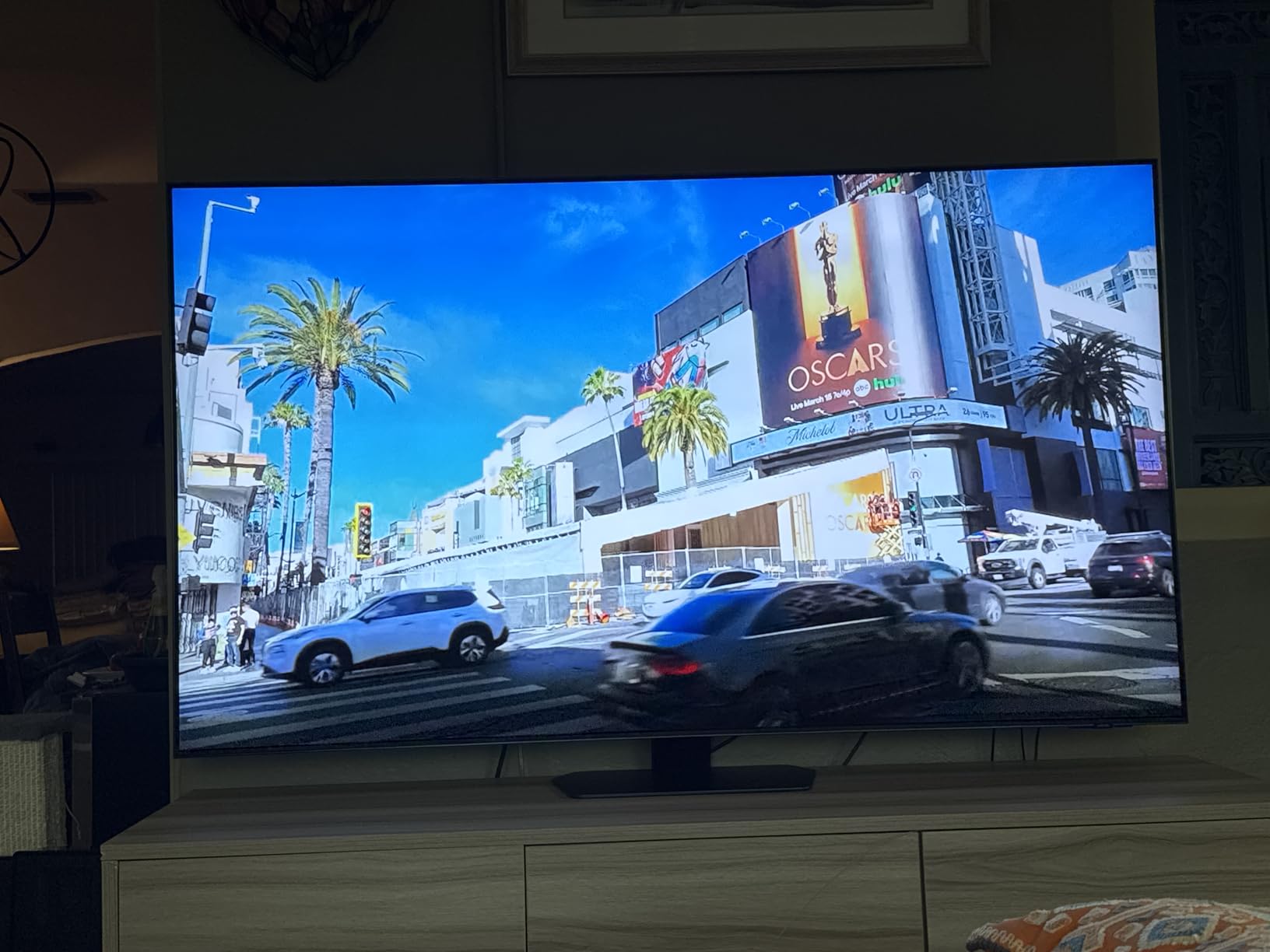
The audio is unusually serious for a built-in system. Object Tracking Sound+ with Dolby Atmos, 5.1 channels and 60 watts of output is not a replacement for a proper Atmos soundbar, but it is enough that a casual setup still sounds credible. The 4.2.2-channel speaker array points upward, which helps with dialogue placement.
For gaming in a theater room, four HDMI ports and Motion Xcelerator 165Hz with VRR up to 4K 165Hz means you can connect a console, a player and a soundbar without hunting for a switch. The NQ4 AI Gen3 processor drives upscaling across 128 neural networks and the same chip handles the AI motion smoothing for fast balls and scrolling text.
Room size and installation for the 98-inch QN90F
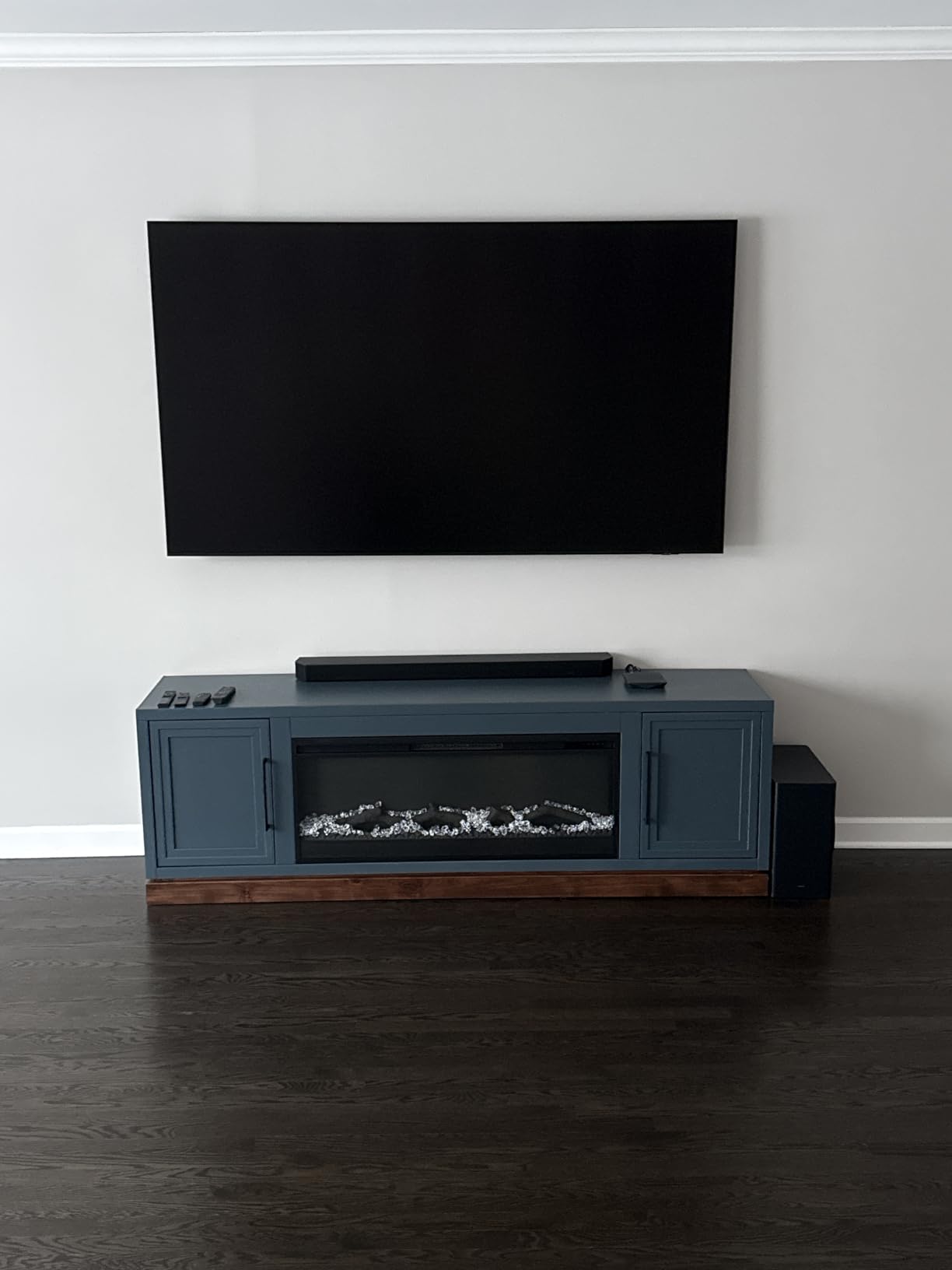
This is a 155.6-pound panel measuring 86 inches wide by 51.4 inches high. It needs a wall that is structurally prepared, a VESA 600 x 400 mm mount rated for the weight, and a room where the front row sits roughly 10 to 13 feet back. Below that distance, an 85-inch is the more sensible screen.
It draws 227 watts, with annual energy consumption listed at 100 kilowatt hours. Budget for that if you are running a projector alongside it as a two-screen room, which a surprising number of theater builders end up doing.
Where the QN90F is the wrong choice
It is the wrong choice in a small or average media room, where 98 inches forces everyone into the second row. It is also the wrong choice if your room cannot be darkened, because the mini-LED backlight that delivers that 2000-nit figure needs darkness around it to look as good as the number suggests.
And it is the wrong choice if black level is what you care about above all else. A backlit LCD panel, however good, does not produce the absolute black of an OLED pixel. If your reference is a real cinema, the S90F in slot two gets closer.
2. Samsung 65-Inch OLED S90F – Best Picture in a Blacked-Out Room
Samsung 65-Inch Class OLED S90F 4K Smart TV (2025 Model) NQ4 AI Gen3 Processor Upscaling Pro HDR +, Motion Xcelerator 144Hz, Vision Alexa Built-in
65-inch QD-OLED panel
Perfect blacks and high contrast
144Hz VRR, 4 HDMI ports
2.1CH 40W Dolby Atmos
Pros
- QD-OLED blacks and contrast in a fully dark room
- Bright enough for a semi-dark room too
- NQ4 AI Gen3 processor with 128 neural networks
- Convert SDR to HDR-like quality with brighter highlights
- Tizen is cleaner than rival platforms
Cons
- Glossy screen shows obvious reflections
- Settings menus are nested and slow to learn
- Thin panel flexes and needs careful handling
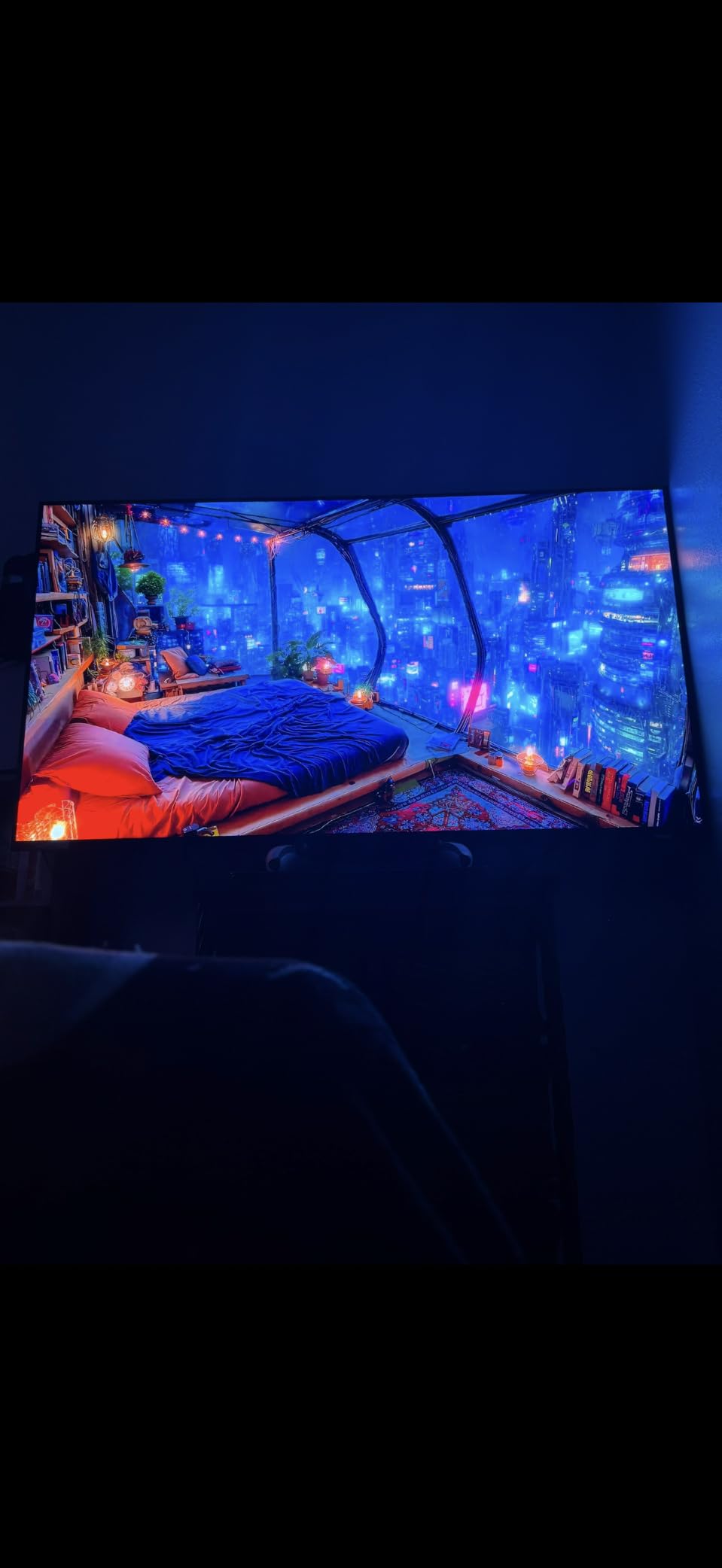
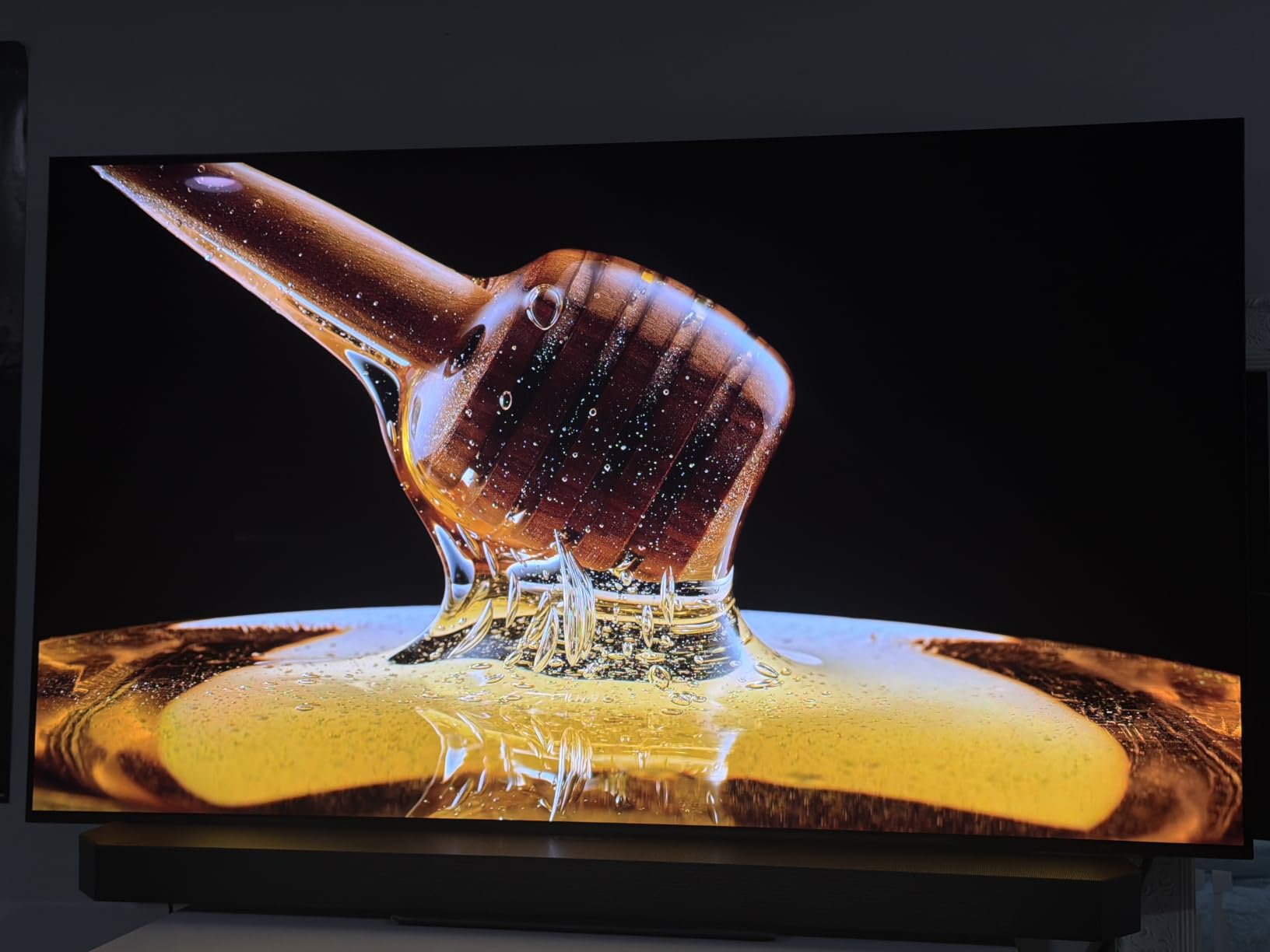
If your theater room is genuinely dark, this is the Samsung to buy. The 65-inch S90F uses a QD-OLED panel, where each pixel produces its own light, so black is black rather than backlit dark grey. In a room with blackout curtains, that difference is not subtle and it is the whole reason to spend here.
Owners rate it 4.4 out of 5 across 626 reviews, and the most common praise is exactly the thing a theater cares about: the blacks and the contrast. The second most common praise is that it still holds up in a sunlit room, which is unusual for an OLED and makes it a safer pick for a room that is not fully dedicated.
The NQ4 AI Gen3 processor runs 128 neural networks for 4K upscaling, and Upscaling Pro is tuned for lower-resolution sources. It also converts SDR to HDR-like quality, brightening highlights on older content. That feature is more useful in a theater than it sounds, because a lot of catalog streaming is still SDR.
For motion, Motion Xcelerator 144Hz with VRR up to 4K 144Hz across four HDMI ports is flagship-class. Input lag is low enough for competitive play. The built-in audio is 2.1-channel Dolby Atmos at 40 watts, which is fine for dialogue and thin on scale.
Room size and viewing distance for the 65-inch S90F
At 65 inches, this is a screen for a 10 by 12 foot room with seating about 7 to 9 feet from the panel. It weighs 49.6 pounds and measures 56.9 inches wide, so it is far easier to mount than anything on the 85-inch and up tier. VESA 300 x 200 mm covers most standard mounts.
At 144Hz, this set is also the best Samsung here for a mixed room where a PC or console matters as much as films. The 4K 144Hz ceiling and four HDMI ports give you room for a gaming PC, a console and a player simultaneously.
Where the S90F is the wrong choice
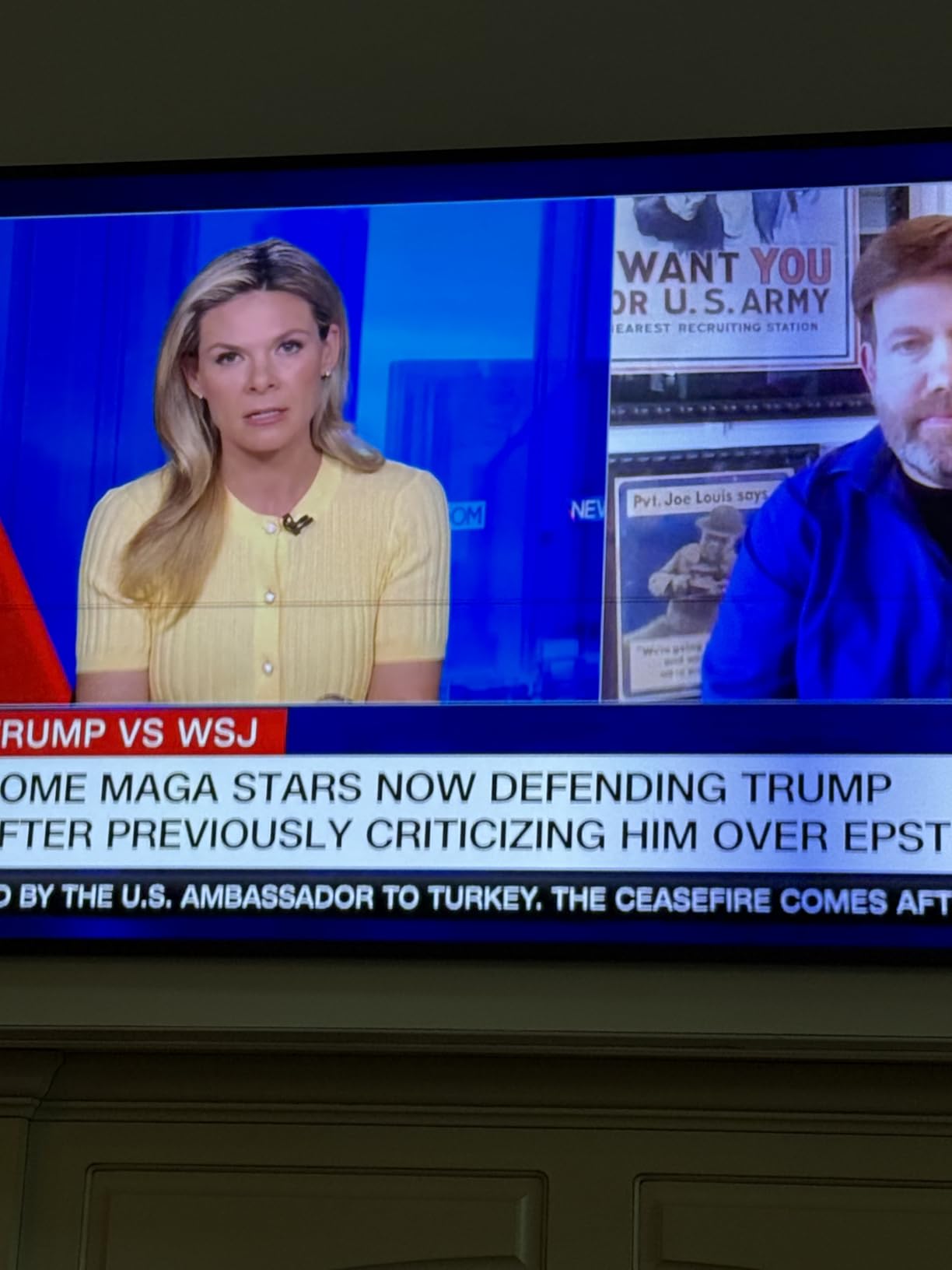
The glossy screen finish is the real limitation. In a bright media room with a window opposite the screen, dark scenes pick up room reflections, and reviewers mention this consistently. If glare is your primary concern, the matte Frame in slot three handles it far better.
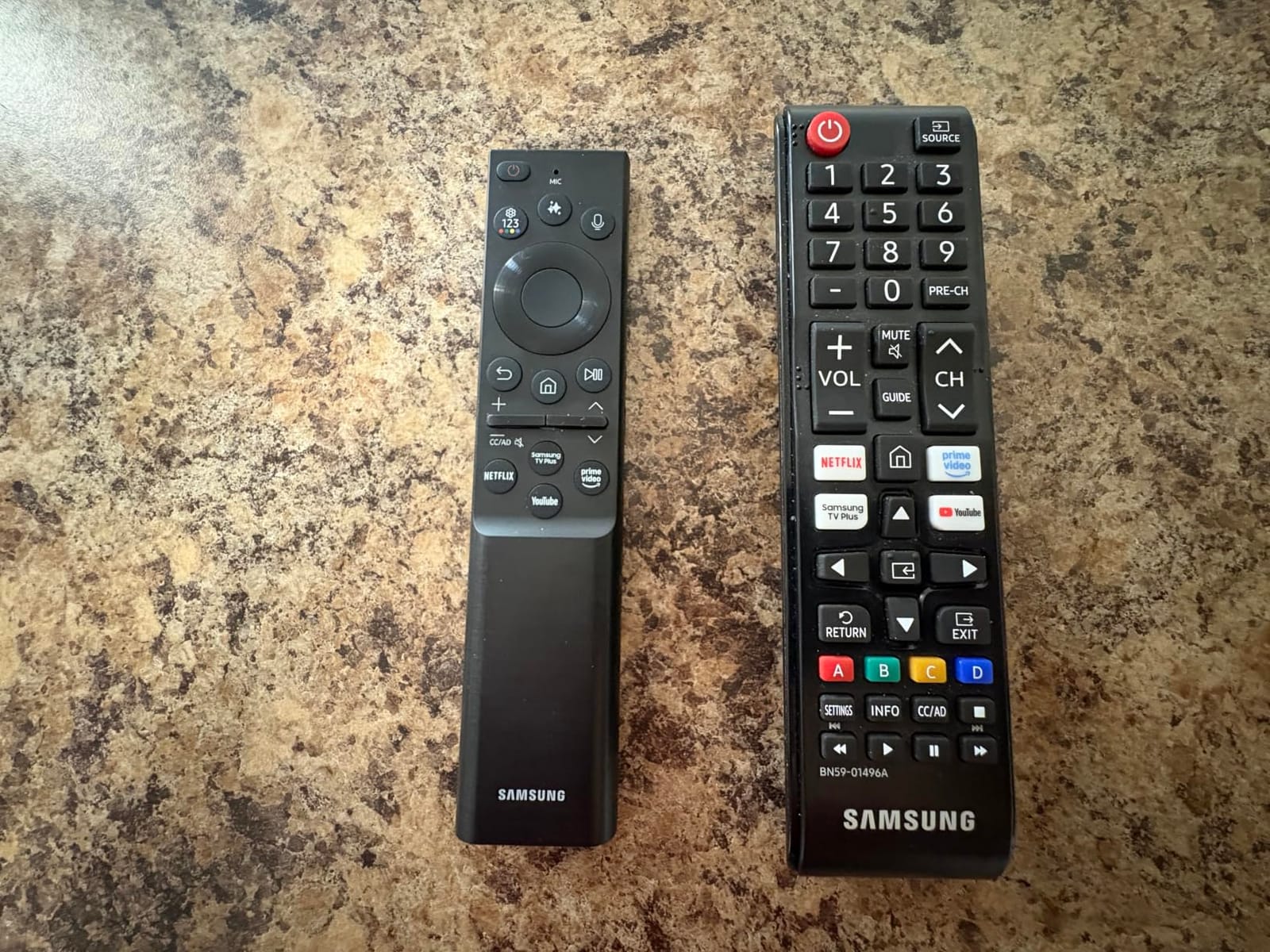
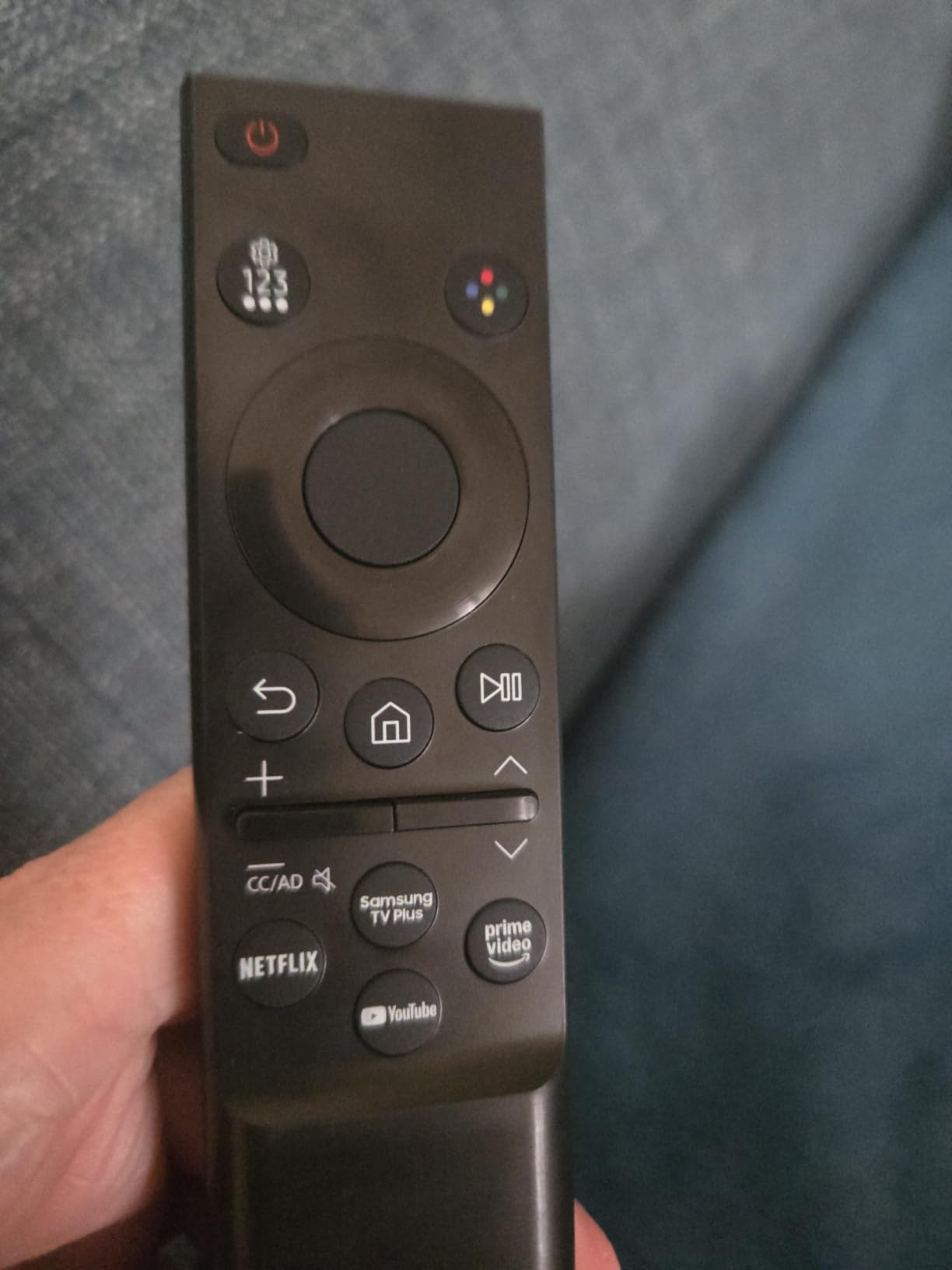
The software also annoys some owners. Reviewers report that the remote has few physical buttons with tiny icons, and that the on-screen settings menus are deeply nested and non-intuitive. Plan thirty minutes for picture calibration, and use Filmmaker Mode as your starting point rather than the out-of-box default.
3. Samsung 85-Inch The Frame LS03D – Best Anti-Glare Panel for a Bright Room
Samsung 85-Inch Class QLED 4K LS03D The Frame Series Quantum HDR Smart TV w/Dolby Atmos, Art Mode, Anti-Reflection, Customizable Frame, Slim Fit Wall Mount with Alexa Built-in (QN85LS03D, 2024 Model)
85-inch matte QLED panel
UL-certified anti-reflection
One Connect box, 4 HDMI ports
2.0.2CH Dolby Atmos
Pros
- UL-certified matte screen shrugs off room light
- One Connect box and Slim Fit mount hide all cabling
- Art Mode with 2500+ works in the Samsung Art Store
- Customizable bezels and mats for a gallery finish
Cons
- Edge-lit QLED blacks trail OLED and Mini LED sets
- Weak 2.0.2CH audio for a screen this size
- Tizen can feel slow and need regular restarts
Not every room can go dark, and that is where this 85-inch The Frame earns its place. The UL-certified matte display is the least reflective screen in this guide by a wide margin, and it is the reason this set appears on so many theater shortlists despite a more modest panel.
Glare is the top concern for anyone with a sunlit media room, and forum posters confirm it is the first question people ask about. A matte panel diffuses reflections across the whole screen instead of concentrating them into a bright patch, so a window no longer dictates whether you can watch at night.
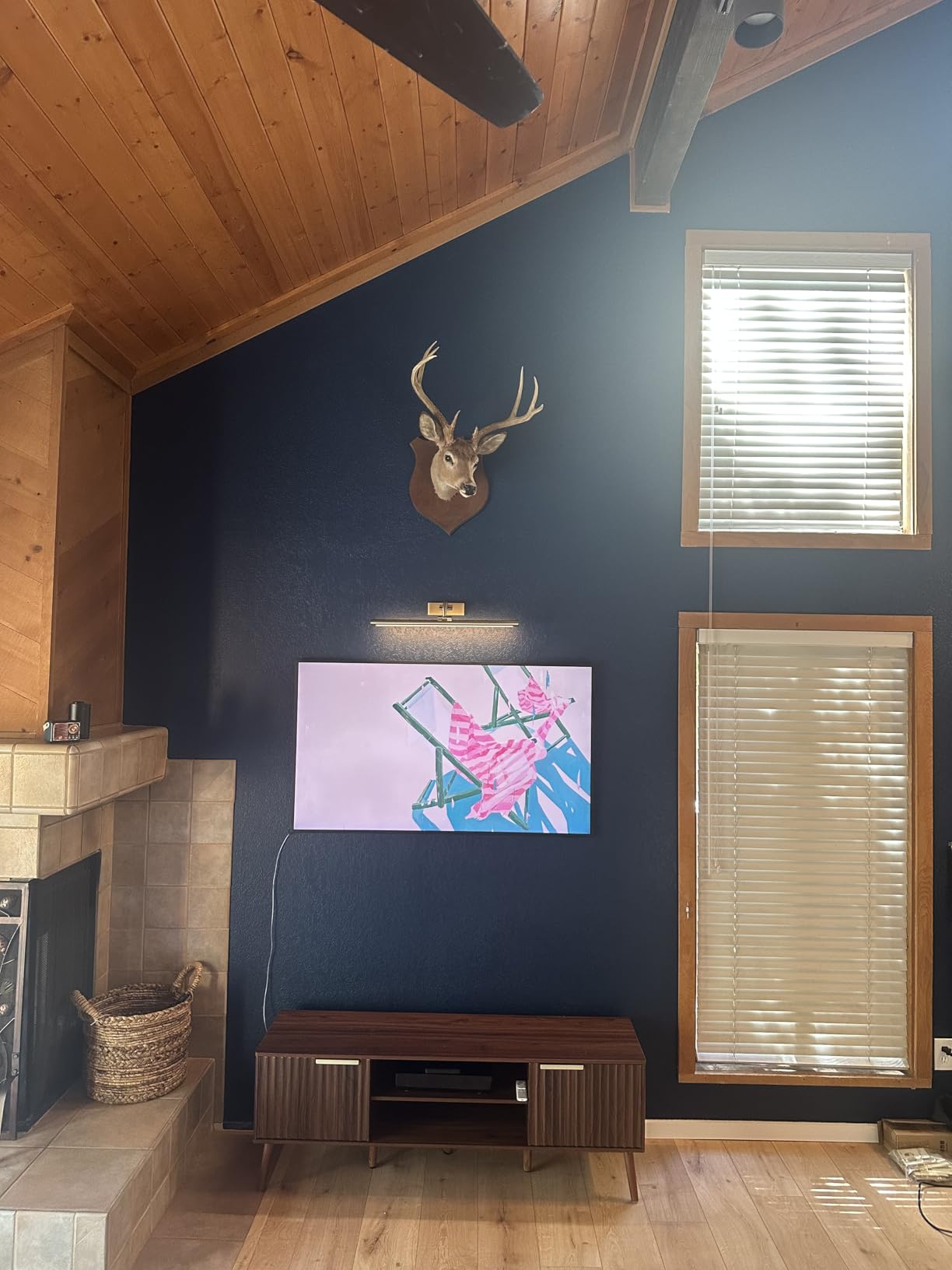
Installation is the other reason to like this one. The One Connect box runs a single cable to the panel, and the included Slim Fit wall mount hangs the set nearly flush to the wall. On an 85-inch screen that is the difference between a clean install and a box of cables hanging behind the panel. Four HDMI ports, VESA 600 x 400 mm, 120Hz.
Art Mode is not a theater feature, but it changes how a room feels when the TV is off. The Samsung Art Store holds 2500+ works, and Pantone Validated ArtfulColor is tuned to reproduce artwork color accurately. Bezel and mat options let the set read as framed art rather than electronics.
Room size and installation for the 85-inch LS03D
This set is 75 inches wide and 44.2 inches high, weighing 100.1 pounds. Plan seating 10 to 13 feet back to make 85 inches comfortable. At 100.1 pounds it is lighter than the 98-inch QN90F but still firmly a two-person mount.
The One Connect box can sit in a nearby cabinet or closet, which frees the wall cavity to be solid and flat. That matters at this size, because the Slim Fit mount needs a consistent surface and no cable chase behind the panel.
Where The Frame is the wrong choice
Picture quality trails OLED and mini-LED sets at a comparable class. It is an edge-lit QLED, so black level in a fully dark room sits well above what the S90F delivers, and shadow detail is correspondingly softer. In a bright room that costs you little. In a blacked-out room it costs you the thing you built the room for.
The built-in 2.0.2-channel audio is weak for a screen this size, and reviews flag it. Tizen is also reported as occasionally slow, needing manual restarts. And the Art Store is a paid subscription, which some owners discover only after the set is on the wall.
4. Samsung 75-Inch Neo QLED QN70F – Best Value Mini LED
Samsung 75-Inch Class Neo QLED QN70F 4K Mini LED Smart TV (2025 Model) NQ4 AI Gen2 Processor, Quantum Matrix Technology Slim, Motion Xcelerator 144Hz, Samsung Vision AI, Alexa Built-in
75-inch Mini LED Neo QLED
3000:1 native contrast
144Hz VRR, 4 HDMI ports
2.1CH 20W audio
Pros
- Mini LED precision contrast at a mid-range tier
- NQ4 AI Gen2 processor with 20 neural networks
- VRR gaming up to 4K 144Hz across 4 HDMI ports
- AI SDR-to-HDR conversion brightens older content
Cons
- 20W 2.1CH audio is thin for a theater
- QLED cannot match OLED black levels in a dark room
- 68.1 pounds needs care during wall mounting
The 75-inch QN70F is the set we would recommend to someone building a first real theater room on a sensible budget. It brings genuine mini-LED backlighting with Quantum Matrix Technology Slim, which is the panel family that makes dark-room contrast work without a full OLED price tag.
Owners rate it 4.4 out of 5 across 558 reviews. The headline number is 3000:1 native contrast, and the mini-LED precision is what separates it from a conventional edge-lit set of the same size. For a room that is dark but not pitch black, that is the compromise that actually works.
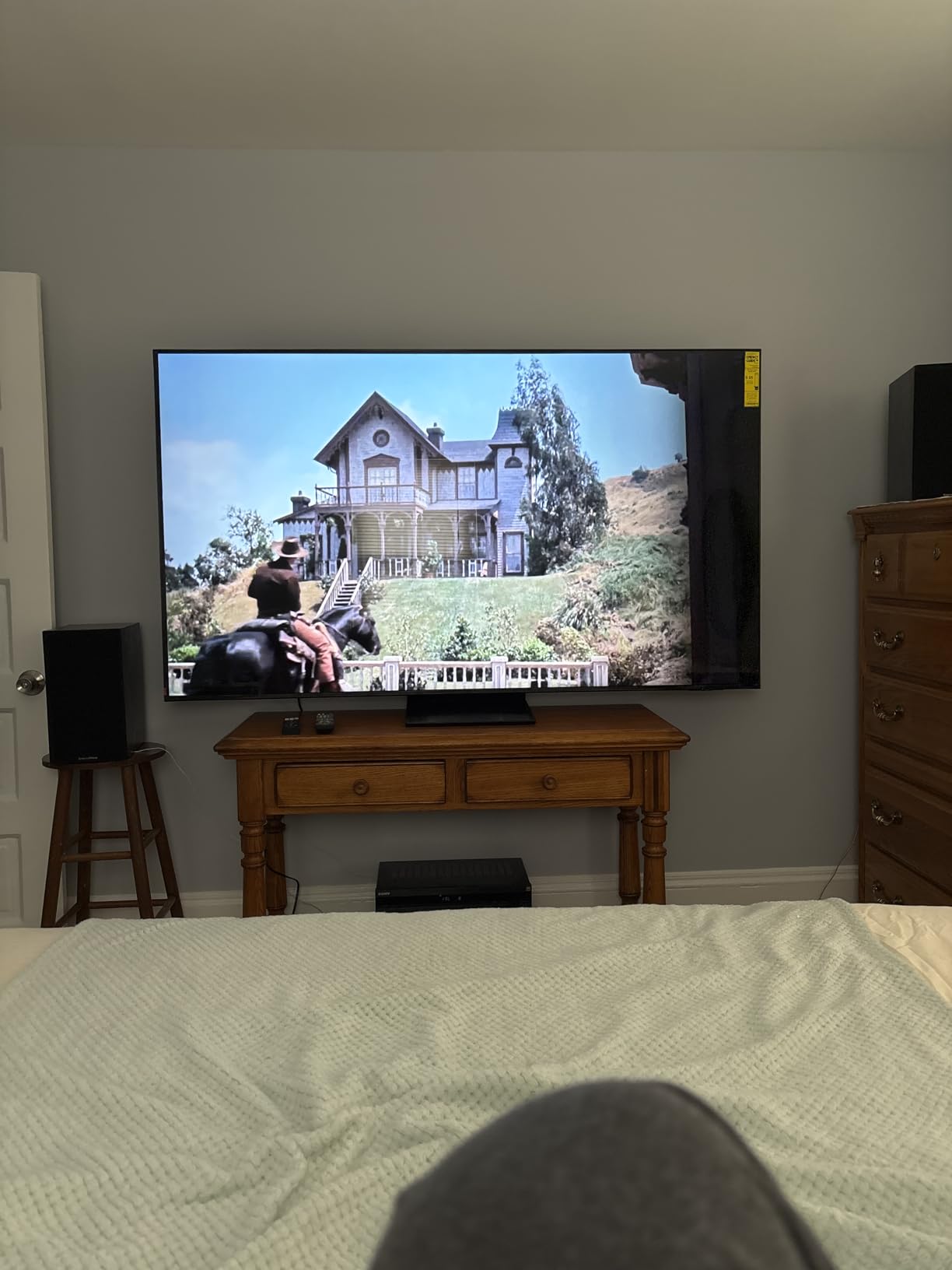
The processor here is NQ4 AI Gen2 with 20 neural networks rather than the 128 of the Gen3 chip, and it uses scene analysis to push brightness scene by scene. It also converts SDR to HDR-like quality. Upscaling is less capable than the flagship, but for streaming and broadcast sources in a theater room it holds up.
Four HDMI ports and Motion Xcelerator 144Hz with VRR up to 4K 144Hz put it level with much larger sets on gaming. The unusual addition for a theater build is content: Samsung TV Plus offers more than 400 premium channels free with 2,700+ free channels in total, which is something to have on during a calibration marathon.

Room size and seating for the 75-inch QN70F
It measures 66 inches wide by 40 inches high and weighs 68.1 pounds, so it is one of the more manageable large screens here. VESA 400 x 400 mm. Seat viewers roughly 8 to 11 feet back and 75 inches fills that space without anyone in the second row feeling exiled.
This is also the size that suits a room being converted rather than built. At 75 inches you get a genuine theater-scale image in a room with a normal ceiling height, without the structural work an 85- or 98-inch panel demands.
Where the QN70F is the wrong choice
The 2.1-channel 20-watt audio is the weak point, and most theater-minded owners add a soundbar. Reviews describe it as thin for cinema sound, which is accurate. Budget for external audio with this set rather than planning to use the built-in speakers.
In a fully darkened room, a QLED panel cannot match OLED black levels, no matter how good the backlight is. If your room can be made truly dark and you mostly watch films and streaming series, step up to the S90F instead.
5. Samsung 85-Inch M80H Mini LED – Best 2026 Large-Screen Pick
Samsung 85-Inch Class M80H Series, Mini LED, 4K, Smart TV, 2026 Model
85-inch Mini LED panel
Supersize Picture Enhancer
5.1-channel audio, 3 HDMI ports
120Hz native refresh
Pros
- Supersize Picture Enhancer tuned for very large panels
- Pure Spectrum Color with one billion colors
- 5.1-channel audio is unusual at this size
- Seven years of EU spare part availability
- Motion Xcelerator 144Hz with VRR
Cons
- 120Hz native panel is below the 144Hz flagships
- Only 3 HDMI ports for a loaded theater
- Refresh rate spec varies from the marketing name
The M80H is the most interesting set in this guide for 2026 buyers, because it does something no other Samsung here does: it processes the image differently specifically because the screen is 85 inches. The Supersize Picture Enhancer applies extra noise reduction and contrast work tuned to the largest panels, which is exactly the kind of detail that gets lost in a generic roundup.
Owners rate it 4.3 out of 5 across 309 reviews, and the Mini LED backlight with AI Mode is the headline. Real-time scene analysis through the NQ4 AI Gen2 processor adjusts brightness per scene, and Auto HDR Remastering converts SDR sources to HDR-like output with brighter highlights.
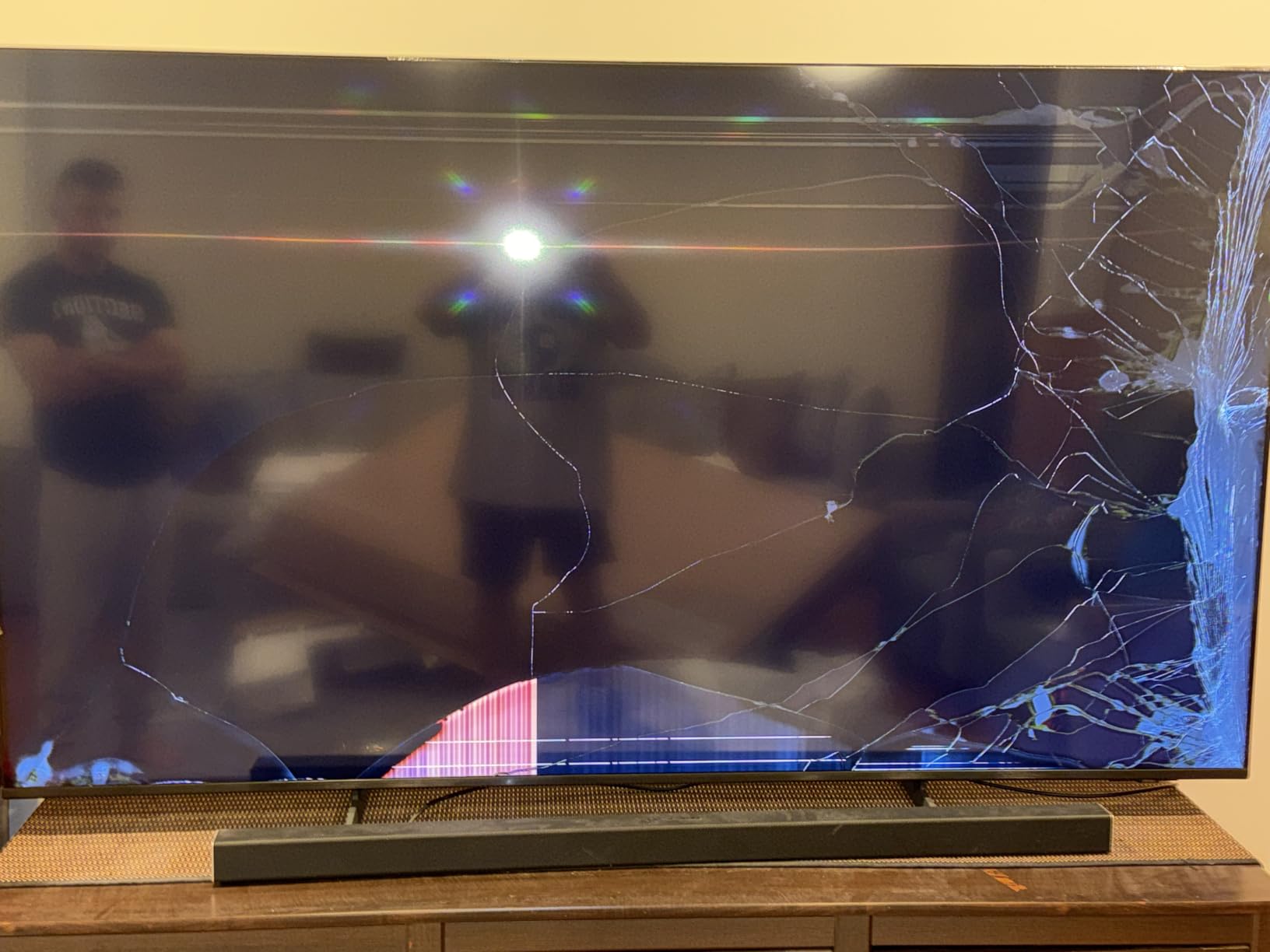
Audio is the surprise. A 5.1-channel built-in system is unusual at 85 inches and unusual at this tier, and it makes the set more standalone than most. Pure Spectrum Color claims one billion colors for saturated reds and deep blues, which matters on a large panel where colors wash out faster.
Two specifications deserve attention before you commit. The native panel refresh rate is 120Hz even though the motion feature is marketed as Motion Xcelerator 144Hz, so VRR tops out below the 144Hz flagships. And there are only 3 HDMI ports, which is tight for a theater room with a player, a console, a soundbar and a tuner.
Room size and installation for the 85-inch M80H
It is 74.4 inches wide, 44.6 inches high and weighs 63.7 pounds, which is light for an 85-inch panel. VESA 400 x 300 mm. That weight makes it the easiest large Samsung here to handle, and it is a real practical advantage when you are mounting a screen this size alone.
Unlike The Frame, this set does not list a One Connect box, so plan a proper cable route. Seat viewers 10 to 13 feet back. For long-term ownership, the listed seven years of EU spare part availability is worth noting in a room you intend to keep for a decade.
Where the M80H is the wrong choice
The 3-port HDMI count is the one that bites. In a theater room you will want a player, a console and an AVR or soundbar connected at the same time, and that leaves nothing spare. Add an external switch and you have spent the saving.
The 120Hz native panel also means it is not the right set for a room where fast sports or competitive gaming is the main event. And brightness is not quoted as a headline number here, so in a genuinely bright media room the QN90F is the safer bet.
6. Samsung 85-Inch Crystal UHD U8000H – Budget Big-Screen Theater Build
Samsung 85-Inch Class U8000H Series Crystal UHD, 4K, Smart TV, 2026 Model
85-inch Crystal UHD 4K LED
300 nit peak brightness
60Hz native refresh
OTS Lite 20W audio
Pros
- 85 inches of 4K screen at an entry tier
- Crystal Processor 4K upscales lower sources
- Color Booster intensifies on-screen color
- 750+ subscription-free Samsung TV Plus channels
- 62.7 pounds is light for the size
Cons
- 300 nit peak brightness is dim for a theater
- 60Hz refresh limits fast motion clarity
- 20W 2.0 audio and only 3 HDMI ports
Sometimes the honest answer to a large-screen question is that size is the point. The 85-inch U8000H costs less than most 65-inch OLEDs and gives you a genuine theater-scale image. At 1,093 reviews it is also the most reviewed set in this guide, which makes its strengths and weaknesses unusually well documented.
Owners rate it 4.2 out of 5. The recurring theme in reviews is exactly what you would expect: buyers like the 85 inches for the money, like the Crystal Processor upscaling, and like the Color Booster, while almost everyone notes the brightness ceiling. At 300 nits peak, this is a screen for a room you can genuinely darken.
That constraint is not fatal in a blacked-out room. A 300-nit panel in a dark theater with bias lighting behind the screen looks considerably better than a 2000-nit panel in a sunlit lounge, because you are not fighting the room. The signal chain is otherwise complete: HDR10, HDR10+ and HLG support, eARC and optical audio output, and 3 HDMI ports.
At 62.7 pounds without the stand and the same 74.4 by 44.6 inch footprint as the M80H, it is a drop-in replacement if you later decide to upgrade the panel in the same wall cavity. VESA 400 x 300 mm. Annual energy consumption is listed at 185 kilowatt hours.
Room size and viewing distance for the 85-inch U8000H
This is the set to consider if your theater room is 14 feet wide or more and the last row sits 13 feet back. Below that, 85 inches is punishing. Plan for blackout curtains, because the picture depends on a dark room far more than the bigger models do.
Bias lighting behind the panel is worth adding. On a dim LED screen, a cool backlight reduces eye strain during a long film and improves the perceived contrast of the letterbox bars without adding glare.
Where the U8000H is the wrong choice
The 60Hz native refresh rate is the one that will age fastest. Motion Xcelerator estimates frame transitions, but it cannot create frames that the panel does not have, so fast sports and high-action sequences lose clarity compared with the 120Hz and 144Hz sets in this guide.
Audio is 20 watts across 2.0 channels with OTS Lite object tracking, which is far short of cinema sound, and 3 HDMI ports is tight for a fully wired theater. Plan both an external sound system and possibly an input switch before this set goes on the wall.
7. Samsung 65-Inch M70H Mini LED – Best Mini LED for a Small Theater
Samsung 65-Inch Class M70H Series, Mini LED, 4K, Smart TV, 2026 Model
65-inch Mini LED 4K
Supreme Mini LED Dimming
120Hz motion, 3 HDMI ports
Gaming Hub and Soccer Mode
Pros
- Mini LED backlight at an entry price
- Pure Color Spectrum with one billion colors
- Supreme Mini LED Dimming for deep contrast
- Three HDMI ports fit a theater source stack
- Best Sellers Rank #1 in QLED TVs
Cons
- Native 60Hz panel caps motion clarity
- Two-channel audio with no power rating
- Glossy screen reflects ambient light
If your theater room is on the smaller side, the 65-inch M70H solves a problem the rest of this list cannot. It is a genuine mini-LED set with Supreme Mini LED Dimming at 65 inches, which is unusual at the entry level. The Mini LED Processor 4K handles brighter highlights and deeper blacks than a conventional budget panel.
Owners rate it 4.2 out of 5 across 638 reviews, and it currently sits at number one in the QLED TVs category on Amazon, which is why we see it recommended so often. Pure Color Spectrum with one billion colors is the color feature, and in a small dark room the dimming does more for perceived contrast than raw brightness would.

Two features stand out for theater use. First, three HDMI ports, which is enough for a player, a console and a soundbar at the same time without a switch. Second, the Gaming Hub, which pulls console, cloud and app games into one place alongside Samsung TV Plus free content.
Soccer Mode is aimed squarely at sports rather than films, promising noticeably cleaner motion and richer greens.
Room size and seating for the 65-inch M70H
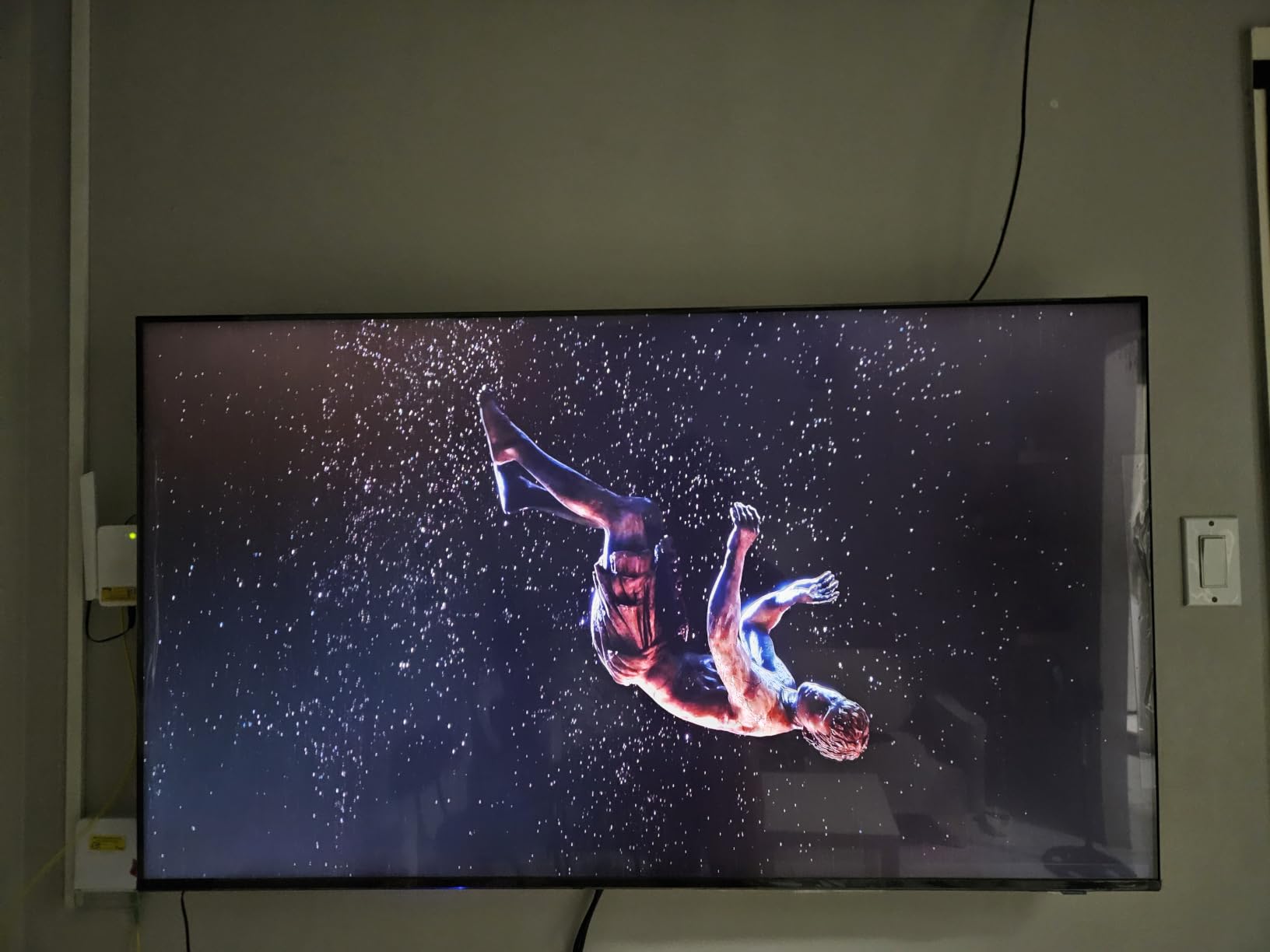
At 56.9 inches wide, 34.7 inches high and 31.7 pounds, this is the easiest set here to install and the easiest to move. VESA 200 x 200 mm. It suits a room 10 by 12 feet with 7 to 9 feet of seating distance, which is the most common home theater footprint there is.
Because it is light and uses a standard small VESA pattern, it is also the set most people will end up on a stand rather than a wall. That flexibility is worth a lot in a room you may still be finishing.
Where the M70H is the wrong choice
The native panel is 60Hz, and Motion Xcelerator Turbo+ cannot change that. In a room where a PC or a high-frame-rate console is a primary use, the 144Hz S90F is a much better fit despite costing more.
The glossy screen finish reflects ambient light, so in a bright room the mini-LED brightness advantage is harder to see. Two-channel built-in audio with no published power rating means a soundbar is not optional here.
8. Samsung 65-Inch Crystal UHD U8000H – Best First Theater Screen
Samsung 65-Inch Class Crystal UHD U8000H Series Samsung Vision AI Smart TV (2026 Model, 65U8000H) Processor 4K, Endless Free Content, Motion Xcelerator, Color Booster, Alexa Built-in
65-inch Crystal UHD 4K LED
400 nit peak brightness
4000:1 contrast
HDMI-CEC and eARC
Pros
- Very black levels for the tier in a dim room
- HDMI-CEC and eARC let one remote run the whole system
- Quick setup with the account step skippable
- Fast software with quick app launches
- 4000:1 contrast ratio
Cons
- Sparse app store with no HBO or Paramount+
- Default picture settings need real tuning
- Performs poorly in bright daylight
The 65-inch U8000H is the set to buy if you are building your first home theater and want to spend the money on the room and the sound instead of the panel. At 400 nits peak and a listed 4000:1 contrast ratio, it is more capable in a dark room than its entry position suggests. Owners specifically call out how black the blacks look in evening viewing.
That is the single most useful thing this set does. In a dim room, a screen that can go properly dark at 65 inches creates a more cinematic image than a brighter set in the wrong lighting. Several owners also praise the ambient-light adaptive brightness for doing the right thing as the room changes through the evening.
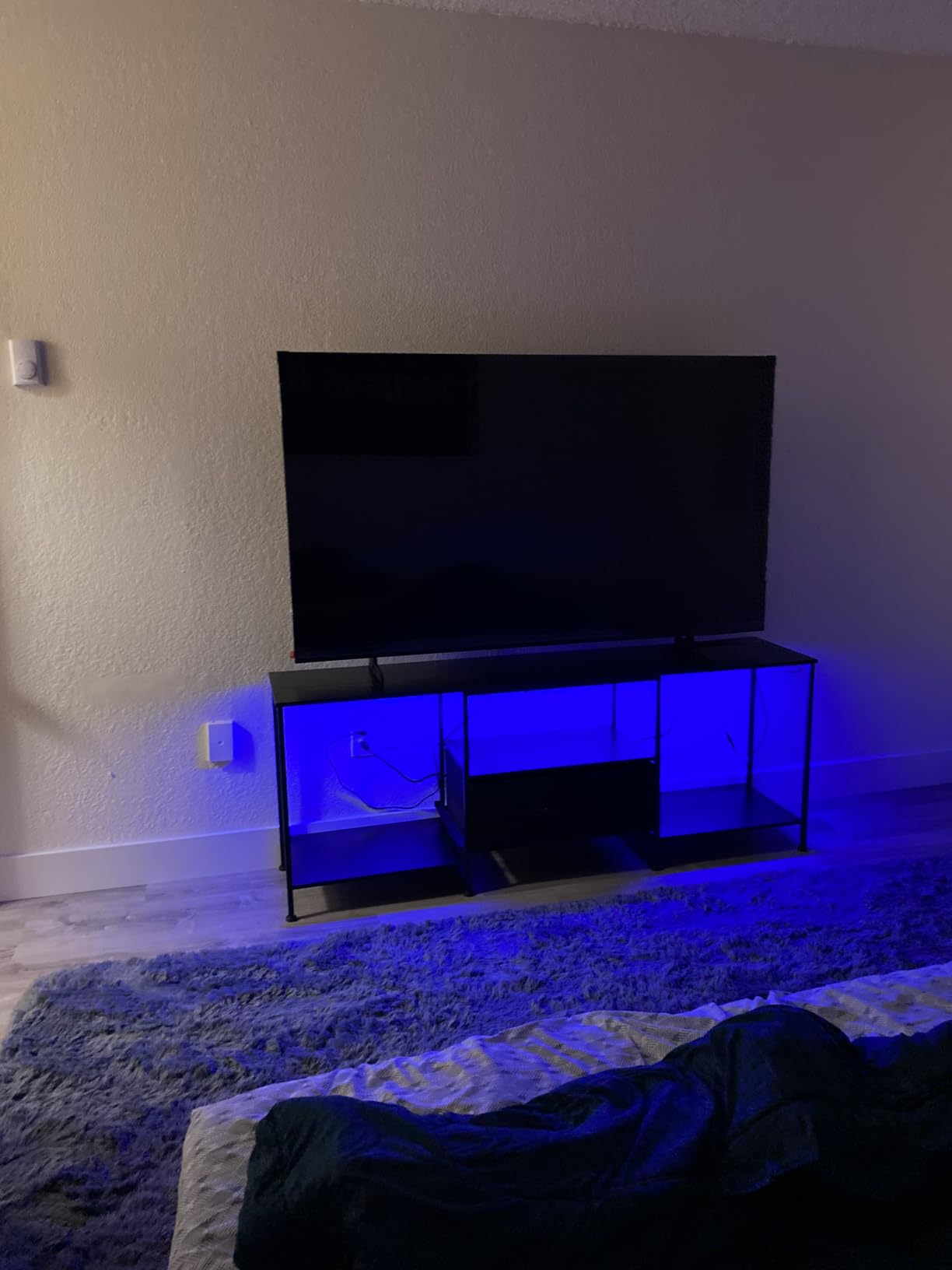
The integration story is what separates it from other budget sets. Full HDMI-CEC control of source devices and soundbars, plus HDMI eARC, means one remote can run a streaming box, the TV and a soundbar. Owners report doing exactly that with an Apple TV and a soundbar. There is a 2-year manufacturer warranty, and a Bluetooth radio is included, which many competing sets omit.
The Crystal Processor handles 4K upscaling and Color Booster, and the set decodes H.264, HEVC, VP9 and AV1. Three HDMI ports, two USB ports, Wi-Fi 5 and Ethernet cover the basics of a theater source stack without needing a switch.
Room size and viewing distance for the 65-inch U8000H
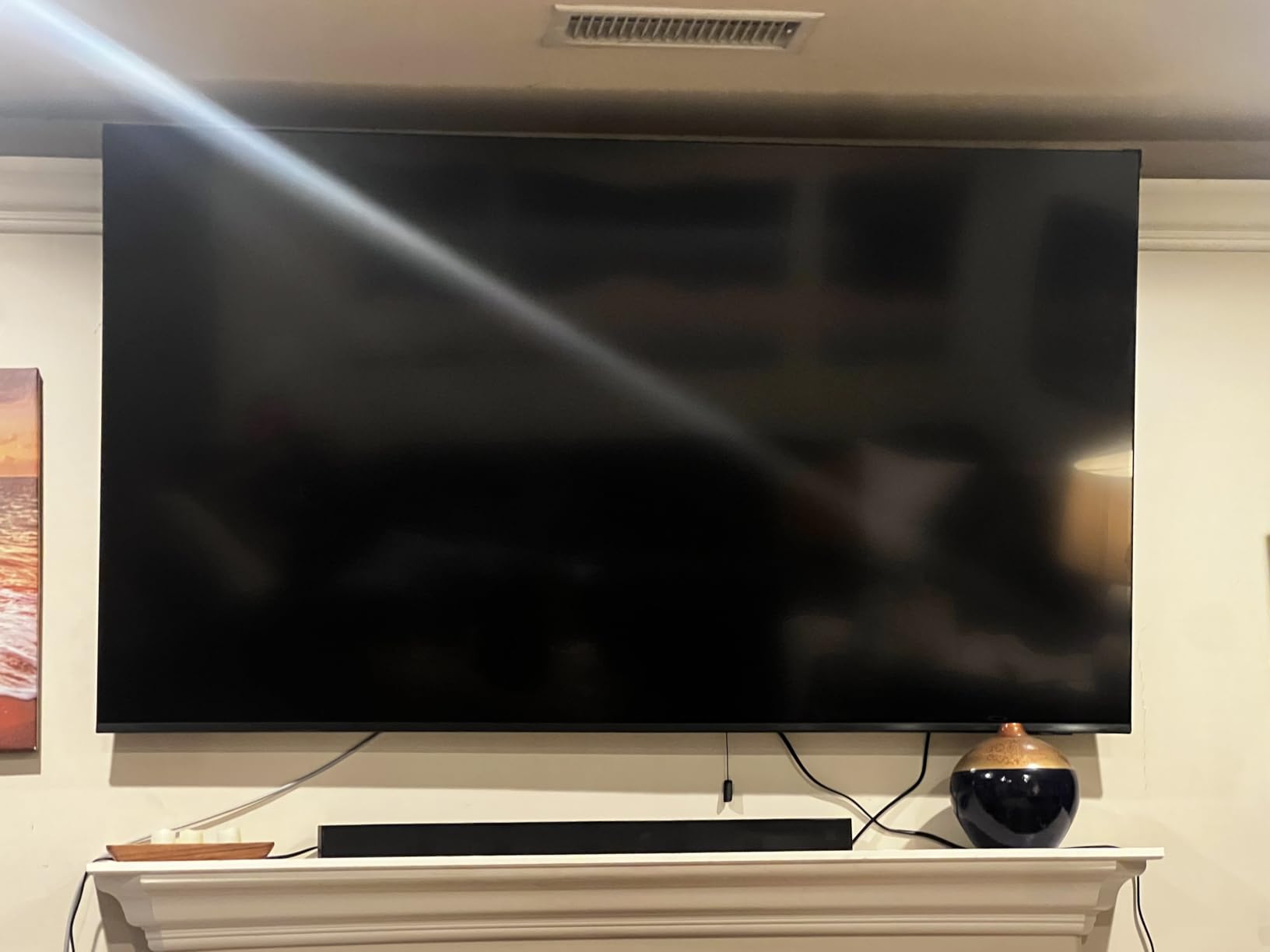
It measures 56.9 inches wide, 34.7 inches high and weighs 31.8 pounds. Seat viewers 7 to 9 feet back in a room around 10 by 12 feet. That is the same footprint as the M70H, so you are choosing between mini-LED contrast and Crystal UHD accuracy on identical dimensions.
Because it is the same screen size as slot seven, this is a clean either-or decision: pay more for the mini-LED backlight and a 120Hz motion layer, or spend less and get a better integrated control story. Owners of this set also report good over-the-air reception and ATSC-3.0 support, which matters if you still watch broadcast television.
Where the 65-inch U8000H is the wrong choice
Owners report that colors skew toward primaries and lose detail in bright daylight, so it is a dim-room set, not a sunroom set. The default picture settings are also described as cartoonish, and the picture menu needs contrast and sharpness boosters turned down before it looks right. Budget for that calibration session.
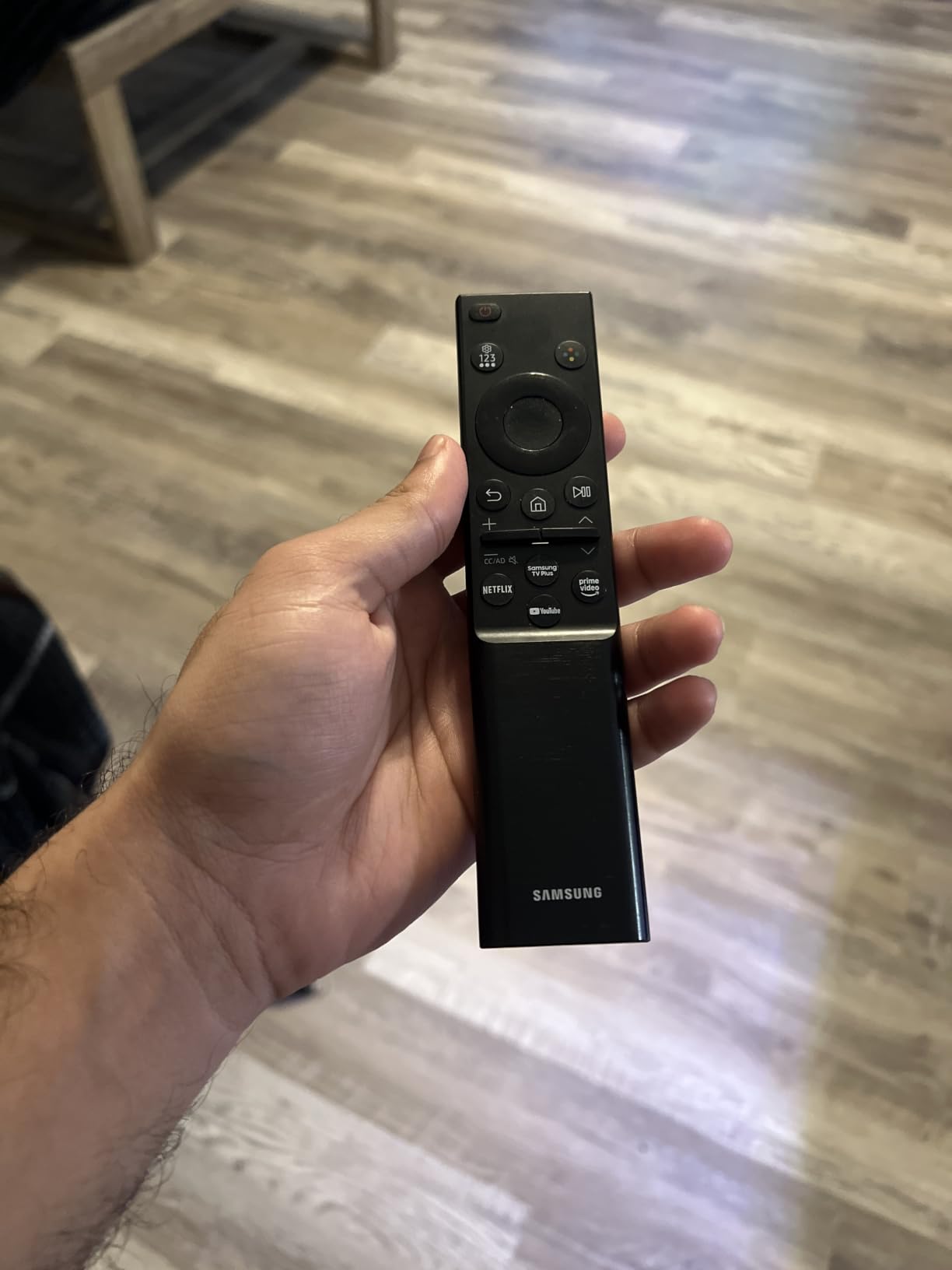
The app inventory is the most common complaint: no HBO, Paramount+ or Steam Link in the TV’s own store, which means external streaming hardware. Input switching also goes through the home screen menu rather than a dedicated remote button, and the small remote has an awkward volume control.
Samsung TV vs Projector for a Home Theater in 2026
This is the loudest argument in every home-theater forum, and it is the decision that comes before any model choice. The honest answer is that a large TV wins almost every practical category, while a projector wins exactly one: raw image size and immersion.
The forum consensus leans TV. Buyers who installed an 85-inch set above a 120-inch projector report that the TV feels bigger because it is brighter, and the general view is that 85-inch sets now make sense in a way they did not a few years ago. That matches our own read of the specs here: a 2000-nit panel in a dark room is simply easier to watch than a lower-brightness projected image.
The counter-case is real. Projector owners argue that 120 inches of projected image is substantially larger than even a 98-inch LCD, and that the sense of scale in a purpose-built room is something no television delivers. If your room is long enough for a proper throw distance and you can control ambient light, that argument holds.
What tips most dedicated rooms toward a TV is maintenance and setup. A projector needs a darkened room, a screen surface, a ceiling or table mount, a cable route for power and signal, and periodic lamp and filter attention. A TV needs a prepared wall and a wall or stand. In a room you use every week, that difference in friction is worth more than the extra diagonal inches.
Our practical rule: if your room is under 16 feet deep, buy the largest TV that fits. Beyond that, and with genuinely controlled lighting, a projector is a legitimate choice. And plenty of builders run both, using the TV for everyday viewing and the projector for feature films.
How to Choose a Samsung TV for a Theater Room
Panel technology for a dark room
Three panel families matter for theater use. OLED, and specifically Samsung’s QD-OLED S-series, emits light per pixel, which produces perfect blacks and effectively infinite contrast. It is the correct choice for a room you can fully darken, and the S90F is the Samsung version of it.
Mini-LED, which covers the QN-series Neo QLED and the M-series, adds thousands of tiny backlights behind the panel. That produces far higher brightness and better contrast than a conventional edge-lit set, which is why the QN90F and QN70F are our picks for rooms that are dark but not black. Conventional edge-lit QLED, as on The Frame, is a brightness and glare play rather than a contrast play.
Screen size and viewing distance
There is a widely used rule that a 4K screen should fill roughly 30 degrees of your visual field, which puts an 85-inch panel at about 10 to 13 feet and a 98-inch panel at 11 to 15 feet. Sit closer than that and the picture is impressive but tiring over a two-hour film.
Also measure before you commit. The 98-inch QN90F is 86 inches wide and 51.4 inches tall, so check doorways, hallways and stairwells, not just the wall. A 98-inch set that will not reach the room is not a feature.
Anti-glare and the Glare Free coating
Two different technologies appear under similar names. The Glare Free coating on the QN90F is an anti-reflection treatment that reduces reflections without adding haze. The Frame’s matte panel is UL-certified and behaves closer to a printed surface, diffusing reflection across the whole screen at the cost of a little contrast in a dark room.
If your room can be made properly dark, prioritize contrast and take the S90F. If light leaks in and cannot be controlled, the matte panel is the reason to accept the Frame’s more modest picture.
The Dolby Vision reality check
Samsung TVs do not support Dolby Vision. They support HDR10+ and HLG. If your streaming content is served in Dolby Vision, you will be watching a compatible HDR format instead, which usually means HDR10 mapped to your screen rather than a Dolby Vision profile.
On a bright Neo QLED in a bright room, that gap is small, because brightness mapping carries a lot of the load. On an OLED in a blacked-out room, the gap is larger, because the tone mapping Dolby Vision would do is exactly what a dark room reveals. This is the most common reason theater builders on r/hometheater end up outside Samsung, and it is a legitimate reason, particularly for Xbox Series X owners.
Audio: pairing a soundbar or Atmos system
No built-in Samsung system in this guide is a substitute for external audio at 85 inches and above. The strongest built-in result here is the QN90F with Object Tracking Sound+, Dolby Atmos, 5.1 channels and 60 watts, and the M80H’s 5.1-channel array. Everything else sits at 2.0 or 2.1 channels.
Size the audio to the screen rather than to the room. A 65-inch set in a small room is fine with a compact Atmos soundbar. An 85-inch or 98-inch panel needs a system with a genuine subwoofer and enough output to fill a larger space, and the QN90F’s 60 watts is a reasonable floor rather than a target.
Q-Symphony pairs a Samsung soundbar with the TV’s own speakers as additional channels rather than replacing them. It is genuinely useful for dialogue placement, though you will get more from a dedicated system with a real subwoofer. For a room this size, budget for a receiver and separate speakers rather than a soundbar if you can.
Installation checklist for 85-inch and up
Before the panel arrives, confirm the wall is structurally sound for a mount rated to 100 pounds or more. Check that the panel dimensions fit the route into the room, including door and stair widths, and decide on cable concealment rather than after the mount is up.
Set the room up for the picture. Blackout curtains make a larger difference to perceived quality than any upgrade within a model line. Add bias lighting behind the panel for long sessions. Leave ventilation clearance at the back, and plan your HDMI and power runs before the panel is on the wall.
Where Samsung Loses to LG, Sony and TCL
Honest tier comparisons build more trust than a straight affiliate roundup, and this is where Samsung is not the strongest option. The same pattern shows up in the kitchen: our Samsung vs LG refrigerator comparison shows Samsung falling short on niche door features while remaining competitive on core capacity, and the television catalog follows a similar shape of strong fundamentals with a few format and software gaps.
Against LG in a dark room, LG wins on Dolby Vision support and on the brightness-to-black trade-off in some tiers. Forum posters name this as a primary reason to look elsewhere, and it is a format gap rather than a quality judgment.
Against TCL and Hisense at the value tier, those brands have made real progress on Mini LED, and forum consensus increasingly names them as the top of the hill for Mini LED picture quality. If your room is bright and your budget is fixed, a competing Mini-LED set can deliver more contrast per pound spent. If you also need the kitchen to keep up, our Bosch vs Samsung induction range guide applies the same tier logic to cooking hardware.
Against Sony, motion processing remains Sony’s stronger suit. If you watch a lot of live sport and fast action rather than films, Sony’s processing is the safer recommendation. And if your room is a dedicated dark theater and format support is non-negotiable, the absence of Dolby Vision across the entire Samsung catalog is the single clearest reason to choose another brand.
None of that makes Samsung a poor choice. It makes it a choice with a specific shape: strong panels, strong brightness options, the best anti-glare option at 85 inches, and a format limitation to plan around.
Frequently Asked Questions
Is an 85-inch TV better than a projector for my home theater?
For most rooms, yes. An 85-inch TV is brighter, needs less maintenance, has no lamp to replace and installs more simply than a projected image. A projector wins on raw image size, so it makes more sense in a long room with controlled lighting. Forum consensus leans TV for rooms under about 16 feet deep.
How far should I sit from an 85-inch Samsung TV?
Roughly 10 to 13 feet for an 85-inch panel, and 11 to 15 feet for a 98-inch panel. The goal is a 4K image that fills about 30 degrees of your visual field. Sit closer and the picture is impressive but tiring over a long film. Measure the room before ordering, since a large panel needs a clear delivery route.
What is better for home theater, TV or projector?
Choose a large TV if your room is under 16 feet deep, if you want low maintenance, or if you do not need the screen to disappear when the lights are on. Choose a projector if your room is long enough for a proper throw distance, you can control ambient light, and maximum image size matters more than brightness.
Which Samsung TV screen is best for a home theater room?
In a room you can fully darken, an OLED panel such as the 65-inch S90F gives the best blacks and contrast. In a room that stays somewhat lit, a mini-LED Neo QLED such as the 75-inch QN70F or 98-inch QN90F provides higher brightness. In a bright room, The Frame’s matte panel handles glare better than any other set in this guide.
Which Samsung TV has the best sound quality?
The 98-inch QN90F has the strongest built-in system, with Object Tracking Sound+, Dolby Atmos, 5.1 channels and 60 watts of output, including upward-firing speakers. The 85-inch M80H also offers 5.1 channels. At smaller sizes, built-in audio is 2.0 or 2.1 channels, so a soundbar or Atmos system is worth adding.
Is Samsung a good brand for home theater?
Yes, with one significant limitation. Samsung offers strong mini-LED brightness options, the best anti-glare panel at 85 inches, and One Connect boxes that make large wall mounts cleaner. The limitation is format support: Samsung TVs do not offer Dolby Vision, using HDR10+ and HLG instead, which matters most in a fully darkened room.
The Best Samsung TVs for Home Theaters in 2026: Final Verdict
For a dedicated darkened theater in 2026, the Samsung 98-inch Neo QLED QN90F is our choice. 2000 nits of peak brightness, a Glare Free coating, Object Tracking Sound+ with Dolby Atmos and four HDMI ports make it the most complete theater screen Samsung builds, and it tolerates a room that is not perfectly dark better than anything else here.
If your room goes fully black, take the 65-inch OLED S90F instead and accept the glossy screen. For a sunlit media room, the 85-inch The Frame’s matte panel is the one that solves glare rather than negotiating with it. The 75-inch QN70F is the sensible value pick, and the 85-inch M80H is the most interesting 2026 large screen thanks to its large-panel specific processing.
Whichever you pick, plan the room before the panel. Blackout curtains, bias lighting, a proper mounting plan and external audio will contribute more to a cinematic result than any step within a model line. For the rest of your theater build, start with the seating and layout decisions in our home theater sofa guide.