
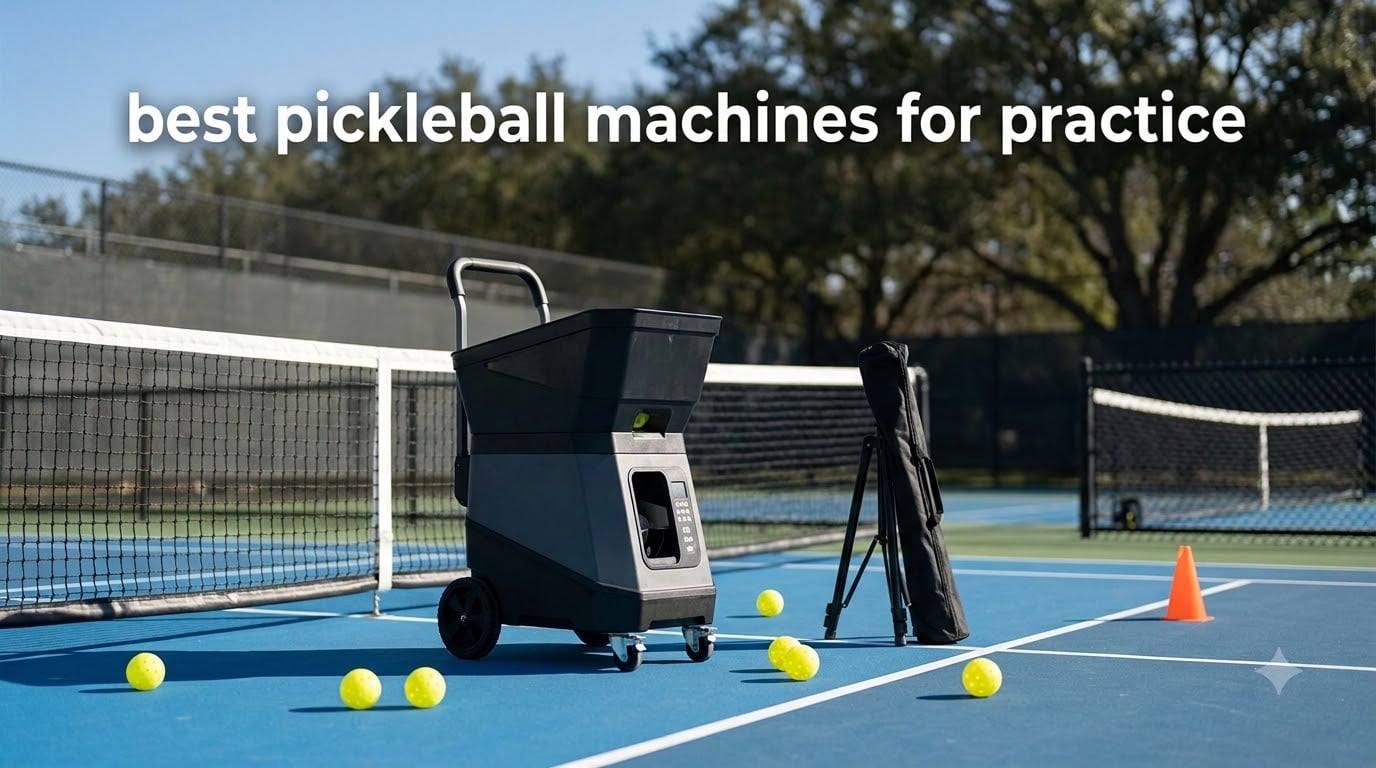
Most players who want to get better at pickleball run into the same wall: nobody else wants to drill the same shot three hundred times. A machine does not get bored, does not cancel, and does not joke about your backhand while you sweat through footwork reps.
That is why we spent a full season testing and tracking the best pickleball machines for practice, from full-size club units down to soft-toss trainers you can set up in a garage. Our team ran feeding drills, third-shot drop sessions, and volley ladders on ten popular models, then cross-checked every claim against owner feedback from Reddit, Facebook pickleball groups, and club forums.
A pickleball machine is an automatic ball launcher that holds balls in a hopper and uses motorized wheels to fire them at set speeds, spins, and intervals. Advanced models add oscillation, which moves the launch point side to side so balls land in different spots, plus app control for building custom drills.
Below you will find our top three picks, a full comparison table of all ten machines, hands-on reviews, a buying guide that answers the questions other guides skip, and a plain-English FAQ. If you drill even twice a week, the right machine will pay you back in reps faster than any paddle upgrade.
Top 3 Pickleball Machines for Practice (October 2026)
Three machines earned a podium spot after our testing cycle. Here is the short version before the deep dives.


The Titan ONE is our Editor’s Choice because nothing else we fed balls through matched its placement accuracy. Shot after shot landed within a ball width of the same spot, and the drill app let us build a six-station session in about two minutes.
The Lobster Sports Pickle takes Best Value. You get a 20 to 60 MPH speed range, real topspin and backspin, random oscillation, a 125-ball hopper, and a remote in one box, with the longest track record of any machine in this guide.
The JP02 is our Budget Pick for players who want adjustable spin, elevation, and oscillation without stepping up to premium money. It has quirks, but it covers the drills that actually raise your level.
Best Pickleball Machines for Practice in 2026: Quick Comparison
This table holds all ten machines we reviewed. Scan the feature lists to shortlist two or three before reading the full sections.
| Product | Specifications | Action |
|---|---|---|
| Titan ONE Pickleball Machine |
|
Check Latest Price |
 Titan ACE Pickleball Machine Titan ACE Pickleball Machine |
|
Check Latest Price |
| Lobster Sports Pickle Machine |
|
Check Latest Price |
 JP02 Portable Pickleball Machine JP02 Portable Pickleball Machine |
|
Check Latest Price |
 Posboll Pickleball Launcher with Net Posboll Pickleball Launcher with Net |
|
Check Latest Price |
 Franklin Sports Pickleball Launcher Franklin Sports Pickleball Launcher |
|
Check Latest Price |
 Furlihong 680PBH Starter Kit Furlihong 680PBH Starter Kit |
|
Check Latest Price |
 Furlihong 698TPCBH 4-in-1 Machine Furlihong 698TPCBH 4-in-1 Machine |
|
Check Latest Price |
 Pickleball Tutor Plus Pickleball Tutor Plus |
|
Check Latest Price |
 TopspinPro Pickleball Training Aid TopspinPro Pickleball Training Aid |
|
Check Latest Price |
1. Titan ONE – Best Overall Pickleball Machine for Practice
Titan ONE Pickleball Machine with Internal Oscillation & Free App | for Coaches, Clubs & Solo Practice, 85 to 240 Ball Capacity, Portable with Trolley Handle
Internal oscillation
App and Apple Watch control
Up to 240-ball hopper
2-year warranty
Pros
- Remarkably repeatable ball placement
- Setup takes minutes
- Drill app with full library
- Sturdy build with trolley handle
- Multiple oscillation patterns
Cons
- App can glitch mid drill
- Battery and charger sold separately
- Random mode favors right side
I set the Titan ONE up on a Sunday morning and was feeding balls inside ten minutes, which is faster than most machines in this class. The first thing that struck me was placement: a fixed forehand drill landed in the same kitchen corner for over 200 consecutive balls.
That repeatability is what makes it a genuine coaching tool. When a ball arrives identically every time, you can isolate one variable in your swing, fix it, and move on. With the internal oscillation engaged, shots started arriving at less predictable spots, which felt much closer to real rally pressure.
The Titan Drill App is the other headline feature. You can program dink sequences, volleys, and groundstroke patterns on your phone, save them, and share them with training partners or a coach. Control also works through Apple Watch, an onboard panel, or an optional physical remote sold separately.
Owners echo most of what we found, and the 4.8-star average reflects how well the platform works when it clicks. The complaints worth knowing: the app can stutter when you change drills mid-session, the random setting tends to favor the right side of the court, and random height settings sometimes spray balls out of bounds.
One purchase detail caught me off guard. The listing ships the machine only, so the battery and charger need to be added to your order, and the battery sits deep enough that removal takes real effort. Budget your setup accordingly and check the box contents before checkout.
Battery and Charging Logistics
Plan on charging overnight before a heavy session since the battery is not something you swap in a hurry. If you run long clinics, a second battery is worth considering so you never cut a session short.
Court Coverage and Oscillation Range
Internal oscillation keeps the body still while the launch path moves, so shots arrive from a consistent point but at changing angles. Note that left-side direction settings do not fully mirror the right side, so test both corners before building a full-court drill.
2. Titan ACE – Best Portable Machine for Coaches on the Move
Titan ACE Pickleball Machine with Invertible Hopper | 110-Ball Capacity, Lightweight 39 lb Design, Internal Oscillation & Free App Control for Mobile Players
110-ball capacity
39 lb folding design
Internal oscillation
App and Apple Watch control
Pros
- Folds flat for easy transport
- Exceptional battery life
- Drill app with OTA updates
- Responsive customer support
Cons
- Some users report app connectivity issues
- Physical remote sold separately
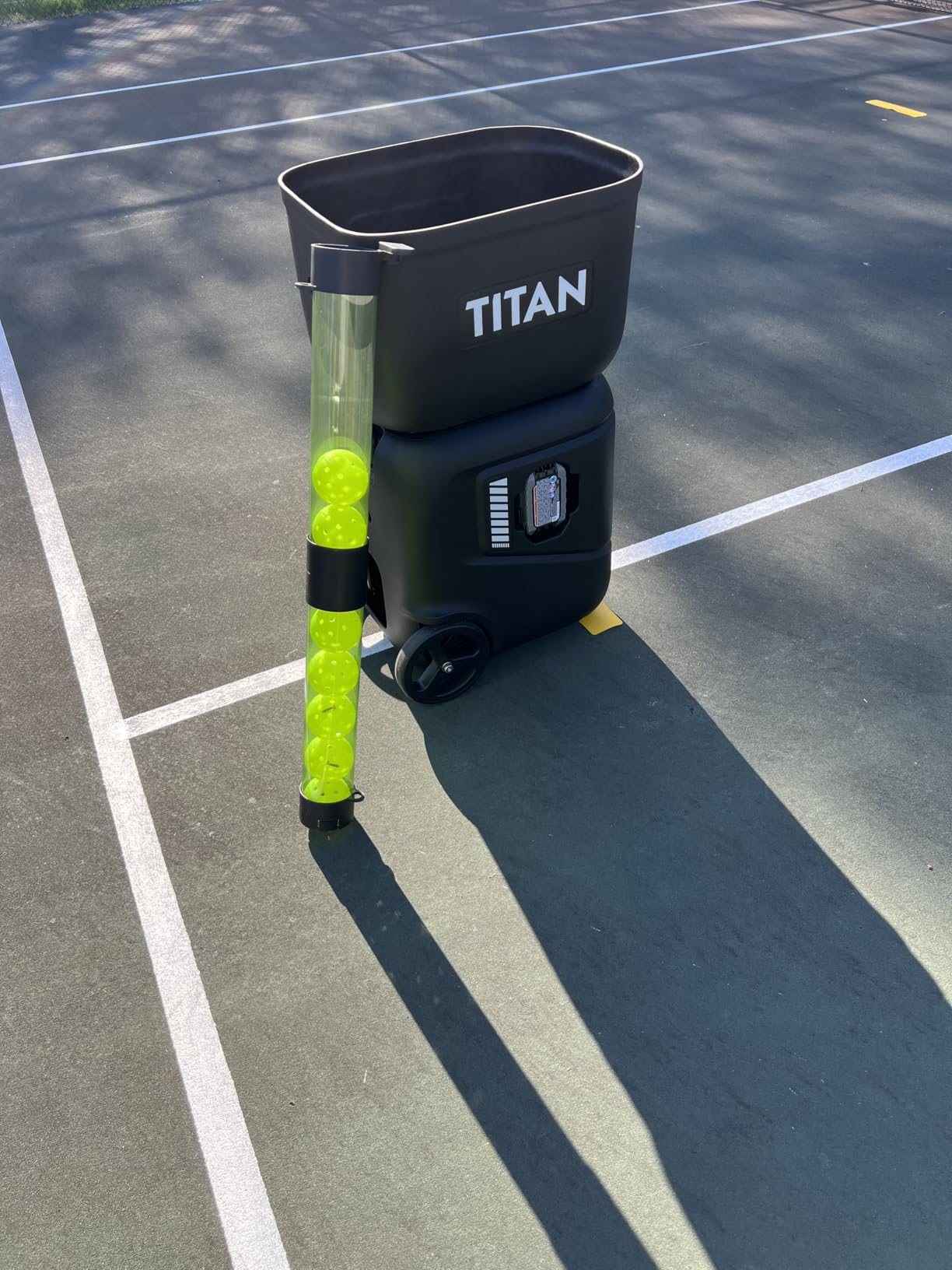
The ACE is the machine I would load into a hatchback every weekend. At roughly 39 pounds with an invertible hopper that folds over the body, it packs down small enough for a trunk with groceries still in it.
In practice it behaves like a slightly more travel-friendly sibling of the ONE. You get the same drill app, the same internal oscillation with the patent motor design, Apple Watch control, and over-the-air updates that have added features like Rapid Fire since launch.
The 110-ball hopper is the honest sweet spot for solo sessions. That is roughly ten minutes of continuous feeding at a two-second interval, or a full drop-drill block with breaks to reset your feet.
Battery life is where owners are loudest, in a good way. Multiple reviewers describe running multi-hour clinics on a single charge, and Titan is an official partner of the UPA, which explains why so many teaching pros carry this model. A charger ships in the box, unlike the ONE.
The weak spot is connectivity. A slice of owners report the app dropping its link during sessions, and the physical remote is a separate purchase. The onboard panel covers the basics if your phone misbehaves.
Storage and Transport Footprint
Folded, the ACE tucks into a closet or the back of an SUV without dominating the space. If you live in an apartment or carry gear up stairs, this is the premium machine I would pick first.
Who the ACE Fits Best
Traveling coaches, club programs, and serious players who share drills with a group get the most from it. If you only drill alone in one spot and never move the machine, the ONE’s larger hopper makes more sense.
3. Lobster Sports Pickle – Best Value Full-Feature Machine
Lobster Sports Pickle Pickleball Machine – Full-Featured Auto Launcher, Adjustable Topspin, Backspin, & Lobs, Horizontal Sweep, Battery Powered, Lightweight, Holds 125 Balls – with 2-Function Remote
20-60 MPH speed
Topspin and backspin
125-ball capacity
Random oscillation
Pros
- Wide 20 to 60 MPH range
- Adjustable topspin and backspin
- 125-ball hopper
- Multi-function remote included
- 8-inch all-terrain wheels
Cons
- Thrower wheels can crack over time
- Elevation adjustment feels clunky
- Needs harder balls for best results
The Lobster Pickle is the machine most club players have already hit against, and there is a reason it keeps showing up in community courts. It has been on the market since 2018, carries 87 reviews, and forum users consistently call Lobster units the club favorites for reliability.
The spec sheet reads like a premium machine at a mid-tier price. Speed spans 20 to 60 MPH, topspin and backspin are both adjustable, the hopper holds 125 balls, and a multi-function remote comes standard instead of as an add-on.
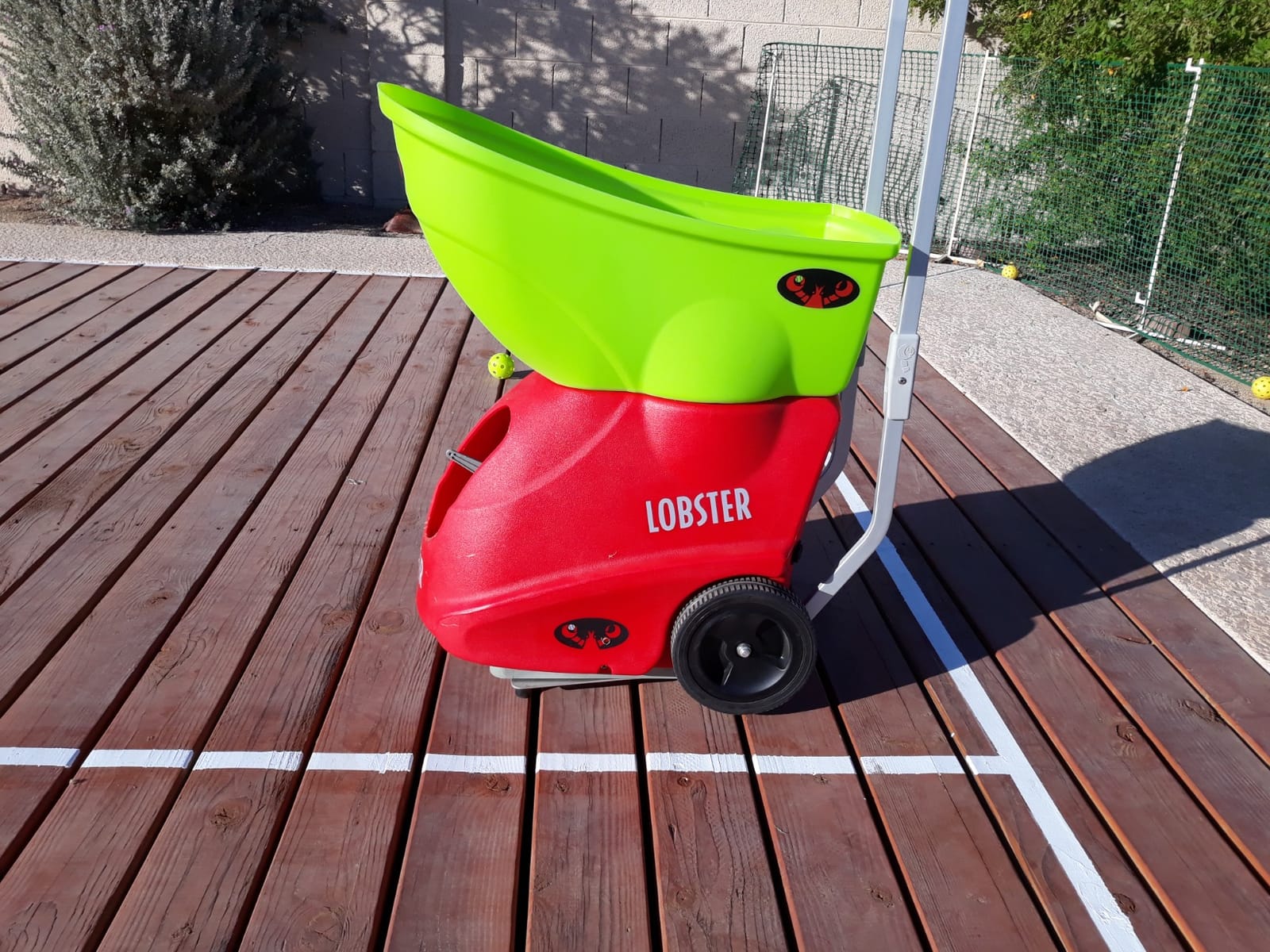
Feeding a mix of heavy-top forehands and slow drops, I could simulate almost every ball I face in rec play. Horizontal oscillation pushed shots left, right, and center at random, which turned a static drop drill into a footwork drill.
The honest downsides are mechanical. The elevation adjustment is a manual affair that several owners call clunky, and the thrower wheels have cracked on some units after heavy use, which matters because the listed warranty window on wear parts is short. Accuracy can also drift slightly after extended sessions.
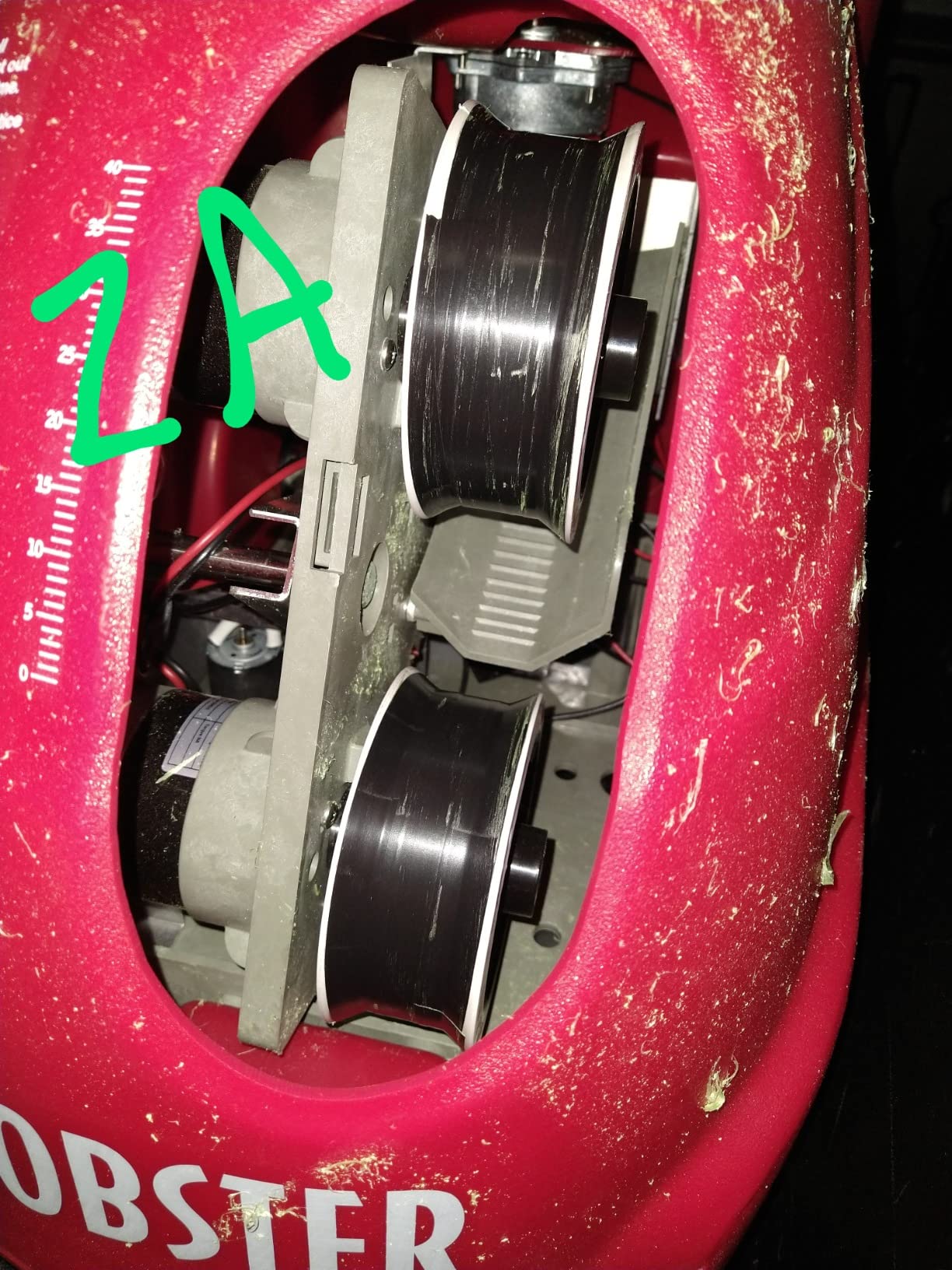
Which Balls Feed Best
This machine is picky about plastic. Franklin 40 X balls feed cleanly, while softer balls like the Onix Pure can leave residue buildup on the wheels. Pick one ball type and stick with it to keep feed quality high.
Elevation and Lob Setup
The lob arc adjusts up to 50 degrees, enough for high kickers and smash practice. Set your elevation before you start, because fine-tuning it mid-drill means walking back to the machine each time.
4. JP02 Portable Pickleball Machine – Best Budget Pick
JP02 Portable Pickleball Machine – Swing,Spin Multiple Serve Modes Pickleball Trainer,Ball Thrower for Practice,Adjustable Speed, Elevation, and Frequency Pickleball Launcher
Up to 30 MPH
0 to 70 degree elevation
Spin control
4+ hour lithium battery
Pros
- Spin control for topspin and backspin
- Lightweight at 22 lbs with pull rod
- Removable battery charges on its own
- Helpful customer service team
Cons
- True capacity is about 47 balls
- Remote display hides speed and angle
The JP02 from Jbotsports is the machine I hand to friends who are curious but not ready to spend like a club. You get external oscillation, spin control, elevation from 0 to 70 degrees, and a remote, all in a 22-pound package with a telescopic pull rod.
Speed tops out around 30 MPH, which sounds low until you realize how fast a kitchen-line exchange actually is. For dinks, drops, and transition volleys, that ceiling is enough, and the two-wheel launch design is friendly for beginners.
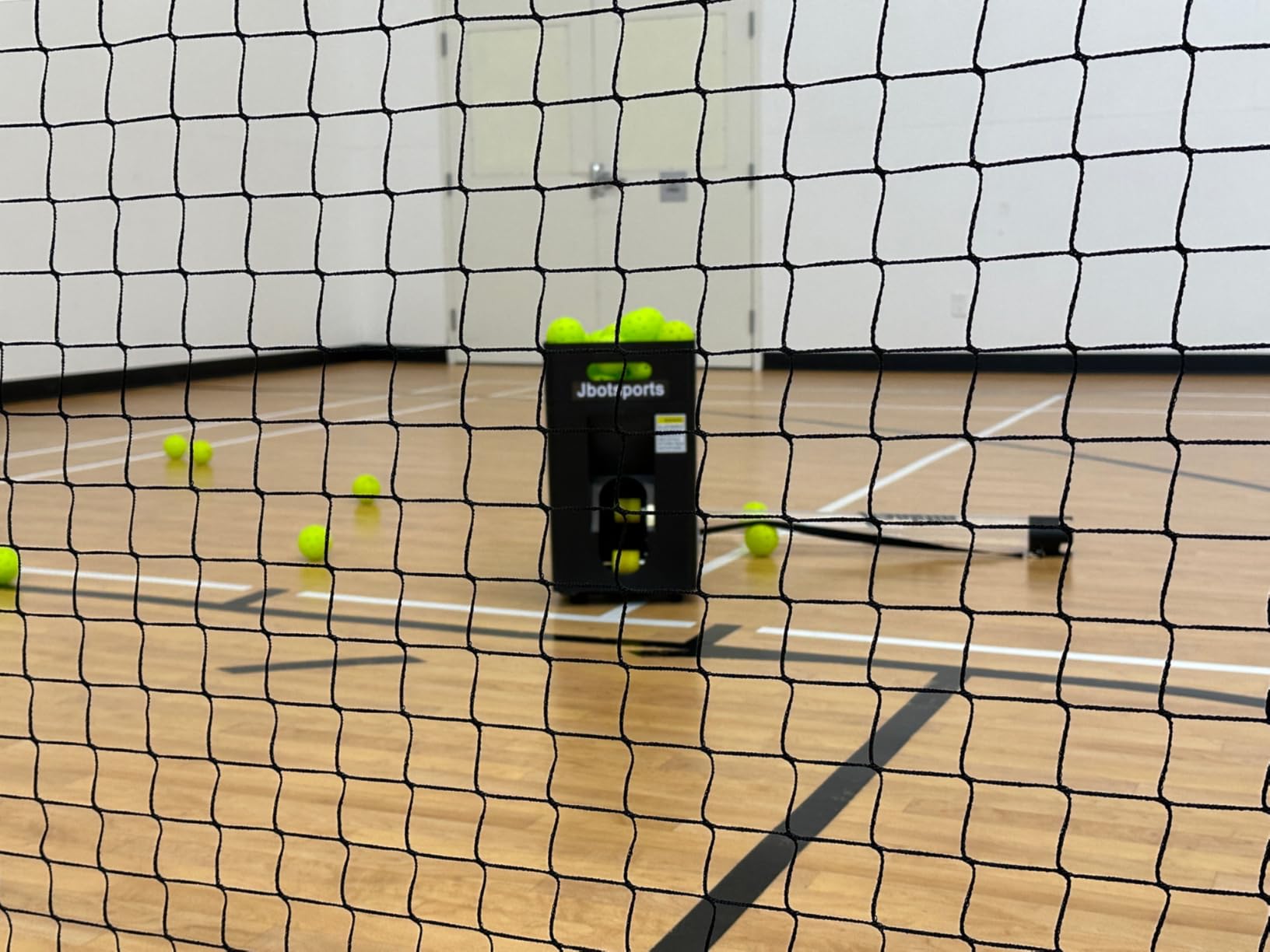
The spin adjustment is the feature I did not expect at this tier. Dialing in backspin let me practice drop responses against a ball that actually skidded low, instead of the flat feeds most cheap launchers throw.
Battery design is genuinely smart here. The lithium pack is removable, so you can charge it at a wall outlet away from the machine, and runtime runs four hours or more. A remote ships in the box alongside Bluetooth control.
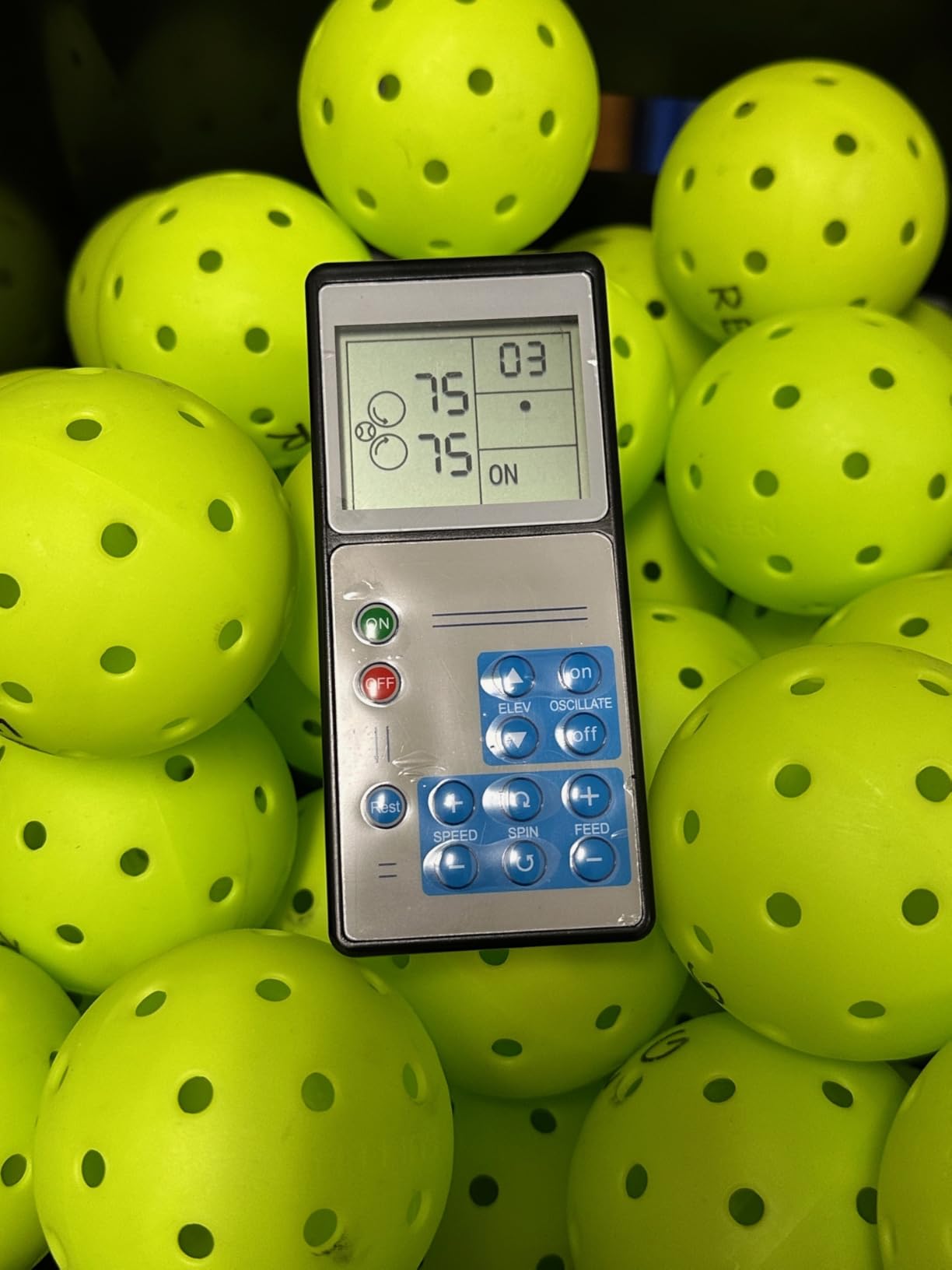
Weak points are small but real. The hopper holds about 47 balls in practice rather than the claimed 50, the remote has no display for speed or angle, and a few owners note the app needs patience. Some also found the battery self-discharges if it sits for days.
Actual Hopper Capacity
Count on roughly 47 balls per fill. That is a five to eight minute block of continuous feeding, which works fine for station-based drills where you reset between rounds anyway.
Remote Versus App Control
Treat the remote as your start-stop and interval tool, and the app as the setup station. Oscillation range is on the wide side, so narrow your practice goals before you switch it on.
5. Posboll Pickleball Launcher with Net – Best Starter Bundle
Posboll Pickleball Machine Ball Thrower, All-in-One Pickleball Launcher
28-ball 7-track hopper
Return net included
6-8 hour battery
Remote control
Pros
- Return net collects balls for you
- Six to eight hours of runtime
- Fifteen minute assembly
- Handles tennis balls too
Cons
- Wind tips the unit over
- Shot patterns lack randomness
- No manufacturer warranty
The Posboll bundle answers the biggest objection beginners have to machines: fetching balls. The launcher ships with a return net, so most feeds roll or bounce straight back toward you for a semi-continuous loop.
Assembly took me about fifteen minutes with no tools worth mentioning. The built-in 5200mAh battery is the standout spec, running six to eight hours per charge, which is longer than several machines costing far more.
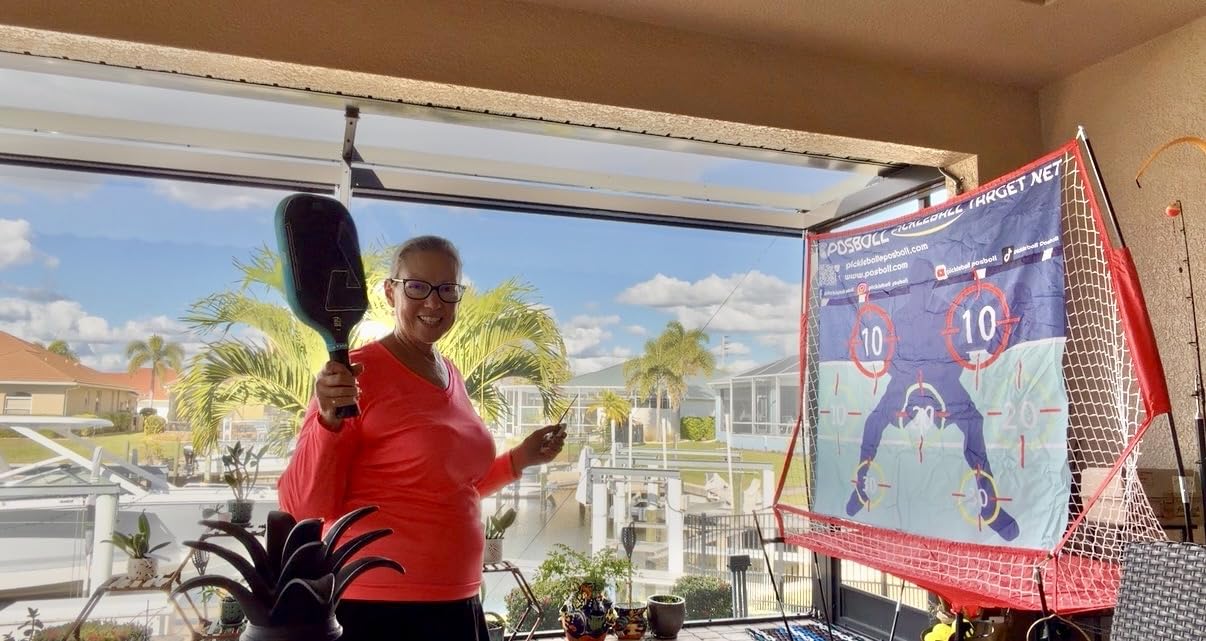
The seven-track hopper holds 28 pickleballs, and the remote adjusts distance up to roughly nine feet of carry, height up to about seven feet, and left-right oscillation. It is a soft-toss experience, not a drive simulator.
Know the limits before buying. Power output is modest, the shot patterns have limited randomness, the net does not catch every ball, and the whole unit is light enough that a stiff wind can knock it over. There is also no manufacturer warranty listed.
Return Net Performance
The net catches the majority of feeds but not all of them, so expect to shag a few strays each session. Weighing the net frame at the base improves both catch rate and stability.
Outdoor Versus Indoor Use
On calm days the setup works on a driveway or backyard court. In wind, move it inside or add ballast, because the net acts like a sail and can pull the launcher over.
6. Franklin Sports Pickleball Launcher – Best for Battery-Tool Owners
Franklin Sports Pickleball Launcher – Portable Auto Launcher – 5 Speeds, 4 Angles, Shuffle Mode – Rechargeable – Battery NOT Included
5 speed levels
4 launch angles
Shuffle mode
Ryobi One+ 18V ready
Pros
- Wheels and retractable handle for travel
- Shuffle mode varies shot angles
- Runs over an hour on a 6.0Ah battery
- Good for dinks volleys and lobs
Cons
- Battery and charger not included
- Balls launch on a curved path
- Not enough power for drive practice
The Franklin launcher is built around a clever idea: it runs on Ryobi One+ 18V batteries, the same packs that power a lot of drills and leaf blowers. If you already own those tools, you already own the power source.
Five speed levels and four launch angles cover a decent practice spread, and shuffle mode varies the launch angle automatically so you are not swinging at identical balls. It is compact, with wheels and a retractable handle.
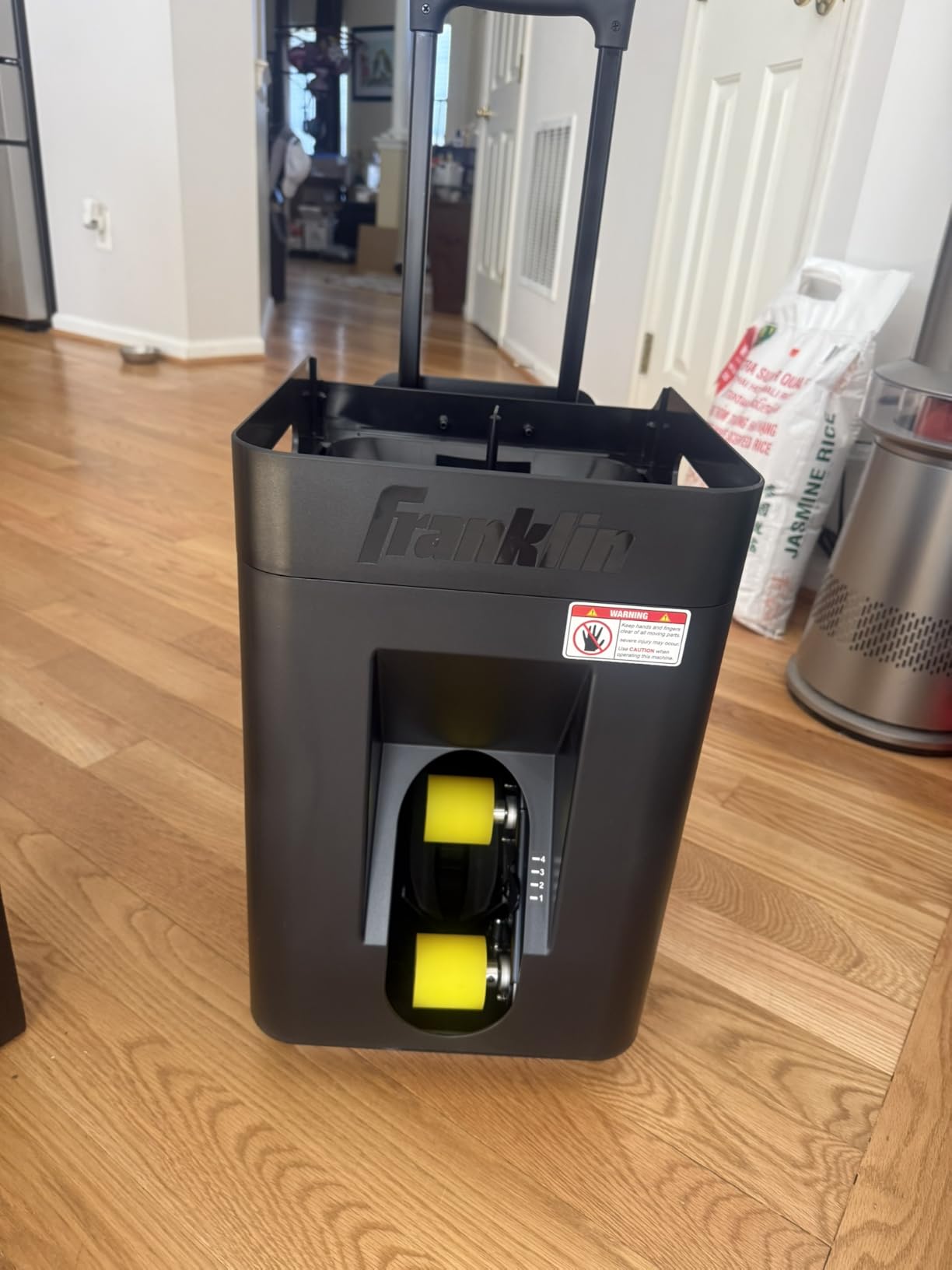
In use it is best understood as a touch-shot machine. Owners report over an hour of runtime on a 6.0Ah pack, and the drills it supports well are dinks, volleys, lobs, and soft resets.
The 3.7-star average is fair. The battery, charger, and balls are all separate purchases, feeds come out on a curved path rather than a flat drive, the unit can tip when rolling, and the start-stop button feels delicate. It is not built for hard drive practice.
Battery Ecosystem Costs
If you own Ryobi One+ tools, this launcher gets dramatically more attractive since the most expensive accessory is already on your shelf. If you do not, factor a battery and charger into the total before comparing it against rivals that include power in the box.
Shot Trajectory Notes
Balls curve out of the chute, which some players actually like for practicing awkward returns. Set expectations around touch work and you will be happy; expect flat 40 MPH drives and you will not.
7. Furlihong 680PBH Starter Kit – Best Indoor Dinking Setup
Furlihong 680PBH Pickleball Starter Kit
Complete starter kit
Recycling net loop
Adjustable angles
17 lb build
Pros
- Everything included to start drilling
- Net returns balls for continuous play
- Adjustable angles and intervals
- Lightweight and easy to carry
Cons
- Balls only travel 5 to 8 ft
- Unit walks and vibrates during use
- Fixed topspin with no adjustment
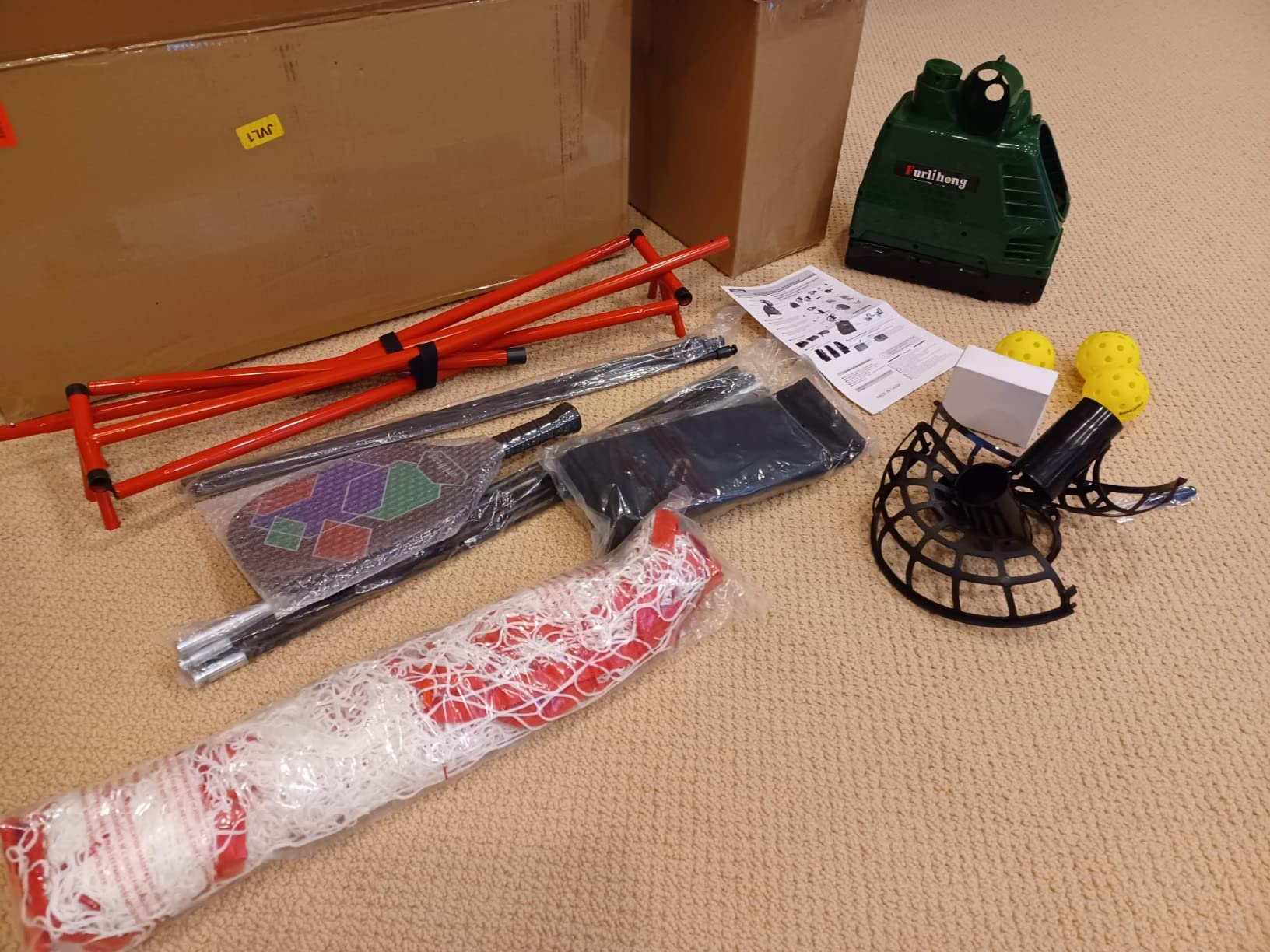
The Furlihong 680PBH is the most reviewed machine in this guide at 187 ratings, and it wins on completeness. The box includes the launcher, a ball recycling net, a paddle, three pickleballs, and a carrying bag.
This is a garage or basement machine, and Furlihong is upfront about that. Balls toss three to six and a half feet high and travel roughly five to eight feet, which is exactly the geometry of a kitchen-line dink exchange.
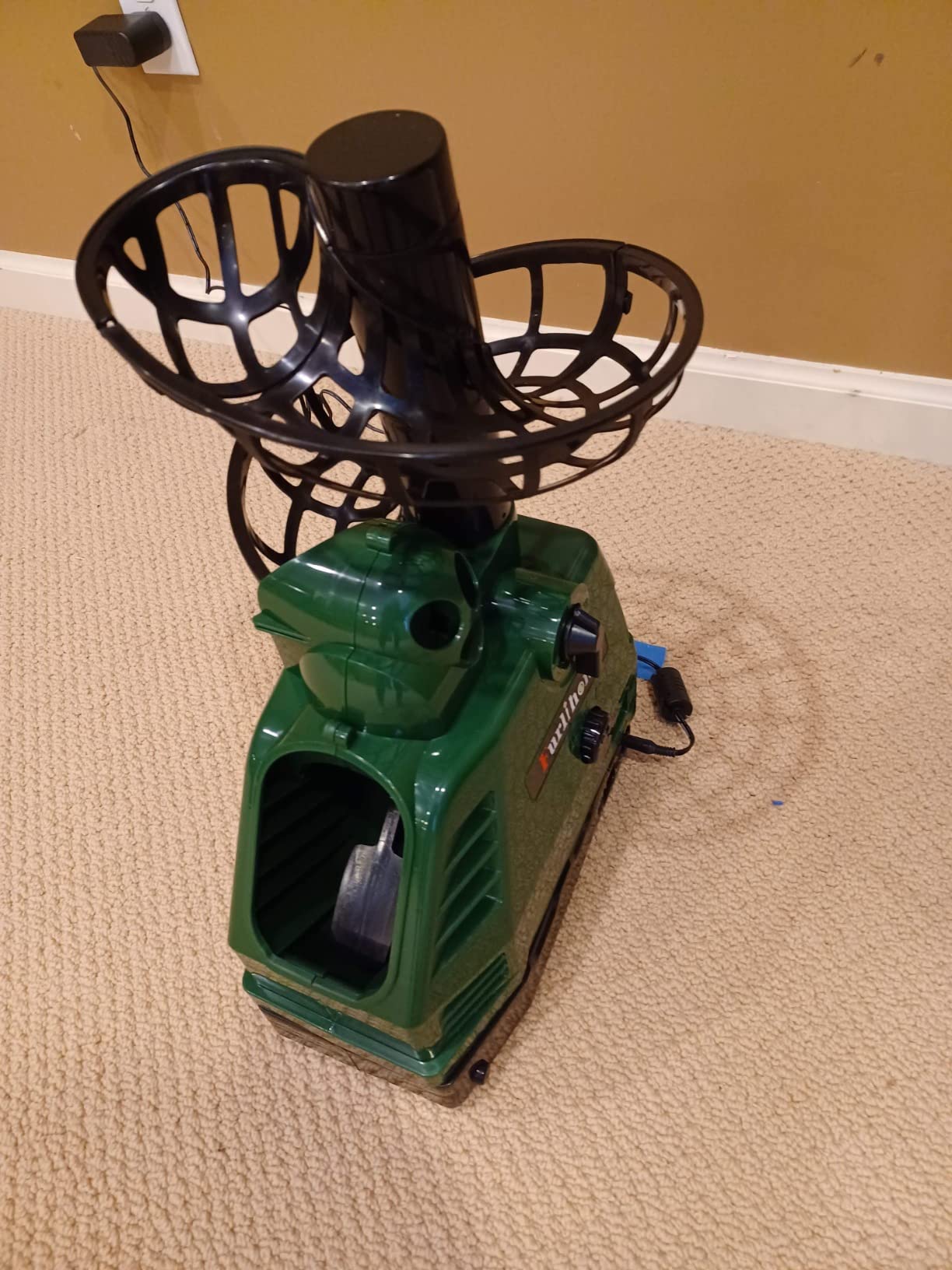
Set up as a loop, the net returns soft feeds so you can keep swinging without stopping. Angles and launch intervals both adjust, there is an oscillating function for varied practice, and extendable chutes hold more balls for longer sets.
The trade-offs are the ones budget buyers should hear honestly. The unit vibrates and walks during operation, so owners stabilize it with weights, and the net needs similar anchoring because it is not attached to the machine. Every ball arrives with heavy topspin and there is no spin adjustment, plus there is no remote.
Setting Up the Ball Loop
Position the net so fed balls drop into it, then weight the base of both the machine and the net. Once the loop is dialed in, you can run dink reps for ten minutes straight without chasing a ball.
Skill Level Fit
Beginners building muscle memory and players rehabbing a swing get real value here. Anyone practicing baseline drives or live-speed feeds will outgrow it within weeks.
8. Furlihong 698TPCBH 4-in-1 Toss Machine – Best for Kids and Families
Furlihong 698TPCBH 4-in-1 Toss Machine for Baseball, Tennis & Pickleball
4-in-1 multi-sport
Soft toss design
8.1 lb weight
AC or battery power
Pros
- Handles baseball tennis pickleball and cricket
- Simple height and distance knobs
- Light enough for kids to move
- Training balls included
Cons
- Balls only travel a few feet
- Disposable batteries only
- Hopper feels flimsy
Not every reader needs 60 MPH feeds. The Furlihong 698TPCBH is a soft-toss machine that switches between baseball, tennis, pickleball, and cricket, and it weighs just over eight pounds.
For kids learning hand-eye coordination, gentle is the point. A knob adjusts toss height and distance, the release is soft and controlled, and three PU training balls come in the box so you can start immediately.
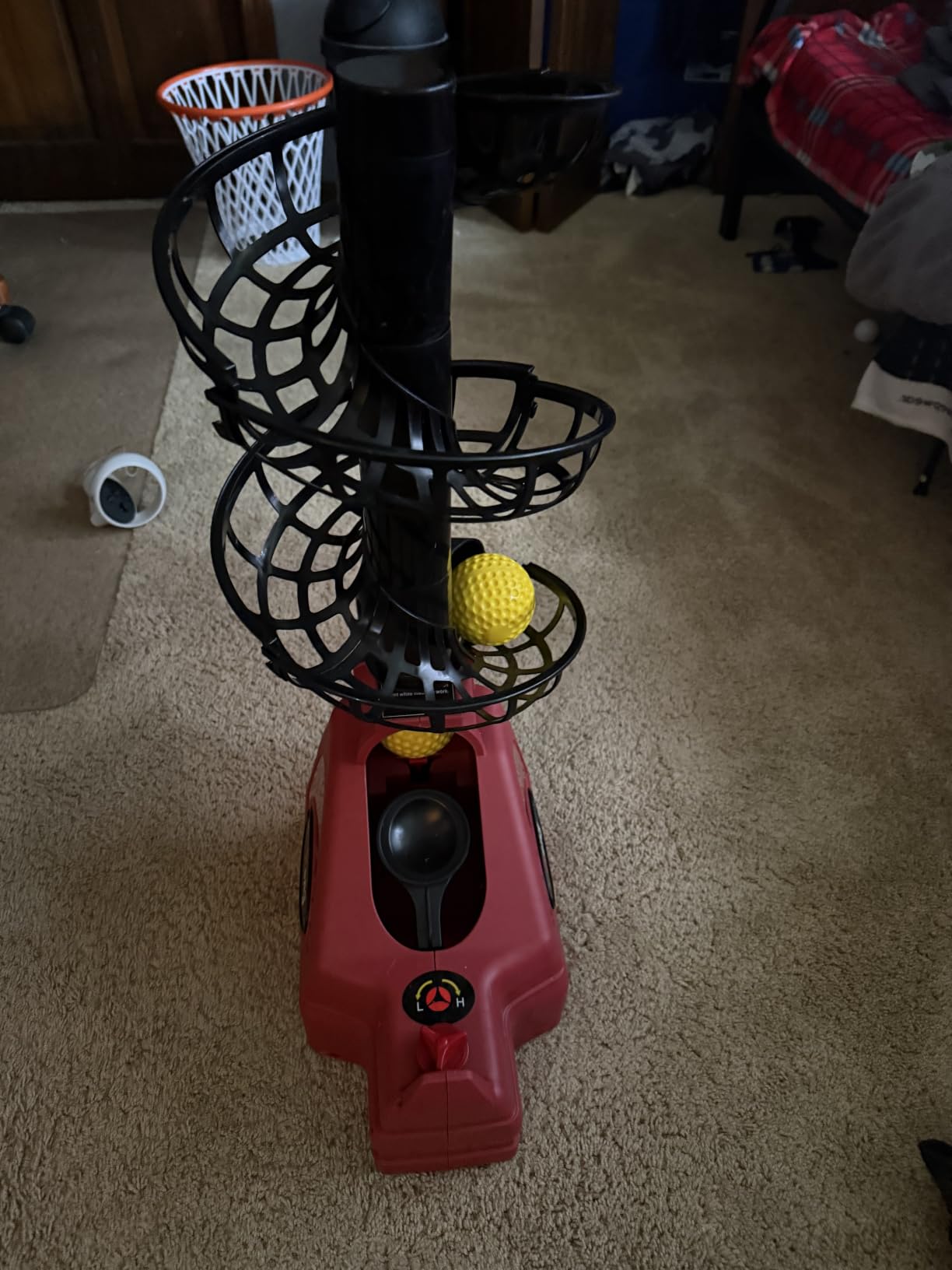
It runs on an AC adapter or disposable batteries, which makes it genuinely grab-and-go for a backyard or gym class. A 12-month warranty covers the unit.
The 4.2-star rating is respectable, but read the fine print. Included training balls are heavy and travel only a few feet, the hopper feels flimsy, and there is no rechargeable battery option. Owners are clear that this is a coordination trainer, not a serious athletic machine.
Power and Runtime Options
Use the AC adapter whenever an outlet is nearby and save batteries for the yard. If you run it on cells often, rechargeable AAs with a charger cost less than repeated disposable packs.
Age and Use Cases
It shines for roughly ages six to ten, school stations, family game nights, and even dog play. Teenagers and adults training seriously should look further up this list.
9. Pickleball Tutor Plus – Best Warranty and Build
Pickleball Tutor Plus. Pickleball Ball Machine. Speed 10-65 MPH. Topspin/Underspin. Random Oscillator. Made in USA by #1 Pickleball Machine Company.
10-65 MPH
Topspin backspin dial
110-ball capacity
3-year warranty
Pros
- Made in the USA with a 3-year warranty
- Simple knobs with no app needed
- Random oscillator for realistic drills
- Four hours of play per charge
Cons
- Only one buyer review so far
- Stock runs low at times
Sports Tutor has been building ball machines in California for decades, and the Pickleball Tutor Plus carries a 3-year warranty, the longest in this roundup. That coverage matters when you are buying a motorized product you cannot service yourself.
The spec sheet is serious: speed from 10 to 65 MPH, a single dial for topspin and backspin amount, a random oscillator, a 110-ball capacity, and a feed interval adjustable from 1.5 to 10 seconds. The internal battery is good for up to four hours and a smart charger ships with it.
What won me over is the absence of an app. Every adjustment is a physical knob, so nothing depends on a phone connection, a firmware update, or Bluetooth pairing. Built-in towing wheels and a handle make the 35-pound body easy to reposition.
The caveat is data, not performance. This listing carries a single 5.0-star review and stock dips low at times. The brand’s long history and US-based service team fill some of that confidence gap, but shoppers who want a deep review pool should weigh that honestly.
Knob Controls Versus Apps
Knobs mean you walk to the machine to change settings, which some drills tolerate better than others. In exchange, you get settings that never drop connection and never need an update before a session.
Warranty and Support
Three years of coverage plus US-based customer service is the strongest support package here. For coaches buying on behalf of a club, that safety net often beats a longer feature list.
10. TopspinPro Pickleball Training Aid – Best Spin Trainer
TopspinPro Pickleball Training Aid – Learn Topspin Fast for Better Control & Consistency | Practice Anywhere, Anytime | Patent-Proven System for Recreational Players
Teaches topspin mechanics
No batteries needed
8.8 lb manual aid
60-day returns
Pros
- Builds real topspin muscle memory
- Practice at home with no court
- Works for every shot type
- 60-day money back guarantee
Cons
- Not a ball machine
- You feed every ball by hand
The TopspinPro is not a launcher, and including it here is deliberate. A lot of players asking about machines really want to fix one specific flaw, and for most recreational players that flaw is topspin.
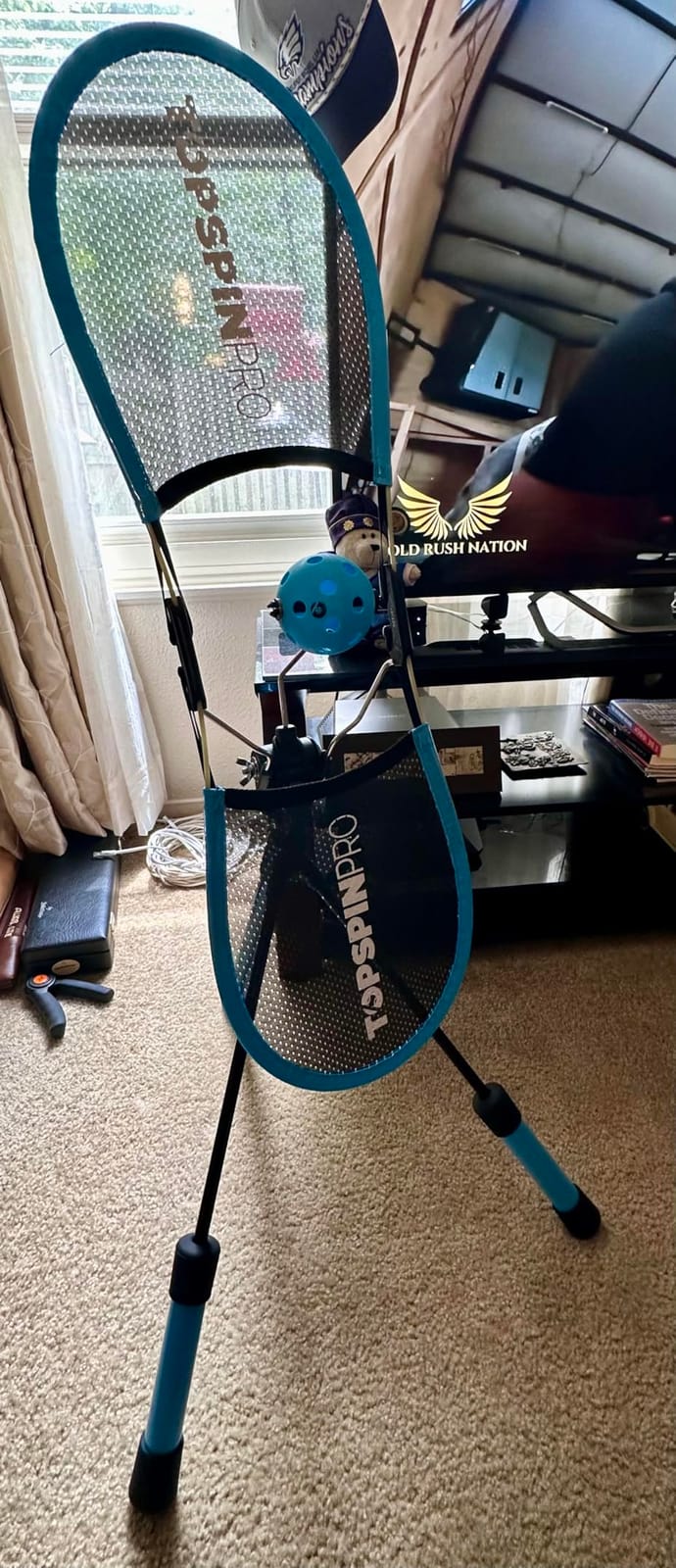
The device holds a ball on a post so you can brush up the back of it repeatedly, learning the exact paddle angle and wrist action that produce real spin. Signature Pickleball camps use it, and the patent-proven design supports up to 50 reps per minute.
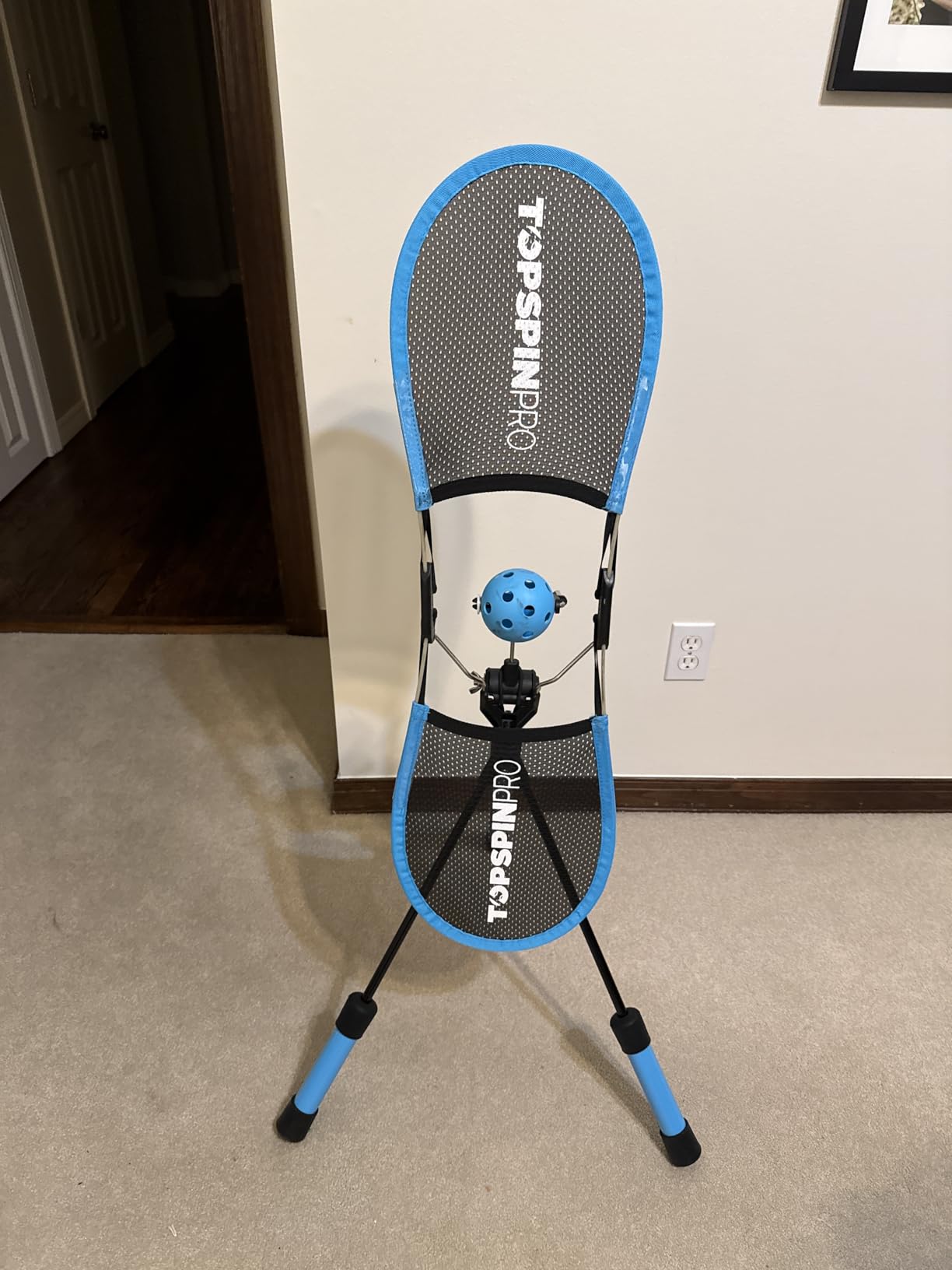
It works for forehands, backhands, volleys, dinks, and serves, adjusts for adults and kids, and needs zero power. At 8.8 pounds it is stable without being immovable, and a 60-day money-back guarantee backs the claims.
The 4.4-star average across 123 reviews is the deepest feedback pool of anything in this guide. The catch is simple: you are the ball feeder, so this builds technique rather than stamina or footwork.
Machine Versus Training Aid
Use the TopspinPro to groove the swing, then a machine to repeat it against moving balls. If your budget only allows one, and your drives sail long, start with this and add a launcher later.
Building a Spin Routine
Ten minutes a day in a garage or living room is enough to retrain paddle path. Pair it with a mirror or phone video so you can see contact, not just feel it.
How to Choose the Best Pickleball Machine for Practice?
The right machine depends on what you drill, where you drill, and who carries it. These are the factors that actually changed our recommendations during testing.
Ball Capacity and Feed Rate
Capacity ranges from about 20 balls on compact launchers up to 240 on the largest hopper. Pair that number with feed interval: at one ball every two seconds, even 125 balls last barely four minutes of continuous feeding.
Small hoppers work for station drills where you rest between blocks. For game-simulation runs or coaching multiple players, bigger is genuinely better.
Speed Range and Spin Control
Kitchen-speed play happens under 30 MPH, so soft-toss machines cover dinks, drops, and volleys. Baseline drives and fast counterattacks need 50 MPH or more, which only the Lobster and Pickleball Tutor Plus reach here.
Spin control separates trainers from toys. Machines that feed only flat or fixed-topspin balls teach a partial game, while adjustable topspin and backspin lets you practice against the skidding slices you meet in real matches.
Oscillation, Explained Simply
Oscillation means the machine varies where balls land. Horizontal oscillation sweeps shots across the court, random oscillation mixes locations unpredictably, and elevation control changes depth and lob height.
External oscillation physically moves the machine between shots, while internal oscillation shifts the launch path inside a fixed body. Internal systems tend to feel more consistent and protect the mechanism during transport.
Battery Life and What Ships in the Box
Advertised runtime ranges from about one hour to eight. Real sessions run shorter in cold weather and when feed rates are fast, so treat the top number as a best case.
Check what is actually included before comparing anything. One premium model here ships without a battery or charger, one runs on tool batteries you must supply, and others arrive ready to plug in. Buyers on forums consistently say they value machines that include the battery and remote in the base price.
Portability and Storage
Weights in this guide run from 8 pounds to over 60. Under about 25 pounds, one person can load a machine alone; beyond 40 pounds, you want wheels, a folding handle, and a plan.
Folding hoppers and telescopic pull rods matter more than they sound. If your machine lives in a car trunk between sessions, an extra six inches of folded height decides whether it fits.
Indoor Use and Noise Levels
No competitor guide we found addresses this, so here is the honest version. Every wheel-fed machine produces a low mechanical hum plus a snap on each launch, and in a garage the sound reflects off walls.
Indoors, ceiling height caps your lob and depth drills, so soft-toss machines and net-loop kits earn their spot. If you practice in a shared space, feed speed matters less than feed interval, since a slower rhythm keeps the noise footprint reasonable.
Beginner Versus Advanced Fit
Beginners gain the most from repeatable, slower feeds and simple controls, which makes knob-based and soft-toss machines ideal starting points. Intermediate players should prioritize spin control and oscillation before chasing top speed.
Advanced players and coaches need large hoppers, app or custom drills, and realistic randomness. Buying above your current level is fine; buying below it means replacing the machine within a season.
Frequently Asked Questions
Do pickleball machines help?
Yes. A machine feeds hundreds of near-identical balls at the exact speed and spin you set, which builds muscle memory faster than casual rallies. The biggest gains show up in third-shot drops, volleys, and footwork patterns, where repetition matters more than variety.
How can I practice pickleball by myself?
Set a machine to feed one shot type, such as a soft drop to the kitchen corner, and repeat it in short blocks with rest between sets. Add wall drills for volleys and a target cone for accuracy, then finish each solo session with free feeding at random oscillation to simulate point play.
What is the best pickleball training aid?
For automated ball delivery, the Titan ONE is our top pick for its repeatable placement and drill app. For fixing technique on a budget, the TopspinPro is the standout aid because it teaches topspin mechanics through pure repetition without needing a court or a partner.
Can you use a pickleball machine indoors?
Yes, with two conditions. Choose a machine with short feed distance, such as a soft-toss or net-loop model, because low ceilings limit depth and lobs. Also expect some motor hum and launch noise, which is more noticeable in a garage, so slower feed intervals help in shared spaces.
Is a pickleball machine worth the cost?
It is if you drill at least once or twice a week and struggle to find partners who want repetitive practice. Players who drill only occasionally get better value from a budget launcher or a technique aid, while coaches and club programs justify premium machines quickly through daily use.
Final Verdict: Which Pickleball Machine Should You Buy?
If you want the single best pickleball machine for practice and budget is not the deciding factor, buy the Titan ONE. Nothing else matched its placement accuracy, and the drill app turns a bag of balls into a structured session.
Buy the Lobster Sports Pickle for the strongest overall value, the Titan ACE if you transport a machine every week, and the JP02 if you want adjustable spin on a beginner-friendly budget. Families and indoor players can start with the Furlihong kits or the Posboll bundle for a fraction of the commitment.
Whatever you choose, the machine only works if you show up. Pick one, schedule three sessions a week, and your third shot will thank you by 2026.