
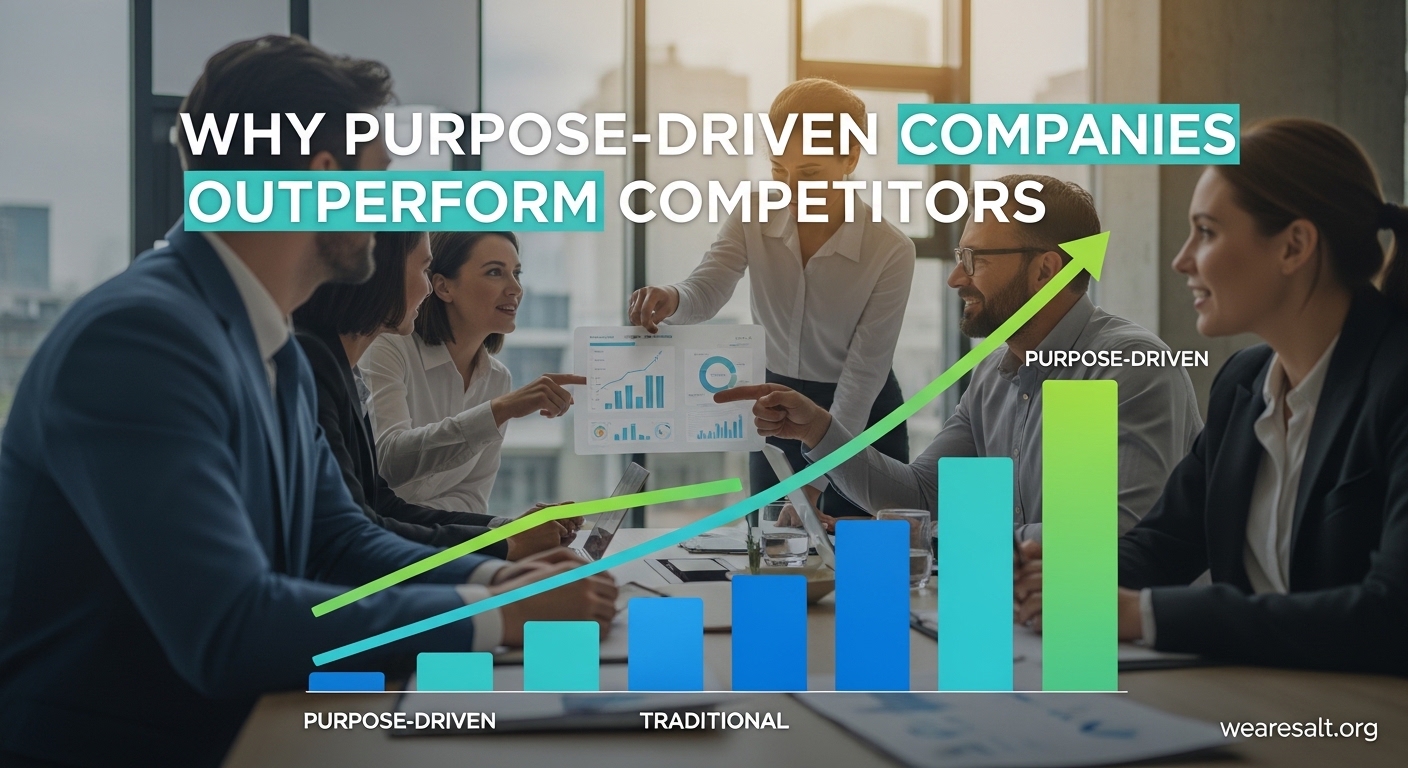
Purpose-driven companies outperform competitors by significant margins across every meaningful business metric. Research from Deloitte shows these organizations achieve three times better talent retention and substantially higher innovation rates than their traditional counterparts.
But what exactly makes a company “purpose-driven”? And why does having a clear purpose translate into better financial results, stronger customer loyalty, and more engaged employees?
In this guide, I will break down the research-backed reasons why purpose-driven companies outperform competitors. You will learn the six key drivers of value, see real-world examples, and understand how to spot authentic purpose-driven organizations versus those engaged in “purpose washing.”
Table of Contents
What Is a Purpose-Driven Company?
A purpose-driven company is an organization with a clear, authentic commitment to achieving social and environmental goals alongside financial objectives. Unlike traditional businesses that focus solely on profit maximization, these companies align their strategy, operations, and culture around a meaningful purpose that serves stakeholders beyond just shareholders.
The key distinction lies in how decisions get made. In a purpose-driven organization, leaders ask: “Does this align with our purpose?” before asking “Does this maximize profit?” This subtle shift creates ripple effects throughout the entire business.
Corporate purpose differs from corporate social responsibility (CSR) or philanthropy. While CSR programs often operate as separate initiatives, purpose is embedded into the core business model. It is not about donating a percentage of profits. It is about how the company makes money in the first place.
Why Purpose-Driven Companies Outperform Competitors: The Data
The evidence supporting purpose-driven performance is substantial and growing. According to Deloitte research, companies with a strong sense of purpose report significantly better outcomes across multiple dimensions.
Employee Retention: Purpose-driven companies are three times more likely to retain talent. When employees feel connected to something larger than their daily tasks, they stay longer and work harder.
Innovation Rates: These organizations demonstrate 30% higher innovation levels. Purpose creates a framework for creative problem-solving that transcends individual products or quarterly targets.
Customer Loyalty: Research from Edelman shows that 64% of consumers choose, switch, avoid, or boycott brands based on their stance on social issues. Purpose-driven brands build deeper emotional connections that transcend transactional relationships.
Financial Performance: Companies with high purpose scores outperform the stock market by 5-7% annually over the long term. The alignment between purpose and profit is not accidental. It is structural.
The 6 Drivers of Value in Purpose-Driven Organizations
Deloitte identified six specific drivers through which purpose creates business value. Understanding these drivers explains why purpose-driven companies outperform competitors consistently.
1. Brand Reputation and Trust
Purpose builds trust with consumers, investors, and partners. When stakeholders believe your company stands for something meaningful, they grant you the benefit of the doubt during difficult times. This trust translates into pricing power, market access, and resilience during crises.
2. Sales Growth and Innovation
Purpose-driven companies innovate more effectively because their teams understand the “why” behind their work. This clarity sparks creative solutions that traditional companies miss. Sales teams also perform better when they believe in what they are selling.
3. Capital Access and Investor Confidence
ESG-focused investors increasingly favor companies with clear purpose statements backed by action. Purpose-driven organizations attract capital at lower costs and enjoy higher valuations because investors perceive lower long-term risks.
4. Operational Efficiency
When purpose guides decision-making, wasteful activities become obvious. Teams align around shared goals rather than departmental silos. Supply chain decisions consider total impact, not just unit costs.
5. Talent Attraction and Retention
Gen Z and millennial workers prioritize purpose in their career decisions. Purpose-driven companies win the war for talent by offering meaning alongside compensation. This advantage compounds over time as top performers recruit their networks.
6. Risk Mitigation and Resilience
Purpose provides a North Star during uncertainty. Companies with clear purpose navigate disruptions more effectively because stakeholders understand the broader context. This resilience protects value during market turbulence.
Purpose-Driven vs Traditional Companies: Key Differences
The gap between purpose-driven and traditional companies manifests in daily operations, not just marketing materials.
Decision-Making Framework: Traditional companies ask “What maximizes shareholder value this quarter?” Purpose-driven companies ask “What aligns with our purpose while creating sustainable value?” This difference shapes every strategic choice.
Stakeholder vs Shareholder Focus: Traditional companies prioritize shareholders. Purpose-driven companies balance the needs of employees, customers, communities, and investors. This broader perspective often leads to better long-term outcomes for all groups.
Time Horizon: Traditional businesses focus on quarterly earnings. Purpose-driven companies think in decades. This patience enables investments that pay off over time but show up as expenses in the short term.
Employee Experience: Workers at purpose-driven companies report 49% higher engagement scores. They understand how their individual contributions connect to meaningful outcomes.
Real-World Examples of Purpose-Driven Success
Theory matters, but examples make the case concrete. Here are three companies demonstrating how purpose drives performance.
Patagonia: The outdoor apparel company built its entire business model around environmental activism. Their “We’re in business to save our home planet” purpose guides product design, supply chain decisions, and marketing. The result? A loyal customer base willing to pay premium prices and defend the brand passionately. When Patagonia transferred ownership to a trust dedicated to fighting climate change, customers celebrated rather than panicked.
Salesforce: Marc Benioff pioneered “stakeholder capitalism” before it became mainstream. The company’s 1-1-1 model (1% equity, 1% product, 1% time to charity) attracts talent that could earn more elsewhere but values purpose. Salesforce consistently ranks among the best places to work while delivering strong shareholder returns.
Unilever: Their “Sustainable Living Brands” grow 69% faster than other business units. These purpose-driven brands deliver 75% of the company’s overall growth. CEO Alan Jope made sustainability central to strategy, not a side initiative.
Warning Signs of ‘Purpose Washing’
Not every company claiming purpose delivers on the promise. Forum discussions reveal legitimate skepticism about corporate purpose claims. Here is how to spot authentic purpose versus marketing theater.
Misalignment Between Words and Actions: Authentic purpose-driven companies invest resources in their stated mission. Look at where they spend money, not just what their advertisements say. If a company claims environmental commitment but lobbies against climate legislation, the purpose is performative.
Employee Testimonials: Real purpose shows up in Glassdoor reviews and employee stories. Forums reveal that workers at truly purpose-driven companies feel energized, not exploited. When purpose becomes a justification for overwork without fair compensation, authenticity suffers.
Measurement and Transparency: Genuine purpose-driven organizations measure their impact and share results publicly. They acknowledge shortcomings and commit to improvement. Companies hiding behind vague commitments without metrics should raise red flags.
Leadership Consistency: Purpose must start at the top. When CEOs personally champion the mission and make decisions consistent with stated values, the purpose is real. When leaders seem disconnected from the message, skepticism is warranted.
How to Build a Purpose-Driven Culture
Transforming into a purpose-driven organization requires more than a new mission statement. Here are practical steps for leaders at any company size.
Step 1: Define Your Purpose Authentically
Your purpose must connect to your core business. It cannot be arbitrary. A chemical company focused on “ending childhood hunger” without changing its operations will face skepticism. Instead, consider how your specific capabilities can create meaningful impact.
Step 2: Align Employees Around Purpose
Involve employees in defining how purpose shows up in their daily work. Use the OKR method (Objectives and Key Results) to connect individual goals to organizational purpose. Regular town halls and transparent communication reinforce the message.
Step 3: Measure What Matters
Track purpose-related metrics alongside financial ones. Employee engagement scores, customer trust indices, and social impact measurements demonstrate commitment. Share progress publicly, including setbacks.
Step 4: Integrate Purpose into Operations
Review hiring practices, supply chain decisions, product development, and marketing through the lens of purpose. Every department should understand how their work advances the mission.
Step 5: Balance Mission with Employee Wellbeing
Forum insights reveal that some purpose-driven organizations burn out employees in the name of mission. Sustainable purpose requires sustainable work practices. Mission cannot justify exploitation.
FAQ
How purpose-driven companies perform better?
Purpose-driven companies perform better by creating alignment across all stakeholders. They achieve three times better talent retention, 30% higher innovation rates, and 5-7% better stock market performance. This happens because purpose attracts engaged employees, builds customer loyalty, and guides better long-term decision-making.
What is mission-driven work?
Mission-driven work is employment where employees feel connected to a purpose larger than profit. Workers understand how their daily tasks contribute to meaningful outcomes. Research shows mission-driven workers report 49% higher engagement and are three times more likely to stay with their employer long-term.
Why do some companies outperform others?
Companies outperform competitors by creating sustainable competitive advantages through purpose alignment. Purpose-driven companies attract better talent, innovate more effectively, build stronger customer relationships, and make better long-term decisions. These advantages compound over time, creating widening performance gaps.
How do profit and competition motivate businesses?
Profit and competition motivate traditional businesses to optimize efficiency and reduce costs. However, purpose-driven companies use profit as fuel for mission rather than the primary goal. Competition becomes about serving stakeholders better, not just winning market share. This reframe often leads to more sustainable competitive positions.
Is purpose just a marketing tactic?
Purpose becomes a marketing tactic when companies claim values without operational commitment. Authentic purpose shows up in hiring practices, supply chain decisions, product development, and financial allocations. Look for measurable impact, transparent reporting, and alignment between leadership actions and stated values to distinguish real purpose from marketing.
Conclusion: Why Purpose Matters for 2026
Purpose-driven companies outperform competitors because they create genuine alignment between what they do and why they exist. This alignment attracts engaged employees, builds loyal customers, and guides better long-term decisions. The data is clear: three times better talent retention, 30% higher innovation, and superior financial returns.
But purpose is not a magic bullet. It requires authentic commitment, operational integration, and ongoing measurement. Companies that treat purpose as a marketing veneer will face increasing skepticism from employees and consumers who can spot inauthenticity.
As we move through 2026, the competitive advantage of purpose will only grow. Gen Z and millennial workers now dominate the workforce, and they demand meaning from their employers. Consumers have unprecedented access to information about corporate behavior. Investors increasingly factor purpose into their models.
The question is no longer whether purpose drives performance. The research definitively shows it does. The question is whether your organization will lead this transformation or follow those who do.