
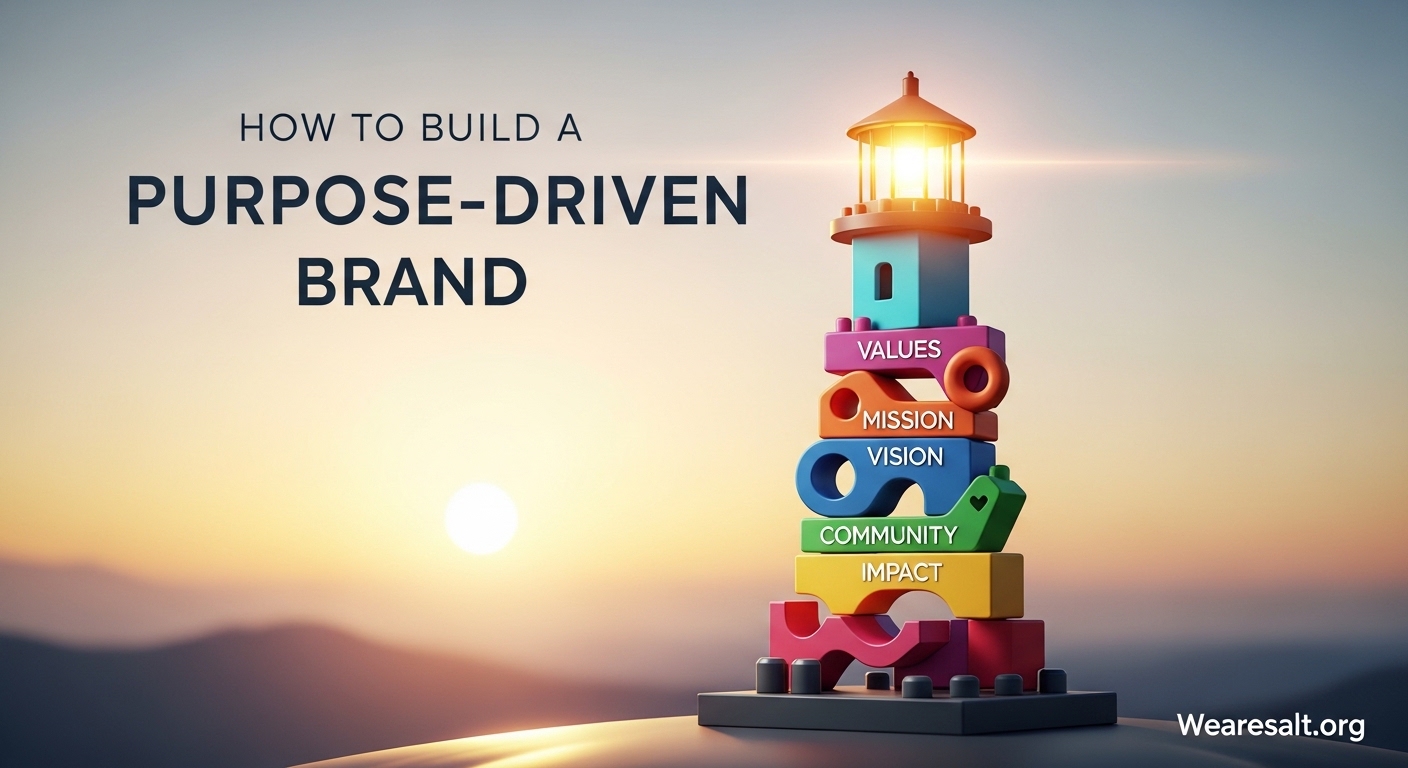
Building a purpose-driven brand is one of the most impactful decisions you can make for your business. Consumers today want more than great products. They want to support companies that stand for something meaningful.
In this guide, I will walk you through exactly how to build a purpose-driven brand from the ground up. You will learn the five essential steps, real-world examples from brands like Dove and Patagonia, and how to avoid the common trap of purpose-washing.
I have spent years helping businesses define their core purpose, and I have seen what works. Let us get started.
Table of Contents
What Is a Purpose-Driven Brand?
A purpose-driven brand is a business built around a clear, authentic mission that goes beyond making money. Every decision, from product design to marketing, reflects that core purpose.
Traditional branding focuses on features, benefits, and price. Purpose-driven branding focuses on why the business exists and what positive impact it creates.
The key characteristics include:
- A clear mission statement that guides all decisions
- Alignment between brand values and business operations
- Transparency about challenges and progress
- Genuine commitment to stakeholders, not just shareholders
When a brand truly embodies its purpose, customers notice. They do not just buy products. They become advocates.
Why Purpose-Driven Branding Matters
The business case for purpose-driven branding is stronger than ever. Research shows that 64% of consumers choose, switch, avoid, or boycott a brand based on its stand on social issues.
Here is why investing in your brand purpose pays off:
Consumer trust and loyalty: When customers believe in your mission, they stick around longer. Purpose-driven brands build emotional connections that transactional brands cannot replicate.
Talent attraction: Top employees want to work for companies with values that match their own. A clear purpose helps you attract and retain the best people.
Competitive differentiation: In crowded markets, purpose sets you apart. Competitors can copy your features, but they cannot copy your authentic commitment to a mission.
Long-term sustainability: Brands with purpose weather storms better. When challenges arise, your mission becomes your north star.
How to Build a Purpose-Driven Brand: 5 Steps
Building a purpose-driven brand is not about writing a mission statement and calling it a day. It requires deep alignment across your entire business. Here is the process that works.
Step 1: Define Your Core Purpose
Start with yourself. Why did you start this business? What problem are you solving that matters to you personally?
Your core purpose should answer three questions:
- Why does this business exist beyond making profit?
- What positive change do we want to create in the world?
- What would be lost if this business disappeared?
Take time here. Your purpose should feel authentic, not forced. If you are struggling, look at your personal values. The best brand purposes often come from deeply held beliefs.
Once you have clarity, craft a mission statement. Keep it simple, specific, and inspiring. Avoid corporate jargon.
Step 2: Align With Your Stakeholders
Your purpose must resonate with the people who matter most to your business. That includes your team, customers, and partners.
Internal alignment: Hold workshops with your team to explore how your purpose connects to their daily work. When employees believe in the mission, they become your best ambassadors.
Customer research: Talk to your target audience. What values do they hold? What causes matter to them? Your purpose should overlap with what your customers care about.
Partner vetting: Be selective about who you work with. Vet suppliers, agencies, and collaborators to ensure they align with your values. One misaligned partner can undermine your entire brand purpose.
Step 3: Integrate Purpose Across Operations
This is where most brands fall short. They define a purpose but never integrate it into how they actually operate.
Product decisions: Does your product development process reflect your purpose? If sustainability is your mission, are you sourcing responsibly? If community is your focus, are you involving local voices?
Marketing and messaging: Every piece of content should reinforce your purpose. But here is the key: show, do not just tell. Demonstrate your commitment through actions, not slogans.
Company culture: Your internal culture must match your external brand promise. Treat employees in ways that reflect your stated values. Purpose starts at home.
Step 4: Use Brand Storytelling
Stories make your purpose real. They create emotional connections that facts and figures cannot.
Founder story: Share why you started this business. Personal stories build authenticity. They help people understand the human behind the brand.
Impact narratives: Tell stories about the difference you are making. If you donate meals with every purchase, show the people who benefit. Make the impact tangible.
Community engagement: Invite your customers into the story. Feature their experiences. Share their contributions. Make your purpose a shared mission.
Remember: the best stories are true, specific, and human.
Step 5: Measure and Communicate Impact
Purpose without accountability is just marketing. You need to track progress and share it transparently.
Set benchmarks: Define what success looks like for your purpose. Number of trees planted? Meals donated? Hours volunteered? Pick metrics that matter.
Track progress: Create systems to measure your impact regularly. Be honest about where you are falling short. Progress matters more than perfection.
Report transparently: Share your results with customers, employees, and stakeholders. Transparency builds trust. It shows you are serious about your purpose.
When you communicate impact, focus on real outcomes, not vague claims. Specificity is credibility.
Real-World Examples of Purpose-Driven Brands
Let us look at brands that get this right. These companies prove that purpose and profit can coexist.
Dove: The Real Beauty campaign redefined beauty standards. Dove built a billion-dollar brand by championing self-esteem and body positivity. Their purpose drives everything from product development to advertising.
Patagonia: Environmental stewardship is their DNA. They repair products instead of pushing new sales. They donate 1% of sales to environmental causes. Their purpose is woven into every business decision.
TOMS: The one-for-one model changed how businesses think about social impact. For every pair of shoes sold, TOMS donated a pair. Their purpose was clear, measurable, and authentic.
Rescue Dog Wines: A smaller example that packs a punch. They donate proceeds to dog rescue organizations. Their purpose is simple, specific, and deeply connected to their brand story.
These brands succeed because their purpose is genuine, integrated, and communicated consistently.
Common Mistakes to Avoid
Building a purpose-driven brand comes with pitfalls. Here are the mistakes I see most often.
Purpose-washing: This is the biggest risk. Purpose-washing happens when a brand claims to care about a cause but takes no real action. Customers see through this instantly. It destroys trust faster than having no purpose at all.
Inconsistency: Your actions must match your words. If you claim to care about sustainability but use environmentally harmful practices, you will be called out. Align your operations with your messaging.
Vague claims: Do not say you are “committed to making the world better.” Say exactly what you are doing and how you are measuring it. Specificity builds credibility.
Performative activism: Jumping on trending causes without genuine commitment backfires. Support issues that align with your brand values, not just what is popular right now.
Ignoring internal culture: Your employees experience your brand purpose firsthand. If your internal culture contradicts your external messaging, word gets out. Live your values inside first.
Frequently Asked Questions
What is the 3 7 27 rule of branding?
The 3 7 27 rule states that it takes 3 seconds to capture attention, 7 seconds to communicate your value, and 27 interactions to build brand loyalty. Purpose-driven brands accelerate this by creating emotional connections early.
What are the 5 C’s of personal branding?
The 5 C’s are Clarity, Consistency, Constancy, Content, and Connection. These principles apply to business branding too. Purpose-driven brands excel at clarity around their mission and consistency in living their values.
What makes a brand purpose-driven?
A brand is purpose-driven when it has a clear mission beyond profit, integrates that purpose across all operations, communicates authentically, and measures real impact. The purpose guides business decisions rather than being a marketing add-on.
How do you avoid purpose-washing?
Avoid purpose-washing by ensuring your actions match your words. Set specific, measurable goals for your impact. Be transparent about progress and challenges. Only claim what you can prove. Start with internal alignment before external messaging.
How to measure brand impact?
Measure brand impact by setting clear benchmarks tied to your purpose. Track quantitative metrics like donations made, carbon reduced, or community hours served. Survey stakeholders for qualitative feedback. Report results transparently and regularly.
Conclusion
Building a purpose-driven brand takes work, but the rewards are worth it. You create deeper customer relationships, attract better talent, and build a business that matters.
Remember the five steps: define your core purpose, align with stakeholders, integrate across operations, use authentic storytelling, and measure your impact. Avoid purpose-washing by ensuring your actions always match your words.
Your purpose is your competitive advantage in 2026. Start building your purpose-driven brand today.