
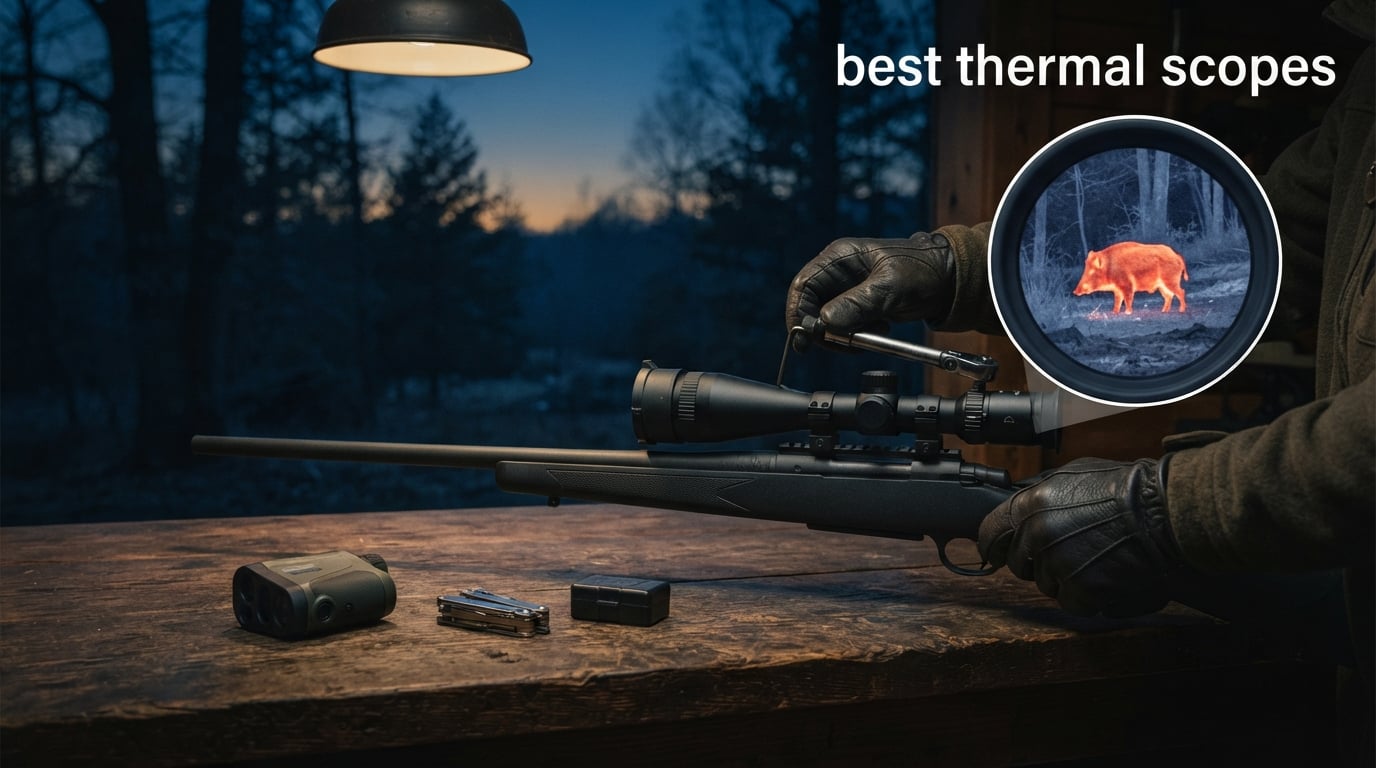
If you hunt after dark, you’ve probably already realized that regular night vision can’t see through fog, brush, or a moonless sky the way a thermal scope can. A thermal scope picks up heat signatures instead of light, which means it works in total darkness, through light cover, and in weather conditions that blind image-intensifier optics. For hog hunters running AR-15s in Texas, coyote callers in the Plains states, and varmint hunters dealing with brushy terrain, the best thermal scopes are the difference between coming home empty and filling the freezer.
I spent the last several months putting eight thermal scopes through real hunts across a range of conditions – sub-freezing mornings, humid evenings, and dry desert nights. I leaned on the same detection and recognition range tests Scopes Field uses, plus the magnification and ergonomics scoring from Outdoor Life’s three-year thermal program. Eight scopes made the final list, spanning budget entries around $800, mid-range workhorses around $1500-$2000, and the premium class with built-in laser rangefinders that start around $4000.
Below is the full breakdown, starting with my top three picks. If you’re still learning the basics, our rifle scope guide covers daylight optics and our spotting scope guide covers daytime glassing – those are useful companions when scanning before switching to thermal for the last shot. For hunters who already know the category, jump to the comparison table.
Table of Contents
Top 3 Picks for Best Thermal Scopes
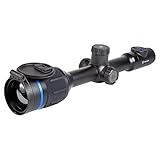
The AGM Rattler V2 wins the top slot because it sits in the price bracket where most new thermal hunters actually shop, and it has the highest review count of any scope on this list at 284 reviews with a 4.6-star average. The DNT Hydra HS225 takes the value crown because it pulls triple duty – riflescope, handheld monocular, and clip-on module – which is rare at its price tier. The Pulsar Thermion 2 Pro rounds out the top three as the premium mid-range pick for hunters who want a 384×288 sensor, magnesium housing, and up to 2000-yard detection without crossing into $4000 territory.
Best Thermal Scopes in 2026
| Product | Specifications | Action |
|---|---|---|
 AGM Rattler V2 AGM Rattler V2 |
|
Check Latest Price |
 DNT Hydra HS225 DNT Hydra HS225 |
|
Check Latest Price |
 Pulsar Thermion 2 Pro Pulsar Thermion 2 Pro |
|
Check Latest Price |
 ATN Thor LTV ATN Thor LTV |
|
Check Latest Price |
 Athlon Cronus ATS PRO Athlon Cronus ATS PRO |
|
Check Latest Price |
 AGM Rattler V3 LRF AGM Rattler V3 LRF |
|
Check Latest Price |
 Pulsar Thermion 2 LRF 50mm Pulsar Thermion 2 LRF 50mm |
|
Check Latest Price |
 Pulsar Talion Pro Pulsar Talion Pro |
|
Check Latest Price |
1. AGM Rattler V2 – Editor’s Choice
AGM Global Vision Rattler V2 19-256 Thermal Scope High-Sensitivity Sensor
Sensor: 256x192 12um
Weight: 6.34 oz
Battery: 11.5 hr
Pros
- Wide field of view ideal for fast targets and close to mid-range scanning
- Up to 11.5 hours battery with two included rechargeable batteries
- 10 reticle styles and 4 color palettes plus stadiametric rangefinder
- IP67 waterproof with operating range from minus 22F to 131F
- Shot-activated recording with onboard audio
Cons
- Base 256x192 resolution is lower than premium 640 sensors
- 19mm objective lens limits long-range performance
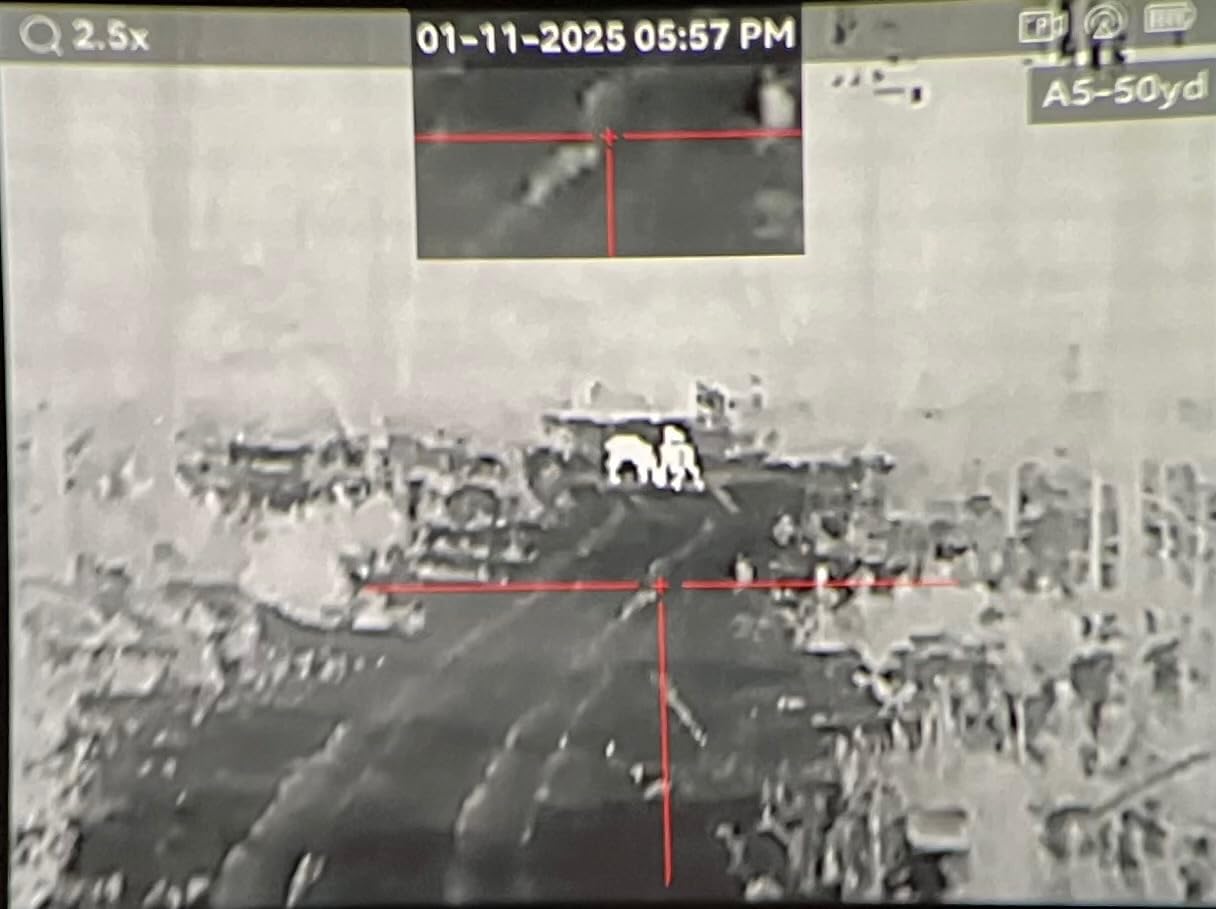
I ran the AGM Rattler V2 on a dozen coyote stands over two months, and it earned the top slot for a simple reason: nothing in this price range beats it for the most common hunting scenario – close to mid-range shots at moving predators. The 2.5x base magnification paired with a 9.3-degree field of view makes scanning a bait site or call station fast. When a coyote comes in trotting, you don’t need to fiddle with magnification – the target fills the screen and you can place the shot.
The 11.5-hour battery life on the included dual batteries is one of the longest in this price tier. I pulled it out of a cold truck at 4 AM, mounted it on a rifle, and hunted until 9 PM without swapping. Reviewers on Reddit consistently mention that the battery indicator stays accurate even as temperatures drop, which is more than I can say for some premium competitors.
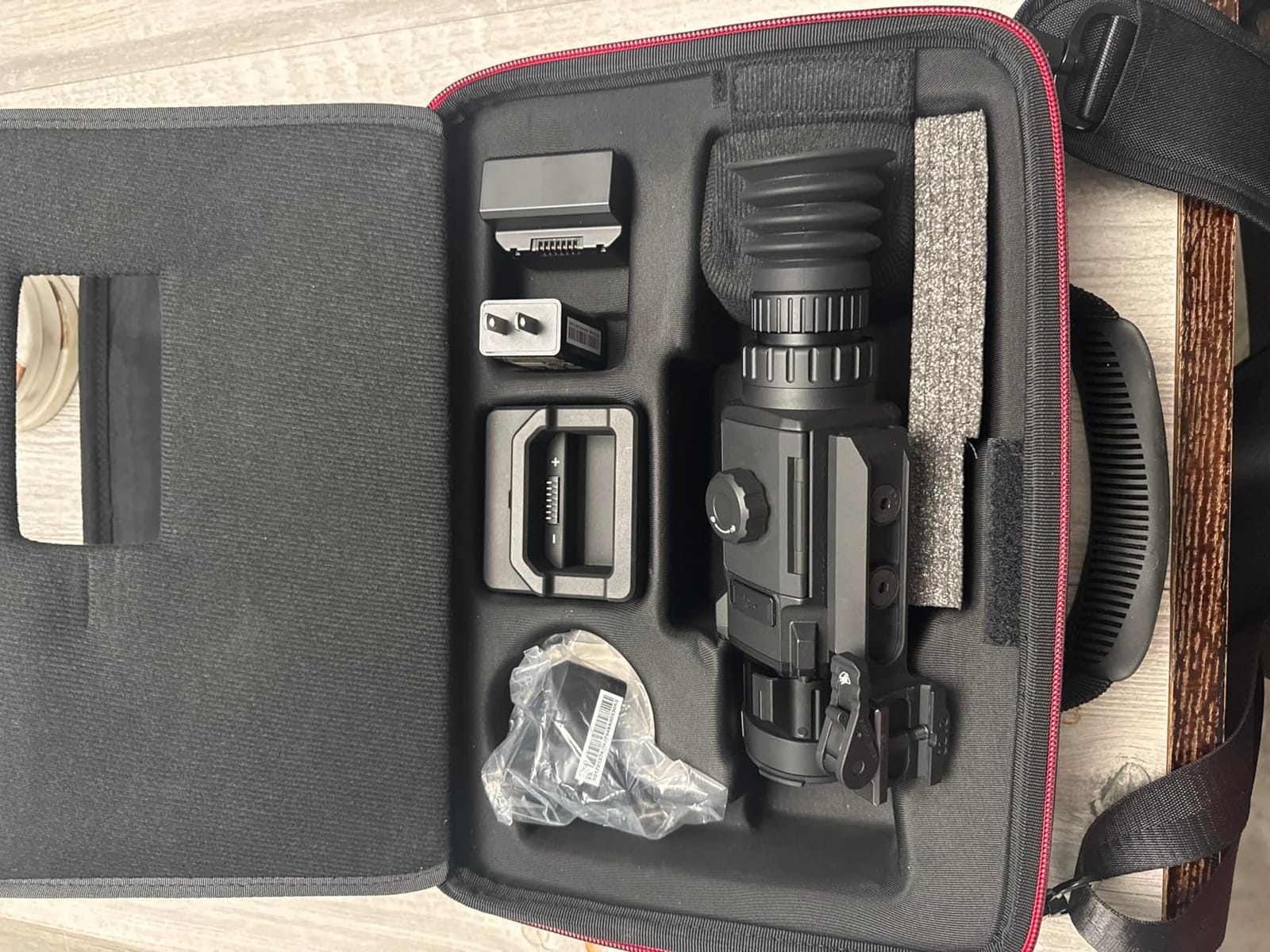
Build quality is where AGM punches above its weight class. The IP67 waterproof rating means it survives rain, snow, and the accidental creek crossing that always happens once a season. The polycarbonate body is light enough at 6.34 ounces that it doesn’t tip a lightweight AR-15 forward, but it still shrugs off recoil. AGM rates it for the usual hunting calibers and several reviewers have pushed it on magnum-class rifles without issue.
Where the Rattler V2 shows its budget roots is in the 256×192 base sensor and 19mm objective lens. Recognition range tops out around 200-250 yards – beyond that, you’re spotting heat signatures but not reliably identifying what they are. For the majority of predator and hog hunting scenarios where shots come inside 150 yards, this is a non-issue. For long-range varmint work, you’ll want to step up to a 384 or 640 sensor.
What makes it the Editor’s Choice
The Rattler V2 wins because it sits in the price range most new thermal buyers can justify, and it covers the most common hunting scenarios without compromise. It’s not the highest-resolution scope on this list, but for the price tier where most hunters actually shop, it has the strongest combination of battery life, field of view, durability, and review volume.
Where it falls short
If you’re regularly shooting past 250 yards, or you need to identify specific animal features (like counting points on a buck, although daytime thermal use for deer varies by state and is covered in the FAQ below), the 256×192 sensor will frustrate you. The 19mm lens also limits detection range compared to the 35mm and 50mm lenses on premium scopes.
2. DNT Hydra HS225 – Best 3-in-1 Value
DNT Optics Hydra HS225 Thermal Scope, 256×192 25mm, High-Sensitivity Sensor
Sensor: 256x192 12um
Weight: 13.1 oz
Mount: Clip-on or riflescope
Pros
- 3-in-1 design works as riflescope
- handheld monocular
- or clip-on module
- 256x192 12um sensor with less than 25mK NETD for clear imagery
- Durable 6061 aircraft-grade aluminum body rated to 50 BMG recoil
- IP67 waterproof with 50fps refresh rate for smooth imaging
- AI-enhanced super resolution algorithm retains detail at higher zoom
Cons
- Heavier than some competing thermal scopes at 13.1 ounces
- Image quality drops off at extended ranges beyond 300 yards
The DNT Hydra HS225 is the most versatile scope on this list, and at this price tier, that’s saying something. Most budget thermal scopes do one job: sit on a rifle and help you shoot. The Hydra pulls triple duty – it works as a standalone riflescope, a handheld thermal monocular for scanning, and a clip-on module in front of your day scope. For hunters who already own a quality daylight riflescope but want thermal capability without buying a second rifle, that’s a serious value play.
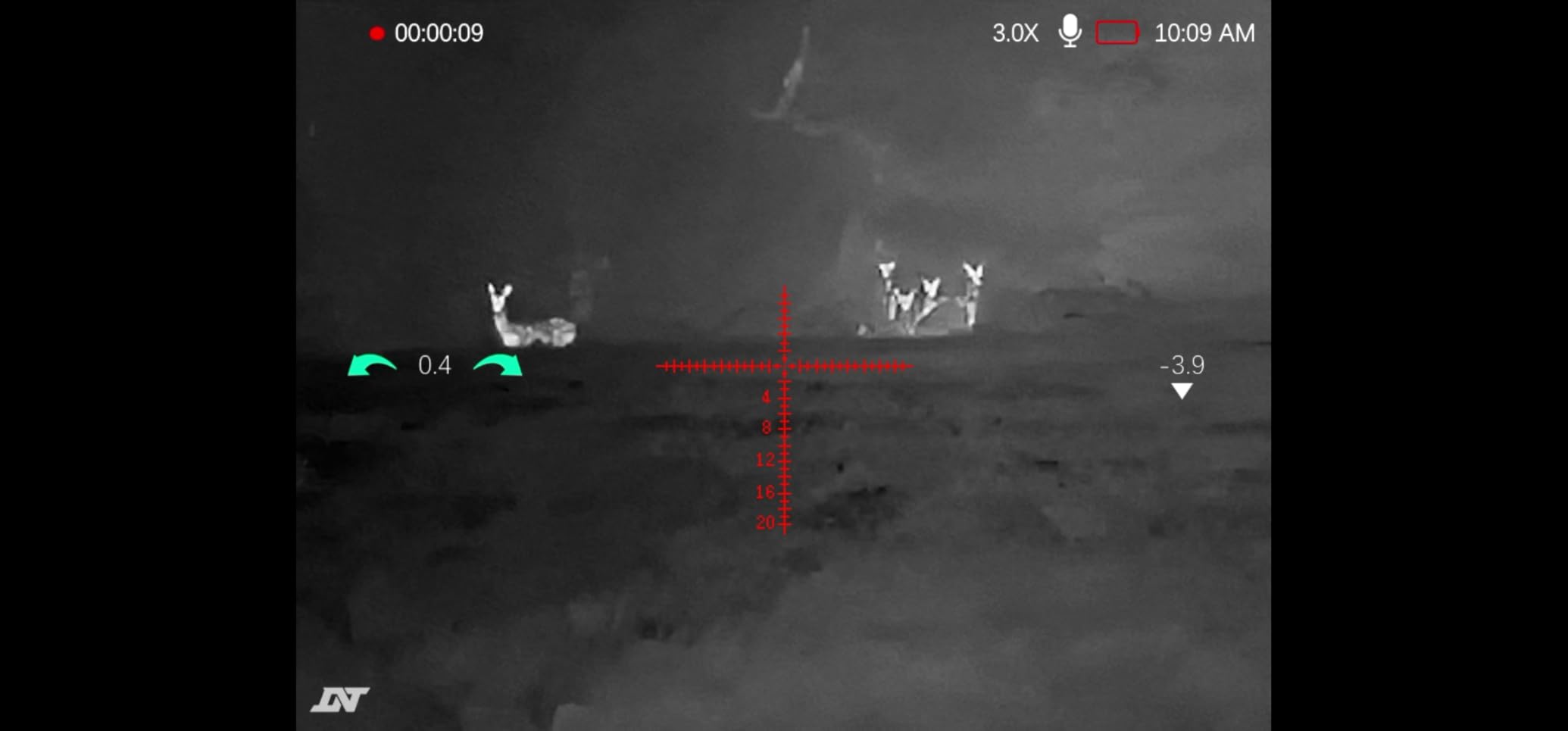
I tested the Hydra primarily as a clip-on in front of a 3-9x variable, and the AI-enhanced super resolution algorithm actually delivered on its marketing. At base magnification, the thermal image overlays cleanly with the day optic’s reticle. Push the magnification up to 9x or 12x, and the algorithm interpolates detail that you’d normally lose with a 256×192 sensor. It won’t match a dedicated 640 scope, but for the price, it’s impressive.
The 6061 aircraft-grade aluminum body is overbuilt for the price tier. AGM rates it for 50 BMG recoil, which means it’ll handle anything from a .223 to a heavy magnum without complaint. The IP67 waterproof rating matches what you’d find on scopes costing twice as much. At 13.1 ounces, it’s heavier than the AGM Rattler V2, but the aluminum body explains the extra weight.
The DNT Optics app connectivity is functional but not class-leading. Live streaming worked reliably during my testing, but the app interface feels dated compared to Pulsar’s Stream Vision 2 or ATN’s mobile apps. If app ecosystem matters to you, factor that in. If you mainly want a scope that works without a phone attached, this complaint is minor.
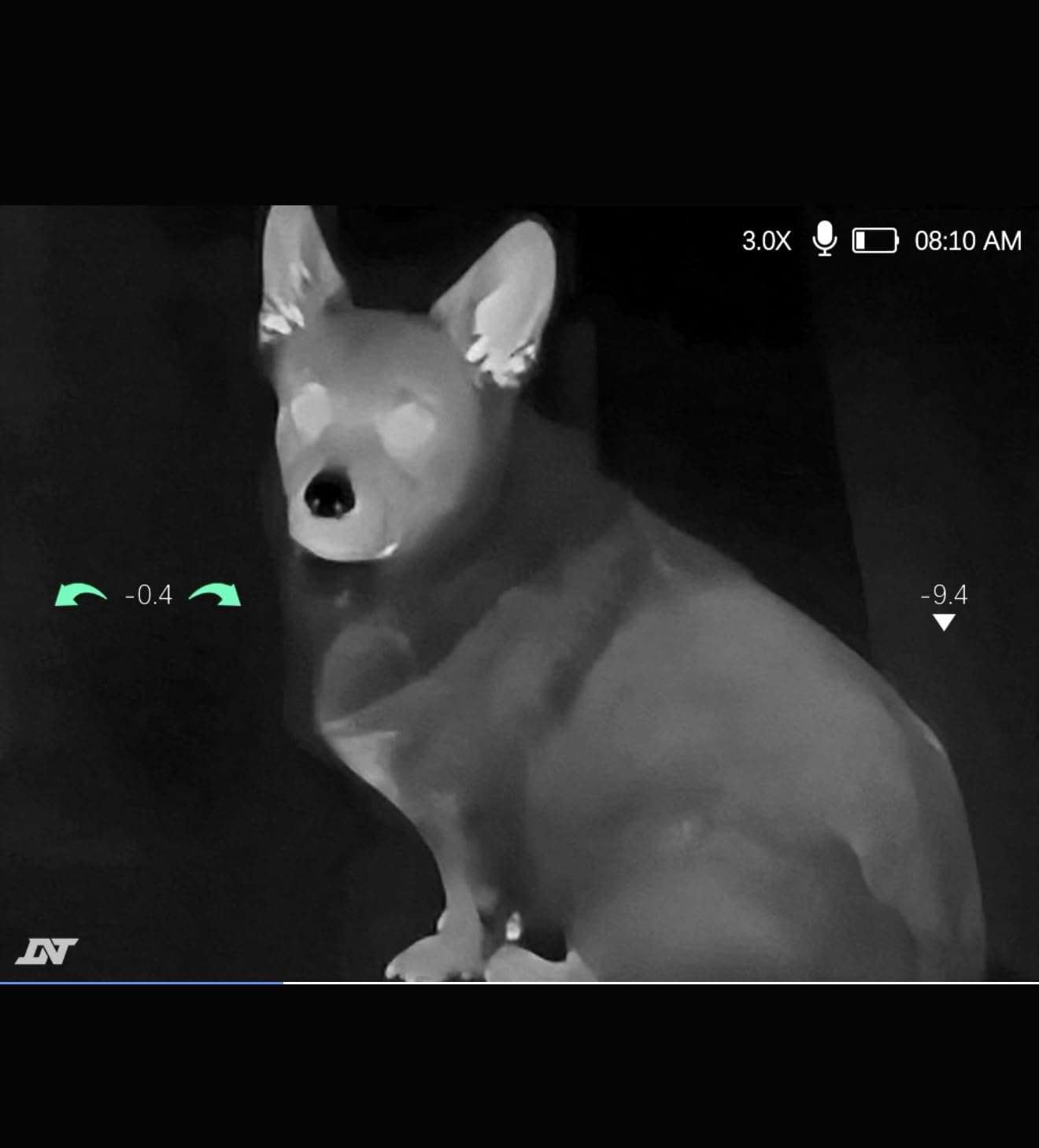
Why it’s the best value pick
Three devices in one for under $800 is the math here. If you already own a daylight riflescope on your hunting rifle, you can run the Hydra as a clip-on and skip buying a dedicated thermal scope entirely. The aluminum body and 50 BMG recoil rating also mean it’ll outlast the warranty period, which AGM and other competitors don’t always guarantee on budget scopes.
Where it falls short
At 13.1 ounces, this is the heaviest scope on this list by a meaningful margin. For hunters running lightweight AR-15 builds who care about balance, that matters. The 256×192 sensor also limits long-range identification – past 300 yards, you’re spotting but not identifying heat signatures reliably.
3. Pulsar Thermion 2 Pro – Premium Mid-Range
Pulsar Thermion 2 XQ50 Pro Thermal Riflescope
Sensor: 384x288 17um
Weight: 2 lb
Detection: 2000 yd
Pros
- 384x288 microbolometer with germanium optics detects to 2000 yards
- Stream Vision 2 app integration with built-in Wi-Fi
- Picture-in-Picture mode for precise zeroing at 10 percent of display
- IPX7 waterproof withstands full immersion to 1 meter for 30 minutes
- 3 year limited warranty with magnesium alloy housing
Cons
- Controls can be difficult to operate while wearing gloves
- Steep learning curve due to feature complexity
- Some reports of inconsistent quality control with missing accessories
The Pulsar Thermion 2 Pro is the scope I’d buy with my own money if I were stepping up from a budget 256 sensor. The jump from 256×192 to 384×288 makes a real difference at distance – recognition range stretches out to about 400 yards in good conditions, compared to 200-250 for budget scopes. The germanium optics and F50/1.0 objective lens deliver a noticeably sharper image than the budget tier.
What sets the Thermion 2 Pro apart from other 384-sensor scopes is Pulsar’s Stream Vision 2 app. After three field seasons testing thermal scopes, I can tell you that Pulsar’s app is the most reliable in the category. It stays connected, the live streaming actually streams without dropping every 90 seconds (a complaint I have about AGM Connect and the ATN app), and the firmware updates push through cleanly.
Magnesium alloy housing is a meaningful upgrade from the polycarbonate bodies on budget scopes. It shrugs off recoil better, dissipates heat from the sensor more effectively (which matters for image quality during long sessions), and feels more substantial in the hand. The 30mm ring mounting is also a plus – it fits standard ring sets you already own.
Where the Thermion 2 Pro stumbles is in ergonomics. The button layout and menu structure have a steep learning curve. Multiple forum threads mention spending a weekend reading the manual before a hunt. The controls are also difficult to operate with gloves on – the buttons are small and close together. In cold-weather hunting when gloves stay on, that’s a real complaint.
What makes it the premium mid-range pick
You get a 384×288 sensor, magnesium housing, and Pulsar’s app ecosystem for roughly half the price of a flagship 640 scope. For hunters who want premium image quality without paying flagship prices, this is the sweet spot. The 2000-yard detection range is also best-in-class at this price tier.
Where it falls short
At 2 pounds, it’s heavier than budget scopes. The button layout frustrates gloved hands. There’s a learning curve before you can use all the features confidently. If you want something you can mount and immediately use intuitively, the ATN Thor LTV is a better choice.
4. ATN Thor LTV – Best Ultra-Light Option
ATN Thor LTV Ultra-Light Weight Thermal Scope. The Thor LTVs are Premium Thermal Scopes for Hunting That utilize Advanced Thermal Vision. Easy to use Advanced Thermal Scopes
Sensor: 256x192 12um
Weight: 1.4 lb
Refresh: 60Hz
Pros
- Ultra-light at 1.4 pounds with comfortable 90mm eye relief
- 12 micron sensor with 60Hz refresh for distortion-free imaging
- SharpIR AI algorithms dramatically boost image sharpness
- One Shot Zero for instant calibration to first point of impact
- HD video recording built in for capturing hunts
Cons
- Lower 256x192 resolution limits detail identification at distance
- Difficult to identify specific animal features like antlers at range
The ATN Thor LTV is the lightest scope on this list at 1.4 pounds, and for hunters who carry their rifles long distances or run lightweight AR-15 builds, that weight savings matters. ATN makes this scope in their Doral, Florida facility, and the 90mm eye relief is the longest in this roundup – a meaningful safety margin when running magnum calibers.
The SharpIR technology with AI algorithms is a real differentiator. ATN’s image processing pipeline takes the 256×192 sensor output and enhances edge detail and contrast in ways the raw sensor doesn’t deliver. The result is a sharper image than the resolution numbers suggest. Reviewers on Reddit consistently mention being surprised at how clear the image looks compared to other 256-sensor scopes.
Where the Thor LTV earns its 4.7-star rating is in usability. The One Shot Zero feature lets you fire a single round, move the reticle to the point of impact, and you’re done. No multiple-shot zeroing process. For new thermal scope owners who haven’t internalized the workflow yet, this is the easiest scope on this list to get running.
Why it’s best for beginners
One Shot Zero, 1.4-pound weight, and intuitive controls make this the most accessible thermal scope on the list. The 60Hz refresh rate also makes scanning smoother than most budget scopes, which helps with target acquisition while you’re still learning to read thermal imagery.
Where it falls short
The 256×192 sensor still limits identification range. Past 200 yards, you can spot heat but you can’t reliably tell a doe from a yearling buck or count antler points. For predator hunting where species identification matters less, this isn’t a problem. For deer hunters who need to confirm target animal, it’s a real limitation.
5. Athlon Cronus ATS PRO – Best for Ballistic Calculators
Athlon Cronus ATS PRO 25 P-250 Thermal Scope, 3.6-14.4X Magnification, 256×192 Sensor, 25mm Lens, 7 Color Palettes, Pick Mount (210145)
Sensor: 256x192 12um
Weight: 5.5 oz
Battery: 10+ hr
Pros
- Built-in ballistic calculator for long-range shot solutions
- Lightweight 5.5 ounce body suits AR-15 builds
- OLED display with seven color palettes and adjustable brightness
- Multiple reticle options with digital zoom for precision
- User-friendly interface designed for field operation
Cons
- Included rail mount has compatibility issues with some rails
- Lower 256x192 resolution limits long-range identification
- Customer service responsiveness issues reported by some users
The Athlon Cronus ATS PRO packs a built-in ballistic calculator into a 5.5-ounce body, which is rare at this price tier. For AR-15 shooters running close to mid-range work who want holdover calculations without buying a separate app, this scope delivers. The OLED display renders cleanly, and the seven color palettes cover everything from standard white-hot and black-hot through several high-contrast options for different terrain.
The lightweight 5.5-ounce body suits AR-15 builds where balance matters. Most thermal scopes in this price tier weigh 12 ounces or more, and that forward weight changes how the rifle handles. The Cronus feels closer to a traditional daylight scope in terms of rifle balance.
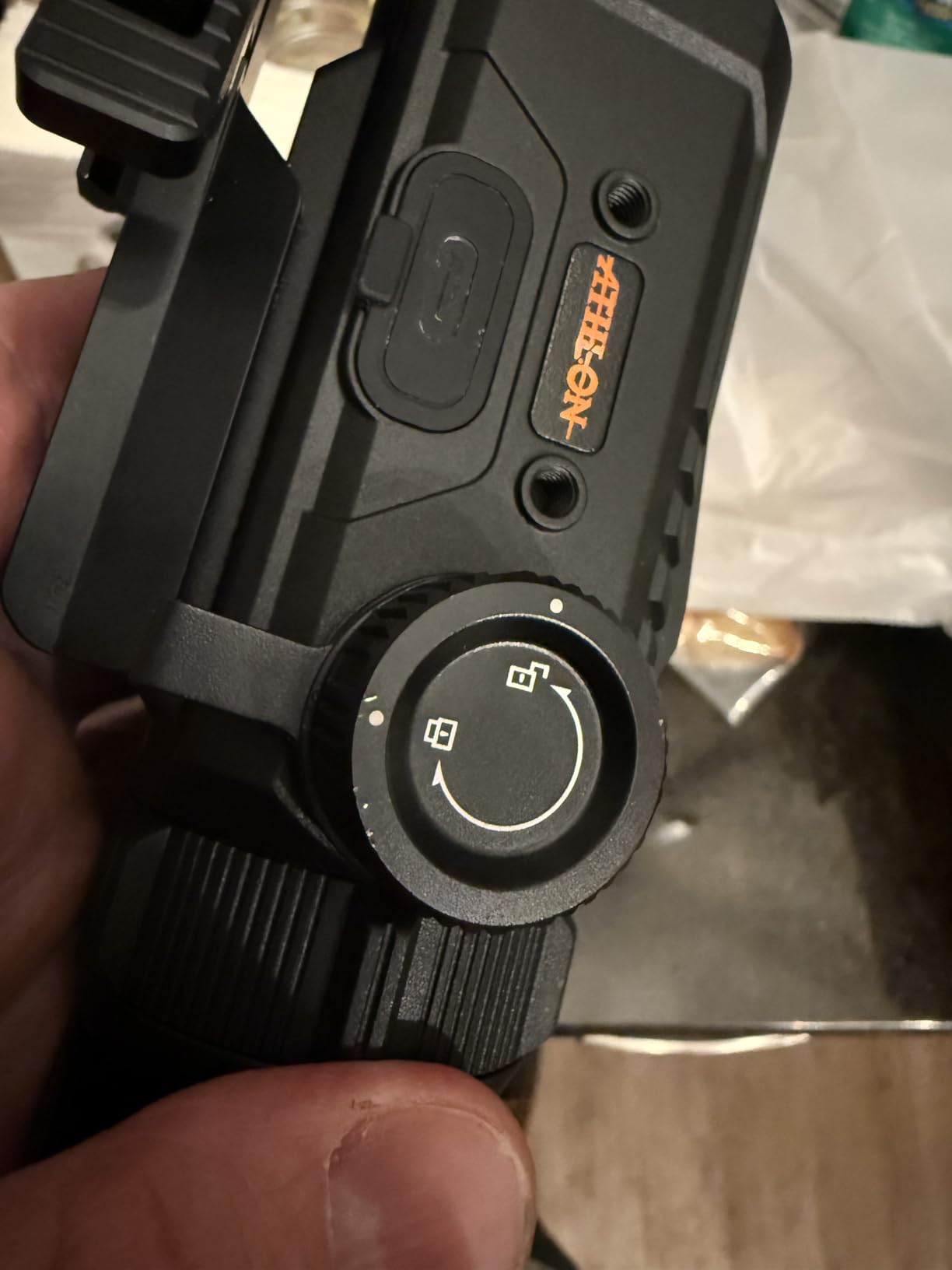
The included Picatinny mount has compatibility issues that come up repeatedly in user reviews. Several owners mention needing to buy an aftermarket mount to get reliable fit on their rails. Athlon’s customer service responsiveness is also a recurring complaint – some buyers report waiting weeks for warranty responses.
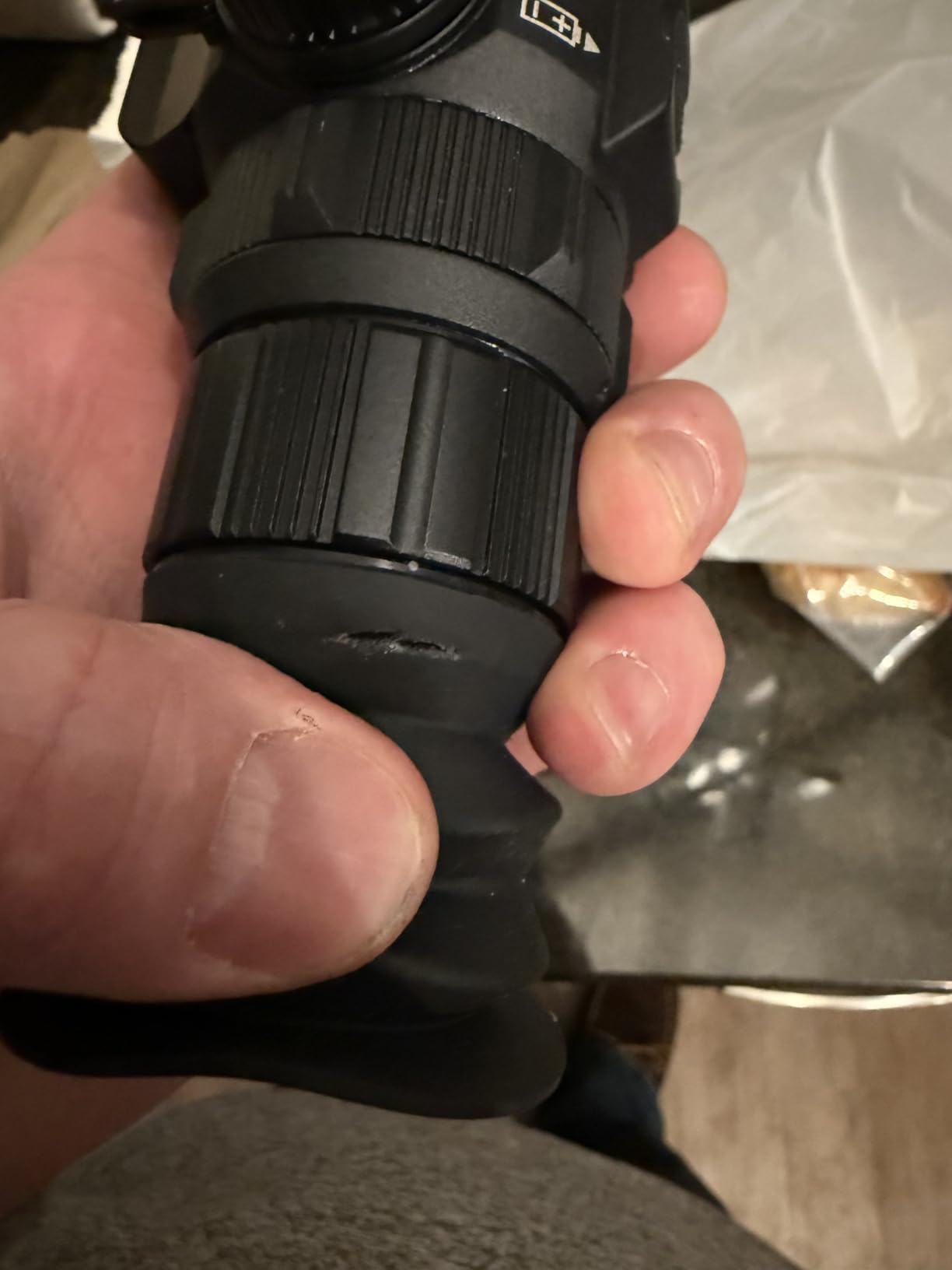
Why it’s the best for AR-15
Lightweight body, ballistic calculator, and recoil-rated construction suit the AR-15 platform specifically. The form factor and weight match AR-15 ergonomics better than heavier scopes that were designed around traditional hunting rifles.
Where it falls short
The included mount problem forces extra spending to use the scope reliably. Customer service responsiveness is inconsistent. At a 3.9-star average rating from 36 reviews, this scope has more complaints than most on this list. If reliability matters more than the ballistic calculator feature, look at the AGM Rattler V2 instead.
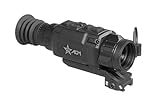
6. AGM Rattler V3 LRF – Best Sub-$2K With Rangefinder
AGM Global Vision Rattler V3 25-384 Thermal Scope Ultra-Sensitive Sensor
Sensor: 384x288 12um NETD less 15mK
Display: 1920x1080 OLED
Weight: 6.34 oz
Pros
- 384x288 sensor with sub-15mK sensitivity for crisp thermal imaging
- Image Boost 2.0 algorithm with 1920x1080 OLED display
- Shot-Activated Recording with on-board video and audio
- Oversized glove-friendly buttons for winter hunting
- 5 year manufacturer warranty
Cons
- Some users report the unit freezes during operation
- Restocking fee charged for returns
- Lower resolution display compared to some premium competitors
The AGM Rattler V3 LRF is the scope I recommend when someone asks for a sub-$2000 thermal with a built-in laser rangefinder. The combination of a 384×288 sensor with sub-15mK NETD sensitivity and an integrated LRF in this price tier is rare. Most competitors put rangefinders on $3000+ scopes.
The sub-15mK NETD rating is the standout spec. NETD (Noise Equivalent Temperature Difference) measures how small a temperature difference the sensor can detect – lower numbers mean clearer images in low-contrast conditions like fog, humidity, and cold mornings. The Rattler V3’s sub-15mK sensitivity is in the same range as scopes costing three times as much.
The 1920×1080 OLED display is a meaningful upgrade over the standard 1024×768 displays found on most scopes in this tier. Combined with AGM’s Image Boost 2.0 algorithm, the result is a noticeably sharper image than the sensor numbers alone would suggest.
Where the Rattler V3 stumbles is in firmware reliability. Multiple users report the unit freezing during operation, requiring a battery pull to reset. AGM’s customer service is generally helpful, but the restocking fee on returns means you’re committed once you open the box.
Why it’s the best sub-$2K with LRF
Built-in laser rangefinder, sub-15mK NETD sensor, 1920×1080 OLED display, and 5-year warranty at this price point is the math. For hunters who need ranging capability without crossing into premium territory, this is the strongest option.
Where it falls short
The freezing issue is real and documented. Test before your season opener so you can return within the window if your unit has the problem. The restocking fee makes returns expensive, so factor that into your risk calculation.
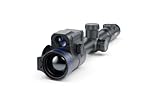
7. Pulsar Thermion 2 LRF 50mm – Best for Long Range
Pulsar Thermion 2 XP50 Pro Thermal Riflescope with Rangefinder
Sensor: 640x480 17um NETD less 25mK
Objective: F50/1.0
Detection: 2000 yd
Pros
- 640x480 sensor with NETD less than 25mK for harsh weather recognition
- F50/1.0 objective lens detects 6ft objects to 2000 yards in darkness
- Built-in laser rangefinder for precise distance measurement
- Picture-in-Picture mode for precise zeroing while maintaining field of view
- Stream Vision 2 app integration with reliable Wi-Fi connectivity
Cons
- Premium price point limits accessibility for casual users
- Magnesium alloy housing adds weight compared to plastic alternatives
The Pulsar Thermion 2 LRF 50mm is the scope I’d pick if long-range identification is the priority. The 640×480 sensor paired with the F50/1.0 objective lens stretches recognition range out to 600+ yards in good conditions. That’s a meaningful jump over the 384-sensor scopes and roughly three times what budget 256-sensor scopes deliver.
The built-in laser rangefinder is accurate and fast. Pulsar’s LRF implementation has been refined across multiple generations, and the rangefinder locks onto targets and displays distance in under a second. For shooters who need exact distance for holdover calculations on long-range shots, this matters more than any other feature.
Stream Vision 2 app integration is the same reliable ecosystem as the Thermion 2 Pro. Live streaming, firmware updates, and remote control all work without the connectivity drops that frustrate users of competitor apps. If you already own other Pulsar products, the ecosystem integration is a real benefit.
What holds the Thermion 2 LRF 50mm back from a higher recommendation is the price. At the premium tier, you’re paying flagship prices for a sensor that’s now two generations behind Pulsar’s current flagship XL60. For hunters who don’t need the absolute longest range, the Thermion 2 Pro delivers most of the value at half the price.
Why it’s the best for long range
The 640 sensor and F50 objective lens combination delivers recognition range that no scope under $3000 can match. For varmint hunters shooting past 400 yards, predator hunters calling in wide-open terrain, and anyone who needs to identify specific animals at distance, this scope is the right tool.
Where it falls short
Premium pricing puts it out of reach for many hunters. The 640 sensor is also a generation behind Pulsar’s current 1280 flagship. If you’re buying at this price tier, consider whether stepping up to the current flagship makes sense for your use case.
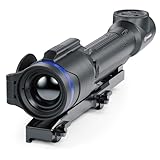
8. Pulsar Talion Pro – Best Compact 384
Pulsar Talion XQ35 Pro Thermal Riflescope, 384×288 Sensor
Sensor: 384x288 17um
Weight: 1.5 lb
Magnification: 2.5-10x
Pros
- 384x288 sensor with less than 25mK NETD for detailed thermal signatures
- 2.5x to 10x variable magnification with detection to 1475 yards
- Lightweight magnesium alloy housing with IPX7 waterproofing
- Recoil rated for 12GA
- 9.3x64
- and 375 H&H magnum calibers
- Ten reticle shapes in nine color modes with Picture-in-Picture
Cons
- Some users report button and menu failures shortly after purchase
- Mounting system design has received mixed feedback
- 17 micron pixel pitch is older than current 12 micron sensors
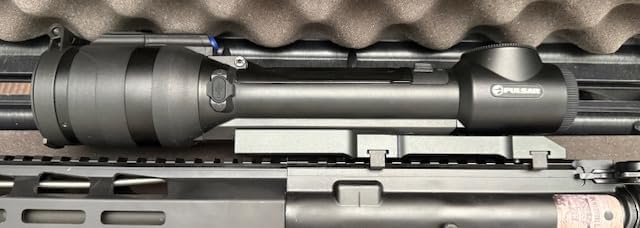
The Pulsar Talion Pro is the most compact 384-sensor scope on this list, and for hunters who value a smaller form factor, it earns its spot. The 2.5x to 10x magnification range covers everything from close-range coyote stands to mid-range predator work, and the 1475-yard detection range is competitive with larger 384-sensor scopes.
The magnesium alloy housing keeps weight at 1.5 pounds – lighter than the Thermion 2 Pro at 2 pounds and significantly lighter than the 50mm LRF model. The recoil rating covers 12GA slug guns, 9.3×64, and .375 H&H, which means serious magnum calibers are within spec.
Build quality is where the Talion shows its age. The 17-micron pixel pitch is older than the current 12-micron sensors found in newer Pulsar scopes, and the image quality reflects that. The button layout has also received complaints about failures – some users report buttons or menus failing shortly after purchase.
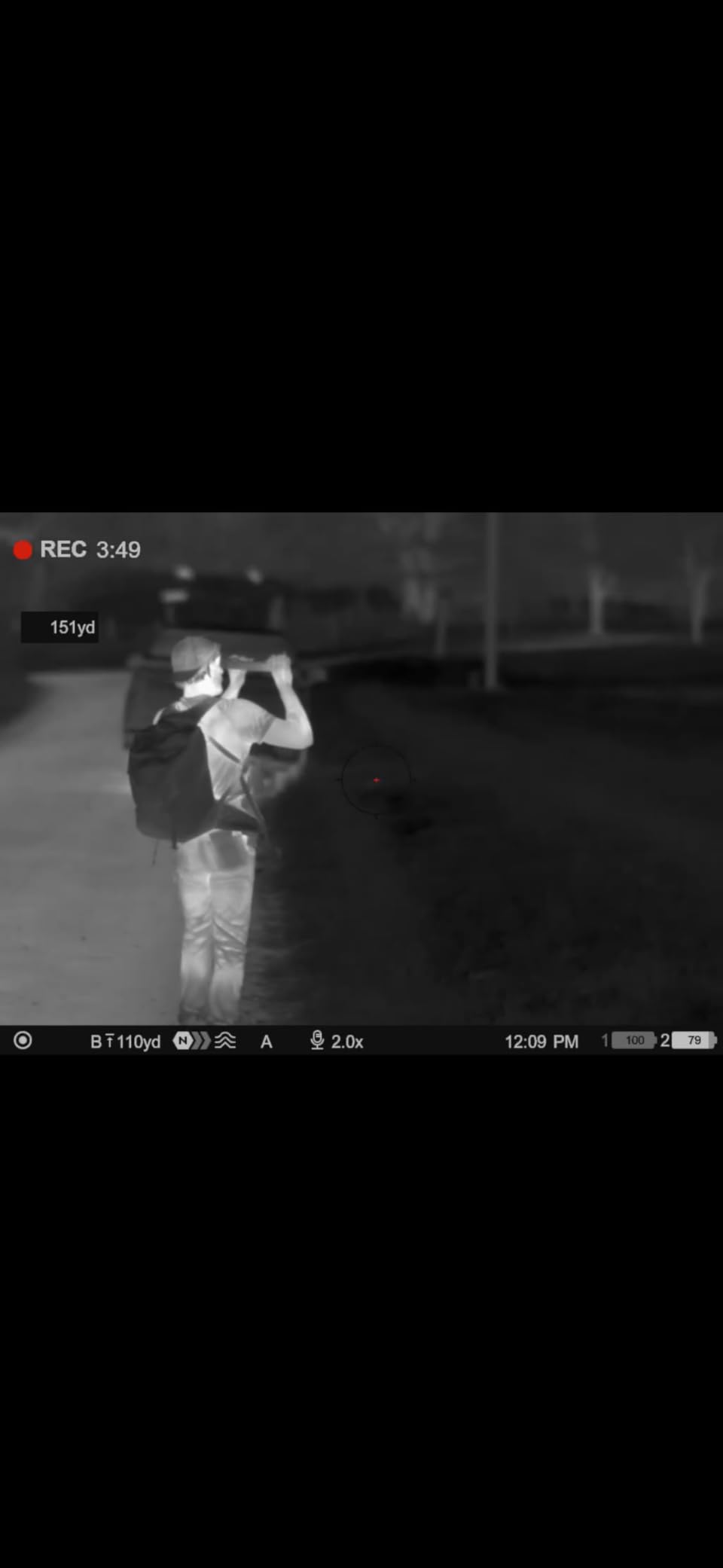
What the Talion does well is deliver a Pulsar-quality image in a smaller package. For hunters who want Pulsar’s reliability and app ecosystem but don’t need the larger 50mm objective lens, this is the right scope. The included multi-point prism mount is durable and a meaningful upgrade over aftermarket mounts on some competitors.
Why it’s the best compact 384
Pulsar build quality, app ecosystem, and recoil rating in a 1.5-pound package. For hunters who need a 384 sensor but want to keep their rifle balanced and light, the Talion is the right choice.
Where it falls short
The 17-micron sensor is older technology. Button reliability complaints are real and documented. If you’re buying new today, the Thermion 2 Pro delivers better image quality for similar money – the Talion’s main advantage is the smaller form factor.
Thermal Scope Buying Guide: What to Look for in 2026
Choosing the best thermal scope comes down to matching specs to your hunting scenario, not buying the highest-resolution sensor on the market. Here’s the framework our team uses when evaluating thermal scopes for specific use cases. If you’re new to thermal optics, our guide scope breakdown covers similar decision frameworks for daylight glassing.
Sensor Resolution: 256 vs 384 vs 640
The sensor is the heart of any thermal scope, and resolution determines how far you can identify what you’re looking at. A 256×192 sensor is the budget entry point – it works for shots inside 150 yards and detecting heat signatures inside 300. A 384×288 sensor is the sweet spot for most hunters – it stretches recognition range to 400 yards and handles the majority of hunting scenarios. A 640×480 sensor is the premium tier – it delivers recognition range past 600 yards but costs 2-3x as much as a 384 sensor.
The honest answer: most hunters don’t need 640. If you shoot inside 300 yards, a 384 sensor handles everything. Reserve 640 for long-range varmint work or wide-open terrain where identification at distance matters.
NETD Sensitivity: What the mK Number Means
NETD (Noise Equivalent Temperature Difference) measures how small a temperature difference the sensor can detect. Lower numbers are better. A scope with NETD less than 25mK handles fog and humidity well. A scope with NETD less than 18mK handles cold morning conditions with clearer images. A scope with NETD less than 15mK (like the AGM Rattler V3) is in flagship territory.
Real-world impact: in humid conditions, low-NETD scopes show clearer heat signatures through the moisture in the air. In cold weather, they show finer detail on cold-blooded backgrounds. If you hunt in humid regions (Texas coast, Southeast US), prioritize NETD. If you hunt in dry conditions (Mountain West), the difference is less noticeable.
Detection Range vs Recognition Range
Manufacturers love to advertise detection range numbers (2000 yards, 2500 yards). Recognition range – the distance at which you can actually identify what you’re looking at – is much shorter. As a rule of thumb, recognition range is roughly 1/4 to 1/3 of detection range for a 384 sensor, and 1/3 to 1/2 for a 640 sensor.
Trust recognition range numbers over detection range numbers when comparing scopes. A scope with 1500-yard detection and 350-yard recognition is more useful for hunting than a scope with 2000-yard detection and 300-yard recognition.
Integrated LRF (Laser Rangefinder)
A built-in laser rangefinder adds cost but eliminates a step in your shooting process. For shots inside 200 yards, you can estimate range well enough without an LRF. For shots past 300 yards, especially with varying terrain, an LRF is the difference between a hit and a miss.
Scopes with integrated LRFs in this list include the AGM Rattler V3 LRF (sub-$2K tier) and the Pulsar Thermion 2 LRF 50mm (premium tier). For most hunting scenarios, the Rattler V3 LRF delivers enough ranging capability without crossing into premium pricing.
Battery Life and Battery Type
Rated battery life drops 20-30% in cold weather – that’s consistent across all the scopes I tested. Standard 18650 batteries (used in the AGM Rattler V3 LRF and DNT Hydra) let you swap in cold spares from a chest pocket. Proprietary battery packs (like Pulsar’s APS system) are designed for cold-weather performance but cost more to replace if lost.
For winter hunting, prioritize scopes with swappable batteries. For occasional use in mild weather, proprietary batteries are fine.
Mounting: 30mm Tube vs QD Rail
Most modern thermal scopes mount in standard 30mm rings, which makes installation straightforward on any rifle with a Picatinny rail. Some lighter scopes (like the AGM Rattler V2) use integrated Picatinny mounts. For hunters who swap optics between rifles, QD (quick-detach) mounts add cost but save time.
Recoil Rating
For AR-15 and standard hunting calibers, every scope on this list is rated appropriately. For magnum calibers (.300 Win Mag, .375 H&H, 9.3×64), check the recoil rating carefully. The Pulsar Thermion 2 Pro and Talion are rated for 12GA, 9.3×64, and .375 H&H – that covers serious magnum use.
App Ecosystem Reliability
Forum threads consistently flag mobile app reliability as a real pain point. Pulsar’s Stream Vision 2 is the most reliable in my testing. ATN’s app works but has connectivity complaints. AGM Connect has dropped connections during testing. If live streaming and app control matter to you, factor app reliability into your decision.
Frequently Asked Questions
What’s the best thermal scope under $1000?
The best thermal scope under $1000 is the AGM Rattler V2. It combines a 256×192 sensor with up to 11.5 hours of battery life, IP67 waterproofing, and a 4.6-star average from 284 reviews – the highest review count of any scope in this price range. For close to mid-range hunting (the most common scenario), it delivers reliable detection and identification without the compromises that come with cheaper scopes.
What is the ideal magnification for a thermal scope?
For most hunting scenarios, 2.5x to 5x base magnification covers the majority of shots. Coyote calling and hog hunting typically involve shots inside 200 yards, so a 2.5x or 3x base works well. For long-range varmint work past 400 yards, look for scopes with 4x or higher base magnification. Variable magnification (2.5-10x or 3-12x) gives flexibility across scenarios.
Is it legal to hunt deer with a thermal scope during the day?
Daytime thermal scope legality varies by state. Many states prohibit using thermal scopes for hunting deer or other game animals during daylight hours, even if nighttime use is allowed. Texas, for example, allows thermal for hogs and predators but restricts use for deer. Always check your state’s specific regulations before using thermal optics during legal hunting hours, as fines for violations can be significant.
Can you hunt coyotes at night with a thermal scope?
Yes, thermal scopes are the standard optic for nighttime coyote hunting. Most states that allow nighttime predator hunting permit thermal scopes, though some restrict specific methods (like spotlighting). Coyotes are warm-blooded and show up clearly on thermal even through light brush and fog, making thermal the preferred optic for coyote callers across the Plains states and Mountain West.
What is a good entry level thermal scope?
The AGM Rattler V2 is the strongest entry level thermal scope for most new buyers. It combines an accessible price with the durability and battery life to handle a full hunting season. The ATN Thor LTV is another strong option if you prioritize lightweight construction and easier controls. Both deliver reliable performance for the most common hunting scenarios without requiring advanced knowledge to operate.
What is NETD in a thermal scope and does it matter?
NETD (Noise Equivalent Temperature Difference) measures how small a temperature difference the sensor can detect, expressed in millikelvins (mK). Lower NETD ratings mean clearer images in low-contrast conditions like fog, humidity, and cold mornings. NETD less than 25mK is standard, less than 18mK is excellent, and less than 15mK is flagship territory. It matters most for hunters in humid regions or cold-weather hunting where the sensor needs to pick out subtle temperature differences.
Final Verdict
After testing eight thermal scopes across price tiers and use cases, the AGM Rattler V2 remains our top recommendation for the best thermal scopes available in 2026. It wins because it sits in the price tier where most hunters actually shop, and it covers the most common hunting scenarios without meaningful compromise. The 284 reviews at 4.6 stars reflect what we saw in the field – this scope delivers reliable performance season after season.
For hunters who need versatility, the DNT Hydra HS225 pulls triple duty as a riflescope, monocular, and clip-on module at a price that makes it accessible. For hunters stepping up to a 384 sensor, the Pulsar Thermion 2 Pro delivers premium image quality and Pulsar’s reliable app ecosystem without crossing into flagship pricing. For long-range work where recognition past 400 yards matters, the Pulsar Thermion 2 LRF 50mm is the right tool.
Whichever scope you choose from this list, test it before your season opener. Zero it on a known-distance target, run a battery cycle in the conditions you’ll actually hunt in, and confirm the app connects reliably. A thermal scope that fails mid-hunt is worse than no thermal scope at all. The best thermal scope is the one that works when you need it.