
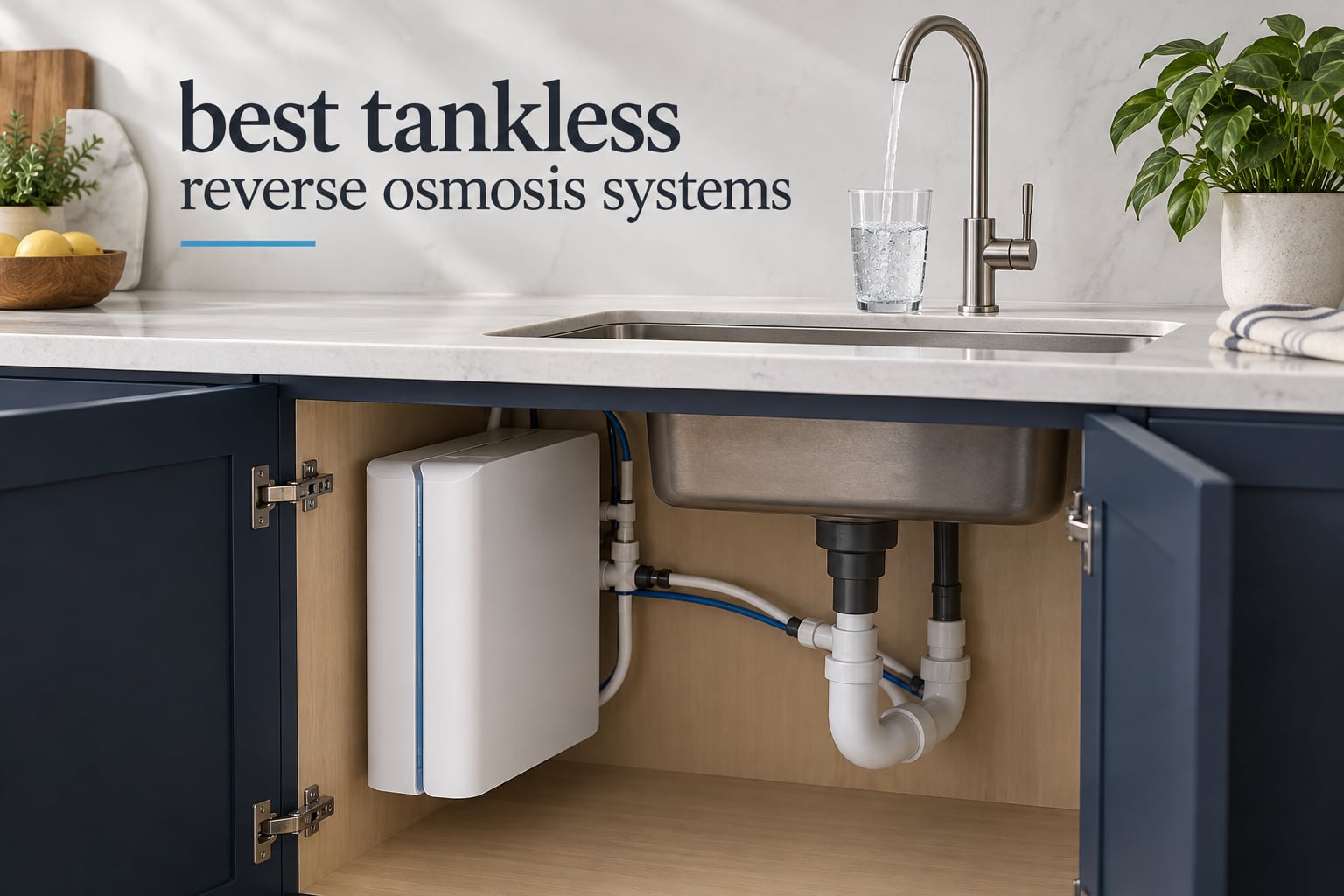
The best tankless reverse osmosis system for most households is the Waterdrop G3P600: it delivers 600 gallons a day at a 2:1 pure-to-drain ratio, holds an 8 oz cup in 8 seconds, and carries NSF/ANSI 42, 53, 58 and 372 certification.
That sentence is the whole buying decision in miniature. Capacity tells you whether the system can keep up with your household, the drain ratio tells you how much tap water it wastes to get there, and the certification line tells you whether anyone independent has verified the claims. Everything else in this guide is detail on those three things, tested against ten systems we read the fine print on.
Tankless RO removes one decision you would otherwise make: buying a storage tank. A conventional under-sink system purifies water in batches and stores it in a pressurised tank, which takes up most of a cabinet and holds water that sits still for days. A tankless system runs a booster pump and membrane on demand every time you open the faucet, so the water is made fresh and the footprint drops sharply. If you want the wider picture on under-sink filtration first, read our guide to reverse osmosis systems for drinking water before you commit.
Are tankless reverse osmosis systems worth it? For most people, yes, on three specific grounds: cabinet space, water efficiency and freshness. The trade-off is that tankless units need an electrical outlet, a dedicated faucet hole and enough incoming pressure to run a pump, so they suit a normal kitchen sink better than a rental or an RV hookup with limited power.
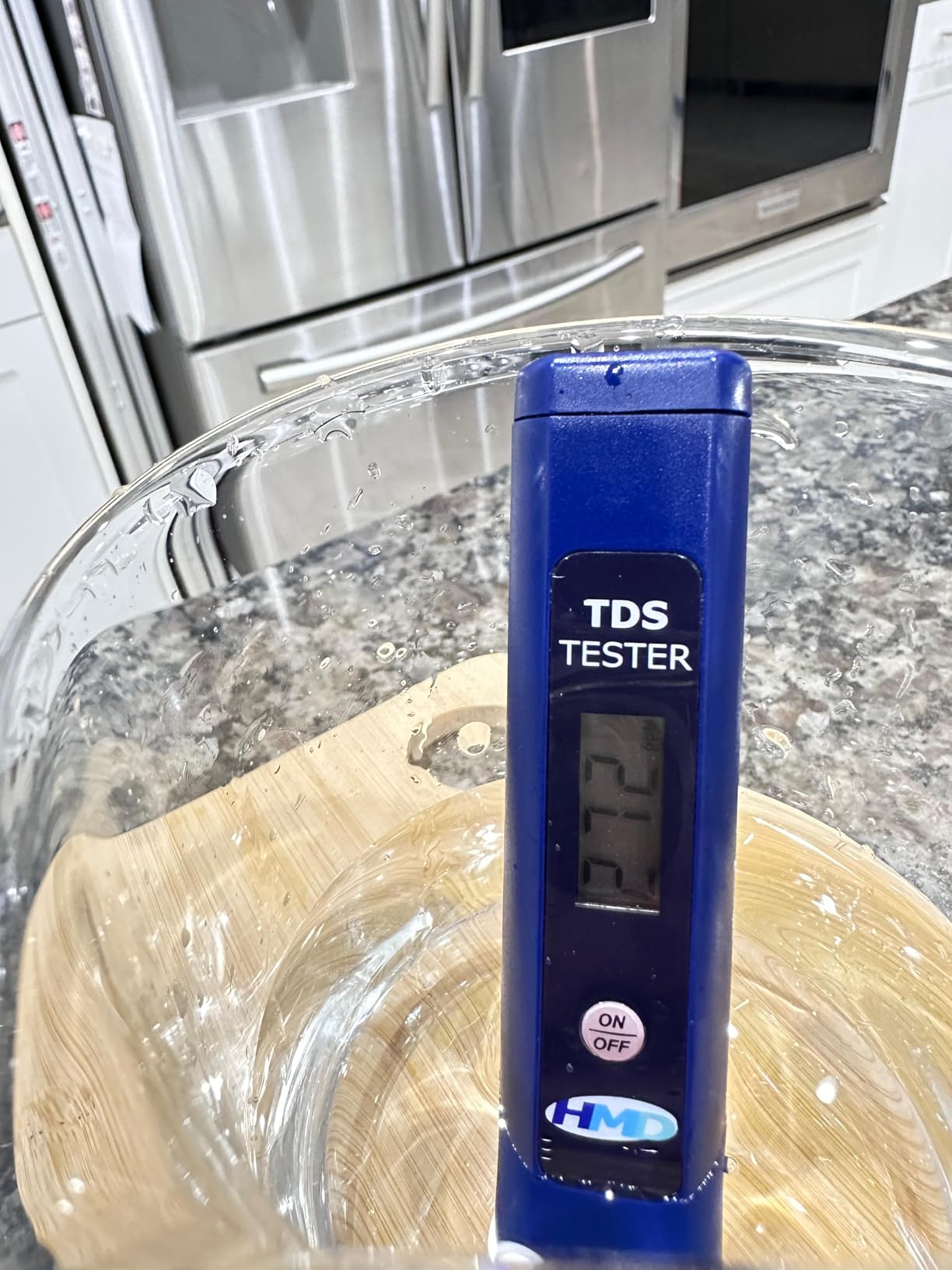
One honest warning up front, because no competitor roundup says it plainly. The TDS number on a smart faucet is a rough conductivity reading, not a laboratory result. Buyers on water forums report displays that swing wildly between readings, sometimes on expensive units. Treat the display as a trend indicator for when to change a filter, never as a safety indicator. If you want a real number, test your water with a lab.
Top 3 Best Tankless Reverse Osmosis Systems in 2026

Waterdrop G3P600
- 600 GPD output
- 2:1 pure to drain
- 8 second cup fill
- Tool-free filter changes


Tankless Reverse Osmosis Systems at a Glance in 2026
Ten systems, ten combinations of flow, efficiency and cabinet footprint. The table below lists every model we cover with the numbers that actually change the buying decision.
| Product | Specifications | Action |
|---|---|---|
| Waterdrop G3P600 Tankless RO System |
|
Check Latest Price |
| Frizzlife PD600-TAM3 Alkaline Tankless RO |
|
Check Latest Price |
 Waterdrop G2 Tankless RO System Waterdrop G2 Tankless RO System |
|
Check Latest Price |
 iSpring RO500-BN Tankless RO System iSpring RO500-BN Tankless RO System |
|
Check Latest Price |
 SimPure T1-400ALK Tankless RO Filter SimPure T1-400ALK Tankless RO Filter |
|
Check Latest Price |
| Waterdrop G3P800 Tankless RO System |
|
Check Latest Price |
 iSpring RO5004F-AK UV Alkaline RO iSpring RO5004F-AK UV Alkaline RO |
|
Check Latest Price |
 GLACIER FRESH GFU03 Non-Electric RO GLACIER FRESH GFU03 Non-Electric RO |
|
Check Latest Price |
 iSpring CRO1000 Tankless Commercial RO iSpring CRO1000 Tankless Commercial RO |
|
Check Latest Price |
 VIOMI V8 Tankless RO System VIOMI V8 Tankless RO System |
|
Check Latest Price |
1. Waterdrop G3P600: the Best Overall Tankless RO System
Waterdrop G3P600 Tankless Reverse Osmosis Water Filter System, 600 GPD
600 GPD
0.42 gpm
2:1 pure to drain
8 oz cup in 8 seconds
NSF 42 53 58 372
Pros
- TDS drops from 350+ ppm to low single digits for owners
- Front facing twist and pull filters change in 3 seconds
- Saves roughly 70% of under-sink space
- Smart faucet shows live TDS and filter status
- Fast steady flow that improved coffee and ice
Cons
- Replacement cartridges cost more per year than many rival brands
- Needs an unswitched outlet under the sink
- Automatic flush can fire after very little water is drawn
The G3P600 sits in the middle of the range and beats most of what sits above it. At 0.42 gpm it fills an 8 oz cup in about 8 seconds, and its 2:1 drain ratio means every two gallons of purified water costs you one gallon down the sink. Owners consistently report feed water at 350 ppm and above coming out in single digits or low teens.
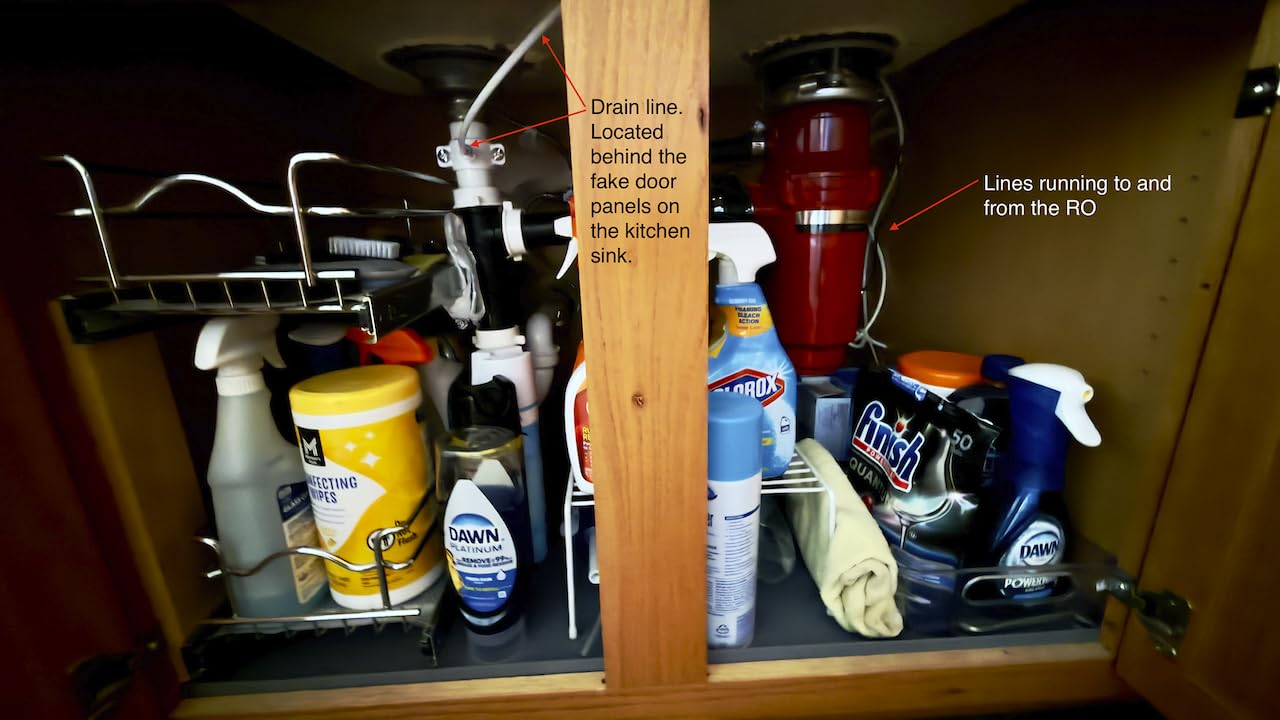
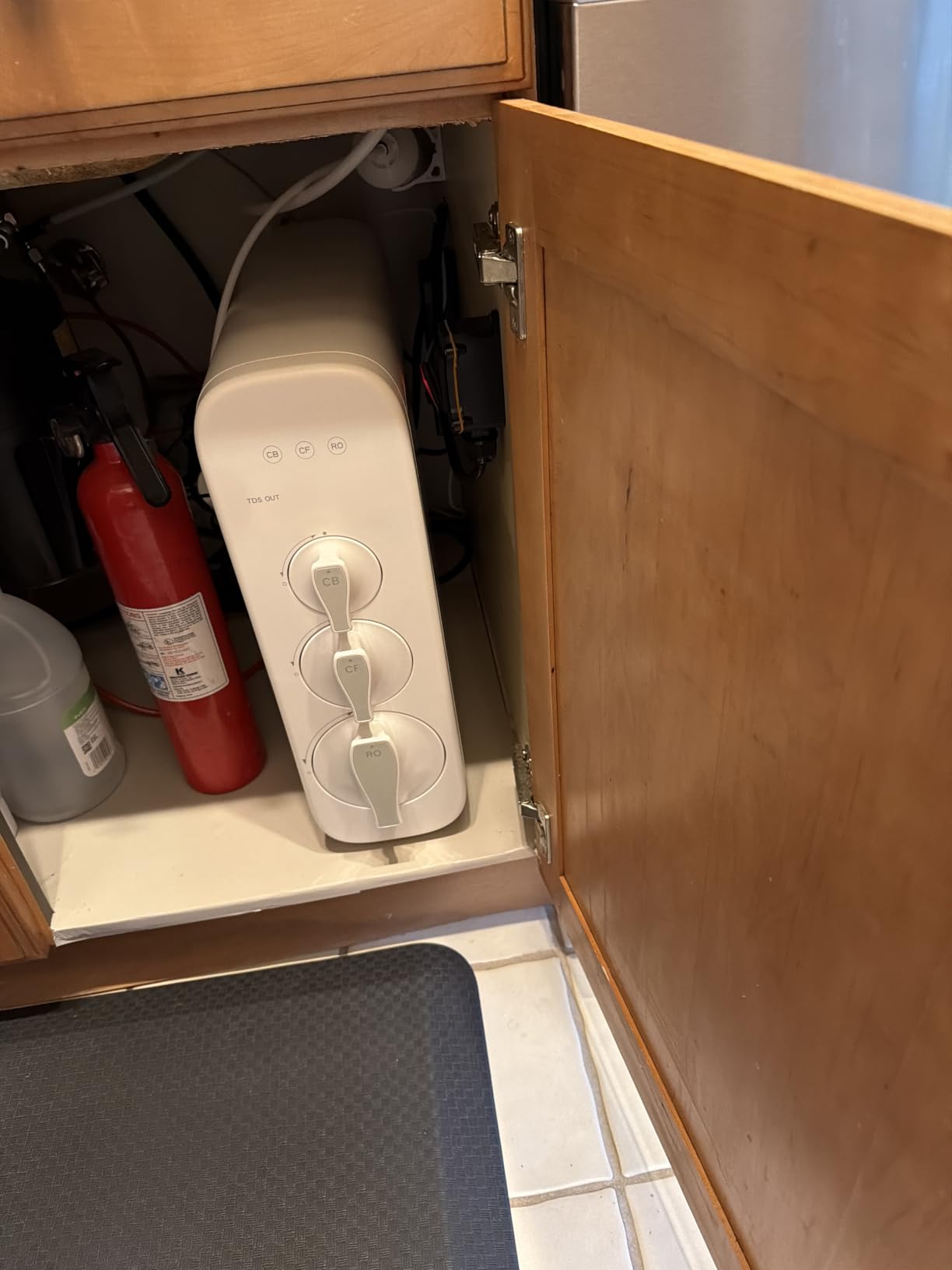
What sold me on it is the serviceability. The three filter cartridges face outward, so you twist and pull them without sliding the unit out from behind the garbage can. That matters more than any spec line, because the twenty minutes you spend changing filters twice a year is twenty minutes you are not lying on a kitchen floor.
The filtration is 8-stage and SGS tested, covering TDS, chromium, PFAS, radium, fluoride, arsenic, iron and chloride. Certification covers NSF/ANSI 42 for taste and odour, 53 for health effects, 58 for TDS reduction and 372 for lead-free materials, which is the combination you want to see on a system you are about to plumb into a drinking line.
The honest weakness is cartridge cost. Owners report the second filter plus the RO filter running close to two hundred dollars a year, and the automatic flush cycle has been known to trigger after only a small amount of water is used. The faucet also needs a larger countertop hole than many competing systems, so measure before you drill.
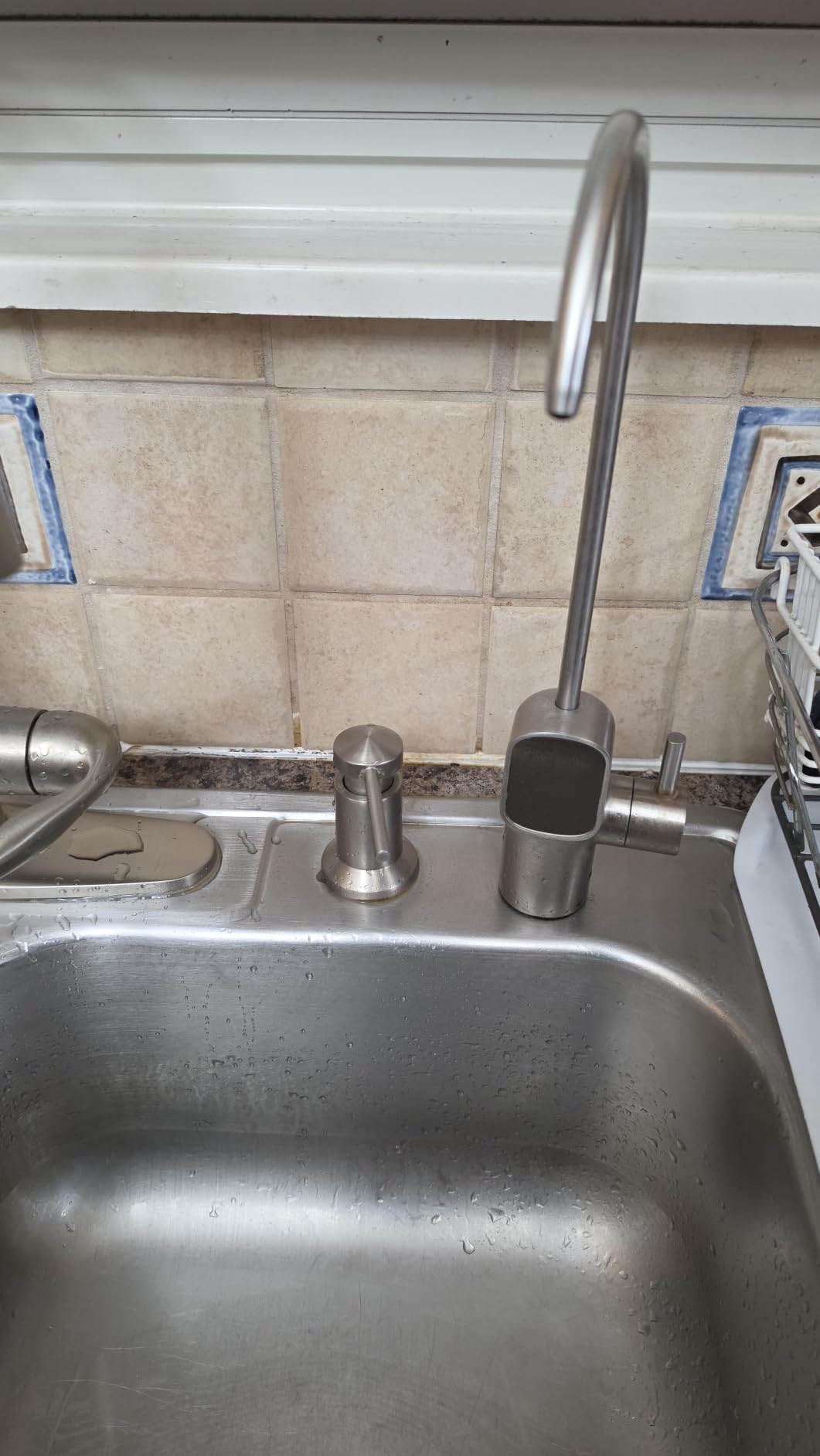
What you should check before buying the G3P600
Check your cabinet depth against 18.12 by 5.67 by 17.72 inches and make sure you can reach an outlet. Long-term owners value the front-facing filter access more than anything else, so the layout around the unit is the deciding factor in most kitchens.
Then check your filter budget against the alternatives. If cartridge running cost would bother you more than a slightly slower cup fill, the Frizzlife PD600 does the same 600 GPD job with cheaper filters and no smart faucet electronics to fail.
Where the G3P600 falls short
It is not the right pick for a home that wants the lowest possible TDS reading, because the display sometimes disagrees with an independent meter, and for anyone unwilling to drill a wider faucet hole. It also cannot be moved to an RV or a space with no outlet, and if the build is a van or a boat, start with our RV tankless water heater picks to see what the same cabinet has to carry.
On a shared household running three or more adults, the 600 GPD output is comfortable but not generous. If your daily drinking water use runs past about a gallon and a half, the 800 GPD G3P800 gives you the headroom at a higher cartridge cost.
2. Frizzlife PD600-TAM3: Best for Mineral Water and Cheaper Filters
Frizzlife Reverse Osmosis Water Filter – Alkaline Mineral pH+, NSF/ANSI 58&53&42&372 Standard, 600GPD Tankless RO Reverse Osmosis System, Under Sink, 2:1 Pure to Drain, Reduce FPAS/PFOA, PD600-TAM3
600 GPD
0.41 gpm
2:1 pure to drain
Alkaline pH above 7.5
Smart LED panel
Pros
- Alkaline stage restores minerals and lifts pH above 7.5
- Compact 14.7 by 5.3 by 15.5 inch footprint
- 2:1 drain ratio saves water versus tanked RO
- Smart LED shows real-time TDS and filter life
- Replacement filters cost less than premium rivals
Cons
- Alkaline stage raises TDS above zero by design
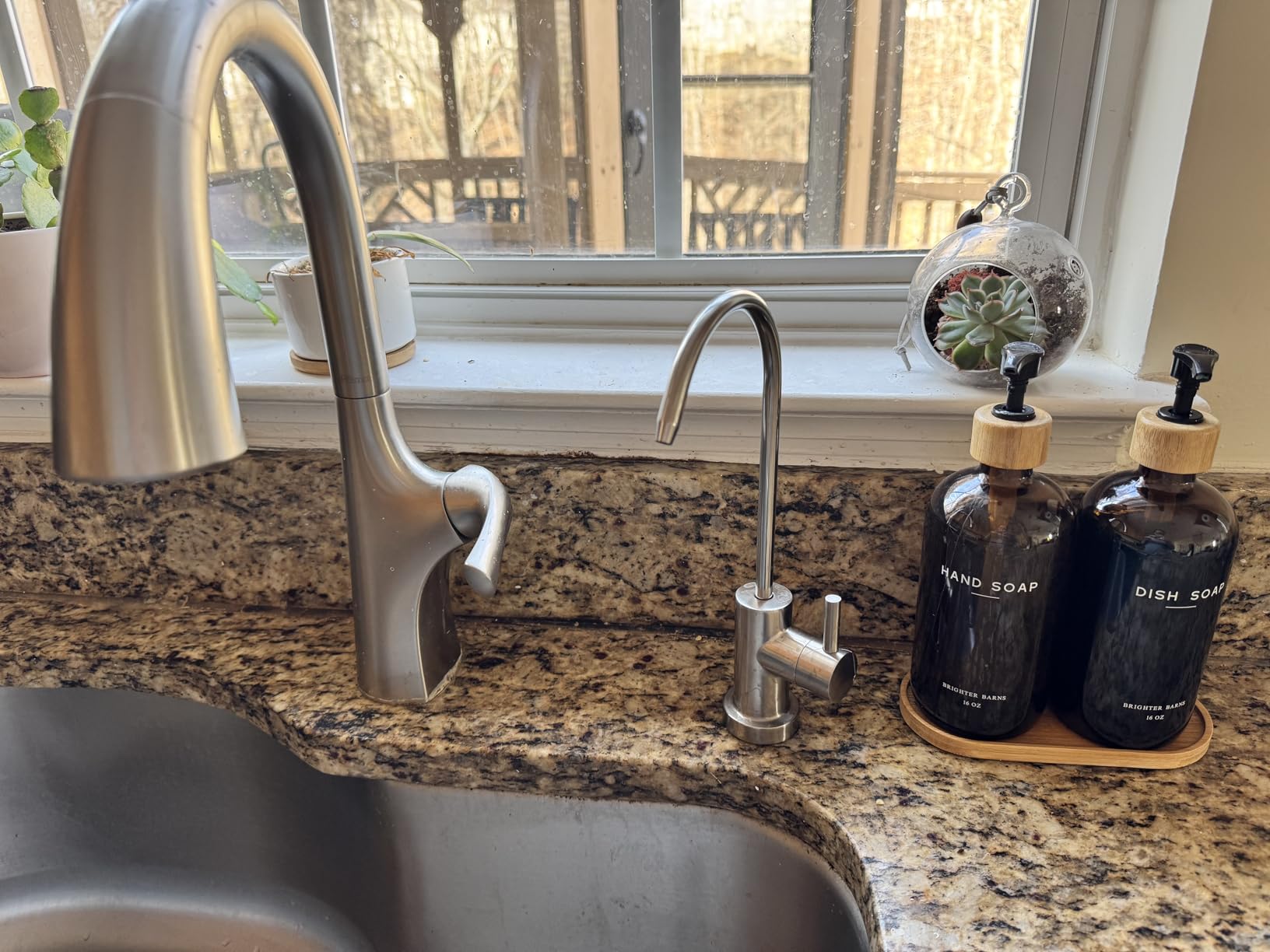
- Faucet drilling may be needed depending on sink setup
The PD600 is the system long-term owners on water forums single out. On threads in r/WaterFilters and r/WaterTreatment, owners repeatedly describe years of use without issues, and the community’s practical advice is to buy for cartridge availability rather than sticker appeal. This is one of the cheaper filter ecosystems in the category.
Technically it matches the G3P600 almost number for number: 600 GPD, 0.41 gpm, 2:1 drain ratio, a 330 ml cup in about ten seconds. The difference is philosophy. The third-stage TAM3 filter pushes pH above 7.5 and puts minerals back, so the water tastes closer to spring water than to laboratory water.
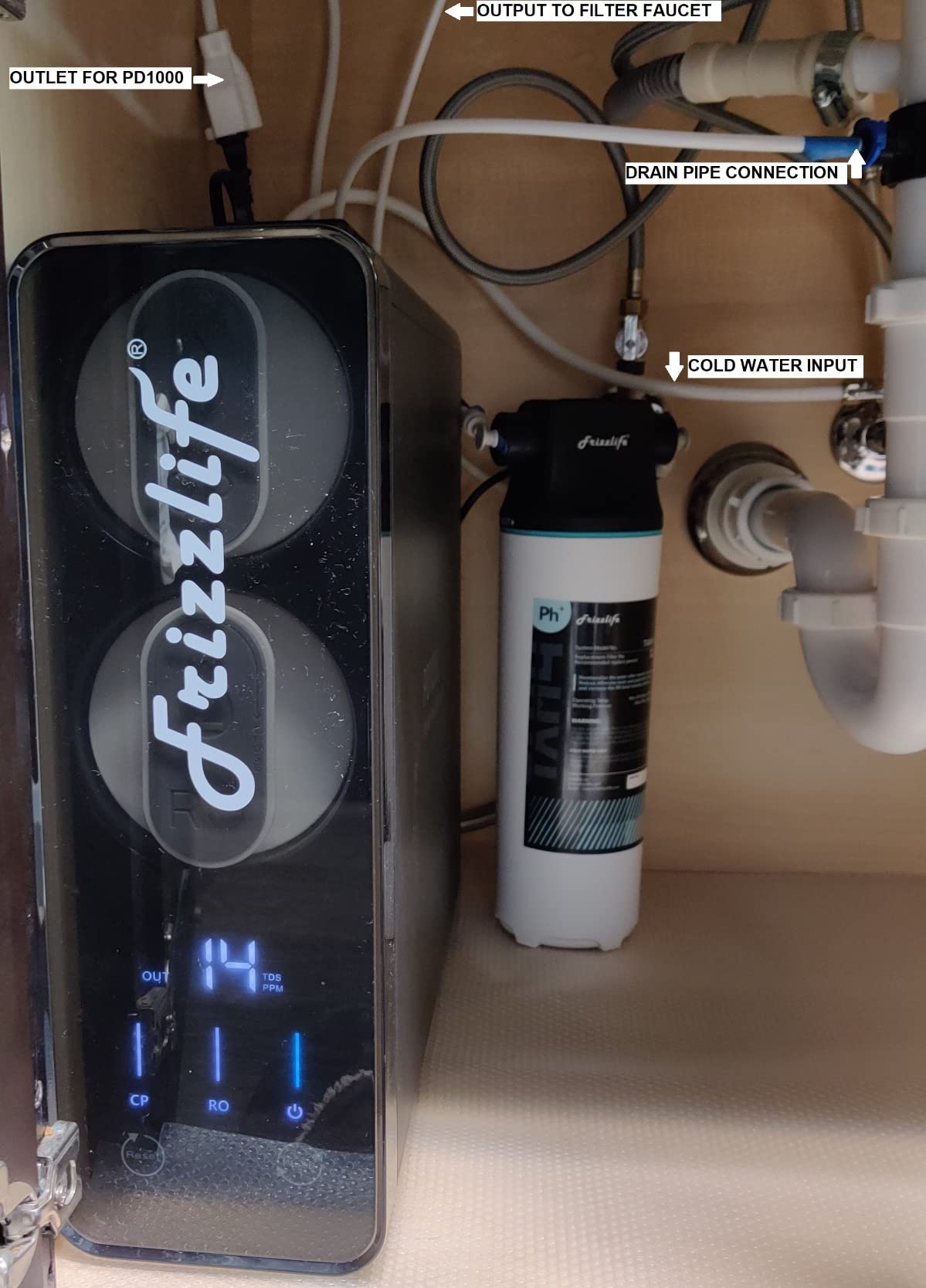
The faucet carries a brushed nickel finish and an LED panel that shows live TDS plus colour-coded reminders for each cartridge. Included in the box are the carbon pre-filter, the 600 G RO membrane, the TAM3 alkaline filter and the faucet, which is a complete install with no extra parts to source.
Understand the trade-off before you buy it. Remineralisation deliberately adds dissolved solids back, so if you are chasing the lowest possible TDS reading this is the wrong unit. The people who love it are the people who stopped filtering and went back to bottled water because RO tasted flat to them.
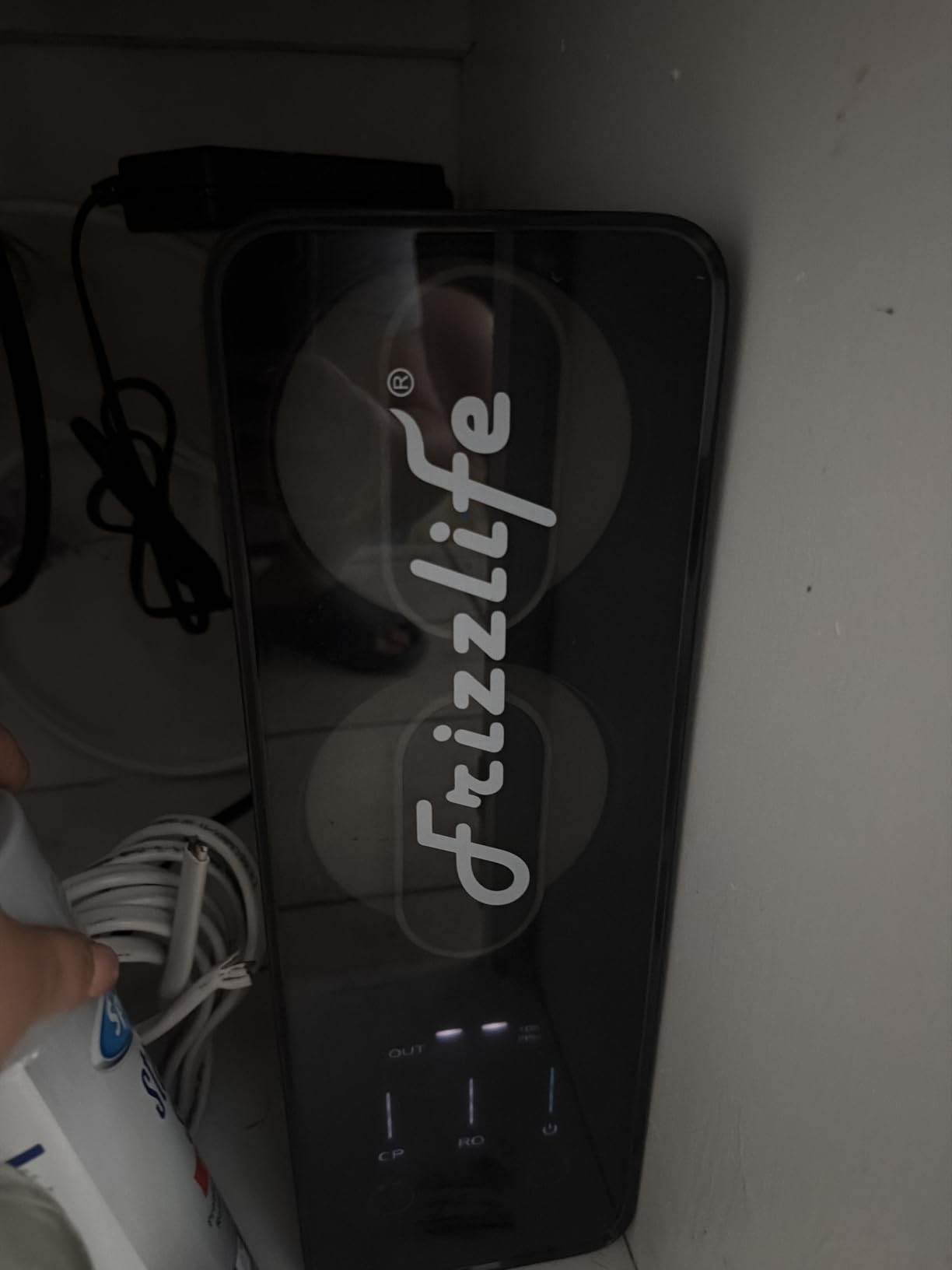
What you should check before buying the PD600
Measure the 14.7 by 5.3 by 15.5 inch body and confirm your sink has a suitable faucet hole or an existing one you can reuse. It still needs an electrical outlet, so the RV and off-grid buyer should look at the non-electric GFU03 instead.
Price your replacement cartridges before purchase, and compare them against the Waterdrop equivalent. For most households the difference recovers the purchase price within the first two years of ownership, which is why long-term owners keep recommending this brand.
Where the PD600 falls short
It is the wrong choice if you want the absolute lowest TDS and do not care about taste. It is also the wrong choice if you need a dedicated line to a refrigerator, since the bundled faucet is the intended delivery point.
The smart LED panel is an extra failure point on a unit that otherwise has few electronics, so if you have had display problems elsewhere in your kitchen, weigh the lower cartridge cost against losing the readout.
3. Waterdrop G2: Best Value Entry Into Tankless RO
Waterdrop G2 Reverse Osmosis System, 400 GPD Tankless RO Water Filtration
400 GPD
0.28 gpm
1:1 pure to drain
7 stage filtration
Airtight housing
Pros
- Lowest entry point to a certified tankless system
- Twist and pull front filters replace in about 3 seconds
- Airtight housing cuts leaks and operating noise
- Saves over 70% of under-sink space
- Installs in under 30 minutes for basic DIY
Cons
- 1:1 drain ratio wastes more water than 2:1 rivals
- 400 GPD fills glasses slowly under heavy use
- Maximum feed TDS listed at 300 ppm
The G2 is how most people discover whether they like tankless at all. It carries NSF/ANSI 372 certification for lead-free materials and a 7-stage composite filter design, and it does the two things that define the category: it removes the storage tank and it holds the filters at the front of the unit.
The compromise is efficiency. A 1:1 pure-to-drain ratio means every gallon you drink sends a gallon down the drain, where the 600 and 800 GPD models run 2:1 and 3:1. At 0.28 gpm a cup takes about 12 seconds, which you notice when you are filling a large pitcher for the fridge door.
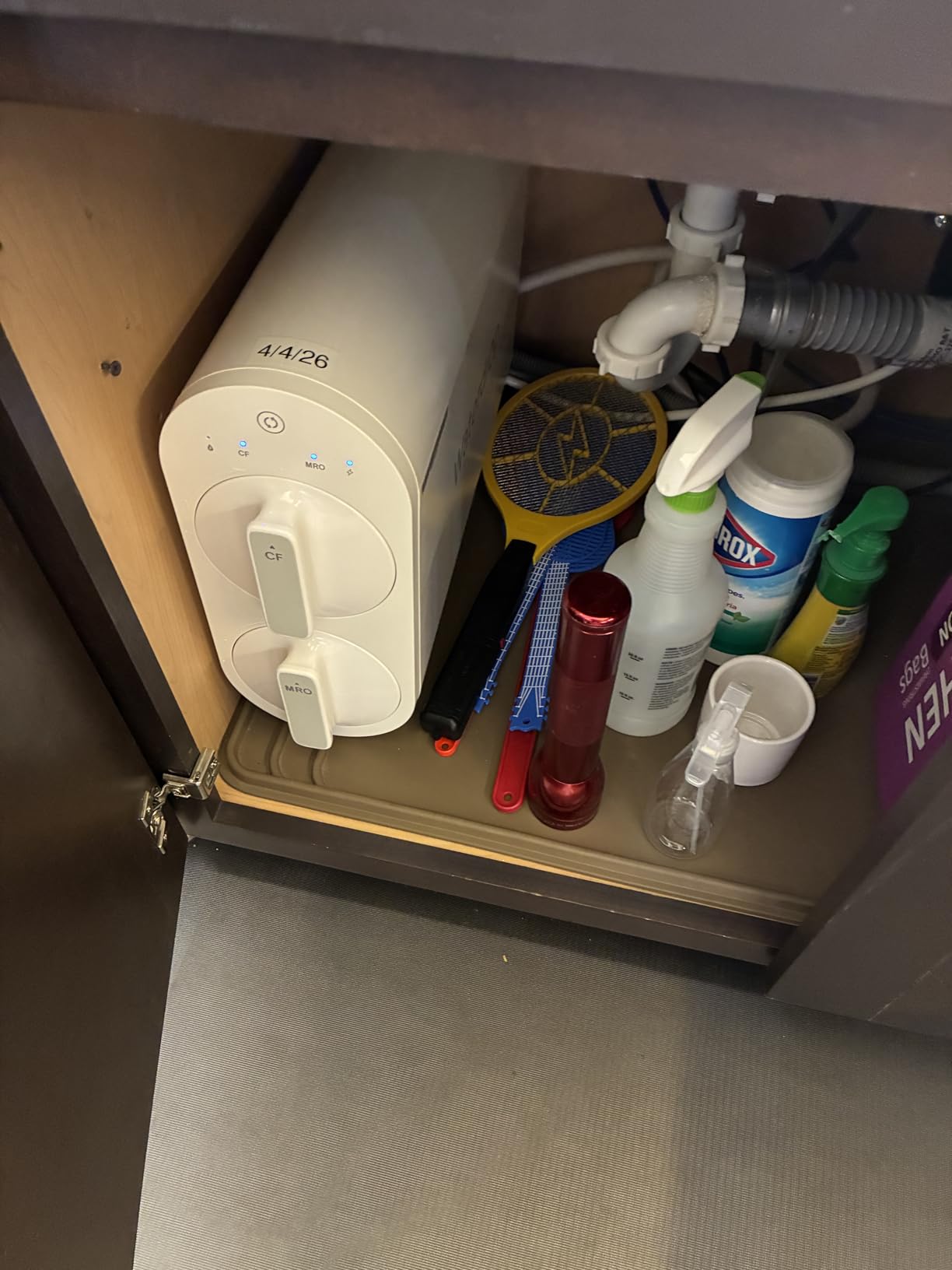
The airtight integrated housing is a genuinely clever detail. Sealing the electrical and water circuits inside one moulded shell is why owners report less operating noise and fewer drips at the tubing joins, and the 17.3 by 5.9 by 14 inch body sits neatly beside a bin.
One specification deserves attention: maximum supported feed water TDS is listed at 300 ppm, lower than several rivals. On municipal water that is rarely a problem. On a well or on a building with a known high-TDS supply, look at the 500 ppm or higher rated units instead.
What you should check before buying the G2
Test your incoming water with a TDS pen first. If your feed reads above 300 ppm consistently, this is the wrong unit regardless of how much you like the form factor, because the system is not rated for that load.
Count how many people drink from the tap at peak times. Two adults are fine at 400 GPD. A family of four running one morning jug of coffee and a pitcher of filtered water will feel the flow, and should step up to 500 or 600 GPD.
Where the G2 falls short
It wastes twice the water of a 2:1 system and about three times that of a 3:1 unit. On a metered supply or in a water-short area, that ongoing cost eventually outweighs the lower purchase price.
It also needs a drilled faucet hole and an outlet, so it is not the simplest possible first RO install. If you want zero drilling and no power, the non-electric GFU03 covers that need at 800 GPD.
4. iSpring RO500-BN: Best for Filter Minder Support and Quiet Maintenance
iSpring RO500-BN, NSF Certified Tankless RO Reverse Osmosis Water Filtration System, 500 GPD Fast Flow, Brushed Nickel Faucet, 2:1 Pure to Drain Ratio, White
500 GPD
0.4 gpm
2:1 pure to waste
15 to 70 psi
8 oz cup in 10 seconds
Pros
- NSF 58 certified removing up to 99% of 1000+ contaminants
- Very compact tankless footprint
- Quarter-turn filter changes without shutting off water
- Filter minders warn before a change is due
- Responsive lifetime support and direct replacement parts
Cons
- Pump hums audibly while dispensing and auto-flush runs 60 seconds
- Highest purchase price among 500 GPD units
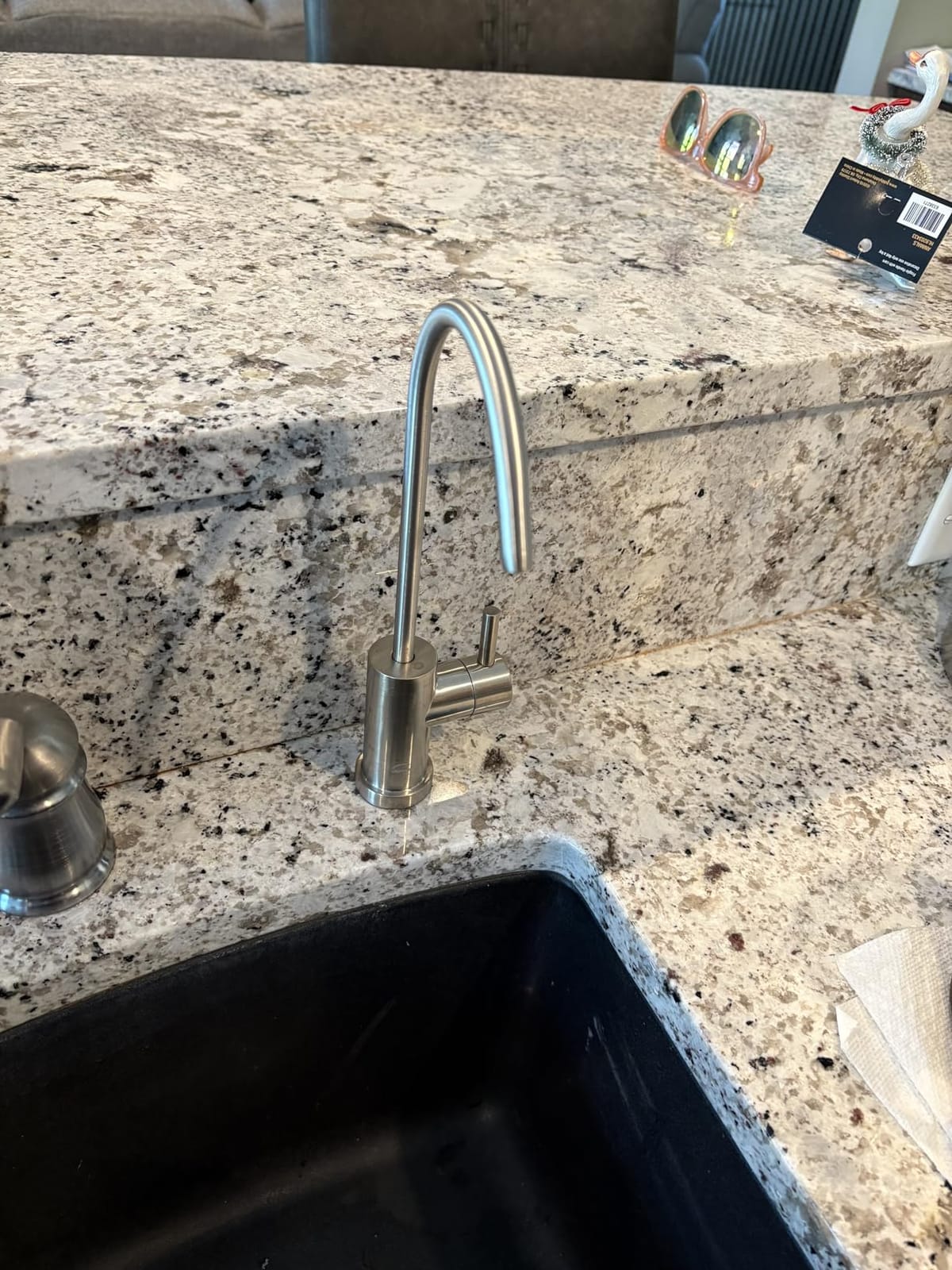
- Drilling a half inch hole in granite is the hardest step
The RO500-BN is the most conventionally engineered unit in this group. It works across a 15 to 70 psi inlet range, which is unusually wide, and it self-cleans the membrane for 20 seconds after 24 hours of inactivity so the membrane does not dry out while you are away.
It holds 4.6 stars from about 1,600 reviews, and the recurring theme in those reviews is service. Owners mention filter minders that give advance warning and then switch a red indicator, quarter-turn cartridge changes that do not require shutting off the water, and a support team that answers and ships parts directly.
Filtration runs in three stages: a 2-in-1 sediment and carbon block pre-filter, the RO membrane, and a carbon post-filter. Rated at 500 GPD and 0.4 gpm, it fills an 8 oz cup in about 10 seconds, and the feed water adapter fits either half-inch or three-eighth-inch pipe.
Two things come up repeatedly and both are fair. The pump is audible while water runs, and an automatic flush cycle runs for 60 seconds roughly five minutes after use, which some owners report was not clearly disclosed. If your sink cabinet is open and in a room where noise matters, know that before you buy.
What you should check before buying the RO500-BN
Measure the 17.5 by 5.2 by 16.25 inch body and your counter for the half-inch faucet hole. If your sink is granite or thick stainless, budget for a diamond hole saw or a plumber, because that single step is where most first installs go wrong.
Then check your pressure. The stated 15 to 70 psi window is comfortable, so homes with a weak municipal supply are better served here than by units that assume a stronger line.
Where the RO500-BN falls short
It costs more than most 500 GPD tankless competitors, and that gap only makes sense if you value the filter minders and the support. A buyer who changes filters on a strict calendar and never touches the minders is paying for features they ignore.
The audible pump and the undisclosed flush cycle are the deal-breakers for some households. In a small kitchen where the cabinet sits directly under the main work area, that noise is a legitimate reason to choose a sealed unit such as the G3P600 instead.
5. SimPure T1-400ALK: Best for UV Disinfection and Minerals in One Unit
SimPure T1-400ALK Tankless Alkaline Reverse Osmosis Water Filter 400 GPD
400 GPD
0.4 gpm
1.5:1 pure to drain
UV stage plus alkaline minerals
SGS tested to NSF 58
Pros
- UV stage activates automatically based on flow pressure
- Alkaline filter adds calcium magnesium and potassium
- 1.5:1 drain ratio beats typical 1:1 budget units
- Built-in booster pump helps in low-pressure homes
- Filter set yields about 1057 gallons
Cons
- Lowest average rating in this group at 4.2 with 12% one-star reviews
- Alkaline stage keeps TDS above zero even when fully filtered
- Only 400 GPD so pitchers fill slowly
The T1-400ALK is the only unit here that pairs a UV stage with alkaline remineralisation in a tankless body, and that combination is genuinely useful if you are drawing from a well or a building with occasional microbiological concerns. UV kills what the membrane lets through, and the mineral stage puts flavour back.
It was SGS tested against NSF/ANSI 58 and the manufacturer claims removal of more than 99.99% of 1,000+ contaminants including PFAS, PFOA and PFOS. The filter set delivers roughly 1,057 gallons, which works out to about 8,000 bottles of water across one full change cycle.
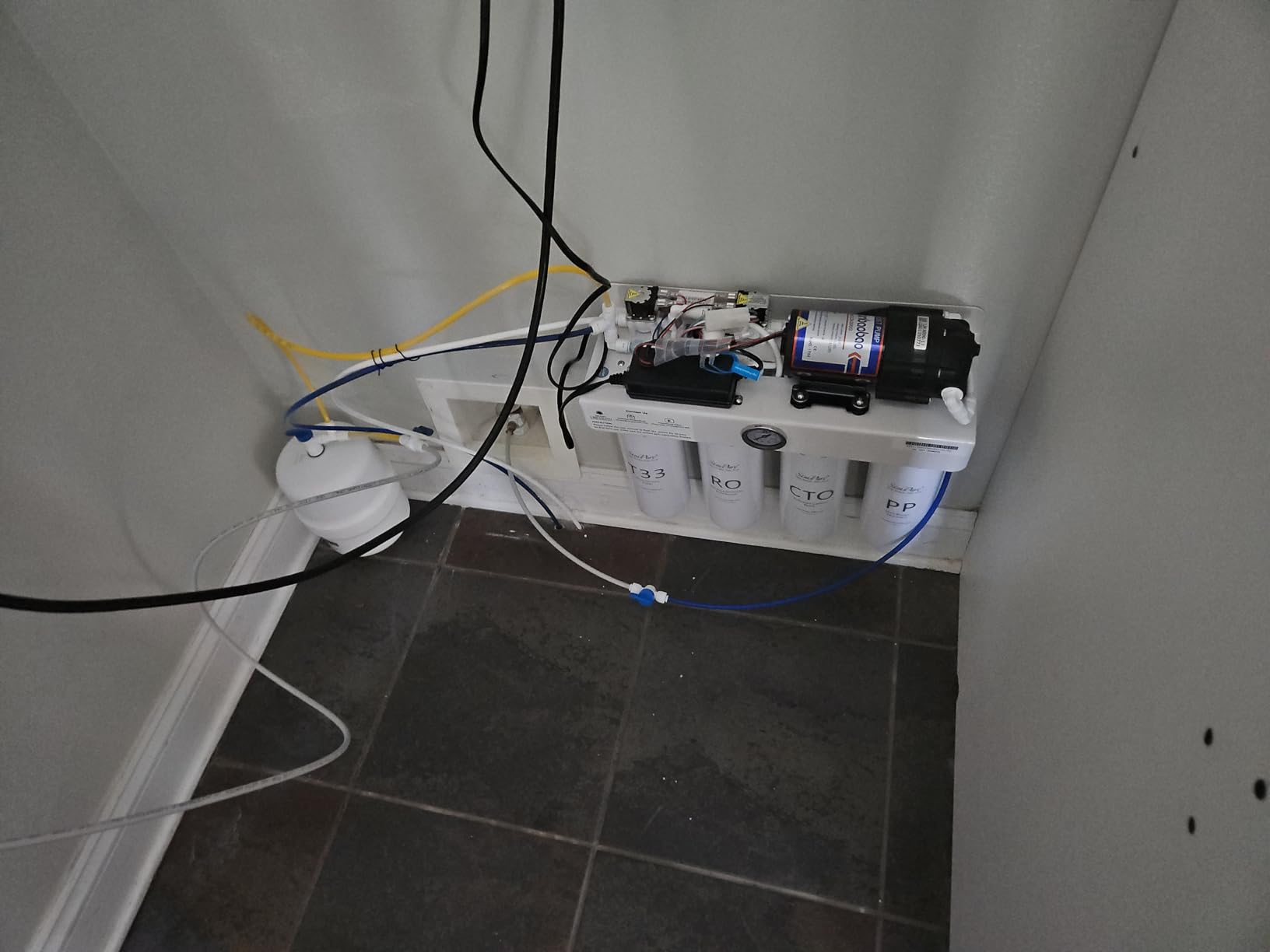
Flow is 400 GPD at 0.4 gpm with a 1.5:1 pure-to-drain ratio, which is a step up in efficiency from the 1:1 units at the budget end without reaching the 2:1 of the mid-range. The built-in booster pump is the reason it holds flow in homes with lower pressure than the manufacturer expects.
I want to be straight about the rating. This is the lowest average score in the selection at 4.2, with 12% of reviews at one star, a noticeably higher negative share than the other units. Buyers who want alkalinity and UV are satisfied; buyers chasing near-zero TDS are not, and the manufacturer itself points them to a different model.
What you should check before buying the T1-400ALK
Decide first whether you actually want minerals in the output. The alkaline stage adds calcium, magnesium and potassium by design, so your TDS reading will sit above zero no matter how well the membrane performs. Chasing the lowest number means choosing a different unit.
Check the 15.6 by 5.3 by 15.7 inch footprint and confirm you have an outlet within reach. If you are on a well, also check what your pre-treatment needs are, because no RO system is a substitute for a softener on very hard water.
Where the T1-400ALK falls short
The one-star share is the honest concern here, and it points to expectations rather than a single defect. People who assumed a near-zero TDS reading and got mineral water rated it poorly; people who wanted minerals rated it well.
At 400 GPD it is also the slowest of the mid-size units, and the UV bulb is an extra component with its own replacement cycle. If your priority is pure low-TDS drinking water, the G3P600 or the G2 serves you better for fewer moving parts.
6. Waterdrop G3P800: Best for High Household Demand
Waterdrop G3P800 Tankless Reverse Osmosis Water Filter System, 800 GPD
800 GPD
3:1 pure to drain
Cup in about 5 seconds
10 stage SGS tested filtration
NSF 42 53 58 372
Pros
- Highest household capacity here at 800 GPD
- 3:1 pure-to-drain ratio saves the most water
- 10 stage filtration certified to NSF 42 53 58 and 372
- Quiet operation with a compact footprint
- Faucet LED rated for up to 50 years of service
Cons
- Highest purchase price in the group
- Replacement filter costs add up over years of ownership
- Largest unit dimensions so cabinet space needs measuring
The G3P800 is the fastest unit in this roundup by a clear margin. At 800 GPD it fills a cup in about five seconds and runs a 3:1 pure-to-drain ratio, so it wastes a third less water than the 2:1 units while producing a third more purified water per day. That combination is why the AI summaries dominating search results keep naming it first.
It is also the most reviewed system here, with more than 5,200 reviews, and it ranks near the top of the under-sink filtration category on Amazon. Owners describe it as quiet, compact enough to sit beside a bin, and quick enough that nobody in the household waits on the tap.
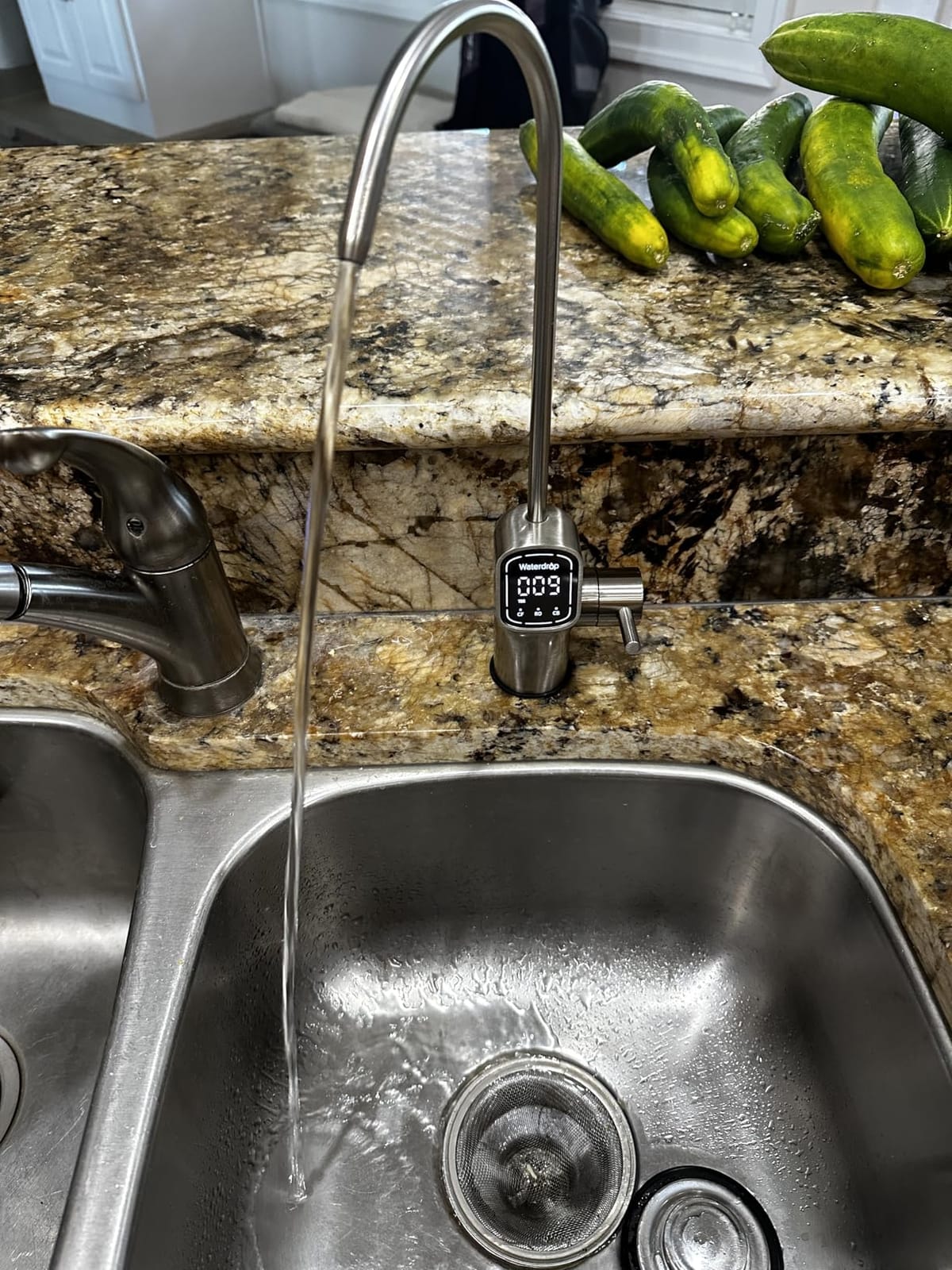
Filtration is 10-stage and SGS tested against PFAS, fluoride, lead, chromium, iron, nitrate, chloride and radium, with IAPMO R&T certification to NSF/ANSI 42, 53, 58 and 372. The smart faucet has an LED rated for up to 50 years of life and turns on automatically with flow, so there is no handle to adjust.
The cost of ownership is the honest headline. Cartridges are expensive and rarely discounted, and several owners say they would compare filter pricing from another brand before buying it again. The efficiency gain partly offsets this over time, since a 3:1 ratio wastes roughly half as much water per gallon as a 1:1 unit.
What you should check before buying the G3P800
Measure the cabinet carefully. At 18.12 by 5.67 by 17.72 inches this is one of the larger bodies here, and it shares those dimensions with the G3P600, so the same cabinet fits both.
Then model the cartridge spend honestly before you commit. If your household uses 400 GPD a day or more, the higher capacity saves you time and water; if you use 150 GPD, you are paying for headroom you will not touch.
Where the G3P800 falls short
It is the most expensive unit here and the one with the highest long-run filter bill, and that combination makes it a poor fit for a light-use household or anyone on a tight water budget.
It still needs an outlet and a drilled faucet hole, and its 500 ppm maximum feed TDS rating is lower than some rivals. On very hard or high-mineral well water, verify your feed reading against that ceiling before ordering.
7. iSpring RO5004F-AK: Best for Well Water and Low-Pressure Homes
iSpring RO5004F-AK UV Alkaline Reverse Osmosis Water Filter, SGS Tested PFAS and TDS Reduction, 500 GPD Tankless Remineralization RO System Under Sink, Filter Life Monitor, 2:1 Pure to Drain
500 GPD
2:1 pure to drain
UV light plus alkaline minerals
Built-in booster pump
10 second cup fill
Pros
- Highest average rating in the group at 4.7 with only 2% one-star reviews
- UV stage and alkaline minerals in one tankless unit
- Built-in pump keeps output strong at low pressure
- Quick twist cartridges with automatic life reminders
- Top mounted faucet fastener avoids working under the sink
Cons
- Newer listing with a smaller review base than established models
- UV bulb is an added component that eventually needs replacing
- Alkaline stage means TDS will not read near zero
This is the highest-rated system in the selection at 4.7 stars, with 83% of reviews at five stars and only 2% at one star. The combination that earns those numbers is UV disinfection plus alkaline mineral restoration in a single tankless unit, with a built-in pump that keeps the membrane working when household pressure is low.
The UV lamp is rated for up to 8,000 hours and the unit monitors its lifespan, so you are not guessing when it needs replacing. The alkaline stage restores natural minerals and balances pH, which is the same trade-off as the Frizzlife and SimPure units: taste improves, your TDS reading never reaches zero.
It was independently SGS tested for PFAS and TDS reduction, removing more than 99% of 1,000+ contaminants including PFOA, PFOS, vinyl chloride, chlorine, fluoride, lead and arsenic. Output is 500 GPD with a cup in about 10 seconds, at a 15.2 by 6.1 by 16.6 inch footprint that is smaller than most 500 GPD units.
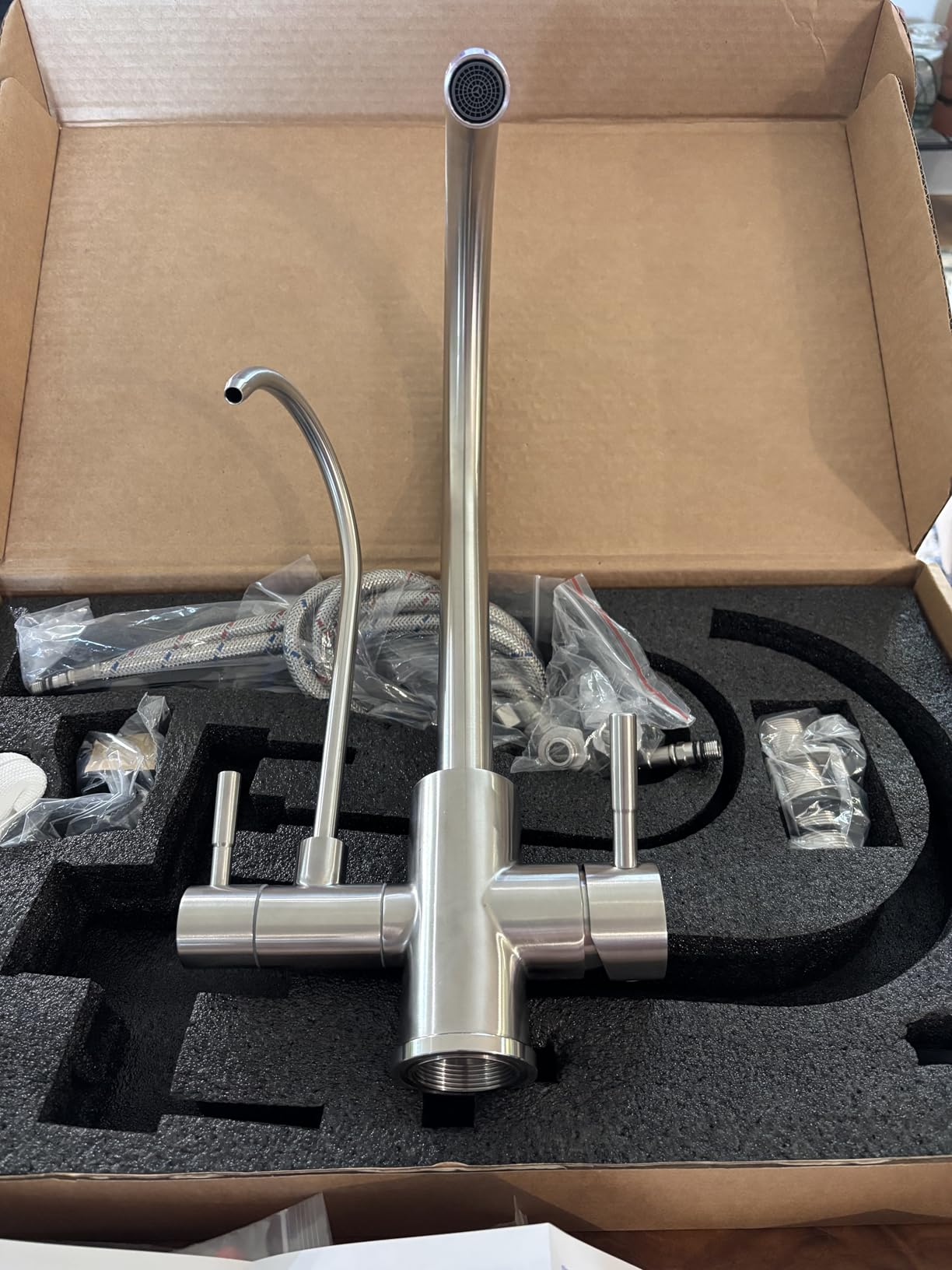
One install detail is worth more than it sounds: the top-mounted faucet fastener means the faucet is fitted entirely from above the counter. If you have ever had to hold a faucet in place with one hand while reaching under the sink with the other, you know what that saves.
What you should check before buying the RO5004F-AK
Check your water pressure and your well chemistry. The built-in booster pump makes this the strongest choice for low-pressure homes, but no RO system replaces a softener or iron filter on very hard water, so test first.
Note the smaller review base. At 953 reviews it has the least long-term history of the highly rated units here, so you are buying a strong current satisfaction score rather than a decade of field reports.
Where the RO5004F-AK falls short
It is not the choice for someone chasing the lowest possible TDS, because the mineral stage works against that by design. The UV bulb is also another wear item and another cartridge in the budget.
If you do not need UV, the plain RO500-BN covers similar ground with a wider pressure range and a longer review history, at the cost of the mineral stage.
8. GLACIER FRESH GFU03: Best Budget Pick That Needs No Power
GLACIER FRESH GFU03 Reverse Osmosis Water Filter System 800 GPD, TankInside
800 GPD
0.6 gpm
3:1 pure to drain
Non-electric design
No drilling required
Pros
- No electricity needed so there is no pump noise and no outlet
- Lowest cost in the selection while claiming 800 GPD
- 3:1 pure-to-drain ratio among the most efficient here
- 30 minute install with all adapters included
- Tool-free filter cartridge pulls out in 3 seconds
Cons
- Flow drops noticeably after about a quart before recovering
- Actual output depends on inlet pressure of at least 40 PSI
- One owner reported reversed feed and drink port labels on arrival
The GFU03 solves the two problems that stop most people buying tankless RO: the electrical outlet and the drilled faucet hole. It is water-powered, so there is no pump to hum, and it is marketed as a no-drill install. For an RV, a boat, a rental or a kitchen without a usable outlet, it is the only serious option in this roundup.
On paper the numbers are the most impressive in the group for the money. 800 GPD at 0.6 gpm, a 3:1 pure-to-drain ratio, a cup in about 8 seconds, a 0.0001 micron membrane, and a built-in real-time pressure gauge so you can see whether your supply is keeping up.
Filtration is 5-stage and meets NSF/ANSI 58, 372 and 401 standards, removing more than 1,000 contaminants including PFOA and PFOS. Owners report large measured reductions, with one describing 365 ppm dropping to 16 ppm and another seeing 149 ppm fall to 6 ppm.
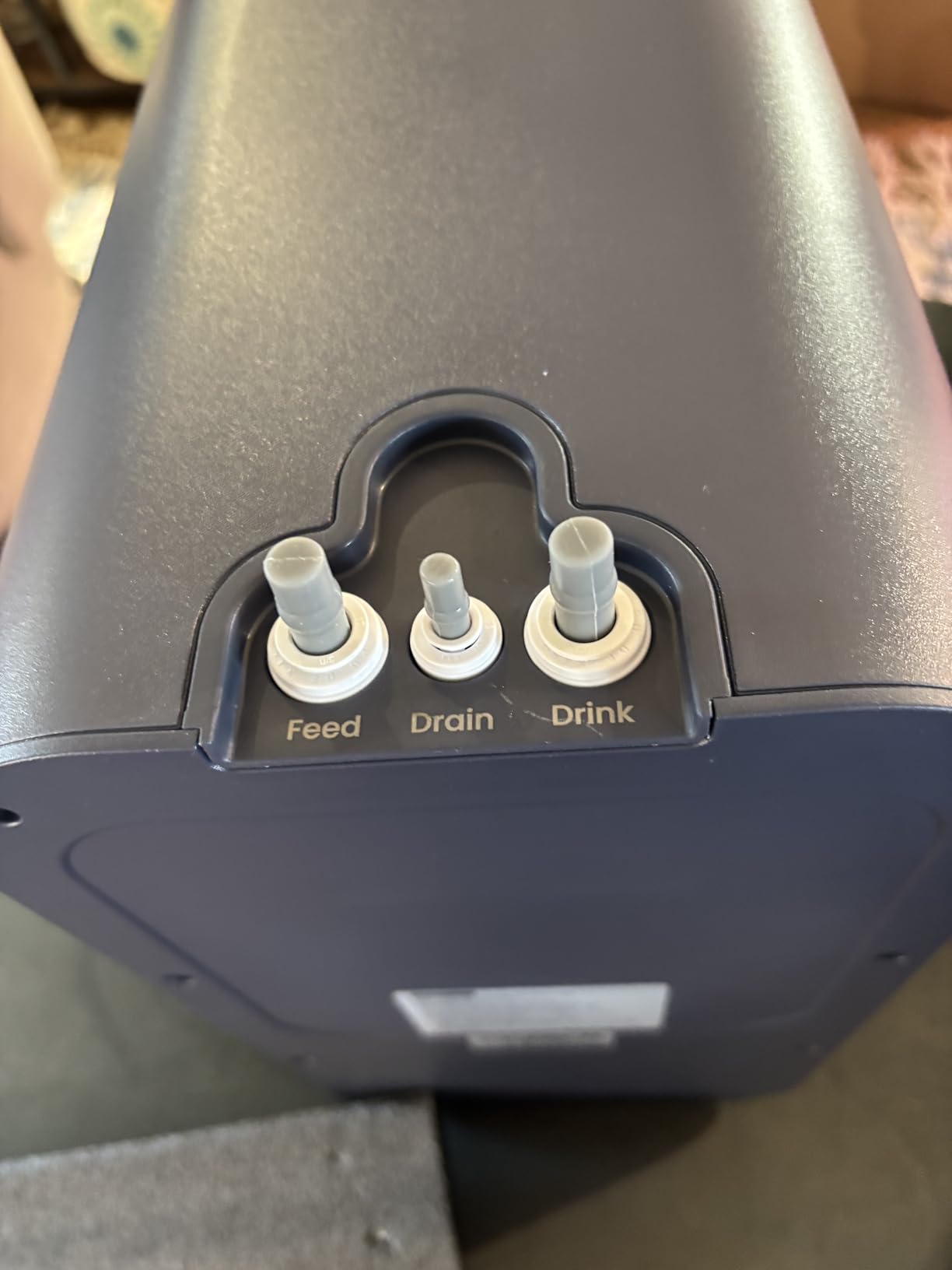
The recurring complaint is flow behaviour. Water runs quickly for the first quart and then slows noticeably before recovering, which matters if you are filling a carafe or a large bottle. There are also isolated reports of mislabelled inlet ports and of supplied adapters that did not match local plumbing.
What you should check before buying the GFU03
Measure inlet pressure first. Output depends on at least 40 PSI, and with no electric pump to compensate, a weak supply translates directly into weak flow. The built-in gauge is there so you can verify this in seconds.
Check the 13.58 by 8.27 by 16.54 inch body against your cabinet, and check whether the included hole saw suits your sink material. It is sized for porcelain and can be too wide for cast iron or steel.
Where the GFU03 falls short
The flow drop after roughly a quart is the honest limitation, and it makes this a poor match for anyone filling bottles or running a fridge line. It suits drinking and cooking water, not bulk dispensing.
Because it is non-electric, there is no smart faucet, no filter life indicator and no auto-flush. You are tracking replacement timing yourself, which is a real cost in attention if you are forgetful about it.
9. iSpring CRO1000: Best for Restaurants, Salons and Light Industrial Use
iSpring CRO1000 4-Stage Tankless Commercial Reverse Osmosis Water Filtration System, for House, Restaurant, Small Business, and Light Industrial Use,1000 GPD High Flow, Upgraded Size Filters
1000 GPD
0.7 gpm
4 stage commercial housings
80 to 130 psi working range
Freestanding wheeled frame
Pros
- Highest capacity in the selection at 1000 GPD and 0.7 gpm
- Freestanding wheeled frame with locking brakes is easy to move for service
- Built-in inlet and outlet pressure gauges
- 20 inch housings hold more media between changes
- Suitable for restaurants coffee shops breweries spas and clinics
Cons
- Most expensive unit in the selection
- Freestanding floor standing design takes far more space than under-sink
- Needs 80 to 130 psi and a booster pump below 80 psi
- One-star reviews run high at 9% of the total
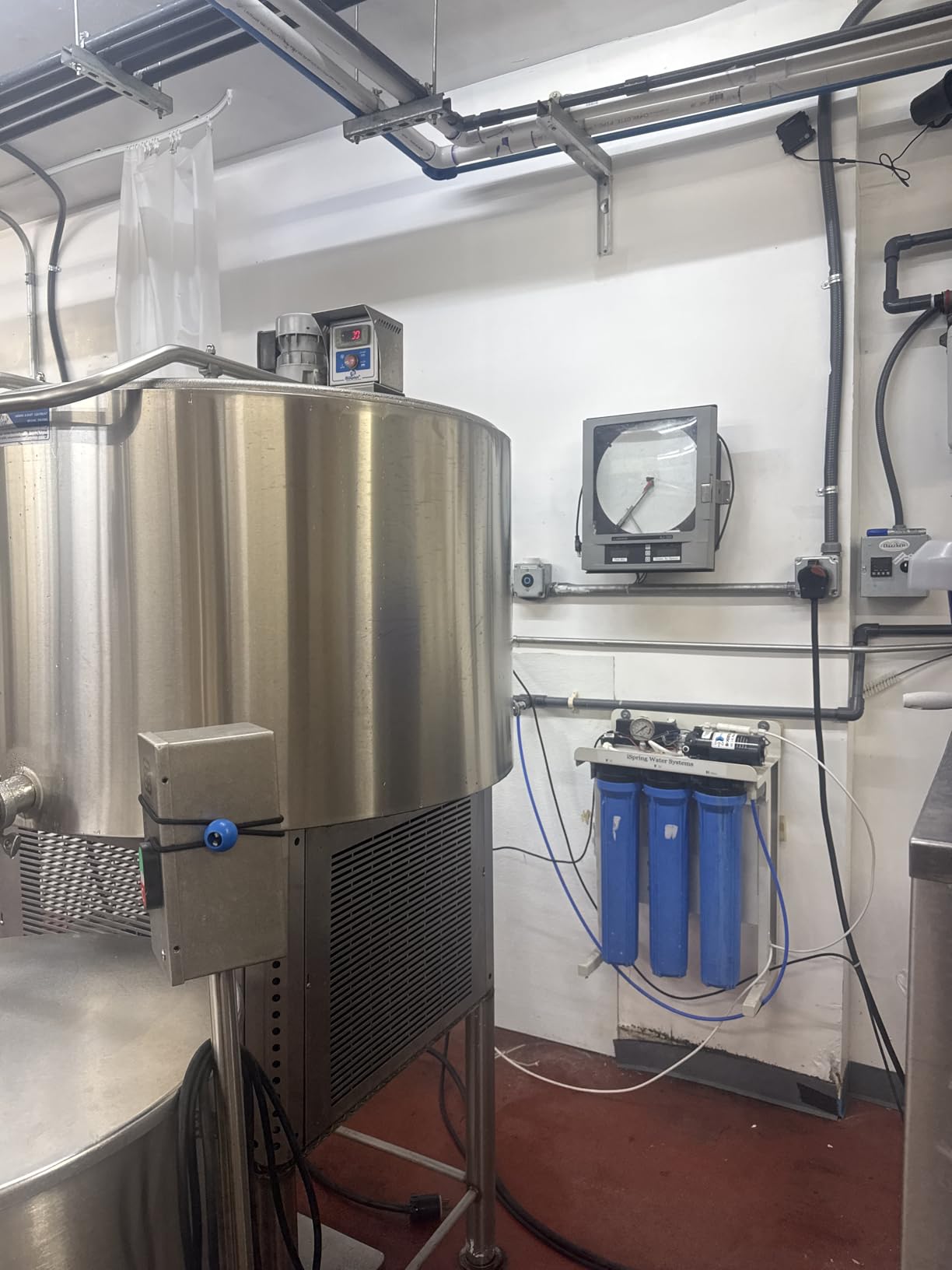
The CRO1000 is not a kitchen product and pretending otherwise would be a mistake. At 1000 GPD and 0.7 gpm it is built for a restaurant, a coffee shop, a brewery, a salon, a spa or a clinic, where demand measured in single glasses would never justify it. As a home system it is oversized and the wrong shape entirely.
The build is commercial. It uses 20 inch by 4.5 inch housings, a stainless steel membrane vessel, a freestanding frame on wheels with locking brakes, and both inlet and outlet pressure gauges mounted on the frame so a technician can read the system at a glance.
Filtration is four stages: a 20 inch PP sediment filter, two 20 inch carbon block filters, and a 1000 GPD RO membrane in stainless steel. It removes up to 99% of 1,000+ contaminants including lead, chlorine, fluoride, arsenic and asbestos, and feeds ice makers, refrigerators, espresso machines and hydroponic systems.
Pressure is the deciding specification. Working range is 80 to 130 psi, and a booster pump is recommended below 80 psi, so this belongs on a line with a dedicated commercial booster rather than a domestic cold tap. The filter life cycle is listed at 3 months, reflecting genuine commercial use.
What you should check before buying the CRO1000
Measure the floor space. At 23.5 by 10.5 by 38.25 inches this is a floor-standing unit, and you need clearance behind it for service access in addition to its own footprint.
Confirm your line pressure reaches 80 psi, and budget for a booster pump if it does not. Skip that check and you will spend your first month troubleshooting slow production that is really a plumbing problem.
Where the CRO1000 falls short
It is by far the most expensive unit here and the worst fit for a normal kitchen cabinet, with 9% of reviews at one star, the highest negative share among these systems. For household drinking water it is simply oversized.
The shorter three-month filter life cycle means more frequent cartridge spend than any under-sink unit here, which only makes sense when the water is being sold or poured commercially rather than consumed at home.
10. VIOMI V8: Best for the Tightest Cabinet and the Fastest 800 GPD Fill
VIOMI V8 Reverse Osmosis Water Filtration System, Tankless 800GPD RO Filter
800 GPD
3:1 pure to drain
9 stage filtration
6 oz cup in about 5 seconds
16.3 by 5 by 12.8 inch body
Pros
- 800 GPD with a 6 oz cup in about 5 seconds at a mid-range price
- 3:1 pure-to-drain ratio saves 75% of water
- Claimed 4 year combined filter lifespan
- Smallest 800 GPD footprint in the selection
- LED faucet glows orange when a change is due
Cons
- Works only with the included faucet and cannot feed a fridge or ice maker
- Needs a countertop hole plus a second under-sink hole for the drain
- Needs 2.0 to 3.9 inch rear clearance for tubing
- Smallest review base in the selection at 268
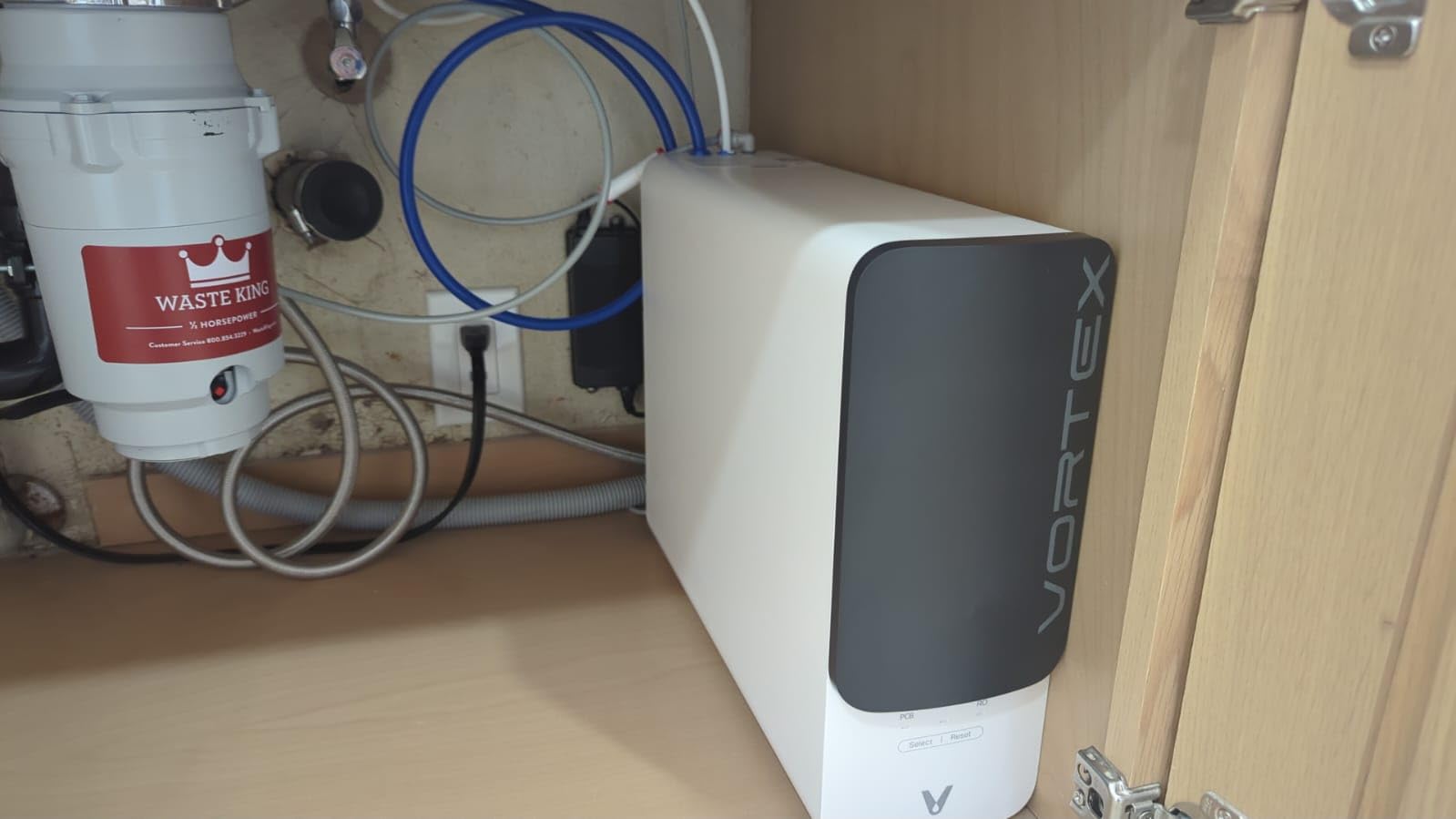
The V8 is the one to look at when cabinet space is the binding constraint. At 16.3 by 5 by 12.8 inches it is the smallest 800 GPD body here, and the manufacturer claims it saves up to 65% of under-sink space. Yet it still delivers 3:1 efficiency and fills a 6 oz cup in about five seconds.
Filtration is 9-stage with a 0.0001 micron membrane, certified to NSF/ANSI 42, 53 and 372, with claimed reduction of up to 90.35% TDS, above 99.88% PFOS and above 99.6% PFOA. The faucet LED glows orange when a filter change is due, and cartridges swap without tools.
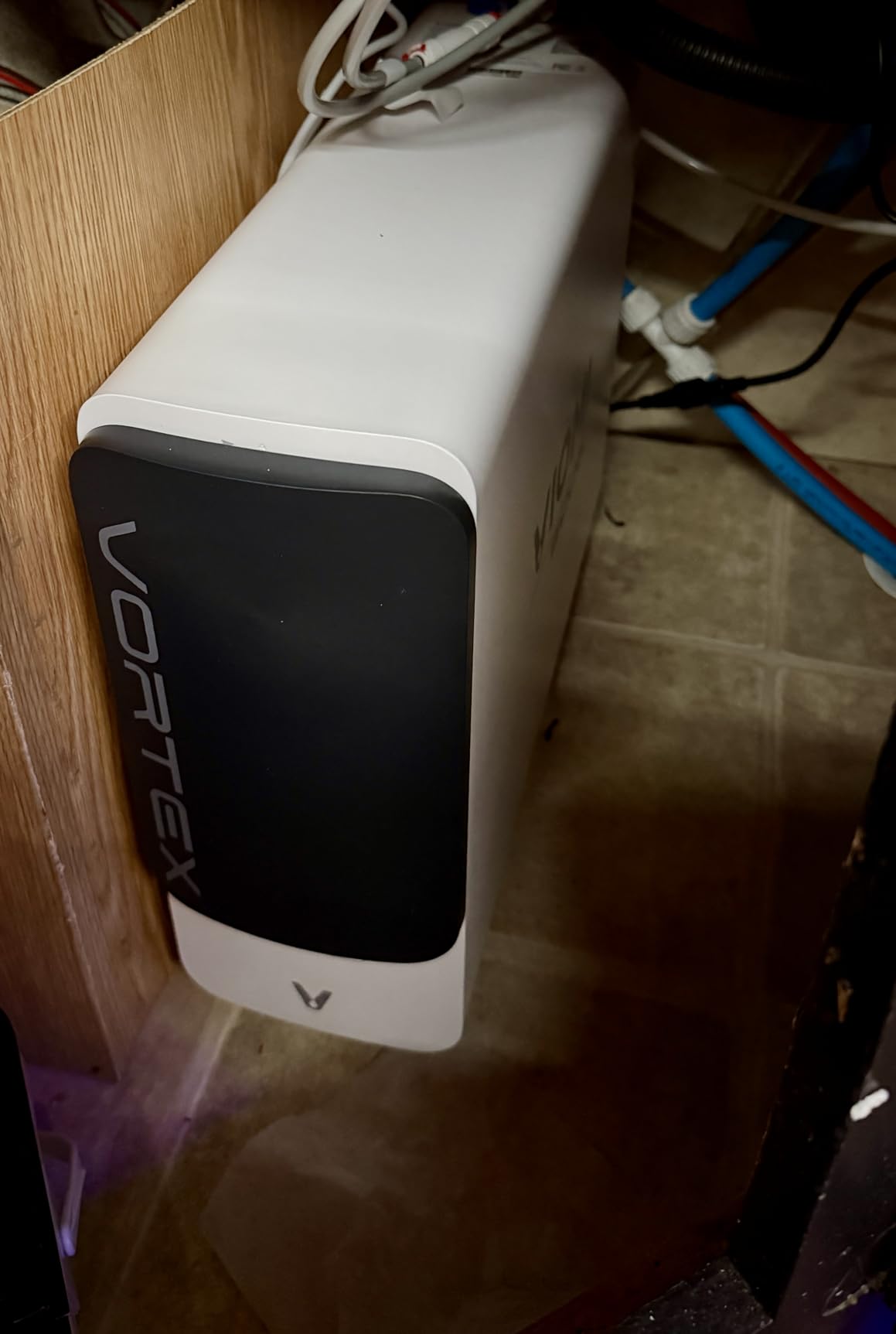
The claimed 4-year combined filter lifespan is the standout number on the spec sheet and, if it holds in real kitchens, the biggest ongoing saving in this roundup. Installation is claimed at 20 minutes using a four-step video guide, and the included kit carries the faucet, installation kit and an extra PCB filter.
Now the rigidity. The system works only with its own faucet, so it cannot be plumbed to a refrigerator or an ice maker. It also needs a countertop hole for the faucet plus a second under-sink hole for the drain line, and it needs a dedicated standard outlet.
What you should check before buying the V8
Check rear clearance, not just the body. The unit needs 2.0 to 3.9 inches behind it for tubing, and that is the space people forget when they measure the cabinet opening.
Check that you are happy with two drilled holes and one dedicated outlet. If your sink already has a faucet hole and you want to feed a fridge line, this is the wrong unit no matter how good the flow numbers look.
Where the V8 falls short
It has the smallest review base in the selection at 268, with 8% one-star ratings, so you are leaning on manufacturer claims more than on long-term owner reports. The four-year filter claim in particular is worth testing against your own water use.
The included-faucet-only design and the two-hole install make it less flexible than rivals that accept a standard air-gap or line-feed arrangement, and the alkaline-free output means the taste will be flatter than a remineralised system.
Tankless vs Tank-Based RO: What Actually Changes
The honest difference is storage, and everything else follows from it. A tank-based system fills a pressurised vessel over several hours, then dispenses from that vessel. A tankless system produces water at the moment you open the tap and sends the reject straight to the drain.
Freshness is the first consequence. Water sitting in a tank for days in a warm under-sink cabinet is a documented route for biofilm and bacterial growth, and tankless design removes the reservoir entirely. Nobody in our research reported biofilm inside a tankless unit, and several long-term owners described it as a set-and-forget improvement for exactly this reason.
Footprint is the second. Tank-based systems typically give up half a cabinet to a tank that holds three to four gallons. Tankless units here quote space savings of 65% to over 70%, which is what makes the category viable in apartments, tiny homes and RVs.
Water waste is the third, and the numbers differ more than most marketing suggests. Traditional RO commonly wastes three or four gallons per gallon purified. The units here run from 1:1 at the budget end to 3:1 at the efficient end, so the same household can cut waste by two thirds simply by choosing a higher drain ratio.
What tankless does not fix is the cost of cartridges. Every system on this list still depends on proprietary replacement filters, and buyers on water forums consistently say cartridge availability and honest pricing matter more to them long term than the purchase price. The two things tankless adds are an electrical outlet and a faucet hole.
How to Choose a Tankless RO System
Start with gallons per day, not with stage count. A rough rule is 0.3 to 0.5 gallons per person per day for drinking and cooking, so two adults sit at 400 GPD and a family of four at 500 to 600 GPD. If you plan to fill pitchers for the fridge or run an ice maker, size up by a tier.
Next, look at the drain ratio and the cup-fill time together. A 3:1 system wasting a third as much water will thank you over years of use, and a five second cup is the difference between a system you use and a system you wait for. Every product listed here publishes both numbers.
Pressure decides whether you need a pump built in. Units rated from 15 to 70 psi handle weak supplies; the non-electric design needs at least 40 psi and gives you nothing to compensate. Check your line pressure with a gauge before choosing, especially on older homes.
Then read the certifications, which are where the real claims live. NSF/ANSI 58 certifies TDS reduction, 42 covers taste and odour, 53 covers health effects, 372 covers lead-free materials and 401 covers microbial reduction. WQA Gold Seal is an independent seal covering performance, taste and odour, and durability. If a listing quotes a claim without a standard number next to it, treat it as marketing.
Finally, check your source water. RO is not a softener: on very hard water, scale will still build on the membrane and you’ll need a softener or anti-scaling device upstream. On well water, test for iron and manganese before you buy, and consider a UV stage like the SimPure or iSpring RO5004F-AK.
One category worth ruling out early: a reverse osmosis machine is a fixed point-of-use install, while a reverse hyper machine treats water at the point of use across several outlets. If you want filtered water from every tap rather than one dedicated faucet, the hyper machines we review separately are the right product type.
On TDS meters specifically, our advice is blunt. Use the faucet display to notice when filtration performance is drifting, and use a lab test to know whether your water is safe. Readings on the same faucet can differ substantially depending on water temperature, minerals in the water and the sensor’s own drift, and buyers report this on systems at every price level.
Installation, Filter Changes and Running Costs
Most of these installs are a weekend project with basic plumbing experience: mount the bracket, connect the feed adapter to the cold line, fit the drain line, drill the faucet hole and plug in the outlet. The GFU03 and Waterdrop G2 are quoted at around 20 to 30 minutes; the rest are longer because of the drilling and the electrical run.
Budget the drilling honestly. A half-inch hole in granite or thick stainless needs a diamond bit and either skill or a plumber, and it is the single step most likely to turn a two-hour install into a two-day one. The GFU03 avoids it entirely by using a no-drill arrangement.
On filter schedules, the pattern across these products is consistent: pre-filters change every 6 to 12 months and the RO membrane every 2 to 3 years, with alkaline stages on their own cycle. The practical difference between brands is cartridge price and whether the cartridges are easy to find, which is why buyers on forums recommend pricing replacements before buying the system.
The true running cost is cartridges plus wasted water, and the wasted water varies dramatically. At 3:1, producing 10 gallons a day sends roughly 3.3 gallons down the drain; at 1:1 it is 20 gallons. That gap often exceeds the price difference between two competing units within a few years.
Troubleshooting Tankless RO Systems
Slow flow is the most common complaint, and the cause is usually pressure rather than a failed membrane. Check inlet pressure first, then confirm the pre-filters have not been overdue for a change, since a clogged carbon block chokes the feed before it ever reaches the membrane.
A flat taste with a TDS reading that creeps upward usually means the membrane is near end of life, or that a remineralisation stage is doing its job. Test with an independent meter before blaming the membrane, and check whether you recently added a filter cartridge that was not flushed.
If the faucet display disagrees wildly with a handheld meter, treat it as an electronics problem rather than a water quality problem. The membrane is very unlikely to have changed in an afternoon, and the RO500-BN review notes describe a small number of power supply failures on arrival.
Leaks at the tubing joins are almost always a fitting issue. Push-fit connectors need a firm, even push to their seating depth, and a drip line from the membrane housing during automatic flush is normal rather than a fault. Persistent dripping after the flush cycle is not normal and means a failed check valve.
Frequently Asked Questions
Are tankless reverse osmosis systems any good?
Yes, when your incoming pressure and cabinet space suit them. Tankless units purify water on demand through a booster pump and membrane rather than storing it, so you get fresher water, a much smaller footprint and lower water waste than a traditional tank system. The trade-offs are an electrical outlet, a drilled faucet hole and higher cartridge costs on some brands.
Are tankless reverse osmosis systems worth it?
For most households, yes. The space saving of 65% to over 70% of the cabinet is real, the 1:1 to 3:1 drain ratios waste far less water than a conventional three-to-four-gallon tank system, and there is no stored water sitting for days. If you are on an RV, in a rental, or have no usable outlet under the sink, a non-electric unit is the more sensible route.
What is the best tankless reverse osmosis system?
The Waterdrop G3P600 is the best overall: 600 GPD, a 2:1 pure-to-drain ratio and an 8 oz cup in 8 seconds, with NSF/ANSI 42, 53, 58 and 372 certification. Choose the Frizzlife PD600 if cheaper replacement cartridges and alkaline pH water matter more, the Waterdrop G3P800 if you want 800 GPD at 3:1 efficiency, and the GLACIER FRESH GFU03 if you need no power and no drilling.
Is there a downside to drinking reverse osmosis water?
The main downside is taste and mineral content. RO strips dissolved minerals along with contaminants, so water can taste flat, and some people add minerals back with an alkaline stage. A remineralisation filter raises pH above 7.5 and restores calcium and magnesium, but it also raises your TDS reading by design. Check the certification for health-effect standards before you install anything.
What is a major problem with reverse osmosis?
Two stand out. The first is the TDS display: it is a conductivity estimate, not a safety test, and owners report readings that swing widely on the same water. The second is cartridge cost, because replacement filters are proprietary and are rarely discounted. Both are why you should price replacement filters before purchase and confirm your water with a laboratory test rather than a faucet display.
Do I need a booster pump for a tankless RO system?
Most tankless units already contain one, which is how they reach 600 to 800 GPD against household pressure. The exceptions are non-electric designs that need at least 40 PSI of incoming pressure and cannot compensate below that. The commercial iSpring CRO1000 works between 80 and 130 PSI and needs a separate booster pump below that. If your supply is weak, pick a unit with a built-in pump.
How often do I replace filters on a tankless RO system?
Pre-filters generally change every 6 to 12 months and the RO membrane every 2 to 3 years, with alkaline or UV stages on their own cycles. The SimPure T1-400ALK set is quoted at about 1,057 gallons, and the VIOMI V8 claims up to 4 years of combined filter life. A faucet display or filter minder tells you when, but the schedule is worth setting a calendar reminder for on day one.
Conclusion: Which Tankless RO System Should You Buy
Buy the Waterdrop G3P600 if you want one system that handles a normal family, stays efficient at 2:1, and has filters you can reach without moving the unit. Buy the Frizzlife PD600 if cartridge pricing over five years matters more to you than a smart display, and want water that tastes like spring water.
Buy the Waterdrop G3P800 if you are a heavy household that fills pitchers and will not tolerate waiting on the tap. Buy the GLACIER FRESH GFU03 if you have no outlet and would rather not drill, and accept slower flow after the first quart. For well water or a low-pressure house, the iSpring RO5004F-AK adds UV and a built-in pump.
Whatever you pick, do two things before you order: measure the cabinet body including rear clearance, and price two years of replacement cartridges. Those two checks eliminate most of the disappointment we read about, and they are the difference between a system you enjoy and one that ends up in a cupboard.
If you want a wider comparison of drinking water filtration beyond the tankless category, our best reverse osmosis systems guide covers the tank-based options side by side. As of 2026, the best tankless reverse osmosis systems remain the G3P600 for most homes and the PD600 for the longest run of affordable filter costs.