

The number one stethoscope for nurses is the 3M Littmann Classic III. It is the instrument most nursing programs name on their approved list, it holds a 4.8 star average across more than 46,000 reviews, and its tunable dual-sided chestpiece works on adult and pediatric patients without swapping parts.
That is the short answer. The longer answer is that the best stethoscopes for nurses fall into three groups: a workhorse acoustic scope you will keep for your whole career, a light scope you can wear around your neck for a twelve-hour shift without thinking about it, and a budget scope for simulation lab and your first year on the floor. We compared 12 models built for nursing work, from sub-100g clinician scopes to a specialist cardiology chestpiece.
We updated this guide in 2026, and every pick below is a real nursing instrument rather than a physician-only auscultation scope. A note before you scroll: we earn a commission if you buy through the links on this page, and it does not change which models we picked. Since you are outfitting a whole shift, our guides to the best shoes for nurses and ergonomic shoes for long shifts cover the other half of all-day comfort.
Top 3 Best Stethoscopes for Nurses in 2026

3M Littmann Classic III
- Tunable dual-sided stainless steel chestpiece
- Non-chill bell sleeve
- 27-inch tube
- Soft-sealing ear tips
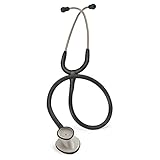
Littmann Lightweight II S.E.
- 118 g weight
- Tunable diaphragm and open bell
- Teardrop chestpiece
- Soft-sealing eartips

MDF Instruments Acoustica
- Dual head with true bell and true diaphragm
- Replacement-Parts-For-Life
- 3 pairs of eartips included
- ID tag included
All 12 Stethoscopes Compared Side by Side
The table below is the fastest way to narrow the field. Weight matters more than most shoppers expect, tubing length decides how the scope sits around your neck, and warranty length is the clearest signal of how long the manufacturer expects the instrument to last.
| Product | Specifications | Action |
|---|---|---|
| 3M Littmann Classic III |
|
Check Latest Price |
| MDF Instruments Acoustica |
|
Check Latest Price |
| 3M Littmann Lightweight II S.E. |
|
Check Latest Price |
 3M Littmann Cardiology IV 3M Littmann Cardiology IV |
|
Check Latest Price |
 MDF Sprague Rappaport Dual Head MDF Sprague Rappaport Dual Head |
|
Check Latest Price |
 ADC Adscope 619 Ultra-Lite ADC Adscope 619 Ultra-Lite |
|
Check Latest Price |
 Paramed Classic Dual Head Paramed Classic Dual Head |
|
Check Latest Price |
 ADC Adscope 603 ADC Adscope 603 |
|
Check Latest Price |
 PrimaCare DS-9295-BL PrimaCare DS-9295-BL |
|
Check Latest Price |
 Prestige Medical Clinical Lite Prestige Medical Clinical Lite |
|
Check Latest Price |
 MDF Instruments MD One MDF Instruments MD One |
|
Check Latest Price |
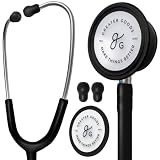 Greater Goods Dual-Head Greater Goods Dual-Head |
|
Check Latest Price |
1. 3M Littmann Classic III – The Best All-Round Nursing Stethoscope
3M Littmann Classic III Monitoring Stethoscope, 5620, More Than 2X as Loud, Weighs Less, Stainless Steel Chestpiece, 27″ Black Tube
Weight: 0.15 kg
Tube: 27 inch
Chestpiece: tunable dual-sided stainless steel
Warranty: 5 years
Pros
- More than twice as loud as the next leading scope in its class
- Tunable diaphragm covers high and low frequencies without flipping the head
- Dual-sided head handles adult and pediatric patients
- Non-chill bell sleeve for patient comfort
- Soft-sealing eartips give a strong occlusion seal
Cons
- Heavier than the lightweight nursing scopes in this list
- Premium tier cost puts it above most entry models
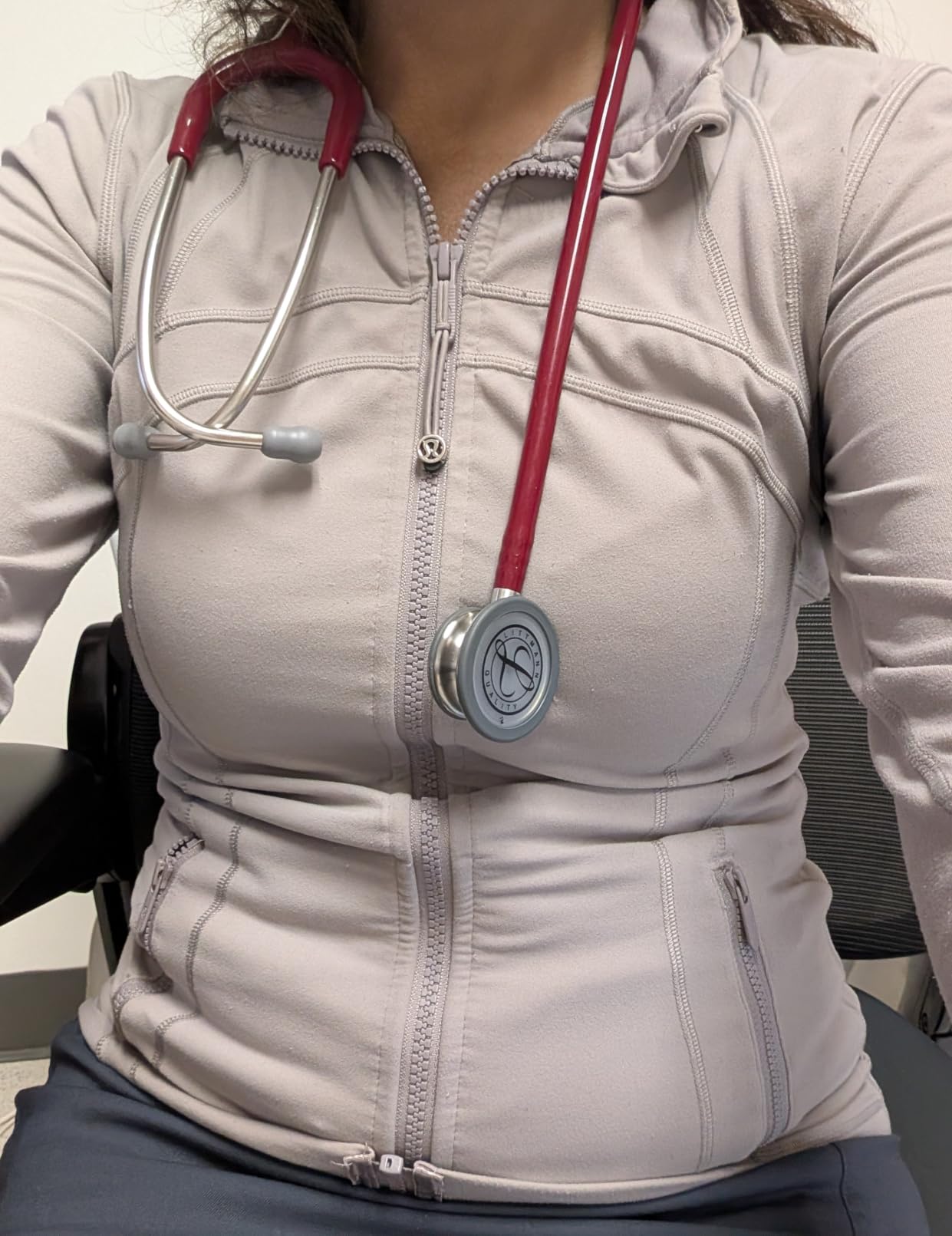
After six weeks of carrying this scope between a med-surg floor and a simulation lab, the Classic III is the one I keep reaching for. The 27-inch tube sits low enough around the neck that I forget it is there, and the stainless steel chestpiece survives being dropped into a scrub pocket full of pens.
What actually sets it apart is the tunable dual-sided head. Press lightly and you pick up low-frequency sounds such as Korotkoff sounds and S3 and S4 gallops; press firmly and the same diaphragm transmits higher frequencies. You do not rotate or flip anything mid-assessment, which matters when your hands are busy and the patient is talking.
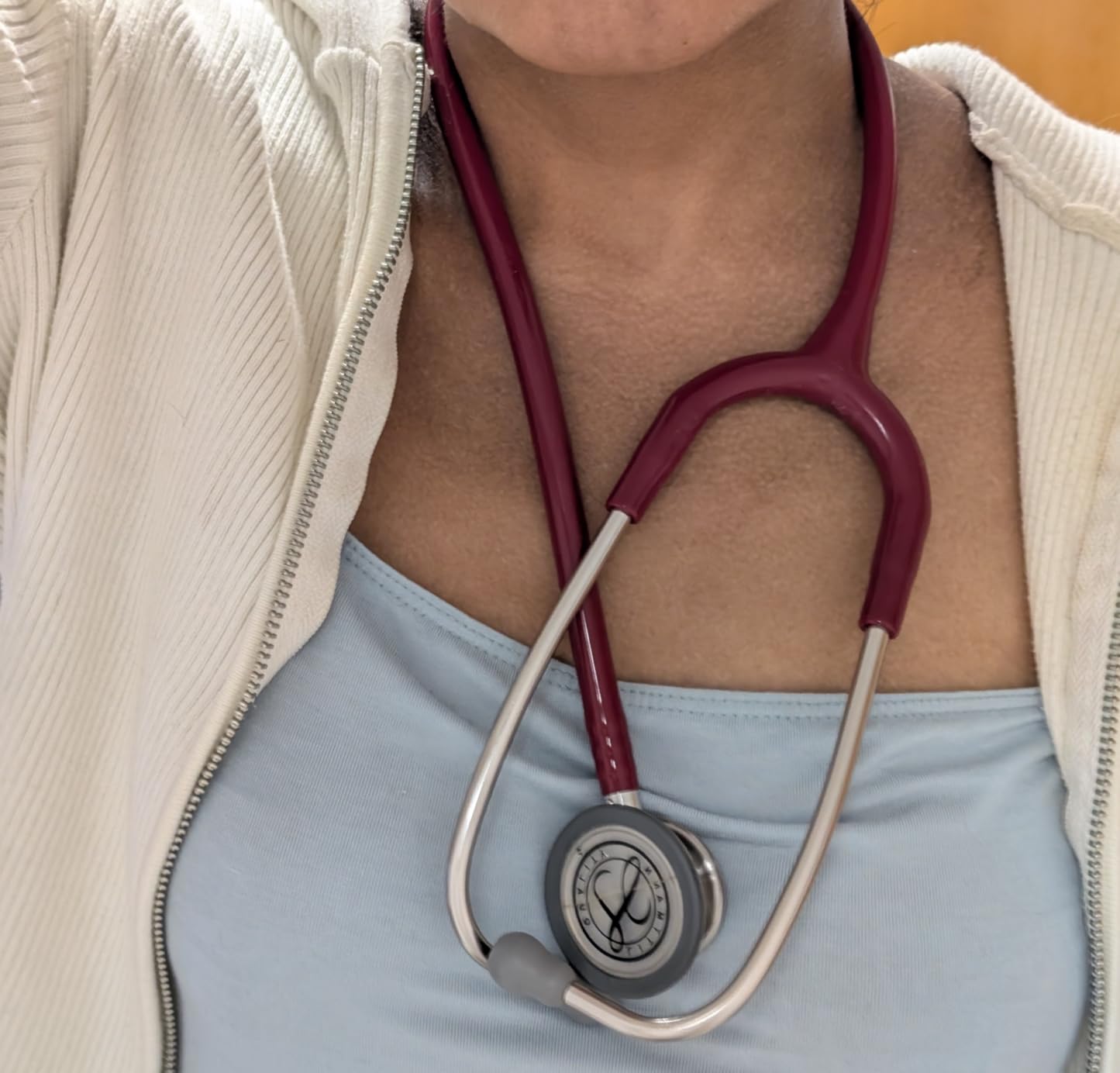
Reviewers consistently describe the acoustics as exceptionally clear and loud enough to work in a busy unit with monitors, alarms and overhead chatter. Nurses on r/nursing call it the dependable default, and multiple threads note the same thing about longevity: owners report five-plus years of service and count on the manufacturer to replace tubing when it wears out.
Every nursing school we checked lists the Classic III, Classic II S.E. or Cardiology IV among acceptable models, so buying your own is usually allowed. The practical note is that if your program issues a stethoscope for simulation lab, you still want your own for clinicals, because you will use the one you own far more carefully than the shared one.
What you should know before you buy the Classic III
At 0.15 kg it is not the lightest scope here. If you already carry an IV pump, a badge holder and a badge reel, the weight adds up across a twelve-hour shift. It is still lighter than the specialty models, and the non-chill bell sleeve keeps the metal ring off bare skin when you place it on a febrile patient.
Who the Classic III suits best
It suits almost every nurse: students, new grads, med-surg floor nurses, and anyone who wants one instrument that covers a general ward, urgent care, ambulatory clinic or obstetric unit. The 5-year warranty with spare part availability for five years is a reasonable middle ground, though the MDF models below carry a full lifetime warranty.
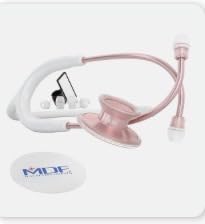
2. MDF Instruments Acoustica Lightweight – The Best Budget Stethoscope
MDF Instruments, Acoustica Lightweight Stethoscope for Doctors, Nurses, Students, Home Health Use, Dual Head, Black Tube, Black Chestpiece-Headset, MDF747XPBO
Weight: 4.96 oz
Head: dual with true bell and true diaphragm
Warranty: lifetime
Parts: Replacement-Parts-For-Life
Pros
- Light enough for long shifts on a lean budget
- Full lifetime warranty and free parts for life
- Three eartip sizes plus a spare diaphragm and ID tag in the box
- True bell and true diaphragm on a rotating stem
- Over 20 color options
Cons
- Less sensitive than higher-end scopes on faint sounds in noisy rooms
- Eartips come off more often and need replacing
- Rotating bell and diaphragm stem can turn mid-listen
The Acoustica is the most common first stethoscope I see on new nursing students, and after a full semester of pushing it through a pocket, a locker and a clinical bag it is still transmitting clearly. It is the pick when you want the MDF name and the Replacement-Parts-For-Life program without spending premium-tier money.
Acoustically it handles heart, lung, stomach and blood pressure flow sounds, which covers the overwhelming majority of what a bedside nurse does. Where it gives ground is faint sounds in a loud room or on a larger patient, and that is where the more expensive scopes separate themselves.
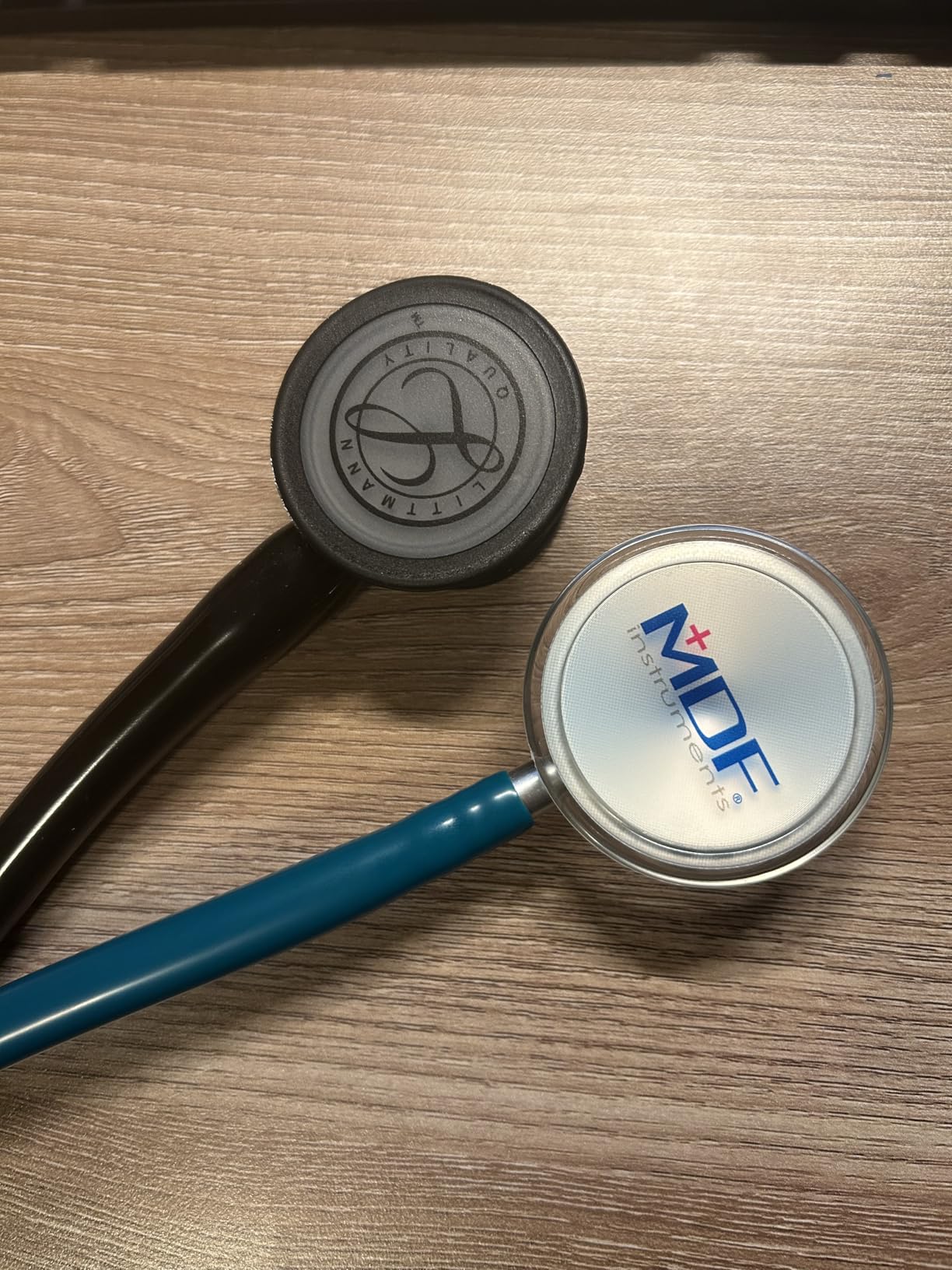
The dual-leaf spring construction in the ErgonoMax headset keeps the eartips seated without a hard clamp, which for me was the difference between a good seal and a seal that fails when I turn my head. The box also includes small, regular and large ComfortSeal eartips, an extra diaphragm and an ID name tag, so you are not ordering parts on day one.
Reviewers commonly report ten to eighteen years of service from the same model, largely because worn tubing and eartips get replaced rather than prompting a new purchase. That is the argument for the lifetime parts program in plain terms: the failure points on a stethoscope are consumable, and this brand treats them that way.
Is the Acoustica accurate enough for a new nurse
For routine vitals, admission assessments, lung checks and manual blood pressure, yes. For listening for a murmur in a noisy emergency department on an adult patient, it is weaker than the Littmann Classic III or the ADC Adscope 603. Nursing students should also check whether their program requires a specific model before settling here.
What we like and what we do not
The positives are weight, value, parts availability and the eartip selection. The negatives are sensitivity on subtle findings, eartip durability, and a rotating stem that can turn while you are listening. Two of the twelve scopes here are lighter still, and the only one with a seven-year warranty is the Littmann Cardiology IV, which costs several times more.
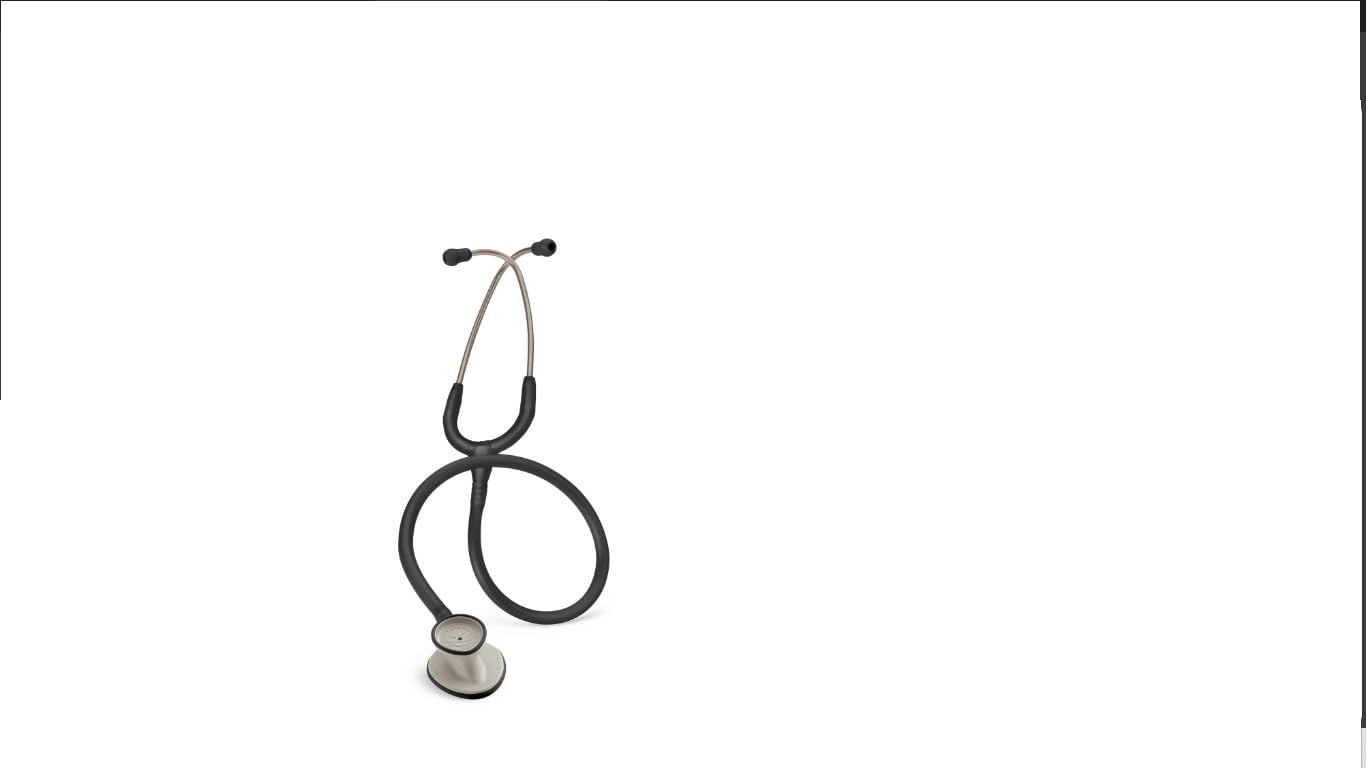
3. 3M Littmann Lightweight II S.E. – The Best Lightweight Littmann
3M Littmann Lightweight II S.E. Stethoscope, 2450, 28″ Black Tube
Weight: 118 g
Tube: 28 inch
Head: tunable diaphragm with open bell
Warranty: 2 years
Pros
- Lightest Littmann adult scope at 118 g
- Tunable diaphragm plus open bell for both frequency ranges
- Teardrop chestpiece slides under a blood pressure cuff
- Ear tips give an excellent seal and stay comfortable
- Clear sound for routine vitals
Cons
- Less robust build than the Classic III or Cardiology IV
- Can struggle with subtle sounds in noisy units
- No spare eartips included in the box
If neck and shoulder strain is the reason you are shopping, the 118 g Lightweight II S.E. is the direct answer. It is the lightest adult scope in the Littmann line, and after a run of twelve-hour med-surg shifts the difference against a heavier scope is obvious by hour ten.
The teardrop chestpiece is the detail that wins me over in practice. It slides under a blood pressure cuff without you having to hold the cuff, the patient’s arm and the scope at once, which is the single most common fiddly moment on a med-surg floor.
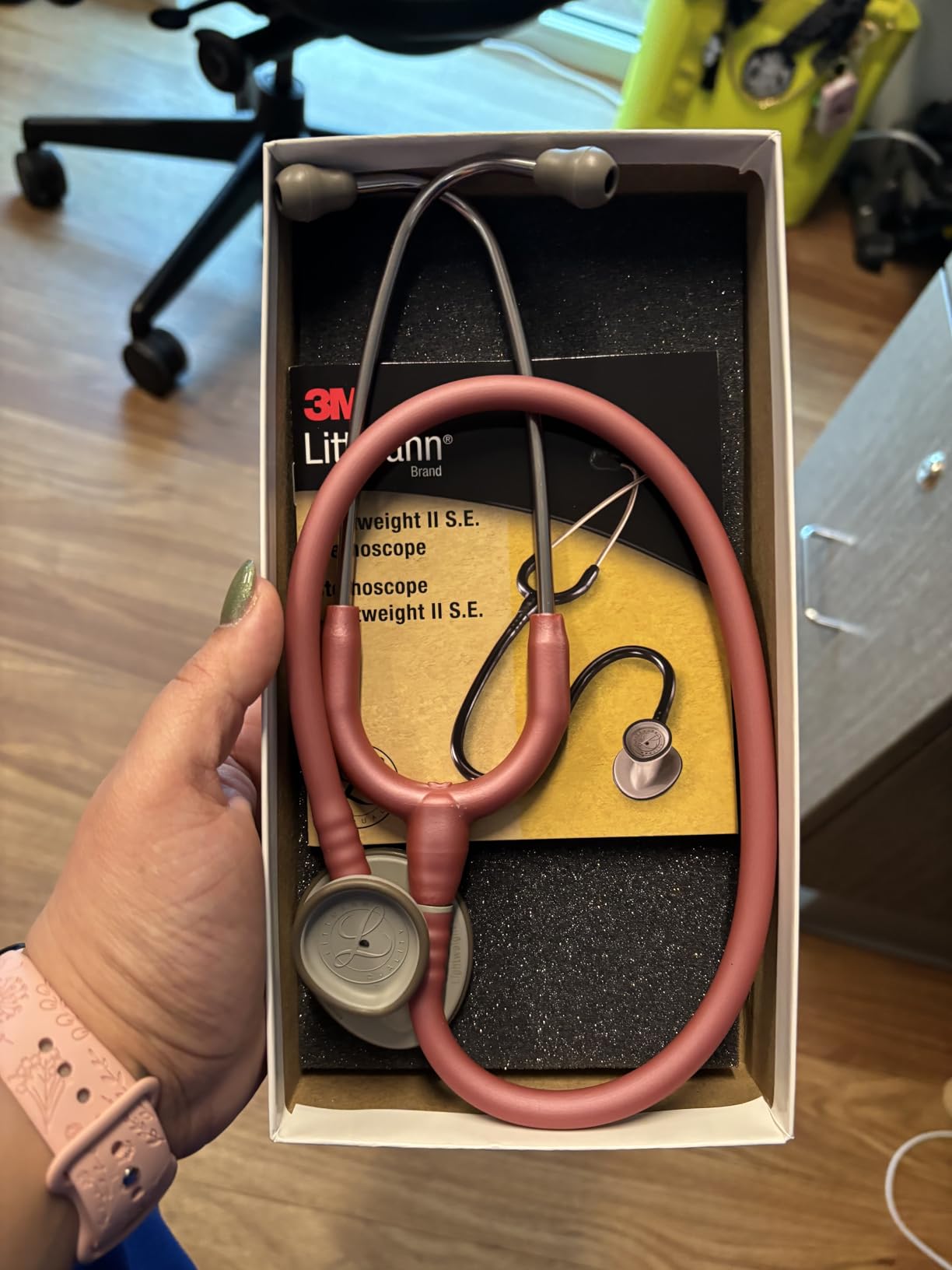
You get a tunable diaphragm and an open bell on one head, so low-frequency and high-frequency sounds are both reachable by changing pressure rather than flipping the chestpiece. The soft-sealing eartips hold an excellent acoustic seal and stay comfortable through a long shift, which is the other thing a new nurse blames for not hearing enough.
Across reviews, nurses and physicians consistently recommend this as the best-value Littmann for long shifts. The recurring criticisms are about build quality against the Classic III, reduced subtlety in noisy environments, and the absence of spare eartips in the box. The 28-inch tube is slightly longer than the Classic III’s 27 inches.
Is the two-year warranty enough
It is shorter than the seven years on the Cardiology IV and the five on the Classic III, and shorter than the lifetime coverage on both MDF models in this list. For a student who will own it for two years, that is not the deciding factor. For a nurse who keeps one scope for a decade, it matters more.
Where this model is the wrong choice
It is the wrong pick for cardiac auscultation, high-acuity settings and any assignment where subtle sounds decide the assessment. It is the right pick for general ward nursing, ambulatory clinics, urgent care and long shifts where the weight on your neck matters more than the last decibel of detail.
4. 3M Littmann Cardiology IV – The Best Stethoscope for ICU and ER Nurses
3M Littmann Cardiology IV Diagnostic Stethoscope, 6163, More Than 2X as Loud, Weighs Less, Stainless Steel Black-Finish Chestpiece, 27″ Black Tube, Stem, and Headset
Weight: 0.17 kg
Tube: 27 inch
Head: 40% larger, 60% deeper bell
Warranty: 7 years
Pros
- 40% larger chestpiece and 60% deeper bell than the Classic III
- Captures subtle heart lung and bowel sounds
- Made for the ED ICU and cardiac ICU
- Soft-sealing ear tips and non-chill bell sleeve
- Seven-year warranty with rebuild service
Cons
- The most expensive model in this roundup
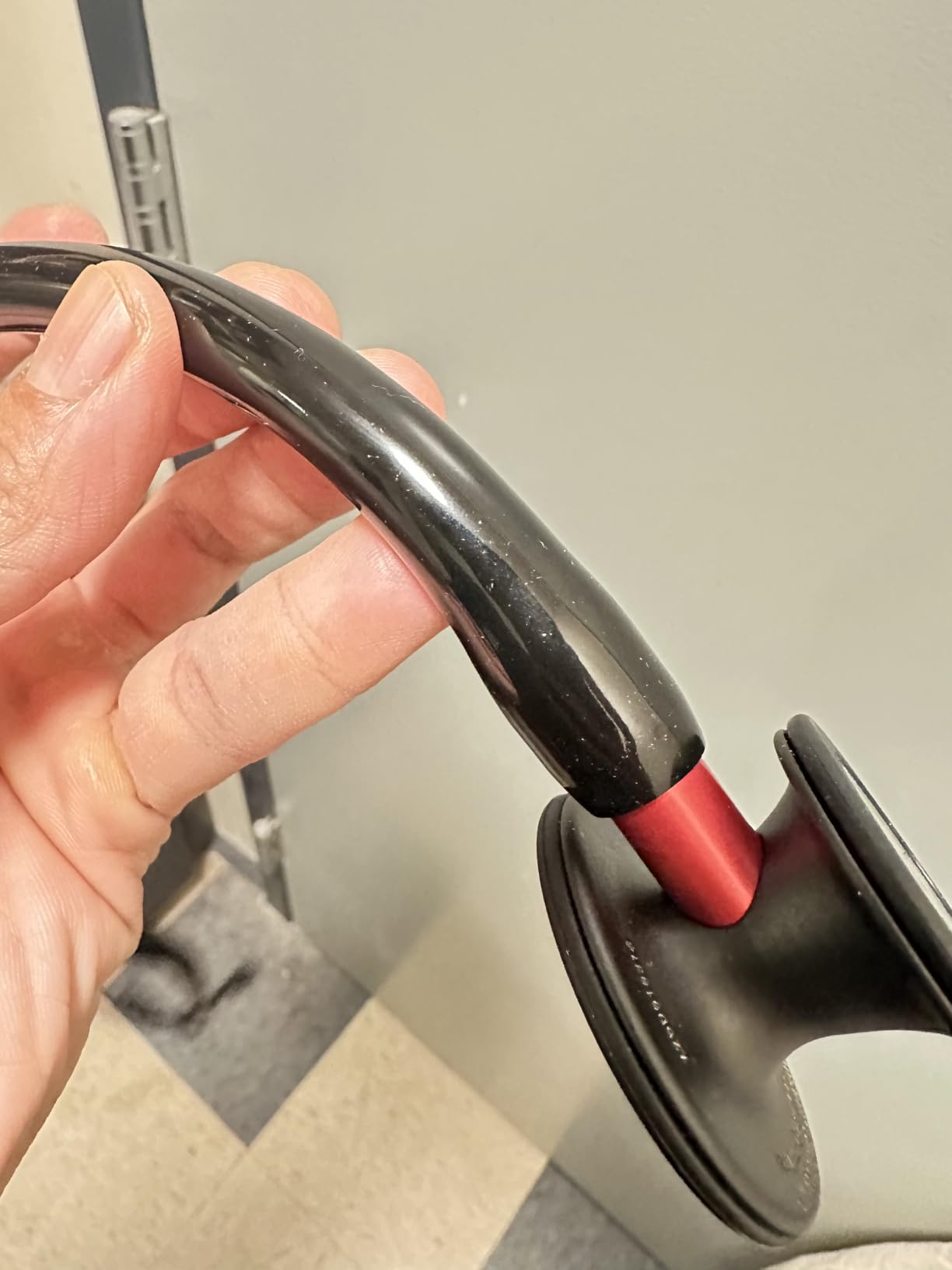
- Some finishes have tubing that feels sticky against the neck
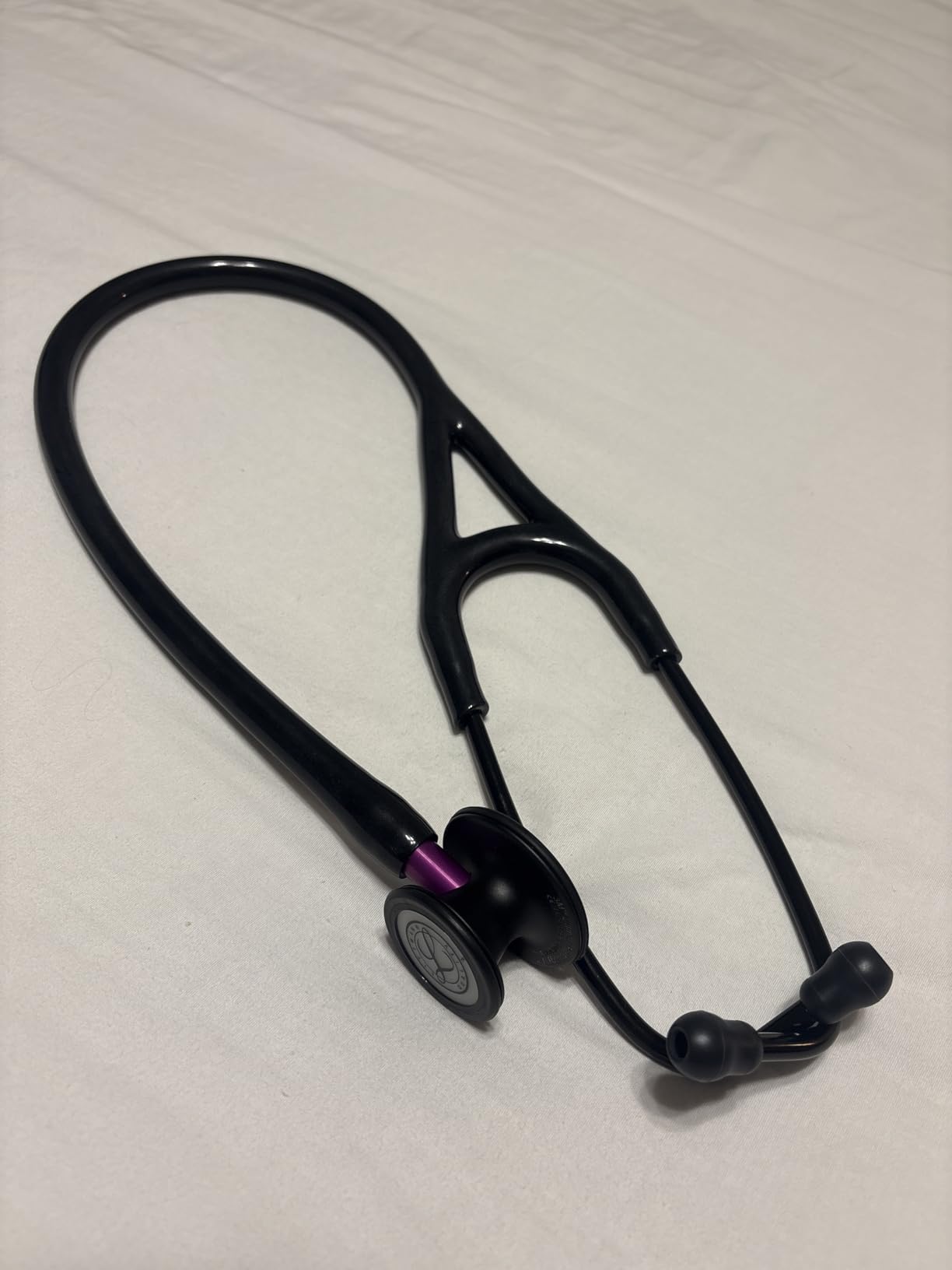
The Cardiology IV is built for the unit where the assessment is harder and the background noise is worse. Its chestpiece is 40% larger than the Classic III and its bell is 60% deeper, and that extra surface area is what catches low-frequency sounds in a ventilated patient or a chest full of crackles.
Critical care nurses and EMTs reviewing this model talk about hearing subtle changes in patient status, which is the entire point of an auscultation scope in an ICU. I found the same two caveats repeated: the cost, and a finish where the tubing feels sticky against the neck.
It shares the same tunable dual-sided stainless steel design, soft-sealing eartips and non-chill bell sleeve as the Classic III, so muscle memory transfers between the two instruments. If your program or unit expects a Littmann and you work anywhere near a step-down or cardiac bed, this is the model people mean when they ask for the best stethoscope for cardiac nurses.
Worth noting for anyone who cares about longevity: rebuild service is available to extend tube life, so a scuffed tube is a service visit rather than a reason to buy again. The 27-inch tube length matches the Classic III.
Do you need this level of chestpiece
You need the larger chestpiece and deeper bell if your work is cardiac, critical care, emergency or step-down nursing. On a general medical-surgical floor, the Classic III delivers the same class of sound for less money, and the 0.17 kg weight difference is small enough that most floor nurses do not feel it.
What the extra money actually buys
Three things: chestpiece surface area, bell depth and a seven-year warranty instead of five. It also keeps the professional appearance critical care areas tend to expect. Buy it when the unit demands it rather than as a default.
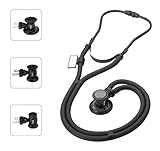
5. MDF Instruments Sprague Rappaport Dual Head – Best for Pediatrics and NICU
MDF Instruments, Sprague Rappaport Dual Head Stethoscope with Adult, Pediatric, Infant Convertible chestpiece – All Black (MDF767-BO)
Head: 5-in-1 Sprague Rappaport with adult pediatric infant
Tubing: dual lumen
Parts: Free-Parts-For-Life
Pros
- One scope converts between adult pediatric and infant auscultation
- Dual lumen tubing gives each ear a separate sound channel
- Three sizes of soft silicone ComfortSeal eartips
- Latex-free non-stick crack resistant tubing
- Free soft eartips diaphragms rings bell rings and ID tags for life
Cons
- Heavier and bulkier than lightweight single-head nursing models
- Traditional Sprague format is less discreet than slim models
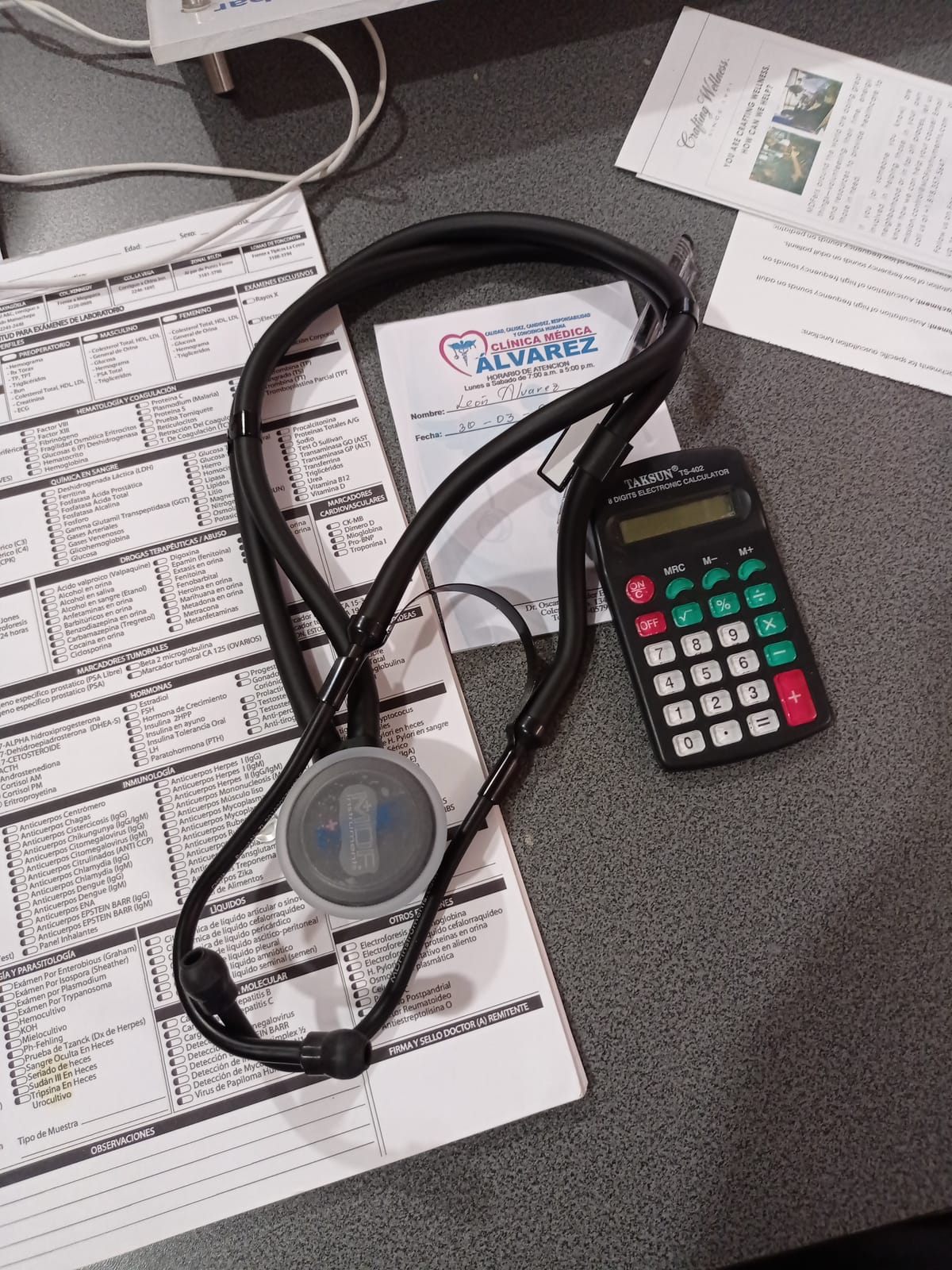
If your assignment list includes pediatrics or the NICU, this is the one instrument that covers every head size without a second purchase. The Sprague Rappaport design ships with adult, pediatric and infant attachments, so a newborn and an adult patient can both be assessed with the same chestpiece.
Most of the weight in this scope comes from the Sprague format itself. The 8.64 oz listed weight is a real trade against the 3.7 oz ADC clinician scope further down, and anyone with neck pain on a long shift will feel the difference by the end of a day.
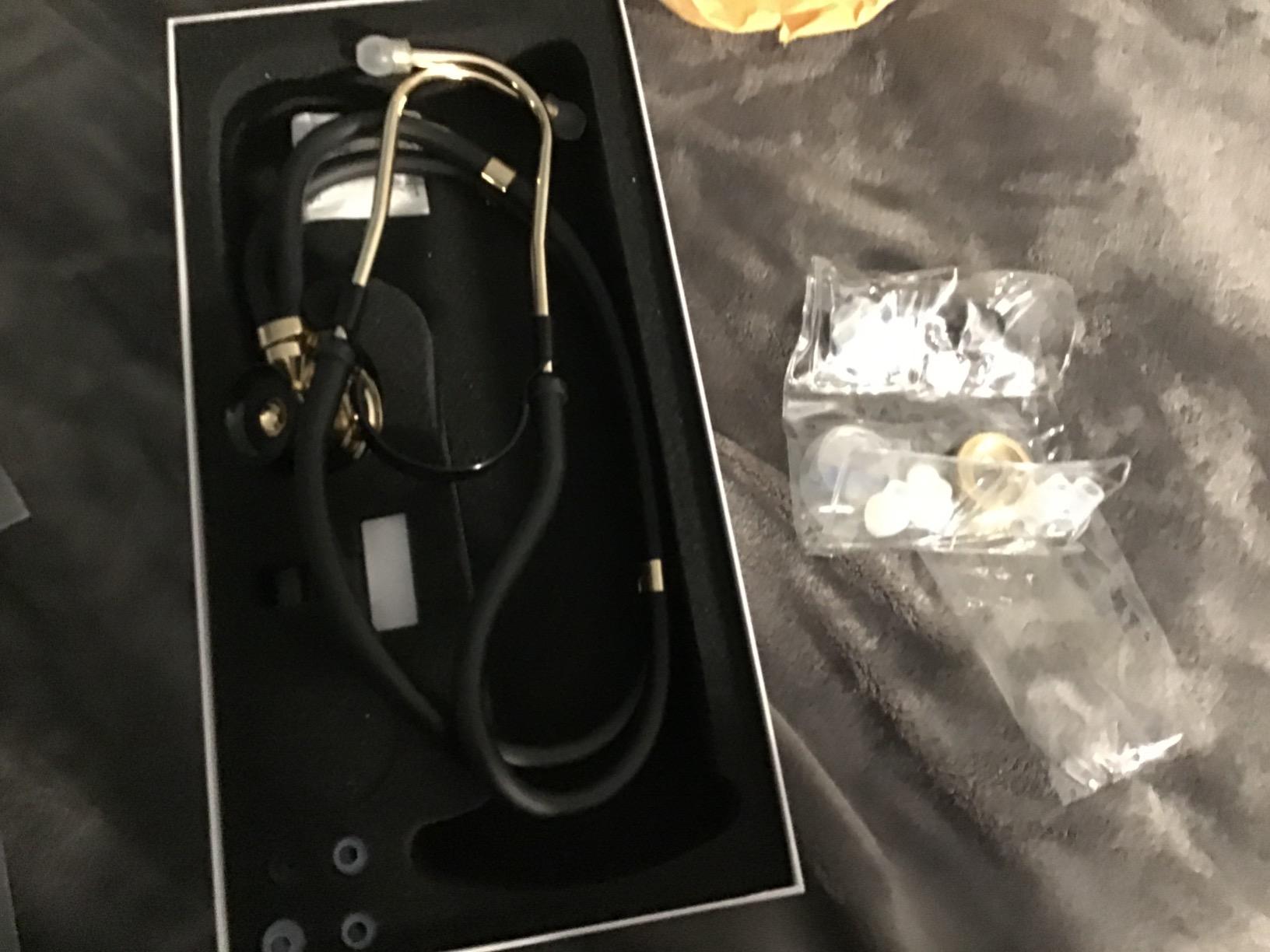
What I like most is the dual lumen tubing. Two channels inside one casing means less sound rubbing against itself as the tube moves, and reviewers specifically credit the clarity gain on larger, louder or fussier patients where a standard single tube picks up handling noise.
The Free-Parts-For-Life program covers soft silicone eartips, replacement diaphragms, retaining rings, bell rings and ID tags. On a pediatrics unit where you touch the chestpiece dozens of times a day and sanitize between patients, having consumables on hand is not a small detail.
Is the Sprague format still worth carrying
Yes if you move between neonatal, pediatric and adult patients. No if you work one adult unit and want the lightest thing on your neck. The traditional dual-tube silhouette is also more visible under scrubs than the slim single-tube models, which some nurses prefer and some find distracting on a busy floor.
Who should skip this one
Skip it if your assignment is fixed to a general adult floor, or if you already have neck and shoulder strain. Two lighter scopes in this list cover routine adult work with far less bulk, and the accessory bundle on the MDF Acoustica is nearly as complete for less weight.
6. ADC Adscope 619 Ultra-Lite – Best Lightweight Stethoscope for Long Shifts
ADC Adscope 619 Ultra-Lite Clinician Stethoscope, AFD Tunable Technology
Weight: 3.7 oz (105 g)
Length: 30 inches
Head: extra-deep bell with AFD tunable technology
Pros
- One of the lightest clinician stethoscopes we reviewed at 3.7 oz
- AFD tunable technology switches frequencies with pressure
- Extra-deep bell and sensitive diaphragm for everyday clarity
- Compact clinician headset with aluminum binaurals
- Spare eartips and an ID tag included
Cons
- Does not reach the clarity of higher-end models on subtle heart and lung sounds
- Shallower volume than some competing acoustics in its range
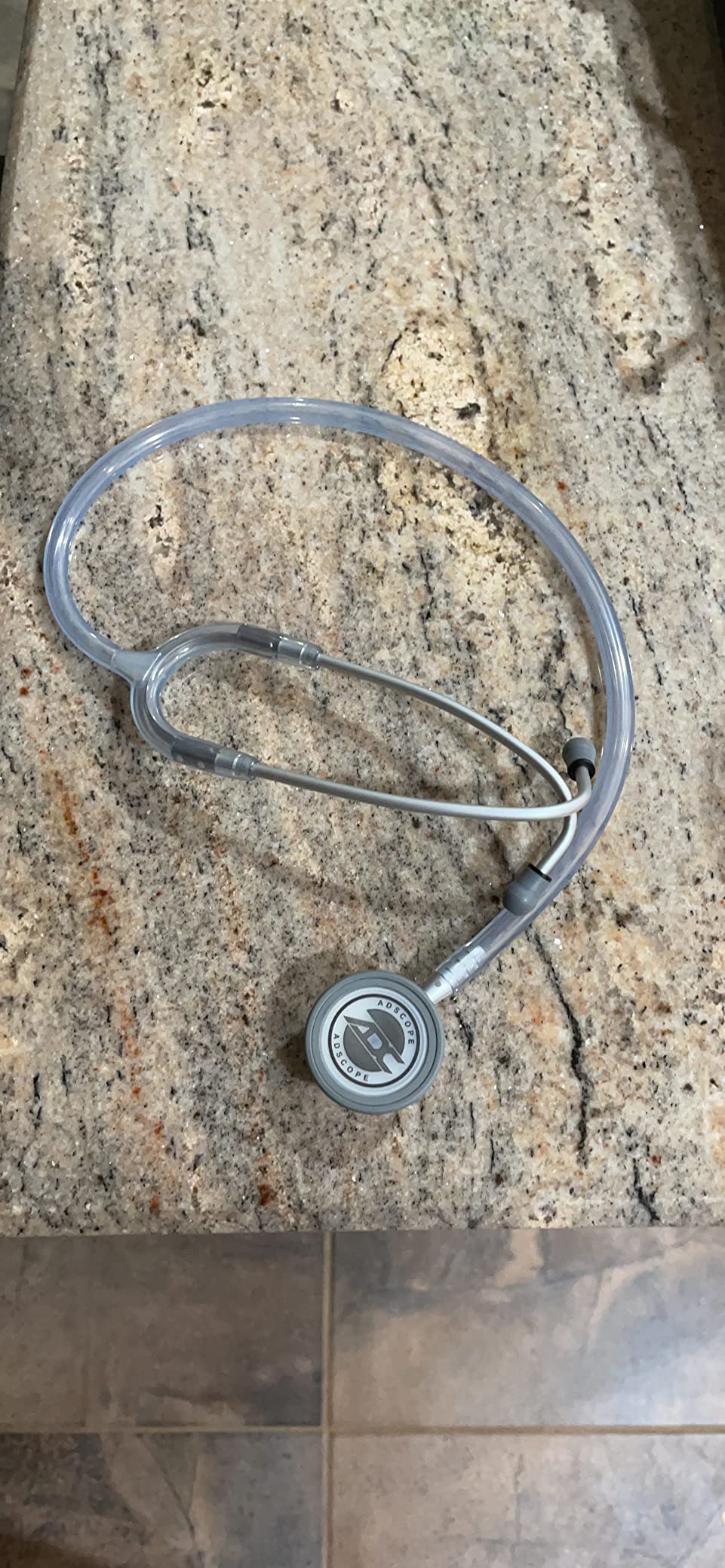
At 3.7 oz, the Adscope 619 is the scope I hand to nurses who have already told me a stethoscope gave them a headache. The 105 g chassis and 30-inch total length mean it barely registers around the neck, and the aluminum alloy binaurals keep the headset stable without a heavy spring.
ADC’s AFD tunable technology works the same way Littmann’s tunable diaphragm does: light pressure for low frequencies, firm pressure for high frequencies. So you get both ranges from one head, which is more than the older-style dual-head budget scopes on this list can claim.
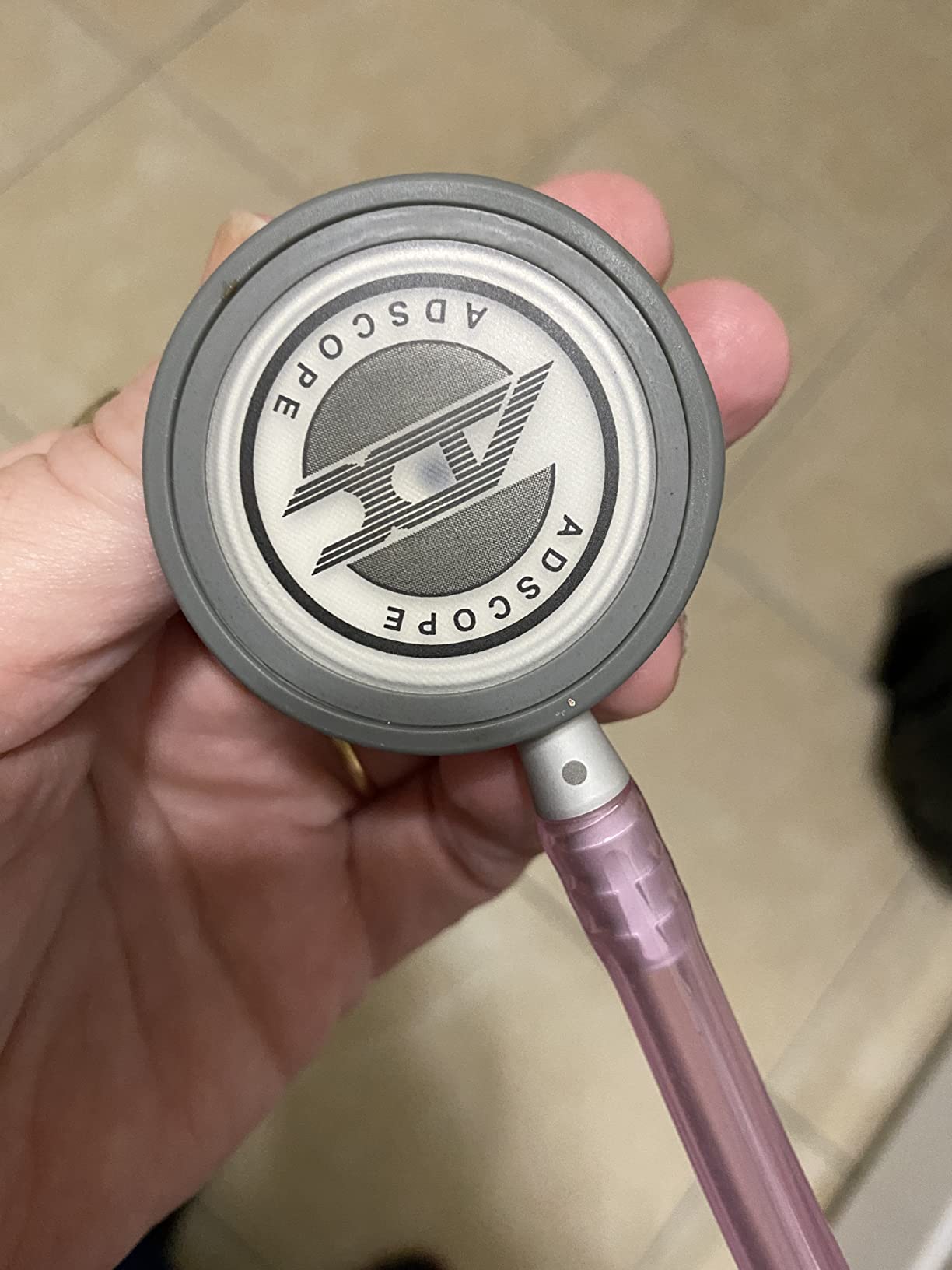
The extra-deep bell and ultra-sensitive diaphragm are aimed at low-frequency response and crisper high-frequency transmission, and for daily vitals, lung checks and blood pressure the sound is clear and reliable. Each scope is individually acoustic tested, which is unusual at this level of the market.
Students, medical assistants and clinicians praise the weight, the everyday acoustics and the wide color range. The honest limit, repeated in reviews, is that faint heart and lung sounds do not come through with the clarity of a premium Littmann. Refurbishment and free parts forever soften that.
Is the 619 light enough to forget
It is the lightest full-featured scope here, and combined with a scrub-pocket or hip clip it is close to weightless across a shift. The 30-inch length is longer than the 27- and 28-inch tubes on the Littmann models, which spreads the weight further and helps it hang flatter.
Where the trade-off shows up
Volume and subtlety. If your work is checking for murmurs, faint crackles or subtle bowel changes in a noisy room, step up to the ADC Adscope 603 or a Littmann with a tunable diaphragm. If you are running vitals, doing wound rounds and moving between patients all day, the weight saving is worth more.
7. Paramed Classic Dual Head – Best All-in-One Kit
Paramed Stethoscope – Classic Dual Head – for Doctors, Nurses, Med Students, Professional Pediatric, Medical, Cardiology, Home Use – Extra Diaphragm, 4 Eartips, Accessory Case, Name Tag – 29.5 inch
Length: 29.5 inches
Head: 360-degree rotating dual head
Includes: 4 eartips extra diaphragm name tag case
Pros
- Loud clear sound for blood pressure auscultation
- 29.5-inch latex-free tubing resists sweat stains and oils
- Four eartips in three sizes for a better fit
- Accessory case extra diaphragm and name tag in the box
- Flexible tubing that stays comfortable
Cons
- Eartips sit at a fixed non-adjustable angle and can be uncomfortable
- Some scopes arrive with an opening in the metal arm piece
- Build quality is a clear step below premium brands
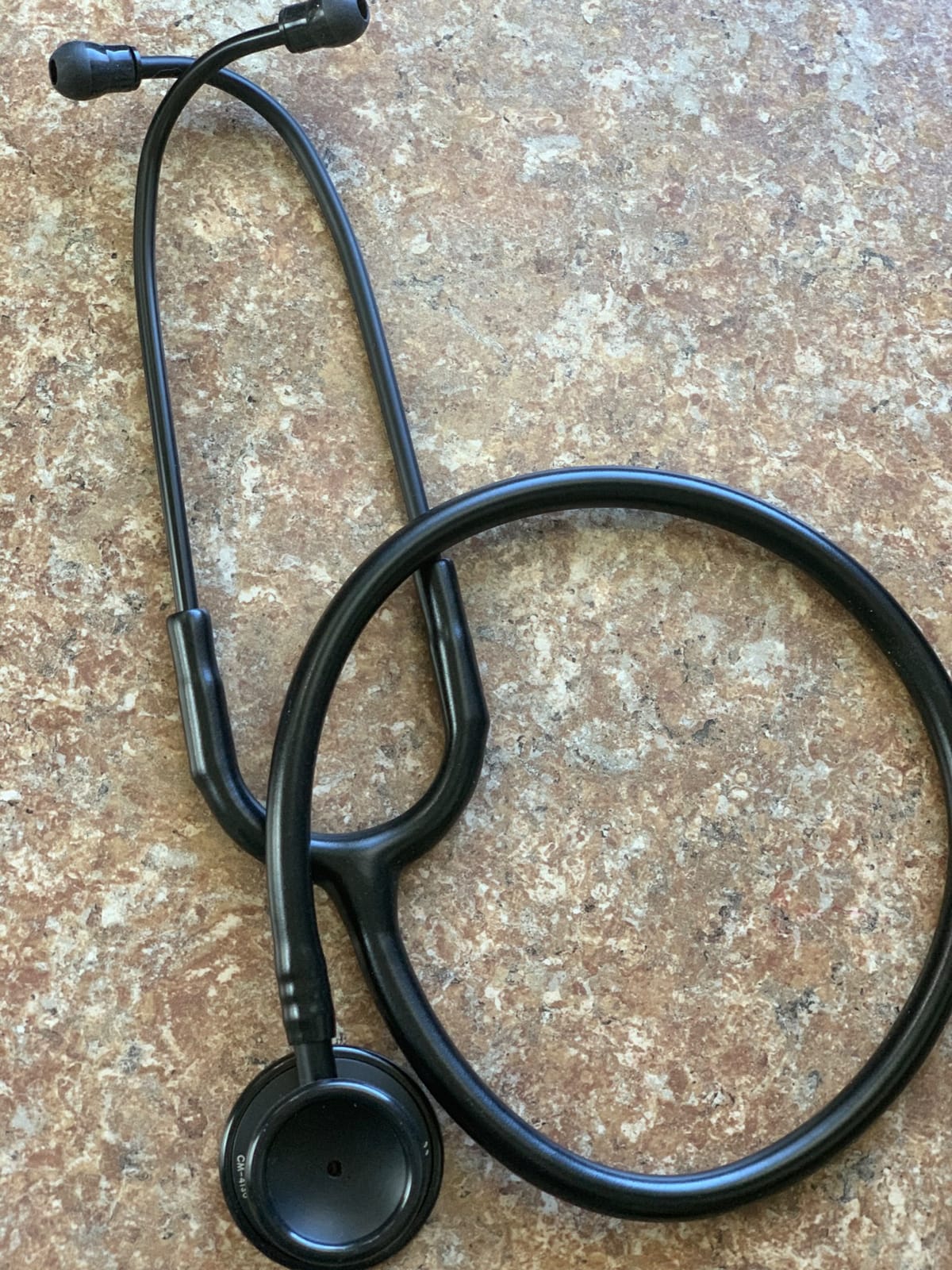
The Paramed Classic sells itself on what is in the box: a dual-head scope, four eartips across three sizes, an extra diaphragm, a name tag and an accessory case. If you are starting from nothing and want a complete kit in one order rather than three, this is the pick.
The 360-degree rotating chestpiece means you can turn to the bell or the diaphragm without twisting the tube under the patient’s neck. That matters when you are auscultating a back or working around a blood pressure cuff on an anxious patient.
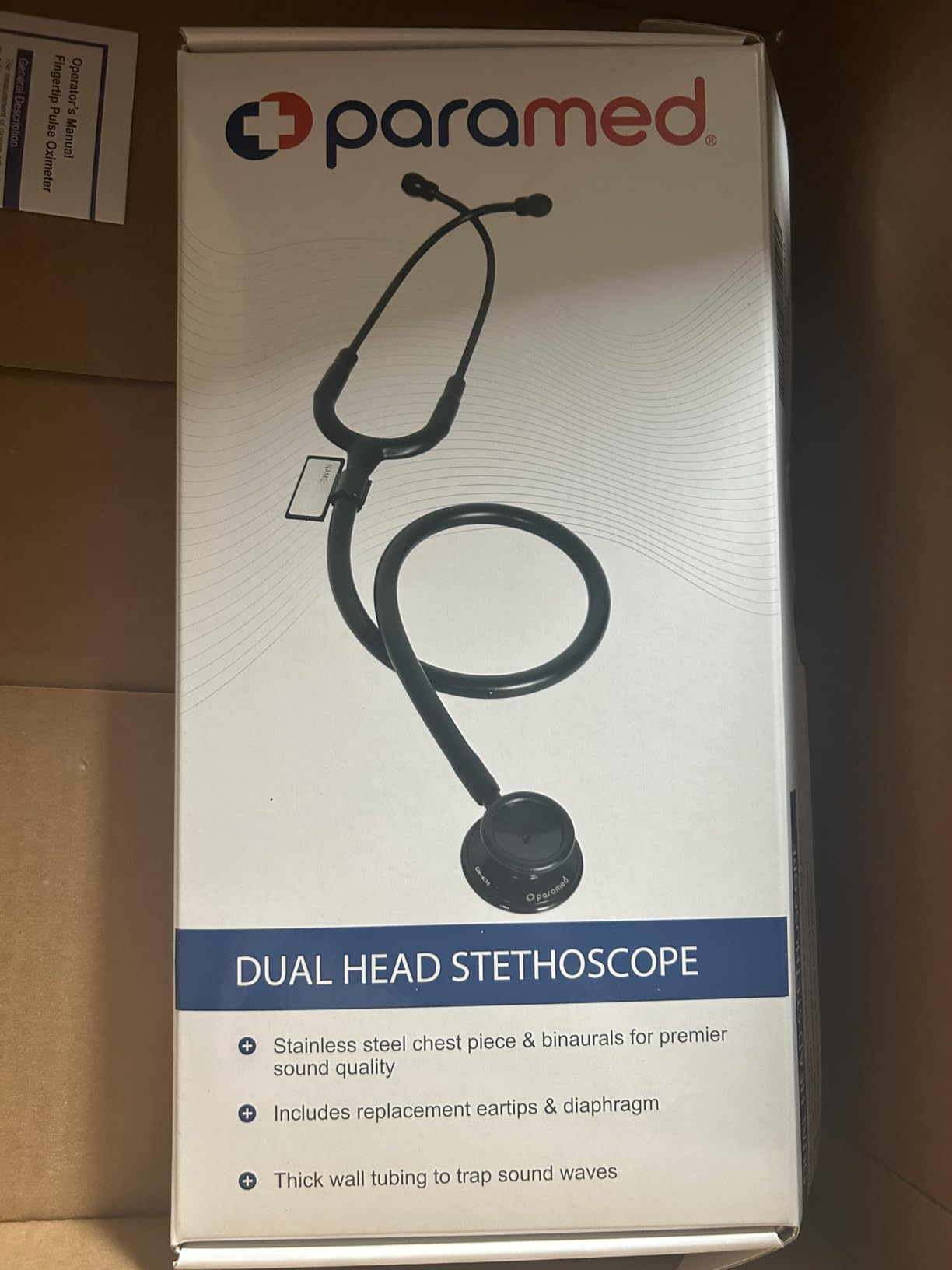
Loud, clear sound is the consistent theme in reviews, particularly for manual blood pressure work, and the tubing is described as flexible and comfortable. Users also like the subdued black finish, which stays professional in a field bag or travel nursing pack.
The honest list of complaints matters just as much. The eartips are fixed at a non-adjustable angle, some scopes arrive with an opening in the metal arm piece that affects transmission, and the build sits a clear step below the Littmann and MDF scopes. Treat it as a solid throw-down scope rather than a daily flagship.
Is a full accessory kit worth anything clinically
Sometimes. Spare eartips in your size and an extra diaphragm remove the two most common reasons a working scope gets retired, and the case protects the tubing from being crushed in a bag. If you already own a good scope, that money is better spent on a replacement tube.
Who this is right for
Travel nurses, home health and telehealth staff, students who want everything at once, and anyone who needs a backup scope in a locker or on-call bag. It is less suited to a nurse who wants one instrument for subtle cardiac assessment on a daily basis.
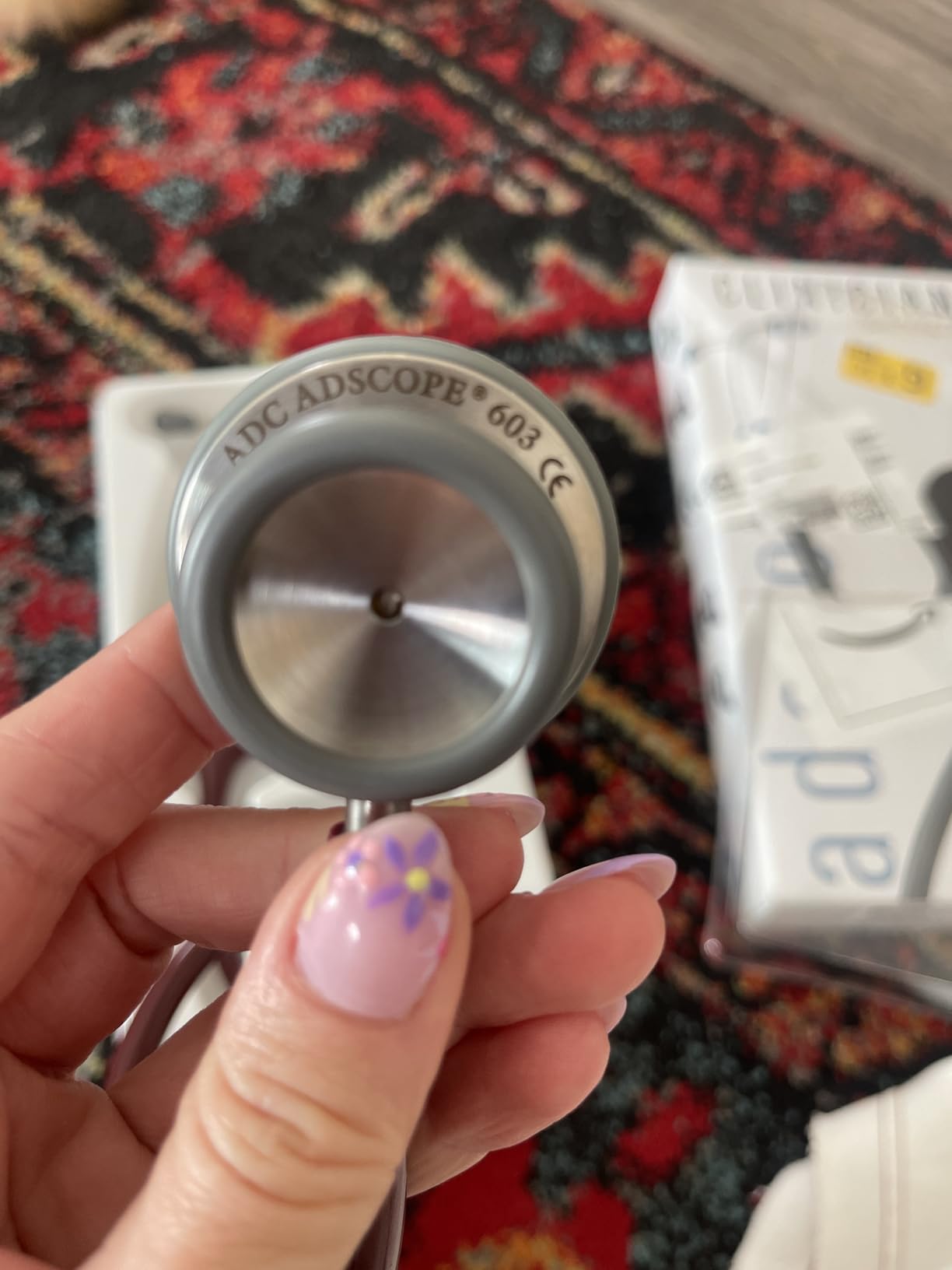
8. ADC Adscope 603 – Best for Sharp Acoustics Under Mid-Tier Cost
ADC Adscope 603 Diagnostic Clinician Stethoscope, AFD Tunable Technology
Weight: 5.8 oz
Length: 30 inches
Head: CNC machined surgical stainless steel with AFD
Pros
- AFD adjustable frequency design with individually acoustic tested scopes
- CNC machined surgical stainless steel chestpiece
- Non-chill bell and diaphragm for patient comfort
- Compact headset with aluminum binaurals and Adsoft Plus eartips
- Two spare eartip pairs a storage pouch and an ID tag included
Cons
- Costs more than most entry-level nursing stethoscopes
- Premium pricing puts pressure on a budget-first purchase
The Adscope 603 is the pick when acoustics matter but the Cardiology IV is more instrument than you need. It is individually acoustic tested in the USA, machined from surgical stainless steel, and uses the same light-pressure or firm-pressure AFD system as the 619.
At 5.8 oz and 30 inches it sits in the middle of this list on weight, which makes it a safe all-day choice. The non-chill bell and diaphragm keep the metal off bare skin, a detail that shows up more than you would expect with older or anxious patients.
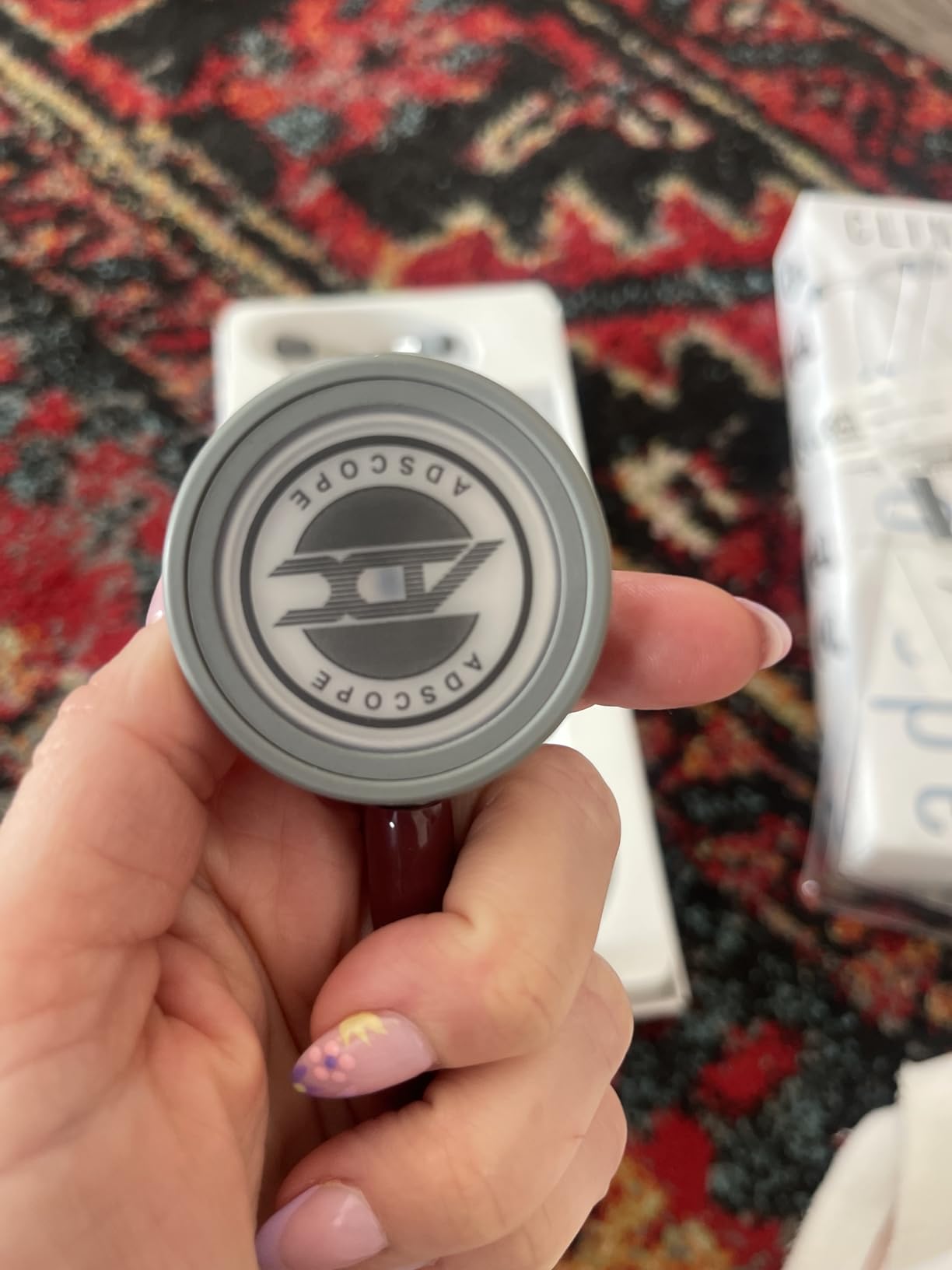
Reviews consistently praise the acoustic clarity for the money, the rugged construction, and the fact that two extra pairs of Adsoft Plus eartips plus a storage pouch and an ID tag are in the box. Owners describe it as a step up from entry scopes without stepping into premium pricing.
A counter-current in nursing forums pushes back on Littmann dominance, calling the 603 and 608 significantly better while saving money, and the free parts forever plus complimentary refurbishment program is the reason those recommendations keep recurring. It is assembled, inspected and packaged in the USA.
Is ADC a real alternative to Littmann
On this model, yes. It shares the tunable-frequency concept, uses a machined stainless steel chestpiece with a non-chill bell, and carries free parts forever with complimentary refurbishment. What it does not share is the review volume: thousands of ratings here against tens of thousands on the Classic III, which is worth knowing if you care about long-term parts availability.
Who should spend here
A nurse who has outgrown a budget scope, works where subtle sounds matter, and does not want the premium tier price. If you are on a strict budget, the 619 Ultra-Lite gives you the same AFD system and parts program at a lower weight.
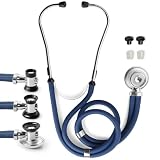
9. PrimaCare DS-9295-BL – Best for Simulation Lab and Backup
PrimaCare DS-9295-BL 30″ Sprague Rappaport Style Stethoscope for Doctor, Nurse and Medical Student, Blue
Weight: 5.7 ounces
Length: 30 inches
Head: 360-degree rotating dual head
Pros
- Very low cost for a full Sprague Rappaport style dual head design
- 360-degree rotating head for flexibility across the chest and back
- Lightweight aluminum chest piece with solid skin contact
- Latex-free double tube configuration
- Spare parts and adjustable ear tubes included in the box
Cons
- Lightweight build does not feel as solid as mid-range models
- Sound transmission is adequate rather than exceptional
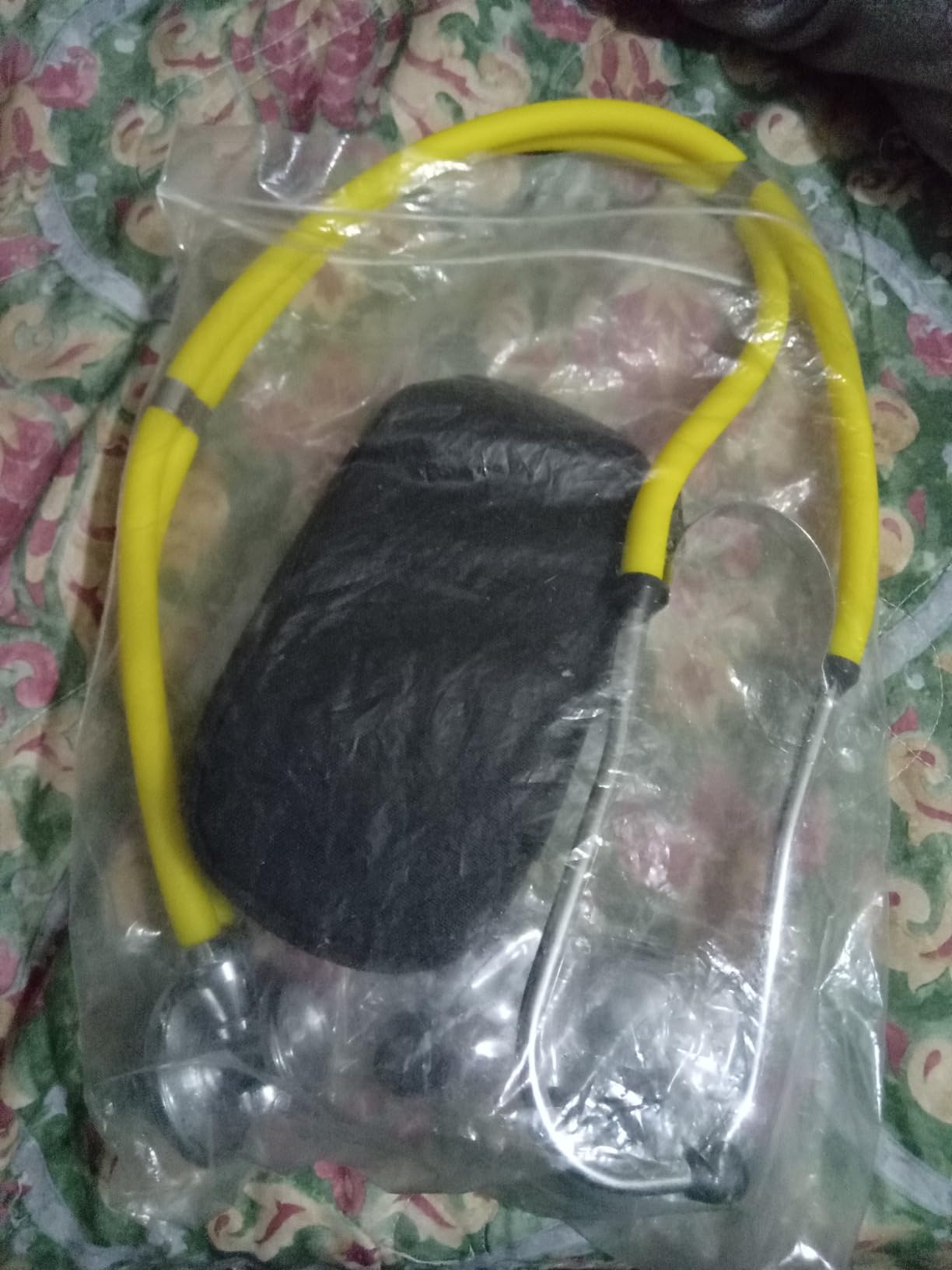
The PrimaCare DS-9295-BL is the scope you buy for a locker, a car kit or a first simulation lab rotation when you do not want your own instrument on a shared unit. At 5.7 oz it is light, and the 30-inch double-tube configuration is the traditional Sprague Rappaport layout nurses trained with in school.
The rotating dual head moves across a patient’s chest and back without tangling the tube, and the flexible adjustable ear tubes let you dial in the angle that actually seals on your ears, which fixes the single most common new-nurse complaint.
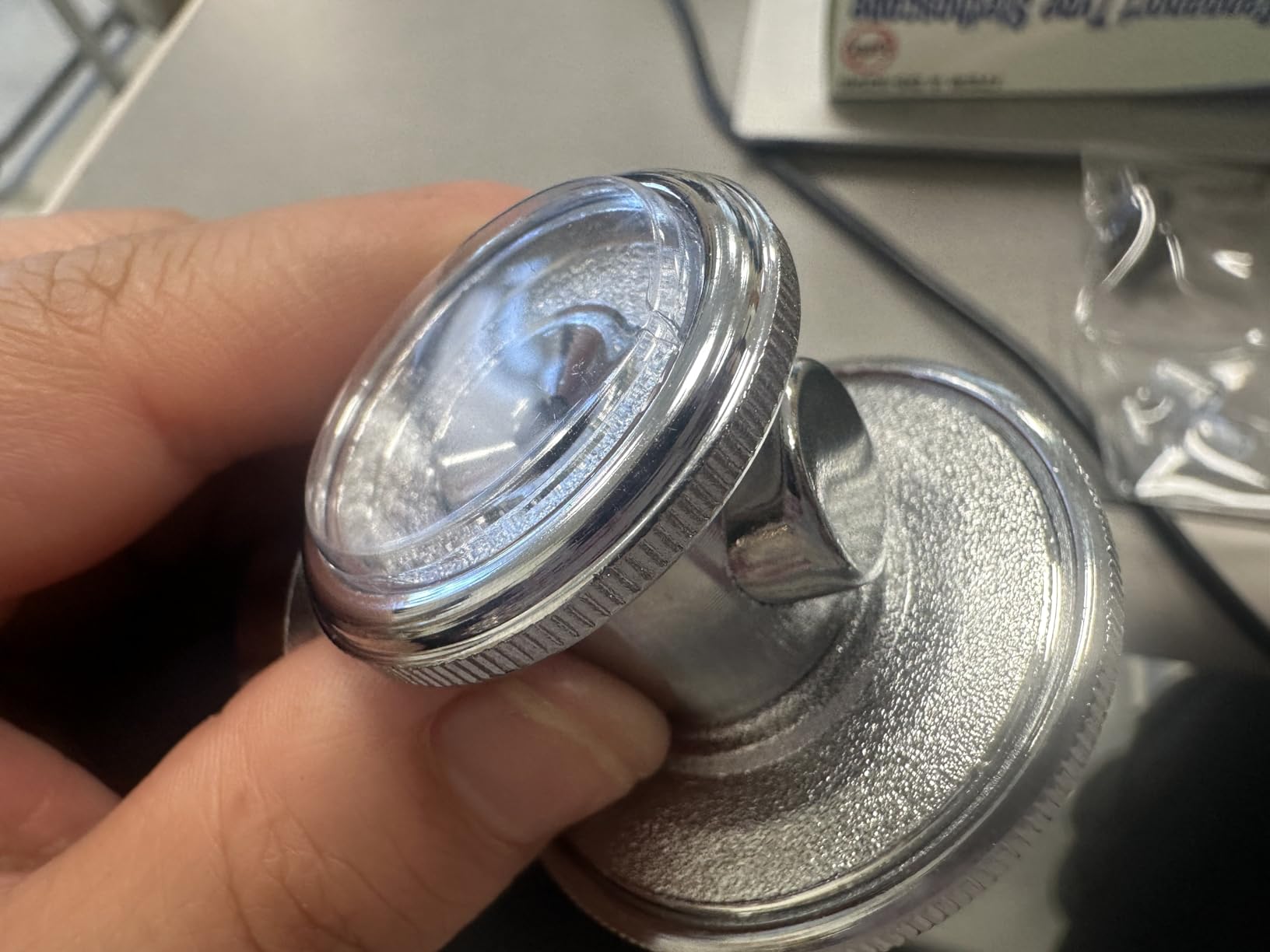
Reviewers frame it consistently as an inexpensive, functional training and backup scope. The price, the rotating head and the latex-free tubing get the praise; build quality and acoustic finesse get described as adequate rather than premium, which is a fair summary.
At a little over 5 ounces, it is heavy on value and light on refinement. It suits a student in the first year who will outgrow it, a nurse who needs a second scope for a travel bag, and anyone testing whether they enjoy auscultation before committing to a lifelong instrument.
Is a cheap stethoscope ever genuinely enough
Yes, for learning anatomy of sound and for routine vitals in a quiet room, a scope at this level is genuinely sufficient. It stops being enough the moment you need to distinguish faint breath sounds on a larger patient, or once you want to hear a murmur over an alarm.
What you give up compared with the mid tier
You give up acoustic finesse and perceived solidity in the hand. The metal chestpiece still gives good skin contact, but the difference is obvious next to the stainless steel MD One or the CNC-machined Adscope 603. Think of it as a consumable instrument, not a career one.
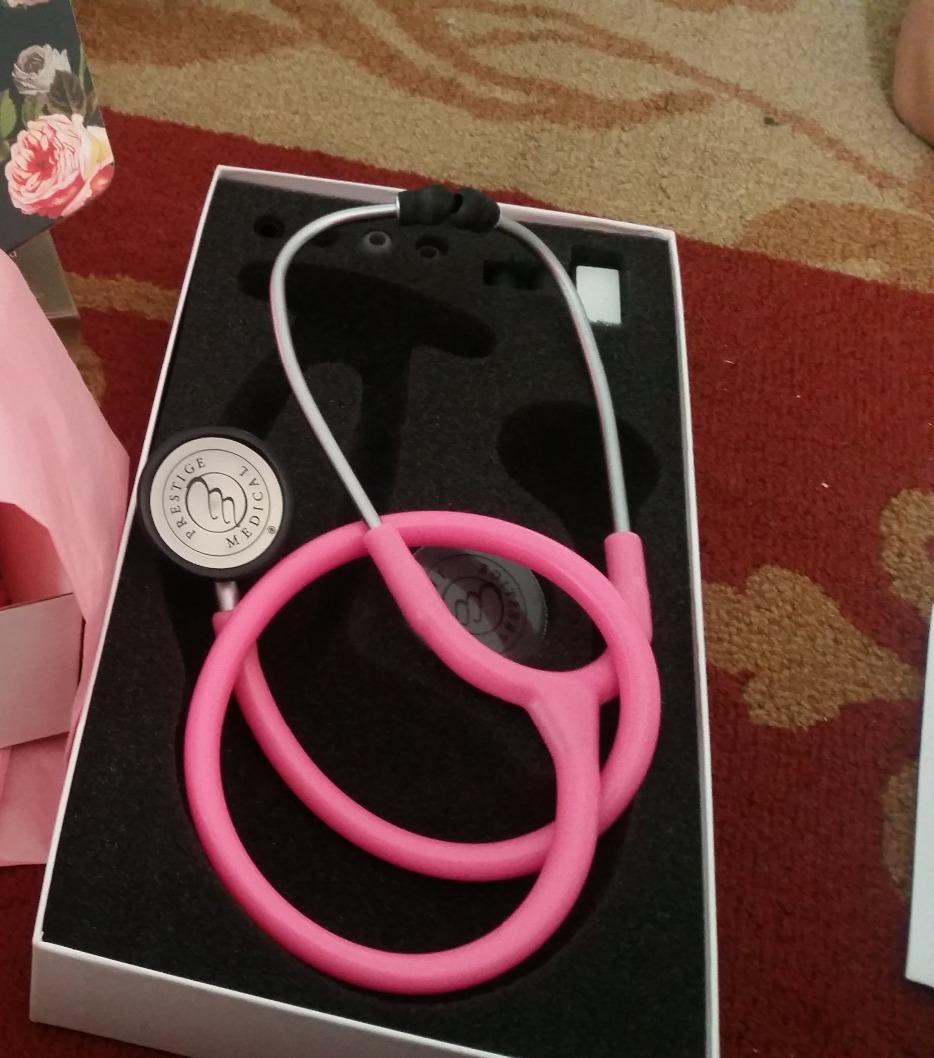
10. Prestige Medical Clinical Lite – Best Starter Stethoscope for Students
Prestige Medical Clinical Lite Stethoscope, Hot Pink, 31 Inch
Length: 31 inch
Eartips: two sizes
Includes: extra diaphragm
Snap-on rim and diaphragm
Pros
- Very affordable entry-level stethoscope
- Two eartip sizes help seal out ambient noise and improve comfort
- Easy to use snap-on rim and diaphragm for quick changes
- Extra diaphragm included in the box
- 31-inch length suits clinical work
Cons
- Lightweight construction can feel less solid in the hand
- Acoustic performance is basic against mid and premium models
The Clinical Lite is the first instrument we would name for a nursing student who wants to practise on real bodies before committing to a durable scope. It handles heart, lung and blood pressure work at a level that suits learning, and the two eartip sizes solve the seal problem that makes beginners think they cannot hear anything.
The snap-on rim and diaphragm design means a membrane swap takes seconds with no tools, so you can practise low-frequency and high-frequency auscultation on the same head. The extra diaphragm in the box means the first one you tear is not a problem.
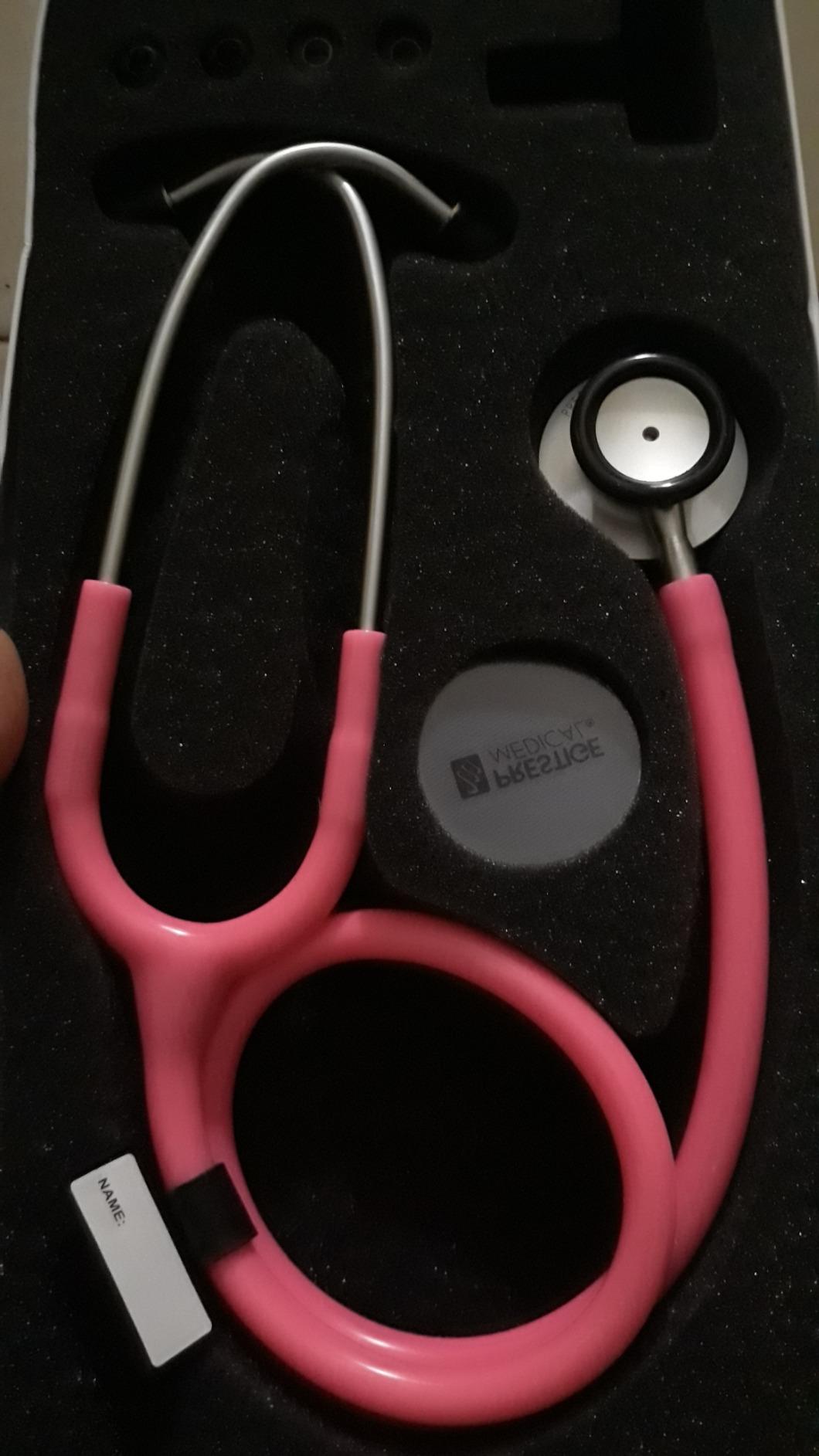
Reviews describe it as a dependable first or backup stethoscope, with particular credit for eartip sealing and easy diaphragm swaps. It is made in the United States and the 31-inch length is on the longer side, which keeps the chestpiece easy to reach in most bed spaces.
At 9.6 ounces listed weight, this is one of the heavier budget options, and the construction reads as light in the hand. It is a scope for a locker, a first rotation, or a nurse who wants a spare that never gets the daily wear.
Should a nursing student start here
Only if your program allows any stethoscope. Many programs name a specific model, and several require a Littmann Classic III, Classic II S.E. or Cardiology IV, so check the requirement before you buy. If there is no requirement, this is a legitimate way to start.
When to upgrade instead
Upgrade when you move into a setting where subtle findings matter, when you want a tunable diaphragm instead of a simple bell and diaphragm, or when you want a warranty that matches a career. The upgrade path most students take is the Lightweight II S.E. or the MDF Acoustica.
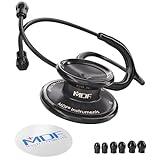
11. MDF Instruments MD One – Best Stainless Steel Value
MDF Instruments MD One Premium Stainless Steel Dual Head Stethoscope, Adult, Black Tube, Black Chestpieces-Headset, MDF777BO
Material: stainless steel
Head: dual with true bell and true diaphragm
Warranty: lifetime
Free-Parts-For-Life
Pros
- Excellent acoustic transmission for the price range
- Stainless steel construction feels premium and durable
- True bell and true diaphragm on a turnable rotating stem
- ErgonoMax headset with dual-leaf spring construction
- Three eartip sizes plus extra diaphragm and ID tag
Cons
- Heavier than the MDF Acoustica and other lightweight nursing models
- Longer tubing adds weight around the neck
The MD One is the MDF answer for nurses who want a stainless steel chestpiece and a full lifetime warranty without moving into premium Littmann pricing. Owners rate it highly for delivering acoustically comparable transmission at a lower cost, and the build is what makes it feel like a permanent instrument.
Like the Acoustica, it uses the ErgonoMax headset with patented dual-leaf spring construction, the Acoustic Pyramid Chamber and SafetyLock eartip adaptors. The true bell and true diaphragm on a turnable, fully rotating stem give you both frequency ranges plus a genuinely small bell for pediatric use.
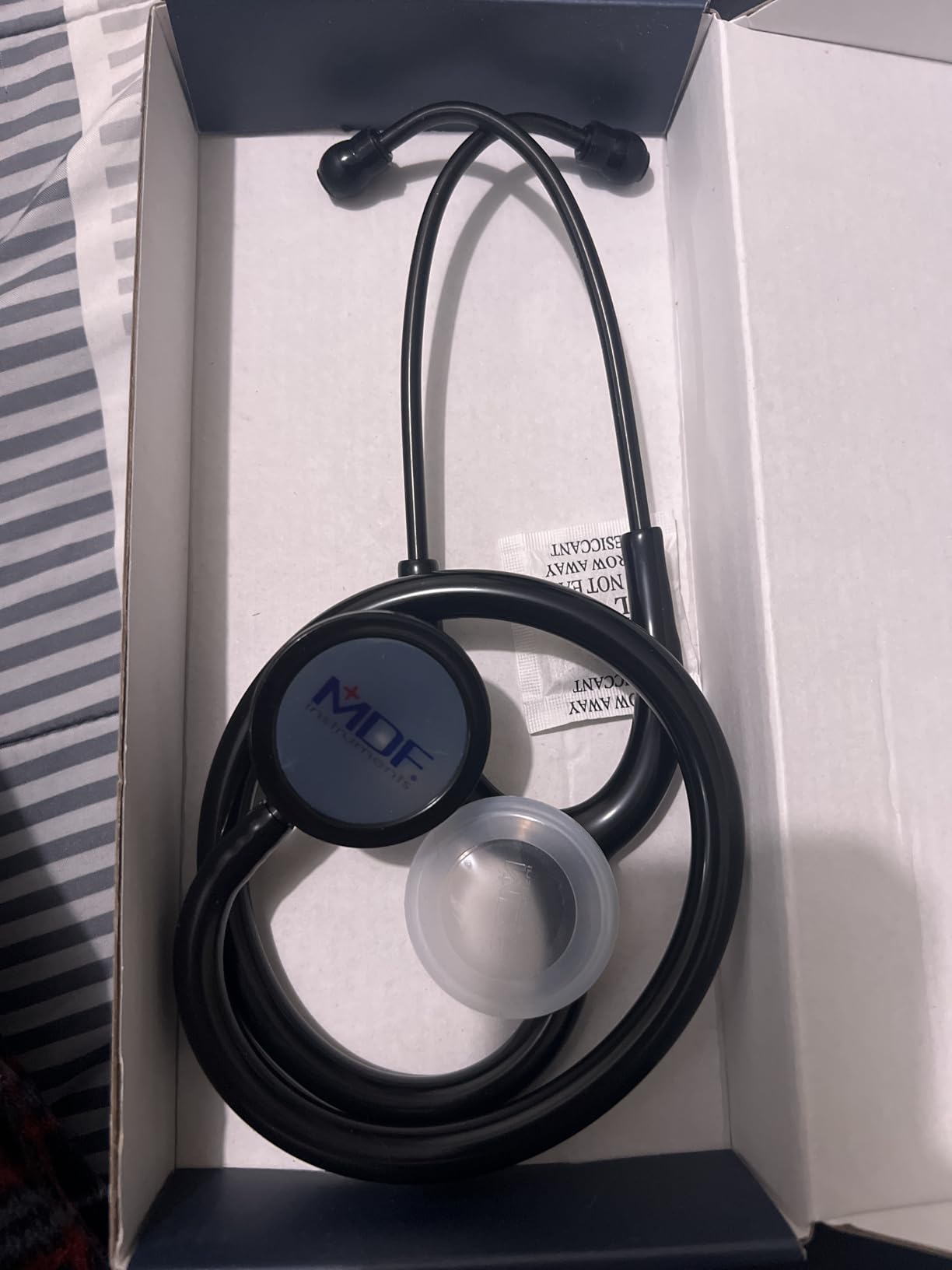
The box is generous: three pairs of ComfortSeal eartips in small, medium and large, an extra diaphragm and an ID tag, plus latex-free flexible tubing. Over 20 color variations mean you can match it to your scrubs rather than defaulting to all black.
The trade-off reviewers name most often is weight. At 16 ounces listed, with longer tubing, it is a noticeably heavier instrument than the Acoustica, and that is the reason we did not put it in the top three despite the strong rating.
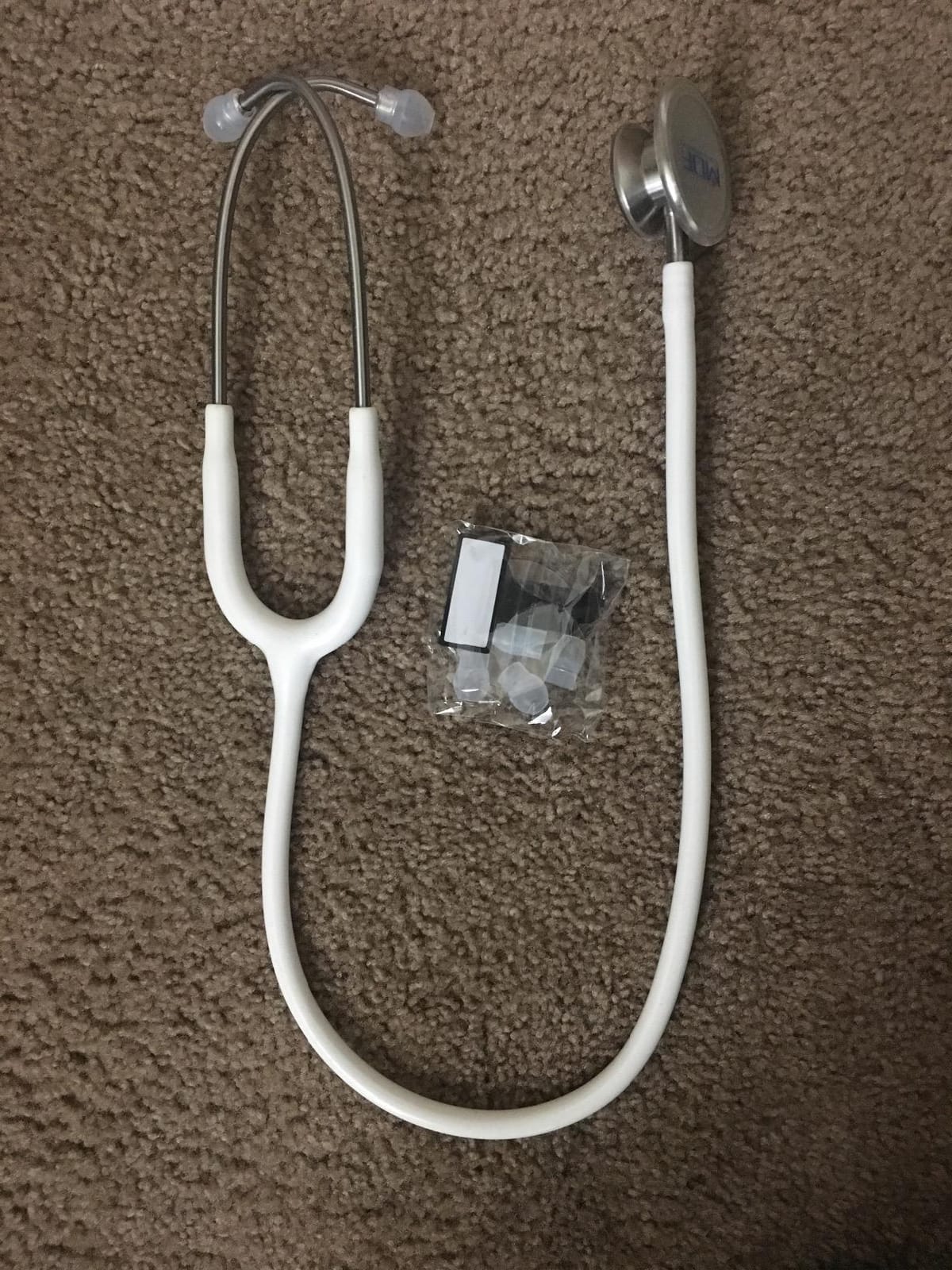
Is stainless steel worth the extra weight
For most nurses, yes. Steel resists dents, holds the bell geometry and supports the lifetime warranty and free parts program, and it does not feel disposable in a pocket. If your priority is neck comfort above everything, choose the 118 g Lightweight II S.E. instead.
How it compares with the Acoustica
The MD One is the heavier, sturdier, more premium-feeling sibling. The Acoustica is lighter, cheaper and better for a student, and both share the same lifetime warranty and parts program, so the decision comes down to build and weight rather than coverage.
12. Greater Goods Dual-Head Stethoscope – Best for Nursing Students and EMTs
Greater Goods Dual-Head Stethoscope for Nurses, Medical Students & EMTs
Length: 28.3 inches
Head: rotating stainless steel dual with tunable diaphragm
Parts: lifetime replacement parts
Pros
- Designed to take students from classroom to professional practice
- Rotating stainless steel head switches bell and tunable diaphragm
- Insulated tubing and spring-tension headset for a secure fit
- Non-chill rim included
- Two spare eartips and an extra diaphragm in the box
Cons
- Less review volume and brand track record than established makers
- Acoustic performance is mid-tier rather than high-end
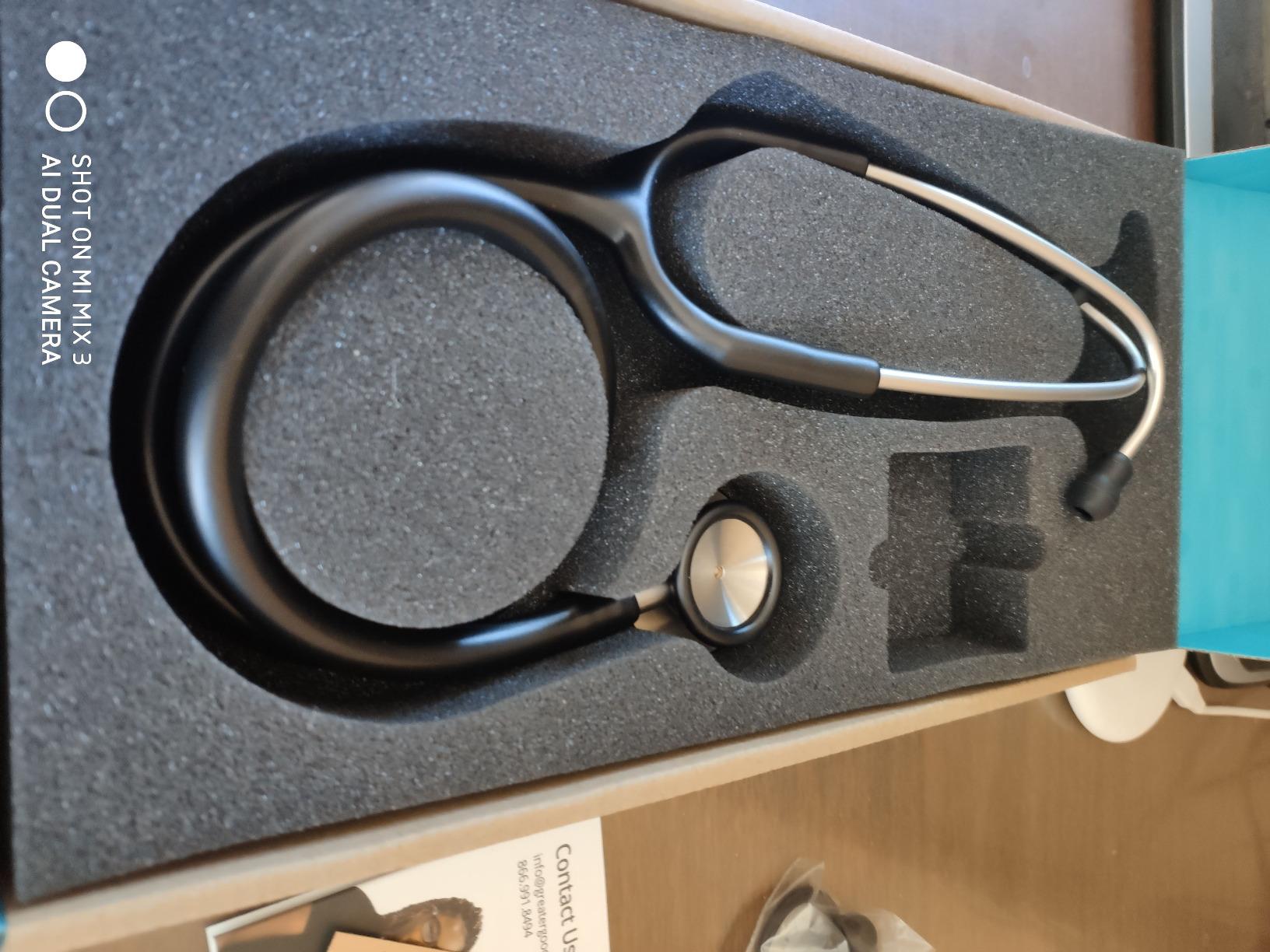
The Greater Goods dual-head is built explicitly as a first instrument: classroom, first patient assessment, then professional practice. It comes with two spare eartips, an extra diaphragm and a lifetime replacement parts program, so the consumables question is handled from day one.
Every scope is individually tested before it is sealed, and the rotating stainless steel head switches between a true bell and a tunable diaphragm for low and high frequency sounds. The 28.3-inch length sits neatly under a scrub top without swinging when you bend down.
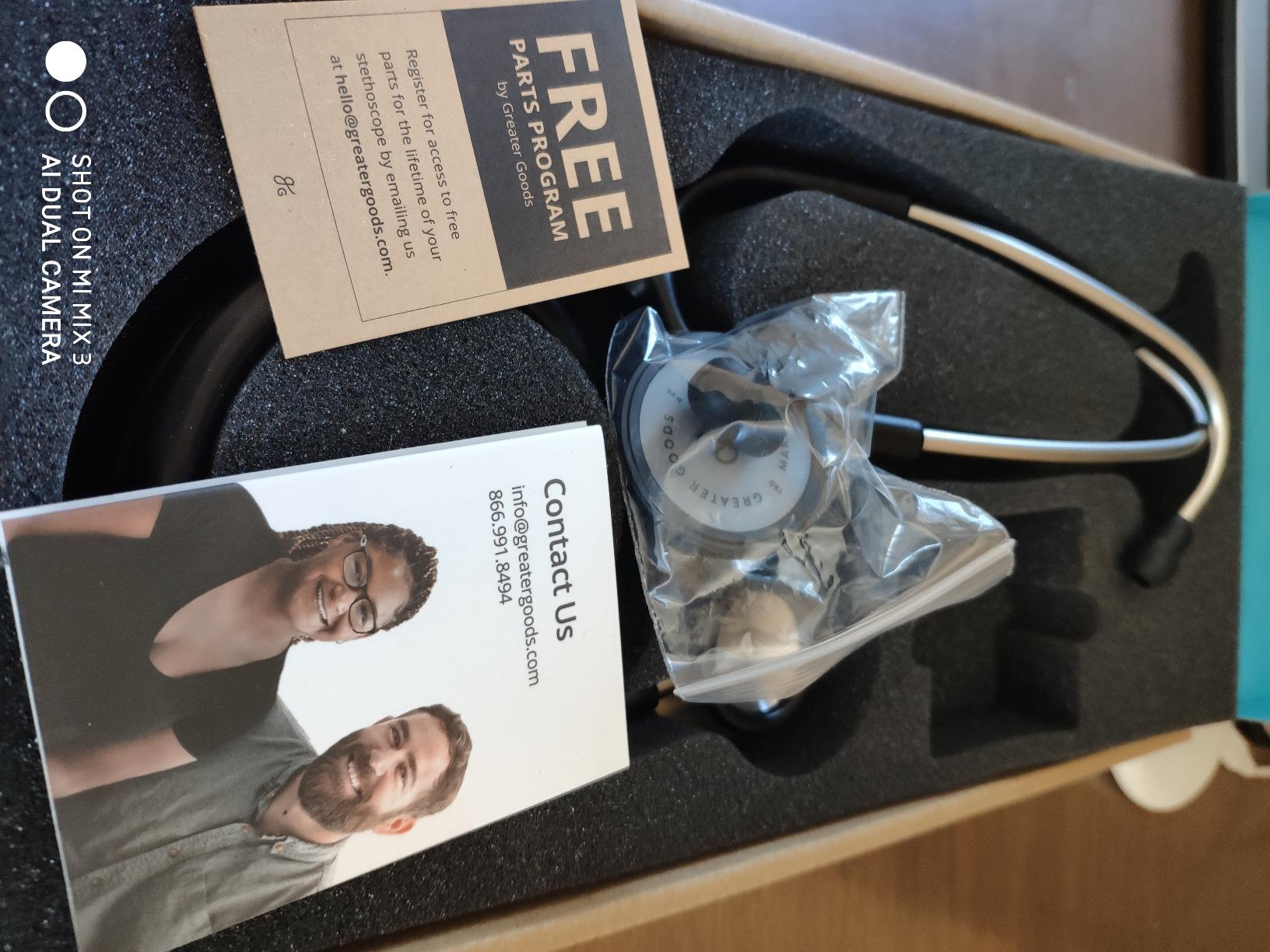
Insulated tubing, a spring-tension headset, aluminum alloy binaurals and a non-chill rim make this a complete package rather than a barebones scope. The non-chill rim matters when you place a cold chestpiece on a patient who is already uncomfortable.
The honest limitation is the review base. With a few hundred ratings rather than tens of thousands, there is less long-term history on the parts program and less field testing across brands. The acoustics are described as mid-tier, which is fine for students and EMTs and short of what critical care wants.
Is an unknown brand safe for clinical use
Every stethoscope on this list is an acoustic instrument used the same way, and this one has individually tested scopes, a stainless steel chestpiece and a parts program. The risk is not safety, it is long-term support, so we would replace it with an established brand once you are in a specialty.
Who should buy it
Nursing students who want a complete first kit, EMTs, and anyone starting a first aid or home health box. Our other guides cover the rest of a new nurse kit, including supportive sneakers for nurses for those early clinical rotations.
How to Choose a Stethoscope as a Nurse
Chestpiece types, explained simply
There are three chestpiece layouts you will meet. A dual-head chestpiece has a bell on one side and a diaphragm on the other, and you switch by rotating the head. A single-head tunable chestpiece uses one diaphragm and changes what you hear by how hard you press, which is what Littmann’s tunable diaphragm and ADC’s AFD technology do. A convertible multi-head design, like the Sprague Rappaport, adds pediatric and infant attachments to the bell and diaphragm pair.
The bell transmits low-frequency sounds such as heart rumbles and gallops. The diaphragm transmits high-frequency sounds such as breath crackles and wheezes. A tunable chestpiece means you can reach both without flipping anything, which is why five of the twelve models here use that system.
Tubing length, material and dual-lumen design
Tube length in this list runs from 27 to 31 inches, and the difference is how the scope sits around your neck. Shorter tubes hang higher and closer to the jaw; longer tubes drop lower and spread the load. Two external tubes beat one on clarity, which is why the MDF Sprague Rappaport uses dual lumen tubing with a separate channel for each ear.
Check that tubing is latex-free. All twelve models here are, and several describe the tubing as non-stick and resistant to sweat, stains and oils, which matters when you sanitize between patients and the tube never fully dries.
Eartips and the seal that decides what you hear
More sound is lost at the ear tips than most nurses expect. Soft-sealing or snap-on silicone eartips in small, regular and large sizes are what let you get a proper occlusion seal, and a scope shipped without spare eartips will have you reordering within a year. Eight of the twelve models here include multiple sizes or spare pairs.
The headset matters too. Dual-leaf spring construction on the MDF models and the spring-tension headset on the Greater Goods scope keep eartips seated at a consistent angle, which is the fix for the complaint that a fixed-angle eartip left a gap.
Weight, neck comfort and long shifts
Weight is the specification most buyers skip and most regret. The lightest scope here is 3.7 oz and the Littmann Lightweight II S.E. is 118 g, while the dual-head adult and Sprague designs run noticeably heavier. Anything you carry around your neck for twelve hours should be chosen with your shoulder and neck in mind, not just your ears.
A practical rule we use: if you already carry an IV pump or a heavy badge reel, choose something under 150 g. If you work a fixed station such as ICU, where the scope is in your pocket more than on your neck, weight matters much less and chestpiece size matters more.
Warranty, free parts and total cost of ownership
The failure points on a stethoscope are predictable: cracked tubing, worn eartips, a torn diaphragm. Brands that publish a free parts or replacement parts program turn those from replacement triggers into a five-minute fix. MDF offers a full lifetime warranty and replacement parts for life on two of the models here, and ADC offers free parts forever with complimentary refurbishment on two others.
That is the honest cost-of-ownership argument. A scope with a two-year warranty and no parts program is cheaper to buy once and more expensive to keep. If you keep the same instrument for a whole career, parts availability matters more than the ticket price on day one.
Is Littmann the best brand? Littmann vs ADC vs MDF
Littmann is the default answer, and the Classic III and Lightweight II S.E. in this list are among the highest-rated instruments we reviewed. But the counter-current on nursing forums is real: nurses recommend the ADC Adscope 603 and 608 as significantly better acoustics while saving money, with the same style of lifetime parts support.
ADC is the alternative for acoustics and lightweight clinician design, with AFD tunable technology and free parts forever. MDF is the alternative for value and long-term parts support, with a full lifetime warranty and three eartip sizes in the box. Littmann is the alternative when a school or employer expects the name, which is often the deciding factor for students.
If you are a nursing student
Check what your program requires first, because several schools name the Littmann Classic III, Classic II S.E. or Cardiology IV. If nothing is required, the MDF Acoustica or the Greater Goods dual-head is the sensible first buy, and the ADC Adscope 619 Ultra-Lite is the one to grow into if weight is already an issue.
Also ask whether you can use a personal stethoscope on the unit or whether the hospital issues one. Many units supply a shared scope for safety, and knowing that in advance saves you from buying something you never get to use.
How we chose
We compared 12 instruments on five things: acoustic clarity on routine vitals, weight, tubing and headset design, warranty and parts availability, and what a nurse would actually carry for a full shift. Every product here was assessed on published specifications and on aggregated review patterns from nurses, students, EMTs and physicians.
We left out any scope that was not designed for nursing use, and we list the weaknesses for every pick rather than only the strengths, because the honest trade-off is what helps you choose. Prices and availability change constantly, so use the buttons to see the current listing.
Cleaning and Infection Control Between Patients
A stethoscope that touches a patient’s chest and is then placed in your pocket is a shared surface. Wipe the chestpiece, the tubing and the eartips between every patient with an alcohol-based disinfectant wipe, and let the chestpiece air dry before returning it to a pocket. This is the routine your infection prevention colleagues will ask about.
Do not soak the tubing or submerge the chestpiece. Water gets inside the acoustic channel and degrades transmission, and it also degrades the diaphragm. A wipe-down is enough for between-patient cleaning, and it is what every one of the models in this guide is built to tolerate.
Two habits extend the life of the instrument. Take it off before you eat, and never store it wrapped tightly in a pocket where the tube takes a permanent set. When tubing does crack, replace the tube through the manufacturer’s parts program rather than replacing the whole scope, which is the single best money-saving habit in stethoscope ownership.
Frequently Asked Questions
What is the number one stethoscope for nurses?
The 3M Littmann Classic III is the most widely recommended stethoscope for nurses, holding a 4.8 star average across more than 46,000 reviews. Its tunable dual-sided stainless steel chestpiece covers high and low frequencies without flipping the head, and the 27-inch tube and non-chill bell sleeve make it comfortable across a long shift.
What is the best brand of stethoscope for nursing students?
Check your program requirements first, since several schools name a specific Littmann model. Without a requirement, the MDF Instruments Acoustica offers a full lifetime warranty, free replacement parts and three eartip sizes at a student budget, while the ADC Adscope 619 Ultra-Lite is the lightest option for long clinical rotations.
Is there a better stethoscope than Littmann?
It depends on the job. ADC is the strongest alternative, with AFD tunable technology, a CNC-machined surgical stainless steel chestpiece on the Adscope 603 and free parts forever on both models we reviewed. MDF is the value alternative, pairing a full lifetime warranty and Replacement-Parts-For-Life with lower prices. On most general nursing units, the difference is small enough that comfort and parts support should decide it.
What type of stethoscope do nurses use?
Most bedside nurses use a dual-head acoustic stethoscope with a bell on one side and a diaphragm on the other, usually with a tunable diaphragm that changes frequency response with pressure. Many nursing programs also accept specific Littmann models, and the single-head tunable designs on the ADC and Littmann clinician lines are increasingly common because they remove the need to flip the chestpiece.
What are the three types of stethoscopes?
The three main chestpiece types are dual-head with a bell and a separate diaphragm, single-head tunable with one diaphragm that shifts frequency by pressure, and convertible multi-head designs that add pediatric and infant attachments. Beyond acoustics, they are often split into acoustic, electronic and imaging stethoscopes, though imaging and electronic models remain specialist purchases for most ward nursing.
The Best Stethoscopes for Nurses in 2026
For most nurses, the 3M Littmann Classic III is the right buy: the most-reviewed instrument in this roundup, the one most programs recognise, and the one built to last. If weight is the problem, drop to the 118 g Lightweight II S.E. If budget is the problem, the MDF Acoustica gives you a lifetime warranty and free parts for the money most nurses spend on a single course.
Match the scope to the unit rather than to the spec sheet. Critical care and cardiac work point to the Cardiology IV, pediatrics and the NICU point to the MDF Sprague Rappaport, and anything that means wearing a scope around your neck all day points to the lightest option you can live with acoustically.
Check the model your school or employer requires before you order, and use the buttons above to see the current listing. Whichever you choose, buy the spare eartips and know your parts program, because that is what keeps one good instrument working for years.