
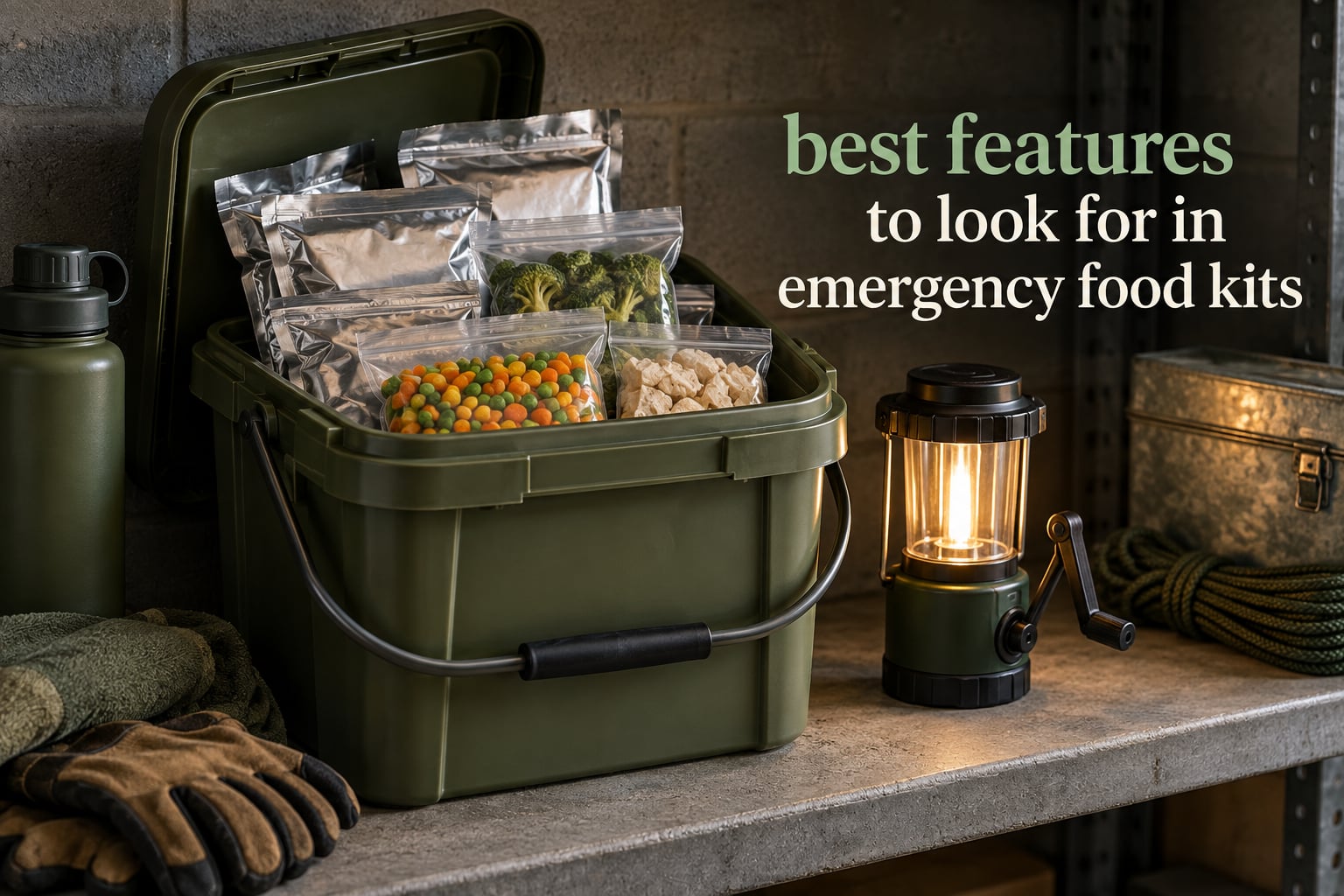
The hardest part of buying an emergency food kit is not finding one. It is knowing which of the dozen numbers on the label actually matters when the power is out and the tap is dry. Most spec sheets tell you a kit holds “20 servings” and call it a 72-hour supply, which sounds generous until you multiply the servings by the calories printed on the back of the pouch and discover you planned 800 calories for a 2,000-calorie day.
So we built the framework first and picked the kits second. The features below are the ones that decide whether a kit works in a real outage, ordered by how often they get ignored. We then scored ten emergency food kits against that same list, from 72-hour go bags to 778-serving pails, and showed the honest drawback on each one.
Everything here is updated for 2026, and every calorie, serving count and shelf life figure comes from the manufacturer’s own listing rather than from the marketing language that surrounds it. If a number is disputed by reviewers, we say so. Our site has broader coverage of the rest of the go bag, including emergency preparedness kits for families and long term food storage kits, but this page stays strictly on the food.
Top 3 Best Emergency Food Kits (October 2026)

ReadyWise 120 Serving Bucket
- 120 servings
- Just add water
- Up to 25 year shelf life
- Split lid doubles as a tray

Augason Farms Vegetable Medley
- 778 servings
- Resealable #10 can
- 25 year shelf life
- 4 gallon pail

Ready Hour 120 Serving Bucket
- 22 resealable pouches
- 120 servings
- Up to 25 year shelf life
- Flood-safe container
Those three are the ones we would hand to a household that asked us to pick one. Everything else in the roundup earns a place for a specific job, and we explain which.
What to Look for in an Emergency Food Kit?
Shelf life that is documented, not just printed. Look for a stated shelf life plus a printed manufacturing or inspection date. A 25-year claim means nothing if the kit already sat in a warehouse for two.
Calories per person per day, not per pouch. Multiply the stated servings by the calories on the label. Ready.gov guidance centers on a few days of supply, and adult calorie needs typically sit between 1,600 and 3,000 a day depending on activity.
A prep method you can perform without a stove. Just add water beats simmer for most households, because the emergency you are buying for may include no working burner.
Resealable pouches. A multi-serve pouch that cannot be closed again is a single-use pouch, and any leftovers are gone.
A container that survives your storage spot. A plastic pail with a handle holds up to rodents and floods better than a cardboard box, and cardboard is the first thing to fail in a damp garage.
Variety across the meals. Appetite fatigue is real. Eight days of oatmeal and creamy rice is not a supply, it is a punishment.
Ingredient and allergen labelling you can read. If someone in the house reacts to tree nuts, a kit that does not declare its allergens is a risk, not a bargain.
Weight and volume that match your bag. A 20-pound bucket is fine in a closet and impossible to walk with.
Servings that divide cleanly. Individual packets let you ration by the meal. One pouch with eight servings in it does not.
Packaging you can recycle or reuse. Buckets, lids and metal cans live on after the food is gone. A pile of single-use laminates does not.
None of these features is a dealbreaker on its own. The combination is what matters: a 30-year shelf life is irrelevant if the pouches do not reseal and you have to cook every serving at once.
Emergency Food Kits at a Glance in 2026
| Product | Specifications | Action |
|---|---|---|
| ReadyWise 120 Serving Bucket |
|
Check Latest Price |
 ReadyWise 72 Hour 30 Serving Kit ReadyWise 72 Hour 30 Serving Kit |
|
Check Latest Price |
| Ready Hour 120 Serving Bucket |
|
Check Latest Price |
| Augason Farms Vegetable Medley 778 Servings |
|
Check Latest Price |
 MRE Variety Pack of 24 Meals MRE Variety Pack of 24 Meals |
|
Check Latest Price |
 4Patriots 72 Hour Survival Food Kit 4Patriots 72 Hour Survival Food Kit |
|
Check Latest Price |
 SOS Rations 3600 Calorie 3 Day Pack SOS Rations 3600 Calorie 3 Day Pack |
|
Check Latest Price |
 Ready Hour Fruit and Veggie Mix 56 Servings Ready Hour Fruit and Veggie Mix 56 Servings |
|
Check Latest Price |
 HMR Variety Entree Meals 16 Meals HMR Variety Entree Meals 16 Meals |
|
Check Latest Price |
 Mountain House Adventure Weekender Kit Mountain House Adventure Weekender Kit |
|
Check Latest Price |
1. ReadyWise 120 Serving Bucket — the one we would buy first
READYWISE Emergency Survival Food Supply Favorite Sample Bucket 120 Serving
120 servings
Up to 25 year shelf life
Just add water
14.55 pounds
Pros
- 120 servings in one stackable pail
- Up to 25 year shelf life
- Split lid doubles as a tray
- Just add water with no equipment
- Variety including Lasagna and Teriyaki Rice
Cons
- Multi-serving pouches must be measured and cooked together
- About 6 servings per pack limits single-meal portioning
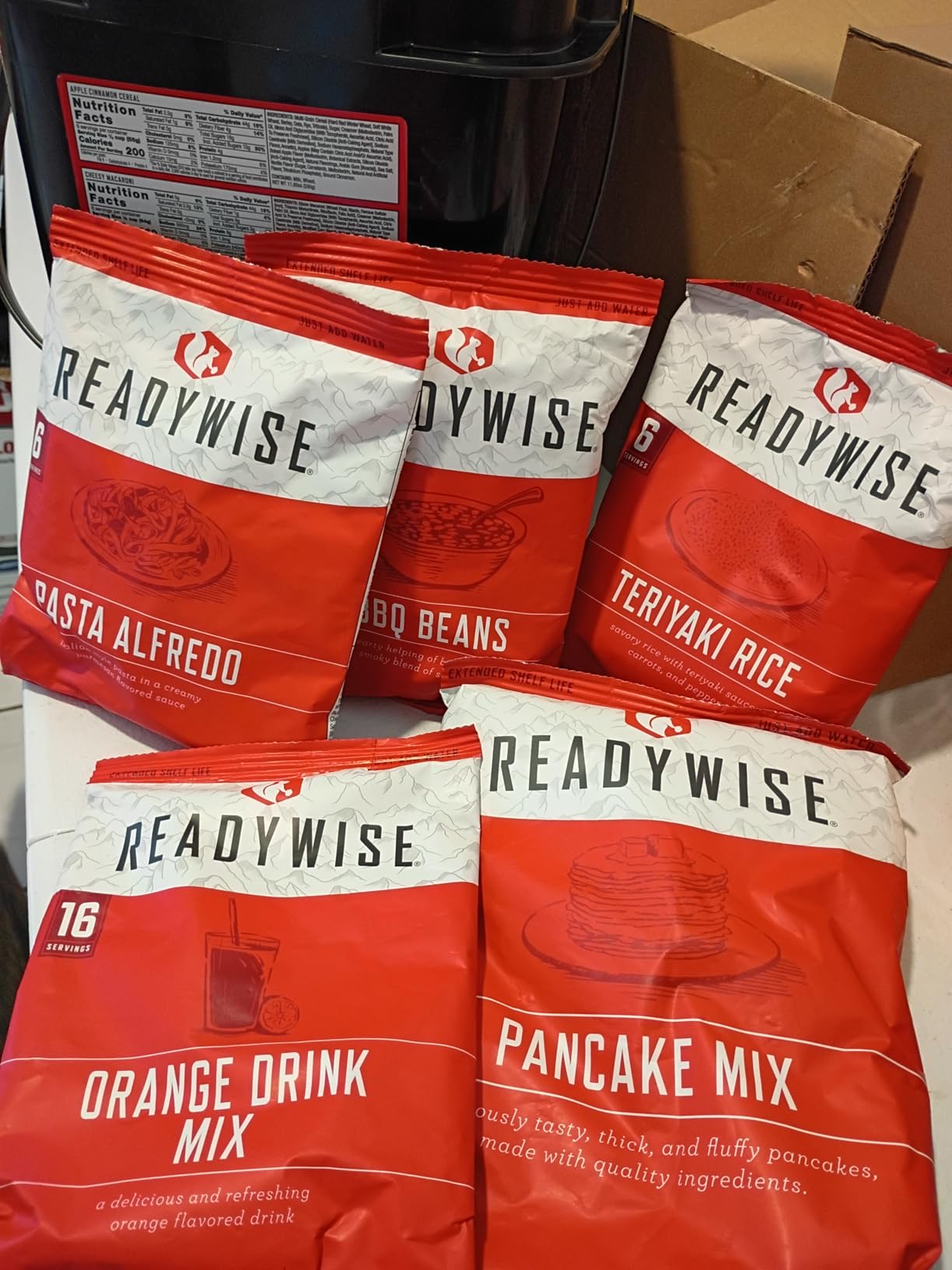
This is the bucket that set the baseline for the rest of the roundup. It holds 120 servings of freeze-dried entrees in a pail measuring 15 by 10 by 12 inches, and at 14.55 pounds it is heavy enough to feel substantial and light enough to move between closets when a storm tracks closer.
The meals themselves are the selling point. Cheesy Macaroni, Lasagna, Teriyaki Rice and Chicken Flavored Noodle Soup all rehydrate with hot water in the pouch, no stove, no cleanup. Reviewers put 74% of its rating history at five stars, and the shelf life claim of up to 25 years is the number people quote when they justify the purchase to themselves.
The detail I like most is not a food feature at all. The lid splits and doubles as a tray and food holder, so you can serve four people a meal out of one bucket without finding a table surface in a dark house. Small engineering, real effect.
Calories are not printed per day on the listing, so this is a kit you ration by eye rather than by label. With roughly 6 servings per pouch, a family of four working through one meal at a time would get through a pouch in a day and a half. That is fast enough that you will want a second bucket before the first one is gone.
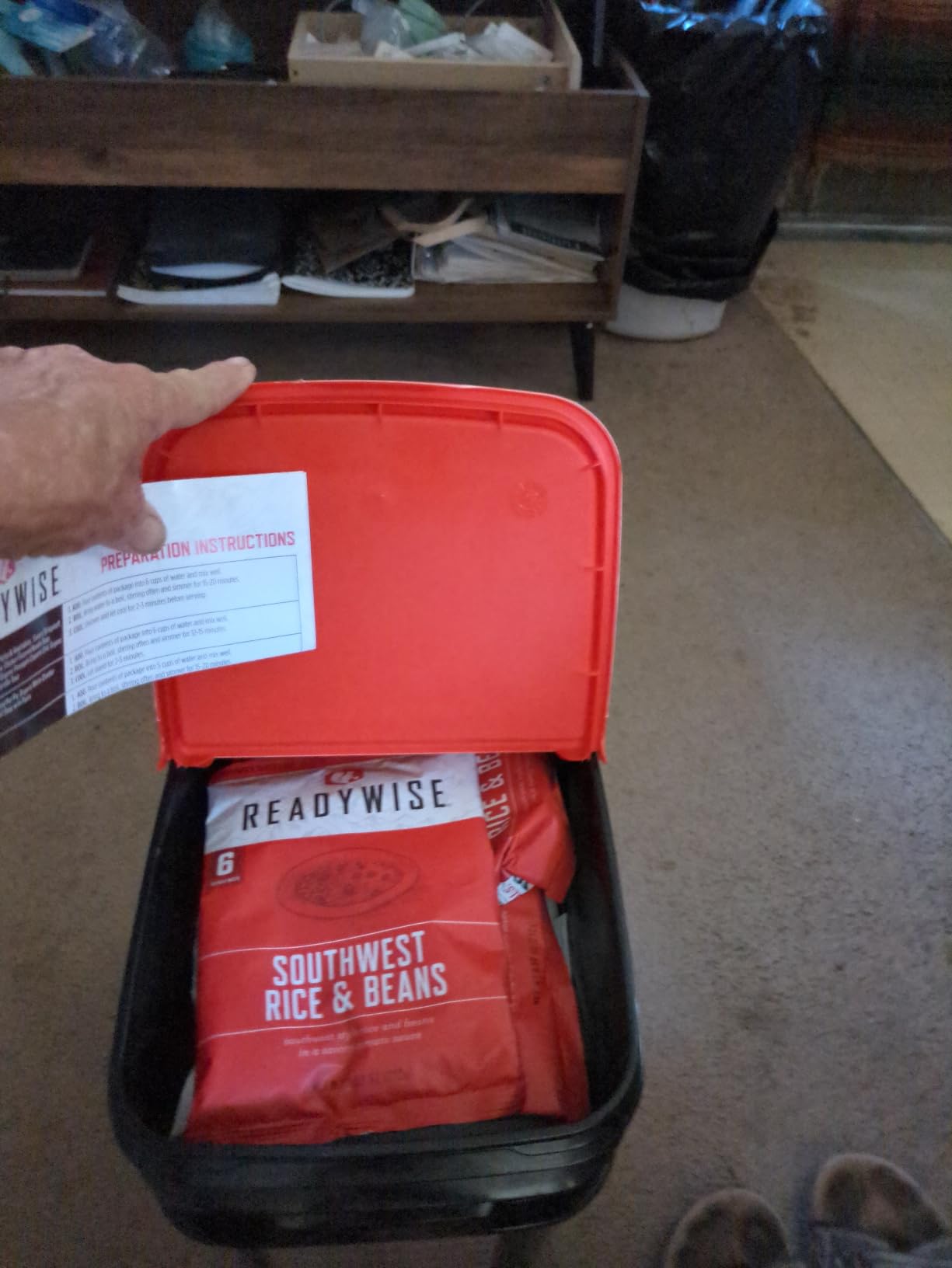
Who this bucket suits?
A household sheltering in place for a week or two, with somewhere dry to put a pail and no interest in cooking. One bucket covers a family of four for about a week at three meals a day, which is the most common outage scenario people actually experience.
It also works for anyone who wants 120 distinct options without shopping around between brands. If you want the same meals in a flatter, lighter package, the long term food storage kits we covered separately are worth a look.
Where it falls short?
The pouch format is the real limitation. Every pouch holds multiple servings that have to be rehydrated together, so if you open one during a two-hour blackout and only need two bowls, the rest has to be eaten quickly or it is wasted. There is no resealable strip on the pouches in this bucket.
Taste is good for freeze-dried food, not exceptional. Several reviewers compare the macaroni to the grocery store version, which tells you it is unremarkable rather than bad. If flavour is the reason you are buying, the Mountain House kit at number 10 is the better bet.
2. ReadyWise 72 Hour 30 Serving Kit — the one that fits in the car
READYWISE Emergency Food Supply Meals 72 Hour Survival Kit, 30 Servings
30 servings
72 hour supply for one
Just add water
3 pounds
Pros
- Compact enough for a go bag or vehicle
- Up to 25 year shelf life
- Just add water preparation
- Carrying handles on the buckets
Cons
- About 6 servings per pouch must be cooked together
- Some meals taste like standard grocery macaroni
- Serving labels can be confusing against the 72 hour framing
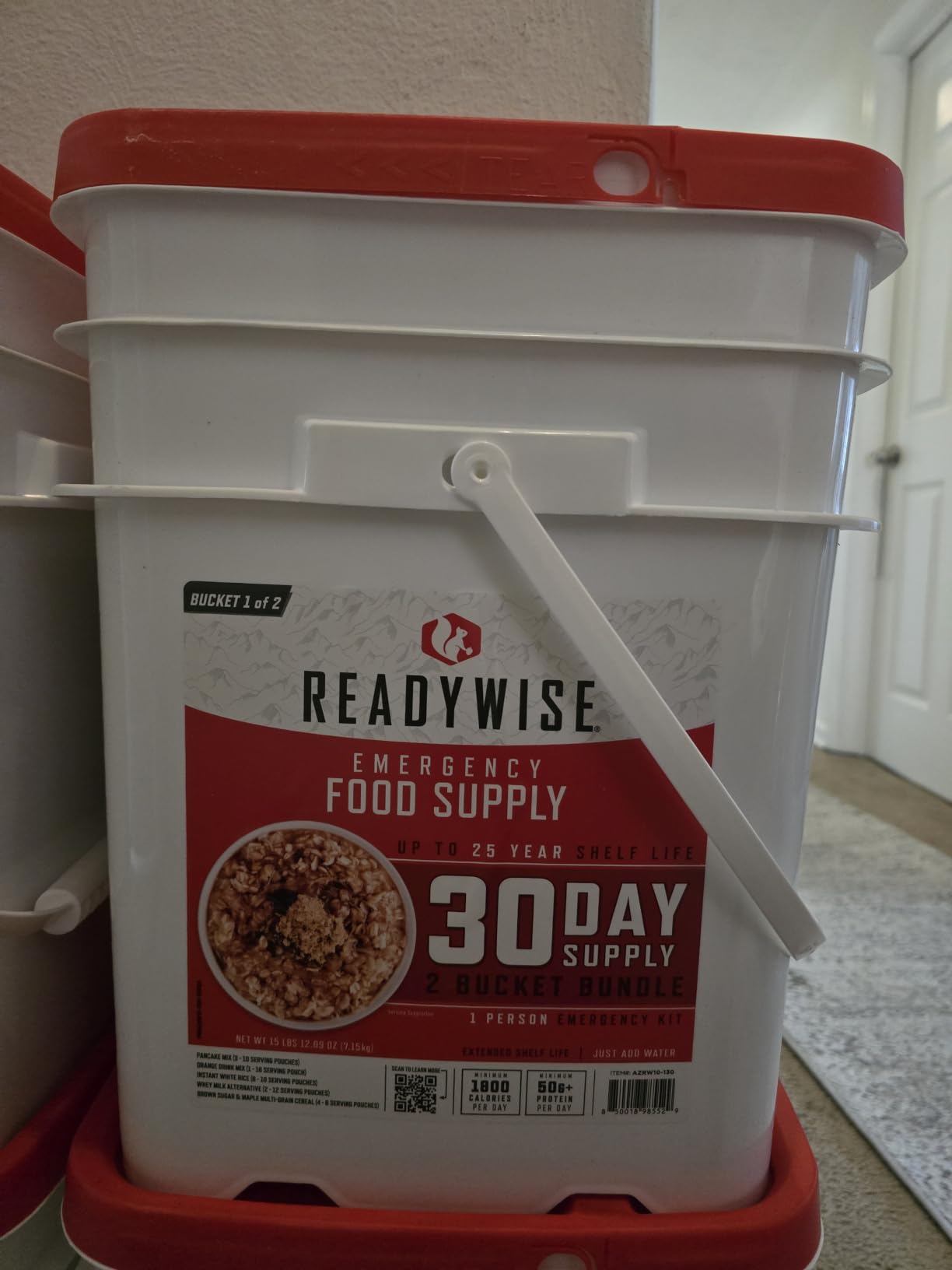
Same manufacturer, same freeze-dried approach, one tenth of the food. At 3 pounds and 20.5 by 16 by 10.75 inches, this is the version that fits behind a seat or in a hall closet without anyone having to move it.
Thirty servings is framed as a 72-hour supply for one person, which works out to ten servings a day across three meals. It carries the same up to 25-year shelf life claim and the same just-add-water method, so nothing about the format changes when you scale down.
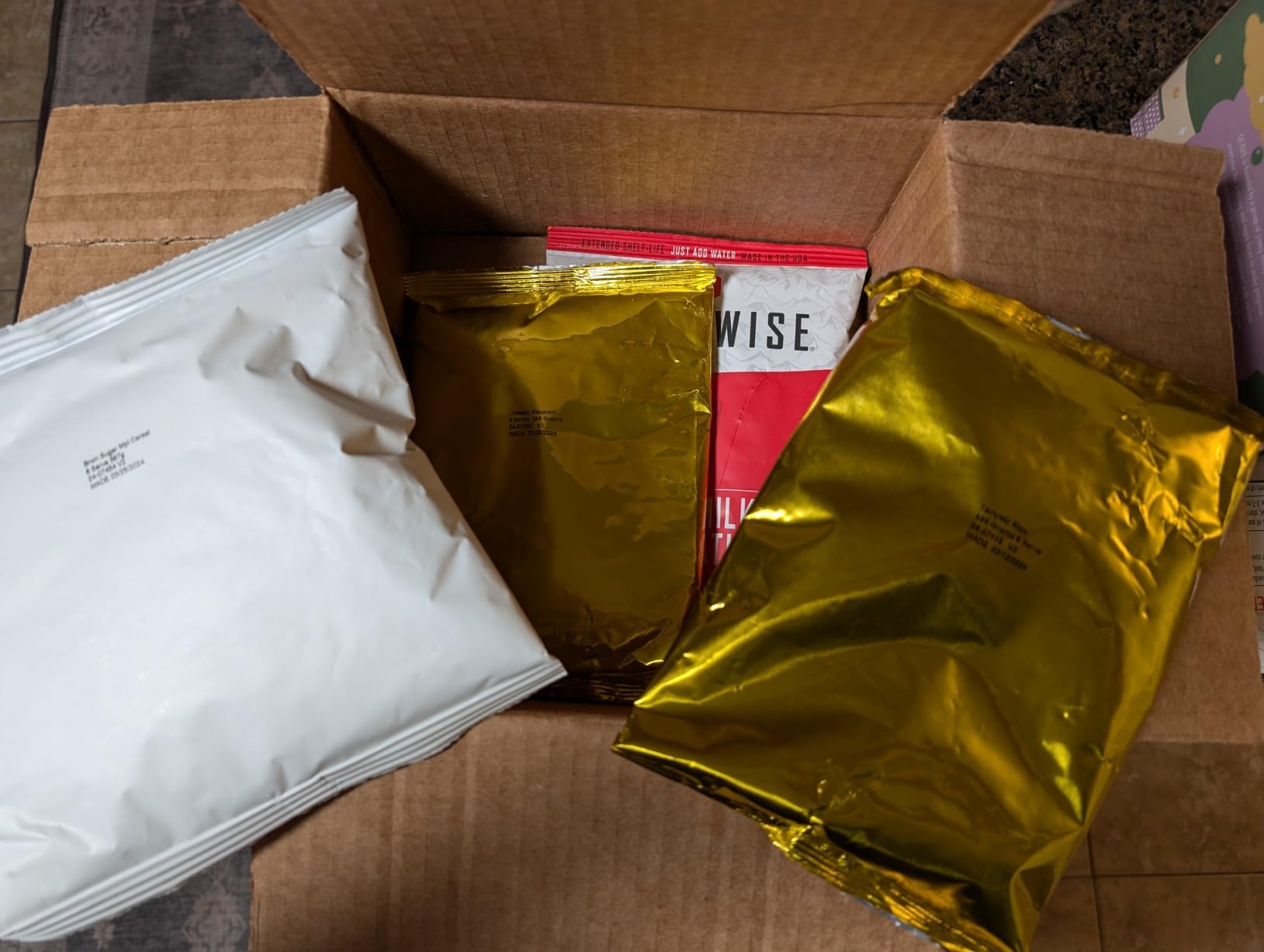
Reviewers rate it 4.5 stars with 76% of ratings at five stars, and the recurring comment is about efficiency rather than quality. Families like that the buckets have carrying handles, because the thing you grab when the water is shut off is the thing you can actually lift.
There is a real ambiguity in the labelling, though. The box says 72 hours, the pouches hold about 6 servings each, and there are five pouches. For one person that is fine. For two people the kit runs out in 36 hours, which is not what the front of the box implies at a glance.
Who this kit suits?
Anyone building a vehicle emergency kit, a go bag, or a single-person supply for a work trip where refrigeration is not guaranteed. The carrying handles and the flat-ish profile are what make it a go bag item rather than a closet item.
It is also a sensible sampler. Buying two or three single-day kits from different brands before committing to a 120-serving bucket is the approach r/preppers members recommend, and this is the cheapest way to do that with one brand.
Where it falls short?
The pouch count versus serving count gap is the issue. You get five pouches for thirty servings, so again there is no per-meal packet you can grab and eat one at a time.
Taste is the other limit. Reviewers repeatedly say the macaroni and rice are comparable to the grocery store versions, which is fine for calories and disappointing on day four. Buying several single-serve options and rotating them is the fix.
3. Ready Hour 120 Serving Bucket — the resealable pouch problem, solved
Ready Hour 120 Serving Entree Bucket-Freeze Dried Emergency Food Supply-Survival Meals with Long Shelf Life-Prepper Essentials for Disaster, Camping, Hiking, or Outdoor Use
120 servings
22 resealable pouches
25 year shelf life
20 pounds
Pros
- 22 resealable pouches let you open only what you need
- Resealed pouches stay good up to a year
- 120 servings in one pail
- Flood-safe container with a carry handle
Cons
- 20 pounds is heavy to carry on foot
- Premium tier for the same serving count as cheaper buckets
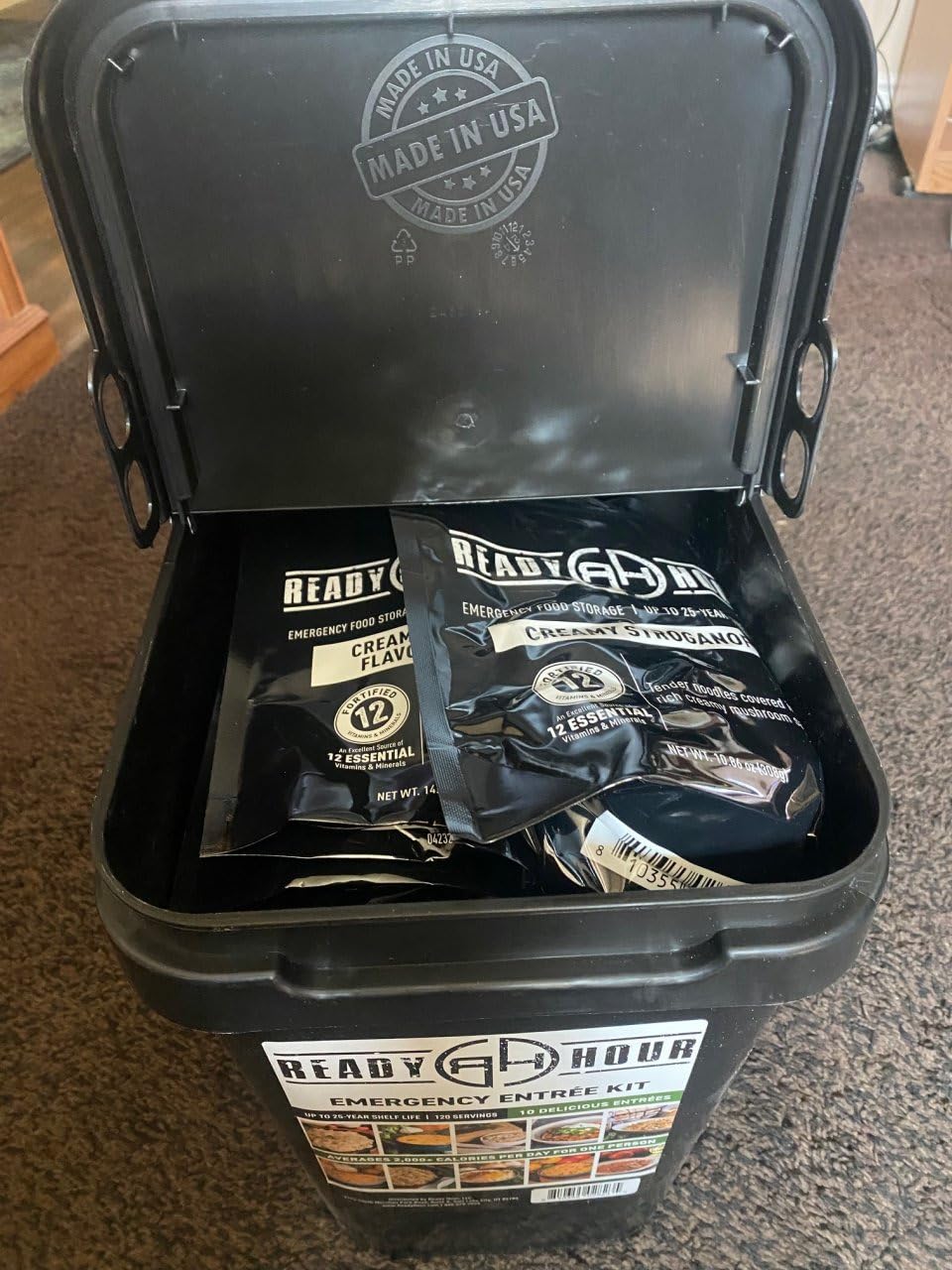
This bucket solves the single flaw that appears in six of the ten kits in this roundup. Instead of three or five multi-serve pouches, Ready Hour packs 120 servings into 22 resealable pouches, and the listing states that a resealed pouch keeps for up to a year after opening.
That changes how you ration. You open one pouch, eat two of the four servings, close it, and it is still food next week. On a multi-week supply where you are stretching food across a family, that is the difference between finishing the kit and losing half of it.
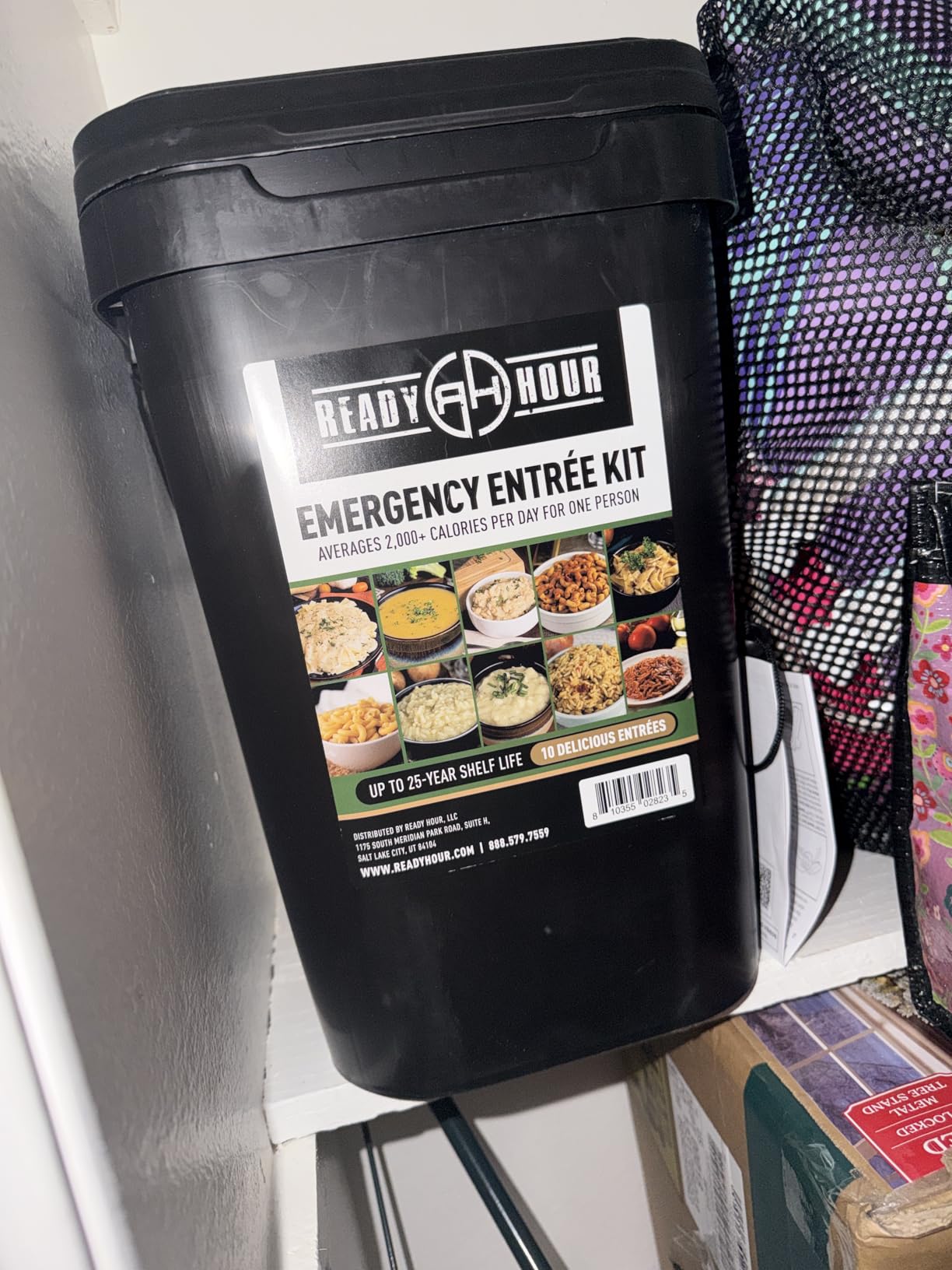
It is 4.6 stars with 78% five-star ratings, and reviewers single out the pouch count as the reason they chose it. The container is described as flood-safe with a carry handle, and no refrigeration is required at any point.
The pail is 15.75 by 11.72 by 9.82 inches and 20 pounds, and it is packed in Salt Lake City, Utah. The weight is the honest drawback here. Twenty pounds in a bucket is a shelf item, not a walking item, and anyone who imagines hauling this up an evacuation route should pick a different product.
Who this bucket suits?
Households covering three to four weeks who will eat slowly rather than quickly. Anyone who has watched a partially used pouch go to waste in a previous supply knows exactly why the resealable format is worth paying more for.
It also suits anyone storing food in a garage, basement or flood-prone area, since the container is built for that rather than a cardboard carton. Pair it with a light source, because opening pouches in the dark is its own problem. Our picks for hand crank emergency lanterns cover that gap.
Where it falls short?
Weight. Twenty pounds is a lot to lift into a car trunk, and more if stairs are involved. If your plan involves leaving on foot, this is the wrong format regardless of how good the pouches are.
Value is the second question. You are paying a premium per serving for the resealing, and a household that eats a whole pouch at dinner every night will never use that feature. The reseal is insurance, and if you would rather not pay for insurance, the number 4 bucket covers far more days.
4. Augason Farms Vegetable Medley 778 Servings — the ingredient, not the meal
Augason Farms Vegetable Medley Blend Emergency Food Supply, 778 Servings
778 servings
25 year shelf life
Resealable #10 can
13.83 pounds
Pros
- 778 servings in a single 4 gallon pail
- Dehydrated not freeze-dried so it rehydrates fast
- Works in soup stew pasta rice and casseroles
- 25 year shelf life
- Low fat low salt low carb
Cons
- Not a complete meal on its own
- Requires cooking after rehydration
- Blend skews heavy on potatoes
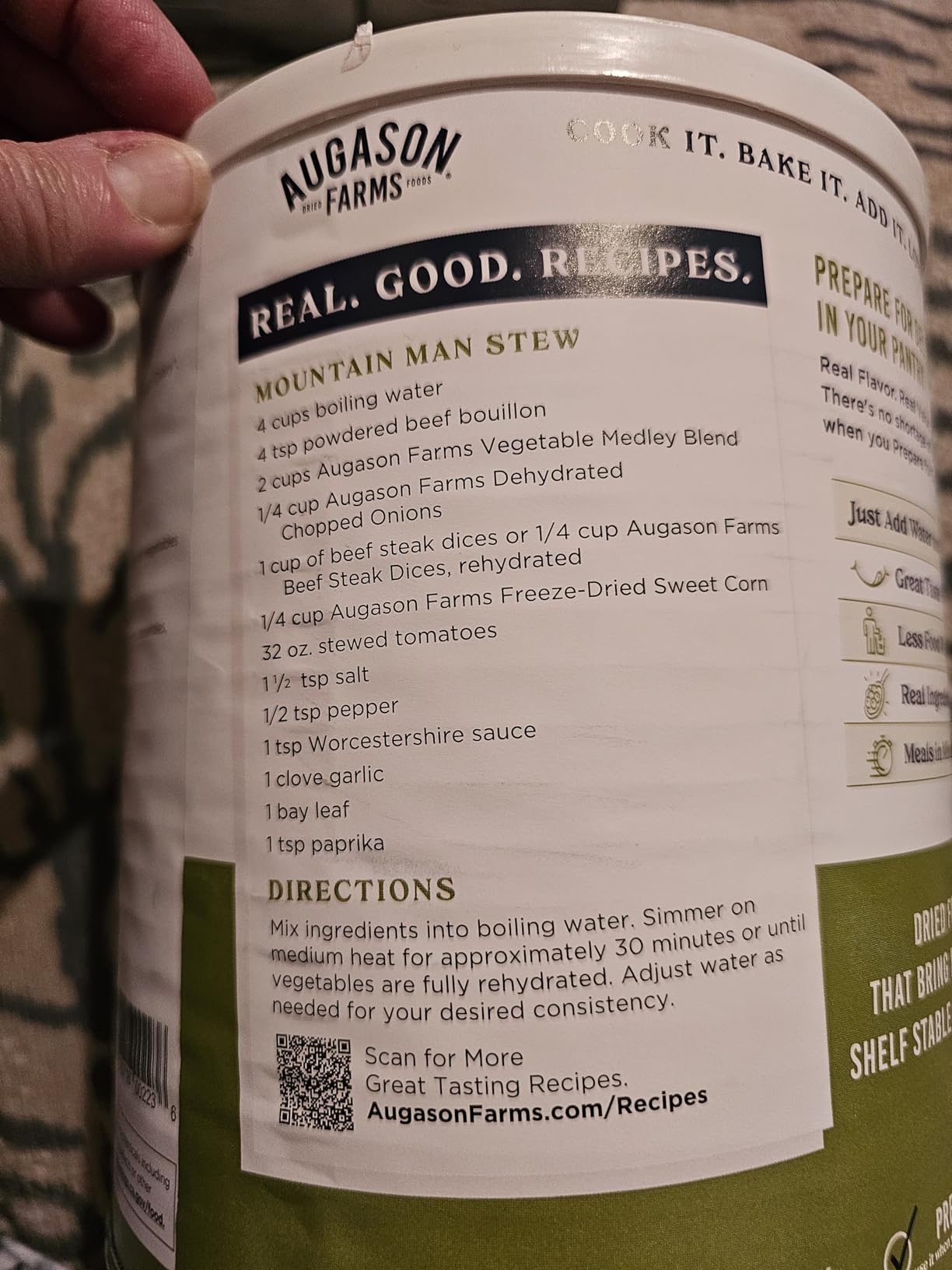
This is the odd one out, and the oddness is the point. It is not a meal kit. It is a dehydrated blend of potatoes, carrots, onions, celery, red and green peppers and cabbage, 778 servings of it, packed in a 4 gallon pail with a resealable #10 can inside.
What you do with it is your call. Reviewers describe it going into soup, stew, pasta, rice, noodles, stir-fry and casseroles, which turns one can into a week of different dinners if you have the base ingredients to build around it.
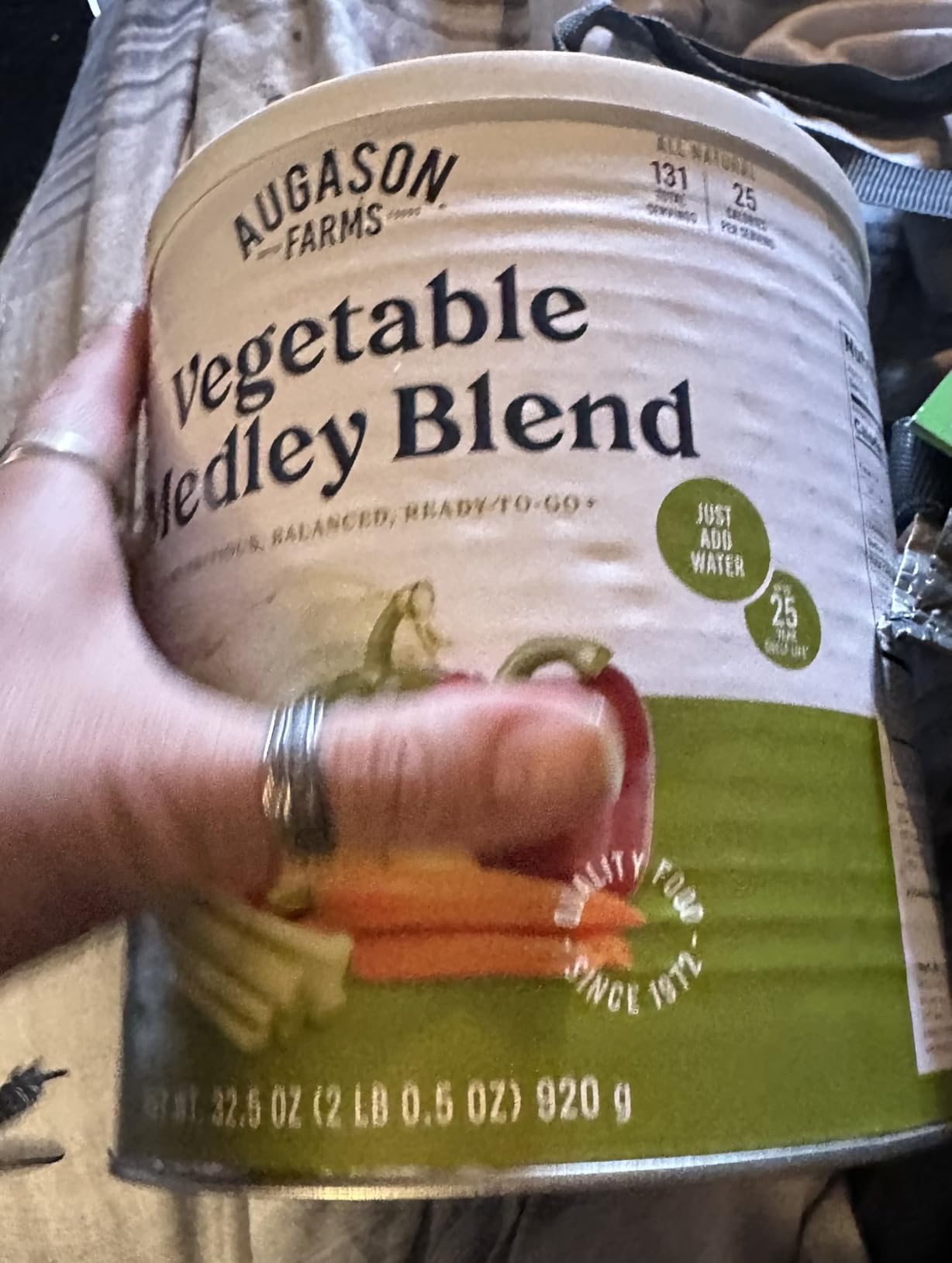
At 4.6 stars from nearly 9,800 reviews with 79% at five stars, this is one of the best-reviewed products we tested against, and the praise is consistent. It is dehydrated rather than freeze-dried, so it reconstitutes faster and reviewers say it tastes fresh with none of the freeze-dried aftertaste. It is also low fat, low salt, low carb and low calorie.
The pail is 10 by 10 by 13.75 inches and 13.83 pounds, with a 25-year shelf life. Just add water, then cook over any direct heat source, which makes it more versatile than an instant meal and less convenient than one.
Who this product suits?
Households with a camp stove or any heat source who want a base ingredient to build meals around rather than a fixed menu. At 778 servings it covers a large family for a long stretch from a single container, and reviewers single it out for value per weight among dehydrated blends.
It is also the most useful item here if you are building a pantry rather than packing a go bag. Everyone gets a different dinner out of it, which solves the appetite fatigue problem better than any fixed 8-meal rotation can.
Where it falls short?
It is a component. On its own it is potatoes, carrots and peppers in water, and it needs a carbohydrate and a protein to be a meal. Households buying this as their only food supply will be disappointed.
The resealable #10 can deserves a caution that r/preppers members raise often. Once opened, a perishable #10 can keeps only two or three days without refrigeration. The reseal is excellent for storage, not for leftovers. And reviewers note the blend skews toward potatoes more than the label’s list of vegetables suggests.
5. MRE Variety Pack of 24 Meals — nothing to cook, nothing to rehydrate
2026 Inspection MRE, U.S. MRE Meals, Emergency Supplies, Emergency Food Supply, Survival Food w/Flameless Heater, Ready Meals (Variety Pack of 24) – (A & B Case Fresh Stock) MREs have 10 Year Shelf Life From Inspection Date – 2023 Pack / 2026 Inspection
24 meals
1000 to 1300 calories per meal
10 year shelf life
No cooking needed
Pros
- Genuine MRE construction with varied menus
- 1000 to 1300 calories per meal
- No cooking water or refrigeration required
- Individually sealed menus in waterproof bags
Cons
- 10 year shelf life is shorter than 25 to 30 year freeze-dried claims
- Not every meal in a case includes a flameless heater
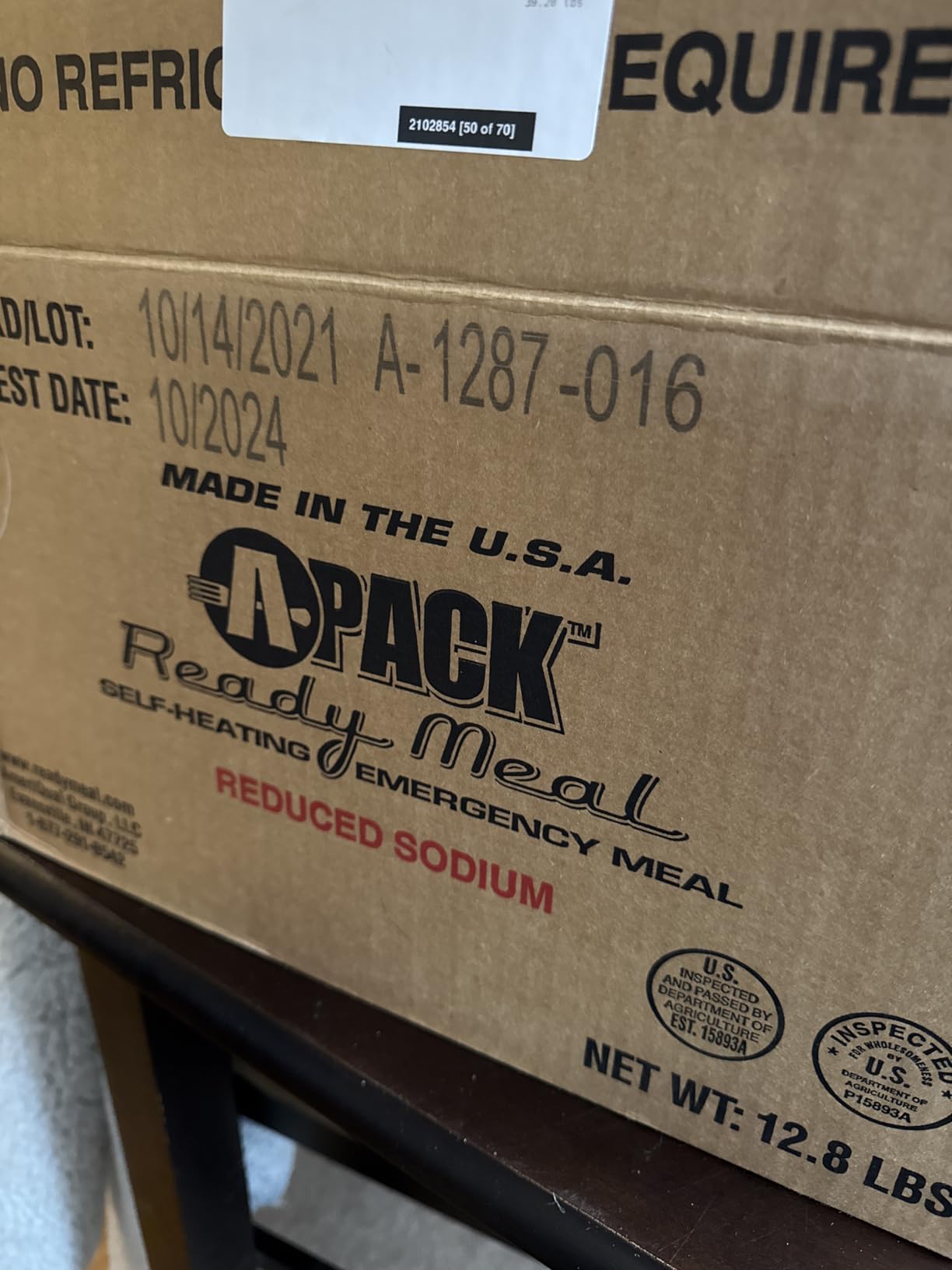
Every other product in this roundup asks you for water. This one asks for nothing at all. These are genuine military-style MREs, 24 of them, each individually packaged with a different menu and built to U.S. military standards.
Each meal includes an entree, a side or bread, a dessert and an accessory pack, and delivers 1,000 to 1,300 calories. That is three to five times the daily payload of the smaller freeze-dried kits, and it comes in a waterproof bag you can hand to someone with no kitchen at all.
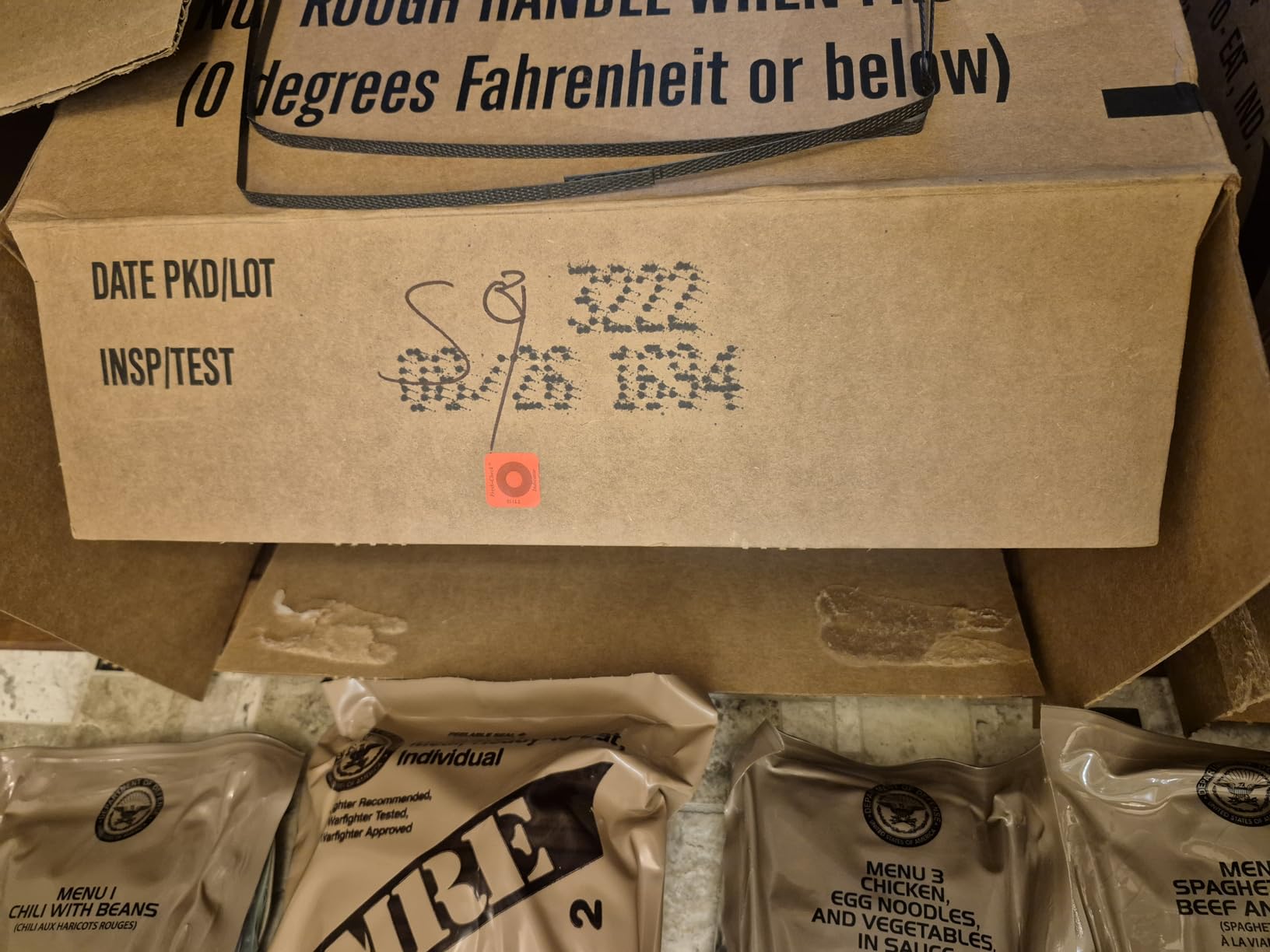
It is 4.6 stars with 81% of ratings at five stars, the highest five-star share in the group. Reviewers credit the individual packaging and the calorie density, and the pack weighs 11.99 pounds for 24 meals, which is light for the food value involved.
Some meals include a flameless ration heater, which is the accessory that turns cold MRE entrees into hot ones without fire. The listing notes that heater inclusion can vary by case, which is worth checking against the specific case you receive.
Who this pack suits?
Anyone evacuating, working in the field, or feeding people who have no way to boil water. This is the format to reach for in a car trunk, a boat, a job site, or a household where you cannot count on a working stove.
It is also the one to keep alongside a freeze-dried supply rather than instead of it. The MRE covers the first 72 hours of a go bag, and the freeze-dried buckets cover the weeks after.
Where it falls short?
The shelf life is the real trade. Ten years from inspection date is a much narrower claim, and it is tied to a date you can read off the packaging, which is worth something in a category built on 25-year promises.
Menu fatigue also arrives faster than with a varied freeze-dried line. Twenty-four meals sounds like a lot of variety until you realise you are eating the same handful of entrees on day nine. And with 1,000-plus calories per meal, the plan is not a balanced diet, it is fuel.
6. 4Patriots 72 Hour Survival Food Kit — the calorie claim you can actually check
4Patriots 72-Hour Survival Food Kit: Emergency Food Supply Designed to Last 25 Years, 20 Servings
20 servings
About 4800 total calories
25 year shelf life design
Ready in about 15 minutes
Pros
- States average 4800 total calories for the kit
- Triple-layer mylar with oxygen absorber
- Ready in about 15 minutes
- Oatmeal mac and cheese and creamy rice variety
Cons
- Only three pouches sized 4 8 and 8 servings
- Pouches do not reseal after opening
- Mac and cheese can come out runny and salty
This is the kit that makes the calorie math visible, and that is worth something. The listing states an average of 4,800 total calories across the 20 servings, which works out to roughly 1,600 calories a day over three days. That is a real, checkable number instead of a serving count doing the marketing work.
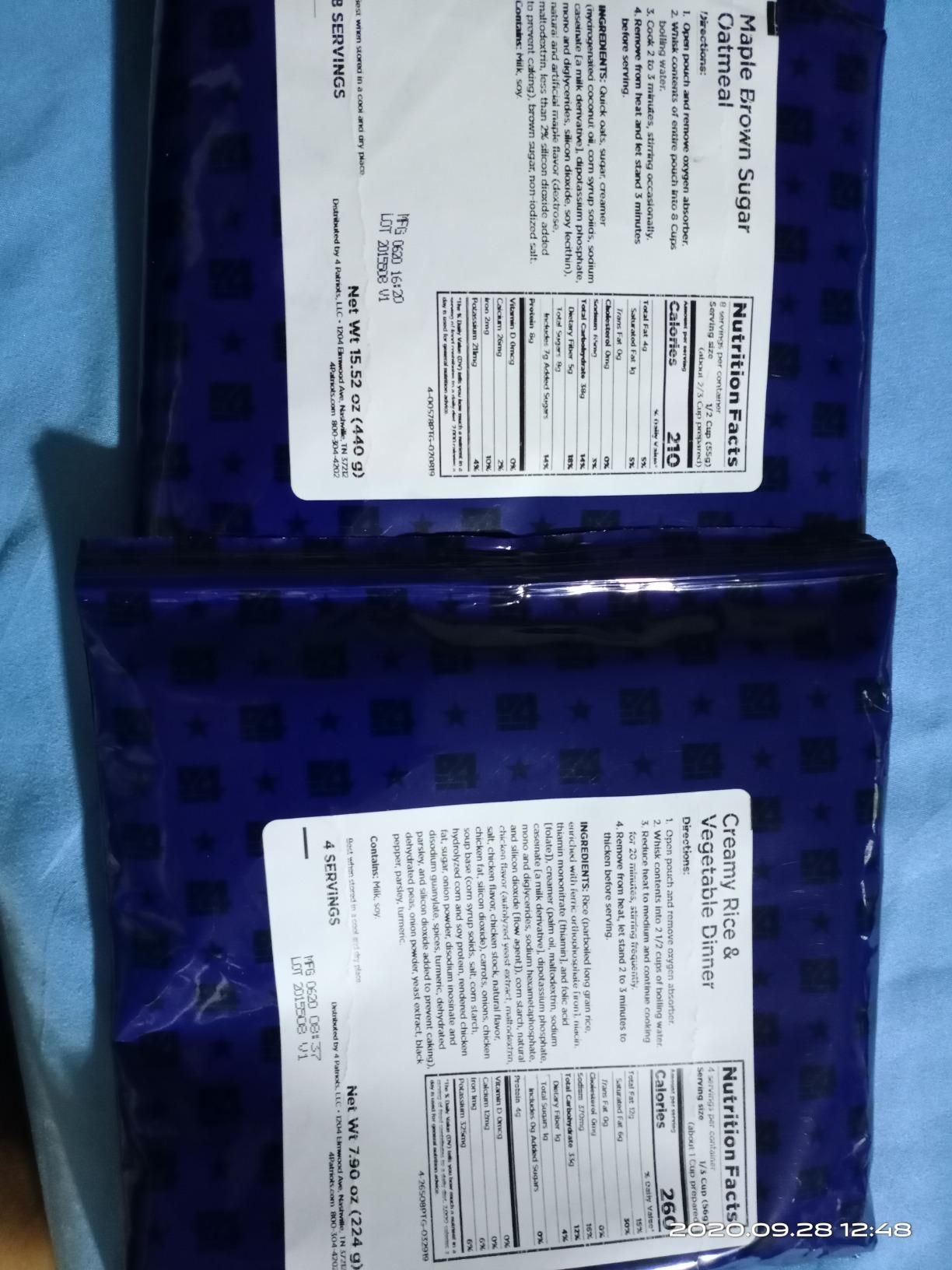
The packaging is triple-layer mylar with a high-capacity oxygen absorber, the standard preservation setup, and the shelf life is stated as 25 years. Recipes include Gramma’s Sweet Oatmeal, Mac and Cheese and Creamy Rice and Vegetable Dinner, and the whole thing is ready in about 15 minutes.
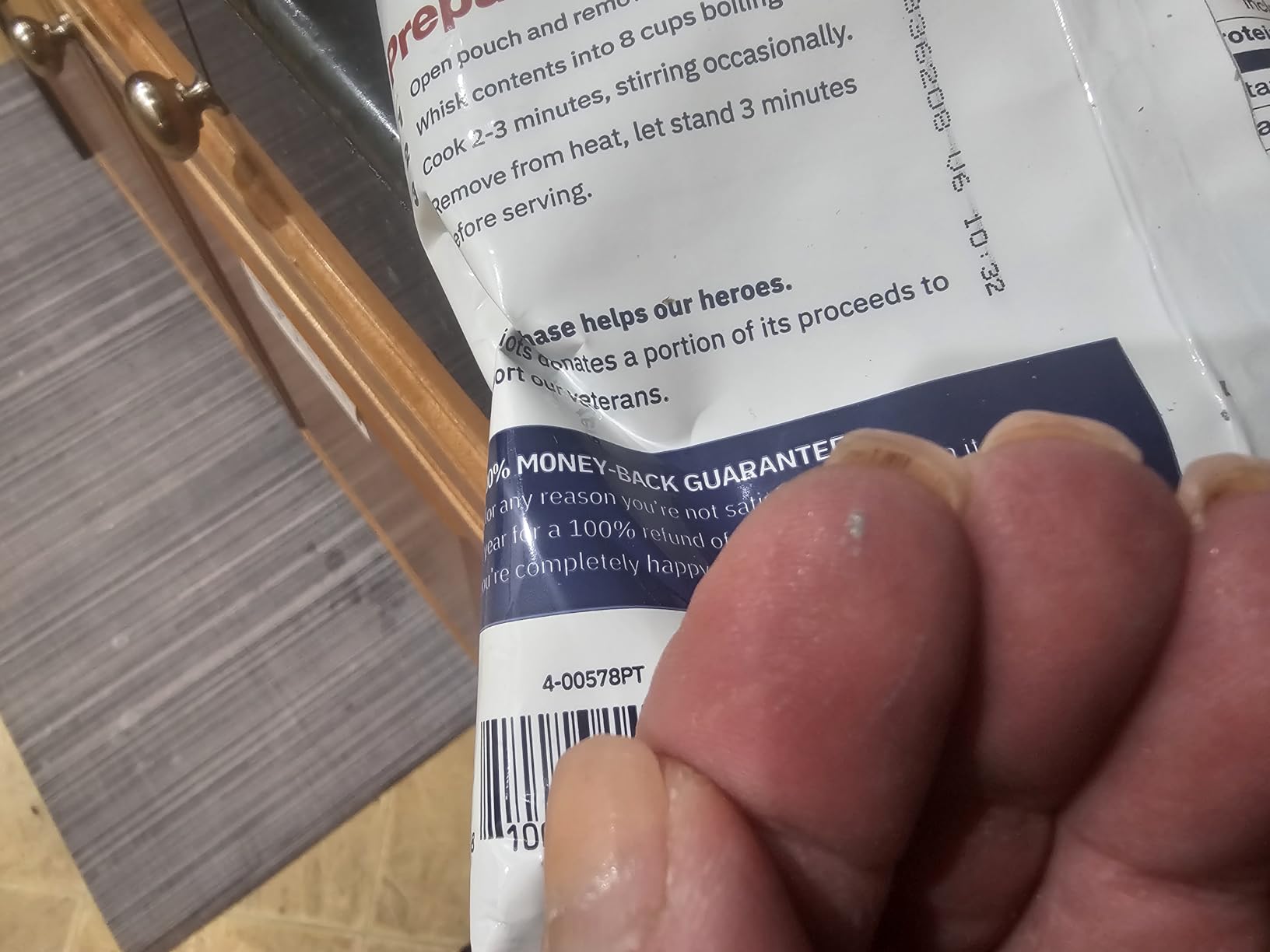
It weighs 10 ounces and measures 10.75 by 10.39 by 3.35 inches, so it is a flat parcel that slides into a drawer. For a 72-hour scenario this is genuinely the easiest kit here to actually keep, because you will forget it is there and it will still be there.
At 4.4 stars from around 2,800 reviews, with 70% of ratings at five stars. Reviewers consistently say the taste is better than typical MRE food, which is not a low bar in this category.
Who this kit suits?
First-time buyers and anyone who wants a single low-commitment purchase to test the idea. It is small, light and one decision, which is how most people actually start a supply rather than in one big order.
It is also the option to pick if you want a printed calorie figure you can plan a week’s eating around. The 4,800 total is stated plainly enough that you can build a meal plan around it.
Where it falls short?
Three pouches holding 4, 8 and 8 servings is the weakness. You cannot portion 72 hours of food into 72 meals, and the pouches do not reseal after opening, so a partially used pouch is finished. Forum discussion on r/preppers frequently names this as the flaw to check before buying any multi-serve kit.
There is a wider category caution too. r/preppers threads about legitimate emergency food suppliers come up repeatedly because some sellers repackage other brands’ food and sell it under their own label with a consultant-driven sales model. Always check who the manufacturer is on the listing before you buy, and see the ready-made water and gear we cover in our family preparedness kit guide.
7. SOS Rations 3600 Calorie 3 Day Pack — the one that fits in a jacket pocket
SOS Food Labs, Inc. 185000825 S.O.S. Rations Emergency 3600 Calorie Food bar – 3 Day/ 72 Hour Package with 5 Year Shelf Life, 5″ Height, 2″ Wide, 4.5″ Length, white
3600 calories
5 year shelf life
No water or heat
1.6 pounds
Pros
- Only 1.6 pounds and very compact
- 3600 calories from nine 400 calorie bars
- No cooking heating or water required
- Very low sodium and US Coast Guard approved
Cons
- Taste is plain with little variety
- About 6g of protein per bar and no vitamin C
- Individual wrappers are hard to tear open by hand
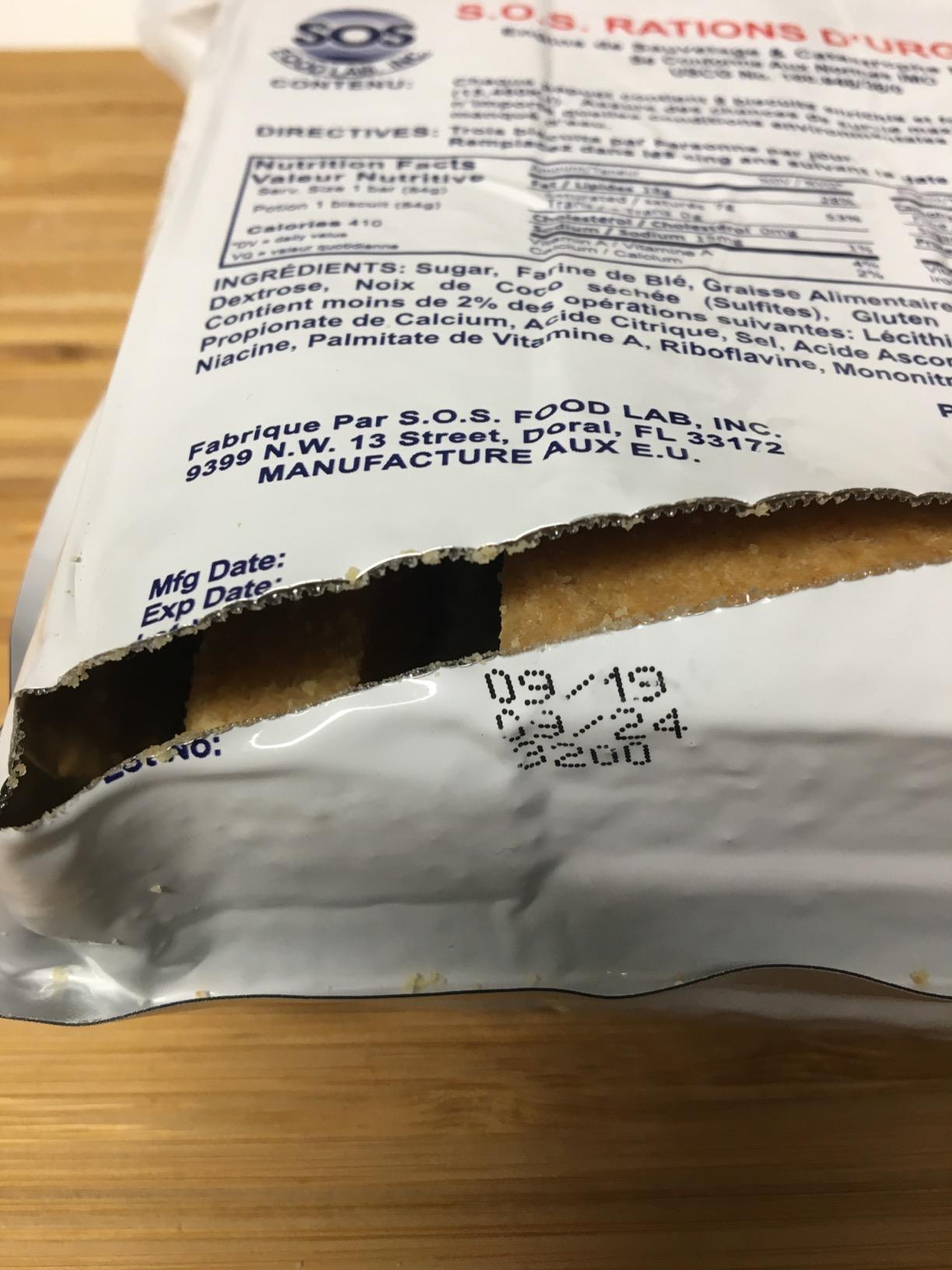
Everything else in this roundup is a meal. This is a calorie source, and pretending otherwise would be a mistake. Nine individually wrapped food bars, three a day, 400 calories each, 3,600 calories across a 72-hour package.
The pack weighs 1.6 pounds and measures 5 by 2 by 4.5 inches. It goes in a car trunk, a boat locker, a jacket pocket or a first aid kit, and it needs no cooking, no heating and no water. There is nothing to fail while you are eating it.
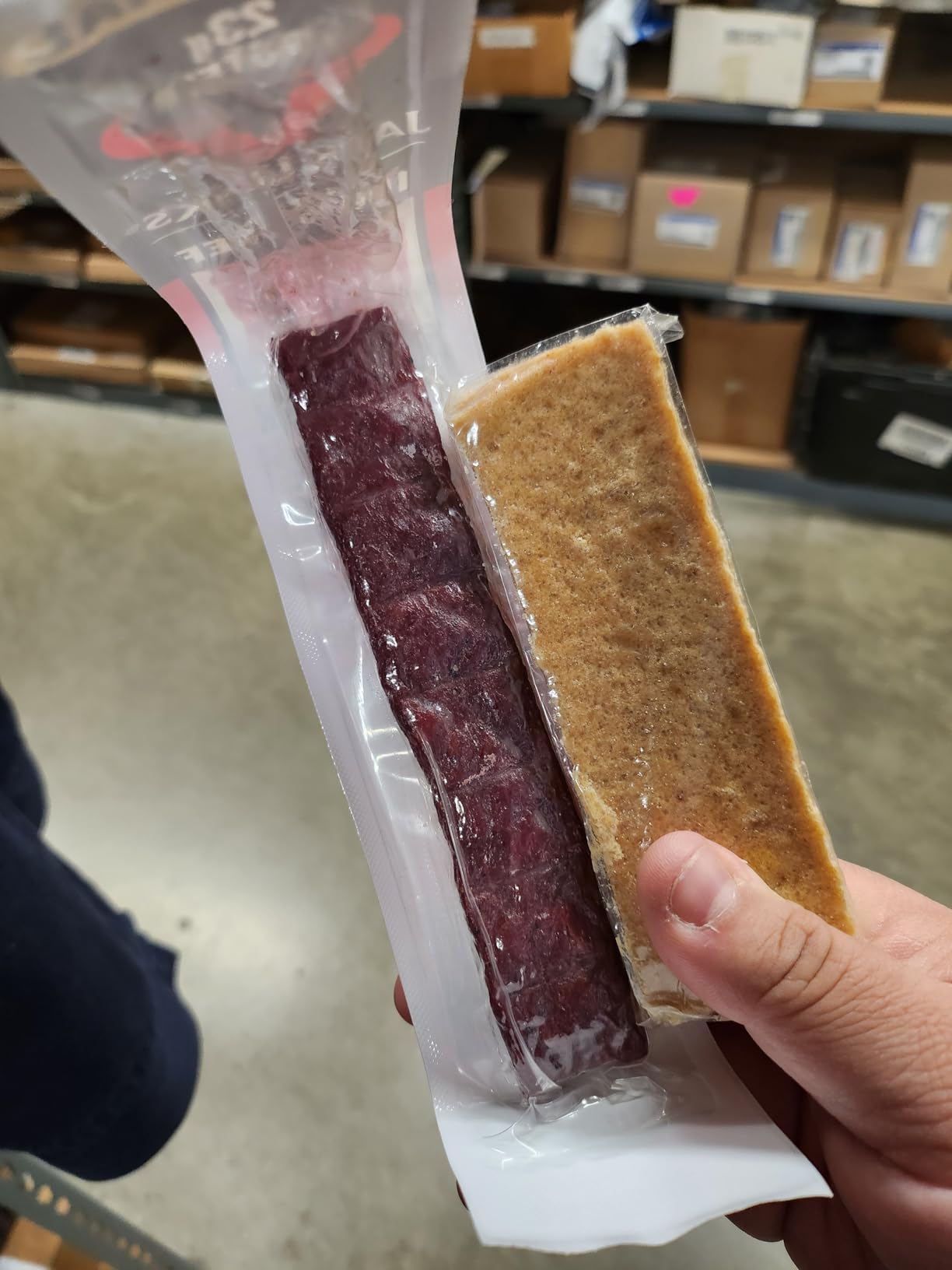
The shelf life is 5 years with a printed manufacture and expiry date on the pack, which is short compared with the freeze-dried options but a real figure rather than an open-ended claim. It is US Coast Guard approved, and the sodium content is low enough that people monitoring blood pressure can use it.
At 4.5 stars from more than 3,100 reviews, the praise is consistent and the criticism is even more consistent. It is a survival bar, not a dinner. Nobody describes the flavour as anything other than plain shortbread-like.
Who this pack suits?
Anyone who wants a simple layer of calories in a car, a hiking pack or a work bag. It is the smallest item in this roundup, needs nothing to eat it, and stores flat in a drawer, which means it also stays where you put it.
Households with anyone on a sodium-restricted diet also benefit, since the low sodium is unusual for emergency rations. And because the bars are vacuum-sealed in an outer pack, this is a good candidate for a flood-prone storage area.
Where it falls short?
Nutrition. Roughly 6 grams of protein per bar and no vitamin C means three days on this is three days without meaningful protein. Long-term users on r/preppers pair this kind of ration with a multivitamin for exactly that reason.
There is no meal structure either, and eating the same plain bar three times a day for three days wears thin fast. Reviewers also note the individual wrappers are hard to tear by hand, which is a poor moment to discover in the dark, and that the vacuum seal occasionally arrives broken. Check the seal before you store it.
8. Ready Hour Fruit and Veggie Mix 56 Servings — the allergy-aware add-on
Ready Hour, Fruit & Veggie Mix, Non-Perishable Freeze-Dried Food, 30-Year Shelf Life, Portable Emergency and Adventure Food Supply, Durable Flood Safe Container, 56 Servings
56 servings
30 year shelf life
7 resealable pouches
Free of tree nuts
Pros
- Free of common allergens including tree nuts
- 30 year shelf life
- Seven resealable pouches
- Durable flood-safe container with a handle
Cons
- Only seven pouches in a small bucket
- Side dishes rather than a full entree
- Some buyers feel the quantity is light
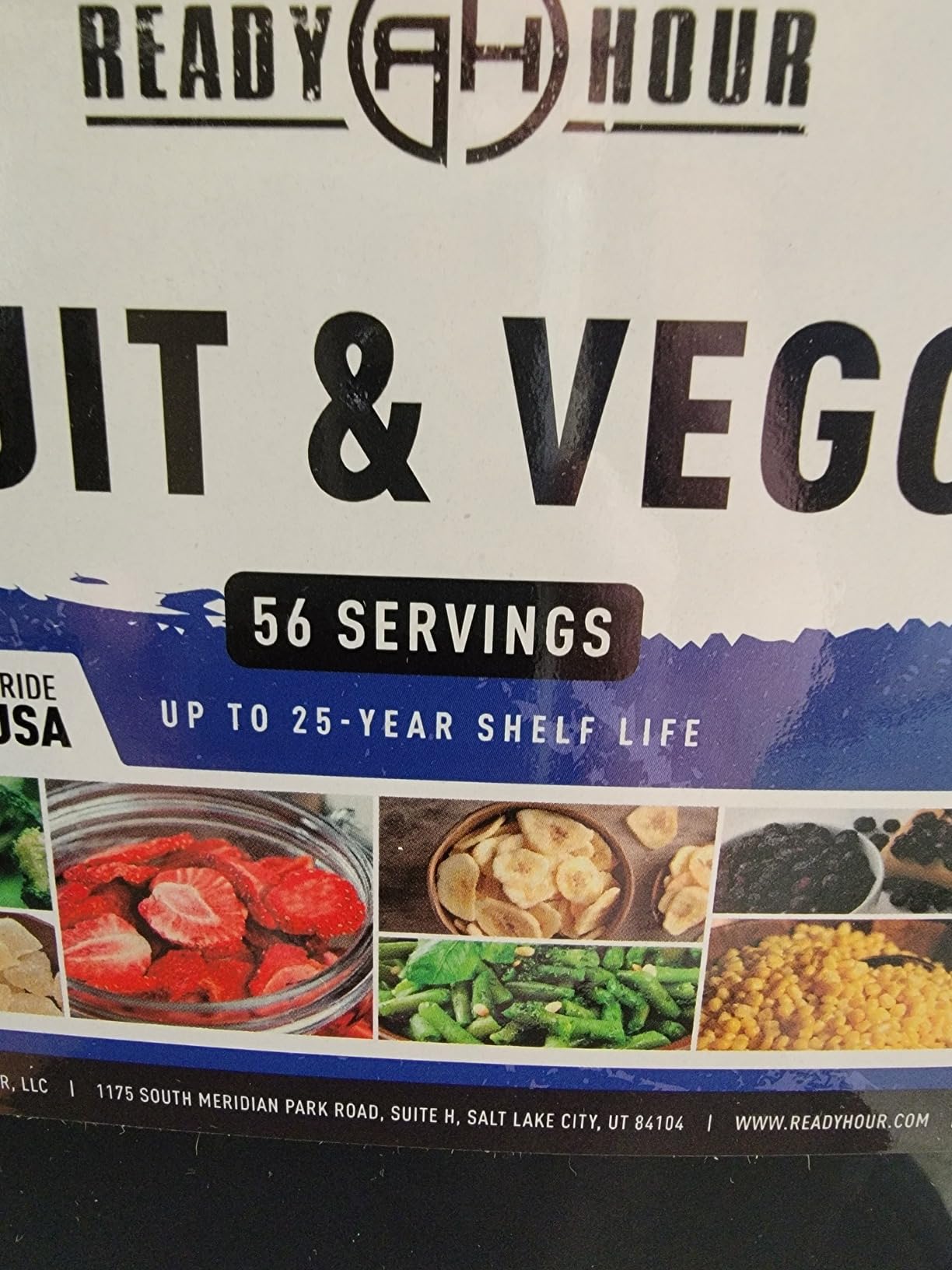
Freeze-dried fruit and vegetables are the most underrated item in this category, and this is the version we would keep. Fifty-six servings across seven resealable pouches, with a 30-year shelf life and no refrigeration required.
The resealable design is the same one that makes the number 3 bucket work. Open a pouch, eat half, close it, and the listing states a resealed pouch holds for up to a year. With fruit and vegetables, that matters because you use small quantities at a time.
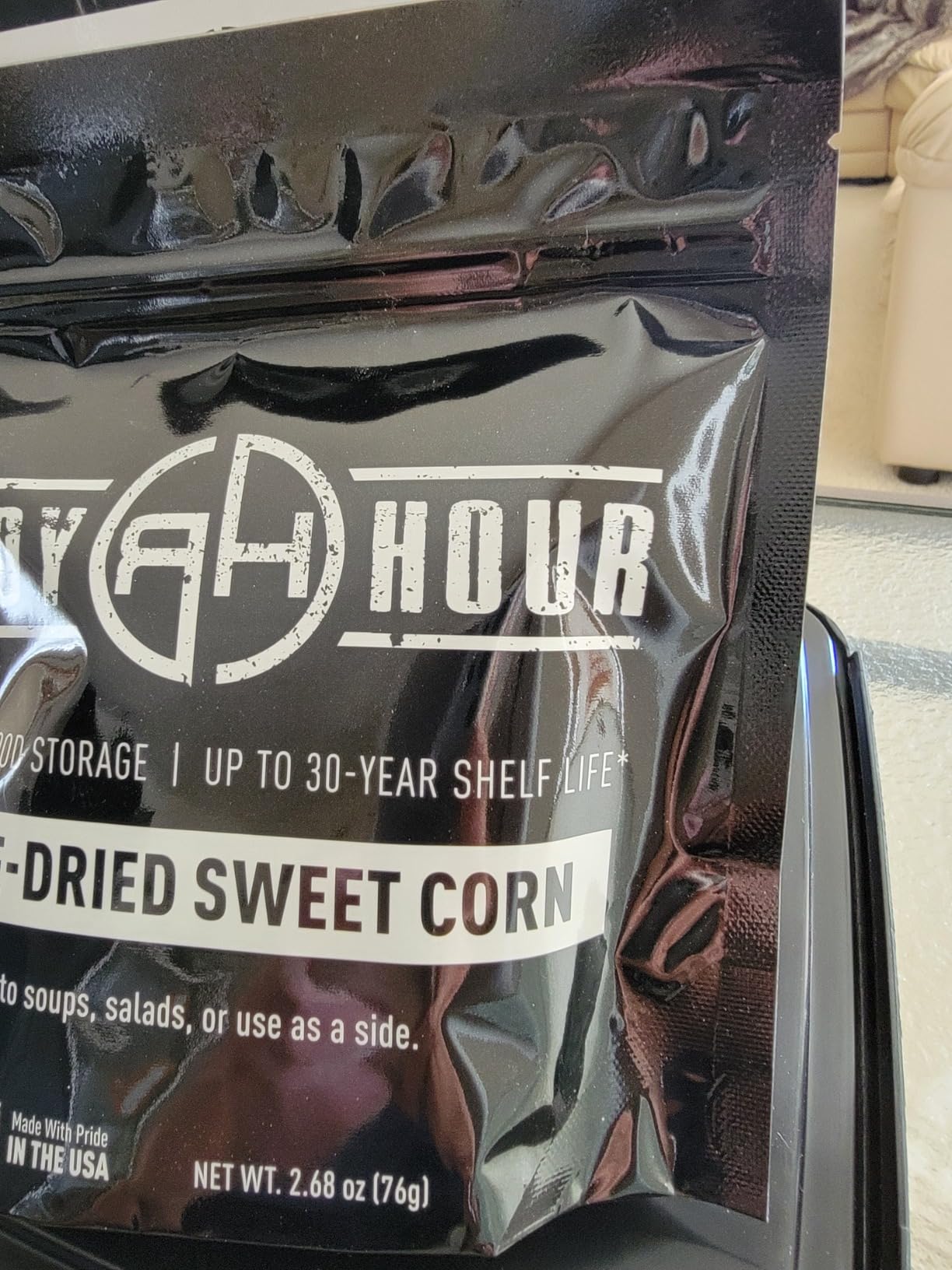
Reviewers like it for reasons the category does not expect. It is free of common allergens including tree nuts, which suits vegetarian households and anyone with a nut allergy. Several people also say they eat it straight from the pouch as a crunchy snack, which solves the “do I have to cook this” question entirely.
It is 4.5 stars from about 2,470 reviews, 76% of them five stars, and the container is a flood-safe pail with a carry handle, packed in Salt Lake City, Utah.
Who this product suits?
Households with a nut allergy, a vegetarian, or a child who will not eat freeze-dried entrees but will eat a freeze-dried strawberry. Sides and snacks get consumed in emergencies when a fixed meal plan does not.
It is also the natural companion to a bucket of entrees. Number 1 plus number 8 gives you meals and something to add to them, which is a more workable supply than either one alone.
Where it falls short?
It is not a meal. Fruit and vegetable mix needs to be combined with something substantial, so on its own it is a supplement rather than a supply. The bucket is also small, 9.8 by 9.49 by 7.99 inches, and several buyers feel seven pouches is light for the outlay.
Thirty-year claims are only as good as the storage conditions. Heat swings and humidity in a garage cut real shelf life well short of the printed number, so keep this somewhere cool and dark rather than on a shelf near a water heater.
9. HMR Variety Entree Meals 16 Meals — portion control, not emergency planning
HMR Variety Entrée Meals Pack, 16 Meals, Ready to Eat
16 entrees
200 to 270 calories each
Up to 20g protein
Ready in 60 seconds
Pros
- Shelf-stable with no refrigeration required
- Up to 20g of protein per entree
- Heats in about 60 seconds in a microwave
- Packs well in a go bag
Cons
- Portion sizes feel small
- Several entrees are noticeably salty
- Lasagna and chili are criticized as mushy and bland
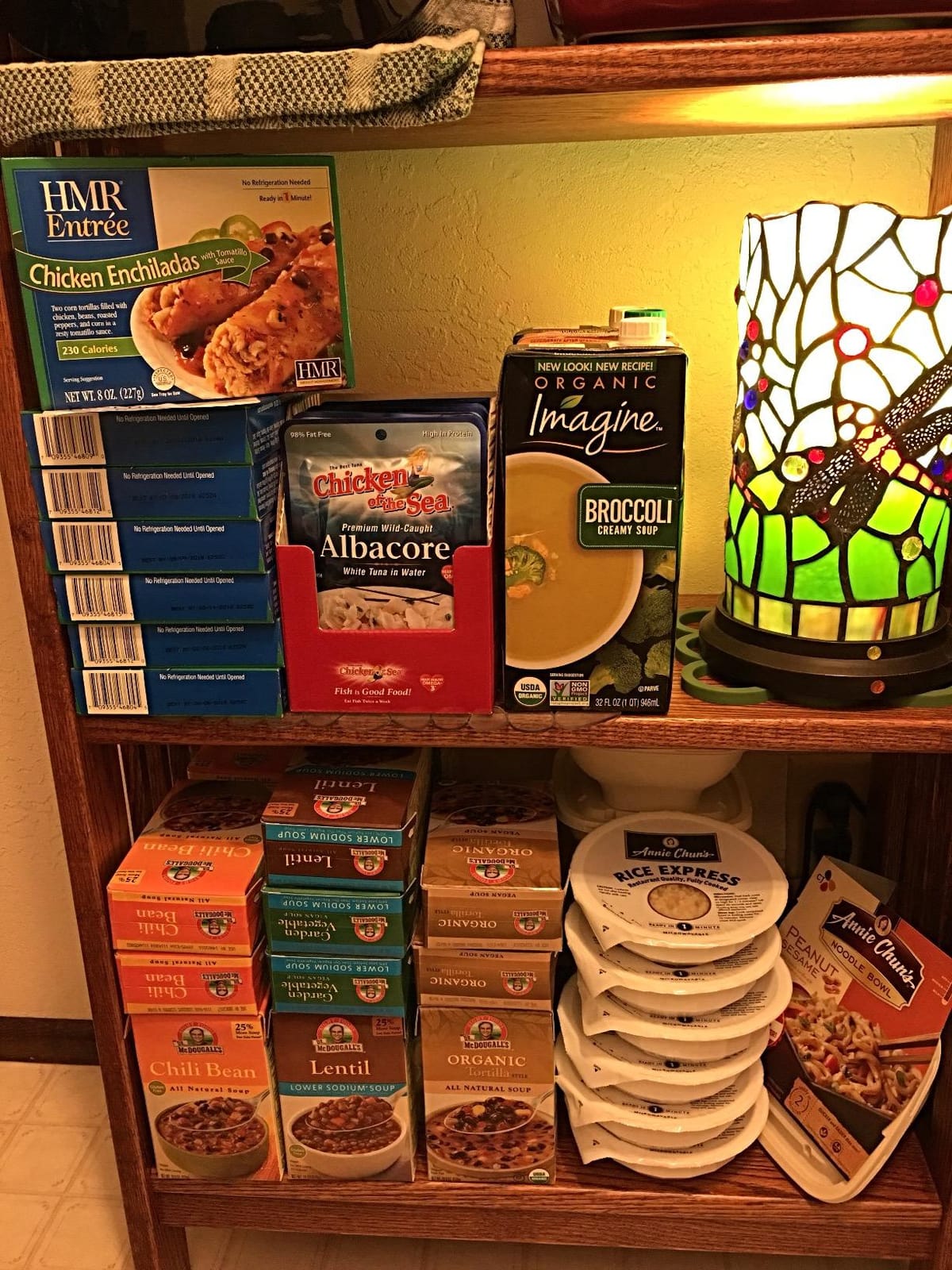
We are including this one with a caveat, because it is sold as a diet program food and people buy it as emergency provisioning. Sixteen entrees across nine varieties, portion-controlled at 200 to 270 calories each, with up to 20 grams of protein per entree.
Mechanically it works. No refrigeration, shelf-stable, and ready in about 60 seconds in a microwave, or cold straight from the pouch. The pack is 14.48 by 9.53 by 6.06 inches and 3.65 pounds, so it moves easily.
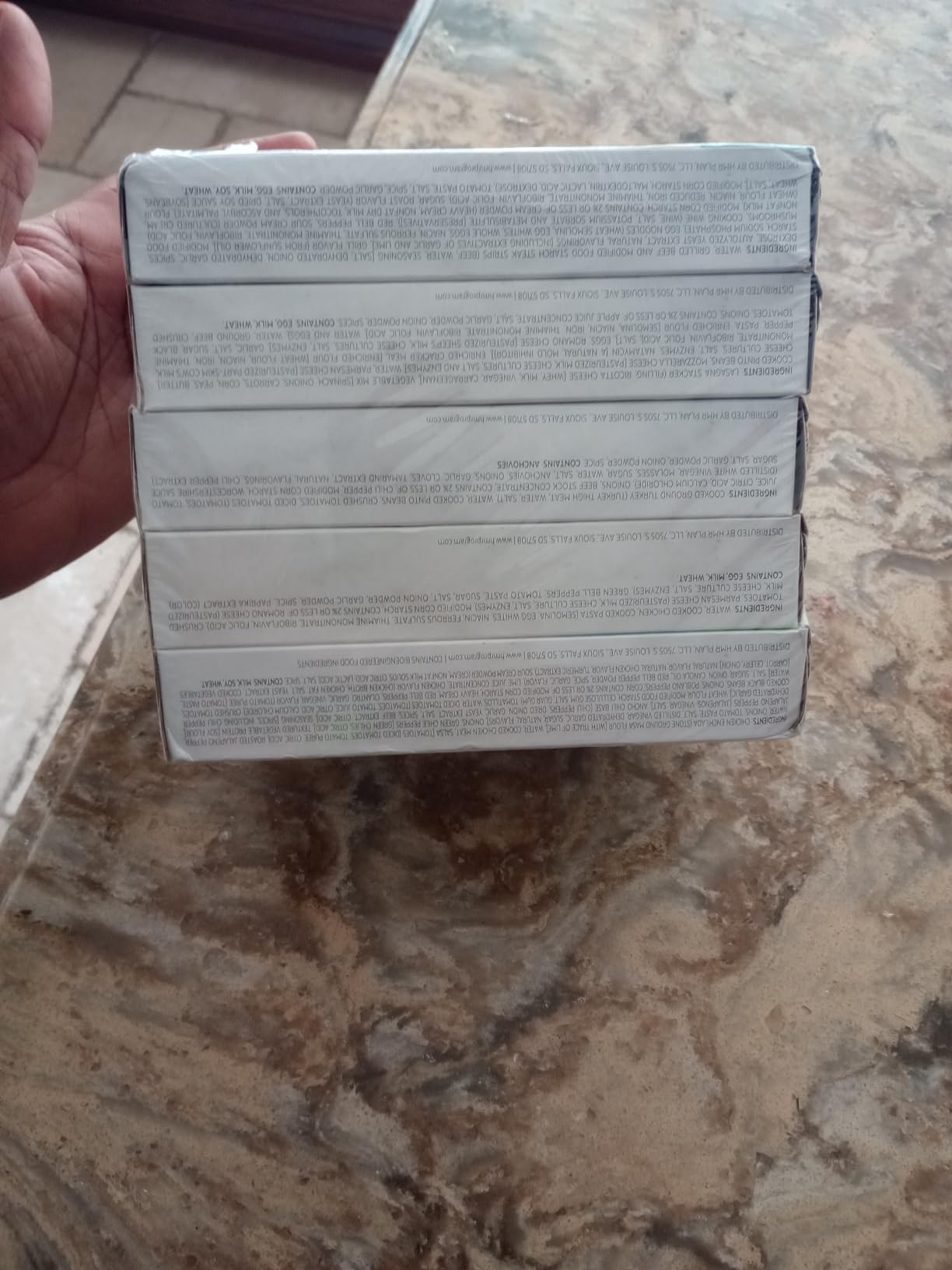
It is the lowest-rated product in this roundup at 4.0 stars, and the spread is unusually wide. Fifty-five percent of ratings are five stars but 11% are one star, and the one-star reviews are almost entirely about taste rather than function.
Mac and Cheese, Beef Stroganoff, Turkey Chili and Chicken Alfredo are the range, and the chili and lasagna draw the most criticism for texture and flavour. The convenience is genuine; the palatability over ten meals is the question.
Who this pack suits?
People who are actively managing their calorie intake and want shelf-stable entrees that fit that plan. The 200 to 270 calorie portions and up to 20 grams of protein are a real, documented profile, and someone on a controlled diet will find it easier to eat than a 1,300-calorie MRE.
It is also a reasonable office or travel pantry item. A household that wants light, low-commitment meals during a two-day outage rather than a full nutritional supply will find this perfectly usable.
Where it falls short?
Two hundred calories an entree is a snack in meal form. Three of them is roughly 700 calories, which leaves a large gap in any kind of emergency, and that gap has to be filled with something else you also bought.
Flavour consistency is the bigger issue over time. Multiple reviewers name the same entrees as mushy and bland, and several describe the overall taste as salty. Twelve of the sixteen meals are also close to identical in calories, which makes the variety less real than the count of nine flavours suggests.
10. Mountain House Adventure Weekender Kit — the best taste, the smallest supply
Mountain House Adventure Weekender Kit | Freeze Dried Camping & Backpacking Food | 12 Servings
6 pouches and 12 servings
About 1645 calories per day
30 year taste guarantee
Gluten free and vegan
Pros
- Best tasting meals in the roundup
- 30 year shelf life with a taste guarantee
- Ready in under 10 minutes eaten from the pouch
- Gluten free vegan and shellfish free
- Lightweight at about 1.5 pounds
Cons
- Only 12 servings
- Needs 8 cups of water to prepare the whole kit
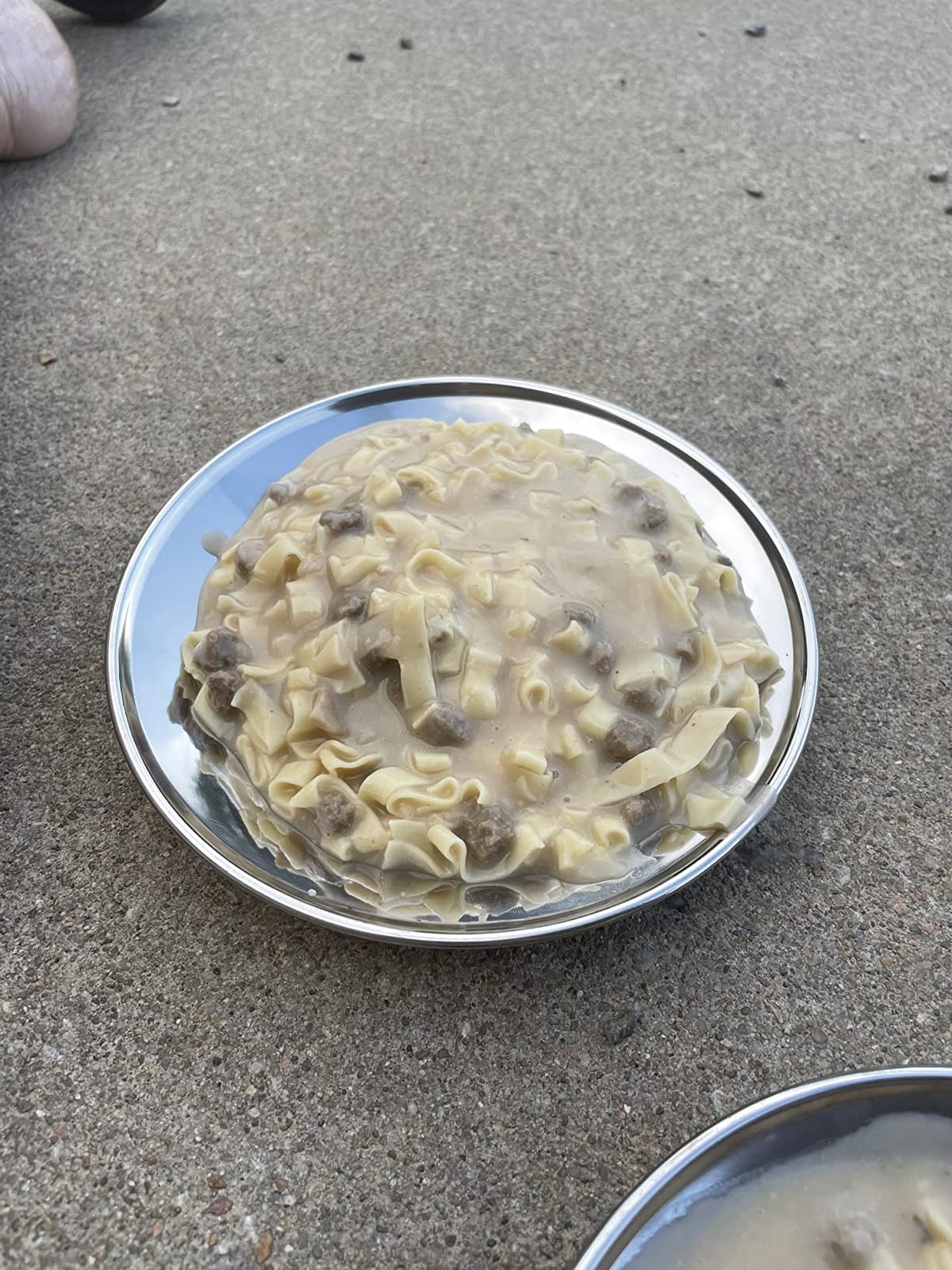
Six pouches, 12 servings, 24.7 ounces. That is a weekend, not a survival supply, and we want to be clear about that. What it is instead is the best-tasting freeze-dried food in this roundup, and taste is a real feature when you are eating the same meals for three days.
The listing states about 1,645 calories per day across the 12 servings, and the pouch format covers breakfast, lunch and dinner. You add water, wait under 10 minutes, and eat straight from the pouch with no cleanup at all. No stove, no dishes, no washing-up when the water is shut off.
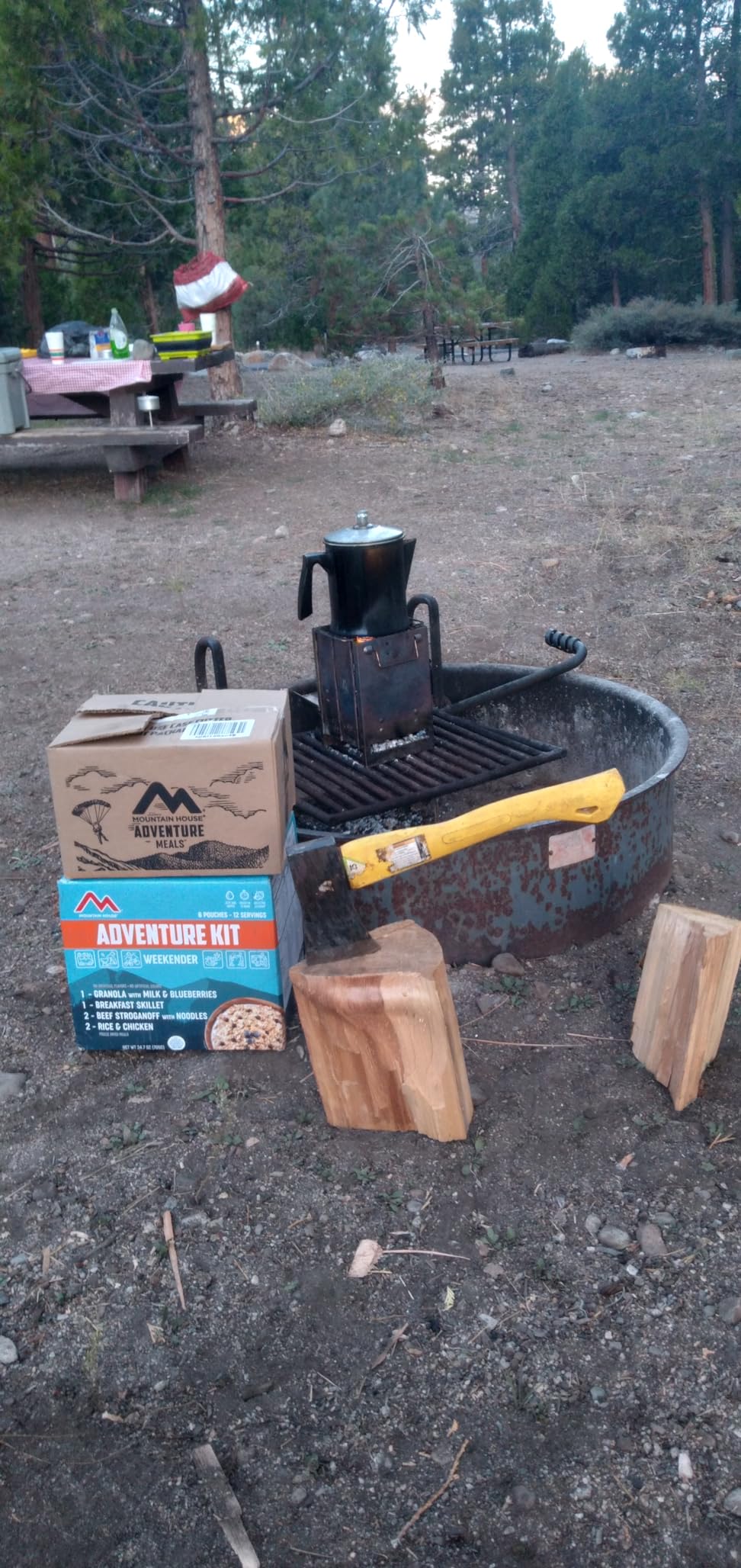
It carries a 30-year shelf life and a 30-year taste guarantee, which is the strongest single warranty in the category. It is made in the USA, gluten free, vegan and shellfish free, and the pouches are recyclable through TerraCycle, which almost no competitor in this roundup can say.
At 4.6 stars it has the joint-highest rating here, though from the smallest review base at 840. It is also the lightest option, and the dimensions under 10 inches on each side mean it fits in a bag that would not take a bucket.
Who this kit suits?
Anyone with dietary restrictions. It is gluten free, vegan and shellfish free straight from the manufacturer rather than by inference, and that is rare in a category where you usually have to read a long ingredient list and hope.
It is also the best evacuation pick on weight. At 1.5 pounds you can carry two of these and still have your hands free. For a weekend of self-contained shelter it is hard to beat, and it is worth pairing with the 72-hour kits above for a full month of cover.
Where it falls short?
Twelve servings is a weekend, and any plan built on this kit alone is short. Preparing the whole kit takes 8 cups of water, which is a real constraint when the water is what you are short of.
There is also a long-running complaint on r/preppers about Mountain House recipe changes around 2020, when long-time buyers felt serving sizes shrank and protein dropped. At 12 servings this kit is small enough that those buyers are right to keep an eye on the per-serving numbers, and it is the reason we would not build a month-long plan on a single brand’s format.
How to Choose: Prep Method, Format and Storage?
The single most consequential feature is not shelf life or calories. It is whether you can physically prepare the food with what you have. Split the category into three, and the choice makes itself.
Just add water, no heat. Every freeze-dried pouch in this roundup except the Augason Farms blend fits here. You need boiling water, a container, and about ten minutes. Mountain House goes further and eats from the pouch, which saves you the washing up. If the outage is a power cut in a house with a working kettle, this is the format you want.
Cook on a heat source. The Augason Farms vegetable blend, and most long-term pail products, need real heat after rehydration. This is more realistic than a full cooking session, because you are just boiling vegetables, but it still assumes a stove you may not have.
Ready to eat, no water at all. MREs and the SOS food bars. These are for evacuation, vehicles, boats and job sites. If your household has a real chance of leaving home, keep at least three days of this format even if the rest of your supply is freeze-dried.
What the formats actually get you?
Freeze-dried food keeps the most structure and the longest life because removing moisture drives water activity far below the level bacteria need to grow. It is also the lightest, which is why it dominates evacuation kits. The cost is that dry food needs water to become food, and water is the thing you are most likely to be short of.
Dehydrated food is cheaper, rehydrates faster and tastes more like the original, but it is lower in calories per unit weight and it is nearly always an ingredient rather than a meal. The Augason Farms blend shows the pattern: excellent as a component, incomplete on its own.
MREs and food bars invert the trade-off. They carry the most calories in the smallest space, need nothing to prepare them, and cost you shelf life and eating pleasure. Ten years for an MRE is a quarter of what the freeze-dried pails claim, and a food bar is five.
How to verify a shelf life claim before you buy?
Check three things. First, look for a printed manufacturing, packing or inspection date rather than only a “up to 25 years” line, and add the elapsed time to whatever remains. Second, confirm the product is hermetically sealed with an oxygen absorber or a vacuum seal, since a compromised pouch fails regardless of the printed claim. Third, be honest about your storage space, because shelf life claims assume cool, dry and temperature-stable conditions and a damp garage or a hot attic erases the margin quickly.
Number 6 states a total figure of 4,800 calories across the pack, and that is the habit worth copying. Before you buy anything else, multiply the servings by the calories per serving and compare the result to 1,600 to 3,000 calories a day for an adult. If the kit cannot get close, plan a second kit.
How to store it so it does not go to waste?
The best rotation system is the one forum advice keeps repeating on r/preppers: do not buy the longest shelf life available, buy what your household will actually eat every few months, and rotate that into normal meals. Food you eat in month three is food you did not waste in year four.
Beyond that, store in plastic pails with lids rather than cardboard boxes, which fail first in damp conditions. Keep pouches off concrete floors, check the seals twice a year, and remember that an opened multi-serve pouch is a day or two of food, not a week.
What to Keep Next to Your Emergency Food Kit?
Food without water is decoration. The items people most often skip are the ones that make the food usable, and all of them are cheap next to a bucket of freeze-dried meals.
Water is first, and we have covered outdoor water features in detail elsewhere. Then a heat source, whether that is a camp stove or a kettle, plus a manual can opener, water storage containers, a multi-tool, a first aid kit and a multivitamin. Long-term users point out that a three-day supply of prepared food delivers very little protein or vitamin C, so supplements are not optional for a full-month plan.
Add light. Emergency weather radios cover warnings and broadcasts, while hand crank lanterns solve the problem of reading a pouch label in a dark house.
Frequently Asked Questions
What are the most important features to look for in an emergency food kit?
The features that matter most are a documented shelf life with a printed date, calories per person per day, preparation that works without a stove, resealable pouches, a container that survives your storage spot, and enough meal variety to avoid appetite fatigue. Verify the calorie claim by multiplying servings by the calories on the label and comparing it to the 1,600 to 3,000 calories an adult typically needs each day.
Do emergency food kits need water to prepare?
Most do. Freeze-dried meals require hot water added to the pouch and need no stove, but they are not edible dry. Ready-to-eat options such as MREs and food bars need no water at all, which makes them the right choice for evacuation, vehicle and go bag scenarios.
Is freeze-dried food better than canned or MRE food for emergencies?
Freeze-dried food stores far longer, often 25 to 30 years, and weighs less, but it needs hot water to prepare. MREs are ready to eat with no water and carry 1,000 to 1,300 calories per meal, but the shelf life is typically about 10 years. Canned #10 food keeps well sealed but is heavy and spoils within two or three days of opening.
How much emergency food should I store per person?
Ready.gov guidance centers on at least a few days of non-perishable food. For a longer supply, plan on at least 1,600 calories per person per day, and note that most 72-hour kits contain far less than that once you multiply servings by the calories per serving. Covering more than a week usually means multiple units per person.
What prepper food has the longest shelf life?
Freeze-dried meals generally claim 25 to 30 years, and Mountain House backs its freeze-dried range with a 30-year taste guarantee. Dehydrated blends commonly claim 25 years, MREs about 10 years from inspection date, and food bars about 5 years. All of these figures assume cool, dry and temperature-stable storage.
What should I look for in emergency food packaging?
Look for a rigid plastic pail or a resealable #10 can rather than a cardboard box, and check that pouches are resealable so you can open only what you need. Confirm the packaging is hermetically sealed with an oxygen absorber or vacuum seal, and that a printed manufacturing or inspection date is present rather than only a shelf life claim.
The Verdict: Which Emergency Food Kit Should You Buy?
Start with the ReadyWise 120-serving bucket if you want one decision that covers a family of four for a couple of weeks and nothing to cook. Add the Ready Hour 120-serving bucket instead if you would rather ration slowly over a month, because 22 resealable pouches change how the food survives being opened.
Go compact with the ReadyWise 72-hour kit in every car and go bag, and add a case of MREs for anyone who might evacuate with no water source. If you prefer to build meals rather than eat a fixed menu, the Augason Farms vegetable blend covers more days than anything else here, and the Mountain House kit is the one to buy when taste and dietary restrictions matter more than volume.
Whatever you choose, buy one single-day option from at least two brands and eat them before you rely on them. That is the piece of advice that appeared most often in every forum thread we read, and for 2026 it is still the cheapest insurance in this category.