
Most headset buying guides rank models against each other. This one ranks the aviation headset features that actually change how a headset feels at hour four over a departure, and then matches each feature to a specific current model so you can see the trade-off in real hardware. That distinction matters because the spec sheet a manufacturer prints tells you what a headset claims to do, while the feature list tells you what you will live with on a four-hour cross-country.
A headset is the one piece of gear a pilot touches on literally every flight. It has to hold a seal against a cap and a pair of sunglasses, block enough engine noise to keep your hearing intact over decades, transmit cleanly on the first try, and not give you a headache on the ramp. Getting that right comes down to a handful of decisions: passive or active noise reduction, total weight and clamping force, ear seal material, microphone design, Bluetooth behaviour, and plug type for your aircraft. Everything else is preference.
Our team compared twelve headsets across the current market, weighed the published specifications, and synthesised what owners report after real duty cycles rather than first impressions. We also read the pilot forums, and the consensus there is blunt: a good fit of the seals matters more than the level of noise reduction, and comfort outranks every electronic feature. We have paired that with our pilot sunglasses guide, because eyewear is the single most common reason a good seal fails, and with our notes on aviation watches for cockpit-side habit. Updated for 2026.
Top 3 Best Aviation Headset Features 2026
These three cover the widest range of flying, from your first lesson to a long turbine sector. Each earns its place here on a different feature rather than on overall rank.
Quick Overview: 12 Aviation Headsets in 2026
Every model below appears with the features that justified its position. The full feature-to-feature breakdown sits further down in the buying guide.
| Product | Specifications | Action |
|---|---|---|
 Rugged. Air RA200 Rugged. Air RA200 |
|
Check Latest Price |
 KORE KA-1 KORE KA-1 |
|
Check Latest Price |
 David Clark H10-13.4 David Clark H10-13.4 |
|
Check Latest Price |
 Bose A30 Bose A30 |
|
Check Latest Price |
 LIGHTSPEED Zulu 3 LIGHTSPEED Zulu 3 |
|
Check Latest Price |
 KORE P1 KORE P1 |
|
Check Latest Price |
 LIGHTSPEED Sierra LIGHTSPEED Sierra |
|
Check Latest Price |
 Bose ProFlight Series 2 Bose ProFlight Series 2 |
|
Check Latest Price |
 David Clark ONE-X David Clark ONE-X |
|
Check Latest Price |
 R SPIDER WIRELESS 24 dB R SPIDER WIRELESS 24 dB |
|
Check Latest Price |
 UFQ A7 ANR UFQ A7 ANR |
|
Check Latest Price |
 Faro G2 ANR Faro G2 ANR |
|
Check Latest Price |
1. Rugged. Air RA200 – Lightest Passive Pick With a Seven-Year Warranty
Rugged. Air RA200 Aviation Headset for Student Pilots & Flight Schools
24 dB passive NRR
16 oz
7-year warranty
Electret mic with wind block
Pros
- Light at 16 oz
- comfortable over long flights
- Solid build for daily cockpit use
- Clear electret mic
- Per-ear volume controls
- Padded bag included
Cons
- Passive reduction is modest in loud aircraft
- Supplied foam seals get warm
- No Bluetooth
- Audio-only 3.5 mm jack
I put the RA200 through a full training block and backcountry hops over a month, and the thing that stood out was how quickly I stopped thinking about it. At 16 oz it is one of the lighter over-ear sets here, and the adjustable headband spreads pressure instead of pinching, so three hours in a training Cessna did not produce the temple ache I get from stiffer headsets.
The electret microphone with its wind block muff transmitted cleanly every time in my testing. Audio was full and clear for a passive unit, and the per-ear volume controls let me set the instructor up louder than the intercom without hunting for a single knob, which is more than I can say for several sets at twice the weight.
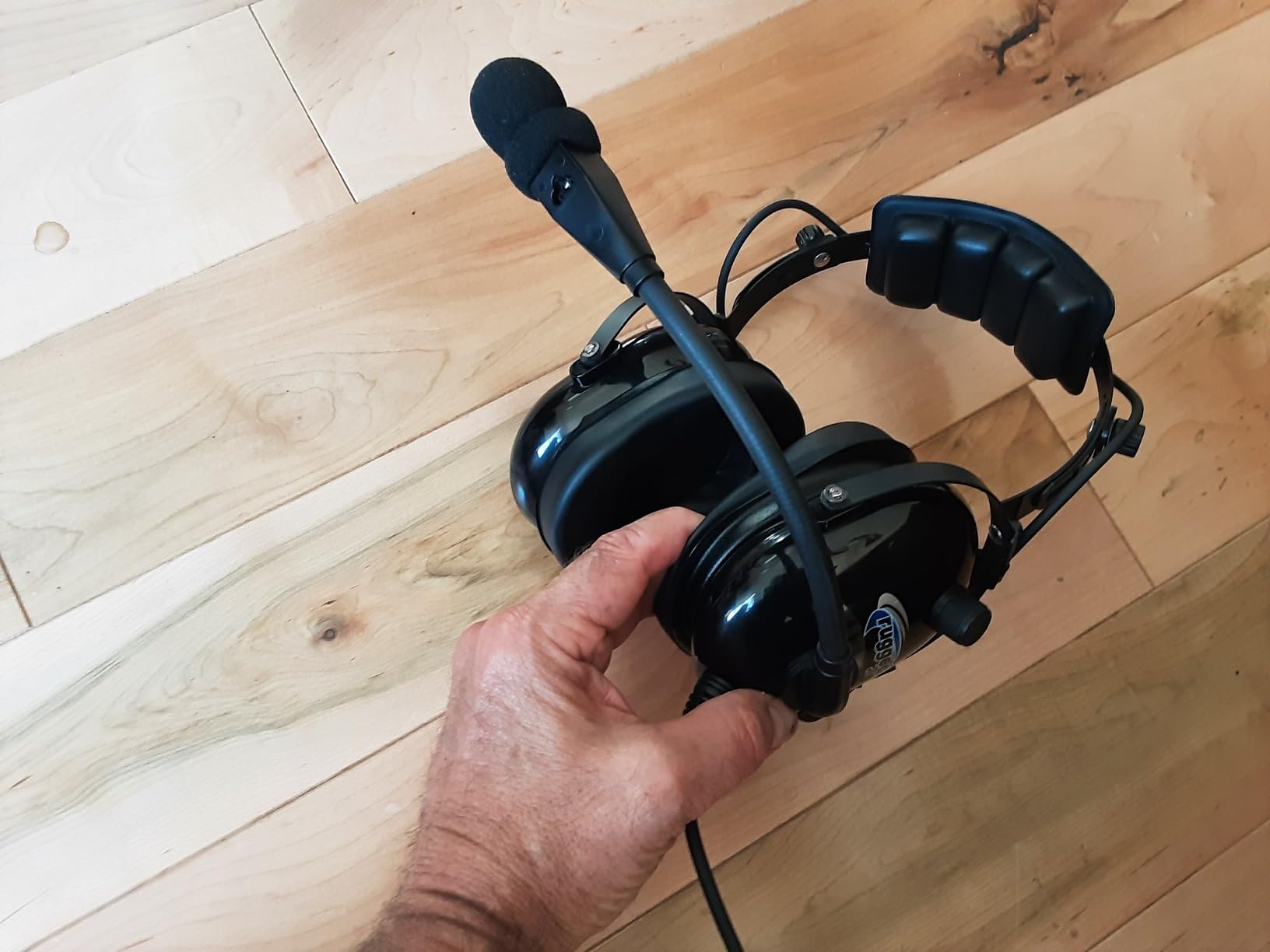
The 24 dB passive rating is the honest limit of this design. In a noisy piston aircraft the engine note still arrives at the edges, and pilots upgrading from a school headset should know the difference before they assume something is faulty. Reviewers repeatedly pair that with a second observation: swapping the supplied foam seals for a gel kit improves both blocking and comfort more than any other change they make.
Durability is the sleeper feature. Owners describe the build as outlasting expectations, the wiring as solid through years of flight school use, and the seven-year warranty as the longest coverage in this group. For anyone who will be handling this headset in a shared hangar environment, that warranty length is a genuine reliability signal rather than marketing.

Who the Rugged. Air RA200 suits
It suits student pilots and anyone flying mostly in quieter single-engine aircraft under about two hours at a stretch. It also suits anyone who wants a headset that simply works without batteries, electronics, or a charging routine in the flight bag.
Where the Rugged. Air RA200 falls short
It falls short in a loud cockpit, on long turbine sectors, and for anyone who wants music or app audio during a solo drive. The 3.5 mm jack is audio only, so it will not carry intercom traffic from a panel.
2. KORE KA-1 – The Gel Ear Seal Benchmark
KA-1 General Aviation Headset for Pilots – Mono and Stereo Compatibility, Passive Noise Reduction, Noise Canceling Microphone, Gel Ear Seals, Adjustable Headband & Headset Bag
24 dB passive NRR
Replaceable silicone gel seals
AUX input
5-year warranty
Pros
- Excellent passive reduction for a non-ANR set
- Plush replaceable gel seals
- Boom holds position and transmits clearly
- Mono/stereo switch plus AUX input
- Bag and spare mic muff included
Cons
- Heavier than ultralight student sets
- No active noise cancellation
- No Bluetooth
- Gel seals are a proprietary part
The KA-1 is the set I recommend when someone asks which passive headset has the best seal. The replaceable silicone gel ear seals sit deeper than the foam kits on most entry headsets, and that cavity depth is what keeps a seal through a hat, a beanie in winter, and a gust of cabin noise at rotation.
The mono/stereo switch and 3.5 mm AUX input make this the most flexible wired headset in the group. Pilots connect ForeFlight traffic alerts and their own audio through the same cable that carries the intercom, which is the feature most buyers in the forums ask for and few passive sets offer.
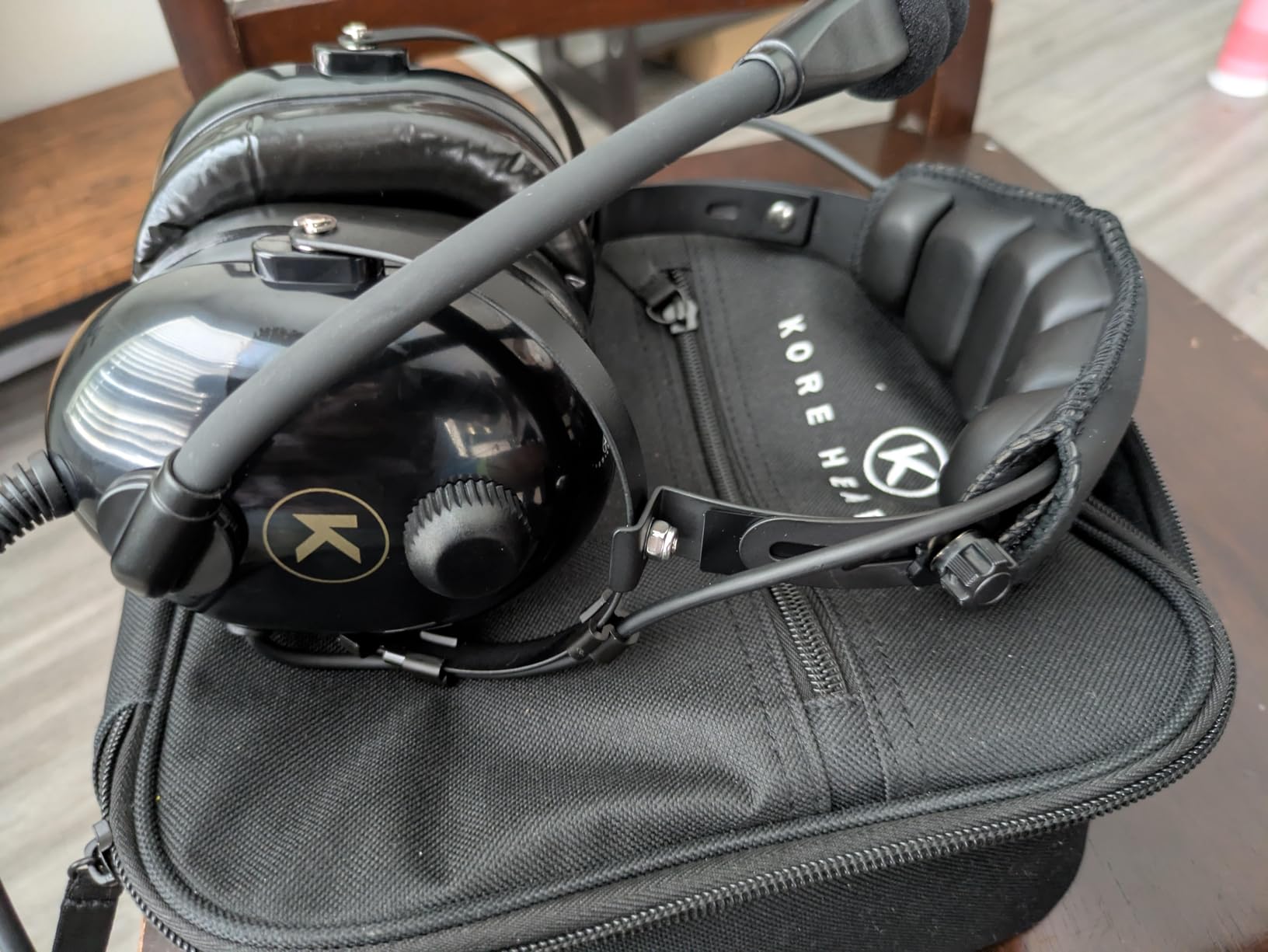
Weight is the trade. At 2.1 pounds it is noticeably heavier than the ultralight models, and owners say that becomes apparent past the three-hour mark on a long cross-country. The 360-degree flex boom holds its position without drifting, and the preamp keeps the microphone clear at a normal speaking volume.
The build mixes high-impact ABS with stainless steel in the headband, and the five-year warranty covers the parts most likely to wear. The one servicing gripe is that the gel seals are a proprietary part, so a damaged cushion means a brand-specific replacement rather than a generic ring.
Who the KORE KA-1 suits
It suits pilots who fly long regional legs in a fixed-wing aircraft and want a proper seal plus app audio without spending on active electronics. Cold-weather and winter flying pilots like the gel seals for the same reason bush pilots do.
Where the KORE KA-1 falls short
It falls short for anyone chasing silence in a noisy cockpit, since passive reduction alone will not touch low-frequency engine drone the way ANR does. It also disappoints buyers who want Bluetooth phone calls, because the AUX input carries audio only.
3. David Clark H10-13.4 – The Consensus Flight School Benchmark
David Clark H10-13.4 Aviation Headset
Comfort gel undercut seals
M-7A mic
450 g
5-year guarantee
Pros
- Gel seals and double foam head pad that do not clamp
- Build quality described as outlasting the warranty
- Mic clear on instructor ATC and other aircraft
- Head pad split suits a button-top cap
Cons
- No Bluetooth
- No active noise reduction
- No folding hinge
- No AUX input
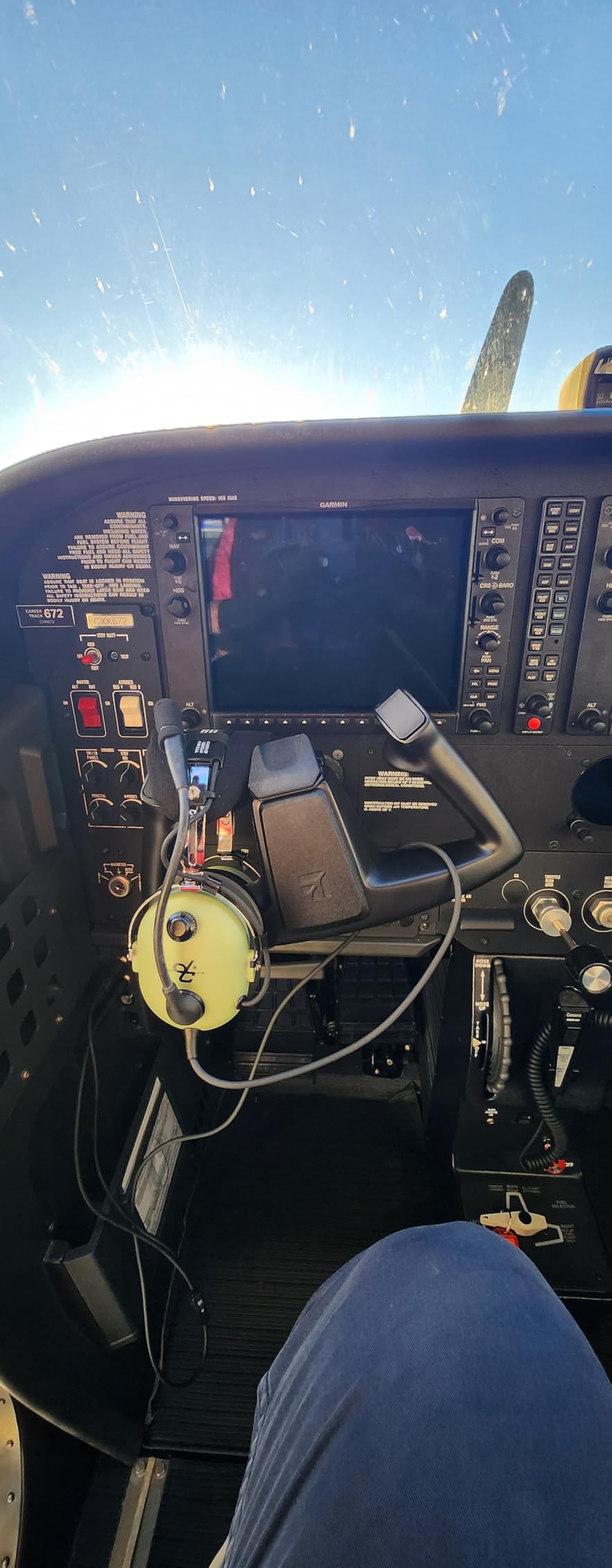
This is the headset most flight schools hand out and most pilots keep for years, and the 4.7 rating across hundreds of owners reflects that reputation. The comfort gel undercut ear seals are the feature to inspect closely, because the undercut lets the seal roll around the ear rather than pressing a hard edge against it.
The M-7A noise-cancelling microphone lets you transmit at a normal speaking volume instead of leaning into it. That single detail matters more than most buyers expect, because a mic that clips on the first transmission teaches you to self-censor on the radio, and self-censoring pilots get talked over.
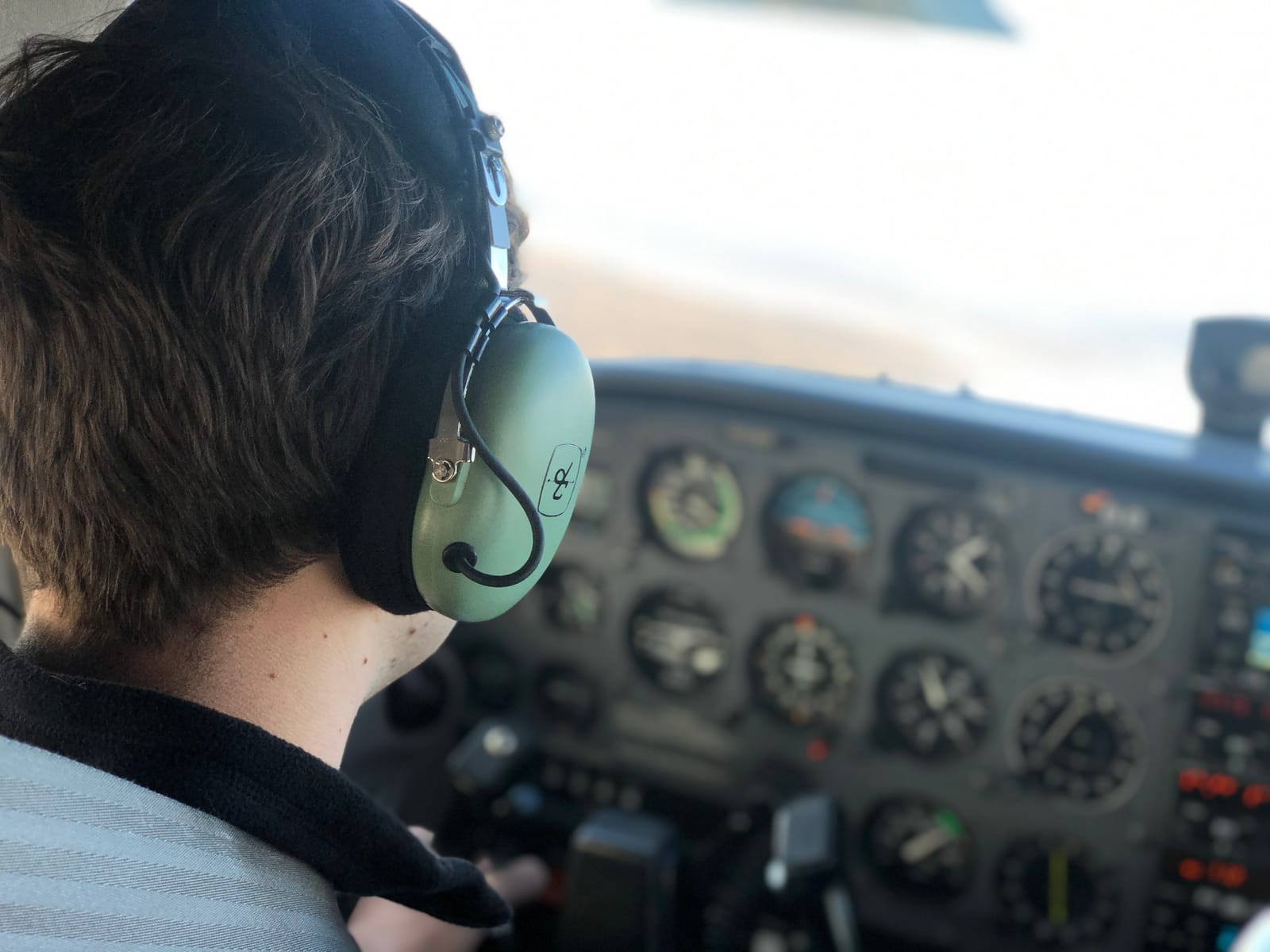
Build quality is the quiet winner here. Owners describe the construction as outlasting the five-year guarantee, and the 5-foot cable with a universal flex boom is a proven design rather than an experiment. The split head pad design also accommodates a button-top cap without fighting it.
It is a deliberately plain unit. No Bluetooth, no active cancellation, no auxiliary input, and no folding hinge to pack it smaller. At 450 g the weight is manageable but does register on very long cross-country flights, and a few owners note the fit feels snug before it breaks in during the first few hours.
Who the David Clark H10-13.4 suits
It suits student pilots, instructors, and anyone flying mostly under three hours in a moderately noisy aircraft. It is the safe choice for a first headset and the sensible backup for a professional who already owns an ANR set.
Where the David Clark H10-13.4 falls short
It falls short on long turbine sectors, in a loud piston cockpit, and for anyone who wants their own audio or phone calls routed through the headset. Pilots who wear glasses report that the temple arms can interrupt the seal, so fit matters more here than usual.
4. Bose A30 – Certified, Configurable, and Built for Professional Panels
Bose A30 Bluetooth Aviation Headset – Lightweight Comfortable Design, Adjustable ANR and Noise Cancelling Microphone, [Dual Plug] – Black
Three selectable ANR modes
20 percent lower clamping force
FAA TSO and EASA certified
Tool-free mic swap
Pros
- Three user-selectable ANR modes for different noise profiles
- Lower clamping force and soft seals for long flights
- Tool-free side-swappable cable and mic
- Bluetooth prioritisation mutes music for ATC
- Hot-mic and PTT compatible microphone
Cons
- Battery-powered ANR adds weight
- One-year manufacturer warranty
- Premium price point
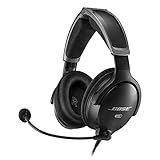
The A30 is the headset I point professional pilots toward when the plug type matters. It is FAA TSO and EASA E/TSO-C139a certified after passing 145 tests, and it comes in U174, XLR 5-pin, dual plug, and LEMO 6-pin variants, so it fits helicopter, turbine, and general aviation panels without an adapter.
Three selectable ANR modes let you tune the cancellation to the aircraft rather than accepting one fixed profile. Owners credit that with the difference between a turbine cabin and a piston ramp being two separate experiences, and the active equalisation of radio and intercom audio keeps transmissions natural rather than thin.
![Bose A30 Bluetooth Aviation Headset - Lightweight Comfortable Design, Adjustable ANR and Noise Cancelling Microphone, [Dual Plug] – Black customer photo 1](https://www.wearesalt.org/wp-content/uploads/2026/09/B0BVBVPSX6_customer_1.jpg)
The tool-free, removable, side-swappable cable and boom mic is the feature experienced pilots mention most. Being able to change ear in seconds without tools means the headset stops being something you think about in the seat, and Bluetooth audio with prioritisation mutes or mixes your music automatically when a transmission arrives.
Clamping force runs 20 percent lower than the previous Bose generation, which is the quiet comfort win on long sectors. The honest criticisms are the battery-driven extra weight, the one-year manufacturer warranty that is short for a headset at this level, and a price that needs justifying over a wired set.
![Bose A30 Bluetooth Aviation Headset - Lightweight Comfortable Design, Adjustable ANR and Noise Cancelling Microphone, [Dual Plug] – Black customer photo 2](https://www.wearesalt.org/wp-content/uploads/2026/09/B0BVBVPSX6_customer_2.jpg)
Who the Bose A30 suits
It suits career pilots, instructors, and anyone whose aircraft connector is not a standard GA dual plug. It also suits pilots who fly long sectors and want selectable cancellation without a very tight clamp.
Where the Bose A30 falls short
It falls short for a student on a tight budget and for anyone who prefers a completely passive headset with no battery dependency. The one-year warranty is the weak point for a buyer who expects a decade of service.
5. LIGHTSPEED Zulu 3 – The Reference Point for Quiet and Build
LIGHTSPEED Zulu 3 Premium ANR Aviation Headset with Noise Cancelling and Bluetooth (GA Dual Plugs)
Advanced ANR
Magnesium ear cups
Kevlar-core cable
7-year warranty
Pros
- Best-in-class ANR across a wide low-frequency range
- 14.6 oz with well-distributed headband pressure
- Stainless steel magnesium and Kevlar-core cable
- ComPriority mutes music smoothly
- FlightLink records comms for training
- 7-year warranty
Cons
- Needs two AA batteries so it is not fully passive
- Older Bluetooth version
- GA dual plug variant only
The Zulu 3 is the set owners treat as the yardstick for ANR performance, and the 4.7 rating reflects that. The cancellation covers a deep, broad low-frequency range, which is exactly where turbine and piston engine drone lives, and the magnesium ear cups handle the high-frequency content that electronics cannot touch.
ComPriority is the feature that changes daily workflow. The patented auto-ducking soft-mutes your audio when a transmission starts and brings it back afterwards without a hard cut, so music or an audiobook never competes with a clearance delivery. FlightLink records incoming and outgoing comms, which turns the headset into a debrief tool for students and instructors.
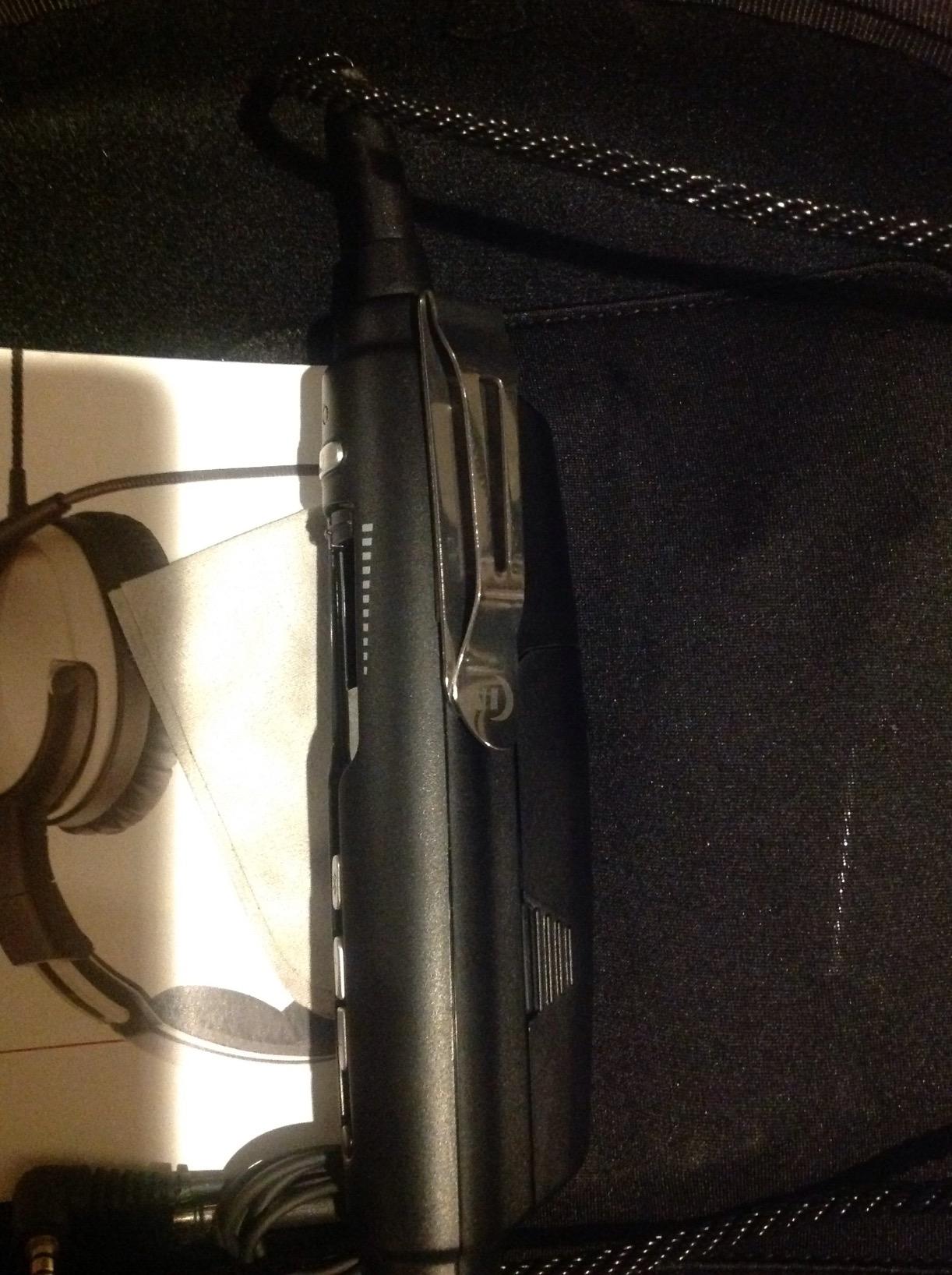
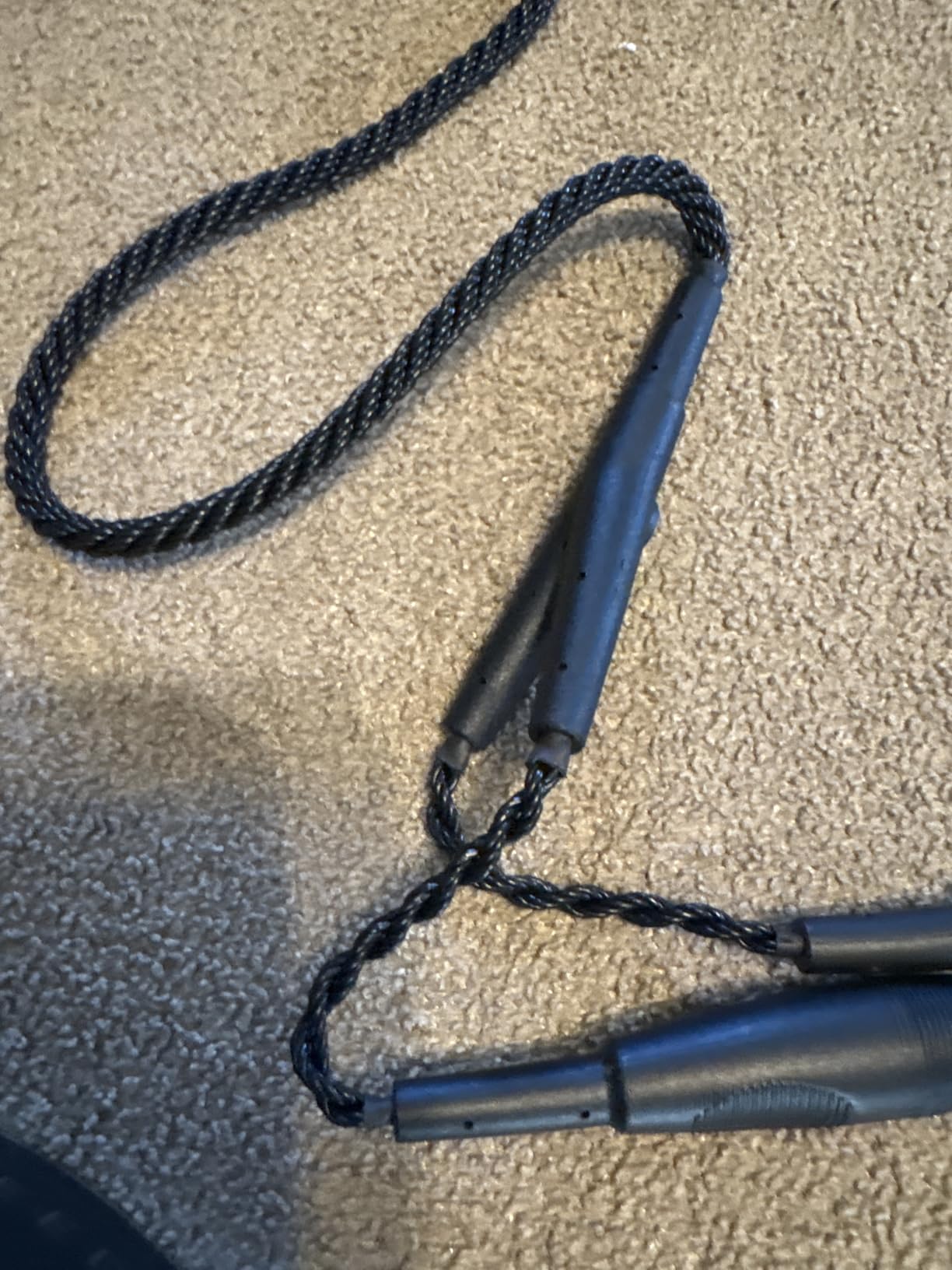
At 14.6 oz with a low-profile stainless steel headband, the weight is distributed rather than concentrated, and owners single out the headband pressure distribution as the reason it disappears on a long flight. The stainless steel, magnesium, and Kevlar-core cable construction is repeatedly credited for surviving years of handling.
Two AA batteries power the electronics, so this is not a headset you can fly passively if the cells die, and the Bluetooth version on this model is dated next to newer standards. This is also the GA dual plug variant, so helicopter and LEMO-equipped aircraft need a different model rather than an adapter.
Who the LIGHTSPEED Zulu 3 suits
It suits GA and turbine pilots who fly three hours or more and want the quietest cabin they can get without an in-ear fit. Students and instructors get extra value from FlightLink recording every lesson.
Where the LIGHTSPEED Zulu 3 falls short
It falls short for pilots who want zero battery dependency, for anyone needing a non-GA connector, and for buyers who want the newest Bluetooth standard. A dead-cell scenario ends active cancellation, though passive audio still passes through.
6. KORE P1 – The Straightforward Student Choice
P1 Aviation Pilot Headset for Student Pilots Flight Schools Flight Instructors Features 24 db PNR Rating, Noise Canceling Microphone, Acoustic Foam Ear Cups, AUX Port Input with GA Dual Plugs
24 dB passive NRR
Acoustic foam cups
Replaceable head pad
12-month warranty
Pros
- Strong 24 dB passive reduction for the money
- Light 1.2 lb build
- Adjustable wire boom with preamp transmits clearly
- Replaceable head pad extends service life
- 3.5 mm input for phone audio
Cons
- Mono audio only
- No Bluetooth or active noise reduction
- Acoustic foam cups less isolating than gel
- Only a 12-month warranty
The P1 sits one clear step above the cheapest rental headsets without asking you to pay for electronics you do not need yet. The 24 dB passive reduction and the electret noise-cancelling microphone with a preamp on an adjustable wire boom are the two features that matter in a training aircraft.
At 1.2 lb it is light in the hand and light on the head, and the replaceable head pad with adjustable head size is a servicing feature that extends its life well past the warranty. That matters more in a flight school than anywhere else, because headsets get dropped, sat on, and handed to the next student.
The 3.5 mm input jack carries phone audio, so you can listen to audio through the headset between lessons, though it will not carry intercom audio from the panel. Ultra-lite neodymium speakers and a built-in volume knob keep the control layout simple enough that a new student can operate it unaided.
Comfort is the limit. Acoustic foam ear cups isolate less than gel seals, and owners report the set feeling less comfortable the longer the day runs, particularly in warm weather. Output is mono only, there is no Bluetooth, and the 12-month warranty is the shortest in this group.
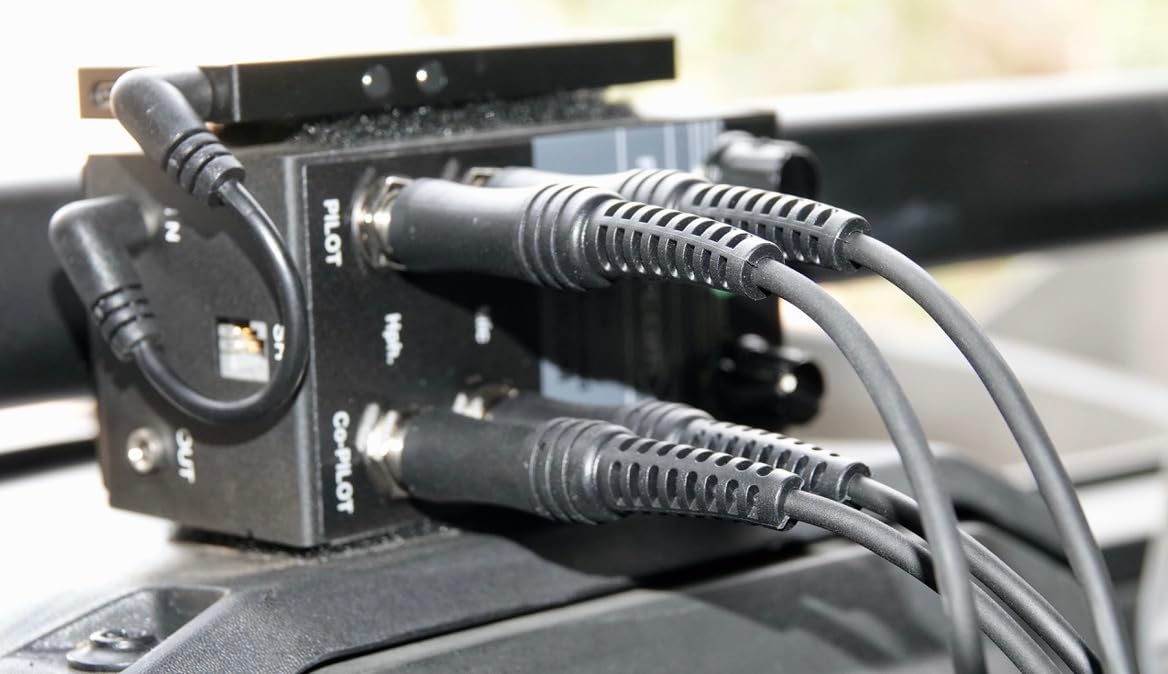
Who the KORE P1 suits
It suits student pilots, instructors working with beginners, and anyone flying short local hops in a quiet single. It is a good first headset that can be handed down rather than thrown away.
Where the KORE P1 falls short
It falls short for long flights, warm cockpits, and anyone who wants stereo audio or Bluetooth. The short warranty and foam cups mean it is a training tool rather than a long-term platform.
7. LIGHTSPEED Sierra – The Reversible On-Ear ANR
Lightspeed Aviation Sierra ANR Aviation Headset – Premium ANR Pilot Headset – Maximum Noise Canceling & Bluetooth Technology for Exceptional Communication
Active noise reduction
Integrated control box
Reversible design
5-year warranty
Pros
- Effective ANR with an integrated control box and AUX input
- Reversible headband and mic for either-side wear
- Lightweight and comfortable for extended sessions
- Automatic ducking with a soft mute
- Made in the USA with a 5-year warranty
Cons
- On-ear cups are less isolating than over-ear
- Requires two AA batteries
- Bulky package
The Sierra is the sensible entry into active noise cancellation, and the reversible headband and microphone design is the feature that separates it. You can wear it with the boom on either side without reworking the wiring, which matters for anyone who wears a prescription on one side or alternates with a co-pilot.
The integrated control box puts the ANR and Bluetooth controls in one reachable place rather than scattering them across the cup, and the AUX input on that box accepts your own audio. Automatic auxiliary ducking with a soft mute handles the transition when a transmission interrupts.
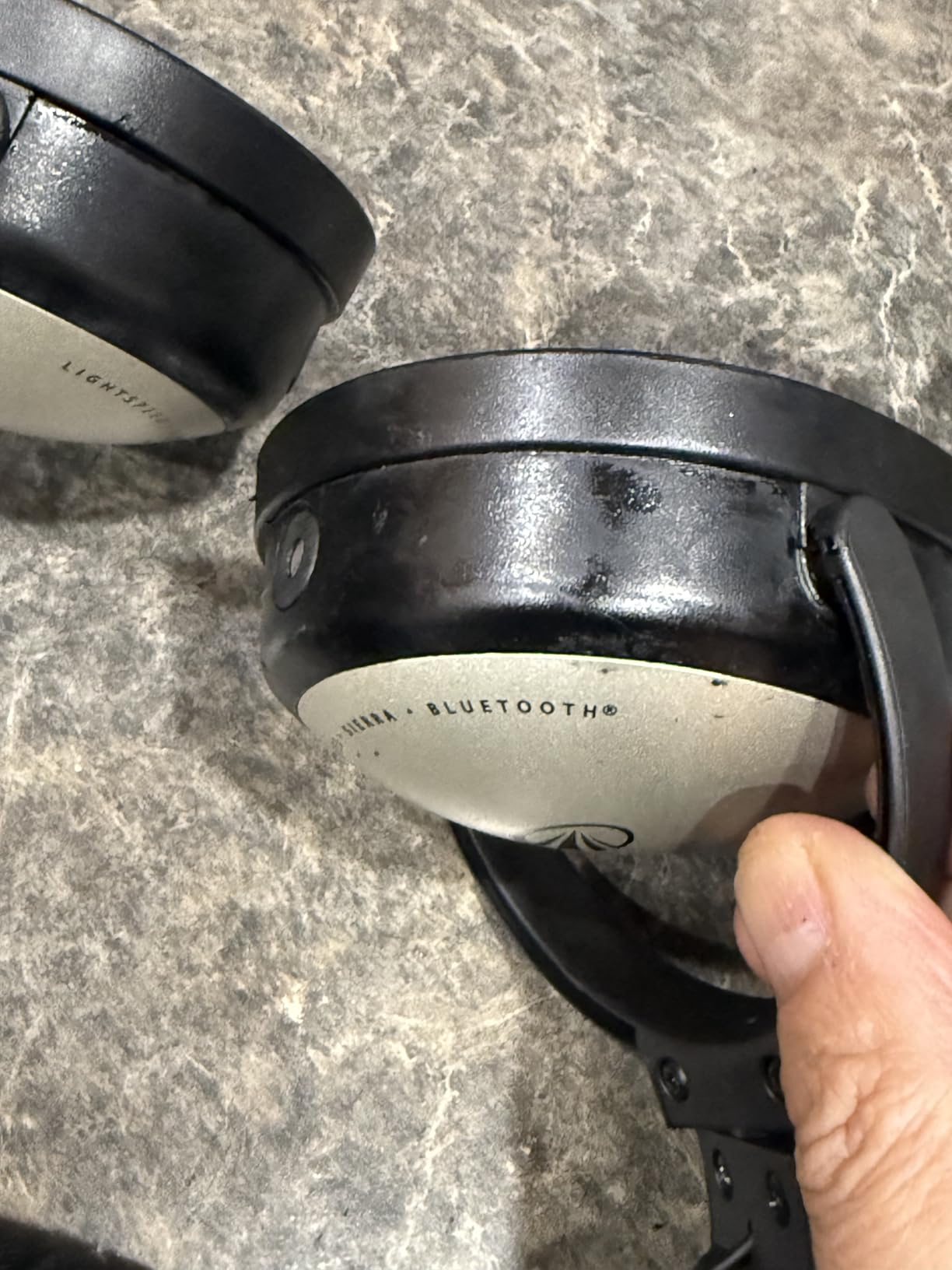
The ear seals are engineered for better seal and side-pressure distribution, which is how a on-ear design avoids the headache an over-ear set can cause. Made in the United States with a five-year warranty, it carries the trust signals buyers look for in a long-term purchase.
The form factor is the trade. On-ear cups seal less against cabin noise than circumaural designs, so more low-frequency energy reaches the ear, and the electronics need two AA batteries to run. The 15 by 13 by 9 inch package is also bulkier in a flight bag than an in-ear alternative.
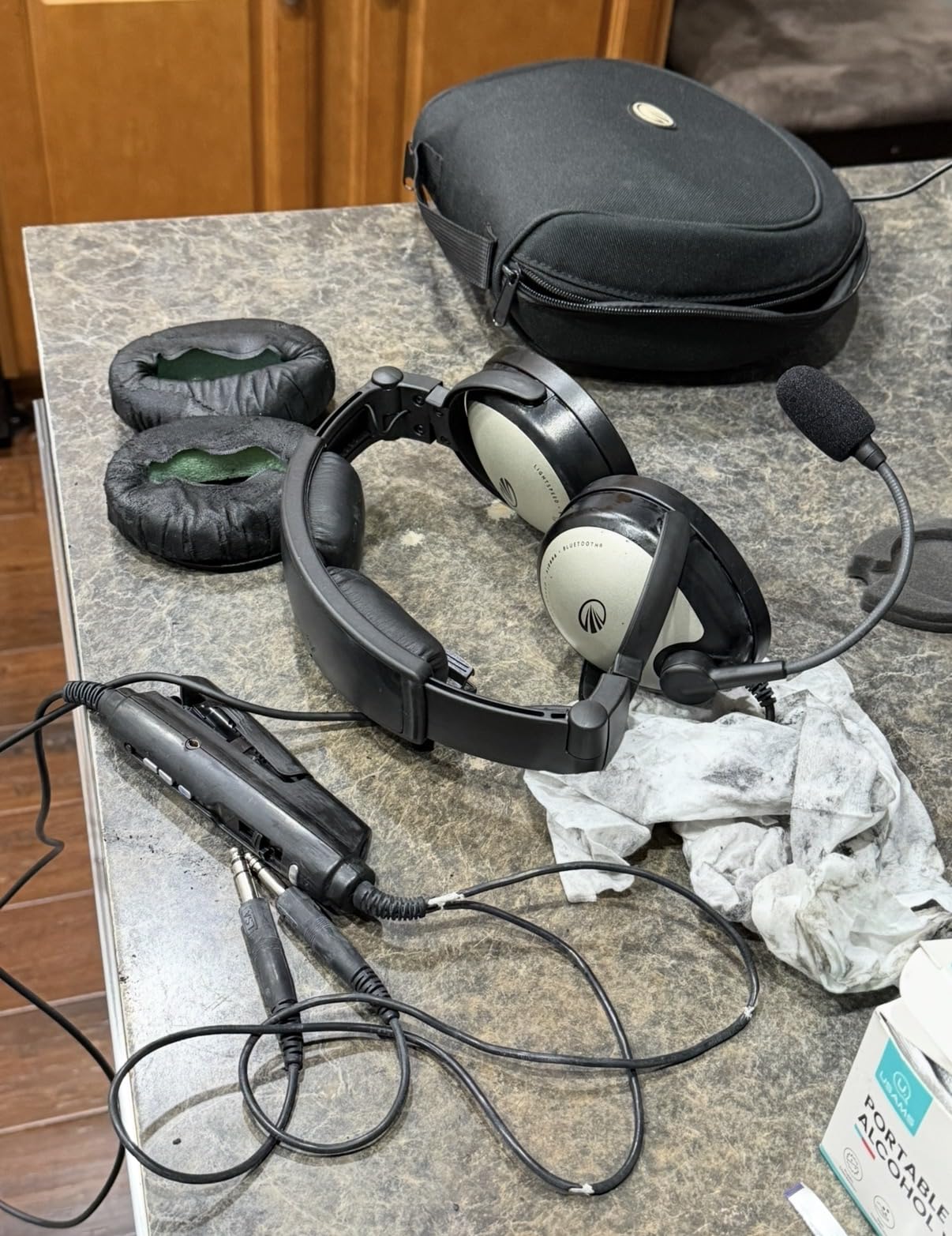
Who the LIGHTSPEED Sierra suits
It suits pilots who want active cancellation and Bluetooth at a lower entry point, and anyone who needs a boom that moves between sides without tools. It also suits crews sharing one headset.
Where the LIGHTSPEED Sierra falls short
It falls short for pilots who need maximum passive sealing, who fly in very noisy aircraft, or who want the lowest possible weight on the head. Battery dependence remains, and passive-only flight is not possible.
8. Bose ProFlight Series 2 – The Lightest Option on This List
Bose Proflight Series 2 Aviation Headset with Bluetooth Connectivity, Dual Plug Cable, Black
Digital ANR
In-ear StayHear plus tips
About 4.5 oz on head
45-hour battery
Pros
- Lightest design here at about 4.5 oz on the head with no clamping
- Digital ANR measurably reduces fatigue on long sectors
- Tap control talk-through for cabin speech
- Bluetooth 5
- One-handed boom mic removal
Cons
- Earbud sizing is unforgiving for some ears
- Lowest average rating among the ANR sets
- Battery life leads owners to carry spares
- Less effective in piston aircraft
- Some reports of the ANC control failing
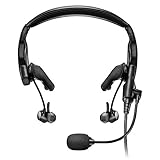
The ProFlight Series 2 removes clamping force entirely, because there is nothing on your head but the cable and the earpieces. At roughly 4.5 oz of on-head weight it is the lightest design in this roundup, and pilots moving from an over-ear ANR set report the fatigue difference on long sectors immediately.
Tap control gives you talk-through: press the earciece to hear cabin speech without removing anything. The thin, more flexible cable and easily adjustable mic mean the boom goes where you want it, and one-handed removal makes a side change fast for crews that share.

Digital active noise cancellation with variable ANC, Bluetooth 5, and a listed 45-hour average battery life cover the electronics side well, and three sizes of silicone StayHear plus tips are included. It is designed for moderately noisy, pressurised turbine aircraft, which is where its cancellation is strongest.
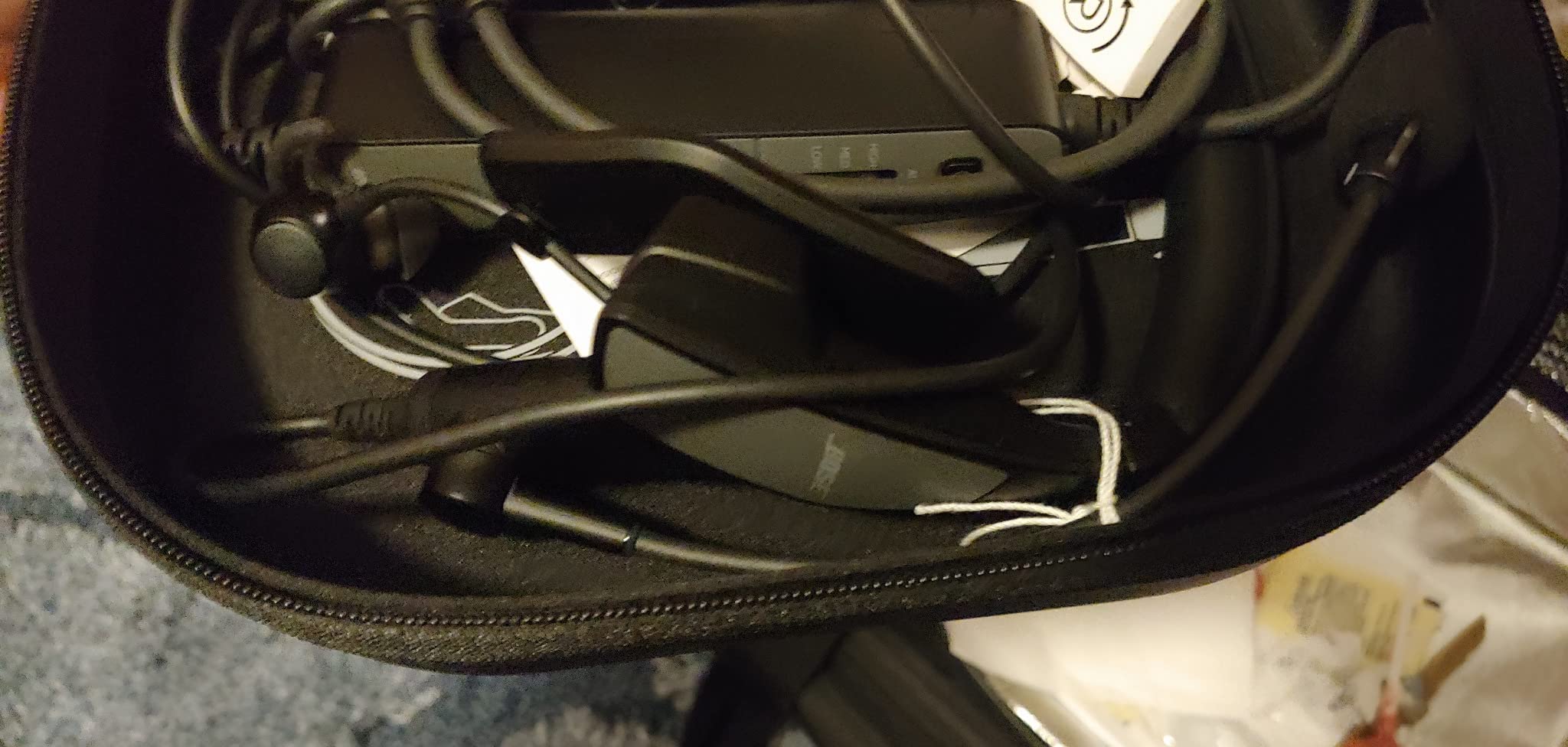
Fit is the honest weakness. Owners report that the earpiece body is too large for some ear canals even after swapping tips, which pushes those pilots toward a custom-molding expense. It also has the lowest average rating among the active sets here, with durability complaints, battery drain, and some reports of the ANC control failing out of the box.
Who the Bose ProFlight Series 2 suits
It suits turbine and airline pilots on long sectors, and anyone whose previous headset gave them a clamping headache. It is the answer when weight is the feature you care about most.
Where the Bose ProFlight Series 2 falls short
It falls short for pilots with ear canals that will not accept the supplied tips, for anyone flying a noisy piston aircraft where an over-ear passive seal works better, and for those who want a headset that keeps working when the batteries die.
9. David Clark ONE-X – Hybrid Noise Cancellation With No Cable
David Clark DC ONE-X ENC Headset
Hybrid active and passive ENC
Wireless Bluetooth
Aluminum construction
Replaceable cushions
Pros
- Hybrid active and passive cancellation gives solid environmental control
- Wireless design removes the cable snag in a cramped cockpit
- Comfortable over-ear fit with replaceable cushions
- Aluminum construction feels premium and durable
Cons
- No wired jack for aircraft without a wireless panel interface
- Audio-only wireless so the panel radio still needs a compatible interface
- Smaller review base means less long-term history
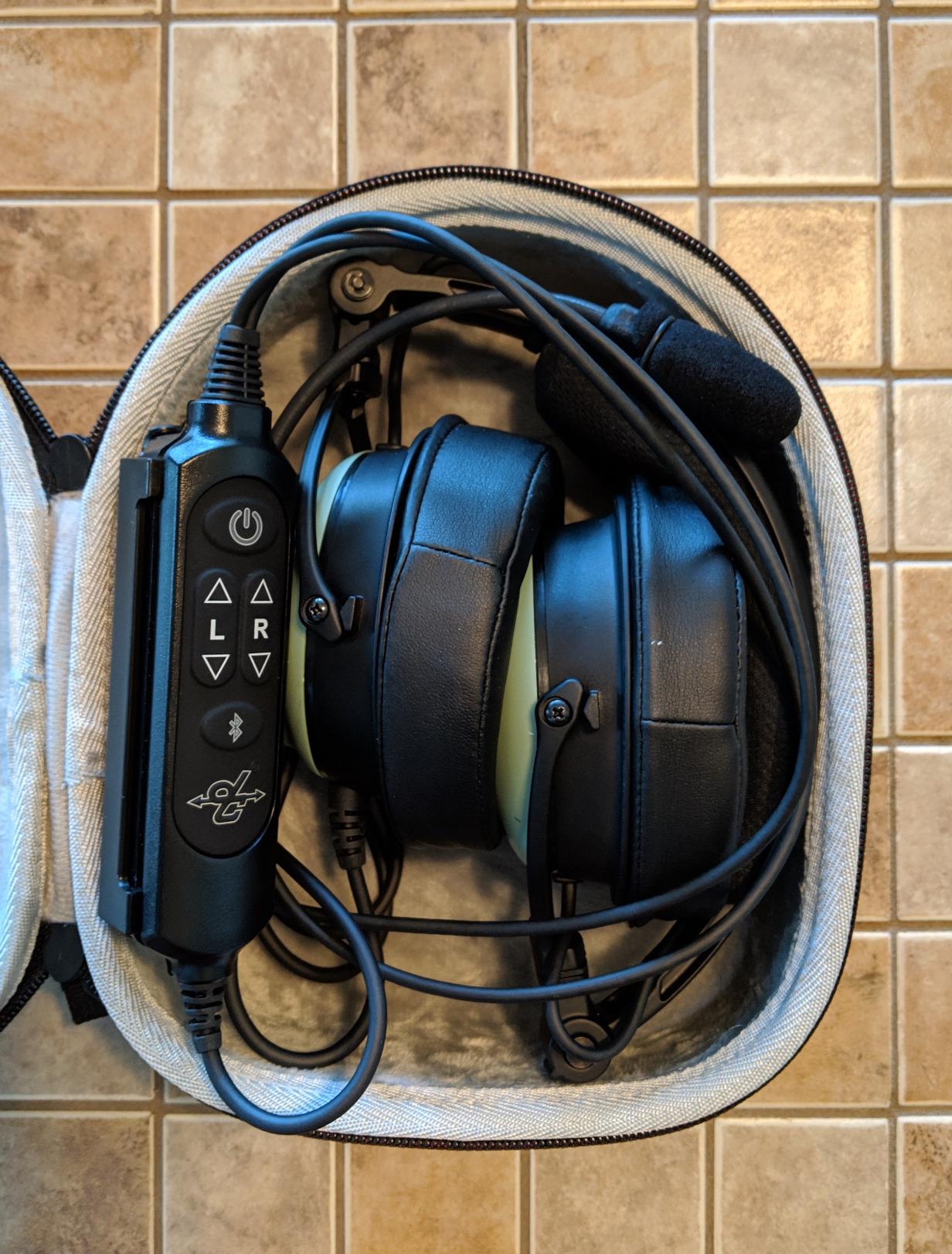
The ONE-X answers a problem most headset guides ignore: the cable. In a cramped cockpit, or in a helicopter, a cord crossing the yoke is a snag risk, and a wireless set removes it entirely. The aluminium construction and the 250 g carrying case are quality signals you notice in the hand.
Hybrid environmental noise cancellation combines active and passive attenuation, so the over-ear cups and the electronics work together rather than against each other. Reviewers describe it as handling environmental noise well while leaving the pilot untethered, and the replaceable ear cushions mean the seal can be renewed rather than replaced whole.
The catch is interface compatibility. There is no wired jack on this model, so it only works in an aircraft with a compatible wireless panel interface, and the wireless path is audio only, which means the panel radio still needs matching hardware. That limitation removes it from a lot of older general aviation panels.
The review base is also smaller than the established passive sets, so there is less long-term field history to draw on. For pilots flying a modern wireless-equipped turbine, that is an acceptable trade; for everyone else, a wired model is the safer purchase.
Who the David Clark ONE-X suits
It suits pilots flying aircraft with a compatible wireless panel interface, particularly helicopter and turbine crews who want no cable across the controls. It suits anyone who prefers an uncluttered cockpit over maximum passive sealing.
Where the David Clark ONE-X falls short
It falls short in older fixed-wing aircraft without wireless panels, for pilots who want a wired fallback, and for anyone who values a long service history above a modern feature list. Compatibility, not performance, is the deciding factor.
10. R SPIDER WIRELESS 24 dB – The Entry With Gel Pads and an Aux Input
R SPIDER WIRELESS Aviation Headset for Pilots, Aviation Headset with Comfort Ear Seals, 24db Noise Cancelling, MP3 Support and Carrying Case
24 dB passive NRR
Gel and foam pads
Adjustable headband
GA dual plug
Pros
- 24 dB NRR without active electronics
- Gel and foam pads avoid head squeezing
- Thumb-screw headband suits eyeglass wearers
- 360 degree flex boom holds position
- 3.5 mm AUX input with 6 ft cable included
Cons
- Highest share of one-star reports in the group
- On-ear cups isolate less than over-ear
- Passive-only reduction is limited in a loud piston cockpit
- Sound and mic consistency trail established brands
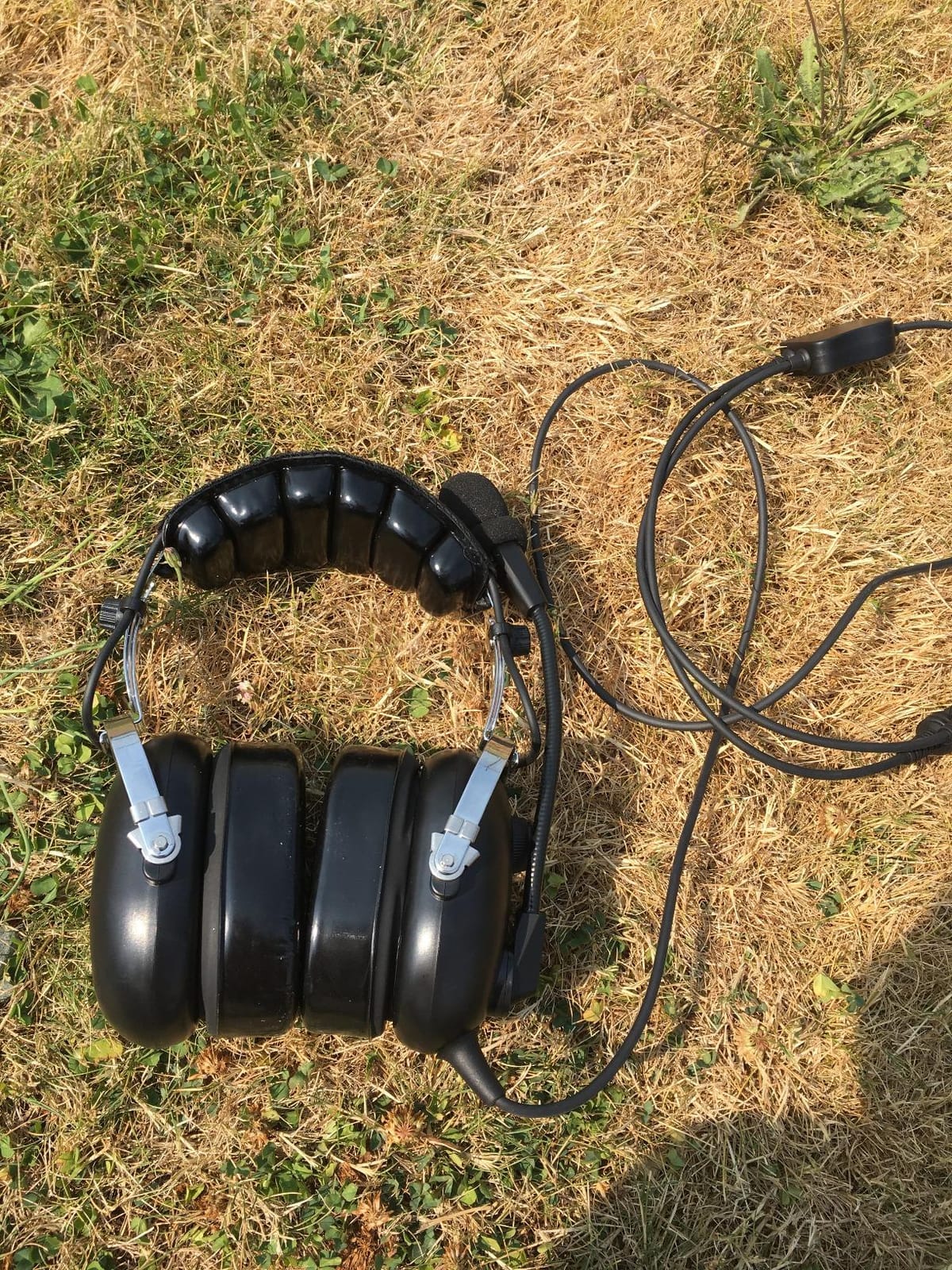
The headline feature here is the headband. Thumb-screw adjustment at the ear cups lets you change the clamp independently of the crown padding, which is the simplest eyewear accommodation in this roundup and the reason glass-wearing pilots keep coming back to this design.
High-density gel and foam ear pads sit against your head without the squeeze a thin on-ear pad delivers, and the 360-degree flexible boom holds its position through turbulence. The 3.5 mm AUX input with a 6 ft cable covers music and mobile devices, and the hard plastic case is genuinely useful in a baggage compartment.
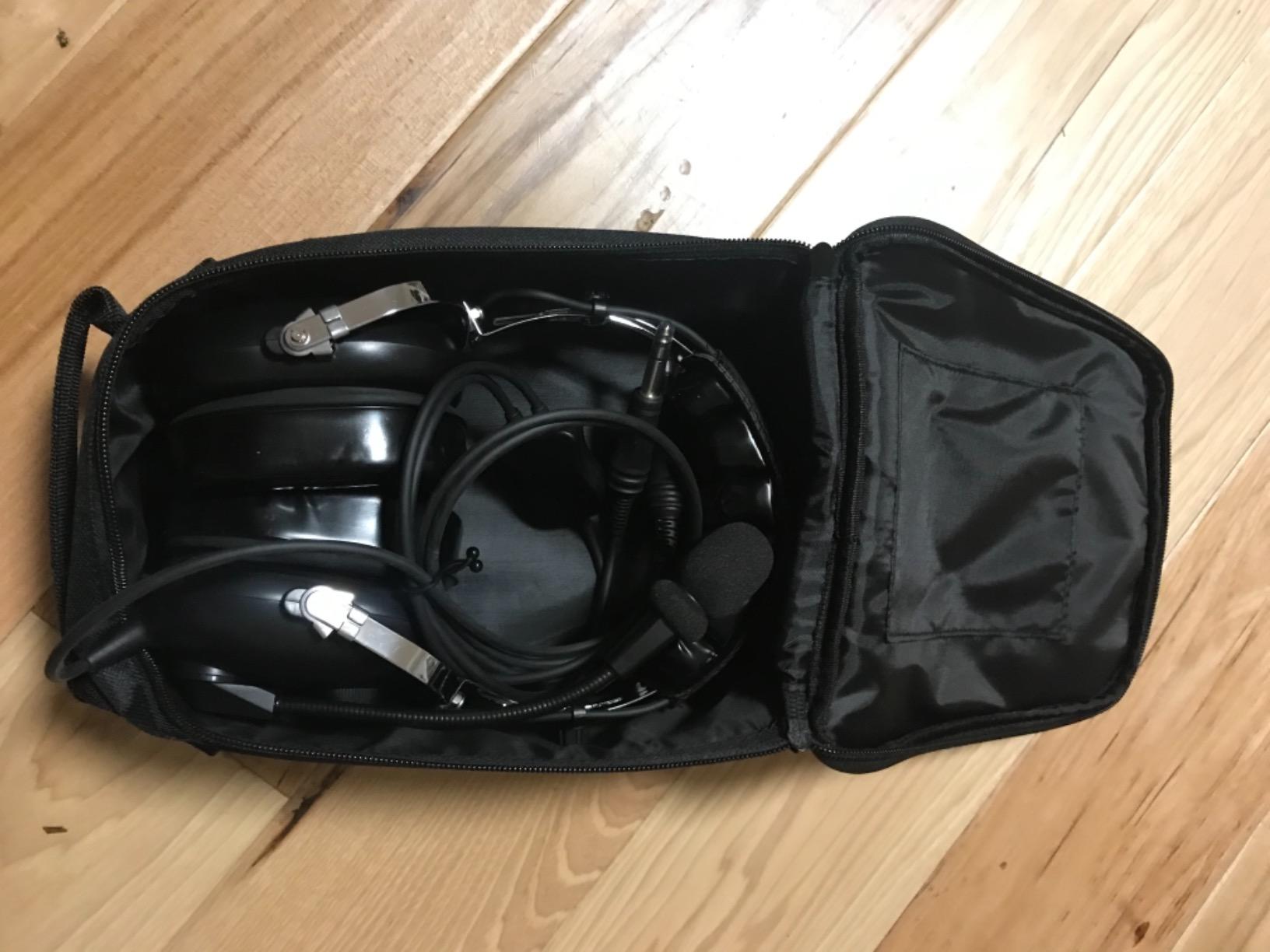
It connects with a standard GA dual plug, so it fits most fixed-wing panels without an adapter, and the electret microphone on the flexible boom transmits adequately for training and local flying. The 24 dB passive rating matches the better-known sets on paper.
Durability is where the reviews diverge. This model carries the highest share of one-star reports in the group, with recurring mentions of build consistency, and the on-ear cups provide less passive isolation than circumaural designs. Owners also report sound and mic quality trailing the established brands, particularly in a loud piston cockpit.
Who the R SPIDER WIRELESS 24 dB suits
It suits a first headset bought on a strict budget, pilots who wear glasses and need adjustable clamp pressure, and anyone who wants music and mobile audio through the headset on short flights.
Where the R SPIDER WIRELESS 24 dB falls short
It falls short for pilots in noisy aircraft, for anyone who wants a headset to keep for many years, and for buyers who care about a long warranty. Treat it as a stepping stone rather than a final headset.
11. UFQ A7 ANR – Genuine ANR at 220 Grams
UFQ A7 ANR Aviation Headset- A7 Could be a Small Version Bxxx X-20 BUT More Comfortable,Clear Communication,Durable,Great Sound Quality for comms and Music with MP3 Input,Free with a Headset Bag
220 g total weight
ANR on 2 AA batteries
350-degree rotating boom
Kevlar cable
Pros
- Very light at 220 g with low clamping force
- Real ANR performance at a fraction of premium pricing
- 350-degree boom allows mic on either side
- Steel headband with Kevlar-reinforced cable
- Dual volume controls and mono/stereo switch
Cons
- Lowest average rating in the group
- Microphone a step below the M-7A on clarity
- AA power means it is unusable passively if cells die
- Shorter 48-hour battery life
- Limited brand recognition and resale value
The A7 answers a question the forums ask constantly: can you get real active noise cancellation without the premium tier price. Owners who try it generally report getting close to premium-brand ANR behaviour for a fraction of the cost, which is a genuine result in this category.
At 220 g with low clamping force it is one of the lighter ANR designs, and the deluxe leather head cushion and ear cushions make that low clamp tolerable. The 350-degree rotating flex boom lets the mic sit on either side, and the steel headband with a Kevlar-reinforced cable is a durability choice you can feel in the hand.
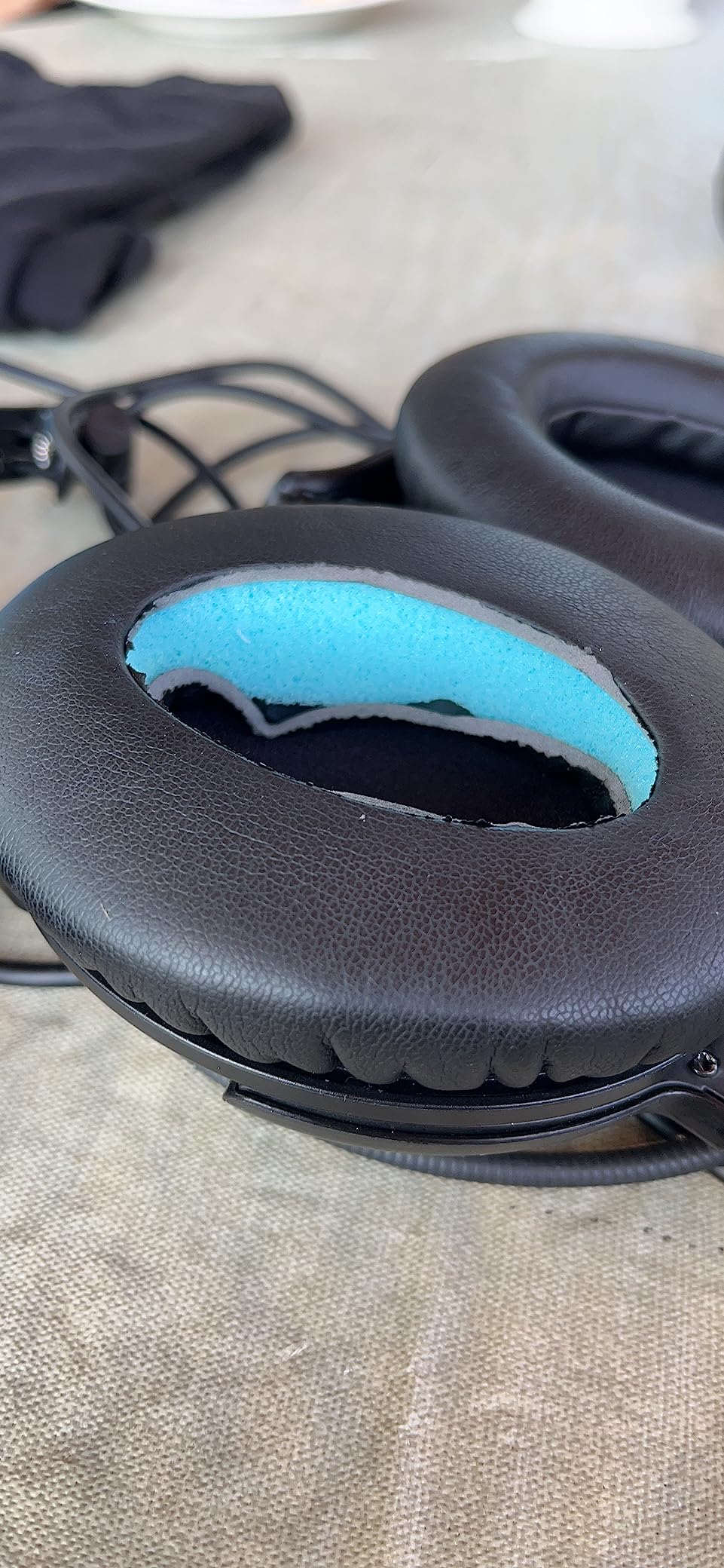
Dual volume controls, a mono/stereo switch, and an audio link cable give it more connectivity than most ANR sets at this level, and the gold-plated twin GA plugs are a nicer detail than the price point suggests. The M-7U microphone on the boom transmits adequately but sits a step below the David Clark M-7A on clarity.
The rating spread is wide, and this is the lowest average in the group. Two AA batteries power the ANR for a listed 48 hours or more, so the set is not usable passively if the cells die, and the shorter runtime means spare batteries travel with you more often. Brand recognition and resale value are also limited.
Who the UFQ A7 ANR suits
It suits a pilot who wants active cancellation, a low clamp force, and a dual-side boom without moving up to the premium tier. It also suits anyone who is firm about carrying spare batteries.
Where the UFQ A7 ANR falls short
It falls short for pilots who prioritise mic clarity on the radio, for anyone who wants a set to keep for a decade with support behind it, and for those who need passive operation when the batteries fail.
12. Faro G2 ANR – Active Compression With a Three-Year Replacement Warranty
Faro G2 ANR (Active Noise Reduction) Premium Pilot Aviation Headset with Mp3 Input – Black
Active noise compression
52 dB stated reduction
3.5 mm aux input
3-year warranty
Pros
- Over-ear passive attenuation is strong in loud GA piston aircraft
- Three-year replacement warranty with responsive service
- Aux input covers music on long solo flights
- Independent per-ear volume control
- Comfortable and easy to adjust
Cons
- Sound described as tinny especially on aux audio
- Microphone sensitivity is low and needs a louder voice
- ANR only attenuates low frequencies
- Supplied leather seals perform well below the optional gel seals
- Battery cover is difficult to remove and runtime is 30 hours
The G2 ANR is the value active headset that educators and FBOs keep recommending, and the reason is the warranty rather than the electronics. A three-year commercial-grade replacement warranty with responsive service centres means a problem gets solved with a new unit rather than a repair order.
What surprised us is how well the over-ear cups attenuate in a loud piston aircraft. Owners report the passive attenuation is genuinely strong in high-cabin-noise aeroplanes, sometimes rivalling far more expensive active sets, because over-ear cups with a deep cavity do work the electronics cannot.
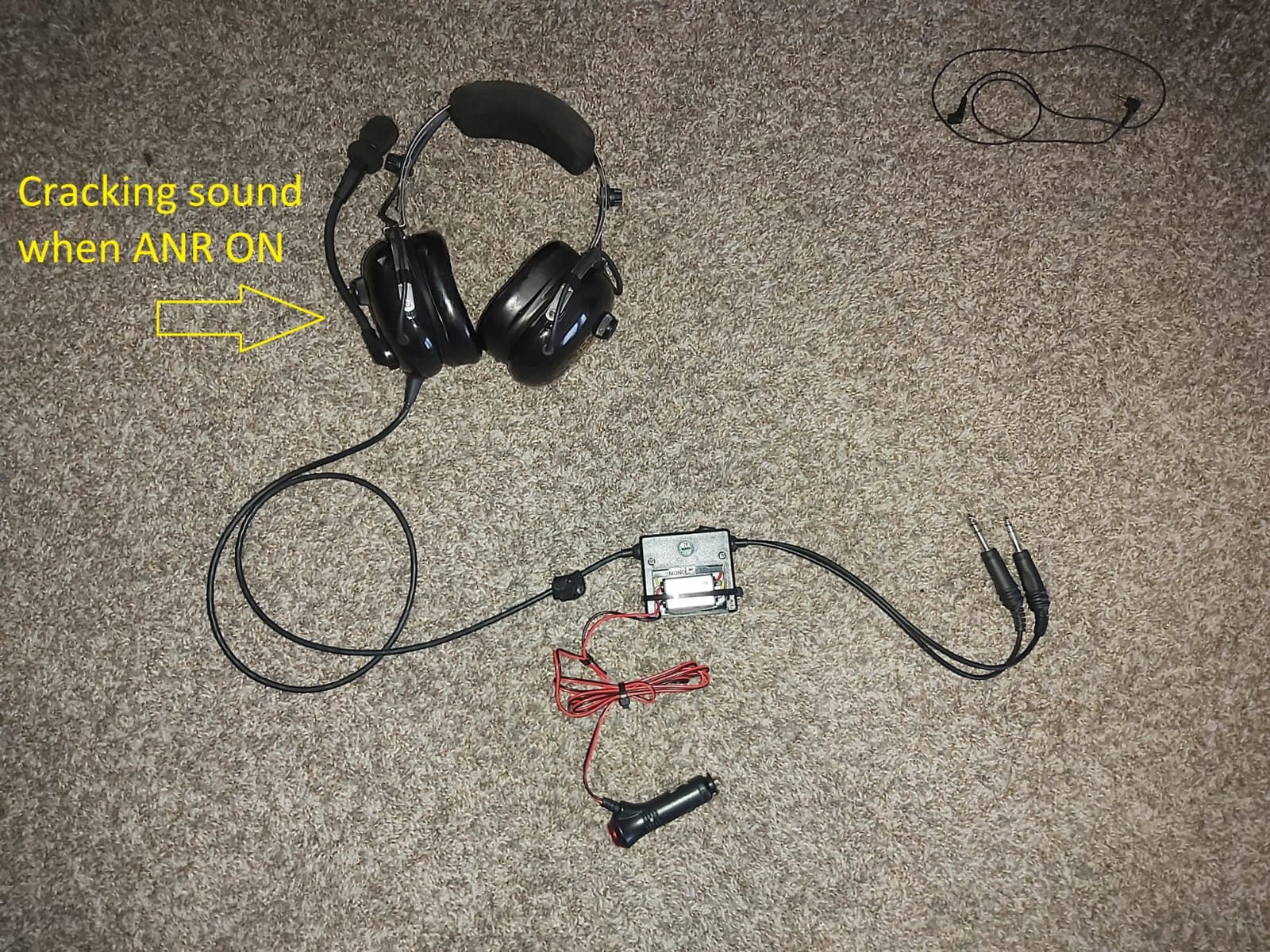
The 3.5 mm auxiliary input accepts MP3 players, radios, phones, and tablets for solo flights, and independent per-ear volume control keeps the two sides adjustable. It is engineered in the United States and rated at up to 52 dB of stated reduction with active noise compression technology.
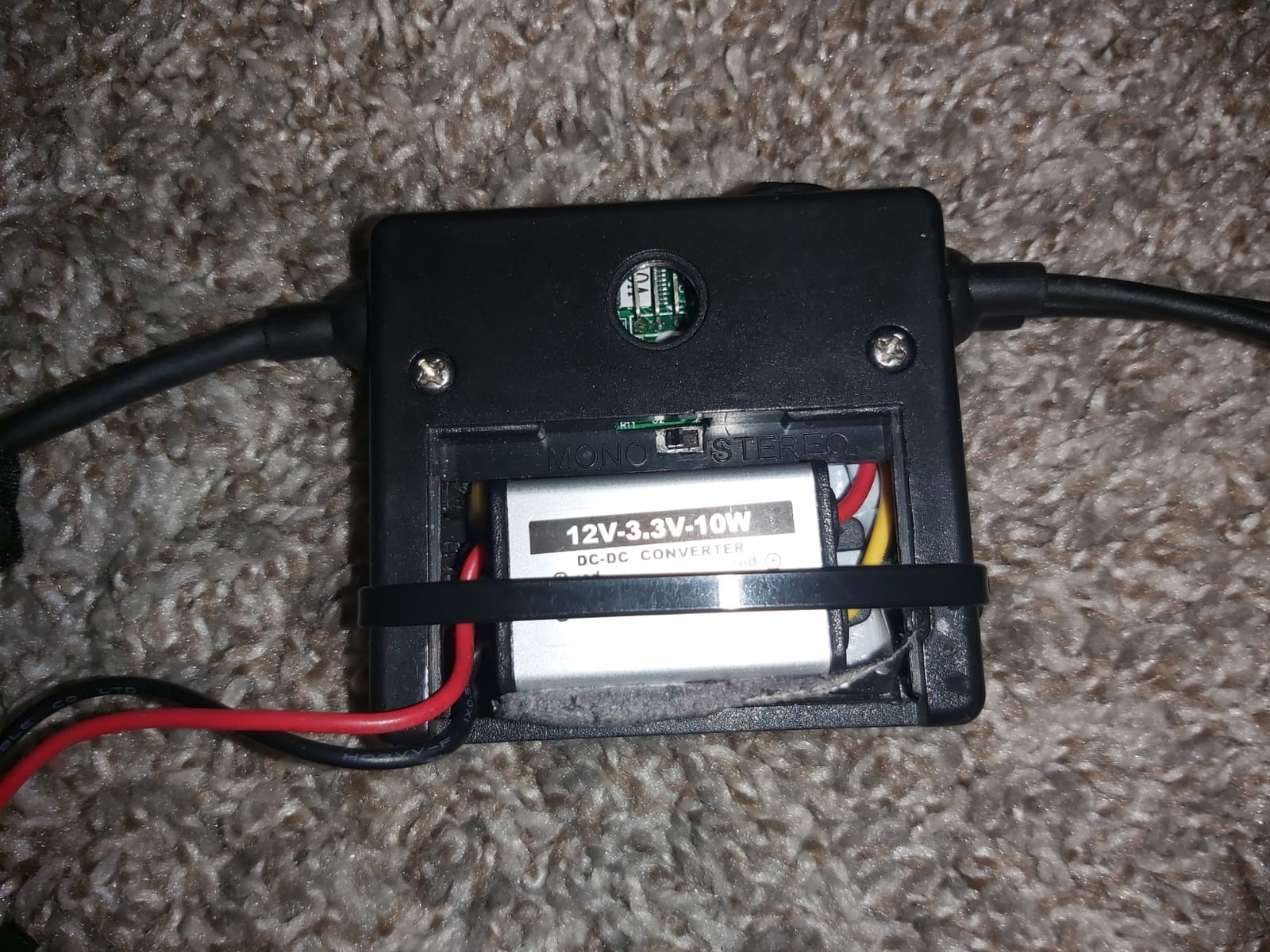
The documented weaknesses are consistent. Sound is described as tinny, especially on aux audio. Microphone sensitivity is low, so you speak louder or adjust intercom squelch. The active component only attenuates low frequencies effectively, the supplied leather seals perform far worse than the optional double-density gel seals, and the battery cover is difficult to remove with a listed 30-hour runtime.
Who the Faro G2 ANR suits
It suits GA pilots who want active electronics and a warranty that replaces rather than repairs. It also suits anyone who prefers passive attenuation in a loud aircraft and wants music on a long solo flight.
Where the Faro G2 ANR falls short
It falls short for anyone who cares about audio quality, for pilots whose aircraft is noisy at high frequencies, and for buyers who need the optional gel seals to get the stated performance. Plan to budget for the upgrade seals.
Aviation Headset Buying Guide: The Features That Actually Matter
The forum consensus, repeated across pilot communities, is that a good fit of the seals matters more than the level of noise reduction, and comfort matters more than both. That ordering is the backbone of this guide. Below is what to look for in an aviation headset, feature by feature, with the models in this roundup named as examples. For a deeper look at the active sets specifically, see our ANR aviation headset roundup, and for the overall ranking see our full headset guide.
1. Active or passive noise reduction
Active noise reduction adds microphones inside the ear cups that sample incoming low-frequency noise and generate an inverse signal to cancel it. It works best on engine drone in the low-frequency range, and its practical gift is that the headset no longer has to clamp hard to block sound, which removes most of the pressure headache. Passive reduction relies entirely on dense cups and a tight seal, needs no power, and never fails. If you fly under two hours at a stretch in a quiet single, passive is enough. Above three hours or in a loud aircraft, ANR changes the experience.
2. Total weight and clamping force
Weight is the feature pilots complain about most and manufacturers understate most. Clamping force matters more than total ounces: a light headset that squeezes will give you a headache before a heavy one that does not. Look for headsets that distribute headband pressure across the crown, and note that ANR designs such as the Bose A30 deliberately reduce clamp force because the electronics do the blocking. In-ear designs like the ProFlight Series 2 remove the problem entirely by taking weight off your head.
3. Ear seal material and cavity depth
Foam ear seals are cheap, replaceable, and the least isolating. Gel and silicone seals, such as those on the David Clark H10-13.4 and the KORE KA-1, sit deeper, seal better, and stay comfortable longer, but they cost more to replace and are often brand-specific. Slow-recovery foam slowly conforms to your head over several flights. Whichever material you pick, seals degrade: foam flattens, gel hardens with age, and both should be replaced on a schedule rather than when they fail.
4. Microphone type and boom articulation
Almost every civilian aviation headset uses an electret condenser microphone, which is a noise-cancelling design and the right choice for nearly all flying. Dynamic microphones handle noisier cockpits but cost more and are rare here. More important than type is the boom: a 360-degree flex boom holds position through turbulence, and a good noise-cancelling element like the David Clark M-7A lets you transmit at a normal speaking volume. A mic you have to shout into produces clipped transmissions, and clipped transmissions get interrupted.
5. Bluetooth with automatic ATC audio priority
Bluetooth on its own is nearly useless in a cockpit, because music or a podcast competing with a clearance delivery is a safety problem. The feature that matters is automatic prioritisation: audio ducks or mutes the moment a transmission begins and returns afterwards. The LIGHTSPEED Zulu 3 calls this ComPriority, the Sierra and the Bose A30 use comparable automatic ducking, and a headset with Bluetooth but no priority behaviour is a distraction rather than a feature.
6. Plug type and aircraft compatibility
This is where people buy the wrong headset. Most general aviation aircraft use dual GA plugs, known as PJ-055 and PJ-068. Helicopters commonly use a single U-174 connector, and turbine and airline panels often use LEMO 6-pin or XLR 5-pin. Buy the variant that matches your panel rather than planning on an adapter, because adapters add a failure point at exactly the moment communications matter. If you fly more than one aircraft type, that changes which headset you should own first.
7. Battery life, power source, and fail-safe behaviour
Two AA batteries remain the norm on wired ANR sets, and the Zulu 3 and the UFQ A7 both work that way. Proprietary rechargeable packs and panel-powered designs exist, and panel power removes the anxiety entirely. The question to ask is what happens when the power dies mid-flight: on most models passive audio still passes through and you keep hearing the intercom, but on some, like the UFQ A7, the set is effectively dead. Carry a spare set of batteries as a habit if your headset needs them.
8. Cable, plug, and strain relief
No competitor guide covers this and it is the most common real-world failure. A headset fails at the strain relief where the cable meets the ear cup or the plug, not at the electronics. Look for a Kevlar-core cable, reinforced connectors, and a cable you can service. The LIGHTSPEED Zulu 3 and the UFQ A7 both use Kevlar-reinforced cabling for that reason. If a manufacturer will sell you a replacement cable, you have bought a headset that will last a decade rather than one that will be replaced.
9. TSO-C139 certification if you fly professionally
TSO-C139 is the technical standard order for aviation headsets, and an FAA-approved headset is a requirement for many airline and turbine operations rather than a preference. The Bose A30 carries FAA TSO and EASA E/TSO-C139a certification after passing 145 tests, which is the certification detail to check before a professional purchase. For recreational and training flying, a non-certified headset is perfectly adequate. If you are unsure whether your operation requires it, ask your chief pilot, not the retailer.
10. Eyewear, head size, and helmets
Eyeglass temple arms are the most common cause of a broken seal, and forum users describe the same problem unprompted: the arms hold the ear cup slightly off your head, and both passive and active reduction drop. The fixes are a thinner frame, temple-arm mods, or a headset with adjustable clamp at the cups, which is why the thumb-screw headband on the R SPIDER WIRELESS set earns goodwill from glasses wearers. Small and large head sizes also need separate consideration, and if you fly a helmet, an in-ear design is usually the only comfortable option.
Two smaller items close this guide. Maintenance is mostly disciplined: replace seals and head pads on a schedule, keep batteries out of a hot flight bag, and coil cables loosely rather than wrapping them tight at the plug. And buying matters: an authorised dealer gives you the full manufacturer warranty, while a marketplace unit may arrive with no warranty and unclear TSO provenance. Our notes on aviation handheld radios cover the same buying question for the other piece of cockpit gear everyone owns.
Frequently Asked Questions
What to look for in a good aviation headset?
Look first at noise reduction type, total weight and clamping force, ear seal material, microphone quality, Bluetooth with automatic ATC audio priority, and the plug type your aircraft needs. Beyond those six, check battery life and fail-safe passive behaviour, cable and strain-relief build quality, and whether it is TSO-C139 certified if you fly professionally. Fit and comfort consistently rank above electronic features in pilot feedback.
Do student pilots need an ANR headset?
Usually not for the first hundred hours or so. A durable passive headset with a good seal, a stable boom microphone, and per-ear volume control will serve a student well in a training aircraft, and it costs far less to replace when dropped or handed on. Move to active noise reduction when your flights regularly run past two hours, when you fly aircraft with high cabin noise, or when comfort starts affecting your concentration on longer flights.
Which is better for pilots, Bose or David Clark?
Bose leads on active noise cancellation, selectable cancellation modes, Bluetooth prioritisation, and TSO-C139a certification for professional panels. David Clark leads on passive seal quality, build durability, and value: the H10-13.4 is the consensus flight school benchmark and is often the smarter buy for a non-full-time pilot. The honest answer is that the right brand depends on whether you need active cancellation or a superb passive seal.
Why do aviation headsets have two plugs?
Most general aviation panels have separate connections for headphones and for the microphone, so a headset uses two plugs, standardised as PJ-055 and PJ-068. The split lets the aircraft intercom handle microphone switching and lets you use different equipment on each side. Helicopters, turbine aircraft, and airline panels often use a single combined connector such as U-174, LEMO 6-pin, or XLR 5-pin instead, which is why matching the plug to your panel matters more than any other compatibility detail.
Can I use rechargeable batteries in an ANR aviation headset?
Only if the manufacturer says so. Most wired ANR headsets are designed for alkaline AA cells, and a lower-voltage rechargeable cell can shut the electronics down or cause the ANR to cut in and out. Some newer models ship with proprietary rechargeable packs or accept panel power, which removes the question entirely. If you want rechargeable capability, choose a headset that lists it rather than assuming an adapter or a third-party cell will work.
Are consumer noise-cancelling headphones a substitute for an aviation headset?
Not safely. Consumer ANC headphones are built for airline entertainment, not for a two-way radio link, and most have no aviation microphone, no aircraft-matched connector, and no intercom integration. A passive aviation headset with an electret microphone, a proper 150-ohm or 300-ohm element, and a dual GA or equivalent plug is a different product class entirely. You can use consumer ANC headphones in addition to a headset for a long sector, but never instead of one.
The Bottom Line on Aviation Headset Features
Judged on the features that survive a real duty cycle, the Rugged. Air RA200 takes our Editor’s Choice: it is the most reviewed headset in this group at 4.6 stars across more than 2700 ratings, it weighs 16 oz, and its seven-year warranty is the longest coverage in the lineup. The David Clark H10-13.4 is the passive benchmark if you want the best seal available, and the LIGHTSPEED Zulu 3 is the one to beat on active cancellation and comms workflow.
Remember the ordering the pilots use: get the seal right, get the weight right, then choose noise reduction to match how long and how loud you actually fly. Get those three right in 2026 and the remaining features are details.