
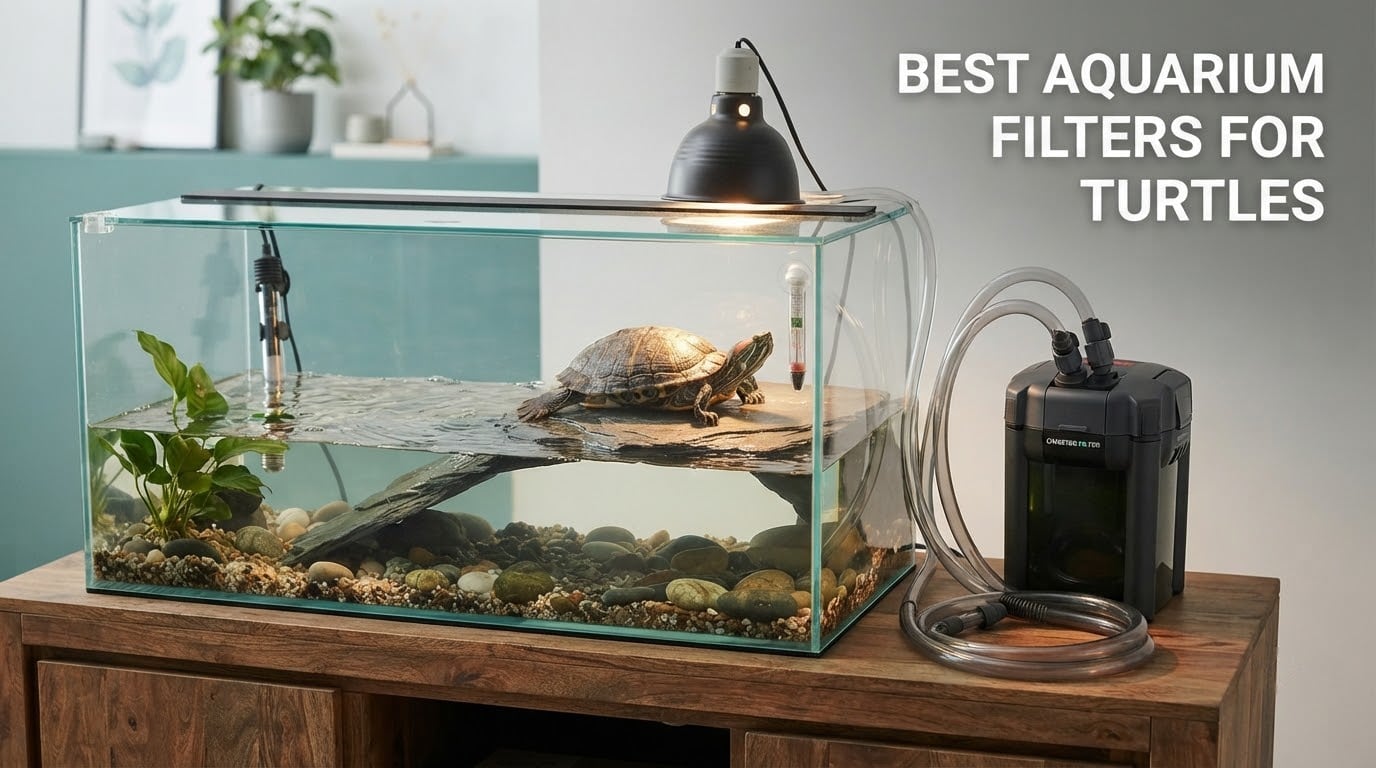
A turtle is a reptile that lives like a fish. It eats in the water, it eliminates in the water, and a mature slider or map turtle can outweigh a whole school of similarly sized neon tetras while producing waste at a rate those fish never approach. That single fact drives every recommendation in this guide to the best aquarium filters for turtles, and it is why the box rating on a filter matters far less than the real bioload in your tank.
Here is the direct answer: size your filter for two to three times the actual water volume in your tank, then halve the manufacturer’s label. A filter advertised for a 70 gallon aquarium is realistically a 35 gallon turtle filter, and a 100 gallon canister behaves like a 50 gallon one once you count scutes, feces and uneaten food. For tanks of 20 gallons and up, an external canister filter is the default answer because it hides the hardware, holds a deep media stack and gives you a spray bar to spread the current so your turtle is not swimming against a jet.
On top of that math sits one more rule that experienced keepers repeat to each other constantly: no filter keeps turtle water clear on its own. Feed outside the basin, change 25 percent of the water weekly, and the filter stops fighting a losing battle. The seven filters below are the ones worth your attention right now, ordered by how much tank they can genuinely carry.
Table of Contents
Top 3 Best Aquarium Filters for Turtles


Tetra ReptoFilter 25905
- 3-stage waterfall filtration
- Basking platform lid
- Multi-direction intake

Zilla Aquatic Internal Filter
- Protective intake grate
- Bio-Holster bacteria holder
- Strong suction cups
Best Aquarium Filters for Turtles in 2026
Every filter in this list is matched to a realistic turtle tank, not a fish tank. The GPH figures are manufacturer pump ratings, and real throughput drops once sponge and ceramic media are loaded, which is exactly why the halving rule above matters.
| Product | Specifications | Action |
|---|---|---|
| Fluval 307 Canister Filter |
|
Check Latest Price |
| Tetra Decorative ReptoFilter 25905 |
|
Check Latest Price |
| Zilla Aquatic Reptile Internal Filter |
|
Check Latest Price |
 PULACO Internal Filter 3 to 20 Gallons PULACO Internal Filter 3 to 20 Gallons |
|
Check Latest Price |
 TARARIUM Adjustable 290 GPH Filter TARARIUM Adjustable 290 GPH Filter |
|
Check Latest Price |
 Zoo Med Turtle Clean 30 Canister Zoo Med Turtle Clean 30 Canister |
|
Check Latest Price |
 Zoo Med Turtle Clean 50 Slimline Zoo Med Turtle Clean 50 Slimline |
|
Check Latest Price |
Two internal filters appear below 20 gallons and two canisters sit at the other end of the range, and that split is deliberate. Small juveniles in shallow tubs need a filter that tolerates a water line two inches deep, while an adult slider in a 75 gallon tank needs media capacity and head pressure that a box filter simply cannot deliver. If you are still choosing a stand or a full tank setup, our aquarium kit roundup covers the surrounding hardware.
1. Fluval 307 Canister Filter: The Quiet Performer for Large Tanks
Fluval 307 Perfomance Canister Filter for Aquariums up to 70 Gallons
Rated to 70 gal
6 lb canister body
eTEC pump
EZ-Lift media baskets
Pros
- Exceptionally quiet pump for a bedroom or office
- Steady pressure and strong head pressure
- Media baskets lift out with one finger
- Large media capacity for a deep stack
- Hardware stays outside the display tank
Cons
- Costs more than internal filters for the same tank size
- Bulky footprint beside the cabinet
The Fluval 307 is the one I keep coming back to, and it earned that spot on a combination of review depth and real-world quietness. With more than 10k reviews averaging 4.4 stars, it has the broadest owner base in this group by a wide margin, which means the failure modes are well documented and the fix is usually a known one.
What sets it apart is the eTEC pump. Fluval claims the motor runs up to 25 percent quieter than the previous generation while drawing about as much power as an LED bulb, and reviewers consistently describe it as the first turtle filter they have owned that disappears into a bedroom. In my experience the hum sits under the sound of the water returning through the spray bar, so you hear your tank rather than a machine.
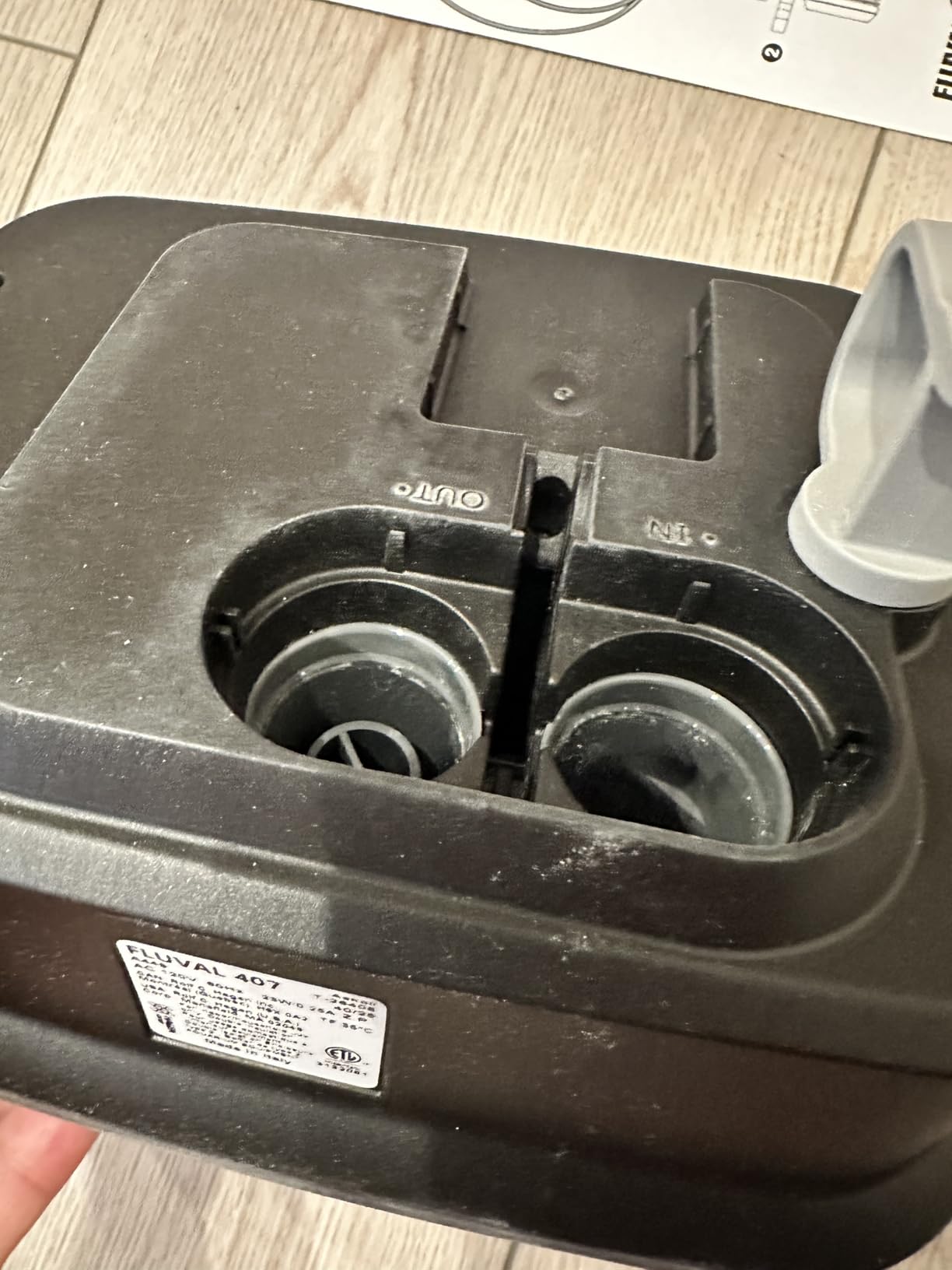
Flow is the other strength. The 307 holds constant pumping pressure rather than sagging as media loads, so a 40 gallon turtle tank gets real turnover instead of the trickle you get from a saturated sponge. Buyers of heavier-loaded setups also point out that the large media capacity lets you run sponge, floss and ceramic rings in a proper stack without cramming anything.
Serviceability is where the EZ-Lift baskets earn their keep. A center handle means you lift the whole media tray with one finger instead of fishing individual baskets out of a canister one at a time, and that matters when you are doing weekly rinses in a damp cabinet. Canisters like this also keep every part of the plumbing outside the habitat, which means your turtle cannot reach a hose clamp and a basking platform stays uncluttered.
What you give up to get it
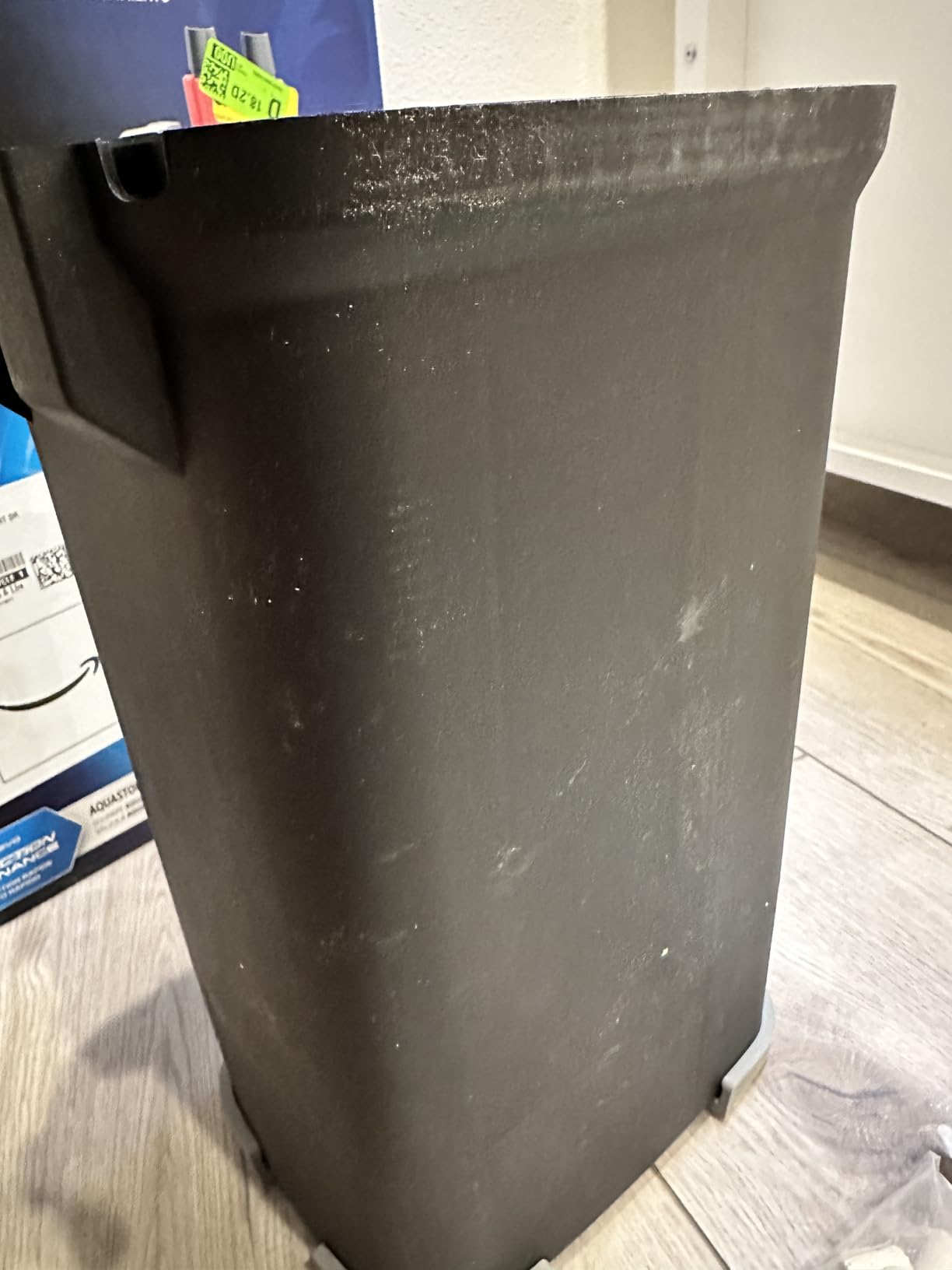
The obvious trade-off is money and floor space. It is the largest and heaviest unit here at 6 pounds, and the body needs clearance behind the stand that a slim internal filter will happily ignore. If your stand is tight or your tank sits in a small cabinet, the footprint is the thing you will notice first.
It is also more filter than a 20 or 30 gallon turtle tank needs. Applying the halving rule, treat its 70 gallon label as roughly 35 gallons of turtle water, and stop there. Pushing an 80 gallon adult map turtle setup through this unit is exactly what the halving rule exists to prevent.
Who should buy it
Adult turtles in tanks from 40 to 70 gallons, anyone with two animals in one setup, and any keeper whose tank lives in a bedroom, office or living room where pump noise would otherwise be the thing they notice. It is the safe, low-regret choice, and the review volume suggests you will find owners who have already answered whatever question you are about to ask.
2. Tetra Decorative ReptoFilter 25905: Filtration That Disappears Into the Decor
Tetra Decorative ReptoFilter Terrarium Filter For Frogs, Newts & Turtles
3-stage filtration
Waterfall outlet
8.25 x 11 x 9 in
2-year warranty
Pros
- Stone waterfall look blends into rock and plant decor
- Lid doubles as a basking platform
- Pop-out cartridges make cleaning fast
- Intake holes pull from several directions
- Quiet once assembled
Cons
- Flow is low for a full adult turtle bioload
- Bulky footprint for a slim internal filter
- Some buyers report early pump failure
- Cartridges cost more in physical stores
This filter has been on sale since 2006, which tells you more about its staying power than any spec sheet. Just under 8000 reviews at 4.4 stars means almost any problem you might hit has already been hit by someone else, usually on a juvenile amphibian tank rather than a full-grown slider.
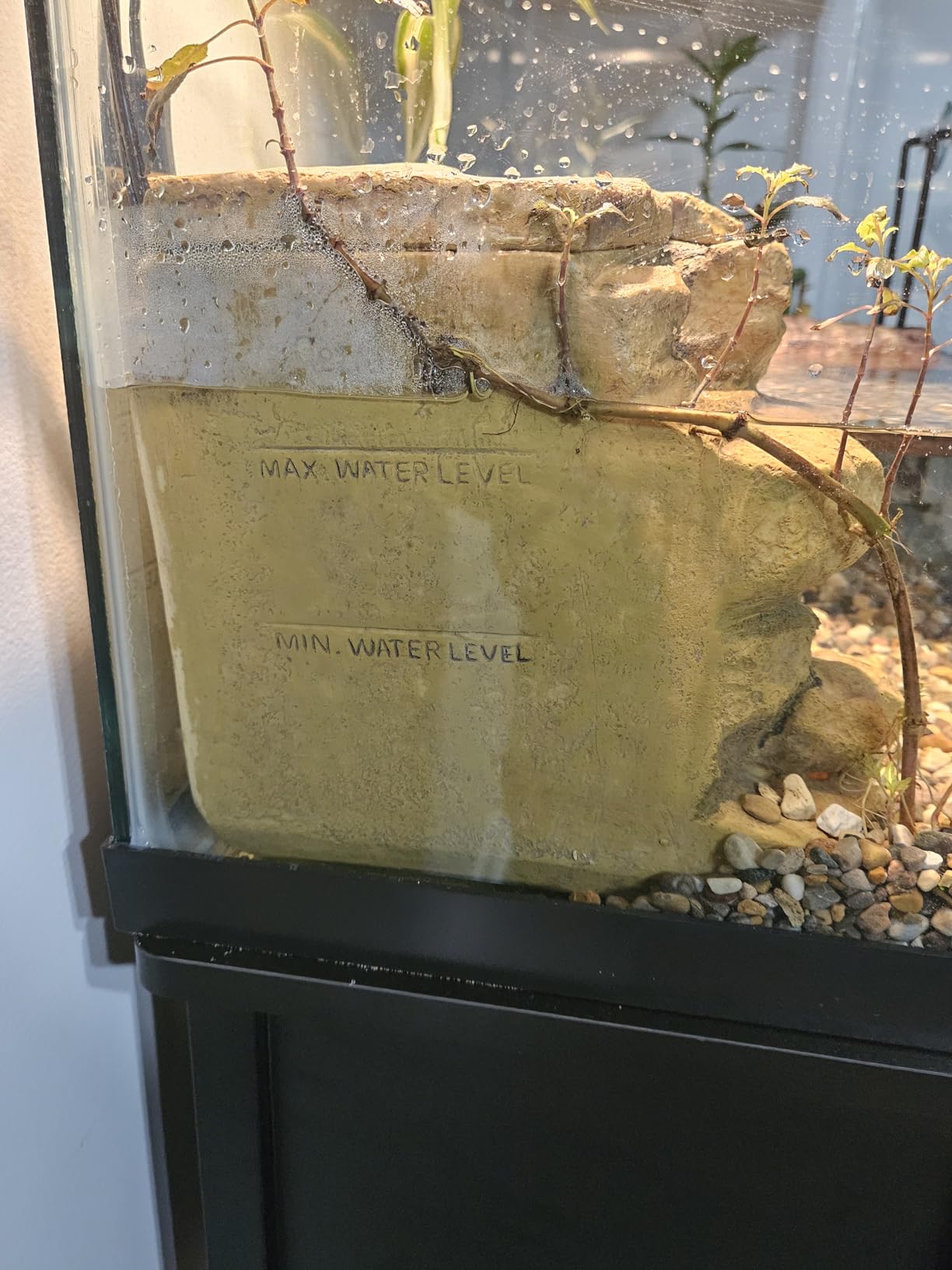
The pitch is visual as much as mechanical. It is a filter, waterfall and basking platform in one stone-textured unit, and on a planted or rock-themed setup it genuinely disappears. Owners who were tired of black plastic boxes dominating the corner of the habitat consistently single that out as the reason they bought it.
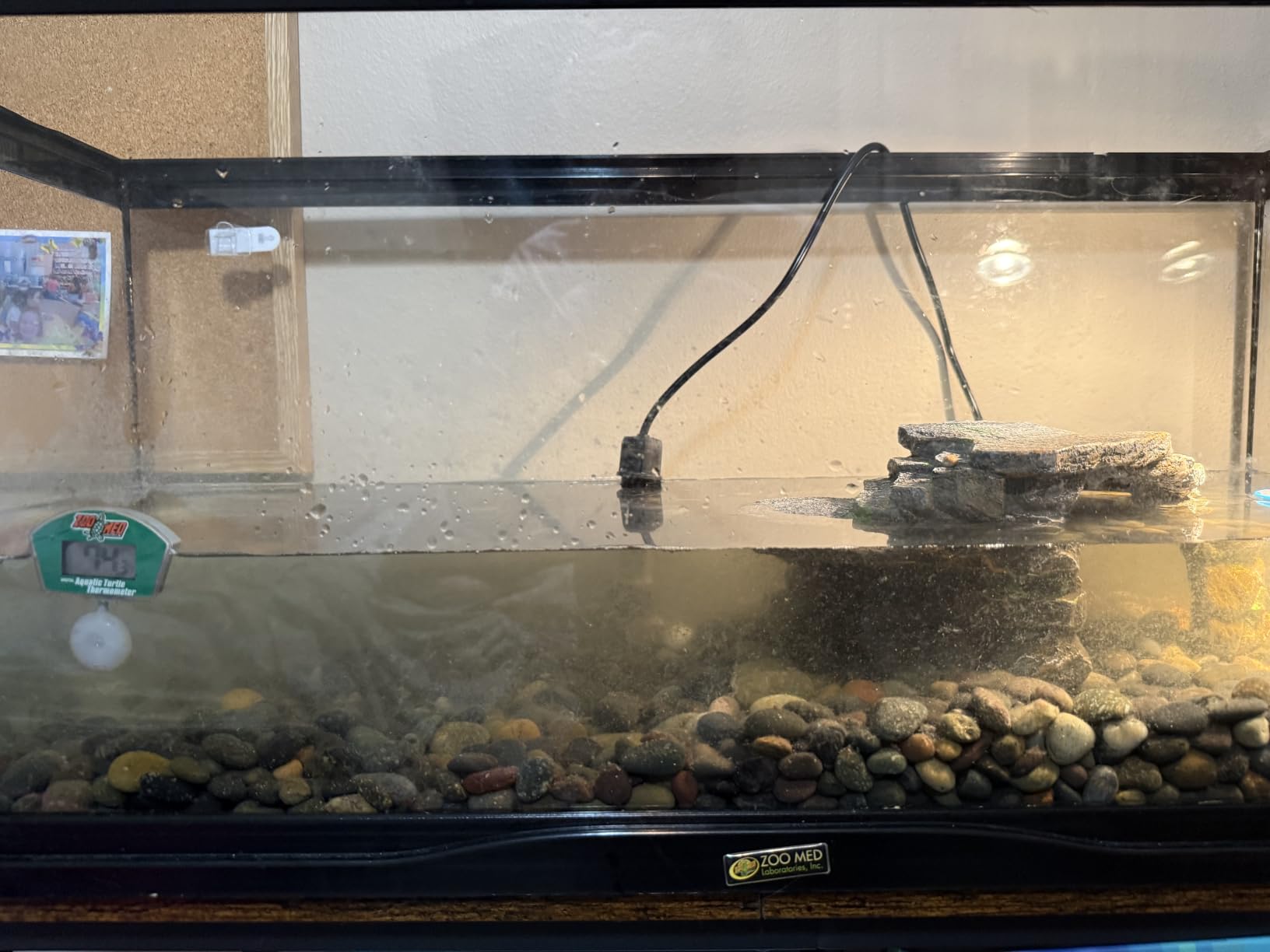
The dual-function lid is the smart part. It keeps reptiles out of the intake and gives you a dry platform above the waterline in one piece, which is convenient when your turtle is the type that likes to haul out and sit in the current. The dime-sized intake holes around the base also pull from several directions rather than one face, so a scute or piece of food blocking one side will not kill the flow outright.
Cleaning is cartridge-based and the cartridges pop straight out, so there is no disassembly and no mess. The trade-off is recurring cost, and physical pet stores tend to charge more for the replacement cartridges than buying them alongside the filter would.
Why it is a supplement, not a workhorse
The honest limitation is flow. Reviewers repeatedly describe it as background or supplemental filtration, which is fine alongside plants and light stocking but marginal as the only filter for a large adult turtle. Most complaints about early pump failure cluster on pumps that had been running hard for months, not on units that were simply installed.
If your turtle is a full-grown slider in a 40 gallon or larger tank, treat this as a second stage for clarity and a basking surface, and pair it with something that moves more water. For a hatchling or juvenile in a 20 gallon tank, it can carry the load on its own.
Who should buy it
Keepers with small turtles, shallow or screen-covered habitats, and anyone who cares how the tank looks as much as how it functions. It is the most decorated-friendly option in this roundup and the least demanding to maintain on a weekly schedule. Our aquarium stand guide covers the furniture side if you are rebuilding the setup around it.
3. Zilla Aquatic Reptile Internal Filter: The One Built Around Animal Safety
Zilla Aquatic Reptile Internal Filter for Turtles and Amphibians, Medium
Up to 40 gal versions
Protective intake grate
Bio-Holster holder
1.5 lb
Pros
- Protective grate keeps turtles and amphibians out
- Bio-Holster supports beneficial bacteria
- Strong suction cups hold on glass
- Includes a carbon cartridge for odor and debris
- Straightforward to set up and service
Cons
- Replacement cartridges add a recurring cost
- Flow is limited versus canisters on large setups
The Zilla is the one I recommend when a tank houses juveniles or amphibians alongside the water, because the protective grate is the entire design brief. With over 3100 reviews at 4.2 stars, it is the most established reptile-specific internal filter on the market, and the suction cups are described as hearty rather than decorative.
Its Bio-Holster cartridge holder is the part that interests me most. Rather than a flat carbon pad that does one job, the holder is shaped to give nitrifying bacteria a protected surface, which is what actually keeps ammonia down over time. Carbon handles odor and debris; the bacteria handle the waste.
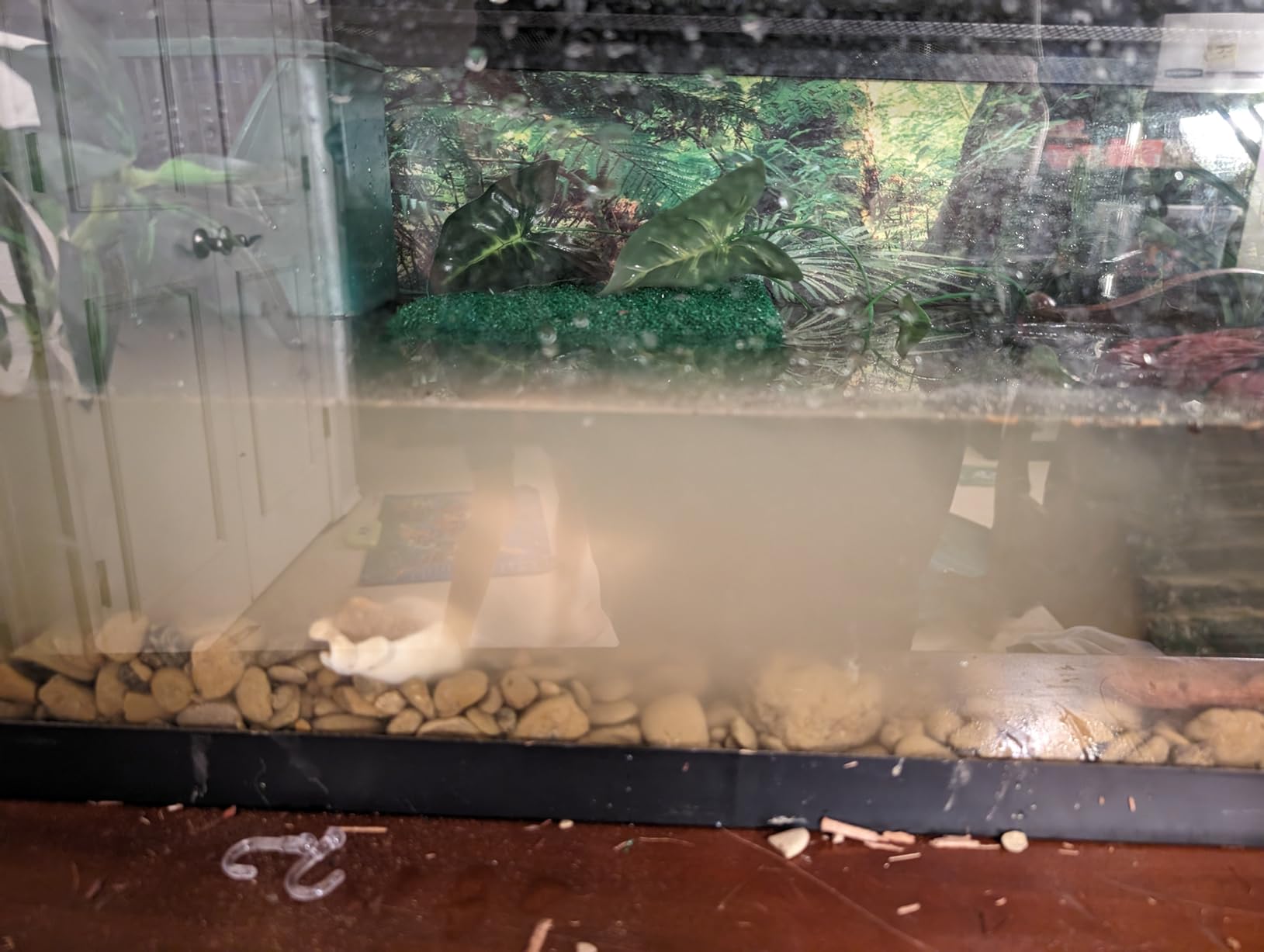
Installation takes about a minute on a smooth glass wall, and the housing sits inside the habitat where you can see it at a glance. It comes in versions rated up to 20 gallons and up to 40 gallons, so the size you want is a matter of which label you pick rather than a compromise.
The recurring cost is the trade-off that shows up in reviews most often. Carbon cartridges are consumables, they need replacing on a schedule, and that cost adds up across years in a way that a canister filled with reusable ceramic rings does not.
Where the flow ceiling bites
Capacity is the real limit. Compared with a canister moving several hundred gallons an hour, this unit is built for tanks up to 40 gallons in fish terms, and turtles demand more. If you apply the halving rule honestly, the larger version behaves best around a 20 gallon turtle tank.
That is not a flaw so much as a boundary. A 20 gallon tank with a juvenile does not need more than this, and paying for canister plumbing you will never use adds setup time you do not need to spend.
Who should buy it
Juvenile turtles, hatchlings, amphibian mixes, and anyone who has ever watched in horror as a small animal got its head into a mesh intake. It is the safest internal option in this guide and the easiest to point at a beginner and say buy this one.
4. PULACO Internal Filter 3 to 20 Gallons: The Shallow-Water Workhorse
PULACO Aquarium Internal Filter 3 to 20 Gallons, for Turtle Tanks, Reptiles, Amphibians, Frog, Cichlids, Newt or Fish Tank
5W 132 GPH pump
1.9 in minimum line
12.31 oz
1 year warranty
Pros
- Works at a very shallow 1.9 inch water line
- Quiet 5 watt pump with stable flow
- Waterfall outlet adds real aeration
- Removable debris sleeve cleans easily
- Compact body hides among decor
Cons
- Suction cups are weak under weight
- Hinge on the housing can snap
- Some buyers report pump shutdowns
- Fine mesh can be torn by animals
This is the filter to buy for a tub setup, a shallow pan, or a hatchling tank where the water sits a couple of inches deep. The 1.9 inch minimum operating line is the number that matters, and almost nothing else on the market competes on it.
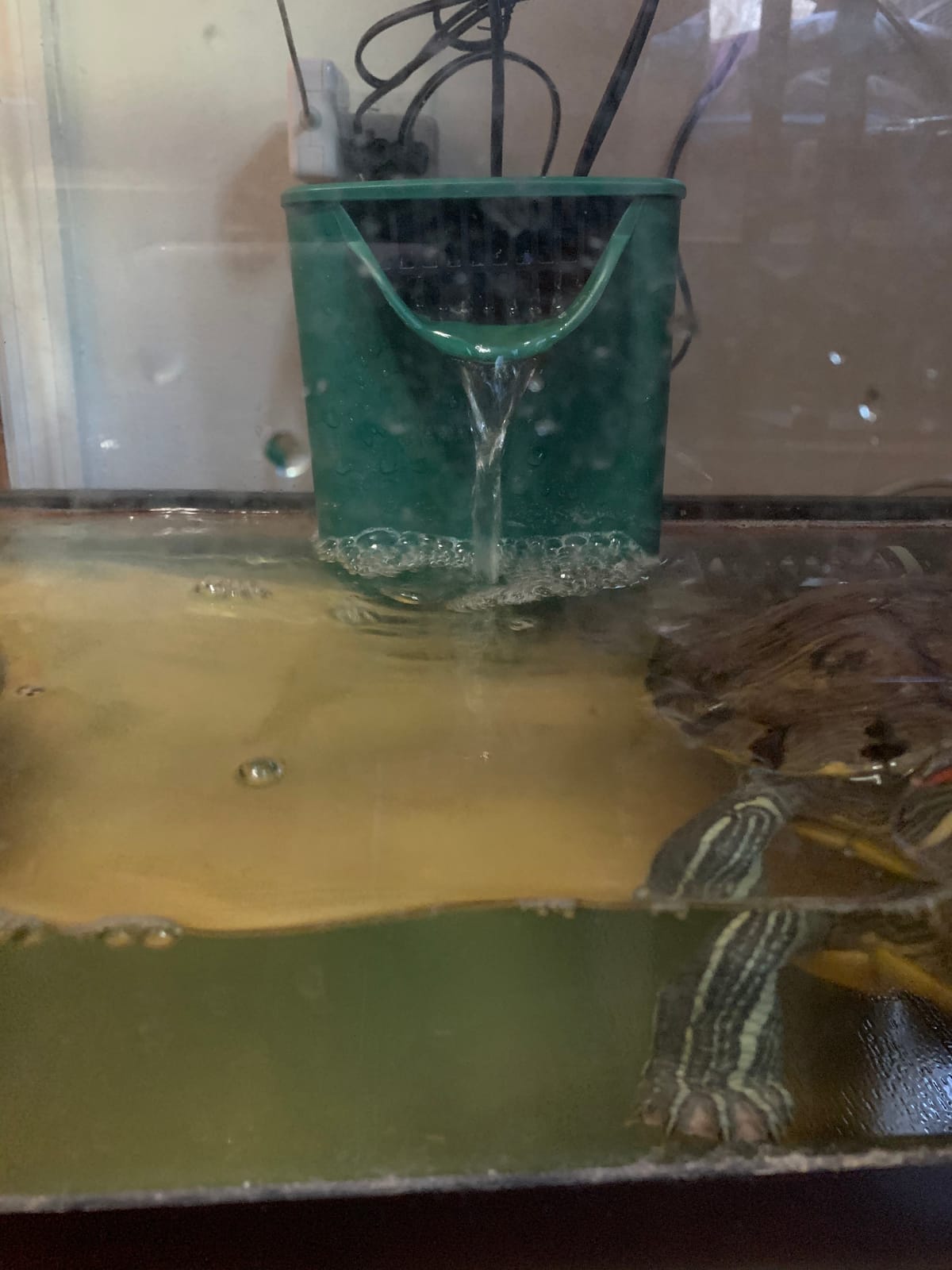
At 12.31 ounces and a 5 watt pump rated at 132 GPH, it is also the least demanding machine in the roundup to live with. The waterfall outlet agitates the surface, which is genuinely useful in a shallow tank where the water is wide but thin and would otherwise go still and smell.
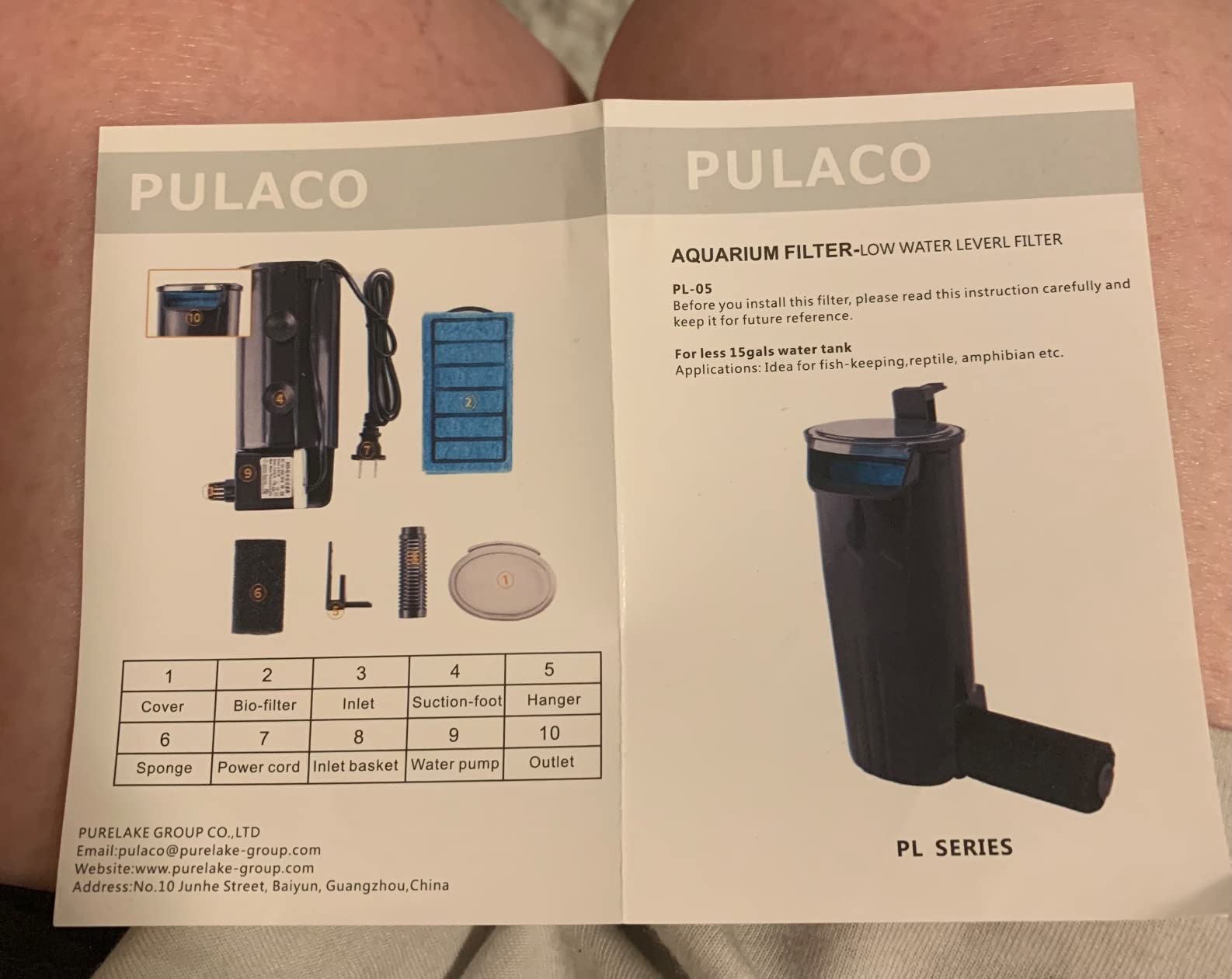
Cleaning is the removable debris sleeve. You pull the plate free, slide the sleeve off, rinse everything in dechlorinated water from the tank, and put it back. No media to replace, no cartridges, nothing to buy later, which is exactly why it suits a first tank.
The rating distribution is the caveat. Reviewers are broadly positive about how quiet and how simple it is, but a meaningful slice report the pump shutting down after days or weeks, and the mounting hardware is the most common specific complaint: weak suction cups and a plastic hinge that can snap.
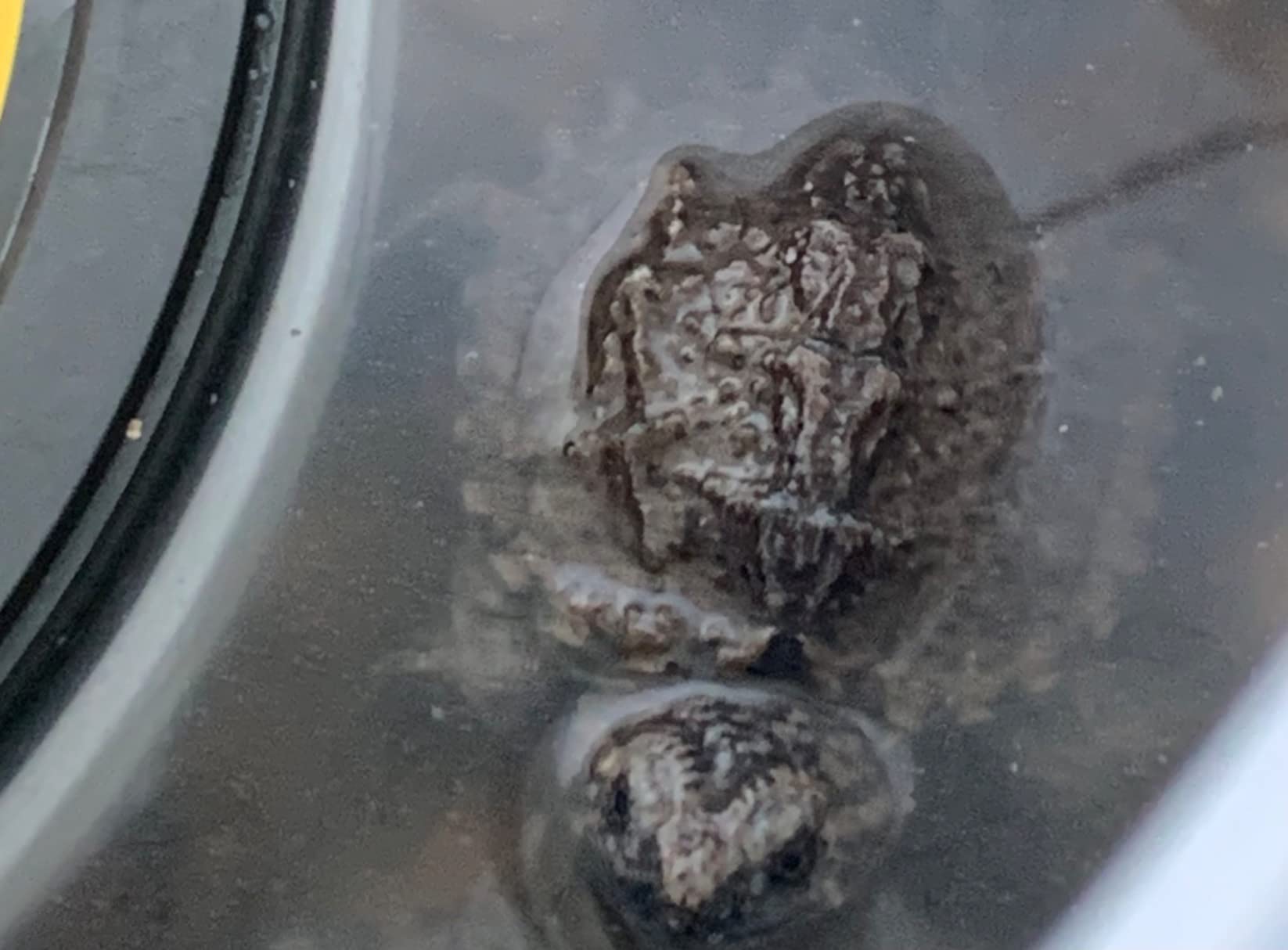
How to keep the mounting failure out of your tank
Two fixes handle most of it. First, add a small bracket or a piece of flat rock under the housing so the weight is not hanging from the suction cups alone, which is the same retrofit turtle keepers make on most internal filters. Second, keep the intake mesh intact, because turtles pull at things and a torn screen means the pump runs dry and dies faster than any amount of rinsing would have.
Be realistic about its ceiling. 132 GPH sounds strong but the 20 gallon label is a fish rating, so think of this as a turtle filter for a tank holding roughly 10 gallons of actual water.
Who should buy it
Shallow tubs, grow-out tanks, juvenile set-ups, and anyone who wants a turtle tank working this week without a canister, plumbing or a cabinet to hide it in. It is the lowest-commitment way to stop a small turtle tank from going foul.
5. TARARIUM Adjustable 290 GPH Filter: The Best Match for 40 to 75 Gallon Tanks
Turtle Tank Filter Aquarium Filter Power Adjustable 20-75 Gal. 290GPH Large
290 GPH rated
Adjustable flow valve
2.6 in minimum level
3 lb
Pros
- Three-stage sponge plus ceramic bio-balls improves clarity
- Adjustable flow suits different tank sizes
- Quiet enough to be described as calming
- Top media lid speeds up cleaning
- Well sized for 40 to 75 gallon turtle tanks
Cons
- Suction cups struggle with the running weight
- Can pull up aquarium sand if unsupported
- A minority report loud noise or early motor failure
This is the filter that answers the question most turtle keepers are actually asking, which is what to put on a 40 gallon tank with a growing adult in it. At 290 GPH with an adjustable flow valve and a three-stage stack, it moves plenty of water and lets you back it off when the current gets strong.
The media layout is the difference. A double-sided mesh sponge in white and black handles mechanical filtration on the front face and finer particles on the back, and the third stage of ceramic bio-balls gives nitrifying bacteria a large porous surface. Reviewers report noticeably clearer water and less odor once that stack is established.
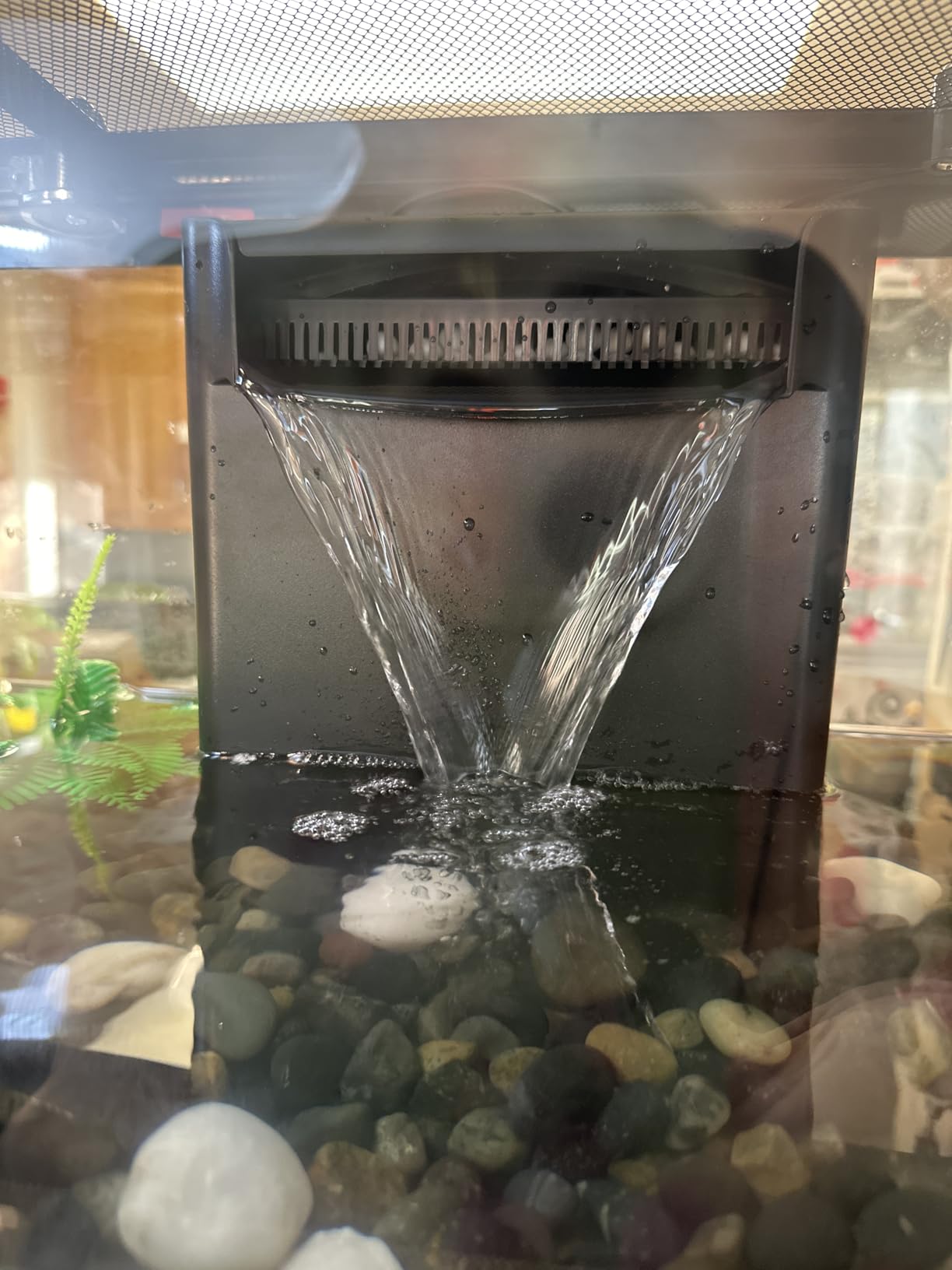
Flow control matters more than most sellers admit. A turtle that spends its day wedged against the outflow is a stressed turtle, and being able to turn the valve down, or hang a wider spray bar off the outlet, is what separates a good turtle setup from a power jet pointed at an animal.
The top-access media lid is the feature that saves you time. Instead of pulling the whole unit apart and fishing baskets out of the housing, you lift the lid and swap or rinse media in place. On a weekly rinse schedule that is the difference between a two-minute job and a wet floor.
The two practical problems
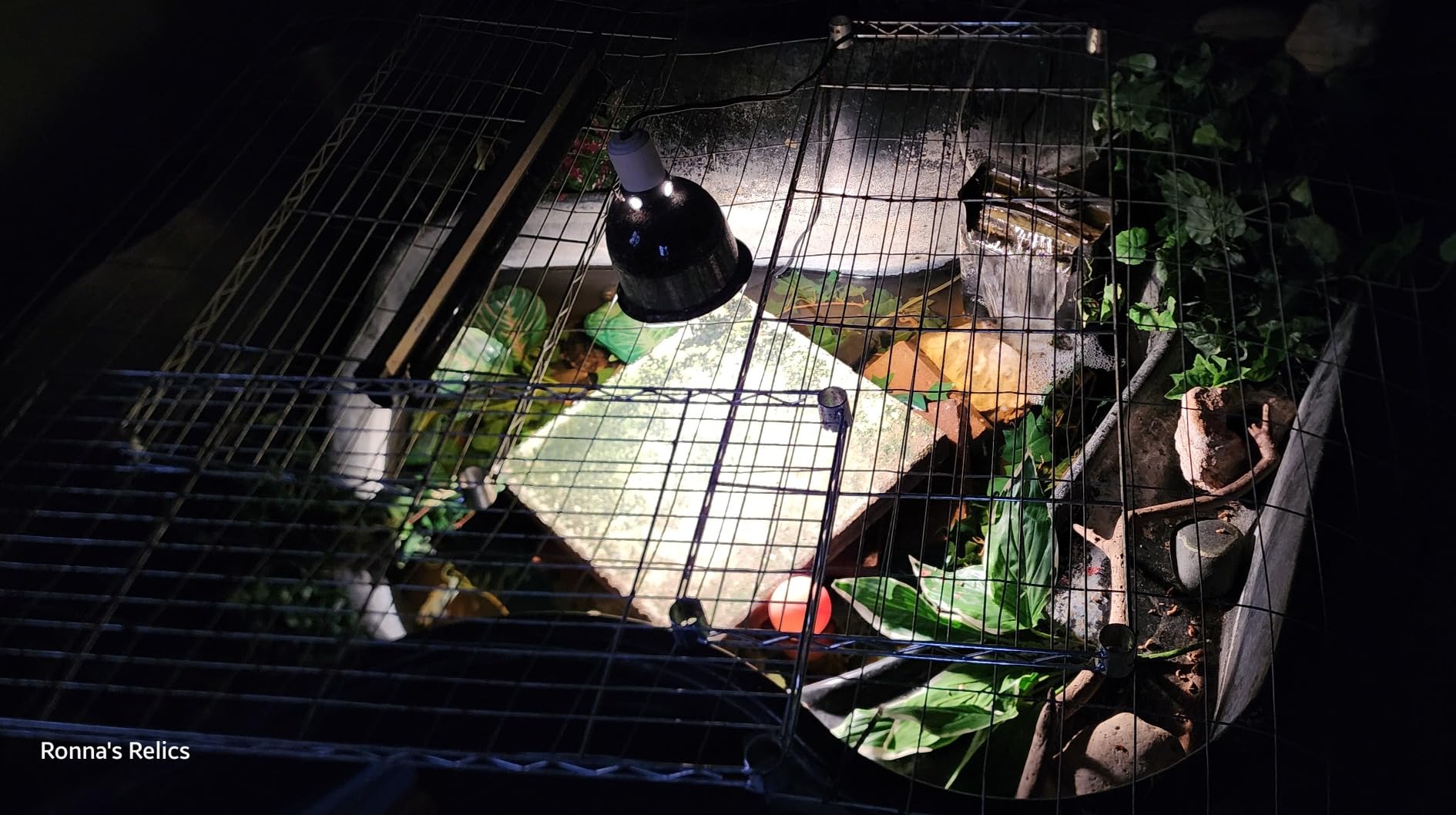
Mounting is the first. The suction cups alone will not hold a 3 pound housing once water is flowing, so brace it from underneath with a bracket or a tile, and lay a strip of substrate or gravel beneath it if you run a sand bottom, or the housing will pull sand up into the intake. The 2.6 inch minimum water line also rules this one out for very shallow tubs.
Durability is the second. Most owners are happy, but a minority report louder-than-expected noise or motors that fail within weeks or months, so consider it a mid-tier build rather than a premium one.
Who should buy it
One adult turtle in a 40 to 75 gallon tank, keepers who want media capacity without the bulk of a full canister, and anyone who values being able to adjust flow over having the loudest pump in the room. For a 55 gallon tank, a large spray bar that disperses the return is the standard fix for an overpowered current.
6. Zoo Med Turtle Clean 30 Canister: A Compact Canister for Modest Tanks
Zoo Med Turtle Clean 30 External Canister Filter for Aquatic Turtle Habitatsup To 30 gallon
Up to 30 gal
18 in L by 15 in W by 27 in H
Spray bar included
1.2 lb
Pros
- External canister keeps hardware out of the habitat
- Spray bar gives strong surface aeration
- Adjustable flow control dials circulation down
- Removable hose-connecting device simplifies servicing
Cons
- 30 gallon rating is modest for adult turtles
- Tubing length needs routing and space
The Zoo Med Turtle Clean 30 is the reason canister filters are no longer only a premium-tier purchase. It weighs 1.2 pounds, it sits outside the habitat, and it does the two things a canister is supposed to do: hide the hardware and move water.
The included spray bar is the feature reviewers praise most. A spray bar spreads the return across a wider area of the surface instead of concentrating it in one jet, which improves oxygenation and stops your turtle from parking itself in the current. Combined with the adjustable flow control, you have real control over how much circulation the tank sees.
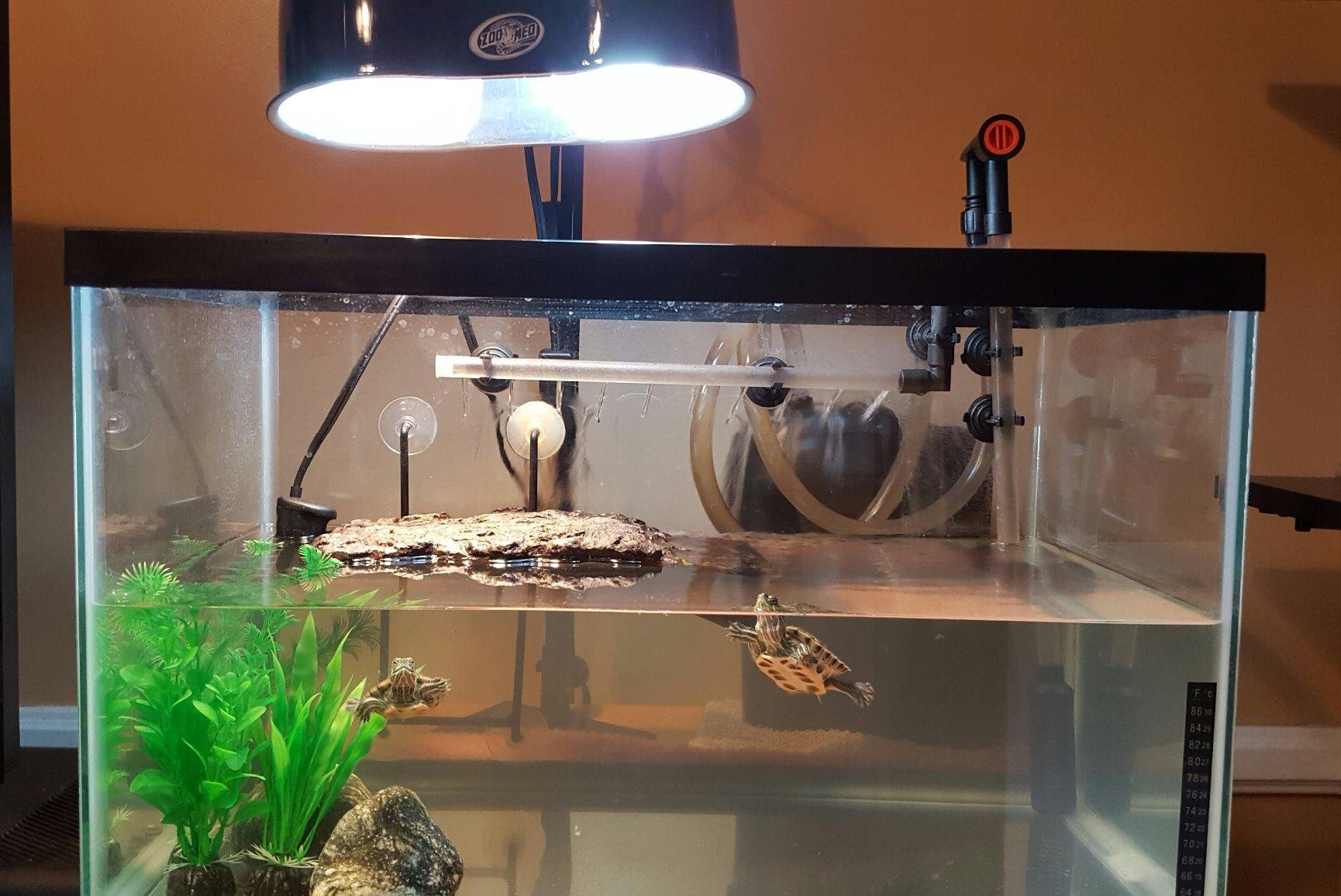
Activated carbon is the purification method, which is what you want in a turtle habitat where odor and discoloration are the visible problems. The removable hose-connecting device makes setup and future disassembly less of a fight than a fixed fitting.
Capacity is the honest limit. At 30 gallons of label capacity, apply the halving rule and treat it as a 15 gallon turtle filter, which suits a single juvenile or a smaller adult far better than a full-grown slider in a 30 gallon tank.
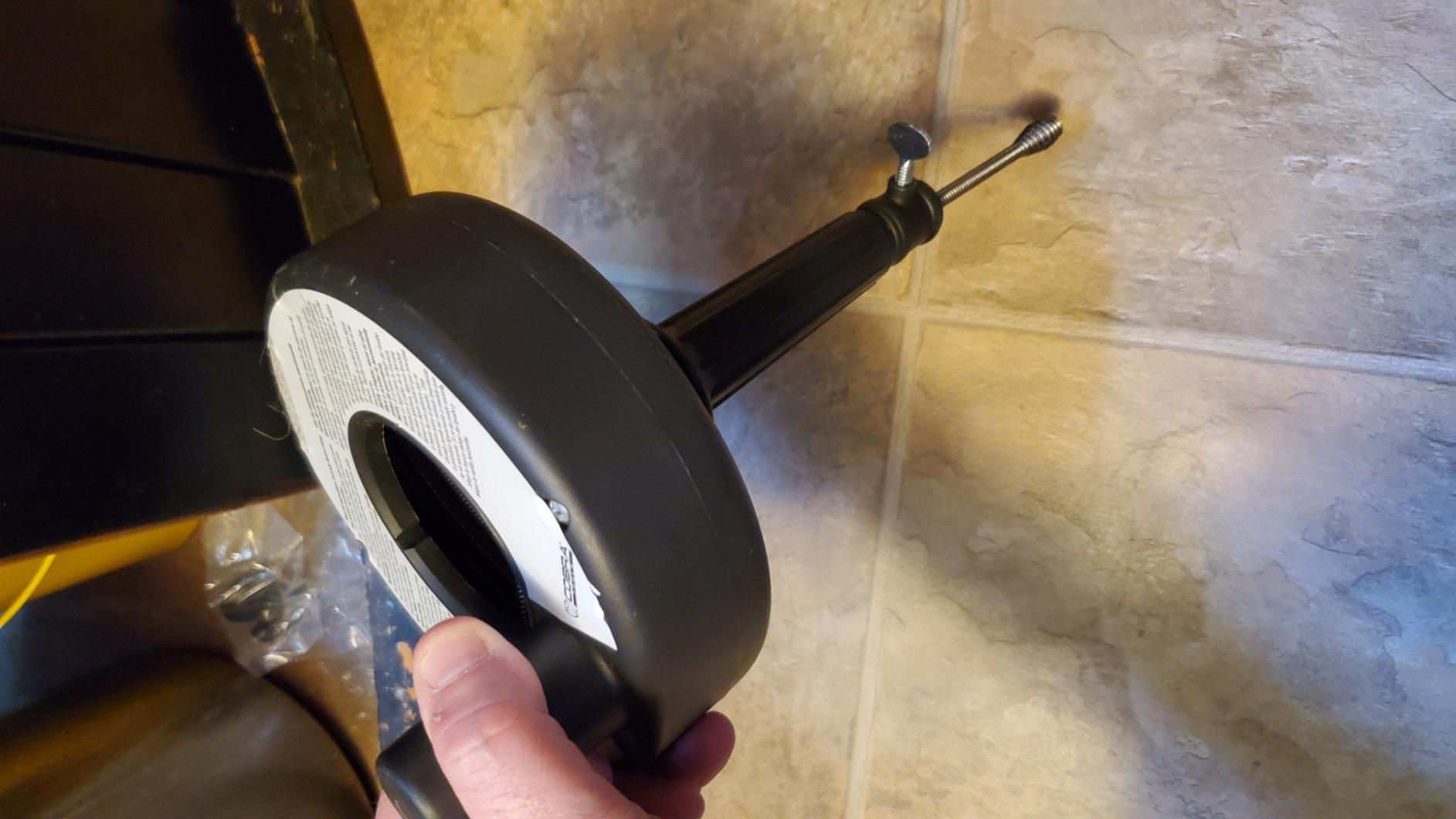
Plan the plumbing before you buy
Two things catch people out. The canister must sit lower than the water line in the tank, or the intake can pull air and the filter will lose prime, and that means leaving enough hose length to run a clean, straight path rather than a tight coil. Coiled or kinked hose is a leading cause of weak flow in setup after setup.
The second is space. You need somewhere to put a canister body plus the loop of tubing behind or beside the stand, and if that space does not exist, an internal filter is the more realistic choice.
Who should buy it
Keepers moving up from an internal filter who want the canister layout without the footprint, juvenile and mid-size turtles, and setups with a basking platform that leaves little room inside the tank. It is the cheapest way to own canister plumbing in this entire roundup.
7. Zoo Med Turtle Clean 50 Slimline: The Canister for Tight Stands
Zoo Med Turtle Clean External Canister Filter, 50-Gallon
200 GPH flow
Up to 50 gal
11.2 x 9.5 x 14.5 in
Spray bar included
Pros
- Slimline body fits where bulkier canisters cannot
- 200 GPH suits habitats up to 50 gallons
- Spray bar increases surface oxygenation
- Handles mechanical
- biological and chemical stages
- External placement keeps the habitat clear
Cons
- Weakest rating distribution in this group at 17 percent one-star
- Cartridge and ceramic media need regular replacement
The 50 is the same idea as the Zoo Med canister above with one change that matters in real homes: it is slim. The body is 11.2 by 9.5 by 14.5 inches, which is narrow enough to slide into a cabinet gap that a full-size canister would not clear.
Flow is rated at 200 GPH with a spray bar for oxygenation, and the filtration is a double system combining carbon and ceramic media with internal biological recirculation. That means mechanical, biological and chemical stages run in one housing rather than needing a second unit.
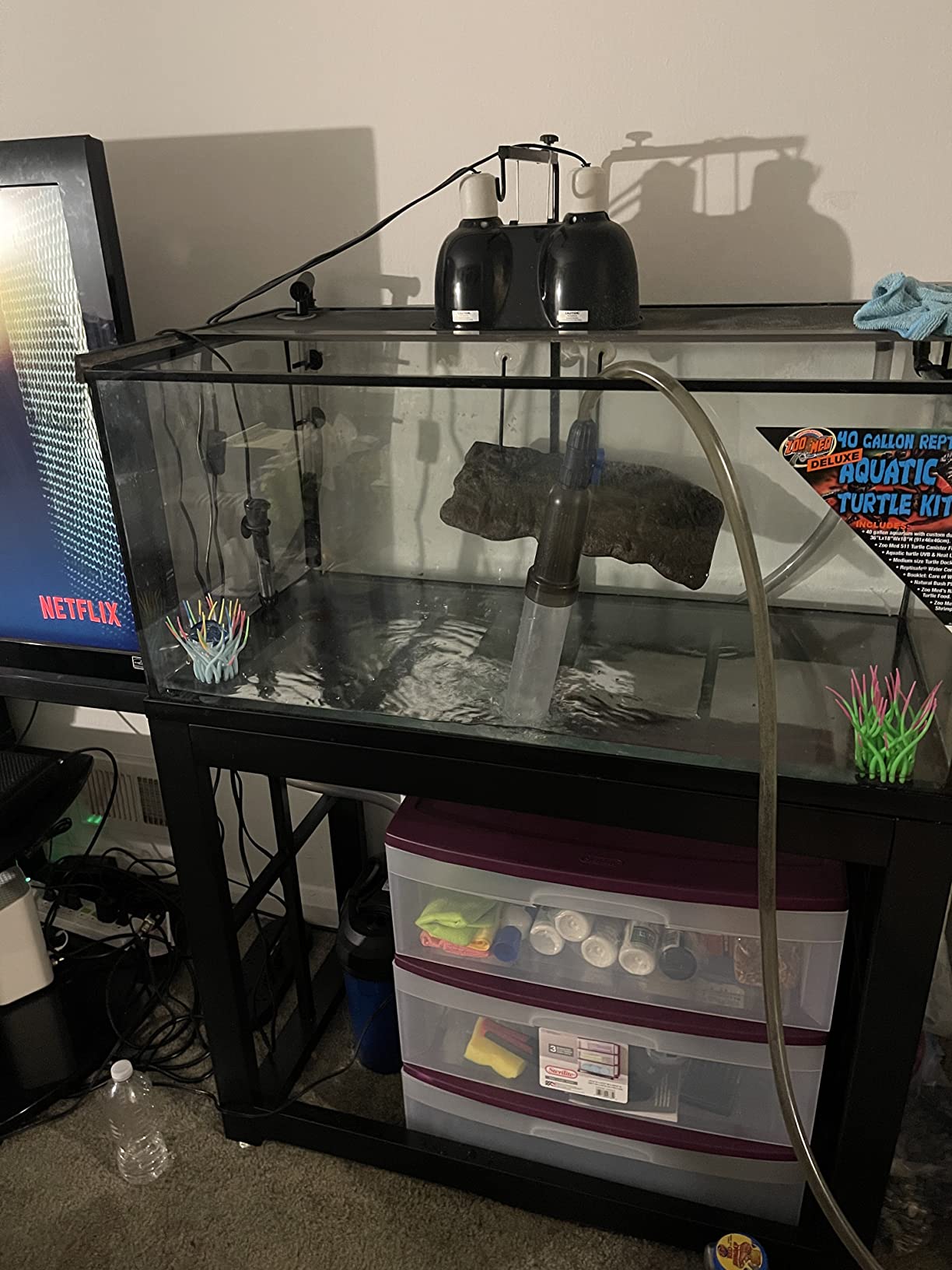
Placing it under a stand is where it makes the most sense, because that is the one configuration where a slim body is genuinely useful. It also means your tank interior stays completely clear of equipment, which keeps a basking area unobstructed.
What gives me pause is the review distribution. At 4 stars with 175 reviews, this is the smallest and least settled sample here, and 17 percent of ratings are one-star. For a long-term setup that is worth factoring in, because a canister that fails means a turtle in unfiltered water until you replace it.
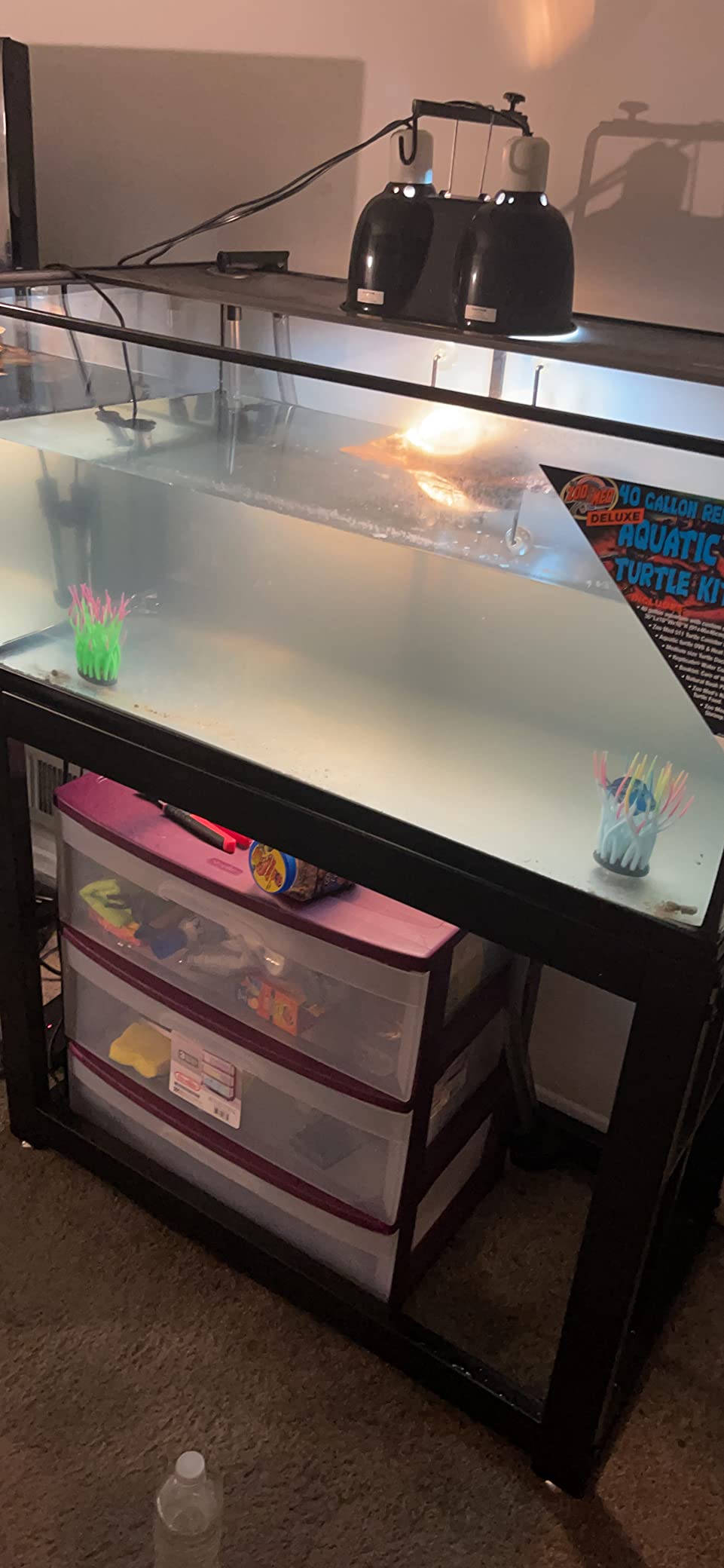
What to keep an eye on
Media replacement is the recurring commitment. Both the cartridge and the ceramic media need replacing on a schedule to hold performance, and unlike a canister filled with permanent rings, you are buying consumables indefinitely. Plan that cost before you commit to this one.
Also expect to need a wider spray bar. At 200 GPH the return is strong enough that owners in larger habitats routinely widen the bar to keep the turtle from fighting the current.
Who should buy it
Adult turtles in tanks up to 50 gallons where cabinet clearance is the deciding factor, and keepers who want a three-stage external canister without the bulk. If you have room for a full-size canister and care about longevity, step up the size rather than the brand.
How to Choose a Turtle Tank Filter
Size by water volume, not by the tank label on the box
Measure the water, not the glass. A 40 gallon tank with a thick substrate bed and a big basking platform may hold 30 gallons of actual water, and a shallow tub sold by length can hold a fifth of its advertised volume. Multiply that real number by two or three to get your target flow, then halve the filter’s label capacity and check the result still clears your tank.
Turnover is the other way to say the same thing. A filter that turns the tank volume four to six times an hour handles a turtle’s waste load; one that turns it once an hour is barely stirring the water. Halving the label is not a marketing trick, it is a correction for the fact that a turtle produces far more waste than the fish the rating assumes.
Canister, internal, or submersible?
External canisters win on media capacity, quiet running, hidden hardware and a spray bar for dispersing flow. They cost more in money and in installation effort, and they need clearance beside the stand plus a water line above the canister inlet.
Internal filters win on price and simplicity. They install in a minute, need no plumbing, and the low-water-line models are the only realistic option for shallow tubs. Their limits are media volume, exposed hardware and the fact that a turtle can reach and damage the intake.
Decorative submersible units sit between the two. They handle light stocking and small turtles well, add aeration and often double as a basking platform, but their flow is generally too low to be the sole filter for a large adult.
Build the media stack in the right order
Water should meet coarse mechanical media first, then fine mechanical media, then biological media, then chemical media. Sponge or floss at the front catches waste before it reaches the bacteria; ceramic rings or bio-balls sit behind it where oxygen-rich water supports nitrifying bacteria; activated carbon goes last, right before the water returns, because it polishes rather than filters.
Skip the fine floss layer in a turtle tank unless your turtle is small, and put a coarse sponge sleeve in the first basket no matter what. Fine debris and shed scutes will bury anything fine-grained within weeks, and a coarse pre-sponge is the layer you clean while the rest of the stack keeps running untouched.
Rinse media in water taken from the tank, never under a tap, and never with soap. Tap water kills the nitrifying bacteria you are trying to preserve, and that is the single most common reason a well-established filter suddenly produces ammonia.
Protect the intake from shed scutes
Turtles shed, and that debris is the leading cause of reduced flow in this whole category. A pre-sponge over the intake strainer, a mesh guard, or a sponge sleeve in the first media basket all cost almost nothing and turn a monthly disassembly into a quick rinse.
Check the strainer every few weeks and expect to clean it more often than the rest of the filter. A turtle that is still growing will shed more often, and a filter that has quietly lost half its flow is the reason a tank goes cloudy again days after a water change.
Filter noise in bedrooms and offices
Noise is the most repeated complaint from turtle keepers, and the useful comparison is not a decibel number but whether you notice the pump in a quiet room. Pumps rated for high turnover tend to be louder, but motor design matters more than raw flow: the Fluval 307 here moves serious water and is described by owners as quieter than smaller units from other brands.
Two things reduce noise cheaply. Level the unit on the cabinet floor with a rubber mat under it, and keep intake and return hoses in long straight runs rather than tight coils, because a kink forces the pump to work harder and hum. If the tank sits beside a bed, budget for a canister with a well-reviewed motor rather than a cheap internal pump with a louder motor.
Match the filter to your tank-size situation
Under 20 gallons, and especially in shallow tubs, an internal low-water-line filter is the only realistic choice. The PULACO in this roundup runs at a 1.9 inch water line, which covers the shallowest setups we could recommend anything for.
From 20 to 40 gallons, a mid internal filter with a grate, or the slim Zoo Med 30 canister if you have somewhere to put it, will carry a juvenile or a smaller adult. For 40 to 75 gallons with one adult turtle, you want a canister or a high-flow internal unit with an adjustable valve and real biological media, which is where the Fluval 307 and the TARARIUM 290 GPH fit.
For 75 gallons and up, or for two turtles in one tank, go canister and double the bioload you think you have. Every additional turtle is roughly another full-sized fish’s worth of waste, and the halving rule gets you there faster than any other shortcut. If you can, run the return through a wide spray bar so the extra flow does not become a current your turtle fights. Tank hardware selection is covered in more detail in our aquarium kit roundup if you are building the whole setup at once.
Turtle Tank Filter Troubleshooting
The filter keeps losing prime
Almost always a water level problem. If the tank’s water line sits below the canister inlet, the pump pulls air, runs cavitation bubbles and eventually stops moving water. Raise the water, lower the canister, or route the intake so it stays submerged. Prime it again by switching the pump on, then quickly flipping the intake lever or pouring water into the canister until flow catches.
Flow is weak after a media change
Check the order of the stack first. Fine media placed in front of coarse media clogs in days and starves the biological stage, which then fails on the biological side and the tank turns cloudy. Flush the new media thoroughly before it goes in, and never pack baskets so tight that water cannot pass through them.
Gurgling and bubbling noise
Air is getting into the system, usually from a partly empty canister, a hose that has drained, or a lid seal that is not seated. Top the canister up, reseat the lid and check the gasket, then prime again. A steady gurgle that returns is a sign of an air leak at a fitting rather than a priming problem.
Water is leaking at the lid or hose
Canister leaks almost always come down to the lid gasket not sitting evenly or a hose clamp that is not tight. Cut power to the unit, drain it, reseat the gasket with no grit trapped under it, and tighten clamps evenly rather than cranking one down hard. Internal filters leak far more often from a cracked housing or a suction cup that has let go, so check the mounting before you look at the filter body.
Frequently Asked Questions
Do fish filters work for turtles?
Yes, most aquarium filters work physically, but the label rating assumes fish waste, not turtle waste. A filter rated for a 70 gallon aquarium behaves like a 35 gallon turtle filter once the tank is fully stocked. Fish filters also lack turtle-specific safety features such as protective intake grates or shallow-water capability, so a reptile or turtle-rated model is usually the better buy.
Do turtles need a filter in their tank?
Every aquatic turtle needs filtration that moves water mechanically, biologically and chemically. Turtles eat and eliminate in the water and rarely leave it, so without filtration ammonia rises quickly, which causes respiratory illness, shell problems and algae. Halving the filter’s label capacity is a good starting point for a single adult turtle.
What is the best filter for a 40-gallon turtle tank?
For a single adult turtle in a 40 gallon tank, apply the halving rule and look for a filter labeled around 70 to 80 gallons. An external canister with a spray bar and a deep media stack is the right shape of answer, or a high-flow internal unit rated in the 290 GPH range with an adjustable flow valve. Add a wide spray bar to disperse the return.
Can I use a regular aquarium filter for a turtle?
You can, and most keepers do, but check three things before you buy. The filter must work at your actual water level, it must have a protected intake or pre-sponge so a curious turtle cannot reach the impeller, and its label capacity needs to be at least double your real turtle bioload. Adjustable flow or a spray bar is a bonus for stopping your turtle parking in the current.
How do I keep my turtle tank water clear?
Start by feeding outside the basin, because uneaten food is the fastest route to cloudy water and a filter cannot outrun it. Do a 25 percent water change weekly, always using dechlorinated water. Clean the pre-filter sponge every week and the rest of the media monthly, rinsing in water from the tank rather than under the tap. Test for ammonia weekly until it reads zero and stays there.
What are the little red worms in my turtle tank?
They are detritus or red worms, and they are a symptom rather than a problem. They feed on decaying organic matter, so their presence usually means uneaten food, excess waste or dead plant matter accumulating faster than your filter can break it down. Cut back feeding, move it outside the tank, increase water change frequency and clean the pre-filter sponge more often.
How long can my turtle survive without a filter?
A healthy adult turtle will survive for weeks, but the water quality will collapse long before the animal shows it, and turtles can carry infections without visible signs. Ammonia and nitrite rise fast in a closed system, so treat an unscreened tank as an emergency measure only. Move the turtle to dechlorinated water with a basking platform and get a filter running as soon as possible.
How do I clean a turtle tank filter?
Unplug the unit and drain it, then open the housing or lift the top media lid and remove the trays. Rinse the pre-filter sponge every week and the remaining media every month or two, always in water taken from the tank, never under a tap. Wipe the housing, check the intake strainer for shed scutes, reassemble with the gaskets seated evenly, and prime the unit before restarting.
The Best Aquarium Filters for Turtles: Final Verdict
The Fluval 307 is the pick for anyone with an adult turtle and a tank in a room where noise matters, and its review depth makes it the least risky choice in the list. For a large tank on a budget, the TARARIUM 290 GPH unit gives you the flow and the three-stage stack at a fraction of the canister money, and for shallow tubs the PULACO remains the only filter here that works at a water line under two inches.
Whatever you choose, halve the label, feed outside the tank, and change a quarter of the water every week. Those three habits matter more to your turtle’s water clarity than any model on this list, and they are what separates a tank that stays clear from one that goes cloudy every Sunday night. Last reviewed in 2026.