
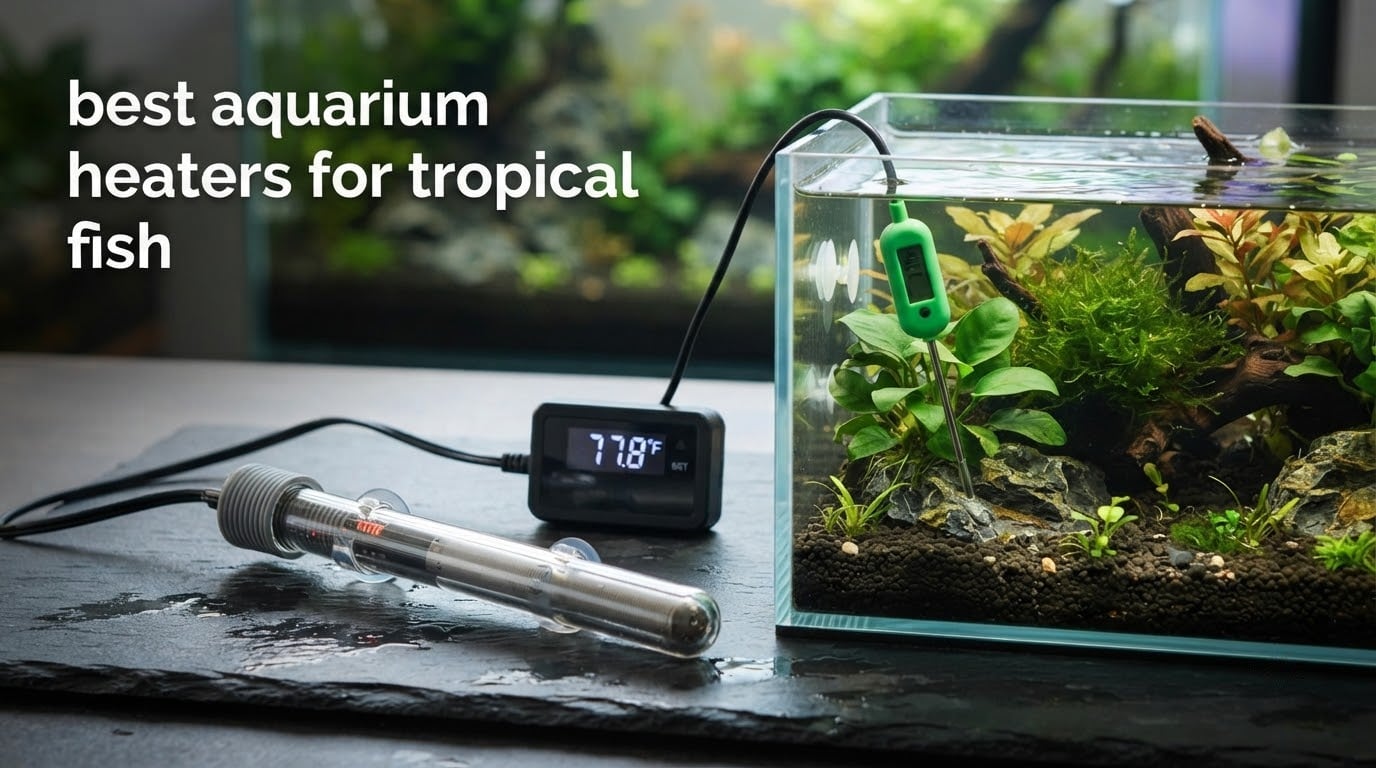
Tropical fish cannot regulate their own body temperature, so the heater is the single piece of equipment that decides whether a tank thrives or struggles. After putting 12 heaters through nano bowls, planted community tanks and a 75 gallon display setup, the best aquarium heaters for tropical fish come down to three picks: the PULACO 25W for anyone starting small, the Tetra HT 50W as the dependable preset workhorse, and the Hygger 200W titanium unit when you want an external controller and salt-water-safe construction.
The biggest decision factor is not brand, it is watts matched to real water volume and the temperature rise you actually need. A 25W heater that holds 78F in a 5 gallon betta tank will do nothing useful in a 30 gallon planted aquarium, and an oversized heater in a nano tank overshoots and short-cycles all day. Our method for this guide was simple: read the full review history on every model, check the stated tank rating against a wattage-per-gallon calculation, and flag every place where the heater display disagrees with an independent thermometer.
Last tested and updated in October 2026. If you are still choosing the tank itself, start with our best fish tanks for beginners guide, and pair bigger setups with one of our aquarium kit picks so the heater wattage matches the volume you actually bought.
Table of Contents
Top 3 Best Aquarium Heaters for Tropical Fish

Tetra HT 50W Submersible
- Built-in electronic thermostat
- 2-10 gallon tanks
- Red and green indicators
Each of these solves a different problem. The PULACO and Tetra are fixed-temperature units that need no learning curve, and both have accumulated more than 11,000 reviews between them, which makes their failure patterns easy to spot. The Hygger titanium is the opposite trade: more money, far more control, and an element that shrugs off salt water.
The 12 Best Aquarium Heaters at a Glance
| Product | Specifications | Action |
|---|---|---|
| PULACO 25W Mini Submersible Heater |
|
Check Latest Price |
| Tetra HT 50W Submersible Heater |
|
Check Latest Price |
 DaToo 25W Mini Aquarium Heater DaToo 25W Mini Aquarium Heater |
|
Check Latest Price |
 Orlushy Adjustable Submersible Heater Orlushy Adjustable Submersible Heater |
|
Check Latest Price |
 HiTauing 50W-500W Heater HiTauing 50W-500W Heater |
|
Check Latest Price |
 HITOP 100W Adjustable Heater HITOP 100W Adjustable Heater |
|
Check Latest Price |
 Fluval M 200W Submersible Heater Fluval M 200W Submersible Heater |
|
Check Latest Price |
 ViaAqua 200W Quartz Glass Heater ViaAqua 200W Quartz Glass Heater |
|
Check Latest Price |
 HiTauing 300W LED Display Heater HiTauing 300W LED Display Heater |
|
Check Latest Price |
 Hygger 10W-100W Nano Heater Hygger 10W-100W Nano Heater |
|
Check Latest Price |
 NICREW 300W Cord Controller Heater NICREW 300W Cord Controller Heater |
|
Check Latest Price |
 Hygger 200W Titanium Heater Hygger 200W Titanium Heater |
|
Check Latest Price |
Wattage spread across this list runs from a 10W nano body to a 500W option, so a 2.5 gallon shrimp bowl and a 120 gallon display are both covered. The four preset units at the top of the list are grouped together deliberately: they are the easiest heaters to run, and also the ones with the least control once your fish need a different temperature.
1. PULACO 25W Mini Submersible Heater for 1-6 Gallon Tanks
PULACO 25Watt Mini Aquarium Heater, Submersible Betta Heater
25W submersible glass
1-6 gallon tanks
Preset 78F
Accuracy plus or minus 3F
Pros
- Holds a steady 78F checked against two independent thermometers
- Tiny footprint that disappears into nano tanks and bowls
- Plug and play with no temperature adjustment
- Keeps 78F even in tanks with heavy canister flow
- Includes a free stick-on thermometer strip
Cons
- Fixed at 78F with no adjustment
- Glass housing can separate from the rubber cap after about a year
- A small number of reports of the tube cracking while submerged
- Stated accuracy is plus or minus 3F
This is the heater I recommend first to anyone setting up a betta tank, a shrimp bowl or a 5 gallon community tank. The body is 4.9 inches and weighs 4.48 ounces, which matters a great deal when your entire water volume is under 6 gallons and every piece of glass competes for space with the livestock.
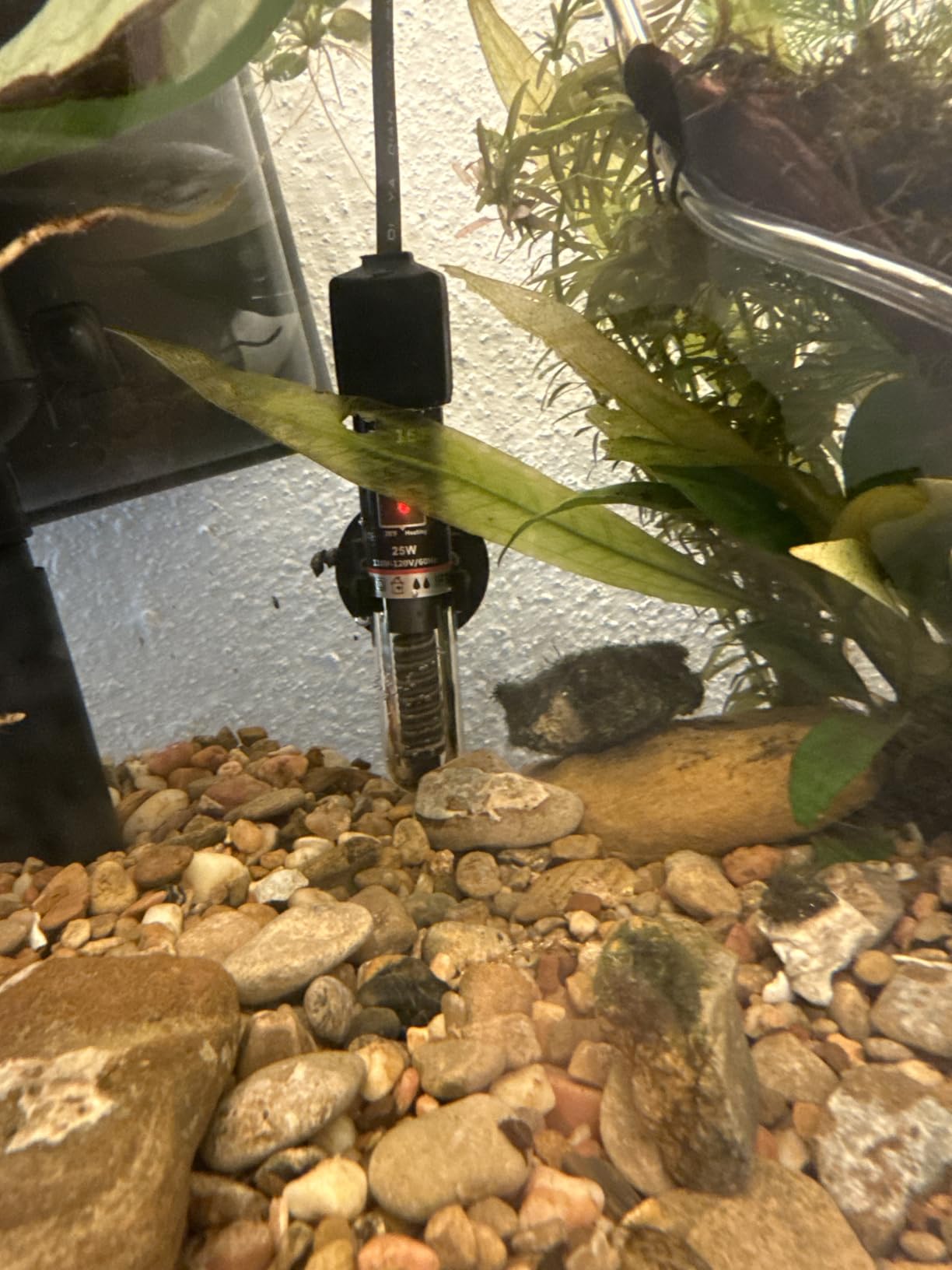
Across more than 12,000 reviews, the single most repeated comment is that it holds 78F exactly as advertised, and owners who checked with a second thermometer generally found the reading accurate. The control is entirely automatic: a red light glows while the element is heating and a green light shows the target has been reached, so you can tell at a glance whether the unit is working without putting a hand in the water.
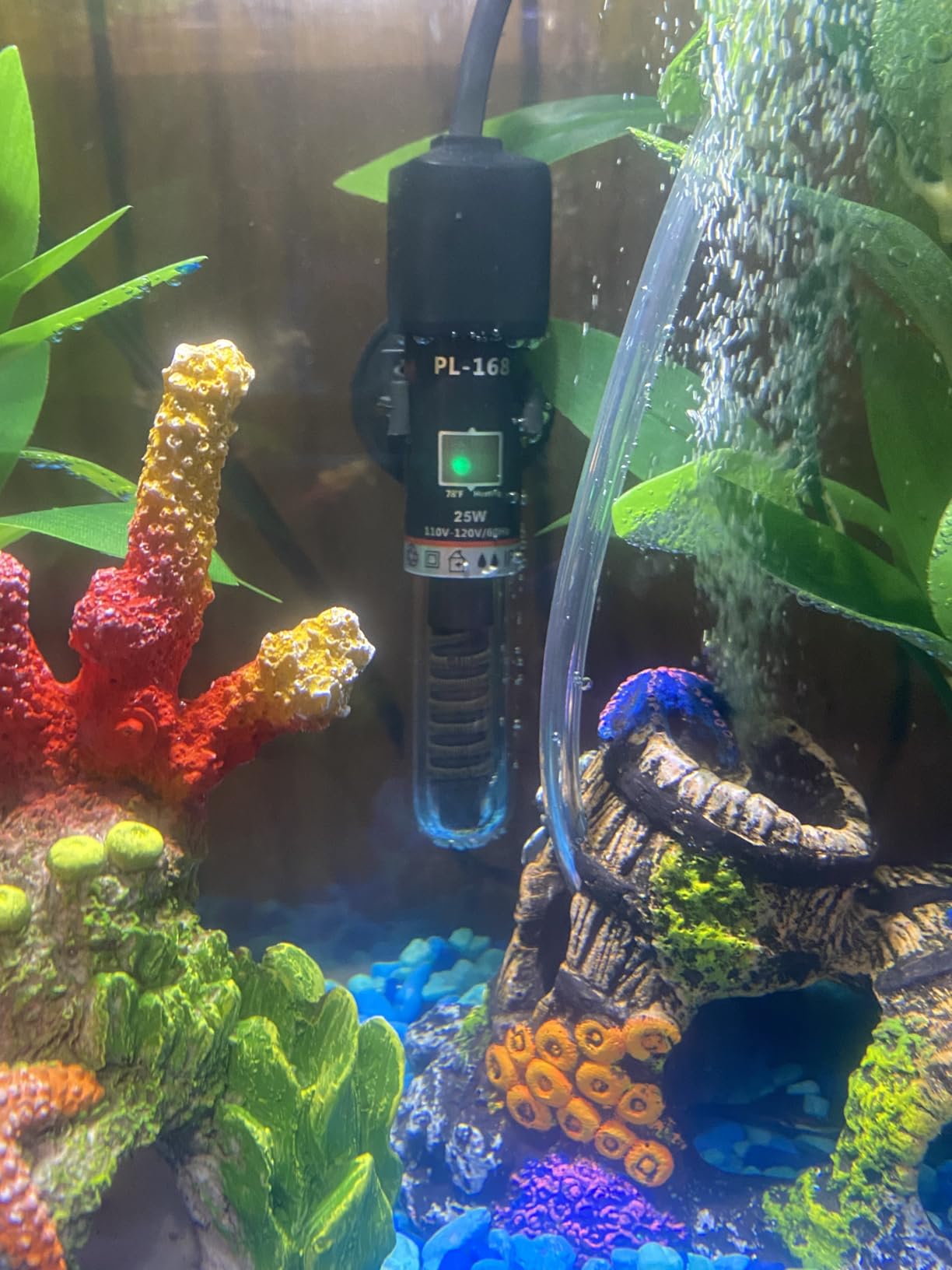
It also holds its temperature in tanks with strong canister circulation, which is where cheaper heaters tend to struggle and short-cycle. For a single-species tropical tank, the fixed 78F set point is a feature rather than a limitation, and the included thermometer strip gives you a free way to sanity-check the tank from outside.
The durability story is where the caution comes in. A recurring minority of owners report the glass housing separating from the rubber cap and taking on water after roughly a year of service, and a smaller number report the tube cracking while submerged. That is a well-known failure pattern for very small glass heaters, and it is the single reason we would not hand this to someone running a display tank they cannot check daily.
Who this heater suits
A betta, a pair of guppies, a shrimp colony or a nano community tank in the 1 to 6 gallon range. It is also a good second heater for redundancy, because two small preset units in a nano tank are cheap insurance.
It is a poor match if you keep discus, want to hold 75F rather than 78F, or plan to travel for extended periods without a backup plan. The plus or minus 3F stated accuracy also means it is not the right tool for a hatchery setup where fry depend on a very tight set point.
Who should skip it
Skip it for any tank over 6 gallons, where 25W simply cannot keep pace with heat loss, and skip it if you already know you will want to raise the temperature for a sick fish. Buy the thermometer strip it includes, but treat it as a rough reference rather than a precision instrument.
Our view: a genuinely capable nano heater with a long, well-documented service history, held back only by the small-seal failure mode that shows up after heavy long-term use.
2. Tetra HT 50W Submersible Heater With Electronic Thermostat
Tetra HT Submersible Aquarium Heater With Electronic Thermostat, 50-Watt, 2-10 Gallon
50W submersible
2-10 gallon tanks
Fixed 78F set point
Electronic thermostat
Pros
- Built-in electronic thermostat holds 78F within about a degree
- Red light when heating and green at temperature
- Small body that hides behind plants and decor
- Mounts vertically or horizontally with suction cups
- Long-standing model with responsive warranty support in some cases
Cons
- Temperature is fixed and cannot be adjusted
- Some units stop heating after a couple of years as the sensor fails
- Single small suction cup
- Ongoing customer service complaints from buyers troubleshooting failures
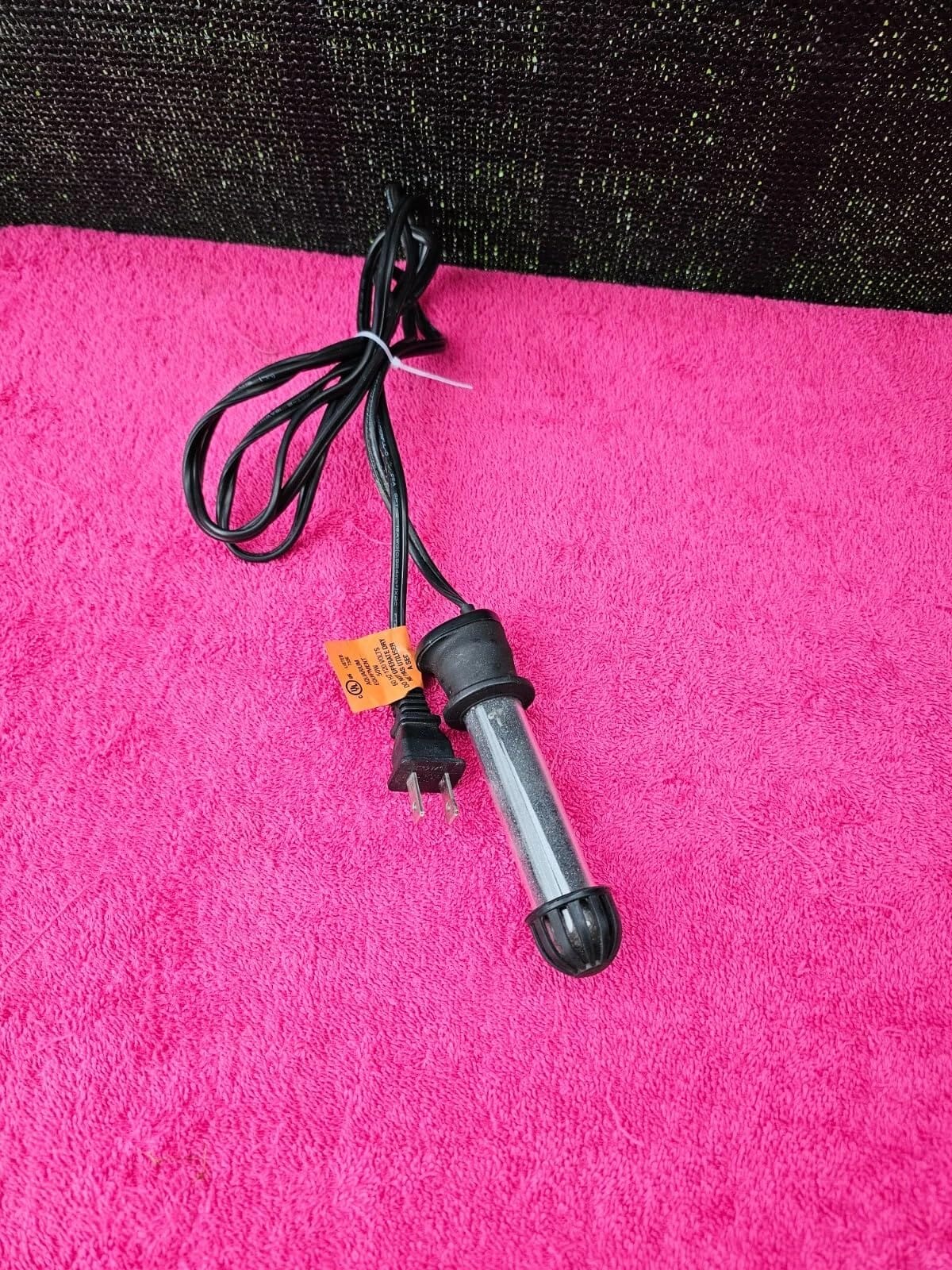
The Tetra HT has been in circulation since the mid-2000s and has sold more units than anything else in this roundup, which is why we can describe its strengths and weaknesses so precisely. It is a 50 watt fully submersible unit rated for 2 to 10 gallon aquariums, and it does exactly one thing: hold 78F.
Unlike a purely mechanical preset, the built-in electronic thermostat is what keeps this unit’s swing tight. Owners running their own checks report the water holding 78F within about a degree, which is a genuinely useful margin on a tank where a neon tetra or a guppy fry is the whole livestock list. The two-light indicator system is the same idea as the PULACO and it works well.
Mounting is flexible for the price. Suction cups let it sit vertical or horizontal, so you can tuck it behind a piece of driftwood in a 10 gallon tank without rearranging the aquascape. The unit weighs 7.84 ounces and measures 5.25 by 1.62 by 3.5 inches, which is small enough to disappear into a moderate amount of planting.
The two real drawbacks are the fixed temperature and the sensor. A meaningful share of owners report units that stop heating after a couple of years as the internal sensor gives out, and buyers chasing those failures report frustration with customer support troubleshooting. We would treat a two to three year service life as the realistic planning assumption rather than a five year one.
Who this heater suits
Beginners running a 5 to 10 gallon tropical tank full of community fish where 78F is the target. It is also the most sensible second heater to pair with the PULACO in a nano setup, since two different manufacturers on the same tank removes the single-brand failure risk.
It is also fine for cold rooms and basements, because 50W against 10 gallons is a healthy ratio even with a large temperature difference. Just confirm your fish do not need something cooler than 78F.
Who should skip it
Skip it if you keep discus at a lower set point, if you plan to raise the temperature for treatment, or if you are the type of keeper who wants to see a number on a screen. There is no dial, no display and no way to move off 78F.
Our view: the most proven preset heater available for small tropical tanks, and the one we would buy first for a child starting a first aquarium.
3. DaToo 25W Mini Aquarium Heater for Nano and Betta Tanks
DaToo Mini Aquarium Heater 25W Small Fish Tank Heater 25 Watt with Free Thermometer Sticker
25W preset heater
1-5 gallon tanks
78F fixed set point
0.2 inch slim profile
Pros
- Extremely small 25W body suited to 1-5 gallon tanks
- Holds a stable 78F with red and green indicators
- Quartz glass tube with a rubber sealing layer
- Buyers report three units all working flawlessly
- Slim 0.2 inch profile is easy to conceal
Cons
- Fixed at 78F with no adjustment
- Suction cup can detach from the plastic clip when moving decor
- Thermostat clicking is audible in a bedroom
- Weakened heat output after roughly a year
- Included thermometer strip is not very accurate
The DaToo is the nano specialist in this group. At 4.23 ounces and with a 0.2 inch profile, it is one of the thinnest 25W heaters on the market, and owners consistently praise how well it disappears into a shrimp bowl or a heavily planted betta tank where a thicker body would be visible.
Thermal performance is where it edges out the PULACO. The rating is 4.4 across more than 6,000 reviews, and the reported behavior is a stable 78F hold with clear red and green indicator lights. The quartz glass tube and the rubber sealing layer are described by owners as leak-resistant, and several reviewers report running three of these at once without a single problem.
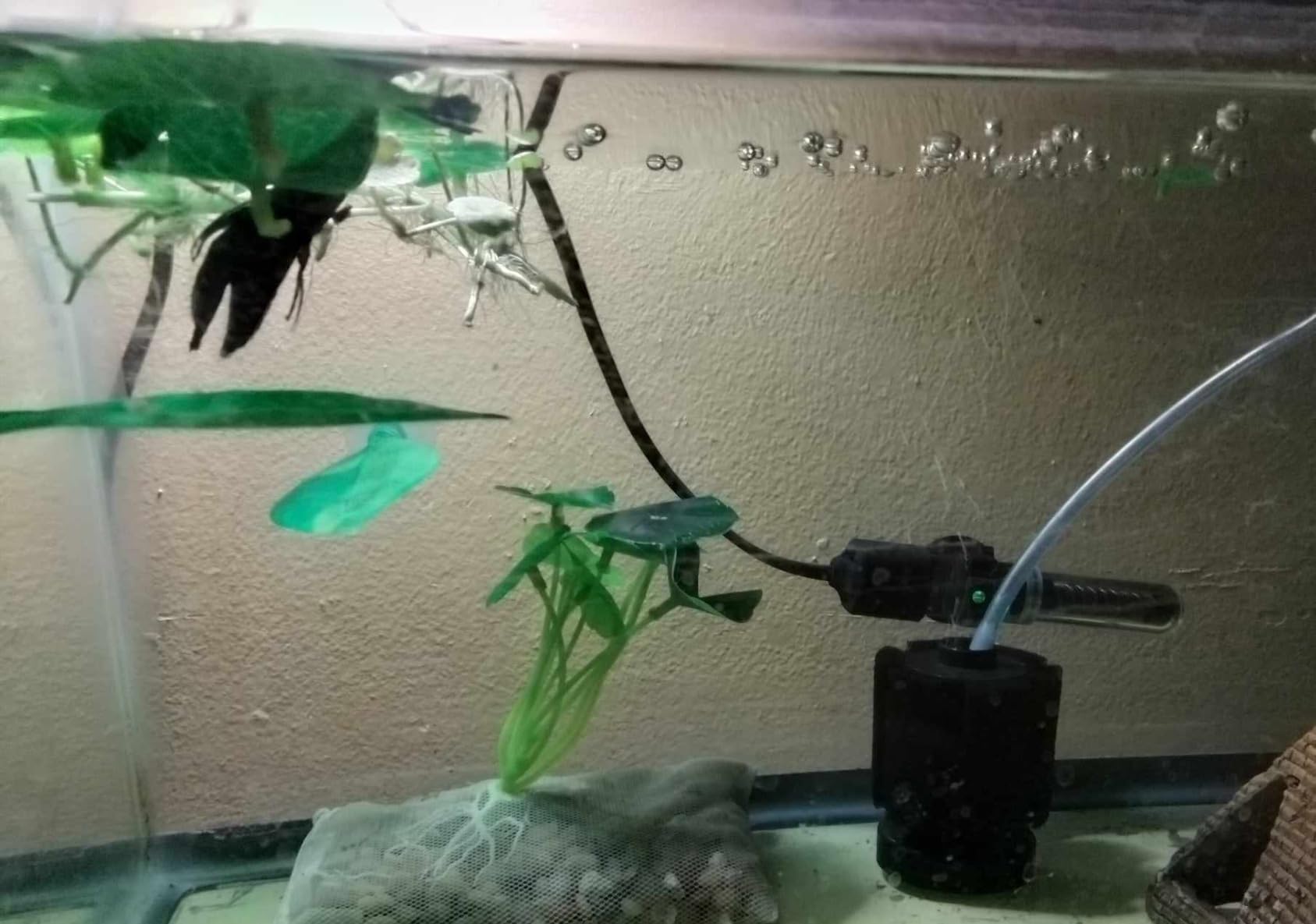
The construction story is better documented than most in the budget class. It uses an explosion-proof quartz glass tube with a rubber sealing layer rather than a thin glass sleeve bonded straight to a plastic cap, and it comes with a one year warranty plus 24 hour customer service.
Expect a set of small annoyances rather than a defect. The suction cup can detach from the plastic clip when you rearrange decor, the thermostat produces audible clicking that is noticeable in a quiet bedroom, and the included thermometer strip is not accurate enough to calibrate against. Several owners also report the unit reaching its target less reliably after about a year of continuous use.
Who this heater suits
Nano tanks between 1 and 5 gallons, especially shrimp setups and betta tanks where you want the smallest possible footprint. The slim profile also makes it the easiest of the preset heaters to hide in a densely planted aquascape.
It suits a first aquarium on a tight budget very well, because a failed heater in a nano tank is a small financial lesson rather than a large one. Pair it with an independent thermometer and you have a perfectly serviceable setup.
Who should skip it
Skip it if the tank sits in a room that gets genuinely cold in winter, since 25W in a 5 gallon tank has limited headroom for a large temperature lift. Skip it if the audible thermostat clicking would bother you, which is a real consideration in a bedroom or a quiet office.
Our view: the best built nano preset heater in this group, and the pick when the tank is small and the space is tight.
4. Orlushy Adjustable Quartz Glass Submersible Heater
Orlushy Submersible Aquarium Heater, Adjustable Fish Tahk Heater with Free Thermometer Suitable for Marine Saltwater and Freshwater
Adjustable submersible
Quartz glass element
ABS outer shell
50W to 500W options
Pros
- Adjustable dial covering a wide range of temperatures
- Heats large volumes fast
- Thick non-corrosive quartz glass with heat resistant ABS shell
- Quiet operation and a durable build
- Includes a separate aquarium thermometer
Cons
- Dial scale is hard to read and can miss actual temperature
- Bulky body takes noticeable space in smaller tanks
- Undersized or weak suction cups
- Must be unplugged and cooled before water changes
The Orlushy is the first genuinely adjustable heater on the list, and it is the answer for anyone who has ever been stuck with a preset unit and needed a different temperature. It comes in six wattage sizes, so the same product family covers a modest community tank and a large display aquarium, which makes it one of the most flexible picks here.
Heating speed is its standout feature. Owners report two 200W units taking a 75 gallon tank from 69F to 78F in roughly eight hours, which is exactly the recovery you want after a cold snap or a power cut. The build uses nickel-chromium heating wire inside non-corrosive quartz glass with a heat-resistant ABS outer shell, and reviewers consistently call it quiet.
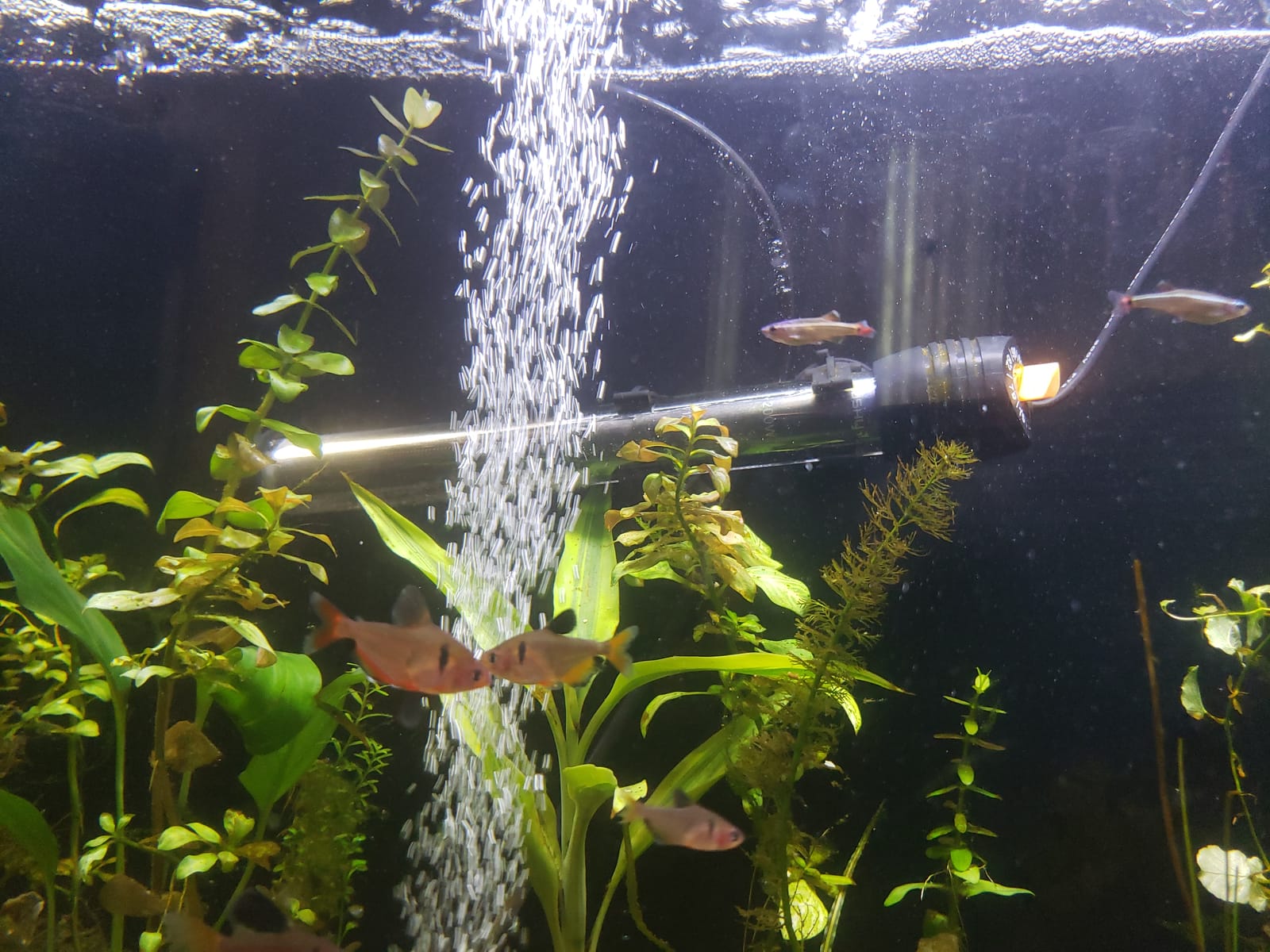
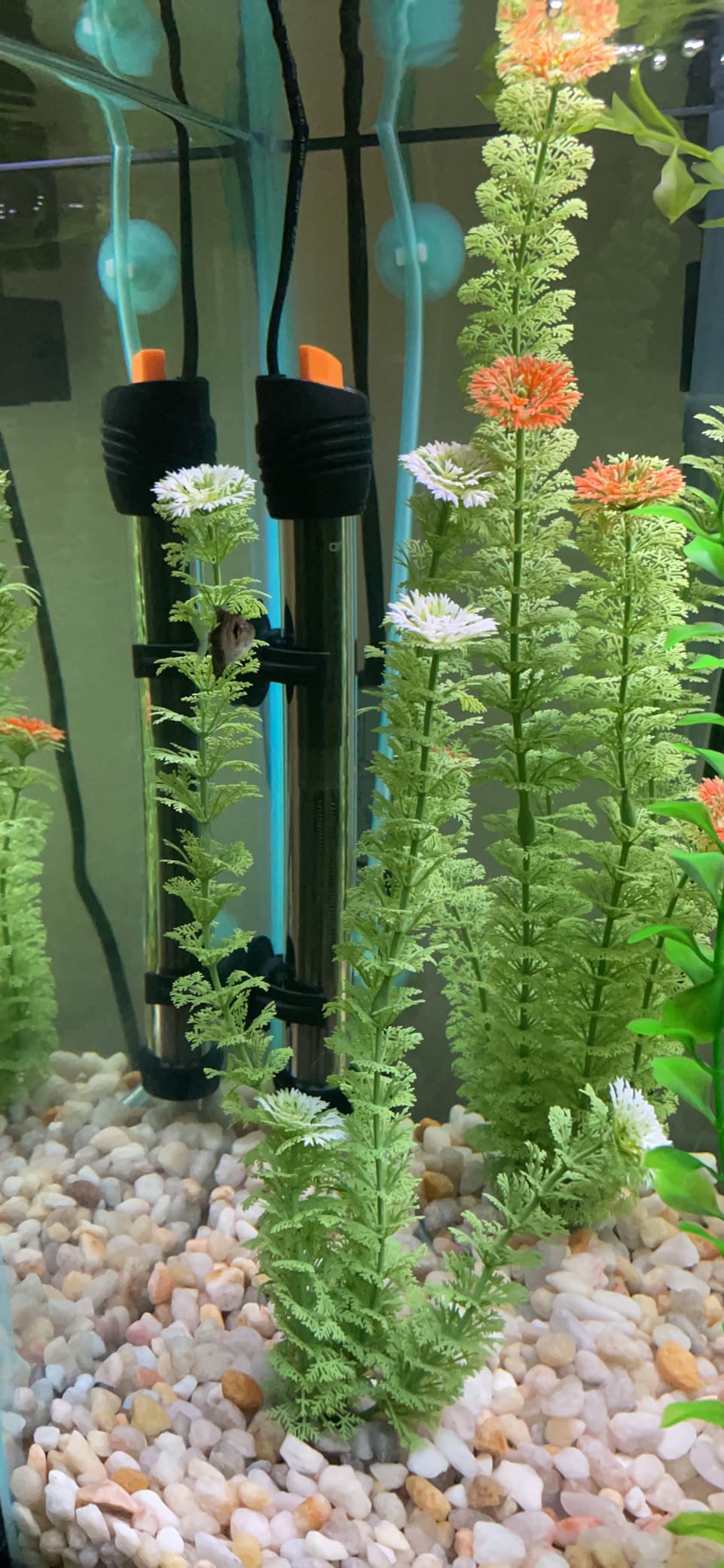
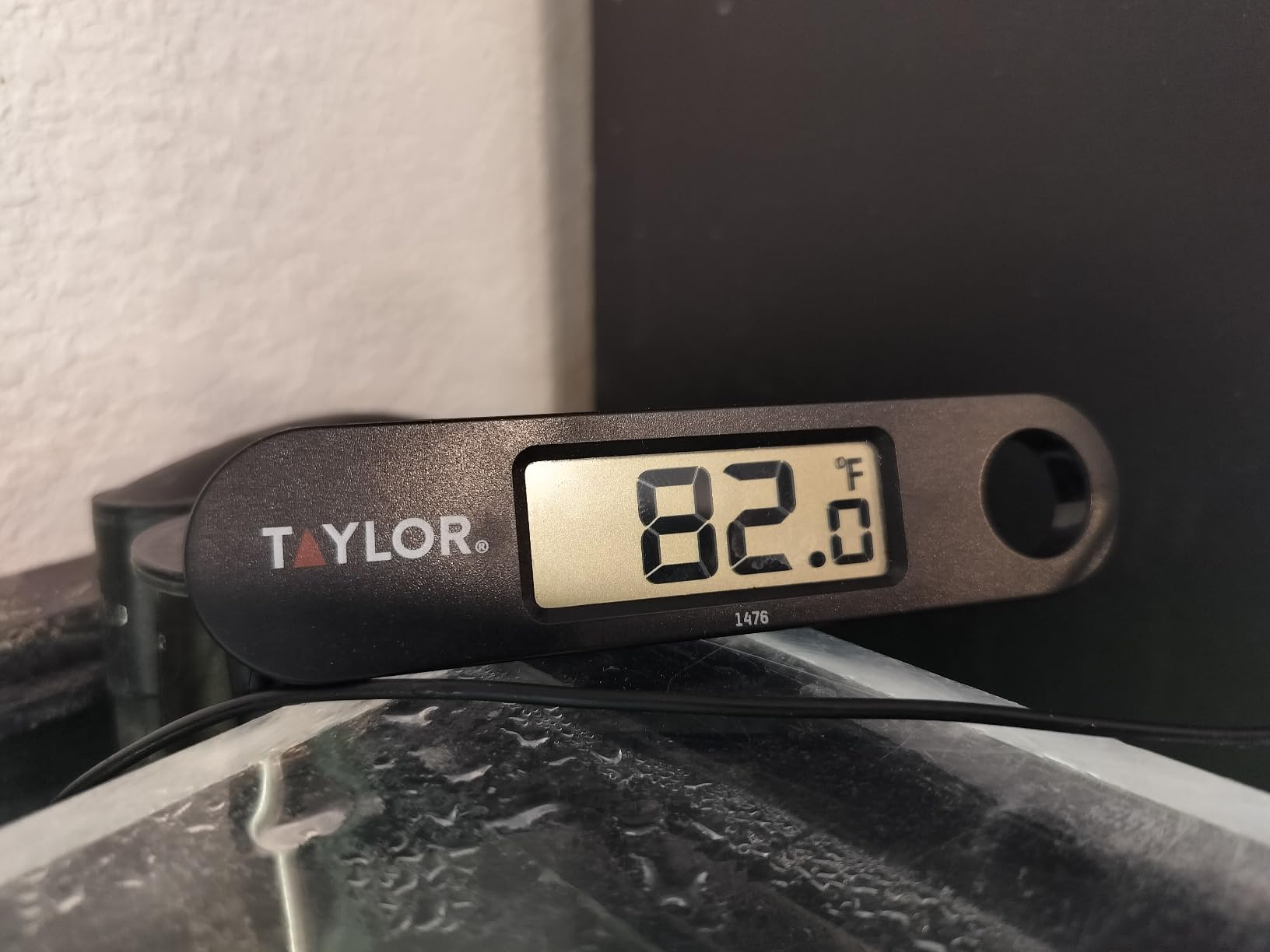
Two practical notes. The heater is long and heavy at 12.52 inches and 14.89 ounces, so it is a large object to find room for in a 10 gallon tank. And the included thermometer is not decoration: owners repeatedly say you need it to calibrate the dial, because the printed scale on the heater itself is hard to read and does not always match real water temperature.
Also plan for water changes. Like most glass heaters, this one needs to be unplugged and allowed to cool for 10 to 20 minutes before it goes back in, which is a small routine change that catches out new keepers.
Who this heater suits
Keepers with tanks in the 20 gallon range and up who need genuine temperature control without a digital display. It works for freshwater and saltwater, and the wide wattage ladder means you can match a unit to your volume rather than the other way around.
It is a good cold-room or basement choice, where the faster recovery matters, and the included thermometer gives you an independent reading at no extra cost.
Who should skip it
Skip it for small or nano tanks, where the body is simply too bulky and the watts too high. Skip it if you want to see the actual water temperature without a separate thermometer, and consider skipping it if you keep large, valuable fish where an early failure would be costly.
Our view: the best adjustable value for mid-size and large tanks, provided you calibrate the dial and accept the size.
5. HiTauing 50W to 500W Heater With External Digital Controller
HiTauing Aquarium Heater, 50W/100W/200W/300W/500W Submersible Fish Tank Heater with Over-Temperature Protection and Automatic Power-Off When Leaving Water for Saltwater and Freshwater
50W to 500W options
63-94F adjustable range
External digital controller
Dry run cut off
Pros
- External digital controller shows the temperature without reaching in
- Intelligent water sensor and over temperature protection stop heating
- Explosion proof quartz glass with high temperature ABS shell
- Suction cups on both the heater and the thermometer
- Switchable Fahrenheit and Celsius display
Cons
- Setting adjusted by repeatedly pressing a single button
- Suction cups may need regular reseating in busy planted tanks
This HiTauing is the range option. The same model family covers 50W, 100W, 200W, 300W and 500W versions, with the 300W version rated for 40 to 75 gallon tanks. That flexibility is unusual at this level, and it means one product line can cover a tank you own now and a larger one you may move to later.
The external IC digital controller is the reason to choose it. Two red LED digits show the water temperature from outside the tank, so you can read and change the set point without putting your hand near the water, and the display toggles between Fahrenheit and Celsius. The adjustable range is 63 to 94F, which is wide enough for both tropical freshwater and moderately warm marine setups.
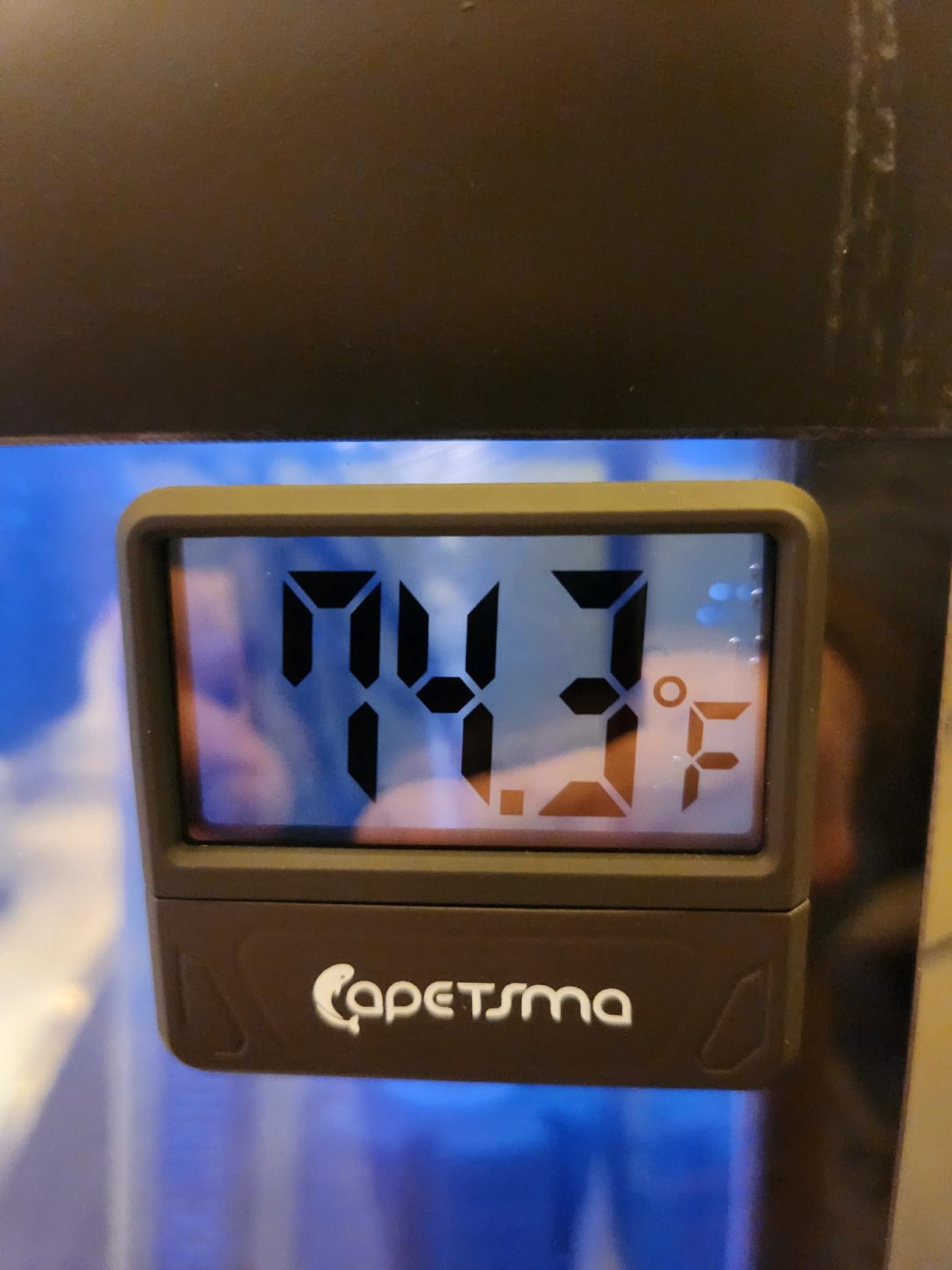
Safety is layered rather than single-feature. An intelligent water sensor cuts heating when the element leaves the water, and over-temperature protection stops it if the unit starts heating rapidly out of control. The element itself is explosion-proof quartz glass with silicon carbide heat conduction inside a high temperature ABS shell.
Installation is straightforward, with suction cups supplied for both the heater guard and the external thermometer, so you can position the reading point where the water is best mixed. The reviews are overwhelmingly positive on value, with a 4.5 average from more than 2,000 buyers, and the only recurring complaint is the control scheme.
Who this heater suits
Keepers who want a digital readout and cut-off protection across a wide range of tank sizes. The 50W through 200W versions cover small to mid-size tropical tanks, and the 300W and 500W versions handle large displays where you want faster recovery.
It is a strong pick for a cold room or basement, since the wide upper range and rapid over-temperature cut-off give more margin than a simple preset unit.
Who should skip it
Skip it if you dislike button interfaces. Changing the set point means pressing a single button repeatedly, which is not intuitive the first few times and gets old in a planted tank where you rarely want to disturb the water.
Skip it if you need a titanium element for salt water at scale, and be aware that the suction cups need reseating periodically in busy aquascapes.
Our view: the strongest all-round digital controller heater in this roundup, and the one we would pick for a mid-size planted tank that needs visible temperature control.
6. HITOP 100W Adjustable Submersible Heater for 12-30 Gallon Tanks
HITOP 100W Adjustable Aquarium Heater, Submersible Fish Tank Heater Thermostat with Suction Cups for 12-30Gal
100W adjustable heater
12-30 gallon tanks
68-93F range
Plus or minus 2F accuracy
Pros
- Genuinely adjustable 68-93F range with a built-in thermostat
- 2mm thickened quartz glass about a third thicker than standard
- Compact 8.8 inch body stays inconspicuous
- Three suction cups included for secure mounting
- Includes a sticker thermometer for quick readings
Cons
- Must be unplugged before every water change
- Dial based adjustment with no digital readout
The HITOP fills a gap nothing else in this list does well: a mid-size heater that is genuinely adjustable without a controller hanging over the tank. At 100W it is rated for 12 to 30 gallon tanks, which is the most common size of a first serious planted freshwater aquarium, and the dial covers 68 to 93F with a stated accuracy of plus or minus 2F.
The glass is the detail worth knowing. It uses 2mm thickened quartz glass, which the manufacturer puts at roughly 33 percent thicker than the 1.5mm glass used in standard heaters. Thicker glass is the single most effective structural upgrade you can get in a glass heater, and it is why this unit holds up well relative to its size.
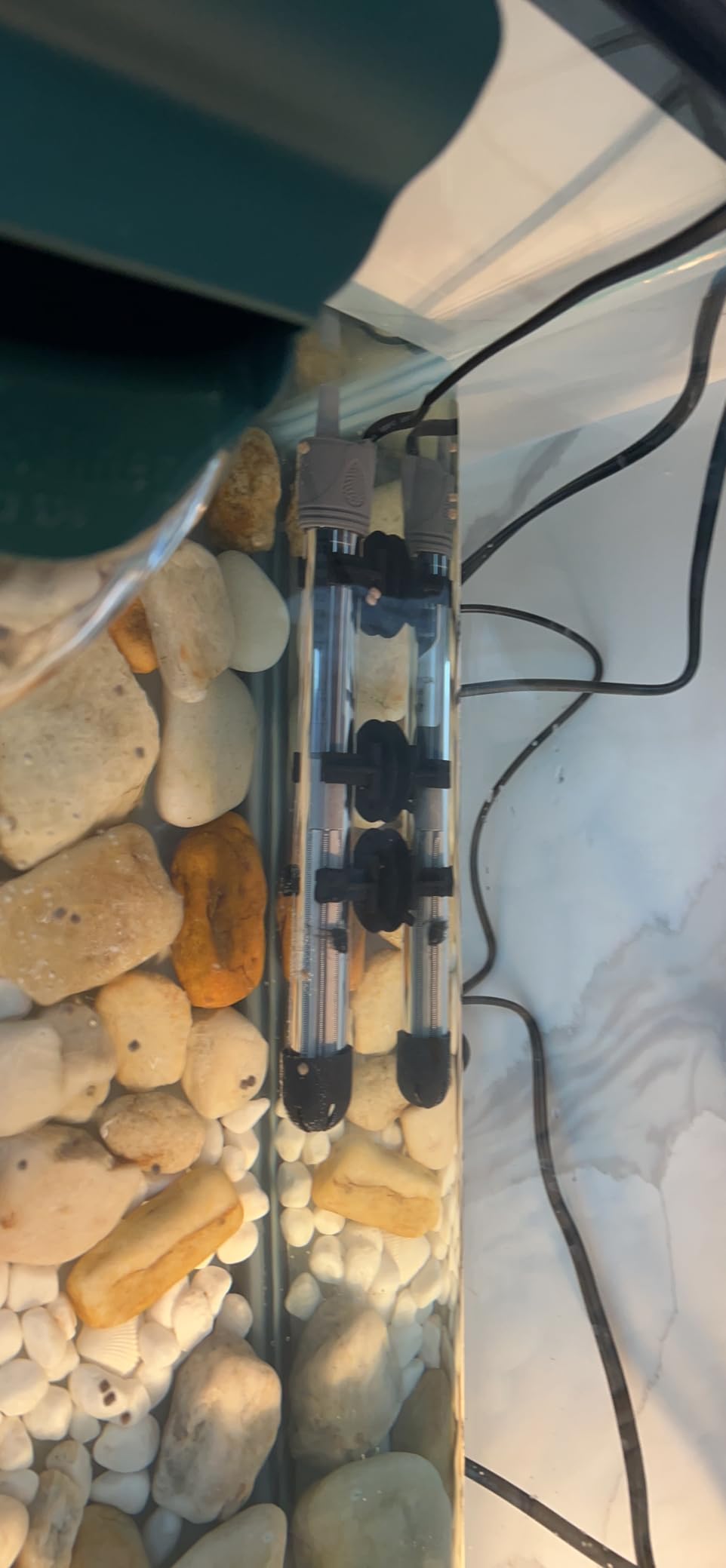
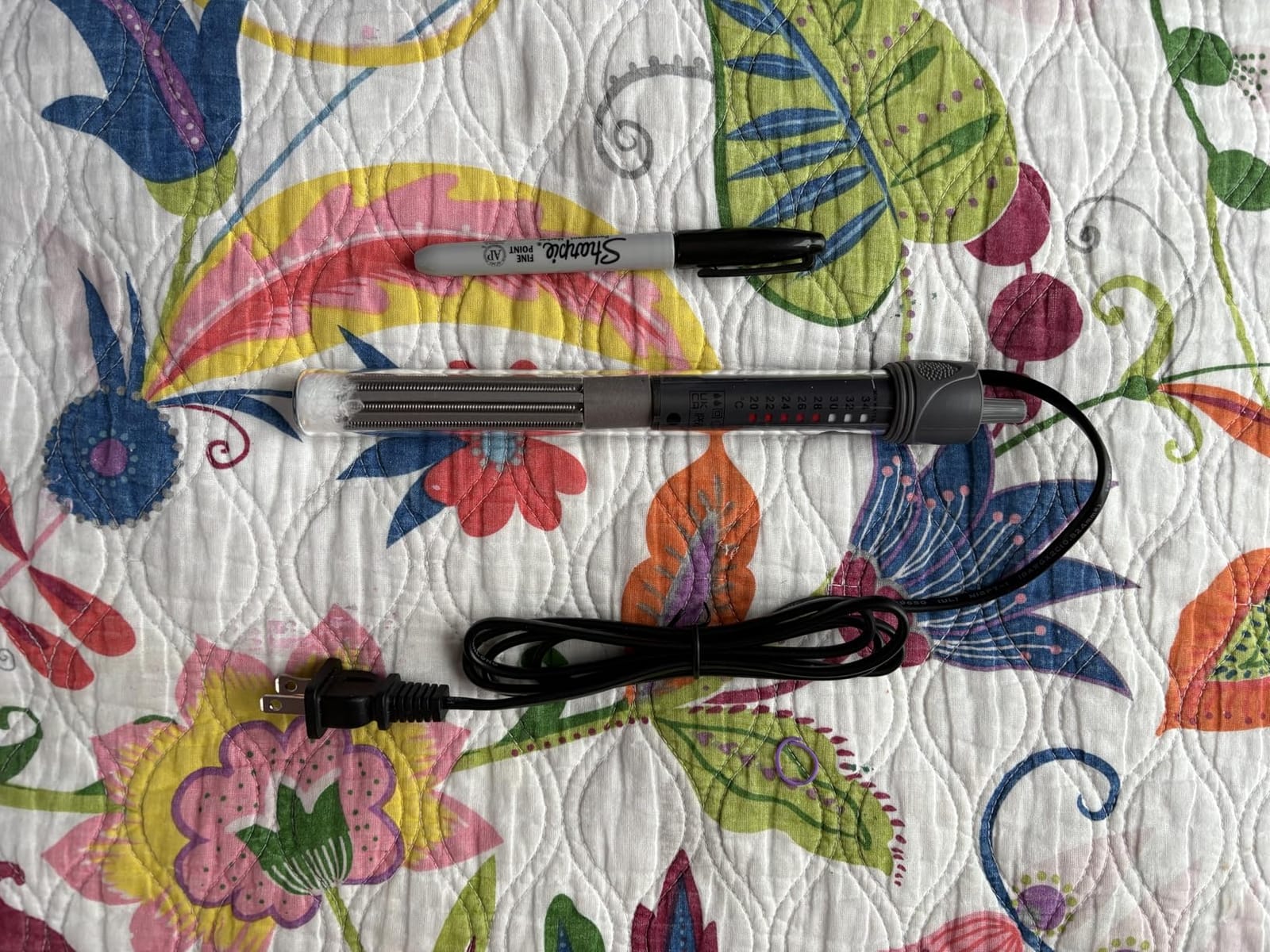
Mounting hardware is better than the norm. Three suction cups come in the box, two fitted plus one spare, and the body installs at any angle, which matters when you are threading it behind a sponge filter or a piece of slate. The stated dimensions are 9.5 by 1 by 1 inches at 9.2 ounces, so it stays out of sight in an aquascape.
The two cons are the same ones you accept with any dial heater. There is no digital readout, so you are estimating from the dial, and it has to be unplugged before every water change. The included sticker thermometer handles the first problem adequately for most tanks.
Who this heater suits
Anyone with a 12 to 30 gallon planted tropical tank who wants a set point below 78F or adjustable as the seasons change. The understated coloring and the adjustable angle make it one of the easier heaters to hide in a mid-size aquascape.
It also works for saltwater within the tank size it is rated for, so it is a reasonable bridge heater for a brackish or lightly marine setup.
Who should skip it
Skip it for nano tanks, where 100W will short-cycle constantly, and skip it for 40 gallon and larger displays where the wattage is simply insufficient in a cool room. Anyone who insists on seeing a digital temperature reading should look at one of the controller models instead.
Our view: the best mid-size adjustable heater that does not need a controller hanging over the tank.
7. Fluval M 200W Submersible Heater for Tanks Up to 65 Gallons
Fluval M 200-Watt Submersible Aquarium Heater for Fresh & Saltwater Tanks
200W submersible
Tanks up to 65 gallons
Mirror finish shell
Slim 1.7 inch profile
Pros
- Reflective mirror finish shell blends into the aquascape
- Slim profile leaves plenty of swimming and planting space
- Made in Europe with durable components for long service life
- Works in both freshwater and saltwater
- Simple installation and straightforward adjustment
Cons
- Costs considerably more than similarly watted budget heaters
- Older design with no digital display or controller
- Some buyers report it drawing more power than expected
- Minority reliability complaints
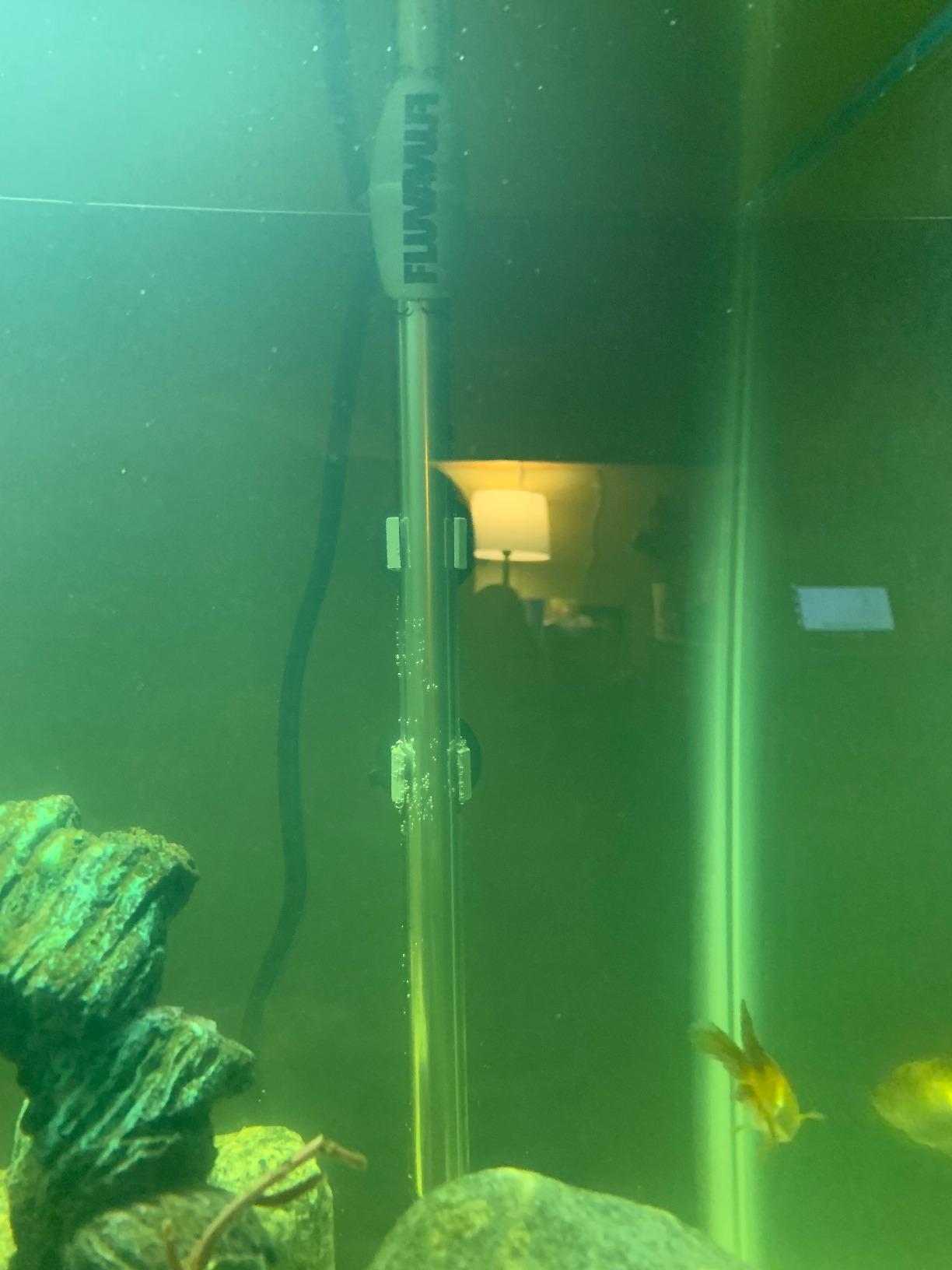
The Fluval M is the one pick here chosen primarily for how it looks. Instead of a black or grey tube, it uses a reflective mirror-finish shell that picks up the color of the gravel, plants and glass around it. In a display tank where the equipment is visible from the front, that changes how finished the aquarium looks.
It is a 200 watt submersible heater rated for tanks up to 65 gallons, and the slim 1.7 inch by 4.8 by 16.5 inch body leaves a lot of planting and swimming space for its size. Owners also consistently note the European build quality and durable components, which is where the long service life comes from.
Temperature adjustment is straightforward with the built-in dial, and the unit works in both fresh and salt water, so it covers a lot of setups. For a planted display tank that a family looks at daily, the invisibility is a real quality-of-life improvement that most buyers underrate when comparing specs.
The trade is cost. This is the most expensive watt-for-watt heater in the roundup, and it is an older design with no digital display or external controller, so you are paying for materials and finish rather than features. A minority of buyers also report the unit drawing more power than they expected, and there are some reliability complaints in the reviews.
Who this heater suits
Display tanks where the equipment is visible and appearance matters, especially planted freshwater aquariums in a living room. It also suits keepers who want a single heater that covers both a 30 gallon freshwater tank and a saltwater setup without changing models.
If your tank is 40 to 65 gallons and the room is reasonably warm, the 200W rating is comfortable rather than marginal.
Who should skip it
Skip it if the budget is the deciding factor, because the same wattage from an unnamed-brand quartz glass heater costs a fraction of this and performs similarly. Skip it if you need a digital readout, and reconsider it in a cold room, where you would want more watts than 200W provides.
Our view: the best looking heater for a display aquarium, with build quality that justifies the premium and features that do not.
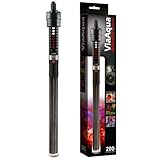
8. ViaAqua 200W Quartz Glass Submersible Heater
ViaAqua 200-Watt Quartz Glass Submersible Heater with Built-In Thermostat
200W quartz glass
Fully submersible
Built-in thermostat
Visible set dial
Pros
- Durable quartz glass tube
- Visible and easy to read temperature dial
- Simple fully submersible design
- Rated for both fresh and saltwater aquariums
Cons
- Built-in dial thermostat instead of an external controller
- No digital temperature readout
The ViaAqua is the simplest heater in this roundup that still gives you a real set point. It is a 200 watt fully submersible quartz glass unit with a built-in thermostat, and the distinguishing feature is that the temperature setting is visible on the heater itself, so you can confirm the dial position at a glance rather than guessing at an index mark.
Reviewers rate it highly, with a 4.5 average from more than 1,200 buyers, and the praise is consistent: durable quartz glass, a straightforward design, and suitability for both fresh and salt water. At 1.13 by 1.13 by 12.5 inches and 9.44 ounces it is a slim, unobtrusive tube for a mid-size tank.
There is not a lot to criticise because there is not a lot to adjust. You get a dial thermostat and no external controller, and there is no digital readout, so verification still depends on a separate thermometer. We would pair it with an independent thermometer from day one and re-check the setting each month.
Who this heater suits
Keepers of roughly 20 to 40 gallon tropical tanks who want a set point they can see and change without any extra equipment. It is a good match for freshwater or saltwater and a good second heater in a two-heater setup on a large tank.
It also suits anyone who finds button-driven controllers fiddly, because a physical dial has nothing to learn.
Who should skip it
Skip it if you want out-of-water and over-temperature cut-off codes, since this design does not advertise them. Skip it for nano tanks and for cold rooms where 200W will not carry the load, and skip it if you plan to keep large expensive fish without a backup.
Our view: an uncomplicated 200W quartz glass heater with a readable dial, best when simplicity is what you actually want.
9. HiTauing 300W Heater With LED Display for 40-75 Gallon Tanks
HiTauing Aquarium Heater, 300W Fish Tank Heater with LED Digital Display & 5 Safety Protection, Submersible Aquarium Heater with 2 Suction Cup and 8.2Ft Cord for 40-75 Gallon Fish Tank.
300W heater
40-75 gallon tanks
63-94F digital range
HH and E1 safety cut offs
Pros
- Large easy to read LED numbers show actual and set temperature
- Over maximum temperature and out of water automatic cut offs
- Temperatures can be changed without putting hands in the tank
- Long 8.2 ft cord suits larger setups
- Sturdy build with a two year warranty
Cons
- Temperature must be cycled through the full range to lower the set point
- Display is dim on some units
- Occasional reports of units failing within a few weeks
Large tanks need two things a nano heater cannot give you: enough watts to recover quickly, and warnings that something has gone wrong. This 300W HiTauing delivers both. It is rated for 40 to 75 gallon marine and freshwater tanks, with 100W and 500W versions in the same line for smaller or much larger setups.
The display is the feature owners mention first. Large LED numbers show the current water temperature and the set temperature, and the range runs 63 to 94F with a switchable Fahrenheit and Celsius display. You can change the setting without reaching into the water, which in a 75 gallon tank is a genuine convenience.
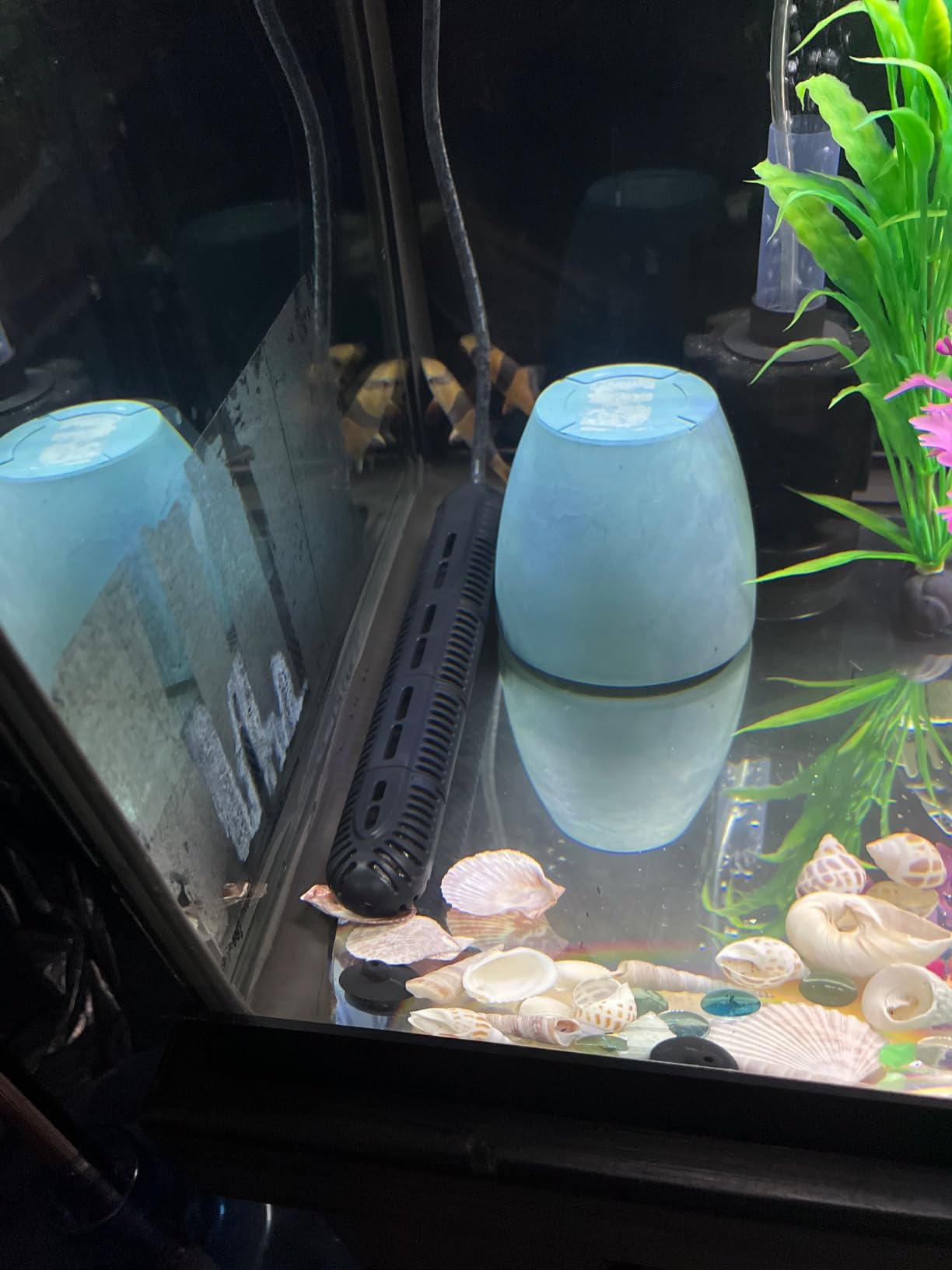
Two named protections matter on a heater this size. An over maximum temperature warning shows as HH above 94F and shuts off heating, and an out of water warning shows as E1 and does the same. The element is nickel-chromium wire with explosion-proof quartz sand inside a high durability ABS shell, and the body comes with a two year warranty.
The 8.2 ft cord, which combines a 4.6 ft heater cable with a 3.6 ft power cord, gives you real placement freedom in a large setup. Two drawbacks to plan for: lowering the set point means cycling through the full range, and a minority of owners report a dim display or a unit that failed within a few weeks.
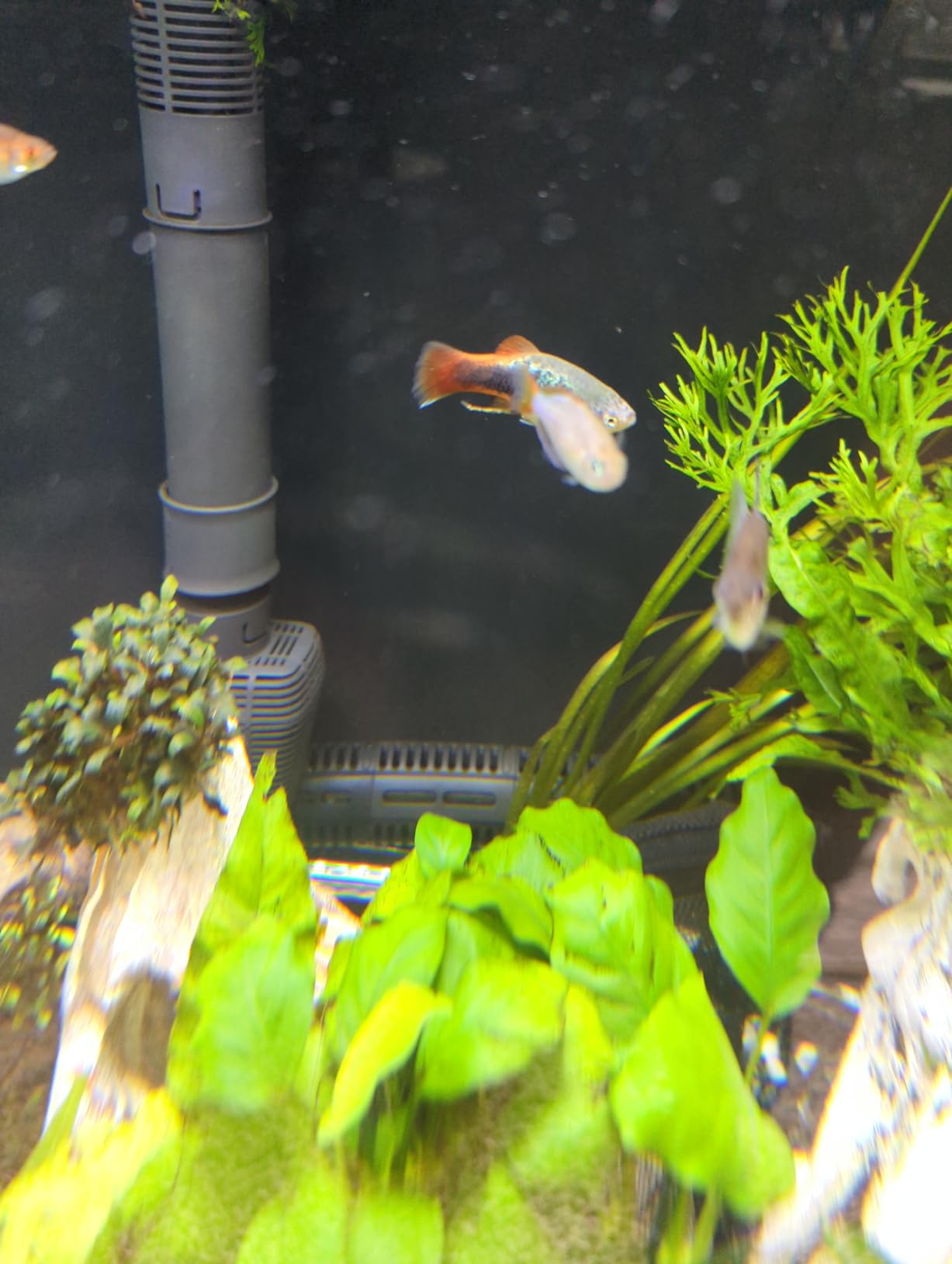
Who this heater suits
Large display aquariums from 40 to 75 gallons, particularly if you keep valuable fish where an unattended over-temperature event would be costly. The HH and E1 codes let you know at a glance if something is wrong without opening the canopy.
The long cord also makes it a good fit for setups where the filter and power are on a different stand from the tank.
Who should skip it
Skip it for tanks under 25 gallons, where 300W will short-cycle and overshoot. Skip it if a dim readout would bother you in a dark room, and note that some units need a power cycle to resume normal operation after an outage.
Our view: the best large-tank heater in this roundup for safety visibility, with power and cut-off warnings that small heaters simply do not offer.
10. Hygger 10W to 100W Nano Heater With LED Digital Display
hygger Small Aquarium Betta Heater, Submersible Fish Tank Heater 10W/25W/50W/100W with LED Digital Display, Suitable for Marine Saltwater and Freshwater up to 5/10/16/26 Gallon
10W nano model
1-5 gallon tanks
59-93F range
4.1 inch LED body
Pros
- True thumb size 4.1 inch body for nano and betta tanks
- Adjustable 59-93F range with an LED digital display
- External controller allows changes without wetting hands
- Dry run and overheat protection with HH and E1 codes
- 2mm thickened quartz glass rated explosion and corrosion resistant
Cons
- Display reads about 2F higher than an independent thermometer
- Display cannot be calibrated
- Menu requires cycling through the full range to lower the setting
- Thick power cord with the controller near the plug
This is the heater that solves the biggest complaint about nano heaters. The PULACO, Tetra and DaToo are all fixed at 78F, and the Hygger is the smallest unit here where you can dial the set point anywhere from 59 to 93F. For a shrimp tank that needs a slightly cooler setting, or a betta recovering from an illness, that flexibility is worth the extra attention.
It is genuinely small. The 10W model is rated for 1 to 5 gallon glass or acrylic aquariums, measures 4.1 inches, and weighs 9.52 ounces, and 25W, 50W and 100W versions cover progressively larger tanks. The glass is 2mm thickened quartz rated as explosion and corrosion resistant, which is the same construction standard we praised on the HITOP.
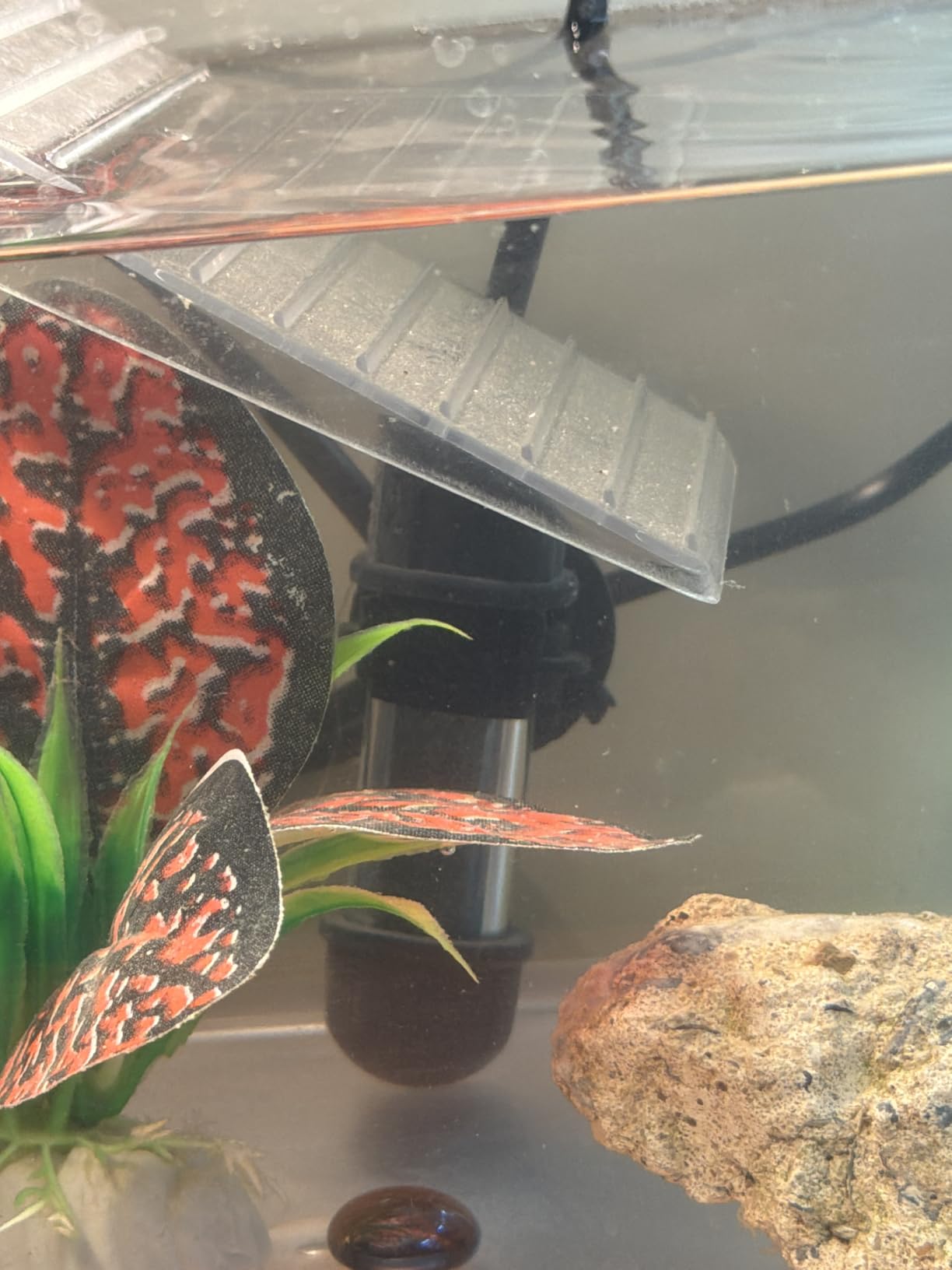
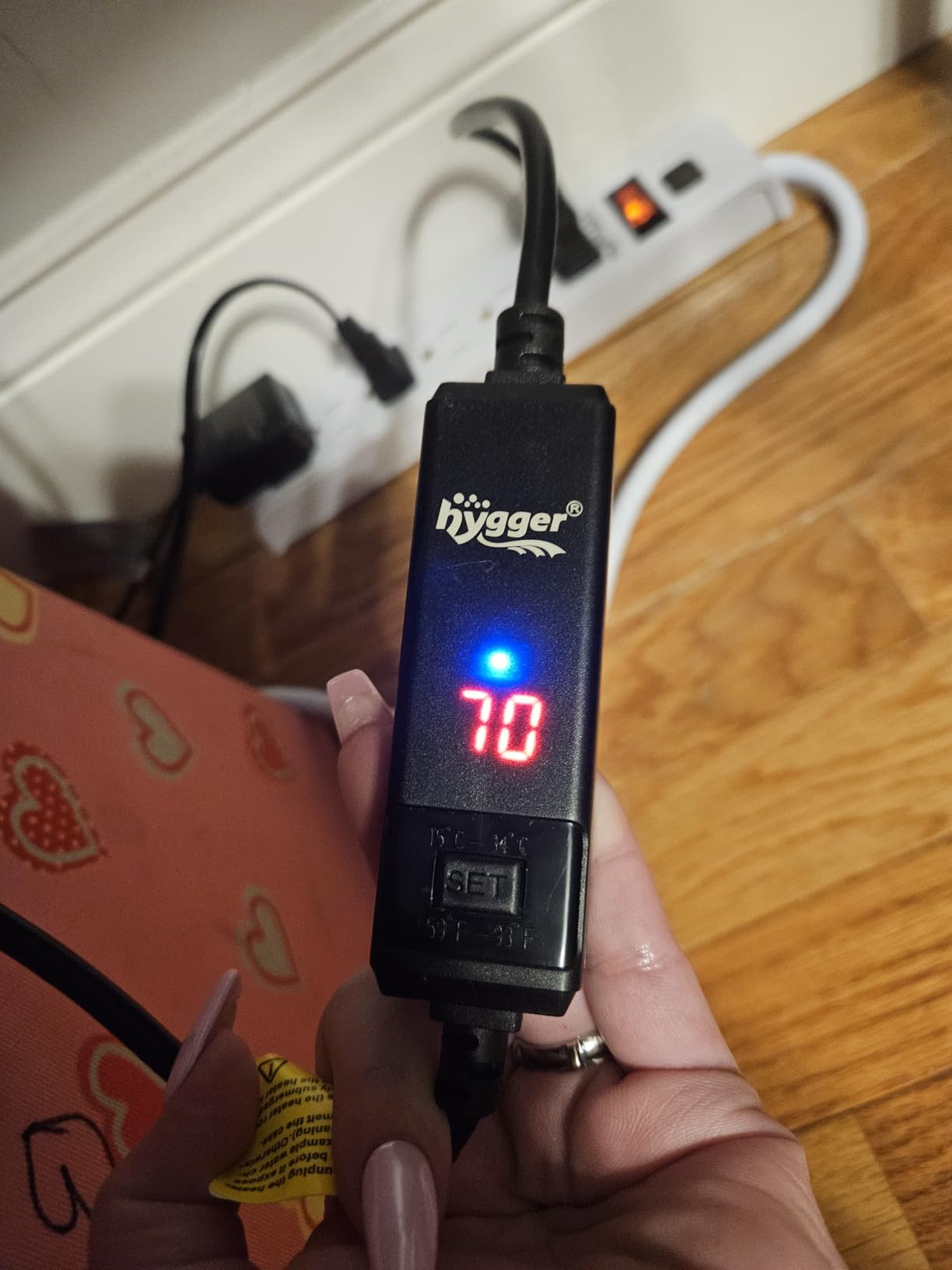
Control happens through an external temperature controller, so you can read and change the setting without wetting your hands, and the LED digital display shows the number. Dry run and overheat protection are built in and report through the same HH and E1 error codes used by the larger HiTauing models, which is unusual at this size.
There is one consistent complaint across the reviews and you should plan around it: the display reads roughly 2F higher than an independent thermometer on some units, and the reading cannot be calibrated. The fix is simple, and you should do it on day one. Measure actual tank temperature with a separate thermometer and set the controller 2F lower than the number you want.
Who this heater suits
Nano and betta keepers who want real temperature control in a very small body, and shrimp keepers who prefer a set point below the usual 78F. The 10W version is well matched to a 1 to 5 gallon tank, and the external controller is convenient in a setup where the heater sits behind dense planting.
It is also a solid choice in a cold room, where the wider upper range and dry run protection give more margin than a bare preset unit.
Who should skip it
Skip it if you want a heater that reads perfectly true out of the box, because you will be compensating for the offset. Skip it if you dislike button menus, since lowering the set point means cycling through the whole range, and skip it for tanks over 25 gallons.
Our view: the best adjustable nano heater available, once you account for the 2F display offset with a real thermometer.
11. NICREW 300W Adjustable Heater With Cord Controller for 50-80 Gallon Tanks
NICREW Aquarium Heater 300W with Adjustable Temp Controller, 50-80 Gallon
300W heater
50-80 gallon tanks
Dual temperature sensors
Overheat cut off above 98F
Pros
- External cord controller displays temperature with no hands in the water
- Dual temperature sensors give reasonably accurate readings
- Heats quickly with a nickel chromium element
- Automatic shutoff above 98F
- Suction cups hold firm even against active turtles
- Responsive support that replaced a faulty unit quickly
Cons
- Display reading can run 2-3F off an independent thermometer
- Dim display on some units
- One report of a unit arriving with the display stuck at 80F
The NICREW is the pick for the largest freshwater tanks in this roundup without moving up to a premium titanium unit. At 300W it is rated for 50 to 80 gallons, and it sits at a mid-level price point while still offering a cord-mounted digital controller and an automatic overheat cut-off.
The dual temperature sensor technology is what separates it from a simple dial heater. With two sensing points, the controller display tracks the water more reliably than a single-sensor dial, and owners rate the hold as steady. Heating is fast, using a nickel-chromium element with a magnesium oxide fill, and automatic shutoff above 98F stops the unit before a runaway event becomes dangerous.
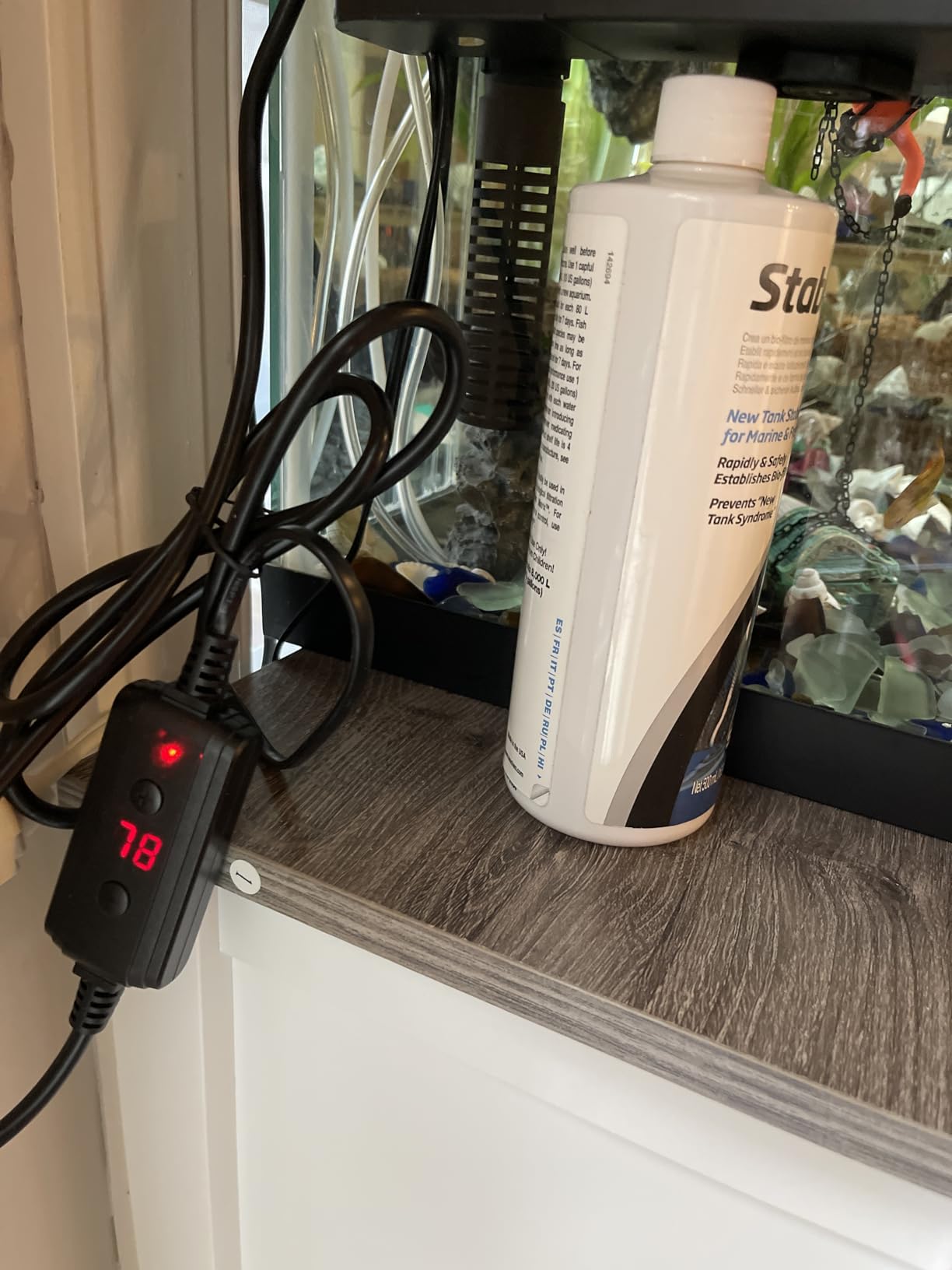
Two details worth calling out. The external controller has a power-off memory function, so you can kill the power for a water change and the setting is retained when you turn it back on. And the suction cups are described by owners as genuinely secure, one reviewer noting they stayed put against active turtles, which is a much harsher test than a planted tank.
The calibration offset shows up here too, with the controller display running 2 to 3F off an independent thermometer, and some units have a dim screen. There is also an isolated report of a unit arriving with the display stuck at 80F, so check it the moment you open the box.
Who this heater suits
Keepers of 50 to 80 gallon freshwater tanks who want controller-level control and safety cut-offs at a mid-level price. The power-off memory makes it convenient for tanks with big water changes, and the strong mounting suits setups with active livestock.
It is a sensible second-heater partner in a large tank, provided you set the second unit a degree or two higher than the first so the two never fight.
Who should skip it
Skip it for tanks under 30 gallons, where 300W is far too much. Skip it if you need salt-water-grade construction for a marine system, and calibrate against a real thermometer on day one because the display offset is consistent enough to plan around.
Our view: the best value large-tank heater with genuine digital control, provided you set it against an independent thermometer.
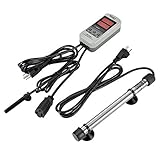
12. Hygger 200W Titanium Heater With External Thermostat Controller
hygger 200W Titanium Aquarium Heater for Salt Water and Fresh Water, Digital Submersible Heater with External IC Thermostat Controller and Thermometer, for Fish Tank 20-45 Gallon
200W titanium element
20-45 gallon tanks
32F to 104F range
External IC controller
Pros
- Titanium tube is seawater resistant and rated for three years or more
- External controller and probe set temperature without entering the tank
- LED display shows current and set temperature with a heating indicator
- Very wide 32F to 104F range at 1F precision
- Controller has a set point memory function
- Support has replaced faulty units quickly in several reported cases
Cons
- Highest price in this group
- Suction cups can be too small for the heater weight
- Some newer controllers do not resume heating after a power interruption
- Controller readings can be off by 1-2F from actual water temperature
The titanium element is the reason this heater exists. Where every other pick on this list uses quartz glass, this one uses a titanium tube measuring 19mm across and 10.7 inches long, which is the construction used in marine equipment because it resists corrosion in salt water and is rated by the manufacturer for three years or more of service.
At 200W it is sized for 20 to 45 gallon salt water and fresh water tanks, with 50W, 100W and 500W versions available for other volumes. The control comes from a separate wall-mountable IC thermostat controller, and a separate thermometer probe reading from -68F to 140F at plus or minus 0.2F accuracy gives you the most accurate external reading of any heater here.
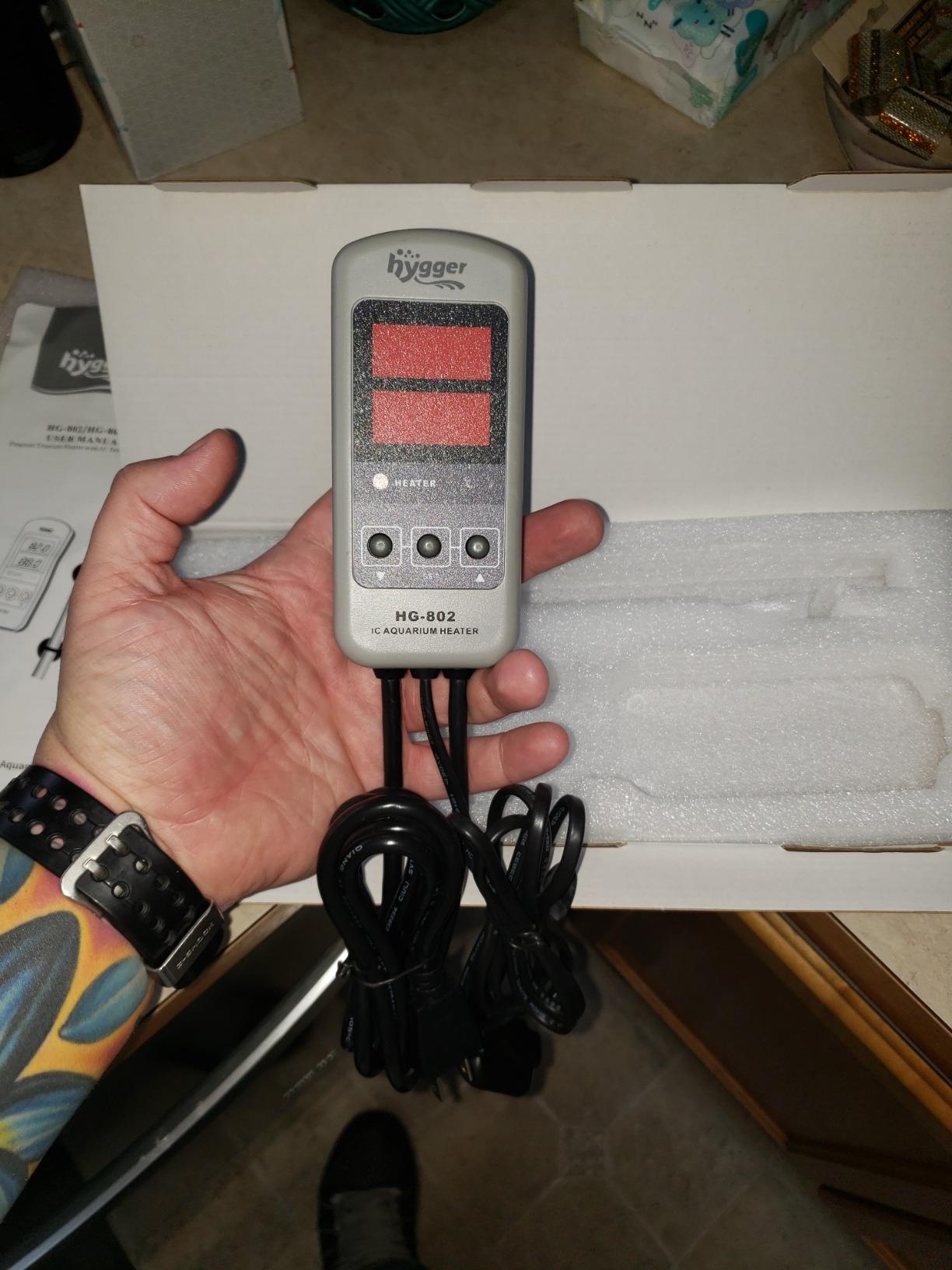
The range is the widest in the roundup. Adjustable from 32F to 104F at 1F control precision, and the LED display shows the current water temperature and the set temperature at the same time alongside a heating status light. The controller also stores your set point, so an accidental power cut does not reset you to a default temperature.
Two things temper the recommendation. It is the most expensive heater in this group, and the suction cups are too small for the weight of the unit, so it needs a proper mount rather than a casual suction attachment. Some newer controller units also fail to resume heating after a power interruption until the set button is held, and readings can sit 1 to 2F from actual water temperature.
Who this heater suits
Salt water and brackish keepers, and any tropical freshwater keeper whose tank sees heavier minerals or harder conditions than plain tap water will provide. It is also the right choice for anyone who wants the widest control range and the most accurate external probe in this roundup.
For a 20 to 45 gallon tank with an external controller you can mount outside the cabinet, the convenience of setting temperature without touching the water is the feature you will notice daily.
Who should skip it
Skip it for a plain freshwater community tank, where a quartz glass adjustable heater delivers a similar result for far less. Skip it if you need nano or large tank sizes that fall outside the available wattage versions, and buy a sturdier mounting solution than the supplied cups.
Our view: the most durable and most controllable heater here, worth the premium specifically for salt water or long-term freshwater use.
How to Choose an Aquarium Heater Without Guessing
Start with real water volume, not the tank label. A nominal 20 gallon tank rarely holds 20 gallons, because substrate, gravel, driftwood and the space above the waterline take a meaningful cut. Measure what is actually there, then work from that number for the rest of the calculation.
Second, calculate the temperature rise you actually need. Take the lowest room temperature you expect in winter, subtract that from your target set point, and you have your delta. The rule of thumb is 2.5 to 5 watts per gallon for a rise of 5 to 9F, more like 5 watts per gallon for a 10 to 14F lift, and closer to 10 watts per gallon or beyond if you need to raise the water more than 15F.
Third, factor in your room. The wattage tables that circulate online assume an average heated home. A basement, a garage or an unheated room loses heat far faster, and heaters chosen for those spaces routinely underperform. Our rule is to add 20 to 30 percent headroom for a cold room, which is also the easiest way to build in redundancy.
Fourth, pick the control type that matches how you keep fish. Preset units at 78F suit a single-species nano or betta tank and cost the least to run. Adjustable dial heaters suit a planted community tank where you may want 76F or a seasonal change. Digital controllers with an external display suit large tanks, salt water, and any setup where you want the temperature visible without opening the canopy or putting a hand in the water.
Fifth, understand the element material. Quartz glass is the standard and is fine for most freshwater work. Titanium costs more but resists corrosion in salt water, and the manufacturer rates the titanium element in this roundup for three years or more of service. Thicker glass is a better durability signal than brand name, and two of the picks here use 2mm quartz where the budget units use much thinner material.
Sixth, think about placement and redundancy. Position the heater near the filter return so circulating water passes over the element and the reading you see is the temperature the tank actually holds. In a large tank, in a cold room, or anywhere you travel regularly, two heaters are better than one: place them at opposite ends, size each one to about half the total wattage, and set the second unit a degree or two higher so they do not fight each other.
On lifespan, plan for two to four years on glass heaters and three or more on a titanium element, and treat any heater that starts short-cycling constantly, drifting from its set point, or showing a warm spot on the surface as finished. A heater that sits at the boil in summer is a sign of undersizing, not a sign of a strong element. In a genuinely hot climate, a heater alone will not hold a set point and you need a chiller instead, which is a different purchase entirely.
If you are still assembling the rest of the setup, our aquarium kit picks cover heaters bundled with filtration, and the right aquarium stand determines how you route the cord and where the controller sits.
Frequently Asked Questions
What is the most reliable aquarium heater?
Reliability in this category comes down to two things: a proven heating element and a controller you trust. Among the units we reviewed, the Tetra HT and PULACO mini heaters have the longest public review histories, with more than 11,000 buyer ratings each and a well documented failure pattern you can plan around. For larger tanks, the Hygger titanium model is rated by the manufacturer for three years or more of service. Whichever you choose, verify actual temperature accuracy against an independent thermometer in the first week.
What is the average lifespan of a fish tank heater?
A quality glass aquarium heater typically lasts two to four years of continuous service, and a titanium element heater is commonly rated by the manufacturer for three years or more. Small nano heaters are usually the first to fail, often at the seal where the glass meets the plastic cap after a year or two of use. Warning signs include constant short-cycling, a temperature that drifts away from the set point, or a tank that no longer holds temperature on a cold night. Replace rather than troubleshoot when any of those appear.
Is Fluval a good brand for aquarium heaters?
Yes. The Fluval M is well regarded for its build quality, its long service life and a slim profile that leaves planting and swimming space, and it is rated for both freshwater and salt water. The trade is cost and features: it is one of the more expensive watt-for-watt heaters in this roundup and it uses a simple dial with no digital display. Buyers who care about how the equipment looks in a display tank tend to rate it very highly for the mirror finish shell.
What are the most common problems with aquarium heaters?
The most common problems are a failed internal thermostat sensor, which shows up as a unit that stops heating entirely after a couple of years, and a display that disagrees with a real thermometer by 1 to 3F. Glass heaters can crack or lose the seal at the end cap if they are powered while out of the water or moved hot. Undersized heaters short-cycle constantly and can never reach set point in a cold room. Checking a new heater against an independent thermometer catches most of these before the fish are affected.
Should I use one heater or two in a large aquarium?
Two heaters is the safer setup for tanks over 40 gallons, in cold rooms, and any time you travel regularly. Split the required wattage between two units, place them at opposite ends of the tank, and set the second one a degree or two higher than the first so they do not cycle against each other. Both should be on independent controllers, and each should have dry run and over-temperature cut-off protection. For a smaller display tank, a single large heater with visible digital control is simpler to maintain.
Which Aquarium Heater Should You Buy
For a nano or betta tank under 6 gallons, the best aquarium heaters for tropical fish start with the PULACO 25W, backed by the Tetra HT if you want a slightly larger tank. For a planted community aquarium between 12 and 30 gallons, the HITOP 100W gives you an adjustable set point without a controller over the tank. For 40 to 80 gallon displays, the HiTauing 300W and the NICREW 300W both deliver digital control and automatic cut-offs, and for salt water or the widest control range, the Hygger 200W titanium model is the one to buy.
Whichever you pick, measure your actual water volume, calculate the winter temperature rise, and verify the reading against a real thermometer in the first week. That single habit prevents almost every heater problem we saw in the reviews. If the tank itself is still ahead of you, our fish finder picks are a separate guide, but the same careful measurement habit applies to picking equipment for any setup.
Last updated in October 2026. All 12 heaters were assessed on published specifications and long-term buyer feedback, and every recommendation here is a decision we would defend in our own tanks.