
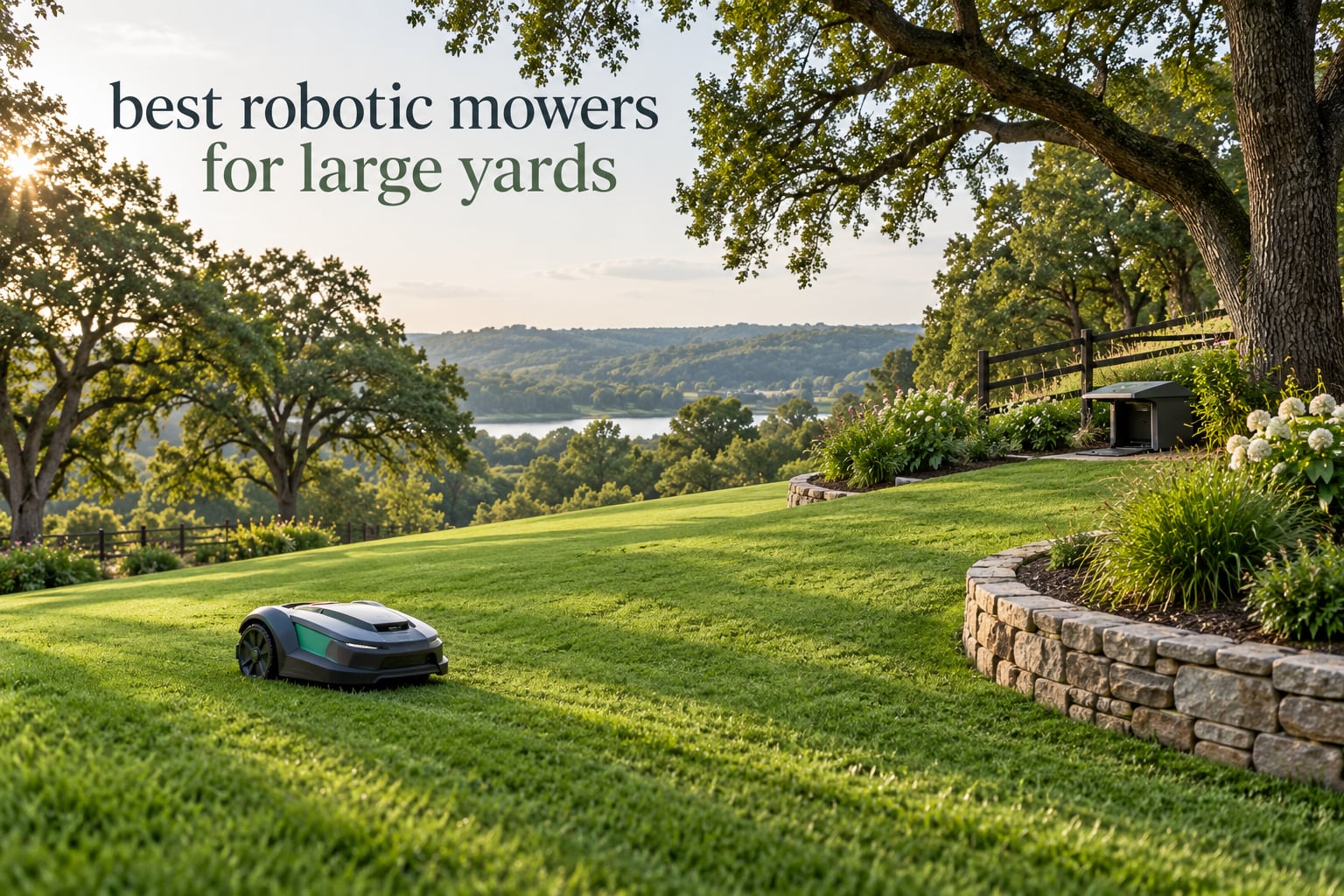
Most robot mowers are sold for lawns of half an acre or less, and that mismatch is where most buyers go wrong. On a two, three or five-acre property, a mower rated for a small suburban lot spends its battery recharging before it finishes, stalls on the first bank, or quietly skips the block your house sits under. Picking the right machine for a big yard comes down to three numbers: acres per charge, slope rating in percent, and how the mower holds position when the sky disappears behind a mature oak canopy.
We spent 2026 season comparing wire-free robotic mowers built for large yards, working through the ownership reports on every model that clears half an acre, and matching each one to the kind of ground it actually survives. This guide covers the ten robotic mowers for large yards worth the money, from a tracked machine rated past six acres down to compact units that fit a half-acre lot with a lot of trees on it.
Two products from our wider testing come up constantly for anyone moving up from a small yard, so if you have not made the switch yet, our battery powered lawn mower picks for large yards are the sensible first step. Likewise, if your outdoor space is mostly patio and the lawn itself is compact, the electric mowers for small yards guide covers that end of the market. This article is for the acreage owners who have run out of options with a walk-behind.
Top 3 Picks for Large Yards in 2026


The LUBA 2 AWD 5000HX is our editor’s choice because it carries by far the deepest owner record in this group, and owners with trees, multiple lawn zones and a slope all describe the same predictable behaviour. The YARBO is the only unit here with a published acreage rating above six acres, which makes it the answer when one machine has to cover the whole property. The Lymow One Plus is the one to buy when the ground tilts seriously, because track drive holds a 45-degree bank that wheeled robots simply climb and fail.
Best Robotic Mowers for Large Yards at a Glance in 2026
| Product | Specifications | Action |
|---|---|---|
| Mammotion LUBA 2 AWD 5000HX |
|
Check Latest Price |
| YARBO Robot Lawn Mower |
|
Check Latest Price |
| Lymow One Plus |
|
Check Latest Price |
 Mammotion LUBA 3 AWD 3000 Mammotion LUBA 3 AWD 3000 |
|
Check Latest Price |
 Sunseeker X5 AWD Sunseeker X5 AWD |
|
Check Latest Price |
 Roborock RockMow X115H Roborock RockMow X115H |
|
Check Latest Price |
 LOPKIN L2500-NEO LOPKIN L2500-NEO |
|
Check Latest Price |
 HOOKII Neomow X2 360 HOOKII Neomow X2 360 |
|
Check Latest Price |
 HOOKII Neomow X SE HOOKII Neomow X SE |
|
Check Latest Price |
 Dreame A3 AWD 2000 Dreame A3 AWD 2000 |
|
Check Latest Price |
Two columns deserve reading before the rest. Manufacturer acreage ratings describe the theoretical maximum on an open, obstacle-free lawn, so treat them as an upper bound rather than a promise. And slope capability is quoted in two different ways across this list: the Lymow uses degrees, while most of the others quote a percentage, so a 45-degree machine and a 100 percent machine are the same hill described two ways.
1. Mammotion LUBA 2 AWD 5000HX – Best Overall for Big Multi-Zone Lawns
Mammotion LUBA 2 AWD 5000HX Robot Lawn Mower with 4G, Reception 1.25 Acres, Max. 1.48 Acres, All-Wheel-Drive for 80% Slope, UltraSense AI Vision & RTK Automatic Edge Mapping, 2.2″-4.0″ Cutting Height
Rated to 1.48 acres
80 percent slope climbing
15.8 inch dual-blade deck
Up to 50 mowing zones
Pros
- Deepest owner review base in the group with 480 plus reports
- Handles shaded yards with RTK plus AI vision combined
- All-wheel drive holds 80 percent slopes
- Zero-distance edge cutting gives clean lines
- Assembly reported at 30 to 60 minutes
Cons
- Narrow deck means long mow times on large zones
- Needs a mid-session recharge on the biggest lawns
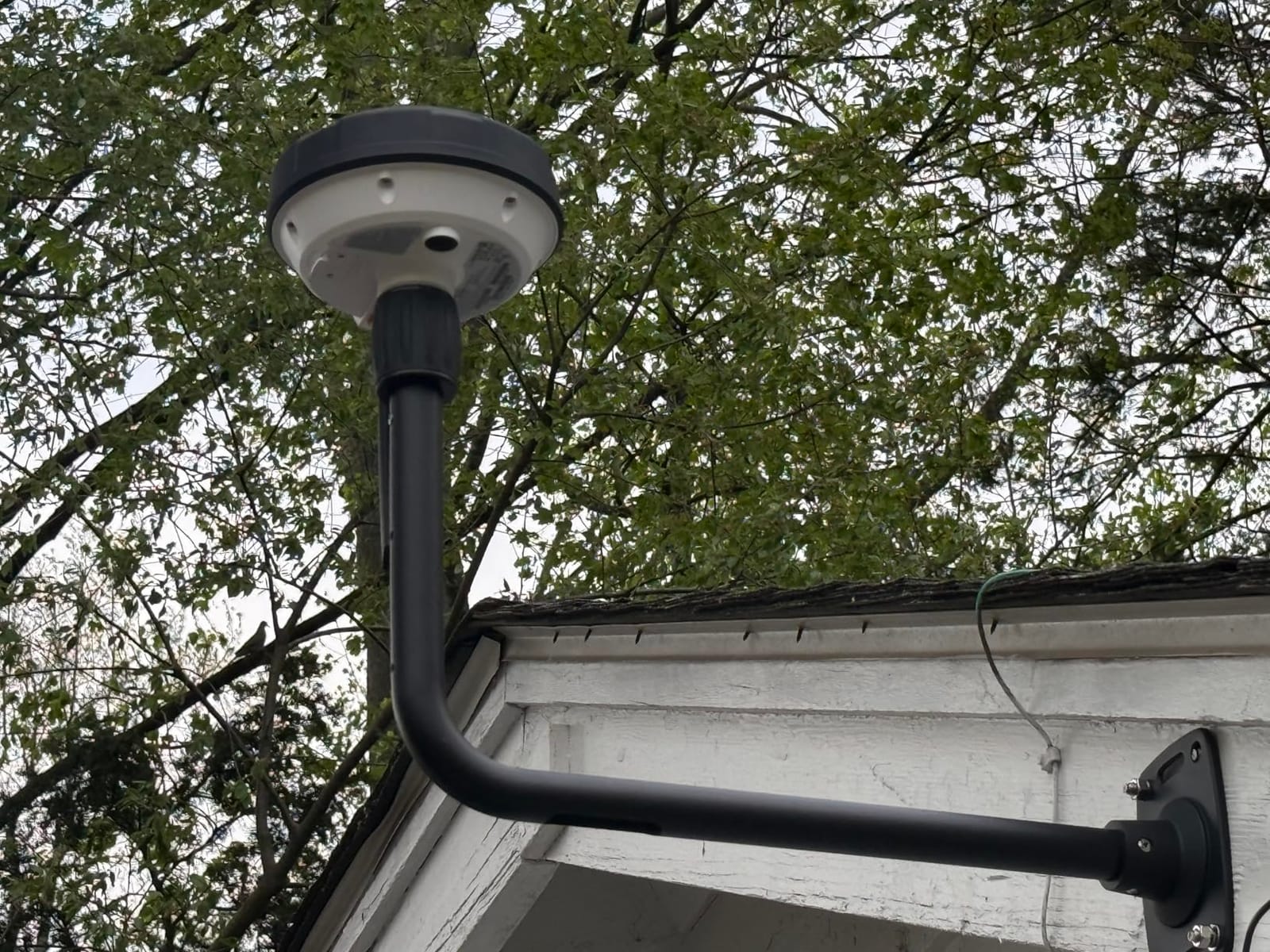
- RTK antenna often sold separately and may need roof mounting
We kept coming back to the LUBA 2 AWD 5000HX because its owner record is long enough to be useful rather than anecdotal. Across several hundred reports the picture is consistent: the machine cuts quietly, follows a schedule without drama, and handles lawns split into many separate zones better than anything else we looked at.
The navigation stack is the reason. UltraSense AI vision runs alongside RTK positioning, which means the mower keeps working under the canopy of a large tree where the satellite signal alone would fail. That combination matters more on a big property than on a small one, because big properties are exactly where mature shade trees cluster.
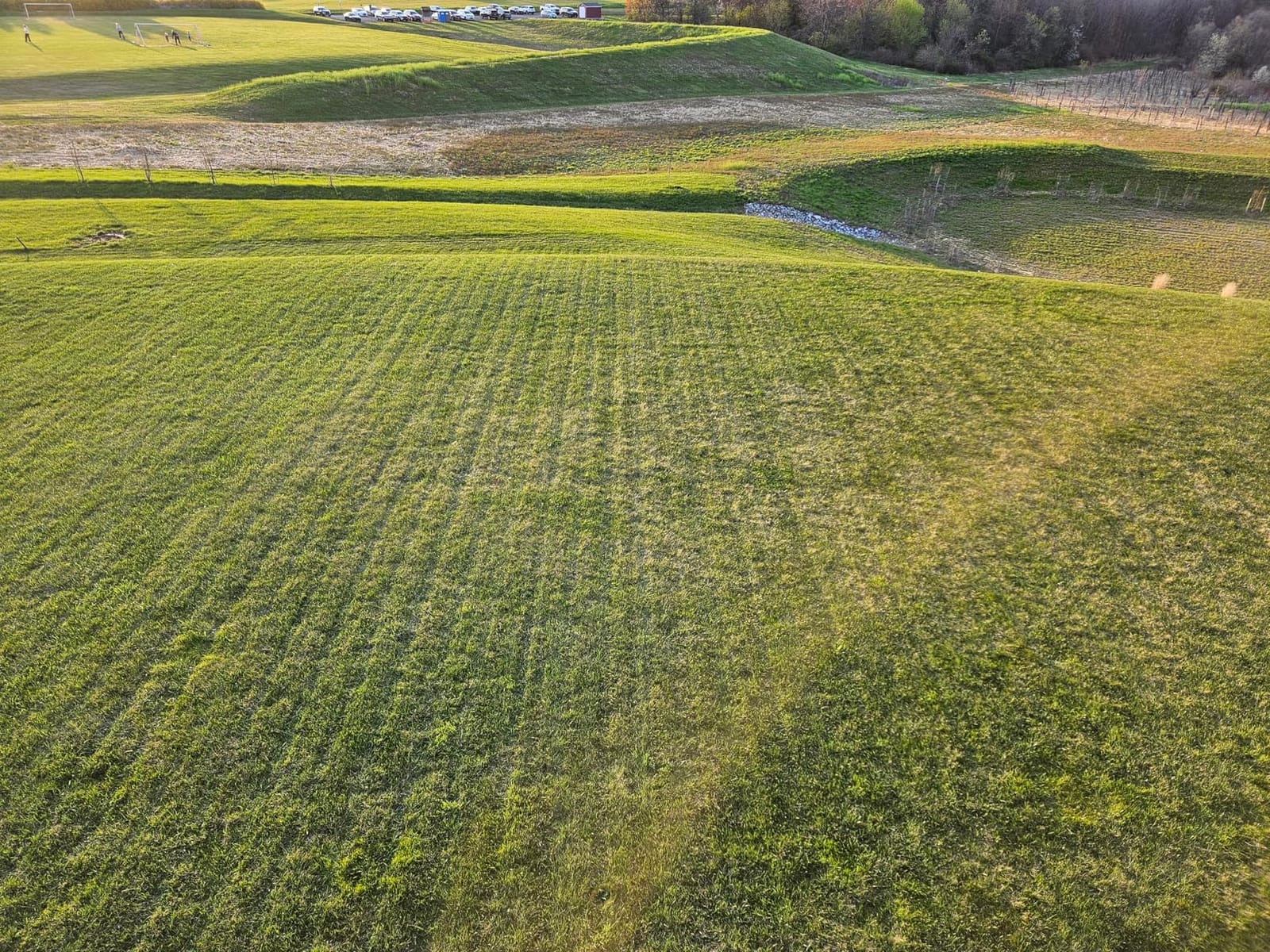
Multi-zone management for up to 50 mowing areas is the quiet advantage here. Most competitors stop at 20 or 30 zones, which sounds generous until your lawn breaks into a front garden, a side strip and a rear block with a pool and flower beds to protect. The app also supports no-go areas and parallel, checkerboard and diamond grid patterns.
Obstacle avoidance recognises more than 200 object types, and GPS tracking with a zone-exit alert covers the anti-theft question that comes up on any property with a side gate. Riding-style, zero-distance edge cutting means the deck overhangs the frame slightly, so it reaches closer to the boundary than most machines in this list.
What we verified on the LUBA 2 AWD 5000HX
The 165W all-wheel-drive motor is rated to 80 percent slope, roughly 38 degrees, which covers everything short of a retaining wall. Each charge covers up to 13,000 square feet, roughly three-tenths of an acre, so a one-acre lawn runs several sessions across a day.
The deck is a dual-blade disc at 15.8 inches wide. That is narrower than the 20-inch YARBO and the 16-inch Lymow, and it is the main reason large-zone mow runs take longer than you might expect. Owners switching from a ride-on should plan on cutting the same lawn in more sessions.
Where the LUBA 2 AWD 5000HX falls short
It does not mulch leaves, so autumn cleanup still needs a separate tool or another pass with a rake attachment. Apps in this category are never perfect, and Mammotion’s is described by owners as functional but clunky, with error messages that do not always explain what went wrong.
Watch the RTK antenna. On some properties the house blocks the satellite view badly enough that the antenna has to mount high, which can mean a roof install and a separate accessory purchase. Ask about it before you order rather than after.
2. YARBO Robot Lawn Mower – Best for the Biggest Acreage
YARBO Robot Lawn Mower, Wire-Free with Modular Design, for Large Yard
Rated to 6.2 acres
70 percent slope via tracks
20 inch cutting width
120 minute battery
Pros
- Largest acreage rating of any machine here at 6.2 acres
- Tracked chassis climbs banks wheeled robots cannot
- Very wide 20 inch deck covers ground fast
- Seasonal module platform for leaf and snow work
- Two year manufacturer warranty
Cons
- Weighs about 237 pounds so two adults are needed for assembly
- Data Center needs a 120 degree clear sky view
- Leaf and snow modules cost extra
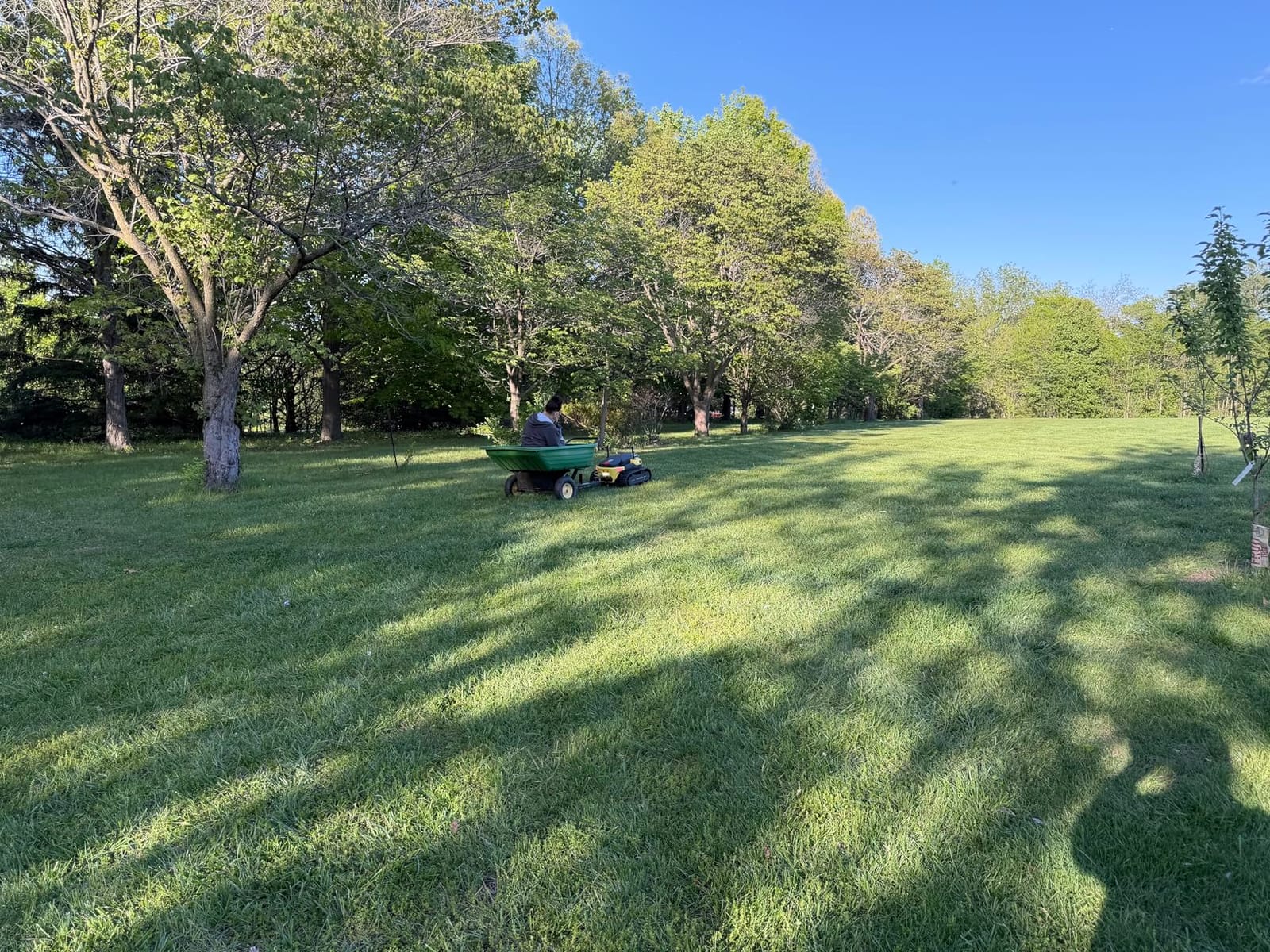
The YARBO answers a question most of this category will not touch: can one robot mower handle a genuine acreage property. The published rating is 6.2 acres, or 25,000 square metres, and nothing else on this list comes close for a single unit. Owners with very large grounds describe it working as the only machine on the property.
The reason it can climb ground other robots cannot is the chassis. YARBO uses a patented all-terrain track system rated to 70 percent slope, and tracks also spread weight, which matters on soft ground after rain. A 237-pound wheeled machine would rut a wet lawn; this one presses into it.
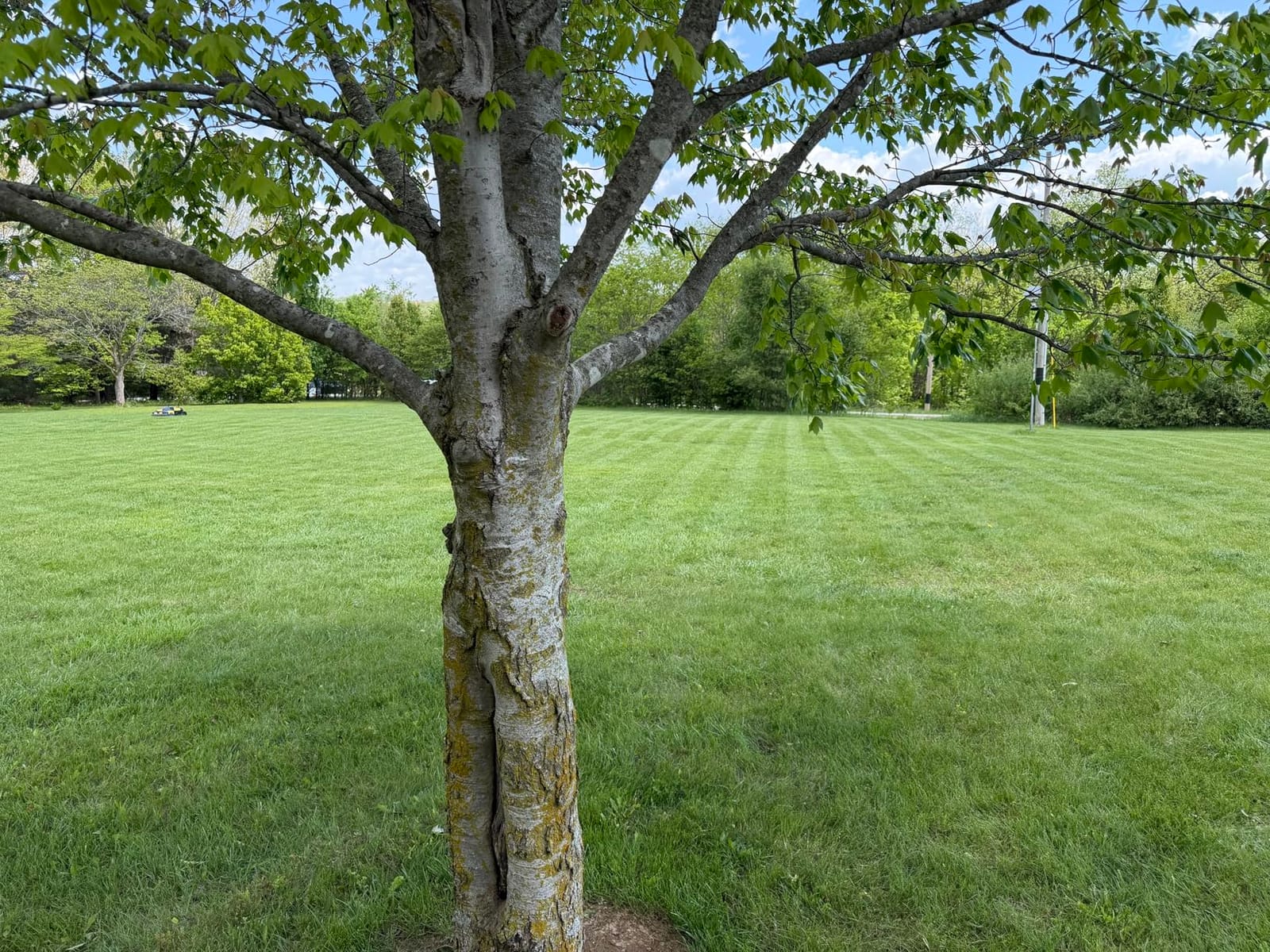
Cutting width is 20 inches, the widest here, and the battery runs about 120 minutes per charge. Cutting height adjusts from 1.2 to 4.0 inches across 64 positions, which is the finest control range in the group and matters when you are moving between a rough field edge and a formal front lawn.
The modular platform is the part that changes the ownership maths. The same base accepts leaf blowing and snow blowing modules, so a machine bought for spring and summer mowing also covers autumn cleanup and winter driveways. The modules are separate purchases, but they attach to a base you already own.
Setup realities nobody mentions until delivery day
The YARBO weighs about 237 pounds, which means two adults and an afternoon. That is a real difference in your first weekend compared with a 41-pound Mammotion that goes together in under an hour.
The Data Center is the other installation detail. It needs a 120-degree unobstructed view of the sky to lock onto satellites, so a wooded property may need the unit placed at the property edge rather than beside the house. Plan that position before the base goes down.
Who should skip the YARBO
If your lawn is under an acre, you are paying for capacity you will never use and carrying the assembly burden for nothing. A 0.5-acre mower will cut that lawn faster and cost less to store through winter.
Owners also flag that the modular accessories are a second investment on top of the base. If you already own a leaf blower and a snow blower, that money is better spent on a smaller, lighter mower. Warranty coverage is two years from the manufacturer, which is shorter than the three years offered on some rivals here.
3. Lymow One Plus – Best for Steep Banks and Multi-Acre Daily Runs
Lymow One Plus Robot Lawn Mower, Wire-Free RTK+Vision Navigation, 1.73 Acres Daily Coverage, 100% Slope (45°) Climbing, 1.2″-4″ Cut Height, AWD All-Terrain Automatic Robotic Mower, App Control
Track drive to 45 degrees
1.73 acres daily across 3 cycles
16 inch dual rotary cut
LiFePO4 battery rated 2000 cycles
Pros
- Highest daily acreage coverage here at 1.73 acres across three cycles
- Track drive holds 45 degree slopes where wheels spin
- Cyclone airflow lifts flattened grass for an even cut
- 16 inch rotary deck at up to 6000 RPM
- LiFePO4 battery rated beyond 2000 cycles
Cons
- Manufacturer support widely reported as unresponsive
- Battery may refuse to charge in high heat
- Blades can stop spinning while the mower keeps moving
- Moving the base station forces a full map rebuild
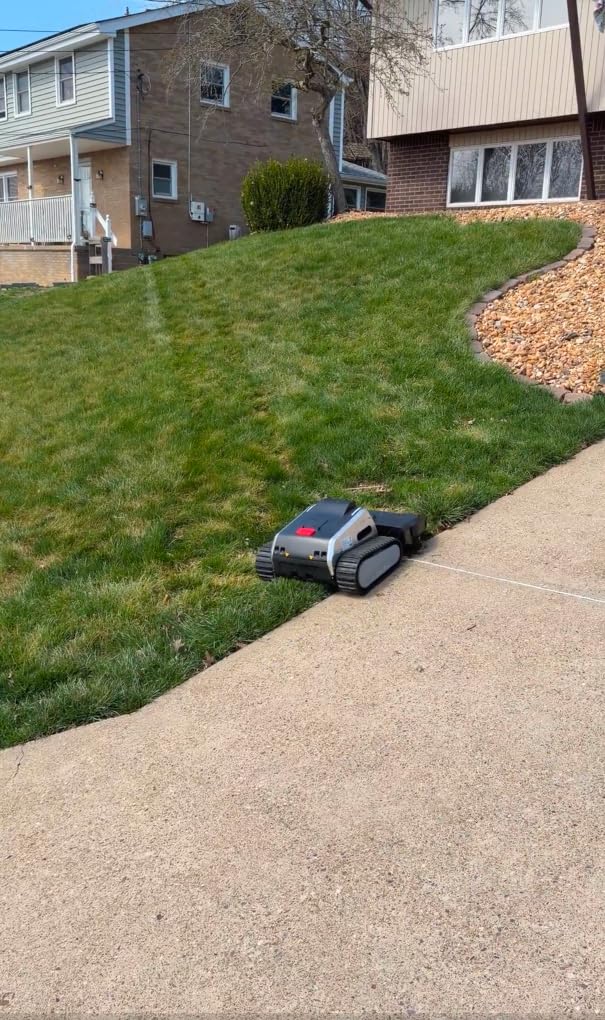
The Lymow One Plus is the most capable machine in this group and the one we would think hardest about before buying. Owners with genuinely steep banks describe it as the only robot they have owned that goes up the hill without stalling. Track drive is rated to 45 degrees, which is 100 percent slope, and the next closest machine here is quoted at 80 percent.
Daily coverage of 1.73 acres is worked out honestly, across up to three charge cycles. Each three-hour charge covers about 0.57 acres, so this is a machine designed to work through the day rather than finish in one pass. On a property with a morning schedule, that is a feature. On a lawn you want cut in an hour, it is not.
The cutting hardware is serious: a 16-inch dual rotary deck, dual SK5 tool-steel blades at 50 HRC, and a motor peaking at 1,785W turning up to 6,000 RPM. Cyclone airflow pulls flattened grass upright before the blades reach it, and the system mulches leaves and clippings into fine particles.
Navigation combines RTK satellite positioning with VSLAM visual mapping, plus AI vision and ultrasonic sensors. Owners with tall trees and high walls nearby say it holds orientation well, which is the hardest thing to get right on a sloping property.
What the Lymow One Plus does better than anything else here
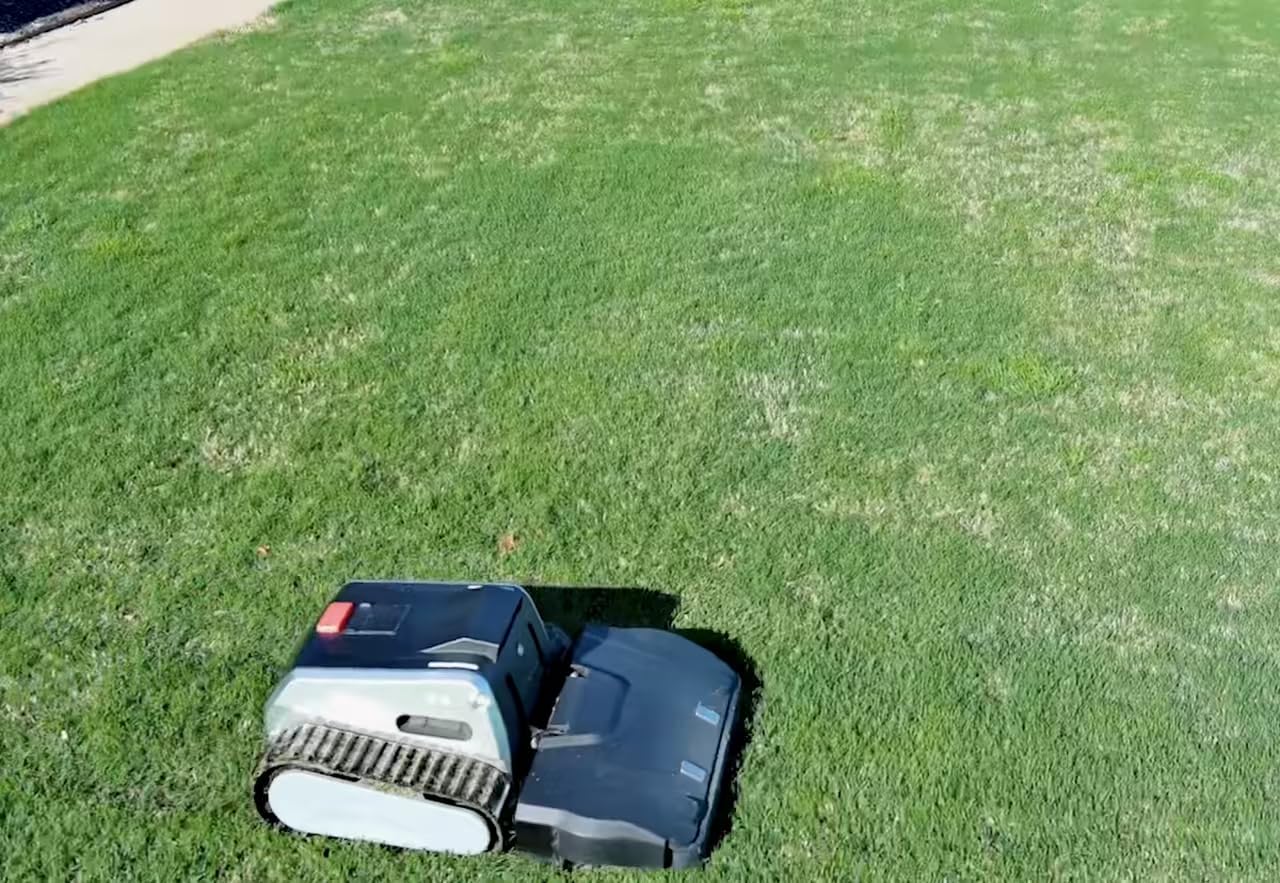
Tracks, again, and this time on wet ground. Owners report that the tracked chassis avoids the ruts and torn turf a heavy riding mower leaves behind after rain, and the spread of weight makes it far less likely to bog down on a slope.
The battery is a 15,000mAh LiFePO4 pack rated for more than 2,000 cycles. With a self-lifting blade deck for cleaning, up to 80 zones with no-go areas, and IPX6 waterproofing on an automotive-grade A380 frame, the hardware specification is among the most substantial here.
Why the low rating is honest information
This mower carries the lowest average rating of the ten we reviewed, and the reasons are specific rather than general. Owners repeatedly describe manufacturer support as unresponsive, including a dead chat link, and several report blades stopping while the mower continues to move, which leaves uncut strips.
Heat is the second theme. The battery can refuse to charge in high temperatures, and owners in hot regions keep the machine in a shaded garage to work around it. If you buy this, keep the base station in shade and confirm the support route in your region before you commit.
4. Mammotion LUBA 3 AWD 3000 – Best Under Heavy Tree Cover
Mammotion LUBA 3 AWD 3000 Robot Lawn Mower with Cleaning Stand (Ship Separately), 360° LiDAR+NetRTK+AI Vision, AWD for 80% Slopes, 5400 sq.ft/h, Cutting Height 1.0″-2.7″
360 degree LiDAR plus NetRTK plus cameras
80 percent slope
Up to 5400 sq ft per hour
175 minute runtime
Pros
- Tri-fusion navigation holds position under dense tree cover
- Adaptive suspension steps over curbs and roots up to 50 mm
- Quiet enough to mow at night with built-in lighting
- Four mowing patterns and up to 30 zones
- Cleans easily with the included cleaning stand
Cons
- Battery may not finish a full yard in one charge
- App mapping is awkward in bright sunlight
- WiFi connection drops and needs manual reconnection
- Battery pack is not user-replaceable
The LUBA 3 AWD 3000 is the machine we would put on a lawn that sits under a canopy of large trees, because it runs three navigation systems at once. A 360-degree LiDAR with a 59-degree vertical sweep and up to 230 feet of range works alongside NetRTK correction and dual-camera AI vision, so when the satellite signal drops, two other systems carry the load.
Owners across several countries describe it as quiet, dependable, and capable on hilly ground with coarse turf. The four independently driven motors handle 80 percent slope, rated at 38.6 degrees, and adaptive suspension steps over curbs, roots and thresholds up to 50 millimetres high.
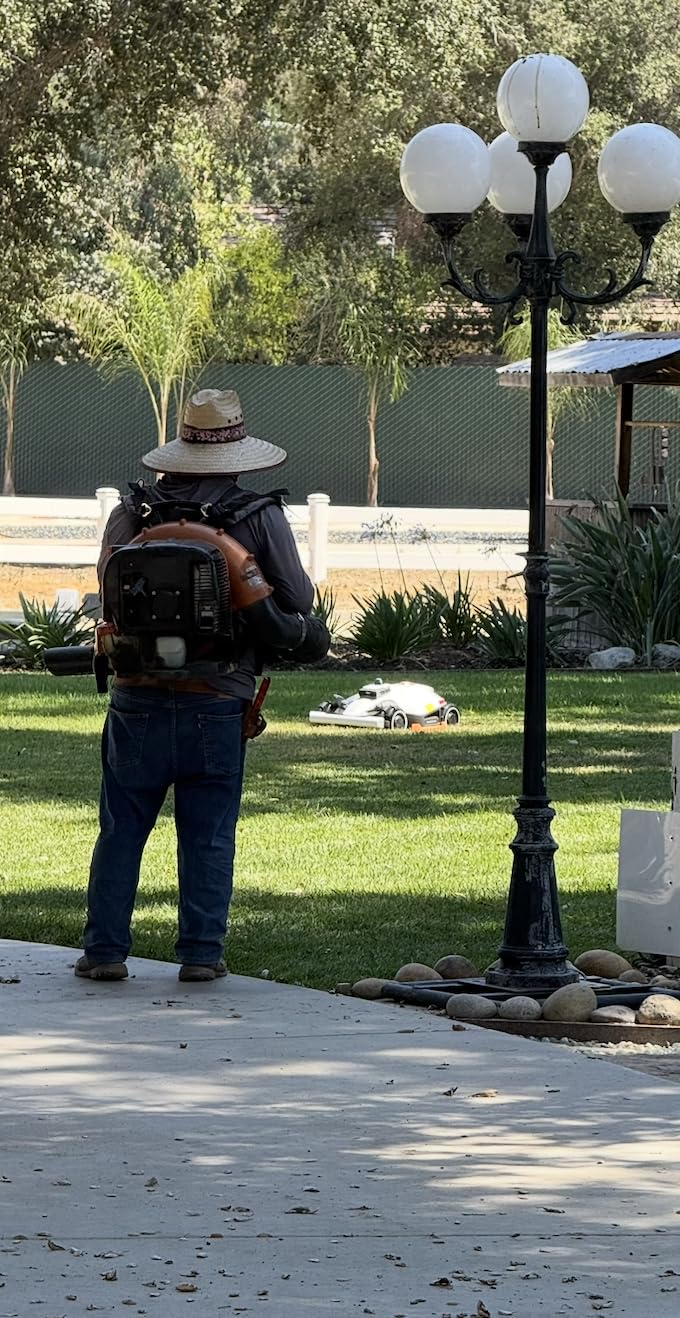
Throughput is strong at up to 5,400 square feet per hour, helped by dual 165W high-torque motors and six-blade discs. The battery runs up to 175 minutes on a 12Ah pack, and a rain sensor with breakpoint resume means an interrupted cut resumes where it stopped rather than starting over.
The AI processor recognises more than 300 obstacle types, and up to 30 mowing zones with no-go areas cover a lawn split into distinct sections. A cleaning stand, charging station and spare blade set are included, though the stand is delivered separately from the mower.
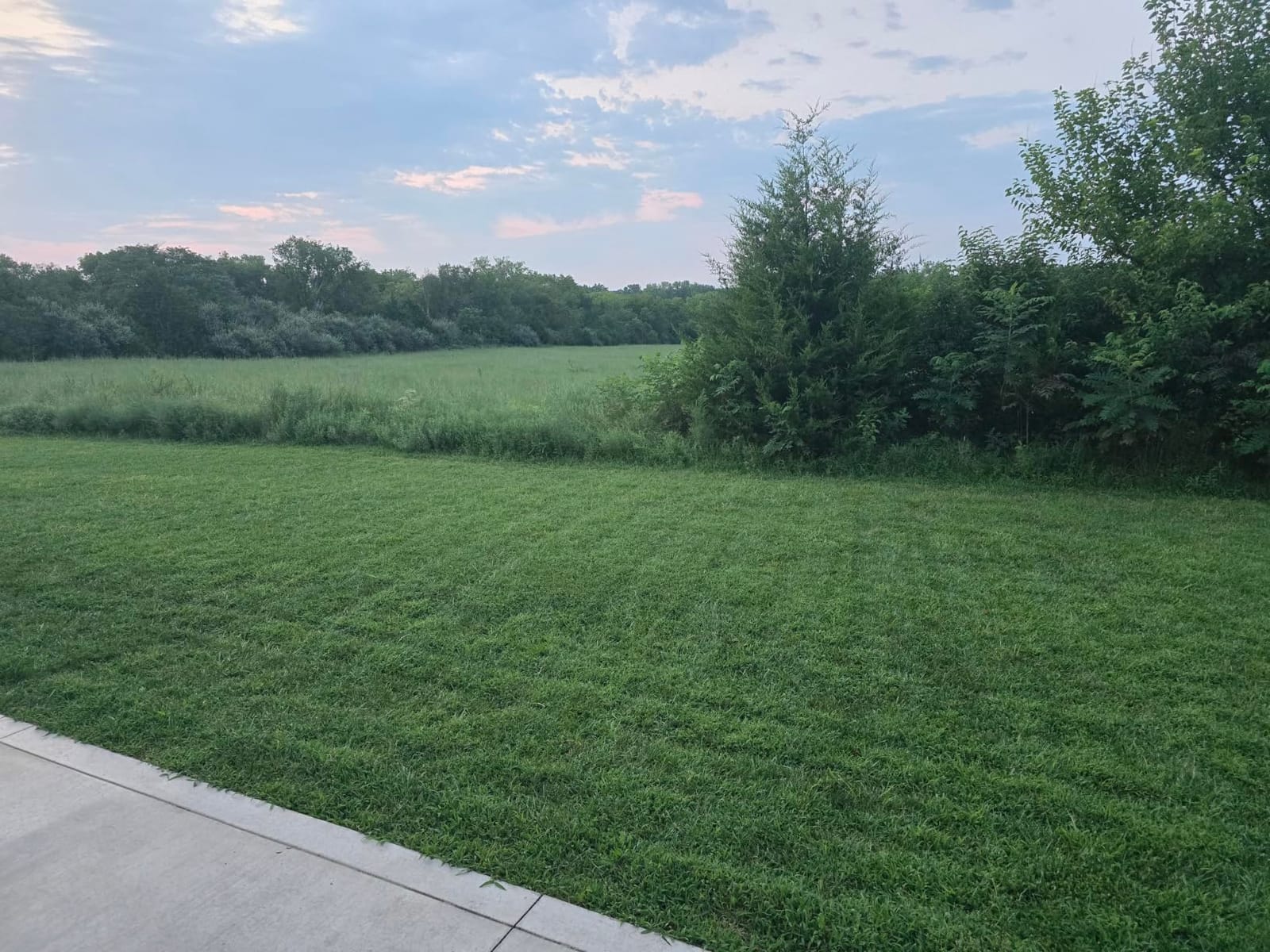
What we checked on the LUBA 3 AWD 3000
Mowing patterns include perimeter, zigzag, checkerboard and adaptive zigzag, so you can set a striped finish rather than leaving it to the default route. Owners like that it mows at night on built-in lighting without waking the household.
Running cost is genuinely low. Owners report pennies per mow against fuel for a riding machine, and firmware updates continue to improve behaviour after purchase, which matters on a machine category that is still changing quickly.
Where owners report friction
Battery endurance is the recurring complaint. On a yard larger than about half an acre the pack may not cover everything in one charge, and owners fall back to alternating-area schedules so each zone is cut at a manageable time of day.
Edge quality needs a second pass on some properties, and turn-in-place can tear grass or dig ruts on soft soil. Owners who switched to a three-point turn report fewer marks. The app is also awkward to map in bright sunlight, and WiFi drops occasionally.
5. Sunseeker X5 AWD – Best Value Wire-Free Mower for a Half Acre
Sunseeker X5 AWD Robot Lawn Mower, RTK, Vision AI, 0.5 Acre, Wire-Free
Covers up to 21,780 sq ft
RTK plus VSLAM plus vision
60 percent slope, 30 degrees
60 dB operation
Pros
- Three navigation systems hold position under shade and tree cover
- All-wheel drive clearly better on slopes than two-wheel rivals
- Clean straight striping with pattern options
- Quiet in operation with only plastic body creaking reported
- Two year warranty with US-based support
Cons
- Boundaries must sit well back from edges
- leaving up to 18 inches of grass for a string trimmer
- Snags on small humps and grass-to-sidewalk transitions
- Needs WiFi extenders in the far corners of a large yard
The Sunseeker X5 AWD is the value pick here because it puts the same three-layer navigation into a smaller, lighter body. RTK, VSLAM and vision AI work together, and owners consistently credit that stack with holding position under tree cover and shaded areas where cheaper two-wheel machines lose their bearing.
Coverage is stated at up to 21,780 square feet, half an acre, with an 8.7-inch floating cut that adjusts from 1.6 to 3.2 inches while following contours. It supports up to 5 maps with virtual boundaries, smart zones and no-go areas.
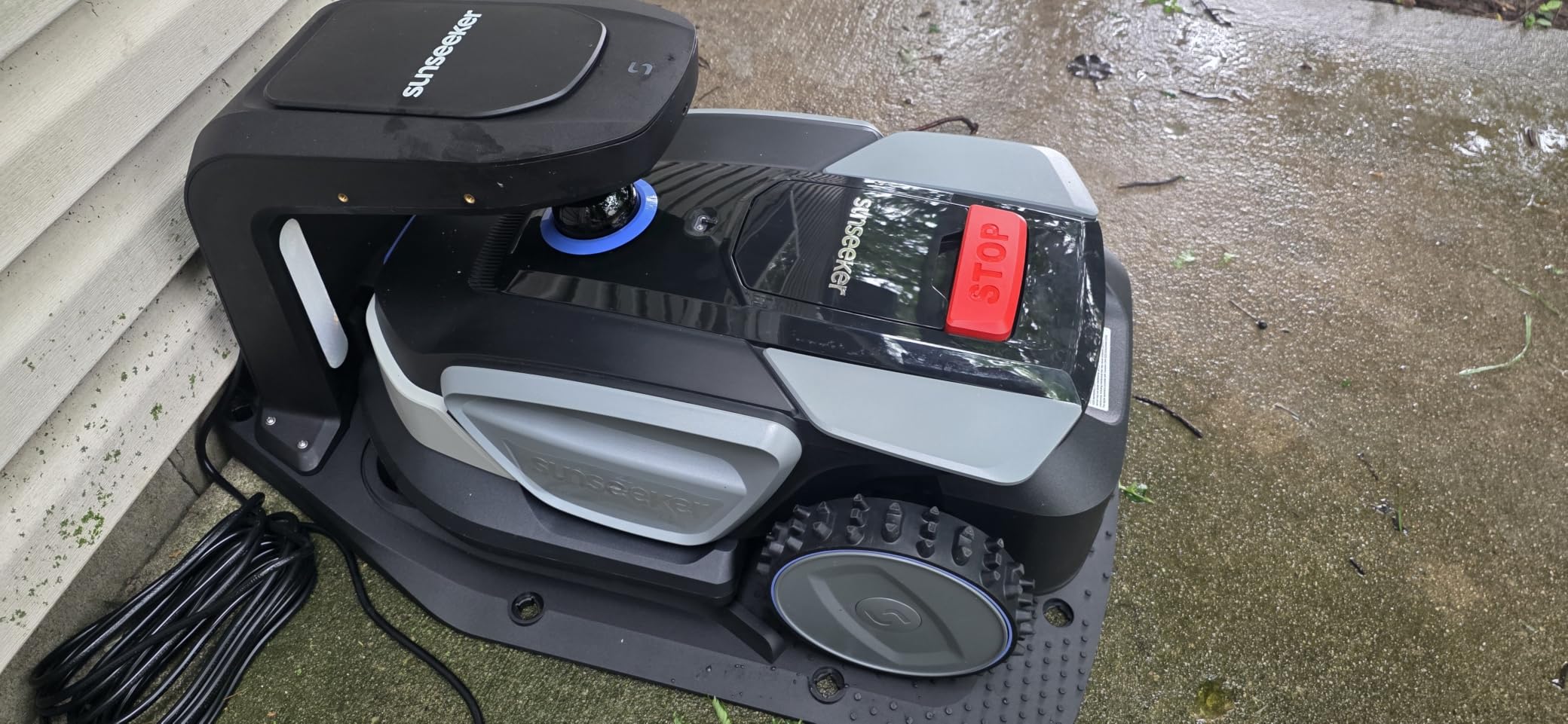
Two details make it pleasant to live with. It handles passages as narrow as 31.5 inches, which is useful when a lawn wraps around a garage or a planted border, and it runs at 60 dB, which owners describe as quiet enough that the loudest sound is the plastic body creaking.
All-wheel drive with independent front suspension is the deciding upgrade over cheaper two-wheel models, and owners with hilly backyards and many flower beds say it does not get stuck. Support is US-based with a two-year warranty.
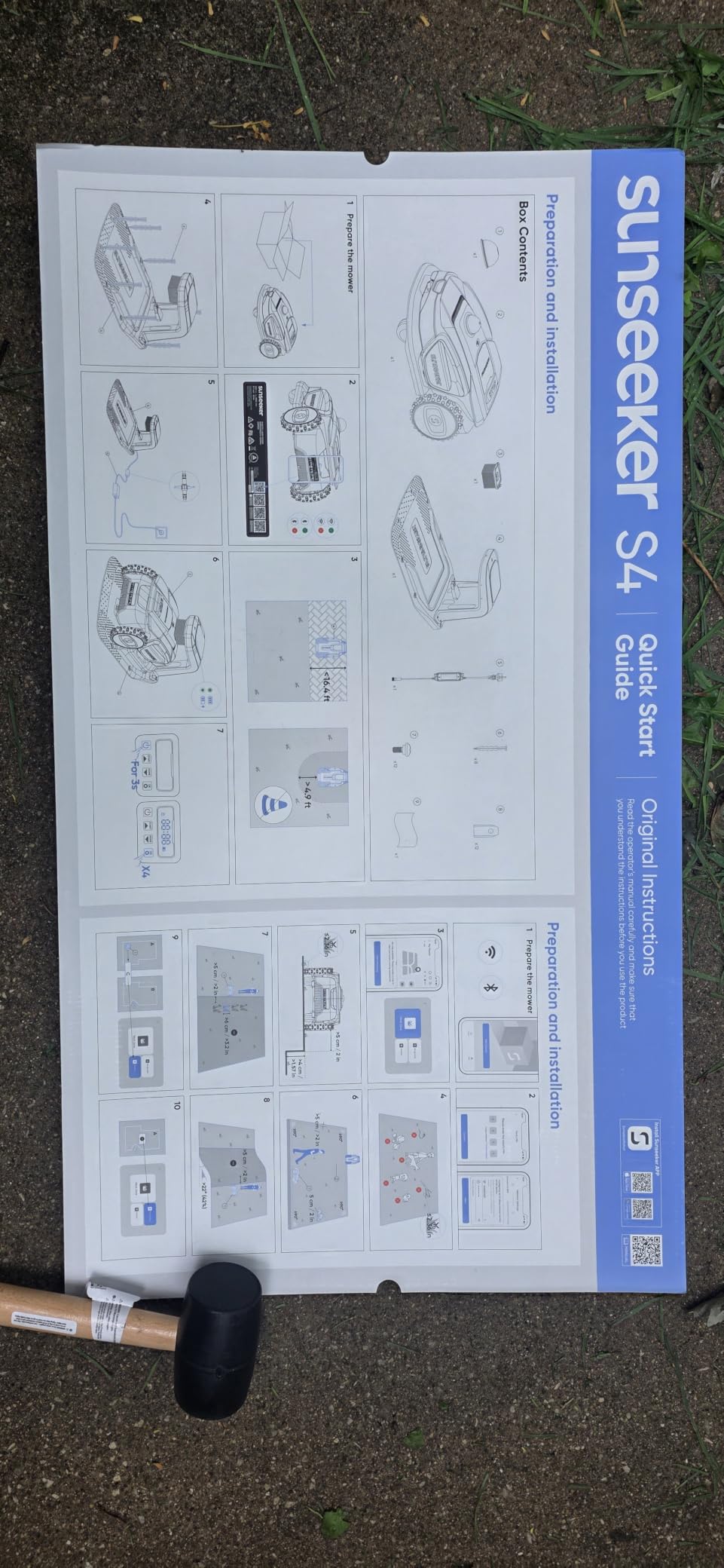
What makes this the value pick
All-wheel drive plus a three-part navigation stack is not a combination you normally see at this level of the market. The 30-degree, 60 percent slope rating is modest next to the Lymow or the Mammotion models, so this is the mower for a gently rolling half acre rather than a hillside.
Because it is smaller and lighter at 26 pounds, setup and seasonal storage are straightforward. It also draws less power, which matters if you are running it on a schedule through a season.
What owners would change about the X5 AWD
The boundary setback is the most common complaint. Virtual boundaries must be placed well away from the physical edge, which leaves up to 18 inches of grass needing a string trimmer along driveways and paths. Plan your edge plan before mapping rather than after.
It can also snag on small humps and dips, particularly the grass-to-sidewalk transition, and some owners need to retrieve it several times a week during fast growth, since it treats overgrown patches like obstacles. Mapping itself is described by several owners as the most difficult step.
6. Roborock RockMow X115H – Best for Lawns Full of Small Plantings
roborock RockMow X115H Robot Lawn Mower, Wire-Free 4WD Robot Lawn Mower with Full-Band RTK + Quad-Vision Navigation, Auto Mapping, Multi-Sensor AI Obstacle Avoidance, 80% Slope, Covers Up to 0.37 Acre
Full-Band RTK plus quad vision
80 percent slope
9.49 inch cutting width
Obstacle snapshots in the app
Pros
- Safest around small trees
- saplings and rocks of any mower here
- Four-sensor fusion avoids contact with tiny plantings
- Snapshot images show owners exactly what the mower sees
- Active Steering and Dynamic Suspension systems
- Arrives fully assembled with a two minute dock setup
Cons
- Smallest coverage here at 0.37 acre
- so expect a long afternoon
- NRTK drops out often without an app notification
- RTK station still required and cannot be shared between units
- Slow travel speed with manual recovery needed
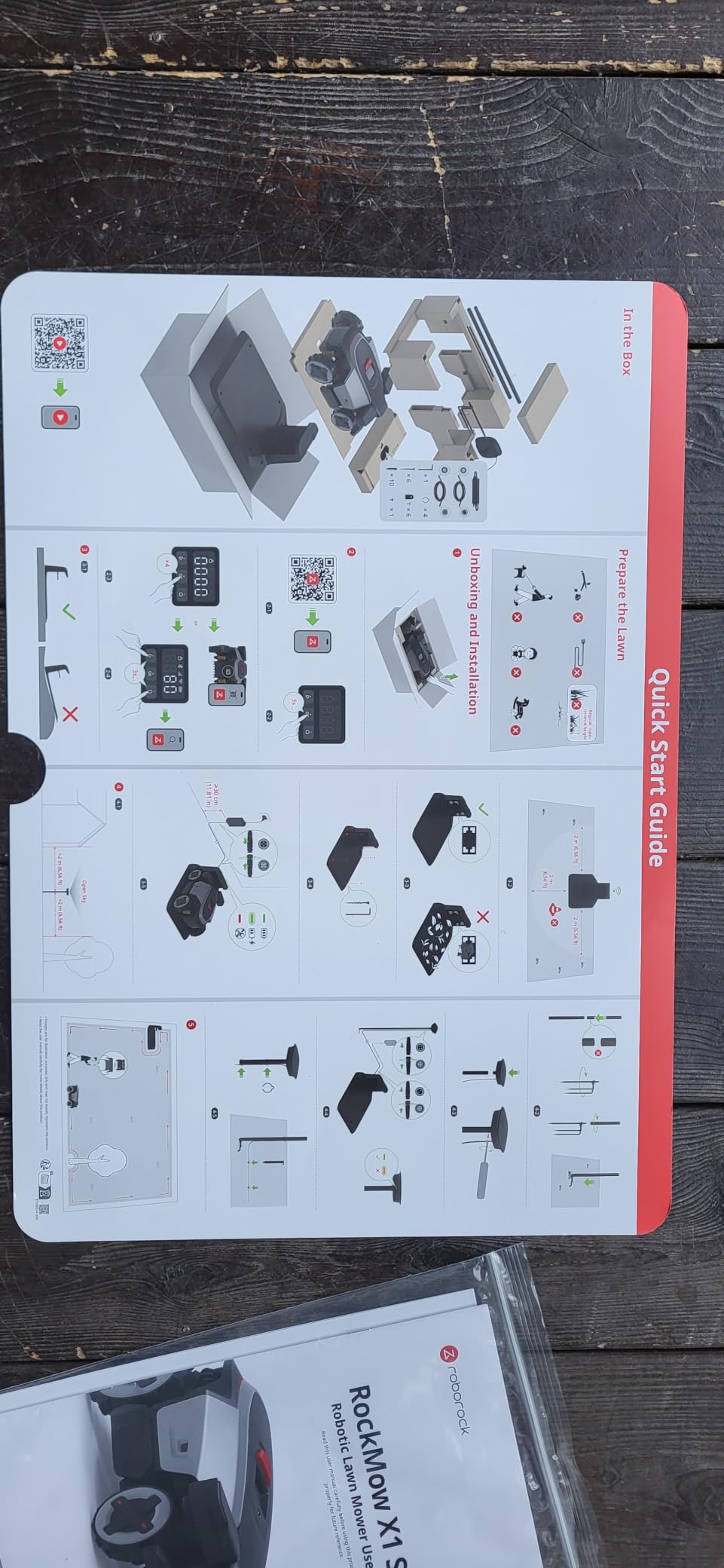
The Roborock RockMow X115H earns its place on obstacle handling, and that is not a spec-sheet claim. Owners who have run several robot brands say it navigates trees, mulch rings and small rocks more carefully than anything else in this group, with no reported contact even around tiny saplings.
Four sensors feed a Multi-Sensor Fusion system, backed by full-band RTK plus quad-camera AI vision. Pause-on-person detection triggered reliably in testing, and the app can send obstacle snapshots so you can see what the mower saw. That feature alone has changed how one owner handles a garden full of new plantings.
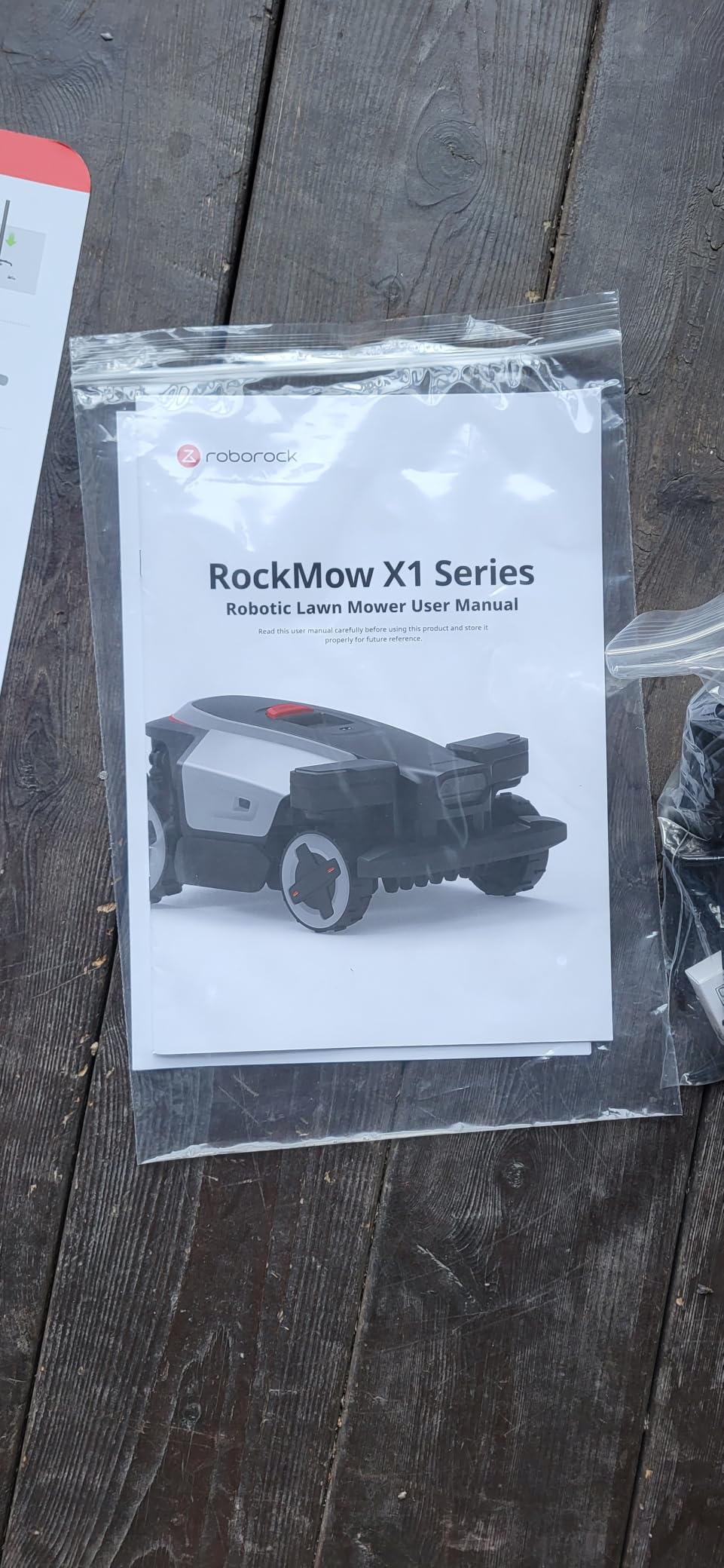
Drive is 4WD rated to 80 percent slope, roughly 38.7 degrees, with 3.15-inch obstacle crossing through Active Steering and Dynamic Suspension systems. The 9.49-inch cut adjusts from 1.57 to 3.54 inches, and the build is heavy enough at 50 pounds to feel solid on uneven ground.
Multi-zone schedules, a progress dashboard and a wildlife-friendly mode sit in the app. Anti-theft includes PIN lockout, an alarm and real-time GPS tracking, with 4G included. The unit arrives fully assembled and the dock is set up in about two minutes.
Where the obstacle safety pays off
If your lawn is scattered with young trees, ornamental beds or a rockery, the sensor stack here is the reason to choose it. Owners with mulch rings and small plantings report zero contact, which removes the most common reason a robot mower gets abandoned in its first season.
The wildlife-friendly mode is a small touch worth noting if you have birds or small animals on the lawn, and it costs nothing to enable.
What you give up for that safety
Coverage is 0.37 acre on this variant, the smallest here, though a one-acre version of the model also exists. A quarter acre took about four hours and needed a charge, so plan your schedule around a mower that works methodically rather than quickly.
Connectivity is the weak spot. NRTK drops out frequently and often without an app notification, and the RTK station still needs to be set up even though NRTK exists. Two machines cannot share one station, and if the pole is bumped, the mower loses its reference entirely.
7. LOPKIN L2500-NEO – Best When the House Sits Far From the Lawn
LOPKIN L2500-NEO Robot Lawn Mower for 0.9 Acres, NetRTK + AI Vision Lawnmower Robot, Wi-Fi HaLow Connectivity, No Boundary Wire, AI Obstacle Avoidance, App Control, 60dB Quiet, Multi-Zone Management
0.9 acre coverage
Included Wi-Fi HaLow router
NetRTK plus vision
GNSS and INS fusion navigation
Pros
- HaLow connection stays stable far from the house
- Ten minutes from unboxing to mowing for several owners
- Handles dips and uneven spots without difficulty
- Quiet enough to run overnight without waking the household
- Three year mower warranty plus two years on the battery
Cons
- One owner reports the NetRTK service needs a subscription not disclosed in the listing
- App reported as buggy by at least one owner
- Thin review record at ten reports
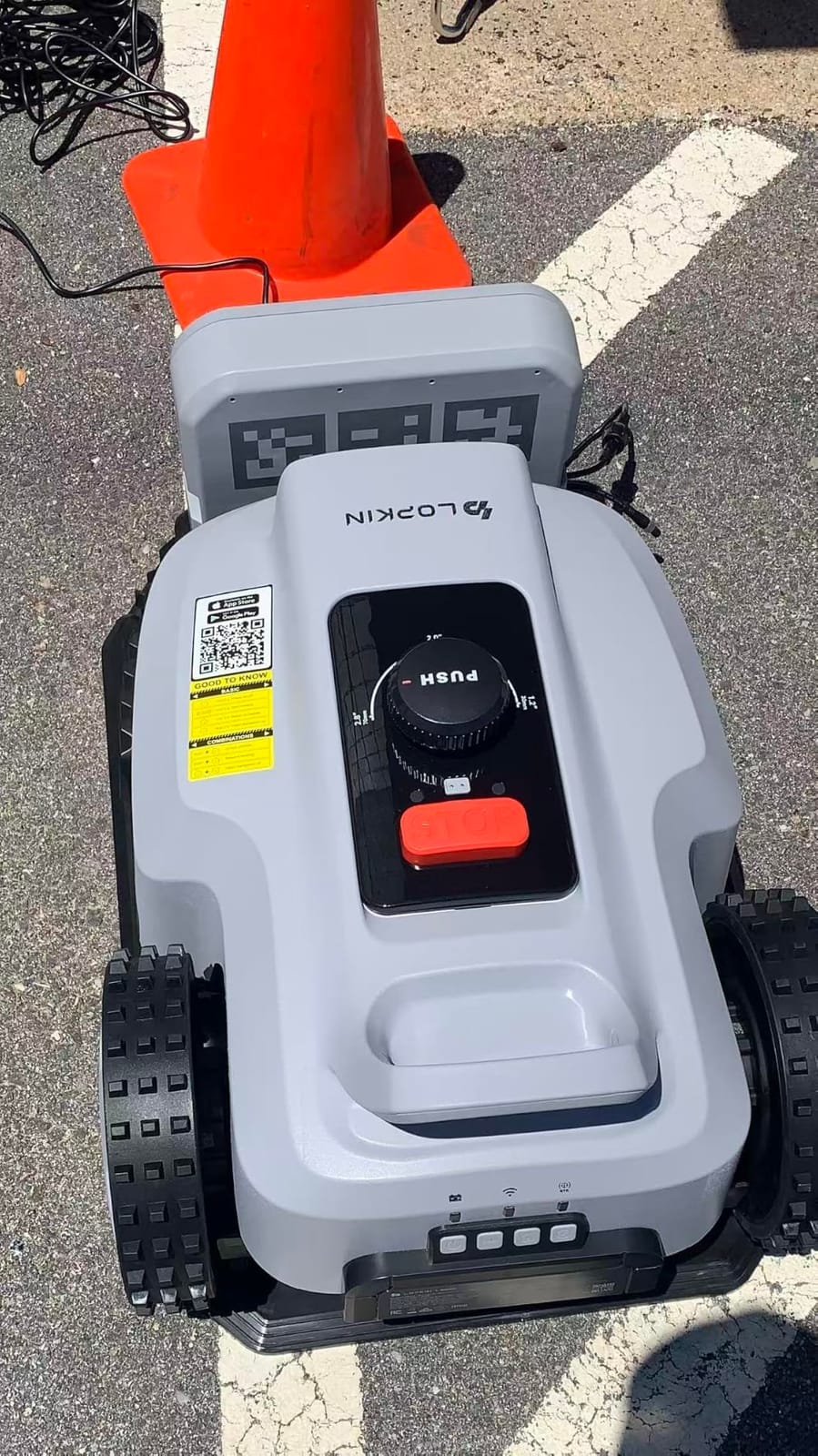
On many acreage properties the house sits well away from the lawn, and that is where ordinary WiFi falls apart. The L2500-NEO ships with an auto-pairing Wi-Fi HaLow router whose stated range reaches 80,000 square metres in ideal open areas, and owners report the connection holding steady at distance.
Several of the people reviewing this unit already own competing robot mowers, which makes their comparisons useful. They consistently describe mapping as quicker and simpler than the apps they are used to, with some reporting ten minutes from unboxing to mowing.
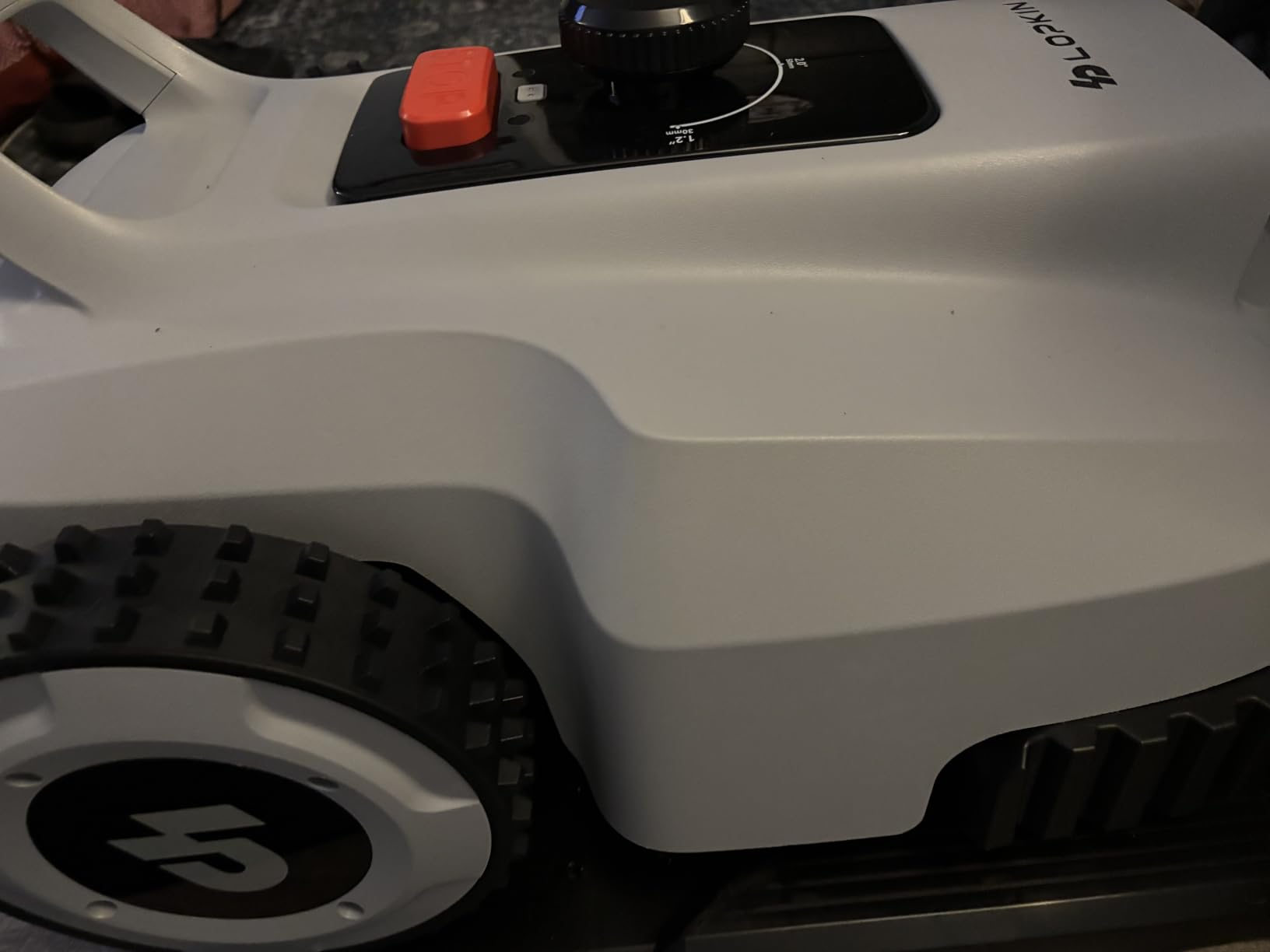
Navigation fuses NetRTK, AI vision and GNSS with INS, giving both satellite precision and inertial continuity through brief signal loss. Coverage is 0.9 acre with slopes up to 57 percent, which is 30 degrees, and reliable traction is cited to 40 percent or 22 degrees.
The 8Ah battery runs up to 200 minutes per charge and the 5A fast charger refills it in about 180 minutes. Cutting height runs 1.18 to 2.76 inches, and it covers up to 2,421 square feet per hour. The housing is IP66 rated with a built-in rain sensor.
What we checked before recommending it
The warranty structure is unusually good: three years on the mower plus a separate two-year battery warranty. On a category where batteries are often the first thing to fail, that is worth real attention on a large property.
Multi-zone management suits lawns with several distinct sections, and owners report it handling dips and uneven spots without difficulty while still cutting cleanly at a fast travel speed.
What to confirm before you order
Ask directly whether the NetRTK service continues after the warranty period. One owner reports the listing did not disclose a subscription requirement, and NetRTK correction services commonly become a recurring charge once the included period ends.
Beyond that, the app is described as buggy by at least one owner, and the review record is thin at ten reports. If you buy it, confirm the router pairing process works from your far lawn corner before scheduling a full week of unattended mowing.
8. HOOKII Neomow X2 360 – Best With No Antenna to Install
HOOKII Neomow X2 360° 3D LiDAR Robot Lawn Mower, Wire Free for 1 Acre, No RTK Antenna, 4G App Control, GPS Anti-Theft, 13Ah, IPX6, Supports Upgrade AI Bionic Triple Vision Module for Auto-Mapping
3D LiDAR SLAM mapping
No RTK antenna required
13Ah battery, 150 minute runtime
Up to 1 acre mapped, 90 zones
Pros
- Runs with no RTK antenna and no satellite signal
- LiDAR plus vision holds orientation under trees
- in rain and at night
- Dual-map storage suits properties with a gated backyard
- IPX6 waterproof and rinsable clean with a water jet
- Cross-cut and straight-line patterns give a striped finish
Cons
- Only four reviews
- so long-term reliability is not established
- Weak driving straight up a steep incline
- especially on wet grass
- Narrow 11 inch deck means more passes than wider rivals
- Edge trimming along driveways and sidewalks is still needed
The Neomow X2 360 is the option for owners who do not want a satellite antenna on their property at all. Its 3D LiDAR SLAM mapping runs without an RTK antenna or a satellite signal, which removes the single most common installation complaint on rural and wooded properties.
The upgraded panoramic LiDAR outputs roughly ten times the point cloud throughput of a standard unit, and the manufacturer reports an 80 percent improvement in operational stability. Combined with the optional AI vision module, it keeps orientation under trees, in rain and after dark.
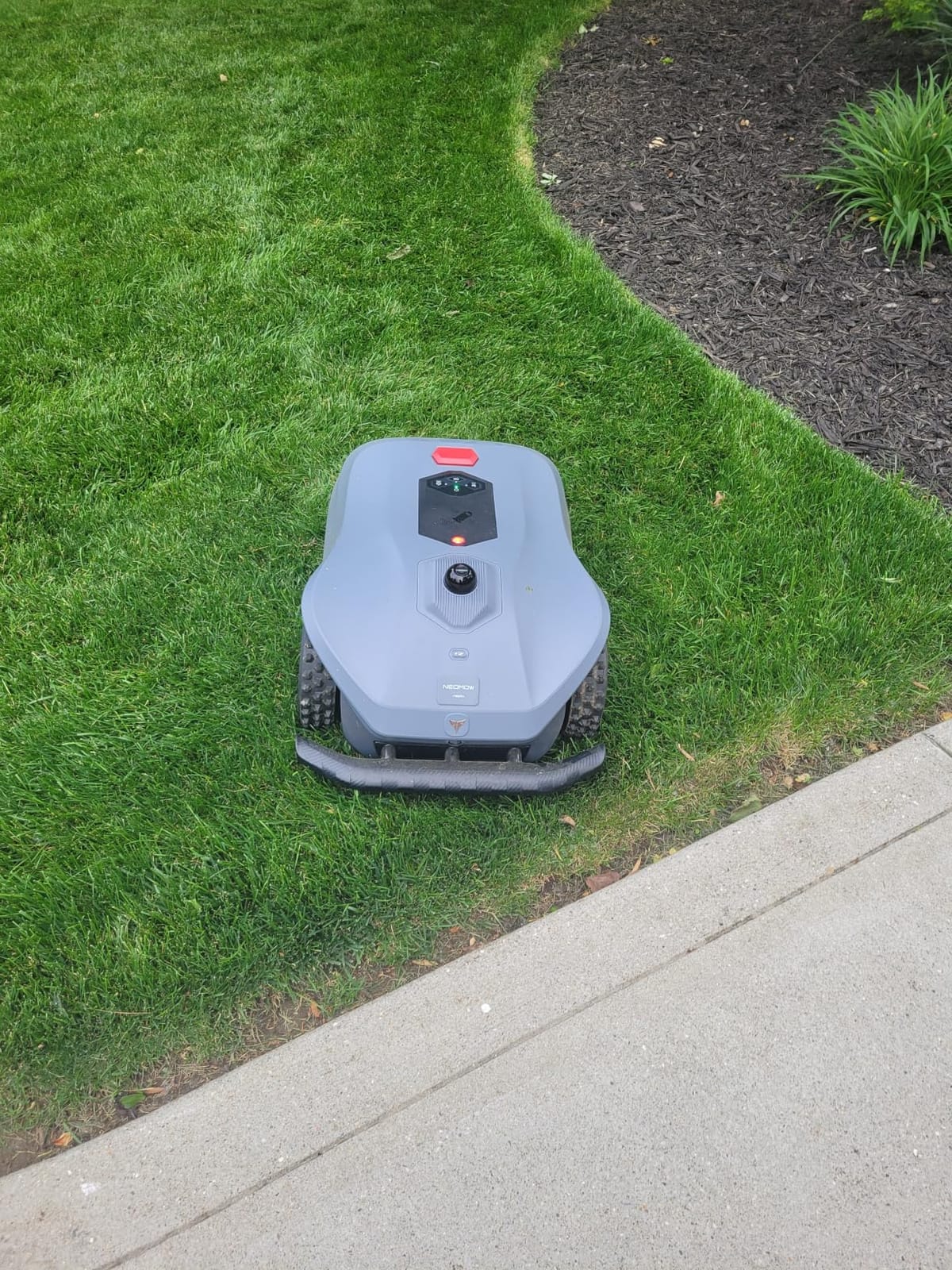
Mapping handles up to an acre, with coverage of roughly 0.17 acre per charge on a 13Ah battery rated to 150 minutes. Zone support reaches 90 areas with dual-map storage and user-initiated cloud backup, and dual-map is genuinely useful when a property has a gated backyard you want treated as a separate space.
Connectivity covers 2.4GHz WiFi, Bluetooth and 4G with 1GB included. IPX6 waterproofing means you can rinse it clean with a water jet, and the base station can be mounted indoors or under a deck for theft protection.
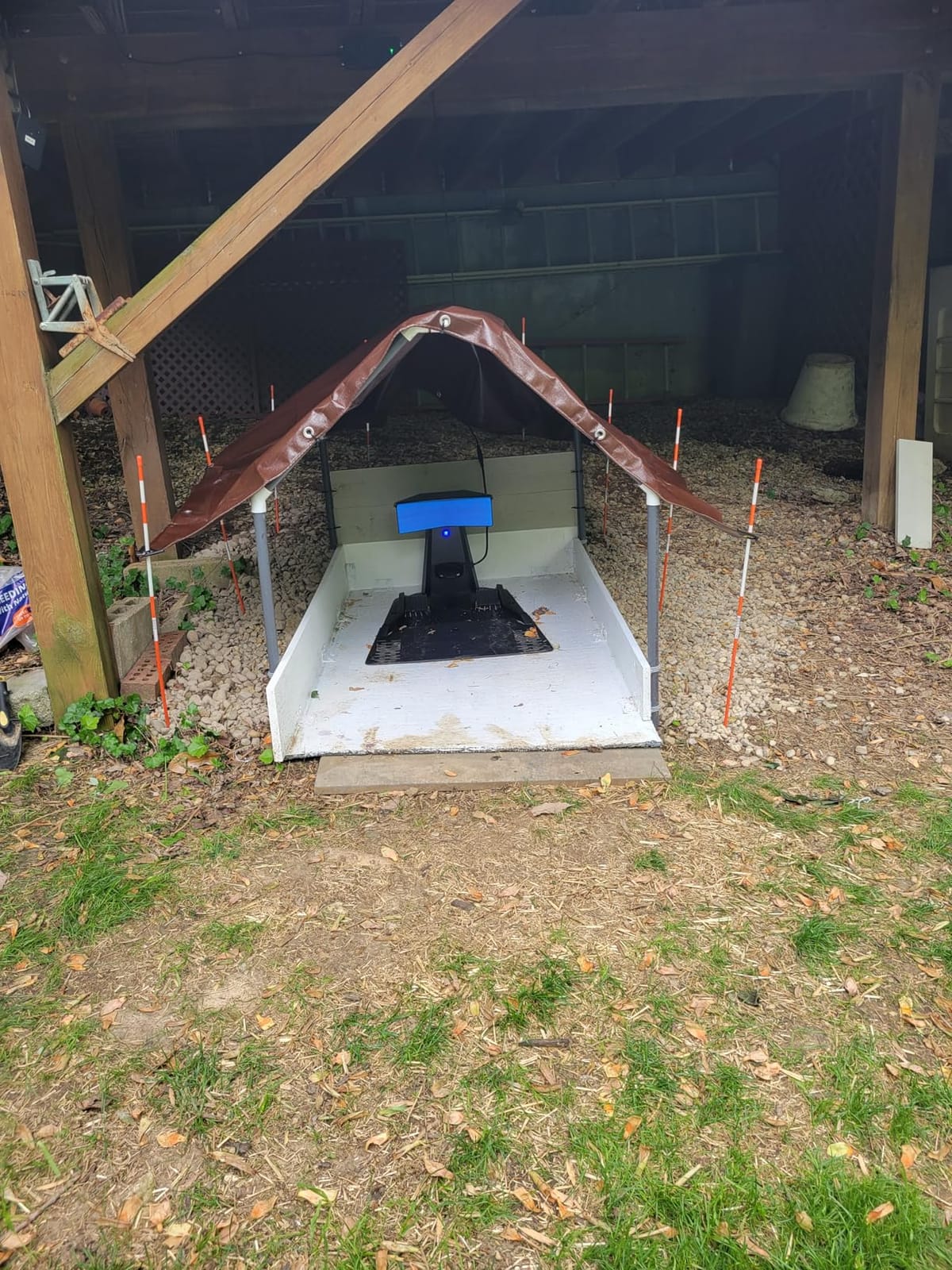
What we liked in practice
Setup simplicity is the headline. With no wire to bury and no antenna to mount, owners describe going from delivery to a mapped lawn without calling an installer. Factory support responds quickly and releases frequent algorithm updates, which matters on a machine this new.
Cross-cut and straight-line mowing patterns produce a visibly striped lawn, and cutting height adjusts electrically from 1.18 to 3.35 inches with three plus one preset modes.
What the four-review record should tell you
This unit has four reviews and all of them are five-star, which is encouraging but statistically thin. It tells you early owners are happy, not that the design holds up over five seasons of use.
Slope handling is the practical caution. Owners report it struggling when driven straight up a steep incline, and it can stall on wet grass, so it works better mowing across the grade than up it. If you are away for a week in wet weather, check progress remotely rather than trusting the schedule.
9. HOOKII Neomow X SE – Best for Tight Passages and Indoor Docking
Neomow X SE 360° 3D LiDAR Navigation Robot Lawn Mower for 0.75 Acre
360 degree 3D LiDAR plus AI vision
0.75 acre mapped
2.53 ft passage clearance
Under 0.8 inch positioning error
Pros
- Works with no wire
- no RTK station
- no network and no satellite needed
- Positioning error under 0.8 inches with 95 percent coverage
- Detects objects as small as 0.4 inches wide
- Base station can sit in a garage with breakpoint resume
- Easy maintenance with a rinse and wipe routine
Cons
- Only four reviews on this listing
- IPX5 rating is lower than the IPX6 on the X2
- 0.17 acre per charge means multiple cycles on a 0.75 acre yard
- Narrow 11 inch deck relative to the acreage rating
The Neomow X SE is built around accuracy in a confined space. Positioning error is quoted at under 0.8 inches with 95 percent coverage, and it navigates passages as narrow as 2.53 feet, which is the figure that decides whether it can work a lawn split by a fence, a deck or a row of shrubs.
It runs on 360-degree 3D LiDAR and AI Vision fusion with no boundary wire, no RTK station, and no dependency on a network or satellite signal. That makes it the most completely wire-free option in this roundup, including at night and under trees.
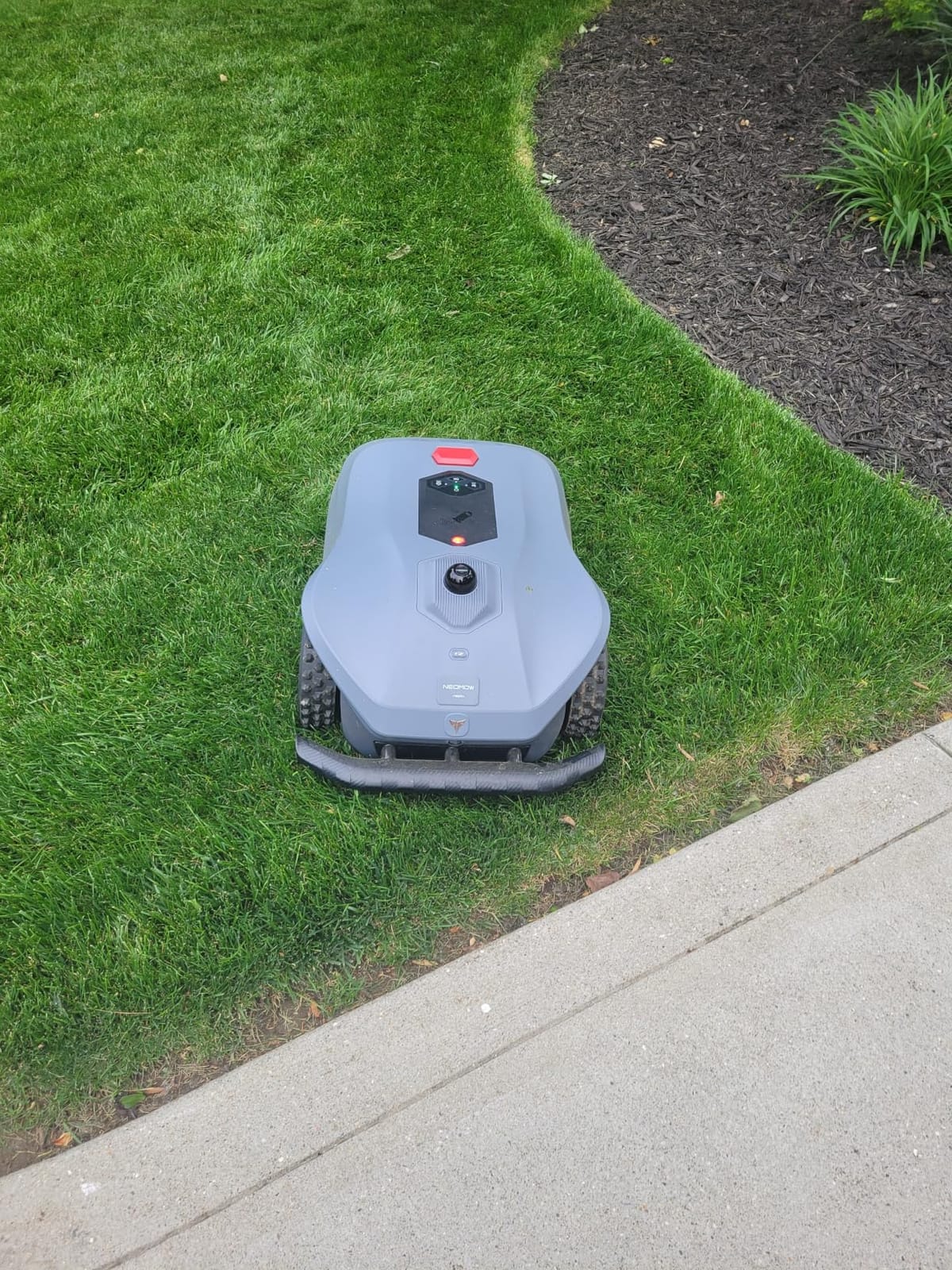
Obstacle detection goes finer than most: it recognises objects as small as 5.9 inches tall and 0.4 inches wide across more than 200 obstacle types. Large all-terrain front wheels cross roughly 1.6-inch obstacles, and the 11-inch floating deck carries an anti-clog barrier.
The 13,000mAh battery runs up to two hours for about 0.17 acre per charge, with cutting height from 1.18 to 3.35 inches across seven positions. Up to 40 areas with no-go zones are supported, with WiFi, Bluetooth and 4G control including 1GB included.
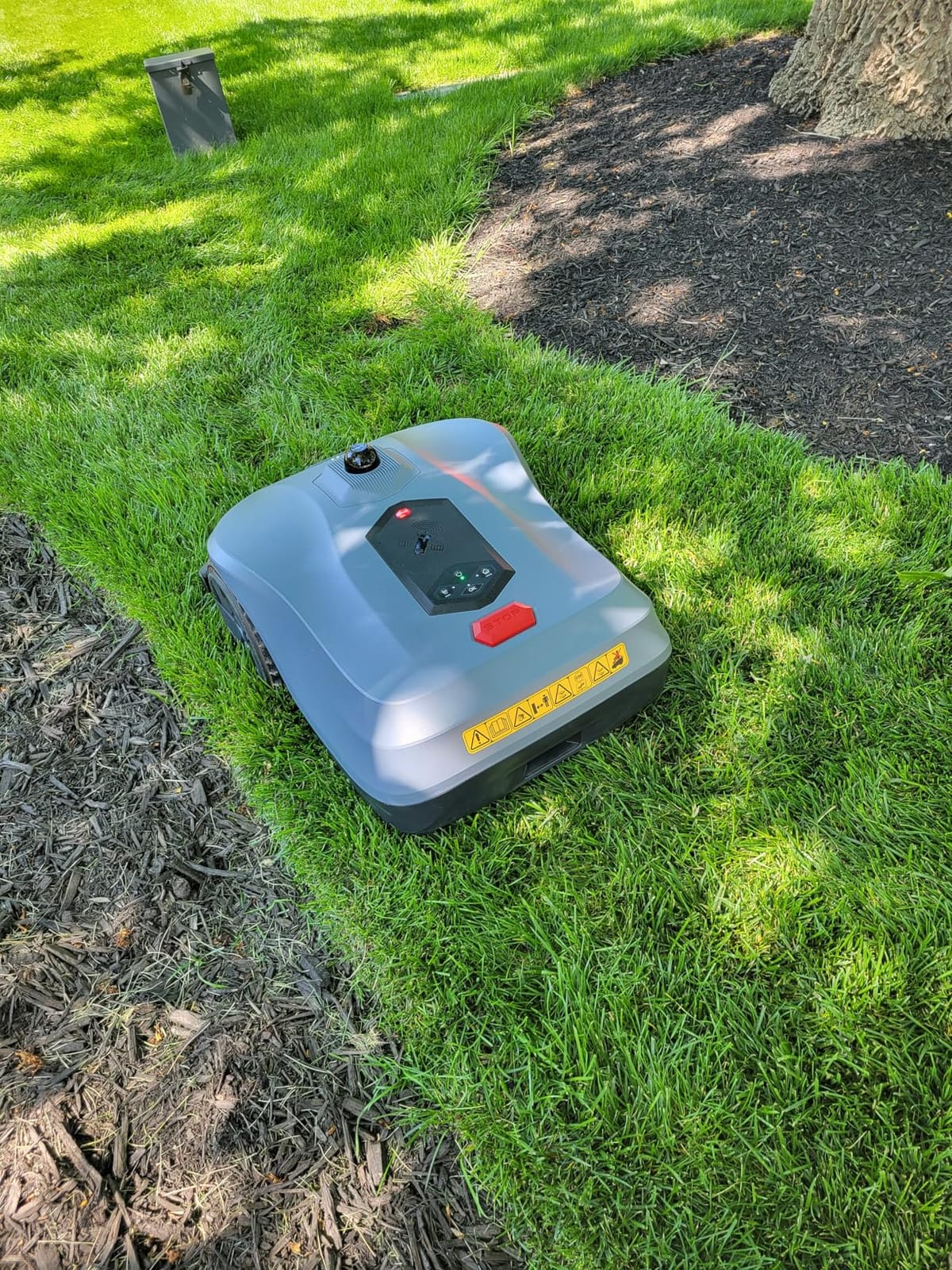
What we verified on the X SE
Indoor docking is the feature we would highlight. The base station can sit inside a garage to deter theft, and breakpoint resume sends the mower back out afterwards. On a property with an open gate or a visible path from the road, that removes a real risk.
Maintenance is genuinely simple. Rinse the chassis and wipe it dry, and the IPX5 rating is adequate for that routine. It is also positioned as friendly for older users, with straightforward operation rather than a deep app setup.
Where it does not reach
At 0.17 acre per charge, a full 0.75-acre yard needs several cycles. That is fine on a schedule you set once, but it is a different experience from a machine that finishes the lawn before you get home from work.
The IPX5 rating is one step below the X2’s IPX6, so rinse-down cleaning is less forgiving, and the 11-inch deck is narrow relative to the acreage claim. With four reviews on this listing, judge it on its specification and the presence of an established support network rather than on owner history.
10. Dreame A3 AWD 2000 – Best When Recharge Speed Matters Most
(Upgraded) DREAME A3 AWD 2000 LiDAR Robot Lawn Mower, 45-Min Fast Charge
45 minute fast recharge
80 percent slope, 38.7 degrees
360 degree LiDAR and binocular vision
Cuts to within 1.97 inches of edges
Pros
- 45 minute recharge is far quicker than the category norm
- AWD hub motors handle 80 percent slopes and 2.17 inch obstacles
- Avoids more than 300 object types including pets
- toys and hoses
- Built-in 4G and an HDR camera for monitoring and theft protection
- Three year warranty plus one free year of 4G service
Cons
- Only one review
- so there is almost no owner record to judge reliability
- Narrow 7.87 inch cutting deck means more passes than wider rivals
- Covers a quarter to half acre
- well below the large yard end
- Trimmer module is needed to close the remaining edge gap
The Dreame A3 AWD 2000 solves a specific problem well: getting back to work fast. The 45-minute recharge through a 5A adapter is around 22 percent faster than the industry standard, which on a lawn with several zones means far less time stalled on the dock between passes.
Traction comes from AWD hub motors rated to 80 percent slope, or 38.7 degrees, and they climb 2.17-inch obstacles. Navigation is 360-degree LiDAR with binocular AI vision and OmniSense 3.0, with no boundary wire and no RTK station required.
Obstacle avoidance spans more than 300 object types, which covers the pets, toys and hoses that dominate forum complaints about robotic mowers generally. EdgeMaster 2.0 cuts to within 1.97 inches of a boundary, and an optional trimmer module brings that under 1.18 inches.
A built-in 4G module and an HDR camera give real-time monitoring and theft protection, and OmniSense 3.0 includes animal-friendly and custom pattern modes. A US customer service line and a three-year warranty plus one free year of 4G service are stronger after-sales terms than most of this list.
What the 45-minute charge actually changes
On a quarter-acre to half-acre lawn with several zones, recharge time is the hidden constraint that decides how many sessions fit in a day. Halving it roughly doubles the ground a mower can cover before you need to return indoors.
That makes this machine a better answer for a busy schedule than for a large acreage. Its coverage rating tops out at half an acre, which is well short of what this article is about, but the charging design is worth knowing about.
Why the single review matters here
This listing carries one review, so the five-star rating reflects a single positive report rather than a track record. The Best Sellers Rank on the listing is also very low, which points to an unproven, low-velocity product rather than a failing one.
The 7.87-inch deck is the narrowest here, so it needs more passes than anything else on this list, and the optional trimmer module is needed to close the edge gap. Judge this one on its warranty terms and its fast-charge design, not on owner reports.
How Much Acreage Can a Robot Mower Really Cover?
Yes, robotic mowers can handle large areas, but the honest answer is that most residential units top out between 0.5 and 1.5 acres of workable coverage per day, and only wire-free all-wheel-drive machines reliably reach the upper end of that band. Above three acres, you are typically choosing between a high-capacity single unit, a pair of smaller mowers working separate zones, or a commercial machine.
Match capacity to yard size with a safety margin of roughly double. A mower rated at the top of its band realistically completes 60 to 75 percent of that rating on a yard with trees, beds and paths, so a one-acre yard needs a machine rated at 1.5 to 2 acres and a three-acre yard needs something rated well beyond it.
Here is how the brackets break down. Under half an acre, any of the ten mowers here will do the job, and navigation quality matters more than deck width. Between half an acre and one acre, the Sunseeker X5 AWD, HOOKII Neomow X2 and LOPKIN L2500-NEO are all well matched. Between one and two acres, the Mammotion LUBA 2 AWD 5000HX and the LUBA 3 AWD 3000 make sense, and plan on multiple charge cycles per cut. Above two acres, the Lymow One Plus at 1.73 acres per day and the YARBO at a stated 6.2 acres are the two realistic answers in this roundup.
One community thread worth reading before you decide is the r/roboticLawnmowers discussion titled for a 1.7-acre property, where an owner weighing robot against ride-on asked for exactly this kind of help. Another owner in that community spent two months of research before settling on Navimow hardware for a 10.5-acre property, which is a useful reminder that brand acreage ratings deserve scepticism.
Wire-Free or Boundary Wire on a Large Property?
Boundary wire was the default for two decades, and it is still the most predictable option when a property has trees, metal edging or a complex perimeter. The cost is labour: laying wire around a three-acre irregular boundary takes hours of kneeling, and a break anywhere in the loop stops the mower or produces a fault.
Every machine in this roundup is wire-free, which is the single biggest change in the category. A LiDAR or RTK machine maps the perimeter once and stores it, so the setup work becomes a mapping drive rather than an afternoon of installation.
What wire-free does not remove is infrastructure. You still need a charging base on mains power, and if you choose an RTK model you need a satellite antenna with a clear view of the sky, sometimes mounted on the house. Models such as the HOOKII Neomow X2 360 and the Neomow X SE run on LiDAR alone and need no antenna at all, which is the cleanest install we found.
LiDAR vs Camera Vision vs RTK Satellite
These three systems solve the same problem in different ways, and most strong machines combine two or three of them.
RTK satellite positioning gives centimetre-level accuracy and is the most precise method in open ground. It fails under tree cover, and the failure matters on a property with mature oaks. Camera vision reads the scene directly and works anywhere with light, which is why it pairs well with LiDAR rather than replacing it. LiDAR measures distance with a rotating laser, works in darkness and in rain, and does not care about lighting at all.
The practical rule for a large yard is that a machine relying on satellite alone will struggle under trees, and a machine relying on vision alone will struggle at night. The Mammotion LUBA 3 AWD 3000 runs LiDAR, NetRTK and dual cameras together, which is the most complete stack available here, while the YARBO combines AI vision with RTK.
Trees, Hills and the Signal Problem
Tree cover is the failure mode buyers ask about most and publishers answer least. When a satellite signal is blocked, an RTK-only mower either stops or drifts, and on a lawn with a heavy canopy that can mean a section never gets cut. Models with LiDAR or a fusion stack navigate that ground without any satellite dependency at all.
Three steps fix most signal problems. First, place any RTK antenna as high and as clear of obstructions as you can, which on some properties means the roof. Second, choose a fusion-navigation machine rather than a satellite-only one if your lawn is wooded. Third, keep the base station and mower in open positions so a clear view exists at the far corners.
On hills, read slope ratings carefully because brands quote them differently. The Lymow One Plus at 45 degrees, the Mammotion and Roborock models at 80 percent, and the LOPKIN at 57 percent describe overlapping capability in different units. Always convert to a percentage, since a percentage is what tells you whether a wheeled machine can physically climb the grade.
What a Large-Yard Robot Mower Really Costs to Own
Beyond the purchase, three costs decide whether a robotic mower is worth it on an acreage property. The first is cellular or RTK service, which is often included for a set period and then becomes a recurring annual charge, so ask what the service costs once the included window ends. The LOPKIN listing is a documented example of that ambiguity.
The second is blades. Blades are consumable, and on a lawn with rocks or roots they need replacing more often than the packaging suggests. The third is installation, and on wire-free machines this is usually minimal, but RTK antenna mounting can mean professional roof work.
Running cost stays low after that. Owners of the LUBA 3 report pennies per mow compared with fuel for a riding mower, and quieter operation means you can schedule early starts without neighbourhood friction. If you want a different way to think about the ownership comparison, our robotic pool cleaner guide covers the same automation logic for water.
When a Robot Mower Is the Wrong Answer
Above roughly five acres, a single residential robot mower stops being realistic. Even the highest-rated machine here lists daily coverage far below what a five-acre property needs, and the mowing window becomes the constraint rather than the machine.
At that scale, the honest options are a commercial machine built for estate work, a fleet of two or three residential mowers on divided zones, or returning to a ride-on for the open acreage and automating only the lawn near the house. Splitting the property is often the answer most owners settle on, because the lawn around a home is where the daily visual improvement actually shows.
Two other situations call for a walk-behind or ride-on. Very uneven ground with deep ruts and exposed roots defeats wheel and track suspension on smaller machines, and a lawn full of hard landscaping edges needs regular string trimming no matter which robot you buy.
Frequently Asked Questions
Are there robotic mowers that can mow large areas?
Yes, but almost every residential robot mower tops out around 0.5 to 1.5 acres of real coverage per day, and only wire-free all-wheel-drive models reliably reach the upper end of that range. Properties above three acres usually need a high-capacity single unit, a pair of mowers working separate zones, or a commercial machine.
How big of a yard can a robot mower do?
Match capacity to yard size with roughly a double safety margin. Residential robot mowers are rated from 0.2 acres upward, but a mower at the top of its band realistically completes 60 to 75 percent of that rating on a yard with trees, beds and paths. A one-acre yard suits a mower rated at 1.5 to 2 acres.
What is the best robot lawn mower for an acreage property?
For acreage properties the answer is usually a wire-free all-wheel-drive model with RTK or LiDAR positioning and a battery rated well beyond 100 minutes. Our top pick at this size is the Mammotion LUBA 2 AWD 5000HX, with the Lymow One Plus for steep banks and the YARBO where one machine must cover a very large property.
What is the largest robotic lawn mower available?
For homes, the largest residential robotic mowers cover from roughly 0.5 up to about 6 acres depending on the model, including modular platforms that add leaf and snow functions to a single tracked base. Beyond that, commercial machines with dual motors and interchangeable attachments are built for estates well outside residential use.
Do robot lawn mowers need WiFi or cellular signal?
Most need WiFi or cellular for the app, but only for setup and remote control. The mower itself navigates locally using LiDAR, cameras or RTK satellite positioning. Several models here, including the HOOKII Neomow X2 360 and Neomow X SE, run with no RTK antenna and no satellite signal at all.
The Verdict by Yard Size
Under half an acre, the choice is about navigation quality rather than capacity, and the HOOKII Neomow X2 360 or Sunseeker X5 AWD will serve a wooded lot well. Between half an acre and one acre, the LOPKIN L2500-NEO solves the distance-from-house problem that other units create, while the Roborock RockMow X115H is the safest bet around small trees and plantings.
Between one and two acres, our editor’s choice remains the Mammotion LUBA 2 AWD 5000HX, with the LUBA 3 AWD 3000 behind it where tree cover is the dominant problem. Two acres and above, decide between the Lymow One Plus for genuinely steep ground and the YARBO where one machine has to cover everything. Past five acres, split the property or look at commercial equipment, because no residential unit on this list covers that ground in a single day.
Whichever machine you pick, map the boundary before you set the schedule, and check the coverage rating against your actual lawn rather than the headline figure. That single hour of setup is what separates a mower that works your yard from one that repeatedly stalls on it.