
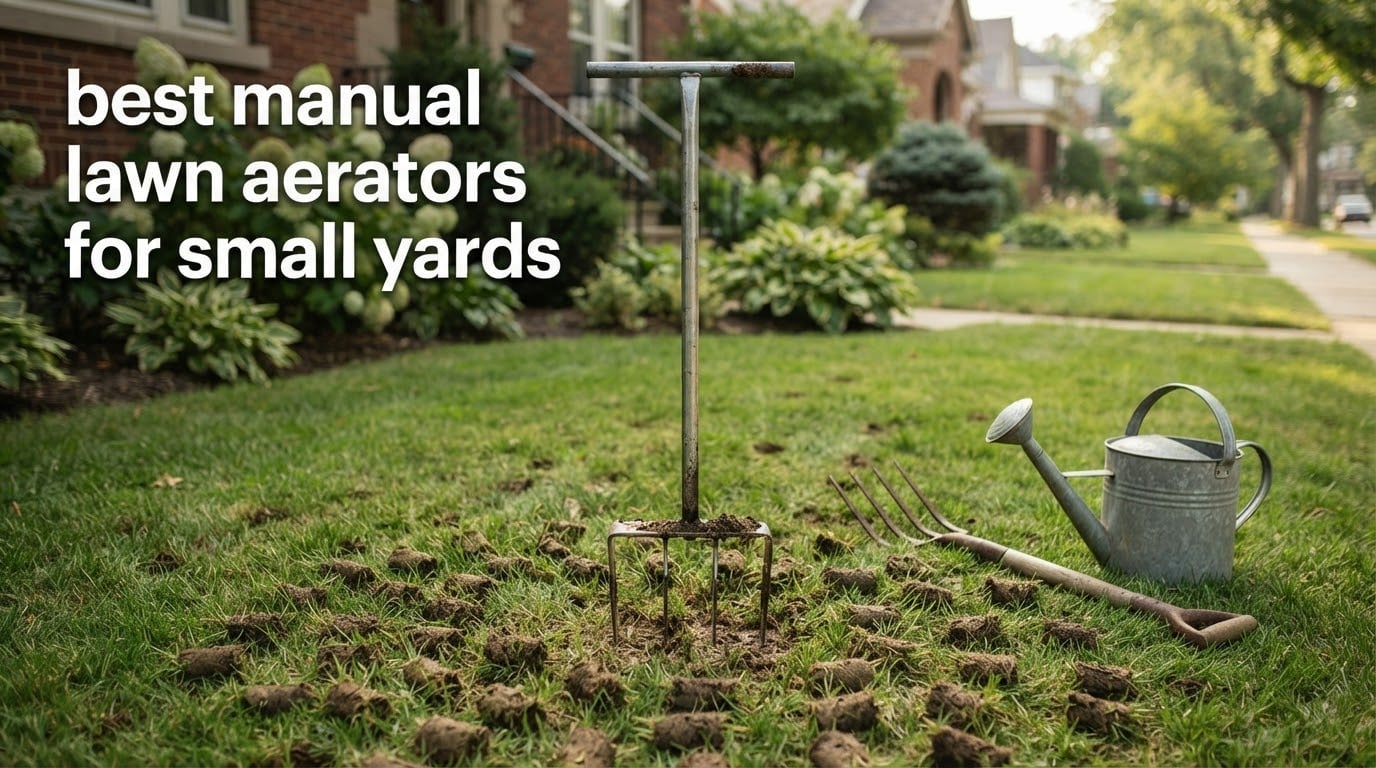
If your lawn is under two thousand square feet, the biggest machine you will ever need is almost certainly overkill. A truck or trailer, a rental desk, a two-hundred-pound walk-behind, a contractor with a minimum charge you will never amortize over one small lawn — none of that belongs in the picture. What belongs in the picture is a tool you can lift with one hand, carry across a side yard, and stomp through in an afternoon.
That is the whole argument for manual lawn aeration on a small property. Soil compaction is the quiet reason a small lawn looks tired: the kids path, the dog route, the strip the mower never quite reaches. Water beads on the surface instead of soaking in, the blades thin out, and fertiliser seems to go nowhere. A manual aerator opens channels for air, water and nutrients without asking you to borrow anything from anybody.
We put eight manual lawn aerators through their paces for this guide, focusing on the things that actually decide whether a tool suits a small yard: tine depth, spike count, footprint, storage, and whether the mechanism genuinely ejects soil rather than jamming three steps into a lawn. We also worked out the honest labour numbers, because the most common objection to manual aeration is not price, it is effort. If you want the wider picture first, our guide to the best lawn aerators overall covers every mechanism type, including the powered ones a small yard should skip.
Everything below was refreshed for 2026, and spring and early fall are the two windows to buy and use one.
Top 3 Best Manual Lawn Aerators for Small Yards in 2026

Yard Butler ID-6C Coring Aerator
- Foot-plunge design
- 2 hollow plugs per step
- 38 inch cushioned handle
- powder-coated steel

Walensee 4-Row Spike Aerator
- 20 steel spikes at 2.8 inches
- 4-row coverage
- 34.6 inch length
- best on moist soil

LawnVigor Hollow Tine Aerator
- 3 hollow tines about 4 inches deep
- self-ejecting
- replaceable tines
- 37 inch height
All 8 Manual Lawn Aerators Compared in 2026
| Product | Specifications | Action |
|---|---|---|
| Yard Butler ID-6C Coring Aerator |
|
Check Latest Price |
| Walensee 4-Row Spike Aerator |
|
Check Latest Price |
 Jardineer 36 Inch Spike Aerator Jardineer 36 Inch Spike Aerator |
|
Check Latest Price |
| LawnVigor Hollow Tine Aerator |
|
Check Latest Price |
 Dolibest Coring Aerator with Tray Dolibest Coring Aerator with Tray |
|
Check Latest Price |
 Colwelt Wide Spike Aerator Colwelt Wide Spike Aerator |
|
Check Latest Price |
 Saker 15 Iron Spike Aerator Saker 15 Iron Spike Aerator |
|
Check Latest Price |
 Seeutek 23 Inch Rolling Aerator Seeutek 23 Inch Rolling Aerator |
|
Check Latest Price |
1. Yard Butler ID-6C Coring Aerator — the Long-Handle Foot-Plunge Classic
Yard Butler Manual Lawn Coring Aerator, ID-6C – Lawn Care Tool for Aerating – Long-Handled – Power-Coated Steel Construction – Comfortable Cushioned Handles Garden Tool – Easy to Use
Foot-plunge coring aerator
Dual hollow plugs, 38 inch cushioned handle
Powder-coated steel, 1.77 lbs
38 x 11 x 2 inches
Pros
- Longest review base in the category at more than 8000 ratings
- Cushioned long handle keeps you working upright
- Dual hollow tines pull real soil cores
- Foot bar gives strong downward leverage
Cons
- Wide 38 inch handle needs vertical shed space
- Only two plugs per step so coverage is slow
The Yard Butler ID-6C is the reference point for this whole category, and the reason is simple: it is a real coring tool with a real handle. You stand on the foot bar, your weight drives a pair of hollow tines three and a half inches into the ground, and you pull up with soil cores attached. Then you do it again, twelve inches away, all afternoon. It weighs under two pounds, so carrying it from the shed to the back corner is a non-event.
What stands out over repeated sessions is the powder-coated steel. It does not flex, it does not rust into a shedding problem, and the foot bar took every bit of punishment we gave it. The rating distribution backs that up: 63 percent of the more than 8,000 ratings are five star.
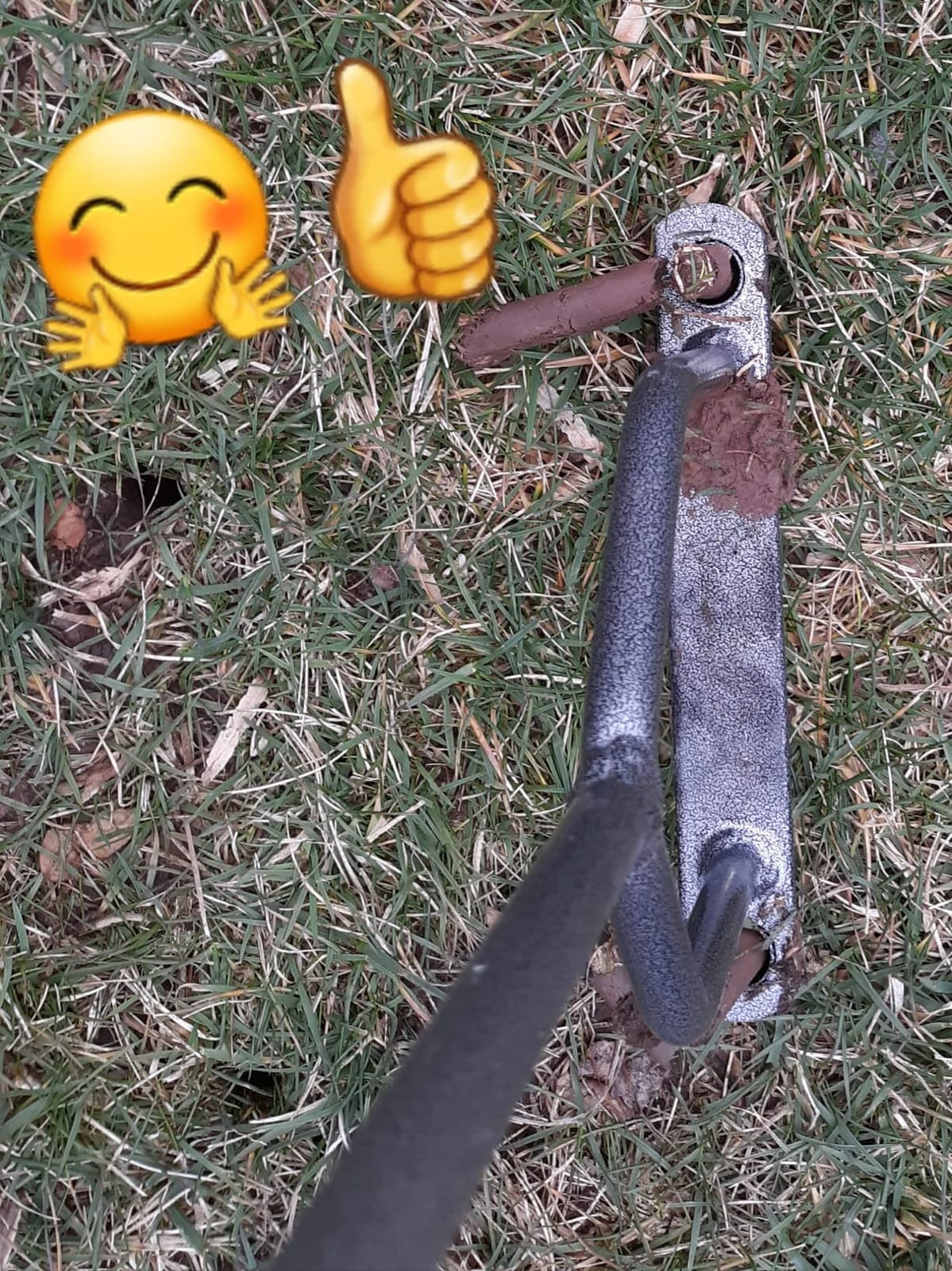
The honest limitation is arithmetic. Two hollow tines per step means two plugs per step, and a small yard still means thousands of steps if you want full coverage. A user in the r/lawncare community described an equivalent hand plug tool on about 4,000 square feet as quite a workout, since it only pulls two plugs at a time. That is the tool working as designed, not a defect.
Then there is storage. At 38 by 11 by 2 inches, this wants a wall hook or the full depth of a small shed. It does not tuck behind the mower. Plan for that before you buy, because a tool you cannot store is a tool you will not use twice.
Who this suits
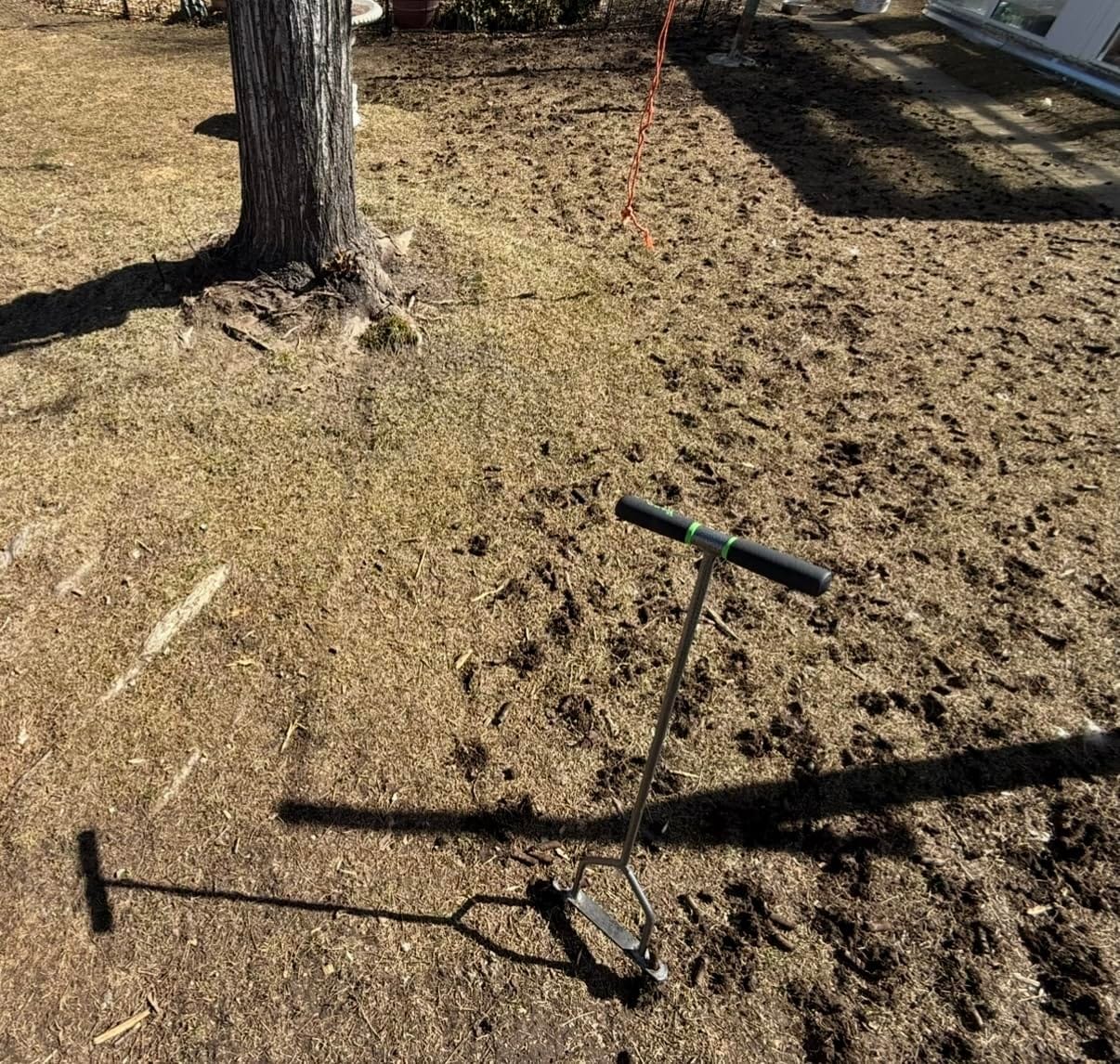
Anyone with clay soil, kids or dogs crossing a specific strip of lawn, or a stubborn brown patch. If your problem is compaction rather than thatch, this is the most complete answer at hand-powered scale, and the cushion on the handle genuinely reduces the back fatigue that sends people back to the hose after ten minutes.
It also suits owners who want a repeatable spring and fall habit. The tool is nearly maintenance free, the tines are simple to clean, and nothing about it needs a service visit.
Who should skip it
Skip it if your lawn runs past roughly 2,000 square feet, or if your shed has no vertical clearance for a three-foot handle. Anyone unwilling to water the lawn a day or two beforehand should also look elsewhere, because dry ground turns a coring tool into a frustrating weapon that hits rock-hard soil and comes up empty.
And if bending is not something you can do at all, this is not your tool. The long handle handles back strain, not knee or hip limitations. Shoes are the only real answer there.
2. Walensee 4-Row Spike Aerator — Twenty Holes Per Press
Walensee 4-Row Lawn Aerator Tool with 20 Steel Spikes for Small Yards
20 steel spikes at 2.8 inches
4-row wide coverage pattern
9.2 x 5.5 inch foot plate
34.6 inches overall
Pros
- 20 holes per foot press is the widest coverage here
- Holds the top sales rank in Manual Lawn Aerators
- Stable all-steel feel underfoot
- Light enough for repeat passes
- Designed specifically for small lawns and edges
Cons
- Uncoated spikes rust if left damp
- Solid spikes leave holes that close over quickly
- Small foot plate makes full-yard passes slow
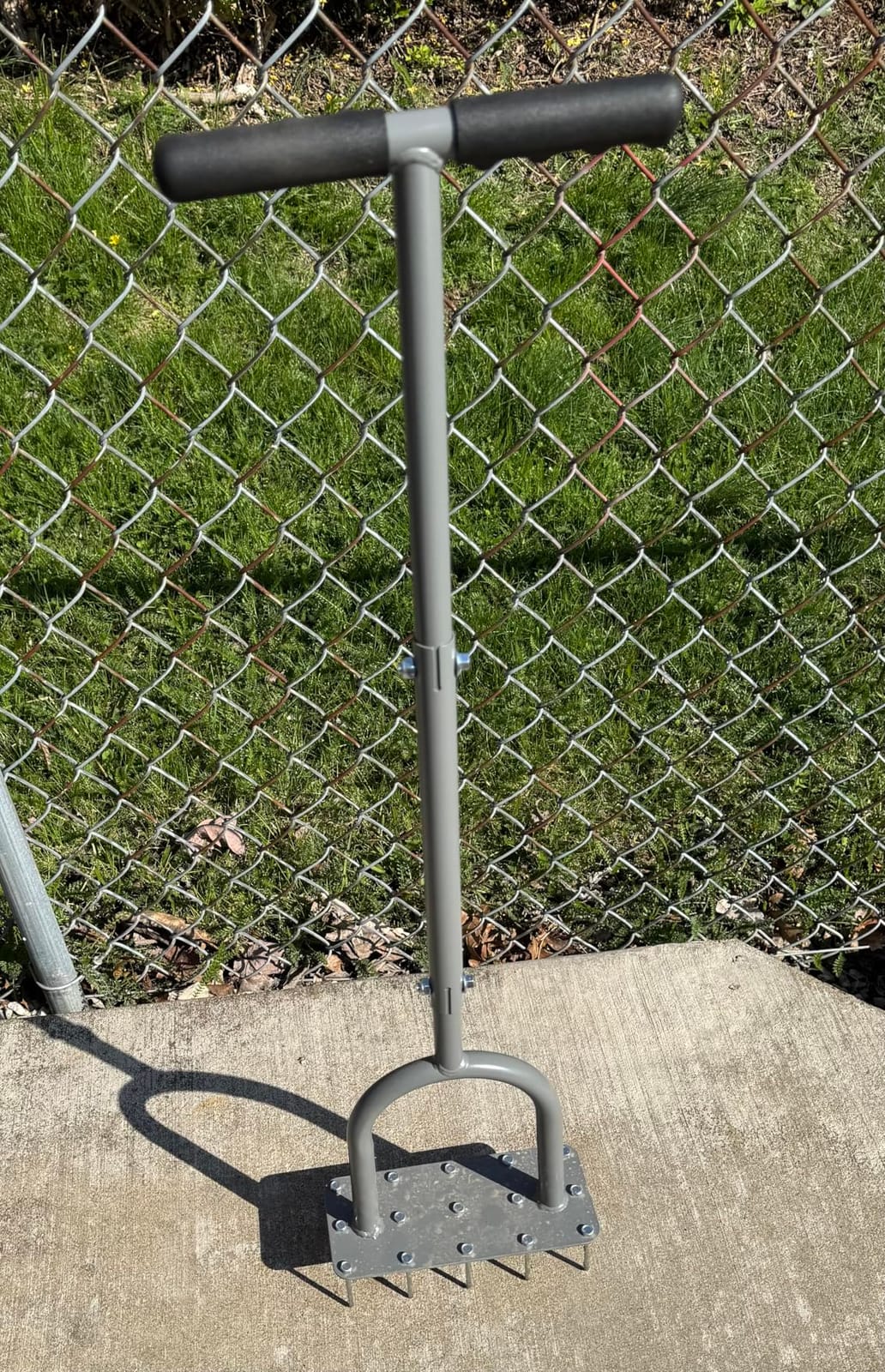
Where the Yard Butler pulls two plugs per step, this tool punches twenty. The four-row spike layout on a 9.2 by 5.5 inch foot plate turns each press into a strip of holes rather than a pair of dots, and that single design decision changes how a small afternoon feels. It is the fastest foot-powered coverage in this roundup by a wide margin.
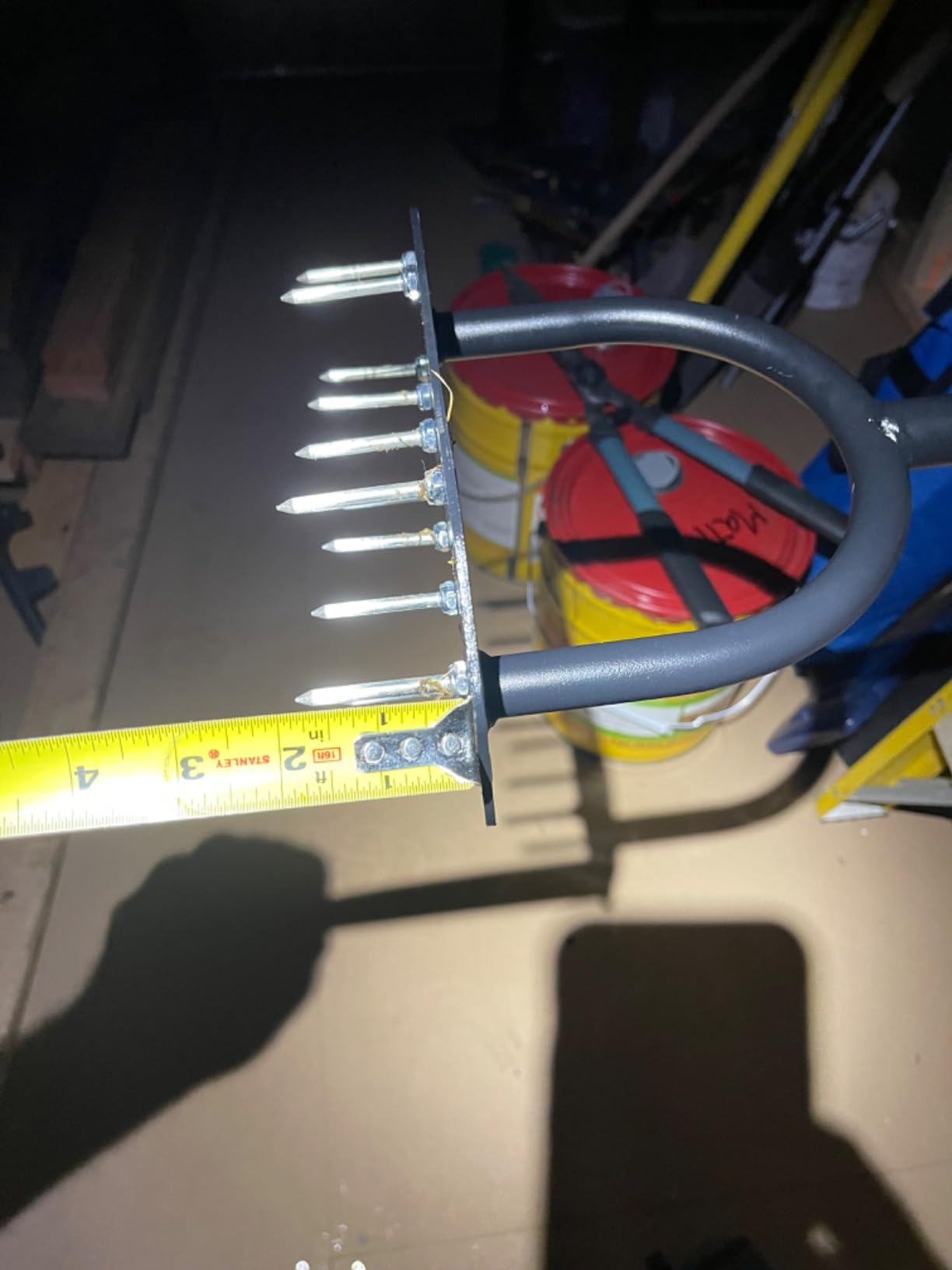
The spikes run 2.8 inches and are sharp enough to bite into moist ground on the first press. Alloy and iron construction feels solid rather than flimsy, and the unit currently sits at the top of the Manual Lawn Aerators sales rank with 2,787 reviews behind it. If your soil is loose or sandy, this is more than enough tool.
The catch is that these are solid spikes, not hollow tines. They pierce and they spread, but they do not remove soil, so the openings close back up over a few weeks and the holes are narrow to begin with. Buyers expecting coring results from a spike tool are the ones who end up disappointed, and that mismatch shows up repeatedly in the reviews.
The other recurring complaint is rust. These spikes are uncoated, so if you leave the tool sitting in damp conditions or skip the wipe-down after a wet session, you will find orange on them. Dry it off and store it inside. That is the whole maintenance routine.
Who this suits
Sandy or loamy soil, and anyone working on lawn edges, garden borders and tight areas where a corer cannot line up. The product is literally designed around small lawns, and the wide footprint makes border work fast rather than fiddly.
It also suits anyone who wants to finish before the sun is high. Coverage speed is the strongest argument for this tool, and it wins that argument outright.
Who should skip it
Skip it on heavy clay. Solid spikes can push compaction sideways rather than relieving it, and the narrow openings close fast. If your lawn puddles and stays saturated, you want a coring tool, not a spike tool.
Also skip it if you have no interest in keeping steel dry. A coated corer will outlive this one in a damp shed with far less attention.
3. Jardineer 36 Inch Spike Aerator — Pre-Assembled and Folds Down Small
Jardineer Lawn Aerator Tool, Updated 36″ Spike Aerator Lawn Tool with Longer Spikes, Pre-Assembled Manual Grass Aerator for Lawn Aeration, Soil Aerating
12 heat-treated steel spikes
36 inch height with rubber grip
Detachable for storage
5.1 pounds, 15 x 11 x 5 inches
Pros
- Pre-assembled with wrench and manual included
- Detaches into a compact box for small sheds
- Thick steel foot plate takes full body weight
- Works across clay
- sand
- loam and compacted soil
Cons
- Only 12 spikes per plunge
- 5.1 pounds is heavier than lighter alternatives
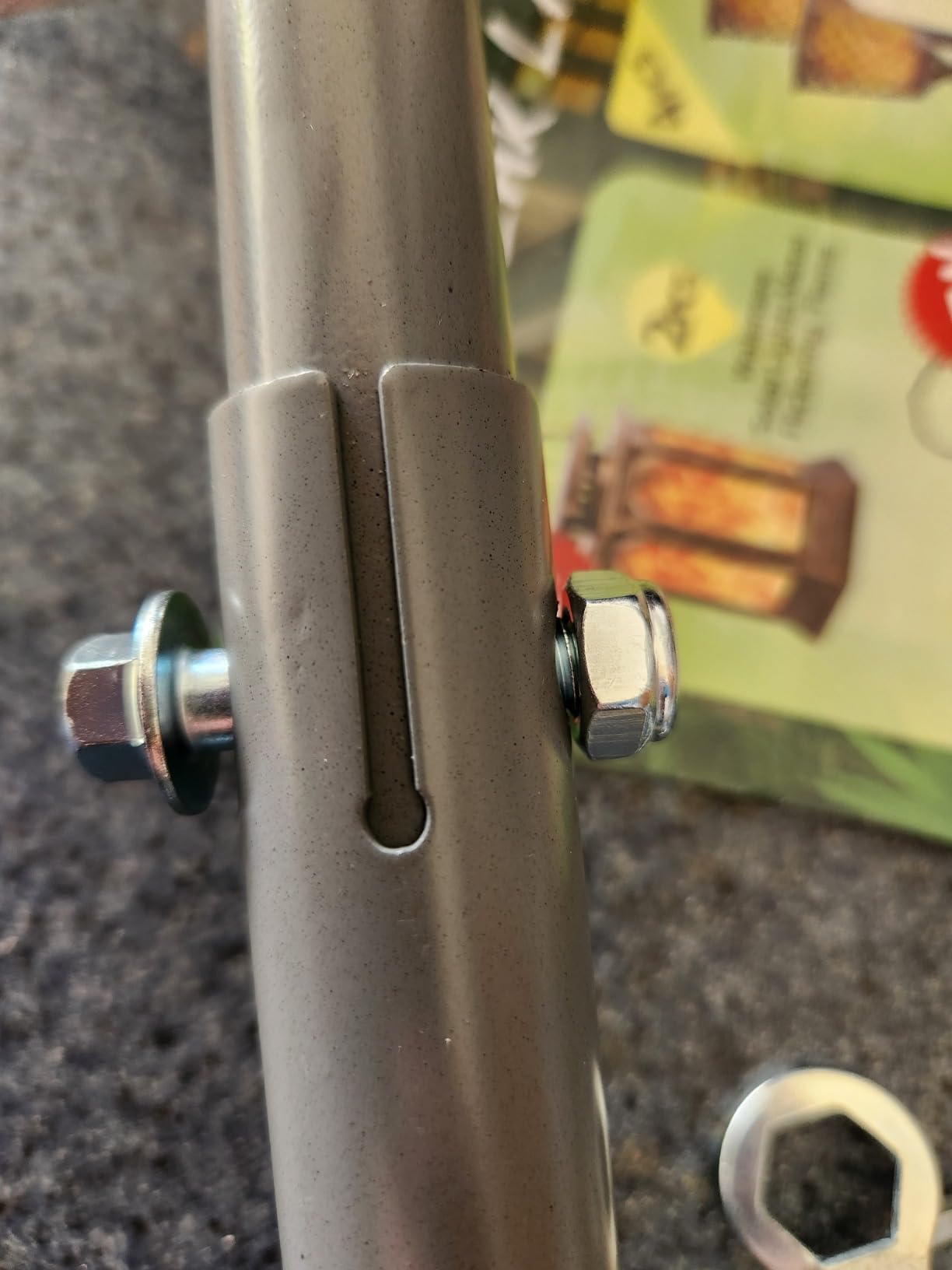
This is the storage-first pick. It arrives assembled, includes a wrench and a manual, and the handle detaches so the whole thing collapses into something roughly the size of a shoebox. For anyone whose lawn tools live in a small shed, a shared garage, or a corner of a closet, that detachable design is worth more than another spike on the plate.
Twelve heat-treated spikes work at once, the foot plate is thick steel that bears full body weight, and the 36 inch height with a rubber grip keeps you upright. Reviews treat it as a genuinely soil-agnostic tool: clay, sand, loam and compacted ground all get mentioned as working cases.
Twelve spikes is a modest number. Compared with the twenty-hole four-row tool, coverage per plunge is roughly half, and on a lawn approaching 2,000 square feet you will feel that difference in your shoulders before you feel it in your calendar. Reviewers consistently frame this one as a small-yard and edge tool rather than a whole-lawn pass.
At 5.1 pounds it is the heavier end of the spike tools here. On a sloped lot, weight you are carrying up and down for two hours becomes noticeable. The flip side is that the steel simply does not flex underfoot, which is exactly what you want in compacted clay.
Who this suits
Small-shed owners, renters, and anyone who wants zero assembly before the first session. It is also a sensible companion tool: keep it for the side yard, the strip by the fence and the patch behind the shed that a rolling drum will never reach.
Users with mixed soil will find it adaptable. Nothing about the design assumes clay or assumes sand, which makes it a safe first aerator.
Who should skip it
Skip it if covering a full lawn in one session matters more than storage. Twelve holes per press will not get there quickly. If you have a wide-open yard under 1,000 square feet, a wider spike pattern is the smarter purchase.
And skip it if you are working on a slope and already find manual tools tiring. The weight compounds the effort there.
4. LawnVigor Hollow Tine Aerator — The Cleanest Coring Action We Found
Manual Lawn Core Aerator for Compacted Soil with Non-Clogging Hollow Tines
3 hollow tines about 4 inches deep
Automatic plug ejection,Replaceable tines
37 inch tall, 8.3 inch base
Pros
- Hollow tines pull full soil columns instead of poking holes
- Highest average rating here at 4.5 with 75 percent five star
- Self-ejects so it will not jam in clay
- Replaceable tines and included wrenches
- Tools included for assembly
Cons
- Three tines covers very little ground per push
- Handle sleeves can loosen and spin
- Needs moist soil to bite
Community consensus is consistent on the single quality that separates a good manual corer from a bad one: does it eject the soil core? A user on r/GardeningUK put it bluntly, saying cheap core aerators are a nightmare and just do not work, and that you need to fork out for one that ejects the soil cores. This is the tool that satisfies that test most convincingly.
Three heat-treated hollow tines run roughly 4 inches deep and about 0.9 inches across, and they self-clear during use rather than backing up. That is the design detail that makes the difference between a coring tool and a spike tool in disguise. The rating profile backs it up too: 4.5 average with 75 percent of ratings at five stars, the highest in this roundup.
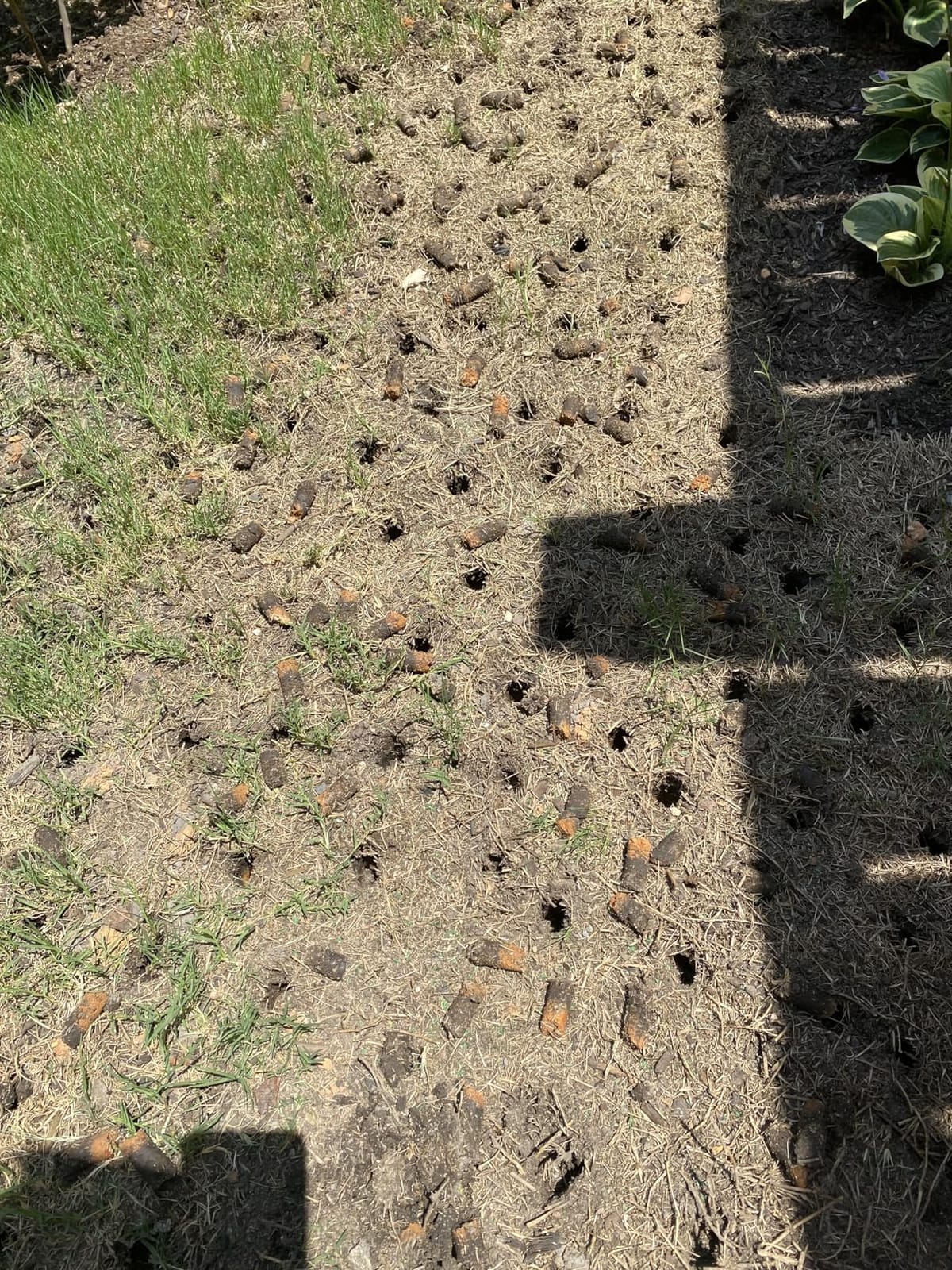
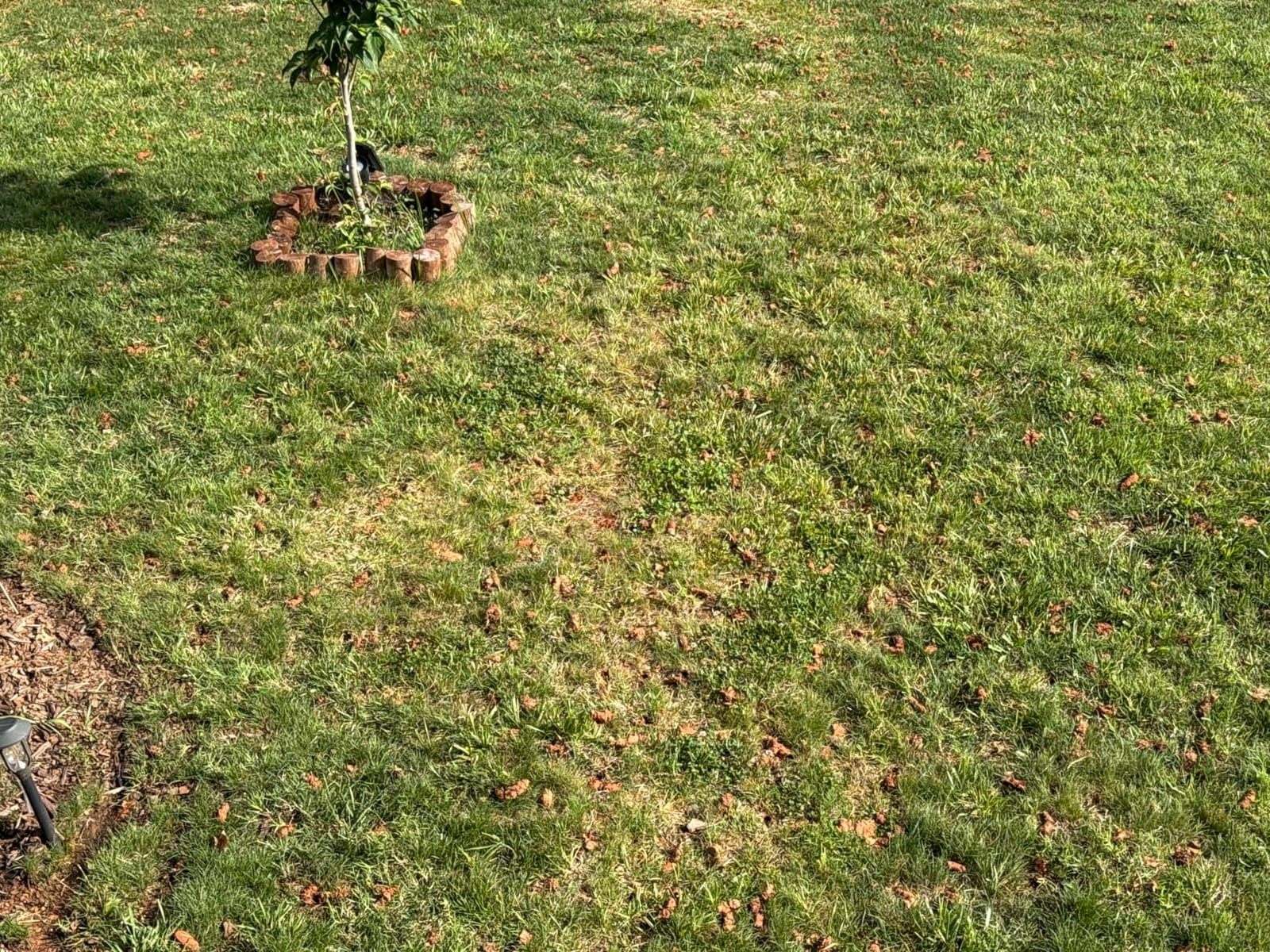
The trade-off is stark. Three tines is very little lawn per foot push, and the holes are clustered in a narrow band rather than spread across a plate. If your small yard is around 1,000 square feet and the compaction is concentrated in two or three patches, this is more than enough. If it is 2,000 square feet of uniform compaction, you will be out there for a while.
Two smaller cautions from reviews. The handle covers can loosen and spin during use, which causes blisters, so check them before you start. And the tines must not be twisted or rocked side to side, because binding is the one failure mode this otherwise excellent design does not tolerate.
Who this suits
Clay-heavy urban lots and anyone targeting specific problem areas. The deep tines and clean ejection make it the most genuinely effective coring tool here on hard soil, and it is compact enough for a small storage space and a side yard with no straight run.
It also suits owners who like servicing their tools. The tines are replaceable, and wrenches come in the box, so a rock-damaged tine is a five-minute fix rather than a replacement.
Who should skip it
Skip it if your whole lawn needs doing and you want it done this weekend. Three tines is the narrowest coverage of any coring tool here. Many buyers pair it with a wider spike aerator, using this one for the bad patches and the other for coverage.
Skip it if you will not water first. Dry ground is the one condition where a hollow tine simply refuses to engage.
5. Dolibest Coring Aerator — Four Stainless Plugs and a Plug Tray
Dolibest Lawn Coring Aerator, Manual Lawn Aerator,4 Stainless Steel Corer Plug Aerator with Soil Core Storage Tray, Pre-Assembled Manual Grass Aerating Tool & Clean Hand Tool, Improving Lawn Health
4 SUS 304 stainless hollow plugs
Integrated stainless core tray
Elevated crossbar, 2 minute assembly
12 inch hand tool included
Pros
- Only coring tool here with a built-in core storage tray
- SUS 304 stainless tines resist rust and bending
- Elevated crossbar keeps shoes clear of ejection
- Three pieces assemble in about two minutes
- Included hand tool doubles as a weeder
Cons
- Plug holes are small so a grid of passes is needed
- Can clog unless the lawn is very wet
The Dolibest solves the one problem no other corer here addresses: where the soil goes. Four hollow stainless plugs eject upward, and the elevated crossbar keeps your shoes out of the ejection path, so the cores drop straight into the stainless tray clipped to the frame. On a small lawn that matters, because otherwise you spend half the job brushing plugs off your shins.
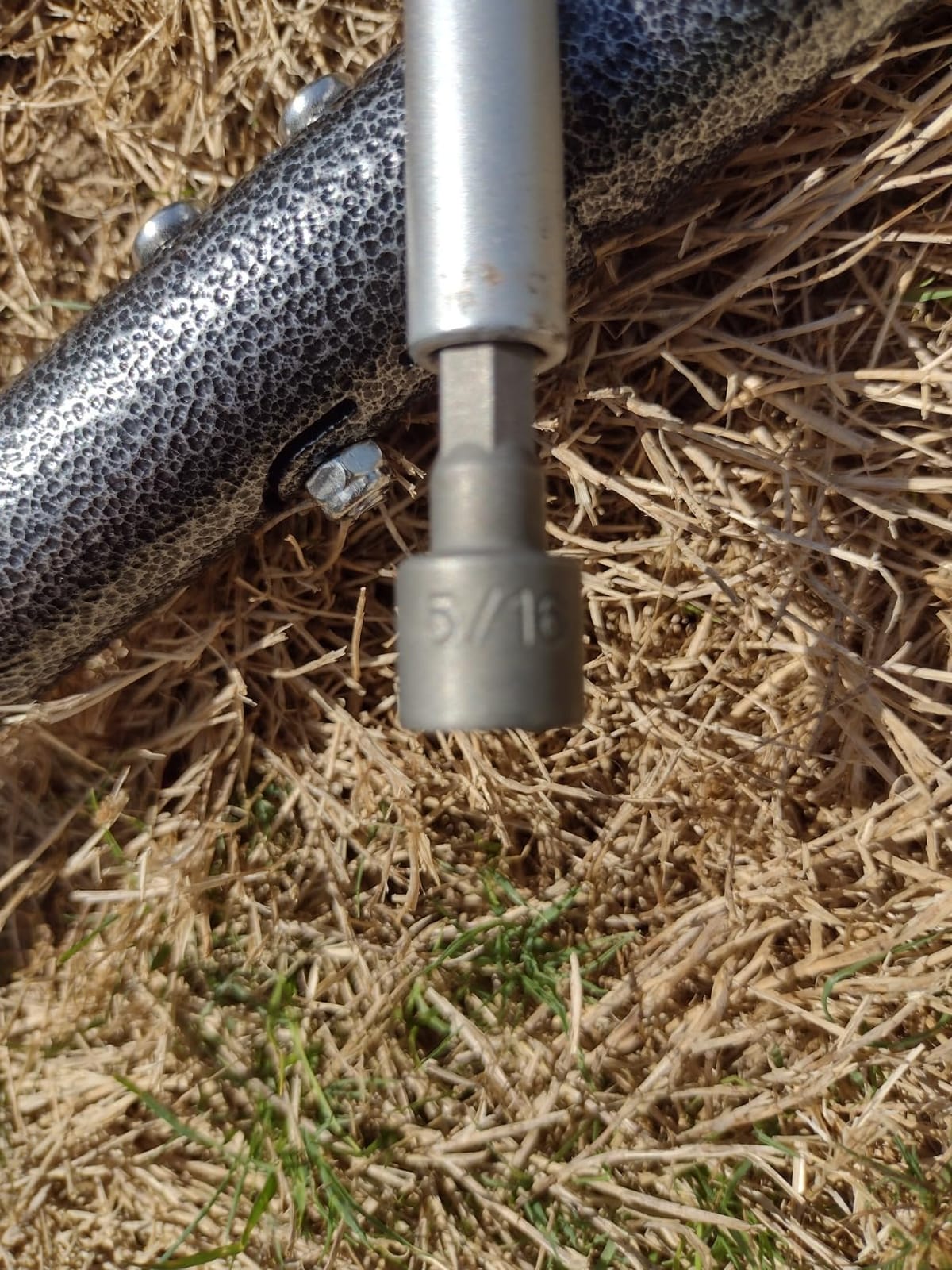
The tines are SUS 304 stainless rather than ordinary steel, and reviewers consistently notice the difference when a tine hits a stone. The powder-coated rod and screw-fastened joints feel built rather than stamped, and the whole unit assembles from three pieces in about two minutes.
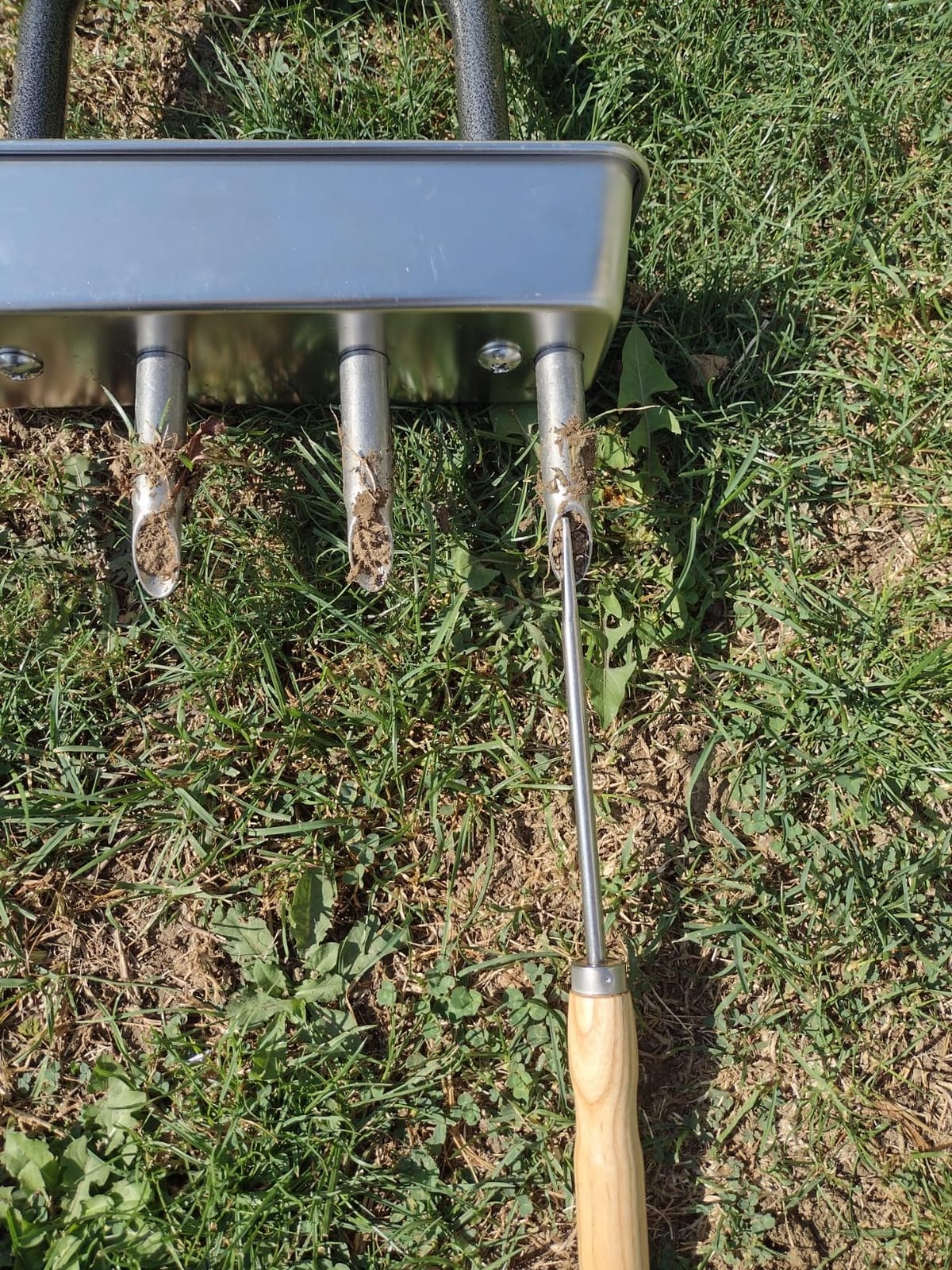
The plug holes are small, and that is the honest catch. Each pass lays down a sparse grid rather than a dense set of openings, so a full lawn means a systematic overlapping pattern rather than a single sweep. Two reviewers put the tool squarely in the spot-treatment and landscape-bed category rather than whole-property work, and that is where it earns its keep.
The other issue is clogging. The rating spread is wider here than for the other corers, with 15 percent three-star, and the complaints cluster in one place: if the soil is only moderately moist, cores build up in the tines. The included 12-inch hand tool is the fix. Use it every few passes and this becomes routine.
Who this suits
Owners of clay soil who intend to work in sections rather than all at once, and anyone who prefers not to rake plugs off the lawn afterwards. The tray makes the whole job tidier than anything else in this roundup, and the stainless tines will outlast coated steel in a damp shed.
It also works well around beds, planters and awkward lawn edges where you want to keep the excavated soil in one place rather than across the grass.
Who should skip it
Skip it if you plan to water the day before and nothing more. This tool wants wet soil, properly wet, not the borderline condition where a lighter spike tool would still punch through. Under-watering it is the fastest route to the clogging complaints.
And skip it for a large uniform lawn. Small plug holes across 2,000 square feet turns a session into a chore well past the point of enjoyment.
6. Colwelt Wide Spike Aerator — Four Deep Spikes, Thirty-Eight Inches Tall
Colwelt Aerator Lawn Tool, Manual Lawn Grass Aerator with Rugged Wide Spike
4 spikes at 3.5 inches long
38 inch height, cushioned T-handle
6 inch anti-slip foot plate
4.31 pounds, 10.98 x 2.5 x 38 inches
Pros
- Longest and thickest spikes here at 3.5 inches
- 4.5 average with 76 percent five star
- 38 inch height and padded T-handle spare the back
- Wide anti-slip plate fits any shoe
- Survives rocks and tree roots
- Gloves included and fast assembly
Cons
- Only four spikes so coverage is slow
- Real physical effort required
- Some play in the pole joints
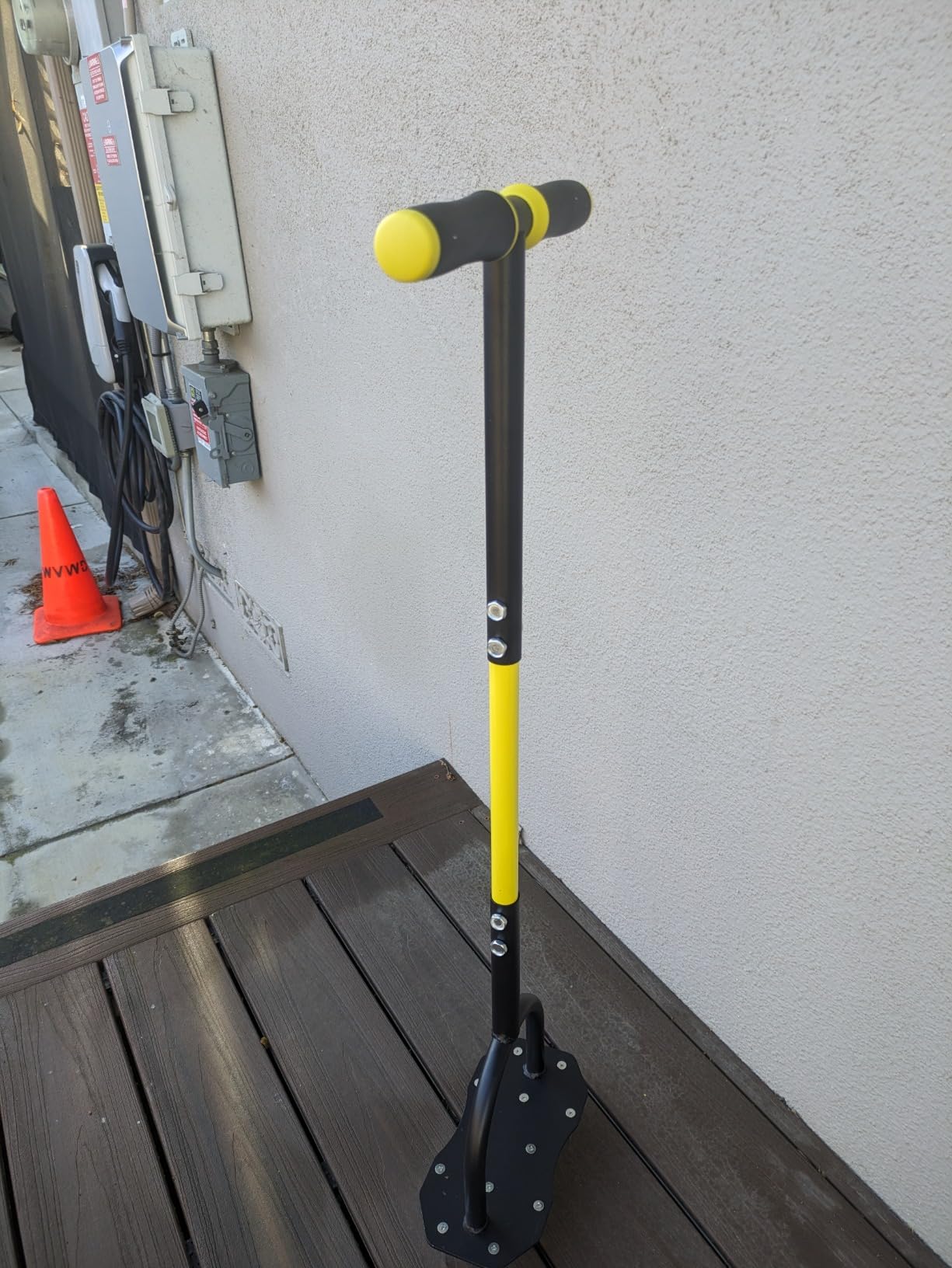
Four spikes is not many, but these are 3.5 inches long and 0.4 inches thick, which makes them the deepest and most substantial penetrating spikes in the roundup. On hard compacted clay, thickness matters more than count, because a thin spike deflects off a dry crust while a thick one drives through it. The rating reflects that: 4.5 average with 76 percent five star.
The 38 inch total height and cushioned T-handle keep you standing upright, which is the difference between a tool you use twice a year and one you abandon. The 6 inch by 5.5 inch anti-slip foot plate is wide enough for larger feet and any shoe, and it does not flex under full body weight. A pair of work gloves comes in the box.
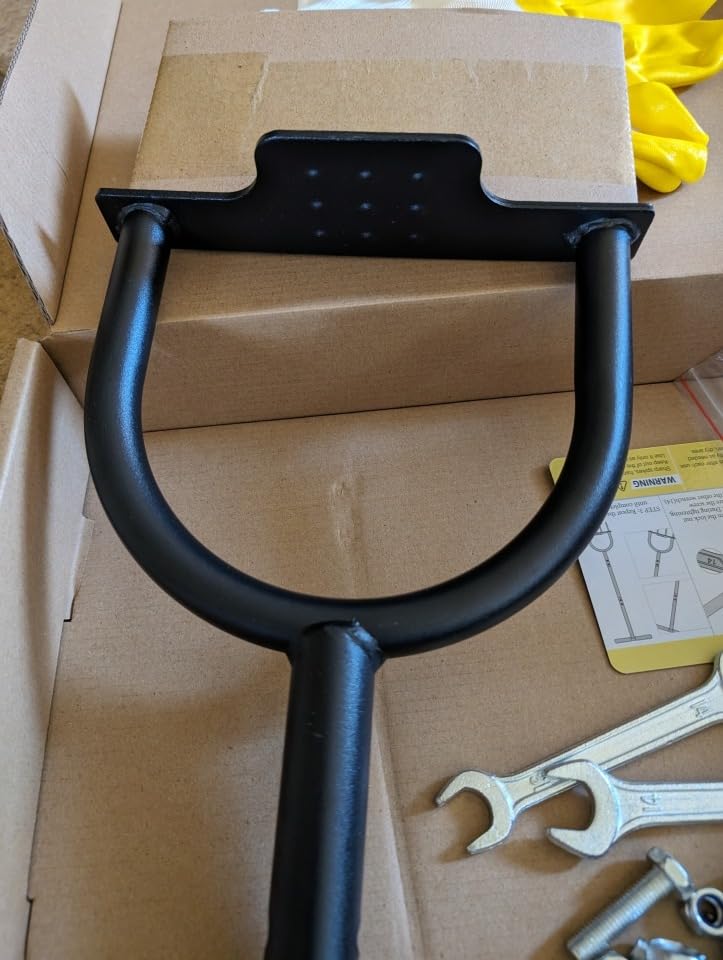
Four holes per plunge is genuinely slow across open lawn. Think of this as a spot tool with reach: the path between a walkway and a fence, the strip under the swing set, the corner that stays bare every spring. On a full small lawn you would be making many, many more plunges than you would with a four-row spike tool.
Some buyers also report a little play in the pole joints after a season of stomping. A quick tighten, or a wrap with tape, resolves it. This is normal for a screw-jointed hand tool, not a defect, but it is worth knowing before you hang it on a hook and forget about it for a year.
Who this suits
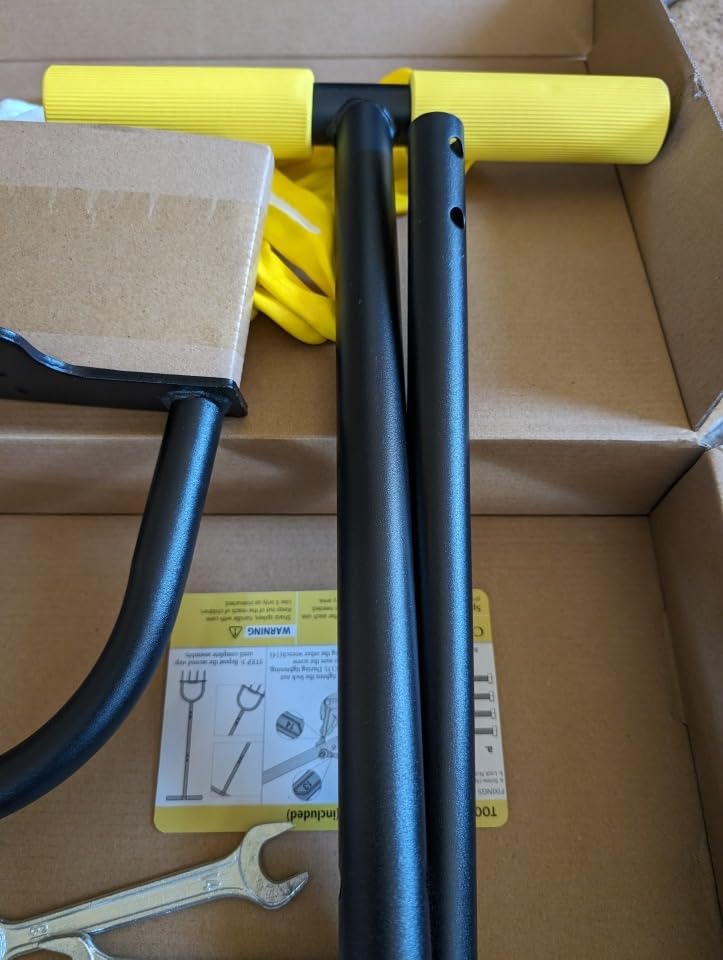
Small yards under about 1,200 square feet, and anyone whose soil is hard, dry-leaning clay that punishes thin spikes. It is also the most forgiving tool here for anyone with a bad back, because the padded T-handle at 38 inches keeps the working posture upright.
If you want a single tool for edges, corners and problem patches without overthinking it, this is the one. It is simple, deep and tough.
Who should skip it
Skip it for whole-lawn coverage. Four holes per step is the lowest count here, and buyers who bought it expecting a full-yard pass are the ones who end up wishing they had chosen differently.
Skip it if you have zero interest in physical effort. This tool works by weight transfer, and it asks for it honestly. Water the lawn well the day before and the job becomes manageable instead of miserable.
7. Saker 15 Iron Spike Aerator — Auto-Eject Spring and Adjustable Height
Saker Manual Lawn Aerator Tool with 15 Iron Spikes Black
15 iron spikes at 2.3 inches
Double-layer auto-eject spring
Height adjusts 32.2 to 35.4 inches
6.53 pounds, 15.7 x 12.6 x 4.7 inches
Pros
- Double-layer spring clears soil and debris automatically
- Adjustable height suits a range of users
- Screw-fastened foot pedal outlasts welded joints
- Thickened iron with rust-resistant coating
- Gloves included
Cons
- Shortest spikes here at 2.3 inches
- Heaviest build per spike count at 6.53 pounds
- Lowest average rating in this group
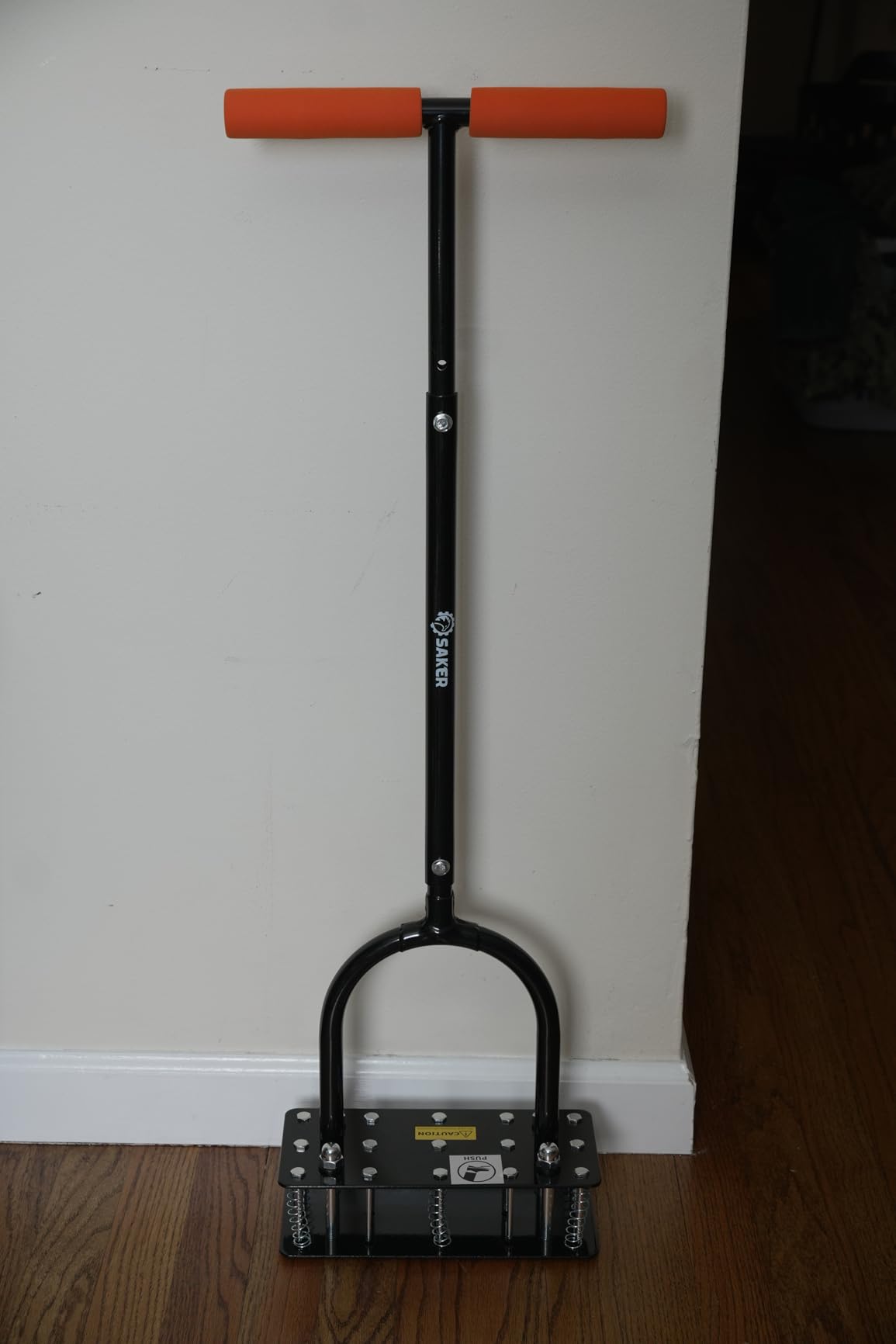
The Saker’s distinguishing feature is the spring. A built-in double-layer spring ejects soil and debris automatically as you work, which on a spike tool is a real quality-of-life difference, because a plate packed with wet soil stops punching effectively within a few presses. You lift and pull, and the next press lands clean.
The handle adjusts between 32.2 and 35.4 inches, which is the most useful height range here if you are short or tall, and the foot pedal is fastened with high-strength screws rather than welds. Fifteen spikes give decent coverage per step, and gloves are included.
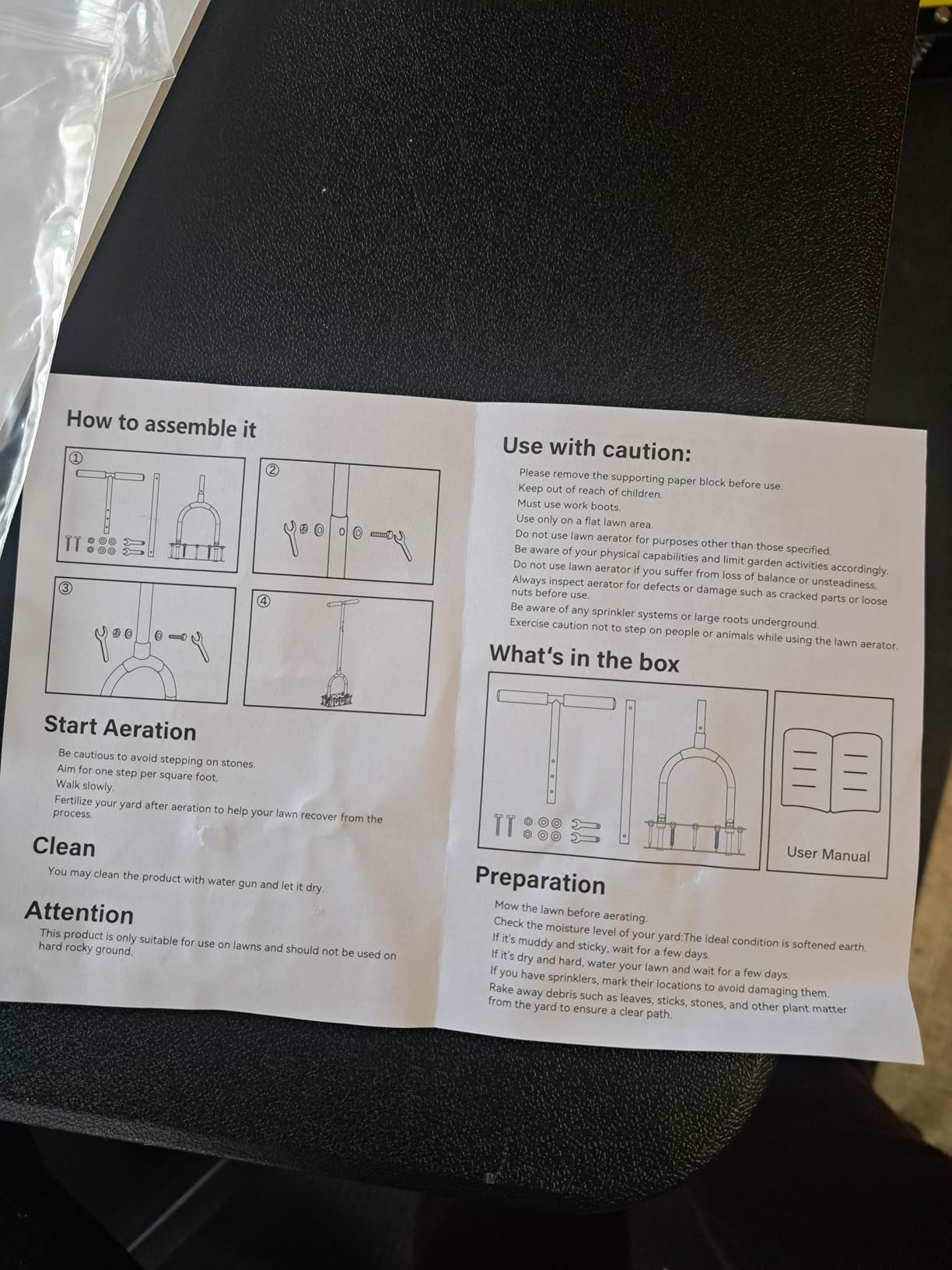
Two things pull the rating down. The spikes are 2.3 inches, the shortest in this roundup, which limits how deep you can work on compacted clay. And at 6.53 pounds this is the heaviest tool per spike count we tested, which adds up over a long session on a slope.
The rating spread shows it: 55 percent five star but 14 percent three star and 6 percent one star. The unhappy buyers are concentrated in the people who expected deeper penetration than 2.3 inches buys, and in those who found the weight tiring before they finished the lawn.
Who this suits
Users who spend a lot of time on marginal soil where a jam-prone spike plate would otherwise stop you every few minutes, and anyone who wants the handle length dialled to their height rather than fixed. Adjustability is a genuine comfort win on a long session.
It also suits owners of light, loose soil where 2.3 inches is all the depth you actually need to open surface channels for air and water.
Who should skip it
Skip it on hard clay. Nothing about a 2.3 inch spike reaches the problem, and buying a spike tool for compacted clay is the most common wrong purchase in this category.
Skip it if fatigue matters more than the auto-eject spring. A lighter tool with longer spikes will serve you better in almost every other scenario. The one exception is if your soil is wet enough to jam anything, in which case the spring is worth the weight.
8. Seeutek 23 Inch Rolling Aerator — Wide Drum Coverage for Small-Medium Lawns
Seeutek 23Inch Rolling Lawn Aerator – Upgraded Heavy Duty Aerators
23 inch rolling drum with 2 inch spikes
3 height adjustments, padded T-bar
Side fill hole for water or sand
24 pounds, 23 x 15 x 9 inches
Pros
- Covers far more ground per pass than any foot tool here
- Padded T-bar with 3 height settings
- Laser welded so there is no assembly
- Fillable drum deepens spike penetration
- Tripod handle joint resists loosening
Cons
- Heaviest unit here at 24 pounds
- Highest 1-star share at 12 percent
- Wide drum struggles in narrow beds and corners
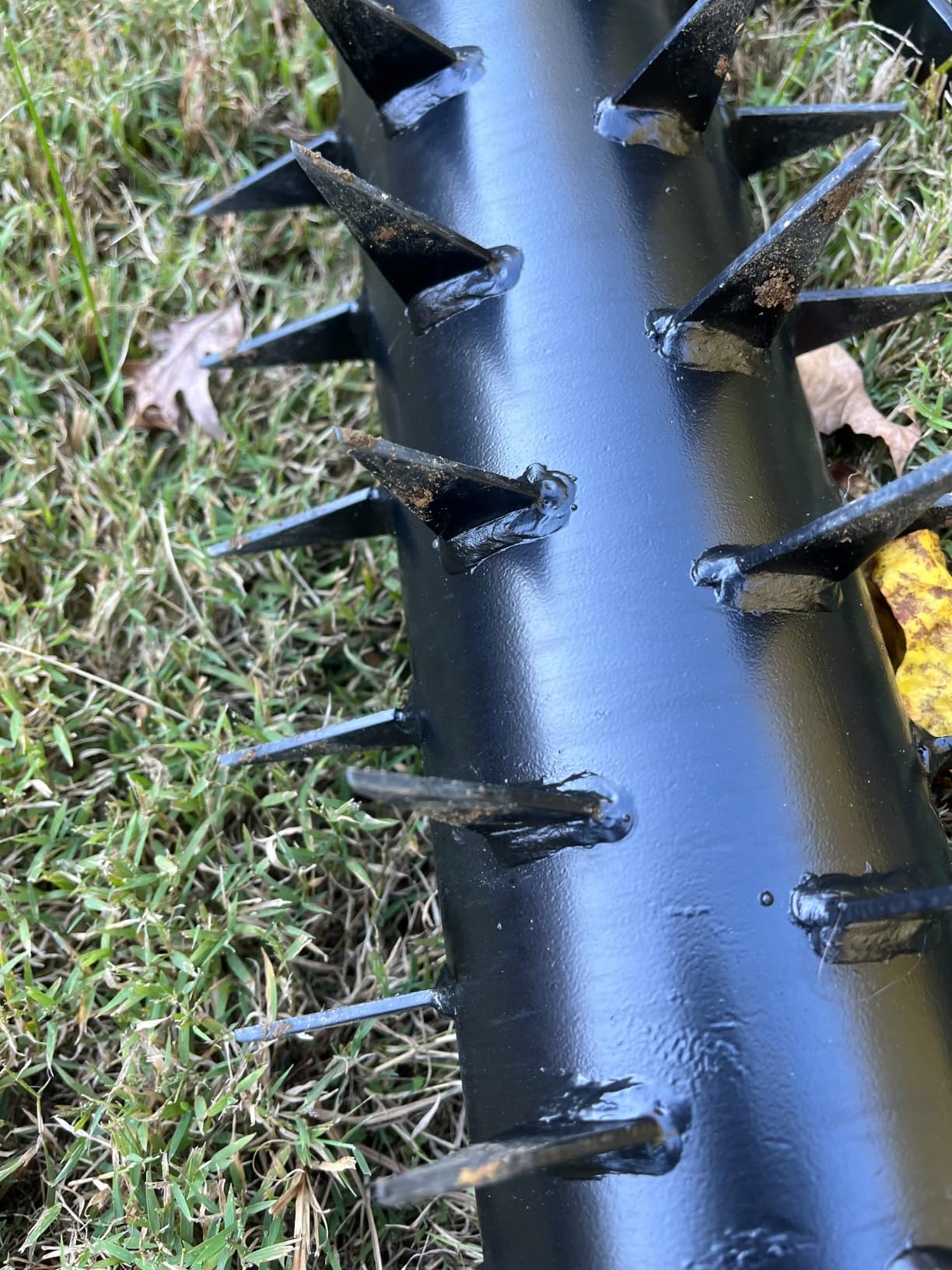
A rolling drum changes the arithmetic of the whole task. Instead of stepping forward foot by foot, you push and the 23 inch drum lays down rows of 2 inch star-shaped spikes as it turns. On flat, open ground under about 3,000 square feet, this finishes in roughly an hour where a foot-plunge corer would take most of a morning.
Laser welding means there is no assembly at all, the padded T-bar adjusts across three heights to spare your back, and there is a 2.5 cm side port that accepts water or sand as ballast. Add weight and the spikes bite deeper into compacted ground. The tripod connection between handle and roller is the kind of detail that usually fails first on cheaper rollers, and it is reinforced here.
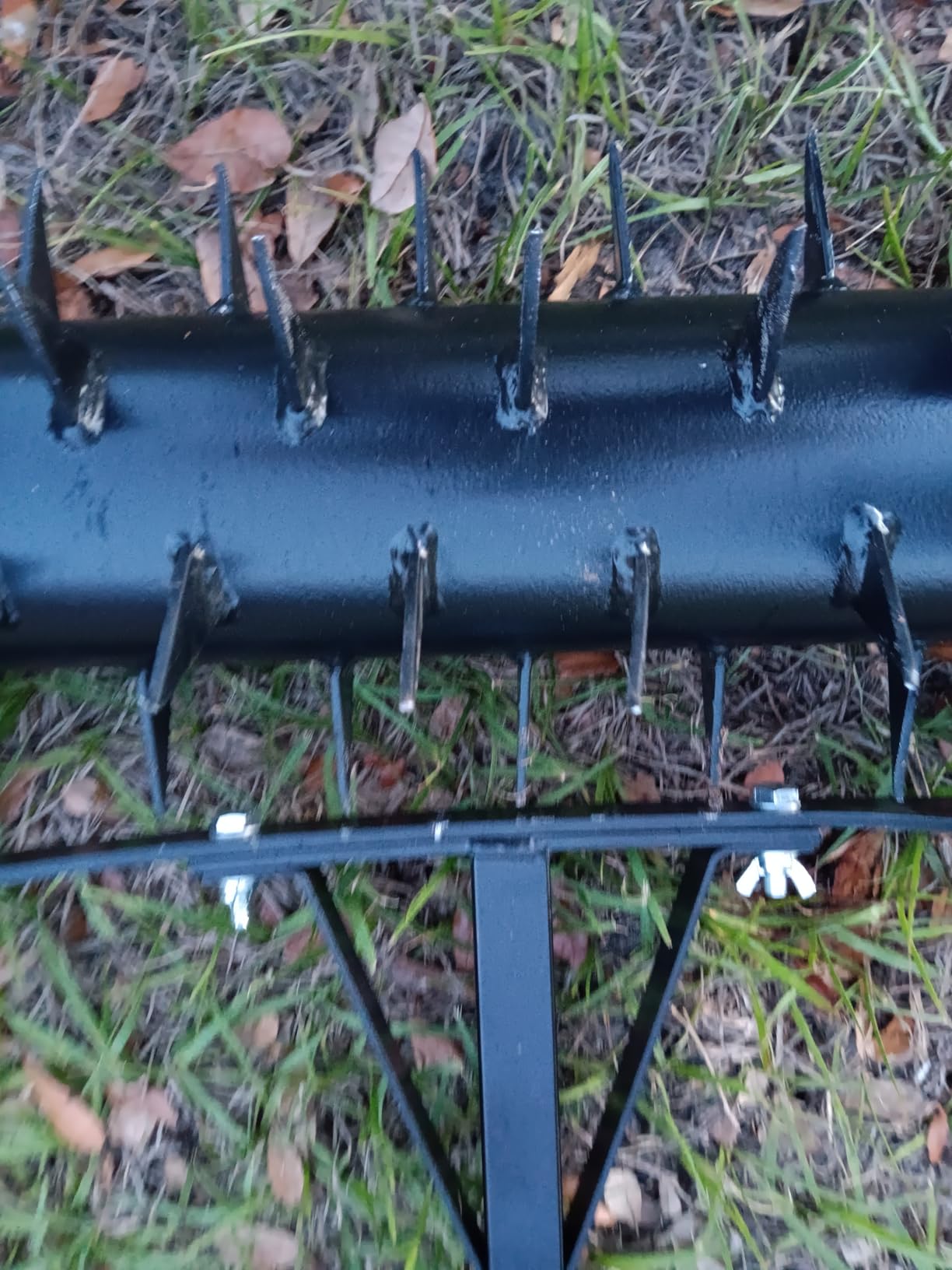
Twenty-four pounds is the price of that coverage. Lifting it over a step, turning it in a side yard or carrying it to a different lawn is genuinely awkward, and it is a real consideration for anyone without a path to the back of the property. It is also the highest one-star share in this roundup at 12 percent, with most of those complaints landing on weight, build or arrival damage.
The width is also a limitation for the yard this article is about. A 23 inch drum does not fit between a shed and a fence, and it cannot get into a corner. For tight-access spaces the small hand tools above remain the only answer, which is why this one sits at the end of the list rather than the top.
Who this suits
Owners of a small-to-medium lawn that is flat, open and mostly straight runs. If your small yard is actually a wide, regular rectangle, this roller will cover it faster than any other tool here and let you add water as ballast when the soil needs extra bite.
It also suits anyone with mobility limits around repeated bending, since you stay upright and roll the whole time.
Who should skip it
Skip it if your lawn has slopes, narrow side yards, or corners you need to reach. A rolling drum needs turning room, and 24 pounds on a slope is a different proposition entirely from 24 pounds on flat grass.
Skip it if storage is tight or you need to carry the tool any real distance. Against the storage and portability of a detaching spike tool, this unit simply does not compete. Measure your access route before you commit.
Core vs. Spike Aerators: Which Does a Small Yard Need?
A small yard with clay or heavy foot traffic needs a core aerator. Hollow tines pull actual plugs of soil to three or four inches, which relieves compaction rather than rearranging it. A spike aerator is the right answer only when your soil is loose or sandy and you want surface channels opened for air and water.
The difference matters more on small properties than most buyers expect. A spike tool cannot make your clay problem meaningfully better, because it compresses soil sideways as it enters. A coring tool physically removes material, and that removal is the mechanism that lets roots expand into space that was previously sealed shut.
Two practical warnings carry over from the forums. First, check that the coring tool actually ejects its plugs; tools that do not are the single most common disappointment in this category. Second, if you hire a company instead, scoop the seed out of the aerator before they overseed, a detail that r/lawncare owners repeatedly warn about.
What to Skip for a Small Yard
Skip tow-behind units. A 48-inch tow plug aerator is built for acreage and requires a riding mower, a trailer and a lawn big enough to turn the machine at both ends. On a 1,500 square foot lawn you spend longer setting it up than aerating. If your yard turns out to be larger than expected, our roundup of the best tow-behind lawn aerators covers that case properly.
Skip heavy rental machines. The most common small-yard regret in the forums is exactly this: someone who wrote that they could not justify renting and lugging a 250 pound machine for 2,000 square feet of lawn, especially without a truck or trailer. The machine is real, the driveway damage is real, and it still will not fit in the side yard.
Skip corded electric units too. At small scale you are buying a motor, a cable and a cord reel to do what a two-pound steel tool does with your own weight. If you want an efficiency upgrade around the yard, our small-yard mower guide is a better place to spend the money than on an electric aerator.
How to Aerate a Small Yard Step by Step
Water the lawn one to two days before you start. This is the single step people skip, and skipping it is why so many first attempts go badly. Moist soil lets the tines penetrate and the plugs come out intact; dry soil bends steel and returns nothing.
Then work in this order. Mow low and rake up the debris first, so you are not dragging clippings around with the tines. Make your first pass in overlapping lines, keeping the foot plate moving steadily rather than stabbing repeatedly in one spot. Make a second pass at right angles to the first on the compacted areas only, forming a crosshatch. Leave the soil plugs where they fall and water them in within a few days so they break down and return to the turf.
One honest caveat from the lawncare community: on a sloped small yard, one good pass done carefully beats two rushed passes you never finish. Coverage you actually complete is worth more than coverage you abandon halfway.
Does Your Small Lawn Actually Need Aerating?
You can find out in about five minutes before you buy anything. Push a screwdriver or a garden fork into a questionable spot. If it goes in with one hand and barely meets resistance, your soil is loose and you can skip aeration this year. If you are leaning on it with both hands and it still will not go, you have compaction.
The second test is water. Run your hose onto a bare or thin patch for a few minutes. If water pools on the surface and runs off rather than soaking in, the ground is compacted and aeration will help. If it disappears immediately, drainage is fine and the issue is something else.
Finally, check thatch. If the layer of dead material at the base of the blades is under half an inch, dethatching and aerating are separate jobs and you probably only need the latter. A thick spongy mat that holds moisture against the crown needs dethatching first, otherwise you are pushing a coring tool through a blanket.
What to Look for in a Manual Lawn Aerator
Match the tool to your yard size before you match it to anything else. Foot-plunge tools suit lawns under about 2,000 square feet, and a rolling drum only starts to earn its place past roughly 3,000 square feet of open, flat ground.
Then check four things. Tine depth: look for 3 inches or more, since anything shallower barely reaches root zone. Ejection: if it is a coring tool, confirm the plugs clear themselves rather than packing in. Foot plate width: a wider plate means fewer plunges and more stable footing. Handle height: anywhere near 36 inches or taller keeps you out of a bent posture.
Finally, check that it stores. Detachable handles and short overall lengths matter more in a small yard context than most spec sheets suggest, because the tool you cannot put away is the tool you will not use a second time. As for whether to buy or rent: for anything under about 5,000 square feet, renting and hauling is the option that makes less sense, and the contractor figures quoted in the forums would never repay themselves on a lawn that size. Buy one and use it every spring and fall.
Frequently Asked Questions
What is the best lawn aerator for a small yard?
A handheld coring or plug aerator with hollow tines and a foot bar. It pulls soil cores roughly three to three and a half inches deep, covers a lawn up to about 2,000 square feet in one session, and needs no truck, trailer or outlet. Choose a rolling drum only past roughly 3,000 square feet.
Are manual lawn aerators worth it?
Yes, for a small yard. A manual aerator costs a couple of hours of work per thousand square feet and removes the rental fee, the hauling, and the contractor minimum that a small lawn cannot justify. Buy if you will aerate each spring and fall. Past roughly 5,000 square feet, renting a tow-behind is the better call.
Do manual lawn aerators really work?
Yes, when the soil is moist. Coring aerators pull real plugs to three or four inches deep, letting air, water and fertiliser reach grass roots. Spike aerators only pierce holes, which helps loose or sandy soil but can push clay tighter. Aerating dry soil damages the tool and pulls almost nothing.
What is a good manual lawn aerator tool?
Look for hollow tines at least 3 inches deep, a foot plate wide enough to stand on, a handle near 36 inches or taller, and a mechanism that ejects plugs instead of clogging. Match the tool to the yard: foot-plunge models under 2,000 square feet, rolling drums above 3,000.
What is the smallest size aerator available?
The smallest practical manual aerators are handheld spike tools with a foot plate around 9 inches and a long handle, which work standing up on lawns under 1,000 square feet. Below that, including tight corners and landscape beds, a four-tine hand tool or a spike tool is the most compact option.
How to aerate a very small yard?
Water the lawn one to two days ahead, mow low and rake debris, then work in overlapping passes, adding a crosshatch second pass only on compacted patches. Leave the soil plugs on the surface and water them in within a few days so they break down and feed the turf.
The Best Manual Lawn Aerator for Your Small Yard
The Yard Butler ID-6C is our pick for the best manual lawn aerators for small yards, and it wins on the combination that actually matters: genuine coring action from hollow tines, a cushioned handle tall enough to work upright, powder-coated steel, and the deepest review base in the category at more than 8,000 ratings. If your soil is loose and sandy, take the Walensee four-row tool for coverage speed instead. If you will not bend at all, and you have wet clay to treat, the LawnVigor hollow tine tool is the one that actually pulls clean cores.
Whichever you choose, water the lawn first, work in overlapping passes, and leave the plugs on the grass. That sequence matters more than the tool. We will be back with fresh testing in the spring and fall windows of 2026, when there is actual moisture in the ground and something to report.