
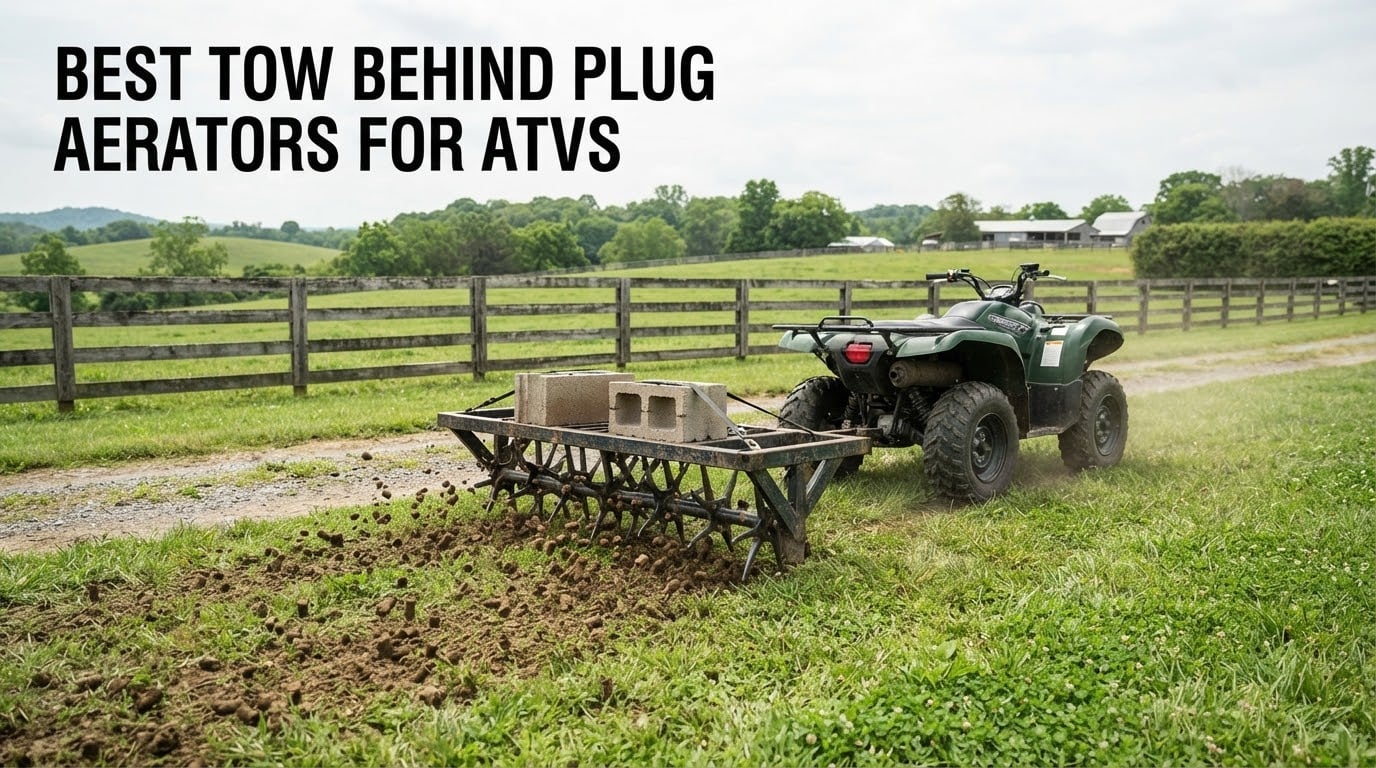
A tow behind plug aerator is a wheeled implement with rows of hollow steel tines that you pull behind an ATV or UTV, and those tines punch into the ground and pull out cylindrical plugs of soil. That is the entire difference that matters: coring tines remove soil and open real channels into the root zone, while spike tines only push dirt aside. For 2026, our best overall pick is the Agri-Fab 48 Inch Tow Behind Plug Aerator, and we compared ten units side by side on tine type, tray capacity, hitch fit and how they behave behind a quad.
An ATV works well as a tow vehicle because it is light, narrow enough for gates and farm lanes, and you already own it. The two things to check before you buy are hitch type and payload, because most of these units ship with a pin-style universal hitch that needs adapting to a 2-inch ball receiver, and a full weight tray plus the aerator itself can approach the towing limit of a smaller quad.
Ballast is what decides whether the pass does anything. Without weight on the tray, a light pull behind aerator skips across the surface and barely scratches the ground, which is the single most common complaint in owner reviews. Load 100 to 150 lb, tow at walking-trot speed, and the same machine pulls 3-inch cores. If you want the broader picture first, our guide to the best tow behind lawn aerators covers the lawn-tractor side of the category, and our best lawn aerators roundup walks through the manual and rolling options.
Top 3 Best Tow Behind Plug Aerators for ATVs in 2026
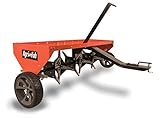
Agri-Fab 48 Inch Plug Aerator
- 32 galvanized self-sharpening knives
- Plugs up to 3 inches deep
- 175 lb weight tray
- Flat free tires

Brinly 40 Inch Plug Aerator
- 24 heat-treated plugging spoons
- Plugs up to 3 inches deep
- 150 lb enclosed weight tray
- Works with ATV pin hitch
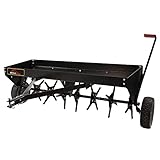
Brinly 48 Inch Plug Aerator
- 32 heat-treated plugging spoons
- 200 lb weight tray
- Four rotating tine sections
- Universal pin hitch
All 10 Tow Behind Plug Aerators Compared in 2026
Every unit below is a wheeled pull behind aerator that can be adapted to an ATV hitch. The columns that should drive your decision are working width against your gate and pasture size, whether the tines core or perforate, and how much tray capacity you can safely load.
| Product | Specifications | Action |
|---|---|---|
| Agri-Fab 48 Inch Tow Behind Plug Aerator |
|
Check Latest Price |
 Agri-Fab 40 Inch Tow Behind Plug Aerator Agri-Fab 40 Inch Tow Behind Plug Aerator |
|
Check Latest Price |
| Brinly 40 Inch Tow Behind Plug Aerator |
|
Check Latest Price |
 Brinly Combination Aerator and Spreader 40 Inch Brinly Combination Aerator and Spreader 40 Inch |
|
Check Latest Price |
| Brinly 48 Inch Tow Behind Plug Aerator |
|
Check Latest Price |
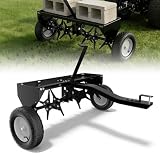
 Craftsman 40 Inch Tow Behind Plug Aerator Craftsman 40 Inch Tow Behind Plug Aerator |
|
Check Latest Price |
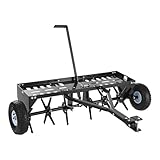
 Vlaeng 40 Inch Tow Behind Aerator Vlaeng 40 Inch Tow Behind Aerator |
|
Check Latest Price |
 VEVOR 40 Inch Tow Behind Plug Aerator VEVOR 40 Inch Tow Behind Plug Aerator |
|
Check Latest Price |
 Garvee 48 Inch Tow Behind Plug Aerator Garvee 48 Inch Tow Behind Plug Aerator |
|
Check Latest Price |
 VEVOR 40 Inch Tow Behind Plug Aerator 3 Inch VEVOR 40 Inch Tow Behind Plug Aerator 3 Inch |
|
Check Latest Price |
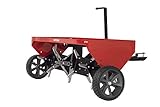
1. Agri-Fab 48 Inch Tow Behind Plug Aerator: Best Overall Behind an ATV
Agri-Fab 48 In Tow Behind Lawn Plug Aerator with 32 Galvanized Knives and Universal Hitch
32 galvanized knives
3 inch plugs
175 lb tray
94 lb unit weight
Pros
- Deep 3 inch plug extraction
- 32 self-sharpening galvanized knives
- 175 lb tray for hard soil
- Flat free tires roll smoothly
Cons
- Bulky to store at 94 lb and 48 inches wide
- Universal hitch fit varies by tow vehicle
- Flat free tires pick up turf on uneven ground
This is the unit we keep coming back to because its numbers leave the most room to work. Thirty-two galvanized self-sharpening knives pull plugs up to 3 inches deep, and the weight tray is rated for 175 lb, so you can add ballast without worrying about the tray limits that stop some cheaper machines.
Owner reviews are unusually consistent about the same thing. People report clean, deep plugs and easy transport, and the star breakdown skews strongly positive, with 59 percent of reviews at five stars. That consistency across more than 2.4k reviews is why we lean on it here.
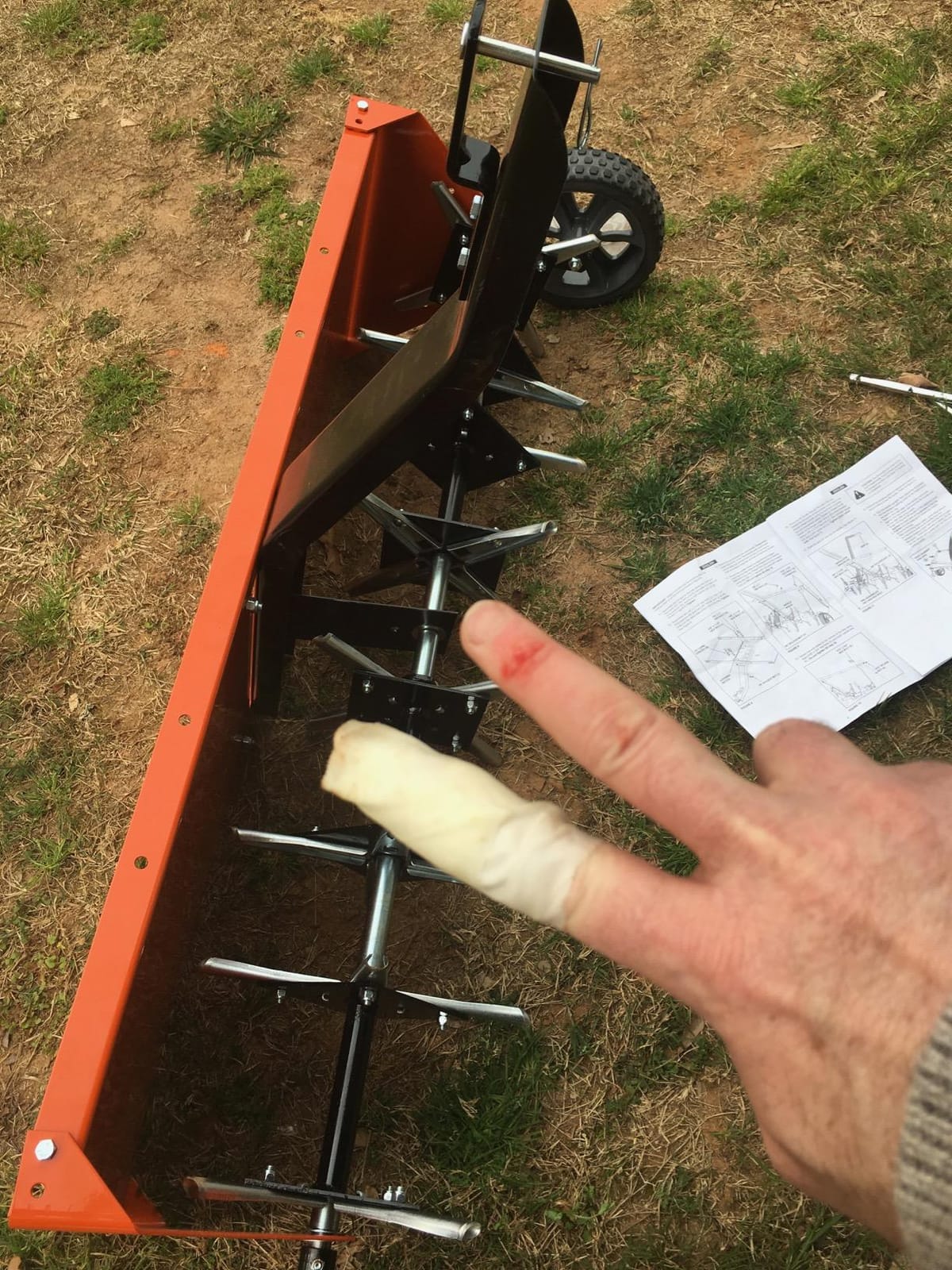
The build is American-made in Sullivan, Illinois, and the cantilever transport handle lets you raise the unit from the seat for a slow turn or a driveway crossing. Flat free tires mean no flats mid-pasture, which matters more than it sounds when you are a mile from the nearest road with a loaded tray.
What you give up is size. At 48 inches wide and 94 pounds, it is the heaviest and most awkward unit here to store, and storage is a real consideration if you are not keeping it in a barn. Reviewers also note the universal hitch does not adapt to every tow setup without a little work, so check your receiver before you commit.
What to check before you tow it behind a quad
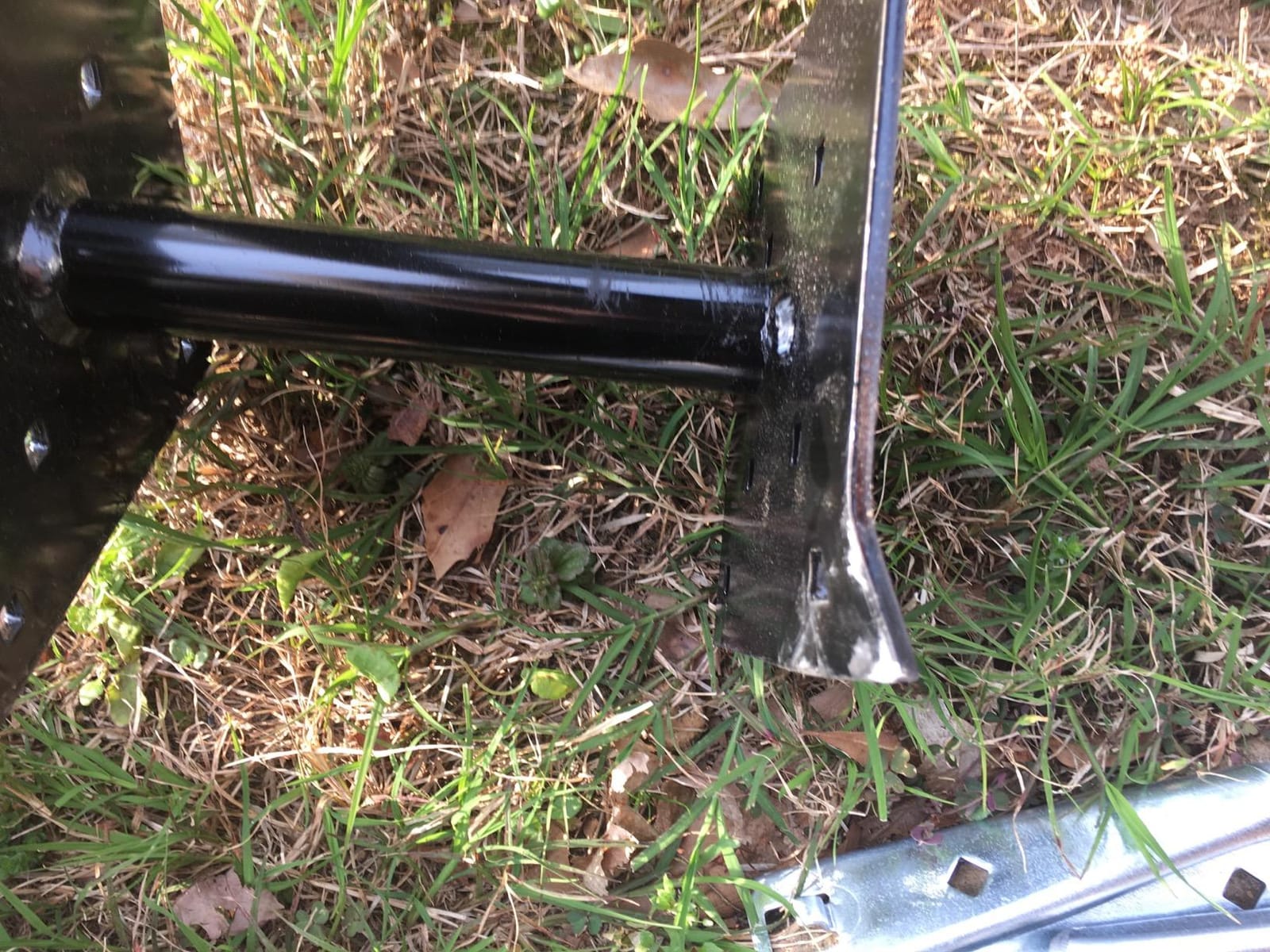
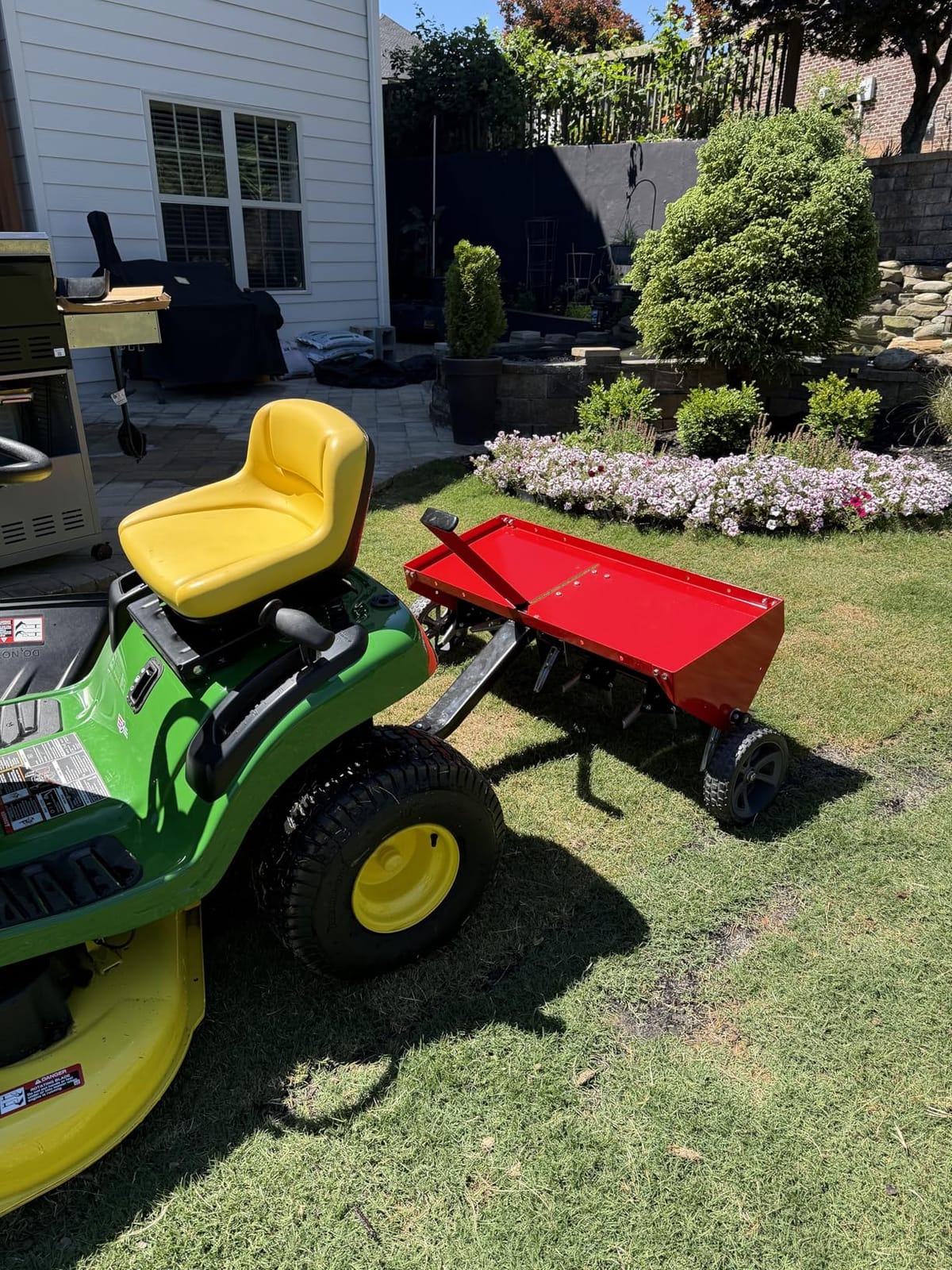
The universal hitch on this model is designed for lawn and garden tractors, so an ATV with a 2-inch ball receiver needs an adapter. Owners of older quads report this is a five-minute fix with a standard ball adapter, not a dealbreaker.
Weight is the other consideration. The unit alone is 94 pounds, and 175 lb of ballast on the tray puts a lot of tongue weight behind a machine that may be rated well below that. If your ATV is a mid-size sport quad, start with 75 to 100 lb of ballast and add from there.
Who should skip this one
Skip it if you have under a quarter acre of ground or a narrow gate. At 48 inches wide, turning in a tight paddock corner is awkward, and for a small lawn a 40 inch model does the same job in less time.
Also skip it if you have nowhere to store something that big. There are two 40 inch options later in this roundup that fold or store upright and cost less to keep out of the way through winter.
2. Agri-Fab 40 Inch Tow Behind Plug Aerator: Best Value for Large Lawns
Agri-Fab 40 In Tow Behind Lawn Plug Aerator with 24 Galvanized Coring Knives and Universal Hitch
24 galvanized coring knives
40 inch width
10 in pneumatic tires
73.8 lb unit weight
Pros
- 40 inch width covers ground in fewer passes
- 24 galvanized coring knives cut dependable plugs
- 10 in pneumatic tires roll over uneven terrain
- Folding handle saves storage space
Cons
- Fewer knives means more passes than the 32 knife model
- Plug depth varies with soil moisture
This is the same idea as our top pick in a package that suits an ATV better. At 40 inches wide and 73.8 pounds it is noticeably easier to store and to muscle around a gate, and the 24 sharpened coring knives still pull dependable plugs in compacted soil.
The large 10 by 3 inch pneumatic tires are a genuine advantage on rough ground. Hardened surfaces and rutted pasture lanes are where flat free tires pick up turf, and pneumatic tires roll through that without loading up.
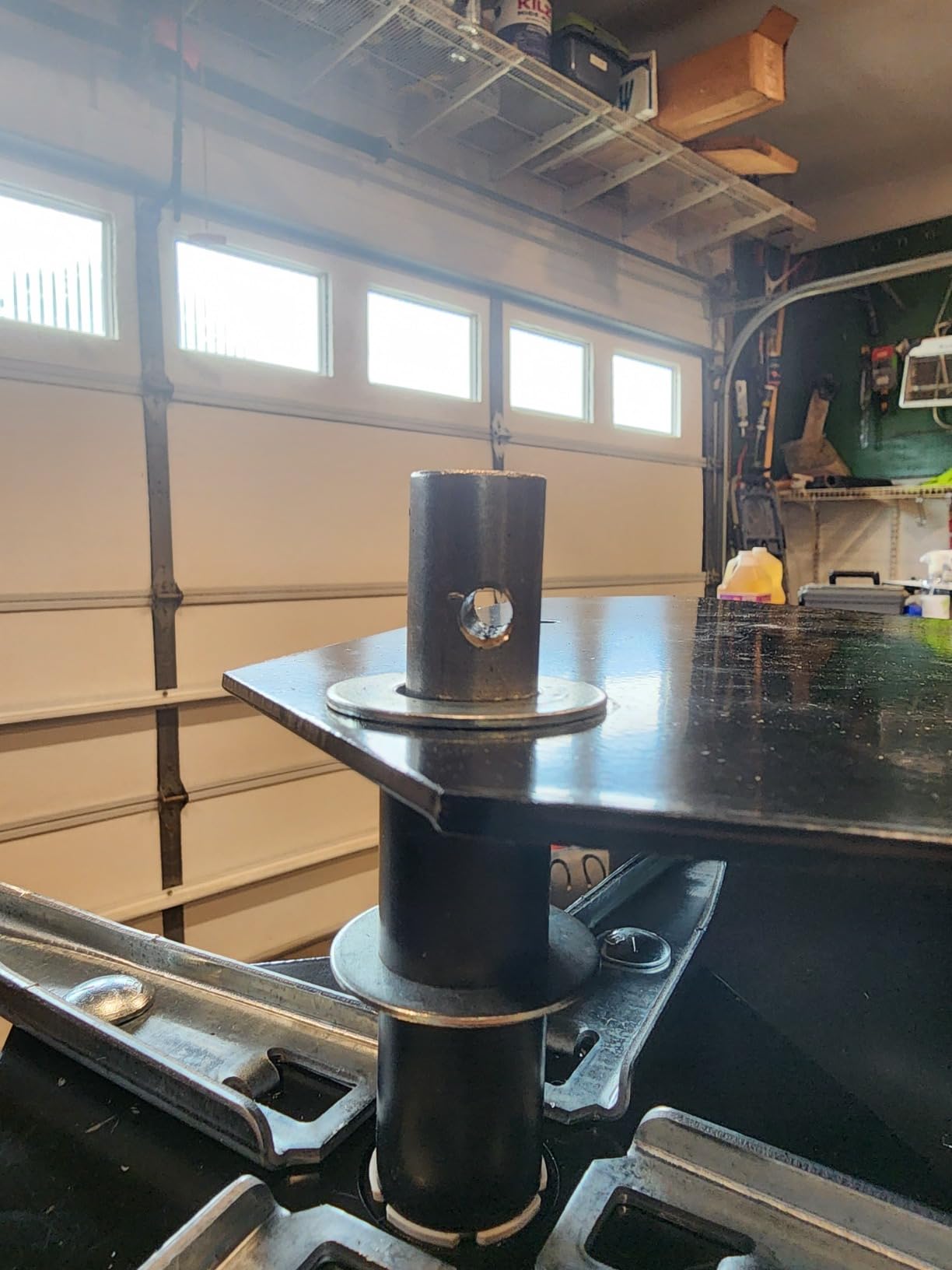
Owners like the balance of coverage and maneuverability, and the review profile is healthy with 57 percent at five stars. Nearly every review mentions adding ballast to get deeper penetration, which is the same advice we give for every machine in this list.
The compromise is tine count. Twenty-four knives over 40 inches means a slightly wider pattern of holes than the 32-knife model, so on a large pasture you will be making a few more passes to overlap properly. Reviewers also flag that soil moisture strongly affects consistency on this one.
How it behaves on uneven pasture ground
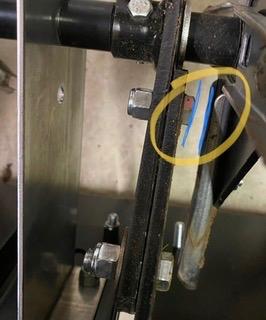
Pneumatic tires are the reason this one holds up on farm tracks. A flat free tire on a rutted lane can skip and let the frame bounce, and bouncing frames mean shallow plugs. Owners working paddocks and food plots tend to run a lower tire pressure for a softer, smoother pull.
The folding single-lever transport handle is worth noting if you aerate a lawn near a driveway. Raising the tines from the seat is faster than getting off and dragging the unit around a corner.
Who should skip this one
Skip it if you are working more than an acre at a time and want maximum passes per hour. The 48 inch Agri-Fab or the 48 inch Brinly cover noticeably more ground per trip.
Also consider skipping if your ATV has limited payload, since this one is lighter to start with but you will still want 100 lb or more in the tray for real depth in firm soil.
3. Brinly 40 Inch Tow Behind Plug Aerator: Best Rated Plug Aerator Here
Brinly Tow Behind Plug Aerator with Universal Hitch, 40″ – Flat Black
24 heat-treated spoons
3 inch plugs
150 lb enclosed tray
63.9 lb unit weight
Pros
- Narrow spoons penetrate with less ballast
- 67 percent of owners rate it 5 stars
- Three independently rotating tine sections
- All steel build with no flat wheels
Cons
- All steel build adds weight behind a light quad
- Semi-pneumatic tires need correct pressure in transport mode
This unit weighs 63.9 pounds and carries a 4.4 average from 977 owners. That pairing of a high star score with a large review base is what earned it a place here. Owners consistently credit the narrow, heat-treated 16-gauge plugging spoons for penetrating with less ballast than competing designs pull.
That detail matters behind an ATV. Because the spoons are narrower, you get clean 3-inch cores without loading the tongue with everything in the shed, which is a real advantage when your quad has a modest towing rating.
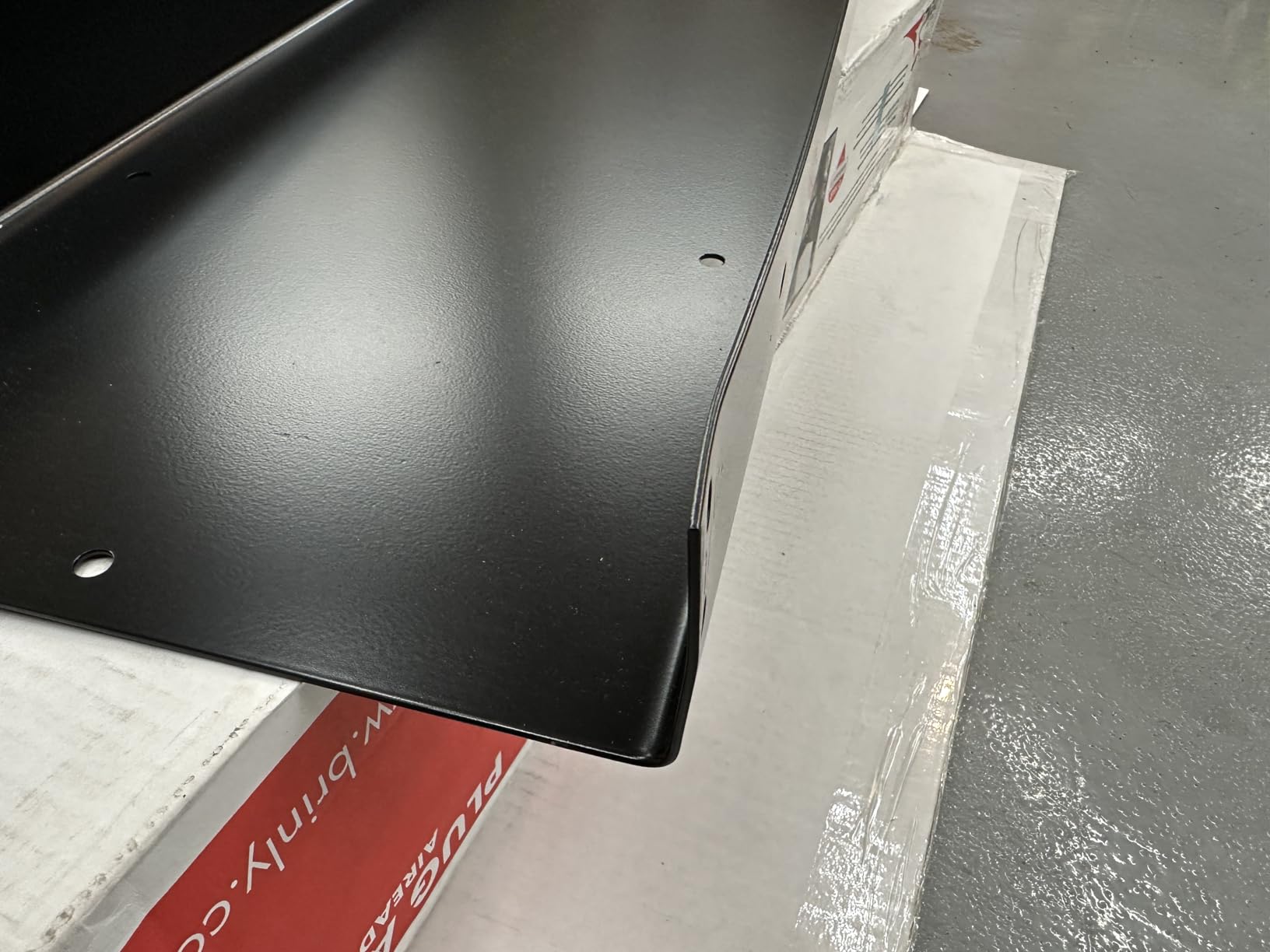
The three independently rotating welded tine sections are an underrated feature. Because the sections rotate on their own, the aerator turns rather than tearing turf when you change direction at the end of a pass, and owners with 67 percent five-star reviews mention smooth towing and consistent cores more than anything else.
Its hitch description is also unusually clear. The single pin universal hitch is listed as compatible with lawn tractors, most zero-turn mowers and ATVs, and the Vlaeng and Garvee units below name ATVs and UTVs directly as well, which removes the guesswork on the one fitment question that trips people up.
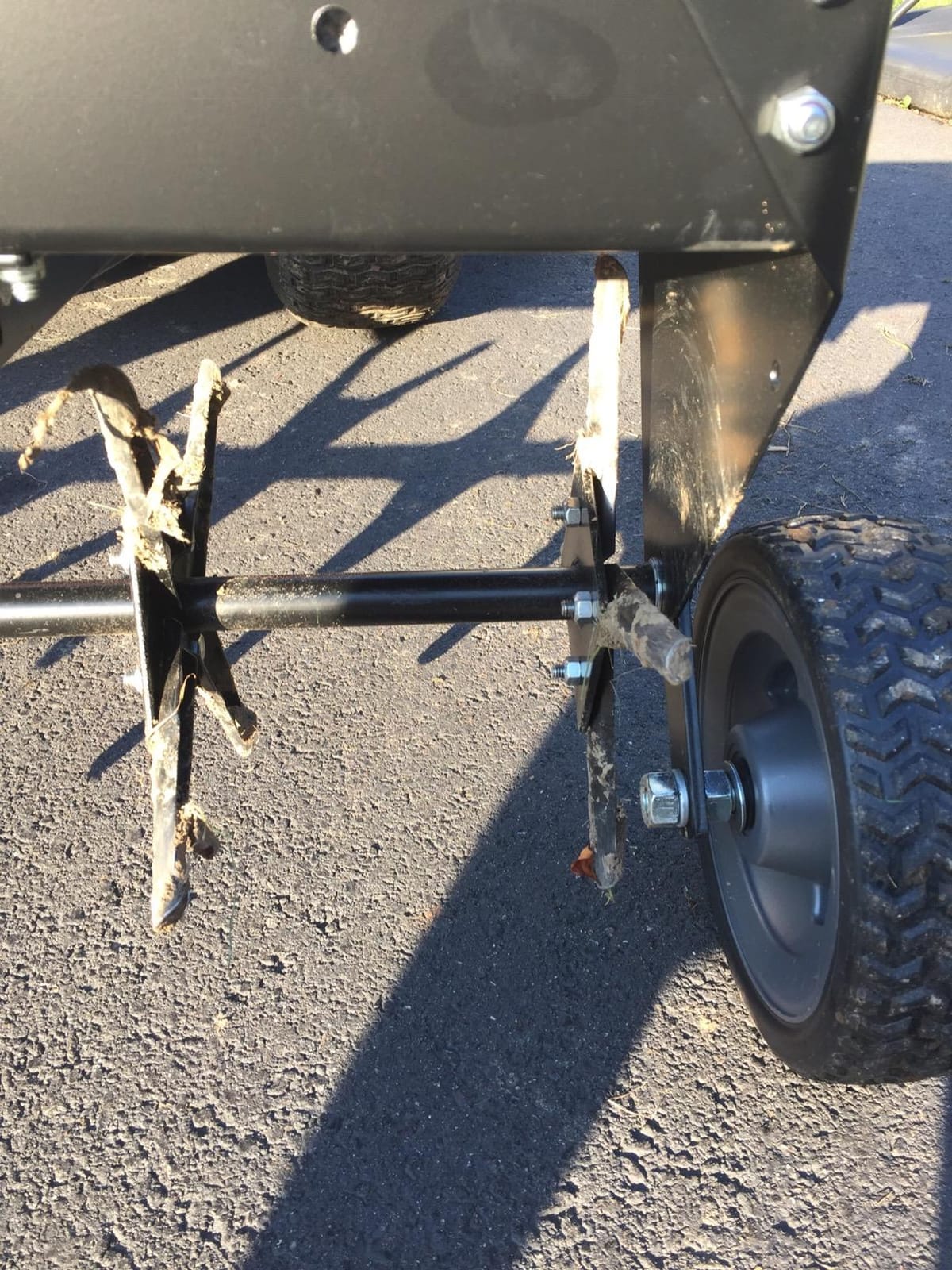
What the rotating tine sections change in the field
On a straight pull, tine sections make little difference. On a turn, they are the difference between a clean arc and a skinned patch. If your aeration job involves working around trees, fence lines or a pond edge, that matters more than the spec sheet suggests.
Owners also report that this machine pays for itself quickly compared with rental costs, which lines up with the economics forum users discuss when comparing ownership to a few rental days a year.
Who should skip this one
Skip it if you are outfitting a small yard. It is the top of the price range among the name-brand units here, and a small lawn will not return that investment through aeration passes alone.
Keep it in mind if you also tow a lot of gravel or work rough ground. Semi-pneumatic tires need correct pressure for smooth transport mode, and running them low over sharp rock is how you end up replacing a tube in a muddy field.
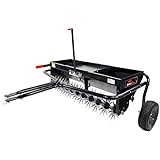
4. Brinly Combination Aerator and Spreader: Best for Spring Pasture Cleanup
Brinly Tow Behind Combination Aerator Spreader with Weight Tray, 40-Inch, Flat Black
2 in 1 aerator and spreader
75 lb weight tray
100 lb steel hopper
77.8 lb unit weight
Pros
- Aerates and spreads seed or lime in one pass
- 100 lb all steel hopper resists twisting
- Includes heavy duty universal hitch pin
- Single lever transport mode
Cons
- Spreader lever can dislodge while turning
- Wheel hardware may need added washers
- Perforates rather than cores so plugs are less defined
If your spring job is thawing out winter damage and putting seed down at the same time, this two in one machine saves a whole pass. It aerates and spreads seed, fertilizer or lime in a single trip, and the 100 lb all steel hopper is far more rigid than the plastic hoppers on cheaper combos.
The tradeoff is the 75 lb weight tray, which is the smallest in this roundup, and the tine design. Instead of hollow spoons, it uses patent pending 3-D galvanized steel stars with 132 tine tips that perforate soil up to 2 inches deep. That is shallower than a true coring pass.
Owners still report good results, and the convenience of seeding while aerating is the recurring theme in reviews. The 100 lb hopper with calibrated flow control is genuinely useful on a food plot or a small orchard row where you want a defined edge rather than an open broadcast.
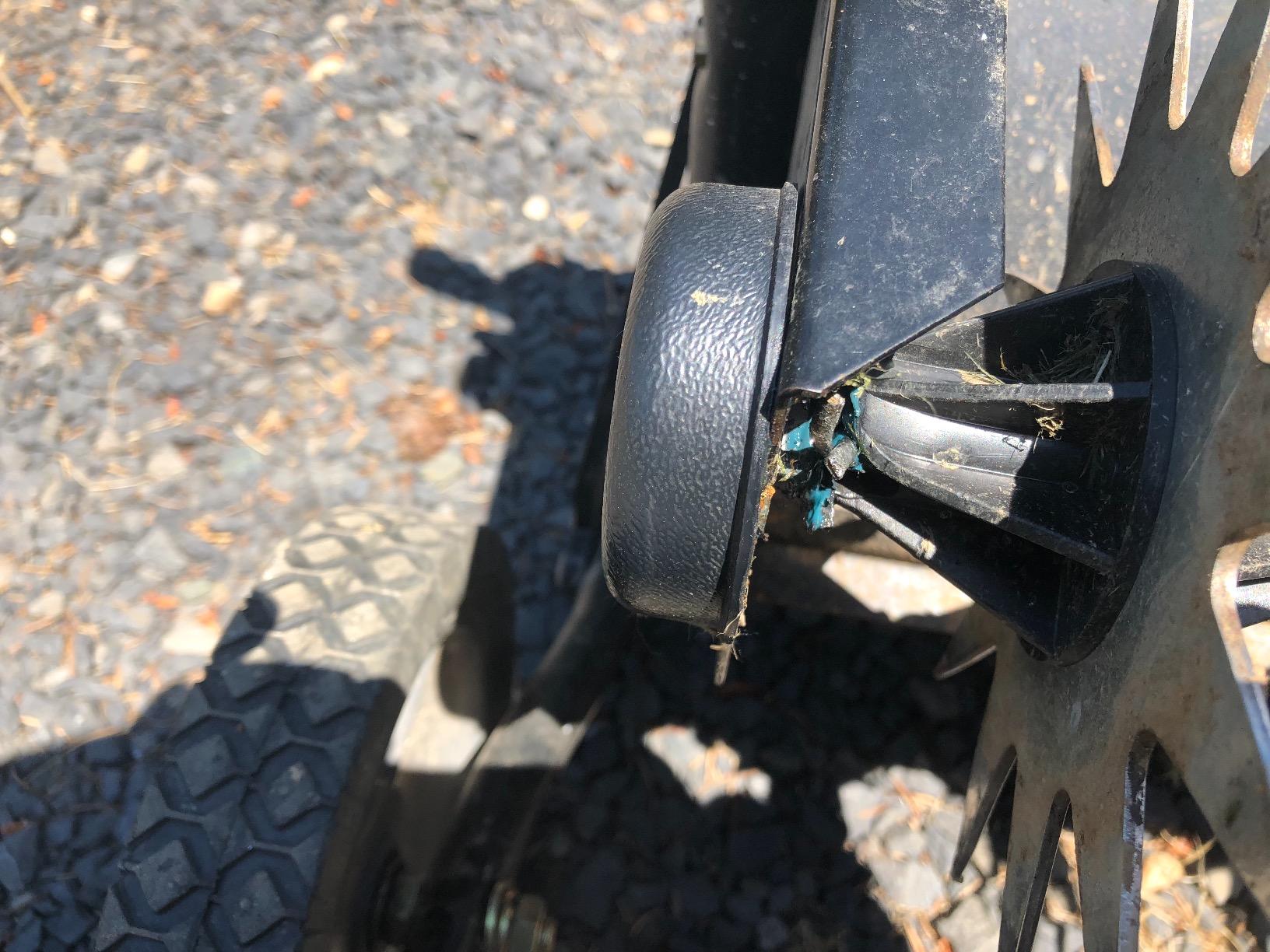
Durability complaints are the reason this is not higher on the list. Reviews mention the spreader lever moving loosely and being easy to dislodge while turning, wheel hardware loosening, and a few units arriving without the hopper drive chain installed.
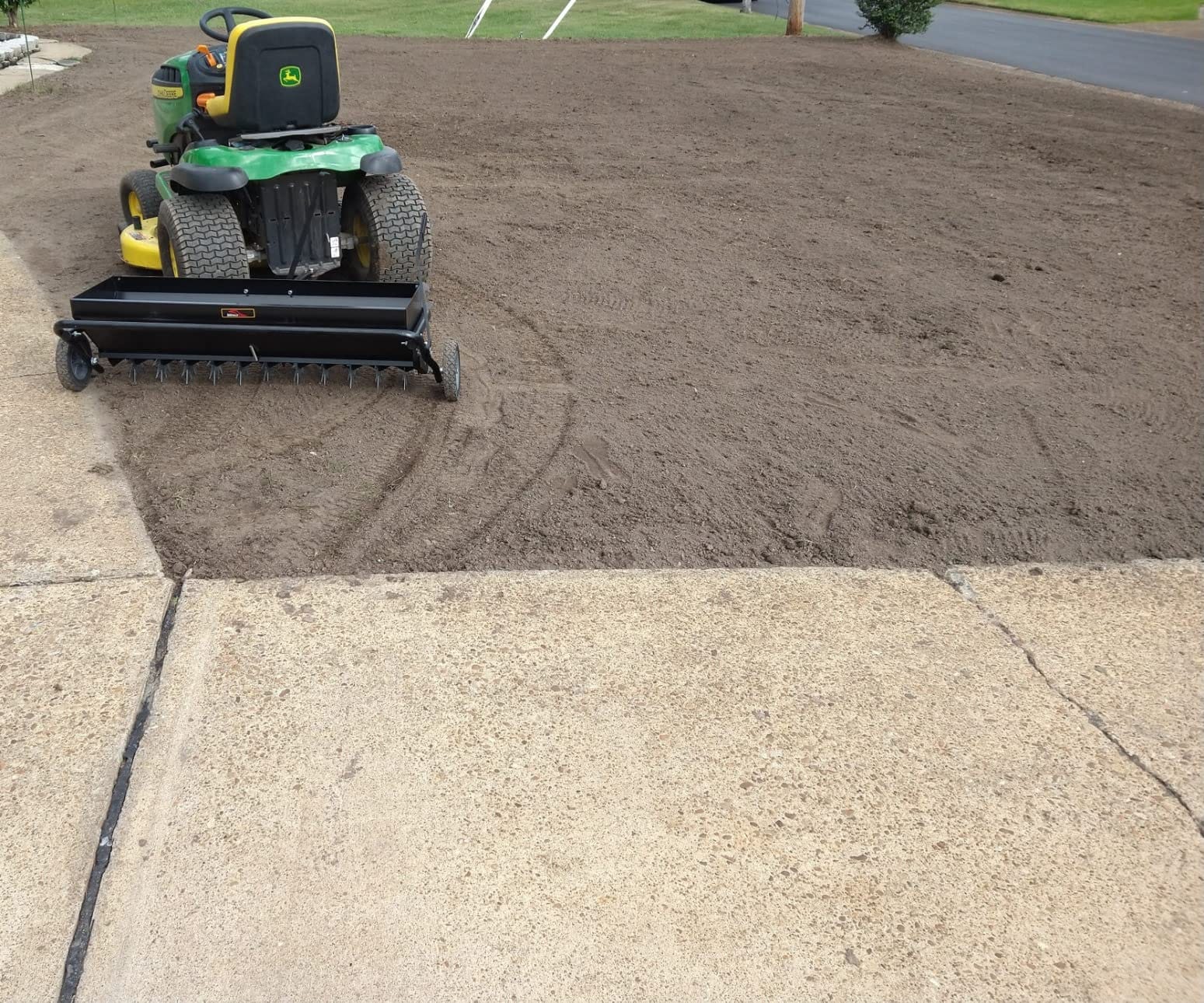
When perforating tines are enough
If you are overseeding thin, soft turf and the compaction problem is mild, 2 inches of perforation is plenty. You are opening the surface so seed contacts soil, not trying to rebuild pore space in a hoof-paddled field.
Where it falls short is heavy clay or livestock ground. A weight tray capped at 75 lb is not going to push star tines through packed clay, so if that describes your situation, the 2 inch core depth of a dedicated aerator is worth more than the spreader function.
Who should skip this one
Skip it if you are seeding a large area and already own a separate broadcast spreader, which most ATV owners do. Our best tow behind broadcast spreaders roundup covers the wider spreading options.
Also skip it if you only aerate. The hopper and drive chain add weight, complexity and failure points that a dedicated aerator simply does not have.
5. Brinly 48 Inch Tow Behind Plug Aerator: Best for Large Pastures
Brinly PA-482BH-A2 Tow Behind Plug Aerator with Universal Hitch, 48″, Matte Black
32 heat-treated spoons
200 lb weight tray
4 rotating sections
82.8 lb unit weight
Pros
- Largest weight tray among name brand units at 200 lb
- Four rotating sections smooth the ride and cut turf damage
- 32 spoons pull clean 3 inch cores
- Covers about an acre per hour once weighted
Cons
- Assembly can take several hours for one person
- Wheel and lever hardware bends under full ballast
- Sway prone when fully weighted on uneven ground
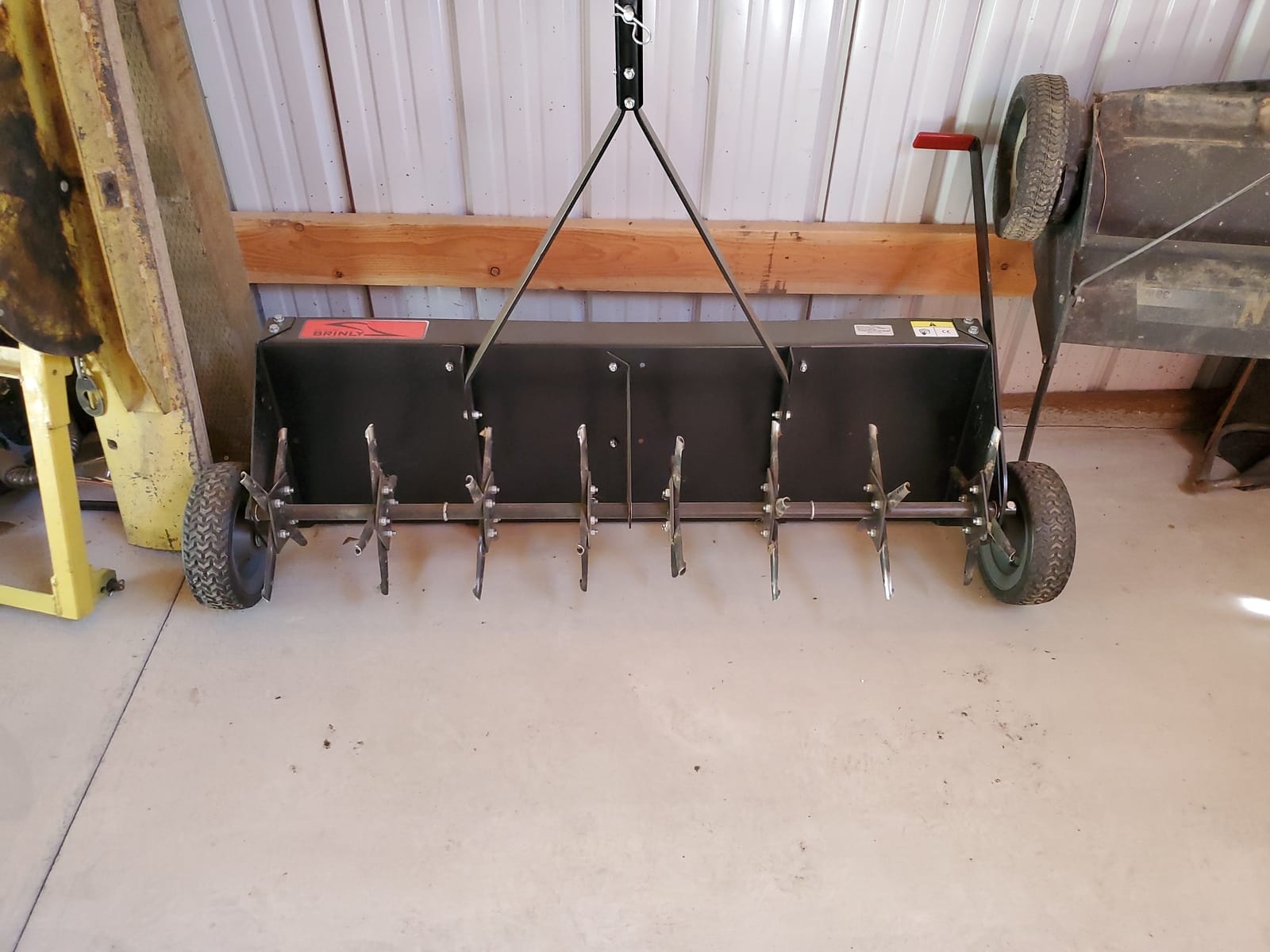
This is the machine to look at if you are renovating acreage rather than a yard. The 200 lb fully enclosed weight tray is bigger than any other tray from a heavily reviewed brand in this group, and reviewers report deep, clean cores once 100 to 200 lb of ballast is loaded onto it.
The four independently rotating welded tine sections spread the load across a wider frame, and owners report a smooth ride that reduces turf damage. At 48 inches and 32 spoons, coverage is roughly an acre per hour for a fully loaded pass on open ground.
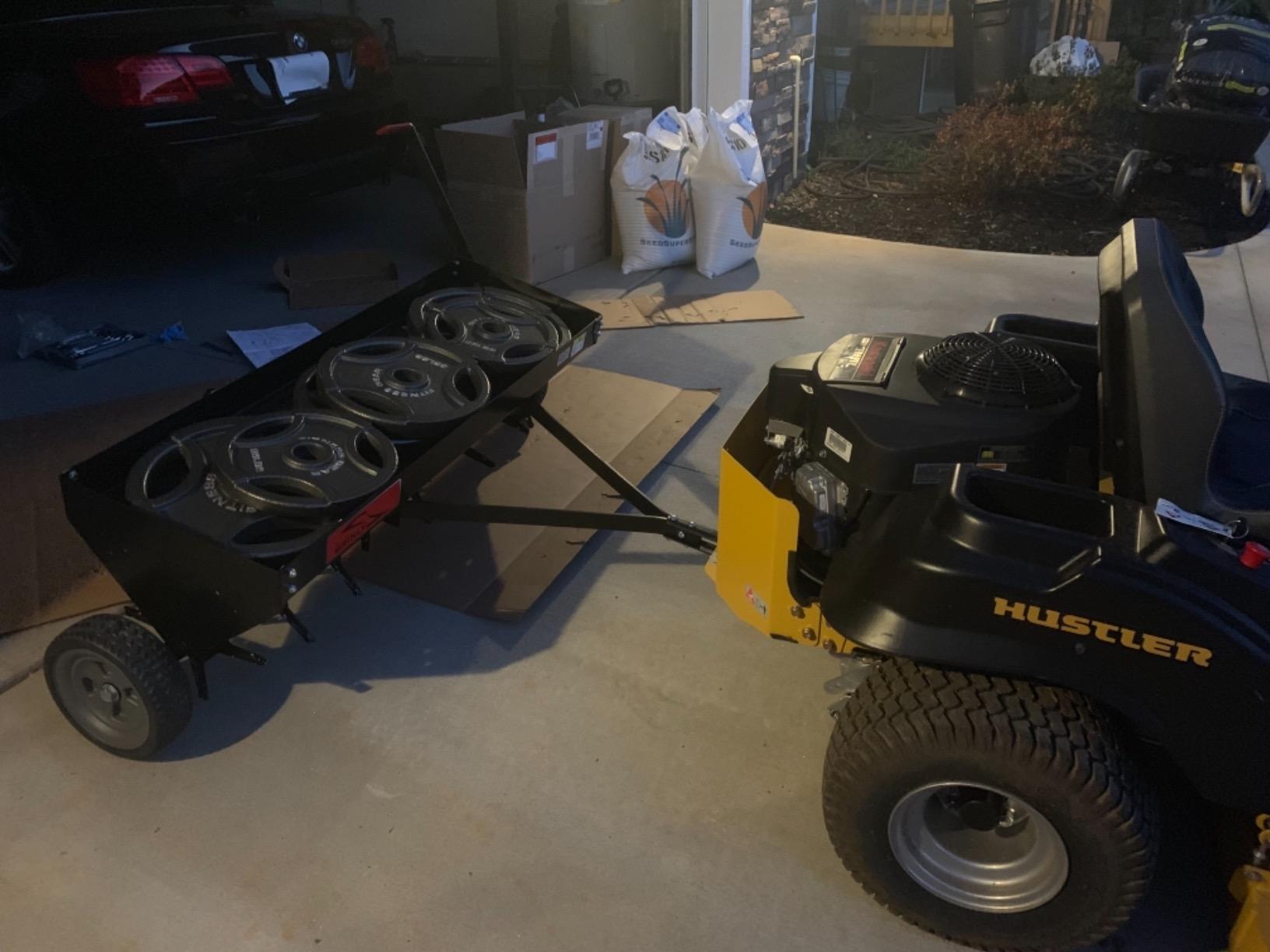
Reviewers are more satisfied with the aeration than the assembly. The most common complaint by a distance is build time, often several hours for one person, so budget an afternoon before you plan a weekend pass on the pasture.
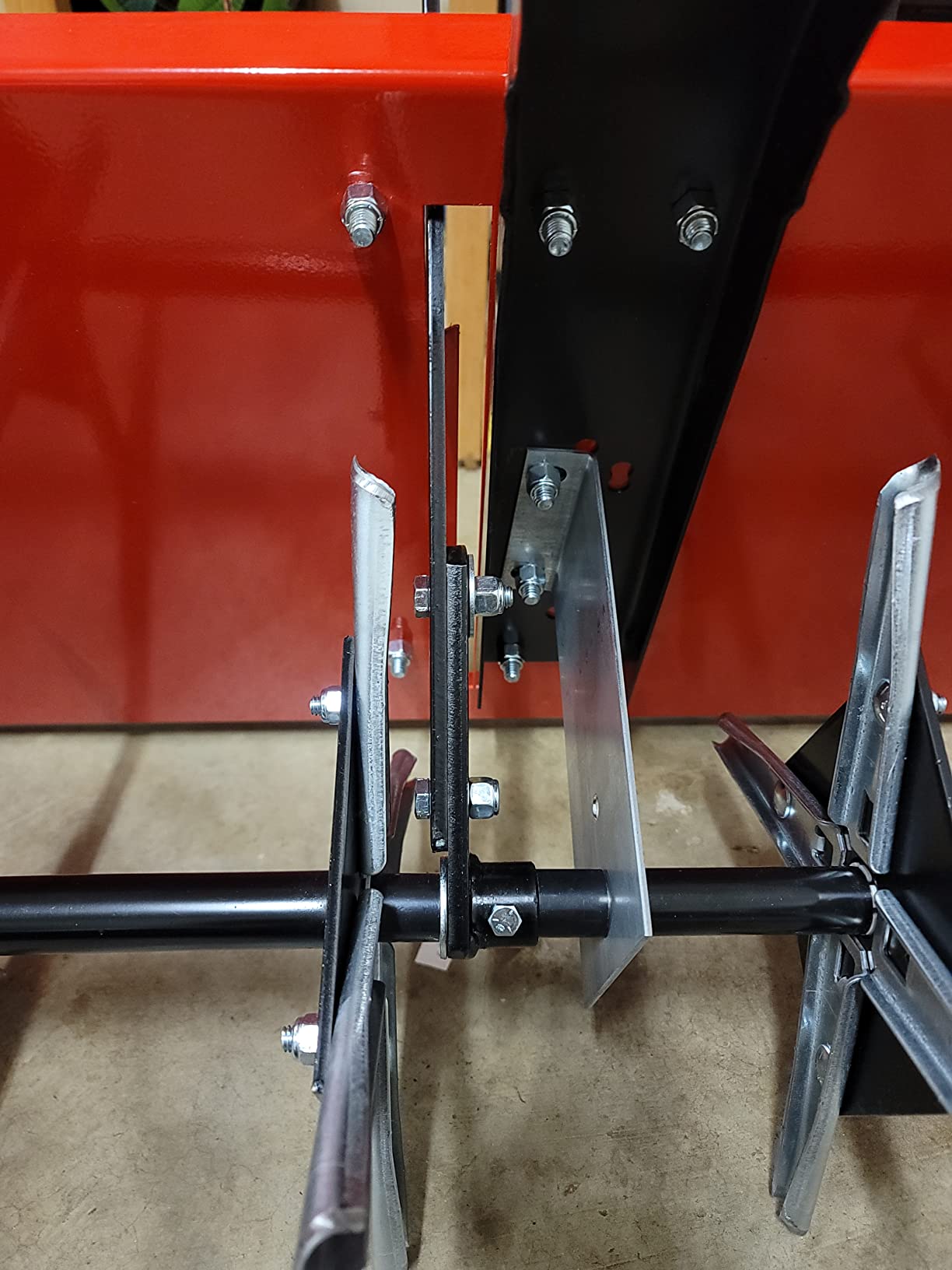
Other recurring notes: some sheet metal holes arrive burred and need redrilling, wheel and lever plate hardware bends under full ballast, and the unit becomes sway prone when fully weighted on uneven terrain. A heavier ATV helps with that last one.
How much ballast is actually useful here
With a 200 lb tray and 32 heat-treated spoons, you have more headroom than most of these machines need. Owners who loaded 100 to 150 lb report the same clean 3-inch cores we saw in the reviews, and the extra capacity only matters in genuinely hard ground.
If you fill it to 200 lb behind a mid-size quad, expect the sway reviewers describe. Heavier tongue weight also stretches the tow bar and pivots, which is where the bent lever plate hardware complaints tend to come from.
Who should skip this one
Skip it if you are not prepared for the assembly. If you are building it in the dark the night before a seeding window, this is the wrong machine to start with.
Skip it on small properties too. A 48 inch footprint and 82.8 pound weight are awkward around a house, and a 40 inch model does the same work with less to maneuver.
6. Craftsman 40 Inch Tow Behind Plug Aerator: Best for Tight Storage
Craftsman 40 Inch Tow Behind Lawn Plug Aerator with 24 Galvanized Steel Coring Points and 140 lb Weight Tray
24 galvanized coring points
140 lb weight tray
Stores upright on wall
3 year warranty
Pros
- Stores vertically against a wall
- 140 lb tray gives solid penetration
- 3 year limited warranty
- 4.4 average from owners
Cons
- Flat free tires collect turf when wet
- 24 coring points need more passes
- Attaches to tractors rather than every ATV hitch
Storage is the unglamorous reason to like this one, and for most people it is the deciding reason. It stores vertically against a wall, so a 40 inch aerator occupies a footprint about the size of a broom closet instead of eating half a garage wall for the winter.
Aeration performance is more than adequate. Twenty-four galvanized steel coring points pull plugs up to 3 inches deep, and the 140 lb weight tray is a sensible middle ground, heavy enough for real penetration without being the tongue-weight problem a 200 lb tray can become.
The review base is small at 124 entries but very clean, with 60 percent at five stars and only 2 percent at one star. Owners point to dependable coring depth with ballast, easy vertical storage, and the three year limited warranty as the value add.
Two fitment notes. This is built for lawn and garden tractors rather than every ATV hitch, so plan on a ball adapter. And 24 points means slightly more passes than a 32 knife model if you are covering a full acre or more.
What the warranty actually covers in practice
Three years of limited coverage is longer than most of the units in this roundup offer, and it is backed by a manufacturer that builds these units in Illinois. For a machine that lives outside and takes abuse from gravel and clay, that coverage is worth something.
It does not cover bent tines from hitting rock. That is the failure mode buyers report most often across this whole category, and it is the same reason we would steer you toward a name brand over a generic unit if your ground is stony.
Who should skip this one
Skip it if you are working acreage. Twenty-four coring points over 40 inches will get you there eventually, but you are giving up tine count, tray capacity and width all at once compared with a 48 inch unit.
Also skip it if wet conditions are normal for you. Flat free tires can collect turf when the ground is wet, and packed grass on the wheels affects transport more than it affects the coring.
7. Vlaeng 40 Inch Tow Behind Aerator: Best for ATV Hitch Compatibility
40″ Tow Behind Aerator, Pull Behind Lawn Aerator Tool with Universal Hich, 24 Rust-Proof Knives & Heavy-Duty Tires, Plug Aerator for Yard & Garden Compacted Soil, Fits Lawn Tractors, ATV, UTV, Black
24 rust-resistant knives
230 lb weight platform
Adjustable transport handle
Universal connector
Pros
- Universal connector confirmed to work with ATVs and UTVs
- 230 lb weight platform is among the highest
- Adjustable handle raises tines for transport
- Alloy steel frame at an entry price
Cons
- Individually mounted blades bent and loosened
- Instructions unclear and included tools inadequate
- Some units arrived with deformed or missing bushings
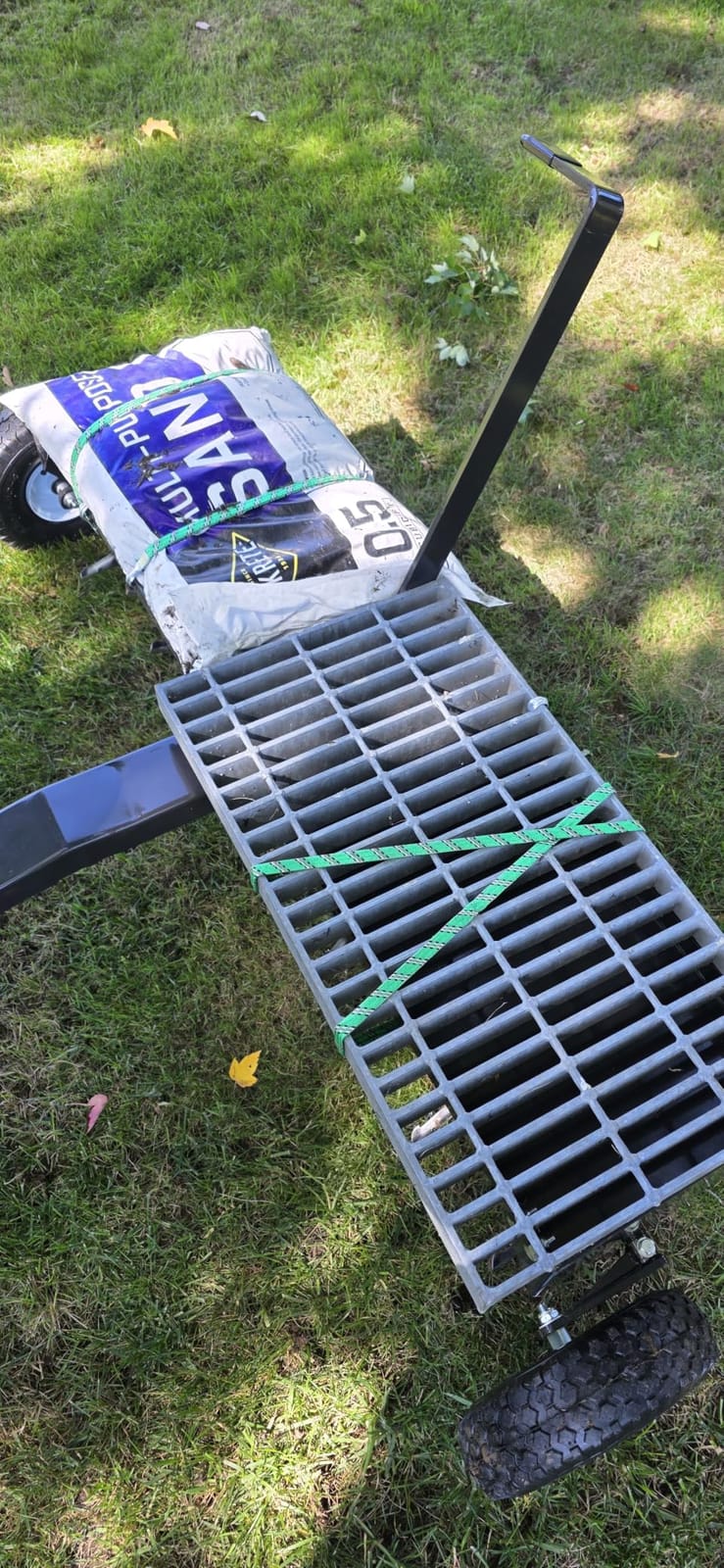
The reason this unit is on the list is fitment. The universal connector is confirmed by owners to mate with ATVs and UTVs directly, and the adjustable height handle with a hitch pin lock is a transport feature that branded units mostly leave out.
On paper the numbers look generous. A 40 inch working width, 24 rust-resistant knives pulling 3 inch plugs, and a 230 lb weight platform on an alloy steel frame, which is among the highest platform capacities here for the money.
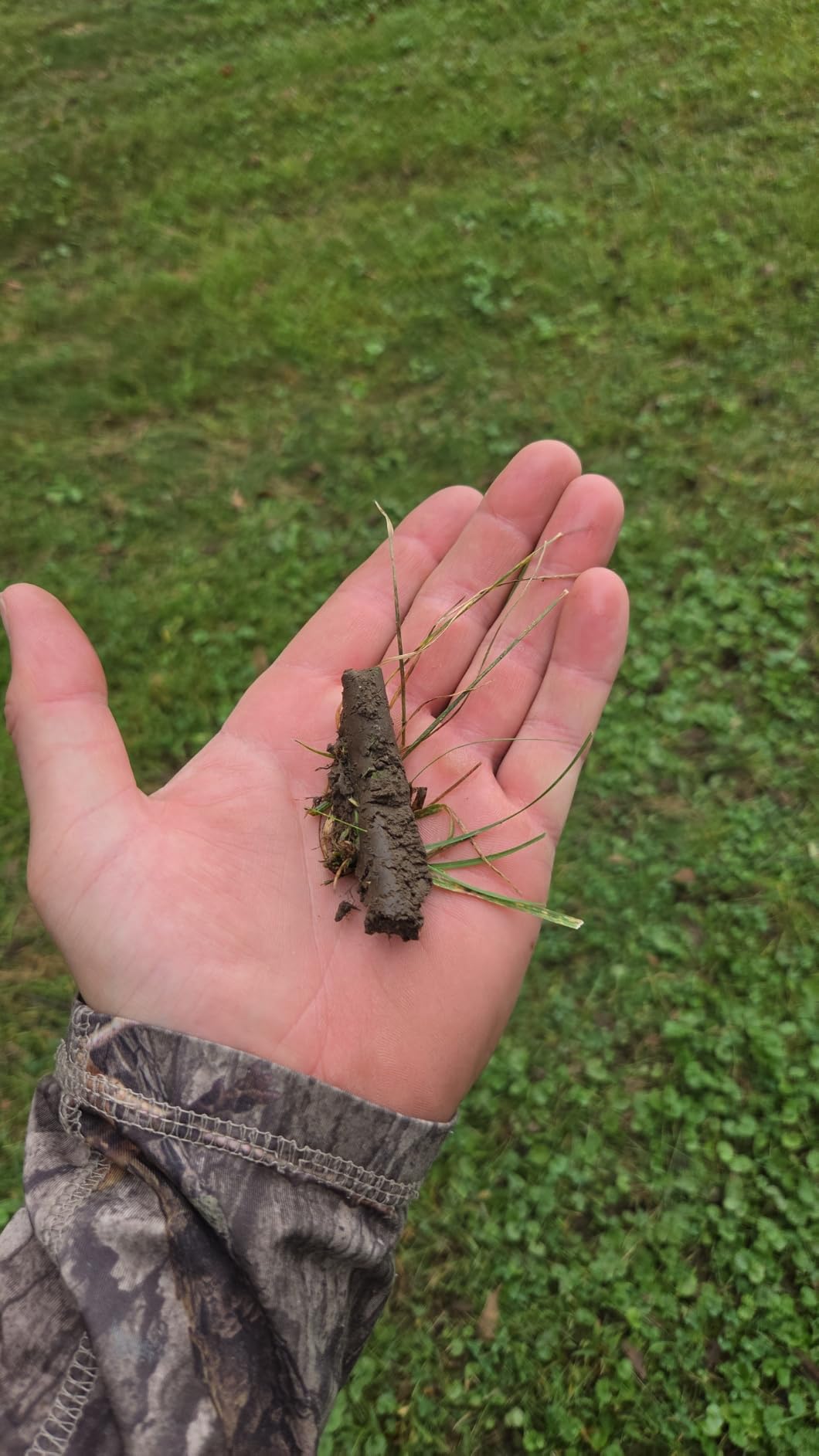
Real-world performance depends on the tines. Owners who loaded around 180 lb of ballast report good core pull in moist clay, and the adjustable handle lets you lift tines clear for a hard surface rather than dragging them.
The 3.8 average sits below the rest of this group, with a 15 percent one-star group. The complaints cluster around durability and assembly: individually mounted coring blades bent and loosened during use, unclear instructions, inadequate included tools, and units arriving with deformed plastic bushings or missing metal bushings.
When the transport handle earns its place
Lifting tines from the seat matters more than it sounds on an ATV. Without it, every driveway crossing means getting off, dragging the unit around by its frame, and getting back on. Owners working properties with a lot of hard surface report this saves real time.
It also reduces the risk of bending tines. Dragging steel coring blades across concrete is the fastest way to turn this category into a parts hunt, and bent tines on generic units are exactly the problem, because spare tines are often unavailable.
Who should skip this one
Skip it if your ground is rocky or if you have never assembled a piece of farm equipment. A 3.8 average with repeated reports of bending blades and missing hardware is a real risk when replacement parts are hard to source.
Skip it if you want a warranty-backed build. The brands in the top five all carry coverage or established dealer support, and this one does not.
8. VEVOR 40 Inch Tow Behind Plug Aerator: Best Entry Pick for a Light Frame
VEVOR Tow Behind Plug Aerator, 40 in Lawn Spike Aerator with Universal Hitch, 150lbs Weight Capacity, Heavy Duty & Rust-Resistant, Pull Behind Aeration Tool with Tray for Farmland & Garden Tractors
24 rust-resistant knives
2 inch coring depth
120 lb weight tray
41.7 lb unit weight
Pros
- A very light 41.7 lb unit that is easy on tongue weight
- Tines come pre-assembled so setup is fast
- Welded high strength steel frame
- Strap slots keep ballast from shifting
Cons
- Listed tray capacity does not match the manual
- Light frame and plastic wheel rims can fail
- 2 inch depth is shallower than competing units
At 41.7 pounds, this is by far the lightest aerator in the roundup, and that has real consequences behind an ATV. A light tongue load means less sway, easier starts on a hill, and a machine you can lift into a truck bed without help.
Setup is also the fastest. The tines come pre-assembled and a socket tool and wrench are included, so there is no afternoon lost to assembly. Owners report the welded high strength steel frame handles muddy conditions without complaint.
The built-in strap slots on the tray are a detail you will appreciate. You can strap sandbags or blocks down so ballast does not shift mid-pass, and that is a real problem on sloped or uneven pasture ground.
The two things to know before buying. The coring tines penetrate only about 2 inches, which is shallower than most units here, and reviewers repeatedly report that the listed weight capacity does not match the limit stated in the manual. Treat the tray as lighter than advertised until you have read your manual.
Who this light frame suits best
A small utility quad with a modest towing rating is the ideal partner for this one. Because the whole implement weighs 41.7 pounds, you can add a serious ballast load and still stay inside a payload budget that a 94 pound unit would blow through immediately.
It also suits anyone who aerates a yard under a quarter acre. On a small lawn, 2 inch cores at 40 inches wide is a perfectly good result, and the lighter frame makes storage less of a problem.
Who should skip this one
Skip it if you are working compacted clay. Reviewers flag the plastic wheel rims and light frame as failure points with repeated use, and 2 inches of depth is not enough to relieve real compaction in hard ground.
Also skip it if you want to load the tray to its listed capacity. Read the manual first, because the discrepancy between the listing and the manual is the most common complaint in reviews.
9. Garvee 48 Inch Tow Behind Plug Aerator: Widest Tray in the Group
Garvee 48-Inch Tow Behind Plug Aerator,Pull Behind Aerator with Durable Steel Tines Lawn & Tray and Pneumatic Tires Tow Behind Spike Aerator for Lawn, Farm,Planting,Green
48 inch width
32 galvanized plug tines
330 lb steel tray
65 lb unit weight
Pros
- Very high claimed 330 lb weight tray
- 48 inch width with 32 tines covers ground fast
- Universal hitch works with ATVs and UTVs
- Two 12 in pneumatic tires
Cons
- Poorly written assembly instructions
- Axle snapped on one unit and included wrench stretched out
- Mis-drilled pin holes leave the frame crooked
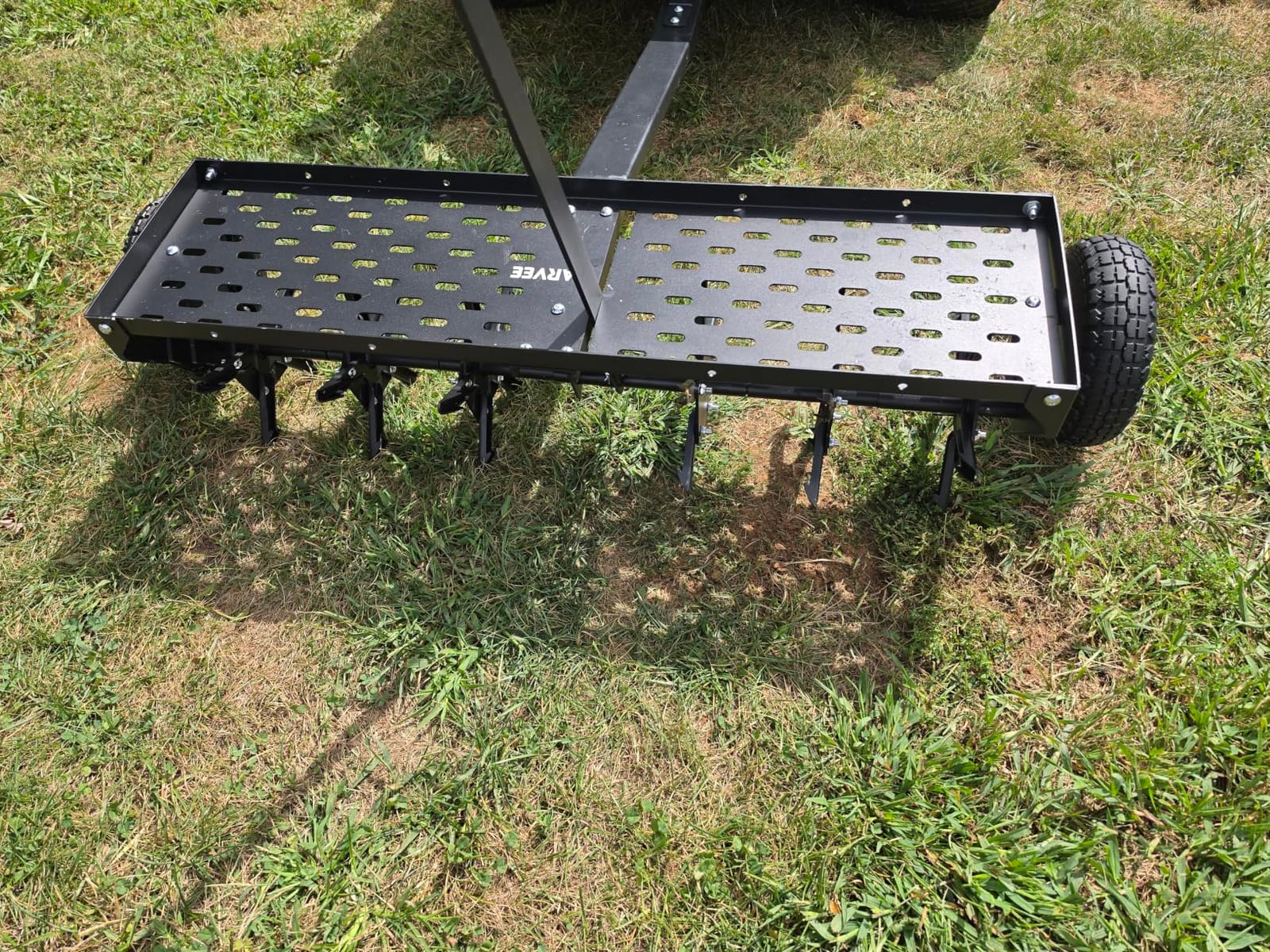
Spec sheets here tend to look generous. Thirty-two galvanized steel plug tines reach 3 inches deep across a 48 inch path, two 12 inch pneumatic tires carry the load, and the steel weight tray is claimed at 330 lb, a higher figure than any other listing in this group.
On moist soil, owners do report that the tines stay straight after multiple passes, which is more than you can say for most generic units. The universal hitch is also confirmed to work with ATVs, UTVs and zero-turn mowers.
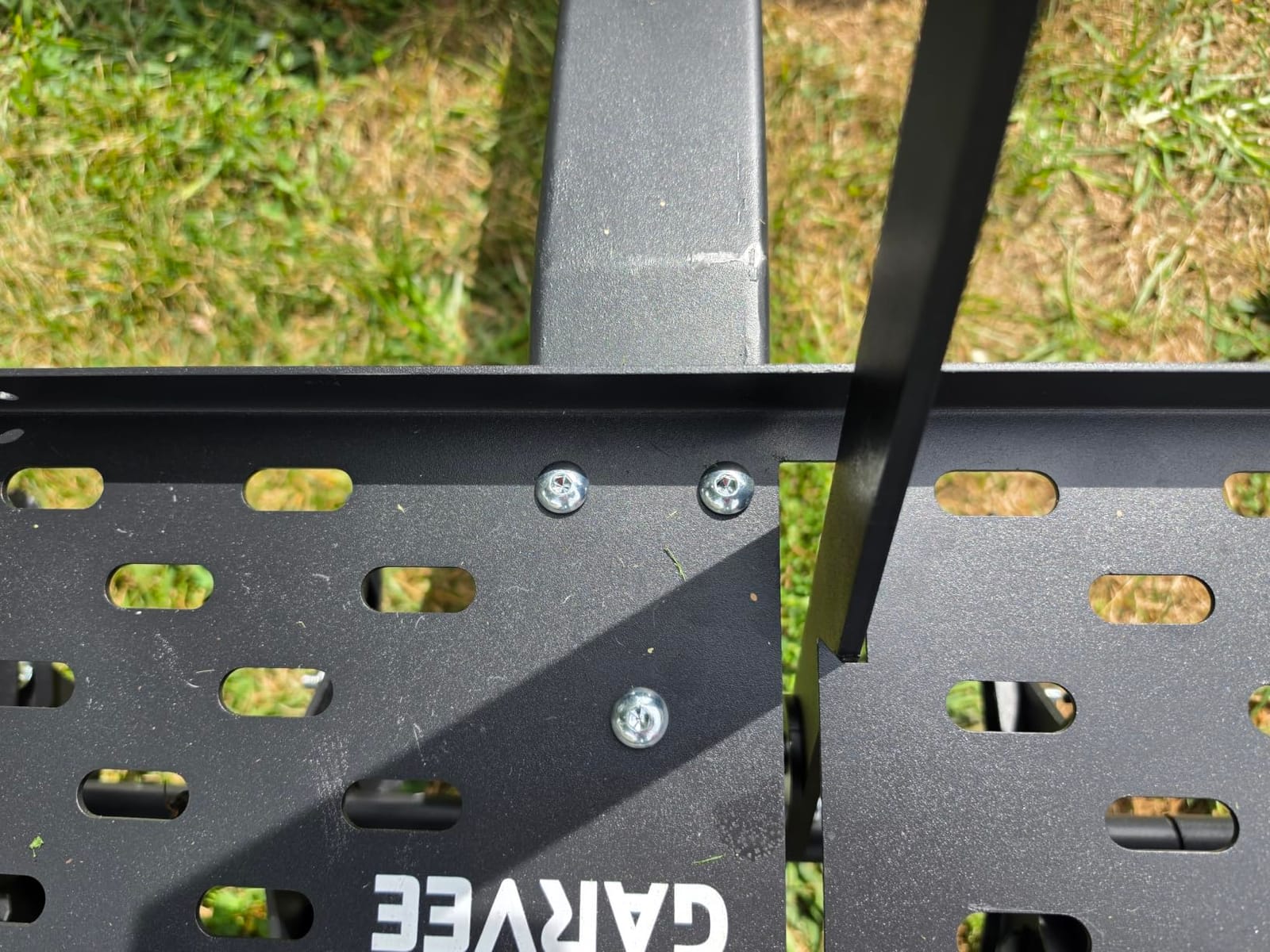
Then there is the 3.3 average, the lowest rating in this roundup, with 19 percent one-star reviews. Assembly quality is the recurring problem: poorly written instructions with minimal detail, an axle that snapped on one unit, and an included wrench that stretched out and would not hold nuts.
Frame alignment is the other theme. Owners report mis-drilled pin holes that leave the frame crooked with one wheel sitting higher than the other, and a handle retaining hook that will not hold position. Those are manufacturing consistency problems, not bad luck.
How to read the 330 lb tray claim
Across this category, advertised tray capacities vary wildly for visually similar units, and forum buyers regularly complain that comparisons are impossible because of it. A number that far above every competitor is worth treating as unproven until you have read the manual in your hands.
Practical advice: load it in 25 lb increments, make a pass, and look at your plug depth. Nobody needs 330 lb behind a quad anyway, so the extra theoretical capacity is not the reason to pick this machine.
Who should skip this one
Skip it unless you have a high tolerance for assembly problems. A crooked frame and a snapped axle are not edge cases here, they are the most common complaints in the reviews.
Skip it if you want support after the sale. Reviewers note the manual is thin on details, and a unit from a name brand with dealer backing is a better bet if anything arrives wrong.
10. VEVOR 40 Inch Tow Behind Plug Aerator: Best Budget Route to 3 Inch Cores
VEVOR Tow Behind Plug Aerator, 40 in Lawn Core Aerator Tool Universal Hitch, 120lbs Weight Capacity, Heavy Duty & Rust-Resistant, Pull Behind Spike Aerators with Tray for Farmland & Garden Tractors
40 inch width
3 inch coring depth
120 lb weight tray
58.2 lb unit weight
Pros
- 3 inch coring depth matches premium units
- Leaves clean holes with minimal surface plug mess
- Pre-assembled tines reduce build time
- Strap slots hold bricks or blocks in place
Cons
- Lifting handle arm bends and its mounting bolt breaks
- Lift arm does not raise tines high enough for driveways
- Assembly frustrating with unclear instructions
This is the same frame as the previous VEVOR with one meaningful upgrade: its coring tines reach 3 inches instead of 2. Owners report that the depth matches premium units and that the pass leaves clean holes with minimal surface plug mess, which makes overseeding afterwards easier to work with.
At 58.2 pounds it is still a light tow load, the tines come pre-assembled, and the welded high strength steel frame is a reasonable base. The 120 lb tray with built-in strap slots holds bricks or blocks securely in place.
The 10.6 inch wear-resistant pneumatic tires roll better than the 8 inch tires on its sibling unit, which helps when you are crossing rough pasture between passes.
What drags the rating down to 3.5 is the lift mechanism. Reviewers report the lifting handle arm bends and its mounting bolt breaks easily, and that the lift arm does not raise the tines high enough to clear driveways. Assembly is also described as frustrating with unclear instructions.
3 inch cores without a premium price tag
If your only requirement is a full-depth coring pass and you can live with a modest review base, this does the job. A 3 inch core is the difference between scratching the surface and actually opening channels into the root zone, and it is the reason the branded units cost what they do.
Check the lift arm before you rely on it for driveway crossings. The complaint is not that it breaks constantly, it is that it is the weakest part on the machine and it does not raise the tines as high as you might expect.
Who should skip this one
Skip it if you cross hard surfaces often. The lift arm does not clear driveways well, and driving over tines at road speed is how you destroy a coring drum.
Also skip it if you need warranty support or replacement tines. With a 3.5 average and a small review base, this is a case where we would rather see you buy a name brand with dealer support. If you need a broader view, our tow behind aerator comparison covers the whole category.
How to Choose a Tow Behind Plug Aerator for Your ATV
Hitch type is the first thing to solve
ATV and UTV receivers use a 2 inch ball, while most tow behind aerators in this category ship with a pin-style universal hitch built for lawn tractors. A standard ball adapter is inexpensive and takes minutes, but confirm the pin style matches your receiver before you order, because the pin and ball versions are not interchangeable.
Two of the units here name ATVs directly in their fitment description. The Brinly 40 inch lists compatibility with lawn tractors, most zero-turn mowers and ATVs, and the Vlaeng and Garvee units list a universal connector for ATVs and UTVs, which saves the guesswork.
Tongue weight and payload math
An aerator that looks light on a shelf adds up fast once it is loaded. Take the unit weight, add the ballast you plan to carry, and keep the total within your ATV towing and tongue-weight rating. A full 175 lb tray on a 94 pound machine is a lot of load behind a sport quad.
The practical approach is to start light. Load 50 lb, make a pass, check your plug depth, and add 25 lb at a time. Most owners in the reviews land between 75 and 150 lb, and you will rarely need to fill a 200 or 330 lb tray behind a quad.
Width versus gates, tracks and acreage
Measure your narrowest gate and any lane you plan to pull through before you commit to 48 inches. A 40 inch unit is a safer bet for tight farm setups, and on a lawn under a quarter acre a 40 inch machine finishes the job faster than you can store a bigger one.
Pasture owners should think in hours rather than passes. At roughly an acre per hour once weighted, a 48 inch unit handles a couple of acres in a morning while a 40 inch unit stretches that to most of a day.
Ballast materials that work
Cinder blocks and paver stones are the usual choice because they are dense and stackable. Sandbags are easier to carry and strap down but a 40 lb sandbag is a lot of awkward weight, and water filled drums are the easiest to move empty and fill on site.
Whatever you use, strap it. Every unit here with strap slots exists because ballast shifting in a turn is how tines bend and how a loaded tray ends up on its side at the end of a pass.
Buy or rent, honestly
Forum users frame this as simple economics: buy a tow behind plug aerator and weigh it down, or rent one for a few hours. If you already own an ATV and will aerate more than a couple of times a year, buying wins, because the tractor is the capital you already have.
Renting makes more sense for a single renovation job, or if you have a large lawn tractor already and no need for a second implement. Our guide to the best tow behind sprayers covers the other implements that make sense to own alongside an aerator.
How to Aerate Behind an ATV: Seven Steps
Mow and clear first. Cut the area short, remove debris, and pull any irrigation heads or obstructions that the aerator could catch.
Water the day before. Dry soil gives shallow, broken plugs. Moist soil a day or two after rain gives clean 3-inch cores, and this single step matters more than the machine you own.
Flag sprinklers and buried lines. Mark every head, valve box and irrigation run. Bent tines around a sprinkler are an expensive mistake.
Load ballast gradually. Start at 50 lb and add 25 lb at a time, checking plug depth between passes.
Tow at 5 to 10 mph. That is a brisk walk for turf work. Faster towing covers more ground but the tines stop pulling clean cores and the unit starts to bounce and sway.
Overlap your passes by a few inches. Match the pattern to the 24 or 32 tine spacing, not to the full width, or you will leave unworked stripes.
Leave the plugs and seed after. Do not rake them up. Let them dry and break down, then overseed, fertilize and water to establish the new growth.
On open pasture, some owners run faster. A Green Tractor Talk user reported towing behind a quad at roughly 15 to 20 mph to prep pastures much faster than any tractor could, which is a real time saver on acreage. Treat that as pasture guidance rather than lawn guidance, because at that speed you are trading core quality for speed.
Flush clay out of the tines after every pass. Packed clay inside hollow spoons collapses plug depth fast, and a quick hose-down on hard ground is cheaper than a clogged drum halfway through an afternoon.
Frequently Asked Questions
Do tow behind aerators really work?
Yes, when the tray is loaded. A tow behind aerator with an empty weight tray tends to skip across the surface and barely scratch the turf. Loaded with 75 to 150 lb of ballast, towed at 5 to 10 mph, and used on moist soil, the tines pull full-length cores that genuinely relieve compaction. Most disappointing results trace back to an empty tray or to soil that was too dry.
What is the best tow-behind plug aerator?
For most ATV owners, the Agri-Fab 48 Inch Tow Behind Plug Aerator is the best all-round choice, with 32 galvanized self-sharpening knives, 3 inch plug depth, a 175 lb weight tray and the largest review base in the category. The Brinly 40 inch is the best-rated and lightest unit and is the easiest to tow, while the Brinly 48 inch offers the biggest weight tray for large pasture work.
Is a spike or plug aerator better?
A plug aerator is better for compacted soil because it removes plugs and leaves open channels into the root zone. A spike aerator only pushes soil aside, which can compact the surrounding area even as it punctures. Spike aerators make sense for pressing seed into a soft seedbed, but they are the wrong tool for a lawn, pasture or food plot that has been packed down.
How much weight do you need on a pull behind aerator?
Most owners land between 75 and 150 lb, and the right amount depends on soil condition rather than tray size. Start with 50 lb, make a pass, and add 25 lb at a time until plugs come up roughly 3 inches long. Compacted clay needs more weight than loose loam, and a 120 lb tray can be more useful than a 330 lb tray if the aerator is light enough to pull well.
What to use to weigh down an aerator?
Cinder blocks and paver stones are the most common choice because they are dense and stackable. Sandbags are easier to carry and softer on the frame, and water filled drums are easiest to move empty and fill on site. Whichever you use, strap it to the tray, because ballast shifting in a turn is the most common way tines bend.
How deep should aeration plugs be?
Roughly 2 to 4 inches is the useful range, with 3 inches being the target for real compaction relief on a lawn or pasture. Deeper than that is rarely productive because the upper root zone is where the benefit is. Anything under 2 inches is a scratch rather than an aeration pass, and that is usually a sign the tray needs more ballast or the soil was too dry.
Can you use a tow behind aerator behind an ATV?
Yes, with two checks. Most units ship with a pin-style universal hitch built for lawn tractors, so you will need a standard adapter to mate with an ATV 2 inch ball receiver, and several models in this roundup name ATV compatibility directly. Second, keep unit weight plus ballast within your ATV towing and tongue-weight rating, because a fully loaded tray can approach the limit of a smaller quad.
How fast should I tow an aerator?
Tow at 5 to 10 mph for turf work. That speed lets the tines stay engaged and pull clean cores without the frame bouncing. Faster speeds work on open pasture, where one forum user reported prepping ground at 15 to 20 mph behind a quad, but you trade plug quality for coverage and the loaded unit starts to sway in turns.
Bottom Line: Best Tow Behind Plug Aerator Picks for 2026
For most ATV and UTV owners in 2026, the Agri-Fab 48 Inch Tow Behind Plug Aerator is the one to buy. Thirty-two galvanized self-sharpening knives, 3 inch plug depth, a 175 lb weight tray and the deepest review base in the category make it the safest default choice, and it holds up on pasture ground as well as on a lawn.
If towing weight is your constraint, the Brinly 40 inch is the smarter buy at 63.9 pounds, with the strongest average rating in the group and hitch compatibility that names ATVs directly. For acreage, the Brinly 48 inch with its 200 lb tray and four rotating tine sections covers the most ground per hour, and the Craftsman 40 inch is the pick if storage space is tight.
Whichever one you choose, the outcome depends more on technique than on hardware. Water the ground, load the tray in increments, tow at 5 to 10 mph, and leave the plugs where they fall. If you need matching implements for the rest of your setup, our guide to the best tow behind brush mowers covers the other end of the property.