
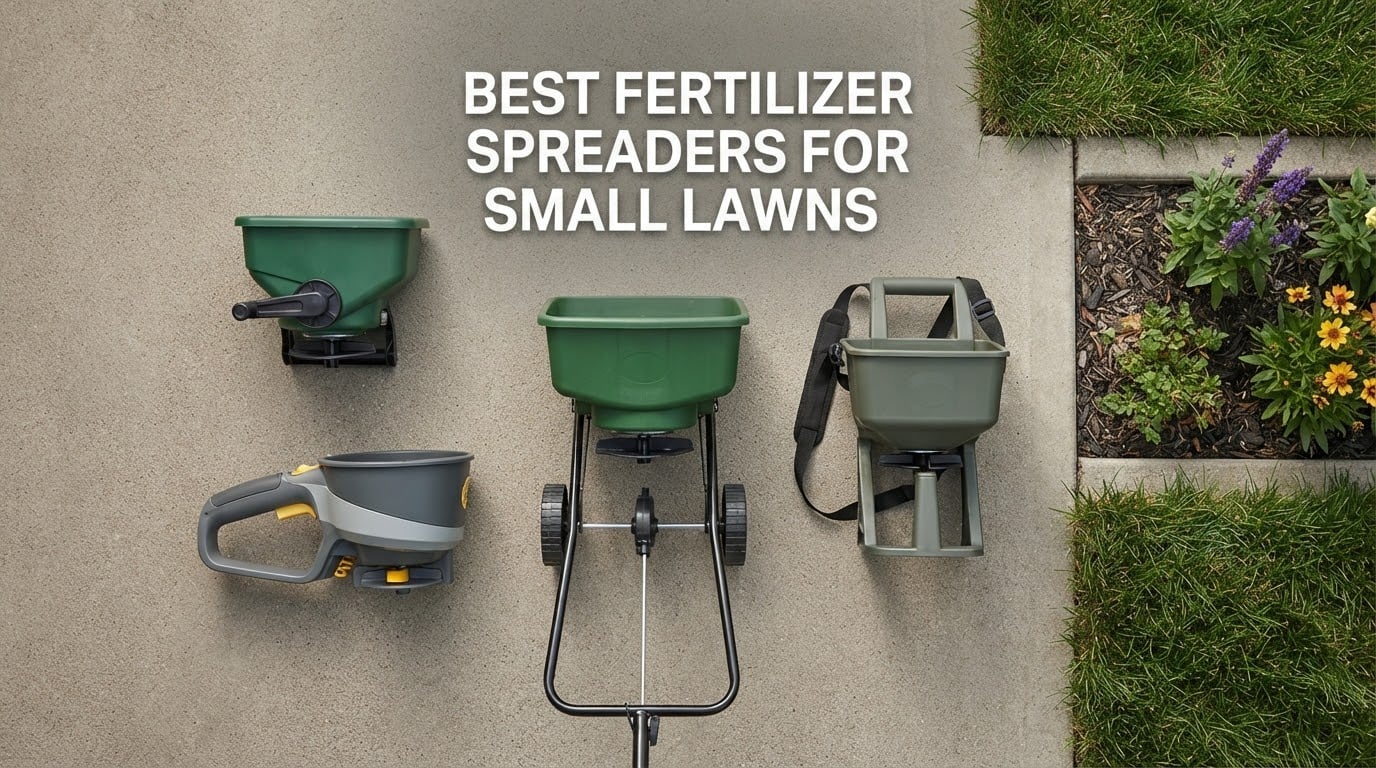
If your lawn runs somewhere between a townhouse front patch and a proper quarter-acre yard, most spreader guides are pointing at the wrong machines. Every roundup we read while putting this together leads with 50 lb and 100 lb tow-behind spreaders built for 15,000 sq ft properties, which is roughly three times what you actually have.
So we went the other direction. For the best fertilizer spreaders for small lawns, the deciding factors are hopper capacity you can still push around a flower bed, edge control, and whether the tool throws food onto your walkway. We compared the specs of 12 units, read through more than 30,000 customer reviews between them, and spent time with each format on a small, obstacle-heavy yard.
Short answer first: for most small lawns, a spreader holding up to 5000 sq ft with a side deflector is the sweet spot. If your lawn is under 1500 sq ft and full of bed edges, a hand-crank handheld will save you time and money.
Top 3 Best Fertilizer Spreaders for Small Lawns in 2026
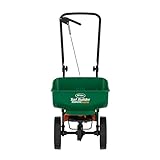
Scotts EdgeGuard Mini
- Holds 5000 sq ft
- EdgeGuard side shield
- No assembly
- Folds flat for storage

The EdgeGuard Mini takes the top spot on the combination of rating and review volume behind it. The SOLO 421S earns its spot for anyone who wants a tool that lasts a decade, and the Scotts Whirl is the cheapest way to get a metered application onto a small lawn.
All 12 Spreaders at a Glance in 2026
| Product | Specifications | Action |
|---|---|---|
| Scotts Turf Builder EdgeGuard Mini |
|
Check Latest Price |
| Scotts Whirl Hand-Powered |
|
Check Latest Price |
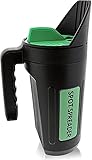 Spot Spreader Shaker 80 oz Spot Spreader Shaker 80 oz |
|
Check Latest Price |
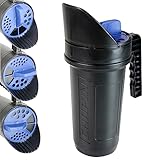 CHAPIN 8740A All-Season Shaker CHAPIN 8740A All-Season Shaker |
|
Check Latest Price |
 SOLO 421S Chest-Mount Spreader SOLO 421S Chest-Mount Spreader |
|
Check Latest Price |
 VEVOR 15 lb Walk-Behind VEVOR 15 lb Walk-Behind |
|
Check Latest Price |
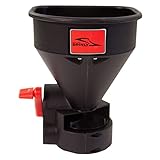 Brinly 5 lb Handheld Spreader Brinly 5 lb Handheld Spreader |
|
Check Latest Price |
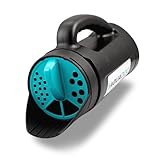 MAV AquaDoc 2.5L Handheld MAV AquaDoc 2.5L Handheld |
|
Check Latest Price |
 SHALL Battery Powered Spreader SHALL Battery Powered Spreader |
|
Check Latest Price |
 WORX WG869.9 Cordless Spreader WORX WG869.9 Cordless Spreader |
|
Check Latest Price |
 FLORA GUARD 30 oz Hand Spreader FLORA GUARD 30 oz Hand Spreader |
|
Check Latest Price |
 Jonathan Green Hand Broadcast Jonathan Green Hand Broadcast |
|
Check Latest Price |
1. Scotts Turf Builder EdgeGuard Mini – Best Overall for Small Lawns
Scotts Turf Builder EdgeGuard Mini Broadcast Spreader
Holds 5000 sq ft
EdgeGuard side shield
Pre-calibrated
21.5 x 16 x 18 in
Pros
- No assembly required
- EdgeGuard keeps granules off beds and walks
- Smooth even broadcast pattern
- Folds down for compact storage
Cons
- All-plastic build feels thin
- Hollow wheel wells can hold wet fertilizer and shift the discharge rate
- Small rear stand can tip when lifted
This is the spreader we reach for first on almost every small lawn we work. It is pre-calibrated straight out of the box, so there is no assembly step and no initial guesswork, and at 8 ounces it is easy to lift out of a closet when the forecast turns warm.
The EdgeGuard side shield is the part that matters on a small yard. Instead of casting a full-width pattern, it narrows the throw on one side so fertilizer lands on the grass rather than on the edging stones, which is exactly the complaint r/lawncare users raise with hand cranks that have no such control.
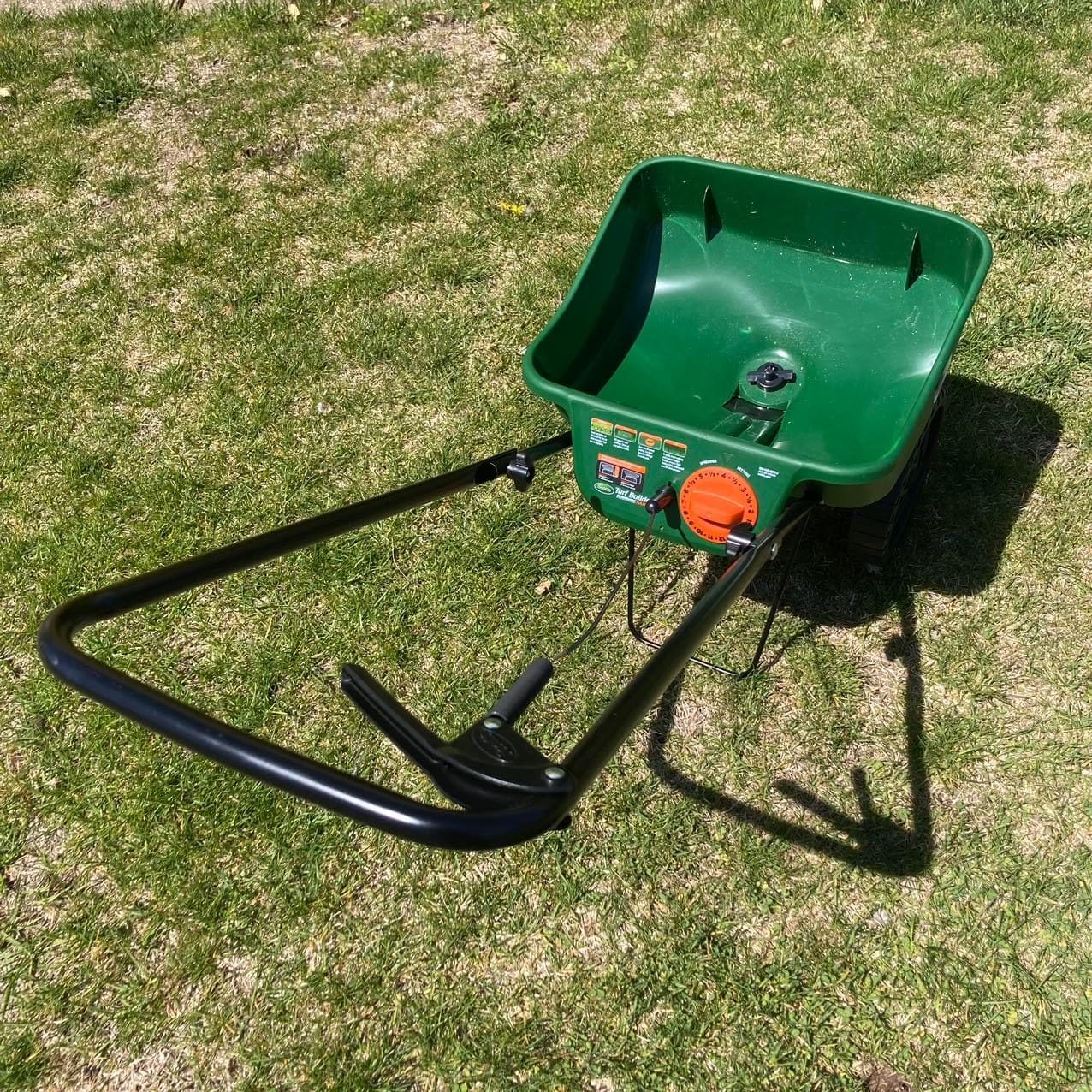
Capacity is the trade-off to watch. It holds enough for a 5000 sq ft application, which sounds modest until you realize how small most suburban yards are. Once it is empty you have to walk back to the bag, so keeping the bag within reach of the lawn’s edge saves a few minutes each pass.
Reviewers are near-universal about the no-assembly setup and the folding handle, which drops the unit flat against a wall. A recurring minority complaint concerns the all-plastic body and the small rear support stand, which can tip if you lift the loaded hopper by the frame.
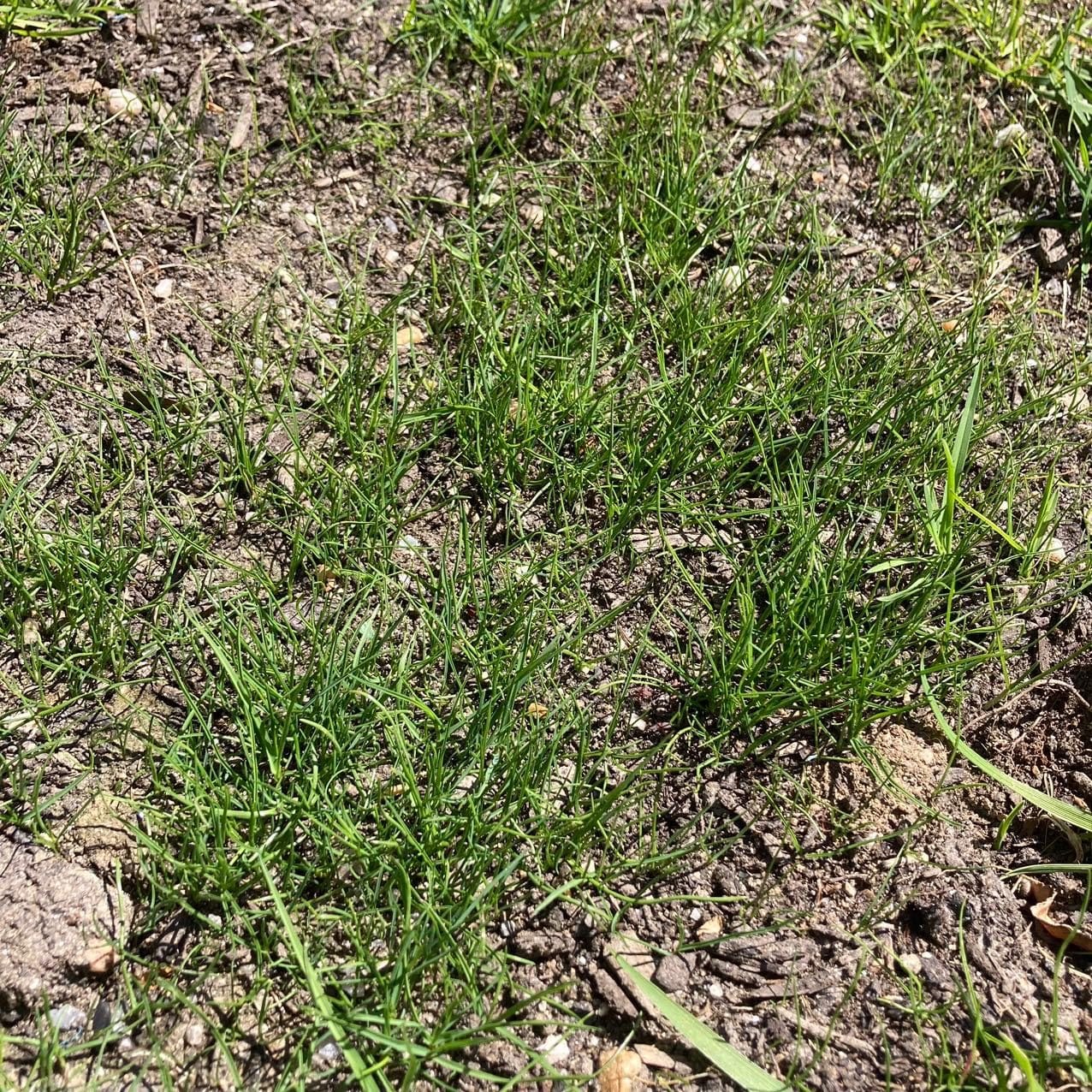
What it handles well on a small lawn
The side shield makes edges the weak spot manageable without a separate drop spreader. On a lawn hemmed in by two beds and a walkway, you can run a full broadcast pass without picking granules out of your mulch afterwards.
It handles seed, fertilizer, salt and ice melt from the same hopper, so it earns its place in the shed year-round rather than sitting in storage from November to March.
When to buy something else
If your lawn is more of a half-acre, the refill trips add up quickly and you would be walking back to the bag mid-application. For a lawn that size, move up to a walk-behind unit with a wider spread pattern and larger tires.
If you are seeding a large bare area, a broadcast unit is still the wrong tool. Drop spreaders put seed down without a casting arc, which is what you want for a defined patch.
2. Scotts Whirl Hand-Powered Spreader – Best Value for Tiny Lawns
Scotts Whirl Hand-Powered Spreader
Holds 1500 sq ft
Hand crank broadcast
Arm support brace
13 x 8.7 x 8.5 in
Pros
- Very light and easy to carry
- Smooth crank with a simple flow dial
- Arm brace reduces arm fatigue
- Holds enough to finish a small lawn in one load
Cons
- Coverage limited to about 1500 sq ft per load
- Not a substitute for a walk-behind unit on bigger yards
The Whirl is the highest-rated handheld in this group, and on a lawn under about 1500 sq ft it is genuinely enough tool. You hold it in one hand, crank with the other, and the arm support brace takes the load off your forearm so the job does not turn into a shoulder workout.
It covers seed, fertilizer, salt and ice melt, so it also handles reseeding a bare patch without a separate tool. Owners consistently describe the spread pattern as smooth and even, which matters more on a small lawn than raw capacity.
Forum users reach for a handheld of this style to spoon-feed granular nitrogen into thin areas rather than making full broadcast passes. That is a sensible approach on an irregular lawn, because you are dosing the problem spots instead of treating the whole rectangle twice.
The honest limit is the hopper. It holds 1500 sq ft of product, so anything bigger than a generous townhouse yard means refilling, and the crank has to keep turning the whole time you walk.
When a handheld crank makes sense
A handheld wins when your lawn is broken up by paths, trees, and steps that a wheeled spreader cannot navigate. You can walk it into a narrow side yard or a strip between two fences in a way a push unit physically cannot.
It also wins on storage. This one folds into a shelf or a closet without a disassembly step, which matters in a garage that already holds a mower and a snow blower.
When to buy something else
If your lawn is a clean rectangle over 2000 sq ft, a push spreader finishes the job in a fraction of the time and with less arm fatigue. Cranking is fun for five minutes and tiring for forty.
Skip it if you spread large, heavy pellets. The gate on a hand crank is designed for granular fertilizer and small seed, not the dense materials a wide-toss push unit can handle.
3. Spot Spreader Shaker 80 oz – Best for Lawns With Many Beds
Hand Spreader Shaker for Seed, Salt, De-Icer, Ice Melt, Earth Food and Fertilizer – Multiple Opening Sizes for Any Need – Up to 80 Oz
Up to 80 oz capacity
3 adjustable openings
Wide screw-top mouth
0.47 kg
Pros
- Large 80 oz capacity for its size
- Three openings handle seed fertilizer salt and ice melt
- Pours straight from the bag
- Works one-handed and either handed
Cons
- Slide cover can stick once salt crystals wedge in
- Smallest opening is too tight for coarse ice melt
- Rock salt can jam the opening
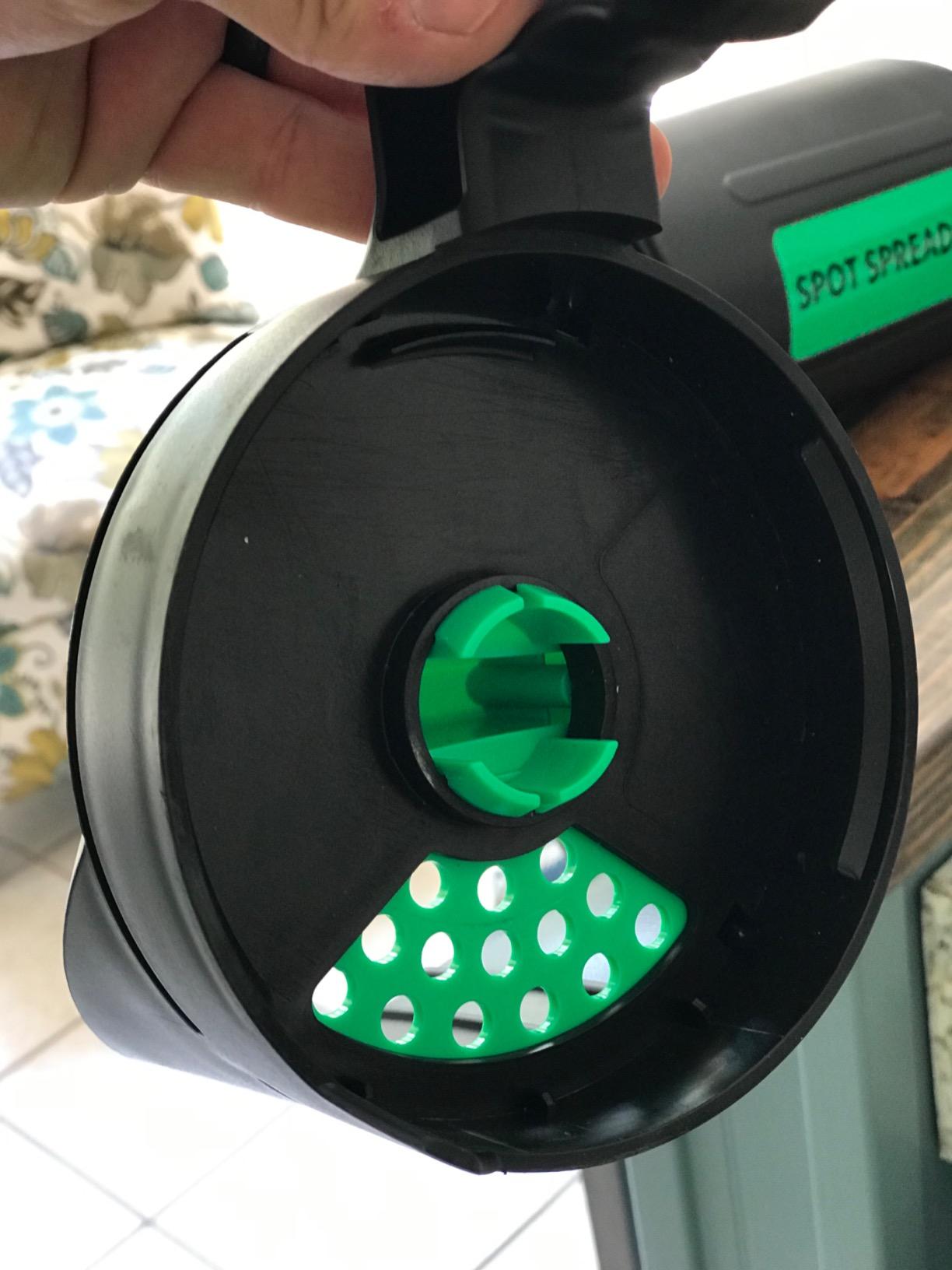
This is not a broadcast spreader. Material drops straight down through one of three openings as you walk, which means almost nothing lands on your beds no matter how close you get to them. On a small lawn wrapped in landscaping, that behaviour is worth more than a wide throw.
Because the pattern is narrow and vertical rather than cast, you will spend longer covering the same square footage. On a lawn under roughly 1500 sq ft, that extra time is tolerable and the precision is not.
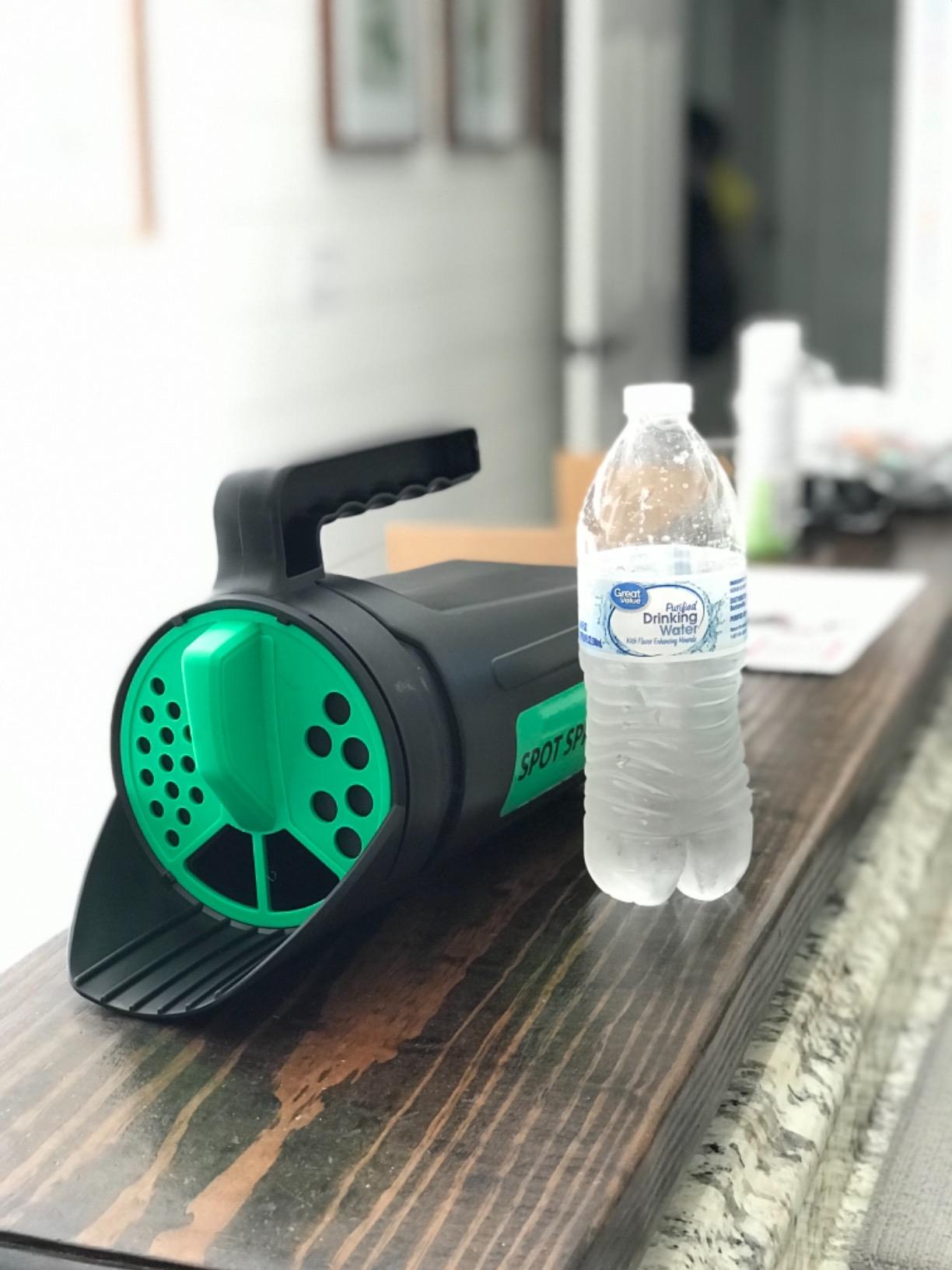
The wide screw-top mouth is a practical detail that saves real time. You unscrew it, pour from a full bag, screw it back on, and the lid seals well enough that the unit can be stored with product still inside between seasonal uses.
Owners also note that it reduces waste compared with crank spreaders, since nothing is launched past the edge of the grass. A lifetime no-questions guarantee is attached, which is unusual in this price category.
Where a vertical drop spreader wins
It is the right call when most of your lawn is hard standing. Side yards, paths between two fences, a strip along a wall, and the gap between a walkway and a bed are all places a broadcast pattern sends granules straight onto concrete.
It also handles seed and fertilizer with the same tool, so you can reseed a bare strip in spring and spread ice melt along a walkway in winter without switching gear.
Where it will frustrate you
Coarse materials cause trouble. Reviewers report the smallest opening being too restrictive for chunky ice melt, and rock salt jamming at the opening until you clear it by hand.
The slide cover also stiffens once salt has been stored in the unit. If salt is your main winter material, a lid with twist-select openings is easier to work with day to day.
4. CHAPIN 8740A All-Season Shaker – Best Budget Pick for Path Work
CHAPIN 8740A 64 oz All-Season Hand Shaker Spreader, Seed, Fertilizer & Salt
64 oz poly bottle
3 lid openings
Wide mouth screw top
11.2 oz
Pros
- Very inexpensive while still feeling sturdy
- Compact enough for a closet or the car
- Three openings suit seed fertilizer salt and ice melt
- Quick to rinse clean
Cons
- No intermediate flow setting between the openings
- Coarse clumpy material can jam the widest opening
- Heavy when filled with rock salt
The Chapin is the cheapest way to put a metered application on a small patch of lawn, and it doubles as a steps-and-sidewalk shaker in winter. The wide mouth screws on and off easily even with gloves on, which matters more than it sounds when you are refilling on a cold morning.
You twist the lid to select between small, large and wide openings depending on whether you are moving fine seed or chunky ice melt. The large handle is sized for small and large hands and works with gloves.
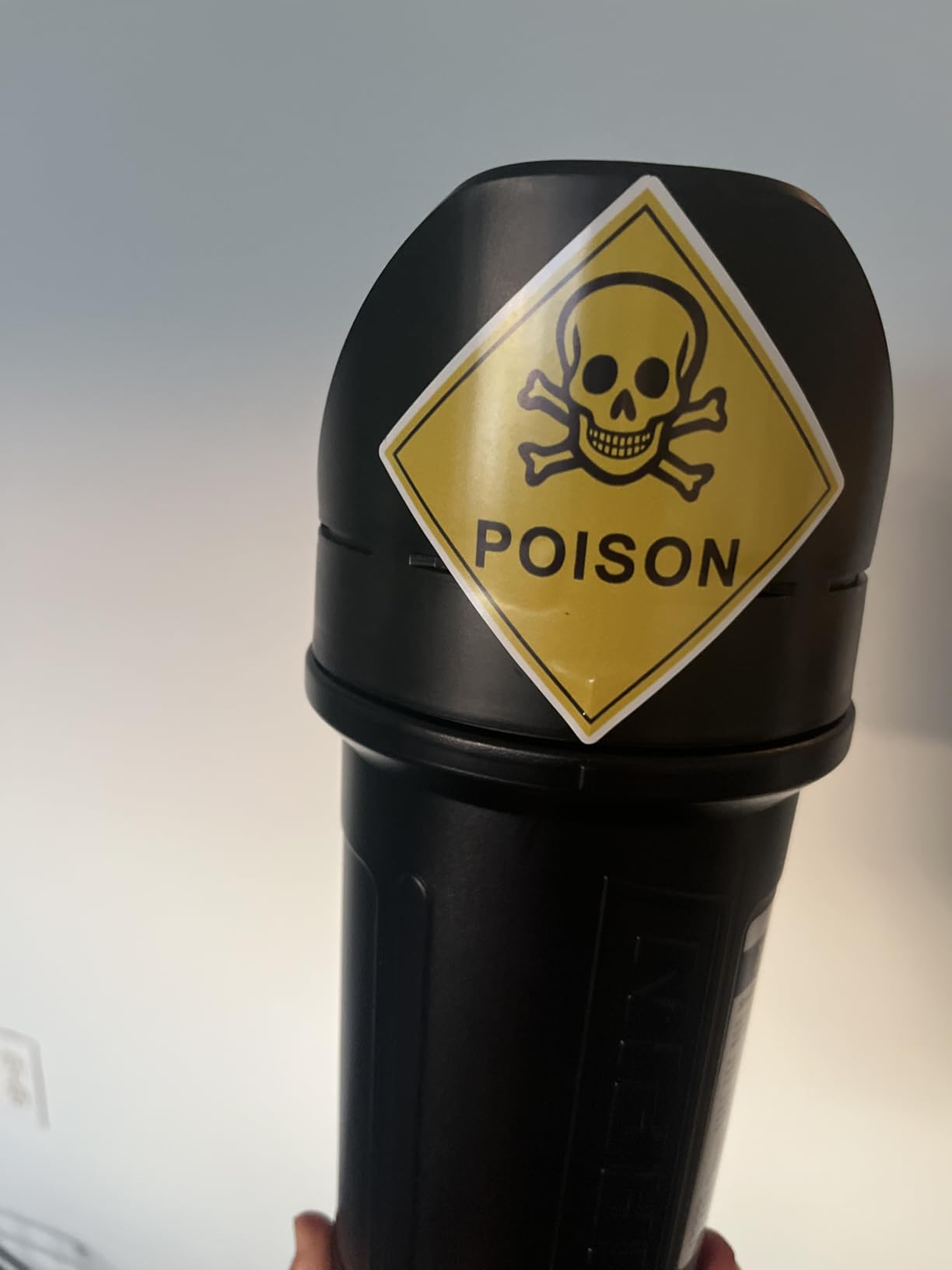
The practical headline is that it can sit with product still inside. Leave it on the shelf with fertilizer in it in October and pull it out for ice melt in December, and you are not cleaning and re-filling a second container.
Owners report good results for lawn fertilizer, ice melt and spot seeding. The most common limitation is the coarseness of the flow control, since you get three fixed openings rather than anything adjustable.
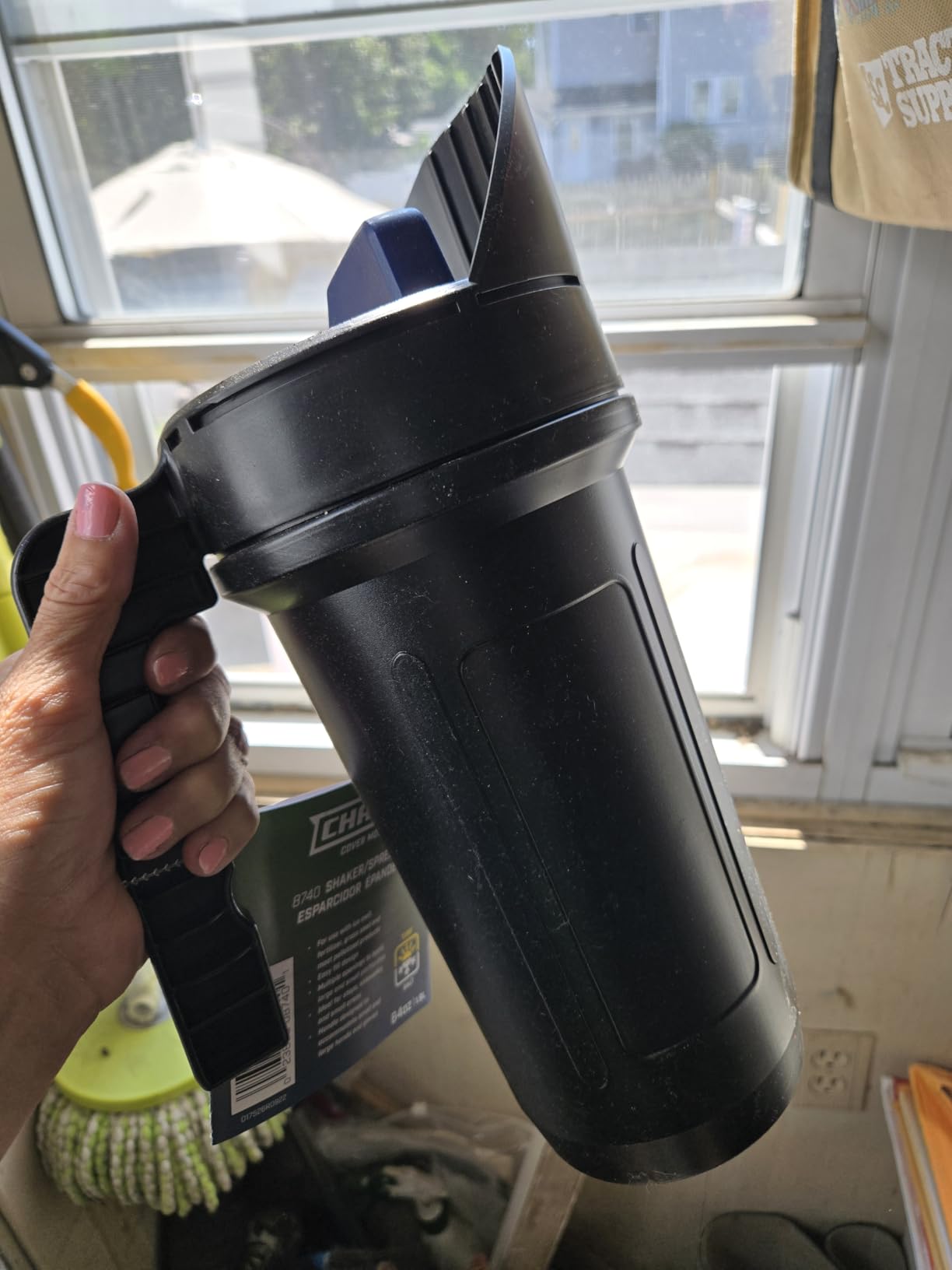
Best use case
Apartment and townhouse owners with a strip of grass beside steps get the most out of this. The vertical drop pattern puts material on the grass and on the step edge, not two feet out onto the shared walkway.
It is also the easiest tool here to rinse out, which keeps fertilizer residue from hardening inside the cap over a season of use.
Where it falls short
There is no middle setting between fully open and the largest holes. On clumpy or coarse material the flow can either starve or gush, and the widest opening occasionally jams until you clear it.
Rock salt is heavy. A full 64 oz bottle of it is a real load to carry back and forth from a pile, and on a large driveway you will be refilling more than you would with a bigger unit.
5. SOLO 421S Chest-Mount Spreader – Best Buy-It-Once Pick
SOLO Inc 421 20-Pound Capacity Portable Chest-Mount Spreader with Comfortable Cross-Shoulder Strap – 421S, White, 20lb
20 lb capacity
Chest strap mount
Direction fan
11.2 x 10.5 x 19.4 in
Pros
- Largest capacity in the handheld class
- Serviceable long-lasting components
- Chest strap carries the load close to the body
- Direction fan aims the throw
- Handles seed through large pellets without clogging
Cons
- Flow lever sits against the chest and is found by feel
- Full load can exceed 30 lb and tire the shoulder
- Crank and throw are right-handed only
The SOLO 421S is the pick if you want one spreader that outlives several plastic ones. It is a chest-mounted unit with a 20 lb hopper, which is a serious amount of capacity for a handheld, and the build is the kind of sturdy, chemical-resistant construction that reviewers describe as serviceable rather than disposable.
It mounts on an adjustable cross-shoulder strap so both hands are free for the crank, and the direction fan lets you aim the throw away from a bed or a wall. Reviewers repeatedly praise the chest-mounted design for being easier on and off than a backpack frame.
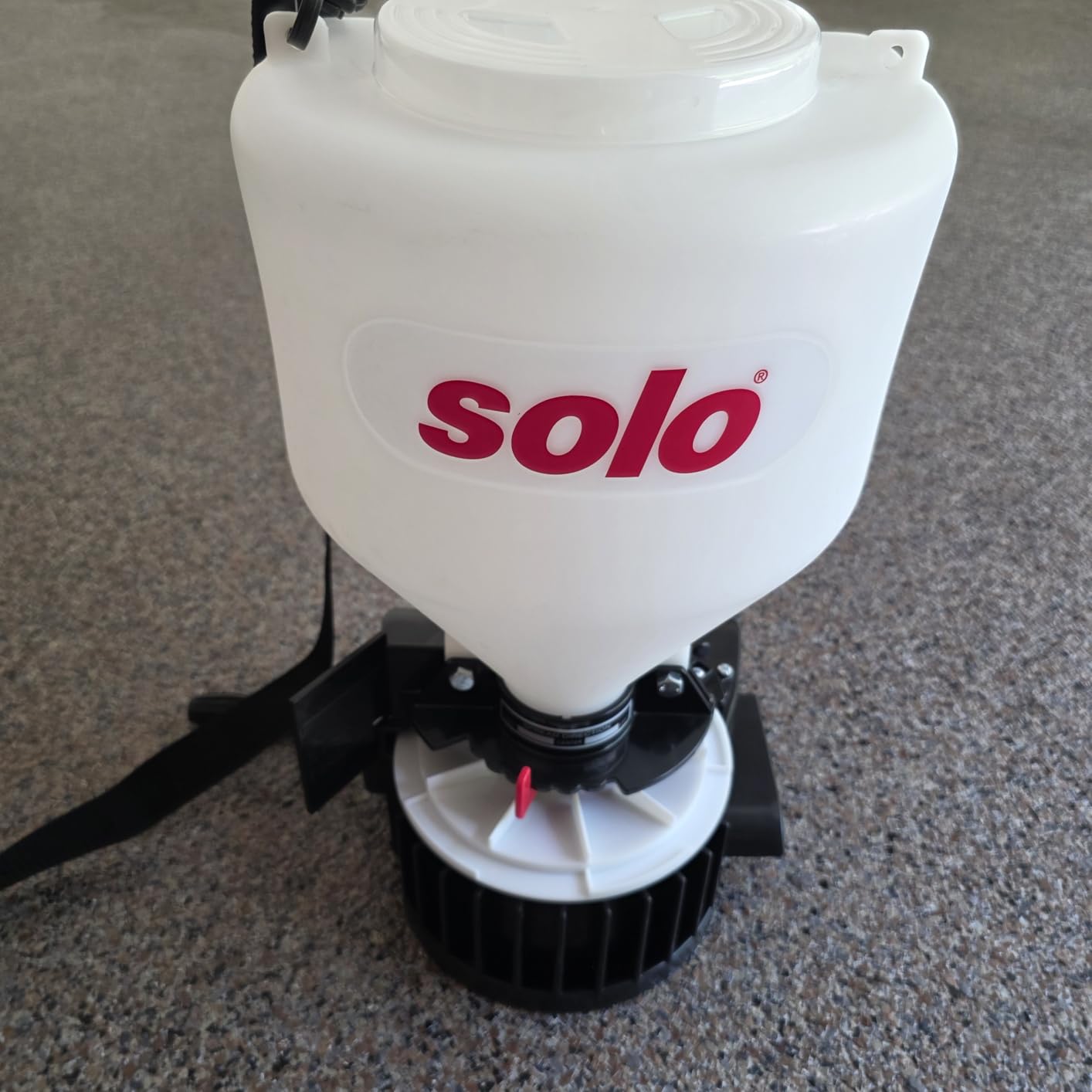
The practical gain is fewer refills. On a 5000 sq ft lawn, a 20 lb hopper means you often finish in a single fill, which removes the walk-back-to-the-bag step that adds up on every application. It also handles everything from tiny clover seed to large pellets without clogging.
A clear lid lets you watch the remaining product instead of lifting the tank to check. On a small lawn with a tree or two in the middle, that visibility is more useful than it sounds.
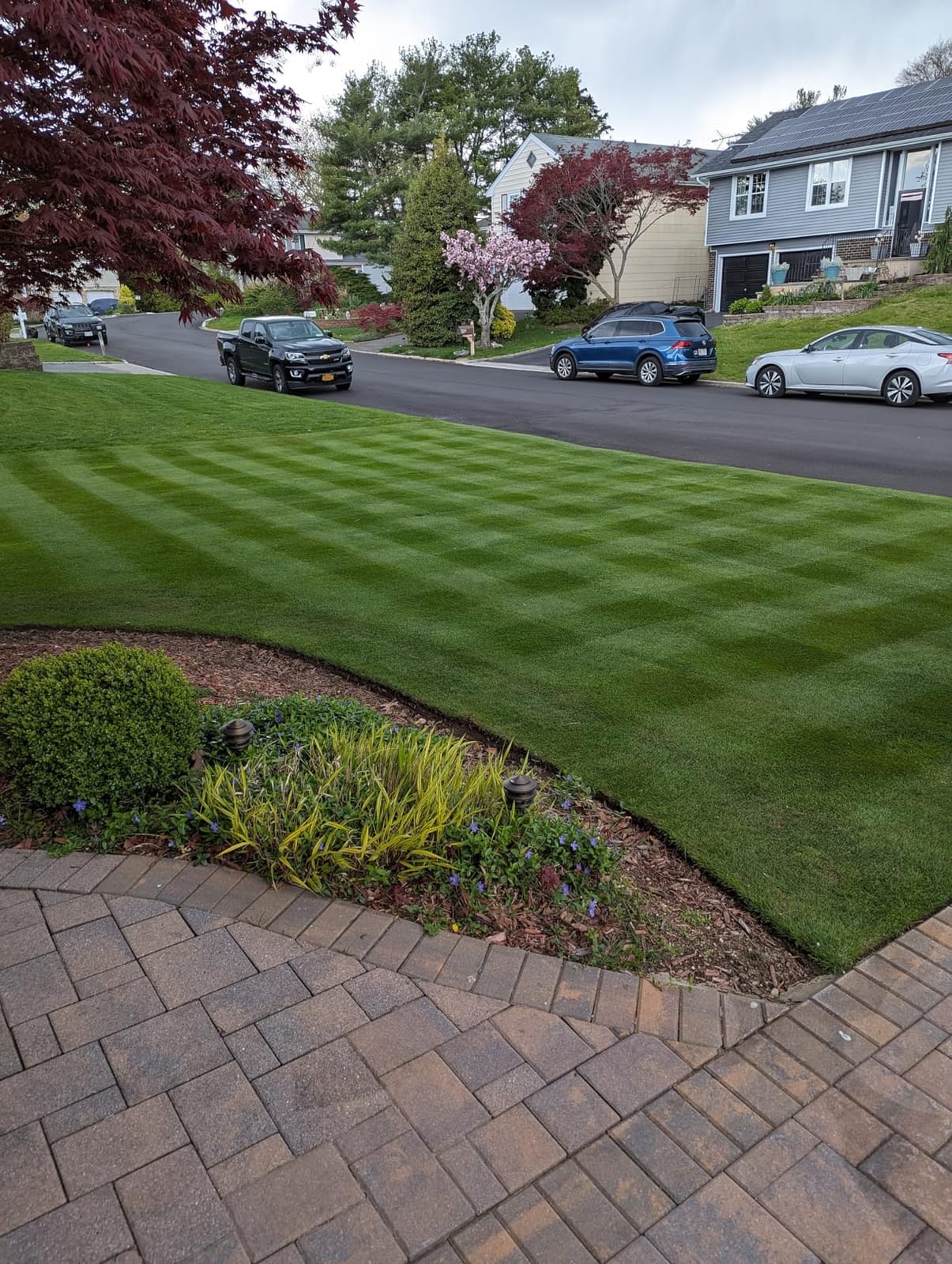
Who this is built for
It suits someone who treats several small properties, or who fertilizes a larger small lawn four to five times a season and resents the refilling. It also works well on ground a wheeled spreader cannot reach, because you carry the load rather than push it.
The materials are chemical-resistant and weather-resistant, which matters if you plan to keep it in a shed through the winter rather than in a heated space.
Who should skip it
The criticisms are ergonomic rather than functional. Fully loaded with dense material it can exceed 30 lb and tire a single shoulder, and a backpack-style harness would spread that better over long sessions.
The flow-control lever rests against your chest, so you locate it by feel rather than by sight. It is also right-handed only, both the crank and the throw, which matters for a meaningful share of users.
6. VEVOR 15 lb Walk-Behind Spreader – Best Mini Push Spreader
VEVOR Broadcast Spreader 15 lbs Capacity Hopper Walk-Behind Push Spreader | For Lawn & Garden Small Home Use, 9.8 ft Spreading Width, 10″ All-Terrain Tires, Adjustable Flow Control for Fertilizer Seed
15 lb hopper
9.8 ft spread width
30 flow settings
12.57 lb
Pros
- Wide 9.8 ft pattern cuts down passes
- 30 flow settings give real control over rate
- 10 inch tires roll over uneven ground and gravel
- Key parts arrive pre-assembled
- Handle and hopper detach for storage
Cons
- No side deflector listed
- so the wide pattern reaches bed edges
- 15 lb hopper needs refills on bigger lawns
This is the only true walk-behind unit in the group, and it is sized correctly for a small lawn. The 15 lb hopper is the smallest of any push spreader here, which is exactly what you want when you have to squeeze between a shed wall and a flower bed.
The 9.8 ft spread width means fewer passes than a hand crank requires, and 30 flow settings give finer control over the application rate than a three-opening shaker. Owners like the wide pattern, the granular flow adjustment and the large tires for rough ground.
Build quality is a step above typical plastic: a powder-coated steel frame with a UV-resistant, impact-tough hopper. Key components arrive pre-assembled with no drilling required, and the handle and hopper detach for space-saving storage in a small garage.
The 10 inch all-terrain tires roll over grass, gravel and snow, so the same unit handles spring seeding, summer fertilizing, fall weed control and a winter ice melt pass.
Why a small push unit beats a handheld here
A walk-behind covers a 3000 sq ft lawn in far less time than cranking, and the hopper rides above the grass rather than against your hip. If your lawn is a reasonably open shape, the speed difference is obvious.
The 30 settings also let you dial the rate down for seed and up for heavier fertilizer on the same machine, which a fixed-opening shaker cannot do.
Where the wide pattern works against you
A 9.8 ft cast width is a liability next to a flower bed. There is no edge deflector listed on this unit, so on a lawn tight against landscaping you will be sweeping granules off the bed afterwards.
The 10 inch tires are also wide. On a narrow side yard between fences they will not fit, and the steel frame plus a full hopper is more mass to manoeuvre in a tight corner.
7. Brinly 5 lb Handheld Spreader – Best for Overseeding Patches
Brinly 5lb. All-Season Handheld Spreader with Easy-Fill Design for Seed, Ice Melt, & Fertilizer
5 lb capacity
Up to 5 ft throw
Enclosed gears
1.59 lb
Pros
- Sturdy solid construction with enclosed gears
- No assembly needed
- Light and easy to handle
- Adjustable flow gate
- Contoured lip makes refilling quick
Cons
- Cranks hard and clogs with granular fertilizer or ice melt
- 5 lb capacity suits only small patches
- Narrow 5 ft throw pattern
The Brinly is a seed-first tool, and it is at its best doing exactly that. Reviewers are most satisfied when it is spreading grass seed, where the enclosed gears run smoothly and the build feels solid for the money.
It weighs about 1.6 lb, needs no assembly, and the reinforced contoured lip makes filling it from a seed bag quick. The variable flow gate lets you dial the rate, which is more control than a fixed-opening shaker gives you.
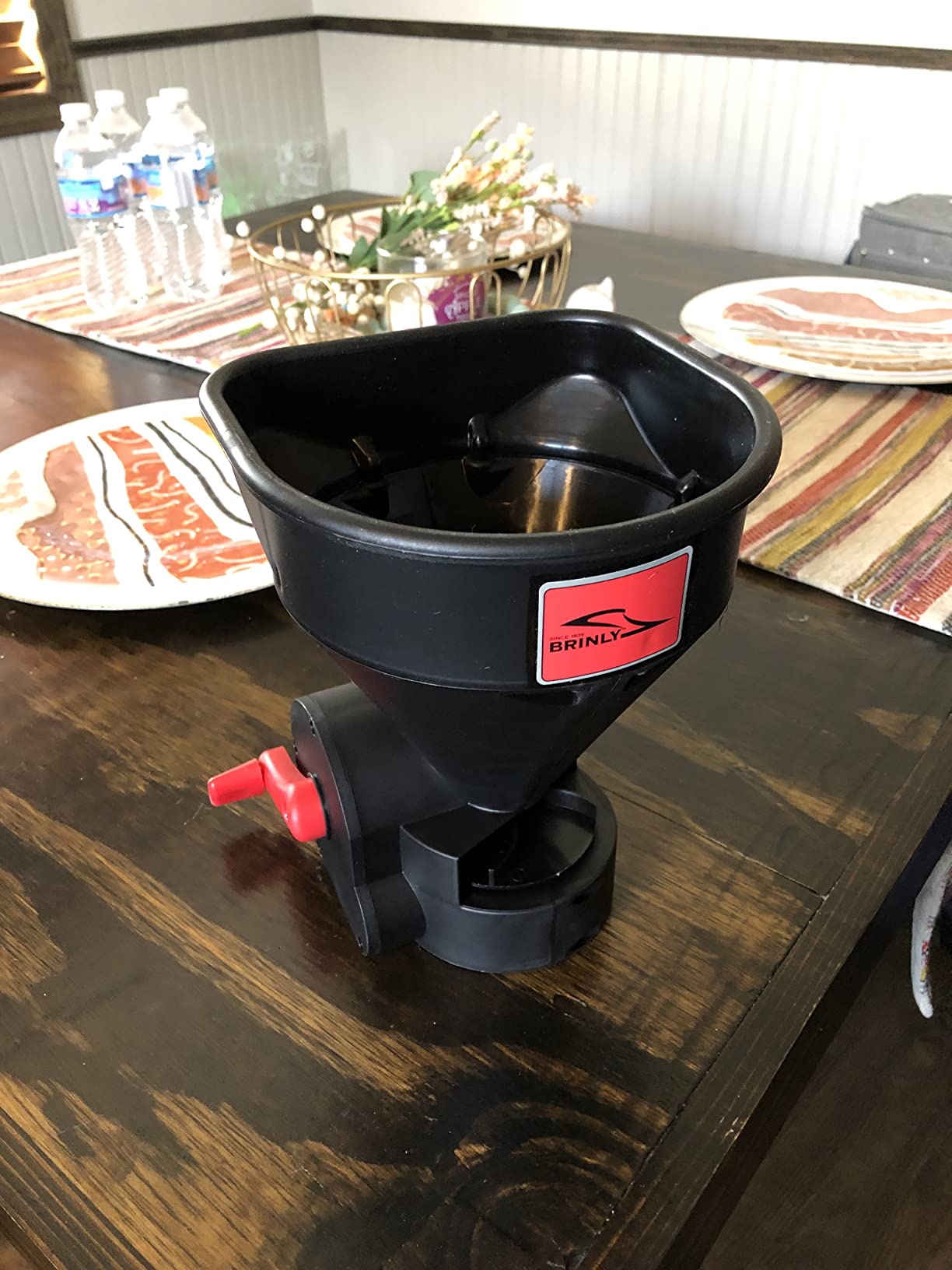
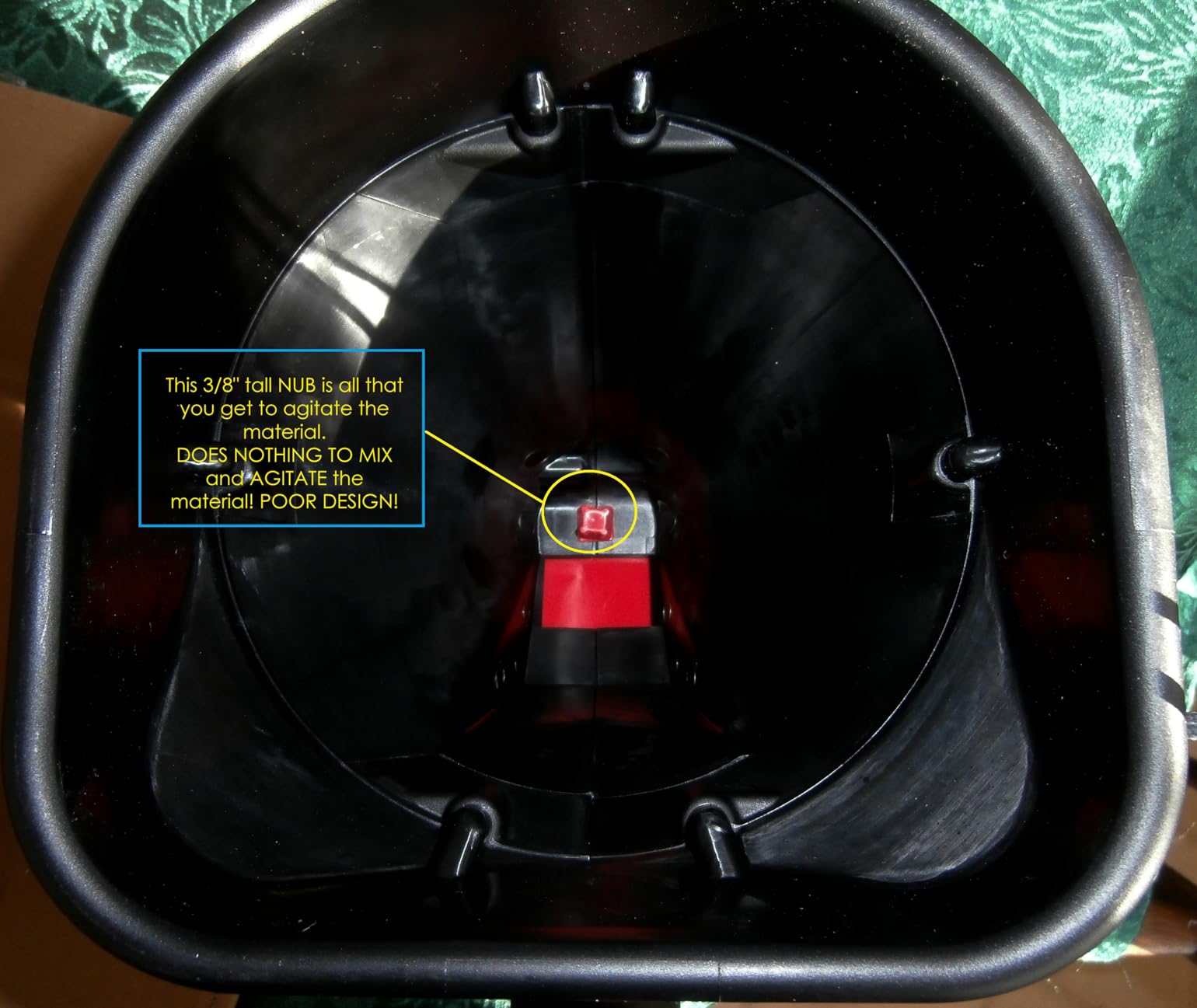
Where the ratings drop is with granular fertilizer and ice melt, which users report jamming the mechanism and throwing product back at the operator. The 5 lb hopper is also small, so this is a patch tool rather than a whole-lawn tool.
The throw is roughly 5 ft, narrower than most crank units here. On a lawn under 1500 sq ft that is workable, but it means more passes than a wider handheld gives you.
Where it does a good job
Spot seeding a bare patch is the ideal task. You set the gate low, walk the patch twice, and the enclosed gearing keeps the output consistent across the whole area instead of spiking at the start of the pass.
It is also comfortable for hard-to-reach areas, since you can lift it over a low edging board rather than manoeuvring wheels around an obstacle.
Where it disappoints
Granular fertilizer is the material to watch. Users report it cranks hard, clogs, and can throw material back toward you, which is a poor experience on a lawn where fertilizer is the main job.
Some buyers also describe the plastic as cheap and the trigger and crank as awkward for smaller hands. If your hands are small, test the grip before committing.
8. MAV AquaDoc 2.5L Handheld Spreader – Best for Ice Melt and Pool Chemicals
AquaDoc Handheld Salt Spreader for Snow Melt, Fertilizer, Lawns – 2.5L
2.5L (84 oz) capacity
3 sieve sizes
Twist-off cap
14.4 oz
Pros
- Three sieve sizes give useful rate control
- Twist cap makes refilling fast
- Lightweight with an ergonomic one-handed handle
- Also handles granular spa and pool chemicals
- Sturdy build for the money
Cons
- Vertical drop only
- with no casting arc
- Coarse material limits the three sieve choices
The AquaDoc is a shaker first and a lawn tool second. It holds 2.5L, which is a big bottle for a hand tool, and the twist-off cap makes refilling from a salt or fertilizer bag fast. The ergonomic handle supports comfortable one-handed use.
It also spreads granular chlorine and pH adjusters, so owners with a pool or spa use it for chemicals as well as lawn work. That dual purpose is what makes it stick around in a garage rather than appearing once a year in spring.
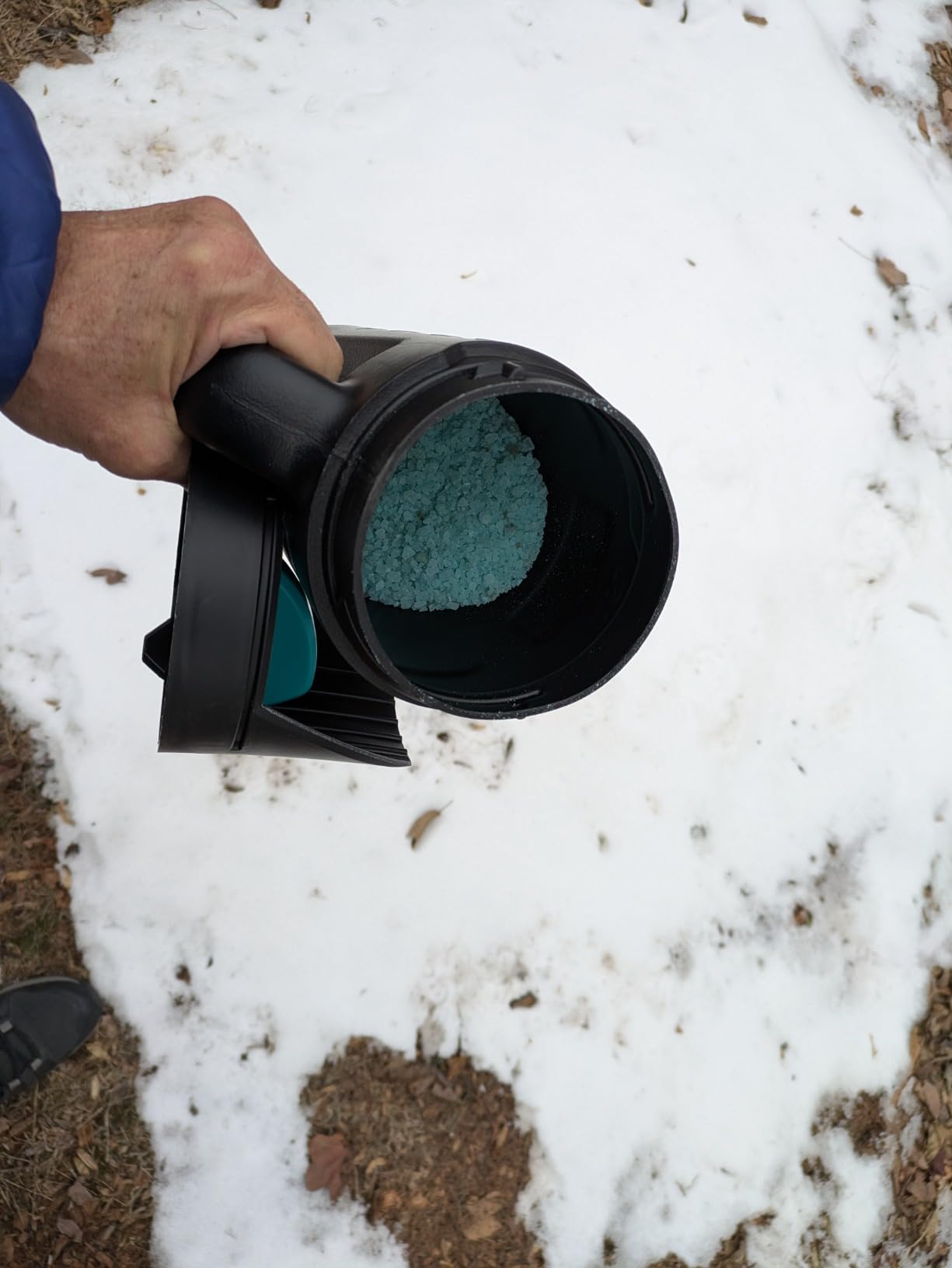
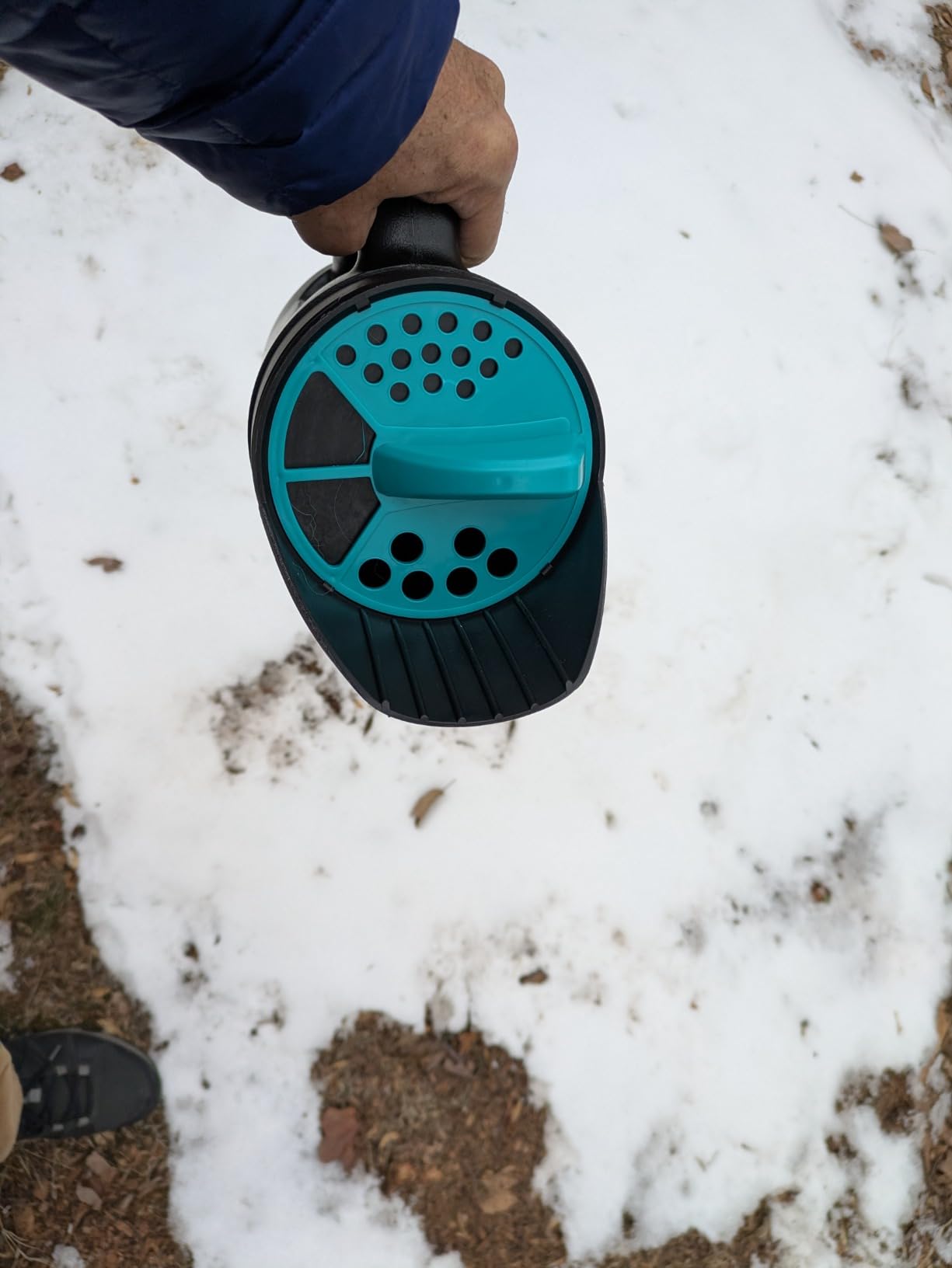
Owners value the multiple sieve sizes in the cap for controlling the spread rate, and the easy refill. With a good reputation for even, controlled spreading, it is a solid choice for steps, paths and small lawn patches.
Because material drops through the cap openings rather than casting outward, the pattern is narrow and vertical. That is a feature on a walkway and a limitation on an open lawn.
Best use case
Winter paths, steps and a small entry lawn are where this earns its place. Nothing is thrown sideways, so you can work close to an edge without pulling granules back off the concrete afterwards.
For a pool or spa owner, the ability to handle granular pool chemicals in the same container removes the need to buy a second shaker.
Where it does not fit
It cannot cast a wide pattern, so an open 4000 sq ft lawn would take far longer than it should. Reach for a walk-behind or a crank broadcast unit at that size.
Flow control is limited to three sieve openings. If you need to meter a precise rate for a seed mix, this is coarser than you want.
9. SHALL Battery Powered Spreader – Best Cordless Handheld for Mid-Size Lawns
SHALL Battery Powered Fertilizer Spreader, 7.2V Rechargeable Seed Spreader for Salt, De-Icer, Earth Food, Grass Seed, 8-Level Settings and 3.3L Large Capacity Spreading up to 6458 sq.ft
7.2V 2.0Ah lithium battery
3.3L hopper
8 flow settings
6 sowing angles
Pros
- Battery power removes the strain of cranking
- Eight flow levels and six sowing angles
- Large 3.3L hopper cuts down refills
- Reaches tight spaces a push spreader cannot
- Rubber-coated handle stays comfortable
Cons
- Not waterproof and must be stored dry
- Material under the dispersing wheel can block it
- Charging adapter is not included
This is the unit for a small lawn that is too big to crank comfortably but too full of obstacles to push a walk-behind through. The 7.2V lithium battery drives a motor running 900 to 2200 rpm, so there is no crank handle and no arm fatigue at all.
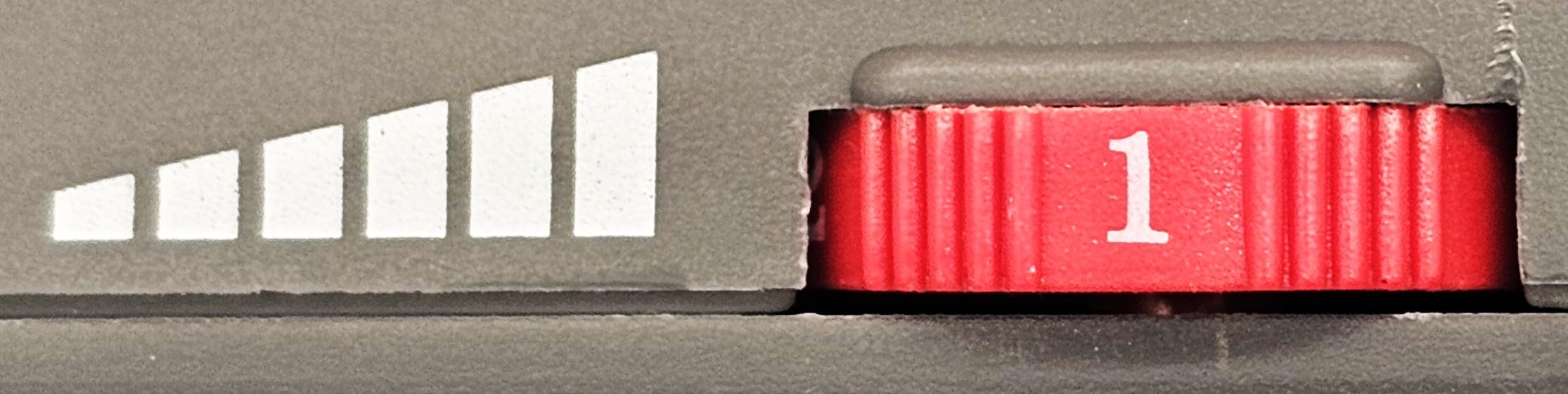
The eight flow levels are graded by material: 1 to 3 for fine seed, 4 to 6 for medium fertilizer, and 7 to 8 for heavy rock salt. Six sowing angles from 0 to 127 degrees let you narrow the throw for edges without switching tools.
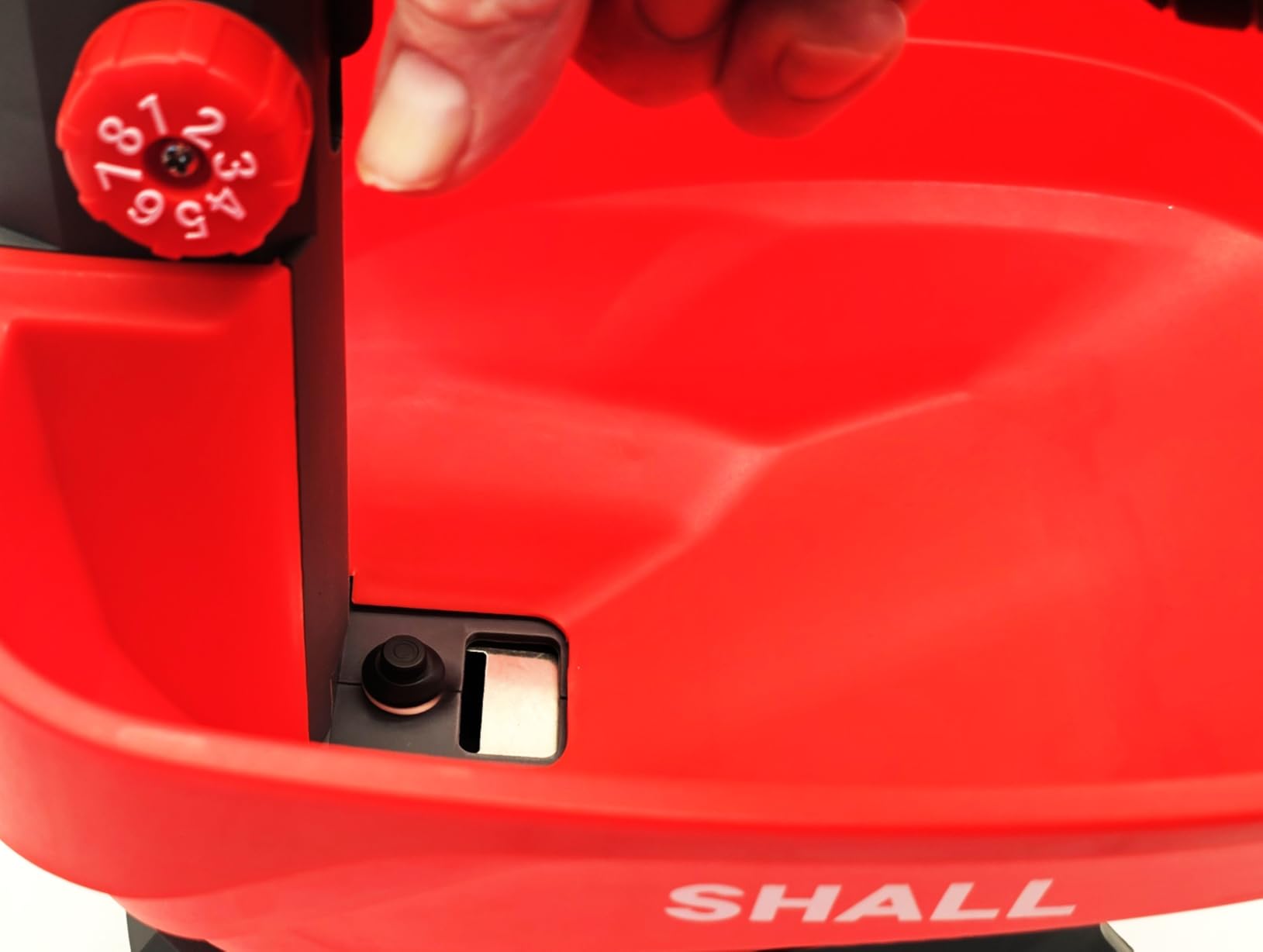
The 3.3L hopper covers up to 3767 sq ft of fertilizer or 6458 sq ft of grass seed per load, which is a real step up from a hand crank. Owners cite the cordless convenience, the range of settings and the large hopper as the main draws.
It is not waterproof, so it has to be stored dry. The manufacturer’s own guidance also advises regular charging during early use and clearing any seed or fertilizer caught under the dispersing wheel before the next pass.
Where battery power pays off
On a lawn with a lot of edging, shrubs and tight corners, cordless power lets you move at walking pace without thinking about cranking. The rubber-coated handle stays comfortable over longer sessions, which is the whole point of the design.
It reaches spaces a larger push spreader cannot, so you can do the whole lawn with one tool rather than keeping a walk-behind for the open middle and a handheld for the corners.
What to watch before buying
A 30W or higher charging adapter is recommended and not included, so budget for that if you do not have one. The battery also wants regular charging during the first uses to stay healthy.
If material jams under the dispersing wheel mid-pass, the discharge rate changes without warning. Check it between fills rather than assuming the pass is still accurate.
10. WORX WG869.9 Cordless Spreader – Best for Existing Power Share Owners
WORX Cordless Broadcast Spreader, 20V Seed Spreader, WG869.9
20V cordless motor
4600 sq ft per load
5 ft throw
3 lb body
Pros
- No cranking effort at all
- Anti-clog agitator keeps the rate uniform
- Six speeds and eight flow settings
- Only 3 lb with a one-handed trigger
- Edge-control deflector keeps material in bounds
Cons
- Battery and charger are sold separately in the tool-only version
- Throw tops out at about 5 ft so it needs more passes
The WG869.9 runs on the Power Share battery, which is the deciding factor. If you already own tools in that platform, you already have the battery and charger, and this becomes the cheapest way to add a spreader to your setup.
The body weighs 3 lb and uses an easy-squeeze trigger for one-handed operation. It covers up to 4600 sq ft per load with a 5 ft maximum throw, and the anti-clog agitator is designed specifically to keep the broadcast rate uniform.
Eight flow settings cover seed through ice melt in graded ranges, from fine seeds at 1 and 2 through light and heavy fertilizer to pelleted fertilizer and ice melt at 7 and 8. Six speed settings give finer control of the throw than most handhelds offer.
The edge-control deflector narrows the pattern on one side, which is the feature that matters most on a small lawn. It keeps material off driveways and garden beds without you carrying a separate drop spreader for the borders.
Reviewers value the cordless power, the low weight and the agitator. The practical question is whether a Power Share battery and charger are already on hand, since the tool-only configuration does not include them.
What this one does well
The agitator is the detail worth paying attention to. Clogging is the most common complaint on small crank spreaders, and an agitator that keeps material moving is the fix, particularly when spreading damp granular fertilizer.
At 3 lb with a one-handed trigger, it is light enough for a long application even on a lawn with many obstacles to walk around.
Where the platform matters more than the spreader
If you do not own Power Share batteries, you are buying into a battery system to use a spreader. That changes the value calculation considerably, since the cost of the battery and charger is a separate purchase.
The 5 ft maximum throw also means more passes than a walk-behind unit needs. On an open 4000 sq ft lawn, budget time accordingly or keep a push unit for the open areas.
11. FLORA GUARD 30 oz Hand Spreader – Best Lightweight Shaker for Tiny Lawns
FLORA GUARD Hand Seed Spreader, Lawn Seed Spreader Adjustable Flow Control
30 oz capacity
4 adjustable openings
Soft-grip handle
1.03 lb
Pros
- Even spread without dumping too much in one spot
- Four openings handle seed fertilizer salt and ice melt
- Soft-grip wide handle reduces wrist strain
- Screw-top lid keeps moisture out
- Very light and compact for car or shed storage
Cons
- 30 oz is smaller than buyers expect and needs frequent refills
- Twisting the lid open and closed is awkward
- Not well suited to rock salt
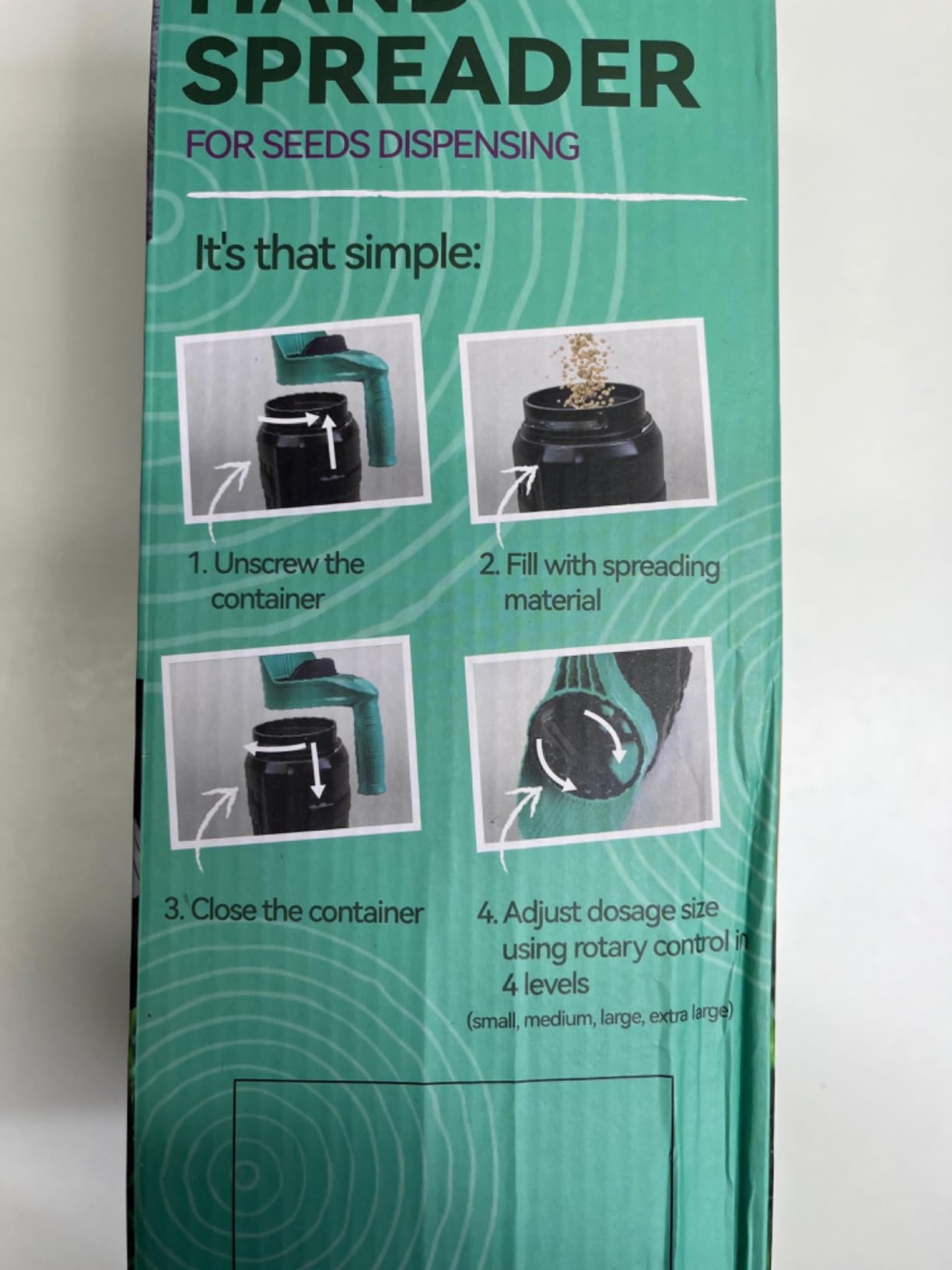
At about one pound, the FLORA GUARD is the lightest spreader here and the easiest to live with in a car boot or a shed hook. You rotate the lid to select between four opening sizes, so it covers seed, fertilizer, rock salt and ice melt from one tool.
Owners like the even spread and the comfortable one-handed grip, and it does not dump a pile in one spot the way a wide-opening shaker can. The crack-resistant body and screw-top lid keep moisture out between uses.
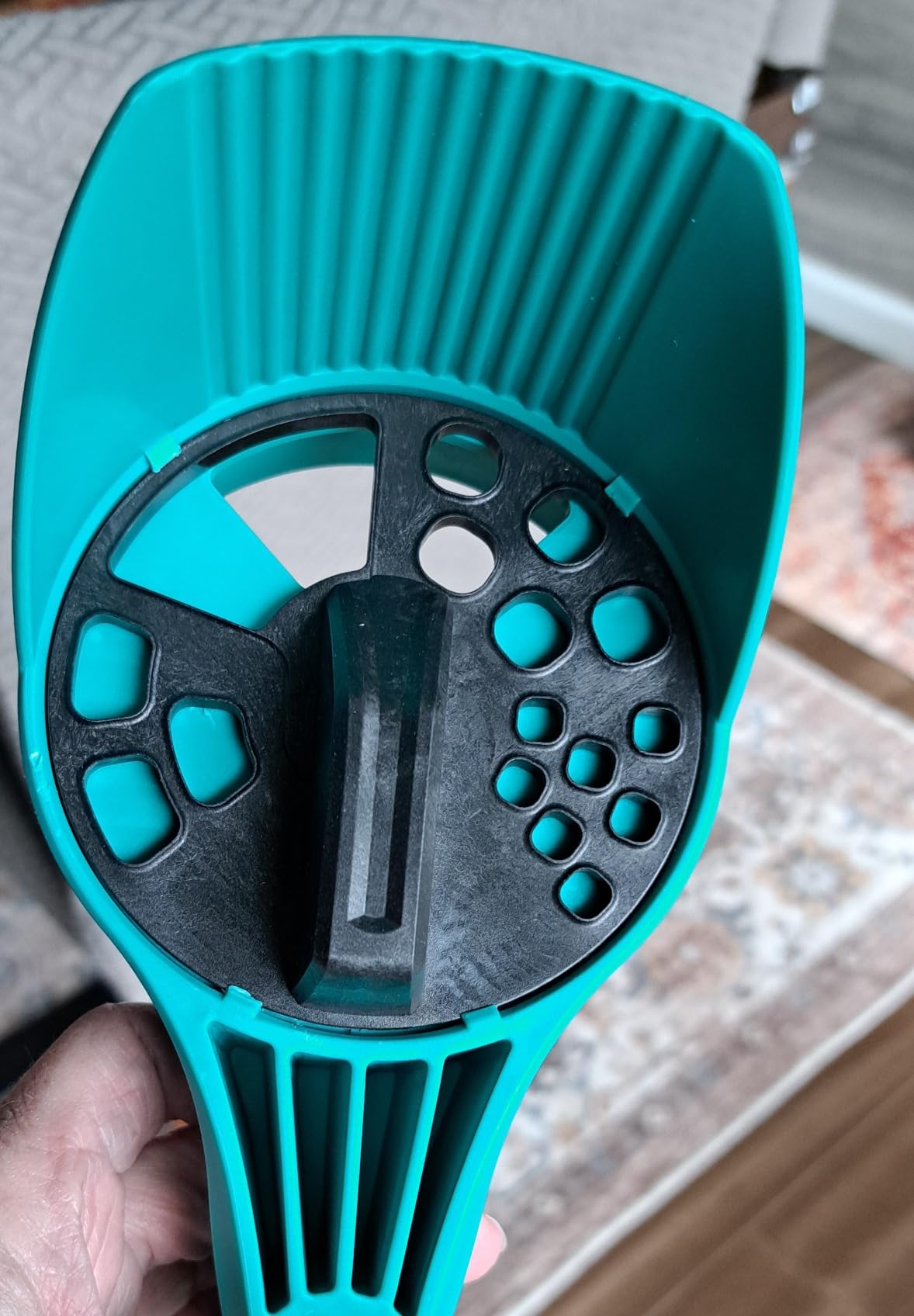
The capacity is the honest drawback. At 30 oz it is smaller than most buyers expect, which means a lot of refills on anything beyond a very small patch of grass.
It is also not well suited to rock salt. The material is heavy and coarse, and the openings are sized more for fertilizer and seed than for dense winter material.
Where it earns its place
Carrying it out to the lawn matters on a small property. A one-pound tool gets used for a small patch, a walkway edge or a reseeded area without the ceremony of fetching a bigger machine from the garage.
The soft-grip wide handle reduces wrist strain compared with a narrow bottle, which is the difference between a pleasant five-minute job and a sore hand when you are doing several small patches.
When to buy something else
Choose a larger shaker if you are spreading salt on anything more than a doorstep, or fertilizing a lawn over roughly 1000 sq ft. The refill frequency becomes the dominant part of the job.
The twist lid is stiff to open and close, and a few buyers report the lid slipping or the body cracking with heavy use. Check that the lid clicks down before you start a pass.
12. Jonathan Green Hand Broadcast Spreader – Widest Handheld Throw
Jonathan Green Hand Broadcast Lawn Spreader – Covers Up to 1,500 Sq Ft
5 lb capacity
Up to 1500 sq ft
10 ft broadcast width
1.4 lb
Pros
- Very light with an arm brace that cuts hand fatigue
- Easy to clean and durably built
- Good value for small gardens and spot work
- Forearm support helps prevent back strain
Cons
- Small agitator clogs with fertilizer and only passes fine seed
- Right-side-only crank tires the left arm
- 5 lb hopper means many refills
The Jonathan Green throws a 10 ft broadcast pattern from a 1.4 lb handheld, which is the widest cast of any hand unit in this list. That width is what lets it cover a 1500 sq ft area with a 5 lb load rather than a much smaller patch.
The ergonomic handle supports the weight on your forearm, so the unit does not pull on your wrist the way a plain bottle does. Users generally like the light weight, the forearm support and how easily it rinses clean.
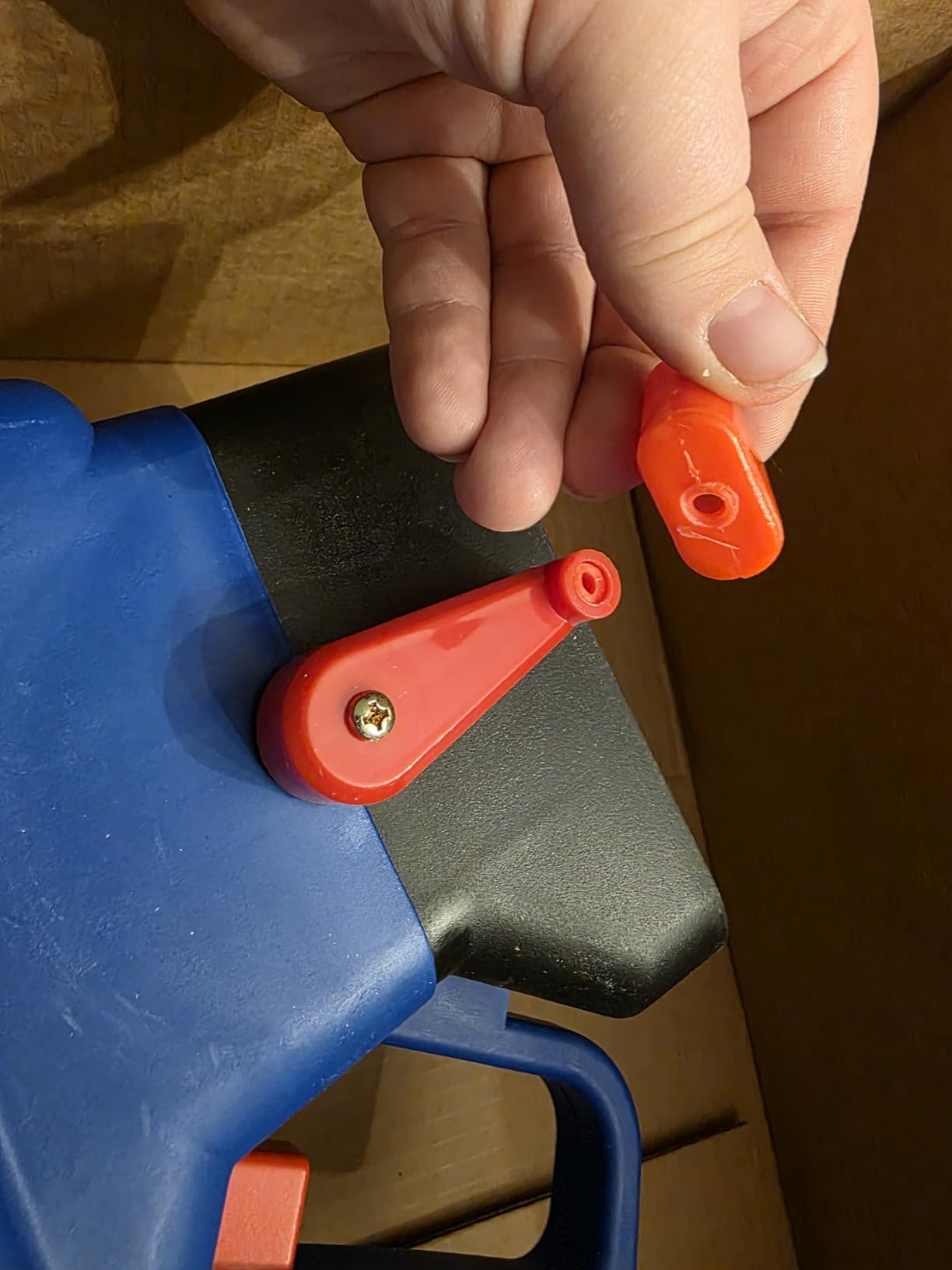
There is a technique detail worth knowing: start the crank before you open the gate. Owners who pick that up report a much more even application than those who open the flow first and spin afterwards.
The catch is the agitator, which is small and only passes very fine seed. Reviewers report it clogging with fertilizer, which is the material most people actually want to spread.
Best for spot work
It is well suited to seeding bare spots and applying spot lawn controls, which is how most small-lawn owners use a handheld. The wide pattern means a short pass covers a decent area before you need to refill.
It also works on driveways and sidewalks for ice melt, giving you one tool for the seed job in spring and the path job in winter.
Where the build is thin
The small agitator is the real limitation. Anything coarser than fine seed can bridge in the mechanism, and fertilizer is exactly the material that causes the complaints.
The crank is right-side only, which tires the left arm on longer jobs, and the 5 lb hopper means frequent refills on anything but a genuinely small lawn.
What Size Fertilizer Spreader Do I Need?
Match the hopper to the lawn, not to the ambition. A spreader that covers 25000 sq ft is not better for a 2000 sq ft yard, it is simply heavier, wider and harder to steer between your beds.
Under 1000 sq ft: a 30 oz to 64 oz hand shaker is enough. A handheld crank or battery unit adds nothing at this size.
1000 to 2500 sq ft: a 5 lb hand crank spreader with a 10 ft cast width, or a chest-mounted unit if you want fewer refills.
2500 to 5000 sq ft: a push broadcast spreader with a 15 lb hopper, or a 5000 sq ft mini unit with an edge deflector.
Over 5000 sq ft: a walk-behind with a 25 lb or larger hopper. This is where tow-behind units start to make sense.
One rule of thumb helps: most granular fertilizer bags label the rate in pounds per 1000 sq ft. Divide the bag weight by that number and you get how many loads to expect, which is really the capacity question answered.
Broadcast vs Drop Spreader for a Small Lawn
A broadcast spreader throws material outward from a rotating plate, covering ground fast but casting material past the edge of the grass. A drop spreader lets granules fall straight down through a slot, so almost nothing lands on beds or paving. Rotary is simply the mechanism a broadcast spreader uses.
For a small lawn hemmed in by beds, walkways and a driveway, the answer depends on how much edging you have. Lots of hard surfaces favours a drop spreader. Open, rectangular grass favours broadcast for speed.
If you want the full comparison rather than the short version, our guides to the best broadcast spreaders and the best drop spreaders go deeper on each format.
Do You Actually Need a Spreader?
Under about 1000 sq ft of open, rectangular lawn, a spreader is optional. A hand-crank unit or even a bottle shaker will do the job, and forum owners with lawns in that range regularly say investing in a high-end machine for a tiny yard feels wasteful.
A spreader becomes clearly worth it once you have bed edges, a sloped yard, or a lawn where you want even colour and density. Hand scattering produces striped, patchy and over-fertilized areas, and the over-fertilized patches show as brown burn within a couple of weeks.
There is an environmental argument too. A calibrated spreader meters the rate, so fewer nutrients go past the turf and into storm drains and nearby waterways. That matters most on a small lawn directly next to a garden or a water feature.
How to Avoid Fertilizer Burn on a Small Lawn
Fertilizer burn is the most common real-world complaint about spreaders, and almost all of it comes from over-application rather than from the product. Five habits prevent nearly all of it.
Calibrate before you spread. Do a pan test rather than trusting the dial number. Set the dial, run the spreader over a known area, weigh what lands, and adjust until the rate matches the bag.
Close the gate while moving. Start the crank or motor first, then open the gate. Opening it while stationary is what produces the dark pile at the start of a pass.
Walk at a steady pace. Faster means more product per foot, slower means less. Pick one speed and keep it across the lawn.
Use the edge control. Use the side deflector on any broadcast unit, and turn it on for the last pass along every bed and walkway border.
Do half-rate passes when unsure. Two passes at half the setting beat one pass at full rate, and overlap them by about a foot.
Do not spread in wind, and avoid immediately watering a saturated lawn. Moisture on the blades plus concentrated granules is the classic burn combination.
Spreader Settings and Calibration Basics
Settings are model-specific, so the number on your bag label is a starting point rather than an instruction. The pan test is the reliable method, and it takes about five minutes.
Place a sheet of plywood or a flat tray of known size on level ground, weigh it empty, then run the spreader over it several times to fill it. Weigh it again and divide by the area. Adjust the dial up or down until the pounds match the bag’s rate for 1000 sq ft.
Because settings differ between models, do not copy a number from a different brand’s chart. If you need a per-brand chart for a Scotts model, check the dial markings printed on the spreader body, which are specific to that model and its granule type.
Rough calibration runs for the units here cover very different areas. A 5 lb handheld at typical granular rates covers about 1500 sq ft, while the 15 lb walk-behind covers a lawn several times that size per fill.
Cleaning and Storage After Every Use
Wash the hopper out right after each application. Dried fertilizer is abrasive and corrosive at the same time, and a bridge of hardened material in the throat or the agitator is the cause of most clogging complaints.
Empty and rinse, scrub the openings with a brush, and let everything dry fully before reassembly. Wipe the flow dial and the gate as well, since those are the parts that determine the rate next time.
Store dry and off the ground, and fold or detach the handle on units that allow it. On a cordless unit, check the battery rather than leaving it sitting for a season.
Maintenance and Seasonal Timing
Most lawns need four feedings a year, spaced six to eight weeks apart, starting in early spring and running through fall. Avoid feeding during the hottest part of summer, when stress and water demand are highest.
Aerate or rake before a spring application so material reaches the soil rather than sitting in thatch. After feeding, sweep stray granules off hard surfaces before the first rain washes them into a drain.
For larger properties we have covered the tow-behind options separately in our guide to the best tow-behind broadcast spreaders, and soil amendment work is covered in our roundup of the best manure spreaders.
Watering matters as much as the feed. If you have not sorted irrigation yet, our guide to the best sprinkler systems for lawns is worth reading before the summer starts.
Frequently Asked Questions
What type of spreader is best for a small lawn?
For a lawn under 2500 sq ft, a hand crank broadcast spreader with a 5 lb hopper gives the best balance of even coverage and maneuverability. For lawns hemmed in by flower beds and walkways, choose a drop spreader or a broadcast unit with a side deflector so granules stay on the grass. Above 2500 sq ft, move up to a 15 lb walk-behind broadcast spreader.
What size fertilizer spreader do I need?
Match the hopper to your lawn size. Under 1000 sq ft needs a hand shaker or handheld, 1000 to 2500 sq ft suits a 5 lb hand crank spreader, and 2500 to 5000 sq ft calls for a 15 lb walk-behind unit. A spreader that covers far more ground than you have is simply heavier and harder to steer, not better.
Which is better, a broadcast or drop spreader?
A broadcast spreader throws material outward from a rotating plate, so it covers ground quickly but casts granules past edges. A drop spreader releases material straight down through a slot, keeping it off beds and paving but taking longer. Choose broadcast for open lawn, and drop or an edge-controlled broadcast for lawns with lots of hard surfaces.
Is a fertilizer spreader worth it for a small lawn?
For lawns under about 1000 sq ft it is optional, since a handheld or shaker will cover the area easily. Above that, especially with bed edges, slopes or irregular shapes, a spreader is worth it because it meters the application rate and prevents the striped and burned patches that hand scattering produces.
Is it better to spread grass seed by hand or spreader?
Use a spreader once you are covering more than a few hundred square feet, because it gives an even rate and lets you set the flow for the seed type. By hand is fine for small patches. Open the gate only after the crank or motor is running, since stationary flow is what creates the dense pile that kills germination.
Can I use a salt spreader as a fertilizer spreader?
In most cases yes. A spreader designed for granular salt or ice melt will handle granular fertilizer and grass seed fine, since the gate and agitator are the same. Avoid using a spreader meant for rock salt with fertilizer you want precise control over, as coarse material needs wider openings than a standard setting provides.
What setting should my fertilizer spreader be set at?
Start from the rate printed on the bag in pounds per 1000 sq ft, then verify with a pan test. Set the dial, run the spreader over a tray of known area, weigh the material collected, and adjust until it matches the labelled rate. Settings differ between models, so do not copy a number from a different brand chart.
Our Top Picks for Small Lawns in 2026
For most small lawns, the Scotts Turf Builder EdgeGuard Mini is the pick: pre-calibrated, compact, and the side shield keeps granules off your beds. If you want the tool that will still work in a decade, choose the SOLO 421S chest-mount spreader instead.
Under 1000 sq ft of open grass, a hand shaker does the job. Between 1000 and 2500 sq ft, go with a hand crank unit such as the Scotts Whirl or the Jonathan Green, and step up to a 15 lb walk-behind once you pass 2500 sq ft.
Whichever you pick, calibrate it before the first pass and clean it out afterwards. That pair of habits is what separates an even application from a striped, burned lawn.