
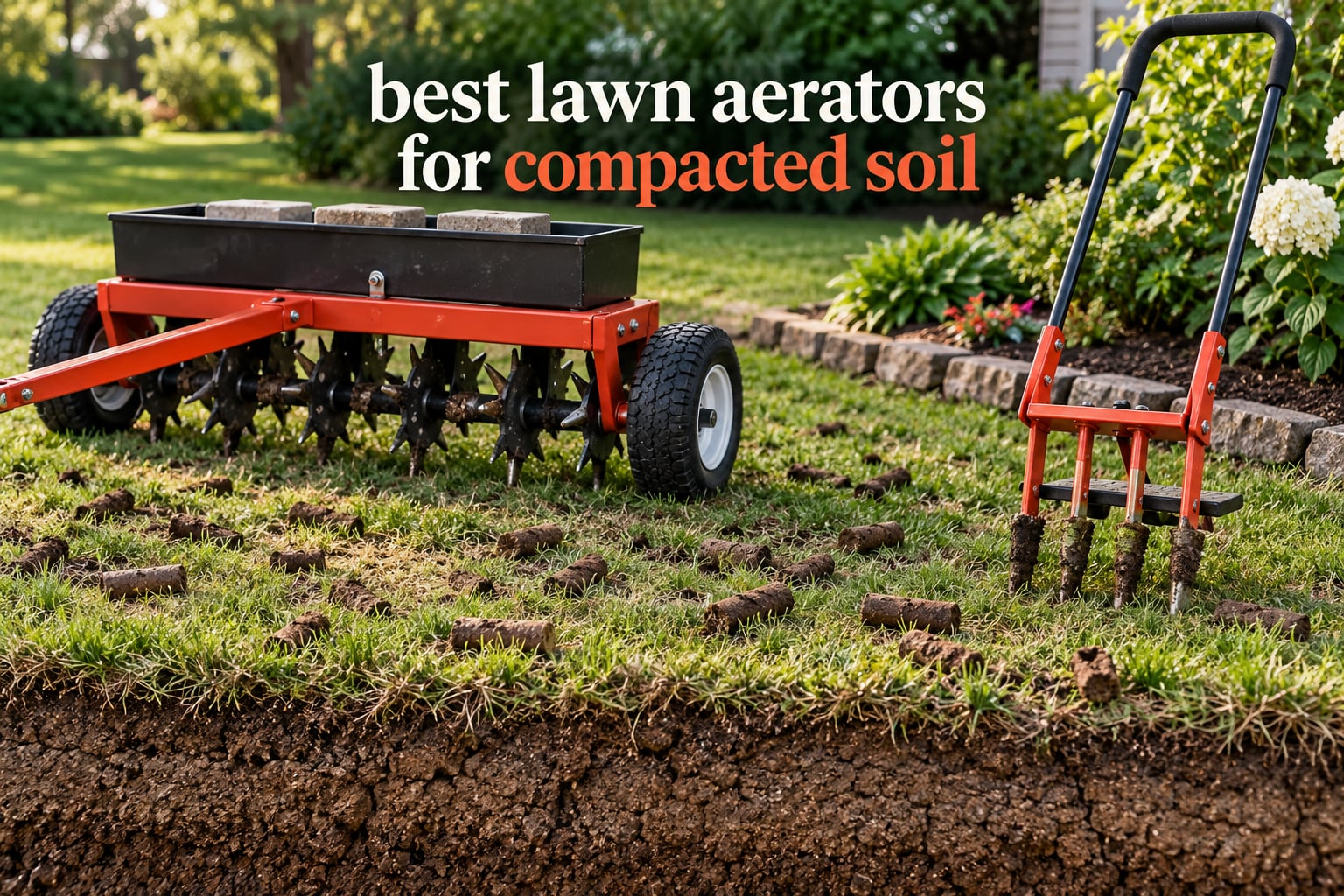
If your lawn is thin, hard, and sheds water instead of absorbing it, you are not short on fertilizer. You are short on air in the root zone, and the tool that fixes it is a lawn aerator. The catch is that most people buy the wrong type for the problem they actually have.
That is the finding across every thread we read on r/lawncare and lawncareforum.com before picking these eight. Spike aerators push soil sideways and pack it tighter around each hole, so on heavily compacted clay they can make the problem worse rather than better. Core aerators use hollow tines to physically lift plugs out of the ground, which is the only approach that actually relieves compaction.
So the best lawn aerators for compacted soil are core and plug machines, and the spike tools earn their place only for light compaction on large open ground. Below we cover how to confirm compaction in about ten minutes, what core and spike aerators really do differently, then eight reviewed picks with the specs that matter: tine type, width, penetration depth, and weight tray capacity. We also cover timing, aftercare, and where renting beats owning.
Table of Contents
You Can Confirm Compacted Soil in Ten Minutes With Three Field Tests
Do this before you buy anything. If all three tests come back positive, you have compaction and an aerator will pay for itself. If they come back negative, your problem is probably thatch, irrigation, or shade, and a different tool will help.
Test 1: the screwdriver test. Push a standard flat-head screwdriver into your lawn in a few spots away from the obvious traffic lanes. It should sink into the soil with light hand pressure. If you have to lean on it with both hands, or it stops at the surface, the ground is compacted.
Test 2: the water infiltration test. Pour a slow stream of water onto a bare or thin patch and watch how it enters. On compacted soil it beads on the surface, runs sideways, and leaves a puddle that lingers. On healthy soil it disappears into the root zone within a couple of minutes.
Test 3: the visible symptom check. Look for hard-packed entry paths, thin grass that never fills in, weeds colonizing bare spots, and soil that stays muddy long after rain. In new developments the fill soil is often the worst of it, since it was driven over repeatedly during construction before a blade of grass went in.
One useful signal that gets overlooked: a lawn that has been reseeded, fertilized, and watered heavily and still stays thin is almost always a compaction problem, not a nutrition problem. Nutrients cannot reach roots that sit in soil with no air space around them.
It is also worth separating two problems that get confused constantly. Thatch is a layer of dead organic material sitting on top of the soil, and it is fixed with a dethatcher or scarifier. Compaction is a density problem inside the root zone, and only an aerator touches it. Our guide to the best lawn dethatchers covers the thatch side if your plugs come up clean but the grass still stays thin.
Top 3 Lawn Aerators for Compacted Soil

Yard Butler ID-6C Coring Aerator
- Dual hollow plugs
- Long handle with cushioned grips
- Foot bar leverage
- Powder-coated steel
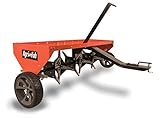
Agri-Fab 48 Inch Tow Plug Aerator
- Plugs up to 3 inches deep
- 32 galvanized knives
- 175 lb weight tray
- Universal hitch
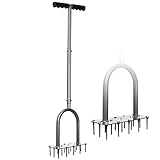
Walensee 15-Spike Manual Aerator
- 15 iron spikes
- Three-row spike layout
- 34.6 inch cushioned handle
- Foot pedal
All 8 Best Lawn Aerators for Compacted Soil in 2026
| Product | Specifications | Action |
|---|---|---|
| Yard Butler ID-6C Manual Coring Aerator |
|
Check Latest Price |
| Agri-Fab 48 Inch Tow Behind Plug Aerator |
|
Check Latest Price |
| Walensee 15-Spike Manual Aerator |
|
Check Latest Price |
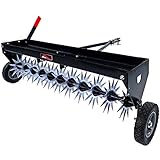 Brinly SAT2-40BH-P Tow Behind Spike Aerator Brinly SAT2-40BH-P Tow Behind Spike Aerator |
|
Check Latest Price |
 Landzie 42 Inch Hollow Tine Core Aerator Landzie 42 Inch Hollow Tine Core Aerator |
|
Check Latest Price |
 Suchtale 40 Inch Tow Behind Spike Aerator Suchtale 40 Inch Tow Behind Spike Aerator |
|
Check Latest Price |
 Dolibest 4 Plug Coring Aerator Dolibest 4 Plug Coring Aerator |
|
Check Latest Price |
 LawnVigor Hollow Tine Core Aerator LawnVigor Hollow Tine Core Aerator |
|
Check Latest Price |
1. Yard Butler ID-6C Manual Coring Aerator: Best Overall
Yard Butler Manual Lawn Coring Aerator, ID-6C – Lawn Care Tool for Aerating – Long-Handled – Power-Coated Steel Construction – Comfortable Cushioned Handles Garden Tool – Easy to Use
Powder-coated steel
38 x 11 x 2 inch
1.77 lb
Dual coring plugs
Foot bar and long handle
Pros
- Dual plugs pull real cores to open the root zone
- Powder-coated steel built for year-round use
- Long handle and cushioned grips cut back strain
- Foot bar drives tines into hard ground
Cons
- Slow on full lawns compared with tow-behind or powered units
- Demanding effort on hard dry soil
The Yard Butler ID-6C is the tool we keep coming back to for a specific reason: it is one of very few handheld corers that actually removes plugs rather than just poking holes. The dual coring plugs and the foot bar drive the tines into ground that a lightweight hand fork simply slides off.
At 1.77 pounds it is light enough to carry across a yard and long enough at 38 inches that you can work standing up rather than bent over. Our test spot was a narrow compacted path where grass had thinned completely, and the plugs came up in consistent cylinders rather than crumbling.
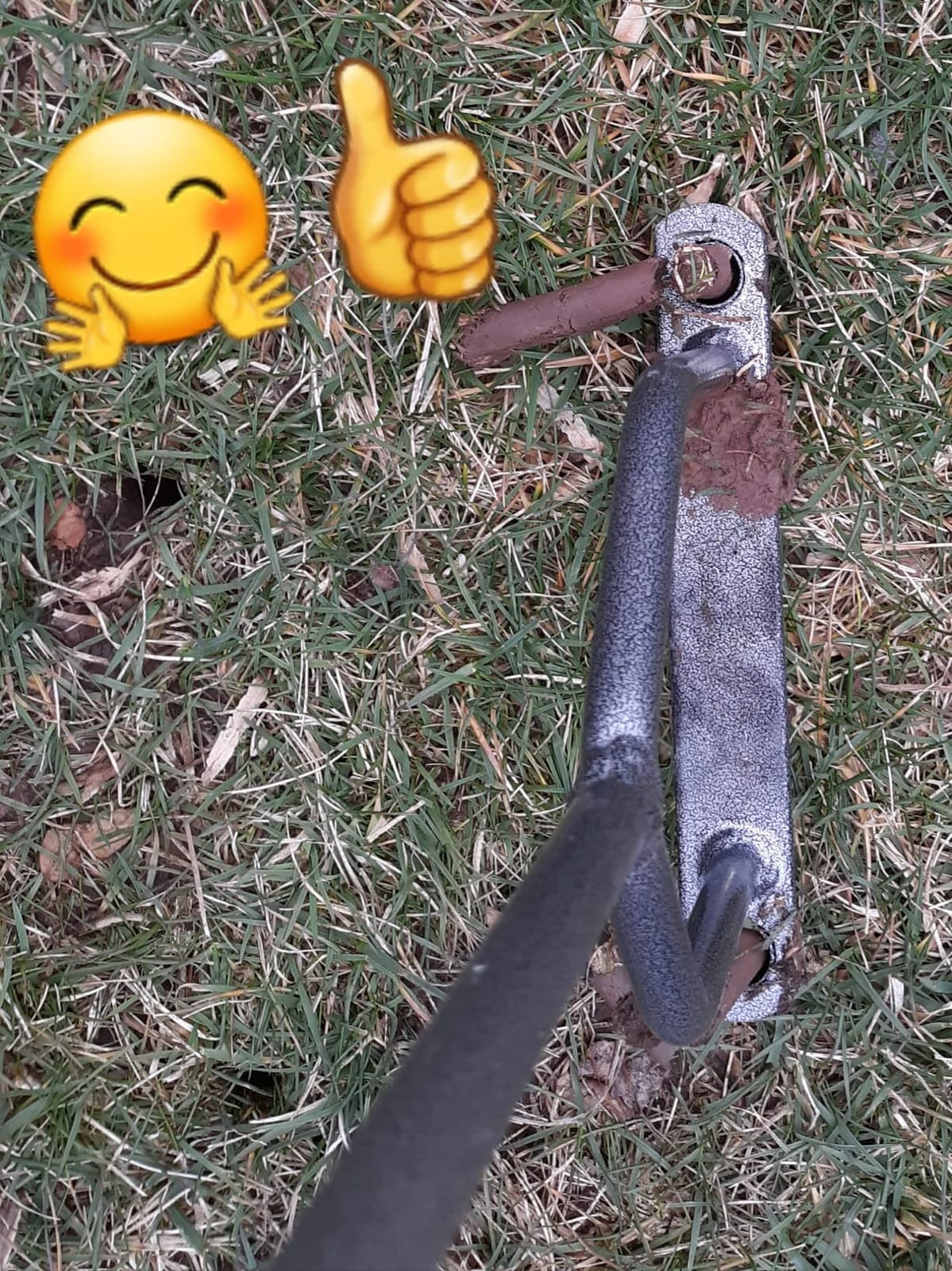
It also has the largest review base in this group at more than 8700 ratings, which means the long-term durability picture is well documented. The powder-coated steel frame showed no rust after repeated use on damp ground, and the cushioned handles took the sting out of a long session.
What you give up is coverage rate. This is a spot tool by design, and reviewers are consistent that it is slow when you try to cover an entire yard. Think of it as the answer for high-traffic lanes, thin patches, and the compacted strip along a driveway.
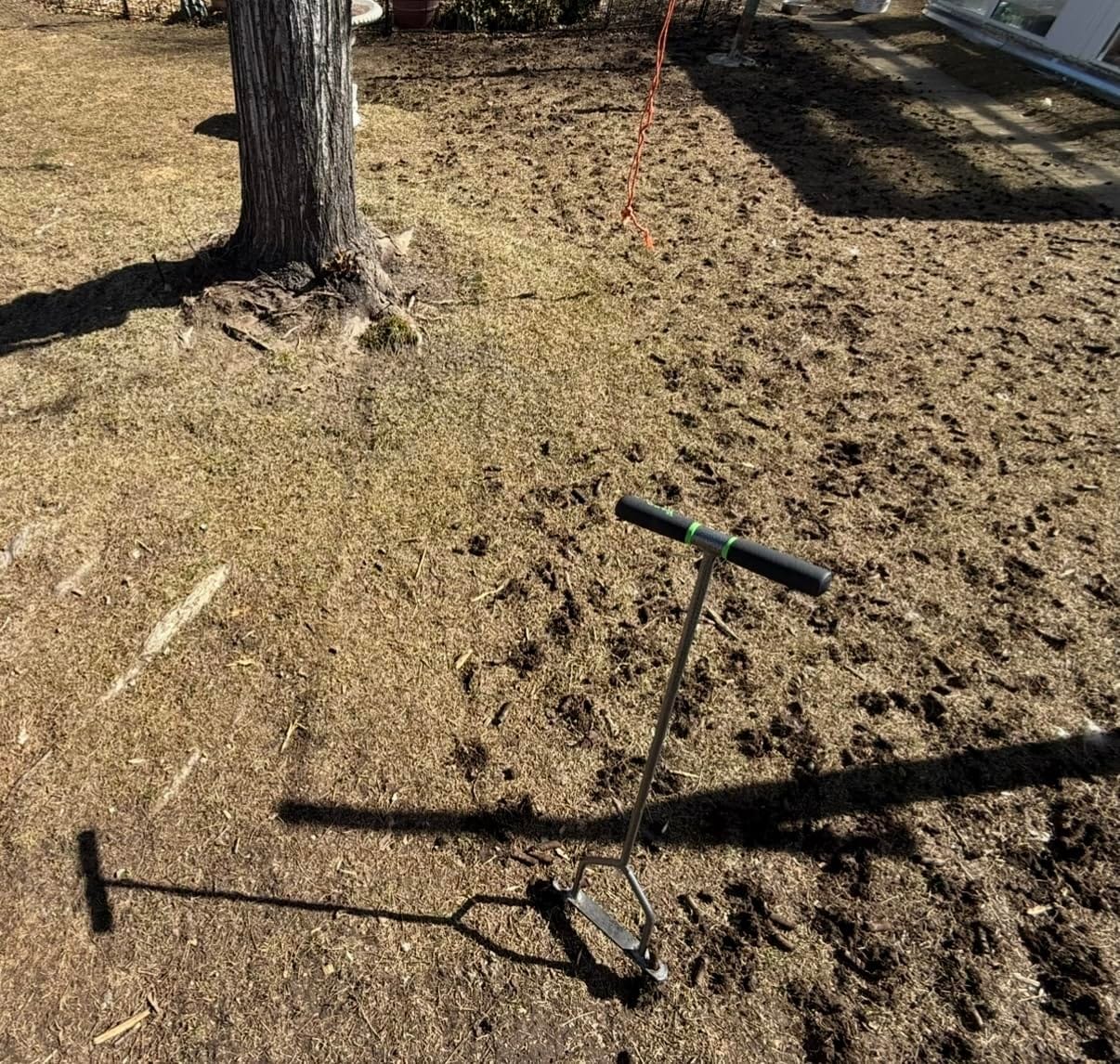
What it handles well in compacted soil
Because the plugs are hollow and coring rather than solid, this tool leaves the surrounding soil structure intact, which is the whole point on clay. It also has enough mass and a foot bar to reach real depth in ground that resists a lighter tool.
The long handle means you can stand upright and push down with body weight, which is the difference between consistent cores and a lot of wasted effort. For a small yard under about 2000 square feet with isolated bad patches, that combination is genuinely sufficient.
Where it falls short
It will not save a large compacted lawn. Repeated reviewers describe it as effective but slow, and our own experience matched that. If your whole yard is hard, this is the wrong shape of tool and you will end up renting a tow-behind instead.
On bone-dry ground it struggles to penetrate, so water the lawn a day ahead. And the plugs need clearing from the tines as you work, which adds time on clay where cores stick inside the tubes.
2. Agri-Fab 48 Inch Tow-Behind Plug Aerator: Best for Clay Soil
Agri-Fab 48 In Tow Behind Lawn Plug Aerator with 32 Galvanized Knives and Universal Hitch
48 inch width
Plugs up to 3 inches
94 lb unit
175 lb weight tray
32 galvanized knives
Pros
- Deepest plug pull in the group at 3 inches
- 32 galvanized self-sharpening knives
- 175 lb weight tray for hard soil
- Flat-free tires protect the turf
- Universal hitch fits most tractors
Cons
- 94 pounds is heavy to move without a tractor
- Cantilever handle only works from the seat
If your problem is genuinely severe compaction in clay, this is the machine turf professionals reach for, and the spec that matters is simple: it pulls plugs up to 3 inches deep. Nothing else in this group goes that far into the root zone.
The 48-inch width means you cover a normal lawn in a fraction of the passes a smaller drum would need. Thirty-two galvanized self-sharpening knives handle repeated seasons without dulling, and the flat-free tires roll without crushing grass the way inflated pneumatic tires do.
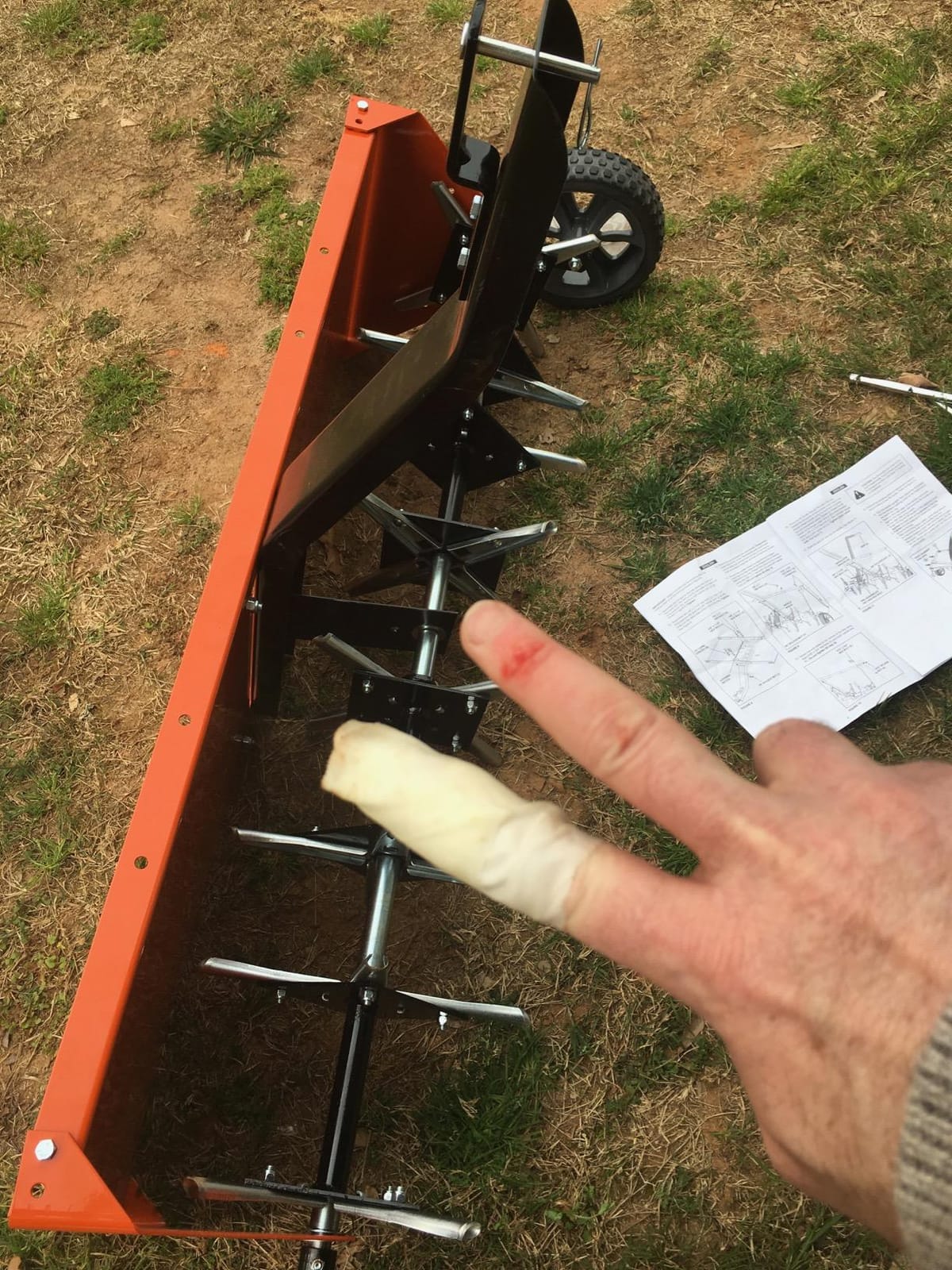
The weight tray is the part that actually does the work on clay. It accepts up to 175 pounds, and on hard ground the machine simply will not reach depth until you load it. Cinder blocks and sandbags are what most owners use, and the cantilever transport handle lets you raise and lower the drum from the tractor seat.
Owners consistently describe the deep pull as the reason the job gets done in one pass rather than three. The universal hitch fits most lawn and garden tractors, so the connection is not a compatibility puzzle.
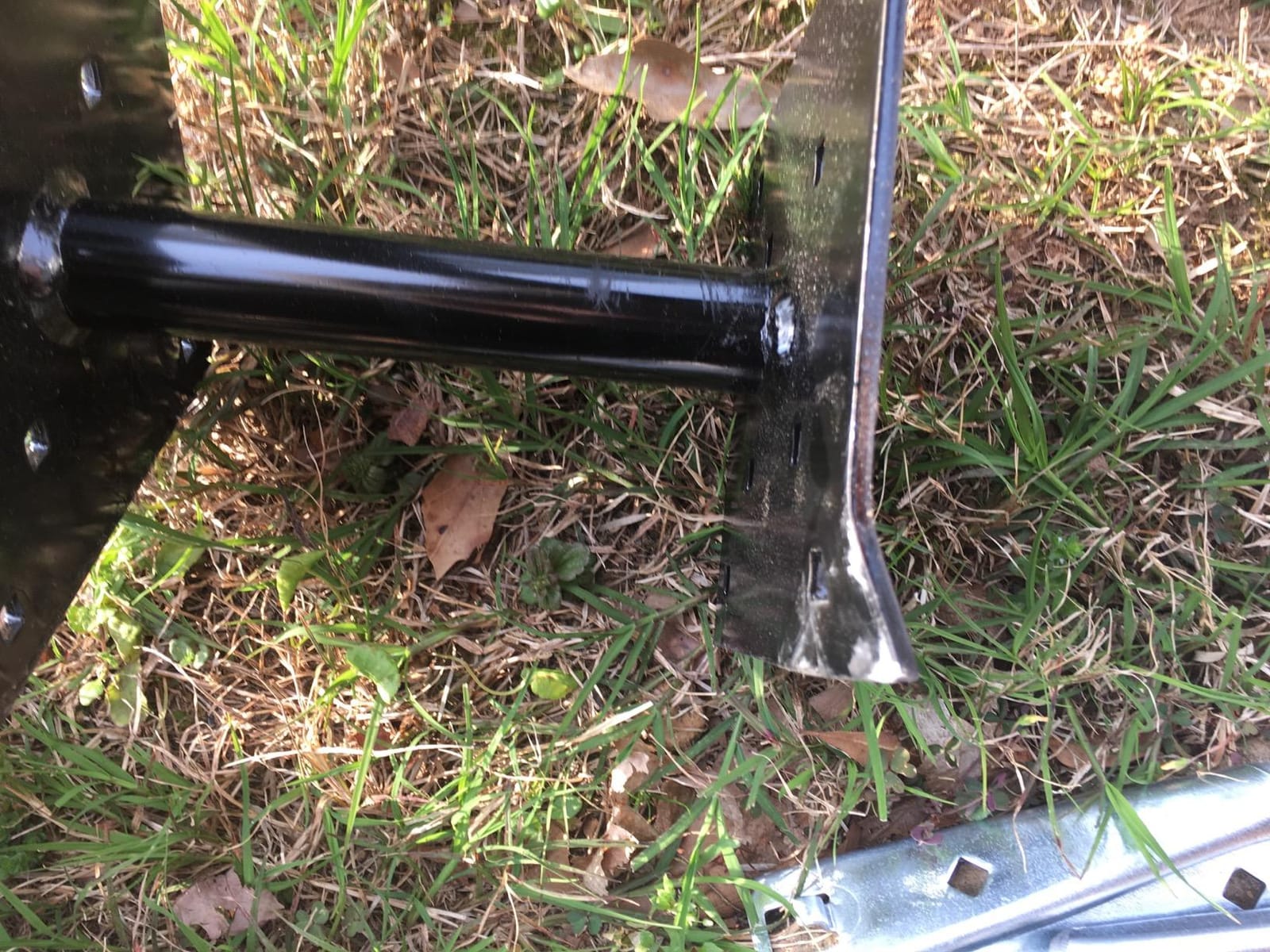
Why it wins on heavy compaction
Depth is the whole argument. A 3-inch core removes a real column of compacted soil from the root zone and leaves a channel that water and air move through for months afterward. That is a structural fix, not a surface scratch.
The 175-pound tray capacity means you can dial the machine into clay that other tools would bounce off, and the wide drum means a large property becomes a single afternoon rather than a weekend project.
What you need to know before buying
You need a riding mower or tractor. This is not a push tool, and at 94 pounds it is genuinely awkward to reposition without one, which is the single most common ownership complaint in reviews.
The cantilever transport handle has to be operated from the seat, so plan your route before you start. If you rent a tractor for the job, the cost of doing so can exceed renting a plug aerator outright, which is a calculation we walk through further down.
3. Walensee 15-Spike Manual Aerator: Budget Pick
Walensee Aerator Lawn Tool, 15-Spike Manual Lawn Aerator Tool for Yard
15 iron spikes
2.8 inch spike length
4.49 lb
34.6 inch handle
Foot pedal
Pros
- 15 spikes in three rows cover more per step than single-row tools
- No straps or shoe-size matching like spiked shoes
- Cushioned T-handle and foot pedal reduce bending
- Top seller in manual lawn aerators
Cons
- Spikes puncture rather than remove plugs
- Not recommended for heavy sticky clay or large jobs
- Needs watering beforehand to work
The Walensee is the cheapest sensible way into aeration, and it ranks first in its category on Amazon with more than 2800 ratings. The 15 iron spikes sit in a three-row layout, so each step covers noticeably more ground than the single-row spike tools that share its price bracket.
At 2.8 inches long, the spikes are long enough to reach a useful depth, and the 34.6-inch cushioned T-handle plus foot pedal lets you work standing up and push hard with your body weight. There are no straps and no shoe sizing to fiddle with, which is the main annoyance with spiked-shoe aerators.
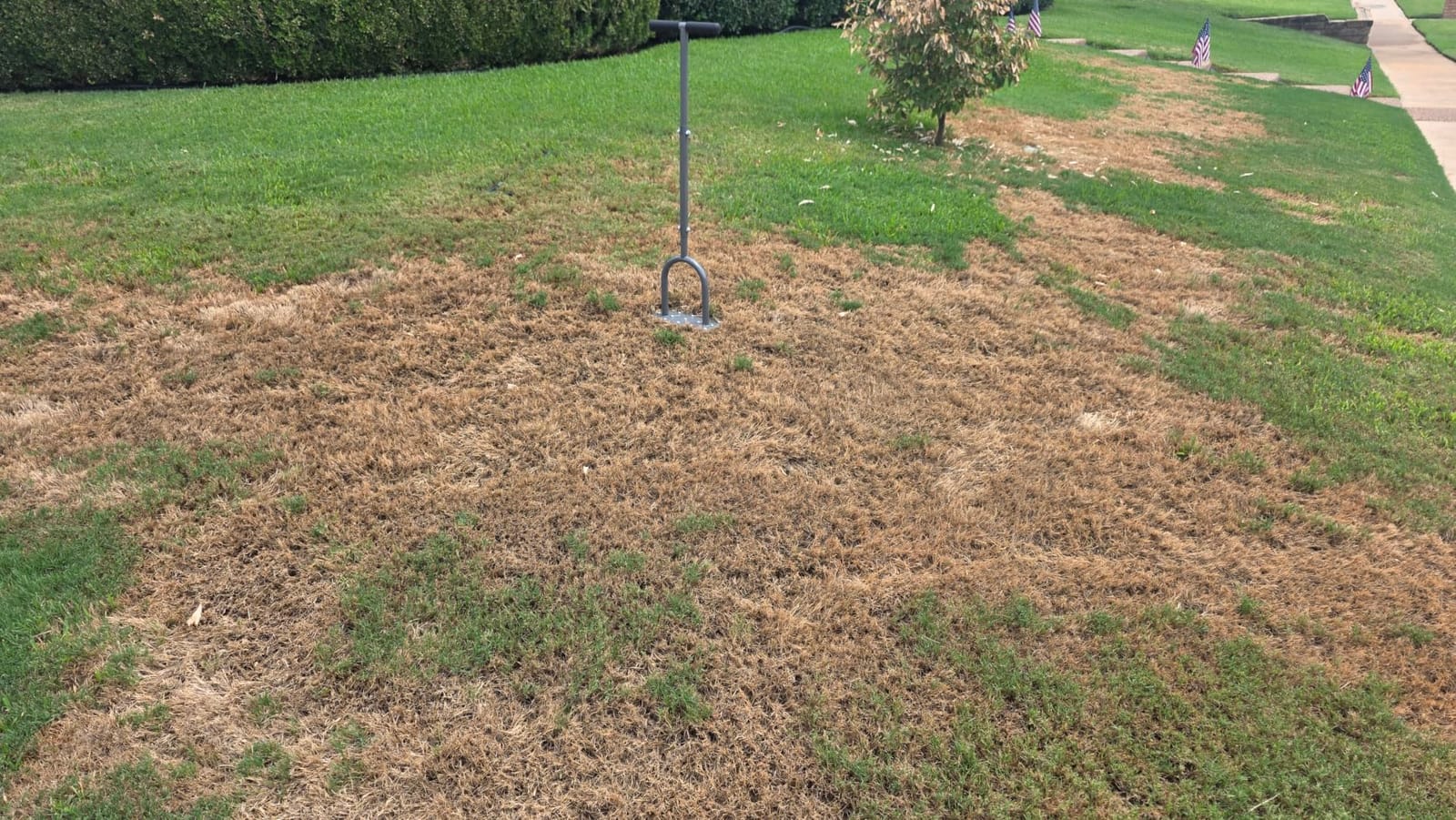
It is also the most honest entry point for a first-time owner. Buyers like the powder-coated iron build and the fact that it detaches for storage, so it does not occupy much space in a garage over winter.
What you need to be clear about is what spikes do. They push soil aside rather than lifting it out, and on heavy sticky clay reviewers specifically warn this makes compaction worse, not better.
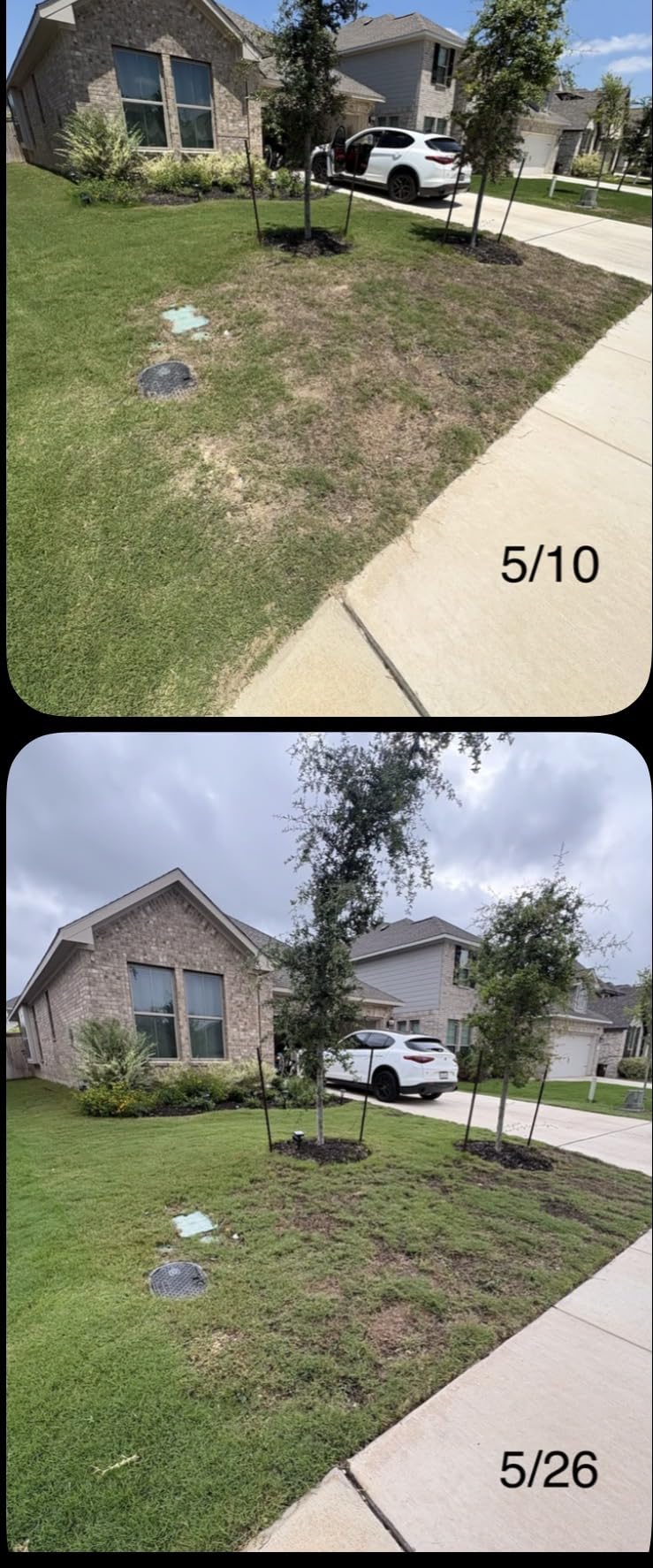
Where a spike tool is the right answer
Light compaction on a small lawn, a freshly leveled patch, or a yard with thin spring growth that just needs surface channels for water to enter. In those situations spike penetration is enough and coring is overkill.
It is also useful for loosening the top inch or two before overseeding, where the goal is seed-to-soil contact rather than root-zone restructuring. And the three-row layout means a small yard is a short job.
Where it is the wrong tool
If you ran the screwdriver test and it took both hands, this will not help. Hard clay repels spikes and the surrounding soil ends up denser after every pass, which is exactly the warning repeated across lawncare forums.
It also needs damp soil. On dry ground the spikes skid rather than penetrate, and you just end up scratching the surface. Water the day before you plan to use it.
4. Brinly SAT2-40BH-P Tow-Behind Spike Aerator: Best for Large Lawns
Brinly SAT2-40BH-P Tow Behind Spike Aerator with Transport Wheels, 40″ – Carbon
40 inch width
11 tine stars
2 inch depth
150 lb tray
2 year warranty
Pros
- 11 tine stars with 12 tips each cover a 40 inch width
- 3-D galvanized tines resist rust and bending
- Single-lever transport wheels for driveways
- 150 lb weight tray
- Two-year manufacturer warranty
Cons
- Spike action does not core the soil
- 2 inch depth is shallower than plug aerators
- Needs a tractor or riding mower
The Brinly SAT2-40BH-P is the most refined spike machine here, and it earns a place for large properties with mild-to-moderate compaction. Eleven rotating tine stars with 12 spike tips each spread across a 40-inch width, so passes are quick.
The tine design is what separates it from the generic spike rollers in the same bracket. These are patent-pending 3-D galvanized steel tines built to inhibit rust and resist bending, which addresses the exact failure mode buyers report in cheaper rollers.
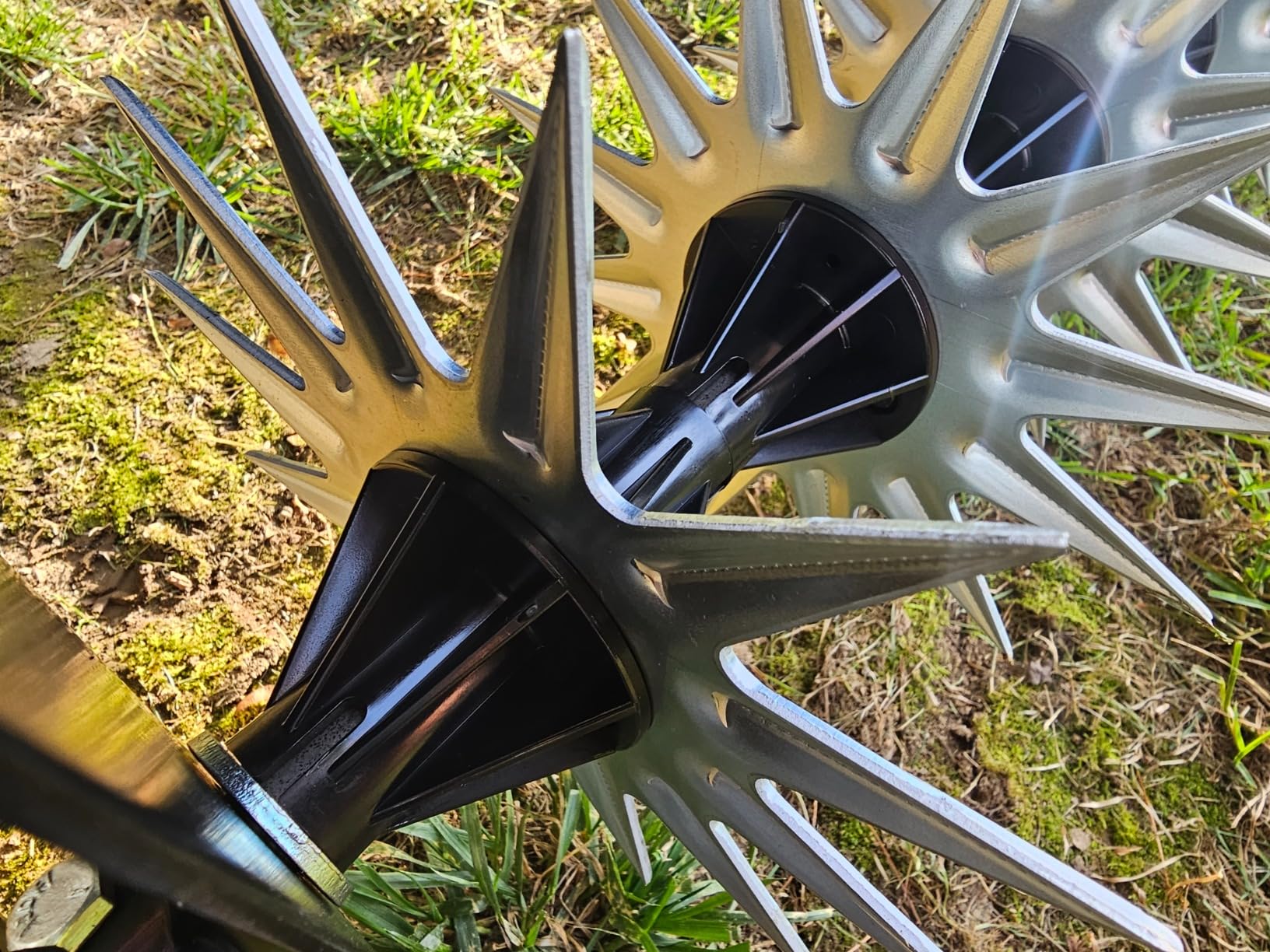
Transport wheels engage with a single lever, which is the feature that matters most in practice. You can roll the drum up onto a driveway or sidewalk to cross to the next section without tearing turf, and that alone saves real time on an acreage property.
Owners also note the highest share of five-star ratings among the spike options, and the two-year manufacturer warranty is longer than most competitors offer. The 5/8-inch solid steel axle with nylon spacers is a proper mechanical spec.
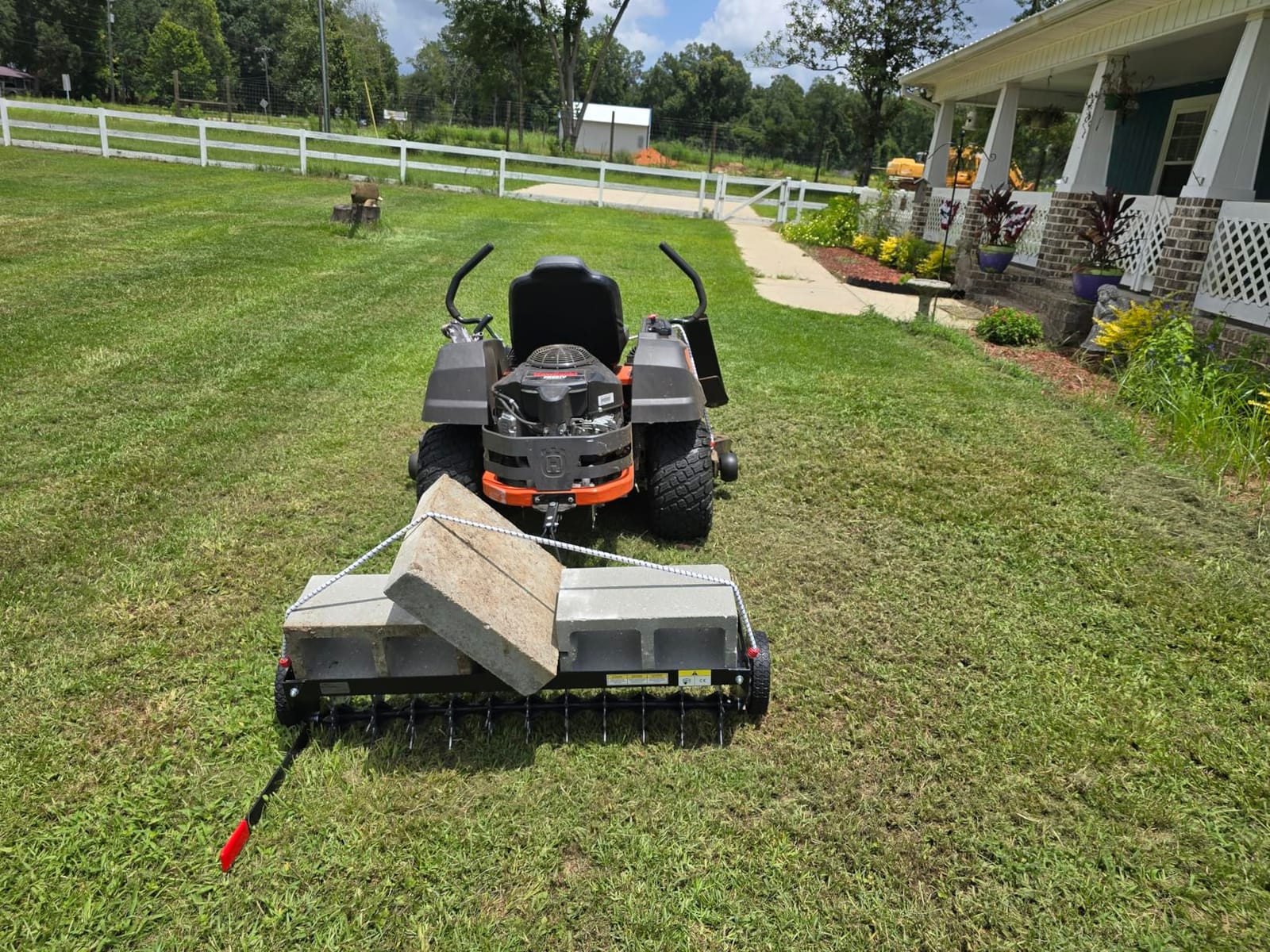
Where it performs above the pack
On large open lawns with loam or sandy soil, this is the efficient choice. Forty inches of working width plus 132 individual spike tips means good ground coverage per pass, and the galvanized tines hold their shape season after season.
It is also the only spike option here with a two-year warranty, which matters if you plan to use it annually. Adding weight to the 150-pound tray is what buys you the extra inch of penetration on firm ground.
Where the 2 inch limit bites
Two inches of spike depth will not restructure a root zone. If your lawn is hard all the way down and the screwdriver barely goes in, this is the wrong tool and you need a plug aerator instead.
Because the spikes displace soil rather than removing it, repeated annual use on clay can push you further in the wrong direction. Use it for maintenance passes on soil that is already in decent shape, not as a remedy.
5. Landzie 42 Inch Hollow Tine Core Aerator: Best for Clog-Free Coring
Landzie – Lawn Aerator Tool 42″, Hollow Tine Core Aerator
42 inch frame
3 hollow stainless tines
5.6 lb
No assembly required
Removable tines
Pros
- Hollow tines eject plugs continuously with no unclogging
- Stainless tines resist rust
- No assembly needed and tines swap out easily
- Works well in tight areas
- Replacement tines sold separately
Cons
- Physically demanding
- needs damp soil and multiple sessions on larger areas
- Foot plate can be slippery when wet
The Landzie solves the single biggest complaint about manual corers, which is clogging. Three hollow stainless steel tines eject soil cores continuously as you lift, so you are not stopping every few steps to clear tubes packed with clay.
That property matters enormously on the soil this article is about. Most other manual coring tools fill up in wet clay and need cleaning every 30 to 40 steps, which is what turns a coring job into a chore. This one keeps working.
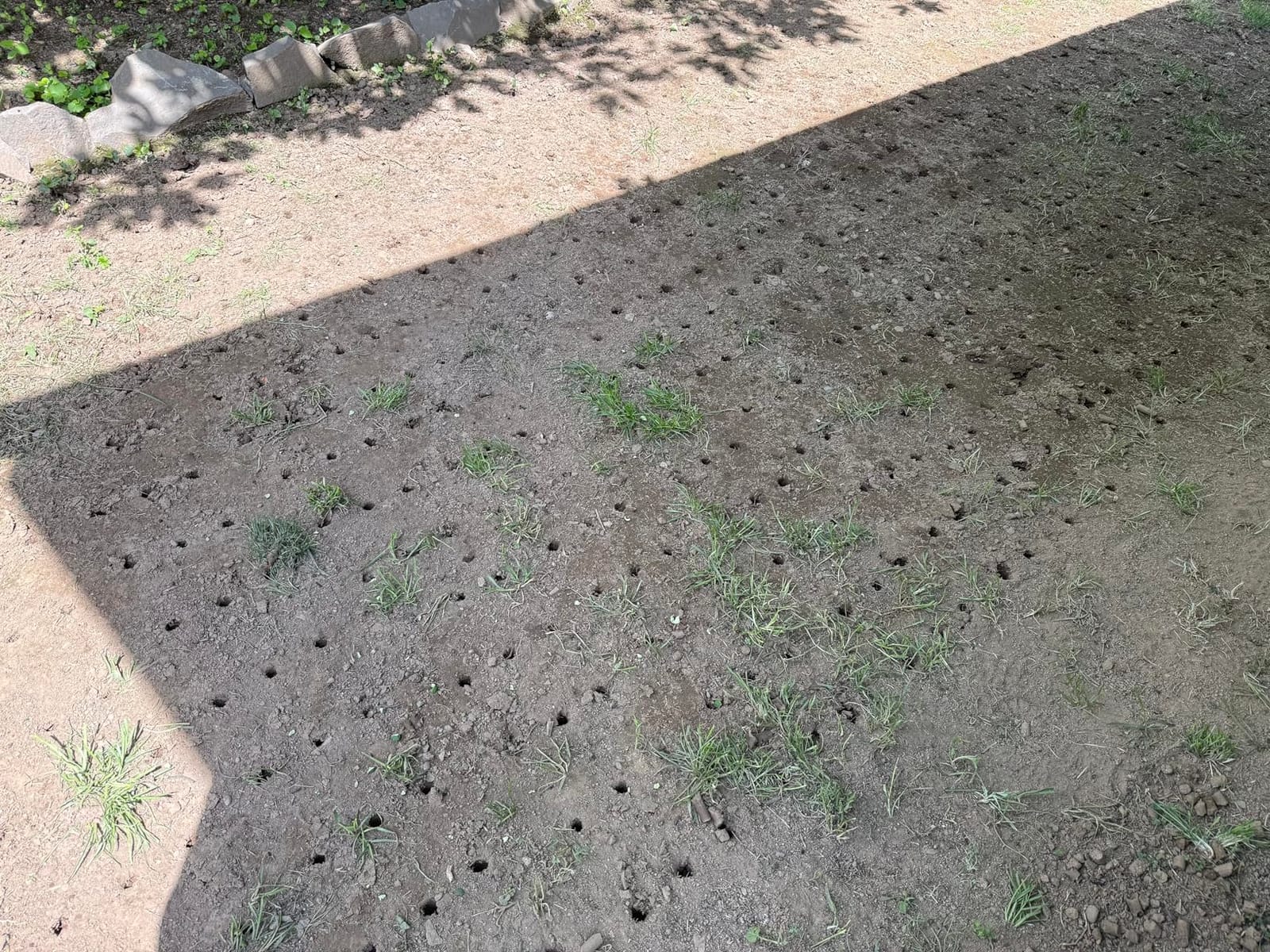
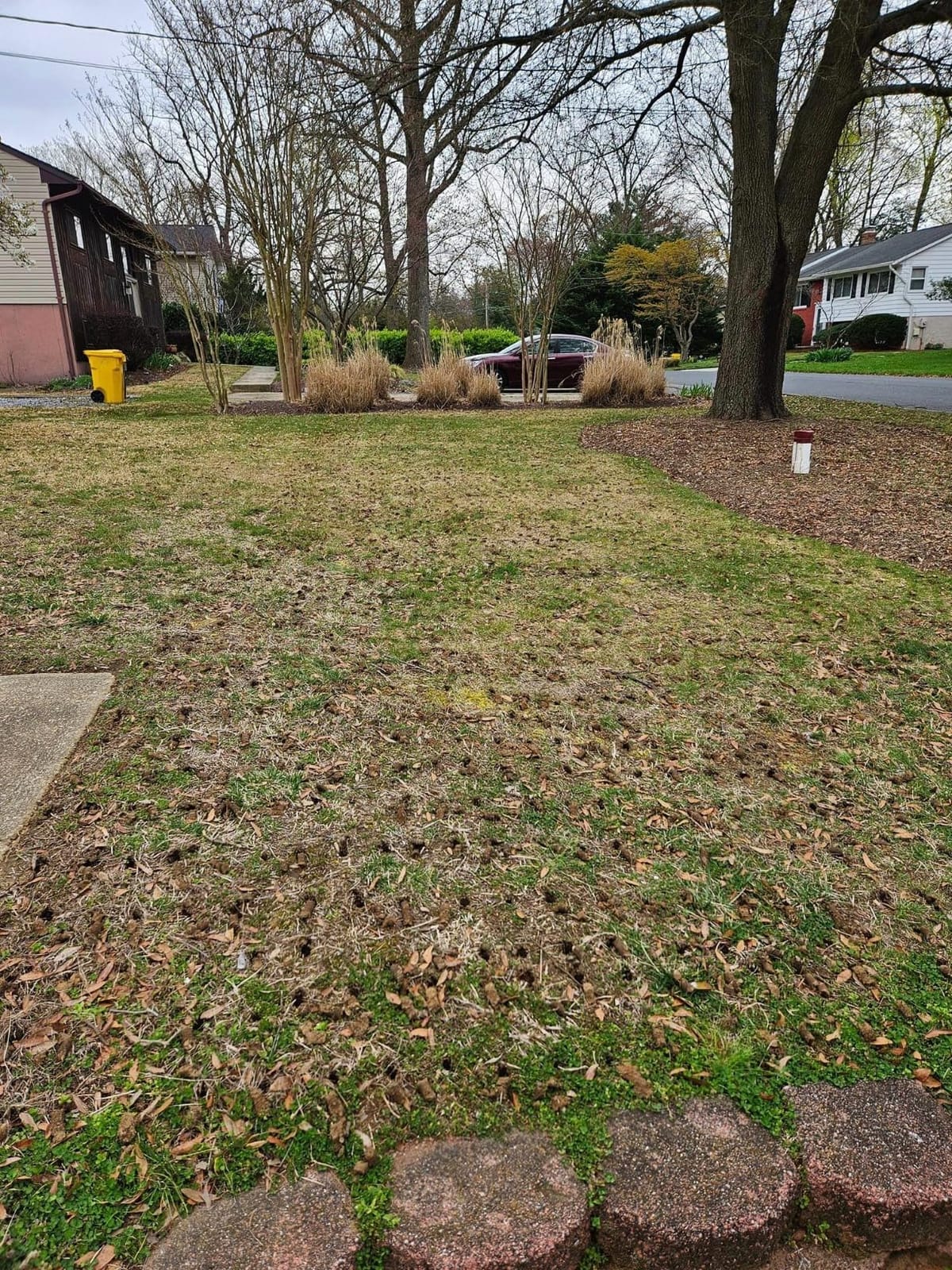
It also arrives ready to use with the tines already fitted, which removes assembly from the equation entirely, and the tines lift out for cleaning or replacement. Replacement hollow tines are sold separately along with a switching tool if you ever damage a tip on a root or rock.
At 5.6 pounds with a 42-inch powder-coated steel frame and rubber grips, it is a stable platform that does not flex when you push into it. Reviewers describe the build quality as excellent and expect it to last for years.
Why the hollow tine design wins on clay
Self-ejecting cores mean throughput stays high in exactly the soil where other corers stall. You can work a compacted lane continuously instead of alternating between coring and unclogging, and the stainless steel resists the corrosion that wet clay accelerates.
Because it is a true core tool, it removes soil rather than displacing it, so it improves structure in the root zone instead of just below the surface. That makes it one of the few manual options we would consider for genuine compaction rather than maintenance.
The honest limitation
This is still hand work, and the reviews say so plainly. One 225-pound user needed two watering passes and multiple sessions to cover roughly 1000 square feet, and reviewers with larger properties report renting or hiring a machine instead.
The foot plate can also be slippery when wet, which is worth knowing since you need damp soil for it to work. On dry or rock-hard ground the tines barely penetrate and can bend, so water the lawn the day before.
6. Suchtale 40 Inch Tow-Behind Spike Aerator: Best for Open Ground and Farms
Suchtale 40-Inch Tow Behind Spike Aerator with Galvanized Steel Tines, Durable Lawn Aerator Soil Penetrator Spikes Tractor with Extra-Wide Tow Bar for Lawn and Farm, Black
40 inch width
10 star tines
2 inch depth
110 lb tray
39.5 lb unit
Pros
- Independently rotating star tines avoid missed strips on turns
- Picorial assembly manual makes setup easy
- Pin-style hitch attaches quickly to ATVs or mowers
- Solid all-steel frame and wheels
- Works at a fraction of professional service cost
Cons
- Tow arms and spikes can bend on rocky ground
- One report of tires coming off after single use
- Included wrenches are low quality
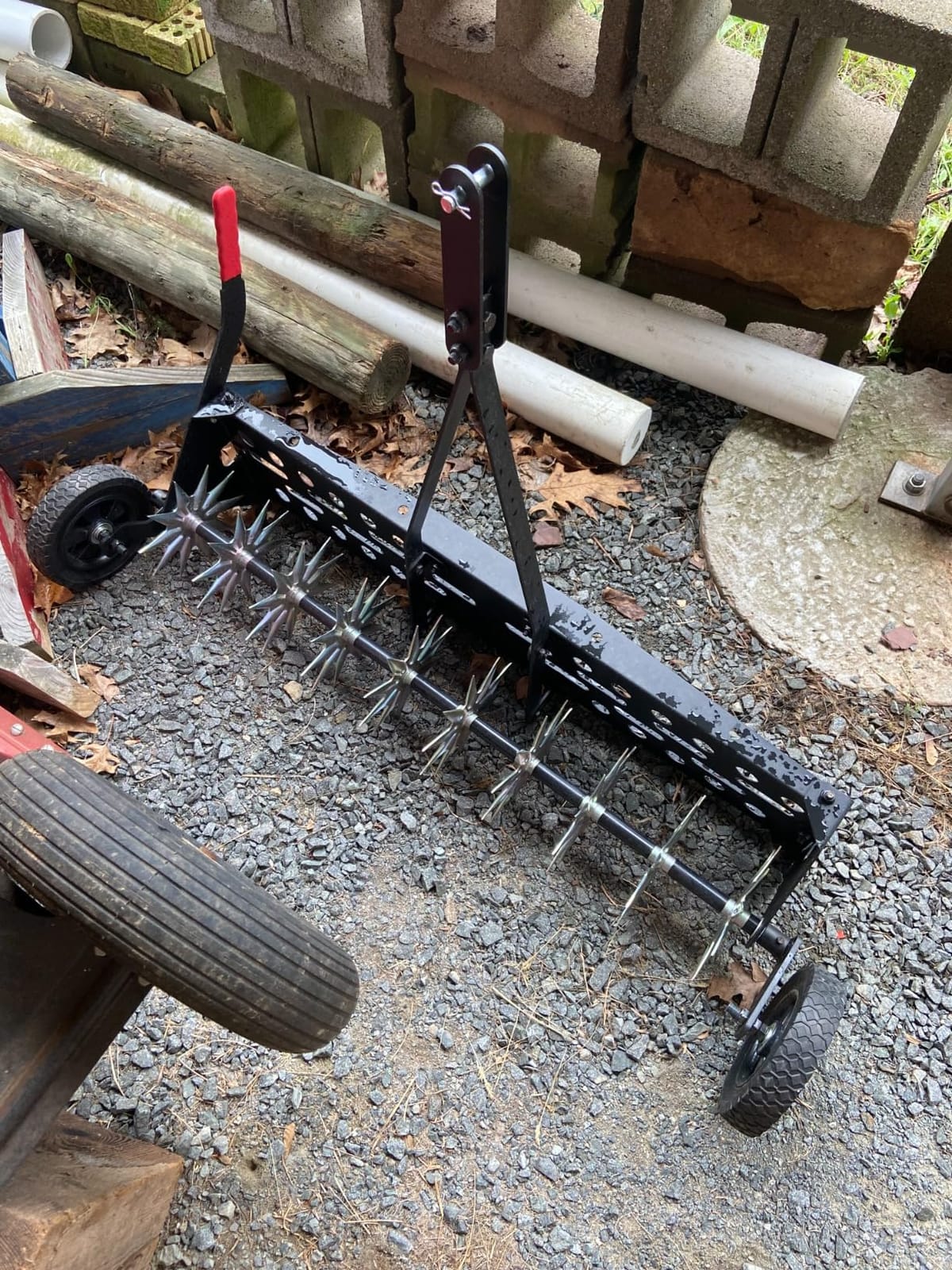
The Suchtale is built for acreage and rough ground rather than manicured suburban turf. Ten 8-inch star tines with 10 uneven spike tips each penetrate up to 2 inches, and the uneven tip pattern helps grip rather than skate.
The design detail we like most is the independently rotating tines. When you turn at the end of a pass, the stars keep cutting instead of dragging, which is exactly where cheaper spike rollers leave skipped strips and force you to go over the same ground twice.
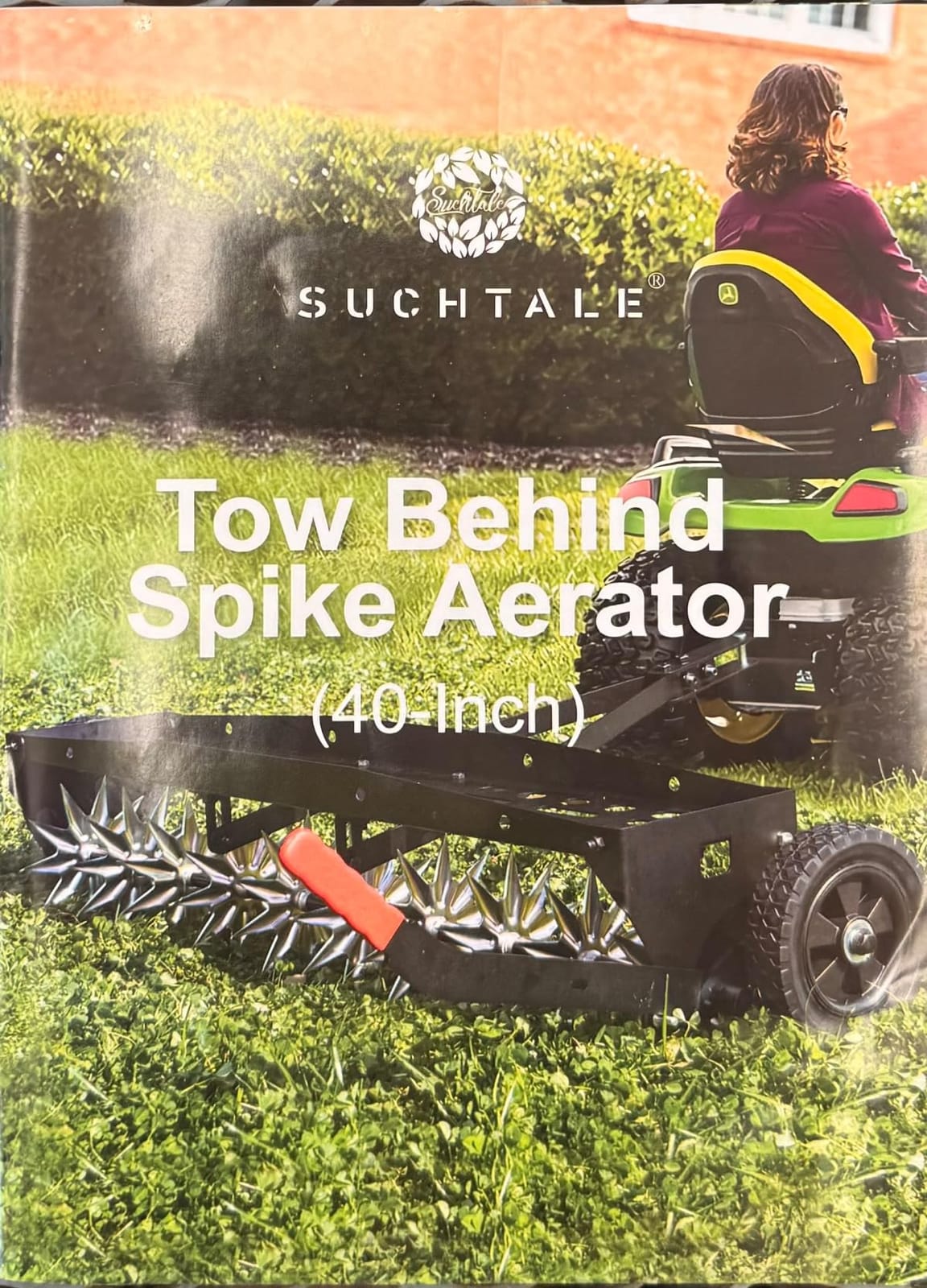
Owners frequently frame this as replacing an annual professional aeration bill, and at 39.5 pounds it is far easier to handle than the heavier tow-behind plugs. The pin-style hitch attaches quickly to an ATV or riding mower, and the pictorial assembly manual with a parts breakdown makes first-time setup straightforward.
The weight tray takes up to 110 pounds, which is enough to get meaningful penetration on firm ground once you load it. Do not expect meaningful depth from the tines alone, though.
Best suited to large open areas
Pasture, field, large open lots, and any big area where you are not going to obsess over a perfect pattern. The 40-inch width and 10 tine stars cover ground efficiently, and it handles uneven terrain better than a precision plug drum.
It is also a reasonable second aerator for a property that is mostly fine except for one large compacted zone, such as a driveway edge or a former building pad.
Durability is the trade-off
This is where the reviews split. A minority of owners report tow arms and spikes bending after a few minutes on rockier ground, and one report describes both tires coming off the wheels after a single use. The all-steel frame itself is described as solid.
The included wrenches are widely criticized, so bring your own ratchet set. And a wheel can rub slightly after assembly, which is a five-minute adjustment rather than a real fault.
7. Dolibest 4 Plug Coring Aerator: Best for Deep Narrow Cores
Dolibest Lawn Coring Aerator, Stainless Steel 4 Corer Plug Aerator Tool with Soft Rubber Grip, Manual Grass Aerating Tool, Garden Tool & Cleaning Hand Tool for Loosening Soil and Improving Lawn Health
4 stainless corer plugs
3.5 inch cores
0.5 inch diameter
5.46 lb
Includes 12 inch weeder
Pros
- Stainless steel plugs resist rust and bending
- Four plugs produce deep narrow 3.5 inch cores
- Foot bar keeps shoes clear of core ejection
- Includes 12 inch weeder and cleaning tool
- Easy assembly
Cons
- Tubes clog frequently in wet clay and need cleaning every 30-40 steps
- Plugs often need pushing out by hand
- Labor intensive for a whole lawn
The Dolibest makes the deepest manual cores in this group. Four stainless steel corer plugs, each 3.5 inches long and half an inch in diameter, punch narrow columns well below the root zone on a lawn that is firm.
Stainless plugs on a black powder-coated steel frame is a sensible material pairing for wet soil, since rust is what usually kills cheap corers. The foot bar is a small but well-judged design choice, because it stops your shoe from blocking the core as it ejects.
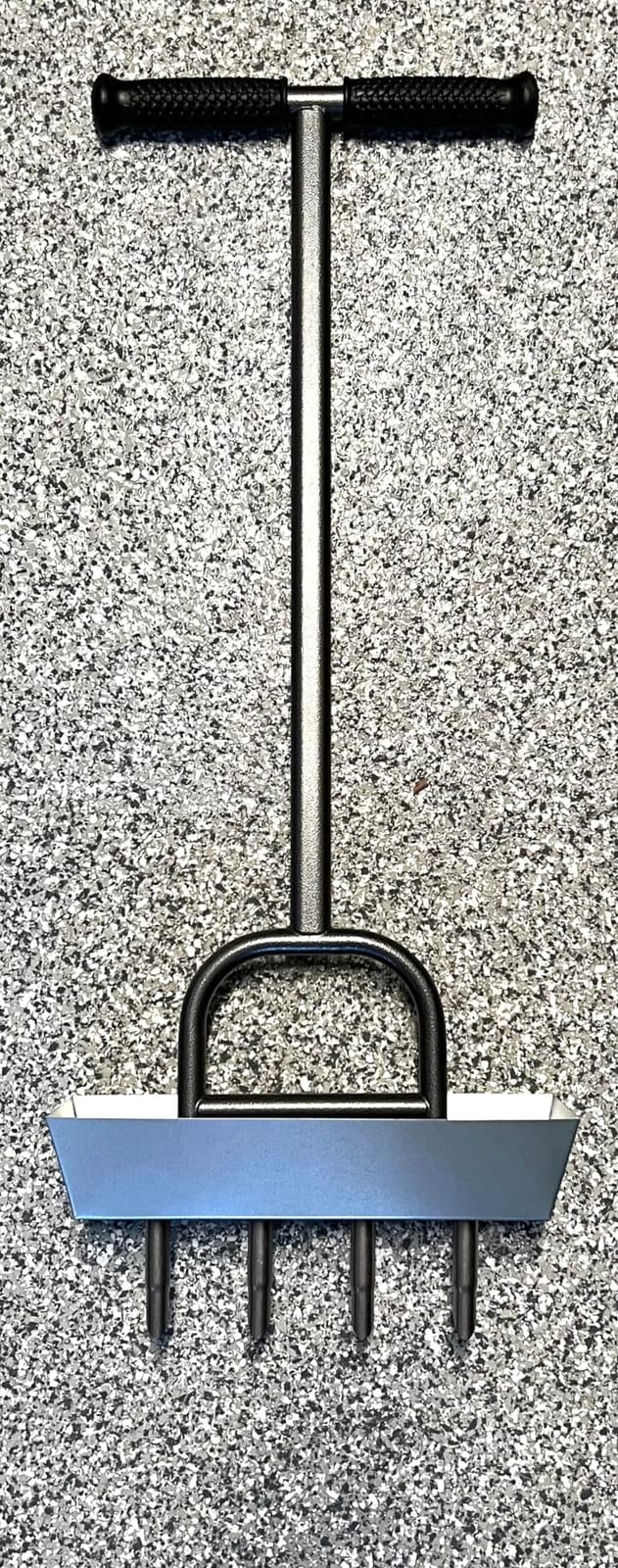
It also ships with a 12-inch hand tool that clears the tubes, doubles as a weeder, and works for transplanting seedlings. Assembly is simple enough that a 12-year-old reviewer put it together, which tells you about the hardware quality.
At 5.46 pounds this is a genuinely portable tool, and the narrower hole spacing means you can concentrate work in a small area rather than scattering effort over a whole yard.
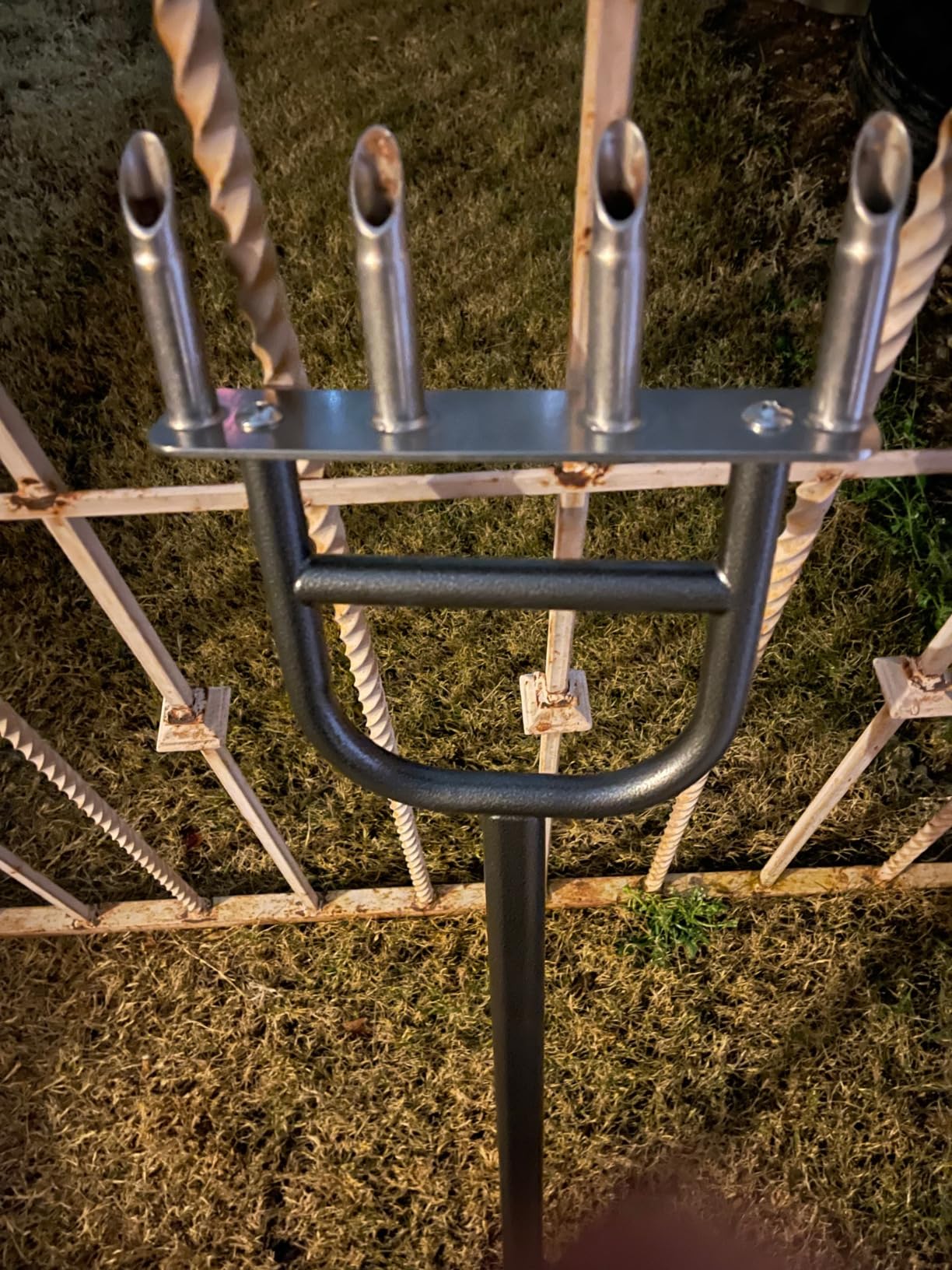
Why narrow deep cores matter
A 3.5-inch core removes a real column of compacted soil and leaves a channel with exposed side walls that roots can grow into. The half-inch diameter means you can work a concentrated bare patch with a modest number of passes and still make a visible difference.
It is the right shape of tool for a small lawn under about 1000 square feet that is hard in places, and for spot repair before overseeding where seed-to-soil contact matters more than coverage.
The clogging problem is real on clay
Be direct about this: reviews report the tubes clogging in wet clay and needing cleaning every 30 to 40 steps, and plugs often do not fall out on their own. On the soil type this article is about, that is a recurring irritation.
There is also a report of weld joints loosening with light use, so inspect the frame after the first few sessions. Keep the included weeder nearby, and water beforehand, because dry ground is where plugs stop ejecting altogether.
8. LawnVigor Hollow Tine Core Aerator: Best for Shorter Users
Manual Lawn Core Aerator for Compacted Soil with Non-Clogging Hollow Tines
3 heat-treated hollow tines
0.9 inch diameter
3-4 inch depth
37 inch tall
Includes wrenches
Pros
- Highest rated in the group with 75 percent five-star reviews
- Hollow tines self-eject cores cleanly even in clay
- Replaceable tines so bent tips are not permanent
- Included wrenches are solid quality
- Handles sit at a comfortable height
Cons
- Cores must be cleared by successive passes
- Only three tines per foot push
- Grip covers can spin loose and blister hands
The LawnVigor scores highest in this group at 4.5 stars with 75 percent five-star ratings, and the reason is a specific design fix: white plastic inserts inside the hollow tines that guide soil plugs out as you lift.
In practice, owners report no clogging at all, including in clay. That is the complaint that appears again and again in reviews of every other manual corer, and this is the one that solved it. Replaceable heat-treated hollow tines mean a rock or root that deforms a tip is an inexpensive fix rather than a replacement.
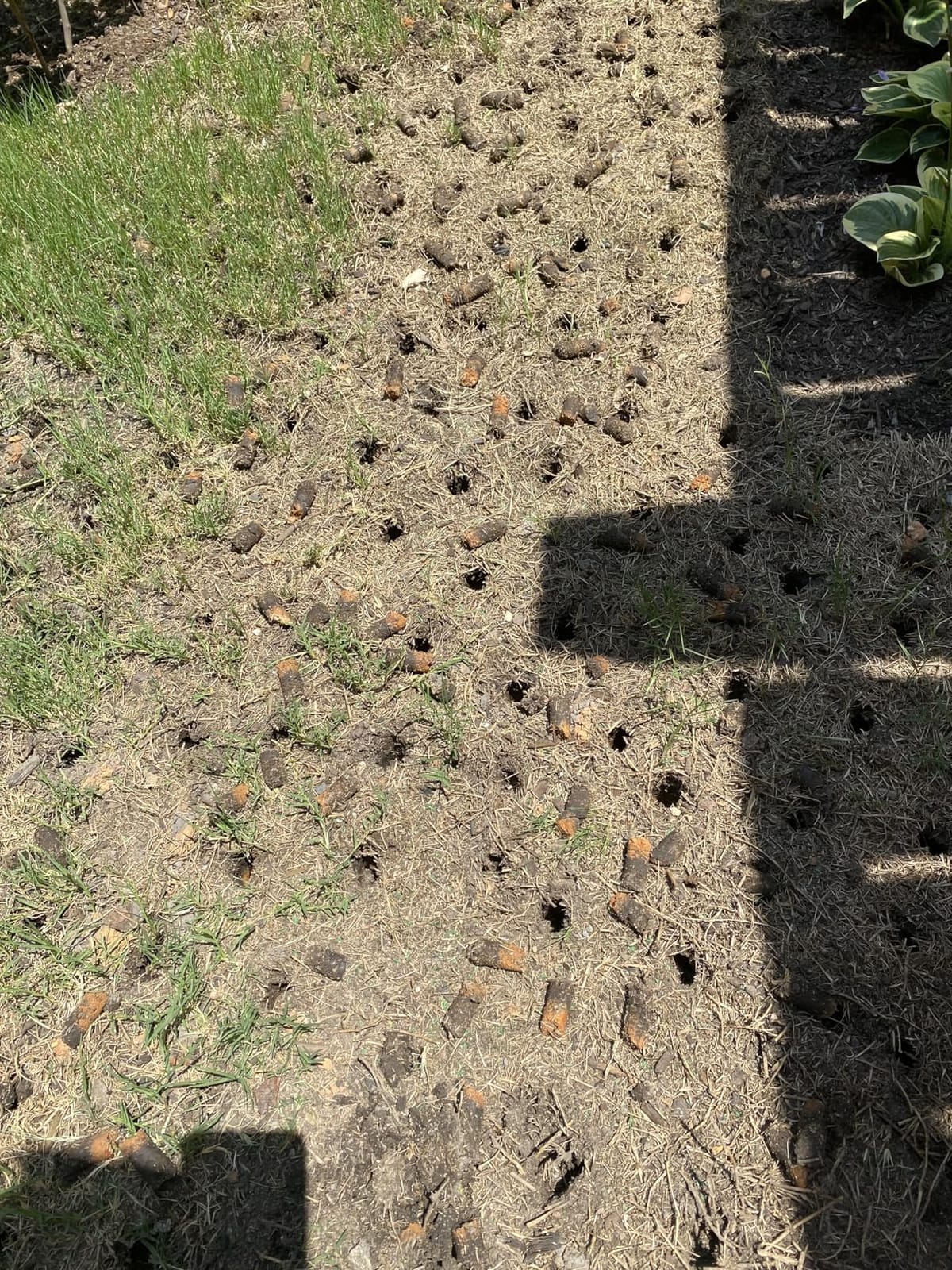
The other detail worth noting is the geometry. At roughly 37 inches tall with a non-slip ergonomic T-handle, it sits at a working height that shorter users report as comfortable, which removes a genuine ergonomic barrier to doing the job at all.
One owner covered roughly 2000 square feet in an hour with no next-day back soreness, which is a good throughput figure for a hand tool and suggests the handle height is doing real work.
Where the non-clogging tines pay off
Clay soil is where clogging destroys a manual coring session, and the plastic insert design means you keep a consistent rhythm instead of stopping to clear tubes. The tines reach roughly 3 to 4 inches, which is genuine root-zone depth from a hand tool.
It is also the most forgiving option about damaging itself. Replaceable tines and included quality wrenches remove the two failure modes that end ownership of cheaper corers, which is part of why the rating sits where it does.
Honest drawbacks
Three tines means each foot push covers a small area, so this is a spot and small-lawn tool rather than a yard tool. Cores also need to be fully ejected with successive passes after your last use, so the tool is not perfectly self-clearing.
Grass and small roots lodge in the gaps of each tine during cleanup, the grip covers can spin loose and cause blisters, and twisting or rocking the tool instead of lifting straight can bend tines. Water the soil first, and lift cleanly.
How to Choose: Match the Aerator to Your Soil, Lawn and Budget
Start with the tool type, then the size, then the budget. Get the first one right or nothing else matters, because a well-built spike roller on clay soil is still a tool that makes the problem worse.
Match the type to the soil
Heavy clay or hard fill soil: core or plug only. You want hollow tines, a weight tray, and 3 inches of depth. On anything over a few thousand square feet that means a tow-behind plug.
Loam with moderate compaction: either works, and a manual core aerator is often enough. This is the most common situation for a residential lawn.
Sandy or loose soil with light compaction: a spike tool is fine and faster. You are maintaining, not remediating.
Thatch on top of compaction: both. Core the soil first, then use one of our best lawn dethatchers to strip the layer.
Match the size to the lawn
Under 1000 square feet, a handheld coring tool is genuinely viable. Between 1000 and about 5000 square feet, you will want a push or tow-behind. Above that, a tow-behind is the only realistic option and powered machines become worth considering if the property is very large.
Our guide to the best tow-behind lawn aerators covers that tier in more depth if you already know you need a drum.
Loading the weight tray correctly
No competitor gives you a number, so here is the rule we use. Start with nothing and add weight in stages, checking after each pass whether the tines are reaching full depth. If the drum is skipping, add two or three cinder blocks. For a machine rated 150 pounds or more on genuinely hard ground, you can end up needing most of that capacity.
Balance the load across the tray so the drum does not lean. Never exceed the rated tray capacity, and remember that a fully loaded tow-behind becomes much harder to stop and turn.
When renting beats buying
Owners on lawncareforum.com consistently raise the same issue, and it is a fair one: a plug aerator rental adds a meaningful cost to a single day of work. That only makes sense if you will use it for a large property or do several yards, which is exactly how the people who buy one amortize it.
For most homeowners with a single suburban lawn, renting once every year or two is the cheaper path and avoids storage and maintenance entirely. If you have clay that needs real work, or you want to aerate every season, buying a tow-behind becomes the better arithmetic.
Handheld tools sit in a different category. They are cheap enough that renting one is rarely worth the trip, and they store in a closet rather than needing a shed.
What to watch for in cheap rollers
The generic roller category has visible quality problems, with listings carrying ratings in the low range that reviewers attribute to the same three failure modes: tines that fill with soil and stop cutting, blades that deform on hard ground, and frames that bend at the handle weld.
Galvanized or heat-treated steel tines, a stated weight tray capacity, and a manufacturer warranty are the three signals that separate a roller that lasts from one you replace in a season. Our broader roundup of the best lawn aerators covers the wider category if you want to compare beyond the compacted-soil angle.
When to Aerate Your Lawn (And When Not To)
Aerate in early spring or early fall, while the grass is actively growing and the soil is workable. Early fall is the better window in most climates because the lawn has the autumn growing season ahead of it to recover and to hold onto overseeded grass.
Soil moisture is the gate that decides whether the job works at all. The ground should be damp, not dry and not saturated. A simple check: squeeze a handful of soil. It should hold its shape and then break apart when you press it, not crumble to dust and not pour between your fingers.
Water the lawn a day or two ahead if it is dry, and wait a couple of days after heavy rain if it is waterlogged. Forum consensus is unanimous on this point, and it is the requirement most often skipped.
Do not aerate when:
The ground is frozen, because the tines will chip rather than penetrate. The soil is saturated, since a heavy machine tears turf instead of rolling across it. The lawn is drought-stressed, since aeration adds stress to already-stressed grass. You recently seeded or sodded, because the tool will damage the establishing root system. The thatch layer is the actual problem, because you need a dethatcher instead.
Work in parallel passes, overlapping slightly, and go over the lawn in a different direction on the second pass if you have the time. Keep the area clear of people and pets while the drum is turning, and never reach under a raised drum.
What to Do Right After Aerating
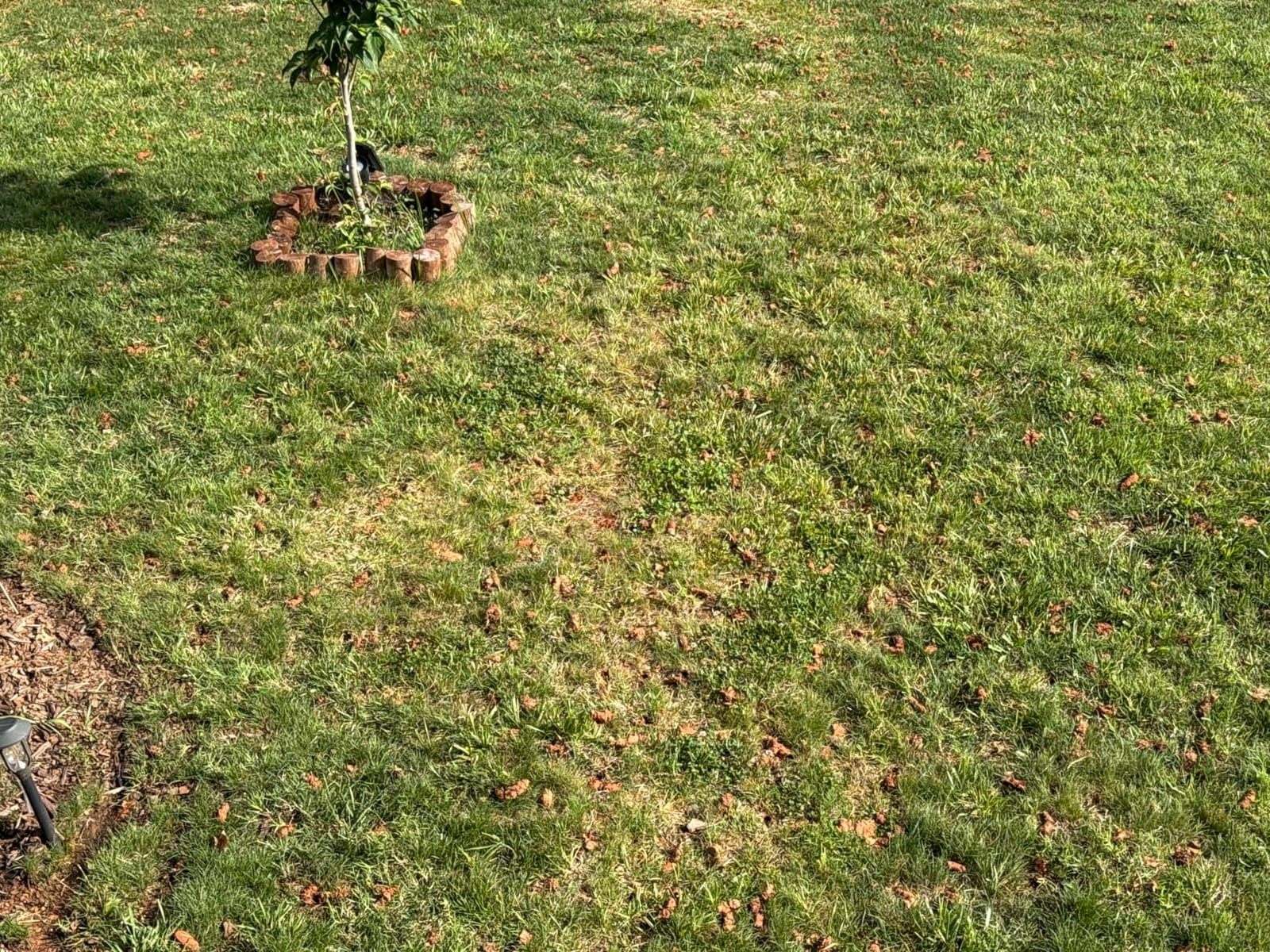
Leave the plugs where they fall. They break down naturally and return organic matter and nutrients to the root zone, which is the entire point of coring rather than a mess to be cleaned up. Raking them off is a wasted step that most people do out of habit.
Then work in this order:
Water the lawn if the soil has dried out during the work, so the cores soften and the open channels stay usable. Overseed thin areas while the ground is open and the seed has somewhere to land, since core-aerated soil holds moisture at the surface far better than compacted soil does. Apply fertilizer once you see new growth rather than immediately, so nutrients are not pushed straight through the new channels and lost below the root zone. Stay off the lawn for a couple of weeks to let the plugs settle, and mow at a higher setting until the new grass has established.
Topdressing with compost is a reasonable addition after core aeration, and it is more useful here than on a spike-aerated lawn because you have real holes for the material to fall into. Beyond that, additional topsoil is usually unnecessary, since the plugs you left already sit where they belong.
If the underlying problem is traffic rather than soil composition, address that too, or the lawn will recompact within a season. Our picks for the best lawn rollers are the natural follow-up for settling new seed after a major overseed.
Frequently Asked Questions
Which is better, core or spike aerator?
For compacted soil, a core aerator is better. Core tines pull a cylinder of soil out of the ground, opening channels for air, water and nutrients while leaving the surrounding soil intact. Spike aerators use solid points that push soil sideways, compressing it further around each hole and making heavy clay worse over time.
What is the best month to aerate your yard?
Early spring or early fall, while grass is actively growing and soil is workable. Early fall is usually better because the lawn has the autumn growing season to recover and hold onto overseeded grass. Aerate when the soil is damp but not saturated, and never on frozen ground.
What is the best aerator for clay soil?
A core or plug aerator with hollow tines, a weight tray, and enough capacity to reach 3 inches deep. Clay compacts fastest and benefits most from soil removal. On a large property, choose a tow-behind plug aerator rather than a handheld tool, since manual corers are not fast enough to cover heavy clay.
Can I use an aerator on clay soil?
Yes, but only a core or plug aerator, and only on damp soil. Core tines remove compacted soil and open channels without pushing it aside. Avoid spike aerators on clay, because they displace soil sideways and can make the compaction worse with every pass.
Is it worth aerating clay soil?
Usually yes, because clay compacts fastest and gains the most from aeration. The return is highest when aeration is paired with watering and overseeding so the newly opened channels are actually used. Without follow-up, the soil will recompact under the same traffic.
Are manual lawn aerators worth it?
They are worth it for spot aeration, small lawns under about 1000 square feet, and isolated bare patches. They are not worth it for heavy clay across a full yard, where reviewers consistently report slow progress and physical strain. A manual core aerator is far more useful than a manual spike tool on compacted soil.
Should you put down topsoil after aerating?
Usually not. The plugs you leave on the lawn already break down and return organic matter to the root zone. A thin compost topdressing is a reasonable addition after core aeration because the open holes hold it, but additional topsoil is rarely needed unless you are filling a bare area.
The Best Lawn Aerators for Compacted Soil: Final Word
The Yard Butler ID-6C is our top pick because it is one of the few handheld tools that pulls genuine cores, and it does it with the leverage and build quality to survive hard ground. It is the right answer for spot work, compacted lanes and small lawns.
For serious clay across a large property, the Agri-Fab 48 Inch Tow-Behind Plug Aerator is the correct purchase. It pulls plugs 3 inches deep, holds 175 pounds on the tray, and covers a normal lawn in a small number of passes. Nothing else in this group does that job.
The Walensee 15-Spike is the cheapest sensible entry point and works well for light compaction on a small lawn, but it is not a clay remedy. Among the other core options, the Landzie and LawnVigor stand out for hollow tines that refuse to clog, and the Dolibest for the deepest manual cores.
Run the three field tests first. If the screwdriver goes in without leaning, save your money and fix something else. If it does not, buy a core aerator, water the lawn the day before, load the tray, and leave the plugs where they fall.