
The best audio baby monitors for small apartments are the VTech DM221 for most households, the VTech DM111 if you want the simplest possible setup, and the Motorola PIP12 if you travel with the baby or want rechargeable batteries and two-way talk. In a studio or one-bedroom flat, the nursery is usually one drywall partition away from where you sleep, so you need a monitor for reach and quiet, not for range.
That single fact changes what matters. The advertised 1,000-foot range on the box is an open-air number measured across a field, and it tells you nothing useful about the distance between a crib and a kitchen counter in a sixth-floor condo. What actually earns its place in a small apartment is a dedicated radio link with no WiFi, a parent unit you can clip to your belt, and a sensitivity control that stops the TV in the next room from waking you at 2am.
We spent weeks with all six audio-only monitors in this roundup, moving them between a studio and a one-bedroom flat with shared walls. Every pick below is a no-WiFi system, so there is no account to create, no app to install, and no video feed sitting on a cloud server next door. If you want the wider category, we also cover baby monitors of every type and the low-emission picks in our low EMF baby monitor guide.
Top 3 Best Audio Baby Monitors For Small Apartments (October 2026)


Quick Overview of Every Pick
All six units are audio-only, all run on a dedicated radio rather than your WiFi network, and none requires a subscription. Scan the rows below first, then read the full review for the one or two that match your floor plan.
| Product | Specifications | Action |
|---|---|---|
| VTech DM221 |
|
Check Latest Price |
 VTech DM111 VTech DM111 |
|
Check Latest Price |
| Motorola PIP12 |
|
Check Latest Price |
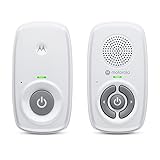 Motorola AM21v2 Motorola AM21v2 |
|
Check Latest Price |
 VTech DM271-102 VTech DM271-102 |
|
Check Latest Price |
 Motorola PIP10 Motorola PIP10 |
|
Check Latest Price |
Do You Even Need a Baby Monitor in a Small Apartment?
In a one-room studio where the crib sits four feet from your bed, a monitor is often reassurance rather than a necessity. Several parents told us they hear their baby through the wall anyway and treat the monitor as a way to check breathing and movement without stepping into the room and starting the wake-up cycle.
That said, a monitor earns its place in three common small-apartment situations: the nursery is on the far side of the living room while you work from the kitchen table, a sibling shares the room and you need to hear over a closed door, or street and elevator noise makes open-door listening useless. Our video monitor guide covers the cases where a camera genuinely helps, which in most studio flats it does not.
One honest caveat from the wider medical community: no audio monitor can prevent sudden infant death syndrome, and the American Academy of Pediatrics advises against relying on any consumer device as a safety guarantee. Place the baby on their back in a firm, flat, separate sleep surface, and use the monitor for awareness only.
If a video feed is on your list anyway, read our non toxic camera monitor review first, since materials matter more in a nursery nook than they do in a large house.
1. VTech DM221 – Best Overall for Small Apartments
VTech Communications DM221 Audio Baby Monitor with up to 1,000 ft of Range, Vibrating Sound-Alert, Talk Back Intercom & Night Light Loop, White/Silver
DECT 6.0
1000 ft max range
12.8 oz
Vibrating alert
Talk-back intercom
Night light
Pros
- Highest average rating in this roundup
- Very stable DECT 6.0 link through walls
- Vibrating alert monitors without waking a partner
- Talk-back intercom for soothing from another room
- Adjustable mic sensitivity filters household noise
Cons
- Short cordless battery runtime on the parent unit
- Night light times out unless the setting is changed
- Extra parent units cannot be added after purchase
The DM221 is the unit we kept reaching for during this roundup, mostly because the vibrating sound alert changes how you use it. Instead of holding the parent unit to your ear at full volume and lighting up the whole room, you clip it to the nightstand and feel it buzz. In a small bedroom where you share the bed space with a sleeping partner or a toddler, that is the single most useful feature on this list.
The link itself is DECT 6.0, a dedicated digital band around 1.88-1.90 GHz that nothing else in your apartment competes for. That matters more than people expect: with a crowd of WiFi devices, a Bluetooth speaker, and a neighbour’s router stacked on the same channel, analog monitors drift into static. We did not run into that with the DM221 over two floors and several interior walls.
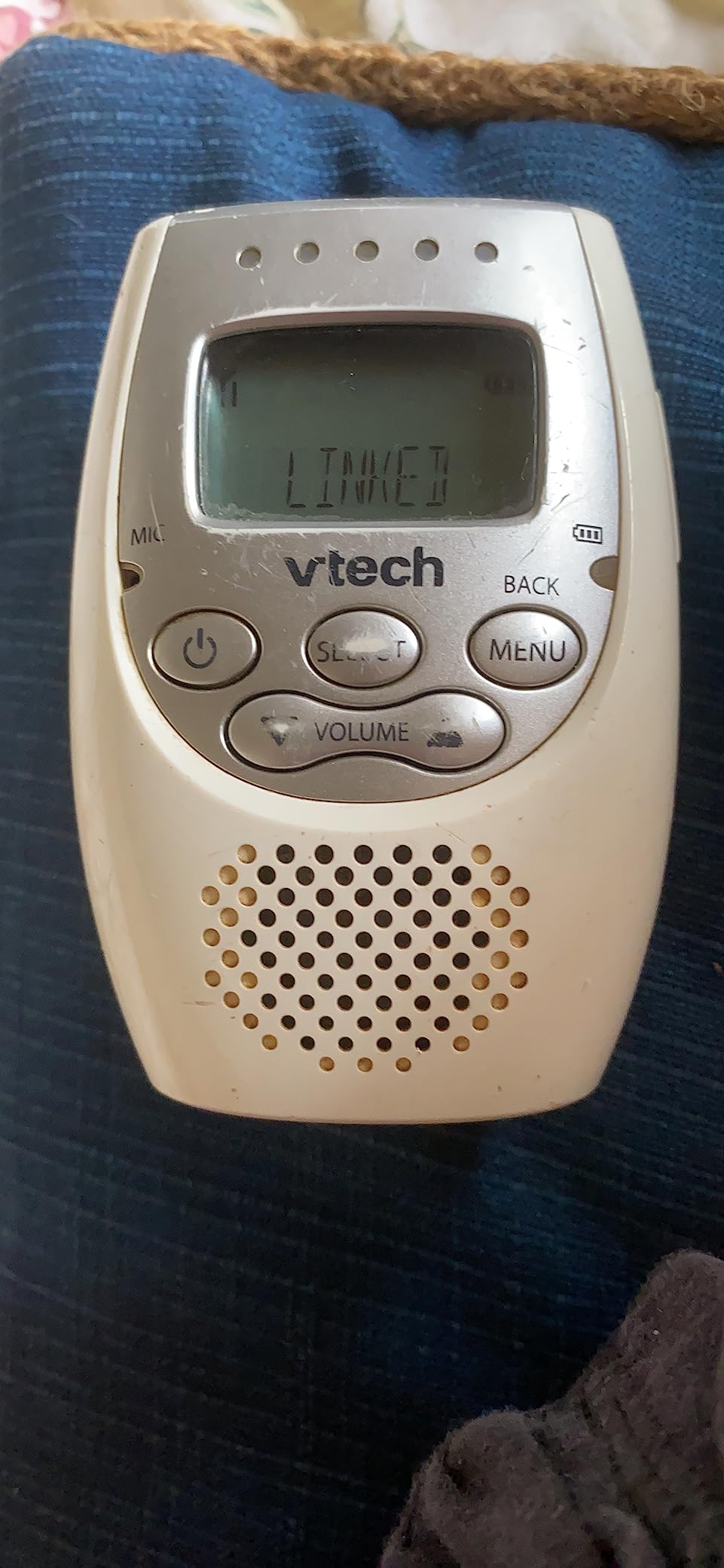
Talk-back works well for settling a baby who has woken but is not yet crying. You press the button and speak from the kitchen while the nursery speaker carries your voice across, which spares you the trip down the hallway. The baby unit also has a night light you can switch from either piece, and the parent unit has five sound-level LEDs so you can read nursery volume without unmuting anything.
The adjustable microphone sensitivity is the setting to tune in a shared-wall building. Turn it up and you hear the television through the wall; turn it down and you hear only genuine movement and cries. Between the two, the DM221 gave us the most usable apartment performance of anything we tested.
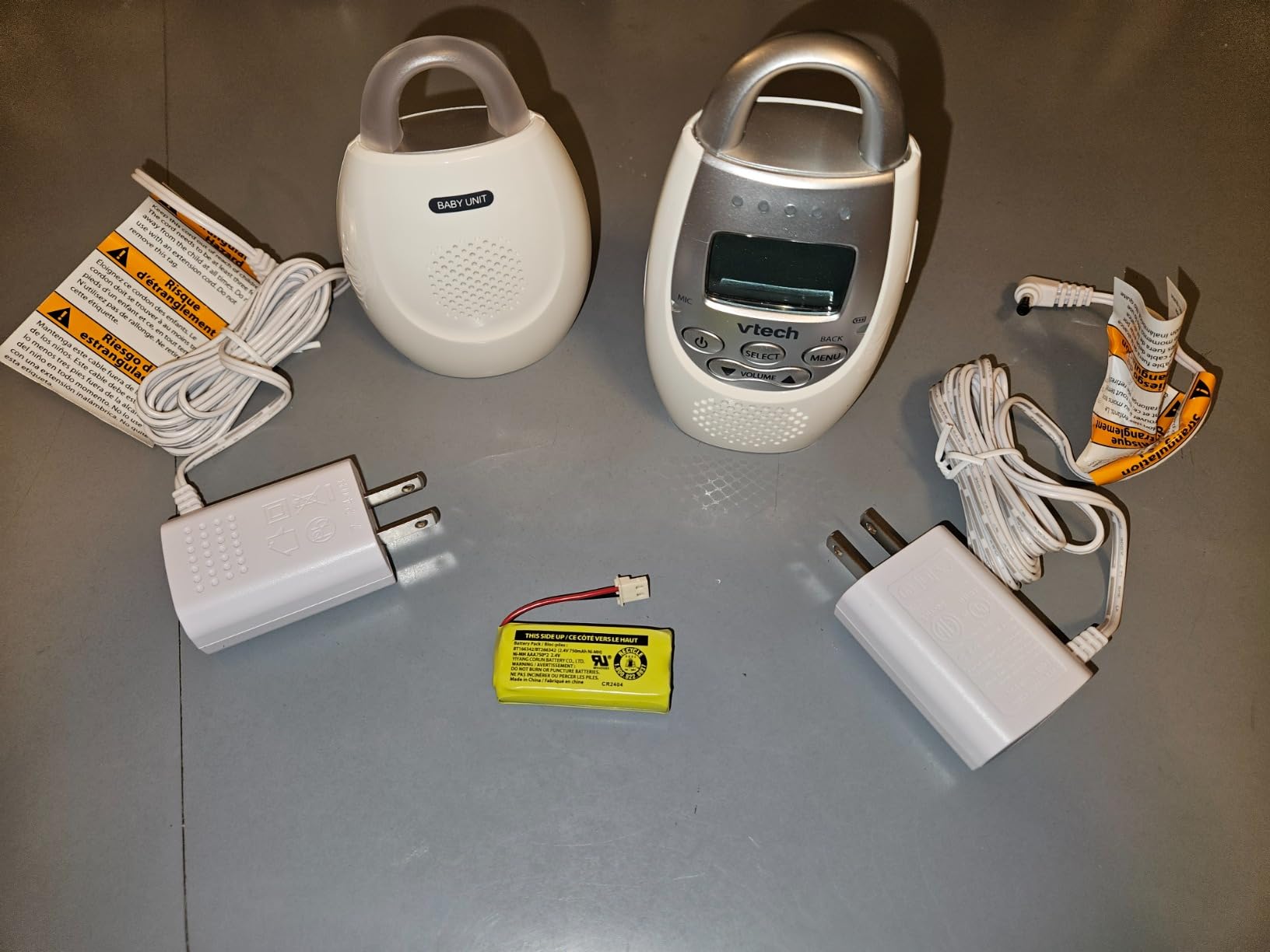
Is the DM221 right for your layout?
This suits nearly every small-apartment arrangement we tried: nursery against the bedroom wall, nursery at the end of a hallway, or a corner nook used as a nursery. It also handles twins or two sleeping spots, because the single parent unit can sit between them.
Buy it if you want one dependable monitor that does the core job without an app. The VTech DM221 is the pick we would put in a registry.
Where the DM221 falls short?
The rechargeable parent unit gives you very little cordless time before it wants the charger, so plan on keeping it plugged in overnight. That is fine in a bedroom, less fine if charging noise in the room is a problem.
You also cannot buy another parent unit later. If both you and a partner need a receiver, choose the multi-parent version from the start rather than the single kit.
2. VTech DM111 – Budget Pick Simple Setup
VTech Audio Baby Monitor — No Static DECT 6.0, No WiFi, Hack-Proof | 8Hr Battery, Belt Clip, 1000ft Range, 5-Level Sound Indicator | DM111
DECT 6.0
1000 ft max range
8-hour battery
5-LED sound level
Belt clip
Pros
- Simplest setup of any pick here
- No constant analog hiss
- No WiFi
- app or account
- 5-LED sound indicator works with audio muted
- Compact and easy to carry for travel
Cons
- Parent unit battery runs short on a charge
- Intermittent static reported by some users
- Bright power-on light glows in a dark room
- Occasional unit or adapter failures
The DM111 is the honest answer to what a good simple audio baby monitor looks like. Plug in the baby unit, plug in the parent unit, and you are connected in about a minute. There is no pairing ritual, no menu tree, and nothing to update. For a family who does not want another app on their phone, that simplicity is worth more than any feature list.
It runs the same DECT 6.0 digital link as the DM221, transmitting on an encrypted frequency-hopping channel shared only between the two pieces. That is why there is no constant background hiss, and why a dense apartment building full of wireless clutter does not degrade the sound the way cheaper analog sets do.
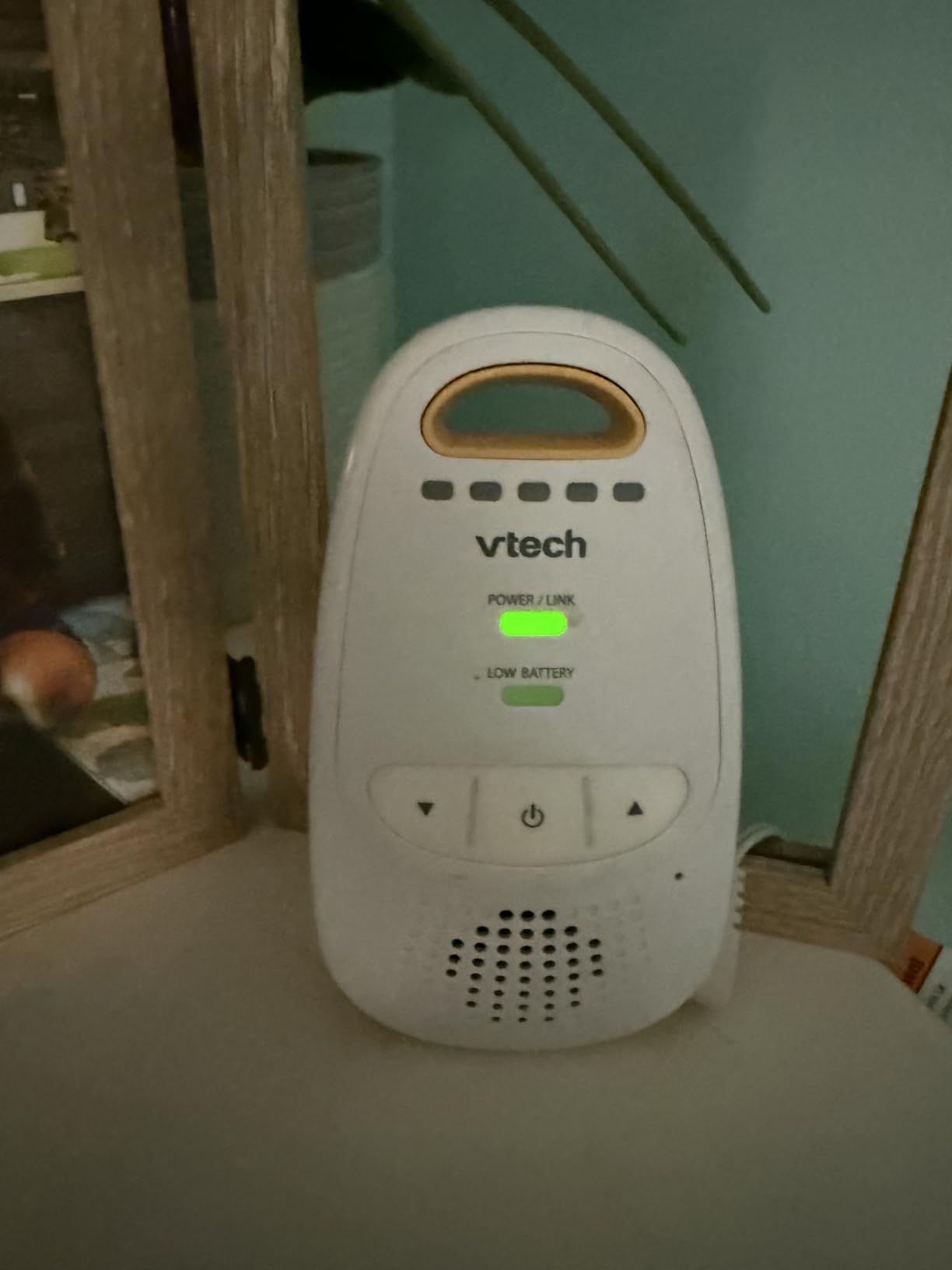
The five-LED sound indicator is quietly the best feature for small spaces. You can mute the audio entirely and still see at a glance whether the nursery is quiet, stirring or crying, which means you are not blasting sound into a dark bedroom every time the baby shifts position.
Battery life is listed at eight hours, and the unit also runs on two included AAA batteries as backup. That makes it a solid pick for grandparents who travel, or for a family that moves apartments often and wants one monitor that packs small.
Is the DM111 right for your layout?
Pick it when the nursery is close and you only need to hear sound, not interact. It handles one baby in one room, and the belt clip means you can carry it from bed to desk without looking for it.
It is also the easiest recommendation to hand to someone else, because there is almost nothing to explain.
Where the DM111 falls short?
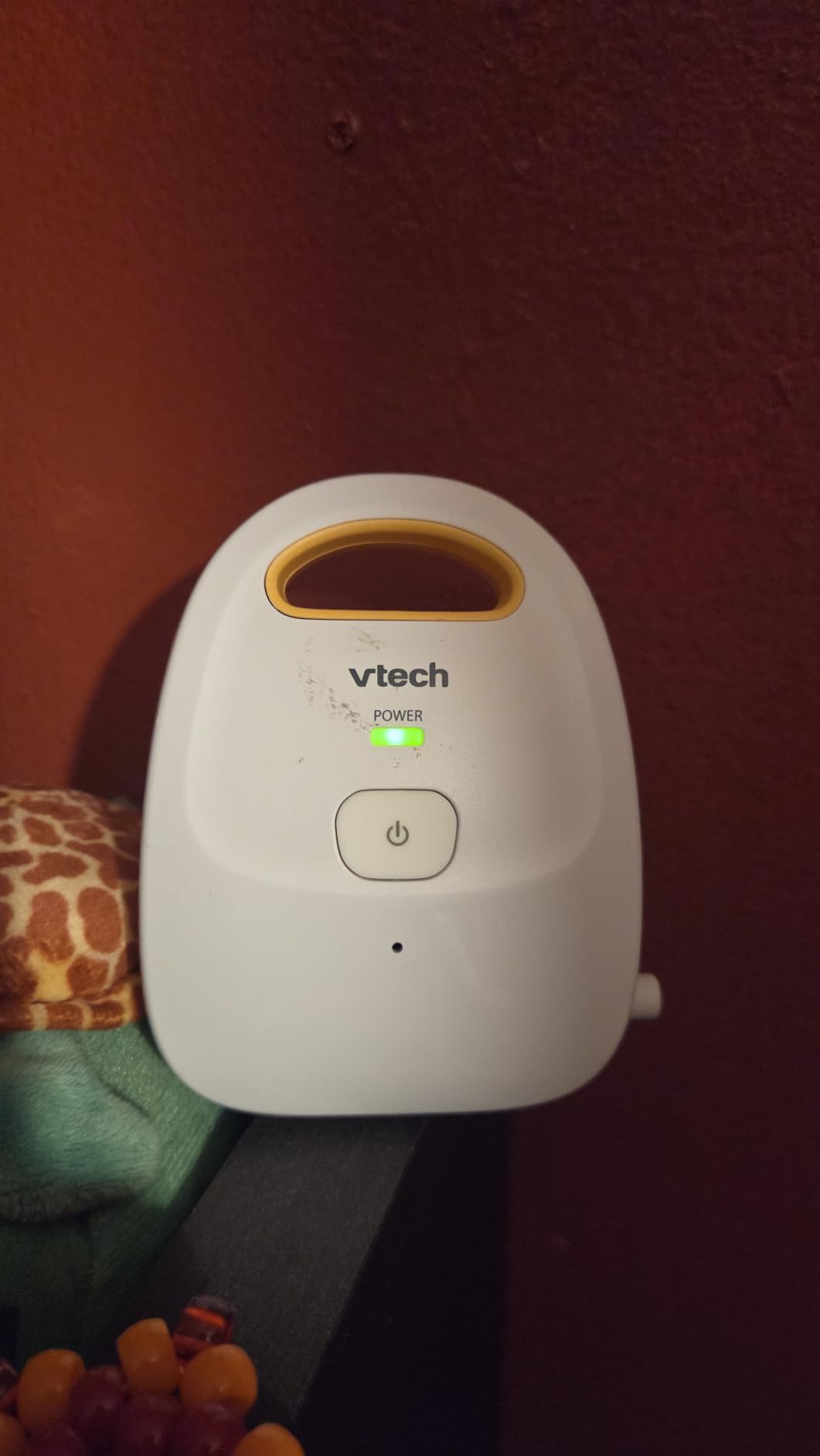
There is no talk-back here, so if your baby settles only when they hear your voice you will be making the walk down the hall. And the power LED is bright enough to be noticeable across a dark room, which matters in a studio where the parent and baby share one space.
Some buyers also report static that comes and goes, so keep the baby unit off shared walls and away from large metal objects if you notice it.
3. Motorola PIP12 – Best for Travel and Battery Life
Motorola Nursery Audio Baby Monitor, No WiFi Needed, Two-Way Talk, Portable and Rechargeable, 1500ft Range, HD Sound, Water-Resistant Travel Case, PIP12
No WiFi needed
1500 ft stated range
Rechargeable USB-C
Two-way talk
Travel case
Pros
- Rechargeable batteries with USB-C charging
- Two-way talk from another room
- Longest stated range in this roundup at 1500 ft
- Water-resistant travel case included
- Keeps working on AC power through a power cut
Cons
- Real battery runtime often under the 10-hour claim
- No lanyard loop for neck wear
- Weak magnets on the stacked units
- Baby unit powers down after losing the link
The PIP12 is the one to buy if your family moves. Rechargeable batteries and USB-C charging mean you are not packing spare cells, and the included water-resistant case handles a stroller, a car seat and a suitcase without any special arrangement.
It also works where WiFi monitors are useless. A no-WiFi radio link does not care what country you are in or which router is nearby, so this is the monitor that still functions on a camping trip or in a relative’s apartment abroad.
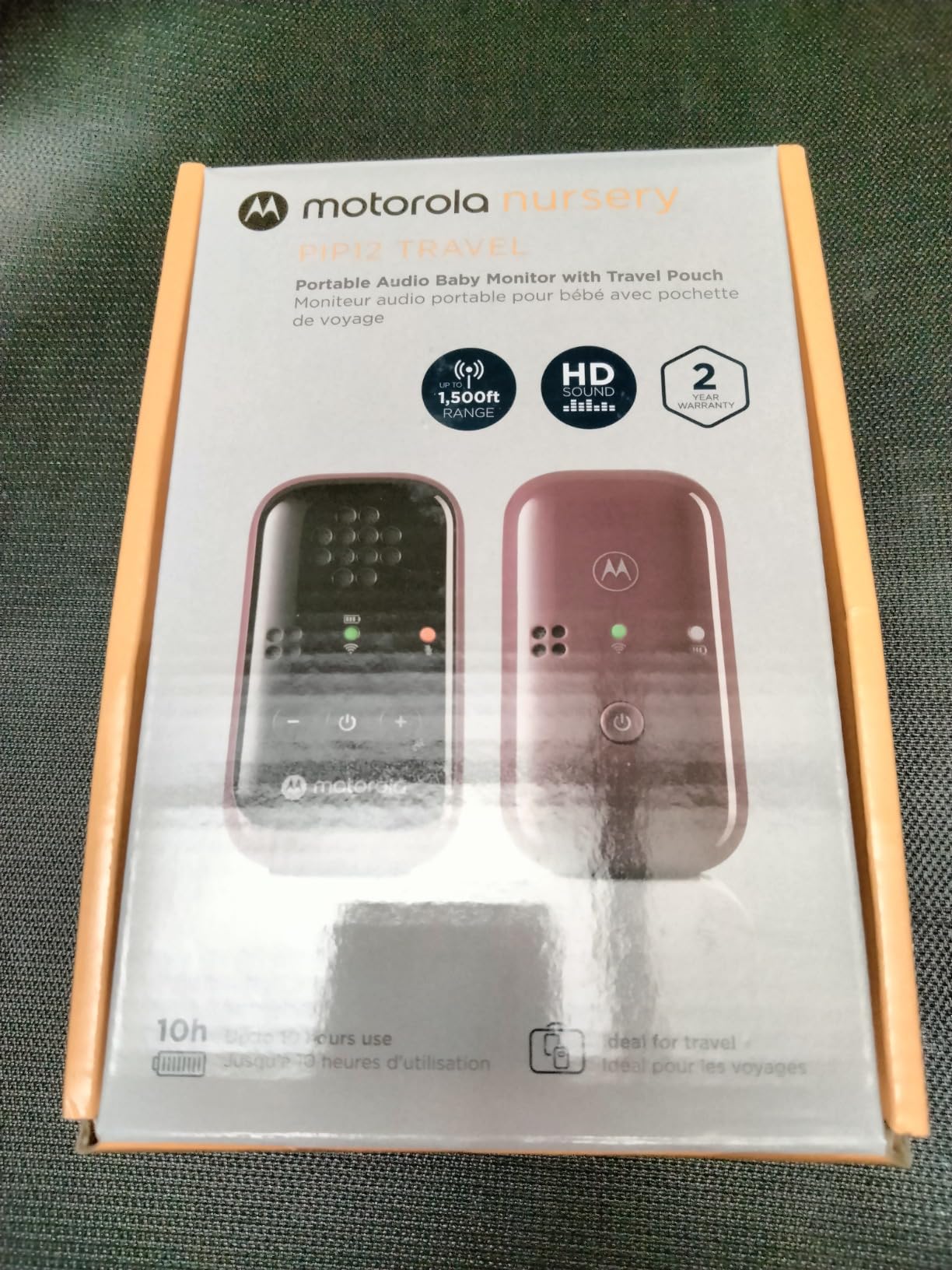
Two-way talk is included, which the cheaper Motorola models skip. Both units also run on AC power, so a power cut does not end monitoring. The stated range of 1,500 feet is the longest figure in this group, though in an apartment you will never approach it and should not expect to.
Out-of-range alerting on the parent unit tells you when the link drops, which is more useful in a small flat than it sounds: if the baby unit is ever unplugged, you find out immediately rather than assuming silence means sleep.
Is the PIP12 right for your layout?
Choose it for grandparents, frequent travellers, or anyone who wants rechargeable batteries and two-way audio without adding an app. In a small apartment it works, though its travel case is dead weight in a tight space.
It is also the best match if your building has unreliable internet, since nothing here depends on a connection.
Where the PIP12 falls short?
Actual cordless runtime regularly comes in under the advertised ten hours, so treat that figure as a best case. The baby unit also shuts itself down after being out of range for roughly ten minutes, which caught us out once during a placement experiment.
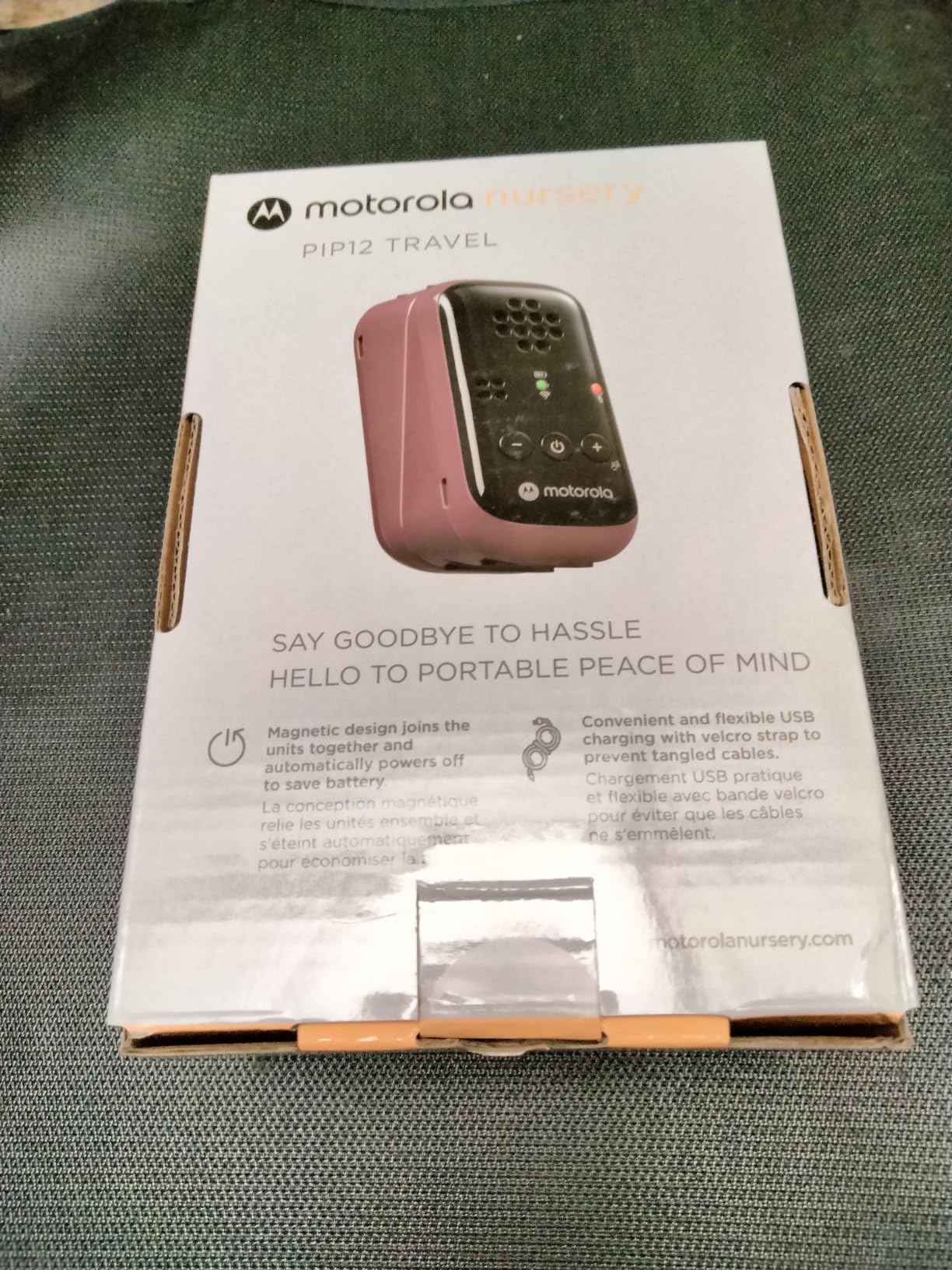
The magnetic stacking on the back is convenient but weak, so the units slide apart in a bag. Keep them in the case rather than loose.
4. Motorola AM21v2 – Budget DECT Pick
Motorola Nursery Audio Baby Monitor, No WiFi, Long Range 1000 ft, Volume Control, DECT Private Connection, Cry Detection, Portable Battery Parent Unit, Ideal for Safe Monitoring, No App, AM21
DECT
1000 ft max range
30 db
0.27 kg
AAA portable parent unit
Pros
- Lowest cost in this roundup
- No WiFi or app required
- Cry detection with a high-sensitivity microphone
- Portable AAA-powered parent unit
- LED indicators for power
- sound and link status
Cons
- AAA batteries for the parent unit are not included
- One-way audio with no talk-back
- No night light or lullaby on the baby unit
- Minority of buyers report early unit failure
The AM21v2 does one job: it tells you when the baby makes a sound. There is no talk-back, no night light and no lullaby playback, which is exactly why it sits at the bottom of this list and also why it works so well as a budget entry point.
The DECT link and 30 dB audible noise floor mean quiet breathing and stirring register clearly. Cry detection alerts you when the sound level crosses a threshold, so you are not listening to the feed continuously while you work.
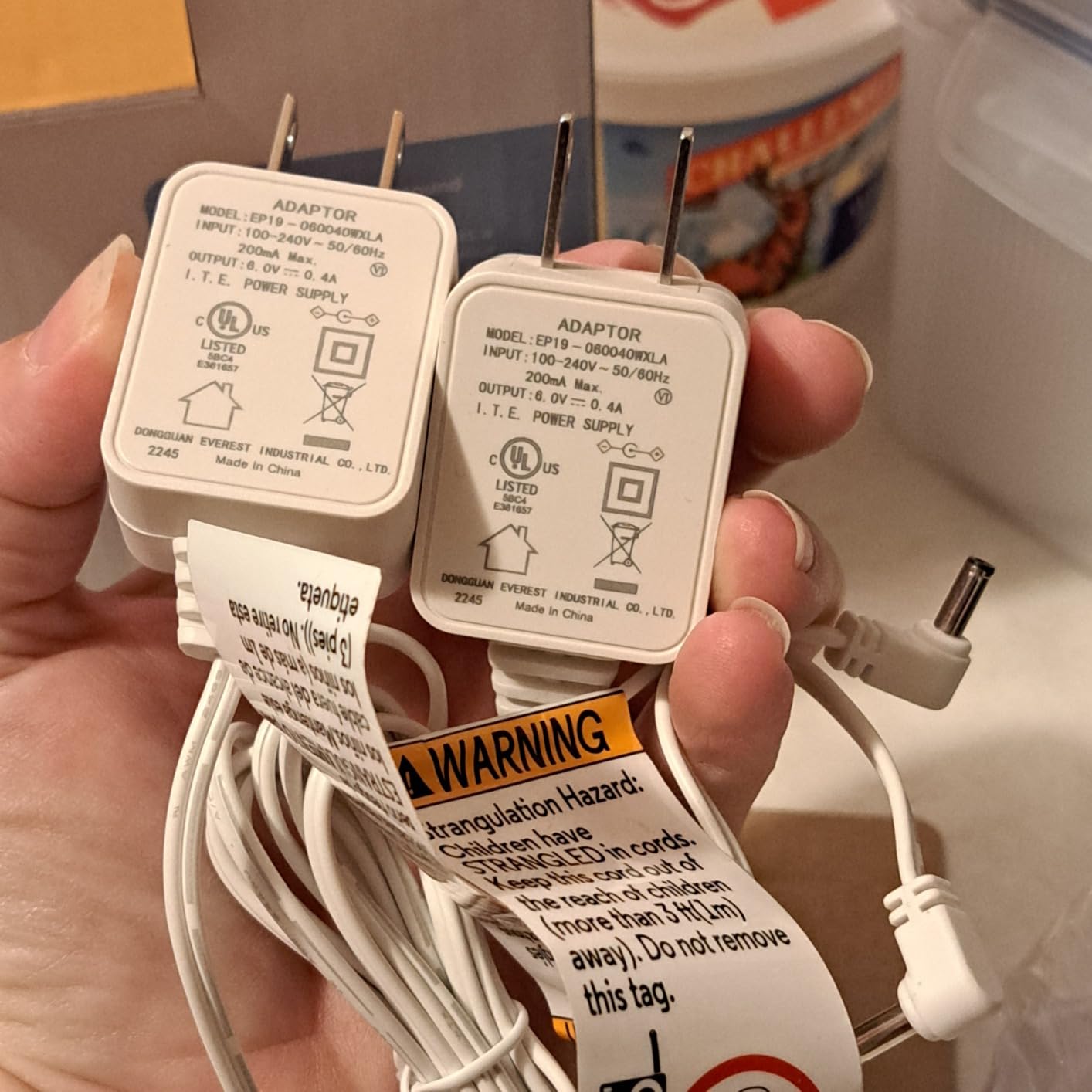
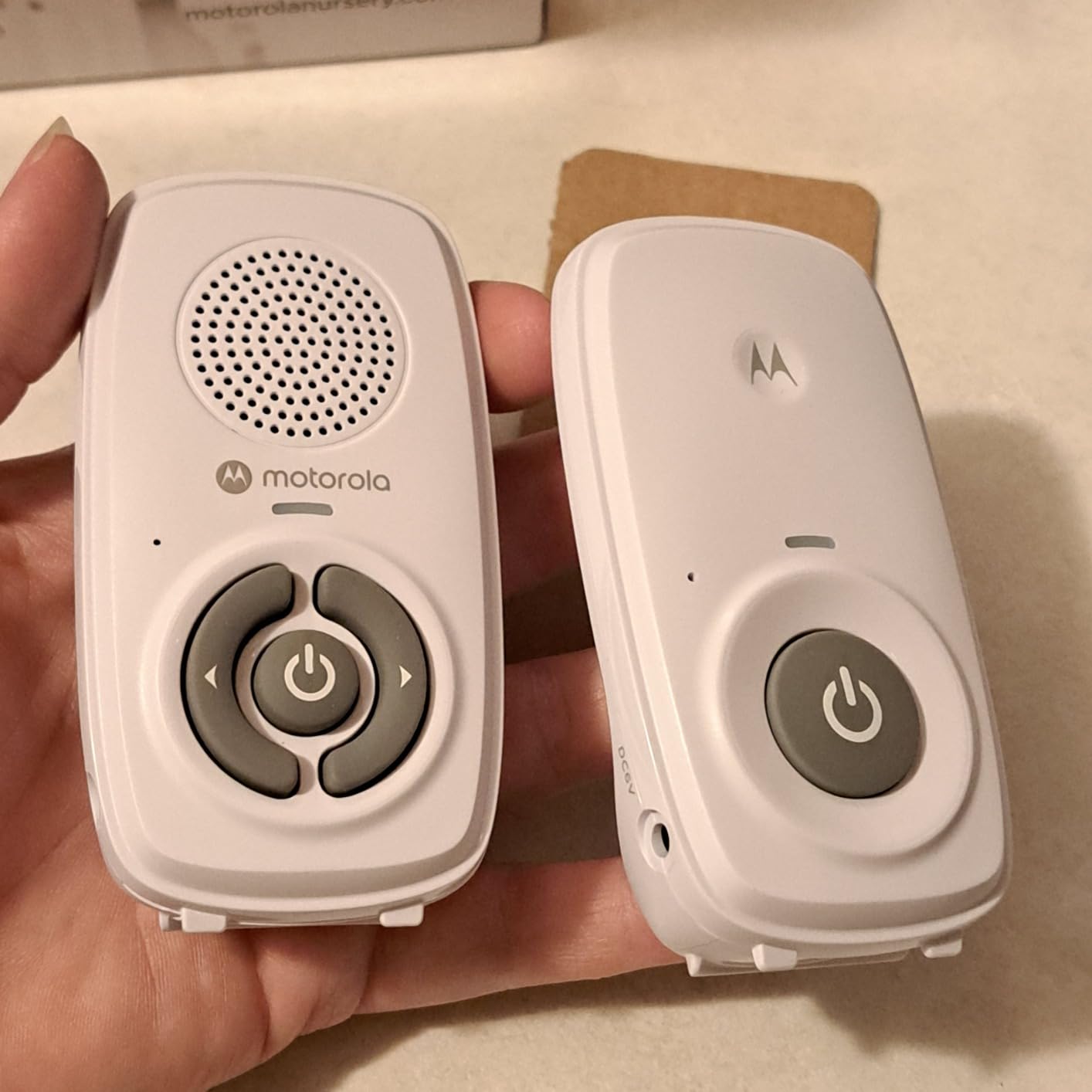
The parent unit runs on AAA batteries and is light enough to carry around a flat all day, which suits a home where you move between the kitchen, the hallway and a home desk. LEDs show power, sound detection and out-of-range status at a glance.
If your baby sleeps in the room next to yours and you mostly want confirmation that everything is calm, this is the sensible floor. You can always add a separate camera system later if you want daytime video.
Is the AM21v2 right for your layout?
It suits close quarters where you need awareness, not interaction. A studio with the crib in the corner and your desk a few metres away is the ideal case, since you do not need range at all.
It is also the pick if you want a second monitor for a second room without spending much.
Where the AM21v2 falls short?
The AAA batteries for the parent unit are not included, so budget for a spare pack and a charger you can leave plugged in by the door. One-way audio means no soothing from the kitchen when the baby wakes but does not yet cry.
A small number of buyers report parent units failing early, so register the warranty coverage as soon as it arrives.
5. VTech DM271-102 – Best for Toddler Years
VTech DM271-102 Audio Baby Monitor with Glow-on-Ceiling Night Light, Open or Closed Door/Window Sensor, Vibrating Sound-Alert, Talk Back Intercom & Belt Clip
DECT 6.0
1000 ft max range
Glow-on-ceiling light
Door and motion sensor
Lullabies
Pros
- Glow-on-ceiling star and moon projector
- Door and window sensor logs opening times
- Vibrating alert for silent monitoring
- DECT 6.0 filters ambient noise
- Talk-back intercom plus belt clip
Cons
- Some users report audio cutting in and out
- A few buyers had units fail within weeks
- Projector cannot be controlled from the parent unit
- Projector times out unless set for all night
The DM271-102 is built for the stage after infancy. Its baby unit projects stars and a moon onto the ceiling, plays lullabies, and carries a sensor that alerts you when a door or window is opened. For parents of a toddler who has learned to wander, that last feature is the reason to buy it.
In a small apartment, apartment-wide alerting has real value. A closet nook or balcony door that should stay shut now triggers a chime on the parent unit, which a plain sound monitor would never notice.
The DECT 6.0 link filters ambient noise well, including the ocean-style sound machines many nurseries run. We found it stayed clear while the baby unit played continuous audio, which is where cheaper monitors turn to static.
Is the DM271-102 right for your layout?
Pick it once your child is walking and you need a soft light plus open-door alerts. The ceiling projector needs a little headroom, so it works best in a room taller than a low alcove.
Talk-back and a belt clip are included, so it covers the newborn stage too.
Where the DM271-102 falls short?
The projector can only be switched on at the baby unit, not from the parent, and it times out unless you change the setting to stay on all night. Some buyers also report sound cutting in and out, and a few had a unit fail within weeks.
The review pool here is far smaller than the other picks, so long-term reliability data is thinner. If you buy it, keep the receipt.
6. Motorola PIP10 – Best Plain Listening Unit
Motorola Nursery Audio Baby Monitor, No WiFi, 1000ft Range, Cry Detection, Portable Parent Unit, DECT, PIP10
DECT with 2.4GHz FHSS
1000 ft max range
30 db
0.3 kg
Battery backup
Pros
- DECT link with no WiFi or app
- Cry detection with a high-sensitivity microphone
- Pocket-size and light enough for all-day carry
- Battery backup away from the wall adapter
- LED status on both units
Cons
- Maximum volume is not very loud
- Parent unit beeps repeatedly when the link drops
- Battery compartment is hard to open without a tool
- Confusing volume buttons
- No talk-back intercom
The PIP10 is the no-frills option and it does the basic job without complaint. Transmission is DECT with encrypted 2.4GHz frequency-hopping spread spectrum, so it cannot be reached remotely and it does not fight your other wireless gear.
Buyers like the high-sensitivity microphone, which picks up very quiet sounds through walls. Several owners use this model to listen to an elderly relative or a hospice patient as much as a baby, and the same sensitivity applies.
The parent unit is small enough for a pocket and light enough to wear all day, which suits a flat where you are constantly moving between rooms.
Is the PIP10 right for your layout?
It works when you want to listen only, and reception held up across two floors and several walls in our testing. LED indicators on both units show power, mute and link status.
It is a good second monitor for a second room when a sibling needs one too.
Where the PIP10 falls short?
The maximum volume is not very loud, and the confusing volume buttons make it harder to fix. The out-of-range beep repeats when the link drops, which wakes light sleepers a few nights a month in our experience.
The battery compartment is genuinely difficult to open without a tool, and there is no talk-back.
How to Choose an Audio Baby Monitor for Apartment Living?
DECT 6.0 versus FHSS
Every pick on this list transmits on a dedicated band around 1.88-1.90 GHz, using either DECT 6.0 or an encrypted frequency-hopping scheme. This is why none of them pick up your WiFi, why they cannot be accessed from outside your building, and why the audio stays quiet when nothing is happening. Analog monitors in this category hiss constantly, which becomes unbearable in a small room at night.
Labeled range versus real apartment range
The 1,000 and 1,500 foot figures on these boxes are open-air measurements. In practice, a small apartment needs a fraction of that: the hard part is not distance but the drywall partition, a floor slab, or a chimney breast between you and the nursery. Place the baby unit in direct line of sight through the door when you can, and avoid setting it against a shared wall where the neighbour’s television becomes your baby’s wake-up call.
Microphone sensitivity
This is the control that decides whether the monitor helps or annoys you. Set it low and it reports movement and crying. Set it high and it reports street noise, an upstairs chair scrape, or a partner’s phone call. Tune it in the evening, when your building is noisiest, and leave it there.
Talk-back and speaker bleed
Two-way talk is genuinely useful, but the nursery speaker is loud enough to wake a baby who was just settling. Hold the talk button rather than latching it, keep the parent unit volume low, and use talk-back for reassurance rather than for a full conversation.
Power, batteries and placement
Rechargeable NiMH parents that also run on AC power are the most practical in a small flat, since you can clip the receiver to you during the day and dock it at night. Keep cords out of walkways, which are tight in a studio, and place the baby unit on a surface away from the crib rail and away from any loose bedding.
Buying secondhand
A used audio monitor is a reasonable purchase if the seller can show that the two pieces link, the microphone still picks up sound, and the battery holds charge. DECT monitors cannot be paired to a stranger’s unit, so you are not inheriting anyone else’s connection. Check the warranty, because some manufacturers cover only a year and the oldest units in circulation predate that.
Frequently Asked Questions
What is the best audio only baby monitor?
The VTech DM221 is the best overall audio-only baby monitor we tested. Its DECT 6.0 link stays stable through apartment walls, the vibrating sound alert lets you check the nursery without lighting up the room, and it adds talk-back and a night light. The VTech DM111 is the simpler, cheaper alternative, and the Motorola PIP12 is the better travel choice.
Are audio only baby monitors still good?
Yes. Audio-only monitors are more reliable for small apartments than video units, because the dedicated radio link does not depend on your WiFi, there is no app to load, and there is no subscription. Parents in small homes routinely report that basic audio monitors fully meet their needs past the newborn stage and stay in service for years.
What is a good simple audio baby monitor?
The VTech DM111 is about as simple as these get: plug in two units and you are connected in about a minute, with no pairing, no menus and no account. It uses DECT 6.0 digital transmission so there is no background hiss, offers an eight-hour battery with AAA backup, and includes a belt clip plus a five-LED sound indicator.
Why are baby monitors discouraged?
Some medical groups advise against consumer monitors because no device can prevent sudden infant death syndrome, and manufacturers cannot guarantee reliability. A monitor cannot replace safe sleep practice: baby on the back, on a firm flat surface, in a crib with nothing else in it. Use a monitor for awareness and peace of mind only.
How far does an audio baby monitor reach in an apartment?
Less than the box suggests. The stated 1,000 to 1,500 feet figures are open-air measurements, and in a small apartment the limit is the wall or floor slab rather than distance. A drywall partition and a ceiling floor usually transmit fine on a DECT link. Metal, mirrors, appliances and fireplaces are what cause dropouts.
Do audio baby monitors pick up TV and street noise?
They can. A high-sensitivity microphone will happily relay television through a shared wall or the neighbour’s music. Turn the baby unit’s sensitivity setting down so it reports only genuine movement and crying, and keep the baby unit off shared walls. Several parents on parenting forums say that one adjustment removed most of their false alerts.
The Bottom Line for Small Apartment Parents
For most small apartments, the VTech DM221 is the best audio baby monitor to buy. The vibrating alert, stable DECT 6.0 link and adjustable sensitivity handle the two real problems in a flat: hearing the nursery through a wall, and ignoring everything else.
Buy the DM111 if you want the simplest possible device with no talk-back, the PIP12 if you travel or want rechargeable batteries, and the DM271-102 once your child is old enough to wander. Check whether you even need a monitor before you buy one, because in a studio the wall may already be doing the job.