
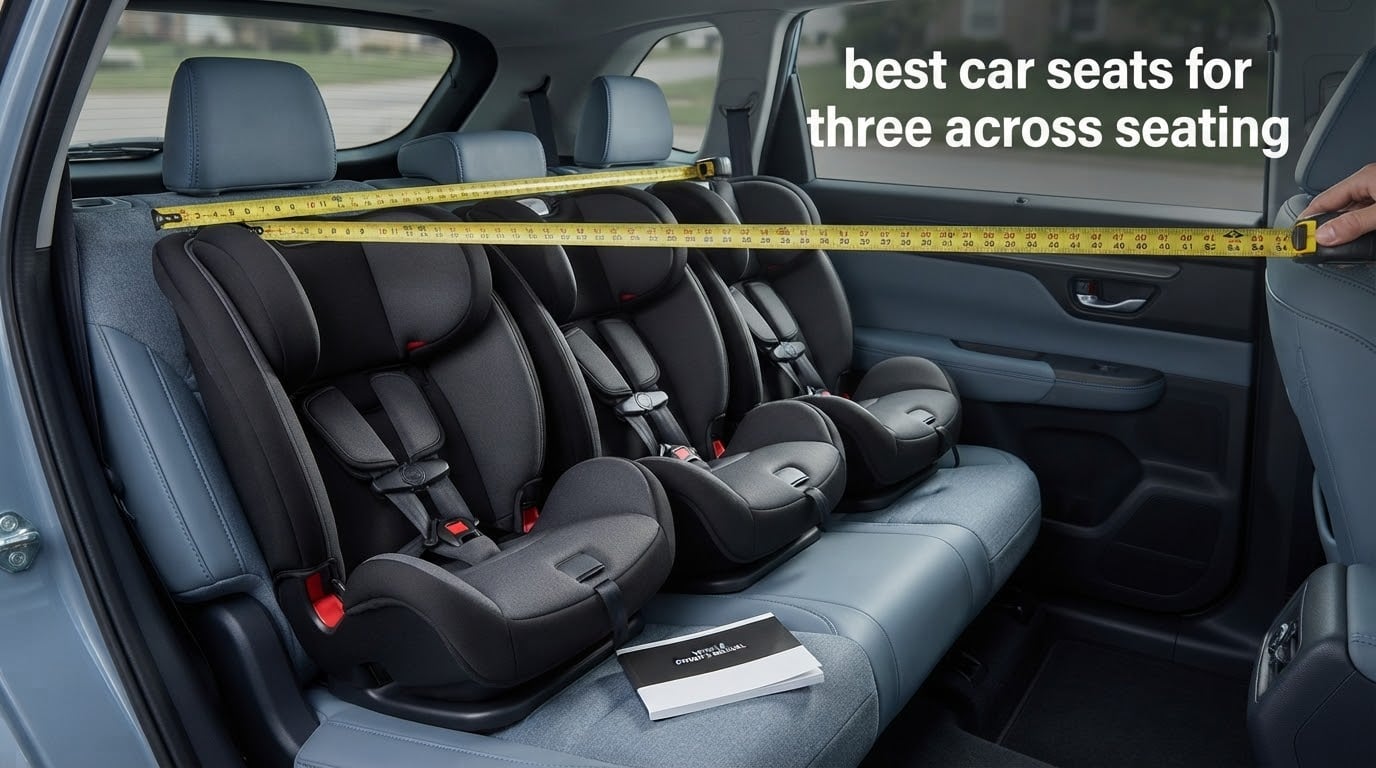
A three-across car seat is a narrow child restraint whose shell measures roughly 16 to 19 inches at its widest point, narrow enough that three of them can be installed side by side in a typical back row while still meeting federal FMVSS 213 standards. That is the entire idea, and it matters to anyone who has three children in restraints at once: twins plus a singleton, three toddlers, a mixed row of two harness seats and one booster, or one family seat that moves between two cars and a grandparent’s crossover.
The best car seats for three across seating are not defined by price or by stage alone. They are defined by one arithmetic test: add the published widths of all three seats, then compare that total to the usable width of your back row. Seats may touch each other and they may touch the door, but they must never be forced or compressed, and every one of them still has to install tight. We confirmed the specs and weights below as of 2026, and we flag clearly where a manufacturer publishes a width and where it does not, because that gap is where most buying mistakes happen.
One safety point before anything else. Every car seat sold in the United States is self-certified by its manufacturer to FMVSS 213, the same federal standard, whether its shell is 16 inches or 24 inches wide. Narrow is not a compromise on protection. What actually determines safety is correct installation, following both the vehicle owner’s manual and the seat manual, at the correct recline for the child’s height. A certified Child Passenger Safety Technician can verify an install, and that check is worth more than any price tier in this roundup.
What follows is ten seats across four stages: all-in-one convertibles, slim two-stage convertibles, combination harness boosters, and high-back boosters. We organized them around the three-across problem rather than around categories, because a parent fitting three seats in one row does not care that a booster lives in a different aisle of the same website.
Top 3 Best Car Seats For Three Across Seating (October 2026)
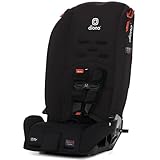
Diono Radian 3R
- Slim-fit shell engineered for 3 across
- 4-in-1 from 5-120 lb
- Rear-facing to 50 lb
- Folds flat
- airline approved

Graco SlimFit
- 10 percent slimmer with rotating cup holders
- Highest rating in the group
- No-Rethread harness
- 10-position headrest

Safety 1st Grow and Go All-in-One
- Rear-facing 5-40 lb
- Forward-facing 30-65 lb
- Booster 40-100 lb
- QuickFit harness
Quick Overview: Every Seat in This Roundup Side by Side
Ten seats, all of them narrow-leaning options across the rear-facing, forward-facing, harness-booster and high-back booster stages. Where a manufacturer publishes a width, it appears in the product entry below; where it does not, we say so rather than estimating. That distinction matters more than it sounds, because an estimated width is exactly how a three-across plan fails at the showroom.
| Product | Specifications | Action |
|---|---|---|
| Diono Radian 3R |
|
Check Latest Price |
| Graco SlimFit |
|
Check Latest Price |
| Safety 1st Grow and Go All-in-One |
|
Check Latest Price |
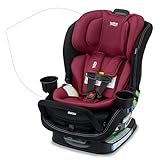 Britax Poplar S Britax Poplar S |
|
Check Latest Price |
 Safety 1st Ellaris Safety 1st Ellaris |
|
Check Latest Price |
 Safety 1st Grow and Go 2-in-1 Booster Safety 1st Grow and Go 2-in-1 Booster |
|
Check Latest Price |
 Baby Trend Hybrid SI Baby Trend Hybrid SI |
|
Check Latest Price |
 Graco Tranzitions Graco Tranzitions |
|
Check Latest Price |
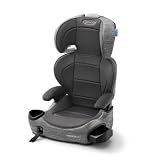 Graco TurboBooster 2.0 LX Graco TurboBooster 2.0 LX |
|
Check Latest Price |
 Diono Everett NXT Diono Everett NXT |
|
Check Latest Price |
A note on width data before you run any arithmetic. Of the ten seats here, one publishes an exact figure: the Britax Poplar S at 17 inches. Two more disclose width indirectly, the Safety 1st Grow and Go 2-in-1 Booster at 19 inches with its wings expanded and the Graco SlimFit described as 10 percent slimmer than a standard Graco convertible. For the rest, treat width as unconfirmed until you measure the seat in a store with a tape measure.
How to Tell If Three Across Will Work in Your Car?
Before you buy anything, spend ten minutes measuring. This is the step that prevents nearly every three-across disappointment, and it is the step most roundups skip. Work through it in order.
Measure the usable width of your back row. Lay a tape measure across the back seat at the height of the child restraint bight, from the interior door panel on one side to the interior door panel on the other. Write down the number in inches. Do not use the manufacturer’s advertised cargo or hip-room width; those are measured at different heights and different points.
Measure the flat floor, not just the width. Parents on r/whatcarshouldIbuy describe the F-150 crew cab back seat as shockingly roomy, and the flat floor is the deciding feature for three across. A bench that curves into the footwells steals width exactly where the center seat needs it.
Add the three seat widths. The total of all three shells must be at or under your usable back-row width. Seats may touch each other and may touch the door, but if you have to lean on a seat to make the third one fit, the install will not be tight and is therefore not safe.
Check the head wings and the back of the shell. A parent on r/parentsofmultiples with three children under five reports that the back and head parts of the seats are what did not fit across, not the seat bases. Tall shells fail where slim bases succeed.
Check front-seatback clearance. Rear-facing seats in particular need room to recline. If the front passenger has to slide fully forward or the driver’s knees hit the dashboard, you have a conflict no narrow seat can solve.
Find out where your lower anchors are. Most vehicles have lower anchors only in the two outboard positions. The center position is usually a seat-belt install, which changes the width math because a belt path can sit tighter against a seat than a pushed-down LATCH connector.
Watch for door curvature. A seat can measure under your available width and still fail outboard, because a curved door panel will not let you tighten the belt or connector. Test the tighten in the position, not just the tape measure.
Confirm before you buy three. Take a tape measure to the store, or measure the seat in the vehicle you actually use. Seats that install in a minivan often do not install in a compact sedan even when the widths suggest they should.
If the arithmetic fails, the fix is usually a vehicle decision rather than a seat decision. Families who regret their purchase most often regret the car, not the restraint.
1. Diono Radian 3R – Slim Steel-Frame All-in-One Built for Three Across
Diono Radian 3R, 3-in-1 Convertible Car Seat, Rear Facing & Forward Facing, 10 Years 1 Car Seat, Slim Fit 3 Across, Jet Black
4 modes 5-120 lb
Rear-facing to 50 lb
Slim-fit 3-across shell
Steel core frame
Pros
- Genuinely fits three across
- Low-profile shell lets siblings climb over
- Steel-reinforced frame feels durable
- Harness tightens smoothly
- Washable cover
- Folds flat for travel
Cons
- Heavy steel frame is awkward to move
- Installation is involved and easy to do wrong
- Very steep rear-facing recline
- Center rear-facing use limited by fixed headrests
The Diono Radian 3R is the seat we keep coming back to for three-across families, and the reason is simple: it is engineered for the problem rather than adapted to it. The manufacturer describes a slim-fit design built to fit three across a back seat, and owners with three children back that up. BabyCenter community members name Diono alongside Clek and Graco’s slim line as the brands known to fit three seats abreast.
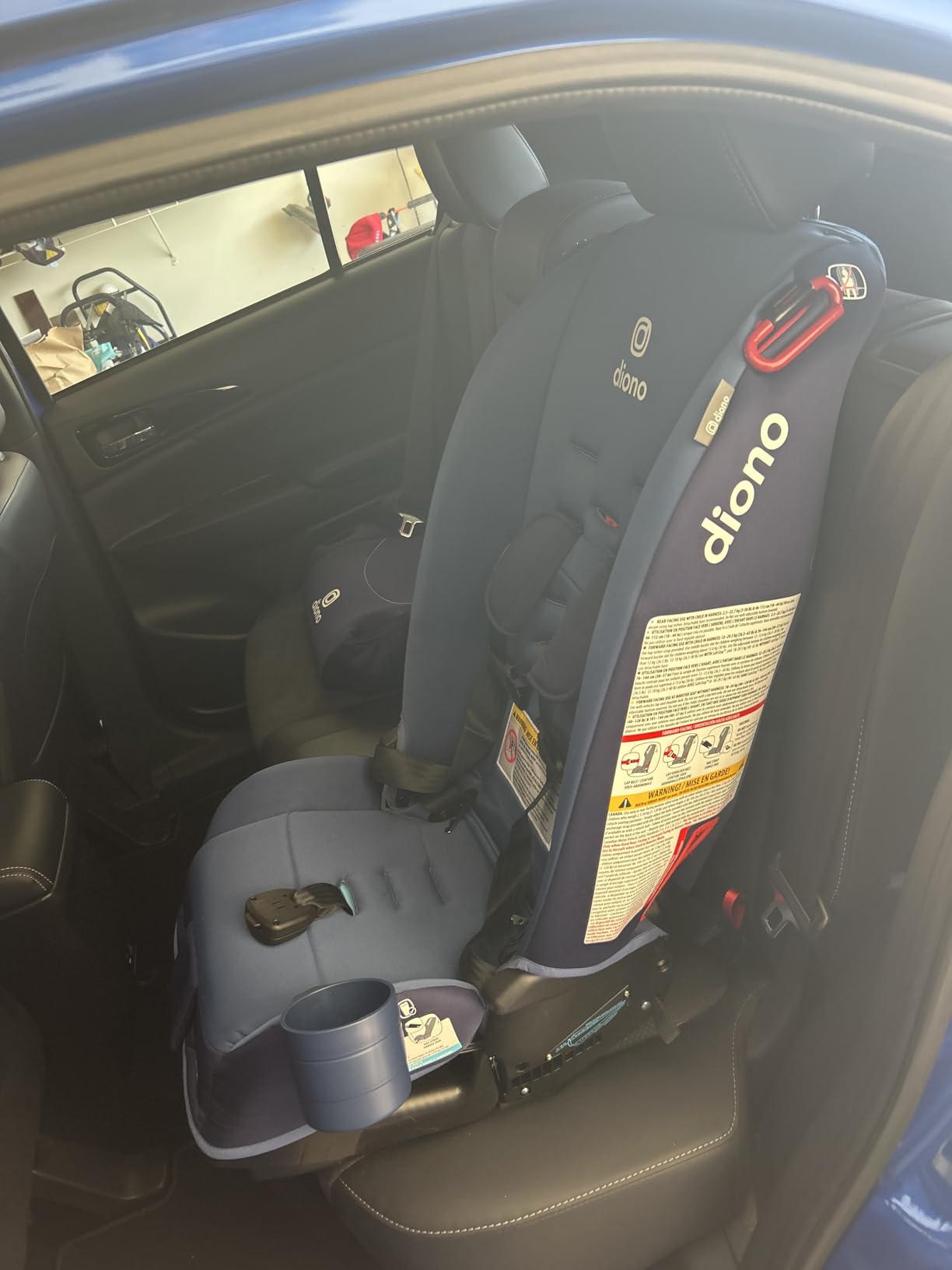
Four modes take it from 5 to 120 pounds, which is unusual for a seat slim enough to be interesting here. The rear-facing limit of 50 pounds runs well past what most convertibles allow, which matters in a family with a large toddler and a smaller infant using the same row configuration. The frame is automotive-grade high-strength steel, and ComfortPlus memory foam comes included.
Two details separate it from the pack in travel situations. The seat folds flat, and it is FAA approved for airline use, so a family splitting time across two cities can bring the restraint in the cabin rather than checking it. It also has a low-profile shell, which reviewers mention for a reason that has nothing to do with fit: siblings can climb over it to reach the door.

Who this seat works well for?
This is the one to buy if you want three of the same seat rather than three different ones. Identical shells install identically, which removes the trial-and-error that comes with mixing models, and it means one spare covers fits all three. It suits families moving seats between two vehicles, and the folding design helps with storage in a tight garage or a small apartment.
The steel frame and long service life also suit families who plan to keep a seat for years. Several certified Child Passenger Safety Technicians in the review data urge buyers to have this particular install checked, which is sensible given how involved the installation is.
Where buyers get frustrated?
The weight is the first thing people mention. A heavy steel frame means moving three of these between vehicles is a genuine chore, and that daily friction is a real cost even though it is not a dollar figure. If your family changes vehicles several times a week, this is the wrong seat.
The rear-facing recline is also very steep, deep enough that it pushes the front seat forward, and several configurations have rules about facing modes that make frequent reconfiguration impractical. One further limitation: rear-facing use in the center position is restricted when the vehicle has a fixed forward headrest. Check your specific vehicle and position before committing to three of them.
2. Graco SlimFit – Highest Rated With Rotating Cup Holders That Free Up Width
Graco Slimfit 3-in-1 Convertible Car Seat, Silas
10 percent slimmer design
5-40 lb rear-facing
26.5-65 lb harness
40-100 lb booster
Pros
- Highest rating in the roundup at 4.8
- Rotating cup holders free up width
- Owners fit three across a midsize seat
- Harness and headrest adjust together
- Easy to install and clean
- Light for a convertible
Cons
- Padding runs warm for some children
- Recline range limited for newborns
- Back openings let air onto legs
- Belt install shows more movement
The Graco SlimFit carries the highest rating in this roundup at 4.8, and its width trick is unusually clever: the dual integrated cup holders rotate out of the way, which Graco says makes the seat about 10 percent slimmer than a standard Graco convertible. That is the difference between fitting three seats and not, and it comes from a design decision rather than a stripped-down shell.
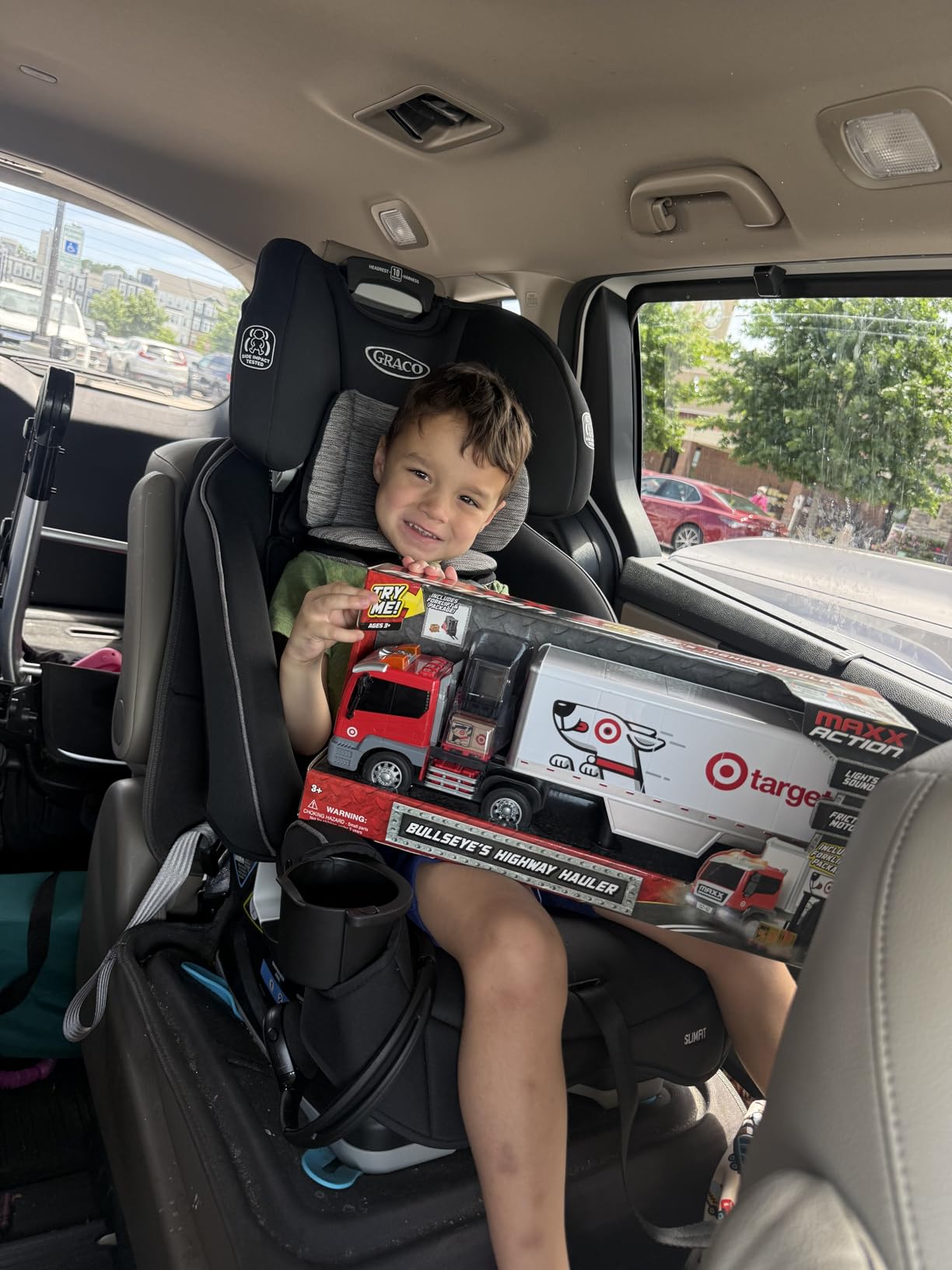
The stage coverage is broad for a slim design. Rear-facing harness covers 5 to 40 pounds, forward-facing harness runs 26.5 to 65 pounds, and the high-back booster handles 40 to 100 pounds. Graco ProtectPlus side-impact engineering is built to the newest side-impact testing standards, and the No-Rethread Simply Safe Adjust harness raises the headrest and tightens the harness in one motion across 10 headrest positions.
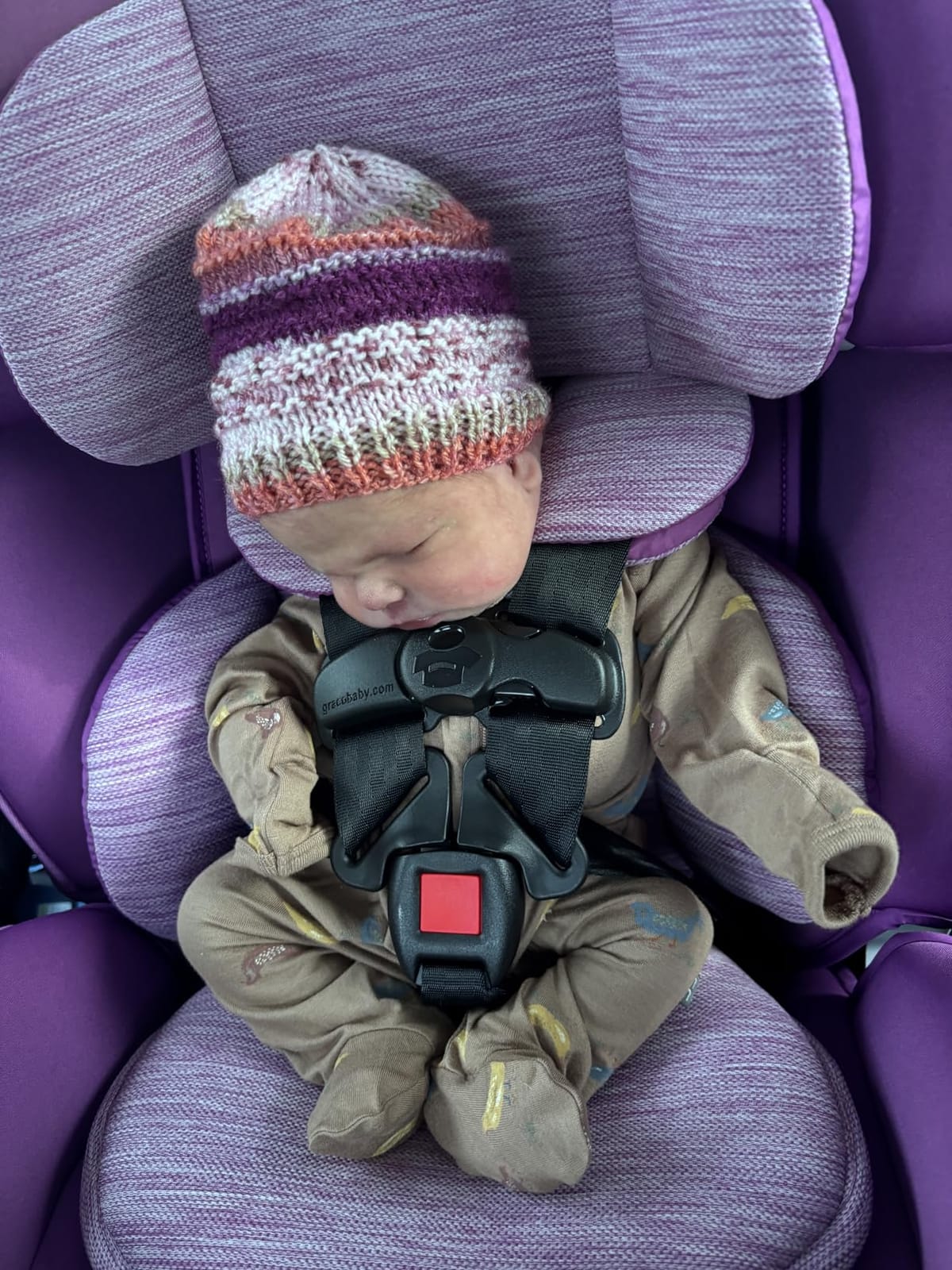
Owners report fitting three across in a midsize back seat, and reviewers consistently single out how simple it is to install, adjust and clean. The seat is also light for a convertible, light enough to work with standard car seat bags for travel.
Who this seat works well for?
Families with three children in three different stages get the most out of this seat, because one shell covers rear-facing, forward-facing harness and booster. Buy two of them for the two youngest and pair with a slim booster for the oldest, and the row reads as a coherent setup rather than a compromise.
It also suits anyone who moves seats between vehicles, since the low weight is not a minor convenience when you are doing it three times. Side-impact protection built to current standards matters in a side-impact scenario, which is the statistically common one.
Where buyers get frustrated?
The padding runs warm, and some owners report children sweating in it. That is a real comfort issue on long summer drives and it does not go away with a cover wash.
Reclinability is more limited than some rivals, and achieving a deep newborn recline can take two people. There are openings on the back sides that let air conditioning blow directly onto a child’s legs. Finally, the seat-belt install shows more movement than the lower-anchor install, so if your center position is a belt install, verify the tightness with a technician.
3. Safety 1st Grow and Go All-in-One – Most Reviewed Convertible in the Group
Safety 1st Grow and Go All-in-One Convertible Car Seat, Vineyard Girl
Rear-facing 5-40 lb
Forward-facing 30-65 lb
Booster 40-100 lb
QuickFit harness
Pros
- Rear-facing 5-40 lb with removable pillows
- Forward-facing to 65 lb
- Booster to 100 lb
- QuickFit harness
- Machine-washable pad
- Dishwasher-safe cup holders
Cons
- Wider body than dedicated slim seats
- Less headrest adjustment than premium rivals
The Safety 1st Grow and Go All-in-One has more than 35,000 reviews at a 4.7 average, which makes it the most proven convertible in this group by a wide margin. When a family is committing to three seats, an evidence base that large is worth something real. It installs with either the seat belt or the anchors, and it covers rear-facing 5 to 40 pounds, forward-facing 30 to 65 pounds, and belt-positioning booster 40 to 100 pounds.
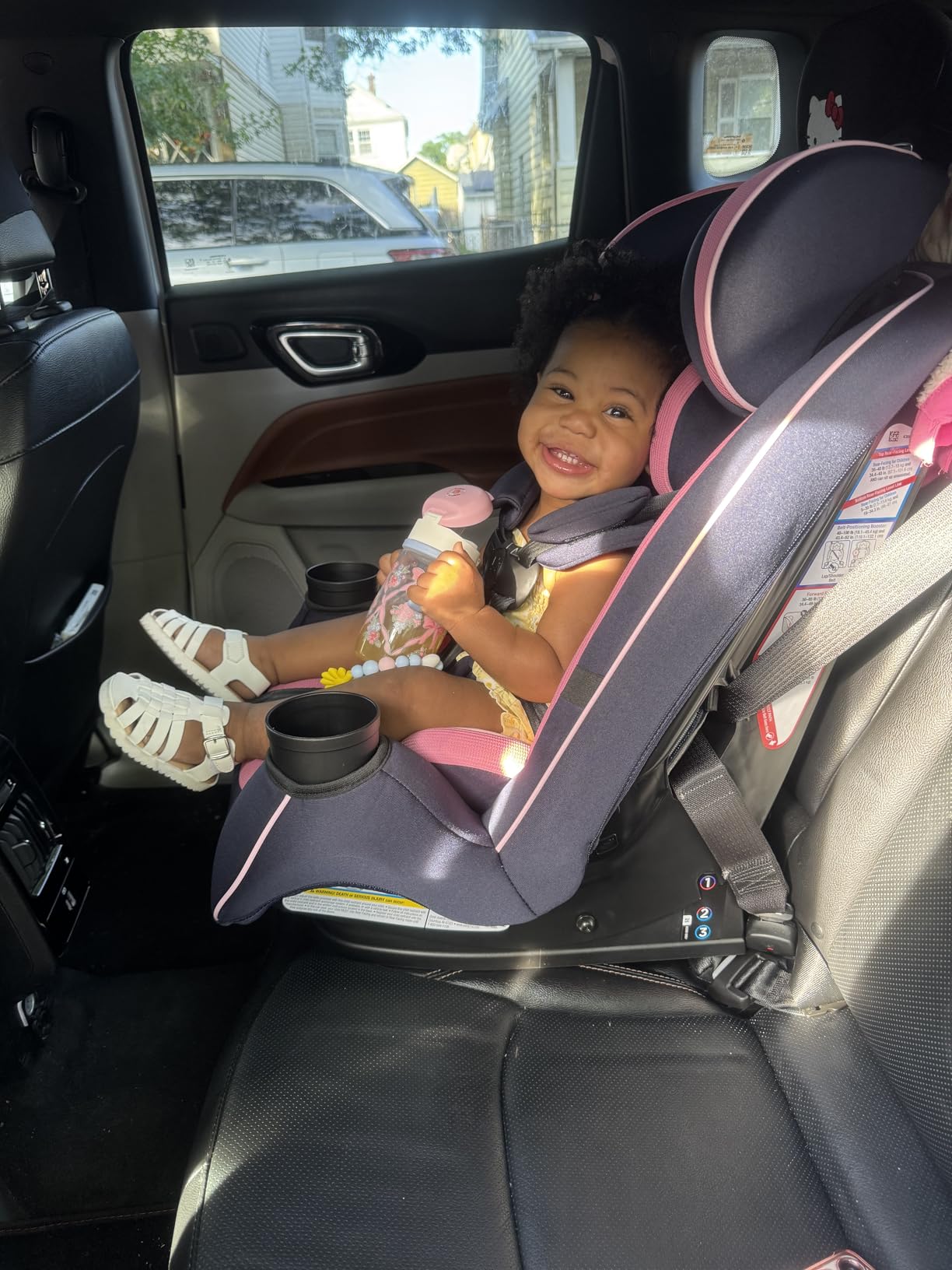
Daily usability is where it scores best. The QuickFit harness adjusts fast, which matters when you are buckling three children into one row every morning, and the removable Grow-With-Me baby pillows help a smaller child achieve a snug fit. Three-position recline covers the basics, and the seat pad is washer and dryer safe with snaps, with two dishwasher-safe cup holders.
The honest caveat is width. Owners and reviewers both note that the body is bulkier than dedicated slim three-across convertibles, which is exactly the trade-off you accept when you pick proven volume over shell geometry.

Who this seat works well for?
This is the pick for families in a minivan or a three-row crossover where back-row width is generous and they want one seat to cover every stage. The seat transfers between multiple vehicles without re-learning an installation, which suits households running two cars.
It also works well as the middle-position seat when that position requires a belt install, since the seat takes either method. The large review base means you will find installation answers for your specific vehicle before you buy, not after.
Where buyers get frustrated?
The width is the central issue for this topic. If your back row is tight, this seat is not the narrowest option here, and three of them may exceed your usable width before you account for door curvature. Measure before choosing it over the slimmer entries in this roundup.
Beyond width, the headrest adjustment range is narrower than what premium competitors offer, and the review data on specific drawbacks is thinner than the review volume suggests. If your child is near the top of a stage, confirm the transition points against your child’s actual height.
4. Britax Poplar S – Published 17-Inch Shell With ClickTight Installation
Britax Poplar S Convertible Car Seat, 2-in-1 Car Seat with Slim 17-Inch Design, ClickTight Technology, Ruby Onyx
17-inch slim design
Rear-facing to 50 lb
ClickTight belt path
Steel frame with SafeCell
Pros
- Only seat here with a published 17-inch width
- ClickTight is among the easiest belt paths
- Rear-facing to 50 lb
- All-steel frame with crumple zone
- Hidden harness release
- Flame-retardant free washable cover
Cons
- Heavy steel frame to move
- ClickTight position cannot be slid forward
- Recline range depends on the vehicle
- Heaviest build in the roundup
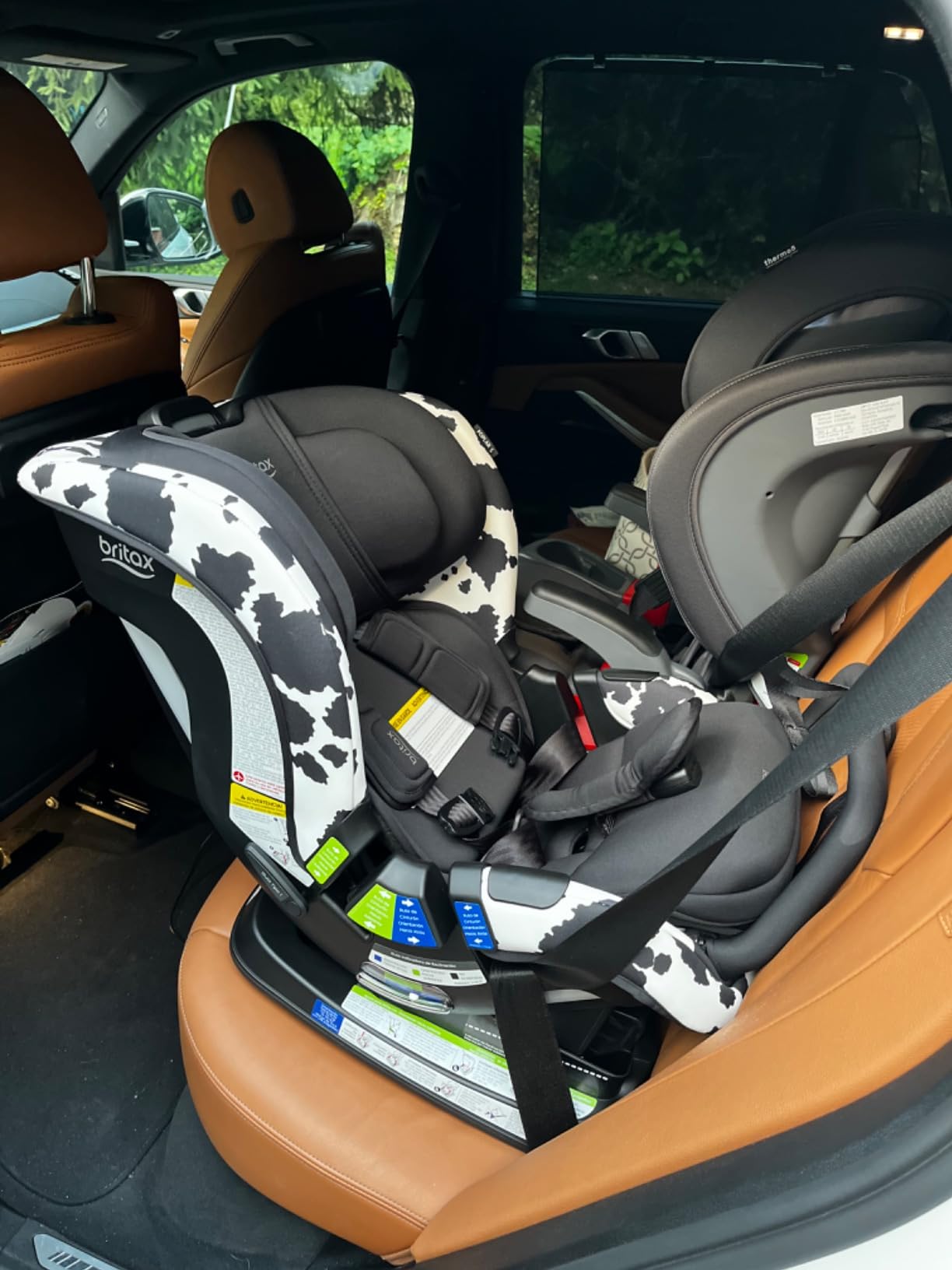
The Britax Poplar S is the only seat in this roundup that publishes an exact shell width: 17 inches, part of what Britax calls its SpaceSaver slim design. Britax states the seat is designed to fit three across while noting it cannot guarantee three-across fitment in every vehicle, which is the correct and honest caveat for any narrow seat. In the review data, owners with a slim back row confirm the fit works.
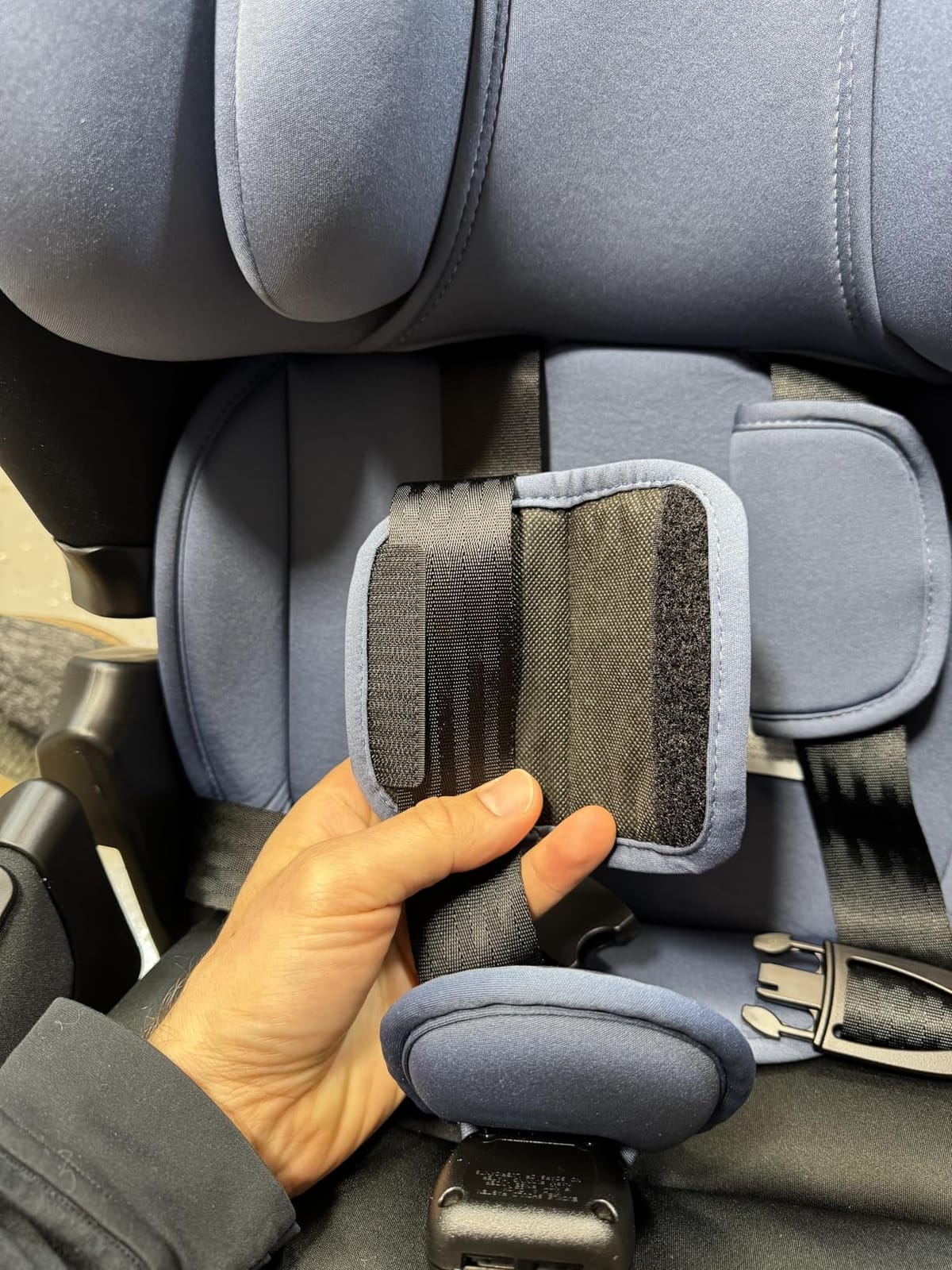
Installation is the standout. ClickTight technology with clearly labeled open seat belt paths is consistently described as among the easiest belt installs to get right, and on a three-across row where one seat is almost certainly a belt install in the center, that matters more than any feature list. For rear-facing use, a ReboundReduce carbon steel anti-rebound bar limits rotation, and it must be removed when installed forward-facing.
The frame is carbon steel with a SafeCell crumple zone and a patented V-shaped tether, the harness and headrest adjust together across 14 no-rethread positions, and the cover is naturally flame-retardant with no added chemicals and washes well.
Who this seat works well for?
Families who want rear-facing capacity and a slim shell together should look here first. Rear-facing to 50 pounds runs roughly 10 pounds beyond many comparable convertibles, and the 17-inch published width makes the arithmetic doable on paper for the first time in this roundup.
It also suits families who install with the seat belt rather than anchors, because the ClickTight path is forgiving in a way that push-on lower-anchor connectors are not, particularly with a curved door panel.
Where buyers get frustrated?
It is heavy because of the all-steel construction, and moving three of these between vehicles is a chore. ClickTight also locks the installed position, so the seat cannot be slid forward to give a passenger access, which is a genuine inconvenience when an adult needs to get in.
Recline range is limited and depends heavily on the vehicle. The evidence base of 422 reviews is smaller than the rest of this roundup, so there is less owner history to draw on for your specific vehicle. Verify fit in person before ordering three.
5. Safety 1st Ellaris – Lightweight 3-in-1 for Budget-Conscious Families
Safety 1st Ellaris 3-in-1 Convertible Car Seat, Slim Fit Design, Rear & Forward-Facing, 5-Position Headrest, Travel-Friendly with Machine-Washable Seat Pad, Smokey Haze
Rear-facing 5-40 lb
Forward-facing 30-65 lb
Lightweight slim design
5-position headrest
Pros
- Lightweight and easy to move between vehicles
- Simple installation
- Headrest adjusts without rethreading
- Machine-washable seat pad
- Meets federal side-impact standard
- Dishwasher-safe cup holders
Cons
- Users report it is wider and bulkier than expected
- Only 5 headrest positions
- Headrest feels wiggly
- Strap tensioning button is hard to reach
The Safety 1st Ellaris is a 3-in-1 covering rear-facing infant 5 to 30 pounds, rear-facing toddler 30 to 40 pounds, and forward-facing 30 to 65 pounds. It is light, easy to install, and easy to buckle a child into, and at its price band it is the most accessible entry point for a family fitting three seats on a budget. It meets the federal side-impact standard.
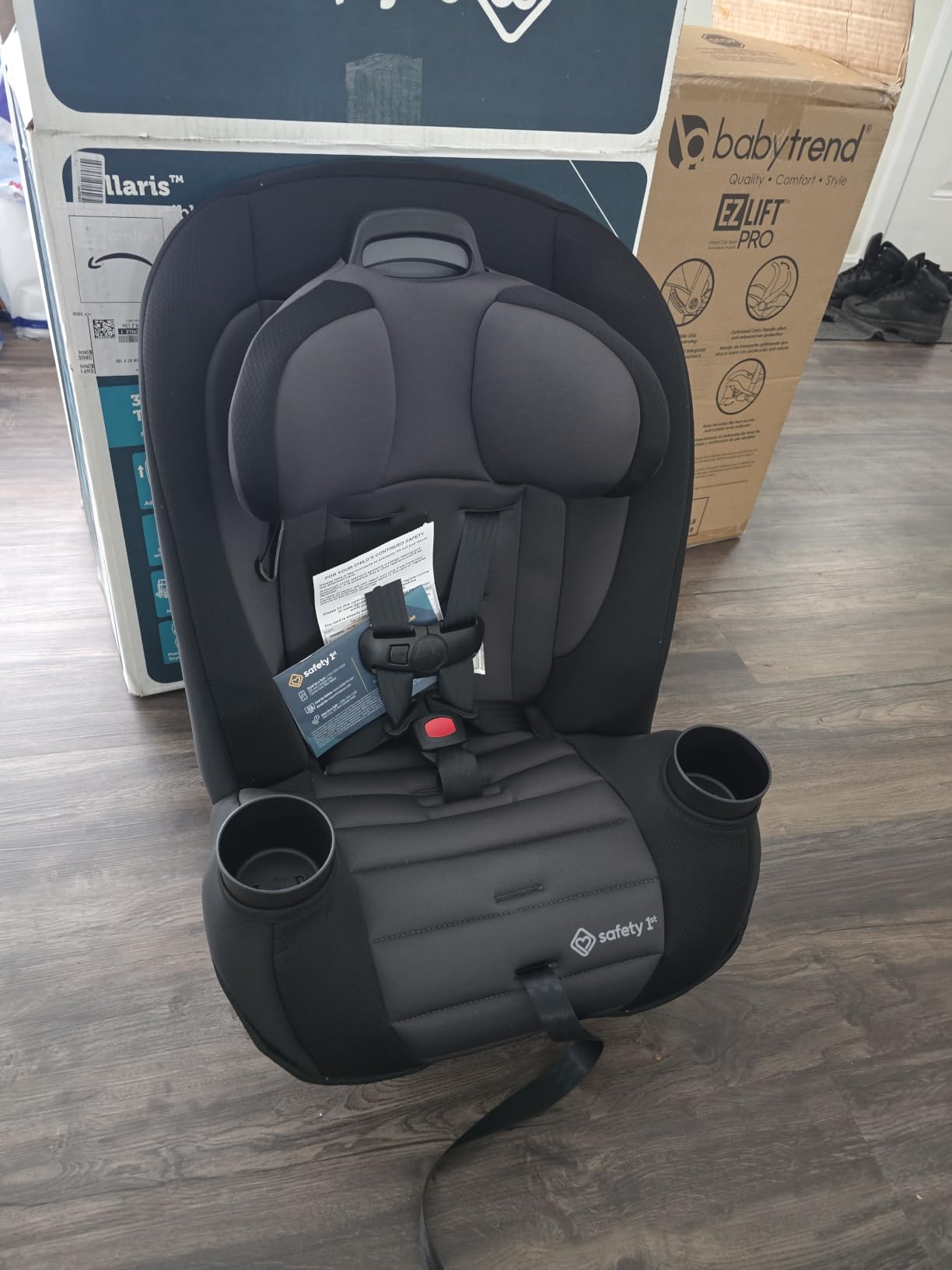
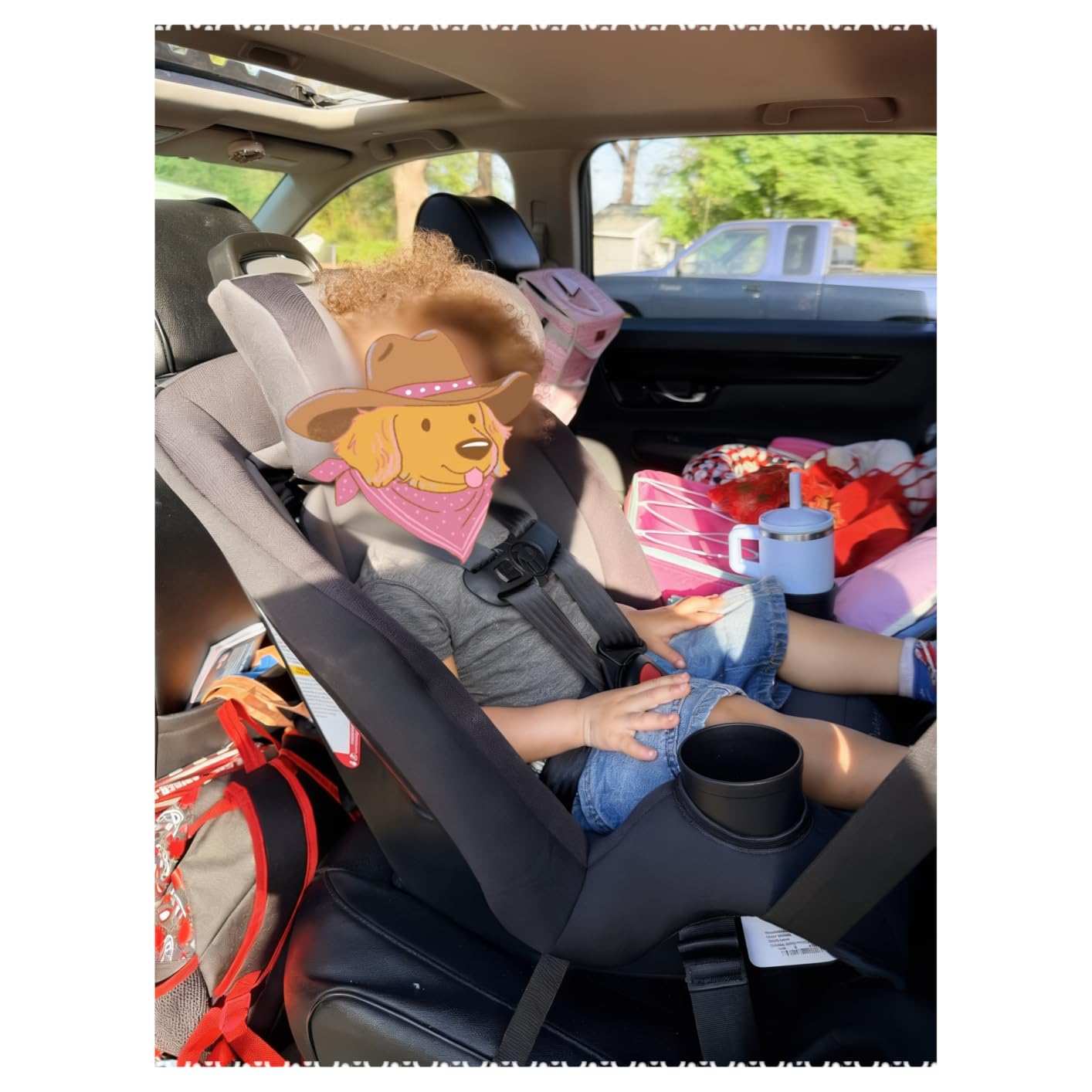
Some owners report an installed width slightly above 19 inches, which is the single most important number for this topic and the reason this seat needs careful measuring before you commit. A slim design that measures 19 inches installed will not sit comfortably three across in a compact sedan, and several users found it bulkier than the slim label suggested.
Five headrest and harness positions adjust in one motion without rethreading, the seat pad is washer and dryer safe, the two cup holders are removable and dishwasher safe, and the compact design is airplane ready.
Who this seat works well for?
Families in a wider vehicle, such as a minivan or a three-row crossover, who want a straightforward first convertible without spending heavily. The light weight is the standout for anyone moving seats between two cars or handling them through airports.
The 4.3 rating still reflects broadly positive owner experience, with most buyers using it for a first convertible and reporting straightforward installation. It suits a row with a mixed configuration where the two youngest share this seat type.
Where buyers get frustrated?
The width reality check is the main one. If your plan depends on a tight three-across install, this seat’s slimness is unproven in practice, and that is exactly the plan it is being bought for. Measure before purchasing three.
Five headrest positions is fewer than the 8 to 14 offered by competitors, so a fast-growing child will outgrow the adjustment sooner. Owners also describe the headrest as wiggly and the strap tensioning button as difficult to reach, and the 8 percent share of one-star reviews reflects real install and fit variability.
6. Safety 1st Grow and Go 2-in-1 Booster – Foldable Booster With Expanding Wings
Safety 1st Grow and Go 2-in-1 Booster Car Seat with ComfortWings, Converts High-Back to Backless, 19″ Wide, Fits 3 Across, Lightweight, Foldable, Easy-Clean, Cup Holders, 40-100 lbs, Beach Wave
40-100 lb and 43.4-57 inches
19 inch width with wings up
2-in-1 highback to backless
Lightweight foldable
Pros
- Light yet sturdy
- folds for storage and vehicle transfers
- Headrest runs high enough for larger children
- Belt guides help kids buckle themselves
- Machine-washable pad
- Deep cup holders
Cons
- No anchor connection so it can shift when empty
- 19 inches is wider than the slimmest options
- Smaller evidence base than most here
The Safety 1st Grow and Go 2-in-1 Booster is built for the third position in a three-across row: a child at 40 to 100 pounds and 43.4 to 57 inches who has outgrown a harness. It converts from a high-back belt-positioning booster to a backless booster, and the ComfortWings headrest expands as it rises to fit a growing child.
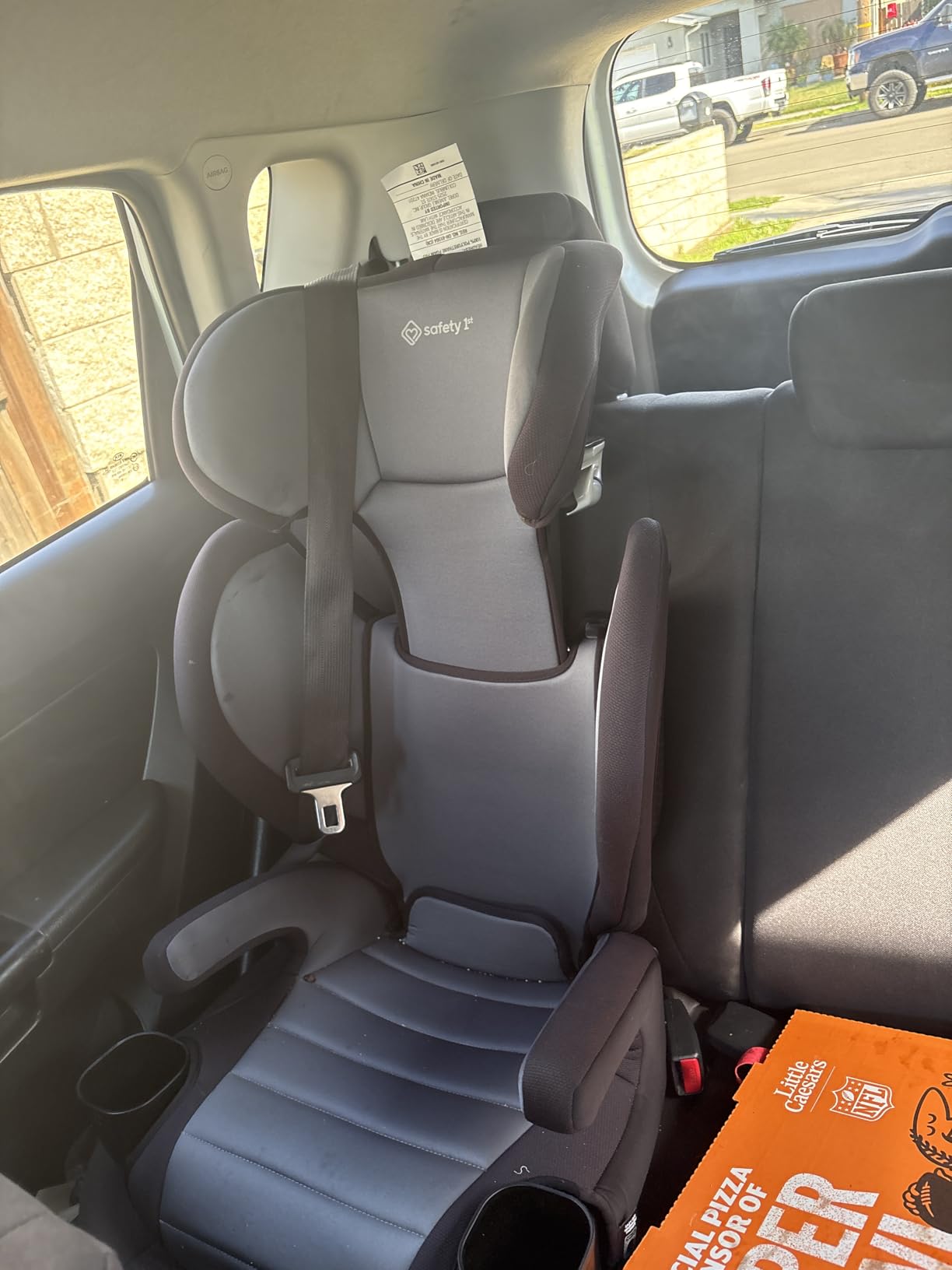
The width is disclosed and worth planning around: 19 inches total seat width as the backrest wings expand. That is wider than the slimmest shells in this roundup, so on a tight row you would pair this with the narrowest two seats you can find. On a typical midsize sedan or crossover back seat, three will fit with room to tighten.
Practicality is the draw. It is lightweight enough to move between cars without complaint, folds into pieces for compact storage, and the shoulder and lap belt guides help children buckle themselves, which matters with a seven-year-old in the third position. The seat pad is machine washable and dryer safe, and the two removable cup holders are dishwasher safe.
Who this seat works well for?
Families with a mixed row: two harness seats for the younger children and this booster for the oldest. It is the correct stage for a child ready for the vehicle belt, and the self-buckling belt guides shorten the daily routine.
It also suits grandparents and second-car households, since the fold makes storage trivial and the light weight means an adult can move it without help. Reviewers note the headrest runs high enough for larger children and that the padding is comfortable for long trips.
Where buyers get frustrated?
There is no anchor connection. The booster is held in place by the vehicle seat belt alone, so the empty seat can shift or move in a crash, and several reviews raise this as the main caveat. That is how belt-positioning boosters work, but it is worth knowing before you buy.
At 19 inches with wings extended, it is wider than the slimmest three-across options, and with 478 reviews the evidence base is smaller than most seats in this roundup. Run the width arithmetic for your specific row.
7. Baby Trend Hybrid SI – Three-Stage Combination Seat With Side-Impact Focus
Baby Trend Hybrid SI 3-in-1 Combination Booster Seat, Dash Orchid – Side-Impact Protection, 3-Stage Growth Design, Adjustable Headrest, Cushioned Comfort
3-in-1 combination booster
Adjustable headrest
Side-impact focused design
Dual cup holders
Pros
- Entry price for a three-stage combination seat
- Slim design some owners say helps three-across
- Easy harness adjustment
- Simple installation in many vehicles
- Dual cup holders
- Comfortable enough for naps
Cons
- Lowest rating in the roundup at 4.1
- Instructions reference other models
- Harness ran out of adjustment for a 41 lb child
- Back shell pops off easily
- Fit varies widely by vehicle
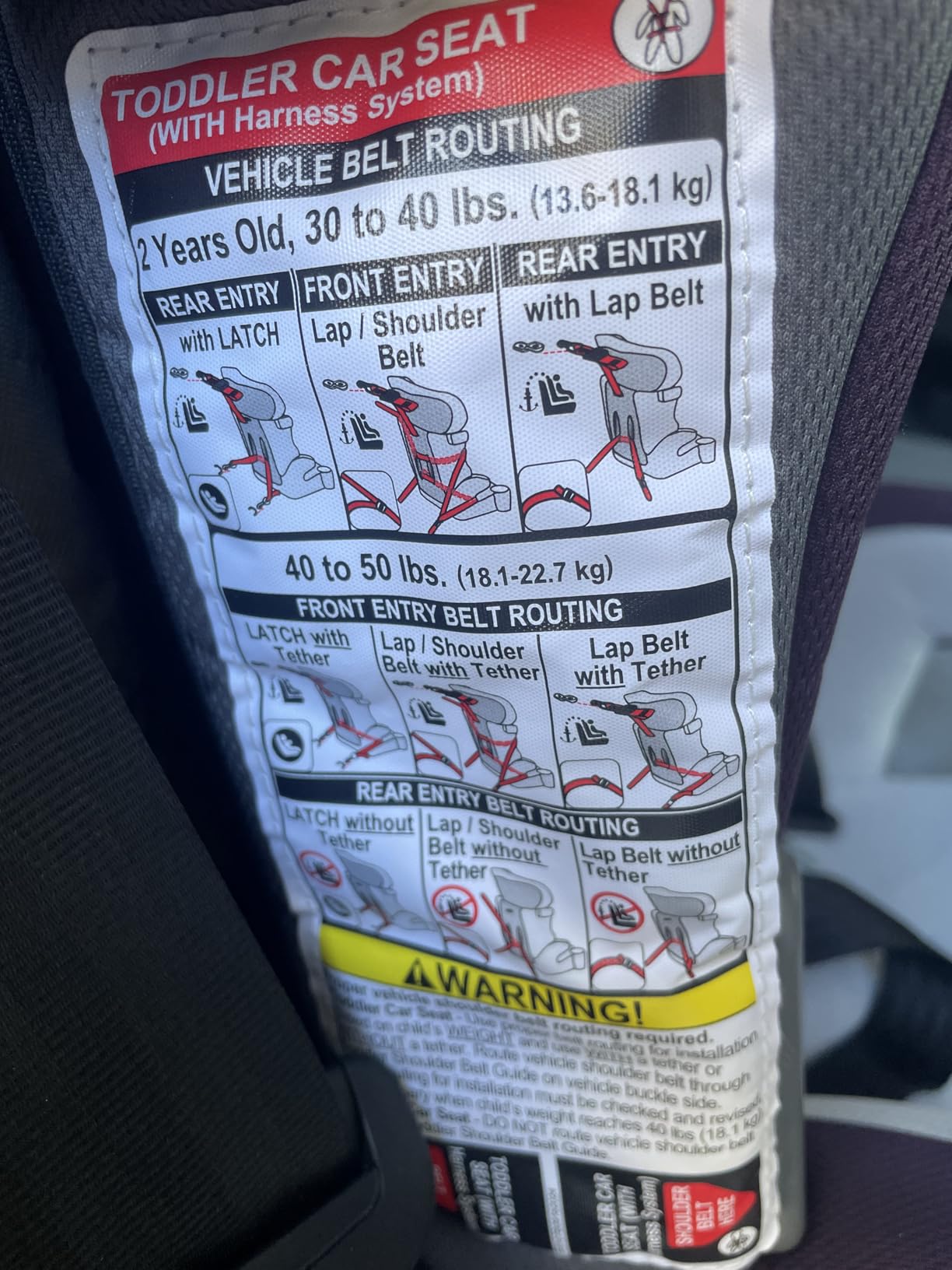
The Baby Trend Hybrid SI is a 3-in-1 combination seat that carries a child from harness stage through to vehicle seat belt use, with a side-impact focused design, an adjustable headrest, and dual cup holders. It sits at the accessible end of the combination category and pairs a slim profile that some owners say helps in a three-across layout.
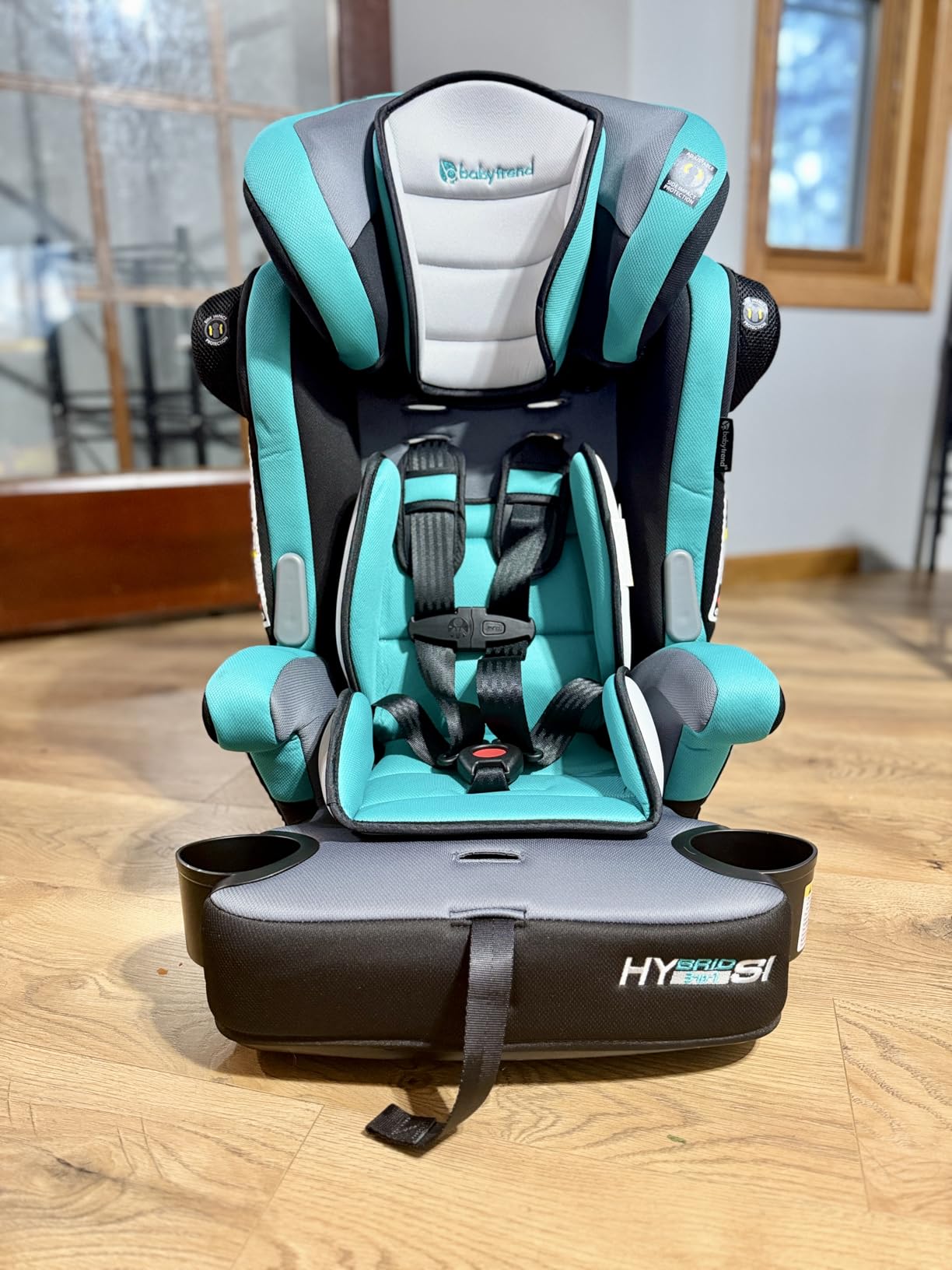
Fit varies noticeably by vehicle in owner reports, and the contrast is instructive: some describe a good fit in a Kia Sorento while others report poor fit in a Jeep Wrangler. That single detail is the strongest argument for the measure-your-own-back-seat method. A slim seat is only slim relative to the row you are putting it in.
Children do nap in it, and owners praise the padding for comfort, the styling, and the simple installation in many vehicles. The construction is 100 percent polyester with cushioned, supportive seating.
Who this seat works well for?
Families with one child in the combination stage and a wider back row, who want a single seat that spans harness and booster rather than buying two. Side-impact focus is a sensible emphasis for a seat that will spend years in the outboard position.
It suits a family starting with a younger child who will move up through the stages in one seat, and the dual cup holders keep drinks accessible for a child old enough to use them.
Where buyers get frustrated?
This is the lowest-rated seat in the roundup at 4.1, with 10 percent of reviews at one star. The most serious report is a harness that ran out of adjustment for a 41-pound, 41-inch four-year-old despite the advertised capacity, so check the harness range against your child’s current size.
Installation instructions reference parts from other models, which produces real confusion, and the back shell pops off easily and is hard to reattach. Fit varies widely by vehicle, so treat it as a seat to test in person rather than order sight unseen.
8. Graco Tranzitions – No-Rethread Harness Booster That Converts to Backless
Graco Tranzitions 3-in-1 Harness Booster Car Seat, Proof
Forward-facing harness 26.5-65 lb
Highback and backless booster
No-Rethread harness
9-position headrest
Pros
- Covers three stages in one seat
- Harness and headrest adjust together
- Lightweight and portable for multi-car use
- One-hand headrest adjustment
Cons
- Booster stages start at 40 lb not 30 lb
- Not designed as a dedicated slim three-across seat
The Graco Tranzitions covers three stages: forward-facing harness from 26.5 to 65 pounds, then high-back booster and backless booster from 40 to 100 pounds. The No-Rethread Simply Safe Adjust harness raises the harness and headrest together in one motion, and a one-hand 9-position headrest grows with the child without tools or rethreading straps.
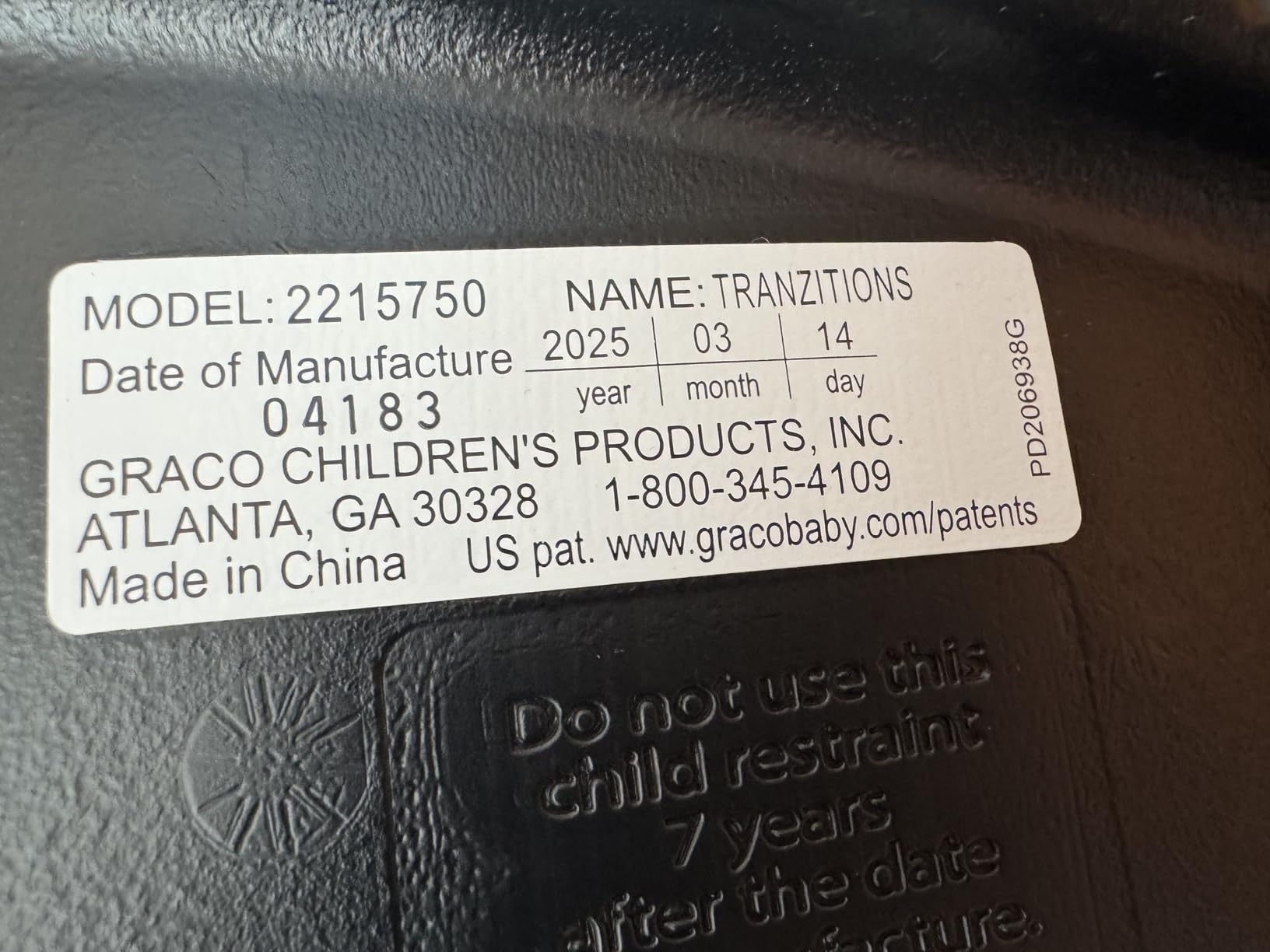
For three-across families, the practical advantage is that it replaces two seats with one. A child who starts in the forward-facing harness can stay in the same shell through the booster stage, so the third position frees up as the oldest child grows rather than requiring another purchase.
It is also lightweight and portable, which suits multi-vehicle households. Graco notes the booster-stage minimum weight increased from 30 to 40 pounds to meet industry standards, and that change is worth planning around rather than discovering later.
Who this seat works well for?
Families with one child in the forward-facing harness stage who want a long service life from a single seat. The no-rethread harness matters most in the morning rush with three children, where you adjust one harness instead of rethreading two.
It works well as the third seat in a mixed row, freeing the outboard position for a booster later. Light weight suits households with two cars or a grandparent’s vehicle.
Where buyers get frustrated?
Graco does not position this as a dedicated slim three-across seat, and buyers who planned around narrowness report it as a limitation rather than a feature. Measure it in your row rather than assuming.
The booster stages now start at 40 pounds rather than 30, so a smaller child in the 30-pound range cannot move to booster mode early. Plan the transition by weight, not by age.
9. Graco TurboBooster 2.0 LX – Slim Booster With Room for an Adult in the Middle
Graco TurboBooster 2.0 LX Highback & Backless Booster Car Seat, Gannon
40-100 lb and up to 57 inches
2-in-1 highback to backless
Front-adjust LATCH
Slim profile
Pros
- Over 5000 reviews at 4.7
- Light enough for an adult to lift
- Slim profile fits an adult in the center
- Deep retractable cup holders
- Good head support for sleeping children
- Converts to backless
Cons
- Not anchored so it can slide when empty
- Recessed buckle hard for younger kids to reach
- Modest padding
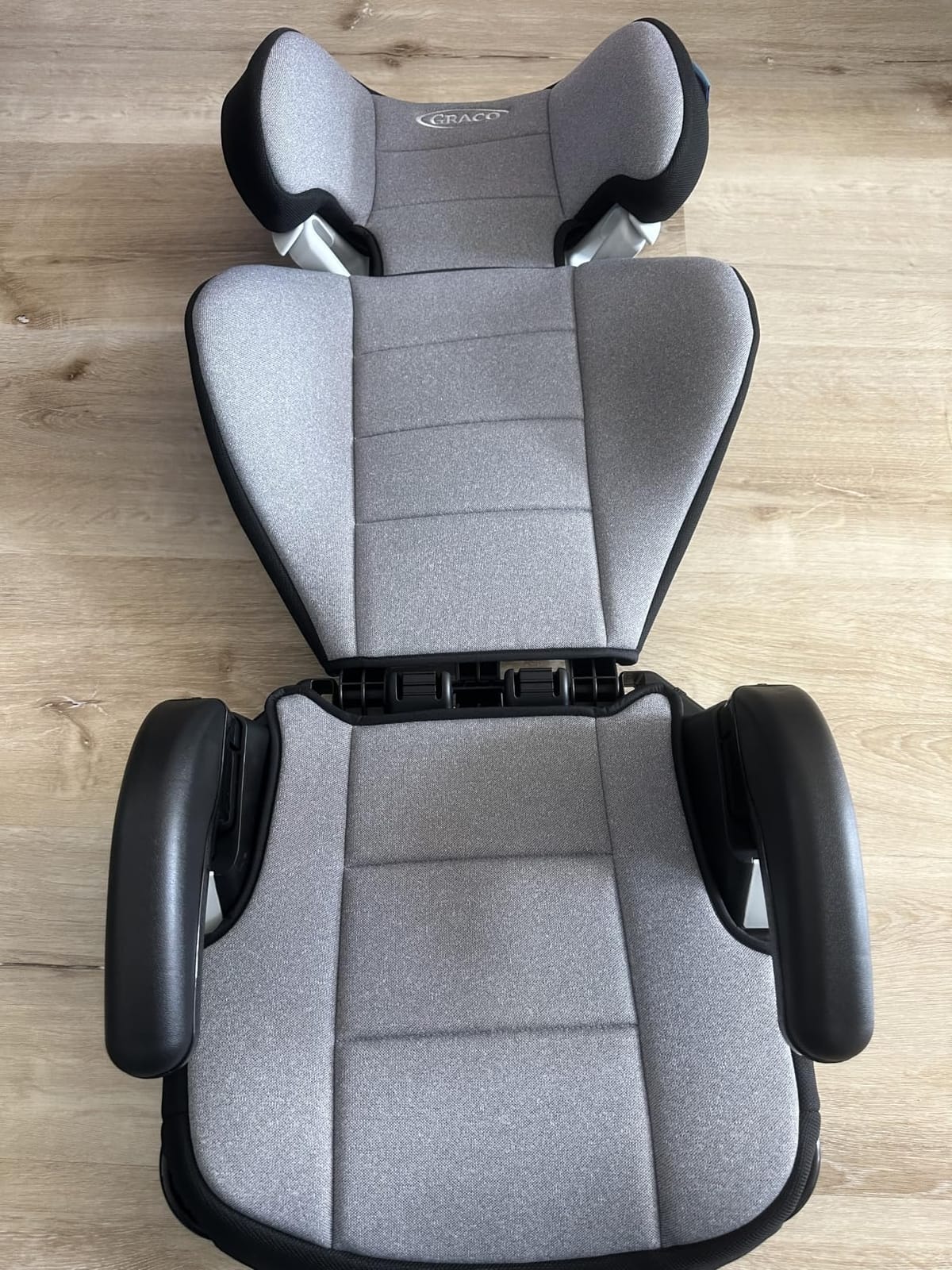
The Graco TurboBooster 2.0 LX is the booster to look at if your three-across row has to share space with an adult. Graco states the slim profile leaves room for a center-position adult occupant, which is a genuinely different use case from packing three children across, and it matters for the loading problem parents raise constantly when only one adult is in the car.
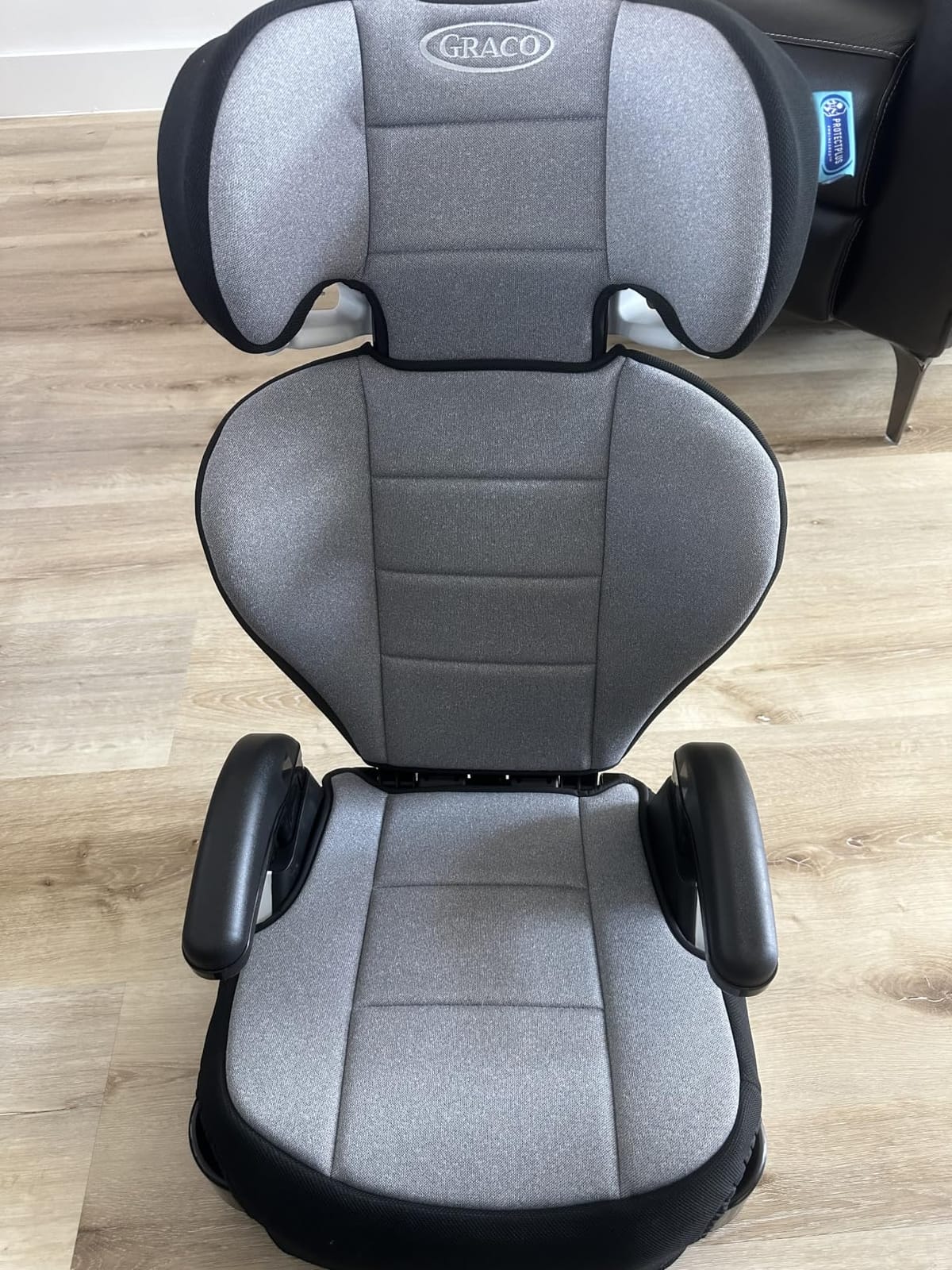
The stage coverage is 2-in-1: high-back converting to backless for children 4 to 10, from 40 to 100 pounds and up to 57 inches. Graco ProtectPlus covers frontal, rear and rollover crash types, the headrest is fully adjustable, and one-hand front-adjust LATCH lets you tension the connectors without crouching in the back seat.
It assembles out of the box, weighs little enough for an adult to lift easily, and has retractable dual cup holders deep enough for water bottles. The armrest design keeps the belt away from the child’s neck. More than 5,000 reviews at 4.7 with an 83 percent five-star share make it the best-documented booster here.
Who this seat works well for?
Families with two children still in restraints and one older child in a booster, where the middle position needs to stay usable. The low weight and LATCH tensioning make it practical for households that move seats between vehicles.
It also suits families with a long daily school run, since reviewers note the headrest supports sleeping children on long drives. Converting to backless extends the life of the seat well past the booster stage.
Where buyers get frustrated?
The most repeated caveat is that the seat does not anchor into the vehicle and can slide when unoccupied. It is held in place by the vehicle seat belt, which is normal for a booster but worth stating plainly.
The recessed buckle can be difficult for younger children to reach on their own, and the padding is more modest than premium boosters, so some children find it less plush. If comfort for long trips is the priority, compare against a higher-end booster.
10. Diono Everett NXT – Rigid Steel LATCH Booster for 40-120 lb
Diono Everett NXT High Back Booster Car Seat with Rigid Latch, Lightweight Slim Fit Design, 8 Years 1 Booster Seat, Black
40-120 lb booster
Slim fit for three-across
Rigid steel LATCH
7-position headrest
Pros
- Slim design owners verify in a Volvo XC90
- Rigid LATCH needs no tightening
- Straight latch arms help limited dexterity
- Very light yet sturdy
- Headrest adjusts in seconds
- Belt guides do not snag
Cons
- Headrest wings can dig into shoulders at belt height
- Cup holders attach on a small plastic stem
The Diono Everett NXT is a high-back booster for 40 to 120 pounds with a slim-fit design aimed squarely at three-across layouts, and it carries the heaviest booster weight limit in this roundup at 120 pounds. Owners confirm the narrow footprint in large three-row vehicles, with one reviewer verifying the fit in a Volvo XC90.
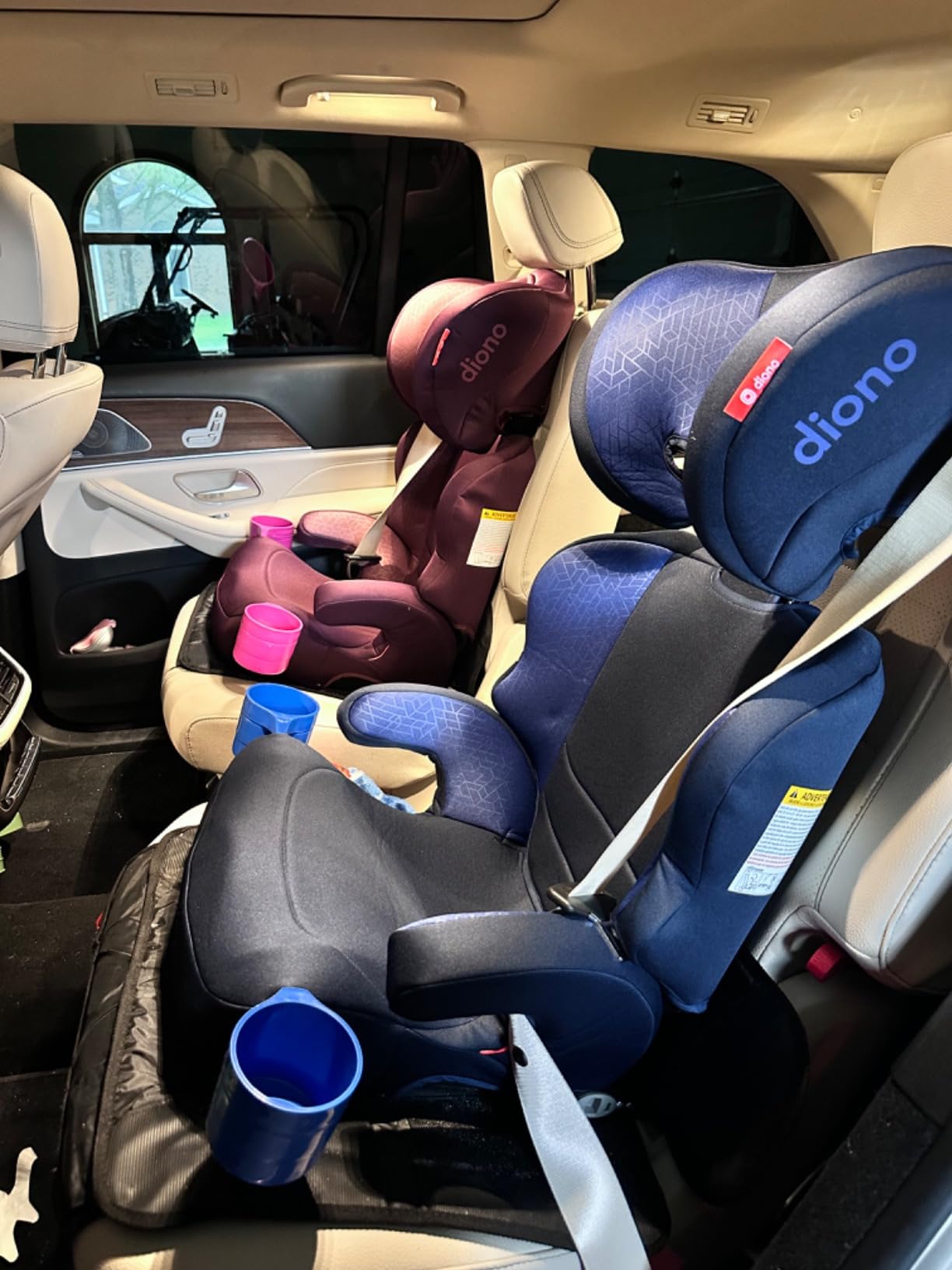
The distinguishing feature is the rigid LATCH. Automotive steel connectors require no tightening at all, which means no squeezing, no ratcheting and no crouching, and the arms sit straight rather than at an angle. For anyone with limited dexterity, or for a family doing three installs in a dark parking lot, that is a real usability difference. The arms can also be flipped inward for vehicles without anchors.
Two layers of side-impact protection, a deep padded backrest with layered foam, removable machine-washable fabrics, and open loop belt guides for easier self-buckling round out the package. Reviewers also note the seat belt does not snag on the guides as it does with many boosters.
Who this seat works well for?
This is the one to consider when the oldest child is on the tall side, since it carries children past the 100-pound ceiling that most boosters in this roundup stop at. The eight-year booster service life keeps it in the plan for the long run.
It suits large three-row vehicles where back-row width is generous but an easy install still matters, and the open belt guides help a child buckle independently. Light weight despite the steel connectors makes transfers between cars painless.
Where buyers get frustrated?
The headrest wings can curve down past the belt path and dig into a child’s shoulders when set at the height the manual specifies. That is a design complaint that recurs, and it matters more in a three-across row where you cannot rotate the seat away from the door.
The cup holders attach separately and press into a small plastic stem that reviewers report can break before the seat is outgrown. With 347 reviews, the evidence base is the thinnest here, so plan to verify the install in person.
Buying Guide: Nine Things That Decide a Three-Across Back Row
1. Measure the shell where it actually bulges. Most published widths are measured at the widest point of the shell, which may be at the head wings rather than the base. A parent on r/parentsofmultiples found the back and head parts of their seats were the failure point, not the bases. If you are measuring yourself, measure at the widest point and write the number down.
2. Add the widths, then leave nothing to chance. Three seats at 17 inches each is 51 inches. Add a seat that measures 19 inches and you are at 53. Compare that to your usable back-row width and know which side of the line you are on before you buy.
3. Plan for mixed stages, because that is the real configuration. Most three-across rows are not three identical seats. They are two rear-facing seats plus one forward-facing harness, or two harness seats plus one booster. Boosts and all-in-one convertibles grow into the third position over time, so choosing seats that can transition upward frees width later.
4. Understand the middle-seat anchoring reality. Most vehicles have lower anchors in the two outboard positions only. The center position is usually a seat-belt install, and some vehicle manuals restrict lower-anchor use in the center entirely. That is why belts and their lockoffs matter so much here: a belt path can sit tighter against a seat than a pushed-down connector, and a belt can find clearance against a curved door that an anchor cannot.
5. Seats may touch. They may not be forced. This is the reassurance that appears on installation guidance and is the single most repeated question on parent forums. Touching is fine. Contact between adjacent restraints is not prohibited. What is prohibited is compressing a seat to make it fit, or installing one so it moves more than an inch at the belt path. If it only fits when you lean on it, it does not fit.
6. Narrow is not less safe. All seats sold in the US are self-certified by their manufacturer to FMVSS 213, the federal standard covering child restraints. A narrow seat and a wide seat face the same crash tests in certification. Manufacturers self-certify, which means no government agency ranks them afterward and no official crash-performance ranking exists. Installation correctness, correct recline for the child’s height, and a seat that is not expired determine safety far more than shell width.
7. Weigh the seat, not just the width. Three-across families move seats between vehicles more than any other group, and a 25-pound steel seat becomes a daily problem after two weeks. Several seats here are described by owners as easy for an adult to lift. Check the seat expiration date at the same time; a car seat has a finite service life and the date is molded into the shell.
8. Think about who loads the row. Parents on forums ask repeatedly how to load three children in car seats with one adult in the car. A booster with open loop belt guides and a child who can buckle themselves changes that morning substantially. A seat with a recessed buckle or a hidden harness release defeats it.
9. Skip the wrong categories for a tight row. Rotating convertible seats with large bases, wide-shell convertibles with high side wings, and low-profile seats with minimal side impact structure all work against a three-across install. If your row is genuinely tight, choose a purpose-built slim shell instead. Buying three of the same slim seat also simplifies the install and gives you interchangeable parts.
A final note on price. Three-across families typically multiply every figure by three, so weight, washable covers and a seat that transfers cleanly between two vehicles are worth more attention than small differences in price band. The lower end of this roundup covers the essential stages; the upper end buys easier installation. Neither end is safer than the other under FMVSS 213.
Frequently Asked Questions
How do I know if 3 car seats will fit in my car?
Measure the usable width of your back row at the height of the restraint bight, from interior door panel to interior door panel. Add the published widths of all three seats and compare the total to that number. Seats may touch each other and may touch the door, but they must never be forced or compressed, and every install still has to be tight at the belt path.
Can you put two car seats next to each other safely?
Yes. Contact between adjacent child restraints is not prohibited, and seats may also sit against the door. The install is the problem, not the touching. Each seat still has to be installed tight enough that it moves no more than an inch at the belt path or lower-anchor connector, which will not be possible if the seat is compressed to make it fit.
What is the slimmest car seat for three across seating?
The Diono Radian 3R and the Graco SlimFit are engineered specifically for narrow three-across fit, and the Britax Poplar S is the only seat in this roundup with a published 17-inch shell width. Manufacturers rarely publish exact widths, so confirm the measurement in a store with a tape measure before committing to three units.
Are slim car seats less safe than wide ones?
No. Every car seat sold in the United States is self-certified by its manufacturer to FMVSS 213, the same federal standard, regardless of shell width. A narrow seat and a wide seat complete the same certification testing. Safety is determined by correct installation, the correct recline for the child’s height, an unexpired seat, and following both the vehicle owner’s manual and the seat manual.
Does the middle seat of the back row have LATCH anchors?
Most vehicles have lower anchors only in the two outboard positions. The center seating position is typically installed with the vehicle seat belt, and some vehicle manuals restrict lower-anchor use in the center entirely. That is why lockoffs and belt-path tension matter for three-across installs, because a belt can often be tightened tighter against a seat than a pushed-down connector.
Conclusion: The Three Seats and One Row That Actually Works
For the best car seats for three across seating, the Diono Radian 3R is the strongest all-round answer: engineered for three-across fit, steel-framed, rear-facing to 50 pounds, and light enough per seat to travel with. The Graco SlimFit is the highest rated and frees the most width through its rotating cup holders, which is why it earns the top-rated slot. The Safety 1st Grow and Go All-in-One is the pick when back-row width is generous and you want the most proven convertible available.
Whichever you choose, run the arithmetic before you order three. Measure your back row, add the widths, and confirm the fit in the actual vehicle with a tape measure. If you also need stage coverage beyond three-across, our guides to the best convertible car seats and the best booster car seats cover the details, and infant car seats matter for the newborn stage that no seat on this list starts at. Have a certified Child Passenger Safety Technician check the final install, because correct installation beats any price tier every time.