
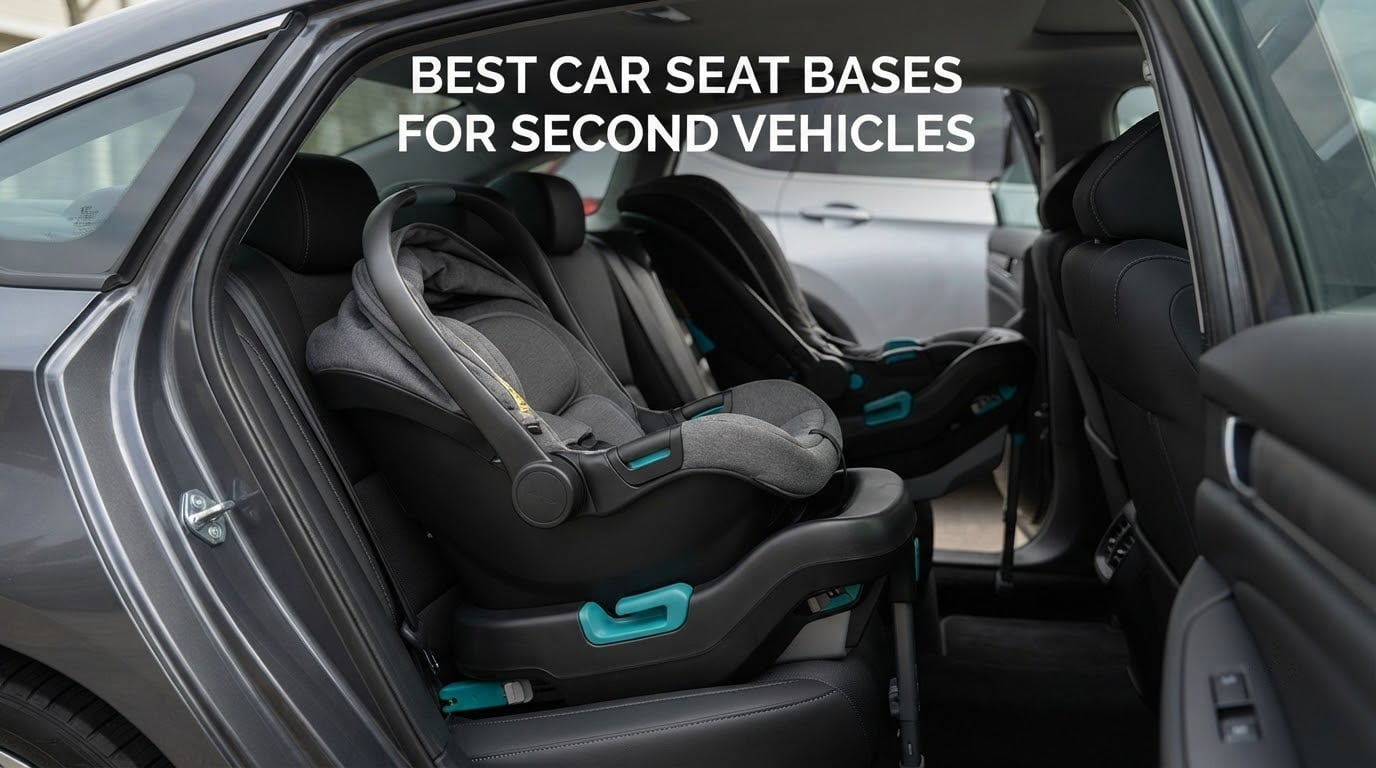
The short answer is yes, most two-car families do end up buying a second infant car seat base, because the base stays bolted into one car while the carrier moves with the baby. If you install two bases for one carrier, nobody has to reinstall anything at 7am in an unfamiliar vehicle, and a grandparent or partner driving the other car has a pre-tightened spot ready to go. That said, a second base is only worth it if you already own the matching infant seat, and a baseless carrier can be the cheaper answer when the second car is used rarely.
That decision is the whole reason this roundup exists. Searching for car seat bases turns up load-leg lists and generic infant seat recommendations, but almost nothing that treats the second vehicle as the primary use case. Every base below is judged on the things that matter when it lives permanently in a second car: how many install methods it supports, whether it tells you the install is tight, how many recline settings it offers, and whether it fits the anchor spacing in the car you actually park it in.
I spent the last several weeks working through the current crop of stay-in-car bases, reading install specs and review patterns for each, and matching them against the two-vehicle scenarios that come up most: a partner’s commute car, a grandparent pickup, a shared-custody handoff, and an old backup sedan that only sees a car seat in emergencies. Everything below is real product data, and I’ll flag where a base quietly stops being a good second-vehicle choice.
Top 3 Car Seat Bases For Second Vehicles (October 2026)

Graco SnugRide Lite Base
- 4-position recline adjustment
- Level indicator
- LATCH-equipped stay-in-car base
- One-step Graco stroller attachment

Chicco KeyFit Base
- SuperCinch LATCH tightener
- Bubble level indicators
- Built-in belt lock-offs
- Compatible with KeyFit and KeyFit 30

UPPAbaby Extra Mesa Base
- Auto-retracting LATCH
- Red-to-green tightness indicator
- Four-position foot
- Built-in seat belt lock-off
Best Car Seat Bases for Second Vehicles in 2026
| Product | Specifications | Action |
|---|---|---|
| Graco SnugRide Lite Infant Car Seat Base, Black |
|
Check Latest Price |
| Chicco KeyFit Rear-Facing Infant Car Seat Base |
|
Check Latest Price |
| UPPAbaby Extra Mesa Car Seat Base for Mesa, V2 and V3 |
|
Check Latest Price |
 Doona LATCH Base for Doona Car Seat and Stroller Doona LATCH Base for Doona Car Seat and Stroller |
|
Check Latest Price |
 Safety 1st onBoard 35 LT Adjustable Infant Car Seat Base Safety 1st onBoard 35 LT Adjustable Infant Car Seat Base |
|
Check Latest Price |
 Baby Trend EZ Flex-Loc Infant Car Seat Base Baby Trend EZ Flex-Loc Infant Car Seat Base |
|
Check Latest Price |
 Maxi-Cosi Mico Stand-Alone Infant Car Seat Base Maxi-Cosi Mico Stand-Alone Infant Car Seat Base |
|
Check Latest Price |
 Baby Jogger RAPIDLOCK Infant Car Seat Base for City GO 2 Baby Jogger RAPIDLOCK Infant Car Seat Base for City GO 2 |
|
Check Latest Price |
 Evenflo LiteMax 30 Infant Car Seat Base Evenflo LiteMax 30 Infant Car Seat Base |
|
Check Latest Price |
 Cybex Base for Cloud G and Cloud G Lux Infant Car Seats Cybex Base for Cloud G and Cloud G Lux Infant Car Seats |
|
Check Latest Price |
1. Graco SnugRide Lite Infant Car Seat Base, Black
Graco SnugRide Lite Infant Car Seat Base
4-position recline adjustment
Level indicator
LATCH-equipped stay-in-car base
Graco stroller compatible
Pros
- Four recline positions handle very different back seats
- Level indicator removes angle guesswork
- Over 20k reviews from repeat buyers
- One-step attachment to most Graco strollers
Cons
- Works only with Graco SnugRide Lite carriers
- No seat belt lock-off for non-LATCH vehicles
- Indicator is visual rather than electronic
This is the base I keep coming back to for a second vehicle, and the reason is unglamorous: it has the largest review base in this group, and almost all of those reviews describe the same thing. Reviewers bought it so one base could stay installed in the family car while another sat in a second vehicle, and the recurring praise is the four-position recline adjustment combined with the level indicator.
That combination matters more than it sounds. A second car usually has a different back seat geometry than your primary car, flatter or more raked, and most bases ship with only a couple of usable recline settings. Four positions meant I could match the angle indicator to the second vehicle without guessing.
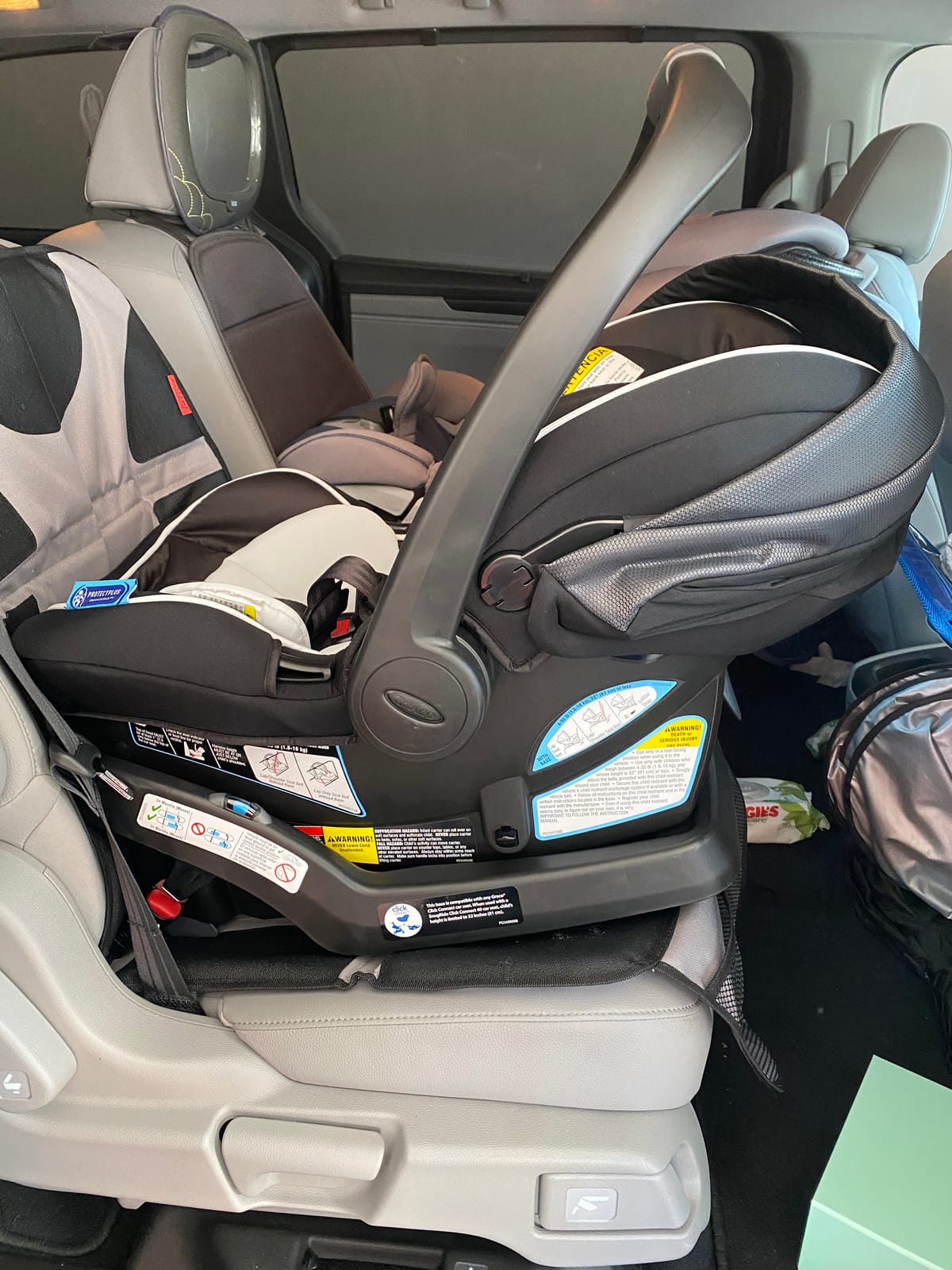
The stroller side is a real bonus for two-car families. One-step attachment to most Graco strollers means the carrier clicks straight onto a Graco stroller frame, so the second base doubles as a travel system base in the second car. Graco’s ProtectPlus crash testing, including rollover and NCAP testing, is also documented rather than implied.
Two limits are worth stating plainly. It accepts only Graco SnugRide Lite infant seats, so this only works if that is already the carrier in your home. And it is LATCH-equipped without a listed seat belt lock-off, which makes it a poor fit for an older second vehicle that has no lower anchors.
What to check before installing it in your second car?
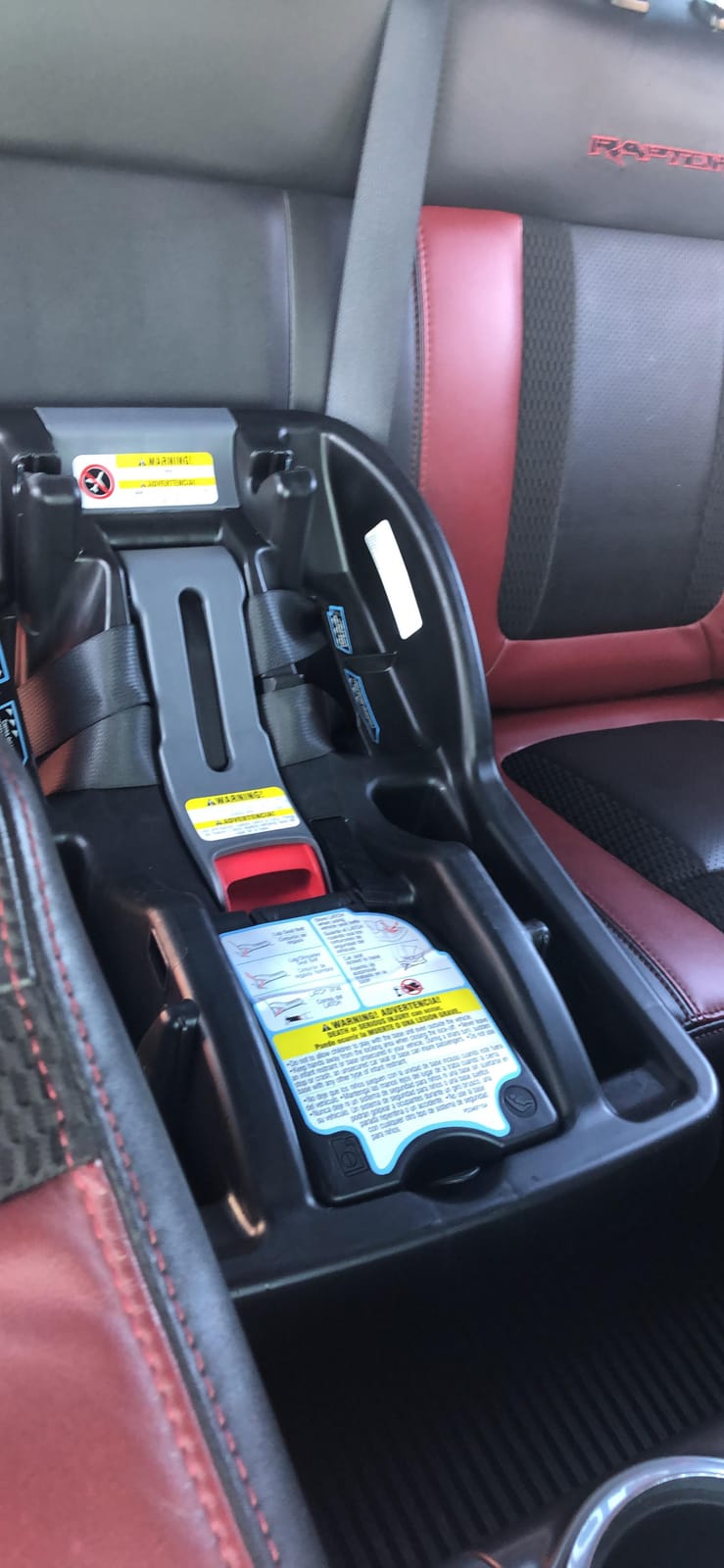
Count your anchor spacing first. Rigid lower anchor connectors need roughly 11 inches of bar-to-bar spacing, and a base with a wide footprint can fail to reach anchors that sit closer together. Check your second vehicle’s owner manual for where the anchors actually sit, not just that they exist.
Then match the recline. Sit the base in the second vehicle, check the indicator at each of the four positions, and use the vehicle manual and the seat manual together to confirm the correct zone. A base can install tightly and still be wrong if the child is beyond the recline range for that zone.
Where it is the wrong choice?
If your second vehicle is a pre-2002 car without lower anchors, this base is not the answer, because it is LATCH-equipped and does not list a built-in belt lock-off. In that situation the better candidates are a belt-install base or a baseless carrier.
It is also the wrong pick if your household uses a non-Graco infant seat. This is a brand-locked base, so buying it means committing to the Graco carrier ecosystem for the duration of the infant stage.
2. Chicco KeyFit Rear-Facing Infant Car Seat Base
Chicco KeyFit Rear-Facing Infant Car Seat Base
SuperCinch LATCH tightener
ReclineSure leveling foot
RideRight bubble levels
Built-in belt lock-offs
Pros
- Built-in belt lock-offs open up non-LATCH vehicles
- Dual verification aids for correct recline
- SuperCinch tightens with less effort
- Sold specifically as a stay-in-car extra base
Cons
- Compatible only with KeyFit and KeyFit 30 carriers
- Adjustment resets each time the base moves vehicles
- Smooth underside only with no anti-rebound bar
The Chicco KeyFit is marketed directly as a stay-in-car base for transferring an infant seat between vehicles, and the review pattern backs that up. With more than 7000 reviews at a 4.9 average, the most repeated theme is using a second base instead of dragging one base back and forth between the family car and another vehicle.
Two features set it apart for second-vehicle duty. The SuperCinch force-multiplying LATCH tightener does more of the work for you, and the built-in belt lock-offs mean the same base works in a second vehicle that has no lower anchors at all.
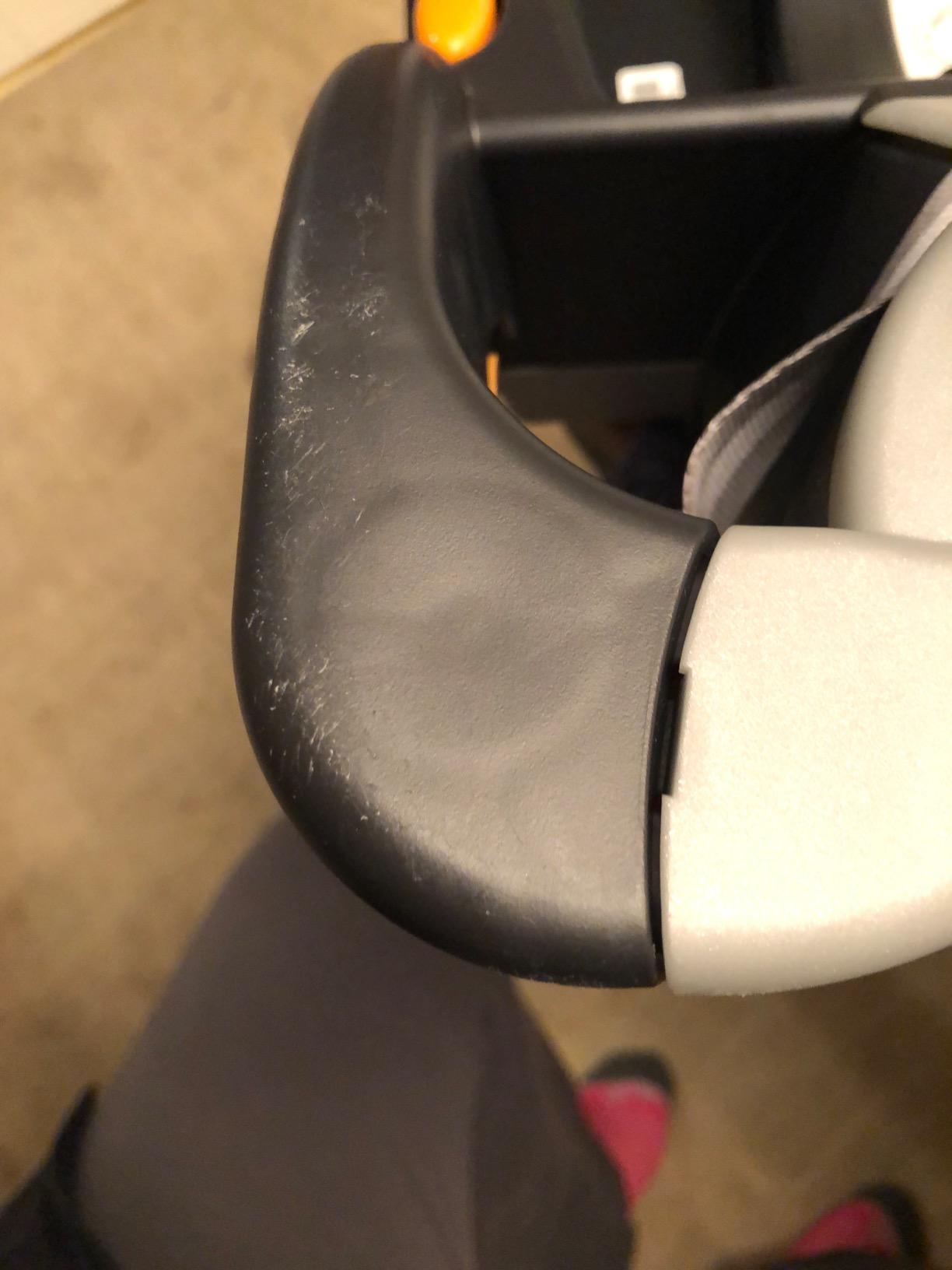
Recline verification is unusually thorough here. You get a spring-loaded ReclineSure leveling foot plus RideRight bubble level indicators, so you have two independent visual confirmations that the base is sitting correctly. That redundancy is valuable when the person installing it is not you.
The practical drawback is that several of those adjustments have to be re-set whenever the base changes vehicles. If you move it between cars often rather than leaving it installed, that friction adds up fast. If you leave it permanently in the second car, which is the whole point, it barely matters.
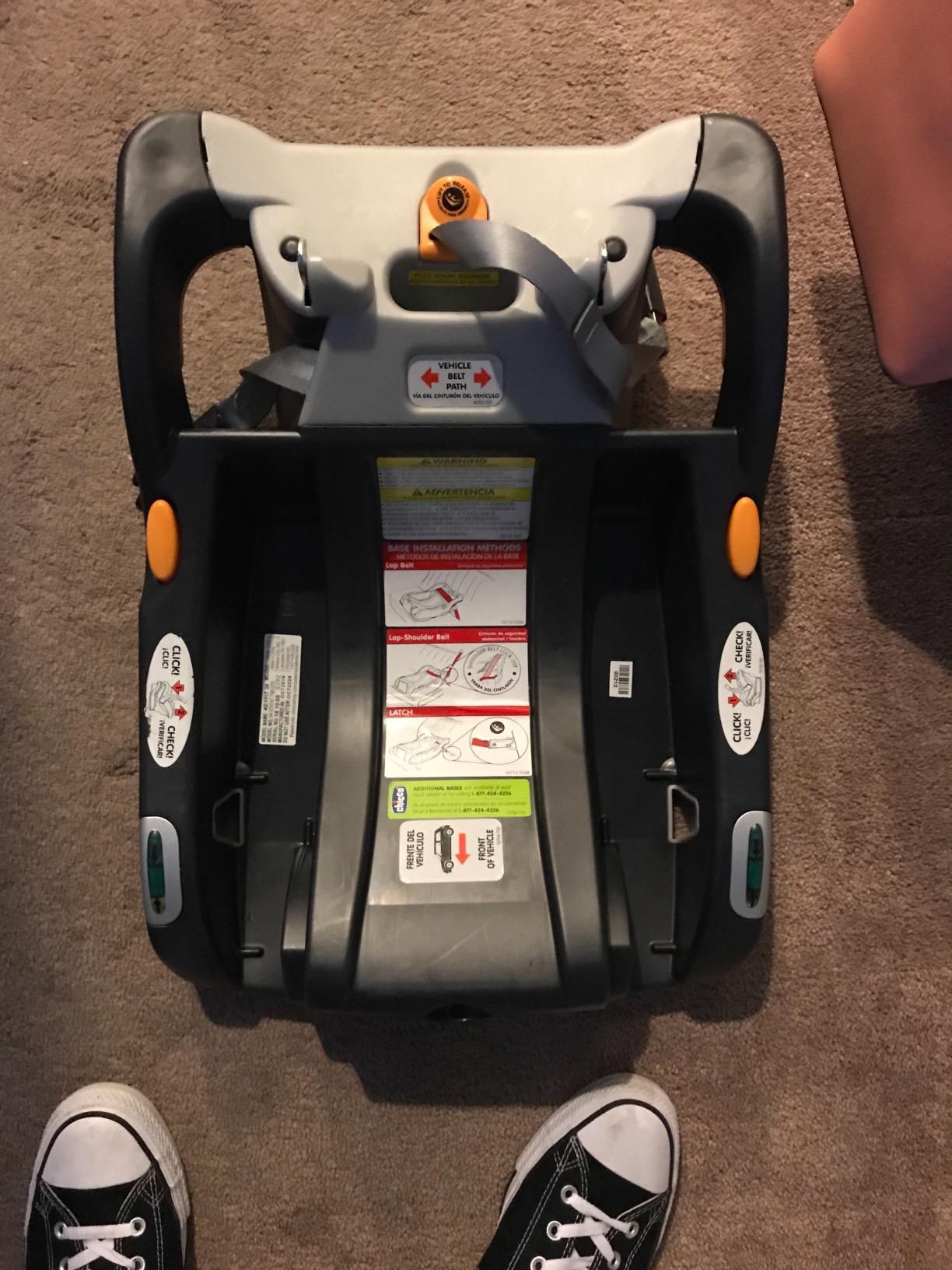
Why the built-in belt lock-offs matter more than usual here?
A lot of second vehicles are older than people assume. Grandparents’ cars, older sedans, and some work vehicles have a three-point belt but no lower anchors, and those are exactly the cars where you cannot install a LATCH-only base.
The built-in belt lock-offs let you route the vehicle belt through the base and lock it in place, which is a proper installation method rather than a workaround. Confirm your second vehicle uses a lap-and-shoulder belt and not a lap-only belt, since a lap-only belt cannot be locked reliably.
Where it is the wrong choice?
If your carrier is not a Chicco KeyFit or KeyFit 30, skip it. Brand compatibility is the hard limit, and no amount of adjustment gets around it.
Also note what it does not have. There is no anti-rebound bar and no load leg on this base, so if your second car has a hollow floor or stow-and-go storage under the seat, you will want to read your vehicle manual carefully before adding anything that changes the base profile.
3. UPPAbaby Extra Mesa Car Seat Base, Fits Mesa, V2 and V3
UPPAbaby Extra Mesa Car Seat Base – Fits Mesa, V2 & V3 Infant Car Seats
SmartSecure auto-retracting LATCH
Red-to-green tightness indicator
Four-position foot
Built-in seat belt lock-off
Pros
- Purpose-built as an extra base for multiple vehicles
- Red-to-green indicator confirms LATCH tightness
- Installs with LATCH or the belt lock-off
- Complimentary technician consultation included
Cons
- Does not fit the Mesa Max or Aria seats
- Infant carrier sold separately
- No anti-rebound bar or load leg
This base is explicitly designed as an extra base for families running more than one vehicle, which shows up repeatedly in reviews that describe keeping a base permanently in a second car. At a 4.9 average across more than 2500 reviews, installation speed and the tightness indicator are the two things owners single out most.
The SmartSecure system is the part that changes behavior in practice. The LATCH arms retract on their own, and the indicator changes from red to green when the install is tight, which removes the “pull until it stops feeling loose” guesswork that causes most misinstalls.
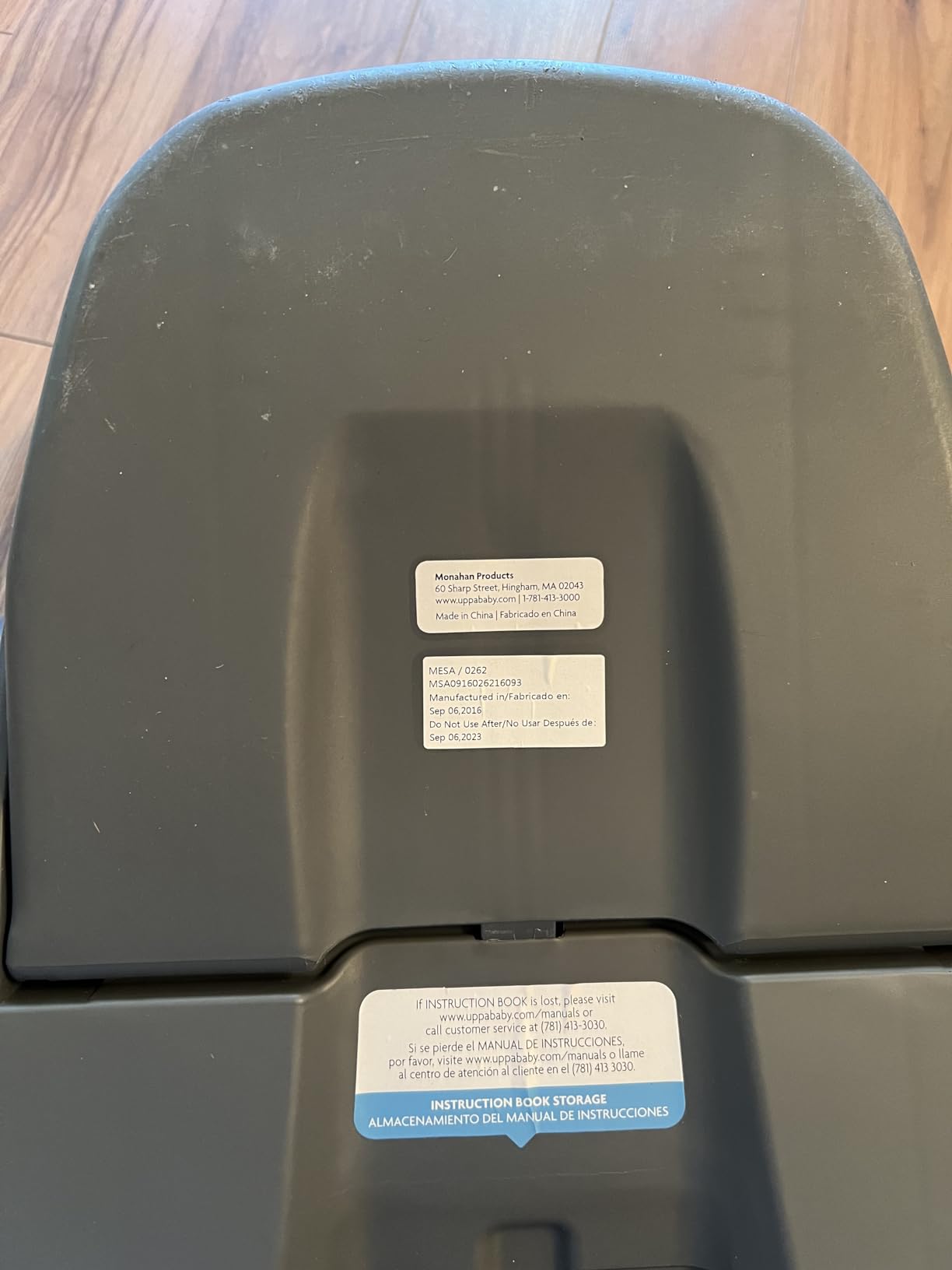
It installs two ways. You get auto-retracting lower anchors and a built-in seat belt lock-off, so the same base covers an anchor-equipped second vehicle and one without anchors. The four-position adjustable foot handles back seat rake differences between cars.
The finished underside is smooth enough that owners note it does not mark upholstery, a small thing that matters when a base is going to sit in one spot for two years. UPPAbaby also includes a complimentary virtual consultation with a certified technician, which is genuinely useful if the second vehicle is one you are not confident about.
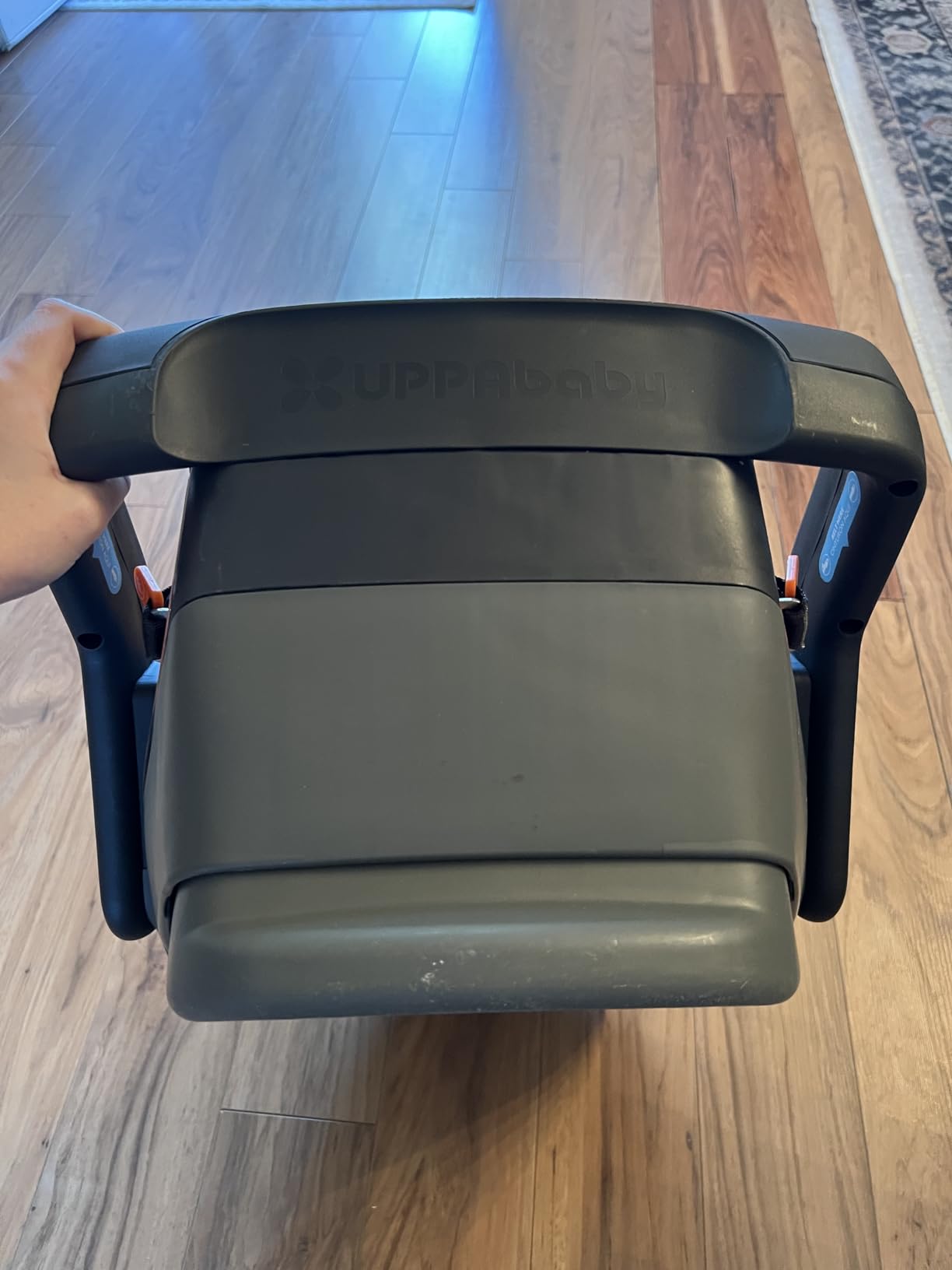
The compatibility trap to check first
This base fits the Mesa, Mesa V2 and Mesa V3 infant seats. It does not fit the Mesa Max or the Aria, and that distinction trips up a lot of families who assume any UPPAbaby infant base accepts any UPPAbaby infant seat.
Before you buy, look at the model label on the carrier shell itself rather than the box it came in. If your carrier is a Mesa Max, you need the matching Max base instead, and this one is the wrong spend.
Where it is the wrong choice?
It is the wrong choice if budget is the deciding factor and your existing carrier is a Maxi-Cosi, Graco, or Chicco. The base is brand-locked and the carrier is not included, so the total system cost is higher than buying a second full seat from a value brand.
It is also the wrong choice for a parent who wants anti-rebound or load-leg performance in the second vehicle. This base does not include either, so if your second car has a hollow floor or a stow-and-go storage well, check the vehicle manual before committing.
4. Doona LATCH Base for Doona Car Seat and Stroller
Doona LATCH Base – Compatible with Doona Car Seat & Stroller
Click-in and click-out mechanism
Height adjustment with level indicators
LATCH or belt with locking clips
Rear-facing only
Pros
- Seat and stroller move between cars as one unit
- Click-in and click-out transfers are fast
- Installs with LATCH or seat belt locking clips
- Level indicators confirm height setup
Cons
- Compatible only with Doona equipment
- Rear-facing only
- No forward-facing position available
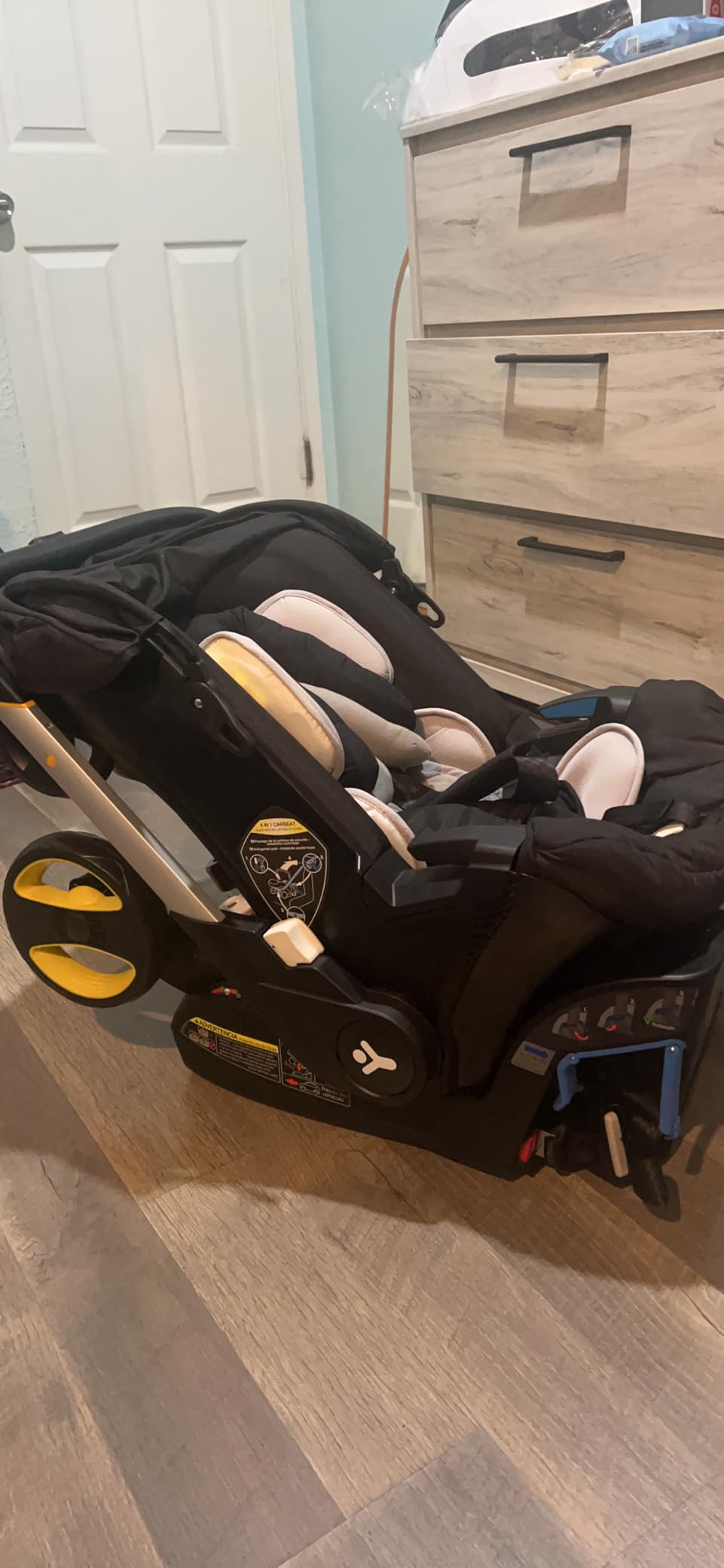
The Doona sits in a category of its own, because the seat and the stroller chassis are one piece. Reviews focus on that single benefit: you transfer the whole seat-and-stroller unit between vehicles without separating anything, which is a very different experience from unhooking a carrier from a frame.
For second-vehicle families, that means your second car does not need its own stroller waiting in the trunk. You grab one unit and go. At a 4.9 average across roughly 2500 reviews, the click-in and click-out mechanism is the reason people buy a second Doona base rather than a generic base.
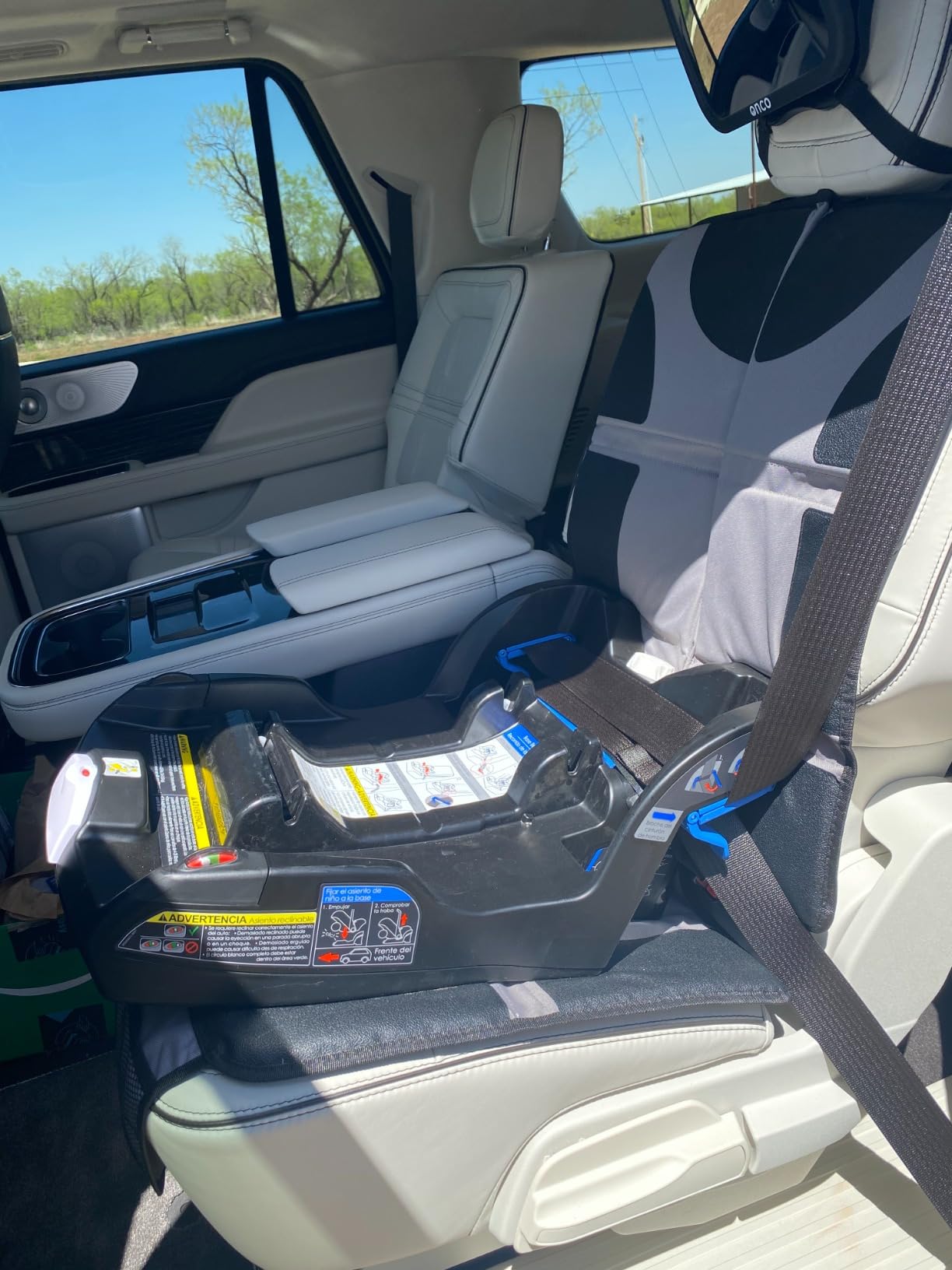
Installation flexibility is better than the brand-locking suggests. You get a LATCH connector system and belt locking clips for seat belt installation, so the base works in a second vehicle with or without lower anchors. Height adjustment with easy-to-read level indicators confirms the setup.
The base is rear-facing only, with no forward-facing position, which matches the Doona seat’s design as an infant carrier. If you are shopping past the infant stage, this stops being relevant.
When this solves a problem nothing else can?
If your second vehicle is used for short, spontaneous trips where unpacking a stroller is the thing that stops you from making the trip, this is the base that removes the friction. Nothing else in this list lets you move the stroller with the seat.
Measure your second vehicle’s rear footwell before buying, though. Because the stroller frame stays attached, the footprint is larger than a plain carrier base, and compact back seats are where this option is tightest.
Where it is the wrong choice?
Do not buy it as a general-purpose second base if you want flexibility. It accepts only Doona equipment, so it is a specialist pick inside a Doona household rather than a general answer to the two-car problem.
It is also the wrong choice for shared custody with an older toddler, since the rear-facing-only design ends at the infant stage and you would be starting over with a different seat anyway.
5. Safety 1st onBoard 35 LT Adjustable Infant Car Seat Base
Safety 1st onBoard 35 LT Adjustable Infant Car Seat Base
Adjustable base for different vehicles
LATCH equipped
Stay-in-car design
Click-in and click-out attachment
Pros
- Stays installed so each car keeps its own base
- Adjusts between different vehicles easily
- Quick install with a secure attachment
- Best value for a simple second base
Cons
- Only fits the onBoard35 LT infant seat
- One reviewer reports residual wobble at the base joint
- No listed belt lock-off for non-LATCH cars
This is the straightforward budget answer for a second vehicle. The design intent is spelled out in the specs: a stay-in-car base so it does not have to be moved between cars, which is precisely the two-car scenario most people are trying to solve.
At a 4.8 average across more than 4000 reviews, the dominant use case in the reviews is families and grandparents keeping one base per vehicle. Reviewers repeatedly describe the same simple satisfaction: the seat clicks in and out smoothly and nobody reinstalls anything.
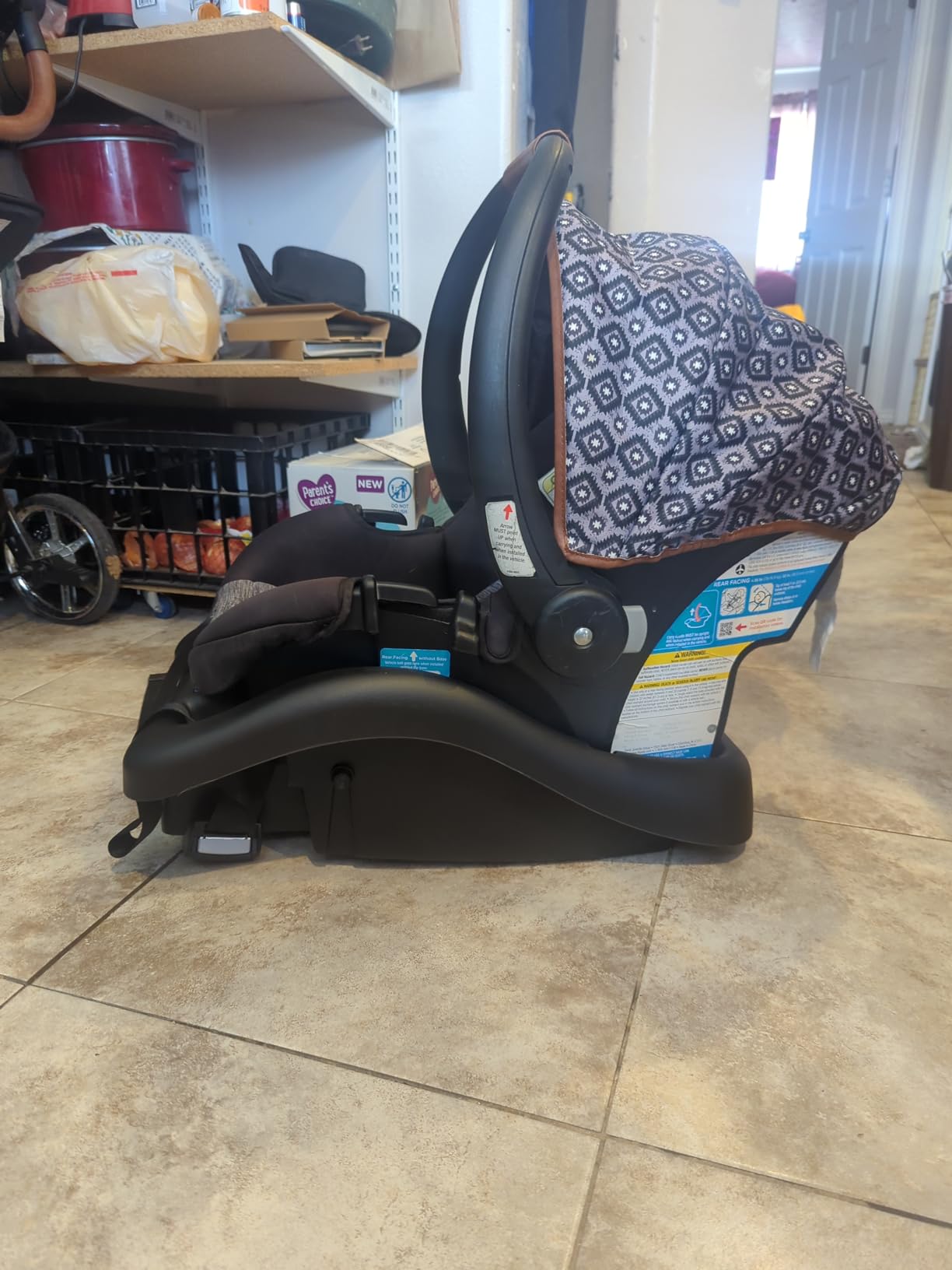
Adjustment between vehicles is the practical strength here. When your second car has a different back seat angle, the adjustable base lets you re-dial the setup rather than re-installing from scratch, and installation is quick once you know the sequence.
It is a LATCH-equipped base for the Safety 1st onBoard35 LT infant seat, and that combination is the whole deal. If your carrier is a different Safety 1st model, this base will not accept it.
What to look at during your first install?
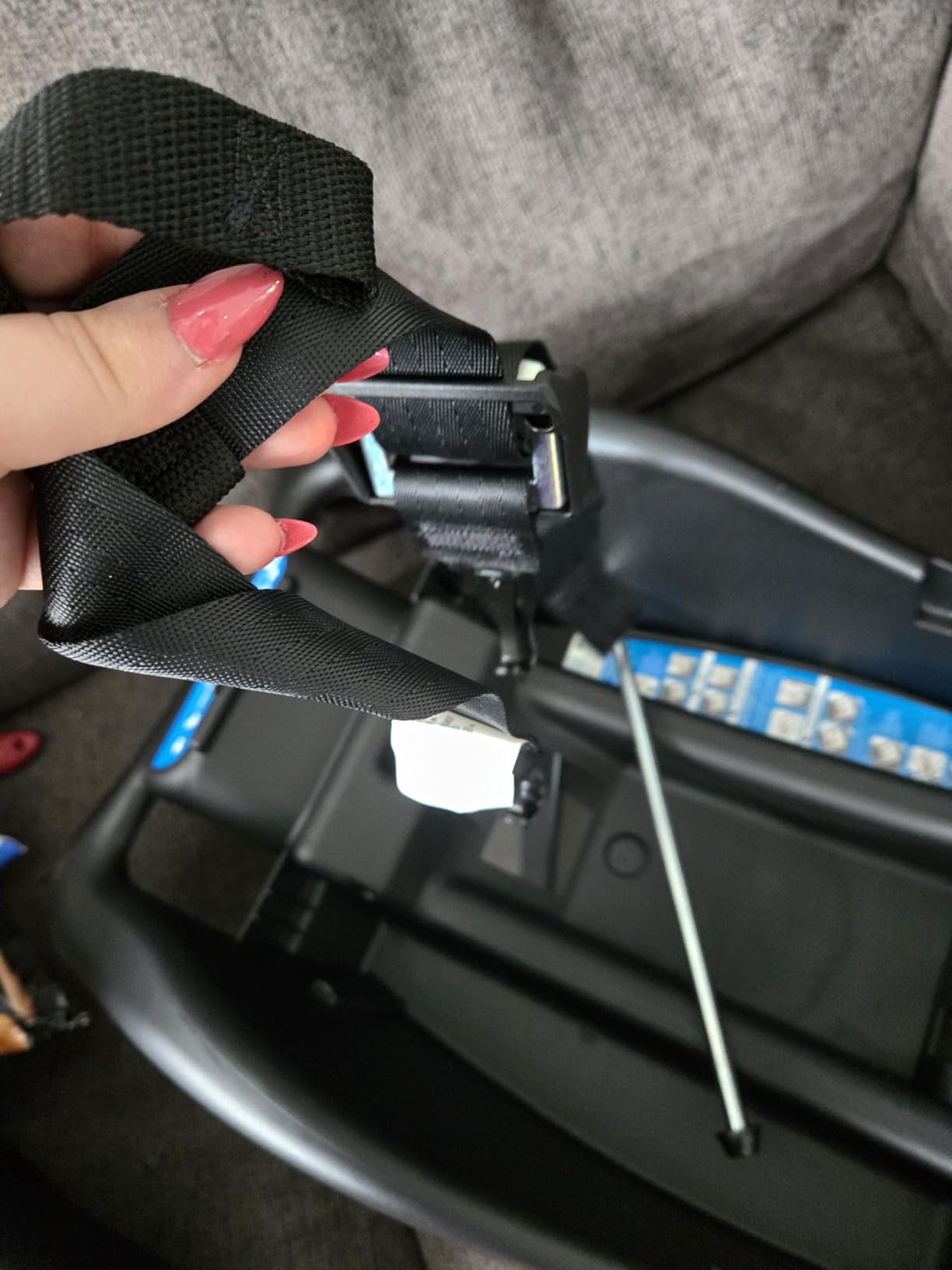
Check the base-to-seat connection at the click point, which is exactly where one reviewer reported residual movement even with the straps tightened. Push the carrier firmly into the base and confirm it locks before you drive away with a baby in it.
Then run the recline check in the second vehicle rather than assuming the setting carried over from the first car. Back seat rake differs enough between vehicles that a correct install in one can sit outside the allowed zone in another.
Where it is the wrong choice?
It is the wrong choice for an older second vehicle with no lower anchors, since there is no listed seat belt lock-off on this base. Choose a belt-install model or a baseless seat for that situation.
It is also the wrong choice if you want load leg or anti-rebound performance in the second car. This is a conventional LATCH base, and with a hollow-floor or stow-and-go vehicle you should read the manual before installing it at all.
6. Baby Trend EZ Flex-Loc Infant Car Seat Base
Baby Trend EZ Flex-Loc® Infant Car Seat Base
Works with LATCH and non-LATCH vehicles
Seat belt install for pre-2002 cars
Multiple recline positions
Lightweight and portable
Pros
- Fully compatible with pre-2002 non-LATCH vehicles
- Explicitly sold for keeping a base in a second car
- Lightweight and easy to handle
- Functionally matches the bundled travel system base
Cons
- Can hang over the edge on small inclined benches
- Tight install requires firm downward pressure
- Some arrive with an older manufacture date
This is the one to look at if your second vehicle is old. It is fully compatible with pre-2002 non-LATCH vehicles through the vehicle seat belt, and the product description literally frames it as a way to place a base in a second car for easy seat transfer.
Reviewers treat it as a low-cost duplicate of the base that came with their Baby Trend travel system, which is the exact economics people want: pay for a base, not for a whole second car seat.
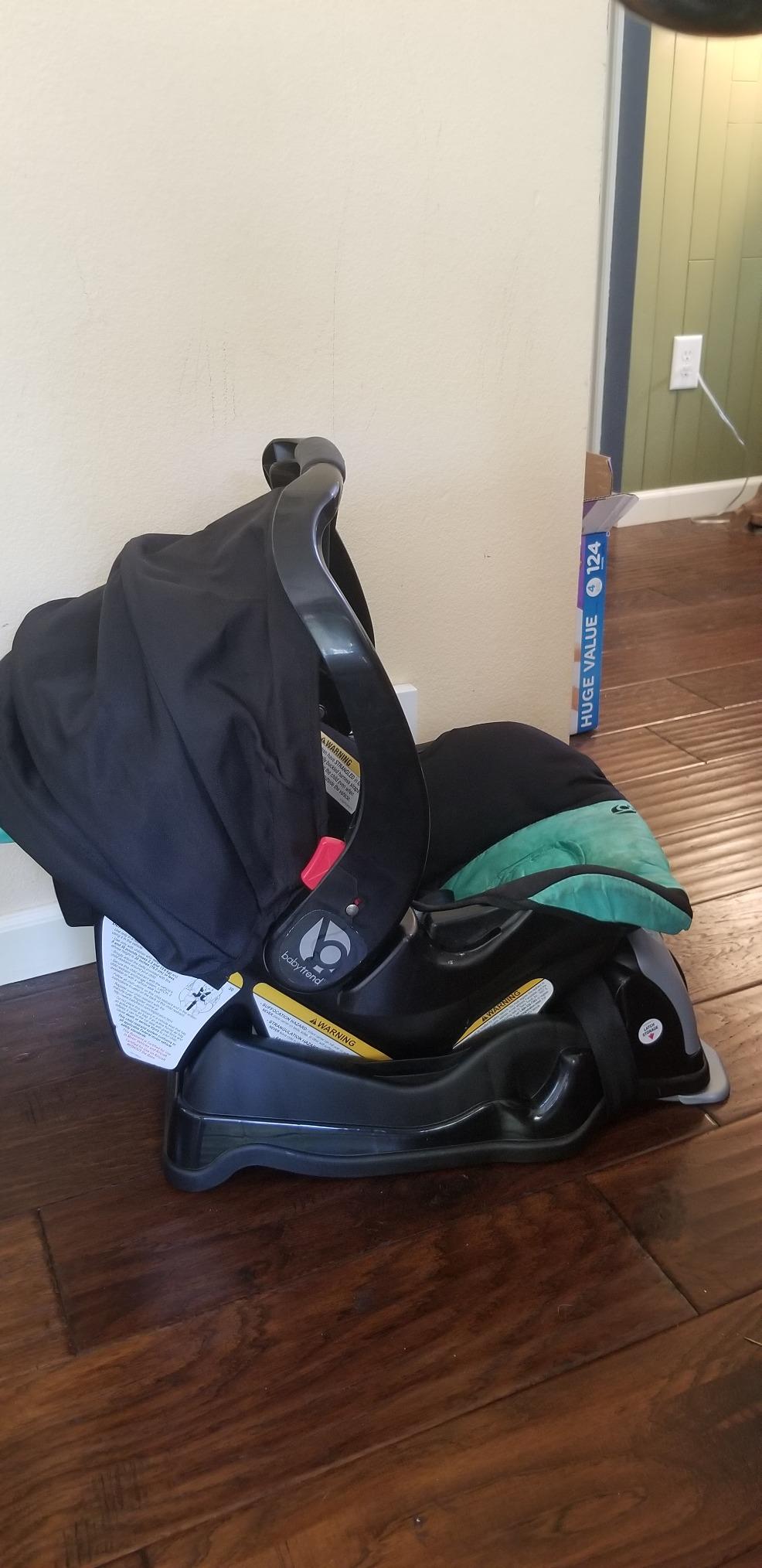
Multiple recline positions on an adjustable base give you room to match different back seat angles across two vehicles, and the belt path makes it the most broadly usable option in this list for older cars.
Two fit issues come up repeatedly. On a small, inclined rear bench the base can hang slightly over the front edge of the seat, and getting a genuinely tight install requires pressing down firmly on the base while tightening the straps rather than just pulling the webbing.
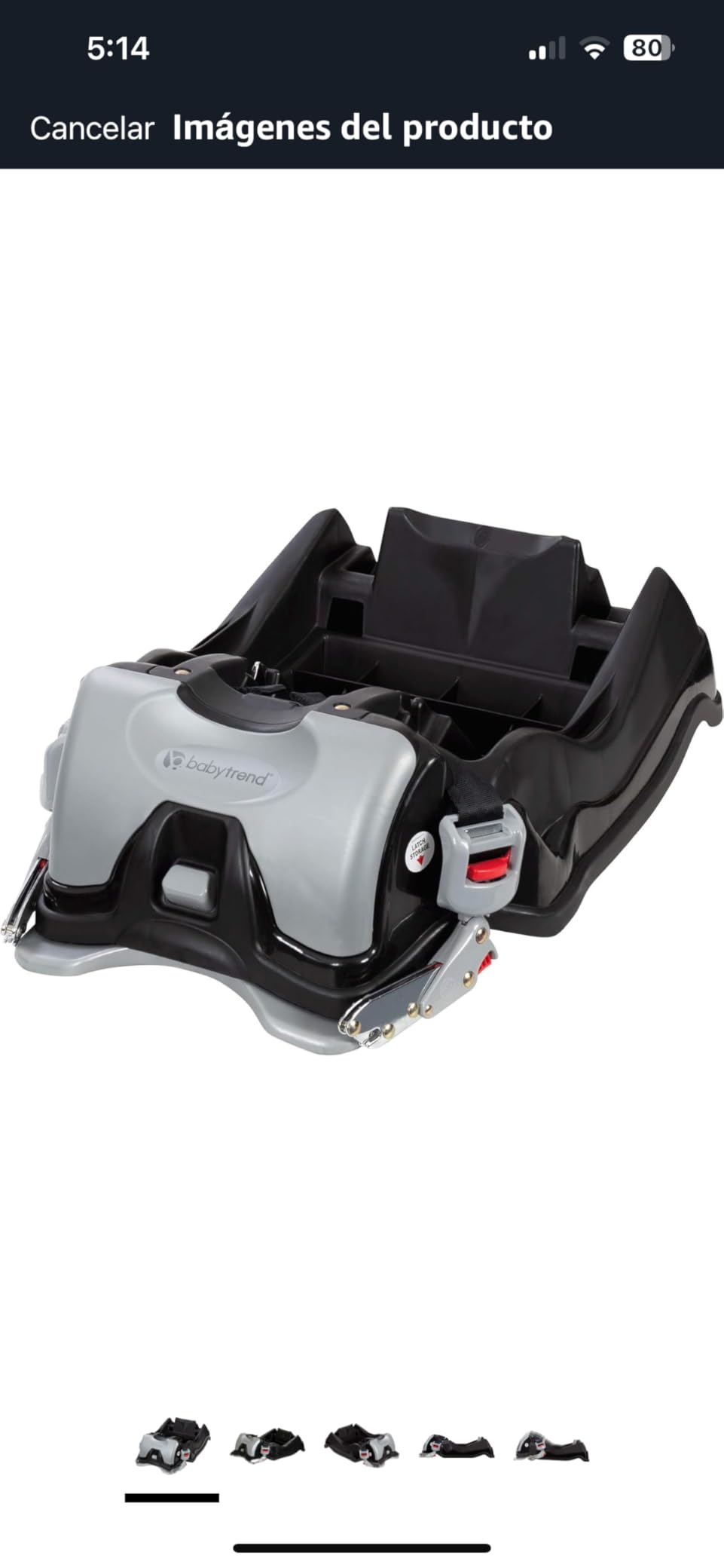
How to check whether it will sit properly on your bench?
Sit in the second vehicle and press your palm into the rear bench where the base will go. If you can feel a sharp crease or the bench drops away toward the front, the base is likely to overhang, and overhang reduces how much of the base is actually bearing on the seat.
Check the manufacture date label before you commit. Some units arrive with an older date than the base bundled with the car seat, which matters more for a base that will live in a car for two years.
Where it is the wrong choice?
Skip it for a second car with a contoured or heavily bolstered rear bench, where the overhang problem gets worse and the belt path can be awkward to verify. Deeply sculpted performance seats are common in newer vehicles and work against this design.
It is also the wrong choice for families with a premium second vehicle, where the finish and weight class of the base will not match what is already installed in the primary car.
7. Maxi-Cosi Mico Stand-Alone Infant Car Seat Base, Black
Maxi-Cosi Mico Stand-Alone Infant Car Seat Base, Black, One Size – Car Seat Accessories for Babies
One-click LATCH installation
Adjustable vehicle fit
Stay-in-car design
For Mico Luxe and Mico Luxe+
Pros
- Stay-in-car design cuts repeat reinstalls
- One-click LATCH system is fast
- Adjustment handles different vehicles in one household
- Fits the Mico Luxe and Mico Luxe+
Cons
- Fits only Mico Luxe and Mico Luxe+
- Smaller review base than competing products
- No listed belt lock-off for non-LATCH vehicles
If the infant seat in your home is already a Maxi-Cosi Mico Luxe or Luxe+, this base does the one thing you need without any extra features to learn. The specs describe a stay-in-car base that reduces reinstallation and eases transitions between vehicles.
At a 4.7 average over 846 reviews, feedback centres on that same point: the base stays installed in one car while the carrier moves between vehicles. The one-click LATCH installation is what people mention most often as making a second vehicle practical.
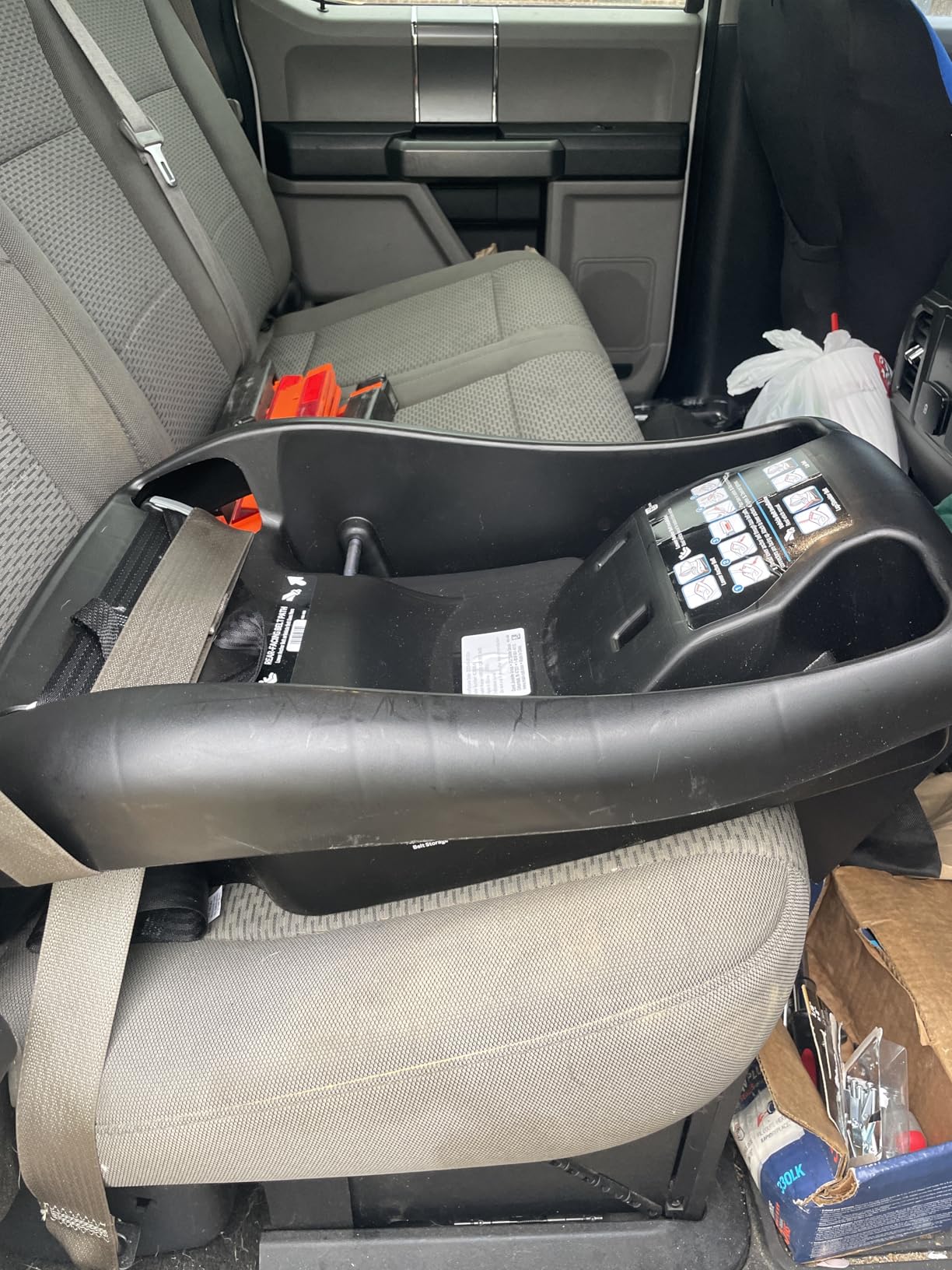
Adjustment lets the base conform to different vehicles in a multi-car household, which handles the main reason a single base gets moved around in the first place. Once it is set for each car, you can stop thinking about it.
The honest limitation is the review base. 846 reviews is a thinner evidence pool than most of the picks here, which means you are relying more heavily on the product documentation than on wide owner experience.
Check the connector type in your second car
This is a one-click LATCH base, so it needs lower anchors in the second vehicle. If the second car is an older model, that is where you should stop and look at a belt-install or baseless option instead.
Confirm which Mico carrier you actually have, because the base covers the Mico Luxe and Mico Luxe+ only. Other Maxi-Cosi infant models are not covered, and the shapes are similar enough to cause real confusion.
Where it is the wrong choice?
It is the wrong choice for a household using any other brand, which is most of them. This is one of the most narrowly locked bases in the roundup.
It is also the wrong choice if your second car has a hollow floor or a stow-and-go storage compartment beneath the rear seat, since the base has no load leg or anti-rebound bar to account for the limited footwell space.
8. Baby Jogger RAPIDLOCK Infant Car Seat Base for City GO 2
Baby Jogger RAPIDLOCK Infant Car Seat Base – Compatible with City GO 2
SecureStop anti-rebound bar
4-position base adjustment
Dual bubble level indicators
Push-button LATCH installation
Pros
- Integrated SecureStop anti-rebound bar
- Push-button LATCH is fast for first-time installers
- Dual bubble levels aid correct recline
- Several owners bought a second dock after the first worked
Cons
- Fits only City GO 2
- City GO and City GO Air seats
- Smaller review count than most picks listed
- Heavier build relative to the feature set
This is one of only two bases in the roundup with a built-in anti-rebound feature, and for a rear-facing infant seat that is a meaningful distinction. The SecureStop bar is integrated into the base rather than added separately, so it is present the moment you install it in the second vehicle.
At a 4.8 average, reviews focus on fast installation, easy carrier transfer and durability. Several owners describe buying a second dock specifically after the first one worked well, which is about as direct a signal as you can get that it functions well as a second base.
Installation is handled with push-button LATCH, which means the connectors engage by pressing rather than threading webbing through a narrow slot. Combined with four-position base adjustment and dual bubble level indicators, it is a forgiving base for an inexperienced installer.
Snap-in and snap-out carrier transfer is what makes it practical for handoffs, whether that is to a grandparent, a partner, or a daycare pickup.
Why an anti-rebound bar matters in a second vehicle?
Rear-facing infant carriers can rotate toward the vehicle seat back in a crash. An anti-rebound bar limits that rotation, and if you ever need to position the carrier with more space between it and the front seat or a console, that extra control has practical value.
Check the second vehicle’s owner manual for storage compartments beneath the rear seat. Hollow-floor and stow-and-go designs limit the space available for anything that extends below the seat cushion, so confirm the bar’s footprint is permitted there before installing.
Where it is the wrong choice?
It is the wrong choice outside the Baby Jogger ecosystem. It fits the City GO 2, City GO and City GO Air seats only, so an older City GO version from a previous stroller generation may or may not be covered, and you should verify by model number.
It is also the wrong choice if you want a belt install in the second vehicle, since this base is built around push-button LATCH connectors and does not list a separate belt path.
9. Evenflo LiteMax 30 Infant Car Seat Base
Evenflo LiteMax 30 Infant Car Seat Base
Pendulum recline level indicator
Belt lock-off for belt installs
Extra rollover and temperature testing
Lightweight build
Pros
- Light weight makes it easy to move between cars
- Used widely as a second base for grandparents or a nanny
- Pendulum level indicator shows when it is level
- Belt lock-off covers non-LATCH vehicles
Cons
- Only usable with LiteMax infant seats
- No anti-rebound bar compared with the travel system base
- Smaller review count
Evenflo built this as an accessory base for LiteMax infant car seats, and the use case it lands in is the second car. Nearly every review describes buying it specifically for another vehicle, with praise for light weight, adjustability and a snug fit.
The light weight is not a gimmick when a second base is optional rather than permanent. A grandparent who is not confident about a complex install can carry this in from the trunk, install it, and check it themselves rather than asking for help.
The pendulum recline level indicator shows when the seat is properly leveled, which is a simple, readable cue for a second caregiver who has never installed a base before. One buyer describes the build as feeling more solid than the base supplied with their travel system.
Evenflo documents testing beyond the applicable federal standards, including structural integrity, rollover performance and temperature effects. The belt lock-off handles the case where the second vehicle has no lower anchors.
The caregiver-handoff check
Hand a second caregiver the base and watch them install it once. If they cannot get the pendulum indicator into the level zone without help, that is a signal the base is a poor fit for that person’s second car, not a reflection on their effort.
Print the vehicle manual page for your second car’s belt or anchor path and keep it in the glove box. Second-car installs get forgotten, and a reinstall from memory months later is where loose installs happen.
Where it is the wrong choice?
One reviewer notes this base lacks the anti-rebound bar found on the base supplied with the travel system, so if your second vehicle requires that feature or has a hollow floor with tight footwell clearance, choose a base with the bar integrated.
It is also the wrong choice if your household uses a different brand of infant carrier. This base is for LiteMax seats only.
10. Cybex Base for Cloud G and Cloud G Lux Infant Car Seats, Black
Cybex Base for Cloud G & Cloud G Lux Infant Car Seats – Black
One-click Rigid LATCH
Anti-rebound design
Color-changing indicators
SafeLock Belt Tensioner
Pros
- One-click rigid LATCH install in about five seconds
- Color-changing indicators remove fit ambiguity
- Anti-rebound design reduces rebound forces
- SafeLock tensioner covers belt installs
Cons
- Only fits Cloud G and Cloud G Lux seats
- Release can require firm button pressure
- Lowest average rating in this group at 4.5
The Cybex base leads on install speed. One-click rigid LATCH installation takes about five seconds, and rigid connectors do not have the webbing slack that leads to the loose-install complaints parents hear about constantly with flexible connector designs.
It is also an anti-rebound base, with the manufacturer citing reductions in rebound forces of up to 30 percent in a front or rear impact. Combined with color-changing safety indicators and a recline indicator, it gives clear feedback on whether the install is correct.
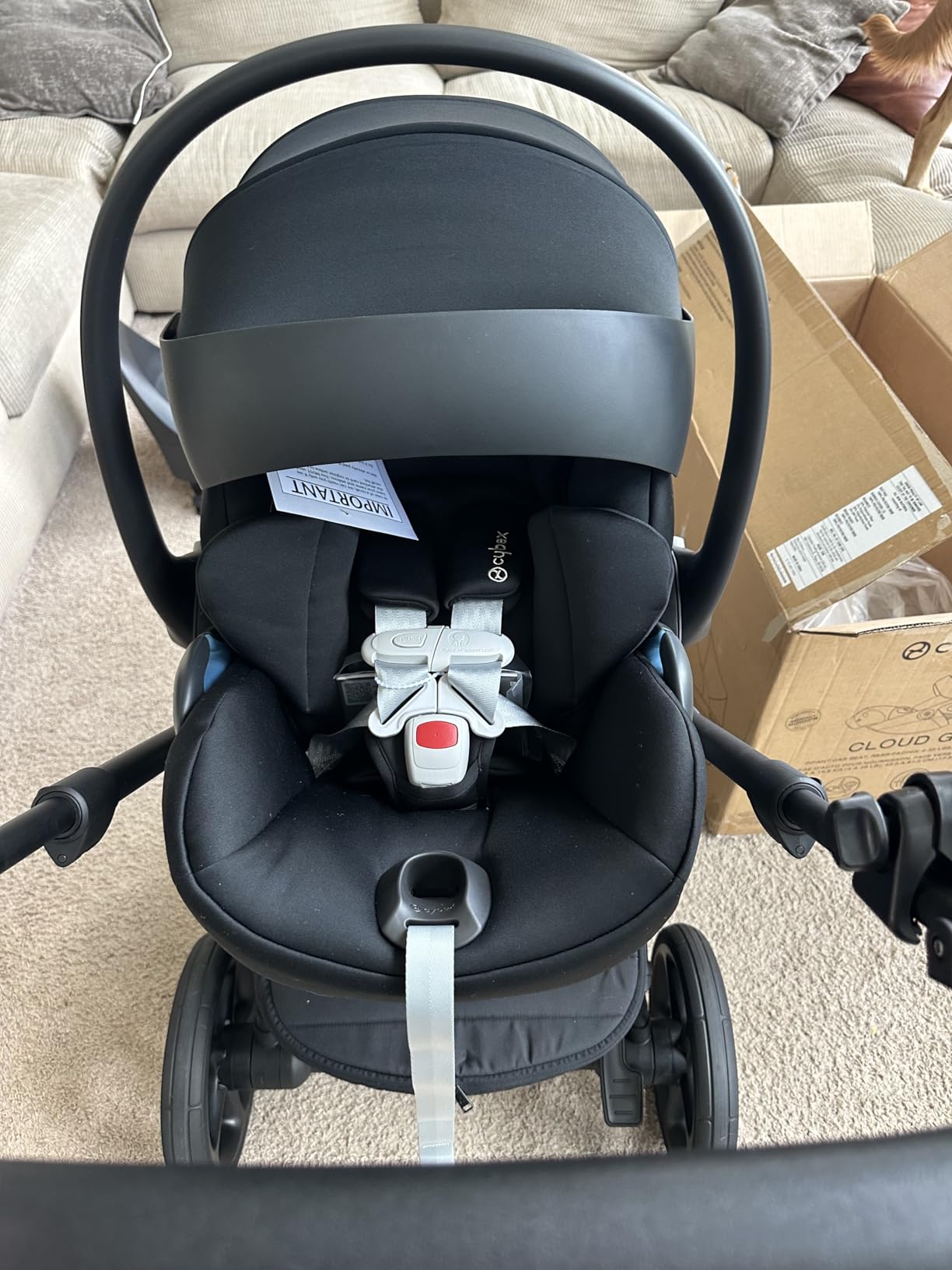
The SafeLock Belt Tensioner makes vehicles without lower anchors workable, which widens the range of second cars this base can cover. The base is explicitly positioned as one to keep pre-installed in a second vehicle.
Reviewers split on the experience. Comments praise build quality, smooth strap movement and the recline feature, while others note the carrier is heavy and occasionally jams in the base. The 4.5 average here is the lowest in the roundup, and the 137-review pool is the thinnest.
When rigid LATCH is the deciding factor?
Rigid LATCH matters most when the second vehicle has anchors that sit wide or deep, or when you want the tightest possible connection to the vehicle seat. Rigid connectors do not stretch, so what you measure at install is what you get.
Verify anchor spacing in your second vehicle before buying, since rigid connectors need roughly 11 inches between anchors to seat fully. If the anchors sit closer together, a flexible-connector base will fit when this one may not.
Where it is the wrong choice?
It is the wrong choice for households who are sensitive to weight, since reviews specifically flag the carrier as heavy and awkward to lift in and out of a base repeatedly. That matters more in a second car used for short emergency trips.
It is also the wrong choice if a different adult will install it and you cannot supervise them. The release from the base can require pressing the button firmly, and some users found the printed instructions hard to follow, so budget extra time for a walkthrough.
Do You Actually Need a Second Base?
You need a second base if one vehicle handles daily transport and a second vehicle handles regular transport, especially if that second car is driven by someone who is not the original installer. A second base removes the daily uninstall and reinstall cycle entirely.
You do not need a second base if the second car is a genuine emergency-only vehicle. Parents weighing this decision often describe it as the same tradeoff: a base that is used twice a year rarely justifies the money, and a baseless carrier is the sensible alternative.
Forum discussion on this question tends to split three ways. Some parents on r/BabyBumps describe belt installs in the second car as easy and just as secure as a base. Others run multiple seats across multiple cars for grandparent and babysitting transport. A common thread is that buying a second base of the same seat is cheaper than buying a whole second seat.
Our rule of thumb: two bases if the second car is used weekly, a baseless seat if it is used occasionally, and a second full seat only if you need two carriers for a reason other than cars, such as one carrier permanently living with a grandparent.
LATCH or Seat Belt in Your Second Car?
Use lower anchors when the second vehicle has them and you want the most repeatable install. Rigid connectors do not stretch, which makes them easier for a second caregiver to get right, and they are the only option in vehicles where belt tensioning varies a lot.
Use the seat belt when the second vehicle has no lower anchors, or when it is an older car. The belt path is a fully supported installation method, but it only locks reliably with a lap-and-shoulder belt, never a lap-only belt.
Five bases in this roundup install both ways with built-in lock-offs or tensioners: the Chicco KeyFit, UPPAbaby Extra Mesa, Doona, Evenflo LiteMax 30 and Cybex base. Those are the safest choices when you are not yet sure what your second car has.
One warning applies to all of them. Hollow-floor and stow-and-go vehicles limit or prohibit anything extending below the rear seat cushion, and parent communities repeatedly flag this when discussing load legs and anti-rebound bars. Check your second vehicle’s owner manual before adding any base feature that changes the footprint.
Your Second-Vehicle Compatibility Checklist
Run these five checks before you buy any base, and you will avoid the single most common disappointment in this category: a base that physically will not install in the second car.
1. Locate the lower anchors. Check the seating position where the child will ride, not just the vehicle generally, since anchor positions vary between outboard and center positions. Note the spacing between them.
2. Confirm the anchor spacing matches your connectors. Rigid connectors need close to 11 inches between anchors. Flexible connectors stretch and fit a wider range, which is why they work in more cars.
3. Look for a storage compartment under the rear seat. If the second car is stow-and-go or has a hollow floor, note the depth available below the cushion.
4. Check the belt type if you plan to use the belt. A three-point lap-and-shoulder belt can be locked. A lap-only belt cannot be installed reliably by the belt path.
5. Test the recline range. Sit the base in the second car at all available positions and confirm the indicator reaches the level or correct zone before you commit.
If you also plan to cover the seats with a cover, check the fit early. Covers and base shapes interact more than people expect, and a two-vehicle setup means you are fitting the same cover twice as often. Our guide to the best car seat covers covers the clearance issues worth checking before the first long trip.
Buying a Used or Second-Hand Base
Used bases are the riskiest recommendation on this page, and we lean toward buying new whenever the budget allows. A base is a structural safety component, and the information you need to judge one is often missing from a resale listing.
Check four things before considering a used base. First, the manufacture date label, since car seats and bases both carry one and parents on r/Parenting repeatedly ask about expiration dates. Second, crash history: a base that was in a vehicle during a collision is done, regardless of how it looks. Third, missing paperwork, because without the manual you cannot confirm the correct recline zone. Fourth, whether the recline adjustment and indicator still function cleanly.
A used base makes most sense in one narrow case, which is an emergency-only second vehicle used a couple of times a year, and even there a new entry-level base is usually the safer route. For regular transport, buy new.
One more vehicle-level check matters if the second car is shared by more than one caregiver: some families plan to add mobility equipment later. Our guide to scooter lifts for vehicles explains how a lift installation interacts with the rear bench and footwell, which is the same clearance problem a load leg or anti-rebound bar can create.
Frequently Asked Questions
Do I need two car seats or just two bases?
If you already own one infant car seat, two bases let that same seat move between vehicles without a reinstall each trip. Buy two seats only if you need two carriers at the same time, such as one living permanently with a grandparent or at daycare. For occasional or emergency-only use of a second car, a baseless carrier is often the cheaper and simpler answer.
Can I get two bases for one car seat?
Yes, and most brands sell an extra base specifically for this. Every base in this roundup is designed as a stay-in-car unit so one can live in each vehicle while a single carrier moves between them. Bases are brand-locked, so the extra base must match your existing carrier model exactly.
Do all car seat bases fit the same?
No. Bases are proprietary to a brand and usually to a specific seat model. The Chicco KeyFit accepts only KeyFit and KeyFit 30 carriers, the UPPAbaby Extra Mesa fits Mesa, Mesa V2 and V3 but not Mesa Max or Aria, and the Baby Jogger RAPIDLOCK fits City GO 2, City GO and City GO Air. Check the model label on your carrier shell before buying.
Can you use a car seat without a base?
Yes. Baseless infant carriers install directly with rigid or flexible lower anchors, or with the vehicle seat belt, and they work in any car without a permanent base. They are a sensible choice when the second vehicle is used rarely, or when a caregiver travels between vehicles constantly. The tradeoff is a slightly more involved install on every single trip.
Is it safe to buy a second-hand car seat base?
It depends on four checks: the manufacture date label, whether the base was ever in a vehicle during a collision, whether the manual and paperwork are included, and whether the recline adjustment and indicators still work smoothly. A base exposed to a crash should be replaced regardless of appearance. For regular transport we recommend buying new.
What are common mistakes parents make when installing a second base?
The most common error is not rechecking the recline after moving to a different vehicle, since back seat rake changes the correct zone. Others include over-tightening until the indicator is no longer readable, ignoring the vehicle owner’s manual on anchor spacing, and using a lap-only belt with a belt path that requires a lap-and-shoulder belt.
Final Verdict
For most two-car households, the Graco SnugRide Lite base is the best car seat base for a second vehicle, because four recline positions and a readable level indicator handle two different back seats better than anything cheaper, and its review base gives you the deepest evidence here. The Chicco KeyFit takes the value slot thanks to built-in belt lock-offs that let the same base cover a second car with no anchors. The UPPAbaby Extra Mesa is the pick if you want the clearest install feedback in the family.
If your second car is old or lacks lower anchors, look at the Baby Trend EZ Flex-Loc or the Evenflo LiteMax 30 rather than a LATCH-only base. If you want anti-rebound performance, the Baby Jogger RAPIDLOCK and Cybex base are the two that include it. Whichever you choose, install it once, check the recline in the second car, and leave it there.
Always follow the instructions in both your vehicle owner’s manual and the car seat manual, and check with a certified child passenger safety technician if you are ever unsure about an install.