
Nothing prepares you for the discharge date like a car seat conversation. When your baby comes home from the NICU, someone on the care team is going to ask which seat you have, and the answer needs to include the number printed on the label. Get that wrong and the discharge gets pushed back a day, a week, or longer.
After spending weeks reading specifications, install guides and parent accounts, I can tell you that the search for the best infant car seats for preemies comes down to one number: the minimum weight rating. Everything else – fabric, canopy, apps, sound machines – is secondary. A seat rated from 4 lb and a seat rated from 3 lb are not the same product for a baby discharged at 3 lb 4 oz.
Below I have sorted seven rear-facing infant seats strictly by what they can actually hold, from the 3 lb floor upward, and paired each with the fit details that decide whether a very small baby passes the hospital’s car seat test. I am not a clinician. Nothing here overrides the instructions from your own baby’s discharge team or your hospital’s NICU policy, and you should confirm every seat with them and with a certified child passenger safety technician before your baby rides in it.
Table of Contents
What Car Seat Fits a Preemie?
A preemie car seat is a rear-facing infant-only seat rated from 4 lb or lower, with harness slots low enough to sit at or below a small baby’s shoulders and a removable insert that came crash-tested with the seat. Most discharge teams work from three thresholds: below 4 lb is niche, 4 lb is the practical floor, and 5 lb or above opens up almost every infant seat on the market. The printed minimum, not the birth weight, decides which one your baby can use.
Do preemie babies need a special car seat?
Not a special seat – a correctly rated one. Most infant car seats accommodate a 4 lb baby without modification. What a premature baby needs is a seat whose lowest harness slots are low enough for the shoulders, an insert that is the manufacturer’s own rather than something added on, and a semi-reclined angle the NICU can observe. A seat rated from 3 lb gives you more margin when growth stalls for a few days.
If your baby is discharged around 5 lb, the decision is much easier. Our full infant car seat roundup covers the mainstream market in more depth.
Top 3 Best Infant Car Seats For Preemies (October 2026)
These three cover the weight range most discharge teams actually work with: the practical 4 lb floor, the 3 lb micropreemie floor, and the 3 lb floor with easier loading.

Graco SnugRide Lite LX
- 4 lb minimum weight
- 7.2 lb carrier weight
- 4-position adjustable base
- LATCH with level indicator

Evenflo LiteMax NXT
- 3 lb minimum weight
- 15.7 in. height floor
- SensorSafe monitoring
- Seven-position no-rethread headrest

Evenflo Revolve180 LiteMax NXT
- 3 lb minimum weight
- One-hand 180 degree rotation
- LockStrong and SecureTight install
- SensorSafe monitoring
All 7 Infant Car Seats Compared in 2026
Sorted by minimum weight rating first, because that is the only column that can disqualify a seat on discharge day.
| Product | Specifications | Action |
|---|---|---|
| Graco SnugRide Lite LX |
|
Check Latest Price |
| Evenflo Revolve180 LiteMax NXT |
|
Check Latest Price |
 Chicco KeyFit Chicco KeyFit |
|
Check Latest Price |
| Evenflo LiteMax NXT |
|
Check Latest Price |
 Graco SnugRide SnugFit Graco SnugRide SnugFit |
|
Check Latest Price |
 Safety 1st OnBoard FLX Safety 1st OnBoard FLX |
|
Check Latest Price |
 Graco Gomax Graco Gomax |
|
Check Latest Price |
Why the Minimum Weight on the Label Decides Everything?
A minimum weight rating is the manufacturer statement that the harness, insert and shell were tested to restrain a baby at or above that weight. Below it, the harness cannot be pulled snug enough to hold a very small chest, and the padding inside the shell positions the head where it should not be. The number is printed on the seat itself, usually on a white sticker on the back or side of the shell, and it is also in the manual. Those two places can disagree.
The Evenflo LiteMax family is the clearest example. Buyers have reported older units carrying a 4 lb label while the manufacturer has since confirmed suitability from 3 lb and 15.7 in, and the current LiteMax NXT prints 3 lb on the seat itself. The practical instruction is simple: read the sticker on the exact seat in your hand, and ask your discharge team which number they enforce. Do not assume a family’s second-hand seat matches a current production run.
Height matters too, and it is the clause parents miss. A 3 lb baby with a long body can fall outside the height range even when the weight fits, and both Evenflo LiteMax NXT variants start at 15.7 in. Ask for your baby’s length at discharge, not just the weight.
The NICU Car Seat Test, Explained
A premature baby has a proportionally heavy head and weak neck tone, so a seat that is too large or too upright lets the head fall forward and narrows the airway. Positional apnea is the specific risk. The car seat test – also called a car seat tolerance test or an angle tolerance test – exists to catch exactly that.
Most units run a monitored trial of roughly 90 to 120 minutes in the seat you will actually use. Staff watch oxygen saturation, heart rate and breathing while the baby is buckled in at the semi-reclined angle. A seat that is too big is the usual reason a baby fails: the baby slides down, the chin comes toward the chest and the airway closes.
Parents on r/NICUParents describe the same pattern repeatedly – babies who fail the first test and pass on a retest a few days later once they have grown, and parents who were told to bring their own seat in early precisely so the trial happens in the seat that will be used. Bring the seat in well before the expected discharge date, not the morning of.
1. Graco SnugRide Lite LX – Lightest Carrier That Still Fits 4 Pounds
Graco SnugRide Lite LX Infant Car Seat, Studio
Weight: 4 to 30 lb
Height: up to 32 in.
Carrier weight: 7.2 lb
Install: LATCH with 4-position base
Pros
- 7.2 lb is the lightest confirmed carrier weight in this group
- ProtectPlus crash testing across frontal side rear and rollover cases
- Readable level indicator cuts install guesswork
- Reviewers report use with premature twins discharged at just over 5 lb
Cons
- Canopy is described as stiff and noisy
- Less padding than earlier SnugRide generations
- Handle feel differs from previous versions
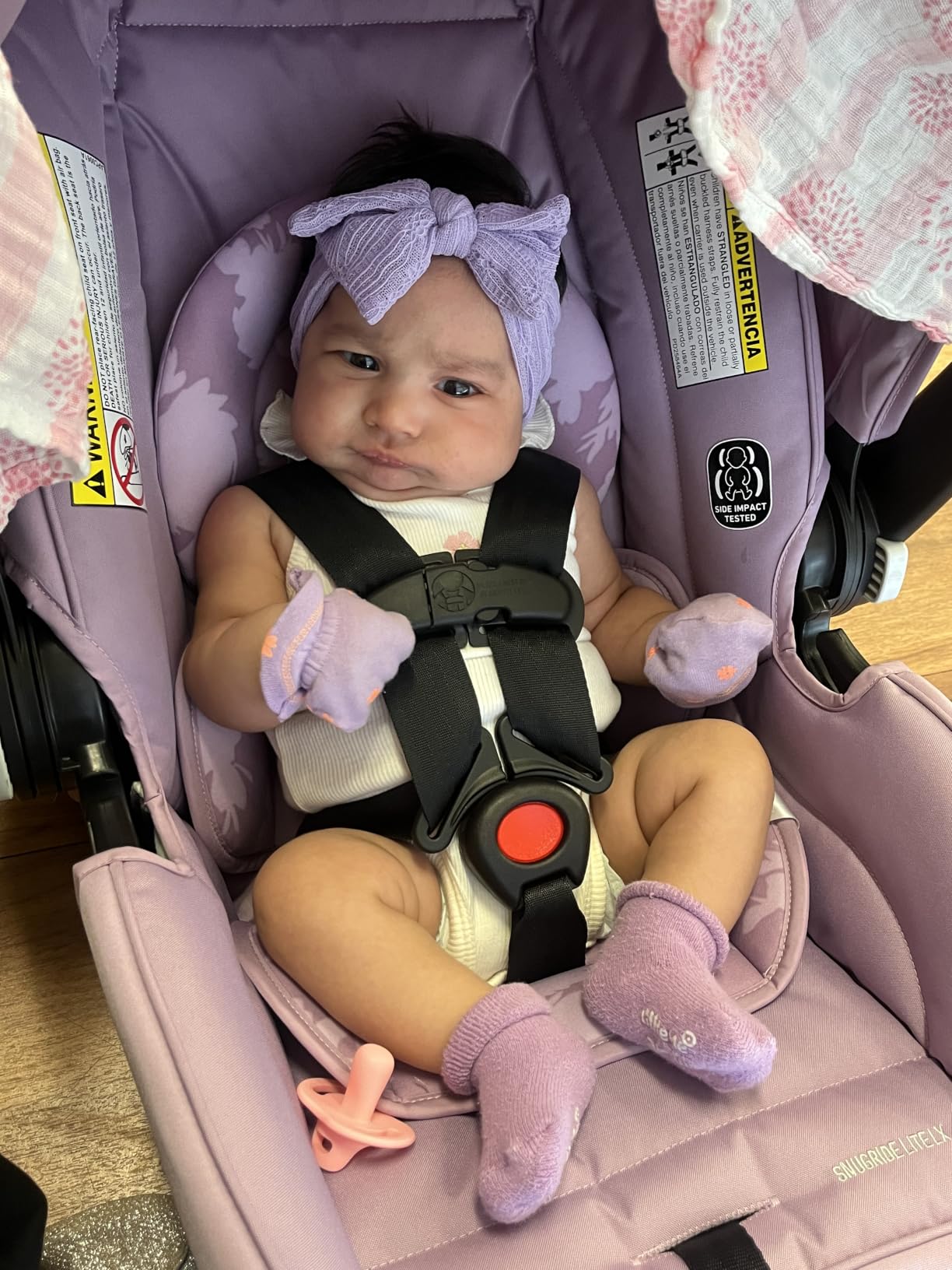
This is the seat I keep coming back to for a 4 lb and up discharge. The SnugRide Lite LX is rated from 4 to 30 lb and up to 32 in., and the carrier weighs 7.2 lb. That weight figure matters more than it sounds: a parent recovering from a C-section, carrying two infants and a diaper bag down a hospital corridor, will notice every pound.
What surprised me reading the reviews is how specifically preemie parents use this seat. Multiple verified reviews describe premature twins discharged from the NICU at just over 5 lb. Those are not theoretical endorsements – they are parents reporting that a specific seat passed their specific unit’s test.

The four-position base and the easy-to-read level indicator are the parts that matter for a small baby. The angle has to be set correctly before the tolerance test, and an indicator you can check in a parking garage beats a judgement call. Graco’s ProtectPlus engineering combines frontal, side, rear and rollover testing, plus New Car Assessment Program based testing and extreme-temperature testing.
It is not a glamorous seat. The canopy is stiff, reviewers note, and padding is thinner than on earlier SnugRide generations. The fabric is also plainer than what you will find on the Evenflo models. For a baby who will spend a short window in it before growing out of the 30 lb ceiling, those trade-offs rarely matter.
Why this one earns the top spot?
The review volume changes how much confidence you can place in a roundup. At 4.8 across 7673 ratings, this is the best-evidenced seat in the set, and the feedback is consistent rather than scattered. When a baby’s discharge depends on whether a seat has been tried a thousand times or ten, that matters.
It also covers the weight band most preemies actually go home at. The 4 lb floor is not the lowest available, but it is the floor nearly every unit in every hospital is set up to test against.
Where it will not fit?
If your baby is discharged under 4 lb, this seat is not eligible and no amount of insert padding changes that. If you are installing in the center position of a vehicle, note that this model relies on LATCH rather than a rigid built-in anchor system.
The 32 in. height ceiling also arrives sooner than most parents expect. Plan the move to a convertible seat before your baby outgrows the shell rather than after.
2. Evenflo LiteMax NXT – Lowest Minimum Weight at 3 Pounds
Evenflo LiteMax NXT Preemie and Infant Car Seat
Weight: 3 to 30 lb
Height: 15.7 to 32 in.
Headrest: 7-position no-rethread
Install: LockStrong belt tensioning
Pros
- Lowest minimum weight rating in this group at 3 lb
- Marketed specifically for preemie positioning
- One-hand seven-position no-rethread harness
- SensorSafe alerts on temperature and buckle time
Cons
- Heavier carrier than lightweight budget seats
- Load leg sold separately
- Smart features need the Evenflo app
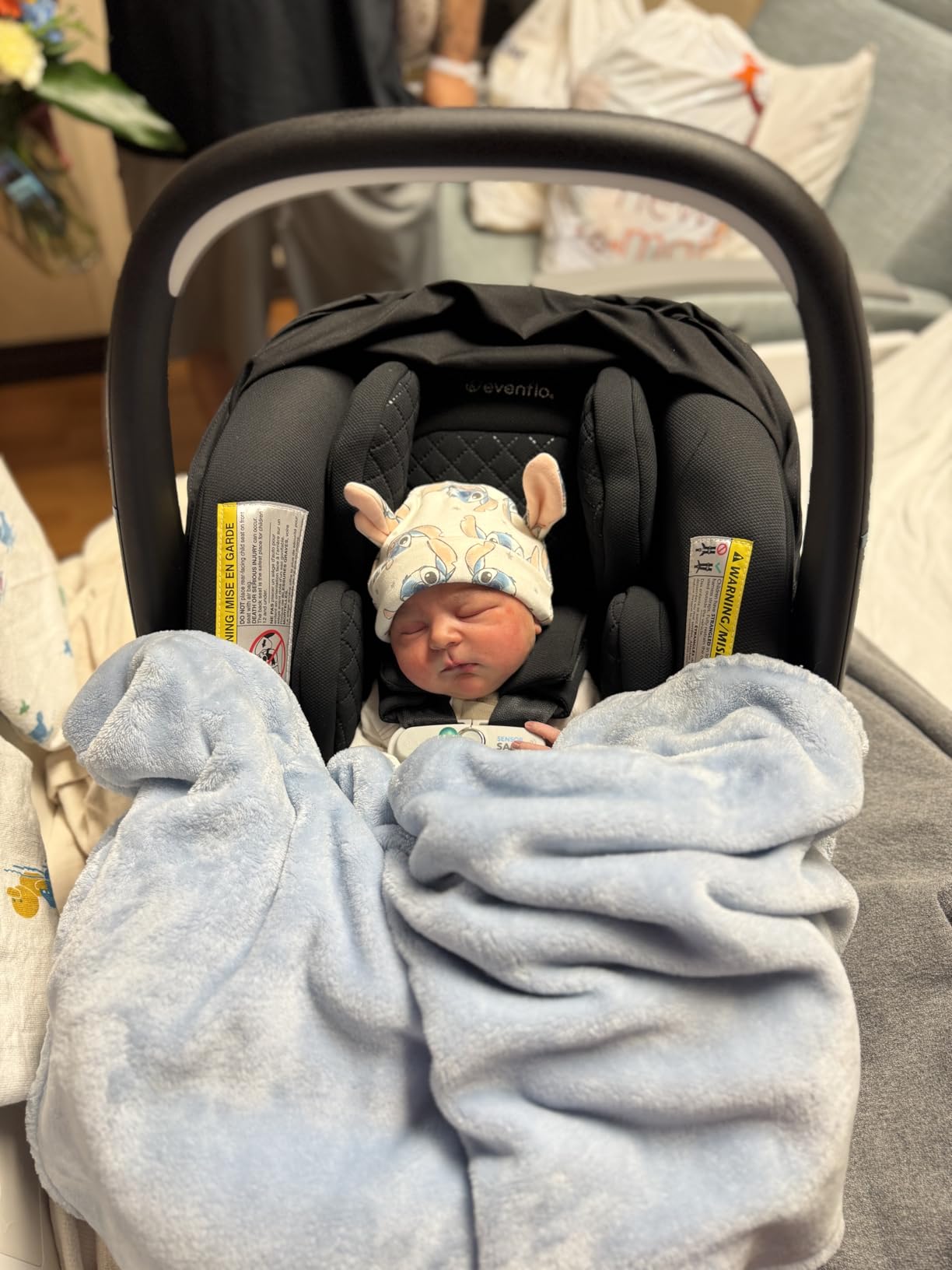
The LiteMax NXT is the seat to look at first if your baby’s projected discharge weight is in the low threes. It is rated from 3 to 30 lb and 15.7 to 32 in., and Evenflo markets it explicitly as a preemie and infant car seat rather than an afterthought-compatible infant seat.
The seven-position headrest adjusts on one hand without rethreading, which is the feature that actually affects a growing NICU graduate. Day one you have it at the lowest setting; three months later you move it up without taking the harness apart. The LockStrong belt tensioning system handles installation.
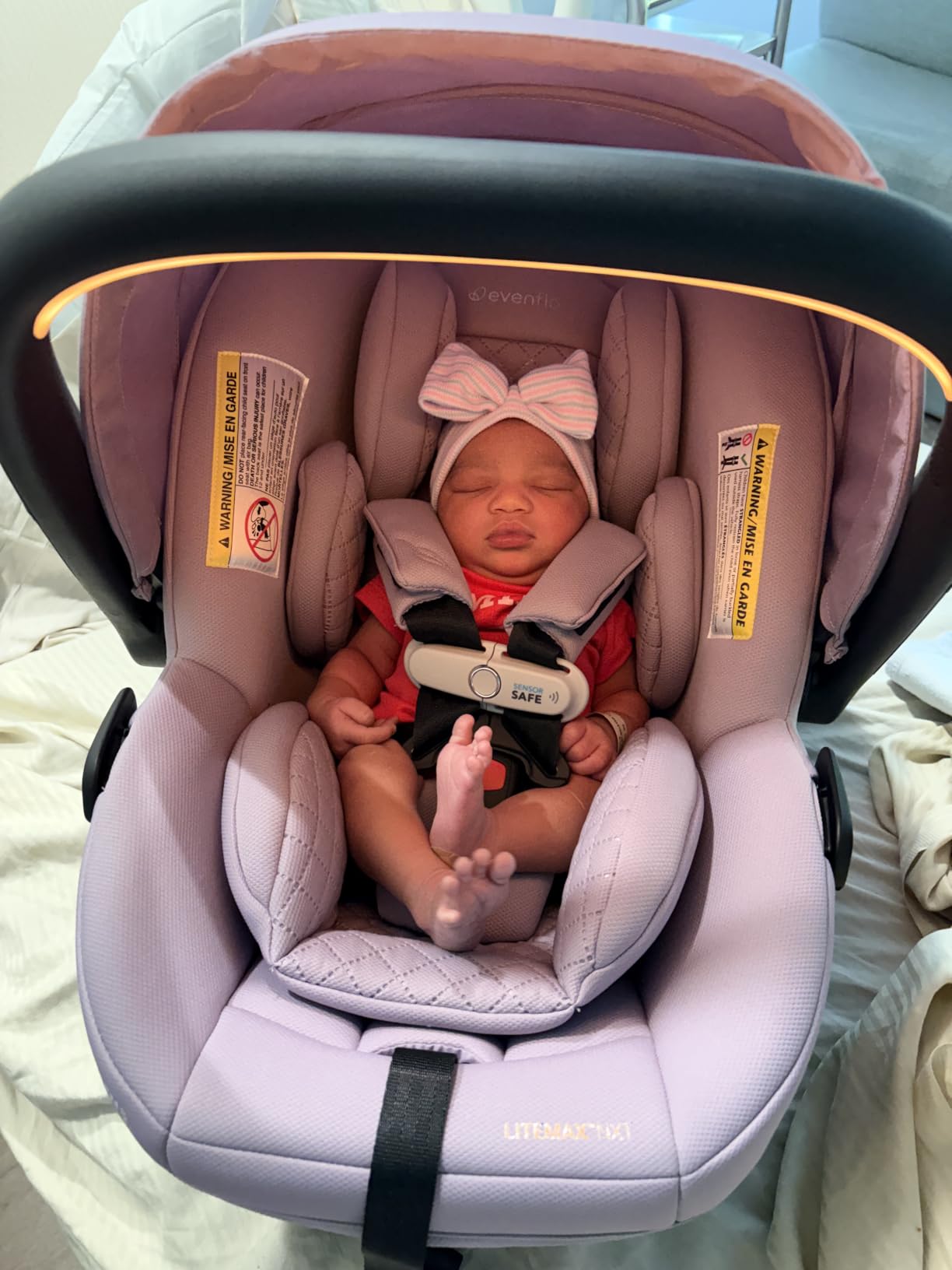
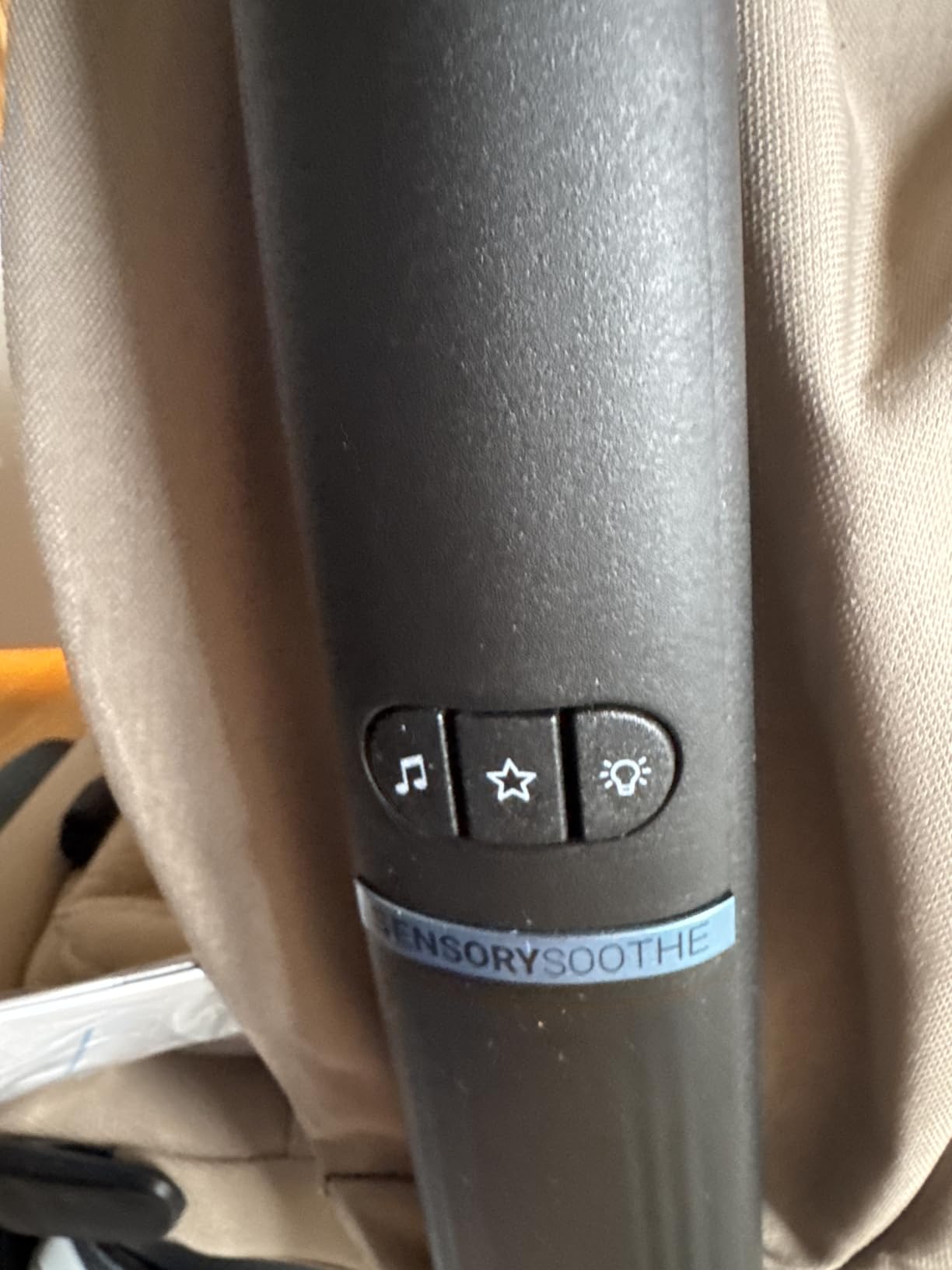
SensorSafe adds real-time alerts for unsafe ambient temperature, a child left unattended, a child buckled too long and unexpected chest clip unbuckling. For a baby whose thermoregulation is still immature, that is not a gimmick. SensorySoothe puts lights and sound in the handle, which some parents find settling during fussy transitions.
The honest limitation is the review base. At 74 ratings this is the thinnest evidence in the group, so treat the star rating as directional rather than settled. Reviewers themselves split on the value of the electronics and mention that the load leg is a separate purchase if you want the extra stability.
When this is the right seat?
A baby still under 4 lb at discharge, or a baby whose growth has stalled and who needs the extra margin the 3 lb rating provides. This is one of the few infant seats on the market where the micropreemie range is a factory rating rather than a letter from the manufacturer.
Ask your unit specifically whether they will test a 3 lb seat, because some set-ups default to 4 lb. Getting that confirmation before you buy avoids bringing the wrong carrier to the hospital twice.
Where it will not fit?
If your baby is already above 5 lb with good head control, you are paying for headroom you will not use soon and carrying extra bulk. The carrier is heavier than the lightweight seats in this list, which is a real consideration during the first postpartum weeks.
The smart features are only partly useful without a compatible smartphone and the Evenflo app, so treat them as secondary to the harness and headrest range.
3. Evenflo Revolve180 LiteMax NXT – 3 Pounds With a Rotating Base
Evenflo Revolve180 LiteMax NXT Rotating Preemie and Infant Car Seat
Weight: 3 to 30 lb
Height: 15.7 to 32 in.
Rotation: one-hand 180 degrees
Install: LockStrong and SecureTight
Pros
- One-hand 180 degree rotation removes the bending-into-the-car struggle
- Same 3 lb minimum as the standard LiteMax NXT
- SecureTight claims up to 50 percent less install effort
- Eighty-one percent of ratings are five star
Cons
- Rotating base adds bulk and weight over fixed-base seats
- Highest relative cost in the group
- Smart features require the Evenflo app
The Revolve180 takes the LiteMax NXT platform and adds a base that turns the carrier 180 degrees with one hand. Same 3 to 30 lb range and same 15.7 in. height floor. The point is loading: you rotate the carrier out at waist height rather than lowering a small baby into a seat at the bottom of a footwell.
That sounds like a novelty until you picture it with a 4 lb infant who has a feeding tube and does not tolerate being moved. Reviewers single out the removal of the strain involved, and SecureTight is claimed to cut installation effort by up to half, which helps when you are installing at a car park with the baby already in the seat.
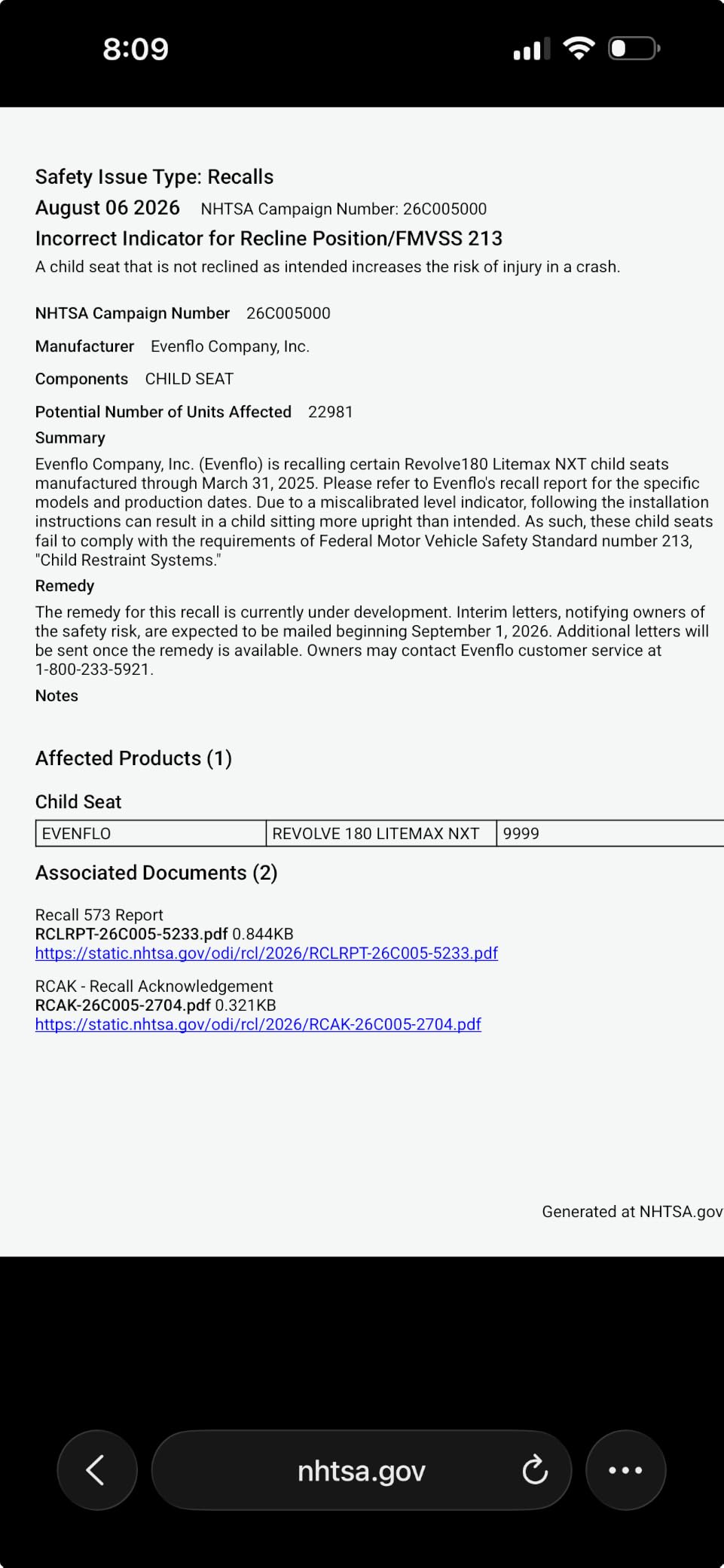
The rating distribution is the strongest here, with 81 percent five star and 93 percent at four stars or above. Criticisms are narrow: the rotating base adds bulk and weight, and the electronics need the app.
Both Evenflo seats share the Green and Gentle fabric woven from recycled plastic bottles with no added flame retardants, and both are tested against Federal Safety Standards plus the updated federal side impact standards, with rollover and temperature testing on top.
When this is the right seat?
Pick it when your baby is under 4 lb and your install or daily handling situation is physically awkward – a deep footwell, a low vehicle, a long walk to the car, or a baby who must be transferred between caregiver arms and seat without being lifted high.
The rotation also makes it easier to check the harness and the baby’s position without unbuckling, which is genuinely handy during the first weeks home.
Where it will not fit?
If you need the smallest possible carrier for a multi-infant transfer, this is the wrong direction. A fixed-base seat at 7.2 lb beats any rotating base on weight, and that difference compounds every single day.
Be honest with yourself about whether the rotation will earn its bulk. If the install is straightforward and the car is a normal sedan, a simpler seat does the same safety job.
4. Graco SnugRide SnugFit – Anti-Rebound Bar and Newborn Insert
Graco SnugRide SnugFit Infant Car Seat, Gotham
Weight: 4 to 30 lb
Height: up to 32 in.
Base: 4 position with 4 reclines
Harness: front-adjust no-rethread
Pros
- Anti-Rebound Bar adds a layer of rear-facing protection
- Removable head and body supports for the smallest infants
- No-Rethread harness moves headrest and harness together
- SnugLock one-button base attachment
Cons
- Heavier to carry with the baby inside
- Can run warm under canopy coverage
- Center-position installs are awkward to reach
The SnugFit is the same 4 to 30 lb rear-facing envelope as the Lite LX with a different feature emphasis: the Anti-Rebound Bar, a rigid bar that limits how far the seat can rotate in the vehicle after a collision. It is a rear-facing-only safety addition, and one verified reviewer reports the seat protecting a child through a rollover into water.
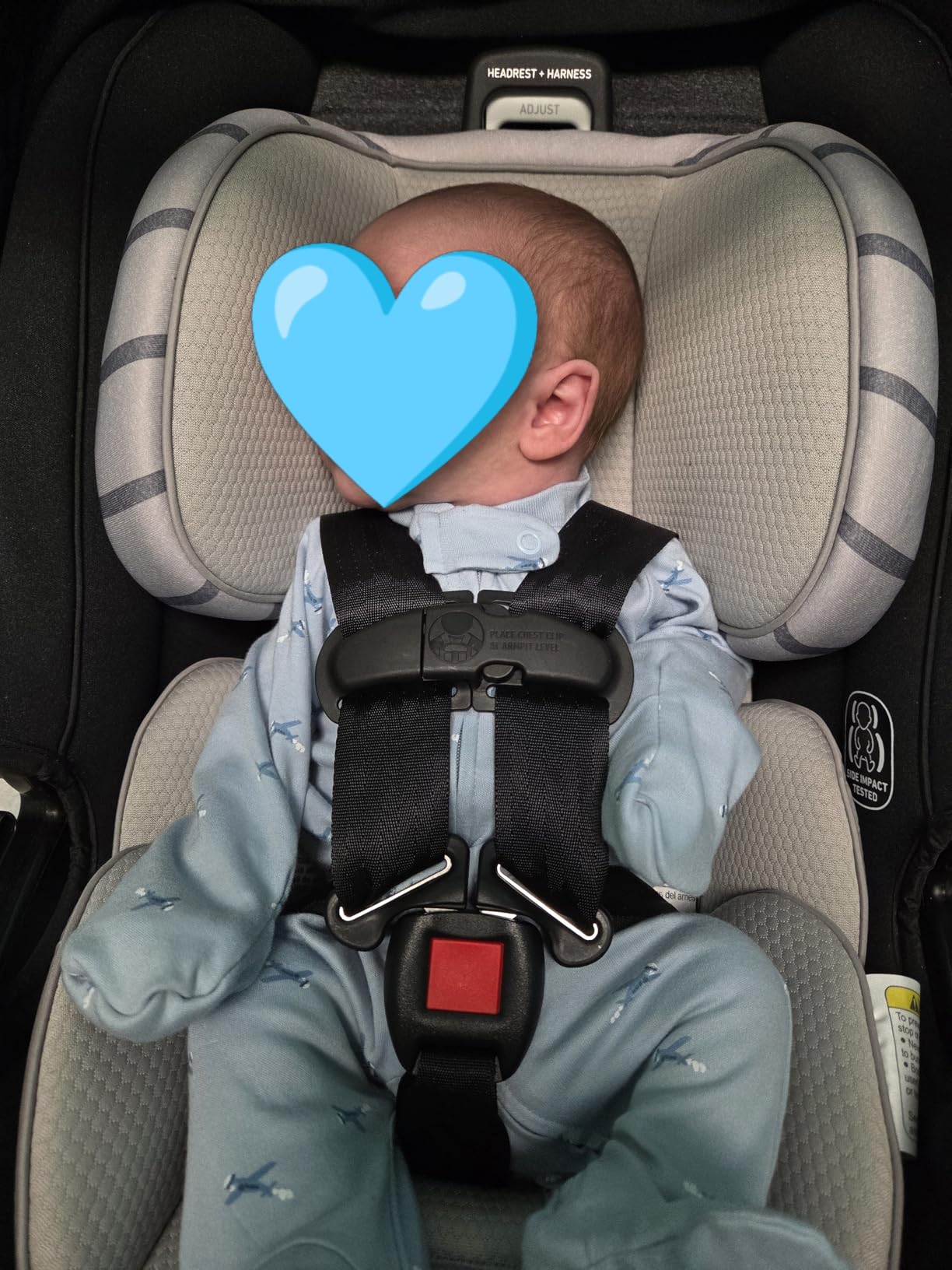
For the smallest infants, the removable infant head and body supports are the detail to check. Graco describes them as giving smaller infants a proper fit, and reviewers explicitly confirm use with newborns from the 4 lb floor with the newborn insert in place. The insert is machine washable, which matters in a household that is still transitioning out of hospital laundry routines.

The front-adjust No-Rethread Simply Safe harness moves the headrest and harness together with one button press while the child is in the seat, and SnugLock replaces two side latches with a single one-button base attachment. The base offers four positions and four reclines.
Six thousand two hundred seventy-seven ratings at 4.8 makes this the second most evidenced seat here. Parents of twins and multiples rate it well for install speed and stroller docking, which is a practical signal for a household managing two car seats.
Why pick this over the Lite LX?
Two reasons. The Anti-Rebound Bar is a genuine rear-facing safety layer the Lite LX does not have, and the SnugFit’s recline range on the base gives more room to set the angle for a baby with poor head tone.
It is also the better choice if your household will use the same seat across two vehicles, because the one-button attachment means fewer chances to install it incorrectly.
Where it will not fit?
It is heavier to carry with the baby inside, and the side grip and handlebar are described as straining over long carries. If you are moving a preemie between the NICU and the car several times a day, weigh that against the anti-rebound benefit.
Some reviewers report the seat running warm under canopy coverage in hot climates, and center-position installs are physically awkward to reach in some vehicles.
5. Chicco KeyFit – The Most Verifiable Install Setup
Chicco KeyFit Rear-Facing Infant Car Seat with Base
Weight: 4 to 22 lb
Height: up to 30 in.
Angle: two bubble levels and leveling foot
LATCH: SuperCinch tightener
Pros
- Two bubble levels and a leveling foot verify base angle explicitly
- SuperCinch force-multiplying LATCH tightener
- Removable head and body insert sized for small newborns
- EPS energy-absorbing foam lines the carrier shell
Cons
- 22 lb weight ceiling is lower than most seats here
- 30 in. height limit is short for tall babies
- Costs more than most non-rotating seats of similar capacity
The KeyFit is rated from 4 to 22 lb and up to 30 in., and that narrower range is the first thing to weigh. It is the tightest envelope in this group. What you get in exchange is the install setup that reviewers describe most consistently as the most verifiable: two bubble-level indicators, a spring-loaded leveling foot, and the SuperCinch force-multiplying LATCH tightener.
That combination matters more than it usually would, because a car seat tolerance test is decided partly on angle. Being able to confirm the base angle rather than infer it removes one of the reasons a baby fails for reasons that have nothing to do with the baby.
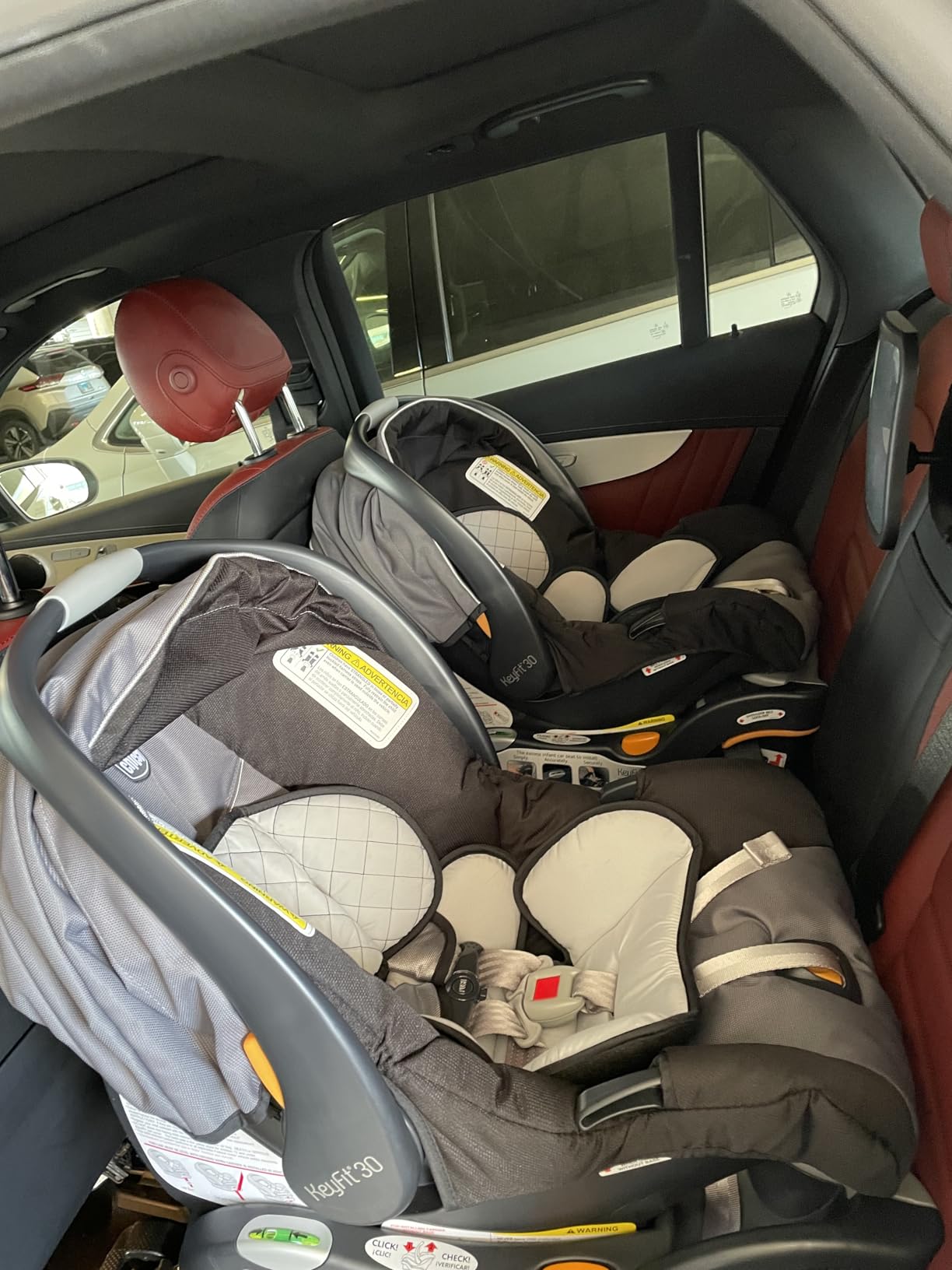
The shell is lined with EPS energy-absorbing foam, the carrier clicks into the stay-in-car base and compatible Chicco strollers with one-hand release, and the seat pad is machine washable. The removable head and body support insert is sized for the smallest newborns.
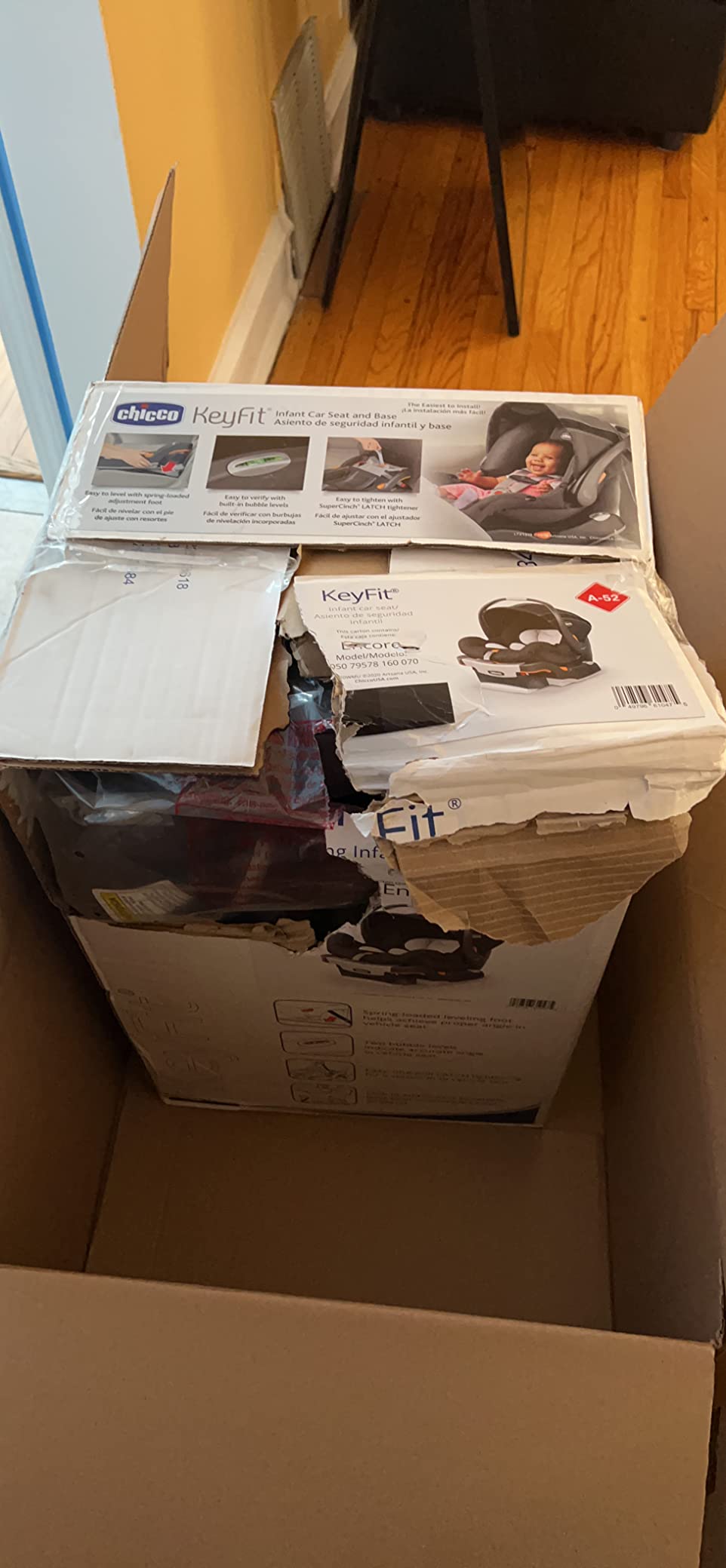
At 887 ratings and 4.8, the review history is strong though smaller than the two Graco seats. Eighty-eight percent of ratings are five star, and the recurring comment is installation accuracy rather than comfort or features.
Who this seat suits?
Parents whose top anxiety is getting the install right rather than choosing the right seat. Bubble levels and a leveling foot are objective confirmation, and the SuperCinch reduces the force needed to pull the LATCH strap tight, which helps when you are installing one-handed next to an open door.
It is also a good fit for a short planned stretch of use. A preemie discharged at 4 lb who reaches 22 lb in six months stays in this seat the whole time and never has to be moved mid-nap.
Who should skip it?
Babies who grow tall quickly. Parents of bigger babies report outgrowing the shell on height well before the weight ceiling, and 30 in. is a short limit for infants who do not start tiny. If there is a chance of a fast growth spurt, the 30 lb and 32 in. seats give more runway.
Pair it with our convertible seat picks so the next step is already decided.
6. Safety 1st OnBoard FLX – Lightweight With a 30 Pound Ceiling
Safety 1st OnBoard FLX Infant Car Seat with Base, Lightweight Baby Car Seat for Travel, Monument 4
Weight: 4 to 30 lb
Height: up to 32 in.
Carrier weight: under 8 lb
Install: LATCH with adjustable base
Pros
- Newborn head and body inserts give small infants a fit at 4 lb
- Under 8 lb carrier while still holding a 30 lb ceiling
- Single-pull harness adjustment with LATCH install
- Machine washable and dryer-safe seat pad
Cons
- A verified reviewer outgrew it at 8 months on height
- 32 in. ceiling can be reached early by tall babies
- Fewer features than the Evenflo models with no electronic monitoring
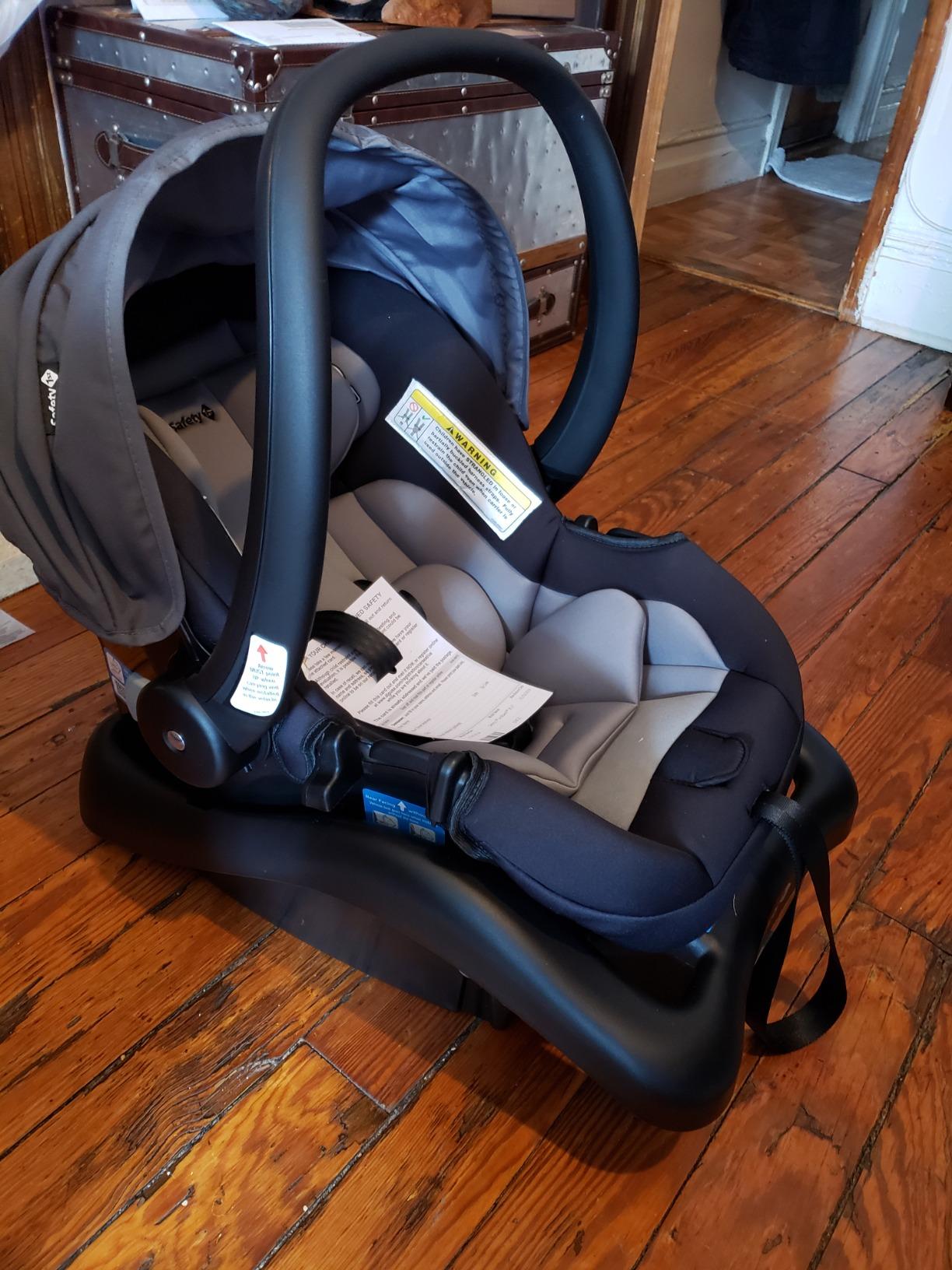
The OnBoard FLX covers 4 to 30 lb and up to 32 in. on a carrier that weighs under 8 lb. That combination – a full 30 lb ceiling at close to the Lite LX’s weight – is why it sits here. The newborn head and body inserts are the parts to look at for a 4 lb baby, and there are four harness heights plus an adjustable base on top of that.
Install is LATCH with an adjustable base and a single-pull harness adjustment, and QuickClick attaches the carrier one-handed to compatible Safety 1st strollers. Side Impact Protection with deep sides and energy-absorbing materials handles impact, and the seat pad is machine washable and dryer safe, which is genuinely useful in a first-year household.
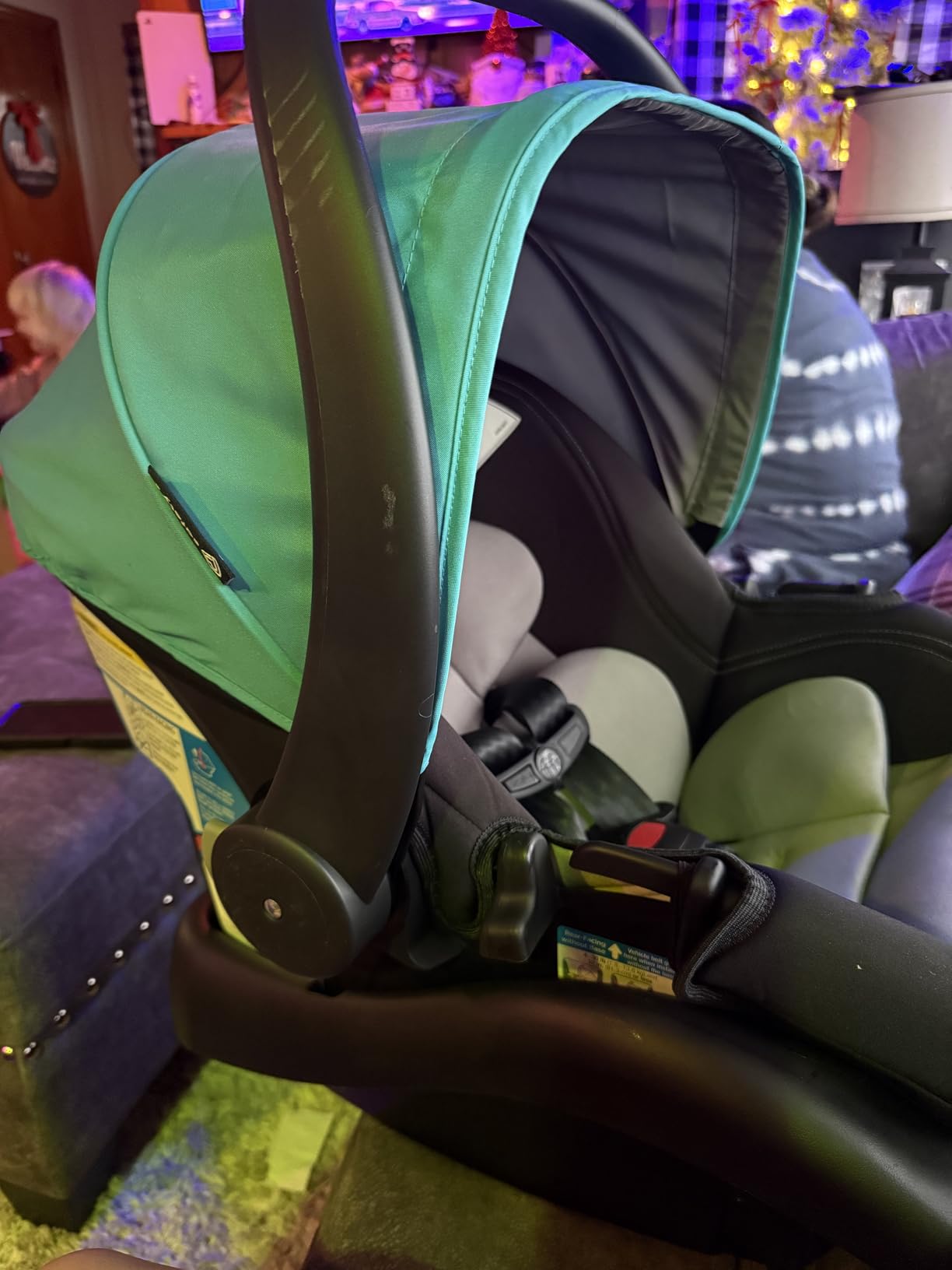
It is made in Columbus, Indiana. At 3593 ratings and 4.6 with 81 percent five star, it is well evidenced for a mid-priced seat, and reviewers describe a solid first-year seat with easy install and soft seating.
What it does not have is the electronics layer. No temperature monitoring, no chest clip alerts. For a family who wants a seat to do one job well, that is not a shortfall.
Why it is the value pick?
It answers the commonest version of this question: a baby discharged somewhere between 4 and 5 lb, a family who wants a straightforward seat with a real insert and no extra steps. Nothing here is clever, and everything here is rated.
For twins and multiples, two carriers under 8 lb each is a meaningful daily saving over heavier seats, and parents carrying two infants through a hospital corridor will feel the difference immediately.
Where it falls short?
The height ceiling is the recurring complaint. A verified reviewer reported their baby outgrew the shell at eight months because of height while still well under 30 lb, and tall babies reach 32 in. early. Know your baby’s growth curve before choosing this over a longer-bodied seat.
If you want the monitoring layer the Evenflo seats provide, you are giving that up here.
7. Graco Gomax – Baseless Rigid LATCH for Multi-Vehicle Families
Graco Gomax Infant Car Seat, Orchid Haze
Weight: 4 to 30 lb
Height: up to 32 in.
Install: built-in rigid LATCH
Recline: 4 position with bubble level
Pros
- Baseless rigid LATCH installs directly into rigid anchor points
- Memory recline plus bubble level speeds repeat installs
- No-Rethread harness with many adjustment levels
- Covers 4 to 30 lb with 87 percent five star ratings
Cons
- Reviewers describe it as one of the heavier seats they have owned
- Sun shade does not extend far enough down for some
- Hidden anchors in some vehicles are hard to reach
The Gomax is rated 4 to 30 lb and up to 32 in., and its distinguishing feature is the built-in Insta-Install Rigid LATCH. The seat connects straight into rigid anchor points without a separate base. A stay-in-car base is included if you want one, but it is not required, which means moving between two vehicles does not mean carrying a base too.
Recline is handled with a four-position one-hand adjustment and a memory recline on the LATCH connectors, plus a bubble level indicator. For a family installing the same seat in two cars, the memory function is the detail that saves the most time on a dark morning.
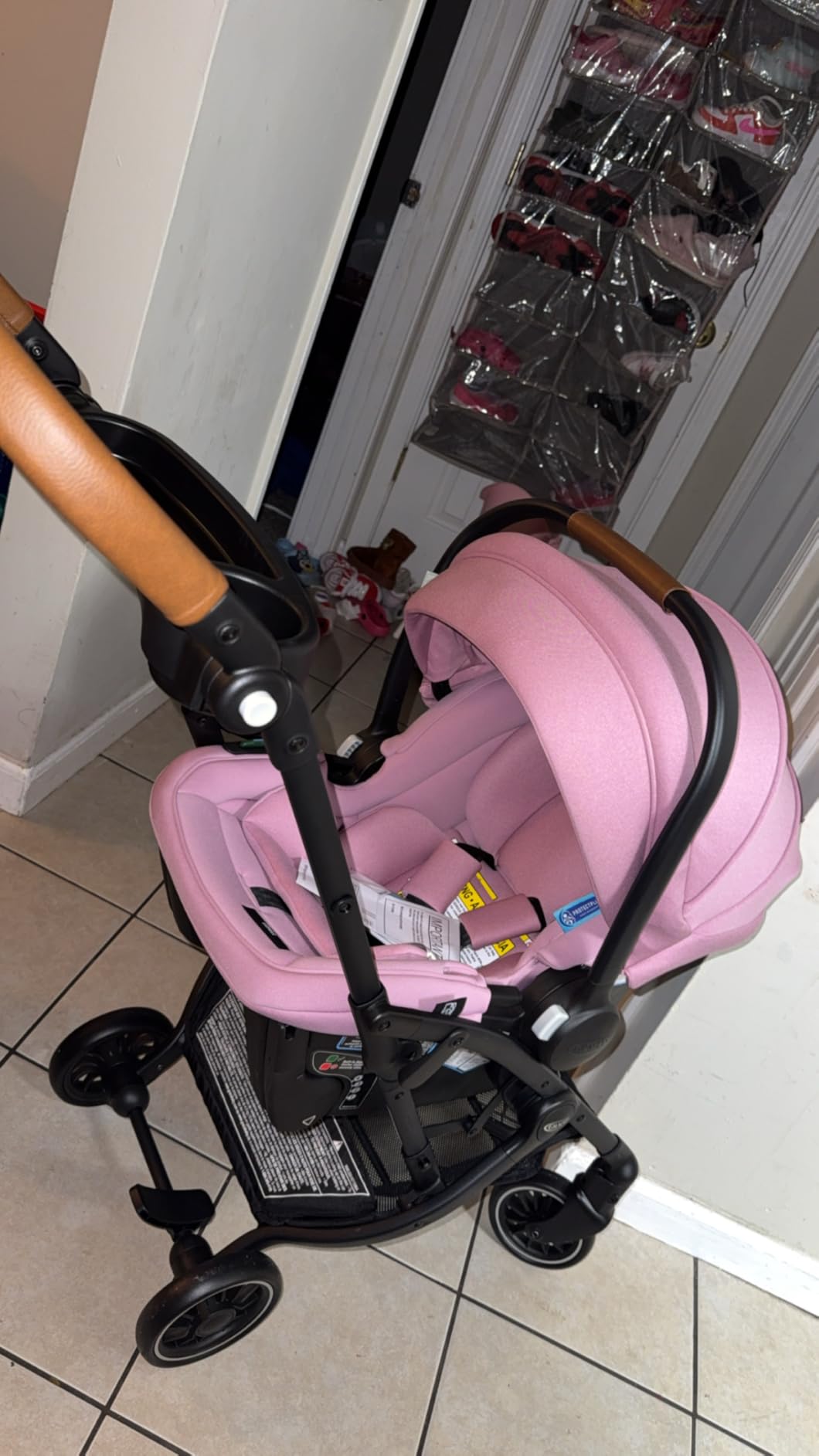
The No-Rethread Simply Safe harness adjusts headrest and harness together while the child is in the seat, and the fabric is Graco’s PureProtect – soft and fire resistant without added chemicals. It also works with Graco stroller adapters and several third-party stroller brands.
At 212 ratings and 4.7, the review history is the thinnest in this group apart from the two Evenflo seats. Reviewers who compared it against premium brands and the SnugRide describe it as sturdier, easier to adjust and better canopied.
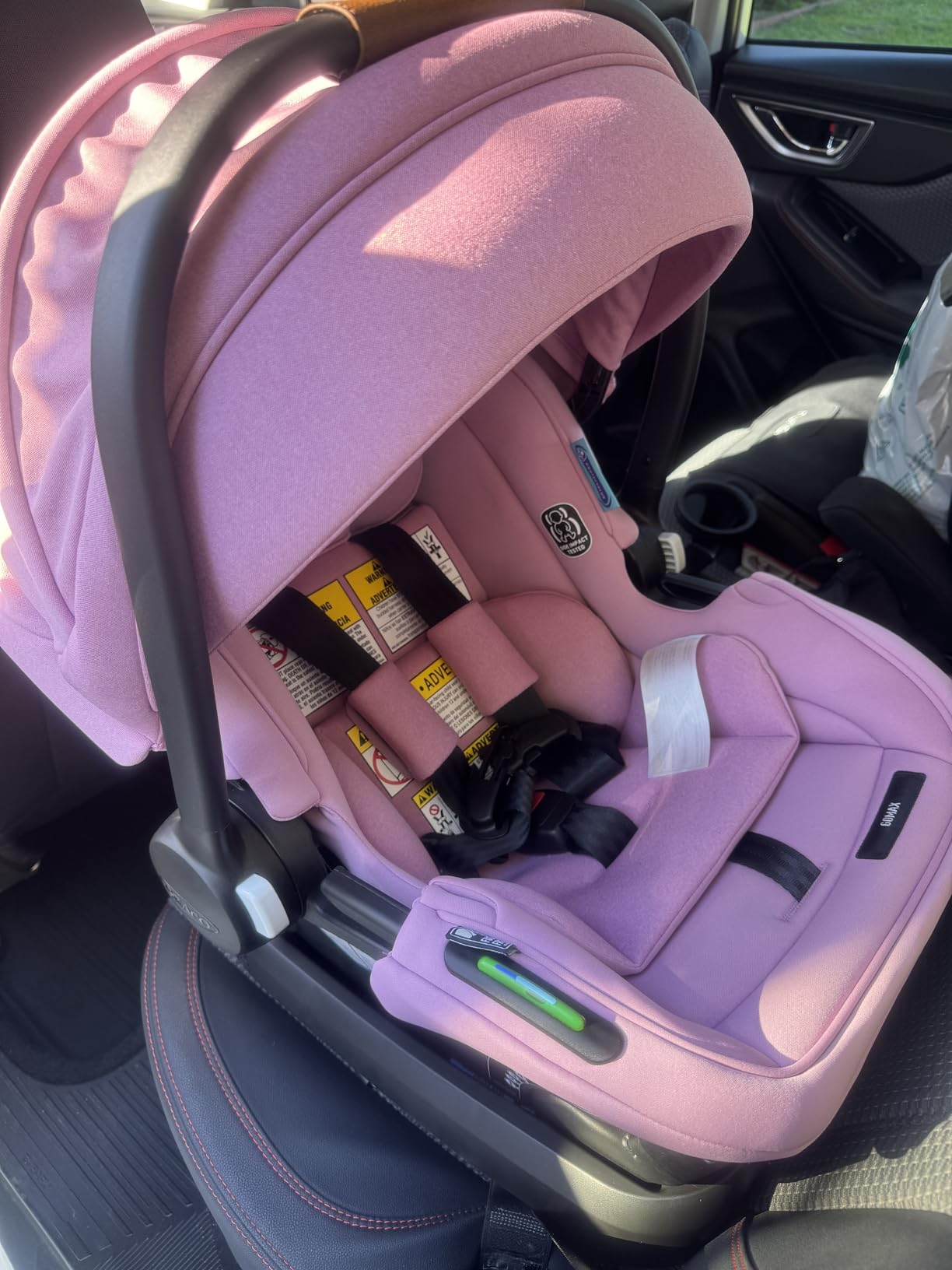
Where this one earns its place?
Baseless rigid LATCH solves a specific problem: households with more than one vehicle, a partner who drives a different car, or a grandparent who does pickups. It also means one less loose base to forget in a trunk.
It is a reasonable choice for a 4 lb and up discharge with the same caveats as the other Graco seats – you are choosing at the 4 lb floor, not below it.
Where it frustrates owners?
Weight is the dominant complaint, with reviewers describing it as one of the heavier seats they have owned. That sits oddly beside the baseless design, but a rigid LATCH arm and a deeper shell add mass. If you carry the seat often, that tradeoff is real.
The sun shade does not pull down far enough for some users, and hidden anchor points in certain vehicles can be difficult to reach. There is also less review history behind it than the two Graco seats above it.
Getting the Harness Fit Right on a Very Small Baby
The fit is where a preemie car seat either works or fails the test. Five checks cover it.
First, use the lowest bottom harness slots. The straps need to sit at or below the baby’s shoulders, because a preemie’s shoulders sit low and a slot that is correct for a term newborn can be an inch too high on a 4 lb baby.
Second, set the chest clip at armpit level. That is the reference point technicians use, and it stays right as the baby grows.
Third, do the pinch test. Pinch a horizontal fold of harness webbing at the shoulder. If you can pinch webbing without holding a fold, it is loose enough to matter in a collision.
Fourth, never put blankets or extra padding under the harness. Extra material creates empty space that lets the body move inside the seat during a crash. If a blanket is needed for warmth, roll it and place it alongside the torso, outside the harness, or use a fitted sleeper over the buckled harness.
Fifth, do not add aftermarket inserts. Manufacturers crash test the shell with their own insert and nothing else. Parents on r/NICUParents consistently identify the manufacturer insert plus rolled blankets outside the harness as the only sanctioned workaround.
What to Look for When Buying a Preemie Car Seat?
Five things, in the order that actually decides whether the seat is usable on discharge day.
Minimum weight rating. Confirm the number against your baby’s expected discharge weight with a margin for stalled growth. Under 4 lb narrows the field sharply; 4 lb opens up nearly everything.
Height floor. The Evenflo LiteMax NXT family starts at 15.7 in. Most 4 lb seats run to 32 in. A baby can be inside the weight range and outside the height range, and height is the clause that catches people.
Lowest harness slots. Ask to see the seat empty and the straps at their lowest setting before you buy, not after.
The manufacturer’s own insert. It should be removable, and it should be the insert that came with the seat.
A visible recline indicator. Bubble levels or a clearly marked level line, because the test is partly an angle test and you want an objective reference rather than an opinion.
By weight band, the decision is straightforward. At 5 lb and above you can buy on comfort, weight and stroller fit without compromising safety margin. Between 4 and 5 lb, prioritise the lowest slots and the insert. Under 4 lb, you are choosing between a handful of factory 3 lb seats and a prescribed car bed, and that conversation belongs with your discharge team.
One brand warning worth repeating: Evenflo’s NurtureMax is a different seat from the LiteMax and is not regarded as a good match for preemies, so do not let brand loyalty carry across model lines. Check the specific model number, not the logo.
Once your baby outgrows the rear-facing shell and moves into a forward-facing convertible, the sizing logic changes again – our booster seat picks cover that later stage.
Your Discharge-Day Checklist
Parents describe being told to bring the seat in one to two days before the expected discharge test, then having discharge pushed back repeatedly. Treat the earliest plausible date as your start.
For the nurse, ask what discharge weight and length the team is working toward, and whether any growth is expected before the go-home date. Ask which minimum weight the unit will accept, since that is the number your specific hospital enforces.
For the CPST, ask them to install your seat in front of you and to check the angle, the LATCH or belt tension, the chest clip position and the harness slot height with your baby in it. Ask them to run the tolerance test in that seat specifically, and to note any adjustment they make so you can reproduce it at home.
For the hospital social worker, ask whether your insurance covers a car bed if the seat is not suitable, and whether any state or regional programme distributes them.
If you are loaned a seat or given one by the unit, ask what its minimum weight rating is and confirm it matches your baby’s discharge weight before you accept it. A loaned seat with a 4 lb floor is useless to a 3 lb 12 oz baby, and finding out at the car park is the worst time.
If Your Baby Is Discharged Below the Seat’s Minimum Weight
Never run a baby below a seat’s labelled minimum weight and never re-shim the seat to make the number work. There are four legitimate routes, in order.
First, tell the discharge team immediately. The answer is often a delay and a retest, because most babies cross the threshold within days.
Second, ask whether a factory-rated 3 lb seat in this roundup – the LiteMax NXT or the Revolve180 – is one your unit will test. Bring it in early rather than on the day.
Third, ask for a monitored retest after a few more days of growth. Multiple parents describe a first failure followed by a pass on a later attempt.
Fourth, if no seat is appropriate, the medical team can prescribe a crash-tested car bed. That is a medical prescription, not a shopping decision, and it comes with insurance and social worker pathways rather than a checkout button.
Car Beds and How Long a Preemie Stays in an Infant Seat
A car bed is a flat, crash-tested platform that lets a very small baby lie down rather than sit semi-reclined. Because the baby is supine rather than flexed, the airway stays open, which is exactly the problem the car seat test screens for. They are prescribed by the medical team, typically for babies in the low-pound range, and they are temporary – you move to a car seat as soon as the baby clears the seat’s minimum.
On duration: a preemie stays in an infant seat based on weight and height limits, never on corrected or adjusted age. A baby discharged at 4 lb will outgrow most 30 lb seats at roughly the same point a term baby does, because the limits are physical. Track the 30 lb weight limit and the 32 in. height limit, and plan the move before you hit them rather than after.
For time in the seat with poor head tone after a NICU stay, take the limit from your own team rather than a general rule. Ask what they recommend for a specific route length and your baby’s tone, and set your own limit accordingly. Take breaks from the seat on long journeys.
For twins and multiples, ask the unit how it handles two simultaneous tolerance tests, and be wary of any loaned seat whose minimum weight you have not verified yourself.
Sources and Further Reading
The safety framework here comes from the American Academy of Pediatrics guidance on safe transportation of preterm and low birth weight infants at hospital discharge (AAP Pediatrics policy statement), HealthyChildren.org material from the American Academy of Pediatrics, and National Highway Traffic Safety Administration guidance on infant seats and car beds. For install technique and harness fit specifics, The Car Seat Lady is a widely used certified technician resource. Every recommendation in this roundup is subordinate to your own unit’s policy and your baby’s care team.
Frequently Asked Questions
Do preemie babies need a special car seat?
Not a special seat, a correctly rated one. Most infant car seats handle a 4 lb baby without modification. What matters is that the lowest harness slots sit at or below a small baby’s shoulders, the insert is the manufacturer’s own, and the semi-reclined angle is one the NICU can observe. A seat rated from 3 lb simply gives you more margin when growth stalls.
Is there a preemie insert for car seats?
Use only the insert that shipped with the seat. Manufacturers crash test the shell with their own insert, so an aftermarket or borrowed insert can change the fit and the crash performance. If your baby needs extra warmth, roll a blanket and place it alongside the torso, outside the harness – never under the harness or behind the baby.
How long can a premature baby be in a car seat?
Time limits after discharge are set by your baby’s team, not by a general rule, and depend on head tone, breathing stability and trip length. Before you go home, ask your team what they recommend for your baby’s specific situation, and take breaks from the seat on longer journeys. A preemie with weak neck tone should not be sitting semi-reclined for hours on end.
Why do NICU babies have to pass a car seat test?
A premature baby has a proportionally heavy head and weak neck tone, so a seat that is too large or too upright lets the head slump forward and restrict the airway. The monitored 90 to 120 minute tolerance test watches oxygen saturation, heart rate and breathing in the actual seat you will use, so a too-big seat is caught before you go home.
What is the lowest weight an infant car seat can fit?
Among the seats in this roundup, the lowest factory minimum weight is 3 lb with a 15.7 in. height floor, on the Evenflo LiteMax NXT and Revolve180 LiteMax NXT. Most other infant seats start at 4 lb. Below 3 lb there is usually no infant seat at all, and a crash-tested car bed is prescribed by the medical team instead.
Can a 4 pound baby go in a standard infant car seat?
Yes, if the seat’s printed minimum weight is 4 lb or lower and the harness fits correctly. Check the label on the seat itself rather than the box, confirm the height floor, use the lowest harness slots, and set the chest clip at armpit level. Confirm the specific seat with your discharge team before the test.
What happens if my baby fails the car seat test?
Most often it means the seat is too large, so the baby slides down and the head falls forward. The usual responses are a seat with a lower minimum weight, a corrected angle, or a monitored retest after a few more days of growth. Parents describe first attempts failing and later ones passing often. A car bed is the fallback the team may prescribe.
What is a car bed and when does a preemie need one?
A car bed is a flat, crash-tested platform that lets a very small baby lie supine instead of sitting semi-reclined, which keeps the airway open. It is prescribed by the medical team rather than bought as a shopping choice, typically when no infant seat fits the baby. It is temporary, and insurance and hospital social worker pathways often cover it.
Conclusion
The Graco SnugRide Lite LX is the best infant car seat for preemies overall, because at 4.8 across 7673 ratings it combines a 4 lb minimum weight with the lightest confirmed carrier weight in this group and a review history that describes real NICU discharges. If your baby is heading home under 4 lb, the Evenflo LiteMax NXT is the one to look at first, and the Revolve180 version of it if loading a tiny baby into a low vehicle is your daily problem.
Whichever you choose, read the label on the seat in your hand, bring it into the unit early, and have a certified child passenger safety technician check it before your baby rides. If you tell us your baby’s expected discharge weight and what vehicle you are installing into, we can help you narrow it down further.