
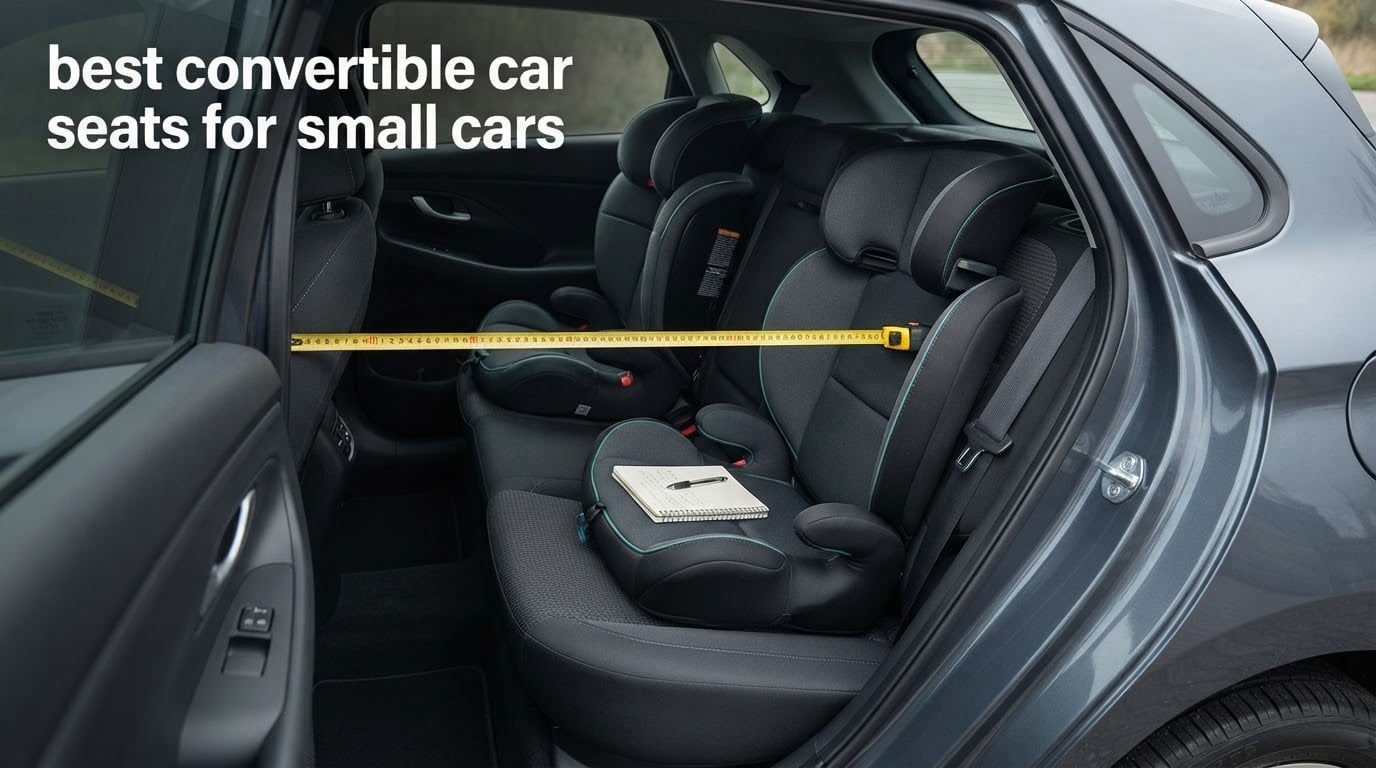
A small car fails you on two axes at the same time, and almost every roundup only talks about one of them. The first is width: your back bench is what decides whether one seat, two side by side, or three across is physically possible. The second is front-to-back depth in rear-facing mode, which is the number that decides whether the front passenger can sit normally or has to shuffle forward with a knee against the dashboard.
That second axis is the one that catches people out. A seat can be genuinely slim at 17 inches and still need 30-plus inches of cabin depth once it is reclined for a sleeping toddler. So the honest version of the best convertible car seats for small cars question is not a single list of thin seats. It is a list of seats, ranked by which constraint they solve and by how much they give back on the axis that is not your problem.
Our 30-second answer: the Graco SlimFit 3-in-1 is the one we would fit in a compact hatchback first. Graco states the design is 10% slimmer with dual integrated cup holders that rotate away, it runs 5-40 lb rear-facing, 26.5-65 lb forward-facing and 40-100 lb as a highback booster, and it carries a 4.8 rating from 2147 reviews. It is not the narrowest seat we looked at, and it is not the best one to move between two cars. It is the best all-round answer to a small back bench, which is what most people searching this actually need.
We also put a full-weight guide to the category next to this one, covering the width and depth tradeoffs, the LATCH limits, and the booster stage, in case you want the background before the picks. Our best convertible car seats overall guide covers the bigger-vehicle end of the market, and our infant car seat picks cover the first months if you would rather buy two seats than stretch one.
Table of Contents
How We Evaluated These Seats?
Everything below is built from manufacturer-published specifications and from what owners actually report after living with the seat. We did not crash-test any of these ourselves, and we will not pretend otherwise. NHTSA does not publish crash-test scores for individual child restraints either, so nobody can hand you a ranked safety score sheet.
What we did do is put the numbers side by side: published width where the manufacturer provides it, rear-facing and forward-facing weight ranges, the height ceilings, whether the harness rethreads, what the cover costs you to remove, and whether the seat is workable when you have to move it between a main car and a second car. Recall status was checked against the CPSC and NHTSA databases on 3 October 2026.
One warning before we start: never buy a child seat secondhand from a private seller, and never use a seat that has been in a crash. A car seat is a single-use safety device, and the label and hardware that tell you whether it has been in a car are the parts a used listing is most likely to have wrong.
Top 3 Convertible Car Seats For Small Cars (October 2026)

Graco SlimFit 3-in-1
- 10% slimmer with rotating cup holders
- No-rethread Simply Safe Adjust harness
- Rear-facing 5-40 lb
- Highback booster to 100 lb
Diono Radian 3R
- Fits three across
- Steel-reinforced shell
- Rear-facing to 50 lb
- Folds flat and FAA approved
Maxi-Cosi Pria
- QuikFit one-handed headrest and harness
- ReclineFit 3-position recline
- 5-100 lb across three stages
- Machine-washable recycled fabric
All 10 Convertible Car Seats at a Glance
| Product | Specifications | Action |
|---|---|---|
| Graco SlimFit 3-in-1 |
|
Check Latest Price |
| Diono Radian 3R |
|
Check Latest Price |
| Maxi-Cosi Pria |
|
Check Latest Price |
 Safety 1st TriMate Safety 1st TriMate |
|
Check Latest Price |
 Evenflo Revolve360 Slim Evenflo Revolve360 Slim |
|
Check Latest Price |
 Chicco OneFit LX ClearTex Chicco OneFit LX ClearTex |
|
Check Latest Price |
 Safety 1st Ellaris Safety 1st Ellaris |
|
Check Latest Price |
 Joie Saffron SI Joie Saffron SI |
|
Check Latest Price |
 Baby Trend Trooper Slim Baby Trend Trooper Slim |
|
Check Latest Price |
 Evenflo Tribute LX Evenflo Tribute LX |
|
Check Latest Price |
1. Graco SlimFit 3-in-1 – The Best Convertible Car Seat for Small Cars Overall
Graco Slimfit 3-in-1 Convertible Car Seat, Jarret
Rear-facing 5-40 lb
Forward-facing 26.5-65 lb
Highback booster 40-100 lb
10% slimmer design
Pros
- Slim profile that owners confirm fits three across in pickups and narrow rear buckets
- Easy to install and remove
- No-rethread harness and one-motion headrest adjustment
- Rotating cup holders free up back-seat space
- Removable covers clean well
Cons
- Vents in the shell let cabin air blow onto the child
- Less padding than costlier seats
- Initial recline setup can be hard to judge without help
The SlimFit is the seat we keep coming back to because the design decision behind it is aimed straight at your problem. Graco made it 10% slimmer and then moved the cup holders out of the footprint by making them rotate away, which means the width you lose is the width of the seat itself and not the seat plus two tumblers.
Owners in genuinely cramped vehicles back this up. Reviews repeatedly describe fitting three of these across a narrow rear bench in pickups and in cars with the sort of sculpted buckets that would not accept a seat with a moulded armrest. If your problem is width, this is the seat the thousands of owners in that situation chose.
The harness is where Graco spends its engineering budget. The Simply Safe Adjust system moves the headrest and the harness together in one motion with no rethreading, and the headrest has ten positions. On a seat you use every single day, for years, that single feature is worth more than any side-impact marketing language.
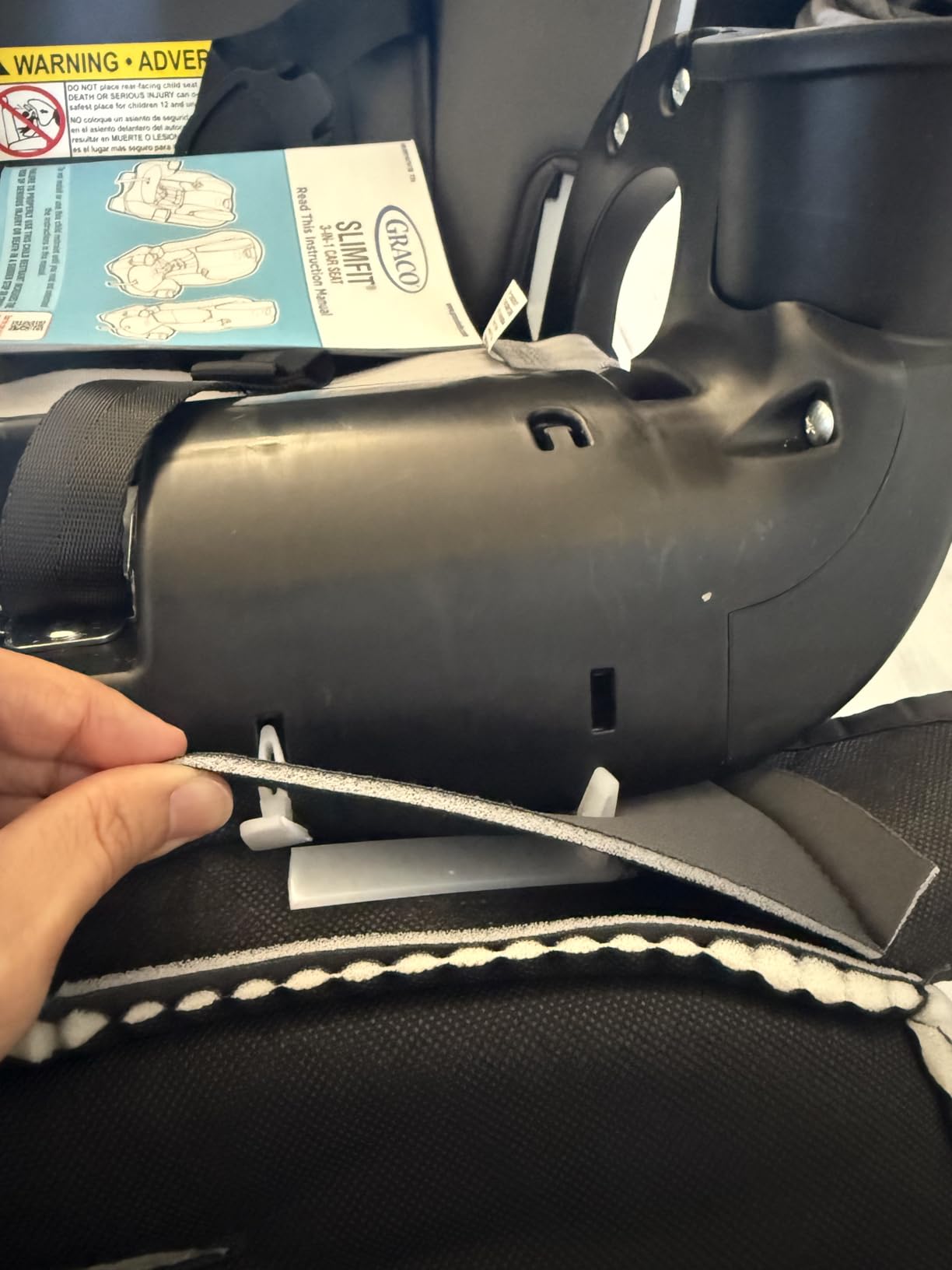
Weight ranges are generous for a slim seat: 5-40 lb rear-facing, 26.5-65 lb forward-facing with a harness, and 40-100 lb as a highback booster. Graco states the shell is engineered to the newest side-impact testing standards under its ProtectPlus program.
The cover comes off for cleaning without a fight, and owners say it survives the machine. If you are moving this seat between a hatchback and a family SUV it is light enough to handle without the two-person lift some all-in-one seats require.
The honest weakness is ventilation. There are openings along the back and sides of the shell, and in a hot summer with the cabin air-conditioned, several owners report their child ends up cold against those vents. Padding is thinner than you will find on a seat twice the price, which shows up on long drives rather than on the first week.
One more note: a few owners report a bit more movement when they install with the seat belt instead of the lower anchors. If you go the belt route, check the fit at a child inspection station rather than trusting the first click.
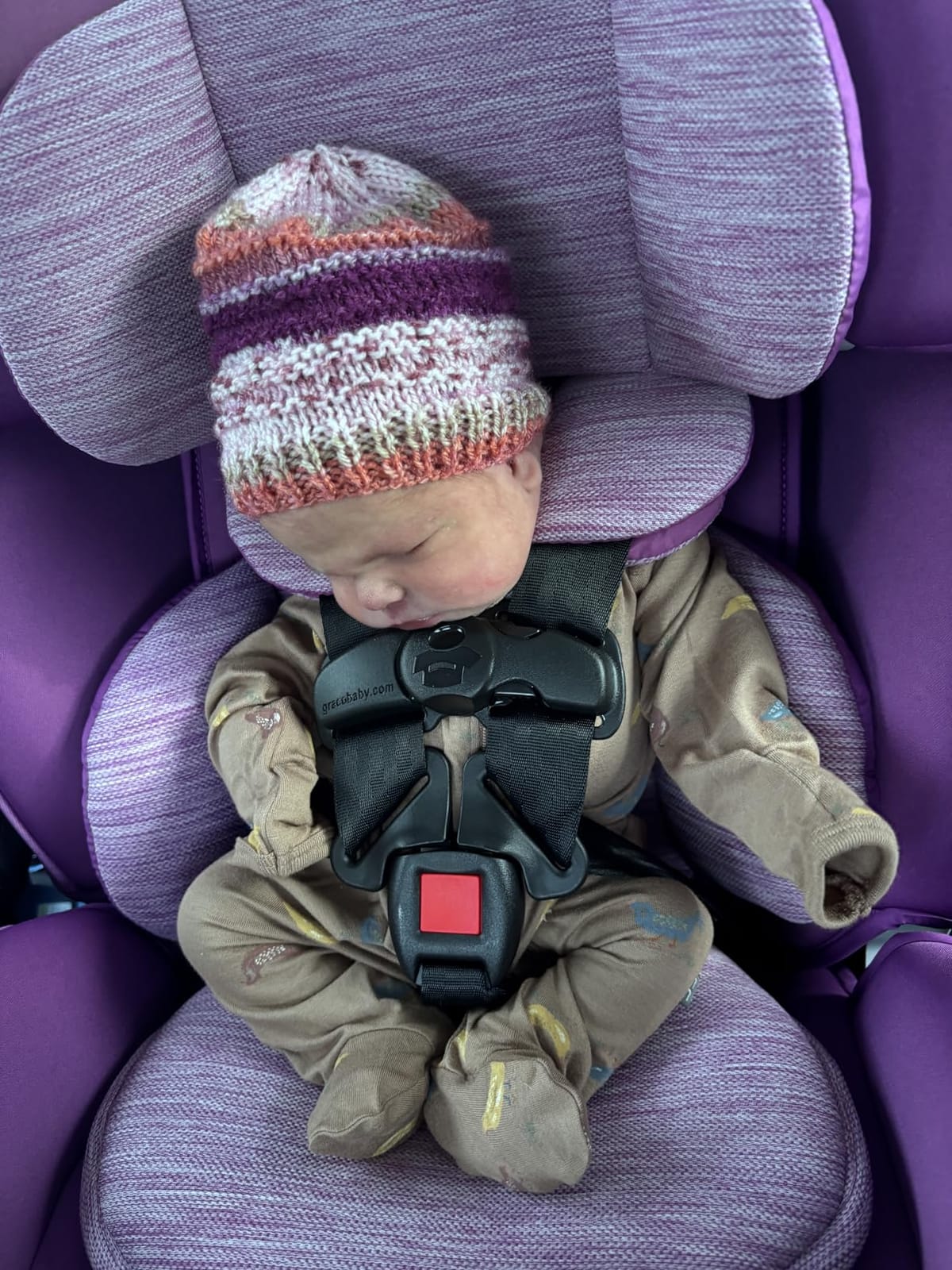
Is the SlimFit slim enough for your back bench?
Measure before you buy. Graco publishes the 10% slimmer figure relative to its own earlier seat rather than an absolute width in inches, so the only reliable test is the tape measure across your bench at the seat buckle.
If your usable width is roughly 48 to 52 inches, three slim seats is a realistic goal. Below about 46 inches, plan on two. Our buying guide section below walks through how to get that number correctly, because the way you measure changes the answer by several inches.
Where the SlimFit is not the right call?
If you need a 50 lb rear-facing limit, this seat stops at 40 lb and you should look at the Diono Radian instead. If you plan to keep the child rear-facing past the age most children outgrow it, the shorter rear-facing window is a real consideration rather than a detail.
If you are moving the seat between two cars daily, a lighter seat will save you a lot of irritation, and the slimness advantage here does not fully cancel that out. In every other small-car scenario we could construct, this is the one we would fit first.
2. Diono Radian 3R – Best for Three Across and Extended Rear-Facing
Diono Radian 3R, 3-in-1 Convertible Car Seat, Rear Facing & Forward Facing, 10 Years 1 Car Seat, Slim Fit 3 Across, Gray Slate
5-120 lb across four modes
Rear-facing to 50 lb
Fits three across
Folds flat, FAA approved
Pros
- Genuinely fits three across
- confirmed by owners in compact cars
- Steel-reinforced shell feels durable
- ComfortPlus memory foam included
- Folds flat for travel and storage
Cons
- Very heavy to move between cars
- Multiple mode switches invite configuration errors
- Deep rear-facing recline pushes the front seat forward
- Installation can be difficult
The Radian 3R carries the largest review base of anything in this roundup at 7886, and the pattern in those reviews is unusually consistent: people bought it specifically because their car is small, and they keep it because it holds three across and lasts from birth to booster.
The frame is the reason it lasts. Diono builds it around a reinforced automotive-grade high-strength steel core, which explains both the five-star durability reports and the complaint that appears in nearly every review of it: it is heavy. If you expect to move this seat between vehicles, plan for two hands.
The rear-facing range goes to 50 lb, which is the number parents care most about. Keeping a child rear-facing until they hit the headroom ceiling rather than the weight ceiling is the single most evidence-backed thing you can do in a car seat, and the Radian gives you the most room to do it on this list.

Four modes in one shell cover 5 to 120 lb: rear-facing, forward-facing with a harness, highback booster, and backless booster. The ComfortPlus memory foam is included rather than sold separately, which is a detail that annoys people who have bought add-on infant inserts before.
It folds flat and is FAA approved for airline use, so it moves between a car seat bag, a cabin seat and a stroller frame without a second seat. In the three-across conversation this is the seat that turns a theoretical plan into a working one.
Now the difficult part. Four modes with physical switches means real opportunities to configure it wrong, and owners report doing exactly that. The rear-facing recline is also deep, which is good for a sleeping child and bad for your front passenger’s knees.
If you install it, use a certified Child Passenger Safety Technician for the first install. The reviews themselves recommend this more often than for any other seat here, and for a frame this rigid it is good advice.
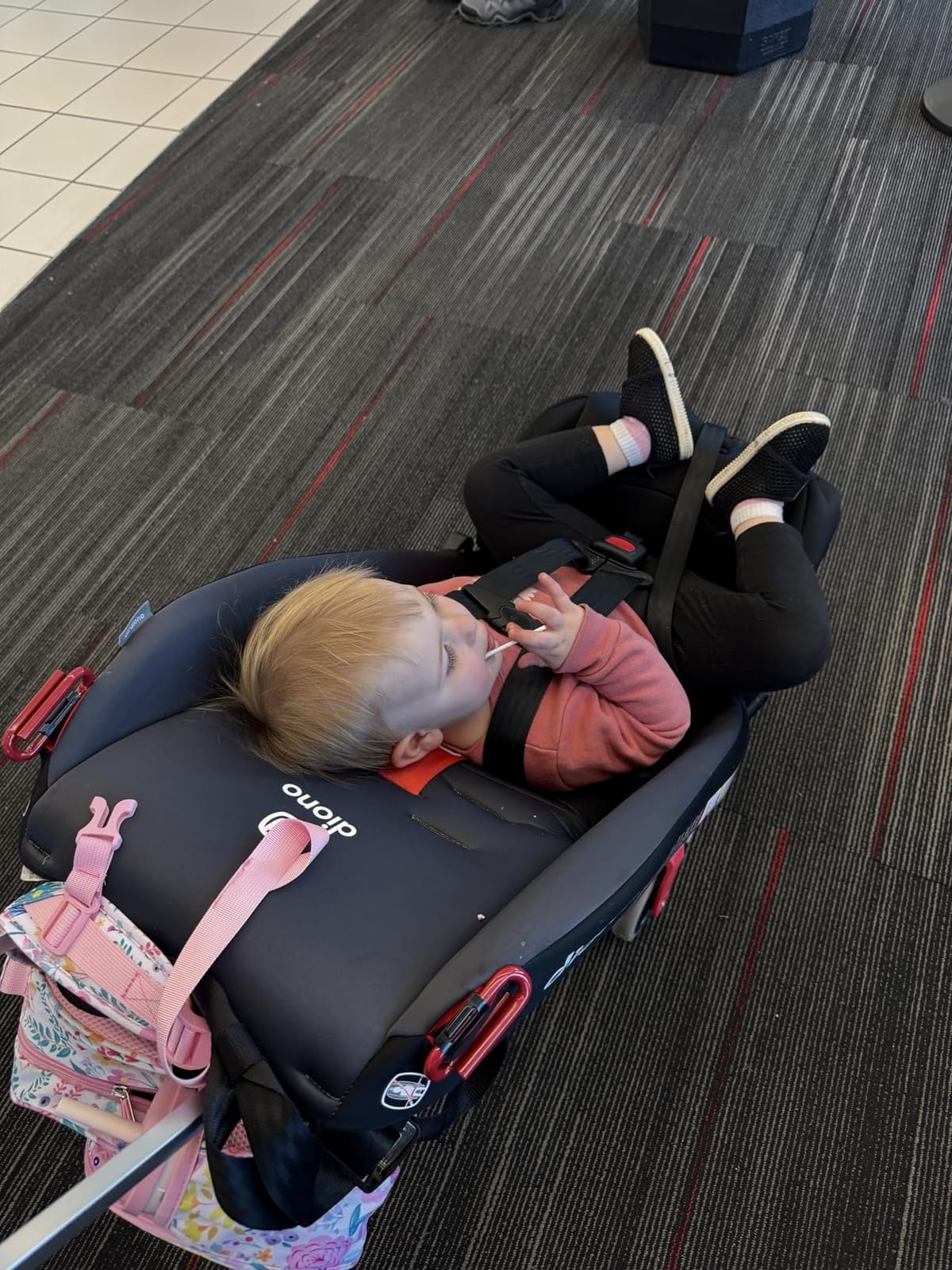
What does 3-across actually require from your bench?
Three seats across needs roughly 51 inches of clear width between the outer seat belts, and you should treat anything above that as a bonus rather than a plan. A bench that measures 49 inches at the buckle may measure 46 inches where the seats actually sit.
Centre-position installs are worth checking on this seat specifically. Owners with fixed front headrests report limits in some configurations, and in a compact car the centre position is often the only one with a usable lower-anchor pair.
Is the Radian too heavy for a second car?
Probably, for daily moves. Owners repeatedly single out the weight of the steel frame as the thing that makes this seat awkward to move, and the reviews suggest they are not being dramatic. For a second car that lives at your parents’ house and only sees a weekend at a time, the weight barely registers.
The tradeoff we would accept without hesitation is the front-to-back depth. If your front passenger is tall, slide that seat forward once, decide whether it still works for them, and only then commit to the Radian. A 50 lb rear-facing limit is not worth it if the adult in the passenger seat is miserable every day.
3. Maxi-Cosi Pria – Best Value All-in-One for Tight Cabins
Maxi-Cosi Pria All-in-One Convertible Car Seat, Infant to Toddler Car Seat, Easy-Install Harness, Machine-Washable Cover, 5-100 lbs, SeaDrift
5-40 lb rear-facing
30-65 lb forward-facing
40-100 lb booster
ReclineFit 3 recline positions
Pros
- One-handed QuikFit headrest and harness adjustment
- Three recline positions help it fit tighter cabins
- Soft recycled fabrics that wash and dry well
- Removable infant pillows
- Dishwasher-safe cup holders
Cons
- Not among the narrowest seats for three-across layouts
- Runs warm in hot climates
- Some owners want more side-impact padding for older children
The Pria is not the narrowest seat here and does not pretend to be. What it does have is a 5-100 lb range across three modes, one-handed adjustment, and a recline feature that genuinely earns its keep in small cars.
That recline is the point. The ReclineFit system gives three reclining positions, and owners in compact sedans report it is the difference between a seat that fits the gap between the front seat and the door and one that does not. Cabin shape matters as much as cabin width, and recline range is the only published spec that speaks to it.
Height limits are published here too, which most manufacturers skip. Rear-facing runs 19 to 40 inches, forward-facing 34.4 to 49 inches, and booster 43.4 to 52 inches. Those ceilings tell you when to turn the seat before your child is physically outgrowing it.
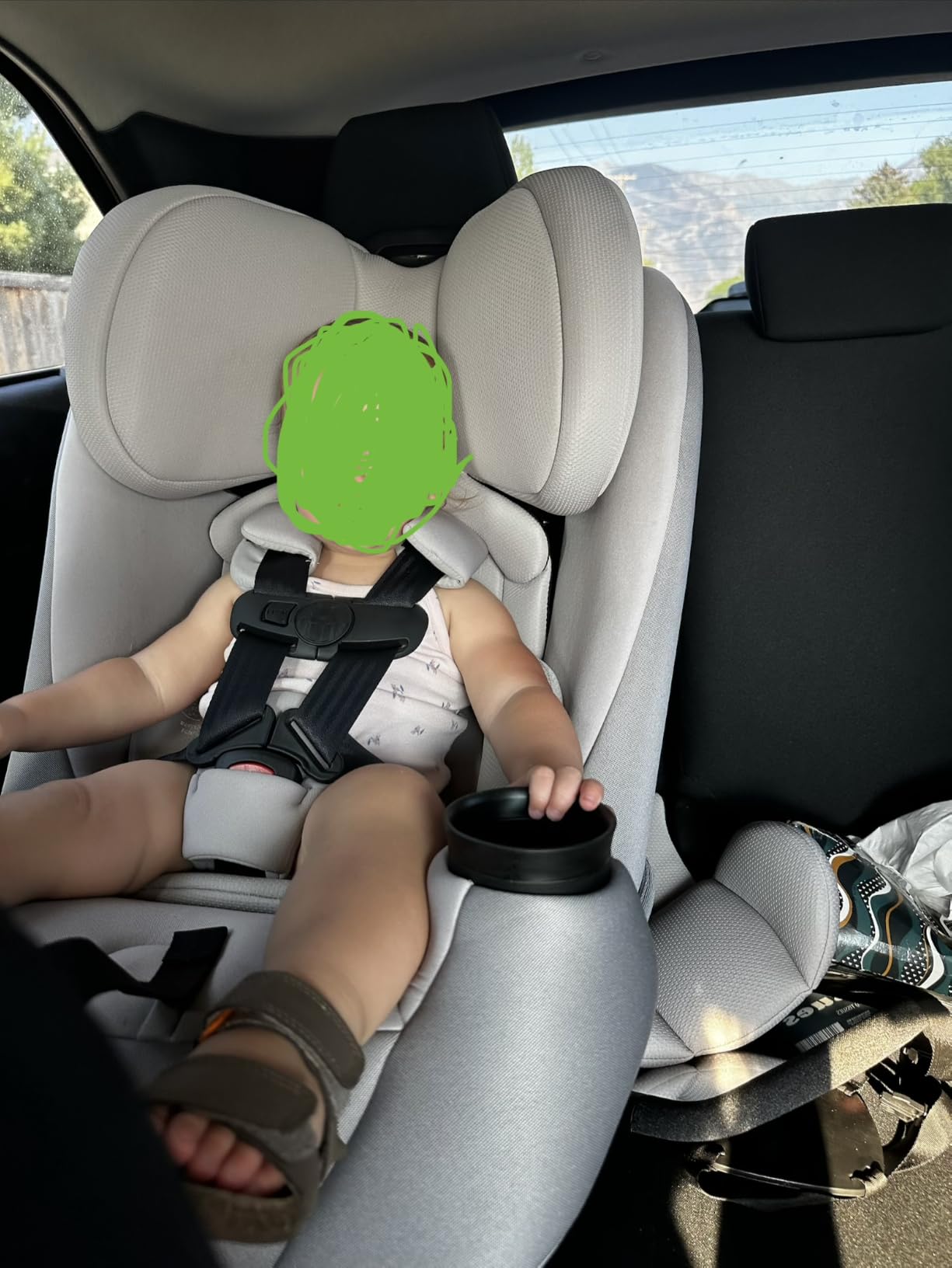
The QuikFit adjustment moves the headrest and the harness together with one hand and no rethreading. Two dishwasher-safe cup holders are included, and the 1-click LATCH connectors are the ones you can actually operate in a car park with a toddler under one arm.
On fabrics, Maxi-Cosi uses PureCosi material with no added fire retardant treatment, and the EcoCare fabric is made from 100% recycled plastic bottles. It is machine-washable and dryer-safe. If your toddler eats toast as a primary food group, this is the seat that will still look presentable in two years.
The honest limitation is that this is a wider seat than the slim specialists on this list. If your plan is three across, the Pria is the wrong shape for the job and no amount of recline flexibility will change that.
Owners also flag warmth in hot climates, which follows from the thick cushioning. And a few parents of larger children want more side-impact padding than they get at the top end of the range. It meets the federal side-impact standard.
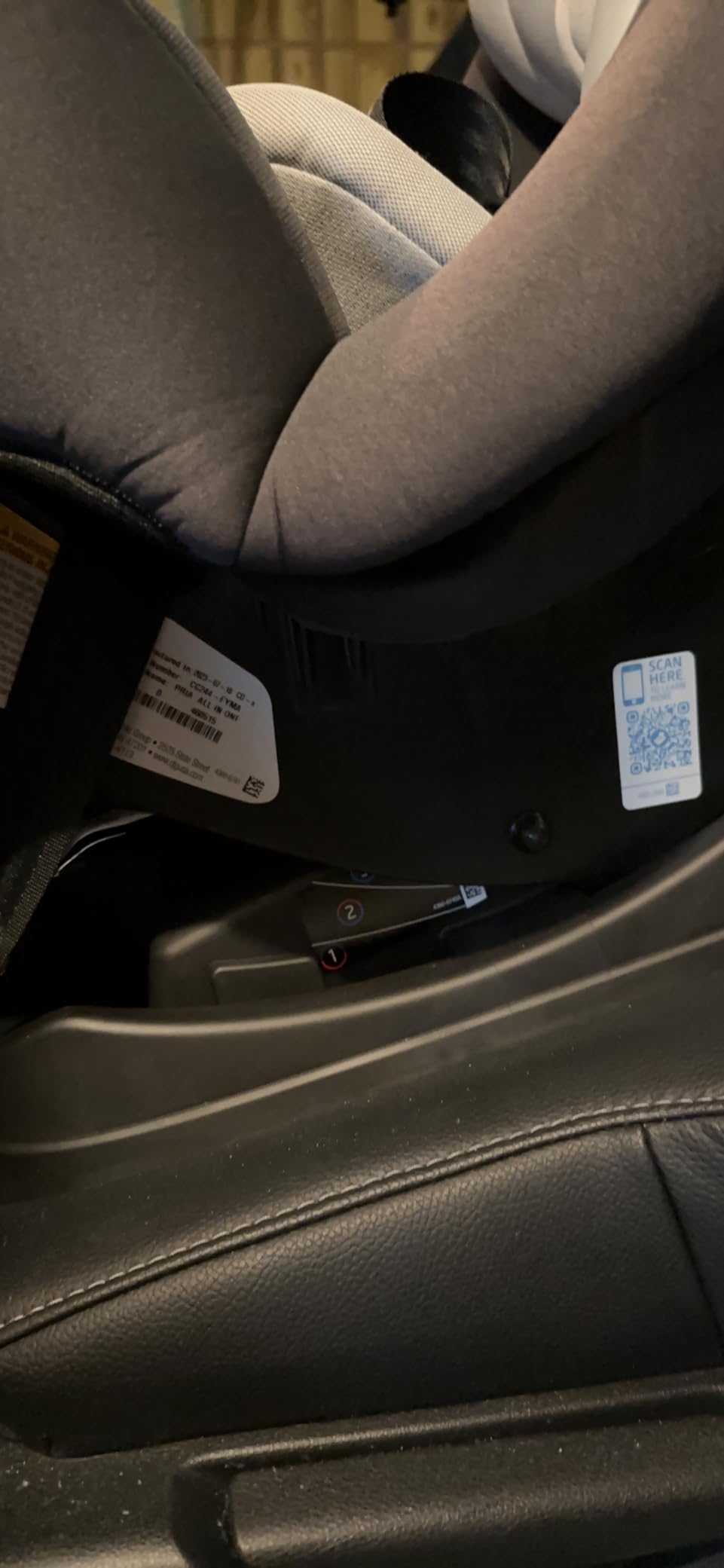
When is a wider seat the smarter choice?
When you have one seat and a tight, oddly shaped cabin. Recline range, an easy-to-reach tightening mechanism and a genuinely washable cover solve more daily problems in a small car than another half inch of width solves.
It is also the one to pick if you want the same seat to see you through to 100 lb without buying a booster later. The height ceilings are published, which makes the transition planning much easier.
What the Pria will not do for you?
It will not give you three across. Two across in a compact bench is comfortable with this seat; three is tight enough that owners report measuring before buying.
It is also not the seat for hot-climate long drives with a heavy-set toddler. If you live somewhere the car sits in sun all afternoon, look at the seats with mesh or vented shells instead.
4. Safety 1st TriMate – Best for Three Across and Washing
Safety 1st TriMate 3-in-1 Convertible Car Seat, Slim Fit, Infant to Big Kid Car Seat, Easy-Install Harness, Machine-Washable Cover, Dishwasher-Safe Cup Holders, 5-100 lbs, Sharkskin
Under 19 in wide without cup holders
5-40 lb rear-facing
40-100 lb booster
8-position headrest
Pros
- Fits three slim seats across a back seat
- No-rethread harness with visible belt paths
- Owners rate its fabric cleaning as the easiest in class
- One-hand 8-position headrest adjustment
- Removable memory-foam infant insert
Cons
- Can be stiff to install even with real effort
- Padding pieces detach and get lost
- Some reports of headrest play after a proper install
- Headrest padding can be uncomfortable at 22 lb
The TriMate publishes its width as under 19 inches without the cup holders, and that is the number that makes the three-across claim checkable rather than hopeful. Owners confirm fitting three slim seats across a back bench in vehicles like the Subaru Outback.
The cleaning story is genuinely its own thing. Owners who have used many seats call this the easiest fabric cleaning they have encountered, because the seat pad comes off without undoing the harness first. In a household with a toddler and a newborn, that is not a minor convenience.
Adjustment is one-handed across eight headrest positions, and the harness is a no-rethread design with visible belt paths. Removable dishwasher-safe cup holders and a removable machine-washable pad round out a seat built for daily use.
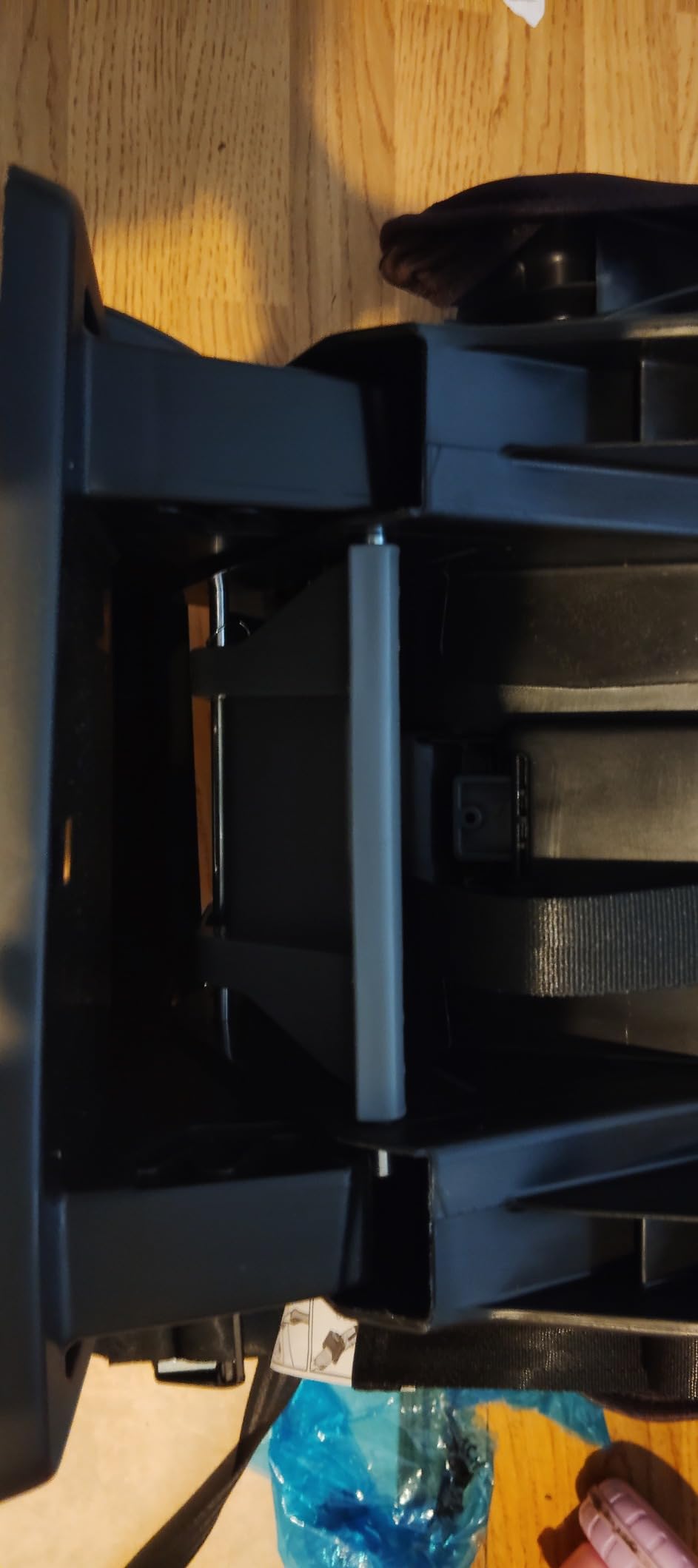
The mode range is the full 5 to 100 lb: rear-facing infant with the included memory-foam insert, forward-facing with a harness, then a belt-positioning booster. The base has three positions of its own, which helps when the bench contour and the seat contour disagree.
It meets the federal side-impact standard, and the fabric comes with no added fire retardant treatment mentioned in the listing.
The complaints cluster around two things. Installation can be stiff even when you are pulling hard, and some owners report headrest play or excess movement after an install they believe was correct. Those are worth taking seriously and checking at an inspection station.
The other recurring note is that the multi-stage padding pieces and shoulder protectors detach and get lost. Put them in the diaper bag rather than loose in the seat.
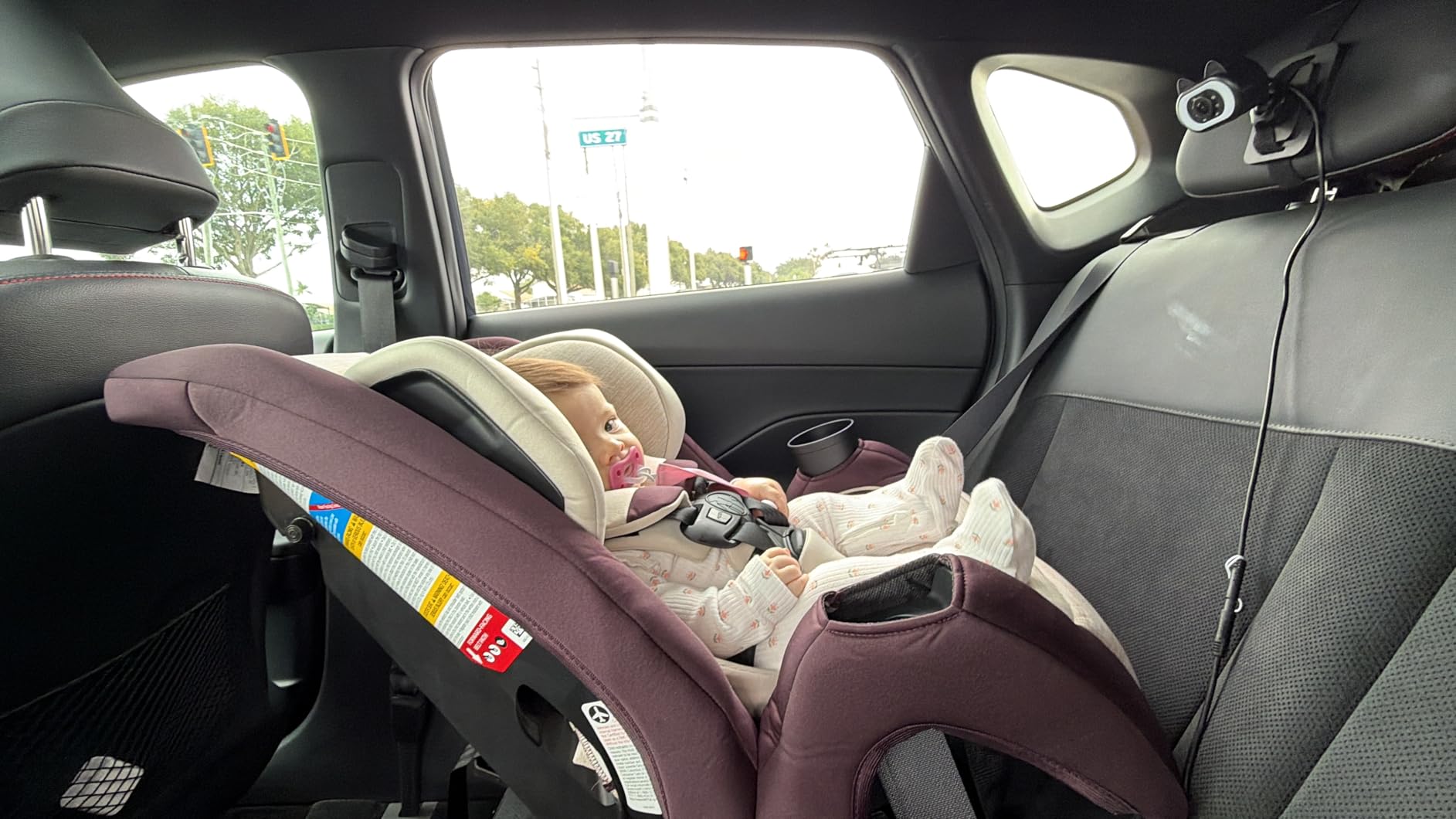
Is the under-19-inch claim realistic for three across?
Under 19 inches times three is 57 inches, which is wide. That figure is a ceiling rather than a promise, and three of these across depends heavily on how sculpted your outboard positions are.
Treat it as a two-across certainty and a three-across possibility unless you have measured. Flat benches take three. Deep buckets with raised bolsters take two, comfortably.
Who should skip the TriMate?
Skip it if installation stiffness is going to make you doubt the fit. This is a seat worth having checked by a technician, and if there is no inspection station near you, that friction is a genuine downside.
Also skip it if your child is around 22 lb and sensitive about padding. The headrest padding draws specific complaints at that size. If the harness fits and your child is not fussy, this is a strong pick for a messy daily driver.
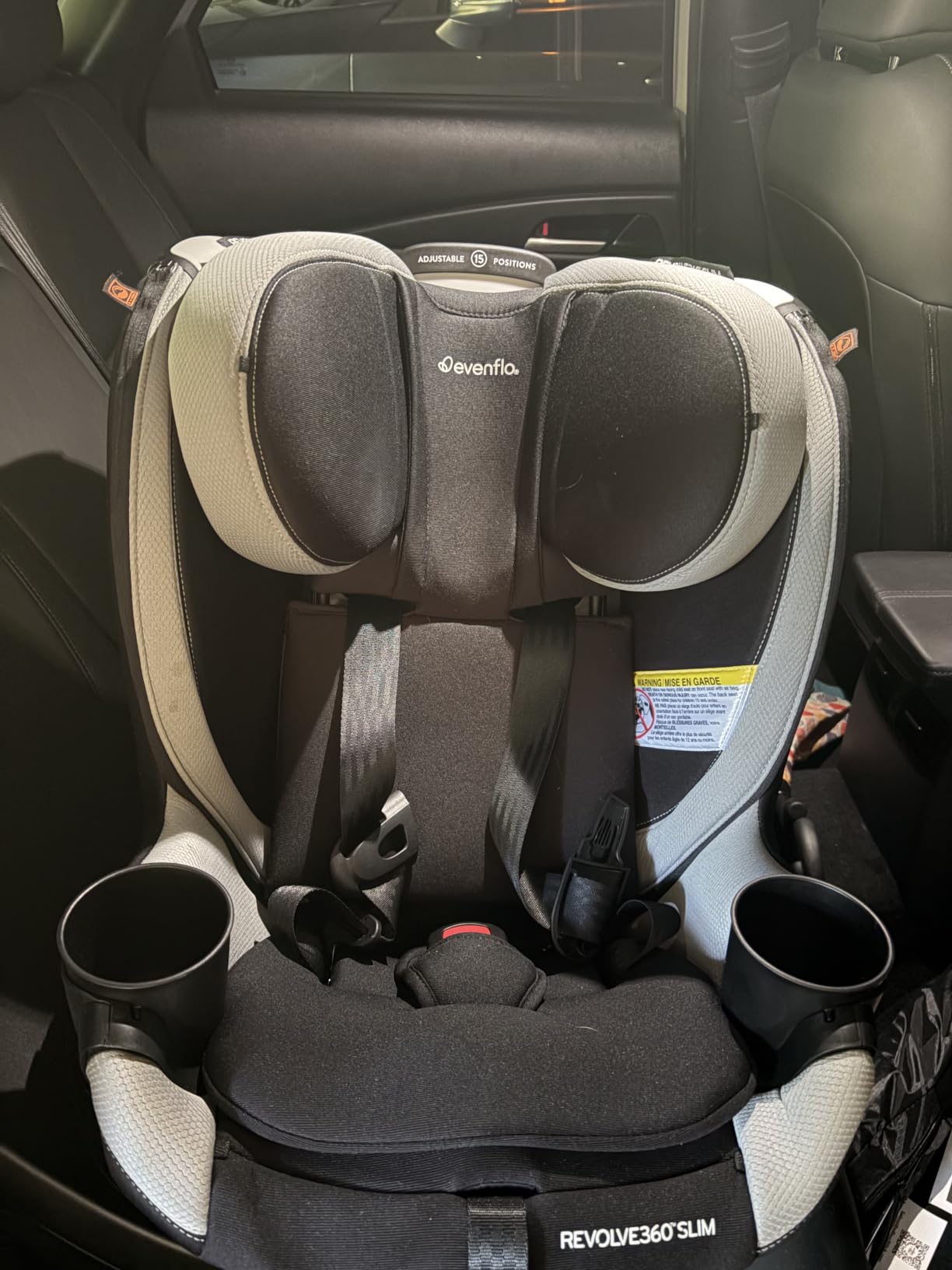
5. Evenflo Revolve360 Slim – Best Narrow Footprint With Rotation
Evenflo Revolve360 Slim 2-in-1 Rotating Car Seat
16.9 in published width
Rear-facing 4-50 lb
Forward-facing 30-65 lb
One-hand 360 degree rotation
Pros
- Only seat here publishing a 16.9 inch width
- One-hand rotation makes loading far easier
- Install once and switch directions without reinstalling
- Deep recline helps a sleeping child
- Green install indicators
Cons
- Needs clearance on all sides to rotate
- Heavier than non-rotating seats to move
- Reclined seat turned toward the door can swing back
- Some movement after install is inherent to the swivel
This seat carries the narrowest published width in the roundup, at 16.9 inches for a streamlined footprint. Owners in compact SUVs and small sedans confirm that number does what the manufacturer says it does.
The rotation is the reason to buy it. One-hand 360 degree rotation means you spin the seat toward the door instead of bending into the back seat, which is a meaningful difference for your back when you are doing it three times a day with a toddler who does not want to get in.
Evenflo pairs that with a Sure360 installation system that lets you install once and use the seat in either direction, backed by LockStrong belt tensioning and Tether360. Rear-facing runs 4-50 lb, forward-facing 30-65 lb, and it sits on a 16.9 inch footprint.
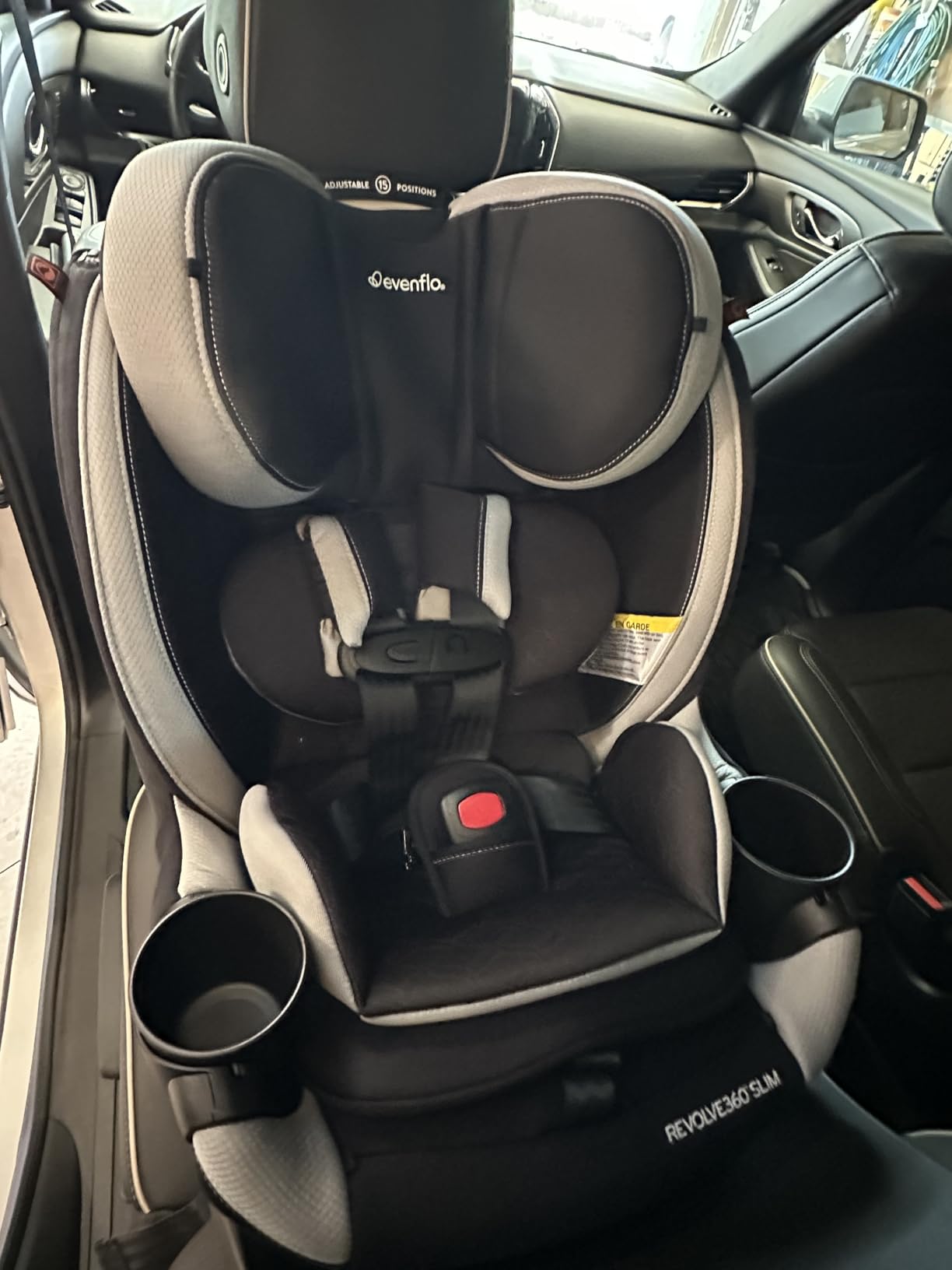
Side-impact protection is called L.I.F.E. GUARD, and Evenflo states the seat meets or exceeds all applicable federal safety standards plus its own structural integrity, rollover and temperature testing.
The deep recline keeps a sleeping child’s head up instead of slumped forward, and rotating the seat away from the door also frees up foot room for a passenger in a really tight cabin.
Rotation has a real cost in a small car, and this is the part to think hard about. The seat needs clearance on all sides to rotate, and in a narrow cabin that clearance may simply not exist without moving the front seat forward.
Owners also report that a fully reclined seat turned toward the door can swing back toward rear-facing rather than locking where you put it, and that some movement after installation is inherent to the swivel.
Do you have the clearance to rotate?
Before anything else, sit in the driver’s position and check the gap between the installed seat and the door on both sides. Rotation needs room; a 16.9 inch seat in a 17 inch gap cannot spin, however good the engineering is.
Rotation also only pays off if you are alone or with easy access. In a car where the child has to climb past a front passenger to reach the door, you will rotate it toward the child side instead, which is the less convenient direction.
Is rotation worth the weight and the movement?
For a first child who is still being lifted in daily, usually yes. The back-saving benefit compounds every single day, and 654 owners have rated it 4.5 on that basis.
For a second car you move between daily, or for a family that finds any post-install movement anxiety-inducing, the fixed slim seats are calmer choices. Know what you are buying before you commit.
6. Chicco OneFit LX ClearTex – Best for the Easiest Correct Install
Chicco OneFit LX ClearTex All-in-One Convertible Car Seat
5-40 lb rear-facing
26.5-65 lb forward-facing
40-100 lb booster
LeverLock self-tensioning belt install
Pros
- Owners call it the easiest install of any convertible they have tried
- ClearTex flame-retardant-free fabric that wipes clean
- Well padded and comfortable on long drives
- Hidden panels give easy access to the harness
- Newborn positioner included
Cons
- Bulky and heavy next to dedicated slim seats
- Rear-facing tilt cannot be adjusted once installed
- Not ideal for attaching to a stroller
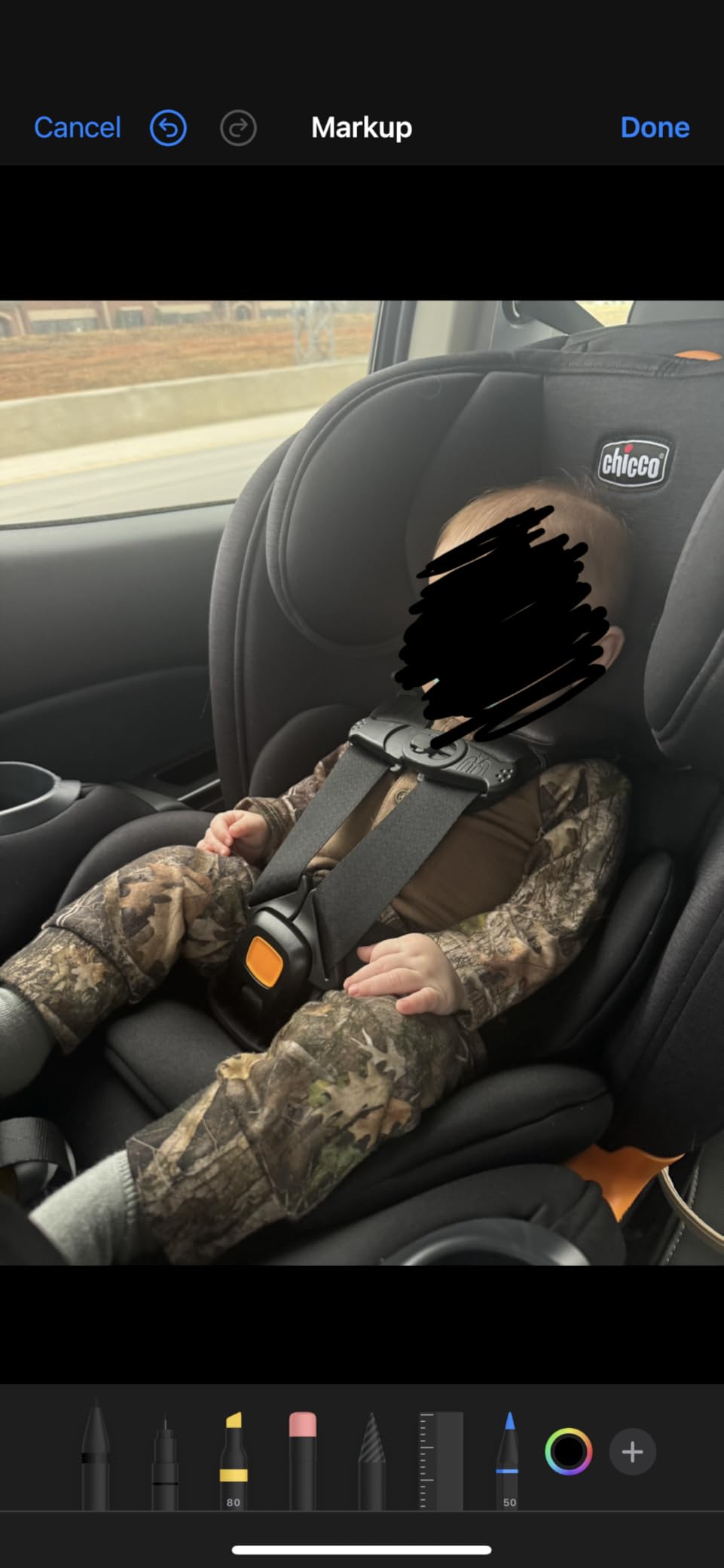
If install correctness is your biggest worry, this is the seat. The LeverLock system self-tensions the vehicle belt for forward-facing installs, which removes the single most common install error parents make with a belt: forgetting to switch the retractor into the locking mode.
That matters more in a compact car than in a big one, because many small vehicles have belt geometry that makes a lower-anchor install awkward or impossible. Owner reviews describe the LeverLock as removing the guesswork entirely, and give it the highest marks of any seat here for installation ease.
Weight ranges are the standard Chicco spread: 5-40 lb rear-facing with a removable newborn positioner for 5-11 lb, 26.5-65 lb forward-facing, and 40-100 lb as a booster. There is also extra rear-facing leg room and a wide headrest adjustment range.
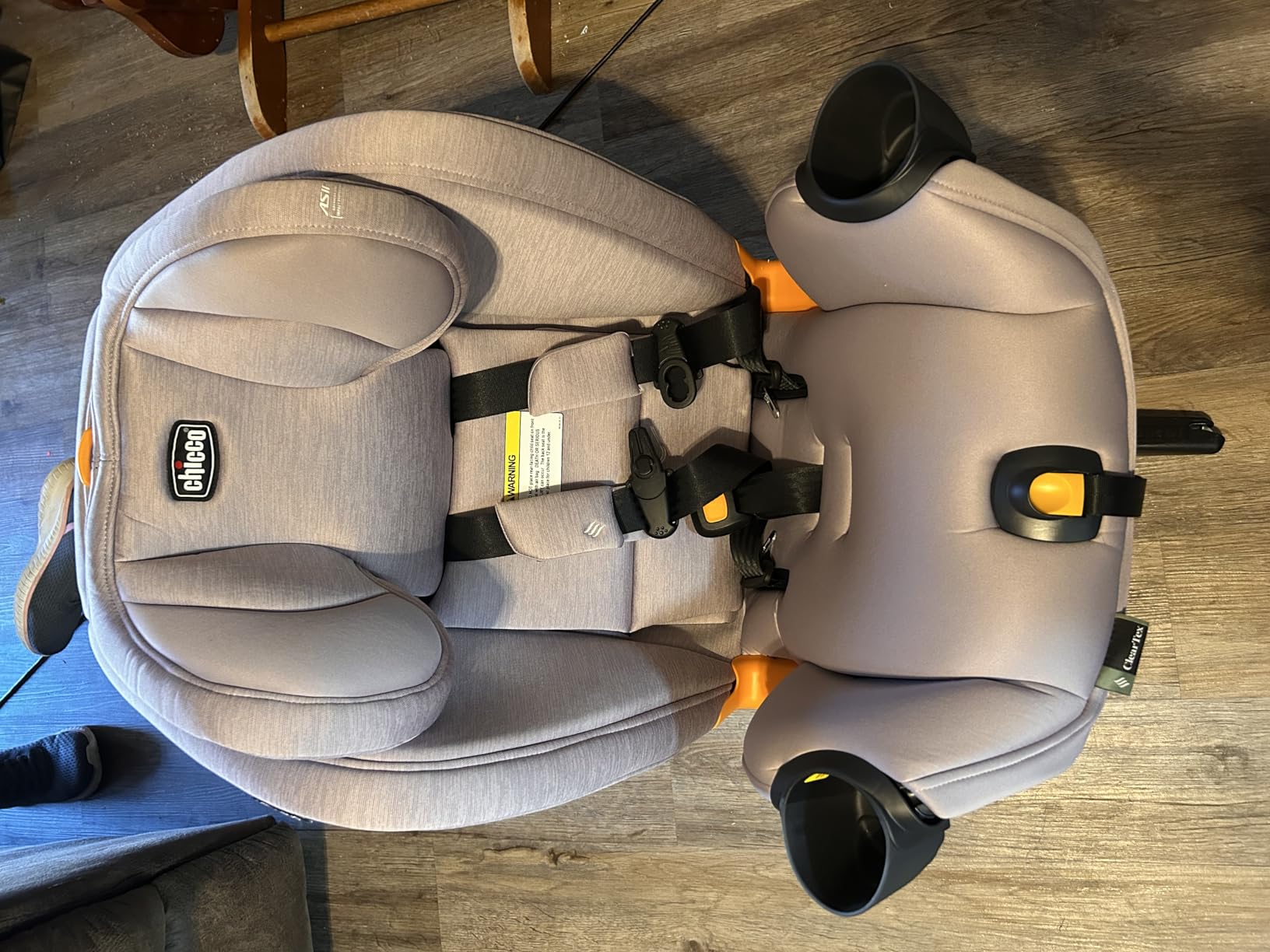
The ClearTex fabric is flame-retardant-free and GREENGUARD Gold Certified, and owners describe it as soft and easy to wipe down. Hidden panels open up access to the harness straps and provide a place to stash the excess.
Side-impact protection is engineered to FMVSS 213a, and the two CupFolders are dishwasher-safe and fold in rather than projecting outward.
Here is the tension in this pick. Owners consistently call it bulky and heavy compared with the dedicated slim seats, and that is exactly the criticism that matters in a very small car with more than one child seat to fit.
Two further limits: the rear-facing tilt cannot be adjusted once the seat is installed, so get the angle right on day one, and it is not a good match for stroller travel if you plan to click the seat onto a frame.
Is a self-tensioning belt install safer than LATCH?
It removes one failure mode, not all of them. Most seat belt installs are safe; the common error is leaving the retractor unlocked, and LeverLock prevents exactly that. A Child Passenger Safety Technician will still tell you to check the fit every time the seat moves or the vehicle changes.
If your car has usable lower anchors within the weight limit, LATCH is the faster daily option. LeverLock earns its place when anchors are missing, too close together, or beyond their weight limit.
Does bulk defeat the purpose in a small car?
For one seat, no. The install confidence is worth more than a slimness gain you only notice at the extreme edges of a bench.
For two or three seats in a genuinely small back seat, yes. Slim-profile seats on this list exist precisely because the bulk of a well-padded all-in-one shows up quickly at that count. Installability does not help if nothing else will go beside it.
7. Safety 1st Ellaris – Best Budget Slim Three-in-One
Safety 1st Ellaris 3-in-1 Convertible Car Seat, Slim Fit Design, Rear & Forward-Facing, 5-Position Headrest, Travel-Friendly with Machine-Washable Seat Pad, Smokey Haze
5-30 lb and 30-40 lb rear-facing stages
30-65 lb forward-facing
5-position headrest
Airline ready
Pros
- Light and easy to carry between vehicles
- Easy hook-style LATCH install
- Headrest adjusts without rethreading straps
- Sturdy dishwasher-safe cup holders
- Good value against costlier seats
Cons
- Several owners measured it wider than expected and it broke a three-across fit
- Headrest has more play than comparable seats
- Harness tighten button is awkward to reach
- Can feel bulky despite the slim label
The Ellaris is the value pick, and it is genuinely useful in one specific situation: a light seat you carry between vehicles. It meets the federal side-impact standard, uses hook-style LATCH connectors, and the seat pad is machine-washable and dryer-safe.
The mode layout is unusual and worth understanding. There are two rear-facing stages, 5-30 lb for an infant and 30-40 lb for a toddler, then forward-facing with a harness from 30 to 65 lb. That splits your rear-facing window into two labelled bands rather than one continuous range.
Owners like the adjustment. The headrest moves the harness with it, so you are not rethreading through the back of the seat every time your child grows a stage.
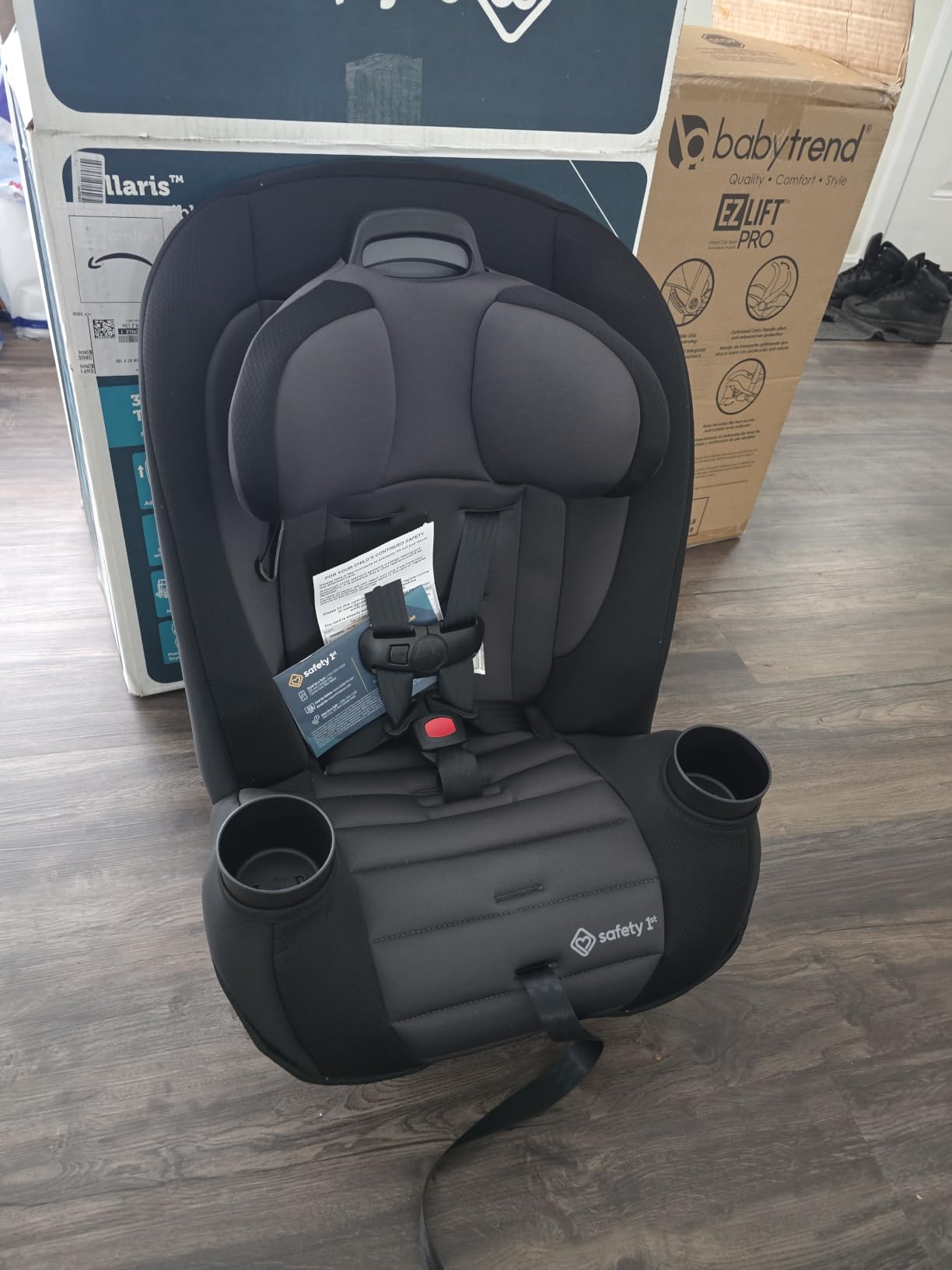
Two removable dishwasher-safe cup holders are sturdy enough that owners single them out, which is not something we can say about the flimsy versions on cheaper seats.
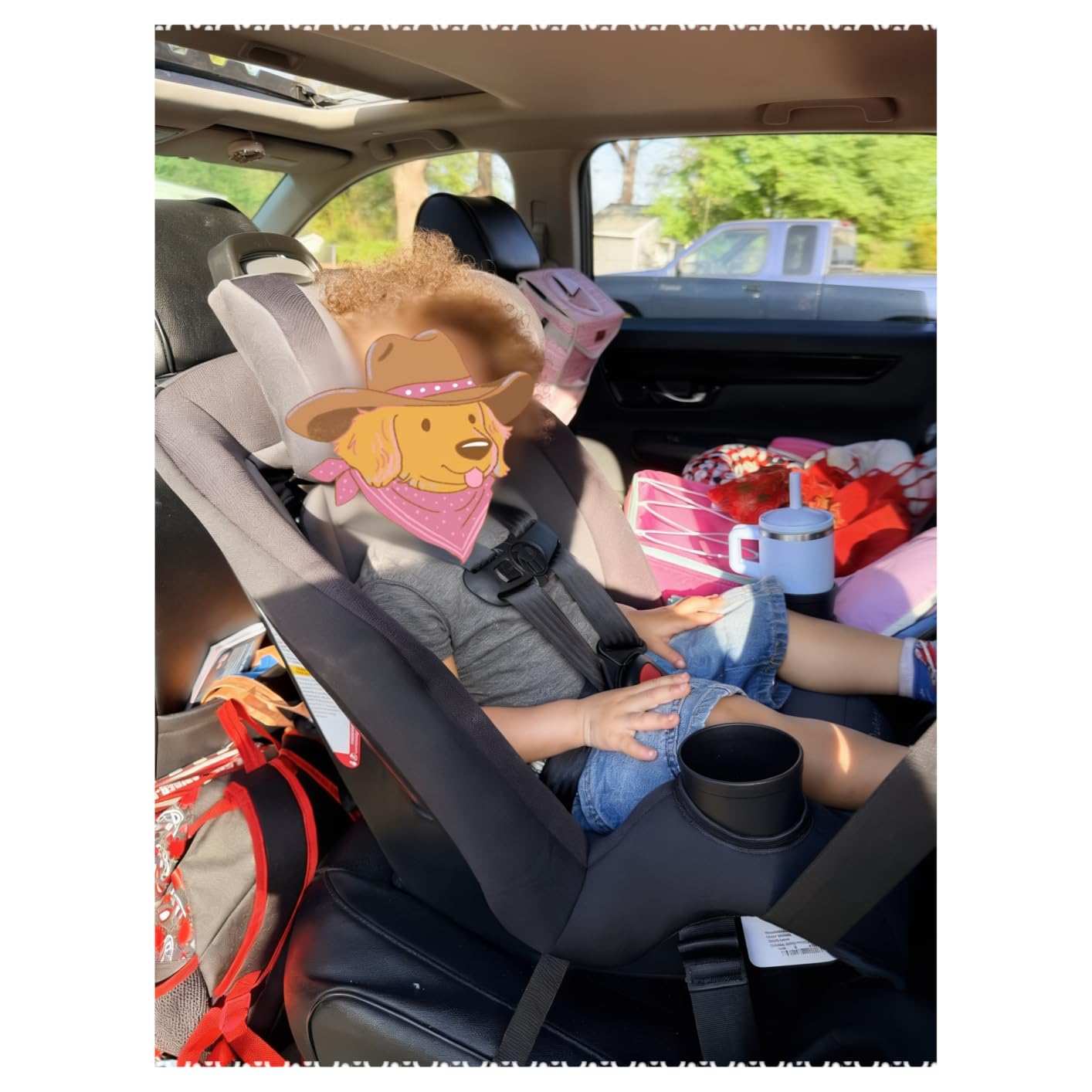
The critical finding in the reviews is a measurement one. Several owners measured the Ellaris expecting it to be slim and found it wider and deeper than anticipated, enough to break a three-across layout that had previously worked. The slim label is a design intention, not a guarantee.
Headrest play shows up repeatedly in reviews, as does the harness tighten button being in an awkward position for one-handed adjustment. Neither is a safety finding in our view, but both are daily-use friction.
The 8% one-star share on 1564 reviews is a meaningful group in absolute terms. We would not pair this seat with the highest-stakes install in your life without a technician checking it.
Is a budget slim seat worth the compromise?
Yes when it is a second seat that lives in another car and gets used a few hours a week. Light weight, easy LATCH and washable fabric cover exactly the features a part-time seat needs, and none of the compromises show up in that usage pattern.
No when it is your primary seat for a five-year stretch. The measurement complaints and the headrest play are the two things to weigh, and both are resolved by trying before you commit if you can.
Does airline-ready change the decision?
It changes the decision if you fly regularly. Airline-ready means the seat installs forward-facing in an aircraft seat belt without a separate base, which removes one more reason to carry a second seat.
It does not mean your child can sit forward-facing in the air because they fit forward-facing on the ground. Airlines require the harness mode appropriate to the child’s weight, and some require a specific tag on the seat. Check before you fly.
8. Joie Saffron SI – Best Four-in-One With the Widest Published Range
Joie Saffron SI 4-in-1 Convertible Car Seat to High-Back & Booster
4-120 lb across four stages
19 in published width
Rear-facing to 43 in
Approx. 23.1 lb seat weight
Pros
- Four stages covering 4 to 120 lb
- Well padded and easy to clean fabric
- Owners report installation is straightforward
- Not overly bulky for a 4-in-1
- One-hand conversion to backless booster
Cons
- At 19 inches it is among the wider 4-in-1 seats
- Some helmeted children find it less comfortable
- Approx. 23.1 lb makes it one of the heavier seats here
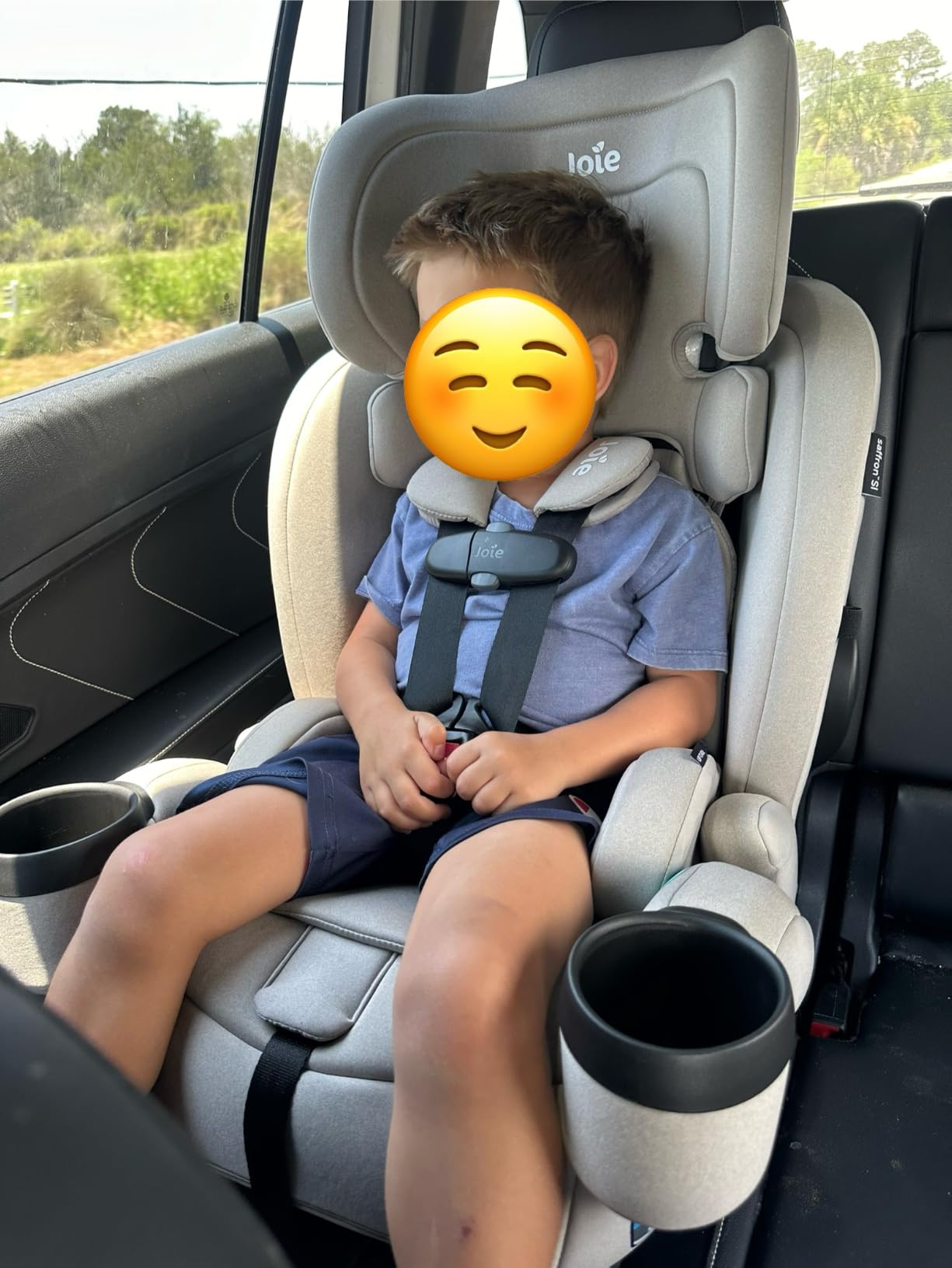
The Saffron SI is the one on this list where the manufacturer publishes a full set of dimensions: 22 inches long, 19 inches wide, and 24.5 to 33 inches tall depending on mode, at roughly 23.1 lb. You can do real fit maths with those numbers before you buy.
It is also the only seat here certified to both FMVSS 213a and 213b. The 213a standard covers side-impact performance, which is worth having explicitly tested at the top of the booster range where a child sits closest to the door.
Four stages cover 4 to 120 lb: rear-facing with a harness from 4 lb to 43 inches tall, forward-facing with a harness from 30 lb to 49 inches, highback booster from 40 lb to 110 inches with a minimum age of four, then a backless booster to 120 lb and 60 inches.

The flip foot is the detail that earns its place in a small car. It extends for a deep rear-facing recline without you having to wedge a towel under the seat or slide the front seat forward to fake the angle.
The headrest and harness adjust together with one button across ten positions, and the AutoClick magnetic chest clip means you are not hunting for a metal tongue in a dark footwell twice a day.
Owners describe the seat as well built and comfortable, and hospital staff have singled it out, which tells you something about how often it sees a fresh newborn.
The trade-offs are dimensional. At 19 inches wide it sits at the wide end of this list, which rules it out of most three-across plans. At roughly 23.1 lb it is not the seat to carry between cars daily.
A few parents of helmeted babies find it less comfortable, which is a real consideration if your child is in therapy.
Is a 19-inch width too wide for your car?
Not for one seat, and usually not for two in a compact sedan. It becomes a problem at three across, where 19 inches times three is 57 inches before you account for buckles and bolsters.
The compensating advantage is that the 19 inches are honest and published. You can plan around a number rather than discover a surprise after delivery, which is not true for most seats on this list.
When four stages beat a slim seat?
Four stages pay off when you want one seat from newborn to backless booster with no gaps and no second purchase. The height ceilings are published at every stage, so turning points are planned rather than guessed.
They do not pay off when space is the binding constraint. Choose this seat if you have the room and want the range; choose a slim seat if the bench does not have it. That is the whole decision.
9. Baby Trend Trooper Slim – Best Lightweight Seat for Cramped Vans
Baby Trend Trooper™ Slim 3-in-1 Convertible Car Seat, Dash Black – Slim Fit, 3-in-1 Growth Modes, Lightweight Design, Adjustable Comfort Padding
Slim-profile 3-in-1
Adjustable headrest and harness
Adjustable recline angle
Lightweight build
Pros
- Lightweight enough to carry one-handed between vehicles
- Slimmer than many seats in crowded vans and small cars
- Adjustable angle holds a sleeping toddler's head back
- Sturdy and roomy build for grandparents' use
Cons
- Harness straps twist and stick
- Strap lengths adjust unevenly
- Thin fabric that snags quickly
- Taller than larger seats and pushes the front seat forward
This is the seat built for the situation where the car seat lives in the second car rather than in the vehicle you drive every day, and the Trooper Slim is marketed on a lightweight build for exactly that.
Owners in genuinely crammed vehicles, including vans and small hatchbacks, report that the slim profile works where bulkier seats would not. The adjustable recline angle holds a sleeping toddler’s head back rather than letting it drop forward.
The build is sturdy and roomy for a budget seat, and several owners mention it as a good grandparents’ car seat, where the person handling it is not you.

Three modes cover rear-facing, forward-facing and booster use, with an adjustable headrest and harness. The cover is 100% polyester, which is straightforward to machine wash.
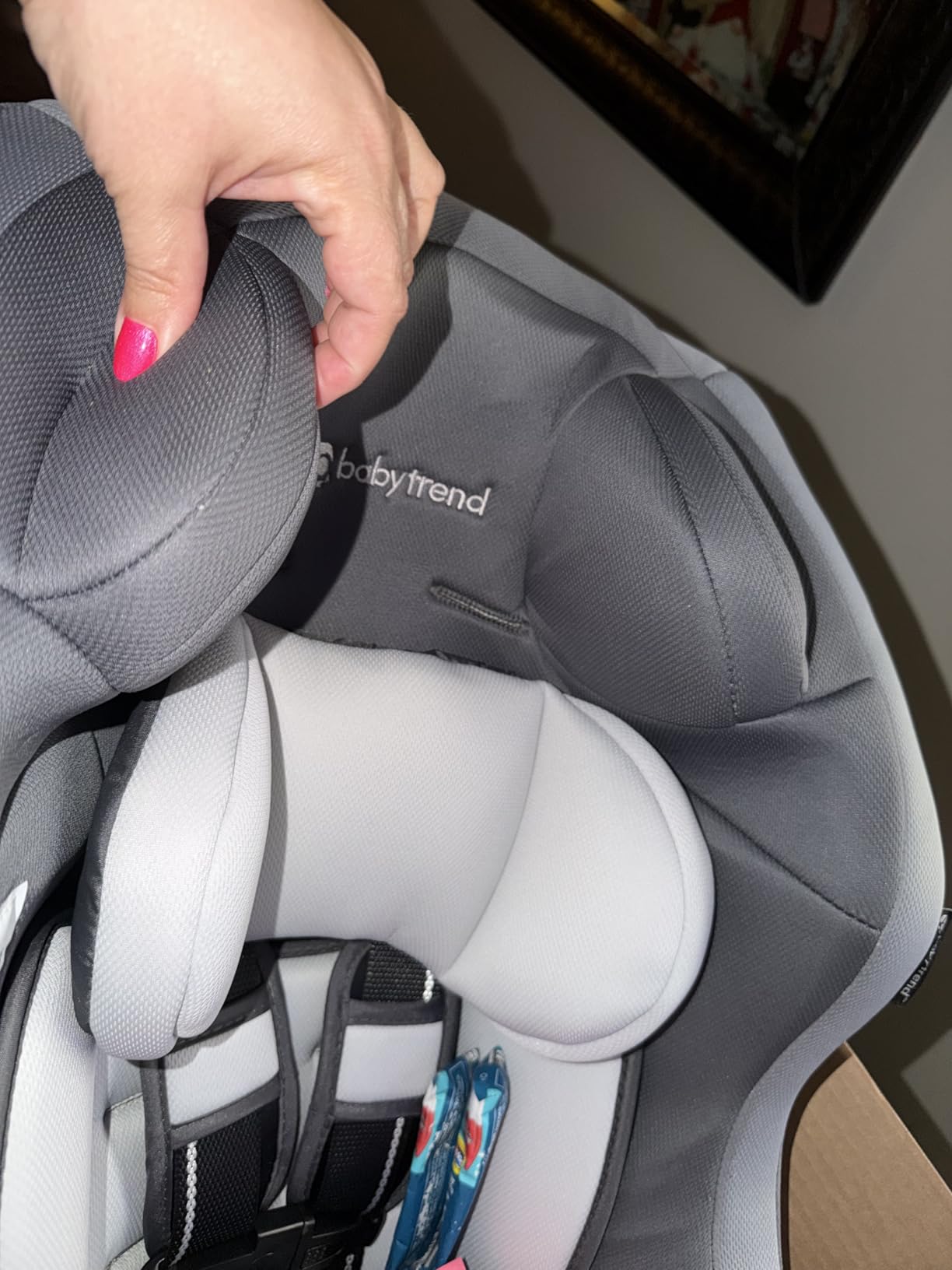
The harness hardware is the recurring complaint and it is consistent: straps twist in the buckle, stick, and tighten unevenly from one side to the other. Owners also report thin fabric that snags within about a week of ordinary use.
There is a second surprise worth flagging. Owners describe it as taller than larger Graco and Chicco seats, which forces the front passenger seat forward. Narrow and tall is its own kind of problem.
The rating breakdown is the weakest of this group, with a 65% five-star share and an 11% one-star share. We would look at one of the stiffer-installing slim seats above before settling here.
Does harness hardware matter as much as crash performance?
Over several years, yes. A harness that twists and tightens unevenly gets fitted badly, and a badly fitted harness is the most common problem a Child Passenger Safety Technician finds in an otherwise perfectly installed seat.
If you can live with it, fine. If you have ever had a properly fitted harness in a seat with better hardware, you will notice the difference every single time you buckle your child in.
When the low-cost lightweight seat is still right?
It is right for a grandparents’ car, a rental, or a vehicle used only for short trips near home. Any seat in a car that is parked and unoccupied half the time will earn its cost back through convenience.
It is wrong for the primary car of a family that drives daily. Weight is not the reason to move up; the harness and the fabric are.
10. Evenflo Tribute LX – Best Compact Seat for Travel and Second Cars
Evenflo Tribute LX Convertible Car Seat
Rear-facing 5-40 lb at 19-40 in
Forward-facing 30-40 lb
4-position shoulder harness
Upfront harness adjustment
Pros
- Compact and light enough for a travel bag
- Upfront harness adjustment is genuinely easy
- Sturdy finish and a comfortable fit
- Useful as a dedicated second-car or travel seat
Cons
- Very basic feature set
- Some owners found installation less straightforward
- Newer production adds bulky head-side foam and fewer strap slots
- One isolated report of poor build quality
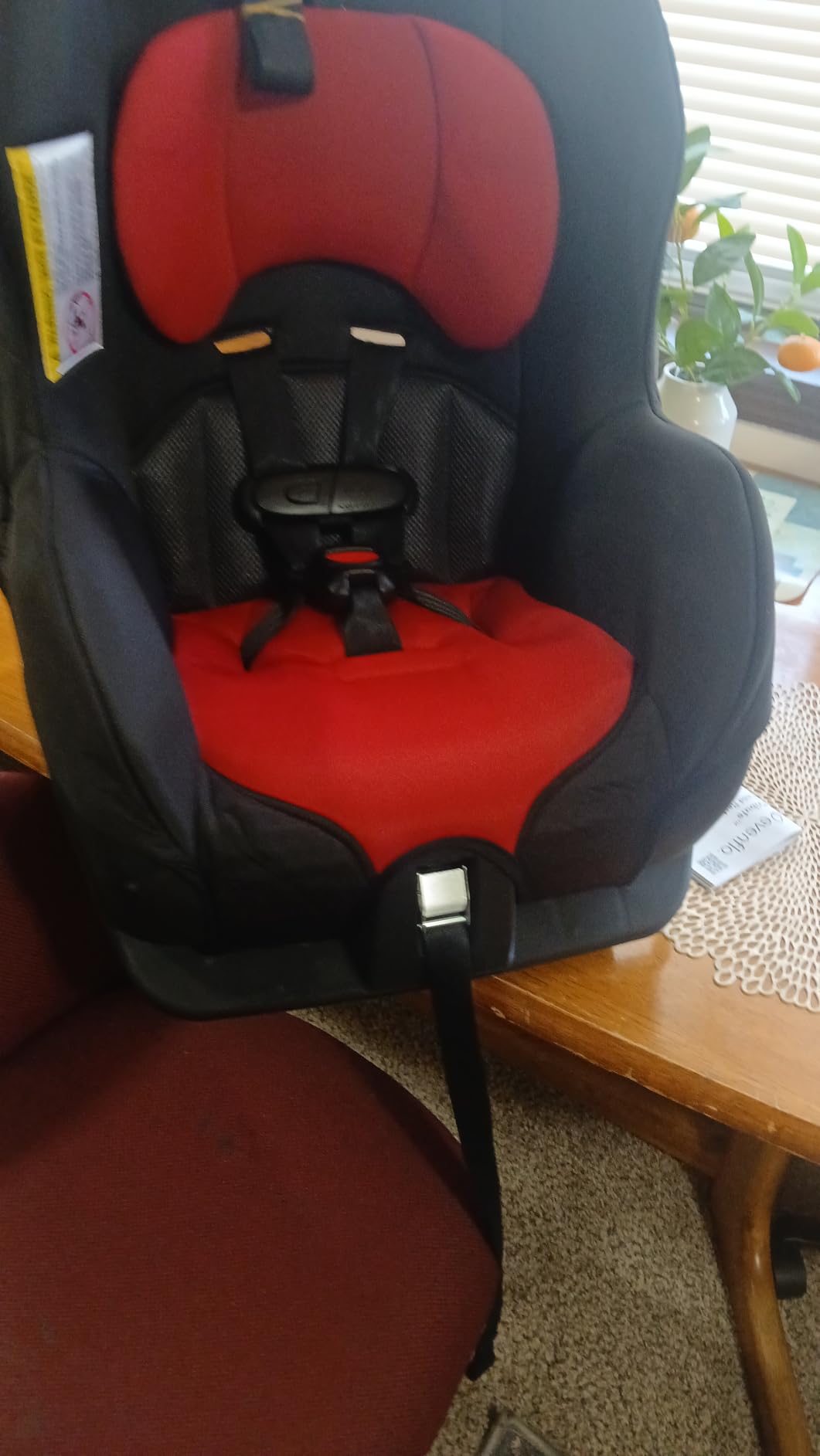
The Tribute LX is a small convertible, not a small all-in-one. Rear-facing runs 5 to 40 lb within a 19 to 40 inch height window and forward-facing runs 30 to 40 lb, which is a narrow forward-facing range and a fair trade for a much smaller shell.
What you are buying is portability. Owners report that it is light and compact enough to fit an existing travel bag and simple to move between a main car, a second car and an aircraft seat.
The 5-point harness has four shoulder positions with upfront adjustment at the front of the seat, so you tighten without reaching behind. The cup holder is removable and dishwasher-safe.
Evenflo states it meets or exceeds all applicable federal safety standards, plus its own structural integrity, rollover and temperature testing. That is a manufacturer claim rather than an independent rating, and it is worth holding at that level.
The feature list is genuinely basic, and you should not buy it expecting a no-rethread harness or a wide recline range. What it does have, it does straightforwardly.
One production detail is worth knowing: the current version adds bulkier head-side foam and reduces the number of strap slots compared with the earlier model. Some owners did not expect that change, and it does affect fit for a child between stages.
A small number of owners also found installation less straightforward than the listing implies. With only 95 reviews on this seat, the feedback pool is shallow and we would weight individual complaints accordingly.
Is a two-stage convertible enough?
Enough if you are planning ahead. The 30 to 40 lb forward-facing window is real, and a child who outgrows it moves to a booster seat rather than outgrowing the seat entirely.
Not enough if you want one seat to see you from four pounds to a hundred. The other picks here do that. Your booster options are covered separately in our booster car seat guide if you want to plan that handover.
Is it worth it as a travel seat?
If you fly regularly, a dedicated seat you can check or carry is easier than juggling an all-in-one with a bigger shell and more moving parts. That is the case this seat is built for.
If you never fly, the same money in the SlimFit above buys a wider stage range, a no-rethread harness and a cover you will be glad about at year three.
Buying Guide: How to Choose a Convertible Car Seat for a Small Car?
Measure your back seat the way the seat will actually be used
Most people measure the wrong thing. The relevant number is the clear width between the outer seat belt buckles at the point where the child seat back will actually sit, not the width of the bench at its widest point across the door openings.
Sit in the driver’s position with the front seats where you normally put them, then measure across the back at buckle height. Do it at least three places: the driver-side seating position, the centre position and the passenger side. Buckles that protrude eat an inch or more that the flat bench width suggests you have.
For depth, slide the front seat back to where an adult actually sits comfortably and measure from the front seat back to the rear seat back. That is the space a rear-facing seat has to fit into, and a reclined child seat uses most of it.
Width is only half the fit problem
Narrow and short are different axes, and they trade against each other. The narrowest seat on this list is not the one with the smallest front-to-back footprint, and a seat can win decisively on width while still pushing your front passenger forward.
This is the single most useful thing to understand before buying. A 3-across plan needs about 51 inches of clear bench width, and if you measure 47, the arithmetic has already decided the outcome no matter which seat you choose.
The second-order question is what happens to the adult in the front. In a compact sedan with a tall driver, the passenger footwell is often the real casualty of a deep rear-facing seat. If your household has a tall front passenger, test that seat and that position before checkout.
Rear-facing height limits end the stage before weight does
Manufacturers publish both a maximum weight and a maximum height for rear-facing, and parents fixate on the weight. In practice, children usually hit the headroom ceiling first, which is why the AAP guidance is to keep a child rear-facing until they reach the maximum height for that seat rather than until they reach the maximum weight.
Two seats here publish the height numbers. The Pria runs rear-facing from 19 to 40 inches, and the Joie Saffron SI to 43 inches. When a manufacturer gives you the height limit, use it as the turning point and treat the weight limit as a safety ceiling you will hopefully never reach.
A seat with a 40 lb rear-facing limit and a seat with a 50 lb limit are not the same product, and for a child who is on the larger side that difference is years of extra rear-facing time.
LATCH versus seat belt, and the 65 lb minus seat weight math
Lower anchors have a combined weight limit, and the number most parents misremember. The rule is 65 lb including the child and the seat itself, so the child limit is 65 lb minus the weight of the car seat. A 30 lb seat leaves 35 lb of child.
Beyond that, you install with the vehicle seat belt. Use the belt lock-off if the seat has one, or switch the retractor into its locking mode and follow the manual exactly. Forum users in compact-car communities frequently and wrongly treat a belt install as a downgrade; done correctly it is an equally safe method.
Whichever method you use, the most common installation error in any car is a belt that is not locked or a lower anchor that is not tight enough at the belt path. A Child Passenger Safety Technician at an inspection station will catch in ten minutes what a parent often misses for years.
Harness type, covers and expiration dates
A rethread harness means unthreading and rethreading both straps through the seat back every time your child grows a stage. It is the most complained-about daily feature in owner reviews, and a no-rethread design is worth real money to you over a five-year stretch.
Covers matter more than the marketing suggests. A seat whose pad removes without undoing the harness will actually get cleaned; a technically machine-washable cover that requires a full disassembly will not. The Safety 1st TriMate is the standout here on owner reports.
Expiration dates are set by the manufacturer, not by federal rule. Check the label on the seat before you buy a used one, and note the manufacture date, since older inventory has a shorter remaining life on the clock.
Per-vehicle fit examples for common small cars
These are planning rules rather than guarantees, because trim levels and model years differ. Measure your own car.
Honda Fit and Jazz: the back bench is flat and reasonably wide, which makes it one of the friendlier small cars for three slim seats across. Watch the front passenger footwell in rear-facing mode, because the footwell is unusually deep and short-legged passengers lose more than they expect.
Toyota Corolla and Kia Rio: comfortable two-across cars with a slightly sculpted centre. Two slim seats fit fine; three is possible with slim seats and hard work. Rear-facing depth is the bigger problem in the Rio than in the Corolla.
Ford Focus: older Focus models have a usable flat bench and fair width. Three across is realistic with slim seats only, and the rear seat cushion sits low enough that a deep recline can push the child’s head forward.
Mini and other two-door coupes: two seats across is the realistic plan in almost every configuration, and the door aperture and front seat position leave less front-to-back room than a four-door sedan. Single seat, wide choice, and rotation is worth checking here.
Frequently Asked Questions
What are the best child seats for small cars?
For one seat in a compact car, the Graco SlimFit 3-in-1 is the strongest all-round choice: a 10% slimmer design with rotating cup holders, a no-rethread harness and a 5-40 lb rear-facing range. For three across, look at the Diono Radian 3R or the Safety 1st TriMate. For travel and second cars, the Evenflo Tribute LX and the Graco SlimFit are the easiest to move.
What is the best baby car seat for a small car?
A convertible is usually the right first purchase because it starts rear-facing and grows forward-facing without a second seat. The Graco SlimFit 3-in-1 covers 5-40 lb rear-facing, 26.5-65 lb forward-facing and 40-100 lb as a highback booster, and its rotating cup holders keep the footprint narrow. If your child will be under 5 lb, add a newborn insert or infant seat until the seat’s own minimum weight is met.
What is the narrowest child car seat available?
Published widths are rare, which is part of the problem. Among the seats reviewed here, the Evenflo Revolve360 Slim publishes a 16.9 inch streamlined width, the Safety 1st TriMate publishes under 19 inches without cup holders, and the Joie Saffron SI publishes 19 inches. Treat any manufacturer that will not give you a number with suspicion, and measure your bench before buying.
Are narrow car seats safe?
Yes. FMVSS 213 is a compliance floor that every seat sold in the US must meet, and FMVSS 213a is the side-impact standard that top-tier models are engineered and tested against. NHTSA does not rate crash performance differences between seats, so no narrow seat is certified less safe than a wide one. Correct installation matters more than width: have a Child Passenger Safety Technician check the first install.
Which convertible car seat is the easiest to install?
The Chicco OneFit LX ClearTex, thanks to its LeverLock self-tensioning system for forward-facing belt installs, which removes the most common belt-install error. The Evenflo Revolve360 Slim is also strong, since its Sure360 system lets you install once and use the seat in either direction. The Diono Radian 3R is the most demanding and is the one worth having professionally checked.
What are the downsides of convertible car seats?
The recurring complaints are bulk, weight and harness friction. Convertible shells are heavier than infant seats and harder to move between cars. Budget models often stop rear-facing at 40 lb, ending the safest stage earlier. Some seats rethread the harness at every growth stage. Wider frames can break a three-across layout, and deep rear-facing recline eats front passenger legroom in a small cabin.
Can I fit two rear-facing seats side by side in a small car?
Usually, if you measure first. Two rear-facing seats need roughly 34 to 38 inches of clear width and enough front-to-back depth for the deeper of the two reclined shells. Check that the front passenger can still sit with their legs where they need them, and check whether your vehicle’s centre lower anchors are usable, since many compact cars do not offer a centre belt path that works for a rear-facing install.
The Verdict on the Best Convertible Car Seats for Small Cars
If you take one recommendation from this roundup, take the Graco SlimFit 3-in-1. It is the seat we would fit first in a compact hatchback: slim, no-rethread, easy to carry, and rated 4.8 from 2147 reviews by owners who mostly bought it for exactly your situation.
Match it to your actual constraint rather than to a rank. Two-across in a sedan with a tall front passenger, go for the Maxi-Cosi Pria and its recline range. Three across, go for the Diono Radian 3R if you need extended rear-facing to 50 lb and can live with the weight, or the Safety 1st TriMate if washing the cover matters more than install stiffness.
A back seat you carry between cars daily wants the lighter end of the list, which points to the Evenflo Tribute LX. A rotating seat that you load without bending into the cabin wants the Evenflo Revolve360 Slim, once you have confirmed you have the side clearance to rotate.
And if install correctness is what keeps you up at night, the Chicco OneFit LX ClearTex takes the guesswork out of a belt fit better than anything else we looked at. Whatever you choose, measure the bench at buckle height before checkout, check the recall databases, and have a Child Passenger Safety Technician look at the first install.
These were the current models available as of October 2026. Seat specifications change between production runs, so re-check the label and the manual against the physical seat that arrives.