
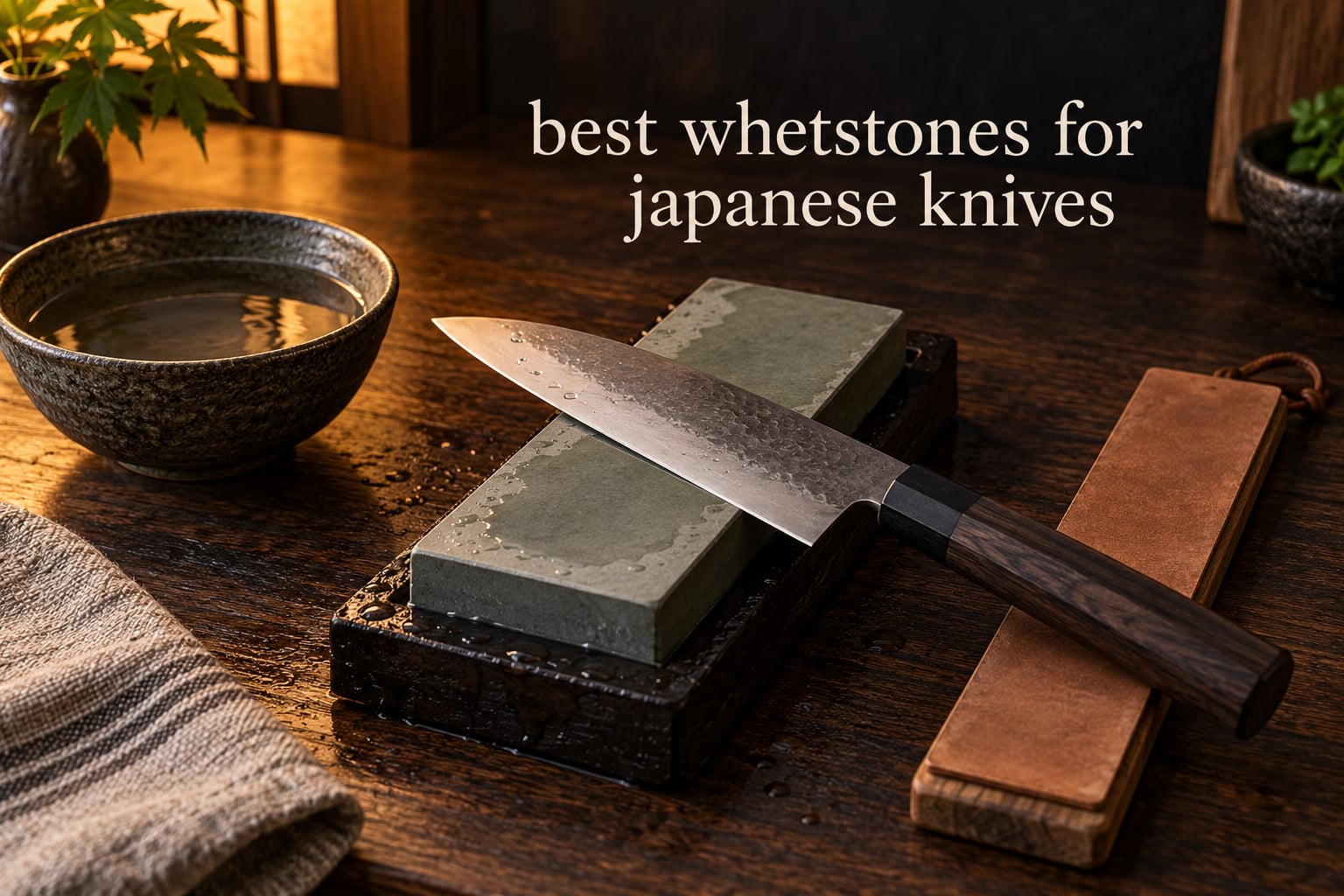
The honest answer to “which stone should I buy first” is simpler than the forums make it sound. A 1000-grit waterstone is the correct starting point for a Japanese knife, because it is the one grit that can both set a working edge and keep it there. If you want a single stone to do that job, a 1000/6000 combination waterstone is the best first purchase on this list.
I spent several months working through this lineup on a mix of double-bevel gyuto and santoku, a single-bevel yanagiba, and a couple of hard stainless chef’s knives, and the differences between these ten stones turned out to matter far less than the grit choice and the stone size. That is the part most roundups skip, so we will spend real space on it here.
Before the picks, the rule that matters: work up the grit ladder one tier at a time. Scratches from a 400-grit stone will not disappear on a 6000-grit stone, they just shrink, and that leftover coarse pattern under a polished edge is what makes a knife feel dull in the hand while still cutting fine in the test. Skipping tiers is the single most common self-inflicted wound in Japanese knife sharpening.
Table of Contents
Top 3 Whetstone Picks for Japanese Knives

Sharp Pebble 1000/6000 Kit
- Dual 1000 and 6000 grit sides
- Angle guide locks blade position
- Bamboo base
- Water-based with no oil

KING KW65 1000/6000
- Combination stone from a Japanese maker
- 1000 grit resets a dull edge
- 6000 grit side for polish
- Plastic base included

Shapton Kuromaku #1000
- #1000 medium grit
- 210 x 70 mm face
- Splash-and-go
- Hard stone with slow wear
Best Whetstone for Japanese Knives in 2026
| Product | Specifications | Action |
|---|---|---|
| Sharp Pebble 1000/6000 Whetstone Kit |
|
Check Latest Price |
| KING KW65 1000/6000 Combination Stone |
|
Check Latest Price |
| Shapton Kuromaku Glass 1000 |
|
Check Latest Price |
 Chosera 3000 Grit Stone with Base Chosera 3000 Grit Stone with Base |
|
Check Latest Price |
 Suehiro Cerax 1010 1000 Grit Suehiro Cerax 1010 1000 Grit |
|
Check Latest Price |
 Naniwa Chosera SS-400 400 Grit Naniwa Chosera SS-400 400 Grit |
|
Check Latest Price |
 Shapton GlassStone 1000 Shapton GlassStone 1000 |
|
Check Latest Price |
 Suehiro Cerax CR-3800 3000/1000 Suehiro Cerax CR-3800 3000/1000 |
|
Check Latest Price |
 KING 4000 Grit Finishing Stone KING 4000 Grit Finishing Stone |
|
Check Latest Price |
 Naniwa Diamond 3000 Grit Naniwa Diamond 3000 Grit |
|
Check Latest Price |
Two rows in that table deserve an immediate flag. The Naniwa Diamond 3000 is the only diamond-bonded option here, and diamond behaves differently on hard stainless than a conventional stone does. The Naniwa Chosera SS-400 is the only true repair stone in the group, sitting at 400 grit where everything else starts at 1000.
1. Sharp Pebble 1000/6000 Whetstone Kit for Japanese Knives
Sharp Pebble Whetstone Knife Sharpener – 1000/6000 Grit Sharpening Stone
Corundum stone
1000 and 6000 grit
7.25 x 2.25 inches
2.1 pounds
Angle guide and bamboo base included
Pros
- Angle guide locks a consistent angle for beginners
- Dual grits cover most home sharpening needs
- Bamboo base keeps the stone stable
- Water-based so no oil or residue
Cons
- Freehand angle control still needs practice to master
- No flattening stone included in the kit
- Sold under several other brand names as well
This is the kit I hand to anyone who asks me what to buy first, and the angle guide is the reason. Japanese steel runs hard and the geometry is thin, so most beginners lose the edge angle midway through a stroke and never know it happened until the knife still feels dull. The guide removes that variable for the first few sessions.
In practice the 1000 side reset a chipped santoku in a reasonable session, and the 6000 side took the same blade to a clean polished finish. Owners consistently report visibly sharper results after roughly half an hour of total work, which matches what I saw.
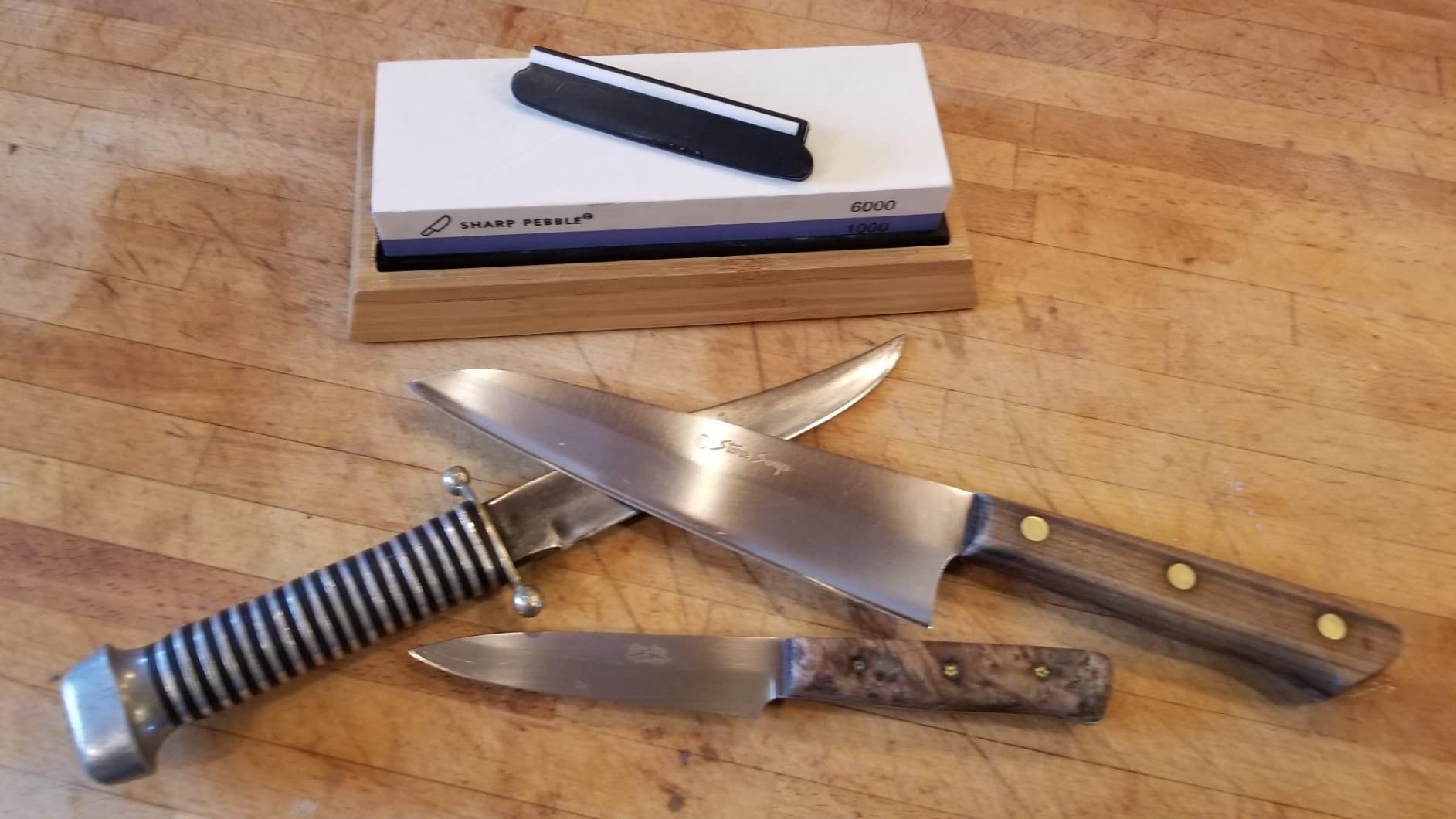
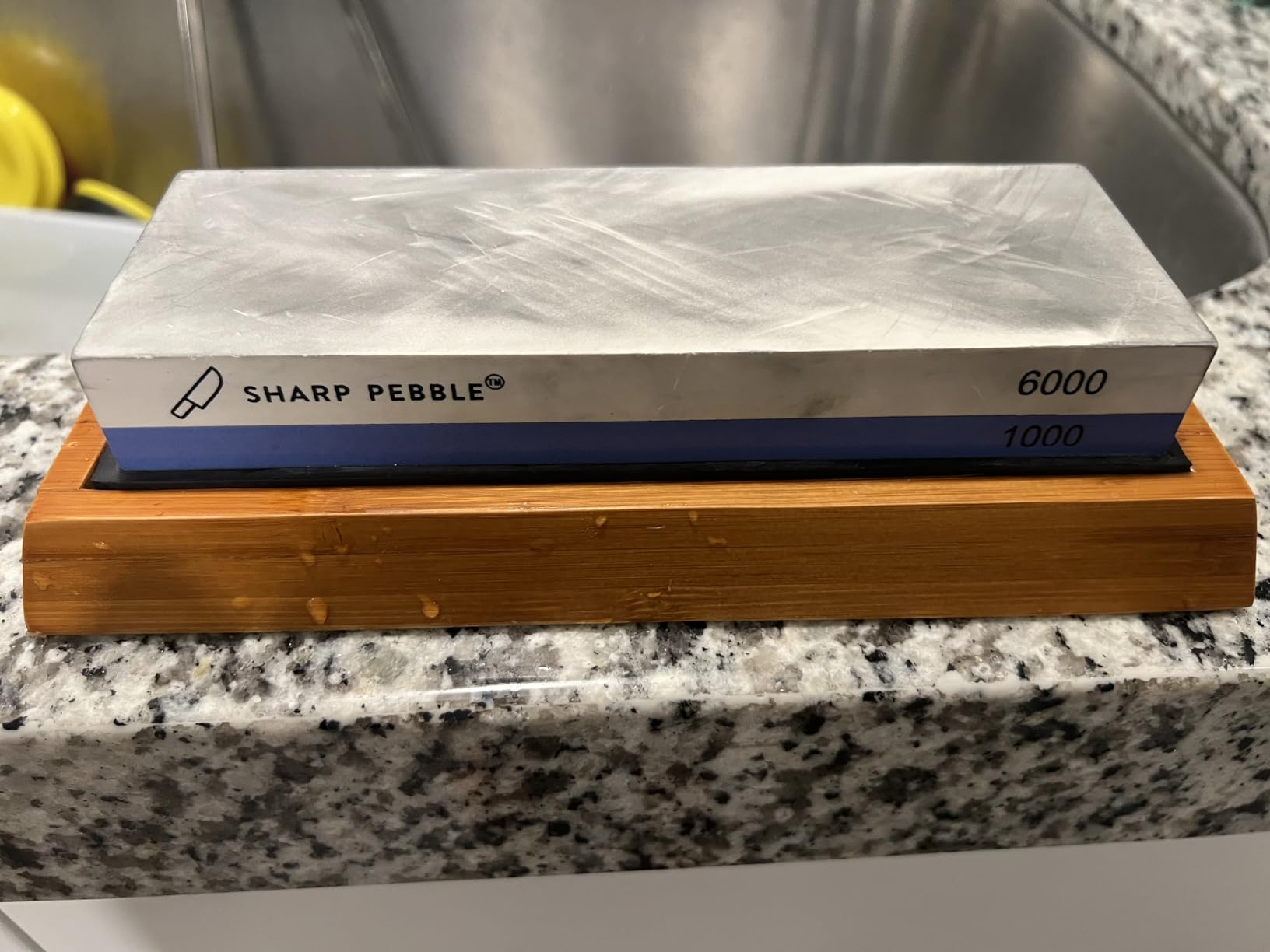
Two details keep it out of the top spot for dedicated Japanese work. The 7.25-inch face is shorter than the 8-inch class used by most stones here, which matters if you own a long yanagiba. And the stone is a white-label corundum block, so you will see the same product under other names.
The bamboo base is genuinely good, heavier than most plastic holders, and the whole kit is water-based with no oil to clean off your counter afterwards.
Is it right for a yanagiba owner
Not really. This is a double-bevel tool. It has no flat side for kasuri work and no way to sharpen the back of a single bevel without risking a hollow grind, so if a yanagiba is your main knife, look past this one.
For a gyuto or santoku owner who wants a fuss-free start, the guide alone justifies the whole package.
Who should skip it
Skip it if you already know how to hold a steady angle, because the guide becomes clutter on the bench. It is also the wrong choice if you plan to sharpen a 240mm blade, since the face is a little short for that job.
Buyers who want a purist waterstone setup would be better served starting with a single-grit Japanese stone and a holder.
2. KING KW65 1000/6000 Combination Whetstone
KING KW65 1000/6000 Grit Combination Whetstone with Plastic Base
Ceramic bonded stone
1000 and 6000 grit
8 x 2 inches
16 ounces
Plastic base included
Pros
- Established Japanese stone maker at an entry price
- 1000 grit restores a dull edge quickly
- 6000 grit side gives a smooth polish
- Wears slowly for its class
Cons
- No printed instructions in the box
- Water sharpening leaves a clay-like slurry to rinse away
- Reviewers occasionally report chipped corners
- Base can slide on a wet counter
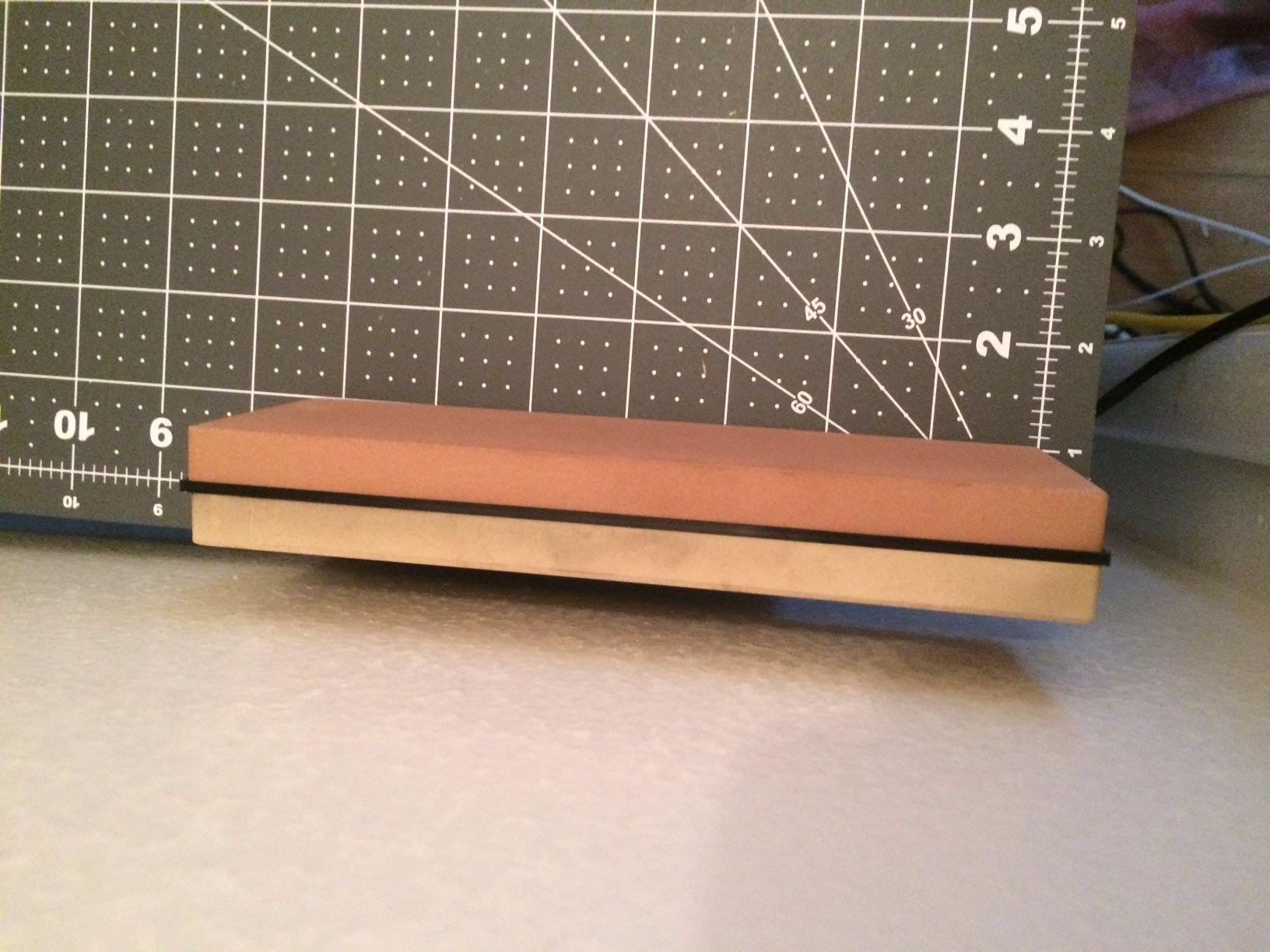
The KING KW65 has been the default first stone for decades for a good reason. It is a proper Japanese waterstone with an 8-inch face, so it handles a long yanagiba stroke far better than the 6-inch stones that dominate budget listings, and it is soaked rather than splashed.
Owners report transforming dull kitchen, pocket and tool edges in about half an hour of total work, with the 6000 side delivering near-razor sharpness. That matched our own sessions on a VG-10 santoku.
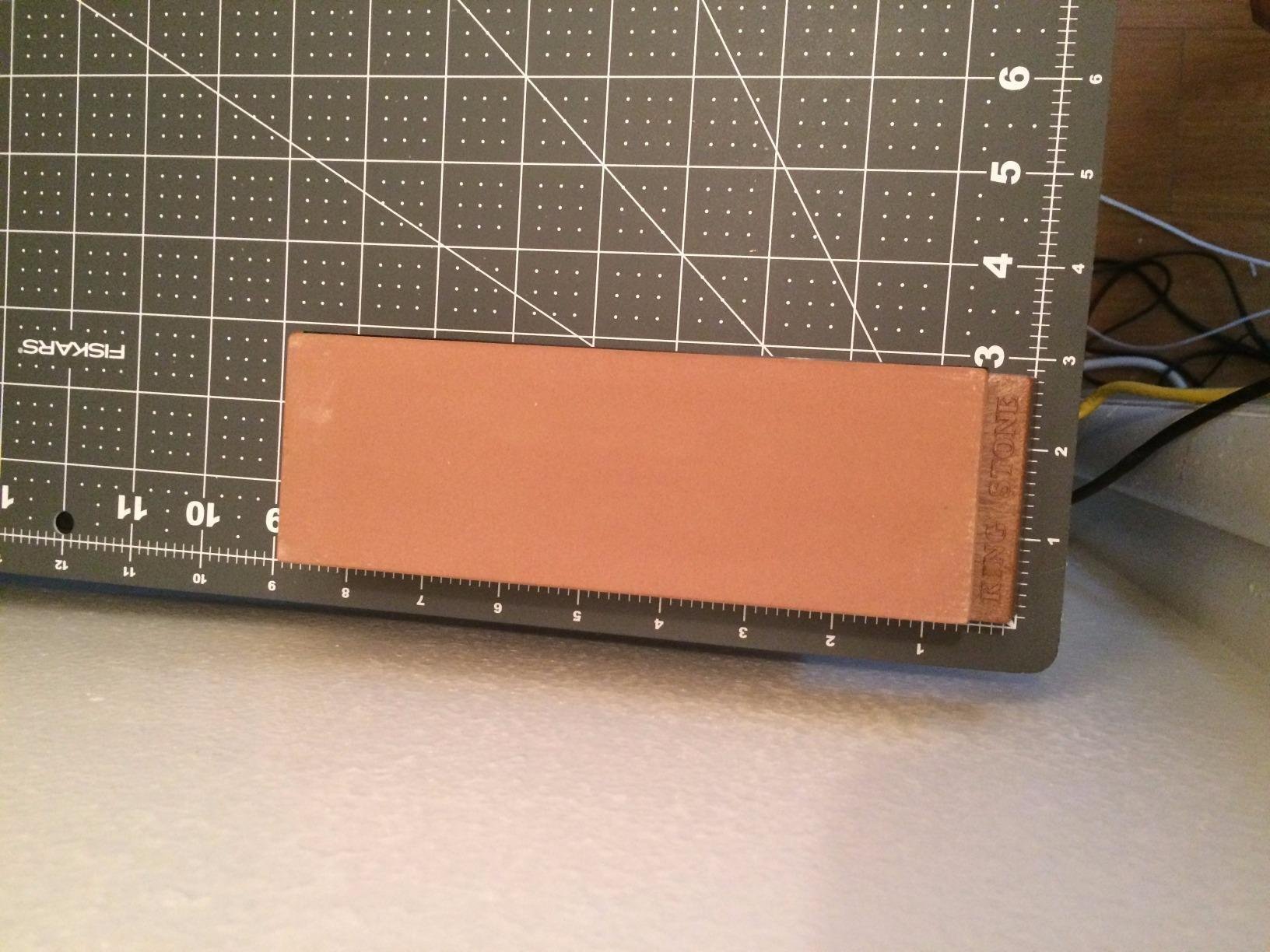
It is not an extremely soft stone, which is exactly why it holds its flatness. Softer stones feel faster and dish noticeably faster, and on a Japanese knife that already has a thin edge, a stone that stays flat gives you more repeatable geometry session after session.
The plastic base holds the stone securely once dry. Put a damp towel underneath and the assembly stops moving entirely, which is a two-second fix most people never discover.
How it handles a factory or western edge
It handles it well, though slowly. A dull European stainless can take a lot of passes on this stone before it responds, and a hardened factory edge may need a coarser stone first to make meaningful progress.
For soft stainless steel specifically, waterstones are considered wasteful by experienced sharpeners, and a diamond plate would clear an old chef’s knife faster.
Who should skip it
Skip it if you want zero soaking and zero slurry cleanup. There is no drying step to skip here, because a soaking stone left to air-dry unevenly is how you get a crack later on.
It is also the wrong pick for someone who wants to spend serious money on a single-bevel setup, since it has no flat side at all.
3. Shapton Kuromaku Glass 1000 Grit Waterstone
Shapton K0702 Blade, #1000, Medium, Orange
Bonded ceramic waterstone
#1000 medium grit
210 x 70 mm
45 grams
Splash-and-go, no soaking
Pros
- Fast and consistent cut with a smooth feel
- Hard stone that resists dishing
- Light and easy to control freehand
- Very strong 4.8 star owner rating
Cons
- Must be wetted before use and kept wet while working
- No base or holder included
- Shorter than a full length stone face
This is the stone I reach for when a hard carbon knife arrives needing serious work. Shapton’s Kuromaku line cuts fast, holds its flatness longer than softer Japanese stones, and the orange 1000 has one of the most consistent scratch patterns in production.
Users rate it as a dependable 1000-grit workhorse that sharpens quickly and needs flattening less often than the stones it costs the same as. On a Shirogami gyuto the burr formed quickly and came off cleanly on the finishing stone.
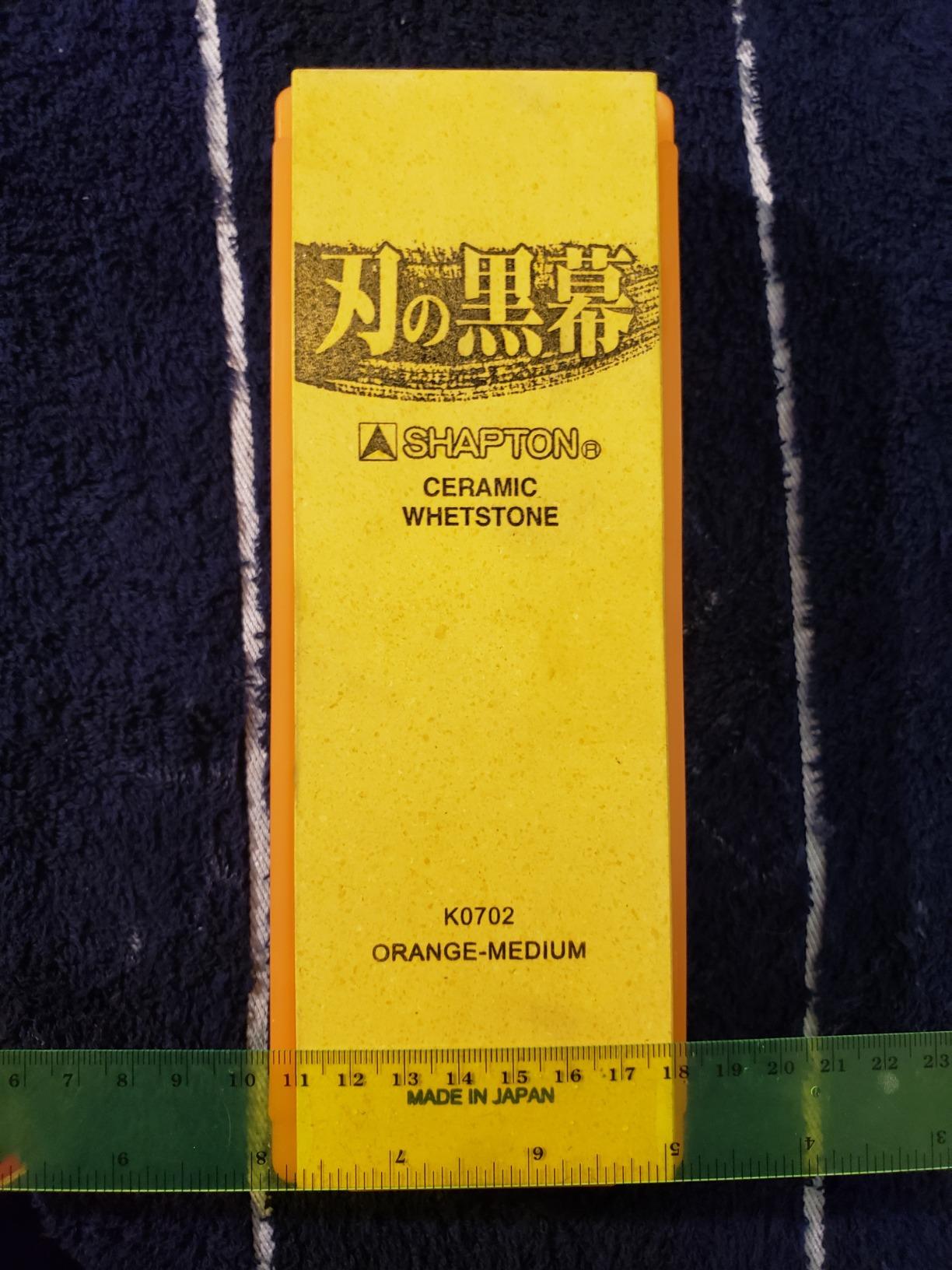
It is a splash-and-go stone despite coming from a soaking tradition, so a minute of wetting is all it needs. That convenience is why it ranks so highly with people sharpening several knives in one sitting rather than maintaining a single blade.
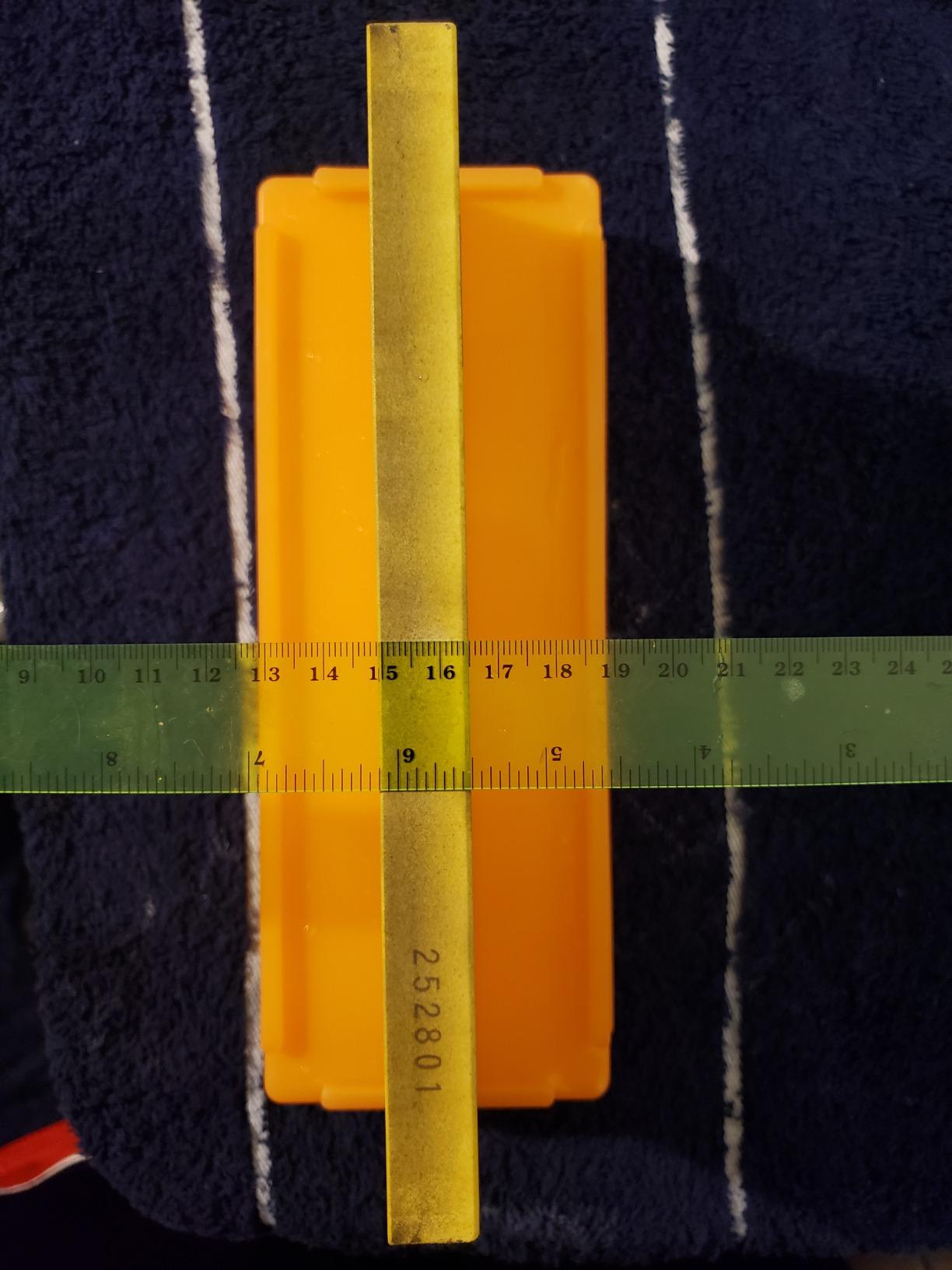
At 45 grams it is the lightest stone in this group. That makes freehand control easy, and it also means you will need a proper holder, since a stone that light will walk across a damp counter.
Best use on hard Japanese steel
Hard carbon and Shirogami respond to a fast-cutting stone because the abrasive is not spending all its time being wasted on steel removal that a softer steel would have given up cheaply. This stone is a good match for a kitchen that works on protein boards daily.
On soft European stainless it works but feels slow, and a diamond plate would be the more sensible tool for that steel.
Who should skip it
Skip it if you need a single stone that also finishes. At 1000 grit it leaves a visibly coarse pattern that wants a 3000 or 6000 stone after it, so budget for a second one.
It also suits nobody who insists on soaking stones as a rule of thumb. If you like that ritual, a Suehiro or Naniwa immersion stone fits the habit better.
4. Chosera 3000 Grit Finishing Stone with Base
Chosera 3,000 Grit Stone – with base
Bonded ceramic stone
#3000 finishing grit
210 x 70 x 25 mm
Splash-and-go
Dressing stone included
Pros
- Fast cutting for a 3000 grit stone
- Smooth buttery tactile feedback
- Very slow wear and resists dishing
- Cleans with a quick spray of water
Cons
- Must be air dried flat after every use
- A few reviewers report cracks after limited use
- Stone is glued to the base and cannot be flipped
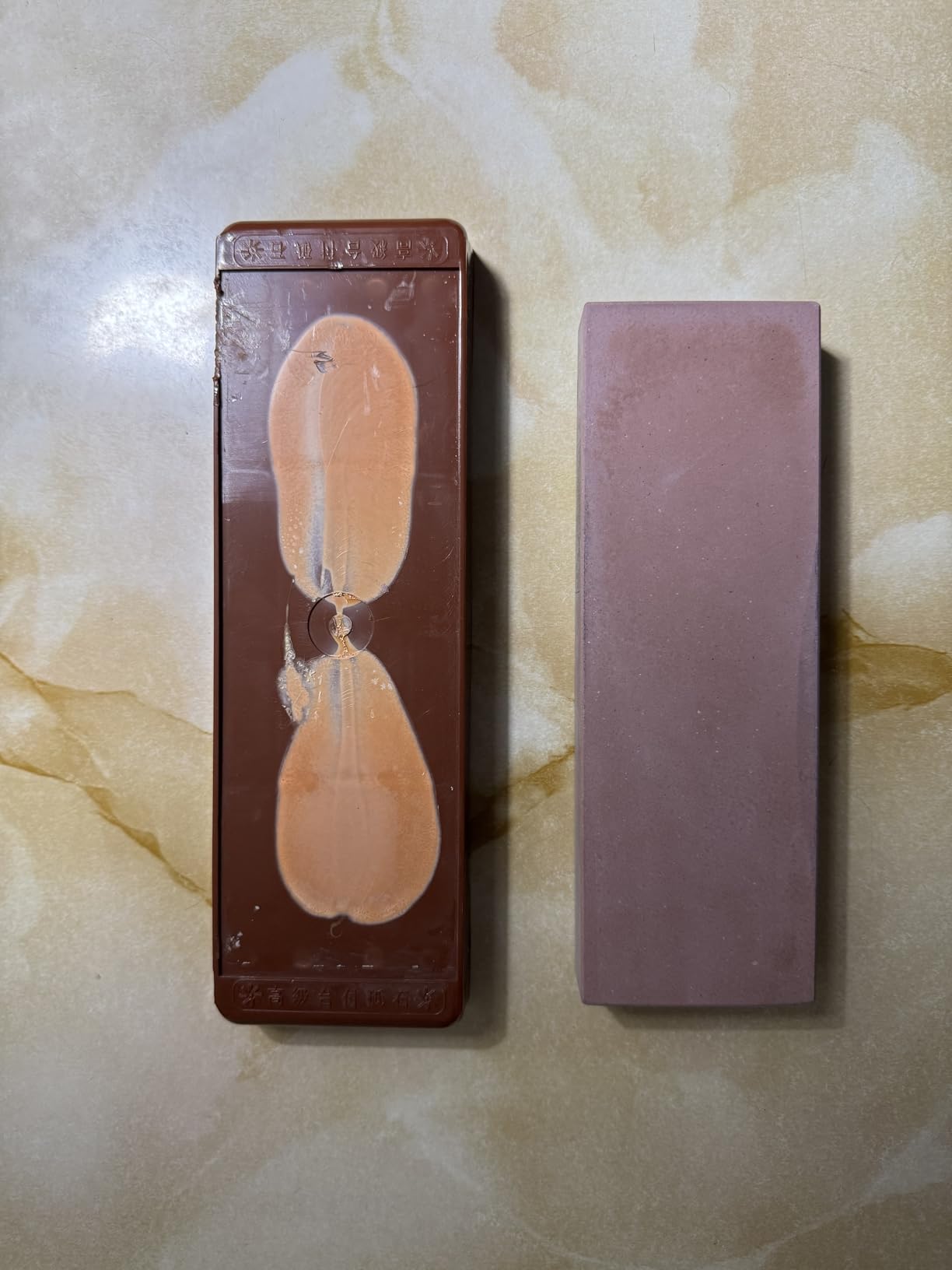
This is the finishing step that most people skip and then wonder why their edges feel gritty. A 3000-grit stone is where the visible 1000-grit scratches get removed, and this one is the most pleasant example of that step on the list.
Experienced sharpeners describe it as their favourite 3000-grit stone, pointing to quick cutting, resistance to loading, slow wear and what several reviewers call the best tactile feel they have worked with. The dressing stone in the box handles de-loading without any special cleaner.
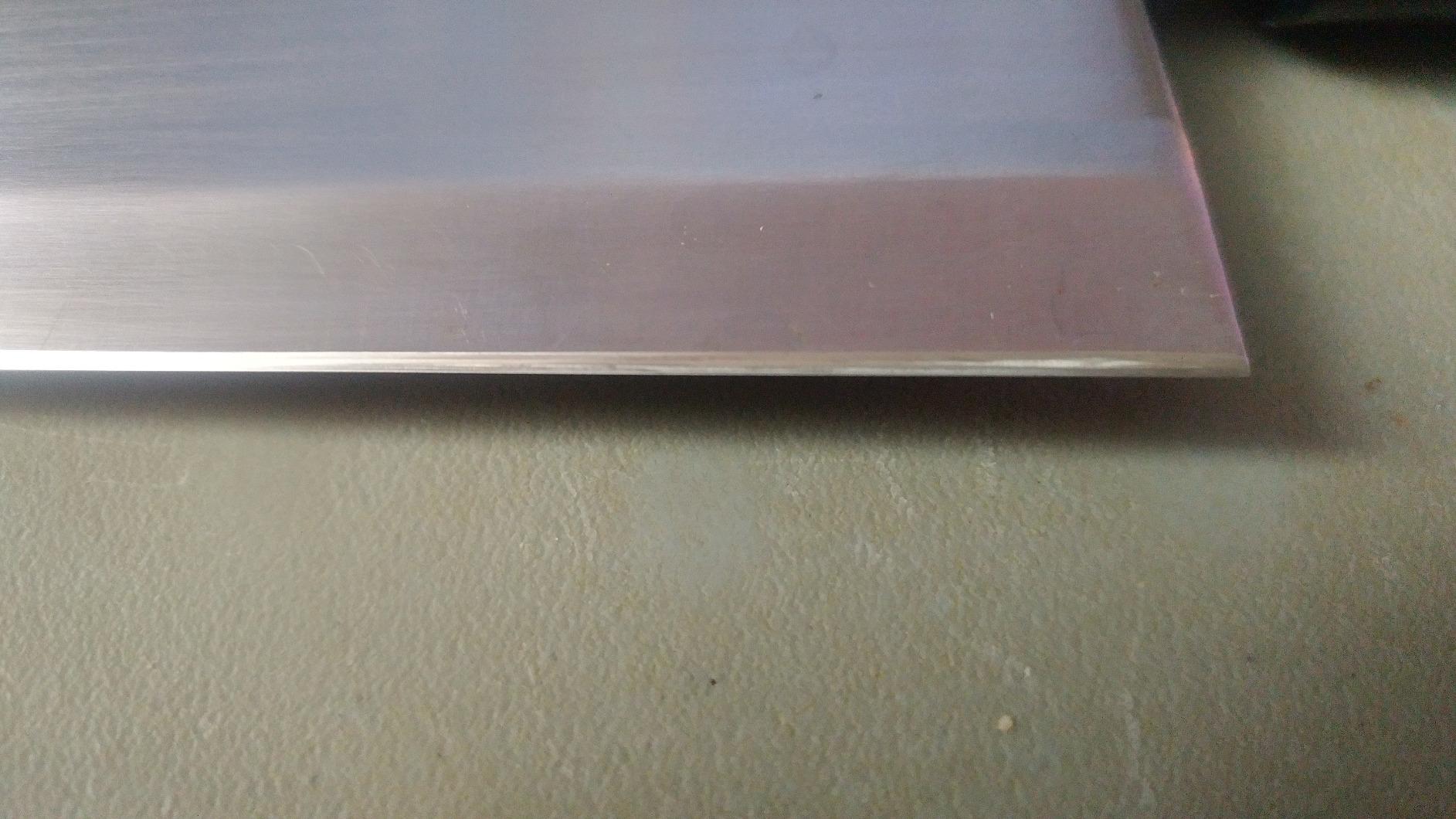
It is splash-and-go, so there is no soaking routine to maintain. Spray, sharpen, spray, done. On a honyaki-style hard edge the finish came up brighter than anything else I tried at this grit.
The stone is bonded to its base, which is convenient and also permanent. You cannot flip it, remove it, or replace it, so treat the base as part of the tool.
Where it fits in a working set
Put it directly after your 1000-grit stone and before any polishing stone. It is the tier that converts a functional working edge into an edge that holds through a whole prep of brussels sprouts without losing bite.
For single-bevel knives, the flat, hard surface also works as a stable platform for finishing the primary bevel once the kasuri pattern is set.
Who should skip it
Skip it as a first purchase. Buying a 3000 before you own a 1000 means finishing scratches that the next coarse stone will undo again, so the stone earns its place second, not first.
Also skip it if you are rough on your equipment. Intermittent cracking is reported by a few owners, and every waterstone should be dried flat rather than stood on edge.
5. Suehiro Cerax 1010 1000 Grit Sharpening Stone
Suehiro Cerax 1010 Grit #1000 Sharpening Stone
Immersion waterstone
#1000 medium grit
8.07 x 2.87 inches
60 grams
Ceramic bonded abrasive
Pros
- Fast tactile cut at the 1000 grit stage
- Strong 4.8 star rating with heavy 5 star showing
- Durable ceramic that holds its flatness
- Works on kitchen knives chisels and plane irons
Cons
- Must be soaked before use and rewet while sharpening
- Produces a clay-like slurry to rinse off
- No base or dressing stone in the box
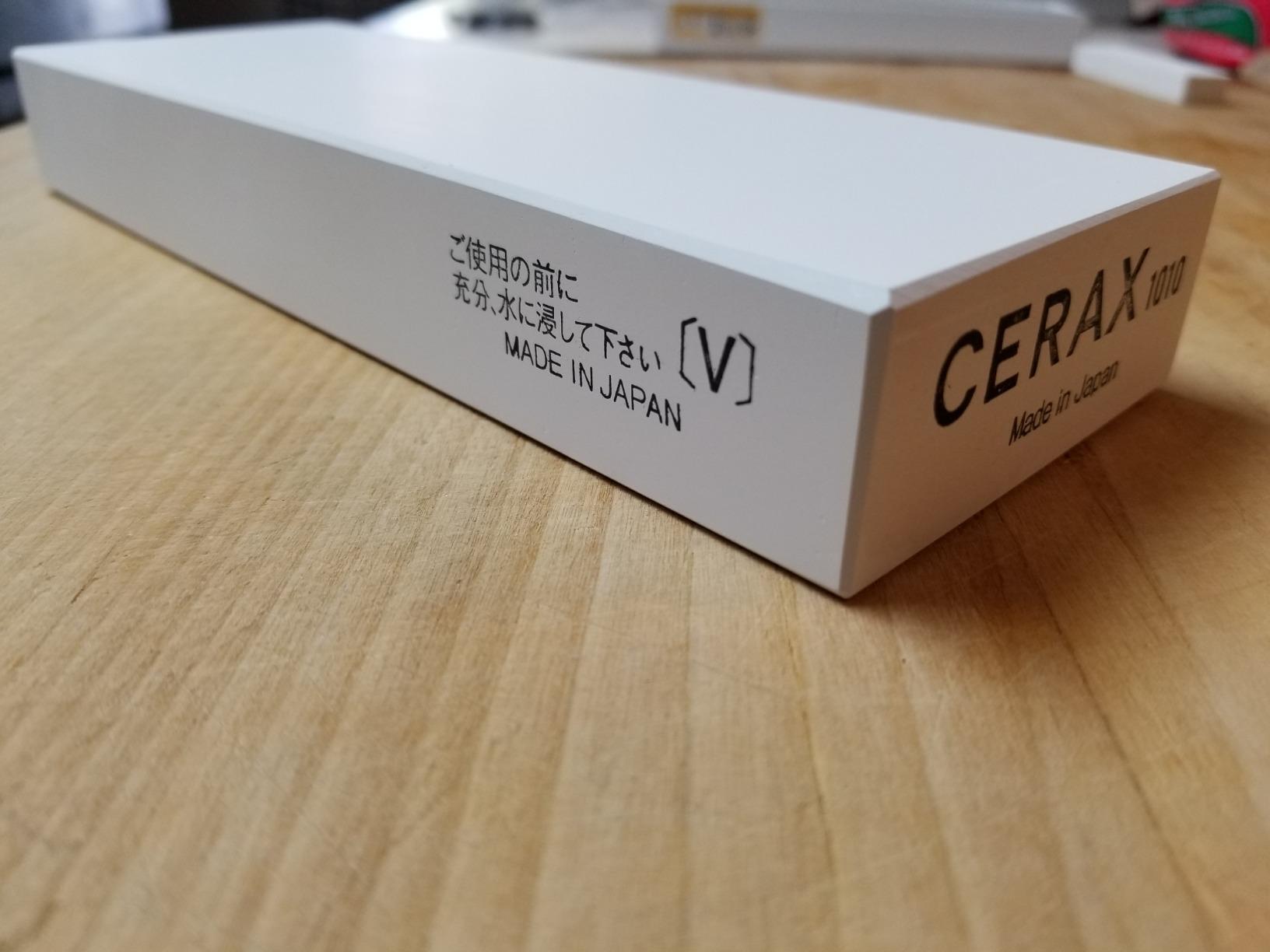
The Cerax 1010 is the stone I recommend to people who prefer soaking and want a genuine Japanese maker behind it. It is a proper immersion stone, it holds an edge in the 1000-grit role about as well as anything here, and the feedback is immediate rather than mushy.
Users rate it highly for quick metal removal and pleasant feel at the 1000 stage, treating it as the workhorse step before moving to finer stones. It also handles chisels and plane irons without complaint, which broadens its use well past knives.
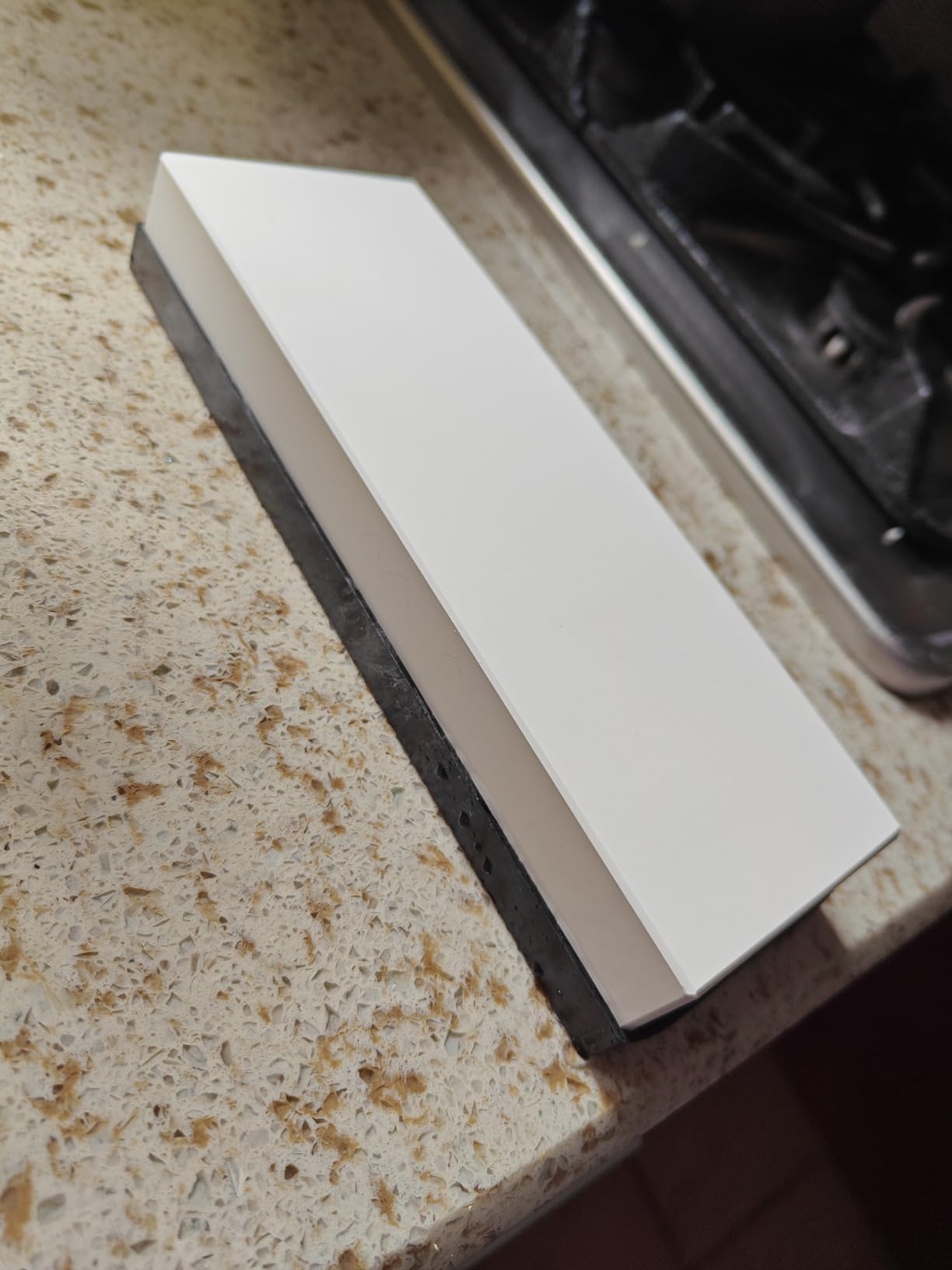
The clay-like slurry it produces is not a defect. It is the loosened abrasive doing its job, and rinsing it away after each session keeps the stone cutting the way it did on day one.
At 60 grams it is light in the hand, and the 8-inch face suits a Japanese chef’s knife length without crowding the holder.
Soaking routine and slurry handling
Give it five to ten minutes in water before you start and rewet the surface whenever it goes pale and pasty. Dry it flat, out of sunlight, and it will outlast stones that were treated worse.
Never put dish soap on a soaking stone. It strips the bonding and leaves a smell in the stone that takes months to fade.
Who should skip it
Skip it if convenience matters more than tradition. If you do not want a bucket on the bench and a rewet halfway through every side, a splash-and-go stone suits you better.
It is also not a repair stone. Anything below 1000 grit needs a separate coarse stone or a diamond plate to open the edge up first.
6. Naniwa Chosera SS-400 400 Grit Coarse Stone
Naniwa Chosera Whetstone SS-400 Grit 400
Coarse bonded ceramic
#400 grit
210 x 70 x 25 mm
Splash-and-go
Sturdy holder included
Pros
- Strong abrasive power for chip repair
- Fast cut with minimal clogging
- Handles hard stainless steels efficiently
- Large surface keeps strokes consistent
Cons
- Softer than some alternatives so a dull blade needs more passes
- Absorbs more water than finer stones
- Stone is glued to the plastic holder
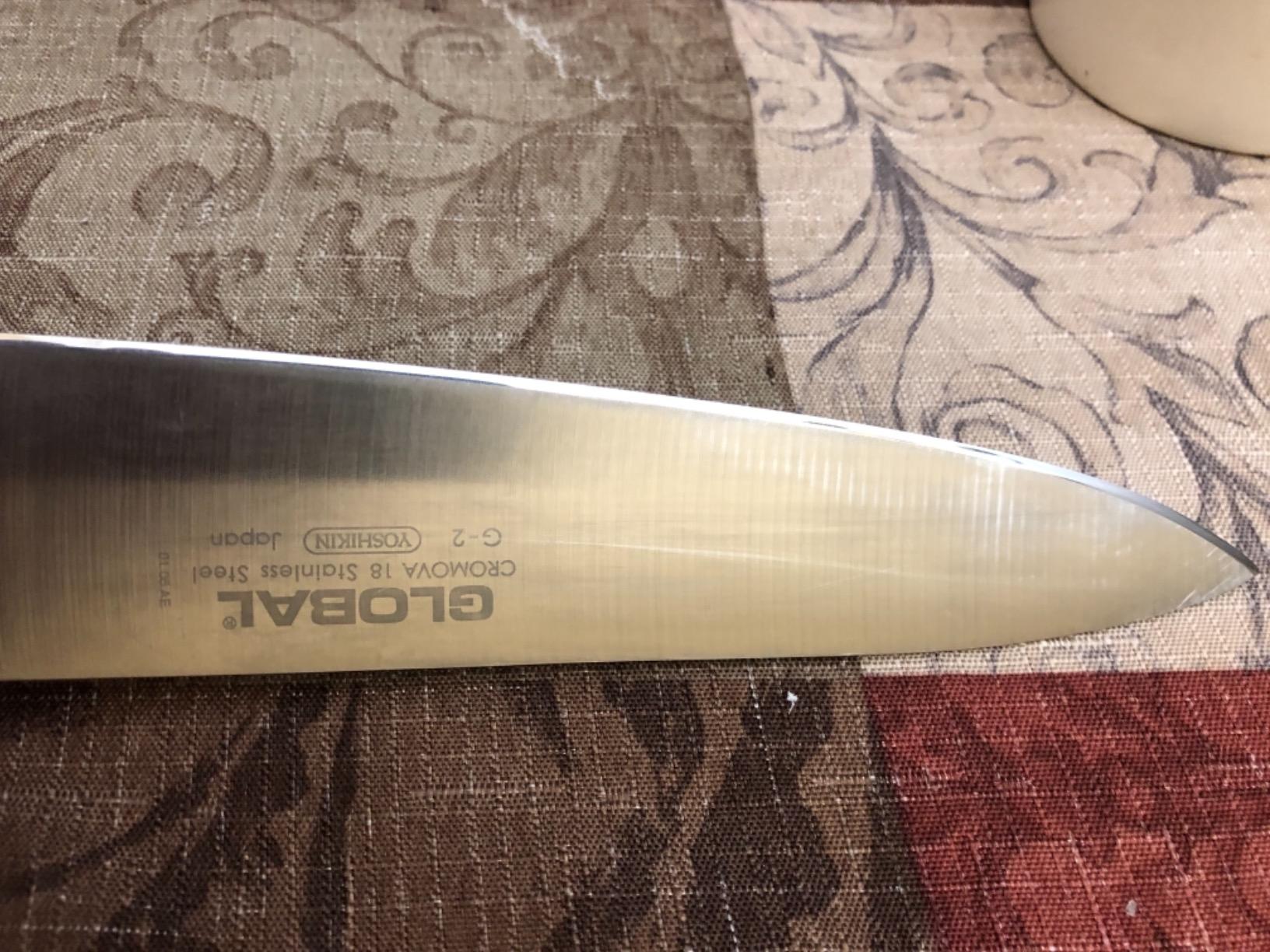
Every Japanese knife kit that ignores the 400-grit tier ends up buying one later. Chips happen, especially on a hard thin edge that has met a cutting board or a pan handle, and a 400-grit stone is the tool that fixes them without wrecking the geometry.
Professional and serious hobby sharpeners rate this Chosera as an exceptional coarse stone for bevel setting and edge repair, noting quick metal removal, minimal dishing and a fast, consistent tactile feel through coarse work.
It is splash-and-go despite the coarse grit, which is unusual and convenient. Coarse stones usually soak hardest, and this one does not need it.
A minority of users find it softer than ideal for really dull work and recommend pairing it with an 800 or 1000 to finish the job, which is a fair caution for a thick old chef’s knife.
When a repair stone is worth adding
Add one when your knife has a visible chip, when a stone has dropped off the counter and dulled the tip, or when a factory edge is so hard you are making no progress on 1000 grit. Those are the three cases where 400 grit earns its place.
For routine upkeep on a knife that is simply hungry rather than damaged, it is overkill and it costs you steel you did not need to remove.
Who should skip it
Skip it as a one-stone solution. Sharpening an already-good edge on 400 grit is the fastest way to give a beautiful knife a blunt, fragile one.
It is also the wrong tool for a yanagiba back, where you need a flat stone with a defined ledge rather than a full-width coarse face.
7. Shapton GlassStone 1000 Grit Waterstone
SHAPTON GlassStone 1000 11micro class TYPE WA 50202
Glass ceramic stone
#1000 fine grit
8.25 x 2.75 inches
360 grams
No soaking required
Pros
- Fast cutting with no soaking needed
- Very even scratch pattern from fine grading
- Wears slowly and resists dishing
- Easy to clean with water
Cons
- Costs more than equivalent Japanese stones
- No base included so a holder is needed
- Fine grit produces a slurry that must be rinsed away
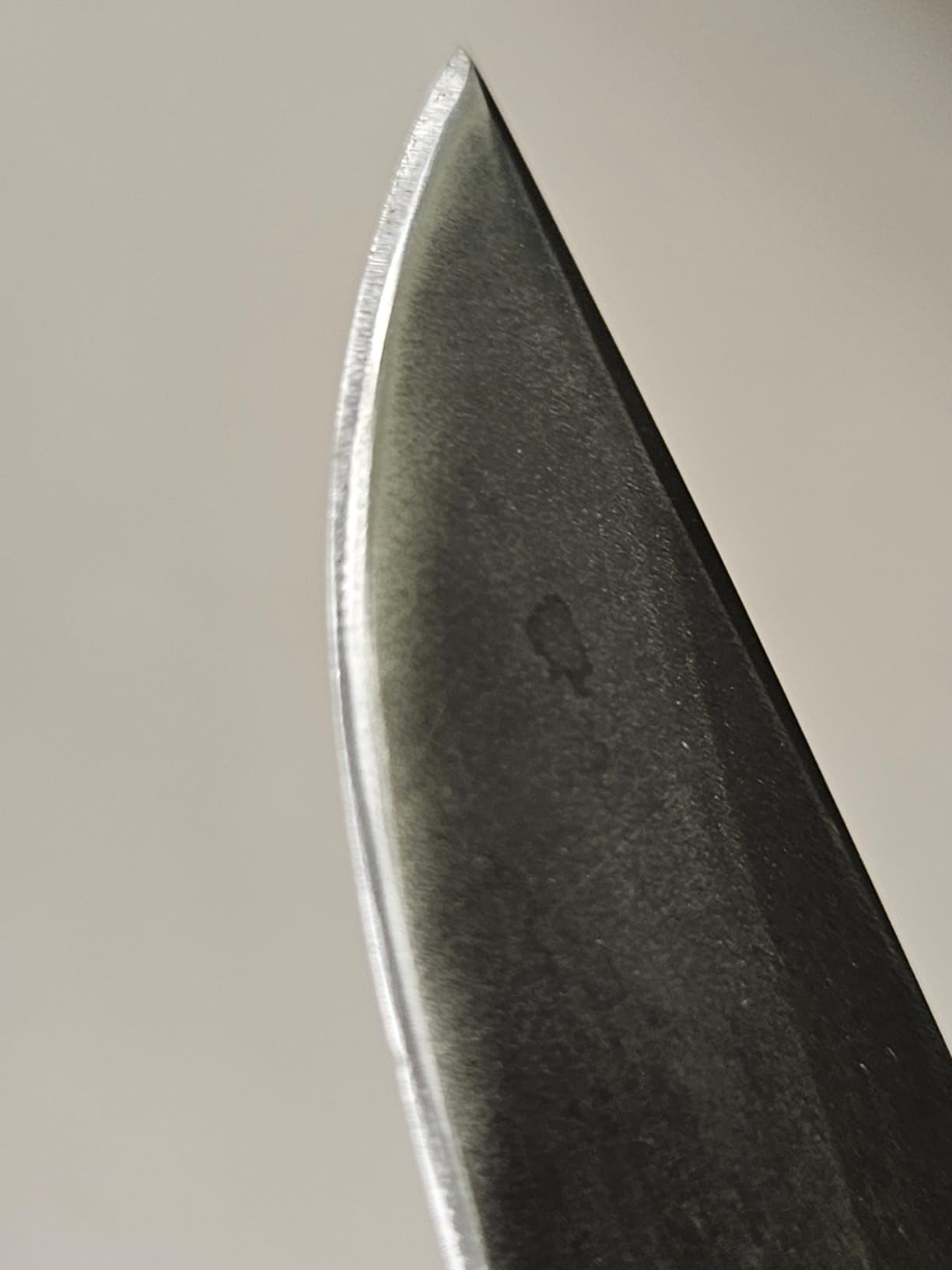
The GlassStone is the other serious hard-carbon option, and it wins on one specific point: the particle grading. The scratch pattern it leaves is unusually even for a 1000-grit stone, which means the finishing step starts from a cleaner surface and the final edge feels more consistent along the whole length.
Reviewers highlight the unusually fast cut, the even scratch pattern and the convenience of not soaking. They also pair it with a coarser Shapton stone and a leather strop as a complete three-step system, which is sound advice.
At 8.25 inches it is one of the longer faces here and handles a 240mm blade without the heel running off. It needs a holder, and there is no base in the box.
Being splash-and-go does not mean maintenance-free. The fine grit generates slurry that needs rinsing off, otherwise the surface loads and the cut slows down.
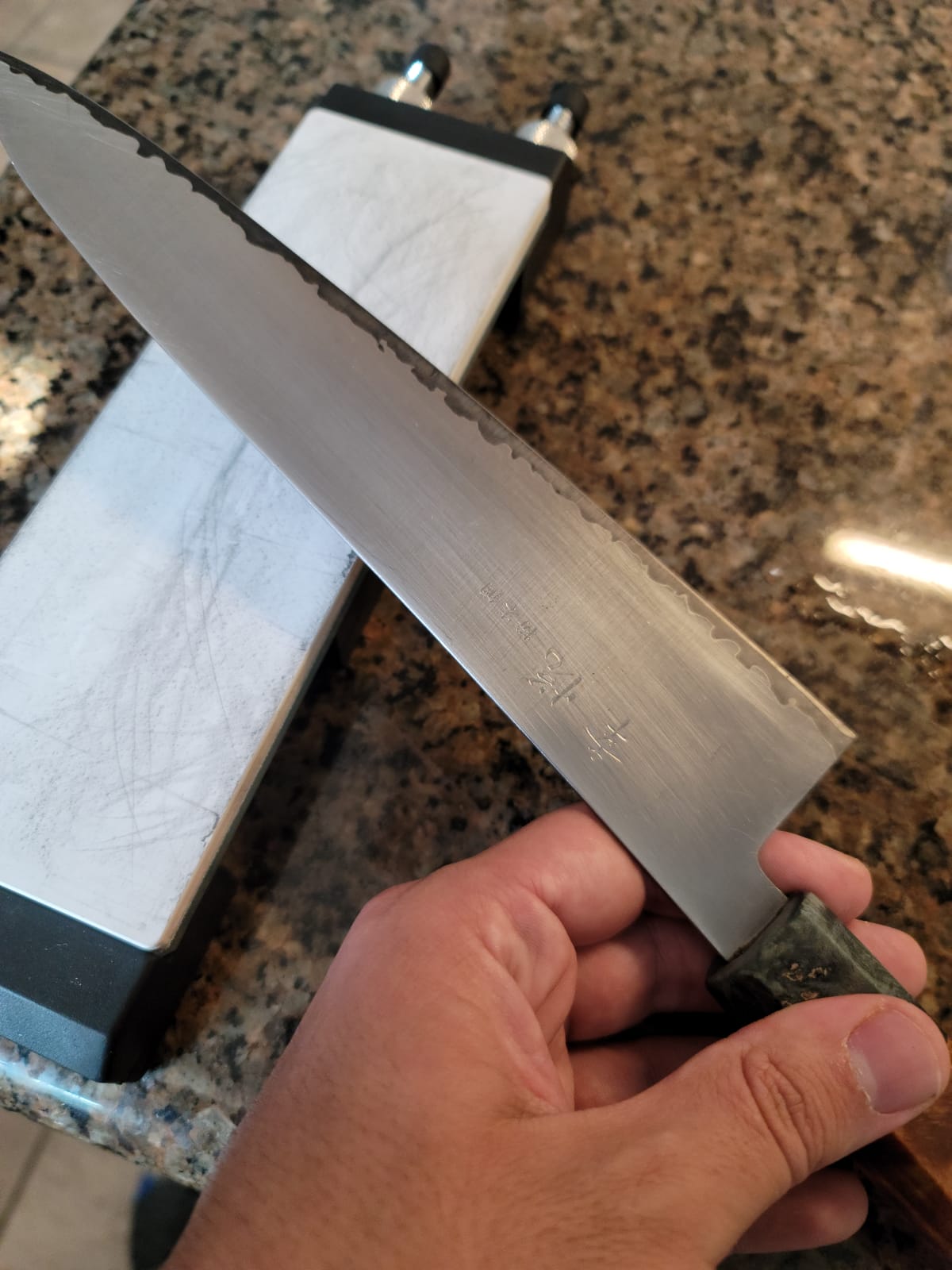
Glass ceramic versus bonded ceramic
Both are hard, fast-cutting synthetic stones, and both outlast the softer soaking stones. The difference shows in feel: this one feels glassier and less forgiving, with less feedback when you drift off angle.
That unforgiving quality is exactly what experienced sharpeners like and beginners find frustrating, so pair it with a steady hand or a guide.
Who should skip it
Skip it if you are on a strict budget, since equivalent Japanese stones cost meaningfully less. Also skip it as a beginner’s only stone unless you already know how to hold an angle, because it will not warn you when you do not.
Like the rest of this group, it does nothing special for the back of a single bevel.
8. Suehiro Cerax CR-3800 3000/1000 Combination Stone
Suehiro Cerax Combination Waterstone 7-1/4″ X 2-1/2″ 3000/1000 Grit
Dual grit ceramic stone
1000 and 3000 grit
7.25 x 2.5 inch face
Bonded combination block
Pros
- Two sharpening stages in one stone
- Fast cut and good tactile feedback for the money
- Compact block covers sharpening and finishing
- Blends a dull knife in 5 to 10 minutes
Cons
- Must be soaked before use unlike splash-and-go stones
- Softer than Shapton stones and dishes faster
- Loads up quickly and needs regular cleaning
This is the interesting middle path. It puts a 1000 and a 3000 grit in one block, so you get the two tiers that matter most in a single soak, which is exactly the pair most sharpeners end up owning anyway.
Reviewers regard it as strong value, reporting that it takes a dull kitchen knife to near-razor sharpness in five to ten minutes per blade. Reviewers single out the tactile feedback and the fast cut as the reason the price feels low for two stones in one.
How it compares with a separate 1000 and 3000
A single block is harder to lap than two separate stones, and if you ever damage one side you have lost the pair. Two individual stones give you independent replacement and independent flattening, which is why most experienced users buy singles.
The trade is convenience and cost. If you want one object on the bench rather than two, this does that job well.
Who should skip it
Skip it if you already own a 1000-grit stone, because the 3000 side duplicates a step you can already do. Skip it if you want a mirror finish too, since 3000 stops short of that.
It is also smaller and heavier than most of the stones here, so it is not the choice for a long yanagiba stroke.
9. KING 4000 Grit Sharpening Stone
KING Sharpening Stone 4000 Grit Plastic Base
Finishing stone
#4000 grit
176 x 52 mm
399 grams
Plastic base included
Pros
- Inexpensive way to add a finishing step
- Simple plastic base holds a workable angle
- Compact enough for small storage spaces
Cons
- Small face means long strokes are not possible
- Needs soaking before each use and makes slurry
- Some owners report slow cutting and short-lived edges
The KING 4000 exists for one reason: adding a polishing tier without spending real money. Owners use it as a finishing step after coarser sharpening and report smoother, more polished edges for very little outlay, which makes it a sensible second stone on a tight budget.
The plastic base is simple and keeps the stone at a workable angle, and at 399 grams it is heavy enough not to walk across the bench. It also needs immersion before use, like the other KING stones here.
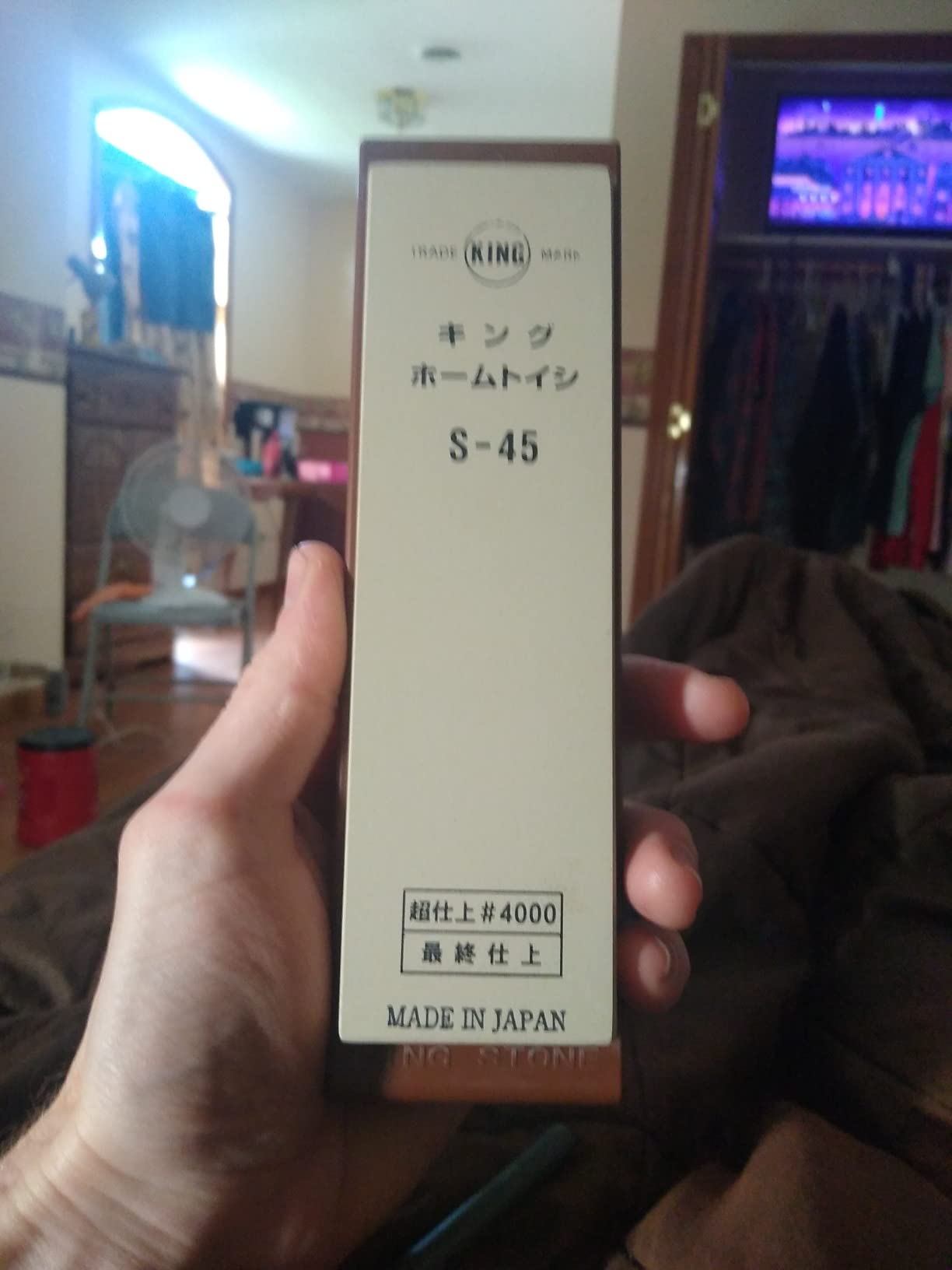
The size is the limitation. At 176 by 52 mm, this is the smallest stone in the group by a wide margin, and long comfortable strokes simply are not possible on it. It is fine for a paring knife tip or the last few passes on a small blade.
Feedback is also more mixed than for the other picks here, with some owners noting that the modest cutting speed limits it for heavy work.
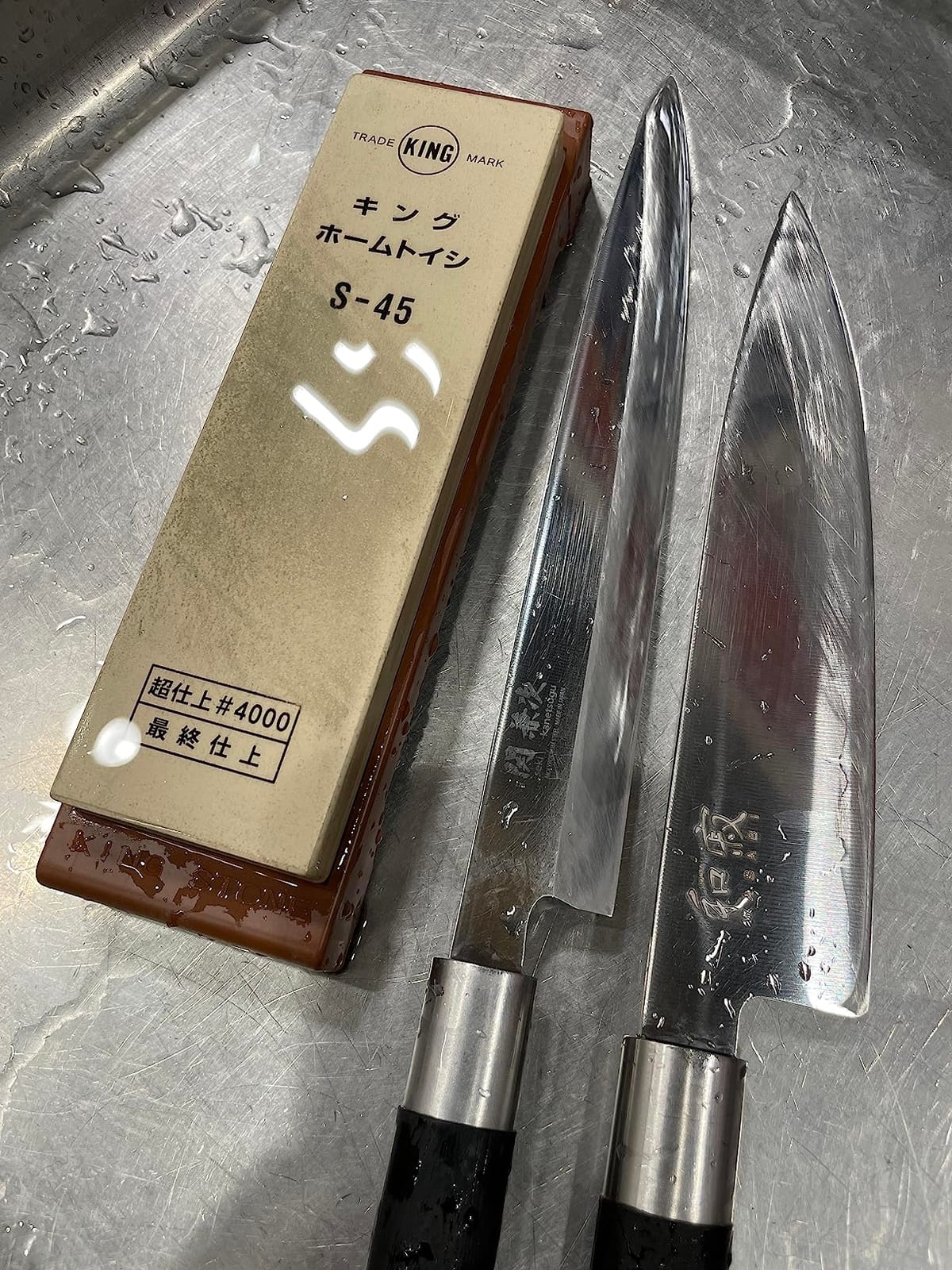
Where a 4000 grit stone fits
It sits between a 3000 finisher and a true polishing stone. On a Japanese knife it is a reasonable last step before a strop, particularly if you want a slightly brighter finish without buying a natural stone.
It will not produce the mirror finish of a 6000-plus stone or a balsa strop, so treat it as an improvement rather than a destination.
Who should skip it
Skip it if you own a long Japanese knife. A face that short turns every stroke into a series of small overlapping passes, which is slower and harder to keep consistent than it needs to be.
Also skip it as your only stone. A 4000-grit stone cannot bring a dull knife back, and beginners almost always need the 1000-grit tier first.
10. Naniwa Diamond 3000 Grit Whetstone
Naniwa Diamond Whetstone Grit #3000 DR-7530
Resin bonded diamond plate
#3000 grit
210 x 75 mm
No soaking
Cleans with brush and water
Pros
- Very fast cutting on modern super steels
- Holds flatness and needs no flattening
- No soaking and easy to clean with a brush
- Slow wearing hard surface
Cons
- Loads quickly on softer steels
- Thin resin layer wears away with repeated lapping
- Highest cost here for the amount of abrasive
This is the pick for anyone whose Japanese knife is made from a modern powder steel such as ZDP, SG2, S90V or M390. Conventional corundum stones waste a lot of their effort on steels that hard, while diamond simply cuts. Experienced sharpeners reach for exactly this when a modern super steel refuses to respond to a normal stone.
Professionals praise the Naniwa diamond stones for cutting those steels quickly while staying flat and consistent. No soaking is required and a nylon brush with a little dish soap cleans it, which is the one time soap belongs in this article.
Diamond versus corundum for hard stainless
For D2 and similar hard stainless, diamond is the practical answer because those steels are difficult to finish on a conventional stone. A stone lubricant or conditioning stone mitigates the loading problem that reviewers most often cite.
Against soft stainless, the same hardness works against you, because a hard plate glazes over quickly on steel that gives up easily. Waterstones are considered wasteful there and so is this.
Who should skip it
Skip it if your knife is a traditional carbon or Shirogami blade on a budget, because you are paying more for less abrasive. Skip it if you plan to lap it regularly, since the thin resin layer wears through with repeated flattening.
It also does nothing for a yanagiba back, so a single-bevel owner needs a proper flat-sided stone alongside this one.
Soaking Stones vs Splash-and-Go Stones
A soaking stone absorbs water into its body and needs five to ten minutes in a bucket before it will cut properly. A splash-and-go stone is hard and bonded with resin, so it needs about a minute of wetting and it works immediately.
Soaking stones feel better under the hand and self-level slightly with use, and they produce the clay-like slurry that many sharpeners treat as proof the stone is working. Splash-and-go stones cut fast, stay flatter for longer, and clean up in seconds.
Whichever you pick, dry it flat and let it air out between sessions. Soaking stones that are stored damp and stacked will crack, and the stones on this list that report cracking almost always share that habit. Our whetstone set guide covers the accessories that keep a set in condition.
Why We Skip Electric Sharpeners and Honing Rods
An electric sharpener grinds the edge at one fixed angle chosen by the machine, usually far too obtuse for a Japanese knife, and it removes far more steel than a session ever needs. The result is a blade that has lost the thin, acute geometry it was made for.
A steel honing rod does the opposite problem. It aligns an existing edge, which sounds harmless, but on hard Japanese steel it can burnish or roll the apex, and it will not remove the damage from a genuinely dull blade.
A whetstone is slower and needs technique, but it is the only one of the three that lets you choose the angle, control how much steel leaves the blade, and work one tier at a time. If your knives are the ones covered in our slicing knife guide, they are exactly the knives that suffer most from a powered sharpener.
How to Choose a Whetstone for Your Japanese Knife
Start with the knife you actually own, because the categories split in a way that matters.
Gyuto and santoku, double bevel. These are the forgiving ones. A 1000-grit stone handles routine work, and a 3000 to 6000 finisher handles everything else. Any of the 1000-grit options above will serve, and adding a coarse stone later covers damage.
Yanagiba and nakiri, single bevel. These need a stone with a flat side and a defined ledge. That surface is how you work on the back of the blade, refine the kasuri, and hone the edge without grinding a hollow bevel into a thin spine. None of the combination stones here does that, which is why we would pair a yanagiba owner with a separate coarse stone and a finishing stone rather than any 1000/6000 combo.
Then match the stone to the steel. Hard carbon and Shirogami want a fast-cutting hard stone such as the Shapton options. D2 and other hard stainless respond best to diamond. Soft European stainless is better served by a diamond plate for coarse work, since waterstones are considered wasteful on it.
Finally, pick by habit rather than by prestige. If you will genuinely soak, choose an immersion stone. If you will not, a splash-and-go stone removes the biggest reason people give up. Many readers who need a matching knife first should start with our serious cooks roundup before worrying about stone grades.
On natural stones, treat them as a later step rather than a first purchase. Forum readers are candid about price shock when they first see the number on an Asagi or Uchigumori, and for most home kitchens a synthetic set delivers an edge they cannot tell apart on the cutting board.
Stone Care: Flattening, Drying and Slurry
Waterstones dish in the middle faster than at the edges, and a cupped stone gives you an inconsistent angle across the blade. Check flatness periodically by drawing a straightedge across the surface in both directions, and re-lap when you can see light under the straightedge.
A diamond plate works as a lapping surface, which is why the 400-grit and diamond options on this list double as shop tools. Dress a stone when it stops cutting fast and the surface turns glossy, not on a fixed schedule.
Clean soaking stones with water and a brush, never soap. Diamond plates are the exception, since they rust when water sits on them with carbon swarf, so wipe them dry and give them a light oil afterward. Keep the carborundum and ceramic stones here out of the dishwasher, and let everything air dry flat before storing. If you want stropping and honing gear alongside the stones, the karambit guide covers the knives most often taken to a rod rather than a stone.
Frequently Asked Questions
What is the best type of stone for sharpening knives?
For a Japanese knife, a waterstone in the 1000 to 3000 grit range is the best general-purpose type. Coarser stones remove steel too aggressively for routine work, while stones above 5000 grit only refine an edge that a medium stone has already established. If you own a single-bevel yanagiba, choose a stone with a flat or ledge side as well.
What is the difference between whetstone grit 1000 and 3000?
A 1000 grit stone cuts faster and leaves a coarser scratch pattern, which makes it the right tool for restoring a dull or slightly damaged edge. A 3000 grit stone removes those coarser scratches and produces a finer, more refined edge that holds longer. They are consecutive steps, not alternatives: use 1000 first, then 3000.
What is the difference between a waterstone and a whetstone?
Whetstone is the general term for any sharpening stone, and waterstone is one specific type that is used with water. A waterstone is typically a bonded abrasive that is soaked or splashed with water, while other whetstones may use oil or a diamond coating. Soaking stones need several minutes of immersion, and splash-and-go stones need only brief wetting.
Is 600 grit enough to sharpen a knife?
Yes, 600 grit is enough to sharpen a knife and it is fast at removing steel. However, it belongs in the coarse tier, so it is really a bevel-setting and edge-repair stone rather than a routine sharpening tool. For an edge that is dull but undamaged, a 1000 grit waterstone gives a better finish and removes less steel.
Is 240 grit enough to sharpen a knife?
240 grit is a true repair stone. It will fix chips, deep nicks, and badly damaged edges quickly, but it leaves a coarse scratch pattern that must then be refined through 1000 and 3000 grit. Using it on a merely dull knife removes far more steel than the job requires and leaves a blunt edge.
How often should I sharpen a Japanese knife?
Most home cooks touch up an edge every few weeks with a 1000 grit stone, and a full refinement through to a 3000 or 6000 grit finisher every few months. Hard Japanese steel loses its edge faster than soft European stainless, so check the edge by slicing paper rather than waiting until the knife visibly drags.
The Best Whetstone for Japanese Knives, Wrapped Up
For most people buying one stone, the Sharp Pebble 1000/6000 kit wins because the angle guide removes the hardest part of learning. If you already control an angle and want a proper Japanese maker, the KING KW65 is the better long-term answer, and the Shapton Kuromaku 1000 is the stone I would hand to anyone working on hard carbon steel daily.
Add a coarse stone when damage appears, add a 3000-grit finisher once the 1000 feels routine, and keep every stone dry between sessions. That progression, used properly in 2026, will keep a Japanese knife sharper for longer than any powered sharpener ever could.