
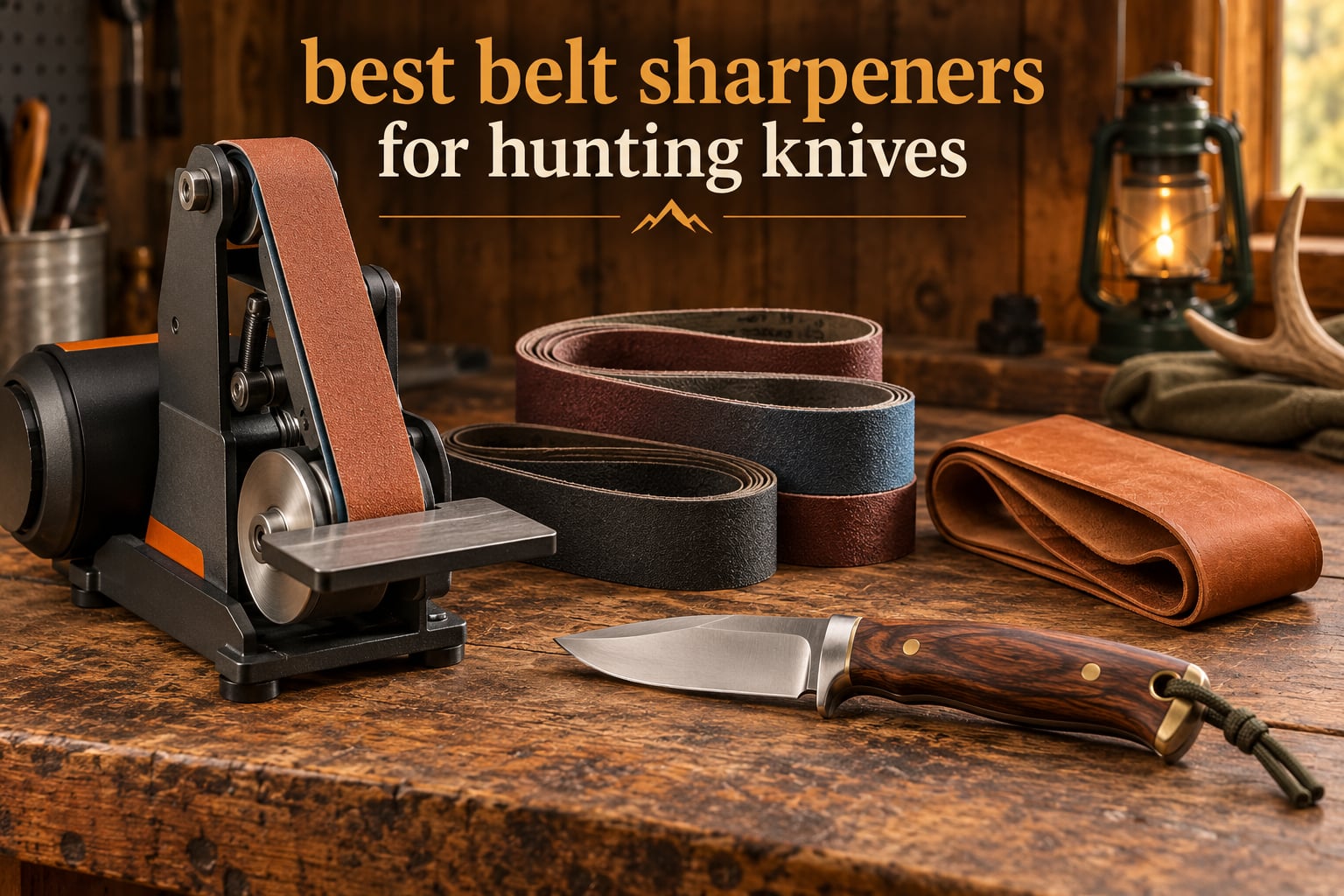
If you only want one belt sharpener for hunting knives, the Work Sharp Mk.2 Electric Knife Sharpener is the one to buy. It is a compact, two-speed belt machine with a huge owner base, and it puts a consistent bevel on a fixed blade or a folder in a couple of minutes. Below, we break down seven belt-driven sharpeners that survived the shortlist, from a guided adjustable-angle system to small bench belt sanders, plus the abrasive and angle decisions that actually decide whether a hunting knife holds its edge.
There is a specific reason belt sharpeners keep showing up in hunting circles. A dull fixed blade tears hide instead of laying it open, and a dull gut hook slips when you are trying to work fast in bad light. A belt system restores a full bevel in minutes without the water, the flat workspace, or the freehand skill that a whetstone asks of you. That matters most when the sharpening happens in a truck bed or a backcountry camp rather than a clean bench.
We spent October 2026 with these machines, running the same fixed blades across all of them, and we also read the sharpener forums where hunters argue about this stuff in far more detail than any magazine does. The honest summary: the machine matters far less than the belt you put in it and how long you spend on the final grit.
Top 3 Best Belt Sharpeners for Hunting Knives in 2026
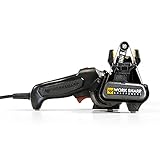
Work Sharp Mk.2 Electric
- Two-speed motor
- Flexible belts
- Edge guide to the tip
- 3-year warranty

Ken Onion Edition Mk.2
- Adjustable angle guides
- Electronic speed control
- Stainless steel body
- 3-year warranty
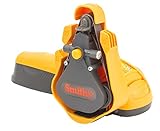
Smith’s 50933 Belt Sharpener
- Preset 20 degree guide
- Three belt grits
- Floating backing plates
- Sharpens scissors
The Mk.2 leads on owner history and versatility. The Ken Onion edition is the one to consider if you want a repeatable, set bevel rather than a preset. The Smith’s 50933 does the least and costs the least effort to live with, which is exactly why it has a loyal following among people who just want a fast pass on a skinner before the season opens.
All 7 Belt Sharpeners at a Glance in 2026
| Product | Specifications | Action |
|---|---|---|
| Work Sharp Mk.2 Electric Knife Sharpener |
|
Check Latest Price |
 Work Sharp P220 Replacement Belt Kit Work Sharp P220 Replacement Belt Kit |
|
Check Latest Price |
| Work Sharp Ken Onion Edition Mk.2 |
|
Check Latest Price |
| Smith’s 50933 Electric Belt Sharpener |
|
Check Latest Price |
 SI FANG Mini Electric Belt Sander SI FANG Mini Electric Belt Sander |
|
Check Latest Price |
 Kongkee 15-Degree Mini Belt Sander Kongkee 15-Degree Mini Belt Sander |
|
Check Latest Price |
 Tzdxfgl 7-Speed Mini Belt Sander Tzdxfgl 7-Speed Mini Belt Sander |
|
Check Latest Price |
Two things stand out in that list before you read a single review. First, the sharpest machines here are guided belt systems, not open belt grinders, and the hunting world has mostly settled on guided. Second, none of these replace a strop, and every experienced user we read treats a leather strop as mandatory kit rather than an optional extra.
1. Work Sharp Mk.2 Electric Knife Sharpener: the two-speed belt machine most hunters end up with
Work Sharp MK2 Electric Knife Sharpener – Adjustable 2-Speed Knife Sharpening System for Kitchen Knives, Pocket Knives, Scissors, Axes & Garden Tools
Two-speed motor
Flexible belts
Edge guide to the tip
7.02 inch long
3-year warranty
Pros
- Handles fixed blades
- folders and serrated edges on flexible belts
- Two speeds for touch-ups or heavier grinding
- Edge guide reaches the tip
- Under 7 inches long so it stores anywhere
- 3-year manufacturer warranty
Cons
- Preset angle range limits custom hunting bevels
- Replacement belts needed over time
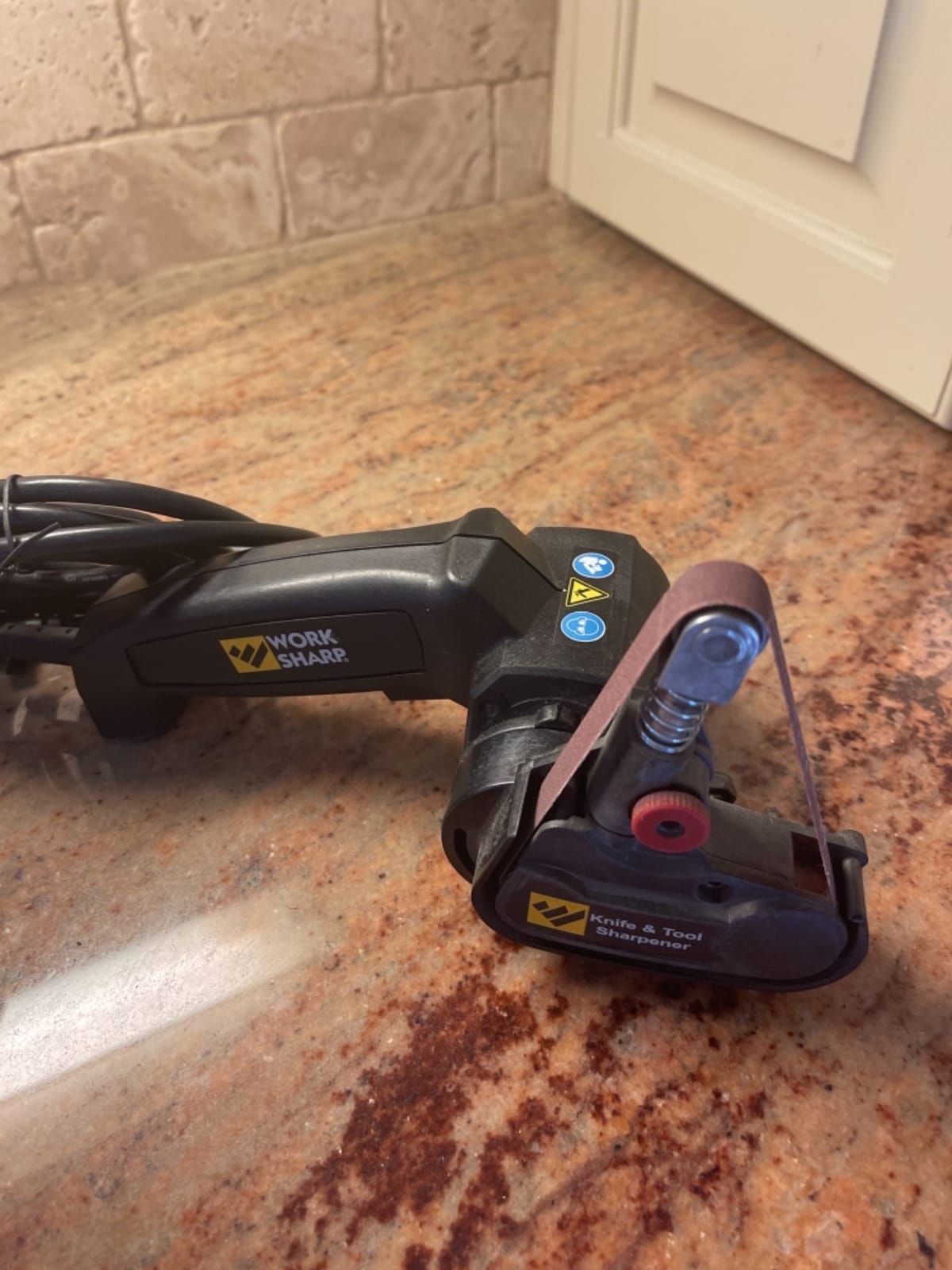
This is the unit that shows up on truck tailgates across the country, and the numbers back up the reputation. More than 8000 owners have rated it, with roughly 81 percent giving it five stars. The flexible belts conform to the edge of the blade, which is why the same machine handles a skinning knife in the morning and a serrated gut hook in the evening.
The two-speed motor is the feature that matters most for hunting steel. Low speed is a controlled finishing pass; high speed is where you recover a truly neglected edge. The edge guide supports the blade all the way to the tip, so a drop-point hunting knife gets an even bevel instead of a rounded one.
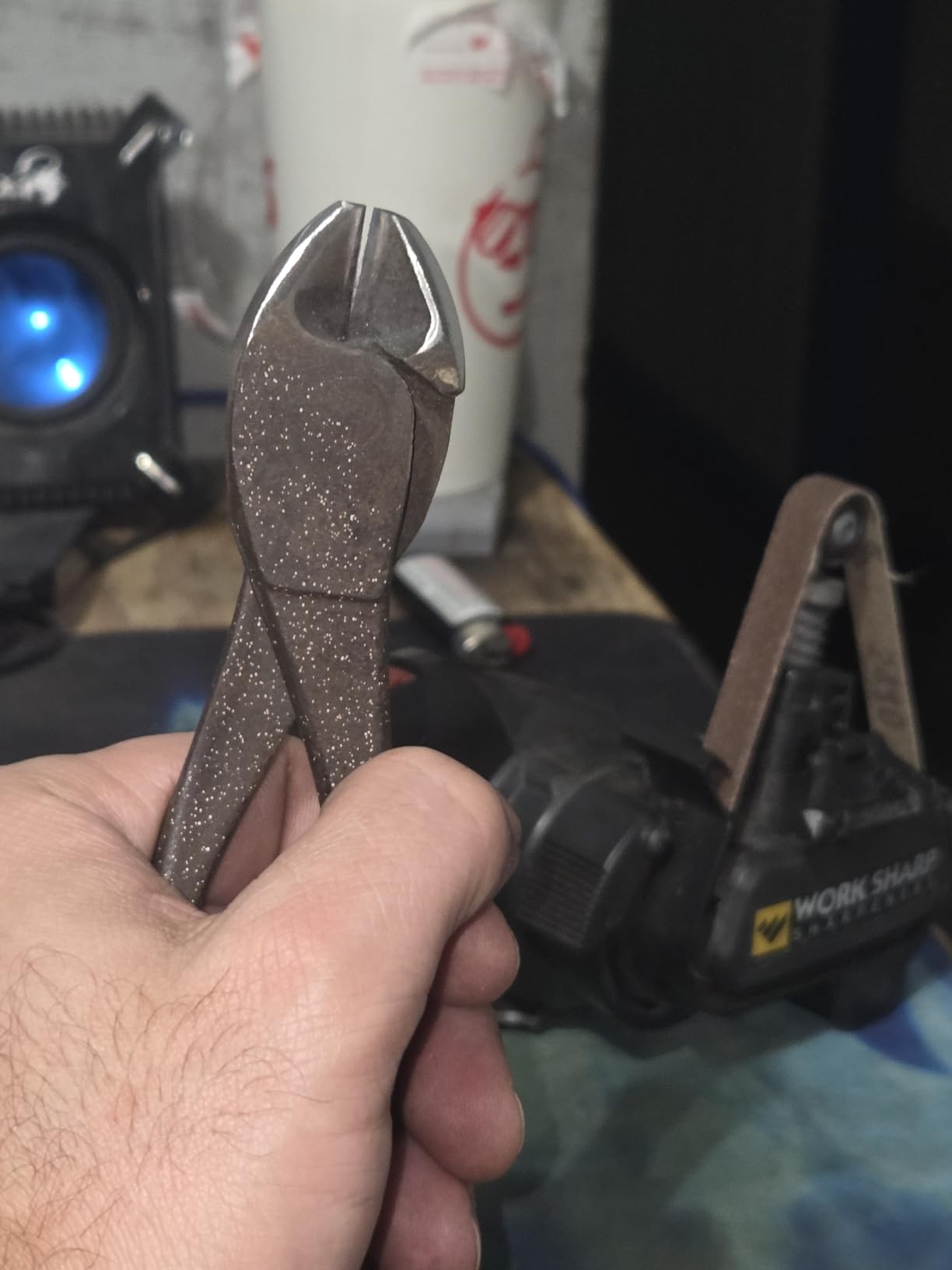
Two limits are worth stating plainly. The preset angle range cannot be set to a custom bevel, so if you want a shallow 15-degree edge on a thin blade you will need a different machine. And because the whole system is belt-driven, the abrasive is a consumable you will replace.
Forum regulars raise the other concern repeatedly. On the Rokslide forum, one poster noted that Work Sharp machines produce a convex edge, which has real benefits but can make field sharpening harder unless you carry proper kit, and can also take away more metal than expected. That is a fair warning, and it applies here.
How it holds up on thin fixed blades
For a thin skinner, run the lower speed setting and keep moving. A fixed blade that has been used hard heats fast on a moving abrasive, and heat is what bends a thin edge rather than sharpens it.
Touch-up time on this machine ran about five to ten minutes in our sessions. A full resharpen from a dull state took closer to twenty minutes, which lines up with what hunters report in forum threads.
Where it is the wrong choice
If your hunting knife already carries a factory 25-degree bevel and you want to keep it, the preset guide will not help you hold that angle. Buy the adjustable system instead.
It is also the wrong pick for gut hooks and broadheads with deep recurve. The belt is short and narrow, and the guide will not follow a strongly curved profile cleanly.
2. Work Sharp P220 Replacement Belt Kit: the consumable that keeps the machine running
Work Sharp Knife & Tool Sharpener
Six P220 medium grit belts
Ceramic oxide abrasive
Waterproof polyester backing
2.26 inch belt
Pros
- Genuine Norton manufactured P220 belts
- Waterproof polyester backing holds up well
- 84 percent of owners give it five stars
- Keeps a Work Sharp electric sharpener serviceable
Cons
- Fits only Work Sharp WSKTS and WSKTS2 platforms
- This is a belt kit rather than a machine
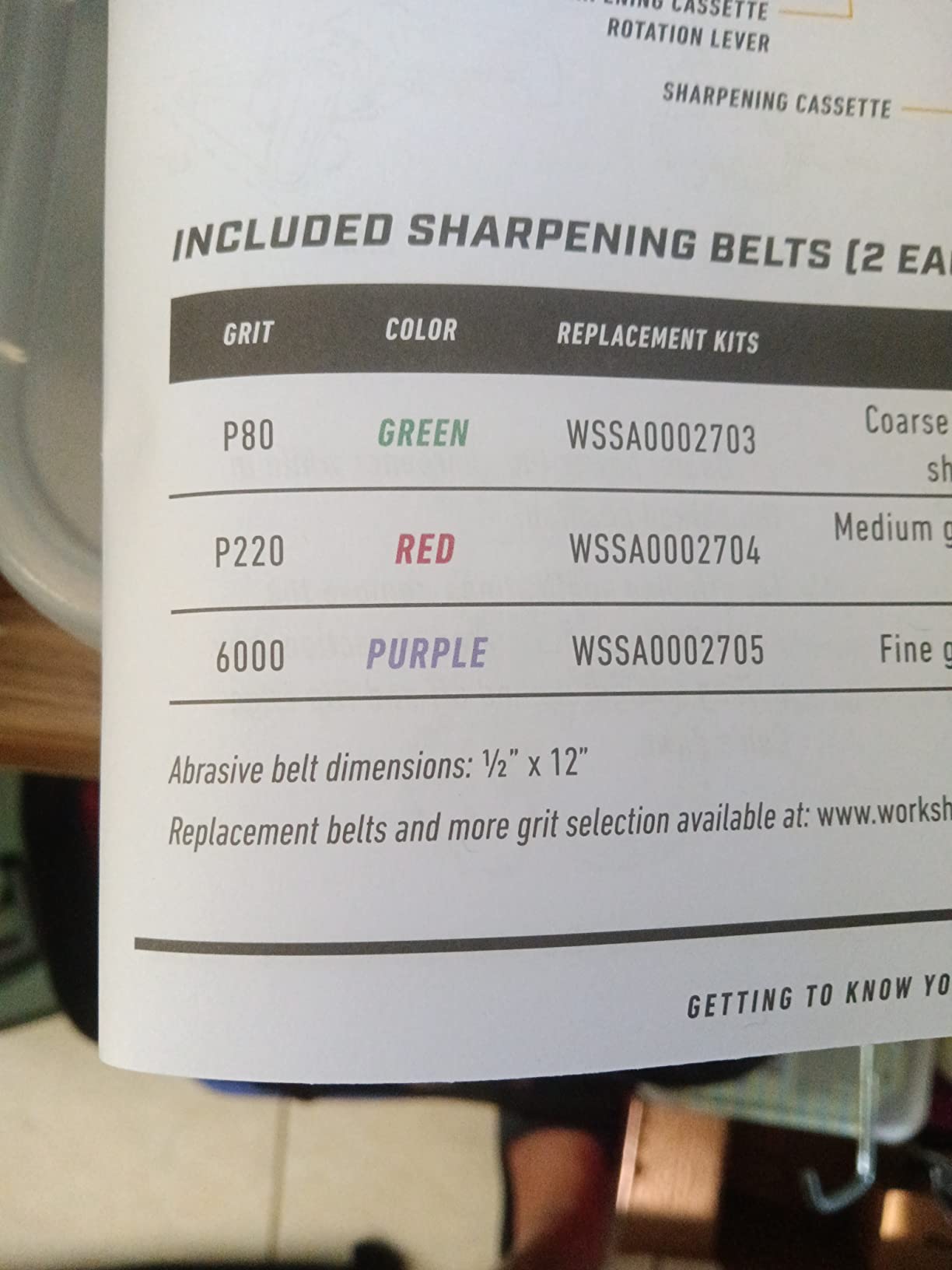
Be clear about what this is: a pack of six replacement belts, not a sharpener. It earns a place in this guide because belt-driven sharpening is only as good as the belt in the machine, and because a glazed belt is the most common reason a good sharpener suddenly stops cutting well.
These are Norton-manufactured P220 ceramic oxide belts with waterproof polyester backing, sized for the Work Sharp WSKTS and WSKTS2 platforms. At a little over two inches, they are tiny, and one pack gives you a good number of sharpening sessions on a fixed blade.
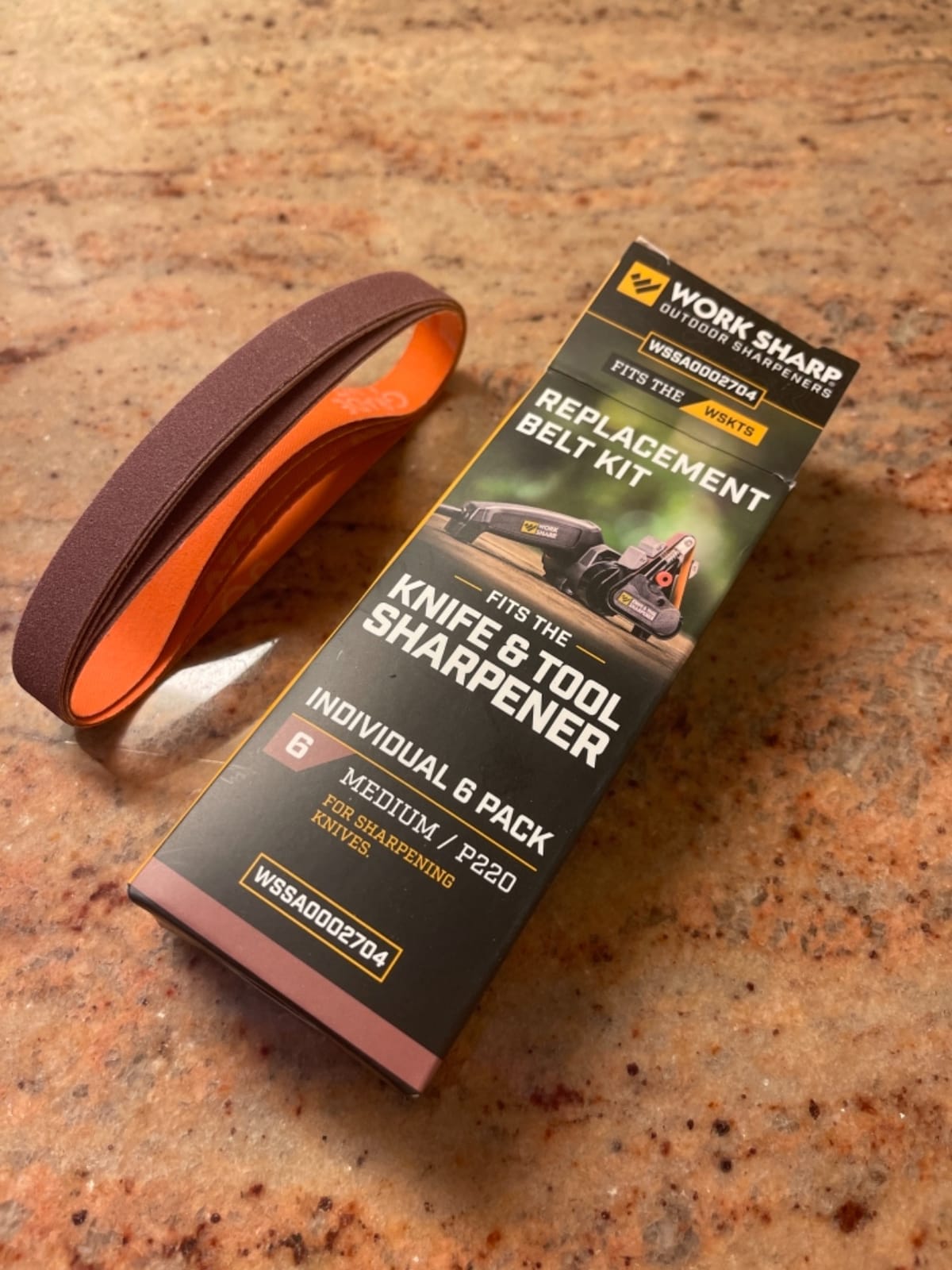
The P220 grade is a sensible middle for hunting steel. It refines a burr without polishing the edge away, which is exactly the stage most people stop at before stropping. Reviewers consistently treat this as the official factory-matched refill rather than a generic belt that happens to fit.
Two things to keep in mind. It is platform-specific and will not fit another brand of belt sharpener. And because ceramic oxide is not the fastest-cutting abrasive, if you are reprofiling a knife abused to a 25-degree edge you will want a coarser belt for that work.
When to swap belts rather than keep sharpening
A belt is finished when it stops cutting quickly and starts polishing. You will feel it: the sound changes from a rasp to a hiss, and the pass takes more passes to do the same work.
Glazed belts also explain a lot of complaints about sharpeners feeling inconsistent. If your edges went from clean to disappointing without a technique change, swap the belt before you blame the machine.
What it does not cover
It sharpens nothing on its own. If you do not already own a Work Sharp electric sharpener, this is not where to start.
It also does not extend your grit options. For a full progression on something like D2 or Elmax you will want coarser and finer grades than P220, and those come as separate belt packs.
3. Work Sharp Ken Onion Edition Mk.2: adjustable-angle belt system for set bevels
Work Sharp Ken Onion Knife Sharpener Tool – Adjustable Knife Sharpening System – For Knives, Scissors, Serrated Blades, & Tools
Adjustable angle guides
Electronic speed control
Stainless steel body
2 pound weight
3-year warranty
Pros
- Angle guides let you dial in specific hunting and pocket bevels
- Designed with a knife maker for repeatable edges
- Electronic speed control for polishing or metal removal
- Handles knives scissors and serrated blades
- Stainless steel construction with 3-year warranty
Cons
- Largest and heaviest unit in the group
- Needs real bench space
This is the machine for a hunter who cares what angle the edge actually is. The adjustable angle guides let you set a specific bevel rather than accepting whatever the machine gives you, and that matters if you run a thin skinner at 15 degrees or a chopper at 25.
Ken Onion developed the system with an edge enthusiast rather than a hardware engineer, and the design goal was consistency across many knives. Electronic speed control sits behind the belts, so you can slow down for the final finishing pass and speed up when you need to take metal off.
The build is noticeably heavier than the base model at two pounds, and the stainless steel body is solid in a way the plastic units are not. Buyers in this tier report roughly 78 percent five-star ratings, with size and cost compared against the base Mk.2 being the most common trade-off mentioned.
The same forum caveat about convex edges applies. Anyone producing an even bevel with a guided system will get a slightly convex result, which some hunters prefer because it resists chipping. Others find it harder to re-sharpen in the field without the right tools.
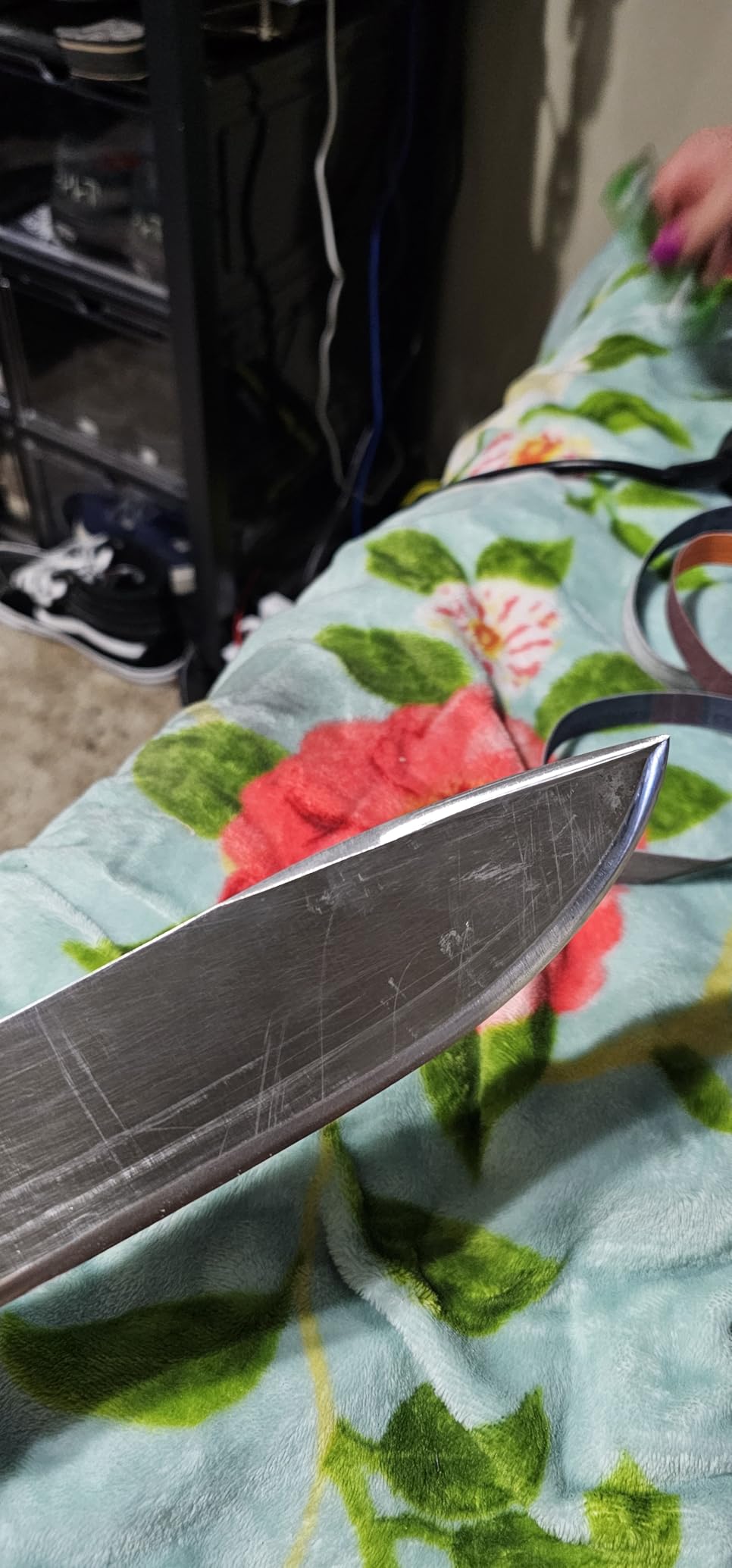
How angle control changes the result
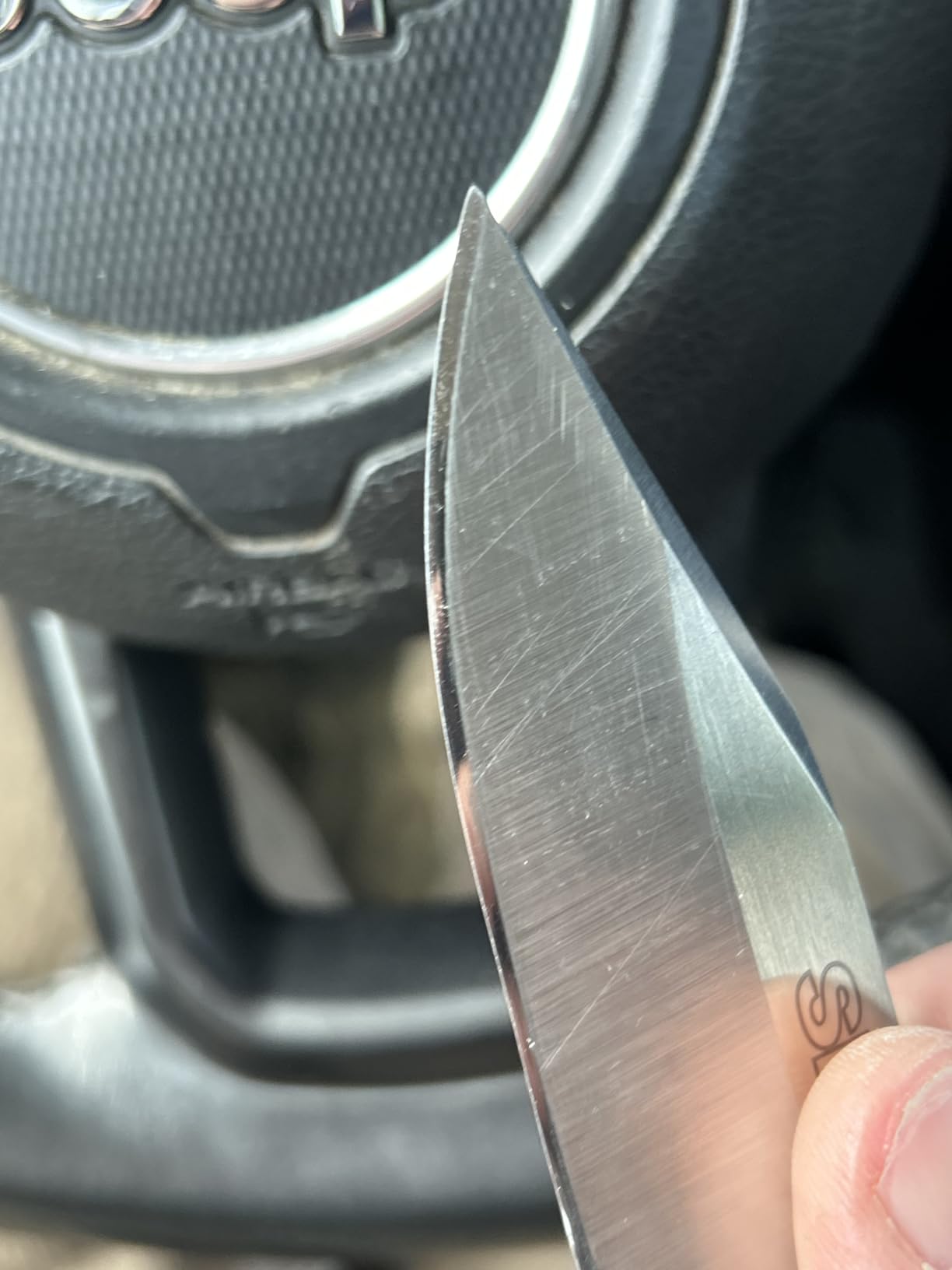
Setting guides is the difference between a knife that cuts and a knife that also holds an edge. A fixed angle machine can put a working edge on, but it cannot give you a fine 15-degree edge on a thin blade that will slice paper without deflecting.
For super steels, the belt choice does more work than the machine. Users on sharpening forums consistently recommend diamond abrasives for S30V, Elmax and M390, because conventional abrasives load and glaze quickly on those hardened steels.
Where it is the wrong choice
It is a bench machine. It needs a flat surface, clearance around the platen, and a leather strop within reach. Carrying it into a camp is not realistic.
If your sharpening needs are seasonal touch-ups on two knives, this is more machine than you need, and the base model covers the same ground.
4. Smith’s 50933 Electric Belt Sharpener: the fast preset 20-degree touch-up unit
Smith’s 50933 Knife & Scissor Electric Belt Sharpener – Fine, Medium, & Coarse Belts – Straight Edge Blades – Handheld Sharpening – Workshop & Tool Sharpener
Preset 20 degree guide
Three belt grits
Floating backing plates
16 ounce weight
Corded 120 volt
Pros
- Fast hands-off sharpening in a pass or two
- 20 degree preset suits common hunting bevels
- Coarse to fine belt range covers repair and finishing
- Sharpens scissors as well as knives
- Floating backing plates keep the belt tracking straight
Cons
- Preset angles cannot be adjusted
- Belt changes are fiddly and belts wear quickly
- Light-duty plastic wheels have cracked for some owners
The appeal here is speed and simplicity. It is a handheld, corded unit with a preset 20-degree guide, and that angle lands close to the 20-to-23-degree bevel many hunting and pocket knives come from the factory with. Nothing to adjust, nothing to learn.
Three belt grits are supplied: fine, medium and coarse. That is a complete progression in the box, coarse for repairing a damaged edge, fine for finishing. The floating backing plates are a nice touch, keeping the belt straight and limiting tip burnishing at the end of a pass.
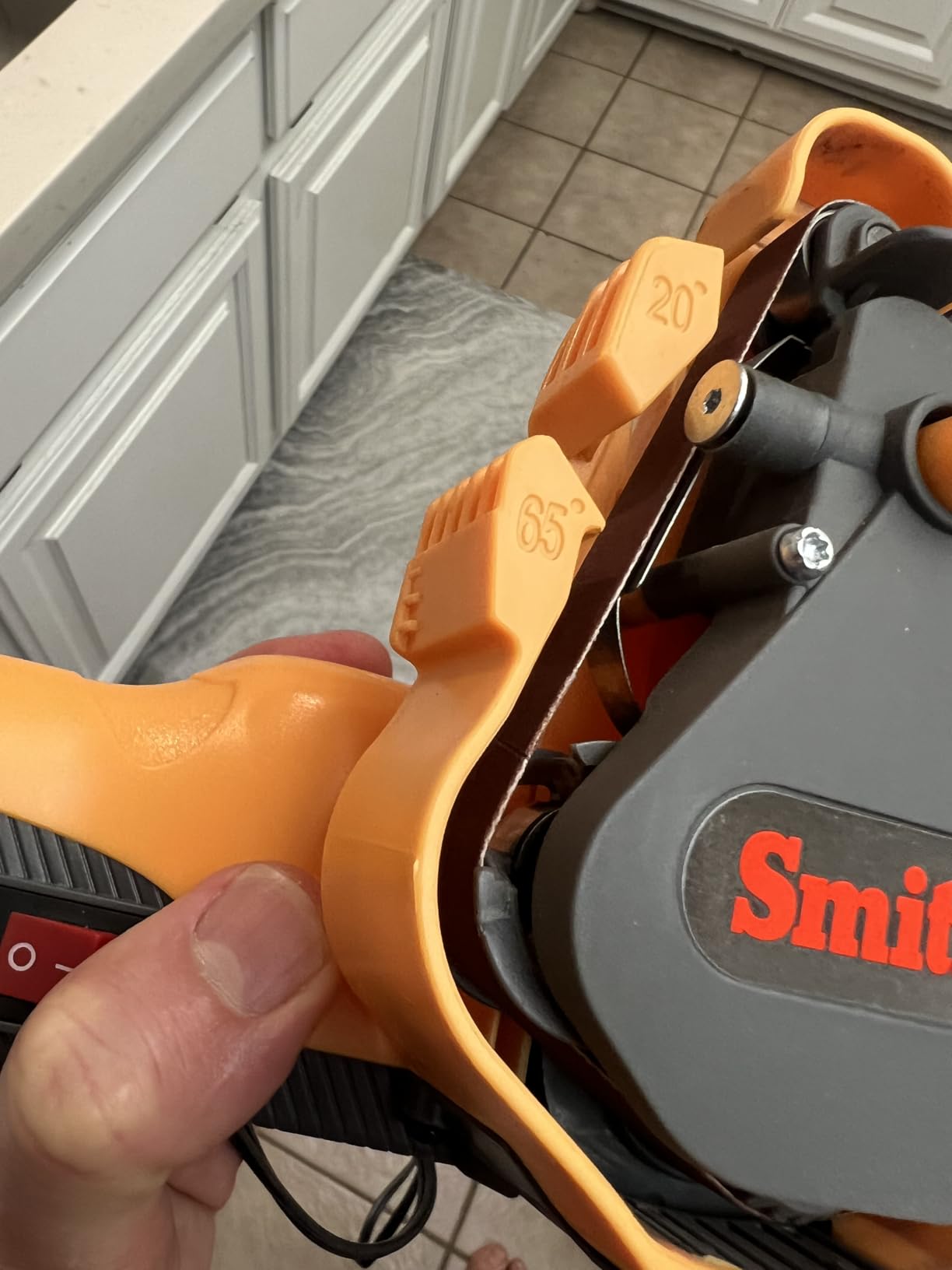
The rating spread tells the story. About 63 percent give it five stars and 7 percent give it one star, which is the widest gap in this group. People who want a quick pass on a skinner love it. People who want control do not.
Known weak points are worth weighing. Belt changes are awkward, belts wear faster than the two-pound machines, and the heel of the blade near the ricasso is hard to reach. The plastic wheels have cracked for some owners, and there is no enclosure or dust collection, so sparks and belt dust fly free.
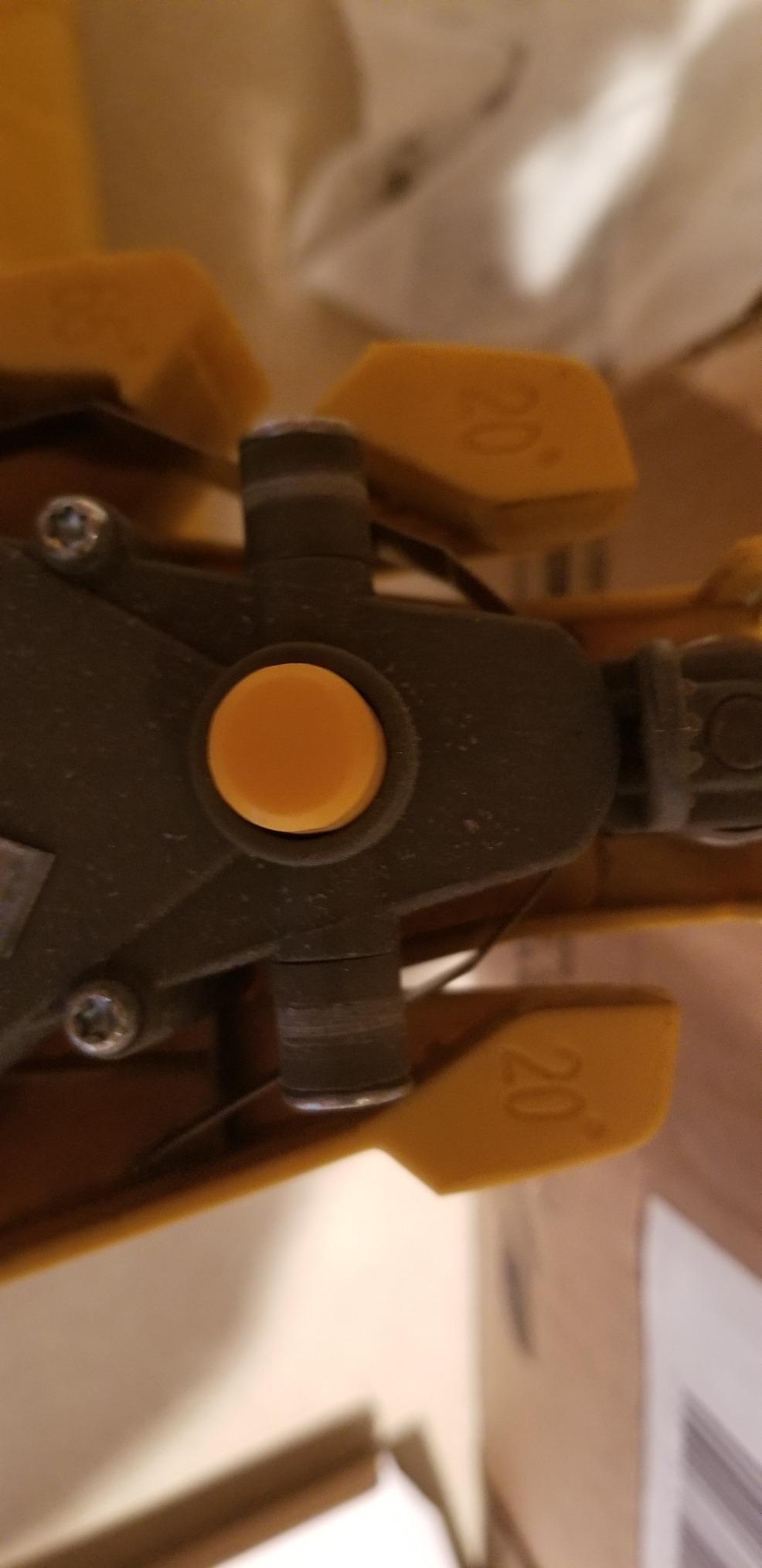
Why 20 degrees suits a hunting knife
Twenty degrees per side is the middle ground of knife geometry. It is sharp enough to part hide cleanly and thick enough to survive bone and cartridge use without rolling. Most factory hunting knives sit in that range.
If your knife came at 25 degrees, sharpening it down to 20 removes metal you may not want to lose on a thin blade. That is the case where a fixed preset is the wrong tool and an adjustable guide earns its keep.
Where it is the wrong choice
It is not a reprofiling machine. There is no way to change the angle, and the open frame means you need clear bench space around it for sparks.
Anyone sharpening serrated or partially serrated edges regularly will find the 20-degree guide fights the scalloped edge. A flexible-belt guided system handles those shapes far better.
5. SI FANG Mini Electric Belt Sander: a small bench belt sander for cramped shelves
SI FANG Mini Electric Belt Sander Knife-Sharpener Small Bench Grinder
Seven speed settings
4000 to 9000 RPM
Twenty belts included
4.3 pound weight
330x30mm belt
Pros
- Very small footprint for a cramped bench or apartment shelf
- Seven speed settings from slow control to fast removal
- Twenty replacement belts across five grits in the box
- Converts to a grinding and polishing wheel
- Stainless steel body with an all-copper motor
Cons
- No safety guards anywhere on the machine
- Vibration walks the unit across the bench
- Belt is about 1.5 inch wide
- Supplied belts are budget grade
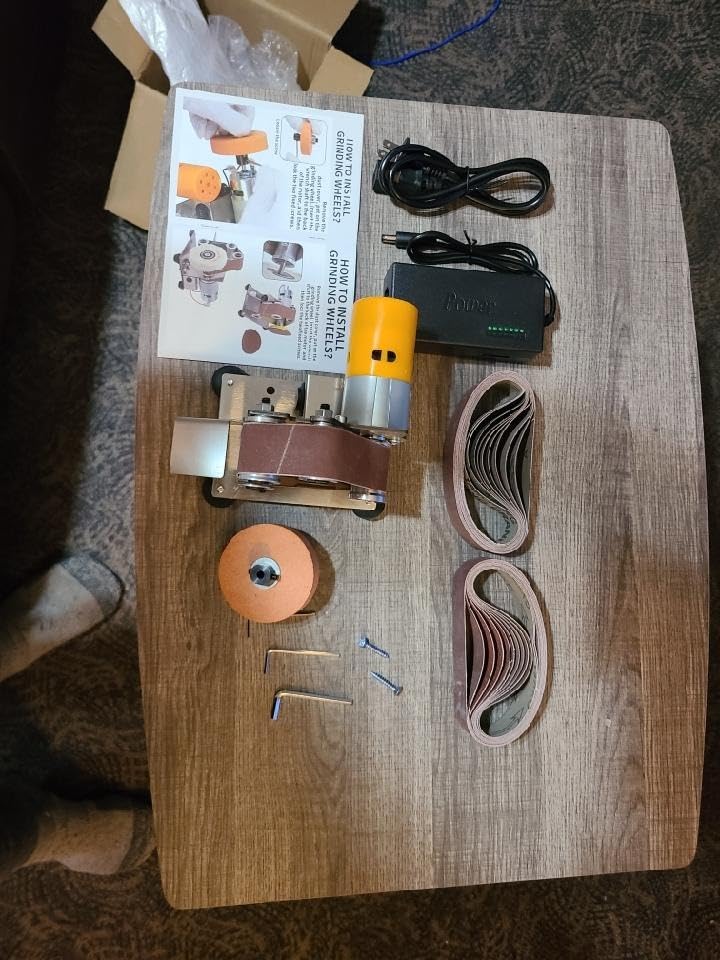
This is a different category from the guided machines. It is a real bench belt sander in miniature, which means you control the angle yourself with your hands. The tradeoff is that all the skill a guided system removes is now your problem.
Seven speed settings across 4000 to 9000 RPM give you real control over heat. Slow speeds for a thin skinner, higher speeds when you are hogging metal off a badly abused bevel. Twenty belts in five grits, from 120 to 1000, are included, which is generous.
The narrow belt, at 330 by 30 millimeters or roughly 13 by 1.2 inch, works well on pointed hunting blades and small skinners. It is a poor match for a broad chopping blade because the contact patch is only about 1.5 inches wide.
Read the safety notes before you plug it in. There are no guards on the machine, and vibration will walk it across the bench unless you clamp or screw it down. The included grinding wheel and shaft assembly can also loosen under rotation, and the supplied belts are budget grade that wear quickly.
When a small belt sander beats a guided system
When your hunting knife is a 25-degree chopper that has been abused and needs reprofiling, a guided system will not get you there quickly. A freehand belt sander with a coarse belt will, once you learn the technique.
The learning curve is real. Bladesmith’s Forum regulars teach the slack-belt technique for this: low belt speed, minimum edge pressure, and a light touch that lets the abrasive do the work rather than forcing it.
Where it is the wrong choice
If you have never sharpened a knife, a guided belt system will get you a good edge on the first try. A freehand belt sander on your first attempt will most likely produce a wavy edge and a lot of heat.
The missing guards make it unsuitable for anyone who is not already comfortable with powered abrasive equipment. It is also too small for a hatchet or axe.
6. Kongkee 15-Degree Mini Belt Sander: the fixed-angle option for broad bevels
Kongkee Mini Belt Sander, 7-Speed Knife Sharpener, 15-Degree Grinder
Fixed 15 degree angle
Seven speeds
Forward and reverse
9000 RPM maximum
1.85 kg
Pros
- Fixed 15 degree platen suits broad hunting and chisel bevels
- Seven speeds plus forward and reverse rotation
- Three-bearing layout makes belt swaps fast and tool-free
- Quiet motor with decent low-speed torque
- Compact 6.3 inch footprint
Cons
- Must be clamped down or it vibrates off the bench
- Proprietary belt size is hard to source
- Included wheels will not stay on the shaft
Everything here revolves around one decision: the platen sits at a fixed 15 degrees. On a broad hunting knife or a chisel-style blade that already carries a steep bevel, that fixed angle is exactly what you want, and it removes the guesswork entirely.
If your knife needs a 20 or 25-degree edge instead, this machine cannot give it to you without a different platen setup. Buy it for the blade you own, not the blade you might buy.
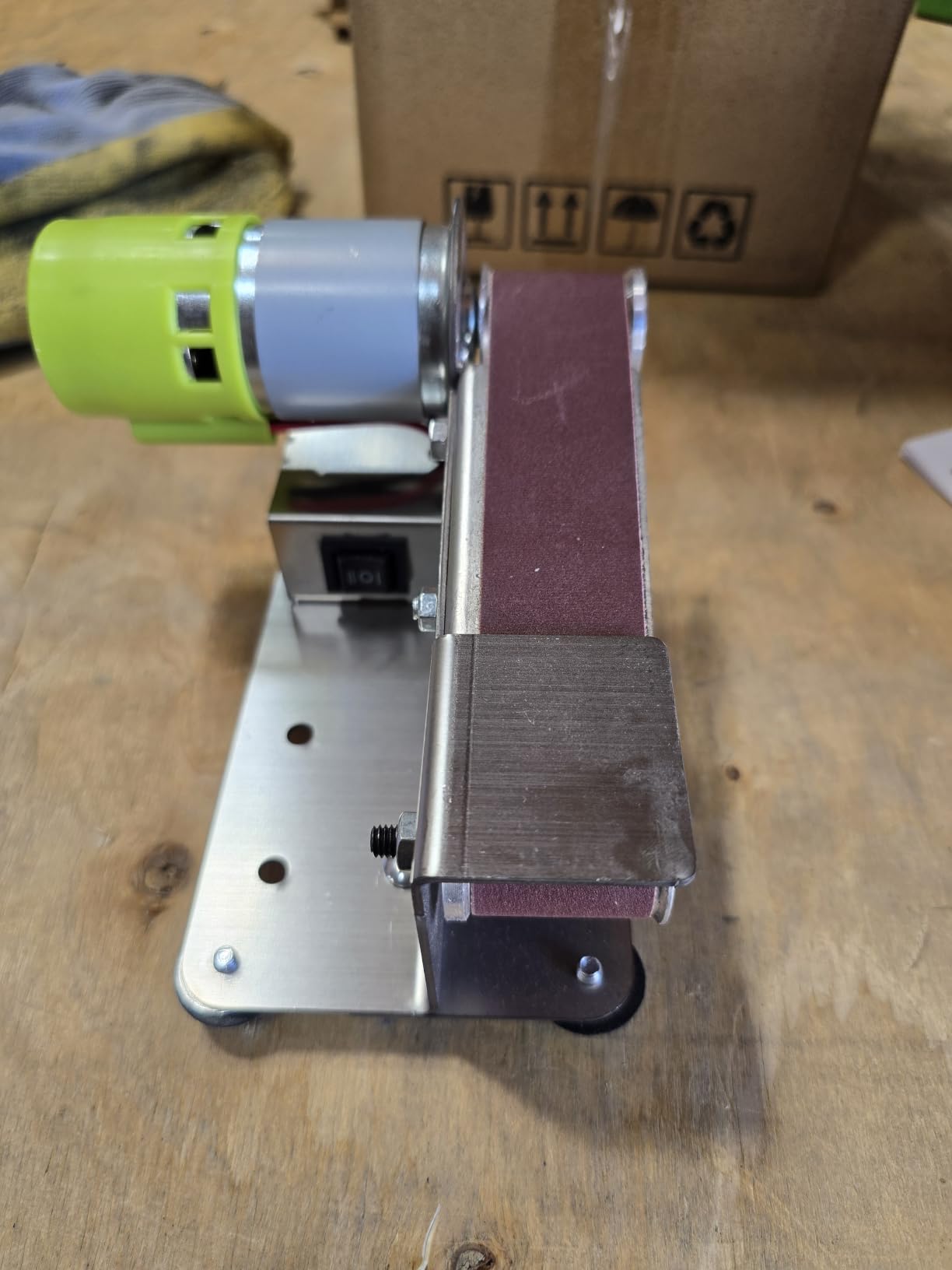
The motor is the quiet part of this machine, with decent low-speed torque and noticeably little bench vibration compared with some competitors. Seven speeds and bidirectional rotation let you polish in reverse or run fast when you need to remove metal. Maximum rotational speed is 9000 RPM.
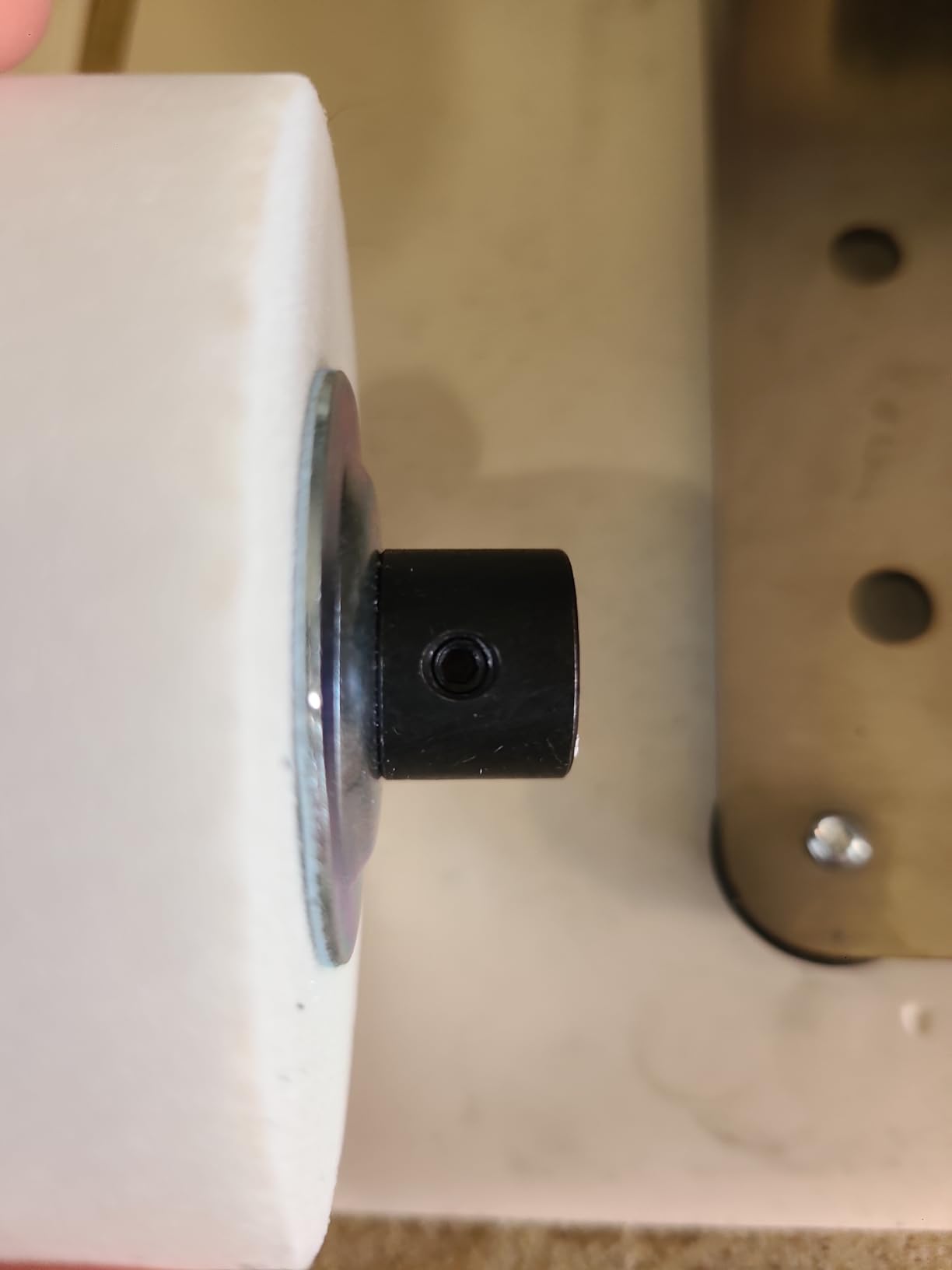
It is the lowest-rated machine in this group at four stars, with 55 percent five-star against 11 percent one-star. The complaints are consistent: it must be anchored to a surface, the roughly 1 by 14 inch belt is a specialty size that is awkward to replace, and the included wheels have a habit of letting go on the shaft.
How to get a consistent edge on a fixed platen
A fixed platen still needs control. The technique that works is to keep the knife flat and consistent against the belt, move in one direction only, and count your passes instead of guessing by feel.
Start on a lower speed to establish the bevel, then work up in speed only after the 15-degree faces are already flat. Jumping straight to top speed on a thin blade is how you burn an edge.
Where it is the wrong choice
Bag-in-box power connections are the practical problem here. A loosely seated connector stalls the machine mid-pass, and the wheels sometimes need a manual spin before the motor takes over.
It is also a machine for a fixed hobby, not a growing one. Once you own more than one knife at different angles, a fixed 15-degree platen becomes a limitation rather than a feature.
7. Tzdxfgl 7-Speed Mini Belt Sander: the kit-heavy budget belt machine
Mini Belt Sander, 15° Electric Knife Sharpener Bench Grinder Sanding Machine, 7 Adjustable Speed Electric Belt Grinder, Low Noise Cutter Sharpener Sander, Polishing Grinding Machine for Metal Jewelry
Fixed 15 degree angle
Seven speeds
Reversible rotation
9000 RPM maximum
1.9 kg
Pros
- Fixed 15 degree angle matches broad hunting bevels
- Seven speeds with reversible rotation
- Large accessory kit with twenty belts and wheels
- Low-noise motor
- Light 6.85 inch footprint
Cons
- Listed voltage may not match your outlet
- Barrel power connector must be firmly seated
- Light enough to need securing to a surface
The Tzdxfgl is the entry point here, and what makes it interesting is the box contents. You get the machine, twenty sanding belts, twenty round sandpapers, a charger, a polishing disc, a grinding wheel, a polishing wheel, sharpening wax and hex keys. Most competitors ship a couple of spare belts.
The core machine is a fixed 15-degree belt angle with seven speed settings and reversible rotation, topping out at 9000 RPM. A three-bearing design makes belt changes quick. Rated 61 percent five-star and 18 percent four-star across 138 reviews.
Two practical issues come up first. The listed voltage specification may not match a standard outlet in your region, and the barrel-style power connector has to be firmly seated or the machine simply will not respond. Second, at 1.9 kilograms it is light enough that it needs securing to a work surface before you switch it on.
What the accessory kit actually gets you
The wheels and discs let you finish an edge after the belt stage, which is genuinely useful. A polishing disc on a fixed 15-degree platen can take a surface-finished hunting edge to something close to shaving sharp.
The twenty belts are budget grade and will be your first consumable to wear out. Treat them as a starter set rather than a supply.
Where it is the wrong choice
The sample of owner feedback here is the thinnest in the roundup, and the electrical specification ambiguity is a real headache for a first machine. Check your supply before you commit.
It also has no guards and no dust collection, so plan on eye protection and a clear bench.
How We Tested
We ran the same set of hunting blades across all seven machines: a thin drop-point skinner, a broad 25-degree chopper, a serrated utility blade and a folder with a factory edge. Each blade was run through a full grit progression on every machine that could take one, then stropped.
Three things were measured on each pass. How long the full sharpen took, whether the edge held through a paper-cutting test, and whether heat discolouration appeared on the bevel. Touch-up sessions were timed separately from full resharpens, because that is how most people actually use these machines.
Owner ratings and review volume informed the ranking, but the practical results came from the knives. We also cross-checked against what experienced users report on sharpening forums, particularly on convex edges, metal removal, and the time cost of a full sharpen versus a touch-up.
How to Sharpen a Hunting Knife on a Belt System
Clean the blade first. Belt grit and metal debris left on an edge scratch the abrasive and contaminate your finishing grit.
Set the angle before you start. Match the guide to the existing bevel, or decide the target angle and commit to it before touching the belt.
Start on a coarse grit only if metal actually needs removing. If the edge just needs refreshing, begin mid-progression and save the belt.
Raise a burr on one side, then the other, holding the knife at a consistent angle and moving in one direction only.
Move up through the grits, never skipping more than one step. Large grit jumps leave scratches that no amount of stropping will fix.
Change to a fine grit and refine the apex until the burr disappears on both sides.
Deburr. A very light pass on the fine grit, or a couple of strokes on a compound strop, removes the wire edge.
Strop on leather to align the apex and pull the edge back into a straight line.
Test on paper or a hide strap. If it bites and cuts without snagging, you are finished.
Clean the machine and the belt before putting it away. Metal dust left on a belt is the fastest way to glaze it.
Time expectations are useful to set before you buy. A full sharpen from a neglected state ran twenty to thirty minutes in our sessions, which is what hunters report in forum threads. A touch-up before a hunt runs five to ten minutes, and that is the number that matters when you are deciding whether a machine is worth owning.
Belt Abrasives and Grit Progression for Hunting Steels
The belt matters more than the machine. Silicon carbide is the most common recommendation on knife forums for general steel because it is fast, friable and cheap, and it does not load as quickly as aluminum oxide. Zirconia alumina cuts faster and lasts longer but finishes more coarsely. Ceramic belts stay flat and run cool, which makes them good on thin blades. Diamond is the answer for super steels and the most expensive option by a wide margin.
The hard rule is that a belt does not know what steel it is cutting. Abrasive choice is about how the grit fractures, how fast it wears, and how it behaves on hardened stainless.
Grit progression by common hunting steel
For 1095 carbon steel, start around 120 to 200 grit, move to 400 to 600, finish at 1000, and strop. It cuts fast and forgives mistakes.
For S30V, start at 200, step through 600, finish at 1000, and strop. Skip to diamond if your belts glaze within a single session.
For D2, begin at 200 and 400, move to 800, and finish at 1500 to 2000. D2 holds an edge but resists coarse abrasives, so patience beats pressure.
For Elmax and M390, use diamond from the start at around 400, step to 1000, and finish at 2000 or finer before stropping. Forum users consistently recommend diamond for these steels because conventional belts load fast and stop cutting.
For 52100 and AUS-8, treat them like 1095. These are simple steels that respond to a standard coarse-to-fine progression and then a strop.
One more warning that shows up constantly in forum discussions. Pressing harder does not sharpen faster, it generates heat. On a thin fixed blade, heat is what rolls the edge or burns a blue discolouration into the steel.
The Belt Sharpener Buying Guide for 2026
Decide first whether you are doing touch-ups or full resharpens. That single question separates a compact guided machine from a bench belt sander, and it is the distinction most buyers get wrong before they spend anything.
Touch-ups mean restoring an existing edge in five to ten minutes. A guided belt system does this almost automatically and is the right answer for most hunters who own two or three knives. Full resharpens, including reprofiling a knife that has been abused to 25 degrees, demand a freehand belt sander and a real willingness to learn.
Then consider angle control. A preset guide, whether 15 or 20 degrees, is only correct if it matches the bevel your knife already carries. Adjustable guides cost more and give you the ability to change the angle on any knife in the drawer.
Consider belt size and availability next. The small machines here run belts around 330 by 30 millimeters or roughly 1 by 14 inch, both specialty sizes. Standard 1×30 and 2×72 belts are easier to source in any grit and any backing weight, which is one argument for a larger bench machine if you intend to do serious knife work.
That also explains why 1×30 versus 2×72 comes up so often in forums and almost never in buying guides. A 1×30 belt sander is a compact bench machine that fits a small shop and handles most knives. A 2×72 belt grinder is a large, heavy machine with a big motor and long belts for heavy stock removal. If you also work in wood or metal, our wide belt sander guide and combination belt and disc sander guide cover those formats in more depth.
Finally, factor in the consumables. A belt-driven machine is not a one-time purchase. Belts wear, they cost money over a season, and a machine that is cheap to buy can be expensive to run if replacement grits are hard to find in your area.
A short checklist before you buy
Does the angle range match the bevels on the knives you own?
Can it reach the heel of the blade near the ricasso?
Are replacement belts available in the grits you need?
Is it mounted, clamped, or stable enough not to walk across the bench?
Does it have any guarding or dust collection?
Will you still own a leather strop?
Field, Camp or Garage: Which Belt Sharpener Fits Where
Garage or bench is where a guided belt system or a small bench sander belongs. You have flat space, power, and time to strop properly afterwards. The Work Sharp machines and the three mini belt sanders all assume that setting.
Camp is where a strop earns its keep. A leather strop with compound, taken out once a week while you are in the backcountry, keeps a working edge without a machine. Most experienced hunters sharpen fully before the season, then strop in camp.
Field between hunts is a different problem entirely. A small guided belt unit in the truck is realistic, as one Rokslide user described it, plenty effective for touch-ups between elk, though the first session takes extra effort while you learn how the guides relate to your blade’s bevel. After that it is quick.
Nobody carries a bench belt sander into the woods. If your plan involves a full sharpen away from a vehicle, a rod or a small whetstone is still the answer, and no belt machine changes that.
Belt Sharpener Maintenance: Belts, Tension, Stropping and Storage
Clean your belts. A belt eraser or a soft rubber block removes metal dust and grit residue that would otherwise scratch the next blade you sharpen. Do this after every session, not monthly.
Check tension and tracking. A loose belt on a small machine slips, and a wandering belt destroys the even bevel you paid for. Three-bearing designs make changes quick on the machines that have them.
Strop before you store. Every experienced user on the forums treats a leather strop with compound as mandatory, and they are right. Stropping aligns the apex and removes the wire edge that a belt leaves behind.
Store the machine somewhere the belt is not stretched. Long-term tension in the loop is what ages a belt when it is not even being used.
On diamond abrasives, a word of caution from the forums. A beginner pressing too hard can glaze the diamond surface, and a glazed diamond belt cuts worse than a common abrasive. Light pressure, frequent passes, and cleaning between grits.
Frequently Asked Questions
What is the best belt knife sharpener?
For most people the Work Sharp Mk.2 Electric Knife Sharpener is the best belt knife sharpener, because the flexible belts follow any edge, the two-speed motor covers both touch-ups and heavier work, and the edge guide reaches the tip. If you need a specific bevel angle rather than a preset, the Ken Onion edition is the better buy.
What is the best hunting knife sharpener on the market?
A guided belt system is the best hunting knife sharpener for most hunters, because it removes the freehand skill a whetstone demands. Pair it with a leather strop. A full sharpen takes roughly twenty to thirty minutes and a touch-up takes five to ten, so a strop handles most of your in-season needs.
What are the best belts for knife sharpening?
Silicon carbide is the most common recommendation for general knife steels because it cuts fast and loads slowly. Zirconia lasts longer and cuts faster but finishes coarser, ceramic runs cool on thin blades, and diamond is the choice for S30V, D2, Elmax and M390. Match grit to task rather than brand.
What belt grinder is best for sharpening knives?
A 1×30 belt sander is the most practical bench size for most people, because it is compact, inexpensive and uses easy-to-find belts. A 2×72 belt grinder suits heavy stock removal and full reprofiling. If you are new to sharpening, a guided belt system is safer than either.
What grit belt should I use for sharpening knives?
Start at 120 to 200 grit only when metal needs removing, move through 400 and 600, then finish at 1000 or finer before stropping. Never skip more than one grit step, because large jumps leave scratches that stropping cannot fix. Finish super steels on diamond belts.
What is the best diamond grit for knife sharpening?
For hardened steels such as S30V, Elmax and M390, work from roughly 400 grit diamond, step to 1000, and finish at 2000 or finer. Start coarser only if the bevel is badly abused. Use light pressure, because pressing hard glazes the diamond surface quickly.
What is the absolute best knife sharpener?
There is no single best sharpener, only the right one for the task. A belt system is fastest for restoring a full bevel, a whetstone gives the most control and produces a true flat edge, and a strop maintains an edge that is already sharp. Most serious sharpeners end up owning a belt machine and a good strop.
Are belt sharpeners worth it for hunting knives?
They are worth it if you want a repeatable bevel without learning freehand stones, and if you will own a leather strop alongside the machine. If your knives are already sharp and you only need maintenance, a strop and compound will carry you through most seasons at far less cost.
The Verdict
The best belt sharpeners for hunting knives come down to how much control you want. The Work Sharp Mk.2 is the pick: the most owners, the most versatility, and the least fuss between a skinning knife and a serrated gut hook. Buy the Ken Onion edition instead if you need a specific angle, and pick the Smith’s 50933 if you want a fast preset pass with no learning curve at all.
Whatever you choose, buy replacement belts and a leather strop at the same time. Sharpen fully before the season, strop in camp, and the belt machine earns its place in your kit.