
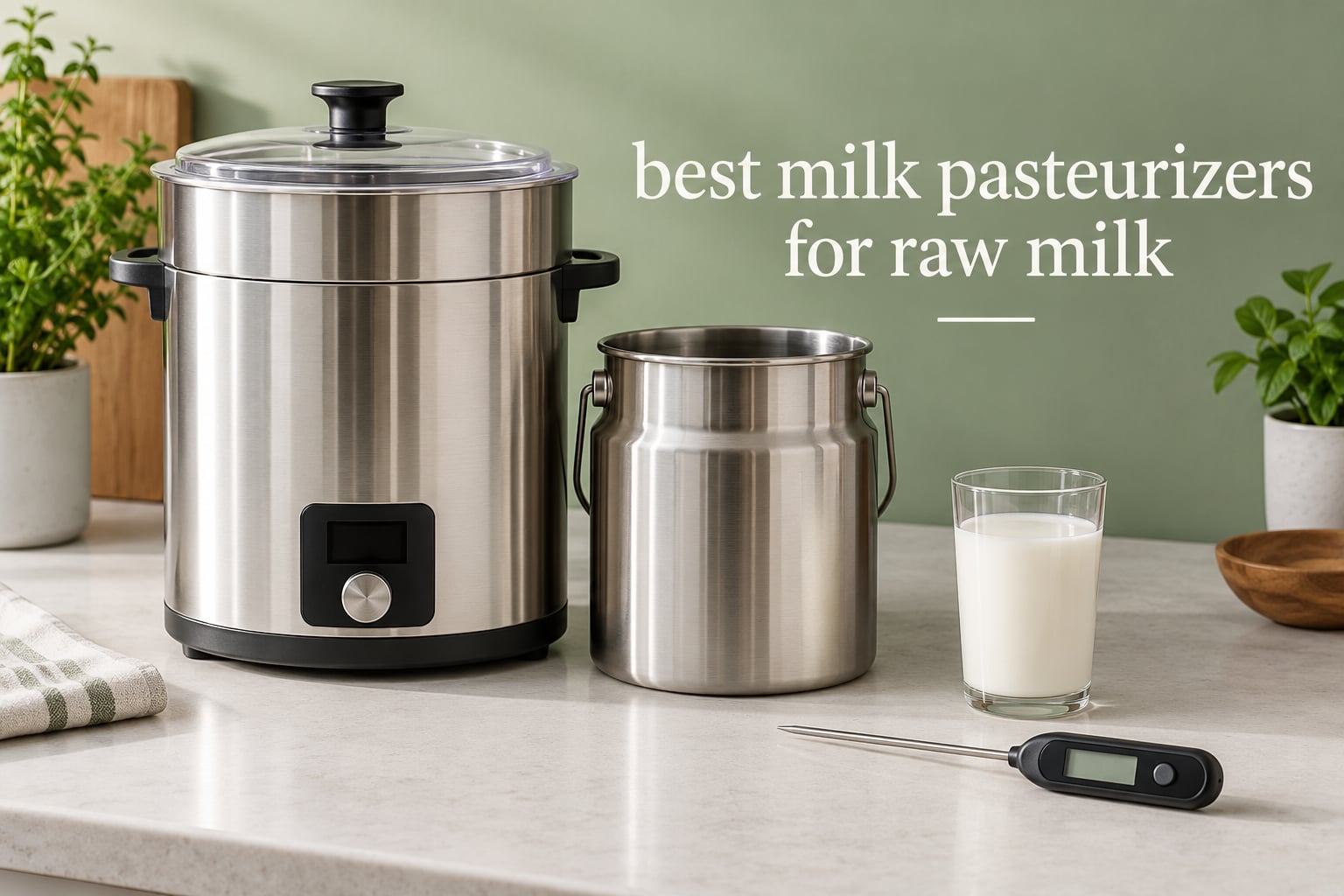
A milk pasteurizer for raw milk is an electric stainless steel unit that heats raw milk to a controlled temperature for a set time to kill pathogenic bacteria, then cools it quickly so it is safe to drink and keeps longer than raw milk would. The heating step does the sanitizing. The cooling step is what actually buys you shelf life.
Most people searching for the best milk pasteurizers for raw milk fall into one of two groups: a family with one or two cows who wants safe milk for their own kitchen, and a small farm processing ten gallons or more a day. Those two groups need very different machines, and buying the wrong size is the single most common expensive mistake in this category. A 2-gallon home canister and a 150-liter floor vat serve no overlapping purpose.
We compared 10 countertop and vat pasteurizers for this guide, reading every published spec sheet and cross-checking the numbers that actually determine whether milk ends up safe: batch capacity, electrical supply, whether the machine cools as well as heats, and how the temperature is held. The short version is that most units in the 13L to 20L range heat beautifully and then leave you to cool the milk yourself in buckets, and that single fact drives shelf life more than any heating spec.
One more thing before the picks. If you are processing less than a gallon at a time, a machine is often the wrong purchase. The top-voted advice in the r/homestead pasteurization threads is to skip the machine entirely and use a large pot, a food grade thermometer, and a double boiler, which costs almost nothing and uses far less energy. We agree for sub-one-gallon batches, and we explain the full method below.
Top 3 Best Milk Pasteurizers for Raw Milk (October 2026)
Schlueter Home 2-Gallon Pasteurizer
- 2 gallon canister
- 1250W plug-in
- 25 minute cycle
- removable dishwasher safe pail


Koalalko 13L Countertop Unit
- 13L food grade 304 steel
- timer and thermostat
- 110V plug
- overheat protection
All 10 Milk Pasteurizers Compared in 2026
| Product | Specifications | Action |
|---|---|---|
| Schlueter Home 2-Gallon Pasteurizer |
|
Check Latest Price |
| Kolice 14L Stainless Pasteurizer |
|
Check Latest Price |
| Koalalko 13L Countertop Pasteurizer |
|
Check Latest Price |
 Wtecom 14L Countertop Pasteurizer Wtecom 14L Countertop Pasteurizer |
|
Check Latest Price |
 Kolice 150L Vat Pasteurizer Kolice 150L Vat Pasteurizer |
|
Check Latest Price |
 Milky FJ 30 Pasteurizer Milky FJ 30 Pasteurizer |
|
Check Latest Price |
 MXBAOHENG 30L Pasteurizer MXBAOHENG 30L Pasteurizer |
|
Check Latest Price |
 Koalalko 20L Heat and Cool Unit Koalalko 20L Heat and Cool Unit |
|
Check Latest Price |
 Kolice 20L Refrigerated Pasteurizer Kolice 20L Refrigerated Pasteurizer |
|
Check Latest Price |
 MXBAOHENG 100L Commercial Unit MXBAOHENG 100L Commercial Unit |
|
Check Latest Price |
1. Schlueter Home Milk Pasteurizer (2 Gallon, 115V) – Best for a Family Cow
The Schlueter Company Home Milk Pasteurizer [115V]
2 gallon stainless canister
1250W, 115V plug-in
9 lb, 10 x 10 x 14 inch
About 25 minutes per cycle
Pros
- Simple plug-in operation with an audible buzzer when the cycle ends
- Pasteurizes a 2 gallon batch in about 25 minutes
- Canister lifts out for cleaning and doubles as a storage vessel
- Works with both goat and cow milk
- Only 9 lb so it moves easily between the kitchen and the milk room
Cons
- Home use only and not rated for commercial operation
- A 2 gallon cap means several batches for even a small herd
- Heats without any active cooling stage
This is the unit that most homestead buyers end up with first, and for a single family cow it makes sense for a simple reason: you pour milk into a 2-gallon stainless canister, pour water into the outer chamber, plug it in, and the buzzer tells you when the cycle is done. The listing states about 25 minutes from start to finished pasteurized milk.
What I like is the shape of the design. There is no panel to program and no mode to select. One button, one canister, one buzzer. For someone who milks three or four gallons a day and wants drinking milk for the household, that simplicity removes the most common failure mode, which is a cycle set wrong and nobody noticing.
The canister lifts out and is dishwasher safe, and it doubles as the vessel you store and serve from. That removes a wash step and a transfer step. Nothing about the design suggests it belongs in a cheese or yogurt workflow, so treat it as a drinking milk machine only.
The honest limitation is capacity. At 2 gallons you are running two, three, maybe four cycles for a small herd, and each cycle means heating, holding, cooling the milk yourself, and cleaning the canister. It also does nothing to cool the milk. Fast cooling is what preserves flavor and shelf life, so you need an ice bath or a bulk tank ready for every batch.
What you get for 25 minutes of run time
The cycle is fixed rather than user-programmable, which is both the strength and the limitation. You get repeatable results without any judgment call, but you also cannot adapt the hold time if you are making cultured dairy or working with unusually cold milk straight off the cow.
At 1250W on a standard 115V circuit it draws meaningful current for a kitchen appliance but stays inside normal household circuit limits. No dedicated circuit, no hardwiring, no electrician. That is a real advantage over almost every other unit in this list.
Where this home pasteurizer falls short
The manufacturer states plainly that this machine is intended for home use only, not commercial operation. If you plan to bottle and sell, that wording matters, and it is worth reading your state rules before you ever fill a bottle.
There is also no temperature display in the listed specifications and no specified hold temperature, which means you are trusting the cycle rather than verifying it. If you want proof that the milk actually reached temperature, run a calibrated food thermometer in the milk yourself during a cycle.
2. Kolice Commercial 14L Pasteurization Machine – Best Value Stainless Tank
Kolice Commercial 14L Milk Pasteurization Machine, Juice Pasteurization Machine, Pasteurizer, Sterilization Dairy Equipment (Heating only without refrigeration)
14 liter stainless tank
110V 60Hz, 1000W, US plug
Batch under 40 minutes
60C-85C, 140F-185F
Auto wash
Pros
- Food grade stainless tank resists corrosion and wipes down easily
- 360 degree stirring leaf spreads heat through the batch
- Acrylic cover shows the process without opening the tank
- Auto wash function saves time on daily cleaning
- Adjustable across a 60C to 85C range so it handles more than milk
Cons
- Heating only with no refrigeration function
- Cannot hold temperature since it stops heating once the set point is reached
- Milk inside loses heat on its own if nobody moves the batch
This 14-liter machine is the one I would look at first for a small farm that wants a stainless vat with real stirring rather than a home canister. The tank is food grade stainless, the stirring leaf sweeps 360 degrees, and the acrylic cover lets you watch the batch without lifting a lid into a face full of steam.
The three published owner ratings average 3.6. What those ratings praise is the stainless construction and how well the stirrer works. What they criticise, consistently, is the heat-only design and the fact that it stops heating the moment it reaches the set temperature instead of holding there.
That last point deserves a warning label in your head. A batch pasteurizer needs to hold the milk at temperature for a defined period. If the element cuts out at the set point and the milk then drifts downward, the hold is shorter than the name on the dial implies. That is exactly why we recommend an independent thermometer for any unit without a hold timer, including this one.
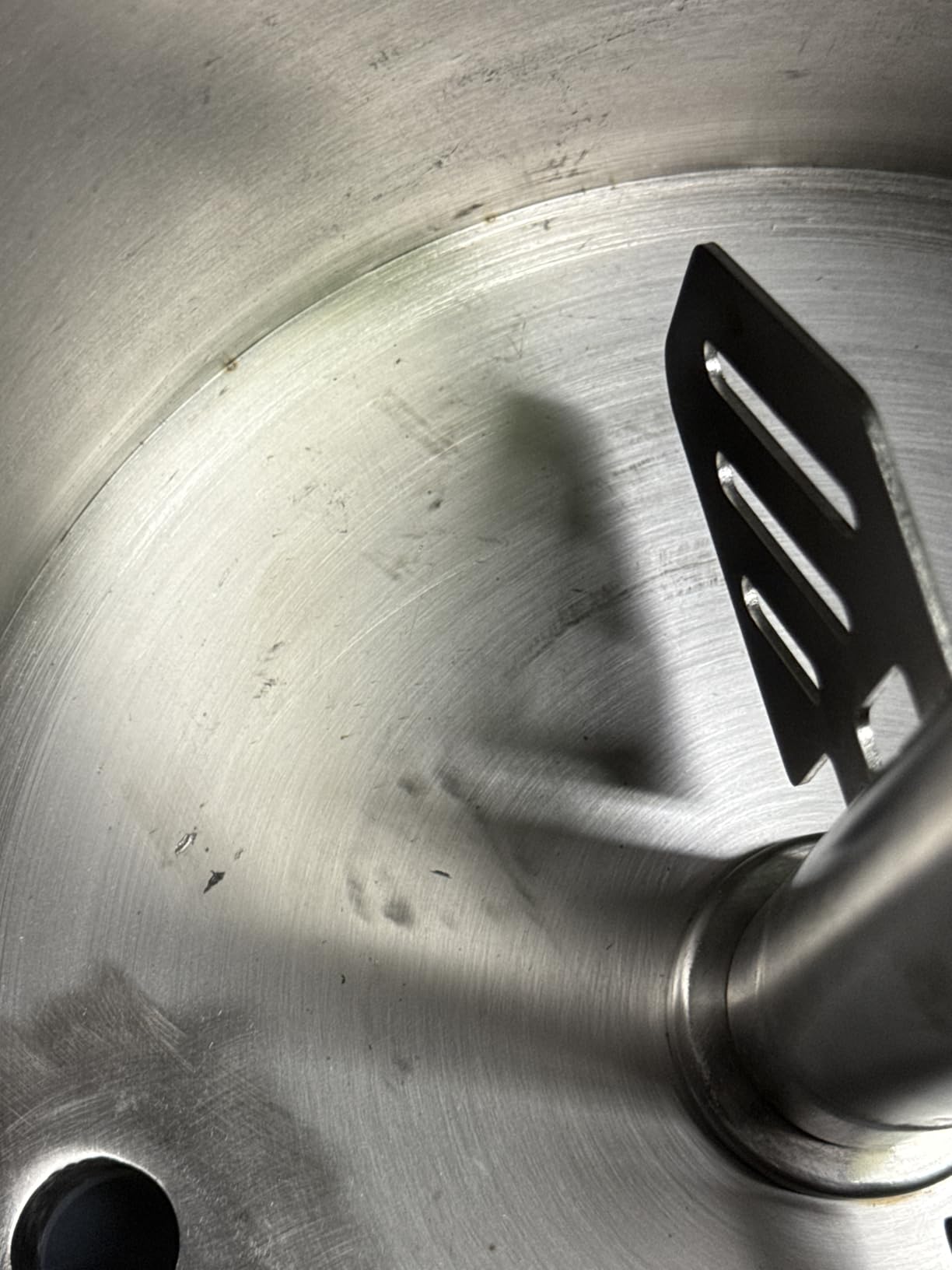
The temperature range is wide for the class, running from 60C to 85C, which is 140F to 185F. That covers a low vat-style hold and a hotter short hold, so one machine can serve drinking milk and also handle juice, sauce, coffee, and beer as the listing states.
At 80 pounds it is a two-person lift, and the sturdy plywood case helps with that. Plan where it will live before it arrives, because you will not be sliding it between counters. It is listed at 110V with a US plug, so no electrical work is needed.
The cooling gap is the deal breaker for anyone chasing shelf life. You are draining and manually cooling every batch, which is the step that takes longer than the heating. Budget an ice bath and a second sanitized container for every run.
Because the machine cannot hold temperature, treat each batch as a timed job. Set the target, keep an eye on the actual milk temperature with a probe, and move the milk out the moment the hold is complete. That discipline is what makes up for the missing thermostat behaviour.
What the stirring and auto wash actually save
A 360 degree stirrer matters more than most buyers realize. Milk heats unevenly in any vessel, and the milk closest to the element runs hotter than the milk at the far wall. Without circulation you get a scorched layer at the wall and an under-pasteurized layer in the middle.
The auto wash function runs a cleaning cycle through the tank and shaft. On a stainless machine that touches food every day, taking that task off the list reduces the chance of a skipped clean, which is where sanitation problems actually start.
Where it falls short
There is no cooling function at all, and that is not a minor gap. Milk left in the machine drops in temperature only by losing heat to a room, which is slow and unreliable. Cool the batch immediately after the hold, in an ice-water bath, to bring it down fast.
The owner feedback pattern is the second warning. Reviewers describe the machine stopping the moment it reaches set temperature and milk losing heat while it sits, so a batch that has finished its cycle is not a batch that is finished. Plan the transfer step before you start.
3. Koalalko 13L Countertop Pasteurization Machine – Budget Pick with a US Plug
Commercial 13L Countertop Pasteurization Machine with Plug for Processing Milk,Juices,Beer,Syrups and other liquid foods,Pasteurizer with Timer,Temperature Control,Auto Wash,Fast Heating,US Plug
13 liter food grade 304 steel
110V 60Hz, 1000W, US plug
60C-85C thermostat range
Overheat protection
Pros
- Comes with a US plug so no wiring is needed
- Built-in timer and temperature control across 60C-85C
- 360 degree stirring leaf promotes even heating
- Acrylic cover and table display keep the process visible
- Food grade 304 stainless resists corrosion
Cons
- Hand wash only
- No active cooling stage
- 13L suits small batches rather than herd volume
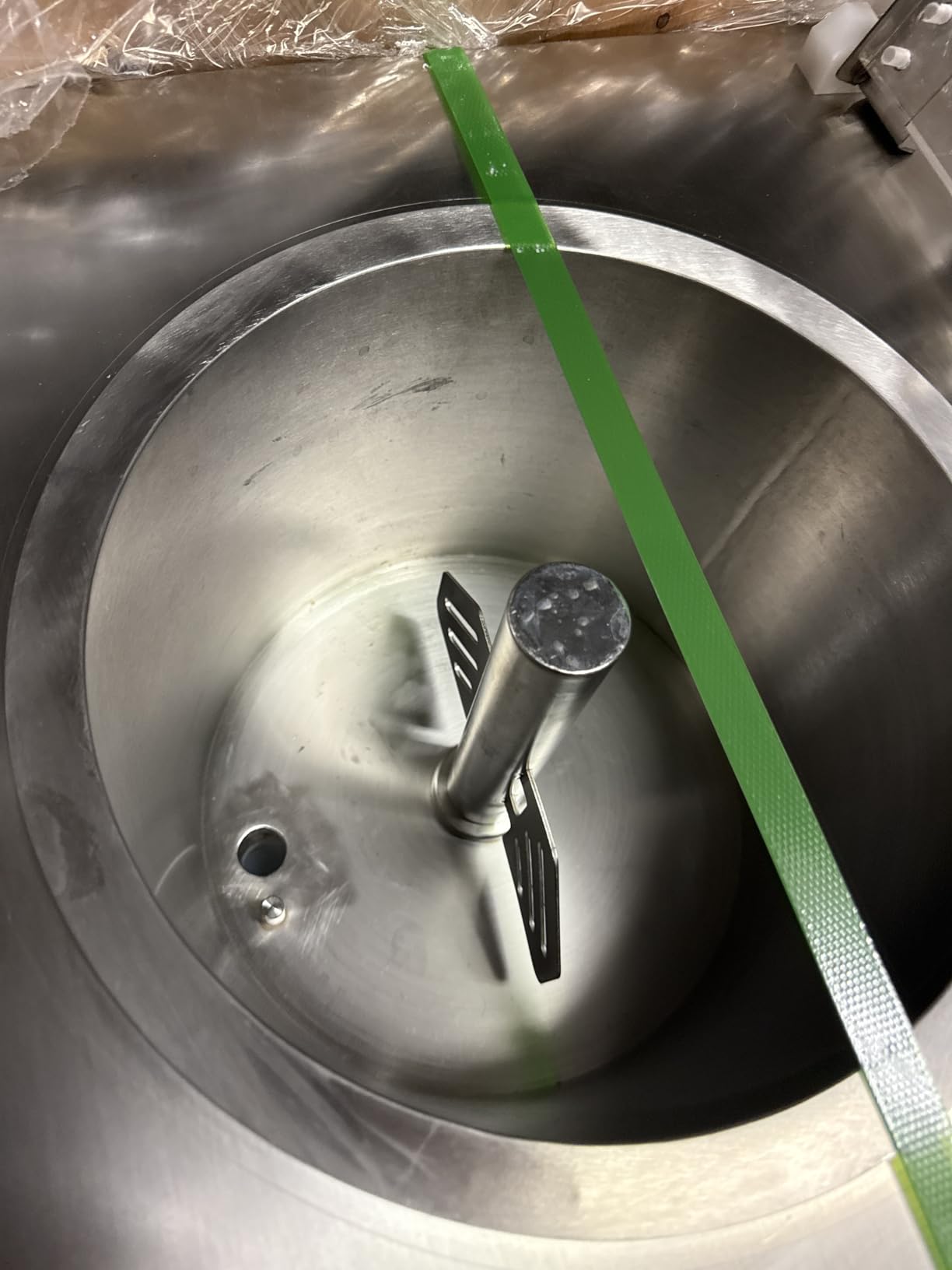
This 13-liter machine sits in the crowded middle of the category alongside several near-identical 13L and 14L stainless boxes, and the honest summary is that they are all variations on the same Chinese-manufactured platform. What separates them is documentation, plug type, and warranty support rather than core capability.
The build is food grade 304 stainless with a 360 degree stirring leaf and an acrylic window over the tank. The listed specs give a 60C to 85C control range, a built-in timer, a US plug at 110V and 1000W, and overheat protection. For a farm under five cows that is a complete package for drinking milk and cultured dairy.
Overheat protection is worth more attention than it gets in listings. On a heating-only machine with no cooling, the single most likely failure is running the element long against a warm tank. A thermal cutout turns that from a ruined vat into an automatic shut-down.
Why a US plug matters more than the wattage
At 110V with a US plug, this unit runs on a standard household circuit. Several machines in the same capacity class run at 220V with no plug included, which means an electrician and a dedicated line before the machine is ever used.
The 1000W draw is a real consideration if you run it on the same circuit as a kettle or a freezer, but a dedicated kitchen appliance outlet handles it without drama.
Where this budget pasteurizer falls short
There are no customer ratings recorded for this listing, which means you have no owner history to lean on when you have a question after month two. On an appliance category where several near-identical listings compete, that absence of feedback is worth weighing against a better-documented alternative at a similar size.
Hand wash only, and no cooling. Both are normal for this class, but both add steps to your process. If shelf life matters to you more than raw throughput, look one tier up at a unit that heats and cools in the same vessel.
4. Wtecom 14L Countertop Sterilization Equipment – Best for Juice and Beer
Wtecom Commercial Countertop Sterilization Equipment Pasteurization Machine
14 liter stainless tank
17.32 x 18.5 x 17.32 inch, 55 lb
60C-85C, 140F-185F
Auto wash and timer
Pros
- Food grade stainless tank built for hygiene and durability
- Compact countertop footprint fits tight work surfaces
- Auto wash and timer cut down on daily manual effort
- Detachable stainless shaft and paddle simplify deep cleaning
- Transparent acrylic cover shows mixing while the machine runs
Cons
- Heating function only with no cooling or refrigeration stage
- No published customer ratings to gauge long term reliability
This is the second of the 14-liter stainless countertop designs, and like its sibling above it is aimed as much at drink makers as at dairy. The listed use cases include milk, juice, ice cream mix, and other liquids, heated from 60C to 85C in 30 to 40 minutes per batch.
The detachable stainless shaft and stirring paddle are the detail worth paying attention to on any machine in this class. A fixed shaft with welded seams traps residue at the base, and welded crevices at the impeller are exactly where a sanitize-by-splash routine leaves biofilm.
The heating element sits in a water bath rather than directly against the milk, which is gentler on protein and reduces the chance of scorching the layer that touches the tank wall. For a product like ice cream mix or a fruit juice, that matters more than the peak temperature does.
What the auto wash and timer do for you
A timer on a heat-only machine is doing double duty. It gives you the hold duration you need, and it removes the temptation to walk away while the element keeps cycling. Combine it with a probe thermometer in the milk and you have a repeatable batch.
Footprint is the other practical win. At just over 17 inches square and 55 pounds, it fits a counter where a 20-liter refrigerated machine at 180 pounds never would. That single fact keeps it in the running for small milk bars and farm kitchens.
Where this pasteurizer falls short
Heating only. Every batch comes out needing a manual cooling step, and the time you spend draining hot water and refilling with cold water is longer than the heating itself. If you pasteurize more than once a day, that labour is the real cost.
There are also no published customer ratings on this listing. Across a category where several machines share near-identical specifications, the ones with any owner history are easier to buy with confidence, so factor that in when you compare.
5. Kolice 150L Commercial Vat Pasteurizer – Best for Herd Volume
Kolice Commercial 150L Milk Pasteurizer Pasteurization Machine Sterilization Dairy Pasteurizer for Milk, Coffee, Ice Cream Mix.,Juice,Sauce-220V,3 Gear Pasteurization Control,Double Layers,No Freezing
150 liter double layer tank
220V 60Hz, 9000W
3 gear controller
Water immersion heating
Pros
- 150L batch handles herd volumes in a single run
- Three gear pasteurization controller matches hold time to different products
- Double layer tank with water immersion heating and 360 degree stirring
- Seamless brushed stainless casing resists corrosion
- Overheating protection with alarm
Cons
- Heating only with no refrigeration so cooling is done by draining and refilling water
- No plug supplied and requires hardwiring to a circuit breaker
At 150 liters this is a floor-standing vat, not a kitchen appliance, and the moment you see the 9000W figure you understand the category has changed. It runs on 220V single phase, comes with no plug, and the listing recommends hardwiring to a circuit breaker plus a city water line connection.
The three gear pasteurization controller is the feature that matters most at this scale. Different milk types, different juice, different beer all want different hold times, and a controller with discrete settings makes those choices repeatable instead of improvised.
Water immersion heating means the element never touches the product directly. On a 150-liter batch the difference between a submerged element and a wall-mounted one is measured in scorched milk, and the immersion design eliminates that failure mode.
What changes when you scale to 150 liters
Cooling. The listing is explicit that this unit does not cool, and that you drain the hot water and refill with cool water two to five times per batch. At 150 liters that is heavy work, done with pumps, and it is the single biggest operational cost of a heat-only vat.
The 360 degree directional stirring inside the tank matters more as volume grows. Heat distribution problems scale with the volume, so a 150-liter tank without active circulation would have dead zones at the wall and centre that no temperature probe on the wall would reveal.
Where this vat falls short
Installation is a real barrier. No plug, hardwiring to a circuit breaker, a water line connection, and a machine standing over four and a half feet tall. This is a purchase that needs a plan for where it goes and who connects it, and it only makes sense if you have steady daily volume.
No customer ratings are recorded for this listing either, and a vat this size is difficult to return once a corner is dented. Get the warranty terms in writing before you commit, and confirm what replacement parts the seller can supply.
6. Milky FJ 30 Kettle Pasteurizer – Best Dual Function Unit with Warranty
Milk Pasteurizer Milky FJ 30 (115V) | For Milk, Cheese, Yogurt and Juice | 9.2 Gal | Made of Stainless Steel | Removable Container | Time and Temperature Control | Made in the EU | 2-year Warranty
29 liter / 9.2 gallon kettle
115V, 1.6kW
Temperature settings to 76C
2 year warranty
Pros
- Largest capacity in the home kettle class at 29 liters
- Electronic control panel with programmable timed operation and auto shutoff
- Burn prevention water layer stops scorching
- Detachable 304 stainless container for easy pouring and cleaning
- Tap connection for immediate cooling of finished milk
Cons
- A 75 minute heat up cycle is slow for small batches
- Hand wash only
This is the one we would trust with a small dairy that also makes cheese and yogurt, because it is genuinely dual function rather than heating with a yogurt label stuck on the box. The FJ 30 is rated for pasteurization and fermentation, with temperature settings up to 76C, and the container detaches for transfer between the two.
The included component list is unusually complete: stainless container and cover, inlet and outlet hoses, thermometer, a holder for that thermometer, the electronic housing, a cooling connector, a temperature sensor, and the 115V electric board. You are not hunting for a missing part on day one.
Running on 115V at 1.6kW keeps it within normal household supply, and the European brand behind it claims more than 50 years of dairy equipment experience with a two year warranty. That is the only warranty longer than a single year anywhere in this roundup.
Why the tap connection is the clever part
Once the pasteurization hold is complete, the cooling connector attaches and you run water through the kettle to bring the batch down fast. That is the step most heat-only countertop machines hand entirely to you, and it is the step that decides shelf life and flavor.
The burn prevention water layer between the element and the milk also reduces scorching on long holds, which matters when you are running a 9.2 gallon batch through a slower heating curve than a small canister.
Where the FJ 30 falls short
Time. The listed warm-up is 4C to 76C in 75 minutes, which is fine for a full batch and wasteful for a half batch. If you only have three gallons, you are paying for thirty liters of heat-up time.
Hand wash only, and cooling still needs the tap connected and a place to drain the hot water. It cools faster than a bucket in a sink, but it is not a refrigerated holding tank, so cool the batch and move it to cold storage promptly.
7. MXBAOHENG 30L Pasteurization Machine – Best Insulated Batch Unit
MXBAOHENG 30L Pasteurizer Pasteurization Machine for Milk Juice Beer Sterilization with Automatic Stirring Mixer Function 220V
30 liter capacity
220V, hardwired, no plug
Food grade 304 stainless
Microcomputer control
Pros
- Food grade 304 stainless tank with a water immersion heating tube
- Microcomputer control gives precise temperature regulation
- Polyurethane insulation structure reduces energy use
- Automatic stirring mixer function keeps the batch even
- Large heating area speeds up warm up
Cons
- 220V only and a dedicated 220V supply is required
- No plug included and the unit must be wired to an air switch
- Sparse published documentation makes spec verification harder
The 30-liter MXBAOHENG trades electrical convenience for thermal efficiency. It runs at 220V, comes with no plug, and expects to be wired to an air switch, which means an electrician before first use. In exchange you get polyurethane insulation around the tank and a water immersion heating tube with a large surface area.
The insulation is the reason to look here. On a big batch, heat loss through the vessel wall is the difference between a warm-up you wait for and one you wait through. A well insulated 30-liter tank holds temperature more steadily during a long hold, which is what a pasteurization hold actually depends on.
Automatic stirring is included, and combined with immersion heating it gives even heat through the batch. Those two features together are the minimum we would accept on anything above 20 liters, because convection alone does not move heat across a vessel that size reliably.
What the 220V requirement actually means
A dedicated 220V circuit is a real project. In a barn or milk room it can mean running a new line from the panel, and in a home it can mean a permit and an inspection. Budget for that before you order, not after.
The upside of 220V is that the element is not fighting a household supply. Higher voltage at the same wattage means thinner cable and fewer losses, and it is the reason commercial machines in this class are almost all 220V.
Where this machine falls short
Documentation. The published specification list is short, and the absence of customer ratings means there is no owner history to fall back on when something goes wrong. At this capacity you are buying on spec sheets alone, so confirm the dimensions, the hold time, and the warranty terms in writing before you commit.
It also has no cooling stage, so a 30-liter batch comes out hot and needs an ice bath or bulk tank immediately. Budget for the labour of that step in your daily routine.
8. Koalalko 20L Heat and Cool Pasteurizer – Best for Heat and Cool in One Vessel
Commercial 20L Pasteurization Machine with Plug for Processing Milk,Juices,Beer,Syrups and other liquid foods,Pasteurizer with Timer,Temperature Control,Auto Wash,Fast Heating and Cooling,US Plug,110V
20 liter stainless vessel
110V 60Hz, 3400W, US plug
Wash, cool and auto modes
Heats and cools
Pros
- Heats and cools in one unit so finished milk is chilled in the same vessel
- Three preset pasteurization temperatures for different milk types
- Three automatic modes covering wash
- cool and auto cycles
- Comes with a US plug for direct 110V use without wiring
- Timer and temperature control simplify repeatable batches
Cons
- Hand wash only
- A 20 liter tank is modest for a herd level operation
This is the first unit in the roundup that does both jobs in one vessel, and that changes the workflow more than the spec sheet suggests. Instead of pasteurize, drain, refill, cool, transfer, you run a cycle and the finished milk is already chilled when it comes out.
Induction heating is the interesting engineering choice here. Rather than an element in a water bath, an induction coil heats the vessel itself from below the surface. The effect is fast, even heating with no hot spot against the wall, which is exactly the profile a pasteurization hold wants.
At 3400W on 110V with a US plug, this is a heavier draw than the 1000W countertop units but still within ordinary household supply. There is no wiring project, which is unusual at this capacity and one of the main reasons it earns a place here.
Why cooling in the same vessel is worth paying for
Rapid cooling is the step that determines how long milk keeps and how it tastes. Milk left to cool slowly at room temperature spends hours in the temperature range where bacteria recover fastest, which undoes some of what the heating step just achieved.
The three automatic modes, wash, cool, and auto, mean the daily routine is a button rather than a procedure. Washing a stainless tank through its own wash cycle also means the stirrer and tank walls get rinsed on a schedule instead of whenever you remember.
Where this unit falls short
At 20 liters it is still a countertop machine. A herd producing more than that daily means running multiple cycles, and each cycle is a full heat and cool cycle rather than a quick repeat. If your daily volume is well past 20 liters, sizing up saves time rather than adding it.
There are no published customer ratings for this listing either. For a dual heat and cool machine the internal details matter, from the quality of the cooling compressor to how well the vessel seals, so ask the seller directly rather than relying on the listing.
9. Kolice 20L Refrigerated Pasteurizer – Best for Fully Automatic Cycles
Kolice Commercial Automatic Milk Pasteurizer with Cooling Function, 20L Refrigerated Pasteurization Machine, Blending Mixing Function for Juice, Beer, Milk Ice Cream Mix, Sauce, 110V 60Hz
20 liter refrigerated stainless tank
Heating 2000W, cooling 1200W
1500rpm blending motor
Cools to 5-15C
Pros
- Fully automatic cycle of heating
- cooling and washing
- Cools the liquid to a set temperature after pasteurization
- Built-in 1500rpm blending motor that handles juice beer and sauce
- Touch control panel with one key running
- Seamless brushed stainless casing with a butterfly discharge valve
Cons
- Heavy at 180 pounds making it a fixed installation rather than a portable machine
- Hand wash only
This is the most automated machine in the roundup, and the automation is genuine rather than marketing. It heats, holds, cools to a set temperature, and washes, with a 1500rpm blending motor for ice cream mix, juice, beer, and sauce built into the same cylinder.
Cooling to 5C to 15C, which is 41F to 59F, inside the machine, means the batch never sits at room temperature waiting for someone to notice it. For a farm pasteurizing every day, that removes the single most common human error in the whole process.
The butterfly discharge valve makes moving finished product fast and clean, and the transparent acrylic door lets you check the batch without breaking a seal. One key running on the touch panel means a single operator can run the whole cycle without supervision.
What the blender adds for a mixed product line
If you are processing fruit juice or ice cream mix alongside milk, a 1500rpm agitator removes a step. Blending and mixing in the same vessel means one machine covers both pasteurization and homogenisation of the mix, which on a small farm is worth more than a third of a tank of extra capacity.
Milk itself does not need blending. Homogenisation breaks fat globules down so cream does not rise to the top, and if you only drink your own milk, it is not worth paying for. It matters when you are building a product that looks consistent on a shelf.
Where this refrigerated machine falls short
Weight. At 180 pounds it is a fixed installation, not something you move for cleaning, and it needs a permanent spot with a drain and power close by. Plan the location before it arrives.
Hand wash only is listed, even with an auto wash function, so expect to scrub the seals and the impeller by hand on a regular schedule. There are no published customer ratings for this listing, so confirm warranty terms and parts availability with the seller before a purchase at this level.
10. MXBAOHENG 100L Commercial Pasteurizer – Best for a Growing Dairy
100L Commercial Pasteurizer Pasteurization Machine for Milk Juice Beer Sterilization Disinfection 220V
100 liter stainless tank
220V, 6kW, no plug supplied
Food grade 304 stainless
Microcomputer control
Pros
- 100L tank handles herd level volumes in a single run
- Food grade 304 stainless construction throughout
- Microcomputer control for precise temperature regulation
- Water immersion heating tube with a large efficient heating area
- Digital display gives a clear process readout
Cons
- 220V only and requires a dedicated supply
- No plug included so the unit must be wired to an air switch
- Heating focused design with no built-in refrigeration
The 100-liter unit sits between the countertop boxes and the 150-liter floor vat, and it is the size most farms outgrow first. One run handles a real batch, it runs on 220V at 6kW, and it comes with no plug so it needs wiring to an air switch.
Everything in the construction is aimed at efficiency: food grade 304 stainless, polyurethane insulation, and a water immersion heating tube with a large surface area. The microcomputer controller is what makes a 100-liter batch repeatable, holding temperature across a vessel that would otherwise vary from wall to centre.
The listed uses span milk, juice, beer, sterilization, and disinfection, so it is not a single product machine. The digital display gives you a readout without opening the vessel, which is worth having on a tank this size.
Where 100 liters fits in a growing herd
Think of it as the point where you stop chasing peak volume and start needing throughput. A family cow might yield three or four gallons a day, so 100 liters, which is around 26 gallons, is several days of output for a small herd and a genuine single batch for a mid-sized one.
If your daily volume sits near that figure, moving up another tier doubles your capacity at the cost of heat-up time and electricity. If it sits well below, a 30-liter machine with a faster cycle will serve you better.
Where this commercial unit falls short
No refrigeration. A 100-liter hot batch needs a real cooling plan, and that means a bulk tank, a plate cooler, or manual ice-bath handling at a scale that takes more than one person. Heat-only at this volume is the biggest operating cost that does not appear in the purchase price, and it grows with every batch.
Installation is also on you. Dedicated 220V supply, no plug, air switch wiring, and no customer ratings recorded for this listing. Before buying anything at this size, talk to a dairyman about service and parts in your region, because that conversation will save you more than the machine does.
How to Size Your Milk Pasteurizer
Pick your batch size from the largest amount of milk you need ready in one go, not from your herd size. A Jersey cow in early lactation can give well over 4 gallons a day, so a two or three cow household can outgrow a 2-gallon canister within a week.
Under 3 gallons per batch means a home canister unit like the Schlueter 2 gallon, or no machine at all. Three to ten gallons per batch points at the 13L and 14L countertop stainless machines, and this is the band where most family cow owners land.
Ten to thirty gallons per batch puts you in the 20L to 30L range, and this is where cooling starts to matter more than tank size. Above 30 gallons per batch you are into fixed installation territory with a 220V supply and a permanent spot.
One correction to a common mistake: buying far more capacity than your herd produces. Bigger tanks heat slower, so a 150-liter vat processing 10 gallons a day burns electricity for volume you never fill, and you are back to cooling a mostly empty vessel.
How to Pasteurize Raw Milk at Home
Raw milk from healthy animals still carries real risk. Mycobacterium bovis, Campylobacter, E. coli, and the bacterium behind Johne’s disease survive chilling and freezing, and neither is removed by ordinary refrigeration. Pasteurization is what removes that risk, and doing it yourself means controlling temperature and time, not just turning up the heat.
The reference pairs are these. Vat pasteurization, also called low-temperature long-time, holds milk at 145F, which is 63C, for 30 minutes. High-temperature short-time holds at 161F, which is 72C, for 15 seconds. A hotter short-time variant holds at 175F, which is 79C, for 15 seconds. Any of the three counts as pasteurization if the temperature and time are both met.
The double boiler method in six steps
First, fill a pot with water and bring the bath to 180F. Second, set a heat-safe bowl or your stainless canister into the bath. Third, pour in the milk and stir gently so no milk sits against the bowl wall.
Fourth, hold the milk at 145F for 30 minutes, checking with a calibrated food thermometer rather than trusting a dial. Fifth, move the milk to an ice-water bath and stir until it drops below 40F, which is 4C. That rapid cooling step is what everyone forgets and it is the one that determines shelf life.
Sixth, get the milk into clean containers and into the refrigerator. The whole routine takes around an hour, almost all of it waiting, and the energy cost is a fraction of running an electric unit for the same volume.
Boiling milk is not pasteurization. Milk brought to a full boil runs near 212F, scorches the milk solids, destroys more of what makes raw milk appealing, and is not the controlled temperature and time pair that defines the process. It also does not protect the milk any better once it has cooled.
Whichever method you use, verify the temperature with a calibrated probe thermometer. A machine display tells you what the sensor reads, and a probe in the milk tells you what the milk actually is. On any unit without a verified hold timer, the probe is the only honest check.
Six Buying Decisions That Matter Most
Capacity is the first decision and the easiest to get wrong. Measure a typical milking day, then buy a tank that holds that volume with a little headroom, not one that holds your entire peak season. As a rule, matching batch size to daily volume beats buying large every time.
Heating method comes next. Water bath heating surrounds the milk in warm water and is gentle. Water immersion heating puts the element in the outer chamber or directly in a bath around the product. Direct dry heat against the vessel wall is the harshest on protein and the most likely to scorch.
Cooling method is the criterion most roundups skip and the one that decides shelf life. A heating-only machine means buckets, ice baths, and a manual refill cycle, often two to five water changes for a large vat. A machine that heats and cools in the same vessel removes that labour entirely and keeps the milk in the temperature range where bacteria recover fastest for the shortest time.
Voltage and amperage decide whether you need an electrician. Anything at 110V with a US plug runs on a household circuit. Anything at 220V with 6kW or more wants a dedicated line and an air switch, and at 9000W you should assume a panel upgrade conversation before delivery.
Single versus dual function matters if you make cultured dairy. A machine with a fermentation mode and a detachable container saves you from sanitising between a yogurt set and a cheese make. A heating-only box does one job and does it well, which is fine if it is the only job you have.
Build material and seam design determine how long sanitation takes. Food grade 304 stainless throughout, detachable stirrer shafts, and smooth welded interiors are the traits that matter. Undersized seams and fixed impellers trap residue and are the reason some machines get an owner history of smells that never quite wash out.
Two related questions come up constantly in homestead communities. First, do you need a homogenizer? Only if you want the fat to stay dispersed so cream does not rise, which matters for a retail product and not at all for a glass at your own table. Second, should you buy used or refurbished? Only with a proven temperature calibration, since a machine that reads high is worse than no machine.
How to Clean and Sanitize a Home Pasteurizer
Disassemble everything the milk touches. Canister, lid, stirring shaft, thermometer, hoses, and valve come off and get washed separately. A machine you cannot take apart is a machine you cannot sanitize.
Wash with hot water and a food grade detergent, then rinse with clean hot water and sanitize with a dairy-safe sanitiser at the labelled concentration. Milk solids left on a warm stainless surface become biofilm within hours, and biofilm survives a rinse.
Air dry fully before reassembly. Trapped moisture in a stirrer bearing or a thermometer well is where surviving bacteria wait out the sanitiser, and it is also where corrosion starts.
Run the machine’s auto wash cycle if it has one, but treat that as a supplement to hand washing rather than a replacement for it. Auto cycles clean the tank and shaft; they do not reach the door gasket, the thermometer well, or the underside of the lid.
Do You Need a Homogenizer?
Homogenization forces fat globules small enough to stay suspended, which stops cream rising to the top and gives a milk a uniform white appearance. Without it, pasteurized milk separates over a few hours, which is normal and harmless.
If you drink your own milk, skip it. The 1500rpm blending motor in the refrigerated Kolice unit covers ice cream mix, juice, and sauce blending, which is the real reason to want that function, not homogenization of drinking milk.
If you bottle milk for sale, or sell cream or a cultured product with visible fat, it starts to matter. Talk to a dairyman before adding a separate homogenizer to your line, because placement in the process matters more than the machine.
Can You Sell Milk You Pasteurized at Home?
In most US states, no. Pasteurizing milk at home does not make it legally sellable. Dairy sales in the United States fall under the Grade A Pasteurized Milk Ordinance model code and its state adoptions, and those rules assume inspected facilities, licensed equipment, tested water, and a defined bacterial count.
A home pasteurizer does none of that. It is a treatment device, not a licensed dairy plant, and treating milk in it does not convert your kitchen into a Grade A facility. Several states also restrict or ban raw milk sales outright regardless of treatment, so check your own state rules before assuming any path to market.
What you can normally do is sell to friends and neighbors from your own herd under the farm exemption language many states carry, and what you cannot normally do is bottle, label, and sell across state lines or into retail. Rules vary and they change, so talk to your state Department of Agriculture rather than a forum thread.
That is also why several manufacturers state plainly that their home units are for home use only and not for commercial operation. The wording is about the regulatory frame around the milk, not about the quality of the machine.
Frequently Asked Questions
How many minutes do you pasteurize milk?
It depends on the method. Vat pasteurization holds milk at 145F, which is 63C, for 30 minutes. High-temperature short-time holds it at 161F, which is 72C, for 15 seconds, with a hotter variant at 175F, which is 79C, also for 15 seconds. Holding time only counts while the milk is actually at temperature, so verify with a calibrated probe thermometer rather than a timer alone.
How can I pasteurize raw milk at home?
Use a double boiler. Heat a water bath to 180F, set a heat-safe vessel in it, add the milk, and stir gently. Hold the milk at 145F, which is 63C, for 30 minutes while checking with a food thermometer. Then cool it rapidly in an ice-water bath to below 40F, which is 4C, before refrigerating. The rapid cooling step is the one most people skip.
Is boiling milk the same as pasteurization?
No. Boiling runs near 212F, which scorches milk solids, flattens flavor, and destroys more than a controlled heat does. Pasteurization is a defined temperature held for a defined time, such as 145F for 30 minutes or 161F for 15 seconds. Boiling is harder on quality and gives no safety advantage once the milk has cooled.
What are the pros and cons of pasteurization?
The main pro is safety: pasteurization destroys Mycobacterium bovis, Campylobacter, E. coli, and the Johne’s bacterium, none of which are removed by chilling or freezing. The cons are flavor change, some loss of naturally occurring enzymes, heat damage to the milk protein, and the cost of equipment. Fast cooling after heating recovers most of what heat alone takes away.
What is the difference between pasteurized and sterilized milk?
Pasteurized milk is heated to a defined temperature for a defined time and then refrigerated, giving a shelf life of days to weeks. Sterilized milk is treated further, usually with ultra-high temperature processing, and sealed aseptically for a shelf life measured in months without refrigeration. Sterilization tastes more cooked; pasteurization keeps more of the original character.
How much does a milk pasteurizer hold, and how fast does it cool?
Holding is a time, not a volume, and the question is how long the milk stays at temperature. Cooling is where most home setups are weak: units that only heat leave you draining and refilling water, often two to five times per batch on a large vat. A machine with a built-in cooling stage holds milk from 41F to 59F in the same vessel and removes that labour.
Which Milk Pasteurizer Should You Buy in 2026?
If you have one or two cows and want safe milk in the house, the Schlueter 2 gallon canister is our pick. It plugs into a normal outlet, runs a batch in about 25 minutes, and the removable container cleans in a dishwasher.
Moving up to a small herd, the 13L and 14L stainless countertop machines handle the volume, and the choice comes down to which ones have documented specifications and a US plug. If cooling is the bottleneck in your day, the 20L heat and cool machines and the 20L refrigerated model remove the most manual work of anything in this roundup.
One last note before you buy. Under one gallon a day, skip the machine and use a double boiler with a food thermometer, the way most experienced homesteaders do. And whatever route you take, pasteurizing at home does not make milk legal to sell, so check your state rules before a single bottle gets labelled.
Related reading on milk handling and equipment: our picks for the best milk frothers cover the other end of the kitchen dairy workflow, and our guide to dual boiler espresso machines for milk drinks goes deeper on temperature control for steaming.