
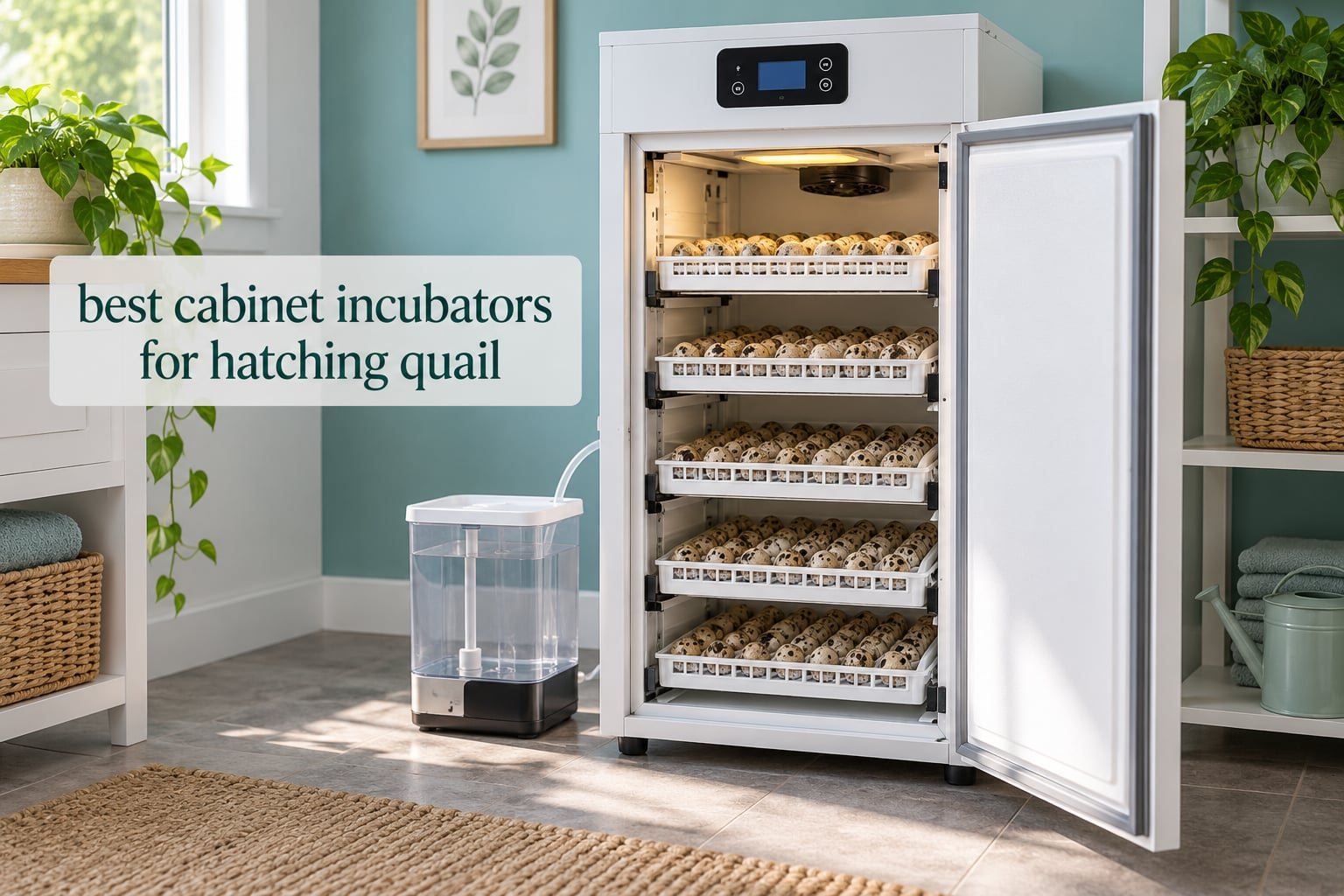
The best cabinet incubators for hatching quail are the ones that hold a steady forced-air temperature, come with trays that actually grip a quail egg, and refill their own water. Our overall pick is the Hatching Time CT180SH, a set-and-hatch cabinet that the manufacturer rates for 324 standard quail eggs with 468 possible using add-on racks.
That is a narrow answer to a broad question, so here is the rest of it in one breath. Quail eggs are small, and a cabinet that swallows 180 chicken eggs can hold a lot of quail eggs only if the rails are quail-rated. A chicken-style cup tray will let a quail egg drop straight through, so the fit of the tray matters more than the headline number on the side of the box.
We compared 10 cabinets across capacity, turning style, humidity method, alarm features, weight and the honest limits of what buyers report back. The list runs from a 49 lb US-made hatcher down to two 30 lb cabinets that move between rooms without two people and a dolly. Every unit below hatches quail, but they split cleanly into three groups: cabinets built for large quail volumes, mid-size cabinets that automate humidity well, and compact cabinets for breeders running 50 to 150 eggs at a time.
We also size those batches honestly in our quail cage roundup, where the same volume question comes up from the brooder side. If you are still deciding between cabinet and tabletop, our general egg incubator picks cover the smaller end of the market.
Table of Contents
Top 3 Picks for Hatching Quail

Hatching Time CT180SH
- 324 quail eggs stated
- 468 with QT13 racks
- Set and hatch in one cabinet
- Automatic humidity with alarms

GQF 1502 Cabinet
- Up to 1368 quail eggs
- 6 quail hatching trays included
- 3030 water reserve system
- Made in USA

XKV EI-352 Cabinet
- 45 degree turning motion
- Under 0.1C temperature error
- Auto-fill water line humidity
- Six incubation modes
The CT180SH takes the top slot because it is the only cabinet in this group with a large body of buyer feedback behind it and the only one whose maker publishes a quail figure. The GQF 1502 wins on raw volume, and the XKV EI-352 wins on control precision.
Quick Picks: Best Cabinet Incubators for Quail at a Glance (October 2026)
| Product | Specifications | Action |
|---|---|---|
| Hatching Time CT180SH |
|
Check Latest Price |
| GQF 1502 Cabinet |
|
Check Latest Price |
 GQF 1550 Cabinet Hatcher GQF 1550 Cabinet Hatcher |
|
Check Latest Price |
 AboveMoon 352 Egg Cabinet AboveMoon 352 Egg Cabinet |
|
Check Latest Price |
| XKV EI-352 Cabinet |
|
Check Latest Price |
 TAMUBAKS 400 Egg Cabinet TAMUBAKS 400 Egg Cabinet |
|
Check Latest Price |
 ENWEGEY 400 Egg Cabinet ENWEGEY 400 Egg Cabinet |
|
Check Latest Price |
 Montary 400 Egg Cabinet Montary 400 Egg Cabinet |
|
Check Latest Price |
 GOSHET 200-240 Egg Incubator GOSHET 200-240 Egg Incubator |
|
Check Latest Price |
 TTeralmon 256 Egg Incubator TTeralmon 256 Egg Incubator |
|
Check Latest Price |
1. Hatching Time CT180SH Cabinet Incubator for Hatching Quail
Hatching Time Incubators for Hatching Eggs, CT180SH Egg Setter & Hatcher
Up to 324 quail eggs,468 with QT13 racks
49 lb,24.5 x 17 x 42 inch
110V,70W average,200W max
Set and hatch in one cabinet
Pros
- Manufacturer states 324 quail egg capacity
- Automatic Conturn turners plus automatic humidity
- High and low temperature and humidity alarms
- Largest verified review base in the group
Cons
- 49 lb cabinet is awkward to reposition
- Indoor use in a temperature controlled room
- QT13 quail racks cost extra
- 12 percent of reviews are one star
I have been running quail through cabinet-style machines for years, and the thing that decides a hatch is rarely the brand name. It is whether the cabinet holds 99.5F at egg level and whether the tray stops a quail egg from rolling into the fan duct. The CT180SH answers both, and it is the only unit here with 195 reviews behind it, which is why it leads my list.
The CT180SH sets and hatches in the same cabinet. Conturn automatic turners handle the setting phase, and hatching baskets come with it for the final stretch, so you are not moving trays to a separate hatcher on day 14. Hatching Time states a quail capacity of 324 standard eggs, rising to 468 when you add the separately sold QT13 racks. That figure comes from the manufacturer, not from a hatch I ran, so treat it as a planning number and confirm your own tray spacing before committing a full load.
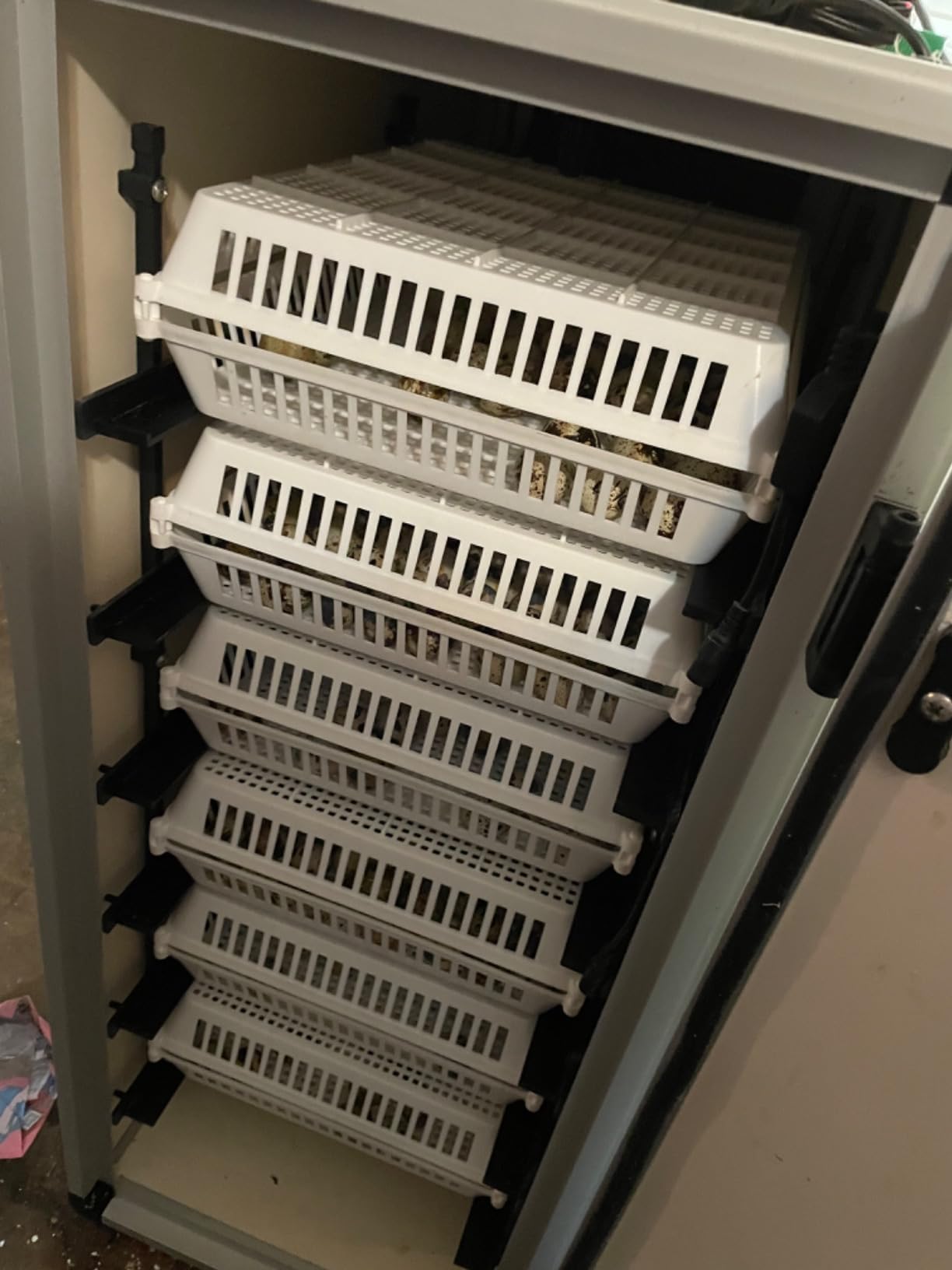
Humidity is handled by the Humisonic system, and that is the feature that changes a daily routine. Instead of opening the cabinet to add water, you top up a reservoir when the alert tells you to. The cabinet also carries high and low temperature and humidity alarms with room sensors, so a problem in an unheated garage gets announced rather than discovered on day 15.
For mixed operations the machine is unusually flexible. Stated capacity covers 180 chicken, 252 partridge, 216 pheasant, 120 turkey or duck and 72 goose or peacock eggs, which means quail batches can sit alongside a chicken setting without a second cabinet. Goose and peacock eggs need the separately sold GT03 racks, so plan accessory cost before you fill the cabinet with waterfowl.
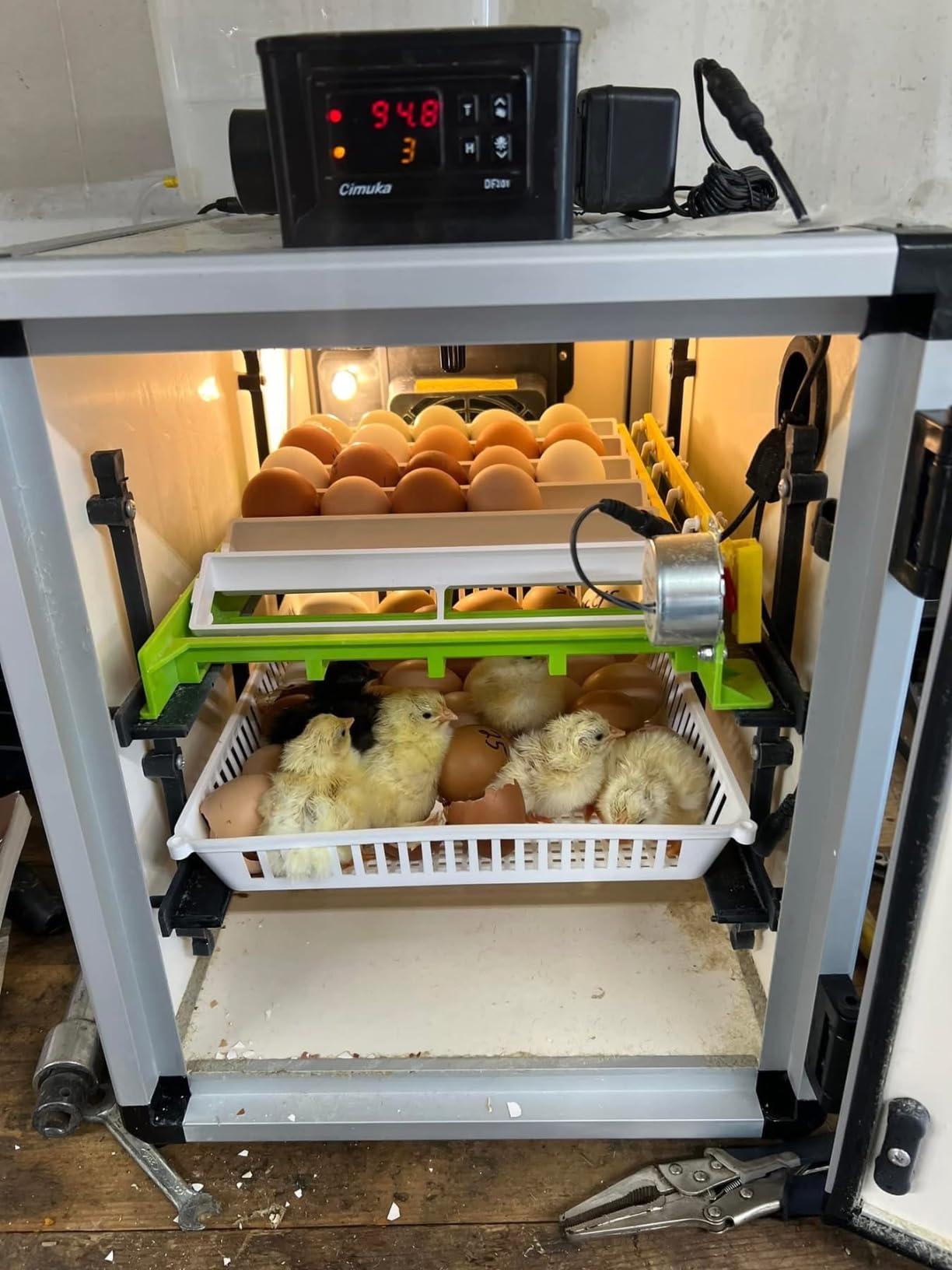
What to check before your first quail load
Measure the space, not just the egg count. At 24.5 x 17 x 42 inches and 49 lb, this is a tall cabinet that wants a corner, and you will want the door swing clear. It is rated for indoor use in a temperature controlled room, which rules it out of an unheated shed in most climates.
Order the QT13 racks with the cabinet if quail is your main species. The jump from 324 to 468 quail eggs is the difference between one monthly batch and something closer to a small hatchery, and the racks are the whole difference.
Where it falls short
The review distribution is worth reading before you buy. Around 12 percent of the 195 reviews are one star, which is a real complaint cluster rather than noise. A cabinet that promises automated humidity is only as good as that humidifier holding calibration, and a unit that runs hot on a hot day in a warm room will not forgive you.
At 70W average draw and 200W maximum, power use is unremarkable, but it means a wall outlet you can trust and no expectation of running through an outage on battery. Lockdown days 15 through 18 need a plan if your power is unreliable, and this cabinet does not provide one.
2. GQF 1502 Cabinet Incubator for Hatching Quail
Pinnon Hatch Farms Incubator GQF 1502 Cabinet Incubator Holds Up to 1368 Quail Eggs Hatcher Includes + 6pk Hatching Egg Trays & 3030 Water Reserve System (with 6 Quail Trays)
Up to 1368 quail eggs
6 quail hatching trays included
3030 water reserve system
30.25 x 15.75 x 31.75 inch
Pros
- Quail is the design target
- not an accessory
- Hatching trays and water reserve included
- Made in the USA
- Clear door for viewing
Cons
- Only one customer review on record
- 20 percent restocking fee on returns
- Manufacturer capacity claim is unverified by buyers
- Weight not stated in the listing
If your question is how many quail eggs fit in a cabinet incubator, the GQF 1502 is the only answer here that is built around the answer. This listing states up to 1368 quail eggs and includes six quail hatching trays in the box. Quail hatching trays are the part almost every other cabinet makes you buy separately or improvise, and having them included removes the single most common reason quail eggs vanish into a tray seam.
The included 3030 Water Reserve System is the quiet hero. You get a 5 gallon reserve tank, a connecting hose with a quick disconnect coupling and a constant level humidity pan with two pads, so humidity holds steady without daily topping up. For a cabinet running a month-long breeding schedule, that is the difference between a hobby and a chore.
The plastic egg trays are built for the full cycle, from gathering to spray disinfecting to treatment and storage, then straight onto the turning rack. The clear door means you can check pipping without opening the cabinet and dropping the humidity, which matters most on lockdown days.
Why quail keepers gravitate to this cabinet
The 1368 figure is a manufacturer claim, and I want to be straight about that. Only one customer review exists on this listing, so nobody outside the factory has confirmed a 1368 egg hatch. What you can verify is that the parts are quail-specific, and quail-specific parts are the difference between a cabinet that works for quail and one that works for quail after you modify it.
If your target is 50 to 150 eggs a batch, this is far more cabinet than you need. It makes sense for a breeding program selling hatching eggs, or for a flock that eats its own production, where you want to run three staggered shelves in rotation.
What to weigh before ordering
One review is not a reliability record, and the five-star average on this listing reflects exactly one buyer. Ask yourself honestly whether you are comfortable validating a large machine on your own, with a second thermometer, rather than relying on a crowd of owners to have found the fault first.
The 20% return fee on returns changes the math on a mistake. Test the cabinet empty for several days with a door open and closed, confirm the fan and the thermostat agree, and only then add a small trial batch of eggs.
3. GQF 1550 Digital Cabinet Hatcher for Hatching Quail
Pinnon Hatch Farms 1550 Cabinet Hatcher GQF Chicken Quail Duck Pheasants Geese Hatching Egg
Digital cabinet hatcher
Holds a complete 1500 incubator setting
On-board monitoring computer
Supports quail and other species
Pros
- Purpose-built hatcher for a full 1500 series setting
- Continuous on-board system and environment monitoring
- Handles quail plus chicken and duck eggs as well as pheasant and goose
- Made in the USA
Cons
- Only two customer reviews on record
- 20 percent restocking fee on returns
- Hatcher only
- so setting eggs needs other equipment
- Weight and dimensions not listed
The GQF 1550 is a hatcher rather than a setter, and that distinction decides whether it belongs in your hatchery. It holds a complete setting from the 1500 incubator, so if you already run that cabinet for the first 14 days, this machine takes the trays on day 14 and finishes the job. Quail keepers who stagger batches across two machines tend to land here.
The on-board computer checks the system and the environment every second, which is a meaningfully different level of reassurance from a display you read once a morning. It is specified for chicken, quail, duck, pheasant and goose eggs, so a mixed load is fine as long as the eggs were set on a similar schedule.
Made in the United States, the 1550 is the sort of unit people keep for a decade. Cabinets in this class earn their cost by surviving, and the US build plus a full-setting hatcher design is a solid foundation for a backyard operation that hatches every month.
Who should pair this with a setting cabinet
If you are starting from zero, this is the wrong first machine. You need somewhere to incubate and turn eggs for 14 days, and a hatcher alone will leave that gap. Buy it second, or buy a set-and-hatch cabinet like the CT180SH and skip the two-machine setup entirely.
For breeders running staggered batches, the value is real. One shelf setting new eggs, one shelf hatching, means a hatch roughly every week or two without ever stopping the airflow.
Where the uncertainty sits
Two five-star reviews is a thin sample, and the listing does not state weight or dimensions, so you cannot plan a corner for it from the product page alone. Measure before you order and confirm the footprint with the seller.
Returns carry a 20% return fee here too, which makes the empty run even more important. Put the machine through a full test cycle with a backup thermometer at egg height before you trust it with a clutch you care about.
4. AboveMoon 352 Egg Digital Cabinet Incubator for Quail
352 Egg Digital Cabinet Incubator,Poultry Hatching Breeding Cabinet Incubator for Auto Egg Turning, Temp/Humidity Control, Thermostatic for Chicken/Duck/Goose/Quail Bird.
352 egg cabinet,230L
Sizes also in 88, 176, 264 and 440
99 lb cabinet
28.35 x 22 x 43.51 inch
Pros
- Stage-based automatic temperature and humidity control
- Turning stops and heat boosts before hatch automatically
- Viewing window with a built in light
- Alarms for out of range readings
Cons
- 99 lb is the heaviest cabinet here
- Only one customer review on record
- Hatch rate claims come from the manufacturer
- Quail is not the lead species in the listing
The AboveMoon 352 does something most cabinets in this price range do not: it changes its own settings by incubation stage. Rather than you dialing a number and hoping, the machine moves temperature and humidity on its own schedule and stops turning before the hatch, adding heat instead. For quail that means the lockdown transition happens without you being awake for it.
At 352 egg rated capacity with 88, 176, 264 and 440 egg versions also offered, this covers most backyard and small farm volumes in one family. Quail eggs fit within the stated species list of chicken, duck, goose and quail, though the tray format is not quail-specific, so check rail spacing on a small test batch before committing a full cabinet.
The observation window has a built in light, so you can check for pipping without opening the door and dumping humidity on day 15. Real time temperature and humidity displays with out of range auto alarms handle the monitoring while you work. The listing also gives big end up placement guidance, which matters for quail because pointed ends down supports steadier vascular development in a small shell.
What the staging actually saves you
The value shows up on the days you are not home. A keeper working a day job cannot open the cabinet three times to check a number, and stage automation removes that obligation entirely. It also removes the most common late-hatch cause, which is a cabinet sitting two degrees cool for a week because nobody adjusted it.
Quail hatch in 17 to 18 days, so a miscalibrated cabinet has almost no margin. A machine that self-corrects through day 14 is genuinely useful at this incubation length.
Where it works against you
At 99 lb this is the heaviest cabinet in the group, and it arrives in a wooden crate with steel tubing reinforcement, which tells you the transit is the hard part. Plan the location before it arrives and get help moving it into place.
One review is not a track record, and the hatch rate claims in the listing are the manufacturer’s. If quail is your primary species, verify the turning mechanism handles small eggs well, because 360 style rolling and gentle tilting behave very differently with a fragile shell.
5. XKV EI-352 Cabinet Incubator for Hatching Quail
XKV 352 Egg Large Incubator with Automatic Egg Turning,with Viewing Window
352 egg cabinet,235L
Temperature error under 0.1C
45 degree turning motion
96.8 lb cabinet
Pros
- Gentle 45 degree turning instead of full rolling
- Under 0.1C temperature measurement error
- Automatic water fill humidity through an external line
- Six customizable incubation modes
Cons
- One buyer reported transit damage and a missing turning sprocket
- Machine translated manual is hard to use
- Reported humidifier failure in one review
- 96.8 lb cabinet needs two people
The XKV EI-352 is the cabinet I would pick if quail eggs are the priority, because its turning motion is the most egg friendly in this group. Instead of rolling eggs 360 degrees, the racks tip 45 degrees left and right. A quail egg is small and thin, and a gentle tilt protects the embryo in a way a full roll does not, which is exactly the mechanism most budget cabinets get wrong.
The stated temperature measurement error is under 0.1 degrees C, and humidity is handled through an external water pipe connection with automatic fill. That combination matters more than it sounds. Quail eggs lose moisture fast in a dry room, and an incubator that cannot hold humidity through a cabinet is a cabinet that hatches well in March and poorly in August.
Six incubation modes cover chicken, duck, goose, pigeon, pheasant and general poultry, all customizable, so you can tune a quail program without resetting the whole cabinet. Automatic fan ventilation adds exhaust cooling when the room runs warm, and the 9.4 x 4.7 inch transparent window with an alarm device lets you check progress without opening the door.
Why the turning motion matters most for quail
Quail eggs are much smaller and thinner than chicken eggs, and their shells crack under handling that would not bother a larger egg. A 45 degree tilt still moves the embryo off the shell membrane, which is the whole point of turning, without the impact of a full roll. Keepers who switch from a rolling cabinet to a tilting one usually notice a cleaner hatch on the first cycle.
The six modes also let you keep quail on a dedicated setting. If you hatch chicken and quail in the same month, you can set a quail profile once and stop re-entering numbers each time eggs go in.
Where buyers reported problems
One of three reviews describes the unit arriving with damaged packaging and a detached turning sprocket, and another reports a humidifier that failed after two days. The seller was praised for honest communication and issuing refunds, which is worth something, but the hardware issues are real enough to inspect on arrival.
The manual was machine translated from Chinese and is close to useless, so plan to learn the controls from the panel itself and from general incubator practice. At 96.8 lb you will want a second person when it arrives.
6. TAMUBAKS 400 Egg Cabinet Incubator for Hatching Quail
Poultry Breeding Incubator, Automatic Digital Egg Incubator with Temperature Control, 400 Eggs Capacity, 360° Roller Flipping, for Hatching Chicken Duck Goose Quail Birds (400 Pieces)
400 egg cabinet with 360 roller turning
49.6 lb
23.8 x 18.7 x 34.8 inch
LED display with deviation alerts
Pros
- 400 egg capacity in a compact footprint
- Turner adapts to eggs of varying sizes
- Widest species list in the group
- Intelligent alerts for condition deviations
Cons
- Only one customer review on record
- 360 roller turning is harsher on small eggs
- No independent humidity control method stated
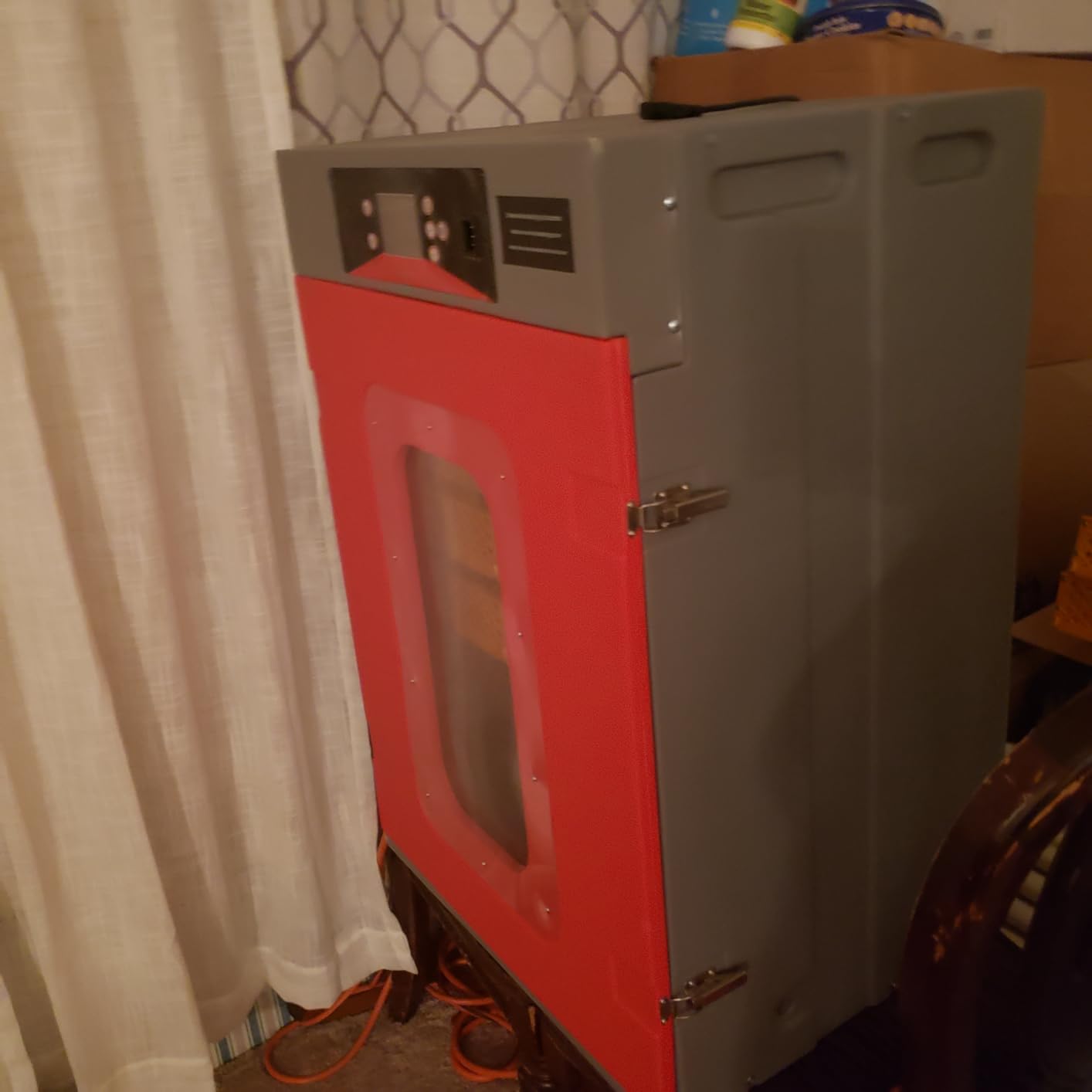
The TAMUBAKS 400 packs a large rated capacity into a smaller cabinet than most of its competitors here, at 23.8 x 18.7 x 34.8 inches and 49.6 lb. That footprint matters in a spare room or a converted shed, where a tall cabinet is the difference between fitting it and not. Automatic temperature control with humidity monitoring and an LED display for real time readings keep the basics covered.
Its distinguishing feature is species range. The listing names chicken, duck, goose, quail, pheasant, turkey, swan, parrot, lovebird and macaw eggs, and states that the turning system adapts to eggs of varying sizes. For a keeper who wants one machine for birds rather than a dedicated quail box, that flexibility is the reason to look here.
The intelligent alert system warns when temperature or humidity deviates from the programmed conditions, which is a cheap way to catch a fan failure or an ajar door. It is not a substitute for an independent hygrometer, but it is a useful second opinion.
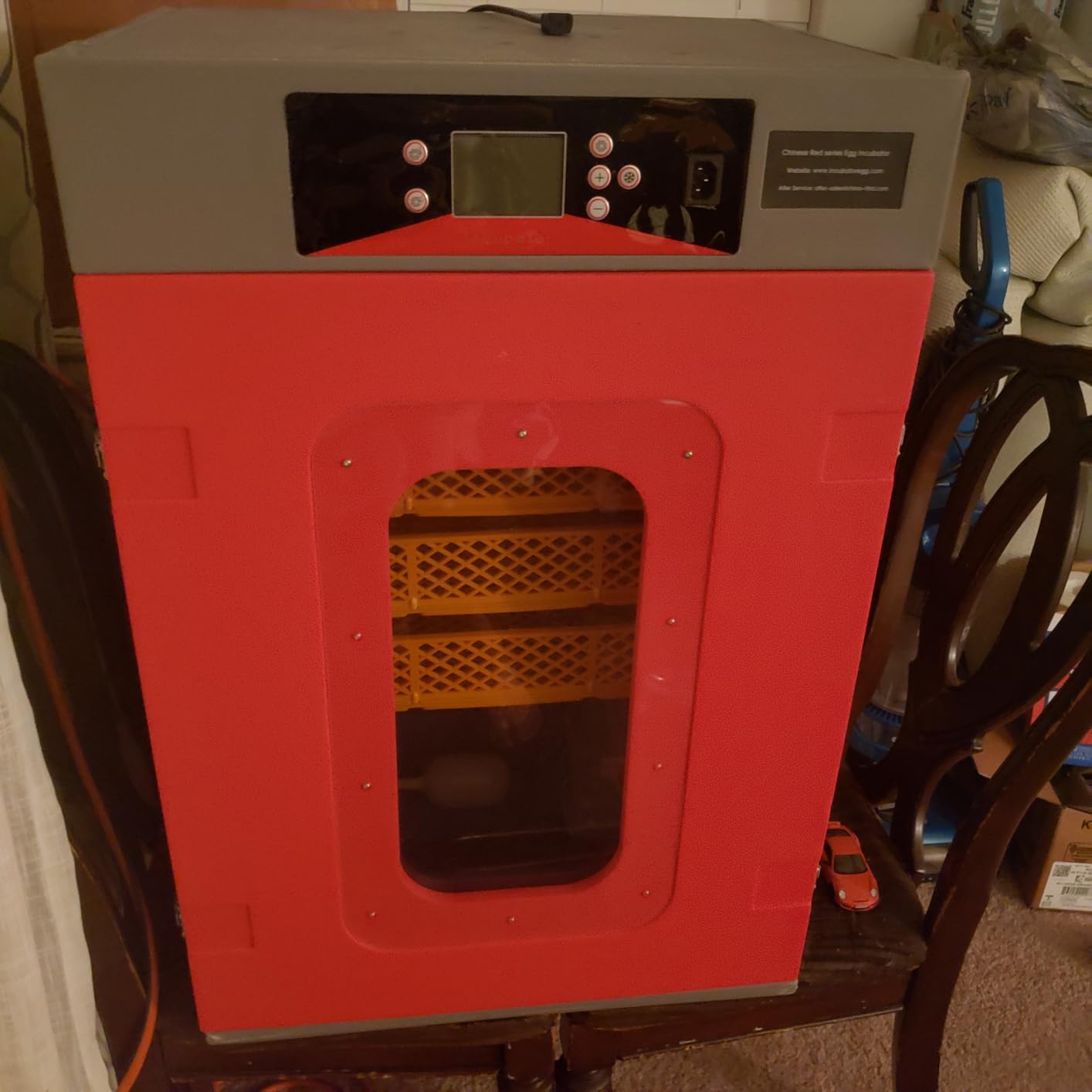
How it handles a quail load
One caution. The 360 degree roller turning system is the aggressive style, and quail eggs are the most fragile eggs you will put through it. The listing claims adaptable turning, but with a single customer review on record, there is no independent evidence yet of how the rollers treat small eggs over an 18 day cycle.
Run a small first batch of 24 to 48 eggs and examine them at day 10 for cracks or shifting in the rollers. If the quail eggs are not staying put, this is not the cabinet for your flock, and you will know in 10 days rather than at hatch.
What you give up at this capacity
The main trade is humidity control method, which is not described in the listing. Automatic cabinets that refill their own water remove a daily task, and this one asks you to check the water reservoir yourself. Owners who cannot be home during the day should weigh that carefully.
One 5-star review gives no reliability signal at all. Budget for a verification hatch and a backup thermometer, and treat the capacity figure as a planning number rather than a promise.
7. ENWEGEY 400 Egg Automatic Cabinet Incubator for Quail
400-Egg Automatic Cabinet Incubator for Chicken Duck Goose Quail Eggs, Digital Temperature & Humidity Control, Large Capacity Hatching Machine with Automatic Egg Turning System
400 egg cabinet,50 lb
18.7 x 23.8 x 34.8 inch
360 degree turn every 2 hours
PE body with observation window
Pros
- Circulating air ducts for even temperature and humidity
- Automatic 360 degree turning every two hours
- Digital displays with intelligent deviation alerts
- PE body resists corrosion and wipes clean
Cons
- Only one customer review
- rated 4 stars
- High capacity rolling can stress small quail eggs
- Humidity method depends on duct moisture control only
The ENWEGEY 400 leans on airflow. Circulating air ducts handle moisture control, and that is the feature that decides whether a 400 egg cabinet holds humidity evenly from the top shelf to the bottom or whether the lower trays run dry. Even humidity across shelves is the problem a lot of large cabinets fail quietly.
Turning runs every two hours at 360 degrees, driven automatically, with digital displays showing live temperature and humidity and an intelligent alert system for deviations. The PE construction is corrosion resistant and easy to clean, which matters more than it sounds when you are disinfecting trays after every hatch.
At 50 lb and 18.7 x 23.8 x 34.8 inches it is a manageable cabinet, and the transparent observation window lets you check progress without breaking the humidity seal during lockdown.
Where the duct system earns its keep
Humidity gradients are the reason hatches come out uneven. Eggs on a shelf near the water source sit in wetter air than eggs on the top shelf, and a 400 egg cabinet makes that gradient obvious. A dedicated circulating duct system is designed to flatten it, and that is why this cabinet is worth a look for anyone hatching a large single batch.
For quail keepers running staggered smaller batches instead, the same airflow is simply less noticeable. The benefit scales with load size.
What the reviews and the roller motion tell you
The single review is 4 stars, which is a slightly more honest signal than a lone 5, but it is still a single data point. Treat the spec sheet as manufacturer information rather than verified performance.
Again, 360 degree rolling is the harder motion for quail eggs. If you hatch mostly quail, weigh this against the XKV EI-352 and its 45 degree tilt before buying. If you hatch a mixed flock and want one cabinet for everything, the motion is a reasonable compromise.
8. Montary 400 Egg Cabinet Incubator for Hatching Quail
400 Eggs Incubator Cabinet, Automatic Incubator for Hatching Egg, with Automatic Egg Turning and Temperature Humidity Control, Poultry Hatcher for Chicken, Duck, Goose, Quail Eggs
400 egg cabinet
360 degree turn every 2 hours
Mixed species batches
Panoramic observation window
Pros
- Handles mixed batches of different bird eggs together
- Smart 360 degree turning on a two hour cycle
- Digital monitoring with fluctuation alarms
- Panoramic window and easy clean PE body
Cons
- Listed dimensions of 50 x 50 x 50 inch look like a placeholder
- Only two customer reviews
- 360 rolling is harsher on small quail eggs
The Montary 400 is listed as commercial grade capacity at 400 eggs with circulating air ducts and auto humidification, and its one genuinely useful feature for a mixed keeper is that it handles batches of different bird eggs at the same time. If quail, chicken and duck eggs go in together on a similar schedule, this cabinet does not force you to pick a species profile.
Turning runs automatically every two hours at 360 degrees, with real time digital temperature and humidity monitoring and smart alarms for fluctuation. The panoramic observation window is larger than most in this group, and the corrosion resistant PE body is straightforward to disinfect between hatches.
Auto humidification takes the daily water chore out of the routine, which is the practical reason to move up from a tabletop unit to a cabinet in the first place.
The dimension listing problem
This is the one detail to resolve before anything else. The listed dimensions of 50 x 50 x 50 inches read as a generic placeholder rather than a real measurement, and a cabinet that size would not be a 400 egg unit. Ask the seller for actual figures, because a 400 egg cabinet that does not fit through your doorway is a problem discovered at the worst time.
Two 4-star reviews give a slightly fuller picture than a single review, but it is still a thin sample. Confirm the footprint and the turning mechanism with the seller before ordering.
What works for quail and what does not
The mixed batch capability is the reason to consider this cabinet. Hatch 300 quail and 100 chicken eggs on the same schedule and this unit is designed for exactly that, with auto humidification keeping the whole load stable.
The 360 degree rolling is the concern for a quail only operation. Combined with the unverified footprint, this is a cabinet to investigate rather than to buy on impulse. Check rail spacing and egg retention with a small batch first.
9. GOSHET 200-240 Egg Incubator with Hatching and Brooding
200-240 Eggs Incubators, 110V 80W Poultry Hatcher Machine, 5 Automatic Incubation Modes Incubator with Automatic Turning Temperature & Humidity Control and LED Screen for Chickens Ducks Birds
200-240 egg capacity
29.7 lb
110V, 80W
Adjustable roller spacing
Pros
- Lightest cabinet here at 29.7 lb
- so one person can reposition it
- Combines incubation
- hatching and brooding in one cabinet
- Five automatic incubation modes with stage adjustment
- Layered water tray refills humidity automatically
Cons
- Only one customer review on record
- Quail is not named in the listing title
- 200-240 egg range suggests load variation by species
The GOSHET is the cabinet you can actually move. At 29.7 lb it is the lightest unit in this group by a wide margin, which sounds trivial until you compare it with the 99 lb cabinet earlier on this list. One person can carry it to a warm room in January, and that changes how many hatches a year you will run.
It combines incubation, hatching and brooding in one cabinet, and that third function is unusual at this size. Instead of buying a separate brooder, you keep chicks in the cabinet after hatch, which saves equipment and keeps the temperature stable at the moment chicks are most fragile. Hidden air ducts on three sides circulate warm air, and dual fan cooling handles a warm room.
Five automatic incubation modes adjust temperature by stage, the integrated drive shaft turns eggs every two hours, and the layered water tray replenishes humidity on its own. Adjustable roller spacing matches egg size, which is the feature that decides whether quail eggs stay in place.
Why weight matters for a quail breeder
Quail keepers often hatch in a spare room, a garage or a converted shed, and they move the machine when the season changes. A 30 lb cabinet moves in one trip, which makes it far more likely that you will actually use it year round instead of leaving it in a corner from April to October.
For a 50 to 150 egg quail operation, a 200 to 240 egg cabinet is also the right size. You get headroom for a full setting without building a hatchery you cannot heat.
What the listing leaves out
Quail is not named in the listing title even though adjustable roller spacing would accommodate small eggs. Ask the seller directly, and run a small test batch, because the claim is plausible but unverified.
One 5-star review gives you nothing about durability. Plan the same empty calibration run you would do on any new cabinet, with a second thermometer at egg height, before a full load goes in.
10. TTeralmon 256 Egg Incubator for Hatching Quail
256 Egg Incubator with Automatic Egg Turning and Humidity Control
256 egg capacity,30 lb
Dual power: wall or 12V battery
Automatic turning every 2 hours
LED humidity, temperature and day display
Pros
- 12V battery input is the only power outage option in this group
- Automatic water refilling with adjustable bottle count
- Breaks down easily for cleaning
- Fast temperature recovery after arrival
Cons
- 12V battery not included
- Only two customer reviews on record
- Quail is not named in the listing
The TTeralmon 256 solves a problem none of the other nine cabinets address. Its dual power supply runs from home power or a 12V battery, which is not included and must be bought separately. If you live somewhere with outages, this is the difference between a hatch and a loss, and on days 15 through 18 a power cut during lockdown is exactly when it hurts most.
It combines incubation, hatching and brooding in a 256 egg cabinet, with hidden air ducts on three sides for stable circulation and built in dual fan heat dissipation. One piece drive shaft turns eggs every two hours, and the egg tray adjusts roller spacing by egg size, which is the setting that matters for a quail load.
Automatic water refilling with an adjustable number of water bottles is a simple approach that works, and the LED display shows humidity, temperature and the incubation day count, so you can see at a glance whether the machine is on schedule.
Preparing for a blackout on day 15
Two reviews describe simple setup with fast temperature recovery and a unit that breaks down well for cleaning, and both are things you want in a small cabinet. Fast recovery matters because a cabinet that climbs back to 99.5F within an hour after a door opening recovers from small disturbances without you intervening.
Pair it with a 12V deep cycle battery and a connector before you need it. Test the battery path once, during a normal day, so that on the day the power actually goes out you already know the unit restarts itself and holds temperature.
What to confirm before buying
Quail is not named in the listing, so verify roller spacing with a small quail batch. Adjustable spacing should handle small eggs, but the trays on these machines are often built around chicken and duck sizing.
Two 5-star reviews are still a small sample. The build quality and long term reliability are unproven here, so keep the independent thermometer habit and run the empty calibration cycle before committing a full cabinet.
How Many Quail Eggs Fit in a Cabinet Incubator?
Quail eggs fit a cabinet at roughly two to three times the stated chicken egg count, and only when the rails grip them. That conversion is a planning estimate rather than a guarantee, because tray geometry decides it. A chicken cup tray with wide gaps will let quail eggs fall through, and a tray with tight spacing leaves half the capacity empty.
Two cabinets here publish real quail figures. The Hatching Time CT180SH states 324 standard quail eggs, rising to 468 with the separately sold QT13 racks. The GQF 1502 states up to 1368 quail eggs and includes six quail hatching trays, which is the number to trust most because the trays are quail-specific.
For everything else, work from the chicken rating and verify. A 352 egg cabinet in the 300 to 400 quail range, a 256 egg cabinet near 200 to 250 quail eggs, and a 200 to 240 egg cabinet around 150 to 200 quail eggs are reasonable planning figures, all of which you should confirm with a counted test load of your own.
Size for batches you can fill. A 400 egg cabinet running 50 quail eggs a month is a very expensive egg turner, and a 200 egg cabinet running 150 quail eggs every 17 days will keep a small breeding program moving at a fraction of the running cost. Our automatic incubator picks cover smaller volumes if 150 eggs is more than you need.
How We Picked
We started with a hard filter: quail tray fit. A cabinet that cannot hold quail eggs is not a quail cabinet, no matter what the egg count on the box says, so anything without a quail tray, a quail rail or adjustable roller spacing got flagged before anything else was considered.
Second filter was forced-air heat stability at egg level, not the number on the display. Egg level matters because cabinet displays are usually mounted near the top or the door, and a 2 degree gap between display and tray is enough to cost you a hatch at day 14. Cabinets with alarms got credit here, since an alarm converts a silent failure into a notification.
Third filter was humidity method. Automatic refill and external water lines scored highest, because most keepers cannot be home several times a day to add water, and quail eggs need humidity lifted sharply at lockdown. The 17 to 18 day incubation is short enough that a humidity mistake is not recoverable.
Finally we weighed turning style against egg fragility, then capacity against realistic batch size, then build quality and warranty support. We left out nothing on the list for having a thin review history, but we did weight it heavily and said so for each unit, because a five star average from one buyer tells you nothing about year three.
Cabinet vs. Tabletop Incubator for Quail
Quail eggs are unusually well suited to small units, and that is the honest counterargument to buying a cabinet. A tabletop incubator holding 24 quail eggs costs a fraction of a 200 egg cabinet, and if you only need a dozen birds a month, the cabinet is not earning its keep.
The break-even sits where manual work becomes the constraint. Tabletop units need you to turn eggs by hand several times a day, add water by hand, and check temperature by hand. If you work outside the home, manual work is not free, and the cabinet buys back that time through automatic turning, automatic humidity and alarms. Our cabinet incubator roundup covers that reasoning for other species too.
A second cabinet pays for itself differently. Once you own a reliable unit, eggs you would previously have eaten become birds, and the same cabinet handles quail, chicken, duck and pheasant eggs on staggered shelves. Our commercial incubator picks go deeper on scaling past the home flock.
My rule of thumb: under 50 eggs a month, stay tabletop and hand turn. Between 50 and 150 eggs a month, a 200 egg cabinet with automatic humidity is the sensible jump. Above that, a 300 to 400 egg cabinet with alarms and turning that stops on schedule is where the automation starts to pay.
Temperature, Humidity and Lockdown Settings for Quail
Quail incubate at 99.5F in a forced-air cabinet, and they finish in 17 to 18 days. That is two to three days shorter than chicken, which compresses every mistake you make into a shorter window, so settings discipline matters more for quail than for almost any other egg.
Days 1 to 14: 99.5F and roughly 45% humidity. Hold steady and do not open the cabinet. Candle on day 7 or 8 and remove infertile eggs, using one brief opening rather than repeated ones.
Days 14 to 15: turning stops, humidity rises to 65 to 70%. This is lockdown. Stop the turner, keep the eggs in place, and lift humidity so the membrane inside the egg breaks down and the chick can pip on its own.
Days 15 to 18: no opening. Resist every urge to help. Chicks that pip and are then undisturbed hatch; chicks that are helped frequently often die. Leave hatching in progress for up to 48 hours before assuming the clutch failed.
After hatch: 99 to 100F for three to five days. Chicks stay in the incubator until fully dry and active, then move to a brooder at 95 to 100F.
On the question of whether 75% humidity is too high, the answer is yes for a forced-air cabinet during incubation. That level is intended for hatching, not for days 1 through 14, and running it early drowns the chick. There is also a cabinet-specific reason to stay moderate: some manufacturers warn that sustained humidity above 60% overheats the lower part of the cabinet, which is where a domestic quail setting usually sits.
Button quail and jumbo quail shift the numbers slightly. Jumbo eggs benefit from slightly higher humidity and a longer hold before lockdown, and button quail, with its earlier hatch around 16 to 17 days, wants lockdown brought forward. Adjust in a degree or two and log what you changed, because these are the settings you will want next season.
What to Look for in a Cabinet Incubator for Quail
Quail trays or adjustable rails. This is the first filter and the one most listings bury. Chicken cup trays swallow quail eggs, and eggs that roll free in a turning cabinet get pinched or jam the mechanism. Ask the seller exactly which tray ships with the unit and whether quail racks are included.
Forced-air circulation with a real fan. Cabinets move air like an oven rather than a bare bulb, which evens temperature across shelves. A still-air cabinet in a 400 egg configuration will have hot and cold zones, and quail eggs exposed to that variation hatch late.
Automatic humidity that you do not have to babysit. A reservoir with an external line or a constant level pan means you are not opening the cabinet twice a day. Every opening during days 1 through 14 costs you humidity and temperature.
A turner that stops before hatch. Manual stopping is a step people forget at 2am on day 14. A cabinet that stops turning and holds the eggs through pipping removes an entire class of failure.
Alarms and an independent reading. High and low temperature alarms plus a humidity alarm tell you about a failure while you still have days left. Pair them with your own thermometer and hygrometer, because the display lies more often than owners expect.
Weight, footprint and power. A 99 lb cabinet in a corner you cannot reach is a cabinet you will resent. Check door clearance, aisle space, and whether a 12V backup input exists if outages are a risk.
First-Hatch Calibration Checklist
Run the cabinet empty for two to seven days before eggs go in. Turn on the heat and humidity exactly as you will during a real hatch, and leave it running. This lets the walls, insulation and thermostat settle.
Place a second thermometer and hygrometer at egg level. Middle shelf, center of the cabinet, not near the door or a water reservoir. Compare its reading to the display daily and record the difference.
Measure the swing, not just the average. Check the cabinet at least four times a day for a week and note the high and low. A cabinet that averages 99.5F but swings 3F between shelves will not hatch quail evenly.
Confirm each shelf separately. Put a reading on the top, middle and bottom shelf. Humidity almost always falls off toward the top, and the top shelf is where late hatches come from.
Verify the turner stops. Run it empty and confirm you can stop turning independently, and that the stop command works from the panel rather than only by unplugging.
Test the alarms. Pull the sensor briefly or cover it and confirm the alarm sounds. A silent alarm is worse than no alarm.
Log every setting change per hatch. Owners who write down temperature, humidity and hatch results by batch can repeat what worked. Keep the log in the same notebook you use for feed and flock records.
Common Failure Modes and What Owners Report
Display readings that do not match reality. This is the most repeated complaint in quail keeping forums and it has a simple fix. Keep an independent thermometer and hygrometer at egg level and trust the independent reading over the panel. Owners who cross-check report fewer late hatches than owners who do not.
Mid-hatch failure during lockdown. One owner reported a cabinet dropping to 77F with humidity at 98% on day 15 and losing an entire clutch. Day 15 is the worst possible moment for a failure, because eggs that have been turned and humidified for two weeks have no recovery. The TTeralmon 256 with its 12V battery input is the only cabinet here with a documented backup power path, and a generator covers everything else.
Eggs that roll or jam. Chicken trays that swallow quail eggs cause both losses and jams. If eggs are not staying in the cups or rails, stop and fix the tray before the whole batch is at risk. This is also the argument for adjustable roller spacing on the GOSHET and TTeralmon units.
Thermostats that cannot hold target. One reported unit cranked to 103F with nothing pipping, which points to a calibration problem rather than a biology problem. Insulated cabinets in warm rooms need ventilation; if the display reads high, check whether the fan is actually running.
Hatches that run two days late. Late hatches are almost always a cool cabinet, not a dead batch. Check for a door that does not seal, a fan running slow, or a room that dropped overnight, and address heat loss before you blame the eggs.
Low hatch rates on apparently fertile eggs. Owners report rates from 30 to 50 percent in that situation, and the usual cause is a humidity swing early in incubation followed by a display that did not reflect it. An independent hygrometer catches it in days rather than at hatch.
Frequently Asked Questions
Do cabinet incubators work for quail eggs?
Yes. A cabinet incubator works well for quail as long as the trays grip the eggs. Quail eggs fit a cabinet at roughly two to three times the stated chicken egg count, but chicken cup trays let small eggs drop through or jam the turner. Confirm quail trays or adjustable rails ship with the unit before you buy.
What temperature and humidity do quail eggs need?
Hold 99.5F in a forced-air cabinet at about 45% humidity from day 1 through day 14. At lockdown on day 14 to 15, stop turning and raise humidity to 65 to 70%. Quail hatch in 17 to 18 days, so errors have very little room to correct themselves.
Is 75% humidity too high for hatching quail eggs?
For days 1 through 14, yes, 75% is too high and can drown developing embryos. That level belongs at lockdown and hatching, when you need 65 to 70% or above. Some cabinet manufacturers also warn that sustained humidity above 60% can overheat the lower section of the cabinet.
How long should a hatched quail stay in the incubator?
Leave chicks in the incubator until they are fully dry and active, usually three to five days, at 99 to 100F. Then move them to a brooder at 95 to 100F. Chicks that pip should be undisturbed during the hatch itself, since opening the cabinet and helping often kills them.
What are common mistakes in quail egg incubation?
The most common mistakes are trusting the cabinet display instead of an independent thermometer, running humidity above 75% during days 1 to 14, using chicken trays that swallow quail eggs, turning during lockdown, and opening the cabinet repeatedly after pipping begins. Each is easy to avoid and expensive to make once.
How many quail eggs fit in a cabinet incubator?
Plan on two to three quail eggs for every stated chicken egg, and verify with a counted test load. The Hatching Time CT180SH states 324 standard quail eggs, or 468 with add-on racks, and the GQF 1502 states up to 1368 with quail trays included. A 352 egg cabinet is roughly 300 to 400 quail eggs.
Conclusion
The best cabinet incubators for hatching quail come down to two questions: will the tray hold a quail egg, and will the cabinet hold 99.5F at egg level for 18 days. The Hatching Time CT180SH answers both and carries the only substantial review history in this group, which makes it our pick for 2026. The GQF 1502 wins outright on quail volume with quail trays in the box, and the XKV EI-352 wins on the gentle 45 degree turning that small eggs tolerate best.
Whichever you choose, run it empty for several days with a second thermometer at egg level before a single egg goes in, and treat every published capacity as a planning number until you have counted your own load. That single habit accounts for more hatch differences than the brand on the box.