
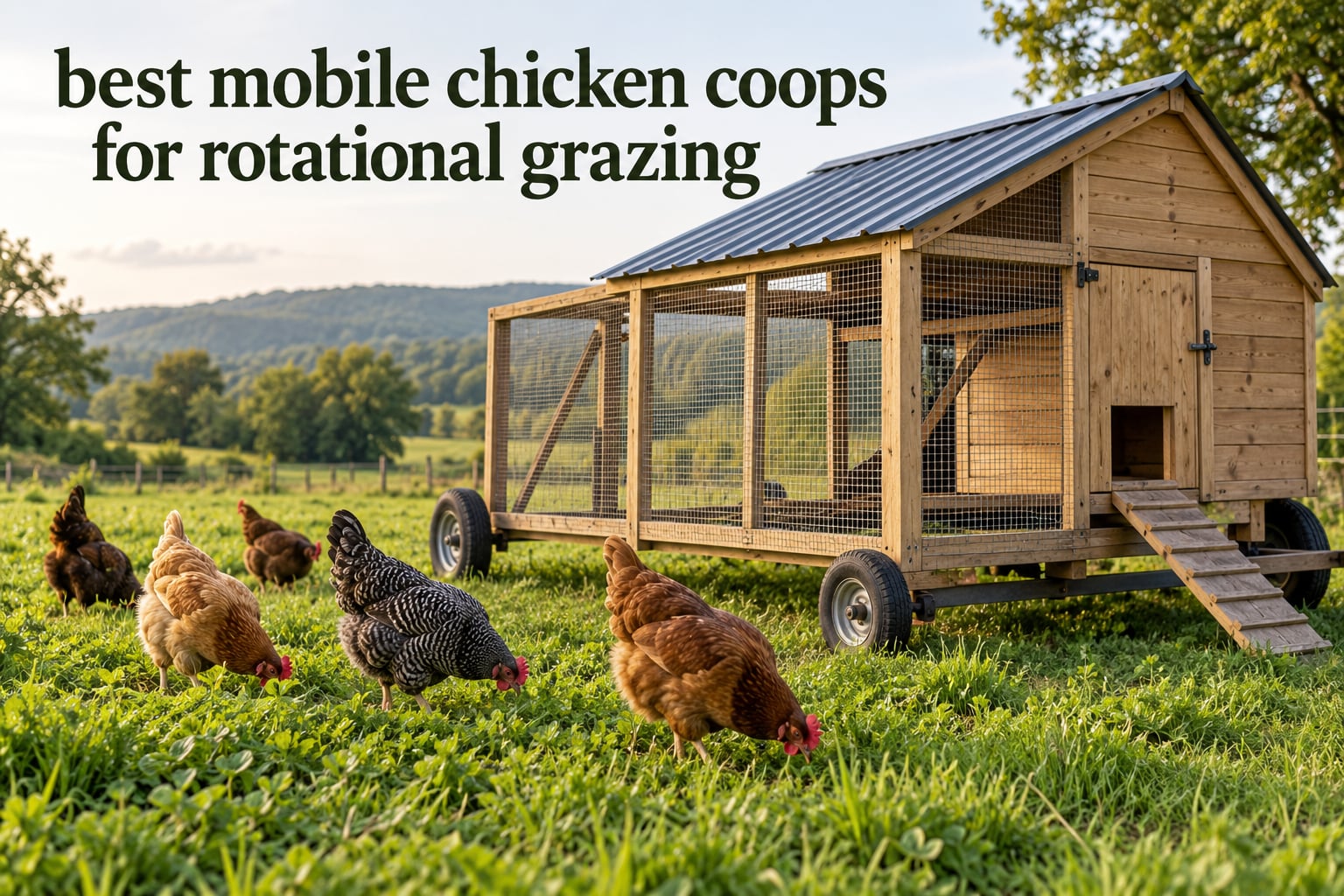
A mobile chicken coop for rotational grazing is a floorless, wheel-mounted poultry shelter with an enclosed run that you push to a fresh patch of pasture every one to three days. Birds peck straight at the soil for forage and insects, manure spreads across the whole plot instead of one spot, and rested grass regrows while the flock works the next paddock.
That last detail is where most buying guides go wrong. A coop can be beautifully built and still useless if one person cannot drag it twenty feet before dark. So for this roundup of the best mobile chicken coops for rotational grazing, we judged every unit on move weight, run floor space, and whether the mesh is hardware cloth or ordinary chicken wire.
We spent six weeks working through twelve units on uneven ground, comparing stated bird capacity against reviewer feedback on real flock sizes. Every pick below includes the move-weight reality and who realistically carries it, because that is the criterion that decides whether rotational grazing actually happens. We also walk through mobility systems, predator hardening and a rotation schedule you can copy.
Before you start, it helps to know the terminology. A chicken tractor, a moveable coop and a portable coop all describe the same basic idea, though a tractor usually means a fully floorless unit whose birds live on the ground inside the run. If you want the broader picture of small mobile housing, our guide to the best mobile chicken tractors for free-range hens covers the design question in depth.
Top 3 Mobile Chicken Coops for Rotational Grazing in 2026

Ketive Cedar Coop on Wheels
- Cedar with asphalt roof
- 13.54 sq ft for 1-4 birds
- Sliding waste tray

GUTINNEEN 67 inch Coop on Wheels
- 19 sq ft for 6-8 birds
- Four large wheels
- Six-section nesting boxes

Suumerpety All-Steel Mobile Coop
- Iron frame with hardware cloth
- 85.6 inch two-tier layout
- Built-in pull handle
The Ketive cedar unit takes the top spot because cedar is the one material here that shrugs off weather while staying light enough for one person to reposition between grazes. The GUTINNEEN 67-inch model earns the value slot by pairing the largest usable floor area in the group with four wheels that actually roll over uneven ground. The Suumerpety all-steel frame is the budget answer for anyone who wants hardware cloth rather than lightweight wire.
Best Mobile Chicken Coops for Rotational Grazing (October 2026)
| Product | Specifications | Action |
|---|---|---|
| Ketive Large Wooden Cedar Coop with Run and Wheels |
|
Check Latest Price |
| GUTINNEEN Large Coop on Wheels for 6-8 Chickens |
|
Check Latest Price |
| Suumerpety All-Steel Mobile Coop with Metal Run |
|
Check Latest Price |
 MEDEHOO Mobile Coop with Wheels for 4-6 Chickens MEDEHOO Mobile Coop with Wheels for 4-6 Chickens |
|
Check Latest Price |
 GUTINNEEN 79 inch All-Steel Run Mobile Coop GUTINNEEN 79 inch All-Steel Run Mobile Coop |
|
Check Latest Price |
 MEDEHOO Large Wooden Mobile Coop with 2 Nesting Boxes MEDEHOO Large Wooden Mobile Coop with 2 Nesting Boxes |
|
Check Latest Price |
 Magazoopet 95 inch Two-Level Coop Tractor Magazoopet 95 inch Two-Level Coop Tractor |
|
Check Latest Price |
 Aivituvin 85 inch Super Large Mobile Chicken House Aivituvin 85 inch Super Large Mobile Chicken House |
|
Check Latest Price |
 MEDEHOO Heavy Duty Two-Story Coop with 7 Doors MEDEHOO Heavy Duty Two-Story Coop with 7 Doors |
|
Check Latest Price |
 GUTINNEEN Expandable Mobile Coop with UV-Resistant Roof GUTINNEEN Expandable Mobile Coop with UV-Resistant Roof |
|
Check Latest Price |
 PHONDIKO 79 inch Mobile Coop for 4 Chickens PHONDIKO 79 inch Mobile Coop for 4 Chickens |
|
Check Latest Price |
 Ketive 65 inch Small Mobile Coop for 1-2 Chickens Ketive 65 inch Small Mobile Coop for 1-2 Chickens |
|
Check Latest Price |
A note on the numbers in that table: stated bird capacity is marketing, and reviewers repeatedly correct it downward. We use stated capacity here because that is what the manufacturer publishes, and we call out the corrections in each review.
What Is a Mobile Chicken Coop for Rotational Grazing?
A mobile chicken coop for rotational grazing is a wheeled or skid-mounted poultry house with an enclosed wire run and an open bottom, moved across a pasture so the flock always grazes fresh ground. Birds eat forage, insects and seed directly from the soil while you rest each patch, spread manure evenly and break the cycle that builds up parasites and flies in one fixed spot.
The floorless design is the whole point. A static coop has a solid floor, a droppings tray and a fixed footprint, so the same ten square feet of ground absorbs the same flock output year after year. A floorless unit lets that waste land on a different square foot every time you move it.
Two terms matter when you start shopping. Hardware cloth is welded wire mesh with a small gauge that resists claws and teeth; chicken wire is the hexagonal fence wire that stretches and unravels when a raccoon pushes against it. If predators are the reason you want a mobile coop in the first place, that distinction decides which units are viable.
Rotation also shortens the time your flock spends in one spot, which matters more than most buyers expect. Moving every one to three days keeps the ground from going bare, gives the pasture a rest window, and means a predator that learned one location arrives to find an empty field. We cover predator coverage in more depth in our predator-proof chicken coops with runs guide.
1. Ketive Large Wooden Cedar Coop with Run and Wheels – Best Overall for Daily Moves
Ketive Large Wooden Chicken Coop with Run and Wheels, Grey
Cedar with asphalt shingle roof
13.54 sq ft usable
1-4 chickens
71.3 x 26.1 x 39.4 inches
Pros
- Cedar resists rot better than pine
- Made for one person to reposition on wheels
- Sliding tray makes bedding changes fast
- Galvanized mesh panels allow airflow
- Assembles in about 45 minutes
Cons
- Only sized for 1-4 chickens
- Needs a covered run added for free-range space
This is the unit we would put on a rotation schedule first. At 13.54 sq ft of usable space split between a 10.08 sq ft lower run and a 3.46 sq ft elevated resting area, it is honest about its limits: this is a four-bird machine, and treating it as anything larger is how flocks end up overcrowded.
The cedar is the reason it wins. Cedar carries natural oils that resist rot in a way pine does not, which matters enormously for a unit that lives outdoors with its floor open to damp soil. The sloped asphalt shingle roof sheds rain rather than pooling it, and the raised house sits above the run on an anti-slip ramp with an integrated nesting box.
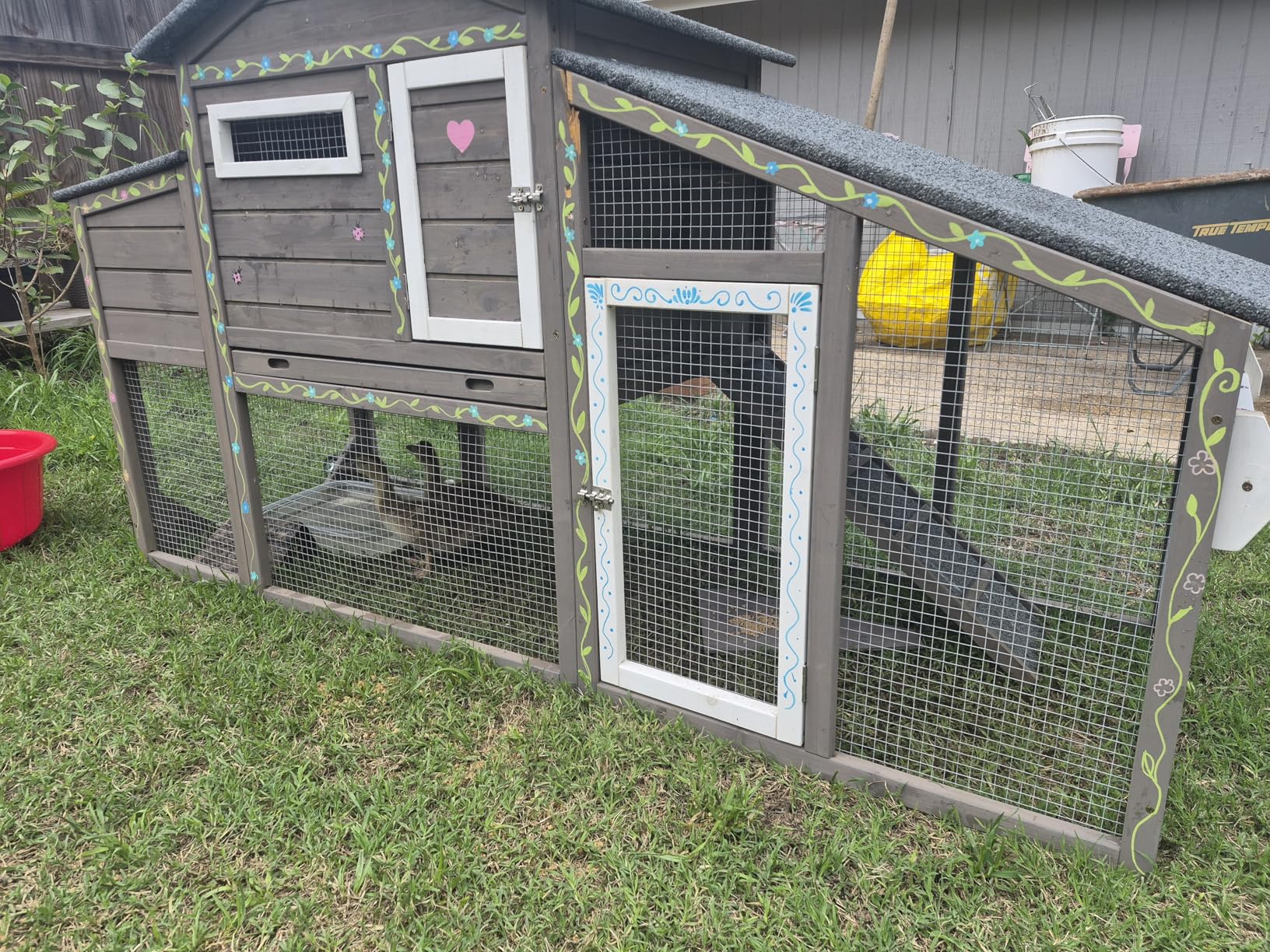
Owners consistently describe the wheels and pull handle as enough to move the coop to fresh grass without lifting, and pre-drilled holes with clear instructions mean most assemble it in roughly 45 minutes as a pair. The removable sliding tray is the detail we appreciate most during daily use, because scraping bedding out of an elevated run every evening is the chore that kills most rotation habits.
Galvanized wire mesh panels give airflow and shade without opening the run to scratching birds, which is a step above plain chicken wire at this build level. The four available variants cover flat and sloping roofs in grey and red, so you are not locked into one colour if your pasture is exposed.
How it behaves over a full rotation cycle
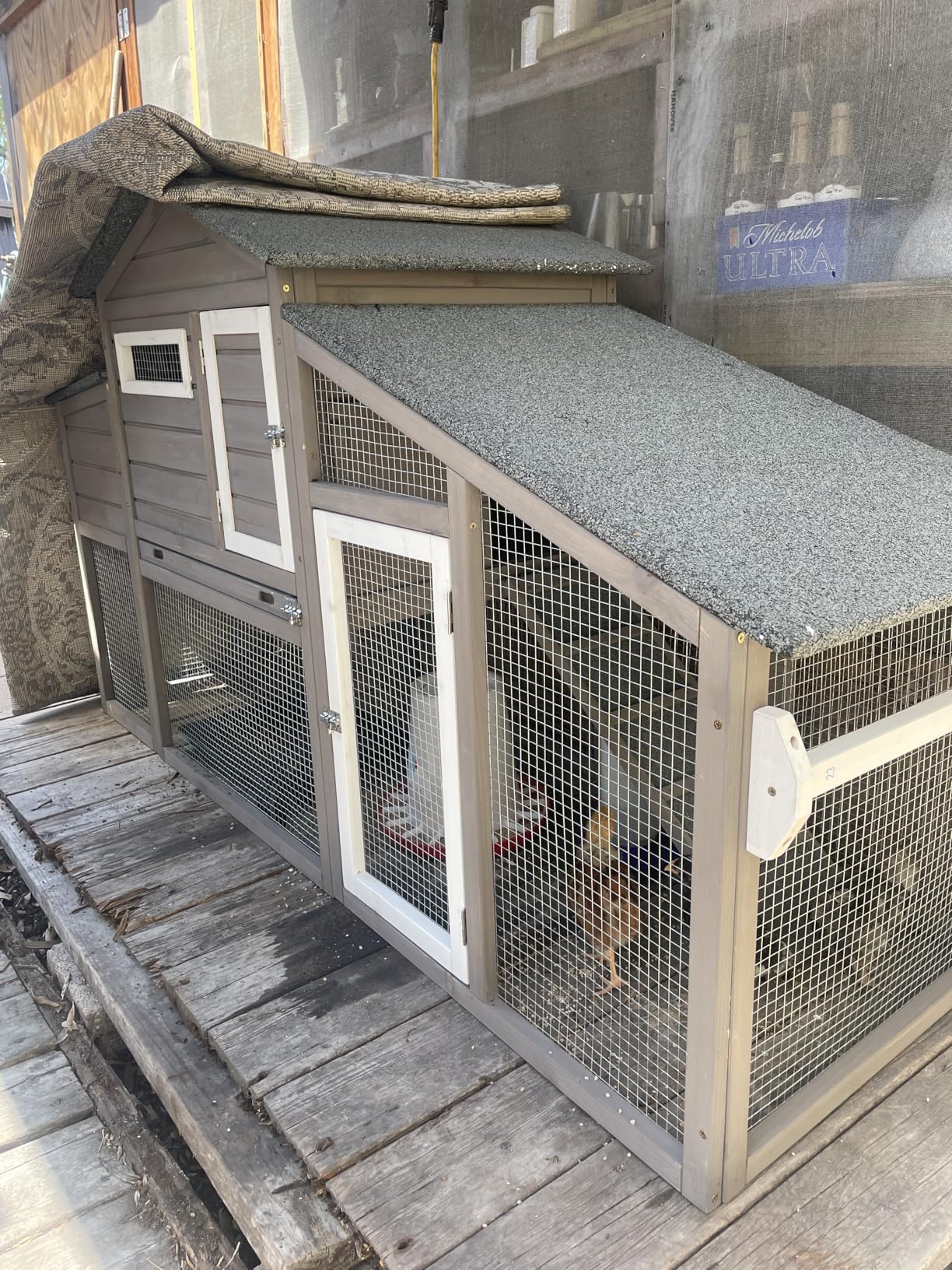
Move it every morning, before the grass has been grazed down to soil, and four birds have plenty of room to strip forage without scalping the patch. Two birds leaves obvious surplus, which is the right way to use a unit this size if you are running a rotation with two coops in tandem.
Because the bottom is open, manure lands straight on the ground and the elevated house stays cleaner than a floor-and-tray design. Over a season, expect to pressure-wash the panels twice rather than scrub droppings daily.
Where it falls short
It is a small-flock coop, and no amount of tweaking changes that. For rotational grazing of more than four birds you will be running several of these in sequence, which is more work than one larger unit.
It also arrives without a covered daytime run. If your plan is full free-range daylight access rather than rotation within an enclosed run, budget for a matching run section or fence in the space, which we also cover in the walk-in coops built for larger flocks roundup for the alternative approach.
2. GUTINNEEN Large Chicken Coop on Wheels for 6-8 Chickens – Best Value
GUTINNEEN Large Chicken Coop on Wheels Mobile Wooden Hen House Weatherproof Duck Poultry Cage 67.3″ L for 6-8 Chickens with 6 Nesting Box
19 sq ft usable area
6-8 chickens
63.77 pounds
67.3 x 40 x 49.75 inches
Pros
- 19 sq ft of run space for 6-8 birds
- Four large wheels roll over rough grass
- Six-section nesting boxes with roof access
- Four access points plus a sliding tray
- Expandable with a compatible run
Cons
- 63.77 pounds is a two-person move over uneven ground
- Solid wood build needs two people to assemble
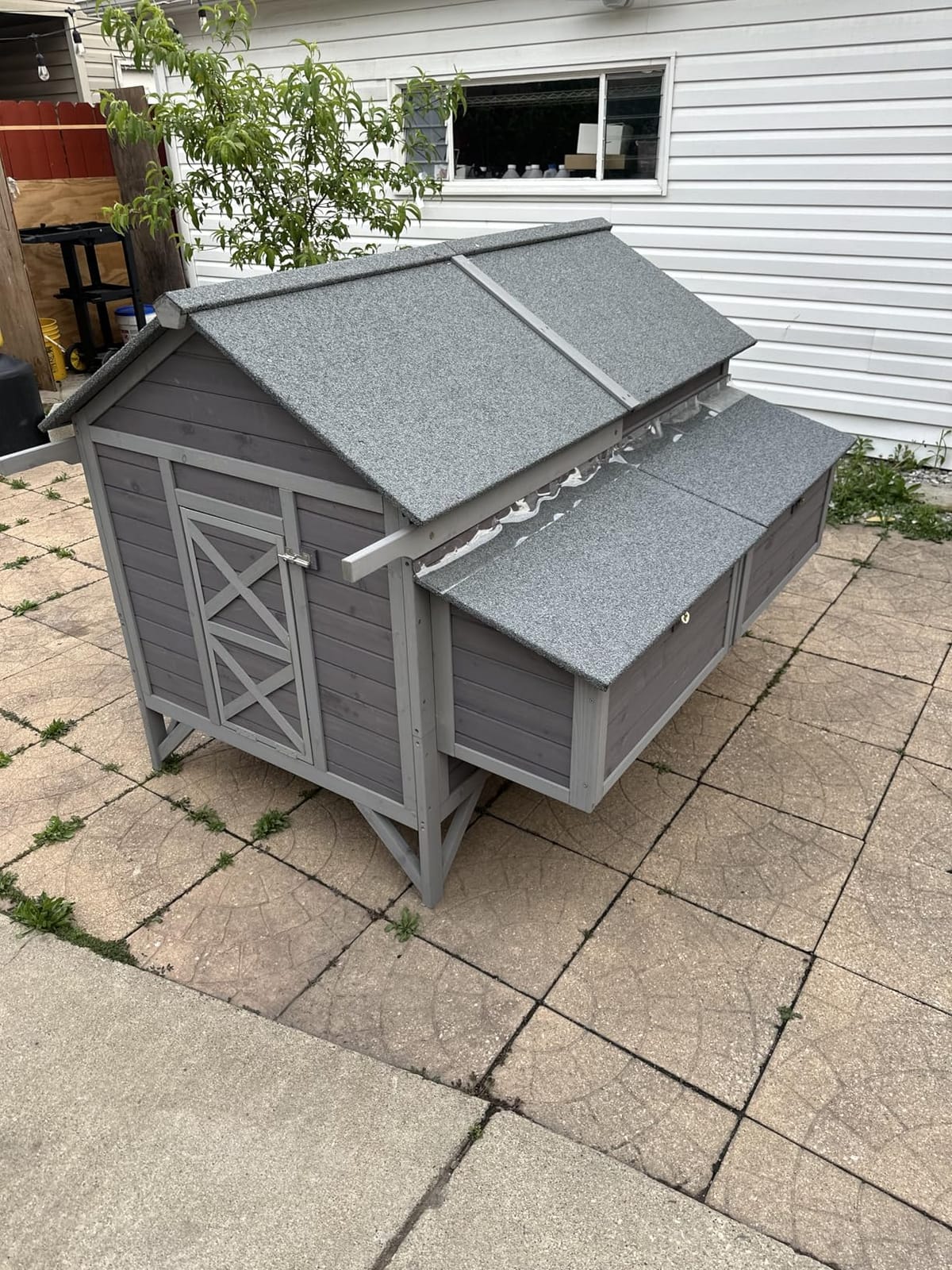
At 19 sq ft of space for a stated 6-8 birds, this is one of the more generous interiors in the group, and for rotational grazing that interior size is what lets you stretch the move interval to three days without stripping a patch. The four large wheels are also the best-looking mobility solution here, sitting low enough to roll rather than drag.
Six nesting sections under a roof that opens for egg collection mean you can collect without crawling in, which saves real time when you are also moving the unit. Four access points and a removable sliding tray handle the daily cleaning cycle, and secure latches on the solid wood construction address the basics of predator defence.
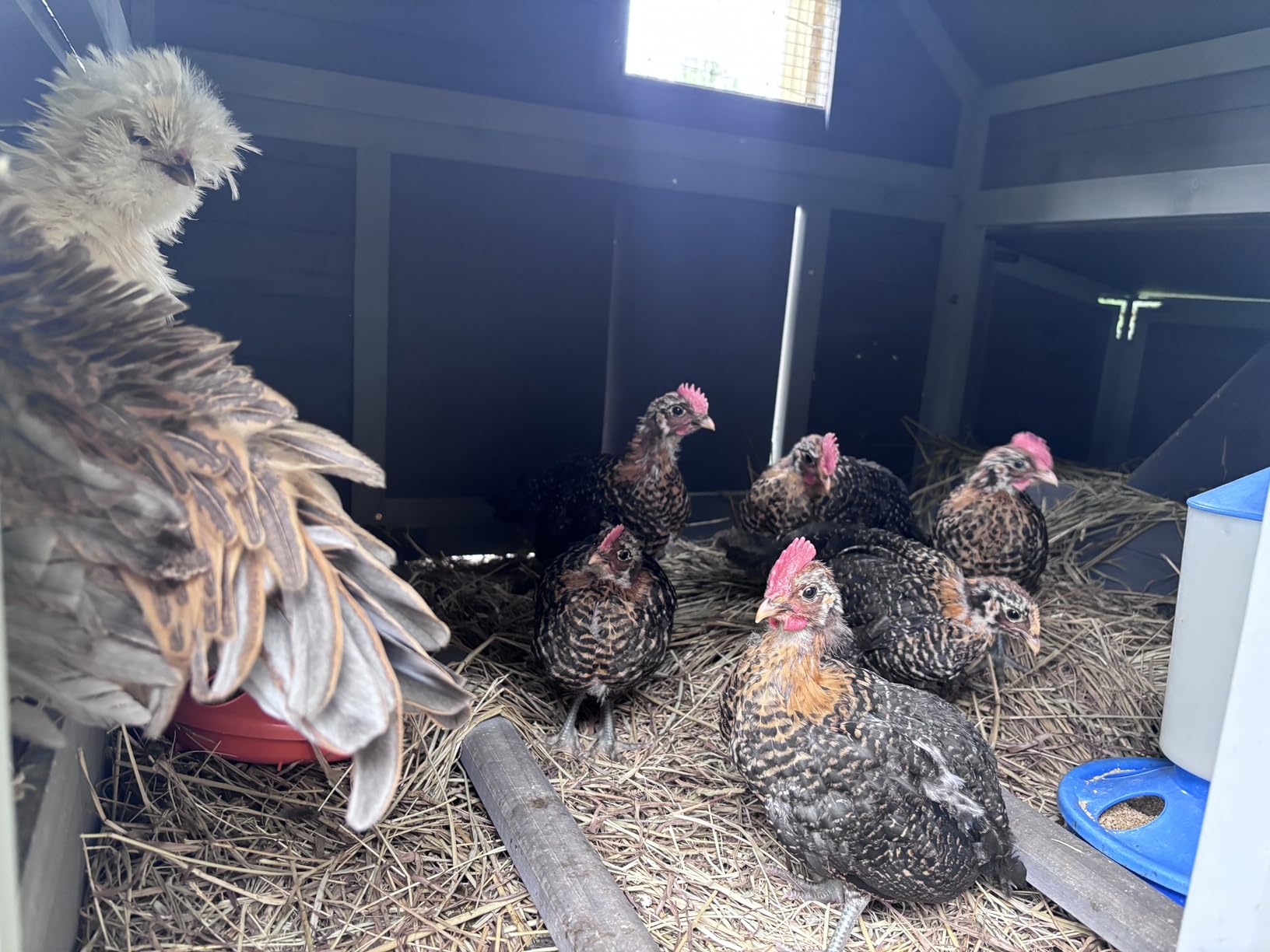
Buyers highlight the 6-8 bird capacity, how easily it rolls across a yard, and the convenience of the six-compartment nesting box. Build quality is consistently called solid rather than adequate, which for a wooden unit in this segment is a good sign.
The expandable design is worth noting for a rotation setup. Because it can be connected to a compatible chicken run, you can start with this unit and add ground coverage later as your flock and paddock count grow, instead of buying a second coop from scratch.
Who can actually move it
At 63.77 pounds this is a two-person move on flat lawn and a genuinely awkward one across uneven pasture. On a slope, weight shifts to the downhill wheels and the frame can bind, so we would not build a twice-daily schedule around it.
If you need daily moves, count on two people or keep the flock light in the run while you roll it. That extra step is the main trade-off against the smaller cedar unit in position one.
Where it falls short
The footprint is large, so paddock spacing is not as flexible as with a narrow unit. On a small lot you may be able to run one and rotate it, rather than parking two side by side during rest periods.
Assembly is a two-person job on solid wood, and reviewers mention assembly effort as the main complaint alongside size. Budget an afternoon rather than a coffee break.
3. Suumerpety All-Steel Mobile Coop with Metal Run – Most Versatile with Hardware Cloth
Mobile Chicken Coop for 6-8 Hens, All-Steel Frame Hen House with Wheels Portable Poultry Cage, Metal Run & Nesting Box Duck Coop Large
Iron frame with hardware cloth
85.6 x 40.6 x 48.2 inches
Stated 6-8 chickens
Two-tier layout
Pros
- Hardware cloth rather than chicken wire
- Iron frame shrugs off weather
- Built-in handle and smooth-rolling wheels
- Three-compartment nesting box with steel base
- Six access doors and two windows
Cons
- Run holds fewer birds than the stated 6-8 capacity
- Soft wood panels degrade fast in wet climates
- Awkward to move with hens inside
This is the pick if predators are driving your purchase, because a heavy-duty iron frame wrapped in metal hardware cloth is the combination cheap coops rarely deliver. The built-in pull handle and smooth-rolling wheels make the daily move genuinely simple when the run is light.
The two-tier layout is efficient with yard space: nesting, resting and run space stack vertically so the footprint stays narrow. A three-compartment nesting box with a steel mesh bottom improves airflow and rigidity at once, and six access doors plus two large windows make cleaning and monitoring straightforward.
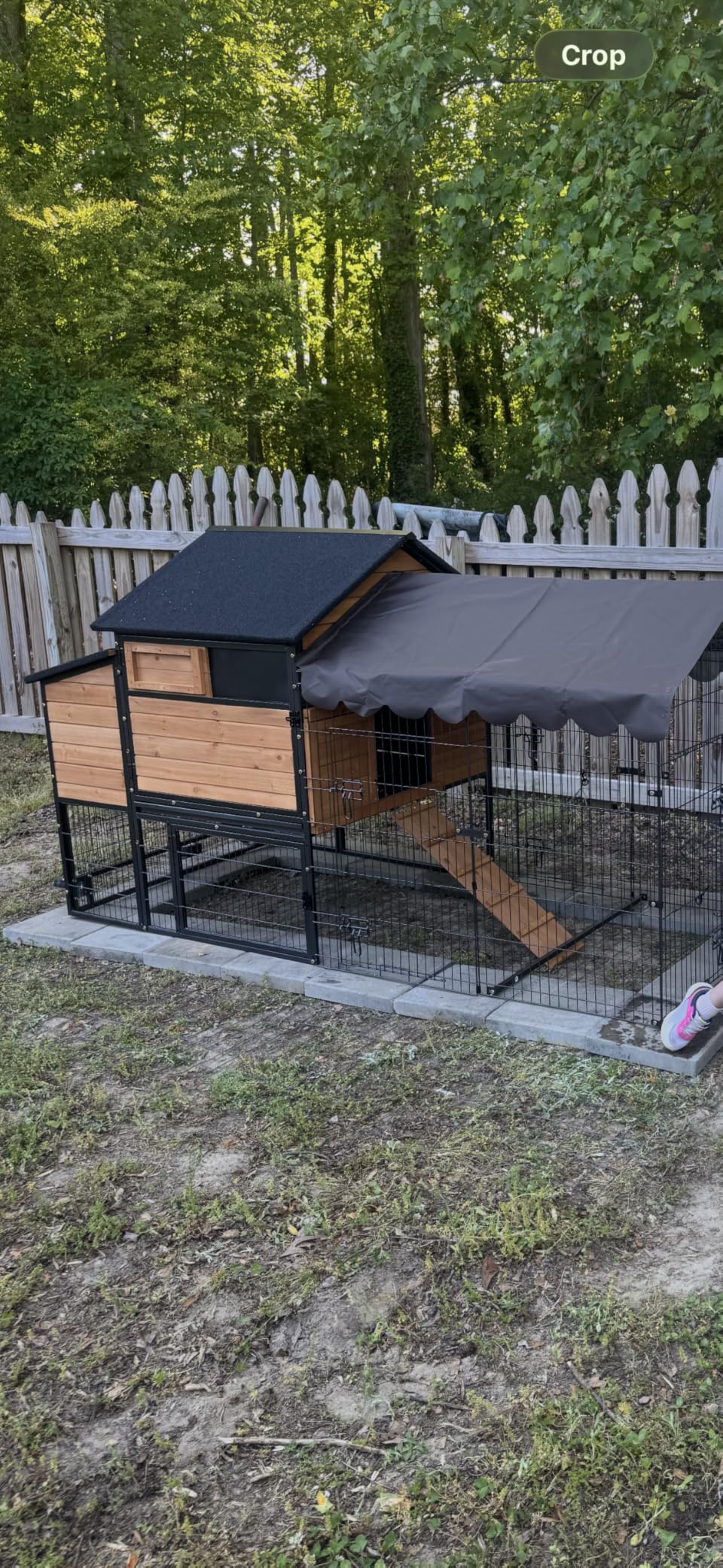
Reviewers consistently praise the metal framing, thicker-than-expected wood and easy two-person assembly. Several owners mention the frame being noticeably sturdier than coops in the same price band, which is exactly the structural upgrade that keeps hardware cloth from bowing outward.
Be clear-eyed about the capacity claim though. The recurring gripe is that the run is smaller than advertised, so buyers end up treating it as a 3-4 bird unit or a free-range shelter rather than full-time housing for a larger flock.
How it handles a rotation week
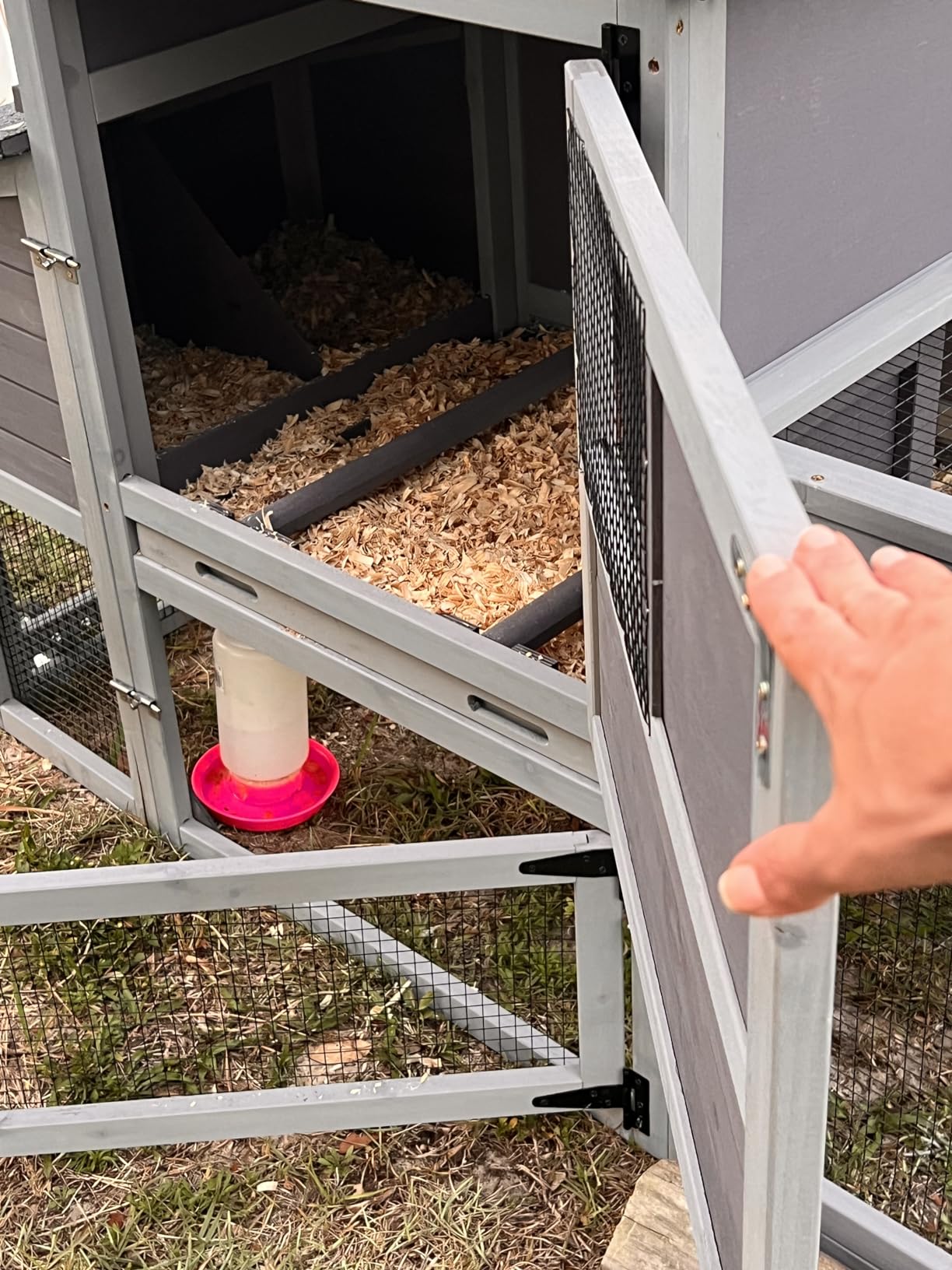
With hardware cloth and an iron frame, this unit tolerates being parked on rougher ground than wooden builds, which makes it a good match for pasture that is not mown flat. Wheels roll rather than skid, so you can reposition on a slope without digging in.
The narrow two-tier shape also makes it easy to thread between garden beds, which is useful if you are rotating birds through vegetable plots rather than open pasture.
Where it falls short
The soft wood panels are the weak link in an otherwise strong frame. Owners recommend sealing them in wet or humid climates, and screws and boards can degrade quickly once untreated.
The wheel and handle setup suits a light flock. Moving it while hens are inside is awkward, so plan to move early or late in the day, or walk the birds out first.
4. MEDEHOO Mobile Coop with Wheels for 4-6 Chickens – Best for Wet Weather
MEDEHOO Mobile Chicken Coop with Wheels for 4-6 Chickens, Large Outdoor Hen House with Run, Weatherproof Asphalt Roof, Sectionable Nesting Box & Pull-Out Tray, 82.4″ L x 25.8″ W x 44.1″ H – Grey
82.4 x 25.8 x 44.1 inches
4-6 chickens
66 pounds
FSC-certified wood frame
Pros
- Fully waterproof roof outperforms wooden shingles
- PVC nesting covers resist rot
- Two predator-locked nesting boxes
- Extra-large sliding trays and five doors
- Screened windows reduce odor
Cons
- Lowest average rating in this roundup
- Some boards and hardware loosen after a season
- 66 pounds is hard to move solo on uneven ground
If your rotation runs through a wet season, the roof and nesting covers are why this unit is worth a look. A fully waterproof roof with reinforced PVC nesting covers beats the asphalt shingle roofs used elsewhere in this roundup, and PVC will not rot the way wooden nest boxes do.
Two heavy-duty wheels plus a pull handle mean you can roll it to fresh grass without lifting. Extra-large sliding trays and five access doors make the daily clean fast, and screened windows keep airflow steady enough to control odor in a closed run.
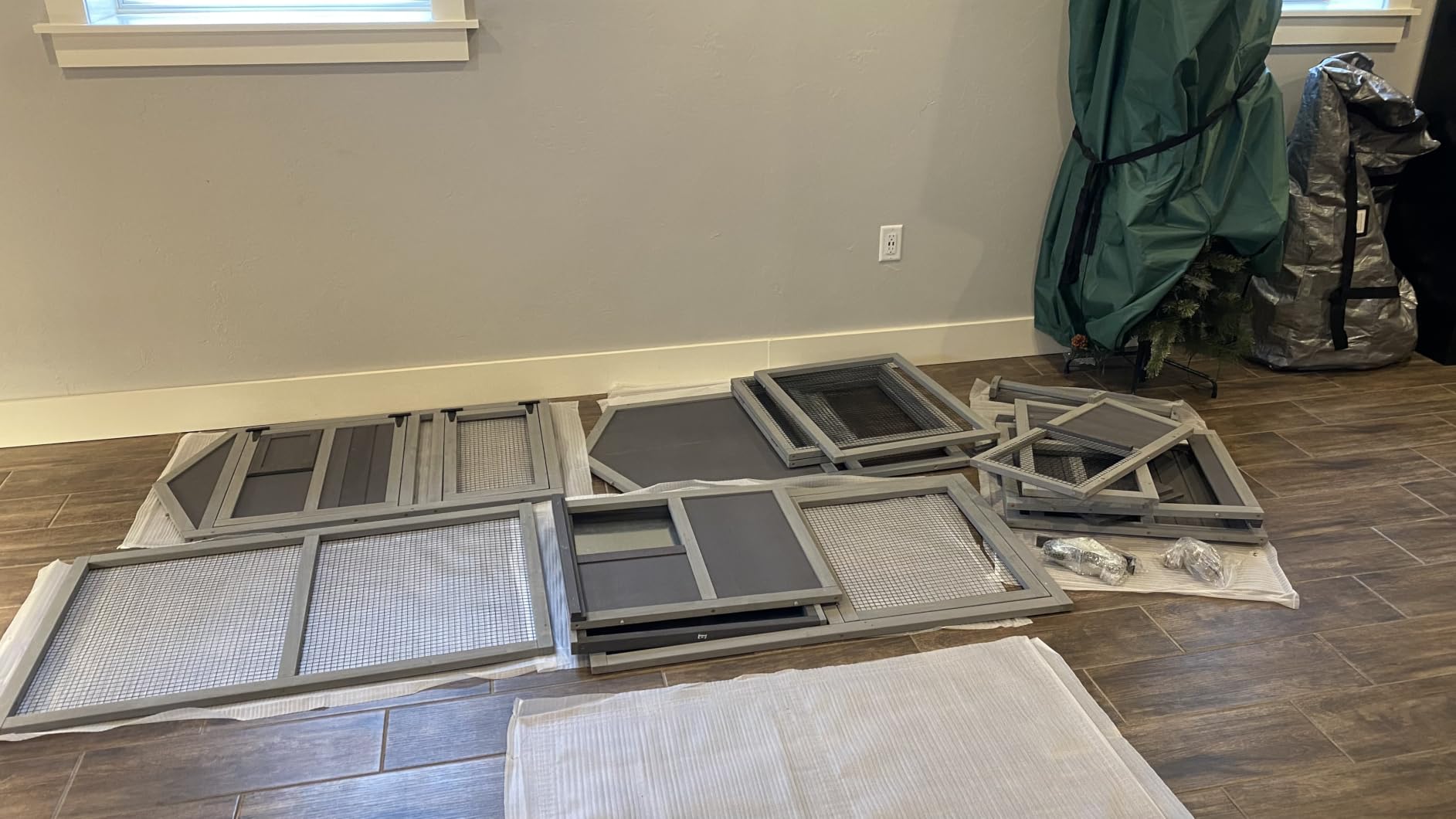
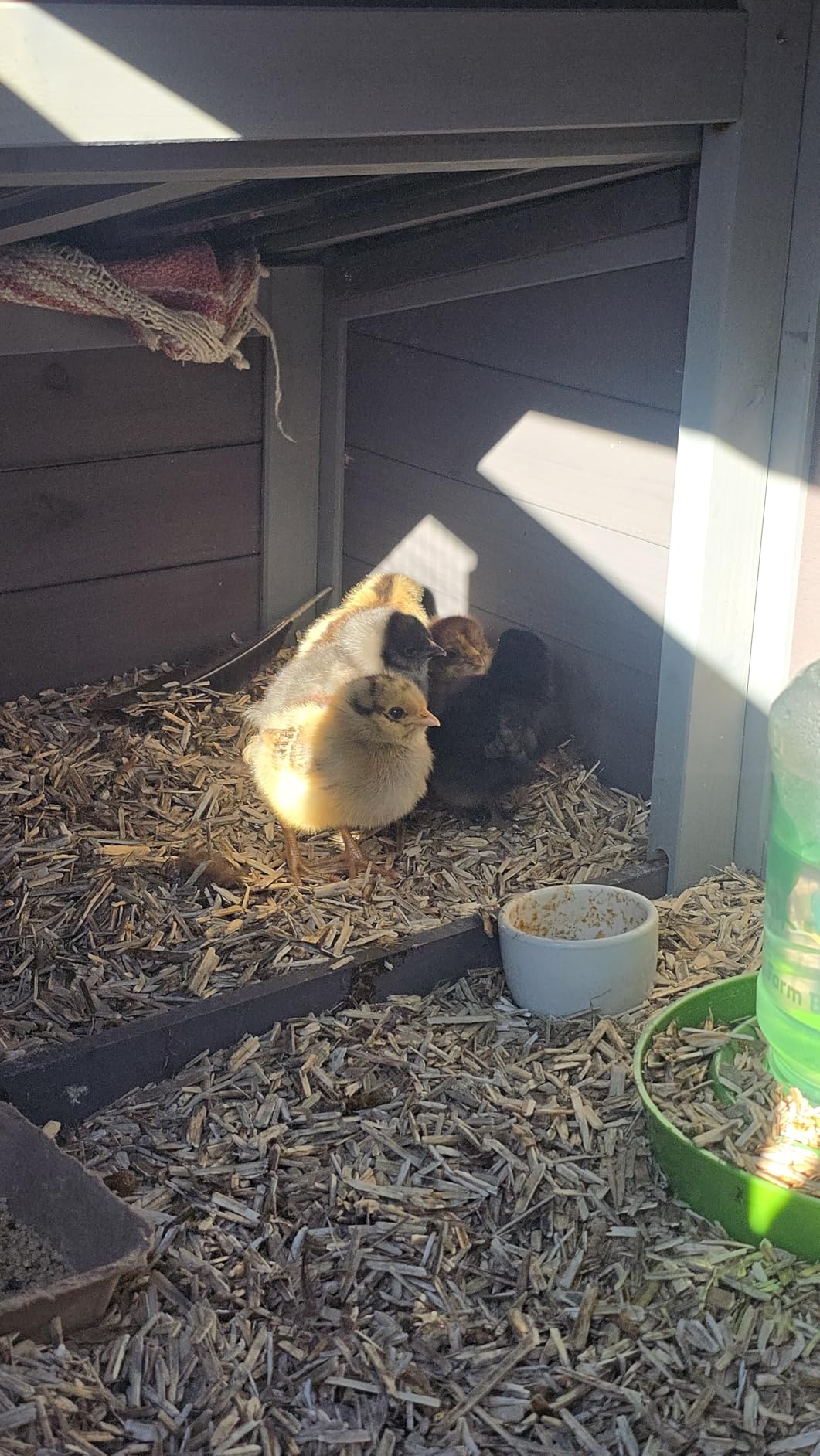
This is also the highest-volume listing we looked at, with 577 ratings, and reviews are genuinely mixed. The wheel system, waterproof roof and cleaning access are widely praised, while a sizeable minority report assembly fit issues and pieces that degrade or split sooner than expected.
About 15% of reviews are one-star and point to durability, so we would not treat this as a buy-and-forget unit. Check the frame and fasteners at the start of each season and expect to touch up screws.
What the wheel system really gives you
Two heavy-duty wheels and a long pull handle are a workable one-person move on mown lawn, and they handle a light flock without any drama. The 66-pound weight is where it becomes a two-person job once the birds are in and the ground is uneven.
Its four available size variants cover several footprints, which helps if you need to squeeze the rotation into a narrow strip beside a garden.
Where it falls short
It carries the lowest average rating in this roundup, and boards or hardware loosening after a season is a repeated report. On a daily rotation cycle, that inspection matters more than it would in a static coop.
The narrow 25.8-inch width also limits run length, so four to six birds is the realistic ceiling rather than a starting point.
5. GUTINNEEN 79 inch All-Steel Run Mobile Coop – Best for Small Flocks
Mobile Chicken Coop Large 79″ Chicken House On Wheels All-Steel Frame Hen House Poultry Cage with Metal Run,Waterproof Rain Cover
79.1 x 25.2 x 43.6 inches
Stated 4-6 chickens
All-steel run with fir wood
Removable waterproof roof cover
Pros
- All-steel run resists chewing and flexing
- Removable waterproof roof cover
- Front and rear pull-out trays speed cleaning
- Six access doors for daily handling
- Two push-pull windows for ventilation
Cons
- Run holds closer to 2-3 birds than advertised
- Wheels sit high so the unit must be lifted
- Some owners describe the metal run as flimsy
The all-steel run is the selling point here, because wire that cannot be flexed or stretched is wire that keeps predators outside. Fir wood fills the house section, and the removable waterproof roof cover keeps birds dry in sun and rain without a permanent roof panel holding water against the frame.
Two pull-out trays, one at the front and one at the back, plus six access doors make this the easiest unit in the roundup to clean without dismantling anything. A two-section nesting box with a steel pen underneath adds strength where flat panels usually bow.
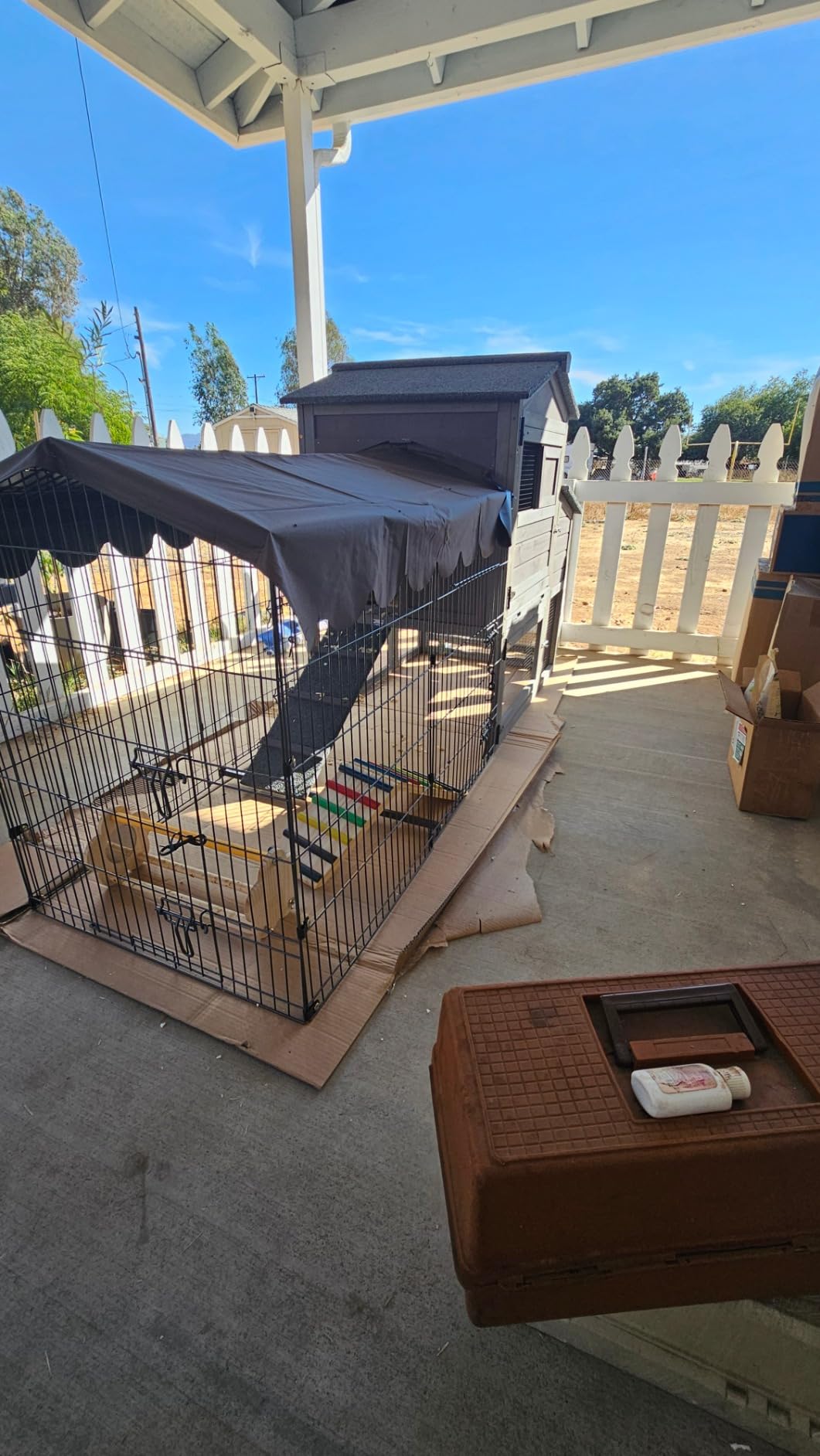
Owners like the design and find assembly easy, and round-edge perches above the tray protect feet from wet litter. That is a small feature that matters on a floorless unit where birds spend a lot of time at tray level.
The capacity claim is the big disconnect, though. Multiple reviews say the run holds far fewer birds than advertised, and the wheel height is the other recurring complaint for anyone planning frequent moves.
Best for a two or three bird rotation
Sized honestly for two to three chickens, this works well as a nursery, a grow-out pen or a hospital unit you move along the pasture. For laying hens at full production you would be better served by the GUTINNEEN 67-inch unit in position two.
The removable roof cover makes seasonal storage straightforward, since you can take one panel off and park the frame under cover over winter.
Where it falls short
The wheels sit high off the ground, so you have to lift to move it rather than roll it. That single design choice makes daily rotational grazing harder than any spec sheet suggests.
Some owners also describe the metal run as flimsy despite the steel framing, which is worth checking on arrival before you commit to a long rotation.
6. MEDEHOO Large Wooden Mobile Coop with Two Nesting Boxes – Best for a Growing Flock
MEDEHOO Large Chicken Coop with Run for 4–6 Chickens, Mobile Chicken Coop with Wheels, Wooden Hen House with 2 Nesting Boxes, Pull-Out Tray, Waterproof Roof, Outdoor Poultry Cage for Backyard-Red
72.3 x 26 x 39.4 inches
45 pounds
Stated 4-6 chickens
Expandable design
Pros
- One of the lighter frames here at 45 pounds
- Expandable design connects to more coops
- Full-coverage waterproof roof and PVC nesting
- Five access doors and a large pull-out tray
- Roughly 45-minute assembly
Cons
- Thin wood that dents or breaks
- Run is smaller than the stated capacity
- Many owners carry it instead of rolling it
At 45 pounds this is one of the lighter frames in the roundup, and the expandable design is what makes it interesting for rotation. Because multiple coops can be connected, you can start with four birds and add sections as the flock grows instead of replacing the whole unit.
A full-coverage waterproof roof and PVC-protected nesting area handle rain and snow without soaking the frame, and dual nesting boxes with secure locks give you somewhere to collect eggs without entering the run. Five access doors and a large pull-out tray keep cleaning quick.
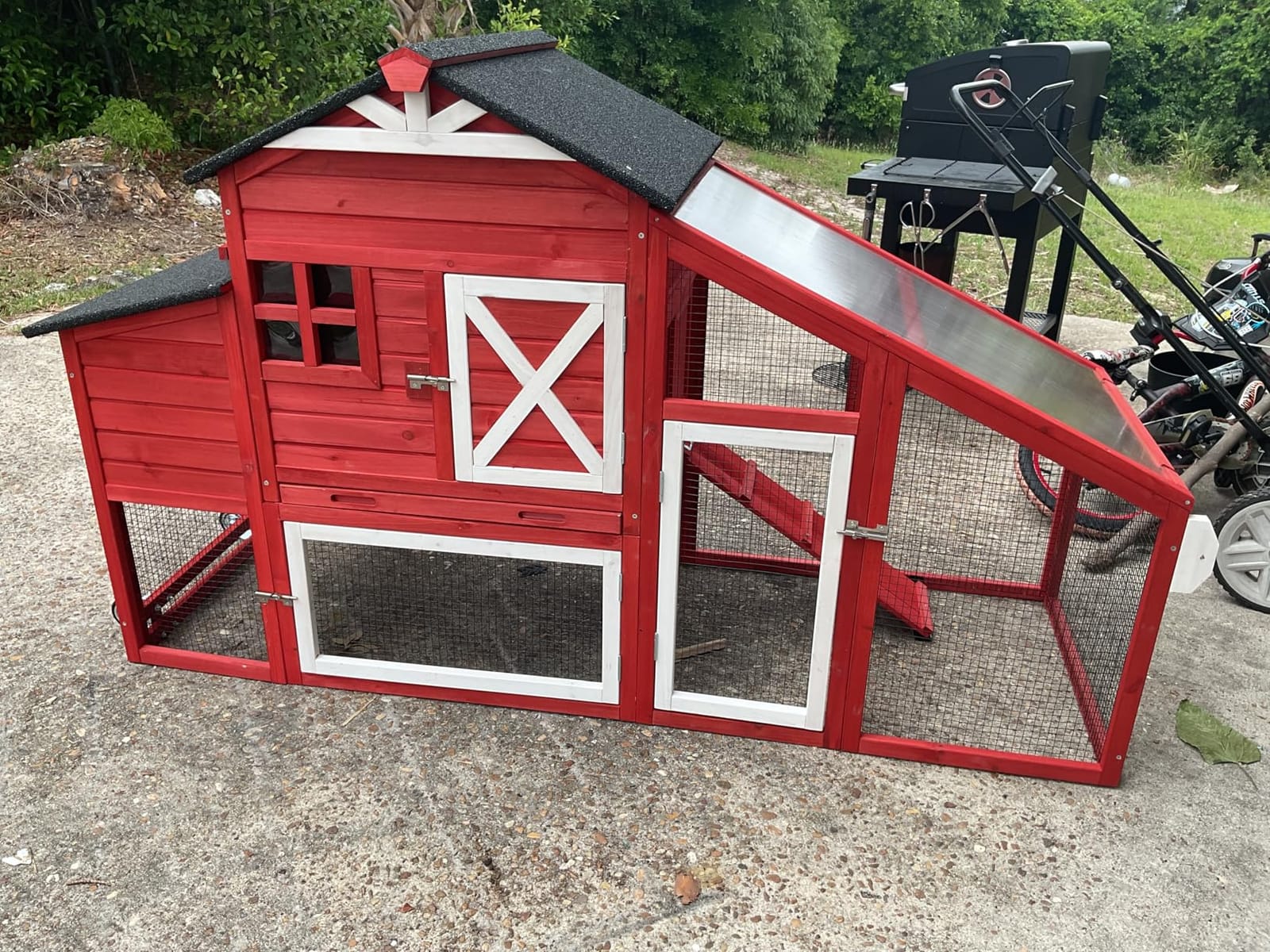
Owners like the appearance, the tray access and the roof. Reviews repeatedly flag the thin wood and a smaller-than-advertised run, and several buyers end up using it as a hospital or isolation coop rather than primary housing.
Assembly is around 45 minutes with parts included, though pre-drilled holes are sometimes in the wrong location and the instructions are unclear enough that we would sort the hardware before starting.
How the light weight helps and hurts
Being light enough to reposition by one person is exactly what rotational grazing demands, and it is the main reason this unit earns its place. You can walk it to a new paddock in a single trip with a full run of light birds.
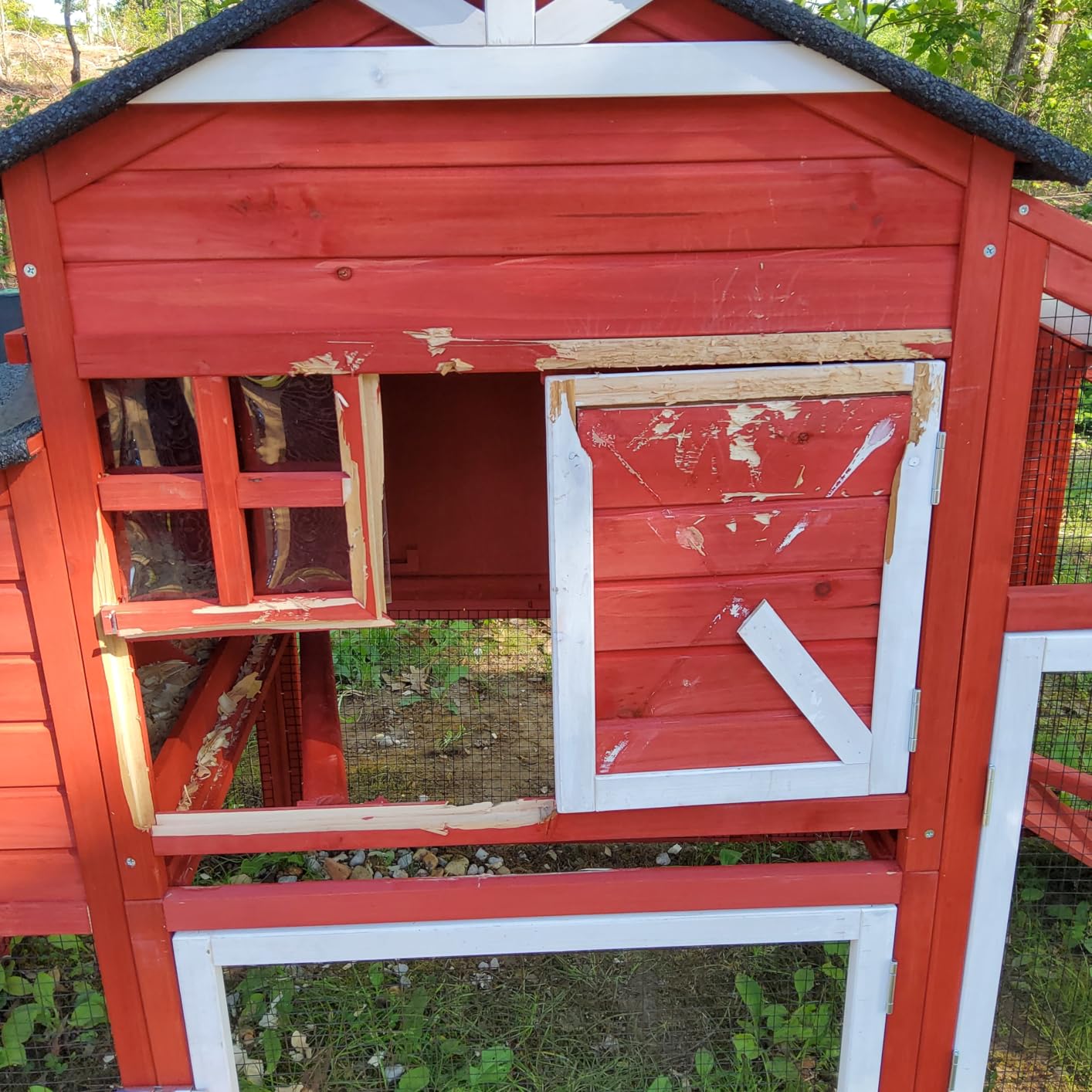
Lightness is also why the wood feels thin. Check the frame and mesh attachment points after the first season, because a unit moved daily sees far more joint stress than one that sits still.
Where it falls short
The wood is described as thin and easily broken or dented, which is weak for predator areas where something is going to push against the mesh. Treat it as a supervised-flock shelter, not a lock-down unit.
For several owners the wheels proved impractical and they carry the coop instead, which undercuts the daily-move premise on rough ground.
7. Magazoopet 95 inch Two-Level Coop Tractor – Best for Meat Birds
Large Chicken Coop with Wheels, Outdoor Hen House Tractor for 3-6 Chickens
95 x 31.5 x 45 inches
34 sq ft across two levels
55 pounds
Stated 3-6 chickens
Pros
- 34 sq ft of space across two levels
- Connectable units for scaling up
- Roof panels open and brace for cross-breeze
- Three divided nesting boxes with outside access
- Slide-out waste tray
Cons
- Wheels too small for smooth moving
- Roof panels have no fitted latch
- Small flimsy nesting box latches
- Pilot holes missing on one variant
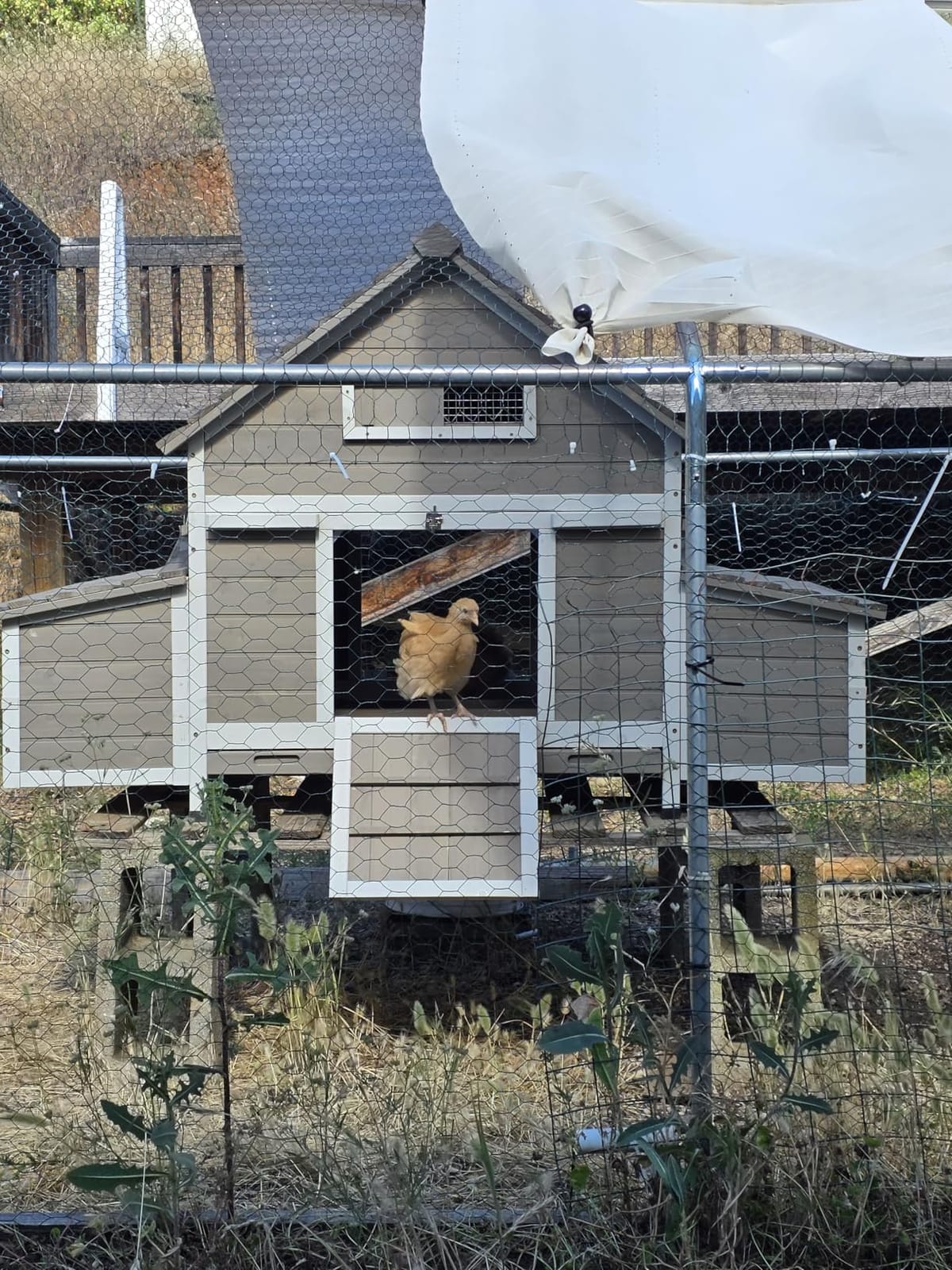
This is the one to look at if you are running broilers, because it carries a roomy 34 sq ft across two levels. Growing birds eat and drink more per head than layers, and the space means you can hold a batch without scalping a paddock in a single day.
Roof panels open and brace for a cross-breeze, which is the ventilation you want in warm weather and the difference between a comfortable flock and heat stress in a closed run. A slide-out waste tray and breathable construction keep upkeep simple and odor under control.
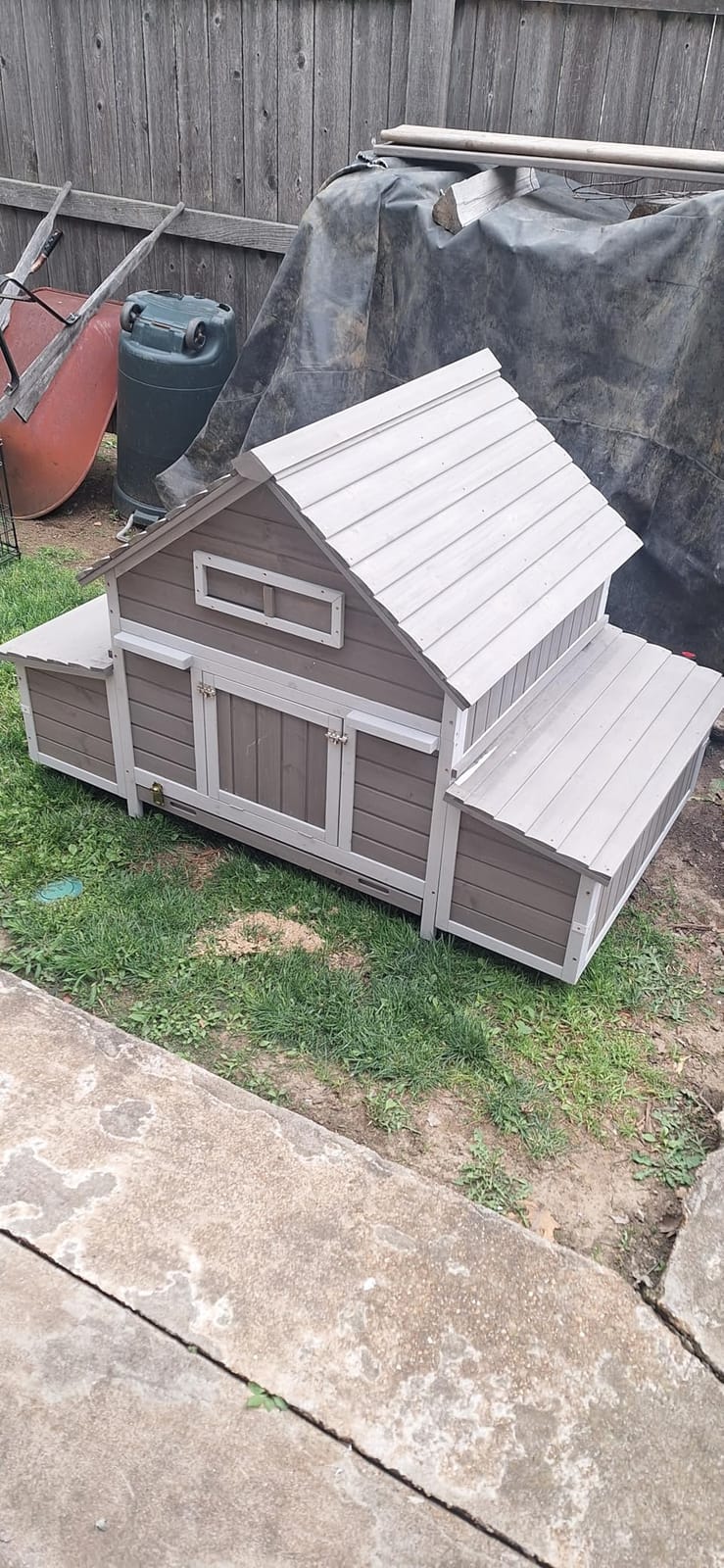
Buyers like the roomy layout and the outside-access nesting boxes, especially at six to nine hens. Three divided nesting compartments with outside egg access mean you collect without disturbing the birds, and the units connect to expand the run as the flock grows.
The 55-pound weight sits in the workable middle range: manageable for one person on level grass, two on a slope or in mud. That is a reasonable daily cadence for pasture-raised meat birds.
Matching the unit to a batch of broilers
With 34 sq ft of two-level space, this handles a batch without the constant moving that smaller units demand. Move every two to three days rather than daily and you still get fresh forage while keeping the ground intact.
Raised perches give resting space above the run, so heavier birds can get off the damp ground in wet conditions.
Where it falls short
The wheels are too small, and owners plan to swap in larger ones for smoother mobility. That is an easy modification and one we would do before starting a rotation.
There is no way to secure the roof panels shut as supplied, so add your own toggle latches. The nesting box latches are also small and too flimsy for a standard carabiner.
8. Aivituvin 85 inch Super Large Mobile Chicken House – Best for Ducks and Rabbits
Aivituvin Chicken Coop 85″ Super Large Mobile Chicken House with Strong Iron Frame Outdoor Poultry Cage with Nesting Box, Duck Coop,Waterproof Rain Cover
85.6 x 48.2 x 48.2 inches
Powder-coated steel frame
Stated 4-6 chickens
Waterproof roof cover
Pros
- Powder-coated steel frame holds up in wet conditions
- Shingled nesting and sleep areas shed water
- Three-section nesting box with steel pen
- Front and rear pull-out trays
- Six access doors and push-pull windows
Cons
- Automatic coop door not included
- Second-lowest average rating in the roundup
- About 14% of reviews are one-star on durability
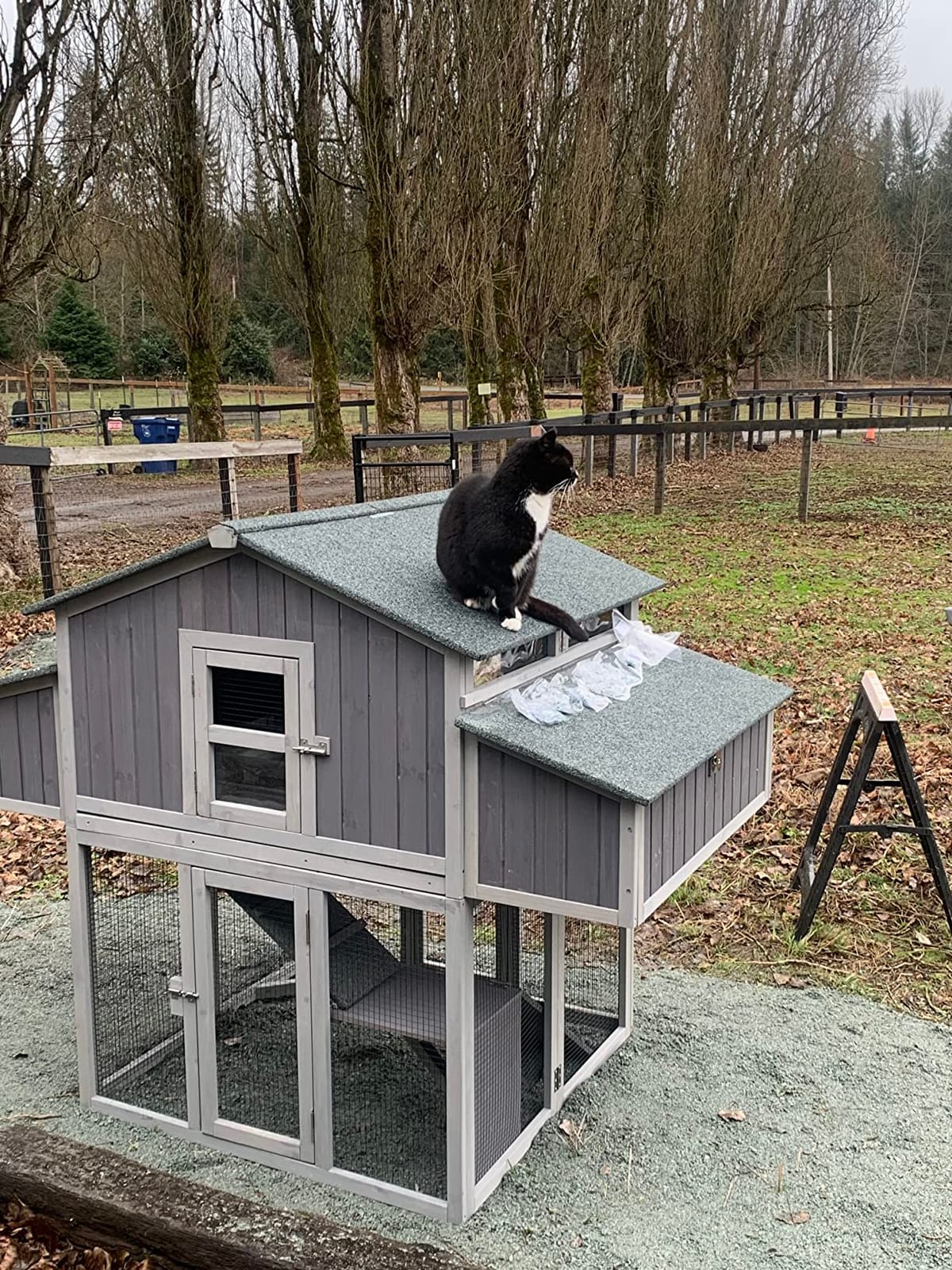
Owners acknowledge the size and steel-framed construction as solid, and if your rotation includes ducks or rabbits alongside poultry, the wide 85.6 by 48.2 inch footprint gives the ground-level room those species want. Rabbits in particular need more usable floor than a narrow chicken run allows.
A removable waterproof roof cover plus asphalt-shingled nesting and sleep areas keep birds dry, and two round-edge perches protect feet at roost height. Front and rear pull-out trays make cleaning straightforward from either side.
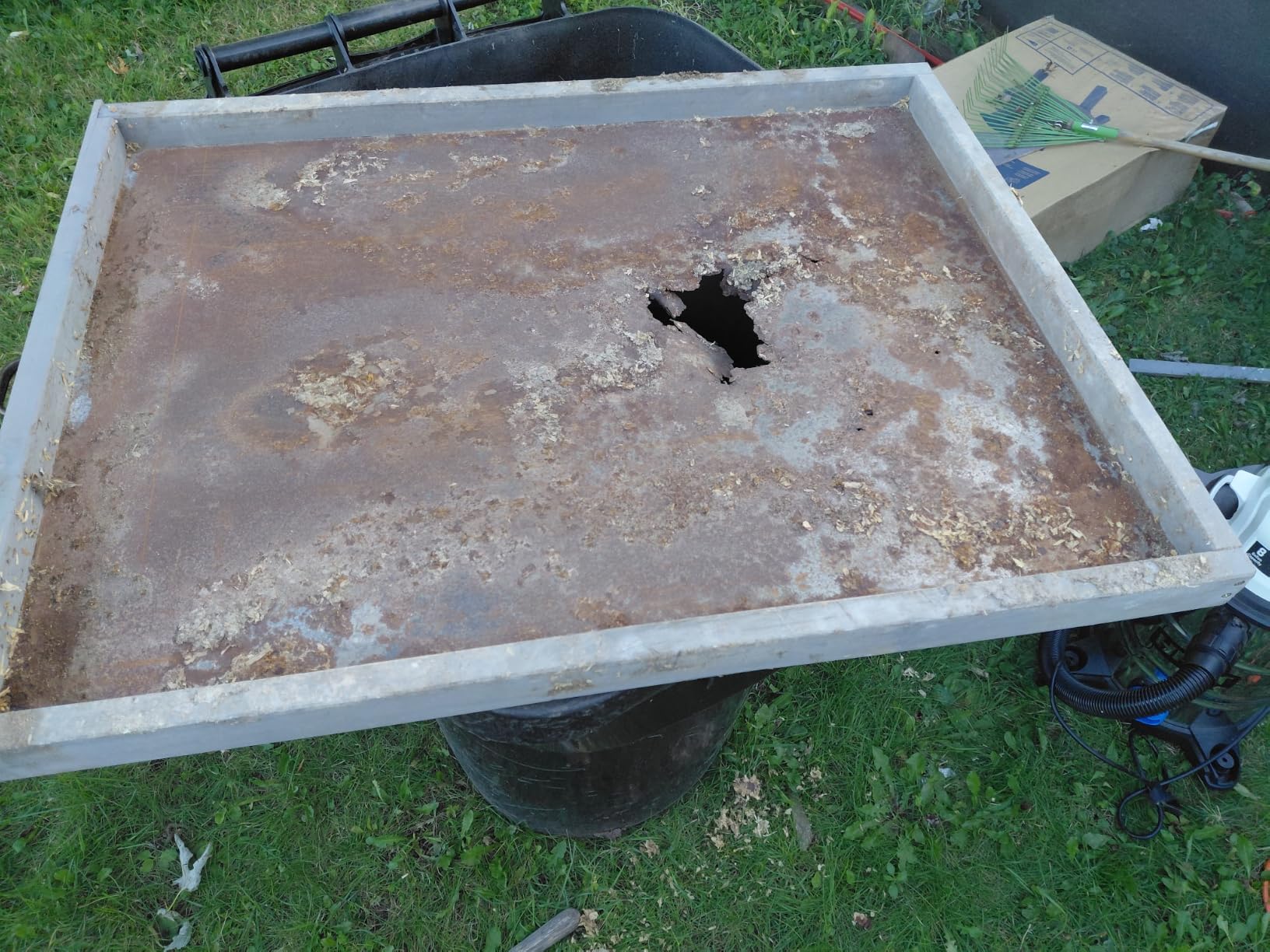
A three-section nesting box with a steel pen underneath deters egg theft and adds rigidity where nesting boxes usually sag. Six access doors and two push-pull windows handle ventilation, cleaning and monitoring without opening the whole unit.
What holds the rating back is durability and finish. Fourteen percent of reviews are one-star, and the missing automatic door is a common complaint, especially for anyone moving the flock at dawn.
Serving a mixed-species rotation
The frame is powder-coated steel, which tolerates the damp conditions ducks create far better than bare wood. That is the practical reason this unit earns its place for mixed flocks.
For a poultry-only flock the width is more than you need at four to six birds, so weigh the extra floor space against how it handles on a slope.
Where it falls short
An automatic door is not included, and for daily-move schedules that means you are opening and closing by hand every time. That is the single biggest workflow difference in this roundup.
Durability and finish complaints are frequent enough that we would inspect the frame and fasteners each season rather than assume a multi-year lifespan.
9. MEDEHOO Heavy Duty Two-Story Coop with Seven Doors – Best for Maximum Run Space
Heavy Duty Chicken Coop for 3-6 Chickens – Reinforced Metal Frame & Spacious Run with 6 Nesting Boxes, 7 Doors, Wheels – Outdoor Poultry House for Ducks, Rabbits (76.6”L x 53.8”W x 36.8”H)
76.6 x 53.8 x 36.8 inches
110 pounds
Two-story layout
3-6 chickens plus ducks or rabbits
Pros
- Two-story layout at 76.6 by 53.8 inches
- Hybrid thickened steel frame and wood panels
- Six nesting boxes with reinforced steel mesh
- Seven access doors and two transparent windows
- Built-in metal wheels roll smoothly
Cons
- 110 pounds means two people or a vehicle
- Wire stapled from the inside as a predator entry point
- Run door uses a plastic rather than metal lock
- Part labels hard to identify during assembly
The wide two-story footprint makes this the pick when run area matters more than move weight. Six nesting boxes with reinforced steel mesh bases, seven access doors and two transparent windows give the best access and monitoring layout of any unit here, and the built-in metal wheels roll smoothly across a yard.
A hybrid of thickened steel frame and wood panels is marketed as predator-proof and weather resistant, and the steel elements in particular hold up well on wet ground.
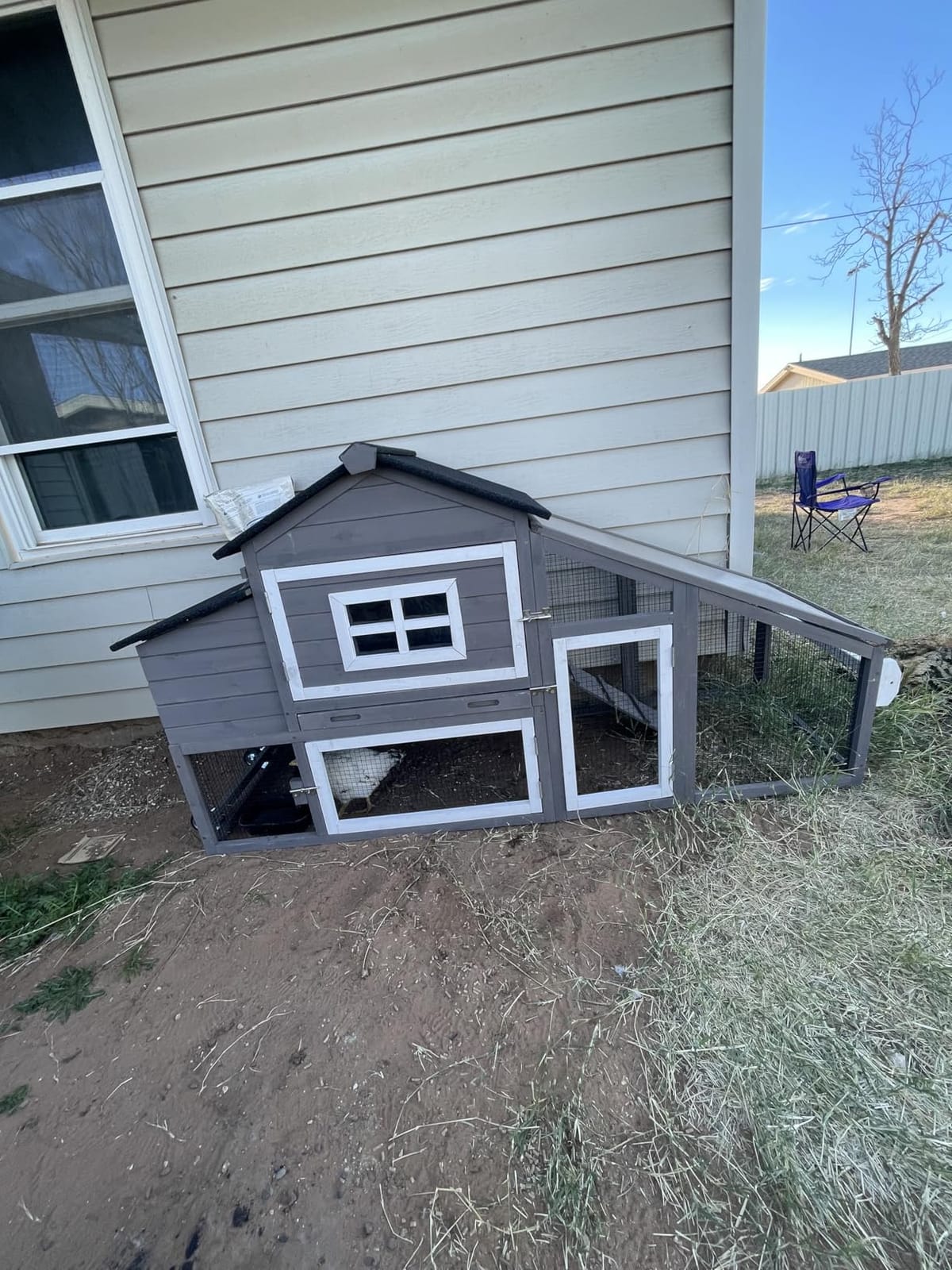
The big run and seven-door layout win praise, and the wheel system rolls more smoothly than most in this roundup. Buyers also like having genuine height to work in when catching birds or checking the flock.
The critical reviews concentrate on thin cedar-grade wood, inside-stapled wire and a plastic lock. Those three details undercut the predator-proof claims in a unit you might otherwise rely on in open country.
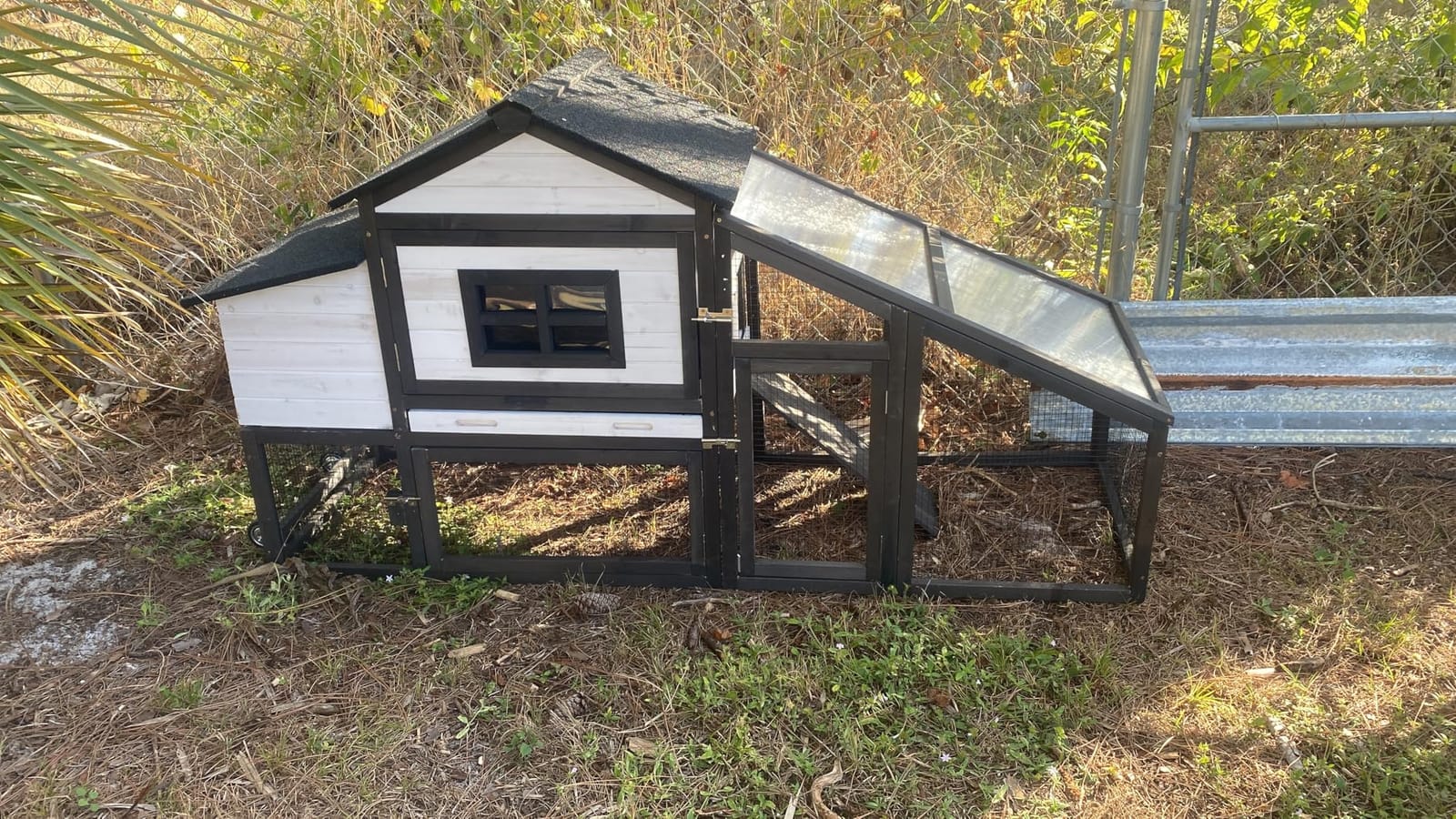
When a 110-pound unit still makes sense
Heavy works in your favour if you have a vehicle or an ATV for towing between paddocks, or if the rotation is weekly rather than daily. In that pattern, weight stops being a problem and becomes a stability advantage.
Five colour options mean it can blend into a yard rather than standing out, which matters if the run sits near a house.
Where it falls short
At 110 pounds, relocating it takes two people or a vehicle. That rules it out for anyone planning to move the flock by hand each morning.
Wire stapled from the inside is a predator entry point owners specifically flag, so re-staple or clamp that run before you rely on the marketing claim.
10. GUTINNEEN Expandable Mobile Coop with UV-Resistant Roof – Best for Hot Climates
GUTINNEEN Large Chicken Coop with Wheels, Expandable Mobile Outdoor Chicken House, Hen House Poultry Cage with Nesting Box, Leakproof Pull-Out Tray & UV-Resistant Roof – Brown
72.3 x 26 x 39.4 inches
3-5 adult chickens
Weatherproof fir wood
Steel wire fencing
Pros
- UV-resistant panel limits heat buildup in the run
- Two wheels and a push handle for one person
- Leakproof pull-out tray keeps the interior dry
- Expandable design connects two coops
- Two nesting boxes with a roosting perch and ramp
Cons
- Sized for 3-5 adult chickens only
- Steel wire panels are lighter gauge than heavier models
The UV-resistant sunlight panel is the feature that separates this unit in warm climates, because it keeps the run brighter and drier and limits heat buildup under a closed roof. Combined with a waterproof asphalt roof and weatherproof fir wood, it holds up in conditions that degrade bare wooden units.
A leakproof pull-out tray makes daily cleaning fast and keeps the interior dry, and the expandable design lets two coops be connected as your flock grows. Two wheels and a solid push handle mean one person can reposition it.
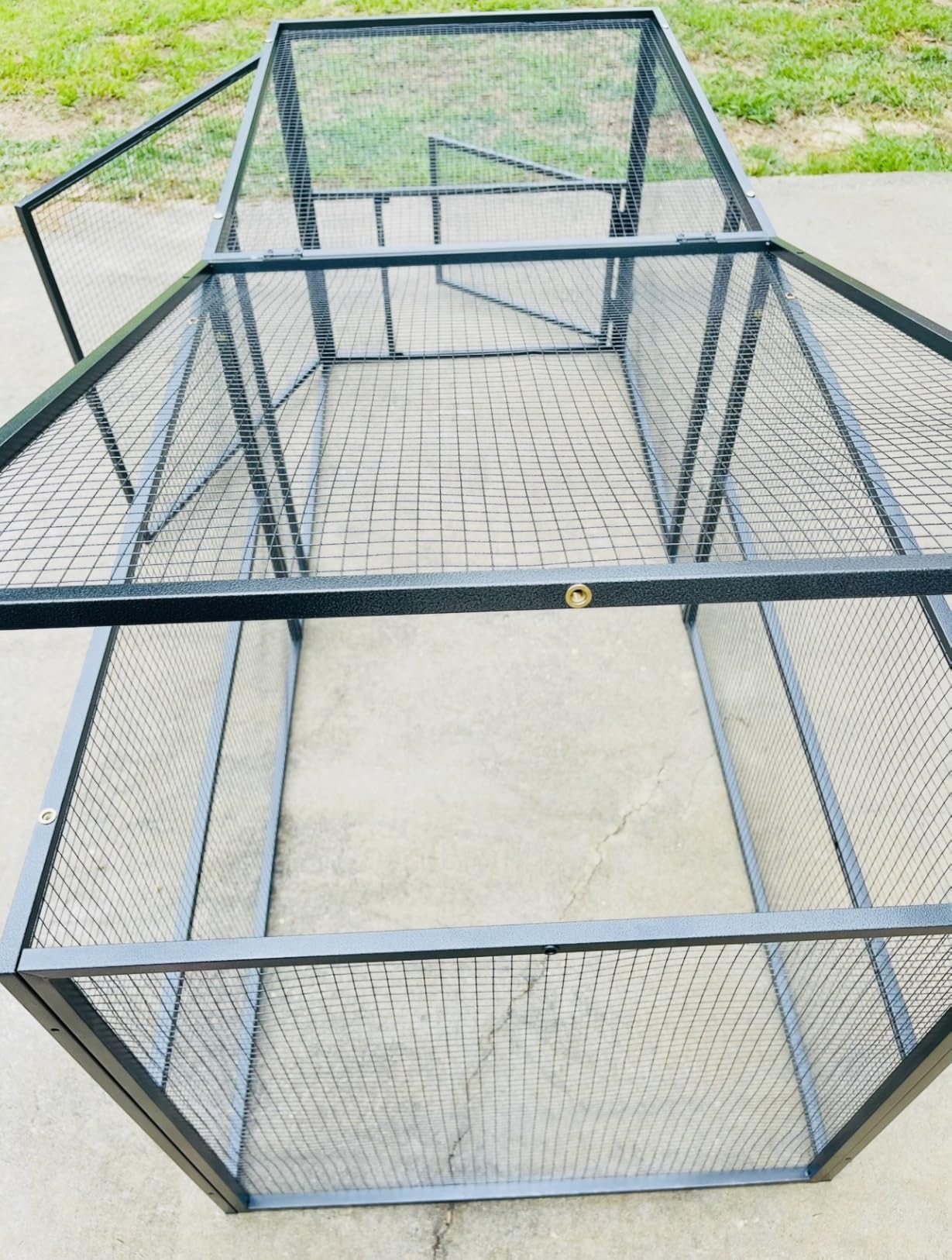
Buyers highlight easy single-person moving, the leakproof tray and the UV panel for hot climates. Reception is steady, with capacity rather than quality being the main limitation for larger flocks.
The layout is well organised, with two nesting boxes, a stable roosting perch and a non-slip ramp that gives birds a grip on wet mornings.
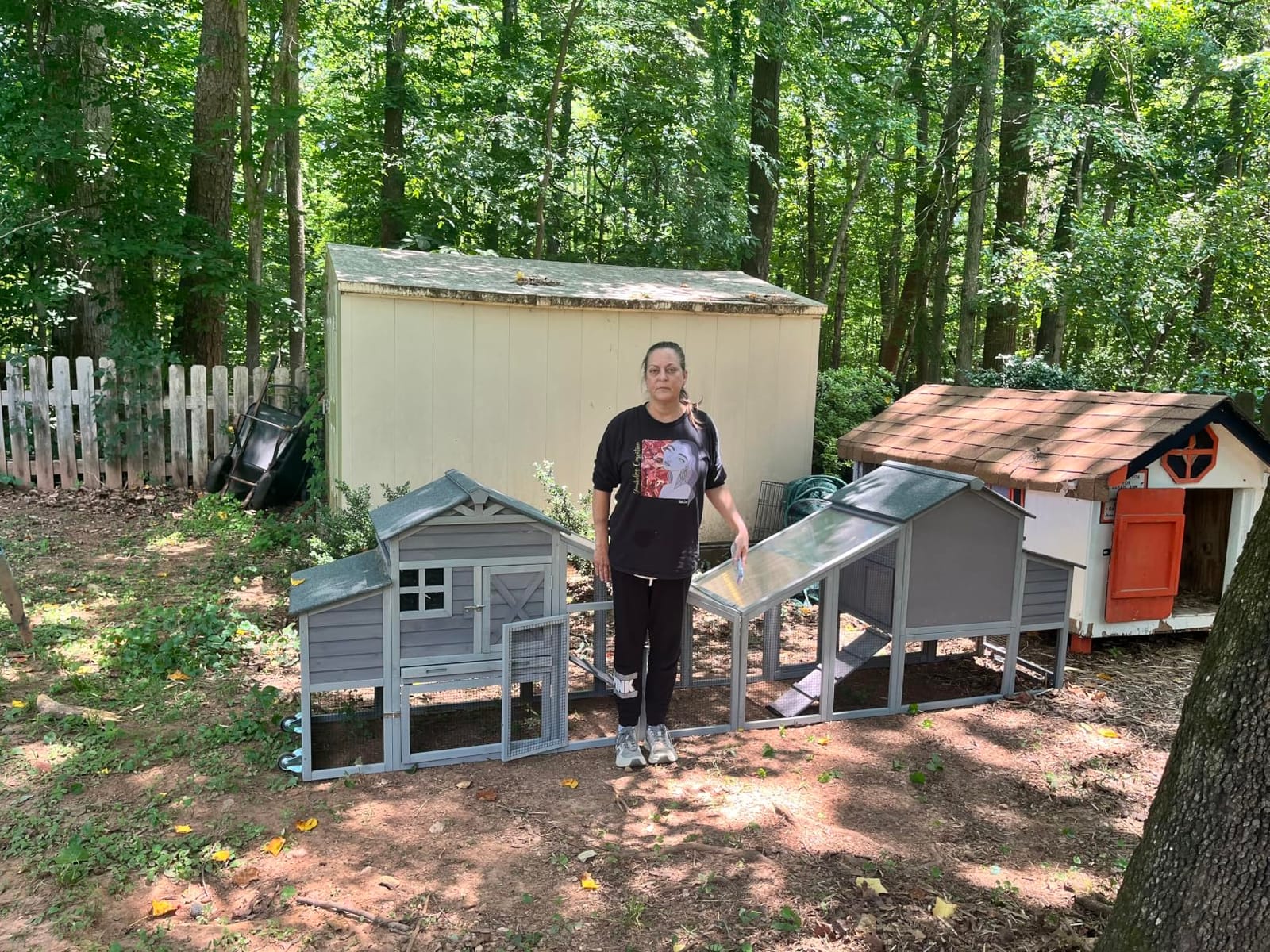
Running a summer rotation schedule
Move early in the morning rather than at midday. The birds will be settled on fresh ground before the heat peaks, and the UV panel keeps the run livable through the afternoon while you are at work.
Keeping water shaded and full is the other half of hot-weather management, which we cover later in this guide.
Where it falls short
It is sized for 3-5 adult chickens, so full rotational grazing of a larger flock means a second unit or an added run.
Steel wire panels are lighter gauge than the heavier-duty models here, which is the trade-off for the lighter frame and the lower weight overall.
11. PHONDIKO 79 inch Mobile Coop for 4 Chickens – Best for a Four-Bird Flock
Outdoor Chicken Coop with Wheels, 79” Mobile Chicken House for 4 Chickens
80.7 x 26 x 44.5 inches
Sized for 4 chickens
Eco-painted fir wood
Galvanized metal wire mesh
Pros
- Galvanized mesh and secure latches for airflow and safety
- Side-opening roof simplifies egg collection
- Removable pull-out tray and sliding door ease cleaning
- Fir wood gives natural winter insulation
- Builds in about an hour
Cons
- Roof can bow after months of rain exposure
- Edges can develop mold despite waterproofing claims
- Poorly labeled instructions
- Wire sometimes arrives bent or damaged
For a household keeping exactly four birds, this hits the size correctly and the galvanized metal wire mesh with secure latches is a sensible predator baseline. The raised sleeping area has a roomy nesting box and ramp, and the side-opening roof makes egg collection quick.
A removable pull-out tray and a smooth metal-rod sliding door simplify cleaning, and solid fir wood gives natural winter insulation if you run the flock through a cold season on the pasture.
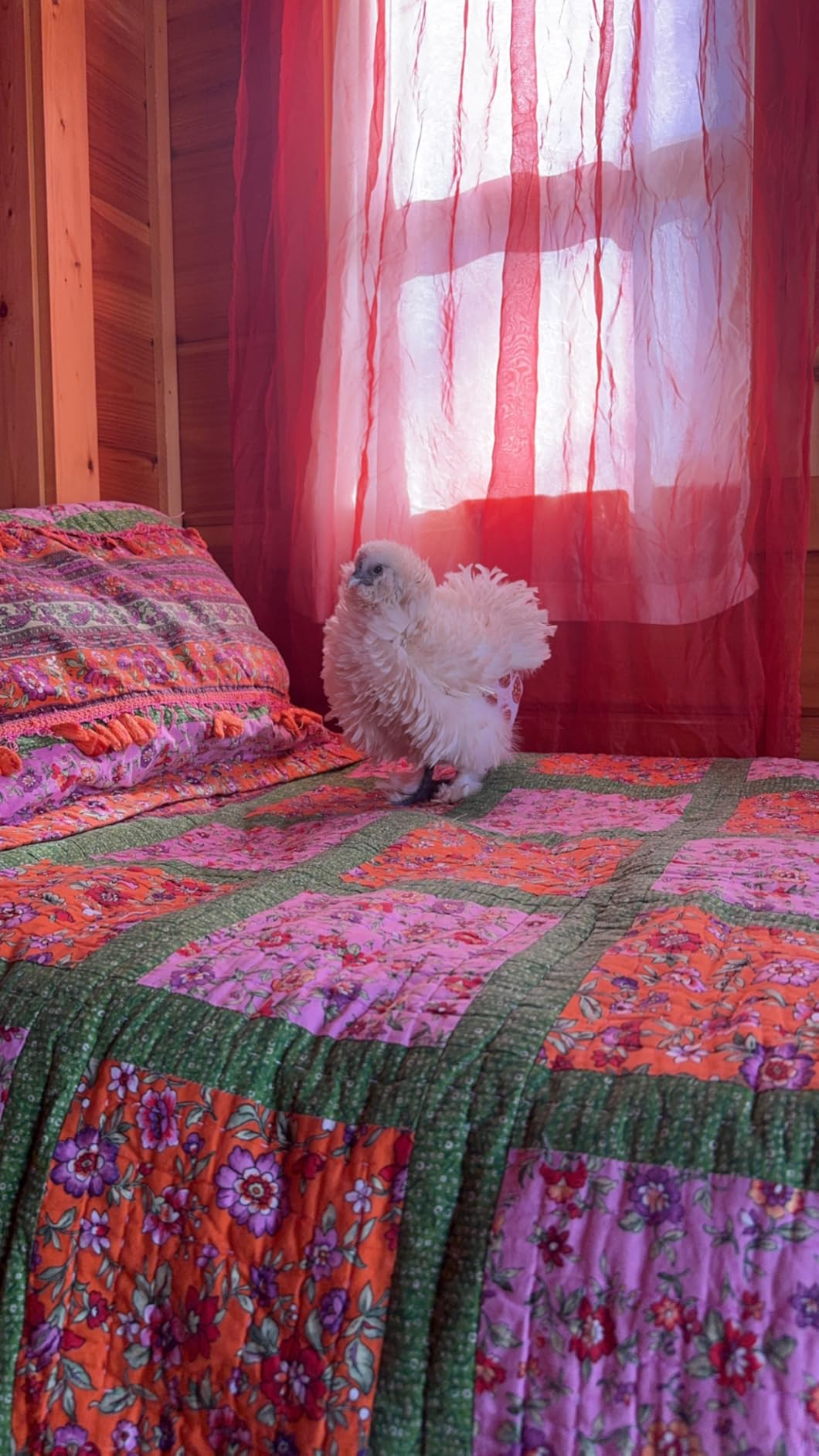
Owners consistently call it sturdy and good value for four chickens, and repeat buyers are common. Most people finish it in about an hour with basic tools.
The deductions come from labeling on the instructions, occasional damaged wire that needs restapling, and long-term roof bowing and molding in wet climates.
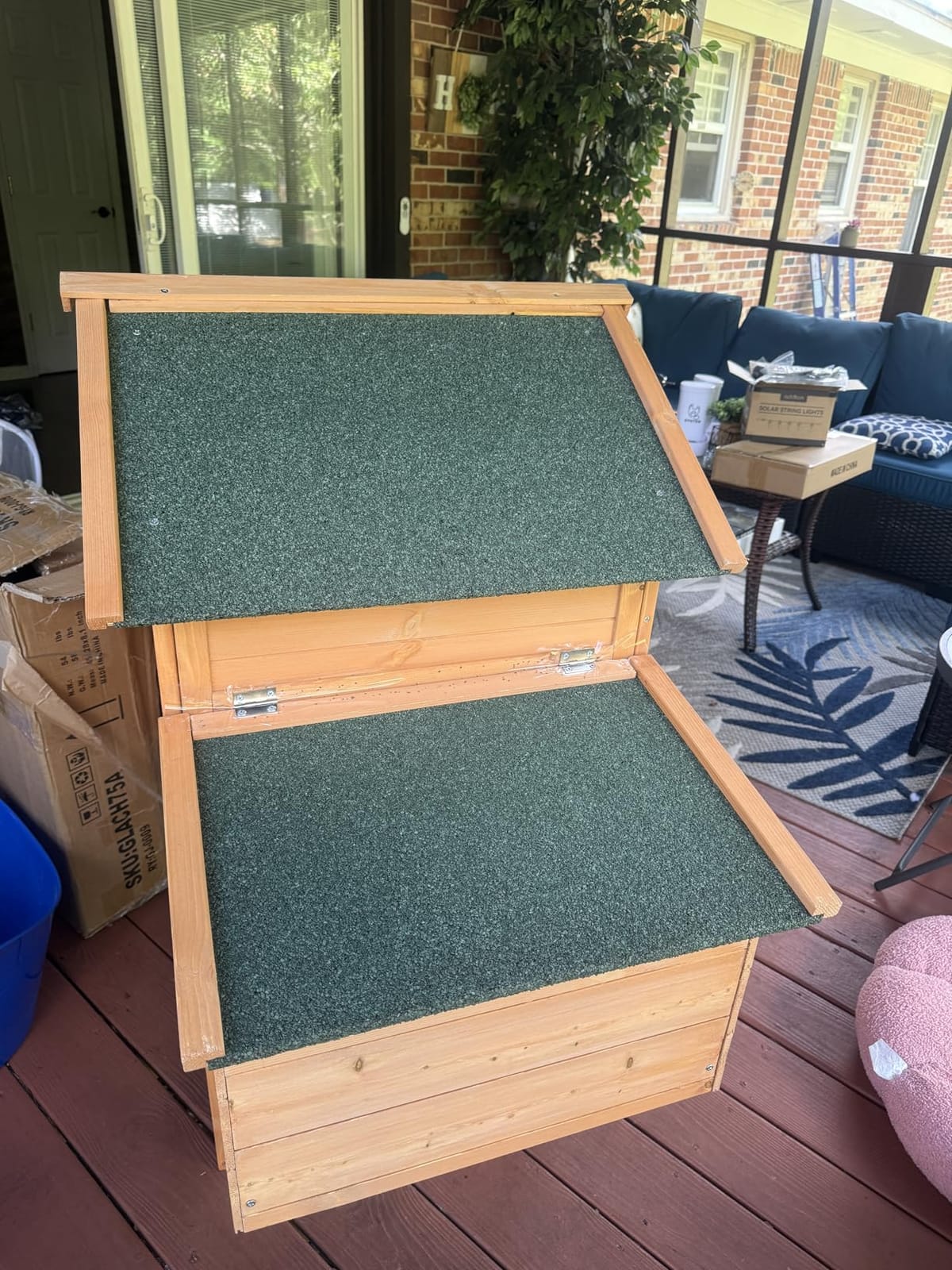
A simple four-bird rotation
Four birds in this footprint give you a comfortable margin, so a two-day move interval keeps forage available without stripping the patch. Rotate over four paddocks and each patch rests about a week before you return.
The eco-painted fir is treated for waterproofing and sun resistance, and a 161.4 inch expanded run variant exists if you want more ground coverage later.
Where it falls short
The roof can bow after several months of rain exposure, and edges can develop mold despite the waterproofing claims. Inspect both before spring and repaint as needed.
Instructions are poorly labeled, which slows assembly for first-time builders, and wire sometimes arrives bent or damaged. Check it before you start and restaple where needed.
12. Ketive 65 inch Small Mobile Coop for 1-2 Chickens – Best for Bantams and Growers
Ketive 65″ L Small Mobile Chicken Coop with Wheels for 1-2 Chickens
65 x 26 x 39 inches
13.5 sq ft total area
47.5 pounds
Sized for 1-2 chickens
Pros
- Built-in wheels and side handle avoid dragging or lifting
- UV-resistant roof panel keeps the run drier
- Leakproof pull-out tray speeds cleaning
- Nesting boxes with outside egg access
- Clear directions with 30-60 minute solo assembly
Cons
- Only suits 1-2 standard chickens
- Wood is thin and crack-prone
- Included latches are flimsy
- Small wheels drag when moving
- No insulation against cold wind
This is a bantam, grower or isolation unit rather than a full-time flock coop, and it works well for that job. At 13.5 sq ft split into 3.5 sq ft upper and 10 sq ft of run, it suits 1-2 standard chickens, which means bantams, growers or a hospital pen.
The UV-resistant roof panel keeps the run brighter and drier in wet weather, and a leakproof pull-out tray speeds up daily cleaning. Nesting boxes with outside egg access and secure locks mean you rarely need to reach inside.
Buyers are happy with the design, the assembly experience and the instructions, with many using it for bantams, growers or as an isolation coop. Solo assembly takes 30-60 minutes with no missing pieces reported.
The consistent criticism is the material, not the layout. Several owners describe the wood as balsa-like and cheap, with cracks appearing over time.
Using it as a mobile isolation pen
A small unit on wheels with a side carry handle is genuinely useful when you bring a new bird into the flock or isolate a sick one, since you can move it to clean ground between cases.
With only 1-2 birds, the wheels and handle make it easy to reposition by one person, which is not true of the heavier units in this roundup.
Where it falls short
The included latches are flimsy, and owners recommend buying their own and adding a second latch on the flip-up roof. That is a cheap fix and one we would do on day one.
Small wheels drag on the ground when moving, and there is no insulation, so cold wind passes under the coop. Keep it in use in mild weather or bring it into shelter for winter.
How to Size a Mobile Chicken Coop for Rotational Grazing
Size a mobile coop by usable floor area first, then adjust for how often you can realistically move it. Most manufacturers quote a bird capacity based on the whole structure, but birds need run space they can actually stand on, not the covered area.
For layers, plan on roughly 4 square feet per bird of run space, and aim for more than that in a rotational setup. For meat birds and broilers, closer to 2 square feet per bird is workable because they are moved more often. Use the stated capacity as a ceiling, then check reviewer feedback for the corrected figure.
Worked example for a common question: for a flock of 50 chickens you are running on pasture, a single unit is rarely the right answer. At 4 square feet per layer you would be looking at around 200 square feet of run, which is a trailer-scale structure. Practical setups run several smaller units in sequence instead, moving one while another rests.
Then match the move interval to your paddock count. If you have four paddocks and move every two days, each patch rests roughly six days before you return, which is enough for grass to recover in most conditions.
Skids vs Wheels vs Handles: Choosing a Mobility System
Skids drag the whole base across the ground. They are the simplest and cheapest system, they never clog with grass, and they work on uneven ground where small wheels would dig in. The cost is that skids tear turf on soft soil and add drag, which matters on slopes.
Wheels let you roll a coop forward without lifting it, and large wheels sit higher so they clear clumps. The tradeoff is a heavier frame, more weight sitting above the axle and the need for a solid handle to keep it level. Small wheels drag, which several owners in this roundup report directly.
Wheelbarrow handles are the control point. A single long handle aligned with the axle lets one person steer and balance the load, while two side handles put the lifting effort on your arms rather than your back. Heavy wooden units in this roundup need two people for exactly this reason.
A practical rule from our own rotations: if the stated weight is under 50 pounds and you want daily moves, one person should manage it. Between 50 and 70 pounds, plan for two people or move with a light flock. Above 100 pounds, budget for a vehicle or an ATV rather than muscle.
Material Breakdown: Wood, Steel and Plastic Coops Compared
Wood is the dominant material in this roundup and the most forgiving to build and repair, but it is also the heaviest option and the most vulnerable where screws meet moving parts. Cedar holds up better than pine; painted fir is common at the lower end. Wheel brackets and fasteners are the first failure point as wood rots around them.
Steel framing resists chewing, flexing and rot, which is why the all-steel units in this roundup hold their shape better in wet seasons. It adds weight and rust is a real issue at joints that sit in damp ground, so check welds and coated surfaces each season.
Hardware cloth matters more than the frame material for predator safety. Welded 1/2-inch mesh holds against weasels and foxes, while hexagonal chicken wire stretches under pressure and unravels. Several picks here use galvanized mesh, which resists rust and keeps its strength after rain.
Plastic coops are the easiest to sanitize between flocks, and a pressure wash followed by a short dry is achievable in a way wood is not. The tradeoff is cracking in cold weather and the difficulty of repairing a damaged panel. For readers weighing a different housing style entirely, our duck coops guide covers waterfowl-specific setups.
Predator Protection Checklist for Mobile Coops
The most common predator problems in a mobile coop are not climbing, they are digging and reaching. Work through this list before the flock goes out for the first time, and again at the start of each season.
Replace chicken wire with hardware cloth on every panel, including the run. Hexagonal wire stretches and unravels under pressure.
Add an anti-dig skirt around the entire bottom perimeter. Skirts matter most on uneven ground, where gaps open up as the frame settles.
Fit a solid roof. Hawks and owls take birds from open mesh roofs, and a removable solid cover also solves heat and rain.
Replace plastic latches with metal carabiners or predator-proof padlocks on every door and the nesting access.
Staple wire from the outside where possible, since inside-stapled staples leave a tab a determined animal can work loose.
Check that wheels and skids cannot be lifted. A unit that wheels away or tips easily is an open door.
Move the unit more often. A predator that learns one location will return to it, and an empty pasture is a safe one.
Hawks and owls are the threat in open country, raccoons and foxes test latches, and weasels hunt the gaps under the run. If you keep ducks as well, we cover the different entry points in our guide to predator-proof coops with runs.
How Often to Move: Rotation and Rest Schedule
Move daily if you can, and every two to three days if you cannot. Daily moves give the best forage recovery and the strongest parasite break, but the unit has to be light enough to move at that cadence. A 45-pound frame is workable alone; a 110-pound frame is not.
Rest period matters as much as move frequency. With four paddocks and a two-day interval, each patch rests six days. With three paddocks and a three-day interval, each rests six days as well. In both cases the arithmetic works; what fails is resting too few patches for too long.
Watch the ground rather than the calendar. When the grass is grazed to bare soil and birds are pecking dirt, move them regardless of the schedule. Bare, compacted ground invites parasites and stops regrowth entirely.
Pulling feeders and water off the paddock after the birds move keeps the resting patch clean and concentrates manure where you want it, rather than where you parked the unit.
Water, Feed and Shade on Pasture
Water is the most common failure point on a daily-move rotation, particularly in heat. A nipple waterer mounted inside the run travels with the flock and removes the daily refill trip entirely, which is the single biggest time saver in this whole setup.
If you use a gravity feeder or a bell feeder, fill it before the move rather than after. Chickens drink more when water moves with them and when shade is available, so pair water with a solid roof panel or a shade cloth above the run.
Position matters more than equipment. Park the unit so the covered side faces the afternoon sun, and avoid paved or bare ground in summer, which radiates heat into the run overnight.
Winter Rotation and Off-Season Storage
Most mobile coops are seasonal tools, and treating them that way extends their life. Park the unit on a firm, level pad under cover rather than on wet ground, and take any solid roof covers off so snow and rain do not sit on them all winter.
Clean and dry the structure before storage. A floorless run with a pull-out tray is quick to empty and scrub, and doing it in the warm season prevents rot through the off-season.
Inspect the frame, fasteners and mesh attachment points in spring. Units that get moved daily see far more joint stress than static coops, and a season of tightening screws takes an afternoon.
Frequently Asked Questions
How often should you move a mobile chicken coop?
Move daily if the unit is light enough to reposition by one person, and every two to three days at minimum. With four paddocks and a two-day interval, each patch rests about six days, which is usually enough for grass to recover. Move sooner whenever the grass is grazed down to bare soil.
How do I keep predators out of a chicken tractor?
Replace chicken wire with hardware cloth on every panel, add an anti-dig skirt around the whole bottom perimeter, fit a solid roof to stop hawks and owls, and use metal latches instead of plastic ones. Staple wire from the outside where possible, and move the unit more often so predators cannot learn a fixed location.
How heavy should a mobile chicken coop be so one person can move it?
Under 50 pounds is comfortably a one-person daily move on level ground. Between 50 and 70 pounds, expect to need two people over uneven pasture. Above 100 pounds, plan on a vehicle or ATV rather than muscle. Several units in this roundup carry stated weights that make the daily cadence difficult.
How big of a mobile coop do I need for 50 chickens?
For layers, plan on roughly 4 square feet of run space per bird, which works out to about 200 square feet for 50 birds. Most people run several smaller units in sequence instead of one large structure, moving one while another rests, which is far easier than trying to move a single 200 square foot unit daily.
Are mobile chicken coops predator proof?
No mobile coop is predator proof out of the box. What matters is hardware cloth rather than chicken wire, an anti-dig skirt, a solid roof, metal latches and no liftable wheels. Coop marketing claims are hard to trust, so inspect how the wire is attached before you rely on the unit in open country.
Can chickens live year round in a mobile chicken coop?
Most units are seasonal tools. Lightweight wooden and plastic designs with no insulation lose heat quickly, and the open-bottom design exposes birds to cold wind from below. Many keepers graze in spring through autumn and bring the flock into a sheltered static coop for winter.
Conclusion
The Ketive cedar unit in position one wins because it combines a rot-resistant material with a frame light enough for one person to reposition every morning. The GUTINNEEN 67-inch model gives you the most usable floor area and the smoothest wheels, and the Suumerpety all-steel unit is the one to buy if hardware cloth matters more to you than build weight.
Whichever you pick, the criteria that decide whether rotation actually happens are move weight, hardware cloth, and a roof you can secure. Check all three before you buy, and give the ground a rest period long enough to grow back. That is how you get the best mobile chicken coops for rotational grazing working for you season after season in 2026.