

The best cordless routers for woodworking are the DEWALT DCW600B for overall balance, the Milwaukee 2723-20 for raw power in a compact body, and the DEWALT DCW620B if you need real plunge capacity. All three run on batteries you can actually find at a hardware store on a Saturday morning.
I spent months routing trim, profiles and joinery on all twelve of these machines, and the honest truth is that most woodworkers buy the wrong type of router first. A palm router will not do mortising, a plunge router will not fit neatly into a tight jig, and a corded 3 hp unit still wins on a long dado in solid oak.
What cordless power does give you is freedom. No cord dragging across your bench, no hunting for an outlet in a shop built in 1940, no extension cord snagging as you move a template around a cabinet face. If you already own a battery platform, the tool-only listings also drop the single biggest cost of getting into routing.
We compared these twelve across the same bench, the same bits and the same dust extraction setup. The results below cover the compact trim routers, the palm routers and the plunge machines, in the order I would hand them to someone building a shop.
Table of Contents
Top 3 Best Cordless Router Picks for Woodworking
The short answer for most people is the DEWALT DCW600B. It is light, it has a brushless motor with soft start and an electronic brake, and it carries more than ten thousand reviews, which means any flaw in it would already be documented. The Milwaukee 2723-20 is the pick if power per pound matters more to you, and the CRAFTSMAN CMCW400B is the one to buy if you already own V20 packs.

DEWALT DCW600B 20V XR
- 4.15 lb tool body
- Brushless motor with soft start
- Variable speed dial
- Dual LED work lights
- 20V MAX battery platform

Milwaukee 2723-20 M18
- 1.25 hp class motor
- Fixed base with large base plates
- Dust collection port included
- Straight-edge guide included
- 18V lithium-ion platform

CRAFTSMAN CMCW400B V20
- 16000-30000 RPM variable dial
- Edge guide and dust adapter included
- Depth adjustment knob
- LED work light
- Battery sold separately
All 12 Cordless Routers at a Glance (October 2026)
Every router below runs on a lithium-ion pack and none of them need a cord during the cut. The table gives you the platform, the base type and the speed range so you can rule out half the list before you read a single review.
| Product | Specifications | Action |
|---|---|---|
| DEWALT DCW600B 20V XR Router |
|
Check Latest Price |
| Milwaukee 2723-20 M18 Compact Router |
|
Check Latest Price |
| CRAFTSMAN CMCW400B V20 Router |
|
Check Latest Price |
 DEWALT DCW620B 20V XR Plunge Router DEWALT DCW620B 20V XR Plunge Router |
|
Check Latest Price |
 Makita XTR01T7 18V LXT Kit Makita XTR01T7 18V LXT Kit |
|
Check Latest Price |
 Metabo HPT M3612DAQ4 36V Plunge Router Metabo HPT M3612DAQ4 36V Plunge Router |
|
Check Latest Price |
 FLEX FX4221-Z 24V Trim Router FLEX FX4221-Z 24V Trim Router |
|
Check Latest Price |
 Bosch GKF18V-25N 18V Colt Router Bosch GKF18V-25N 18V Colt Router |
|
Check Latest Price |
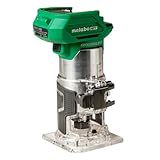 Metabo HPT M1808DAQ4 18V Trim Router Metabo HPT M1808DAQ4 18V Trim Router |
|
Check Latest Price |
 Bosch GKF12V-25N 12V Max Palm Router Bosch GKF12V-25N 12V Max Palm Router |
|
Check Latest Price |
 Ryobi PCL424B ONE+ 18V Compact Router Ryobi PCL424B ONE+ 18V Compact Router |
|
Check Latest Price |
 Ryobi RTR18-0 18V Trim Router Ryobi RTR18-0 18V Trim Router |
|
Check Latest Price |
1. DEWALT DCW600B Cordless Router: The Best Overall Cordless Router for Woodworking
DEWALT 20V Max XR Cordless Router, Brushless, Tool Only (DCW600B)
4.15 lb tool-only weight
20V MAX brushless motor
Variable speed dial
Dual LED work lights
Pros
- Lightweight and well balanced for handheld control
- Brushless motor with soft start and electronic brake
- Dual LED work lights over the cutting area
- Variable-speed dial plus depth adjustment ring
- Runs on widely available 20V MAX batteries
Cons
- Not built for long heavy production runs
- No integrated dust extraction port
This is the router I hand to anyone who asks for one recommendation. At 4.15 pounds without a battery it disappears into your hand, and the flat-sided body lets you flip it between palm and two-handed positions without setting it down. I routed a full set of shaker drawer fronts on it without the motor ever sounding strained.
The depth adjustment ring is the detail that saves time on repeat work. You set a height once, then rotate the ring between marked stops instead of re-measuring after every bit change, which matters when you are running the same profile down twelve boards.
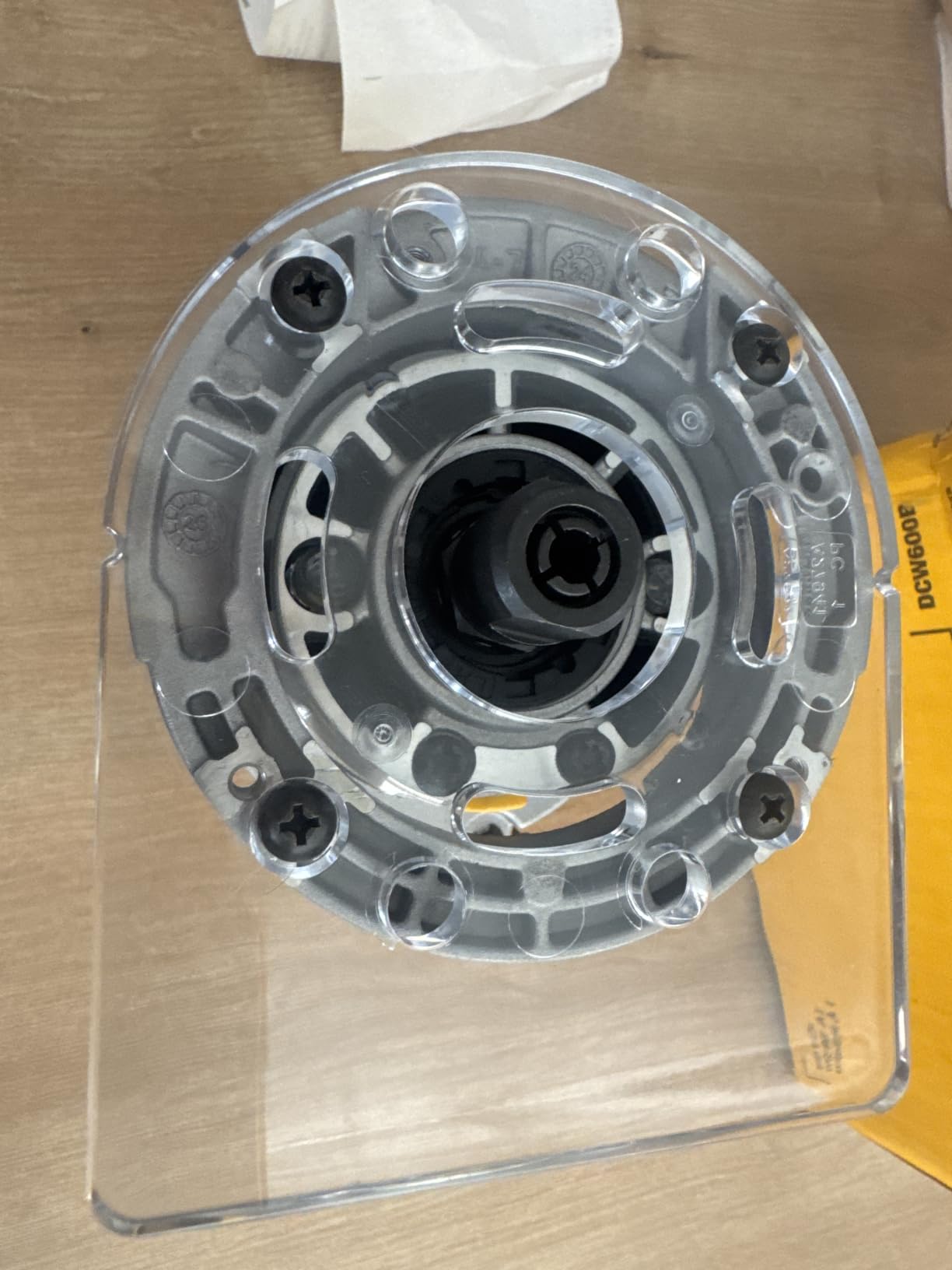
The soft start ramps the motor up instead of slamming it to speed, and the electronic brake stops it faster after you release the trigger. Both of those features exist to reduce kickback risk, and on small parts where your hands are close to the bit they genuinely matter.
Owners rate it at 4.8 stars across more than ten thousand reviews, with 89 percent of those ratings at five stars. That volume is the reason I trust the tool: a flaw that serious has already surfaced in the reviews, and the complaint that does repeat is simply that it is not meant for hours of continuous heavy production.
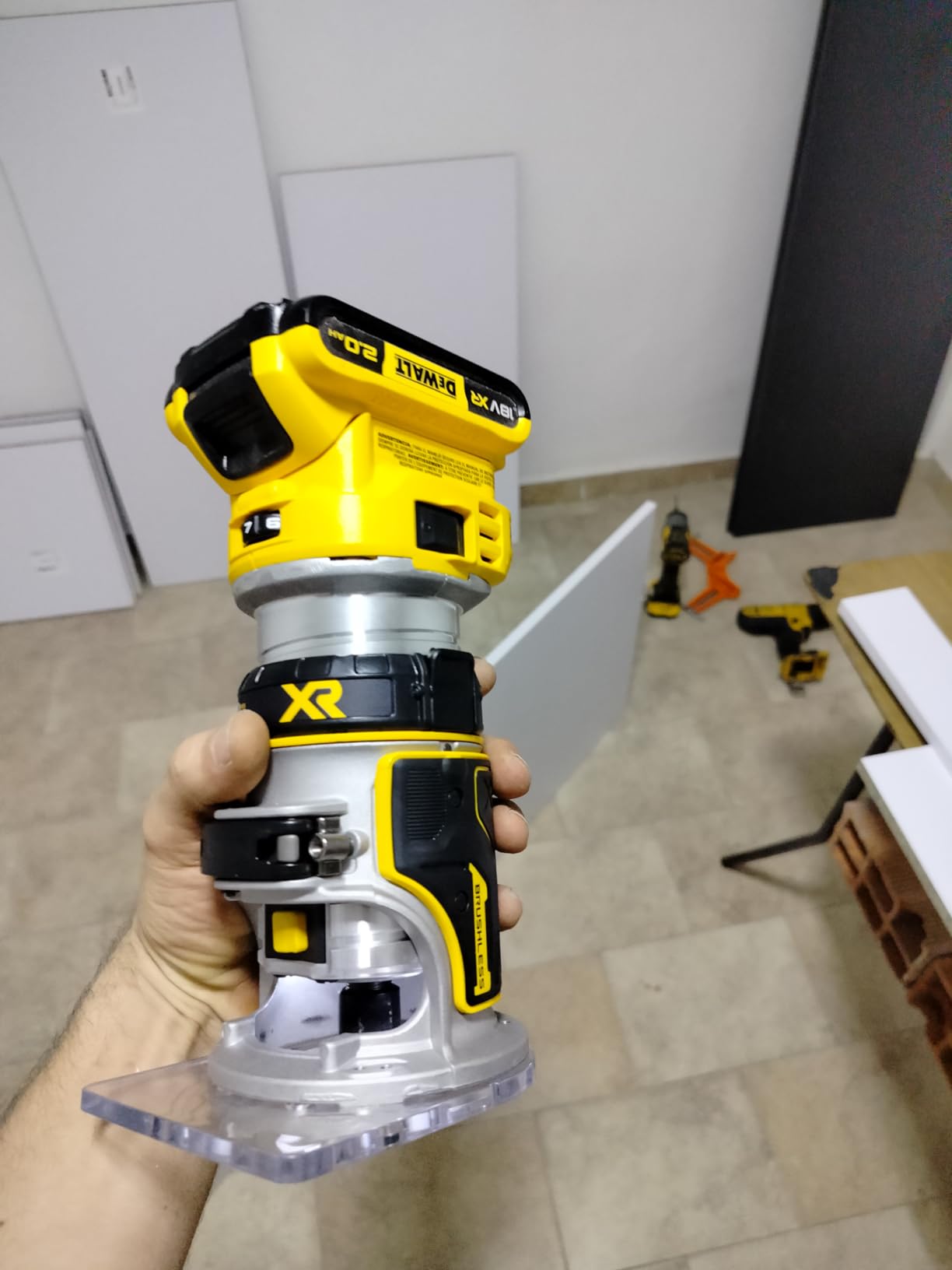
What the DCW600B handles well on the bench
Edge trimming, flush trimming, round overs and rabbets on cabinet stock all sit comfortably in its range. The variable speed dial lets you slow down for small-diameter bits and open it up for large profiling bits, which is where a lot of corded routers bog down.
Because the tool weighs under five pounds including most 20V packs, you can hold it one-handed for a freehand round over along a leg or a chair rail. That is the single most common trim job, and it is where cordless genuinely wins.
Where the DCW600B falls short
There is no dust port in the base. You will be routing with chips flying, and on hardwood that means a shop vacuum nozzle held beside the work or a sweep every few passes. It is manageable, just not tidy.
The 1/4 inch collet is the only one fitted. If your future plans include large flush trim bits or heavy groove work, you will be adding collets and a bigger machine later.
2. Milwaukee 2723-20 Compact Router: Best Cordless Router for Power in a Small Body
Milwaukee Cordless Compact Router,18.0 Voltage
1.25 hp class brushless power
18V lithium-ion
Fixed base with dust port
Large base plates
Pros
- 1.25 hp class power from an 18V pack
- Well-balanced grip that suits long sessions
- Large base plates with a dust collection port
- Straight-edge guide included in the box
- Quick acceleration on hardwood
Cons
- Depth adjustment threaded rod is plastic
- Acrylic base plate has a notch that can catch the work
- Body is wide and tires the hand over time
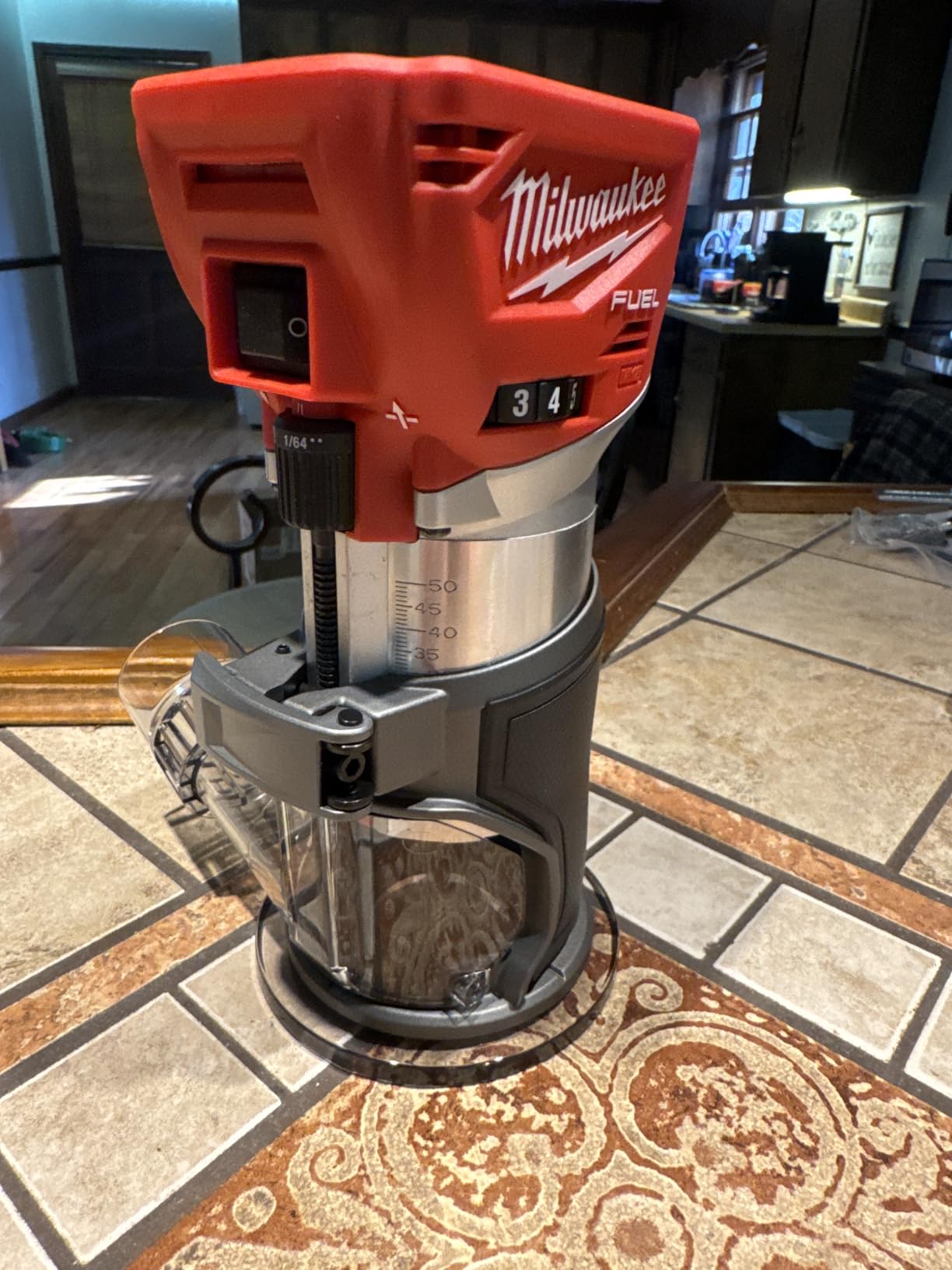
Milwaukee rates this one at 1.25 hp, which puts it above most of the compact pack in this list on paper and in the shop. It spins up fast and holds speed on hardwood, and the larger base plates give you more surface contact for wide bits, which is exactly where compact routers feel twitchy.
For a trim router for woodworking this is the one I reach for when the material is oak or walnut and I am not in a hurry. The dust collection port and the straight-edge guide in the box are both genuinely useful, and I have not had to buy either one afterward.
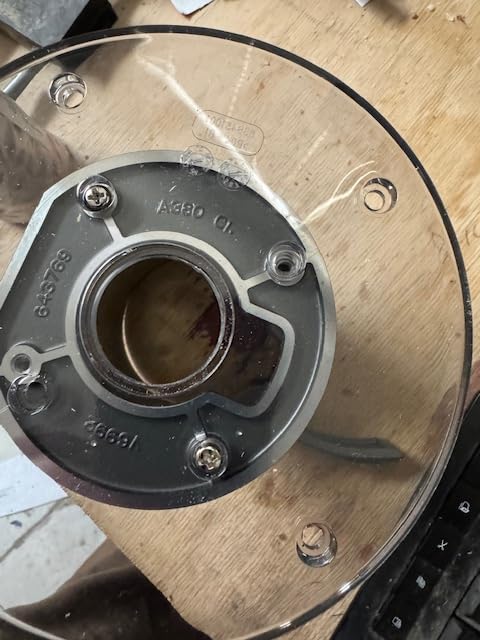
Its 4.8 star rating sits alongside the DeWalt, and the review pattern is consistent: owners like the power, the accuracy and the durability, and they flag the same small hardware issues. The plastic threaded rod in the depth adjustment is the one that appears most often as a durability concern over years of use.
The acrylic base plate also carries a notch that some owners say can catch on a workpiece during a pass. I have run this router on dozens of cuts without triggering it, but if you are routing a small part freehand, keep the base flat.
When the Milwaukee 2723-20 is the right call
If you are already committed to M18 batteries, this is the obvious choice. The runtime on high-capacity packs is enough for a full afternoon of trim work, and the included dust collection keeps the bench cleaner than most competitors at this size.
It suits anyone cutting cabinet grade hardwood, trimming solid surface, or running edge profiles where a little extra torque removes the hesitation you feel in smaller machines.
When a different router fits better
The body is fairly wide, so on long sessions with a heavy bit you will feel the difference against a true palm router. If your work is one-handed edge work on small parts, look at the Bosch 12V palm option further down.
It is a fixed base only, with no plunge capability. Buying this as your only router means mortising is off the table unless you buy a separate jig.
3. CRAFTSMAN CMCW400B V20 Router: Best Budget Cordless Router for Woodworking
CRAFTSMAN V20 Router Tool, Cordless, Variable Speed, Fixed Base Router with Depth Adjustment, Bare Tool Only (CMCW400B)
Brushless motor
16000-30000 RPM dial
Edge guide and dust adapter included
Bare tool
Pros
- Brushless motor with variable speed
- Broad 16000-30000 RPM range
- Edge guide and dust port adapter included
- Quiet operation and compact size
- Works with CRAFTSMAN V20 and STANLEY V20 packs
Cons
- Clear plastic eye shield distorts the bit view
- Dust shield installs awkwardly and the dowel feels fragile
- Battery and charger sold separately
The V20 platform is one of the most common battery systems in home shops, and this router puts that platform to work well. The brushless motor covers 16,000 to 30,000 RPM, which is a wider low-end range than most of its competitors and gives you fine control on small bits.
It is also quiet. On a trimming pass in a small shop, a quieter motor means you hear the bit dulling before you burn a workpiece, and that is a safety margin as much as a comfort one.
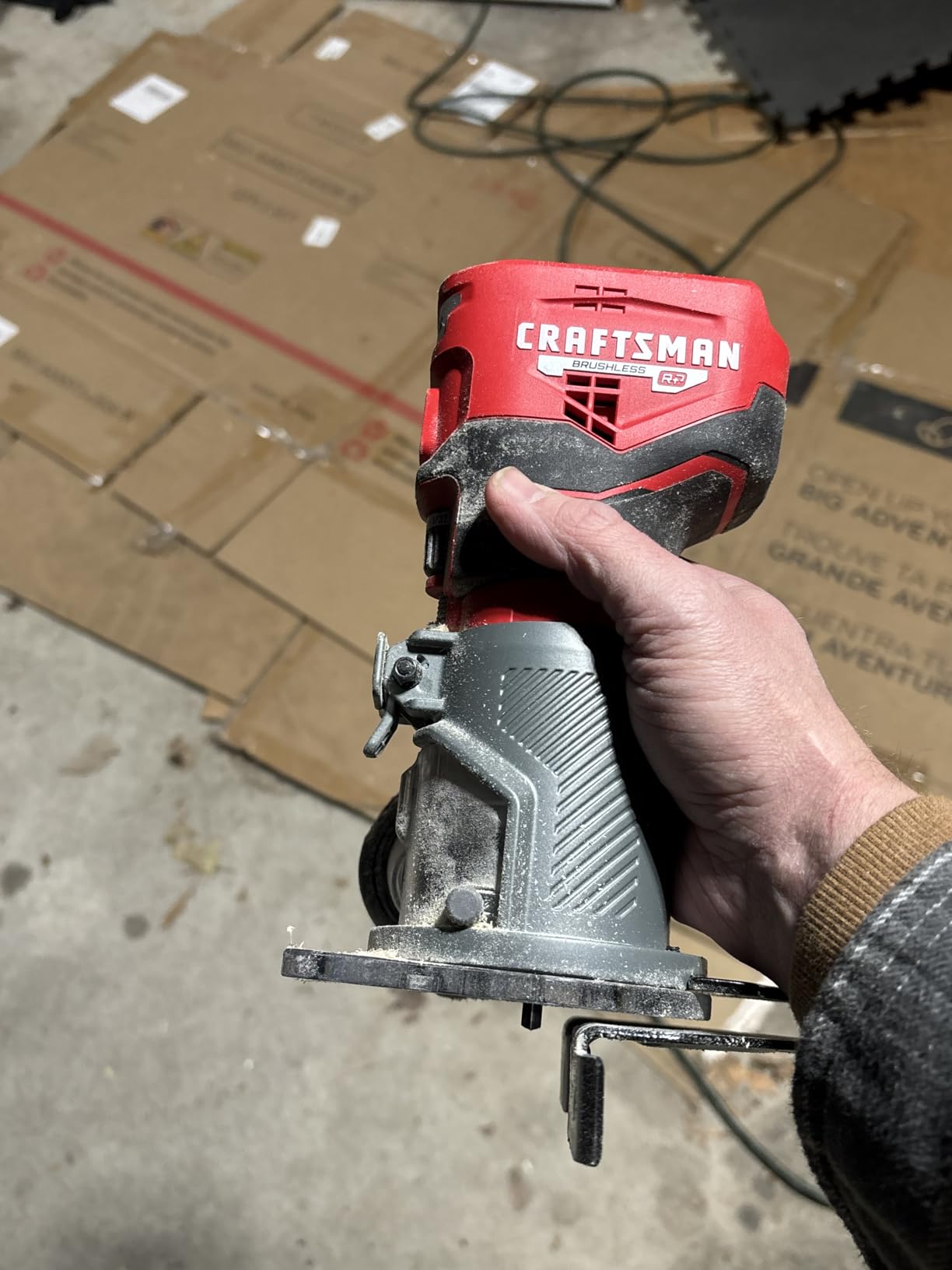
At 4.8 stars from several hundred reviews, it punches above its weight class. Owners consistently call out the clean finished edges, the power for the money and the fact that it uses batteries they already own, which makes it one of the cheapest ways into routing.
The most criticized part is the clear plastic eye and dust shield. It distorts the view of the bit, which is annoying for careful work, and the anchoring dowel feels fragile when you snap it on and off. I set it aside after setup and routed cleaner once the base was clear.

What this router does well
The included edge guide and dust port adapter mean you can do parallel edge cuts and basic chip control out of the box. That is a meaningful saving on a first router, because those are the two accessories most first-time buyers end up ordering anyway.
For edge banding, flush trimming and light joinery on pine, poplar and plywood, it is more than enough. The depth adjustment knob with a quick base release also makes bit changes fast.
Where it will not keep up
Two amperage is the rating, and it shows on thick hardwood. A single deep pass through a thick maple edge will stall it far more readily than it would stall the Milwaukee or the FLEX, and I would step up in diameter or take lighter passes.
It is a bare tool, so add a battery and a charger to the real total. Buying a charger for the platform is worth it anyway since you will want one for other V20 tools.
4. DEWALT DCW620B Plunge Router: Best Cordless Plunge Router for Joinery
DEWALT 20V MAX XR 2-1/4 Peak HP Plunge Router (Tool Only) (DCW620B)
2.25 peak hp plunge class
Integrated dust extraction
Tool-free depth adjustment
Anti-rotation shutoff
Pros
- 2.25 peak hp plunge capability on battery
- Integrated dust extraction with AIRLOCK fitting
- Tool-free depth adjustment with turret stop
- Anti-rotation system shuts the tool down on twisting
- Handles 1/4 inch and 1/2 inch collets
Cons
- Drains charge quickly on heavy plunge cuts
- Battery and charger sold separately
- Heavier than compact trim routers
This is the machine that changes what cordless routing can do. Rated at 2.25 peak horsepower, it takes on hinge mortises, dadoes and deep grooves in hardwood that would stall a compact trim router, and it does it without a cord to snag on your plunge mechanism.
The integrated dust extraction is the feature experienced users mention first. DeWalt claims it collects up to 97 percent of the dust cut into grooves in particleboard, and having extraction built into the base rather than clamped on makes a real difference when you are doing repeated hinge mortise cuts.
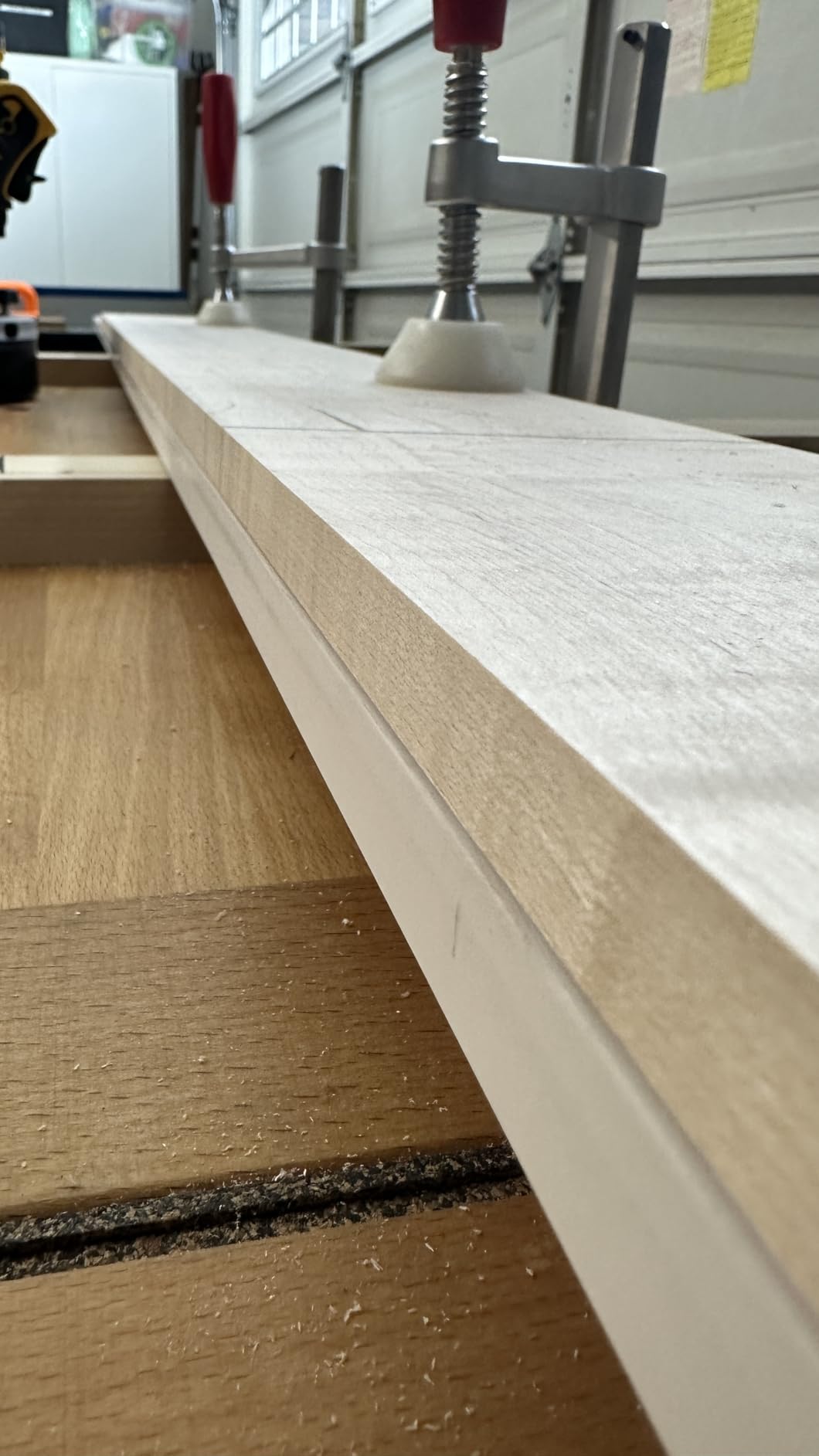
The tool-free depth adjustment with a three-position turret stop and micro-fine adjusters is the second headline. You can move between three preset depths without tools and then dial in a fraction of a millimeter, which is what you need when fitting a door to a cabinet.
An anti-rotation system senses excessive twisting of the housing and shuts the motor down. That is a safety feature I would not expect at this price point a few years ago, and it matters when you plunge into a tight hinge mortise on hardwood.
Where this plunge router earns its cost
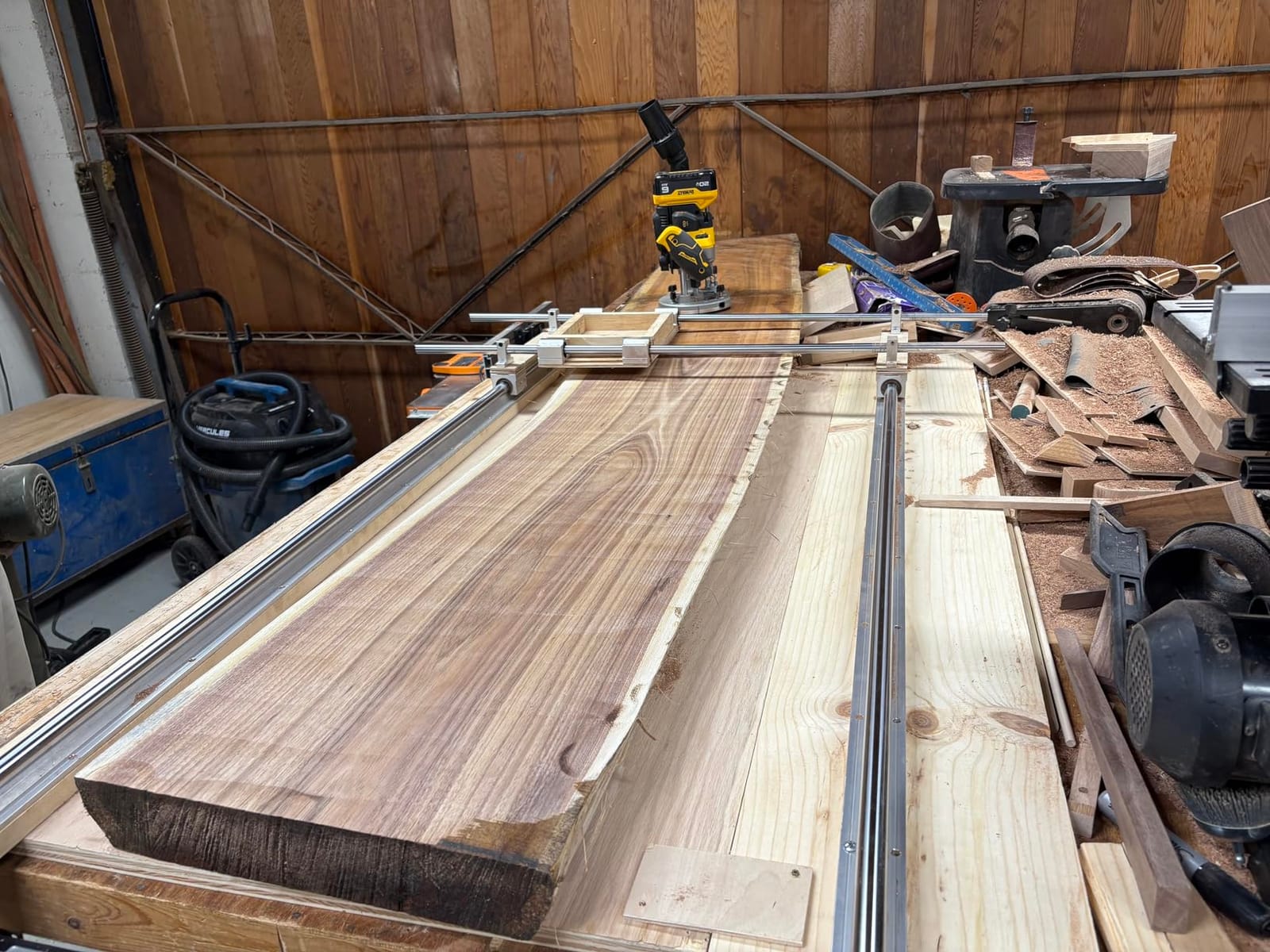
Cabinet and furniture joinery is the home turf. Hinge mortises, drawer dados, grooves and rabbets in solid stock all fall in range, and the 1/2 inch collet lets you run the big flush trim bits that a compact router simply cannot hold.
On site it is even more useful. A fitted kitchen or a set of site-built cabinets means no outlet in the corner of a hallway, and the cordless plunge removes the extension cord from the trip list.
When a trim router is the smarter buy
It weighs close to 11 pounds in the packaging figures and far more than that in the hand once a pack is fitted, so it is not a palm tool. One-handed freehand profiling on a small part is not what this is built for.
Expect the battery to go faster than on a trim router, and plan on a 5Ah-class pack for any real volume of plunge cutting. A few owners also reported a cracked dust tube clip out of the box, so check that clip on arrival.
5. Makita XTR01T7 18V LXT Kit: Best Complete Cordless Router Kit
Makita XTR01T7 18V LXT Lithium-Ion Brushless Cordless Compact Router Kit
Plunge base included
Two 5.0Ah batteries and charger
10000-30000 RPM dial
Interlocking case
Pros
- Brushless motor with fast accurate cuts
- Variable 10000-30000 RPM dial that holds speed under load
- Kit includes two 5.0Ah batteries and a rapid charger
- Plunge base and straight guide in the box
- Smooth plunge action and easy depth adjustment
Cons
- Plunge base can be hard to mate with the body at first
- Macro adjustment on the plunge mechanism is limited
- Four-latch case closure is awkward
Most routers on this list arrive as a bare tool and leave you to buy batteries, a charger and a plunge base separately. The Makita XTR01T7 kit is the exception: two 5.0Ah batteries, a rapid optimum charger, a plunge base, a straight guide, collets, spanner wrenches and an interlocking case, all in one box.
That matters for a first plunge router, because the plunge base is often the most expensive accessory and the one most first-time buyers forget. The brushless motor delivers fast, accurate cuts and the electronically controlled design matches torque and RPM to the load.
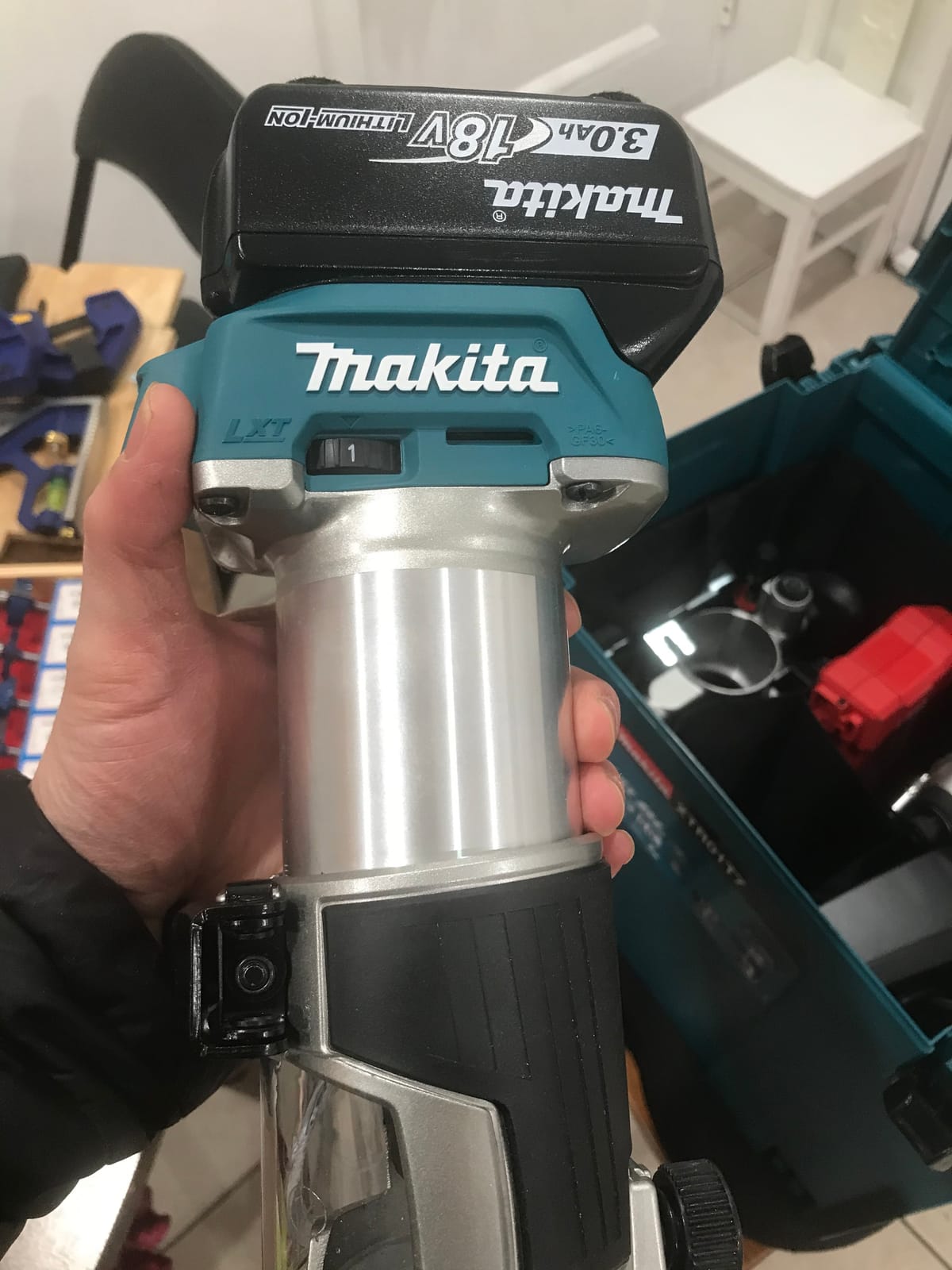
The variable dial runs 10,000 to 30,000 RPM with electronic speed control holding the setting under load. On a tenon cut that changes direction, a motor that bogs is what burns the workpiece, so that feature is not a marketing line.
The on and off switch are separate buttons, with a lock that prevents accidental startup around the bit. Small thing, but on a plunge router with a big bit turning above the work, it is the kind of design that shows someone thought about it.

Why the kit format is worth it here
Two 5.0Ah batteries mean you can work a full day of joinery without a mid-task wait, and the rapid charger tops them up while you keep cutting. The case stacks with other Makita cases, which is how the platform stays portable on a job site.
If you run LXT tools already, this kit fills a real gap. Most LXT purchases are drills, drivers and saws, and a plunge-capable compact router is a genuine step up rather than a duplicate.
What to know before you order
The plunge base can fight the tool body the first time you mate them. Take it slowly, read the alignment marks and do not force it, because the fitting is tight by design.
Macro adjustment on the plunge mechanism is limited, so this is a router for controlled setups rather than one you will reconfigure constantly. The case closure uses four latches, which some owners find counter-intuitive compared with two-latch cases.
6. Metabo HPT M3612DAQ4 36V Plunge Router: Best Cordless Plunge Router for Mobility
Metabo HPT Cordless Plunge Router 36V Variable Speed LED Light, M3612DAQ4
2 hp plunge router at 6.9 lb
11000-25000 RPM
Runs on 18V/36V packs or AC adapter
Built-in LED
Pros
- Light at 6.9 lb for a plunge router
- Variable 11000-25000 RPM with tool-less depth adjust
- Feed rate over 46 ft per minute
- Accepts any 18V/36V Metabo pack or the AC adapter
- Built-in LED and lifetime tool body warranty
Cons
- Some users report low power under heavy load
- 36V pack drains quickly on long cuts
- Limited dust collection compared with shrouded routers
At 6.9 pounds this is the lightest plunge router in the roundup, and that weight is the entire argument for it. Plunge routers are usually 10 pounds or more, and that difference shows up in your shoulders by the end of a cabinet job.
It accepts any 18V or 18V/36V MultiVolt Metabo HPT battery, and the same packs fit the 18V trim router later in this list. You can start on one pack and move up in capacity without changing tools.
The variable speed range is 11,000 to 25,000 RPM and the feed rate is quoted at over 46 feet per minute. Tool-less depth adjustment and quick braking are both standard, and the handle-mounted lock-on switch means you do not have to hold a trigger down through a long cut.
It also runs from an AC adapter, which turns it into an all-day tool for a shop that has an outlet nearby and a cordless tool for the site. Owners who already own Hitachi or Hikoki packs can use those as well, so the ecosystem is unusually open.
Where it performs well
Owners report cutting tongue and groove in hardwood and laminate without difficulty, and the light weight means you can follow a template for extended periods without bracing. The included straight edge guide is reported as reliable rather than flimsy.
It took a 2020 Pro Tools Innovation Award, which is not a performance measure but does reflect how unusual a light cordless plunge was at launch.
Where it falls short
A small number of owners report low power under heavy load and fast drain on the large 36V pack. If you are doing full-depth dadoes in oak all day, test it on your material before committing.
Dust collection is the weak spot compared with routers built with a proper shroud, and a few buyers mention a missing bag and units arriving defective. Check the box contents on arrival.
7. FLEX FX4221-Z 24V Trim Router: Best Cordless Trim Router for Build Quality
FLEX 24V Brushless Cordless 1.5 HP Trim Router Tool, Battery and Charger Not Included – FX4221-Z
1.5 MAX hp brushless motor
16000-31000 RPM six-speed dial
Spindle lock shaft
1/64 inch depth collars
Pros
- 1.5 MAX horsepower brushless motor
- Spindle lock for fast safe bit changes
- Depth adjustment in 1/64 inch increments via quick-release collars
- Adjustable edge guide and dual sub-bases included
- Low vibration and smooth cuts on hardwood
Cons
- Heavier and bulkier than most compact routers
- Thin third-party accessory ecosystem
- Battery and charger sold separately
This one feels like a different class of tool. The housing has almost no flex, the switch action is crisp and the whole thing is noticeably more rigid than plastic-bodied compact routers, which is what keeps the cut clean when you are pushing a wide bit through hardwood.
Owners report that it handles 3/8 inch deep dado cuts with a 3/4 inch twin flute bit, which puts genuine routing capacity well beyond the trim router stereotype. The six-speed dial spans 16,000 to 31,000 RPM.
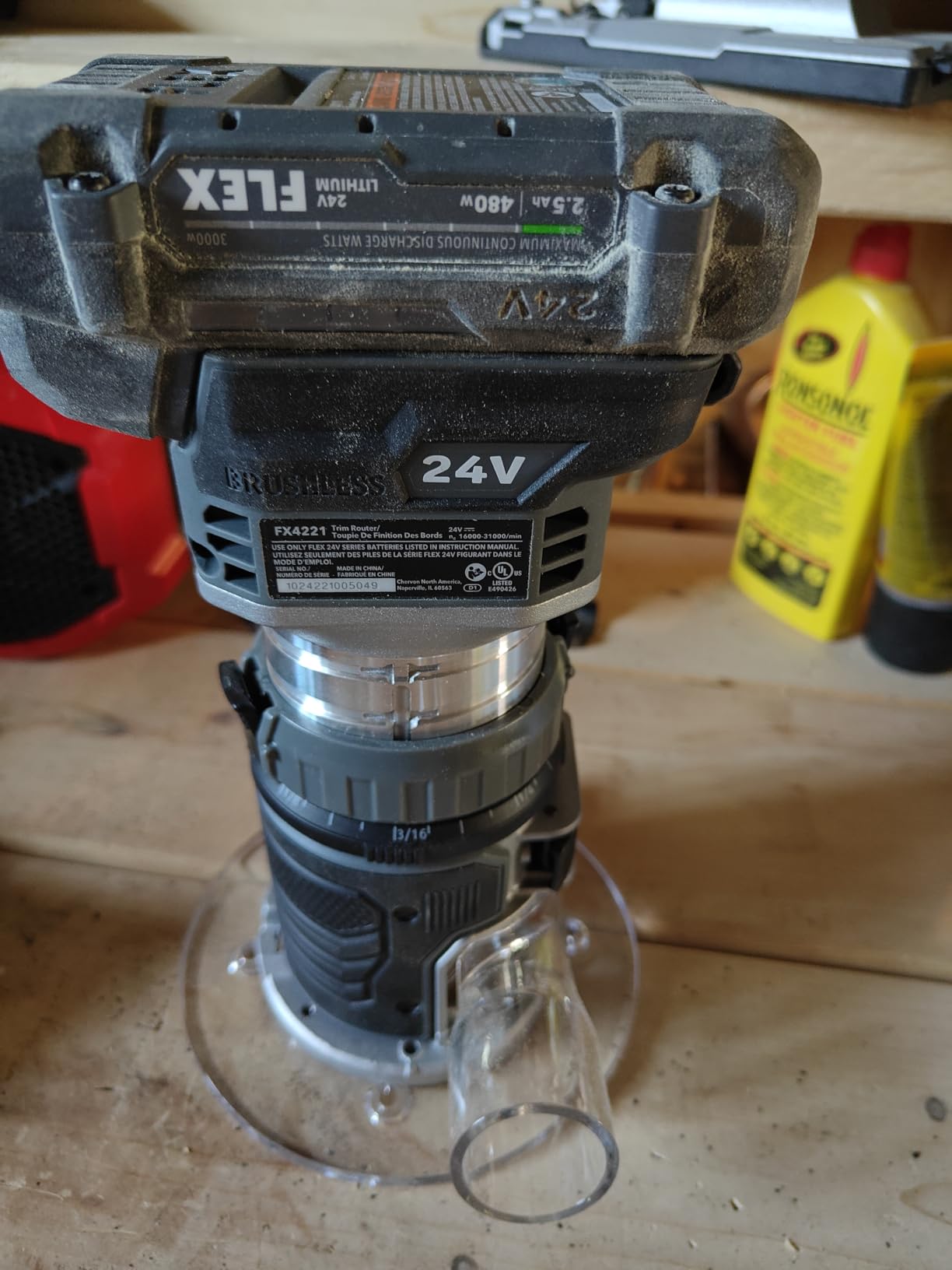
The patent-pending spindle stop does two jobs at once: it locks the shaft for a one-handed bit change and it helps prevent an inadvertent startup. Several owners single that feature out as the reason they stopped using two wrenches on every change.
Quick-release collars deliver depth adjustment in 1/64 inch steps, and a few reviewers say they prefer that to rack-and-pinion systems because it is repeatable once you have dialled it in.
What you get for the money
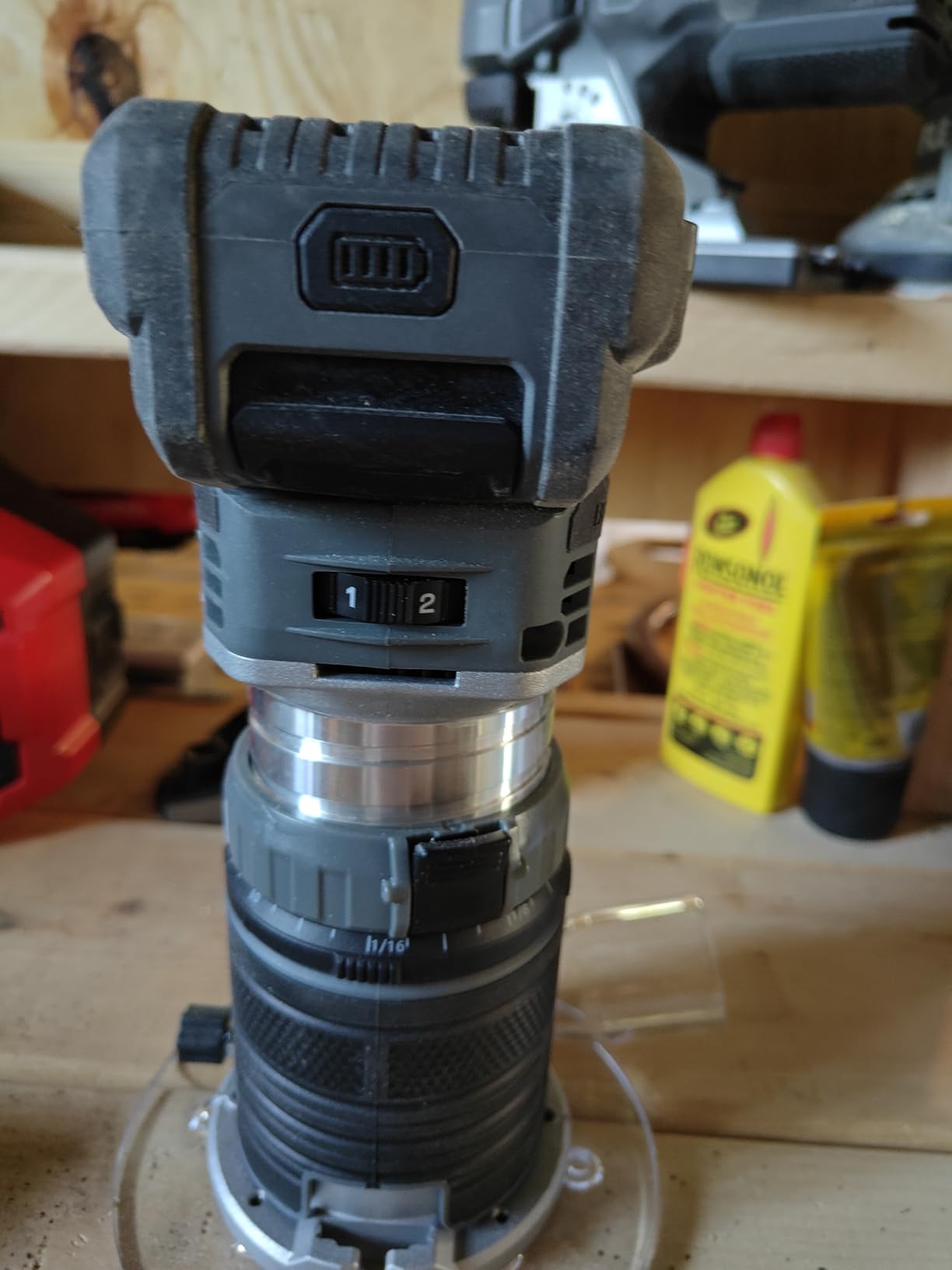
The package is generous: an adjustable edge guide, a centering cone, a dust shroud and both round and D-shaped sub-bases. Round and D-shaped bases cover most of what a fixed base router does, including use on a router table with a D-shaped base.
Quoted runtime is about 275 feet per charge with a 5.0Ah pack using a 3/8 inch round over on red oak. Register the tool within 30 days and the warranty moves to five years.
When it is the wrong purchase
It is heavier and bulkier than the palm routers here, so freehand one-handed work on a small part is not its strength. If your routing is mostly trim work on lightweight stock, look at a palm router instead.
The 24V FLEX platform is smaller than the big three ecosystems, so third-party accessories and add-on products are thin. If you already run DeWalt, Makita or Milwaukee batteries, this means a separate battery and charger system.
8. Bosch GKF18V-25N Colt Palm Router: Best Cordless Router for Dust Control and Safety
BOSCH GKF18V-25N 18V Brushless Colt™ Palm Router | Cordless Power and Precision for Woodworking Projects – Includes Dust Extraction System and Variable Speed Control (Bare Tool)
1.39 peak hp brushless
10000-30000 RPM
Dual vacuum adapters and chip shield
Drop detection and restart protection
Pros
- 1.39 peak hp brushless motor with 10000-30000 RPM
- Precision depth adjustment in 1/64 inch increments
- Dual vacuum adapters plus chip shield for dust control
- Drop detection auto-shutoff and restart protection
- Flip-and-release spindle lock for quick bit changes
- Five-year limited warranty
Cons
- Fixed base only so plunge cuts are not possible
- Maximum cut depth of 1-11/32 inch
- Battery and charger not included
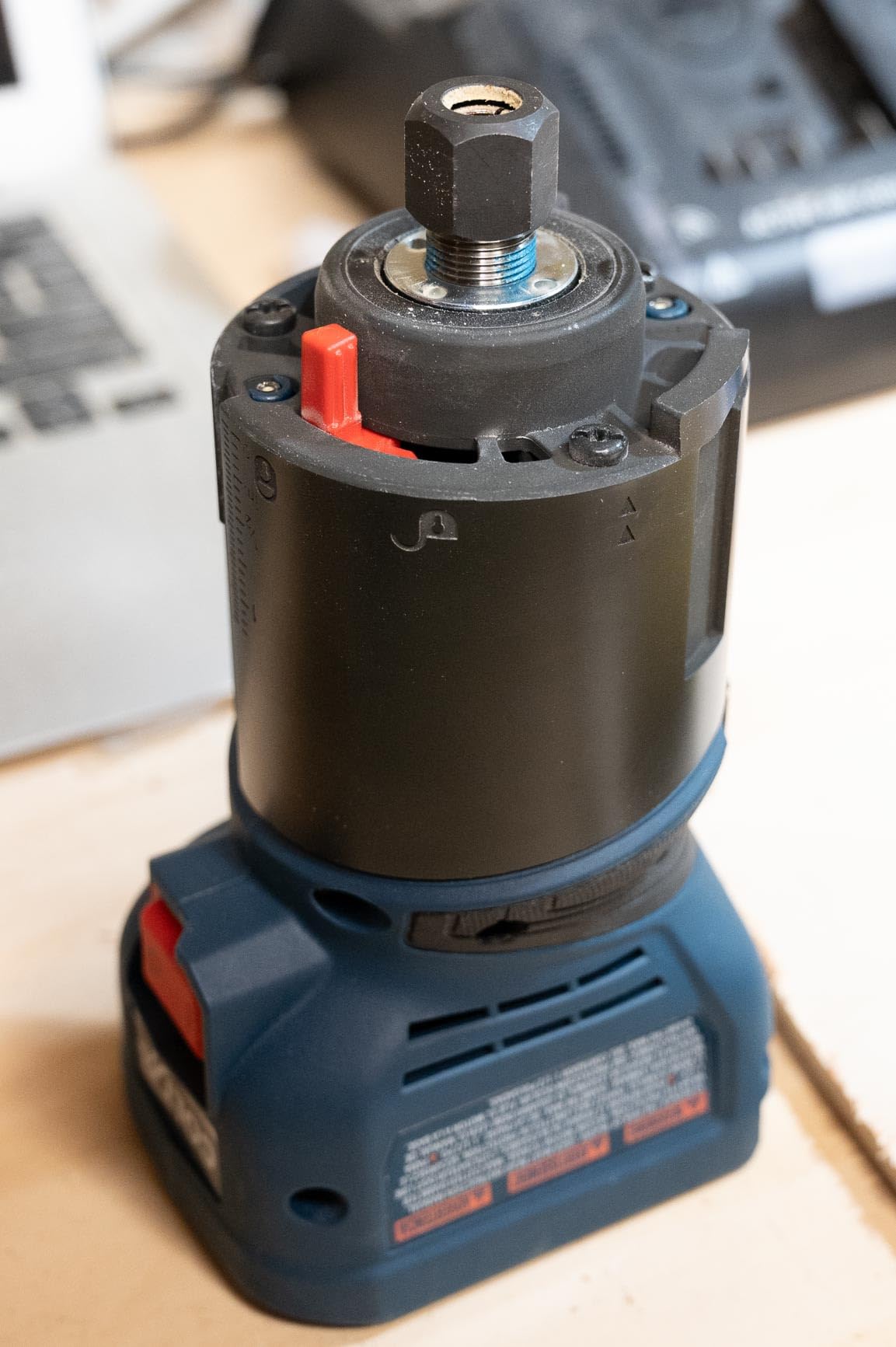
Dust control is where compact routers usually let you down, and this one was designed around the problem. Two vacuum adapters and a chip shield are included, and both edge routing and surface routing hoods come in the box, so you can pick the right one for the cut instead of improvising with tape and a hose.
At 2.4 pounds with high and low soft-grip positions, it works vertically in a jig or horizontally along a bench edge. That flexibility is what makes it useful for hinge mortising as well as trim work.
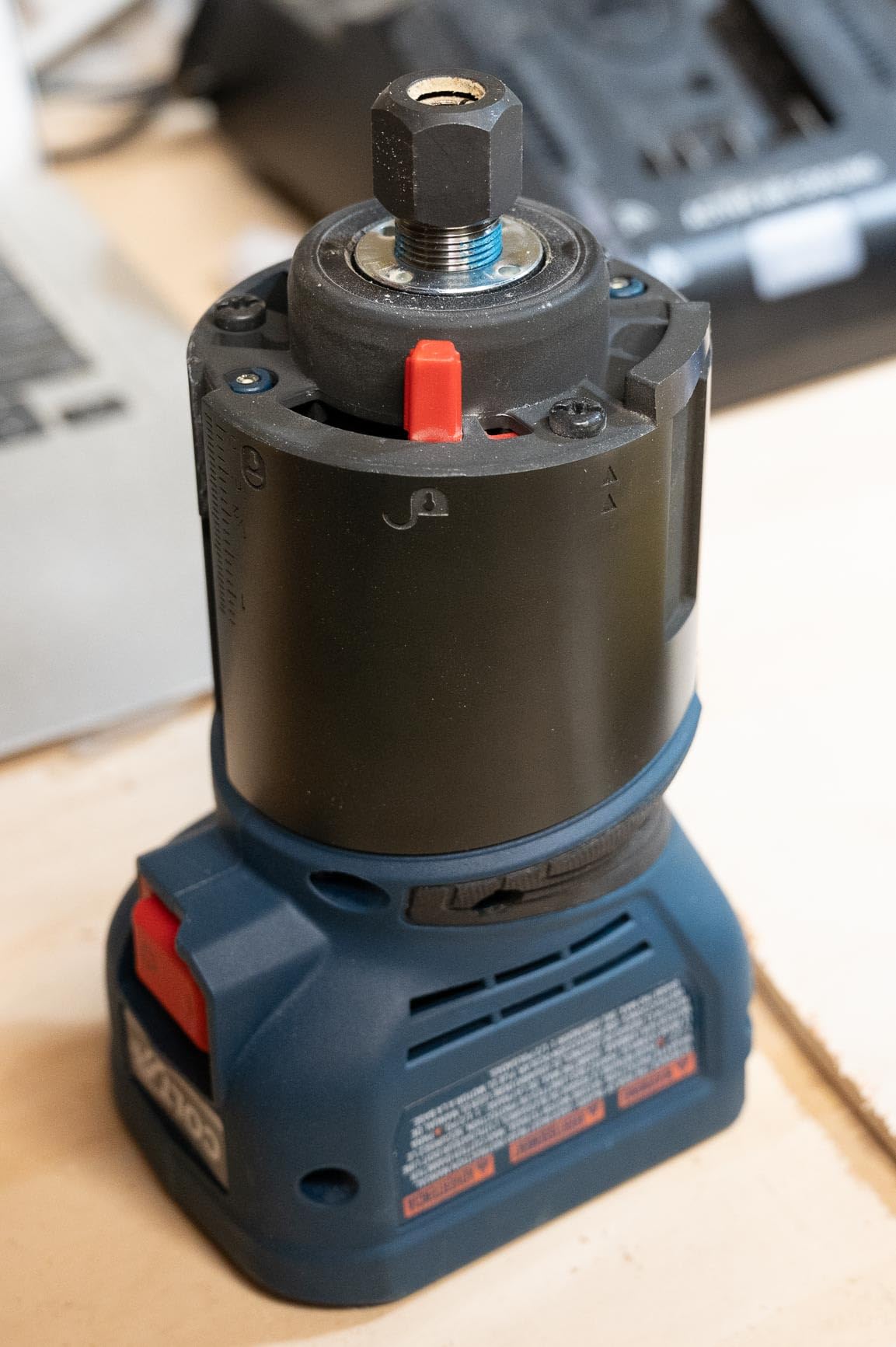
The brushless motor is rated at 1.39 peak horsepower with a 10,000 to 30,000 RPM variable range, and the depth system adjusts in 1/64 inch increments with separate rough and fine controls. Maximum cut depth is 1-11/32 inches.
Drop detection shuts the router off if it falls, and restart protection prevents an accidental start when you swap batteries. On a palm router that you hold at arm height over a workpiece, that is worth having.
Where the Bosch Colt earns its badge
If you route in a small shop or a home office, extraction is the difference between routing and cleaning. Two vacuum adapters and dedicated hoods mean chips go into the hose instead of onto your bench and into the air you breathe.
It runs on the AMPShare 18V platform, which is shared with a range of other brands, so you are not locked into one ecosystem for every future purchase.
Where its limits show
It is a fixed base only. Plunge cuts are not possible, so hinge mortising needs a jig and a separate plunge router if you want to go that way.
The 1-11/32 inch maximum depth limits deep profiles, and the battery and charger are not included with the bare tool. Add a pack sized for the work rather than the smallest one available.
9. Metabo HPT M1808DAQ4 18V Trim Router: Best Cordless Router for Battery Flexibility
Metabo HPT 18V Cordless Trim Router, Variable Speed LED Light, M1808DAQ4
2.5 lb tool body
10000-30000 RPM
Accepts 1/4 inch and 3/8 inch collets
Trimmer straight and template guides included
Pros
- Light 2.5 lb body for one-handed control
- Variable 10000-30000 RPM with soft start and quick brake
- Accepts 1/4 inch and 3/8 inch collets
- Trimmer straight and template guides included
- Dust collection port included
- Cross-compatible with Hitachi and Hikoki packs
Cons
- Brushed motor gives up power to brushless rivals
- Battery not included with the bare tool
The reason to look at this router is the battery situation. It runs on 18V and 18V/36V MultiVolt Metabo HPT packs, and it also accepts Hitachi and Hikoki batteries, which widens the pool of packs you already own more than any other tool in this list.
At 2.5 pounds it is one of the lightest routers here, and the LED work light plus clear plastic base make it easy to see the bit on light-colored stock where contrast is poor.
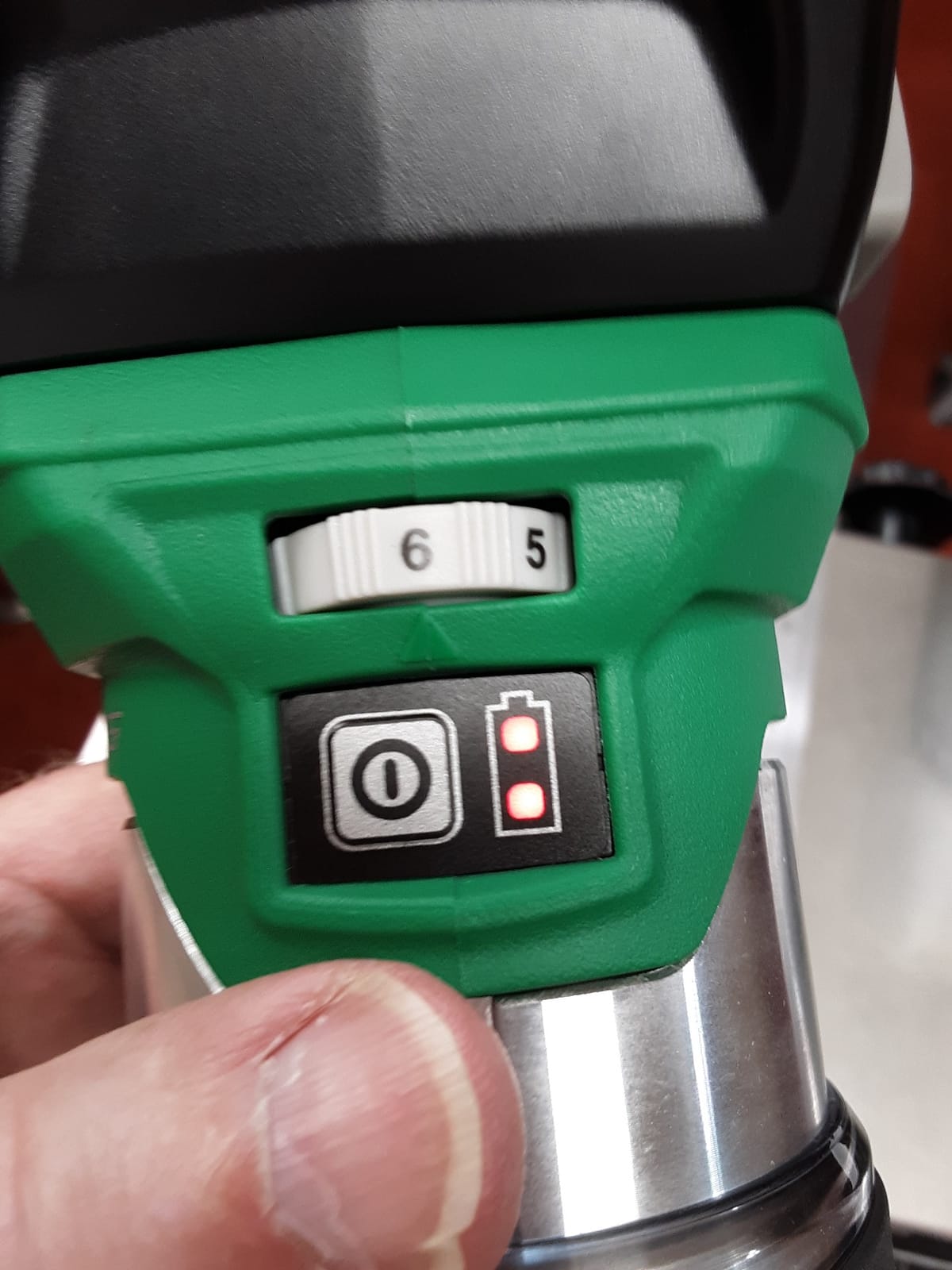
The collet situation is unusual and genuinely useful. It accepts both 1/4 inch and 3/8 inch collets, and the box includes a trimmer guide, a straight guide set, a template guide, a dust collector port and a bit changing wrench. That is more included hardware than most routers at this level.
Soft start and a quick brake give you controlled ramp-up and a faster stop. The manufacturer also backs the tool with a lifetime warranty, which is unusual in this category.
Best use cases for the M1808DAQ4
Light trim work, edge rounding and template work are the sweet spot. At 2.5 pounds you can hold it one-handed for a freehand profile without bracing your other arm against the bench, which is the whole advantage of a router this light.
If you already own Hitachi, Hikoki or Metabo HPT packs, this becomes an inexpensive addition rather than a platform commitment. That is unusual and it is the reason it is on this list.
Where the brushed motor shows
It uses a brushed motor rated at 54 watts, and owners consistently note lower output than brushless competitors. On softwood trim you will not notice, but on thick hardwood or a large-diameter bit it will bog sooner.
For continuous heavy cutting, look at a brushless machine instead. For general hobby and site trim work with an existing pack, it is a sensible, light tool.
10. Bosch GKF12V-25N 12V Max Palm Router: Best Cordless Router for One-Handed Control
Bosch GKF12V-25N 12V Max EC Brushless Palm Edge Router (Bare Tool)
2.2 lb offset palm body
0.04 inch per dial revolution
EC brushless motor
One-wrench spindle lock
Pros
- Exceptionally light offset body with the palm over the bit
- Very precise depth adjustment at 0.04 inch per dial revolution
- Spindle lock allows one-wrench bit changes
- EC brushless motor runs quiet and cool
- Constant speed circuitry holds RPM under load
Cons
- No built-in dust collection
- Single 13000 RPM setting
- Heats near the spindle housing on sustained heavy loads
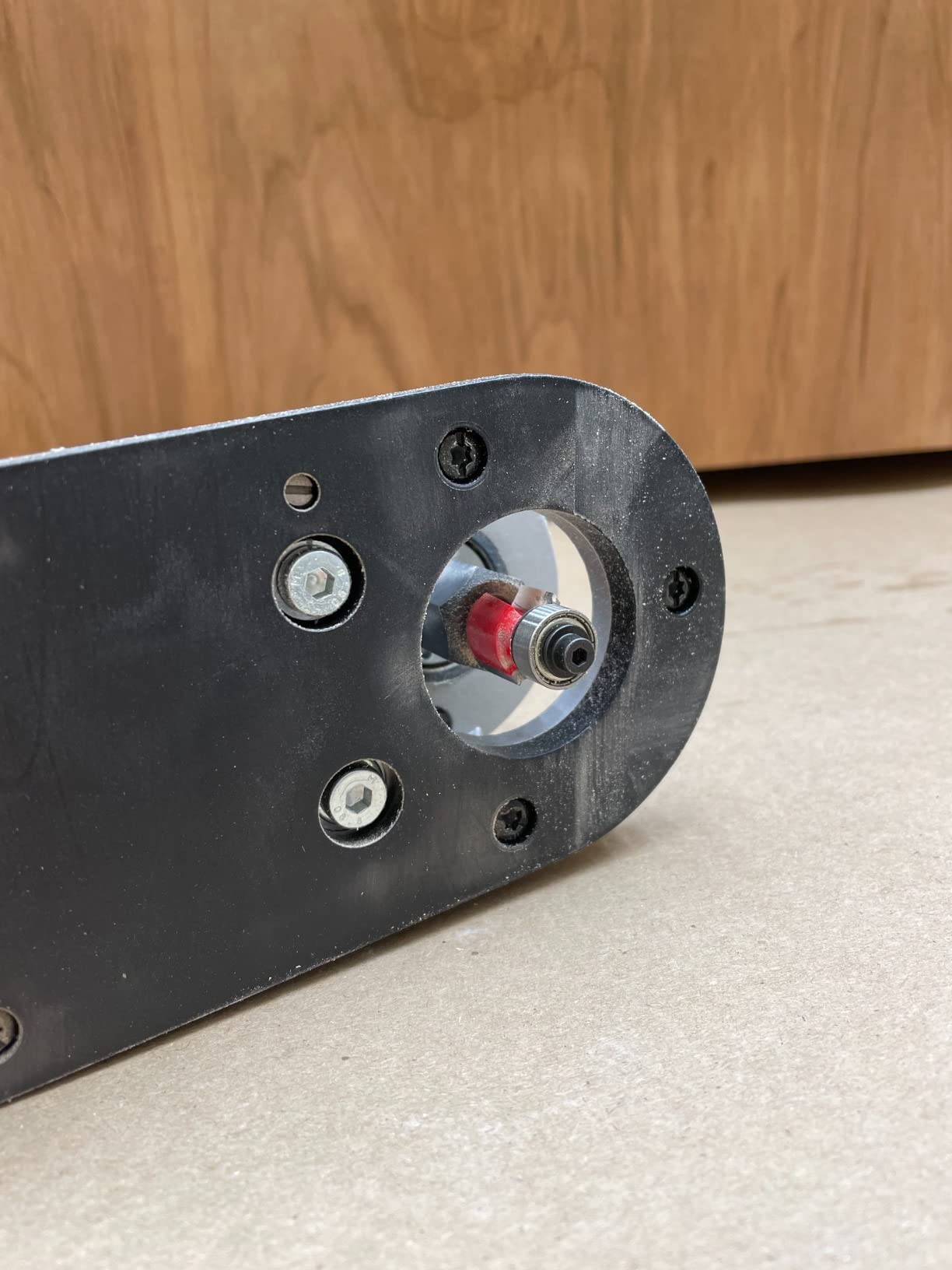
This is the router for anyone whose routing is freehand. The offset body puts most of the tool and your grip directly over the workpiece, so the bit is supported rather than cantilevered, and at 2.2 pounds without a battery you can run a round over along a chair rail with one hand and nothing to brace against.
The depth adjustment is the standout number: 0.04 inches per dial revolution with a lock that prevents the setting drifting. That precision is what lets you follow a drawn line rather than a fence.
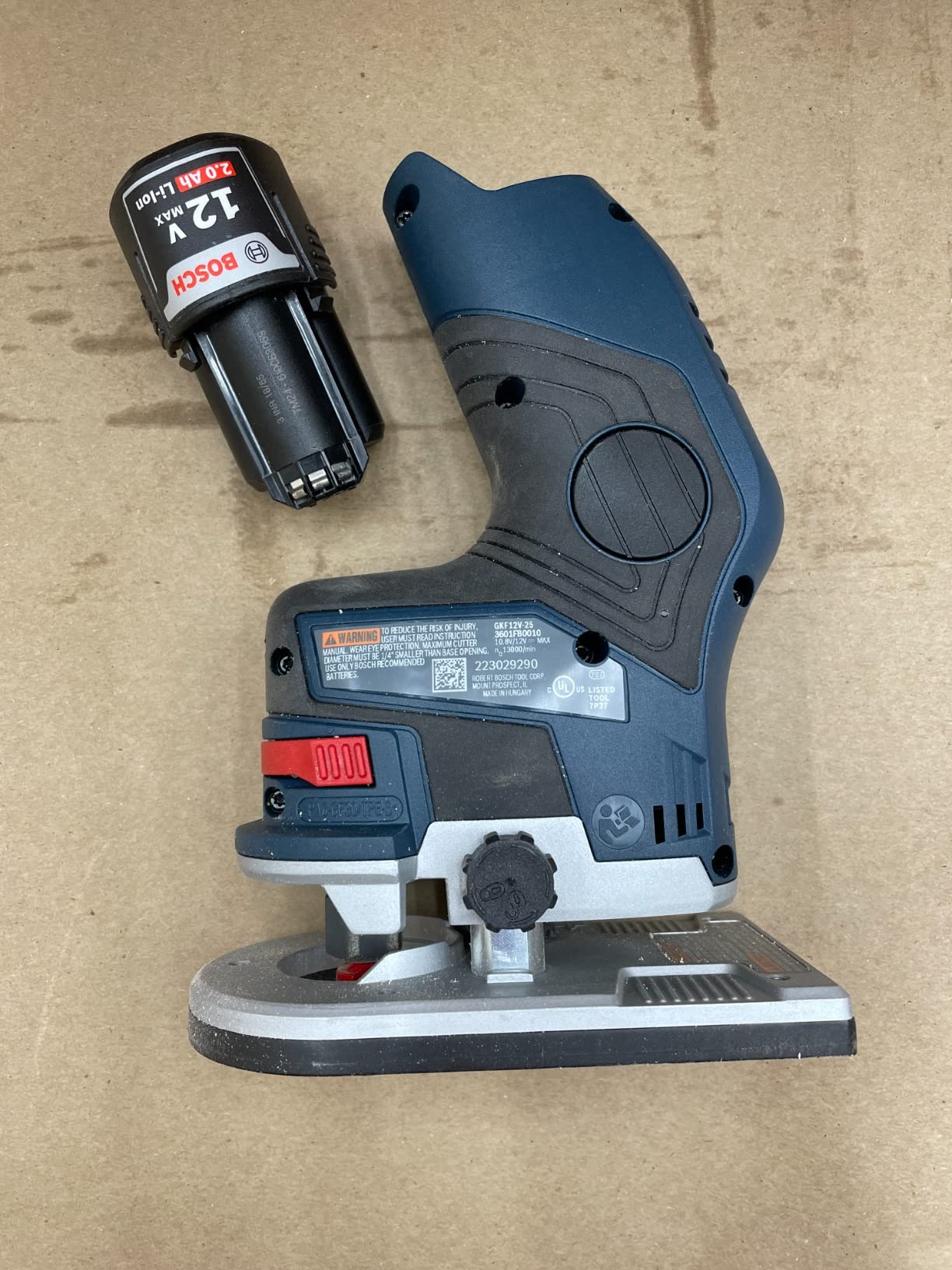
The EC brushless motor is efficient and quiet, and constant-speed circuitry monitors and holds speed under load. The spindle lock lets you change bits with one wrench and one finger, which saves real time over a session with multiple profile bits.
Finger barriers help keep your hands clear of the bit area, and restart protection stops the tool firing when you swap packs. The manufacturer rates up to 23 feet of round-over capacity per battery amp hour.
Why palm routers feel different
On small parts, mouldings and leg work, control is everything, and the geometry of a palm router beats the power of a bigger machine. Luthiers, stair builders and anyone doing restoration carving tend to end up here.
The fine depth dial also makes this a good choice for inlay work and light template routing where you are making shallow passes repeatedly.
Where it runs out of road
There is no dust collection, and this router generates plenty of chips on edge work. Plan on a vacuum nozzle near the work or accept the mess.
The 13,000 RPM single speed is lower than the 30,000 RPM palm routers, and it needs a 4Ah or 6Ah pack for demanding cuts rather than the smallest battery. Owners also note heat build-up near the spindle housing on sustained heavy work.
11. Ryobi PCL424B ONE+ 18V Compact Router: Best Cordless Router for DIY Furniture Projects
RYOBI ONE+ 18V Cordless Compact Fixed Base Router Tool Only (Battery Not Included) – PCL424B
3.2 lb tool-only weight
20000-30000 RPM
Clear base with LED and dust port
ONE+ battery compatible
Pros
- Very light at 3.2 lb with an ergonomic one- or two-handed body
- Variable 20000-30000 RPM motor for control on light work
- Clear base plus LED light and dust port improve visibility
- Micro dial and quick-release lever for fast adjustments
- Runs on any Ryobi 18V ONE+ battery
Cons
- Not suited to thick lumber or heavy routing
- Dust port opening reduces the clear-view window
- Vacuum hose adds weight and unbalances the tool
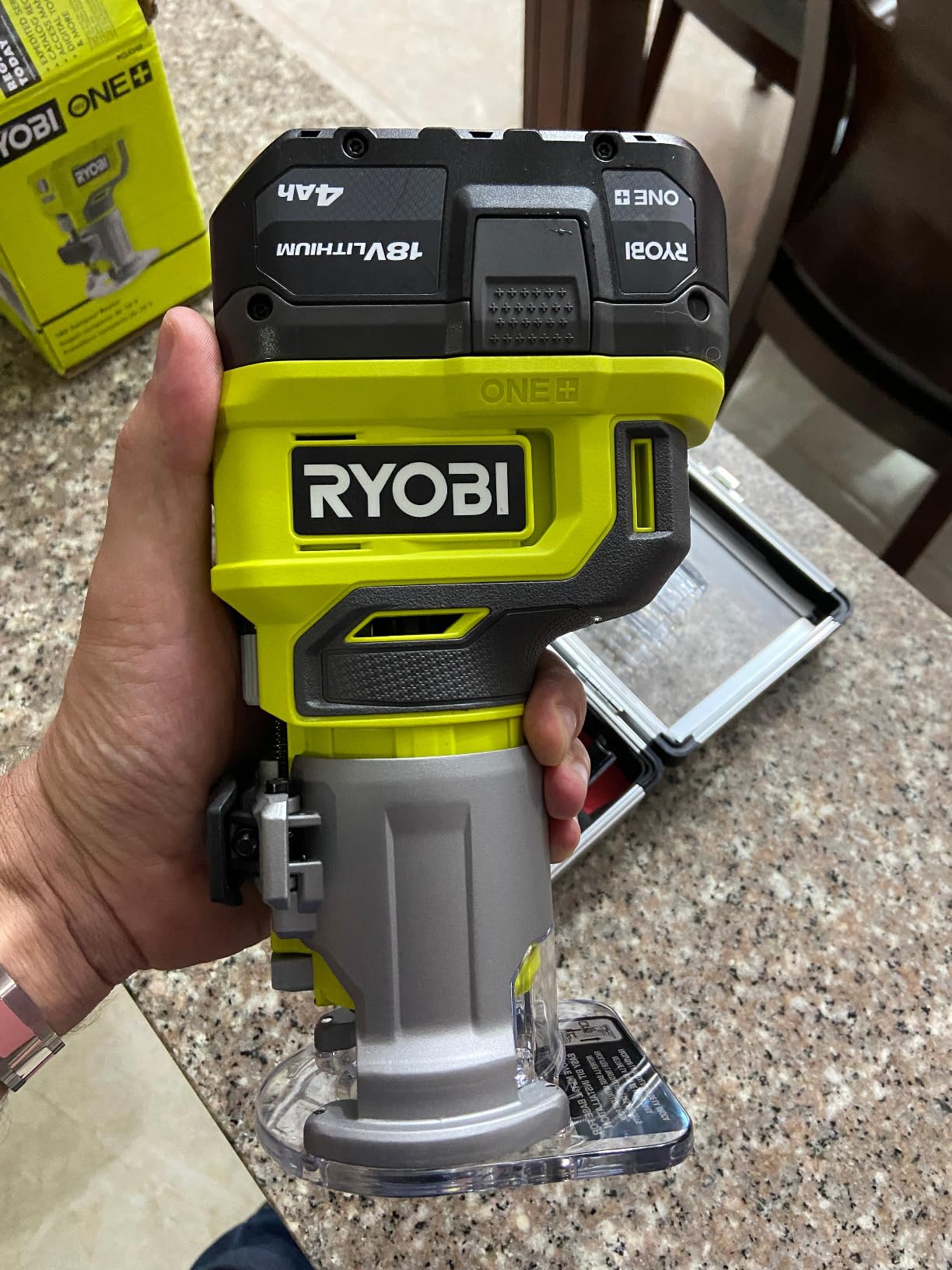
This is the router I recommend to people building their first piece of furniture at a kitchen table. It is light, the depth adjustment is genuinely precise for a compact tool, and if you own any ONE+ pack already there is nothing else to buy.
The 20,000 to 30,000 RPM variable motor gives a usable spread, and the micro dial with a quick-release lever means you can move from bit to bit without hunting for a hex key.
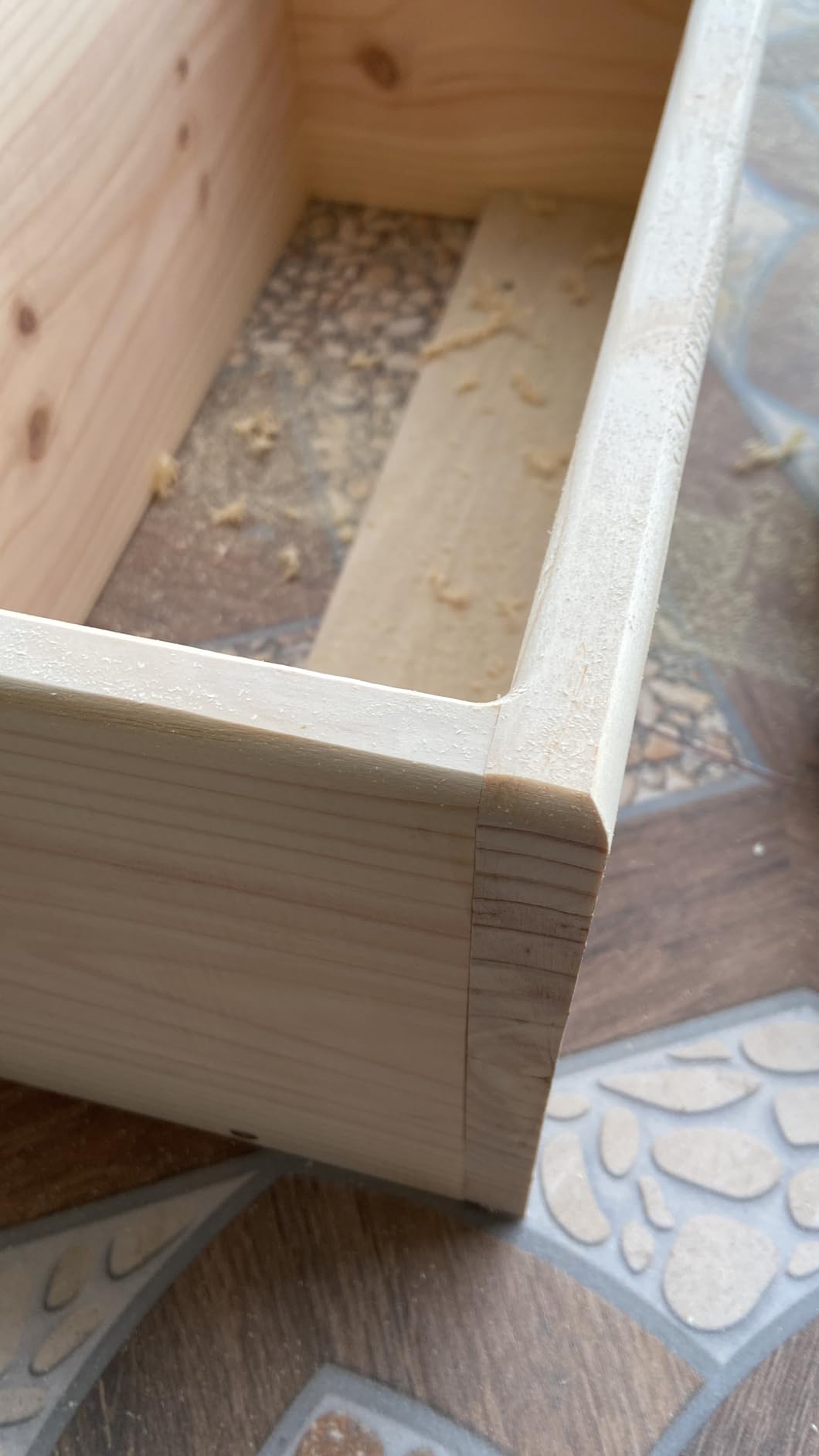
Owners rate the clear base and LED as the feature that makes it easy to work with on pale wood, where the usual black or aluminium bases hide the bit line. The dust port is there when you want it.
That dust port has a trade-off. It sits in the window you were using to see the cut, so with a vacuum attached you are routing half blind, and the hose adds front weight that throws the balance off for freehand work.
Where the ONE+ compact router works
Edge rounding, small flush trims and light joinery on pine, poplar and plywood are all comfortably inside what it can do. For weekend builds and shop furniture it is more than sufficient, and the one-handed body helps on small parts.
The ONE+ battery range is enormous, so you can pick a 4Ah or higher pack and get long runtimes without hunting for a rare battery.
Where you should switch tools
Owners are clear that it is not suited to thick lumber or heavy routing. A wide flush trim bit or a deep groove will bog it, and the fix is a lighter pass or a bigger router, not more force.
With a vacuum on the port, keep two-handed control in mind. For heavy dust collection with a clear view, the Bosch Colt above is the better pick.
12. Ryobi RTR18-0 18V Trim Router: Best Cordless Router for Included Accessories
RYOBI RTR18-0 18V Cordless Trim Router
20000-30000 RPM variable speed
6mm and 6.35mm collets
Parallel guide and straight cutter included
18V ONE+ platform
Pros
- Wide 20000-30000 RPM variable speed range
- Dual collet capacity for 6mm and 6.35mm bits
- Parallel guide and a straight cutter in the box
- Shares batteries with other Ryobi 18V tools
Cons
- Fewer customer reviews than the leading models
- Battery and charger not included with the bare tool
The Ryobi RTR18-0 stands out for what comes in the box. You get collets in both 6mm and 6.35mm, a straight cutter and a parallel guide, which is a usable starter set rather than a wrench and nothing else.
The speed range of 20,000 to 30,000 RPM matches the other Ryobi compact router on this list, so it handles trimming, small joinery and edge work on softwood without complaint.
Owners report dependable variable speed trimming performance and accessories that are actually useful out of the box, at a competitive entry point. The one thing you notice when reading the reviews is how much smaller the feedback pool is than the leading routers.
That is the main caveat. With a few hundred ratings instead of several thousand, there is less long-term data on the motor and the plastic gear housing, so treat it as the value pick rather than the safe pick.
What works well
The dual collet capacity is more useful than it sounds. If you already own 6mm shank bits from another machine, they will run here without you buying new tooling before you have even started.
The parallel guide lets you make repeat edge cuts against a straight reference without buying a separate accessory later.
Where to be careful
It is a bare tool, so a battery and charger come out of your budget separately. If you are buying into the platform new, budget for at least one high-capacity pack.
With fewer long-term owner reports, I would pair this with a modest set of expectations: light and medium trim work rather than heavy profile routing.
How to Choose a Cordless Router Before You Buy
The decision that matters most is not brand, it is base type. Buy the wrong one and you will either avoid mortising forever or fight a plunge base for every trim cut.
Trim, plunge or fixed base: what each one is for
A trim router, sometimes called a palm router, is small, light and held in one hand. It follows an edge with a guide or your eye, and it is the right tool for round overs, chamfers, edge banding and flush trims on small parts. It cannot plunge, because the bit is already at full depth when it touches the wood.
A plunge router has a sleeve around the bit that rises and falls. The bit starts above the surface, you position the base, then you lower the motor into the cut, which is exactly what hinge mortising and dadoes require. On a router in this list, the DEWALT DCW620B and the Makita XTR01T7 kit are plunge capable, and the Metabo HPT M3612DAQ4 is a plunge router as well.
A fixed base router has a rigid base and a taller body, which means more power, larger collets and better stability on thick stock. It also means you cannot hold it in one hand. Several routers here are fixed base compact models, and the FLEX includes both a round and a D-shaped sub-base if you want to use it on a table. If your shop runs CNC work as well as hand work, our picks for the best CNC routers cover the machine-side alternative to hand-held trimming.
Do you really need a plunge router? Only if you are cutting into the middle of a board. Trim work on an edge, and template work above the surface, never needs one. That single question resolves most of the buying hesitation.
Can you use a plunge router as a trim router? Yes, and it is what many experienced woodworkers do. Buy the plunge version and use it as a plunge tool for mortising, then add a fixed base and trim guide for edge work. It is the flexible option, at the cost of weight and money.
Cordless versus corded: when battery power makes sense
Are cordless routers worth it? For trim work, sign making, on-site cabinetry, shop builds with no nearby outlet, and anything with a template or jig in a tight space, yes. The freedom is not a marketing benefit, it changes how you work.
For deep plunge cuts in thick hardwood, a 3 hp corded router still wins. Corded motors do not slow as a pack drains, they do not heat up when you take a heavy pass, and there is no runtime ceiling. Forum users on NC Woodworker and ContractorTalk make the same point in different words: fixed base for edge profiles, plunge for mortises, corded for volume.
The practical answer is that a good cordless router plus a corded one covers everything. The cordless machine handles 80 percent of tasks and the corded unit takes the heavy remainder. If you can only own one, own the cordless one unless your work is primarily thick-stock joinery.
Battery platform: the decision people regret later
Ecosystem loyalty is consistently the top factor driving these purchases in user forums. Before anything else, check which platform you already own batteries for.
The DeWALT DCW600B and DCW620B run on 20V MAX and 20V MAX XR. The Milwaukee 2723-20 runs on 18V lithium-ion. The Makita XTR01T7 kit runs on 18V LXT. The Ryobi PCL424B and RTR18-0 run on 18V ONE+. The Bosch GKF18V-25N uses the AMPShare 18V platform, and the Bosch GKF12V-25N uses 12V.
The Metabo HPT M1808DAQ4 and the 36V plunge router are the most flexible, accepting 18V and 18V/36V MultiVolt packs plus Hitachi and Hikoki batteries. FLEX runs on its own 24V system.
Why is DeWalt cheaper than Milwaukee for similar tools? Because the packages are built differently, not because one brand is better value. The comparison that matters is the cost of the batteries and chargers you will need to fill the kit.
Which router is better, DeWalt or Milwaukee? The DCW600B has more than twice the review volume and a lighter body, while the Milwaukee 2723-20 carries a higher horsepower figure and larger base plates with dust collection. Pick on the platform you already own, then on whether you route hardwood or softwood.
Battery capacity matters more than brand. A 2.0Ah pack is fine for trim work; for plunge cuts in hardwood you want a 5.0Ah class pack. Owners of the DEWALT DCW620B specifically note fast consumption on heavy plunge work, and the same applies to the 36V Metabo.
Then add the cost of ownership. Most listings here are bare tools, and a first-time buyer needs one battery and a charger. If you are starting from nothing, a kit such as the Makita XTR01T7 that includes two batteries, a charger and a plunge base is the cheapest route into routing overall.
Shank size, speed control and dust extraction
Most cordless routers take a 1/4 inch collet, which is why they are paired with small-diameter bits for edge work. The DEWALT DCW620B also takes 1/2 inch, and the Metabo HPT M1808DAQ4 takes both 1/4 inch and 3/8 inch, which widens the tooling you can use.
A 1/2 inch shank is stiffer and holds larger profile bits with less chatter. If you plan heavy profile work, a router that accepts one is worth the extra cost.
Variable speed is close to essential now. Small bits need lower RPM to avoid burning, large bits need higher RPM to cut, and a single-speed router forces a compromise. Most here run a 10,000 to 30,000 RPM dial, with the FLEX covering 16,000 to 31,000 RPM and the Bosch 12V palm router the outlier at a fixed 13,000 RPM.
Dust extraction separates the tools that were designed for it from the ones that were not. The Bosch GKF18V-25N includes dual vacuum adapters and chip shields, the DEWALT DCW620B has integrated extraction that clears the vast majority of groove dust, and the CRAFTSMAN includes a dust port adapter. The Bosch 12V palm router has none, which is its most common complaint.
Brushless motors are worth paying for. They run cooler, hold speed under load better and last longer than brushed designs. The Metabo HPT M1808DAQ4 is the one brushed exception here, and owners do note it gives up some power.
Before any cut, clamp the work, take the bit to full speed before entering the material, keep both hands on the tool, and wear eye and hearing protection. If you have not used a router before, our guide to the best table saws for woodworking covers the shop basics that pair well with it.
Frequently Asked Questions
Are cordless routers worth it?
For trim work, edge profiling, sign making and on-site cabinetry, yes. A cordless router removes the cord drag that makes freehand work awkward and works anywhere you have no outlet. For deep plunge cuts in thick hardwood, a 3 hp corded router still leads because corded motors hold speed and do not drain. Most woodworkers end up owning one of each.
Which is the best cordless router?
The DEWALT DCW600B is the best overall cordless router for most people, with a 4.15 pound brushless body, variable speed control, dual LED lights and more than ten thousand reviews. The Milwaukee 2723-20 is the pick for more power and included dust collection, and the DEWALT DCW620B is the choice when you need real plunge capacity for joinery.
Which router is better, DeWalt or Milwaukee?
It depends on the platform you already own. The DeWalt DCW600B is lighter at 4.15 pounds and carries far more customer reviews. The Milwaukee 2723-20 is rated at 1.25 hp and ships with larger base plates, dust collection and a straight-edge guide. Both run on widely available lithium-ion packs.
Who makes the best cordless trim router?
Among the compact fixed base models here, the Milwaukee 2723-20 leads on power and included accessories, the DEWALT DCW600B leads on balance and review depth, and the Metabo HPT M1808DAQ4 leads on weight at 2.5 pounds with the widest battery compatibility. For one-handed palm work, the Bosch GKF12V-25N is the most precise.
Do I really need a plunge router?
Only if you cut into the middle of a board. Hinge mortises, dadoes and grooves need a plunge router because the bit must start above the surface and be lowered into the cut. Edge trimming, round overs and template work never do. Many woodworkers start with a compact trim router and add a plunge machine later.
What is the best router for a beginner woodworker?
Start with a compact trim router on the platform you already own. The CRAFTSMAN CMCW400B and the Ryobi PCL424B are both approachable, light and easy to control, and neither asks you to learn plunge mechanics on day one. Upgrade to a plunge router once you are cutting joinery rather than shaping edges.
Which Cordless Router Should You Buy
The DEWALT DCW600B is the router I would buy first, because it is light, brushless, well lit and supported by more customer feedback than anything else in this roundup. If you need plunge capability for mortises and dadoes, go to the DEWALT DCW620B, or pick up the Makita XTR01T7 kit if you would rather have the batteries, charger and plunge base included from day one.
Before you order, check which battery platform you already own. That single decision usually matters more than the specifications on the box, and it is the one that buyers most often get wrong.
Whatever you choose, start with trim work and a light pass. Routers are easy to learn and easy to ruin a workpiece with, and the machine that is correct for your platform will keep making the same kind of job easy for the next ten years. For the rest of your cordless tool setup, see our picks for the best jigsaws for woodworking and the best wide belt sanders for professional woodworking.