

The best ceiling fans for large living rooms are the 72-inch and 84-inch models with brushless DC motors and airflow ratings above 6000 CFM. That combination moves enough air to make a 400 to 600 square foot space feel comfortable on a hot afternoon, without the motor hum that smaller AC-motor fans produce at their top speeds.
A ceiling fan does not cool a room. It circulates air across your skin so sweat evaporates faster, which lets you run the air conditioner less or set the thermostat a few degrees higher. In a large living room that is the whole game, because a 52-inch fan turning 3000 CFM through a 700 square foot great room simply never catches up with the space.
We spent weeks comparing the ten extra-large fans below, focusing on the three numbers that decide whether a fan works in a big room: blade span, airflow in cubic feet per minute, and motor type. We also weighed noise ratings, downrod options and light output, because a fan that hums at 45 decibels or ships with a 1500-lumen bulb changes how you actually use the room. If you want a broader look at the category first, our general best ceiling fans guide covers standard room sizes and the basics of airflow.
Top 3 Picks for Large Living Rooms in 2026
Three fans stood out from this group. The POCHFAN 72 inch is the most complete package for a big open room, with nine blades, a reversible DC inverter motor under 30 dB and a 24W dimmable LED with three color temperatures. The Sofucor 60 inch is the smarter airflow bet, pushing up to 6500 CFM off just three solid walnut blades. The ZMISHIBO 72 inch wins on mounting flexibility, because it ships with 4, 8 and 24 inch downrods and covers everything from a low ceiling to a vaulted one.

POCHFAN 72 Inch Ceiling Fan
- 72 inch span
- 9 wooden blades
- DC motor under 30 dB
- 24W dimmable LED with 3 CCT

Sofucor 60 Inch Wood Ceiling Fan
- Up to 6500 CFM
- 3 solid walnut blades
- 2000 lumen LED
- brushless DC under 30 dB

ZMISHIBO 72 Inch Ceiling Fan
- 72 inch span
- 8 blades
- 4/8/24 inch downrods
- 35 dB reversible DC motor
All Best Ceiling Fans for Large Living Rooms (October 2026)
Every fan in this roundup measures 60 inches or more across the blades, which is the practical floor for a large living room. The table below lists the specs that actually change how a fan performs in a big space: airflow, motor, controls and mounting.
| Product | Specifications | Action |
|---|---|---|
| POCHFAN 72 Inch Ceiling Fan with Light |
|
Check Latest Price |
| ZMISHIBO 72 Inch Ceiling Fan with Light |
|
Check Latest Price |
| Sofucor 60 Inch Wood Ceiling Fan |
|
Check Latest Price |
 BOOSANT 84 Inch Extra Large Ceiling Fan BOOSANT 84 Inch Extra Large Ceiling Fan |
|
Check Latest Price |
 Conciseer 72 Inch Semi-Flush Ceiling Fan Conciseer 72 Inch Semi-Flush Ceiling Fan |
|
Check Latest Price |
 Amico 72 Inch Ceiling Fan with Light Amico 72 Inch Ceiling Fan with Light |
|
Check Latest Price |
 VOLISUN 72 Inch Ceiling Fan with Light VOLISUN 72 Inch Ceiling Fan with Light |
|
Check Latest Price |
 Minislak 72 Inch Industrial Ceiling Fan Minislak 72 Inch Industrial Ceiling Fan |
|
Check Latest Price |
 Zronon 72 Inch Ceiling Fan without Light Zronon 72 Inch Ceiling Fan without Light |
|
Check Latest Price |
 Fanbulous 60 Inch Ceiling Fan with Light Fanbulous 60 Inch Ceiling Fan with Light |
|
Check Latest Price |
A note on the CFM column. Manufacturer airflow figures for large fans are not directly comparable because blade pitch, blade count and motor speed all affect the number. A three-blade propeller design like the BOOSANT 84 inch will always show a larger headline figure than an eight-blade traditional fan of the same diameter. The real test is the room, and the practical threshold most people settle on is 75 to 100 CFM per square foot of living space for a fan that has to work on its own.
1. POCHFAN 72 Inch Ceiling Fan with Light – Quiet DC Power for Big Rooms
POCHFAN 72 Inch Ceiling Fans with Lights,Large Modern Ceiling fan with Remote and 9 Wooden Blades,Dimmable,6 Speeds,Noiseless Reversible Indoor&Outdoor Fan for Bedroom,Patio,Living Room
72 inch blades
Under 30 dB DC inverter motor
24W dimmable LED
6 speeds with timer
Pros
- 72 inch span suits open floor plans
- Nine wooden blades
- DC inverter motor under 30 dB
- Dimmable LED with three color temperatures
- Six speeds with 1/3/6 hour timers
Cons
- Heavy at 29 pounds and awkward for a solo install
- Only three timer intervals
- No app or voice control
Out of the box, the first thing I noticed was how thin the body is for a 72-inch fan. The listing dimensions come in at 72 by 72 by 24 inches, and that low profile matters in a large room because it keeps the visual line between the blades and the ceiling tight. Nine wood-finish blades give it a decorative, furniture-adjacent look that reads more like a light fixture than an appliance.
The motor is a DC inverter unit with thickened silicon steel housing, copper windings and double bearings, rated by the manufacturer at under 30 dB. In a big room that number matters twice over, because a large room has more reflective surfaces and a low hum carries much further than it does in a bedroom. Reversible direction is switched from the remote, so winter updraft takes the same remote as summer downdraft.
Airflow is the compromise here. The manufacturer quotes up to 4500 CFM at top speed, which is the lowest figure among the ten fans we compared. Nine blades at a relatively gentle pitch trade raw air movement for the quietest, smoothest feel in the group, and the 6,240 CFM-level output of some 72 inch rivals simply is not there. If your room is 400 square feet or smaller, that is a fair trade. If you are past 500 square feet, keep reading.
Light output is a 24W dimmable LED with brightness from 20 to 100 percent and three color temperatures at 3000K, 4000K and 6500K. That is plenty for accent lighting across a sectional, though it will not carry a large room on its own after dark.
What to check before you buy the POCHFAN 72 inch
Check your ceiling joist spacing and the weight. At 29 pounds this is the second-heaviest fan in the group, and the manufacturer itself flags it as a two-person job on a high ceiling. A joist brace or a fan-rated box is worth adding to the parts list if your joists sit at the standard 16 inch spacing.
Also decide early whether you need a wall control. Everything here runs through the hand remote, and the timer only offers 1, 3 and 6 hour intervals. There is no app, no Wi-Fi and no voice assistant, so if you already run a smart home you will want a ceiling fan that supports one instead.
Where the POCHFAN falls short
The 4500 CFM ceiling means this is a comfort fan, not a room-tamer. In an open concept space that combines a living room, kitchen and dining area, you will feel the difference against a 7000 CFM model. The timber-look blades also scratch more easily than the aluminum options, which matters if the fan is in a high-traffic living space.
Finally, the 24W LED is the smallest light package here. If the fan is your only overhead source, budget for a separate fixture or dimmable floor lamps.
2. ZMISHIBO 72 Inch Ceiling Fan – Best Downrod Range for Vaulted Ceilings
ZMISHIBO 72″ Ceiling Fans with Lights for Patio, Living Room, Remote
72 inch span
4/8/24 inch downrods
35 dB DC motor
6 speeds with 1/2/4 hour timer
Pros
- Three downrod lengths cover a wide ceiling range
- 35 dB reversible DC motor
- Remote handles light/speed/direction/timer
- Two-year customer support
- Ranked in the top 15 of the Ceiling Fans category
Cons
- Listed for indoor use despite patio wording in the title
- 22 pounds still needs two people on a high ceiling
- No smart home or app control
This is the fan we recommend when the ceiling is the hard part. It includes 4 inch, 8 inch and 24 inch downrods in the box, which covers ceilings from roughly 12 to 32 inches above the fan body. That range covers a standard 9-foot ceiling, a 10-foot ceiling, and most of the lower vaulted and sloped ceilings people actually build.
The eight blades come in a two-tone black and walnut finish, which gives the fan a dual personality that works in both industrial and farmhouse rooms. The DC motor is rated at 35 dB and the manufacturer states it runs 65 percent more efficiently than a traditional AC motor. The remote is genuinely all-in-one: on and off, six speeds, rotation direction, three color temperatures at 3000K, 4500K and 6000K, and a 1, 2 or 4 hour timer.
One thing to know up front is the listing itself. The title mentions patios, but the spec sheet lists the fan for indoor use only. If you are planning to hang this outside, do not. For a covered exterior spot, pick a model with an explicit water resistance statement.
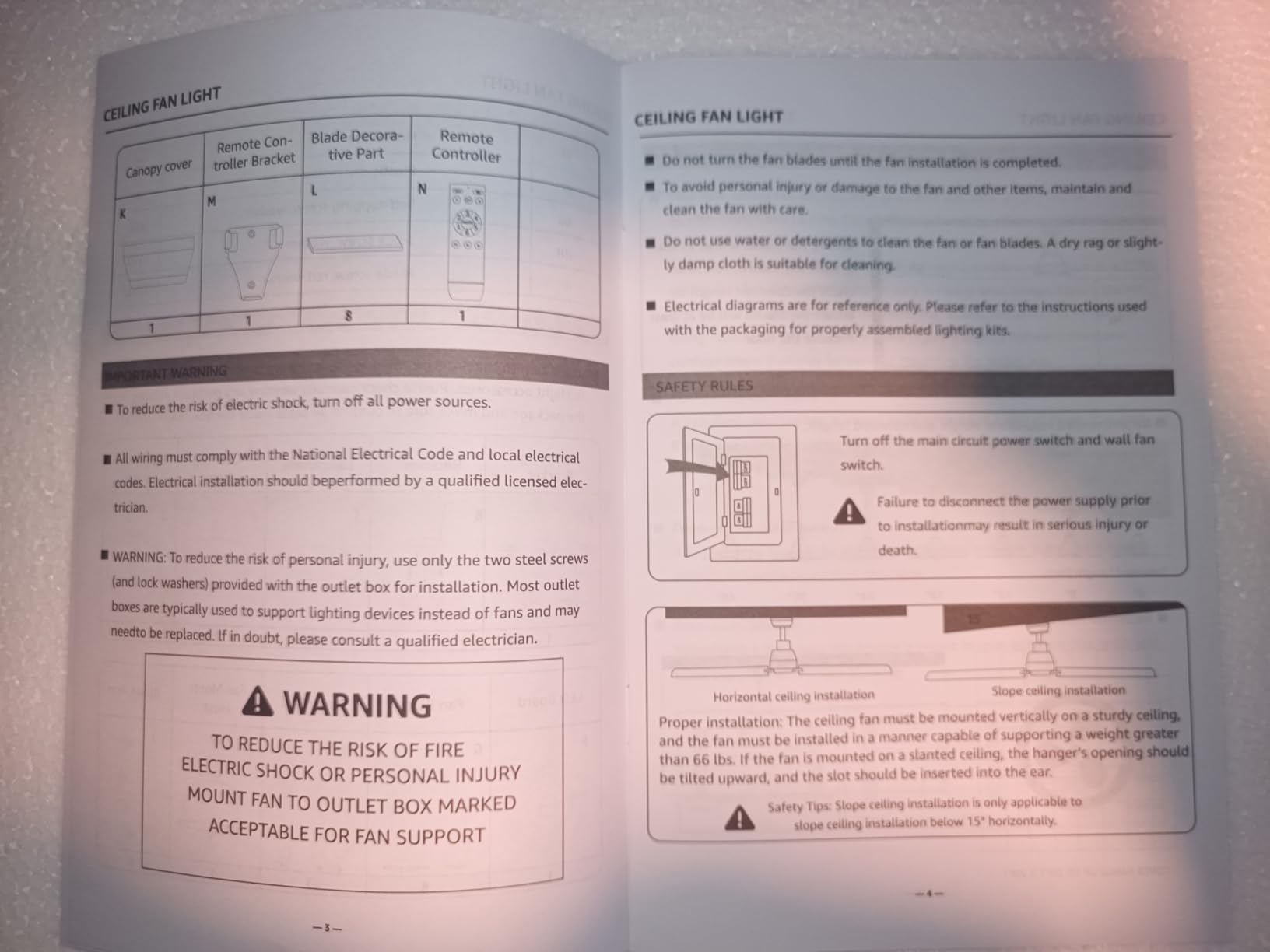
At 22 pounds, it is lighter than most 72 inch fans here, which is a real help on a ladder. Buyers consistently mention the installation instructions are clear and the parts arrive complete, and the fan holds a strong position in the Ceiling Fans category for a reason.
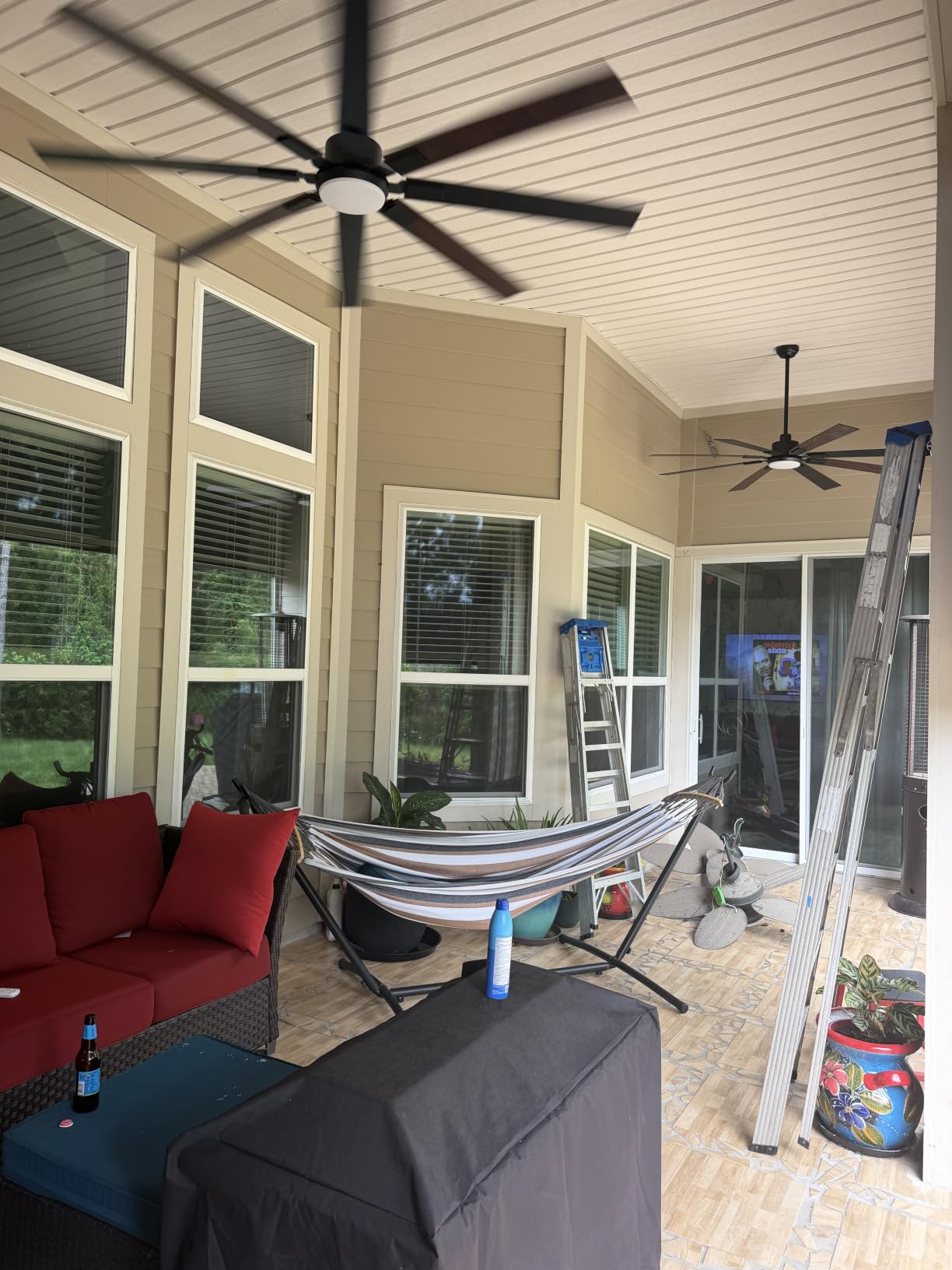
How to pick the right downrod for this fan
Rule of thumb: for a 9-foot ceiling you want 6 inches of drop from the housing, and for a 10-foot ceiling you want closer to 12. Measure from the mounting bracket to the tip of the down pole and subtract the height of the motor housing, then pick the rod that lands the fan between 7 and 9 feet above the floor.
The 24 inch rod is the reason to buy this one. It is long enough to bring a 12-foot or 14-foot vaulted peak down to a comfortable height without buying a separate extension kit, which is a common source of extra cost and a second install.
Where the ZMISHIBO falls short
The indoor-only rating is the headline caveat. A second issue is the light: a 24W LED with three color temperatures is serviceable but not bright, and there is no published lumen figure for it. If you want the fan to be your main evening light source, this is not the one.
There is also no wall control and no app. Everyone in the household shares one remote, and it is the only way to run the fan once it is installed high.
3. Sofucor 60 Inch Wood Ceiling Fan – Best Airflow Per Blade
Sofucor 60 Inch Wood Ceiling Fans with Lights and Remote, Indoor/Outdoor
60 inch span
Up to 6500 CFM
3 solid walnut blades
2000 lumen dimmable LED
Pros
- Up to 6500 CFM from only three blades
- Three solid walnut blades
- Brushless DC motor under 30 dB
- 2000 lumen dimmable LED with 3 CCT
- Light at 13.7 pounds
- Two-year warranty
Cons
- A few buyers report a faint ticking after a month
- Some blade screw holes needed rethreading
- Printed instructions use very small type
- One reviewer found airflow weaker than expected outdoors
The Sofucor is the most interesting engineering choice in this group. It uses three solid walnut blades measuring 29.5 inches each, and that low count is what lets it push up to 6500 CFM. Wide, slow blades move a lot of air per revolution, which is why propeller-style fans like this one can outperform an eight-blade fan of similar diameter.
That makes it a genuinely good fit for a 400 to 500 square foot living room or great room. It is also the lightest fan here at 13.7 pounds, and reviewers report 20 to 30 minute installs, which is unheard of for a fan this size. The brushless DC motor is rated under 30 dB and the manufacturer claims roughly 75 percent better energy efficiency than an AC motor.
The light is the best in class. A dimmable 0 to 100 percent LED produces 2000 lumens with 3000K, 4000K and 6000K options, and it comes with an acrylic lampshade. The remote runs six speeds plus 1, 4 and 8 hour timers, and the airflow reverses for winter circulation.
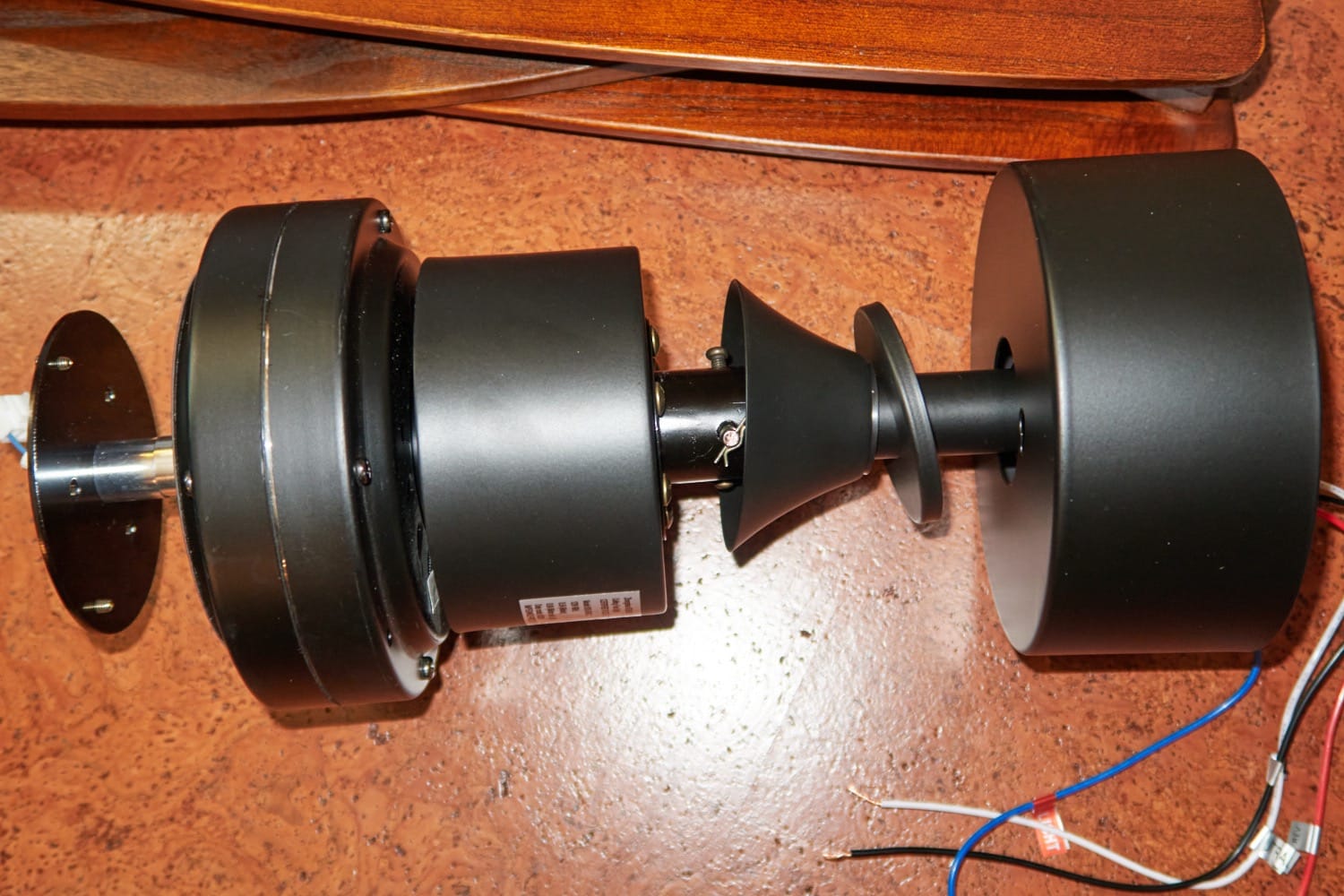
Owners also mention buying more than one for whole-home consistency, and there is a solid two-year warranty behind it. A few buyers do report a faint ticking that develops after about a month, and some had to rethread blade screws before assembly, but neither complaint shows up often enough to worry about.
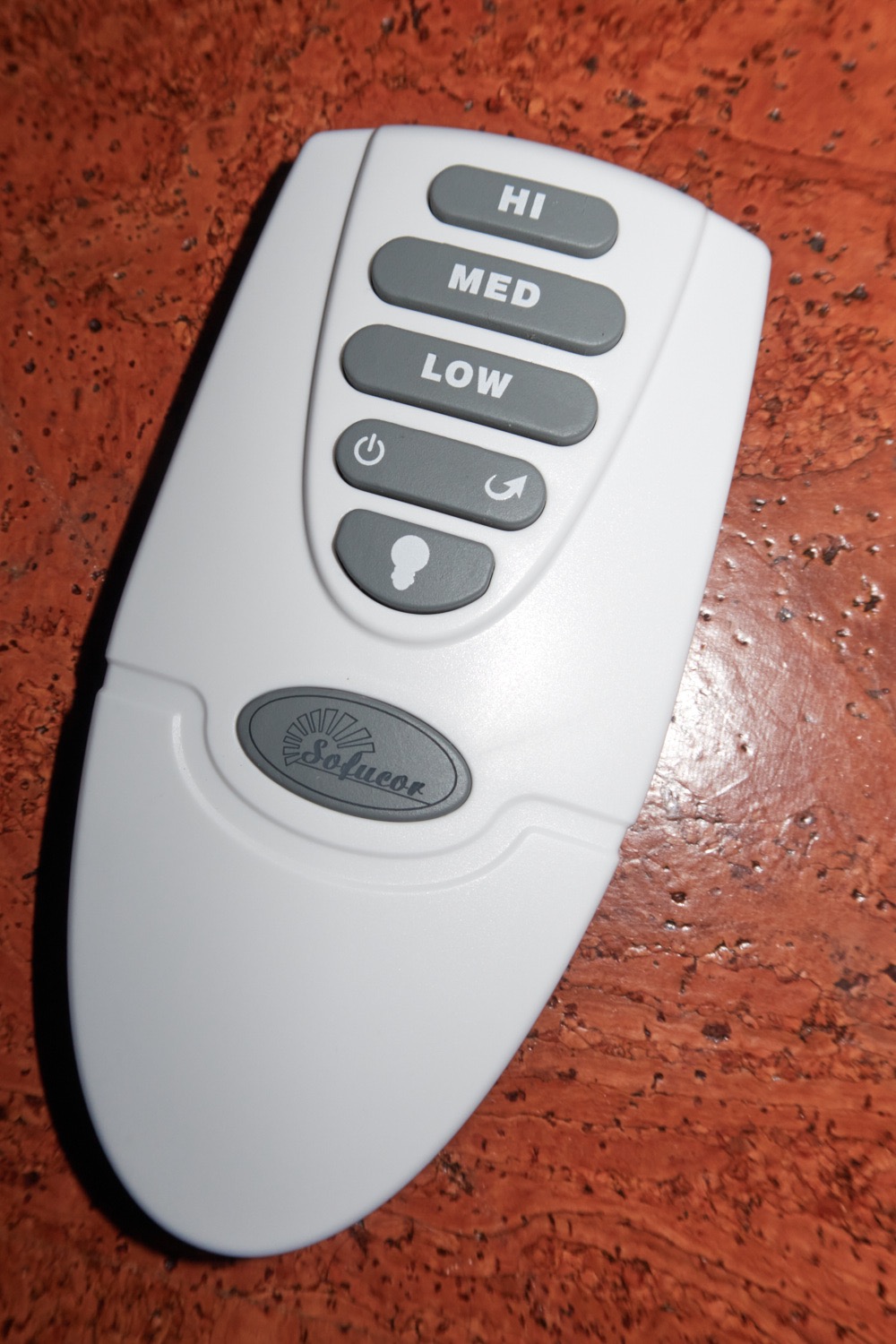
What to check before you buy the Sofucor 60 inch
Measure your room carefully. Sixty inches is at the low end of what counts as a large-room fan. In a 400 square foot space it works well. In a 600 square foot great room with a 12 foot ceiling, a 72 or 84 inch model will move air noticeably faster.
Next, check the ceiling material. The included 10 inch downrod suits standard 9-foot and 10-foot ceilings, and longer rods for vaulted ceilings would need to be sourced separately. This is the one fan in the group where a taller ceiling may push you toward a different product.
Where the Sofucor falls short
The 60-inch span is the limit. It is a strong performer for its size, but it is not the fan for a 700 square foot open concept space. Solid wood also means it needs more care in a humid room than an aluminum fan, and one reviewer noted weaker-than-expected airflow on an exposed terrace.
The printed manual uses very small type and does not match the installation video exactly. Budget an extra ten minutes and follow the video rather than the paper.
4. BOOSANT 84 Inch Extra Large Ceiling Fan – Maximum Airflow for Great Rooms
BOOSANT Ceiling Fans No Light, 84 Inch Extra Large Ceiling Fan with Remote, 3 Wood Blades DC Motor, High CFM,Propeller Outdoor Ceiling Fan for Patios Bedroom,Deep Walnut
84 inch blade span
Up to 11850 CFM
ETL certified DC motor
no light fixture
Pros
- Highest airflow figure in this group at 11850 CFM
- Three solid walnut blades
- Reversible ETL certified DC motor
- Multiple downrod lengths included
- Lifetime motor warranty
Cons
- No light fixture at all
- Heaviest and largest option in the group
- Dimensions field listed incorrectly by the manufacturer
- 84 inch span needs a high clear ceiling
When airflow is the only thing that matters, this is the fan. The BOOSANT 84 inch moves up to 11,850 CFM, which is more than double the output of the 60 and 72 inch models in this roundup. That figure is enough to move air in a genuinely huge great room or a two-story open space where a normal fan simply stalls.
The design is propeller-style, with three solid walnut blades carved from mature timber and professionally balanced before shipping. The balance work shows. Owners report steady operation without the wobble that plagues cheaper large fans, and the ETL certified reversible DC motor runs at 230 RPM on the top setting.
Energy use is a genuine strength. The manufacturer quotes 1 kWh per hour at maximum speed, which works out to about 22 hours of runtime per kilowatt hour at high speed and 238 hours at minimum. There is a two-year parts warranty on remotes, blades and screws, plus a lifetime motor warranty, which is the strongest motor coverage in this group.
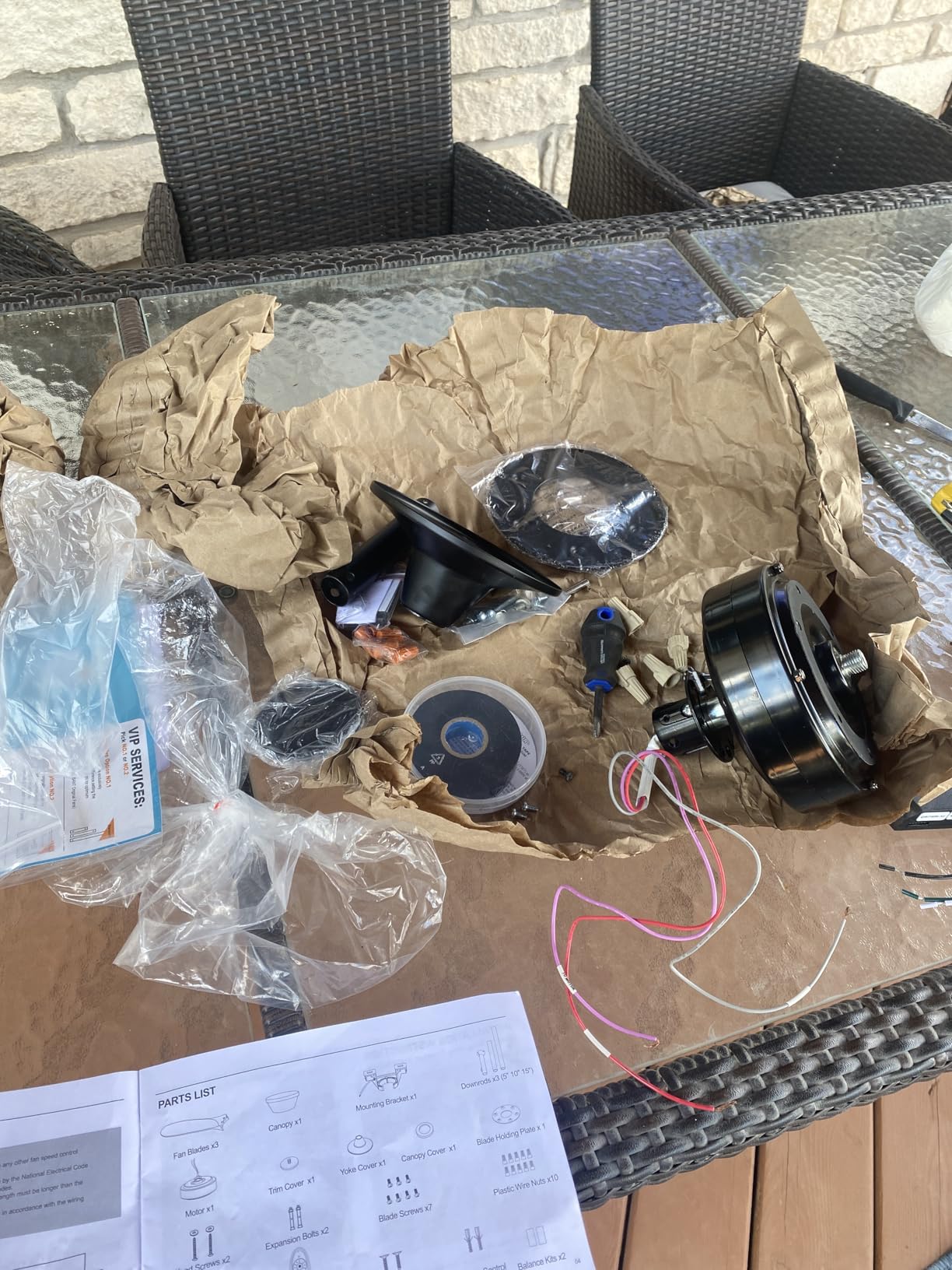
The catch is obvious and worth stating plainly: there is no light. No fixture, no light kit, nothing. If the fan is your only overhead fixture in the room, you are adding a second installation.
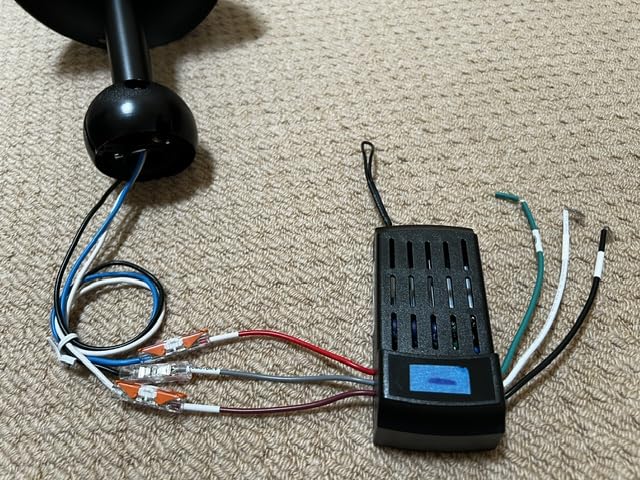
When an 84 inch fan is the right call
Choose 84 inches when the room is 600 square feet or larger, the ceiling is 10 feet or higher, or the space is long and rectangular and a round fan struggles to reach the far end. Overhead in a two-story foyer, a fan this size also does the job of moving a stack of warm air that would otherwise sit at the ceiling.
Check that the mounting point can carry it. This is the heaviest, widest fan in the roundup, and the 84 inch diameter needs clear ceiling height in every direction. Set up a ladder, not a step stool, and have a second person on the bracket.
Where the BOOSANT falls short
No light, and no included bulb option. The listing dimensions are also listed as 1 inch by 1 inch by 1 inch, which is a manufacturer data error, so confirm the drop from the ceiling yourself against the downrod lengths included.
Finally, the one-star share reflects a small number of motor and remote failures inside the first year. The lifetime motor warranty is the mitigation, and it is a meaningful one, but read the terms before you rely on it.
5. Conciseer 72 Inch Semi-Flush Ceiling Fan – 8240 CFM in a Thin Body
Modern Ceiling Fans with Lights, 72 Inch Ceiling Fan with Light and Remote, Bedroom Living Room Library Cafe Outdoor/Industrial,24W 6CCT Dimmable, 8 Blades 6 Speed Reversible Quiet DC Motor, Black
72 inch span
8240 CFM airflow
Semi-flush body
24W 6 CCT dimmable LED
Pros
- 8240 CFM airflow from a 72 inch body
- Thin semi-flush profile suits low ceilings
- Six-speed reversible DC motor
- Remote has mute and natural wind mode
- Good airflow even on the lowest setting
Cons
- LED output is dim and projects poorly
- Remote is the only control
- No memory function for settings
- Listed noise level of 45 dB is the highest here
The Conciseer solves a specific problem: airflow in a room where you do not want a hanging fan. It is a semi-flush design with a super thin body, and the listing dimensions of 8 inches deep mean it sits close to the ceiling. In a modern minimal room with a 9-foot ceiling, that low profile looks considerably cleaner than a deep downrod model.
Airflow is the headline. 8,240 CFM from a 72 inch body puts it in the upper tier of this group, and reviewers specifically note that even the lowest of the six speeds moves real air. That is exactly what you want in a large living room that also serves as a work or conversation space.
The remote is unusually well thought out. It controls the light and the fan separately, runs six speeds, includes a timer, a one-click mute function, a natural wind simulation and reverse. Owners report durable motors and straightforward installation, and several reviewers specifically praise it for vaulted ceilings.
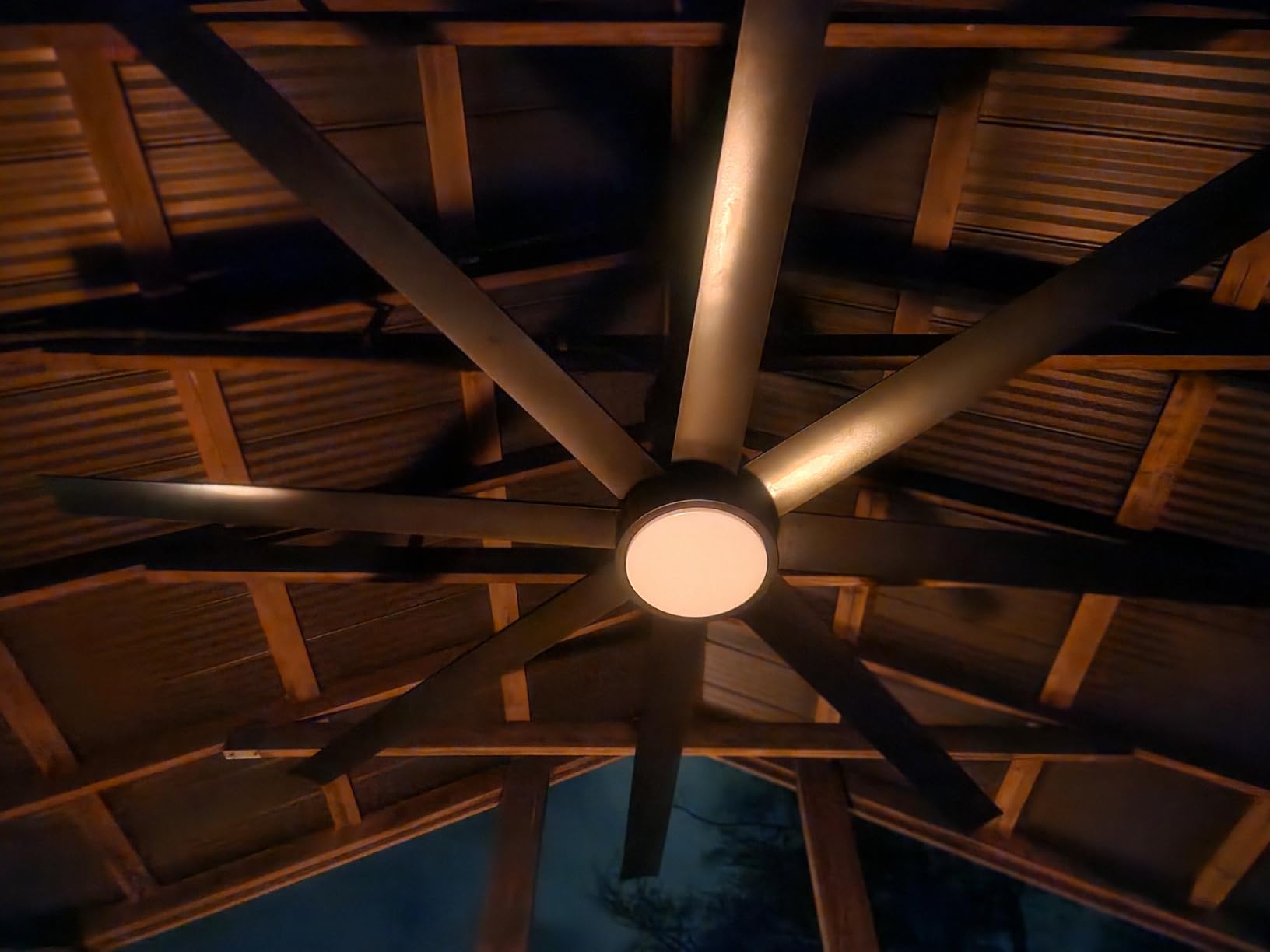
Two things work against it. The light is genuinely dim, and reviewers describe the output as projecting poorly enough that parts of the room stay shadowed. The listed noise level of 45 dB is also the highest figure in this roundup, which is a noticeable step up from the 25 to 35 dB range most of the field sits in.
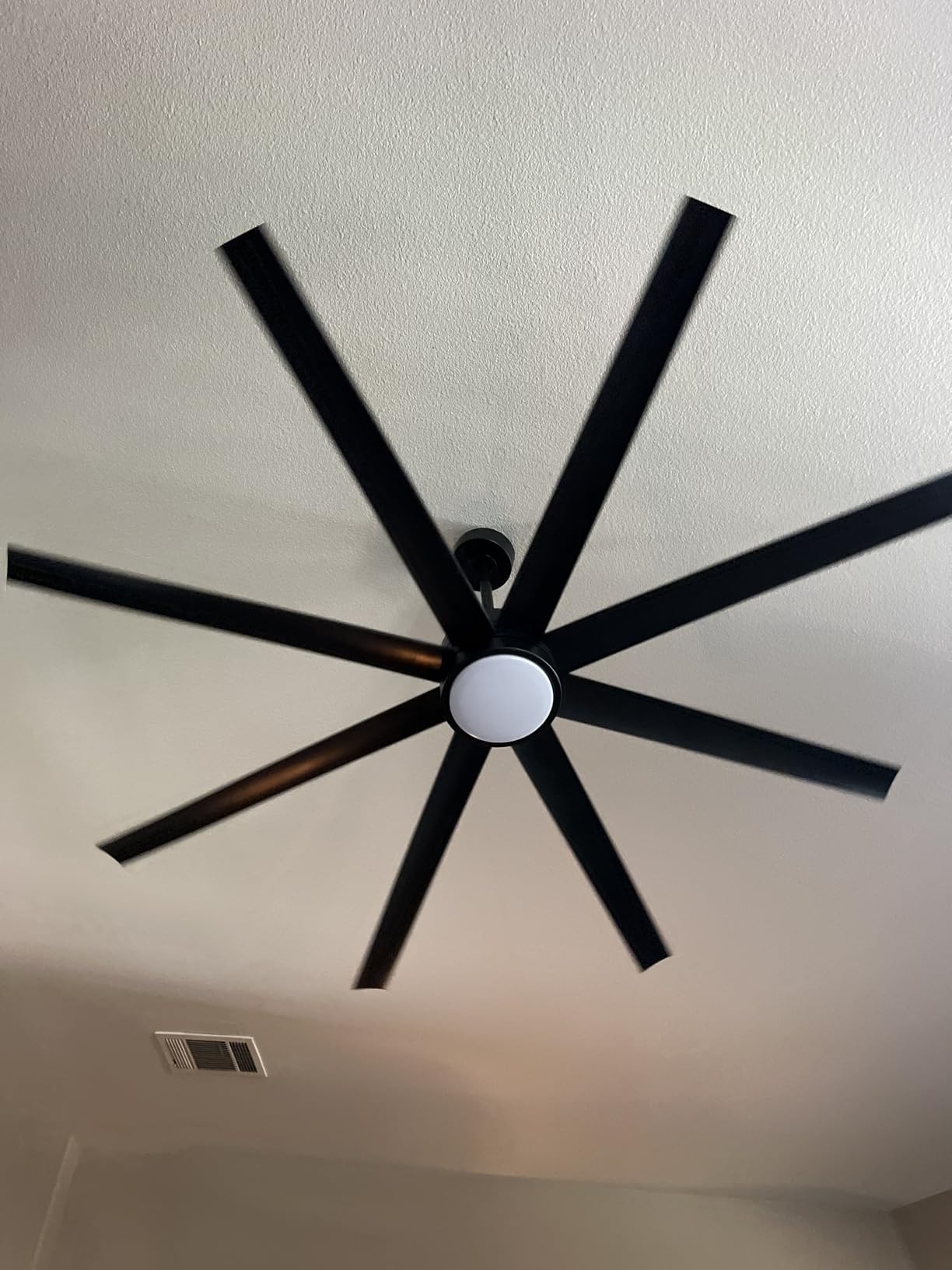
What to check before you buy the Conciseer 72 inch
Look at your ceiling height first. Semi-flush mounts are built for 9-foot ceilings and lower. On a 10-foot vaulted ceiling the body will sit noticeably closer to the ceiling than you may want, so a downrod model usually looks better there.
Then test the light expectations against your evening routine. With a dim 24W LED, this works as a circulation fan with a light accent. If the room has no other overhead source, plan on adding one.
Where the Conciseer falls short
At 45 dB it is the loudest fan in this group, and in a large room with hard surfaces you will hear it on the upper speeds. If the living room is next to a bedroom or you are sensitive to motor noise, this is not the one.
There is no memory function, so the light and speed reset every time. The remote is also the only control, and several owners have noted that the direction setting on the remote reads reversed relative to the actual rotation.
6. Amico 72 Inch Ceiling Fan – Best Lighting and Memory Controls
Amico 72 Inch Ceiling Fans with Lights and Remote, Black Large Ceiling Fan
72 inch span
Up to 7138 CFM
35 dB reversible DC motor
Dimmable LED with memory
Pros
- Memory function recalls light and fan settings
- Remote can be wall mounted as a switch
- 35 dB motor with three airflow modes
- Dimmable 10 to 100 percent light with 3 CCT
- Two-year warranty and 24 hour support
Cons
- Not water resistant for direct rain
- Engineered wood rather than solid wood
- Some variants list inconsistent airflow figures
- No smart home or app control
The Amico has the highest average rating in this group at 4.5 stars, with 80 percent of reviews at five stars. What separates it from the other 72 inch models is control, not airflow. It is the only fan here with a full memory function that restores your light brightness, color temperature and fan gear after a power cut.
That single feature changes daily use. Without memory, a large living room fan means getting up to the remote every morning to reset the light to what you had last night. With memory, you set it once. The remote also includes a wall-mount bracket so it can function like a wall switch, which is the setup most households end up wanting after the first month.
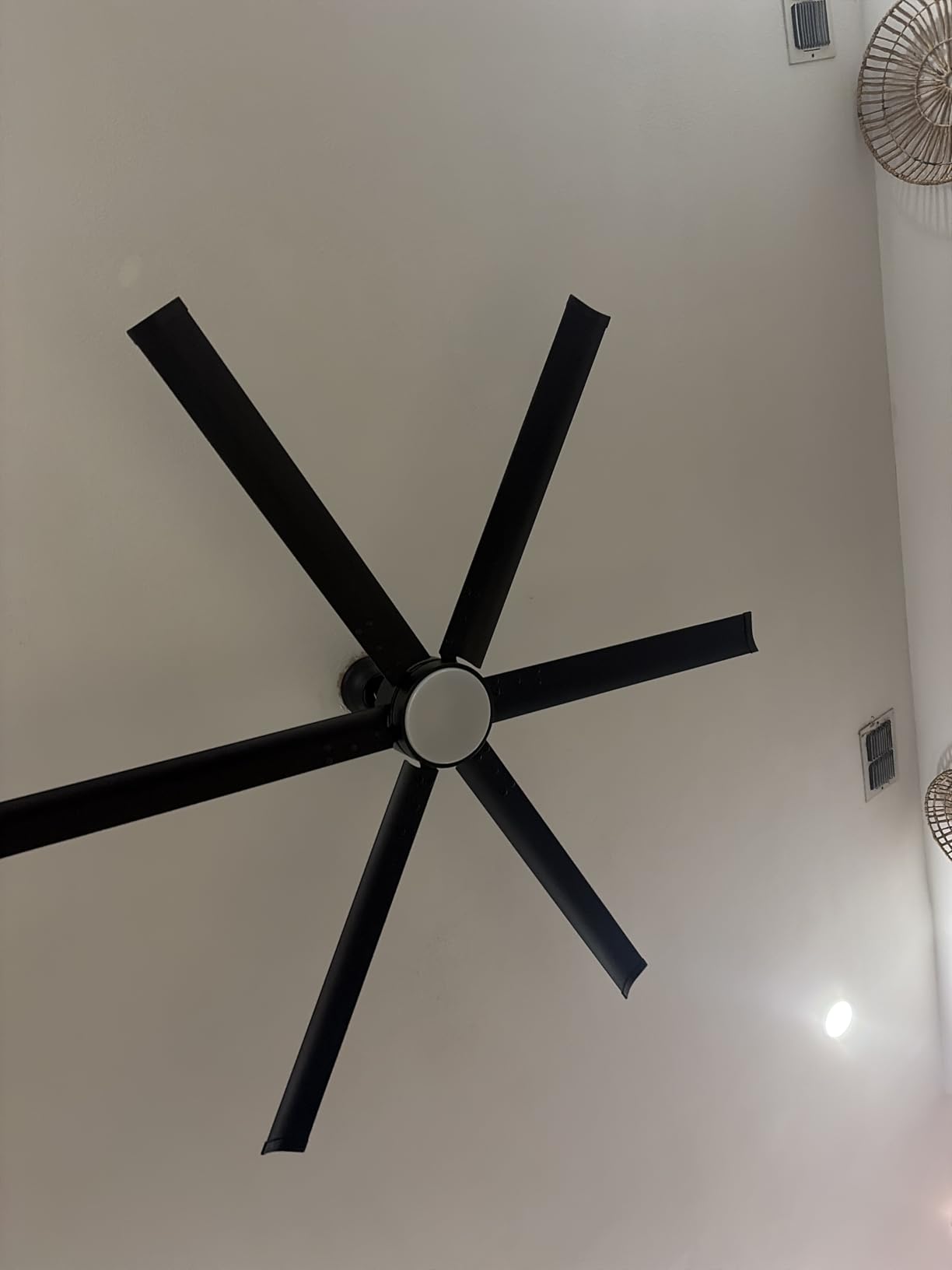
Performance is solid. Up to 7,138 CFM from eight dual-tone black and walnut blades, a reversible DC motor at 35 dB, and three airflow modes labeled Comfort, Natural and Strong. The light dims from 10 to 100 percent with 3000K, 4000K and 6000K options, and the remote carries a 1, 2 or 4 hour sleep timer.
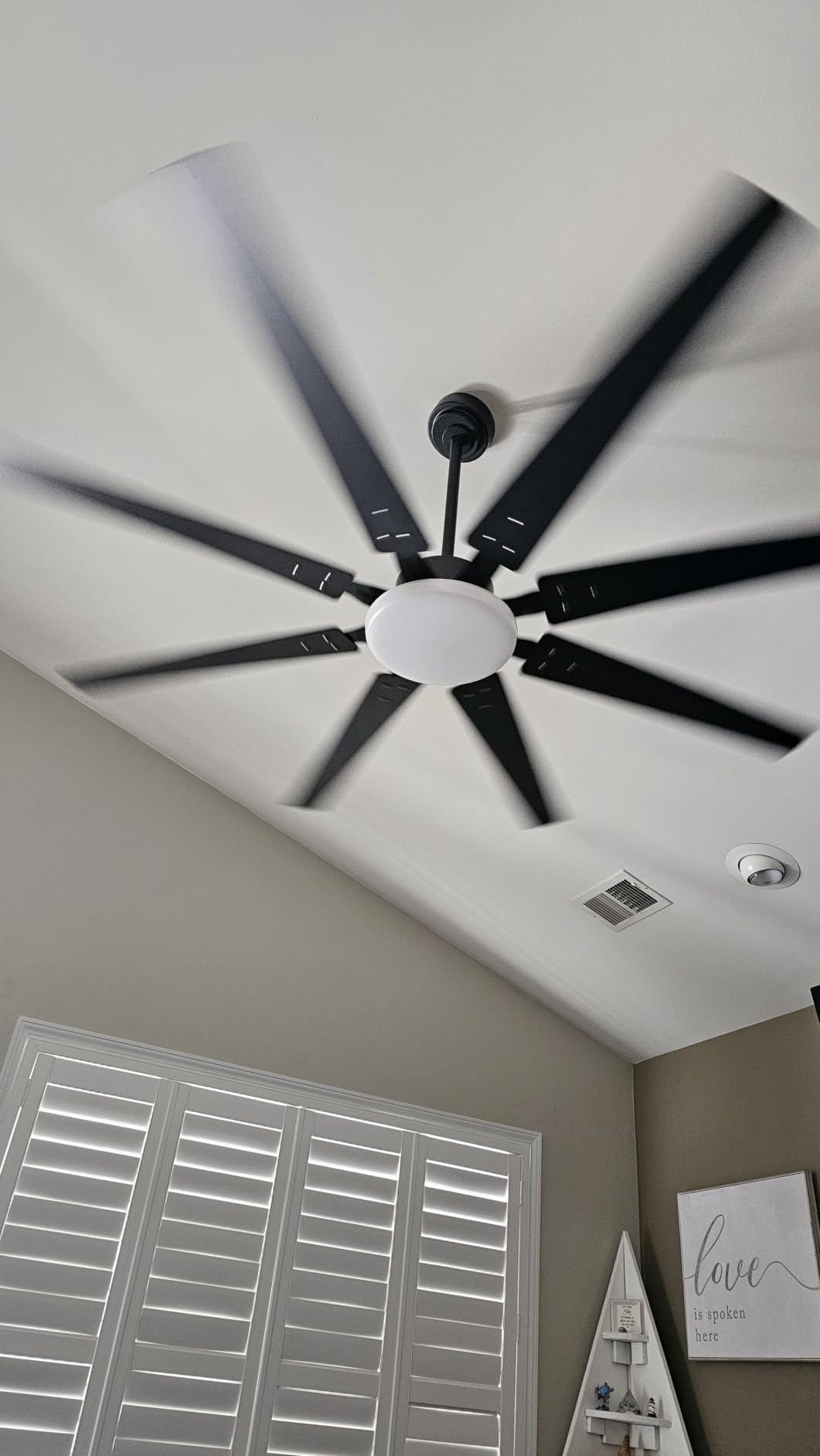
One number to flag: some variants of this listing show 7,024 CFM and others show 7,138. Treat the figure as roughly 7,100 CFM rather than an exact promise.
What to check before you buy the Amico 72 inch
Check where the fan will go. It is listed for indoor and outdoor use but explicitly not water resistant, so it belongs under a covered patio or porch, never in open rain. For a fully exposed outdoor ceiling, look at our outdoor ceiling fan guide first.
Then check your blade material expectations. These are engineered wood, not solid wood. They will not have the same grain depth as the walnut models, and in a very dry heated room they may check slightly over years.
Where the Amico falls short
No app, no Wi-Fi and no voice assistant. In a large living room the remote is the only interface, which is fine for most homes but frustrating if the rest of your lighting is smart.
The airflow figure varies between listings, which is a small sign that specifications on this model are not tightly managed. The blades are also lighter than solid wood, so the fan is fine but does not have the same inertia at low speeds.
7. VOLISUN 72 Inch Ceiling Fan – Dual-Finish Blades and Three Downrods
VOLISUN Large Ceiling Fans with Lights, 72 inch Ceiling Fan with Light and Remote, Indoor/Outdoor Black Ceiling Fans for Patio, Living Room, 6 Speed Reversible Quiet, 3 CCT, Dual Finish 8 Blades
72 inch span
4/8/20 inch downrods
6 reversible speeds
1500 lumen 3 CCT LED
Pros
- Three downrods cover ceilings from 15 to 33 inches
- Memory function recalls light settings
- Dual-side blades read as modern or farmhouse
- Six speeds with forward and reverse
- Two-year service coverage
Cons
- Smallest review base at 155 reviews
- Light output of 1500 lumens is the lowest here
- Remote batteries not included
- Not water resistant despite outdoor positioning
The VOLISUN stands out for two practical reasons. First, the dual-side blades give you two looks from one fan: flip them for a modern profile or reverse them for a farmhouse one. In a large room that is a real advantage, because blade presence is the single biggest style decision a ceiling fan makes.
Second, the included downrods. You get 4 inch, 8 inch and 20 inch options, which cover ceilings from 15 to 33 inches above the mounting surface. That is close to the widest range in this roundup and it means a vaulted ceiling rarely requires a separate purchase.
The rest is competent. Six wind speeds with forward and reverse, a memory function that recalls your light settings, a 1 or 2 hour timer, and a 1500-lumen dimmable LED with three color temperatures at 3000K. The body is 72 inches across and 16 inches deep at 22.4 pounds.
Be aware of the track record. With 155 reviews, this is the least proven fan in the group. The rating is a solid 4.4 with 71 percent five-star, but a smaller review base means less information about how the motor and remote hold up over five years. For a fan you intend to keep for a decade, that is a fair thing to weigh.
What to check before you buy the VOLISUN 72 inch
Buy AAA batteries before the install. The remote ships without them, which is an easy fix but an easy one to forget on a ladder. The mounting bracket is also a standard wall switch position, so confirm you have a junction box there rather than a bare ceiling box.
Decide how you will use the light. At 1500 lumens it is dimmer than the Sofucor and Fanbulous packages in this roundup, so treat it as secondary lighting rather than the room’s main source.
Where the VOLISUN falls short
The lighting is the weakest of the light-equipped fans here, and the explicit not-water-resistant rating means the outdoor positioning on the box is aspirational at best. For a covered but damp location, check a model with a stated damp rating instead.
It also has no wall control and no app, and the sales rank in the Ceiling Fans category is the lowest of the ten, which usually tracks lower listing visibility rather than lower quality. Budget a little more research time here than on the better-reviewed picks.
8. Minislak 72 Inch Industrial Ceiling Fan – Best for Humid Spaces
72 In Industrial Large Celing Fan No Light,8 Aluminum Blades,Matte Black
72 inch span
Up to 9466.8 CFM
8 aluminum blades
250 CFM per watt efficiency
Pros
- Aluminum blades resist humidity better than wood
- Very high airflow for a 72 inch body
- Nearly silent below 35 dB
- Memory restores speed and direction after a power cut
- Natural wind and sleep modes
- FCC DOE and cETLus certified
Cons
- Some units report AFCI or GFCI breaker tripping
- Washers between nuts and blades missing in some units
- Slow to respond to remote commands
- Faint electrical noise unless the wall switch is used
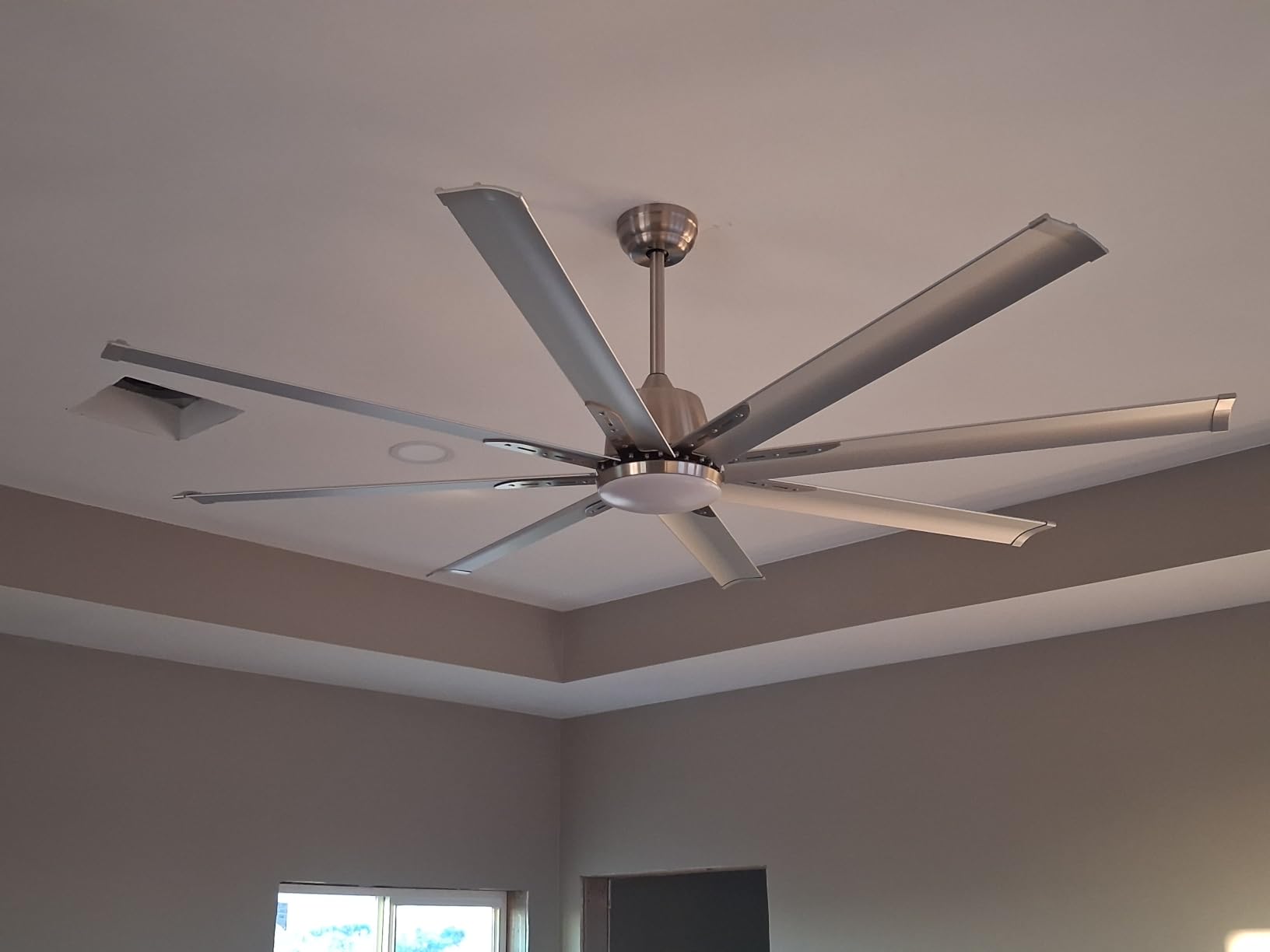
This is the fan to look at if your living room connects to a covered patio, a sunroom, a pool house or anywhere with real humidity. The eight aluminum blades are treated with an electrolytic process that forms a dense protective layer against moisture, and aluminum does not warp, swell or absorb the way wood does. Over ten years in a damp space, that difference is substantial.
Airflow is the second reason. The manufacturer quotes up to 9,466.8 CFM at 250 CFM per watt efficiency, which is the highest efficiency figure in this group. The brushless DC motor is reversible and rated under 35 dB at up to 300 RPM. A 46-watt draw at that output is efficient by any measure.
The remote is the most feature-dense here: six speeds, natural wind mode on a 40-second cycle, a sleep mode that steps down from 5 to 1, a 1, 4 or 8 hour timer, and memory that restores your last speed and rotation direction after power returns. It is also wall-mountable.
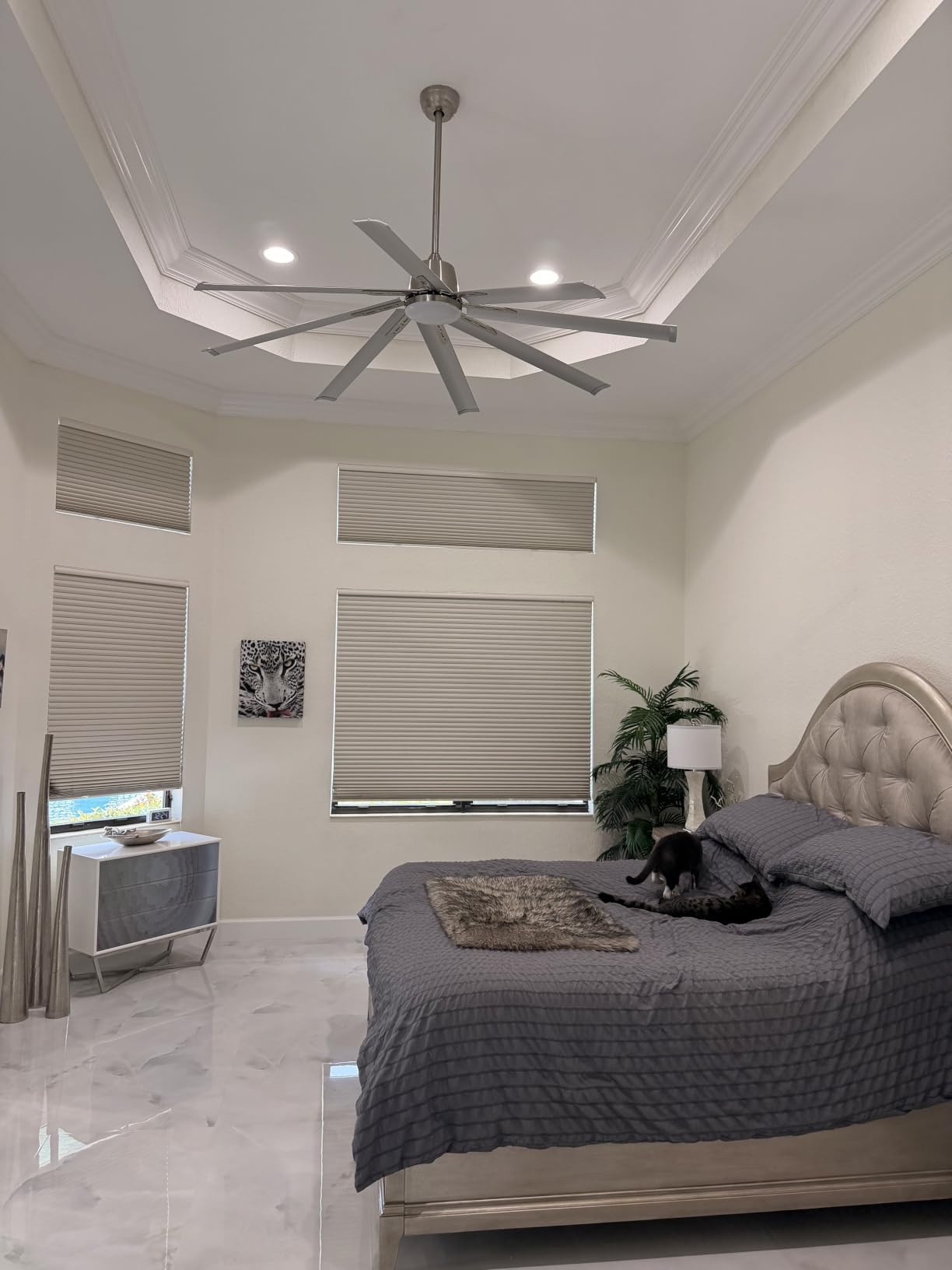
There are two real drawbacks. The one-star share is 11 percent, the highest in this roundup, driven by AFCI or GFCI nuisance breaker tripping when changing speed and by missing washers between the steel nuts and the blades. Customer service has resolved those with replacements according to reviews. There is also a faint electrical noise and a small LED glow that persist unless you use the wall switch instead of the remote.
What to check before you buy the Minislak 72 inch
Check your breaker type. If your circuit is on an AFCI or GFCI breaker and you are sensitive to nuisance tripping, this is worth confirming with the manufacturer first. Several buyers in this category report it and several report it resolving after a firmware or remote update.
Inspect the hardware on arrival. The missing washers are a packing issue rather than a design flaw, but you should open the box on the floor, not on a ladder.
Where the Minislak falls short
Industrial aluminum is a look, not a neutral. In a traditional or coastal living room the matte black blades read harder than wood would. And the fan responds to remote commands slowly, which is mildly annoying in a room where several people share controls.
There is no light kit on this listing either, so a dark ceiling with no other fixture is a real possibility. Plan on adding lighting separately.
9. Zronon 72 Inch Ceiling Fan – Quietest Motor at 25 dB
Zronon 72 Inch Ceiling Fan No Light, Wood Outdoor Ceiling Fans for Patios Living Room Gazebo Porch, Indoor Modern Exterior Extra Large Ceiling Fan without Lights with Downrod(Walnut)
72 inch span
25 dB DC motor
7230 CFM airflow
3 solid wood blades
Pros
- Lowest noise figure in this group at 25 dB
- Highest average rating at 4.6 stars
- Three solid natural wood blades
- Reviewers report no wobble on sloped ceilings
- Light at 16 pounds
- Includes 5/10/15 inch downrods
Cons
- No light fixture included
- One reviewer reported a shimmy at higher speeds
- Instructions unclear about removing the socket
- May need a reinforcing brace on stucco or thin ceilings
The Zronon has the highest average rating in this roundup at 4.6 stars, with 81 percent five-star reviews and only 4 percent one-star. It also carries the lowest noise figure we saw: 25 dB, which is below every other fan on this list. If your large living room shares a wall with a bedroom or a home office, that number is the whole argument.
The construction supports the rating. Three solid natural wood blades measuring 36 inches each, with no synthetic blade material. The manufacturer calls out the absence of blade off-gassing, which matters if anyone in the house is sensitive. Owners report no wobble even on sloped ceilings, which is unusual for a fan this size.
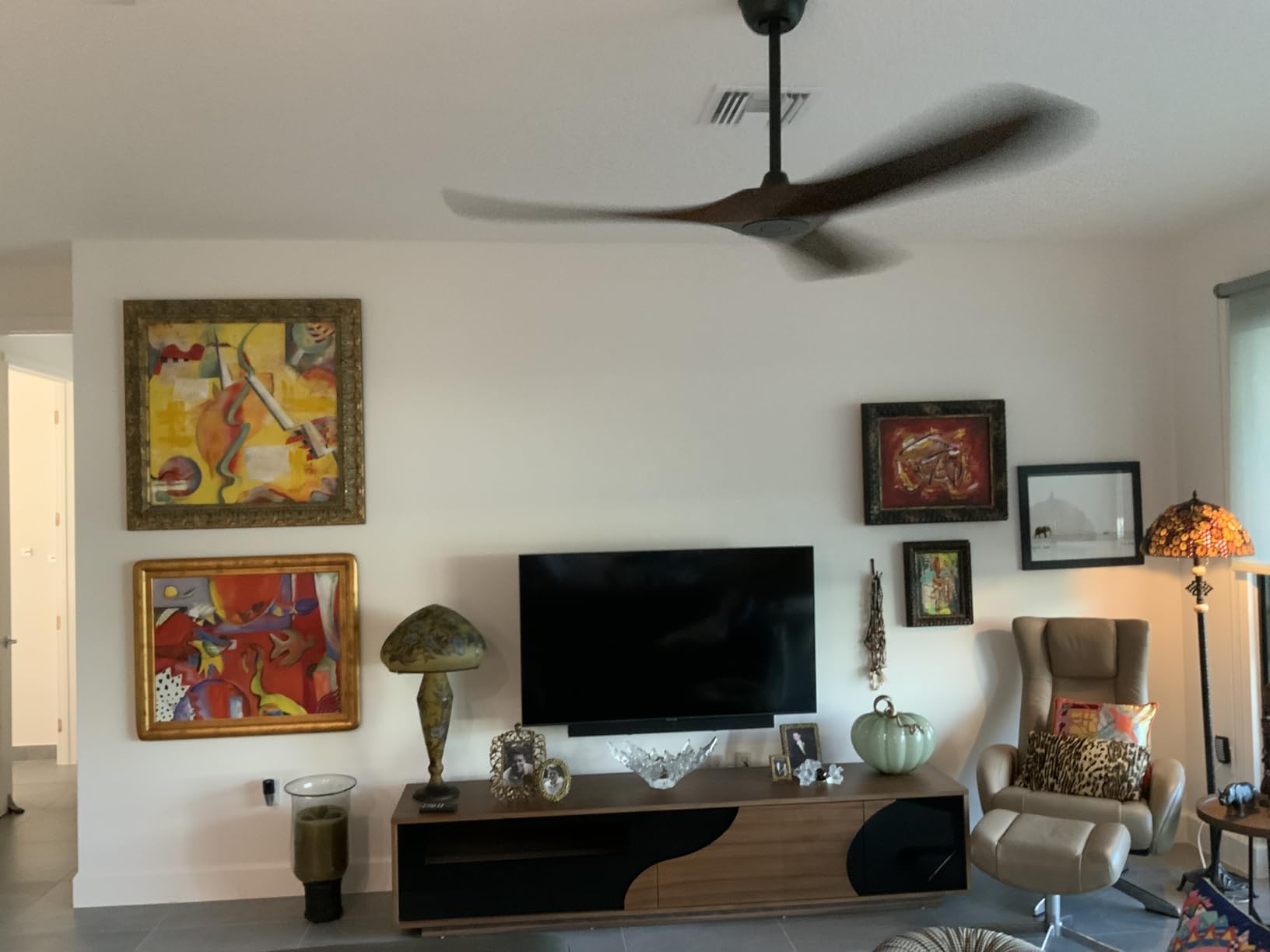
Airflow is a respectable 7,230 CFM across six speeds, with strong output even at the lowest setting. The motor runs 50 watts, and the DC design is quoted at 75 percent better efficiency than an AC motor with A-class energy consumption. Reversible direction handles winter updraft. Most functional parts ship pre-assembled, which is why owners call the install simple.
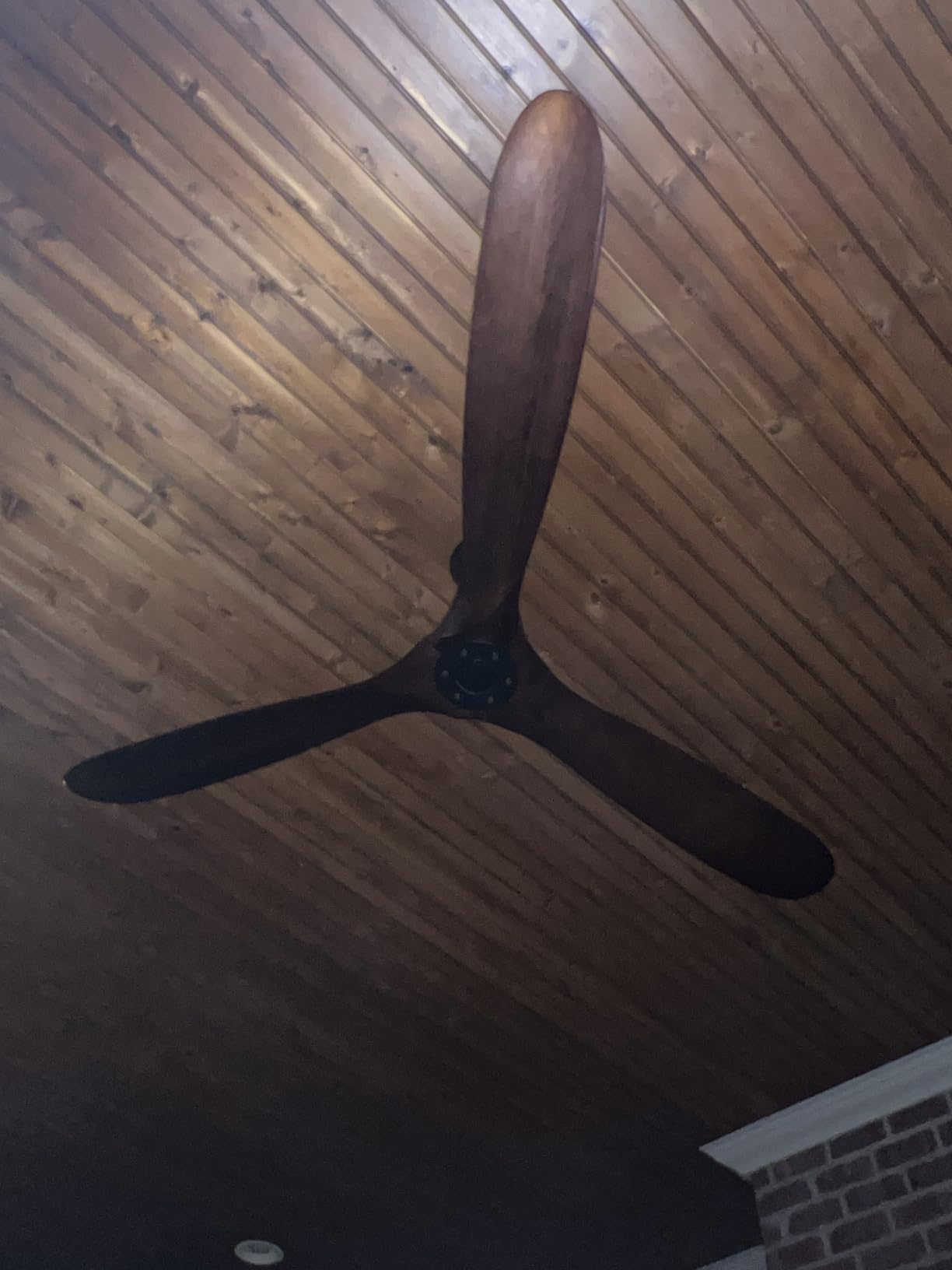
Downrods of 5, 10 and 15 inches are included, and the fan is water resistant for patios, porches and gazebos. It comes with a two-year warranty.
What to check before you buy the Zronon 72 inch
Check the ceiling substrate. A reviewer mounting on stucco or a thin ceiling needed a reinforcing brace. If your joists are light or your ceiling material is unusual, plan for a fan brace kit in the same box.
Also plan for lighting. There is no light kit here, and the design is light-free by intent, which does have one quiet benefit: no light source to attract flying insects on a patio or porch.
Where the Zronon falls short
The lack of a light is the dealbreaker for some rooms. If you want one fixture to do both jobs, this is not it.
One reviewer reported a slight shimmy at higher speeds that needed balancing, and the instructions were unclear about removing the socket at the end of the down pole. With 284 reviews the long-term picture is thinner than for the heavily reviewed picks, so pair it with a balancing kit if you are installing it yourself.
10. Fanbulous 60 Inch Ceiling Fan with Light – Strong Airflow for 400 Square Feet
Fanbulous 60 Inch Ceiling Fans with Light and Remote, Black
60 inch span
24W 2000 lumen LED
6 speed quiet DC motor
multiple downrod lengths
Pros
- 4.5 star average with 610 reviews
- Moves substantial air even on low speeds
- Quiet DC motor at the top setting
- Multiple downrods for beamed and high ceilings
- Remote includes a wall-mount bracket
Cons
- No dimming despite the 3 CCT selector
- Color temperature resets on each on/off cycle
- Some remotes have failed for buyers
- Indoor use only
The Fanbulous is the one to buy when your large living room is on the smaller side. At 400 square feet, a 60 inch fan with a DC motor is genuinely sufficient, and this one pairs that size with a 24W LED rated at 2000 lumens with three color temperatures. That light is bright enough to be a real part of the room rather than an accent.
Owners consistently report that the fan moves a lot of air even at low settings, and most never take it above speed 2. The motor is quiet at the top speed, which matters more in a 60 inch body since the blades sit closer to ear level.
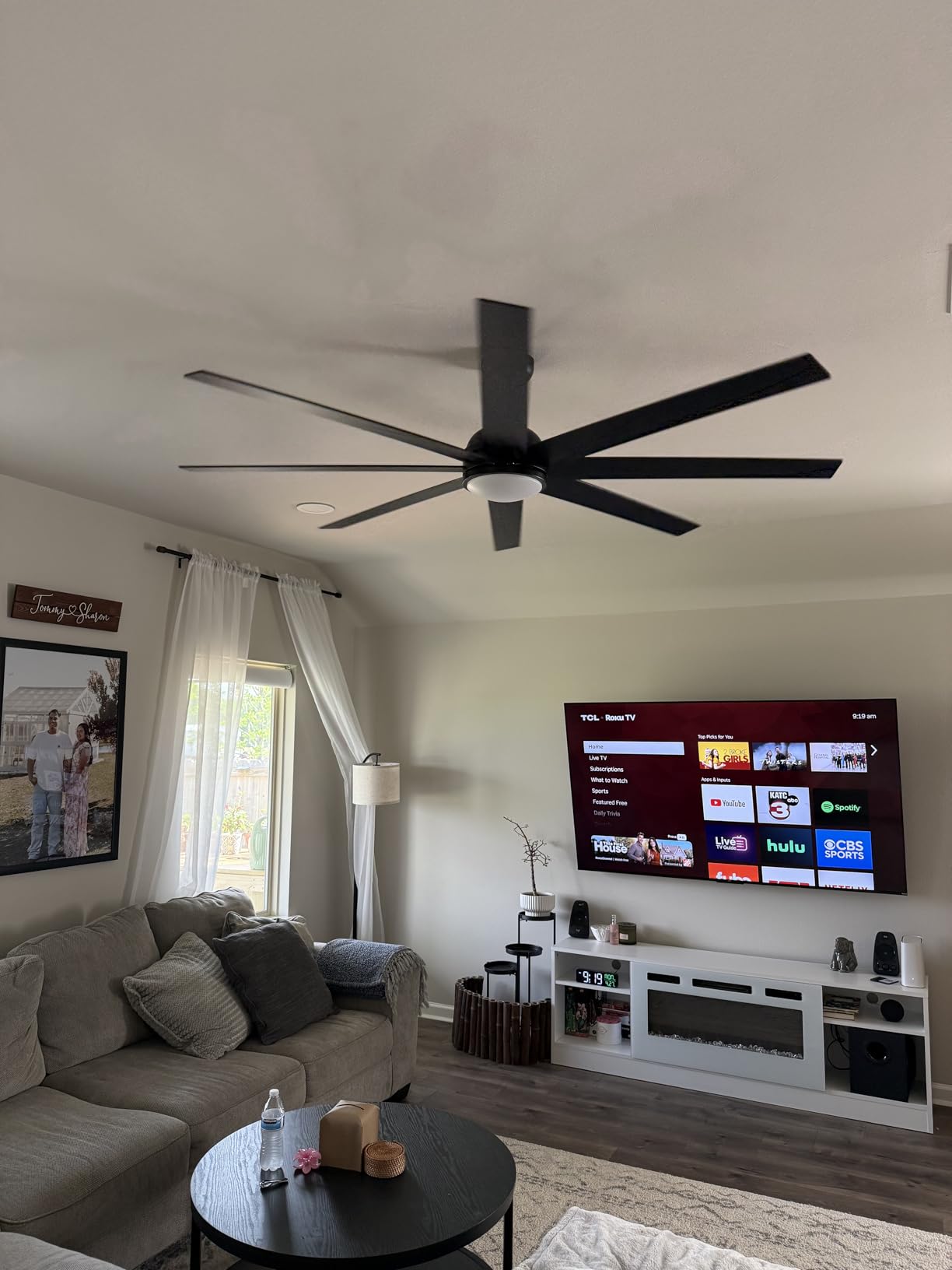
Remotely, you get six speeds, reversible direction, 1, 4 and 8 hour timers, a mute key and a wall-mount holder for the remote. Two downrod lengths are listed for different ceiling heights, and the blades are dual-tone black and wood-grain so the fan works in a transitional room. Two-year customer support is included.
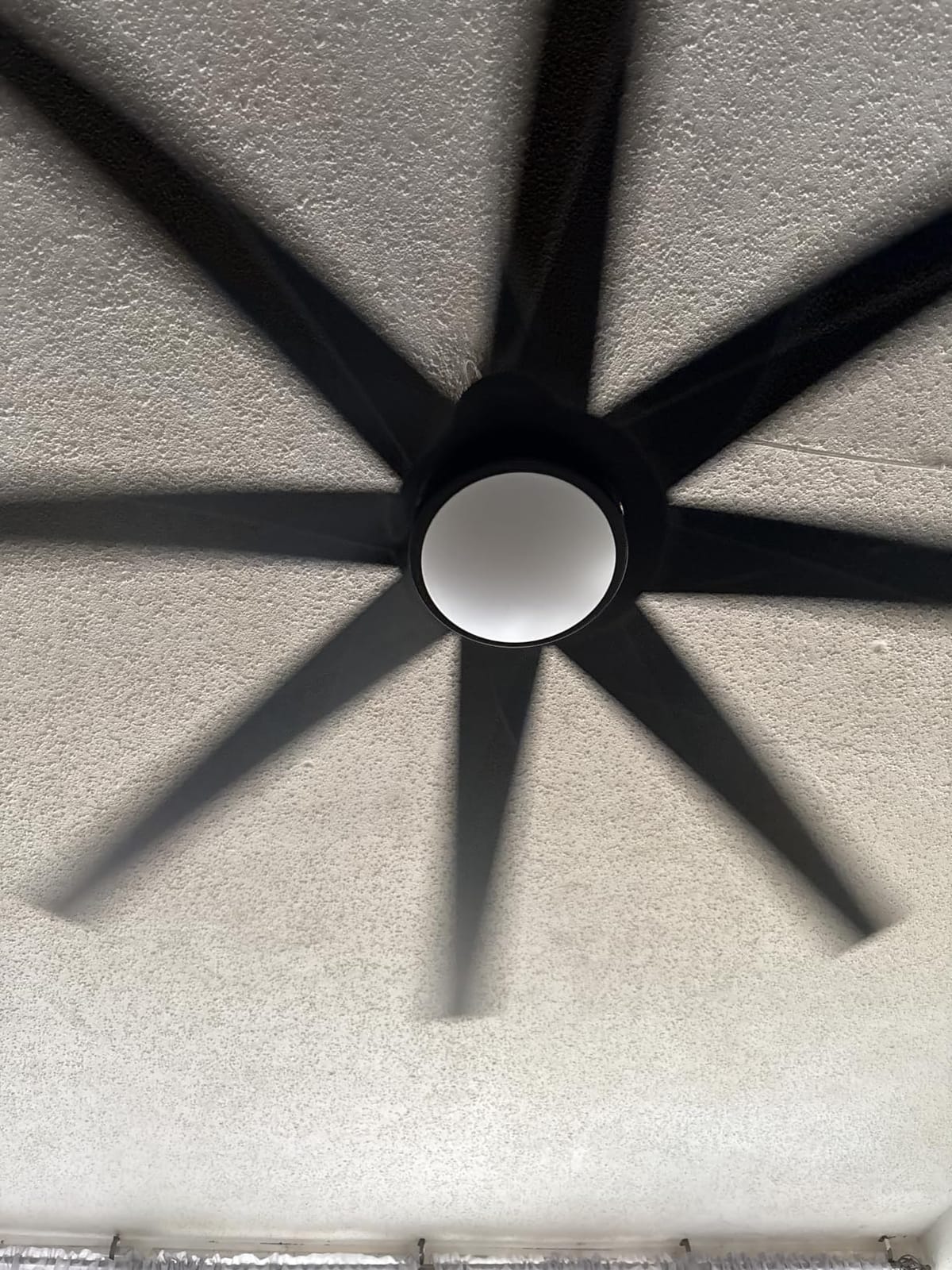
The light is where it falls down. There is a 3 CCT selector but no dimming, and owners report the color temperature shifting on each on and off cycle, which is genuinely annoying when you have set it once and like it. Remotes are also the most common failure point, with several buyers reporting units that stopped responding.
What to check before you buy the Fanbulous 60 inch
Measure the room before you commit. If the space is under 350 square feet this is generous, and a 52 inch fan would serve. Between 400 and 500 square feet it is well matched. Above 500 square feet with a high ceiling, step up to a 72 inch model.
Check your light expectations. A 2000-lumen output is good, but the lack of dimming means you have three fixed brightness and color settings rather than a continuous range. If you want to dim a living room for evening use, this is not the fan for that job.
Where the Fanbulous falls short
Indoor use only, so it stays inside. The remote reliability reports are the other concern, and a wall switch is a sensible backup to think about before installing.
It is also the smallest fan here at 60 inches, so in a vaulted great room the airflow will feel modest even with a good motor behind it. Check our pedestal fan picks for large rooms if you need a portable second layer of air movement.
How to Size a Ceiling Fan for a Large Living Room
Start with the longest dimension of the room, not the square footage alone. A 12 by 24 foot great room and a 17 by 17 foot square room have similar areas but very different fan requirements, because a round fan covers a circle. For a long rectangular room, two smaller fans placed along the length usually outperform one very large fan, which is the multi-fan question almost no competitor guide addresses.
For a standard 9-foot ceiling, the widely used rule is 4 inches of blade span for every foot of the smallest room dimension, and no more than 15 inches of span for a 225 square foot room under 8 foot ceilings. Once you are past 400 square feet, that formula puts you firmly in 60, 72 and 84 inch territory.
On the question of whether a 52 inch fan is too big for a 12 by 12 room: it is not too big, but it is underpowered for the space. A 12 by 12 room is 144 square feet, where a 52 inch fan is comfortable in summer and marginal in July. If the ceiling is high, add a second 52 inch fan rather than upsizing past 60 inches, because airflow at height depends more on CFM and drop length than on span alone.
As a floor for large rooms, target 75 to 100 CFM per square foot. A 500 square foot great room therefore wants roughly 37,500 to 50,000 CFM of total capacity, which is where running two 72 inch fans in the 7,000 CFM class starts to make more sense than one 84 inch propeller fan.
Ceiling Height, Downrods and Vaulted Ceilings
Fan height does more for circulation than most buyers expect. The same fan dropped six inches lower moves measurably better air, because the blade plane sits closer to the people who need to feel the breeze. The standard guidance is to hang the blades between 7 and 9 feet above the floor on a normal ceiling.
That is where downrods matter. For a 9-foot ceiling you generally want a 4 to 6 inch rod, a 10-foot ceiling takes 10 to 12 inches, and vaulted ceilings need 12 to 24 inches or more. Three of the fans in this roundup include 20 inch or 24 inch rods, which is the difference between a one-afternoon install and a second trip to the hardware store.
For sloped ceilings, the rule is a ceiling angle of no more than 12 degrees unless the manufacturer supplies an angled bracket. Among these picks, the Zronon has the best reported track record on sloped mounts, with owners citing stable operation. For steeper pitches, confirm the bracket is included before you buy.
One practical tip people miss: plan how you will reach the reverse switch in January. On a fan mounted at 14 feet, a pull-chain reversal switch means a ladder. Every fan here except the Fanbulous reverses from the remote, which solves the problem entirely.
DC Motors, AC Motors and Noise Levels
All ten fans in this roundup use DC or brushless DC motors. That is worth pausing on, because the traditional advice about large fans favoring AC motors no longer applies. A DC motor gives you six speeds instead of three, a much wider low-end range, a lighter housing and dramatically better efficiency.
The efficiency claims on these listings range from 65 percent better than AC motors on the ZMISHIBO to 75 percent better on the Sofucor, BOOSANT, Minislak and Zronon. Treat those as marketing ranges, but the direction is right. The Minislak publishes the cleanest figure: 250 CFM per watt.
Noise is the real differentiator in a large room, and the published figures here run from 25 dB to 45 dB. That is a wide gap, and it is not a marketing artifact. The Zronon at 25 dB is the quietest listed figure in this group, the POCHFAN and Sofucor come in under 30 dB, most others sit at 35 dB, and the Conciseer is listed at 45 dB, which you will hear on the top speeds in a room with hard floors.
Two failure modes to know about. Motor whine is usually a bearing or a slightly out-of-balance blade, and a balancing kit fixes most cases. Clicking at one specific speed is more often a reversed or loose blade screw.
Lighting, Controls and Smart Home Options
Light output in this group ranges from 1500 lumens on the VOLISUN to 2000 lumens on the Sofucor and Fanbulous. For a large living room that needs primary lighting, 2000 lumens is the practical target. A ceiling fan light is a diffuse source, so it needs more lumens than you would guess to actually light a seating area.
Color temperature is the standard three-way setup everywhere: 3000K warm, 4000K neutral and 6000K or 6500K cool. Dimmability is where the fans differ. The Sofucor, POCHFAN, Amico, Minislak, Conciseer and VOLISUN all dim. The Fanbulous has a 3 CCT selector but no dimming at all, and owners report the color temperature resetting on each power cycle.
Controls fall into three groups here. Six have a memory function that restores your last settings, which is the single most valuable feature after airflow. Five of those also include a wall-mount bracket so the remote can live on the wall as a switch. The Conciseer lacks memory entirely.
On smart home integration, be realistic. None of these ten fans has Wi-Fi, app control or voice assistant support. If voice control matters to you, the practical approach is to add a smart switch or a smart bulb in the fan’s light and drive the fan itself from a wall control, rather than hunting for a connected extra-large fan in this class.
Dry, Damp and Wet Ratings for Covered Outdoor Spaces
A large living room rarely exists alone, and many are open to a covered patio, a sunroom or a porch. The rating language matters there. Dry rated means indoor only. Damp rated means protected from moisture but not direct rain. Wet rated means full exposure.
Among these picks, the honest picture is mixed. The POCHFAN, Sofucor, VOLISUN and Amico are all listed for indoor and outdoor use, but the Amico and the VOLISUN both carry explicit not-water-resistant notes, and the ZMISHIBO is listed for indoor use only despite patio language in its title. The Minislak uses aluminum blades with a moisture-resistant coating, and the Zronon is stated as water resistant for patios, porches and gazebos.
Our rule for a covered exterior ceiling: if the fan is under a roof and out of direct rain, the Zronon and the Minislak are the two we would consider. For anything fully exposed, start with our outdoor ceiling fan roundup and choose a model with a stated wet rating.
For purely indoor cooling alternatives that need no wiring at all, our tower fan picks for living rooms are worth a look for bedrooms and secondary spaces.
One Big Fan or Two Fans in an Open-Concept Room
Past about 600 square feet, one fan stops being the right answer in a lot of homes. This is the single most common question on ceiling fan forums and almost no roundup guide addresses it directly. The short answer is that two medium-to-large fans usually beat one enormous fan in a long or L-shaped open plan.
The reason is geometric. A round fan moves air in a circle, and in a 20 by 30 foot open space the far corners get almost nothing while the center gets over-cooled. Two 60 or 72 inch fans spaced along the long axis cover the space evenly, and the combined CFM of two 7,000 CFM fans far exceeds a single unit of similar total output.
Two practical rules for a two-fan layout. First, space them at least 10 feet apart and away from the corner walls, or the two air patterns will fight each other and create a visible seam in the room. Second, put them on the same remote frequency if they are from the same brand, so one person can run both without two devices.
For a square great room under 500 square feet, stay with one fan. That is where a single 72 or 84 inch unit looks correct and functions correctly.
Installation, Maintenance and Lifespan
Every fan here needs a standard electrical box rated for a fan, a voltage tester, a wire stripper, a screwdriver set, a step ladder and, for any vaulted ceiling, an adjustable wrench. That is the complete list. If you have those, a two-person install of a 60 or 72 inch fan takes 60 to 90 minutes.
Call an electrician when the junction box is not fan-rated, when the ceiling is higher than about 12 feet, when the joists are not centered where you need them, or when the circuit is on an AFCI or GFCI breaker and you are not comfortable confirming the load. Those four situations are where a fan install turns into a ceiling repair.
Maintenance is genuinely light. Once a year, dust the blades with a microfiber cloth, tighten the blade screws, and check that the mounting bracket is snug. Every two or three years, a drop of light machine oil on the motor bearings keeps them quiet. None of the fans here need their motors opened by a user.
On lifespan, expect 10 to 15 years for the fan and considerably less for an integrated LED light, which typically fades noticeably after 5 to 8 years. The Fanbulous and VOLISUN use E26 bases, so their bulbs are replaceable, which matters more for longevity than most buyers consider. The motors with the strongest coverage here are the BOOSANT with a lifetime motor warranty and the ZMISHIBO, Amico and VOLISUN with two-year terms.
If a fan arrives wobbling, do not return it immediately. Indexing the blades in their pitch markings and tightening all screws evenly solves most cases, and a balancing kit from a hardware store solves the rest. Wobble is a setup issue more often than a defect.
Frequently Asked Questions
What is the best ceiling fan for a large room?
The best ceiling fans for large living rooms run 60 to 84 inches across the blades with airflow above 6000 CFM and a DC motor. A 72-inch model with roughly 7000 CFM handles a 400 to 500 square foot room well, while an 84-inch propeller design near 11,000 CFM covers 600 square feet and up. Drop height matters as much as span, so a long downrod on a vaulted ceiling outperforms a larger fan hung short.
Is a 52 inch ceiling fan too big for a 12×12 room?
A 52-inch fan is not too big for a 12 by 12 room, since 144 square feet falls in its normal range. It is more likely to feel undersized than oversized, especially with a high ceiling. If the room has a vaulted or cathedral ceiling, a second 52-inch fan along the long wall often works better than one larger unit.
How long do ceiling fans last?
A quality ceiling fan commonly runs 10 to 15 years before the motor or housing needs replacing, and DC motor models often outlast their AC counterparts. Integrated LED light kits are the shorter-life component, usually fading after 5 to 8 years. Fans with replaceable E26 bulbs, such as the Fanbulous and VOLISUN models, keep the light working indefinitely for the cost of a bulb.
What is the current trend in ceiling fans?
The current trend is toward larger blades and slimmer housings, with 72 and 84 inch spans now common in living rooms rather than reserved for commercial spaces. Solid wood blades and matte black finishes dominate current designs, while dual-finish blades that flip between modern and farmhouse profiles are growing in popularity. Quiet DC motors, dimmable multi-temperature LEDs and memory functions have become expected features rather than upgrades.
How many blades are best for a large room?
Both three-blade and eight-blade fans work well in large rooms, and blade count matters less than blade width and pitch. Three wide, gently pitched blades often move more air per revolution, which is how propeller-style 84-inch designs reach very high CFM figures. Eight-blade fans move the same volume more quietly and suit lower ceilings, where a faster-spinning three-blade design would be louder.
What downrod length do I need for a vaulted ceiling?
Measure from the mounting bracket to the peak, then subtract the height of the motor housing, and aim to land the blades between 7 and 9 feet above the floor. A 12-foot vaulted ceiling usually needs 24 inches of downrod, while a 14-foot or steeper peak needs a longer extension. Ceilings sloped more than 12 degrees require an angled mounting bracket from the manufacturer.
The Best Ceiling Fans for Large Living Rooms: Final Verdict
After working through all ten, the POCHFAN 72 inch is our pick for most large living rooms. It combines nine decorative blades, a reversible DC inverter motor under 30 dB, six speeds and a dimmable three-temperature LED in a single well-balanced package, and its 29-pound weight is the main thing to plan for on install day.
Choose differently when your room demands it. The BOOSANT 84 inch takes over above 600 square feet. The Zronon 72 inch wins on quiet, with a 25 dB motor and no wobble reported on sloped ceilings. The Minislak 72 inch handles humid or covered outdoor ceilings better than any other here thanks to its aluminum blades. The Sofucor 60 inch is the efficient pick for a 400 to 500 square foot room, and the Fanbulous 60 inch covers the smaller end of the large-room range with a brighter light.
Whichever you choose, measure the ceiling, pick the downrod length in advance, and confirm the box is fan-rated. Those three checks prevent nearly every installation problem we saw in the reviews. As we move into 2026, the whole category is shifting toward larger spans and quieter DC motors, and the ten picks above already reflect where that is heading.