
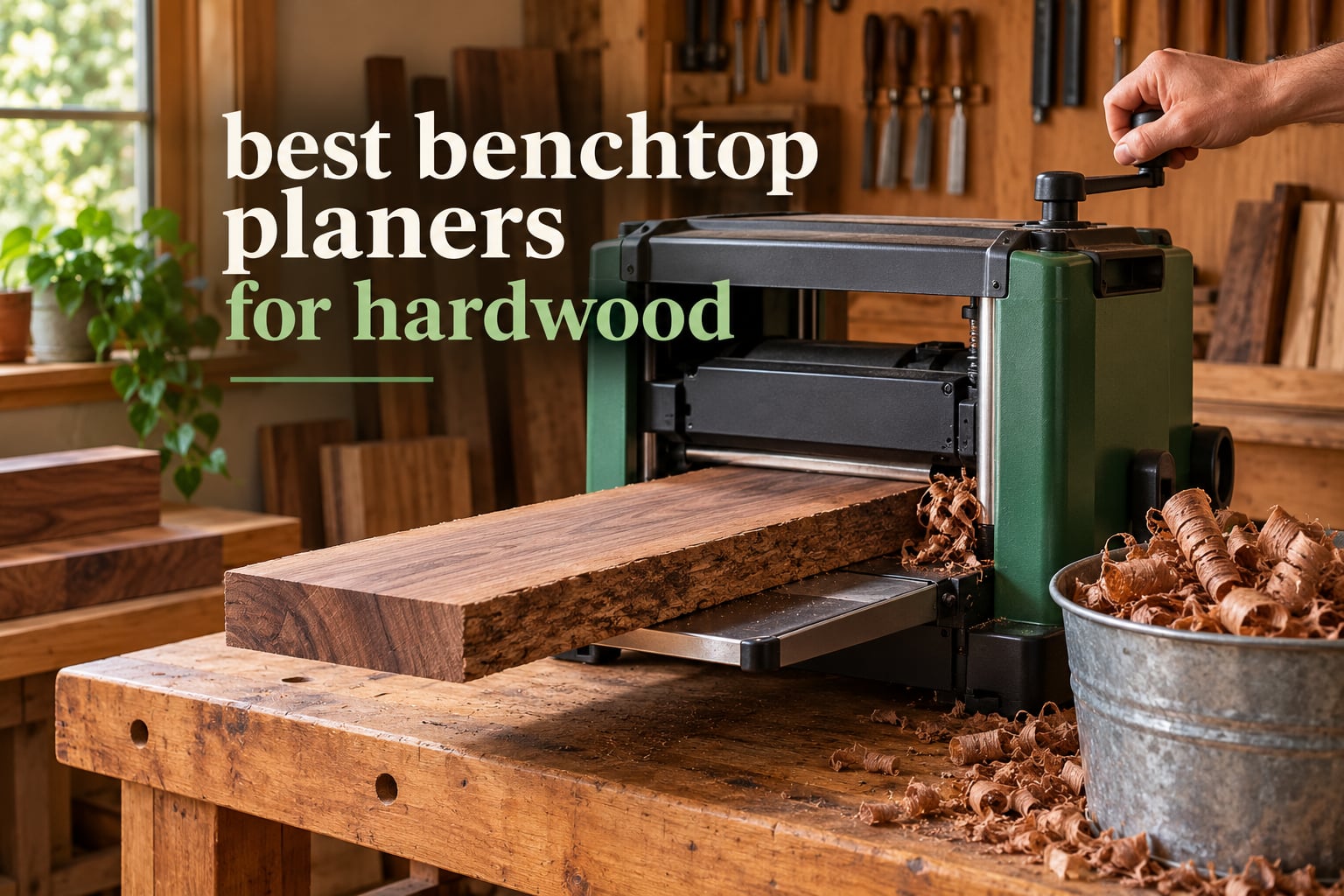
The best benchtop planer for hardwood is the DEWALT DW735X. Its 15 amp motor, three-knife cutterhead and two-speed gearbox let you take aggressive passes on rough walnut and switch to a fine feed for a near-glass finish, and it stays accurate board after board.
That is the short answer. The longer answer is that hardwood punishes weak machines, and the ten benchtop planers on this list punish them in very different ways. Some tear out figured maple. Some bog down on white oak. Some leave a wavy surface that a scraper cannot fix. Our general guide to the best benchtop planers covers the category broadly, and this one is narrower on purpose: every machine below is judged on how it handles dense domestic lumber.
Hardwood is where planers earn their keep. Rough-sawn oak, walnut, cherry and hard maple arrive warped, twisted and a fraction different in thickness from board to board. A planer is the only machine in a small shop that brings all of it to one uniform measurement, so glue-ups go together flat and a finished top is dead flat without hours of hand sanding. Your jointer flattens one face, the planer makes every board match.
We compared cutterhead types, motor output, feed rates, bed and fence material, table support length, dust handling and consumable costs across ten machines, then cross-checked owner reports from woodworking forums where people are running the same lumber you are. No prices appear here, because they move daily. Use the check buttons and read the specs, not the sticker.
Top 3 Benchtop Planers for Hardwood Right Now (October 2026)
Three machines earn the top slots for hardwood work, and each one wins for a different reason. The DEWALT is the one we would buy with our own money. The WEN gets you a spiral head where nearly every other machine in this group has straight knives. The CRAFTSMAN is the honest entry point when the budget is fixed.

DEWALT DW735X 13-Inch Two-Speed
- 15 amp 20
- 000 rpm motor
- Three-knife cutterhead
- Two-speed gearbox
- Spare knives included

WEN PL1326 13-Inch Spiral Head
- 26 rotatable HSS blades
- Cast iron base and head
- 26 fpm feed rate
- Depth stop included

CRAFTSMAN CMEW320 Two-Knife Planer
- 15 amp motor
- Quick change two-knife head
- 16
- 000 cuts per minute
- Dust port
All 10 Benchtop Planers for Hardwood Compared in 2026
The table below is the fast read. Every machine listed here is a benchtop planer, meaning it is meant to sit on a bench or a stand and be moved when the shop layout changes, not a light-duty industrial unit in a small cabinet.
Width is the number one hard constraint for most people: 13 inch machines handle a full rough board face, while 12 inch and 12-1/2 inch machines make you rip wide lumber first. Cutterhead type decides how the surface looks afterward, and that matters more on hardwood than on pine.
| Product | Specifications | Action |
|---|---|---|
| DEWALT DW735X 13-Inch Two-Speed Planer |
|
Check Latest Price |
 DEWALT DW734 12-1/2-Inch Three-Knife Planer DEWALT DW734 12-1/2-Inch Three-Knife Planer |
|
Check Latest Price |
| CRAFTSMAN CMEW320 12-1/4-Inch Two-Knife Planer |
|
Check Latest Price |
 Makita 2012NB 12-Inch Portable Planer Makita 2012NB 12-Inch Portable Planer |
|
Check Latest Price |
| WEN PL1326 13-Inch Spiral Head Planer |
|
Check Latest Price |
 VEVOR 13-Inch Three-Blade Two-Speed Planer VEVOR 13-Inch Three-Blade Two-Speed Planer |
|
Check Latest Price |
 JET JWP-13BT 13-Inch Helical Style Planer JET JWP-13BT 13-Inch Helical Style Planer |
|
Check Latest Price |
 RIKON 25-135H 13-Inch Helical Style Planer RIKON 25-135H 13-Inch Helical Style Planer |
|
Check Latest Price |
 Triton TPT125 12-1/2-Inch Benchtop Planer Triton TPT125 12-1/2-Inch Benchtop Planer |
|
Check Latest Price |
 WOODERS 13-Inch 2000W Benchtop Planer WOODERS 13-Inch 2000W Benchtop Planer |
|
Check Latest Price |
Straight Knife vs Helical Cutterhead: What Hardwood Actually Rewards
A straight-knife planer puts two or three wide blades in a drum, and each blade takes a full-width bite out of the board. It is simple, it is cheap to maintain, and it cuts fast. The problem is that a single wide blade entering interlocked grain lifts it instead of cutting it, which is why straight-knife machines tear out maple, cherry and sycamore.
A helical-style head staggers many small inserts around the drum. Each insert only engages a narrow slice of the board, so the cutting edge stays in the wood longer and has far more time to shear downward. The result is a cleaner surface on figured lumber, a much quieter machine, and a cutterhead that shrugs off a dull insert because its neighbours are still sharp.
That quality has a trade-off. Straight knives are cheap and sharpenable in a few minutes at a grinder, while insert heads cost more to buy and more to replace, and the rotatable ones are the cheapest to keep running. On hardwood, the tear-out a helical head avoids means less hand sanding on the face you were going to show, which is where the money goes.
There is a third path worth knowing about. Several straight-knife benchtop planers accept an aftermarket helical head kit, and owners on r/woodworking specifically name that upgrade as the reason they kept the DEWALT rather than trading it in. A retrofit costs money and a weekend of downtime, but it lets you decide the cutterhead question later, after you know what lumber you actually buy.
Tersa heads sit in the same family as helical heads, using larger rectangular inserts held in a rotating drum. They land between the two: better finish than straight knives, fewer edges to maintain than a 26-insert head, and a carbide cost when an edge chips. For a home shop, the practical question is simply whether you plan figured hardwood often enough to care about the surface.
1. DEWALT DW735X 13-Inch Two-Speed: Our Pick for Hardwood
DEWALT Thickness Planer, 13-inch Wood Planer, Three Knife Two Speed, 15 Amp, 20,000 RPM Motor (DW735X)
15 amp, 20,000 rpm motor
13 in. width, 0.13 in. depth of cut
96 or 179 cuts per inch
102 lbs
Pros
- Near-glass finish on rough hardwood
- 15 amp motor handles wide boards without stalling
- Two-speed gearbox trades feed rate for finish quality
- Infeed and outfeed tables plus spare knives in the box
- Fan-assisted chip ejection keeps the head clear
Cons
- Heavy at roughly 100 lbs
- Factory knives dull quickly on hardwood
- Loud even with hearing protection
- High current draw can trip a 15 amp circuit
This is the machine we would put against a stack of rough walnut. The 15 amp, 20,000 rpm motor takes a meaningful bite without bogging, and the two-speed gearbox is the feature that separates it from the single-speed machines. Low speed gives you fine spacing between cuts for a finish pass, and high speed moves material fast when you are working down thick rough boards.
Owner reports on RouterForums and the FineWoodworking forum are consistent: the slow feed speed leaves an amazingly smooth finish, while the faster setting still removes 1/16 to 1/8 inch per pass on hardwood. That is exactly the range you want, because the biggest cause of tear-out on dense lumber is asking for too much in one pass.
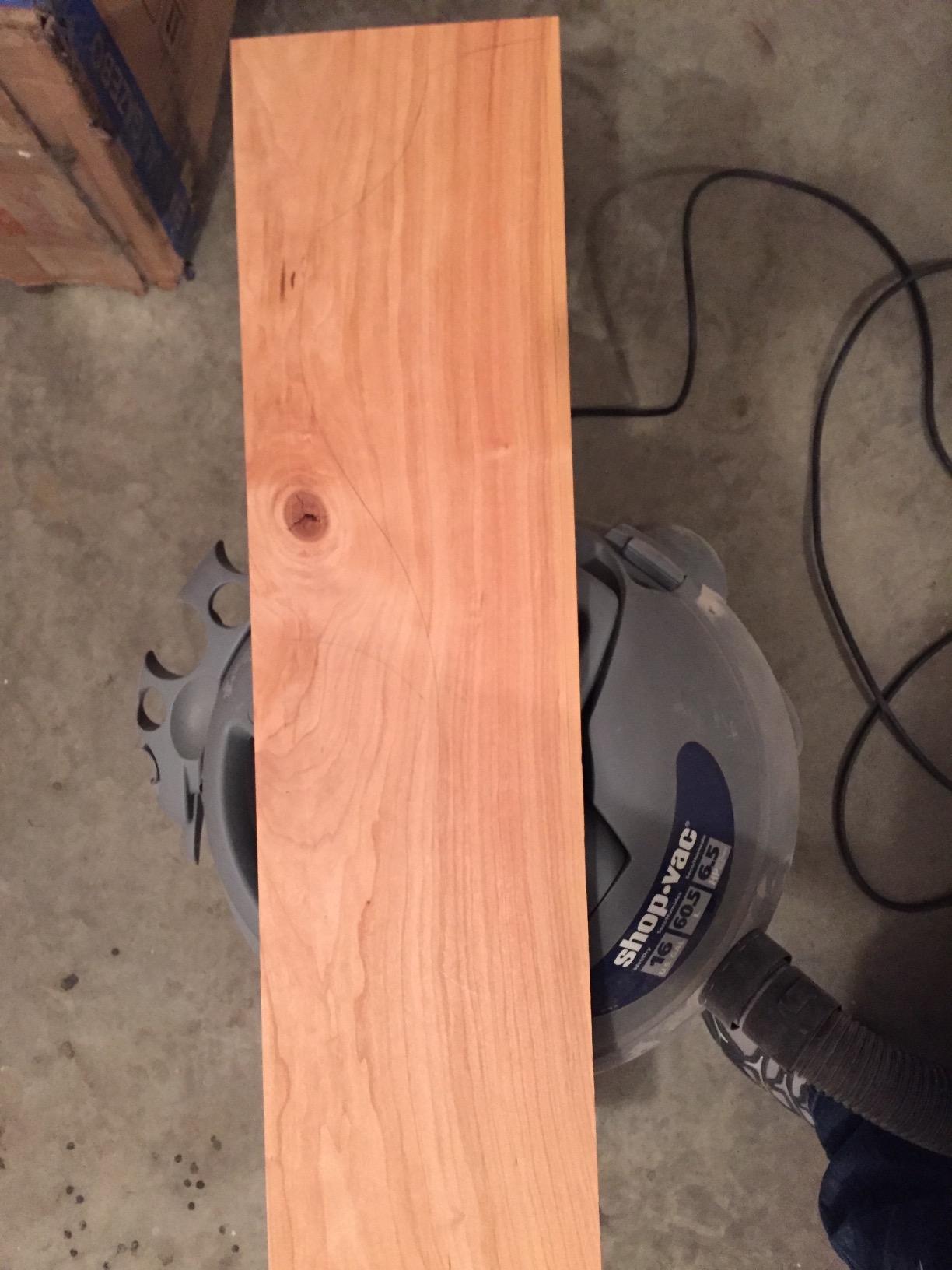
The three-knife head delivers 96 or 179 cuts per inch depending on gear, and the automatic carriage lock is what keeps the board from shifting as it enters. Knives swap quickly with tool-less access, which matters more on hardwood than most people expect, because the edges dull noticeably faster on oak and maple than on pine.
Two things to plan around. The machine weighs about 100 pounds, so it lives in one spot rather than moving around a shop, and the current draw is high enough that a 15 amp household circuit can trip when the motor starts under load. A dedicated circuit is worth the electrician.
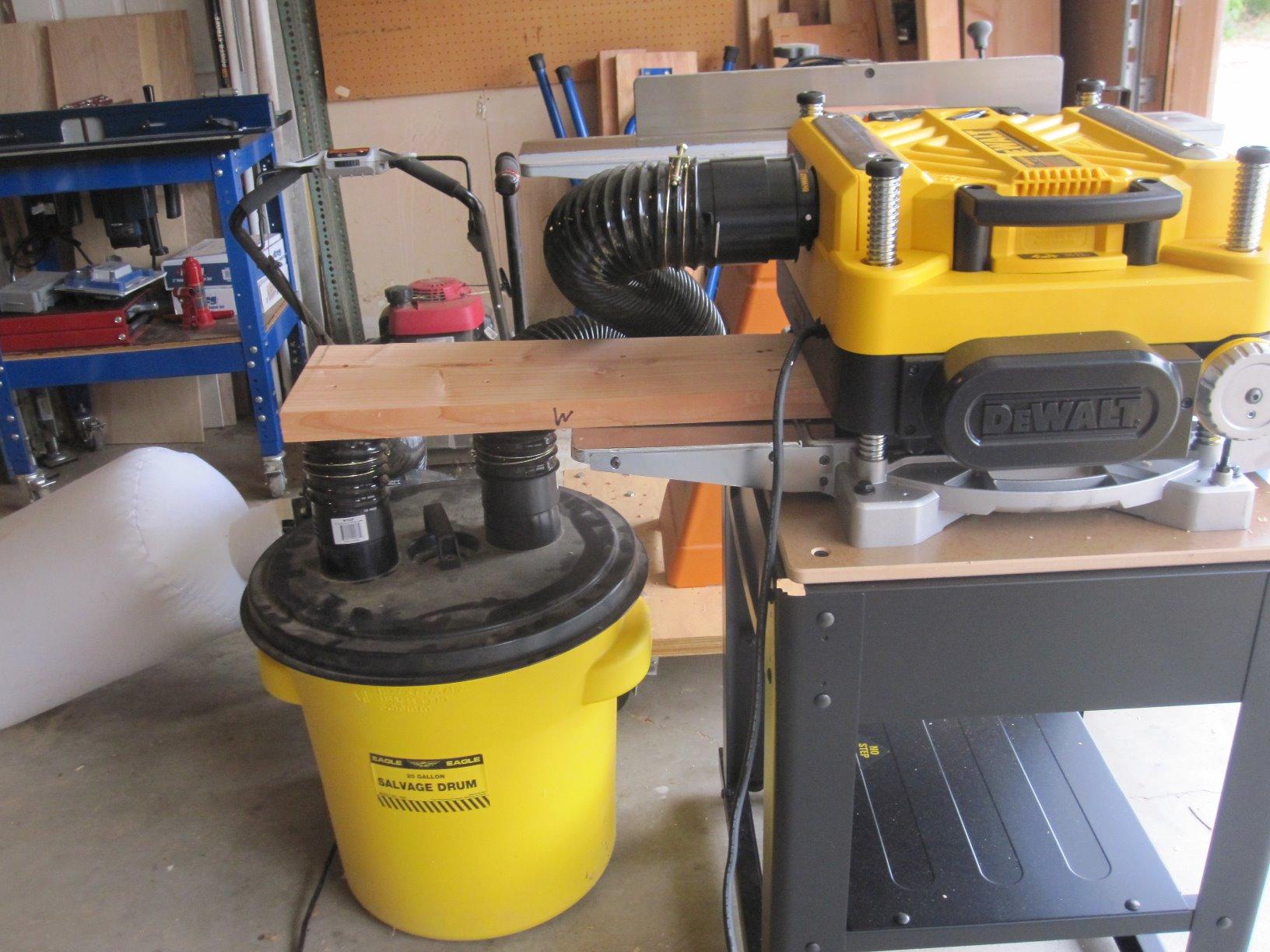
Why it suits dense hardwood
Two feed speeds on a 15 amp motor is the combination you want for oak and walnut: fine spacing when the surface matters, high removal when it does not. The 13 inch width means a full rough board face goes through without ripping first.
The automatic carriage lock and 96 cuts per inch in the low gear are what keep the exit end clean on figured lumber, which is where straight-knife machines usually leave a gouge.
Where it falls short
It is a straight-knife machine, so the factory head will still tear out tight interlocked grain in hard maple and cherry. Owners who hit that limit on expensive lumber add an aftermarket helical head kit rather than buying a new machine.
Weight and noise are the other tradeoffs. This is a two-person lift, and it is loud enough that hearing protection is not optional in a small shop.
2. WEN PL1326 13-Inch Spiral Head: Best Value on the List
WEN PL1326 15-Amp 13-Inch Spiral Benchtop Thickness Planer
26 rotatable HSS spiral blades
15 amp, 10,000 rpm head
26 fpm feed rate
13 in. by 6 in. capacity
Pros
- Spiral head leaves a clean surface with minimal snipe
- Blades rotate before replacement to stretch their life
- Noticeably quieter than a straight-knife planer
- Cast iron base and cutterhead
- Depth stop and adjustable dust port included
Cons
- Single feed speed on this variant
- Heavy chip volume needs a real dust extractor
- Rough boards need extra length to trim end snipe
- HSS wears faster than carbide on hard lumber
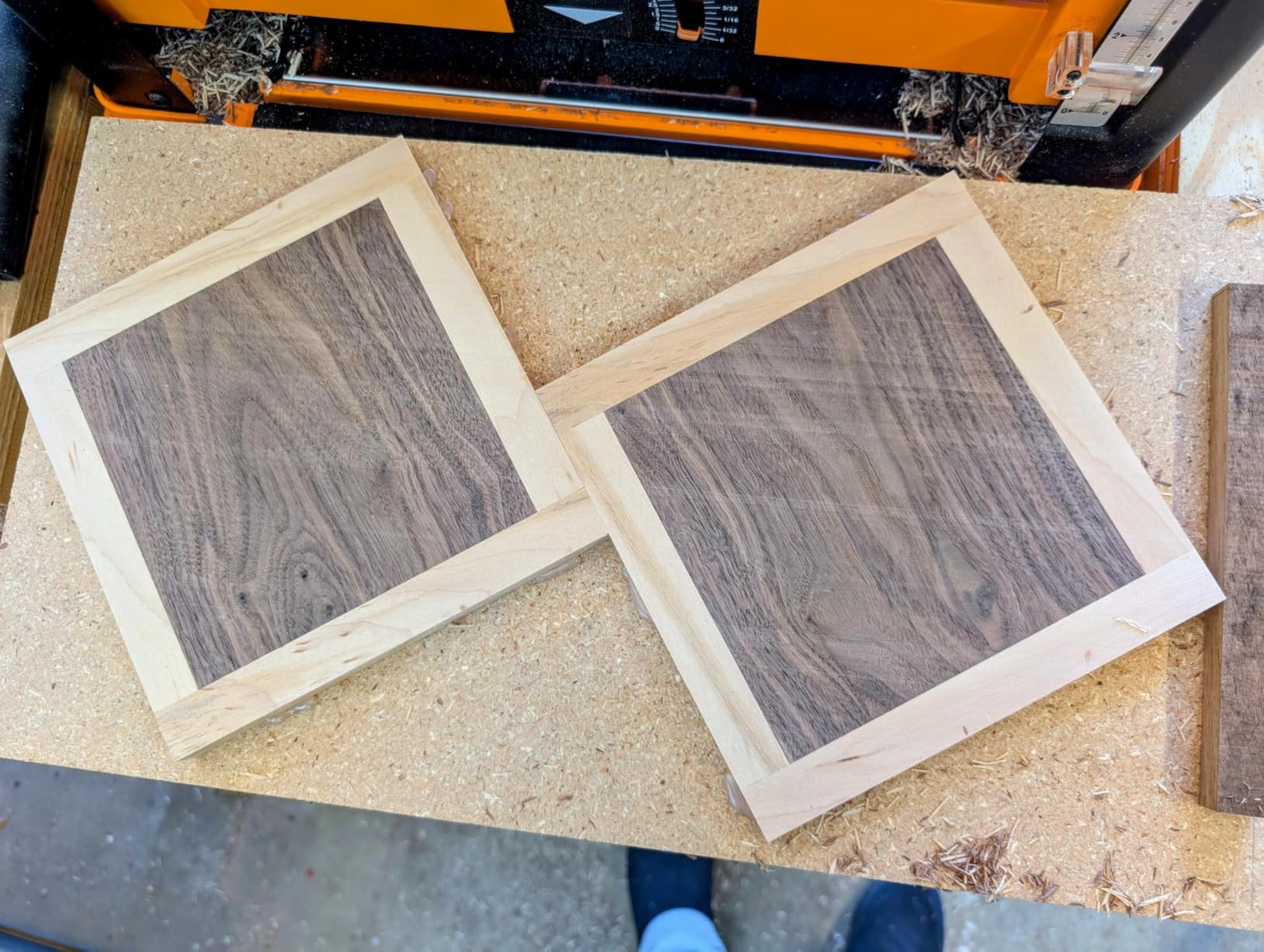
A spiral cutterhead in a cast iron benchtop planer is not a combination most buyers expect to find in this machine class. That is why the WEN stands out. The 26 staggered rotatable blades grip the surface and shear it downward instead of chopping, and reviewers repeatedly say the finish rivals machines several tiers above it.
Each blade has multiple usable edges, so you flip to a fresh edge and keep going instead of grinding. That cuts downtime on projects where you are running a lot of maple, and that is the main reason spiral-head machines have dropped into the hobby shop bracket.
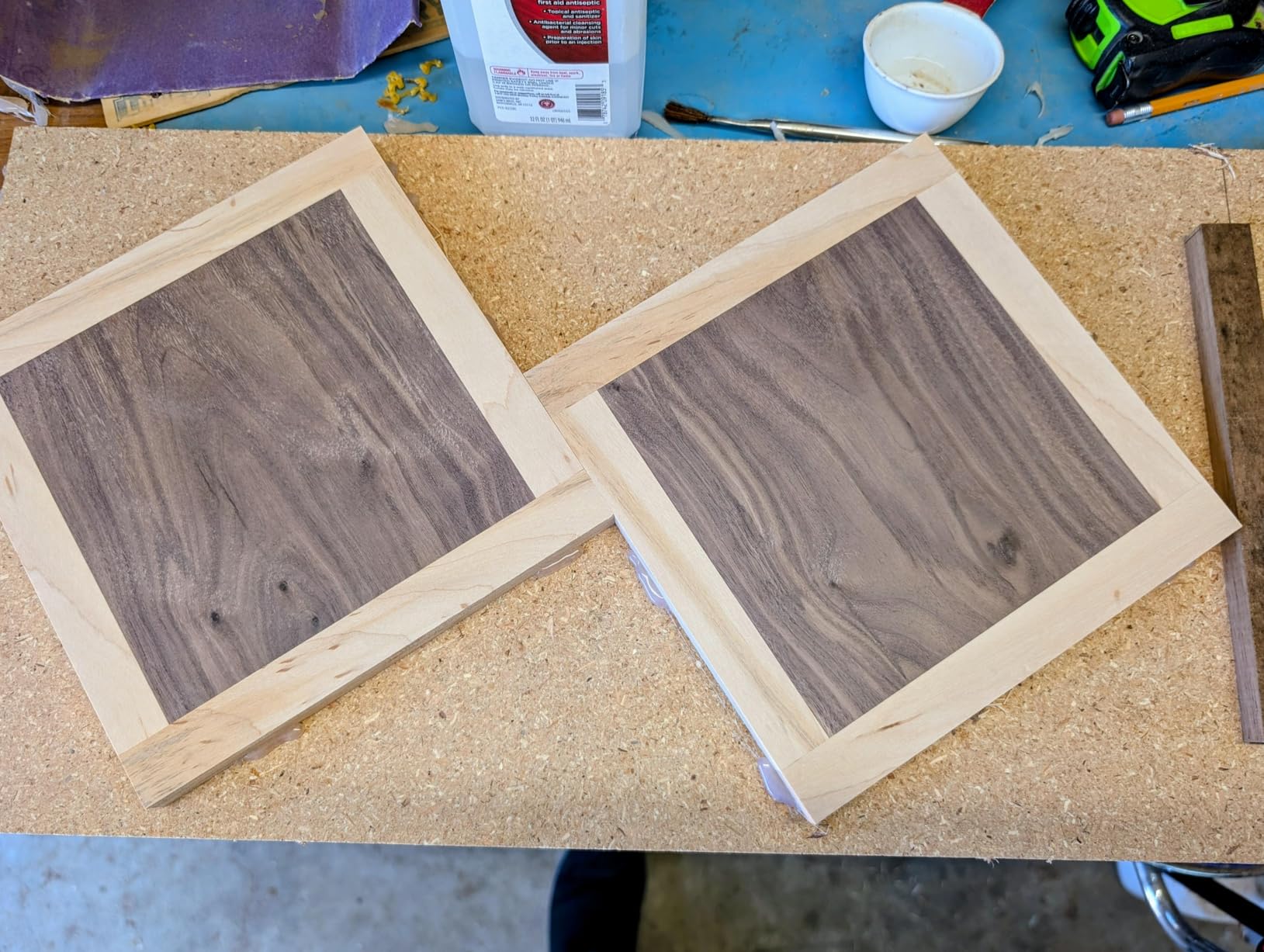
Plan for dust. A cast iron bed and cutterhead at 10,000 rpm with a 15 amp motor throws a lot of volume, and owners are near-universal that a shop vacuum is not enough. A collector with real airflow keeps the machine from clogging and stops shavings from packing around the head mid-pass.
Feed rate is fixed at 26 feet per minute on this variant, and it is a sensible one. If you need to go faster or finer, that is the machine to skip, but for most hardwood dimensioning it is not a limitation.
Why it suits dense hardwood
Shear cutting is the whole story on interlocked grain. The spiral head handles cherry and figured maple with far less tear-out than any straight-knife machine in this group, which means less sanding on the face that gets seen.
The cast iron base is heavier than an aluminum benchtop and stays put under pressure, which keeps a wide board from rocking and throwing a wave into the surface.
Where it falls short
The inserts are high-speed steel, not carbide, so they wear faster on very hard lumber than a carbide head would. Budget for replacement edges if you are running exotics or a lot of oak.
One speed only, and rough warped boards still need extra length so you can trim the sniped ends. There is no second gear to slow down for a final pass.
3. CRAFTSMAN CMEW320 12-1/4-Inch: The Honest Most Versatile
CRAFTSMAN Planer, 15 Amp, For Benchtops, Two Knife Solid Steel Cutter Head (CMEW320)
15 amp motor
Two-knife cutterhead at 8,000 rpm
16,000 cuts per minute
12.25 in. width
Pros
- Accurate thickness readings in practice
- Smooth and consistent results
- High carbon steel reversible knives
- Clear depth increments for controlled removal
- Well suited to a first benchtop planer
Cons
- Two knives only so the finish trails three-knife heads
- Blades wear faster in hardwood
- Some snipe at board ends
- Loud enough to require hearing protection
This is the machine most people should start with. Owners describe accurate measurements, even thickness and a chassis heavy enough to stay planted on a bench, and several report thousands of board feet before needing anything beyond blade changes.
The 15 amp motor and 8,000 rpm head give 16,000 cuts per minute, which is enough to take a sensible pass off rough lumber. For a first furniture project or a garage shop, watching a machine dimension boards faster than any other tool you own is a genuinely satisfying experience.
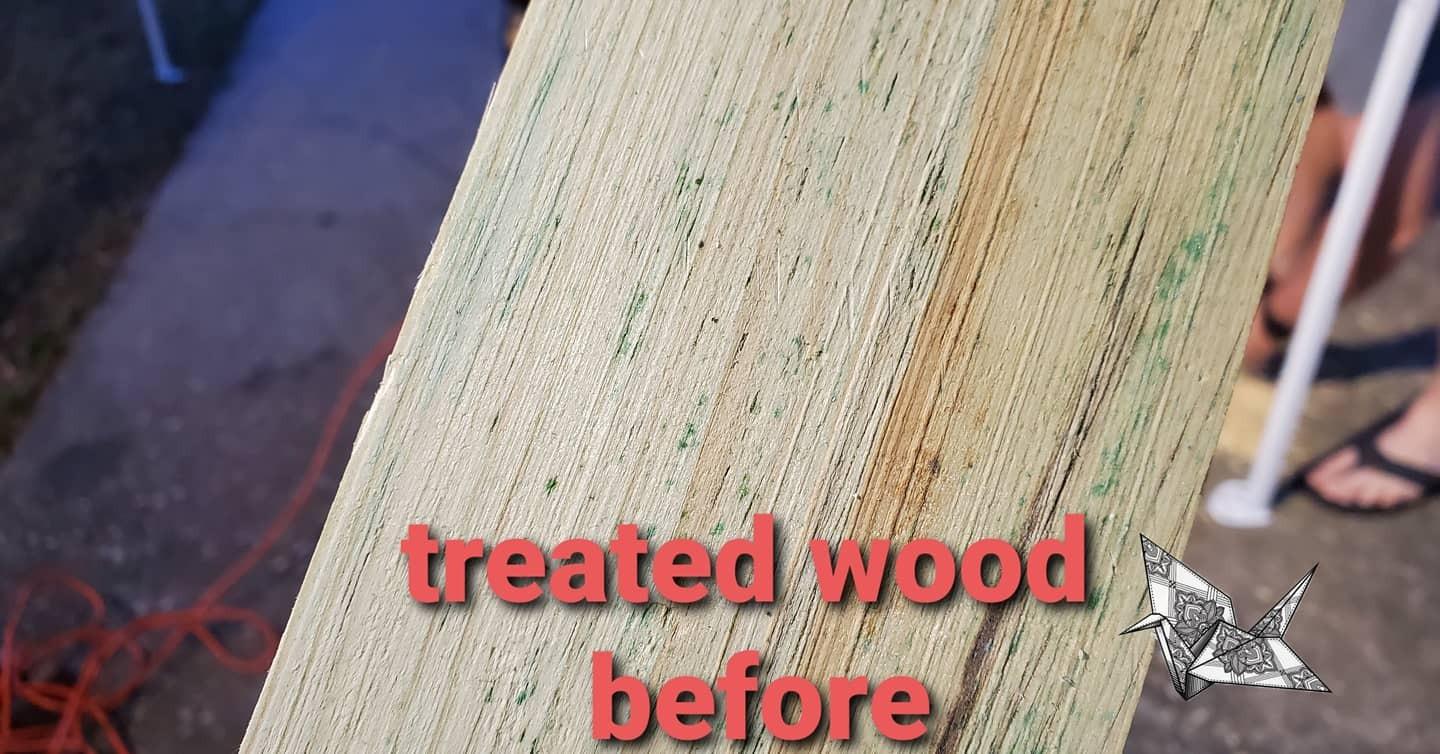
Two knives is the compromise. With a two-blade head the spacing between cuts is wider than a three-knife machine, so the surface is a step rougher and you will still sand before finish. On high-value figured lumber, that is the moment to upgrade rather than fight it.
Two more practical notes. The blades wear faster in hardwood than in pine, so keep spare high carbon steel knives on hand, and the cord exits at the front, which is an awkward spot in a tight shop layout.
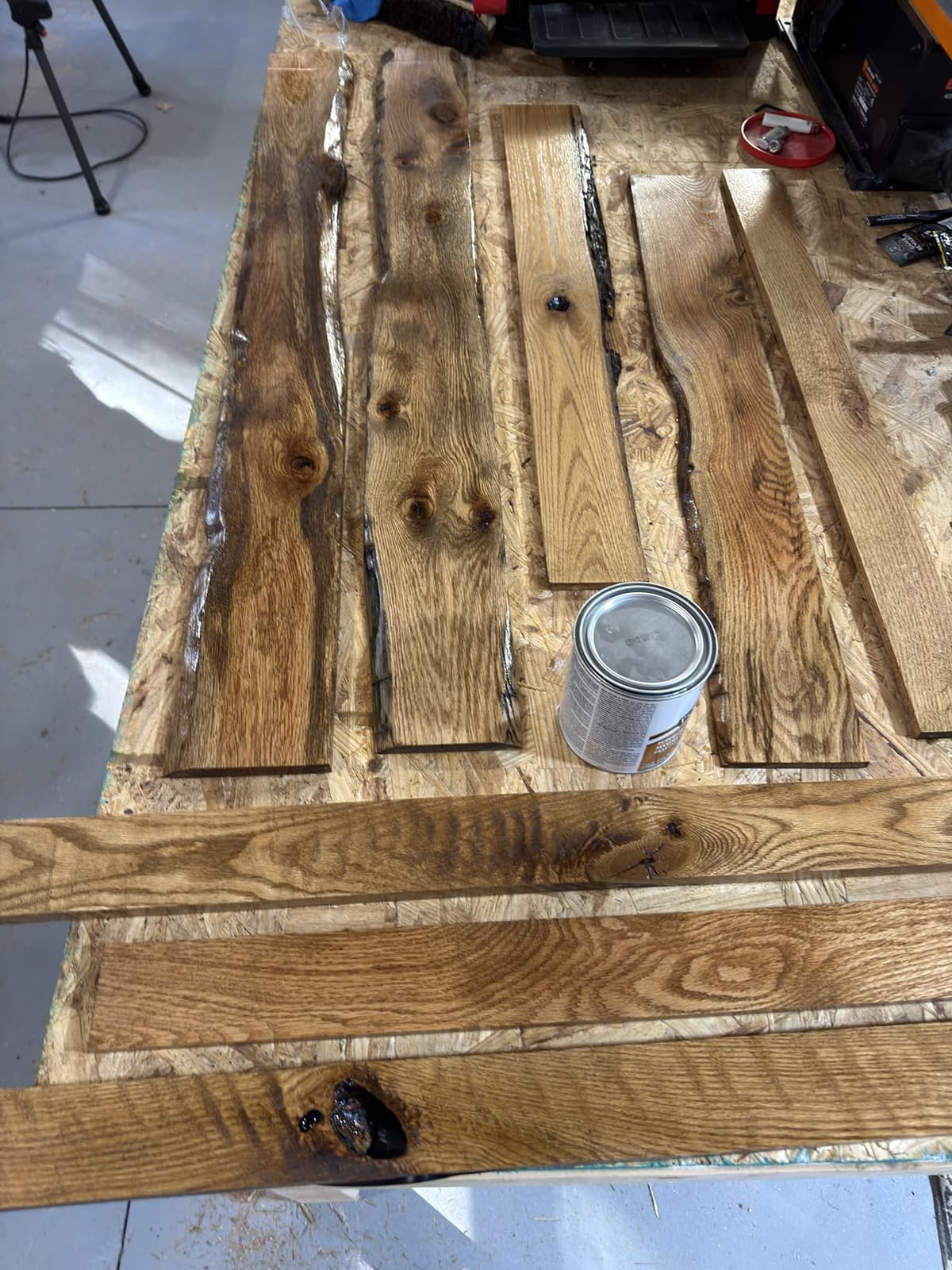
Why it suits dense hardwood
A 15 amp motor with a Poly-V drive has more low-end torque than smaller budget machines, and owners report it chewing through dense lumber without bogging when depth per pass is kept reasonable.
Reversible double-edged high carbon steel knives are cheap to swap and simple to sharpen, which keeps the running cost of hardwood work low for a first machine.
Where it falls short
Two knives means a rougher surface on the same board that a three-knife machine would finish near-glass, and more snipe at the entry and exit ends on long rough pieces.
At 12.25 inch width, wide hardwood boards must be ripped narrower before they fit. Plan your board sizes before buying, because that is a workflow change rather than a small inconvenience.
4. DEWALT DW734 12-1/2-Inch: Long Tables and a Four-Column Carriage
DEWALT Benchtop Planer, 15-Amp, 12-1/2-Inch, 3-Knife Cutter, 20,000 RPM, Corded (DW734)
15 amp, 20,000 rpm motor
Three-knife head at 96 cuts per inch
33-1/2 in. table support
0.13 in. depth of cut
Pros
- 96 cuts per inch for a very fine finish
- Four-column carriage noticeably reduces snipe
- Long 33-1/2 in. infeed and outfeed support
- Accurate material removal gauge and thickness scale
- 15 amp motor takes deeper cuts in hardwood
Cons
- Disposable blades mean recurring consumable cost
- Heavy and awkward to move around a shop
- Fixed feed speed with no second option
- Basic dust hood that benefits from a real collector
The DW734 is the older sibling of the DW735X and the simpler machine. It shares the 15 amp, 20,000 rpm motor and three reversible knives at 96 cuts per inch, but the four-column carriage is a better answer to snipe than the automatic lock on the two-speed machine.
Long boards are the reason to like it. The 33-1/2 inch combined infeed and outfeed support means a full-length rough board stays supported the whole way through, which is where shorter benchtop tables cause boards to tip and lose contact.
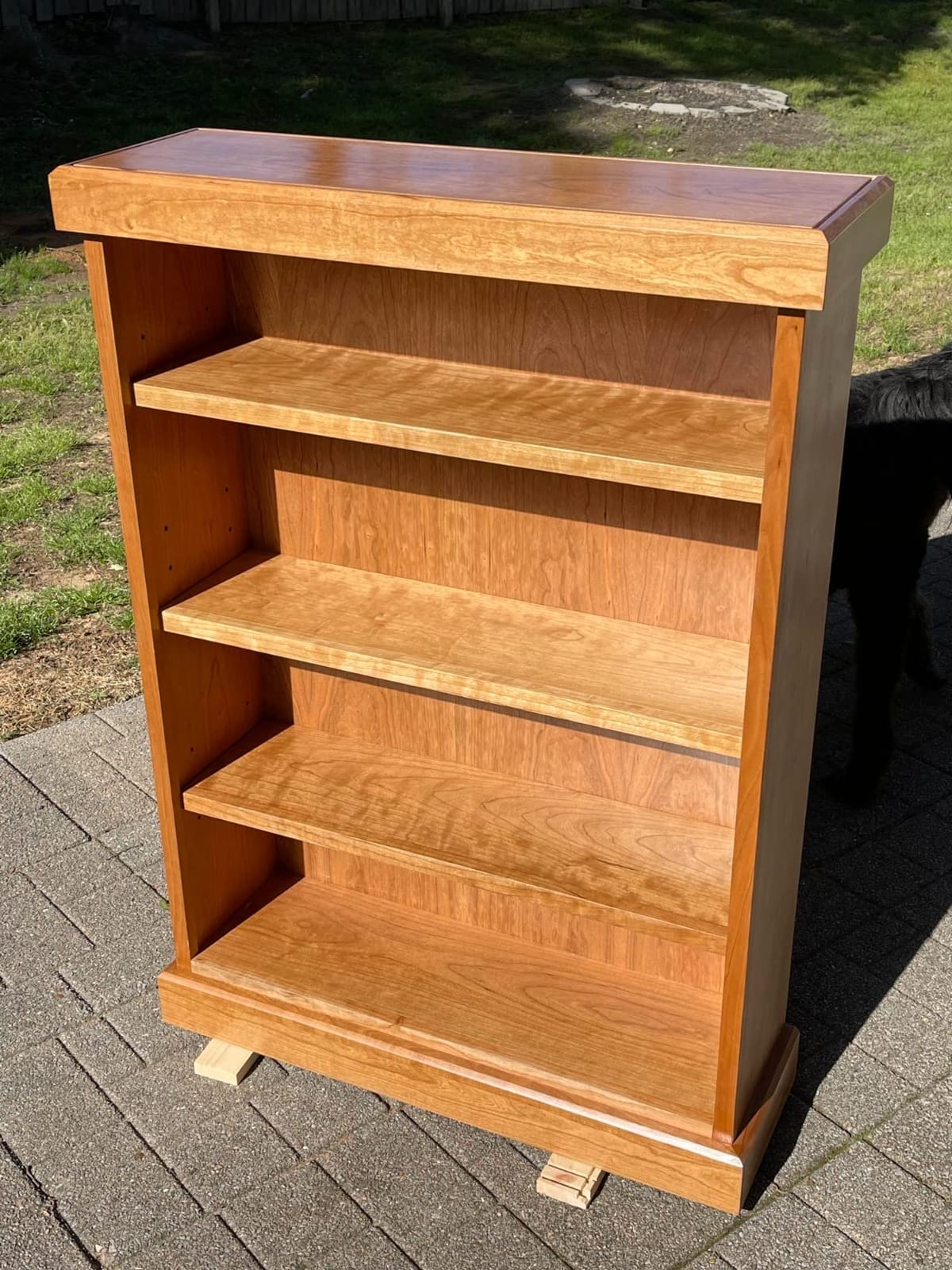
There is a real cost difference in how you use it. The blades are disposable rather than reusable, so this machine pays for consumables on every knife change, and with a single feed speed you cannot slow down for a finish pass the way you can on the DW735X.
The dust hood is basic. Pair it with a proper collector rather than assuming the port will handle hardwood shavings on its own, because packed chips around the head cause both finish problems and heat.
Why it suits dense hardwood
96 cuts per inch is a fine spacing, and with the four-column carriage holding the head rigid, buyers rate the cut quality and accuracy highly on hardwood specifically.
The long tables support wide lumber better than most machines of this size, which directly reduces the snipe that shows up on finished edges and glue-up panels.
Where it falls short
One feed speed means you choose between a fast roughing pass and a slower finish pass, and you cannot have both from the same machine without making more passes.
Disposable reversible knives add a recurring cost that a shop doing daily hardwood work will notice, and the unit is heavy enough to be a one-location machine.
5. JET JWP-13BT 13-Inch: The Cast Iron Bed and Helical Head Combination
JET 13-Inch Benchtop Thickness Planer for Woodworking, Helical Style Cutterhead with 2-Speed (18 FPM / 26 FPM) Feed Rate, 2 HP, 120V 1Ph (JWP-13BT)
Helical style head with 26 inserts
2 HP, 15 amp, 10,000 rpm
18 and 26 fpm feed rates
13 in. by 6 in. capacity
Pros
- Helical style head with 26 quick-change inserts
- Precision machined cast iron bed and four-post design
- Two feed rates to match the pass to the material
- Folding infeed and outfeed tables save floor space
- Crank handle and spare inserts included
Cons
- Highest build cost in this 13 inch group
- Standard HSS inserts wear faster than carbide on hard exotics
- Heavy at roughly 75 lbs despite folding tables
- Dust hood needs a real collector to be effective
This machine pairs the two things owners ask for most: a helical-style head and a precision machined cast iron bed. The four-post design supports the cutterhead at both ends, so the head does not sag under the load of a wide oak board and produce a crowned surface.
Two feed rates at 18 and 26 feet per minute let you rough down thick lumber and then slow for a cleaner pass, and the maximum depth of cut of 1/8 inch per pass is enough to work through rough lumber without fighting the machine.
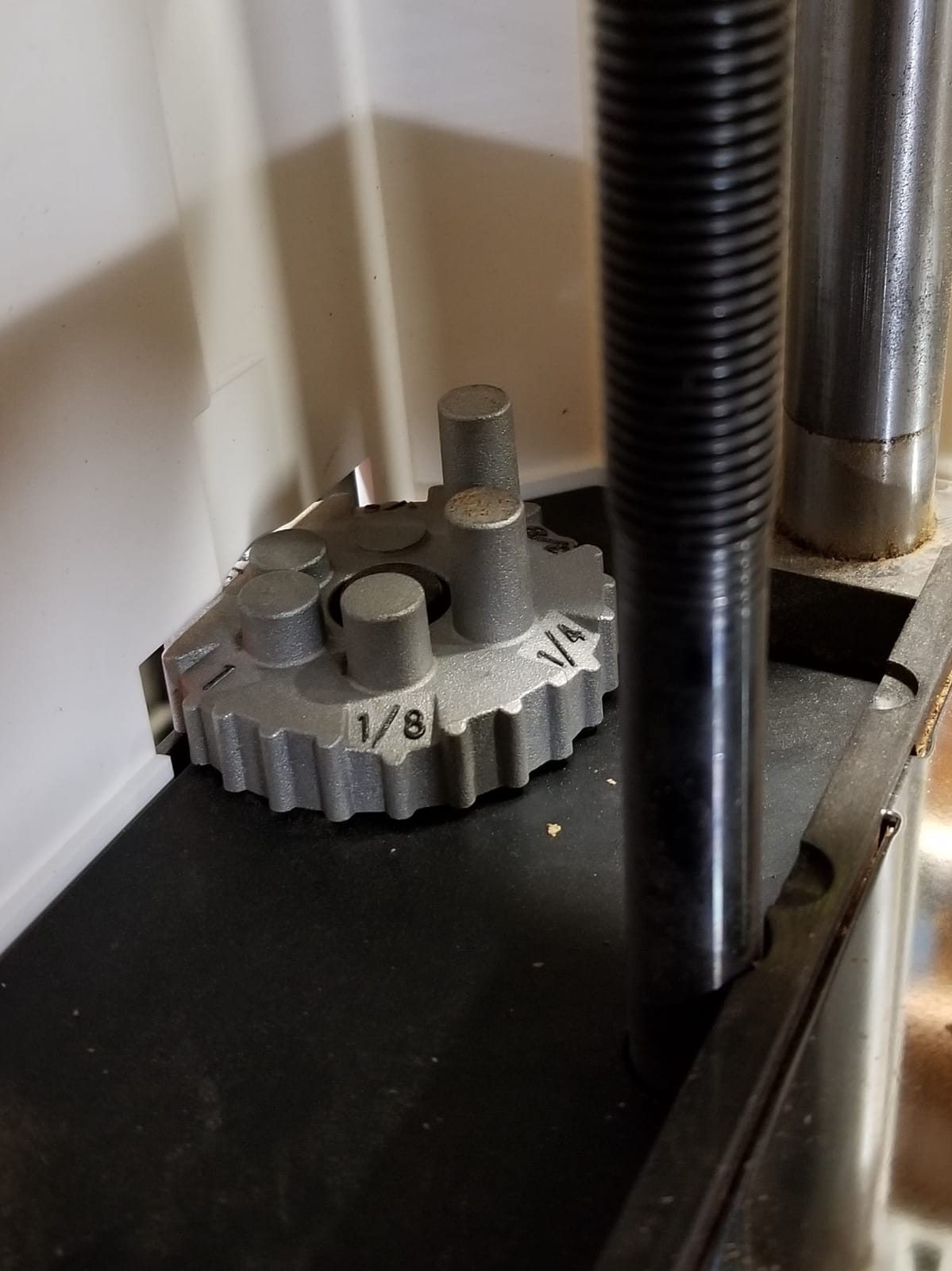
Buyers highlight the quietness and flatness of the cut compared with lighter machines, and the folding tables help in a small shop. The dust hood comes with the machine but is only effective with a proper collector on the far end of it.
Two honest caveats. The inserts that come with it are high-speed steel, and owners running hardwoods are advised to budget for carbide inserts as an upgrade. The review base is also small, which is worth weighing against the alternatives.
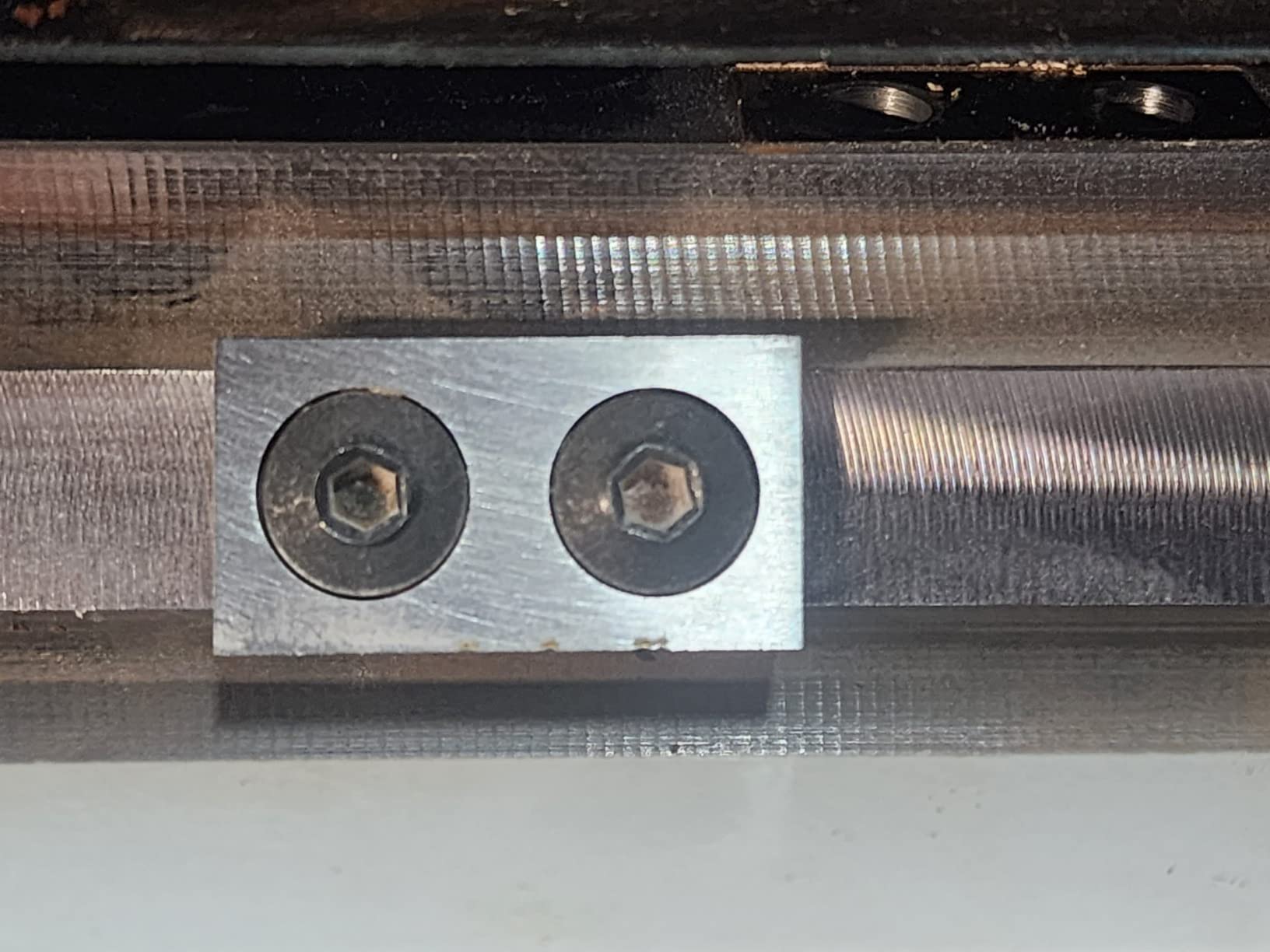
Why it suits dense hardwood
A cast iron bed does not flex. When a heavy wide board passes over an aluminum benchtop, the table deflects and the cut follows it, leaving a surface that is thick in the middle and thin at the edges.
With 26 quick-change inserts and two feed rates, you get both fast removal and a shear cut on interlocked grain without buying a second machine for each job.
Where it falls short
It is the highest-cost 13 inch benchtop machine here, and buyers say the bed and insert head justify that only for someone committed to one machine for a long time.
Standard HSS inserts wear faster than carbide on hard exotics, and at roughly 75 pounds the folding tables do not make it a machine you carry between shops.
6. RIKON 25-135H 13-Inch: A Helical Head Without the Premium Badge
RIKON 25-135H 13-Inch Portable Planer with Helical-Style Cutterhead
Six-row helical style head, 26 inserts
13 in. by 6 in. capacity
16 and 26 sfpm feed speeds
67.9 lbs
Pros
- Helical style head with 26 rotatable two-edge HSS inserts
- Two feed speeds to balance removal and finish
- Threaded four-post head support
- Depth gauge with repeat-cut control for consistent thickness
- Dust hood and adapter included
Cons
- Aluminum base is less damped than a cast iron bed
- Standard inserts are HSS rather than carbide
- Large 34 in. footprint
- Small installed base of owner feedback
The RIKON does the same job as the machines above at a lower build tier, and the owner reports, though limited in number, are strongly positive. The six-row helical-style head with 26 rotatable two-edge inserts gives the shear cut people want on figured hardwood.
Rotatable inserts are the quiet advantage. Each one has two usable edges, you flip rather than replace, and they are inexpensive compared with full carbide sets, so the running cost of hardwood work stays low.
Depth gauge, thickness scale and repeat-cut control together are what make repeat thickness settings reliable, and on a glue-up panel where every board has to match, that is worth more than a small improvement in feed rate.
The tradeoffs are physical. The aluminum base is lighter and less damped than cast iron, so a very heavy wide board can rock a little more, and at 34 inches long the machine needs more bench than its weight suggests.
Why it suits dense hardwood
Thirteen inch width at 6 inch thickness capacity covers the common hardwood lumber sizes without ripping, and the helical head keeps tear-out down on interlocked grain.
Two feed speeds at 16 and 26 feet per minute mean you can rough and finish on the same machine, and the two-edge inserts keep consumable spending modest.
Where it falls short
An aluminum base gives a little more under a heavy wide board than a cast iron bed, and anyone planing wide wet oak will feel the difference immediately.
The installed base of owner feedback is small, so long-term durability is less well documented than for the picks with thousands of reviews. HSS inserts still wear faster than carbide on hard exotics.
7. Makita 2012NB 12-Inch: 83 dB Operation and a Long Service Life
Makita 2012NB 12″ Portable Planer
12 in. class planer
83 dB operation
Four-post design with cross supports
61.9 lbs
Pros
- Exceptionally quiet for a thickness planer at 83 dB
- Holds accuracy for years with only blade changes as maintenance
- Near gloss surface on hardwoods
- Minimal snipe with support at both ends
- Compact and light enough to move between shop and jobsite
Cons
- Dust hood is a separate purchase
- Rough boards need lifting to avoid snipe at the ends
- Two knives can leave fine streaks needing light sanding
- Feed rollers need periodic cleaning to avoid slippage
The Makita wins on two things nobody else in this list combines: quiet operation and longevity. At 83 dB it is the machine you can run in a shared shop or a small garage without wearing everyone out, and owners report decades of service with nothing more than blade changes.
The four-post design with diagonal cross supports is doing real work here. It is the structural answer to head sag, and it shows up in the finish: near gloss-like surfaces on hardwood with minimal snipe when the board is supported at both ends.
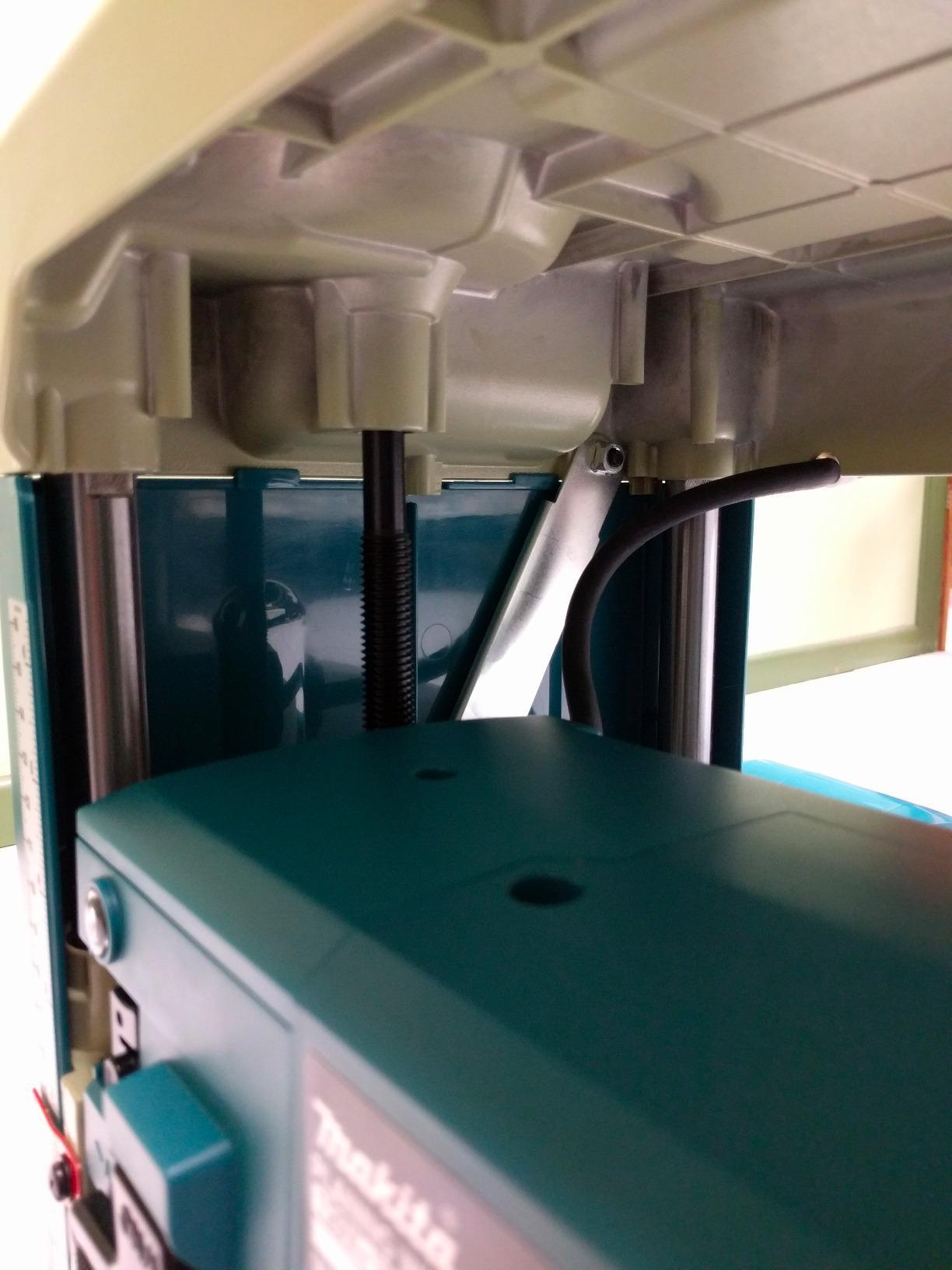
What you give up for that quiet, precision design is width. At 12 inch cutting width, anything wider has to be ripped first, and rough warped boards still need lifting as they enter or you will find snipe at the ends.
Plan the dust hood as a separate purchase, since it does not include one. The port is sized for a collector, and owners are quick to point out that a shop vacuum is the wrong tool for the job.
Why it suits dense hardwood
Two knives and disposable double-edged blades are simple to change, and the 61.9 pound weight means the machine stays accurate without being bolted to the floor.
For figured lumber that must not be sanded aggressively to fix tear-out, a stable head that holds a fine finish is worth more than raw horsepower.
Where it falls short
Twelve inch width is the limiting factor for anyone working with full rough hardwood boards, and the dust hood is an extra cost most buyers forget until the first pass.
It is a fixed-speed machine with a two-blade head, so expect a slightly coarser finish than a three-knife or spiral-head model and a little more snipe on rough ends.
8. VEVOR 13-Inch Three-Blade Two-Speed: Power for the Money
VEVOR Power Benchtop Planer Three-Blade Two Speed 13″ Thickness Planer
2000W all-copper motor at 23,500 rpm
Two speeds at 24 and 15 fpm
35 in. total table support
13 in. width
Pros
- Strong three-knife head at an entry-level build
- Two feed speeds for roughing or finish passes
- Accurate and consistent once set up
- 35 in. of total table support for long boards
- 2000W motor handles dense hardwood such as pecan
Cons
- Factory knives have arrived dull on some units
- Extension trays are difficult to level perfectly
- Vacuum hood clogs with large shavings and can dimple the workpiece
- Thin documentation and limited parts support
This is the spec-sheet machine. A 2000W all-copper motor with a three-knife head hardened to HRC55-60 in a 13 inch body, and owners confirm it handles dense lumber such as pecan when the depth per pass is sensible.
The two feed speeds at 24 and 15 feet per minute are a genuine feature at this level, and the 35 inch total table support is longer than on several machines further up the list. The machined cast iron bed helps flatness, which is the part that matters for glue-up panels.
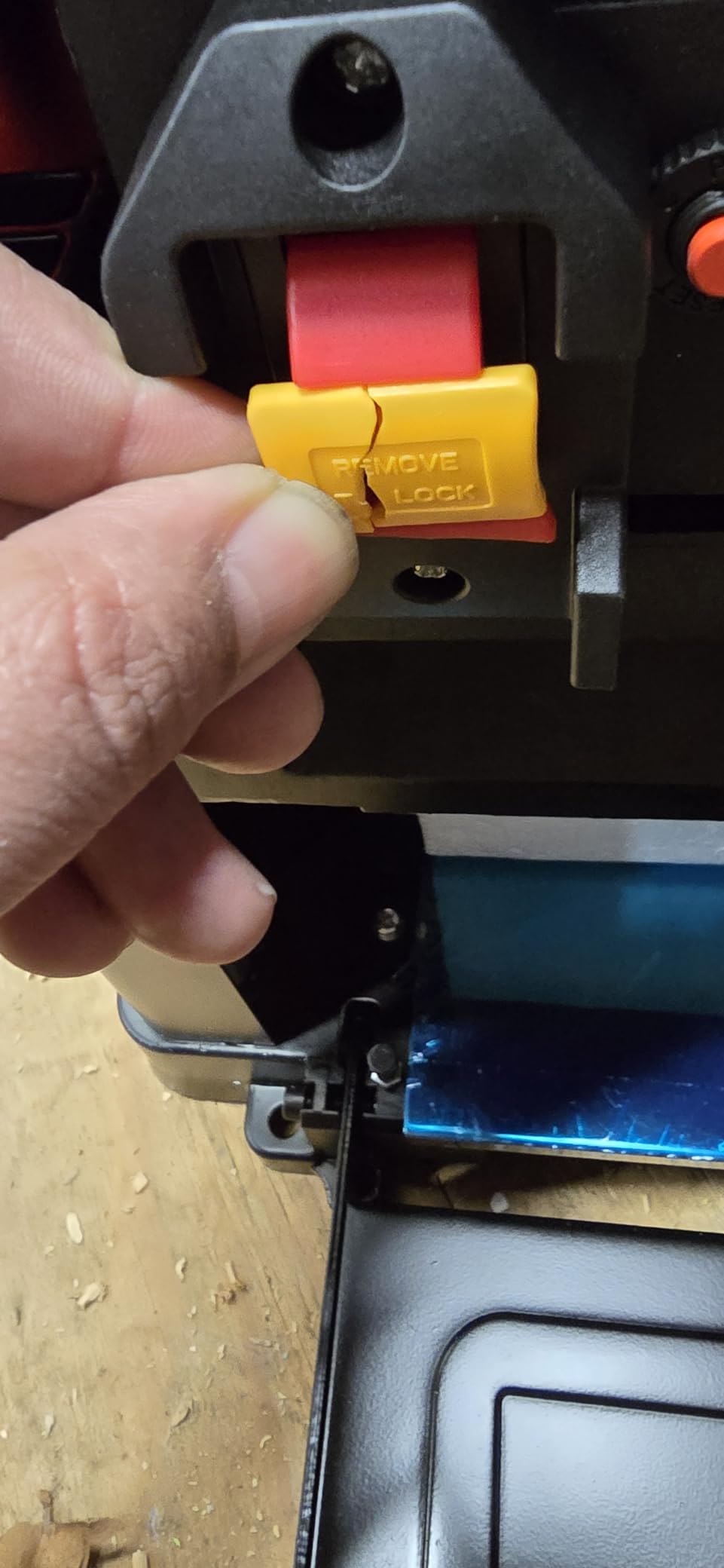
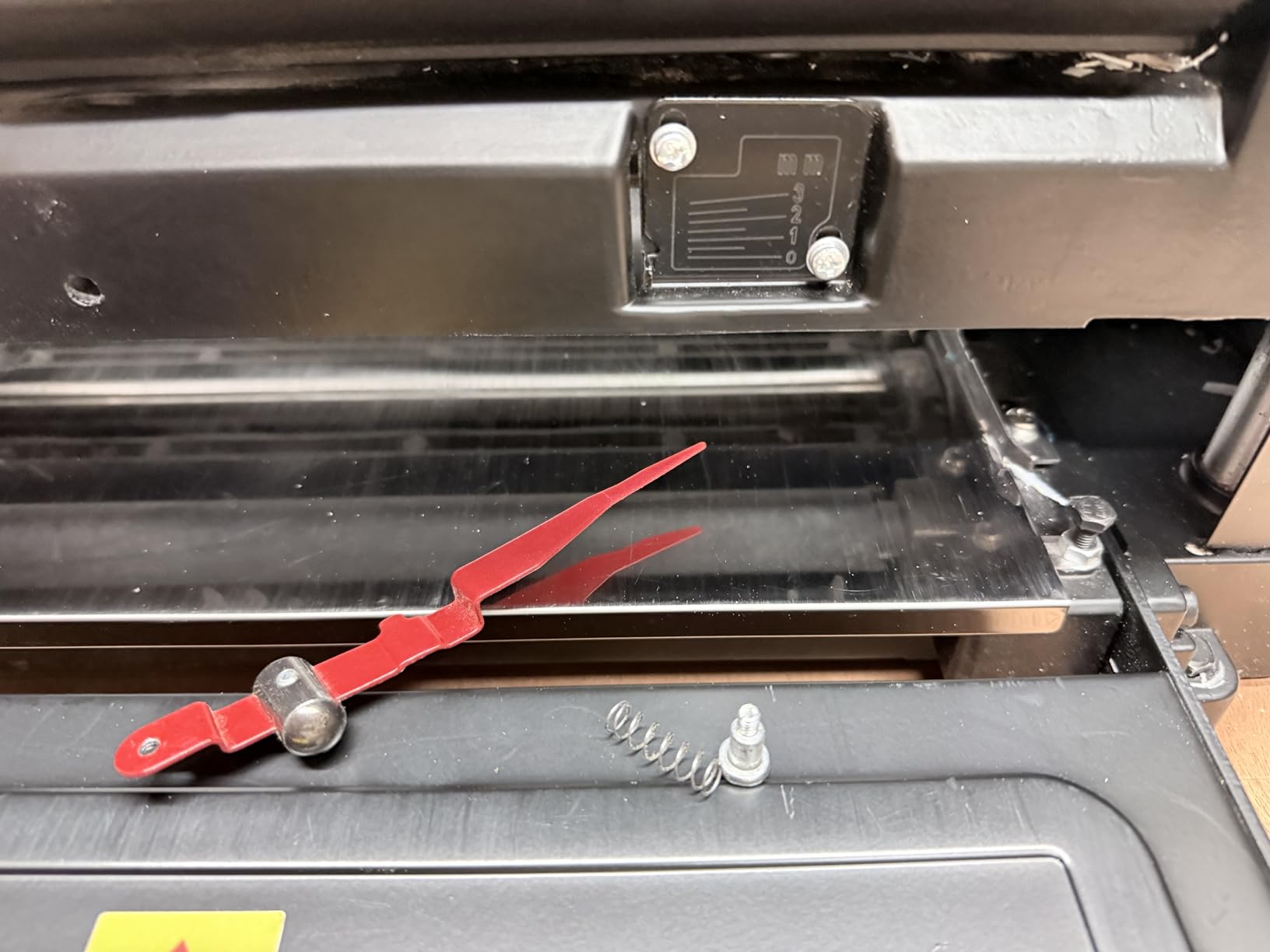
The complaints are quality control rather than capability. Some machines arrive with dull factory knives, which is the first thing to fix. The extension trays are hard to level perfectly, and the vacuum hood clogs with large shavings and can dimple the workpiece as it passes.
Documentation is thin and a small number of buyers report limited after-sales support, so check that replacement parts are available for your region before committing. As with any of these machines, budget for a real dust collector rather than the included port.
Why it suits dense hardwood
The 2000W motor gives it the low-end punch to keep a consistent cut through hard domestic lumber, and the HRC55-60 hardened knives hold an edge better than plain high-speed steel on the same job.
Two feed speeds and a 13 inch width cover both roughing and finish passes on standard hardwood lumber without a second machine.
Where it falls short
Dull factory knives and hard-to-level trays are real accuracy issues on glued-up panels, and both need sorting before you start work rather than during it.
The clogging vacuum hood can dimple the workpiece, and the rear extension does not lock in the raised position, so support on long boards is not dependable out of the box.
9. WOODERS 13-Inch 2000W: A Compact Package With Spare Parts Included
WOODERS 13-Inch Benchtop Thickness Planer, 15A Wood Planer with 4 HSS Blades, 2000W All Copper Motor, Overload Protection for Woodworking
2000W all-copper motor at 10,000 rpm
13 in. width, 1/4 to 6.3 in. range
60 lbs
Anti-snipe dual-blade head
Pros
- Compact 13 in. footprint that stays planted on a bench
- Large smooth-turning crank with a visible height indicator
- Two spare HSS blade sets and a dust collector in the box
- Iron blade shaft and rugged frame limit vibration
- Built-in overload protection on the motor
Cons
- Only a small number of owner reviews so durability is not established
- Straight double-edged HSS blades wear faster on dense hardwood
- 13 in. width means wide hardwood must be cut down first
- Dust collection depends on the included port and a shop vacuum
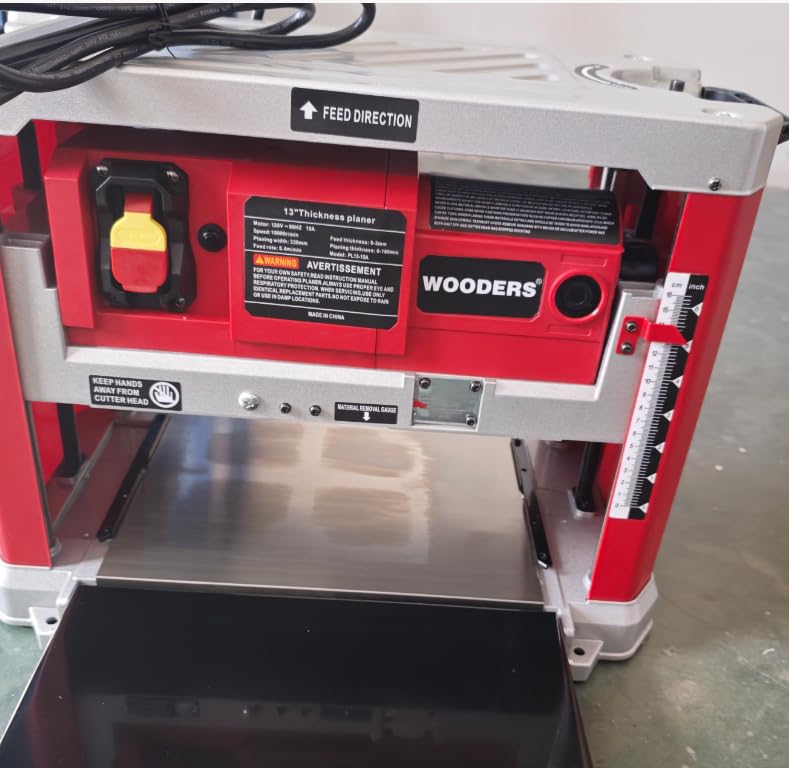
The package is the argument here. Two spare HSS blade sets and a dust collector in the box, at 60 pounds with a 22.4 inch footprint, mean a small bench gets a working planer without a second trip to the store for consumables.
The oversized crank and high-visibility height indicator make depth changes quick and readable, and the iron blade shaft with a rugged frame is a sensible attempt at holding the head rigid enough to avoid chatter. Built-in overload protection guards the motor on a heavy pass.
Be honest about the evidence. This listing is new enough that the review base is thin, so long-term durability on dense hardwood is an open question rather than a known quantity. Nobody has put thousands of board feet through it yet and reported back.
It is also a straight double-edged HSS head, which is the weakest configuration in this list for tear-out on interlocked grain, and dust collection depends on the included port and your shop vacuum setup.
Why it suits dense hardwood
Overload protection and a 2000W all-copper motor mean a heavy pass will not simply stall and leave you with a half-cut board, and the 13 inch width handles standard rough lumber.
Spare blades in the box mean you can keep working through a project without waiting for a delivery when an edge dulls on oak.
Where it falls short
Straight HSS blades on dual-knife configuration tear out figured maple more readily than any spiral-head machine here, so budget extra sanding on show surfaces.
With few owner reports, you are buying on specification rather than on a long record of service, and that is a different kind of risk than paying more for a documented machine.
10. Triton TPT125 12-1/2-Inch: For Occasional Hardwood Work Only
Triton TPT125 High Performance Benchtop Planer with 12-1/2″ Cutting Width
17,500 cuts per minute
12-1/2 in. width
Depth set in 1/16 in. increments
Circuit breaker
Pros
- Least costly of any full benchtop planer here
- Reasonable surface for a straight-knife machine
- Simple 1/16 in. depth increments that are easy to dial in
- Blades are easy to remove and sharpen
- Dust chute mounts on either side for flexible setup
Cons
- Thickness can vary across the width of a board
- Height adjustment can be bumped and shift mid-cut
- Thickness scale is difficult to read
- Struggles with wide weathered or very rough lumber
The Triton does one job: putting a straight edge on a board when you need to. Owners report one blade change over two years of oak and poplar work, and blades come out easily for sharpening, so the running cost is close to nothing.
Depth is set in 1/16 inch increments, which is a sensible step size for a planer at this level and takes some of the guesswork out of dialing in a pass. The side-mountable dust chute helps when your collector is on an awkward side of the bench.
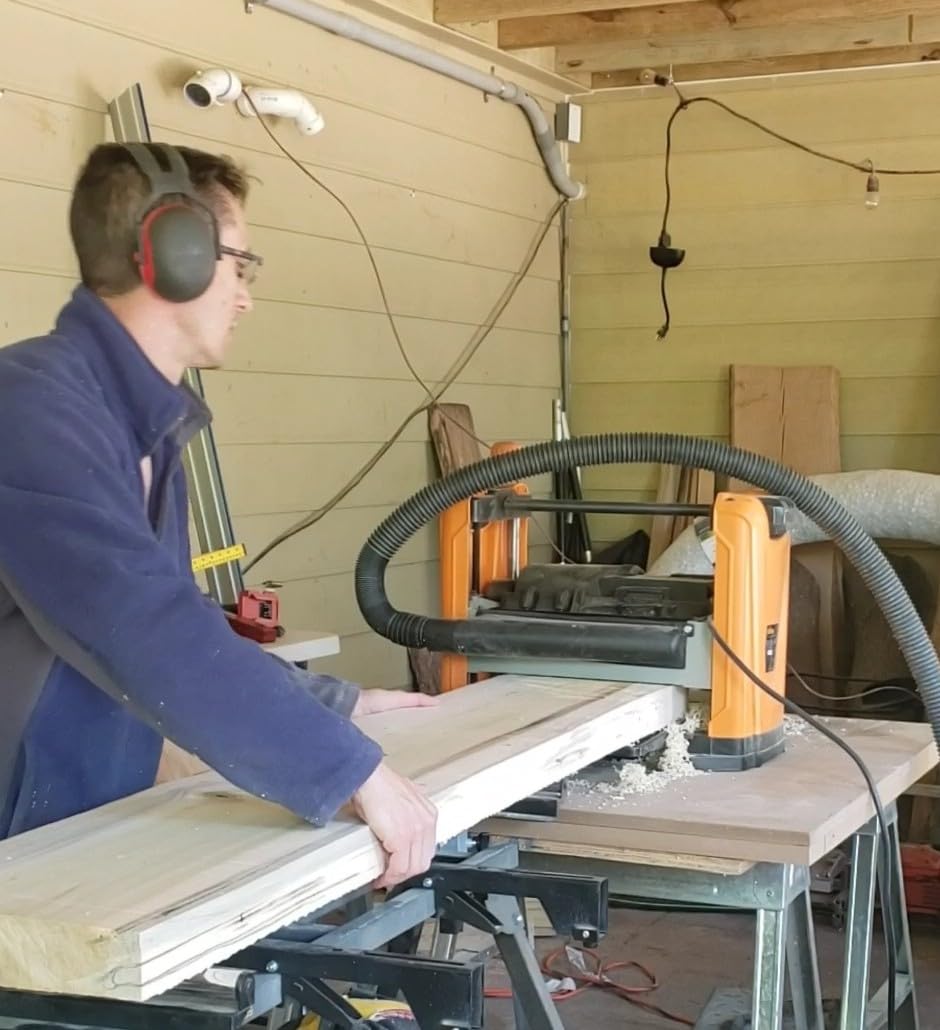
The accuracy limits are documented by owners rather than hidden. Multiple reviewers report uneven thickness across a board and a depth adjustment that can shift position mid-cut, and their standard advice is to make multiple passes and flip the board between them.
It struggles with wide, weathered or very rough lumber, and the thickness scale is hard to read. Treat it as an occasional tool rather than a machine you build a production schedule around.
Why it suits dense hardwood
For light, occasional hardwood work, a planer that will not trip a circuit and does not need a dedicated outlet is genuinely useful, and the simple increments make controlled passes easy to repeat.
Blade changes are quick and the blades sharpen well, so a shop that planes a few boards a month is not spending money on consumables.
Where it falls short
Inconsistent thickness across a board is the dealbreaker for glue-ups, because that is exactly the application where uniform measurement is the whole point of owning a planer.
It will not handle wide rough lumber well, and the loose infeed tray under load means you are supporting the board more than the machine does.
Jointer First, Then Planer: The Two-Stage Hardwood Workflow
Run a board through a planer first and you will learn why planing is the second step, not the first. A planer references one surface and makes everything match it. If that surface is cupped, twisted or crowned, every board comes out with the same defect, perfectly and uselessly.
The fix is the two-stage method. Joint one face and one edge flat and square with a benchtop jointer, then take the board to the planer, which now references a truly flat face and brings the opposite side to a matching thickness. Order matters more than machine brand here.
Owners on r/BeginnerWoodWorking describe exactly this sequence when prepping rough hardwood, and one of them makes the point that rings true: planers eject an enormous volume of chips, so a real extractor is not an accessory but part of the workflow. If the stock is wider than your rough lumber, a benchtop band saw for resawing first saves a lot of frustration later.
Two working habits make hardwood planing much less frustrating. Take modest passes rather than maximum depth, since tear-out scales with how much you ask for at once, and always leave sacrificial material at both ends of a rough board to trim the sniped entry and exit.
How to Choose a Benchtop Planer for Hardwood
Cutterhead first, always. If you mostly plane clear hardwood like walnut or quartersawn oak, a straight-knife machine with a good motor is fine and cheap to maintain. If figured maple, cherry or sycamore is part of the work, budget for a helical-style head or plan on spending less time sanding. A retrofit kit is a legitimate third option when you want to postpone the decision.
Width is the next hard filter. A 13 inch machine handles a full rough board face, and 12 inch or 12-1/2 inch machines require ripping wide lumber first. If your hardwood comes in full boards, the extra half inch saves real time every pass.
Motor and feed rate decide how aggressive you can be. A 15 amp motor with a two-speed gearbox gives you a roughing gear and a finishing gear on one machine, which is why the DW735X and the VEVOR stand out for dense lumber. Single-speed machines force you to choose, and one-speed spiral heads are a compromise you only notice on figured wood.
Bed and fence material is where owners who outgrew a lightweight machine first look next. Cast iron beds and four-post head support resist deflection, which matters when a heavy wide board pushes down on the tables. Aluminum bases are lighter and easier to move, and an aluminum fence deflects more under a leaning board. If you build glue-up panels from boards wider than the fence, that deflection becomes wavy panels.
Table length is the attribute two separate forum threads raised independently, and the reason is simple: a board that loses support at the outfeed end drops as it leaves the cutterhead and picks up a gouge. Longer infeed and outfeed support, whether built in or added, is cheap insurance.
Dust collection deserves a real answer on hardwood. Shaving volume from dense species overwhelms small fan-assisted ejection, and chips packed around the head cause heat, finish defects and clogging. Match the port to a collector with real airflow, and expect to empty it mid-session rather than at the end.
Maintenance intervals are simpler on insert heads than on straight knives. Carbide inserts are rotated rather than sharpened and replaced when an edge chips, while HSS knives need a grinder every time they dull, and they dull faster on hardwood than on pine. Whatever you buy, keep a spare set on the shelf before you need one at 9pm on a Saturday.
Finally, be honest about when to move up. When you are planing wet, wide, heavy boards several times a week, a benchtop machine is asking too much. Our guide to the best benchtop milling machines covers the next step, and the wider planer roundup covers larger formats.
Frequently Asked Questions
Who makes the best benchtop planer?
The DEWALT DW735X is the best benchtop planer overall, because its 15 amp motor and two-speed gearbox let you take roughing passes on dense hardwood and finishing passes on the same machine. For the best helical-style head on a benchtop body, the WEN PL1326 gives you 26 rotatable inserts in a cast iron machine.
Is a helical planer better than a straight knife planer for hardwood?
A helical-style cutterhead is better on hardwood because each small insert cuts a narrow slice, so the edge has more time to shear downward instead of lifting interlocked grain. You get less tear-out on figured maple and cherry, a quieter machine, and inserts you rotate rather than sharpen. Straight knives cost less and sharpen in minutes.
What is the best benchtop planer with a helical cutterhead?
The WEN PL1326 is the best value benchtop planer with a helical-style head, pairing 26 rotatable high-speed steel inserts with a cast iron base and cutterhead at 13 inch width. Shoppers wanting a cast iron bed with a two-speed gearbox should look at the JET JWP-13BT, while the RIKON 25-135H is the compact alternative.
Is a benchtop planer powerful enough for hardwood?
Yes, a benchtop planer with a 15 amp motor handles domestic hardwood such as oak, walnut, cherry and hard maple without trouble, as long as you keep depth of cut per pass moderate. Take 1/16 to 1/8 inch per pass rather than the maximum, and joint one face flat before planing so the machine references a true surface.
What are the key differences between a 13 inch and a 12-1/2 inch benchtop planer?
A 13 inch planer handles a full rough hardwood board face without ripping first, while a 12-1/2 inch machine needs wide lumber cut down beforehand. The extra half inch saves setup time on every board and matters most for furniture panels. The 12 inch class machines trade that width for a lighter, more portable body that is easier to move between shop and jobsite.
Bottom Line: Which Benchtop Planer Wins for Hardwood
The DEWALT DW735X is the best benchtop planer for hardwood and the machine we would buy first. The two-speed gearbox on a 15 amp motor is the combination that handles rough walnut and then finishes it, and the review history is long enough to trust.
If tear-out on figured lumber is your problem, buy a helical-style head instead: the WEN PL1326 for value, the JET JWP-13BT for a cast iron bed, or the RIKON 25-135H for a compact shop. If the budget is fixed and the work is occasional, the CRAFTSMAN CMEW320 will dimension boards faster than anything else you own.
Whichever you pick, joint first, take modest passes, plan for a real dust collector, and keep spare knives on the shelf. That preparation does more for the finish than the machine does.